The Corne¬ Daily Sun

By SOFIA RUBINSON, AIMÉE EICHER and GABRIEL MUÑOZ Sun Managing Editor, Assistant Managing Editor and Sun News Editor
Editor’s Note: This article contains mentions of self-harm and violence.
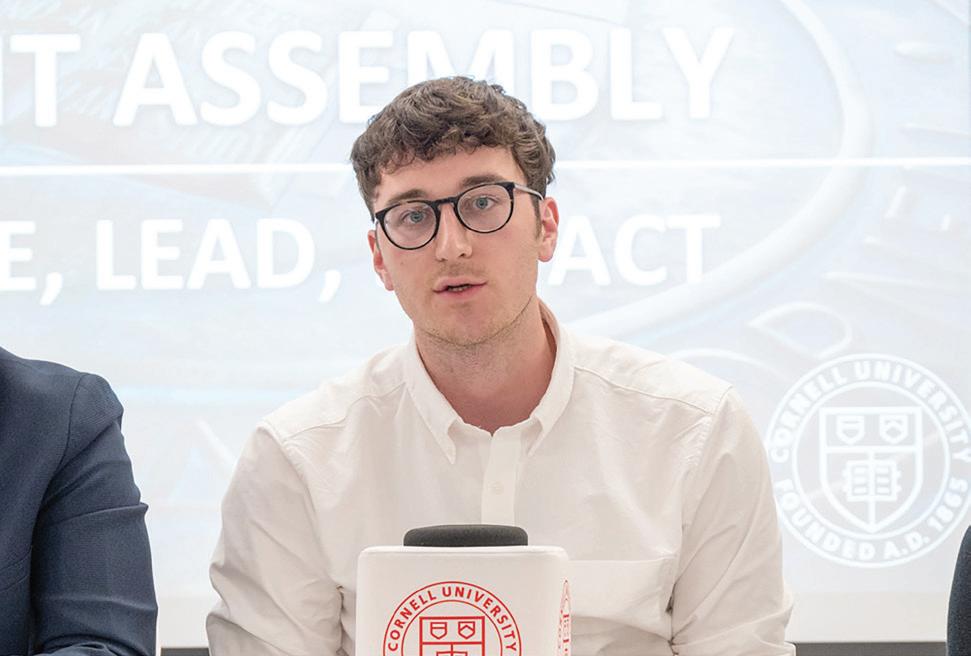
SYRACUSE, N.Y. — Patrick Dai ’24 will remain in jail awaiting trial following a detention hearing on Thursday, Nov. 9 in the Northern District of New York, where new details of the case were revealed.
Standing before Judge Therese W. Dancks, Dai’s new representation under public defender Lisa Peebles argued that he was not a risk to the community and that he has an undiagnosed developmental disability that was exacerbated at Cornell into severe mental health issues.
The federal prosecutors, led by Assistant U.S. Attorneys Geoffrey Brown and Stephen Green, stated that his antisemitic threats posed a severe risk to the community and that his release
could lead to further terror and dangerous actions. They also stated that his suicidal idealizations pose a risk of flight, in addition to his connection to a foreign country as his father currently resides in China.
Dancks ordered Dai’s detention on the grounds that his threats were vile and terrorized the Jewish community, and that his online threats were consistent with those of other mass shooters in recent U.S. history. She ruled that he exhibits unstable and erratic behavior and is concerned about his risk of suicide and danger to his family, as he previously told investigations that he considered grabbing the steering wheel of his mother’s car while she was driving him to Cornell in an attempt to drive them off a cliff.
The prosecutors also cited Dai’s ability to access a shotgun in his family’s home and a Katana — a Japanese sword


Menstrual

By ELIZABETH GARDNER Sun Staff Writer
Committee voted to cut GJAC funding
Across restrooms on campus, students can find free menstrual products that are supplied courtesy of the Gender Justice Advocacy Coalition, a student-run group that provides funds for projects and groups that advance gender equity on campus. But the future of these products may be in jeopardy as the coalition is set to receive less funding from the Student Activity Fee in the 2024-2026 cycle.
At the Thursday, Nov. 9 Student Assembly meeting, the Appropriations Committee announced a decrease in GJAC’s byline funding allocation as the group works to determine the funding each umbrella organization on campus receives by the end of the fall semester. In addition to providing free menstrual products, the GJAC also offers free pregnancy tests, emergency contraceptives, limited gender affirming care, gender inclusive spaces, has hosted events such as Feminism Food For Thought and funded an ASL interpreter for the Take Back the Night — a march to protest domestic violence.
On Sunday, Nov. 5, the Appropriations Committee voted to allocate $3.35 per student per year to GJAC, less than the requested $3.45 per person per year — the same amount the group received
in previous allocation cycles. This 10 cent difference results in a $1,534.50 decrease in GJAC’s budget.
A report signed by Vice President of Finance Rocco DeLorenzo ’24 justified the decrease in funding due to the lack of quantitative data regarding the usage of free menstrual products across campus bathrooms.
“When GJAC was asked about the tracking being used to measure the efficacy of this initiative, while the organi-
a student on the GJAC executive board, presented testimonies from students who have been impacted by the organization’s work.
“I know that people truly appreciate the menstrual products,” said Kwon on behalf of another student.
“I’m shocked that this decision was brought up and want to heavily advocate for the continued funding of these products.”
The report from the Appropriations Committee
“I know that people truly appreciate the menstrual products. I’m shocked that this decision was brought up.” Allison Kwon ’25, on behalf of another student
zation had attempted using QR code signs above the baskets in the past, this was not effective, and no other tracking data could be presented,” wrote DeLorenzo in the report.
In an appeal to the Appropriations Committee’s decision to decrease their budget, GJAC highlighted that it is difficult to collect data using QR codes, as there is no way to ensure those who utilize the products will scan the code. The appeal also noted that the decrease in funding will only make their efforts to collect accurate data more challenging.
At the S.A. meeting on Thursday, Allison Kwon ’25,
contained further justification for the decrease in GJAC’s funding, including that menstrual products provided in men’s restrooms are often unused or discarded.
“In most of these cases, the products either lay fully stocked in small baskets due to lack of significant usage or, as disheartening as it is, dumped into the restroom garbage cans,” wrote DeLorenzo.
To continue reading this article, please visit www.cornellsun.com.
By JONATHAN MONG Sun News Editor
Patrick Kuehl ’24 asserted his campaign was “far from secret” and that he was surprised Jorge DeFendini ’22 (D-Fourth Ward) and the Solidarity Slate — a group of three democratic socialist candidates — did not know about the campaign in a Nov. 8 email to The Sun.
“I and those volunteering with me have been talking to students and canvassing for about a month and a half. Though I did not talk to the press, had no campaign contributors and no website, my campaign was far from secret,” Kuehl wrote in his email. “I am really
surprised that the [Solidarity] Slate did not find out earlier, at which point I would have talked to the press.”
But Kuehl, the Student Assembly’s president — who ran a write-in campaign for the Fourth Ward seat currently held by DeFendini — told The Sun on Wednesday, Oct. 11 that he was not running for Common Council when asked, despite his email stating he canvassed for “a month and a half” before Election Day — which was held on Nov. 7 this year.
“I’m not [running for Common Council] lmao who told u that [sic],” Kuehl said in the Oct. 11 statement, which was delivered via text message. Kuehl told The Sun on Monday,
Nov. 13 that at the time that message was sent, he had not committed to launching a write-in campaign. He said had been asked to run during the primary season — at which point he said no — but finalized his decision to run after Oct. 22.
The Sun first learned of Kuehl’s potential candidacy on Tuesday, Oct. 10, when a Sun reporter was invited to an Oct. 12 meeting by an anonymous source in 150 Warren Hall. The source told The Sun they and Kuehl would be announcing write-in candidacies for the Common Council at the meeting, with the source slated to challenge Margaret




characterized by a curved, single-edged blade with a circular or squared guard and long grip to accommodate two hands — as probable cause for Dai to be a risk for the community’s safety.
Dai will remain detained in Broome County jail until his trial, which is yet to be scheduled.
Green argued that Dai’s history of suicidal ideation posed serious risk of flight, as well as danger to himself and those around him. He noted Dai attempted suicide by asphyxiation using a plastic bag on Monday, Oct. 30 and Tuesday, Oct. 31 and that he recently purchased a book on the most effectives ways to kill oneself.
Green also stated that review of Dai’s laptop revealed internet searches from 2022 and 2023 regarding mass shootings, neo-nazism and antisemitism — including an incident during which a man fired blanks in a San Francisco synagogue — success rates of suicide methods and how to change the IP address of a phone.
Peebles argued that detention would punish Dai for his poor mental health and further worsen his struggles. She stated Dai’s intent for the threats was to attempt to convince others that Hamas was evil, and that Dai holds no antisemitic beliefs.
She stated that Dai was distressed by a New York Times article that initially blamed Israel for the bombing of a Gazan hospital, which relied on information provided by the Hamas-run health ministry. Since the initial reports, Israel has denied responsibility, which was corroborated by U.S. intelligence.
Peebles also stated that Dai was influenced by a Cornell professor’s “espousing elation” following Hamas’s attacks — referring here to Prof. Russell Rickford, history, who came under fire for a statement made at a pro-Palestine rally on Oct. 15.
Peebles referred to a letter from a high school classmate of Dai’s, who stated Dai was kind and intelligent but had trouble socializing and fitting into social norms. Peebles stated that she believed Dai likely had an undiagnosed developmental disorder, likely autism, saying Dai did not think “like you or
I would think.”
Peebles said she hired an expert to evaluate Dai for autism and requested Dai have access to mental health treatment as well as his glasses — which she said he required to read and were not provided in jail — during his detention.
Following his arrest, Dai’s mother, Bing Liu, noted her son’s persistent struggles with mental health. Liu cited these struggles, as well as Dai’s use of antidepressants and therapy to address them, as potential influences on his actions. The defense stated that the medication was not working and was in turn causing adverse effects.
The Judge and federal prosecutors stated that no one could interpret Dai’s posts as a way to exhibit the evilness of Hamas. In his threats, Dai encouraged his peers to rape and murder Jewish people on campus and threatened a mass shooting at 104 West, the home of the Center for Jewish Living and kosher dining hall.
Brown stated that regardless of his intent, Dai threatened the Jewish community and instilled terror in residents. Brown cited tes-
timonies from students who claimed their parents drove to campus to drive them home after the threats because they feared for their safety.
Additionally, Brown cited Dai’s use of a VPN to publish an apology to Greekrank under the name “I am sorry” did not identify himself as the culprit of all of the threats posted to the site, which would not appease the worries in the community. This confirms the earlier statements of Dai’s mother that he apologized for his words four hours after the last threat was posted online.
Dai appeared in federal court on Thursday alongside Peebles, his mother, an unidentified family friend and a paralegal.
To continute reading this story, please visit www.cornellsun.com.
Sofa Rubinson can be reached at srubinson@cornellsun.com.
Aimée Eicher can be reached at aeicher@cornellsun.com. Gabriel Muñoz can be reached at gmunoz@cornellsun.com.
By JONATHAN MONG and MATTHEW KIVIAT Sun News Editor and
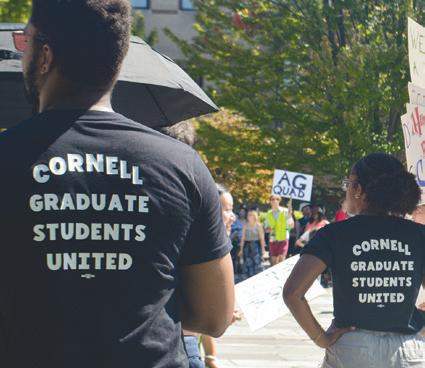
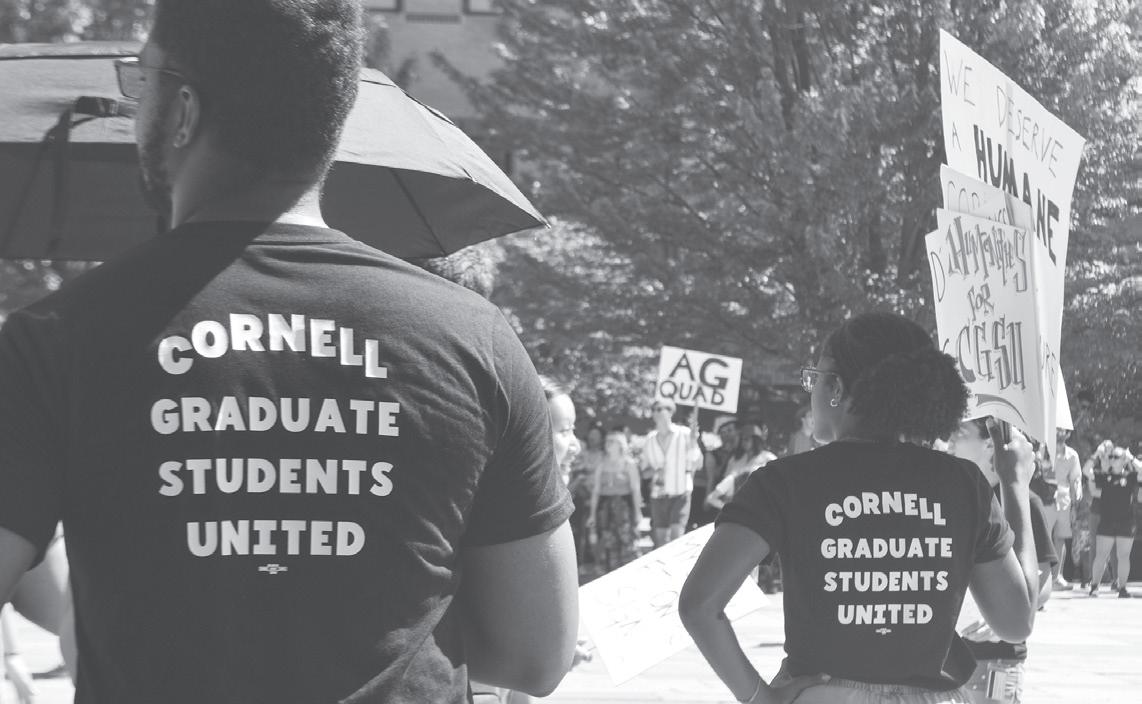
Cornell graduate students have won their unionization election by a vote of 1,873 to 80, and will federate as Cornell Graduate Students United — organization fighting for the rights of graduate workers — under the national United Electrical, Radio and Machine Workers of America union. 128 ballots were challenged, but not counted because they would not have determined the outcome of the election.
Voting occurred on the Ithaca campus between Nov. 6 and Nov. 8, as well as on Nov. 6 at the Geneva campus and at New York City’s Cornell Tech campus. Of the 3,175 eligible voters, 1,953 voted in the election.
The current unionization effort which started in the midst of the COVID-19 pandemic, kicked off on Sept. 6 with a card drive. Issues that graduate students have claimed to face include issues with funding guarantees, healthcare coverage and worker protections, according to the CGSU website.
Over the course of the month, over 2,500 graduate workers signed unionization cards, which CGSU claimed was a supermajority of graduate workers at Cornell. Prior to the election, over 1,600 eligible voters pledged to vote yes in support of the unionization election.
This overwhelming yes vote follows CGSU’s previous attempt to unionize in 2017 under affiliation with the American Federation of Teachers, which failed 941 to 867.
Cornell was found to have violated federal labor laws in 2018, resulting from an email from former Senior Vice Provost and Dean of the Graduate School Barbara Knuth 24 hours before the March 2017 unionization election began. The email could have been seen as a threat to students voting for unionization, according to the arbitrator’s award document.
Prior to the election, President Pollack, in an address to the Student Assembly on Sept. 28, addressed the issue of graduate unionization.
“[Unionization] is a choice for every individual. We do encourage everyone to consider the question of unionization thoughtfully and carefully and [to] ask questions,” Pollack said. “The University is committed to engaging in a process that is respectful of the rights of all involved and is consistent with the requirements of the National Labor Relations Act.”
To continue reading this story, please visit www.cornellsun.com.
By KATE SANDERS Sun Staff Writer
The platform Greekrank was known by most to be a forum to post gossip about the latest happenings in campus Greek life. But just two weeks ago, the platform became an avenue to spread threats against Cornell’s Jewish community.
These threats brought national attention to Greekrank, a website that describes itself as a place that “strives to be the best place to learn about and interact with college Greek life.” Greekrank is not affiliated with Cornell, and it hosts several avenues for anonymously discussing Greek life and ranking sororities and fraternities on 819 college and university campuses.
On the website, users can make general discussion posts about Greek life, rate and review specific chapters of Greek organizations and rate a college or university’s Greek life system as a whole. Patrick Dai ’24 used the discussion section of the website as an anonymous user to make threats to the Cornell
Jewish community, according to court documents, putting the website’s content moderation practices and merits to Greek life under scrutiny.
Greekrank says that it removes “seriously unfavorable content” that violates its terms of use “in a timely manner.” The website estimates that objectionable content is removed within seven to 10 days of a report but “usually sooner.” In a Nov. 3 email to The Sun, a representative from Greekrank said that the website is “taking this opportunity to review and strengthen [their] platform’s moderation processes” after responding to Dai’s threats in their discussion forums and is “dedicated to preventing the recurrence of such unacceptable incidents and to upholding the values of respect and safety for everyone.”
However, a post from Oct. 26 that calls for “death to “Israel”” and “death to America,” and calls on Hamas to kill “zionist pigs,” referencing an antisemitic trope, remains on the website as of Nov. 12. This post has not been attributed to Dai in
court documents but alludes to the Oct. 17 bombing of a Gazan hospital that Dai’s public defender said was distressing to him and includes similar rhetoric to posts reported to the FBI. While threats of violence like the ones Cornell recently experienced are rare on the website, Greekrank has struggled in the past to mitigate other kinds of harmful content, affecting Cornell and other colleges and universities on the website. At Vanderbilt University, several students in July 2020 identified Greekrank as a “platform through which hateful comments from Greek members have been amplified.” A Vanderbilt Greekrank discussion post and associated comment reposted to a public Instagram account earlier that month called Black students “stinky Ns” and “crack smokers.”
To continue reading this story, please visit www.cornellsun.com.
Kate Sanders can be reached at ksanders@cornellsun.com.

mkiviat@cornellsun.com.
Continued from page 1
Fabrizio (D) for the Fifth Ward’s four-year seat, and that Clyde Lederman ’26 — the clerk for the Office of the Assemblies and the Democratic nominee for the Fifth Ward’s two-year seat — would be present at the meeting.
Kuehl then called a Sun reporter on Oct. 11, saying the meeting was for planning purposes only and not open to the press, although the reporter contacted was permitted to attend “as a friend.” Nobody affiliated with The Sun attended the meeting, in congruence with its ethics policy that reporters may not publicly support candidates for any office. The source said the meeting was ultimately postponed, and they did not attend
the rescheduled meeting because they decided not to pursue the campaign.
Following the call, Kuehl called The Sun’s source, instructing them not to inform anyone about the write-in campaign.
“Kuehl told me, ‘Don’t say anything to anyone,’” the source said. “Pretty quickly, he was telling me not to tell anybody about his write-in campaign.”
Kuehl confirmed to The Sun that he made this phone call.
“I was more worried about [the source’s] campaign because it wasn’t finalized yet, and neither was mine,” Kuehl said. “I hadn’t committed to anything. And I didn’t want to be stuck in a position where there was an article about me running when I wasn’t running.”
Despite Kuehl and Lederman’s vehement
denials that they coordinated their campaigns, The Sun’s source said both candidates — as well as Tiffany Kumar ’24 (D-Fourth Ward) — were involved in planning both Kuehl’s run and the source’s run since the beginning of the Fall 2023 semester.
“The idea was for Kuehl, Lederman and Kumar — for each of them to win and have some sort of voting bloc within Common Council,” the source said. “This is something that they hatched together. That was their idea.”
A second source, who did not wish to be identified but who The Sun has confirmed worked closely with Kuehl and Lederman on the Student Assembly, told The Sun that the pair have worked closely with one another since they both joined the S.A. Kumar — who said she was aware of
Kuehl’s campaign — did not make a public endorsement in the race and further denied any involvement in Kuehl’s campaign in an interview with The Sun, calling it “kind of ridiculous.”
“I had meetings with Kuehl and Lederman to discuss Lederman’s candidacy,” Kumar said. “I knew about Kuehl’s write-in campaign, and I didn’t endorse.”
Kumar described the process in which candidates — Lederman and Kuehl, in her case — ask for the endorsement of another candidate, saying she knew of Kuehl’s strategy because part of asking for an endorsement entails detailing a campaign strategy.
“During the endorsement meeting, Kuehl explained several different avenues towards victory,” Kumar said. “At endorsement meetings, you usually explain your campaign and your path to victory, but again, I did not make any endorsements.”


However, Kumar also said she had low expectations for write-in campaigns in general, given their difficulty.
“I really assumed that write-in campaigns wouldn’t be that serious,” Kumar said. “A write-in campaign is incredibly difficult to pull off, especially against an active campaign.”
Yet despite Kuehl’s significant efforts toward his campaign and his clear desire to serve as a Common Council member, his willingness to serve the full four-year term — which would begin on Jan. 1 and expire on Dec. 31, 2027 — remains in question. Even as the news broke that Kuehl launched a write-in campaign the morning after Election Day, he was in San Francisco interviewing for a scholarship program that would place him in the United Kingdom next year. He remained in San Francisco on Thursday, Nov. 9 while the S.A. drafted and released a statement in response to his campaign.
Kuehl sent an email to The Sun on Nov. 8 in which he admitted that he may not remain in Ithaca beyond his expected graduation in August 2024, despite angling for political power as one of two alderpersons who would represent Collegetown and most of Cornell’s campus for the next four years.
“I do not know how long I will remain in Ithaca, but I hope that regardless of the outcome, this election will pave the way for alternative perspectives that work towards bringing our community together moving forward,” Kuehl wrote in the email.
However, Kuehl said he currently has no plans to leave Ithaca following his graduation, and did not rule out the possibility of serving his full term.
“I will be at Cornell until August,” Kuehl said. “And that’s what I told every single person that I’ve spoken to. I have no plans after that. So if I am elected to that position, then I will continue to serve as long as I am able.”
Kuehl stressed transparency in his decision to disclose that he could not commit to serving the full four-year term, which he said he told every constituent he spoke with.
“I don’t think it’s fair to the people to be dishonest with them and say that I’m certainly going to be here for the next four years,” Kuehl said. “I think that’s disingenuous.”
DeFendini drew a contrast between himself and Kuehl, saying he would remain in the community that he now calls home.
To continue reading this story, please visit www.cornellsun.com.
Jonathan Mong can be reached at jmong@cornellsun.com.
ground. Since the beginning, Percy has felt real, which is why he grew so popular.
On Tuesday, Sept. 26, an event occurred which many had long deemed impossible: Bestselling author Rick Riordan released a brand new book featuring his beloved protagonist Percy Jackson. Percy Jackson and the Chalice of the Gods marks the first book with Percy as a main character, along with his two best friends Annabeth Chase and Grover Underwood, since the release of The Heroes of Olympus: The Blood of Olympus in 2014. It is clear from the mass excitement about Percy’s return after almost ten years that loyal Percy Jackson fans never have, and never will, forget their childhood hero.
Percy Jackson started off in Riordan’s first book as a twelve-year-old struggling through middle school, facing bullies, dyslexia, ADHD and difficulty fitting in, just like anyone else. Percy then discovers that he is a demigod, the son of the Greek god Poseidon, and that the fate of the world rests on his shoulders. But despite the mythical plot, Riordan’s series introduced perhaps the most relatable and beloved character of all time. Sarcastic and clever, while also sometimes slow on the uptake (hence his nickname “Seaweed Brain”), lovable, loyal, brave and endlessly honest, Percy is a character everyone can relate to, no matter their age or back-
To say that the Percy Jackson franchise has been a success would be an understatement. The release of the first book, Percy Jackson and the Lightning Thief, in 2005 was quickly succeeded by four others, one for each of the following consecutive years. In 2009, after the release of the final book, Percy Jackson and the Last Olympian, many thought it would be time to say goodbye to their favorite character. However, Riordan then continued Percy’s story (while also introducing some new faces) with a sequel series, The Heroes of Olympus, which consisted of five books released each year from 2010 to 2014.
Five years after they had originally braced themselves to say goodbye, readers came to the end of The Heroes of Olympus with book five, The Blood of Olympus. And yet, to their surprise and delight, Percy’s story was not quite over. Riordan has rewarded fans who stuck with him through his other authorial endeavors with sporadic Percy sightings or mentions over the years.
For instance, Percy appeared fleetingly in the third book of the Magnus Chase and the Gods of Asgard series, The Ship of the Dead, which was released in 2017.
He said a quick hello to his old friend Apollo in the first book of the Trials of Apollo series, The Hidden Oracle.
Percy even joined forces with other of Riordan’s protagonists, Carter and Sadie Kane of the Egyptian mythology-based Kane Chronicles, in a few short stories released in 2013 and 2015.
And somehow, even when not stealing the spotlight from Riordan’s other characters, Percy Jackson found ways to stick with his fans throughout the years. Two movie adaptations were produced of the first two books, one in 2010 and the other in 2013. A Percy Jackson video game was released by Nintendo in 2010. In 2017, a Percy Jackson musical debuted off-Broadway before a national tour in 2019, and then a short Broadway run from 2019-2020. In recent news, Percy Jackson will be returning in a much anticipated TV show, which will premiere on Disney+ on Dec. 20.
And now, ten years after his last main appearance, Percy Jackson returns once more to the literary world in The Chalice of the Gods, as, somehow, an eighteen-yearold high school senior. While Percy began his first book in 2005 at the age of 12, Riordan has explained his lack of aging, stating, “No birth year is ever mentioned for [Percy], or any of the other characters, in any of the books… Percy exists ‘now,’ as you are reading the books, and that’s when his story is happening.” Riordan also added that he did not want there to be “a huge tonal shift,” saying, “that’s just my mindset. I write in a very mid-
dle grade way. I have readers from eight years old to 80, and everybody’s welcome.”
The publication of The Chalice of the Gods makes sense, especially because Riordan first came up with the idea as a way to “entice Hollywood studios into supporting the… Percy Jackson TV adaption…” However, it was at first confusing to many fans as to whom this book would be written for.
Ten years after the last Percy Jackson book, fans of the original series have long since grown up, while younger fans still have a lot of catching up to do if they plan to start all the way at the beginning. Riordan tried to clarify, stating he wanted to give, “the readers something they’ve been wanting for the last decade…” and that the book would focus on Percy going through the college application process — a plot which would relate better to older readers rather than middle schoolers. Above all, Riordan stated that he wants “it to be a book you all might actually love, a kind of ‘thank you’ for sticking with me all these years…”
It was not until I actually read this new book that I truly understood what he meant.
Chalice of the Gods is a love letter to the original fans, those who eagerly anticipated each new book in the 2000s and 2010s, who waited with baited breath for even the slightest mention of Percy in the many other mythological series that followed. It is for those fans, those who are now
working their way through college, or graduate school, or their first jobs, that this book is truly meant for. Nothing life-shattering happens within the pages of the Chalice of the Gods — no characters die, no worlds are turned upside down — instead it is simply about normal events in the life of Percy Jackson.
Throughout the book, Percy, Annabeth and Grover reminisce about all their fun (and not-so-fun) times, from the events of The Lightning Thief to The Blood of Olympus, taking the readers along with them like they did all those years ago. Chalice of the Gods is sweet, simple and pure. It is a chance for readers to get a satisfying end to Percy’s story, to look back one more time on the laughs and delights of their childhoods and then move on into adulthood, bringing with them all the lessons that Percy taught them — to be brave, loyal and above all, to always be themselves.
But thankfully, like many times before, this goodbye does not have to happen quite yet. Chalice of the Gods is the first of a trilogy, the second installment of which will be coming to our eagerly-awaiting, and far-too-old, hands in September of 2024.
jbl242@cornell.edu.
As someone who reads at least three novels a week, I consider myself a bit of a book connoisseur. I have devoured a number of excellent books, and I have also slogged through quite a few that were not my favorite. The sheer volume of literature I’ve consumed has allowed me to hone my list of dislikes, from physical flaws in a paperback or boring storylines.
I insist on finding a hard copy of the books I read. However, this has resulted in my developing a list of bothersome printing practices. First and worst are pictures of real people on book covers. Usually, these are romance books, and the cover makes
reading the book truly embarrassing. If I see a book in a store with male models or scantily dressed women on the cover, I will immediately put it back on the shelf and walk away.
for short passages, but they also make the book harder to read for longer spans of time. Although these printing choices may seem like small pet peeves, they can make or break a book for me.
get to a satisfying conclusion, such as winning the war or the couple getting together.
Although no book is perfect, some are better than others. If you plan to write a book, I beg you, on behalf of myself and other readers, please try to avoid these mistakes. ARTS AND CULTURE
Another issue is half covers or covers that are not as wide as the pages of the book. Why is it missing half of its cover? It looks sloppy, and I really cannot justify it. Boring titles are also another deterrent to picking up a book. If the title explains exactly what happens in the book, then I have no reason to read it. Small fonts are also quite annoying. Even though I have 20/20 vision, reading small text gives me a headache, and it is discouraging to realize it has taken me five minutes to read two pages. Weird fonts, such as cursive, can be fun
A book’s content can also raise major issues. I have seriously considered messaging authors to ask them what they were thinking. If I read an entire book —- or worse yet, an entire book series — and the beloved main character or love interest dies, I have wasted my time. I, quite frankly, want a refund. In that same vein, I expect the ending of a long series of books to be satisfying. I have read a four-book fantasy series that totaled 2000 pages, only for it to end in sadness. Again, a waste of my time. The whole point of reading for me is to
Another big pet peeve of mine is a passive main character. Everything is just happening to the main character instead of them driving the plot. This makes for a boring read, and I cannot get attached. When it comes to romances, I hate when they are too long. There is really no need for relationship issues to take 500 pages to resolve. They lose my interest unless they are spectacularly written, anyway. For thrillers, I should not have to read through multiple chapters of background to get to the suspense and action. The whole point of reading a thriller is to be thrilled, not to be given a four page description of an old house. Also, the names of
characters should not be too similar, as it’s just confusing to the reader. Tim should not be in an epic battle with Tom. Lastly, children should not be included in adult novels. They can be cute, but most of the time they are written to seem too old and unrealistically mature. The five-yearold should not be giving sage advice to an adult.
ANGELA BUNAY ’24 Editor in Chief
KATIE CHEN ’25 Business Manager
SHEILA YU ’25 Advertising Manager NOAH DO ‘24 Associate Editor
HUGO AMADOR ’24
‘25
JONATHAN MONG ’25
JULIA SENZON ’26
JULIA NAGEL ’24
GRAYSON RUHL ’24
TENZIN KUNSANG ’25
JOANNE HU ’24
MARISA CEFOLA ’26
FATTAL ’25
MING DEMERS ’25
KATE KIM ’24
Editor ISABELLE JUNG ’26
VEE CIPPERMAN ’23
ESTEE YI ’24
PAREESAY AFZAL ’24
SOFIA RUBINSON ’24
Editor GRACE XIAO ’25 Web Editor
AIMÉE EICHER ’24 Assistant Managing Editor
UYEN HOANG ’25 Assitant Web Editor
ANNA LIANG ‘24 Assistant Advertising Editor
ERIC REILLY ’25 News Editor
GABRIEL MUÑOZ ’26
NIHAR HEGDE ’24 Arts & Culture Editor
DANIELA ROJAS ’25 Dining Editor
RUTH ABRAHAM ’24
MEHER BHATIA ’24
MARIAN CABALLO ’25 Assistant News Editor
CARLIN REYEN ’25 Assistant News Editor
KIKI PLOWE ’25
Assistant Arts & Culture Editor
CLAIRE LI ’24
Assistant Photography Editor
DAVID SUGARMANN ’24
Assistant Sports Editor
KASSANDRA ROBLEDO ’25 Newsletter Editor
ELI PALLRAND ’24 Senior Editor
JASON WU ’24 Senior Editor
He can be reached at drs6@cornell.edu.
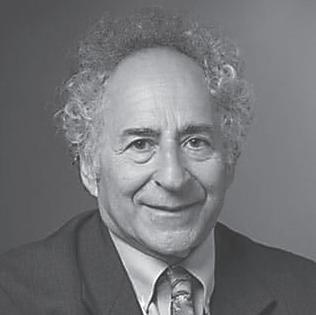
Inot only have taught and written with great pleasure at Cornell for 56 years, but I have also been treated very well here. For those reasons, this is a difficult piece to write.
We at Cornell do not want to become the poster people for blatant anti-Semitism on campuses, and we do not think it reflects the reality of what has been happening here. We are mortified to hear on CNN or read in the New York Times about one student arrested for spouting anti-Semitic bile or one professor expressing “exhilaration” from Hamas’s actions on Oct. 7, where they slaughtered and kidnapped Jewish babies and Jewish elderly.
In fact, the campus has not devolved into chaos. Nor has anyone been physically harmed. Despite a fraught environment, most faculty and students have been going to classes and doing what they usually do. Yes, Jewish students have felt uncomfortable, especially before the student culprit was arrested, but almost all attended and kept up with classes.
In part we, like many campuses, have a crisis of ignorance, in part a crisis of malice, and it is not always easy to separate them. Even a cursory historical survey of the Middle East reveals that the Zionist movement — founded by Jews desperate to escape pogroms and the Holocaust and return the Jewish people to their homeland — was often an agrarian movement revolving around rural Kibbutz communities. Based on egalitarian and communal principles, these communities were dedicated to turning desert into arable land. But it must also be acknowledged: The establishment and history of Israel includes regrettable behavior on both the Arab and settler sides.
The Cornell Daily Sun is devoted to publishing a broad and diverse set of content from the Cornell and greater Ithaca community.
We want to hear what you have to say about today's paper or any of our pieces.
Guidelines on how to submit can be found at Cornellsun.com. And here is our email: opinion@cornellsun.com
Palestinians living in Gaza are fellow human beings and must be separated as much as possible from Hamas terrorists who slaughtered and kidnapped Jews on Oct. 7. Many supporters of Israel, including me, understand the need for a two-state solution and have been deeply troubled by the return of Netanyahu as Prime Minister and his efforts in building a coalition with the inclusion of those with racist views of Palestinians.
Many students do not seem to understand that graffiti such as “Zionism = genocide” or “From the river to the sea” are anti-Semitic tropes calling for the destruction of Israel and its Jewish people. (The expression is the first half of “From the river to the sea, Palestine will be free” — a reference to the land between the Jordan River, which borders Eastern Israel, and the Mediterranean Sea to the west.)
The latter phrase implies that the Jews in Israel should cease to exist. As historian and author Simon Sebag Montefiore puts it in the Atlantic, this is a “chilling phrase that implicitly endorses the killing or deportation of the 9 million Israelis. It seems odd that one has to say: Killing
civilians, old people, even babies, is always wrong. But today say it one must.”
I have given talks in Israel, the last time giving the prestigious Paley lectures, and have been to the West Bank. I have also visited Jordan, Egypt, Morocco, Tunisia and Dubai. I have talked to many people in these countries, including at least one senior Palestinian who was my guide in Jordan. There is plenty of suspicion, anger and fear to go around. But there has been also more day-to-day cooperation and dialogue than most people realize among Israel and the leaders of the aforementioned countries — especially Jordan and Egypt — and between the Israeli military authorities and the Palestinian Authority officials. I am reasonably certain some dialogue continues even now.
I have had in recent years a great deal of trouble unravelling the threads that separate vociferous anti-Israel perspectives from expressions of anti-Semitism. I am uncomfortable when I hear on my own campus sentiments in favor of the Boycott, Divestment and Sanctions movement targeting Israel. I am even more uncomfortable when those views shape the discourse about curricular issues or take the form of anti-Semitic remarks that not only support violence directed at Israel but reveal malice towards Jews. In recent years, I have heard instances of faculty minimizing or trivializing the Holocaust and speaking with little regard for the history of Jews or Israel, one that dates back almost three thousand years.
We know that the Holocaust is fading from memory and is often denied and misrepresented for political purposes, including by those who oppose the very existence of Israel. Anti-Semitism has increased in the U.S. and has become mainstreamed as an acceptable attitude in some circles. As Mireille Silcoff put it in a Nov. 2022 New York Times piece, “Antisemitism felt like it was trending — moving, with bewildering speed, from something verboten to something floating casually around the culture.” A week later New York Times columnist Michelle Goldberg commented: “Now . . . anti-Jewish bigotry, or at least tacit approval of anti-Jewish bigotry, is coming from people with serious power: the leader of a major political party, a famous pop star, and the world’s richest man.”
In a 2021-2022 report, The AntiDefamation League observed:
"The antisemitic vilification of Zionism and ostracization of Zionists has emerged as a common phenomenon within some campus spaces. . . .The trend of targeting Jewish students who publicly express support for Israel’s existence as a Jewish state animated much of the worst anti-Israel activity during the 2021-2022 academic year."
To continue

Fill in the empty cells, one number in each, so that each column, row, and region contains the numbers 1-9 exactly once. Each number in the solution therefore occurs only once in each of the three “directions,” hence the “single numbers” implied by the puzzle’s name. (Rules from wikipedia.org/wiki/ Sudoku)




By RUTH ABRAHAM
In a highly anticipated matchup, No. 7 men’s hockey (4-1-1, 2-1-1 ECAC) earned its first loss of the season against Harvard (1-1-3, 1-1-3 ECAC). The 3-2 loss was highlighted by special teams struggles and errant penalties that cost Cornell the opportunity to remain undefeated on the season.
“Special teams let us down [tonight],” said head coach Mike Schafer ’86. “[And] that’s been a real strength for us all year long.”
Highlighted by the traditions of this historic rivalry, fish were flying, chants were shouted and Lynah was packed.
Despite being on the receiving end of flying fish, Harvard came out strong, scoring just a minute into the game.
Already 1-0 up, the Crimson mostly dominated possession, however, Cornell had the first power play opportunity minutes later after Harvard’s Kyle Aucoin went to the box for high-sticking. Despite not being able to convert on the power play, the man-advantage gave Cornell some life.
The Red began dominating with some good chances. However, Derek Mullahy made critical saves to keep Cornell off the board. The Red got its second opportunity on the power play after Aucoin went to the box once again, this time for hooking.
Cornell was once again unable to cash in, but just minutes after the penalty expired, Luke Devlin snuck one right past Mullahy to get the building shaking. It was the freshman forwards third goal of the season, and his first in front of the raucous Lynah Faithful.
It was right back to work for Cornell as sophomore forward Winter Wallace was called for hooking, forcing
the Red on the penalty kill less than a minute and a half later.
Harvard’s Alex Gaffney scored on the power play to give the Crimson the 2-1 lead.
Cornell earned its third power play of the night in the dying seconds of the first period when Harvard’s Christian Jimenez went to the box on an interference call.
With time remaining on the Jimenez penalty, the Red opened up the second frame on the man-advantage. The 5-on-4 didn’t last long as freshman forward Ryan Walsh got called for two simultaneous penalties, one for hooking and the other for indirect contact to the head. Harvard had 2:38 on the man advantage remaining after the Jimenez penalty expired.
Shane and the rest of the PK unit stood firm, blocking shot after shot, including a close one that just got in and barely crossed the goal line before being kicked out by Shane.
After successfully killing off the penalty, it was all Red, playing physically and keeping the puck almost exclusively in the Harvard defensive zone. While both teams had good chances, neither were able to find the back of the net.
With about seven minutes remaining, junior forward Kyler Kovich was called for slashing, putting Cornell’s PK unit to the test once again.
The Red was able to kill it off, but momentum shifted in favor of the Crimson who began to dominate in the Cornell defensive zone.
Harvard had an opportunity to add its lead on a breakaway, however, Shane made a big pad save to keep the Crimson from finding the back of the net.
With time winding down in the second, both teams had great chances, but Mullahy and Shane stood firm, not allowing any to pass through.
The Red found the equalizer less than two minutes
into the second, when freshman forward Jacob Kraft found an open net for his first collegiate goal.
Cornell had an opportunity to take its first lead of the game when a shot by Castagna hit the post and bounced out.
In another penalty-heavy night, junior defenseman Michael Suda was called for slashing, giving Harvard its fifth power play of the night.
Gaffney once again cashed in on the power play, giving the Crimson the 3-2 lead. The Red attempted to challenge the goal on goaltender interference, however, it was unsuccessful, resulting in a loss of a Cornell timeout.
Shortly after, the Red had an opportunity to strike after Ben MacDonald went to the box on a slashing call. Fifteen seconds into the 5-on-4, Jimenez was also called for slashing, resulting in a 5-on-3 advantage for the Red.
Cornell once again was unable to capitalize as time expired on the power play.
“I thought the power play for the first time this year got selfish,” Schafer said. “[They] didn’t really move the puck around and open up seams and lanes … all they wanted to do is just solely shoot pucks.”
In one final push to tie it up, with 1:30 remaining, Cornell opted to pull Shane in favor of an extra attacker.
The Red was unable to find the equalizer despite the man-advantage, and the clock ran out to hand Cornell its first loss.
“Guys wanted to win tonight, but overall, we didn’t play as a team,” Schafer said. “[It was] a big game [with] a lot of pressure and they wanted to win bad tonight … we couldn’t stay focused at the job at hand and that was to play together as a team.”
Ruth Abraham can be reached at rabraham@cornellsun.com.