The Corne¬ Daily Sun

By NEWS DEPARTMENT
Cantelmo Grad Elected Mayor of Ithaca
Robert Cantelmo grad (D), a current alderperson for the Fifth Ward, won the mayoral seat against Janis Kelly ’71, which will make him the first mayor to work with a city manager — a position that will take on the dayto-day implementation of regulations within the city.
Cantelmo previously told The Sun he would use his position to act as a policy driver and community builder, especially as the role of the mayor’s official capacities are reduced, illustrated by the more than 50 percent salary decrease compared to his predecessor Mayor Laura Lewis (D).
“What’s really important now for Ithaca is that the mayor will be freed up to be the political leader and the policy driver for the city,” Cantelmo said. “That requires the mayor adopting the persona of coalition building, of listener, of policy and subject matter expert, and really digging into the issues that are facing the community.”
As mayor, Cantelmo said he hopes to prioritize completing the goals of the Ithaca Green New Deal and reimagining public safety efforts. He also believes Ithaca has a housing crisis that requires continuous efforts to
adequately address.
As a representative for the Fifth Ward, Cantelmo worked to codify Ithaca as an abortion sanctuary city, which secured a new amendment and article in the city code to declare Ithaca a safe place for reproductive rights. He also helped establish a pay transparency law — over a year before the statewide transparency law took effect — to help workers understand their income opportunities and potential pay discrimination.
Even though Cantelmo had a decade-long career in the nonprofit sector in Washington D.C. prior to moving to Ithaca and is finishing his Ph.D. in government, he said his aspirations remain on engaging in local politics.
“I love the idea of raising my kids in this community. I love the idea of being settled, having seen them grow up with their friends, of giving them that stability,” Cantelmo previously told The Sun. “I really love the [research], but my passion is absolutely public service in my community. And I look forward to being able to provide that stability in my family for staying in a community that’s given a lot to us already.”
Cantelmo’s term will end on Dec. 31, 2027.
By JONATHAN MONG Sun News Editor
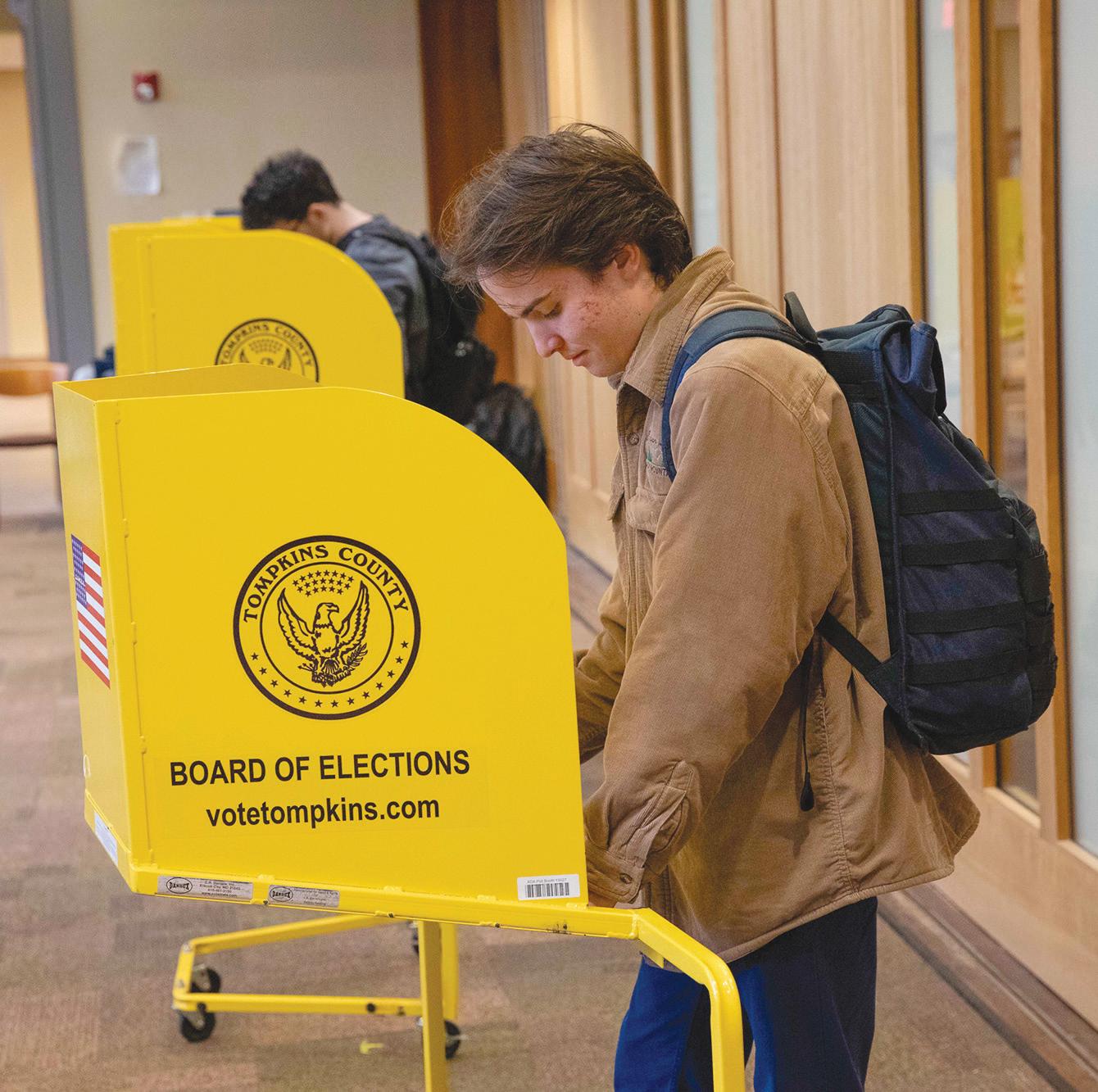
In what was previously an uncontested race, Jorge DeFendini ’22 (D-Fourth Ward) now finds his position on the Common Council in doubt following a write-in campaign by Cornell Student Assembly President Patrick Kuehl ’24. As of 11:10 p.m. on Nov. 8, DeFendini has 28 votes and all write-in candidates have 12 votes.
Thirty-eight affidavit ballots and absentee ballots received after Friday, Nov. 3 have yet to be counted, according to the Tompkins County Board of Elections, which also informed The Sun that the votes for spe-
cific write-in candidates will not be tabulated until Wednesday, Nov. 15.
DeFendini said he learned about Kuehl’s candidacy — which did not have any public online presence — on election night. Kuehl also did not speak to media organizations prior to Wednesday, Nov. 8.
Kuehl told The Sun in an email that he chose to run because of his and other Ithacans’ dissatisfaction with the Solidarity Slate, of which DeFendini is part.
“I had no intention of running initially, but as it became clear to me that there were no other options at the current time, I agreed to be the candi-
date knowing that my future in Ithaca is uncertain; I have made that abundantly clear to both those involved with the campaign and the community members I have talked to throughout this process,” Kuehl wrote. “I believe that no person should run unopposed, ideas should be challenged and the people should be given a choice. If there is no opposition, there is no accountability to make the world a better place.”
The Solidarity Slate is a group of three democratic socialist candidates who share a platform that aims to center racial justice, improve access to
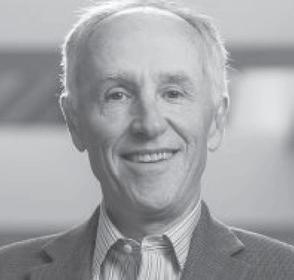
About a week after Patrick Dai ’24 was placed into custody for posting antisemitic threats on an online Cornell forum, including one that threatened a mass shooting at the University’s kosher dining hall, his mother Bing Liu described his persistent mental health struggles in an interview with Rochester’s Democrat and Chronicle.
Liu said that Dai’s actions may have been influenced by his use of medications to address serious depression and anxiety. His mother told the paper that her son would frequently return to their house in Pittsford, New York during the weekends due to his “worsening depression” and that he was home on the weekend the threats were posted online. She drove him back to campus on Monday, Oct. 30, the same day that Gov. Kathy Hochul visited campus to condemn the threats and assure students that the law enforcement would find the perpetrator promptly.
Liu referenced a now-deleted post titled “I am sorry it was my fault alone” posted on the evening of Oct. 29. Federal prosecutors did not identify this post as belonging to Dai in court documents, but Dai’s mother said his defense team revealed the post to her in a package of evidence after Dai’s initial court appearance last Wednesday. According to Liu, the language included in the post sounded more like her son.
“Apologies. There is no room for divisive statements in person or online,”
the post stated. “Shameful, calling for violence against people solely because of a cruel war a thousand miles away. Even more shameful because there is no excuse for the targeting of innocent civilians, much less my classmates.”
The post continued: “I spent a few hours reflecting alone today. I asked myself ‘What could have led me up to this point?’ ... ‘If I had gotten more mental counseling would it have been better?’ But there is no excuse. No amount of depression or loneliness or isolation is an excuse for terror or terroristic threats.”
The Sun was unable to verify if the apology post was written by Dai. The federal criminal complaint against Dai filed on Tuesday, Oct. 31 referenced 10 antisemitic posts but did not identify the apology message as belonging to Dai.
All posts referenced in the federal complaint, however, were written prior to the apology post, with the last cited post from 3:16 p.m. on Sunday, Oct. 29. The forum used to spread these messages, Greekrank, does not require a login and all messages are posted anonymously.
According to court documents, the IP information associated with multiple antisemitic posts from Oct. 28 and Oct. 29 were traced to Pittsford, while another post from Oct. 26 was traced to a different IP address that was geo-located to Ithaca.
To continue reading this article, please visit www.cornellsun.com.
Thursday, November 9, 2023
Today
Cornell Quantum Day
9 a.m. - 4:30 p.m., 233 Phillips Hall
The Cannabis Industry: Historical Legacies and Future Impacts Noon - 1 p.m., Virtual Event
Rights Refused: Grassroots Activism and State Violence in Myanmar
12:20 p.m., 374 Rockefeller Hall
Midday Music
12:30 - 1:10 p.m., B20 Lincoln Hall
Popcorn & Pups
1 p.m. - 2:30 p.m., 1st Floor Atrium, College of Veterinary Medicine
Cornell in Washington: Student Ambassador Drop-In Hours
2 p.m. - 4 p.m., Martha’s Cafe, Martha Van Rensselaer Hall
Apocalypse Debate
5 p.m. - 6:15 p.m., 132 Goldwin Smith Hall
Popular Culture and Social Change: A Conversation on Politics, History, and Hip Hop in Senegal
5 p.m. - 6 p.m., 124 Lincoln Hall



Cornell Military History Walking Tour
10 a.m. - 11 a.m., meets outside Barton Hall facing Teagle Hall
International Scholars Coffee Hour
10 a.m. - 11 a.m., International Room, Willard Straight Hall
Immigration and the Economy 1 p.m., Virtual Event
Composers Forum: Reiko Fueting 1:30 p.m., B21 Lincoln Hall
Playing with Time: The Temporalities of Agrarian Change and Climate Instability in Rural India
3 p.m. - 4:30 p.m., B73 Warren Hall
Philosophy Discussion Club: Trystan Goetze, Sue G. and Harry E. Bovay Program
3 p.m. - 5 p.m., 142 Goldwin Smith Hall
Distinguished Lecture in Cancer Biology - Dr. Robert N. Eisenman 4 p.m., G10 Biotechnology Building
Diwali Dinner
4:30 p.m. - 8:00 p.m., Jansen’s Dining Room
Greenlight-A-Vet & Chimes Concert 4:48 p.m. - 6:15 p.m., McGraw Clock Tower
The Fashion Moment: Embracing the Right Time, Right Place 5 p.m., Statler Hotel Ballroom
50 Years of the Hip Hop DJ: a roundtable discussion with legends 7 p.m. - 9 p.m., 102 Toni Morrison Hall

Kayla Matos Defeats Longtime Incumbent Cynthia Brock for First Ward Four-Year Seat
Kayla Matos (D) has defeated 12-year incumbent Cynthia Brock (D-First Ward) for the four-year Common Council seat.
Matos, who has called herself a “progressive democratic socialist,” ran as the Democratic nominee after overtaking Brock in the June 27 primary election, while Brock ran as an independent on the Ithacans for Progress party line.
Matos serves as the deputy director for Southside Community Center, and she is a proponent of increased city partnership with community organizations and nonprofits.
“I’m really advocating for stronger city support with non-profits or community organizations that are doing the everyday groundwork to help our community be a better place, and that would include organizations like OAR, REACH and No Más Lágrimas,” Matos said in a prior interview with The Sun.
Matos is an advocate of increasing the availability of affordable housing.
Matos said that as alderperson, she will attempt to re-examine the city’s zoning policies to accommodate more affordable housing, particularly for working families who are facing increasingly burdensome rent costs, gentrification and displacement.
Matos is in favor of ensuring the city follows through on the police
reforms outlined in the Reimagining Public Safety plan and believes that crime is caused by a lack of resources. She considers homeless encampments on the West End one of the most pressing issues facing the First Ward and said that providing resources for people experiencing homelessness could address public safety concerns.
“One of the first ways that we start reducing crime is providing the resources that those in the encampments need [through policy], but I also think that we need case workers and organizations that are working with them directly, like REACH, to be in there and be able to provide resources,” Matos said.
Matos’s term will expire on Dec. 31, 2027.
Brown Elected to First Ward TwoYear Seat
Phoebe Brown (D-2nd Ward) beat Zachary Winn (R) by a margin of 84 percent to 16 percent. This will be Brown’s second term on the Common Council, previously serving the Second Ward’s two-year seat.
After redistricting, Brown will now represent the First Ward, which covers much of western Ithaca.
Brown came to Ithaca more than two and a half decades ago from Harlem in an attempt to achieve sobriety. “I’ve been able now to be clean for over 25 years, going on 26 years,” she said to The Ithaca Voice.
To continue reading this article, please visit www.cornellsun.com.
Te News Department can be reached at news-editor@cornellsun.com.
By JULIA SENZON Sun News Editor
President Martha Pollack said that the University “doesn’t need [to] and shouldn’t ban deeply offensive or hateful speech” at the Faculty Senate’s meeting on Wednesday, Nov. 8.
Instead, Pollack said: “As individuals and as an institution, we can respond to [offensive and hateful speech], supporting those who are affected by it. And importantly, when appropriate, offering counter statements at the institutional level.”
Pollack’s speech to the Faculty Senate came in response to how Prof. Russell Rickford, history, said that he was “exhilarated” by Hamas’s initial attack on Israel at a pro-Palestinian rally on Sunday, Oct. 15, prompting mixed responses on campus.
On Tuesday, Oct. 17, Pollack and Kraig Kayser MBA ’84, chairman of the Cornell University Board of Trustees, called Rickford’s remarks a “reprehensible comment that demonstrates no regard whatsoever for humanity” in a public statement.
“Any members of our community who have made such statements [like Rickford’s comments] do not speak for Cornell; in fact, they speak in direct opposition to all we stand for at Cornell,” the statement said. “The University is taking this incident seriously and is currently reviewing it consistent with our procedures.”
By MATTHEW KIVIAT Sun Staff Writer
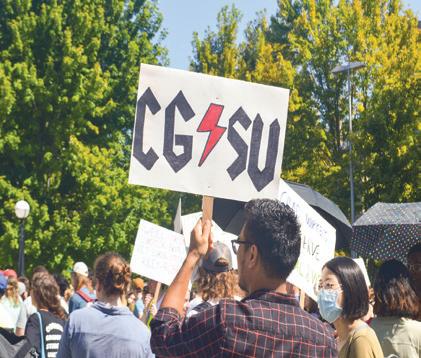
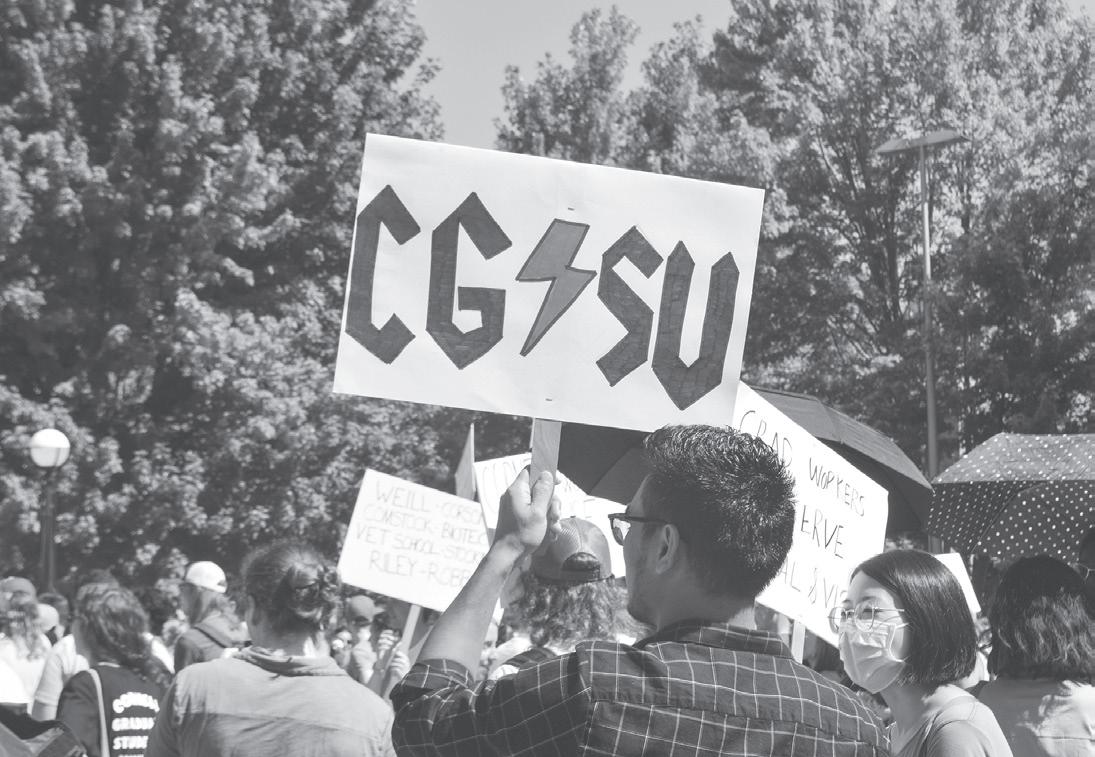
In recent months, Cornell Graduate Students United — an organization fighting for the rights of graduate workers at Cornell — led an effort to improve their working and living conditions for graduate student workers by holding an election for unionization, which ended at 9 p.m. on Wednesday, Nov. 8. Results have yet to be finalized as of Wednesday at 10 p..m.
CGSU’s efforts for unionization were initiated after an announcement was made that the organization would seek to unionize under the labor union United, Electrical, Radio and Machine Workers of America at a rally in front of Bailey Hall on Sept. 6. Following the event and over the course of September, over 2,500 graduate workers signed unionization cards, which CGSU claims was a supermajority of graduate workers at Cornell.
CGSU and UE filed a formal petition for representation with the National Labor Relations Board on Thursday, Sept. 28. CGSU requested Cornell “voluntarily recognize” the union as an exclusive bargaining representative for graduate students. UE also filed a petition for a union election with the NLRB the same day, and
negotiated a Stipulated Election Agreement with the University, which established details for when a union election will be held, according to the Cornell graduate student website.
Since the card drive and the announcement of the election, over 1,600 graduate students have pledged to vote yes in support of the upcoming unionization election. The CGSU hosted elections at the Ithaca campus from Nov. 6 to Nov. 8 as well as elections at the Geneva campus and at Cornell Tech in New York City on Nov. 6.
If the vote for unionization is successful, it would be a substantial milestone in the effort to improve working conditions
among graduate students. The last attempt at Cornell graduate student worker unionization was with the affiliation of the American Federation of Teachers union in 2017, which failed, 941 to 867.
Cornell was found to have violated the National Labor Relations Act during the 2017 union election process in a 2018 ruling. The University’s alleged violations of the NLRB resulted from an email from former Senior Vice Provost and Dean of the Graduate School Barbara Knuth, which was sent 24 hours before the election began.
To continue reading this article, please visit www.cornellsun.com.
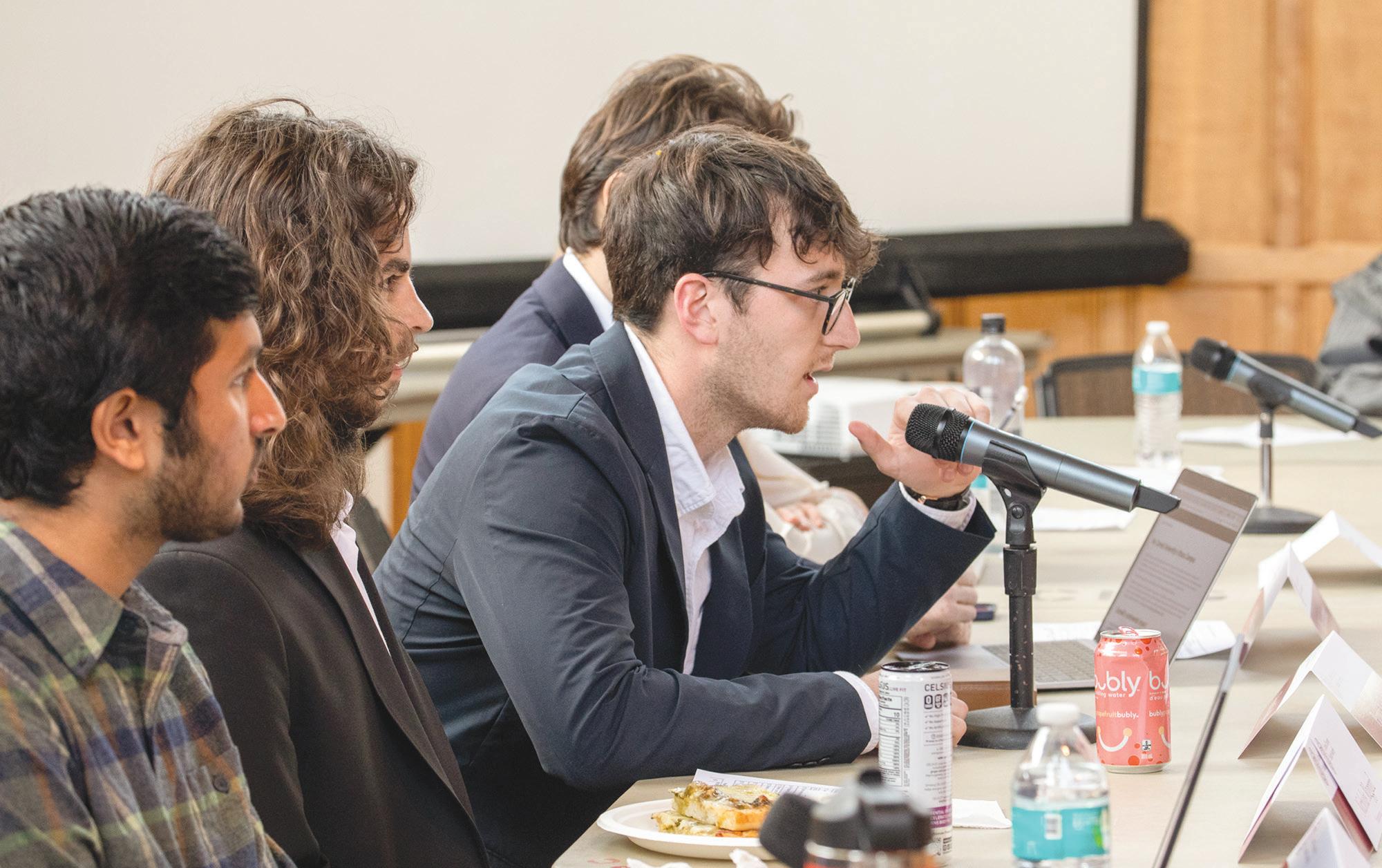
Pollack emphasized that counterstatements at the institutional level should be utilized “only rarely, in cases where the speech is truly egregious” at the Faculty Senate meeting. To Pollack, Rickford’s comments fit this definition.
“In my time as an administrator, only twice have I provided a counter statement to something that a faculty member had said. My response to Professor Rickford is the second such time,” Pollack said. “In my judgment, his comment was egregious. And it demanded a counter statement given its inconsistency with our core values.”
Pollack reaffirmed that the standard University procedures to respond to complaints would apply to Rickford.
Pollack emphasized that the University was not involved in Rickford’s decision to issue an apology for his comments, and Rickford decided to take a leave of absence, which was approved by the University.
This incident comes in the middle of the academic theme year of freedom of expression, which was initially established to counter book and classroom bans and efforts to shut down campus speakers. Pollack previously cited protecting academic freedom as the reason for rejecting a Student Assembly resolution in March 2023 which asked the University to provide “trigger warnings” when introducing sensitive classroom content.
POLLACK
Continued from page 3
To address concerns faculty have expressed about perceived attacks on academic freedom, Pollack read comments she made last week to the Board of Trustees.
“I’ve been very concerned with a growing chorus of voices calling for universities to step back from their fundamental commitment to free speech in light of recent events,” Pollack said. “This manifests itself in calls to ban hate speech. There is, of course, no such legal category.”
Pollack said that suppressing speech — beyond disallowing direct threats — is dangerous and ineffective since it brings up concerns regarding who should decide what counts as hate speech.
Pollack brought up the historical example of how Nazis were able to rise to power in the Weimar Republic despite laws suppressing speech. The Nazis were then able to utilize the same speech-suppressing laws to fit their aims once in power, Pollack said.
“Again, I recognize how painful hateful expression can be, especially like moments in the one we are in now. I recognize the desire to stop that speech,” Pollack said. “And again, I want to be clear that there is a difference between hate speech and hate crimes.”
Pollack noted that hate crimes, including the recent antisemitic threats against Jewish students posted on a message forum at Cornell, are “never tolerated.” In response to instances of hatred on campus, including these threats, the University needs to redouble its commitment to belonging and inclusion, Pollack said.
According to Pollack, the University will continue to respond effectively to all threats, provide support to impacted students, faculty and staff and develop educational material and conduct research regarding the prevention and response to hate speech and discrimination.
Pollack also noted that there are very rare cases in which speech is so offensive and hateful that the speaker can no longer fulfill their role at the University, but the bar for that is extremely high.
During the question and answer portion, Prof. Yuval Grossman, physics, who is Israeli, said that there is an extreme issue of anti-Israeli hate at the faculty level.
“Unfortunately, Professor Rickford is not the only one [expressing anti-Israel sentiments],” Grossman said. “We see it every day, in many classes. A huge amount of things that I would say [are] not true are actually taught to us [in an] extremely one-sided [manner]… What are your plans at the faculty level?”
Michael Kotlikoff, provost of the University, responded to Grossman’s concerns by acknowledging Cornell’s need for greater political diversity.
“I also think we have a challenge around political diversity on the campus, which is what I think you were highlighting. I would love to see a way in which we would expand the breadth of voices that we hear in our community,” Kotlikoff said. “I think the answer is more speech. Not indifferent speech, not less speech.”
Prof. Richard Bensel, government, said that he had a different viewpoint on Rickford than Pollack. Bensel underscored that regardless of sentiments regarding Russel’s comments on Oct. 15, Rickford spoke off-campus as a private citizen.
“No one who read that statement [made by Pollack and Kayser in response to Rickford’s comments on Oct. 17] could not fail to see that the central administration was warning Professor Rickford that he might be formally punished for his remarks,” Bensel said. “[My first concern] is the central administration’s intervention was a flagrant violation of academic freedom. The second [concern] is that formal condemnation by the central administration, figuratively, and perhaps unintentionally, put a target on Professor Rickford’s back, turning him into a potential object of verbal and social abuse.”
Pollack responded to Bensel’s concerns by plainly stating, “I think you and I just disagree on this.”
To continue reading this article, please visit www. cornellsun.com.
Julia Senzon can be reached at jsenzon@cornellsun.com.
KUEHL Continued from page 1
In what was previously an uncontested race, Jorge DeFendini ’22 (D-Fourth Ward) now finds his position on the Common Council in doubt following a write-in campaign by Cornell Student Assembly President Patrick Kuehl ’24. As of TK on Nov. 8, DeFendini has 28 votes and all write-in candidates have 12 votes.
Thirty-eight affidavit ballots and absentee ballots received after Friday, Nov. 3 have yet to be counted, according to the Tompkins County Board of Elections, which also informed The Sun that the votes for specific write-in candidates will not be tabulated until Wednesday, Nov. 15.
DeFendini said he learned about Kuehl’s candidacy — which did not have any public online presence — on election night. Kuehl also did not speak to media organizations prior to Wednesday, Nov. 8.
Kuehl told The Sun in an email that he chose to run because of his and other Ithacans’ dissatisfaction with the Solidarity Slate, of which DeFendini is part.
“I had no intention of running initially, but as it became clear to me that there were no other options at the current time, I agreed to be the candidate knowing that my future in Ithaca is uncertain; I have made that abundantly clear to both those involved with the campaign and the community members I have talked to throughout this process,” Kuehl wrote. “I believe that no person should run unopposed, ideas should be challenged and the people should be given a choice. If there is no opposition, there is no accountability to make the world a better place.”
The Solidarity Slate is a group of three democratic socialist candidates who share a platform that aims to center racial justice, improve access to quality housing and bring the community together to make joint decisions, according to the group’s website. The slate’s members are DeFendini, Kayla Matos (D) — who defeated Cynthia Brock (D-First Ward) for the First Ward’s four-year seat — and Phoebe Brown (D-Second Ward), who defeated Zach Winn (R) for the First Ward’s two-year seat. Tiffany Kumar ’24 (D-Fourth Ward) was once part of the slate, but lost its endorsement in 2022.
DeFendini, who has the potential to lose his seat over Kuehl’s writein campaign, told The Sun he was “surprised” upon learning of Kuehl’s campaign and decried Kuehl’s lack of publicity.
“Candidates have a responsibility to campaign openly, to debate ideas and engage the public before an election so that the voters have a right to know who and what is on the ballot,” DeFendini said. “I personally was surprised to find out about this write-in campaign last night, would have appreciated the opportunity to have a real contested election, but instead me and most of the Ward 4 residents were denied even an opportunity to engage.”
Kuehl’s choice not to publicize his campaign also drew condemnation from other Common Council members. Ducson Nguyen (D-Second Ward) said that although Kuehl did not keep his campaign a total secret — having gone door-to-door in the Fourth Ward in recent weeks — he still believed proper form was to run
a traditional campaign.
“I still think though, if your goal was to offer a choice to voters, that you do run something resembling more of a traditional campaign where you are putting your name out there in more traditional channels to maximize your outreach in a campaign for yourself,” Nguyen said.
Fellow Fourth Ward Common Council member Kumar — who sought and won re-election to the Fourth Ward’s two-year seat on the Common Council — said she was aware of Kuehl’s campaign, but refused to endorse another candidate.
“I did know about the writein campaign ahead of Election Day. However, I did not make any endorsements,” Kumar said. “I did think that it was good to have a robust democratic process with more than one voice in the selection. But I [have to] say, Patrick had to have done a real great job getting his name out there for him to have won or come close in this manner.”
Kuehl told The Sun he was “really surprised” that DeFendini and the Solidarity Slate did not find out about his campaign.
“I and those volunteering with me have been talking to students and canvassing for about a month and a half, though I did not talk to the press, had no campaign contributors and no website, my campaign was far from secret,” Kuehl said. “I am really surprised that the Slate did not find out earlier at which point I would have talked to the press.”
Kuehl also told The Sun he did not see a reason to publicize his campaign, saying it would not have changed his approach to the race in a written statement.
“I thought that the press would eventually talk about the possibility of a campaign either from someone we talked to or the significant increase in voters registered in the ward — at which point I [would have commented],” Kuehl said. “But I didn’t see any need to speak before then — it wouldn’t have changed the conversations we were having.”
Though The Ithaca Voice originally reported Wednesday that Kuehl’s campaign was aided by Clyde Lederman ’26 — who currently trails Jason Houghton, an information technology product manager at PNC Bank by 23 votes for the Fifth Ward’s two-year seat — Lederman told The Voice that he did not have any involvement in Kuehl’s campaign.
Kuehl also denied any involvement from Lederman in his campaign. The two serve together on the S.A., where Kuehl is the president and Lederman is the clerk for the Office of the Assemblies.
“Mr. Lederman, while a friend, had nothing to do with this campaign,” Kuehl said. “He was just running his race at the only polling place in both Wards Four and Five.”
Alice Cook House on West Campus is the only polling station for both the Fourth and Fifth Wards.
However, an anonymous source told The Sun in an interview that Lederman and Kuehl — along with Kumar — had been coordinating during the Fall 2023 semester. The source said they were present at some, but not all of these meetings. To continue reading this article, please visit www.cornellsun.com.
Jonathan Mong can be reached at jmong@cornellsun.com.

By DANIELA ROJAS Dining Editor
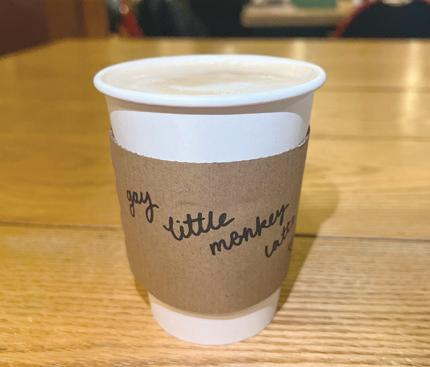
After plenty of all-nighters, I walked up to the ordering window in Green Dragon Cafe, located on the basement level of Sibley Hall, craving a drink with caffeine and warmth. Excitedly, I read over the menu board, wanting to get something new. I ended up trying a mysterious new drink called the “gay little monkey latte.” I have no regrets.
This “mystery” drink was created by AAP student and Green Dragon barista Hamza Ayad ‘26. Although Ayad emphasized that the ingredients would not be publicly known until the drink was no longer being offered, I found the creative recipe behind the drink oddly exciting. The concept is equally unique, fun and empowering. Personally, I enjoy a “secret menu.” Coming from California, food joints like “in-n-out” have created an appreciation and interest in “exclusive” creations.
Additionally, the monkey drawn on the menu is not random, contrary to what I thought. The design for the menu listing of this drink was inspired by a podcast that Ayad enjoys, Emergency Intercom. The podcast referenced a meme from 2010 named “Gay Little Monkey Boy At Apple Store,” titled such because people observed
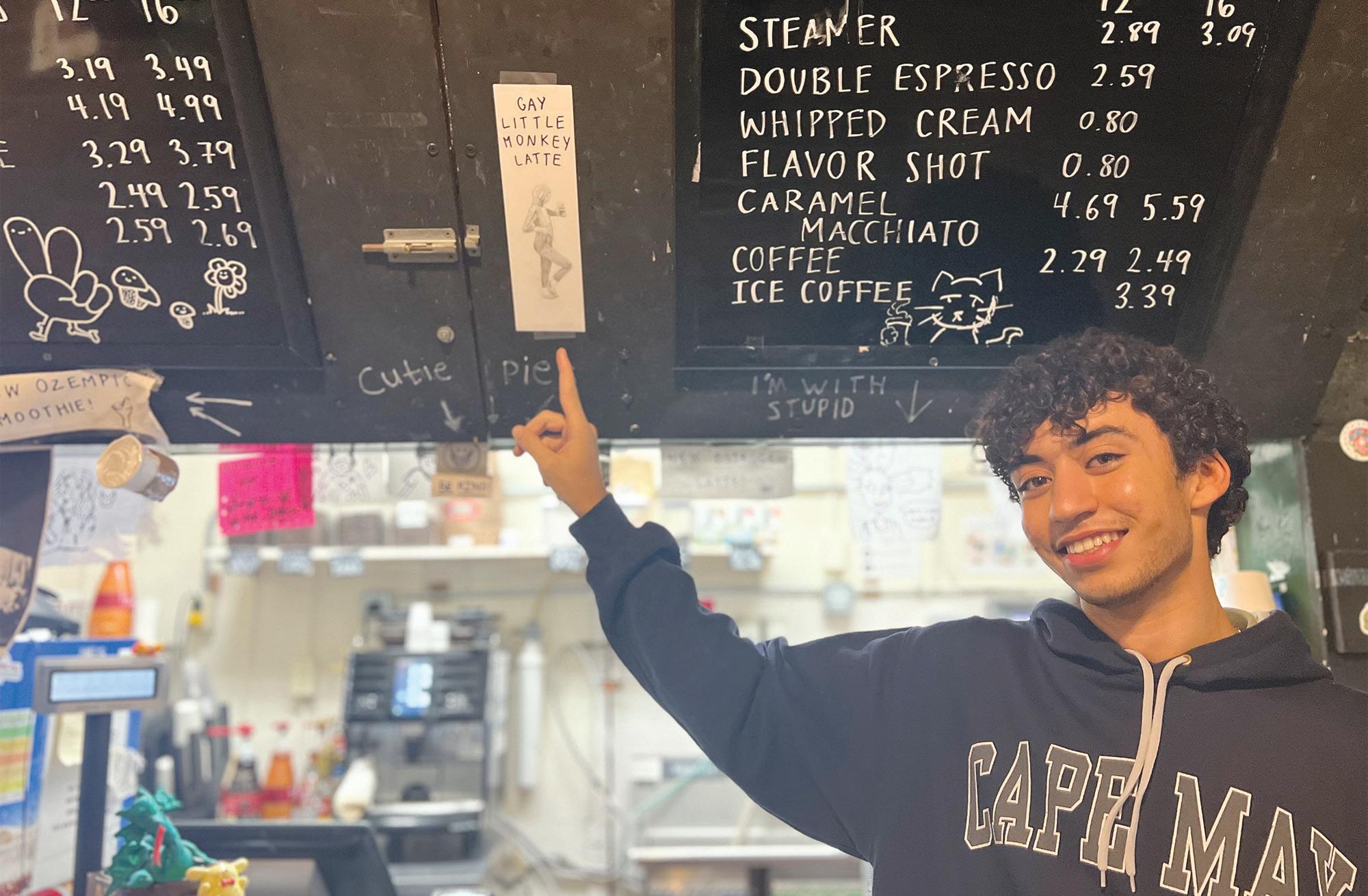
that the boy was standing in a stereotypically “gay” stance.
Some might view a drink like this as funny or unnecessary. Sure, it's not something that will change people's lives. Instead, embracing creativity and even playing off of stereotypes plays into a more critical concept: creating a safe space for students, particularly queer students. Seeing a drink named such in a public cafe on campus sends a message to students: you can be creative and do whatever you want. This is a safe space. Nothing is too "out of the ordinary." The power is in the presentation and advertising.
However, this makes all the difference. Such blends in perfectly with the vibes Green Dragon emits: creative and cozy, with funny drinks advertised that are unnatural. It's just for laughs, such as the "Ozempic smoothie." Ironically, I asked if the "gay little monkey latte" was real at first. Sometimes, when I'm not having the best day, little things that make me laugh amidst the intimidating environment of an elite institution like Cornell can make all the difference.
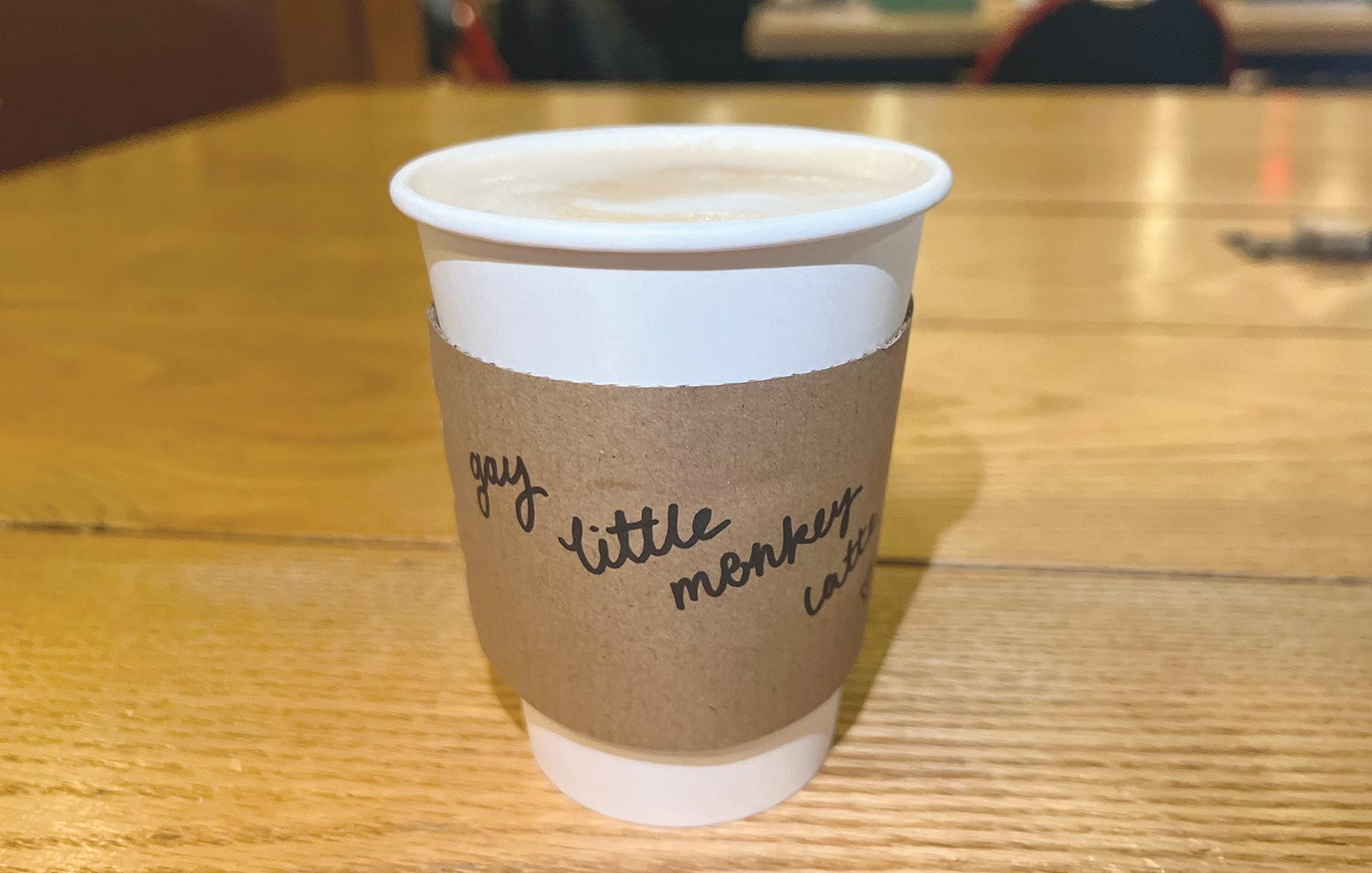
With a smile, Ayad walked over to my table and handed me the drink, telling me that I was the first person to order the drink and that my order came with a personal delivery. The sleeve had "gay little monkey latte" written in cursive. Ayad was unaware that I was the dining editor at the Sun during this interaction. I felt so warm and happy to have a fun and new experience at a cafe on campus.
Upon receiving the drink, I felt joyful. The excitement of trying something new. All I knew was that it was some kind of oat milk latte. Given that it's a latte, it has espresso shots and oat milk steamed and blended. I confirmed the oat milk because that's my milk of choice for personal and medical reasons. A friend pointed out that oat milk is the "gayest milk," so it's only fitting.
I'm aware that there is no such thing as "gay milk." I'm referring to how certain foods mean different things to different groups. Oat milk being "queer" is something you might see often on social media sites and amongst Reddit threads. It's the concept of taking ownership of stereotypes and humor, finding common ground, and making the room safe for any orientation, identity, or background.
When it came to the mystery flavors in the drink, I had an epiphany: I do not know coffee as well as I thought I did. I don't often have flavored espresso drinks, usually opting for unsweetened options. The espresso smell and taste were strong, but so were the sweet, delectable hints dancing amongst my taste buds.
My first thought was a take on a mocha (which is essentially hot chocolate and a latte in one): chocolate and hazelnut shots. However, another item on the Green Dragon "secret" menu has those ingredients. They offer a drink called "Nutella latte:" a latte with chocolate and hazelnut shots. I've ordered that drink before, and it's one of the few sweet coffee combinations I love now.
The gay little monkey latte was not the Nutella latte, but the flavors seemed similar. I considered vanilla but then realized the drink tasted like nutty vanilla extract. My theory is such: the gay monkey latte is vanilla and hazelnut flavored. I don't have any theoretical reasoning for this other than my taste buds, so feel free to visit Green Dragon and order the drink to see for yourself!
I realize that only some people are in a position to order a drink with unknown flavors and ingredients, possibly due to medical conditions. That's a huge privilege I have. My only recommendation for this drink is that the allergens are listed when ordering for accessibility.
Other than that, I rate this drink 5/5 stars. Even if future drinks on a "secret" menu aren't a "mystery," they’re still worthwhile because creativity is significant. On campus, I scan my world for crucial phrases and pictures related to my interests and
identities, helping me realize I'm not alone. Thank you, Hamza, for sharing your creativity at work. I'm honored to have been the first to have a gay little monkey latte: despite the flavors being secret, it’s no secret that the gay little monkey latte is a delightful, tasty and inclusive conversation starter.
Daniela Rojas (she/her), dining editor, is a third-year student in the College of Arts & Sciences. She can be reached at dwise-rojas@cornellsun.com.
Are you hungry... for more tasty content?
Have satisfying, perhaps salivating, suggestions?
Let us know!
Contact: food@cornellsun. com.

KATIE CHEN ’25
Business Manager
SHEILA YU ’25
Advertising Manager
NOAH DO ‘24
Associate Editor
HUGO AMADOR ’24
Opinion Editor
JONATHAN MONG ’25
News Editor
JULIA SENZON ’26
News Editor
JULIA NAGEL ’24
Photography Editor
GRAYSON RUHL ’24
Sports Editor
TENZIN KUNSANG ’25
Science Editor
JOANNE HU ’24
Assistant News Editor
MARISA CEFOLA ’26
Assistant News Editor
MAX FATTAL ’25
Assistant Arts & Culture Editor
MING DEMERS ’25
Assistant Photography Editor
KATE KIM ’24
Layout Editor
ISABELLE JUNG ’26
Graphics Editor
VEE CIPPERMAN ’23
Senior Editor
ESTEE YI ’24
Senior Editor
PAREESAY AFZAL ’24
Senior Editor
SOFIA RUBINSON ’24
Managing Editor
GRACE XIAO ’25
Web Editor
AIMÉE EICHER ’24
Assistant Managing Editor
UYEN HOANG ’25 Assitant Web Editor
ANNA LIANG ‘24
Assistant Advertising Editor ERIC REILLY ’25
GABRIEL MUÑOZ ’26
NIHAR HEGDE ’24 Arts & Culture Editor
DANIELA ROJAS ’25 Dining Editor
RUTH ABRAHAM ’24
MEHER BHATIA ’24
MARIAN CABALLO ’25 Assistant News Editor
CARLIN REYEN ’25 Assistant News Editor
KIKI PLOWE ’25
Assistant Arts & Culture Editor
CLAIRE LI ’24
Assistant Photography Editor
DAVID SUGARMANN ’24
ELI PALLRAND ’24
JASON WU ’24
Joseph Margulies is a civil rights attorney and Professor of Law and Government in the College of Arts and Sciences. His research focuses on the American criminal justice system, cruelty and inequity. He can be reached at jm347@cornell.edu.
Ihave been at Cornell for 10 years and in academia for two decades and have never seen so many students in so much distress. A great many Muslim and Arab students feel unseen, unheard and unsafe. More recently, their ranks have been swelled by the many Jewish students who feel the campus has become menacing. And of course, the person suspected of sending the sickening anti-Semitic postings is Asian, so we gird ourselves for a wave of anti-Asian hate.
If the campus is a community, then the right to speak must be accompanied by the duty to repair. It does no disservice to freedom of expression to expect that those who have caused injury listen to — and genuinely hear — those they have injured in order that they might understand the pain they have caused and the harm they have done. That is why the University should pursue a response that is grounded in the principles of restorative justice.
’24
Layout Desker Angela Bunay ’24
Daniel R. Schwarz is the Frederic J. Whiton Professor of English Literature and Stephen H. Weiss Presidential Fellow in the College of Arts & Sciences. He is Te Cornell Daily Sun’s 2023 visiting columnist. He can be reached at drs6@cornell.edu.
When I arrived at Cornell in 1968 as a young assistant professor, I encountered some resistance as a supposedly aggressive, outspoken New York Jew who spoke with a downstate accent and who didn’t know the rules of oblique and understated expressions of opinion. I was reminded on occasion that I didn’t know my place.
Although only a small number of faculty in the Cornell College of Arts and Sciences were Jewish, I had the sense that we had more Jews than the other Ivy League institutions. After they got to know me, a few of the Jews shared their own unpleasant experiences, including negative tenure decisions elsewhere stemming from their Jewish identity. Some who had Jewish antecedents but who did not publicly identify as Jews were very quiet about their heritage.
Recently, within the world of higher education there has been some backsliding. It has become fashionable in some supposedly progressive circles to revive the
stereotype of Jews as brash, overtalking and manipulative, even while linking Jews to slavery, or blaming them for “globalism” which on both the right and left has become a trope for transnational conspiracies controlled by Jews in media and finance. In the university world, I have heard the linking of Jews to the hegemony of white males, as if Jews could be lumped with those who dominated U.S. universities in the years before and after World War II. In fact, in my experience here and my knowledge of peer institutions, Jewish academics were often the very ones who fought to open the doors to women, racial and ethnic diversity, and the LGBTQ+ community.
I am loathe to support limitations on free speech. But we do need to be vigilant about confusing a legitimate debate about the Israel-Palestinian conflict with stereotypes about Jews or labelling Jews on campus who support the state of Israel as racists or Nazis. We need be attentive to the vituperations of those who have long vilified Israel...
To continue reading this article, please visit www.cornellsun.com.
Meanwhile, there was a report last week of a man carrying a gun just off campus, and armed security officers began to patrol White Hall, where I work and which houses the Government Department and the Department of Near Eastern Studies. There was an arson recently in the bathroom down the corridor from my office. CUPD says the report of a gunman was “unfounded,” but the officers remain.
The pain is not identical for all who suffer; pain never is. Jewish students feel anew what Muslim and Arab students have felt for some time. It is a sense of isolation that gives way to insecurity and fear. But it is sharper for being newly felt, and their trauma is real. Muslim and Arab students are reminded every day of their distinct marginalization. As I wrote this, President Pollack released another statement: “[O]n Sunday night, shortly after we learned of the threats, I went to sit with our Jewish students at the Center for Jewish Living and I returned the next morning with Governor Hochul, and for dinner that evening. It was so heartening to spend time with our students, who expressed strength and resilience even in the face of these awful threats.”
Perhaps it need not be said, but the President and Governor have not broken bread with our Muslim and Arab students, who have all but abandoned the hope that the solicitude extended to distressed Jewish students will also be extended to them. In place of universal solicitude for shared pain, we engage in morally vacuous debates about whose pain came first and whose suffering is more grievous, as though empathy and compassion were zero-sum.
Some trace our problem to confusion about the difference between protected and unprotected speech. I agree that many people need a refresher on this score, but ending their ignorance will not solve our problem. The problem is that we have wounded each other — as much by protected speech as by unprotected conduct. These wounds cannot be left to fester and cannot be healed by the exercise of rights.
Restorative models have a long history. In their modern form, they operate alongside, and sometimes in lieu of, formal processes like the criminal legal system — processes that aim to cast out rather than bring back, to punish rather than repair. Importantly, they are not a place to “win” arguments. They are not a moment to prove who is right or wrong about a particular topic, and they do not replace vigorous public debate about contentious issues.
Instead, they are an opportunity to redress harms by bringing together those who have been injured with those who have injured them in a safe environment that guarantees the dignity, respect and privacy of all. Guided by professionally trained facilitators, restorative models look backward to repair the harm that has been done, and forward to build practices that make harm less likely in the future, regardless of the topic.
I come to restorative models because of my work in and with the criminal legal system. But at times like this, it is not my work that draws me to these models. I write as a Jew who believes in Israel’s right to exist, and who condemns without reservation or hesitation the slaughter of civilians. I write as a human rights lawyer who believes Israel’s behavior in Gaza and the West Bank is and has long been horrific. I write as a teacher, who every day sees young people in great distress.
But most of all, I write as a human being, who long ago concluded that the evil upon which all others are built — the scaffolding from which every Black man has ever swung and the chamber within which every Jew has ever been gassed — is the toxic belief that They are not like Us, and that our safety comes from their annihilation. Lately, thinking like this abounds, on campus and beyond. Restorative models set themselves against this madness, proclaiming that there is no them, there is only us, and that the security of each depends on the wellbeing of all. This message, at once simple and profound, has never been more important, and not just at Cornell.

Fill in the empty cells, one number in each, so that each column, row, and region contains the numbers 1-9 exactly once. Each number in the solution therefore occurs only once in each of the three “directions,” hence the “single numbers” implied by the puzzle’s name. (Rules from wikipedia.org/wiki/ Sudoku)

By AVA MALKIN Sun Contributor
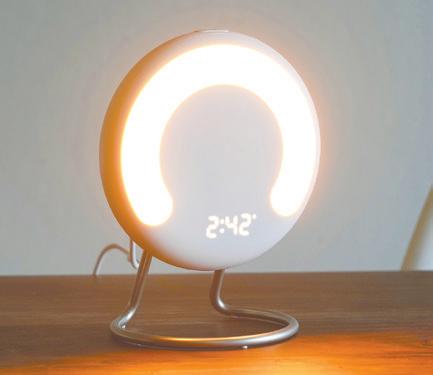
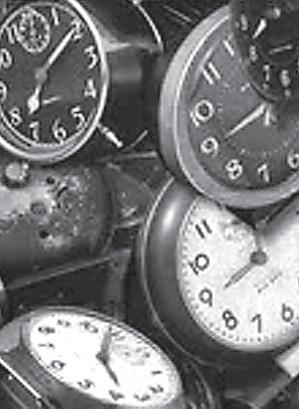
As of Nov. 5, daylight saving time — the period when clocks shift forward in early March, originally intended to conserve energy by providing more daylight and eliminating the necessity for excess artificial light — has come to an end, and the clocks have shifted an hour backwards to standard time.
Though much of the mainstream media, particularly policy makers, debate the usefulness of this time change, the arguments on either side can be clarified by its biological impacts on humans — something traced back to circadian rhythms.
The transition back to standard time — the time zone utilized during winter and early spring — is argued to have larger health implications. Some scholars speculate that this time shift may correlate with seasonal depression, cardiovascular impairments/heart attacks, car crashes and potential stroke.
Many agree that lethargy follows time switches and earlier darkness, according to the American Academy of Sleep Medicine, which noted that 55 percent of individuals admit to feeling tired after the transition.
These associated effects are linked to circadian rhythms, the body’s internal biological clock responsible for the behavioral, physiological and molecular changes that can happen over the course of 24 hours.
According to Prof. Brian Crane,

chemistry and chemical biology, circadian rhythms are a “highly conserved timing device” that pertains to the “molecules inside the cells [that] basically create an oscillator that oscillates within about a 24 hour period.”
This internal clock functions relative to environmental stimuli, impacting the sleep- wake cycle as well as eating patterns, digestion, body temperature, hormones and other bodily mechanisms. The circadian rhythm system works molecularly via protein synthesis. According to Crane, around
five to 10 percent of genes expressed in a human organ will be under circadian control.
These genes encode for proteins that regulate the circadian system. This regulation is important because protein cycles oscillate throughout the day relative to one’s surroundings, particularly light stimuli. In other words, the sleepwake cycle is set by the amount of light coming into the nervous system, which is why we get more tired when it is dark.
Crane explained that, despite the fact that scholars are not sure
how light stimuli changes protein synthesis molecularly, they understand that light, the largest repetitive stimuli on the planet, is a major factor that creates the 24-hour cycle.
“Although we don’t really understand how this happens, we know that when they’re exposed to light, it causes them to do this transcriptional activation,” Crane said.
This then leads into the impact of a time change, as altering the clocks also transforms the body’s access to light, thereby impacting its molecular-biological oscillations.
In the case of returning to standard
time, this circadian rhythm is how our body adapts.
When the environmental stimuli, specifically light, is out of sync with the previously normal patterns of the circadian feedback loop, it takes one to two days for these mechanisms to shift back and for the body to properly coordinate, Crane explained.
This adaptation is considered a ‘reset’ which can occur at different times in relation to specific body parts.“It turns out that the ‘clocks’ in your eyes and your brain, which are the ‘master clocks’ closest to light stimuli, are reset pretty quickly,” Crane said.
The rest of the body, however, does not adjust as fast, causing potential sluggishness. This one hour difference can cause an almost jet-lagged feeling when portions of the stomach, intestine and liver are out of sync with the eyes, brain and external environmental timing.
For undergraduate students in particular, this slight misalignment due to the time change may not be of such grave concern.
Crane noted the term “social jetlag,” which occurs when young individuals alter their sleep schedules on the weekends, which, despite having some indications of decreased productivity and creativity, provides evidence for the ability to adapt to various times and sleep schedules in the young generation.
To continue reading this article, please visit www.cornellsun.com. Ava Malkin can be reached at ahm254@cornell.edu.
By KAITLIN CHUNG Sun Staff Writer
Researchers of the Li Lab, led by Prof. Sijin Li, chemical and biomolecular engineering, recently developed a new yeastbased screening method to identify key enzymes that synthesize medicinal compounds in plants.
Many commercially available drugs are derived from natural compounds made in plants, including aspirin, morphine, and some types of chemotherapy. Identifying the biosynthetic pathways to obtain these compounds is of great pharmaceutical significance, but existing methods have limited efficiency, according to Li.
Currently, scientists analyze plant transcriptomes, the gene products in a cell, to identify hundreds of genes that could potentially code for proteins of medicinal interest. They then must biochemically determine the function of each gene with specific substrates and reaction conditions.
At Cornell, the Li Lab has developed a new technique, which expands upon existing methods, that uses genetically-engineered yeast to predict the biosynthetic pathways at the protein level by examining protein-protein interactions.
“We chose yeast for several reasons,” said co-first author Chang Liu, a grad student in the Li lab. “For one, yeast has a quick turnaround time — we can grow it in one day and use it for experiments. Another reason is that our lab has a lot of
tools to engineer yeast.”
After using transcriptomics to identify proteins of interest, the researchers engineered the genes of interest into the yeast to see which ones produce proteins that interact with one another. This genetic engineering strategy allows many copies of the genes to be made as the yeast replicates, enabling the researchers to track gene products. Experiments were then conducted to confirm these protein interactions.
In these experiments, proteins were labeled with a special kind of light called fluorescence and viewed under a microscope to see which ones associate with one another.
technique using kratom leaves. Kratom is a Southeast Asian tree that produces a compound called mitragynine, a morphine alternative with understudied pharmaceutical potential, according to Li.
“[Kratom] has less potential to induce dangerous respiratory depression, which is the reason why morphine and opioid derivatives can be lethal,” Li said. “Our goal is to use our technology to produce [mitragynine] and further engineer it so that it can ultimately create a next-generation painkiller.”
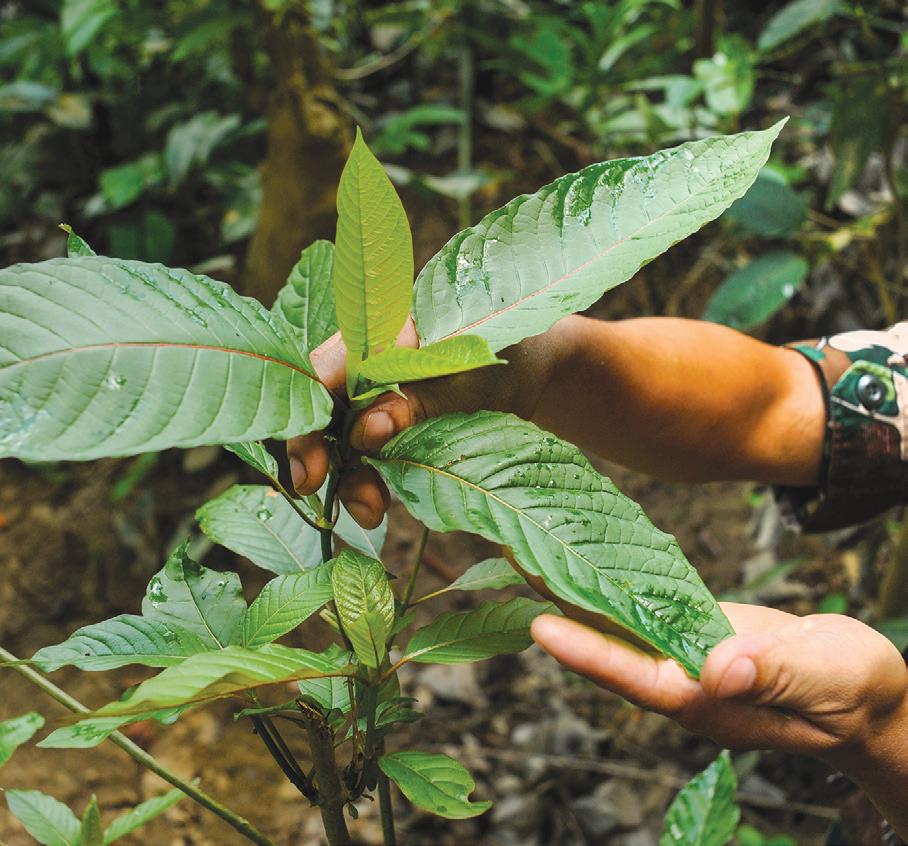
Overall, this method significantly reduced the number of genes that need to be biochemically characterized and can save time and financial resources, according to Liu.
The researchers demonstrated the
To identify the biochemical pathways of mitragynine, the researchers screened 20 enzyme candidates in kratom with their yeast-based technique. They predicted that six of these enzymes would produce mitragynine and other targeted chemicals. Additional biochemical testing confirmed four of the six enzymes are functional,
which makes them relevant for further study.
The timeline of the study began in early 2021, when Yinan Wu, postdoc in the Li lab and co-first author of the study, conducted transcriptomic analysis to predict kratom enzyme candidates. Wu was then able to characterize protein activity, and the lab identified the chemicals of interest in 2022, wrapping up and publishing the study in 2023.
Ultimately, Li is optimistic about the broad applications of this technology in future drug discovery and clinical research.
“There is an interest in clinical trials with kratom-derived medical products, but it is difficult to isolate the pure chemical, and when the chemical is not pure, it can still lead to side effects,” Li said. “Our technology opens the gates to largescale production of pure compounds to advance clinical trials.”
The Li Lab will continue to pursue this trajectory of work, integrating new techniques, such as a cell characterization technology called flow cytometry, to further streamline their biochemical characterization method for the identification and extraction of medicinal plant properties. Li noted that they are also collaborating with other researchers at Cornell to study the biological activity of the chemicals the lab produces.
Ava Malkin can be reached at ahm254@cornell.edu.