CXO Outlook www.cxooutlook.com is a global knowledge sharing digital platform published by Connecta Innovation Private Limited. All rights reserved. The opinions expressed in the content and pictures provided are those of the authors. They do not purport to reflect the opinions or views of Connecta Innovation Private Limited or any of its members and we do not assume any responsibility. The publisher does not assume any responsibility for the advertisements, its content, pictures, and all representation of warranties made in such advertisements are those of the advertisers and not of the publisher. CXO Outlook www.cxooutlook.com is a Free Subscription and Free-to-read digital platform strictly not for sale and has to be strictly for internal private use only. Publisher does not assume any responsibility arising out of anyone modifying content and pictures, printing a copy of this digital platform in any format and in any country and all matters related to that.
When Business Shakes Hands with Society
Not long ago, the unspoken rule of business was simple: deliver results, and everything else would fall into place. Today, that rule feels worn out. Across boardrooms and factory floors, a quieter but firmer question is being asked: Who are we really responsible to when we make decisions? Regulations are tightening, public scrutiny is sharper, and trust, once shaken, is painfully slow to rebuild. I was reminded of this shift in thinking during a recent conversation with a young manager who said, quite simply, “People don’t leave companies anymore. They leave what the company stands for.” That single line captures the mood of our times. With a growing portion of the global workforce now expecting employers to act responsibly on social and environmental issues, the old contract between business and society is clearly being rewritten. It is in this context that our December cover story gains its meaning. In our exclusive interview
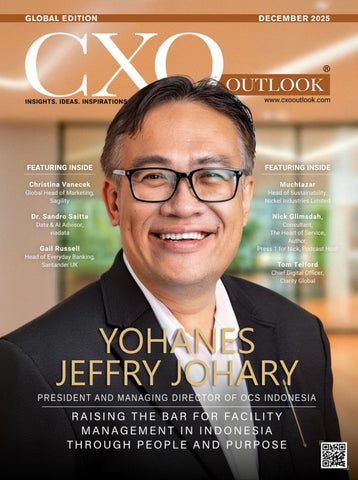
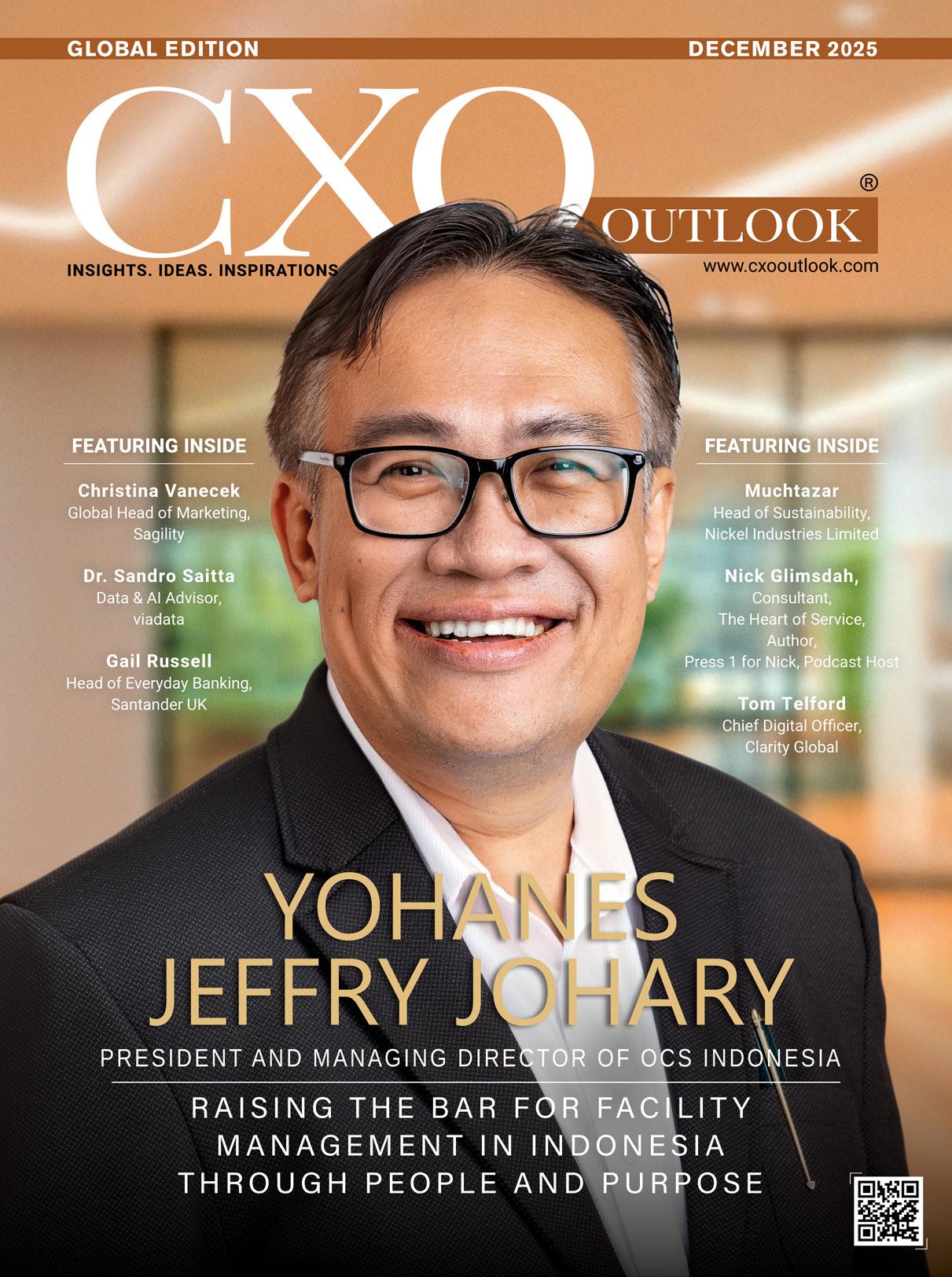
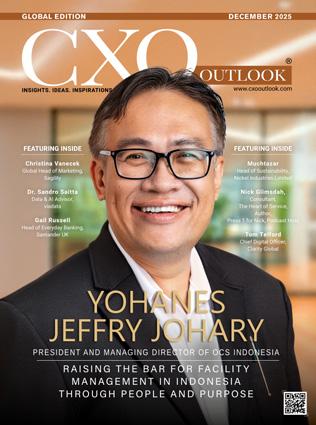
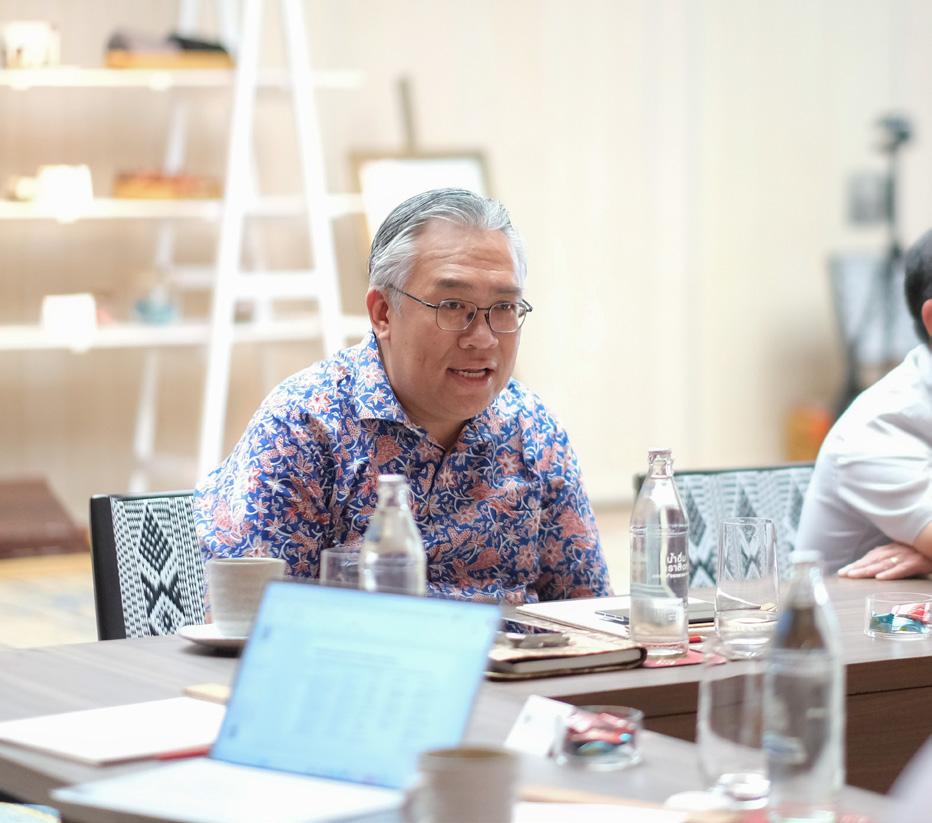
with Yohanes Jeffry Johary, President and Managing Director of OCS Indonesia, we witness leadership in its most grounded form. Steering a national workforce of 13,000 people across more than 1,800 sites is a test of operational strength. Yet what makes Jeffry’s journey compelling is his steady shift from strict financial discipline to people-centered transformation at scale. His work with BritCham and AmCham
reflects another truth of modern leadership: CXOs are now expected to engage not just with markets, but with society, policy, and long-term impact. His story is a reminder that credibility is built slowly, through everyday choices that put both people and purpose at the center.
Beyond the cover, this issue of CXO Outlook Magazine features a range of perspectives on leadership, responsibility, growth, and change. Together, they reflect the many ways today’s leaders are rethinking what success truly means.
As we close the year, one thing is clear. The new social contract between business and society is no longer a future idea. It is the present reality. The leaders who will endure are those who understand that profit and purpose are no longer rivals. They are partners. I invite you to dive into this issue with curiosity, reflect deeply, and lead boldly into the year ahead.
Enjoy Reading.
Sarath Shyam
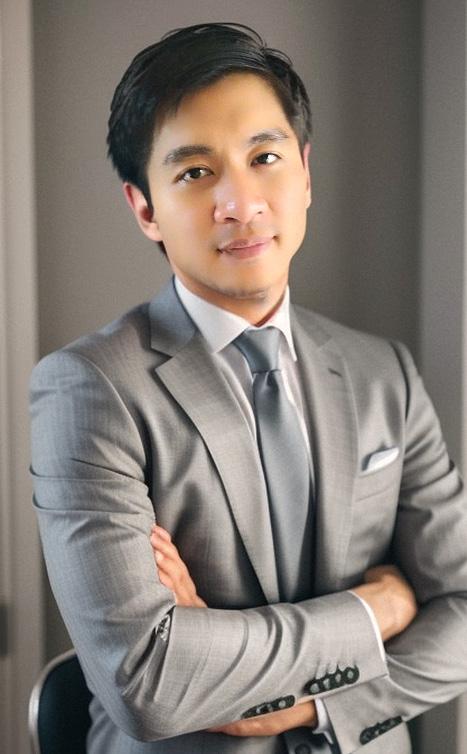
YOHANES JEFFRY JOHARY
PRESIDENT AND
MANAGING DIRECTOR OF
OCS INDONESIA
RAISING THE BAR FOR FACILITY MANAGEMENT IN INDONESIA THROUGH PEOPLE AND PURPOSE
48
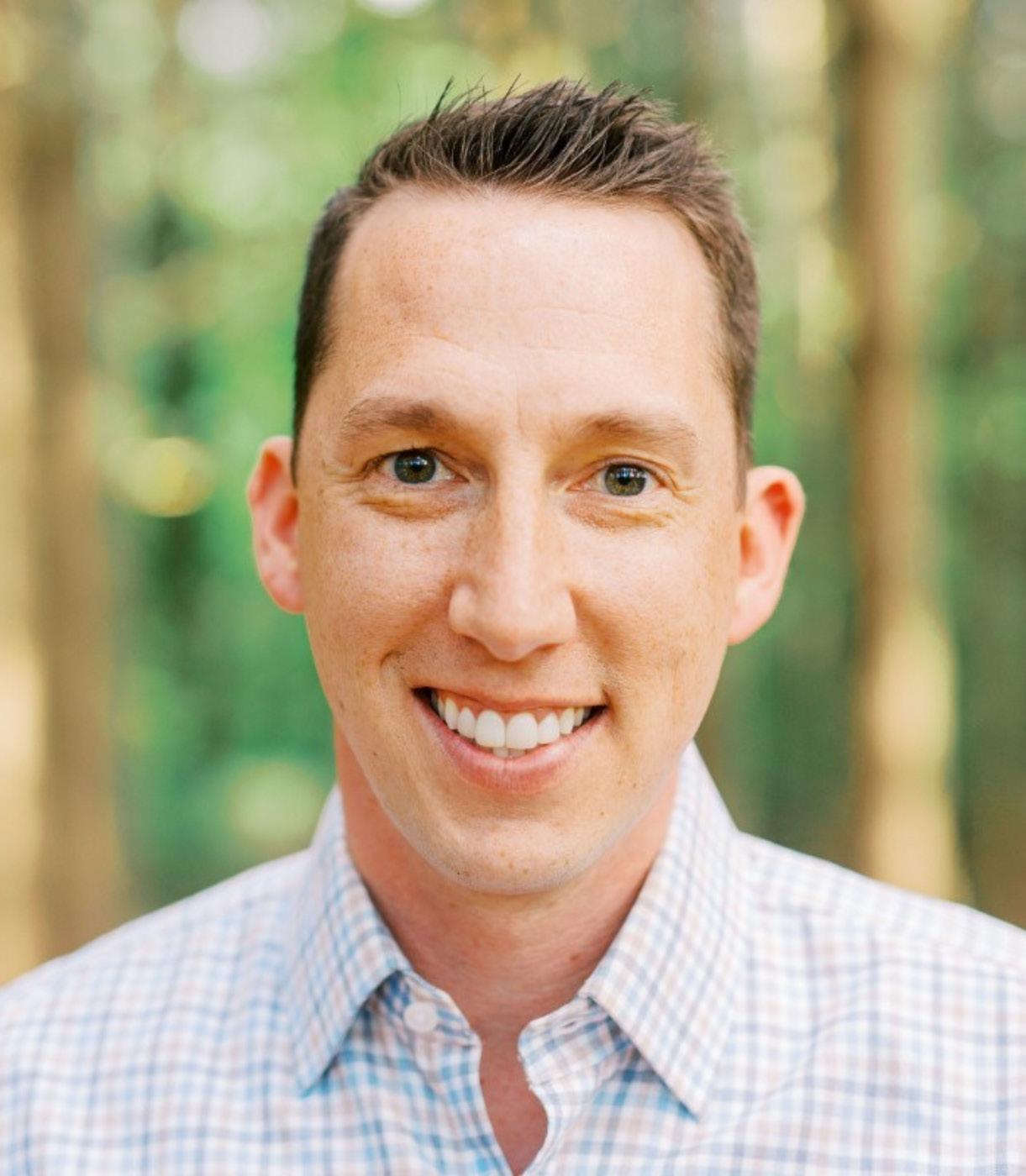
Dr. Sandro Saitta, Data & AI Advisor at viadata & Author, The Data-Driven Leader. Beyond the Hype: The Data-Driven Leader's Playbook for Real-World Impact
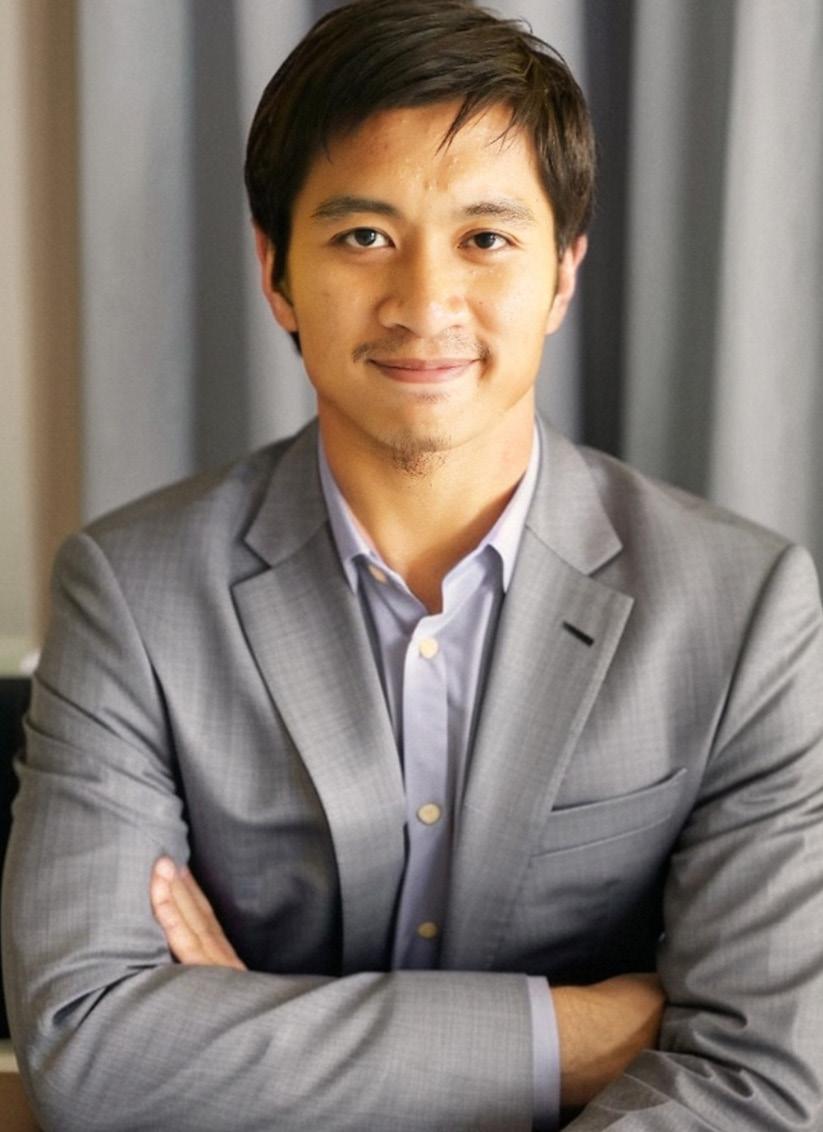
Tom Telford, Chief Digital Officer, Clarity Global The New Playbook for B2B in the AI Era
Nick Glimsdah, Consultant, The Heart of Service, Author, & Press 1 for Nick, Podcast Host Empowering Innovation in Customer Experience
34
Turning ESG Pressure into Industry Strength
Muchtazar, Head of Sustainability, Nickel Industries Limited
Christina Vanecek, Global Head of Marketing, Sagility
Transforming Marketing with AI and Personalization 38
44
Simplifying Banking for a Better Tomorrow
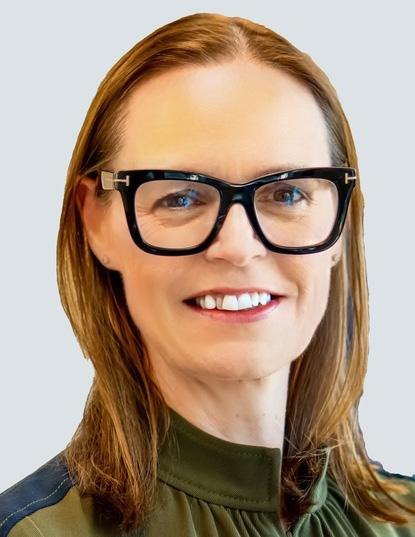
Gail Russell, Head of Everyday Banking, Santander UK
Wa n t t o S e l l o r fi n d
I nve s t o rs f o r yo u r
B u s i n e s s ?
YOHANES JEFFRY JOHARY
PRESIDENT AND MANAGING DIRECTOR OF OCS INDONESIA
RAISING THE BAR FOR FACILITY MANAGEMENT IN INDONESIA THROUGH PEOPLE AND PURPOSE
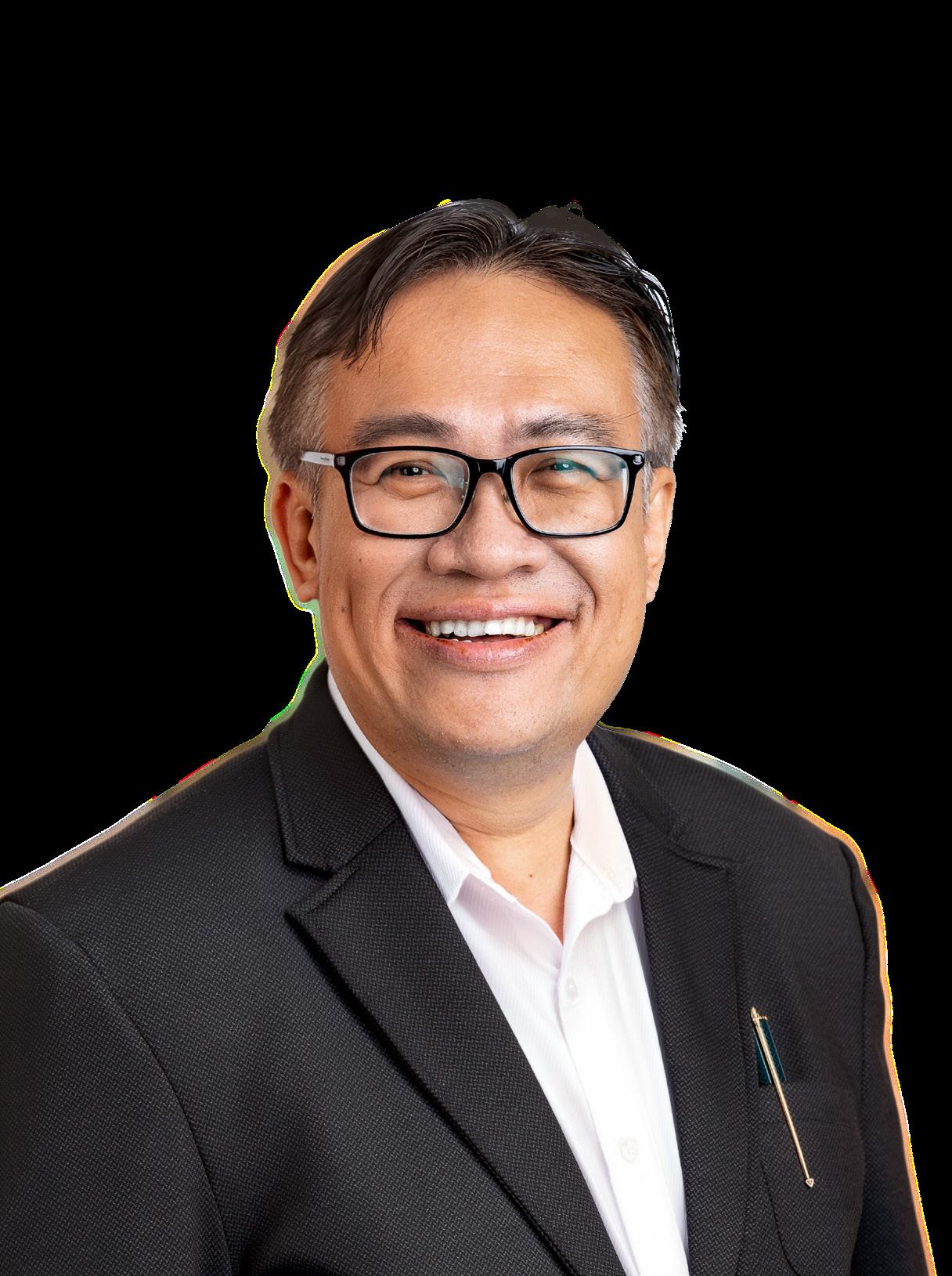
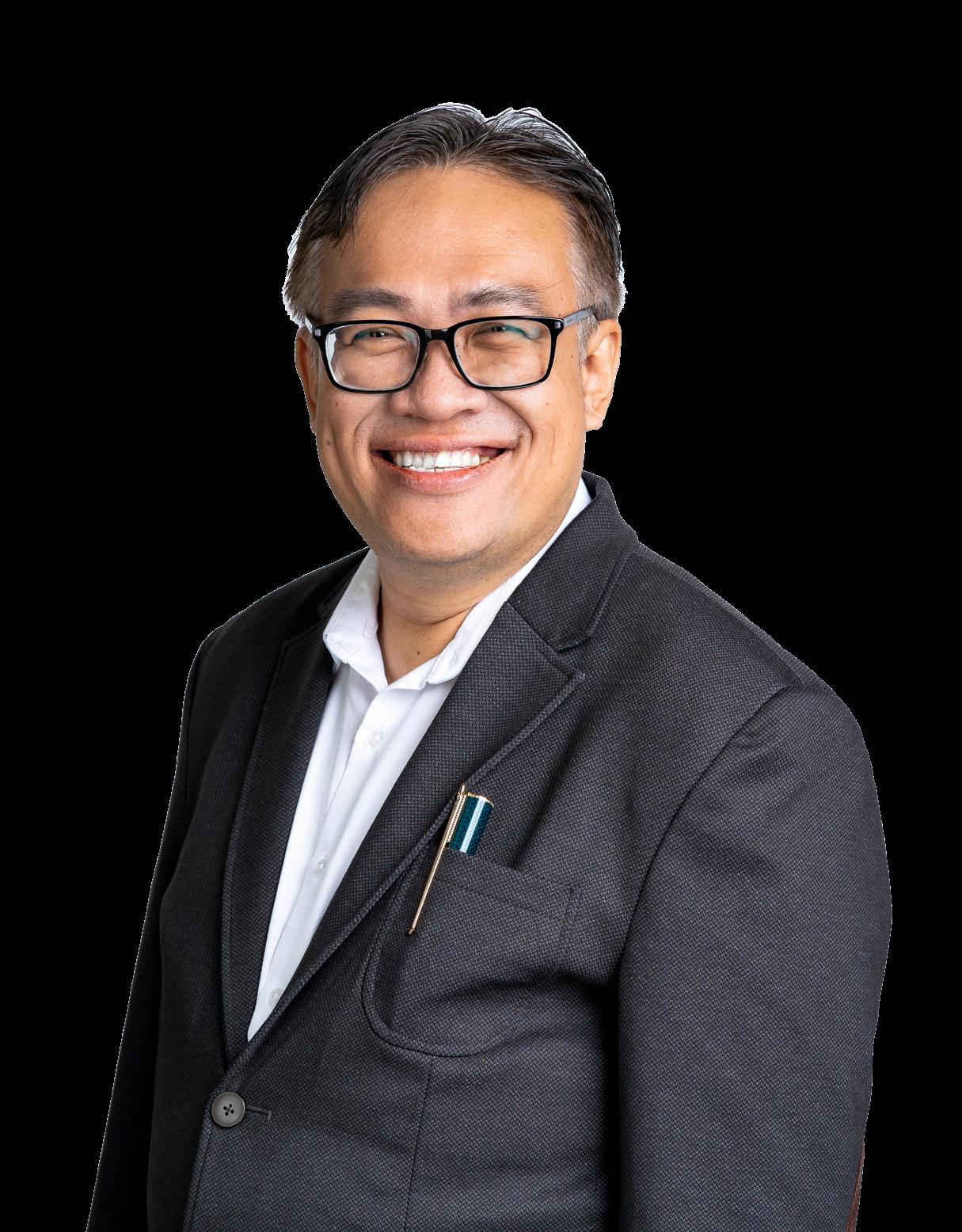
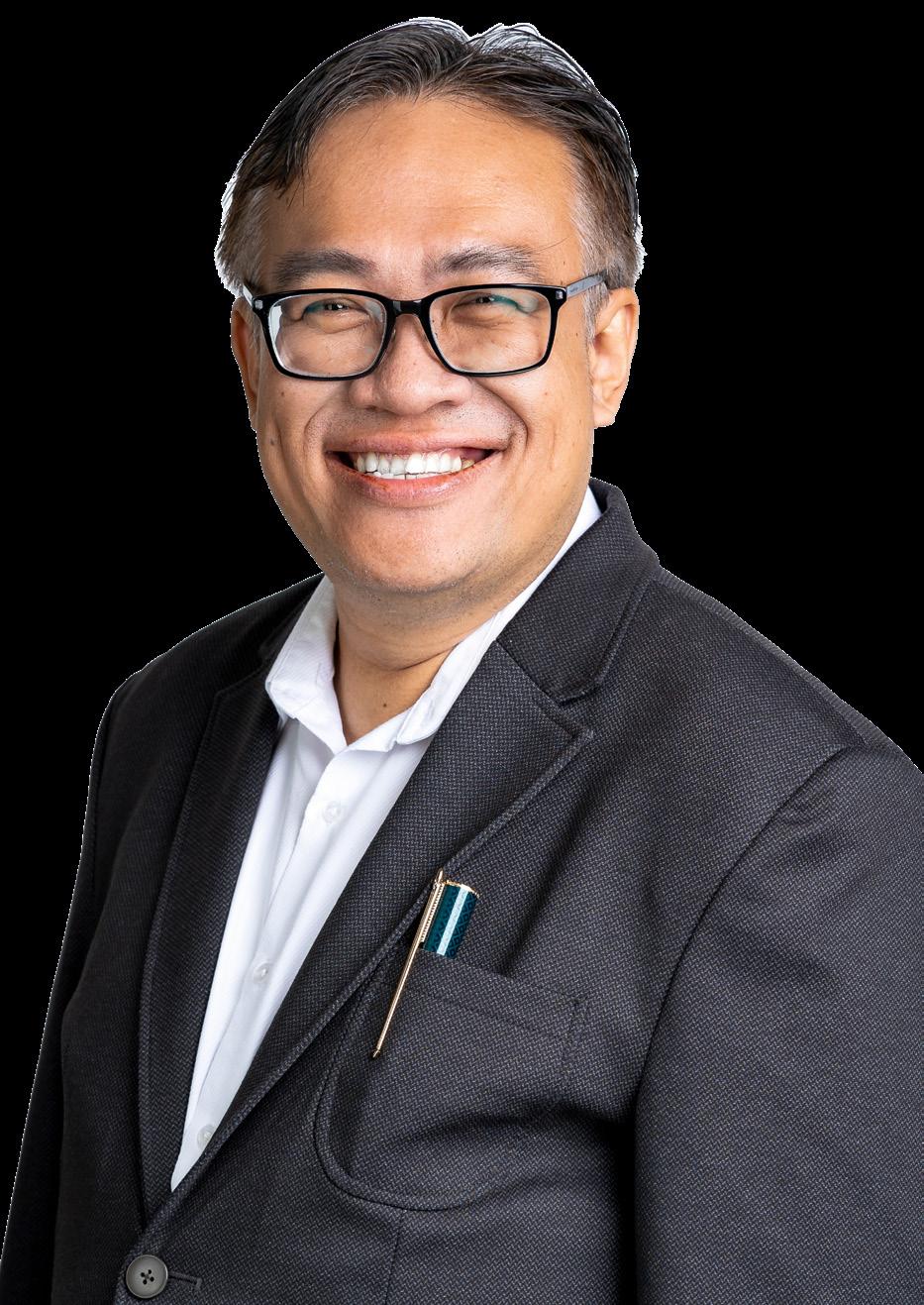
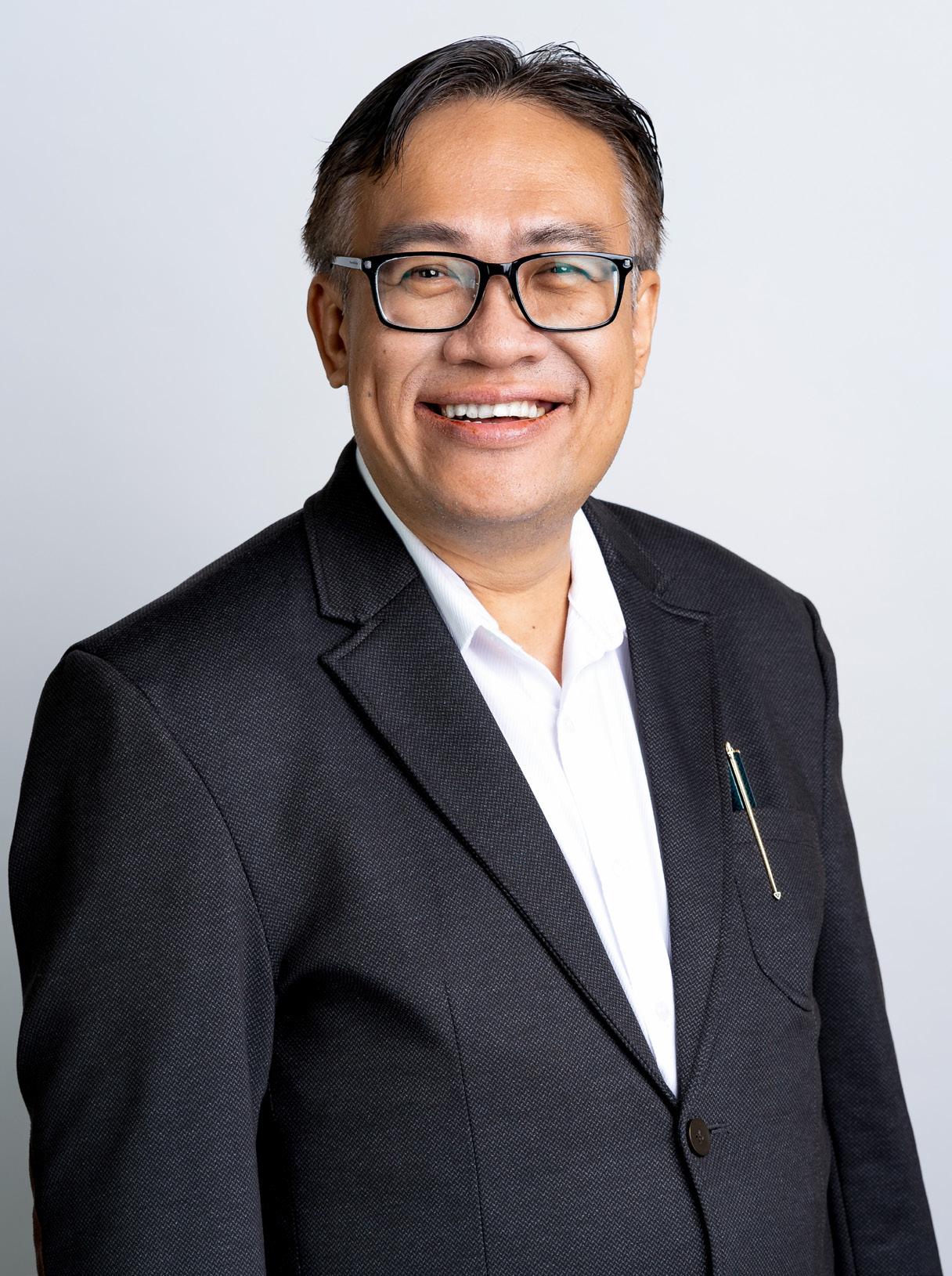
Yohanes Jeffry Johary is the President and Managing Director of OCS Indonesia, leading a national workforce of 13,000 employees across more than 1,800 sites. With nearly two decades of leadership experience in global multinationals, he is known for steering large organizations through transformation with a steady focus on people, purpose, and operational integrity
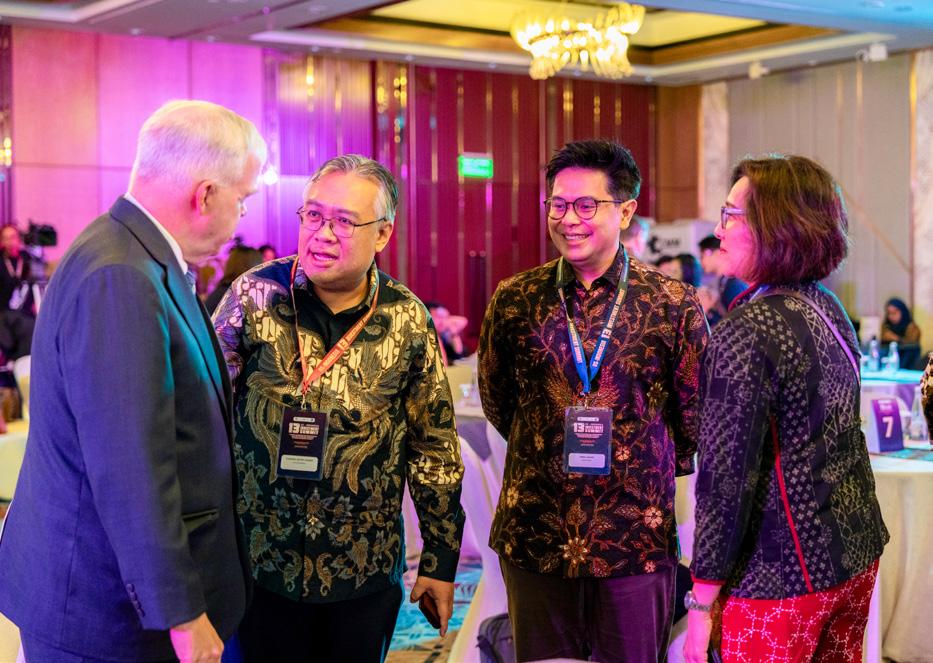
He serves as a Board Member and Co-Chair of the Sustainability & Environment HUB at British Chamber (BritCham) Indonesia, and Co-Chair of the Corporate Citizenship Committee at American Chamber (AmCham) Indonesia, contributing to national discussions on sustainability, workforce development, public policy, and international partnerships.
Currently pursuing a Master of Science in Business Psychology at the University of East London, he combines organizational science with real-world leadership to advance sustainable, peoplecentered business practices in Indonesia. Renowned for his grounded and forward-thinking approach, he advocates for responsible leadership and the elevation of facility management as a strategic contributor to Indonesia’s long-term growth.
In an exclusive conversation with CXO Outlook, Jeffry Johary reflects on a leadership journey that moves from financial discipline to people-centered transformation at national scale. He speaks candidly about steering large workforces through uncertainty, redefining the role of facilities management as a strategic contributor, and embedding sustainability as a real business driver rather than a corporate slogan. The conversation also explores how digitalization and emerging technologies are improving transparency, safety, and performance, while reinforcing the irreplaceable value of human judgment on the ground. Below are the excerpts of the interview.
Looking back on your career journey, from finance-and-accounting beginnings to leading a national operation in facilities services, what key milestones or pivots have shaped your leadership path?
Leadership is rarely a straight path. It evolves through seasons of clarity and seasons of pressure, through moments where choices shape your trajectory, and moments where responsibility redefines who you become. My
own journey has been shaped less by perfect opportunities and more by circumstances that demanded growth. I began in finance and accounting, where discipline and structure taught me the value of accuracy, transparency, and analytical thinking. But as I moved into the broader world of services, I realized that leadership demanded something far more complex: the ability to guide people through uncertainty, to stabilize organizations during transition, and to make decisions that affect
In a region as diverse and dynamic as AsiaPacific and Middle East, the challenge lies in balancing cost efficiency with service excellence, operational demands with human realities, and short-term pressures with longterm resilience
thousands of families whose livelihoods depend on the choices you make each day.
This shift from numbers to people became the defining pivot in my career. Finance sharpened my intellect, but managing large, dispersed teams strengthened my humanity. It taught me that organizations are living systems. They breathe through their people. They grow through shared belief. And they thrive when leaders understand that their responsibility extends far beyond monthly results. The service industry, especially facility management (“FM”), demands a leadership style that blends operational rigor with empathy, discipline with humility, and vision with daily presence. Over the years, these lessons have shaped how I lead OCS Indonesia today, and how I see the broader transformation happening across our industry.
The facilities management industry is undergoing significant change. What have been the greatest challenges you have faced in your sector, and how do you see emerging trends reshaping the field in Indonesia and Asia-Pacific? Indonesia’s FM sector stands at a crossroads. We operate behind the scenes, yet we touch nearly every part of the nation’s productive economy. Manufacturing plants, commercial buildings, hospitals, data centers, logistics hubs, hospitals, hotels, government facilities; our teams work where reliability is critical and where failures can disrupt far more than operations. For many years FM was viewed as a back-office function, a support service without strategic influence. Today, that perception is changing. Customers expect transparency, accountability, ESG alignment, and outcomes that contribute directly
to their competitiveness. This shift brings both pressure and opportunity. In a region as diverse and dynamic as Asia-Pacific and Middle East, the challenge lies in balancing cost efficiency with service excellence, operational demands with human realities, and short-term pressures with long-term resilience.
The industry is moving fast. Technologyadoption is accelerating. Regulations are tightening. Customers are demanding predictability. And sustainability has shifted from aspiration to expectation. These forces are reshaping how FM companies operate, hire, train, invest, and innovate. For leaders in this space, the responsibility is not simply to manage services. It is to strengthen the foundations that enable businesses, cities, and communities to function well. This reality has guided my leadership philosophy: progress must be built on clarity, consistency, and a long-term view. And above all, it must center on people, because no amount of technology can replace the judgement, character, and dedication of a well-led workforce.
Sustainability is now firmly on the agenda for companies across industries. In your view, how is the sustainability agenda redefining competitiveness, resilience and longterm value for a company like OCS Indonesia?
Sustainability has become one of the strongest forces redefining FM. For companies operating in Indonesia, sustainability is more than a corporate agenda; it is a prerequisite for longterm survival. Climate pressure, resource
constraints, stricter environmental standards, and evolving societal expectations mean the industry must adopt cleaner, smarter, and more responsible practices. At OCS Indonesia, we take a practical and evidence-driven approach. Circularity, green chemicals, waste reduction, water stewardship, and energy optimization are now integrated into our operations, not treated as add-ons. These efforts do more than protect the environment. They strengthen our credibility and deepen customer trust. Companies today evaluate not only cost and service quality but the ethical and environmental footprint of their partners. Sustainability has therefore become a strategic advantage, enabling deeper, longer partnerships and positioning FM as a critical enabler of national ESG progress.
Yet sustainability is not only environmental. It is also deeply social. With a labor-intensive workforce, FM companies influence the livelihoods, dignity, and upward mobility of thousands of people. This is where we carry profound responsibility as the largest British employer in the country. A workforce of our scale, 13,000 frontliners in 1,800 sites across Indonesia, represents not just employees but entire communities. Investing in green skills, character-building, discipline, and upward mobility is not merely a human resources initiative; it is part of our national contribution. When frontline teams feel respected, equipped, and protected, they deliver better services. When we uplift their capabilities, we strengthen the competitiveness of the industries we serve. And when we treat workforces fairly and responsibly, we reflect on our values as a company that understands its social mandate.
Technology, digitalisation and automation are increasingly embedded in service industries. How are you leveraging AI or other emerging technologies in your organisation, and what role do you think they will play in the future of facilities services?
Technology strengthens these commitments. Digitalization has transformed how we plan, operate, and report. Our “Milky Way” transformation (integrating HR, finance, safety, and operational dashboards) was built to create transparency in a sector where many decisions used to rely on assumptions rather than data. Today we operate with real-time information
that enables us to optimize manpower, reduce risk, improve safety, and support customers with clearer insights. Technology reduces friction. It accelerates accountability. It supports compliance and financial integrity. And as AI matures, it will allow us to elevate forecasting, strengthen preventive maintenance, and improve energy efficiency by reducing downtime, waste, and cost.
But amid all this, one principle remains unchanged: technology augments people; it does not replace them. Human judgement, empathy, and discipline remain irreplaceable. In FM, trust is delivered through everyday habits: punctuality, attention to detail, safety awareness,
Academic rigor has sharpened my leadership lens, reminding me that sustainable performance emerges when people feel psychologically safe, supported, and challenged in the right way
teamwork, presence, and character. These qualities cannot be automated. They must be developed, nurtured, and led. The future of FM will belong to organizations that recognize this balance and invest equally in digital capability, sustainability, and human development.
From your leadership perspective, what achievement are you most proud of so far, and how do you view your leadership style in driving both people-centric and business outcomes?
Among the achievements in my leadership journey, the one I value most is rebuilding belief during periods of uncertainty. Taking over an organization during a challenging phase requires more than process redesign. It demands the ability to stabilize emotions, reset expectations, and reassure people that progress is possible even when the results are not yet visible. Building belief is not a single action; it is a series of consistent behaviors: showing up when things are difficult, aligning decisions with values, setting standards without losing empathy, and keeping teams focused when the noise around them is loud.
My leadership style reflects this balance. I am disciplined with expectations because our customers rely on us, but I am equally driven by the belief that people deserve dignity, clarity, and respect. Leadership, to me, is a responsibility carried daily, not a position held. Every decision impact someone’s life, and that awareness keeps me grounded. I do not believe in creating distance from the workforce; I believe in walking alongside them. When a leader is present, teams gain confidence. When a leader listens, teams contribute more. And
when a leader models resilience, teams learn to push through challenges with purpose.
Outside the boardroom and operations reviews, what personal values or interests serve as your anchor? How do reading, jogging or reflective moments inform your approach to work and life? Outside the demands of work, what keeps me centered is the discipline of continuous learning and reflective habits. Reading allows me to explore different perspectives; jogging helps me regain focus; moments of quiet thinking help me understand complex situations more deeply. Pursuing a Master of Science in Business Psychology at the age of 50 was a deliberate step to deepen my understanding of human behavior, motivation, and organizational culture. Academic rigor has sharpened my leadership lens, reminding me that sustainable performance emerges when people feel psychologically safe, supported, and challenged in the right way. These personal anchors help me lead with intention and clarity, especially in an industry that operates at full speed every day.
For young professionals entering the business world, particularly those keen on sustainability, service industries or digital transformation, what advice would you offer as they start their careers?
To young professionals building their careers in today’s world, especially those drawn to sustainability, service industries, or digital transformation; my advice is straightforward: start with courage. Do not wait for perfect conditions or a flawless plan. Begin with what you have and grow into the responsibilities
you will carry. Build character with the same intensity you build capability. Seek environments that stretch your thinking. And remember that leadership is not defined by status; it is defined by service. The world needs leaders who choose to be useful, not impressive. It needs individuals who bring integrity into their work, who lift others, and who stand firm when situations become difficult.
As Indonesia steps into a new decade of growth, I believe FM will play a critical role in shaping national competitiveness. We may operate quietly, but our impact touches millions of people each day. The sector will influence workplace experience, sustainability adoption, digital operations, safety culture, and workforce development across industries. My commitment: as President & Managing Director of OCS Indonesia, and as part of British Chamber (BritCham) and American Chamber (AmCham), is to help elevate this sector into one that contributes meaningfully to Indonesia’s long-term aspirations. That means building a workforce with dignity and pride, delivering services anchored in ethics and evidence, and shaping an FM ecosystem that strengthens national progress.
In the end, leadership is about contribution. It is about leaving institutions stronger, people more capable, and communities more hopeful because of the work we do. As I continue this journey, I remain driven by the simple yet profound belief that when we make people and place the best they can be, we build a nation that is stronger, more resilient, and more inclusive.
This is the future I am committed to shaping. One decision, one team, and one place at a time.
The New Playbook for B2B in the AI Era
Tom Telford, Chief Digital Officer, Clarity Global
You’ve had a remarkable journey from leading digital ventures to shaping Clarity Global’s digital vision. How has this evolution influenced the way you approach leadership and innovation today?
I think leadership is a constant dichotomy of trying to be at the front of your team, waving the flag and providing direction, whilst ensuring you aren’t taking up all the air and letting others also share the stage. I once heard a wonderful
saying that’s stuck with me: “a Leader’s role is to be both an umbrella and a rudder”. So shield your team to create the space to succeed, whilst giving just enough direction to not get lost.
Leadership is a fascinating art - there’s no right answer. I’ve found myself leading teams since I was in my twenties, both at work and also at sea in search and rescue teams. The most successful teams know what’s expected of them, they understand the mission, and crucially the leader spends as much time listening as they
The real transformation is about integrating marketing, PR and content so you shape the first impression, whether that’s to an AI or a human
Tom Telford is Clarity’s Chief Digital Officer. He has been leading digital marketing teams for over 20 years. He started out in ‘dot coms’, way before the technology was able to meet the ambition of this new era! This has given Tom a unique set of expertise which underpins his position leading Clarity's Digital Marketing teams globally. Tom, alongside Clarity's CTO Will Julian-Vicary, brought 3Whitehats into the Clarity Group in 2021, founding its digital marketing strategy. Now, with a mix of in-house and client-side roles, Tom leads the Growth Marketing, Creative and Measurement & Analytics teams globally. With an obsession in finding innovative ways to integrate digital channels with comms and public affairs, Tom has been instrumental in developing Clarity's unique and fully integrated service. This means client offering is now individually tailored towards helping each client solve their unique challenges. In this exclusive conversation with CXO Outlook, Tom offers a thought-provoking look into how AI is transforming the foundations of digital marketing. Tom shares his views on how brands must adapt to a world where discovery is AI-driven and credibility is earned through authenticity, not algorithms. He also discusses the rise of Generative Engine Optimization (GEO), the evolving relationship between marketing, PR, and technology, and the delicate balance between data-driven decision-making and human creativity. Below are the excerpts of the interview.
The
most effective strategies use AI and automation to handle repetitive or analytical tasks, freeing teams to focus on storytelling, problem-solving and building relationships
do talking (something my team will advocate I don’t always get right!).
The digital marketing landscape is changing faster than ever. What do you see as the most significant transformation shaping how brands reach and retain their audiences now?
The shift to AI-driven discovery is fundamentally rewriting the rules of marketing. Buyers now lean on AI-generated overviews and summaries
to kick off their research. This compresses the early buying journey and changes how trust is built. Forget relying solely on your website or organic search, brands need to make sure their messaging, proof points and expertise are crystal clear and consistently discoverable everywhere: AI platforms, social, analyst reports, industry press. The real transformation is about integrating marketing, PR and content so you shape the first impression, whether that’s to an AI or a human.
In your “GEO for B2B” article, you highlighted how AI is reshaping search and discovery. How should businesses rethink their content and communications strategies in light of this shift?
AI isn’t just changing where buyers start their research - it’s changing how they verify and trust information. Businesses need to treat content as a credibility engine, not just a visibility play. That means structuring content to be accurate, evidence-backed and clear, while ensuring PR, SEO and content teams work together, rather than in isolation. By aligning messaging, narratives and proof points across all channels (owned, earned and shared), brands can influence both AI outputs and human decision-makers, making it easier for buyers to trust and engage with the information presented. It’s crucial that brands aren't tempted to churn out AI-written content at scale. Quality and originality still matter in this GEO age- pumping out any old content isn’t going to stick.
The concept of “Generative Engine Optimization” (GEO) feels both timely and transformative. What practical steps can marketing leaders take to ensure their brands remain visible and credible in this new era of AIdriven discovery?
Start by understanding how AI currently interprets your brand and competitors. Audit the top prompts your target personas are using, then build a library of canonical content covering categories, product capabilities, security, integrations, ROI, case studies and
support. Technical hygiene matters too; fast, structured content with proper schemas for people, products and FAQs is essential. PR has a critical role here, amplifying research, executive perspectives and customer stories in the channels AI and buyers trust. Finally, measure both tactical milestones and outcomes, like increased inclusion in AI outputs and keep iterating as the landscape evolves.
Leading digital transformation across multiple global teams can be challenging. What are some guiding principles that help you keep strategy and execution aligned across regions?
Alignment starts with a clear vision everyone can rally behind. Regular communication, shared KPIs and transparency help teams navigate regional differences. I focus on integrating learning loops so successes and failures in one region inform strategy elsewhere. Collaboration across content, PR, marketing and tech ensures messaging, measurement and execution reinforce each other rather than diverge.
What’s your personal philosophy when it comes to balancing technologydriven decision-making with the human side of creativity and communication?
Technology can amplify impact, but it can’t replace human judgment, empathy or creativity. The most effective strategies use AI and automation to handle repetitive or analytical tasks, freeing teams to focus on storytelling, problem-solving and building relationships. The real challenge, and opportunity, is creating processes that leverage technology while keeping human insight at the heart of decision-making.
AI will accelerate your career in a way that was unthinkable even 5 years ago. Be brave, be kind, challenge your own thinking and you’re going to fly
Outside of work, what keeps you inspired or recharged? Are there personal values or interests that influence how you lead and create?
I love to explore. We’re lucky to live on Dartmoor, in Devon, and getting out onto the Moor with our daughters is as equally exciting as it is grounding. It’s very difficult to maintain perspective in lives turbocharged by technology - but vital to lead teams effectively and with consistency.
There’s infinite possibilities and options in marketing, but you’ve got to ensure you’re keeping yourself and your team true to a plan, and to not jump on every shiny thing that crosses your desk, otherwise you end up chasing your tail. Of course, picking the right opportunitiesthat’s the game, isn’t it?
Finally, what advice would you give to young professionals entering the digital and communications industry, especially those hoping to lead in the AI age?
What a fantastic time to join the industry - we’re at another pivotal moment of disruption with AI and, through the confusion, comes opportunity. AI is here to stay and effective utilisation, along with asking the right questions to experienced team members about what outputs they want (ie not just AI generated puke to fill a page) and what great looks like. Don’t be afraid to ask what impact you’re having commercially - if you understand this you’ll quickly gain momentum.
AI will accelerate your career in a way that was unthinkable even 5 years ago. Be brave, be kind, challenge your own thinking and you’re going to fly.
Empowering Innovation in Customer Experience
Nick Glimsdah, Consultant, The Heart of Service, Author, & Press 1 for Nick, Podcast Host
Can you walk me through your career progression, from sales and marketing to contact center solutions?
I started in sales and marketing, where I learned early that trust isn’t built on closing deals, it’s built on consistency. Following through. Doing what you said you would do. That’s what shapes lasting relationships.
Over time, I realized success wasn’t just about what we sold but how people felt after every interaction. That insight pulled me into customer experience and eventually into the contact center world.
The contact center is where strategy meets reality. It’s where promises are tested and where brands either connect or lose credibility. Today, my focus is helping organizations design systems that serve people first, bringing empathy, clarity, and measurable improvement to every moment of the customer journey.
What do you love the most about your current role?
No one starts working with me because their contact center is already perfect. They don’t
Today, my focus is helping organizations design systems that serve people first, bringing empathy, clarity, and measurable improvement to every moment of the customer journey
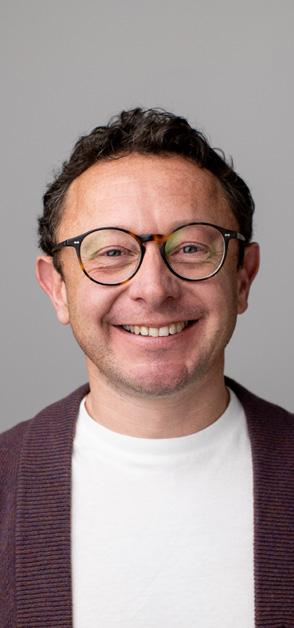
Nick Glimsdahl helps organizations close the gap between the customer experience they promise and the one they deliver. As a consultant, author of The Heart of Service, and host of the Press 1 for Nick podcast, he guides leaders through contact center strategy, AI adoption, and long-term success after go-live. Nick speaks with clarity and offers practical steps that improve outcomes for customers, employees, and the business. He’s known for bringing a steady voice to a fast-changing industry and turning complex ideas into actions teams can use right away.
Recently, in an exclusive interview with CXO Outlook Magazine, Nick shared insights into his transformative career journey, motivations, and vision for the future of customer experience, highlighting his passion for driving change, inclusive leadership, and empowering teams to thrive in complex environments.
Press 1 For Nick started with a simple goal, to have real conversations about what’s working and what’s not in customer experience
call when everything is running smoothly or when every process is dialed in.
They reach out when they’re worn out, run down, and out of answers, when the technology isn’t delivering, the teams are stretched thin, and the customer experience feels stuck.
That’s where I come in. Not as a vendor, but as a guide. Someone who helps them slow down, see what’s really happening, and rebuild in a way that works for their people and their customers.
What I love most is seeing transformation happen in real time. It’s one thing to implement technology, but it’s another to watch teams actually use it to deliver better experiences. When a client goes from long hold times and burned-out agents to faster resolutions and higher satisfaction, that’s powerful.
I also love helping leaders connect their technology investments to the outcomes that matter most, less effort, better efficiency, and stronger loyalty. When that alignment happens and outcomes are met, you can feel it on both sides of the interaction. Customers feel cared for. Agents feel proud. That’s when you know it’s working.
What inspired you to write The Heart of Service, and what do you hope readers take away from it?
As I share in the preface of my book, The Heart of Service was born out of frustration. I spent years inside contact centers—assessing them, fixing them, and watching teams struggle with tools that promised everything and delivered almost nothing. I’ve seen what happens when leaders are pushed to modernize without the time or guidance to do it right. I’ve seen AI rushed in to solve
problems no one has clearly defined. I’ve seen good people burn out, customers give up, and companies lose sight of what really matters. The problem isn’t the technology. The problem is how we use it.
So, I wrote The Heart of Service because I believe there’s a better way — a more human way. One that starts by asking what’s broken - and who needs support? before jumping to a solution. I wrote it for the customer service leaders who are under pressure to “transform” but don’t want to lose their people or their purpose along the way.
Carelio, the company in the book, may be fictional, but everything they face is real — every conversation, every metric, every failure, and every breakthrough came from real experiences. This isn’t a book about hype. It’s a book about clarity — and it’s for anyone who wants to bring AI into their organization without losing the people who make it work.
Can you discuss your approach to creating engaging and informative content for your podcast, Press 1
For Nick?
Press 1 For Nick started with a simple goal, to have real conversations about what’s working and what’s not in customer experience. No scripts. No fluff. Just honest stories from people who have been in the trenches.
Every episode starts with curiosity. I want guests to feel safe sharing the lessons behind their success and the mistakes that shaped them. That’s where the real insight lives.
My approach is straightforward, prepare deeply, listen closely, and always create value for the listener. People are tired of buzzwords and highlight reels. They want
substance. If someone finishes an episode thinking differently about how they lead their team or serve their customers, that’s when I know the conversation mattered.
How can listeners apply the lessons from your book and podcast to their own work in customer service and experience?
Start with your people. Ask your agents what gets in their way. Listen to your customers without defending your process. You will learn more from those two groups than from any report or consultant.
Then focus on progress, not perfection. Find one friction point, whether it is a slow process, a confusing handoff, or a broken workflow, and fix it. That is how momentum builds.
The best leaders I have seen don’t chase every new tool. They build a culture of listening, learning, and continuous improvement. When you do that, the technology becomes an enabler, not the answer, and your people become the reason customers stay.
How do you see the contact center industry evolving in the next 5–10 years?
Over the next decade, the contact center will shift from solving problems to shaping relationships.
AI will take on repetitive work such as authentication, data entry, and FAQs while agentic experiences emerge. These semi-autonomous systems act alongside humans, completing tasks, learning from context, and adapting in real time.
Next comes universal agentic systems that are fully autonomous, hyper personal, and self-adjusting. Powered by standards like Model Context Protocol (MCP) and Agent
Over the next decade, the contact center will shift from solving problems to shaping relationships
to Agent (A2A), AI agents will collaborate securely across systems.
Most interactions will be handled by AI, while humans focus on complex, emotional, and high value conversations, guiding the technology as AI coaches.
The next frontier brings Artificial Capable Intelligence (ACI), AI that can plan and execute across domains, and eventually Artificial General Intelligence (AGI), where machines understand context and purpose like humans.
The future contact center will not be judged by handle time but by how well it blends machine intelligence and human empathy to deliver faster, smarter, and more personal experiences.
What are some of your passions outside of work?
Family comes first. My wife and kids keep me grounded and remind me why I do what I do. They bring perspective and balance to everything else in life.
Outside of that, I love cooking and grilling, especially when it brings people together. There is something about preparing a meal, sharing stories, and just slowing down that helps reset my mind. I also spend as much time outdoors as I can, hiking, sitting by a fire, or simply enjoying the quiet.
And I am always reading. Whether it is books on leadership, personal growth, or a good story that challenges how I think, reading gives me space to reflect and connect ideas in new ways. It is often in those slower, quieter moments that my best insights come.
What is your favorite quote?
“Success is not final, failure is not fatal, it is the courage to continue that counts.” — Winston Churchill.
Start by listening. Spend time on the front lines. Understand the work before you try to change it
I have always connected with that quote because it captures the reality of growth. In business, in leadership, and in life, there is no finish line. You are always learning, adapting, and showing up again after setbacks. The courage to keep going, especially when things do not go as planned, is what separates those who make progress from those who stop too soon.
Where do you see yourself in the next 5 years?
In five years, I see more of the same — helping organizations close the gap between what they promise and what id delivered. That work still energizes me, and I do not see that changing.
I plan to keep writing, speaking, consulting, and building tools that help teams connect business outcomes to human outcomes. I also see The Heart of Service growing into something bigger, a movement that challenges leaders.
And I definitely see another book or two in the mix. There are still plenty of stories to tell and lessons to share about what it means to serve with purpose in an AI driven world.
What advice would you give to someone looking to transition into a leadership role in customer service or experience?
Start by listening. Spend time on the front lines. Understand the work before you try to change it.
Build relationships across the organization. Operations, IT, marketing, finance, every team plays a role in shaping the customer experience. Learn how they think, what pressures they face, and how their work connects to the customer. The more you understand their world, the more effective you will be at building alignment.
And stay curious. The tools will keep evolving, but the mission stays the same. Make it easy for customers to do business with you and meaningful for employees to deliver that experience. The leaders who never lose sight of that balance are the ones who build trust that lasts.
Turning ESG Pressure into Industry Strength
Muchtazar, Head of Sustainability, Nickel Industries Limited
Could you walk us through the key milestones in your career and explain how each step shaped your leadership in sustainability within the nickel and mining sector?
My career began in the resources sector, prior to joining Unilever in the sustainability function. That experience taught me the importance of embedding sustainability into core business operations rather than treating it as an add-on. When I transitioned to Nickel Industries in 2021 as their first sustainability manager, it was a pivotal moment. I had the opportunity to build the sustainability function from the ground up, shaping policies and strategies that align with global ESG standards while addressing
local realities. Each step reinforced my belief that sustainability leadership requires both technical expertise and the ability to influence organisational culture.
The mining and metals industry faces intense pressure on environmental, social and governance fronts. What have been the most difficult challenges you’ve encountered, and how is your organisation adapting to them?
One of the toughest challenges is balancing sustainability with profitability, especially in a sector where global price fluctuations and operational costs are significant. For example, Indonesia’s nickel industry is under scrutiny
We are working on improving traceability to ensure our nickel does not come from protected areas, a critical issue highlighted in recent industry reports
Muchtazar is an award-winning sustainability professional with over a decade of experience driving ESG integration and community initiatives across Indonesia’s industrial and resource sectors. He serves as Head of Sustainability at Nickel Industries Limited, one of the world’s largest nickel producers, and sits on the Board of Management of the Nickel Industries Foundation, guiding its social impact efforts. His work blends corporate responsibility, public reporting, and on-ground engagement, creating value for investors, customers, and local communities.
He was named an SDG Pioneer by the UN Global Compact in 2019, only the second Indonesian to earn the honour and later recognised as an ESG Champion by the Natural Resources Forum (2022) and one of the Under 40 Sustainability Stars at the 2023 ESG World Summit & GRIT Awards. He has represented Indonesia at global forums, including the UN General Assembly, COP, and One Young World, advocating for emerging economies and responsible production.
In this conversation with CXO Outlook, Muchtazar talks about how sustainability is fast becoming a catalyst for growth in one of the world’s most demanding industries. Muchtazar shares how his career milestones shaped his approach to building a sustainability function from scratch and guiding a major nickel producer through rising ESG expectations. He also offers clear perspectives on balancing profitability with responsibility, tackling carbon and traceability challenges, and turning global scrutiny into an opportunity for long-term value. Below are the excerpts of the interview.
for its carbon footprint and biodiversity impact. At Nickel Industries, we are addressing these challenges by committing to halve our carbon intensity by 2035 and achieve net zero by 2050. We are also working on improving traceability to ensure our nickel does not come from protected areas, a critical issue highlighted in recent industry reports. These efforts require collaboration across departments and strong engagement with external stakeholders.
In your view, how is sustainability evolving from being a compliance requirement into a strategic lever for competitiveness, resilience and long-term value creation in resourceintensive industries?
Sustainability is no longer just about meeting regulatory requirements; it has become a differentiator in the marketplace. Companies with strong ESG credentials attract more investment and gain access to markets with stringent due diligence standards. For Nickel Industries, sustainability is a strategic lever that enhances resilience against regulatory risks and builds trust with global partners. It also positions us to meet the growing demand for responsibly sourced materials in the electric vehicle supply chain.
Emerging technologies such as artificial intelligence, real-time data analytics and automation are being applied across industries. How are these technologies reshaping sustainability practice and operational decisions at your company?
Technology is a game-changer for sustainability. At Nickel Industries, automation helps improve efficiency and reduce waste, while AI improves the efficiency of our workforce. These
One achievement I am particularly proud of is establishing the sustainability function at Nickel Industries and embedding ESG considerations into the decisionmaking process
tools enable us to make data-driven decisions that align with our sustainability goals and operational priorities.
As a leader, what principles or values guide your decisions, and what achievement in your professional journey are you most proud of?
Business should be able to be a force for good. I believe sustainability leadership is about creating impact that lasts beyond compliance. One achievement I am particularly proud of is establishing the sustainability function at Nickel Industries and embedding ESG considerations into the decision-making process. Seeing sustainability evolve from a nice-to-have exercise to a core business function has been deeply rewarding.
Outside of your work, how do you recharge and find inspiration? Are there personal interests or experiences that influence how you lead?
I recharge by spending time with my family and reading about various topics. These interests keep me grounded and inspire me to approach challenges with a broader perspective.
What advice would you offer to young professionals who aspire to build a career at the intersection of industry, sustainability and innovation?
My advice is to develop a strong foundation in both technical knowledge and stakeholder engagement. Sustainability is as much about influencing people as it is about implementing systems. Stay curious, embrace technology, and never lose sight of the bigger picture—creating solutions that balance economic growth with environmental and social responsibility.
Transforming Marketing with AI and Personalization
Christina Vanecek, Global Head of Marketing, Sagility
Hi Christina. What sparked your passion for driving growth and delivering impactful results in marketing?
My passion for driving growth and delivering impactful results in marketing comes from seeing how a well-crafted strategy can truly transform a business - whether that’s launching a new brand, repositioning an organization in the market, or creating a marketing engine that fuels measurable revenue. Throughout my career, I’ve been drawn to opportunities where marketing isn’t just a support function, but a growth catalyst: where it helps define the story,
shape client perception, and influence outcomes at scale.
I’ve seen firsthand the impact of building and empowering high-performing teams, executing data-driven strategies, and aligning closely with sales and leadership to turn vision into results. Whether it was launching the Guidehouse brand, leading award-winning marketing transformations at Accenture, or scaling Sagility’s global marketing function, the common thread has always been creating meaningful impact through clarity of purpose, creativity, and measurable performance. That’s what keeps me inspired… helping organizations
What I love most about my current role is the opportunity to shape how Sagility shows up in the market - building a brand that reflects our purpose, our people, and the value we deliver to clients
Christina Vanecek is Vice President and Global Head of Marketing at Sagility, where she leads enterprise-wide marketing strategy, driving growth and measurable business impact. Christina brings two decades of experience leading award-winning marketing programs at top professional services firms, including PwC and Accenture, where she spearheaded brand launches, digital transformations, and industry-first solutions. She is passionate about mentoring, innovative marketing strategies, and positioning organizations as thought leaders in complex, evolving markets. Recently, in an exclusive interview with CXO Outlook Magazine, Christina shared insights into her career journey, emphasizing her passion for driving growth and delivering impactful results in marketing. She highlighted the importance of curiosity, adaptability, and building bold initiatives in her role. Christina also discussed her approach to marketing, focusing on innovative strategies, measuring ROI, and evolving with the business. Additionally, she shared her thoughts on the future of marketing, the role of AI, and the importance of diversity and inclusion. The following excerpts are taken from the interview.
When your team feels safe to think differently and push boundaries, that’s when truly impactful marketing happens
grow while elevating the people and stories behind that growth.
What do you love the most about your current role?
What I love most about my current role is the opportunity to shape how Sagility shows up in the market - building a brand that reflects our purpose, our people, and the value we deliver to clients. I’m energized by leading a talented, multidisciplinary team and seeing the collective impact of our work - from repositioning the brand and elevating awareness to driving measurable growth through data-driven campaigns and accountbased marketing. I also am privileged to work under a CEO who looks at marketing as an investment versus a cost-center and aligns with the direction we’re taking our clientfacing efforts.
Equally rewarding is the partnership across the business - collaborating with Sales, Solutions, and Delivery to connect our marketing strategy directly to outcomes. I also love mentoring emerging leaders and watching them grow into new areas of expertise. For me, it’s that combination of strategic impact, creativity, and team development that makes this role so fulfilling.
How do you think marketing will evolve in the next 5-10 years?
We’re really just at the beginning of AI’s influence in marketing, and over the next 5–10 years, I think we’ll see an evolution that’s as transformative as the digital revolution itself. Marketing will become increasingly intelligent, predictive, and personalized - powered by data, automation, and machine learning that enable
us to anticipate client needs rather than simply react to them.
What excites me most is how this will elevate the role of marketing as a true growth driver. AI will allow us to move faster, make smarter decisions, and measure impact in ways we’ve never been able to before. But creativity, empathy, and human insight will remain just as essential- they’ll be what differentiates great marketing from good marketing.
At the same time, the lines between brand, experience, and revenue will continue to blur. Marketers will need to be even more connected to sales, solution offerings, and client success, aligning around shared outcomes and creating cohesive, data-informed journeys. It’s an incredibly exciting time to be in this field and at Sagility, we’re building the foundation now for how marketing will evolve with the business.
Can you share a book or resource that has significantly impacted your approach to marketing?
One book that’s had a lasting impact on my leadership and, by extension, my approach to marketing is Radical Candor by Kim Scott. I actually shipped a copy to everyone on my former team because I believe so strongly in its message - leading with both care and directness. The idea that you can “challenge directly while caring personally” has shaped how I build teams, foster collaboration, and drive performance.
In marketing - where creativity, strategy, and execution intersect - Radical Candor has been invaluable. It’s helped me cultivate environments where people feel empowered to share bold ideas, give honest feedback, and challenge the status quo in service of better outcomes. When your team feels safe to think
differently and push boundaries, that’s when truly impactful marketing happens.
What role has mentorship played in your career, and how do you mentor others?
Mentorship has become one of the most meaningful parts of my career, largely because I didn’t have a mentor early on. I had to navigate a lot on my own - learning through observation, trial and error, and persistence. That experience shaped how deeply I value mentorship now, both as a mentor and as a sponsor for others.
I see mentoring as an incredibly impactful tool - not just for professional growth, but for building confidence, perspective, and connection. I try to create the kind of support I wish I’d had: someone who listens, challenges assumptions, and helps others see their potential even before they see it themselves.
Whether it’s through formal programs like my previous employer’s employee resource group, Women’s Opportunity Network (in which I was the executive sponsor), or informal one-on-one conversations, I focus on helping people identify their strengths, navigate complex environments, and take ownership of their growth. It’s incredibly rewarding to watch someone you’ve mentored step into new opportunities and succeed on their own terms.
Can you discuss the importance of diversity and inclusion in marketing?
Diversity and inclusion are fundamental to effective marketing and to leadership. At its core, marketing is about understanding people: their experiences, motivations, and needs. When your teams and your messaging reflect a range of perspectives, you not only create more authentic
and resonant stories, but you also build stronger connections with the audiences you serve.
Through my recent studies in behavioral economics at the University of Chicago Booth School of Business, I’ve deepened my appreciation for how human behavior, bias, and decision-making shape perception and engagement. Those insights reinforce why diversity of thought and experience matter so much, because the most impactful marketing comes from understanding and reflecting the full spectrum of the people we’re trying to reach.
Inclusive marketing isn’t just the right thing to do - it’s smart strategy. It challenges assumptions, broadens viewpoints, and helps brands stay relevant in a rapidly changing world. Ultimately, I believe our role as marketers is to represent the voices and stories that make up our communities and clients. That starts with fostering inclusion within our teams - creating spaces where people feel valued, heard, and empowered to contribute their unique perspectives. That’s where the most powerful ideas take shape.
What are some of your passions outside of work? What do you like to do in your time off?
My passions outside of work include a 4-yearold and an 8-year-old. My weekends are usually consumed with sports or birthday parties and if we’re lucky enough to have a weekend off from the birthday circuit, I really enjoy gassing up my power tools and getting in the yard. There is nothing more soothing to me than pulling weeds!
What is your favorite quote?
“When we’re willing to rethink and unlearn, we gain a superpower.” — Adam Grant
Where do you see yourself in the next 5 years?
In the next five years, I see myself continuing to lead transformative marketing organizations that sit at the intersection of brand, technology, and growth. I’m passionate about building modern marketing engines that not only drive measurable business outcomes but also elevate the reputation and relevance of the company in the market. I want to keep pushing the boundaries of how data, AI, and personalization can be applied to create more human, insightled marketing.
Equally important, I see myself mentoring the next generation of marketing leaderssomething I value deeply given that I didn’t have mentors early in my own career. Helping others find their voice, confidence, and strategic mindset is something I take pride in.
Ultimately, I see my career continuing to evolve toward enterprise-wide leadership, where marketing is fully embedded as a growth partner to the business - shaping strategy, influencing innovation, and driving value creation at scale.
What advice would you give to someone looking to transition into a marketing leadership role?
My advice for someone looking to transition into a marketing leadership role is to think beyond marketing as a function and start viewing it as a business driver. The best marketing leaders understand the connection between brand,
I always joke that Adam Grant (renowned organizational psychologist, bestselling author, and professor at Wharton) is my unofficial life coach. He spoke at an event during my time at Accenture and I was hooked.
Through
my recent studies in
behavioral economics at the University of Chicago Booth School of Business, I’ve deepened my appreciation for how human behavior, bias, and decision-making shape perception and engagement
growth, and revenue and they know how to align their teams and strategies to deliver measurable impact.
I’d also say: lead with curiosity. Marketing is constantly evolving - especially now with AI, data, and technology, reshaping how we connect with audiences. Stay close to the business, the market, and the customer. The ability to translate insight into action is what differentiates strong marketing leaders.
And finally, invest in people. Leadership is as much about developing others as it is about achieving results. Some of the most rewarding moments in my career have come from mentoring and empowering others to take risks, grow their confidence, and step into new opportunities. Build trust, communicate with clarity, and create a culture where your team feels seen and supported - that’s where the real magic happens.
Simplifying Banking for a Better Tomorrow
Gail Russell, Head of Everyday Banking, Santander UK
What attracted you to your current role, and what do you hope to contribute? What drew me to this role was the opportunity to lead a part of banking that truly touches people’s daily lives. Everyday Banking isn’t just about transactions, it’s where trust is built, financial confidence begins, and where customers form their strongest impressions of a brand.
Santander’s scale, ambition, and purposeled approach really appealed to me. The role offered a rare mix of strategic ownership, customer impact, and cultural influence, and that combination really appeals.
What I hope to bring is clarity, momentum, and a deep commitment to customer simplicity. I want to ensure we design products and experiences that remove friction, deliver real value, and help customers feel in control of their money — especially in a complex economic climate.
I’m also passionate about building diverse, high-performing teams and creating a culture where people feel they belong and can do their best work. If we get that right internally, it will show up externally in how we serve our customers and that’s the kind of leadership impact I strive for.
Staying current in a fast-moving industry like financial services requires a mix of structured learning, active curiosity, and listening to diverse voices
Gail Russell is Head of Everyday Banking at Santander UK. She has over 20 years’ experience across financial services, and has developed expertise customer strategy, P&L management, product and proposition development, digital innovation, risk management and distribution. Her global leadership experience spans Europe, North America, Africa, and Asia. Previously, she was Global Head of Customer Experience and Channels at HSBC, and held senior roles at Standard Bank, Citi, Lloyds Banking Group, and TD Bank. Having lived in Toronto, Johannesburg, Paris, and London, Gail brings a diverse international perspective. A trained chemist, she has completed executive education at London Business School and Harvard, driving customer-centric growth and innovation. Recently, in an exclusive interview with CXO Outlook Magazine, Gail shared insights into her leadership approach, the importance of customer-centricity, and her aspirations for the future. The following excerpts are taken from the interview.
How do you stay current with rapidly evolving trends in financial services, technology, and markets?
Staying current in a fast-moving industry like financial services requires a mix of structured learning, active curiosity, and listening to diverse voices. I try to carve out time each week to engage with thought leadership from sources like the Harvard Business Review and the Financial Times, to name a few, but I also learn a great deal from peer discussions and frontline conversations with teams and customers. Technology is evolving rapidly, so I focus on both strategic understanding and practical
application. I recently completed an executive programme on AI and ethics, and I stay close to how emerging technologies like generative AI, and personalisation-at-scale are influencing both customer expectations and operational models.
I also believe in reverse mentoring — engaging with colleagues at different levels and backgrounds to understand how trends are experienced in real time. That blend of strategic scanning and on-the-ground listening helps me connect the dots between trends, risks, and opportunities and apply them in ways that are relevant, responsible, and value creating.
When I commit to something, a transformation, a growth target, a new customer experience, I take full ownership of delivering it
What core principles guide your leadership approach in driving business performance and transformation?
I believe sustainable business performance comes from the ability to adapt, simplify, and stay connected to purpose. My leadership approach is grounded in a few core principles: Clarity of direction. Teams need to understand not just what we’re doing, but why.
I focus on aligning everyone around a clear vision and the outcomes that matter most for customers and for the business.
Customer obsession. Every transformation must start with customer insight - using data, feedback, and empathy to build products and services that solve real problems.
Empowered teams. People drive transformation. Building diverse, high-performing teams where individuals are trusted to own their space, challenge constructively, and move at pace.
Relentless focus on simplicity. Whether it’s a process, a product, or a customer journey, simplicity unlocks scalability, trust, and performance.
Consistency and authenticity. Especially during change, I try to show up visibly and consistently.
I believe leaders need to be transparent, resilient, and human — transformation is tough, but people will go further with you if they trust your intent.
What drives your self-motivation in pursuing challenging business goals?
I’ve always been motivated by the opportunity to make a meaningful difference. I’m at my best when there’s a clear outcome to deliver, complexity to navigate, and a team to lead through it.
And a big driver for me is impact with purpose. I want to be part of building products, services, and strategies that genuinely improve
people’s lives. In banking, that means helping customers feel more confident with their money, making systems simpler, and ensuring we include people who are often left out. I also thrive on problem-solving and momentum, setting a vision, aligning people around it, and making things happen.
Finally, I’m driven by a deep sense of accountability. When I commit to something, a transformation, a growth target, a new customer experience, I take full ownership of delivering it.
Looking ahead, what are your aspirations or focuses for the next phase of your leadership journey?
As I look to the next phase of my leadership journey, my focus is on creating meaningful, sustainable impact.
Professionally, I’m excited to continue leading at scale, shaping propositions that make everyday banking simpler, more inclusive, and more empowering - combining technology, insight, and human understanding.
But I also see leadership as a platform for influence beyond business metrics. I want to champion diverse talent, especially women in financial services and support others to grow – these are also key measures of success for me.
Personally, I’m also more focused on learning. The world is changing fast, and great leaders stay curious. Whether through mentoring, reverse mentoring, or structured development, I want to keep evolving.
Ultimately, my aspiration is to lead with purpose and authenticity — delivering performance, yes, but also shaping a culture and legacy I can be proud of.
Beyond the Hype: The Data-Driven Leader's Playbook for Real-World Impact
Dr. Sandro Saitta, Data & AI Advisor at viadata & Author, The Data-Driven Leader.
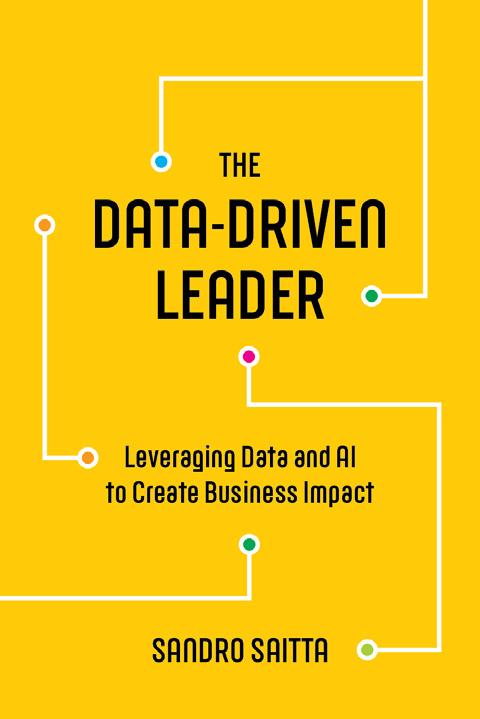
In today's dynamic business landscape, where generative AI dominates the headlines, it’s easy for business leaders to get caught up in the hype. The promise of Artificial Intelligence is transformative, yet for many executives, the path to leveraging its power remains shrouded in technical jargon and uncertainty. While competitors seem to be gaining a tangible edge through data-driven decisions, many leaders are left wondering where to even begin. This is the challenge that my new book, The Data-Driven Leader: Leveraging Data and AI to Create Business Impact, directly addresses.
This is not another dense, technical manual for data scientists, nor is it a high-level, abstract treatise on digital transformation. Instead, it serves as a clear, business-focused introduction, replete with concrete use cases
and practical insights, designed to empower leaders to communicate effectively with data specialists and to apply AI strategically within their organizations.
The 'Why' Behind the Book: A Guide for the Modern Leader
Having spent two decades in the field of data and AI—and a decade teaching these topics to hundreds of managers and executives—I identified a critical gap in the available literature. I have met countless leaders with a wish to understand the field of data and AI better. What I offer is a business-focused view that covers both data and AI, filled with tips and tricks from the trenches.
The Data-Driven Leader is aimed squarely at decision-makers and business leaders who need to build their AI literacy to navigate
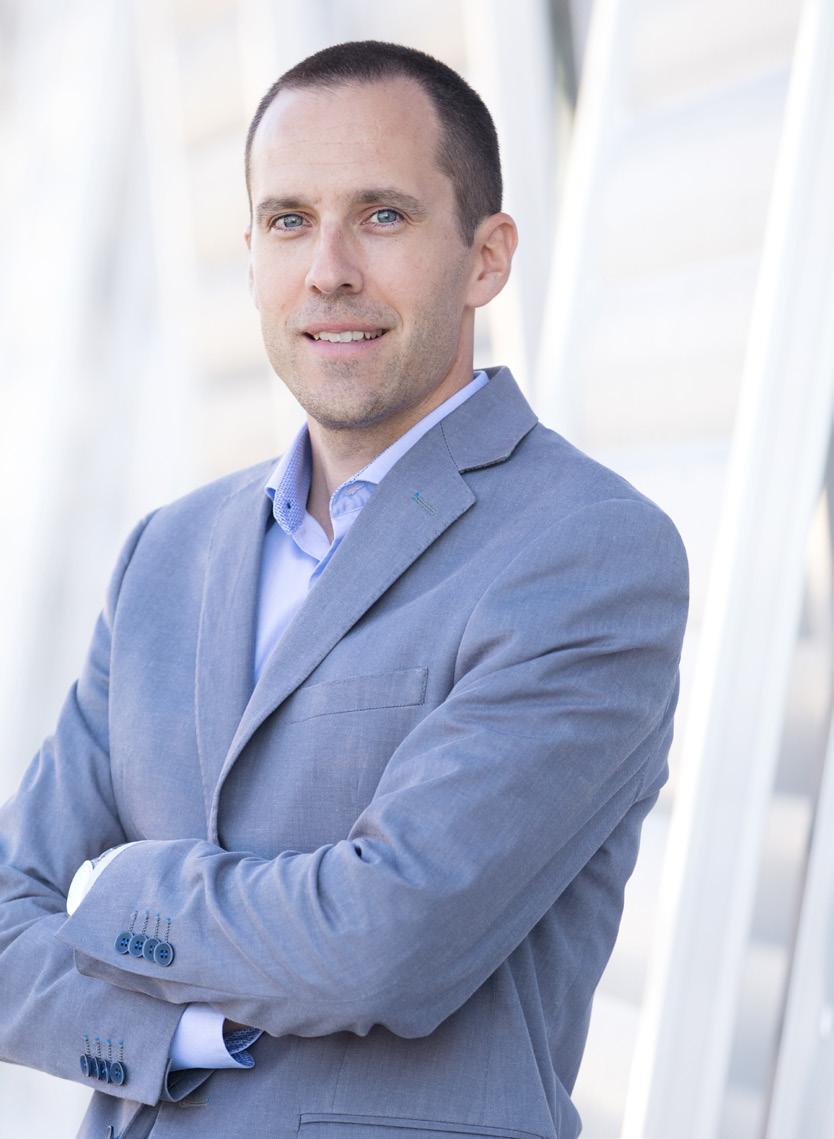
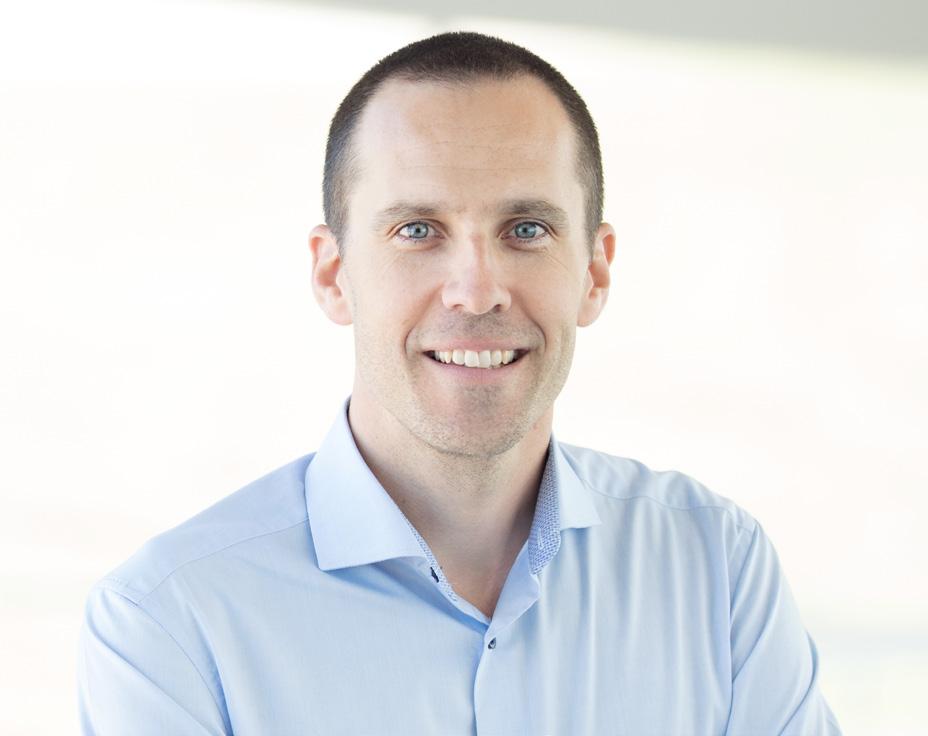
Dr. Sandro Saitta is a Data & AI advisor at viadata and author of The Data-Driven Leader. He helps organizations turn data and AI into business impact by guiding executives, building data strategies, and driving execution across industries. Previously, he held leadership roles at the Swiss Data Science Center, Nespresso, Expedia, and SICPA, working at the crossroads of business value and technical innovation. A Ph.D. graduate from EPFL, Sandro cofounded the Swiss Association for Analytics, teaches at HEC Lausanne, champions data literacy, and serves on the executive committee of CDOIQ Europe, shaping the next generation of AI leaders.
The Data-Driven Leader is aimed squarely at decisionmakers and business leaders who need to build their AI literacy to navigate the modern economy
the modern economy. The book's central theme is maintaining a sharp business focus, demystifying complex concepts without getting bogged down in equations or code. My goal is to equip leaders with the understanding to know how AI works and when to use it (or not).
The Particularities: What Sets The DataDriven Leader Apart Everything Starts with Data
The opening and most resonant message is “No data, no AI.” Before leaders can even think about AI, they must first understand and respect the data that fuels it. I dismantle the myth of raw data, explaining that every dataset is shaped by human decisions— what to measure, how to collect it, and what to exclude. Data quality is not a technical afterthought but a strategic imperative. Without clean, complete, and consistent data,
even the most sophisticated AI models are bound to fail. This foundational principle is a crucial, and often overlooked, reality check for organizations eager to jump on the AI bandwagon.
A Business-First, Problem-Oriented Approach
Another key particularity is the unwavering focus on solving real business problems. I advocate for a simple but powerful philosophy: start with the business problem, not the technology. Too many AI initiatives fail because they are technology-led rather than valuedriven. I champion the Data Science process as a structured framework to ensure projects remain aligned with business goals. This methodology guides teams from initial business understanding through data preparation and modeling, and finally to deployment—ensuring the end result delivers tangible value, not just a technical proof-of-concept.
Without clean, complete, and consistent data, even the most sophisticated AI models are bound to fail
Demystifying AI and Machine Learning
I aim to make complex topics accessible. I provide a simple, intuitive explanation of how machine learning works, the different types of models, and how they are trained to make predictions or find trends. Even a seemingly complex topic like Generative AI is broken down into its core concepts, applications, and common pitfalls. I am clear that believing you are “doing AI” when using a tool like ChatGPT is like thinking you are Superman when you take a plane. Generative AI is a powerful tool, but one that requires critical thinking and an understanding of its limitations—such as its tendency to produce an “average of the web.”
From Theory to Practice with Real-World Use Cases
To make these concepts tangible, the book is rich with real-world examples from my experience across numerous industries. These
I provide a clear, actionable playbook for leaders who are ready to move beyond the hype and build a sustainable data and AI strategy
are not theoretical exercises but practical applications that showcase AI’s value. I walk readers through projects like data-driven sales forecasting, where AI models help a company move beyond intuition to more accurate predictions, and hotel revenue prediction for an online travel agency, which enables the sales team to prioritize high-value leads. These case studies highlight the challenges, the process, and the ultimate business impact, providing a blueprint for leaders to consider within their own organizations.
The Indispensable Human in the Loop
AI is not about replacing humans, but augmenting them. I repeatedly emphasize the importance of keeping a human in the loop. In the sales forecasting example, while automation is powerful, the model’s suggestions must be validated by demand planners whose domain knowledge adds value beyond what any algorithm can capture. I also highlight the importance of soft skills—communication, storytelling, and stakeholder management—as
critical components for the success of any data project. Ultimately, the transformation to a data-driven organization happens when people, not just tools, evolve.
A Playbook for the Journey Ahead
Becoming data-driven is a journey, not a onetime effort—a marathon, not a sprint. I provide a clear, actionable playbook for leaders who are ready to move beyond the hype and build a sustainable data and AI strategy. By fostering a common language, focusing on business value, and leading by example, executives can steer their organizations with clarity and confidence in an era defined by data.
For any CXO looking to navigate the complexities of AI and unlock the true potential of their organization’s data, this book is an indispensable guide. It provides not just the “what” and “how,” but most importantly, the “why”—equipping leaders to ask the right questions, make informed decisions, and ultimately, create real business impact.