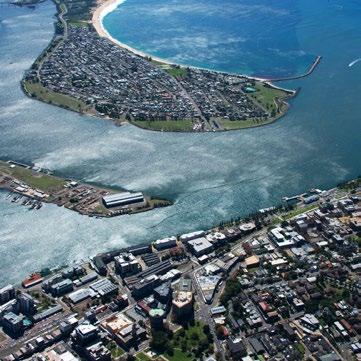
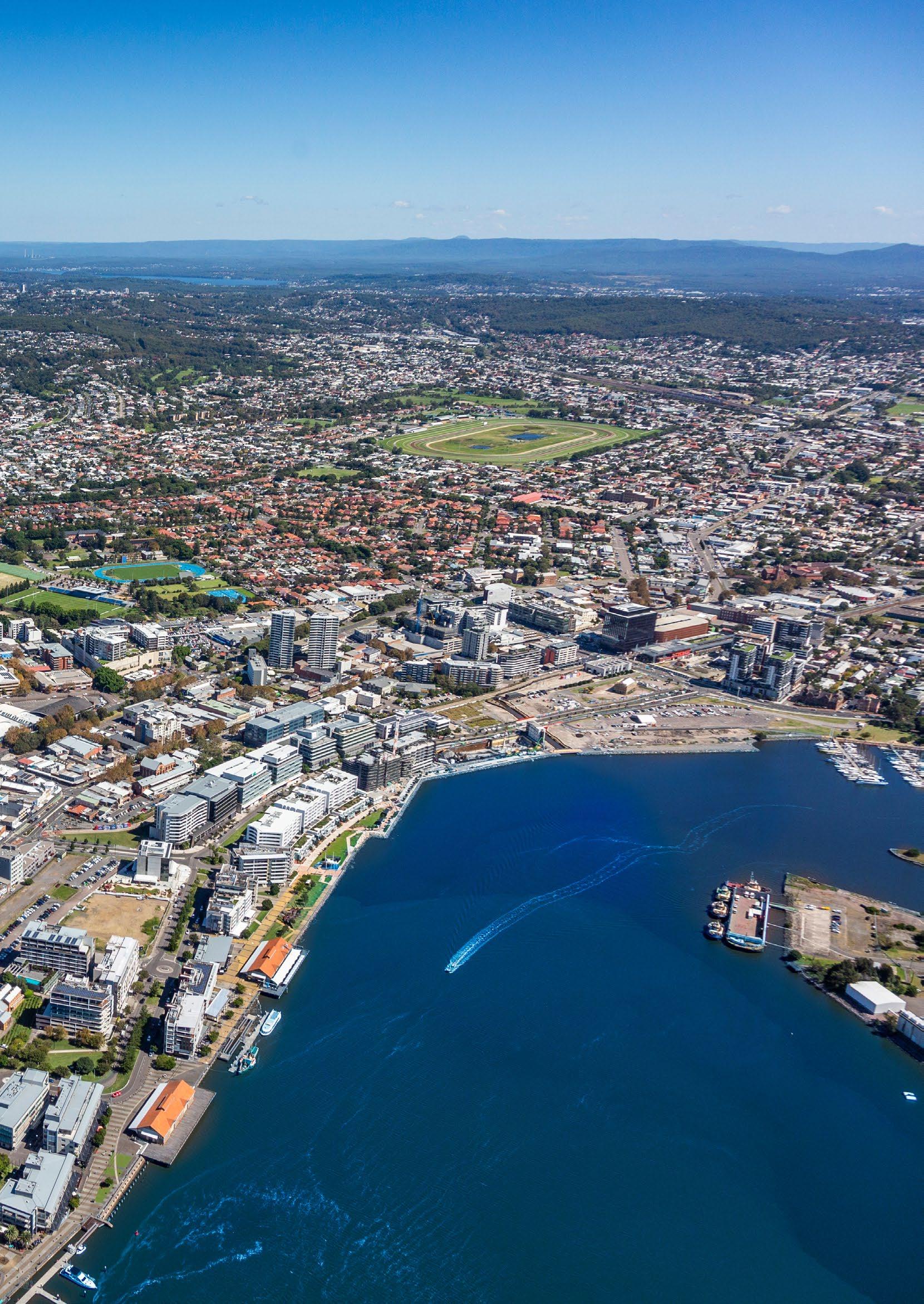
With a $73.3 billion economy, more than 725,000 residents, and 43,000 new jobs forecast over the next five years, the Greater Newcastle region is fast becoming one of Australia’s most investable regional markets.
No longer just the ‘steel city’, the region has evolved into a thriving metropolitan hub, driven by infrastructure investment, strong population growth, and a diversified industry base. As someone who has lived and worked in this region for the past few decades, I’ve seen the momentum build firsthand, from the revitalisation of the city centre to the rise of new industries and infrastructure that have redefined how people live, work and invest here.
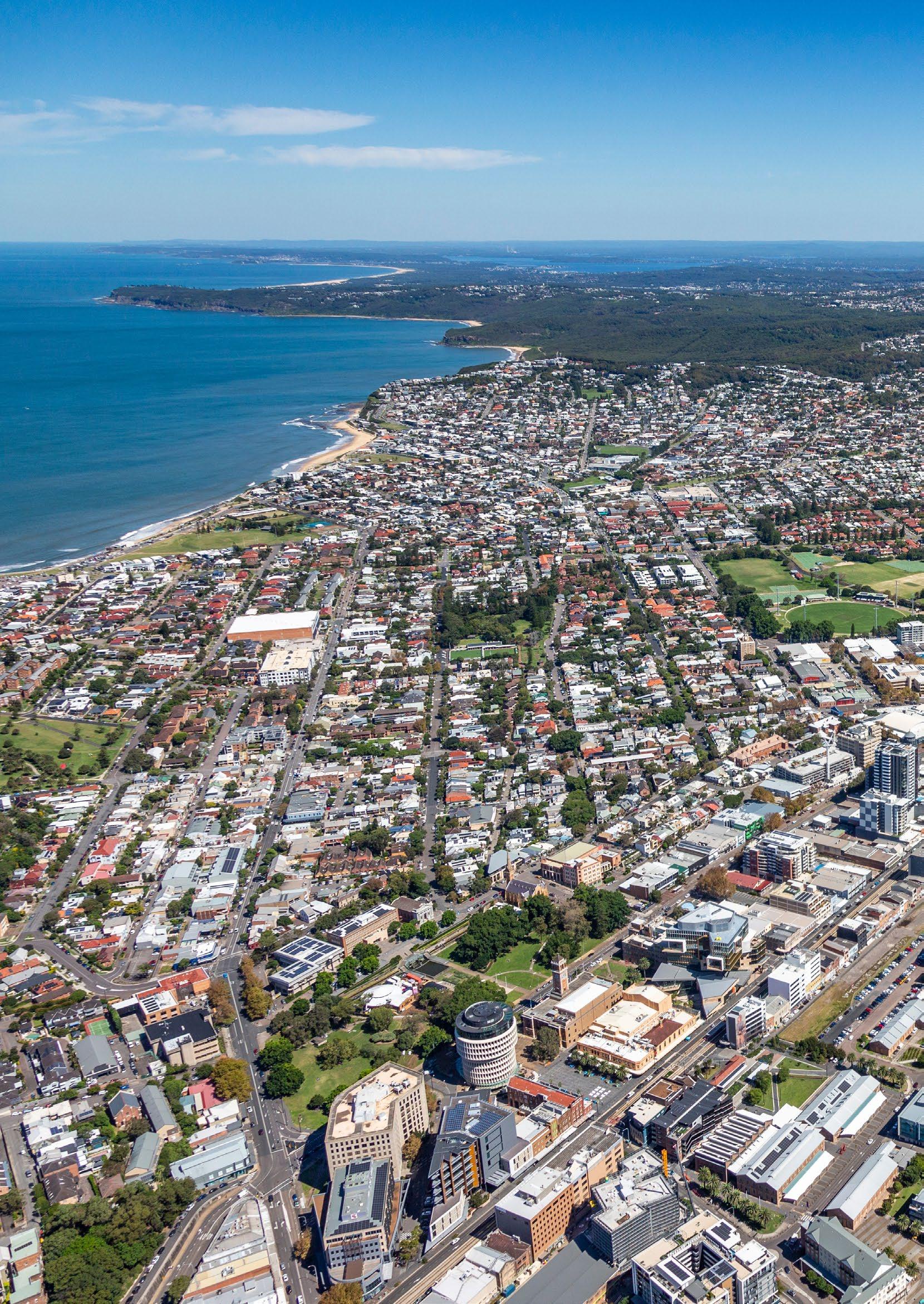
It’s why I’ve started referring to Newcastle as the “Sydney Fringe”. We’re two hours from the Sydney CBD, positioned along the east coast corridor, with the connectivity, liveability, and business confidence that make this region a natural extension of the Sydney market. But here, you’ll find more accessible entry points, stronger value metrics, and a pace of development that’s only gaining ground.
Employment growth has been driven by a mix of health care, construction, retail, education and hospitality, reflecting both a diversified economy and a rising population. The region’s industrial backbone remains strong, supported by advanced manufacturing, transport, warehousing and mining, while sectors like financial services and professional consulting continue to expand in line with white-collar demand. It’s a balanced market, supported by skilled labour, strategic investment, and an unemployment rate of just 3.7% - lower than the NSW state average.
For investors, Newcastle represents a combination of economic scale, market accessibility, and untapped potential. From commercial investments to mixed-use development opportunities, the region offers genuine upside backed by data, demand and a city that’s growing in the right direction. The insights in this report are here should help you identify the value Newcastle has to offer.
Dane Crawford Partner | CEO | Licensee in Charge
Market at a Glance
371,500
102,800
Newcastle Market overview
Economic Overview
Newcastle is a major regional economic centre in New South Wales, with a Gross Regional Product (GRP) of approximately $21.06 billion, representing 2.87% of the state’s Gross State Product. Over the past two decades, the city has transitioned from a traditional industrial base to a modern, diversified economy. While manufacturing continues to contribute the largest share to economic output at 14.75%, significant expansion in the health, education, and defence sectors has reshaped the city’s profile. Over $650 million in government investment into infrastructure and public amenities has further enhanced the region’s economic capacity, aligning with the city’s strategy to become a smart, liveable and sustainable global city by 2030.
Cumulative change in gross regional product
Source: National of Economic and industry Research (NIEIR) @2024. Compiled and presented in economy .id (informed decisions).
Business Landscape
Newcastle hosts a vibrant and resilient business environment, with 15,227 small businesses operating across the region. These enterprises are a key driver of local innovation, employment and economic diversity. The city also benefits from its strategic location and excellent transport infrastructure, supporting commercial growth and enabling access to broader regional and metropolitan markets. The City of Newcastle provides approximately 102,800 jobs, accounting for 36.6% of the Hunter Region’s total employment base.
City of Newcastle
City of Newcastle New South Wales
Key Industries for Employment
Newcastle's employment landscape is dominated by several key industries:
» Health Care and Social Assistance: This sector is the largest employer, providing jobs to 29,683 people or 20.9% of the local workforce.
» Construction: Employing 15,017 people or 10.6% of the workforce, this industry is crucial for the city's ongoing development.
» Education and Training: With 12,882 people or 9.1% of the workforce, this sector supports the city's educational institutions and training facilities.
» Retail Trade: The sector accounted for approximately 9,387 people, or 6.5% of all local employment in Newcastle in 2023/24
Employment (total) by industry 2022/23
City of Newcastle New South Wales
The Newcastle and Hunter region recorded strong employment growth over the last five years. In 2024, Health care led with over 7,000 new jobs, driven by major projects like the Maitland Hospital and John Hunter Innovation Precinct. Other services, Construction, and Wholesale trade also posted steady gains. While growth in Professional services was modest, the data reflects a resilient economy, with population growth and infrastructure investment supporting demand across key sectors. Source: National Institute of
Population Growth
Newcastle's population is projected to grow steadily over the coming decades. The population forecast for 2025 is 175,589, with an expected increase to 205,445 by 2046. This growth is driven by residential development, infrastructure upgrades and strong inward migration. The expanding population underpins demand across the commercial, health, education and retail sectors, reinforcing the city’s long-term investment fundamentals.
Newcastle Population
Demographics
Newcastle has a median age of 37 years and a near-even gender distribution of 49.1% male and 50.9% female. The average household consists of 2.4 people, and the median weekly household income is $1,760. The city has a diverse population, with 4.4% identifying as Aboriginal and/or Torres Strait Islander. Newcastle's strong economic performance, thriving business community, and positive population growth forecasts make it an attractive destination for commercial property investment. The city's strategic location just two hours from Sydney and diverse economy provide a solid foundation for sustained growth and development.
Sources: EconomyID | Explorecity | World Population Review | ForecastID
Industrial land value vs other major cities
Newcastle is fast becoming one of the most attractive industrial property markets on Australia’s east coast. Despite rising land values, the city continues to offer compelling advantages over major metro markets like Sydney, Melbourne, and Brisbane. When compared to larger metropolitan areas, Newcastle’s industrial property market remains competitively priced. The table below highlights land values and rental rates across key east coast precincts:
Between 2010 and 2020, Newcastle’s industrial land market experienced steady, sustainable growth. However, the last five years have seen a dramatic escalation in land values, driven by rising demand, constrained supply, and the rapid evolution of e-commerce, logistics, and advanced manufacturing.
The table below highlights the growth in land prices across two key industrial precincts in the Hunter region:
Commercial Office Vacancies
Newcastle’s office market remains one of the country’s most stable, supported by consistent demand for quality assets despite broader economic pressures. Vacancy has been influenced by rising interest rates, with many SMEs choosing to lease rather than buy, and by a growing shift towards modern, ESG-compliant buildings. New developments are driving a flight to quality, creating short-term backfill in secondary stock as larger occupiers relocate.
Newcastle Office Market
How ESG is shaping the Newcastle office market
Demand for highly rated ESG buildings is becoming highly influential in Newcastle, led by government, private, and public sector leasing mandates. 35,000sqm* of new office space is either nearing completion, under construction, or planned for delivery over the coming year. While this new supply is contributing to higher vacancy, it is reinforcing the flight to quality, with tenants prioritising sustainable, premium-grade buildings (PCA).
The A-Grade sector is benefitting most, supported by record mandates for 1,000sqm+ tenancies* across a range of organisations. This reflects national trends, with more than 80% of Australian office stock now NABERS rated and over 50% achieving 5-star+ performance, highlighting the market’s increasing focus on high-performing ESG assets.
A recent national survey found that 56% of investors plan to acquire or develop green buildings, overtaking retrofitting as the leading ESG initiative. While retrofitting remains important, particularly in the office sector, the weight of new investment is increasingly directed towards the delivery of ESG-compliant developments (CBRE).
Key highlights for the Office Market in Newcastle
» Total vacancy fell from 16.4 per cent to 14.9 per cent over the year to January 2025, driven by 7,814 sqm of net absorption.
» A-grade spaces saw the strongest demand, with vacancy decreasing from 17.9 per cent to 16 per cent and 7,509 sqm of net absorption.
» Vacancy in B-grade spaces decreased from 13.1 per cent to 11.2 per cent, reflecting 111 sqm of net absorption.
» C-grade spaces saw a decline in vacancy from 19.9 per cent to 18.7 per cent, with 685 sqm of net absorption. This is reflective of the flight to quality listings that have come onto the local market in recent years.
» D-grade spaces struggled, recording a vacancy increase to 9.3 per cent due to -491 sqm of net absorption.
» Future supply includes 3,100 sqm of new office space in 2025, followed by 3,650 sqm in 2026, with an additional 8,571 sqm in discussion for the coming years.
» More than 80% of Australian office stock is now NABERS rated, with over 50% achieving 5-star+ performance, reflecting the premium placed on sustainability.
» A recent national survey found 56% of investors intend to acquire or develop green buildings, overtaking retrofitting as the leading ESG initiative (CBRE).
Reference: Property Council Australia, January 2025 Office Market Report | CBRE, 2025 Asia Pacific Investor Intentions Survey
Key Infrastructure Developments
Newcastle is benefitting from unprecedented levels of major planning, development and infrastructure investment projects which are expected to drastically improve the growing city. These infrastructure developments are set to transform Newcastle, enhancing its connectivity, healthcare services and urban environment, positioning the city as a key regional hub in New South Wales.
Port of Newcastle Master plan 2040
Development of a multi-purpose deepwater terminal to enable NSW businesses to be more globally competitive by providing more efficient access to international markets.
NSW Fast Rail: Northern Corridor
A new $500million commitment in the 2022-23 NSW Budget and $80 million federal government commitment in Jan 2024, will bring faster rail a step closer, with quicker and more reliable connections between Sydney, the Central Coast and Newcastle.
Newcastle Airport Vision 2036
Due for completion in 2036, the expansion of regional and national direct routes to as well as international flights to become the state’s second international airport providing benefits to residents and businesses alike. The international passenger terminal is among the first stages of the project for completion. The international terminal officially opened in July 2025 with the first international flights set to commence in October 2025. The expansion is expected to bring an additional $6.2 billion in visitor income to the local economy and an additional $6.5 billion in additional business activity through increased freight access.
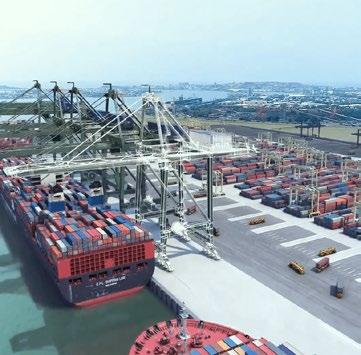
Newcastle Deepwater Container Terminal (NDCT)
Port of Newcastle is progressing plans for major infrastructure development that are expected to generate $2.5 billion in economic activity and create around 19,000 jobs. With direct rail access and strong freight links, the terminal will boost national trade efficiency and support economic diversification in the Hunter region.
Newcastle Inner City BypassRankin Park to Jesmond
The current road network in the area is used by about 40,000 to 60,000 vehicles each day. The new bypass will remove up to 30,000 vehicles each day from this route. Expected completion due in 2026.
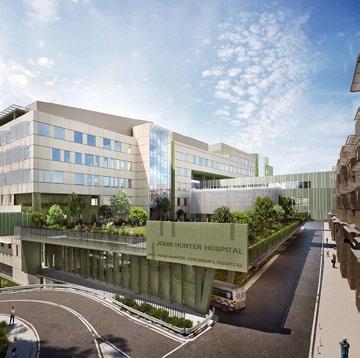
John Hunter Hospital and Innovation Precinct Investment
With an $835million investment, this development will include the construction of a new seven-storey acute services building, which will house state-of-the-art medical equipment, modern operating theatres, and advanced patient care facilities. Expected completion is in 2026.
Key Projects
East End development
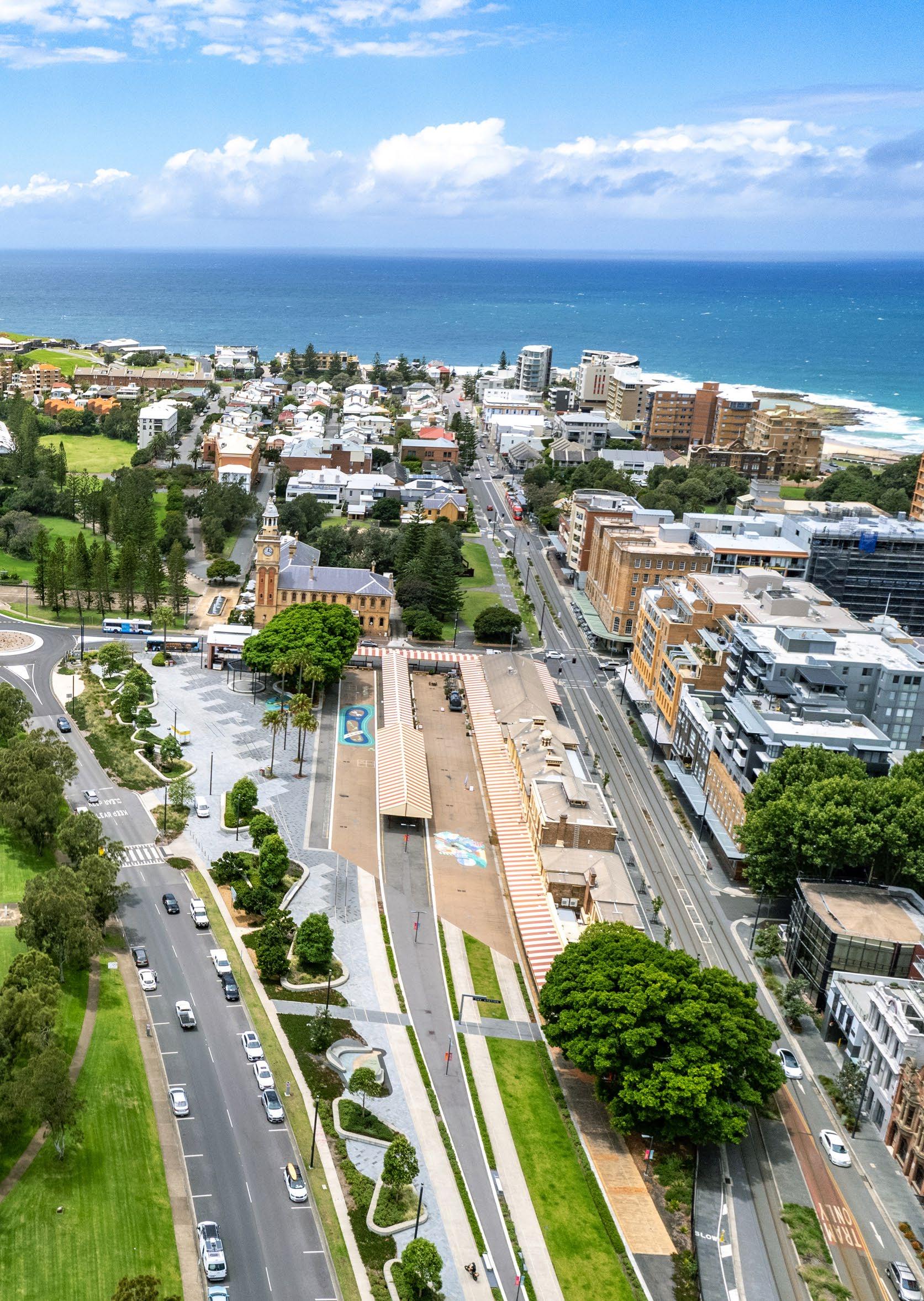
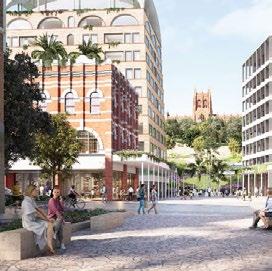
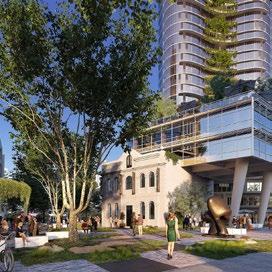
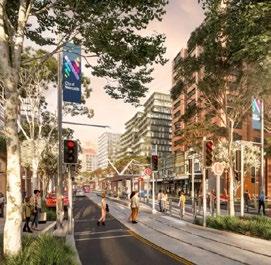
The $880 million East End development is revitalising Newcastle’s historic city centre and CBD through a staged mixed-use precinct. With new residential, retail, and public spaces, the project is designed to re-energise the Hunter Street Mall and surrounds while preserving key heritage elements. Stage 1 was completed in 2021, with remaining stages expected to be delivered progressively through to 2027. A positive sign for the city’s vibrant CBD that is quickly transforming into a work-life hub with numerous residential developments planned and underway.
100% renewable energy by 2040
Newcastle aims to reach net zero emissions by 2040, with a strong focus on 100% renewable energy. In a state-first achievement, Newcastle became the first council in New South Wales to power all operations with renewable electricity. Backed by the Summerhill Solar Farm, power purchase agreements, and community programs, the city is accelerating its clean energy transition as part of the Hunter-Central Coast Renewable Energy Zone.
Newcastle 2040
With a planned investment of over $415 million into Newcastle, delivering key services and over $38.1 million in infrastructure improvements, $6 million in planning and $18.1 million in Creative and Community services, the vision outlines annual goals towards the goal of making Newcastle a livable, sustainable and inclusive global city.
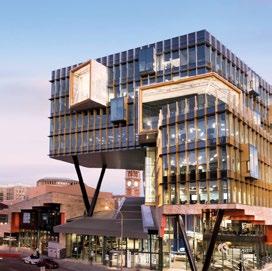
The University of Newcastle’s Honeysuckle City Campus continues to take shape along Newcastle’s waterfront. The $25 million Q Building, completed in 2021, became the first regional 6-Star Green Star rated building in NSW. Future stages of the campus will include expanded teaching and collaboration spaces that support partnerships with industry and government. The precinct strengthens Newcastle’s positioning as a regional knowledge and innovation hub.
Australia’s first missile factory 2027
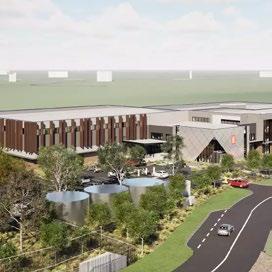
A $1 billion guided weapons manufacturing facility is planned for Williamstown, marking the establishment of Australia’s first sovereign missile factory. Backed by the federal government and defence industry partners, the project is expected to commence construction in 2025, with operations beginning in 2027. It will create hundreds of advanced manufacturing jobs and position the Hunter as a key defence hub. This strategy highlights the West End’s transformation into Newcastle’s new urban core, supported by ongoing public and private investment.
Broadmeadow PrecinctRegeneration
Sports and entertainment precinct redevelopment 5km from Newcastle CBD to stimulate the local economy and improve liveability outcomes via provision of public space. Est. Completion due: 2031
University of Newcastle: https://www.newcastle.edu.au/__data/assets/pdf_file/0011/958520/B2-Revised-Design-Guidelines-Nov-2023.pdf
City of Newcastle: https://newcastle.nsw.gov.au/about-us/news-and-updates/latest-news/solar-farm-powering-city-operations-and-revenue
City of Newcastle, East End: https://newcastle.nsw.gov.au/about-us/news-and-updates/projects-and-works/city-centre-revitalisation/east-end
Newcastle NSW versus Australia’s Capital Cities
Newcastle may seem like an emerging market to some, but with steady and stable growth over multiple years, New South Wales’ second largest city is one to watch. See how Newcastle and the Hunter Region stack up against the capitals in Australia.
Population growth projections
Migration patterns in Newcastle and the Hunter Region
Over the past decade, internal migration has been the dominant force shaping population growth in Newcastle and the Hunter Region. The area has consistently attracted residents from:
» Greater Sydney, particularly the Northern Beaches, Inner West, and Randwick LGAs
» Regional NSW, including Central Coast, Port Macquarie-Hastings, and Tamworth
» Other urban centres, such as Dubbo and Bathurst
Between 2016 and 2021, Newcastle recorded net migration gains from:
» Central Coast: +602
» Northern Beaches: +558
» Tamworth: +353
» Port Macquarie-Hastings: +337
» Inner West: +316
These figures reflect a strong trend of urban-to-regional relocation, driven by affordability, lifestyle, and employment opportunities however also demonstrate the attractiveness of Newcastle from more regional areas also.
Key factors influencing migration to the region include:
» Housing affordability: Newcastle offers significantly lower property prices than Sydney, making it attractive for first-home buyers, retirees, and families.
» Lifestyle appeal: Coastal living, access to nature, and a relaxed pace have drawn many from congested urban centres.
» Remote work flexibility: Post-COVID work arrangements have enabled professionals to relocate while maintaining metropolitan employment.
» Education and health infrastructure: The presence of the University of Newcastle and expanding health precincts supports both domestic and international migration.
Overseas migration trends
While internal migration dominates, overseas migration has also contributed to growth, especially post-pandemic. The largest increases in country-of-birth groups nationally (which impact Newcastle regionally) include:
» India, China, Philippines, Nepal, and Pakistan
» These groups are increasingly settling in regional centres due to education pathways and skilled migration programs.
Investment implications
» Migration patterns directly influence commercial property demand in several ways:
» Retail and service sector expansion: Population inflows support retail precincts, hospitality, and health services.
» Industrial and logistics growth: Businesses relocating from Sydney benefit from lower land costs and proximity to the Port of Newcastle.
» Office space demand: Professional migration and hybrid work models are driving demand for flexible office solutions.
» Residential development pipeline: High internal migration has led to strong housing approvals in LGAs like Maitland and Cessnock, supporting mixed-use and precinct developments.
Sources
.id Community – Migration by Age and Location (Newcastle) [profile.id.com.au]
.id Community – Housing Development & Migration Trends [id.com.au]
NSW State Migration Plan [nsw.gov.au]
Property Council – Hunter Region Investment Outlook [propertyco...cil.com.au]
Australian Bureau of Statistics (ABS) – Australian National Accounts: State Accounts, https://www.abs.gov.au/statistics/ economy/national-accounts/australian-national-accounts-state-accounts/latest-release ABS – Data by Region, ABS – Data by Region Portal