
Written by Alys Bryan, Editorial Director designinsiderlive.com
Written by Alys Bryan, Editorial Director designinsiderlive.com
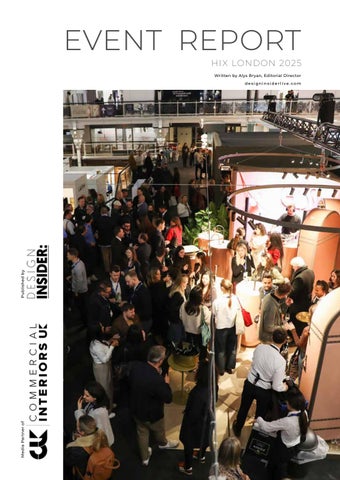
Couldn’t join us at HIX 2025? This event report brings you the scale, energy, and opportunity of one of the UK’s most significant hospitality events.
You’ll gain exclusive insight into how exhibitors are using the show as a springboard for new product launches, and even testing the water with early product previews, positioning HIX as a space where innovation is revealed and celebrated.
We share perspectives from leading voices within the HIX Talks programme as well as from our own stand activation discussions, offering a clear view into the conversations shaping today’s commercial interiors landscape. The report also explores the standout installations that challenged visitors to think differently about what’s possible in hospitality design.
Alongside this, we spotlight the Commercial Interiors UK members who exhibited, underlining the expertise, craft, and sector-leading solutions they bring to hospitality projects in the UK and globally.
Finally, we reflect on the lasting impressions of HIX 2025, celebrating the show as a platform for connection, creativity, and commercial opportunity, and a showcase of the best in commercial interior design.
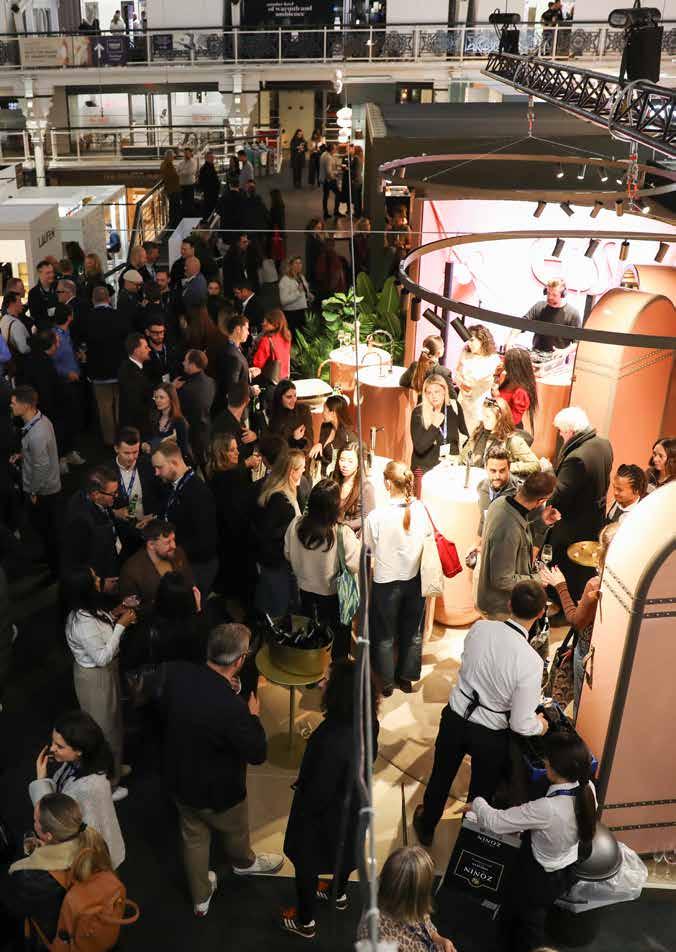
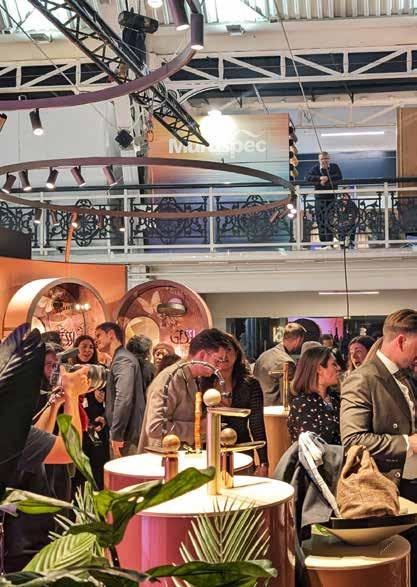
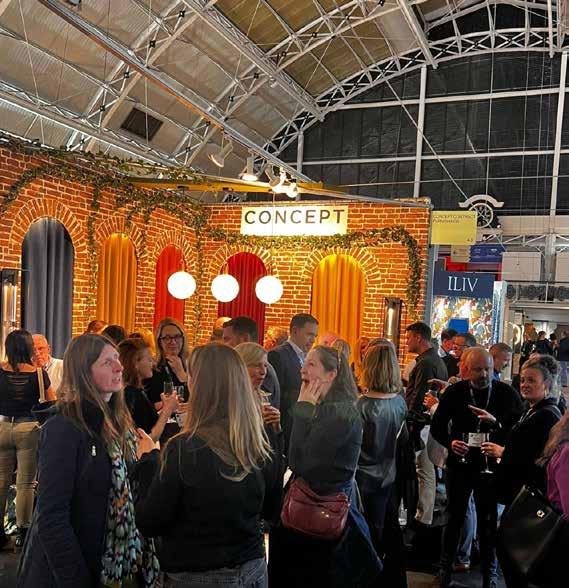
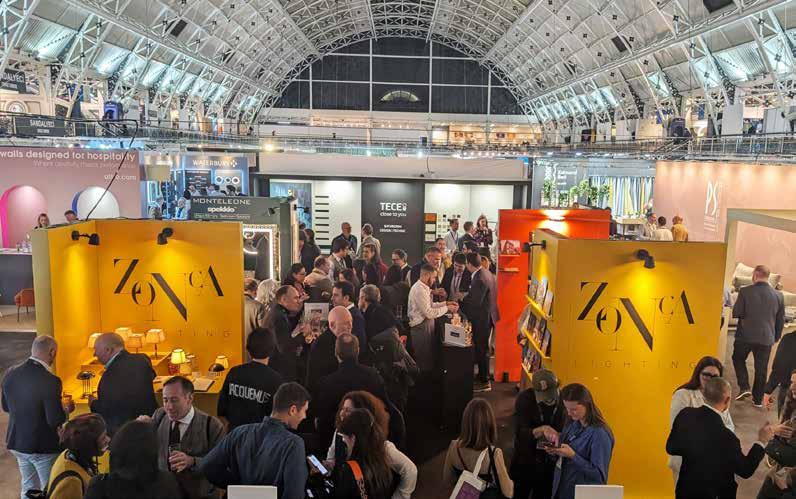
HIX 2025 ONCE AGAIN DEMONSTRATED ITS STRENGTH IN BRINGING THE HOSPITALITY INTERIORS COMMUNITY TOGETHER, CREATING A SPACE WHERE SUPPLIERS COULD NOT ONLY MEET CUSTOMERS BUT ALSO DEEPEN CONNECTIONS WITH FELLOW EXHIBITORS AND COLLABORATORS ACROSS THE SECTOR.
HIX 2025 centred on the theme Culture Clash, a thread intended to run through both the stand design concepts and the talks programme. As I walked the show, it was clear that interpretation varied widely. Furniture Fusion once again stood out: for the second year running, they embraced the theme wholeheartedly, crafting a conceptually rich and genuinely thought-provoking stand. A handful of other exhibitors nodded towards the theme, but overall I didn’t see the level of collective engagement that could have made Culture Clash a defining visual language across the hall. Food for thought for the show organiser, especially as they look to transfer the show to London’s Excel.
One thing HIX has always done well is provide a platform for new product launches, and this year reaffirmed that strength. If it could encourage more exhibitors to launch new products, this could be the catalyst, to take HIX to the next level and become a truly global show.
In this report, I share over 30 new launches and five product previews. I find product previews particularly valuable as they allow suppliers to test the water, gauge reactions, and gather detailed feedback from their target customers before finalising a design. Given how effective this approach can be, I was surprised not to see more exhibitors take advantage of it. When suppliers choose to launch or preview at HIX, it signals real confidence in the show’s ability to bring the right people, in the right numbers, to engage with their work.
Visitors also had the opportunity to enjoy a small series of installations, three of which I’ve highlighted here. These were primarily driven by collaborations between exhibitors and some of the UK’s leading designers. I believe these installations bring an essential layer of thought leadership and guest experience to the event, and I would love to see this aspect grow in scale and ambition in future years.
A recurring topic in my conversations with exhibitors was the forthcoming move from the Business Design Centre to ExCeL for the 2026 event. The shift brings both challenges and opportunities, and it was interesting to hear suppliers weighing up how the change in venue, and scale, will influence their approach next year.
To begin, could you introduce yourself?
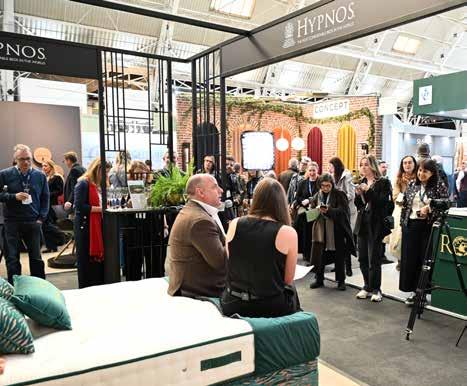
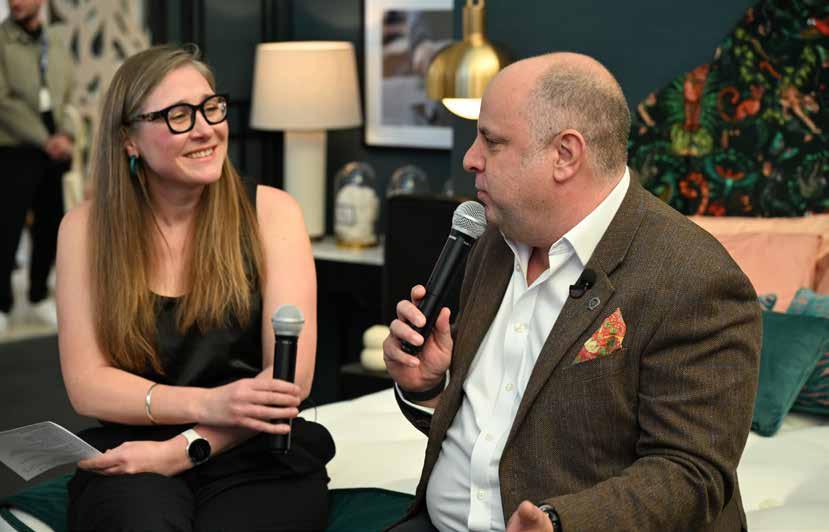
I’m David Baldry, Managing Director at Hypnos. I’ve spent a lot of my career travelling around the world but also in and around hotels, and as such that experience really shapes how I think about sleep, comfort and what guests genuinely need from a room.
From all those nights in hotels, what really works – and what doesn’t?
For me, a hotel room is a sanctuary at the end of the day. It doesn’t matter whether you’re travelling for work, on holiday, alone or with family – you’re choosing a place to rest and reset. The basics are incredibly simple: a great bed, a comfortable chair or seating area, and an amazing shower. Cleanliness should be a given; it shouldn’t even be up for discussion.
Beyond that, the room needs to be laid out clearly. You should be able to walk in and instantly know: that’s where I sleep, that’s where I read, that’s where I get ready. It has to be restful and calming, but also able to get you energised for a night out or the next busy day.
What role does F&B play in that wider guest experience?
Food and drink are the other essential things we all need in life, alongside rest. A great F&B offer gives you options – somewhere you can sit quietly with a drink and a newspaper, or a space to celebrate with friends or colleagues.
It doesn’t have to be Michelin-starred, but it should be fresh, thoughtful and cooked with heart and soul. A great meal genuinely improves mood and sleep quality.
What makes a hotel truly unforgettable?
People, people, people. You remember the team: the person on the door, the concierge, the restaurant manager who comes over to say hello. My favourite hotels are all built around the people who bring them to life. If you feel welcomed and at home, you settle faster, sleep better and enjoy the stay far more.
You’ve stayed in hundreds of hotels. What does a really bad experience look like?
The worst was a pub with rooms a couple of years ago. It looked great online, but in reality the bathroom light didn’t work, the space was poorly lit and it simply wasn’t clean. When I raised it, the response was basically: “There’s not much we can do.” If you can’t get the basics right, guests will just move on — which I did.
Sleep is Hypnos’ territory. Is there a risk of style over substance in hotel bedrooms?
There has been in the past, but we’re seeing a shift toward quality. Hotels are testing beds properly and want guests to have a genuinely good night’s sleep. Comfort is personal — like shoes, we’re all different — but hotels can still deliver a universal level of supportive, reassuring comfort and ultimately that’s what we have the room for.
Where does Hypnos come in – beyond simply supplying a mattress?
We act as partners and educators. We help hotels understand what they need based on their brand, climate and guest profile. We advise on protectors, toppers and maintenance, and even label our mattresses by month so housekeeping teams know how to rotate them correctly. Small details protect the investment and the guest experience.
Why does sustainability remain such a big focus for Hypnos?
Because we’re not just talking about it; we’re doing it. We’ve been carbon neutral for 15 years and now on track for Net Zero in 2040, we minimise mechanisation, we design for recyclability and we can take mattresses away at end-of-life as part of our service. Clients want tangible action, not promises, and we deliver exactly that.
Looking ahead, what can the sector expect from Hypnos?
More luxury, more focus on sleep, and deeper support around complete sleep solutions for the room. We’ll keep evolving materials, pushing on people-and-planet wellness, and partnering with hotels to help them design the very best sleep environments.
1. Who are you in three words? Driven, Leader, Traveller.
2. Something we don’t know about you? I don’t drink beer!
3. Tea or coffee? Coffee, black.
4. Celebration drink? Champagne!
5. Early bird or night owl? Both.
6. City that inspires you? London.
7. Favourite hotel bed? The Hypnos Woolsleeper at Langdale Chase.
8. What makes a hotel unforgettable? People and service.
9. Sustainability: mission or mindset? Mindset.
10. Leadership in one word? Empowerment.

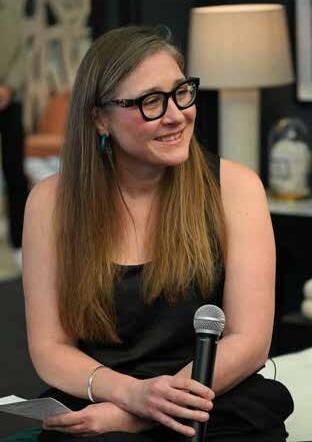
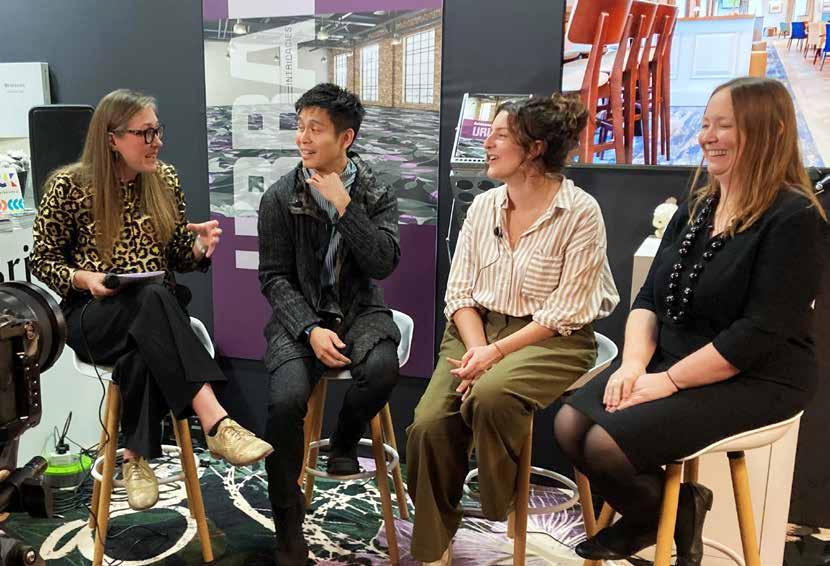
THE BRINTONS STAND WAS BUSY AND LIVELY AS DESIGN INSIDER’S EDITORIAL DIRECTOR, ALYS BRYAN, WELCOMED AN AUDIENCE THAT QUICKLY FILLED THE AISLE. WITH HIX FOCUSING ON CULTURE CLASH, THE CONVERSATION SET OUT TO EXAMINE HOW CULTURAL DIFFERENCES SHAPE GLOBAL HOSPITALITY PROJECTS. VISITORS GATHERED AROUND THE STAND TO HEAR FROM ALYS’ GUESTS: AGNUS LAU, SENIOR DESIGNER AT CONRAN AND PARTNERS; SAM HALL, DIRECTOR OF INTERIOR DESIGN AT IHG; AND JODIE HATTON, DESIGN MANAGER AT BRINTONS.
TOGETHER, THEY EXPLORED HOW HOTELS CAN REFLECT THEIR LOCAL CONTEXT WHILE REMAINING WELCOMING TO A GLOBAL AUDIENCE.
Alys opened the discussion by grounding the audience in how global studios work behind the scenes. Agnus explained that Conran and Partners operates from London and Hong Kong, a structure that allows teams to share a single design narrative across continents. With overlapping working hours and a carefully coordinated workflow, the practice is able to maintain cultural sensitivity while delivering projects at speed in Asia’s fast moving hospitality market.
For Jodie, Brintons’ worldwide network of design teams allows the company to stay connected to regional preferences and evolving global trends. Their teams in the UK, US, Australia and Europe collaborate closely across time zones, ensuring consistency in technical delivery while also embracing local identity through pattern, colour and construction.
Sam offered insight into how IHG manages brand consistency across such a broad footprint. With regional design centres and strong global guidelines, the group balances international brand recognition with enough creative flexibility for designers to embed authentic cultural references.
One of the core questions posed by Alys was how designers avoid slipping into themed or superficial interpretations of culture. Sam explained that authenticity must be integrated from the very beginning of a project. True cultural expression is communicated through the rhythm of the architecture, the flow of spaces, the tactility of materials and the guest journey, rather than decorative motifs added at the end.
Agnus shared examples from Park Hyatt Changsha, where materiality and storytelling deepen the connection between the hotel and its city. Locally sourced natural materials form the backdrop for the interiors, while curated artwork and crafted objects reflect the life and travels of the fictional host at the centre of the brand narrative. The result is a refined and contemporary interpretation of Changsha that is rooted in place without being literal.
Agnus explained how private dining rooms occupy a significant proportion of floor space in many Chinese hotels, reflecting the importance of hosting and ceremony. In contrast, Western markets may prioritise open social environments over enclosed rooms.
Local beliefs can also shape spatial orientation. Agnus described working with clients who required layouts aligned with Feng Shui principles, requiring the design team to rethink room configurations entirely. What might be unusual or unexpected in a European scheme can be essential for cultural harmony in Asian markets.
Sam noted that missteps often occur when teams lack local knowledge. She recalled presenting blue-based schemes to Asian clients, unaware that these shades are associated with funerary symbolism in some regions. Understanding context, she emphasised, is not optional.
IHG’s brand standards often meet assumptions that they prescribe a fixed design language, but Sam clarified that they are intentionally flexible. They provide a framework rather than a formula, setting technical performance benchmarks and broad aesthetic direction. Within that structure, designers are encouraged to interpret the brand through local stories and regional influences.
A global audience brings expectations shaped by travel habits, lifestyle and cultural norms. For example, guests in Europe may
see luxury as craftsmanship, tactility and intimacy, while in Asia luxury often includes volume, scale and a more dramatic visual impact. The challenge for designers is to create a space that feels geographically grounded while still delivering on the universal promise of comfort, clarity and recognition.
Much of the conversation turned to the expressive potential of textiles. Jodie described how carpets act as a canvas for cultural storytelling, blending historic references with contemporary design approaches. Working from Brintons’ extraordinary archive, which includes centuries old patterns and the world’s largest collection of Japanese katagami stencils, designers can begin with authentic material before evolving it into modern hospitality schemes.

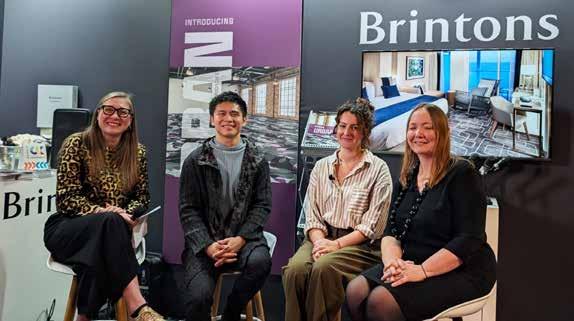
At HIX, Brintons launched a new collection developed with Talisha Fiaz, a textile graduate from Birmingham City University. Talisha’s work explores her British Pakistani identity by layering urban textures from Birmingham with floral and traditional motifs. Her designs blend graffiti marks, wire mesh references and heritage patterning to create carpets that feel contemporary while speaking directly to cultural hybridity. Jodie explained that this partnership also reflects Brintons’ long standing commitment to nurturing emerging talent and supporting the next generation of designers.
Technical preferences also differ across regions. Some markets prefer the clean, even surface of stippled yarns, while others lean toward textural depth. In some areas, architects favour cut and loop constructions or Axminster for its clarity. Brintons even produces higher pile Axminster rugs at their Polish facility, which Sam highlighted as a valuable tool for achieving a hand tufted appearance when budgets will not stretch to bespoke rug manufacture.
Alys closed the conversation by asking the speakers where they see future opportunity in global hospitality design.
Sam highlighted that growth exists everywhere and across every tier of the market. For her, the most exciting opportunity lies in
the evolving expectations of travellers, who continue to move fluidly between brands as their lifestyles and budgets change. She expects increased investment in experience driven design, stronger regional identities within global brands and ongoing diversification of hotel types to meet new guest behaviours.
Jodie noted significant growth in innovation around materials and installation methods. She sees carpet tiles and hybrid constructions becoming more prominent in hospitality thanks to ease of fitting, environmental advantages and the ability to replace small areas without disrupting an entire interior. She also expects more cross cultural collaborations, with designers increasingly drawing from global references while respecting origin and authenticity.
Agnus pointed to a shift in how luxury is defined. He believes the most compelling opportunity lies in the move toward understated, personalised and locally resonant forms of luxury, driven by travellers who value depth of experience over spectacle. For Agnus, the future of hospitality design belongs to projects that are grounded in place, shaped by cultural nuance and connected to the communities they serve.
As the conversation closed, Alys invited the audience to stay, explore the new Brintons collection and continue the discussion. The corridor remained busy, full of people eager to learn more.

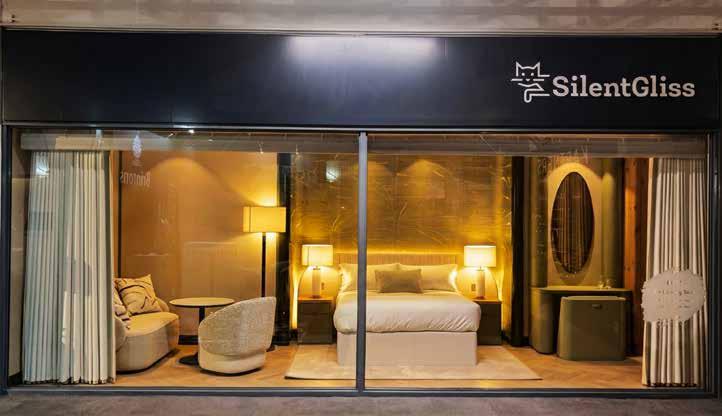
“The Harmony Suite demonstrates how Silent Gliss motorized interior window treatments work seamlessly with Studio Moren’s design to create guestrooms where craftsmanship and technology coexist. Every element proves that technical excellence isn’t a luxury - it’s central to spaces that feel intuitive, calm and impeccably crafted. Originally created for HIX, the suite is now semi-permanent in our London studio, inviting visitors to experience it firsthand.
SHOWCASED WITHIN SILENT GLISS’ LONDON STUDIO, THE HARMONY SUITE BROUGHT TOGETHER THE EXPERTISE OF SILENT GLISS AND STUDIO MOREN TO EXPERTLY REIMAGINE WHAT A CONTEMPORARY HOTEL ROOM CAN ACHIEVE WHEN CRAFTSMANSHIP, TECHNOLOGY AND INDUSTRY-WIDE COLLABORATION SIT AT ITS CORE.
This outstanding installation was a celebration of craftsmanship, technology and collaboration, three pillars that, when explored together, genuinely move the hospitality sector forward. Approaching a core hotel room concept in this way allows designers to not only push interior thinking but also bring suppliers directly into the conversation, accelerating both the speed and the quality of change. And this was immediately clear from the moment you arrived.
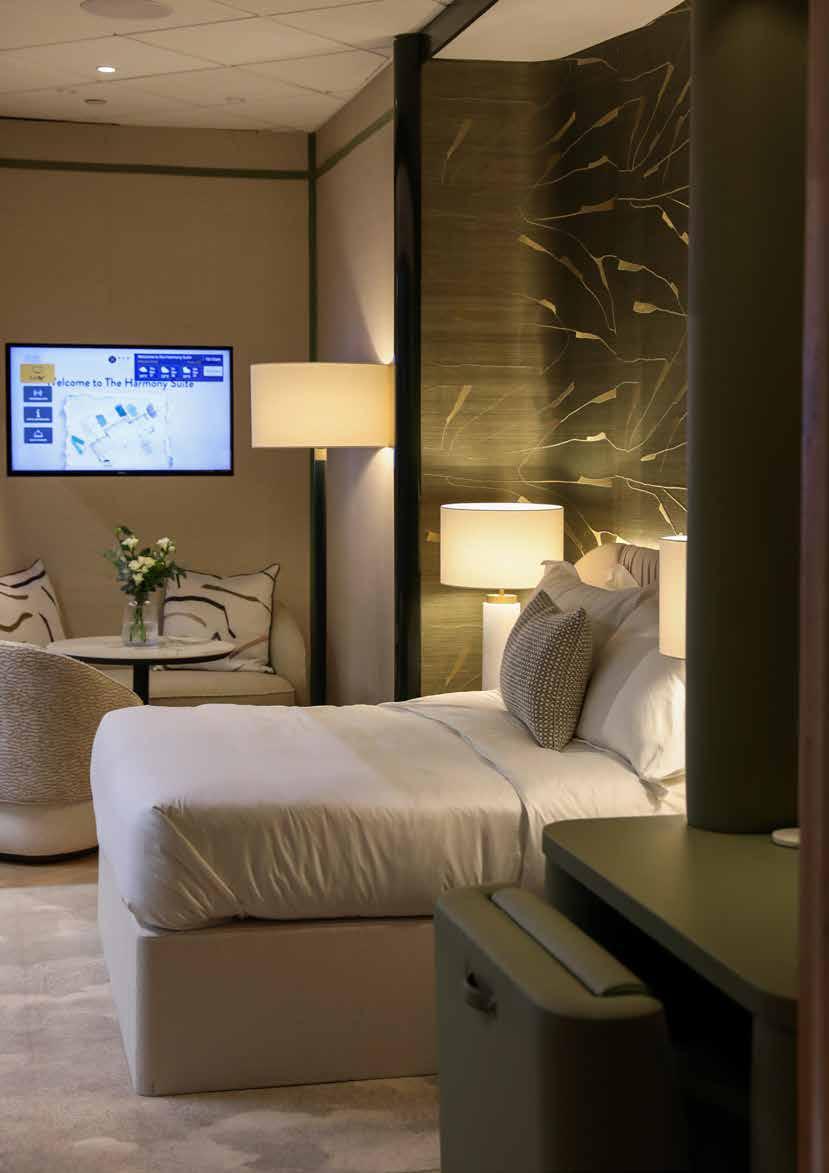
When you flashed your keycard over the receiver and opened the exquisite door, the room responded instantly: automated blinds
rose and curtains were opened in a smooth, choreographed motion, revealing a space that felt ready for you. It was an unexpectedly elegant moment, simple, intuitive and a perfect introduction to what The Harmony Suite set out to achieve.
Inside, the installation explored how craftsmanship and technology can coexist to create a genuinely elevated guest experience. Materiality played a crucial role: soft, neutral fabrics, grass-cloth wallcoverings and warm timber brought depth and comfort, while subtle metallic accents and leather detailing added refined touches without dominating the room. This tactile foundation was paired with an integrated technical system that operated quietly but intelligently in the background. Silent Gliss smart shading, connected via Bodhi’s building-management platform, worked seamlessly with Rako lighting controls, Black Nova interfaces and Sonos sound to deliver a room that adjusted to mood, time of day and guest preference with minimal effort. The result was a space that looked crafted but felt responsive, an interior where technology enhanced the experience without overshadowing the design.
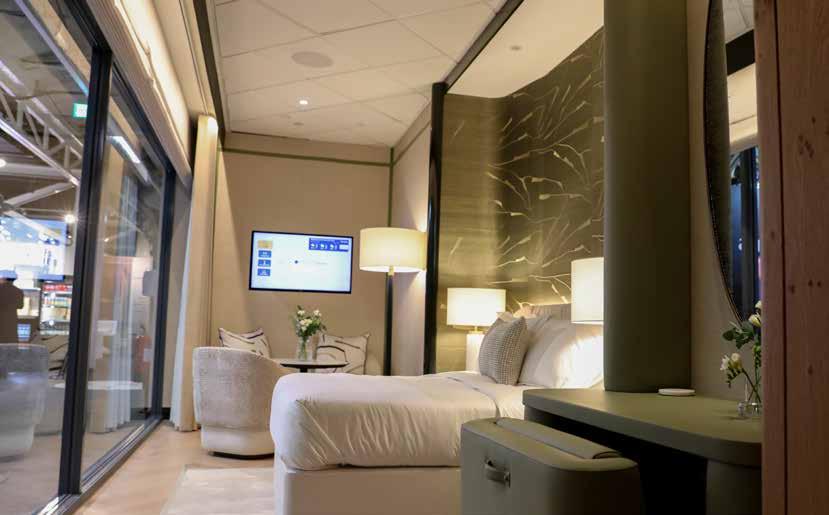
What made The Harmony Suite especially compelling was the strength of its collaboration. The installation brought together a wide network of suppliers, each contributing expertise that shaped the environment in a meaningful way. Hypnos and Contract Chair Co. added comfort and craftsmanship; Romo Group, Phillip Jeffries, Ege Carpets, Samuel & Sons and Alma Leather formed the suite’s tactile language; while Forest Contract, Capital Crispin, Mega Glass, Heritage Brass by M. Marcus, Salto, and Lualdi delivered the architectural and functional elements that anchored the space. Chelsom’s lighting enhanced materiality, Savage Lighting supported detail, and Bodhi orchestrated the intelligence running throughout. This interplay of specialist skills demonstrated how collaborative thinking can produce more than the sum of its parts, resulting in a guestroom that felt both globally informed and finely crafted.
The Harmony Suite will remain installed in the Silent Gliss showroom for the coming weeks, offering visitors the opportunity to explore the installation at their own pace and experience the full impact of this collaborative achievement firsthand.
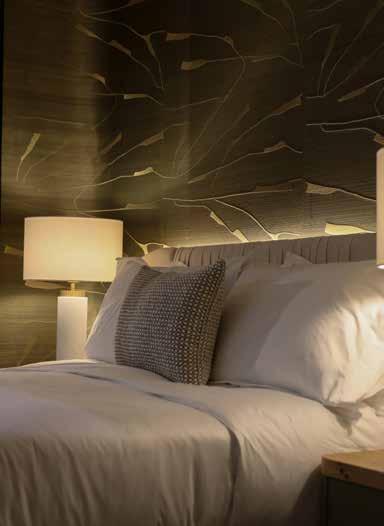
“Sharing the Harmony Suite at HIX is an opportunity to demonstrate how we design with purpose – creating spaces that feel human, considered and emotionally engaging. The concept brings together our thinking around wellbeing and comfort in the guestroom, expressed through refined detailing, materiality and the small moments that elevate a stay. It unites craft and individuality in a way that feels effortless, while our partnership with Silent Gliss adds a layer of technical excellence enhancing guest sensory comfort. Presenting this to the HIX audience allows us to open meaningful conversations about what truly shapes an exceptional guest environment.
David Harte, Partner & Head of Interior Design, Studio Moren
Product previews this year revealed a clear focus on material innovation, recycled textiles, and finishes tailored specifically for hospitality.
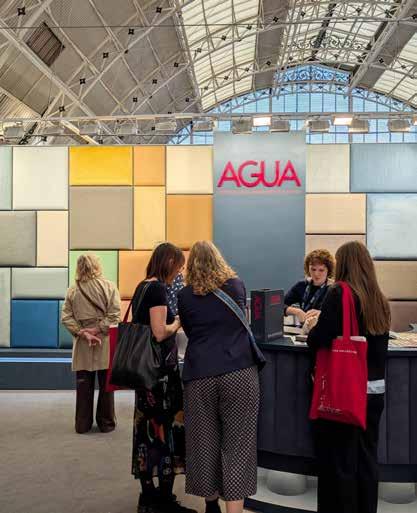
Sheers and voiles emerged as a strong theme, with upcoming collections from Camira and Skopos signalling renewed interest in lightweight, sustainable drapery. Rich textures also took centre stage, demonstrated through Agua’s new velvet chenille, while Muraspec expanded the narrative potential of wallcoverings with nature-inspired designs.
Alongside these textile and wallcovering developments, ROMAN introduced a new approach to stainless steel finishes for hospitality, offering expanded possibilities in colour and performance. through their stainless steel collection.
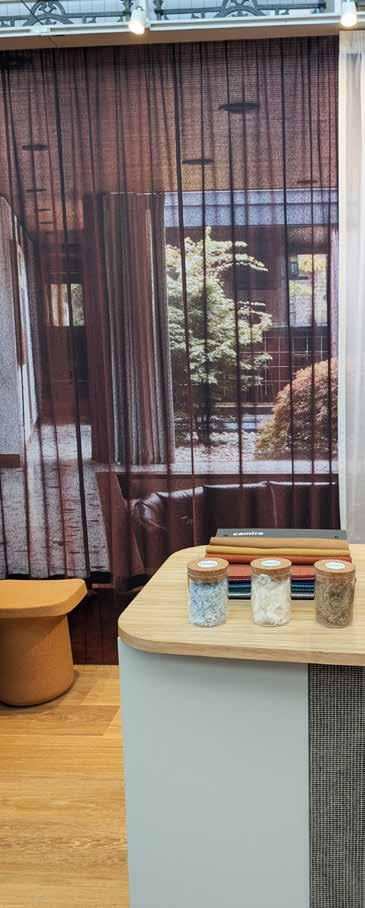
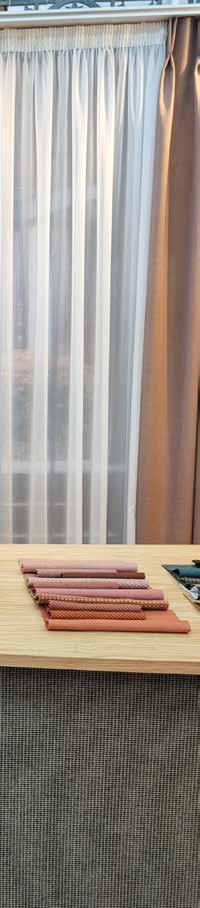
The Lumis Collection Camira’s first sheers collection, due to launch in Feb 2026. Recycled polyester
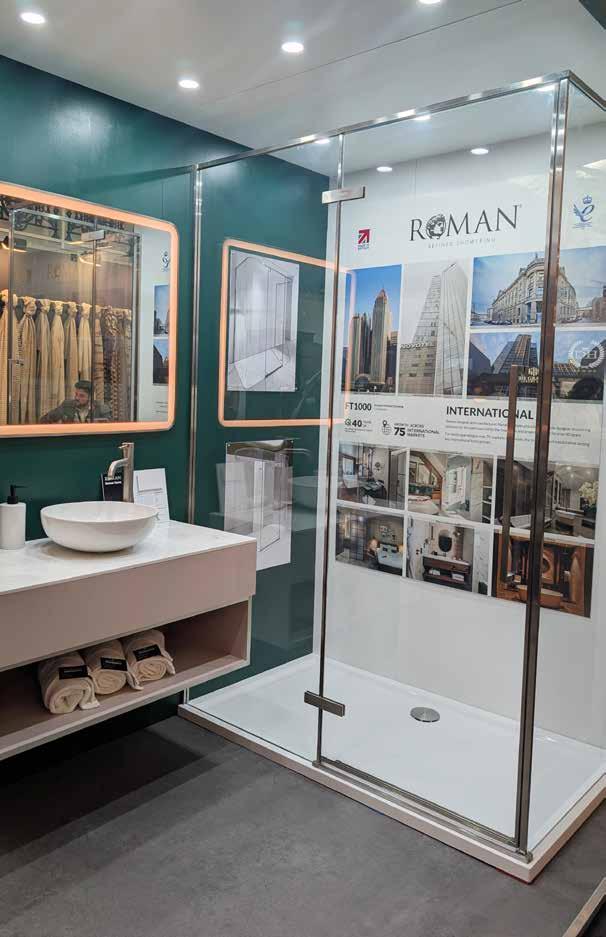
A new stainless steel collection developed exclusively for the hospitality sector. Made in the UK and available in any PVD colour
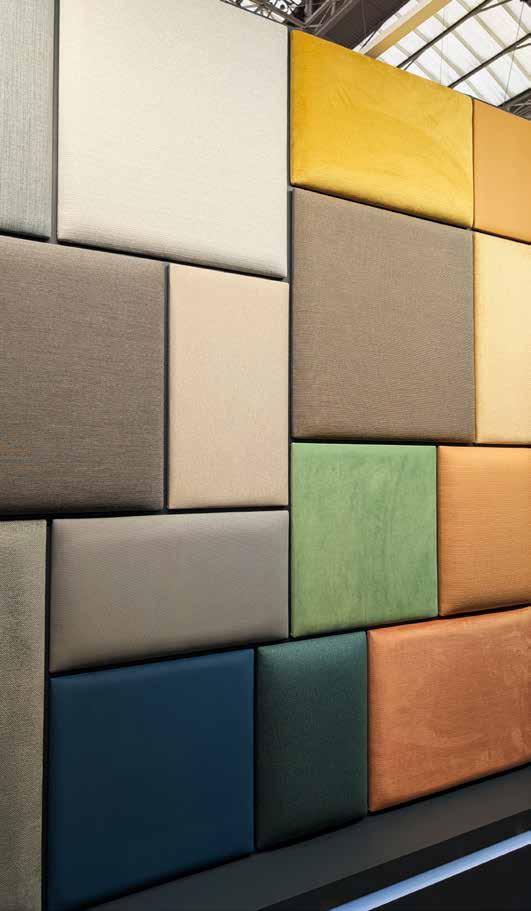

Velvet chenille with a colour palette of 21 colours, terracotta, gold and sky showcased on the stand. Due to launch in Jan 2026
Three striking new fabric backed vinyl wallcoverings, Designed by the Muraspec in house design studio

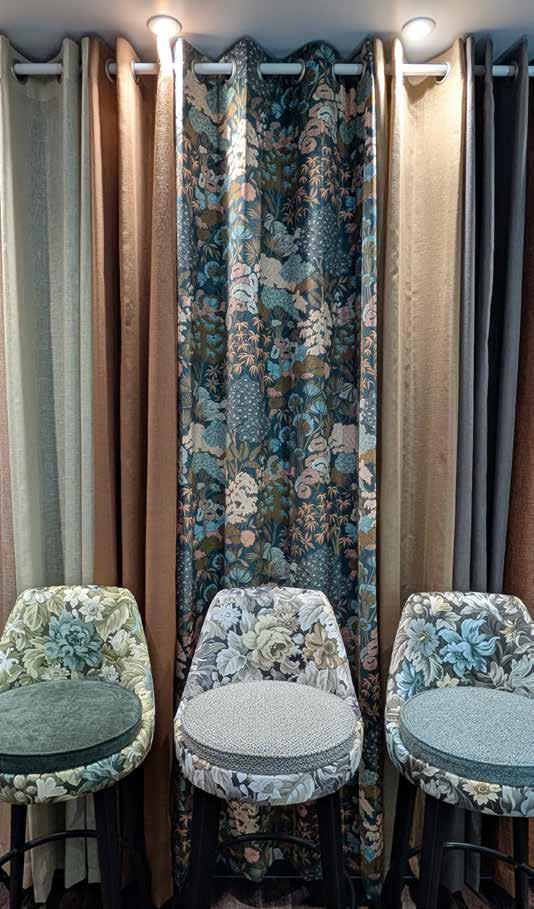
with a nature narrative
Recycled , coloured, voile, due to launch in Feb 2026
Showcased alongside Arboretum, a new print design

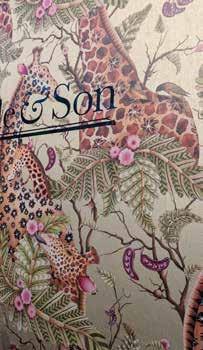
A new colourway for an existing design
This remains an important launch point for suppliers, with some introducing brand-new products and others bringing designs to the UK for the first time following BDNY.
The selection was varied: refined updates to existing patterns, new wall and surface solutions, and two new furniture designs from Knightsbridge showing the brand’s continued development of form and function.
Panaz added to this with a textile designed to explore shape and surface in a new way. Collectively, the launches offered a clear snapshot of the product directions emerging across the hospitality sector.
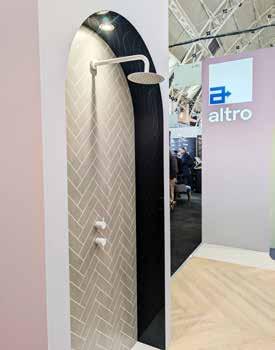

Tile effect wall cladding
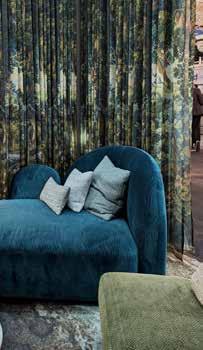
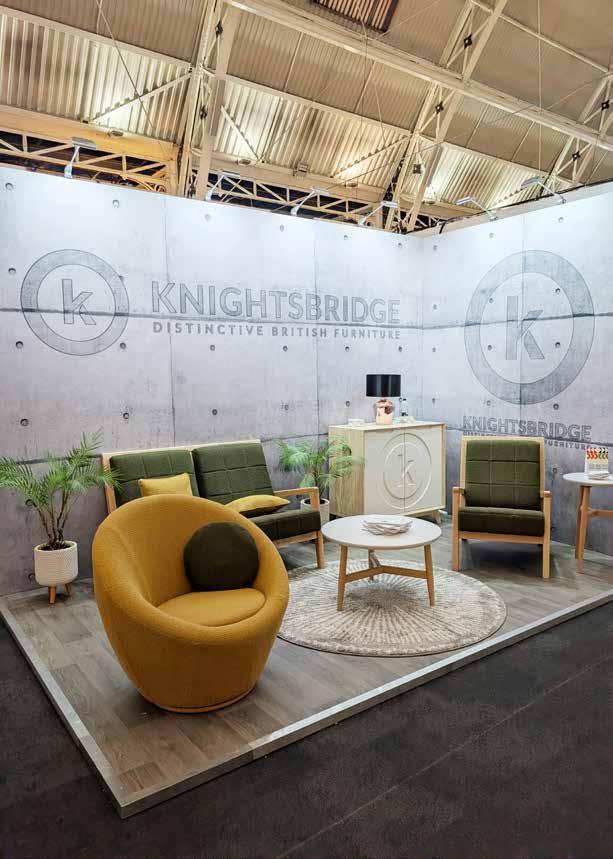
Atom Collection: Timber frames upholstered seating collection. Designed by Knightsbridge
Fully
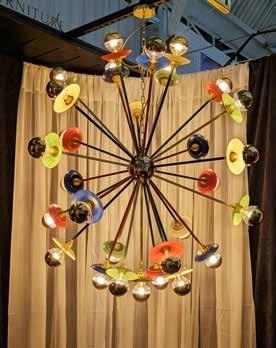
Experimentation with form was a consistent thread this year, particularly within lighting, where sculptural shapes and material combinations offered designers new tools to work with.
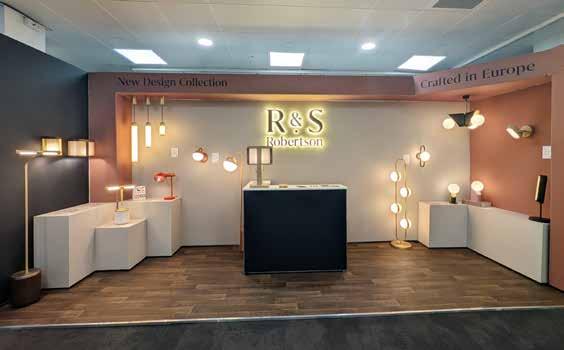
R&S Robertson presented a full stand of new launches exploring movement, profile, and finish, while Aromas showcased both their Cubic design and the wider Vitree collection.
Textiles also played an important role, with Sekers introducing new collections spanning upholstery and drapery, and Robena demonstrating how considered layering, fabrication, and detailing can elevate window treatments.
Together, these releases highlighted the sector’s continued focus on material exploration and adaptable design solutions.
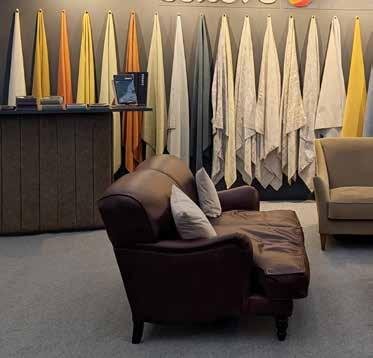
The Wish Collection: FR jacquard collection designed for upholstery
The Tenby Collection: wide-width FR collection, suitable for contract
The Modette Collection: A wide width FR-One drapery collection that a timeless twist
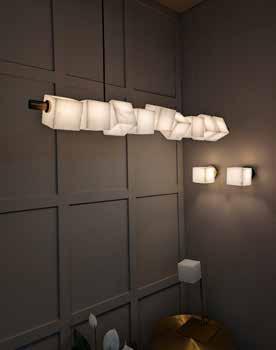

Made from alabaster and incorporating a rotating detail
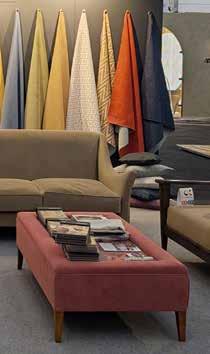
JUNG
and accessories
contract curtains and bedding that embodies modern elegance with
DESIGN
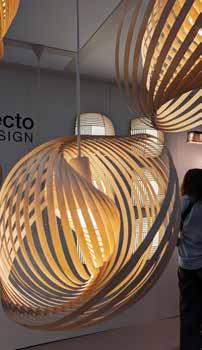
timber light shades
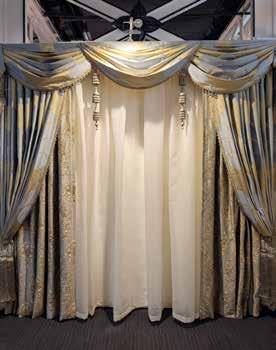
Display of swags and tails with woven fabrics, embroidered curtain, and oversize tie back with tassels
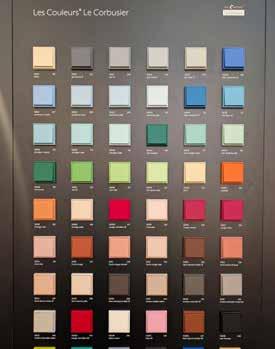
LS 990 switch range in Les Couleurs® Le Corbusier®
R&S ROBERTSON
The Twist: Desk, floor and picture light with a marble or timber base
Daisy: Inspired by the Great Gatsby. Floor, wall and table light
Vienna: Wall, pendant, and table light
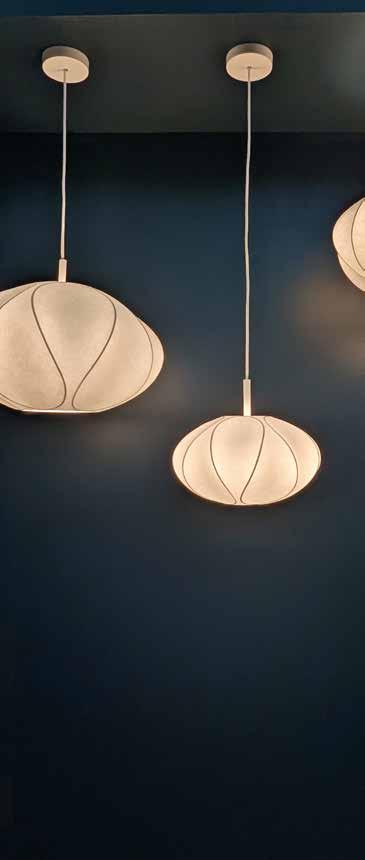
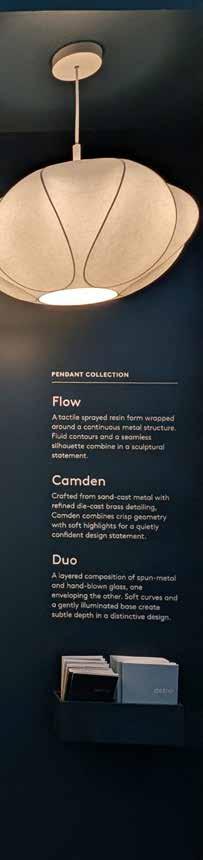
Two brands demonstrated notably different approaches to their stands this year. Astro used their space for focused product launches, introducing three new lighting collections: Flow, a mid-century inspired pendant crafted from a continuous steel and sprayed-resin form; Camden, a sand-cast shade with a stone-tumbled finish paired with solid die-cast brass; and Duo, which combines a gloss-white spun-metal top shade with an opal, hand-blown glass diffuser to create a pendant defined by balance and contrast.
In contrast, ABI Interiors used their stand to build brand presence in the UK, presenting a broad cross-section of their portfolio to demonstrate capability and relevance across hospitality projects. Their differing approaches, one centred on new product development, the other on establishing a comprehensive brand profile, highlighted the breadth of exhibitor strategies on show this year.
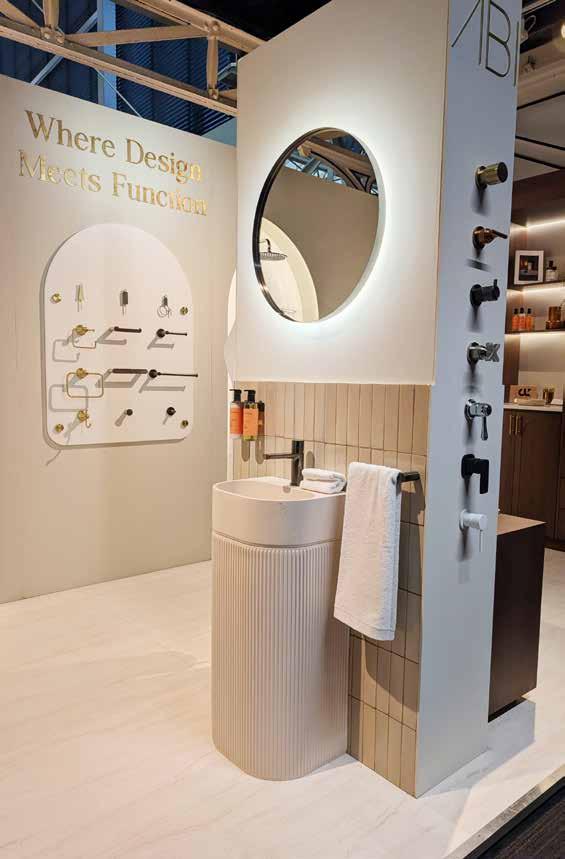
ABI INTERIORS
Concrete cast pedestals and basins.
Nimika rage of taps and fixing. Textured and customised with PVD finishes
PS Interiors presented their bespoke Omiyè Table, designed by Tolu Adèkó of Adèkó & Co., featuring an intricate tabletop created by Véronique de Soultrait, a standout piece showcasing craftsmanship and collaboration.
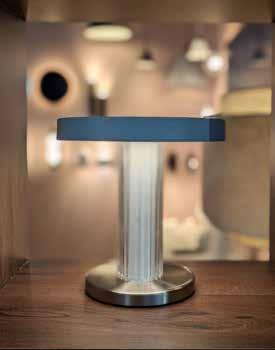
Bancroft Soft Furnishings introduced Tribal Sands, an animal-inspired textile collection with new designs and updated tonal colourways. Distinction Group highlighted their bespoke capabilities through recent work for the Anantara Hotel, Dubai, displaying a coordinated set including a desk, chair, mirror, and mini-bar. Nordlux launched the Trezzi portable light and marked the 10-year anniversary of their Strap Felt pendant.
LAUFEN focused on material innovation, showcasing a steel Vitreon washbasin and introducing Volta, a ceramic basin offered in three designs and manufactured using the brand’s industry-leading electric kiln.
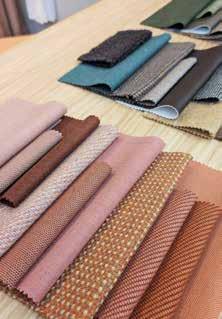
Iliv also presented three new collections: Chinchero, a print and six-colour series shown in the Stonewood colourway across multiple basecloths; Veneto, a plain drapery collection; and Manteray, a basket weave upholstery fabric previewed in the Sahara colourway.
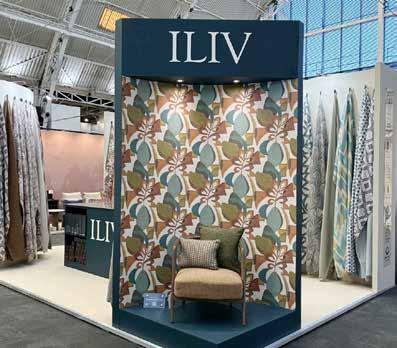
Showcased 3 new collections, Chinchero Collection, Veneto, and Manteray
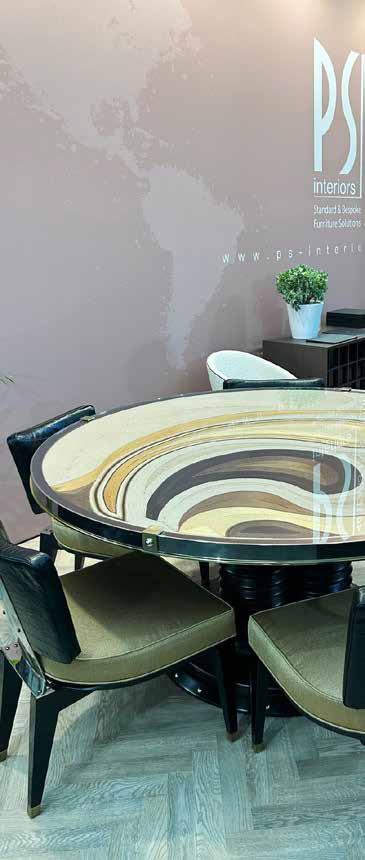
Bespoke Omiyè Table designed by Tolu Adèkó, Adèkó & Co.

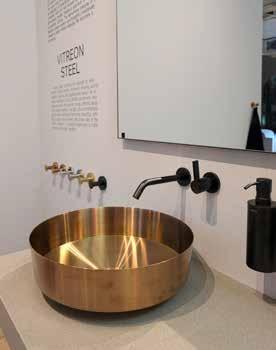
LAUFEN
Trezzi portable light
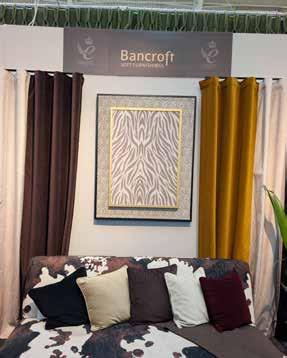
Tribal Sands - Animal print collection with new designs and new tonal colours
Washbasin, made of LAUFEN Vitreon steel
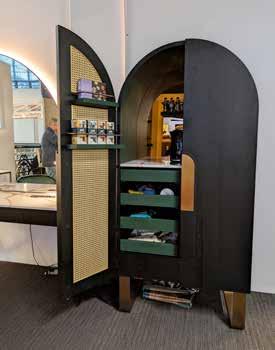
Bespoke service showcased with recent designs for the Anantara Hotel, Dubai
Chelsom introduced the Groove range, featuring a refined singlesource reading light and a combination wall light offering both task and ambient illumination. Compact and beautifully proportioned, the new designs reduce the footprint of previous Chelsom models by 50% while enhancing overall performance.
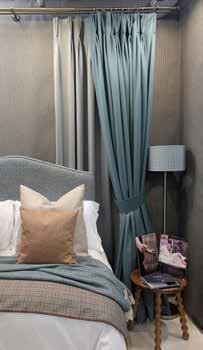
Curtis presented a selection of recent bespoke hospitality projects, showcasing work for the Chamberlin Hotel, Treehouse Hotel, and Mere Hotels.
Moon highlighted new launches, including Heritage II and 16 new Satin colourways, while Sunbury Design previewed an upcoming patterned velvet. Edmund Bell expanded their offer with the Eastern Traveller printed design, three new blackouts, Evolve, Maverick, and Diversity, and Vibe, a new sheer.
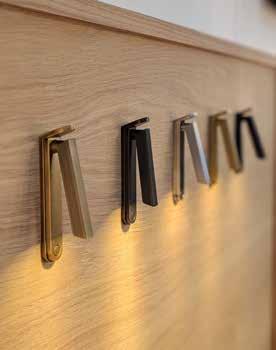
Groove range - single-source reading light and combination wall light

16 new
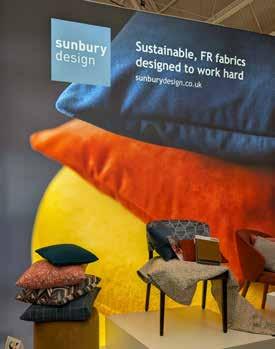

Preview of an exciting new patterned velvet
and Mere
of recent launches including Heritage colourways of Satin
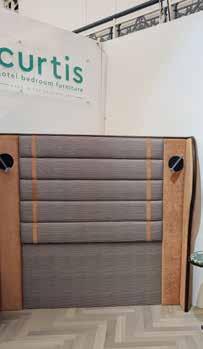
of recent bespoke hospitality projects from Chamberlin Hotel, the Treehouse Mere Hotels
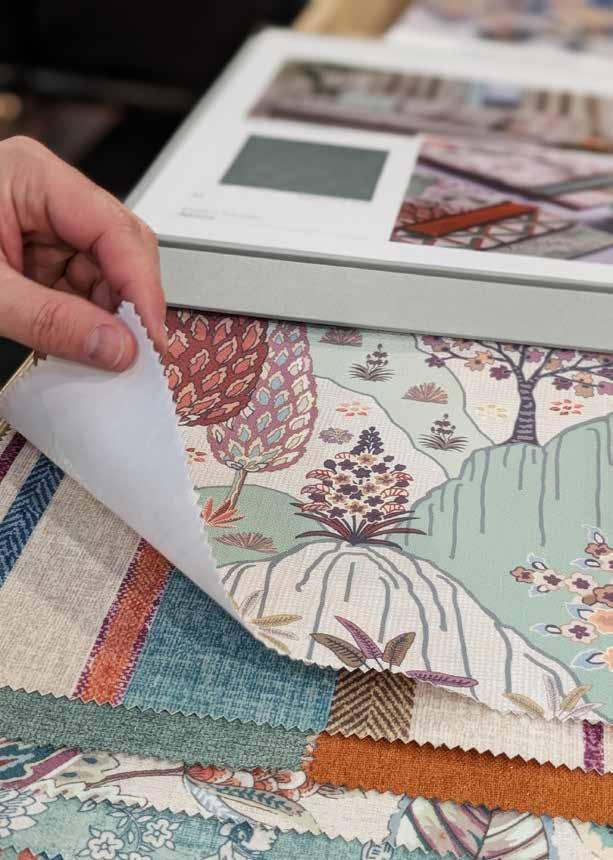
EDMUND BELL
Eastern Traveller printed design
3 x new blackout textiles, Evolve, Maverick, and Diversity
Vibe, a new sheer
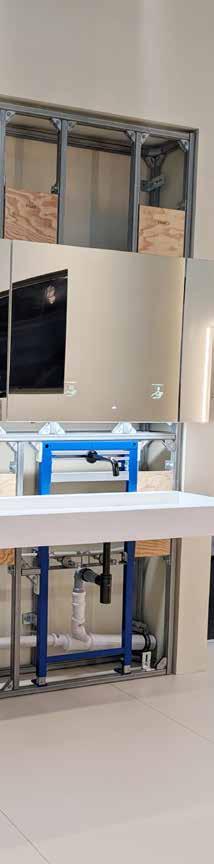
Roca focused on system innovation, presenting a pre-fabricated wall system alongside their Shaping Sustainable Stays concept and Roca Connect, a smart-data platform designed to support improved water management.
In contrast, Heathfield & Co delivered a striking, product-led presentation, showcasing three new launches: the Paloma table light and the Nyx and Thebe portable table lamps.
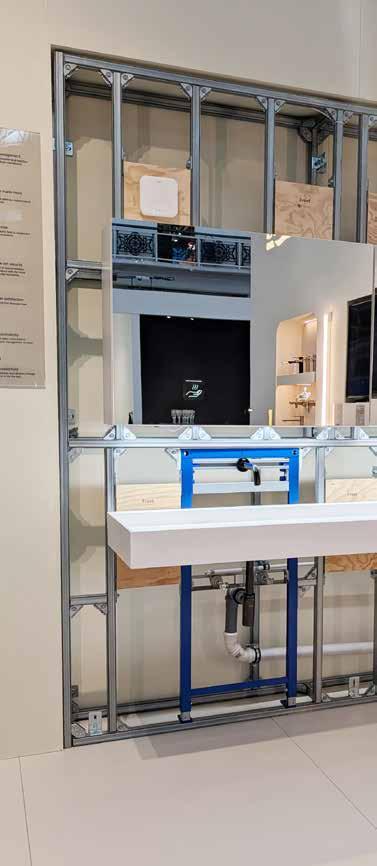
Pre-fabricated wall system
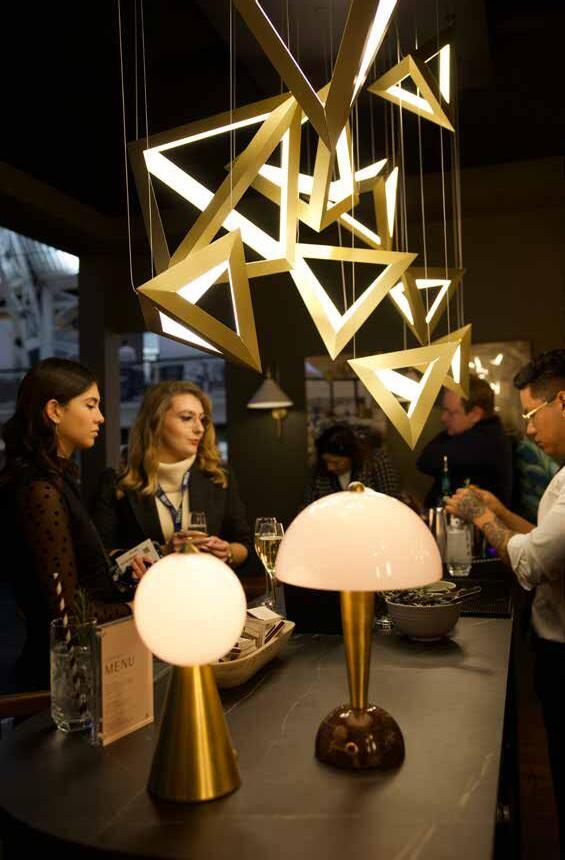
Harmony Ortho presented a new mattress developed specifically for the hospitality sector, featuring a firmer feel and endorsed by the Eden Project.
Liang & Eimil highlighted their position as a full-room supplier of furniture and lighting, showcasing globally manufactured designs including the Arcadia floor lamp from the husband-and-wife-led brand.
Bagnodesign introduced the Fonteyn and Manhattan Loft collections and also showcased Carlyle, a range designed by CEO and Founder Daryl Barker and inspired by Art Deco to complement the brand’s high-end and super-luxe offer.
John Boyd Textiles displayed Cimarron and Curraleiro, two horsehair fabrics produced by one of only two remaining manufacturers of this material worldwide.
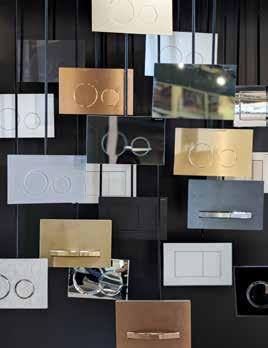
Geberit presented Sigma 40 actuator plates, with an ultra-slim 4mm profile, a product first previewed during Clerkenwell Design Week 2025.
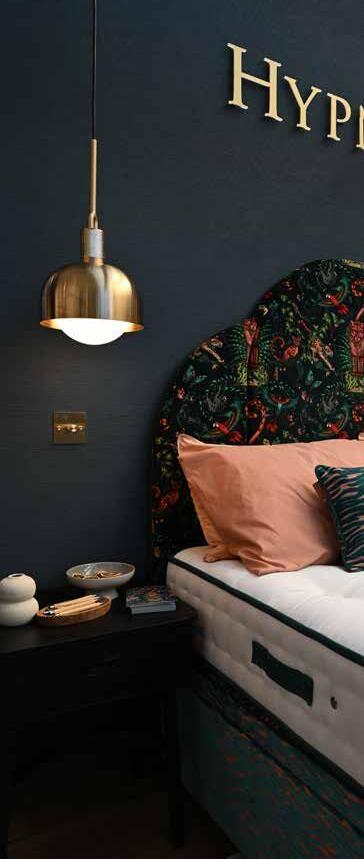
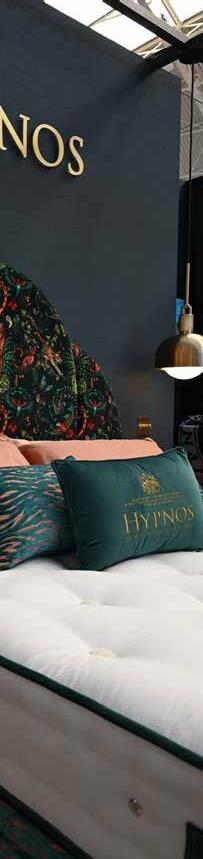
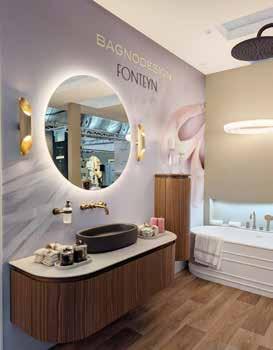
BAGNODESIGN
Fonteyn, Manhattan lost style collection
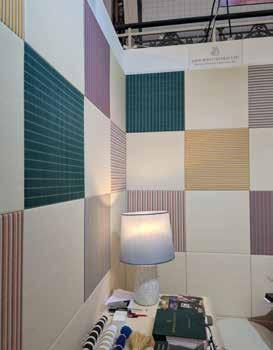
JOHN BOYD TEXTILES
Cimarron & Curraleiro Horse hair fabric
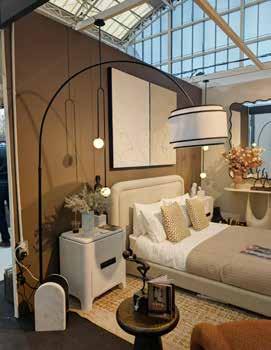
Arcadia floor lamp
Sigma 40 Actuator plates, depth of just 4mm
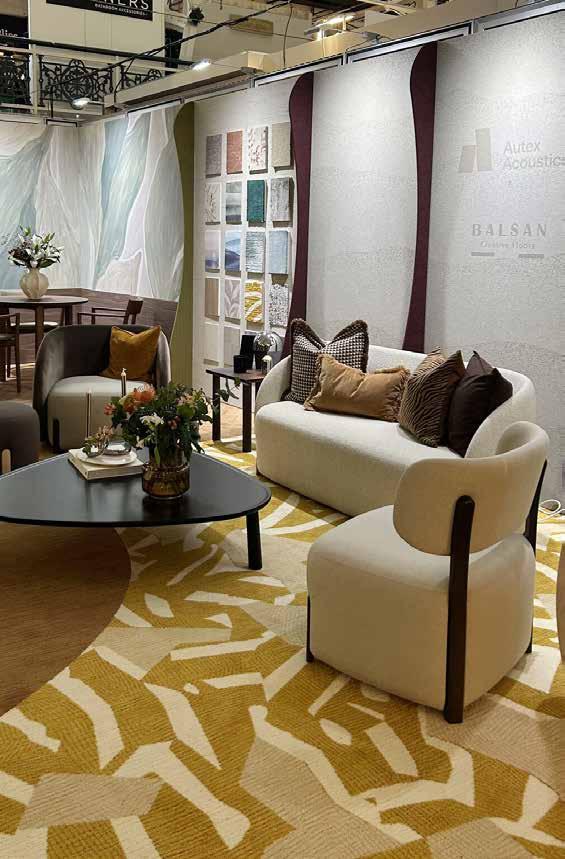
Balsan presented a stand designed by Studio Mooch, created in partnership with Autex Acoustics. The concept centred on flow and organic form, using layered curved flooring, sculptural acoustic elements, and rounded furniture to demonstrate how products from both brands can sit together in hospitality environments. The open layout supported both visitor engagement and hosted conversations, with the stand drawing strong interest for its material combinations and spatial clarity.
Six Contract Furniture reported excellent feedback, with visitors responding positively to the pieces from Six The Residence shown alongside their UK-manufactured custom furniture — a pairing that highlighted the complementary strengths of the sister brands.
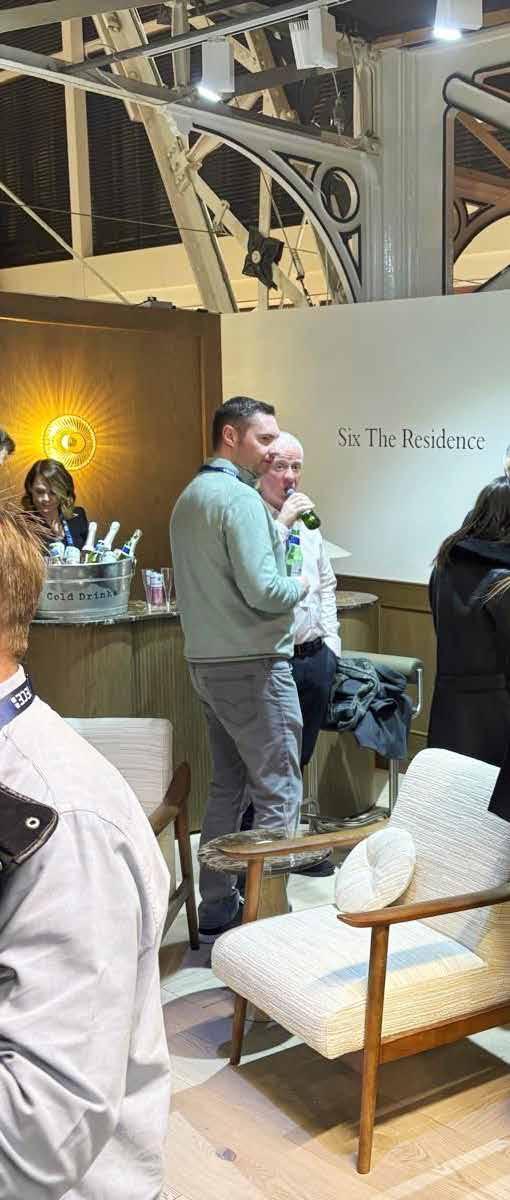
Pre-fabricated wall system
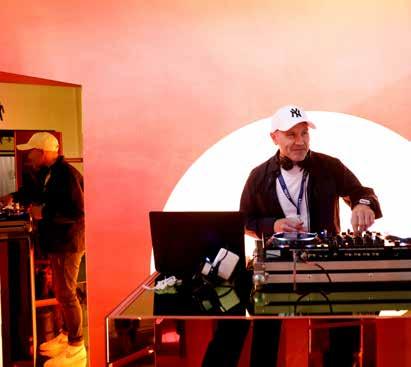
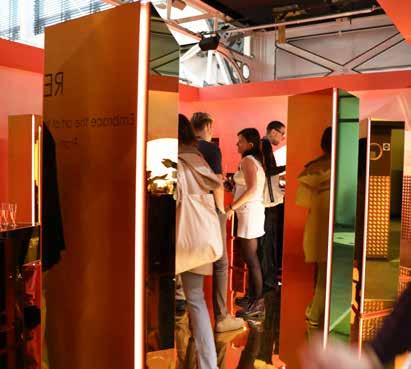
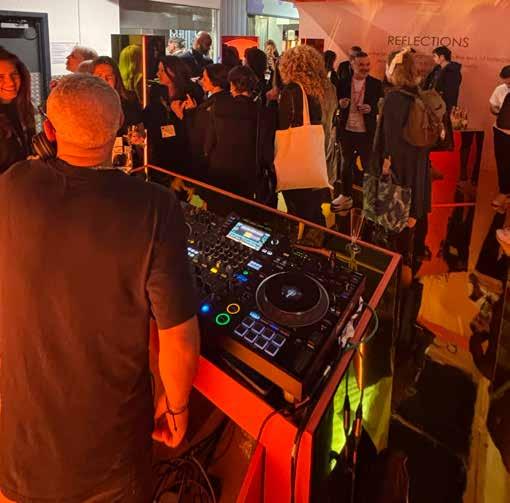
“We believe the stand was so successful because our installation, Reflections, truly lived up to its name. It immediately caught the eye of our guests, and as they stepped into the immersive space, the Luma Hospitality, live music and the unique design by MKV Design sparked their curiosity. Before long, we heard visitors sharing their own interpretations of the experience, a wonderful sign that the space resonated on a personal and creative level.”
Marian Martinez, Sales & Marketing Manager, Luma Mirrors
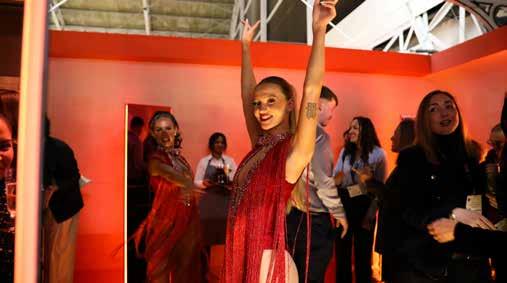
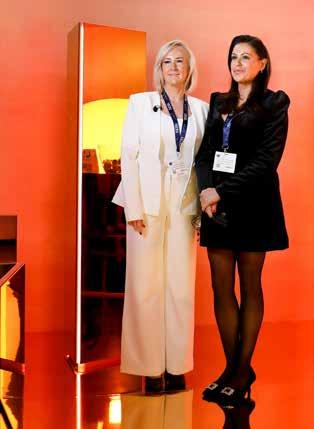
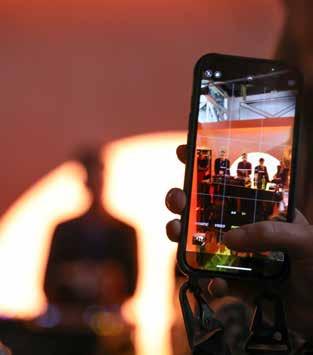
LUMA MIRRORS LIT UP HIX EVENT25 WITH REFLECTIONS, A VIBRANT, STORY-RICH INSTALLATION CREATED IN PARTNERSHIP WITH MKV DESIGN. THIS WAS A FULL-BLOWN EXPERIENCE, HUMMING WITH MEDITERRANEAN ENERGY, FAMILY HISTORY, EMOTIONAL STORYTELLING, AND A SERIOUS INJECTION OF JOYFUL DESIGN!
Rooted in this year’s theme, Culture Clash, Reflections drew directly from the personal memories of LUMA MIRRORS Founder & Managing Director, Laura Martinez McGregor, and her sister Marian Martinez, Sales & Marketing Manager. The installation unfolded from a childhood spent roaming hotel service corridors, growing up behind the scenes of a much-loved Ibiza property their father managed for over 35 years. Anyone who stepped inside Reflections could feel that history: the warmth, the nostalgia, the transformation of Ibiza from carefree bohemia to global luxury hotspot, and the sisters’ lifelong connection to hospitality culture.
The spark for the installation ignited when LUMA MIRRORS connected with MKV Design, and from there, the story only grew richer. MKV Design embraced Laura and Marian’s memories with genuine curiosity, interpreting their emotional depth through a fresh, creative lens.
Centred around mirrors, described by MKV’s Maria Vafiadis as “the greatest non-material”, the space explored how reflections can hold both infinity and immediacy. Visitors found themselves in a place where contrasting cultures flowed together, where Scottish and Spanish heritage met contemporary design thinking, and where the playful energy of Ibiza met the thoughtful precision of MKV’s direction. As Maria explained, “They don’t show themselves, but reflect a face, a space, a moment. Mirrors capture timelessness and the here and now.”
And then came the party! Balearic beats curated by Music Concierge Founder Rob Wood, Ibizan-inspired mixology sessions, and live demonstrations of the latest Luma design collaborations turned Reflections into one of the most talked-about destinations on the show floor. It was lively, warm, emotional and brilliantly engaging, offering a reminder of how hospitality design can create joy, spark memories and bring people together across cultures.
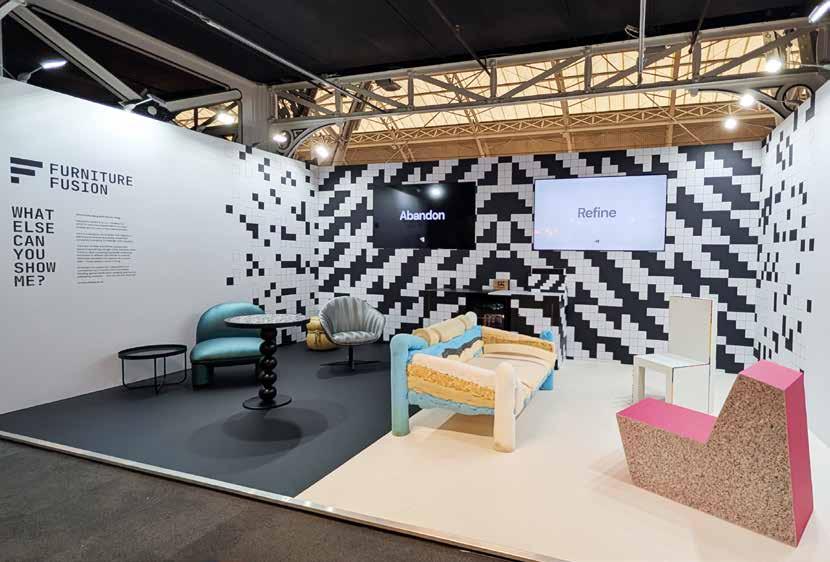
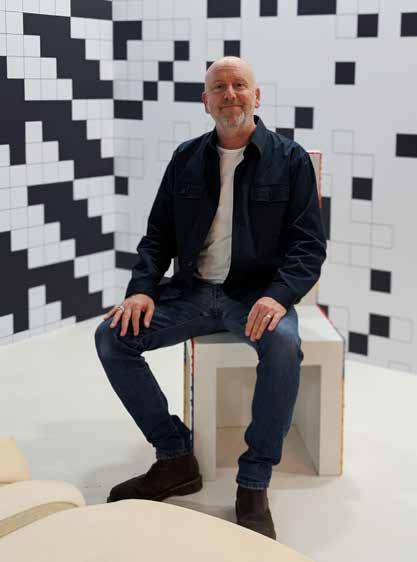
FOR THE SECOND YEAR RUNNING, FURNITURE FUSION TRANSFORMED ITS HIX STAND INTO AN EXPRESSIVE, CULTURALLY CHARGED INSTALLATION THAT REACHED FAR BEYOND A TRADITIONAL PRODUCT SHOWCASE. LED BY MANAGING DIRECTOR SAM SAMUELS, THE TEAM EMBRACED HIX’S 2025 THEME OF CULTURE CLASH BY TAPPING DIRECTLY INTO SAM’S LONG-STANDING PERSONAL LOVE OF MUSIC, WORKING WITH DESIGN STUDIO BELL & SWIFT TO BUILD AN INSTALLATION THAT CELEBRATED EXPERIMENTATION, CONTRADICTION AND CREATIVE COURAGE.
The concept, titled ‘What Else Can You Show Me?’, takes inspiration from a line in Bob Dylan’s It’s Alright Ma (I’m Only Bleeding) – a lyric that speaks to reinvention, restlessness and the pursuit of new ideas. For Furniture Fusion, this lyric became a question the brand willingly posed to itself: what more can we explore, challenge and create?
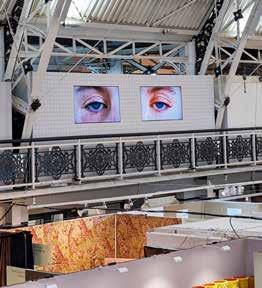
Rather than filling the stand with product, the team instead created a space built around interaction, play and personal expression. Visitors were invited to hold up double-sided placards with contrasting messages – light versus dark, analogue versus digital, chaos versus calm – encouraging them to explore the dualities that sit at the heart of Culture Clash. These prompted conversation, selfies, laughter and moments of genuine fun, transforming the stand into one of the event’s most social spaces.
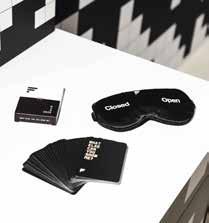
The second activation element centred around creativity itself. Furniture Fusion produced sets of beautifully designed cards featuring prompts, patterns and unexpected references, gifting them to visitors as ‘creativity starters’. The cards acted
as permission slips to experiment – a subtle metaphor for the company’s own design ethos. As Sam explains, “We work with clients who want more than catalogue thinking. These cards say: go beyond the obvious. Push your project further. Let’s create something together.”
This fresh energy reflects Furniture Fusion’s wider shift in recent years from a traditional supplier to a collaborative creative partner. The stand demonstrated how deeply the team understands design storytelling, cultural nuance and the emotional layers that shape hospitality spaces. Their participation at HIX showcased not just furniture, but a mindset – one where curiosity and collaboration drive the process forward.
As the crowds moved through the installation, it became clear that the stand had succeeded in doing exactly what its title demanded: sparking imagination. Furniture Fusion asked the industry what else it could show them, and at HIX 2025, the answer was something playful, thoughtful and delightfully unexpected.
WITH SIGNIFICANT NEW INVESTMENT IN ADVANCED FINISHING
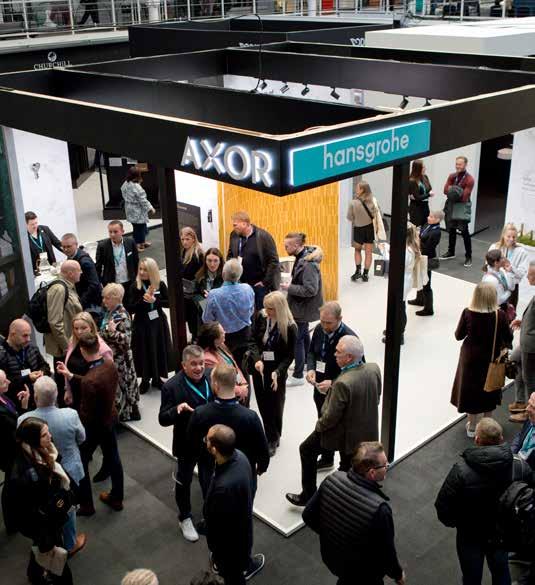
HANSGROHE AND AXOR ARE STRENGTHENING THEIR ABILITY TO DELIVER FASTER LEAD TIMES, GREATER DESIGN FLEXIBILITY AND MORE DURABLE SOLUTIONS FOR ARCHITECTS, DESIGNERS AND OPERATORS ACROSS THE SECTOR.
Could you start by introducing yourself?
My name’s Jay Phillips, and I’m the Managing Director for Hansgrohe UK and Ireland. I’ve been with the business for over 13 years, and it’s an exciting time to be part of a brand with such a strong heritage and such a clear vision for the future.
For anyone new to the brand, who is Hansgrohe?
Hansgrohe is a proud German bathroom manufacturer, founded in 1901 in the Black Forest. We’ve been in the UK since 1990, and next year the group celebrates its 125th anniversary. Across our two brands, hansgrohe and AXOR, we’re known for innovation, quality and design leadership, and we continue to invest heavily in technology, sustainability and manufacturing.
What are the two brands within the Hansgrohe Group, and how do they differ?
We have hansgrohe, our premium brand, and AXOR, our luxury design brand that collaborates with globally acclaimed architects and designers. AXOR works at the top end of the market, where individuality, craftsmanship and materiality are key.
AXOR recently made a significant investment in finishes. Can you tell us about that?
AXOR has invested €5 million in three new state-of-the-art PVD chambers. Physical Vapour Deposition is the process that gives our AXOR FinishPlus colours and metallic finishes their durability and brilliance. Demand for finishes has grown rapidly in the last two years, especially in hospitality, and this investment reduces lead times so designers can specify with confidence.
What does PVD offer designers and operators?
PVD creates surfaces that are scratch-resistant, more durable and more resistant to cleaning products, all vital in hotel environments. It also offers incredible colour consistency. For designers looking for a perfect match across taps, showers, drains, accessories and flush plates, it’s a huge advantage.
Is there growing demand for multi-finish or dual-tone products?
Absolutely. We’re seeing an emerging trend for mixed palettes and softer, sand-inspired tones. Designers are being more expressive with materials, and dual finishes are definitely part of that conversation.

How is Hansgrohe responding to this sector-wide shift towards colour?
Our aim is to offer complete bathroom coordination. Across both brands we provide an extensive range of finishes, and we’re continuing to expand. Designers want consistency, and with our portfolio, they can achieve exactly that across every touchpoint.
You also mentioned sustainability as a key priority. How is this embedded in product development?
Sustainability sits at the core of everything we do. PVD itself is more environmentally friendly because it avoids chemical liquids, and the process still involves a great deal of craft. Beyond finishes, we’re innovating to reduce water consumption by up to 60%. Our goal is that by 2030 all water-bearing products will be 100% sustainable, and crucially, without compromising on user experience.
What can our readers expect from Hansgrohe in the near future?
2026 is shaping up to be a huge year. In January we launch our new hansgrohe flush plates and iFrame concealed system. At
Salone del Mobile we’ll unveil a new AXOR collection with Barber Osgerby, building on the success of AXOR One. And later in the year, our Water Studio in Clerkenwell, a real hub for inspiration, will undergo an exciting transformation. Watch this space.
The HIX stand showcased achievements the brand was first in the industry to achieve, here are Jay’s top 3.
1. AXOR Signature Service
Offering true customisation, from bespoke spout lengths to engravings, textures and materials, creating one-of-a-kind products.
2. iBox Technology & Push-Button Concealed Showering
A revolution in installation efficiency and user simplicity, now evolved into iBox 2 with intuitive, tactile controls.
3. The First AXOR Collection with Philippe Starck
A defining moment in luxury bathroom design, establishing AXOR’s long-standing partnerships with world-renowned designers and architects.
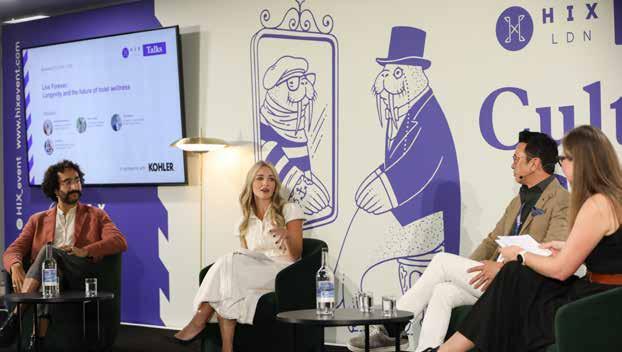
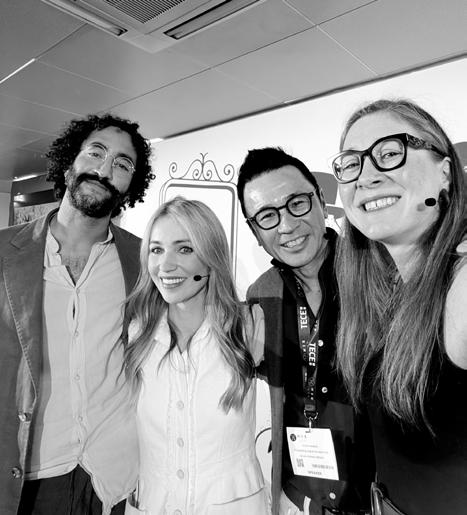
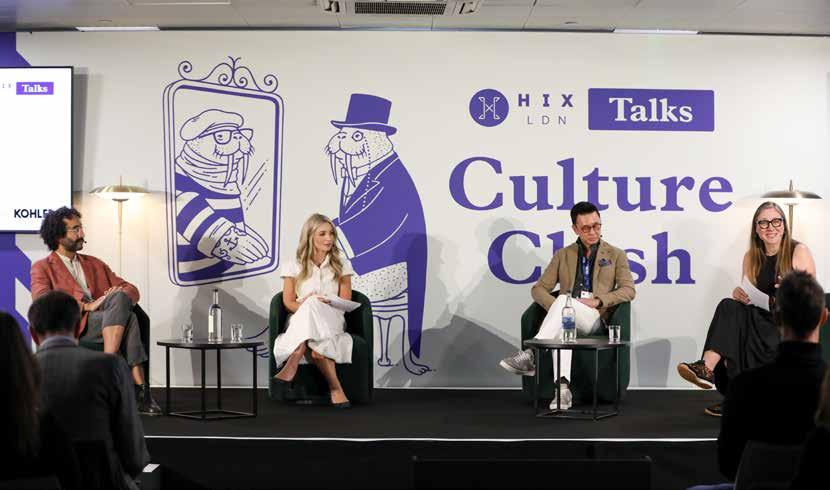
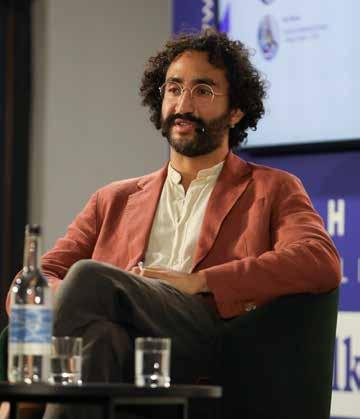
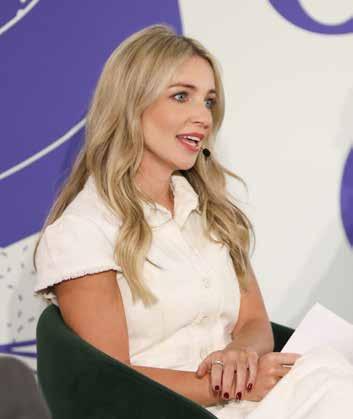
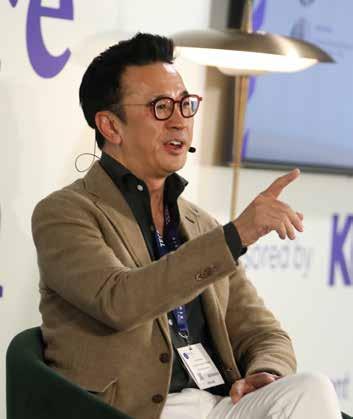
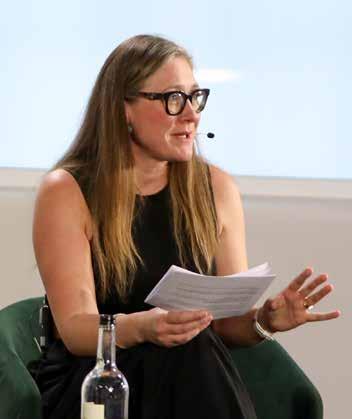
THE HIX TALKS ROOM FILLED RAPIDLY FOR DESIGN INSIDER’S PANEL ON LONGEVITY AND HOTEL WELLNESS, WITH STANDING ROOM ONLY. MODERATOR ALYS BRYAN INTRODUCED THREE LEADERS PUSHING THE BOUNDARIES OF WELLNESS DESIGN: HATTIE DAVIDWILKINSON, GLOBAL HEAD OF WELLNESS AND LONGEVITY AT MAYBOURNE; RAMY ELNAGAR, FOUNDER OF INNOVATION STUDIO WHITE MIRROR; AND CLINT NAGATA, FOUNDER AND CREATIVE PARTNER AT BLINK DESIGN GROUP. EACH BROUGHT A DISTINCT PERSPECTIVE SHAPED BY LUXURY OPERATIONS, SENSORY TECHNOLOGY, AND GLOBAL HOSPITALITY
The conversation acknowledged an industry undergoing transformation. Wellness is no longer a quiet add-on. It is now a core driver of luxury experiences, commercial value, guest loyalty and long term engagement. Longevity sits at the heart of this shift, yet its definition remains fluid. Guests want transformation rather than treatment, ritual rather than prescription, and emotional connection rather than a clinical environment. Meanwhile, hotels must navigate a landscape filled with new science, new expectations and new responsibilities.
Across the panel, a central question emerged. How do hotels combine diagnostics, sensory design, community, culture and personalisation while remaining firmly places of hospitality rather than healthcare facilities. What follows are the key themes explored in the discussion.
Longevity is shaping luxury hospitality, yet even experts debate what it actually means. Hattie explained that at Maybourne the biggest challenge is translating clinical concepts into hospitality environments. “Our guests do not want to feel like they’re patients in a clinic,” she said. “Everything still needs to feel intuitive, luxurious and meaningful.” Although diagnostics remain optional, “most of our members do choose to have their bloods taken because it helps personalise their programme.”
Ramy framed longevity inside what he called the “great reevaluation”, a shift in which people reassess what enriches their lives. “We are moving from the experience economy to the transformation economy,” he said. “Instead of just helping someone sleep well for one night, can we help them become a better sleeper in their own life.”
Clint added that the shift is visible in real project briefs. “As designers we really are at the bottom of the food chain. We get a brief and respond to it, and those briefs have changed fast. Five years ago we were asked for large spa suites. The brief I received last week was completely different. Now it incorporates technology and taking care of guests in new ways. You can see how quickly things are shifting.”
Spas have evolved from quiet sanctuaries into multi-space wellbeing ecosystems. “We think in terms of clubs, not spas,” Hattie explained. “Our intention is long-term engagement.” This is reflected in Surrenne’s programming, which spans fitness, recovery, sensory experiences and community events.
Ramy showed how wellness extends into guestrooms through opt-in sleep technology. “A good night’s sleep is the foundation,” he said. “Helping someone become a better sleeper is the layer above it.” Guests can choose whether to activate programmes that track patterns and adjust sensory cues. “It has to be optional. You empower the guest rather than prescribe to them.”
Clint emphasised culture’s role in shaping expectations. “I always return to culture and place. In Japan, bathing rituals are fundamental. In Thailand, everything connects to nature. In France, you’ll still find mineral paths and thermal rituals. What people think of as ‘wellness’ changes depending on where you are, and the design has to reflect that.”
The appetite for singular experiences is growing. Ramy shared his forest-bathing installation, where guests wade into shallow water and recline on fibre-acoustic lily pads as a 24-hour rainforest cycle unfolds. “Up to 81 percent of people reported reduced anxiety,” he said. “Experience becomes medicine.”
With diagnostics entering hospitality, the panel explored where to draw the line. “We are not a hospital,” Hattie stated. “We are hotels at heart.” The role of diagnostics is to inform personalisation, not to medicalise the stay. After initial bloodwork, “anything flagged becomes healthcare, and that is where it leaves our remit,” she explained.
Ramy warned of orthosomnia, “that obsessive behaviour where you wake up, check your data and panic about why you did not sleep well.” Hotels, he argued, should avoid fuelling anxiety. “Diagnostics should create clarity, not pressure.”
Clint highlighted the design challenge. “A lot of this comes down to design. People see beauty and calm differently in different parts of the world. But whatever you do, you cannot make these spaces feel clinical. Technology has to be softened. If the environment feels too medical, guests pull back.”
The panel agreed that hospitality should use science to support intuition, ritual and emotional comfort rather than replicate medical settings.
Community as the New Luxury Membership models are reshaping wellness, placing community at the forefront. “When we ask members why they join Surrenne, it is the thought-led, integrated approach and the sense of community,” Hattie said. She described book clubs, orchestral sound events, Tracy Anderson fitness studios and wellness workshops as powerful relationship builders. “People form genuine connections. That is where the magic is.”
Clint emphasised the importance of cultural rituals. He shared a spa project where local bathing culture shaped the entire space.
“We had a project in Japan where the brief included a social bathing space. The local team explained the bathing culture and how people expect to use the space, and that completely shifted our approach. You cannot design these areas without understanding the rituals behind them.”
Ramy described social wellness as a human need rather than a passing trend. “People want to belong to something bigger than themselves,” he said. “Hospitality can offer that sense of belonging.”
Sensory design is moving hospitality from relaxation to transformation. “Function to form to transformation,” Ramy explained. “That is the path to meaningful wellness.” By activating sound, scent, temperature, breath and touch, sensory environments can imprint emotional memory and behavioural change.
His Amazon-inspired forest-bathing installation captured this shift. Guests walked through knee-deep water and reclined on acoustic loungers while a full ecosystem unfolded around them. “We captured real sounds in the rainforest. A 24 minute cycle represented 24 hours. People talked afterwards about their relationship with nature and with life.”
Clint added that successful experiential design requires operational alignment. “You can come up with a great idea, but if the operator does not know how to run it, it will not work. We designed a rainforest-inspired room, and they are still figuring out how to operate it. The intention is there, and once everyone agrees on how it should be used, it becomes something exciting.”
Hattie noted that sensory layers help soften the presence of technology. “Ritual and narrative allow guests to feel safe and inspired,” she said.
Wellness investment must translate into commercial value. Hattie provided a striking example. “We introduced aromatherapy patches and eye treatments into our minibars. Within a month they outsold champagne at Claridge’s.” This revealed a clear appetite for convenient, sensorial wellness products.
Clint argued that many spas remain underused because guests are unsure how to engage with them. “Spas can look beautiful but sit empty,” he said. “So the question is how much should you spend on something that isn’t returning on investment. The flip side is maybe it’s not making money because it isn’t interesting enough. If you do something more engaging, people will actually come.”
Ramy explained that gym and heat experiences increasingly operate as standalone revenue generators. “If your sauna or fitness space becomes the best in the city, people will come from outside the hotel. Then the financial model changes.”
The future of ROI, the panel agreed, lies in meaningful programming, cultural depth, community-driven memberships and sensory experiences that build loyalty and frequency.
AT ITS GREAT SUTTON STREET STUDIO, LONDON BASED CONRAN AND PARTNERS DESIGNED AN IMMERSIVE WINDOW DISPLAY AND EXHIBITION WITH FINNISH LIGHTING BRAND SECTO DESIGN, ORIGINALLY UNVEILED IN THE STUDIO’S FRONT WINDOW DURING CLERKENWELL DESIGN WEEK AND LATER RESHARED FOR HIX, WHERE THE INSTALLATION WAS POSITIONED ON THE BALCONY, ADDING A QUIET BUT STRIKING VISUAL MOMENT TO THE EVENT.
Architecture and interior design practice Conran and Partners and Finnish lighting brand Secto Design collaborated on an installation as part of this year’s Clerkenwell Design Week programme, which was later brought to HIX for visitors to experience from a new vantage point on the balcony. The project centres on an immersive window display and exhibition originally created for Conran and Partners’ studio on Great Sutton Street.
Designed by Conran and Partners, the installation features a triptych of themes: Forest and Materiality, Lakes and Reflection, and Light and Contrast. Together, these aim to evoke the emotions inspired by the Finnish natural environment. Each theme provides a visual journey into Finland’s interplay of light, nature and craftsmanship, drawing a connection between Secto Design’s lighting pieces and the natural world from which they take inspiration.
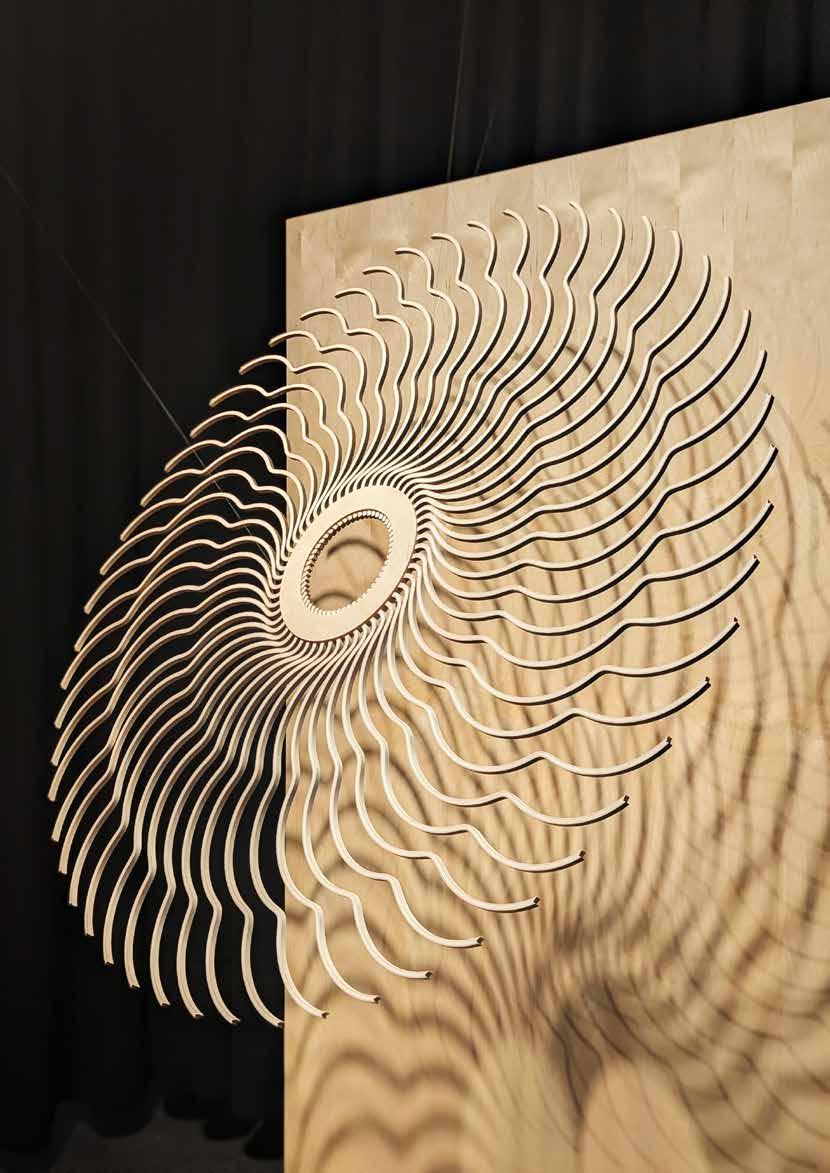
Forest and Materiality celebrates birch, Finland’s national tree. The first piece, reading from left to right, is based on a tree ring section, expressed through Secto Design’s pressed billets and highlighting the brand’s DNA.
Lakes and Reflection responds to Finland’s nickname as the land of a thousand lakes, interpreted through the use of mirrors to create a reflective central installation. Each mirror reflects a quarter of four lamps to create a poetic sense of water and symmetry.
Light and Contrast pays homage to the golden light filtering through a Finnish forest as the sunset lingers low over the horizon. This final piece features components from Secto Design’s Kumulo lamp, arranged in an array and dramatically spot lit to create contrast and shadow play.
An underlying theme of array runs through all three pieces, a structural language intrinsic to Secto Design’s range.
Known for its pioneering use of wood and skilled craftsmanship, Secto Design has been combining certified birch with a contemporary design sensibility since its founding in 1995. A central crate narrates the metamorphosis of the lamp, taking visitors through its stages of transformation from bark to finished piece, set against a display of Secto Design’s innovative, sustainable packaging materials.