


Written by Alys Bryan, Editorial Director designinsiderlive.com
Written by Alys Bryan, Editorial Director designinsiderlive.com
Couldn’t join us at Cruise Ship Interiors 2025? This event report brings you the scale, momentum, and evolving priorities of the cruise design industry at a moment of meaningful transformation.
You’ll gain exclusive insight into how designers, operators, and suppliers are harnessing CSI as a platform for sector growth, whether unveiling material advancements, testing early concepts, or showcasing new approaches to sustainable maritime design that respond to the unique demands of the sector.
We share perspectives from across the show, including voices on sustainability, exclusive one-to-one interviews conducted on the show floor, and discussions from the event talks programme, together revealing the critical themes influencing today’s cruise interiors landscape.
Alongside this, we spotlight the Commercial Interiors UK members who exhibited at CSI, underlining the craftsmanship, technical expertise, and sector-leading solutions they bring to marine projects globally.
Finally, we reflect on the lasting impressions of CSI 2025, celebrating the show as a platform for connection, insight, and commercial opportunity, and a vital showcase for the future of sustainable, experience-led cruise interior design.
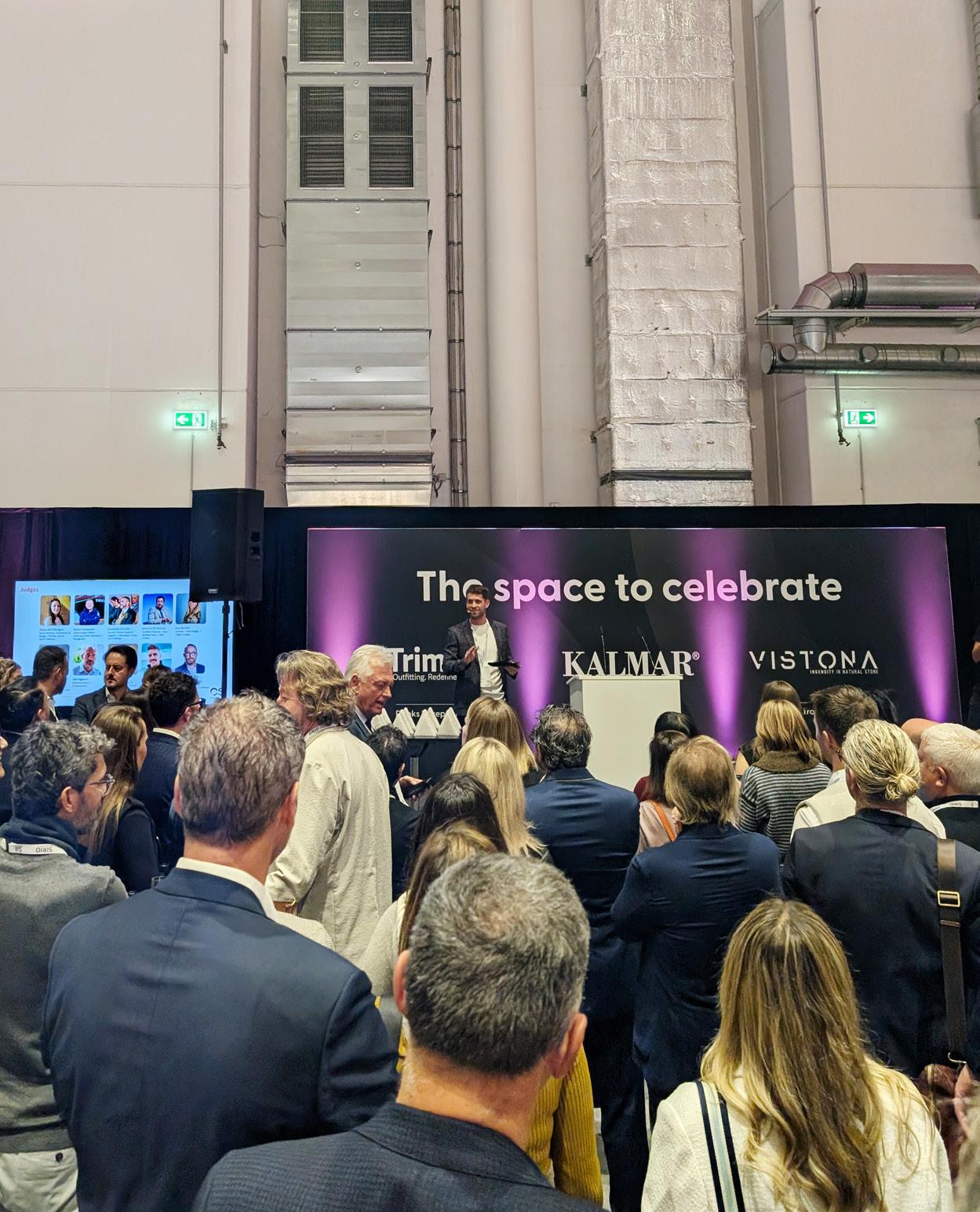
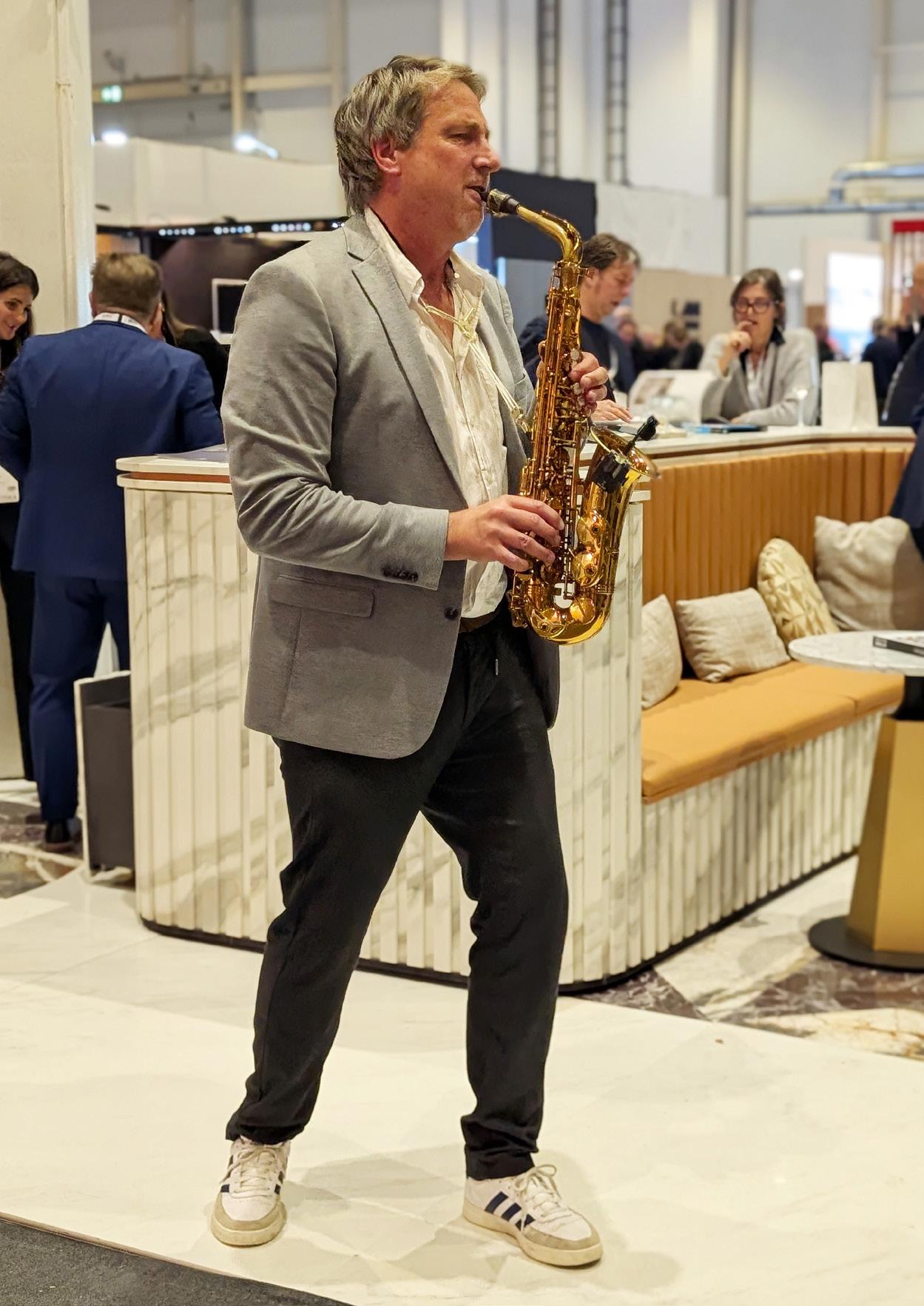
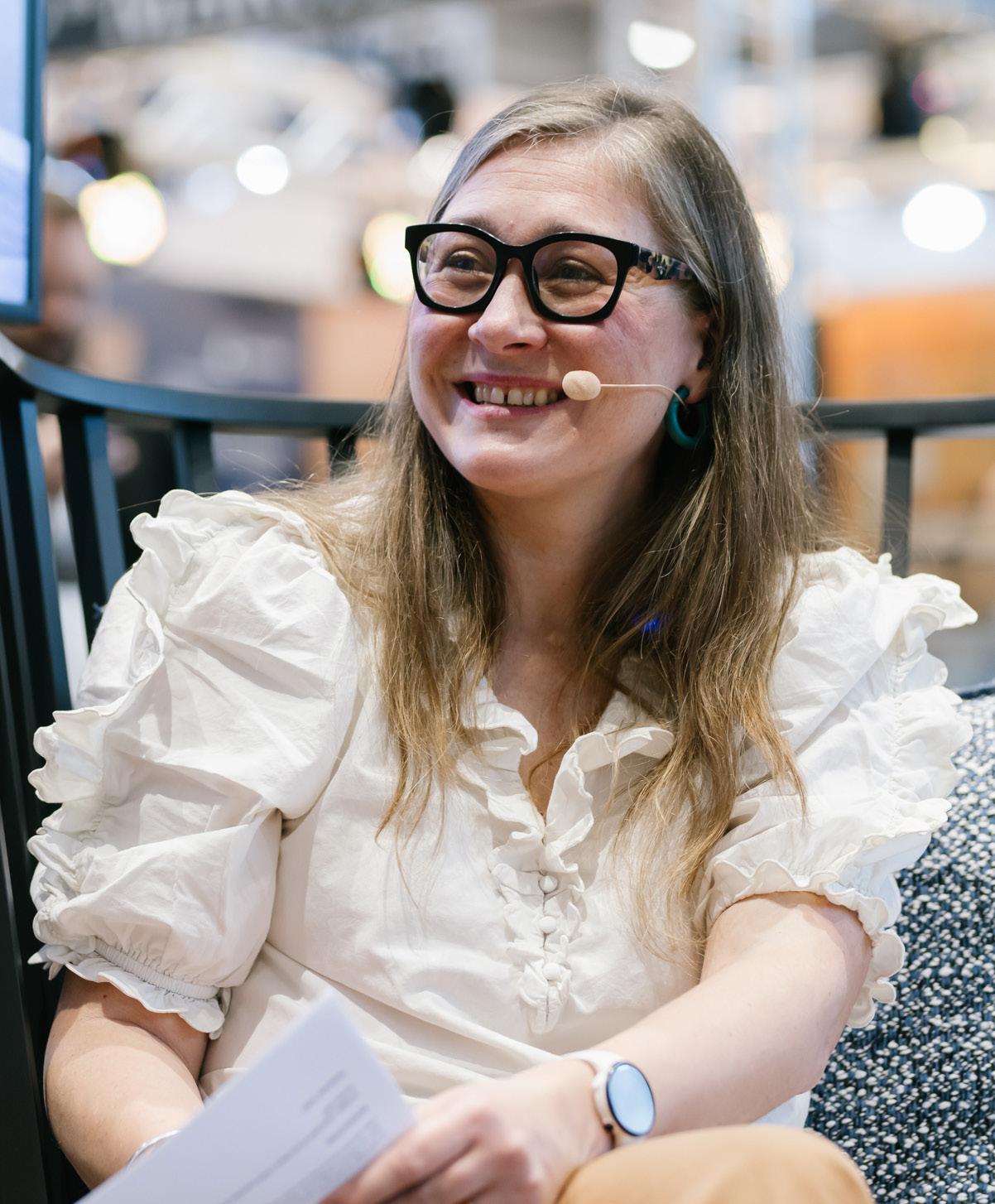
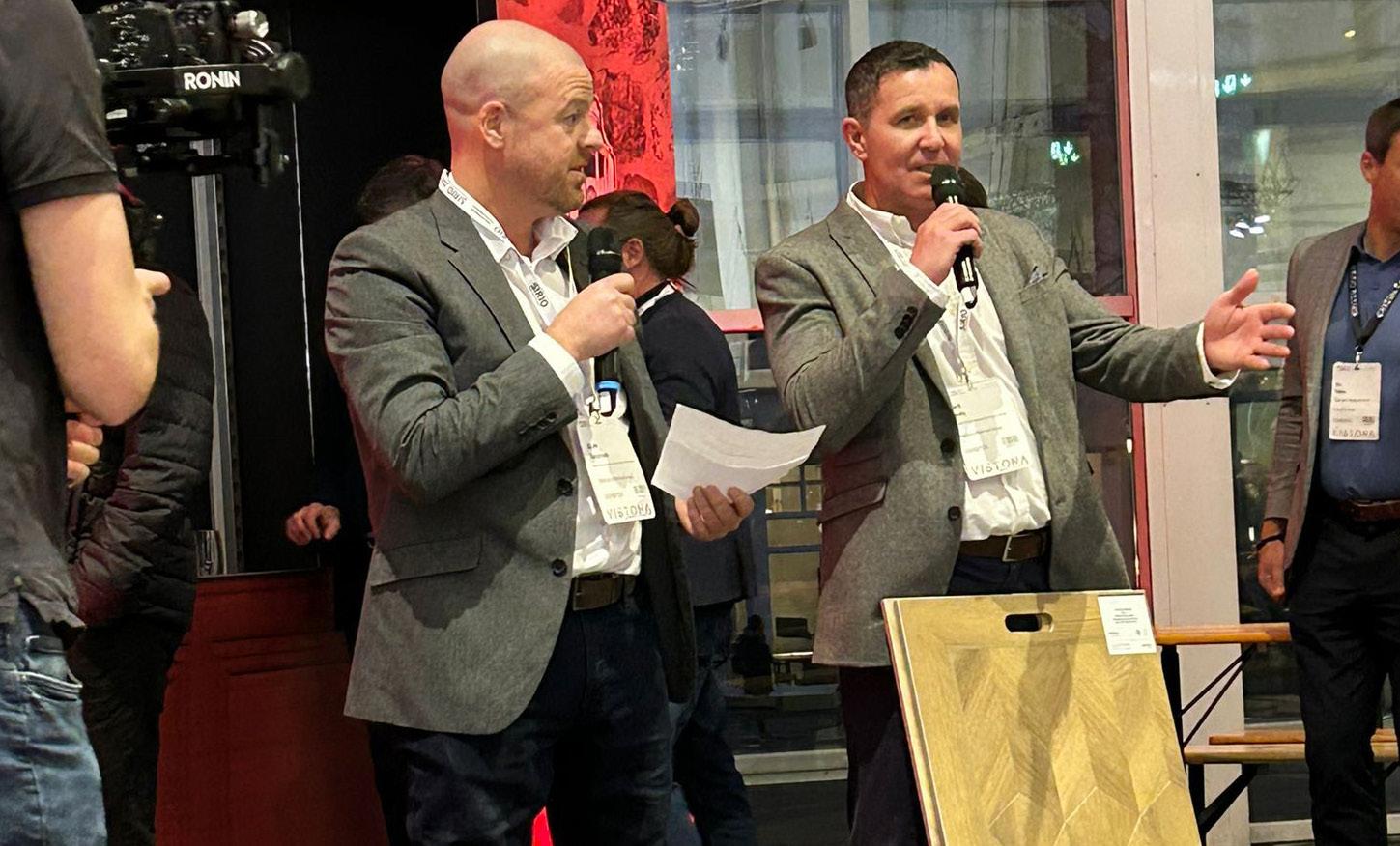
1. CSI Awards presentation 2. On stand entertainment 3. Alys Bryan, moderating
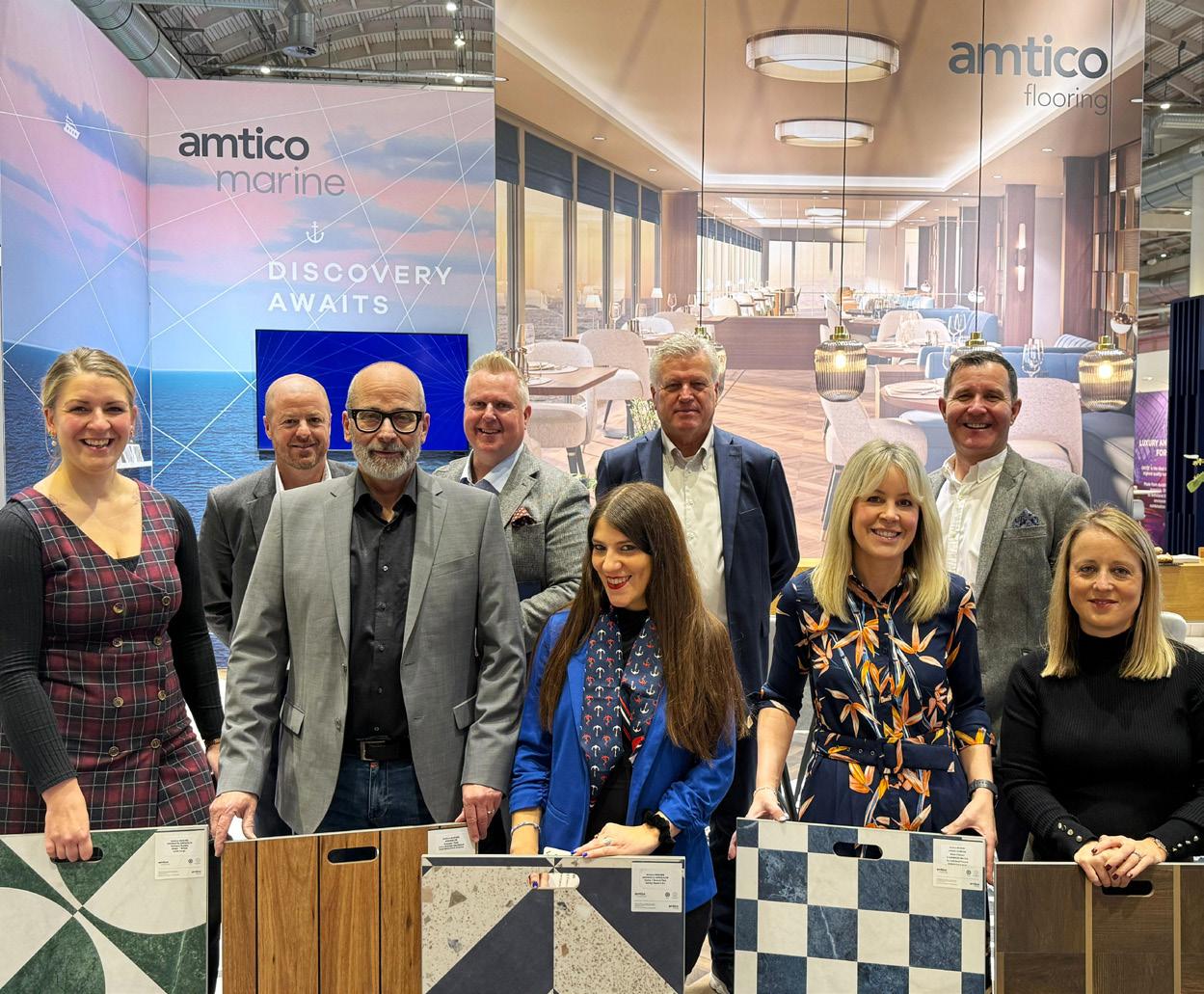
Amtico Flooring stand and team
Freedom.
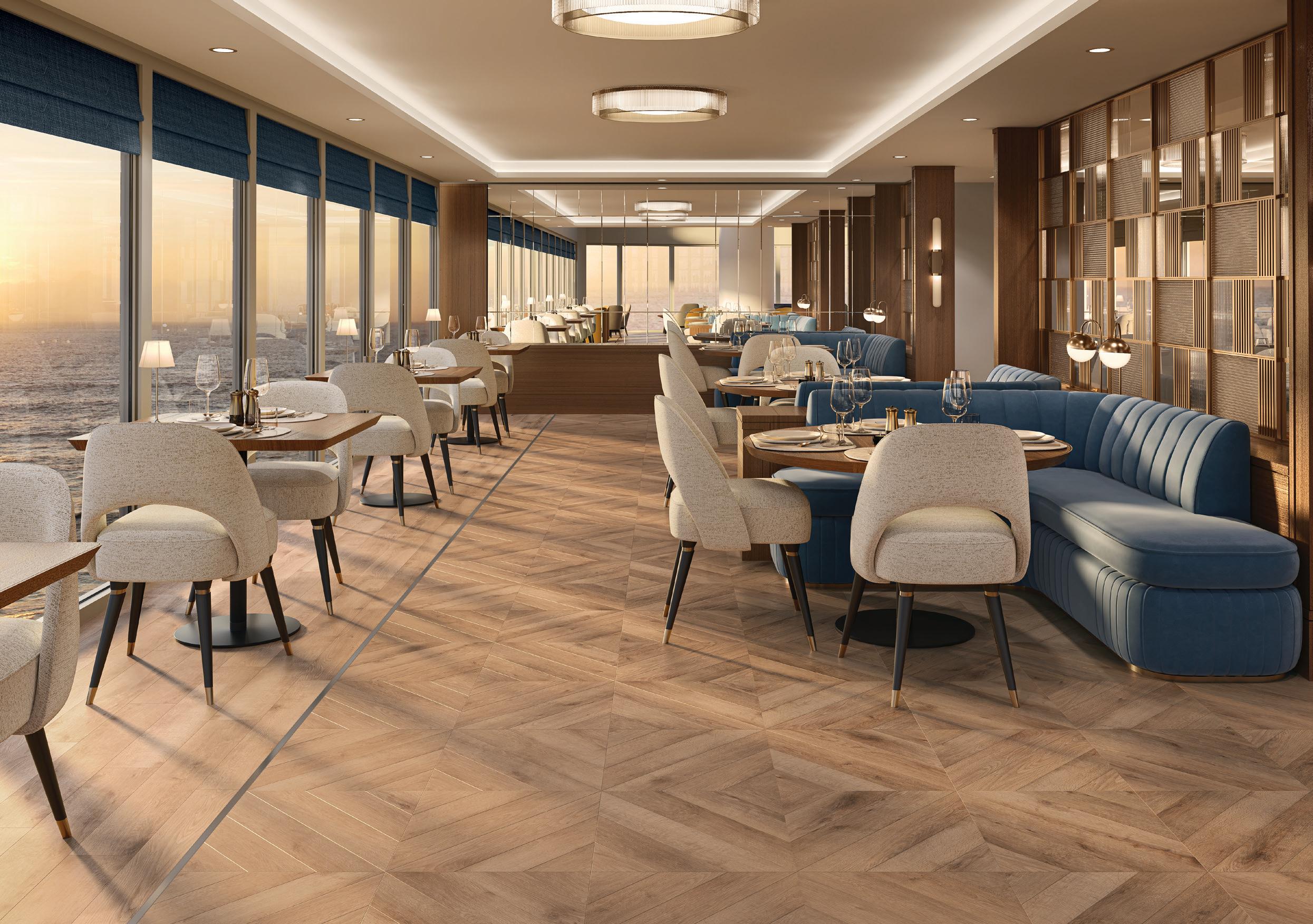
That’s what it feels like to be at sea, and it’s exactly what should be reflected in your unique vision. Amtico Marine opens up a world of possibilities without compromise, offering customisable specialist marine LVT flooring that blends beauty, durability, and creative freedom.
CSI DESIGN EXPO EUROPE IN HAMBURG SURPASSED OUR 2024 LONDON EXPERIENCE IN BOTH SCALE AND AMBITION, MARKING A CONFIDENT STEP FORWARD FOR THE CRUISE INTERIORS SECTOR. THE EVENT ALSO ATTRACTED A NOTABLY INTERNATIONAL AUDIENCE, BRINGING TOGETHER DESIGNERS, OPERATORS, OUTFITTERS AND SUPPLIERS FROM ACROSS EUROPE AND BEYOND. BUILDING SUCH A GLOBAL COMMUNITY IS SOMETHING MANY UK EVENTS STRIVE TO ACHIEVE, AND CSI DEMONSTRATED HOW POWERFUL THAT INTERNATIONAL MIX CAN BE FOR NETWORKING, LEARNING AND COMMERCIAL OPPORTUNITY.
While Design Insider has not yet attended CSI Miami, conversations on the show floor offered mixed comparisons: some visitors felt Miami attracts a higher concentration of decision-making operators, while others said Hamburg delivered an equal level of opportunity and engagement.
Hamburg itself provided a memorable backdrop. Its winter streets, bright with Christmas colour yet framed by grey skies and steady rain, stood in vivid contrast to the polish, precision and luxury displayed inside CSI. (It may also now claim the title of the industry’s most expensive cloakroom.)
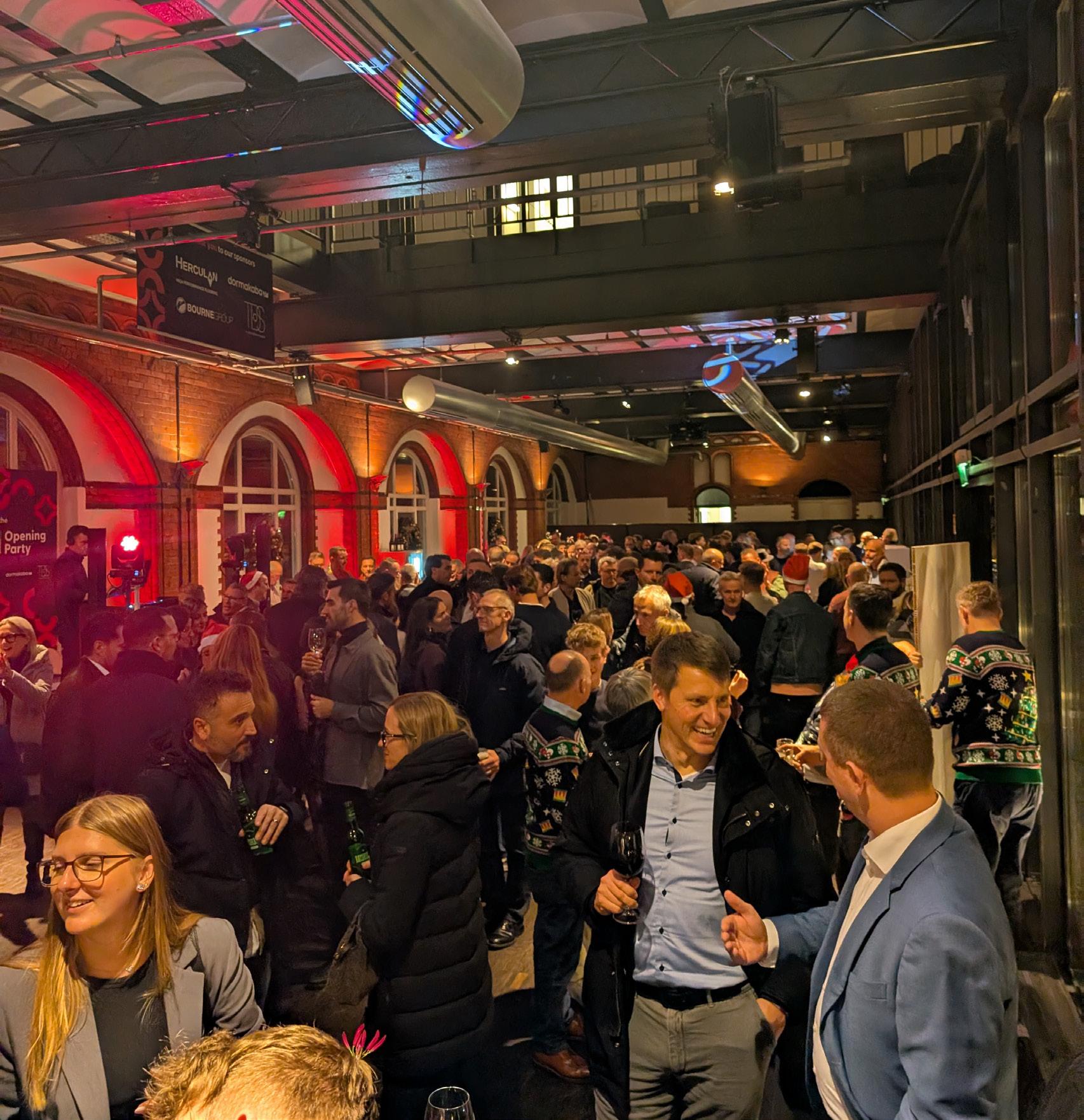
CSI set the tone early by looking after exhibitors and guests before the event even began. A lively opening party, complete with music, drinks and sausage, established a warm energy that carried throughout the show. Opportunities to connect continued across the programme and at a level we have not previously seen at UK commercial interiors events. Speed networking sessions encouraged focused introductions; After Hours and Happy Hour created relaxed moments to socialise; and Pitch & Pint offered a fun, fast-paced platform for brands to present with personality and humour. The awards event allowed the whole community to celebrate it’s leaders.
Visitors came in search of new products, and CSI delivered, though some brands appeared to reserve their major launches
for other events. Many innovations on display were shaped by the cruise sector’s growing focus on sustainability, and conversations across the show reflected a shift toward more mature, technically informed sustainability thinking.
Exhibitors also noted a continued appetite for investment in cruise design, offering commercial confidence even against a wider backdrop of economic uncertainty. The show floor itself featured a varied mix of large, carefully curated stands and more streamlined setups, an approach that supports inclusivity and allows emerging brands to participate meaningfully.
Holding the event in Hamburg, a city defined by its maritime history, felt particularly apt, reinforcing the industry’s connection to place and practice. And despite its growing scale, CSI maintained the feel of a close-knit community, where meaningful conversations between designers, operators and suppliers unfolded easily.
For this Event Report, our aim was to understand where the cruise sector is facing its greatest challenges and where opportunities for growth are emerging. Sustainability clearly sits at the centre of both: a complex issue affecting every stage of the design and manufacturing process, and at the same time the strongest driver of innovation and progress.
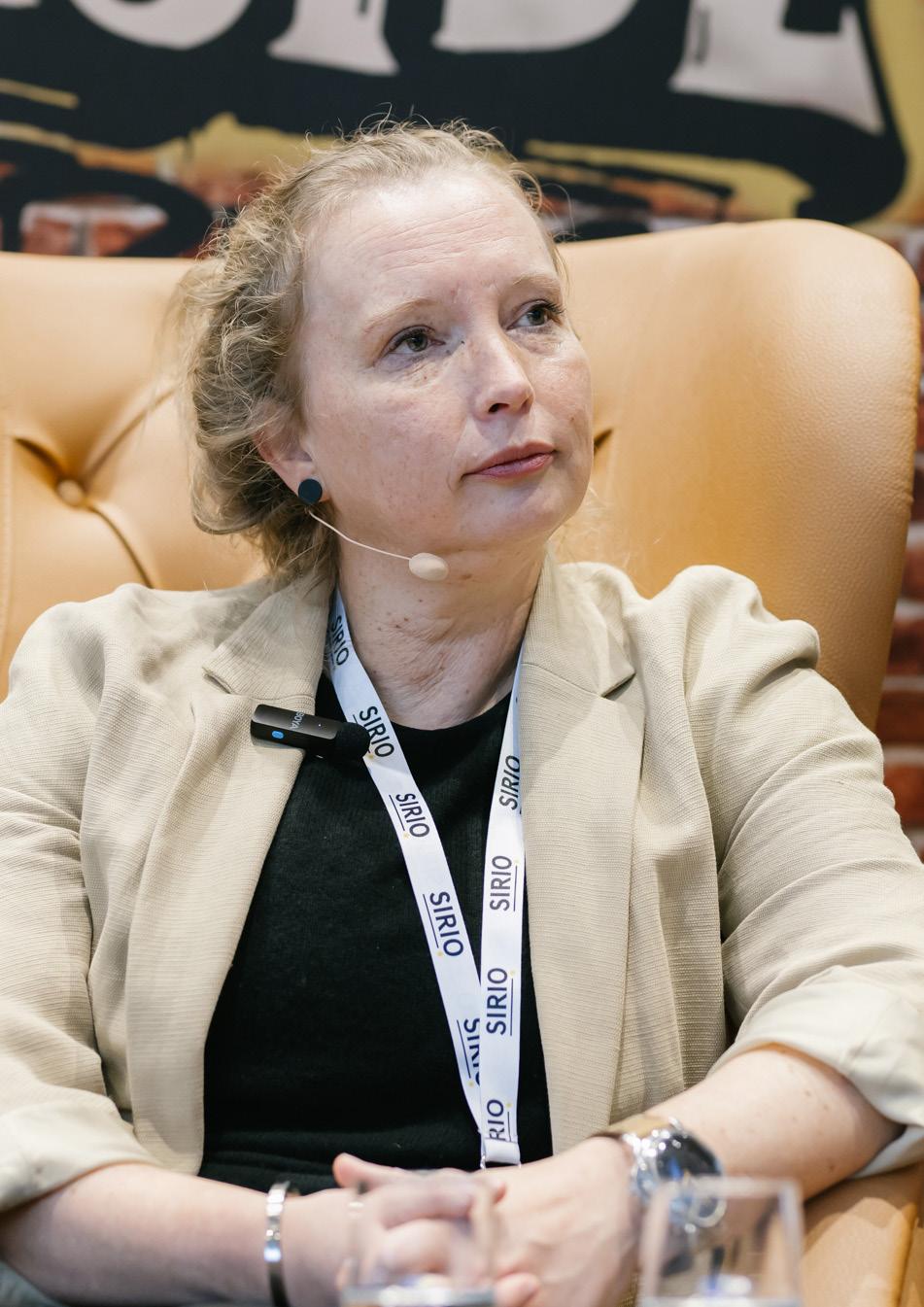
AT CRUISE SHIP INTERIORS, FEW VOICES RESONATE MORE STRONGLY THAN THAT OF MY NGUYEN, DIRECTOR OF INTERIOR DESIGN & INTERIOR OPERATIONS FOR HOLLAND AMERICA LINE AND SEABOURN. BEYOND HER INFLUENTIAL ROLE WITHIN BOTH BRANDS, NGUYEN ALSO SERVES AS CHAIR OF THE CSI ADVISORY BOARD, A POSITION THAT PLACES HER AT THE HEART OF STEERING THE SHOW’S EVOLUTION AND THE WIDER DESIGN COMMUNITY IT SUPPORTS.
As Director of Interior Design & Interior Operations for Holland America Line and Seabourn, My Nguyen plays a central role in shaping the guest experience at sea. She also serves as Chair of the Cruise Ship Interiors Advisory Board, a role that places her at the forefront of industry collaboration and strategic direction.
Reflecting on her long relationship with the event, Nguyen explains: “I was one of the founding members. In 2019 the idea came to be, and the industry really needed a hub for cruise ship interiors. Toby and Sam founded Cruise Ship Interiors Expo and reached out to a few industry experts. We formed a larger Advisory Board, and the show has grown ever since.” Her responsibilities today span leadership, vision, and coordination: “As chair of the Advisory Board, I do a lot of behind-the-scenes thought leadership—spitballing ideas, working with the Advisory Board on ideas for the future and ways we can improve.”
This year marked a significant milestone as the show debuted in Hamburg. Nguyen notes that the priority was to ensure the relocation elevated the experience: “The show’s first time in Hamburg… we just wanted to deliver a fantastic show with great energy and great content. We had 150 new exhibitors and 50 brand-new products we’ve never had at CSI, and our largest
European show yet with 300 exhibitors.” For her, this ambition reinforces the core purpose of the gathering: “The value of Cruise Ship Interiors Expo is really about the entire interiors community being together with a dynamic energy and great things for people to shop for their ships.”
Among the programme highlights, sustainability remains the theme Nguyen champions most strongly. “For me, it will always be about the Sustainable Design Summit topics,” she says. “Sustainability— especially for innovation in marine—is so important. We’re the brands and the decision makers, so it’s more straightforward to innovate with partners and vendors and come up with ideas.”
Her hope for attendees is direct: “That they take away inspiration and information to take action themselves, even if it’s the smallest step. If this is the first baby step or a seed planted, then we can make a really big impact in the world.”
Looking ahead, Nguyen sees growing momentum across the industry. “There is a lot more innovation with sustainability. I’d love to see more of what’s out here. The more we see, the more we innovate, and the stronger the cruise industry becomes.”

AS THE NEWEST ADDITION TO TUI CRUISES’ INTUITION CLASS, MEIN SCHIFF RELAX INTRODUCES A REFINED, UNDERSTATED VISION OF NORTHERN EUROPEAN LUXURY. BEHIND ITS QUIETLY CONFIDENT INTERIORS LIES A PARTNERSHIP BETWEEN HAMBURG-BASED JOI DESIGN AND TUI CRUISES—ONE THAT BROUGHT TOGETHER LAND-BASED HOSPITALITY EXPERTISE, MARITIME TECHNICAL RIGOUR, AND AN UNUSUALLY DETAILED HUMAN-CENTRED BRIEF.
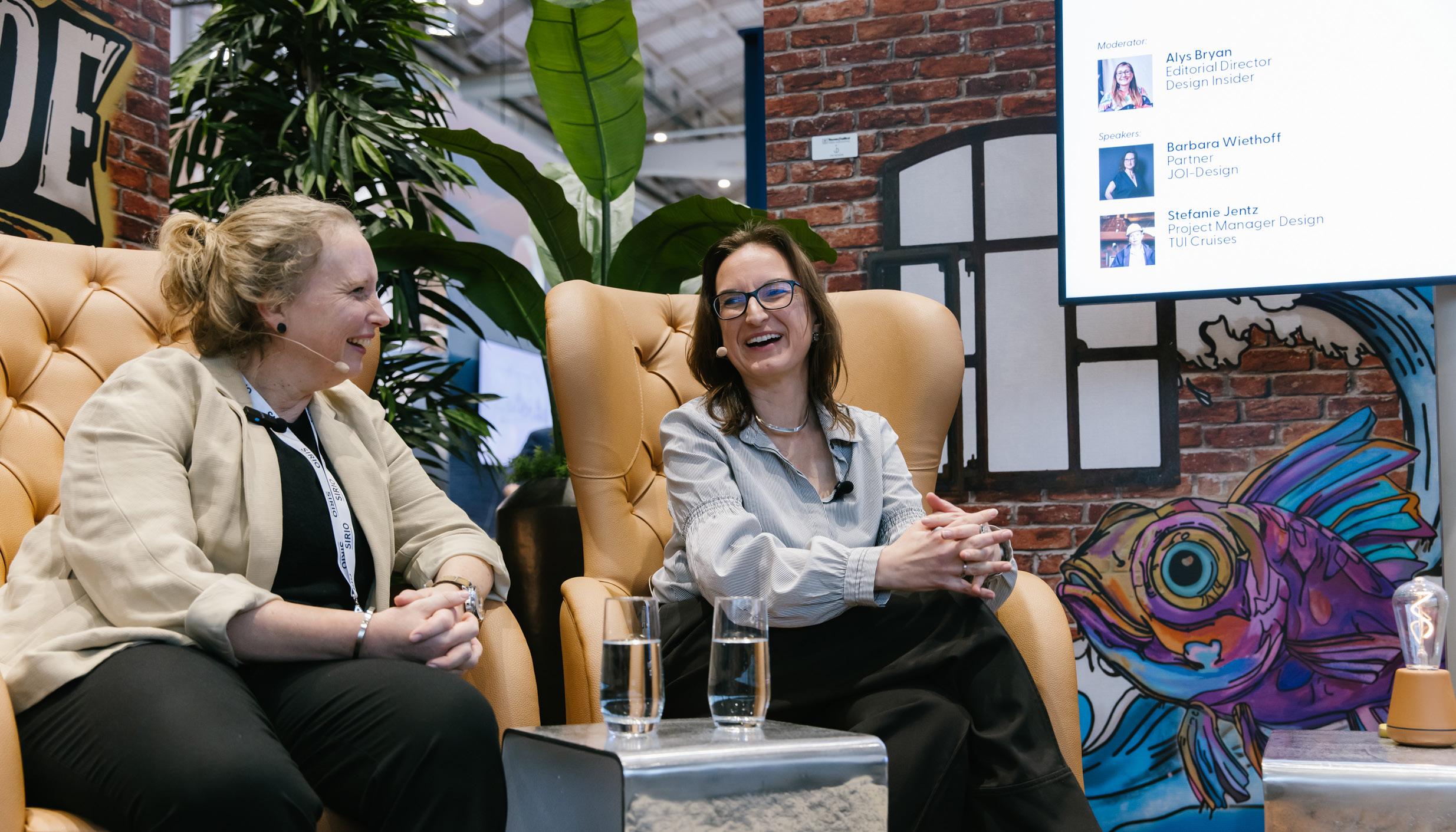
Design Insider spoke with Barbara Wiethoff, Partner at Joi Design, and Stefanie Jentz, Project Manager Design at TUI Cruises, to explore the principles that shaped this milestone project.
Designing for Emotion: The Foundation of the Project
From the earliest design stages, Barbara emphasises that the emotional intention behind each space, not the typology, footprint, or specification, guided every decision.
“The core element when we start our design, it’s all about emotions,” she said. “As long as your core intention is strong enough, it will survive one or another cost efficiency change.”
This philosophy informed the balance between calmness and character, the sequencing of spaces, and the use of natural tones and textures. Even as the project moved through rounds of technical refinement and value engineering, the goal remained constant: create an environment that feels generous, restorative and quietly luxurious.
Translating Land-Based Hospitality to Maritime Design
With more than 40 years specialising in hospitality, Joi Design entered the project with deep experience in crafting atmosphere. But Mein Schiff Relax required a shift into an entirely new operational culture.
Barbara explains:
“Of course, we are used to choosing materials and developing
beautiful details… but what was very different was the structure of working. How the project was scheduled, how communication was handled, how strictly deadlines were placed.”
Maritime design is defined by precision, sequencing, and coordination across continents. The accelerated pace and tightly choreographed approvals demanded a new level of discipline— and ultimately enriched the studio’s process.
Designing for a Clear, Humanised Guest Profile
A central tenet of the project was a remarkably detailed understanding of the TUI Cruises guest. Serving Germany, Switzerland and Austria, the design team was equipped with character-based profiles that shaped both aesthetic and functional decisions.
Stefanie describes two of these archetypes:
“Let’s say one is maybe Sally. She’s 45, buys from different brands, and is interested in modern luxury… Peter is more sports-driven, lots of fitness, riding e-bikes everywhere, exploring the world.”
These vivid profiles influenced everything from circulation and storage to material selection and the overall tone of the suites.
Expressing “Northern German Luxury”
Rather than embrace opulence, Mein Schiff Relax embodies a quieter, more refined version of luxury—defined not by grandeur, but by precision, warmth and restraint.
Barbara summarises it clearly:
“It’s very elegant, subtle design we are aiming for… sandy colours, natural patterns and materials, with very little colour twisters that make you smile and bring this vacation vibe into the space.”
This design language distinguishes the TUI brand from more theatrical cruise concepts, aligning it instead with Northern European hospitality trends rooted in comfort and authenticity.
The project began under pandemic restrictions, reshaping how international teams share ideas, materials and decisions. Physical samples travelled more widely than the designers themselves.
Barbara recalls:
“We shared all these small bits and pieces of material, having Teams calls and reviewing designs together. Four folders filled with every little material sample… And the best part was when we finally could sit together at a table. Everybody was so happy.”
This remote-first period strengthened documentation processes, material libraries and communication rhythms, skills now embedded in both organisations.
Cruise interiors sit within one of the most highly regulated design environments. Materials, finishes and construction methods must meet stringent IMO requirements, narrowing but not eliminating sustainable opportunities.
“In the first design phase, 80% of the sustainability handle is actually in that phase,” Stefanie said. “It’s important to select sustainable interior furnishings… But we are quite limited regarding IMO regulations.”
To manage this, TUI Cruises employs a dedicated in-house team to test every component against durability, safety and guestuse realities, ensuring that creative intent aligns with long-term performance.
The ambition for Mein Schiff Relax was to craft a guest experience grounded in emotion, guided by a nuanced understanding of the TUI audience, and expressed through a Northern German design ethos.
For Barbara, the result speaks for itself:
“Guests are happy. I was just two days ago on Mein Schiff Relax to see all the happy smiles on board, and so I think we really did some good job!”
Design Insider spoke with Stephani Jentz for a focused conversation on the sector’s evolving sustainability landscape and the practical realities shaping progress within marine design. Her perspective reflects both strategic oversight and deep operational understanding of how sustainable choices translate into real-world vessel delivery.
From your vantage point, what are the challenges and opportunities facing the cruise sector today?
Stephani: “The challenge, and at the same time the opportunity, is to follow the direction already taken on land: integrating genuinely sustainable materials into vessels. In a new-build environment, around 80% of a ship’s sustainability profile is determined by early decisions, from engines and fuel types to carpets and finishes. That means we rely on strong products and suppliers who are genuinely committed to sustainability.”
Some observers feel the cruise sector arrived late to sustainability. Do you agree?
SJ: “Not exactly. The marine sector has unique certification requirements—fire testing, safety, regulatory frameworks—so we needed time to understand how sustainable products could meet those demands. It wasn’t about greenwashing; it was about learning cradle-to-cradle systems properly and ensuring credibility.”
Can the sector uphold sustainability standards when value engineering comes into play?
SJ: “It’s absolutely possible, but only as a team effort. If everyone involved, from shipyards to outfitters, is committed to the sustainability trajectory, then it can be maintained even through cost-driven decision-making.”
Looking ahead, what would you like to see the cruise sector achieve in the coming years?
SJ: “More interaction between operators and destinations. We plan cruises and schedule routes years in advance, but there is more we can do to avoid overtourism while still developing meaningful itineraries. Sustainability is not only about materials, it’s also about responsible operations.”
Without revealing too much, can you offer any insight into what’s next for your fleet?
SJ: “Only that we have two more vessels to come, and we’re already working on them. It will be an exciting period.”
How can suppliers better support your design process and improve the likelihood of their products being specified?
SJ: “The real challenge lies in bridging the gap between the architect’s design intent and the outfitter’s execution. We need suppliers who understand the sustainability targets, the cost parameters and the detailed specifications that connect the two. A well-rounded product collection that aligns with those requirements is key.”
Finally, where do you personally find the most joy in this work?
SJ: “For me, the joy comes at the very end—seeing passengers and crew experiencing the finished spaces. Watching them enjoy their cabins or public areas, seeing that they’re happy and not raising complaints—that’s incredibly rewarding. Their joy is the main driver for me.”
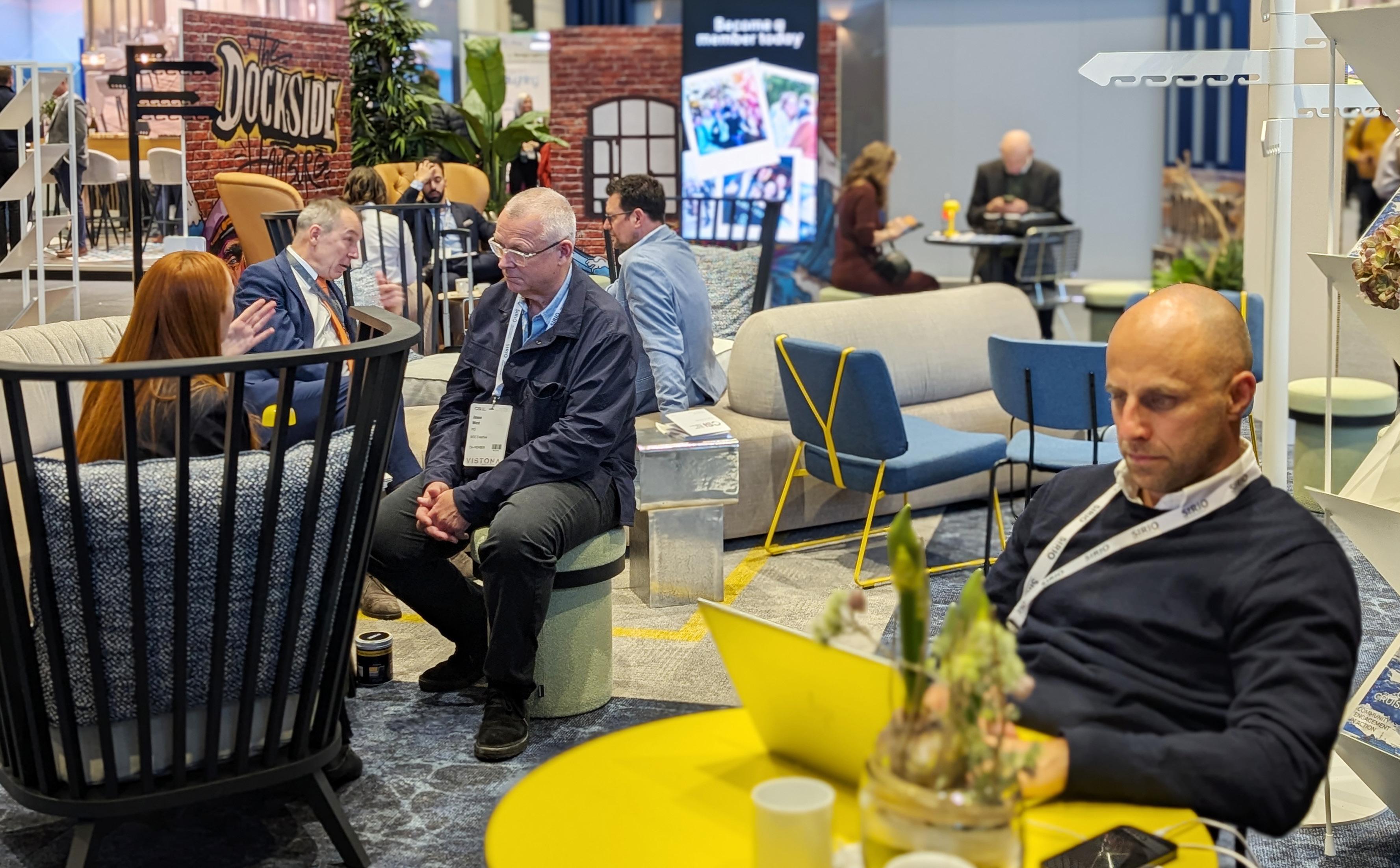
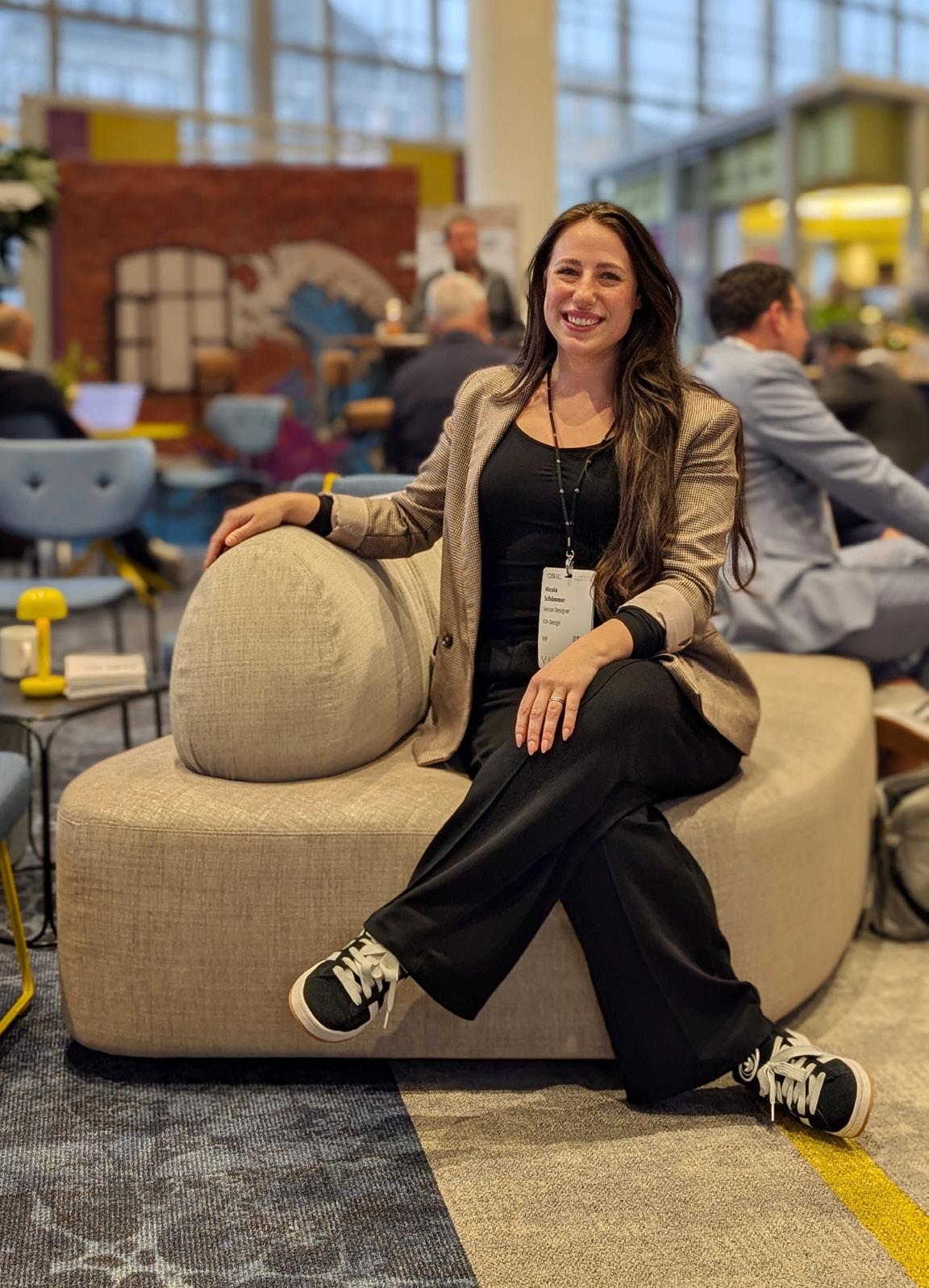
THE CSI+ LOUNGE, DESIGNED BY NICOLA VOSS, SENIOR DESIGNER AT JOI DESIGN, FORMED THE CENTRAL HUB FOR MEMBERS OF CSI+, CRUISE SHIP INTERIORS’ ENHANCED MEMBERSHIP PROGRAMME THAT PROVIDES EXCLUSIVE ACCESS TO CURATED NETWORKING ENVIRONMENTS, INDUSTRY INSIGHTS AND YEARROUND BENEFITS. AS ONE OF THE KEY PERKS OF CSI+ MEMBERSHIP, THE LOUNGE OFFERED A DEDICATED SANCTUARY WITHIN THE SHOW, AN ELEVATED, DESIGN-LED SPACE THAT BROUGHT TOGETHER COMFORT, FUNCTIONALITY AND A STRONG SENSE OF PLACE ROOTED IN HAMBURG’S IDENTITY.
Designed as a warm, immersive retreat from the intensity of the exhibition floor, the CSI+ Lounge captured the essence of Hamburg’s docklands through materiality, colour and storytelling. A defining feature is the bespoke carpet, created in collaboration with Ege Carpets. “We designed it together with Ege, and it’s a recycled carpet made of fishnets,” Nicola explains. “We wanted to embrace the Hamburg theme, with a transition from the red bricks of the dockside into the darker harbour areas, and then into the water.” A vivid yellow line, a direct reference to the safety markings found along the docks, pulls the narrative together and reappears subtly throughout the space.
The wall surfaces were developed with Tecnografica, who produced printed wallpaper and aluminium panels that fuse Hamburg’s signature brick architecture with contemporary maritime-inspired graffiti. “We designed the graffiti ourselves” Nicola says. “I wanted to show different styles coming together because this is Hamburg.”
Furniture selections support both the conceptual narrative and the multifunctional brief. Montbel supplied the central community
sofa, a sculptural piece designed to invite gathering from every angle, alongside vintage-inflected Chesterfield armchairs that speak to Hamburg’s industrial heritage. Johanson Design contributed additional armchairs and high tables that blend maritime and industrial cues through materiality and form, while Gervasoni introduced additional elements to reinforce the eclectic mix of styles. Lighting, including portable lamps from Humble Lights, echoes the yellow dockside motif, and textiles from Vescom, chosen for their sustainable credentials, complete the palette.
The result is a space that balances calm, comfort and collaboration. “A fair can be overwhelming,” Nicola reflects. “We wanted to provide a place where people can calm down, have a coffee, sit together in a cosy lounge, but also work if they need to.” The lounge succeeds as a flexible environment for meetings, quiet work, informal networking and social connection, reinforcing CSI+ as a membership offering built around meaningful industry engagement.
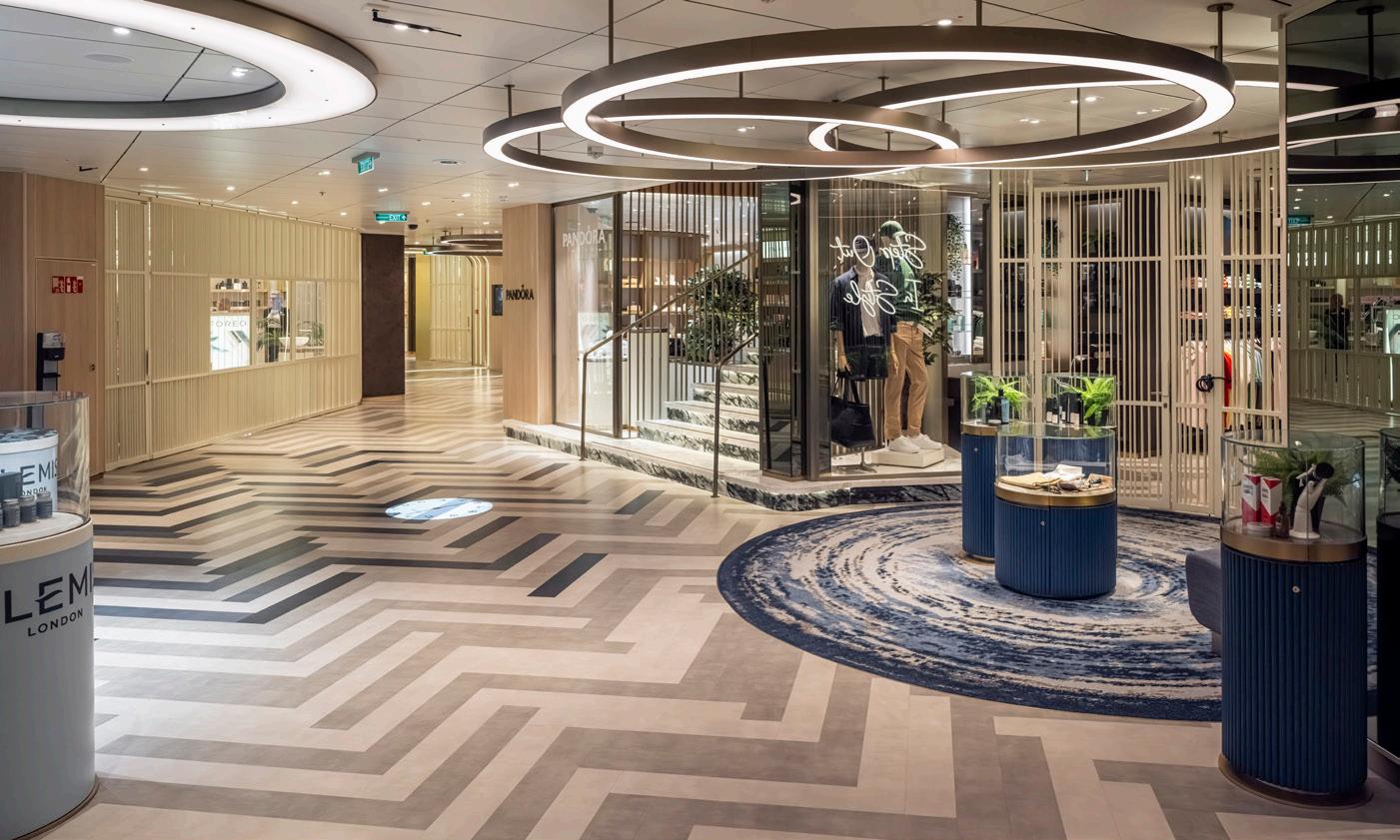
ON BOARD P&O CRUISES’ ARVIA SHIP, BRITISH FLOORING DESIGNER AND MANUFACTURER AMTICO ILLUSTRATES HOW SPECIALIST LUXURY VINYL TILE FLOORING CAN BRING ATMOSPHERE, IDENTITY AND DURABILITY TO HIGH-FOOTFALL SPACES AT SEA. BESPOKE ADAPTATIONS BY AMTICO, SUCH AS RE-IMAGINING THE SIGNATURE KURA KALA DESIGN FOR USE IN MARINE SPECIFICATION, HELP EXPRESS THE SHIP’S CHARACTER THROUGH ITS INTERIORS. ACROSS DINING AND RETAIL AREAS, THE FLOORING SUPPORTS EACH SPACE’S CHARACTER WHILE MEETING THE TECHNICAL DEMANDS OF LIFE ON THE WATER.
Arvia, the newest addition to the P&O Cruises fleet, was designed to offer a bright, uplifting experience with an impressive mix of family-friendly amenities, serene retreats and lively social spaces. With so much variety across the decks, the interior design needed to balance warmth, practicality and a clear sense of identity. Flooring plays a central role in that experience: it guides movement, defines mood and sets the tone for how guests interact with each space.
Amtico Marine LVT was specified across key amenity areas on Arvia, chosen for its ability to combine specialist marine performance with design versatility. As a purpose-built marine LVT collection, it provides the visual quality and materiality designers want, with the resilience required for life at sea –including lightweight construction compared to natural materials such as terrazzo, ease of maintenance and integral antimicrobial protection. Crucially, it is manufactured in compliance with
International Maritime Organisation (IMO) and Safety of Life at Sea (SOLAS) requirements, and approved under the Marine Equipment Directive (MED) and UK regulations, bearing both the IMO wheelmark and UK Ensign.
One of the most characterful spaces on board is The Olive Grove, a Mediterranean-inspired dining area on the Gala Deck. The design team wanted a floor that reflected the relaxed, sunwashed atmosphere of the restaurant while standing up to heavy daily use.
To achieve this, Amtico adapted Kura Kala, originally from the Signature collection, into a Marine-ready specification. Laid in Bonded Stone, the design delivers a traditional aesthetic reminiscent of ceramic tiles but with the benefits of specialist marine LVT – warm underfoot, easy to maintain and highly
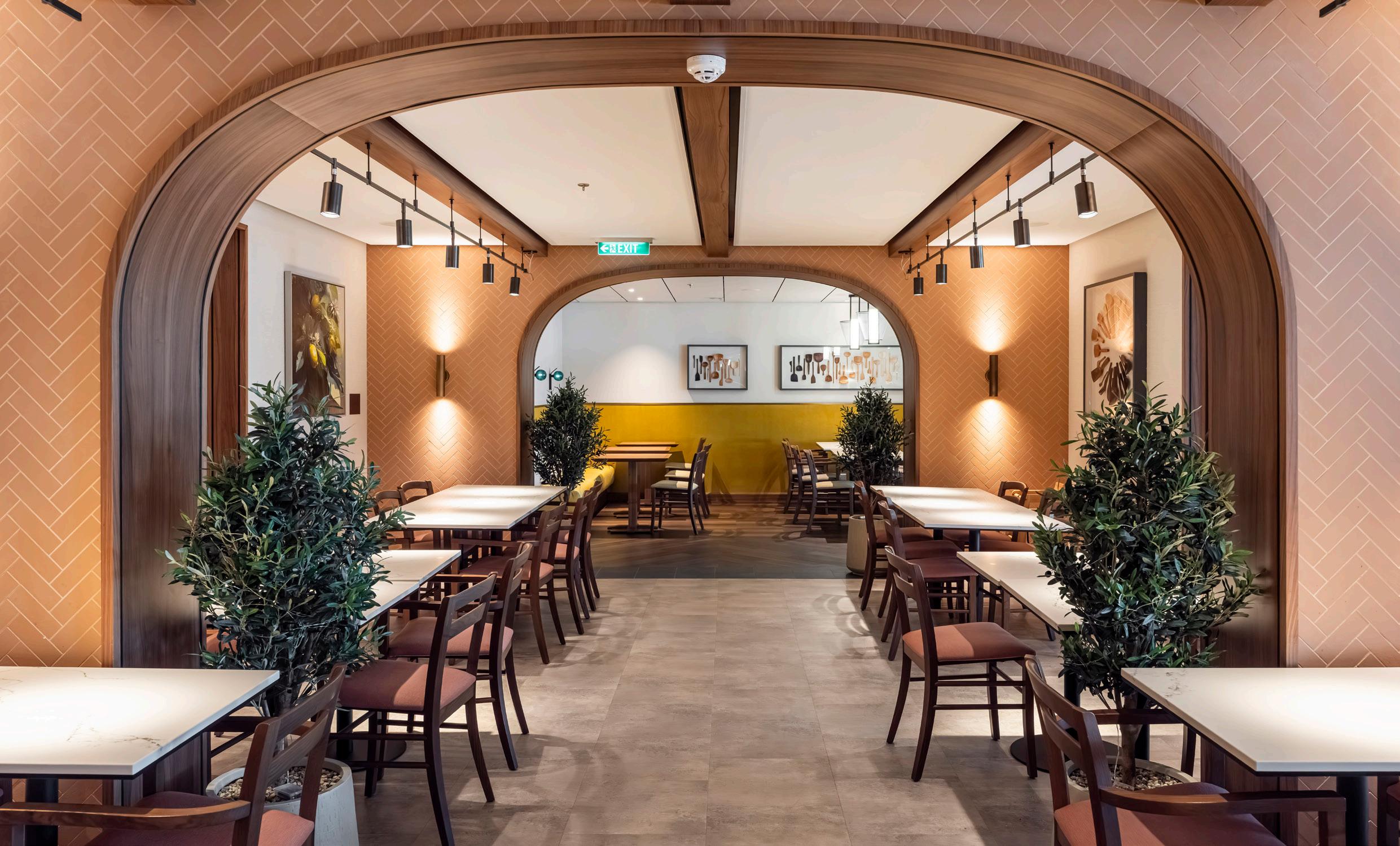
durable. A perimeter of rich walnut tones, laid in Stripwood, adds definition and subtly guides guests through the space.
On the Parade Deck, the brief called for a different mood: brighter, more contemporary and visually expressive to support the energy of Arvia’s retail experience. Here, bespoke planks –adapted from Amtico’s wider Colour Edit palette – were laid in a combination of Herringbone and Stripwood.
The interplay of tones creates a sense of movement, while the patterning adds texture and visual interest without overwhelming the merchandise displays. It is a strong example of how pattern, colour and layout can be combined to support the function of a space as well as its aesthetic.
Behind projects like Arvia sits the breadth of the Amtico Marine collection – the most extensive LVT range available for maritime environments. The palette spans Wood and Stone designs, along with precision-cut laying patterns that allow designers to tailor a space’s aesthetic atmosphere with confidence.
This level of creative control aligns with Amtico’s new Design Service, which offers support and opportunities to develop
customised colours, motifs, and layouts that reflect a vessel’s unique story or brand identity. For projects that require a tailored approach, from subtle adaptations to fully bespoke pattern work, the service provides a collaborative pathway from concept to installation.
Beyond aesthetics, Amtico Marine delivers technical assurance where it matters. All products are engineered for marine safety requirements, with optional Amtico Bio – a bio-attributed PVC from renewable sources – helping to reduce the embodied carbon of Amtico LVT by between 20%–28% while maintaining the same performance and finish.
As Arvia continues to welcome guests on board, the flooring plays a quiet but essential role: creating spaces that feel inviting, supporting the ship’s varied experiences, and standing up to the demands of life at sea.
Explore the Amtico Marine collection at amtico.com/commercial or contact Jens Klein, Marine Sector Specialist, for project support at jens.klein@amtico.com

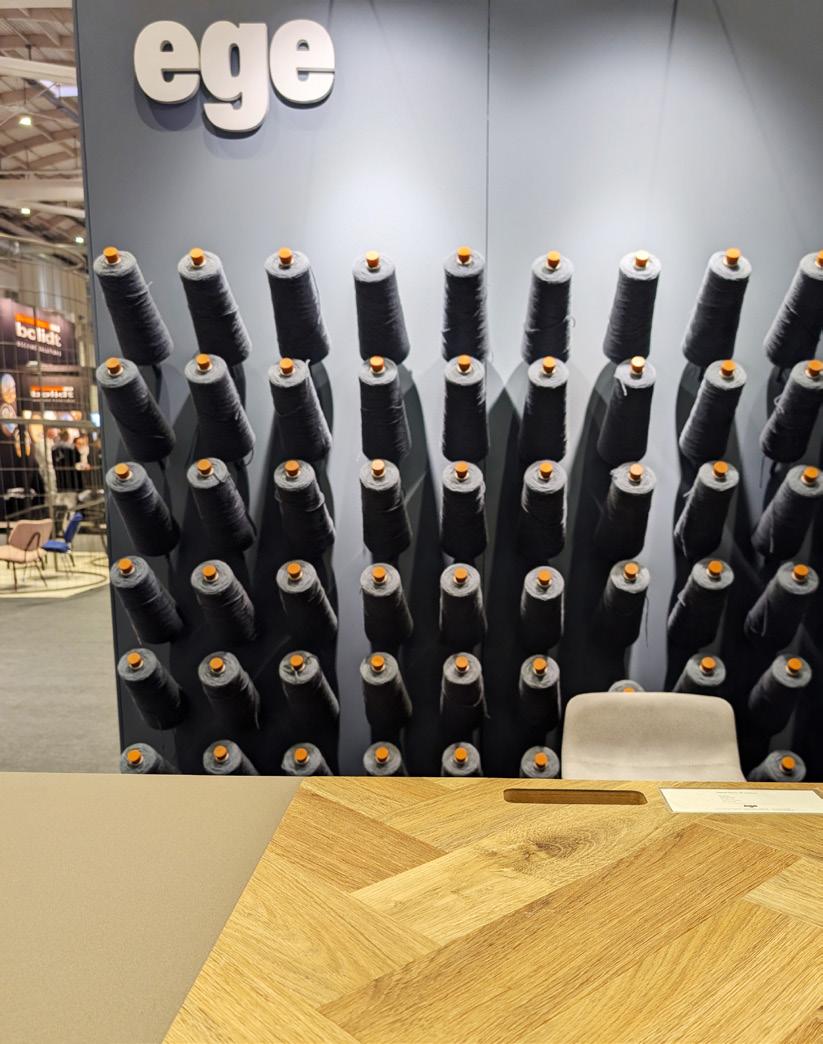
Planum Ocean
Curated collection of LVT tiles with timber and concrete effect
Ege Carpets introduced Planum Ocean, a curated collection of LVT tiles with timber and concrete effects. As a shift from the carpet ranges the brand is known for, this launch represents an opportunity for Ege to extend its product offer and strengthen its position within the cruise market.
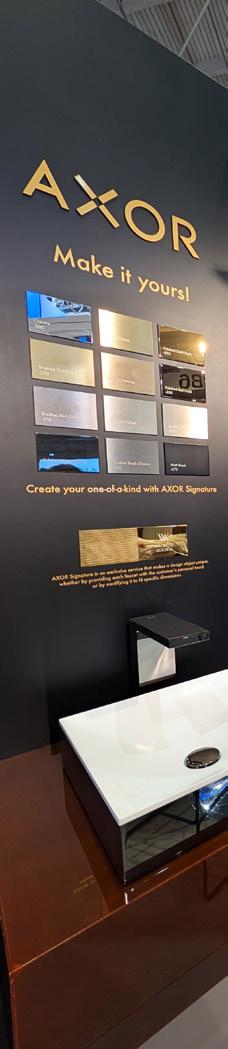
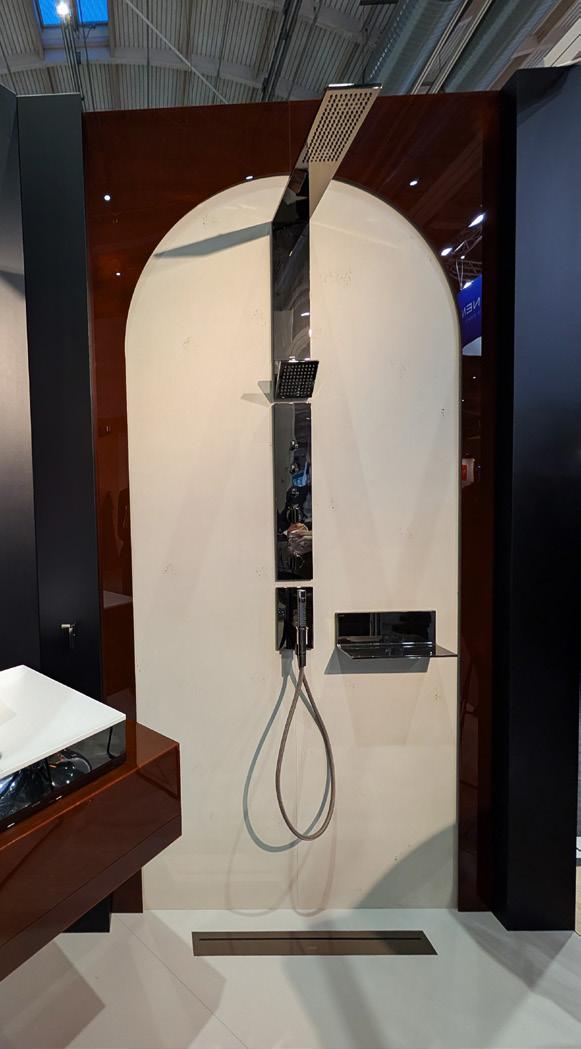
AXOR presented a selection of capabilities relevant to cruise design, including its PVD colour finishes. As an established supplier to the sector, Hansgrohe has expanded its categories to include furniture and basins, offering broader specification support. The stand also showcased a new solid-surface basin designed by Philippe Starck.
Luma Mirrors launched a new collection created in collaboration with designer Zachary Pulman. The range introduces fresh colour and detailing to the cruise sector, supported by Luma’s bespoke production approach. Their stand also featured a selfie mirror, used to engage visitors throughout the show.
Stand collaboration with Johanson
Three most recent collections: Coral, Onyx, Clint
Projects launched in Miami 2025 semi-bespoke project management capabilities
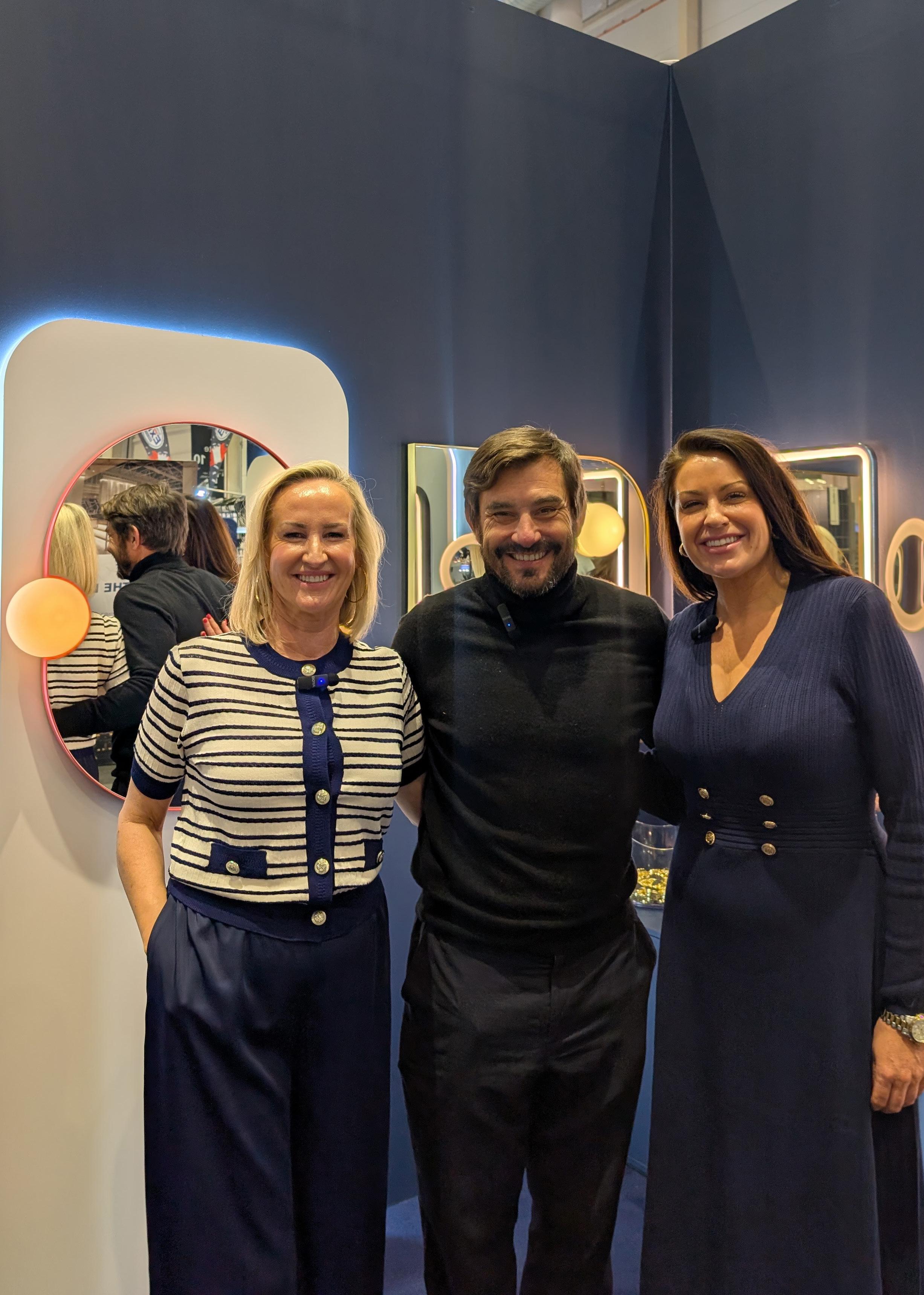
New collection designed in collaboration with Zachary Pulman and launched at CSI Hamburg
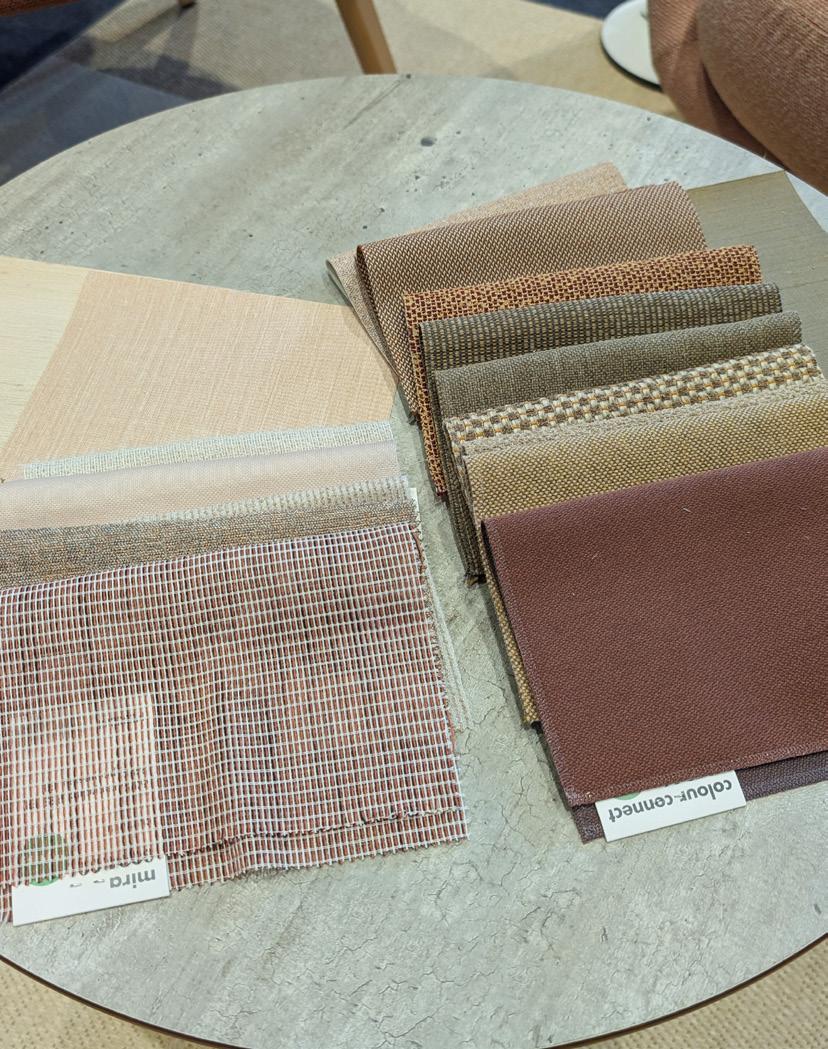
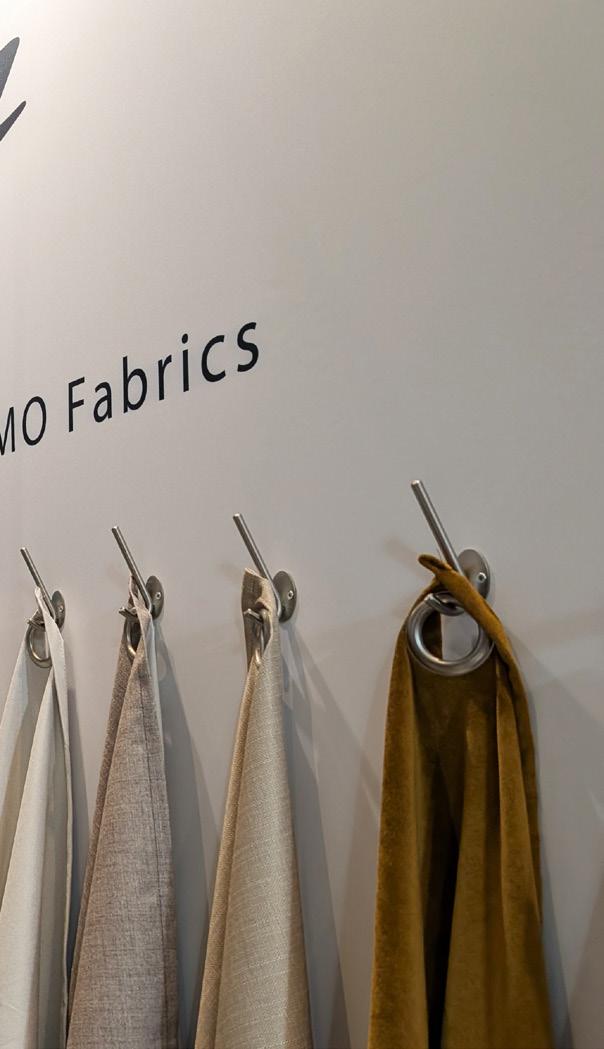
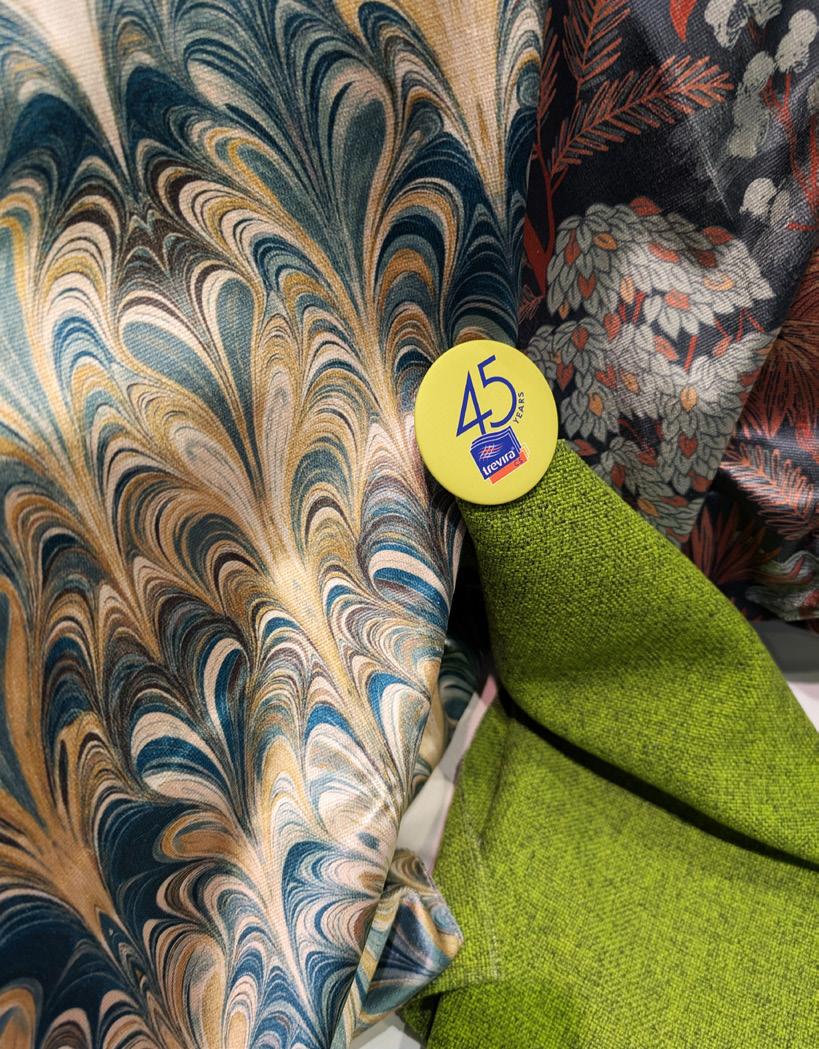
Panaz offered a preview of Intrigue, a contoured sculptural velvet designed to explore shape and surface in a new way. The textile reflects ongoing development within the hospitality and cruise sectors toward richer tactility and more three-dimensional patterning.
GROHE presented its GROHE SPA collaboration with Buster + Punch alongside several new product introductions. The stand featured updates across key ranges including Cubeo, Essence and Thermost, demonstrating the brand’s continued focus on material refinement and expanded choice for cruise specifications.
Spires Art showcased its creative services, highlighting print techniques and base material options suitable for cruise environments. Decorative and textural imagery was displayed across Formica, wallpaper and metal laminates, alongside the brand’s antique mirror collections, illustrating the versatility of their offer.
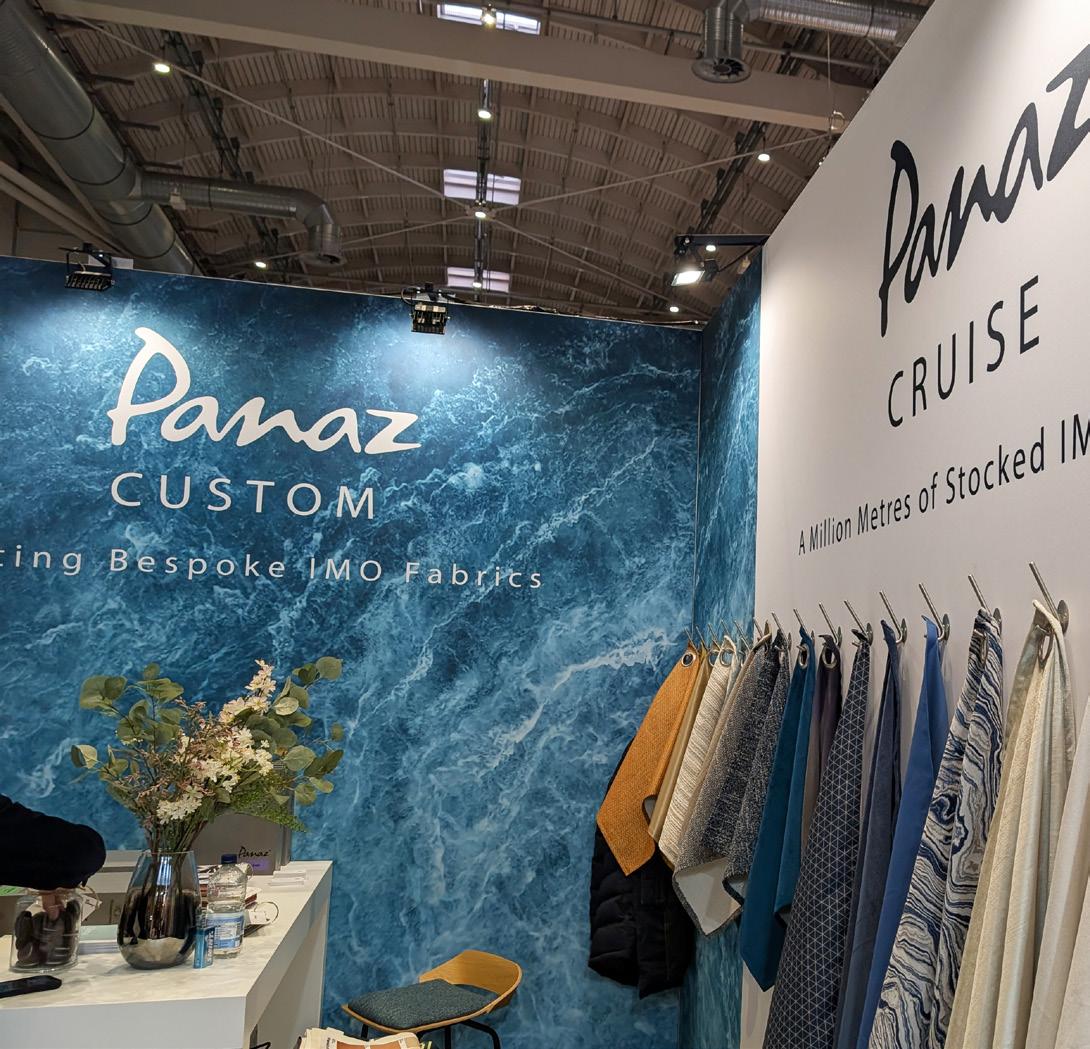
Intrigue
Preview of contoured pattern sculptural velvet
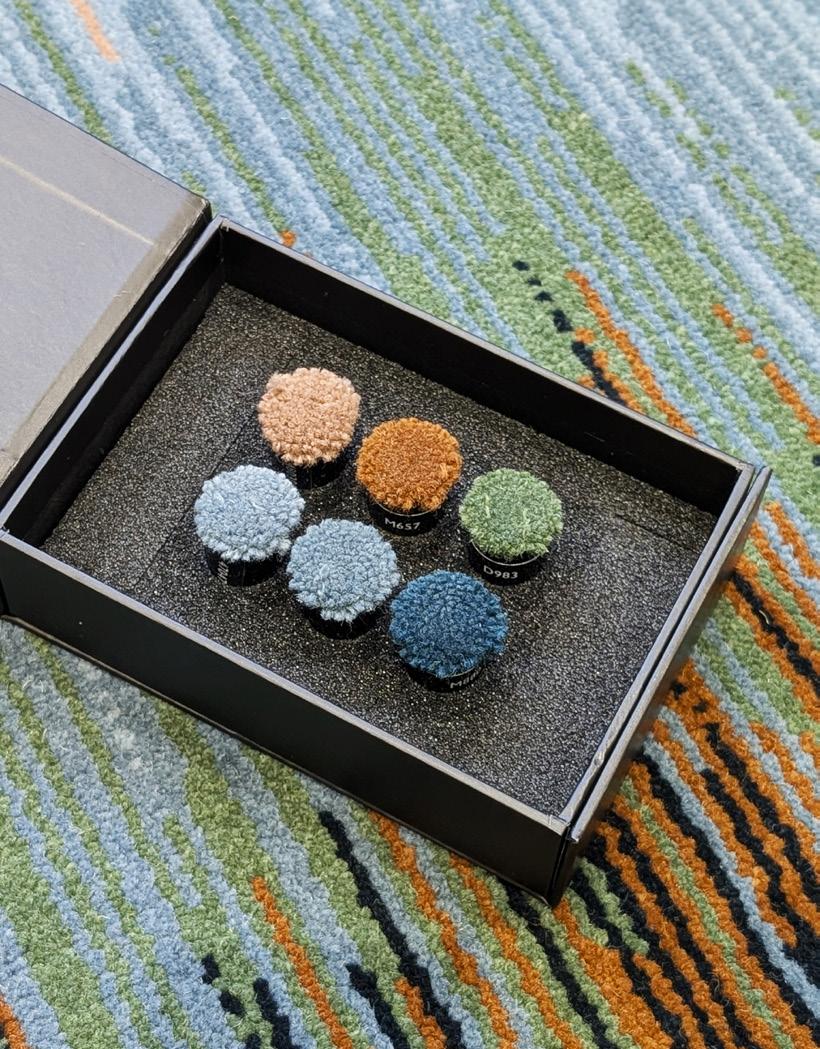
Colour Pom Box
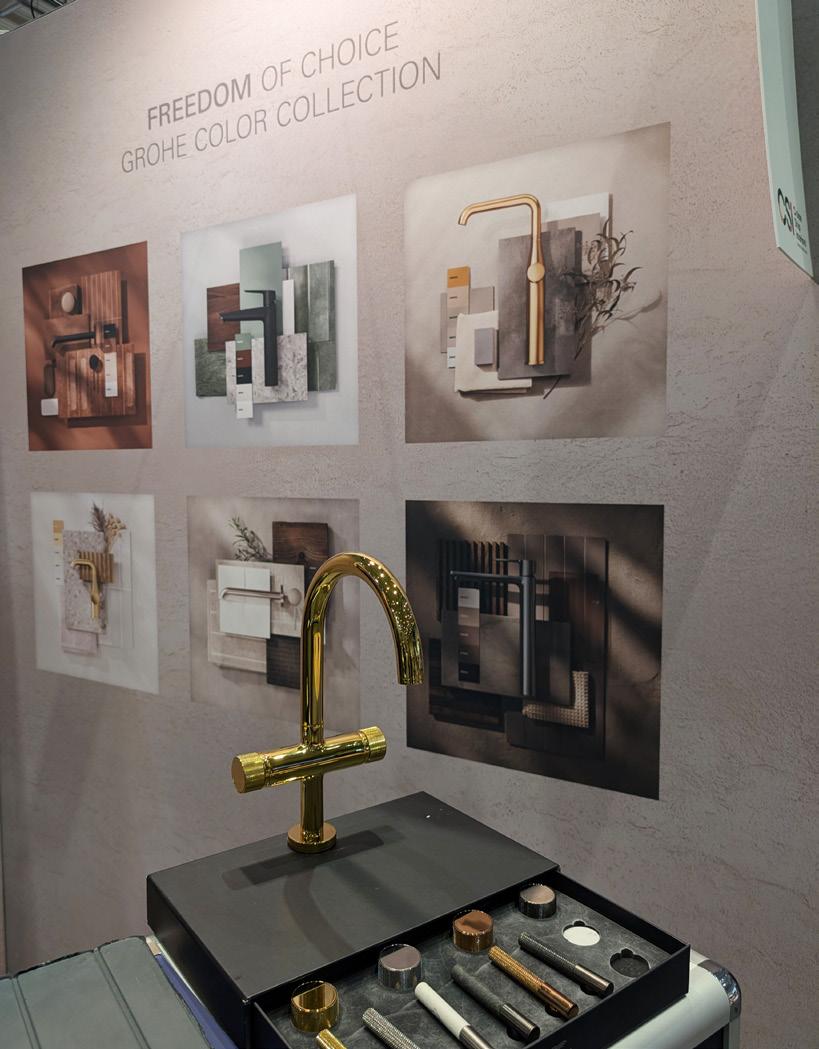
GROHE SPA and Buster + Punch
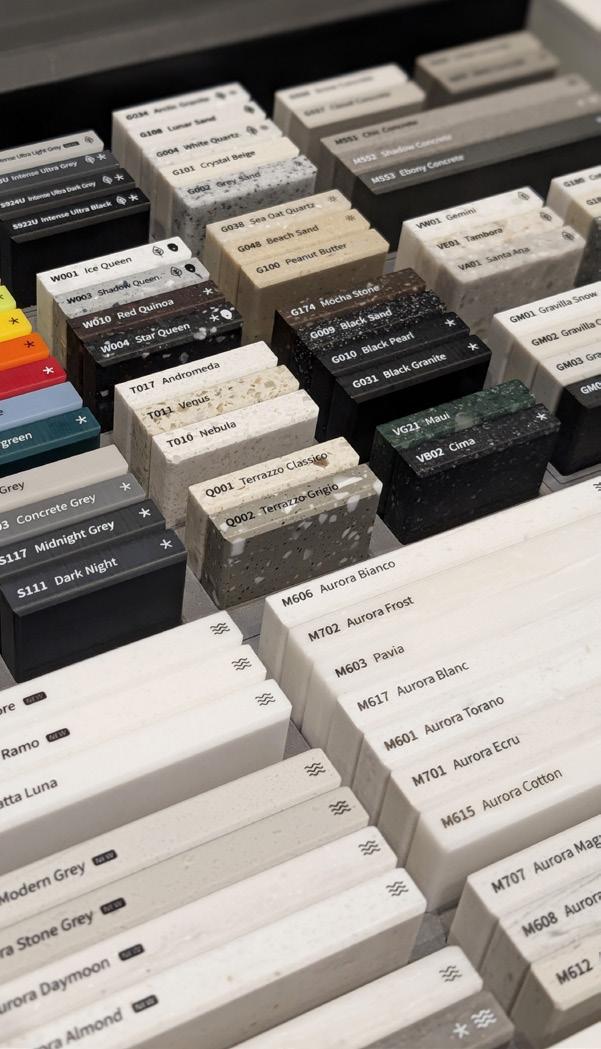
based solid surfaces back service
Showcase of client designs
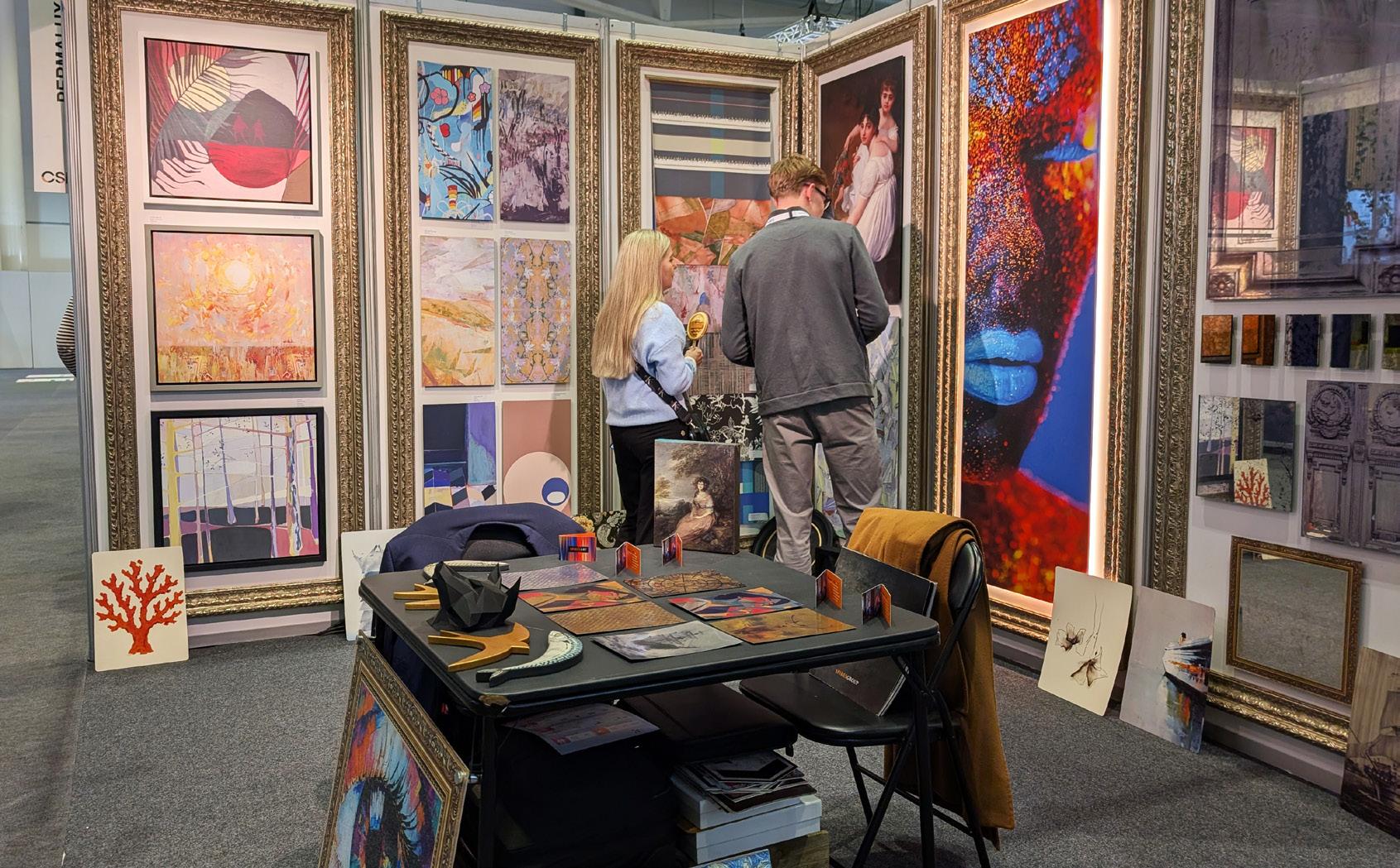
Showcase of service, print, and material choices
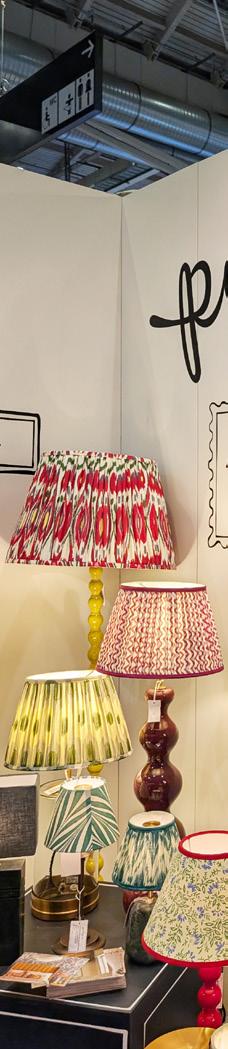
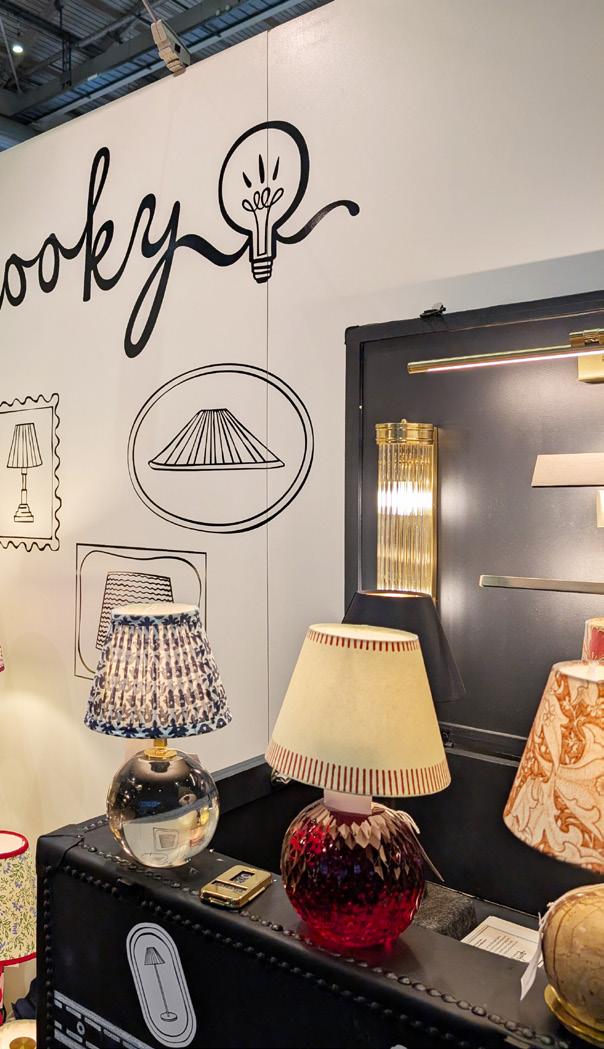
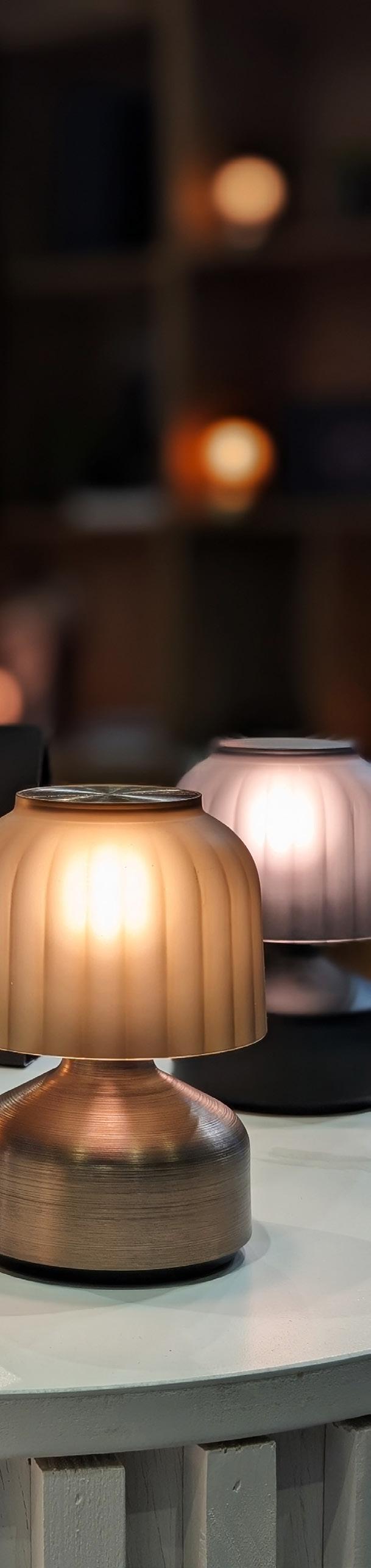
Imagi Light presented its range of rechargeable table lights, designed and manufactured in Belgium. Now 15 years established in the hospitality sector, the brand showcased a wide selection of portable lights, including the Memosa design marking “100 Years of Light.” The full collection includes six designs in two heights and ten colours, with around 80% of the products shown being new for 2025. Cosmos was another highlight for our team.
Moroso exhibited a selection of its best-selling pieces alongside examples of its bespoke capability. A chair and sideboard designed by Patricia Urquiola were shown with a custom-made table, demonstrating the flexibility and design range valued within the cruise sector.
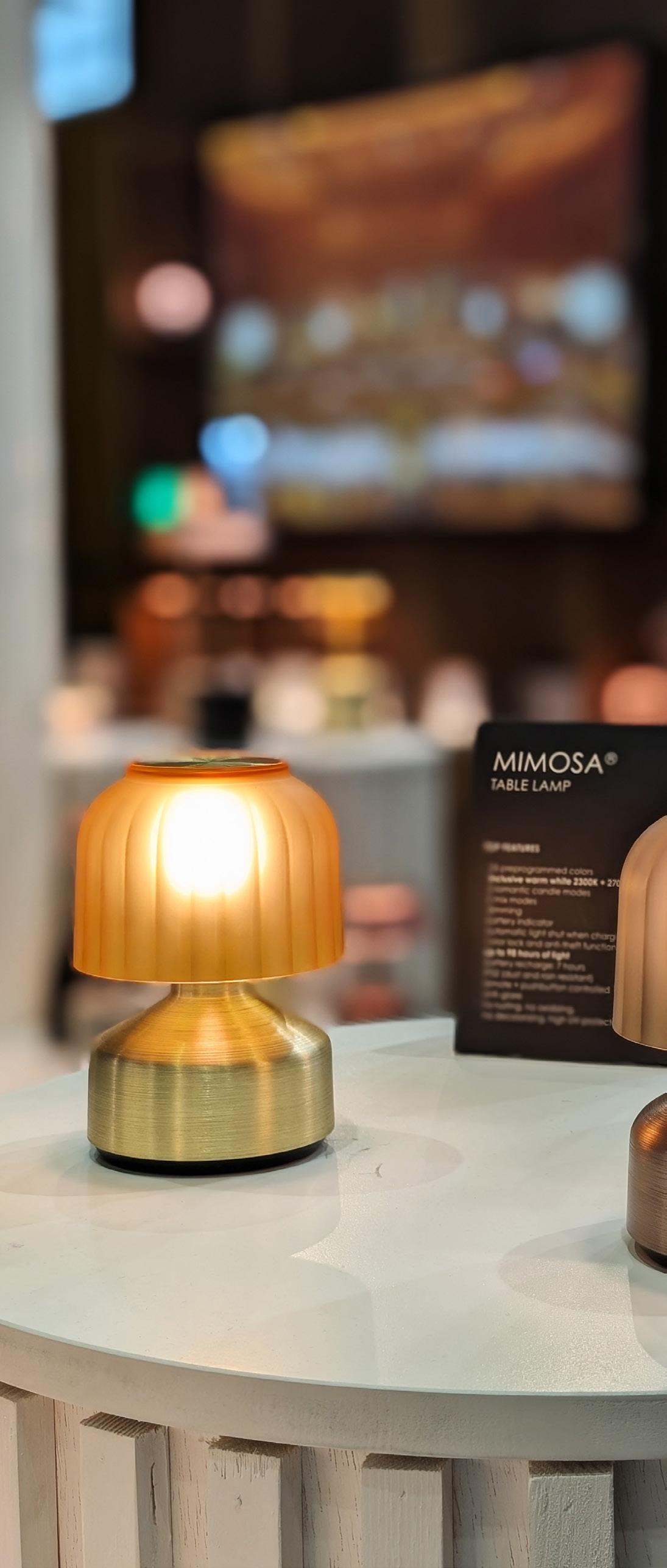
Rechargeable table lights designed and made in Belgium Memosa ‘100 years of light’
Full collections: 6 designs, 2 heights, 10 colours
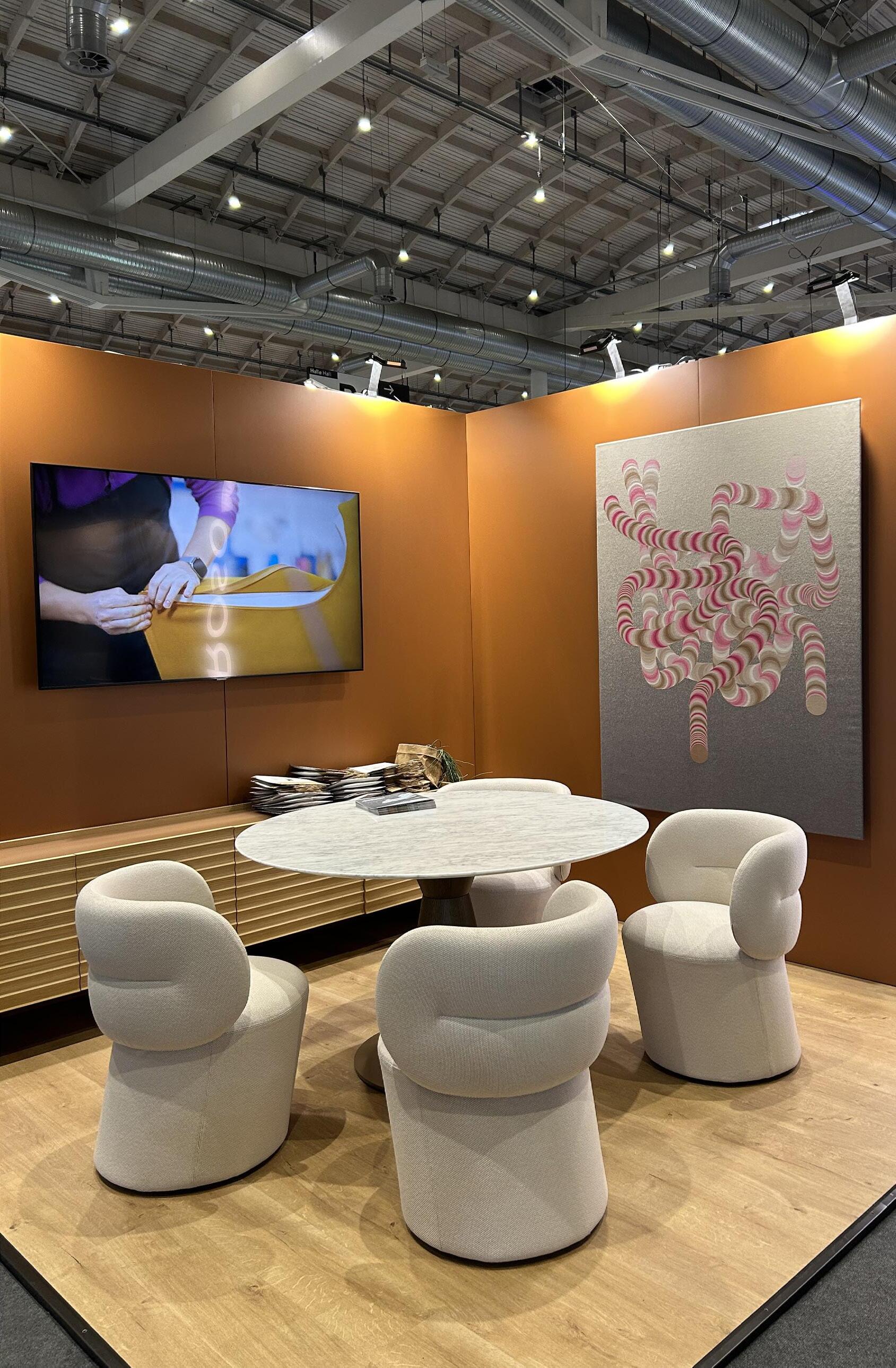
Showcase of best selling products and bespoke service
Loloey, headquartered in Italy, showcased its carpet collections developed by its in-house Milan-based design team. The range included Axminster carpets, woven and hand-carved designs, as well as hand-tufted options, reflecting the brand’s focus on quality-led solutions that remain accessible for large-scale projects.
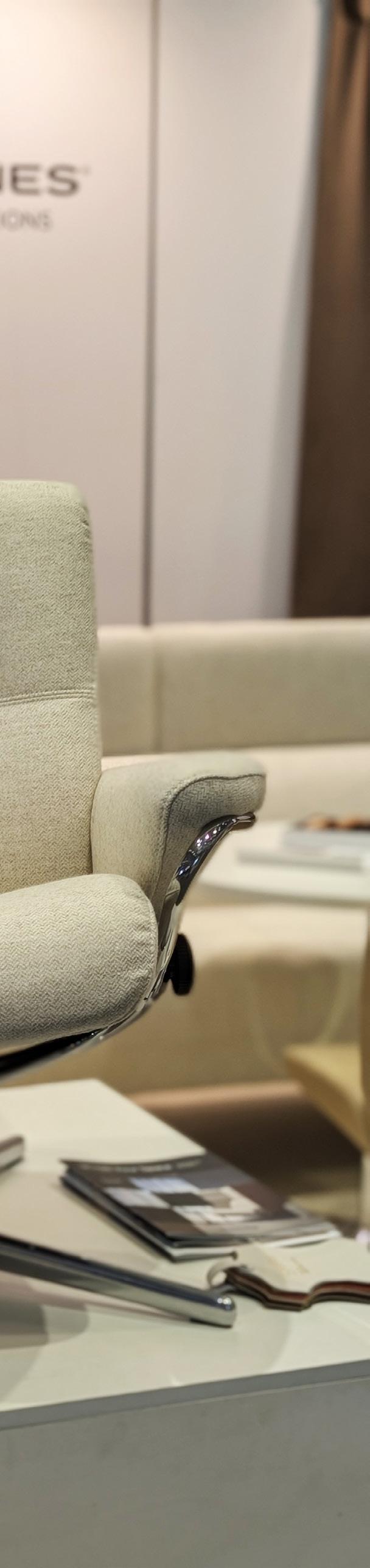
Ekornes presented its upholstered furniture collections, highlighting its Norwegian manufacturing base and vertically integrated production model. With a high-volume output, over 1,000 seats produced per day, the brand demonstrated its capacity to support the scale and consistency required by the cruise sector.
Tuuci showcased its portfolio with a focus on marine-grade upholstery, customisation and bespoke service. Branded as ‘The Ultimate Umbrella Company Inc,’ Tuuci emphasised ease of repair through considered engineering, alongside tools such as its online configuration platform, underscoring an understanding of cruise-specific operational requirements.
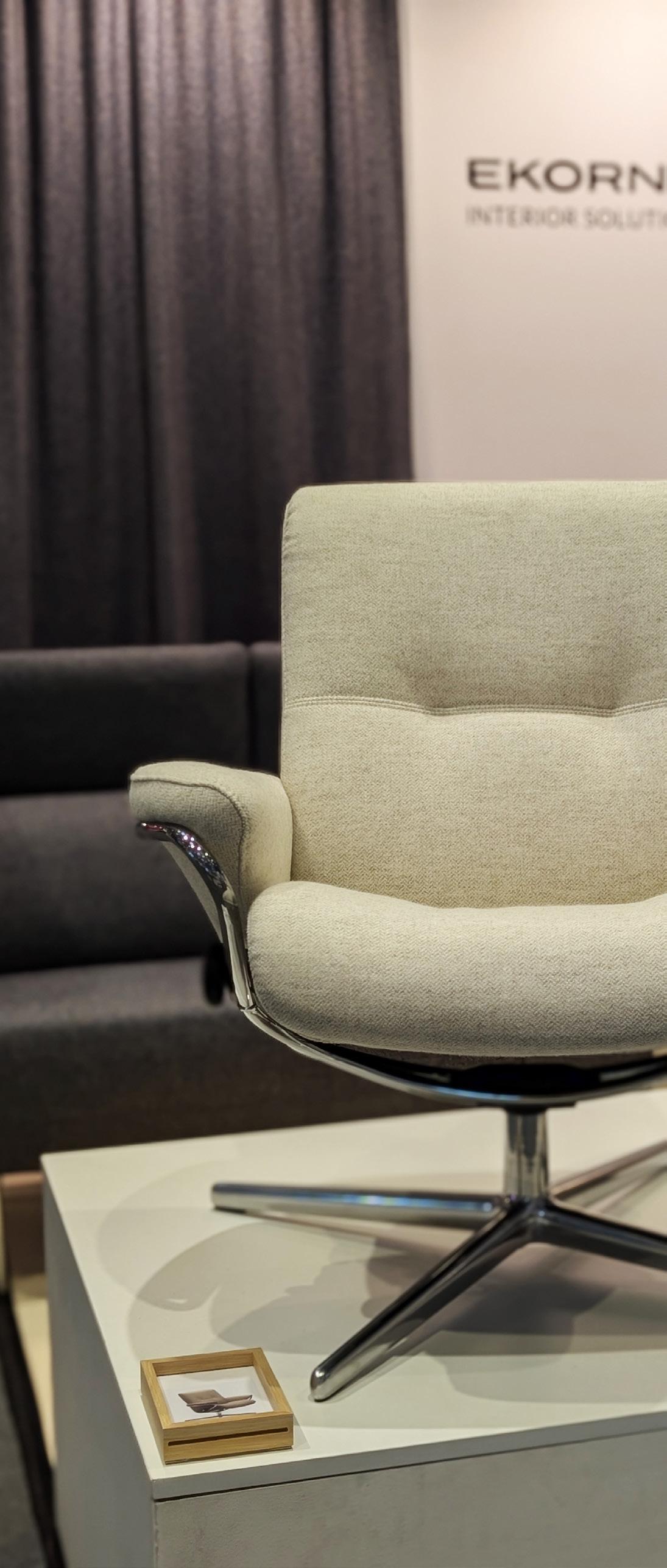
Norwegian based upholstered furniture manufacture
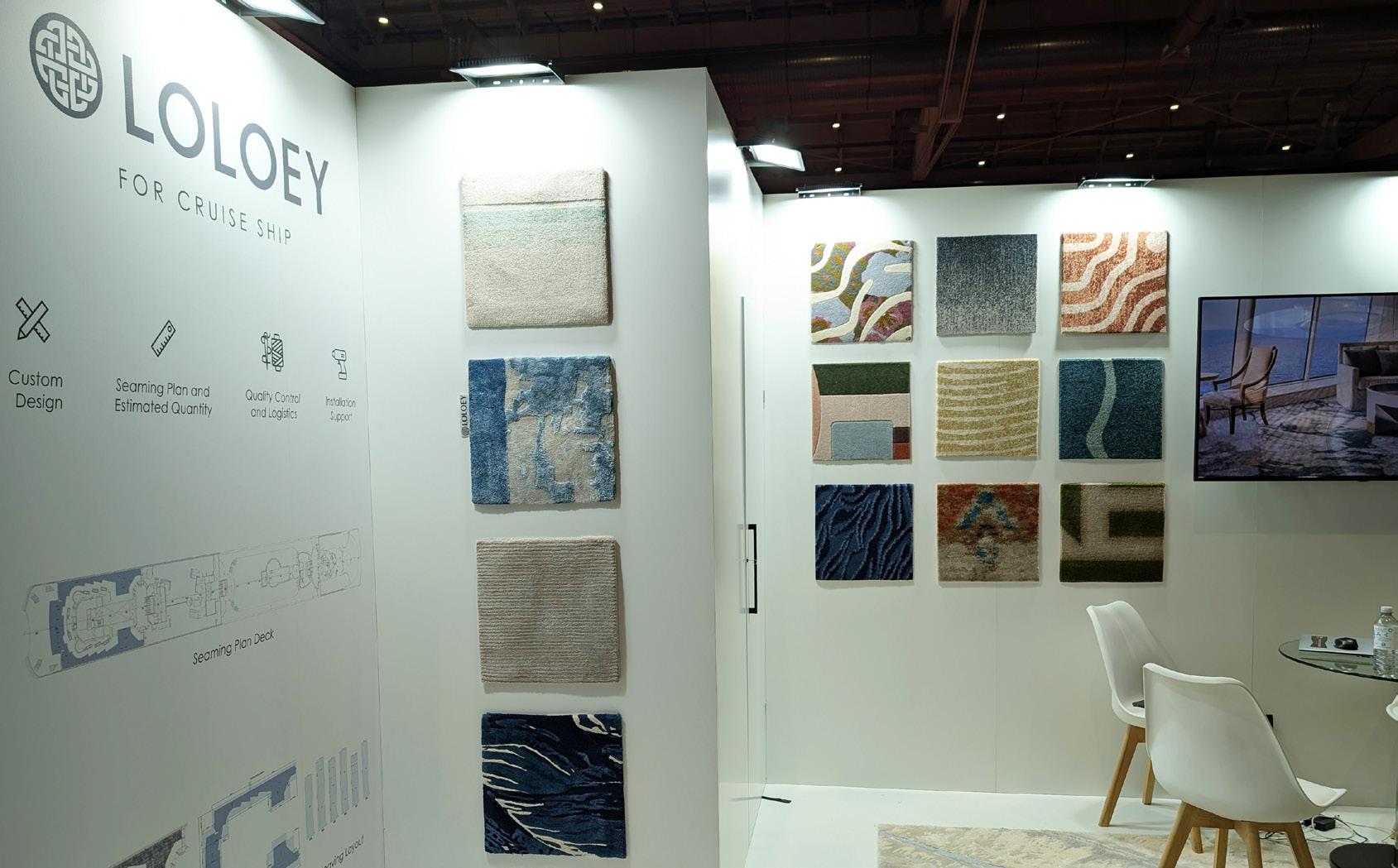
In house Milan based design team
Axminster carpets, woven and hand carved carpets, hand tufted option
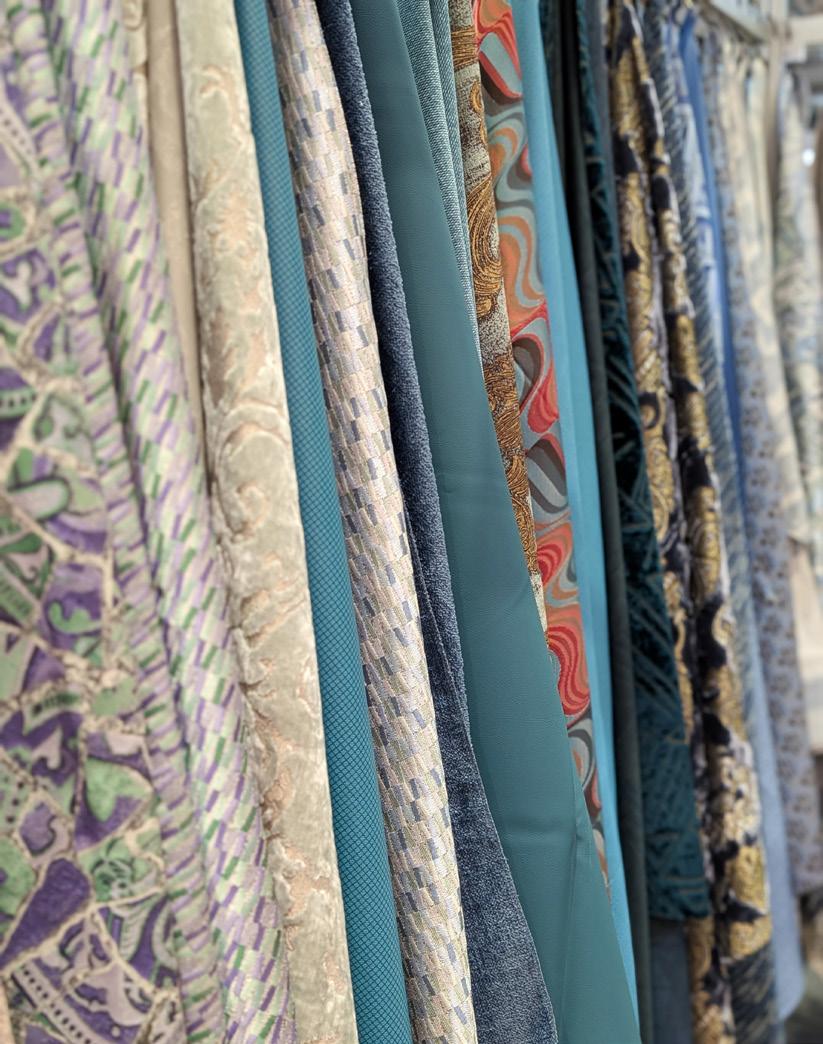
CORP
Turkish manufacturer of drapery and upholstery textiles as well as free standing furniture
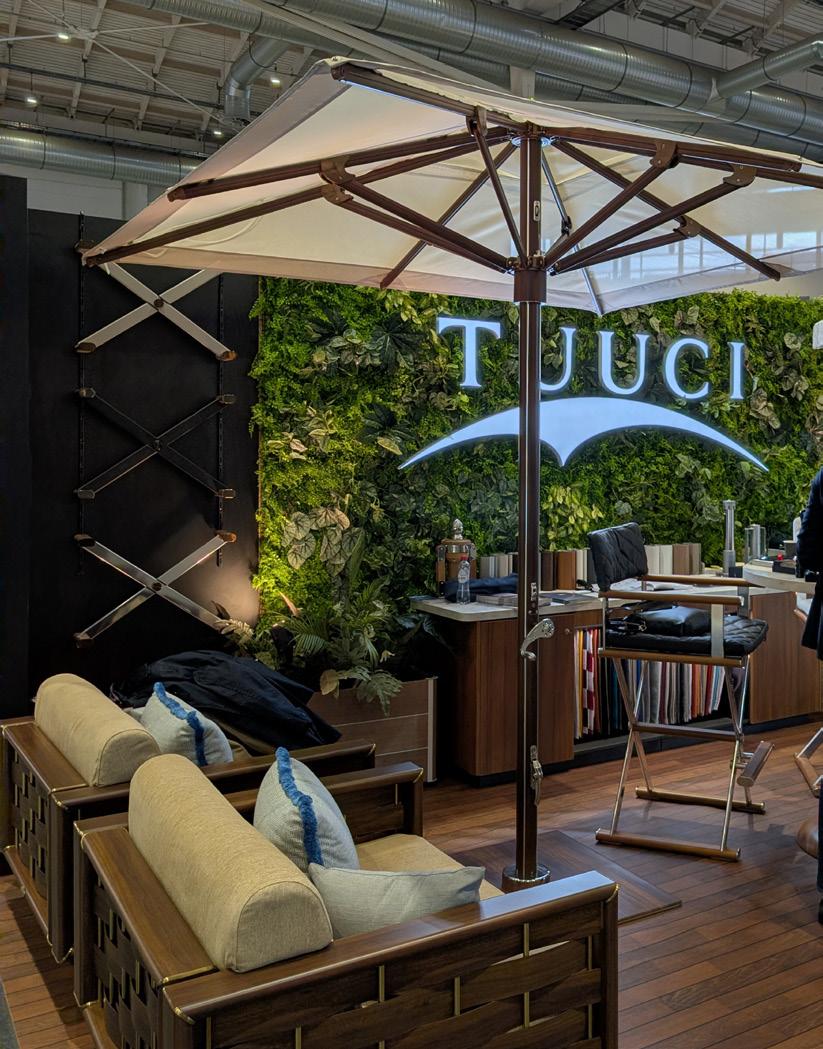
Portfolio showcase
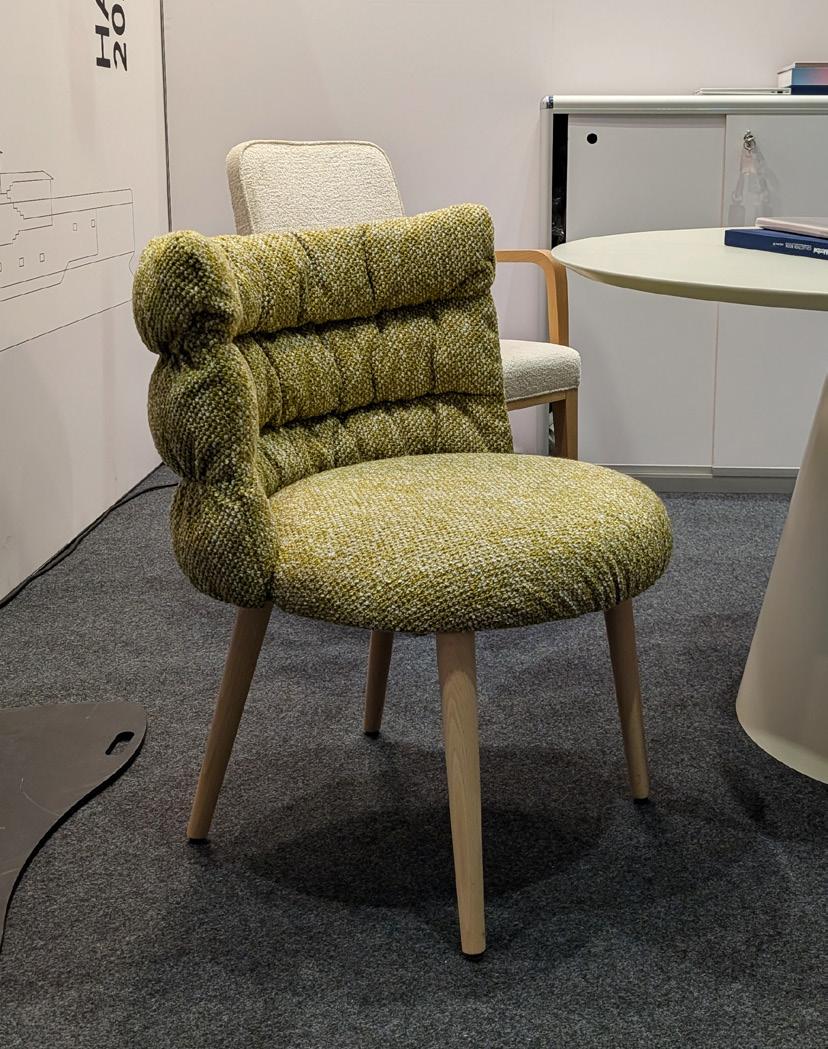
Montbel launched Maja, a new chair design by Sven Dogs Studio, available in both side and lounge chair formats. Long established within the cruise sector, the brand continues to develop seating suited to marine environments through collaborations with the world’s leading external designers.
Radici Marine, manufacturing in Italy, used its stand to clearly communicate the sustainability credentials of its products. The brand highlighted its closed-loop recycling approach, supported by a collaboration with yarn supplier Aquafil. While sustainability was widely discussed across the show, Radici Marine stood out for placing it at the centre of its presentation, demonstrating the role suppliers are playing in advancing more responsible interior furnishings within the cruise sector.
GUBRANDSDALENS
New launch, available as a side and lounge chair
Designed by Sven Dogs Studio
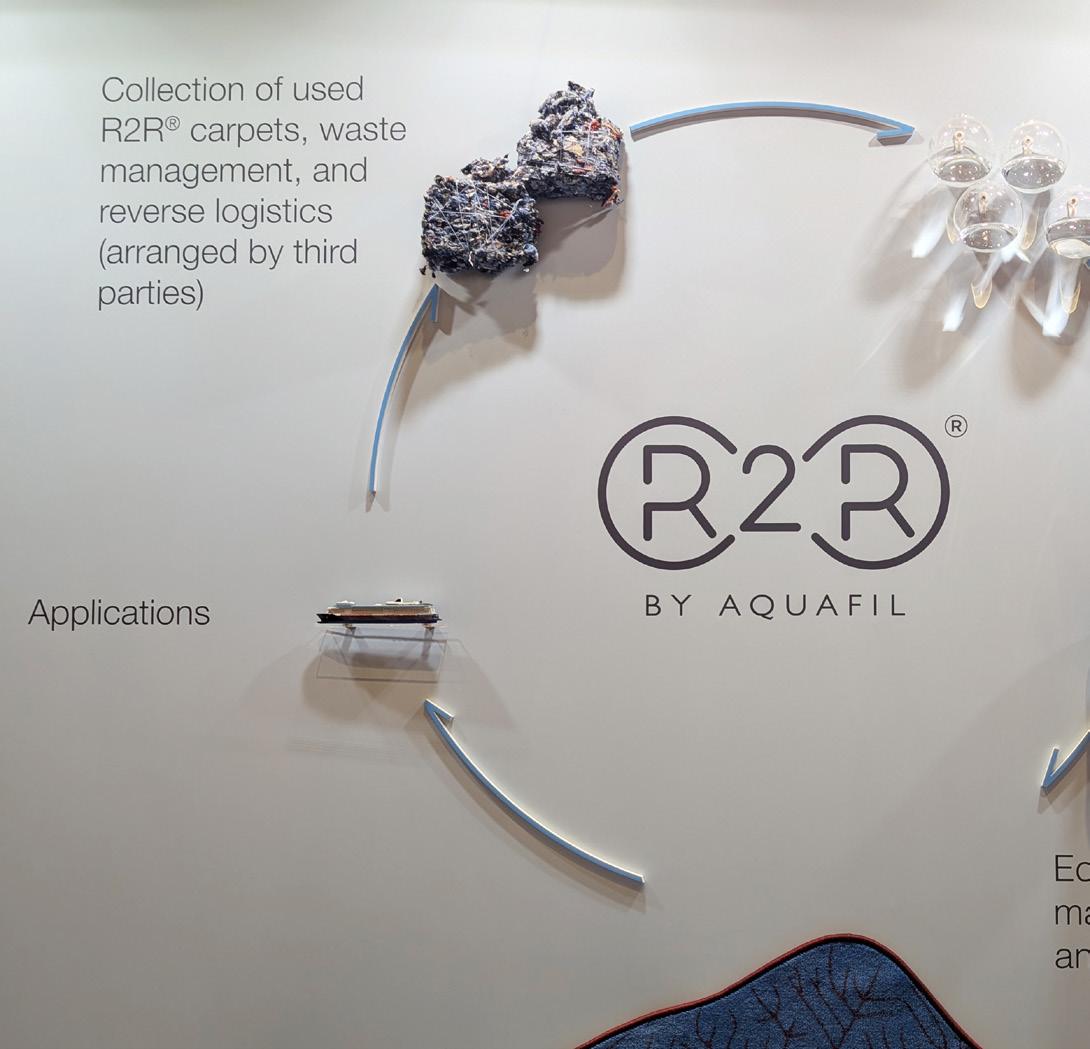
Focused on communication the sustainability of the product through Collaboration with Aquafil, yarm supplier
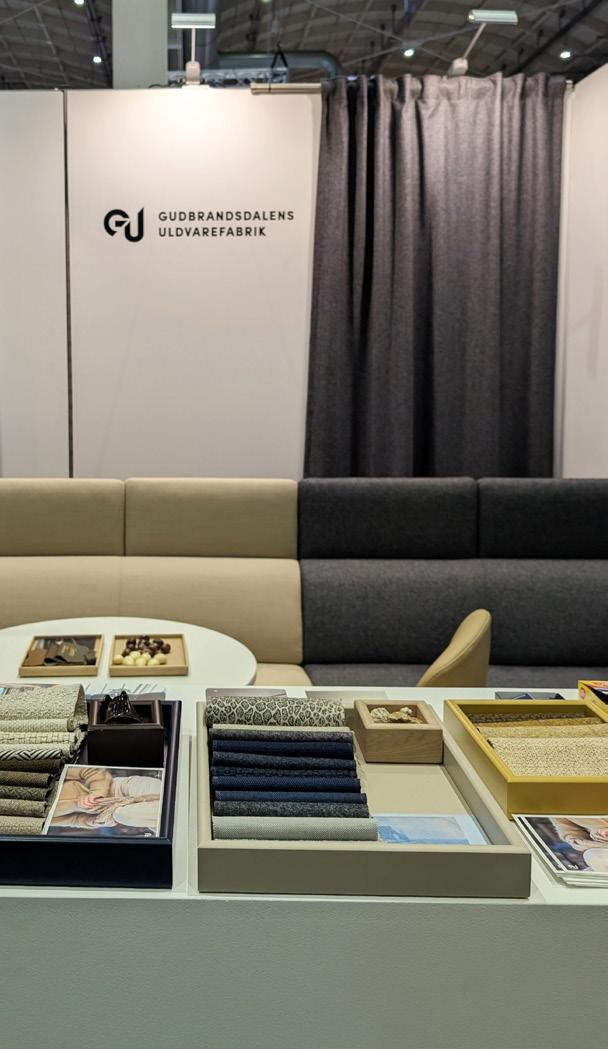
manufacturer of wool textiles
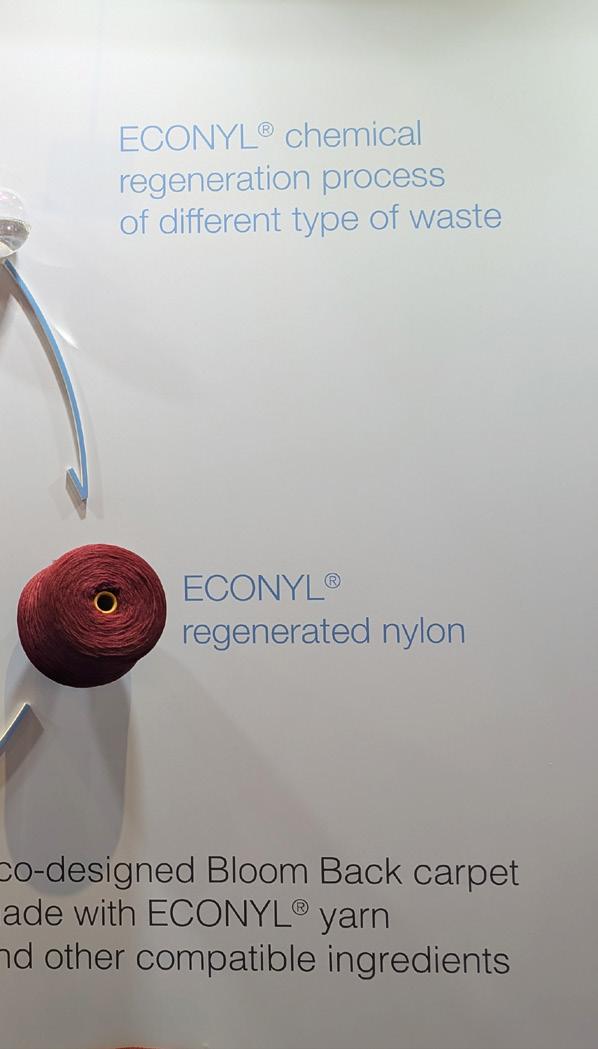
through closed loop recycling
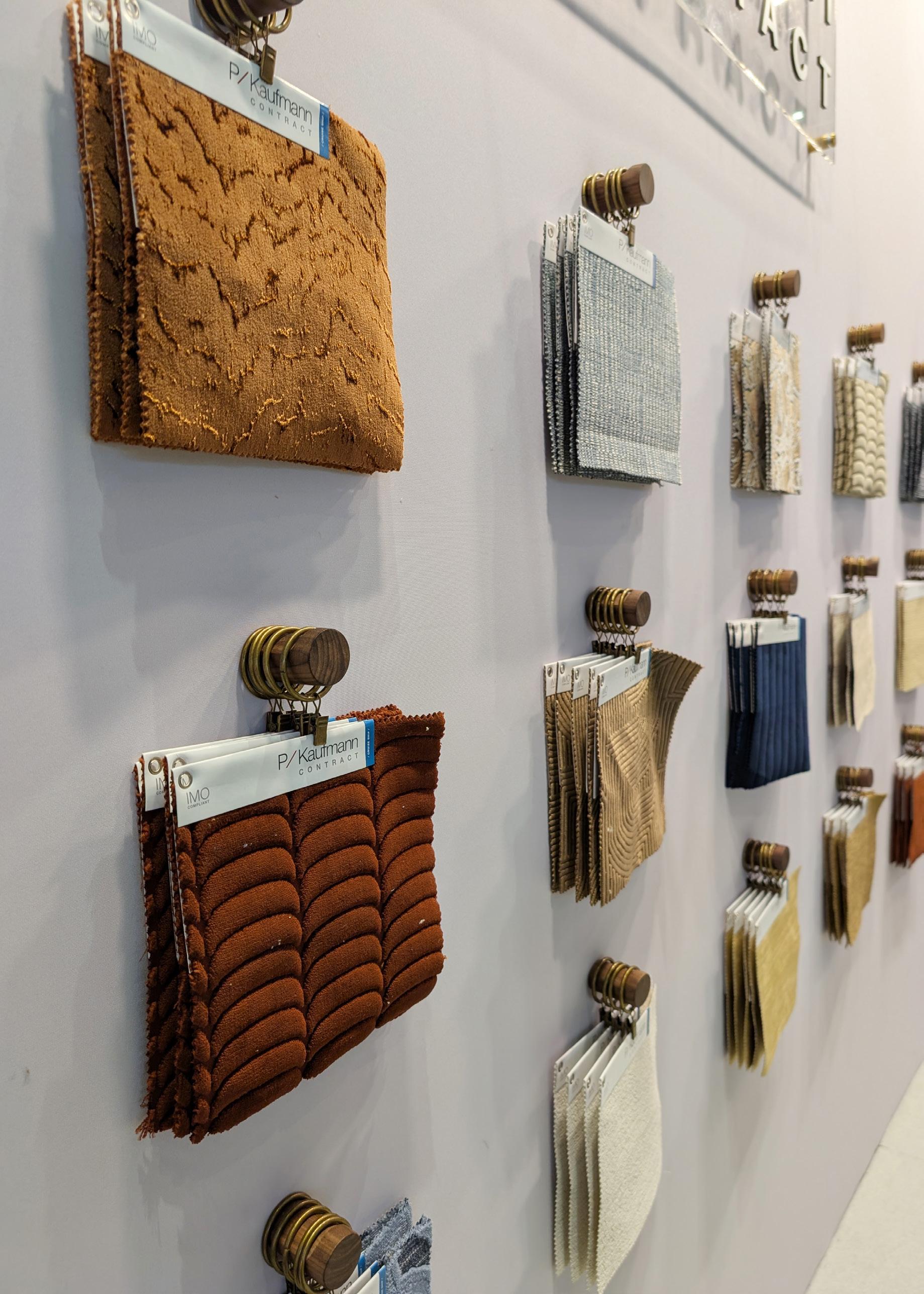
P KAUFMANN
New York based brand, US printed and globally manufactured Drapery, upholstery, pillow and bedding
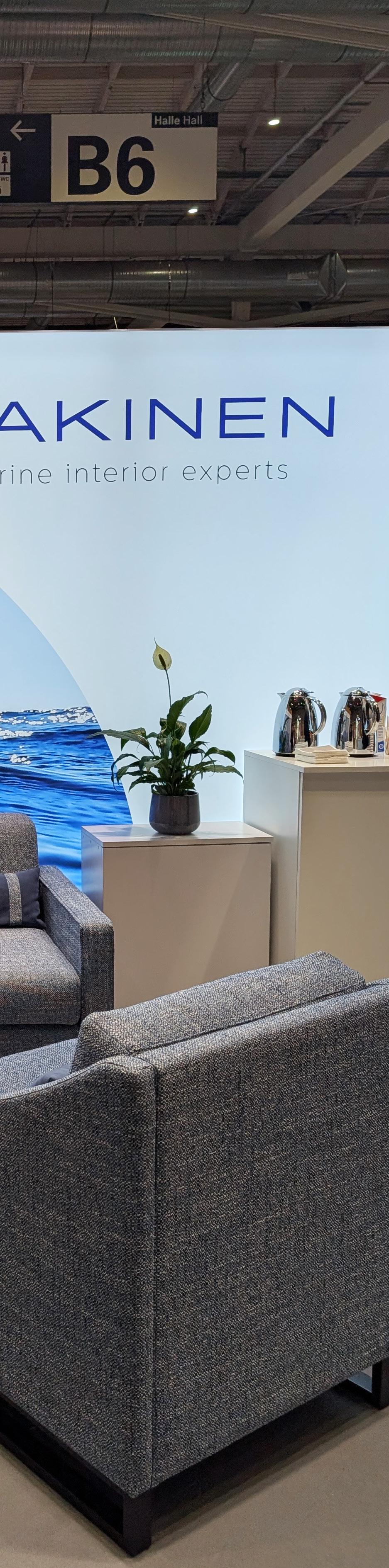
Makinen presented its capabilities as a second-generation, familyowned manufacturer supporting cruise refurbishment, new-build and vessel expansion projects. Alongside furniture production, the company also highlighted its finish manufacturing expertise, reflecting a broad offer suited to the operational demands of the cruise sector.
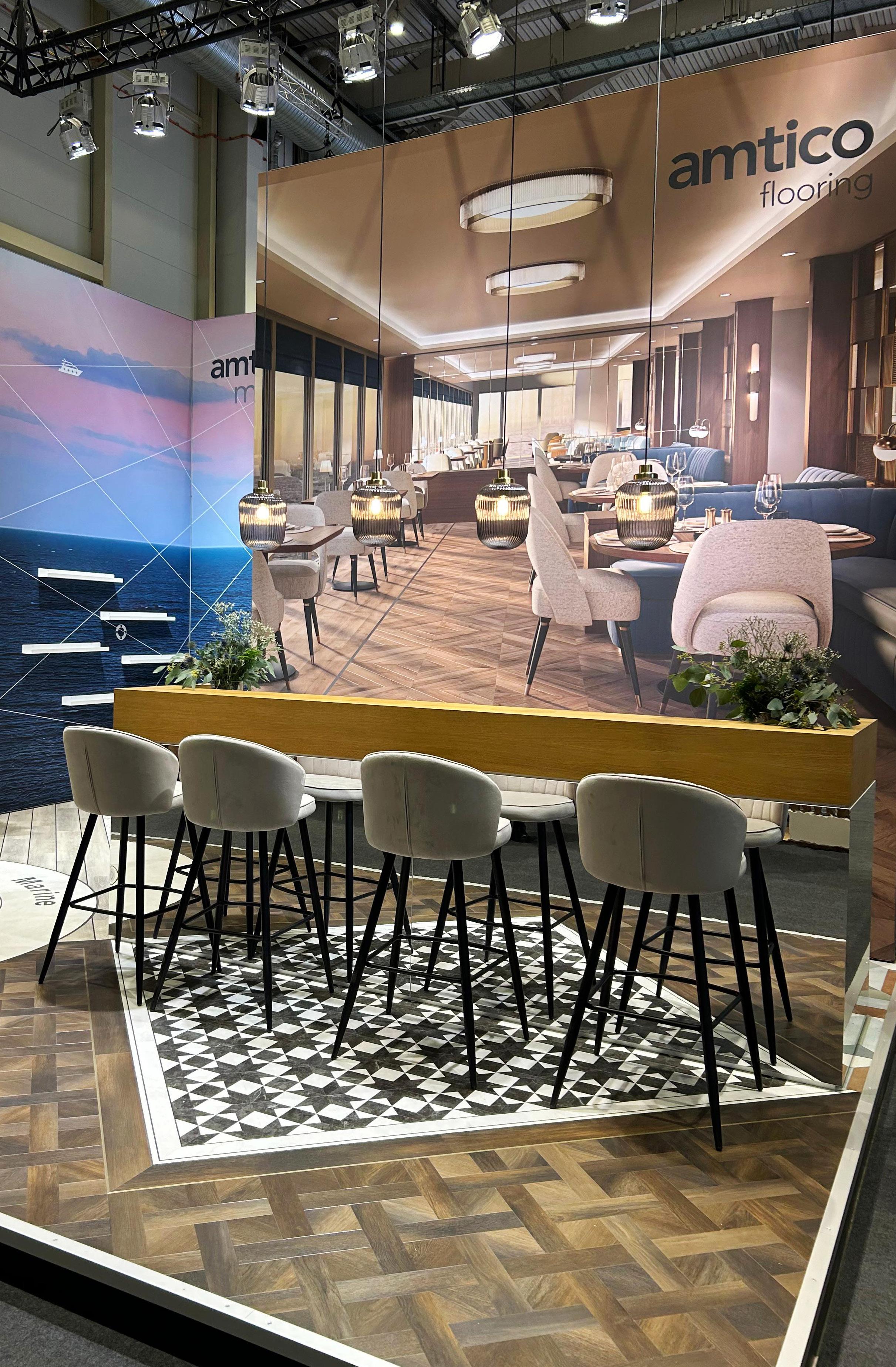
Amtico showcased its Marine Collection, an IMO-certified LVT flooring range developed specifically for marine environments. The collection features a 0.55mm wear layer for durability and impact resistance, alongside antimicrobial performance through an ionic silver additive. Lightweight, precision-cut planks support efficient installation, with options including non-slip finishes and bioattributed materials containing up to 36% bio-based content. A 10year commercial warranty underpins the range.
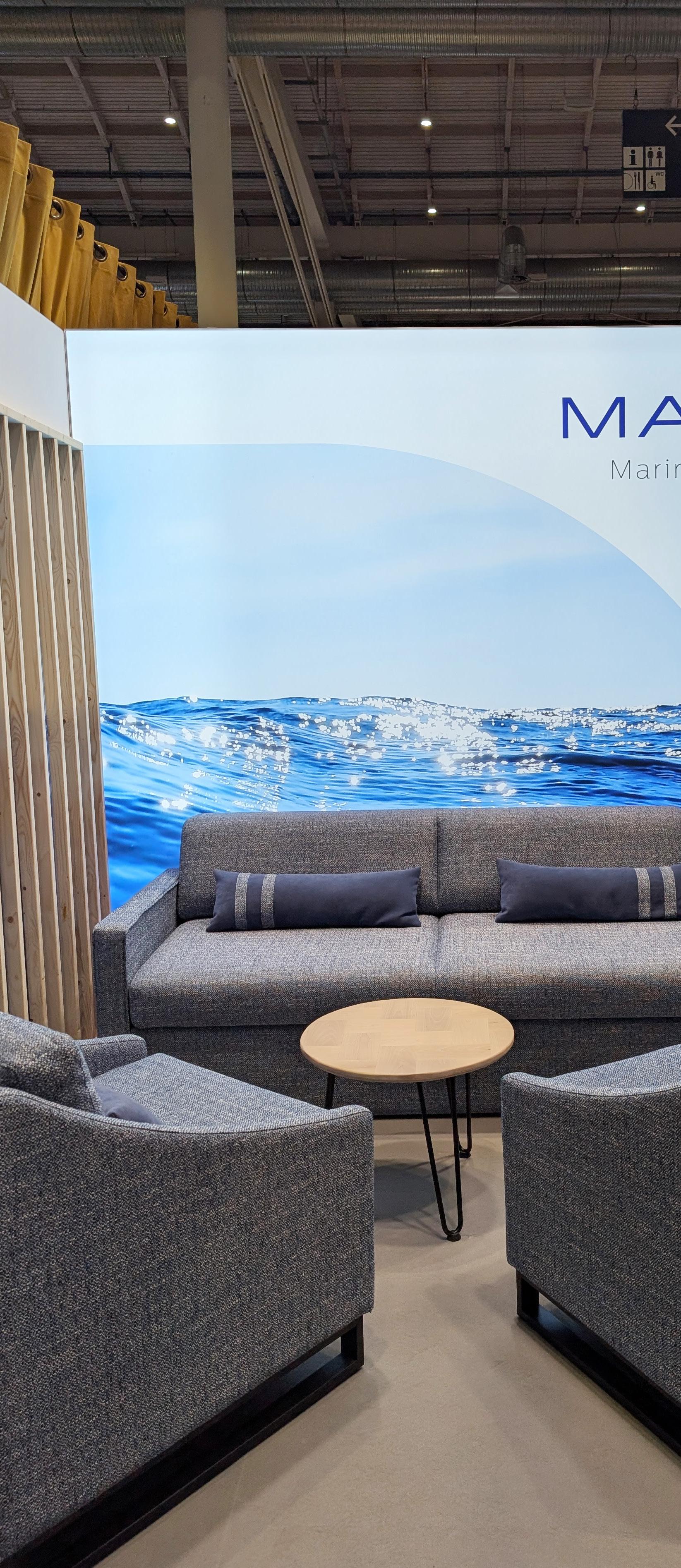
2nd generation of a family business
Furniture manufacturers, cruise refurbishment, new-build and vessel
Harmony presented its turnkey capabilities across outfitting, interior design, custom furniture production and wet unit assembly. Supporting both fit-out and refit projects, the Turkish-based company combines in-house interior designers and project management with manufacturing through its sister brand, Harmony Craft.
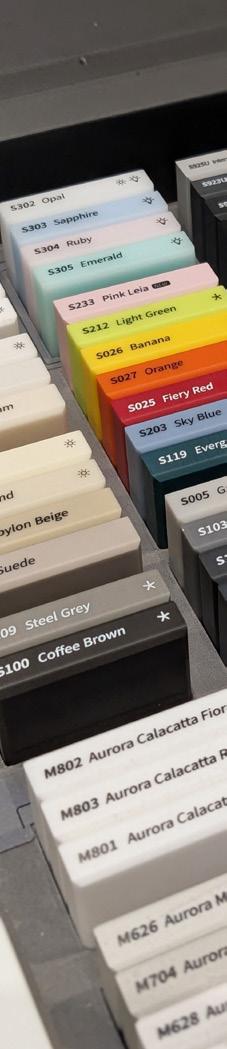
Egger showcased updates from its 2026+ collection on a dynamic stand. New finishes included F129 PA Beige Ambiance Granite, 702 PM Cashmere Grey and H1388 ST40 Sand Casella Oak, highlighting the brand’s continued development of surface solutions suitable for commercial and marine interiors.
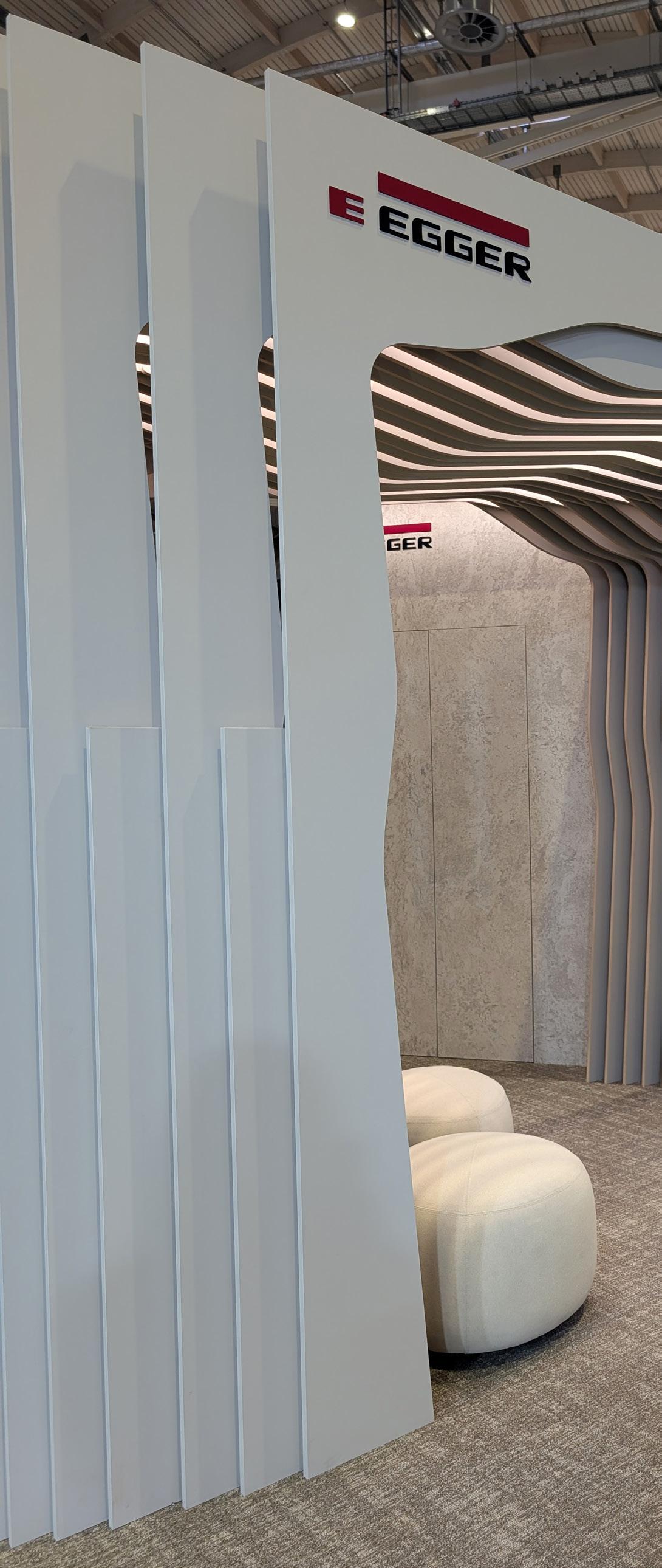
EGGER
2026+
Showcasing collection update including F129 PA Beige Ambiance Granite, H1388 St40 Sand Casella Oak
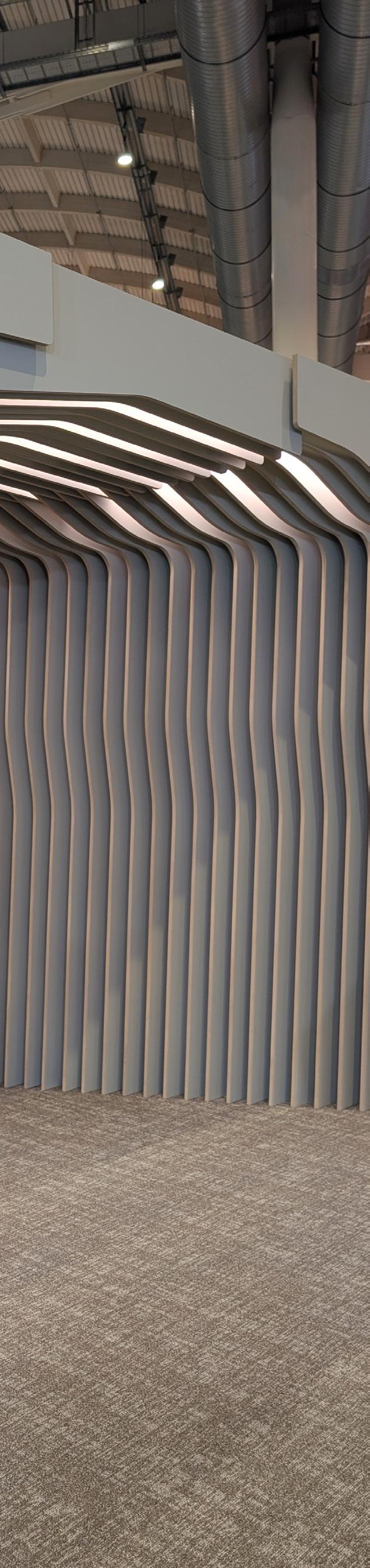
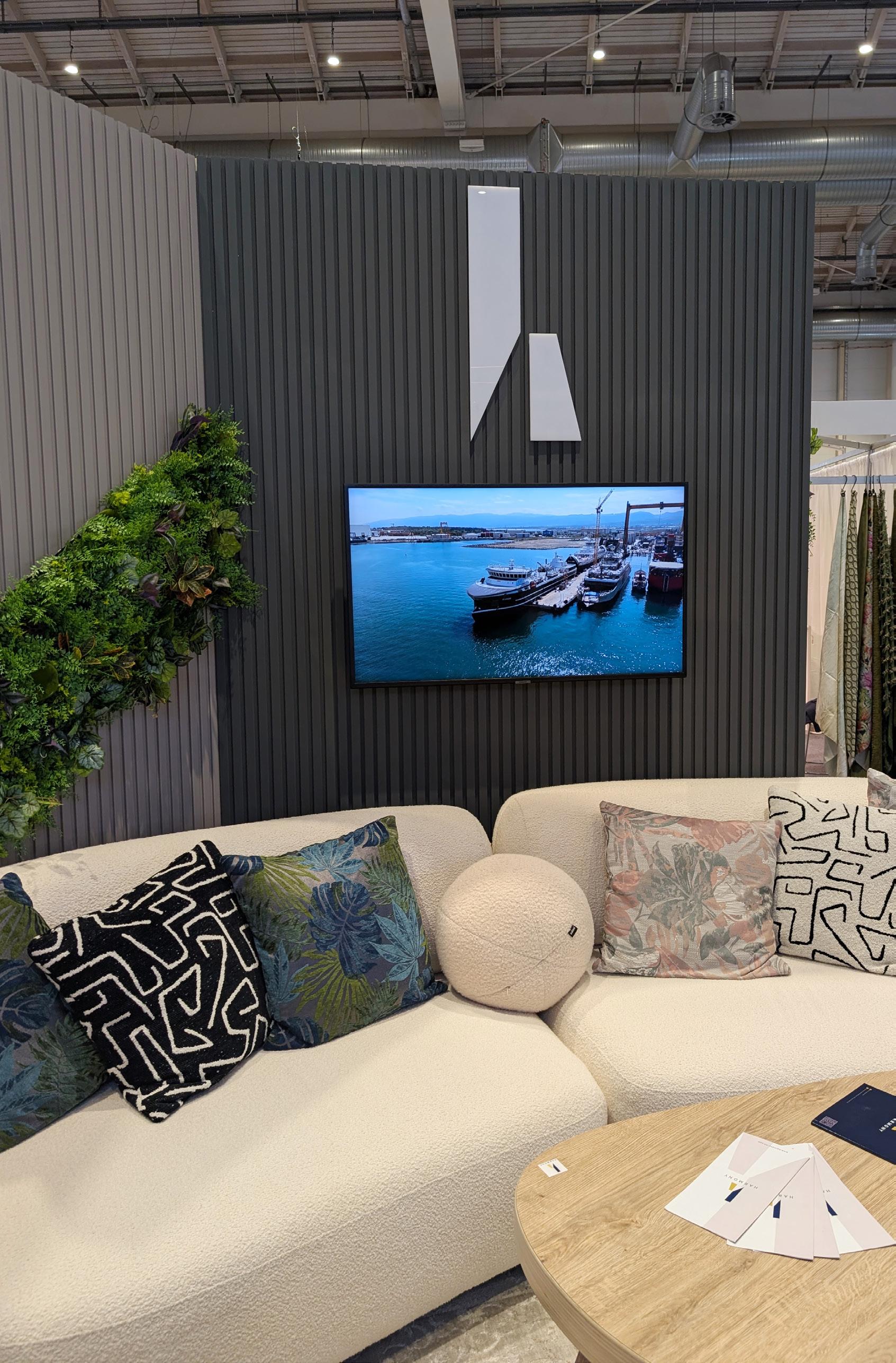
Turnkey outfitting, interior design, custom furniture production, and the assembly of wet units
BY
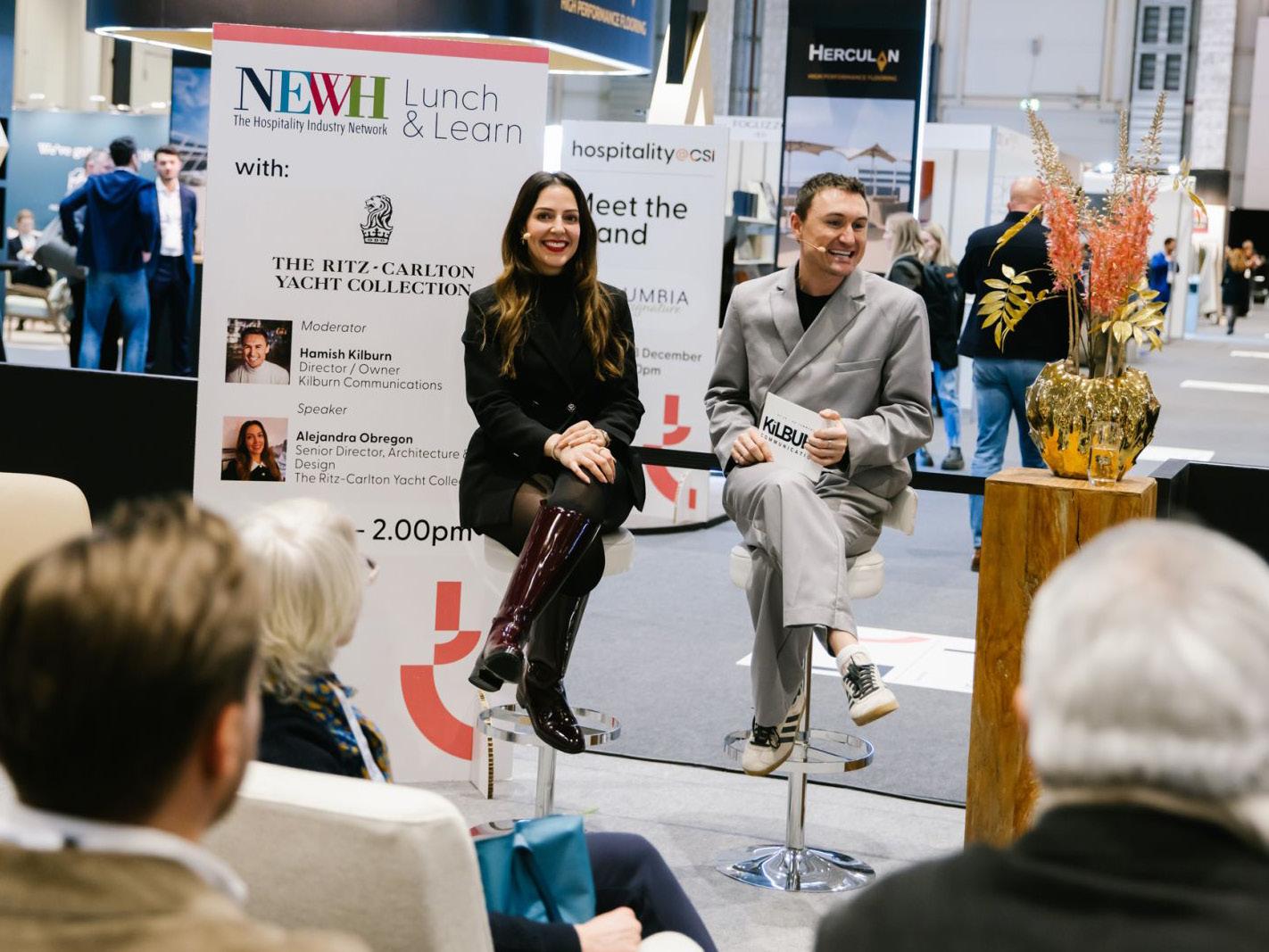
AND LEARN OFFERED A RARE, CANDID LOOK INTO THE RITZ-CARLTON YACHT COLLECTION THROUGH A FOCUSED CONVERSATION WITH ALEJANDRA OBREGÓN, SENIOR DIRECTOR, ARCHITECTURE & DESIGN. OVER 30 MINUTES, THE DISCUSSION UNPACKED THE BRAND’S DESIGN PHILOSOPHY, THE MAKING OF ITS NEWEST VESSEL LUMINARA, AND THE EVOLVING LANDSCAPE OF ULTRA-LUXURY CRUISING.
Alejandra opened by tracing her path into maritime design. “I studied architecture at Pratt Institute,” she said, recalling early work in Beijing with Ma Yansong on “futuristic and parametric” cultural buildings. A move to Miami led her to architect Kobi Karp and the world of high-end residential design before the city’s cruise industry drew her to Royal Caribbean. “I really got a nice exposure into native architecture and ship design,” she explained, a journey that prepared her for her role at The RitzCarlton Yacht Collection.
The conversation quickly turned to a phrase both speakers felt had lost its relevance: hotels at sea. Kilburn described the comparison as limiting, and Alejandra agreed. “Many of our guests are accustomed to incredible properties on land, so how do we translate that challenge onto smaller vessels?” Rather than mimicking hotels, the ambition is to reinterpret luxury within the constraints of maritime architecture where weight, stability and ceiling height shape every decision.
A significant shift within the industry, she noted, has been the involvement of land-based designers who bring fresh eyes to shipbuilding. “Bringing in that perspective really opened an area of opportunity.” On Luminara, the team worked with studios—including one from Toronto—chosen not for yachting experience but for their creative approach. Her role became one of orchestration: “We really choose the best in the industry… and bring different perspectives together to create a beautiful experience.”
That same spirit of challenge extended to the shipyard. “You can’t allow for any delays because shipyard costs are ridiculous,” Alejandra acknowledged, yet the team still pushed long-held workflows. “You design something that seems simple but challenges their workflow,” prompting the yard to adopt new methods that can benefit future clients.
Luminara’s name provided an early conceptual anchor. Translating to light, the narrative explored not only illumination but the
“transcendence of light,” with lighthouses becoming symbolic guides. “We didn’t want it to land cliché,” she said, describing how the theme shaped details across lighting, materiality and atmosphere.
The guest journey was a central design consideration. Unlike a city hotel, cruise guests live with the space for seven to nine days.
“You’re designing for someone who is going to interact with the space every day,” she noted. The result is a careful mix of intimate nooks, entertainment venues and culinary destinations connected through intuitive circulation. Kilburn remarked that he understood the layout within minutes, an intentional result of a consistent design language carried across the fleet.
Shifts in the luxury demographic are felt on board. Alejandra described seeing a youthful, energetic mix of guests, from multigenerational families to influencers, contributing to “a vibrant feeling of joy and freedom” that defines the atmosphere.
Maintaining design integrity through value engineering is a constant balancing act. “We had a very clear vision on areas that matter to us,” she emphasised. Tactile materials, bespoke furniture and the art collection were identified early as nonnegotiable, helping prevent the dilution that often happens late in large-scale projects.
Asked which space deserves more attention, Alejandra highlighted Luminara’s new Art Bar, which she described as “a hidden gem” designed to celebrate sculpture, shifting daylight and the rhythm of the sea.
The conversation closed with the question of identity. As more hotel brands enter the cruise sector, how does The Ritz-Carlton Yacht Collection set itself apart while honouring its heritage? Alejandra welcomed the momentum. “It proves there is a market for ultra-luxury cruising,” she said. Being a first mover requires agility and trust in intuition, but the brand lets “the experience speak for itself,” confident that Luminara’s design story remains its strongest differentiator.
Following the Lunch and Learn discussion, Design Insider had the opportunity to sit down with Alejandra for an exclusive one-toone conversation, delving even deeper into the design thinking behind The Ritz-Carlton Yacht Collection.
When approaching a new project, which lessons from your wider commercial design experience do you draw on most?
Alejandra: “Spatial flow is paramount. The way a sequence of spaces unfolds—whether it’s a sense of arrival or the intimacy of a bedroom—defines how guests experience the environment. Flow underpins everything.”
Many cruise brands look to land-based hospitality for inspiration. How do you translate those qualities onto a vessel?
AO: “There’s no compromise on materiality or the introduction of luxury. High-quality execution of details is essential, and that’s entirely translatable from land to sea. Our guests expect the same standard wherever they are.”
You’ve spoken about emotional response as a defining element of your segment. What does that look like in practice?
AO: “We have a very high guest-to-staff ratio, which allows guests to be truly seen. They are called by name, their preferences are remembered, and that level of service becomes inseparable from the design. It’s not just how a space feels, it’s how the people within it make you feel.”
Wellness continues to gain prominence in hospitality. How is that shaping your onboard environments?
AO: “We’re seeing increasing interest in wellness and fitness, and we’ve expanded those facilities across the fleet. Because we’re an agile company, we listen to how guests inhabit the ships and let that inform evolution rather than dictating it in advance.”
Generosity of space is a luxury on any vessel. How do you achieve this in practice?
AO: “It’s certainly a fun challenge. Every suite has a private terrace and floor-to-ceiling windows, but we’re also strategic in how we plan layouts. We include walk-in wardrobes and five-fixture bathrooms, features guests expect from land-based luxury, while working within a fixed footprint.”
Sight lines are central to your design philosophy. How do you maintain strong connections between guests and the ocean?
AO: “We choreograph the sequence between indoor and outdoor spaces very carefully. Bifolding doors open entire rooms to the terraces, and we frame views toward the horizon through architecture. It’s about allowing the ocean to be present at every moment.”
How do you establish a material palette that supports global travel?
AO: “We set a foundational palette for interior spaces and another for exterior spaces, stone, wood, metal, elements that appear consistently. From there we introduce accent colours and tonal shifts that give each space its own personality while preserving a cohesive thread throughout.”
Bespoke furniture is a defining aspect of your brand. How do you collaborate with suppliers to achieve it?
AO: “We work closely with suppliers from concept to execution. Partnering early allows us to be creative within the parameters of weight, availability and maritime constraints. Custom-tailored design is essential to our spaces.”
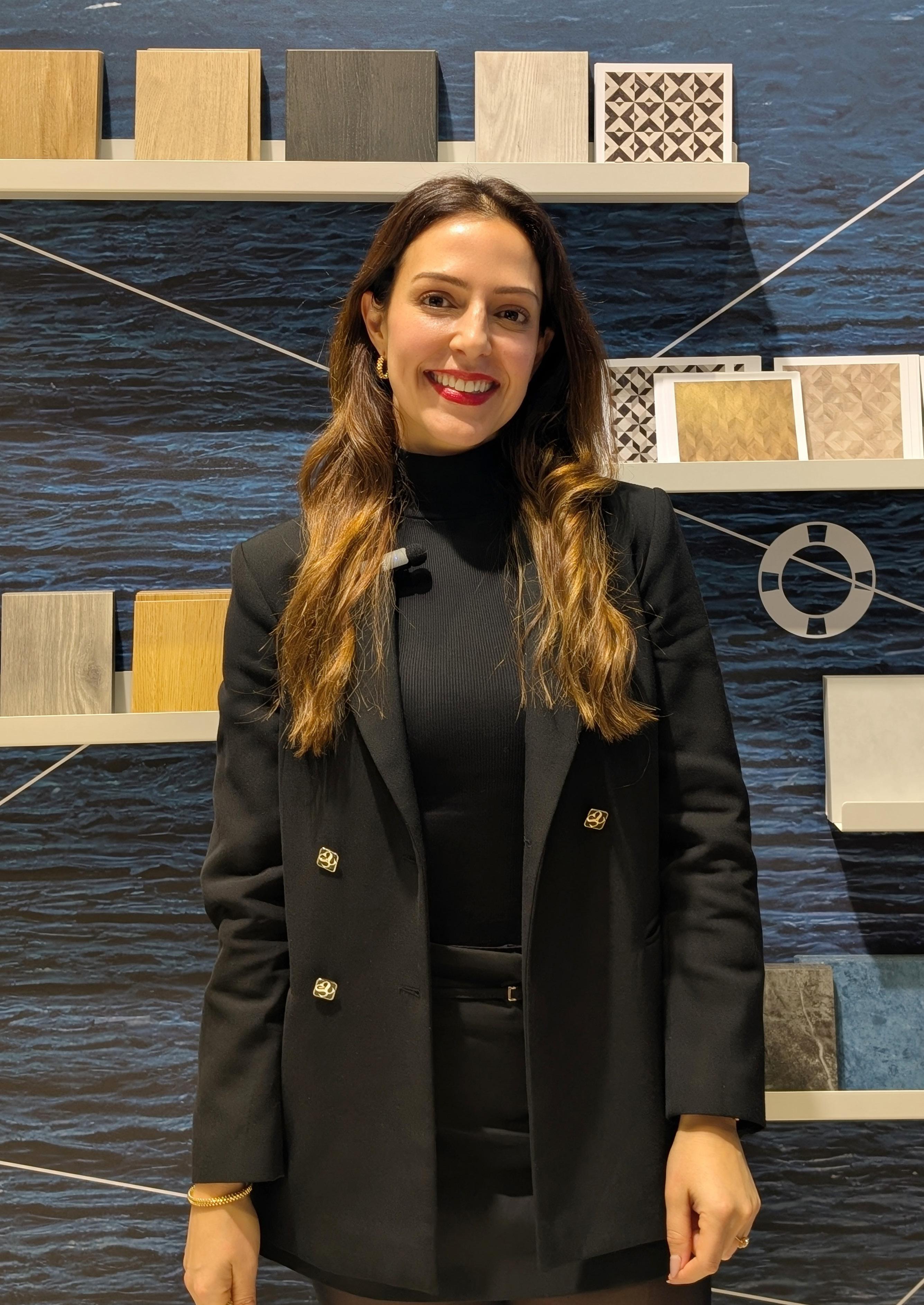
IMMEDIATELY FOLLOWING THE EVENT’S SUSTAINABILITY SUMMIT, DESIGN INSIDER SPOKE WITH MIKE LAMBOURN, DESIGN LEAD AT PRIESTMANGOODE, TO REFLECT ON HOW THE CRUISE SECTOR IS PROGRESSING ITS SUSTAINABILITY AGENDA, AND WHERE CRUCIAL OPPORTUNITIES REMAIN UNTAPPED. WITH A PORTFOLIO SPANNING AVIATION, RAIL AND CRUISE, PRIESTMANGOODE BRINGS A CROSS-SECTOR VANTAGE POINT THAT ILLUMINATES BOTH THE COMPLEXITY AND THE POTENTIAL OF SUSTAINABLE TRANSFORMATION WITHIN MARITIME DESIGN.
Mike observed that the most promising shift highlighted at the Summit was a growing sense of momentum. Across the industry, more stakeholders are moving from intention to action, and tangible examples of change are emerging across disciplines. Although the cruise sector is still at the early stages of its sustainability journey, the increased visibility of initiatives and willingness to engage in dialogue represent meaningful progress.
However, Mike believes that systemic challenges continue to impede the speed and coherence of that progress. One of the most significant barriers lies in the fragmented design and manufacturing pipeline. Designers are often brought in to define the look and feel of a space, but their involvement typically wanes once concepts are handed to cabin manufacturers. With manufacturers working within established processes and investments, innovations proposed at the design stage may not be carried through to execution. This disconnect, he suggests, limits the industry’s ability to make measurable improvements.
The solution, Mike argues, is rooted in early and continuous collaboration. By bringing designers, manufacturers, operators and even passenger groups into the same conversations from the outset, each party gains insight into the needs, constraints and behaviours of the others. Manufacturers rarely have the opportunity to observe how guests interact with their products, and operators may not fully appreciate the implications of standardised production processes. When stakeholders collectively interrogate priorities, whether durability, accessibility, aesthetic experience or environmental impact, more informed decisions can be made, and genuinely sustainable outcomes become achievable.
PriestmanGoode’s work across aviation offers a revealing comparison. While aviation faces scrutiny as one of the least sustainable modes of transport, its challenges are dominated by the enormous impact of fuel consumption. As a result, airlines must be vocal about incremental improvements while investing heavily in future fuel technologies. In contrast, the cruise industry has already made significant strides by transitioning toward cleaner fuel options such as LNG, with advances toward electric propulsion on the horizon. Addressing this “big-ticket” issue has enabled cruise lines to make rapid gains, but Mike emphasises that the next chapter lies in the detailed layers of design, materiality and user experience, areas where innovation is only just beginning to gather pace.
Cabin design is one such focus area. Mike underscores a well-established industry principle: the majority of a product’s environmental impact is determined at the design stage. By embedding ethical material choices, modularity, longevity and repairability early in the process, designers can influence the entire lifecycle of a cabin. Crucially, this requires design teams to be involved before supply-chain contracts are established, allowing sustainability requirements to be integrated into procurement pathways rather than retrofitted later.
For Mike, the path forward is clear. The cruise sector has the appetite for sustainable transition, but unlocking its full potential depends on dissolving silos and fostering collaboration. As he reflects, genuine progress will come when all contributors, from designers to manufacturers to operators, sit at the same table and shape the future of sustainable cruising together.

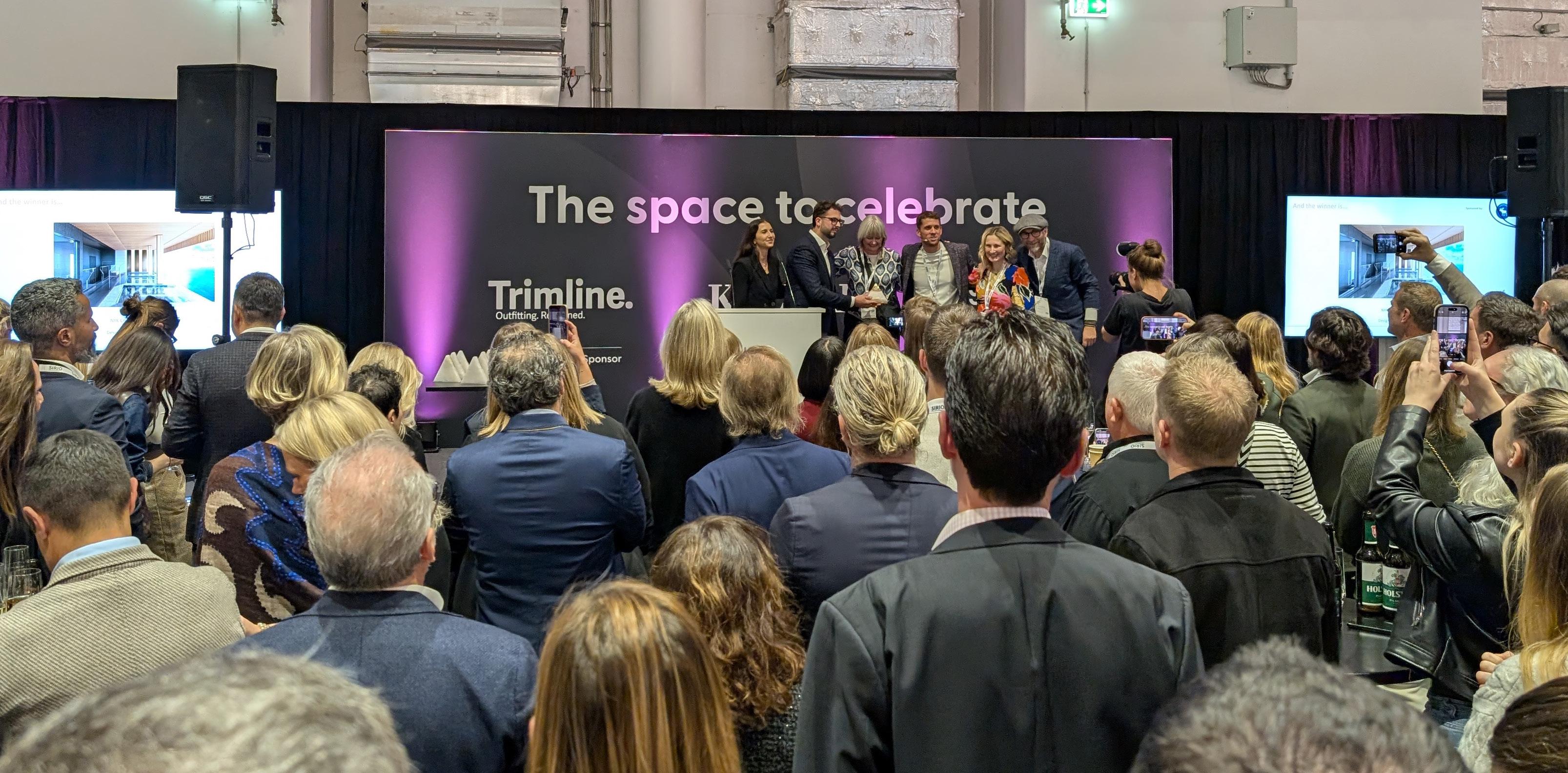
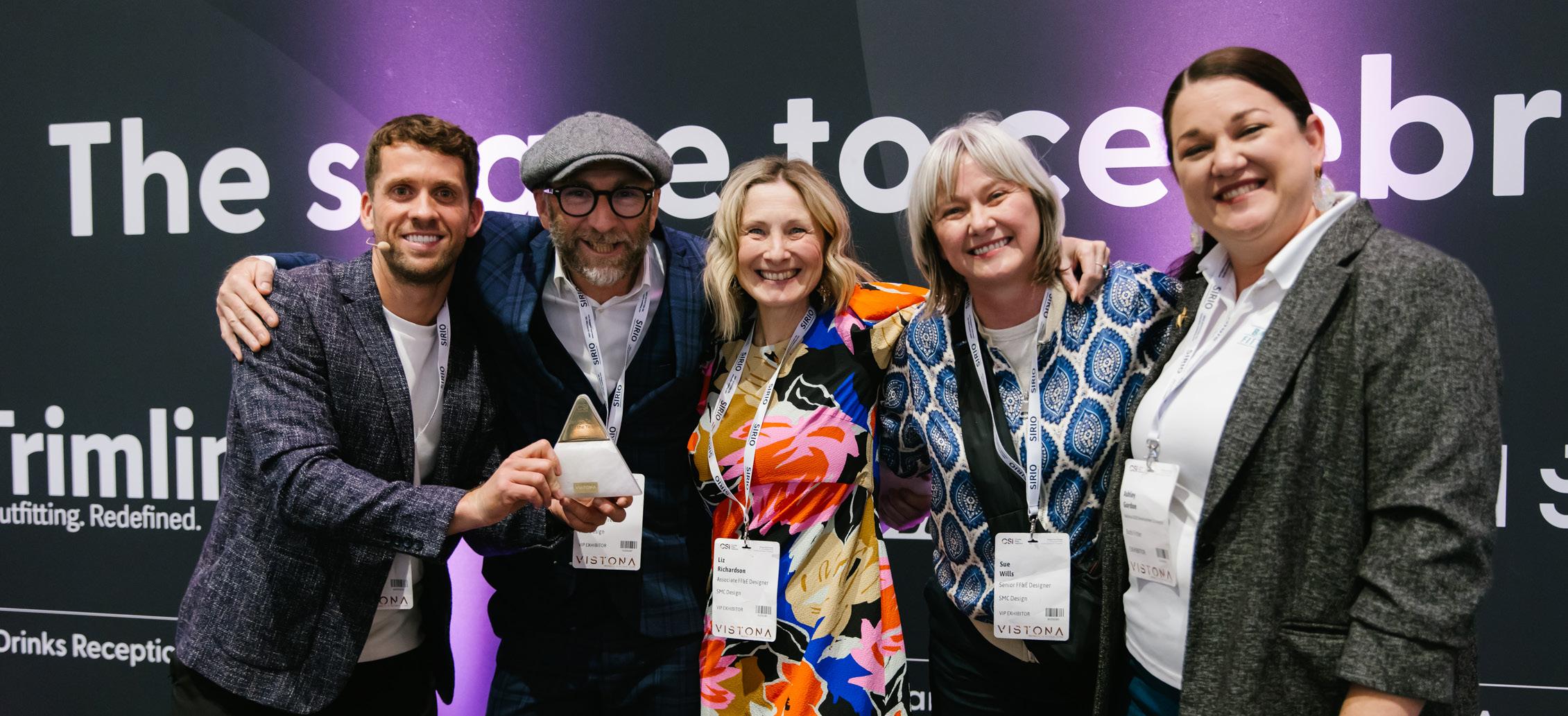
CROWNING THE TWO DAYS OF CSI EUROPE IS THE 2025 CRUISE SHIP INTERIORS AWARDS CEREMONY. TAKING PLACE AT THE END OF THE SECOND DAY, THESE AWARDS NOT ONLY SERVED AS A CELEBRATION OF THE STAND-OUT PRODUCTS, SPACES, AND PEOPLE IN CRUISE DESIGN THIS YEAR, BUT ACTED AS A HURRAH FOR ALL THE HARD WORK AND BOUNDLESS ENERGY THAT GOES INTO CREATING THESE REMARKABLE INTERIORS.
The winners in their category are:
BEST CABIN
Premium-Suite, Partner Ship Design GmbH, AIDA Cruises
AIDADiva
BEST DINING SPACE
Plaza de Coco, Walt Disney Imagineering, Disney Cruise Line
BEST PUBLIC SPACE
Haunted Mansion Parlor, Walt Disney Imagineering, Disney Cruise Line
BEST CREW AREA
Crew Neighborhood, Royal Caribbean International, Royal Caribbean Star of the Seas
BEST WELLNESS SPACE
Grand Spa, SMC Design, NYK Cruises Asuka III
BEST ENTERTAINMENT SPACE
Disney The Tale of Moana, Walt Disney Imagineering, Disney Cruise Line Disney Treasure
BEST REFURBISHED SPACE
French Kiss, East Fusion & Tokyo Bar, SMS Group, AIDA Cruises
AIDAdiva
CONCEPT OF THE YEAR
REI, Viken Group
BEST BRAND ORIGINAL PROJECT
Project: Transforming Carpet Waste, Holland America
INTERIOR PRODUCT OF THE YEAR
PermaFit Solutions, Bath Fitter Commercial
SUSTAINABLE PRODUCT OF THE YEAR
Waste management, Oceancircle GmbH
GALLEY PRODUCT OF THE YEAR
Waste Less, Generation Waste, Aroya
SHIPYARD OF THE YEAR
Meyer Wismar
DESIGN TEAM OF THE YEAR
SMC Design
LEGENDS OF DESIGN
Kai Bunge & Siegfried Schindler, Partner Ship Design
The Cruise Ship Interiors Awards is honoured to have a judging panel comprised of industry experts.
- Alejandra Obregon
Senior Director, Architecture & Design | The Ritz Carlton Yacht Collection
- André Pettersen
Chief Product Officer (CPO) and Hotel Operation | Hurtigruten
- Antonino Donato
Director Owner Supply & Logistics | Norwegian Cruise Line
Holdings
- Antonio Di Nenno
Architect Director – New Building Dept | MSC Cruises
- Erin Barton
Director – Fleet Design | Virgin Voyages
- George Scammell ASID, IIDA
Director Interior Asset Management | Princess Cruises
- Jon Ingleton
Executive Editor | Cruise & Ferry
- My Nguyen
Director Interior Design & Interior Operations | Holland America Line & Seabourn
- Peter Cima
Director Newbuild Design & Delivery | Carnival UK
- Vesa Uuttu
Director Newbuild Projects & Head of Site Office and Innovation, Italy | Royal Caribbean Group