At Carnegie Mellon’s Department of Civil and Environmental Engineering, resilience is at the heart of everything we do. It shapes how we engineer systems, how we confront uncertainty, and how we educate the next generation of leaders.
In this issue, you’ll see resilience in action: from faculty using AI or nature-based solutions that help communities adapt to climate change; to research that takes a new perspective on plastics and forever chemicals to build a better future; and even in our students, whose curiosity and original thinking is founding start-ups, collecting accolades, and equipping them for life after graduation.
Woven throughout our research, curriculum, and culture, our approach is rooted in systems thinking and computational tools that help us turn unknowns into knowns to build innovations for the future. By integrating the physical, natural, social, and technological worlds, we’re
creating solutions that can predict, prevent, adapt to, and withstand tomorrow’s disruptions - where the only constant is change. A focus on resilience ensures what we create and build will harmonize the built and natural environments to withstand these unanticipated dynamics.
While you’re flipping through research highlights, celebrating our newest alumni, or reliving the excitement of Spring Carnival, I hope you’ll see the holistic thinking, creativity, and resilience that define who we are and where we’re headed.
Thank you for your continued support and for being part of our community.
Sincerely,
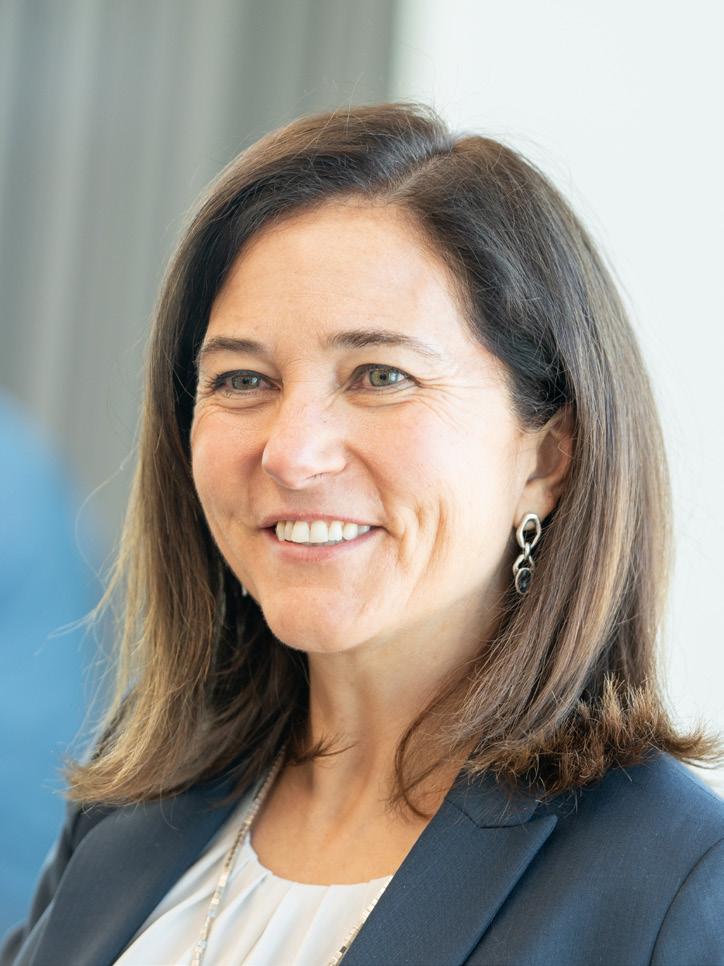
Burcu Akinci Hamerschlag University Professor and Department Head
From the department head
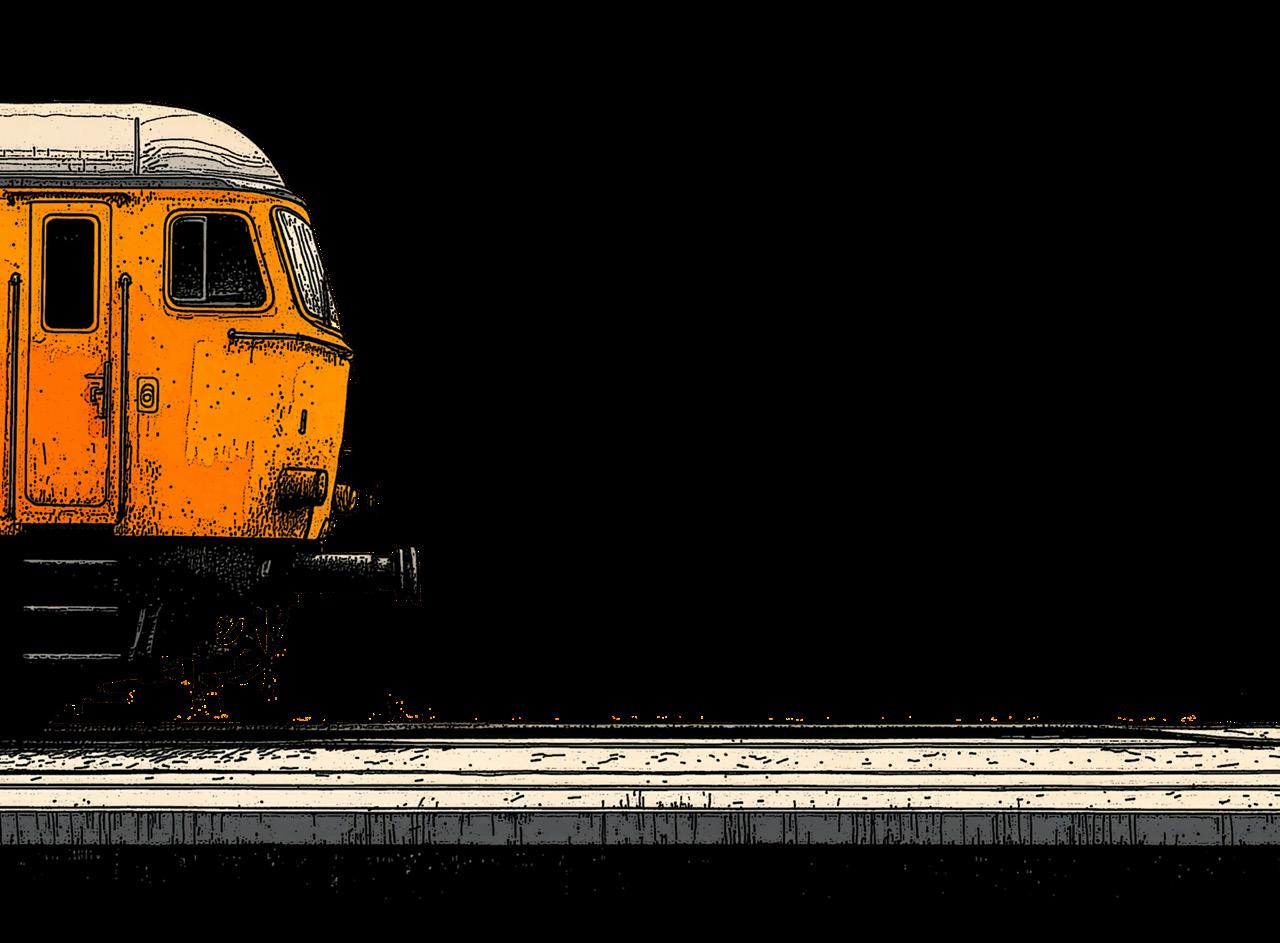
IMAGE / Illustration: K. Huber
The Rail Renaissance
Carnegie Mellon University researchers are bringing passenger rail back to communities by revitalizing existing rail lines – and in doing so, decreasing costs from billions to millions.
Passenger rail has the power to transform communities by connecting residents to essential services while reducing emissions and roadway congestion. Despite these benefits, expanding rail in the United States has proven nearly impossible due to its sky-high price.
As an example, the city of Seattle recently embarked on a four-mile light rail extension, costing just under $2 billion per mile. With this price tag, in addition to regulatory and bureaucratic hurdles, projects in this space often stall before they begin. Carnegie Mellon University researchers are working to flip this model and, in doing so, decrease a multi-billion dollar project to millions.
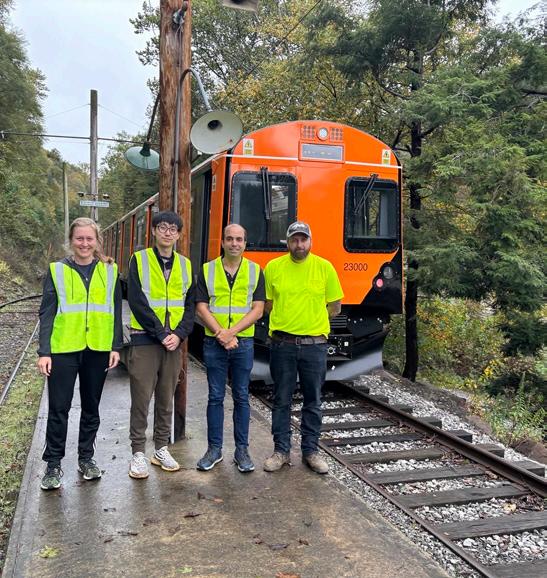
With support from the National Science Foundation’s Civic Innovation Challenge (CIVIC), a unique program that emphasizes rapid, on-theground impact with direct community engagement, the team is leveraging the nation’s underutilized “legacy rail,” or existing and established tracks that remain underutilized or abandoned, to pave a path toward faster, more affordable, and more sustainable rail transit.
The project was conducted in two phases, where Phase 1 aimed to quantify the scale and feasibility of the project undertaking, from the onthe-ground community engagement, to the technology deployment, and the partnership collaboration.
Centered around 1.61 miles of legacy rail along Philadelphia’s Delaware River Waterfront, a neighborhood long isolated from their community by Interstate 95 and unreliable public transit, the CIVIC team set out to
reconnect these residents to essential services, economic opportunity, and safe transportation. By deploying a modular, low-cost rail system that is responsive to real-time needs, the goal was to overcome the technical, financial, and regulatory hurdles that stall traditional transit development.
“The challenges in the Delaware Riverfront mirror those in cities nationwide, where thousands of miles of underused legacy rail remain untapped to close this gap,” said Katherine Flanigan, assistant professor of civil and environmental engineering, and lead principal investigator of the CIVIC project. “This project will disrupt the standard model of rail transit development by demonstrating that revitalizing legacy rail in collaboration with community stakeholders creates effective and scalable transit solutions.”
Through community forums, surveys, and workshops, more than 4,000 Philadelphia residents provided insights into their needs that would directly inform the pilot design.
Led by partners Hinge Collective, the Delaware River Waterfront Corporation, and Operation Lifesaver, direct community engagement ensured that the project addressed future rider needs and priorities.
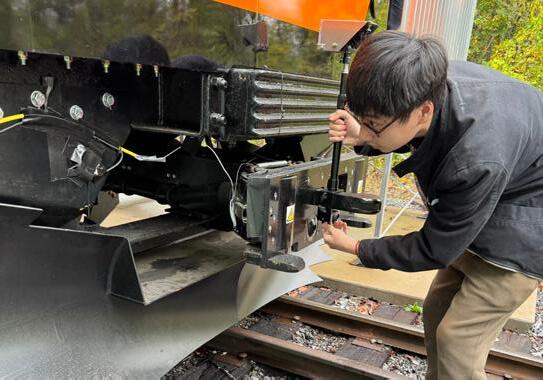
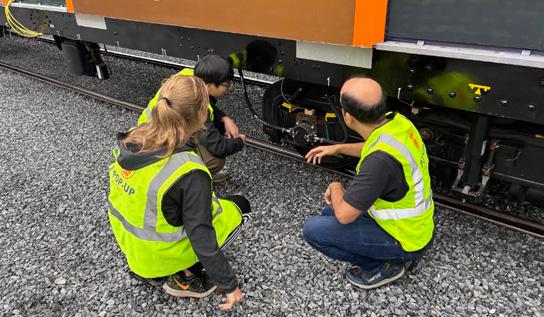
On the technical side, CMU’s Flanigan and Mario Bergés, professor of civil and environmental engineering, tested their cutting-edge on-board sensing technology for rail inspection. By integrating acceleration- and vision-based AI, their system monitors rail integrity to not only detect broken rail in real time, but also evaluate the overall condition of existing tracks. With improved
track monitoring, communities are able to confidently introduce rail transit on their legacy lines and costeffectively streamline maintenance strategies.
“By translating sensing technologies from our lab into operational rail vehicles, we can monitor safety and reliability in a way that is low-cost, scalable, and adaptable to changing community needs,” said Flanigan.
Between the technical innovation; resident engagement; low-cost, lightweight Pop-Up Metro train cars; and existing rail lines, the project showed that their model of revitalizing legacy rail for passenger service could be achieved for under $1 million per mile – compared to constructing new rail lines for nearly $2 billion per mile.
NSF’s CIVIC recently awarded Phase 2, for which work started in October 2025 to scale the pilot into a full operational deployment in Philadelphia. The project will also create an open-access database of America’s legacy rail lines, providing tools and workshops to identify opportunities for replication across the country.
“Phase 1 allowed us to work closely with communities to understand both the promise and the barriers,” said Bergés. “Phase 2 is where the rubber meets the road. It’s about putting our vision into practice and showing communities across the U.S. that they can replicate this approach.”
“30 cities across the country have already expressed interest in adopting our model,” said Flanigan.
“This project is truly an unprecedented example of the power of community-driven innovation.”
Demonstrating that legacy rail can be revitalized for millions over billions, as well as the impact on accessibility, emissions, and economic growth, could transform the rail industry – an accomplishment congruent with the Western Pennsylvania region.
“There’s a deep connection between the legacy of our region and the future of rail in this country,” said Bergés. “We see this project as charting new pathways into the future of how the rail industry will operate and we’re thrilled to be a part of this renaissance.”
This collaborative project was conducted in partnership with Pop-Up Metro, Hinge Collective, the Delaware River Waterfront Corporation, the Philadelphia Belt Line Railroad, BRT Services, and Operation Lifesaver.
AI paves the way for better road maintenance
Using AI-powered computer vision technology, researchers develop a low-cost method to model and predict road deterioration across entire transportation networks.
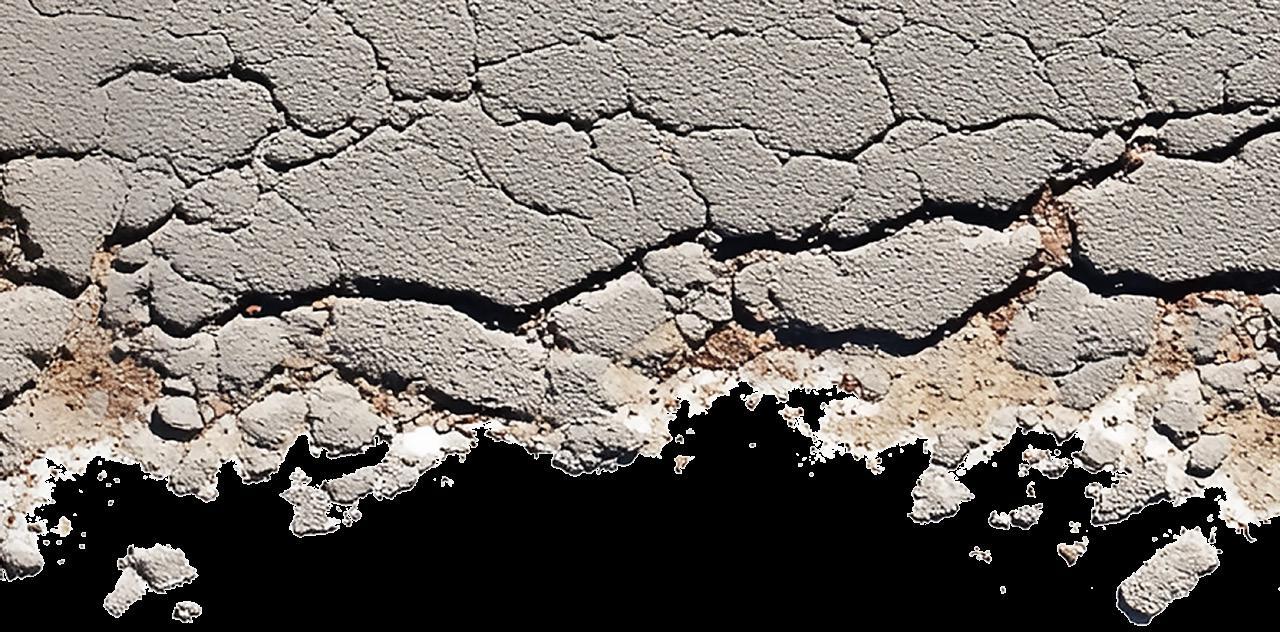
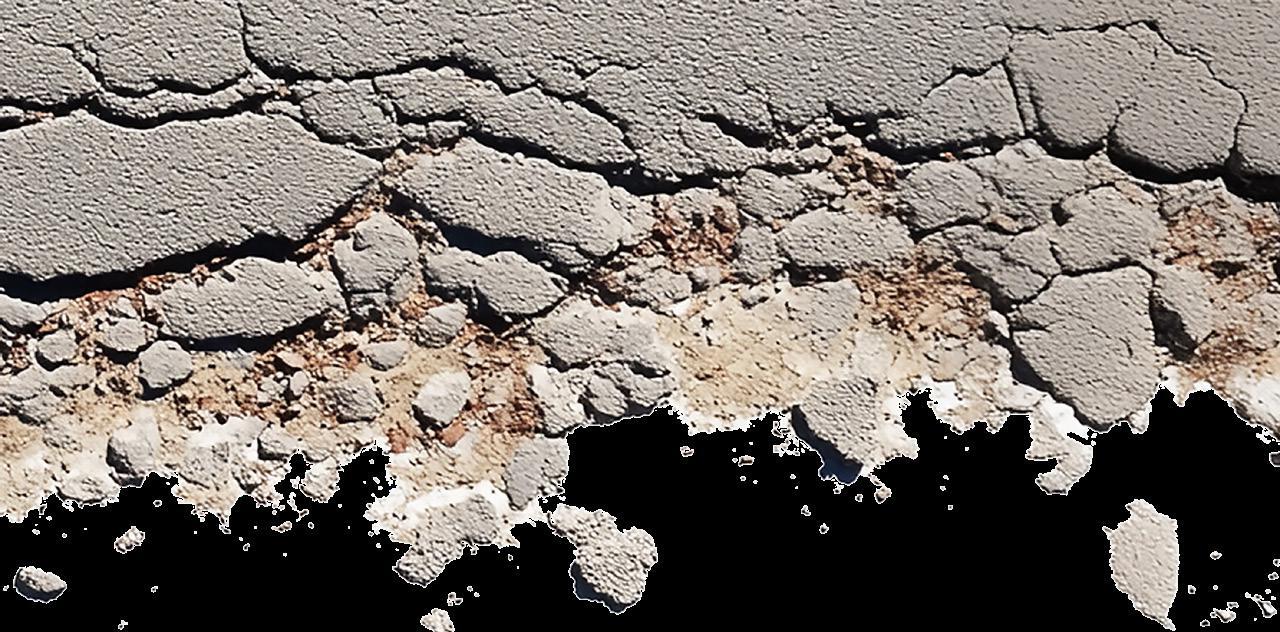
Dodging potholes is a familiar routine for drivers. But, behind every bump and crack in the pavement is a bigger issue: many communities lack the tools and data they need to maintain their roads effectively. Traditional pavement assessments rely on expensive, specialized vehicles outfitted with high-resolution sensors. These resources are typically reserved for major highways and high-traffic corridors, leaving neighborhood streets and local roads under-monitored and under-maintained.
Researchers at Carnegie Mellon University developed a low-cost, AI-powered solution designed to close this gap. Using a smartphone app created by computer vision company RoadBotics, alongside open-source data such as weather patterns, traffic levels, built environment characteristics, and socioeconomic information, the team was able to predict pavement deterioration across entire road networks.
When installed in a standard vehicle, the app collects road imagery, which AI models then analyze to assess current pavement conditions and forecast how they will change over time.
“The method offers comprehensive coverage, enabling analysis of all road segments throughout the entire network and across multiple time scales,” said Tao Tao, postdoctoral researcher in the Department of Civil and Environmental Engineering and lead author of the study published in the Journal of Infrastructure Systems.
Tested in nine diverse communities across the U.S., the model demonstrated strong performance in predicting pavement condition ratings and their rate of decline. Unlike traditional methods, this approach also takes into account how factors like road classification, climate, and neighborhood demographics interact to influence road wear. These insights have the potential to give city planners and public works
departments a more complete understanding of where and why deterioration is happening.
“By combining AI with readily available data, we’re enabling communities of all sizes to proactively manage road infrastructure with greater precision and affordability,” said Sean Qian, professor of civil and environmental engineering.
In contrast to current methods, the impact would be far-reaching. In small towns and rural areas where technical capacity and budget are often limited, the tool provides a practical lowcost way to assess road conditions without the need for expensive equipment. In mid-sized cities trying to stretch infrastructure budgets, it helps identify which roads are predictively most at risk in the next few years and where preventative maintenance will have the greatest return. And in large urban areas, it supports more equitable decision-making by including residential and lower-income neighborhoods that are often left out of traditional assessments.
Qian and Tao plan to refine the model further by tailoring it to specific communities and incorporating additional data sources, such as road age and pavement materials. The goal is to create a flexible, scalable system that empowers communities to make smarter infrastructure decisions even before potholes form.
“This approach envisions a future where every community—regardless of size or resources—can harness data-driven insights to proactively manage and preserve their road infrastructure,” said Tao.
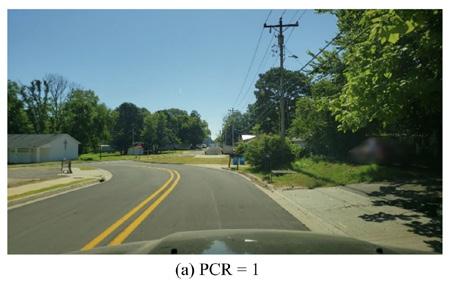
Source: Source: RoadBotics
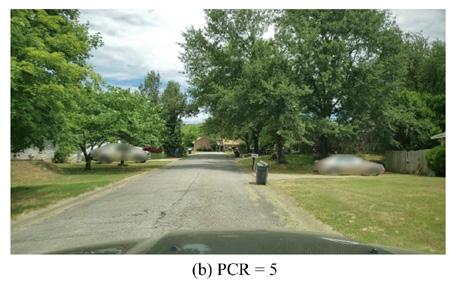
Two example road segments with different pavement condition ratings (PCR): (a) PCR=1; and (b) PCR=5.
A case study of New York City’s 2019 heat waves indicates that in extremely hot weather, people may be more likely to turn to ridehailing services like Uber or Lyft for their transportation needs, especially those living in higherincome neighborhoods.
Riding out extreme heat
In cities across the US, heat waves are becoming longer, more frequent, and more intense over time. Heat-related deaths are by far the most common weather-related fatality in the country, making extreme heat the most dangerous of the extreme weather events on the rise due to climate change.
Transportation methods vary greatly in how long they leave travelers exposed to the outdoors.
Pedestrians and bikers bear the brunt of precipitation, extreme temperatures, and humidity; bus riders face these factors, too, while waiting at bus stops. Drivers or subway riders, on the other hand, are more insulated from weather conditions.
Yet little research has been done to understand how extreme weather, like intense heat, changes how people choose to travel, noticed Carnegie Mellon engineering faculty Jeremy Michalek, Destenie Nock, and Corey Harper. Having such information would empower transportation planning and policymaking that is more responsive to the predicted effects of climate change.
Hoping to develop statistical models for the impact of extreme heat on travel behavior, the research team investigated changes in the use of private driving services like those offered by transportation network companies (TNC), selecting the July 2019 heat waves in New York City as a case study.
“Transportation network companies, such as Uber and Lyft, play a key role in modern urban transportation. These services are used by many individuals, including those in low-income communities,” says Harper, assistant professor of civil and environmental engineering. “One research question we had is: Do people use these services more during inclement weather events, and does this vary with income?”
Their work, funded by the Scott Institute for Energy Innovation and the US Department of Transportation and recently published in Transportation Research Part D: Transport and Environment, revealed that TNC usage rose city-wide during extreme heat, but that afternoon peak trips to higher-income neighborhoods increased more than trips to lower-income neighborhoods.
The researchers used publicly available data including TNC trip records, demographic information, and transit accessibility information to find out how many rides had been taken to and from different neighborhoods on any given day. When they compared days where heat
advisories or heat warnings had been issued by the National Weather Services against matching days of the week with no such messages, they found that ridership as a whole increased by 6 to 9% on heat event days.
However, the increase in rides was greater in New York City’s high-income neighborhoods, which also have higher baseline ridership. The researchers found that for every $10,000 increase in a neighborhood’s per capita income, TNC usage increased by about 0.5 rides per 1,000 people.
“Uber and Lyft offer additional travel options that can be helpful during extreme weather, and our study finds that NYC travelers increase their use during heat waves. In particular, evening travelers to high-income zones use Uber and Lyft more heavily than travelers to low-income zones, suggesting that higher-income travelers make the greatest use of this extreme weather option,” says Michalek, professor of engineering and public policy and mechanical engineering.
Though the study did not directly determine whether people in low-income neighborhoods were at a greater risk for heat exposure due to their proportionally lower usage of TNCs, it is known that low-income urban neighborhoods are already hotter on average due to limited vegetation producing heat island effects. As a result, it will be important to consider strategies to make sure individuals from all socioeconomic groups have access to transportation methods that allow them to stay safe from extreme heat.
“Understanding travel behavior patterns will provide insight on that process,” says Nock, assistant professor of engineering and public policy and civil and environmental engineering. “Using weather advisories as behavioral thresholds gives us a new tool: we can now pinpoint when heat becomes not just uncomfortable, but behavior-changing—and design policy to match.”
Similarly, there are steps that could be taken to promote TNC usage in lower-income neighborhoods during extreme heat. “Tax exemptions and subsidies could be implemented during heat waves, in areas where there are a lot of low-income individuals who do not have access to transit systems. In addition to this, incentives could also be given to drivers to help them relocate throughout the city, helping to lower wait times and improve access to these services during inclement weather events,” says Harper.
Weiss joins as teaching faculty
“I’m thrilled to join CMU, guiding students toward reimagined, resilient infrastructure of the future.”
Damon Weiss, Professor of Practice, Civil and Environmental Engineering
The Department of Civil and Environmental Engineering welcomes Damon Weiss back to Carnegie Mellon as a professor of practice, teaching students in the department’s online certificate program AI Engineering: Digital Twins and Analytics.
As an alum of the department’s M.S. in Advanced Infrastructure Systems program, Weiss has specialized expertise in digital modeling, urban systems, and data-informed design. He brings 28 years of applied experience to help students connect emerging technologies with real-world infrastructure challenges.
“By harnessing AI and Digital Twins, we can do more with less: extending bridge lifespans, detecting leaks in water lines, and optimizing roads for safety and efficiency,” said Weiss. “I’m thrilled to join CMU, guiding students toward
reimagined, resilient infrastructure of the future.”
In addition to his academic role, Weiss is the co-founder of Ethos Collaborative, a Pittsburghbased civil and ecological engineering firm specializing in sustainable and community-centered urban design. Through this dual engagement, he integrates thoughtful design with emerging technologies, bridging the tactile, human-scaled aspects of infrastructure with digital twin systems, AI models, and geospatial analytics to elevate decision-making, performance, and public value.
“Damon’s industry insights will help ensure our programs stay grounded in what today’s engineers need to lead in a rapidly evolving field,” said Burcu Akinci, head of the Department of Civil and Environmental Engineering.
“We’re thrilled to have him on board!”
Giving plastics a new lease on life
Thanks to a one-two punch of chemistry and computational modeling, a seed grant project supported by the Scott Institute for Energy Innovation is giving plastics a new lease on life.
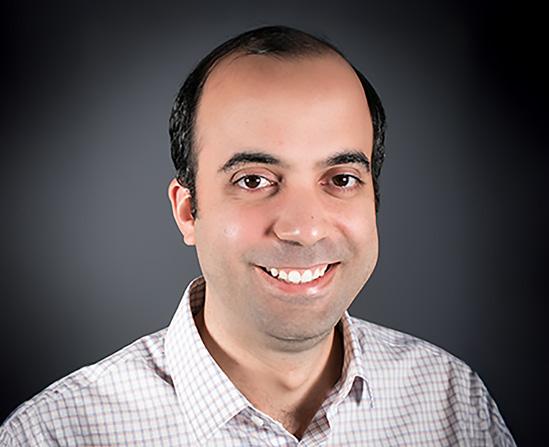
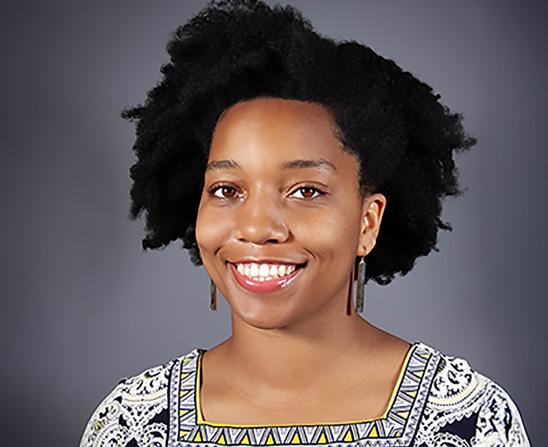
Stefanie Sydlik, an associate professor of chemistry, and Gerald Wang, an assistant professor of civil and environmental engineering, have poured their resources into manipulating the properties of polymers in order to upcycle plastics.
As Sydlik explained, polymers can be either synthetic, as in the case of plastics; or natural, as in the case of DNA and proteins found in the body.
“A polymer, in its most simple definition, is a repeating unit of some molecular structure that happens over and over to make a macroscopic material,” said Sydlik. “The polymers that people worry about are the synthetic ones, which have structures that are incredibly stable because you see a lot of carbon-carbon bonds, which don’t occur very often in nature.”
That durability, which creates many everyday products like water bottles, also makes it hard for plastics to break down naturally, leading to microplastics. The researchers’ ultimate goal is to rethink the recycling process. Typically plastics can be recycled a few times at most before they’re out of commission. Sydlik and Wang want to make polymer composites with chemical properties that allow them to be revived back to food grade quality and degrade more easily when their lifecycle ends.
This could accomplish even more than reducing waste. An added benefit is that upcycled plastics can support energy infrastructure — for example, windmills use polymer coatings on their blades.
Wang elaborated that a lot of clean and renewable energy technologies would benefit from the low-permeability of the barrier that polymers create, particularly for preventing water damage and other types of weathering.
“Anything involving hydropower, anything involving offshore wind, you’re going to have so much need for coating to prevent both water and salt from getting to surfaces,” Wang said. “Solar is also a real workhorse for clean energy, and solar panels have to sit out in the field where they can get rained on all the time.”
Wang uses molecular modeling to help identify plastics that could be ideal candidates for the upcycling method Sydlik has studied and refined as a chemist, which uses dynamic depolymerization and covalent attachment to graphene oxide.
One of the project’s tangible results is likely to be an open-source polymer simulation tool that will make it easier for the research community to experiment with a relatively new, unexplored concept. This example also underscores the importance of seed funding to help innovative projects flourish and grow.
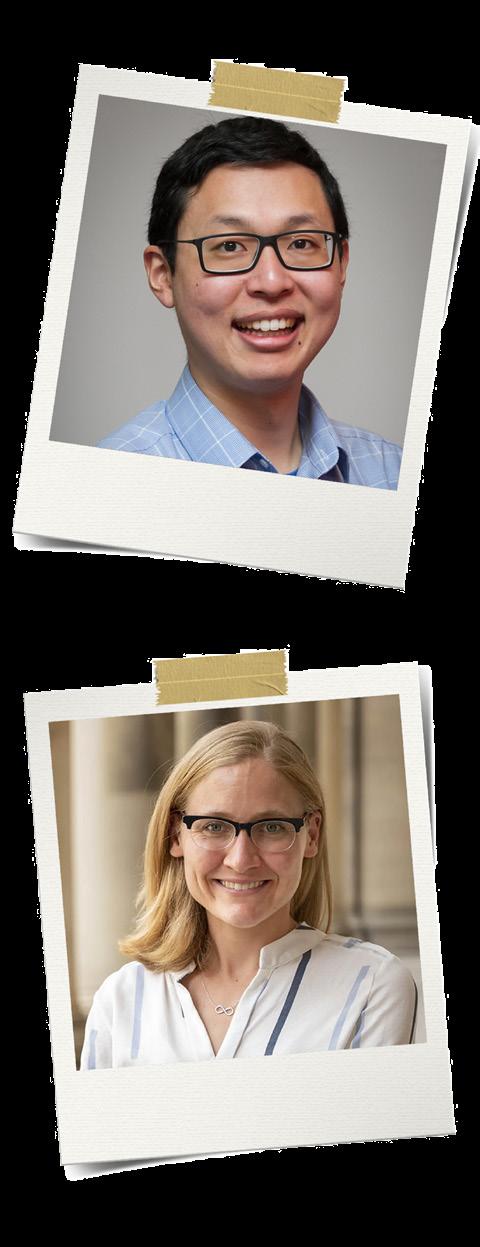
Stefanie Sydlik
Gerald Wang
Environmental
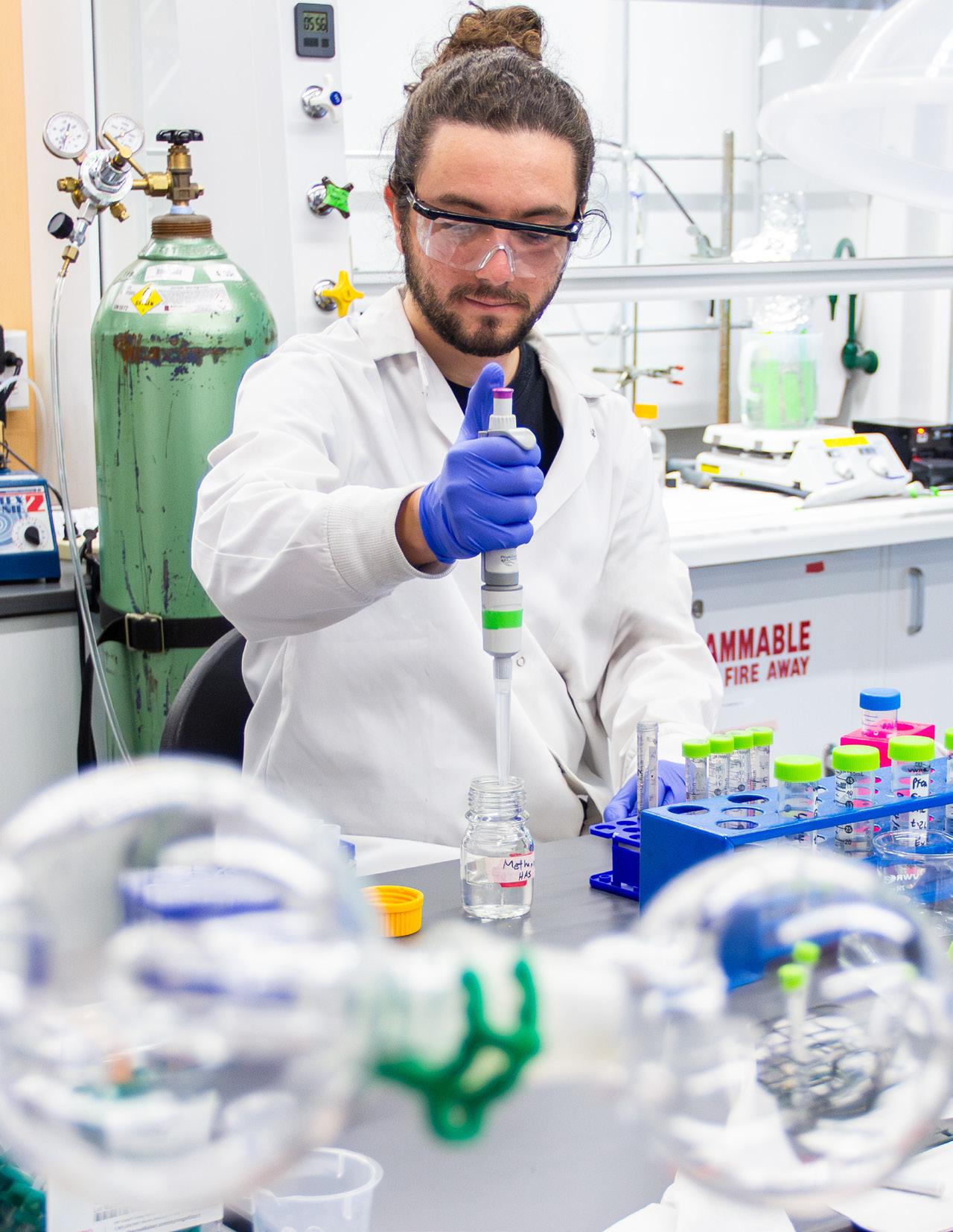
IMAGE / Hosea Santiago-Cruz, Ph.D. student
“A homogeneous pre-treatment could reduce complex mixtures from hundreds of PFAS to just tens of PFAS molecules that are more manageable to destroy.”
-Grey Lowry, Professor, Civil and Environmental Engineering
Forever chemicals, made simple
They’re called “forever chemicals” for a reason. Per- and polyfluoroalkyl substances, better known as PFAS, exist everywhere from furniture and personal care products to drinking water, soils, and – consequently – our bodies. These synthetic chemicals are linked to serious health risks, including liver damage, reproductive issues, and certain cancers. But their signature carbon-fluorine bonds are one of the strongest known in organic chemistry, making PFAS, as the moniker suggests, notoriously difficult to destroy.
In response to growing concern, the U.S. Environmental Protection Agency recently enacted unprecedentedly strict limits on PFAS in drinking water— regulations that reflect the serious danger these chemicals pose. While current treatment methods like filtration and adsorption can help meet these standards, they are not destructive processes and generate PFAS waste streams that still require treatment.
Civil and Environmental Engineering and co-first author of the study published in Nature Water. “Our holistic approach instead values how well the treatment breaks carbon-fluorine bonds, which we see as a better metric for comparing PFAS destruction approaches.”
High school chemistry classes teach that a catalyst is an agent that accelerates a chemical reaction without being consumed in the process. This makes catalytic processes – especially heterogeneous ones, where the catalyst is a different state of matter than the reactants – ideal for largescale applications since the agent can be recovered, recycled, and reused.
in airports, for example, can contain hundreds of PFAS compounds alone, many with unknown structures that present design and optimization challenges for catalyst development.
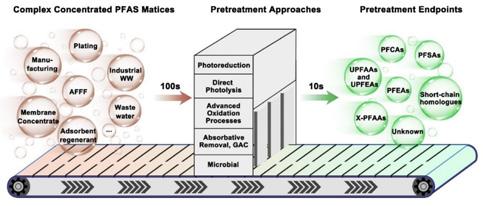
To simplify these complex PFAS mixtures, the authors propose a pre-treatment step using known homogeneous catalysis processes like oxidation or photoreduction.
To combat this, researchers at Carnegie Mellon University provide a roadmap towards a more effective, holistic, and sustainable process for removing PFAS from our drinking water. In a recent study, the team proposes using heterogeneous catalysis, coupled with pre- and post- treatment steps, to fully destroy PFAS compounds and eliminate them from our water sources. The overall goal is to fully destroy PFAS by breaking each and every one of their carbon-fluorine bonds with the least amount of reagents and energy.
“Most research in this area develops treatments that can lower a specific PFAS concentration, but this typically produces other PFAS byproducts in the process,” said Hosea Santiago-Cruz, Ph.D. student in CMU’s Department of
“Effective heterogeneous catalysts would be transformational for industrial-scale PFAS removal since a solid is easily separated from contaminated water, in addition to the catalysis process being sustainable and readily scalable,” said Greg Lowry, professor of civil and environmental engineering.
One of the key obstacles to this approach, however, is the expansive variety within the PFAS chemical class. PFAS refers to a broad group of more than 15,000 substances, each with unique properties and increasingly complex structures that complicate removal efforts. Foam found in fire extinguishers used to fight fuel fires
“A homogeneous pre-treatment could reduce complex mixtures, like in the case of firefighting foams, from hundreds of PFAS, many of which are unknown, to just tens of PFAS molecules that are more manageable to destroy,” explained Lowry. “The overall goal of pre-treatment is to streamline the development of the heterogeneous catalysis process and lower analytical and energy costs.” While there are catalysts that can break down a few known PFAS chemicals in contaminated water, more work lies ahead to identify catalysts for a larger range of PFAS compounds for large-scale use. Lowry and his team suggest implementing molecular modeling and machine learning technologies to enhance the development process, identifying opportunities for discerning PFAS traits, grouping similar compounds, and overall increasing predictive understanding in the field to treat real PFAS mixtures.
“Robust, cost- and energy-efficient methods for removing PFAS from drinking water and industrial waste streams is going to require research and technological advancements, and this approach is a step in the right direction,” he said.
Processes proposed to simplify complex, unknown PFAS mixtures into fewer, more well-known compounds.
Climate policy can save half of the world’s glaciers
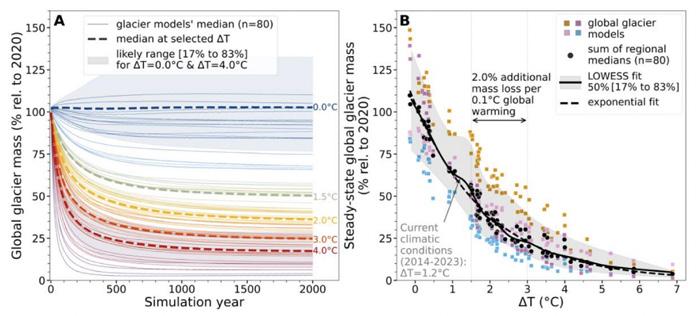
A study published in Science finds that twice as much of the world’s glacier mass could be preserved by meeting the 1.5°C threshold set by the Paris Agreement.
Current climate policies put the world on track for a temperature increase of 2.7°C by the year 2100. The repercussions could be irreversible and far-reaching, which is why policymakers and scientists are racing to meet climate targets like the critical 1.5°C threshold proposed in the Paris Agreement.
A new study published in Science underscores what’s at stake for the world’s glaciers at these temperature levels. Examining over 200,000 glaciers outside of the Greenland and Antarctic Ice Sheets, an international team of researchers used eight glacier
models to simulate the evolution of the glaciers under various climate change scenarios. Results show that, because glaciers adjust slowly to temperature change, substantial mass loss is unavoidable even if temperatures stabilized today; however, strong climate policy can preserve twice as much ice compared to current warming trajectories.
In 2025, aptly named the International Year of Glacier Preservation by the United Nations, climate scientists estimate that global temperatures have already increased by 1.2°C over pre-industrial levels. Even without any further warming, the team projects that 39% of glaciers will disappear globally—enough melt to contribute over four inches to sea-level rise. And the consequences grow with each fraction of a degree.
“For each additional 0.1°C of warming, we stand to lose roughly another 2% of glacier ice,” said David Rounce, assistant professor of civil
and environmental engineering at Carnegie Mellon University. Rounce, a co-author on the Science paper, recently presented these findings at the United Nations 2024 Climate Change Conference and 2025 World Day for Glaciers celebration.
As a result, if the world were to warm to 2.7°C, only 24% of presentday glacier mass would remain, contributing over nine inches to sea-level rise. But, more than half of that loss could be prevented under the goals of the Paris Agreement; at a 1.5°C temperature increase, 53% of global glacier mass could be preserved, alleviating hazards like flooding, erosion, and freshwater deficiency in nearby and coastal communities.
“The glacier melt we’re seeing today reflects warming from decades ago,” said Rounce. “Decisions we make now will determine the future of our water, coastlines, and ecosystems around the world.”
global
under constant-climate scenarios.
Projected
glacier mass
Figure A (left) depicts the change in global glacier ice over time relative to present day. Figure B (right) shows the level of glacier ice remaining at different levels of global warming.
First, researchers recommend further education and outreach through the collaborative efforts of both technical and nontechnical stakeholders to produce reports that highlight the successes and challenges of riverine NBS. Additionally, updated cost-benefit analyses must be performed to include the co-benefits of riverine NBS and consider the direct and indirect effects of climate change. Finally, federal and state programs should look to the successful examples set by local governance when it comes to funding and contracting agreements for riverine NBS projects.
With this action-oriented research agenda, future work to expand NBS could simultaneously advance social and environmental justice through community engagement, to improve climate resilience in disadvantaged communities.
“Existing projects have shown that riverine NBS can serve as strategic investments to enhance the resilience of transportation infrastructure,” said Webber. “To fully realize the co-benefits of riverine NBS, coordinated actions and collaborative strategies are needed to address technical challenges, bridge institutional divides, and promote inclusive decision-making.”
Alumna Lillian Mei (CEE ’24) also contributed to this work as a co-author through the Department of Civil and Environmental Engineering’s Undergraduate Research Program.
“Nature-based solutions can help protect transportation infrastructure against climate impacts, and more federal, state, and local government support is needed for these types of projects”
- Costa Samaras, professor of civil and environmental engineering and director of the Scott Institute for Energy Innovation
Jiang helps CEE reach new depths
CEE welcomes Su Jiang as an assistant professor with research expertise in subsurface energy and environmental systems.
This fall, the Department of Civil and Environmental Engineering welcomed a new faculty member, Su Jiang.
Jiang joins Carnegie Mellon from the Lawrence Berkeley National Laboratory where she was a postdoctoral scholar in the Earth and Environmental Sciences Area. She holds an M.S. and Ph.D. in Energy Resources Engineering from Stanford University and dual B.S. degrees in Environmental Engineering and Economics from Tsinghua University in Beijing, China.
At the intersection of data, physics, and machine learning, Jiang’s research sets out to better understand and manage large-scale environmental and energy systems, especially below the Earth’s surface. By looking at carbon storage, seawater intrusion, and subsurface energy development, CEE’s new assistant professor develops efficient, data-driven methods to facilitate the clean energy transition and mitigate the effects of climate change.
“I’m thrilled to join CMU, especially at such an exciting time with so many advancements happening here around AI,” said Jiang. “Considering my own research interests in AI and energy, CEE is a great place for me to be.”
In her new role, she looks forward to working collaboratively with experts in data science, policy, and engineering to and continuing to develop AI-powered tools that support a cleaner, more resilient future.
“We’re lucky to have Su joining our team as the department continually pushes the envelope on research at the intersection of AI, engineering resilience, and energy” said Burcu Akinci, head of the Department of Civil and Environmental Engineering.
STUDENTS
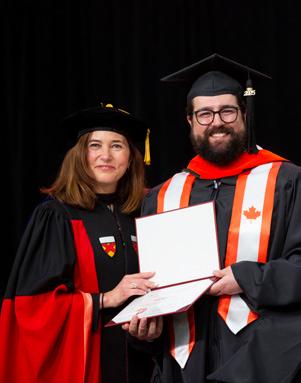
Celebrating the class of 2025
Congratulations to our awardees and the class of 2025!
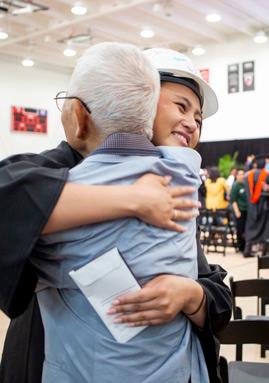
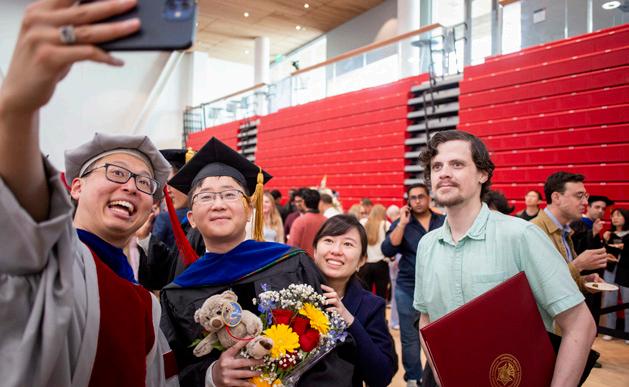
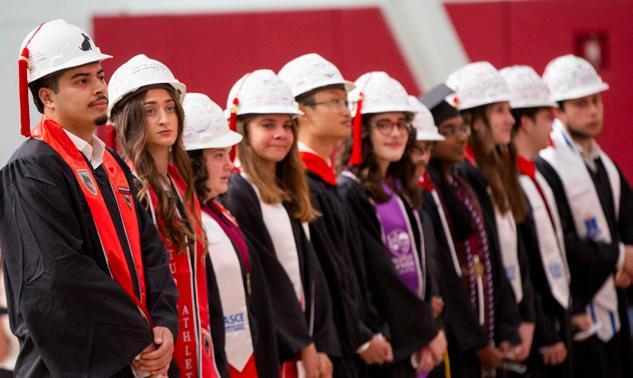
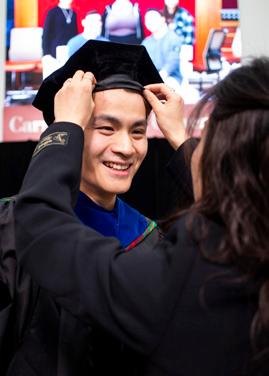
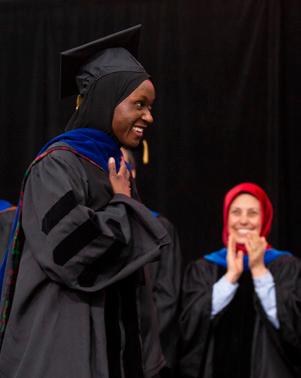
On May 9, the Department of Civil and Environmental Engineering held its 2025 commencement ceremony, also the inaugural commencement ceremony hosted in CMU’s new Highmark Center. The event recognized 34 students earning their B.S. in Civil Engineering; 10 students with a B.S. in Environmental Engineering; 61 Master’s students; and 17 new doctorates.
Around 350 faculty, staff, family, and friends also celebrated our commencement recipients, including:
ASCE Outstanding Civil Engineering Student Awards
Mia Constantin and Jane Fleischman
H.A. Thomas, Sr. Scholarship Awards
Jongwoo Han and Shria Shyam
Civil and Environmental Engineering Research Award
Samuel Chen
James P. Romualdi Civil and Environmental Engineering Award
Luke Grupp
Lawrence G. Cartwright Distinguished Service Award
Seth Altman
Outstanding TeAching Assistant Award
Ben Minden
Paul P. Christiano Outstanding Service Award
Sorawich Aungsuthar
Community and Engagement Excellence
Sophie Vincens
Mao Yisheng Outstanding Dissertation Award
Marissa Webber
Francis Clay McMichael Award for Outstanding Dissertation in Environmental Engineering, Science, and Policy Zia Lyle
Source: Thursday Thrift thursdaythriftclub.com
Thrifting, at your fingertips
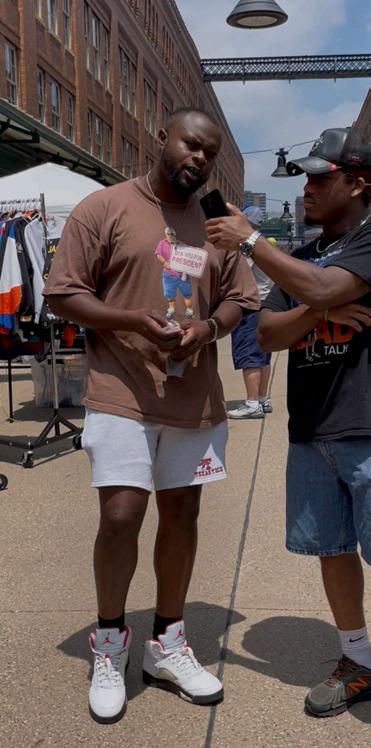
If you find Paul Davis (EnvE’26) on campus, he might stand out for a few reasons: maybe you saw him on field at the last CMU football game, streamed his original music or podcast on Spotify, or were struck by his seemingly endless rotation of unique and trendy outfits.
Up to 90% of Davis’ closet is secondhand – an envy of thrifting lovers and a passion that drove his college career down the entrepreneurship path with his startup, Thursday Thrift. Since his high school days in South Carolina, Davis has been flipping through racks of pre-owned clothing, fueling his love for sustainable fashion that would one day grow into his very own company. Although, when any type of shopping becomes a hobby, excess is inevitable.
During his first year at Carnegie Mellon, Davis found himself with an abundance of pre-loved items and the curse of a small dorm closet. The dilemma inspired the idea for his first thrifting pop-up shop on campus in November 2023, a huge success that led to a consistent time slot at the Cohon University Center throughout the spring. Come summer 2024, Davis was brainstorming how to leverage this momentum and scale the experience to a wider audience.
“I’ve always been interested in the crossroads between sustainability and technology, so an app seemed like the logical next step,” explained Davis, who now leads the company as CEO. “But I quickly realized the real opportunity wasn’t just to build a better marketplace,
it was to build the entire operating system for secondhand and thrifting.”
The goal was to replicate the thrifting experience on your phone. Unlike regular clothing shopping, thrifting creates a feeling of serendipity when you stumble across a hidden gem. Through a swipebased interface that curates clothing based on users’ personal style, color palettes, brands, and fit preferences, Thursday Thrift accomplishes exactly that – and all at your fingertips.
New items launch in the app every Thursday, giving users a fresh “rack” of options and a playful, gamified shopping experience. Incorporating AI tools that personalize recommendations, users can discover
styles they might not have considered otherwise, while keeping sustainability at the core of the shopping experience. “But this marketplace is truly just the beginning,” Davis notes. “The app’s primary function is to serve as a data engine. The real innovation is our Vintage Operating System, a powerful dashboard that will give our professional seller partners the data and tools they need to grow their secondhand businesses, turning their passion into a scalable career.”
The Carnegie Mellon ecosystem has been critical to Thursday Thrift’s development. Davis credits resources like the Swartz Center for Entrepreneurship, classes such as AI Venture Studio, and mentorship from experienced founders for helping the team refine their business model, connect with investors, and navigate the startup journey.
“CMU has big thinkers everywhere,” he said. “The support we’ve gotten from mentors, classmates, facilities, and even Amazon Web Services credits has made it possible to bring our idea to life.”
And Thursday’s efforts have already seen tangible success: Through a series of 15+ campus pop-ups, the company has generated over $25,000 in gross merchandise value, amassed a waitlist of over 2,000 users, and partnered with over 40 secondhand sellers. The startup also placed first in the McGinnis Venture Competition, gaining further mentorship and funding opportunities. With an official app launch planned for Summer 2026, Davis and the team are looking beyond campus to partner with other colleges, run ambassador programs, and scale Thursday Thrift to reach a national audience.
As CEO, Davis is now leading the company into its next chapter. The company is currently raising a pre-seed funding round to accelerate the app’s launch and expand the team.
“Thrifting is about discovery and creativity, and I want to help people shop in a way that’s both personal and sustainable,” Davis said. “Our hope is that Thursday doesn’t just make secondhand fashion more accessible, but also shows that you can build something meaningful while staying true to your values.”
Fossils, films, and first place at Spring Carnival
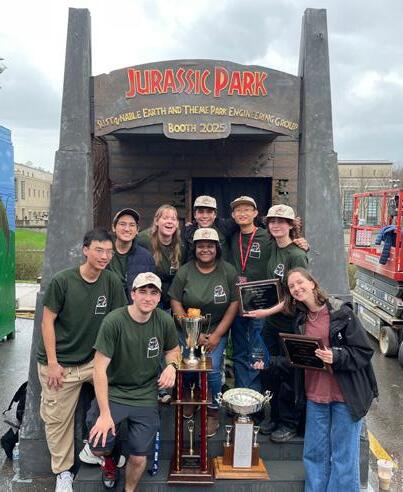
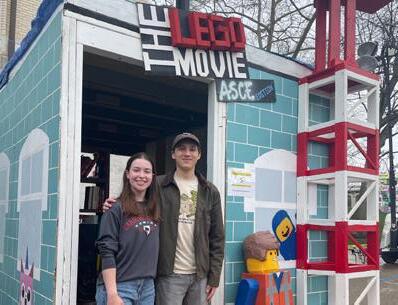
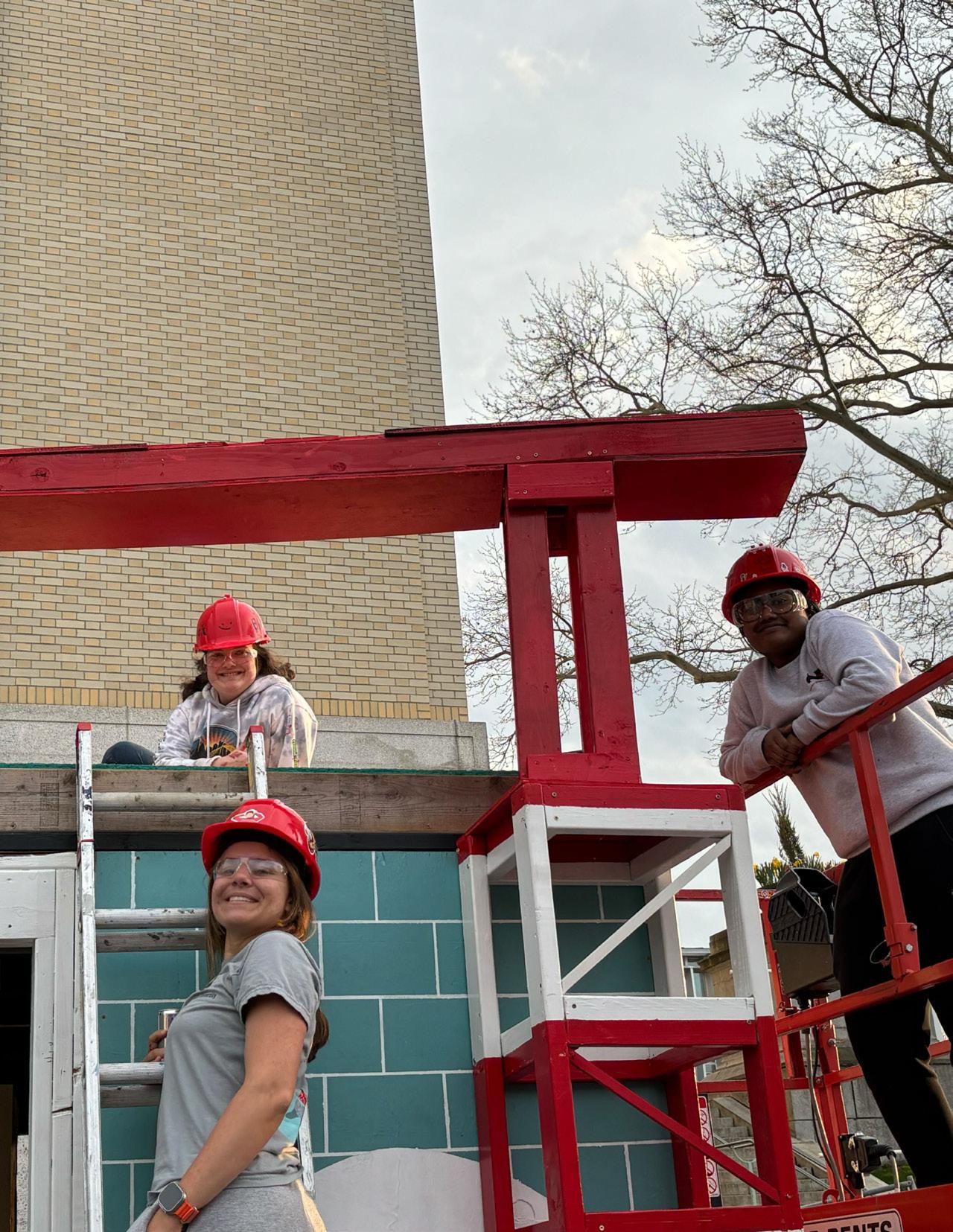
CEE students brought their energy, ingenuity, and engineering skills to Carnival weekend with their booth builds. Student groups including the ASCE student chapter, Theme Park Engineering Group, and Sustainable Earth built creative and interactive structures to compete in this iconic CMU event.
The American Society of Civil Engineers (ASCE) CMU student chapter built a popular Lego Movie-themed booth, built in part by CEE undergraduates Mia Constantin, Alana Frederick, Jane Fleischman, Emily Gilligan, and Mattiew Nieto.
The Jurassic Park-themed booth jointly led by Theme Park Engineering Group and Sustainable Earth was not only named the Top Blitz Booth and Most Sustainable Booth of Carnival 2025, but also the single Top Booth Overall!
Zuetell joins national effort for climate action
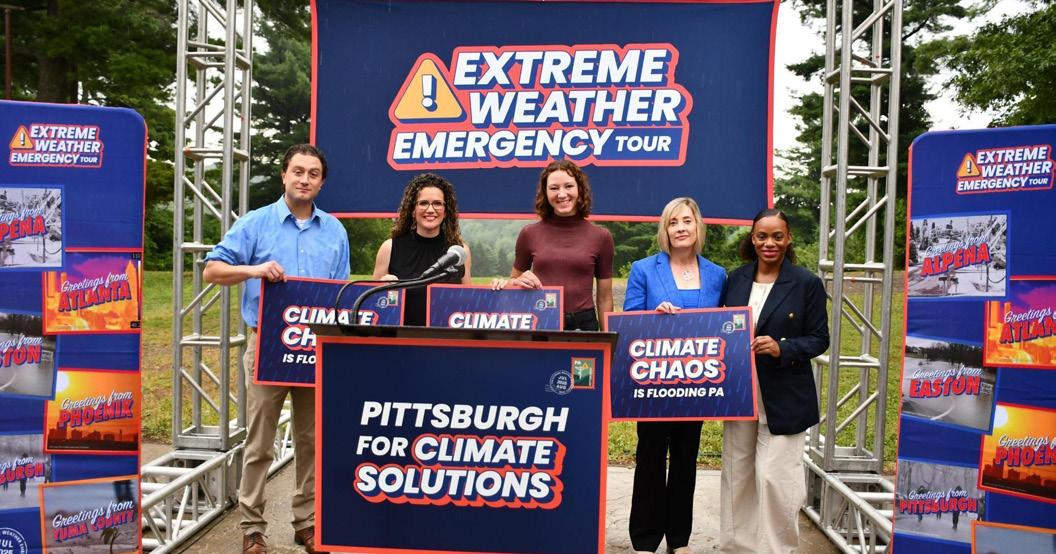
Emily Zuetell, a Ph.D. student studying civil and environmental and engineering and public policy, joined Congresswoman Summer Lee as an environmental expert as part of Climate Action Campaign’s Extreme Weather Emergency Tour. The tour is a national effort to highlight the increased dangers stemming from climate change and facilitate solution-oriented dialog in impacted communities.
Speakers, including Zuetell and Representative Lee, spotlighted how climate change is contributing to more frequent, severe, dangerous, and costly extreme weather events in Pittsburgh and across the United States. Just this year, Western Pennsylvania has seen a significant rise in flash flooding and storm-related power outages that claimed lives and caused extensive damage throughout the region.
Representative Lee emphasized the federal government’s responsibility to partner with state and local leaders in
preparing for stronger, more frequent storms. “The late April storms left many in our region without power for days – some for more than a week –and exposed the gaps in our storm infrastructure,” she said. “We need stronger federal investment in grid resilience, in mitigation and emergency response, and in the agencies like NOAA and the National Weather Service that keep us informed and safe.”
“We designed our infrastructure decades ago for failures that might happen once in a generation, not multiple times a year,” said Zuetell in her address at the press event. “Climate change is fueling more frequent and more destructive storms, and the cost of inaction will only grow. We need to invest now in resilient power systems, flood protections, and other safeguards so our communities can withstand the challenges ahead.”
At CMU, Zuetell’s research focuses on infrastructure planning for climate
change and extreme precipitation.
“The time to account for these risks and plan for the future is now,” she said. “Failing to deliver these resources will lock-in inadequate infrastructure that can’t withstand the next generation of extreme weather, leaving our communities vulnerable for decades to come.”
Engineers without borders make an impact in Zimbabwe
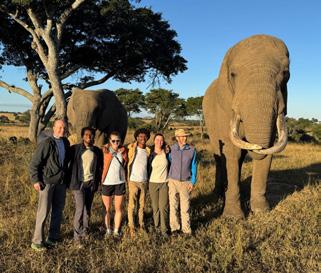
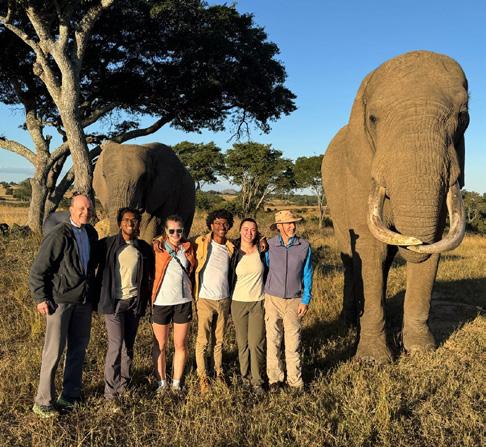
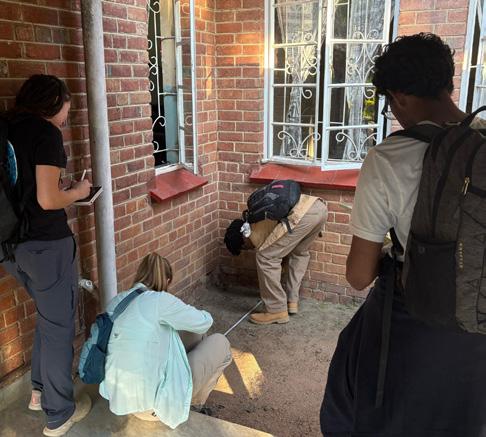
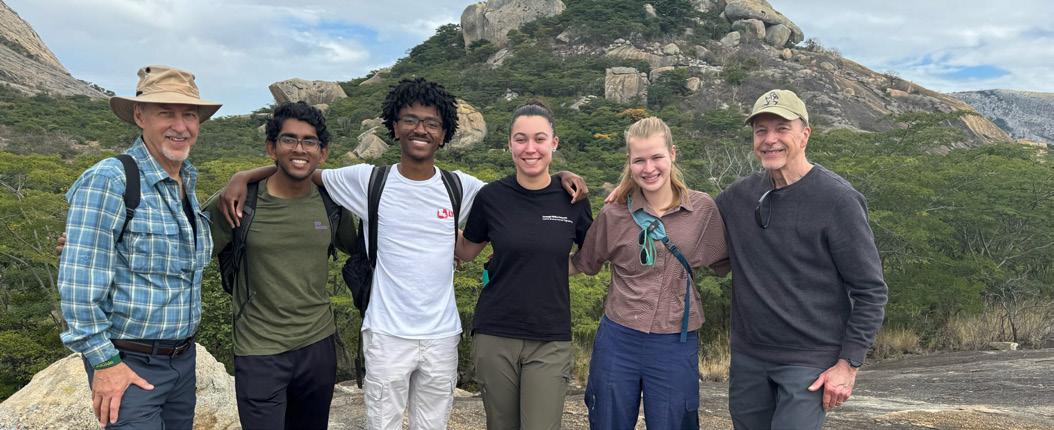
This summer, four students from CMU Engineers Without Borders spent 11 days in Zimbabwe at the Nyadire Mission. Autumn Bright (CivE‘27), Johnathan Subramanian (EnvE, EPP’27), Lydia Evans (EnvE, EPP‘28), and Noah Detiege (MechE’28) met with several community members and hospital staff to address energy needs at the Nyadire Mission Hospital, which experiences frequent blackouts and often relies on an unsustainable and expensive generator.
The team collected data to assess the hospital’s critical energy needs, the currently in-operational solar energy system in place, and to identify possible locations for future solar panels. In the coming semester, the club will conduct more assessment and research as they move towards the implementation phase of this exciting energy project.
Akinci named ASCE Distinguished Member
Burcu Akinci, Hamerschlag University Professor and department head of Civil and Environmental Engineering at Carnegie Mellon University, has been named a Distinguished Member of the American Society of Civil Engineers (ASCE) as part of its 2025 class — the most prestigious honor in the civil engineering profession.
ASCE selected Akinci in recognition of her transformative research in facility and construction information systems. Her work has advanced the integration of building information models with sensing technologies like 3D imaging and embedded sensors to develop digital twins—virtual representations of infrastructure used to monitor, manage, and optimize operations in real time.
Throughout her career, Akinci has combined her background in construction management with expertise in computer science to address complex infrastructure challenges. Her research has informed a wide range of academic studies and led to real-world applications, including the launch of LeanFM, a CMU-based startup that uses AI to improve building energy efficiency.
“I am truly honored and humbled to be named a Distinguished Member of ASCE,” said Akinci. “This recognition reflects not only my own efforts, but also the hard work of the many students and collaborators I’ve been fortunate to work with over the years. I’m deeply grateful for what we’ve built together.”
A faculty member at Carnegie Mellon since 2000, Akinci is also known for her commitment to graduate student mentorship and for her leadership in creating more inclusive academic communities within the civil engineering field.
Her election as a Distinguished Member underscores her lasting impact on the future of smart infrastructure and the broader civil engineering profession.
Burcu Akinci
Nock receives alumni award Bergés receives Scott seed grant
For the thirteenth year, the Wilton E. Scott Institute for Energy Innovation awarded seed grant funding to sustainability projects helmed by faculty across Carnegie Mellon University, with particular emphasis on supporting cross-disciplinary research and projects that engage with building electrification and climate adaptation and resilience.
This year, Mario Bergés, professor of civil and environmental engineering, received a seed grant for his project that aligns with the mission of Trane Technologies, one of the Scott Institute’s Grand Challenge Partners. Trane will provide funding for “Ibex-RL: Reinforcement Learning Meets Physics for Scalable HVAC Control in Residential Buildings.” The proposal “addresses the critical challenge of decarbonizing buildings through the electrification of heating systems, with a focus on optimizing the operation of heat pumps” with the help of reinforcement learning.
Destenie Nock, assistant professor of civil and environmental engineering, received a 2025 Outstanding Young Alumni award from her alma mater, University of Massachusetts Amherst. This award recognizes emerging leaders in the early stages of their career and highlights the recipient’s ambitions and potential to positively impact UMass, the nation, and the world.
Third-year environmental engineering student Jana Reiser is gearing up for a career conducting interdisciplinary research on plant-microbiome interactions after winning the prestigious Barry Goldwater scholarship for STEM undergraduates.
2025-2026 presidential and graduate fellows
These prestigious awards provide financial support for some of Carnegie Mellon’s top students in their studies and research.
Miaosi Dong (CEE’26) received the Liang Ji-Dian Graduate Fellowship. Jordan Joseph (CEE’25) received the Presidential Fellowship in the College of Engineering Cheyu Lin (CEE’25) received the K&L Gates Presidential Fellowship in Ethics and Computational Technologies
Student Voting Honor Roll
Ph.D. student Zia Lyle was named to the ALL IN Campus Democracy Challenge 2025 Student Voting Honor Roll. ALL IN is a nonpartisan organization committed to increasing student voting rates nationwide. The Student Voting Honor Roll recognizes students who were at the forefront of supporting their peers with registering to vote, sharing nonpartisan resources, and ensuring that eligible college students across the country had the information they needed to cast informed ballots. Lyle was recognized for her work as the Vice President for External Affairs for the Graduate Student Assembly, in the CMU Votes Coalition, and the universitywide Democracy Day Committee.
DFI Scholars
Junior Carly Najarian and M.S. student Gibrilla Kamara were named recipients of the Menard Deep Foundations Institute Educational Trust Scholarship, which supports outstanding undergraduate and graduate students in Civil and Environmental Engineering and actively seeks to empower underrepresented voices in the field.
ASEE Best Paper
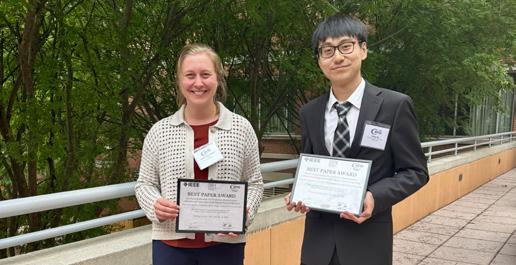
PhD student Matthew Takara received the Best Student Paper Award in his division at the American Society for Engineering Education Annual Conference. Co-authored by Teaching Professor Fethiye Ozis, the paper “Harnessing the Power of GenAI: A New Era for Data Science Education for Civil and Environmental Engineering” explores using tools like ChatGPT in a junior-level environmental engineering course on air quality data. Comparing classes before and after GenAI use, it found no major impact on performance, but students valued GenAI for idea generation and troubleshooting. The study highlights the potential of GenAI to support data literacy when paired with thoughtful instruction.
IEEE Best Paper
Ph.D. candidate Sizhe Ma received the Best Paper Award at the 2025 IEEE International Conference on Digital Twins and Parallel Intelligence. Advised by Katherine Flanigan and Mario Bergés, Ma’s paper “Levels of Autonomy for Predictive Maintenance: A Structured Approach with Digital Twin Integration” introduces a standardized framework for integrating digital twins into predictive maintenance to advance system autonomy.
ALUMNI HIGHLIGHTS
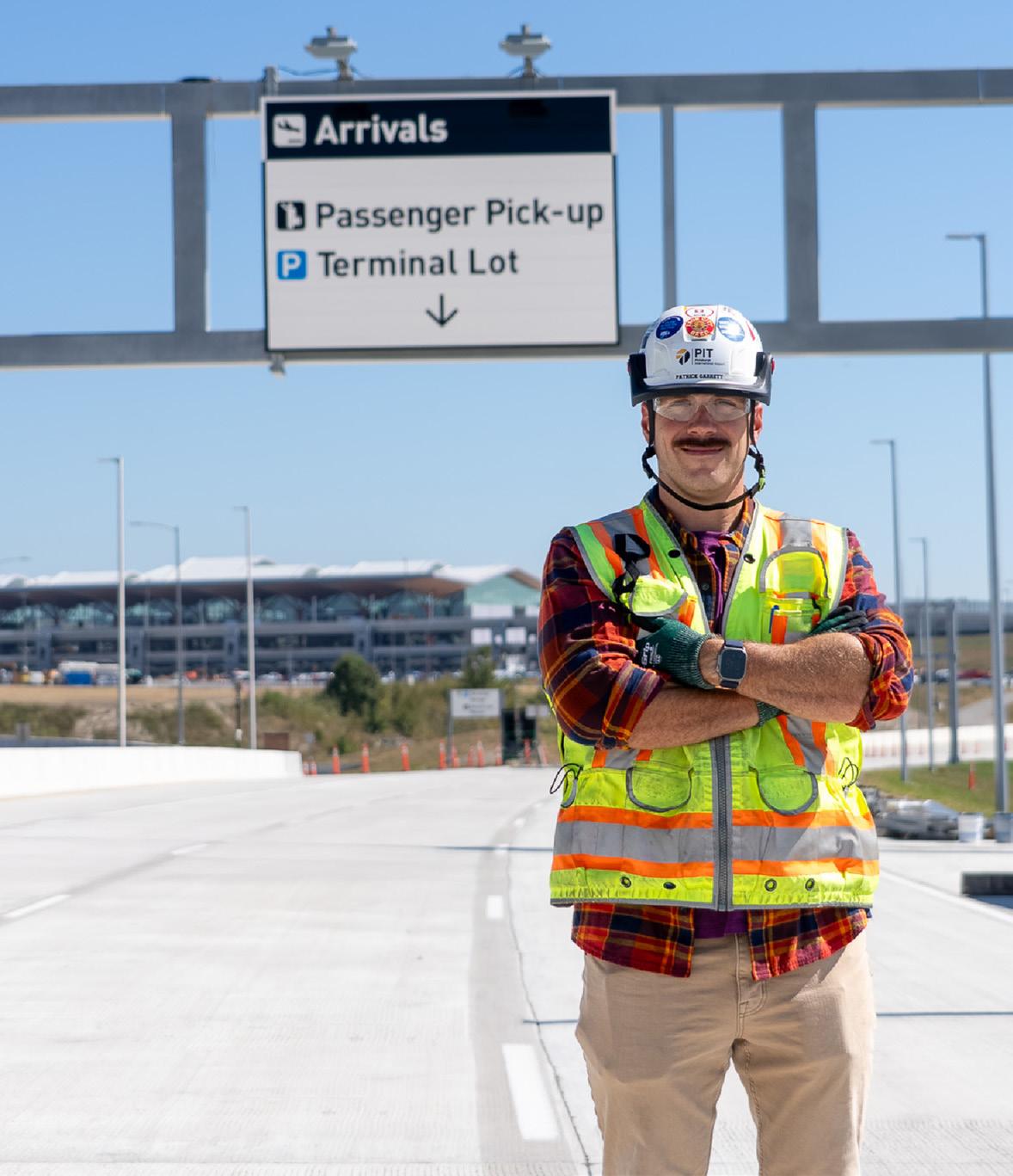
Patrick Garrett (CivE’12) is applying his CEE education to his role overseeing construction at the new Pittsburgh International Airport terminal.
CEE to PIT: Alum breaks ground at new Pittsburgh Airport
Growing up in Pittsburgh, Patrick Garrett
(CivE’12) didn’t have to look far to see the impact of civil engineering. His parents, both CMU-trained civil engineers, pointed out bridges and buildings on family drives, teaching him to notice how something that seemed delicate could also be incredibly strong.
“I’ve always liked puzzles, and civil engineering is one of the biggest puzzles you can take on,” he said. “You’re not working on small things. Everything is big, and what you build is going to serve communities for generations.”
It was a natural path to Carnegie Mellon University, where his father Jim Garrett, now Provost of Carnegie Mellon University; mother; five of his six aunts and uncles; sister; and grandfather all studied. But, it wasn’t just family legacy that drew him in. The Department of Civil and Environmental Engineering offered him exactly what he was looking for: rigorous academics, inspiring faculty, and the chance to test his skills on real-world problems.
At CMU, Garrett balanced his coursework with four years on the CMU football team.
Walking on as a punter his freshman year, he quickly learned the value of time management.
“Football forced structure into my life,” he said.
“Between practices, games, and training, it meant my free time had to be focused. That discipline carried over to everything else I did at CMU.”
That structure proved crucial as classes became more specialized. Math and physics came easy to Garrett, but didn’t guarantee easy wins in civil courses. Faculty, however, pushed him to build the study habits and preparation that would serve him throughout his career.
“Every class was memorable for different reasons,” he said, recalling a senior design course with Larry Cartwright as a highlight. “What stood out to me was the dedication of every faculty member. They were invested in the curriculum and the students and it showed.”
Internships with Trumbull Corporation gave him his first taste of large-scale civil
construction projects and by his senior year, he already had a full-time job offer in hand. After several years at Trumbull, he transitioned to PJ Dick, where he now serves as a construction manager on one of Pittsburgh’s most ambitious projects: building a new terminal at the Pittsburgh International Airport.
At PJ Dick, Garrett oversees the construction of new roadways and supporting infrastructure that will connect the airport’s reimagined airside and landside terminals. It’s an undertaking that involves 27 lane miles of roadways, millions of dollars in contracts, and daily coordination among over 50 contractors, state and federal agencies, and airport authorities.
“Ninety percent of my job is coordination between contractors, stakeholders, and other parties involved,” he said. “There are so many variables, especially building on an active airport. You have to be ready to pivot when a solution doesn’t work.” It’s here that he sees the direct link to his Carnegie Mellon education. “CEE doesn’t just teach you answers. It teaches you how to think critically and adapt. That’s what I do every day.”
Reflecting on his path, he emphasizes the value of hands-on experience for today’s students. “The best thing you can do is get as much variety as possible in your internships,” he advised. “Work on the design side and the construction side. That way, you can understand not just why something is built, but also how it’s built. Having that perspective will make you a stronger engineer.”
For him, the relationships built at CMU through both football and the civil engineering program remain just as important as the technical knowledge. “The people you meet at Carnegie Mellon are some of the best people you’ll meet in your life. Those friendships and that network have been invaluable.”
And now, with every mile of roadway he oversees at the new Pittsburgh International Airport, Garrett is leaving his own mark on the city he grew up in.
Your support is essential to our department’s continued success and innovation. By giving a gift to CEE, you are directly contributing to the development of future engineers, groundbreaking research, and the enhancement of our educational programs. Make a general gift to the department or support a fund that means the most to you.