
1 CONTENT 2 Editorial 8 Working Session & General Assembly 21/22 10 Punschstand Hilfswerk Wien Punchstall Hilfswerk Vienna 12 Weihnachtsfeier Christmas-Party 14 Thementag Diversity Awareness Thematic Day on „Diversity awareness“ 22 Kamingespräch mit Fides Raffel von myAbility Social Enterprise Fireside chat with Fides Raffel from the social enterprise MyAbility 24 MyAbility Quiz 30 Behind the scenes 36 CAS Hüttengaudi Hiking weekend 40 Stipendiat*innen 2022 Scholarship holders of 2022 44 Europäisches Forum Alpbach 20.08.–02.09. 2022 European Forum Alpbach 80 Event: Let‘s talk CAS 82 Handing Over 88 Facts and Figures 89 Board 2022/23 90 Sponsororganisationen Sponsors 92 Impressum
Text: Andreas Maierhofer (President)
LIEBE UNTERSTÜTZER*INNEN, LIEBE VEREINSMITGLIEDER, LIEBE FREUND*INNEN DES CLUB ALPBACH SALZBURG!
Nach mehr als zwei Jahren Corona-Ausnahmezustand am Europäischen Forum Alpbach, der Suche nach dem eigenen Purpose sowie der Basis von Forum und dem dazugehörigen Forum Alpbach Netzwerk (FAN) und schließlich 2021 dem zehnjährigen Jubiläum unseres Clubs, markiert 2022 beinahe ein unspektakuläres Clubjahr. Doch nur beinahe: Denn 2022 war nicht nur das Jahr der Rückkehr in ein beinahe “normales” Alpbach, wie vor Pandemie-Zeiten, 2022 war auch das Jahr, in dem der Club Alpbach Salzburg sowohl intern aber auch über seine Grenzen hinaus gemeinsam mit dem FAN neue Schritte hin zu mehr Inklusion und vor allem Bewusstsein über verschiedene Lebensrealitäten am Europäischen Forum Alpbach gesetzt hat.
Daher können wir nach den ersten zehn sehr erfolgreichen Jahren Club Alpbach Salzburg mit Stolz und Freude von einem gelungenen Einläuten des zweiten Jahrzehnts berichten, das neben mehr Inklusion vor allem auch mehr Internationalität bedeutet und sich unter anderem in Form dieses ersten bi-lingualen Jahresberichts widerspiegelt. Außerdem konnten wir nach zwei Jahren Sonderregelungen endlich wieder 14 junge, herausragende Menschen als Stipendiat*innen über die gesamte Zeit des Forums nach Alpbach entsenden und krat-
2 EDITORIAL
zen somit an der 150er Marke an Alumnis – CASpreading. Mehr zu alldem berichten die folgenden Statements, Interviews und Geschichten. Im Namen der diesjährigen Stipendiat*innen, aller Alumni sowie des gesamten Vorstands möchte ich mich bei ebendiesen und bei allen, die den Club Alpbach Salzburg in diesem Jahr wieder unterstützt und begleitet haben, von Herzen bedanken – ohne Sie, ohne Dich, ohne Euch wäre all das, worüber auf den nächsten Seiten berichtet wird, nicht möglich gewesen.
DEAR SUPPORTERS, DEAR CLUB MEMBERS, DEAR FRIENDS OF CLUB ALPBACH SALZBURG!
After more than two years of corona exceptionalism at the European Forum Alpbach, the search for the own purpose along with the basis of the Forum and the associated Forum Alpbach Network (FAN) and finally 2021 being the tenth anniversary of our club, 2022 almost marks an unspectacular club year. But just almost: As 2022 was not only the year of the return to an nearly „normal“ Alpbach, like before the pandemic times, 2022 was also the year in which Club Alpbach Salzburg, together with the FAN, took new steps towards more inclusion and above all awareness of different social realities at the European Forum Alpbach, both internally and beyond its borders.
Therefore, after the first ten very successful years of Club Alpbach Salzburg, we
can report with pride and joy that we have successfully entered the second decade, which, in addition to more inclusion, also means more internationality and is reflected, among other things, in the form of this first bi-lingual annual report. In addition, after two years of extraordinary regulations, we were finally able again to send 14 young, outstanding people to Alpbach as scholarship holders for the entire duration of the Forum and are thus scratching the 150 mark in terms of alumni – CASpreading. The following statements, interviews and stories tell more about all of this and, above all, about the alumni themselves. On behalf of this year‘s scholarship holders, all alumni and the entire board, I would like to express my heartfelt thanks to these people and to everyone who supported and accompanied Club Alpbach Salzburg again this year – without you none of what follows on the next pages would have been possible.
Andreas Maierhofer, Präsident/President 2021/22
3
WORKING SESSION & GENERAL ASSEMBLY 21/22
 Text: Maria Anwar, (Board Member Communication)

4
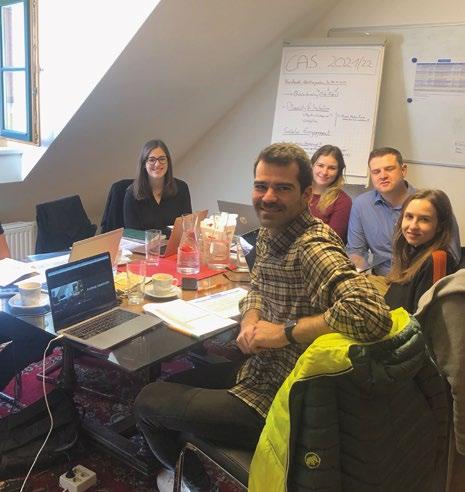
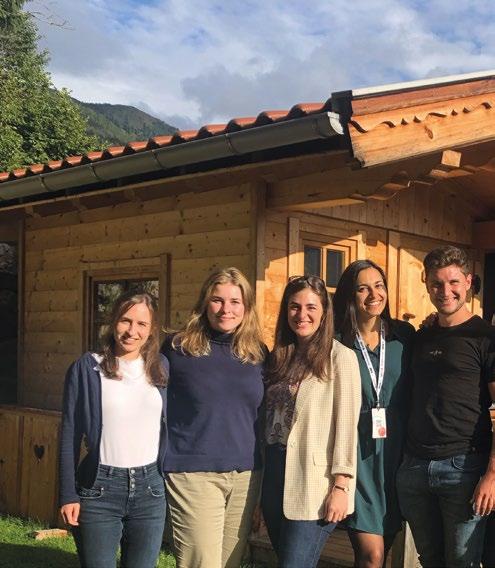
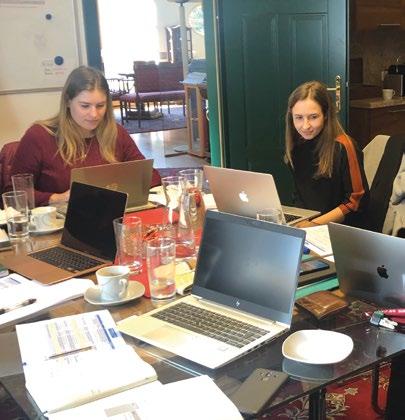
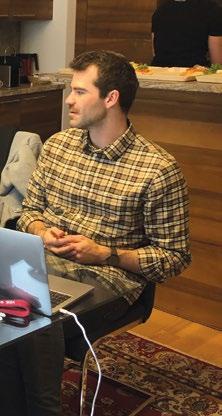
[engl. only] Every year, the new board-to-be has a working session to set their goals and plans for the upcoming club year. This first meeting of the still-semi-official board of 2021/22 took place on the 30th of October 2021 in the beautiful castle of Glanegg in Grödig with some members of the old board joining in a digital manner – thereby experienced support was ensured! Starting at noon we discussed the plans and timeline for the upcoming club year as well as the direction we would like the club to take. A general consensus on that was found, so we could devote our attention to each of the teams: Well prepared as always, the board members-to-be had worked out some presentations and building on those, the brainstorming began: Which events could we organize to attract new and interesting people to apply for a scholarship? And through which could we best approach the CAS alumni? How can we make the application process as inclusive and diverse as possible? Which communication strategies or other tactics can make the club more visible? And with which budget can all that be achieved? We only interrupted our gathering-of-ideas to refresh our mind and creativity with a short walk through the autumnal surroundings of the castle – a small photoshoot was of course necessary as well.
After hours of brainstorming, scheduling, strategy making and budgeting, our heads were buzzing
but we were satisfied about the outcomes of the working session. So naturally we deserved some pizza!
By then also the still – but ready for handing over his duties – president Manuel Mühlburger had arrived and was ready to virtually-welcome our club members. Because following the working session, the general assembly was about to take place in a hybrid format to reach as many CAS members as possible in those still uncertain covidtimes. The throwback to the most important events of the club year was followed by an introduction, the nomination and – big relief – the election of the new board.
• Andreas Maierhofer, president
• Carina Kobler, vice-president/scholarship holders,
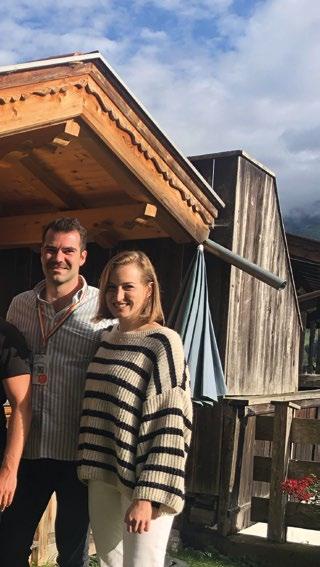
• Eva-Maria Schitter , general secretary/ visual communication,
• Maria Anwar, communication
• Franziska Mühlbacher, events
• Aurelia Kammerhofer, alumni
• Jakob Frenkenberger, finances
So here we were – full of motivation and ready for new challenges. Some of us already had gathered board experience, others have gathered insights by being part of the extended board and for others the club work was completely new territory. The foundation for the club year 2021/22 had been laid and together with the extended board teams the execution of our plans started. Dive into the following pages to get an understanding of what our working in the last few months was comprised of!
5
PUNSCHSTAND HILFSWERK WIEN PUNCHSTALL HILFSWERK VIENNA
PUNSCH TRINKEN UND GUTES TUN
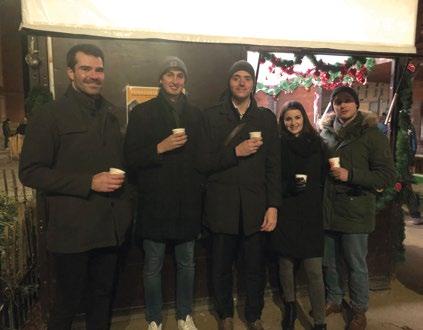
[dt.] Sich nach langer Zeit der online Meetings wieder zu treffen, zu plaudern und die Weihnachtszeit mit ein paar Tassen Punsch einzustimmen – und dabei auch noch Gutes zu tun: Das haben wir am 15.12.2021 in geselliger Runde gemeinsam mit dem Hilfswerk Wien vereint.Für einen Nachmittag und Abend übernahmen fleißige Hände des CAS den karitativen Punschstand des Hilfswerk Wien am Ceija-Stoijka Platz in Wien und schenkten mit der Bitte um freiwillige Spenden aus.
Dazu gesellten sich ebenso fleißige Punschtrinker*innen des CAS, die die Gelegenheit als Stammtisch nutzten. Rund um den Punschstand bildeten sich immer wieder wechselnde Grüppchen von CAS-Alumni und weiteren Freund*innen und Bekannten. Bei angeregten Gesprächen und großer Wiedersehensfreude wurde die eine oder andere Tasse Punsch getrunken und selbstgemachte Kekse des Hilfswerks genascht, solange, bis die Vorräte fast leer waren und wir 610€ für das Hilfswerk eingenommen hatten. Ein beträchtliches Ergebnis wie uns Irene Mitterhuber vom Hilfswerk freudig mitteilte.
Wir freuen uns, dass wir mit einem so netten und unterhaltsamen Abend wichtige Projekte und Aufgaben des Hilfswerks wie zum Beispiel die Nachbarschaftszentren,

6
Text: Aurelia Kammerhofer, (Board Member Alumni)
Sozialmärkte sowie Wohnungslosen- und Flüchtlingshilfe unterstützen konnten.In voller Euphorie denken wir schon an einen karitativen Punsch-Stammtisch in Kooperation mit dem Hilfswerk im nächsten Winter und hoffen wieder auf einige spendable Punschliebhaber*innen.
DRINKING PUNCH WHILE DOING GOOD
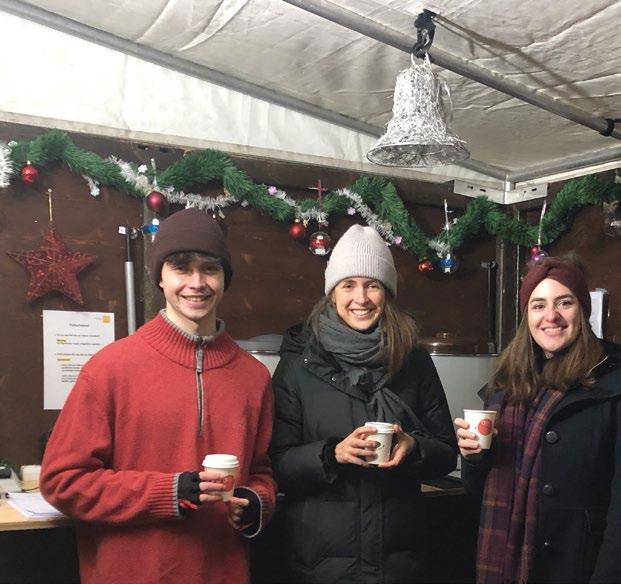
[engl.] To meet again after a long time of online meetings, to chat and to get in the mood for the Christmas season with a few cups of punch while also doing good: That‘s what we combined on the 15th of December 2021 in a gathering together with Hilfswerk Vienna.For one afternoon and evening, hardworking hands of CAS took over the charitable punch stall of Hilfswerk Vienna at Ceija-Stoijka Platz in Vienna and served punch while asking for voluntary donations.
Equally hardworking punch drinkers inside of the CAS joined, who used the occasion as a get-together. Around the punch stall, changing groups of CAS alumni and further friends and acquaintances gathered. With animated conversations and great joy of reunion, one or another cup of punch and homemade coo kies of the Hilfswerk were enjoyed until the supplies were
almost exhausted and we had collected 610€ for the Hilfswerk. A considerable result as Irene Mitterhuber from the Hilfswerk happily informed us.
We are glad that with such a nice and entertaining evening we could support important projects and missions of the Hilfswerk such as the neighborhood centers, social markets as well as help for the homeless and refugees.In full euphoria we are already thinking about a charitable punch gettogether in cooperation with the Hilfswerk next winter and hope to welcome some generous punch lovers again.
WEIHNACHTSFEIER CHRISTMAS PARTY
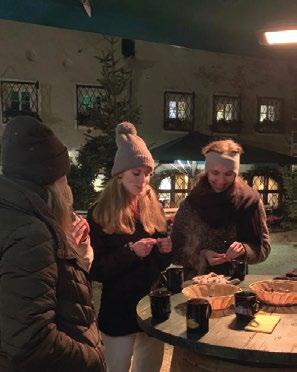
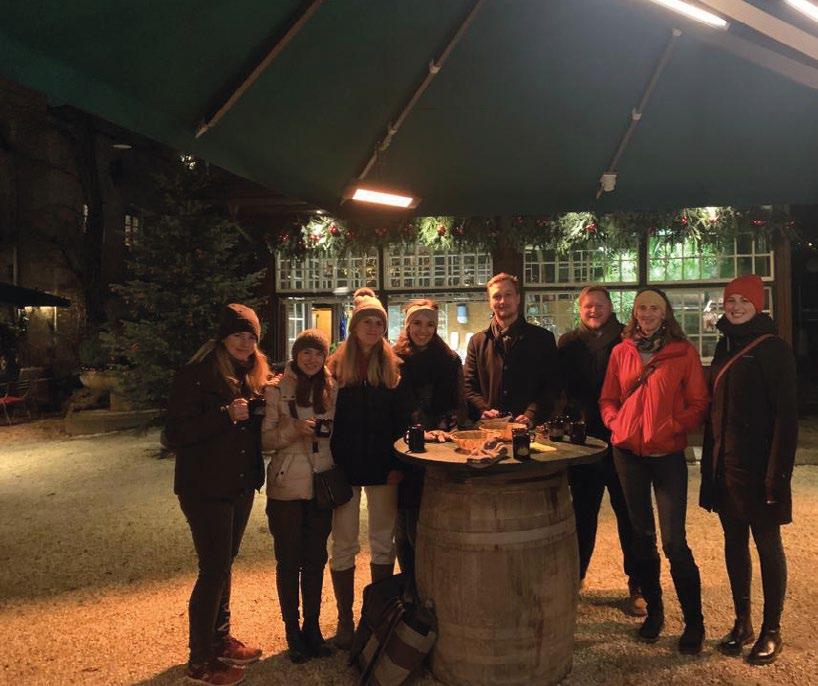
[dt.] Selbst die bitterkältesten Minusgrade am Abend des 18. Dezembers 2021 hielten unsere weihnachtsfeierlaunigen CAS-Alumni nicht davon ab, sich im Gastgarten des Gasthofs Krimpelstätter in Salzburg auf die Weihnachtszeit gemütlich einzustimmen. Um die bevorstehenden Weihnachtsfeiertage ohne Corona-Risiken im Kreis von Familie und Freunde sicher genießen zu können, entschlossen wir uns kurzerhand, das gemeinsame Abendessen im Innenbereich abzusagen und uns stattdessen im Außenbereich bei viel frischer Luft zu treffen. Bei herzerwärmendem Glühwein, süßem Punsch und heißen Maroni – für jeman den von uns war der Verzehr von die sen schmackhaften Früchten sogar eine Premiere! – unterhielten wir lustige, laute, lange aber doch wieder kurzweilige Gespräche. Durch die Wärme von innen, in Verbindung mit vielseitigen Erzäh lungen und ele gantem Tänzeln am Platz, konnten wir den herausfordernden Temperaturen tapfer standhalten. Es war schön, viele Gesichter von sowohl der altbekannten als auch jüngeren Alumni-Generation zu sehen und auf das bevorstehende Weihnachten und neue Jahr anzustoßen. Wir freuen uns schon sehr auf die wohlig-warme Weihnachtsatmosphäre nächstes Jahr und hoffen doch sehr, wieder bei einem genüsslichen Essen zu Tisch zusammenkommen zu können.


8
Text: Franziska Mühlbacher (Board Member Events) & Andreas Golser (Extended Board Member Events)
[engl.] Even the bitterly cold minus-temperatures on the evening of the 18th of December 2021 did not keep our Christmas party-loving CAS alumni from getting into a cozy festive mood in the outdoor area of the Gasthof Krimpelstätter in Salzburg. In order to safely enjoy the upcoming Christmas holidays with family and friends without any Corona hazards, we decided to cancel the dinner indoors and meet outside with plenty of fresh air instead. With heart-warming mulled wine, sweet punch and hot chestnuts - for one of us, eating these tasty fruits was even a premiere!we entertained funny, loud, long but again
from both the old familiar and younger alumni generations and to raise a toast to the upcoming Christmas and New Year. We are very much looking forward to the warm Christmas atmosphere next year and hope to be able to come together again for an enjoyable meal at a well-laid table.
THEMENTAG DIVERSITY AWARENESS 19.MÄRZ THEMATIC DAY ON „DIVERSITY AWARENESS“ 19TH MARCH
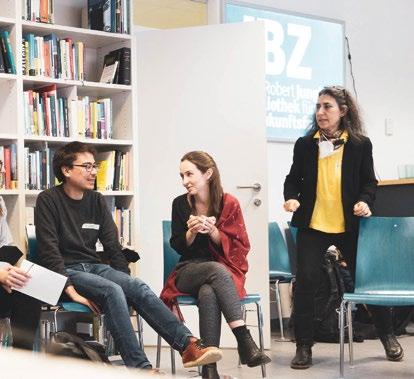
[dt.] In einem Clubjahr, in dem wir uns als Verein selbst die Frage stellen, wie wir und unsere Stipendiat*innen noch diverser und inklusiver werden können, darf auch die Auseinandersetzung mit Rassismus im alltäglichen Handeln und strukturellem Rassismus nicht fehlen. Daher haben wir am 19. März zu einem Thementag unter dem Motto „Diversity Awareness” mit zwei inhaltlichen Programmpunkten in die Robert-Jungk-Bibliothek für Zukunftsfragen (JBZ) in Salzburg eingeladen.
[engl.] In a year in which we as a club ask ourselves how we as well as the scho larship holders we bring to the Forum Alp bach can become even more diverse and inclusive, we cannot overlook the issue of everyday and structural racism. Therefore, on March 19, we invited to a thematic day on „Diversity Awaren ess“ with two content-related program points at the Robert Jungk Library for Future Issues (JBZ) in Salzburg.


HOW TO BE AN ALLY VERBÜNDETE*R SEIN IST EIN TUNWORT
[dt.] Am Nachmittag leitete uns Dr.in Mishela Ivanova im Namen der Orga nisation ZARA in den Räumlich



10
Texts: Aurelia Kammerhofer (Board Member Alumni), Maria Anwar (Board Member Communication) und Franziska Mühlbacher (Board Member Events)
keiten der JBZ durch einen Workshop zum Thema “How to be an ally - Verbündete:r sein ist ein Tunwort”.
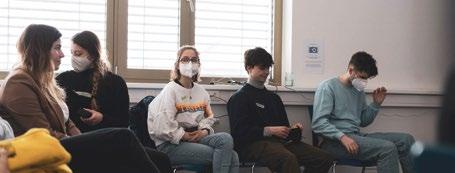
Die Organisation ZARA Zivilcourage und Anti-Rassismus-Arbeit ist seit 1999 tätig, um allen Formen des Rassismus entgegenzuwirken und Bewusstsein für Rassismus in Österreich zu fördern. Ihre Aufgaben reichen dabei von der Beratung für Betroffene, Schulungen für Interessierte bis hin zur Erarbeitung des Rassismus Reports 2021. Dr.in Ivanova ist neben ihrer Tätigkeit als Workshopleiterin und Trainerin bei ZARA auch als Senior Scientist an der Universität Salzburg u.a. mit den Schwerpunkten Demokratieerziehung und Migrationspädagogik aktiv.

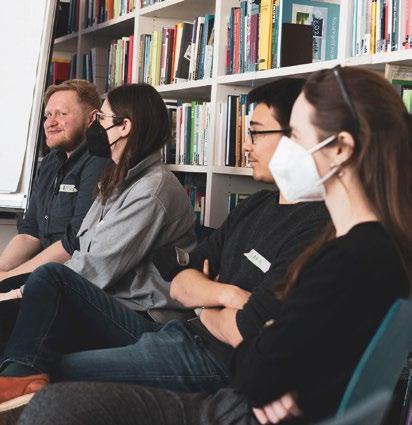
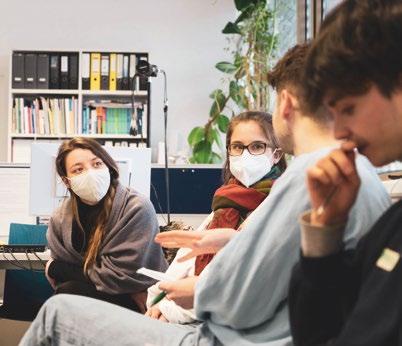
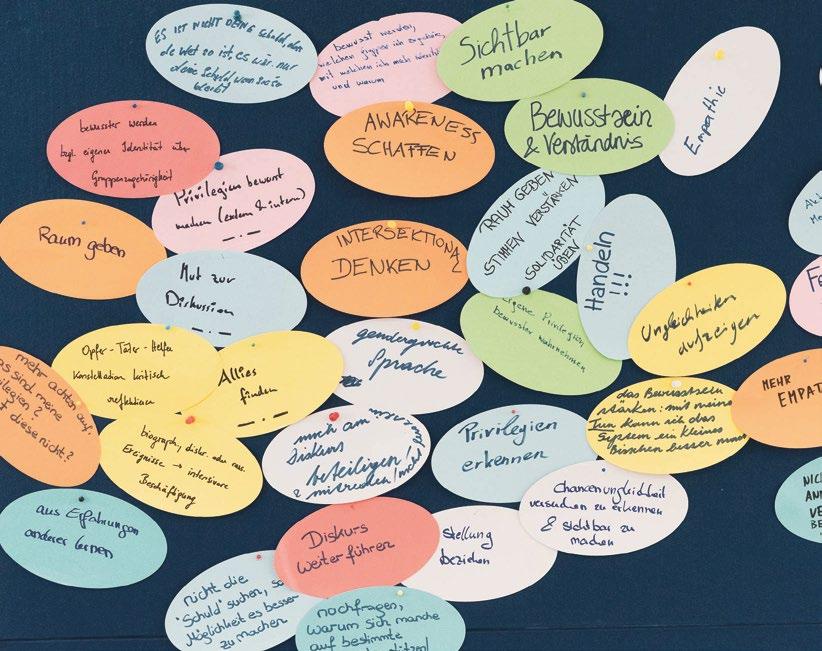
In einem offenen, wertfreien und auch vertraulichen und persönlichen Gesprächsklima hat uns Frau Dr. Ivanova mit theoretischen Inputs und interaktiven Übungen dazu angeleitet, Alltagsrassismus zu reflektieren und Möglichkeiten zu erkennen, eine anti-rassistische Haltung aktiv einzunehmen. Wesentliche Fragen, mit denen wir uns auseinandersetzen, waren: Was heißt es für mich, Verbündete*r zu sein? Welche Rolle spielen in diesem Zusammenhang weiße Privilegien? Wie kann ich eine anti-rassistische Haltung einnehmen? Welche verschiedenen Möglichkeiten gibt es, wenn ich Zeug*in von Rassismus im öffentlichen Raum, im Netz oder im Umgang mit der Polizei werde?
11
Was ermutigt und stärkt das gemeinsame Auftreten gegen rassistische Strukturen?
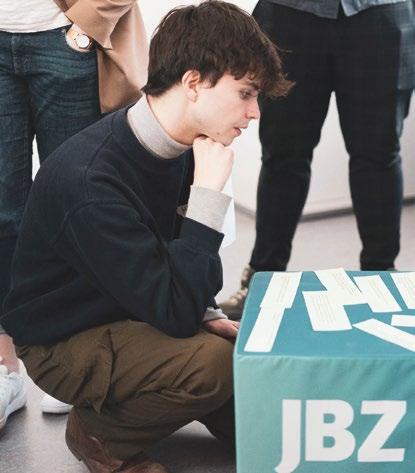
Rassismus- und Ausgrenzungserfahrungen können bereits in den jüngsten Jahren im alltäglichen Leben beginnen. Eine kurze Reflexion über den eigenen Namen und wie dieser in der Gesellschaft aufgenommen und interpretiert wird, führte uns dies vor Augen. Eine Art Rollenspiel verdeutlichte uns, dass anhand einer einzelnen Zuschreibung im alltäglichen Dialog mit fremden Menschen Ausgrenzungserfahrungen gemacht werden können, die einen verstummen lassen und aus dem gesellschaftlichen Leben ausgrenzen.
Der Workshop von ZARA machte uns klar, wie relevant es ist, sich regelmäßig und bewusst Zeit zu nehmen, um Fragen des strukturellen Rassismus und des Alltagsrassismus zu reflektieren und diskutieren, um als Verbündete*r aktiv werden zu könnendenn in einer pluralistischen Gesellschaft ist es wichtig, dass alle Stimmen gehört werden. Der Workshop half uns anhand einer nicht-hierarchischen und wertschätzenden Diskussionskultur, hier genauer hinzusehen, hinzuhören und uns zu sensibilisieren. Die Veranstaltung war insbesondere für alle aktiven Clubmitglieder und CAS-Alumni ausgerichtet - aber auch Freund*innen des CAS und Interessierte waren eingeladen und wir freuten uns über die rege Teilnahme. (Text: Aurelia Kammerhofer)
HOW TO BE AN ALLY
[engl.] In the afternoon, Dr. Mishela Ivanova led us through a workshop on the topic „How to be an ally - being an ally is a word of action“ on behalf of the organization ZARA.
The organization ZARA („Zivilcourage und Anti-Rassismus-Arbeit“) has been active since 1999 to counter all forms of racism and to promote awareness of racism in Austria. Its tasks range from counseling for those affected, training for interested parties, to the preparation of the Racism Report 2021. In addition to her work as a workshop leader and trainer at ZARA, Dr.in Ivanova is also active as a senior scientist at the University of Salzburg, focusing, among other things, on democracy education and migration education.
In an open, non-judgmental and also confidential and personal atmosphere, Dr. Ivanova guided us with theoretical inputs and interactive exercises to reflect on everyday racism and to recognize possibilities to actively adopt an anti-racist stance. Essential questions were: What does it mean for me to be an ally? What role does white privilege play in this context? How can I take an anti-racist stance? What are the different possibilities when I witness racism in public space, online or when dealing with the police? What encourages and strengthens the common stand against racist structures?
Experiences of racism and exclusion in everyday life can already start in young years. A short reflection on one‘s own name and how it is received and interpreted in
12
society brought this home to us. A kind of role play made it clear to us that on the basis of a single attribution in everyday dialogue with strangers, experiences of exclusion can be made, which can silence one and exclude somebody from social life.
ZARA‘s workshop made it clear to us how relevant it is to regularly and consciously take time to reflect on and discuss issues of structural as well as everyday racism in order to be able to become active as allies - because in a pluralistic society it is import ant that all voices are heard. The workshop helped us to take a closer look, to listen and to sensitize ourselves by means of a non-hierarchical and appreciative debate practice. The event was aimed in particular
ANTIRASSISMUS –POLITIK & PRAXIS: WIE KANN ANTIRASSISTISCHE POLITIK IN DER PRAXIS UMGESETZT WERDEN?
PODIUMSDISKUSSION
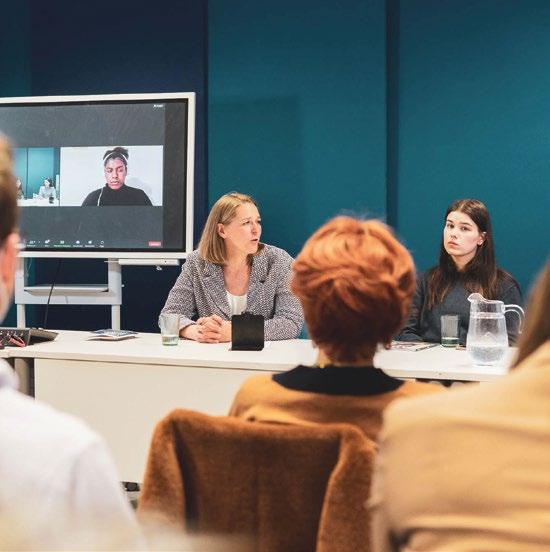
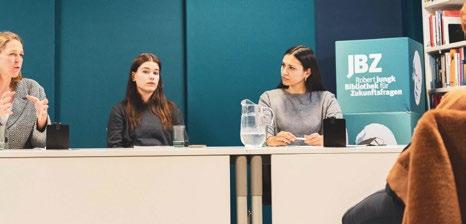
[dt.] Gemeinsam mit der Robert-JungkBibliothek für Zukunftsfragen luden wir zur Podiumsdiskussion „Antirassismus – Politik & Praxis: Wie kann antirassistische Politik in der Praxis umgesetzt werden?“ ein, um die Ursachen und Herausforderungen des strukturellen Rassismus sowie mögliche Lösungsansätze zu diskutieren. Während sich der Workshop „How to be an Ally“ am Vormittag damit befasst hatte, wie die Teilnehmer*innen im Alltag individuell antirassistisch agieren können, widmete sich die Podiumsdiskussion am Abend dem institutionellen Rassismus. Als institutionellen Rassismus bezeichnet man nicht unbedingt Interaktionen zwischen Individuen, sondern vielmehr rassistische Strukturen und Entscheidungsabläufe, die so ausgestaltet sind, dass regelmäßig bzw. überdurchschnittliche oft BPoC (Schwarze Menschen und People of Colour) benachteiligt werden. Diese Diskriminierungen finden sich z.B. im Schul- und Bildungssystem, am Wohnungsoder Arbeitsmarkt, in der Wissenschaft, im Gesundheits- oder im Polizeibereich. Da struktureller Rassismus in Strukturen und Abläufen angelegt ist, ist die Benachteiligung – anders als bei einzelnen rassistischen Äußerungen – oft viel schwerer zu erkennen und dessen Bekämpfung bringt daher eigene Fragestellungen und Schwierigkeiten mit sich.

UNSERE PODIUMSGÄSTE
• Noomi Anyanwu, Mitinitiatorin und Spre cherin des Black Voices Volksbegehren sowie Aktivistin. Das Black Voices Volks begehren wurde im Sommer 2020 initiiert und forderte einen nationalen Aktionsplan zur Bekämpfung von Rassismus in Öster reich. Dieser solle u.a. Anti-Rassismus und Sensibilisierungsschulungen in ver schiedenen öffentlichen Bereichen, wie Gesundheit, Arbeitsmarkt, Bildung oder Polizei umfassen.
• Hanna Begic (in Vertretung für Muhamed Beganovic), freie Journalistin u.a. für die Magazine Qamar und Das Biber. Das Magazin Qamar ist ein Magazin für mus limische Kultur und das Magazin Biber berichtet aus der multiethnischen Community Wiens heraus und soll somit ein Medium darstellen, welches die gelebte Vielfalt in Österreich reflektiert und repräsentiert.
• Andrea Klambauer, Salzburger Landesrätin für die Ressorts Wohnbau, Kinderbetreuung, Familien, Wissenschaft, Erwachsenenbildung, Frauen, Chancengleichheit, Generationen und Integration. Seit 2021 ist sie außerdem Landessprecherin von den NEOS Salzburg sowie Stellvertreterin der NEOS-Bundesvorsitzenden Beate Meinl-Reisinger.
Wir stell ten uns die Fragen,

14
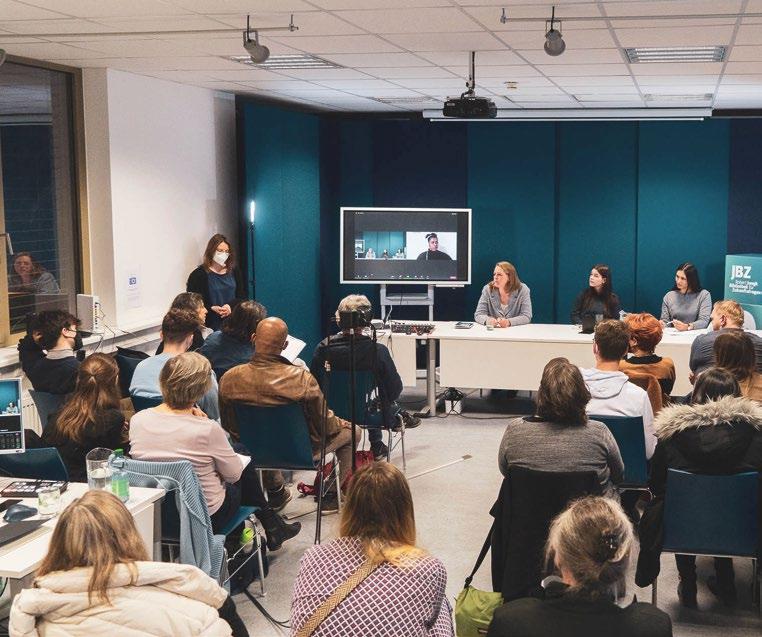
warum antirassistische Politik noch nicht (ausreichend) in der Praxis umgesetzt wird und wie bzw. welche antirassistischen Forderungen zukünftig in der Praxis geltend gemacht werden können. Die Diskussion reichte von dem besonders folgenschweren strukturellen Rassismus im Zusammenhang mit dem Wohn- und Arbeitsmarkt, über die Relevanz von Repräsentation und öffentlicher Sichtbarkeit von BPoC in den Medien bis zur Notwendigkeit eines organisatorisch aber auch inhaltlich antirassistischen Bildungswesen – u.a. durch eine sorgfältige Auseinandersetzung mit der
kolonialen Geschichte Europas und deren andauernden globalen Folgen. Die Diskussion fand hybrid - online via zoom und vor Ort in der JBZstatt und wir freuten uns über das rege Interesse, einen vollen Saal und viele belangvolle Fragen. {Text: Maria Anwar)
STATEMENT FRANZISKA MÜHLBACHER
„Die Diskussion wurde bei Getränken und italienischem Essen im Anschluss fortgesetzt. Die Wirkung unseres Thementages zeigt sich jedoch nachhaltig: auch in den folgenden Tagen und Wochen wurden antirassistische Haltung und struktureller Rassismus Themen, die wir persönlich, jede*r für sich selbst, in gemeinsamer Runde, in Gesprächen mit Freunden und Familie sowie unsere studentischen und beruflichen Tätigkeiten weiter reflektiert. Wir hoffen dadurch nicht nur unser eigenes Bewusstsein für antirassistisches persönliches und gesellschaftliches Handeln zu schärfen, sondern dieses auch an andere weiterzugeben, um so zu einer antirassistischen Gesellschaft beizutragen.“
Ijeoma Oluo, US-amerikanische Schriftstellerin

15
The beauty of anti-racism is that you don‘t have to pretend to be free of racism to be an anti-racist. Antiracism is the commitment to fight racism wherever you find it, including in yourself. And it‘s the only way forward.
ANTIRACISM – POLITICS AND PRACTICE: HOW CAN ANTIRACIST POLITICS BE IMPLEMENTED IN PRACTICE?
PANEL DISCUSSION
[engl.] Together with the „Robert Jungk Bibliothek für Zukunftsfragen“, we invited to a panel discussion on the causes and challenges of structural racism as well as possible approaches to solve them. While the workshop „How to be an Ally“ in the
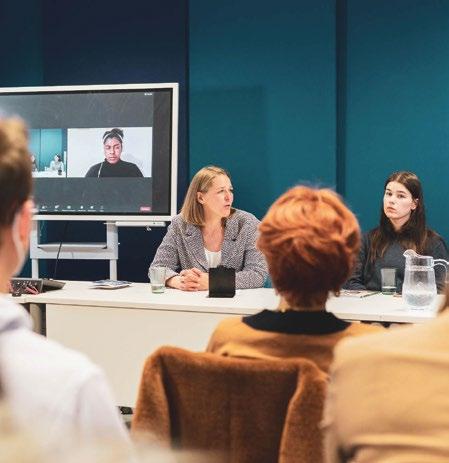
morning dealt with the individual anti-racist actions that participants can take in everyday life, the panel discussion in the evening was dedicated to institutional racism. Institutional racism does not necessarily refer to interactions between individuals, but rather to racist structures and decisionmaking processes that are designed in such a way that BPoC (Black People and People of Color) face regular or above-average discrimination. These discriminations can be found, for instance, in the school and education system, in the housing or labor market, in academia, in the health sector or in police encounters. Since structural racism is inherent to structures and processes, the discrimination is often - unlike individual racist remarksmuch more difficult to identify, and combating it brings its own set of questions and difficulties.
16
OUR PANELISTS
• Noomi Anyanwu, co-initiator and spokesperson for the Black Voices referendum petition and activist. The Black Voices referendum was initiated in the summer of 2020 and called for a national action plan to combat racism in Austria. This should include anti-racism and awareness training in various public areas, such as health, labor market, education or police.
• Hanna Begic (standing in for Muhamed Beganovic), freelance journalist for the magazines Qamar and Das Biber, among others. The magazine Qamar is a magazine for Muslim culture and he magazine Biber reports from the multi-ethnic community of Vienna and is thus intended to be a medium that reflects and represents the lived diversity in Austria.
• Andrea Klambauer, Regional Minister for Housing, Childcare, Families, Science, Adult Education, Women, Equal Opportunities, Generations and Integration in Salzburg. Since 2021, she has also been the state spokesperson of NEOS Salzburg as well as the deputy of NEOS federal chairwoman Beate Meinl-Reisinger.
We asked ourselves the questions why anti-racist policies are not yet (sufficiently) implemented in practice and how and
which anti-racist demands can be asserted in practice in the future. The discussion ranged from particularly consequential structural racism in the context of the housing and labor market, to the relevance of representation and public visibility of BPoC in the media, to the need for an anti-racist education system in terms of organization but also content - including a careful examination of Europe‘s colonial history and its ongoing global consequences.
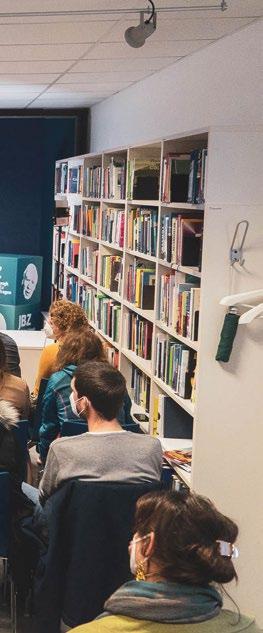
The discussion took place in a hybrid wayonline via zoom and on site at the JBZ - and we were happy about the keen interest, a full hall and many pertinent questions.
STATEMENT FRANZISKA MÜHLBACHER
“The discussion continued over drinks and Italian food. However, the effect of our thematic day is sustainable: in the following days and weeks, anti-racist behavior and structural racism are topics that we continue to reflect on personally, collectively, in conversations with friends and family, as well as our student and professional life. We hope that this will not only raise our own awareness of anti-racist personal and social interaction, but also pass it on to others in order to contribute to an antiracist society.“
17
KAMINGESPRÄCH MIT FIDES RAFFEL VON MYABILITY SOCIAL ENTERPRISE FIRESIDE CHAT WITH FIDES RAFFEL FROM THE SOCIAL ENTERPRISE MYABILITY
Cooperation with Club Alpbach Tirol and IG Wien


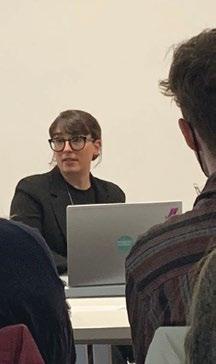
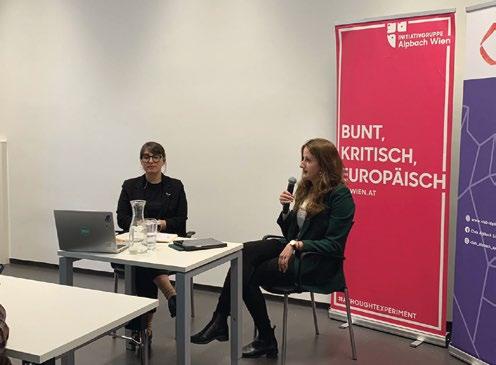
[dt.] Ganz im Sinne unseres heurigen Clubmottos „Diversität und Inklusion“ dis kutierten wir über das Thema „Inklusion“ am 20.04.2022 im Rahmen eines hybriden Kamingesprächs, in Kooperation mit dem Club Alpbach Tirol und der Initiativgrup pe Wien, mit Fides Raffel vom Unter nehmen myAbility an der TU Wien.



MyAbility wurde 2014 von Gregor Demblin gegründet und ist eine soziale Unternehmensberatung, welche Unter nehmen hilft, Barrieren abzubauen und das volle Potenzial von Menschen mit Behinderungen zu erkennen und wertzuschätzen. Durch Beratungs- und Trainingsangebote, Unterstützung beim Recruiting, Fachvorträge und vielen weiteren Angeboten nimmt myAbility Unternehmen die Angst, mit Menschen mit Behinderung konstruktiv zusammenzuarbeiten und ermutigt sie, diese in den Arbeitsmarkt einzubinden. Wir freuten uns, eine vielseitig engagierte Speakerin und Expertin zum Thema für unser Kamingespräch zu finden: Fides Raffel arbeitet seit 2017 als Disability Consultant bei myAbility und weist neben einem Background als Vorstandsmitglied bei der Frauendomäne sowie als Trainerin bei Sindbad Social Business auch einen Alpbach-Kon nex auf: Als Stipendiatin lernte sie 2014 das Forum kennen, leitete 2016 ein Seminar mit Teach for Austria, engagierte sich 2017 beim Alpbach Standing Committee und ist seither regelmäßig mit der Frauendomäne zu Gast am Forum.
Fides führte uns zu Beginn des Kaminge sprächs mit einer kurzen Übung eindrück
18
Texte: Franziska Mühlbacher (Board Member Events) und Aurelia Kammerhofer (Board Member Alumni)
lich vor Augen, dass jede:r von uns im persönlichen Umfeld Menschen mit Behinderungen kennt und mit diesem Thema konfrontiert ist: Während sie eine Liste mit Behinderungen vorlas, setzte sich das Publikum, sobald es jemanden im Umfeld kannte, der/die diese Behinderung aufweist. Spätestens nach ein paar Worten saß der ganze Saal. Dies deckt sich auch mit den Zahlen in Österreich: über 15% sind von einer dauerhaften Behinderung betroffen.
Neben der Entstehungsgeschichte von myAbility teilte Fides spannende Einblicke in ihre Arbeit und ihre Überzeugungen mit uns. So liegt die eigentliche Behinderung einer Person meist am Umfeld: gäbe es zum Beispiel inklusiv konstruierte Gehwege, so gäbe es für Rollstuhlfahrer*innen in dieser Hinsicht keine Barrieren. Doch nicht nur straßenbauliche Maßnahmen können Barrierefreiheit gewährleisten, sondern auch (digitale) Dienstleistungen, Informationen oder Produkte können barrierefrei gestaltet werden.
Ausgleichstaxe. Unternehmen müssen ab 25 Mitarbeiter*innen mindestens eine*n begünstigt Behinderte*n (Grad der Behinderung: mind. 50%) einstellen. Kommen sie dieser Pflicht nicht nach, so müssen sie eine monetäre Strafe bezahlen. Zwar ist laut Fides die Option, dass Unternehmen statt der Einstellung eines/einer begünstigt Behinderten eine Strafe zahlen, nicht optimal, derzeit aber noch immer das notwendige Mittel zum Zweck, um Unternehmen darauf hinzuweisen, dass auch Menschen mit Behinderung einen wertvollen Beitrag zum Arbeitsleben einer Firma beitragen können. Ein Tipp zum Thema „Inklusive Sprache“, den Fides mit uns teilte, war jener, Nachrichten in einfacher Sprache zu sehen. Denn im Alltag merken wir oft gar nicht, dass wir auch auf Basis unserer Sprachgewohnheiten Menschen mit Behinderungen (ungewollt) ausgrenzen.
Das interessierte Publikum vor Ort und online zeugte von Fides‘ beeindruckenden Erzählungen. Bei einem gemütlichen Ausklang im Lokal „Schikaneder“ konnten die Teilnehmer*innen noch restliche Fragen klären und Diskussionen fortführen. Ein großes Dankeschön gilt unserer Speakerin Fides Raffel für ihre Zeit und offene Gesprächsbasis. Des Weiteren bedanken wir uns bei Jenni Zeller vom Club Alpbach Tirol, welche die Moderation des Gesprächs übernahm. Nicht zuletzt möchten wir auch Aurelia Kammerhofer Danke sagen für die Organisation der tollen Location für unser Kamingespräch. Wir freuten uns, dass viele Interessierte am Kamingespräch teilnahmen.
19
MYABILITY QUIZ
[dt.] Lösung auf der letzten Seite
1. Wie viel Prozent der österreichischen Bevölkerung sind von einer dauerhaften Behinderung betroffen?
A: 2,3%
B: 5,1%
C: 10,8%
D: 18,4%
2. Welche Art der Beeinträchtigung ist am häufigsten?
A: Beweglichkeit/Mobilität
B: Psychisch
C: Hören
D: Sehen
3. Was ist der häufigste Grund für eine Behinderung?
A: Krankheit
B: Angeborene Behinderung
C: Arbeitsbezogene Unfälle
D: Verkehrsunfall
20
4. Ab wie vielen Mitarbeiter*innen müssen Unternehmen einen „begünstigt Behinderten“ einstellen? (Anm. begünstigt behindert bedeutet ein Grad der Behinderung von mindestens 50 %)
A: ab 100
B: ab 1000 C: ab 25
D: ab 200
5. Ab welchem Zeitraum spricht man von einer Behinderung?
A: Sofort
B: Ab 6 Monaten
C: Ab 12 Monaten
D: Ab 24 Monaten
6. Mit welchen Erkrankungen ist die Zugehörigkeit zum Kreis der „begünstigt Behinderten“ möglich?
A: Diabetes Mellitus
B: Epilepsie
C: Amputation Unterschenkel
D: Nierentransplantation
21
[engl. ]In line with this year‘s club motto „Diversity and Inclusion“, we discussed the topic of „Inclusion“ with Fides Raffel from the Social Enterprise myAbility at the Vienna University of Technology on the 20th of April as part of a hybrid fireside chat, in cooperation with Club Alpbach Tyrol and the Initiativgruppe Wien.
Founded in 2014 by Gregor Demblin, MyAbility is a social consulting firm that helps companies to break down barriers in order to recognize and value the full potential of people with disabilities. Through consulting and training services, recruiting support, expert lectures and many other offerings, myAbility alleviates companies‘ worries to work with people with disabilities in a constructive way and encourages them to include them in the labor market in an inclusive way.
We were pleased to find a versatile speaker and expert on the topic for our fireside chat: Fides Raffel has been working as a Disability Consultant at myAbility since 2017 and has - additionally to her back ground as a board member at Frau endomäne (note: a database for female* and non-binary experts) and as a trai ner at Sindbad Social Business - an Alp bach connection: She got to know the Forum as a scholarship holder in 2014, led a seminar
with Teach for Austria in 2016, got involved with the Alpbach Standing Committee in 2017, and has since been a regular guest at the Forum as part of the Frauendomäne.


At the beginning of the fireside chat, Fides demonstrated through a short exercise the fact that each of us know people with disabilities in our personal environment: While she read out a list of disabilities, the audience sat down as soon as they knew someone in their environment who had this disability. After a few words at the latest, the whole hall was seated. This also coincides with the figures in Austria, according to which more than 15% of people are affected by a permanent disability.
In addition to the story of how myAbility came into being, Fides shared exciting insights into her work and her beliefs with us. For example, the actual disability of a person is usually related to their surroundings: If there were inclusively constructed
22
road construction measures can ensure accessibility, but also (digital) services, information or products can be designed in an accessible way. One topic that was discussed intensively during the fireside chat was the so-called „Ausgleichstaxe“ (equalization tax): Companies with 25 or more employees must employ at least one „preferred person with a disability“ (degree of disability: at least 50%). If they do not comply with this obligation, they must pay a monetary penalty. According to Fides, the option for companies to pay a penalty instead of hiring a beneficially disabled person is not optimal, but it is currently still the necessary means to an end to make companies aware that people with disabilities also make a valuable contribution to the working life of a company. One tip on inclusive
language that Fides shared with us was that of watching news in simple language. This is because in everyday life, we often don‘t even realize how we (often unintentionally) exclude people with disabilities based on our language habits as well.
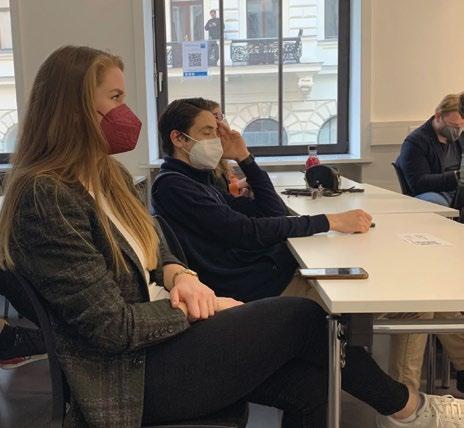
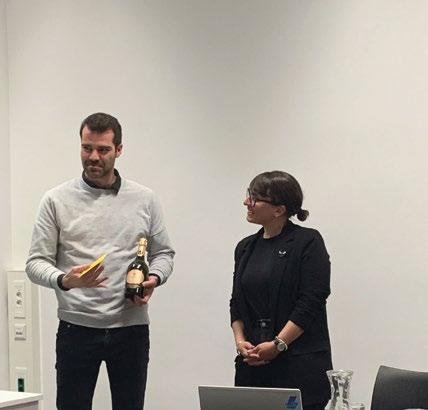
The interested audience on site and online testified to Fides‘ impressive narratives. At the end of the event, the participants were able to clarify remaining questions and continue discussions in the restaurant „Schikaneder“. A big thank you goes to our speaker Fides Raffel for her time and open discussion. Furthermore, we would like to thank Jenni Zeller from Club Alpbach Tirol, who moderated the discussion.
23
MYABILITY QUIZ
[engl.] Find the solution on the last page.
1. What percentage of the Austrian population is affected by a permanent disability?
A: 2,3%
B: 5,1%
C: 10,8%
D: 18,4%
2. Which type of impairment is the most common?
A: Mobility
B: Mental C: Hearing
D: Vision
3. What is the most common reason for disability?
A: Illness
B: Congenital disability
C: Work-related accidents
D: Traffic accident
24
4. From how many employees onwards must companies employ a „begünstigt Behinderte*n“? (= a „preferred person with disability“ is defined as having a degree of disability of at least 50%.)
A: From 100 B: From 1000
C: From 25
D: From 200
5. After which time period is a person considered to have a disability?
A: Immediately
B: From 6 months
C: From 12 months
D: From 24 months
6. Which diseases qualify a person to be consideres as a “preferred person with disability”?
A: Diabetes Mellitus
B: Epilepsy
C: Lower leg amputation
D: Kidney transplantation
25
BEHINDE THE SCENES
SPRING CONFERENCE


2022 – SKOPJE

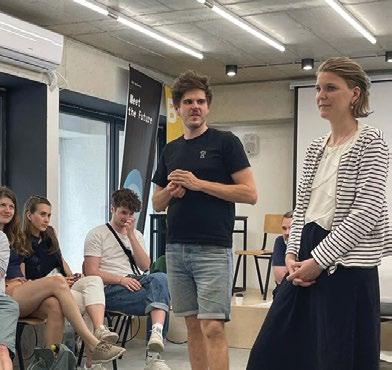
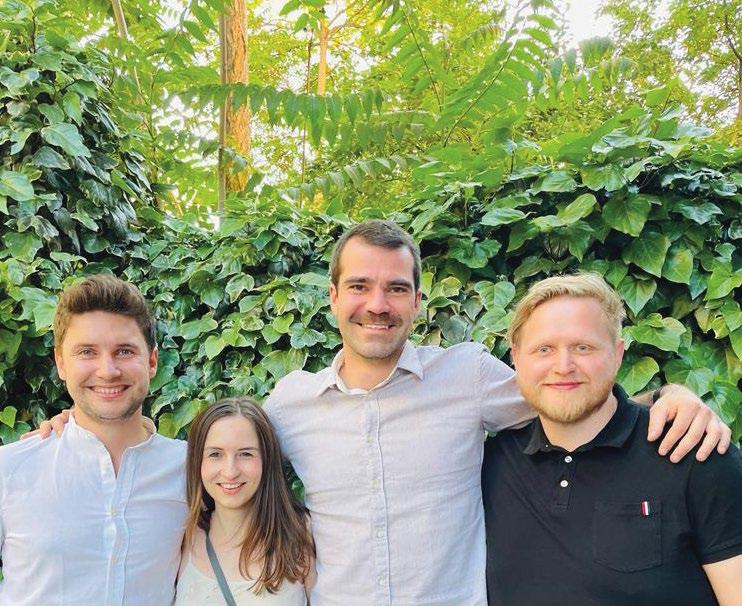
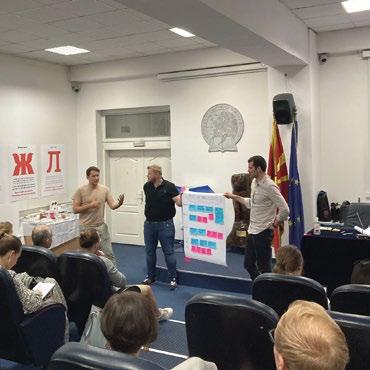
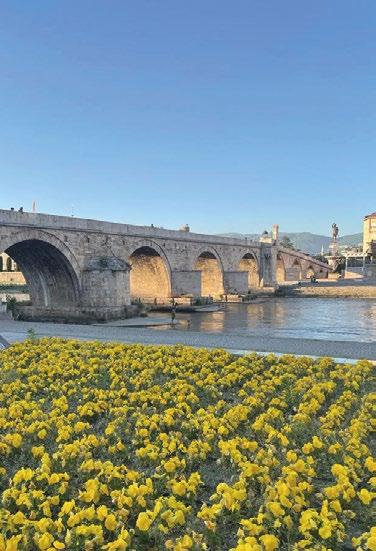
[engl. only] One could say it is every year’s kick-off meeting for the EFA busy season, the Forum Alpbach Network Spring Conference. This year it took place in the capital of Northern Macedonia, Skopje.



Four Club Alpbach Salzburg Members joined the international gathering this year to discuss several topics. Representatives of most clubs worked on the baseline agreement with the European Forum Alpbach, were informed, and worked on strategies to strengthen the network’s presence in the western Balkan area or to develop ideas such as a buddy system between different clubs. In addition, informative sessions were held to inform younger clubs or board members about best practices on “how to run a club”, which appeared to be very useful for established clubs as well since it embraced the exchange of ideas and systems.
Besides intensive work on bringing the network forward, cultural and interpersonal aspects did not fall short. When all the attendants arrived in Skopje, one immediately felt the joy of meeting well-known and new faces again. Club Alpbach Macedonia welcomed all visitors warmly and organized a great mixture of activities from traditional dinners with music to city strolls around the beautiful city of Skopje.
Kudos to Club Alpbach Macedonia for managing to bring the famous Alpbach spirit to Northern Macedonia and for stringently organizing such an international gathering.
26 • (
Texte: Jakob Frenkenberger (Board Member Finance), Susanne Drexler (Extended Board Member Scholarship Program), Sarah Jones (Extended Board Member Stipendien), Julian Kessler (Extended Board Member Events)
A SMALL INSIGHT INTO THE WORKINGS OF THE EXTENDED BOARD FOR SCHOLARSHIP HOLDERS

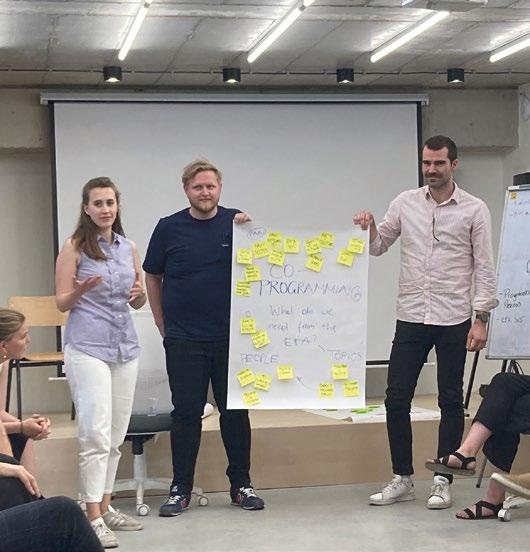
[engl. only] To promote Club Alpbach Salzburg and inform about the possibility to attain a scholarship for the European Forum Alpbach, we contacted various universities and organizations: the University of Salzburg, the University of Applied Sciences Salzburg, the Paracelsus Medical University, the Mozarteum, the Land Salzburg, the Salzburg Experimental Academy of Dance, Sindbad Salzburg (a social business working towards equal opportunities for pupils through one-on-one mentoring), scientists for future and the Student Theatre. Where possible, we went personally to present the EFA and CAS and answered questions directly. Otherwise, we put up posters, distributed flyers and asked for our information to be included in newsletters of different
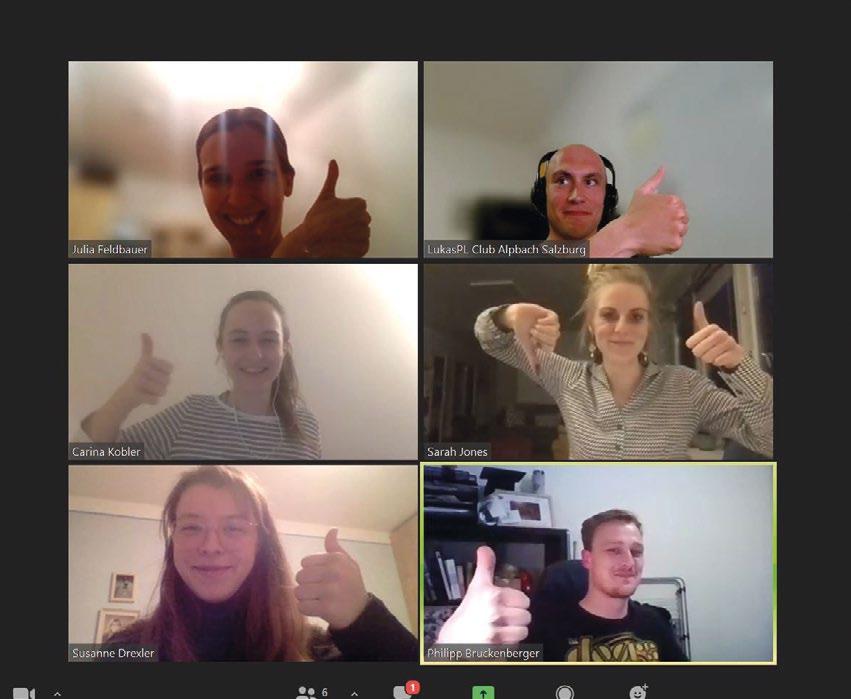
In addition, there was an online information evening with all Austrian clubs on the 17th of February, where applicants were given a general introduction and could then ask the various clubs questions in breakout rooms. During February and March, information about the application, experiences from the forum and the CAS were regularly posted on Facebook, Instagram and Studo. Applicants could ask questions about the process at any time by email.
After the application deadline on the 7th of April, each application was read by three different members of the scholarship team and evaluated according to predetermined criteria decided in board meetings. Subsequently, each application was discussed and a shortlist was drawn up, which was forwarded to the board members, who decided on the scholarship holders for this year.
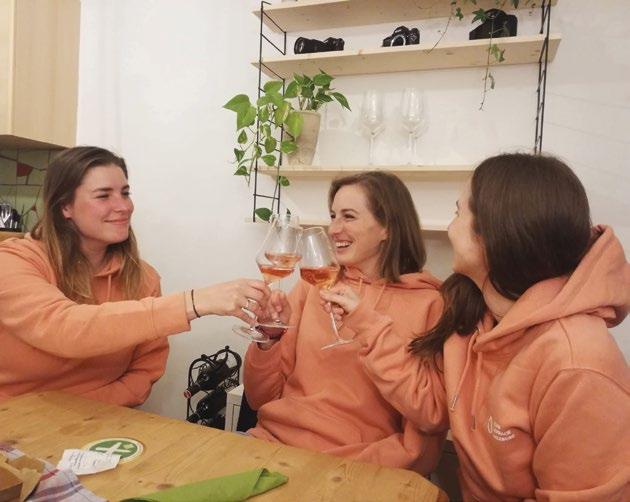
In order to get to know each other personally and to prepare the scholarship holders for the upcoming Forum in more detail, we held another info session in Salzburg. Afterwards we retreated to „Resch und Lieblich“, where we were provided with excellent food and drinks and spent a lovely evening together.
(Text: Susanne Drexler, Sarah Jones)

29
STAMMTISCHE IM VEREINSJAHR 2021/22
[dt. ] Der Club Alpbach Salzburg ist nicht nur während des Forums aktiv, sondern organisiert Veranstaltungen für seine Mitglieder im ganzen Jahr. So fanden Stammtische in Wien und in Salzburg statt, zu denen die Mitglieder des Clubs, Stipendiat*innen aus vielen verschiedenen Jahrgängen, in geselliger Atmosphäre zusammenkamen. Immer wieder werden im Gespräch gemeinsame Erlebnisse am Forum erinnert, es wird gelacht und mit Freude der Zeit in Alpbach gedacht. Gleichzeitig ist insbesondere der Austausch zu den diversen Lebenswegen spannend und gibt viele unterschiedliche Perspektiven, um aktuelle Themen und Herausforderungen in der Gesellschaft zu diskutieren. Immer schwingt die Vorfreude mit, bald wieder im Sonnenhof einzukehren und das Forum zu besuchen.
INFO-ABEND FÜR DIE NEUEN STIPS
Während die Stammtische bis ins Frühjahr insbesondere für bestehende Mitglieder gedacht sind, also Personen, die bereits am Forum waren, veranstaltete der Club auch zwei Events für die neuen Stipendiat*innen: den Stip-Infoabend mit anschließendem Stammtisch am 24.6. sowie den Pre-Alpbach Stammtisch am 29.7.
ren Club vor und bereitete die Stips mit Tipps und Tricks auf das Forum vor: mit einer Packliste, mit Informationen über den Sonnenhof, über die Kamingespräche bis hin zu wichtigen Terminen wie der Alpbach Pride. Danach gab es einen Ausklang bei Speisen und Geträn ken. Obwohl die Stips noch gar nicht in Alpbach waren, war die Atmosphäre gleich die des Forums. Span nende Lebensgeschichten, interdiszi plinäre, nicht bloß an der Oberfläche der Themen kratzende, Gespräche und Vor freude auf die gemeinsame Zeit!
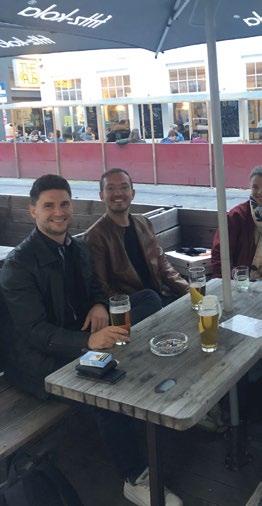
Dieser Spirit lebte beim Pre-Alpbach Stammtisch noch einmal auf, diesmal noch unmittelbarer vor dem Forum. Während die Gedanken und der Austausch zum Forum sowie zu den individuellen Programmhighlights ganz zentral waren, wurde natürlich auch über andere Themen und Sommerpläne geplaudert. Alles in allem eine tolle Gelegenheit, dass sich die Freundschaft zwischen den Stips schon vor dem Forum vertiefen konnte.
(Text: Julian Kessler)
Bei ersteren konnten sich alle Stipendiat*innen erstmals kennenlernen! Nach einer Vorstellrunde mit Namen, Hintergrund und inspirierenden Persönlichkeiten, die man gerne treffen würde, stellte Carina unse-
[engl.] The Club Alpbach Salzburg is not only active during the Forum, but organizes events for its members throughout the year.
30
GET-TOGETHERS THROUGHOUT THE YEAR 2021/2022
Regulars‘ tables were held in Vienna and in Salzburg, where the members of the club – scholarship holders from many different years – came together in a cheerful atmosphere. Again and again, common experiences at the Forum are recalled in conversation, there is laughter and joyful remembrance of the time in Alpbach. At the same time, the exchange on various paths taken – be it careerwise or personal – is particularly exciting and provides many different perspectives on discussing current issues and challenges in society. During these conversations you can always feel the anticipation to return to the Sonnenhof and visit the Forum.
INFO EVENING FOR THE NEW GENERATION OF „STIPS“ (=SCHOLARSHIP HOLDERS)
While the regulars‘ tables until spring are intended especially for existing members –so those club members who have already been awarded a scholarhip to the forum in previous years – the club also organized two events for the new scholarship holders: the “Stip” info evening followed by a regulars‘ table on 24th of June and the Pre-Alpbach
regulars‘ table on 29th of July.
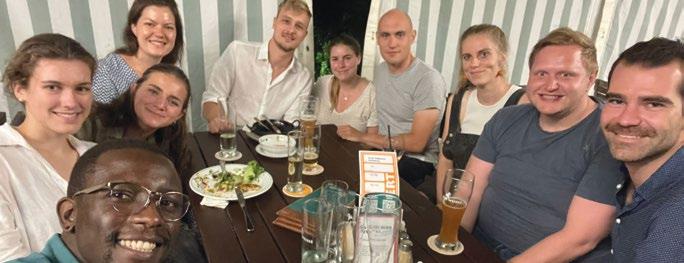
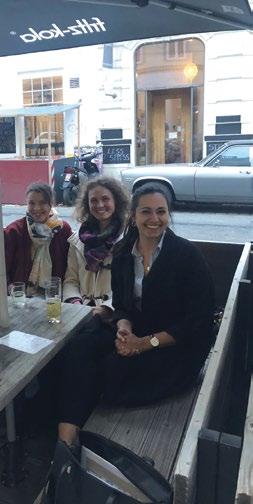
At the former, all scholarship holders were able to get to know each other for the first time! After a round of introductions with names, background and inspiring personalities one would like to meet, Carina introduced our club and prepared the Stips with tips and tricks for the forum: with a packing list, with information about the Sonnenhof, the fireside chats as well as important dates like the Alpbach Pride. Afterwards we concluded the evening with food and drinks. Although the Stips had not even been to Alpbach yet, the atmosphere was immediately resembling that of the Forum Alpbach: exciting life stories, interdisciplinary conversations that didn‘t merely scratch the surface of the issues, and anticipation of the time together!
This spirit came alive once again at a preAlpbach get-together, this time even more proximate to the Forum. While thoughts and exchanges about the Forum and individual program highlights were very central, there was of course also chatter about other topics and summer plans. All in all, it was a great opportunity to deepen the friendship between the Stips already before the beginning of the Forum.
WANDERUNG UND HÜTTENGAUDI CAS HIKING
WEEKEND
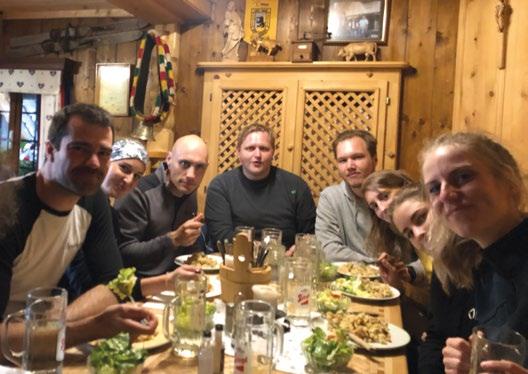
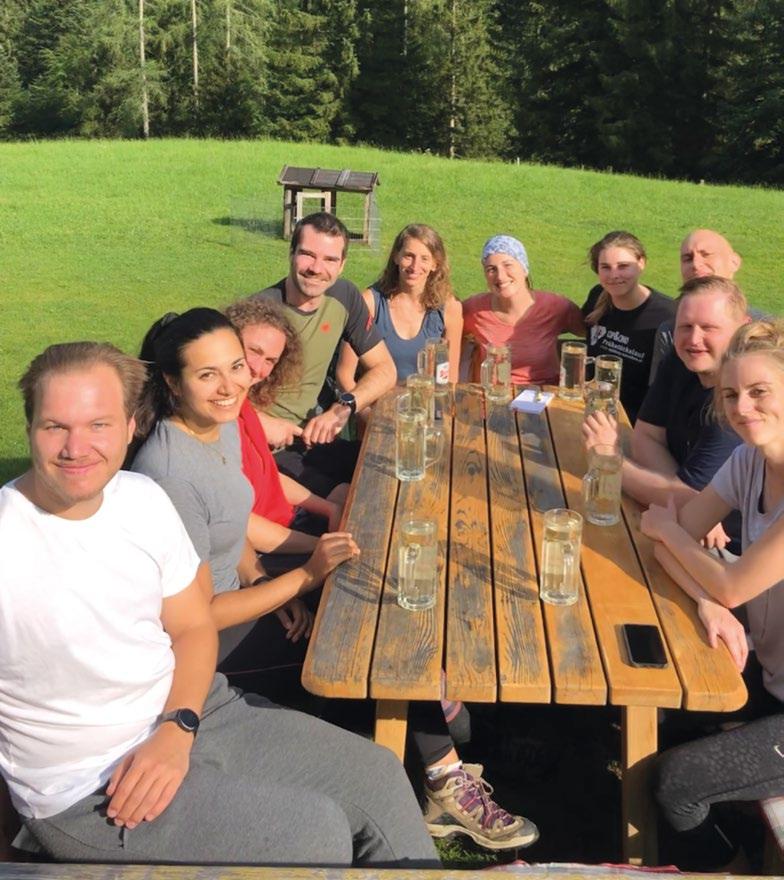
[dt.] Wir blicken ins Jahr 2020 – unsere liebe Eva wollte ihre wohlverdienten Sommerferien anders verbringen als gewohnt und entschloss sich, über den Sommer als Sennerin in der Gruberalm in Hintersee zu arbeiten. Das damalige Extended Board nahm dies zum Anlass, um sie an einem Wochenende im Juli zu besuchen, alle Feinheiten für das Forum abzustimmen und sich via Teambuilding-Ausflug auf das Forum Alpbach im August einzustimmen. Da dies durch die Bank positiv ausgefallen ist, wurde auch im Jahr darauf die Hütte besucht mit den gleichen Intentionen. Mittlerweile gehört es schon zur Tradition, dass die Gruberalm im Juli für ein Wanderwochenende besucht wird, auch unsere wanderlustigen CAS-Alumni waren eingeladen, sich unserer Wanderung anzuschließen. Diese fand heuer am Wochendende des 30. Juli statt.

Damit alle auf ihre Kosten kommen, wurde sowohl an die Sportlichen als auch die Gemütlichen gedacht und zwei Wanderrouten erstellt – welche je nach Fitnesslevel absolviert werden können. Bei der Wanderung spielten uns jedoch am Samstag die Wettergött*innen ein bisschen in die Karten und wir hatten nur am Nachmittag gute Konditionen für eine Outdoor-Runde, um die Gegend der Gruberalm zu erkunden.
Das tat der Stimmung jedoch keinen Abbruch und der Abend wurde genutzt, um in netter Runde wohlverdient einzukehren und köstliche Kasnocken zu schmausen sowie den hausgemachten Zirbenschnaps zu verkosten. Beim Zusammensitzen und
32
Text: Andreas Golser (Extended Board Member Events)
den abendlichen Gesprächen zeigte sich wiedermal, wie interdisziplinär wir als Club Alpbach Salzburg aufgestellt sind. Besonders erfreulich war es, dass sich uns auch CAS-Alumni der früheren Jahre angeschlossen haben und es war spannend, in welche Richtung sich ihre Lebenswege mittlerweile bewegt haben. Für die abendliche Unterhaltung wurden jede Menge Brettsowie Team-Spiele eingepackt und wir ließen den Abend mit einigen spannenden Runden Werwolf ausklingen.
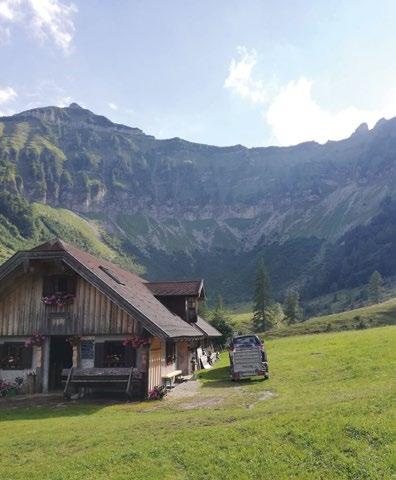
Der Sonntag zeigte sich wettertechnisch dann noch von seiner versöhnlichen Seite und somit kamen auch die Sportlichen noch zu ihrem Gipfelsieg.
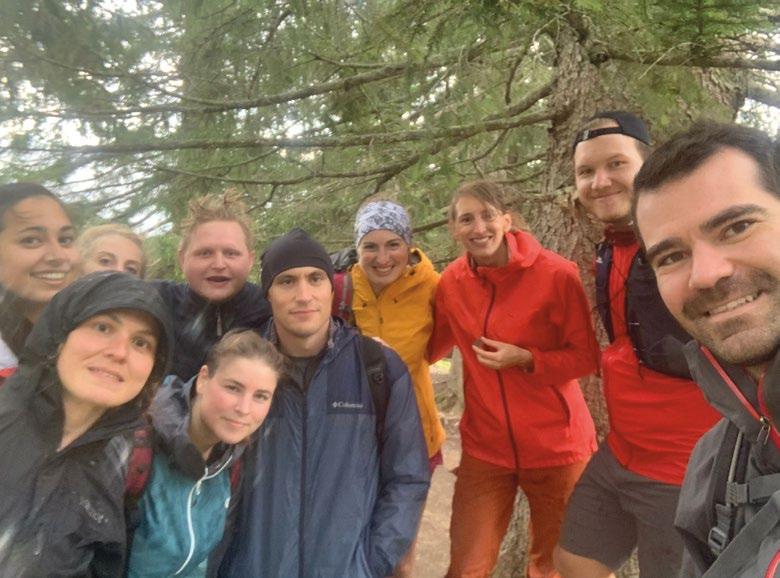
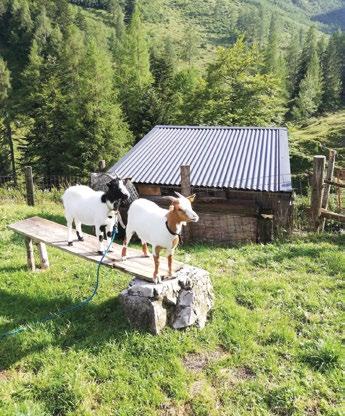
[engl.] We are looking back to the year 2020 when our dear Eva wanted to spend her well-deserved summer vacations in a different way and decided to work as a dairymaid at the Gruberalm in Hintersee for the summer. The then Extended Board took this as an opportunity to visit her one weekend in July, to fine-tune all the details and to get in the mood for that year‘s Forum Alpbach in August (which was going to happen digitally, building excursion. Since this was received in such a positive way, the hut was also visited the following year with the same intentions. In the meantime, it has become a tradition to visit the Gruberalm in July
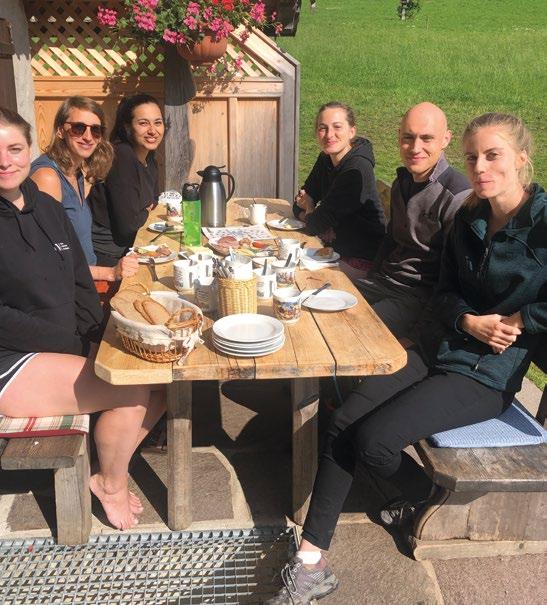
for a hiking weekend, and this year all the hiking-loving CAS alumni were invited to join on the weekend of the 30th of July.
So that everyone gets their money‘s worth, both the sporty and the more slow paced members have been thought of and two hiking routes have been created - which can be completed according to everyone`s fitness level. For the hike, however, the weather gods had other plans on Saturday and so we only had good conditions in the afternoon for a small walk to explore the area around Gruberam. However, this did not dampen the mood and the evening was used to feast on some delicious Kasnocken and taste the homemade Zirbenschnaps. The evening conversations showed again how interdisciplinary we are positioned as Club Alpbach Salzburg. It was particularly a big pleasure to be joined by CAS alumni from previous years, and it was exciting to see the direction their lives have taken in the meantime. For the evening‘s entertainment, plenty of board as well as team games were packed and we ended the evening with some exciting rounds of Werewolf.
On Sunday, the weather showed its conci liatory side and thus the athletic ones could eventually achieve their summit victory.

34
35
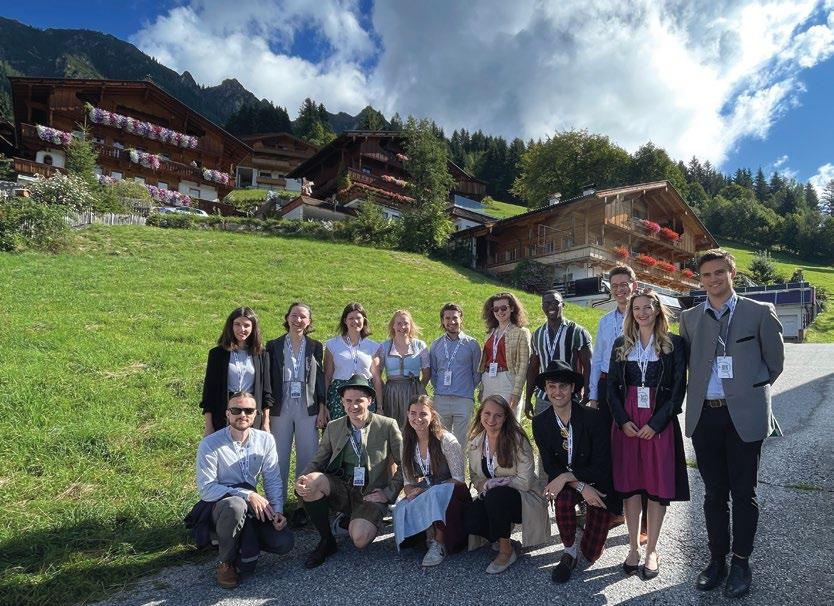
CAS STIPENDIAT *INNEN 2022 SCHOLARSHIP HOLDERS OF 2022
WER SIND WIR?
Omnibegeisterungsfähige, junge, engagierte Denker*innen, Mitgestalter*innen, Wanderer*innen, Trinker*innen, Diskutanten, Überraschungen. Vielleicht auch Freunde fürs Leben? Oder zukünftige Arbeitgeber*innen und Entscheidungsträger*innen? Auf jeden Fall wertvolle Erinnerungen, Teil einer prägenden Momentesammlung und die Zukunft!
— Maria-Sophia Stadler


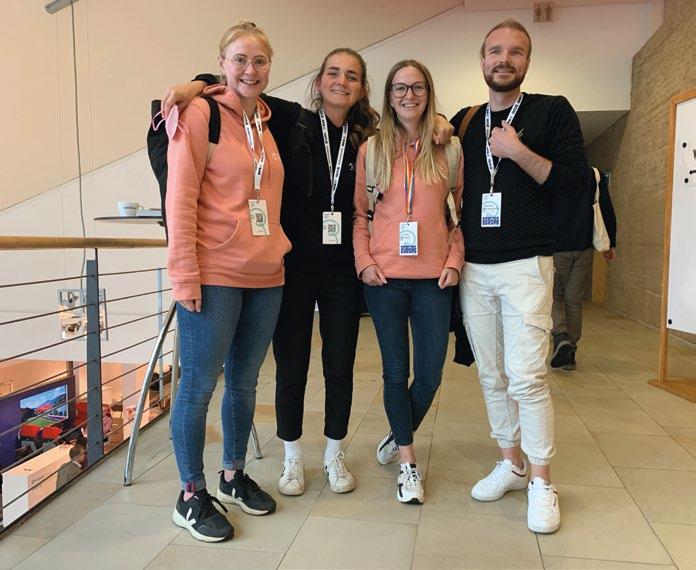
[dt.] Wenn ich an Alpbach zurückdenke, dann an Prospers Visionen und seine gute Laune, die mich immer angesteckt hat. An Kathi, die mich morgens schon freundlich begrüßt und mittags die Luft in der Küche mit gutriechendem Essen gefüllt hat. An Leo und seine Gedanken, wenn ich das gehörte
 Texts: Maria-Sophia Stadler (Scholarship holder 2022), Claudia Schwertl (Scholarship holder 2022)
gefunden, dessen unglaubliche Motivation mich sehr fasziniert hat. Konstantin war vermutlich der angenehmste Mitbewohner, den man sich vorstellen kann und ich kenne glaube ich niemanden, der ein so breitgefächertes Wissen hat wie er. Phia hat mich bereits bei der Hinfahrt mit ihrem Lebenslauf begeistert. Mit Maria hätte ich mich am liebsten noch viel mehr ausgetauscht – vermutlich war sie inhaltlich auf derselben Wellenlänge wie ich, aber wir fanden keine Zeit, das intensiv herauszufinden. Theresa habe ich nicht nur sehr pflichtbe wusst kennengelernt, sondern sie war auch für jeden Spaß zu haben. Mit Sophie hat te ich vermutlich die hitzigsten Gespräche und ihre künstlerische Begabung hat mich sehr imponiert. Tabea ist mir von Anfang an mit ihrer Coolness aufgefallen und ich bin sehr froh, dass ich im Laufe der Zeit diese „coo le Person“ noch besser kennenlernen konnte. Mit Julie hatte ich ver mutlich die warmher zigsten und nettesten Gespräche und Flos Auftreten sowie sein aktivistischer Hinter grund waren sehr beein druckend. Sie alle waren mein Alpbach-Moment. Es waren daher nicht – wie ich erwartet habe – die Inhalte, sondern die Personen, die Alp bach für mich zu zwei unvergess lichen Wochen gemacht haben.
 — Claudia Schwertl
WHO ARE WE?
[engl.] Omni-enthusiastic, young, committed thinkers, co-creators, wanderers, drinkers, discussants, surprises. Maybe also friends for life? Or future employers and decision makers? In any case, precious memories, part of a formative collection of moments and the future!
 — Maria-Sophia Stadler
tions when I struggled to place the new information. Leon, who was always active and motivated. With Stephan, I have now found a new colleague whose incredible motivation has fascinated me greatly. Konstantin was probably the most pleasant roommate you can imagine and I don‘t think I know anyone who has such a wide range of knowledge as he does. Phia already impressed me with her resume on the way there. With Maria I would have liked to exchange much more - as we were probably on the same wavelength in terms of content. I got to know Theresa not only as being very dedicated, but she was also up for all kinds of fun. With Sophie I probably had the most heated conversations and her artistic talent impressed me a lot. Tabea struck me from the beginning with her coolness and I‘m very glad that I was able to get to know her even better as time went on. With Julie I probably had the warmest and nicest conver sations and Flo‘s presen ce as well as his activist background were very impressive. They all were my Alpbach moment. Therefo re, it was not only – as I expected – the content, but the people that made Alpbach two unforget table weeks for me.
— Claudia Schwertl
38
STIPENDIAT*INNEN 2022 SCHOLARSHIP HOLDER 2022















39
Julia Armstorfer
Sophie Esterbauer Katharina Grain Tabea Hahn Leonhard Hartinger Florian Niederseer Theresa Schmidbaur
Maria Schödl
Stephan Schweighofer Claudia Schwertl Leon Soyka Konstantin Stäblein Maria-Sophia Standler
Mageza Tonderayi (Prosper)
STATEMENT PROPOER TONDERAYI MAGEZA

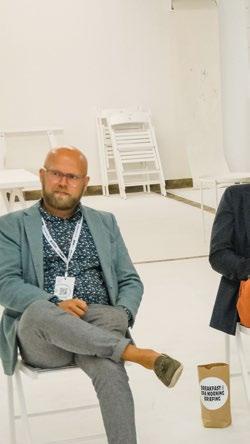
[engl. only] When I applied for the European Forum Alpbach, I thought I knew what I was getting into. However, from the first scholarship holders (Stips) meeting, one thing that struck me was how everyone who was around me was passionate about their areas of expertise.
Then, when I arrived at EFA, the pattern of brilliance became even more apparent as every conversation and session was enriching and transformational.
Contemplating about the areas of Cherima, Glennora, Kennan and Budiriro in Harare Zimbabwe where I lived for the early days of my life, I never thought one day I would have the privilege to make a difference in those areas. Coming from this background my life journey had prepared me well to absorb all I could take in. I am passionate about making a difference in Africa and the world.
40 EUROPÄISCHES FORUM ALPBACH 20.08.–02.09. 2022 EUROPEAN FORUM ALPBACH 20TH OF AUG. – 2ND OF SEPT. 2022
Texts: Scholarship Holders 2022
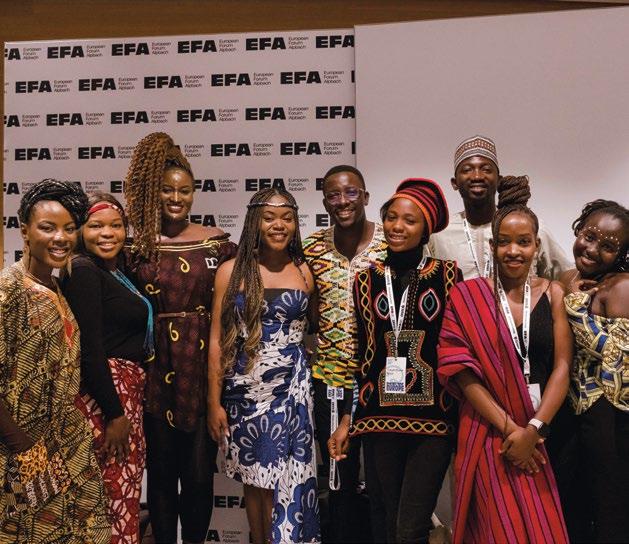
41
© EFA/Philipp
Huber
VIERZEHN TAGE, EINE SEITE TABEA HAHN (STIPENDIATIN)
[dt.] Hier nun ein Versuch, das Forum Alpbach auf einer Seite zu beschreiben:
örtchen. Auch cool.
An einem ganz normalen Forumstag passieren so unendlich viele Dinge. Wie vermag ein einziges Gehirn das alles nur zu verarbeiten? Nun gut, lassen Sie mich ein Bild zeichnen, wie einer von 14 (!) mehr oder minder gewöhnlichen Tagen in Alpbach aussieht:
Der Wecker klingelt: 8:30. Der Kopf schmerzt. Seminarstart um 9:00 Uhr. Am Weg dorthin, Gespräche über den anstehenden Tag mit Stipendiat*innen aus aller Welt. Ein Alpbachphänomen: Man plant den Tag durch, aber Überraschungen warten hinter jedem beladenen Blumenbalkon.
Im Seminar wird über eine auf Bitcoinbasierende Welt debattiert mit anschließendem Rechnungswesenkurs von Forums Präsidenten Andreas Treichl höchstpersönlich. Der Kopf klagt nun aufgrund des akkumulierten Wissens der vergangenen drei Stunden im Klassenzimmer. Am Weg zu einem am Vorabend ausgemachten Mittagessen stolpert man unerwartet in eine „Fridays For Future“-Demonstration. Naja, geht man eben bis zum abgemachten Lunch Treffpunkt mit. „What do we want?“, schreit der Finne, „Plantbased EFA“ antwortet die Masse. Meine allererste Fridays for FutureDemonstration in einem 2000 Einwohner-
Beim Mittagessen muss man sich erstmal fangen: War das eben ein Job angebot? Zu viel des Guten, zunächst eine Runde nappen auf der wunder schönen Chillout Area am Hügel des Kongresshauses. Anders gekommen als geplant: Teil nehmer*innen eines Musikseminars präsentieren ihre eigens komponierten Meisterstücke, während rundherum das Publikum in Trance den Klängen lauscht. Statt Mittagsschlaf eben doch Meditation. Gerade mal 15:00 Uhr. Zeit für einen Vortrag. Möchte ich mir heute Außenminister Schallenberg und den Generalstabsoffizier des österreichischen Bundesheers über Cybersicherheit anhören oder doch lieber die Geschichte einer evakuierten Afghanin. Die Entscheidung fällt auf Zweiteres. Angeschlagen von all den Erlebnissen schleppt man sich danach in die Wohlfühloase, den Sonnenhof. Ein gegenseitiges Erzählen und Bejammern. Eine Diskussion und ein gemeinsames Kaffeekochen. In diesem Haus spielten sich Szenarien aller Art ab. Viel Zeit zur Rast bleibt dennoch nicht – der Club Salzburg, Tirol und Vorarlberg bitten zum Marsch in die Zottaalm. Almspezialitäten aus Ei und Milch werden während dem Ausdenken von Reimen ver-
42
zerrt. Die Reime dienen nicht nur der bloßen Schönheit, sondern werden anschließend im traditionellen Gstanzlbattle als Rüstzeug bei dem gebräuchlichen Bundesland- und Clubroasting verwendet. Der ein oder andere Schluck einer sogenannten Löffelmilch lässt die Gemeinschaft noch darüber hinaus verweilen. Eine Gitarre und ein Dutzend (semi-)musikalischer Menschen würden am liebsten die Nacht auf der 1200m hoch gelegenen Alm verbringen. Gegen Ende des Tages wimmern die Xiberger „d‘Füaß hend mr weh tau“ und der Löffel aus der Milch zerbricht das letzte Glas. Gut, dass es im Jakober noch mehr davon gibt.
Zwei alpbachische Erkenntnisse meinerseits: Es ist unglaublich, wie wenig Schlaf der Mensch zur Funktionsfähigkeit braucht und nirgendwo schmeckt der Spritzer so gut wie im Jakober.
Alpbach auf einer Seite zu beschreiben ist unmöglich… Vielleicht versuche ich es nächstes Jahr erneut.
FOURTEEN DAYS, ONE PAGE TABEA HAHN (SCHOLARSHIP HOLDER)
[engl.] Here is an attempt to describe the Forum Alpbach on one page:
On a normal day at the forum, so many things happen – how does a single brain manage to process all that? Well, let me draw a picture of what one of 14 (!) more or less ordinary days in Alpbach looks like:
The alarm clock rings: 8:30 a.m. The head hurts. The Seminar is starting at 9 a.m. On the way there, conversations about the day ahead with scholarship holders from all over the world take place. An Alpbach phenomenon: you plan your day, but surprises are waiting behind every loaded flower balcony.
In the seminar, a Bitcoin-based world is debated, followed by an accounting course by Forum President Andreas Treichl himself. My head is now complaining due to the accumulated knowledge of the past three hours in the classroom. On the way to a lunch arranged the night before, one unexpectedly stumbles into a „Fridays for Future“-demonstration. Well, let’s just go along until the lunch meeting point. „What do we want?“ the Finn shouts, „Plantbased EFA“ the crowd answers. My very first Fridays for Future demonstration in a small town of 2000 inhabitants.

At lunch, you have to collect yourself first: Was that a job offer just now? Let‘s take a step back, first a round of napping on the beautiful chillout area on the hill of the Congress Center. Things turned out differently than planned: Participants in a music seminar present their specially composed masterpieces, while all the audience listens to the sounds in a trance. A meditation instead of a nap. It’s only 3:00 p.m. – time for a lecture. Do I want to listen to the foreign minister Schallenberg and the general staff officer of the Austrian armed forces talk about cyber security today, or would I rather hear the story of an evacua-
ted Afghan woman? I decide for the latter. Afterwards, exhausted by all the experiences, you drag yourself to the oasis of wellbeing, the Sonnenhof. A mutual telling and lamenting. A discussion and a joint coffee making. Scenarios of all kinds are playing out in this house. Nevertheless, there is not much time for a rest - the Club Salzburg, Tyrol and Vorarlberg invite to a march to the Zottaalm. Austrian specialties made from egg and milk are devoured while inventing rhymes. The rhymes do not only serve the bare beauty but are used afterwards in the traditional “Gstanzlbattle” as equipment during the usual club battle and roast. The one or other sip of a so-called “Löffelmilch” (=spoon milk) makes us linger longer. A guitar and a dozen (semi) musical people would love to spend the night on the 1200m high mountain cabin. Towards the end of the day, one last „d‘Füaß hend ma weh tau“ is sung and the spoon from the milk breaks the last glass. Good thing there are more of that at the Jakober.
Two Alpbach realizations from my part: It is incredible how little sleep a person needs to work and there is no place where a Spritzer tastes as good as in Jakober. To describe Alpbach in one page is impossible – maybe I will try again next year.

44
STATEMENT SOPHIE ESTERBAUER (SCHOLARSHIP HOLDER)
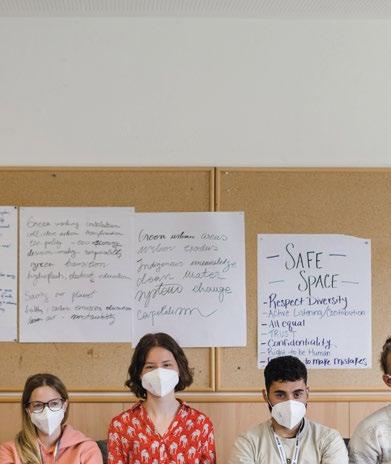
It was a quiet moment. We had been in Alpbach for over ten days – ten long days in which our expectations were shaken around, our political and moral views were questioned, our ideas and thoughts on many social issues were twisted. We had been in Alpbach for long enough that we had seen the focus on PR and media, the way in which people wanted to display themselves. We had had many honest conversations and even more fake ones. We had learned that net working was key and we had longed for moments of quiet and reflection. We had been to Gratlspitz once and several times to Jakober, we had run to Spar almost too many times and we kept going up and down the same street.
STATEMENT
FLORIAN NIEDERSEER (SCHOLARSHIP HOLDER)
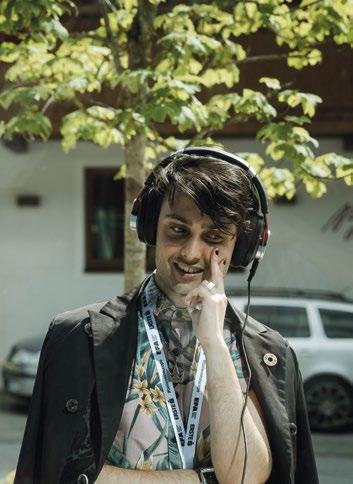

Right off the bat, I got to experience that there is a strong focus on community-building, as I was able to quickly get to know many wonderful people through having a shared evening with Vienna’s Alpbach Club and even living in the same building as two other clubs. And that was right before the Forum days actually kicked off.
Something I greatly appreciated and already miss while being back at home, is the fact that everyone seemed so open to talk to. As I see myself usually rather as a shy person, this was comple tely mind-blowing for me. It was completely normal that one could strike up a converstation with one-another and connect quite quickly. Not only in professional ways but also on a personal level. That was not just the case with one’s scholarship peers, but I, a scho lar, experienced the same dynamic with politicians, renown scientists and leaders of initiatives. This atmosphere that everyone can talk with everyone is something that I’ve rarely seen to this extent anyw here else.
© EFA/Philipp Huber © EFA/Philipp Huber
SEMINARS AT THE EFA INSIGHTS FROM OUR SCHOLARSHIP HOLDERS
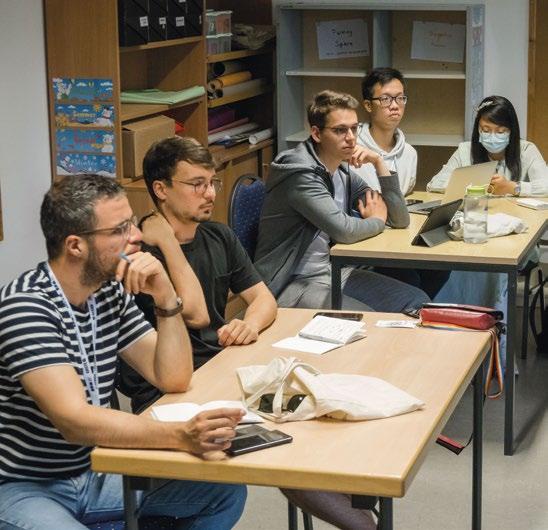
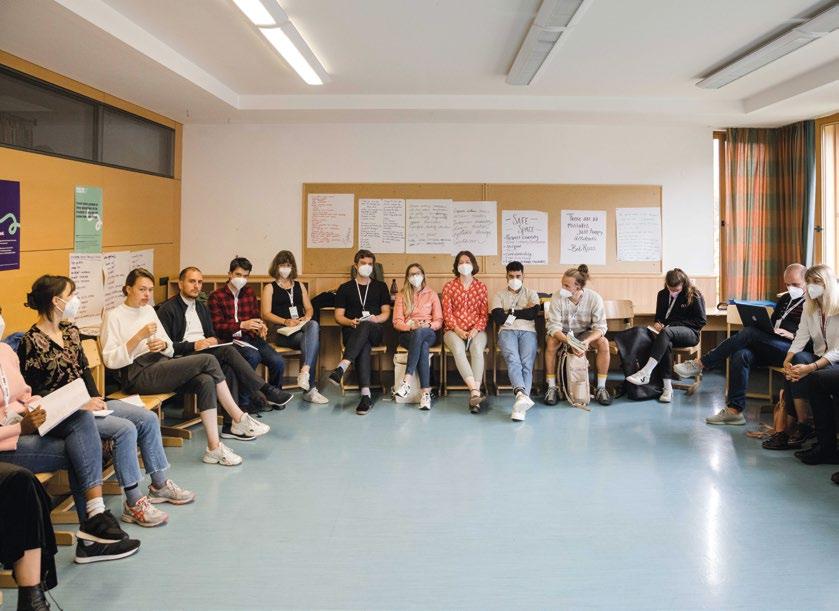
[engl. only] The seminars in Alpbach are as diverse and multifaceted as the forum itself: While the seminars were rather theoretical and abstract in the first week, the seminars of the second week were meant to be more hands-on and active.
In der ersten Woche durfte ich am klimawandelrelevanten Seminar „Aktivismus gegen Widerstand – Wie können wir uns gemeinsam verändern?“ teilnehmen. Dort wurde unter anderem thematisiert, wie Populismus in einer Demokratie die Erreichung der Klimaziele erschweren kann. Der populistische Ansatz erklärt Lösungen zur Problembekämpfung besonders einfach, (vermeintlich) logisch und emotional. Die Thematik des Klimawandels und wie man diesem Einhalt gebieten kann, sind aber absolut nicht einfach, sondern sehr komplex. Die Realität wird ignoriert und es gibt große Versprechungen, die meist nicht gehalten werden. Der Bevölkerung (meist vor bevorstehenden Wahlen) die simple Lösung zum Stopp der Erderwärmung vorzugaukeln kann sehr gefährlich sein.
Besonders beeindruckt haben mich auch die Gäste, die ins Seminar eingeladen wurden. So konnten wir mit Johannes Stangl von FridaysForFuture, mit Irene GinerReichl von globalwomennet und Nele Scholz vom Institut Raum & Energie zu aktuellen Themen diskutieren.
[engl.] In the first week I was allowed to participate in the climate change relevant seminar „Activism against resistance - How can we change together?“. One of the topics discussed there was how populism in a democracy can make it more difficult to achieve climate goals. The populist approach explains solutions to combat problems in a particularly simple, (supposedly) logical and emotional way. However, the topic of climate change and how to stop it are not simple at all, but very complex. Reality is ignored and promises are made that are mostly not kept. To fool the population (mostly before upcoming elections) with simple solutions to stop global warming can be very dangerous.
I was also particularly impressed by the guests that were invited to the seminar. We were able to discuss current topics with Johannes Stangl from FridaysForFuture, with Irene Giner-Reichl from globalwomennet and Nele Scholz from the Institute Space & Energy.
— Julia Armstorfer
[dt.] Gerade habe ich die ersten zwei „security policies“ meines Lebens durchstreift, schon spannend, auch anstrengend. Plötzlich sollen wir unsere eigene post-2022 Sicherheitsstrategie präsentieren. Es heißt in einer siebenminütigen Rede adressiert an Ursula von der Leyen oder Josip Borell.
46
Überforderung pur. Brandaktuell. Prinzipiell existenziell? Was ist denn überhaupt die größte sicherheitspolitische Bedrohung, fragten wir uns. Wir fanden unzählige Antworten. Interessenskonflikte noch und nöcher. Oder Wertekonflikte? Worauf basieren unsere Entscheidungen, worauf die der EU?
Diese interessanten Fragen, aufregenden Diskussionen und neuen Erkenntnisse ergaben sich in unserem Seminar „How to secure Europe amidst current insecurities“.
[engl.] I have just gone through the first two „security policies“ of my life, exciting but also exhausting. Suddenly we are supposed to present our own post-2022 security strategy. In a seven-minute speech addressed to Ursula von der Leyen or Josip Borell. Sheer overwhelm. Highly relevant. In principle, existential? What is the greatest security threat, we asked ourselves. We found countless answers. Conflicts of interest here and there. Or conflicts of values? What are our decisions based on, what are those of the EU based on?
[engl. only] In the first week, I attended a social and sustainable business seminar focusing on sustainability through social businesses. This was a great course for me given my aspirations. We learnt a lot about setting up social businesses. This was particularly useful for me as I started a social business in Namibia in 2021 amidst the covid-19 pandemic. Having a platform to test the business model with bright minds who could give helpful feedback was edifying.
— Prosper Tonderayi Mageza
These interesting questions, exciting discussions and new insights emerged in our seminar „How to secure Europe amidst current insecurities“.
— Maria-Sophia Stadler
[engl. only] In the second week we had a seminar which was supposed to be more hands-on – and it was a seminar about creative writing. Most of us who chose it, didn’t even quite know why, it had almost nothing to do with our field of study and our career, we certainly did not need any networking in that area and we could not see how this seminar could help the slightest with global climate crisis, the avoidance of fossil energy or the Russian war in the Ukraine.
However, for the first time during the whole Forum, we felt as if we did not need to perform in front of the other participants, seminar leaders, politicians, or businesspeople. We were creating and reading out our work – I was truly and deeply enjoying myself. We were widening our horizon and we were changing perspectives, we were listening to a very diverse group of people who
47
expressed themselves individually. It was about war and about family, it was highly political and in the next moment about a landscape. We had learned a few things about point of view in writing, about the right amount of syllables in a Haiku and about the difference between tone and style. But now, we stood in a circle, after three hours of the writing seminar and before we would re-join the main forum with its panels, chats and discussions. We had a moment in which we felt safe. And open. And honest. Willing to learn. And willing to share.
— Sophie Esterbauer
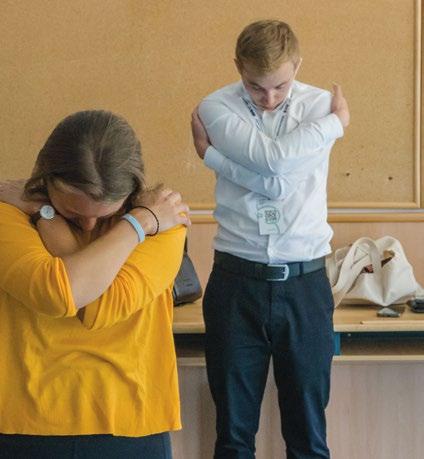
[dt.] Wer sind wir? Meditation am Morgen sollte uns dieser Frage näherbringen. Außerdem ließen wir uns auf absurde Dehnübungen, verrückte Spiele, inspirierende Gedankenexperimente und sehr viel Singen ein. Laut. Alleine. Vor einer unbekannten Gruppe. Ohne Gesangsausbildung. Nennt man das raus aus der Komfort- und rein in die Entwicklungszone? Es ist ein sich trauen und offen sein, um Methoden zu lernen, wie man mit Körper, Stimme und Bewegung Konflikte gewaltfrei und konstruktiv löst. Ein Beginnen bei sich selbst und im Seminar „Body and Voice for non violent conflict resolution“.
[engl.] How are we? Meditation in the morning should bring us closer to this question. We engaged in bizarre stretching exercises, crazy games, inspiring thought experiments and a lot of singing. Loud. Alone. In front of an unknown group. Without vocal training. Is this what you call getting out of your
comfort zone and into your development zone? It‘s about daring and being open to learn methods of solving conflicts non-violently and constructively with body, voice and movement. Starting with yourself and in the seminar „Body and Voice for non violent conflict resolution“.
— Maria-Sophia Stadler
[engl. only] In the Second week, I attended an innovation business seminar where we focused on innovative methods of running and setting up businesses. The main base of learning was design theory specifically focusing on experience design to meet the customer needs in precise detail. This was a great development from the previous week for me as it was a good revision for my master‘s business studies and an addition to the social business’ seminar of the previous week.
— Prosper Tonderayi Mageza
48
© EFA/Andrei Pungovschi
 © EFA/Philipp Huber
© EFA/Andrei Pungovschi
© EFA/Andrei Pungovschi
© EFA/Philipp Huber
© EFA/Andrei Pungovschi
© EFA/Andrei Pungovschi
FIRESIDE CHATS
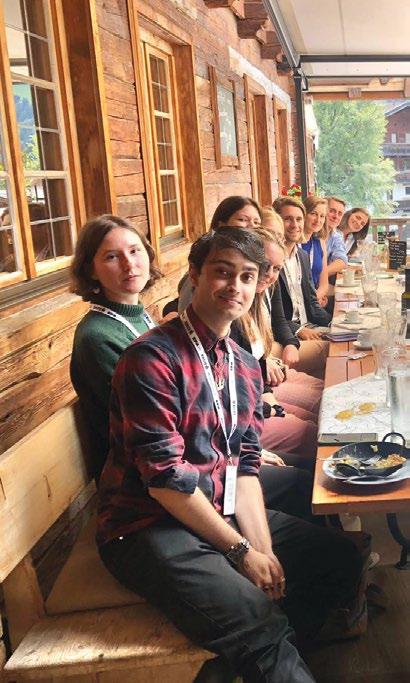
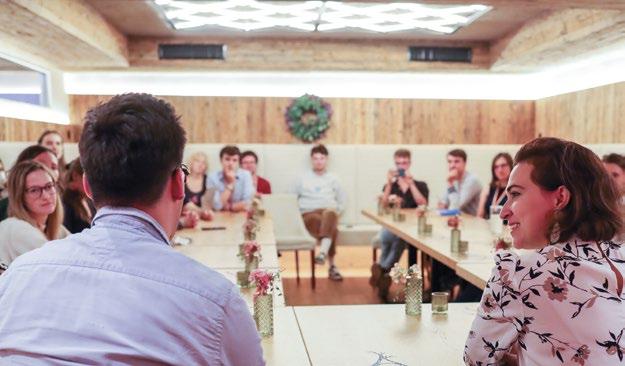
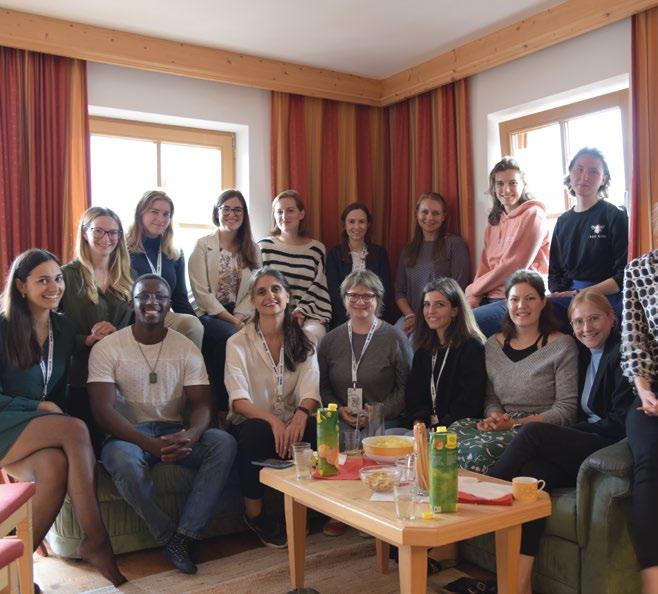
A brief explanation of what fireside chats are: In fireside chats, an interesting person is invited, who is then asked questions by about 15-25 participants. Due to the small group size, a familiar atmosphere is created and an intensive exchange takes place.
 — Konstantin Stäblein
50
[engl. only] The fireside chats at the EFA hardly resembled what you would picture when thinking of a relaxed conversation by a fireside. Instead of in a dimly lit room, we would find ourselves outside in the bright sunlight. What the chats lacked in the literal sense of the word fireside, they tenfold made up for in the feeling they conveyed and the content they provided. A dozen scholarship holders and a speaker met in an intimate setting and talked eye to eye. However, to pick a favorite fireside chat is nearly impossible.
My very first fireside chat showed what my peers meant, when they said that the chats were one of EFAs most important elements. Before that, I had only attended panel discussions with hundreds of attendees. Here, we had the chance to talk to the CEO of Microsoft Austria directly. While we were discussing the urgent topic of ‘new work’, I felt a sense of comfort because he, as a powerful person who is not my age, seemed to understand the struggles of our generation with the work force and even tried to address these problems. He talked in a way that felt very honest, which certainly would not have been possible with more people or even the media attending.
When talking to Andrea Klambauer, you could really feel that it was a fireside chat hosted by and attended by CAS members. As we were discussing her field of work – she works at the State of Salzburg as a state councillor for housing and family, among others – many of the participants outright started discussing with her instead of just asking questions. It was clear that these topics affected us in a very serious way, be that because housing has become unaffordable for many citizens of Salzburg or because some of us feel that the education of future teachers has been neglected by the state for too long. Here, we could confront her as a person in power directly.
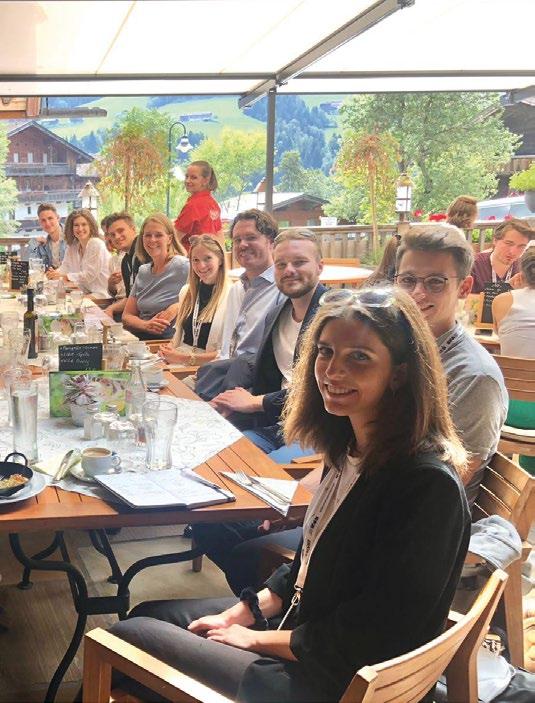
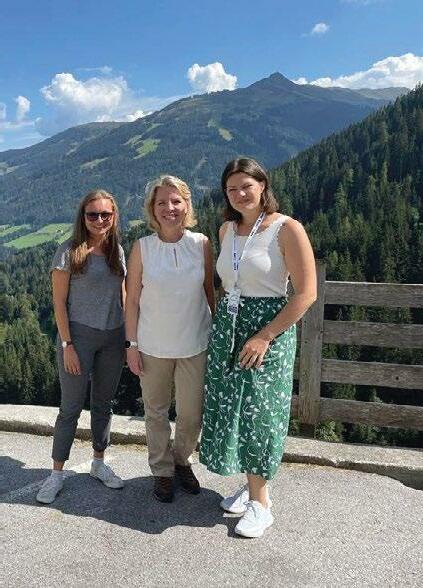
51
The fireside chat with Selime Büyügöze and Taciana Niadbaj – both activists – took on another tone. Not our personal opinions were at the forefront, but their lives and experiences with oppression, aggression, and violence. While some of us hurdled together on the couch in our apartment, others lined the sides of the room just to hear both of these impressive women talk. One might have even caught one or the other tear run down a cheek.
The talk with the Austrian Minister of Justice, Alma Zadić, was particularly enriching for me as a law student. Getting to know the woman who overlooks the judiciary, often the most neglected of the three powers, on such a personal level, was truly priceless.
All in all, the fireside chats were deeply personal, sometimes relating to the personal life and experience of the speaker, other times to their field of work. Negative as well as positive emotions were stirred up and occasionally, debates ensued. In all cases, they proved to be incredibly enriching.
— Theresa Schmidbaur
[engl. only] Coming close to famous politicians, being allowed to ask questions to important economists and getting in touch with impressive activists – all these mentioned scenarios are possible at firesidetalks at the European Forum Alpbach.

The whole EFA is composed of a many interesting activities. It´s possible to take part at panel discussions, workshops or hikes where you can talk to fascinating people. However, getting really close to well-known personalities, listen to their experiences and ask them any question you would like to get answered in a familiar atmosphere is mainly possible at firesidetalks. I got the chance to take part at a talk with Johannes Rauch, the current Federal Minister of Social Affairs, Health, Care and Consumer Protection of Austria, Jeffrey Sachs, one of the most popular economists of our time, Andrea Klambauer, Minister for Housing, Women, Youth, Science, and Integration of Salzburg, Matthias Lovrek, one of the founders of Sindbad and Alma Zadić, Austria´s current Minister of Justice. I thought a lot about the question, which of the firesidetalks impressed me the most, but I can´t name just one.
Through the talk with Andrea Klambauer, I gained a little insight of the political situation of my hometown. Because I grew up in Salzburg, I would say I already got in touch with a few problems concerning living the re. Talking with a politician who is respon sible for really important tasks was great. Actually, after this talk I would really like to have more possibilities for citizens to talk with their politicians. I think it would help to solve problems in a different and may be better way, because they would get in touch with different perspectives. —
Katharina Grain
52
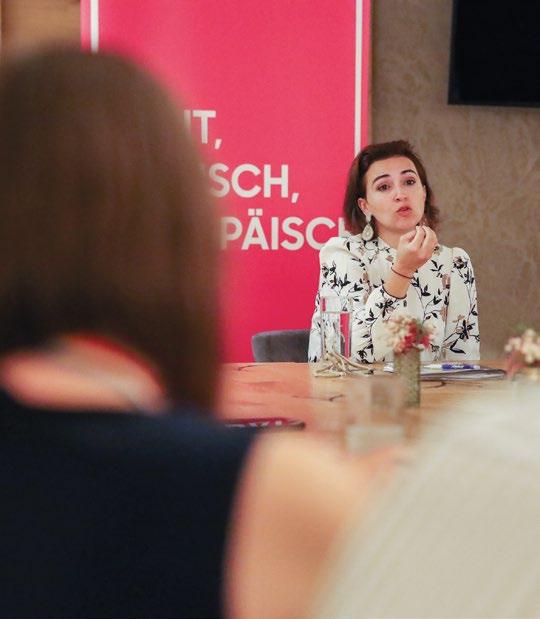
[engl. only] On the third day of the forum, it was announced in the morning that a club was hosting a fireside chat with the CEO of Microsoft Austria, Hermann Erlach. Since first come first serve applied and there was only a limited number of seats, I immediately signed up. There were about 20 other scholarship holders in the room with me. After a short introduction, the open question and answer session began. It was a very relaxed and open gathering. Everyone who wanted could ask questions on all topics and received detailed answers. Due to the trusting environment, the questions and discussions were conducted with comprehensive openness.
The main topic of this fireside chat was the changing world of work. Since our guest works in one of the fastest changing industries and initiates and implements processes there, all questions were answered in detail and to everyone‘s satisfaction. Especially for me, a medical student, whose studies do not have much to do with the working world of the big tech companies, this conversation opened up very deep insights and brightened my horizons
— Konstantin Stäblein
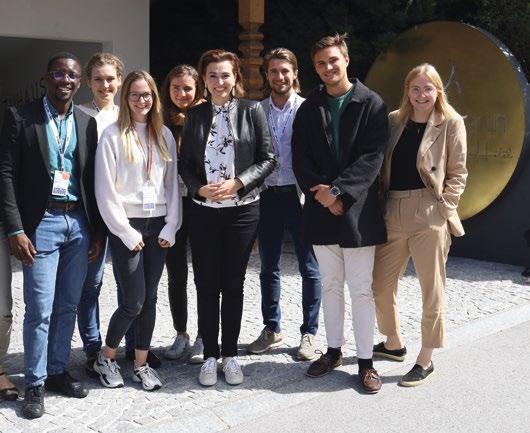
[engl. only] During the first week we also deliberated in multiple fireside chats, one very interesting for me was with Shalini Randeria - Rector of the Central European University. We discussed the matter of race, equality, economic outlook, education, and the future of leadership.
— Prosper Tonderayi Mageza
53
[dt.] Unscheinbar aber mit bleibender Wirkung: Der Fireside-Chat mit Birgit Niessner, der Chefanalystin der Österreichischen Nationalbank, entpuppte sich als großes Ausrufezeichen, warf aber für die Stipendiatinnen und Stipendiaten große Fragezeichen auf. Nach der obligaten Präsentation ihrer Karriere und der Skizzierung ihres aktuellen Betätigungsfelds drang das äußerst offen geführte Gespräch tiefer in die Materie der Volkswirtschaft und der Nationalbankpolitik ein. Birgit Niessner nutzte so gut wie jede Möglichkeit, um auf Bildungsangebote und Informationsquellen aufmerksam zu machen, welche fundamentale Grundlagen der Volkswirtschaftslehre vermitteln. Ihre klare Botschaft: So überlebenswichtig und sensibel die Rolle einer Nationalbank für einen Staat ist, so wichtig ist es auch, dass Bürgerinnen und Bürger ihre Funktionsweise und den Einfluss auf das eigene Leben kennen. Wieso diese Botschaft so elementar ist, entpuppte sich in der Diskussion. Die Fragen der interessierten Stipendiatinnen und Stipendiaten waren fundamental und von großer Bedeutung. Die Antworten plakativ und verständlich. Im Laufe des Gesprächs wurde klar, wieso Niessners Apell für eine volkswirtschaftlichen Grundbildung so laut erklang. Auch in einer hochqualifizierten und gesellschaftspolitisch interessierten Gruppe reichen die volkswirtschaftlichen Erkenntnisse oft nicht aus, um aktiv an einer Debatte teilzuhaben. Die wohl wichtigste Botschaft des Fireside-Chats: Volkswirtschaft und Nationalbankpolitik betrifft jeden. Das Wissen über Funktion und Rolle ist die Grundlage für
demokratische Partizipation und fundierte Kritik und kann als moralische Pflicht erachtet werden. In Zeiten großer wirtschaftlicher Unsicherheit steuern Nationalbanken täglich ganze Volkswirtschaften durch stürmische Gewässer. Sie haben damit auch das Schicksal eines jeden Individuums in ihrer Hand. Eine regelmäßige ernsthafte Auseinandersetzung in der Bildung und in den Medien ist wichtiger denn je.
[engl.] Inconspicuous but with a lasting effect: the Fireside Chat with Birgit Niessner, Chief Analyst of the Austrian National Bank, turned out to be a big exclamation mark, but raised big question marks for the scholarship holders. After the obligatory presentation of her career and an outline of her current field of activity, the extremely frank conversation went deeper into the subject of economics and National Bank policy. Birgit Niessner used almost every opportunity to draw attention to educational offers and sources of information that convey the fundamental principles of economics. Her clear message: as vital and sensitive as the role of a national bank is for a state, it is equally important for citizens to know how it works and how it affects their own lives. Why this message is so elementary emerged in the discussion. The questions posed by the interested fellows were fundamental and of great importance. The answers striking and understandable. In the course of the conversation, it became clear why Niessner‘s appeal for a basic education in economics rang so loudly. Even in a highly qualified and socio-politically
54
interested group, knowledge of economics is often not enough to actively participate in a debate. Arguably the most important message of the Fireside Chat: economics and national bank policy affects everyone. Knowledge about their function and role is the basis for democratic participation and informed critique and can be considered a moral duty. In times of great economic uncertainty, national banks steer entire economies through stormy waters on a daily basis. They thus also have the fate of every individual in their hands. Regular serious discussion in education and in the media is more important than ever.
— Leonhard Hartinger

[engl. only] Another fireside chat which stood out for me was with Birgit Niesser from the Austrian National Bank. We discussed the Austrian finance status quo and basic protocols of the Austrian National Bank. It was a great learning point for me as the financial management of countries differs based on the strategy of the leading government administration and the needs of the population.
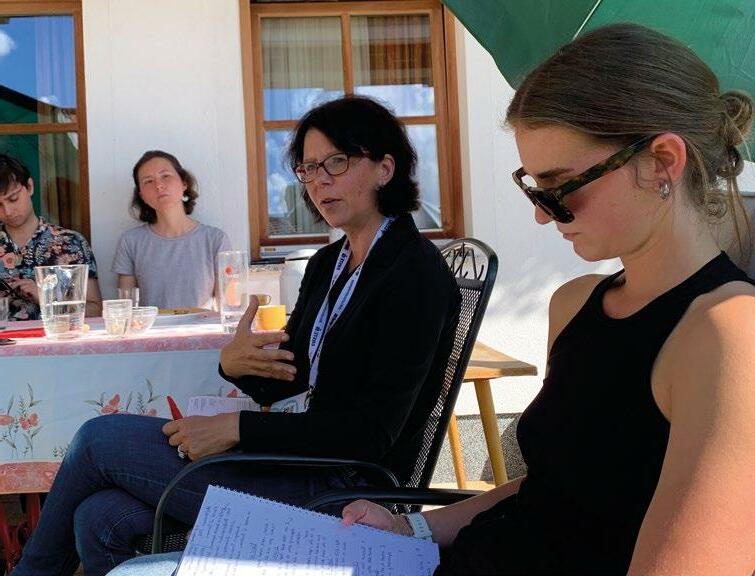 — Prosper Tonderayi Mageza
INCLUSION REVOLUTION
EINE VORTRAGSREIHE DER BESONDEREN ART
[dt.] Die Anfangsworte des Geschäftsführers von IKEA Österreich, Alpaslan Deliloglu: „Neben der Klimakrise ist auch die Ungleichheit eine unserer größten Krisen“. Ein gefüllter Raum, überwiegend junge, aber auch so manch älteres Gesicht. Geschmackvoll, mäßig eingerichtet, gemütliche Sitzgarnituren, Grünpflanzen und Regale aus Naturholz – sponsored by IKEA.
Nicht neben jemanden Platz nehmen, den man kennt und keine unnötig langen Fragen in Kurzvortragformat stellen, lauteten die ersten Anweisungen der Moderator*innen, unseres Clubpräsidenten Andi und Fides Raffel von myAbility. Es soll eine Veranstaltung sein, die offen ist
schiedlichen Lebensrealitäten aller Menschen. Aber um was geht es überhaupt? Inklusion und Diversität.
Manch fragende Mimik konnte aus der Menge entnommen werden: Was bedeutet überhaupt Inklusion? Gleichberechtigung, Zugänglichkeit, Sexualität, Vielfalt, Partizipation? Alles zusammen? Die Moderator*innen stellten die erste Frage in den Raum: „What preventing factors have you experienced?“. Ein QR-Code führte die digital ausgestattete Gesellschaft zu einem Link, in dem die Gedanken zu dieser Frage frei ausgetauscht werden konnten. Kommunikation mit der/dem Sitznachbar*in war herzlich erwünscht.
Beim „Inclusion Revolution“ Event handelte es sich nicht um eine herkömmliche Veranstaltung des EFAs. Inkludiert wurde unter anderem auch das Publikum. Aktive Teilnahme, respektvolle Diskussionen und einige Denkaufgaben erwarteten die Teilnehmenden.
Die nächste Frage an das Publikum lautete: Wie sieht eine durchwegs inklusive Welt aus? Eine utopische Reise in eine Gedankenwelt, in der alle Menschen gleichberechtigt sind, begann. Gar nicht so einfach. Welche Diskriminierungen und Exklusionen nehmen wir wahr, welche sind still, schleichend und kaum
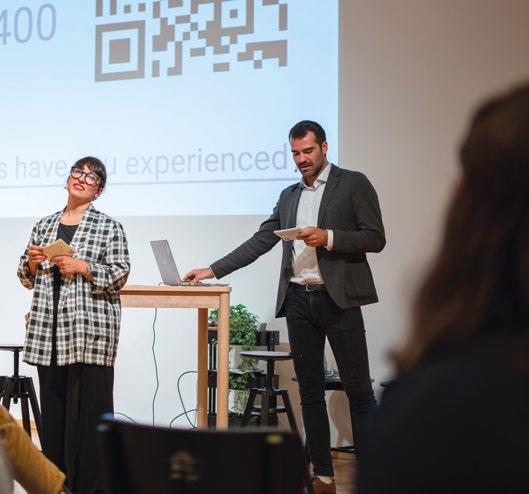
56
bemerkbar? Die Diskussion vertiefte sich, das Publikum stellte Fragen, brachte Input und kreierte gleichzeitig noch komple xere Fragen.
Die Bühne wurde dann von den Gastredner*innen betre ten. Impact-Investor Char ly Kleissner, Ottilia Anna Maunganidze vom Insti tut für Sicherheitsstudien, Gleichbehandlungsberate rin Clara Schlee sowie der Salzburger LGBTQIA+ Akti vist und Stipendiat vom CAS Florian Niederseer. Vier Individuen, alle einen ande ren Ansatz zum Thema Inklu sion. So investiert Charly in von Minderheiten geführte Unternehmen und Florian ist Organisator einer PrideParade im Zweitausend-Seelendörfchen Unken. Anschließend wurde eine inspirierende und von vielen Gänsehautmomenten durchzogene Diskussionsrunde zwischen Sprecher*innen und Teilnehmer*innen losgetreten.
Zurück zur Utopie. Das Fazit nach diesem Gedankenexperiment: Diskriminierungen sind ein so starkes und tiefansässiges Problem unserer Gesellschaft, es scheint unmöglich, all diese wegzudenken, geschweige denn sie zu besiegen.
Wo soll man also anfangen? Clara gibt Antwort: Die verschiedenen kleinen Probleme
müssen identifiziert werden, weil die Frage davor viel zu groß sei. Man müsse die Frage herunter brechen, klein anfangen und im Endeffekt könnte man somit Großes bewirken.
Am darauffolgenden Tag wurde versucht, das Gesagte im Inclusion Revolution Workshop zur Umsetzung zu bringen. Die Teilnerhmer*innen konnten sich zwischen fünf verschiedenen Workshopthemen entscheiden, um in einem Feld ihr Wissen zu vertiefen. Accessibility, Ethnicity, Gender Equity, Sexual Identity and Orientation und Socioeconomic Background standen zur Auswahl. Viele hätten sich wohl am liebsten für mehrere gleichzeitig entschieden.
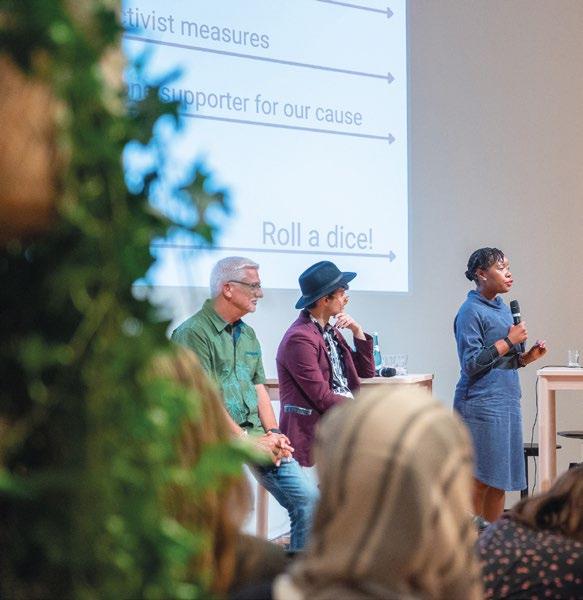
57
In Kleingruppen wurden dann die verschiedenen Themenfelder von Expert*innen aus den Clubs Salzburg, Wien und Tirol sowie von Vertretungen der Frauendomäne und myAbilty detailliert aufgearbeitet. Dem ein oder anderen war wahrscheinlich gar nicht bewusst, wie weitläufig und tiefverankert Exklusion sein kann. Ausgelöste Klarheit darüber, dass die Aufmerksamkeit für viele Diskriminierungen in unseren eigenen Köpfen und Systemen noch gar nicht vorhanden war, konnte aus privaten Gesprächen ent nommen werden. Der Schrei nach Akzep
das Verbreiten eines Hashtags, wie barrierefrei das Gebäude und Umfeld des Kongresshauses wirklich sei, sind entstanden. #CanIAccessEFA? #CanYouAccessEFA?
Fazit Inclusion Revolution: Eine Revolution in den Köpfen der Teilnehmer*innen fand definitiv statt. Die Ideen für ein inklusiveres EFA und allgemein ein inklusiveres tägliches Umfeld haben gekeimt. Ob diese am Forum
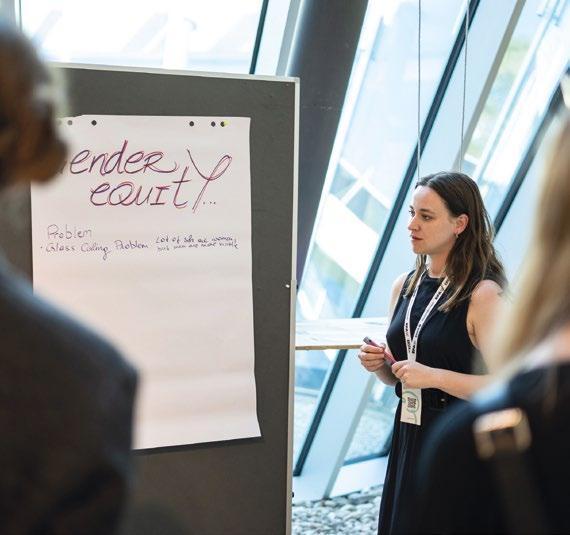
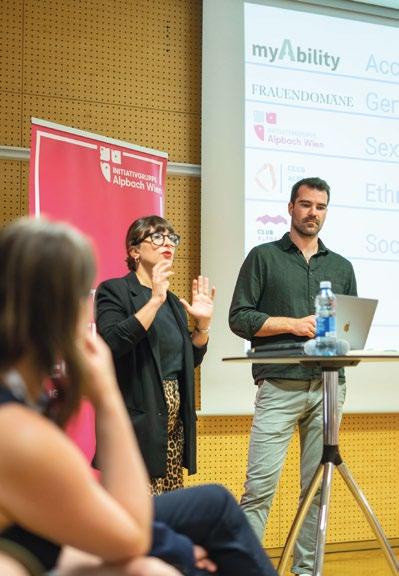
Parade am Forum die heimische Blasmusikkapelle aus Alpbach auftreten sollte. Oder
reihe eine kollektive Sensibilisierung sowie ein Umdenken mit dem Thema Inklusion losgetreten wurde. Das im Vorhinein angekündigte eigene Umdenken am EFA trat in den beiden Veranstaltungen, bei mir jedenfalls, unzweifelhaft ein.
58
INCLUSION REVOLUTION A SPECIAL KIND OF LECTURE SERIES
[engl.] The opening words of the Managing Director of IKEA Austria, Alpaslan Deliloglu: „Besides the climate crisis, inequality is one of our biggest crises“. A packed room – predominantly young, but also some older faces. Tastefully, moderately furnished, comfortable seating, green plants and shelves made of natural wood - sponsored by IKEA.
Don‘t take a seat next to someone you know and don‘t ask unnecessarily long questions in short lecture format, were the first inst ructions of the moderators, our club presi dent Andi and Fides Raffel from myAbility. It is supposed to be an event that is open to the different realities of life of all people. But what is it about anyway? Inclusion and diversity.
Some questioning facial expressions could be seen among the crowd: What does inclusion even mean? Equality, accessibility, sexu ality, diversity, participa tion? All of the above?
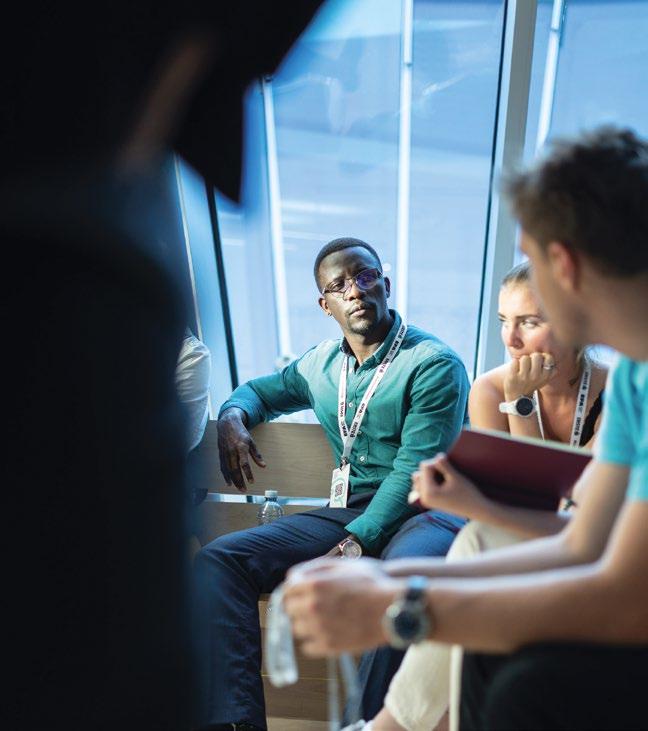

The moderators asked the first question: „What preventing factors have you experienced?“ A QR code led the digitally equipped audience to a link where thoughts on this question could be free
ly shared. Communication with the person sitting next to you was welcomed as well.
The „Inclusion Revolution“ event was not a traditional EFA event. Among other things, the audience was included. Active participation, respectful discussions and some thinking tasks awaited the participants.
The next question to the audience was: What does a thoroughly inclusive world look like? An utopian journey into a world of thought in which all people have equal rights began. Not so easy. Which discriminations and exclusions do we percei-
The stage was then taken by guest speakers. Impact investor Char ly Kleissner, Ottilia Anna Maunganidze of the Insti tute for Security Studies, Equality Advisor Clara Schlee, and Salzburg LGBTQIA+ activist and CAS scholars hip holder Florian Niederseer. Four individuals, all taking a different approach to inclusion. For example, Charly invests in minority-owned businesses and Florian is an organizer of a Pride parade in the 2000 soul village of Unken. Afterwards, an inspiring and intensive and emotional discussion between speakers and participants got underway.
Back to the utopia. The conclusion after this thought experiment: discrimination is such a strong and deep-seated problem in our society, it seems impossible to do away with all of it, let alone defeat it.
So where to start? Clara answers: the various small problems must be identified, because the question before them is far too big. You have to break the question down, start small and in the end you can achieve great things.
The following day, the Inclusion Revolution workshop tried to put into practice what had been said. The participants could choose between five different workshop

topics to deepen their knowledge in one field. Accessibility, Ethnicity, Gender Equity, Sexual Identity and Orientation, and Socioeconomic Background were the choices. Many probably would have preferred to choose more than one at a time.
In small groups, experts from the clubs of Salzburg, Vienna and Tyrol as well as representatives of the Frauendomäne and myAbilty worked through the various topics in detail. The one or other was probably not even aware of how far-reaching and deeply rooted exclusion can be. It became clear that for many kinds of discrimination – in our own minds as well as the systems – attention was not yet present, this could be gathered from private conversations. The cry for acceptance and consideration for these grievances became louder and unmistakable for many.
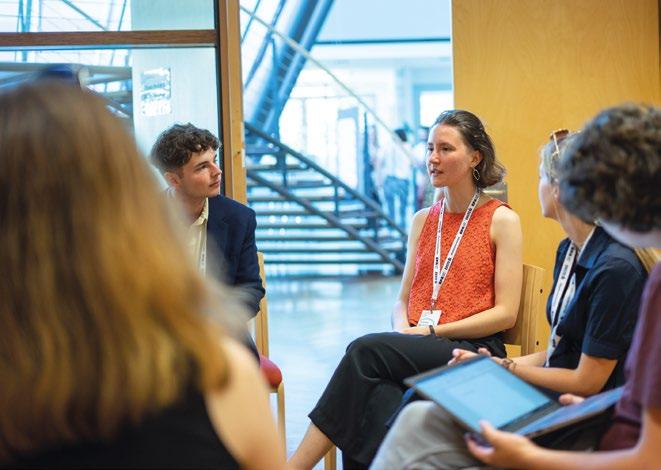
60
In conclusion, ideas and creativity for systemic change regarding a more inclusive world and EFA were given free rein. One of these ideas was that the next Pride parade at the Forum should feature the local brass band from Alpbach. Or the spreading of a hashtag about how barrier-free the building and surroundings of the Congress Centre really were, came into being: #CanIAccessEFA? #CanYouAccessEFA?
A conclusion of the Inclusion Revolution: In the minds of the participants a revolution definitely
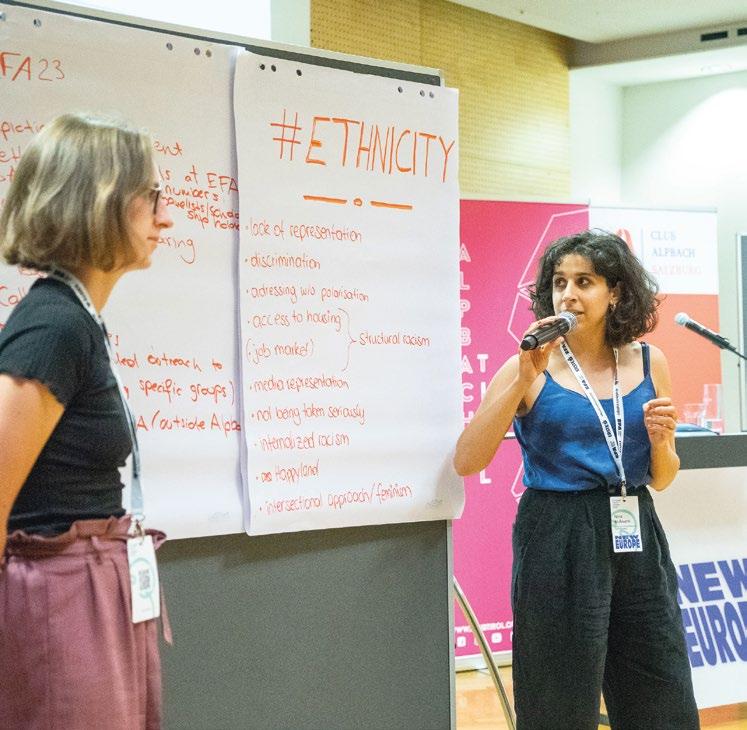
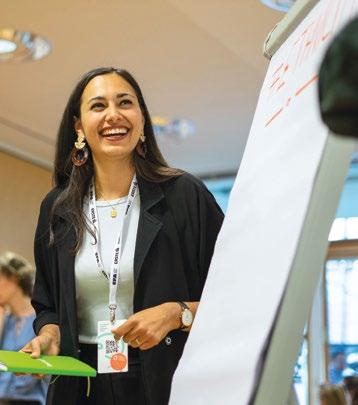

took place. Ideas for a more inclusive EFA and generally a more inclusive daily environment have sprouted. Whether these will be implemented at the Forum in the coming years remains to be seen. Nevertheless, it can be said with certainty that after the series of events a collective sensitization as well as a rethinking with the topic of inclusion was unleashed. The previously announced rethinking at the EFA undoubtedly took place during the two events, at least for me.
— Tabea Hahn
ALPBACH-INTERVIEWS
[engl. only] This year, we asked a few of our scholarship holders to interview one person at the Forum, who they were inspired or impressed by – be it Nobel prize laureate or fellow scholarship holder (or anybody in-between):
INTERVIEW WITH PROSPER TONDERAYI MAGEZA
– Fellow scholarship holder at the European Forum Alpbach 2022 [engl. only]
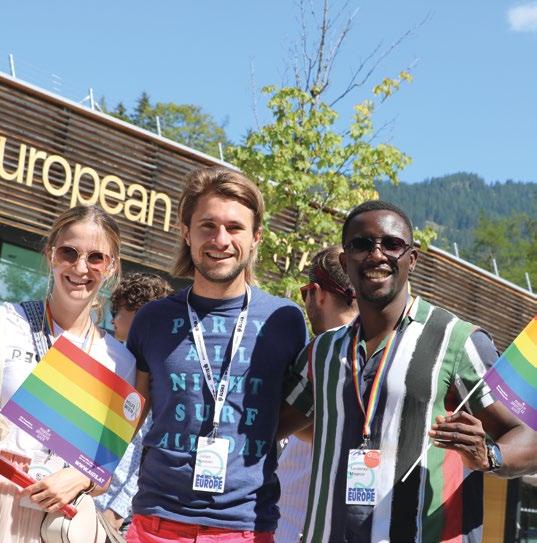
How would you describe your time there? My expectations were met above and beyond. I loved every single human
yone I met is brilliant at something. I completely loved everything. It really felt we were in a beautiful bubble of contextual knowledge.
It was a bubble of learning, of growth, of interacting with very intelligent minds and we had a lot of fun. The parties, Jakober. Jakober was such a highlight for me. I enjoyed meeting people there, just seeing politicians chilling and doing nothing and just being themselves, that was something really unique to see. Because generally politicians and important people, you put them into these brackets and boxes of specialty. Yet at EFA, they were normal people like all of us. I really enjoyed that set up at EFA where they put away the hierarchies and allowed us to interact as human beings who are of common cause. That was really
What was the most fun thing that happened to you or that you were part of during your time in Alpbach?
I loved the innovation marathon. We were able to create something out of nothing and that company we created it for was super strong and excited about our product. So much actually that they are considering to use it. And they invited us to their headquarters in Graz. The company´s name is AVL and we worked on a testing space for passenger drones which are self flying. It was really quite ground breaking and if they end up using our idea it becomes even more
62
ground breaking since passenger drones are still in testing phase, they have not been even approved for public use. So we would become one of the first people who have designed a potential test field for something that could totally revolutionize air travel and even road travel.
Was there one particularly inspiring moment, if so, which one?
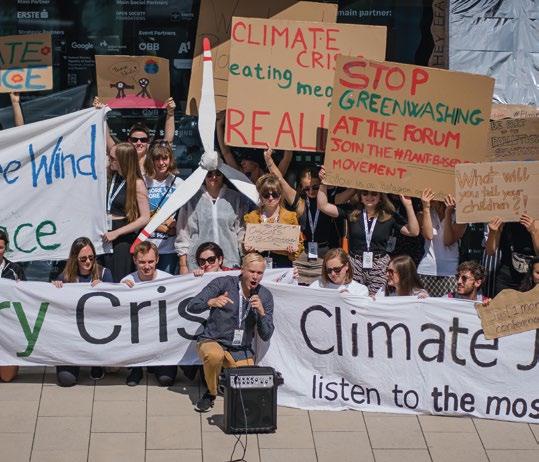
I think when I spoke to Shalini Randeria, the rector of the Central European University. Because she comes from a background that is fairly similar to mine. She was born in America, her parents are Indian and she ended up growing up in India. So I think the opportunities that she had are quite similar to the opportunities that I have had and it has been a journey of hard work, of self application and self actualization and so I could real ly relate to her. We spoke about race, equity, equality, different things. She really resonated with me. My “aha” moment and a very inspiring moment to me was seeing how far she had gone with her career and what she has accomplished – also the knowledge and the wisdom that she carries was impressive. I think a real “aha” moment sitting down with her and drinking that cup of coffee. That really stood out for me.
Interview held by Leon Soyka
63
INTERVIEW WITH MATTHIAS STROLZ, AUSTRIAN BUSINESSMAN AND FORMER POLITICIAN
[dt.] Matthias Strolz über seine Verbindung zum Forum Alpbach, die EU im Jahr 2030 und eine mögliche Karriere als Bildungsminister
Lieber Matthias, das Forum Alpbach hat einen komplett neuen Anstrich bekommen, du bist weiterhin eine Konstante des EFA. Was ist denn Alpbach für dich? Alpbach ist für mich immer eine intellektuelle Sommerfrische und zugleich ein ritueller Abschluss des Sommers. Sicher aber auch ein Ozean an goldenen Erinnerungen, bin ja seit 1996 dabei. Was mir das Forum jedes Jahr bietet, ist auch ein Referenzpunkt zu meiner eigenen Biografie und ein enormes Angebot an Selbstreflexion und Inspiration durch die zahlreichen Begegnungen. Die Tage in Alpbach sind wirklich wahnsinnig intensiv, man muss aufpassen den Körper nicht zu überfordern.
direkt nach dem Bombardement von Belgrad nach Alpbach kamen. Und da bin ich dann schon bei einem Giganten der Inspiration, Erhard Busek, der sich massiv dafür eingesetzt hat, die Länder des Westbalkans in das EFA zu integrieren. Ich erinnere mich auch gut an Alan Webber, dem aktuellen Bürgermeister von Santa Fe, der hat mir das VUKA-Mindset mitgegeben, das wir später beforscht und in Bücher gepackt haben.
Das Streben nach einer besseren Welt – das ist einfach in mir drinnen. So sehe ich die Welt und das Menschsein. Das große Abenteuer Mensch heißt für mich Entfaltung. Wir sind ausgestattet mit fünf Sinnen und verschiedenen Talenten und es ist unsere menschliche Pflicht, dass wir diese Talente in Entfaltung bringen. Jedes Talent, das wir nicht entfalten, ist eine Art Selbstverstümmelung. Wenn jemand seine Talente ignoriert, dann tut ihm das nicht gut: ungelebtes Leben vergiftet. Meine Talente sind ebenso geschnitzt, dass ich sie einbringen muss in die Gesellschaft, ins Kollektiv. Das macht mir Freude.
Wer hat dich denn in Alpbach besonders inspiriert? Und – nach Inspiration und Engagement braucht man bei dir ja auch nicht lange zu suchen – woher nimmst du deine Passion und Energie für, ich formuliere jetzt sehr pathetisch, dein Streben nach einer besseren Welt?
Das waren über die Jahre ganz viele, sicher auch viele Stipendiat*innen. Berührend waren beispielsweise die jungen Menschen aus Serbien, die Ende der 90er-Jahre
Widmen wir uns der Bildung und der Bildungspolitik. Die liegt uns beiden sehr am Herzen. 2015 hast du Österreich ein verkrustetes Bildungssystem attestiert. Wo stehen wir da denn heute? Und was tun, wenn einen das verkrustete System frustriert?
Ich würde in der Bildung den Hebel umlegen, von der Defizit- zur Potentialorientierung. Da würde es nur mehr so knallen vor Innovationen und Lösungen. Es gibt schon
64
Fortschritte, die sind durchaus auch beachtlich. Gleichzeitig bleibt mein Gesamtbefund schon aufrecht. Ich war bei der Umsetzung des Pädagogikpakets mit Minister Faßmann dabei. Da sind gute Dinge drinnen. Ich halte auch die neuen Lehrpläne, trotz der aktuellen Kritik, für einen guten Schritt nach vorne. Auch die Schritte in der Abstimmung zwischen verschiedenen Ausbildungsstufen wird besser. Aber in Summe ist das noch alles viel zu wenig. Keiner würde Schule heute so konstruieren, könnten wir sie auf einer grünen Wiese bauen: das sehen wir von der Hirnforschung bis zur Lern psychologie.
Es gibt Momente der Frust ration, jeder von uns kennt das. Aber ich habe mich in den letzten Jahren vom Revolutionär zum Evolu tionär entwickelt. Ich sehe, dass sich zehntausende jeden Tag von Herzen in unserem Bil
dungssystem bemühen – dafür bin ich sehr dankbar und ich schätze jeden Schritt, der gelingt. Es gibt aber auch destruktive Kräfte, das darf man nicht vergessen. Ich lass mich nicht frustrieren, jeder kleine Schritt zählt. Wichtig ist, sich nicht auf die komplette Zerstörung des Alten konzentrieren, das stirbt eh von allein, sondern Fokus auf das Bauen von Neuem. Am Bildungssystem rütteln ist
Extended board member Sarah Jones at the Alpbach Pride organized by IG Vienna
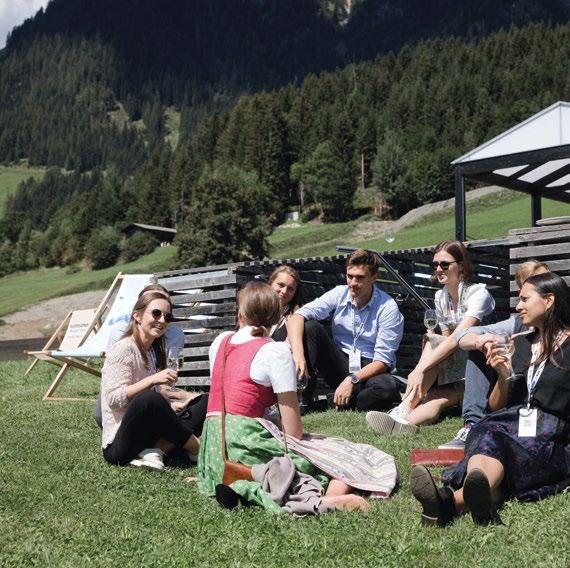
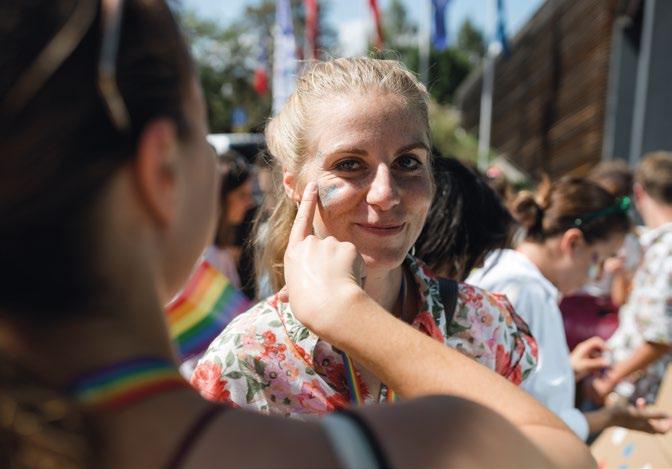
65
schon wichtig, aber auch konstruktiv neue Perspektiven aufbauen. Wäre ich Bildungsminister würde ich es genauso halten.
Hast du schon eine Visitenkarte, auf der steht „Matthias Strolz, angehender Bildungsminister“? (lacht) Ob es dazu kommt, weiß ich nicht. Es muss nicht sein. Und ich kann es mir auch nicht einfach so aussuchen. Das kommt auf die politischen Realitäten an. Ich lebe im Fluss des Lebens.
[engl.] Matthias Strolz on his connection to the Forum Alpbach, the EU in 2030 and a possible career as Minister of Education

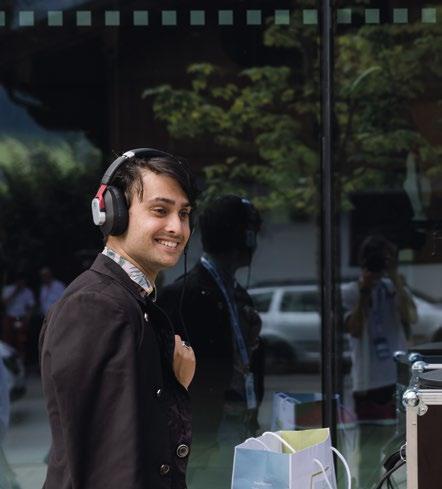
Dear Matthias, the Forum Alpbach has been given a completely new look, but you continue to be a constant at the EFA. What does Alpbach mean to you?
Wir erleben gerade multiple Krisen und damit auch einen geopolitischen Paradigmenwechsel – man könnte fast sagen, wir erleben Geschichte. Wenn wir zum Abschluss noch über die Europäische Union sprechen: Gibt es sie im Jahr 2030 noch?
Ja, das glaube ich schon. Sie wird sich sicher weiter in Krisen befinden, aber sie ist dann hoffentlich auf dem Weg der Konsolidierung. Meine Vision ist eine Republik Europa, die von den Bürger*innen her konzipiert wird, nicht von Nationalstaaten. Sie wird aus Krisen geboren und aufstehen. Wir gehören zusammen. Wir dürfen billigen nationalen Reflexen in Krisen nicht nachgeben. Es geht mal nach vorn, mal zurück. Wir lernen, langsam aber doch. Die Realität der multiplen Krisen rüttelt an uns. Rund um 2030 kann es interessant werden. Irgendwann sind wir reif für den nächsten Evolutionsschritt. Von einer europäischen Republik zu träumen ist nicht naiv.
For me, Alpbach is always an intellectu al summer retreat and at the same time a traditional conclusion to the summer. But certainly also an ocean of golden memo ries, since I‘ve been here since 1996. What the Forum offers me every year is also a reference point to my own biography and an enormous source of self-reflection and inspiration through the numerous encoun ters. The days in Alpbach are really incre dibly intense, you have to be careful not to overstrain your body.
Who inspired you the most in Alpbach? And where do you get your passion and energy for – let’s say – your striving for a better
66
young people from Serbia who came to Alpbach at the end of the 1990s directly after the bombing of Belgrade were touching. And that brings me back to a giant of inspiration, Erhard Busek, who worked hard to integrate the countries of the Western Balkans into the EFA. I also remember well mindset, which we later researched and put into books.
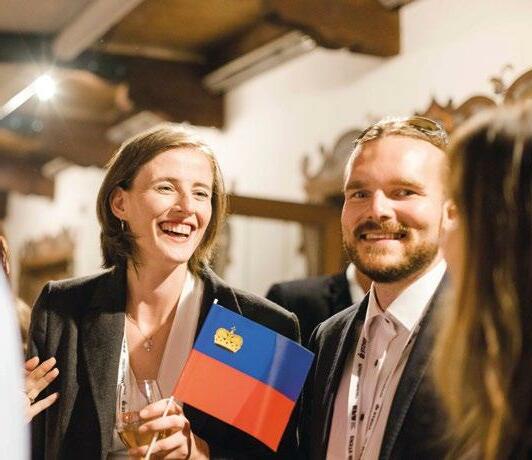
And striving for a better world – that‘s just part of me. That‘s how I see the world and being human. For me, the great human adventure is called development. We are endowed with five senses and various talents, and it is our human duty to bring
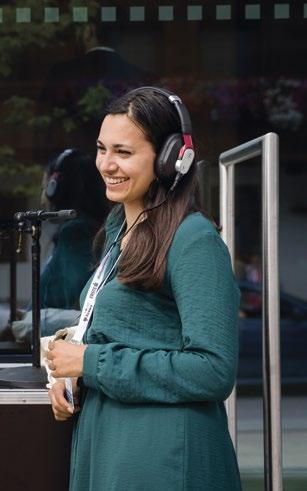
these talents to fruition. Any talent that we do not develop is a kind of self-mutilation. If someone ignores his talents, it does him no good: unlived life poisons. My talents are carved in the same way that I have to bring them into society, into the collective. This gives me joy.
Let‘s turn our attention to education and education policy. That is very close to both our hearts. In 2015, you described Austria as having an encrusted education system. Where are we today? And what do you do when you‘re frustrated by the encrusted
I would change the focus in education from deficit orientation to potential orientation. There would be so much innovation and so many solutions. There has already been progress, and it is quite remarkable. At the same time, my overall findings remain valid. I was present at the implementation of the education package with Minister Faßmann. There are good things in it. I also think the new curricula are a good step forward, despite the current criticism. The steps in the coordination between different levels of education are also improving. But all in all, it‘s still far too little. No one would construct schools today in this way if we could build them on a greenfield site: we see this from brain research to the psychology of learning.
There are moments of frustration, each of us knows that. But I‘ve gone from being a revolutionary to an evolutionary in recent years. I see tens of thousands striving from
67
the heart every day in our education system
– for that I am very grateful and I appreciate every step that succeeds. But there are also destructive forces, and we must not forget that. I don‘t get frustrated, because every little step counts. The important thing is not to concentrate on the complete destruction of the old, which dies on its own anyway, but to focus on building something new. It is important to shake up the education system, but it is also important to constructively build new perspectives. If I were the Minister of Education, I would do the same.
Do you already have a business card that says „Matthias Strolz, prospective education minister“ already?
(laughs) I don‘t know if that will happen. It doesn‘t have to. And I can‘t just pick and choose. It depends on the political realities. I live in the flow of life.
ses is shaking us. Things could get interesting around 2030. At some point, we will be ready for the next evolutionary step. Dreaming of a European republic is not naive.
Interview held by Stephan M. Schweighofer
We are currently experiencing multiple crises and with them a geopolitical paradigm shift - you could almost say we are experiencing history. Let‘s end with a question about the European Union: Will it still exist in 2030?
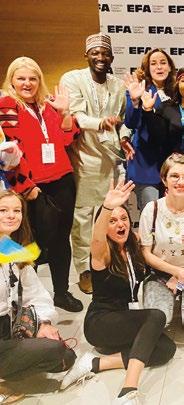
Yes, I think so. It will certainly continue to be in crisis, but hopefully it will then be on the path to consolidation. My vision is a European republic that is conceived by its citizens, not by nation states. It will be born out of crises and rise up. We belong together. We must not give in to cheap national reflexes in crises. Sometimes we go forward, sometimes backward. We are learning, slowly but surely. The reality of multiple cri-
[engl. only] As I was listenting to the stories of others in Alpbach, I was struck with amazement again and again. There were stories of successes, failures, some were overco ming hardships, while others talked about achieving greatness. It’s fascinating to learn about what people were thinking as they found themselves in certain situations and the little bits of shared know-how here and there helped me a lot in better unders tanding how many of them overcame seemingly insurmountable challen ges. After listening to countless sto ries, I felt like wanting to leave. Not because I didn’t enjoy the Forum, but because I couldn’t wait to get back home behind me desk and turn ins piration into action.
— Florian Niederseer

68
Scholarship holder Konstantin Stäblein at the seminar „Health Systems“
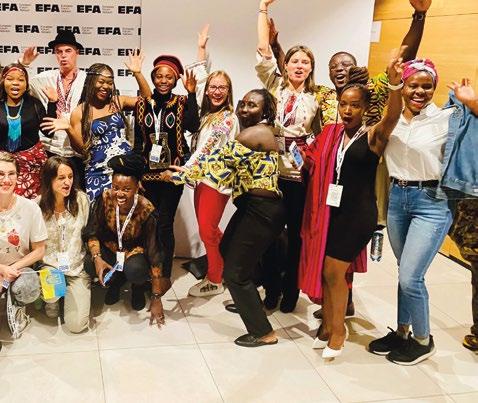
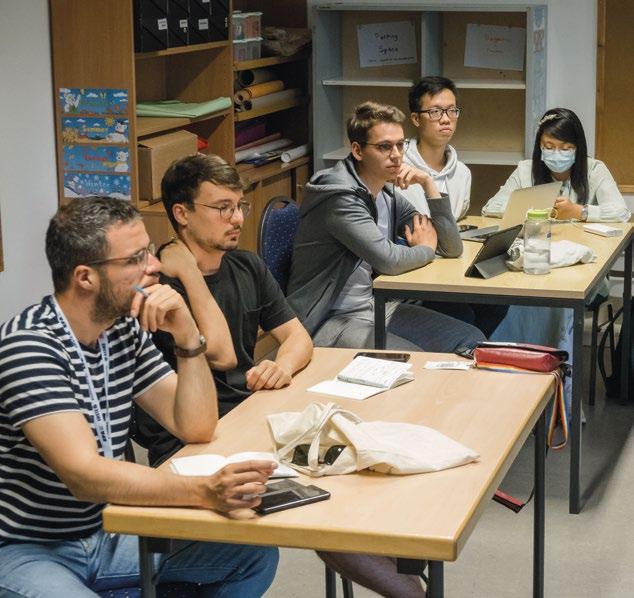
© EFA/Andrei Pungovschi
Our board member Jakob Frenkenberger discussing „Solutions from Geo-Engineering“
©
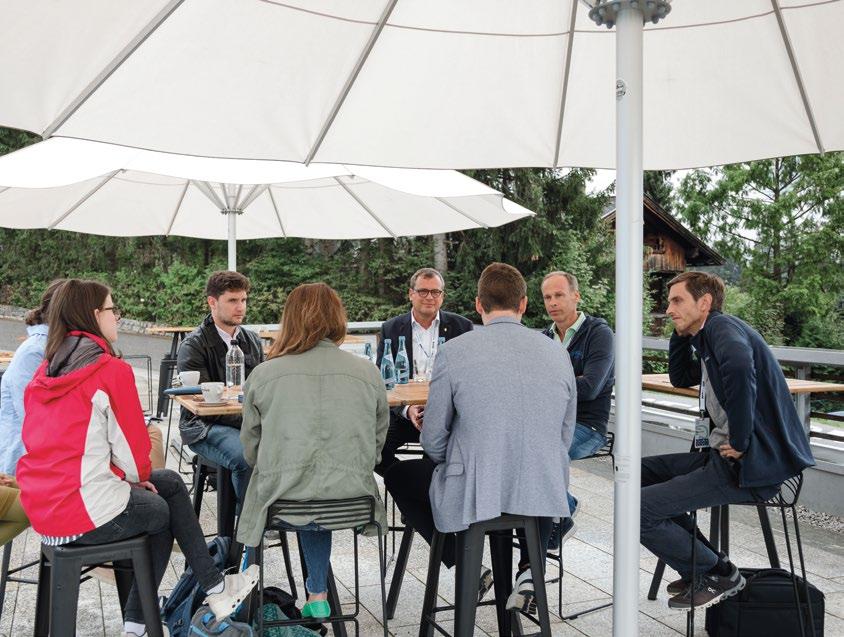 EFA/Maria Kirchner
Scholarship holder Prosper Tonderayi Mageza with collegues at the International Evening
EFA/Maria Kirchner
Scholarship holder Prosper Tonderayi Mageza with collegues at the International Evening
WHAT DOES ALPBACH MEAN TO YOU? WHAT WAS YOUR “ALPBACH MOMENT”?
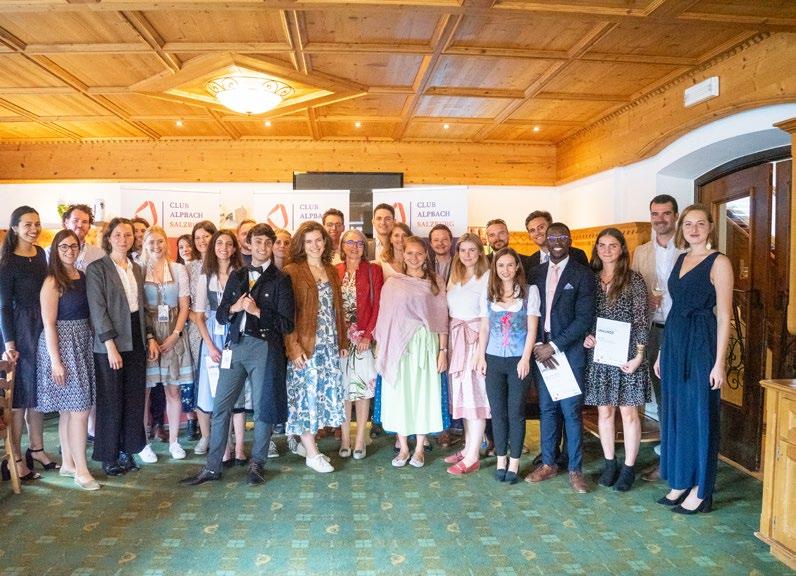
My Alpbach moment took place right at the beginning of the Forum. On the first day was not only the EFA opening but also the Tyrol Day. In the course of this, a marching band played. This moment was so magical for me, because I have not heard a band play since the beginning of the corona pandemic. The moment I sensed the music meant the beginning of a new good time for me. A departure towards new thoughts, experiences and friendships.
— Konstantin Stäblein
Alpbach was everything I anticipated it to be and even more. From getting face-to-face with inspiring thought and world leaders, to bonding with people over the harrowing experience of trying out Krautinger. My time at this year’s Forum has changed the ways in which I think about certain topics and gave me a great deal of motivation on my way.
— Florian Niederseer
70
The Alpbach experience truly cannot be put into words. What can be said, however, is that it was a time of great opposites. I spent hundreds of hours in a tiny, kitschy alpine village with one the most interesting, diverse, and international group of people I’ve ever met. We tackled the most urgent problems our world is facing right now, but I also discussed the cake selection with political leaders. I got lost in philosophical dreams, but also in nature – quite literally in a pine field. I danced, laughed, cried, sang, and slept under the stars. All of this and so much more was my Alpbach experience.
– Teresa Schmidbaur
Beeindruckt von der unglaublichen Interdisziplinarität, der neugierigen Offenheit und dem motivierten Interesse und sehr, sehr dankbar für die Möglichkeit der Teilnahme und für die Erfahrungen am Europäischen Forum Alpbach 2022!
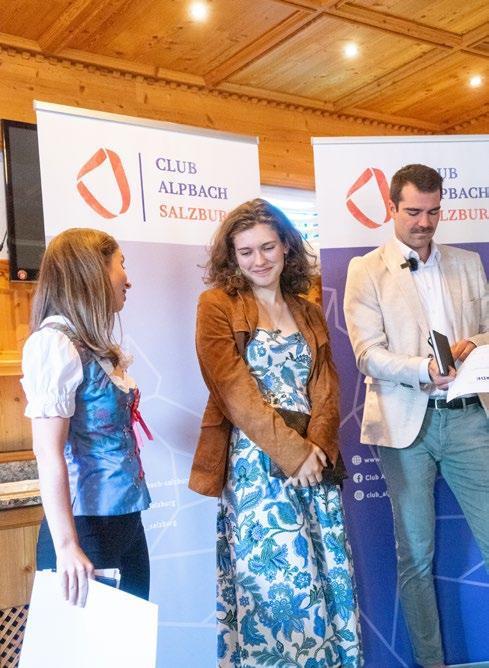
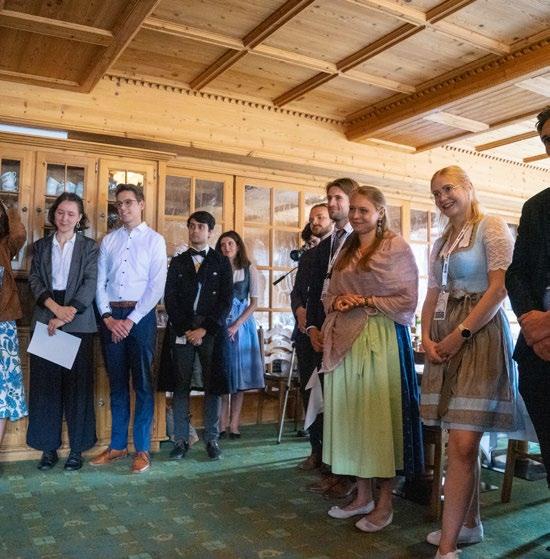 — Maria-Sophia Stadler
Alpbach means to me having the opportunity of getting an immense amount of new inputs, of developing new ideas and of sharing a place together with inspirational, intelligent and motivated people, where the laws of time and space seem to work somehow differently.
— Leon Soyka
71
[dt. only] Alpbach bedeutet für mich, dass man um 2 Uhr morgens Blockchain anhand einer Streichholzschachtel erklärt bekommt. Es bedeutet, dass Philosophen und ein Mathias Strolz anstelle eines Pfarrers in einer katholischen Kirche predigen. Dass man von einem Krypto-Finanzkurs in eine Werkstatt für kreatives Schreiben fällt und, dass man sich nicht sicher ist, ob das persönliche Gespräch mit einem Wirtschaftsnobelpreisträger oder einer Stipendiatin aus der Ukraine inspirierender war. Es bedeutet ein Gehetze von Seminar zu Workshop und die immerwährende Angst, irgendetwas zu verpassen (die sogenannten „FOMO“).
Kamingespräche mit verrückten Physikern, welche die Philosophie der Reduktion auf eine neue Ebene heben, sowie Diskussionen mit CEOs von großen TEC Unternehmen über die mögliche Existenz der Menschheit auf zwei Planeten.
Und Alpbach bedeutet ebenso, eine Blase zu sein, in der Erkenntnis und Zweifel sich nebeneinander beherbergen.
Darüber hinaus bedeutet es unendlich viele Glücksmomente, neue Bekanntschaften, die zu Freundschaften werden, starke Emotionen, Rastlosigkeit, Endorphinausschüttungen jeglicher Art, Erschöpfungszustände und eine unbeschreibbare Horizonterweiterung mit dem Wissen, dass dazu noch ein ganzer Himmel darüber gehört. Den viel zitierten Geist von Alpbach habe ich also definitiv erlebt.
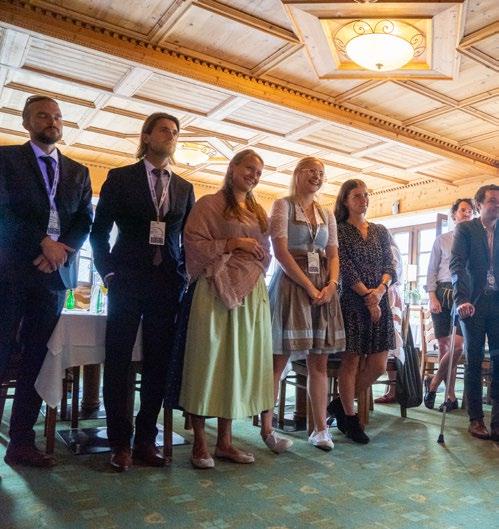
Es bedeutet ein gemeinsames 3 Uhr mor gens Spagetti kochen und ein gegenseitiges Zudecken und in den Schlaf reden. Dass ein Musiker mit einer Medizinerin über Daten sicherheit debattiert und sich Konfrontatio nen neben Einsicht und Verständnis findet. Auf Grundbedürfnisse wie Schlaf und Nah rungszufuhr zu vergessen, niemals aber auf das obligatorischen Sundowner-Trauben saftwasser.
Es bedeutet aber auch, eine Pride-Parade neben dekadenten Empfangsveranstaltungen, sowie Lachsbrötchen neben einer Fridays for Future Demonstration.
72
For lack of better words, my experience was transformational. Everyone I met and interacted with is brilliant and amazing at what they do. Experts are not easy to encounter and EFA brought them to one small village and crafted what I would like to call a contextual bubble for networking and knowledge transfer. I am fired up to keep on working to make the world a better place. I hope to be able to look back and say I am glad I was “here” and for others to also say we are happy to have been “here” with me.
—Prosper Tonderayi Mageza
[dt.] Einige Woche nach dem Forum Alpbach ist mein persönliches Fazit, dass diese Veranstaltung viele Chancen aufbringt, Spaß macht, das persönliche Zugehörigkeitsgefühl zu Europa stärkt und augenöffnend, motivierend und horizonterweiternd ist. [engl.] A few weeks after the Forum Alpbach, my personal conclusion is that this event brings up many opportunities, is fun, strengthens the personal sense of belonging to Europe and is eye-opening, motivating and horizon-expanding.
73
— Julie Armstorfer
To me, Alpbach means community. It’s a reminder for me that at the end of the day, all of us are the global community and only by working together can we solve the issues that we all have to face
—
Florian Niederseer
[dt.] Mein Alpbach-Moment ist der Austausch und die Erfahrung mit den anderen Stipendiat*innen, über ihre großartigen Ideen, ihre unterschiedlichen Ansichten und Meinungen, die die eigene bereichern und erweitern sowie die Möglichkeit, die SelbstBeweihräucherung der Politiker*innen und Unternehmer*innen zu verarbeiten und vielleicht wieder ein Stück zu vergessen.
[engl.] My Alpbach moments are the exchange and the experiences with the other scholarship holders, about their great ideas, their different views and opinions, which enrich and expand one‘s own, as well as the possibility to process the self-adulation of the politicians and entrepreneurs and maybe to forget a bit again.
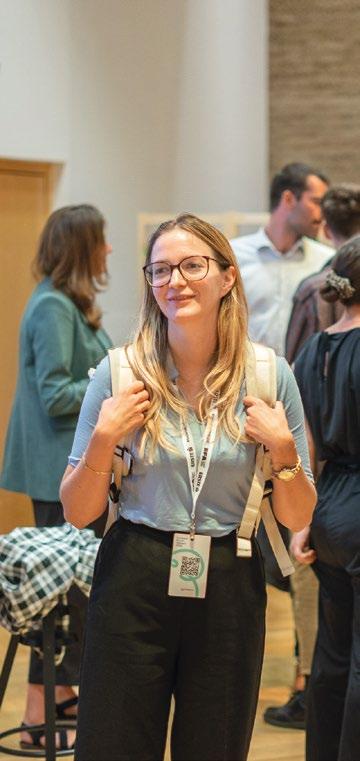
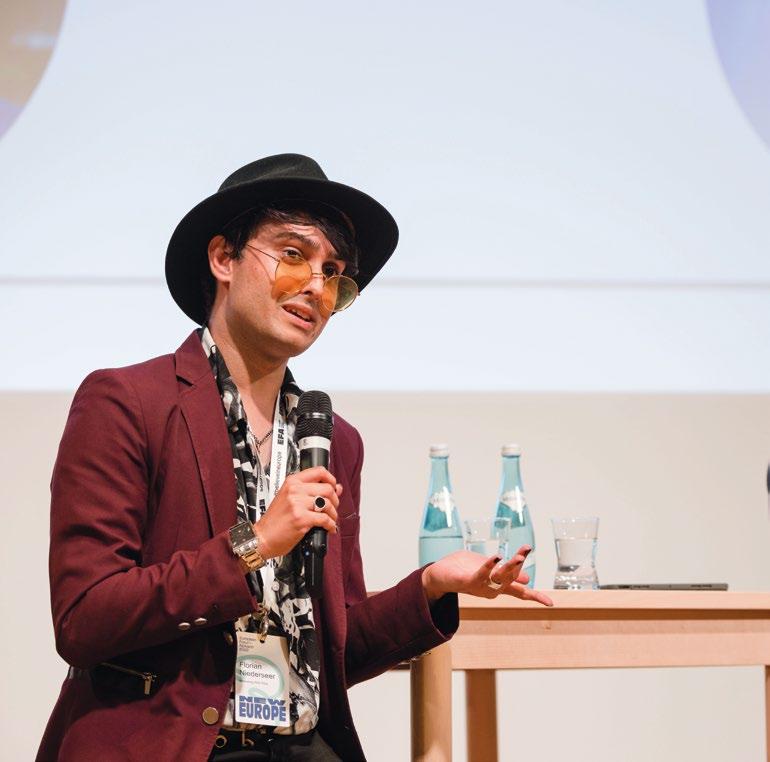 — Claudia Schwertl
74
INTERVIEW MIT ANDREAS PRÄSIDENTTREICHL, DES EUOPÄISCHEN FORUMS ALPBACH
[dt.] Die diesjährige Stipendiatin Tabea Hahn interviewte EFA-Präsident Andreas Treichl für die Salzburger Nachrichten und schaffte es damit – wohlverdient – auf die Titelseite. Hier könnt ihr den ganzen Beitrag nachlesen.
Was sind die Herausforderungen für Europa, mit denen sich das Forum Alpbach heuer beschäftigt ?
Alpbach-Präsident Andreas Treichl plädiert für mehr Gemeinsamkeit in Europa und für mehr Rücksicht auf die Jugend.
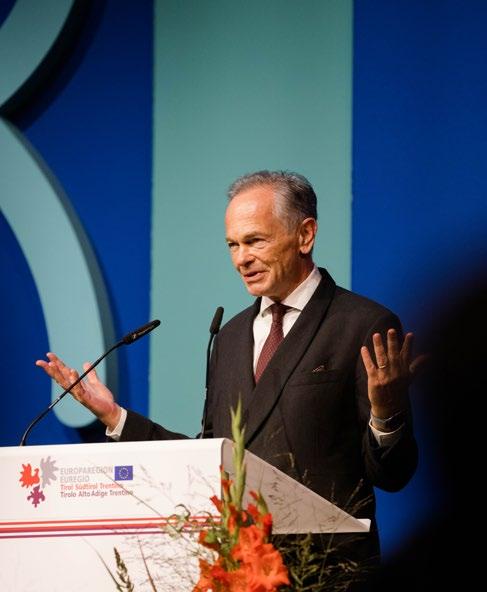
Der langjährige Chef der Erste-Bank, Andreas Treichl, folgte 2021 Franz Fischler als
Andreas Treichl: Es sind vier wesentliche Themen, die wir schon im Vorjahr definiert haben: Erstens die Chancen, die sich aus dem Klimawandel ergeben können, wenn man ihm richtig begegnet. Zweitens die Sicherheit Europas – das hat durch den Krieg in der Ukraine jetzt eine ganz neue Dimension erhalten. Das dritte Thema ist die Finanzierung der Zukunft: Wie können wir die sozialen Errungenschaften behalten? Und der vierte Punkt sind Demokratie und Rechtsstaatlichkeit. Das sind unserer Meinung nach die vier wesentlichen Themen für Europa.
Und wie werden diese Themen in Alpbach angepackt?
Wir sind in Alpbach der Überzeugung, dass alle diese Fragen nur gelöst werden können, wenn alle – Politik, Wirtschaft, Wissenschaft, Technologie, Kunst – zusammenarbeiten. Das kann niemand allein, auch nicht die Politik. Schon gar nicht die Politik!
Glauben Sie, dass Europa diesen Herausforderungen gewachsen ist und alle erwähnten Krisen meistern kann?
Das hängt davon ab, welche Ansprüche wir stellen. Manches in Europa funktioniert gut, manches funktioniert nicht so gut. Es gibt einen riesigen Konflikt zwischen Gemeinschaftsinteressen und nationalen Interessen. Wir sind in manchen Belangen viel zu langsam und zu wenig konsequent. Ich glaube, dass wir Geschwindigkeit und
„Jugend braucht höheren Stellenwert.“
Konsequenz nur dadurch erreichen können, indem wir in Europa mehr Gemeinsamkeiten finden. Es ist nun einmal so, dass ein Großteil der Probleme nur gemeinsam gelöst werden kann. Aber das kann nicht „die EU“ für uns machen, sondern die Nationalstaaten müssen das gemeinsam tun.
Was oft nicht gelingt ...
Leider ist es so, dass Gemeinschaftsthemen den Parteien daheim im harten Konkurrenzkampf um Wählerstimmen nur in den wenigsten Fällen nützen. Deshalb werden diese Gemeinschaftsthemen in den seltensten Fällen angegangen. Das ist eines der wesentlichsten institutionellen Probleme, das wir in Europa haben. Und das wir lösen müssen.
Und zwar wie?
Ich möchte Alpbach nicht überschätzen, aber wir haben hier tolle Personen und Diskussionen, die einen Nachklang in Europa haben werden. Davon bin ich überzeugt.
Die Bewältigung der aktuellen Krisen –von Corona bis zur Teuerung – verschlingt Unsummen. Bleibt noch finanzieller Spielraum für die kommenden Generationen ? Eines der ganz wesentlichen Probleme ist die demografische Entwicklung: Europa wird immer älter, was bedeutet, dass bei Wahlen die älteren Generationen eine immer größere Rolle spielen als die jungen. Und es ist nun einmal so, dass die Interessen einer 70-jährigen Pensionistin andere sind als die einer 22-jährigen Studentin. Deswegen wollen wir in Alpbach darauf bestehen, dass es der Jugend ermöglicht
wird, ihre ungünstige demografische Position wettzumachen. Die Jugend braucht einen höheren Stellenwert. Aber da traut sich die Politik nicht drüber.
Angesichts der Teuerung sind staatliche Eingriffe in die Wirtschaft jetzt sehr gefragt. Ist Ihnen da wohl dabei?
Es gibt Zeiten, in denen staatliche Eingriffe sehr, sehr notwendig sind. Diesen Zeitpunkt haben wir jetzt. Aber dann muss man wieder die richtige Balance finden. Es gibt derzeit viele Probleme, für die es einfach keine optimale Lösungen gibt. Sondern wo man – auch bedingt durch den Krieg – leider zwischen Pest und Cholera entscheiden muss. Da tut sich die Politik extrem schwer. Aber man muss darauf achten, dass durch die staatlichen Eingriffe die Schuldensituation nicht eskaliert. Denn da leidet im Endeffekt wieder die Jugend darunter. Jetzt schiebt man das Problem einfach weiter, aber irgendwann muss man alles bezahlen.
Alpbach steht für gepflegten Meinungsaustausch, wie er in den sozialen Medien immer seltener möglich ist. Wie könnte man dort zu einer besseren Diskussionskultur kommen?
Ich glaube, dass die Medien da eine wichtige Rolle spielen. Man muss das Wissensniveau der Menschen heben, denn je mehr ich über eine Sache Bescheid weiß, desto weniger kann ich durch „Fake News“ beeinflusst werden. Je besser die sachliche Information und je breiter der Dialog ist, desto weniger Chance biete ich dem Extremismus und dem Populismus, Fuß zu fassen.
77
[engl.] This year’s scholarship holder Tabea Hahn interviewed EFA president Andreas Treichl for the newspaper Salzburger Nachrichten and made it – well deserved – to the front page. Read the full article here.
future: How can we keep the social achievements? And the fourth issue is democracy and the rule of law. In our opinion, these are the four essential issues for Europe.
And how will these issues be tackled in Alpbach?
We are convinced in Alpbach that all these issues can only be solved if everyone - politics, business, science, technology, art - works together. No one can do it alone, not even politics. Especially not politics!
Alpbach President Andreas Treichl pleads for more togetherness in Europe and for more consideration for the youth.
This year‘s scholarship holder Tabea Hahn interviewed EFA President Andreas Treichl for the Salzburger Nachrichten and made it - well deserved - to the front page. Read the whole article here.
Do you believe that Europe is up to these challenges and can master all the aforementioned crises?
Andreas Treichl, the long-time head of Erste Bank, succeeded Franz Fischler as President of the European Forum Alpbach in 2021. The Tyrolean „thinkers‘ village“ has been discussing the questions of Europe‘s future since 1945.
What are the challenges for Europe that the Alpbach Forum is addressing this year ?
Andreas Treichl: There are four main topics that we already defined last year: First, the opportunities that can arise from climate change if it is met properly. Second, the security of Europe - this has now taken on a whole new dimension as a result of the war in Ukraine. The third issue is financing the
That depends on what demands we make. Some things in Europe work well, some things don‘t work so well. There is a huge conflict between community interests and national interests. In some matters, we are far too slow and not consistent enough. I believe that we can only achieve speed and consistency by finding more common ground in Europe. The fact is that a large part of the problems can only be solved together. But this is not something „the EU“ can do for us; the nation states have to do it together.
Which often does not succeed ...
Unfortunately, community issues are of little use to the parties at home in the fierce competition for votes. Therefore, these community issues are rarely addressed. This is one of the most important institutional problems we have in Europe. And one that we need to solve.
78
„The youth needs to be given a higher significance.“
And how?
I don‘t want to overestimate Alpbach, but we have great people and discussions here that will have a resonance in Europe. I am convinced of that.
Dealing with the current crises - from Corona to inflation - swallows up vast sums of money. Is there any financial leeway left for future generations ?
One of the most important problems is the demographic development: Europe is getting older and older, which means that the older generations play an ever greater role in elections than the younger ones. And it is a fact that the interests of a 70-year-old retired person are different from those of a 22-year-old student. That is why we want to insist in Alpbach that young people be given the opportunity to make up for their unfavorable demographic position. Young people need a higher status. But politicians don‘t dare to go there.
In view of inflation, state interventions into the economy are now very much in demand. Are you comfortable with that?
There are times when state intervention is very, very necessa ry. We are at that point in time now. But then you have to find the right balance again. There are currently many problems for which
there are simply no optimal solutions. Instead, we have to choose between the devil and the deep blue sea, partly because of the war. Politicians are having an extremely hard time with this. But we have to make sure that state intervention does not escalate the debt situation. Because in the end, it‘s the young people who suffer. Now you just push the problem further, but at some point you have to pay for everything.
Alpbach stands for a cultivated exchange of opinions, which is increasingly rare in social media. How could we achieve a better culture of discussion there?
I believe that the media have an important role to play here. You have to raise people‘s level of knowledge, because the more I know about a matter, the less I can be influenced by fake news. The better the factual information and the broader the dialog, the less chance I give extremism and populism
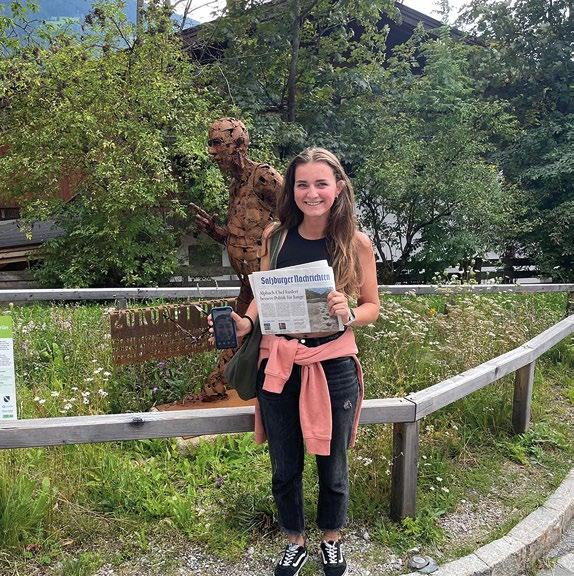
LET‘S TALK CAS ALUMNI EVENT
[engl. only] Usually, CAS events center around a certain person or topic. On October 1st, however, we got together to discuss all of us, the members of CAS, and thus the many facets of our club.
The short and concise “TED-talks” given by members – some have been part of the club since 2012 – were organized in much the same way as the thematic tracks of the EFA. The eight talks touched upon the topics of climate, democracy, finance and security but also art and culture. Every one of them talked about their field of work and the opportunities and challenges they face therein – on a personal level and on the entire sector.
Julia Brugger, who works at the Salzburg AG, one of CAS´ sponsors, kicked of the TED-talks by discussing Austria’s chances of expanding the renewable energy network and the struggles that will inevitably accompany this transition. Gerald Eder followed by giving us insights into the world of the founder of a start-up in the energy management sector – from the idea to implementation. Simon Ellmauer-Klambauer, policy advisor in the Vice-Chancellor’s cabinet, shared what a crucial role negotiating and coordination play when it comes to government policy, especially during the current energy crisis.
Sebastian Kollmann touched upon a topic that is not only relevant to his field of work, data engineering and management. He tal-
Text: Theresa Schmiedbaur (Scholarship holder)


80
ked about the ‘search for talents’ and the obstacles employers and employees face nowadays.
After a short break, Inge Patsch, who had gained lots of experience internationally in her area of work, gave us her take on a regenerative – rather than a sustainable – future and what part social businesses are playing therein. As a financial stability analyst, Tina Emambakhsh showed us just how connected the climate crisis and the European Central Bank are – and why the ECB therefore needs to carry out climate stress tests.
menting. Giving the final TED-talk, Kerstin Glachs shared her experiences working ‘behind the camera’ in film and theater and the major differences between the both, as well as pros and cons.
This year’s scholarship holders were also given the opportunity of sharing their ‘Alpbach-experience’ through short videos and readings of texts we had prepared. Finally, after the presentation of CAS’ image film that featured several short interviews and
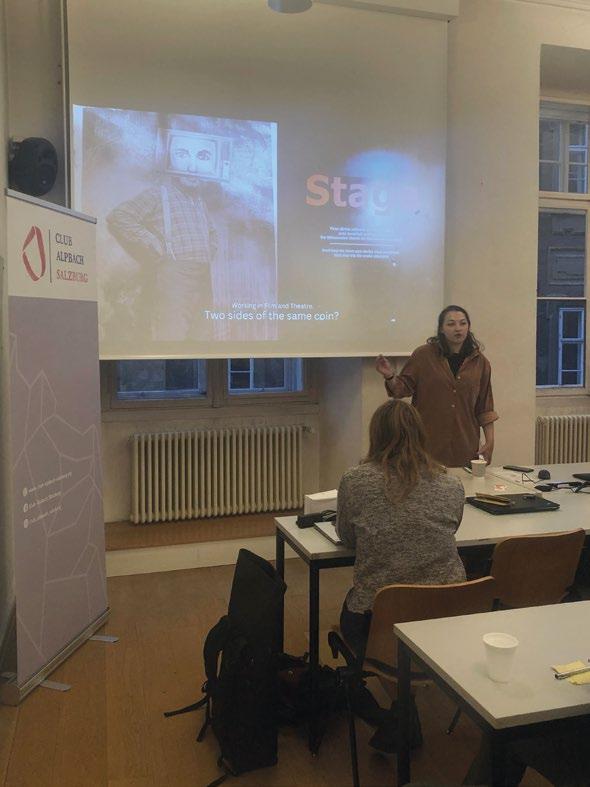
Anna Puhr, who is responsible for digi tal communication at the Burgthea ter Wien, rang in the part of the evening focusing on art and culture. Her talk centered
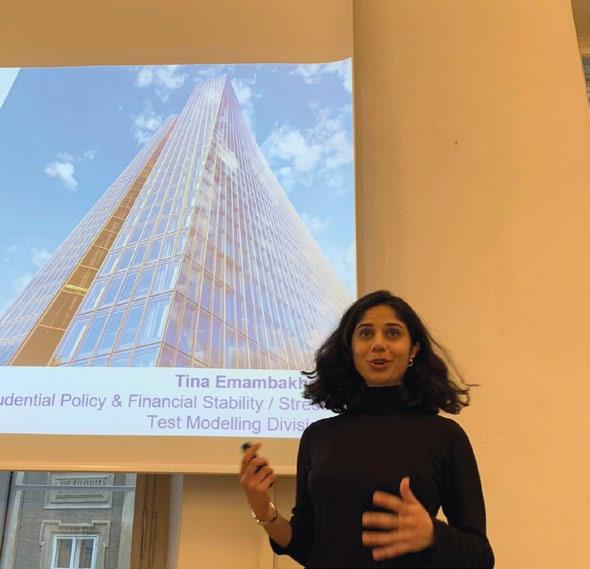
HANDING OVER OR HANDING OVER
Lieber Andi, mit diesem Jahr und der neuen Rolle im Forum Alpbach Network Board (FAN B) endet auch deine Zeit im Vorstand des Club Alpbach Salzburg. Du warst 2019 erstmals als Stipendiat in Alpbach und anschließend drei Jahre im Vorstand tätig – wie siehst du die Entwicklungen über diese Zeit am Forum und insbesondere natürlich im Club?
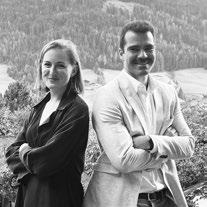
Andi: Mein erstes Jahr in Alpbach und dabei besonders der Club Alpbach Salzburg waren sehr prägend für meine Wahrnehmung und Erfahrung des Forums und schließlich auch ausschlaggebend dafür, dass ich unbedingt weiterhin Teil dieses Netzwerks bleiben wollte. Mit dem neu geformten Vorstand 2019/20, traten wir nicht nur mit großen Plänen an, sondern auch völlig unwissend, was in den nächsten Monaten und Jahren auf uns zukommen würde. Neben mehrmaligen Geschäftsführerwechsel sowie jährlich neuen Ausrichtungsideen am Forum selbst, war es natürlich besonders die Pandemie, die uns und alle anderen Clubs vor große Heraus-
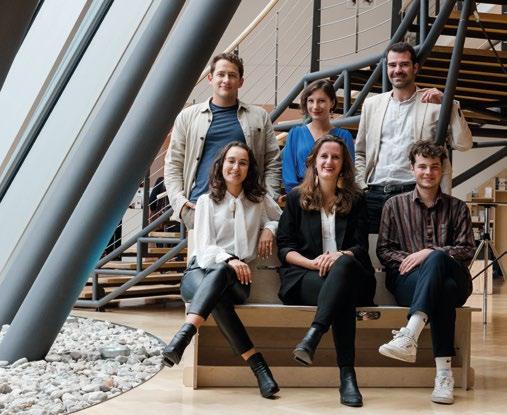
82
Text: Andreas Maierhofer (President) & Eva-Maria Schitter (Secretary General)
forderungen stellte. Dabei konnte der Club und ein wahnsinnig engagierter Vorstand samt Extended Board sowohl das reine Online-Jahr 2020, also auch die HybridSondervariante 2021 meistern, um 2022 wieder in einem beinahe “normalen” Alpbach anzukommen.
Denn auch die bereits genannten Veränderungen am Forum über diese Zeit forderten uns als Club besonders heraus, führten dabei aber gleichzeitig zu einer immer engeren und professionelleren Zusammenarbeit intern als auch extern mit dem FAN sowie dem Forum direkt. Dabei bin ich besonders stolz, dass wir als Club einer der Mitinitiator*innen des sogenannten Baseline Agreements waren, das die gute Zusammenarbeit zwischen Clubs und dem Forum für die Zukunft absichert. Darüber hinaus haben wir die Chance der heuer erstmalig in diesem Ausmaß angebotene Mitkuratierung des Forums wahrgenommen und in Zusammenarbeit mit weiteren Clubs und Einrichtungen insgesamt vier HauptabendSlots des offiziellen Programms bespielt.
Eva: Apropos Programm: Nun warst du vergangenes Jahr unser Präsident und dabei einer der federführenden Mitinitiator*innen und -organisator*innen für die Eventserie “Inclusion Revolution”, die für viele Teilnehmende ein Programmhighlight am heurigen Forum war. Wie kam es dazu? Und für unsere externen Lesenden: Woher die thematische Schwerpunktsetzung?
Andi: Bei der Übernahme des neuen ClubVorstands 2021/22 haben wir uns die
Themen Diversität und Inklusion als große Fokuspunkte auf die Fahnen geschrieben. Dem folgten unter anderem Veranstaltungen wie ein Workshop mit ZARA und einer Podiumsdiskussion zum Thema Rassismus in Salzburg sowie ein kollaboriertes Kamingespräch in Wien (mit der IG Wien und dem Club Alpbach Tirol (CAT)) zum Thema Inklusion von Menschen mit Behinderungen mit meiner Kollegin Fides Raffel von myAbility als Gastsprecherin. Schließlich eröffnete uns das EFA, dass wir für das diesjährige Forum Veranstaltungsvorschläge einreichen konnten, woraufhin wir die bereits erfolgreich gestartete Zusammenarbeit mit der IG Wien und dem CAT intensivierten und gemeinsam mit myAbility und der „Frauendomäne“ die besagte Eventserie „Inclusion Revolution” kreierten – was dabei herauskam, kann man weiter hinten im Jahresbericht nachlesen. Insgesamt war es auf jeden Fall ein toller Erfolg, auf dem wir die kommenden Jahre auf jeden Fall aufbauen wollen.
Speaking of kommende Jahre und aufbauen, liebe Eva – ich werde die “Inclusion Revolution” und weitere Themen zukünftig von myAbility und FAN B Seite aus weiter vorantreiben, für den Club Alpbach Salzburg darf ich das Ruder in deine Hände übergeben. Worauf freust du dich, wenn du an die Zukunft hinsichtlich Clubarbeit denkst und hast du dabei besondere Wünsche oder Vorstellungen?
Eva: Der Themenbereich Diversität und Inklusion, in dem wir uns im Zuge der unterschiedlichen Veranstaltungen dieses
83
Jahr wertvolles Wissen aneignen konnten, soll im Club kommendes Jahr nicht einfach ersetzt werden durch einen neuen. Hier gilt es, mit dem Bewusstsein über den Handlungsbedarf, der diesbezüglich allerorts nach wie vor besteht, das neu gewonnene Know-How in der Praxis umzusetzen und die Clubstrukturen danach auszurichten und zu gestalten. Ein erster Schritt, den wir hier im neuen Jahr setzen wollen, ist, eine Ombudsperson als Anlaufstelle zu installieren für Herausforderungen, die clubintern aber auch am EFA in größeren Bezugsrahmen auftreten können. Mit Maria (Anwar), die diese Position bekleiden wird, und ihrem Backgroundwissen sowie ihrer Sensibilität für die Themen, wissen wir hier eine absolut geeignete Persönlichkeit in dieser Funktion, um unseren Club einen Safer Space sein zu lassen.
Natürlich nehmen wir das kommende Vereinsjahr aber auch inhaltlich mit neuen Schwerpunkten für unser Club-Programm in Angriff. Eines meiner Anliegen ist an dieser Stelle, die Künste und allgemein den Bereich Kultur verstärkt ins Blickfeld zu rücken. Hier wollen wir in den Eventformaten die Potenziale rund um Schnittstellen zwischen Wissenschaft, Wirtschaft und Kunst aufs Tapet bringen. Die Absicht dabei ist, Trans- und Interdisziplinarität im Denken und Handeln als strukturgebendes Fundament für das Tüfteln an den großen Zukunftsfragen Europas und der Welt zu verstehen und damit die Buzzwords nicht nur als Worthülsen in unserem MissionStatement stehen zu lassen, sondern sie mit gehaltvollen, spannenden Inhalten auch tatsächlich zu füllen. Ich freu’ mich
schon sehr, im und mit dem frisch gewählten Team an den neu gesteckten Zielen zu arbeiten.
Aber first things first: Unser finales Übergabe-Meeting steht ja noch aus! Die akademische Viertelstunde ist längst vorüber, meine obligatorischen ‘fünf’ Minuten Verspätung auch, ich bin einstweilen satt und, wie die Lungauer*innen so schön sagen, “kampet und gschneizt”. Wie schaut’s bei dir aus mit einem Final Try — ready for handing over?
84
Andi: Den Vorstand übergebe und verlasse ich tatsächlich mit dem sprichwörtlichen lachenden sowie weinenden Auge. Weinend, weil mir der Club und all seine Mitglieder über die letzten drei Jahre so viel ermöglicht und dadurch einen wichtigen Platz eingenommen haben. Lachend, weil ich zumindest für die nächsten drei Jahre weiterhin mit dem Club und seinem Vorstand, also euch zusammenarbeiten darf – wenn auch aus neuer Perspektive. Daher ja, ready for handing over. Ich bin absolut überzeugt, dass der Club in wahnsinnig fähigen Händen liegt und freue mich auf alle zukünftigen Zusammenkünfte – am liebsten bei gemeinsamen (!) gutem Essen und Getränken. Also viel Erfolg, Prost und Mahlzeit.
Eva: Ein riesengroßes Dankeschön, Andi, für deine exzellente und gewissenhafte Arbeit, die in den letzten Jahren einen wesentlichen Teil dazu beigetragen hat, dass der Club in der aktuellen intakten Form besteht und funktioniert! Du hinterlässt große Spuren. Alles, alles Gute für die spannenden neuen Aufgaben als Teil des FAN B und bis ganz bald!
Eva: Dear Andi, this year and your new role on the Forum Alpbach Network Board (FAN B) also marks the end of your time on the board of Club Alpbach Salzburg. You were a scholarship holder in Alpbach for the first time in 2019 and then served on the board for three years – how do you see the developments over this time at the Forum and, of course, in the club in particular?
Andi: My first year in Alpbach, and especially the Club Alpbach Salzburg, were very influential for my perception and experience of the Forum and eventually also decisive in my determination to remain part of this network. With the newly formed 2019/20 board, we entered not only with big plans, but also completely unaware of what was to come in the following months and years. In addition to several changes of the CEO as well as new ideas at the Forum itself every year, it was of course the pandemic in particular that challenged us and all the other clubs. However, the club and an incredibly committed board and extended board were able to master both the online-only year 2020 and the special hybrid version of the forum 2021, in order to return to an almost „normal“ Alpbach in 2022.
The previously mentioned changes to the Forum over this period were particularly challenging for us as a club, but at the same time led to closer and more professional cooperation both internally and externally with the FAN and the Forum directly. I am particularly proud that we as a club
85
[engl.]
were one of the initiators of the so-called Baseline Agreement, which secures the successful cooperation between clubs and the Forum for the future. In addition, we took the opportunity of co-curating the Forum for the first time on such a large scale this year and, in cooperation with other clubs and institutions, hosted a total of four main evening slots of the official program.
Eva: Speaking of the program: Last year you were our president and one of the initiators and organizers of the event series „Inclusion Revolution“, which was a program highlight for many participants at this year‘s Forum. How did it come about? And for our external readers: Where did the thematic focus come from?
Andi: When the new club board took over in
ZARA in Salzburg or a collaborative fireside chat in Vienna (with IG Wien and Club Alpbach Tirol (CAT)) on the topic of inclusion of people with disabilities with my colleague Fides Raffel from myAbility as guest speaker. Finally, the EFA opened the door for us to submit event proposals for this year‘s forum, whereupon we intensified the already successfully started cooperation with IG Vienna and CAT and created said event series „Inclusion Revolution“ together with myAbility and the Frauendomäne – what emerged from this can be read further back in the annual report. Overall, it was definitely a great success, and one that we definitely want to build on in the years to come.
Speaking of coming years and building up, dear Eva – I will continue to push the „Inclusion Revolution“ and other topics from myAbility and FAN B side in the future, for Club Alpbach Salzburg I may hand over the wheel to you. What are you looking forward to when you think about the future of club work and do you have any special wishes or ideas?
The topic of diversity and inclusion, in which we were able to acquire valuable knowledge in the course of the various events this year, should not simply be replaced by a new one in the club’s next year. With an awareness of the need for
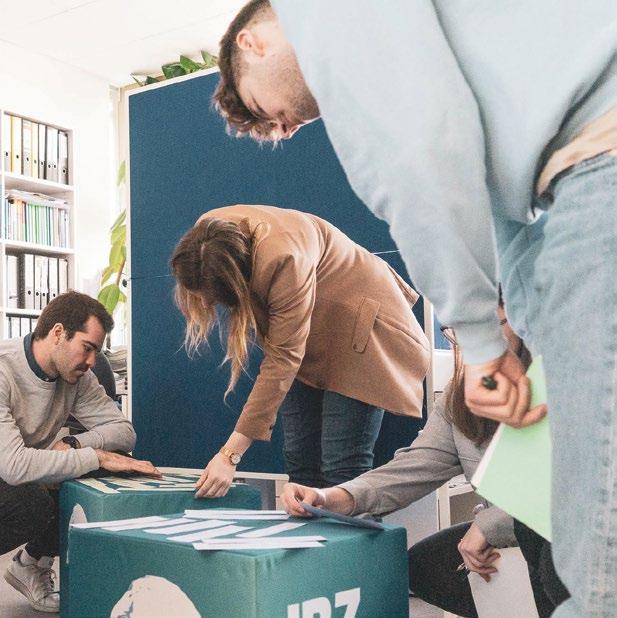
action that continues to exist in this area everywhere, the aim is to put the newly acquired know-how into practice and to align and shape the club structures accordingly. A first step we want to take in the new year is to install an ombudsperson as a point of contact for challenges that may arise within the club but also at the EFA in a larger context. With Maria (Anwar), who will hold this position, and her background knowledge as well as her sensitivity for several issues, we know an absolutely suitable person in this function to let our club be a safer space.
Of course, we will also be tackling the coming club year with new focal points for our club program. One of my concerns at this point is to focus more on arts and culture. In the event formats, we want to bring the potential of the interfaces between science, business and art to the forefront. The intention is to understand transdisciplinarity and interdisciplinarity in thought and action as a structuring foundation for tinkering with the big questions of the future of Europe and the world, and thus not just to leave the buzzwords as empty words in our mission statement, but to actually fill them with substantial, exciting content. I am very much looking forward to working with the newly elected team on the newly set goals.
But first things first: Our final handover meeting is still to come! The academic quarter of an hour has long since passed, my obligatory ‚five‘ minutes of delay are also over, by now I‘m well-fed and, as the people from Lungau say, „kampet und gschneizt“.
What do you think about a final try - ready for handing over?
Andi: I actually hand over and leave the board with the literal laughing as well as crying eye. Crying, because the club and all its members have made so much possible for me over the last three years and have thus taken an important place. Laughing, because at least for the next three years I may continue to work with the club and its board, meaning you guys – although from a new perspective. Therefore, yes, ready for handing over. I am absolutely convinced that the club is in insanely capable hands and look forward to all future gatherings –preferably over shared (!) good food and drinks. So all the best, cheers and ‘Mahlzeit’.
Eva: A huge thank you, Andi, for your excellent and dedicated work over the last few years, which has played a major part in keeping the club going and functioning in its current well-established form! You are leaving a big mark. All the best for the exciting new tasks as part of the FAN B and see you very soon!
87
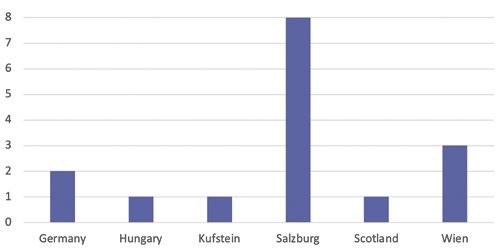
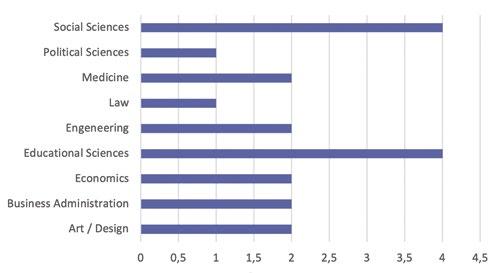
88 FACTS AND FIGURES DISCIPLINES OF OUR SCHOLARSHIP HOLDERS RESIDENCES OF OUR SCHOLARSHIP HOLDERS REVENUE: EUR 61.950,00 Sponsoring Revenue Sonnenhof Cost price and membership fees Other EXPENSES: EUR -55.180,00 EFA Tickets and participation Expenses Sonnenhof Events Other The difference between revenues and expenses results from different accounting periods of our sponsors. Engineering Vienna
BOARD 2022/23
Schitter President
Anwar Vice-president & Communication
EXTENDED BOARD
We are looking forward to the plans and challenges of the new club year with many new faces on the Extended Board. Thank you in advance for supporting us in the coming months: Leonhard Hartinger, Sarah Jones, Julian Kessler, Prosper Tonderayi Mageza, Franziska Mühlbacher, Theresa Schmidbaur, Valerie Schulte, Maria-Sophia Stadler, Leon Soyka
ADVISORY BOARD & AUDITING

The Advisory Board of the Club Alpbach Salzburg is a body consisting of former board members and very committed club members. With their experience and expertise, they support the active board and are



there to help us implement new ideas and find the best solutions for the club. Many thanks therefore to the members of the Advisory Board (in alphabetical order): Julia Brugger; Asdin El Habassi; Martina Geißler; Teresa Haider; Agnes Hamberger; Aurelia Kammerhofer; Carina Kobler; Thomas Lindner; Andreas Maierhofer; Franziska Mühlbacher; Manuel Mühlburger; Veronika Möller; Martin Murer; Nadine Sampl und Martin Tiefengrabner.
At this point, we would also like to explicitly mention the work of our auditors Teresa Haider and Thomas Lindner, who have supported Club Alpbach Salzburg with their work and expertise for several years.


Many thanks for the various forms of participation and support!

89
Maria
Andreas Golser Events
Jakob Frenkenberger Finances
Maria Schödl Alumni
Susanne Drexler Scholarship Holder
Tabea Hahn Communication
Eva-Maria
UNSERE SPONSOR *INNEN OUR SPONSORS
THANK YOU SO MUCH!
[dt.] Ohne die großzügige Unterstützung unserer zahlreichen Partnerorganisationen wäre der Club Alpbach Salzburg nicht in der Lage, jährlich begeisterten jungen Menschen die Teilnahme am Europäischen Forum Alpbach zu ermöglichen. Wir bedanken uns besonders herzlich bei unseren Sponsor*innen für ihre so wichtige Unterstützung!
[engl.] Without the generous support of our numerous partner organizations, Club Alpbach Salzburg would not be able to allow motivated and enthusiastic young people to participate in the European Forum Alpbach every year. We would like to express our special thanks to our sponsors for their important support!
90







91
92 IMPRESSUM
© Club Alpbach Salzburg, 2022 1. Edition
Text: Club Alpbach Salzburg
Editorial Management: Maria Anwar Lectorate: Maria Anwar, Tabea Hahn, Leonhard Hartinger, Theresa Schmidbaur Layout & Production: Eva-Maria Schitter
Copyrights/Images: Club Alpbach Salzburg unless otherwise specified ZVR-Number: 046190257
Mail: info@club-alpbach-salzburg.org Web: www.club-alpbach-salzburg.org
Instagram: club_alpbach_salzburg
Adress: Club Alpbach Salzburg, c/o Eva-Maria Schitter, Nonntaler Hauptstraße 18/2, 5020 Salzburg
Solution myAbility-Quiz: 1D, 2A, 3A, 4C, 5B, 6ABCD
93
94
