Year 9 Overview
Welcome to Year 9
Curriculum Overview
Year 9 Core Curriculum
Year 9 Elective Program
Learning Enhancement
Enrichment and Extension Opportunities
Timetable Overview
Subject Levies
Subject Selection Procedures
Important Subject Selection Dates
Important Contacts
Year 9 Core Curriculum Overview (Entire Year)
Christian Education
English
Health and Wellbeing
History
Indonesian
Japanese
Mathematics
Physical Education
Science
Worldview
Year 9 Elective Program Overview
Art Making & Exhibiting
Australia's Health
Digital Technologies
Drama
Food Studies
Geography
GEOS - The Prom
Law & Order
Marine Studies - Snorkelling or Rock Pools
Media Music
Outdoor & Environmental Studies
Principles of Training
Product Design: Materials
Product Design: Textiles
Systems Engineering
The Editorial
Visual Communication Design
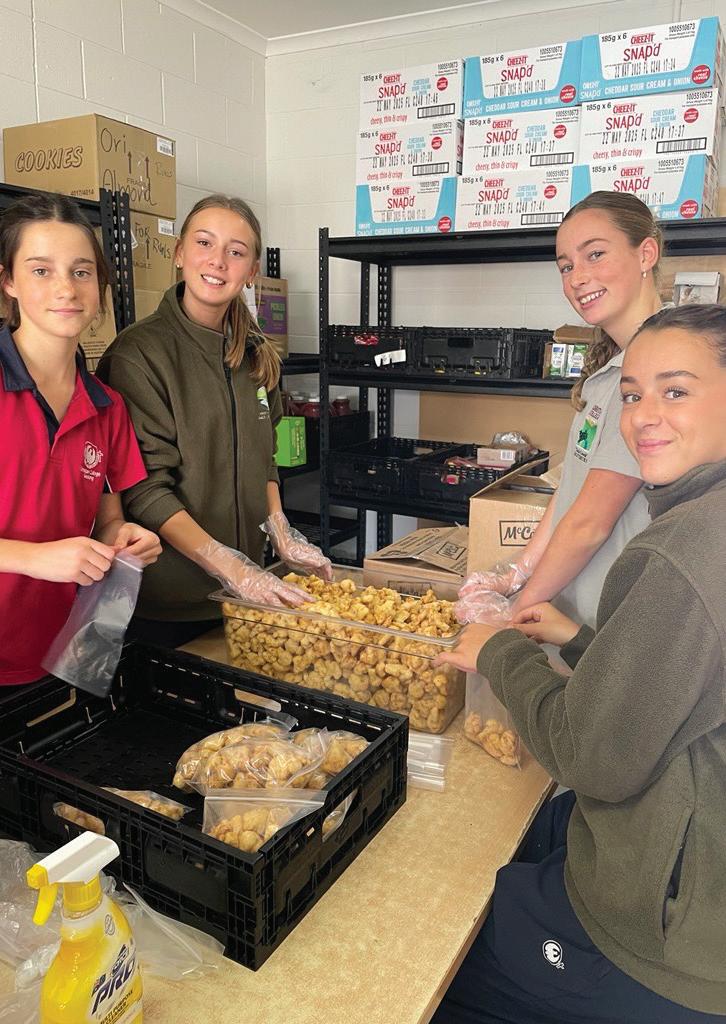
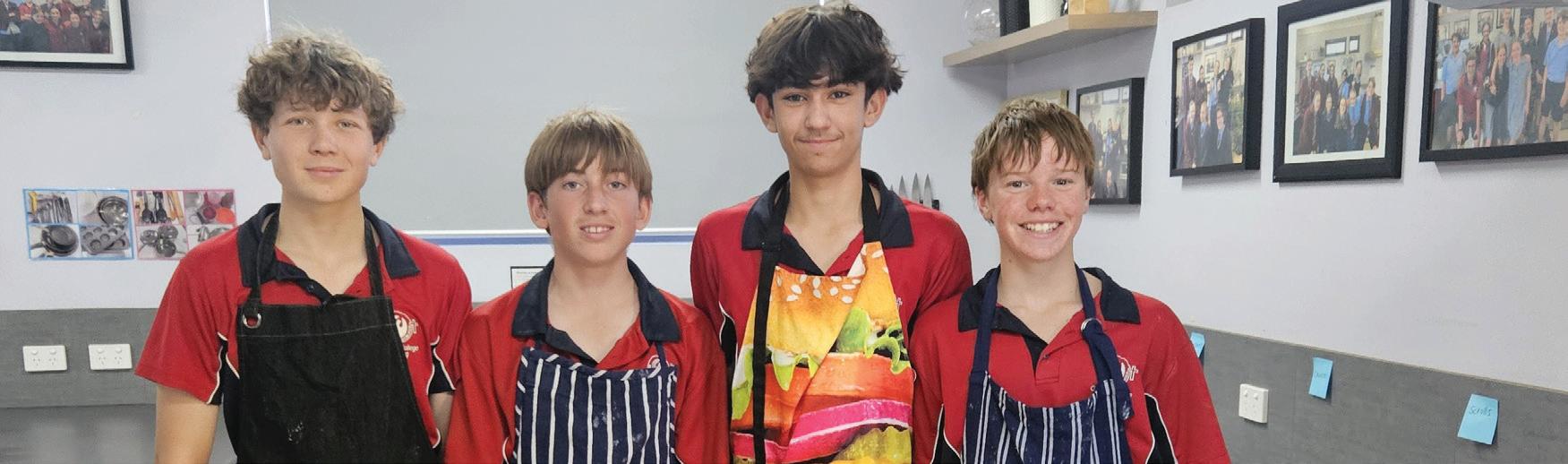
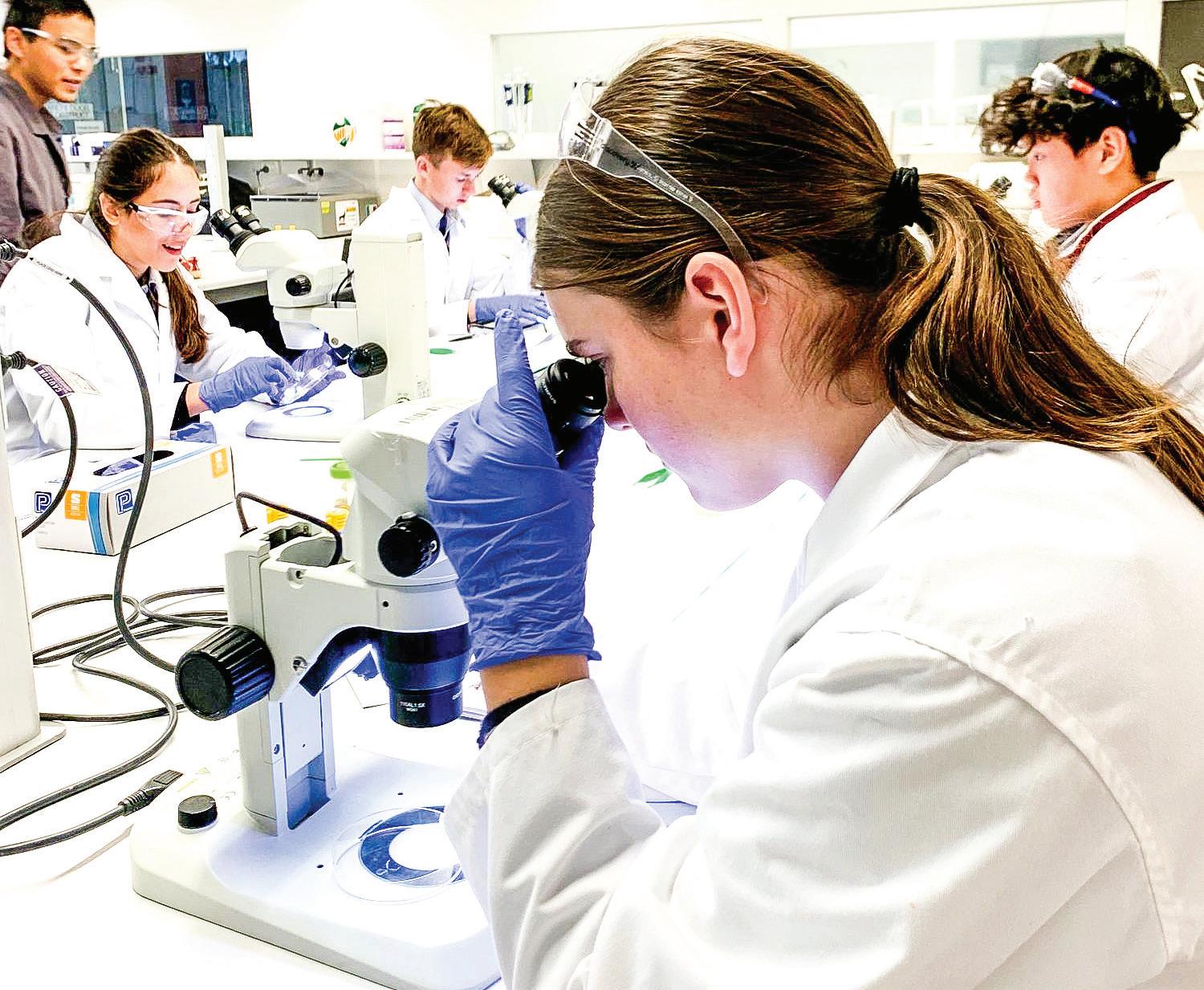
Welcome to Year 9 at Christian College Geelong. At Christian College, our commitment to providing a Christ-centred, holistic education is reflected in the breadth and depth of our curriculum. Year 9 represents a significant stage in the educational journey, where students are encouraged to grow in independence, deepen their understanding of the world, and reflect on their personal identity in light of their faith.
Students engage in a comprehensive program of core subjects, including English, Mathematics, Science, Humanities, Health and Physical Education, and Christian Education. In addition, the curriculum offers a range of elective subjects, allowing students to explore areas of interest, develop new skills, and begin shaping their future pathways.
This handbook serves as a comprehensive guide to the core curriculum and elective program offered in Year 9. It outlines the core curriculum and outcomes of each subject, enabling students and families to make thoughtful and informed decisions aligned with individual interests, abilities, and future aspirations.
With a focus on educating the whole person, we are committed to providing a learning environment where students are supported to grow in wisdom and character, and are equipped to live with purpose and integrity in a complex and changing world.
Please Note: The information contained in this handbook was correct at the time of printing.
At Christian College, we follow the Australian Curriculum from Prep to Year 10, ensuring a comprehensive and consistent approach to education. This curriculum provides a clear framework for what students need to learn at each stage of their development. Our teaching is designed to not only meet the curriculum standards but also to inspire students to grow spiritually, academically and socially, in line with our values. Through a well-rounded, engaging program, we aim to equip students with the skills and knowledge they need for future success.
More information can be found here: Australian Curriculum

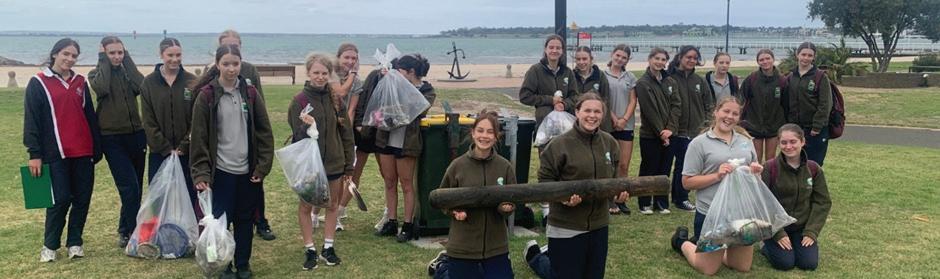
Year 9 students will experience a broad range of subject across each of the key learning areas within our program.
Year 9 students will study the following core subject for three terms:
• Christian Education
• English
• Health and Wellbeing
• History
• Global Connections: Indonesian OR Japanese OR Worldview
• Mathematics
• Physical Education
• Science
Year 9 students are encouraged to continue studying a language, either Japanese or Indonesian. Students not wishing to continue with a language will study the Worldview subject.
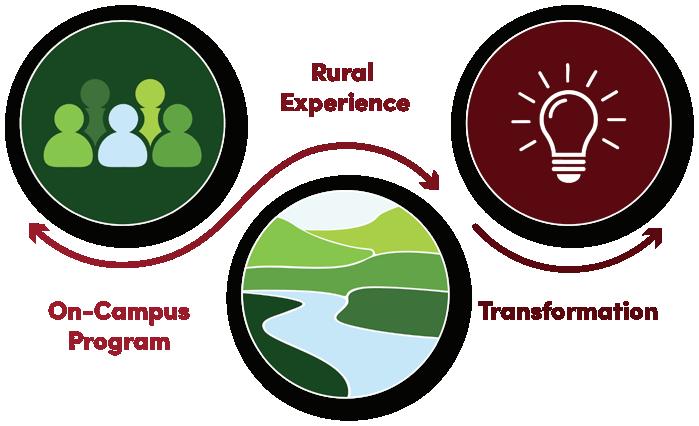
The Year 9 Transformation program offers students a unique opportunity to learn, collaborate, and grow in a dynamic learning environment.
The Transformation program is conducted over one term and consists of:
The Rural Experience at Back Creek farm for half the term and the On-Campus experience for the other half. More information can be found in the Transformation Program Handbook.
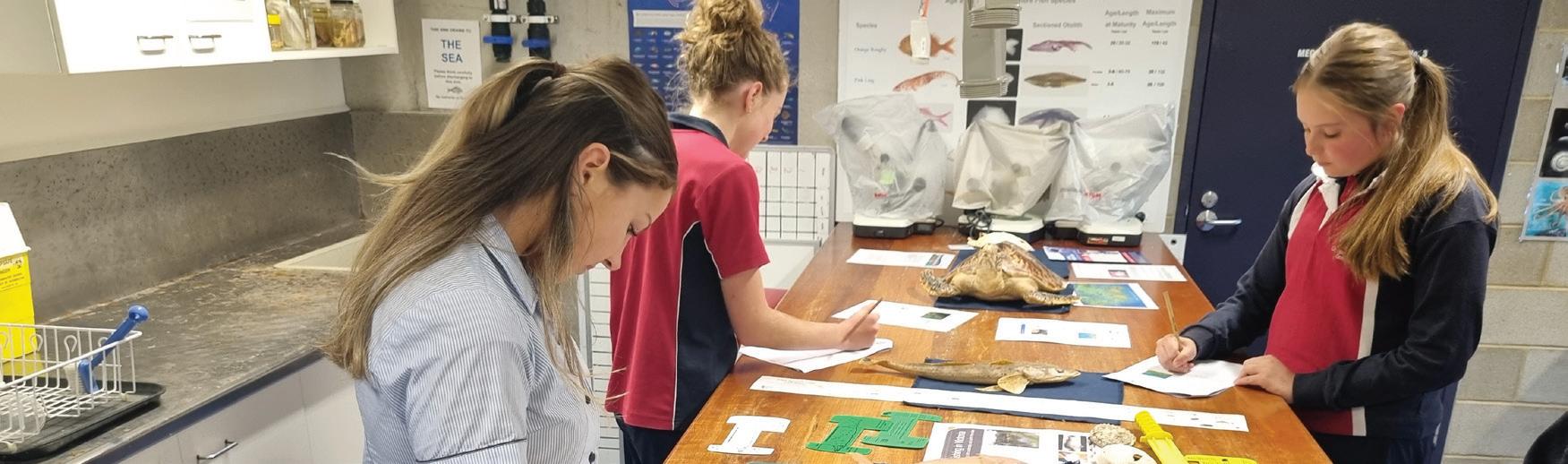
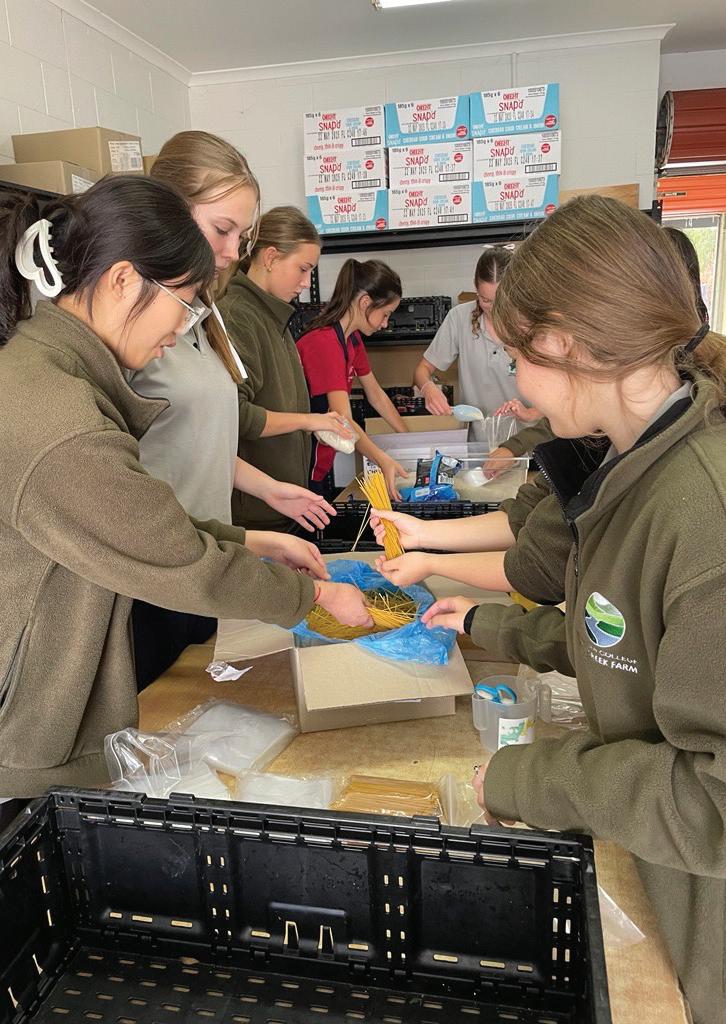
In Year 9 the core curriculum is complimented by an elective program that caters to the interests of our learners. Students have the opportunity to study two electives per term, for a total of six for the year.
Year 9 students have the opportunity to study:
• Art Making and Exhibiting*
• Australia’s Health
• Digital Technologies*
• Drama*
• Food Studies
• GEOS - The Prom
• Geography
• Law and Order
• Marine Studies – Snorkelling or Rock Pools
• Media*
• Music*
• Outdoor and Environmental Studies
• Principles of Training
• Product Design – Materials
• Product Design - Textiles
• Systems Engineering* (Robotics/Electronics)
• The Editorial
• Visual Communication Design*
* Elective can be chosen to study for one or two terms, student numbers permitting.
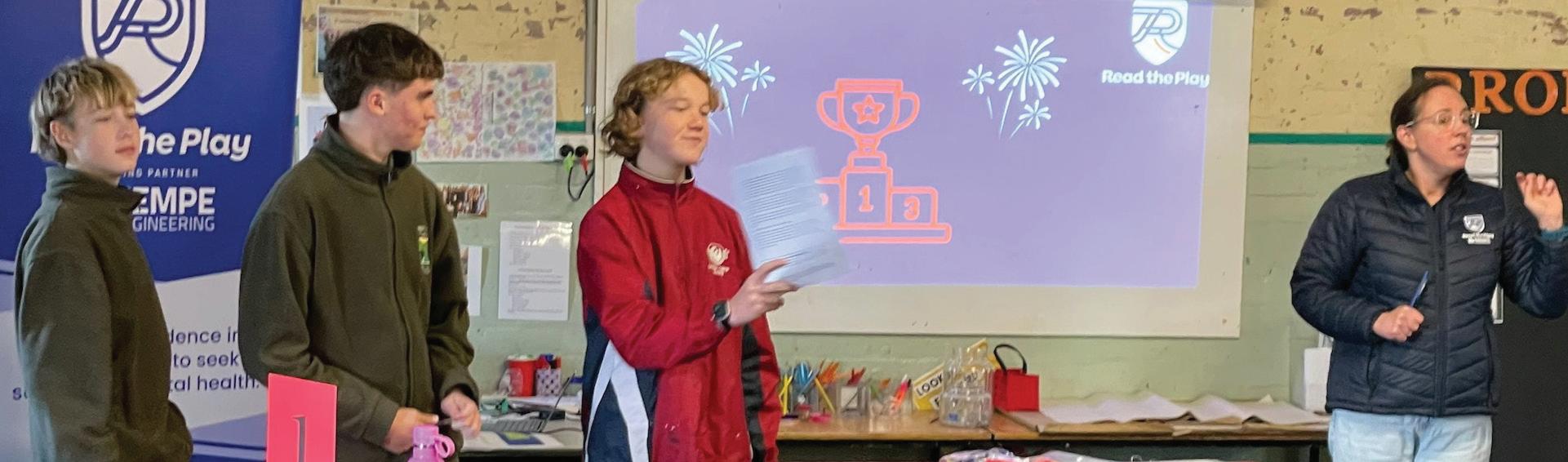
Christian College is deeply committed to providing an inclusive and nurturing environment where every child is supported to reach their full potential. We understand that each student is unique, with their own strengths, interests, and learning profile—and our broad offering of subjects is designed to reflect and celebrate that diversity.
Our dedicated classroom teachers use a variety of evidence-based teaching strategies and engaging learning experiences to support and challenge students at all levels. In the Middle Years, subject teachers work closely with students to help them build the essential skills and knowledge needed to succeed as confident, independent learners.
Each of our campuses is supported by a Learning Support Coordinator and a team of caring Educational Support Officers (ESOs). Together, they work in partnership with students, parents, teachers, campus leaders, and, where appropriate, Allied Health professionals such as speech therapists or psychologists. This team approach ensures that any necessary learning adjustments are thoughtfully planned, implemented, and regularly reviewed.
For students who require additional support, we offer school-based assessments conducted by qualified staff. These assessments help guide both families and teachers in understanding how best to support each student’s educational journey.
Through these collaborative supports and tailored programs, we strive to ensure that every student feels valued, understood, and equipped to thrive in their learning and beyond.
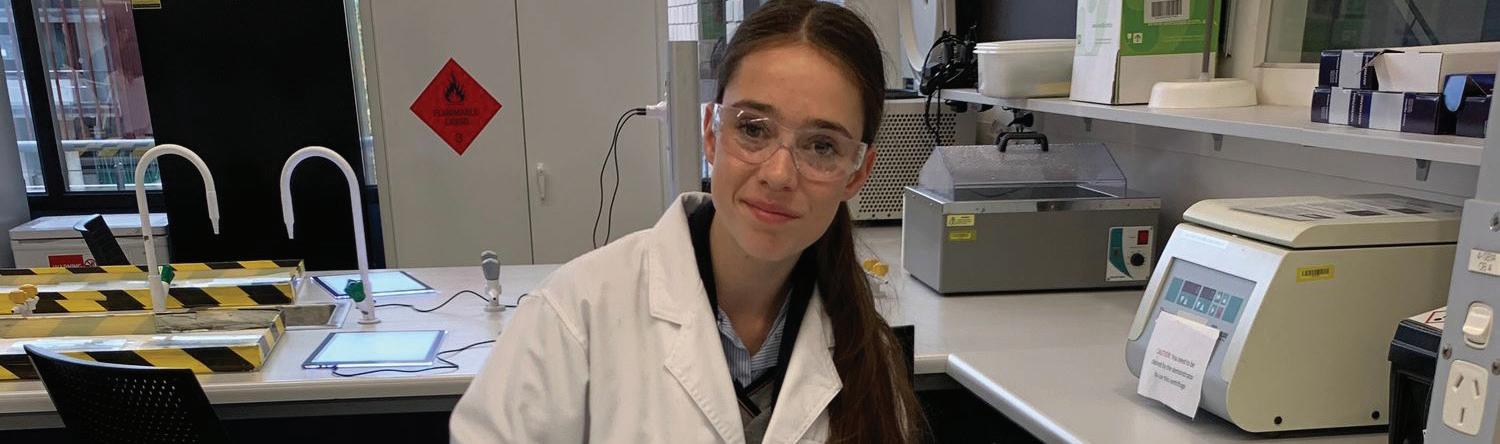
At Year 9, we believe in providing opportunities that go beyond the classroom, allowing students to deepen their knowledge, explore new interests, and challenge themselves in exciting ways. We encourage all Year 9 students to get involved and take advantage of these opportunities to enhance their learning journey, build new skills, and challenge themselves to reach their full potential.
• Australian Mathematics Competition
• Australian Maths Trust - Kangourou sans Frontières
• Deakin Science and Engineering Challenge
• Deakin Forensics Day
• Bebras Challenge
• Grok Cyber Competition
• Australian History Competition
• The CCG Art Show
• Wild At Art Competition
• My Awesome Australian - National Portrait Gallery
• Manga Drawing Club
• Cross Campus Performances
• Sayembara Lisan – Language competition
• Japanese Study Tour
• Japanese Long Term Exchange
• Simpson Prize
Please Note: Some opportunities are for selected students.
Year 9 students follow a structured timetable consisting of 6 periods per day, with each period lasting 50 minutes. This balanced schedule allows for in-depth learning across a broad range of subjects and is carefully designed to provide a mix of academic, creative, and physical subjects, helping students stay engaged while developing a broad skill set.
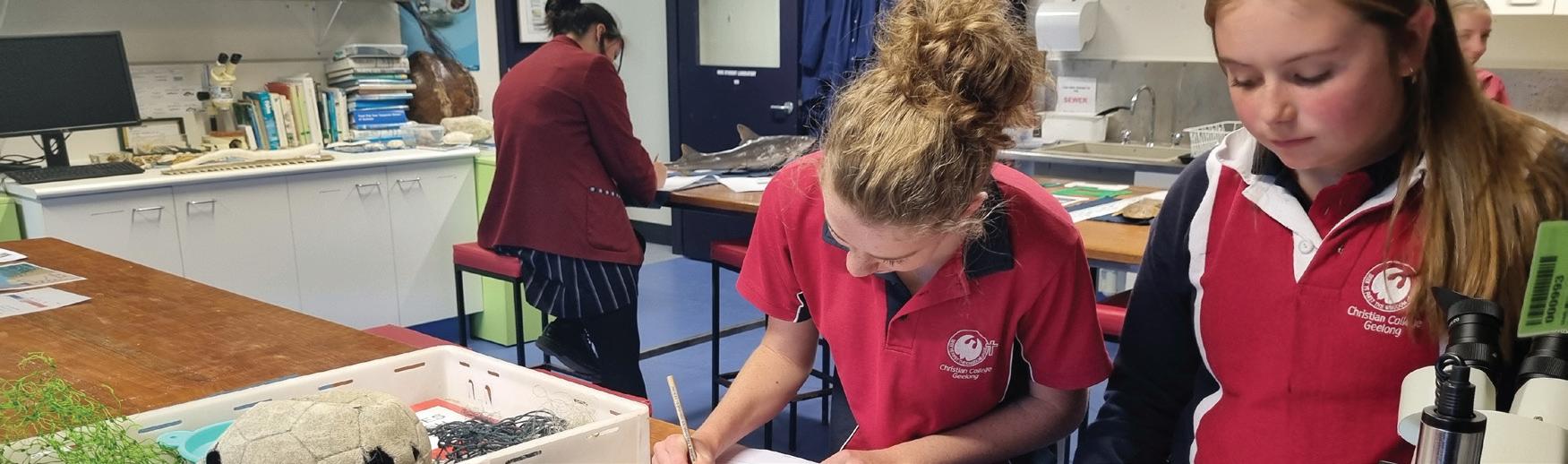
Some subjects in the elective program have additional costs beyond the standard College tuition fees. These subjects’ levies are due to:
• Overnight excursions involving accommodation and/or other travel expenses.
In Year 9 the following subjects have a levy
• GEOS - The Prom - $400
• Significant resources and/or equipment required to conduct the elective.
• Marine Studies - Snorkelling - $280
The levy will be applied to the College Fee account at the commencement of the College Year.
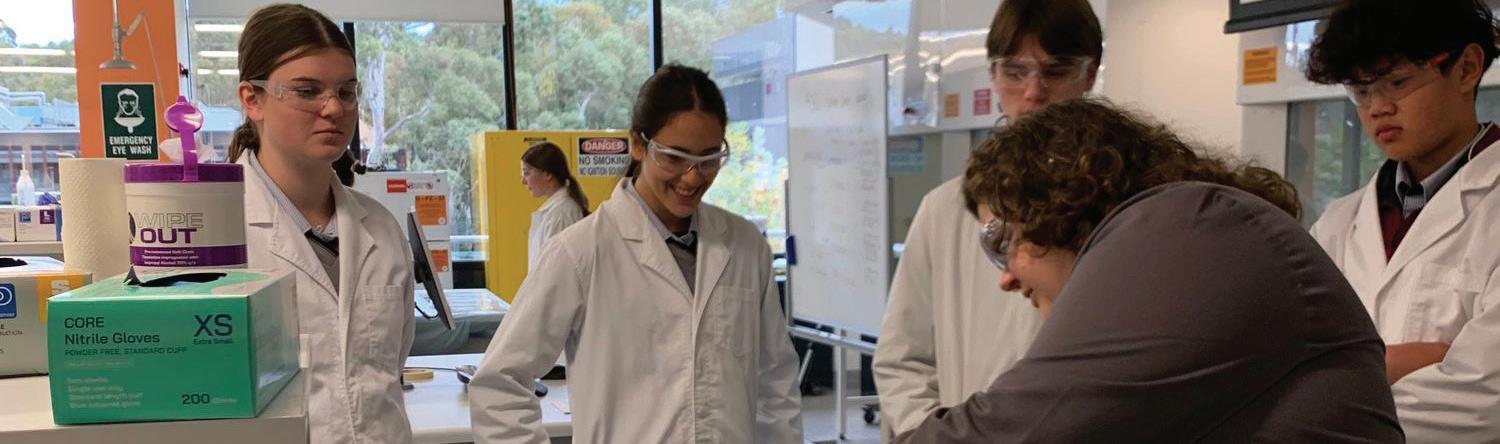
The Christian College subject selection process is conducted online. On Friday 22 nd August students will receive an email containing the link to their subject selection preference form.
The online subject selection system will remain open until 9am on Friday 29th August, allowing sufficient time for thoughtful consideration of preferences.
To assist families to record their students preferred electives prior to submitting online, we recommend using the 'subject selection worksheet' located at the back of this booklet. You may like to print it for ease of use. Students will be required to select 8 electives; the first 4 being their preferences and the next 4 being for reserves. On the selection sheet, rank your 8 preferences, with 1-4 being your preferences and 5-8 being the reserves.
At Christian College, we strive to accommodate all student preferences when it comes to subject choices. We understand the importance of pursuing subjects that interest and inspire you, and we aim to provide as many of these preferences as possible. However, due to various factors such as class sizes, resources, and scheduling, it may not always be possible to offer every subject preference for every student.
While we will do our best to match your choices, there may be times when adjustments need to be made. We appreciate your understanding and flexibility as we work to create a balanced and enriching educational experience for everyone.
Tuesday 19th August
Thursday 21st August
Friday 22nd August
Friday 29th August
Tuesday 4th November
Friday 7th November
Friday 7th November
Subject Selection Information Evenings Middle School & Surf Coast Campuses
Subject Selection Information Evenings Bellarine Campus
Online Subject Selection link sent to students college email.
Subject Selections open Orientation Day
Online Subject Selections close
Families informed of allocated subjects
Booklist sent to families
To learn more about the Year 8 Curriculum feel free to reach out to the contacts below.
College Teaching and Learning Leaders (T & L)
Role
Deputy Principal – Teaching & Learning
Director of Teaching & Learning 7-12
Director of Teaching & Learning P-6
Bellarine Campus
Head of Campus
Highton Campus
Head of Campus
Deputy Head of Campus (T & L)
Surf Coast Campus
Name
Rick Geall
Contact r.geall@ccg.vic.edu.au
Drew Oliver d.oliver@ccg.vic.edu.au
Julie Shutie j.shutie@ccg.vic.edu.au
Nicola Morrish n.morrish@ccg.vic.edu.au
Natasha Troop n.troop@ccg.vic.edu.au
Kathrine Bowyer k.bowyer@ccg.vic.edu.au
Head of Campus Debbie Riddle de.riddle@ccg.vic.edu.au
College Faculty Coordinator
Faculty
Christian Ed
Christian Ed Coordinator 7-9 (Bellarine and Surf Coast)
Christian Ed Coordinator 7-9 (Highton)
Digital Technologies
Director of Digital Learning
English
English Coordinator 7-9 (Bellarine and Surf Coast)
English Coordinator 7-9 (Highton)
Health and Physical Education
HPE Coordinator K - 7 (Surf Coast)
HPE Coordinator P - 9 (Bellarine)
HPE Coordinator 5 - 9 (Highton)
Humanities
Humanities Coordinator 7-9
Languages
Language Coordinator 5–9
Maths
Maths Coordinator 7-9
Music and Performing Arts
Music Coordinator 7-9
Drama Coordinator 5–12
Outdoor Education
Outdoor Ed Coordinator 8–12
Science
Science Coordinator 5-9 (Bellarine and Surf Coast)
Science Coordinator 5-9 (Highton)
Sport
Sport Coordinator 7-9 (Bellarine)
Sport Coordinator 7-9 (Highton)
Sport Coordinator K-7 (Surf Coast)
Visual Art, Technology and Design
Visual Art, Tech., Design Coordinator 5-9
Name Contact
Gary Crole
Nicole Riddle
Brendan Vanderkley
Jo Lowe
Masigga Tsoulos
Emma Workman
Louise Bull
Kim McLure
Martin Costello
Stephen Brewster
Sophie Bergin
Scott Jolley
Taylah Broad
Rob Moore
Sophie Maye
Victoria Corkin
Kelly O’Neil
Stephanie Hambrook
Emma Workman
g.crole@ccg.vic.edu.au
n.riddle@ccg.vic.edu.au
b.vanderkley@ccg.vic. edu.au
j.lowe@ccg.vic.edu.au
m.tsoulos@ccg.vic.edu.au
e.workman@ccg.vic.edu.au
l.bull@ccg.vic.edu.au
k.mclure@ccg.vic.edu.au
m.costello@ccg.vic.edu.au
s.brewster@ccg.vic.edu.au
s.bergin@ccg.vic.edu.au
s.jolley@ccg.vic.edu.au
t.broad@ccg.vic.edu.au
r.moore@ccg.vic.edu.au
s.maye@ccg.vic.edu.au
v.corkin@ccg.vic.edu.au
k.oneil@ccg.vic.edu.au
s.hambrook@ccg.vic. edu.au
e.workman@ccg.vic.edu.au
Tammie Kite
t.kite@ccg.vic.edu.au

The Christian Education course covers a range of important topics that are designed to instil an interest in God’s Word, a personal faith and develop skills to apply God’s Word to their own lives. Students view the movie, “The Shack” (2017) and analyse the changes in Mac’s relationship with God throughout the movie, exploring themes around forgiveness, healing, and trust. Students look at historical and contemporary influential Christian people and research a person of interest, identifying the impact they have had and their legacy, while gaining a better understanding of the influences in their own lives and how this shapes their own identity. Lastly, the lives and legacies of key Bible heroes are taught, and students analyse their character traits and faith journeys, and then design an interactive game or activity to teach these stories to younger students in an engaging way.
In Year 9, students are assessed by a variety of methods including:
• Group work, collaboration and written reflection
• Reflective questions
• Class Presentations
• Interactive game/activity
After completing this subject student will continue to build on their skills and knowledge in the following Year 10 subjects:
• Year 10 - Christian Education
• VCE acceleration - Units 1 & 2 Texts and Traditions

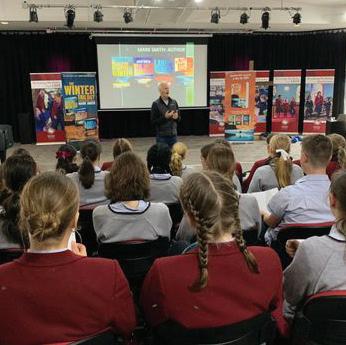
During the Year 9 English course, students are challenged to think more deeply about the relationship between language, audience, and purpose. They engage with a broad range of complex texts, including contemporary literature, persuasive texts, and film. A strong focus is placed on evaluating how authors craft meaning and influence readers through structural choices, language features, and stylistic devices.
Students extend their ability to create detailed analytical essays, imaginative writing, persuasive speeches, and sustained arguments. There is a growing emphasis on critical literacy, encouraging students to question assumptions, recognise bias, and consider multiple perspectives. Students are supported to develop independence in interpreting texts and articulating sophisticated ideas both in written and spoken forms.
In year 9, students are assessed by a variety of methods including:
• Film as Text – creative response to text and persuasive oral presentation.
• Crafting Texts (Conflict) – portfolio of a variety of written tasks.
• Novel Study – text response essay and persuasive oral presentation.
After completing this subject, students will continue to build on their skills and knowledge in the following year 10 subjects:
• Year 10 - Core Skills English
• Year 10 - General English
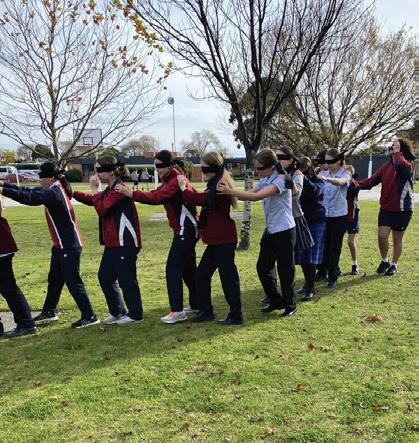
During the Year 9 Health and Wellbeing course, students deepen their understanding of identity, emotional regulation, and personal responses to change. Through health units such as Sexual Health, Relationships, First Aid, and Street Smart, students explore how attitudes and beliefs around equality, respect, diversity, and inclusion shape the quality of relationships. They develop and justify strategies to manage challenging situations that may impact health, safety, or wellbeing—both online and offline—drawing on credible health information to support their decisions.
In Year 9, students are assessed by a variety of methods including:
• Scenario Response –Sexual health and relationships
• Unit Test – First Aid
• Street smart campaign
• Peer collaboration
• Role plays
After completing this subject student will continue to build on their skills and knowledge in the following Year 10 subjects:
• Year 10 – Healthy Living
• VCE acceleration - Units 1 & 2 Health and Human Development
• VCE acceleration - Units 1 & 2 Physical Education
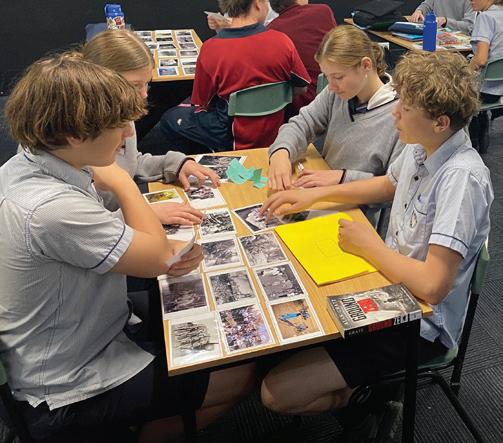
In the Year 9 History course, students examine major events and movements that have shaped Australia and the modern world. The year begins with a study of Australian Colonial History (1788–1901) , exploring the impact of colonisation on First Nations peoples, the development of colonial society, and the road to Federation. Students then investigate the transformative effects of the Industrial Revolution, analysing how technological, economic, and social changes reshaped lives and laid the groundwork for the modern era. The focus then shifts to the World Wars, where students study the causes, key events, and consequences of World War I and World War II, with a particular emphasis on Australia’s involvement and the experiences of those on the front lines and at home. The year concludes with an exploration of global tensions and resolutions during the Cold War, including the emergence of international organisations and diplomacy in a divided world. Throughout these units, students develop critical historical skills in source analysis, oral presentations and essay construction.
In Year 9, students are assessed by a variety of methods including:
• Essay – on the impact of the Industrial Revolution.
• Primary & Secondary Source Analysis –WW1 & WW2
• Oral Presentation – on the United Nations helping or hindering global peace efforts.
After completing this subject student will continue to build on their skills and knowledge in the following Year 10 subjects:
• Year 10 - Geography
• Year 10 - History
• Year 10 - Law and Economics
• Year 10 - Politics and Society
• VCE acceleration - Units 1 & 2 History
The Year 9 Indonesian course aims to create an engaging learning experience by placing students in real-world contexts and situations. Students begin to work with more complex language structures and vocabulary. They learn word patterns for asking questions and are introduced to new word patterns that feature in Indonesian language. Students continue to develop their pronunciation and language skills through interactive activities such as role-playing bargaining scenarios, writing about their personal experiences, and expressing their opinions. They also explore the language of sport, building vocabulary to describe common actions and aspects of gameplay. Throughout the course, students engage with culturally relevant themes and aspects of Indonesian life, deepening their intercultural understanding and global awareness.
In Year 9, students are assessed by a variety of methods including:
• Reading and writing – Comprehension of short texts and dialogues, including authentic materials; personal writing including opinions and preferences; vocabulary recall and translations; effective use of bilingual dictionaries.
• Speaking – Oral presentations, roleplays, and contextual conversations in Indonesian.
After completing this subject student will continue to build on their skills and knowledge in the following Year 10 subjects:
• Year 10 - Indonesian
• VCE acceleration - Unit 1 & 2 Indonesian
• Christian College Exchange Program – SMA Negeri 2 (Lombok, Indonesia)
The Year 9 Japanese course builds on the essential skills of listening, reading, writing, and speaking developed in Year 8. At this stage, students are increasingly confident in expressing themselves using both spoken and written Japanese. These skills form the foundation for assessed tasks throughout the year. With a solid grasp of Hiragana and Katakana, students now focus on expanding their knowledge and application of Kanji, particularly in reading and writing. The course also introduces more complex sentence structures and vocabulary relevant to real-world contexts. In addition to language development, students engage more deeply with culturally significant events, traditions, and social practices. This intercultural exploration encourages them to reflect on global perspectives and supports their growth as respectful, informed global citizens.
In Year 9, students are assessed by a variety of methods including:
• Reading and writing –Students will produce a range of written tasks, including a detailed itinerary for a trip to Japan.
• Speaking –Students will produce a range of written tasks, including a detailed itinerary for a trip to Japan.
After completing this subject student will continue to build on their skills and knowledge in the following Year 10 subjects:
• Year 10 - Japanese
• VCE acceleration - Units 1 & 2 Japanese
• Christian College Exchange Program - Naga High School (Wakayama, Japan)
The Year 9 Mathematics course deepens students’ understanding of core mathematical concepts, with a focus on developing fluency, logical reasoning, and advanced problemsolving strategies. This course encourages learners to explore both practical and abstract mathematical ideas through investigations, collaborative projects, and the use of digital tools.
The program is designed to support diverse learning needs, offering scaffolded and differentiated activities that challenge all students while nurturing their confidence and independence as mathematical thinkers. Emphasis is placed on building resilience and fostering a growth mindset in approaching complex tasks.
By the end of Year 9, students will be able to confidently manipulate algebraic expressions, solve linear equations, analyse and interpret data, work with indices and surds, and apply trigonometry and Pythagoras’ Theorem in geometric contexts. They will also explore probability, financial maths, and non-linear relationships, preparing them for the rigour of senior mathematics courses.
Assessment Overview
In Year 9, students are assessed by a variety of methods including:
• Topic post-tests (written test)
• End of term skills assessments (written test)
• Modelling Tasks
After completing this subject student will continue to build on their skills and knowledge in the following Year 10 subjects:
• Year 10 - Core Skills Mathematics
• Year 10 - General Mathematics
• Year 10 - General Mathematics - Essentials
• Year 10 - Mathematical Methods
In the Physical Education course, students engage in a variety of movement contexts including Fitness, Volleyball, Peer Teaching in Soccer, and Dance. These units challenge students to refine their movement skills, adapt strategies to unfamiliar situations, and evaluate performance outcomes. Students also design and assess community-based physical activity interventions aimed at improving health and wellbeing for themselves and others.
Leadership, collaboration, and ethical behaviour are key themes throughout the course, with students applying and evaluating these skills across diverse physical activities. The program empowers students to become proactive, informed, and responsible individuals capable of making positive contributions to their communities.
In Year 9, students are assessed by a variety of methods including:
• Performance-Based Assessments, for example practical skill-based demonstrations of skill capability
• Peer & Self-Assessments: for example, ability to work effectively in a sporting team and provide constructive peer feedback
After completing this subject student will continue to build on their skills and knowledge in the following Year 10 subjects:
• Year 10 - Sport & Exercise Performance
• Year 10 - Sport and Recreation
• Year 10 - Coaching and Officiating
• VCE acceleration - Units 1 & 2 Physical Education
The Year 9 Science course continues to build on students' curiosity and understanding of the natural world. This curriculum covers key concepts across biological, physical, and chemical sciences. Students explore topics such as:
• Biological Sciences: Understanding body systems and their coordinated responses to stimuli, and the processes of sexual and asexual reproduction.
• Physical Sciences: Analysing energy conservation in simple systems, and applying wave and particle models to describe energy transfer.
• Chemical Sciences: Explaining observable chemical processes in terms of changes in atomic structure, atomic rearrangement, and mass.
Students build critical thinking and problem-solving skills through hands-on experiments and scientific inquiry. They learn to plan and conduct investigations, use equipment accurately, analyse data, and communicate results. By exploring science as a human endeavour, students understand how scientific knowledge develops and influences society and the environment, helping them make informed decisions.
In Year 9, students are assessed by a variety of methods including:
• Practical poster – Energy
• Research poster – Hormonal disease
• Practical Assessment –Chemical reactions
• Tests –Atoms and reactions, Biology end of term test, Energy Waves and particles
After completing this subject student will continue to build on their skills and knowledge in the following Year 10 subjects:
• Year 10 - Bodies and Motion
• Year 10 - Chemistry of Life
• Year 10 - Ecology, Biodiversity and Fieldwork
• Year 10 - Gene Science
• Year 10 - Psychology: Mind and Body
• Year 10 - Test your Metal
• VCE acceleration - Units 1 & 2 Biology
• VCE accelerationUnits 1 & 2 Environmental Science
• VCE accelerationUnits 1 & 2 Psychology
In the Year 9 Worldview course, students are encouraged to think deeply about life’s big questions and the forces shaping modern society. The year begins with a unit on The Good Life, where students explore what it means to live a morally good and meaningful life. Through the study of classic philosophers such as Aristotle and Socrates, as well as reflection on contemporary texts like the film The Pursuit of Happyness, students consider different perspectives on purpose, happiness, and ethical decision-making. The second unit focuses on the impact of social media, prompting students to critically examine how digital platforms influence identity, relationships, mental health, and society at large. In the final unit, students explore the rapidly evolving world of Artificial Intelligence, considering both its promises and challenges in areas such as employment, ethics, and human connection. Across all three units, students are supported to develop critical thinking, moral reasoning, and the ability to engage thoughtfully with contemporary issues.
In Year 9, students are assessed by a variety of methods including:
• A report on what constitutes a good life.
• A speech or visual display on the impact of social media.
• An examination into the impact of AI on modern society
After completing this subject student will continue to build on their skills and knowledge in the following Year 10 subjects:
• Year 10 - Geography
• Year 10 - History
• Year 10 - Law and Economics
• Year 10 - Politics and Society
• Year 10 - Running a Small Business
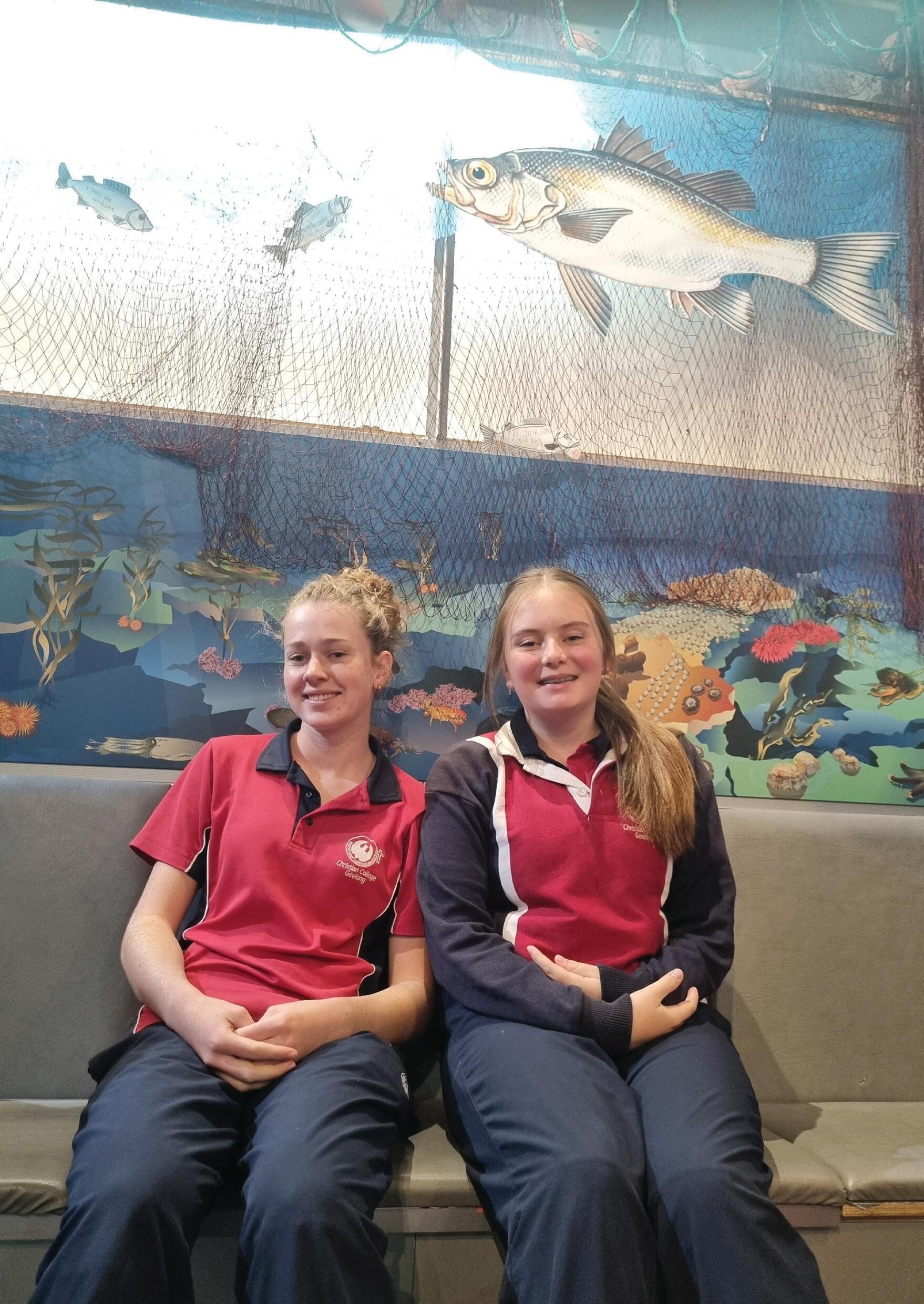
Visual art is an important way we communicate and express meaning in the world around us. This elective supports students to grow as individual artists by encouraging them to explore identity, ideas and emotions through a range of art forms. Students will experiment with different materials and techniques, including drawing, painting, printmaking, photography, film and sculpture.
By engaging with their own work and the work of others, students will develop creative thinking, generate new ideas and build their understanding of how art connects people across local, national and global communities.
In Art Making & Exhibiting, students are supported to recognise their potential as artists while developing practical skills and a personal art-making process. They will explore a chosen theme, research relevant professional artists and experiment with different mediums. Students will develop an understanding of both traditional and contemporary art styles and learn to communicate their ideas through written responses and reflections in their visual diary. They will present a series of artworks, ready to exhibit, in the annual Art Show as part of the learning and sharing process.
In Year 9, students are assessed by a variety of methods including:
• Art Folio & Written Analysis Tasks
• Studio Habits and Workshop Skills
• 2D & 3D Artworks
After completing this subject student will continue to build on their skills and knowledge in the following Year 10 subjects:
• Year 10 - Art Making & Exhibiting
• Year 10 - Media
• Year 10 - Product Design Materials
• Year 10 - Product Design Textiles
• Year 10 - Visual Communication Design
• VCE accelerationUnits 1 & 2 Art Making and Exhibiting
• VCE acceleration - Units 1 & 2 Media
• VCE acceleration - Units 1 & 2 Visual Communication Design
Course Overview
The Australia’s Health course provides an in-depth exploration of the health and wellbeing of Australians, with a particular focus on two key areas. Firstly, it examines the multifaceted development of Australian youth, encompassing physical, social, emotional, mental, and spiritual growth. Secondly, it investigates the various factors influencing health, including environmental, lifestyle, sociocultural, and biological determinants. Students will engage in comprehensive analysis of statistical data, utilizing graphs and datasets to draw meaningful inferences. This theory-based course is highly recommended for students planning to pursue VCE Unit 1 & 2 in Health and Human Development in Year 10.
Assessment Overview
In Year 9, students are assessed by a variety of methods including:
• Unit Test – End of unit knowledgebased assessment
• Inquiry Task – The Dimension of Health
After completing this subject student will continue to build on their skills and knowledge in the following Year 10 subjects:
• Year 10 - Sport and Recreation
• Year 10 - Coaching and Officiating
• VCE acceleration - Units 1 & 2 Health and Human Development
• VCE accelerationUnits 1 & 2 Physical Education
Course Overview
Enter the ‘game lab’ where you will actively engage in exploring, experimenting and innovating with all aspects of game development using a game engine such as GB Studio or Godot. In the Digital Technologies elective course students will explore problem solving, design and coding in an environment that requires initiative, self-management and strong problem-solving skills.
In today’s digital world, individuals are increasingly required to understand how digital systems work and to apply this knowledge to new and challenging situations. Employers seek people with skills and dispositions for communicating and collaborating effectively in a creative team. Critical analysis, creativity and innovation are highly prized. The ‘game lab’ is a fertile environment for growing these skills. Students will need to work together and draw on analyses of data and model games to develop skills and produce a game concept with a compelling narrative, engaging media elements and logical computer code.
In this elective, students will develop the essential skills and knowledge to be capable of working with a team to design, prototype, test, produce and share an original video game. Students may take this elective a second time as “additional study” where they will further build their existing skills and focus more closely on bringing their own game concept to life.
Assessment Overview
In Year 9, students are assessed by their work on a range of hands-on self-guided project tasks, including:
• Game Analysis Task
• Game Project: Design Module
Future Pathways
• Game Project: Folio of Completed Work
After completing this subject student will continue to build on their skills and knowledge in the following Year 10 subjects:
• Year 10 - Computing
• VCE accelerationUnits 1 & 2 Applied Computing
In Year 9 Drama, students delve into global theatre traditions, developing essential knowledge and skills to express themselves creatively through the devising and performance process. Through improvisation, rehearsal, and performance, they explore a variety of theatrical styles, including but not limited to; Greek Theatre, Shakespeare, 20th Century Melodrama, and Brecht’s Epic Theatre. Students learn to apply key conventions from these styles to enhance storytelling and dramatic meaning. Working collaboratively, students devise and perform original pieces inspired by the studied styles, applying learned conventions to create unique performances. This process encourages the development of ensemble and teamwork skills, as students learn to communicate effectively, support their peers, and contribute to cohesive group performances driven by their own creativity and collaboration.
Students also have opportunities to collaborate across year levels and present their work to targeted audiences, gaining insights into how understanding one's audience can shape creative decisions. Attending professional theatre productions further enhances their learning, offering exposure to professional industry practices and theatre.
In Year 9, students are assessed by a variety of methods including:
• Performance: Theatre Styles
• Workshop Participation: Students' participation & engagement in weekly workshops are formatively assessed through ongoing observation and feedback.
• Reflection and Evaluation: Students evaluate and reflect on their earning and engagement throughout the term in a digital journal which is part of their assessment outcome
After completing this subject students will continue to build on their skills and knowledge in the following Year 10 subjects:
• Year 10 – Drama: Dramatic Storytelling
Food Studies invites students to explore the world of food through creativity, innovation and enterprise. With a strong emphasis on design thinking and business skills, students will research, plan and create their own food products, with the goal of selling their creations to the school community. This hands-on project encourages problem-solving and real-world thinking while exploring the challenges of running a small food business.
At the heart of the course is the importance of preparing safe, nutritious meals and understanding where our food comes from. Students will develop practical cooking skills, build confidence in the kitchen and explore the connection between food choices and current health issues. They will also gain experience in safe food handling and food preparation for different dietary needs.
Throughout this course, students will investigate topics such as sustainable food systems, responsible production and life on the land. They’ll design recipes, source seasonal and locally grown ingredients, and create delicious, nutritious meal options based on real-world needs or opportunities. Students will also learn about the significance of Indigenous ingredients and how native foods can be respectfully incorporated into modern Australian cooking. Food Studies blends creativity, sustainability and enterprise for students who are passionate about food with purpose.
In Year 9, students are assessed by a variety of methods including:
• Food Design & Food Business Brief
• Food Production & Handling Skills –including Safety & Hygiene Practices
• Workbook & Practical Task Reflections
After completing this subject student will continue to build on their skills and knowledge in the following Year 10 subjects:
• Year 10 - Food Studies
• Year 10 – Healthy Living
• VCE accelerationUnits 1 & 2 Food Studies
In the Year 9 Geography course, students explore the dynamic interconnections between people, places, and environments through a one-term unit focused on global biomes and food production. Students begin by investigating the world’s major biomes, examining how climate, vegetation, and human activity shape the way land is used. The unit then focuses on global food production, analysing the challenges of sustainability, food security, and the impact of agriculture on natural systems. Building on this, students study globalisation and the complex interconnections between individuals, businesses, and nations, considering how trade, technology, and cultural exchange influence the modern world. Through a combination of mapping, data analysis, case studies, and class discussions, students develop a deeper understanding of the global systems that sustain human life and the responsibilities we share in protecting them. This unit builds key geographical skills in inquiry, analysis, and informed decision-making.
In Year 9, students are assessed by a variety of methods including:
• Oral Presentationlooking into globalisation and how a major multinational corporation operates in the marketplace.
After completing this subject student will continue to build on their skills and knowledge in the following Year 10 subjects:
• Year 10 - Geography
• Year 10 - History
• Year 10 - Law and Economics
• Year 10 - Politics and Society
• VCE accelerationUnits 1 & 2 Geography
Natural and urban environments are under pressure from an expanding human population. The GEOS – Prom course blends the concepts of Geography and Outdoor Education, focusing on environmental sustainability. Through a combination of classroom-based activities, geographical investigation and practical outdoor experiences, students will examine the key factors that contribute to changing environments. They will consider the impacts of such change and the future strategies needed to manage change, including the preservation of natural spaces. This unit involves a 3-day hiking trip to the prestigious and picturesque Wilsons Promontory National Park. Students will be able to test their own abilities, experience an ‘untouched’ part of the world and develop opinions and ideas about the content learnt back in the classroom.
*Please be aware that trips could depart on Sundays and if Wilsons Promontory tracks are closed the Great Ocean Walk will be utilised as an alternative.
In Year 9, students are assessed by a variety of methods including:
• Management & Sustainability Inquiry
After completing this subject student will continue to build on their skills and knowledge in the following Year 10 subjects:
• Year 10 - Geography
• Year 10 - Ecology, Biodiversity and Fieldwork
• Year 10 - Outdoor Education
In the Year 9 Law and Order course, students engage with Australia’s political and legal systems through the dynamic and thought-provoking unit Law & Order. This unit begins by exploring the principles of democracy , the structure and function of Australia’s government, and the roles of key political institutions and representatives. Students examine how laws are made and the significance of the rule of law in maintaining a fair and just society. The unit also delves into the Australian legal system, focusing on real-life case studies that have shaped public opinion and national identity. Cases such as Ned Kelly, Lindy Chamberlain, and the Bali Nine provide a platform for students to explore complex legal, ethical, and social issues. Through class discussions, debates, and critical analysis, students develop a deeper understanding of justice, rights, and responsibilities in a democratic society, while building their skills in reasoning, communication, and informed citizenship.
Assessment Overview
In Year 9, students are assessed by a variety of methods including:
• An examination of one major moment in Australian legal history.
• The construction of a report into Australia’s functioning democracy.
After completing this subject student will continue to build on their skills and knowledge in the following Year 10 subjects:
• Year 10 - Geography
• Year 10 - History
• Year 10 - Law and Economics
• Year 10 - Politics and Society
• VCE acceleration - Units 1 & 2 Legal Studies
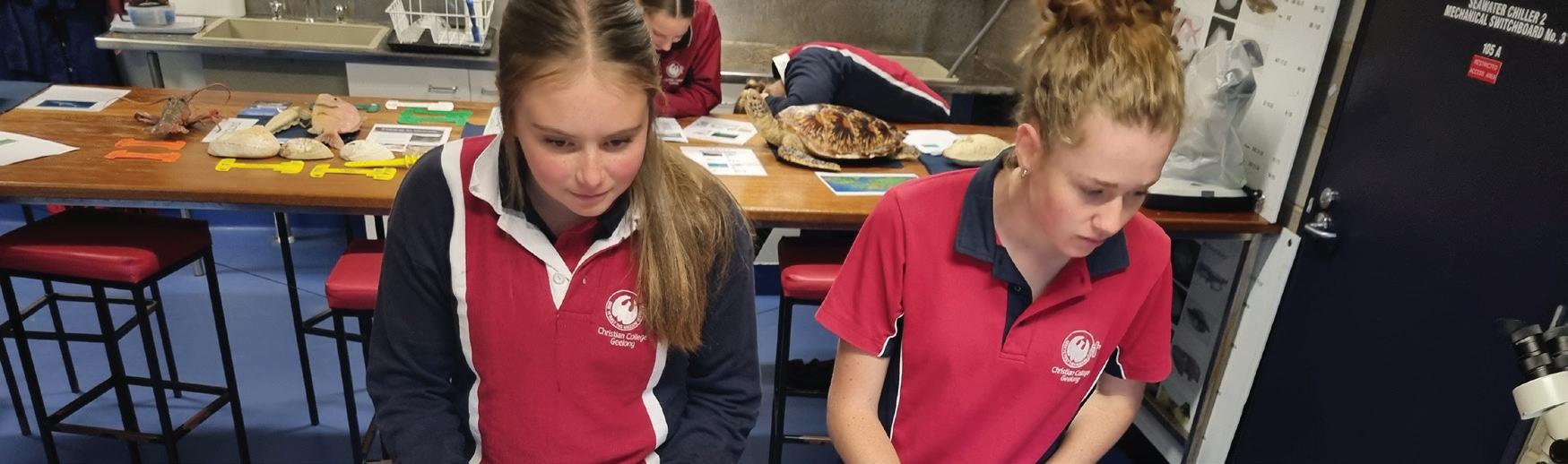
In the Marine Studies course students will investigate local and global marine issues, environments and their biological workings. Students will engage with a variety of different marine ecosystems through a range of hand-on activities (snorkelling, sea grass monitoring and rock pool investigations) to help them make real world connections and develop practical skills. These practical field-based experiences will be complimented with reflective practice and project work. Students will develop knowledge of marine biodiversity, ecosystems and marine adaptations to investigate and understand global marine issues and their local impacts. Students will choose a specific line of questioning that engages them and investigate how these issues shape our contemporary lives. Students will participate in a peak experience that draws on practical skills developed throughout year 8 and 9.
In Year 9, students are assessed by a variety of methods including:
• Marine Global Issues Inquiry Task
• Marine Dissection Lab Reports
• Experiential Outdoor Journals
After completing this subject student will continue to build on their skills and knowledge in the following Year 10 subjects:
• Year 10 - Outdoor Education
• Year 10 - Ecology, Biodiversity and Fieldwork
We live in a digital world filled with a wide range of visual media, from handheld devices and social media to print publications and cinema screens. In this elective, students will explore how media captures attention, tells stories and communicates ideas to different audiences. They will learn to analyse and interpret media while developing the skills to create their own engaging and meaningful digital productions.
Students will investigate both still and moving images as they discover how media is constructed. They will explore codes and conventions, learn about genre and mise en scène, and understand how camera angles, lighting, sound and editing influence meaning. Students will take on production roles as they plan, film and edit their own creative pieces.
As part of this course, students will step into the role of media creators and critics. They’ll sharpen their video editing skills using digital software to produce short, cinematic pieces that explore themes, techniques and storytelling in film. Students will create dynamic, screen-based film reviews that blend analysis with creativity. They'll break down iconic scenes, uncover hidden meanings, and explore how filmmakers use visuals, sound, editing and genre to shape what we feel and think. These fast-paced, insightful reviews will challenge students to think like directors, critics and storytellers all at once. Whether behind the camera or analysing the screen, students will gain a deeper understanding of how media influences the way we see the world.
In Year 9, students are assessed by a variety of methods including:
• Production Planning & Storyboarding Tasks
• Film, Photographic or Audio Production Tasks e.g. Video Essay
• Written Reflection
After completing this subject student will continue to build on their skills and knowledge in the following Year 10 subjects:
• Year 10 - English
• Year 10 - Media
• Year 10 - Visual Communication Design
• VCE accelerationUnits 1 & 2 Art Making and Exhibiting
• VCE acceleration - Units 1 & 2 Media
• VCE acceleration - Units 1 & 2 Visual Communication Design
The Year 9 Music course is an intriguing hands-on experience for students of all levels. As musicians, they explore the fascinating evolution of music in the 20th century and learn how trailblazers bent, broke and remade the rules of music. Engaging with this area of music encourages students to think outside the box and empowers them to compose music in ways they never thought possible.
This subject builds a strong foundation for all students who want to learn more about music. Core skills such as rehearsing, performing as a soloist, and working as an ensemble member help them develop their identities as musicians. The fundamentals of pitch and rhythm are explored through engaging aural and classroom activities, which prepares them for music pathways in Year 10.
Students in the Instrumental program are encouraged to complete at least one term of this elective. Additionally, students can accelerate their music education by commencing VCE Music in Year 10. For those students interested in accelerating in Year 10, it is highly reccommended to complete this Music elective.
In Year 9, students are assessed by a variety of methods including:
• Performances - Rehearse and perform as a group and a soloist.
• Composing and Arranging - Compose or arrange your own music using 20th century techniques and other traditional approaches.
• Analysis - Listen to and investigate fascinating styles of music.
• Aural and notation tasks in class.
After completing this subject student will continue to build on their skills and knowledge in the following Year 10 subjects:
• Year 10 - Sound Explorers 1 - Personal music exploration
• Year 10 - Sound Explorers 2 - Musical Landscapes
• VCE acceleration - Units 1 & 2 Music
In the Outdoor and Environmental Studies course, students utilise our local coastal environment to develop confidence and study the changing way that humans interact with the natural world. Through a combination of classroom-based activities, and experiential learning opportunities, students analyse beach culture and the influence that humans have had on local ecosystems. Students will investigate future threats and propose ways to better manage these ecosystems for future generations. Regular surfing sessions will facilitate a rich and authentic means for students to connect with the outdoors, reflect on their skill development and gain a practical understanding of local surf conditions, hazards and risks associated with open water.
These sessions will also allow students to develop their board handling skills regardless of whether they have any prior experience in surf. Students will use their new knowledge of the environment to identify and propose solutions to environmental and social problems.
In Year 9, students are assessed by a variety of methods including:
• Surf Culture, Industry and Risk Inquiry
After completing this subject student will continue to build on their skills and knowledge in the following Year 10 subjects:
• Year 10 - Outdoor Education
In the Principles of Training course, students develop a theoretical understanding of how the body functions and how it responds to training. This elective incorporates both a theory and practical component. Students will be introduced to topics such as energy systems, anatomy, fitness components, training methods and key principles of effective training. During the practical sessions, students complete a range of fitness tests and participate in various training methods to appreciate the training principles that can be implemented to alter physical performance. This is a preferred elective if students are considering undertaking VCE Units 1 & 2 VCE Physical Education in Year 10.
In Year 9, students are assessed by a variety of methods including:
• Designing a fitness workout
• Unit Test – end of unit knowledge-based assessment
After completing this subject student will continue to build on their skills and knowledge in the following Year 10 subjects:
• Year 10 - Sport & Exercise Performance
• Year 10 - Sport and Recreation
• Year 10 - Coaching and Officiating
• VCE accelerationUnits 1 & 2 Physical Education
Course Overview
Designers are creative problem-solvers who develop innovative solutions to real-world needs. In the Product Design – Materials elective, students develop creative problemsolving skills by designing, testing, and producing practical products. They tackle realworld design challenges and learn to generate and communicate ideas through sketches, technical drawings, and digital tools like 3D modelling, laser cutting, and 3D printing. Students select suitable materials and processes with an emphasis on function, sustainability, and safe work practices. They explore design trends, influential designers, and the impact of design on everyday life. By engaging with hands-on projects, students gain confidence as thoughtful, capable, and ethical designers.
Assessment Overview
In Year 9, students are assessed by a variety of methods including:
• Workshop Habits and Safety Skills
• Design Folio & Computer Aided Design Processes
• Design Tasks: Finished Products & Evaluation
After completing this subject student will continue to build on their skills and knowledge in the following Year 10 subjects:
• Year 10 - Art Making & Exhibiting
• Year 10 - Product Design: Materials
• Year 10 - Product Design: Textiles
• Year 10 - Systems Engineering
• Year 10 - Visual Communication Design
• VCE acceleration - Units 1 & 2 Art Making and Exhibiting
• VCE acceleration - Units 1 & 2 Media
• VCE acceleration - Units 1 & 2 Product Design: Materials or Textiles
• VCE acceleration - Units 1 & 2 Visual Communication Design
Course Overview
Textile items can be explored as technological products, cultural expressions, artworks, or trade goods. In this subject, students use creative and practical skills to develop both hand and machine sewing techniques, along with methods of embellishment, to produce original textile pieces.
In this course, students are encouraged to think about the future they want to help create, considering ethical, social, economic, and environmental sustainability. They apply strategies such as life cycle thinking to guide their design choices.
Students take charge of their own design journey by planning and managing creative projects from start to finish. They learn to work safely and responsibly with tools and materials, while building confidence in their ability to bring ideas to life.
Whether you're passionate about fashion, interested in sustainability, or just love making things with your hands, Textiles offers a fun and practical way to explore your creativity and develop real-world skills.
Assessment Overview
In Year 9, students are assessed by a variety of methods including:
• Design Brief and Planning - Folio with design ideas, visualisations, & planning.
• Finalised Textile Product
• Construction & Safety Processes –Visual Diary
• Written Evaluations & Reflection Tasks
After completing this subject student will continue to build on their skills and knowledge in the following Year 10 subjects:
• Year 10 - Art Making & Exhibiting
• Year 10 - Product Design: Materials
• Year 10 - Product Design: Textiles
• Year 10 - Visual Communication Design
• VCE accelerationUnits 1 & 2 Art Making and Exhibiting
• VCE acceleration - Units 1 & 2 Media
• VCE accelerationUnits 1 & 2 Product Design: Materials or Textiles
• VCE acceleration - Units 1 & 2 Visual Communication Design
Alternative energy, mechanical engineering, and the control of integrated electrical and digital systems are rapidly growing fields in today’s world. In this elective, students can choose to either design and build a model solar-powered vehicle to compete in a national competition or use LEGO Mindstorms with input sensors to code autonomous robots that navigate a dynamic course.
Students explore how motion, force, coding, and alternative energy sources are used to control electromechanical systems. They apply the design and evaluation process to test and refine their ideas, while developing project management skills to plan, document, and oversee their production work.
By working independently and safely with tools, equipment, and construction techniques, students bring their designs to life. This subject encourages creative thinking, hands-on problem-solving, and the development of real-world engineering skills. Whether you're interested in robotics, renewable energy, or innovative design, Systems Engineering offers a challenging and rewarding way to explore how technology can shape the future.
In Year 9, students are assessed by a variety of methods including:
• Design Folio –inclusive of the following: Design brief (research and analysis tasks), generation of ideas & concept sketches
• Mechanical & Programming Tasks
• Written Reflection Tasks
After completing this subject student will continue to build on their skills and knowledge in the following Year 10 subjects:
• Year 10 - Digital Technology
• Year 10 - Systems Engineering
• VCE acceleration - Units 1 & 2 Systems Engineering
There are stories all around us, just waiting to be told. This dynamic subject allows students the opportunity to tell stories in ways that capture and captivate readers. Students will learn about, and experiment with, all elements of storytelling, from selecting subject matter, to research and interview skills, to writing and editing, creating and manipulating visual mediums (including photography), and publishing. Students will work on the creation of individual stories as well as working collaboratively through the editing process, with opportunities to publish work to authentic audiences.
In Year 9, students are assessed by a variety of methods including:
• Writing Portfolio
After completing this subject student will continue to build on their skills and knowledge in the following Year 10 subjects:
• Year 10 - Core Skills English
• Year 10 - General English
Visual Communication Design (VCD) is where creativity meets purpose. In a world driven by visual media, this subject explores how design influences the way we communicate, connect, and shape our environment. From branding and marketing to architecture and product design, students learn how visual language can be used to inform, persuade and inspire. The VCD course develops students’ technical drawing and design skills through both manual and digital methods. Students learn to generate ideas, research, refine concepts, and present final visual solutions in a comprehensive design folio. They experiment with materials, media, and techniques such as rendering, instrumental drawing, and design software, applying design elements and principles to communicate ideas effectively. Areas of study may include architecture, environmental design, branding, packaging, and promotional materials. VCD provides a dynamic and practical foundation for students interested in design or wanting to strengthen their creative and visual thinking skills.
In Year 9, students are assessed by a variety of methods including:
• Rendering Skills & Introductory Design Task
• Design Folio – including: design brief, reference images, visualisation sketches, and refinement of ideas.
• Final Communication Design: final product
After completing this subject student will continue to build on their skills and knowledge in the following Year 10 subjects:
• Year 10 – Visual Communication Design
• Year 10 – Media
• Year 10 – Art Making & Exhibition
• Year 10 - Product Design: Materials
• Year 10 - Product Design: Textiles
• VCE accelerationUnits 1 & 2 Art Making and Exhibiting
• VCE acceleration - Units 1 & 2 Media
• VCE acceleration - Units 1 & 2 Visual Communication Design
Language Notes Tick
Indonesian Japanese Worldview
Electives
Art Making and Exhibiting*
Australia’s Health
Digital Technologies* Drama*
Food Studies
Geography
GEOS - The Prom Law and Order
Marine Studies - Snorkeling Media* Music*
Marine Studies - Rock Pools
Outdoor & Environmental Studies
Principles of Training
Product Design: Materials
Product Design: Textiles
Systems Engineering*
The Editorial
Visual Communication Design*
* Elective can be chosen to study for one or two terms, student numbers permitting.

Williams House Kindergarten
39 Broughton Drive, Belmont 3216
Tel. 03 5241 3556
Butterfield House Kindergarten
240 Great Ocean Road, Torquay 3228
Tel. 03 5264 6803
Junior School - Belmont
39 Broughton Drive, Belmont 3216
Tel. 03 5241 1565
Middle School - Highton
18 Burdekin Drive, Highton 3216
Tel. 03 5241 1899
Senior School - Waurn Ponds
135 Pigdons Road, Waurn Ponds 3216
Tel. 03 5241 1577
Surf Coast Campus
248 Great Ocean Road, Torquay 3228
Tel. 03 5244 8799
Bellarine Campus
40 Collins Street, Drysdale 3222
Tel. 03 5253 2998
Back Creek Farm
Midland Hwy, Scotsburn
Tel. 03 5341 2051