2026 Year 7
BELLARINE
MIDDLE SCHOOL
SURF COAST
2026 Year 7
BELLARINE
MIDDLE SCHOOL
SURF COAST
Year 7 Overview
Welcome to Year 7
Curriculum Overview
Year 7 Core Curriculum
Year 7 Elective Program
Learning Enhancement
Enrichment and Extension Opportunities
Timetable Overview
Subject Selection Procedures
Important Subject Selection Dates
Important Contacts
Year 7 Core Curriculum Overview (Entire Year)
Christian Education
Digital Technologies
English Health and Wellbeing
Humanities
Mathematics
Physical Education
Science
Year 7 Core Curriculum Overview (Semester)
Languages
Indonesian
Japanese
Music
Visual Art
Year 7 Elective Program Overview
Drama
Food Studies
High Performance Athlete
How Does Your Garden Grow?
Interschool Sport
Media
Music
Product Design – Material (Wood, Metal and Plastics)
Product Design – Textiles
System Engineering (Robotics/Electronics)
Writers' Workshop
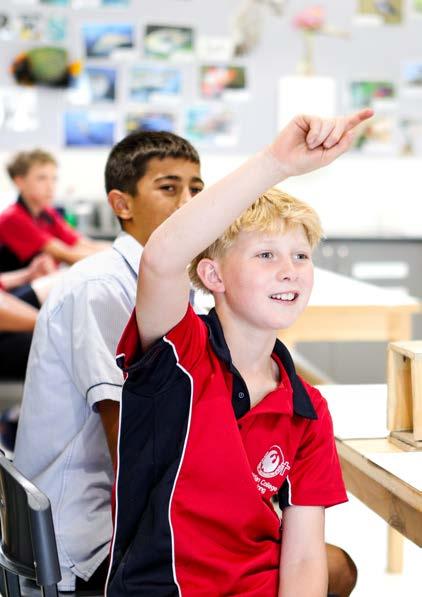
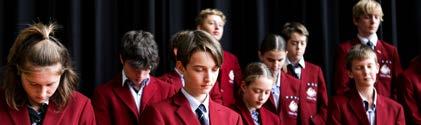
Welcome to Year 7 at Christian College Geelong. Our college provides our students a teaching and learning program that prepares them for the future world in which they will live as well as preparing them to respond to the challenges that will continue to shape their world. All students are encouraged to become active participants in their own educational journey, as they are given greater autonomy to learn and an increased voice to direct where that learning might take them.
As our students embark on this exciting new chapter of their educational journey, our staff are thrilled to guide them through a year of discovery, growth, and achievement. This handbook provides an overview of the subjects, assessment and future pathway opportunities that will shape their learning experience throughout the year. From exploring new concepts in the classroom to developing critical thinking and creativity, Year 7 is the perfect time to build a strong foundation for future studies.
We encourage all Year 7s to approach each new challenge with curiosity and a positive mindset, as this is the perfect time to discover what truly excites you.
Please Note: The information contained in this handbook was correct at the time of printing.
At Christian College, we follow the Australian Curriculum from Prep to Year 10, ensuring a comprehensive and consistent approach to education. This curriculum provides a clear framework for what students need to learn at each stage of their development. Our teaching is designed to not only meet the curriculum standards but also to inspire students to grow spiritually, academically and socially, in line with our values. Through a well-rounded, engaging program, we aim to equip students with the skills and knowledge they need for future success.
More information can be found here: Australian Curriculum
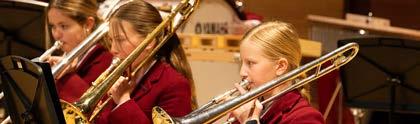
Year 7’s will experience a broad range of subject across each of the key learning areas within our program. Some of these are studied for a year and some are studied for one semester only.
Year 7 students will study the following core subject for the entire year:
• Christian Education
• Digital Technologies
• English
• Health and Wellbeing
• Humanities and Social Sciences (History, Geography, Civics and Citizenship and Economic and Business)
• Mathematics
• Physical Education
• Science
Year 7 students will study the following core subject for one Semester:
• Indonesian
• Japanese
• Music
• Visual Art
In Year 7 the core curriculum is complimented by an elective program that caters to the interests of our learners. Students will have the opportunity to study two electives per semester, for a total of four for the year.
Year 7 students have the opportunity to study:
• Drama
• Food Studies
• High Performance Athlete
• How Does Your Garden Grow?
• Interschool Sport *
• Media
• Music *
• Product Design – Material (Wood, Metal and Plastics)
• Product Design – Textiles
• System Engineering (Robotics/Electronics)
• Writers' Workshop
* Elective can be chosen to study in both semesters.
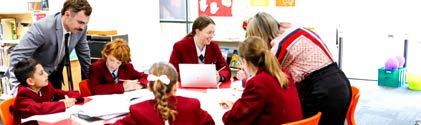
Christian College is deeply committed to providing an inclusive and nurturing environment where every child is supported to reach their full potential. We understand that each student is unique, with their own strengths, interests, and learning profile—and our broad offering of subjects is designed to reflect and celebrate that diversity.
Our dedicated classroom teachers use a variety of evidence-based teaching strategies and engaging learning experiences to support and challenge students at all levels. In the Middle Years, subject teachers work closely with students to help them build the essential skills and knowledge needed to succeed as confident, independent learners.
Each of our campuses is supported by a Learning Support Coordinator and a team of caring Educational Support Officers (ESOs). Together, they work in partnership with students, parents, teachers, campus leaders, and, where appropriate, Allied Health professionals such as speech therapists or psychologists. This team approach ensures that any necessary learning adjustments are thoughtfully planned, implemented, and regularly reviewed.
For students who require additional support, we offer school-based assessments conducted by qualified staff. These assessments help guide both families and teachers in understanding how best to support each student’s educational journey.
Targeted intervention in literacy is also available to support students who may benefit from additional instruction in this area.
Through these collaborative supports and tailored programs, we strive to ensure that every student feels valued, understood, and equipped to thrive in their learning and beyond.
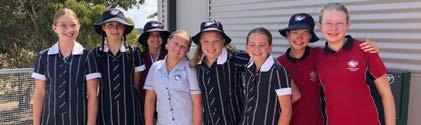
At Year 7, we believe in providing opportunities that go beyond the classroom, allowing students to deepen their knowledge, explore new interests, and challenge themselves in exciting ways. We encourage all Year 7 students to get involved and take advantage of these opportunities to enhance their learning journey, build new skills, and challenge themselves to reach their full potential.
• Book Binge
• Reading and Writing Competition
• Australian Mathematics Competition
• Australian Science Competition
• Student Leadership
• Christian College Geelong Art Show
• Language Competitions
• Drama Middle Years Performance
• Visual Art Portrait Competition
• Christian College Geelong Choir
Please Note: Some opportunities are for selected students.
Year 7 students follow a structured timetable consisting of 6 periods per day, with each period lasting 50 minutes. This balanced schedule allows for in-depth learning across a broad range of subjects and is carefully designed to provide a mix of academic, creative, and physical subjects, helping students stay engaged while developing a broad skill set.
The Christian College subject selection process is conducted online. On Friday 22 nd August students will receive an email containing the link to their subject selection preference form.
The online subject selection system will remain open until 9am on Friday 29th August, allowing sufficient time for thoughtful consideration of preferences.
To assist families to record their students preferred electives prior to submitting online, we recommend using the 'subject selection worksheet' located at the back of this booklet. You may like to print it for ease of use. Students will be required to select 8 electives; the first 4 being their preferences and the next 4 being for reserves. On the selection sheet, rank your 8 preferences, with 1-4 being your preferences and 5-8 being the reserves.
At Christian College, we strive to accommodate all student preferences when it comes to subject choices. We understand the importance of pursuing subjects that interest and inspire you, and we aim to provide as many of these preferences as possible. However, due to various factors such as class sizes, resources, and scheduling, it may not always be possible to offer every subject preference for every student.
While we will do our best to match your choices, there may be times when adjustments need to be made. We appreciate your understanding and flexibility as we work to create a balanced and enriching educational experience for everyone.
Tuesday 19th August
Thursday 21st August
Friday 22nd August
Friday 29th August
Tuesday 4th November
Friday 7th November
Friday 7th November
Subject Selection Information Evenings Middle School & Surf Coast Campuses
Subject Selection Information Evenings Bellarine Campus
Online Subject Selection link sent to students college email.
Subject Selections open Orientation Day
Online Subject Selections close
Families informed of allocated subjects
Booklist sent to families
To learn more about the Year 7 Curriculum feel free to reach out to the contacts below.
College Teaching and Learning Leaders (T & L)
Role
Deputy Principal – Teaching & Learning
Director of Teaching & Learning 7-12
Director of Teaching & Learning P-6
Bellarine Campus
Head of Campus
Highton Campus
Head of Campus
Deputy Head of Campus (T & L)
Surf Coast Campus
Name
Rick Geall
Contact r.geall@ccg.vic.edu.au
Drew Oliver d.oliver@ccg.vic.edu.au
Julie Shutie j.shutie@ccg.vic.edu.au
Nicola Morrish n.morrish@ccg.vic.edu.au
Natasha Troop n.troop@ccg.vic.edu.au
Kathrine Bowyer k.bowyer@ccg.vic.edu.au
Head of Campus Debbie Riddle de.riddle@ccg.vic.edu.au
College Faculty Coordinator
Faculty
Christian Ed
Christian Ed Coordinator 7-9 (Bellarine and Surf Coast)
Christian Ed Coordinator 7-9 (Highton)
Digital Technologies
Director of Digital Learning
English
English Coordinator 7-9 (Bellarine and Surf Coast)
English Coordinator 7-9 (Highton)
Health and Physical Education
HPE Coordinator K - 7 (Surf Coast)
HPE Coordinator P - 9 (Bellarine)
HPE Coordinator 5 - 9 (Highton)
Humanities
Humanities Coordinator 7-9
Languages
Language Coordinator 5–9
Maths
Maths Coordinator 7-9
Music and Performing Arts
Music Coordinator 7-9
Drama Coordinator 5–12
Outdoor Education
Outdoor Ed Coordinator 8–12
Science
Science Coordinator 5-9 (Bellarine and Surf Coast)
Science Coordinator 5-9 (Highton)
Sport
Sport Coordinator 7-9 (Bellarine)
Sport Coordinator 7-9 (Highton)
Sport Coordinator K-7 (Surf Coast)
Visual Art, Technology and Design
Visual Art, Tech., Design Coordinator 5-9
Name Contact
Gary Crole
Nicole Riddle
Brendan Vanderkley
Jo Lowe
Masigga Tsoulos
Emma Workman
Louise Bull
Kim McLure
Martin Costello
Stephen Brewster
Sophie Bergin
Scott Jolley
Taylah Broad
Rob Moore
Sophie Maye
Victoria Corkin
Kelly O’Neil
Stephanie Hambrook
Emma Workman
g.crole@ccg.vic.edu.au
n.riddle@ccg.vic.edu.au
b.vanderkley@ccg.vic. edu.au
j.lowe@ccg.vic.edu.au
m.tsoulos@ccg.vic.edu.au
e.workman@ccg.vic.edu.au
l.bull@ccg.vic.edu.au
k.mclure@ccg.vic.edu.au
m.costello@ccg.vic.edu.au
s.brewster@ccg.vic.edu.au
s.bergin@ccg.vic.edu.au
s.jolley@ccg.vic.edu.au
t.broad@ccg.vic.edu.au
r.moore@ccg.vic.edu.au
s.maye@ccg.vic.edu.au
v.corkin@ccg.vic.edu.au
k.oneil@ccg.vic.edu.au
s.hambrook@ccg.vic. edu.au
e.workman@ccg.vic.edu.au
Tammie Kite
t.kite@ccg.vic.edu.au

The Christian Education course covers a range of important topics that are designed to instil an interest in God’s Word and skills to apply this Word to their own lives. The Youth Alpha Course outlines the core principles of the Christian faith that all denominations agree on. Introduction to the Bible and Bible Stories, help students understand the progress of the story in the Bible and the Old and New Testament. Christian Worship looks at different forms of worship, with classes taking part in singing a Christian song as a class. Students perform this with our Highton, Bellarine and Surf Coast campuses at the end of the term.
In Year 7, students are assessed by a variety of methods including:
• Participation in group work, collaboration and reflective discussions
• Reflective questions
• Mini quizzes
After completing this subject student will continue to build on their skills and knowledge in the following Year 8 subjects:
• Year 8 Christian Education

The Digital Technologies course actively investigates and explores digital technologies and how they work, with a key focus on computer networks (including online networks) and generative AI systems. They also develop skills in digital literacy that are transferable across a wide range of disciplines and have strong relevance to their current and future lives. This includes skills in project management as well as product and user interface design. Within the context of exploring Python programming, students explore, modify and design algorithms and simple programs for different purposes.
In all units throughout the year, students consider and explore safe, ethical and sustainable uses of technology and how to protect their own online reputation, privacy and safety.
In Year 7, students are assessed by a variety of methods including:
• An online learning module exploring the safe, ethical and effective use of generative AI
• Creative Response using and critiquing support from generative AI
• Practical activities investigating digital networks
• An app design project
• An online coding course exploring the Python programming language
• Coding tasks that demonstrate application of learned Python coding skills
After completing this subject student will continue to build on their skills and knowledge in the following Year 8 subjects:
• Year 8 Digital Technologies
• Year 8 elective - Digital Technologies
The English course moves further towards a holistic approach to developing the core skills of reading to comprehend and analyse, writing for purpose and audience and developing speaking and listening skills. Grammar is taught within the units, alongside the development of reading and writing skills. The text study is central to the learning, with students engaging with thinking routines to help frame their opinions about character and themes, connecting these to the author’s possible intention for the reader. Students work through more challenging concepts and learn to offer their own interpretation through a multitude of written responses.
In Year 7, students are assessed by a variety of methods including:
• Film as Text – analysing a film through written and creative responses.
• Personal Stories (Biography) – persuasive oral presentation and creating texts.
• Poetry – analysing poetry, creating and crafting texts.
• Novel Study – oral presentation which includes an analysis of the text.
After completing this subject student will continue to build on their skills and knowledge in the following Year 8 subjects:
• Year 8 English
• Year 8 elective - Writers’ Workshop
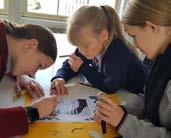
The Health and Wellbeing course engages students in a rigorous program covering a wide range of topics and activities. They will learn about leading a healthy life and surf safety, analysing the effectiveness of assertive communication strategies and protective behaviours. Personal development is emphasised through the "Changes and Me" module, along with building respectful relationships. This analysis enables students to propose strategies that enhance their own and others’ health, safety, relationships, and wellbeing.
The subject supports students to build wellbeing capabilities through key topics such as emotional literacy, resilience, flexible and adaptive coping strategies, problem-solving, and help-seeking behaviours, as well as developing safe, ethical, and responsible behaviours online to support their digital wellbeing.
In Year 7, students are assessed by a variety of methods including:
• Program design - design a school-based program to promote physical activity
• Poster presentation - create a surf safety poster task
• Comic strip - design a comic strip scenario response presentation
• Written test
• Participation in group work,
• Peer collaboration
• Reflective decision making
• Role plays
After completing this subject student will continue to build on their skills and knowledge in the following Year 8 subjects:
• Year 8 - Health and Wellbeing
The Humanities course guides students to embark on an engaging journey beginning with an exploration of Ancient Australia, where students investigate Indigenous histories, cultures, and the deep connection between First Nations peoples and the land. They then move into the classical world, studying Ancient Greece and Ancient Rome, examining the political systems, cultural achievements, and enduring legacies of these ancient civilisations. Shifting to contemporary issues, students analyse the concept of liveability, assessing how liveable Australia is for diverse communities based on factors such as infrastructure, environment, and urbanisation. The year concludes with a focus on global citizenship through a study of the United Nations Sustainable Development Goals (SDGs), encouraging students to engage thoughtfully with issues of global importance and to consider their role in creating a more sustainable future.
In Year 7, students are assessed by a variety of methods including:
• Ancient Australia: Annotated Poster - The creation of a visual display demonstrating their knowledge about a First Nations’ historical artefact.
• The Ancient World: Build their own ultimate civilisations.
• Living in Australia: A choice board of activities
• Sustainability Development Goals –construction of a new unique idea tackling one of the UN Sustainability Development Goals
After completing this subject student will continue to build on their skills and knowledge in the following Year 8 subjects:
• Year 8 History
• Year 8 elective - Writers' Workshop

• Year 8 - GEOS (Geography, Environmental & Outdoor Studies)
The Mathematics course builds strong foundations in core mathematical concepts, helping students develop fluency, reasoning, and problem-solving skills. This course encourages students to explore, question, and apply mathematics in real-world and abstract contexts through hands-on tasks, investigations, and engaging group work. The classroom content supports learners at varying levels and is scaffolded to challenge students and build positive mathematical mindsets.
By the end of Year 7, students will have honed their abilities to work with numbers, manipulate algebraic expressions, understand geometry, analyse data, and make decisions based on probability, while becoming confident mathematicians.
In Year 7, students are assessed by a variety of methods including:
• Topic post-tests (written test)
• End of term skills assessments (written test)
After completing this subject student will continue to build on their skills and knowledge in the following Year 8 subjects:
• Year 8 Mathematics
The Physical Education course prepares students for major house championship carnivals in athletics, swimming, and cross country, gaining knowledge about various fitness components. They will participate in sports such as netball, pickleball, and cricket, applying and transferring movement skills across different situations. They will implement and evaluate movement strategies, propose and evaluate strategies for personal health, fitness, and wellbeing, and refine strategies to support inclusion, fair play, and collaboration in various movement contexts.
In Year 7, students are assessed by a variety of methods including:
• Performance-Based Assessments, for example practical skill-based demonstrations of skill capability
• Peer & Self-Assessments: for example, ability to work effectively in a sporting team and provide constructive peer feedback
After completing this subject student will continue to build on their skills and knowledge in the following Year 8 subjects:
• Year 8 elective - High Performance Athlete
• Year 8 elective - Interschool Sport
• Year 8 - Physical Education
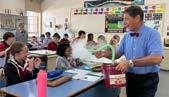
The Science course fosters curiosity and a deep understanding of the natural world. Students explore key concepts across biological, earth and space, physical, and chemical sciences. They investigate topics such as ecosystems, the Earth-sun-moon system, forces and motion, and the properties of substances. Through hands-on experiments and inquiry-based learning, students develop critical thinking and problem-solving skills.
In addition to building foundational knowledge, the curriculum equips students with practical skills for scientific inquiry. They learn to plan and conduct investigations, analyse data, and communicate findings effectively. By engaging with science as a human endeavour, students understand how scientific knowledge evolves and impacts society. This approach prepares them to make informed decisions and contribute to a sustainable future, while nurturing their curiosity and appreciation for the role of science in everyday life.
In Year 7, students are assessed by a variety of methods including:
• Practical Report – Dissolving Sugar, Separating Mixtures
• Written Test – States of Matter, Forces, Classification and Food webs
• Photo Story – Astronomy
• Research Task – Ecosystems
After completing this subject student will continue to build on their skills and knowledge in the following Year 8 subjects:
• Year 8 Science
• Year 8 elective - Marine Studies
The study of Languages forms an essential element of a holistic education at Christian College. Students will undertake a semester of Indonesian and a semester of Japanese and will then choose the language that they will complete for the full year in Year 8. Students will continue this language in Year 9 and have the opportunity to continue to study their chosen language through to Year 12.
The Indonesian course focuses on introducing students to concepts that enable them to complete self-introductions and learn foundational vocabulary before moving on to the creation of their family album. This showcases their ability to introduce not only themselves but also their family members.
In Year 7, students are assessed by a variety of methods including:
• Speaking – Oral presentations (class and one to one with the teacher)
• Reading and writing – The students will create a family album using Indonesian language.
After completing this subject student will continue to build on their skills and knowledge in the following Year 8 subjects:
• Year 8 Indonesian
The Japanese course aims to build and reinforce a solid foundation by teaching students to introduce themselves in Japanese, read and write the first of the Japanese alphabets (Hiragana), and read and write large numbers in Kanji to use in conversational settings.
In Year 7, students are assessed by a variety of methods including:
• Reading and writing in Japanese script – The Hiragana alphabet and simple Kanji characters.
• Speaking – Oral presentations (class and one to one with the teacher)
After completing this subject student will continue to build on their skills and knowledge in the following Year 8 subjects:
• Year 8 Japanese
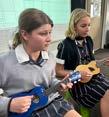
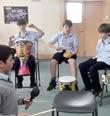
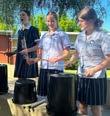
The Music course learn to use a Digital Audio Workstation (Soundtrap) to create multi-track projects. They craft the elements of music such as texture, dynamics, and tempo to express emotion and character, while deepening their understanding of pitch, rhythm, and sound design.
Students also explore diverse musical traditions from around the world, and develop practical music skills through playing percussion instruments, analysing music, and engaging in rhythmic improvisation and composition activities.
Assessment Overview
In Year 7, students are assessed by a variety of methods including:
• Creation of a composition featuring sound effects, music loops, automation, and spoken voice.
• Rehearsals, improvisations & ensemble performances of percussion pieces from around the world.
• Analysis of core elements and cultural heritage of music around the world.
After completing this subject student will continue to build on their skills and knowledge in the following Year 8 subjects:
• Year 8 elective - Music
Course Overview
Explore. Express. Create.
The Visual Art course encourages students to build creative confidence and explore how artists use visual elements to share ideas, stories and culture. Through drawing, painting, mixed media and digital tools, students develop practical skills and use design thinking to plan and create artworks. Throughout the course, students develop their written analysis skills through exploring how artists from Australia and around the world, make artworks. They also reflect on their own work using the language of art. Opportunities for students to exhibit their work will help build confidence and connect them with a wider audience. Visual Art fosters curiosity, self-expression and confidence, showing that there’s no single way to be an artist.
Assessment Overview
In Year 7, students are assessed by a variety of methods including:
• Art Folio and Written Reflection Tasks
• Studio Habits and Workshop Skills
Future Pathways
• 2D and 3D Artworks
After completing this subject student will continue to build on their skills and knowledge in the following Year 8 subjects:
• Year 8 elective - Art Making & Exhibiting
• Year 8 elective - Media
• Year 8 elective - Product Design Materials
• Year 8 elective - Product Design Textiles
• Year 8 elective – Systems Engineering
• Year 8 elective - Visual Communication Design

The Drama course enables students to imagine and participate in an exploration of their world through the creation of credible characters in real and imagined situations. Students interact with a variety of scripted texts and develop performance and expressive skills through improvisation and exploring a variety of performance styles. They explore the convention of the neutral mask and develop varied and interesting characters inspired by the masks. They make and respond to drama works and develop an understanding of drama as an art form. Students develop confidence through collaboration with others. They stretch their imaginations and find creative and entertaining ways to explore ideas through performance.
In Year 7, students are assessed by a variety of methods including:
• Performance: Comedy and Clowning
• Performance: Heroes and Villains
• Reflection and Evaluation: Students evaluate and reflect on their learning and engagement each term.
After completing this subject student will continue to build on their skills and knowledge in the following Year 8 subjects:
• Year 8 elective - Drama: The Actor’s Tools
The Food Studies course focuses on the essential life skill of being able to safely prepare healthy meals and snacks. Students are introduced to the processes, utensils and equipment used in food preparation. They investigate and apply safe and hygienic food handling procedures in a practical kitchen setting, learning to work confidently and responsibly.
Throughout the course, students explore nutrition and develop an understanding of how to make informed and sustainable food choices. They apply design thinking to create food solutions for a range of needs and opportunities, from simple breakfasts and healthy snacks to family meals. Students also develop criteria for success — including considerations for sustainability — and use these to evaluate their ideas, cooking processes and final products.
With fun, hands-on cooking challenges like the Breakfast Challenge or Zero Waste Lunchbox Challenge, students design, prepare, and present their own delicious creations, building teamwork, creativity and real-world food skills.
Food Studies is a practical, rewarding subject that supports students in developing lifelong healthy habits, creativity, and a deeper connection to the food they eat.
In Year 7, students are assessed by a variety of methods including:
• Kitchen Safety, Hygiene and Food Production Skills
• Food Production and Design Tasks
• Workbook and Reflection Tasks
After completing this subject student will continue to build on their skills and knowledge in the following Year 8 subjects:
• Year 8 Health and Physical Education
• Year 8 elective - Food Studies
The High Performance Athlete course offers a comprehensive high performance ‘sport’ experience focusing on the holistic person and athlete. The focus of the teaching is to provide the student with a strategic strength and conditioning program, which aims to improve overall athletic ability and decrease the likelihood of injury within the student’s chosen sport. The program will be tailored to the student’s age bracket, training age and practices that they can apply to develop within their sporting interest. The focuses within the elective will include practical sport performance-based lessons, with an underpinning of academic theory.
In Year 7, students are assessed by a variety of methods including:
• Reflective Task – Sleep and recovery journal
• Peer Teach – Fundamental Movements
After completing this subject student will continue to build on their skills and knowledge in the following Year 8 subjects:
• Year 8 - Health and Physical Education
• Year 8 elective - High Performance Athlete
• Year 8 elective - Interschool Sport
As humans we all rely on the production and consumption of food. In this subject, students will develop their green fingers in the school garden. They will use this outdoor classroom to develop their critical thinking about garden life, soil structures, harvesting, pests and diseases. This experiential class explores how food is produced. Students are involved in planning out what vegetables to grow and when, correct soil composition and importance of correctly making compost. Students will embrace First Nation People's culture through a hands-on approach to Bush Foods and caring for Country. Based mainly in an outdoor environment, students will refine soft skills such as planning, teamwork, and communication. They grow their own plants, maintain plants, and harvest the produce they have managed to grow. This allows students the opportunity to develop as young learners, who think critically, innovate and provide solutions towards more sustainable patterns of living.
In Year 7, students are assessed by a variety of methods including:
• Practical Investigation
• Research skill
• Presentation and communication skills
After completing this subject student will continue to build on their skills and knowledge in the following Year 8 subjects:
• Year 8 Science
• Year 8 - GEOS (Geography, Environmental & Outdoor Studies)
Course Overview
Semester One
The Interschool Sport course provides students with the opportunity to represent the college in Netball, Soccer, Hockey, or AFL. Each sport is available to both male and female students. The program aims to enhance students' existing knowledge and understanding of their chosen sport while developing the specific skills required for successful participation. Term 1 focuses on training and education sessions designed to prepare students for competitive play. Term 2 features a round-robin competition in the selected sport, conducted by the Geelong Independent Schools Sports Association (GISSA).
A diverse range of sports is offered during Semester Two of the Interschool Sport program. In Term 3, students may compete for the college in Basketball, Badminton, Table Tennis, or Gaelic Football as part of the GISSA competition. In Term 4, students will participate in a round-robin competition against other Geelong-based independent schools, with sports including Cricket, Tennis, Volleyball, Softball, and Water Polo. These competitions are also conducted by GISSA.
Assessment Overview
In Year 7, students are assessed by a variety of methods including:
• Practical Observations – Training and Skill Development
• Application, Effort and Skill – GISSA Competition
After completing this subject student will continue to build on their skills and knowledge in the following Year 8 subjects:
• Year 8 - Health & Physical Education
• Year 8 elective - Interschool Sport
• Year 8 elective - High Performance Athlete
The Media course gives students the chance to explore the exciting power of storytelling through photography. In this creative and hands-on subject, students develop their skills in capturing and editing still images, using professional planning tools like storyboards and scripts to bring their ideas to life.
Throughout this course, students will focus on designing a comedy photo story, learning how to use camera angles, framing and composition to create humour and engage an audience. Along the way, they will discover how media products reflect the values, beliefs and cultures of the people who create them – and how their own preferences and experiences can shape the stories they tell.
Students will work both individually and in small teams to plan, shoot and present their photo stories, showcasing their final projects in peer exhibitions and community events such as the Art Show. They’ll also build valuable skills in collaboration, critical and creative thinking, ICT, and ethical media practice, in line with the Australian Curriculum.
Whether they are passionate about photography, love making people laugh, or just enjoy bringing ideas to life, Media Arts offers students a fresh and inspiring way to connect with the world around them.
In Year 7, students are assessed by a variety of methods including:
• Production Planning & Storyboarding Tasks
• Photo Story – Digital Photography Task
• Film Production Task
• Written Analysis
After completing this subject student will continue to build on their skills and knowledge in the following Year 8 subjects:
• Year 8 - English
• Year 8 elective - Media
• Year 8 elective - Visual Communication Design
The Music elective course encourages students to be part of their own music ‘tribe’! This subject is for all who love music – including those who would like to learn an instrument, those who have been playing for years, and everyone in between. If you’ve always wanted to share your love of music with your cohort, this is the place.
In each semester of the Year 7 Music Elective, students learn about pitch and rhythm in class games and activities. They learn about different styles of music, their rich histories, and play them on instruments. They deeply engage with music they love through listening analysis tasks and learn how to compose music using tools of the trade.
Students may choose this subject for one or both semesters.
In Year 7, students are assessed by a variety of methods including:
• Class rehearsals and performances of various styles, including rock, pop, contemporary, and blues – in which all instruments are catered for.
• Composition tasks – creation of their own music through practical tasks and use of music technology.
• Analysis projects of music they love.
• Aural & notation tasks that are catered for all levels of proficiency.
After completing this subject student will continue to build on their skills and knowledge in the following Year 8 subjects:
• Year 8 elective - Music


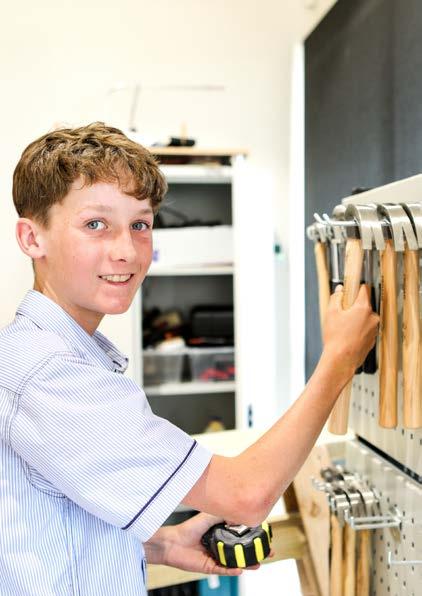
The Product Design Material course introduces students to the exciting world of design, where creativity meets hands-on experience. Using materials such as wood, metal and plastics, students explore how everyday objects are designed, constructed, and improved to solve real-world problems.
Throughout the course, students develop practical skills in safely using a range of tools and equipment, while investigating the unique properties of different materials. They follow the design process to generate ideas, plan solutions, and bring their concepts to life through individual projects.
Sustainability, functionality and quality are all key considerations as students create their own products. Reflection and evaluation are built into each project, encouraging students to think critically about their design choices and how they might improve or adapt them for different needs. Whether it’s shaping timber, forming plastic, or working with metal, students will grow in confidence and capability through meaningful, hands-on learning.
This subject is perfect for students who enjoy designing, building, and working creatively with materials — and is a great starting point for anyone interested in engineering, design, or technology.
In Year 7, students are assessed by a variety of methods including:
• Design Processes: Folio Products
• Design Tasks: Finished Products
• Workshop Habits and Safety Skills
After completing this subject student will continue to build on their skills and knowledge in the following Year 8 subjects:
• Year 8 elective - Art Making & Exhibiting
• Year 8 elective - Product Design Materials
• Year 8 elective - Product Design Textiles
• Year 8 elective - Systems Engineering
• Year 8 elective - Visual Communication Design
Course Overview
The Product Design Textiles course encourages students explore how fabrics and fibres can be transformed into unique and practical creations through thoughtful design and hands-on making. This subject is all about combining creativity with skill as students learn to plan, sketch and construct their own textile-based products.
Throughout the course, students investigate the properties of different textiles and learn how to safely use a range of sewing tools and equipment. They apply the design process to develop personalised items that meet a real need or purpose — whether it’s a fun accessory, a handy bag, or a decorative piece.
Sustainability, function and style are key considerations as students reflect on their design choices and evaluate their finished work. Projects encourage students to problem-solve, think creatively and gain confidence as makers and designers.
This subject is perfect for students who enjoy hands-on learning, expressing their ideas through fibres and fabric, and bringing creative ideas to life. Product Design Textiles also offers a great introduction to future pathways in fashion, costume design, interior styling, and other creative industries.
Assessment Overview
In Year 7, students are assessed by a variety of methods including:
• Design Brief & Planning Tasks
• Design Task - Finished Textiles Products
• Evaluation & Reflection Tasks
• Studio Habits & Construction Processes
After completing this subject student will continue to build on their skills and knowledge in the following Year 8 subjects:
• Year 8 elective - Art Making & Exhibiting
• Year 8 elective - Product Design Materials
• Year 8 elective - Product Design Textiles
• Year 8 elective - Visual Communication Design
The Systems Engineering course sees students step into the exciting world of robotics, electronics, and automation. This subject invites curious thinkers and hands-on learners to explore how mechanical, electrical, and digital systems come together to solve real-world problems.
Throughout the course, students design, build and program their own autonomous robots using LEGO Mindstorms. From navigating obstacle courses to solving programmed challenges, students learn how motors, sensors, and switches can work together to bring intelligent systems to life. Alongside robotics, students gain experience in simple electronic circuits, exploring how energy, force and motion interact in engineered designs.
Project planning and documentation are key parts of the process, helping students manage time and resources as they develop practical solutions for a set task. Safe workshop practices, critical thinking and creativity are built into every step.
This subject is ideal for students who enjoy problem-solving, working with technology, and exploring how things work. Systems Engineering offers a strong foundation for future pathways in robotics, electronics, engineering, and other STEM-related fields.
In Year 7, students are assessed by a variety of methods including:
• Design Folio – inclusive of the following:
• Design brief (research and analysis tasks), generation of ideas & concept sketches
• Mechanical & Programming Tasks
• Written Reflection Tasks
After completing this subject student will continue to build on their skills and knowledge in the following Year 8 subjects:
• Year 8 elective - Digital Technology • Year 8 elective - Systems Engineering
The Writers' Workshop course provides students who love writing creatively with an opportunity to explore and develop their skills in this area. Students will experiment with a range of writing techniques, stimuli and styles, in the creation of written works. They will be provided with learning experiences that will allow them to write authentically and for a variety of audiences and purposes. Students will be challenged in their writing, by both their teacher and peers, and will be encouraged to take risks and work beyond their comfort zone.
In Year 7, students are assessed by a variety of methods including:
• Planning, drafting and publishing an original Short Story
After completing this subject student will continue to build on their skills and knowledge in the following Year 8 subjects:
• Year 8 English
• Year 8 elective - Writers’ Workshop
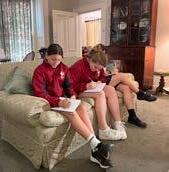
These pages and worksheet are to support you in your considered subject selections in the Year 7 academic program. Please note that your final subject choices are to be entered online, via an email link sent to your student email address.
Subject
Drama Notes
Food Studies
High Performance Athlete
Interschool Sport (Semester 1)
Rank 1-8
Interschool Sport (Semester 2)
Media How Does Your Garden Grow?
Music 1
Music 2
Production Design - Materials (Wood, Metal and Plastic)
Production Design - Textiles
Systems Engineering (Robotics/Electronics)
Writers’ Workshop

Williams House Kindergarten
39 Broughton Drive, Belmont 3216
Tel. 03 5241 3556
Butterfield House Kindergarten
240 Great Ocean Road, Torquay 3228
Tel. 03 5264 6803
Junior School - Belmont
39 Broughton Drive, Belmont 3216
Tel. 03 5241 1565
Middle School - Highton
18 Burdekin Drive, Highton 3216
Tel. 03 5241 1899
Senior School - Waurn Ponds
135 Pigdons Road, Waurn Ponds 3216
Tel. 03 5241 1577
Surf Coast Campus
248 Great Ocean Road, Torquay 3228
Tel. 03 5244 8799
Bellarine Campus
40 Collins Street, Drysdale 3222
Tel. 03 5253 2998
Back Creek Farm
Midland Hwy, Scotsburn
Tel. 03 5341 2051