VIEWPOINTS: Venezuela Deserves Careful Reporting
PAGE 7

VIEWPOINTS: Venezuela Deserves Careful Reporting
PAGE 7
FEBRUARY 4, 2026
FIFTH WEEK
VOL. 138, ISSUE 8
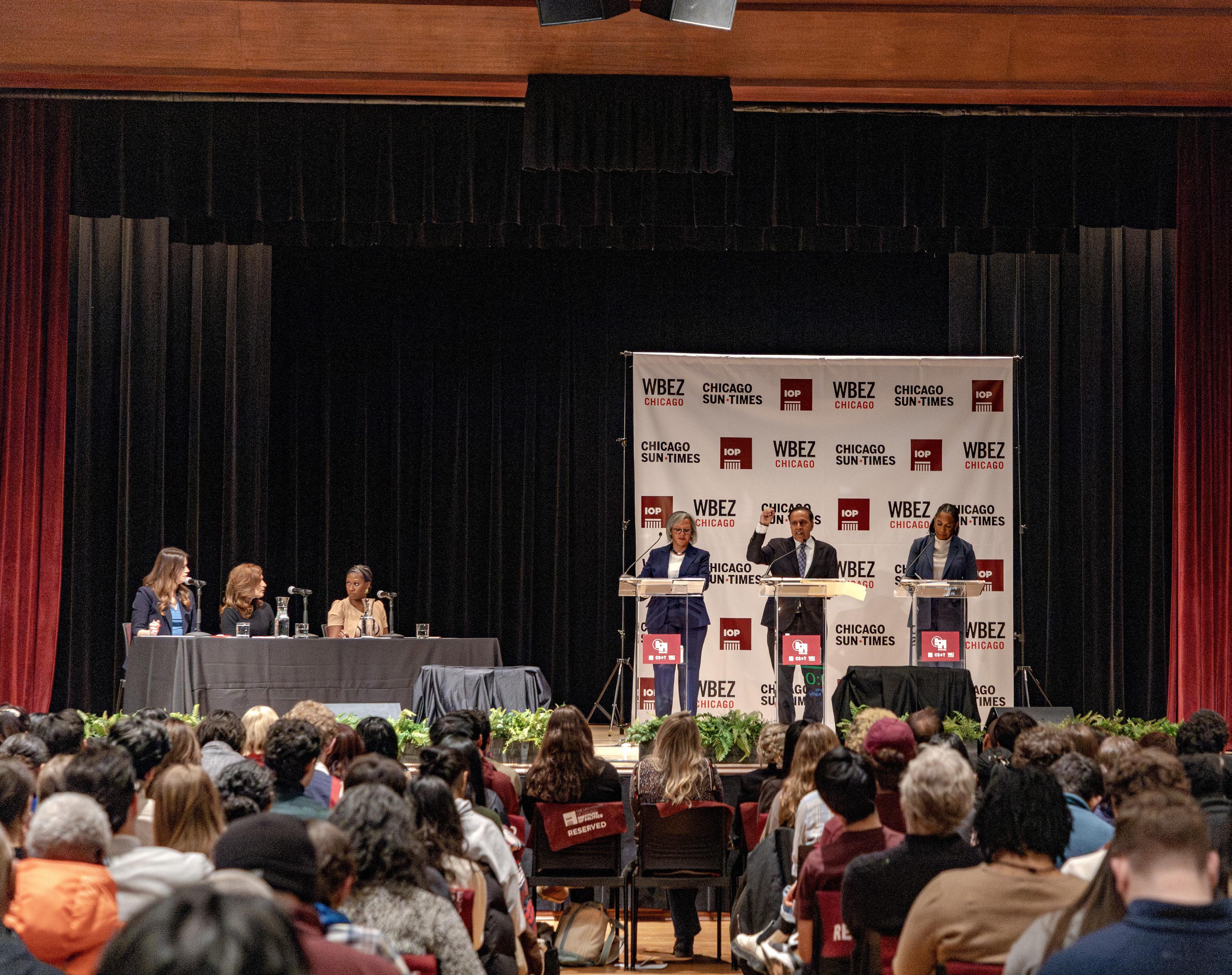
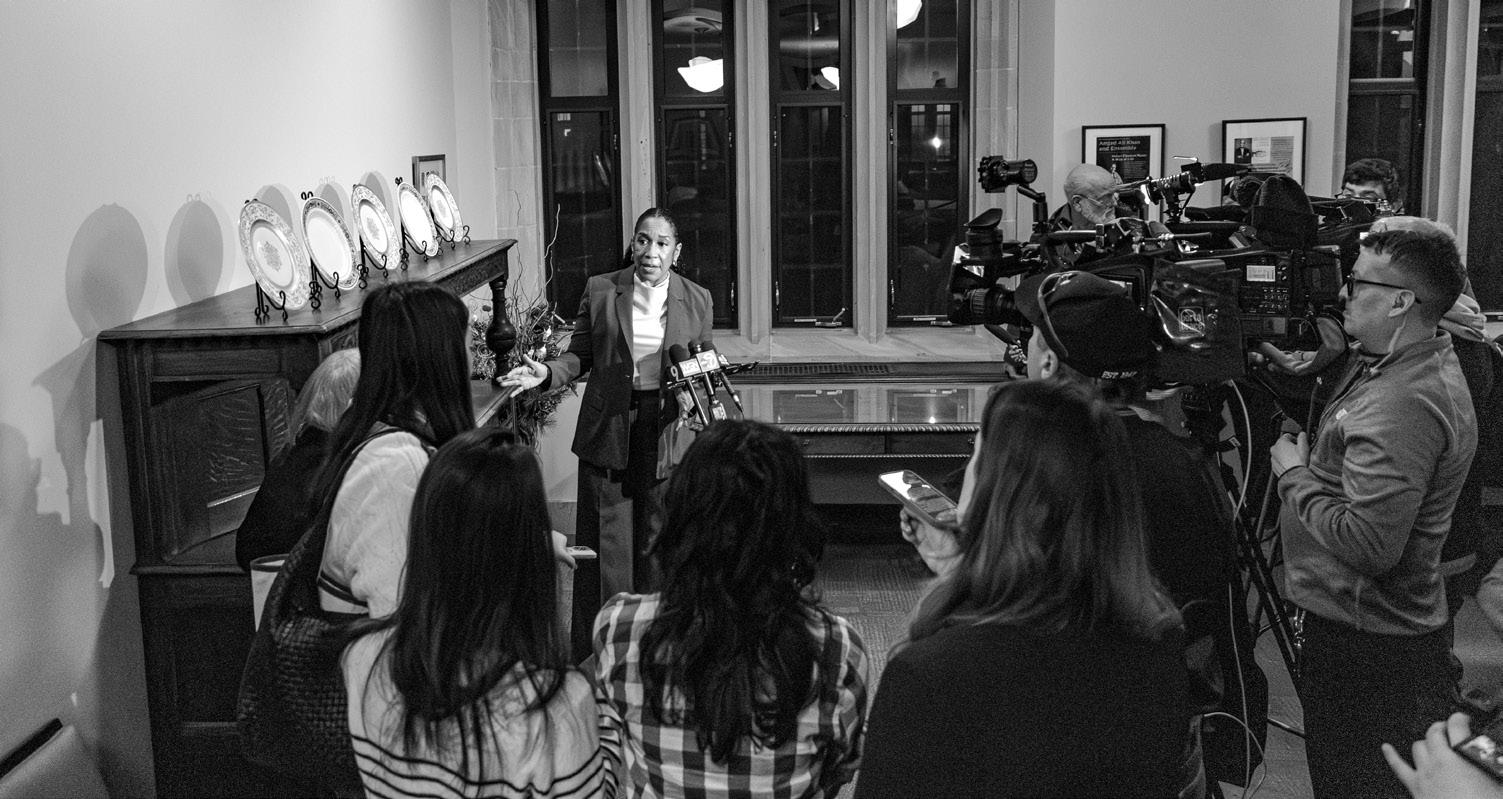
Lieutenant Governor Julianna Stratton and U.S. Representatives Raja Krishnamoorthi and Robin Kelly debated policy objectives and “dark money” campaign funding at International House on January 26. Read the full article on page 3.
NEWS: Film Historian Jacqueline Stewart Speaks on the Power of Media at Annual MLK Celebration
PAGE 2
NEWS: USG Passes Resolution Supporting Maroon Dollar Laundry Payment Option
PAGE 4
ARTS AND CULTURE: Need Valentine’s Day Plans? We Have You Covered
PAGE 9
SPORTS: The Unorthodox Olympic Rise of UChicago Alum Jesse Ssengozi PAGE 15
By AVA NEAL | Senior News Reporter
The previously stalled project to build a new science and engineering building has been revived as the IonQ Center for Engineering and Science, thanks to funding from quantum hardware and software firm IonQ.
The partnership between IonQ and the University, announced in November 2025, will create a dedicated home for the Pritzker School of Molecular Engineering. It will host a new quantum computer and an entanglement distribution quantum network, a system that distributes entanglement across multiple devices for end-user applications, similar to those located at the University of Illinois Urbana–Champaign and Argonne National Laboratory. UChicago’s quantum network will connect to and transmit data between the University, Fermi National Accelerator Laboratory, and Argonne National Laboratory.
In a press release, IonQ said that its partnership with UChicago will mark the first time a quantum computer and a quantum network will be on a single university campus. These tools will add to the larger ecosystem of the Chicago Quantum Exchange, including tools at the Argonne
and Fermi laboratories, the University of Illinois, Purdue University, and Northwestern University.
The agreement with IonQ is one of several between the University and corporate partners in recent months. Others include an agreement to fund the newly named AbbVie Foundation Cancer Pavilion and the recently announced UChicago Medicine Ralph Lauren Center.
The University had previously slowed down internally funded capital projects in response to the ongoing budget crisis, which led to the pause on the IonQ Center’s construction. In an August 2025 update, Provost Katherine Baicker said that “great uncertainty about future infrastructure support” led to the plan getting “significantly reduced in scale… with limited space for future expansion and a substantially smaller structure.”
In September 2025, Baicker said that the reductions aimed to reduce spending by $100 million and decrease the operating-expenses-to-debt ratio from 82 percent in financial year 2024.
Nadya Mason, dean of the Pritzker School of Molecular Engineering, said in
an interview with the Maroon that designs for the building are expected to be completed in 2026 and construction will extend into 2030. The quantum computer will likely be set up on campus well before that date, Mason said.
By 2026, Mason expects that the building design will be finished and that the site’s old buildings will be in the process of being torn down. The full construction process is expected to take about four years. The timeline for the building’s completion is tentative, as weather concerns and ability to get permits in time are unpredictable.
She said that “a small but really selective team at different levels at the University” was involved in UChicago–IonQ negotiation meetings but did not clarify whether researchers were directly represented.
“Now we’re organizing a conference between IonQ researchers and our researchers to talk about their mutual areas of interest,” she said.
IonQ will also have the opportunity to tap into UChicago’s molecular engineering and physics expertise.
“We’re combining our commercial-grade quantum computers with some
of the world’s leading academic talent to generate innovations with valuable real-world applications. That research will directly benefit IonQ’s product roadmap and strengthen our competitive advantage in enterprise and government markets,” IonQ CEO Niccolo de Masi said in a public statement.
The IonQ center and the increased computing capacities provided by new quantum tools could support over 140 research and technology development projects at UChicago, according to UChicago News.
IonQ is only one new source of quantum funding at UChicago. IonQ’s investment will supplement the State of Illinois’s $175 million investment into quantum computation and materials research at UChicago.
According to Mason, immunoengineering and materials science will receive a large amount of the newly built space. “They’re actively supporting research funds to fund graduate students, undergraduates, postdocs, and more to work in areas of mutual interest,” Mason said. Mason said that the agreement made for the IonQ Center mirrored many others the University has made in previous years.
By ANTONIA ROMM | News Reporter
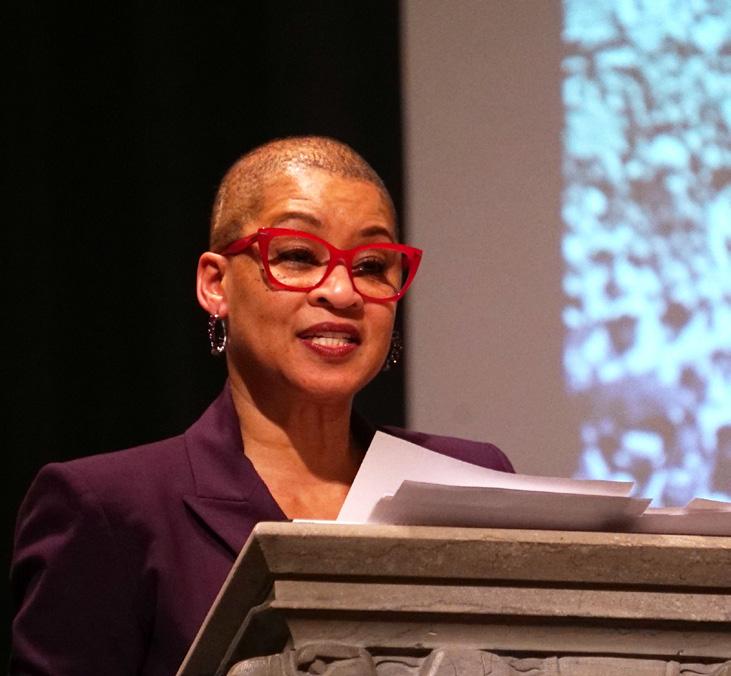
Jacqueline Stewart, the Edward Carson Waller Distinguished Service Professor in the Department of Cinema and Media Studies at UChicago, delivered the keynote address at the University’s 36th annual Martin Luther King, Jr. Commemoration Celebration last Wednesday in Rockefeller Chapel.
Stewart is the former director and president of the Academy Museum of Motion Pictures in Los Angeles and founder of the South Side Home Movie Project at UChicago. She spoke about King’s media prowess during her speech, projecting
and analyzing clips of King’s appearances in popular media, interviews, and speeches.
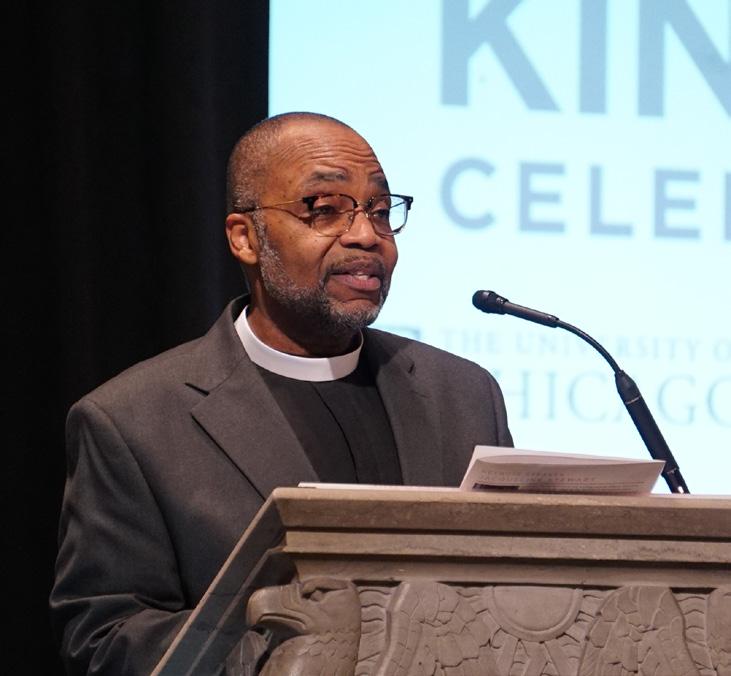
Maurice Charles, dean of Rockefeller Chapel, opened the event, recalling King’s visit to the chapel 70 years ago, when he delivered a speech from the same pulpit at the height of the Montgomery bus boycotts.
University President Paul Alivisatos introduced the night’s theme—the power of “indelible images of courage played in the face of brutality”—pointing to Bir -
By BORIS ARCHIPOV | Senior News Reporter
Illinois Lieutenant Governor Juliana Stratton and U.S. Representatives Raja Krishnamoorthi and Robin Kelly took the stage at UChicago’s International House on January 26th for an hour-long debate in the race to fill the U.S. Senate seat left vacant by Democratic Senator Dick Durbin, who decided not to seek reelection.
Stratton and Krishnamoorthi clashed over campaign funding practices and strategies for enacting meaningful policy within the Republican-controlled Senate.
The debate, moderated by WBEZ’s Sasha-Ann Simons, the Chicago Sun-Times ’s Tina Sfondeles, and Institute of Politics Senior Director Jennifer Steinhauer, addressed the recent protests in Minnesota over Immigration and Customs Enforcement (ICE) activity, the effects of AI on the job market, potential term limits for senators, and federal taxes.
Stratton began the debate by criticizing Krishnamoorthi’s record on ICE, which she characterized as compliant and untrustworthy.
“As [ICE] started to attack the city of Chicago last summer, [Krishnamoorthi] went onto the House floor in Washington, D.C. and voted to thank ICE,” Stratton said. “He’s accepted funding from ICE contractors; that is not the example of somebody who’s going to stand up to Donald Trump and fight for all of our communities.”
Stratton was referring to Krishnamoorthi’s vote in favor of House Resolution 488, which included a section that “expresses gratitude to law enforcement officers, including U.S. Immigration and Customs Enforcement personnel, for protecting the homeland.” Stratton also pointed to a $29,300 contribution by Palantir Technologies Chief Technology Officer Shyam Sankar to Krishnamoorthi’s campaign.
“99 percent of that resolution was about condemning antisemitism following an attack on 14 Jews in Boulder, Colorado,” Krishnamoorthi said in response. “As for the donation that I received from a Palantir exec, when it came to my attention, we donated it to Illinois migrant rights groups.”
Stratton also criticized Krishnamoorthi’s effectiveness as a representative.
“To be in Congress for a decade and only get four bills passed and signed into law, whether it’s by a Republican president or a Democrat president, four bills,” Stratton said. “And do you know what those four bills are? To rename post offices.”
“We’re in the lead, and sometimes, people feel the need when they get desperate to go on the attack,” Krishnamoorthi told reporters during a post-debate “spin room.” He currently leads Stratton in primary polls by 21 points.
While much of Stratton and Krishnamoorthi’s time on the debate stage was characterized by attacks and rebuttals, Kelly spoke mainly about her own policy objectives and stayed largely away from the more contentious moments.
“I’m not a show horse, I am a workhorse,” Kelly said. “I’ve passed a number of bills, and my staff laughed at me because I have done so much I can’t even remember to tell you all the things that I’ve done.”
When asked about the state of AI and its potential impact on the job market for college students, all three candidates expressed cautiously optimistic perspectives on AI’s potential to improve efficiency and create new opportunities for the middle class.
“I think training, training, training, and putting money behind it, helping our colleges train people, [as well as] our junior colleges and also our high schools, to get our young people into the field faster,” Kelly said, arguing that teaching young people to use AI could provide them with new, high-paying job opportunities.
“AI is only good if it leads to another AI, and that is ‘Amazing Illinois,’” Krishnamoorthi said, adding that AI has the potential to “enhance the effectiveness and productivity of the people of Illinois.”
Krishnamoorthi also acknowledged the importance of maintaining labor standards when introducing AI into manufacturing. “14 unions have now endorsed me because I try to make sure that they are at the table whenever we think
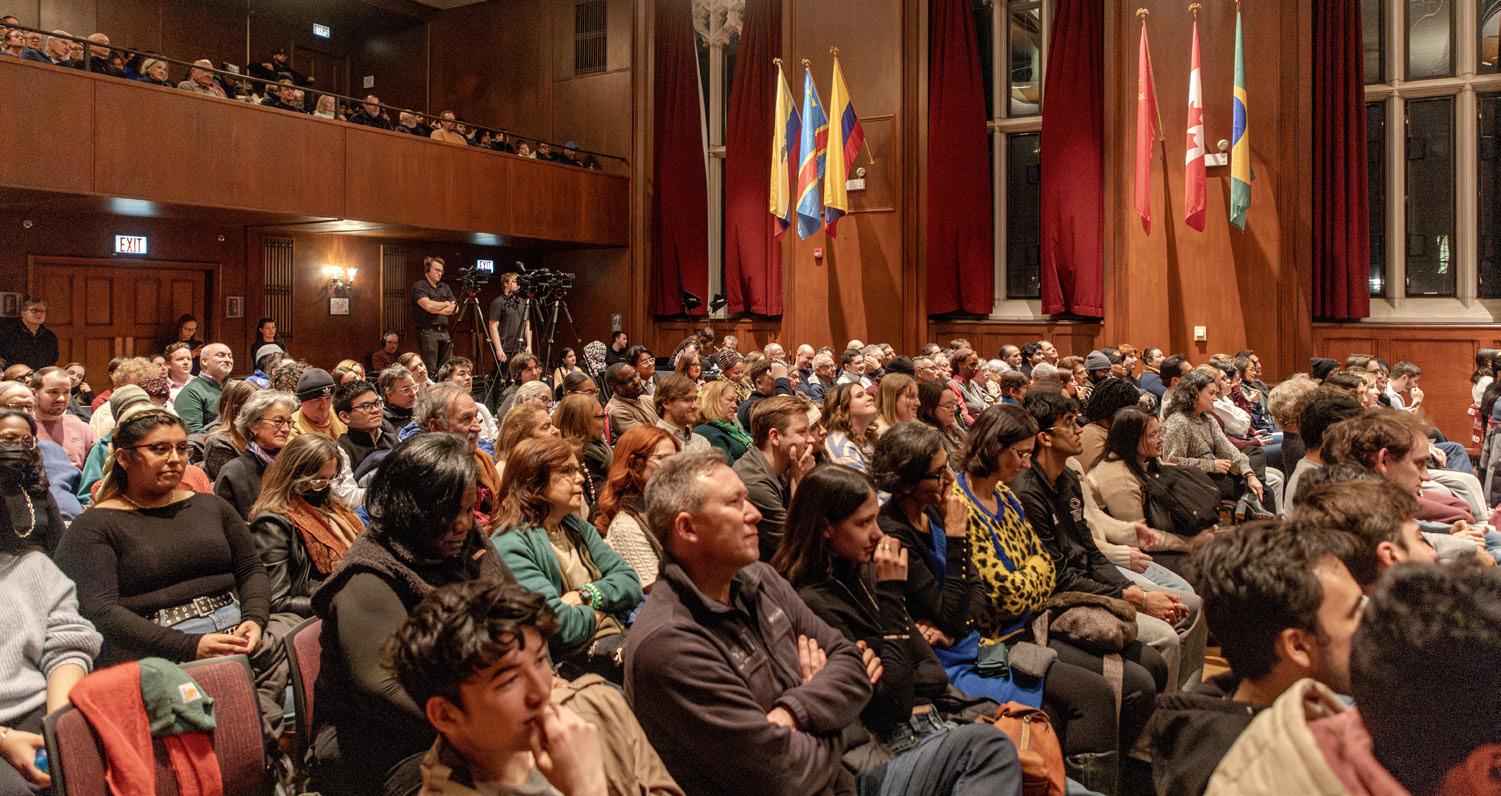
Audience members listen to the debate. Moderators asked that they not applaud, boo, or cheer during candidate statements. nathaniel rodwell-simon
about ‘How do you bring new technology to bear on old processes?’” he said.
The issue of corporate funding for campaigns was also at the forefront of the debate. Stratton has refused to take money from corporate political action committees (PACs), unlike Krishna -
moorthi and Kelly. Still, Stratton’s opponents criticized her campaign-funding practices, pointing out that an advertisement she ran was briefly taken off the air for violating campaign finance rules.
“My opponents have taken millions of
CONTINUED ON PG. 5
Tiffany Li, editor-in-chief
Elena Eisenstadt, deputy editor-in-chief
Evgenia Anastasakos, managing editor
Haebin Jung, chief production officer
Adam Zaidi and Arav Saksena, chief financial officers
The Maroon Editorial Board consists of the editors-in-chief and select staff of the Maroon
NEWS
Gabriel Kraemer, co-head editor
Anika Krishnaswamy, co-head editor
Nathaniel Rodwell-Simon, editor
GREY CITY
Celeste Alcalay, editor
Anika Krishnaswamy, editor
Vedika Baradwaj, editor
VIEWPOINTS
Sofia Cavallone, co-head editor
Camille Cypher, co-head editor
ARTS AND CULTURE
Nolan Shaffer, co-head editor
Shawn Quek, co-head editor
Emily Sun, co-head editor
SPORTS
Shrivas Raghavan, editor
Josh Grossman, editor
DATA AND TECHNOLOGY
Nikhil Patel, editor
Jinny Kim, editor
Emily Sun, editor
CROSSWORD Eli Lowe, head editor
PHOTO AND VIDEO
Nathaniel Rodwell-Simon, head editor
DESIGN
Eliot Aguera y Arcas, editor
COPY
Mazie Witter, chief
Megan Ha, chief
Feifei Mei, chief
Vanessa Yelder, chief
Olivia Rae Okun-Dubitsky, chief
SOCIAL MEDIA
Katherine Bolte, manager
NEWSLETTER
Evgenia Anastasakos, editor
BUSINESS
Maria Lua, co-director of operations
Patrick Xia, co-director of operations
Executive Slate editor@chicagomaroon.com
For advertising inquiries, please contact ads@chicagomaroon.com
Circulation: 2,500
CONTINUED FROM PG. 2
mingham in 1963, where film and photography served to expose the police violence against peaceful protestors fighting for social justice.
Following Alivisatos, Stewart began her keynote speech by describing how King raised awareness among “hostile” white audiences and spoke directly to Black audiences using the “moment and medium” of a then-growing cable news industry. Often, he would ensure his speeches were recorded and that the protests he and others attended were photographed extensively.
Stewart pointed to 1963, when Birmingham’s commissioner of public safety directed the use of firehoses against peaceful protesters. King made sure as many protests as possible were recorded for the world to see the systematic mistreatment of Black Americans.
“We are here to say to the white men
that we no longer will let them use clubs on us in the dark corners. We’re going to make them do it in the glaring light of television,” King said in reference to the Montgomery marches of 1965.
Stewart explained how, following King’s assassination in 1968, his wife, Coretta Scott King, pushed for a “living memorial” with an emphasis on archival video footage to make sure her husband could send their message across generations.
Harnessing the power of film and television, King “[built] hope and faith, courage and community,” Stewart said.
After the celebration, Stewart told the Maroon that citizen journalism is critical to the fight against injustice at large—particularly during a time when citizens like Alex Pretti are being “brazenly” struck down by law enforcement, even with phones in their hands to film the violence.
Nonetheless, Stewart emphasized the importance of lightheartedness—even “irreverence”—in the fight for justice for
all, remarking that King was not solely known for his work, but also his good sense of humor.
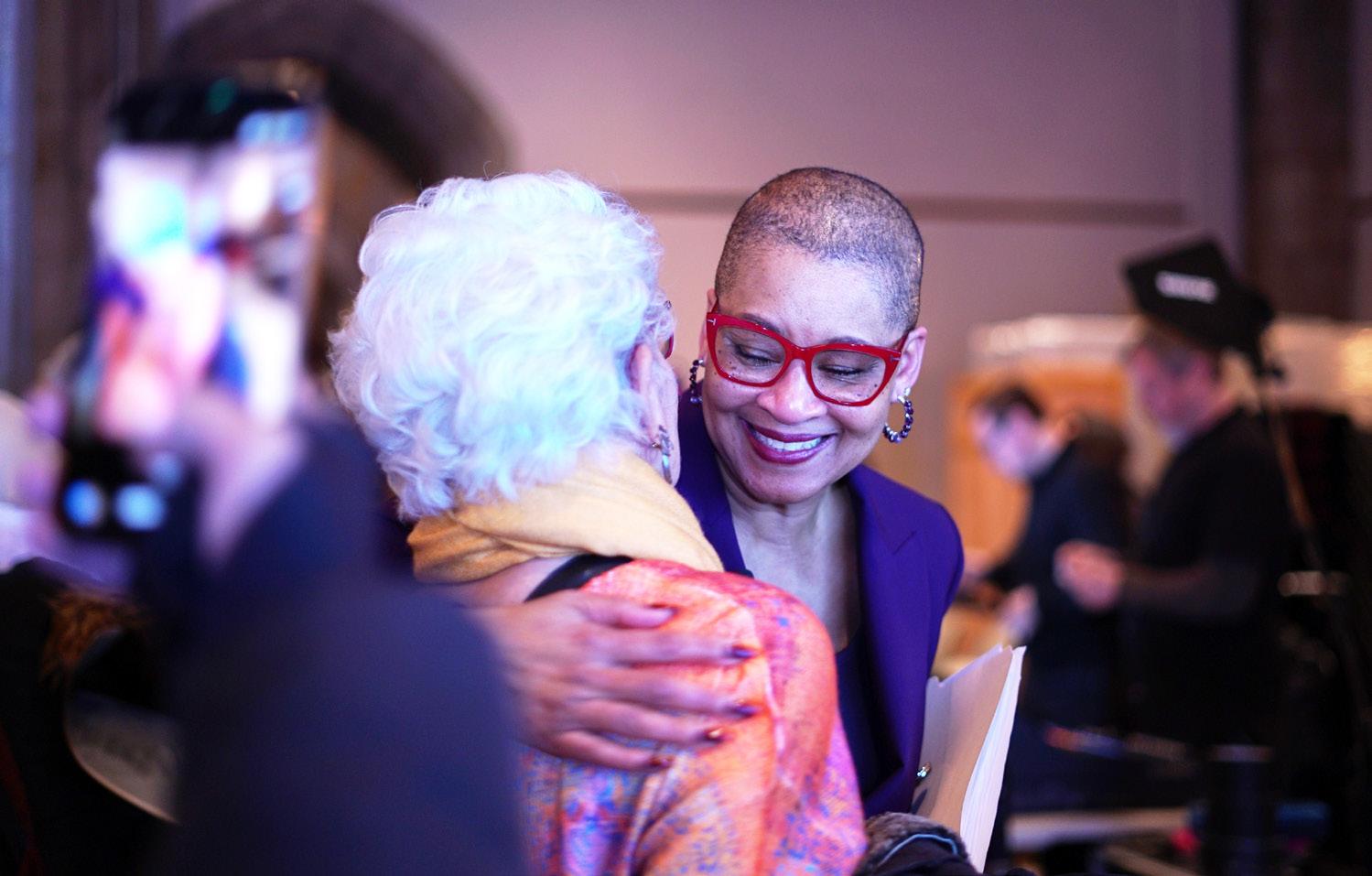
By OLIVER BUNTIN | Deputy News Editor
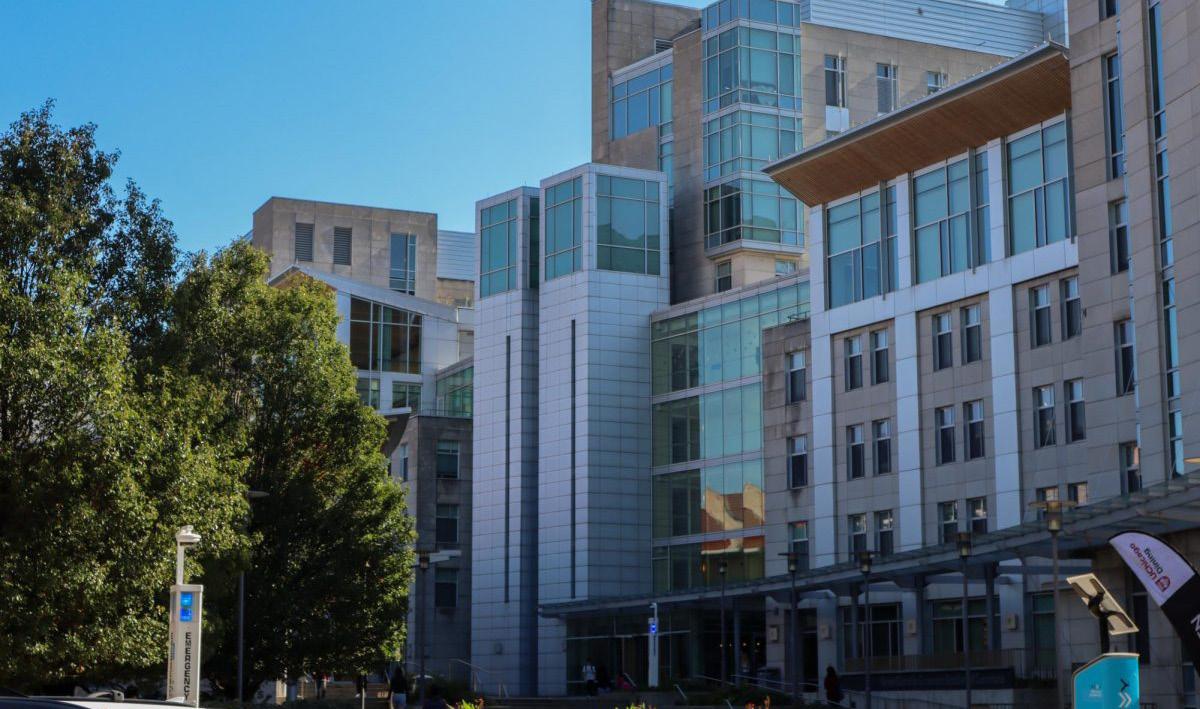
Chicago expanded its downtown rideshare surcharge area in early January to cover parts of the Near North Side, West Loop, Pilsen, South Loop, and Hyde Park, increasing costs for students who take Uber or Lyft rides to and from campus.
Rideshare app customers for a single-party ride starting or ending between 6 a.m. and 10 p.m. on weekdays in the expanded zone will face a $1.50 fee. Shared rides—such as those taken using Uber’s “share” feature—between 6 a.m. and 10 p.m.
on weekdays will only be charged 60 cents.
The fee applies to all rides originating in or traveling to the surcharge area.
These new surcharge zones were implemented as part of Chicago’s 2026 budget legislation after the City Council rejected a corporate head tax proposed by Mayor Brandon Johnson.
A University spokesperson told the Maroon the University is “evaluating” whether the surcharge applies to its contract for Via rides. The text of the ground transportation tax suggests it only applies to individually paid rides.
Celeste Alcalay
contributed reporting.
By DEREK HSU | Senior News Reporter
The Undergraduate Student Government (USG) College Council (CC) passed a resolution on January 19 calling on University administrators to offer a Maroon Dollar payment option for laundry in the dorms.
The resolution, proposed by Class of 2029 CC representative Aaron Horow-
itz, would provide an alternative to the current credit-only option, which requires students to download an app— WASH-Connect or CSCPay Mobile, depending on residence hall—and use their personal funds to pay for laundry. Woodlawn Residential Commons, which is run by an external property management
company, operates on a separate system from the rest of on-campus housing.
One wash or dry cycle in any residence hall costs $1.50 when paid for through the app. Woodlawn residents also have the option to pay directly with their debit or credit card, which costs $1.75 per cycle.
In the resolution, USG cited peer institutions, including Northwestern University, University of Illinois Urbana–
Champaign, and Columbia University, which have already implemented free laundry services for students. Additionally, the University already offers Maroon Dollars as a payment option for items at campus markets, student-run cafés, and Hutchinson Commons. Hutchinson Commons in particular allows students to purchase food from various restau-
CONTINUED ON PG. 6
“I would like to see realistic wages raised, but also tax credits for small businesses that will raise those wages... ”
CONTINUED FROM PG. 3
dollars in corporate PAC money,” Stratton said. “It’s hard to push forward policy that will really benefit the people and not corporations when you’ve accepted millions of dollars from corporations.”
“I take corporate PAC money, but check how I vote. I vote like the people who put me in office want me to vote,” Kelly said in response. “You see [whom] I take corporate PAC money from, unlike the commercial that the lieutenant governor [Stratton] has that is paid for by dark money, and we don’t know who’s behind those commercials.”
According to the Chicago Sun-Times, Stratton has “received $5,000 in corporate PAC money and $46,000 from corporations in her super PAC, the Level Up PAC, a hybrid PAC she created in January in anticipation of a Senate run.”
A hybrid PAC can both contribute limited donations directly to candidates and raise unlimited funds for expenditures related to, but not in direct coor -
dination with, a politician’s campaign.
On January 16, the Illinois Future PAC released an advertisement in support of Stratton’s candidacy. The advertisement, funded by the independent super PAC, was briefly taken off the air because it failed to clearly disclose that it was not officially affiliated with Stratton’s campaign.
In the debate, candidates also emphasized policy objectives aimed at alleviating economic struggles for the working class.
Krishnamoorthi proposed a $25,000 tax credit for first time homebuyers. “I feel that young people especially are having a hard time being able to afford the 20 percent or more down payments necessary for buying a home, and I think buying a home is part of the American dream,” Krishnamoorthi said.
Kelly similarly focused on middle-class economic struggles, suggesting “realistic wage increases.” “I know sometimes when you raise wages, that
affects particularly small businesses,” Kelly said. “So, I would like to see realistic wages raised, but also tax credits for small businesses that will raise those wages so that they’re not losing money and see how we could have a win-win situation.”
Voting for both the Democratic and Republican Senate primary elections will take place on March 17 with polling places open between 6 a.m. and 7 p.m. UChicago students who register to vote with their college addresses are eligible to vote in the primary.
By AARYAN KUMAR | Senior News Reporter
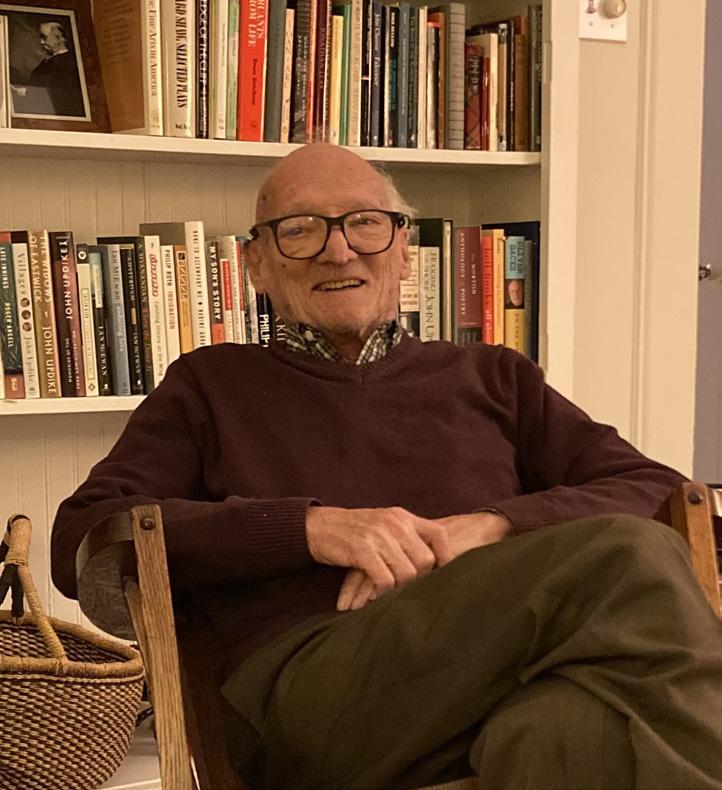
Wolfgang Epstein, professor emeritus of molecular genetics and cell biology and a frontier researcher in molecular genetics, passed away on December 25, 2025. He was 94 years old.
With appointments in multiple departments including biochemistry, biophysics, theoretical biology (now defunct), and the Committee on Genetics, Epstein spent much of his research career studying how bacteria take up potassium ions, which support crucial functions like nerve regulation and muscle contraction.
The emergence of molecular genetics with the discovery of DNA’s double-helix structure in the 1950s allowed biophysicists like Epstein to study how gene expression affected the physiology of the cell. “He was part of this frontier of using
genetic mechanisms,” Theodore Steck, professor emeritus of biochemistry and molecular biology, told the Maroon in an interview. “He was a world authority on using genetic tools to understand the transport of potassium into E. coli as a model.”
Wolfgang Epstein was born on May 7, 1931, in Breslau, Germany (now Wrocław, Poland). After the Nazi Party came to power, Epstein’s family moved to Marshfield, Wisconsin, in 1936.
After earning his M.D., Epstein joined the U.S. Army Medical Corps in 1957 and was stationed in Frankfurt, Germany. After his service ended in 1959, he began postdoctoral work at Harvard University and the Pasteur Institute in Paris before arriving at the University of Chicago, where he was appointed assistant profes-
sor of biochemistry in 1967.
As was common at the time, Epstein did not obtain a Ph.D. before his faculty appointment. Steck, who co-taught courses with Epstein and also did not have a Ph.D. when hired, remarked that medical scientist training programs had not yet been established, and that it was difficult for researchers to enroll in both M.D. and Ph.D. programs.
“It was sort of a frontier time, and so an M.D. could sort of wander into basic science,” Steck said. He quipped that his colleagues likened holding M.D.s in specialized research—as opposed to Ph.D.s —to “practic[ing] biochemistry without a license.”
Epstein became Chair of the Committee on Genetics in the 1970s, an appointment he maintained until his retirement in 2015.
“... [I]t’s really important to me as a representative to do everything I can to deliver on that part of my platform.”
CONTINUED FROM PG. 4
rants using third-party vendor Grubhub on the app or kiosk. USG suggested this current structure of how Maroon Dollars are used means “a Maroon Dollar laundry funding proposal fundamentally makes sense.”
In an interview with the Maroon, Horowitz described the origins of this proposal in his fall campaign for CC.
“It was really important to my campaign, and now it’s really important to me as a representative to do everything I can to deliver on that part of my platform,” Horowitz said. “Generally, the great
thing about first-years is that we bring a lot of fresh ideas to campus, and we bring new ways of looking at systems in place.”
Horowitz believes this is an opportune time for the resolution because of an increased administrative presence in Housing & Residence Life (HRL) which gives the University greater latitude over operations in residence halls. This follows the change in HRL’s governance structure last spring, moving from Campus and Student Life to the College. According to Horowitz, administrators can now directly implement changes to residential life, in comparison to previous
processes that may have required additional conversations with HRL leadership.
In response to a request for comment, a University spokesperson told the Maroon that “Housing and Residence Life and the Bursar’s Office are aware of the USG resolution and are currently exploring possible next steps.”
Some students see the benefits of using Maroon Dollars for various services on campus. “[It] seems like a fair tradeoff for people who don’t want to spend all of the Maroon Dollars on food,” second-year Edgar San Jose said.
“Having Maroon Dollars for laundry is good because it decreases the burden on us,” second-year Julian Iverson said. Horowitz and USG will continue to have conversations with University administration with the goal of providing students with a Maroon Dollar payment option. “I’m optimistic that USG will be able to partner with the administration to deliver results that benefit everyone going forward,” he said.
Editor’s note: Aaron Horowitz is a copy editor for the Maroon He had no role in the reporting or editing of this article.
By BORIS ARCHIPOV | Senior News Reporter
The Undergraduate Student Government’s (USG) College Council (CC) met on Monday to hear funding appeals from the Voices in Your Head, Dirt Red Brass Band, and Outdoor Adventure Club (OAC) RSOs, which argued that the Student Government Funding Committee (SGFC) did not adhere to the recommendations outlined in its cost guide when making allocations.
During the meeting, Class of 2029 Representative Gavin Wynn also introduced a resolution for USG to consider ways to expand student access to Student Center spaces. The motion would attempt to increase access to University buildings for student organizations that are not officially registered as RSOs.
A resolution cannot be passed at the same meeting as it is introduced, so Wynn’s proposal will not be approved until next week at the earliest.
CC also seated fourth-year Dariel Cruz Rodriguez, who had received three votes at last fall’s election, the next highest number of all candidates, following
three fourth-year representative resignations across winter break and the beginning of this quarter.
USG spent the rest of its meeting hearing RSO funding appeals.
Voices in Your Head asked SGFC to increase the initially approved $2823.53 in funding for the Boston Sings a capella event, pointing out that the group would only have $2,000 remaining to fund the rest of the trip after event registration fees.
USG noted that Voices in Your Head did not meet the minimum fundraising requirement of 10 percent for events with costs exceeding $2,500 and that the allocated amount was reduced by the sum the RSO was expected to raise independently.
SGFC moved to pay for the event registration fees in full while paying 50 percent for travel and lodging, as outlined in the cost guide, ultimately allocating an additional $431.53 to Voices in Your Head.
$2,062.85 initially approved for its New Orleans brass band trip, stating that this amount did not meet the 20 percent of trip funding that can be allocated to RSOs according to the SGFC cost guide.
After recalculating, USG denied the appeal and did not adjust the allocation, concluding that the amount initially allocated was a $150 overestimate according to the SGFC cost guide.
The OAC appealed the initial $2,373.18 of funding received for its three major spring break trips to national parks in Texas and New Mexico; Colorado and Utah; and Michigan and Wisconsin. In past years, according to its initial petition, OAC has received between $10,000 and $15,000 from SGFC to fund these trips.
OAC argued that the SGFC cost guide was updated to reduce suggested funding for non-competition RSO travel after the submission of OAC’s initial funding request, and that the organization was unfairly penalized by scheduling delays on SGFC’s end.
The group also noted that USG was supposed to cover 20 percent of the total
food and housing costs, and that, in the amount initially allocated, USG incorrectly subtracted registration costs from the food and housing total.
USG responded that the trips were far enough in the future that the new guidelines should apply and emphasized that previous funding decisions cannot influence future allocations.
After deliberation, USG moved to allocate $1,803.50 to OAC’s trip to Texas and New Mexico, $1955.08 to Colorado and Utah, and $617.47 to Michigan and Wisconsin, a $2002.87 increase from the amount initially allocated.
College Council holds weekly public meetings in Stuart Hall 104 on Mondays at 7 p.m.
Editor’s note: Head News Editor Gabriel Kraemer serves as treasurer for Outdoor Adventure Club. He had no role in the reporting or editing of this article.
Dariel Cruz Rodriguez is a staff photographer for the M aroon. He had no role in the reporting of this article.
By ADAM ZAIDI
The Chicago Thinker’s characterization of Maduro’s removal runs the risk of dismissing criticisms toward U.S. interventionist policies.
While I strongly believe that the Chicago Maroon is the campus’s flagship student paper (I am one of the paper’s chief financial officers), UChicago has numerous student-run publications, all of which provide insight into the goings-on of our university and our fellow students. Among those that I regularly go through are the Harper Review, the Chicago Phoenix, and the Chicago Thinker, usually to help get my own writing juices flowing. Yet, one article recently published in the Thinker made me pause.
The article, entitled “Venezuelan Migrants Share their Stories with the Thinker and Celebrate Maduro’s Removal,” quoted anecdotes from migrants on the hardships they faced living in Maduro’s Venezuela, including rampant corruption, authoritarianism, and violence. There is no doubt that these experiences are real, widespread, and worthy of platforming, especially given that Maduro’s government has inflicted immense harm on Venezuela by restricting information and steadily eroding democratic principles and living conditions. Yet, the Thinker article paints a clear picture of these past weeks’ events: one of celebration and ideological vindication, leaving little room for Venezuelans who, while condemning Maduro’s abuses, fear what U.S. intervention may bring.
Other outlets covering the aftermath treat Venezuelan public sentiment as messier and more
uncertain, rather than as a single, triumphant mood. Reporting from the AP portrays the people of Caracas as trying to figure out who is actually in charge. Long lines have formed from gas stations and groceries, and people stocked up, preparing for the worst. Some supporters burned U.S. flags, with signs reading, “Gringo go home.” Others such as Guillermo, a Venezuelan man who currently lives in Chicago, voiced their direct concerns. “It’s confusing. I’m happy that Maduro has lost power, but scared because I fear the consequences of the US taking over my country,” Guillermo said in an interview with The Conversation. These perspectives reflect a real current in Venezuela: the fear that even a hated leader’s exit can be twisted to justify a breach of sovereignty, and the fear of having your country treated as a chessboard for other nations.
Even if you set aside the question of Maduro’s record and the fact that many Venezuelans feel genuine relief, an American intervention as the instrument of “removal” should make us uneasy. It sets a precedent that powerful states can decide, unilaterally, when sovereignty no longer counts, and it hands the U.S. executive branch yet another way to act first and justify later. In the hands of a president who has already made dozens of moves to consolidate his authority, this foreign win helps his domestic political capital. And, because Venezuela is not just any country but a major oil state, the optics and incentives are in-

separable from the resources. Trump has reportedly met with oil executives to discuss Venezuela’s future. Even in that meeting, executives expressed reluctance to move in, describing the country as effectively “uninvestable” under its current legal and security conditions. When I hear intervention and investment pitches saddled this close together, it brings me back to the history of American imperialism in Latin America. To be fair, I wouldn’t say that what I’ve written is required in a story about Venezuelans sharing their viewpoints, but some level of background is necessary to have comprehensive reporting. This does not require praising Maduro or denying his
abuses; it just requires admitting that the methods do matter, and that a student publication should not treat interventionist politics as an afterthought.
The problem isn’t that the Thinker interviewed migrants who are relieved. It’s that the piece treats this relief as the full story, and, in doing so, it normalizes a set of assumptions that deserve some scrutiny. By foregrounding celebration and ideological “net good,” the article sends the implicit message that the “how” of Maduro’s removal is either self-evidently justified or not worth questioning. The Thinker ’s mission statement interprets a quote by former UChicago President Hanna Holborn
Gray as arguing: “[T]he university possesses a duty to expose its students to numerous and varied ideas.” To stand by these ideals, readers of the Thinker deserve to hear from Venezuelans who celebrate and Venezuelans who worry. Including multiple perspectives isn’t forcing a two-sided debate; it’s just basic reporting transparency. And, at a time when this same U.S. administration is floating military options in other countries, it’s even more vital that our journalism distinguishes moral relief from the normalization of intervention as a U.S. tool of consolidating power.
Adam Zaidi is a second-year in the College.
Student housing cultivates the perennial culture that makes this institution so unique.
By IBRAHIM SHAHEEN
Since returning to the University of Chicago for my third year at the College and, consequently, my first year living off campus, I have been forced to confront the profoundly different pressures exerted upon my daily and weekly schedule between now and previous years. While my newfound freedom is nice, there is a distinct absence of the UChicago atmosphere that I came to appreciate when I lived on campus. While most of my weekdays during the school year will certainly be spent on campus, I probably will not be getting Fourth Meal with friends after a late-night workout at Crown every day, nor will I be seeing hallmates every day in the bathrooms. I will not be in the dining halls as frequently or pulled into house events I happen to walk by, necessarily interacting with other students and learning about opportunities on campus. Instead, I’ll get to enjoy a nice, long, and private shower in the evening, 24/7 convenience stores, and enough pantry space to last me the entire quarter. No one forced me to live in this new environment, but, given the choice, it seemed silly to intentionally choose a dorm life inconvenienced by communal bathrooms, shared kitchens, and rules dictating what I can do in my own room. I am only now realizing that my new freedom does indeed come with concessions. And while I still prefer off-campus housing, I have come to appreciate many aspects of student housing and campus life that I might have taken for granted before.
Longer than some other institutions’, UChicago’s two-year housing requirement has come under frequent fire in conversa-
tions I have had with peers who find the policy limitingthe mandatory first-year meal plan, the small and simple dorm rooms, the proximity of students, the shared common areas—he list goes on. I would argue that the restrictions are precisely the point. The meal plan gathers new students in the same area for meals; the simple rooms force students into communal spaces for laundry or cooking; and shared facilities like bathrooms maximize opportunities for interaction. So many of the moments created by these conditions served, at least for me, as fundamental building blocks for the sense of belonging and identity that I now feel at the University.
The vast majority of my close friends at UChicago are people I met due to proximal housing assignments. Certainly, not everyone has a great experience with their first roommate or neighbors, and it is not exactly easy to change one’s room assignment. Yet, even if my room assignment had been terrible, there are plenty of other opportunities that the housing system provides—I only met several of my friends because busy dining halls meant sitting next to new people (terrifying, I know). In retrospect, it’s clear to me that these inconveniences, from having to head to the dining hall for food to needing to use a communal bathroom, ended up pushing me to socialize with my peers, forging both valuable friendships and the sense of culture and camaraderie that I feel at the University as a whole. As I am certain that I am not alone in this experience, I have to imagine that, across the whole College, this forced proximity has a considerable positive impact on student body cohesion and culture on campus.
Of course, I will be the first to admit that the housing system is far from perfect. There are plenty of issues that have come up over the years, from frequent needs for maintenance to unreasonable room move-out timelines to the more-than-cumbersome guest policy. Moreover, many of the benefits could just be unintentional side effects of traditionally cost-effective dorms, rather than intentional on the part of the housing administration. Despite the housing system’s imperfections, though, its aforementioned pressures toward socialization still push students to engage with their community and build a sense of culture on campus, especially for newer students.
Yet, the supposed benefits of this system (as is the rest of society) are faced with new challenges posed by the digital age. Students increasingly spend more time on digital pastimes—social media, video games, streaming services, remote jobs, etc.—that redon’t necessitate nearly the
same level of in-person socialization. Additionally, rather than needing to go to the dining hall or a local restaurant for a meal, food delivery apps provide an alternative that bypasses this inconvenience, allowing socialization only on one’s own terms. Of course, these can theoretically be great boons on occasion, with food delivery making cramming for finals at late hours more efficient, remote jobs making it easier to sustain a healthy work— school balance for employed students, and video games serving as healthy academic breaks and social opportunities. If not used selectively, however, the ability to eat, work, and entertain oneself without ever interacting with another student can easily lead to sidestepping many benefits of on-campus life which are exclusive to socialization. Modern services provide easy fulfillment for everything from social needs to romantic desires to financial goals and everything in between, making student interaction comparatively incon-
venient and pressures toward student interaction less effective. By no means do I propose that housing further encroach onto the lives of students by restricting their use of modern services, nor do I assert that these modern conveniences are incompatible with a healthy campus environment for students staying in residence halls. Rather, I hope to encourage current and future students to take advantage of the time that they have on campus. I hope to encourage them to frequently and intentionally engage with the environment which on-campus housing helps facilitate, cultivating a lasting and meaningful sense of belonging and culture. There is a time and place for using the tools of convenience which our generation has been given, but recognizing and being mindful of their potential detriments is increasingly integral to a fulfilling and cohesive college experience.
Ibrahim Shaheen is a thirdyear in the College.
The Arts and Culture editors pitch seven different Valentine’s itineraries.
By ARTS AND CULTURE EDITORS
Violet’s Recommendations
For a seasonal lazy date, let me walk you through the perfect Saturday. Bundle up with your date, as the first destination is ice skating on the Midway. Luckily, on February 14, the Chicago Park District is hosting “Love is in the Air Skate at Midway Plaisance.” There, you can buy your date a rose and split something sweet before capturing the memory with Polaroid photo opportunities set up around the rink. The rink closes for the season on February 17, making Valentine’s Day the perfect excuse to pay one last visit.
After you’re exhausted from skating, falling down (hopefully not pulling your date down with you), and skating some more, lace up your shoes and head to Plein Air Cafe. Plein Air has some of the best hot drinks, along with great food. Since skating was free, I recommend splurging on a chai and hot chocolate and sharing the chorizo burrito and the Plein pancakes. While people watching, you’ll likely witness someone else’s date failing in real time, food arriving to the most hungover person you’ve ever seen, and a surplus of coffee chats.
Lastly, head to Seminary Co-op to support an independent bookstore and enjoy the incredible ambience of the store’s ample seating. You and your date can pick out books for each other, sit down with your hot drinks, and dive into your next favorite read.
Shawn’s
Flip the classic script on dinner and a movie: watch first, eat second. Nothing builds conversation quite like dissecting a film over shared plates. For a date for a cinephile (or for someone who is desperately pretending to be one), Music Box Theatre delivers. This Lakeview landmark has championed indie and foreign cinema since 1929, complete with a working Wurlitzer organ and atmospheric ar-
chitecture that feels lifted from another era. Though the velvet curtains and retro decor carry the atmosphere, that’s not all this Lakeview gem has to offer. Show up early for the space’s lounge and garden, a tucked-away area pouring inventive cocktails alongside a surprisingly deep board game library.
After the credits, head south along Southport Avenue for a few minutes before the real test at Tango Sur. While waiting to be seated at this candlelit Argentine steakhouse, parse out what you just watched. Gauge whether they caught that visual callback in the third act, or if you yourself missed it. Discover if they’re the type to have strong opinions about ambiguous endings. The tight route keeps you and your date contained, locked in on the itinerary and on each other. Just film, food, and the eternal question of “Shall we do this again sometime?”
For a sweet taste of Chicago’s best, sample its secret clubs and signature music, all in one evening. Start your date at the Chicago Athletic Association, a Gothic-style marvel that gives our campus a run for its money. Built in 1893, the club reserved its billiard tables, bars and amenities for the elite upper class for most of its history, only recently opening its doors to the public. The building retains its insider feel even now, so that walking through its wooden niches feels like being in on a city secret. Dinner can be found in the Drawing Room, which serves cozy American fare (be sure to make a reservation beforehand), while the more competitive among us can head to the Game Room for pool, bocce ball, chess, and drinks.
Next, hit the jazz clubs. Chicago’s homegrown genre can be heard at several locations downtown, but Winter’s Jazz Club presents reliable quality and style
Wednesday through Sunday. In the spring and summer, it can be reached by a stroll through Millennium Park and across the river, though winter winds might call for a vehicle. Once inside (tickets should be purchased beforehand), choose your seating carefully: the right side of the venue will immerse you and your date in the drummer’s snares and crashes, while the left side will be awash with piano and guitar. You and your date can wind down with some jazzy licks and arpeggios before heading home.

Emily’s Recommendations
For readers who are picky yet indecisive, here is a specific, modifiable itinerary. Begin by taking the Green Line to Ashland. Here, you’ll find a trio of art galleries clustered around West Town’s overgrown railroad tracks: Bodenrader, Volume Gallery, and Secrist Beach, each with shows running through February. Their websites are characteristically vague, but the mystery of wandering empty streets stumbling into strange, occasionally beautiful objects is half the thrill. Once you’ve had your fill, take a coffee break at Chicago roastery Metric’s hole-in-the-wall storefront. Baristas turn their direct-source beans into fantastical seasonal specials—winter features a maize mocha, juniper cappuccino, and black sesame matcha.
Get back on the Green Line at Damen and ride it to Kedzie for the final stop of the date: Garfield Park Conservatory. The
Conservatory is an oft-booked wedding venue, but, subtext aside, it’s a resplendent, sprawling, scientifically glorious greenhouse attached to a park worthy of the same descriptors. Its pièce de résistance is the Fern Room, a recreation of ancient Illinois covered in ferns and cycads. Winding paths and graffitied benches make for easy strolling and surreptitious canoodling. “The impression of a fairyland,” reads a plaque affixed below a moss-speckled sculpture of a lovers’ embrace.
Alkis’s Recommendations
What could be more romantic than a night of delicious food, breathtaking music, and strolls through some of Chicago’s most beautiful spots?
You’ll begin your evening with an early dinner near the Chicago River. (Pizzeria Portofino is a great choice). Afterward, take a leisurely walk along the Riverwalk, which offers a unique sense of calm amid the city’s constant intensity. From there, make your way down North Michigan Avenue, perhaps cutting through Millennium Park to take a selfie at the Bean or admire the other couples ice skating. Finally, arrive at Symphony Center, home of the Chicago Symphony Orchestra (CSO), where the evening’s centerpiece awaits.
On February 14, the CSO will perform a thrilling concert featuring 14-year-old violin prodigy Himari and guest conductor Jaap van Zweden. The program will open with a contemporary piece—Joel Thompson’s orchestral work, To See the Sky—before going back in time to some of the staples of the classical repertoire: Bruch’s iconic Violin Concerto No. 1, a prime opportunity for Himari to showcase her extraordinary virtuosity, and Mozart’s Symphony No. 41 (“Jupiter”), which is packed with lyrical and heartwarming melodies that offer the perfect conclusion to your romantic night out.
“What could be more romantic than a night of delicious food, breathtaking music, and strolls through... Chicago’s most beautiful spots?”
For art lovers or anyone looking for a unique Valentine’s Day date, take the Red Line to Chicago station and wander down to the Museum of Contemporary Art Chicago. Explore thought-provoking exhibitions, including the Yoko Ono retrospective (running through February 22) and a fascinating group show on Chicago’s LGBTQ+ history (running through August 16). Best of all, admission is free with your student ID, making it easy to linger over the art without worrying about cost. After your museum visit, stroll down to the historic Goodman Theatre, Chicago’s oldest and largest nonprofit theater. Catch a performance of Holiday (playing through March 1) or The Brief Wondrous Life of Oscar Wao (playing through April 5), both showcasing the theater’s tradi-
tion of producing world premieres and shows that have gone on to win Broadway acclaim and Tony Awards. Student tickets start as low as $10 online, making a high-quality theater experience affordable. Between provocative art and captivating live performances, this combination offers a culturally rich, memorable Valentine’s outing without breaking the bank.
Nolan’s Recommendations
Keep it local (and perhaps low stakes) with a stroll around the abundance of gallery spaces on campus. For the ambitious, you can attempt a speed run of them all, but it may be just as worthwhile to spend your time seeing only one or two.
In Theaster Gates’s first ever retrospective in Chicago, he has transformed his history at the University into artifacts
(such as glass slides from the Department of Art History) that compellingly testify to community, relationships, and the things we value. Theaster Gates: Unto Thee is on display at the Smart Museum of Art through February 22.
In his first U.S. exhibition, Norwegian abstract painter Fredrik Værslev brings with him eight large-scale paintings that work in geometric abstraction and explore the social semantics of the form. You are sure to find aesthetic gems and rich painterly insights. Fredrik Værslev: The Joy of Painting is on display at the Neubauer Collegium through March 27.
Drawing from classic Chinese philosophy, Leah Ke Yi Zheng’s Renaissance Society exhibition combines traditional Chinese materials with conceptual art methodology to offer insight into the changing nature of existence. Change, I
Ching (64 Paintings) is on display at the Renaissance Society through April 12.
To mark the centennial of the museum’s first major archaeological expedition, the Institute for the Study of Ancient Cultures explores the biblically significant and culturally rich city of Megiddo and the story behind its artifacts. Megiddo: A City Unearthed, A Past Imagined is on display at the Institute for the Study of Ancient Cultures through March 15.
Fourth-year Anju Lukose-Scott is the curator behind Horizon Lines: Reimagining Potentiality. This collection, consisting mostly of photographs and sculptures, explores the image of horizon lines in relation to history, politics, and the future. Horizon Lines: Reimagining Potentiality is on display at the Cochrane-Woods Art Center through February 27.
By NOLAN SHAFFER | Head Arts and Culture Editor
What does an appropriate artistic response to our global political crisis look like? And what does that tell us about the society we live in? For Zoya Cherkassky-Nnadi, it’s all rather explicit. The Ukrainian-Israeli artist, who has spent much of her life in the context of conflict—she grew up in Soviet-controlled Kyiv before moving to Israel in 1991—answered with sex, and lots of it, in her exhibition Zora Cherkassky: The Global Political Crisis at the Neubauer Collegium this fall.
It’s a strange feeling to walk into an exhibit titled The Global Political Crisis and be greeted by a deluge of pornography: mugs with breasts; a gun-shaped
penis; large paintings of nudity; and many, many positions of intercourse. But the first thing that catches your eye, placed squarely above a fireplace in the center of the room, is a site-specific marquee proclaiming “LOVE” in English, Hebrew, and Arabic. (There is also a small, vulva-shaped lump of clay on the bottom.) It is a moment of clarity in a compelling, defiant exhibition. This is, indeed, about more than sex.
In Israel, Zoya (who is known professionally by her first name) has developed quite the reputation. She’s an edgy, leading contemporary artist who is sarcastic, satirical, and not afraid to paint

“It’s impossible to make a statement because tomorrow it’ll mean something different from what it meant yesterday.”
CONTINUED FROM PG. 10
what she sees. She’s no stranger to criticizing Israeli society. Much of her work has been influenced by her experience of being an outsider—as a Jew in Kyiv, a Ukrainian in Israel, and a non-Jew by rabbinical standards (her mother is not Jewish).
And so it must have been a surprise to her, though not an entirely unfamiliar one, that her previous exhibition—a searing collection of Beckmann-esque paintings about the October 7 attacks, displayed at the Jewish Museum in New York—was interrupted by four waves of protesters decrying the museum for “manufacturing consent for genocide.”
Zoya produced nearly all the works for The Global Political Crisis in the year and a half since those protests. It is, at least in part, a response to them.
At first sight, the exhibition’s message seems to be one of “make love not war.” Curator Dieter Roelstraete said that, in an interview with Zoya, the artist jokingly called it the most pacifist gesture since John Lennon recorded “Imagine” in 1971. Capital After Globalism (2025), for example, features a nude woman lying on grass, reading a book with the title “Capital After Globalism”
painted humorously large on the cover. In the background, two women frolic in apparent reference to Paul Cézanne’s The Bathers (circa. 1839–1906). With bold colors, large brushstrokes, and transparent staging, the works are best read like political cartoons. This peaceful, playful painting seems to say, “No matter your politics, we’re all naked. And sometimes, you just want to lie or frolic in the sun. Or have sex in the kitchen. Or in a cabin. Can’t we just do that?”
But it would be a disservice to Zoya’s satirical nuance to flatten the exhibition’s message to mere pacifism. There is, too, an underlying protest against a stifling art world. “Zoya Cherkassky,” Roelstraete told me, “is the kind of artist who in recent years has found or has felt that a lot of [the freedoms in art] are under pressure.”
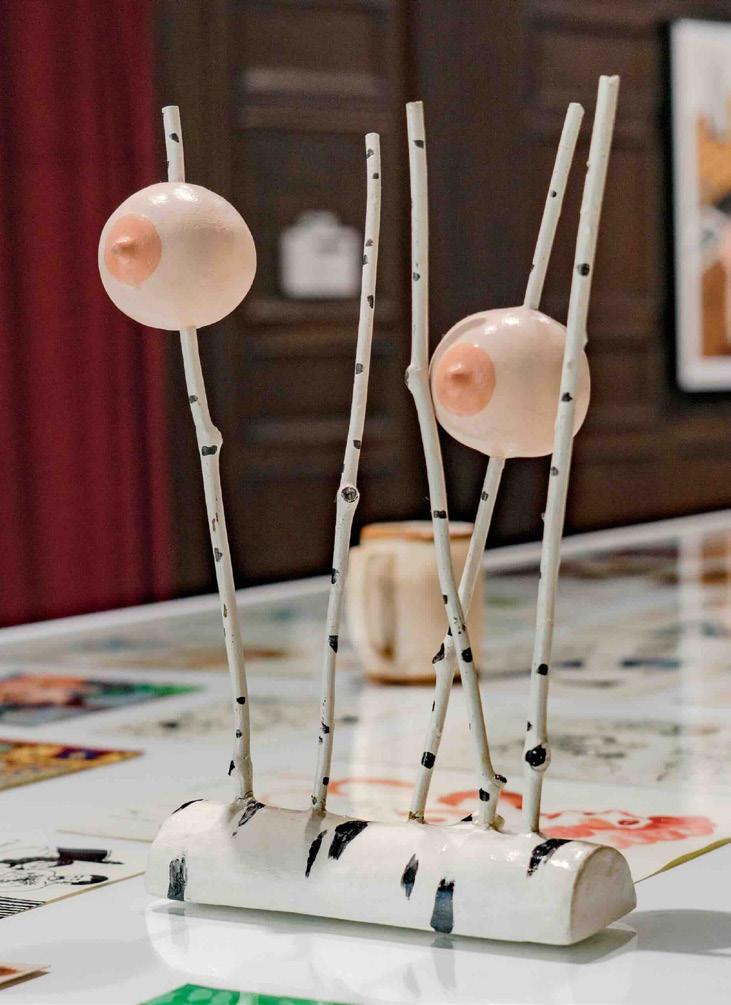
Zoya has responded in bold and brazen proportions. At the center of the exhibition, there is a large table with dozens of erotic drawings, sculptures, and found objects: a pair of surreal, ceramic spherical breasts impaled on a birch tree; an androgynous couple lying blissfully under a poster that reads “GLOBALIZE THE INTIFADA”; a drawing of a woman on a nude beach holding a sign proclaiming “YOU ARE HEADED FOR HELL!” surrounded by exuberant nudity and sex; and a recreation of Sylvia Sleigh’s The Turkish Bath (1973) with Zoya’s husband in the foreground.
To callously skirt around violence and bodily reality (seen in the lack of gore in the violently impaled breasts and the perfection of bodies devoid of wrinkles and sags), while referencing global politics is to stick two middle fingers up at an art world and an audience that demand a position from her. It is bitingly edgy and rather bleak. Has our appetite for discourse been so trampled that Zoya’s response must only deal in vulgarities?
The exhibition is playful and humorous, yes, but the sheer quantity of pornographic material betrays a Freudian trauma. Zoya channels emotion, rage, and exhaustion into sex. One imagines her in her studio furiously making these
works against the backdrop of the protests and recent global events. It is true that much emotional and circumstantial nuance is lost in this process, but that may very well be the point for Zoya. Feeling cornered, she takes off her clothes.
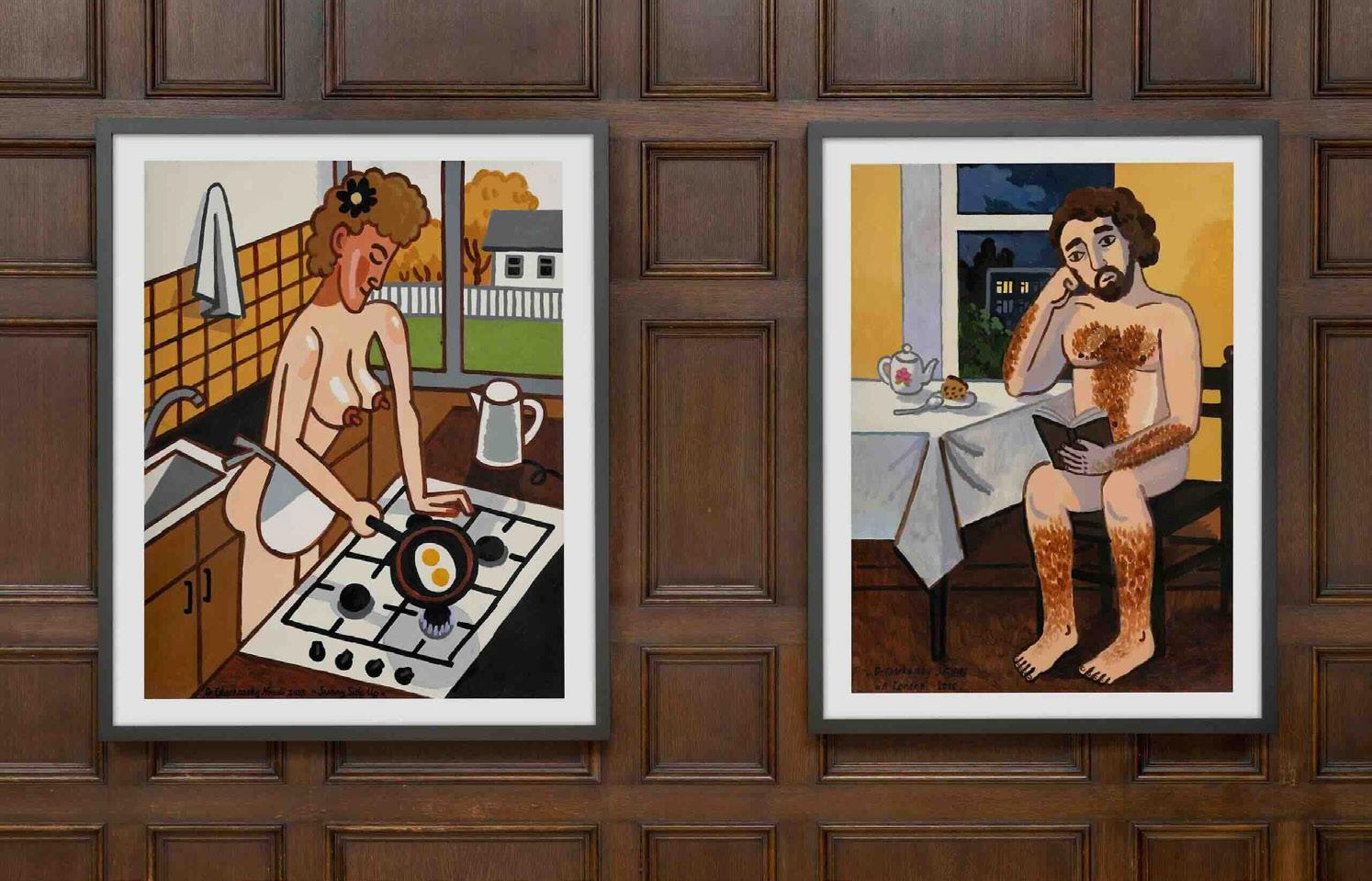
That isn’t to say there are no quieter, more reflective moments in the exhibition. In its cover painting, The Loner (2025), a naked man sits by a table with a book in his hand. He is not reading but looking directly at the viewer with a mournful, contemplative look in his eyes. It seems he has little desire to do anything. A tea cake sits untouched, its accompanying tea pot useless without a cup in sight. He is out of answers, and, with his head resting on his fist, he can do nothing but stare out at the viewer as if awaiting a response.
Through a window behind him, a single apartment has its lights on in the night. Is there another man, out of answers, in that one? And through his window, the apartment of another’s?
On the wall next to this piece, a woman with a pair of buoyant breasts cooks a pair of sunny-side-up eggs. The embellished roundness of her body is set against a comically ridiculous level of geometric crispness. The whole thing has the innuendo and humor of a giggling middle schooler. Next to The Loner,
it’s disturbing, hilarious, and strangely defiant.
It has never been easy to be an artist who satirizes culture and politics. In our polarized culture, it has become nearly impossible. Would another institution, without the Collegium’s commitment to inquiry and intellectual creativity, have hosted an exhibition like this? I would wager not.
For Zoya, an artist with a lifelong experience of cultural critique, responding to our current political crisis is a marked challenge. “It’s impossible to make a statement because tomorrow it’ll mean something different from what it meant yesterday,” she told Roelstraete. But sharp satirists are bellwethers of their society, and it’s not the first time—nor will it be the last—that one feels they must dip into the silly, vulgar, and absurd to communicate. “It’s just kind of incredible,” Roelstraete told me, “to see firsthand [how] art, even as silly as this, can stir the soul.”
Zoya Cherkassky: The Global Political Crisis was on view at the Neubauer Collegium from September 25, 2025 to January 9, 2026.
See an interactive version of this article online at chicagomaroon.com.
By DENIZ KURDI | Senior Arts and Culture Reporter
Wolfgang Amadeus Mozart’s Requiem is the composer’s incomplete swan song. The history of the piece is almost as dramatic as the composition itself, complete with masked figures and Mozart’s dying breaths. The story goes that Mozart received the commission from a masked patron who remains unknown. Whether it was one of his rivals or the ghost of his father, the story does not say, but it is enough to let the imagination wander. The story was also dramatized in the movie Amadeus written by Peter Shaffer. The legend of the Requiem also claims that Mozart was poisoned by a rival and wrote the piece as his own Requiem Mass, dying partway through its composition.
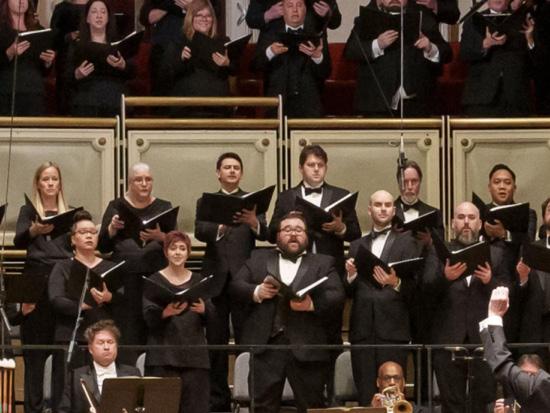
Since Mozart himself was never able to finish the Requiem, performing it requires consideration of how much should be added or changed. Such a question is never easy, and it becomes impossible when it’s about Mozart—one of the greatest composers to ever live. The comments on the piece from the provided program notes written by Phillip Huscher even mention how the task of completing the Requiem was offered to and refused by a number of master composers. The task was finally accepted by Franz Süssmayr— one of Mozart’s students who accompanied the composer on his deathbed, whom the composer called an ass and a blockhead. Now, over 200 years after Süssmayr took on the impossible task,
conductor Manfred Honeck provides us with a fresh arrangement of the Requiem unlike anything before, incorporating Gregorian chants and other pieces by Mozart into the performance.
Before all the mortal panic of the Requiem, the audience was first treated to Ludwig van Beethoven’s Coriolan Overture and Joseph Haydn’s Symphony No. 93. Placing an overture—a musical introduction to a work of theater—at the beginning of the concert helped add to the feeling that the Requiem is not a normal piece of music but rather a powerful narrative work. Beethoven’s piece was written for an unrelated play but is now associated with Shakespeare’s tragedy Coriolanus —a connection drawn by Richard Wagner. Seeing this piece through the light of a tragedy helped the audience understand the music that follows, as it has that dramatic tone that gets the audience acclimated to what will follow in the Requiem but overall kept the audience feeling secure by maintaining a lighter tone. In this sense, it was a proper overture for the Requiem. The second piece was Haydn’s Symphony No. 93, one of the 12 he composed when he left Vienna for London after the death of his patron. When Haydn left Vienna in 1790, he did not know that it was the last time he would say goodbye to Mozart, and this piece premiered just two months after Mozart’s death. Symphony No. 93 had a relatively lighter tone which washed out the dramatic taste left over from Beethoven and pacified the audience before the Requiem began. Starting with these lighter pieces truly impressed the feeling that the Requiem is not an easy piece, and the contrast between them was jarring.
Following these appetizers, the audience came back from the 20-minute intermission to an illuminated auditorium, as expected. However, the lights did not dim. The conductor came out, there was the expected applause, but the lights stayed on. For a brief second, I wondered if there was a malfunction with the lights. I kept holding onto this thought as an
even longer pause brought in the tolling bells to signify that the piece had begun. However, the lights remained on, and it was harder to concentrate my thoughts on the music—but I have yet to attend a funeral that was lit any differently.
Keeping the lights on during the performance made it hard to lose oneself in the music, but I like to think that’s the point. It forced the audience to grapple with the fact that one day each of us will have our own requiem. A performance of this piece that shies away from questions of mortality is hardly a performance of the Requiem. This emphasis on this funereal nature is one of the most significant ways that Honeck distinguishes this performance from others of Mozart’s final piece. It is a bold move that I had not seen before, and it shows Honeck’s deep understanding of the Requiem.
Following the bells was a sobering performance of the Gregorian chant Requiem aeternam, a soft and breathless request unto the Lord to grant eternal rest to the dead. After the first Gregorian chant concluded, the orchestra performed Mozart’s Maurerische Trauermusik (Masonic Funeral Music), two more Gregorian chants—Exaudi orationem meam and In quacumque die, respectively—and another piece by Mozart, Laudate Dominum before reaching the Requiem itself.
The transition into the Requiem Mass was slow. The first piece, “Requiem aeternam,” was a gentle introduction, immediately contrasted with the begging terror of “Kyrie.” The size and power of the chorus here truly drove home the feeling of a mass of people begging for forgiveness in any way they can think of as it came together with the percussion ringing out like the banging of a door.
“Dies irae,” perhaps one of the most famous pieces from the Requiem, is very difficult to get exactly right. It requires a proper balance between characteristics that are easy to muddle together. The piece has terror, panic, fear, and despair all in one. Making the subtle differences between these seemingly similar emotions clear is essential to performing “Dies irae,” and this rendition perfected
that balance between a punchy panic and a spiraling despair. While the orchestra might not have the size to elicit this effect on its own, the power of the chorus was able to force this feeling in a way that I haven’t seen from other performances.
After the panic of “Dies irae,” I was stunned by the elegance of the soloists in the “Tuba mirum,” which truly emphasizes the array of emotions to be found in the Requiem. After the soloists stunned us in “Tuba mirum,” the power of the chorus returned in “Rex tremendae.” This piece is one where the audience was truly able to feel the full effect of these singers as every “rex” had a full weight behind it.
While the chorus cooperated in “Rex tremendae” to punch the listener with a direct weight, the “Recordare” followed it with an elegant display of cooperation from the soloists. It is in moments of contrast like these that this performance was able to exemplify Mozart’s genius in his final composition.
The strings in “Confutatis” had a less panicked feeling than I am used to, but the final effect left me with a more dramatic impression than I have seen before. They were collected and controlled— driving home the impression of the cruel nature of eternal damnation. The vocals, which softened at first, came back with a confidence that matched and then surpassed the strings, working to further emphasize this ultimate message.
“Lacrimosa” also deviated from what I usually expect from performances of the Requiem, as the strings were not nearly as lamentable as traditionally expected. However, the vocalists again came through with a rising sensation that perfectly expressed the lamentations of the piece.
It was after the “Lacrimosa” that this production differentiated itself in the most dramatic way. After “Lacrimosa,” the Requiem Mass was interrupted by a Gregorian chant: “Christus factus est.” While this was an unexpected choice, it was a welcome one, as the contrast between the Gregorian chant and the “Do -
CONTINUED ON PG. 13
“Rather
CONTINUED FROM PG. 12
mine Jesu Christe,” which came right after, left me with a favorable impression. The swaying drama of the “Domine Jesu Christe” required a calming afterword which the “Christus factus est” provided well.
The other surprising choice was that, after “Domine Jesu Christe,” “Lacrimosa” was reprised with a second—albeit shorter—performance of it. The drama of this reprisal might not be immediately apparent to people who don’t follow classical music, but my jaw dropped. This was
a dramatic change. Honeck was making Mozart repeat himself—as if he hadn’t been able to say it properly the first time. This dramatic repetition shouldn’t have come as a surprise though: this rendition is full of them. But that is what made this performance so special. Few performances have forced me to experience the emotional variety of the Requiem, and it is through these changes that Honeck was able to elicit these reactions. This dramatic choice was a perfect end to a performance which was full of such choices, and as this second “Lacrimosa” ended, it
was followed with a pause that felt a couple seconds too long, which led us into our final piece of the night, Mozart’s “Ave verum corpus,” before finally concluding with three more strikes of the bell. This conclusion for some might seem striking, since it leaves us halfway through Süssmayr’s original composition of the piece after only performing the first four parts. Yet this half-length performance echoed Mozart’s half-lived life which, ending at 35, did not detract from how much life he lived.
Counterintuitively, it is the unfin-
continued it.”
ished nature of the Requiem that has allowed it to become one of Mozart’s greatest works. Rather than ending the conversation, the performance continued it. The Requiem stands as a challenge to inspire and be taken on by those brave enough to claim they can fill the shoes of one of the greatest composers to ever live. We won’t ever know what exactly Mozart’s vision was, but by constantly trying we can help keep him—and the classical tradition as a whole—alive. This is no easy task, but Honeck managed to achieve it in a well-lit auditorium.
Leith Ross embraced the crowd with radical love On the I Can See the Future Tour.
By CIARA BALANZÁ | Senior Arts and Culture Reporter
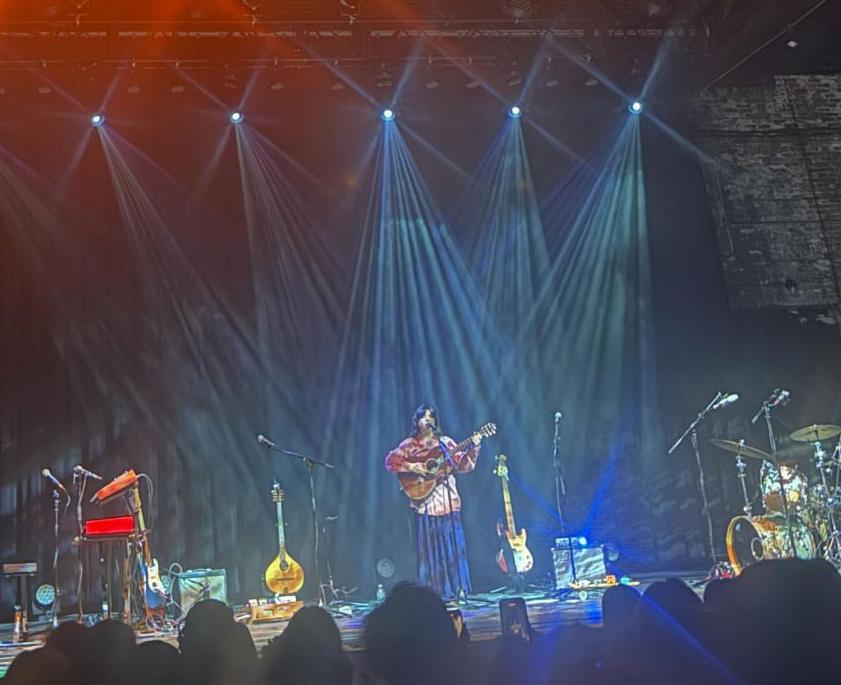
An angel came from heaven earlier than the appointed time. On their I Can See The Future Tour, Leith Ross illuminated a realm beyond earthly experience. Ross is known for their introspective lyrics that center death and lost love while maintaining a sense of optimism. Their performance was equal parts uplifting and comforting, leaving the audience with a sense of transcendental love.
an intimate conversation. Ross’s natural charisma earned spectators’ immediate admiration and provided a cathartic experience guided by a voice that seemed endowed with a divine grace began.
Still, Ross humanized themselves with chatter between their songs. After the first song, they greeted the audience with a soft laugh, “What the hell, you guys!” It seemed like they were pleasantly surprised by the support they were receiving on their fifth day of the tour. As they transitioned to “Treasure,” Ross barely touched earth as they awed the audience with their airy vocals. “Oh… mother of pearl,” they exclaimed as they tuned their guitar. They were not sure if they were allowed to swear, they told the audience innocently. When receiving a resounding yes, they let out a “What the fuck!”
Ross introduced a representative for The Harbour, an organization that helps marginalized youth and young mothers in Chicago experiencing homelessness. Ross has made an effort to partner with local organizations on every tour stop to center activists in the community.
The concert opened in the midst of a romantic scene with “Point of View,” a serenade of a lover working through challenges. Ross sang, “It’s in love from any other point of view,” and made the audience feel included as if engaged in
When criticizing the current political climate, Ross did not mince words. When they broke into an impromptu speech about the current state of affairs, they centered the injustice being faced by immigrants and Indigenous peoples. They maintained a positive perspective, exclaiming, “I am so happy to be in the fight with you.” Rather than being performative, Ross directly funds the causes they call attention to. Before performing,
The epitome of Ross’s evocative power was “Home,” which reminisces about an idyllic childhood that will never again be experienced. During the chorus, a cyclical repetition of questioning what and where home is, an air of nostalgia permeated Thalia Hall. It wouldn’t be a Ross performance without the spirit of love, and the affirmation of finding home touched the eyes and hearts of the crowd. An audience member passed around paper cutouts of a house they crafted. These became illuminated by phone flashlights, like the warm glow of “Home.” The atmosphere of the room shifted as each person became absorbed in their personal longing. Even Ross began to tear up.
Ross directly confronted loss as they shared the story of their grandfather’s death. “Grieving” is a tribute to him, but it is also about the process of losing oneself to the past. Rather than pausing to reflect, Ross reprised the song at a faster pace, adding a Celtic tune as a cultural homage. Once again, Ross turned pain into hope for recovery.
Ross extended this care to their inter-
personal relations. When performing “I Love Watching You Eat Dinner,” Ross embraced love as a reward for small acts of generosity, like making one’s friends dinner. It was intimately genuine—you could really feel Ross experience the joy of feeding “someone who may not have eaten dinner.” The concert felt like a parallel experience: Ross gave the audience the spiritual sustenance of benevolent lyricism.
This led perfectly to the titular song of the album “(I Can See) The Future,” which is about being able to see the external world with more clarity because of optimism. Ross repeated, “Flowers, flowers, flowers grow.” For a moment it really felt like the earth was being endowed with a bountiful harvest on each crescendo.
After “(You) On My Arm,” which jokingly mocks a lover, Ross extended their playfulness to the audience. They warned they were not going to do an encore “where people demand that we come back on stage or demand a refund.” But how could someone so agreeable not relent to the roading applause and chants from the crowd? They quickly capitulated with “We’ll Never Have Sex.” Like a lullaby to the crowd, they murmured, “Gentle angel… I’ll feel the sickness less and less.” Perhaps radical love is the only cure we need.
An emotionally immersive performance at the Salt Shed built on vulnerability, movement, and connection.
By GABBY MANSILLA | Senior Arts and Culture Reporter
Formed in 2010 in Tinley Park, Illinois, Real Friends has long been a cornerstone of Midwest pop-punk, shaping the genre through several EPs and four studio albums. While the band grew up fueled by the intimacy of no-barricade club venues, they perform with the same passion and intensity on larger stages. On January 9, they played an electrifying set at the Salt Shed as a supporting act for State Champs’ Around the World and Back 10-year anniversary tour.
Real Friends is not a band you see once and move on from. Whether you’re a longtime fan or discovering them for the first time, this is a band that keeps pulling you back. What ultimately sets their live performances apart is how fully each member engages with the music, transforming the show into an emotional exchange rather than a purely technical one. Each song tells a story built from moments, memories, and emotions pulled directly from the band members’ lives. It’s impossible not to feel like you’re stepping into the music, not only as an observer, but as a participant.
Vocalist Cody Muraro took command the moment he stepped onstage, shouting, “Let’s wake this room up, let’s go!” He moved with near-inexhaustible energy, one moment executing a high kick on stage left, the next spinning toward stage right before dropping five feet onto the barricade. From there, he thrust the microphone toward the crowd, pulling them into the bridge of “Late Nights in My Car.”
Muraro’s gesture was more than an invitation; it was permission for the audience to fully release their emotion as they sang one of the band’s most renowned lines, “If you never break/ you’ll never know how to put yourself back together.”
The front of the stage erupted into chaos as crowd-surfers emerged from every direction. Seconds later, Muraro himself dove in, briefly crowd-surfing before seamlessly returning to the stage as the track ended. It was only their first song,
and the room was captivated.
As the set went on, Muraro found ways to keep the audience involved. He jumped back into the crowd to perform “I’ve Given Up On You” from the middle of the general admission section and later asked, “Who here has never crowd-surfed before?” before encouraging attendees to do so during their performance of “Six Feet.”
While Muraro drove the set’s momentum, that intensity was met and sustained by the rest of the band, composed of bassist Kyle Fasel, drummer Brian Blake, guitarist Eric Haines, and guitarist and backing vocalist Brad Harvey (filling in for Dave Knox). Fasel, who is also the creative force behind most of the band’s lyrics, eagerly interacted with the audience throughout the show, sometimes singing along, or shouting, “Let’s go!” while motioning for the crowd to sing, jump, or open up a circle pit.
The connection that the members of Real Friends share with their fans goes beyond live settings and isn’t built on performative care or empty niceties. Instead, it is grounded in consistency and sincerity. Their appreciation shows up in small, intentional gestures that don’t go unnoticed: order merch from the band and it won’t arrive from the distributor’s warehouse; rather, the band members pack it themselves, often including a free sticker or pin, a handwritten note, or even a holiday card.
That sense of genuine care is reciprocated by fans, and it was perhaps what which gave Real Friends the confidence to independently release their most ambitious full-length album, Blue Hour, in 2024. Beyond the logistical risk of moving forward without the support of a major record label (the band had previously been signed to Fearless Records, and later Pure Noise Records), the greater leap lay in the decision to let go of expectations and commit fully to making the album they wanted to make. The result was the band’s strongest and most cohesive record
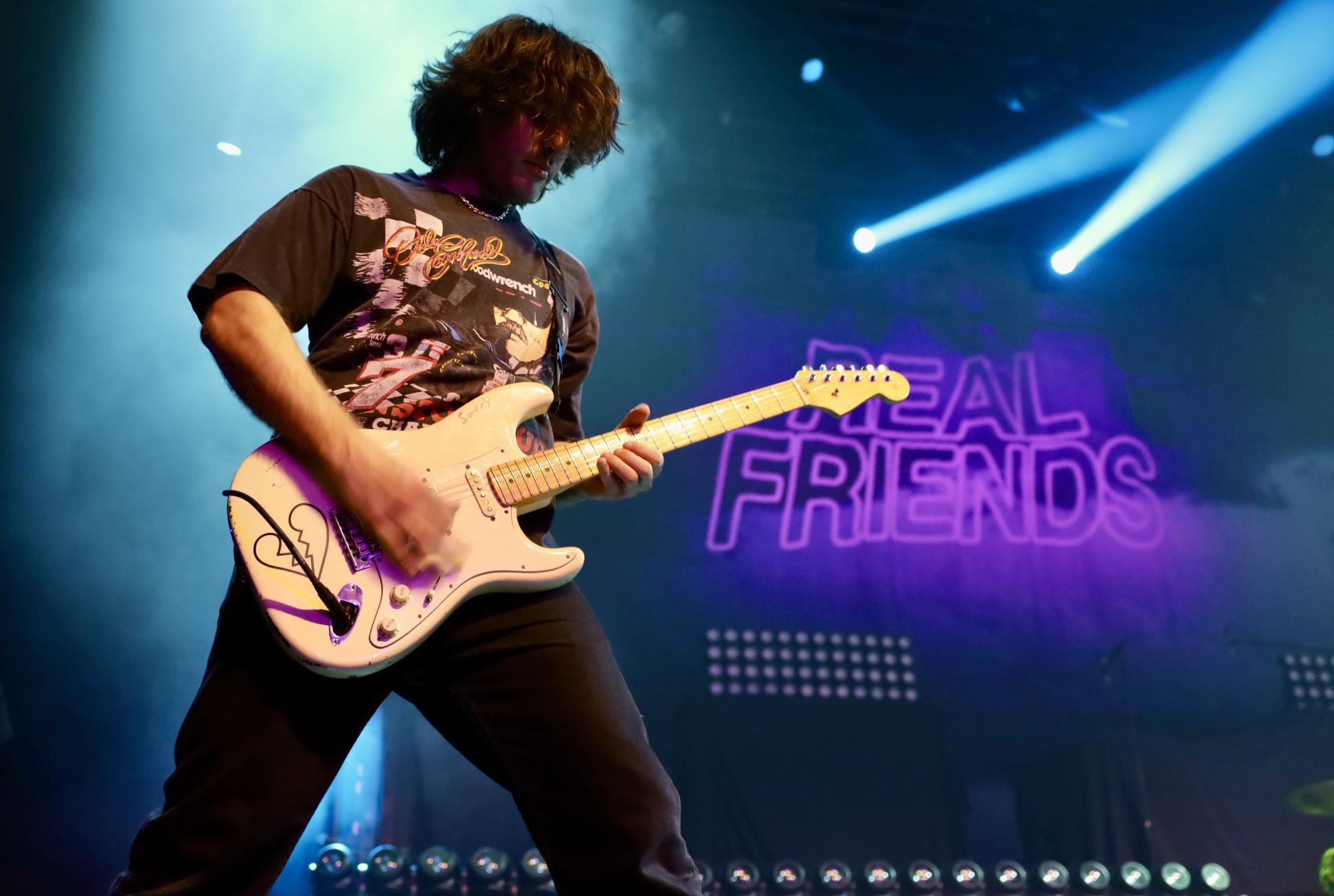
to date, earning praise from longtime fans while drawing in new listeners.
One of the album’s most intimate songs, “Waiting Room,” confronts loss with moving honesty: “After I knew there was only bad news/ your hospital bed felt more like a waiting room. And I had to leave before you left/ ’cause I was too weak to watch your last breath.” There’s no need for abstraction; instead, the lyrics focus on specific moments that often go unspoken. Though still relatively new in the band’s nearly 15-year history, the chorus filled the room as the crowd sang along to the line, “I thought time healed every wound ’til I lost you,” a testament to how deeply listeners connect to the emotional weight of those lyrics.
The set closed with a powerful performance of “Tell Me You’re Sorry,” a song that channels the need for accountability after experiencing betrayal: “Tell me, tell me that you’re sorry/ even if you’re lying through your teeth./ Tell me, tell me that you’re trying/ just to break the silence and put this behind us.” The song’s fast tempo and sharply articulated guitar riffs built the tension towards its final breakdown.
As the instruments briefly pulled back, Muraro seized the moment to shout: “We’re a band called ‘Real Friends,’ bang your fucking heads!” The band hit the final drop in unison, headbanging before the drums crashed to a dramatic stop.
A brief moment of calm hung after the final note, as if the room needed a moment to catch its breath after the high. As the waves of crowd surfers came to a halt, the audience exploded in cheers and applause. Nearby, echoes of attendees turning to friends and exclaiming variations of “Wow, that was great!” broke through. Before walking off the stage, the band invited the crowd to pose for a picture, remarking the significance of this being a hometown show for them. As they gave the room one final glance, their faces lit with gratitude, pride, and, above all, a genuine love for what they do.
Real Friends might only be supporting a handful of Around the World and Back tour dates, but, late last year, they shared through their email list that they were “out of town writing new music.” What’s more, their annual holiday card promised “lots of new music coming [in] 2026.”
Ugandan national record–breaker Jesse Ssengonzi (A.B. ’24) is back in the lanes training for a second Olympic run at LA28.
By ISHAAN VERMA | Sports Reporter
Jesse Ssengonzi was only nine years old when he moved from North Carolina to Uganda. He and his siblings first fell in love with swimming through the local summer league in their hometown of Cary, which led them to pursue yearround swimming. However, living thousands of miles from their home club, it seemed that they might be without their sport for the foreseeable future. But Ssengonzi’s father had other ideas. Every day, he drove them 40 minutes to a hotel pool to coach them himself, a dedicated routine that kept them going.
This consistent structure and discipline stayed with Ssengonzi long after he returned to the United States. His family eventually moved back to North Carolina, allowing him to rejoin the competitive swim scene with a renewed sense of purpose. By the time he was in high school, he had developed into an elite recruit, picking up offers from powerhouse Division I schools like Duke University, the University of North Carolina at Chapel Hill, and North Carolina State University.
Choosing a Division III program over such storied athletic powerhouses is almost unheard of for a recruit of Ssengonzi’s caliber, but his priorities were elsewhere. His decision to commit to UChicago was influenced by a mix of parental research and personal identity. “My mom looked up [the] top schools in the U.S., and UChicago was number six that year,” Ssengonzi recalled. “I [had] never heard of UChicago before, but I was drawn by the idea of being close to a big city, coming from North Carolina.”
The move to Hyde Park also aligned better with his emphasis on academics.
He would go on to graduate from the College in 2024 with degrees in computer science and economics. As Ssengonzi explained, “I’ve always been a little bit of a floater in that my whole personality is not athletics. I always saw swimming as something that I would eventually stop doing and [thought] that academics mattered more.” Ssengonzi was also well aware that Division I schools have the expectation of training year-round while Division III schools don’t. “For me, a big thing was the potential and ability to study abroad or get internships and fully commit my time to the internships.”
Even as his times began to improve, Ssengozi still didn’t think that his swimming career would extend beyond his senior year at UChicago. “In my head, I always felt like that was what my path was going to be: Swimming doesn’t matter after I finish college,” he explained. “I didn’t even know I was going to represent Uganda at the Olympics.”
Before calling it quits, however, Ssengonzi decided to pursue one final milestone: swimming at the 2024 Paris Olympics. For three months leading up to Paris, Ssengonzi trained intensively, finally having to adopt the singular, high-pressure “Division I specialist” mindset he had bypassed years prior.
This mindset shift paid off big time when he dived off of the blocks in Paris. Competing against the world's most elite athletes, Ssengonzi clocked a 53.76 second time in the 100-meter butterfly—the fastest time for that event in Ugandan history.
However, despite his Olympic success, Ssengonzi decided to follow the
traditional UChicago pipeline into a fulltime consulting role.
While he had spent four years preparing exactly for this transition, joining multiple business clubs and preprofessional programs, the reality of the corporate world lacked the intensity of high-level competition. Within six months, he realized that the professional track he had prioritized over swimming was beginning to take a toll on his well-being.
“I went, I worked, and the main reason why I quit work was I felt like everything that I cared about was atrophying,” Ssengonzi admitted. “Mentally, physically, socially—all the things I really cared about. I was doing it for a job I didn’t really care about that much.”
When he quit his job, Ssengonzi gave himself the chance to reshape his life
around the pillars of “body, mind, and soul.” In that procecss, he found that nothing anchored those pillars quite like swimming did.
Now on a gap year, Ssengonzi operates on his own schedule, taking a cerebral approach to the sport by self-training, coaching himself through video and technique analysis. He no longer sees swimming as something with an expiration date, but rather as something that “will always be part of [his] life, even if it’s just at a fan capacity.”
As for what comes after the pool, Ssengonzi is keeping his options open.
Whether he continues to swim or pivots to an entirely different field remains to be seen. For now, he’s thinking in fouryear chunks, setting his sights on the Los Angeles Olympics in 2028 where his fellow Maroons will be cheering him on.

who you wouldn’t want teaming up with 17-Across, 30-Across, and 35-Across
Kneecaps
59 Not Sunni
By LIAM HEFFERMAN | Crossword Constructor