WELCOME TO THE SUMMER 2025
PUBLISHER
Century 21 New Zealand Ltd
CONTRIBUTORS
REINZ
Julius Capilitan
EDITORIAL ENQUIRIES
Century 21 New Zealand +64 9414 6041
ADVERTISING ENQUIRIES
Century 21 New Zealand +64 9414 6041
DISCLAIMER
We have in preparing this information used our best endeavours to ensure that the information contained therein is true and accurate, but accept no responsibility and disclaim all liability in respect of any errors, inaccuracies or misstatements contained herein. Prospective buyers and sellers should make their own enquiries to verify the information contained herein. All information contained in the CENTURY 21 New Zealand Ltd website is provided as a convenience to clients. All links to property prices displayed on the website are current at the time of issue, but may change at any time and are subject to availability.
For more information on our Privacy Policy please refer to: www.century21.co.nz/disclaimer
M EDIAN PRICES UP AS BUYERS TAKE THEIR TIME

BY REINZ
Confidence and positivity are on the rise across almost all regions, according to the latest data from the Real Estate Institute of New Zealand (REINZ). Median prices continue to climb, with only three regions recording annual declines year-on-year, reflecting a market where prices remain resilient even as buyers move at a measured pace. Local salespeople report pockets of strong enquiry, highlighting growing sentiment at a regional level.
With activity varying across September, October, and November, we’ve taken a broader view and applied seasonal adjustments to give a clearer picture of where the market is heading. On this basis, the three months ending November 2025 show the market holding slightly ahead of where it was at the same time last year, with national sales count up (+2.4%) and median price fractionally higher (+0.2%). For New Zealand, excluding Auckland, the picture is a little stronger, with sales count (+4.1%) and median price (+1.5%) both ahead of last year.
“Comparing November 2025 to November 2024 still matters, but looking at the three-month trend helps smooth out monthly ups and downs,” says REINZ Chief Executive Lizzy Ryley. “Taken together, the seasonally adjusted figures suggest the market is continuing to edge in the right direction. While the improvement is gradual, the underlying trend remains more positive than it was a year ago.”
Looking back to November 2025 compared to November 2024,
New Zealand’s median price increased by 2.3% year-on-year, to $808,000. Excluding Auckland, the median price increased by 4.3% year-on-year to $730,000.
Twelve out of the sixteen regions reported an increase in median prices year-on-year. Canterbury hit a record median price, up 3.0% year-on-year to $720,000. There were two Territorial Authority (TA) records in Hawke’s Bay’s Wairoa District at $725,000, up 16.7% and in Canterbury’s Waimate District at $549,000, up 6.6%.
“Median sales prices continued to rise across many regions in November, with the national median reaching $808,000 this month. Auckland’s median price is above $1 million ($1,050,000) for the second month in a row, and Canterbury recorded a new high, with the median price hitting $720,000. The broader trend indicates that, despite some local variations, the property market remains resilient, with activity nationwide helping to support price growth,” says Ryley.
The national median Days to Sell decreased by one day to 40 days. For New Zealand, excluding Auckland, it decreased by two days to 40 days. The largest annual reduction in median Days to Sell was observed in Otago, down 12 days from 45 to 33. The greatest year-on-year increase in median Days to Sell was on the West Coast, rising 16 days from 31 to 47 days.
National sales declined 5.7% year-on-year to 7,268, and sales across New Zealand, excluding Auckland, fell 5.3% to 5,034. National month-on-month data also shows declines in sales counts. Only three regions recorded year-on-year increases in sales: Northland, increased by 12.0% to 234 sales; Waikato increased by 2.9% to 768 sales; and Nelson, up 25.8% to 78 sales.
Seasonally adjusted sales figures show that nationally, sales are down slightly month-on-month (-4.6%), compared to the raw data decline of 4.4%. Auckland fell 9.1% month-on-month, while NZ
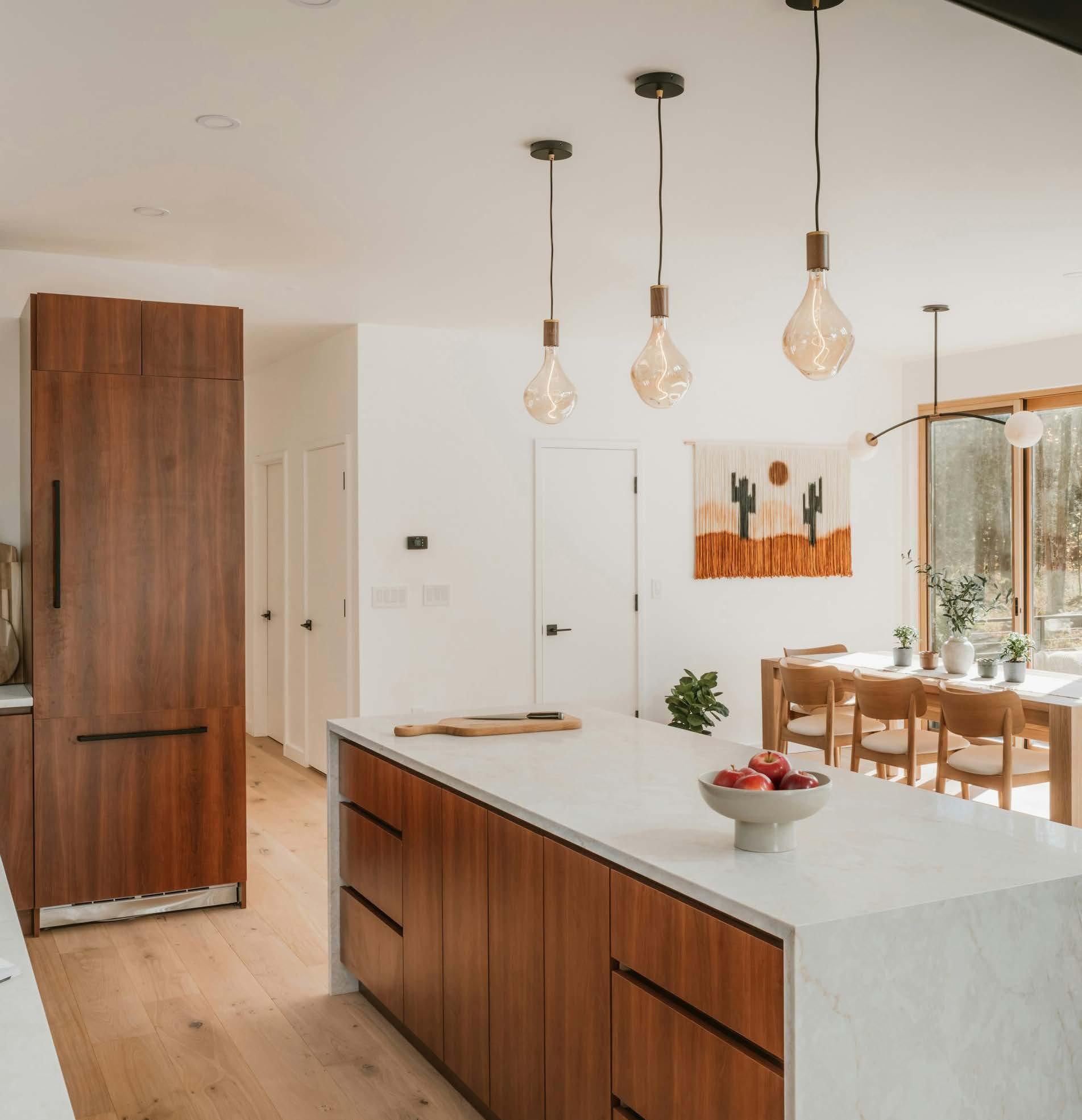
Image: Nick Sarvari on Unsplash
ANNUAL MEDIAN PRICE CHANGES
$808,000
2.3% 40
excluding Auckland was slightly softer (-3.3%). In contrast, Northland (+21.6%) and Hawke’s Bay (+5.0%) saw strong month-on-month gains, and regions such as Nelson (-15.7%) and Canterbury (-7.2%) indicate mixed conditions across the country.
“This November marked only the sixth time in 33 years that New Zealand’s November sales count was below October’s, underscoring how unusual it is for activity to ease at this point in the seasonal cycle. Despite the slower sales pace, median prices have remained largely resilient, supported by a stable underlying demand,” continued Ryley.
New listings continue to rise around the country, up 10.9% ye ar-on-year
to 12,339. New Zealand, excluding Auckland, also recorded an increase, up 10.2% year-on- year to 8,199. National inventory levels are up 4.0% compared to November 2024, to 35,345.
Click here to read the full report

Source: REINZ Monthly Property Report 15 December 2025.

CHRISTMAS OF THE CENTURY
From big plans to small steps, we’re here to make your property journey happen.
C HRISTMAS CASH AND CLEVER CHOICES

BY JULIUS CAPILITAN , C21 FINANCIAL
The end of the year in New Zealand always has its own special mix: long evenings, full fridges, last-minute shopping, and that feeling of “right, what’s next for us next year?”
This year, there’s another gift under the tree for homeowners and buyers: after a busy couple of years, the Reserve Bank has now taken the Official Cash Rate (OCR) down to around 2.25%, which is likely close to the bottom of this cycle. In simple terms – the heavy lifting on interest rates looks largely done, and things are finally starting to feel a little more settled.
The economy has been through a lot, and confidence is still rebuilding, but we’re now in a phase where banks are competing hard for good quality customers. That competition is showing up as sharp rates and
generous cashback offers – especially the much-talked-about 1.5% cashback.
Rather than seeing this as a “war”, think of it as a summer sale on money. There are genuine opportunities on the table – you just want to understand the fine print so your “win” today still feels like a win in a few years’ time.
WHAT’S ACTUALLY GOING ON?
Right now, lenders are:
• Offering sharp short-term fixed rates, and;
• Adding cashback offers, often up to 1.5% of your loan amount, to attract new business. They’re doing this because:

• The market is still cautious
• Growth is slower than usual
• So instead of writing heaps of brand-new loans, they’re mostly competing for existing borrowers. The good news? As a customer, you’re in a strong position. You can shop around, compare offers, and use this competition to your advantage.
CHRISTMAS CASH WITH A TWIST?
Let’s be honest -1.5% cashback is awesome (and the highest we have ever seen)
On a $600,000 mortgage, 1.5% is $9,000. But there are strings attached...Like most good Christmas presents, there’s a little instruction booklet attached.
So here's ours, to navigate your Christmas Cashback.
1. CLAWBACK PERIOD
Most cashback offers come with a clawback clause. That simply means:
• If you move banks or repay your loan in full within a set period (often 3–4 years),
• You may have to pay back some or all of the cashback.
Continued over page
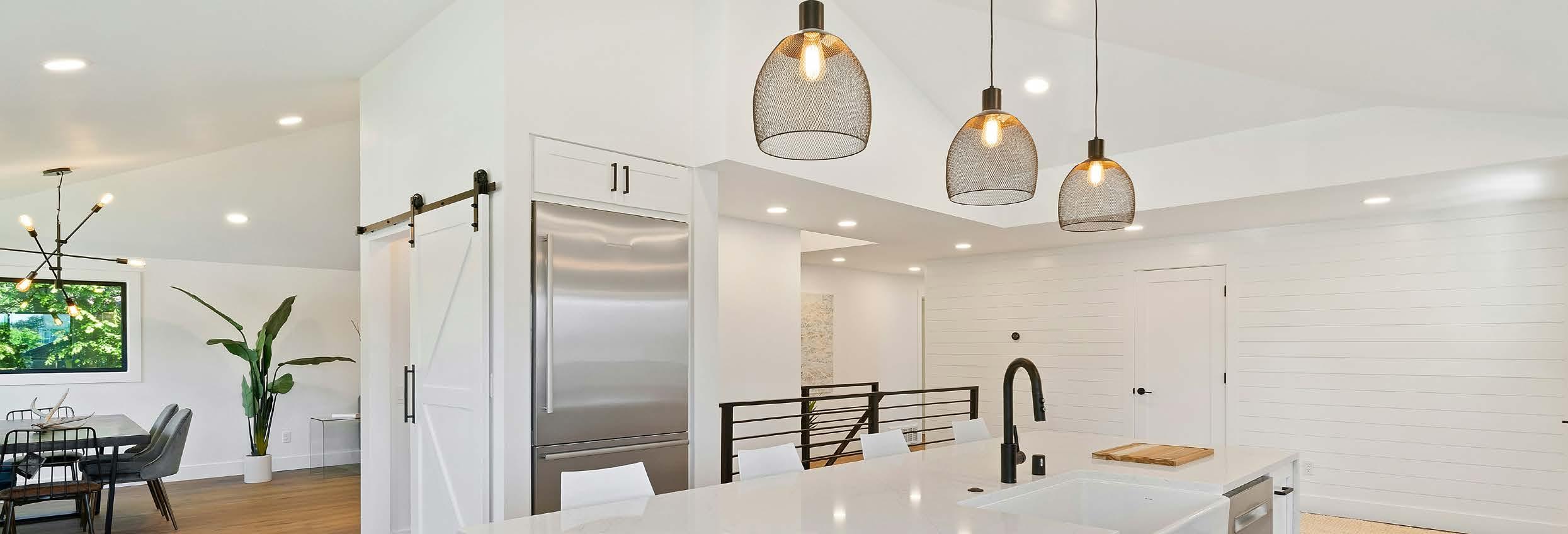
Image: K8 on Unsplash
Continued from previous
It’s not sneaky – it’s just how the bank makes sure the maths works for them over time. But it does mean you want to be reasonably confident you’re happy to stay put for that period, or at least factor the clawback into any future plans.
2. TIMING DELAYS – ESPECIALLY FOR BUYERS AND AUCTIONS
The other big one – and this is the main “downside” in the current environment:
Because banks are so busy competing and assessing deals carefully, turnaround times can stretch out. That matters if you’re:
• Trying to refinance quickly, or
• Buying at auction or on a tight finance deadline.
If you’re chasing a big cashback and a sharp rate, you may also have to accept that:
• Processing can take longer than usual
• And that can be stressful if you’re trying to line it up with an auction date or a quick settlement.
This is where planning ahead – and having someone manage the process for you – makes all the difference.
A
SIMPLE, SUMMER-FRIENDLY STRATEGY
Here’s a gentler, more balanced approach to navigating all of this:
1. DON’T IGNORE THE OFFERS – BUT DON’T RUSH BLINDLY
It absolutely makes sense to see what’s out there. If a bank is happy to give you cash and a lower rate, it’s worth exploring. Just:
• Check the clawback period
• Think about your plans over the next 3–4 years
• And make sure the numbers work for you, not just for today.
2. THINK BEYOND JUST THE 1-YEAR RATE
Those super-sharp 1-year rates look great in the headline, but you don’t have to put all your lending on one term.
You might:
• Fix some for 1 year to take advantage of the low rate now
• Fix some for 2–3 years to give yourself stability if rates drift higher again later
This gives you a nice balance of flexibility and certainty – and keeps future you from having to refix the entire loan in one go.
3. GET AHEAD OF THE PROCESS – ESPECIALLY IF YOU’RE BUYING
If you’re planning to bid at auction or make unconditional offers this summer, talk to an adviser early.
The cashback and low rates are great, but the timeframes are real.
Having someone w ho knows which lenders are moving quickly, and which ones suit your situation, can save you a lot of stress.
Julius Says…
“CASHBACK AND SHARP RATES CAN BE A GREAT CHRISTMAS BONUS – AS LONG AS YOU KNOW WHAT YOU’RE SIGNING UP FOR. OUR JOB IS TO HELP YOU ENJOY THE UPSIDE WITHOUT GETTING TANGLED IN THE FINE PRINT LATER ON.”
At Century 21 Financial, we’re not here to talk you into or out of any particular deal. Think of us as your financial elves in the background – doing the hard yards so you can enjoy your summer, your whānau, and maybe that extra scoop of hokey pokey.
This December, there’s plenty to feel positive about: rates near the bottom of the cycle, strong cashback offers, and real opportunities for smart borrowers. The key is simple:
Enjoy the gifts on offer – but open them with your eyes wide open. And if you’d like a hand unwrapping the details, we’re only a phone call away.

W HAT HAPPENS AFTER THE SOLD STICKER? A SELLER’S GUIDE TO SETTLEMENT
THE SAL E IS JUST THE BEGINNING
Seeing the sold sticker go up is a big moment. But while the negotiations are over, the process is not. Settlement is the final stage of your sale, and it comes with its own set of deadlines, documents, and moving parts.
Here’s what every seller should know once the contract is signed, and how to navigate the weeks between acceptance and settlement day with confidence.
1. UNDERSTAND YOUR SETTLEMENT TIMELINE
The standard settlement period in New Zealand is typically 30 to 90 days, depending on what has been agreed in the contract. During this time, both parties work through their legal, financial, and logistical steps to finalise the transfer of ownership. Your conveyancer or solicitor will guide you through the legal paperwork, while your agent will help keep things moving toward the agreed date.
Tip: Confirm your key dates with all parties, including your agent, conveyanc er, and bank, to avoid last-minute delays.

2. FINALISE UTILITIES, INSURANCE, AND COUNCIL OBLIGATIONS
Once the property changes hands, you are no longer responsible for rates, water, and insurance. However, it is up to you to notify the relevant providers before settlement day.
Make sure you:
• Cancel or transfer your electricity, water, internet, and gas
• Contact your local council to notify them of the sale
• Keep your home and contents insurance active until settlement is complete
Tip: Do not cancel your insurance too early. Maintain coverage right up until the buyer takes legal ownership.
3. PREPARE FOR THE FINAL INSPECTION
The buyer is entitled to a final inspection, usually within the week before settlement. This is their chance to ensure the property is in the same condition as when it was sold.
Make sure:
• All agreed inclusions such as appliances or fittings are still in place
• Repairs outlined in the contract have been completed
• The home is clean, secure, and free from any new damage
Tip: Treat the final inspection like a handover. A clean, respectful presentation reflects well on the sale and helps avoid disputes.
4. PLAN YOUR EXIT WITH TIME TO SPARE
Moving out takes longer than most people expect. Start early to avoid the stress of a last-minute pack-up or rushed handover.
If you are buying and selling at the same time, your agent and conveyancer can help coordinate dates to ensure a smoother transition.
Tip: If you need extra time post-settlement, talk to your agent early. It may be possible to negotiate a short-term rent-back agreement.
SETTLEMENT DAY AND BEYOND
Once settlement is complete, the keys are handed over and the property officially changes ownership. Your agent will finalise the transfer and assist with any final documents or handovers.
From there, it is time to move on, whether that means settling

into your new home, banking the proceeds, or looking ahead to your next chapter.
Selling your home is a major milestone, and understanding what comes next ensures the experience ends on a high note.
N EW PET RULES FOR RENTALS IN NEW ZEALAND: WHAT TENANTS AND LANDLORDS NEED TO KNOW
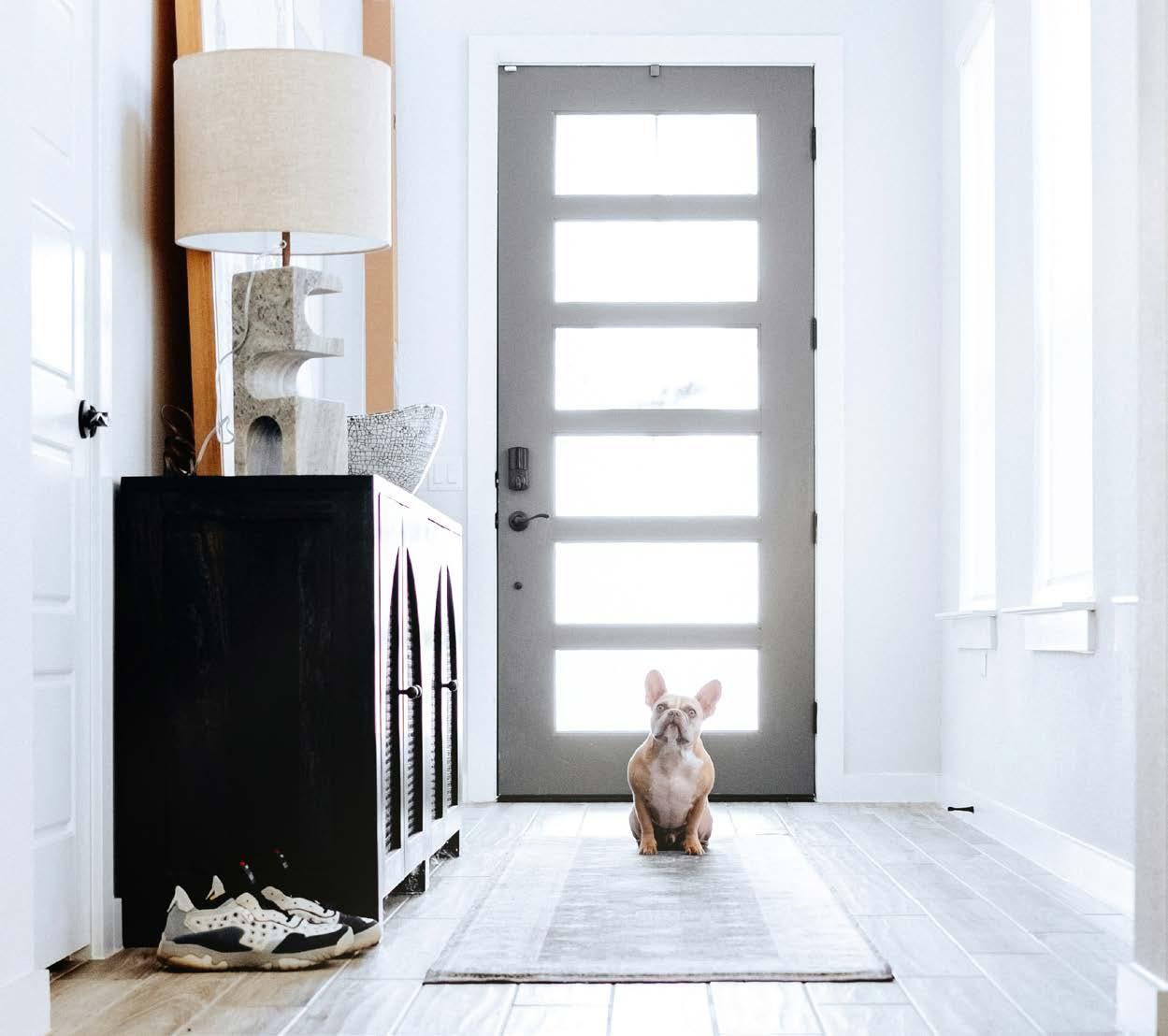
From 1 December 2025, new laws under the Residential Tenancies Act have reshaped how pets are managed in rental properties across New Zealand. These changes aim to strike a fair balance – making it easier for tenants to have pets while ensuring landlords have adequate protection against potential risks. The updated rules mark a significant shift in rental housing, reflecting the growing recognition of pets as part of many households.
GREATER FLEXIBILITY FOR TENANTS
Under the new regulations, tenants can now keep a pet if their tenancy agreement allows it or if they obtain written consent from their landlord. This change gives tenants more opportunity to enjoy pet
ownership without facing blanket bans. However, cons ent remains a key requirement – tenants must still seek approval unless their agreement already permits pets.
Importantly, landlords can no longer refuse pet requests arbitrarily. Any refusal must be based on

reasonable grounds, such as property suitability, health and safety concerns, or the type and number of pets proposed. This ensures that decisions are fair and transparent, reducing unnecessary disputes between tenants and landlords.
LANDLORD PROTECTIONS AND RESPONSIBILITIES
While the new rules open the door for more pet-friendly rentals, they also include safeguards for landlords. Tenants are now fully responsible for any pet-related damage that goes beyond fair wear and tear. This means landlords can recover costs for repairs or cleaning caused by pets, ensuring that property standards are maintained.
Landlords who grant consent for pets may also set reasonable conditions. These could include

restrictions on the number or type of pets, requirements for professional cleaning at the end of the tenancy, or conditions related to outdoor areas. However, conditions must be fair and relevant to the property’s circumstances.
Another key change is the introduction of a pet bond. Landlords may now charge a pet bond of up to two weeks’ rent, providing additional financial protection against potential damage. Only one pet bond can be held at a time, regardless of the number of pets.
RULES FOR EXISTING PETS
For tenants who already had pets before 1 December 2025, the law provides continuity and protection. These tenants do not need to seek
new consent for their existing pets, and landlords cannot impose new conditions or charge a pet bond retroactively.
However, all tenants named on the tenancy agreement remain responsible for any pet-related damage. If the damage occurred before 1 December 2025, liability is capped at four weeks’ rent. For damage occurring on or after that date, there is no limit to the amount tenants may be required to pay, reflecting the updated accountability standards.
A BALANCED APPROACH TO PET-FRIENDLY RENTING
The new pet rules represent a thoughtful step toward more inclusive and balanced rental housing in New Zealand. By giving
tenants greater freedom to own pets while ensuring landlords have clear rights and protections, the changes encourage more open communication and mutual respect between both parties. As more households welcome pets into their lives, these reforms help ensure that rental homes can do the same.
For more details, visit tenancy. govt.nz/starting-a-tenancy/rulesabout-pets/.
D ESIGNING A HOME THAT’S QUIET ON THE INSIDE (EVEN WHEN LIFE ISN’T)

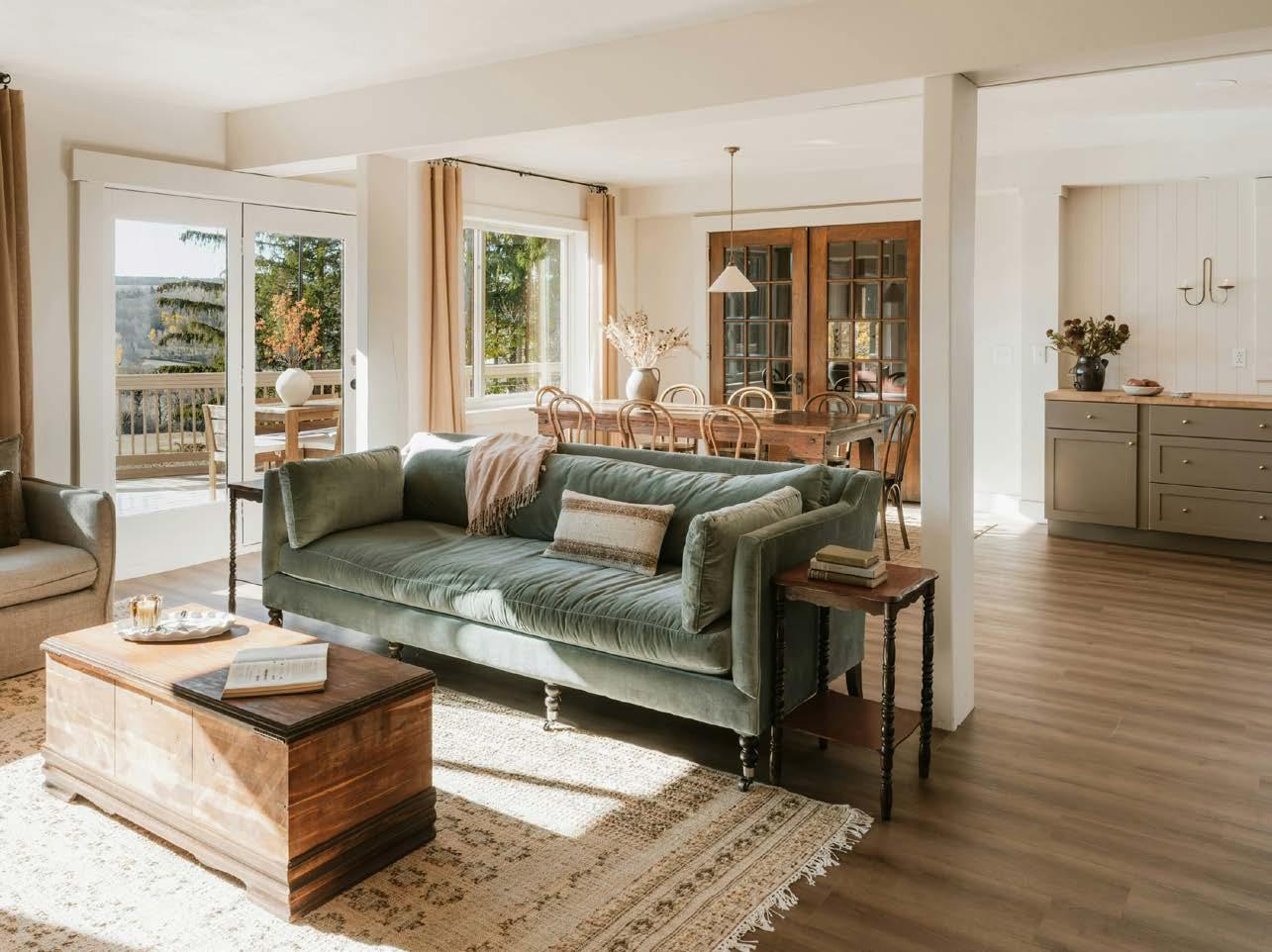
Busy household? Here’s how to design a home that feels peaceful and calm, even when life outside is anything but.
PEACE IS THE NEW LUXURY
In a world full of noise, with deadlines, school runs, group chats and city traffic, more people are craving homes that offer something different. Not more stuff. Not more space. Just a sense of calm.
Designing for quiet does not always mean soundproofing. It is about reducing overwhelm, creating breathing room and finding moments of stillness in your own home.
Here’s how to bring more peace into your space, no matter what life looks like on the outside.
CREATE VISUAL CALM
When your eyes are bombarded with clutter or contrast, your brain stays alert. Calm starts with what you see. Clean lines, soft colour palettes and uncluttered surfaces make a difference.
Tip: Try the one clear zone method. Choose one bench, tabletop or room to keep visually clear every day. It is a simple way to sign al calm.
DESIGN FOR FLOW, NOT JUST FUNCTION
Furniture placement can influence how stressed or relaxed you feel. If you are dodging corners, navigating tight paths or bumping into bags near the front door, it adds low-level tension.
Tip: Stand at your front door and walk through your home slowly. Notice where the flow stops or feels busy and rearrange what you can to open it up.
ADD SOFTENERS
Hard surfaces bounce noise. Soft elements like curtains, rugs and upholstered furniture help absorb sound and create emotional warmth in a space.
Tip: Add a large textured rug to your living area or bedroom. It softens both acoustics and atmosphere instantly.
CREATE MICRO-RETREATS
You do not need a whole room to escape. A reading corner, a cushioned bench or a chair by a window can become your place to reset.
Tip: Identify one quiet spot and claim it. Add a lamp, a favourite chair or a plant, and make it your go-to for a few moments of stillness each day.
USE LIGHT TO SET THE TONE
Natural light feels expansive. Warm lighting feels restful. Mixing both depending on the time of day helps your body and mind stay balanced.
Tip: Use warm globe lighting in bedrooms and living rooms after sunset. Use cooler lighting in task areas like the kitchen or home office.
PEACE LOOKS DIFFERENT FOR EVERYONE
You do not need a perfectly styled home to feel calm. Just a few thoughtful choices can help you breathe easier. Whether you soften one room, improve flow or create a quiet retreat, designing for peace is less about looks and more about how the space supports you.
When the outside world is loud, let home be the place you exhale.
Image: Clay Banks on Unsplash