B.C.’s legal community partners to support access to justice innovations
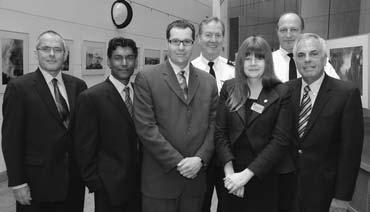
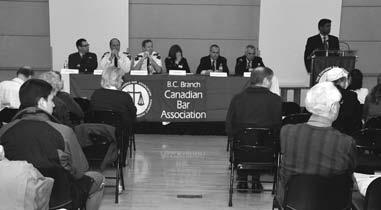
This past April, Law Week celebrated the 27th anniversary of the Canadian Charter of Rights and Freedoms with CBA sponsored events across the country. Access to justice is the ethos of hundreds of Law Week volunteers in B.C. who strive each year to provide the public with accurate information about the justice system and to familiarize our fellow citizens with legal information sources. The Internet has dramatically revolutionized the way in which people access information. So it is fitting that the B.C. Courthouse Library Society (BCCLS) launched the “Clicklaw” website during this year’s Law Week celebration.
“There are many organizations in B.C. producing legal information and educational materials designed for the public. Clicklaw brings it all together in one place, organizes it from the public’s perspective, and provides easy ways to click through the site to find information,” Johanne Blenkin, Executive Director of the BCCLS explains. “If a member of the public has a legal problem or wants to learn about the law, Clicklaw is a better place to start than googling.”
The simplicity of Clicklaw belies the amazing technology and research behind it. Clicklaw was created as a collaborative project where contributor organizations, who are responsible for their own content, keep adding material to the site. The list of the founding contributors runs the gamut of B.C. institutions committed to educating the public about the law. Blenkin says, “There are 24 organizations
formally participating in Clicklaw, including the Canadian Bar Association, B.C. Branch. We’re delighted that the CBABC Dial-A-Law scripts can be accessed through Clicklaw, as they provide basic legal information across a broad range of topics.”
For the CBABC, participating in Clicklaw was a natural extension of its ongoing efforts to harness new technologies for the benefit of its members and to promote access to justice for all British Columbians. Maximizing the advantages of new communication tools is by no means a simple task. The implications go far beyond switching from the page to the screen. While CBABC is increasingly offering online and teleconferenced learning opportunities, and while our Web Manager is continually enhancing website services (see On the Web on page 9), the Branch also works hard to increase the comfort level of our members and the public with the new technologies. Clicklaw marks a milestone in that direction and complements Branch efforts to expand public access to its more than 125 Dial-A-Law scripts from the tried and true telephone to the Internet in written and audio formats.
Effectively utilizing the evolving web (see Practice Talk on page 7), for the advancement of the profession and the needs of the public is essential. We encourage you to share your ideas and suggestions with us.
Clicklaw can be accessed at www.clicklaw.bc.ca. The CBABC website is located at www.cba.org/bc and Dial-A-Law scripts are found at www.dialalaw.org. BT
bar Moves uu
Continued on page 27
Have you recently changed firms or opened a new firm? Send your bar moves submission (maximum 25 words) to cba@bccba.org.
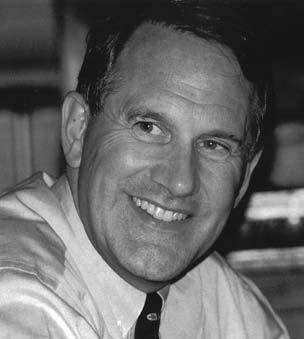
Boughton Law Corporation is pleased to announce that on March 16, 2009 ChArlEs (“ChUCk”) PEArsoN joined Boughton Law Corporation’s Tax Group. Mr. Pearson brings with him more than 25 years of in-depth knowledge of the Canadian tax system, including a stint with the Department of Justice in Ottawa. Mr. Pearson provides tax advice for individuals, as well as Canadian and international companies.
Joining Bull, Housser & Tupper LLP’s Commercial Litigation, Insolvency & Restructuring and Trust, Estate Planning & Estate Administration Groups as an associate is ANdrEA Frisby. Andrea’s pre-law career focused on training, health and safety regulation and labour relations. She summered with BH&T in 2005, articled with the firm in 2008 and was called to the Bar in August of 2008.
stEvEN dvorAk recently joined Bull, Housser & Tupper LLP’s Commercial Litigation and Insolvency & Restructuring Groups as an associate. Prior to joining the firm, Steven practised in the Okanagan region where he established a reputation as a results-oriented and practical commercial litigator.
stEvEN tiAiNEN joins Boughton’s Banking and Transportation practice groups. Steven brings with him extensive experience in all aspects of asset financing and particular expertise in maritime law. Mr Tiainen is licensed to practise in British Columbia and England & Wales. Mr. Tiainen joins us from Lindsay Kenney LLP.
CArly k. ChUNiCk was called to the Bar in January 2009 and stayed on to practise aboriginal law with Devlin Gailus as an associate.
JoAN yoUNg has joined Lang Michener LLP as Associate Counsel continuing her practice in employment law, civil and commercial litigation and public law. She is one of B.C.’s most experienced Fairness Advisors on Public-Private Partnerships and continues her work in this field at Lang Michener LLP.
riCk EdgAr of Edgar & Company has moved and is continuing his labour/employment and related litigation practice in association with Shona Moore, QC of Moore & Company, with premises at 3rd Floor, 195 Alexander Street Vancouver, B.C. V6A1B8.
riChArd MoNtgoMEry and dAvid MilEs have formed a new partnership in Kelowna, practising in the areas of business law, real estate and wills, trust & estates.
dANiEl sorENsEN will be joining the Chilliwack office of Waterstone Law Group LLP where he will be practising employment law and general civil litigation.
JACqUEliNE sowA has joined Goodwin & Mark in New Westminster as an associate and will practise civil and commercial litigation. Ms Sowa graduated from the University of Alberta Law School and recently completed articles with a Richmond law firm.
NEil ChANtlEr has recently joined the firm Fiorillo Glavin Gordon in South Granville and will be practising in the areas of labour, employment, administrative and human rights law.
dEl FridAy is pleased to announce the opening of Friday Law Group. Ms. Friday will continue to focus on corporate/commercial law in the Langley area.
Andrea Frisby
Joan Young
Steven Dvorak
Steven Tiainen
Charles Pearson
This edition of BarTalk addresses a wide spectrum of subjects from equity and diversity in the legal profession to B.C.’s first woman lawyer to this year’s highly successful province-wide Law Week events. Featured throughout these pages are a number of law-related conferences that may help you to meet your mandatory continuing education reporting requirements at more or less exotic locations.
Marla Gilsig
Send your lE tt E rs to th E Editor to: Jesse Tarbotton, barTalk Senior editor
Canadian bar Association, b.C. branch
Fax: 604-669-9601
Toll-free fax: 1-877-669-9601
email: jtarbotton@bccba.org
note: barTalk undertakes every effort to publish letters to the editor, subject to space and editorial discretion. letters to the editor can also be found in barTalk online at www.cba.org/bc.
thErE CoUld bE blood – toNy wilsoN (vol. 21, No. 2)
There will no doubt be lawyers and law firms, if there aren’t already, who make that sort of thing work.
Part of making the model work, though, will involve figuring out how to handle the increasing regulation that the Law Society sees fit (sometimes under pressure from government) to impose on the profession. I particularly have in the mind the new client identification and verification rules, particularly the verification side of things. The verification requirements undermine pretty much all benefits from use of technology achieved since the mid 1980s.
– Donald L. Moir INC Business Lawyers
Cover Art Competition winning Entries
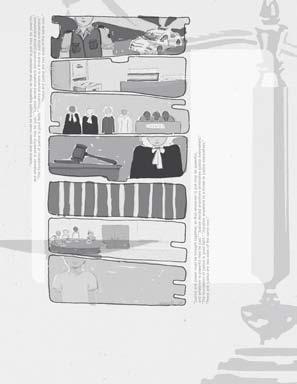
The first annual barTalk Cover Art Competition gave Grade 11 and 12 students throughout the lower mainland the opportunity to share their opinion about the justice system in british Columbia. The competition encourage youths to learn more about justice in british Columbia while using creativity to share their understanding.
organized as a part of law Week 2009, the contest required students to produce cover art that followed the law Week 2009 theme Public Confidence in the Justice System
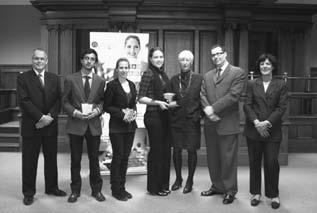
The winner of the competition was Heidi Wu of little Flower Academy with her piece entitled The Scale ms. Wu received an iPod Shuffle as well as the publication of her portrayal of the Scales of Justice on the CbAbC website. This year’s runner up, with her piece entitled StrengthofCanadianJustice, was evanna Chiew. The winning entry is reproduced on the left and and can be seen on the CbAbC website at http://www.cba.org/bc/ bartalk_06_10/pdf/bartalk_cover_ art_winner.pdf.
Canadian bar Association, b.C. branch 10th Floor, 845 Cambie Street vancouver, b.C. v6b 5T3
Tel: 604-687-3404
Toll-free (in b.C.): 1-888-687-3404 bartalk@bccba.org
barTalk is published six times per year by the Canadian bar Association, british Columbia branch and is available online at www.cba.org/bc.
This publication is intended for information purposes only and the information herein should not be applied to specific fact circumstances without the advice of counsel.
The Canadian bar Association, british Columbia branch represents more than 6,400 b.C. members and is dedicated to improving and promoting access to justice, reviewing legislation, initiating law reform measures and advancing and improving the administration of justice.
barTalk Publication Sales Agreement #40741008
volunteerism
Many people in the practice of law give freely of their time to the profession and not just to the Canadian Bar Association, the Law Society or one of the many pro bono groups. They also give to numerous associations outside our profession that help our communities.
Taking on pro bono cases, participating in committee work and helping and mentoring students are just some examples of legal volunteering. Why volunteer? There are many reasons to give back, to get involved and to help others. And more often than not the person volunteering gets as much, if not more, out of volunteering than the recipient themselves. Why is that?
lEArNiNg
miriam maisonville
President 2008/2009
b.C. branch
Canadian bar Association
Volunteering to speak or make writing contributions will give you a wealth of information in the area you are dealing with. This practical knowledge can be used to benefit your practice.
iNCrEAsEd CliENt bAsE
For those starting out and building a practice and/or profile, client base can be increased by volunteering.
CoMMittEE work
Committee work can teach a plethora of things, such as how a good Chair runs a meeting, learning areas of law outside your practice, and how you can help others. There are a multitude of excellent committee opportunities to engage in at both the Branch and National level. Volunteering with committees benefits you by placing you at the forefront of CBA advocacy initiatives while providing you with invaluable networking opportunities. Besides self-benefit, involving yourself with committees increases your value within your firm by
broadening your expertise and increasing your engagement with the profession.
MENtoriNg
Through mentoring, you can help a junior member of the profession navigate his/her way through university articles or as a junior practitioner. Much has changed over the years, especially technology, but many of the same issues exist.
Pro boNo
Helping in this way enables you to give to someone who might never otherwise have a chance at justice. It allows for someone who would not have access to the courts, to have his/her matter determined.
volUNtEEriNg iNtErNAtioNAlly
These opportunities are incredibly rewarding and can only help you grow.
Since 1990, the CBA has delivered legal and justice reform and capacity building projects in 29 countries. The CBA is committed to the values of an independent legal profession, an independent judiciary, the rule of law and the dignity of the individual. It knows that access to justice is essential to all of these values. There are many international volunteer opportunities. The CBA’s International Development Committee is currently seeking legal professionals to become members of our Resource Bank to support the CBA’s international development initiatives. You can find comprehensive information about the Resource Bank by visiting www.cba.org. BT
To Download the 2009/2010 Committee Volunteer Form uuu http://www.cba.org/bc/ About_us/pdf/committee_volunteer_form.pdf
Forms will be accepted until 4:30 p.m. on June 12, 2009.
From sea to sea to sea
Building nation-wide value for CBA membership
On Sunday, May 3rd and Monday, May 4th, the Canadian Bar Association did something very unusual in the world of association management; we brought together the entire organization’s staff for a two-day Summit of information-sharing, brainstorming and relationship-building.
The Summit was a culmination of a year’s preparation and development, involving volunteers from staff throughout the organization, and with the enthusiastic support of the National Finance Committee and Executive Officers at the National and Branch levels.
Caroline nevin, executive Director b.C. branch Canadian bar Association
When the world economy was shaken, we knew that this event was going to be even more important. We believed it critical to bring all CBA staff together to combine our collective ideas, energy and resources to build the strongest possible value for CBA membership in tough economic times.
For many of the 147 attendees, who serve our 38,000 members across this huge country, this was the first time meeting others with whom we’ve had long-time email and phone relationships. For some, it was the first time meeting any other CBA staff at all. From the one-person operations in the three territories, to the 40+ people in the Ontario Branch, this was a huge opportunity for all of us to figure out how to share strengths, ideas and experience, to provide more value to individual CBA members.
The Summit’s theme was “Staff Without Borders/ Personnel Sans Frontières.” Our whole focus was on how to remove any barriers to building a nationwide value proposition. The objectives were to:
• Deepen understanding of the roles and challenges of CBA staff across the whole organization.
• Enhance relationships between all staff, as a basis
for improved collaboration and organizational effectiveness.
• Identify and address current impediments to working together.
• Take an important step in building an internal culture of cooperation, collaboration and mutual respect.
As an example of something practical for members, we intend to provide access to CBA Branch and National online Continuing Professional Development programs regardless of where you live or where the program is being delivered. That’s a huge value for our members – think about it: 365 days of access to legal education all across the country, delivered by experts in the area, and accessed by any lawyer, anywhere. At about $55 a month or less (and yes, we do offer monthly payment plans!), CBA membership gives you great access to Canadian CPD at a time when it’s now mandatory in B.C.
On the staff side, we are developing a Staff Extranet, where staff who work in functional areas (e.g. Member Services, Membership, Professional Development, Administration) can share best practices, ask each other questions, and post resources for everyone to use. There is no greater power than the sharing of information, and we want to “amp up” that power to bring greater value to every single member, every single day.
The idea behind the Summit was to have each participant leave with a clear idea of who we all are, where we are going, and how we can build on one another’s strengths to deliver exceptional value. Without question, that objective was fulfilled. I look forward to seeing the fruits of the Summit roll out over the next 12 months, and I invite you to provide your ideas and input at any time. BT
And Now for something Completely different
Lawyers find meaning floating on the Tag Cloud...
Hey!You!Getoffofmycloud. Don’thangaround‘cause two’s a crowd.
Words and music by m.
Jagger & K. richards
There is an expression: “A funny thing happened on the way to the Forum.” Well, despite all attempts to the contrary, a funny thing has happened to law: Change. In particular, rapid change, induced by technology. The results of this change can be viewed either as a threat to the profession as we know it or they can be viewed as a golden opportunity. The latest wave or change to wash over us can be summarized by the phrase: “Web 2.0.” One way to view the most important themes of Web 2.0 is by looking at a Web 2.0 invention: the Tag Cloud: While there are different types, in essence a tag cloud is a visual depiction of the aggregation of “tags” (or word counts) for all websites that reference the phrase in question; in our case it is the phrase: “Web 2.0.” The larger the font of any particular tag, the more often this phrase occurs on the Internet related to the reference phrase. (By the way, you could generate a similar word cloud for all the documents in a litigation case – the results may be more intuitive than other forms of case preparation. If you take it to the next level and tag phrases with issues/ people/dates, the results may be even more surprising).
David J. bilinsky is the Practice management Advisor for the lSbC. email: daveb@lsbc.org blog: www.thoughtfullaw.com
In the legal world, Web 2.0 offers the promise of a lawyer practising not a “bricks and mortar” practice but rather virtually – a “clicks and mortar” practice. Marketing, distribution, communication, brand identity, core competencies – all are built and maintained online.
The Yellow Pages are replaced by LinkedIn, Facebook and other social networking sites. Marketing takes place via blogs, Twitter “tweets” and other online networking. Supply networks are virtual since legal assistants, research and other services all can be contracted out and managed via the web. Work is separated from place since you can work from wherever you have an Internet connection. Relationships are fostered and encouraged via Web 2.0 collaboration software such as SharePoint. The office also goes paperless since all the documentation is now handled electronically. Most importantly in Canada, Web 2.0 allows any lawyer to establish a national practice in virtually any area of law courtesy of the Interjurisdictional Practice Protocol. Michael Porter’s work at Harvard Business School on focused differentiation (think “niche practice” as a strategic business strategy) is given life. The market for any law practice is no longer tied to geographic or residential concerns –distance becomes largely irrelevant.
Fantasy? Not at all. There are B.C. lawyers who are pioneers and have established their practices on the cloud.
For those lawyers willing to ride the updrafts, they may find that they have soared to the stratosphere courtesy of rethinking how they can practise law. The vistas up that high can be breathtaking. And the early adopters can say to the latecomers –hey you, get off of my cloud! BT
skytrain is Mytrain
Two decades of public transit
Ever since I moved to “the Mainland,” I have been a commuter. It takes me about 15 minutes to walk from my house in New West to the Skytrain, and 30 minutes for the Skytrain to roll in to my building in Vancouver. I have taken it for almost two decades, and if I had to, I might argue that by using Skytrain to get to and from work every day (thereby reducing greenhouse gasses in the process), I’ve been a good global citizen, and should be entitled to trade carbon credits under the Kyoto Protocol with say, Samoa or the Falkland Islands.
Tony Wilson practises franchise and IP law at boughton in vancouver and has written for the Globe and mail, macleans and Canadian lawyer.
Skytrain allows me to plug in my iPod and listen to some music, do a little work, or write articles like this one. And I don’t ever have to fight traffic. I echo Churchill when I say Skytrain is the worst public transit system in the world, except for all the others. Sometimes it’s down, but sometimes the Tube’s down in London too. Occasionally, a drunk with an attitude will make the commute similar, though not identical, to sitting in the Provincial Court on a bad day after a full moon. But on the whole, Skytrain is normally filled with busy commuters going about their daily lives longing for nothing more than an available seat, and a working escalator when they get off. Hope springs eternal, I suppose.
Commuting by public transit has medicinal benefits that drivers in insulated germ free cars wouldn’t understand. Rather than driving to work like you “bubble” boys and girls, we transit commuters are exposed to all sorts of exotic diseases every day (twice a day), and have developed an immunity to all of them. When there’s an outbreak of say, the mumps, ebola or mad cow disease, it’ll be a low-grade fever with us but it’ll knock you drivers out for weeks (or forever).
There doesn’t seem to be as many “police emergencies” (a euphemism for something grimmer) on the Skytrain than on Vancouver’s main bridges, where “police emergencies” can paralyze the city for hours (I was stuck on Canada Day!). An outbreak of police emergencies on our bridges while everyone else in town is happily enjoying the Olympics will immobilize the city more than any rockslide ever could. Perhaps some of that billion dollars earmarked for security should be diverted to hiring 1000 more mental health counselors, otherwise Vancouver could become an Olympic sized parking lot in 2010.
There is a stigma about lawyers taking public transit. Years ago, colleagues at my not-yet-then exploded firm were amused that one of the wealthier partners took the bus each day from his house in Shaughnessy. Twenty-four years later, some of my clients seem just as bemused that I would take the Skytrain instead of driving to work in a BMW, Mercedes or other übercar befitting their image of what a lawyer should drive. “Why do you take Skytrain with all those working people? Don’t you make enough money?” one client asked me, not realizing I had a swimming pool and sailboat expenses to maintain. You have to make choices in life, and I choose the sailboat, thanks. Besides, I’m a working person too.
Lots of lawyers yammer away about greenhouse gasses and saving the planet, but many of them still drive to work even though transit is an efficient alternative, taking less time than even my commute. Law firms that truly believe in environmentally sound practices might score a few more brownie points if they only subsidized transit passes, not parking.
Mind you, if I ever get that convertible Audi TT or a navy blue Miata MX-5, Skytrain’s toast. BT
law student and young lawyer resources
What can the Canadian Bar Association (CBA) do for you? We can assist in developing your networking skills and help you gain a professional advantage in your law practice through participation in Sections and CBA Professional Development (PD) programs.
If you are already a member, you know the CBA is dedicated to helping lawyers do their jobs better and advocating on their behalf, as well as to improving the administration of justice and helping Canadians obtain access to the legal system. If you haven’t joined your professional association, we invite you to visit www.cba.org to discover the many benefits of membership and how you can be involved in advancing the legal profession and matters of law in Canada and around the world.
Patricia Jordan is the CbAbC Web manager. She welcomes your comments, questions and suggestions.
Tel: 604-646-7861
email: pjordan@bccba.org
did yoU kNow?
can check your record online at any time, to see if you have completed your mandatory 10 hours of PD plus two hours of ethics/practice management requirement.
In a recent CBA web survey, members told us that they would like better online access to information. In an effort to provide you with easy access to articles of interest, we have published links on Section home pages to extensive lists of archived BarTalk articles, CBA PracticeLink categories and Section Papers that are relevant to your Section.
• Law school students can enjoy all the benefits of CBA membership for just $20
• Articling/Bar admission students pay just $74.34 to join the CBA
Through the work of its Sections, Committees and Task Forces at both the National and Branch levels, the CBA is seen as an important and objective voice on issues of significance to both the legal profession and the public. As a CBA member, you receive discounts on arts and entertainment, banking services, communications, sporting events and technology services in addition to many other benefits.
The CBA offers exceptional PD programs that provide specialized resources and networking opportunities to advance your career, practice and business. All Law Society members are required to report their PD hours annually. As a service to members, we record your attendance at Section meetings and other CBA PD events when you sign-in at the meeting or register for a CBA PD event. We make it easy for you – when it is time to report to the Law Society, you have a printable record of your PD hours. And you
• CBABC articling and law students are eligible to receive three free Section enrolments.
Visit the “Law Student and Young Lawyer Resources” page in “Practice Resources” at www.cba.org/bc for more information.
sitE dU JoUr CBABC REAL Initiative: realbc.org
The Rural Education and Access to Lawyers (REAL) Initiative is a coordinated set of programs that provide the framework for tackling the crisis of access to legal services in rural areas and small communities. It is designed to encourage law students to gain legal experience and education in non-urban communities in British Columbia with the expectation that this exposure will lead to the attraction of new lawyers to rural/small communities facing a current or projected crisis in access to legal services. BT
section Update
Keep your practice current
The following are brief summaries of several recent Section meetings held throughout the province. For enrolled CBA members, more detailed information and available minutes from the Section meetings are online at www.cba.org/bc in Sections under Professional Development.
AborigiNAl lAw – vANCoUvEr ANd CoNstitUtioNAl/Civil libErtiEs (JoiNtly)
MEEtiNg: may 4, 2009
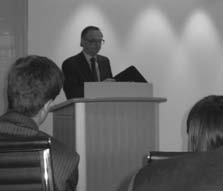
sPEAkEr: mr. Justice Ian binnie, Supreme Court of Canada
toPiC: The evolution of the Place of Aboriginal Peoples in the Constitution of Canada
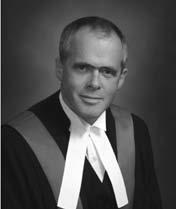
Justice Ian Binnie joined the Supreme Court of Canada in 1998 after years in both the public and private sectors. He discussed some of his experiences working on Aboriginal cases including the Calder case in 1972 that began a process of taking Aboriginal rights seriously. The notion of “recognition,” and specifically, the recognition of historical entitlement, began with Calder and carried through the Delgamuukw and Van der Peet decisions. The cultural shift that occurred in Canada as a result of the Constitution Act, 1982 is what led to the more current view of reconciliation and a broader accommodation between aboriginal and nonaboriginal peoples. He referenced the line of cases that facilitate accommodation such as Taku River and Haida Nation where the doctrine of the Honour of the Crown emerged. This notion, broad and flexible in design, is able to put pressure on all sides to form
Section Chairs
SPOTLIGHT
an agreement that each can live with. Following Justice Binnie’s presentation, members in attendance asked questions about a variety of matters.
MEEtiNg: April 2, 2009
sPEAkEr: Joyce bradley, QC
toPiC: lawyers’ role as Counsel in mediation
The Nanaimo Mediation Group and the Nanaimo ADR and Family Law Sections heard Ms. Bradley discuss how successful mediation depends on both lawyers and mediators working as a team. Ms. Bradley who retired from her law practice in 2006 after restricting her practice to mediation activities since 1989 has mentored for the Small Claims Court Mediation Practicum Program, the Family Mediation Practicum Project, CoRe at UBC, and the Child Protection Mediation Program. Her approach is best described as interest-based mediation. She tries to remain aware of the potential for change, growth and creativity in settlement agreements as part of a satisfactory resolution of legal issues. She listed several ways lawyers can assist in mediation: work with the mediator to design a specific process tailored to the client’s individual needs; prepare and advise the client before, during and after mediation on the issues; and ensure all the relevant information is on the table ahead of time such as accurate lists of assets.
Kenneth N. Burnett
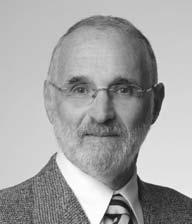
Ken burnett, a senior partner at miller Thomson llP, has been a dedicated Chair of the Air and Space law Section for more than fifteen years. He is past Chair of the Wills and Trusts –vancouver Section and the national CbA Air and Space law Section. mr. burnett is also actively involved in advising not-for-profit groups and presently is on the b.C. law Institute Committee recommending changes to the SocietyAct of b.C. An author and speaker, mr. burnett has written: buyingand SellingAircraftinCanada; unincorporated business Associations (negotiating and Drafting major business Agreement) and TheSet-upand maintenance of Charities and not-For-Profits. over the years, mr. burnett has provided strategic advice on a number of major commercial transactions, including those relating to aviation matters, joint venture agreements, commercial financing, taxation, transportation, and wills and estate planning.
Adr – NANAiMo ANd FAMily lAw – NANAiMo (JoiNtly)
mr. Justice Ian binnie
lAboUr lAw
MEEtiNg: April 27, 2009
sPEAkErs: John Kinzie, Allan black, QC, and Tom roper, QC
toPiC: ethical Issues in the Practice of labour law
The role of counsel and adjudicator in dealing with unrepresented parties was addressed by Mr. Kinzie, a well-respected arbitrator and former Chair of the Labour Relations Board. Mr. Kinzie also explained the ethical obligations that arise with respect to the exclusion of witnesses, witnesses under crossexamination and re-examination, as well as the role of arbitrators as mediators. Union counsel, Allan Black, QC, of Black Gropper discussed the importance of honouring solicitor client privilege. He also discussed the obligations of counsel when a witness offers false evidence. He addressed the importance of excluding grievance discussions from evidence at hearings, and he spoke to the importance of identifying the
it’s coming this month!
Check your “inbox.” The 2009-2010 Section enrolment form will be circulated to all b.C. lawyers in June. Choose from 71 Sections throughout the province. A reminder – attendance at Section meetings in-person, by teleconference or Webinar counts toward your mandatory professional development requirements. CbA membership is a prerequisite to participate.
instructing client clearly and early when starting a new file. Employer counsel, Tom Roper, QC, of Roper Greyell addressed counsel’s ethical obligations with respect to pre-hearing disclosure and explained counsel’s duty to review all of the documents related to a matter (and not just those initially provided by the client), so as to ensure that full disclosure is provided. Mr. Black added that it is the obligation of counsel to address the demand for disclosure when it is made, and pointed out that late disclosure, or partial disclosure may amount to unprofessional conduct in that such conduct often results in unnecessary adjournments and delay, and represents a failing in counsel’s ethical obligations to ensure the proper functioning of the tribunal. Mr. Roper also spoke about the requirement under the canons and codes of legal ethics to defend the client’s interests within the law and within moral and ethical standards; and about ethical considerations in negotiations. Mr. Roper also spoke to the counsel’s ethical obligations when making legal arguments. He referred to the Canons of Legal Ethics that require counsel to avoid misrepresenting the law or the facts, and to avoid sharp practice. BT
More section info for Members
In an effort to improve your access to information online, we have provided links to archived articles of interest in barTalk and CbA Practicelink on your Section homepage.
Civil litigAtioN – vANCoUvEr
MEEtiNg: April 8, 2009
sPEAkEr: The Honourable Chief Justice Donald brenner, Supreme Court of b.C.
toPiC: update from the Supreme Court of british Columbia
The Chief Justice provided an update on new initiatives being undertaken by the court as well as issues that are facing the court. Rule 37B had been recently introduced, which expanded the scope of trial judges’ discretion with respect to costs that are continued to be monitored by the Rules Committee. He noted that the number of cases started this year remains constant, at approximately 14,000 but the cases going to trial since 2006 have increased yearly. Increased areas include personal injury (ICBC) and insolvency cases. Chief Justice Brenner commented on the use of expert witnesses where expert opinion isn’t necessary or multiple experts are too partisan. On the topic of electronic discovery, he queried whether we need e-discovery rules in British Columbia but suggested that the B.C. Supreme Court consider issuing a practice directive regarding e-discovery. Due to vacancies on the Supreme Court and the Court of Appeal, along with retirements have bumped trials and long hearings lately. A question and answer session followed Chief Justice Brenner’s presentation.
Equity and diversity in the Profession
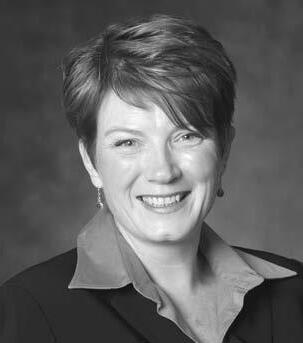
The practice of law has its challenges. For me, those challenges have been enormous because I am a female lawyer with a severe hearing disability and no sign language skills. My quest for lawyers who are hard of hearing to have auditory access to our profession has made me a pioneer in the field. Real-time reporting is an easy way to access oral communication but it is expensive. Consequently, I provide my own accommodation, an FM system, which enables me to hear spoken words at meetings and court proceedings. My FM system consists of two hearing aids, a remote and an FM receiver microphone. I place my FM receiver microphone near the person talking and it transmits his or her voice wirelessly to the FM receiver in my hearing aids. This blocks out all background sounds and reduces the distance that sounds must travel to my ear, which provides me with much better speech understandability. Manufactured by Phonak of Switzerland, it costs $8,000 and lasts about five years.
marla Gilsig barrister and Solicitor
Fortuitously, a week later, the Western Institute for the Deaf and Hard of Hearing (“WIDHH”) notified me of my acceptance into the B.C. Government’s Equipment and Assistive Devices – Give Away Program (“EADGAP”). WIDHH’s Henry Lam, Registered Audiologist, used my one-time grant to purchase a new FM receiver microphone for me. Then, Mr. Lam coached me on how to connect my FM receiver microphone to the room’s audio amplification equipment. The research shows that there is limited use of FM systems in the adult population because of the considerable coaching required to use such apparatus.
About three times per year I attend CBABC’s Provincial Council meetings in my capacity as Chair of the General Practice, Solo and Small Firm Section for the Lower Mainland. About 150 lawyers attend these meetings, which take place in a conference room in the Delta Hotel in Richmond. Before the meeting begins, I place my FM receiver microphone on the podium next to the room’s microphone. This allows me to hear the lawyers who speak into the podium microphone but not the lawyers who speak into the other four microphones located throughout the room. Recently, CBABC’s sound technician advised me that for optimum hearing I should connect my FM receiver microphone to the room’s audio amplification equipment.
At CBABC’s Provincial Council meeting on March 7, 2009, the sound technician connected my FM receiver microphone to the meeting’s audio amplification equipment. Using my FM system in this manner greatly increased the speech intelligibility of all the voices for me. I could hear the words spoken whether the individual used the podium microphone or one of the other four microphones. The experience was even more memorable because one of the speakers was the late Honourable Judge Stansfield, then Chief Judge of the Provincial Court of B.C.
On May 5, 2009, I appeared in the Provincial Court of B.C. in North Vancouver and arranged to have the court clerk connect my FM receiver microphone to the courtroom’s audio amplification system. I could hear the judge and the participants much better provided they spoke directly into the microphone.
I am grateful to CBABC, WIDHH, the B.C. Government and the Provincial Court for working with me to achieve this milestone. We have improved access to the legal profession and added value to my CBA membership. BT
women & the law
Mabel French: British Columbia’s First Woman Lawyer
Iwould like to pass on a bit of B.C.’s legal history from 1911: the story of the determined fight of Mabel Penery French to gain the right, as a woman, to practise law in this province.
The following is excerpted from the book, Russell & DuMoulin, The First Century, 1889-1989, by Christine Mullins and Arthur E. Harvey, a copy of which I inherited from my late father, Theo DuMoulin. The book is a history of the Vancouver law firm Russell & DuMoulin (now Fasken Martineau DuMoulin LLP), and its predecessors, including the firm of Mabel French’s time, Russell, Russell & Hannington.
In the first decade of the 20th century, the British Columbia Bar was an entirely male preserve. This comfortable situation was upset in 1911 by a young woman, a friend of the Russell family from New Brunswick: Miss Mabel Penery French. Miss French, an only child, was born in 1881 in Saint John, New Brunswick, and graduated from the University of King’s College, Windsor, Nova Scotia, in 1902. Uncertain as to whether she should become a lawyer or a doctor, she managed to get a footing in a law office by learning shorthand, and became proficient in reporting trials. After a few months with the law firm, she entered King’s College Law School in Saint John, and secured a Bachelor of Civil Law degree in June 1905, the first woman to do so.
Joe Russell, among others, supported her 1906 application for admission to the profession in her home province, but the New Brunswick Benchers could not determine if she qualified as “a person” under the Legal Professions Act. Appealing to the Supreme Court of New Brunswick for a judgment, the court decided she was not.
Miss French was not to be denied. She purposely abstained from paying a number of bills. When the lawsuits came, she met them with the novel defence that, as she was not a person, she could not be sued for debt. The defence failed, but she accomplished her purpose of making one court effect a reductio ad absurdum of another’s judgment. This, and the storm of protest that had followed the Supreme Court’s
judgment, forced the province’s hand. In 1907, the legislature passed an amendment allowing qualified women to be called to the Bar.
In 1910, Miss French decided she preferred a career in Vancouver. She found a place in the Russell firm and, in May 1911, wrote to the British Columbia Law Society requesting permission to write the exams for call and admission that June. The Law Society, which had not yet formally considered the question of allowing “a modern Blackstone in petticoats” to enter the profession, simply failed to reply.
Fearing for her chances in the June exams, Miss French sent a telegram to the Law Society: “Am I to understand that you refuse to accept my application for admission and call and to write at approaching examinations? Please wire directly at my expense, without delay.” In a letter, she expressed her surprise that the Law Society had not submitted her papers to the credentials committee as was its duty. Only in July, after an interview by the Benchers and a submission by Bob Hannington, was she told that it was the opinion of the Benchers that they had no power under the Legal Professions Act to admit ladies to the practice of law in this province....
The Benchers had not counted on the determination of Miss French, nor of Russell, Russell & Hannington, who stood solidly behind her. Filing mandamus proceedings, Joe Russell hoped that the Law Society would, as had its New Brunswick counterpart, absorb the cost of the legal undertakings— but the request was refused. The firm paid for the proceedings, losing in the lower court. Undeterred, French and Joe Russell took the case to the Court of Appeal, where the Benchers of the Law Society engaged L. G. McPhillips on their behalf. The case, in the Benchers’ opinion, was “apparently taken more out of a spirit of advertising rather than with any hope of success,” and would not “be a long affair.”
This article was first published in The Scrivener Magazine (Winter 2000 Volume 9 Number 4). To read the full article go to uuu www.cba.org/bc/ bartalk_06_10/06_09/guest_dumoulin.aspx.
Choose your Paper wisely
Arecent issue of BarTalk spoke about the virtues of the Forest Stewardship Council (FSC) certification. The Association of B.C. Forest Professionals wanted members of the Bar Association to know that there are three major sustainable forest certification schemes in Canada and each has labeling programs used in verifying the origin of the raw materials included in forest based products, such as paper.
Jonathan lok, rFT, AbCFP President
In recent years, there has been a focus on the environment and socially responsible management of the earth’s resources. Many people are looking more closely at the origins of goods that they’ve blindly consumed in the past. Wood products, notably paper, fall into this category. In the past, it may have been difficult for consumers to determine if the paper they were using was produced from fibre sourced from lands that were managed in an environmentally and socially responsible manner. Forest management certification standards and their associated chains of custody can help.
In Canada, 84 per cent of working forests are certified through one of three forest management certification standards. These standards equally seek to ensure responsible and sustainable forest management and include the Canadian Standards Association (CSA), Forest Stewardship Council (FSC) and Sustainable Forestry Initiative (SFI). Of the nearly 146 million hectares of certified forests in Canada as of December 2008, 57 per cent are certified to the CSA standard while 19 per cent and 27 per cent are certified by FSC and SFI standards, respectively.
Forest management certification is a voluntary way for organizations and landowners to illustrate their commitment to responsible forest management.
Although the three standards have similarities and differences, all programs are endorsed by various governmental, environment and industry groups. CSA and SFI are endorsed by the Programme for Endorsement of Forest Certification (PEFC), the largest forest certification program in the world. FSC has support from various environmental non-governmental organizations such as the World Wildlife Fund and Greenpeace.
All three standards were developed by not-forprofit organizations and require applicants to be audited by third-party registrars to confirm adherence to the applicable standard. These audits confirm the applicants’ commitment to the protection and maintenance of forest, soil and water resources, wildlife, biodiversity and reforestation of harvested lands. Public disclosure and the rights and interests of Aboriginal peoples are important aspects.
There are several ways to determine if you are purchasing certified paper and other wood products: • Look for PEFC, FSC and SFI logos and marks on products you currently use.
• Search for the terms CSA, PEFC, FSC and SFI on the websites of major retailers who sell paper products.
• View lists of known suppliers on www.csainternational.org, www.fsccanada.org or www. sfiprogram.org.
The CSA, FSC, and SFI have nuances that differentiate them from one another, yet all have the overarching goal to identify and recognize forest products sourced in a sustainable manner. Using certified products shows that you care about sustaining Canada’s natural resources and enhancing the level social responsibility of your organization. BT
gUE st Jon ATHA n lo K
Commitment to transparency
Almost a decade ago, the first phase of adult guardianship law reform came into force in B.C. The new guardianship statutes received a lot of attention in the legal community and beyond.
Far less noticed was the coming into force at the same time of a new corporate statute for the organization formerly known as the Public Trustee. The Public Guardian and Trustee Act (PGT Act) contained new, substantive investigatory powers to protect vulnerable British Columbians. But there was another important innovation in that Act – a change not about what but rather about how Part 3 of the PGT Act established a new scheme of accountability for the Public Guardian and Trustee (PGT). Stimulated by this statutory change, the PGT has sought to transform from an organization perceived as secretive and inaccessible, to one that invites scrutiny, input and review. The legislation requires the PGT to adopt transparent planning and reporting practices that are among the most stringent of any public body in B.C. Annually, the PGT develops service delivery plans that contain objectives, activities, performance targets and financial forecasts. The plan is subject to the approval of the Attorney General and Treasury Board.
Jay Chalke, QC Public Guardian and Trustee of british Columbia www.trustee.bc.ca mail@trustee.bc.ca
Every year the PGT includes a performance statement on whether the performance targets established some 18 months earlier were met. Did we do what we said we were going to do? That performance report is then audited – a unique obligation in B.C. law.
This requirement of an audited performance statement represented a huge challenge to us – we were unfamiliar with such a high level of scrutiny. It was daunting to know that the PGT’s failures, as well as its successes, would be out there for all to see.
However, it was the perfect opportunity to transform our corporate culture. We sought to live the spirit of the law by providing a lot of information about our strengths and weaknesses as well as a scorecard on our achievements. In 2007/08, for example, our performance report comprised some 50 pages, detailing how we did on 23 performance targets. In case you’re keeping score, we reached 21 of those targets – many targets are related to the legal community.
This openness, while intimidating at first, has boosted our organization’s confidence in the services we deliver, sharpened our thinking about what we seek to achieve on behalf of clients and ensured that we remain focused on our objectives.
So that’s planning – what about reporting?
The PGT must deliver an annual report to the Attorney General that details performance for the previous year. The report is tabled in the Legislature, posted on the PGT’s website, and contains three audited statements: operations, trust administration and performance.
The third audited statement – the performance audit – is the high water mark for transparency.
Could we be more transparent? Absolutely. That’s where you come in. We need to hear from you about whether our annual reporting helps you serve your clients. The next time you read our annual report, take a minute to give us your honest opinion. Send your feedback to mail@trustee.bc.ca. It is only by hearing from lawyers that we can make our reporting more useful to the legal community. BT
law week 2009
Access to Justice: Public Confidence in the Justice System
Fort st. John, kamloops and kelowna open house
The 3rd annual law Day events in Fort St. John were a great success! Left photo: one notable event was the mock trial of Goldilocks presented by students from Ambrose elementary School. not only did the event draw a crowd but it provided the class with an excellent introduction to the criminal justice system. Middle: Kamloops mock trial. Right: Kelowna open House.
Nanaimo Mock trial
Among other events, free law seminars and a question and answer period with a Supreme Court Judge, nanaimo law Day was as an excellent opportunity for the public to learn about the justice system in Canada. The mock trial, regina v. The big bad Wolf, and free tours of the courthouse served to make it a fun day for the whole family!
vancouver open house
In vancouver, law Day is accompanied by a week of activities including the barry Sullivan law Cup Public Speaking Contest and a 5km Fun run. The law Day events at the vancouver Public library included free law classes, displays from a variety of legal organizations and the highly entertaining mock trial regina v. Frankenstein. It concluded with a very successful free public forum on Public Confidence in the Justice System
Fun run and barry sullivan law Cup Public speaking Contest
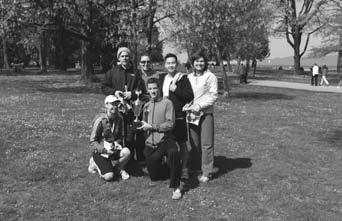
Left and middle: more than 100 legal professionals and their friends and family participated in the 2009 5km Fun run at locarno beach Park in vancouver. The winning “Fastest large legal organization” for the second year in a row was Fasken martineau Dumoulin llP. The “Fastest Small legal organization” was edwards,Kenny& bray llP The “Fastest male and Female” honours went to robert Durrant of richards buell Sutton llP and Kristi Zychowka of owenWiggsGreen& mutala llP. Proceeds from the Fun run benefit law Week and the Greater vancouver Food bank. Right: on April 16th, students in Grades 10-12 from across the province gathered at the vancouver Art Gallery to speak on the theme PublicConfidenceintheJusticeSystem at the 2009 barry Sullivan law Cup Public Speaking Contest. With more than 20 participants, the competition was tough and all students did an excellent job. The winner of the competition and a scholarship was Anna Prokofieva of Sir Winston Churchill Secondary.
B.C. Law Week events took place with great success in Cowichan Valley, Fort St. John, Kamloops, Kelowna, Nanaimo, New Westminster, Terrace, Tri-Cities, Vancouver and Victoria. The 2009 theme, Access to Justice: Public Confidence in the Justice System, garnered a great deal of attention from the public and the media. It was another successful year for Dial-A-Lawyer Day which was held on Saturday, April 25, 2009 from 10:00 a.m. to 2:00 p.m. There were 29 lawyers who volunteered to provide up to 15 minutes of free legal information assisting 185 people in five different areas of law – family, tort/MVA, immigration, criminal, and wills and estates. S.U.C.C.E.S.S and the Association Juridique Francaise participated in Dial-A-Lawyer Day. Law Week gives the public an opportunity to learn more about the justice system in Canada through informative and entertaining events for all ages. Law Week would not be possible without the hard work and determination of our volunteers and partner organizations. For more information on all of the events that took place across the province please visit www.bclawweek.org.
law week sponsors & Partners
interview with george w. hungerford, oC, qC
Olympic gold medal winning rower
Canada’s only gold medal at the 1964 Olympic Summer Games! Together with rowing partner Roger Jackson, George Hungerford’s victory in the coxless pairs event was an incredible feat of perseverance in the face of adversity. Hungerford attributes his exceptional athletic achievements to mental toughness, physical fitness and the ability to think clearly during times of stress; traits that have also been key to his distinguished career in law. Called to the Bar in 1969 and practising as a corporate and business lawyer, Hungerford’s incredible strength of will is almost legend among his colleagues.
Competed in 1964 Summer olympics (Tokyo)
Sport: rowing (pairs)
Result: Gold medal
Called to b.C. bar, 1969
Practice area: Corporate and business law
Current affiliation: George W. Hungerford law Corporation
In 1963, Hungerford was successful in securing a place on the University of British Columbia’s men’s eights, a team that was regarded as Canada’s best hope for Olympic rowing gold. Just three months before the opening ceremony, he fell ill with mononucleosis and was forced to give up his place on the team. Hungerford was replaced on the men’s eight by Wayne Petty who in turn left Roger Jackson without a partner in the pairs event. While still recovering from his illness, the opportunity to train with Jackson gave Hungerford new hope of competing in Tokyo – if only the two men could demonstrate Olympic calibre with just six weeks of training under volunteer coach David E. Gillanders, QC. It was an outside chance with Hungerford being in poor health and never having rowed a race in the men’s pairs. But being “young with a dream,” he was not about to pass up a potentially life changing opportunity.
The two young men performed extremely well in their short time practicing together and joined Canada’s Olympic team as alternates. Without a shell, until they borrowed one from the Americans, they set themselves the ambitious goal of reaching the pairs finals. Hungerford and Jackson emerged with the fastest time from their qualifying leg even though it was the first race as a pair.
“Roger and I both had a lot of experience. The problem is it sometimes takes years for a pair to gel and to find that harmony because really good pairs have to develop a telepathic way of communicating… we were able to put it together in three weeks.”
Landing at the top of the qualifying heats got them straight to the gold medal round and provided Hungerford with some muchneeded rest. All Canadian rowing hopes rested on this “unknown dark horse pair” as no other Canadian rower making it past the qualifying stage. Against the odds, Hungerford and Jackson took the gold medal and earned their place in Canadian sporting history.
When asked about the link between his success in athletics and the practice of law, Hungerford says, “Mental toughness is the ability to perform consistently at high levels through all times and all challenges of personal and professional pressure. I came out of it (the Olympic experience) with a lot more self-belief. I approach life and career with the same kind of mental toughness I required for success at the Olympics.”
To hear the complete George Hungerford interview please visit www.cba.org/bc website. BT
gUE st Geor G e W. Hun G er For D , o C, QC
every effort is made to ensure the accuracy of the information provided to you in this article but the information should not be relied upon. lawyers should refer to the specific legislative or regulatory provision. You will see a reference in some cases to the number of the bill when it was introduced in the House. This number may be different from the chapter number of the new Act which is quoted after the title of the Act and which is the proper citation for the Act. The bill number has been given to make it easier for you to note up the bills you may have in your library.
CUrrENt FroM FEbrUAry 25 to MAy 5, 2009
legislative update is provided as part of the CbAbC legislative and law reform program. It is a service funded by CbA membership fees, and is, therefore, provided as a benefit of CbA membership. The full version of legislative update is now only published online and available to CbA members exclusively at www.cba.org/bc.
bUsiNEss PrACtiCEs ANd CoNsUMEr ProtECtioN (PAydAy loANs)
AMENdMENt ACt, 2007, s b.C. 2007, C. 35 (bill 27) Act, other than sections 112.12 to 112.15 as enacted by section 4 and section 189(4)(f.6) of the Business Practices and Consumer Protection Act as enacted by section 8, is in force November 1, 2009
E-hEAlth (PErsoNAl hEAlth iNForMAtioN ACCEss ANd ProtECtioN oF PrivACy) ACt, s.b.C. 2008, C. 38 (bill 24)
Section 30 is in force June 30, 2009
ENviroNMENtAl (sPECiEs ANd PUbliC ProtECtioN) stAtUtEs AMENdMENt ACt, 2008, s b.C. 2008, C. 33 (bill 29)
Sections 6, 8(b) and 9 are in force March 6, 2009.
Section 15(a) is in force March 6, 2009. Sections 8(a) and (c), 14, 15(b), 17 to 27, 30 to 32 and 36 are in force June 15, 2009
FiNAl AgrEEMENt CoNsEqUENtiAl AMENdMENt ACt, 2007, s b.C. 2007, C. 36 (bill 41)
Sections 1 to 64, 65, 66 to 69, 71 to 81, 88 to 90, 92 to 96, 97, 98, 99, 100 to 104, 105 to 120, 121 to 125, 127 to 155, 156 to 163, 164.1 to 178.3 and 179 to 182 are in force April 3, 2009
ForEst ANd rANgE stAtUtEs
AMENdMENt ACt, 2007, s b.C. 2007, C.18 (bill 18)
Sections 1, 4, 13(b) 17, 26, 42, 49, and 51 and section 66(a) insofar as it enacts paragraphs (a.1), (a.2) and (b.2) of section 151(2) of the Forest Act are in force March 6, 2009
ForEst ANd rANgE stAtUtEs
AMENdMENt ACt, 2008, s b.C. 2008, C. 4 (bill 8)
Sections 33 and 35 are in force March 6, 2009
grEENhoUsE gAs rEdUCtioN (EMissioNs stANdArds) stAtUtEs AMENdMENt ACt, 2008, s b.C. 2008, C. 20 (bill 31)
Sections 14 and 23 are in force March 6, 2009
hEAlth stAtUtEs AMENdMENt ACt, 2008, s b.C. 2008, C. 34 (bill 26)
Section 11 is in force March 2, 2009
Chief Judge hugh stansfield blood drive 2009
In Honour of Chief Judge Hugh C. Stansfield, the Department of Justice and lawson lundell llP hereby issue the following CHAllenGe to all law firms in this fine province:
blood ANd sAvE livEs!
MAA-NUlth First NAtioNs FiNAl AgrEEMENt ACt, s b.C. 2007, C. 43 (bill 45)
Sections 19 to 30 are in force April 3, 2009
MisCEllANEoUs stAtUtEs
AMENdMENt ACt (No.2),2008, s b.C. 2008, C. 42 (bill 43)
Sections 73(b) to (d), 75, 76 and 85(a)(ii) are in force May 1, 2009
Motor vEhiClE (bANNiNg sMokiNg whEN ChildrEN PrEsENt)
AMENdMENt ACt, 2008, s b.C. 2008, C. 22 (bill 36)
Act is in force April 7, 2009
ProtECtEd ArEAs oF british ColUMbiA (CoNsErvANCiEs ANd PArks) AMENdMENt ACt, 2008, s b.C. 2008, C. 26 (bill 38)
Section 9(a) insofar as it establishes the Broughton Archipelago Conservancy, Burdwood Group Conservancy and Polkinghorne Islands Conservancy is in force March 13, 2009. Section 10 is in force March 6, 2009
PUbliC hEAlth ACt, s b.C. 2008, C. 28 (bill 23)
Act, except section 128(b) and (c) is in force March 31, 2009
trAdE, iNvEstMENt ANd lAboUr Mobility AgrEEMENt iMPlEMENtAtioN ACt, s b.C. 2008, C. 39 (bill 32)
Sections 7 to 24, 30 to 34 and 71 to 75 are in force March 30, 2009
trEAty First NAtioN tAXAtioN ACt, s.b.C. 2007, C. 38 (bill 42)
Sections 3 to 8 are in force April 3, 2009
tsAwwAssEN First NAtioN FiNAl AgrEEMENt ACt, s.b.C. 2007, C. 39 (bill 40)
Sections 1 to 3, 5 to 9, 11 to 16 and 18 to 20 are in force April 3, 2009
workErs CoMPENsAtioN AMENdMENt ACt, 2009, s b.C. 2009, C. 7 (bill 8)
Act is in force March 18, 2009
Criminal lawyers gather in victoria for a Conference on Evidence
b.C.’s criminal lawyers are invited to attend the 2009 national Criminal law Program July 6-10, 2009 in beautiful victoria.
This year’s program, presented by the Federation of law Societies of british Columbia, offers comprehensive coverage of the law of evidence. Topics include:
• rules of evidence
• Similar Act evidence
• Special evidentiary rules
• The Identification of Hearsay
• Statement-Taking
• Hearsay
• Privilege Against Self-Incrimination
• lectures on ethics
• exclusion of evidence in violation of the Charter
Presenters represent legal professions from across Canada and include viewpoints from the Crown, defence and judiciary. They will provide up-to-date information on the latest evidentiary rules and topics.
The law Society of british Columbia has approved this program for 20.5 hours of credit toward a practising lawyer’s Continuing Professional Development.
For more information, visit the Federation of Law Societies’ website uuu http://www.flsc.ca/en/lawSocieties/criminallaw.asp
2009 CbAbC Fall Conference CbA in lA
November 20-22, 2009
don’t be disappointed – make a deposit to secure your attendance at the Conference.
Join other CbAbC members from across british Columbia in los Angeles, California at this year’s Fall Conference. mingle with members of the bench, chat with colleagues and pick up some tips on improving your practice in the relaxed surroundings of los Angeles. be sure to look for the enclosed brochure for the conference agenda, speaker list and registration details in this issue of barTalk.
You can pay a deposit of $200 now and pay the additional balance of the early bird registration fee of $695 (total of $895) by September 30, 2009. by paying the deposit, you will ensure that you do not miss out on this limited registration event.
For details on how to register with a $200 deposit, call Jennifer Weber at the CbAbC office at 604-687-3404 and register today!
Annual Practice declarations
The law Society of b.C. requires each member to complete an annual Practice Declaration because:
• by filling out the forms, the Society can ensure lawyers are properly reporting information as required by Society rules.
• The Society gathers statistical information relating to a lawyer’s practice in order to track trends. From these statistics, the law Society is better able to develop targeted programs.
There are two different Declarations, depending on your practice. A lawyer who works for a government department, a corporation other than a law firm, a society or trade union is required to fill out the Declaration for Insuranceexempt lawyers. Those in private practice are required to fill out the Schedule 2 Individual lawyer’s Practice Declaration (which is now attached to the Trust report).
lawyers who fail to complete the declaration will not be issued a practicing certificate. Filing deadlines vary, and the Society will send out notifications to individual lawyers as the deadline approaches. The Declarations take only a few minutes to complete, and can be accessed online at www.lsbc.org under member Services.
b ranch and b ar Calendar (see cba.org/bc for details)
June - July 2009
June 5
June 10 & 24
June 12
June 15
June 15
June 15
June 17
Vancouver Bar Association Event: Devil’s Advocate III (The Vancouver Art Gallery)
Lawyers Assistance Program: Boundaries for Lawyers
Vancouver Battle of the Bar Bands (Commodore Ballroom, Vancouver)
Provincial Court of B.C. Welcoming Ceremony
Lawyers Assistance Program Workshop: Women’s Success Group
Understanding and Managing High Conflict Personalities in Legal Disputes (Ambrosia Conference Centre, Victoria)
Joint Criminal Justice – Vancouver Section and PD Event
June 18 CBABC/VBA 13th Annual Golf Tournament (University Golf Club)
June 19
Lawyers Assistance Program 9th Annual Gratitude Lunch (Law Courts Inn Restaurant, Vancouver)
June 20 CBABC Provincial Council (Delta Airport Hotel, Richmond)
June 25
June 25-26
July 6 & 20
July 8
July 9
Second Annual Work Life Balance Award
Sixth Annual North American South Asian Bar Association Convention (Hyatt Regency, Vancouver)
Lawyers Assistance Program Workshop: Women’s Success Group
Lawyers Assistance Program: Boundaries for Lawyers
New Westminster Bar Association and Fraser Valley Bar Association Golf Tournament (Guildford Golf & Country Club, Surrey)
honourable hugh Campbell stansfield
The Honourable Hugh C. Stansfield, Chief Judge of the Provincial Court of british Columbia, died may 7, 2009 at age 56, having lived a life richly blessed by family, friends and professional opportunity. Thirty three years of marriage with Jo-Ann provided the structure, fun and purpose of family, from which sprung Hugh’s greatest joy and pride in life, his four beloved sons: Colin (Connie), David, Patrick (Cara), and matthew.
After ubC law, Hugh practised law in vancouver for 13 years until being appointed a judge of the Provincial Court in 1993. Hugh loved judging, and never lost sight of what a privilege it is to serve the public in that role. He served the court in many different capacities, including Associate Chief Judge 1997-2001. Hugh particularly valued his relationship with the national Judicial Institute, and enjoyed offering leadership in continuing judicial education. but his passion was his strongly-held belief in the need for substantial systemic reform to the justice system; his belief that the public deserves more meaningful access to justice emphasizing simple, practical problem-solving and community engagement. Hugh was a pioneer in Canada in opening the court to the media, and providing opportunities for public concerns to be heard. In July 2005, Hugh was appointed Chief Judge of the Provincial Court, an opportunity for which he was very grateful, hoping he might have some small influence in promoting a new vision for justice for british Columbians. Special thanks to Dr. Cindy Toze and Dr. Clay Smith, and all the medical and nursing staff of the vGH leukemia/bone marrow transplant team, whose care has been remarkable.
Practice tips
A rECEssioN CoPiNg gUidE For CANAdiAN lAw FirMs
The legal profession is feeling the effects of the economic downturn, but there are steps you can take to lessen the impact. From renegotiating what you pay for office supplies to revaluating compensation, check out the top 10 tips for survival, including a checklist for your firm.
Also this month on CbA Practicelink:
• Discover, and market, Your niche law Practice
• Where Do You rank? Client-based lawyer rating Websites
• Ask the Coach: Increase the roI of Your marketing efforts
All this and much more uuu www.cba.org/ practicelink
ModEl E-disCovEry doCUMENts
The ontario e-Discovery Implementation Committee has released eight model e-discovery precedents, as well as additional documents providing guidance on e-discovery best practices.
CBA President Guy Joubert met with federal Justice Minister Rob Nicholson on April 29 to discuss a range of issues of mutual concern. Joining the CBA President were Jennifer Babe, Past Chair, National Business Law Section and David Fraser, Vice Chair, National Privacy and Access Law Section.
Jennifer Babe informed the Minister of continuing problems with s. 347 of the Criminal Code. Intended to fight loan-sharking, the criminal interest rate provisions are used more often to thwart legitimate business contracts. David Fraser presented the CBA’s views on the need to reform the Privacy Act, to better protect Canadians’ privacy in the electronic age.
AMENdMENts to ACCEss to iNForMAtioN ACt
The CBA expressed its support for proposed changes to the Access to Information Act (ATIA) as the most important vehicle for citizens’ access to government records. The CBA urged the government to consider reinstating or even expanding a central tracking system for access requests. “There is a compelling public interest in knowing that the ATIA is as effective and efficient as possible in meeting the needs of the public,” says the CBA’s submission.
David Fraser and Priscilla Platt of the National Privacy and Access to Information Law Section presented the submission to the federal government on May 6.
The CBA has called on the government of Canada to publicly denounce and take immediate steps to address the rapid deterioration of the rule of law in Fiji, where the constitution has been suspended, members of the judiciary have been dismissed, and the military has taken control.
In a letter to Foreign Affairs Minister Lawrence Cannon on April 16, the CBA expressed its support for the April 13, 2009 statement of the Commonwealth Lawyers Association that calls on the rulers of Fiji to immediately reinstate the constitution. Since that date, Fiji’s rulers have further undermined democracy and the rule of law.
Letter to Foreign Affairs Minister Lawrence Cannon uuu www.cba.org/CBA/submissions/pdf/09-21-eng.pdf
Statement of the Commonwealth Lawyers Association uuu www.cba.org/CBA/submissions/pdf/cla_statement.pdf
CoNtiNUiNg lEgAl EdUCAtioN
Aboriginal Law Conference
June 12 - 13, 2009 in Victoria uuu www.cba.org/CBA/CLE/ main/Aboriginal_Law_09.aspx
Elder Law Conference
June 12-13, 2009 in Kingston, Ont. uuu www.cba.org/CBA/CLE/ main/Elder_Law_09.aspx
every issue of barTalk highlights regular discounts available to members from a range of national and regional preferred suppliers. Seasonal promotions and special offers to members are circulated weekly via CBABC News & Jobs. Don’t miss any promotion by subscribing to the member services e-bulletin: email members@bccba.org or fill in and fax the sign-up box below to: 1-877-6699601 (toll-free) • 604-669-9601 (Lower Mainland).
TeCH TIP: member services are available 24/7 via the CbAbC website. To access member services on the site, log onto www.cba.org/bc, then choose member Savings from the drop-down list under Membership on the Member Savings page, you will find links to the suppliers highlighted below, plus many more.
PNE Playland returns
As of March 30, regular Playpasses (must be more than 48 inches tall) can be purchased at the special discounted CbA rate of $19.05 before taxes. Compared to the gate price of $26.95, that’s a 36 per cent saving. TeCH TIP: Select Youth on the Member Savings page.
vancouver white Caps – season Just getting started!
Need to get in shape for the summer?
There is still time to get that beach body you have always wanted. Take charge of your personal health and wellness and make the commitment. The downtown YWCA offers CbA members and their partner/spouse a competitive workplace/wellness package beginning at $51.50/month (after one-time joining fee). now is the time to take advantage of your member discounts. TeCH TIP: Select Health and Wellness on the Member Savings page.
summer Adventures
Great Sight Seeing and Adventure Savings! Sun Peaks: 15 per cent discount on Sight Seeing lift Passes, SilverStar: 15 per cent discount on Scenic Chairlift rides and Paintball, Whistler Blackcomb: Discounts on PeAK 2 PeAK Alpine experience at 436 m or 1400 ft above the valleyfloor,thePeAK 2 PeAKisthehighestliftofitskind. Italsoboaststhelongestunsupportedspanat 3.024km(1.879mi),andwhencombined with the Whistler villageGondolaand Solar Coaster and Wizard express on blackcomb the PeAK 2 PeAK Gondolacompletesthelongest continuousliftsystemin the world).
last year’s uSl First Division Champions are back and now is your chance to come out and show your local support! member discounts are more than 20 per cent off of regularly priced tickets. TeCH TIP: Select Sports on the Member Savings page.
live Entertainment
upcoming Summer events include leS mISerAbleS: marius and AlTAr boYZ: Apostle. Don’t miss your chance to get tickets now for upcoming fall events! As a CbA member, you will receive a discount of up to 20 per cent at the Stanley Theatre and Granville Island Stage. TeCH TIP: Select Arts and entertainment on the Member Savings page.
Bike Park Savings –Whistler Blackcomb: Discounted tickets valid June 20-Oct 12, Sun Peaks: 15 per cent discount, SilverStar: 15 per cent discount. TeCH TIP: Select Alpine resorts on the Member Savings page.
sign Me Up!
q Yes, please send me monthly updates on the latest CbAbC promotions.
Please complete this form and fax back to 604-669-9601/ toll-free 1-877-669-9601 or sign up by emailing your information to members@bccba.org.
Outlined below is a list of grants adjudicatedattheMarch28,2009 Board of Governors’ meeting. Chair Mary Mouat is pleased to announce that funding totalling $4,443,391 was approved for the following 40 programs, projects and awards:
Funding totalling $3,988,291 was approved for the following 16 continuingprograms:
734,950
CoMMUNity lEgAl AssistANCE soCiEty Operating Expenses 2009/2010
705,900
wEst CoAst ENviroNMENtAl lAw AssoCiAtioN Operating Expenses/EDRF
359,800
UNivErsity oF viCtoriA Law Centre Clinical Program
315,755
PEoPlE’s lAw sChool soCiEty Operating Grant 2009/2010
313,600
b.C. Civil libErtiEs AssoCiAtioN Operating Expenses
297,490 tENANt rEsoUrCE ANd Advisory CENtrE soCiEty Tenants’ Legal Advocacy Program
280,600
b.C. lAw iNstitUtE Operating Expenses
179,650
wEst CoAst doMEstiC workErs’ AssoCiAtioN Legal Advocacy Program 2009/2010
167,550
wEst CoAst lEAF AssoCiAtioN Operating Expenses 2008/2009
143,866 NElsoN CArEs soCiEty Nelson Advocacy Centre 2009/2010
117,060
islANd JAdE soCiEty Legal Advocacy Program
110,000
PovNEt soCiEty PovNet Program
91,200
b.C. FAMiliEs iN trANsitioN Legal Support Services Program
87,670
MosAiC Legal Advocacy Program
62,600
bAttErEd woMEN’s sUPPort sErviCEs Legal Advocacy Program
20,600
UNivErsity oF sAskAtChEwAN Operating Expenses 2009/2010
Funding totalling $150,000 was approved for the following 11 small projects:
15,000
AbbotsFord CoMMUNity sErviCEs soCiEty
Family Justice Education and Support for Fathers: Year 2 Project
15,000
b.C. CoAlitioN oF PEoPlE with disAbilitiEs
Transition Magazine Project
15,000
CANAdiAN rEd Cross soCiEty, lowEr MAiNlANd rEgioN
Global Humanitarian Issues Symposium for Youth Project
15,000
MUltiPlE sClErosis soCiEty, b.C. divisioN Volunteer Legal Advocacy Training Program
15,000
oPtioNs For sEXUAl hEAlth Sex and the Law (Revision) Project
15,000
Pro boNo lAw oF b.C. soCiEty 2009 Non-Profit Law Seminars
15,000
st. PAUl’s ANgliCAN ChUrCh Self-Help Legal Information Project
15,000 thE lANd CoNsErvANCy oF british ColUMbiA
Farmland for Farmers: Succession Planning and Access Agreements Project
15,000
voiCE oF thE CErEbrAl PAlsiEd oF grEAtEr vANCoUvEr
Resource Guide Revision/Reprint: Rights and Responsibilities of People Receiving Home Support Services Project
9,000
dogwood iNitiAtivE Protecting Water and Habitat from Coalbed Methane Development Project
6,000
CANAdiAN iNstitUtE For thE AdMiNistrAtioN oF JUstiCE
The Evolving World of Legal Remedies: 2009 Annual Conference
Funding totalling $162,000 was approved for the two following projects:
87,000
Pro boNo lAw oF b.C. soCiEty Transition to Pro Bono Merger Project
75,000
wEstErN CANAdA soCiEty to ACCEss JUstiCE
Access Justice Transition and Merger Project
Funding totalling $74,350 was approvedforthefivefollowingprojectsundertheLegalResearchFund:
20,000
UNivErsity oF british ColUMbiA Contracting for Biodiversity Conservation in Global Mining Project: Emerging Environmental Law
UNivErsity oF viCtoriA
17,500
The Political Nature and Impact of the Canadian Charter of Rights and Freedoms 14,750
The Role and Regulation of Employment Agencies in the British Columbia Labour Market 14,000
‘To the Exclusion of All Others’: Polygamy, Monogamy and the Legal Family in Canada
8,100
The Promises and Risks of Genetic Information: Potential for Genetic Discrimination in Access to Insurance
Funding totalling $68,750 was approved for six Graduate Fellowshipsfor2009/2010.
For full details of the programs and projectsthatreceivedfunding,please visit the Law Foundation of B.C. websiteatwww.lawfoundationbc.org.
NEw MEMbErs
The CBABC Branch welcomes its newest members! The following new members joined in the months of March and April of 2009:
Regular Members
ANdrEw J. boNd Sangra Moller LLP
Vancouver
dAvid hUNtEr Clark Wilson LLP
Vancouver
siMMArJit MAdAAN Bastion Law Group Nanaimo
Associate
siMoN JohN hArrisoN Brisbane, Australia
Articling Students
EMMA dAy Fasken Martineau DuMoulin LLP
Vancouver
stEvEN MArk doNlEy Clark Wilson LLP
Vancouver
AlEX FiEldiNg Stikeman Elliott LLP
Vancouver
MElANiE hArMEr Lang Michener LLP
Vancouver
JErEMy hEssiNg-lEwis Lang Michener LLP
Vancouver
kENNEth AlAN lANCAstEr
MArk NEighbor Lang Michener LLP
Vancouver
PArvEEN k. NiJJAr McCullough Blazina Dieno & Gustafson
Victoria
kArEN PowAr Lang Michener LLP
Vancouver
ANgElA stolz
Blake, Cassels & Graydon LLP
Vancouver
gEMMA whitEhEAd Lang Michener LLP
Vancouver
bErNiCE woNg
Vancouver
Law Students
kErry birCh
Vancouver
ANdrEw sCott boUChEr
North Vancouver
PAUl robErt EvANs
Vancouver
kylE hAMiltoN
Shawnigan Lake
ANdrEi MiNCov
Victoria
directory 2010 is Coming!
Watch for your Directory listing Proof in the mail in June or request one at data@bccba.org. To advertise, book your preferred area of practice listing, or to pre-purchase a 2010 directory download the order forms at www.bccbadirectory.org.
ClEbC Update
b.C. strAtA ProPErty PrACtiCE
MANUAl wiNs iNtErNAtioNAl AwArd
ClebC is delighted to announce that we have received another Award for Professional excellence from the Association for Continuing legal education (ACleA). The award was given in the best Publications category, for the british Columbia Strata Property Practice manual. The Award for Professional excellence is the top prize; only one is awarded in each category of prizes. The award is one of only 15 annual awards granted to competitors representing more than 300 organizations.
ACleA members are professionals in the fields of continuing legal education and legal publishing. Its annual awards are highly competitive and winning projects represent the highest level of achievement for the staff and volunteers involved.
The manual is the first comprehensive guide to legal practice under british Columbia’s Strata Property Act. The manual provides basic information for those new to strata property law in the province and builds on this foundation to address complex issues.
ClebC is a non-profit organization. our mandate is to provide the legal profession with the highest quality educational programs and resources. We could not carry out our mandate without the generous contributions made by members of the profession. many authors, reviewers, and editors contributed to the british Columbia Strata Property Practice manual. ClebC is grateful to the authors and editorial board for their commitment to the project.
The award will be formally presented at ACleA’s annual meeting in Salt lake City this summer.
For further information about the b.C. Strata Property Practice manual, visit the ClebC website at www.cle.bc.ca.
bar Moves uu
Continued from page 2
Have you recently changed firms or opened a new firm? Send your bar moves submission (maximum 25 words) to cba@bccba.org.
ChEryl tEroN has joined Miller Thomson LLP’s Vancouver Office as a partner. Cheryl’s practice focuses on corporate and personal income tax planning and client representation in tax disputes.
The Vancouver law firm of Alexander Holburn Beaudin & Lang LLP is pleased to announce that MiChAEl dEry, lANNy robiNsoN and rAy sChAChtEr have officially joined the firm’s partnership.
MAriA holMAN joins Boughton’s Intellectual Property, Technology and Wills & Estates practice groups. Ms. Holman is a registered trademark agent. She advises clients with respect to intellectual property protection, licensing agreements, trademarks, copyright, domain name and e-commerce matters, and estate and succession planning.
Energy Management – Not time Management –the key to Peak Performance
The CbAbC Work life balance Committee presented its third luncheon Speaker Series event on Thursday, march 26, 2009 to a sold-out crowd at the Sutton Place Hotel.
In his highly entertaining and thought-provoking presentation, russell Hunter, national Director of the Human Performance Institute, Canada, Inc., and an Ironman triathlete himself, grabbed our attention by stating that the energy demands on lawyers today eXCeeD the demands on elite athletes, and effective energy – not time – management is today’s solution. Hunter illustrated how lawyers can adopt the energy management strategies that the most successful people in sports, business, and law enforcement use to consistently achieve their optimal performance or “full engagement,” as Hunter calls it.
The benefits of becoming “fully engaged” include maximized productivity, improved health, happiness and life balance, and better relationships with loved ones because they no longer receive only your “energy leftovers.”
You will also easily lead and inspire others to fully engage and be their most productive.
To achieve full engagement, both individuals and organizations need to develop a strong physical, emotional, mental, AnD spiritual foundation by identifying their values and life purpose or mission, and defining a direction. Hunter strongly advises coaching to assist here.
Willpower, Hunter says, is overrated! Instead, he recommends making just one small nutritional change into a personal “performance ritual,” and focusing on it for 30-60 days until it has become automatic behaviour.
How well do you manage Your energy? You can take a short online assessment at the Human Performance Institute’s website www.hpinstitute.ca to find out. You can also find related articles, tips, and tools on this website, or read Dr. Jim loehr’s book, “The Power of Full engagement.”
See you at the Awards luncheon on Thursday, June 25.
Cheryl Teron ray Schachter
michael Dery
maria Holman
lanny robinson
ClAssiFiEd (per line)
CbAbC members/Firms
$25
Commercial organizations $50
Next deadline: July 3
disPlAy
3” x 2.5”
CbAbC members/Firms
Commercial organizations
6” x 2.5”
CbAbC members/Firms
Commercial organizations
Next deadline: July 3
iNsErt (all of b.C.)
CbAbC members/Firms
Commercial organizations
Next deadline: July 8
Next mailing: July 31
$450
$900
$810
$1,620
$1,250
$2,500
direct bartalk advertising inquiries to: Jesse Tarbotton
barTalk Senior editor
Tel: 604-646-7856 or 1-888-687-3404 email: jtarbotton@bccba.org
Practice Restricted To WCB
Sec. 257 Determinations, Opinions and Court Applications on referral Claims and appeals Vice Chair at Review Board for 6 years
iNtEllECtUAl ProPErty: Let us assist you in providing protection for your clients. Douglas B. Thompson Law Corporation –Registered Patent Agent, Registered Trade Mark Agent. Practice restricted to Intellectual Property, Victoria, B.C. (www.BCpatents.ca) Email: doug@BCpatents.ca.
Asso C i At E /o FF i CE s PACE
Associate opportunity with senior lawyer in South Surrey/White Rock. Super location, large, bright office and space for 1 or 2 support staff. Employment opportunity for right candidate – Pref. 2+ years experience for general solicitor’s practice. Will rent to lawyer preferring to go solo. Great opportunity for a young lawyer to establish a practice in this ideal community! Call Dale Bradford at 604-531-1041 or email bradford_green@telus.net.
P r ACti CE For s A l E
Established Solicitor’s practice located in Victoria, mainly business law, commercial real estate, wills, estates, trusts, and selective residential real estate. Senior lawyer retiring. Willing to assist in transition. Terrific clients, great location. Contact James Shaver shaverlaw@telus.net.
CbAbC women lawyers Forum Update
The CbAbC Women lawyers Forum started 2009 off with a bang with our “be a rising Star” event where a panel of distinguished speakers spoke about what it takes to rise in the legal profession and what it’s like once you get there.
We hosted our orientation lunch for our new mentoring pairs in February; held our Spring Potluck in march and presented our annual education Day on may 29th – a full day of sessions targeted at how to survive the current economic times.
on June 23, 2009 join us for our Kick off To Summer and AGm at the law Courts Inn from 5:30 – 7:30 p.m. Join us on the patio for a fun evening that includes electing our executive and hearing from b.C. ombudsman Kim Carter who was Canada’s first female Chief military Judge.