This publication is intended for information purposes only and the information herein should not be applied to specific fact circumstances without the advice of counsel.
The British Columbia Branch of the Canadian Bar Association represents nearly 7,000 BC members and is dedicated to improving and promoting access to justice, reviewing legislation, initiating law reform measures and advancing and improving the administration of justice.
BarTalk Publication Sales Agreement #40741008
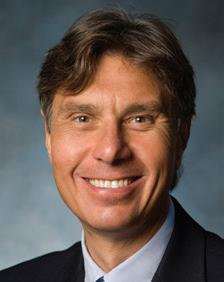
Photo credit – Geoff Holman
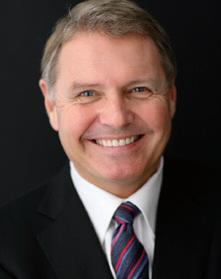
Photo credit – Dave Silver
Inside This Issue
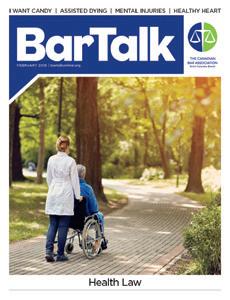
This month we feature a wide variety of health and health law related articles that give a snapshot of some of the pressing issues in BC health law today. From the regulation of what we eat – should sugar be classed as a drug? – to implications of involuntary treatment under the Mental Health Act, to limitations on the right to die by assisted suicide, read on to learn more about how various health laws and regulatory regimes impact our lives.
News and Events
2 Cover Contest: The Three BC Ski Resorts and Winners Revealed!
13 Implementation of Gladue Principles Lacks Political Will by Frances Rosner
22 The Pitch – It’s Back
30 is the New Over-the-Hill: Time to Update Language Law
A Major Setback for Climate Change Litigation
23 Upcoming Professional Development in Your Community
24 BC Law Week 2018
CBABC WLF News
Legal Aid in Canada
CLEBC Update
25 BC Legislative Update
Branch & Bar Calendar
Call for Nominations
26 Tips from Courthouse Libraries BC
BC’s Legal History by Hamar Foster, QC
Also In This Issue
FROM THE PRESIDENT
BILL VEENSTRA
Lawyers and Mental Health
Building understanding and reducing stigma
ABarTalk issue on Health Law provides a great opportunity to consider lawyers’ mental health.
Law can be a demanding profession, as we strive to assist our clients to deal with important and stressful situations. Law tends to attract those who want to be high achievers. Yet lawyers are not superhuman – research indicates that the rates of depression, anxiety and stress among lawyers are generally significantly higher than within the general population; it suggests that anxiety disorders affect 20% to 30% of lawyers as compared to only 4% of the general population. And unhealthy coping strategies often lead to alcohol and substance abuse problems.
The profession as a whole has been giving steadily increasing attention to these issues in recent years – with good reason. As noted by the recent US National Task Force on Lawyer
Well-Being: “To be a good lawyer, one has to be a healthy lawyer. Sadly, our profession is falling short when it comes to well-being.”
The CBA has developed a number of resources over the years to assist lawyers in learning about and dealing with mental health issues, including an online learning program aimed at helping legal professionals to recognize the signs and symptoms of mental health and addiction issues. The CBABC also has a number of resources available on its website
One of the biggest challenges in dealing with mental health issues in the legal profession is concerns about the stigma that may be attached to such issues. The CBA has been graced with some important leaders – including former national President Michele Hollins, QC (now Hollins J) and former Ontario Bar Association President Orlando da Silva, both of whom have spoken openly about their experiences with mental health challenges. Those of us who
attended the CBA West conference this past November heard an inspirational address by Hollins J with respect to her experiences, and will undoubtedly look at mental health issues in future through a different lens. Seeing excellent lawyers (and judges) who have struggled with mental health issues, obtained professional help, and gone on to even greater success in the profession is a great step toward destigmatizing mental illness in the legal community.
Our Law Society has recently taken two important steps. Seeking to take a proactive approach to support and assist lawyers to meet standards of professionalism and competence, the new Law Society strategic plan includes provisions to improve the mental health of the legal profession by identifying ways to reduce the stigma of mental health issues. As well, at their December 2017 meeting, the Benchers approved changes to the Continuing Professional
Development Program that will recognize professional wellness as a subject matter eligible for CPD credit. This will include educational programs designed to help lawyers detect, prevent or respond to substance use problems, mental health or stress-related issues that can affect professional competence and the ability to fulfill a lawyer’s ethical and professional duties.
As I write this article, the CBA’s online learning program on mental health contains accreditation information on the start page, noting that “This program is accredited in all Canadian jurisdictions except British Columbia.” Hopefully, before we are too far into 2018, this and other educational programs on important mental health issues will confirm accreditation in BC.1
The CBABC looks forward to working with the Law Society and other legal stakeholder groups to develop better understanding among the profession of the importance of lawyer well-being, particularly when it comes to mental health, to ensuring that lawyers are aware of and able to access the necessary supports, and to reducing stigmatizing behaviours, attitudes and effects.
1 The Mental Health and Wellness in the Legal Profession course is now accredited in BC
Bill Veenstra president@cbabc.org
EXECUTIVE DIRECTOR
CAROLINE NEVIN
What Makes for a Healthy Organization? Some
tips for optimal outcomes
One of the joys – and challenges – of being the CEO of an organization like CBABC is that if you are in any way driven to excellence, your coffee-time reading consists of the Harvard Business Review and McKinsey Quarterly, and your before-sleep reading is a smattering of fabulous blogs devoted to creating a better work environment, a smarter, more strategic culture and/or more relevant organization.
First lesson: there is NEVER a magic bullet. Every organization – from the smallest work team to the largest multinational – has its own dynamics, challenges and potential gifts that are impossible to reduce to simple formulae. It’s one of the fabulous things about humans: we are so indefinably more (or less) than the sum of our parts. And organizations are, at their heart, a collection of humans. If you care about creating the
best chance for success, you have to invest in getting to know them and what drives them, and create an environment that inspires people to bring their best of themselves to work (both paid and volunteer). And invest in helping them work extremely well with others.
Second lesson: humans like to know the rules. Remember when you were a little kid? Or, perhaps more aptly, the parent of a little kid? As much as even the most troublesome child might rail against boundaries, each grew up knowing they were safe to grow within them. Clear healthy boundaries, rules and accountabilities – in the vernacular of organizations, good governance – is one of the essential keys to building mature, high-functioning people and organizations. Ignore this at your peril.
Third lesson: trust is everything. There’s been a lot written about this. The reality is that regardless of how many resources are thrown at a problem or challenge, expo-
nentially more can be accomplished when people learn how to extend trust and be trustworthy. This requires not just an investment in individual personal development, but also in building an organization that values and exemplifies trust and a feedback-rich culture throughout. It’s worth every penny of employing experts to help you do it.
Fourth lesson: everyone has to be rowing in the same direction. No matter how simple or complex the organization, a shared understanding of purpose and goals from top to bottom is absolutely essential. Have you every seen or imagined being part of an eight-person row? That ever-sofragile shell, with eight talented, powerful, highly-trained individuals balanced delicately within it, each microsecond of difference in stroke being amplified to make the difference between a painful loss and a seemingly-effortless win.
Fifth lesson: being “right” is not always right. There is no replacement for listening to who you’re serving, whether it’s a client, employee or, in our case, member. Your brilliant idea may fall flat if it’s not solidly grounded in knowing what’s wanted and expected. Know first what’s needed, then deliver it.
Sixth lesson: be relentlessly driven to innovate and exceed expectations. This is an age where people expect more and more, and want clear demonstrations that you are completely committed to listening to them and to earning their business – or their employment loyalty –each and every day.
Seventh and final lesson: identify, recruit and advance the best leaders and team members you can find. Learn to relish guaranteeing that you are not always the smartest person in the room... take pride in measuring your success in terms of organizational –not individual – outcomes. This takes some work, because many of us are driven by external measures we internalized early in our highachieving careers, but the end result is ALWAYS a more successful and healthier organization.
Caroline Nevin cnevin@cbabc.org
practicetalk
DAVID J. BILINSKY
Healthy Heart Programs
Cardiac rehabilitation with heart
r Don’t Mess With My Heart.r
– Music and Lyrics by will.i.am, Fergie, George Pajon, Jr and Printz Board and recorded by The Black Eyed Peas
Ihave taken a break from work this year due to unexpected cardiac issues. Fortunately, in the progress of treatment, I received a referral to the Healthy Heart Program at St. Paul’s hospital, and as Robert Frost once said: “And that has made all the difference...”
Recognizing that just surviving any type of a cardiac incident is extremely fortunate, the next best step is to receive a referral to a cardiac rehab program. These medically supervised healthy heart programs exist in community centres, hospitals,
YMCAs and other locations. They all share some common attributes.
Principally there are three important components to these programs:
EXERCISE: a program that is tailored to you, comprising cardio work, weight training and stretching intended to strengthen and improve your heart function;
EDUCATION: on topics such as reducing risk factors such as stress, quitting smoking, the causes of heart failure and heart attacks and the importance of diet in reducing risk; and
COUNSELLING AND SUPER-
VISION: by exercise and kinetic experts, nurses, cardiologists and residents, dieticians and more.
There are any number of positive benefits from attending one of these programs. One important one is realizing that you are on a journey that is being shared by many others, allowing you an opportunity to meet and discuss concerns with those who have empathy and an understanding of what you are feeling and experiencing.
Cardiovascular disease;
Had a recent cardiac event, such as a heart attack;
Heart failure;
Had a cardiac procedure, such as angioplasty, heart transplant or other heart surgery; and
Another is the team effort. Yours is not a journey that is being taken alone. The entire program is medically supervised and monitored: the healthy heart staff are there to gently encourage, support, advise, cajole and otherwise help you get on the right path in terms of supporting your heart and your life.
A third is improving your quality of life. Improving your activities of daily living is valuable; providing you with hope moving forward after a cardiac event is priceless.
Like many other things, what you get out of the program reflects what you put in. It is a demonstrated way to begin a safer heart exercise program and maintain a healthier lifestyle by making positive life changes within a supportive, positive atmosphere.
Who can benefit from such a program? The American Heart Association advises that cardiac rehab may benefit you if you have such conditions as:
An arrhythmia (abnormal heart rhythm) or an implantable device (for example, a pacemaker or defibrillator).
What kind of exercises are included?
From my experience, you start with the importance of a proper warm up and dynamic stretches, followed by 30 minutes of cardio (stationary bikes, treadmills, rowing machines, elliptical machines and others). This is then followed by a brief relaxation period then either 15-30 minutes of stretching or weight training, depending on your situation. A brief cool-down and stretching session follows. Finally, you conclude with an education session that can include topics such as risk factors, cholesterol, heart failure, stress, diet and more.
Continued on page 7 >>>
The views expressed herein are strictly those of David Bilinsky and do not reflect the opinions of the Law Society of British Columbia, CBABC, or their respective members.
David J. Bilinsky is the Practice Management Advisor for the Law Society of British Columbia. Email: daveb@thoughtfullaw.com Blog: thoughtfullaw.com
dave’s techtips
What healthy heart programs exist in the province?
Here is a selection:
uuu ST. PAUL’S HOSPITAL/ PROVIDENCE (goo.gl/frRPzp)
St. Paul’s offers a 4-month individually tailored, medically supervised rehab program. Following completion you can continue exercising on your own or with one of the continuing programs, some of which are listed herein. Vancouver General Hospital in conjunction with St. Paul’s offers Happy Heart Programs at various locations throughout Vancouver.
uuu VANCOUVER COASTAL HEALTH/RICHMOND HOSPITAL (goo.gl/a8GfGA)
This program is for anyone with cardiac issues or who has a high risk of developing heart problems. Following graduation, you can continue with the Heart Wellness Community Exercise Program of the Richmond Fitness Association.
Continued from page 6
You don’t wish just anyone to mess with your heart. This journey of recovery is started with a
uuu FRASER HEALTH HEALTHY HEART (goo.gl/GMtb3R)
These heart programs are offered in Abbotsford, Burnaby, Surrey and White Rock.
uuu INTERIOR HEALTH HEALTHY HEART PROGRAM
(goo.gl/YDSdtC)
These programs are offered in Cranbrook, Kamloops, Nelson, Oliver, Osoyoos, Penticton and Vernon.
uuu ISLAND HEALTH/ HEALTHY HEART
(viha.ca/heart_health/services/riskrehab.html)
These Take Heart & Breathe Well programs are offered in Victoria, Saanich, Sooke, Duncan, Nanaimo and Campbell River.
uuu YMCA HEALTHY HEART/ HAPPY HEARTS/HAPPY HEARTS PLUS (gv.ymca.ca/Programs/Health-Management/Healthy-Heart)
These programs are offered at municipal recreation centres throughout the Lower Mainland and support those living with cardiac risk.
A medical referral to one of these programs may be just the best gift you could receive in the New Year.
doctor’s referral and a stress test. “Two roads diverged in a wood, and I – I took the one less traveled by, and that has made all the difference.” – Robert Frost.
nothingofficial
TONY WILSON, QC
Dragonslayer
Voice recognition software is the best thing since sliced bread
Ionly remember two things about the woman who ran HR at Douglas Symes and Brissenden in 1985 when I began my articles, and neither of them involved her name. First, she wore a black suit on Fridays, but only if she was going to fire someone that day. And second, in the days before PCs were on every lawyer’s desk, she told me to use a Dictaphone.
I resisted the Dictaphone at first, because I thought legal letters and memos could be written, revised and edited with more “care” and “thought” in the cursive handwriting that I had been taught (and which I bastardized) from the “MacLean Method” Canadian children like me learned in the 1960s.
I realized after a day or two that drafting a legal memo or letter in handwriting (with a fountain pen, no less) for someone else to type was a monumental waste of time more suited for
scribes and clerks in Tudor England than a Vancouver law firm in the 80s. After all, our assistants (then called “Secretaries”) had IBM Selectric typewriters. Some used IBM Displaywriters. The office used a mainframe computer system the size of a small boat. There were at least five full-time “word-processing assistants” typing long documents onto five-inch “mag cards.” Although lawyers called to the Bar in this century might think we worked in the horse and buggy-whipped world of Bob Cratchet, we were state of the art in those days. So I learned how to work a Dictaphone.
Fast-forward a decade or two (pun intended), and I was still using one, despite PCs becoming as essential as chairs in lawyers’ offices. The problem was, I never learned how to type. I blame the fact that “Band” conflicted with “Typing” in Grade 9. Oh, I’ve tried various typing programs, but I kept falling back on the two-finger method, and felt vindicated when I saw Dan Rather and Morley Safer type
with two fingers on 60 Minutes once.
Around 2000, I discovered voice recognition software, the first of which was IBM ViaVoice. ViaVoice was finicky and had an accuracy level of around 65%. It didn’t integrate well with large documents in Word, and it crashed too often. IBM got out of the voice recognition business and Nuance’s Dragon Dictate filled the void. Dragon’s accuracy level is about 90% – even higher in emails when it doesn’t have to worry about formatting. It integrates so well in Word, I can dictate directly into precedents or create new documents from scratch simply by speaking in my CBC Radio Announcer Voice. I record my time with it. I review contracts in it by providing my dictated commentary within “balloons” in the margin. I dictate drafts of opinions, hearing panel decisions, and columns like this by doing what I do best; yammering away without anyone listening to me.
Dragon is fast. It’s so fast, I intend on winning Boughton’s annual speed typing challenge this year using Dragon.
The essence of writing is rewriting, and that’s where I still need a mouse and keyboard. Whatever I’m writing, I still have to think, edit, improve, revise and move things around, and there is no substitute for a mouse, a keyboard and two-finger typing a la Dan Rather. As for typos, Dragon rarely makes them, but if you dictate too quickly, or fail to speak like Ian Hanomansing reading the news, you may get a random word or phrase in your document that makes no sense at all. As they are word recognition errors and not typographical errors, I call these “wordos™,” and expect the term to become word of the year in 2019.
Although I thought the Dictaphone Company went the way of the buggy-whip and Blockbuster, it’s owned by Nuance – the same company that owns Dragon; proving that old technology may be worthless but the customer list is invaluable.
By the way, I still have a Dictaphone or two. They’re in the room in my house with my Victrola, my VHS tapes and my Short-Wave Radios.
Tony Wilson, QC is a franchise lawyer at Boughton in Vancouver and a Bencher of the Law Society. The views expressed herein are strictly those of Tony and do not reflect the opinions of the Law Society, CBABC, or their respective members.
feature
JAY AUBREY
Assisted Dying from Carter to Lamb
The fight continues for choice in suffering
Unbearable pain and death are not your average dinner table conversation topics. Most of us avoid thinking about these realities until we cannot. Yet the prevalence of severe pain calls for a close look at the choices available to those who suffer.
Pain is unfortunately common among Canadians. Approximately one in five adults live with chronic pain.1 Almost half of these adults have suffered for longer than 10 years, and about one third experience pain severity of 8-10 on a 10-point scale.2 As high as these numbers are, chronic pain is just one type of unalleviated suffering decreasing Canadians’ quality of life. The magnitude of our pain problem begs the question – when modern medicine reaches its beneficial limits, who gets to decide the limits of suffering?
Among those who suffer most are the Canadians fighting for the right to die with medical assistance. Prior to 2016, there was a complete criminal prohibition on assisting death in Canada.3 For many experiencing intolerable pain, this prohibition was a trap; confined inside deteriorating, painful bodies, the law prevented them from choosing death as a last escape.4
A small group of seriously ill British Columbians joined the BC Civil Liberties Association (“BCCLA”) in 2011 to fight for greater choice amidst intolerable suffering.
Their constitutional challenge, Carter v. Canada5, was built on the belief that controlling when and how we die is integral to the life, liberty, and security of seriously ill Canadians.6
In February 2015, the Supreme Court unanimously agreed, finding it unconstitutional to deny a medically assisted death to any competent, consenting person who suffers from a serious and incurable medical condition that causes them enduring, intolerable suffering (the “Carter criteria”).7 After receiving evidence from those suffering in life, as well as from those suffering in the process of dying, the court did not include an end of life criterion.
Julia Lamb is one of the Canadians living in uncertainty under the current law. As an infant, Julia was diagnosed with Spinal Muscular Atrophy – a disease that has brought her a lifetime of pain. She is now 26 years old, and fears what will come next as her body continues to degenerate. Others in her condition have lived into their 40s and 50s. Julia dreads being forced to spend many years trapped in severe suffering, and seeks the peace of mind to know that when her suffering becomes intolerable, she will have a way out.9
In late June 2016, Julia joined the BCCLA to file a second constitutional challenge – this time to the endof-life requirements created by Bill C-14. The Lamb case argues that denying medically assisted deaths to people like Julia, who satisfy the Carter criteria but are not close to the end of their natural life, is an unjustifiable violation of their section 7 and 15 Charter rights.10 The Lamb case is currently before the BC Superior Court.
The Canadian government responded to the Carter decision by implementing Bill C-14 in June 2016, effectively adding an endof-life requirement to the Carter criteria. Now, in order to access a medically assisted death, Canadians must meet the Carter criteria while also meeting the government’s additional end-of-life requirements, including that their natural death be “reasonably foreseeable.”8 Put simply, the current law means that the longer doctors expect you to live with your intolerable pain, the less likely you are to be eligible for a medically assisted death.
1 Donald Schopflocher, Paul Taenzer and Roman Jovey, “The Prevalence of Chronic Pain in Canada” (2011) 16:6 Pain Res Manage 445.
2 Ibid.
3 Former ss. 14 and 241 of the Criminal Code, R.S.C., 1985, c. C 46 (“Criminal Code”), amended on June 16, 2016.
4 See Rodriguez v. British Columbia (Attorney General), [1993] 3 SCR 519.
5 2015 SCC 5 (“Carter SCC”).
6 See plaintiffs’ pleadings in Carter v. Canada (Attorney General), 2012 BCSC 886.
7 Carter SCC, 127.
8 Criminal Code, s. 241.2(2)(d).
9 Julia Lamb, British Columbia Civil Liberties Association, and Robyn Moro v. Attorney General of Canada, Supreme Court of British Columbia File No. S-165851 (“Lamb”).
10 See Amended Notice of Civil Claim in Lamb
Jay Aubrey, Counsel with the BC Civil Liberties Association.
Keep Current A review of provincial Section meetings
Family Law Okanagan
uSome of the most difficult family files are ones where one or more of the parties are dealing with mental health or substance abuse issues. Those issues may or may not be diagnosed but almost invariably result in erratic behaviour, significant issues relating to the children, and unreasonable positions being taken in the context of the proceedings. The CBABC Family Law – Okanagan Section invited Mr. Justice Gary P. Weatherill, Supreme Court of British Columbia and Jody Bekhuys, Registered Clinical Counsellor on September 26, 2017, to share tips on how best to deal with individuals suffering from mental health problems or substance abuse and how best to address these matters in court.
Insurance Law
uSaadati v. Moorhead is the latest Supreme Court of Canada decision addressing claims of personal injury of a psychological / mental nature. On October 19, 2017, the CBABC Insurance Law Section welcomed Dairn Shane, Preszler Law Firm, counsel for the appellant (plaintiff), to discuss the standard for compensable psychiatric injuries and the evidentiary landscape for these types of claims. Saadati reinforces how vital collateral witnesses are to establishing that the plaintiff has, indeed, suffered the alleged mental injury. From a societal perspective, Saadati may be seen as a change in the way mental health issues are treated, as this case places mental health issues on the same level as physical health issues.
Administrative Law and Health Law
uO n November 28, 2017, the Administrative Law and Health Law Sections welcomed Gene Fraser, Campbell Burton & McMullan LLP and Laura Johnston, Community Legal Assistance Society to speak about a number of systemic issues relating to mental health detention and advocacy in British Columbia, including issues relating to procedural fairness, right to counsel, and the discrimination against involuntarily detained individuals created by BC’s mental health laws. Laura stated that, “unlike other Canadian jurisdictions which have statutorily protected five-year reviews of their systems to ensure their mental health systems are minimally infringing Charter rights and are functioning effectively for people, BC has not engaged in this type of oversight of the system. To improve mental health law in BC, lawyers should provide legal advice and representation to people with mental health problems who are in mental health detention, take on pro-bono work, and sign up for legal aid rosters to conduct review panels by the mental health review board.”
Health Law
uThe CBABC Health Law Section kicked off the New Year on January 23, 2018 hosting a Year in Review with representatives from Ng Ariss Fong at the offices of Harper Grey LLP, which provided an overview
of recent Health Law decisions from British Columbia and across Canada, as well as a discussion of upcoming cases of interest to Health Law Practitioners.
Health Law
For CBABC members, more detailed information and available minutes from the Section meetings are online at cbabc.org under CBABC Sections & Forums.
The CBABC Health Law Section addresses various legal issues relating to health care, health care institutions and the health professions, and health law, such as health disciplines, mental health, public health facilities and patients’ rights. This Section provides a forum for rational and articulate discussion of issues in the health law field.
SAVE-THE-DATES | 2018
The Section will be hosting a meeting in February or March, where the Section will discuss Medical Assistance in Dying. This meeting will feature speakers who act on behalf of physicians, health authorities and hospitals discussing recent developments in the law of medical assistance in dying.
Welcoming Kim Jakeman of Harper Grey LLP, she practises on behalf of physicians and is on the CBA National Health Law Section, and has testified before the Senate on this issue.
Following this meeting, the Section will be hosting a topic on Tips and Tricks re: Medical Experts in Litigation in April 2018, followed by a June meeting, which will discuss Privacy and Medical Records.
MEET THE HEALTH LAW SECTION EXECUTIVES
The Section is chaired by Daniel J. Reid, an associate with Harper Grey, and member of the Defamation, Privacy & Media Law, Insurance and Health Law Groups. He brings extensive experience as Chair, ViceChair, Treasurer and Secretary from positions dating back to 2012.
Matthew R. Voell, Grant Kovacs Norell, is the Section’s Legislative Liaison, and has held the position with this Section since 2013.
Erika L. Lambert-Shirzad comes to us from Borden Ladner Gervais LLP, and is the Section’s Secretary since last term.
Aaron D. Atkinson practises with Harper Grey LLP, and has held the position of Treasurer since last term.
Introducing the Sections Member-at-Large positions, Melissa Perry, who practises with Norton Rose Fulbright Canada LLP, and Susanne K. Raab, in her inaugural year, who practises with Pacific Medical Law.
Indigenousmatters
MELISSA LOUIE
Advancing the Journey of Reconciliation Through Bill C-262
BILL C-262 IS AN ACT TO ENSURE THAT THE LAWS OF CANADA ARE IN HARMONY WITH THE UNITED NATIONS DECLARATION ON THE RIGHTS OF INDIGENOUS PEOPLES.
In some instances, the United Nations General Assembly will refer to resolutions that express political or legal principles of significance as “declarations.” Generally, such principles are reflective of existing international law and standards. The United Nations Declaration on the Rights of Indigenous Peoples (the “Declaration”) is an example of this practice. The Declaration was adopted as an annex to a UN General Assembly resolution and is reflective of existing rights set out in various human rights treaties and other tools. This critical human rights tool was developed through two decades of careful deliberation among Indigenous Peoples and Indigenous representatives.
The Declaration sets out minimum standards for the survival, dignity and well-being of Indigenous Peoples around the world and serves as an important human rights framework to guide the journey of reconciliation.1 Its standards affirm the existence of key inherent human rights as held by Indigenous Peoples, human rights which are interconnected. Not only should this instrument guide reconciliation of the Crown-Indigenous relationship, but it also has potential to meaningfully guide broader reconciliation efforts of all Canadians.
In the Canadian context, the legal and political landscape has undergone significant shifts. Both Canada and BC have officially endorsed and adopted the Declaration. Of particular note, MP Romeo Saganash, has introduced a private members Bill into the House of Commons, which is aimed at the implementation of the Declaration through a legislative framework. In December 2017, MP Saganash’s Bill C-262 underwent a second reading.2 Highlights of the Bill include: confirmation that the standards set out in the Declaration apply in Canadian law; the repudiation of colonialism; and a call for the development of a national action plan for implementation of this critical international tool. A legislative framework aimed at implementation of the Declaration offers some measure of protection of Indigenous human rights against actions of future governments. It’s worth noting that prior to the second reading of the draft Bill, Indigenous leadership from across the country attended the December 2017 Assembly of First Nations Special Chiefs’ Assembly and adopted a resolution of support for Bill C-262.3
for its full implementation in the Canadian context. Specifically, Call to Action #43 calls on “federal, provincial, territorial, and municipal governments to fully adopt and implement the United Nations Declaration on the Rights of Indigenous Peoples as the framework for reconciliation.”
The TRC calls on Canadians to embark on a journey of reconciliation with Indigenous Peoples and to uphold the important human rights set out in the Declaration, which can serve as a roadmap to guide that challenging work. In this context, members of the legal community are well positioned to use legal knowledge, advocacy and drafting skills to assist in the identification and implementation of solution-oriented strategies and activities to support the broader implementation of the Declaration and to advance the path of reconciliation.
3 See: Support for Bill C-262 “An Act to Ensure the Laws of Canada are in Harmony with the United Nations Declaration on the Rights of Indigenous Peoples” at afn.ca/wp-content/ uploads/2017/02/2017-sca-res.pdf
In 2015, the Truth and Reconciliation Commission (“TRC”) released its 94 calls to action, a number of which address the substance of the Declaration, and the necessity
Melissa Louie, Kahahxstahlas, is a Coast Salish and Syilx lawyer who has worked with Morgan and Associates since 2007. She is a Citizen of the Tla’amin Nation and also has family ties to the Penticton Indian Band. Twitter: twitter.com/Kahahxstahlas
FRANCES ROSNER
Implementation of Gladue Principles Lacks Political Will
When sentencing Indigenous offenders in Canada, judges must consider the unique background factors that played a role in bringing the particular offender before the court and, where possible, consider alternatives to incarceration. This direction came from the Supreme Court of Canada in its 1999 R. v. Gladue decision,1 and was intended to counter the overrepresentation of Indigenous Peoples in our prisons. The court acknowledged the significant harms that continue to impact Indigenous Peoples and communities brought about by colonization. It further acknowledged that systemic discrimination leads to disparate outcomes for Indigenous offenders involved in the criminal justice system.
Since that decision, several challenges have arisen in implementing Gladue, including how the unique history of an offender is brought before the court.2 In R v. Ipeelee in 2013,3 the court reiterated in stronger terms the need for sentencing judges to do their jobs differently for Indigenous offenders in every instance and it referred to Gladue reports as an “indispensable sentencing tool” to judges in carrying out their duties under section 718.2(e) of the Criminal Code.
Gladue reports are specialized pre-sentence reports prepared by writers (often Indigenous) that have an in-depth understanding of Indigenous history and impacts from colonization. The report process involves contacting several family and community contacts to gather information about an offender’s particular history, and writers devise healing plans aimed at addressing the factors that brought the offender before the court as an alternative to jail.
In 2011, the Legal Services Society (“LSS”) developed a Gladue Report Pilot Project to address the gap in implementing Gladue. In its evaluation of the pilot, it found that Gladue reports made a difference in sentencing outcomes, with fewer and shorter custodial sentences for offenders that benefitted from a report versus the sample group that did not.4 In the 2016/17 fiscal year, the LSS funded 79 reports for its clients.5 That is a mere drop in the bucket relative to the number of Indigenous offenders being sentenced every day in BC. That is, only Indigenous offenders that qualify for legal aid, and of that group, only those that are approved will receive a report. Funding is a key barrier to implementing Gladue – yet judges are required to consider the information found in Gladue reports.6
Several lawyers throughout BC have sought orders from judges for Gladue reports, which are far more detailed than a Gladue component of a standard
pre-sentence report.7 Some have been successful in obtaining the order but if not funded by the LSS, the report does not get prepared because there are no other sources of funding. Other judges have taken the position that they do not have the jurisdiction to order the Attorney General to pay for Gladue reports. Retired BC Provincial Court judge and proponent of Gladue, Cunliffe Barnett J., argues that trial judges do have jurisdiction under section 721(4) of the Criminal Code to obtain particularized pre-sentence reports and he relies on a 2006 Ontario Court of Appeal decision, R. v. Kakekagamick, 8 for an appellate court’s jurisdiction to order Gladue reports. It is clear from the caselaw in BC, at present, that there is a lack of political will by the province to fund the writing of Gladue reports despite the requirement for judges to consider the information contained in them.
1 [1999] 1 SCR 688
2 Kyle Edwards, “Why Gladue has not lived up to its promise,” Maclean’s (October 18, 2017): goo.gl/Bei4Bi
3 2012 SCC 13
4 The Legal Services Society 2016/17 Annual Service Plan Report: goo.gl/F9xz1W
5 The Legal Services Society, Gladue Report Disbursement – Final Evaluation Report: goo.gl/B6JtXc
6 R v. McCook 2016 BCPC 0001, paras. 51-78.
7 R v. Smith, 2013 BCCA 173, R v. Bill, 2014 BCCA 60, R v. H.G.R., 2015 BCSC 681
R v. C.J.H.I., 2017 BCPC 121
8 2006 CanLII 25849 (ONCA)
Frances Rosner is a Métis lawyer working as a sole practitioner in Vancouver.
KYONG-AE KIM
Changes in Profession Regulation Lessons for the legal profession?
Changes happening in the regulation of BC nurses may have implications for other self-regulating professions like lawyers.
In BC, three different bodies govern nurses: the College of Licensed Practical Nurses of BC, the College of Registered Nurses of BC and the College of Registered Psychiatric Nurses of BC. Each is mandated by the Health Professions Act to protect the public by regulating their nurses. Each does the same job of establishing and enforcing qualifications for entry, setting practice standards, and acting when those standards are not met.
In May 2014, then Minister of Health Terry Lake asked nurses: “would it not make sense for all BC nurses to be regulated by a single body?” This question kicked off a chain of events whereby the three bodies decided to unite and become one to better serve the public through more efficient and consistent regulation. A motivating factor was the regulators’ desire to control their own future rather than wait for government to direct it. They were mindful that government can take away self-regulation, as the province did in 2012 with BC teachers. They also considered global trends.
In Canada, the regulation of professions is splintered by profession and by province, a notable exception being the recent national
merger of the accountants as CPAs. In comparison, in the UK, for example, the Nursing & Midwifery Council regulates all nursing professionals, numbering almost 700,000. As for legal professionals, while there are eight separate regulators, one for each type (solicitor, barrister, notary, paralegal, etc.), the regulators are overseen by one super body, the Legal Services Board.
In this context, in 2016, the three BC nursing regulators agreed to become one. On October 24, 2017, the government introduced a Bill to amend the Health Professions Act to enable the amalgamation. In a testament to the all-party political support for the initiative, the Bill
that this body will also eventually regulate more than 50,000 health care aides.
A motivating factor was the nursing regulators’ desire to control their own future rather than wait for government to direct it.
received Royal Assent just over a week later – no small feat given the other priorities of the fledgling minority government. Under proposed Regulations, the new BC College of Nursing Professionals, governing about 55,000 nurses, will come into existence on September 4, 2018. The intention is
Other health profession regulators in Canada are closely watching these events for the precedent they may set. There are also parallels with the experience of the legal profession in BC. In 2012, then Attorney General Shirley Bond directed the Law Society and the Notaries Society to develop a proposal for regulatory reform. The two societies agreed that a single, unified body to oversee the regulation of legal service providers in BC, including paralegals, was the optimum model. A recommendation of a Law Society task force to merge regulatory operations with the Notaries Society was approved by the Benchers in December 2013. Through 2014 and 2015, discussions were pursued – but without result. While lawyers and notaries have so far been unsuccessful in unifying, the trend in profession regulation is to be less fragmented. The time will come when they will be asked to try again. And to be successful, they may wish to look to the nurses for lessons on how to overcome professional territoriality and fears around loss of identity. The details would require further articles, but it has not been an easy journey, with hard work and compromise. The reward will be more effective regulation and a better-served public.
Kyong-ae Kim has practised in profession regulation since 1997. She is the CEO of the College of Registered Psychiatric Nurses of BC.
feature
ANDREA DONALDSON
Mental Injuries
The Mustapha Framework
Mustapha v. Culligan, 2008 SCC 27 involved a claim for mental injury after the plaintiff found a dead fly in a bottle of water supplied by the defendant, leading to depression, phobia and anxiety. In this case, the Supreme Court of Canada set out the framework for establishing a claim for mental injury:
1. DID THE DEFENDANT OWE THE PLAINTIFF A DUTY OF CARE? This first question focuses on the relationship between the parties. The defendant only owes a duty of care to those whom the defendant may reasonably foresee as being adversely affected by his/her failure to take care. Often, the relationship between the plaintiff and defendant is of a type which has already been recognized as giving rise to a duty of care, such as in the case of a doctor and patient, or a manufacturer and consumer. In these cases, it is unnecessary to undertake a full-fledged duty of care analysis.
2. DID THE DEFENDANT’S BEHAVIOUR BREACH THE STANDARD OF CARE? A defendant breaches the standard of care if his or her conduct creates an unreasonable risk of harm.
3. DID THE PLAINTIFF SUSTAIN DAMAGE? A plaintiff who has sustained injury – including psychological injury – will be found to have suffered damage.
In Mustapha, the court noted that the distinction between mental and physical injury is arguably artificial in the context of tort. The court did not purport to define compensable injury exhaustively, but said that it must be serious and prolonged, and rise above ordinary annoyances, anxieties, and fears. Minor and transient upsets do not amount to damage.
4. WAS THE PLAINTIFF’S DAMAGE CAUSED BY THE DEFENDANT’S BREACH? The final question is whether the defendant’s breach caused the plaintiff’s harm in fact and in law. In Mustapha, it was not in issue that the defendant’s breach of the duty of care caused the plaintiff’s psychiatric injury in
but are not reasonably foreseeable. Once a plaintiff establishes that mental injury would foreseeably occur in a person of ordinary fortitude, the defendant must take the plaintiff as he finds him for the purposes of damages.
IS A MEDICALLY RECOGNIZED PSYCHIATRIC INJURY NECESSARY TO ESTABLISH
A CLAIM FOR
MENTAL INJURY?
Mustapha v. Culligan, 2008 SCC 27 involved a claim for mental injury after the plaintiff found a dead fly in a bottle of water.
fact. However, the plaintiff ultimately failed to prove causation in law, with the court determining that the plaintiff’s damage was too remote to warrant recovery. Unusual or extreme reactions to events caused by negligence may be imaginable,
The existence of a recognizable psychiatric injury was not in issue in Mustapha, as it was clear that the plaintiff had suffered a major depressive disorder with associated debilitating phobias and anxiety. Recently, in Saadati v. Moorhead, 2017 SCC 28, the Supreme Court of Canada overturned the BC Court of Appeal’s decision which stated that a recognized psychiatric injury was a necessary precondition to a mental injury claim, ruling that plaintiffs must only show evidence of a serious and prolonged disturbance, as set out in Mustapha. As expert diagnostic evidence is not necessary for recovery for physical injury, the court in Saadati sought to put mental and physical injuries on equal footing, so not to perpetuate a view of mental illness as unworthy of equal protection under the law. The court concluded that the elements of the cause of action for negligence together with the threshold for mental injury as stated in Mustapha, furnish sufficiently robust protections against unworthy claims.
Andrea practises in the area of medical malpractice at Pacific Medical Law in Vancouver.
I give to my community and with Vancouver Foundation, my giving lasts forever.
75 years ago, a single gift started Vancouver Foundation and that gift is still making a difference in the community today. We can help you create a fund that gives forever. Get started at vancouverfoundation.ca/create or call Kristin at 604.629.5186
BRANDON HASTINGS
I Want Candy The case against fructose
Canada’s Food and Drugs Act , RSC 1985, c F-27 (“ FDA ”) says “food includes any article manufactured, sold or represented for use as food or drink for human beings, chewing gum, and any ingredient that may be mixed with food for any purpose whatever,” though no one may sell “food that has in it any… harmful substance ” (emphasis added).
Dr. Robert Lustig, who is probably the world’s best known antisugar advocate, says in his article “Fructose: it’s ‘alcohol without the buzz’” that there are two types of sugar: glucose, which isn’t particularly sweet and fructose, which is.1 Lustig says that the dietary fibre that accompanies natural (non-additive) fructose (in an apple, for example) renders the fructose more-or-less safe, but he opposes additive fructose through table sugar (which is a combination of glucose and fructose) and other high-fructose additives, saying that they have detrimental, even devastating, health consequences.
The following discussion concerns whether fructose is a harmful substance whose addition to foods ought to be regulated. By implication, it also concerns a broad set of societal issues, which concern the tension between regulation and freedom. More particularly, where should the line be drawn between
things like alcohol and soda pop, tobacco and cocaine, methamphetamine and marijuana? Why? What do the choices we make (or fail to make) say about us as a society? Are there matters of human nature which cannot be reliably overcome through willpower and common sense, such that regulation is the correct mechanism by which to improve the lives of all citizens? Did the FDA, in fact, correctly codify the values we want to have, and if it did, should consumer goods containing added fructose be considered a food at all?
to have a high amount of fructose. Fructose, however, is also often present in many foods that aren’t generally considered sweet, including peanut butter, bread, barbecue sauce, yogurt, ketchup and spaghetti sauce. As well, there are 152 different ways to say “sugar” on a nutrition label.3 As a result, fructose is ubiquitous, and it is hard to get away from added fructose even if you’re careful. As is discussed later, fructose may also be addictive, which would make its unexpected presence nothing short of insidious.
Dr. Lustig says that there are four generally accepted criteria for regulation of a substance as a drug: ubiquity, toxicity, abuse, and [negative] externalities. It’s hard to find these four criteria mentioned in a publication not somehow associated with Lustig’s name, though apparently they originated in a 2003 book discussing the regulation of alcohol.2 Nonetheless, these criteria appear sensible, and so form the basis of our discussion of the need (or lack thereof) for the regulation of fructose.
UBIQUITY
Candy, chocolate milk and soda pop are all foods you might expect
TOXICITY
A strict textual interpretation of the FDA would not allow the sale of anything containing a “harmful substance” as food – this is clearly overbroad, as many food items could contain at least somewhat harmful substances. The important question for our purposes, though, is whether fructose is toxic enough to the average person that it ought to be regulated.
Fructose, as a source of calories with no nutritional benefit, is thought to have strongly contributed to the obesity epidemic. Dr. Lustig argues that fructose consumption creates liver fat, insulin resistance and metabolic disease, including type-2 diabetes, heart disease and fatty liver disease. He further argues that links are emerging between excess fructose consumption and cancer and dementia.
Dr. Richard Kahn, formerly of the American Diabetes Association, agrees with Lustig that obesity and diabetes are serious
and epidemic conditions. Conditions which, incidentally, are now prevalent in Europe and Asia in addition to North America. Kahn also agrees the we don’t have to rely on sugar to get sufficient food energy; that sugar itself does not come along with any other essential nutrients, vitamins or minerals; and that the first step to losing weight is to cut out dietary sugar. However, Dr. Kahn believes that the studies which link fructose to negative health effects and diabetes are not as robust as other studies in the biological sciences, and concludes that there is an insufficient link between fructose and negative health impacts to determine that it should be regulated.
Health care is the largest budget item for every province, and Canadians spent $228.1 billion ($6,299 per person) on health care in 2016.4 This is up from $5,911 in 2012.5 Canada spends roughly $33.7 billion annually on treating obesity, diabetes, heart dis-
bingeing, withdrawal, craving, and physiological changes in the brain.9 Similar findings have been made by other researchers, and the strength of the addictive effect of sugar has been said to be equal to, or stronger, than that of cocaine.10 11 12 13
CONCLUSION
While there may not be a definitive link between excess fructose consumption and negative health impacts, experts agree that fructose is at best unnecessary, and at worst deadly.
NEGATIVE EXTERNALITIES
The easiest way to explain negative externalities is to say they are negative effects, not paid for by the person creating them. Do you dump toxic waste without a permit? That probably creates negative externalities. Do you dump toxic waste and pay for a permit to do so? Not an externality.
In terms of substance-related issues: drunk driving and smoking create what are, in present day, obvious negative externalities. The argument that fructose creates negative externalities in society thus rests on the impact of one person’s disease on all other members of that society.
ease and related illnesses,6 and the proportion of obese Canadians is expected to rise by another 5% by 2030.7 Meanwhile, Canadians between one and 65 years old are taking a greater proportion of health care expenditures.8 In addition to health care costs, there are other costs associated with sick citizens, including lost productivity due to absenteeism and a more backed-up healthcare system (which in turn creates more healthcare issues).
ABUSE
The Diagnostic and Statistical Manual of Mental Disorders (“DSM”) says that a person is addicted to a substance if they exhibit a maladaptive combination of the following indicators: impaired control, social impairment, risky use, and pharmacological indicators like tolerance and withdrawal.
Dr. Nicole Avena, from the Mount Sinai School of Medicine in New York, has found evidence for sugar addiction, including
The next time you’re in a grocery store, consider comparing the price of sugary foods to non-sugary foods. Consider their cost of production and the nutritional value they provide; think about whether sugary foods might be marked-up because they are addictive; think about the effects that might have on society; and consider whether regulation, or freedom to choose, is a more important value. Incidentally, Canada is changing its labelling requirements to make the contents of food less opaque.14 Those changes, which may make it easier to avoid unnecessary fructose, won’t be fully required until 2021.
1 Click on footnote number for more information.
2 Babor T, Caetano R, Casswell S, Edwards G, Geisbrecht N, Graham Ketal. Alcohol: No ordinary comModity — Research and public policy. Oxford: Oxford University Press; 2003. 3-15 Click on footnote number for more information.
Credit to the Freakonomics Radio podcast, which was the nidus of this article, and has been relied on heavily as a source for citations and quotations.15 Brandon D. Hastings (bhastings.com) is a mediator (civil and family), CBABC Provincial Council member, and cofounder of Vancouver Legal Hackers. @BHastingsLaw ca.linkedin.com/in/bhastingslaw
feature
TONIE BEHARRELL AND JESSICA DERYNCK
Implications of the Genetic Non-Discrimination Act
Possible issues and challenges
In 2013, the Alberta Court of Appeal upheld an order that a plaintiff who almost died in a house fire and sued the owners for negligence undergo testing for Huntington’s Disease. The order was made and upheld despite the Plaintiff’s evidence that she did not wish to have the test and that it would cause her severe panic, stress and anxiety. Members of the Plaintiff’s family had the disease, and the defendant insurer successfully argued that whether the Plaintiff had the gene was relevant to the assessment of damages. The ruling was cause for surprise and concern among experts.
Today a request for a similar order would be considered in light of the federal Genetic NonDiscrimination Act (the “Act”), which came into force in May 2017. The Act makes it a criminal offence to require an individual to undergo or disclose the results of a genetic test as a condition of provision of goods or services, or entering into or offering specific conditions in a contract. The Act also amended the Canadian Human Rights Act to add “genetic characteristics” to the list of prohibited grounds of discrimination, and the Canada Labour Code to prohibit federally regulated employers from requiring employees to undergo or disclose the results of a genetic test.
The Act makes Canada the last of the G7 countries to enact
legislation prohibiting genetic discrimination. It provides protection for individuals who may be at risk for genetic diseases and wish to undergo genetic testing for health reasons, but would have previously been concerned about their ability to obtain insurance if the results confirmed risk. The Privacy Commissioner of Canada and the Chief Commissioner of the Canadian Human Rights Commission welcomed the Act, with the latter saying that “[t]aking a test that could help save your life shouldn’t have to be a calculated risk.” The Canadian Life and Health Insurance Association (“CLHIA”), on the
The Act was introduced as a private member’s Bill. Its constitutionality, specifically the question of whether the criminal prohibition is primarily an attempt to regulate the insurance industry and therefore within provincial jurisdiction, has been called into question by the CLHIA and by the federal government, which considered putting forward a reference to the Supreme Court of Canada. The government of Quebec has requested a reference on the legislation to their Court of Appeal – the case is yet to be heard.
If insurers are prohibited from accessing the results of genetic tests, that the cost of term life insurance in Canada could rise by 30% for men and 50% for women.
other hand, opposes the Act, and warned when the law was under consideration in 2016 that if insurers are prohibited from accessing the results of genetic tests, that the cost of term life insurance in Canada could rise by 30% for men and 50% for women.
It is not clear how the Act would have affected the outcome of the 2013 Alberta case. Courts may be less likely to issue similar orders in light of the explicit human rights protection against genetic discrimination. If an insurance company cannot obtain genetic information as a condition of insurance, arguably they should not be able to obtain it in the course of assessing damages for any sort of claim. It will be interesting to observe as the legal, practical, and ethical issues surrounding the new law continue to unfold.
Tonie Beharrell is in-house legal counsel to the Health Sciences Association of BC, and head of its legal department. Jessica Derynck is in-house counsel to the Health Sciences Association of BC.
feature
KELSEY ROSE
Compulsory Psychiatric Treatment in the MHA
When is it legitimate?
Compulsory psychiatric treatment is undoubtedly a severe intrusion on a person’s bodily integrity. In the interest of managing risk of harm to the patient and others, when is this intrusion justified, and what degree of intrusion is acceptable?
A one-size-fits-all approach is not the answer. Proportionality must be achieved for each patient. Currently, BC’s Mental Health Act, RSBC 1996, c 288 (“MHA”) affords physicians discretion to structure a treatment plan and to compel adherence to that plan where necessary. The plaintiffs in MacLaren, DC, and Council of Canadians with Disabilities v. Attorney General of BC (“MacLaren”)1 claim this model is not working, and that patient rights are too often compromised for a low risk of harm. The case contends that the compulsory medication provisions of the MHA infringe patients’ liberty and equality interests per ss. 7 and 15 of the Charter. The plaintiffs call for clearer guidance in the legislation itself.
Proportionality is required by s. 7 of the Charter, 2 by s. 1 of the Charter should any provision of the MHA be found contrary to ss. 7 or 15,3 and by the UN Convention on the Rights of Persons with Disabilities, which Canada has ratified.4
But how to ensure proportionality in practice?
Patients who lack insight into their condition and refuse voluntary
treatment pose a conundrum for mental health practitioners. Mental health disorders often prevent patients from appreciating a need for, or potential benefit from, treatment. Lack of insight may differ from incapacity, but in practice, the inability to appreciate the impact of a disorder can impair a patient’s ability to make an informed decision about treatment options. The potential for advanced deterioration from a disorder due to lack of insight and treatment for patients in systems relying on substitute decision-makers is one reason BC may not wish to follow in Ontario’s footsteps.
at the cost of restricting autonomy, which may in turn engender distrust of the health care system, reduce effectiveness of therapy by disincentivizing honest discourse between patient and psychiatrist, and perhaps even inhibit the amelioration of the patient’s mental health.
If the methodology for assessing proportionality is to be adopted into legislation, what factors should be included? Should physicians consider risks to the patient’s financial and social wellbeing, or only risks to others? What role should side-effects and the patient’s tolerance for side-effects play? Who should make treatment decisions for patient without insight –a psychiatrist, a family member, or patient-appointed representative?
Additionally, mental health conditions can be unpredictable. Mental health disorders are not all progressive, nor do they manifest in the same way for all patients. Even when the statistical risk of harm associated with a particular diagnosis is low, the magnitude of the consequences for ignoring the risk is such that suspicion cannot be avoided entirely.5 Complicating matters further, patients that do pose a risk of harm to others are not always easily discernable from those that do not.
Treatment pursuant to involuntary certification may reduce the degree to which a mental health disorder interferes with a patient’s life, and reduce risk of harm to self and others. Still, these benefits come
The overriding question is how to formulate these questions into a test that is proportional: that both safeguards the rights of patients to their bodily integrity and liberty and appropriately manages the risks to others and to patients themselves. Whether or not the balance struck by the current iteration of the MHA is the right one will become clear as MacLaren progresses.
1 BCSC, Vancouver Registry, Court File No. S168364; see also goo.gl/REkBFJ
2 Canada (Attorney General) v. Bedford [2013] S.C.J. No 72, 3 S.C.R. 1101, para 19
3 R. v. Oakes, [1986] 1 S.C.R. 103.
4 United Nations Convention on the Rights of Persons with Disabilities, adopted 13 December 2006, GA Res 61/106, UN Doc A/Res/61/106 (entered into force 3 May 2008), Article 12(4).
5 R v de Grood, 2016 ABQB 294, inter alia
Kelsey is a civil litigator practising in the Health Law and Commercial practice groups of Harper Grey LLP.
news&events
It’s Back
Legaltech Entrepreneurs —
CBA has a StartUp Competition you don’t want to miss
SUBMIT YOUR
IDEA
CBA is looking for the world’s top legaltech startups to battle it out at The Pitch, the legal industry’s premiere startup competition.
THE COMPETITION
CBA NATIONAL MAGAZINE
A Major Setback for Climate Change Litigation
An Oslo court ruled in January 2018 that Norway’s government can allow further oil exploration in the Arctic. The lawsuit, brought by Greenpeace and the Nature and Youth Group argued that Norway’s decision to award new drilling licenses to oil companies in 2016, only weeks prior to ratifying the Paris Climate Agreement, was in violation of the country’s Constitution, which includes a guarantee to a healthy environment.
CBA’s virtual judges will select the top startups from the pool of applicants. If chosen as a finalist, you’ll be invited to compete at The Pitch on May 1st, 2018 in
FULL DETAILS cba.org/ The-Pitch/Submit-Your-Idea CBA NATIONAL NEWS
CBA NATIONAL MAGAZINE
Toronto, ON. You’ll have seven minutes to pitch your startup idea to the expert panel of in-person judges, and five minutes for Q&A – all in front of a live audience. This is your chance to get in front of investors and media, test the market and connect with industry influencers who can help your company grow.
30 is the New Over-the-Hill: Time to Update Language Law
Canada’s Official Languages Act (the “Act”) turns 30 next year, and is beginning to show its age.
CBA President Kerry Simmons wrote to the Ministers of Treasury, Canadian Heritage and Justice, the three portfolios that play the biggest role in the implementation of the Act, calling on them to bring the legislation – initially adopted in 1969 and consolidated in 1988 – into the 21st century.
While the reality of official languages in the country is continually changing, the Act is frozen in time, she said.
“In the last three decades, Canadian society has been significantly transformed and the expectations of minority official language communities have also evolved,” she wrote.
READ MORE goo.gl/BSG2qB
Why it matters – The ruling is a major defeat for environmental groups who saw the lawsuit as a test case for the “keep-it-inthe-ground movement” focused on ending the extraction of remaining fossil fuels in the world to tackle climate change. There has been a growing international trend toward more litigation around climate change, but the courts are still reluctant to step in to judge the merit of government policies. Bloomberg quotes the Oslo court ruling:
“Some issues that the environmental organizations have raised fall outside what was tried by the court,” according to the ruling. “Whether Norway is doing enough for the environment and climate, and if it was sensible to open fields so far north and east” are questions “better assessed through political processes,” the court said.
The court found that Norway is responsible only for “greenhouse gas emissions within its borders, not those caused by burning exported oil and gas.”
READ MORE goo.gl/VvE2yt
Upcoming Professional Development in Your Community
To register: Contact Professional Development Department at pd@cbabc.org or telephone 1-888-687-3404 ext. 329
PARKSVILLE
SURREY
PRESENTED BY CBABC IN PARTNERSHIP WITH THE SURREY BAR ASSOCIATION Ethics in Action: Practice & Community – Surrey (2 CPD Hours)
Date: February 14, 2018
Location: Eaglequest Coyote Creek Golf Course, Surrey
PRESENTED BY CBABC IN PARTNERSHIP WITH THE CBABC SOLICITORS’ GENERAL PRACTICE – CENTRAL VANCOUVER ISLAND SECTION CBABC 5th Annual Solicitors/General Practitioners Conference (3 CPD Hours)
Date: February 15, 2018
Location: Tigh-Na-Mara Resort & Conference Centre, Parksville
VANCOUVER
VERNON
PRESENTED BY CBABC IN PARTNERSHIP WITH THE CBABC FAMILY LAW OKANAGAN SECTION CBABC Family Law – Okanagan Professional Development Conference (10.5 CPD Hours)
Date: February 15-16, 2018
Location: Predator Ridge Resort, Vernon
PRESENTED BY CBABC IN PARTNERSHIP WITH THE CBABC IMMIGRATION LAW SECTION
CBABC Immigration Law Provincial Conference 2018 (6.5 CPD Hours)
Date: February 23, 2018
Location: Segal School of Business, Vancouver
VANCOUVER
PRESENTED BY CBABC IN PARTNERSHIP WITH THE CBABC ADR VANCOUVER SECTION Mind Bugs: Working with Our Own Biases as Lawyers & Mediators (3 CPD Hours)
Date: April 17, 2018
Location: Clark Wilson LLP, Conference Centre, Vancouver
news&events
EVENT REMINDER
BC Law Week
Law Day is April 17, 2018. Events will be held in various BC communities throughout the month of April, including open houses, public law classes, an interactive forum with the three Judicial Chiefs and high school students, the Barry Sullivan Law Cup public speaking competition, and Dial-a-Lawyer Day on April 21.
For more info on 2018 Law Week activities and ways to get involved, visit bclawweek.org.
CBABC WLF Update
The CBABC WLF joined forces with the National Conference of Women’s Bar Associations to present Challenges and Rewards for Women in Politics – Both Personal and Professional on February 2, 2018 at the Four Seasons Hotel in downtown Vancouver. Speakers included The Honourable Ellen Rosenblum, Attorney General of the State of Oregon, and The Honourable Suzanne Anton, QC, former Minister of Justice and Attorney General of the province of BC.
Mark your calendars for the Senior Women Lawyers Dinner, hosted by the CBABC WLF at the Water Street Café on February 22, 2018. Enjoy a meal and what is sure to be a lively discussion with special guest, anti-poverty activist, Jean Swanson.
The CBABC WLF will celebrate International Women’s Day on March 8, 2018 with a spring potluck in the New Westminster area. Watch your email for more details on how to register for this event and come support past and future achievements of women.
CBA
NATIONAL NEWS
Legal Aid in Canada
SAME CONCLUSIONS, DIFFERENT REPORT
How many reports does it take to change a government’s mind about proper legal aid funding? Good question. The CBA has produced a few, as have other agencies. And now an in-house report, prepared by the House of Commons Standing Committee on Justice and Human Rights is striking a familiar chord.
READ MORE goo.gl/b5y2UV
NEW CLEBC TITLE! PLUS TC&D: THE ASSESSMENT OF COSTS AND DISBURSEMENTS IN MOTOR VEHICLE INJURY LITIGATION
CLEBC is proud to announce our new title Plus TC&D: The Assessment of Costs and Disbursements in Motor Vehicle Injury Litigation, by Christopher J. Hope of Lindsay LLP and Kathryn Sainty, QC of Sainty Law.
Plus TC&D is an essential resource for anyone involved in personal injury litigation arising from car accidents; it answers all your costs questions about Appendix B. With Plus TC&D, you’ll be able to:
draft bills of costs more quickly and confidently;
advise your clients of the risks of incurring certain disbursements; and
easily access the case law you need to persuade the other party or assessor of the appropriateness of your costs claims.
We are pleased to offer Plus TC&D in your choice of format –online or print. Subscribers to the online version will benefit from updates throughout the year, fulltext search capability, and links to the full text of case law and legislation. The print version of Plus TC&D will be updated with a new edition every few years.
For more information, please call CLEBC customer service at 604-893-2121 or visit cle.bc.ca
IN FORCE
Current from November 1, 2017 up to and including December 26, 2017
The full version of Legislative Update is now only published online and is available exclusively to CBA members at cbabc.org
BUDGET MEASURES
IMPLEMENTATION ACT, 2017, S.B.C. 2017, C. 12 (BILL 2)
Sections 68, 70, 72, 76 and 77 are in force effective January 1, 2018
FORESTS, LANDS AND NATURAL RESOURCE OPERATIONS
STATUTES AMENDMENT ACT, 2016, S.B.C. 2016, C. 11 (BILL 12)
Sections 1(b), 15(a), 23, 24(a), 25, 27(a), (b), (d), (i) and (j), 30, 31(a) and (d), 36(b), 38(b), 39, 40 and 45(c), and section 45(d) to the extent that it repeals and replaces section 87(3) of the Legal Profession Act, S.B.C. 1998, c. 9 are in force April 2, 2018
15-16 CBABC PD: CBABC Family Law – Okanagan Professional Development Conference — Vernon
23 CBABC PD: CBABC Immigration Law Provincial Conference 2018 — Vancouver
AWARDS
Call for Nominations
CBABC members are now welcome to honour a fellow member through a nomination for a prestigious CBABC Award.
The Community Service Award recognizes the valuable contributions to BC communities by a CBABC member. The Community Service Award is sponsored biennially in each county by the CBABC.
The Equality and Diversity Award celebrates a CBABC member who advances equality in BC generally, or within the legal profession.
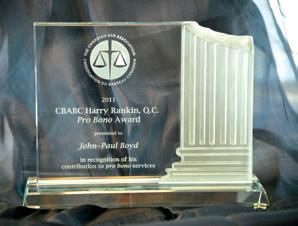
The Harry Rankin, QC Pro Bono Award honours the immense contribution of Harry Rankin, QC in support of access to justice for the poor. The award recognizes outstanding pro bono work.
The Innovative Workplace Award recognizes a law firm or legal organization that demonstrates leadership in promoting workplace innovation within the practice of law.
Nomination deadline is Friday, April 13, 2018. CBABC Awards will be presented in June 2018.
Nomination forms and additional information at cbabc. org/Awards.
news&events
BC’s LEGAL HISTORY
LOOKING BACK X: Citizens Minus
by Hamar Foster, QC
In Canada, there is a long history of the law being used to restrict the rights of Indigenous Peoples. In colonial BC, for example, they could not pre-empt land without government permission; and when the colony became a province with an elected legislature, “Indians” were denied the franchise. In 1885, Ottawa banned the potlatch and in 1907 the provincial government noticed that, although the law prohibited pre-emption of land without consent, outright purchase had been overlooked. So that was prohibited, too.
“Indians” finally got the vote provincially in 1949 and federally in 1960. The other laws were either repealed or quietly dropped in the 1950s.
As for the criminal law, it was used to counter Indigenous opposition to the appropriation of their lands. In the Skeena, for example, a number of men from Kispiox and Kitwanga were jailed in 1909 for forcibly resisting the building of a road across Gitxsan territory; and in 1927 four men were sentenced to jail terms at hard labour for obstructing land surveyors at Gitanyow. (It was also a crime to “stir up” three or more “Indians” or “half-breeds” to make any request or demand of government “in a disorderly manner.”)
A final example: a few months before the Gitanyow trials, the Indian Act was amended to make it a federal offence for anyone to raise funds for land claims without permission from Ottawa. This law was not dropped until 1951. And, when the Nisga’a land claim reached the Supreme Court of Canada in 1973, the Court ruled 4:3 that it could not rule on the merits of the claim because the Nisga’a did not have BC’s permission to sue.
BC changed this law in 1974.
Further reading: Alan Cairns, Citizens Plus (UBC Press 2000) and Robert Galois, “The History of the Upper Skeena Region, 1850 to 1927,” Native Studies Review 9, no. 2 (1993-94) at 113-183.
TIPS FROM
AN ACT TO FOLLOW: ONTARIO’S HEALTH SECTOR PAYMENT TRANSPARENCY ACT
In late 2017, the Ontario government introduced Bill 160, Strengthening Quality and Accountability for Patients Act, 2017, a far-reaching omnibus Bill that amends numerous statutes and enacts two new statutes; one of which is the Health Sector Payment Transparency Act (the “Act”). The Bill received Royal Assent in December 2017, and the Act is scheduled to come into force at a future date. Policy-makers as well as legal and health practitioners are keeping close watch on the Act, as it would require health-care professionals to disclose payments received from pharmaceutical companies (among other defined “payors”). The Act would make Ontario the first province in Canada to legislate such disclosure. Other provinces have taken notice and it would be noteworthy to follow the progress of the Act and its impact across the country. Similar legislation exists in Australia, Japan, the United States and several European countries.
RESOURCE HIGHLIGHT
The Diagnostic and statistical manual of mental disorders: DSM-5 by the American Psychiatric Association is a well-regarded print resource, offering a wealth of information for practitioners. Courthouse Libraries carries this 5th edition title in a number of their branch locations. If you are looking for the title and it isn’t located at a branch convenient to you, speak to one of their team members about the Book-in-a-Box Service or visit their courthouselibrary.ca website to learn more.
grantsapproved
$80,000
At the December 2, 2017 Board of Governors’ meeting the following grants were approved.
$7,098,000 was approved for the following 20 continuing programs:
$2,955,000 LEGAL SERVICES SOCIETY Legal Information and Legal Assistance Programs
$2,245,000
BC COURTHOUSE LIBRARY SOCIETY
Operating Grant
UNIVERSITY OF VICTORIA
$340,000 – Law Centre Clinical Program
$65,000 – Public Interest Work Placement
LAW SOCIETY OF BC
$215,000 – Professional Legal Training Course
$70,000 – CanLII Virtual Law Library
$190,000 FIRST UNITED CHURCH COMMUNITY MINISTRY SOCIETY Poverty Law Advocacy Program
UNIVERSITY OF BRITISH COLUMBIA
$190,000 – Indigenous Community Legal Clinic
$45,000 – Public Interest Work Placements
$175,000
BC CIVIL LIBERTIES ASSOCIATION Major Programs
$150,000
BC FREEDOM OF INFORMATION AND PRIVACY ASSOCIATION Law Reform and Public Legal Education Program
$83,000
HAIDA GWAII LEGAL PROJECT SOCIETY Legal Education/Advocacy Program
Legal Advocacy Program
$80,000
LAW FOUNDATION OF BRITISH COLUMBIA
LAW FOUNDATION OF BRITISH COLUMBIA
NANAIMO CITIZEN ADVOCACY ASSOCIATION
POWELL RIVER COMMUNITY SERVICES ASSOCIATION
Poverty Law Advocacy Program
$60,000
MULTIPLE SCLEROSIS SOCIETY, BC & YUKON DIVISION
Volunteer Legal Advocacy Program
$50,000
PRINCE RUPERT UNEMPLOYED CENTRE SOCIETY
Unemployed Action Centre Program
$35,000
PRO BONO STUDENTS CANADA – UBC
Community Placement Program
$30,000
PRO BONO STUDENTS CANADA – UVIC
Student Placement Program
$20,000
DEBATE AND SPEECH ASSOCIATION OF BC Law Foundation Cup
$20,000 FOUNDATION FOR LEGAL RESEARCH
Legal Research Program
Funding totalling $100,000 was approved for the following seven Legal Research grants:
UNIVERSITY OF BRITISH COLUMBIA
$19,000 – Access to Justice for Persons with HIV: The Over-Criminalization of HIV Nondisclosure
$16,000 – Married by Default: Access to Justice for Unmarried Couples Five Years After the FLA
$11,000 – 5 Years Later: An Analysis of Family Law Reform in British Columbia
$15,000
DEMENTIA JUSTICE SOCIETY OF CANADA
Nowhere to Live: Housing Vulnerability of Criminal Defendants with Dementia
UNIVERSITY OF VICTORIA
$14,000 – The Need for Reform of the Law of Fitness to Stand Trial in Canada
$11,000 – Police Accountability: Access to Justice for Affected Families
$9,000 – The Perservation of, and Access to, “Lost” Case Law on Vancouver Island
$5,000
University of the Fraser Valley Pursuing an Apology: Assessing the Impact of Apology Legislation in Canada
Funding totalling $488,000 was approved for the following nine grants:
$225,000 THOMPSON RIVERS
UNIVERSITY
Community Legal Clinic Program
UNIVERSITY OF BRITISH COLUMBIA
$50,000 – UBC Innocence Project at the Allard School of Law
$40,000 – Law Foundation
Public Interest Awards
$49,000
People’s Law School Society Common Credit/Debit Problems: A Resource Manual for Advocates
Thompson Rivers University
$33,000 – Public Interest Work Placement Program
$20,000 – Law Foundation
Public Interest Awards
$30,000
Pro Bono Students Canada –TRU
Student Placement Program –Thompson Rivers University
$30,000
University of Victoria Law Foundation Public Interest Awards
$11,000
Disability Alliance BC Society
Public Legal Education and Information Project
professionaldevelopment
\ EMAIL: PD@CBABC.ORG
\ WEBSITE: CBAPD.ORG
CBABC Professional Development courses are designed to meet the needs of lawyers while still maintaining the opportunity to network and advance one’s career, practice and business. We pride ourselves on bringing courses to lawyers that will provide the required components of professional responsibility and ethics, client care and relations, and practice management components for 2018 Law Society reporting.
Upcoming In-Person Seminars
Ethics in Action: Practice & Community – Surrey
What would you do if it was YOU, that was facing an ethical dilemma? Explore Ethics in Action –cases that could impact your practice and beyond! Join the CBABC and Surrey Bar Association as we delve into the subject of ethics in an engaging way. Our speakers will identify relevant ethical codes of conduct, put ethics into action by working together on realistic case studies, and highlight emerging ethical problems.
Date: February 14, 2018
Location: Eaglequest Coyote Creek Golf Course, Surrey
Speakers: H. William Veenstra, CBABC President, Jenkins Marzban Logan LLP and Miriam Kresivo, QC, Law Society of BC President, Alexander Holburn Beaudin + Lang LLP
This half-day Conference features a wealth of speakers and a roundtable discussion. Why attend the Conference? Young lawyers in the region are encouraged to introduce themselves to, and meet, senior lawyers; lawyers that usually deal with one another only via email/telephone can meet each other in person. The presentations are informative, but brief, and relevant to practising law.
Date: February 15, 2018
Location: Tigh-Na-Mara Resort & Conference Centre, Parksville Speakers: See Agenda
CBABC Annual Family Law –Okanagan Conference
Distinguished guest speakers will provide you with 10.5 hours of CPD over two days, discussing some of the most notable 2017 cases from around Canada, with particular insights on BC cases. Speakers will also dive into Ethics, the Hague Convention, Parenting Coordination, and provide you with a view from the Supreme and Provincial Court Benches.
Date: February 15-16, 2018
Location: Predator Ridge Resort, Vernon
Speakers: The Honourable Madam Justice Alison Beames, Supreme Court of BC; Judge Lisa Wyatt, Provincial Court of BC; Aaron Franks, Epstein Cole LLP; Michael Welsh, QC, Mott Welsh & Associates; Todd R. Bell, Schuman Daltrop Basran & Robin and G.C. Scott, Peterson Stark Scott
CBABC Annual Immigration Law Provincial Conference
Are you looking to take your immigration law expertise to the next level? Learn from five expert panels covering a range of topics from Express Entry to Inadmissibility.
Date: February 23, 2018
Location: Segal School of Business, Vancouver
Speakers: See Agenda
Mind Bugs: Working with our own Biases as Lawyers & Mediators
Are you curious to learn more about implicit bias and how it may impact your role as lawyers or mediators? This workshop will involve interactive presentations and exercises to raise awareness about our biases – essentially, a form of mental shortcut that we all engage in – as well as discussion of stereotypes each of us has encountered in the way we are viewed by others.
Date: April 17, 2018
Location: Clark Wilson LLP, Conference Centre, Vancouver
Speaker: Professor Audrey J. Lee, J.D., Harvard University, Senior Mediator, Boston Law Collaborative, LLC, Executive Director, BLC Institute
Upcoming Webinars
Serving Clients with Disabilities
In this session, we will focus on two distinctive elements: 1) what substantive issues arise for people with disabilities, and 2) how can you ensure that your practice is evolved to meet a variety of needs. Learn how to adapt your practice to people with differing needs while meeting your professional obligations.
Date: February 6, 2018
Moderated by: Meghan A. Maddigan, Law Society of BC
Speaker: Ken Kramer, QC, KMK Law Corporation
barmoves
Who’s Moving Where and When
Barbara Janzen joined Hamilton Duncan as associate counsel, where she continues to advise clients on matters relating to estate and trust administration and estate planning.
Jennifer Loeb joined Lindsay Kenney LLP’s Dispute Resolution group in Langley with a focus on Employment Litigation and Motor Vehicle Accident and Personal Injury Claims.
Guillermo Flores joined Lindsay Kenney LLP’s Langley General Litigation group.
Jonathan Cheng is with Lindsay Kenney LLP’s Business and Real Estate Law group in Vancouver.
Martin Bühler moved from Vancouver to Nanaimo and joined Ramsay Lampman Rhodes. Martin’s practice focuses on litigating disputes in commercial matters and concerning wills and estates.
Gary J. Matson joined Lindsay Kenney LLP as associate counsel in Vancouver practising corporate commercial law with extensive experience in real estate transactions and wills and estate matters.
Yuji Matson joined Lindsay Kenney LLP’s Business and Real Estate Practice group in Vancouver as an associate with a focus on immigration law.
Chris Ferronato joined Bosa Properties as in-house general counsel.
Ainsley Reimer joined Hammerberg Lawyers LLP as an associate in the Personal Injury group.
Kevin Yee joined Hammerberg Lawyers LLP as an associate in the Personal Injury group.
Bar Moves space is at a premium and available for free to members on a first-come first-served basis, so send your Bar Move (max. 30 words) and a high-resolution headshot photo to bartalk@cbabc.org now.
TO VIEW ALL BAR MOVES GO TO CBABC.ORG/BT/BM_1802
Christie Gilmour
joined Forte Law Corporation in Surrey, where she advises employees and employers on all aspects of employment law and workplace human rights.
newmembers
November & December 2017
Lawyers
Zoe Arghandewal HHBG Lawyers
Vancouver
Daleep Aujlay Kerfoot Burroughs LLP
Vancouver
Morgan Blakley Hubbard & Blakley Invermere
Jamie Boongaling Kelowna
Sarah Nelligan
joined Miller Thomson’s Vancouver office as an associate in the Litigation group. Sarah practises in the area of insolvency, restructuring, banking litigation and commercial litigation.
Michael Hewitt
joined Harper Grey LLP as associate counsel with their Commercial Litigation group. Michael was called to the BC Bar in 1993.
Tricia Milne
joined Harper Grey LLP as an associate with their Commercial Litigation group. Tricia was called to the BC Bar in 2006.
Erin Gray
joined Arbutus Law Group LLP’s Victoria office as an associate lawyer practising in the areas of Aboriginal and public interest environmental law.
Kim Briscoe Waterstone Law Group LLP Chilliwack
Scott Chambers Doak Shirreff LLP Kelowna
Sarah D. Cuddy Fasken Martineau
Vancouver
Desiree D’Souza
Watson Goepel LLP
Vancouver
Kristin Helgason
Vancouver Foundation
Vancouver
Hilary Henley McMillan LLP
Vancouver
Molly Joeck Edelmann & Co. Law Offices
Vancouver
Asha Kaushal
Peter A. Allard School of Law, UBC
Vancouver
Jennifer Kuni
Vancouver
Micheal LaBelle Poulsen & Company Law Corporation
Vancouver
Anthony Lagemaat
Johnson Doyle Sugarman & Ferguson
Vancouver
George Lee
Vancouver
Paramjit Malhi Tiwana Deol Sandhu LLP
Surrey
Tiffany Misri
McCarthy Tétrault LLP
Vancouver
Charlotte G.O. Munk
Merrill, Long & Co
Nanaimo
Elias Notopoulos
Legacy Tax + Trust Lawyers
Vancouver
Brent Ryan Farris, Vaughan, Wills & Murphy LLP
Victoria
Sarah Walker
Murray Jamieson
Vancouver
Mona Yousif
Blake, Cassels & Graydon LLP
Vancouver
Articling Students
Susan Atwal
Surrey
Thuy-Dan Dang
Mulroney & Company
Victoria
Maya Duvage
JarvisLegal Law Corporation
Vancouver
Ryan Hira Hira Rowan LLP
Vancouver
Edward Hulshof
Guild Yule LLP
Vancouver
Nick James Gowling WLG (Canada) LLP
Vancouver
Nick Karachuk
McCullough O’Connor
Irwin LLP
Vancouver
Harshi Mann Fasken Martineau
Vancouver
Nicholas Pike Gowling WLG (Canada) LLP
Vancouver
Law
Students
Benjamin Buckingham
Vancouver
Ryan Butler
Vancouver
To view all new members, please visit cbabc.org/bt/nm_1802.