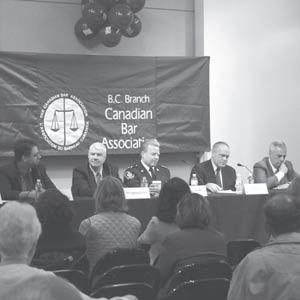
How Will New Amendments to B.C. Legislation Affect Lawyers?
By the time the B.C. Legislature has wrapped up for the summer, the Attorney General Statutes Amendment Act, 2007 (Bill 33) is expected to have been signed into law. The Bill includes sections that amend the Legal Profession Act and the Legal Services Society Act in ways that will boost the powers of the Law Society of British Columbia (LSBC), and expand the mandate of the Legal Services Society of British Columbia (LSS). Once implemented, these wide-ranging amendments will affect both legal professionals and members of the public requiring legal services.
LegaL Profession act
Sections 38 to 43 of Bill 33 enhance the LSBC’s existing regulatory powers while providing the LSBC with new tools to achieve its primary mandate to protect the public interest. The Bill empowers the Practice Standards Committee of the LSBC to make compulsory orders, with prior notice to a lawyer, that impose conditions and limitations on a lawyer’s practice, including the imposition of remedial programs. Under the proposed amendments, the LSBC may now also be appointed as a custodian of a lawyer’s practice if the lawyer is unable to continue practising.
Other amendments include the sanctioning of five benchers to act in respect of a bencher review if the seven-bencher quorum required under the Act is lost. The LSBC will also be permitted to apply to, and empower, the Supreme Court to issue a letter of request
to another jurisdiction for the purpose of obtaining evidence regarding LSBC investigations or hearings. Such a request relies on the notion of reciprocal cooperation and while formal, would not be binding.
LegaL services society act
Section 44 of Bill 33 amends section 9 of the Legal Services Society Act to broaden the mandate of the LSS by removing references to low-income individuals from its objects. Bill 33 changes the objects of the LSS, so that its role is expanded to:
• assist individuals to resolve their legal problems and facilitate their access to justice; and
• provide advice to the Attorney General, respecting legal aid, and access to justice for individuals in B.C.
Bill 33 also makes amendments regarding the provision which requires the LSS to be guided by the following principles:
• give priority to identifying and assessing the legal needs of low-income individuals in B.C.; and
• be flexible and innovative in the manner in which it carries out its objects.
How the LSS will apply its broadened mandate is not yet clear, but there is a significant policy concern arising from this amendment: legal aid funding in B.C. has been proven to be insufficient to adequately fund legal services for impoverished people; broadening the mandate without increasing funding will further erode the province’s legal aid system. BT
uuu
Canadian bar Association, b.C. branch
10th Floor, 845 Cambie Street vancouver, b.C. v6b 5T3
Tel: 604-687-3404
Toll-free (in b.C.): 1-888-687-3404
bartalk@bccba.org
barTalk is published six times per year by the Canadian bar Association, british Columbia branch.
This publication is intended for information purposes only and the information herein should not be applied to specific fact circumstances without the advice of counsel.
The Canadian bar Association, british Columbia branch represents more than 6,200 b.C. members and is dedicated to improving and promoting access to justice, reviewing legislation, initiating law reform measures and advancing and improving the administration of justice.
barTalk Publication Sales Agreement #40741008
www.bclawweek.org
Send your Letters to t H e eD itor to: Jesse Tarbotton, barTalk Senior editor
Canadian bar Association, b.C. branch
Fax: 604-669-9601
Toll-free fax: 1-877-669-9601
e-mail: jtarbotton@bccba.org
Law Week 2007: “access to Justice”
Law Week is a national event originated by the CBA celebrating the signing of Canada’s Charter of Rights and Freedoms. Held every April, Law Day provides an important opportunity to help Canadians learn about their justice system and to project a positive image of the CBA and the legal profession. The theme for Law Week 2007 was “Access to Justice” and this year, we also celebrated the 25th Anniversary of the signing of the Charter of Rights and Freedoms. Law Week events were held across the province in the communities of Dawson Creek, Fort St. John, Nanaimo, New Westminster, Port Coquitlam, Prince George, Vancouver, and Victoria. Highlights of all B.C. Law Week events can be found on pages 20-22.
The CBABC thanks the Law Week Committee members for their work in organizing the Law Week 2007 events. The Committee, chaired by Debbie Granger, included Alison Campbell, Cindy Cheuk, Bill Clarke, Marika Giles, Beayue Louie, Sarah Klinger, Karla Koles, Arsen Krekovic, Forrest Nelson and So Yin Woo. Key partners included: the People’s Law School, the Law Courts Education Society of B.C., Northern Lights College, Malaspina College-University and the Ministry of Attorney General of British Columbia.
Law Week is funded by the CBA, the Law Foundation of B.C., and the Vancouver Bar Association. The Victoria Bar Association also sponsored Law Week events in its community. In addition, for the second year, a number of businesses and organizations sponsored Law Week 2007 events including: Lang Michener LLP, Stikeman Elliot LLP, Fasken Martineau DuMoulin LLP, Alexander Holburn Beaudin Lang LLP, Dye & Durham, Canadian Springs, and Miller Thomson LLP. Thanks to all our partners and sponsors for their invaluable support of this year’s events.
What Makes canada great?
The 25th anniversary of the Charter provides a good occasion to reflect upon the place of the law in Canadian culture and society, and the role of Canada’s legal profession in that respect.
What makes a country great?
We know that a wealth of natural resources does not lead to happiness for the population. There are many countries having an abundance of resources, yet the people are impoverished and oppressed. There are many other countries where the opposite is true: they have limited natural blessings, yet there is material prosperity and a healthy democratic government. To lawyers, the answer is obvious: without respect for the rule of law, respect for fundamental rights and freedoms, and an effective justice system, a country cannot succeed.
Frits verhoeven
President 2006/2007
b.C. branch
Canadian bar Association
Our 1867 constitution places “Peace, Order and Good Government” as one of its central objects. Canadians would overwhelmingly agree that there can be no peace, order and good government without the rule of law and an effective justice system. Our material prosperity and the well-being of our citizens depends upon the maintenance of these principles.
When compared with “Liberty, Equality, Fraternity” or “Life, Liberty, and the Pursuit of Happiness,” the POGG goal seems modest and uninspiring. But the POGG goal is in fact a grand one, when one considers how infrequently the nationstates of the world have achieved and maintained it. Canada is exceptional in that, although there have been many glaring exceptions, for the past 140 years most Canadians most of the time have enjoyed the benefits of peace, order and good government. When there have been failures, Canadians have worked to correct them, over time.
Canadians continue to believe that injustices should be made right. Crucially, we have faith that our political and legal institutions are capable of doing so. Canada has long been one of the best countries in the world to live. Canadians have an unspoken confidence that this will always be so.
Respect for the law is part of our culture. In her 1985 book, The Wacousta Syndrome, sociologist Gaile McGregor wrote: “In Canada the culture hero is not the gunslinger, triumphing over opposition by a demonstration of natural powers and anarchistic individual will, but rather the Law itself: impersonal, all embracing, pre-eminently social.”
Canada is known internationally as a country that respects the rule of law, human rights, and the fundamental rights and freedoms set out in the Charter.
As lawyers, we can take pride in the role the legal profession plays in building and maintaining that respect, and in constantly seeking to improve the law.
Lawyers volunteering their time through the Canadian Bar Association are doing outstanding advocacy work on behalf of the profession. The last issue of BarTalk included a copy of the brochure “Canadian Bar Advocacy,” which provides a snapshot of national CBA advocacy efforts. CBA advocacy centers on themes such as the independence of the profession and the judiciary, solicitor-client privilege, lawyers’ professional interests, access to justice, and fairness in the legal system.
During 2006, CBA made 66 submissions to the federal government touching on these topics. CBA intervened in several cases at the Supreme Court of Canada.
The legal profession in Canada has great influence on public policy issues. We may not often be thanked for that, but all Canadians receive the benefit. BT
CA roline nevin e X ec U tive D
irector
the advantage of Being young
Why the CBA’s future is so bright in B.C.
Organizations – like people – go through phases as they develop and mature. The Canadian Bar Association, despite its 100+ years as an established institution, is at a very early stage in its development as a voluntary association in B.C. I describe us as the most nimble, responsive Branch in the country, because almost everything we do is charting new ground here. Our energy, drive and “anything’s possible” attitude stems from our relative youth as a voluntary organization, and has made us a national leader when it comes to attracting new lawyers.
Caroline
nevin executive Director b.C. branch Canadian bar Association
We are completely focused on excellence – its definition, pursuit and achievement. In the world of member service organizations, there is only one mandate: to be the very best at satisfying current members and attracting new ones. For the CBA to do that requires a clarity of vision that is only possible when you listen to lawyers. That’s one of my key roles as Executive Director: to hear what you have to say, both good and critical, and to use that information to guide our actions.
“While the voluntary b.C. branch may yet be young, we have the wisdom of elders and experience to draw on.”
We are now entering our third year of voluntary membership, and close to 60 per cent of the practising lawyers in the province have joined us. From talking with members throughout B.C., I have a clear understanding of why people join:
• Personal commitment to the profession – a belief that belonging to the CBA is an important part of being a lawyer, and that a strong CBA is good for the whole profession
• A desire to support law reform – individual lawyers often can’t give their time and
attention to legislation, law reform and policy development, but do want to ensure the profession’s input on provincial and federal laws
• Concern about government and regulatory decisions – when clout is needed to influence decisions that impact lawyers, members believe in the power and credibility of the CBA
• A need to connect with other lawyers – members value the networking, mentoring, learning, volunteering... and a sense of “belonging” to a profession, beyond day-to-day life as a lawyer.
Yes, there are member discounts on useful services, hockey and ski tickets. And yes, we are B.C.’s most prolific, cost-effective provider of up-to-date professional development through Sections. But most people join the CBA as a way to contribute and engage as part of the larger legal profession. Our job is to help you make that connection, and then exceed all your expectations of what CBA membership means.
I am fortunate to have a staff team that is as committed to this endeavour as I am, and a National office that backs us 100 per cent. The CBABC Executive and Council have provided exceptional leadership, ideas and support for new initiatives. While the voluntary B.C. Branch may yet be young, we have the wisdom of elders and experience to draw on – and no limits to what we can accomplish in the future. I look forward to working with you as we grow. BT
section Update
Keep your practice current
The following are brief summaries of several recent Section meetings held throughout the province. More detailed information, minutes, and Section Papers from the Section meetings are accessible online at www.cba.org/bc for enrolled CBA members.
aDr – victoria
Meeting: march 26, 2007
sPeaKer: m. Jerry mcHale, QC, Assistant Deputy minister, Justice Services branch, ministry of Attorney General of b.C.
toPic: The Place of ADr on the Civil Justice reform Agenda
Mr. McHale provided the Section with an update on civil justice reform initiatives in B.C. and led a discussion about the role of dispute resolution processes in those reform efforts. He has been at the forefront of significant civil justice reform and initiatives for over a decade. His PowerPoint presentation circulated to the members included highlights of the Hub pilot in Nanaimo. The “integration” of services means helping organizations to work more closely (including the Ministry of Health, Social Services, NGO’s, Justice, etc), to make their services known and accessible and to avoid unnecessary gaps and duplication. As part of the HUB pilot in Nanaimo,
faMiLy LaW – vancoUver
Meeting: may 3, 2007
sPeaKer: Scott booth, Jenkins marzban logan
toPic: Spousal Support Advisory Guideline Calculations
these services will meet to discuss and clarify their services, availability and linkages – the “Community Panel” approach.
HUMan rigHts
Meeting: march 16, 2007
sPeaKer: Christopher mcHardy, mcCarthy Tétrault llP toPic: mandatory retirement in b.C.: The beginning of the end?
Mr. McHardy presented an educational and thorough review of issues surrounding Mandatory Retirement in British Columbia. Some topics discussed were: The Current Law – B.C. Human Rights Code; Bona Fide Occupational Requirements; Benefits Plans; Collective Agreement Provisions; and Steps for Employers to Prepare for the End of Mandatory Retirement. The informative paper “Mandatory Retirement in B.C.: The Beginning of the End?” was presented by Mr. McHardy, and circulated to members in attendance and with the Section
Scott Booth, Past Chair of the Family Law – Vancouver Section guided members through a number of the more complicated spousal support calculations, including split and shared custody and step-parent contributions.
“Despite a sunny evening and a Canucks playoff night, about 40 members attended this meeting. They were not disappointed! They enjoyed a lively discussion and debate on how various numbers should be inputted.”
– Section Chair, Grace Choi
Case studies were circulated in advance of the meeting. Mr. Booth explained why experienced and competent counsel show up in Court and/or mediations with different calculations using the same facts and software.
coMMerciaL & reaL estate – vancoUver isLanD
Meeting: may 10, 2007
sPeaKer: brett Horton, emergis inc.
toPic: Assyst real estate – Paperless mortgage Transactions are Here!
Brett Horton, a former real estate practitioner who now works for Emergis Inc., presented to members a webbased platform that electronically links lawyers to lenders in real estate transactions. This Section luncheon meeting held in the Barristers’ Lounge at the Victoria Courthouse provided a preview of a new tool soon to be available to residential real estate practitioners in B.C. Mr. Horton described how Assyst Real Estate is designed to reduce many errors through electronic instructing and automatic modifications. The objective is to improve the customer service to both borrower and lender clients.
Mr. Horton shared that Assyst Real Estate has been in use by notaries in Quebec for over five years where 80 per cent of all notaries use it to process mortgages for the National Bank, DesJardins and RBC Royal Bank. Assyst Real Estate is beginning Beta testing in British Columbia for RBC Bank mortgages and in the next year, it is anticipated that other lenders will join in the use of Assyst Real Estate platform to deliver mortgage instructions to solicitors. Mr. Horton finished his presentation with a brief demonstration of Assyst Real Estate, which allowed those in attendance to ask questions about the web-based platform and how it worked. Handouts were made available to members in attendance. Chair, Wendy Everson, found the presentation informative and hopes that the availability of this tool and the willingness of lenders to use it will allow residential real estate practitioners to re-enter and compete in the residential refinance lending market.
minutes. The question and answer period following the presentation covered issues such as: challenges to entitled benefits; higher risk of litigation regarding mandatory retirement; and undue hardship if many are already accommodated.
secUrities LaW
Meeting: April 24, 2007
sPeaKer: Warren Funt, vice-President, Western Canada, investment Dealers Association of Canada (iDA)
toPic: update on the Pending merger of the investment Dealers Association of Canada and market regulation Services inc.
An update on the pending merger between the IDA and Regulation Services was provided by Mr. Funt. His presentation included an overview of the development of the self-regulatory organization landscape and the status of self regulation generally. The increased efficiencies and improvement of the overall quality of regulation were identified as the
main reasons for the merger. Mr. Funt discussed the status of the merger, including the appointment of the Chief Executive Officer for the merged entity. He also spoke about the information circular which details the merger and which is expected to be distributed to IDA members as part of the approval process. BT
section enroLMent 2007-2008
Coming in July – the 2007/2008 Section enrolment form! With 67 Sections and a Women lawyers Forum, CbAbC members can keep up to date in their practice area and network with colleagues at Section meetings and events. Watch for the special envelope marked “Section enrolment and Directory order Forms” in your mail.
Practice ta LK DAvi D J . bilin S ky
the Benefits of coaching
Associates take to the field…
oh, put me in, Coach –i’m ready to play today; Put me in, Coach –i’m ready to play today; look at me, i can be Centerfield.…
IWords and music by John
Fogerty
n a perfect world, all junior lawyers and associates would have senior mentors who would take the time to instil all their stored knowledge and experience into the junior lawyer. Indeed, many lawyers have lamented that senior lawyers rarely today have juniors carry their briefcase to court or to a major closing to witness, learn and grow. Unfortunately, the growing economic pressures of practice have all but eliminated this stage in a lawyer’s career.
J. bilinsky is the Practice management Advisor at the law Society of b.C. e-mail: daveb@lsbc.org
Business coaching is in the formative stages of becoming a profession. They have formed associations, adopted codes of ethics, established levels of proficiency, standards of professional conduct and examinations and established a level of self-governance. None of this would happen if the business coaching industry and coaches did not see the benefit of taking such steps and marketing them to the world.
However, in response to the loss of the mentorship has been the growth of professional coaches. All professional and most amateur sports teams have coaches. Such teams also have managers, marketers, publicity people, accountants and others. What “exactly” then does the coach do for the team or team members that is distinct from all the other professional staff? How does a coach make a difference? More importantly, how can a good, qualified coach take a collection of talented individuals and turn them into a winning team?
Some people are lucky enough to find a mentor in their firm or in their life – an individual who seems to know how to draw the best out of someone and lead them on to greatness. For the rest of us though, we either go through life making the best of it on our own, or increasingly, some of us find assistance in the growing business coaching movement.
What can a good business coach do for a busy lawyer? They act like a magical mirror, allowing you to see the qualities hidden inside yourself and giving you the opportunity to see how those qualities can be brought to the surface and used to best advantage in the future. Coaches can bring fresh perspectives to the table and enhance skills and effectiveness. They can help develop new approaches to personal challenges and develop decision-making skills, personal confidence and personal effectiveness. They can assist in increasing productivity, personal satisfaction, goal-attainment and aid in developing leadership.
How can you determine if a coach is right for you? One of the better indicators is that you have a clearly defined goal in mind – i.e. you wish to increase your productivity by 15 per cent (as measured by billable time or collected billings) or expand your clients in a certain area of practice by 25 per cent. Or it could be that your work/life balance has become too one-sided and you are looking for ways to correct this before it is too late. Or it could be that you wish to become more adept at going out and meeting with new clients and learning how to work at business development.
David
How does coaching work? Typically, a coaching relationship will begin with a personal interview. At this first meeting, the coach and the client would scope out their personal environment including all opportunities and challenges seen by the client. Together the coach and the client would develop the desired outcomes, the scope of the relationship, the priorities for action and the timeline for the coaching relationship. Subsequent meetings may take place in person but more frequently, take place by telephone at pre-arranged dates/times. The coaching programme is customized to the needs of the clients and their desired outcomes. It may include reading resources, assignments, assessments (testing) and other tools. It is certainly designed to be proactive and nurturing.
What should you look for in a coach? Like any professional relationship, the personalities of the individuals involved can have a strong influence on the final outcome. As such, it would be important to ask yourself if this person is someone in whom you can establish trust and confidence? Other areas that you can investigate are: What are their professional qualifications, training and experience? What is their coaching experience? Can they provide references? What area(s) are they comfortable in coaching (i.e. finance, business development, personal satisfaction, etc.) and what have been their results to date in these areas? What is the coach’s philosophy and vision for coaching and how do they see the two of you working together? What is their process for coaching (inperson meetings? Telephone calls? Assignments?) Do they have any experience in working with lawyers in a private practice environment?
How long should the coaching period last? Can the coach provide a timeline with measured results that would provide meaningful feedback to the client on the progress being achieved as a result of the coaching? How would you raise concerns about the coaching and the results being achieved? Are you comfortable being fairly direct with the coach in terms of your needs, goals and desired outcomes?
TecH TIP
courTeSyofcHrISToPHer doll keep an eye peeled for the Powerstick, coming this summer (not to be confused with the iPod powerstick, available now). A truly remarkable device that charges from any uSb port (anywhere in the world, no adaptor required) and then can be used to charge anything from a mobile telephone/PDA to your digital camera.
How can you measure success? There are two ways to measure success, internally and externally. Internal measures of success would involve changes in the client’s self-awareness and thinking, changes in the thinking of others, changes in the client’s emotional state and changes in the client’s self-confidence. External measures would involve metrics such as increased revenues, positive career evaluations and increased business performance as measured by the client’s law firm metrics. In all cases, the metrics chosen to evaluate the success of the coaching should be related to matters that are within the client’s control and influence.
uuu www.ecosolinc.com/ powerstick/
The reason that coaching has emerged as a force today is simply because “it works.” The personal care and attention that coaching can deliver is rare today outside of the coaching environment. Moreover, it offers the possibility of making a real and positive impact on a lawyer’s career. After a successful and rewarding period of coaching, you should be straining to be put in the game, ready to play with an increased self-image of what you can do and achieve. BT
The views expressed herein are strictly those of the author and may not be shared by the author’s employer, the law Society of b.C.
adventures in Wonderland
Another Legal Conference, another Tylenol, another Story
If you’ve never been to the International Trademark Association Convention (normally called INTA), you’ve missed the opportunity to be bombarded by 8000 fellow trademark professionals meeting each year in a different city to talk about the following five things:
1. The ridiculous crowds;
2. The free promotional swag given out by Exhibitors;
3. Which big name rock band will play the Thomson party;
4. The fine art of crashing law firm receptions you weren’t invited to; and
5. Hangovers.
Tony Wilson is a Franchise, Trademark and intellectual Property lawyer at boughton in vancouver. He’s written for the Globe and mail and macleans magazine.
twilson@boughton.ca
You might note that the word “Trademark” is not in the top five things spoken about at INTA, but I assure you it is in the top ten. If you hope to get new business at INTA, forget it. Everyone in this business is here, so it’s impossible to find any new contacts unless you booked it well in advance. Because you normally deal with your colleagues by e-mail or on the phone, you don’t necessarily know what they look like. So you don’t look at anyone’s eyes at INTA. You look at their badges while pretending to look at their eyes. It’s an art.
You have to bring lots of business cards to INTA to give to other lawyers, and to put in contest raffles to win things like iPods. And you get lots of cards in return. Last year, I spoke to one of the Exhibitors and he asked me to put my business card in his bowl so that his company might send me spam. Appreciating his honesty, I obligingly pulled a card from one of my pockets and put it in his fish-bowl. At least I thought it was one of mine. Who can say?
A couple of INTA’s ago, I was sitting down in a comfortable chair to collect my e-mails (and my wits)
and dozed off for a moment. A lawyer from China woke me up, smiled and gave me his business card. Perhaps he didn’t see that my eyes were closed (which is how we sleep in Canada). A colleague told me he was also offered a business card by one of these “Cardmen,” but in the men’s bathroom. I hoped the card had not been offered while the two were sitting. Or standing.
I surmised there was an organization that didn’t want to pay for an Exhibition Booth at INTA, but hired nameless Cardmen to hang around comfortable chairs and bathrooms to give business cards to the unwary and unwashed. Perhaps their overseers counted the business cards collected each night and the Cardman with the least number got sent back to Beijing.
But the key to enjoying INTA are the law firm receptions. As long as you’re wearing an INTA badge, you can more or less get access to any INTA party at any restaurant or bar in the Host City and be royally treated to free drinks till the cows come home. Noone is turned down, in part because they don’t know you and in part because they want your business card to send you spam. That’s the trade-off. When I leave the law, I think I’ll set up a travel business where I’ll send tourists to INTA and other big conventions around the world. My “agency” would figure out where the best receptions were, give patrons a tie, a badge and some business cards and send them on their merry way to free inebriation and more canapés than they could ever imagine. It’ll be like a cruise ship, but without the seasickness or awkward tipping decisions. I think I’ll call it “Gatecrashers Travel.” I’ll have to trademark that, won’t I? BT
Marketing your firm online – Part 3
Does your network have an open back door? If you don’t know the answer to that question, then you could have a problem. Experts recommend you employ a three-tier approach to security: e-mail, network and web security must work together to protect your network infrastructure from a variety of threats, such as denial of service, phishing, malware, spam, spyware, viruses and more. An IT professional will conduct a risk analysis to identify threats, classify assets and rate system vulnerabilities so that an effective security system can be implemented. If you are inexperienced with securityrelated issues, I suggest you speak with a professional to determine your requirements and what the best solution is for your firm.
Patricia Jordan is the CbAbC manager, interactive media. She welcomes your comments, questions and suggestions.
Tel: 604-646-7861
e-mail: pjordan@bccba.org
First, you’ll need a firewall. A firewall’s purpose is to control traffic between computer networks with different zones of trust. For example, an internal network is a zone with high trust and the Internet is a zone with no trust. IT professionals recommend that you use both hardware and software firewalls. A hardware firewall is a piece of equipment that is attached to your network system. The advantage of using a hardware firewall is that it is configured to allow certain types of traffic, consequently protecting the network and making it more difficult to hack into than software. A software firewall is a security program that is installed on a computer to control network traffic by denying or permitting communications based on security protocol. The proper configuration of a firewall requires the skill of a trained professional. A considerable understanding of network protocols and computer security is
vital, as small mistakes can render a firewall worthless.
Your second line of defence should include anti-virus software to provide spam, spyware and virus protection for e-mail. If anti-virus software is not kept up-to-date, you risk becoming the unwanted target of malware, spyware or similar software that can manipulate your firewall, rendering it useless. Presently, firewalls do not scan for viruses or e-mail attachments; they control traffic moving in and out of a network system. In future, firewalls may include anti-virus content processing technology to provide comprehensive protection.
For more information about security visit: netsecurity.about.com, securityfocus.com, cert.org/tech_ tips/home_networks.html, and networkworld.com/ topics/security.html.
internet secUrity tiPs
• Develop a security protocol
• Maintain a culture of security
• Install a firewall to block unauthorized access
• Install anti-virus software and keep it upto-date
• Use secure passwords
• Back-up your data
site DU JoUr www.legaltree.ca
Canada’s legal resource Legaltree.ca is a collaboratively built website with research resources maintained by the site administrators, and legal literature contributed by lawyers in the Canadian legal community. BT
Site du Jour
international opportunities
if you’ve always wanted to volunteer your time to take part in CbA’s international initiatives, it’s now easier than ever. The international Development Committee’s newly-created online resource bank allows you to complete a registration form and upload your c.v. Please visit the website (link below) to find out more about the many international opportunities available to members.
The Calgary ymCA promises an actionpacked program for youngsters while parents attend the CbA’s Canadian legal Conference, Aug. 12-14. Children will be divided into two groups: ages 6-12, and teens, ages 13-16. Activities include visits to TeluS World of Science (interactive exhibits); Police interpretive Centre (kids play junior detective); royal Tyrrell museum in Drumheller (dinosaurs); Zoo and botanical Gardens; Calaway Park (amusement park); and much more.
While in Calgary, allow time before or after the conference to do some sightseeing. Choose day tours, pre- and post-conference tours, or all three! Day tours include: city of Calgary and olympic Park; banff/lake louise; kananaskis Country. before and after tours include Prairies to the Foothills; Calgary, Jasper, lake louise, and banff; and Prehistoric Paradise (Drumheller).
Base salaries for entry-level associates, IP lawyers and corporate counsel all increased in 2006, according to CompINSIGHT® Legal’s 2006 National Legal Practices & Compensation survey. Other results show the bonuses and incentives paid to law firm associates are similar, on a percentage basis, to those paid to junior or intermediate corporate counsel. In terms of gender makeup, law firms are 60 per cent male to 40 per cent female, while corporations are 50/50 male to female.
Survey results offer detailed salary information, analysis of benefits, incentives, law firm practices, and much more to participating firms. Customized reports are also available.
every effort is made to ensure the accuracy of the information provided to you in this article but the information should not be relied upon. lawyers should refer to the specific legislative or regulatory provision. you will see a reference in some cases to the number of the bill when it was introduced in the House. This number may be different from the chapter number of the new Act which is quoted after the title of the Act and which is the proper citation for the Act. The bill number has been given to make it easier for you to note up the bills you may have in your library.
acts in force
cHaritaBLe PUrPoses Preservation act, s .B. c . 2004, c . 59 (B i LL 63)
Act is in force March 8, 2007
cHiLD anD yoUtH statUtes (rePresentation iMProveMent)
aMenDMent act, 2007, s.B.c. 2007, c. 5 (BiLL 7)
Sections 7 to 10 and 16 to 26 are in force March 30, 2007
CurrenT From mArCH 6 - mAy 7, 2007 legislative update is provided as part of the CbAbC legislative and law reform program. it is a service funded by CbA membership fees, and is therefore provided as a benefit of CbA membership. The full version of legislative update is now published online, available to CbA members exclusively at www.cba.org/bc.
HeaLtH statUtes
aMenDMent act, 2006, s.B.c. 2006, c. 23 (BiLL 29)
Section 2 is in force March 15, 2007
rePresentative for cHiLDren anD yoUtH act, s.B.c. 2006, c. 29 (BiLL 34)
Section 6, as repealed and replaced by section 9 of the Child and Youth Statutes (Representation
List of Law reform consultations and notable Bills from the Legislative assembly of British columbia
Stuart rennie, CbAbC’s legislative and law reform officer, has reviewed the current b.C. government law reform consultations and the b.C. government bills for the 2007 Spring legislative session regarding bills that are imminent, are significant and where the CbAbC is playing a role.
To read the extensive list of law reform consultations and notable bills from the legislative Assembly members go to uuu http://www.cba.org/bC/pdf/current_issues/law_ reform_05_07.pdf
Improvement) Amendment Act, 2007, except paragraph (c), section 10, as repealed and replaced by section 10 of the Child and Youth Statutes (Representation Improvement) Amendment Act , 2007, section 22, as repealed and replaced by section 19 of the Child and Youth Statutes (Representation Improvement) Amendment Act , 2007, sections 26 to 28, 31, 36 and 37 are in force March 30, 2007 Directory
Don’t miss out on getting your Preferred Area of Practice (PAP) listings for clients and other lawyers to see – fill out the enclosed order form. To book your advertising or pre-purchase a Directory, go online to www.bccbadirectory.org. Watch for your Directory listing Proof in June. your Directory order form with be mailed with your Section enrolment form in July as well.
some observations on the subject of associate retention
When asked to comment on associate retention strategies here at Lang Michener, my first instinct was to touch wood. For in spite of what we and other firms do in order to keep associate talent, we will still inevitably lose some great lawyers to other opportunities.
So I offer up some observations on how Lang Michener is approaching the subject, somewhat gingerly. This is a work in progress and I hope we are dancing fast enough.
Sandra mackay is the Practice Director of lang michener llP, vancouver, in which role she oversees associate recruitment and development and participates in firm management. before joining lang michener to take up this position, Sandra practised law both privately and as in-house counsel.
There is now broad acceptance in this Firm that times have indeed changed, and we aren’t going back. We are well past the “why can’t this new generation think like we did” attitude that I believe still exists in many firms.
For some years now, Lang has coordinated secondment opportunities, both abroad, through relationships with foreign firms, and domestically with the other offices, in order to allow the associates to broaden their experience and sample international opportunities without severing their ties to the Firm.
We hire with a very deliberate honesty about the Firm; by that I mean, we present Lang Michener as we are, so that the match of an individual to this type of firm and practice is as exact as we can get it. We are moving away from a formal mentoring program to a general apprenticeship model whereby all senior lawyers are expected to guide and teach all junior lawyers with whom they work.
We have modernized the Lang Michener economic model. It doesn’t hurt Lang Michener that the partners here work hard. Lang Michener’s
expectations for partner contributions and associate contributions as to productivity are remarkably close. We share results with the associates with what I consider to be unique candour. We have a rigorous annual business planning process for all associates which we find an effective tool in ensuring that the associates’ careers are developing as they and the Firm wish.
We encourage client contact at all levels. Lang Michener’s partners aim to demonstrate to the associates how they manage client expectations and demands and how they prioritize and compromise when that presents balance issues. We encourage direct client contact by the associates, in part so that they too feel the accountability to the client that really is at the root of the work/life balance struggle.
We don’t burn bridges with those who do leave. If this is an excellent firm offering great experience, then by virtue of that the associates will have opportunities elsewhere; we’ll take some credit and pride in that, rather than despair over it. We want those who leave us to leave as friends of the Firm and potential returnees; we have continuing relationships with former associates from Europe to Asia.
As a final comment, I would encourage a larger view of the whole issue. Yes, the market for associates and the demands of this new generation require a reconsideration of traditional firm thinking, but is that such a bad thing? I think many from my generation wish we’d had the courage or the bargaining power of today’s associates. So, looking at the associates from that viewpoint: more power to them. Yes, you make my job challenging, but keep it up. BT
a firm’s Perspective on associate retention
Fasken Martineau DuMoulin LLP
Over the last several years, many articles have suggested the different nature and interests of young professionals – law school graduates are less likely to stay with the firm they start with, and less likely to see partnership as a desired goal. We know many graduates view a law degree as an adjunct to a business degree and preparation to pursue future entrepreneurial interests.
Penny Harvie Director, Professional Personnel Fasken martineau Dumoulin llP, vancouver
At Fasken Martineau DuMoulin (FMD), although FMD’s associate attrition rates have remained relatively stable over the past few years, we’ve been challenged in making gains in the retention of the associates to augment FMD’s ability to deliver excellent client service at the right practice level in a very busy market. We recognized that these challenges were not unique to FMD’s firm; they are at least citywide and perhaps even profession-wide.
In the Fall of 2005, then Managing Partner of the FMD Vancouver office, Sue Paish, QC, struck an internal Associate Task Force with a mandate to review associate life at FMD.
The Task Force was due in part to the 2005 Catalyst study of over 1400 Canadian lawyers which reported some chilling statistics: 62 per cent of female associates and 47 per cent of male associates are expected to leave their firms within five years; average cost to a firm of an associate’s departure is $315,000; and women and men reported the same factors as important if they were to change firms: an environment more supportive of family/personal commitments, and more control over work schedules. Retention of talent arguably underpins every other factor critical to a law firm’s success and the Catalyst study confirmed it’s becoming a tougher challenge.
The Task Force met frequently and spent considerable time discussing associate issues and possible recommendations. We developed an Associate Survey which was completed by 75 per cent of the associates on an anonymous basis. Two main themes emerged from the Associate Survey: desire for better work/life balance and better mentoring/training. The Task Force also reviewed the statistics on associate attrition rates, compensation and part-time work arrangements; and numerous industry journals, articles and other materials.
At the mandate’s conclusion, the Task Force report to the Managing Partner contained 17 recommendations; some were easy to implement: such as setting up a series of in-house seminars on non-work issues such as financial planning, personal investing and tax planning. Others required process changes, including the development of better career planning and evaluation tools. Many of the recommendations have now been implemented. One suggestion was the creation of a dedicated professional associate coordinator in order to ensure that the Task Force recommendations were implemented and to provide ongoing support for the firm’s associates. It was also recognized that although many of the recommendations required partner involvement, when they are left solely to partners to implement, client issues and billable work can push this work off the day’s agenda. A dedicated associate coordinator would be able to oversee all aspects of the firm’s associate program. This particular recommendation was implemented at the start of this year, and as the first incumbent I am delighted to have been offered this tremendous opportunity to make a difference in the lives of current and future associates at FMD. BT
Mentoring Women Lawyers in British columbia
Women make up one third of the legal profession in B.C., despite graduating in equal numbers to men at law schools across the country since the early 1990s. However, the attrition rate of women leaving the profession is much higher than for men. In order to support and promote women in the legal profession, the CBA Women Lawyers Forum was started in B.C. in 2002 and became a national organization in 2005.
Debra m van Ginkel, QC Chair, CbA Women lawyers Forum
The Women Lawyers Forum Mentoring Program is an initiative designed to facilitate mentoring relationships for women in the legal profession. There are no other organizations in Canada that provide mentoring for women lawyers. The Mentoring Program was developed in order to address two issues that adversely affect women lawyers: to address the attrition rate and the fact that women may not be naturally matched with a mentor. We believe that mentoring will help women to stay and flourish in the practice of law. Further, it is a practical way for women to help each other with the challenges of a demanding profession.
The Mentoring Program has developed a new model of mentoring, that is, a collaborative learning partnership, benefiting both the mentor and the mentee. We believe that mentoring relationships have changed dramatically in recent years. No longer is the mentor necessarily an older, more senior lawyer. Often younger lawyers make great mentors because they remember more vividly the struggles of those closer in experience to themselves. Further, peer mentoring is an important aspect of the Mentoring Program, where senior lawyers may want a mentor themselves, to help them navigate their own career challenges.
The Mentoring Committee recognizes that a successful Program requires on-going support, education and encouragement beyond the initial matching of the mentoring pairs. Accordingly, at the start of the Program, the mentoring pairs attend an orientation in order to explain the Program and to review the Guidelines and the Agreement. At the end of the year, the participants attend a celebration event where they are recognized for their participation and contributions.
The Women Lawyer Forum also runs a series of workshops and luncheon events on topics of interest to the mentoring participants. These events include training seminars on topics such as communication, with tips that are applicable to their mentoring relationship. We hold workshops on work-life balance or other topics of interest, and we organize panel discussions on mentoring, such as the popular “Ten Hot Tips From Ten Hot Mentors,” and “What I Learned From My Mentor,” where senior women lawyers provide insights and practice tips.
In order to expand the Mentoring Program, with the goal of providing mentors to all women lawyers and articled students in B.C., the Women Lawyers Forum has received a grant of $50,000 from the Law Foundation. Over 3,000 women lawyers in the province have been contacted to request their participation in the Mentoring Program. We are in the process of matching women lawyers in mentoring pairs from all corners of the province.
More information can be obtained from the CBABC website at www.cba.org/bc. Anyone interested in hearing more about the Program is welcome to contact Debra M. Van Ginkel, QC at dvanginkel@ wgmlaw.com or at Watson Goepel Maledy LLP 604-642-5658. BT
Debr A m vA n Ginkel, QC
charitablePurposesPreservation act
The Charitable Purposes Preservation Act1 has now been brought into force.
The Act, which took effect March 8, addresses potential uncertainty in the law of charitable giving in British Columbia. It follows the 2000 Ontario Court of Appeal decision involving the Christian Brothers of Ireland in Canada.2
Allan Seckel, QC british Columbia Deputy Attorney General
That case involved whether two Vancouver Catholic schools run by the Christian Brothers should be sold and the proceeds made available to help pay claims for sexual abuse at the Mount Cashel orphanage in Newfoundland.
The Vancouver schools had been established from charitable donations over the years. The schools had been held in trust by the Christian Brothers. There was no other connection between the Newfoundland claims and the Vancouver schools. Yet, the Ontario court held that the schools were available to meet those claims.
In response to the uncertainty raised by the Ontario decision, the British Columbia government decided to create additional legislative safeguards for charitable giving in this province.
The Charitable Purposes Preservation Act does not change or restate the law of charitable trusts. Instead, it provides supplementary protection in certain circumstances.
To be protected under the Act, charitable gifts must fall within the definition of “discrete purpose charitable property.” Then, if such property is kept and administered separately from the charity’s other property and used in accordance with the discrete purpose, it will remain protected under the Act. In particular, such property will not be
available to meet unrelated liabilities of the charity, even in a bankruptcy or winding up.
Certain provisions of the Act are specifically designed to answer key features of the case.
First, the Act makes clear that a charity, itself, has no beneficial interest in discrete purpose charitable property. Accordingly, in a winding up of the charity, there would be no value in that property for creditors and other claimants and no reason for the liquidator to pursue it on their behalf.
Second, the Act provides for the circumstance where a charity is no longer able to use that property to advance the discrete purpose. Like the law of charitable trusts, the Act is based on the principle that certain gifts should not fail for lack of a person able and willing to advance the gift’s charitable purpose. To that end, the Act creates a process which mirrors the cy-pres powers used by the courts in charitable trusts cases.
Third, the Act specifically provides for what happens to discrete purpose charitable property on a bankruptcy or winding up of the charity. It allows for payment of any debts relating to that property, with the remainder to be transferred to a new charity and applied to the same or a similar discrete charitable purpose.
In sum, the new Act is not intended to replace the British Columbia law of charitable trusts. Rather, it creates parallel statutory protections that apply in certain circumstances, ensuring charitable donors’ intentions in that regard may always be fulfilled. BT
1 S.b.C. 2004, c. 59 2 (2000) 47 o r. (3d) 674
computer forensics and electronic Discovery: What you Don’t Know can Hurt you
Thanks to television shows such as CBS’s CSI franchise, interest in forensic science is at an all time high. This has resulted in increased enrolment in criminology courses, and an overall dissemination of forensic knowledge to the general public. Yet despite this, the widespread use of computer forensics and electronic discovery procedures by the legal community still lags behind its more glamorous forensic cousins of DNA and pathology.
Dave iverson is a manager with PricewaterhouseCoopers llP’s investigations and forensic services group.
Current estimates place the average amount of electronic information produced per person at 800MB/year. In terms of paper, it would take approximately 30 feet of books to store all of this data1. Multiply this by the number of people involved with litigation, and the end result is a large amount of electronic data availably for discovery.
Canada appears to be taking limited steps toward asking for full electronic disclosure. In my experience, when requests are made for electronic documents relating to litigation, paper copies of the requested documents are produced. Or, if not paper copies, then a DVD with copies of the paper documents scanned and saved in a searchable OCR2 type format is provided.
By obtaining documents in this nature, important information can be unintentionally or intentionally omitted. This information, often referred to as metadata, may include:
• Confirmation of where the e-mail message originated;
• Unaltered e-mail message threads;
• Date and time a document was last printed; and
• The name and company of the individual who created the document.
The above list is by no means exhaustive.
The value of electronic data cannot be overstated. On one file taking place several years ago, an individual was accused of having plagiarized an essay. With no additional information besides the conflicting statements of each individual, counsel for both sides agreed to have an independent third party examine the electronic version of the contested essay.
Upon examination it was determined that both essays had been created at the exact same moment in time. Furthermore, in sworn statements by each individual, only one person was at home at the time when each essay was created.
By looking at the electronic document, and not relying on the paper copy, litigators were given additional information that was not originally available to them. Any concerns raised about using a computer forensic expert were quickly mitigated. Costs were saved and shared by agreeing on an independent expert, and additional cost savings were realized via a reduction in legal fees that would have resulted from a drawn out litigation.
Electronic information is here to stay. The way people communicate and work with one another has forever changed. For proof, just ask yourself when you last saw or used a typewriter. With the answer to that question firmly in mind, it is time to move forward in the realm of document requests. To continue to rely solely on paper documents places one in a hear-no-evil, see-no-evil world. A world which is quickly being left behind. BT
1 lyman, P., varian, H, university of California, 2003, How much information? 2003, [online] university of California at berkley.
2 optical Character recognition
the British columbia Law institute
“it would be idle to pretend that continuing development of our law can be left safely or solely to the slow, uncertain process of judicial evolution, to the day-to-day policies of governments, or to the whims of individuals. There are too many constraints on those who make the policy, too many demands on scarce resources, to allow us to leave the business of law reform to such an uncertain and uncoordinated fate.
- michael kerr, l.J.
TAnn mclean Chair of The b.C. law institute, 1822 east mall, ubC, vancouver, b.C. v6T 1Z1
he British Columbia Law Institute (BCLI) recently celebrated its tenth anniversary as an independent law reform body. With its division, the Canadian Centre for Elder Law Studies (CCELS), the institute is now poised for continued success and growth.
BCLI believes there is an important continuing need for professional, objective, non-political law reform work, along with outreach efforts to support access to and respect for the administration of justice. We collaborate with various parts of the legal community and seek ways to expand these relationships. The law reform project committees include law professors, members of the practising Bar, members of the public and judges. Many of the volunteers are found through BCLI’s connection with the CBA’s Sections and Legislation and Law Reform Committee. We have offered an articled student position in conjunction with a law firm, and we hope to build on future opportunities for shared articled student arrangements with other public organizations and law firms. BCLI maintains a substantial library of law reform publications searchable on the BCLI website and accessible on request. We actively seek opportunities to engage the public in information exchange concerning legal developments and law reform, with
CCELS focusing on issues of particular concern to older adults.
Both BCLI and CCELS have a record number of law reform and outreach activities under way and under consideration. BCLI is working on major projects relating to the Society Act, the Privacy Act, and the Commercial Tenancy Act, and a project on real property law reform is under consideration. CCELS is engaged in three major projects including the multi-year, “Aging with Challenges”. In addition, BCLI and CCELS are actively considering approximately 15 new law reform projects. The CCELS has begun organizing the third annual Canadian Conference on Elder Law, which will be held at the Wall Centre in Vancouver, on November 8-10, 2007. A highlight of this year’s conference will be the keynote speaker, Chief Justice Beverley McLachlin.
Over the past year BCLI made significant progress. BCLI funding expanded, providing both BCLI and CCELS with a sound financial base. We have made a successful transition from retiring Executive Director Arthur Close, QC, to incoming Executive Director Jim Emmerton, who has extensive business and development experience, and a strong legal background. As well, nearing completion is the institute’s strategic planning process, which will clarify BCLI’s mission to be a leader in law reform and related outreach activities.
The institute could not have achieved its remarkable success without the support of the Law Foundation of B.C. and the B.C. Ministry of Attorney General. In times when government funding for independent law reform has been declining, their commitment to the importance of maintaining an active independent law reform body in British Columbia is admirable. BT
LA W WEEK
A variety of fun and educational Law Week events were held in communities across the province which celebrated this year’s theme “Access to Justice” and the 25th Anniversary of the Charter of Rights and Freedoms
open Houses and other events in Local communities
DaWson creeK – aPriL 19, 2007
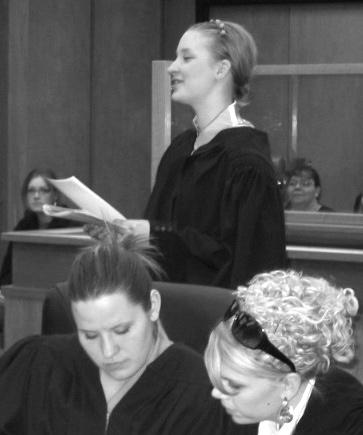
Dawson Creek’s Law Day focused on a mock murder trial performed by students from the South Peace Secondary School’s Law 12 class. Students performed all of the roles and members of the public served on the jury. Other events included a court tour and information booths from a variety of justice organizations. Special thanks to Tanya Helton for organizing the events in both Dawson Creek and Fort St. John.
fort st. JoHn – aPriL 18, 2007
The most popular event at this very successful Open House was a mock trial involving local lawyers, judges, a police officer and members of the public who served on the jury. This was followed by a Q&A session with the Judge where members of the public asked a number of valuable questions about the justice system. The Open House also included exhibit booths and displays from a variety of justice organizations including an RCMP police cruiser.
held in Nanaimo on March 5th at Malaspina University-College. Our thanks to Judge Saunders and Michael Warsh for organizing this event.
neW WestMinster – aPriL 19, 2007
This Open House which was strongly embraced by the public and court staff included a court orientation and tour. Sheriffs in attendance opened their two transport vehicles to the public. Q&A sessions with a Judge, Crown Counsel and Deputy Sheriff filled one courtroom to capacity. In another courtroom an elementary school performed a mock trial where Peter Pan was charged with abducting the Darling children. Special thanks to Glenn McArthur for organizing the events in both New Westminster and Port Coquitlam.
Port coQUitLaM – aPriL 20, 2007
This well-attended Open House featured similar events to those held in New Westminster. The mock trial was met with great interest, attracting more than 110 members of the public. Extra seating to accommodate the audience was necessary for this popular event despite it being held in the largest courtroom in the Port Coquitlam Provincial Courthouse.
Prince george – MarcH 23, 2007
The Prince George Open House was held early to coincide with the 10th anniversary of the opening of the Prince George Law Courts. It was the best year ever, with over 400 participants and members of the public attending the events. Events included two mock trials; “Spot the Target” contest co-sponsored by ICBC; “How well do you know Canadian law” contest; 13 display tables from public service agencies; a Citizenship Court; and presentations by a variety of the legal system representatives. The events also included a RCMP dog handler and his police dog. Special thanks to Karen Hall-Lemon and Anita Meldrum for organizing the events in Prince George.
vancoUver – aPriL 21, 2007
nanaiMo – MarcH 5, 2007
A Law Day seminar by Judge Justine Saunders on “Women, the Family and Access to Justice” was
The Vancouver Open House events were also a huge success. This year’s events included a public forum hosted by Ian Hanomansing of CBC. Members of the public were invited to ask questions of a panel of senior justice representatives. This
received considerable media attention and was very well-attended by the public. The Open House also included a citizenship ceremony where 60 people from 32 different countries were welcomed as new Canadian citizens. The Honourable Wally Oppal, QC, Chief Justice Lance Finch, Senator Mobina Jaffer, QC, and Kerry-Lynne Findlay, QC participated as keynote speakers. Other events included free law classes hosted by the People’s Law School, a high school mock trial, displays and demonstrations from 32 organizations including police horses, motorcycles, cars, and a boat and sheriff’s vehicles. Our thanks to Sylvia Wong, Director John Kent and the staff Citizenship and Immigration Canada for coordinating the citizenship ceremony and to Andrew Nip of the People’s Law School for organizing the free law classes.
victoria – aPriL 21, 2007
This year’s Open House events included: an interactive mock trial; police seminars on crystal meth, dat ing violence and impaired driving; Q&A session with members of the Provincial and Supreme Court judiciary and B.C. Sheriff Services; a court tour; resource rooms on civil, family and criminal law; and a mock trial competition. Our thanks to Sylvia Sangha and Kerry Simmons for their work in the planning of this year’s events.
Dial-a-Lawyer
student contests
The following events attracted participation from high school and elementary school students from across the province:
• Barry sULL ivan LaW cUP P UBL ic sPeaKing contest – Open to students enrolled in Grades 11 and 12, this year’s event was held on April 19th at the Vancouver Law Courts. Eighteen students from 15 schools around the province, including Kamloops, Kelowna, Vernon and Victoria, participated in this contest which involved each student presenting a five minute speech on one of the following two topics: “Is there or is there not an issue with the accessibility of justice to the average Canadian citizen? What does Access to Justice mean to you?” and “Does the Charter of Rights and Freedoms set Canada apart from other countries in the world?” The semi-finalists were judged by panels made up of lawyers and retired members of the judiciary and the finalists presented their speeches to a panel consisting of Chief Justice Lance Finch, Chief Justice Donald Brenner and Professor Elizabeth Edinger.
• essay contest – This contest which was open to students in Grades 8 to 12 involved students preparing essays on the topics described above.
On April 21, 2007, 24 lawyers volunteered at the CBABC province-wide “Dial-A-Lawyer” Program between 10:00 a.m. and 2:00 p.m. by providing free legal advice to the general public. During that time, members of the public were invited to call and speak with a lawyer for up to 15 minutes on the following topics: Business Law, Wills Estates & Trusts Law, Criminal Law, Tort and Motor Vehicle Law, and Family Law. There were 235 calls received from members of the public from all regions of the province, a 30 per cent increase from last year, including 78 Chinese speaking callers. The Law Week Committee thanks S.U.C.C.E.S.S. for their participation in recruiting Chinese speaking lawyers to assist with this event and all the volunteers who answered DialA-Lawyer calls and assisted with this year’s event.
• Poster contest – Students in Kindergarten to Grade 3 were invited to submit posters on the topic “Access to Justice.”
The winning essays and posters can be viewed at www.bclawweek.org. We would like to thank all of the semi-finalists, judges, and students for their participation in this event and Mr. Sullivan’s widow Ms. Dawn Waddell and her family for their support of the Barry Sullivan Law Cup event.
fun run/Walk
Members of the legal community and their families and friends participated in the 4th Annual Fun Run/Walk held on April 1st at Locarno Beach Park. Seventytwo participants of all ages braved the cool, but
sunny weather to join in this fun event. Awards were given in the categories of fastest female, male, female under 14, male under 14, legal organization or law firm with 50+ employees, and legal organization or law firm with 49 or less employees. Thanks to Lisa Hartley Photography and congratulations to all of our winners and to everyone who participated in this event!
student Mentor Program
Grade 11 and 12 students in Greater Vancouver were matched with lawyers to spend a half-day in their workplace. In addition, lawyers were matched to attend high school classes. Strong support from lawyers throughout the Lower Mainland resulted in this event providing a very valuable learning opportunity for students who have an interest in pursuing a legal career.
Some of the innovative mentorships included matching groups of students spending a half-day at the law firms Borden Ladner Gervais LLP and Warren & Eder, and the Vancouver Crown Counsel office. The Crown Counsel matches included a half-day of seminars that were organized by Andrea Spence of the Vancouver Provincial Crown office where 30 Grade 12 students from 13 different schools attended presentations on conducting direct and
June – July 2007
June 8
Branch and Bar c alendar (see cba.org/bc for details)
cross-examinations, the role of Crown Counsel, and a Q&A session with a judge. Thank you to all of the lawyers, other justice system representatives and students for their participation in this event.
free Law classes
The People’s Law School and public libraries hosted four well-attended law classes which were free for the general public from April 16th to 19th in Greater Vancouver communities. The topics of the classes included Landlord & Tenant Law, Scams to Avoid, and Wills & Estates. Thanks to Andrew Nip of the People’s Law School and to the Burnaby, Coquitlam and Surrey Public Libraries for organizing these classes.
thanks to our volunteers and Participants
We would like to thank all of the many Law Week volunteers, participants, and organizations whose participation in and support of Law Week events played a key role in the huge success of this year’s events. A full listing of all of the volunteers, participants and organizations can be found a www.bclawweek.org. BT
CBA (BC) Benevolent Society’s Sixth Annual Battle of the Bar Bands
June 13 Lawyers Assistance Program of British Columbia: Burns Book Group
June 15 Lawyers Assistance Program of British Columbia 7th Annual Gratitude Lunch
June 21 CBA/VBA Golf Tournament (UBC Golf Club, Vancouver)
June 22-26
International Society for the Reform of Criminal Law 20th Anniversary Conference (Four Seasons Hotel, Vancouver)
June 23 Provincial Council (Delta Airport Hotel, Richmond)
June 27 Lawyers Assistance Program of British Columbia: Burns Book Group
June 29-30 UVic Faculty of Law International IP Symposium (Oxford, England)
July 4 Lawyers Assistance Program of British Columbia: Burns Book Group
July 5 FVBA/NWBA Annual Golf Tournament (Guildford Golf and Country Club)
July 6
CBABC Committee Appointments Day
July 11 Lawyers Assistance Program of British Columbia: Burns Book Group
July 25 Lawyers Assistance Program of British Columbia: Burns Book Group
cBaBc 2nd annual conference –san francisco
If you joined us in Las Vegas last year for Viva Lex Vegas, the first annual CBABC Conference, or if you didn’t join us and wish you had, now is the time to start preparing for our second annual Conference, San Francisco Style, November 16th and 17th, 2007.
James bond
legal commentators from here in British Columbia.
Those of you who attended last year will be pleased to know that we’re bringing back BerKey Be L ser , the marketing and brand management whiz who was our highest-rated speaker in Las Vegas. Some of our other speakers include:
CbAbC executive officer
CbAbC 2007
Like the Viva Lex Vegas theme from last year, this year’s San Francisco Style theme has nothing to do with legal notions, and everything to do with our host city. Don’t get me wrong – there will be plenty of law-related programming (10 hours of programming that count toward your Law Society Annual Practice Declaration, as a matter of fact). However, we also want the delegates to engage in and soak up the atmosphere of our host city while they are learning, socializing and networking – and we have made a concerted effort to ensure that happens.
Conference Chair
Our conference hotel is the Crowne Plaza Union Square, located right in the heart of the dining, entertainment and shopping action. The opening reception will be a Napa Valley Wine Tasting held at a well-known Union Square art gallery. The optional closing event, Beach Blanket Babylon has been a San Francisco must-see for the last 30 years and is called a “hilarious, campy, over-the-top San Francisco institution.”
We were extremely pleased with the feedback we received on our continuing legal education programs last year, and have developed a program for this year’s Conference which you will find even more engaging. We have also continued the format of inviting well-known legal luminaries from across the continent (and in the case of this year’s Conference, the San Francisco area in particular) to speak along with well-known
• Mary carLson, the Executive Director of the British Columbia Office of the Information and Privacy Commissioner, who will be addressing the impact of privacy legislation on the legal profession (and its clients);
• roBert McDiarMiD, Qc, our former Law Society President, who will be co-presenting with Denise Howell, a well-known American legal commentator, on the ethical issues arising from technology;
• terrence o’sULLivan, one of Canada’s bestknown commercial litigators, and lead counsel for the CBA on its recent intervention at the Supreme Court of Canada in the Davis & Co case; and
• JoHn KeKer, a San Francisco intellectual property litigator and member of the California Bar’s “Trial Lawyers Hall of Fame” who is ranked by numerous publications as one of the best lawyers in America.
This year’s Conference has a limited capacity (and a great price – $750 gets CBA members the programs, as well as the cocktail reception, breakfasts and lunches on Friday and Saturday, and dinner on Saturday night). We have conveniently included the registration form as an insert in this issue of BarTalk Don’t wait… take advantage of the opportunity to soak up a little San Francisco Style. BT
Check the CBABC News & Jobs e-mail every week for our featured offers under Member Services News
Check out these featured services – for more information on these and other discounts go to the member Savings section at www.cba.org/bc.
alpine resorts
A great ski season this year – tickets will be available for the next season. Details, as they become available, will be rolled out in time for Winter Ski Program 2007.
sports
Lions season ticKets
A great deal – for every new Season Pass ordered – a portion is “kicked back” to the Canadian bar benevolent Fund. your money is working twice as hard! Check the website for specific details on how to order.
canUcKs ticKets
Well, we made it to round-two – next year will be even better! Tickets will be made available for the next season! Details will be posted on the website when they become available.
Playland! the Pne! and other great offers!
PLayLanD anD tHe Pne
This is a super opportunity for some summer family fun – at great prices – and so convenient. How does it work? Check out the member Savings section at www.cba.org/bc and then order your discounted tickets online – print them off yourself at your convenience.
PersonaLizeD LaWyer’s cases froM BUgatti
These popular bags are selling fast... so buy one today. Welcome your newest associates or partner with a sleek, professional, genuine leather case with their name or initials and your firm or logo. Great CbA discounts!
LooKing to BUy or Lease a car?
Check out ProGroup, Carters or Afrique – Compare all three to receive a significant discount on a purchase or lease of a new vehicle.
terMinaL city cLUB
The Terminal City Club extends to all CbA members a unique opportunity to join one of vancouver’s most prestigious social clubs. CbA members receive a 25 per cent discount when they join the Terminal City Club.
coUnseL netWorK
offering members an exclusive Preferred recruitment benefits Package for law Firms – this package offers premium enhancements and discounts over regular recruitment services, fees and benefits.
Upcoming cBaBc event
A day of fun and networking
2007 canaDian Bar association, B.c BrancH / vancoUver Bar association goLf oUrnaMent
What’s new at Playland for 2007?
• new 90 foot Westcoast Wheel – fun for everyone
• new basketball court – take a break with some 3 on 3
• redesigned haunted house – will scare you silly
• kC’s raceway – great fun for kids
othing says “summer is here” like a day on the green, so tee-off with your friends and colleagues for the 11th Annual CBABC/VBA Golf Tournament at the ubC university Golf Club. There will be games, food, drink, a silent auction and plenty of golf “fore” everyone, plus proceeds go toward law student scholarships – so your good time supports a good cause. mark your calendars for June 21, 2007 – you will not want to miss this event! Details can be found on the CbAbC homepage under “Current events.”
Bar Moves
Have you recently changed firms or opened a new firm? Send submissions (maximum 25 words) to bar moves at cba@bccba.org.
Devon c. WinDsor has joined Hungerford Tomyn Lawrenson and Nichols in Vancouver to continue their civil and commercial litigation practice.
Don M. DarMan has joined the firm of Bryenton and Associates as Associate Counsel where he will practise family law, employment law, wills and estates, real estate and civil litigation.
BarBara fLeWeLLing and anne sHeane are excited to announce that they have affiliated their respective plaintiff only personal injury practices under the banner of Sheane Flewelling – effective immediately.
Bull, Housser & Tupper LLP is pleased to advise that they have hired two new associates, Jana McLean and Joe Pagé. Jana was called in 2001, articled and practised litigation at Lawson Lundell until 2004, and then went on to complete her Master of Laws in International Law. Joe Pagé joins the Business Group from the Vancouver office of BLG.
Bull, Housser & Tupper LLP is also pleased to advise that aLeX sHorten has joined the firm as Associate Counsel. Alex brings extensive experience and leadership skills as a legal and business advisor in both the forest products and construction sectors in Canada.
anita f. BoscarioL is the new Executive Director of the Federal Treaty Negotiation Office (“FTNO”) in B.C. FTNO represents all Canadians and federal departments and agencies in the negotiations of comprehensive claims by first Nations in B.C. The goal of the B.C. treaty process is to build new relationships with First Nations, achieve certainty over ownership and use of land and resources, and enhance economic opportunities for First Nations.
roger s. Watts has moved from Slater Vecchio to join Boughton Law Corporation in Vancouver, where he will continue to practise insurance and commercial litigation.
As of May 1, 2007 aLLan a. ParKer has left his position as Program Manager for the LawLINE at the Legal Services Society to take up the position of Executive Director at the Access Justice Society (formerly the Western Canada Society to Access Justice). This position was held by the late Dugald Christie, and Allan looks forward to working with the board, staff, and the many lawyers and others who volunteer with Access Justice to build on Dugald’s legacy.
DeL friDay has left the firm of Bell, Spagnuolo to join Waterstone Law Group’s Langley office where she will be practising general corporate and commercial lending.
As of April 30, 2007 Praveen sanDHU is an associate at Koffman Kalef.
the victoria Battle of the Bar Bands
The second annual victoria battle of the bar bands took place on Friday, march 9, 2007 at the erstwhile Central bar and Grill. The event raised over $6,000 for the CbA benevolent Society. The evening’s events unfolded before an initially bemused but later raucous capacity crowd.
The combination of an Applause-o-meter and a partisan crowd led to victory for the victoria bar’s own alllawyer quartet, Blind Elmo, consisting of light-footed percussionist Jeryl mclean, his clumsy fellow backliner, bassist and vocalist, little Johnny Waddell, the strange but remarkable lead guitarist, Tom maclachlan, and the righteously mercurial rhythm guitarist and lead vocalist, rob richey. The boys were joined for the latter part of their set by the dynamic lisa mitchell
Thanks to all who organized and participated in this enjoyable event and to the sponsors: interlock, Hotel Grand Pacific, Premiere verbatim reporting and business Practices and Consumer Protection Authority. Hats off as well to the victoria bar Association without whose generous donation of $1,000, the vancouver bands would still be paddling their way through the Gulf islands.
Stay tuned for the third annual victoria battle of the bar bands slated to take place next march in a venue yet to be determined.
neW MeMBers
The CBABC Branch welcomes its newest members! The following new members joined in the months of March and April of 2007:
Articling Students
Regular Members
JaMes a. Bryce North Saanich
aMy M.c. fong
Oyen Wiggs Green & Mutala LLP
Vancouver
MarK gaLLagHer Stikeman Elliott LLP
Vancouver
DiMPLe KaintH Pacific Law Group
Vancouver
JaMes-scott Lee Sabatino & Company
Vancouver
JosePH a. Pagé
Bull, Housser & Tupper LLP
Vancouver
LaUra zUMPano
McCarthy Tétrault LLP
Vancouver
eLise aLLan Nixon Wenger LLP
Vernon
inDerBir BUttar Shergill & Company, Trial Lawyers
Surrey
MaJDa DaBagHi Borden Ladner Gervais LLP
Vancouver
Marianna JasPer Lawson Lundell LLP
Vancouver
JasPreet KanDoLa
Vancouver
naDia aLi KHan
Surrey
nairiKa varza Irwin, White & Jennings
Vancouver
Law Students
nicoLa aLLen
Vancouver freDericK goH
Victoria
new Practice Directive from
the court of appeal
conDenseD BooKs
cLeBc Update
neW eviDence BooK WiLL HeLP Litigators HanDLe eviDence WitH confiDence
ClebC is pleased to announce introducing evidence at Trial: A british Columbia Handbook Available in June, this new publication will help litigators quickly find the law and practical guidance they need to handle evidentiary issues that can arise at any time in a case. introducing evidence at Trial: A british Columbia Handbook is a clear, concise, and portable guide on how to effectively introduce evidence in civil and criminal trials, for use both in trial preparation and at the counsel table.
Designed in an easy-to-use format, introducing evidence at Trial is organized into chapters by type of evidence or evidentiary procedure. each chapter provides “how to” advice through succinct statements of legal principles and helpful practice tips, including checklists of key considerations, examples, and sample scripts.
For further information, check the publications section of ClebC’s website at www.cle.bc.ca, or contact Customer Service at 604-893-2121 (toll free 1-800-663-0437).
Counsel may prepare in any civil case a Condensed book, to assist the Court of Appeal during the oral hearing of the appeal.
The Condensed book may contain documents essential to the hearing, including those excerpts from the evidence, exhibits and authorities to be referred to by the party in its argument. it should be indexed in a way that permits the Court to locate the documents referred to in the party’s factum.
Counsel shall prepare a sufficient number of copies of the Condensed book for the division hearing the appeal and for all parties to the appeal. The Condensed books for the panel shall not be filed in the registry but handed to the court clerk at the commencement of the appeal.
Any extracts of transcripts, affidavits, exhibits or authorities included in a Condensed book shall include only as much material as is required to understand the context of the key portions of the extract.
The covers of the Condensed book of the appellant shall be buff in colour, those of the respondent green and those of an intervenor shall be yellow.
The Board of Governors of the Law Foundation of B.C. met on March 31, 2007. Chair Warren Wilson, QC is pleased to announce that funding totalling $5,281,146 has beenapproved.
Funding totalling $229,626 was approved for the following 17 SmallProjects:
$15,000
aLzHeiMer society of B.c Regional Advocacy Training Workshops asian society for tHe intervention of aiDs (asia) Indoor Female Sex Workers’ Legal Rights Awareness Project
B.c civiL LiBerties association
Citizenship Handbook Reprint and Translation Project
caPiLano coLLege – institUte of ParaLegaL stUDies
IPS 271 – Administrative Law and Advocacy
DogWooD initiative
Aboriginal and Community Response to the Proposed Highway 37 Transmission Line
eLizaBetH fry society of greater vancoUver
Mothers in Prison. Where are the children?
Kootenai coMMUnity centre society Creston Advocacy Project
‘naMgis first nation Access to Law Workshop Series
nicoLa vaLLey institUte of tecHnoLogy – aBoriginaL
BacHeLor of sociaL WorK PrograM Child Protection Law Courses for Aboriginal Social Work Students
tansi frienDsHiP centre society
Understanding Legal Information
West coast Prison JUstice society
Promotion of Prisoners’ Human Rights Project
$14,680
nortH sHore crisis services society
Women in Transition: Guide to the Legal System
$14,196
ecotrUst canaDa
Crown Land Referrals Toolkit Upgrade: Phase II Public Announcement
$11,250
WHite BUffaLo aBoriginaL HeaLtH society & resoUrce centre Legal Education Program
$10,000
canaDian coUnciL of aDMinistrative triBUnaLs International Conference
$9,500
vernon WoMen’s transition
HoUse society
Vernon Pro Bono Legal Assistance Law Clinic
$5,000
greater vancoUver LaW stUDents LegaL aDvice society File Tracking System Overhaul
Funding totalling $278,664 was approved for the following four FamilyInnovationFundProjects:
$97,200
LaW coUrts eDUcation society
Community Participation in Family Relations Act Review
$75,000
West coast LegaL eDUcation anD action fUnD association
Family Law Project
$66,464
B.c. DisPUte resoLUtion
PracticUM society
Family Mediation Practicum Diversity Bursary Project
$40,000
B.c. MeDiation roster society
IT-Assisted Family Mediation Project
Funding totalling $419,920 was approved for the following seven ChildWelfareFundProjects:
$96,000
sQUaMisH nation
Squamish Nation ADR Model Project
$88,440
B.c. DisPUte resoLUtion
PracticUM society
Mediation Training for Aboriginal Communities Project
$76,000
sto:Lo nation QWi:QWeLstoM
faMiLy JUstice PrograM
Year Two of the Child and Family Service Program
$70,000
carrier seKani faMiLy services
Year Two of the Family Transformative Dispute Resolution Practicum Project
$35,000
Métis coMMUnity services
An Alternative Dispute Resolution Model for Métis and Urban Aboriginal Families
$34,000
HULitan sociaL services society Dispute Resolution Training Initiative
$20,480
naMgis first nation
Family Group Conferencing Facilitator’s Training Project
Funding totalling $206,250 was approvedforthefollowingProject:
$206,250
vernon & District WoMen’s centre society Legal Information and Advocacy Program
Funding totalling $4,146,686 was approved for the following 17 continuingprograms:
$776,490
West coast environMentaL LaW association
Operating Expenses and Environmental Dispute Resolution Fund
$734,950
coMMUnity LegaL assistance society Operating Expenses
$333,000
University of victoria, facULty of LaW Law Centre Clinical Program
$288,640
PeoPLe’s LaW scHooL society Operating Expenses
$283,250 tenant resoUrce anD aDvisory centre society Legal Advocacy Program
$280,600 B.c. LaW institUte Operating Expenses
$268,600 B.c civiL LiBerties association Operating Expenses
$257,180 LaW society of B.c. Professional Legal Training Course
$167,550
West coast LegaL eDUcation anD action fUnD association Operating Expenses
$167,250 West coast DoMestic WorKers’ association Legal Advocacy Program
$146,366 neLson District coMMUnity resoUrces society Legal Advocacy Program
$119,060
isLanD JaDe society Legal Advocacy Program
$91,200 seParation anD Divorce resoUrce centre (victoria) Legal Support Services Program
$87,670 Mosaic
Paralegal Advocacy Program and Frontline Advocacy Workers’ Coordination Program
$68,750
LaW foUnDation graDUate feLLoWsHiPs 2007/2008 year
$55,530
BattereD WoMen’s sUPPort services Legal Advocacy Program
$20,600
University of sasKatcHeWan Native Law Centre – Legal Studies Program
Commercial organizations $50 next deadline: July 6
DisPLay
3” x 2.5”
CbAbC members/Firms $450
Commercial organizations $900
6” x 2.5”
CbAbC members/Firms $810
Commercial organizations
$1,620 next deadline: July 6
insert (all of B.c.)
CbAbC members/Firms
Commercial organizations
$1,200
$2,400 next deadline: July 14 next mailing: August 3
Direct Bartalk advertising inquiries to: Jesse Tarbotton barTalk Senior editor Tel: 604-646-7856 or 1-888-687-3404 e-mail: jtarbotton@bccba.org
s ervices
inteLLectUaL ProPerty: Let us assist you in providing protection for your clients. Douglas B. Thompson Law Corporation –Registered Patent Agent, Registered Trade Mark Agent. Practice restricted to Intellectual Property. Victoria, B.C. (www.BCpatents.ca) E-mail: doug@BCpatents.ca.
eLDercare assessMent, consULting, care ManageMent, seMinars. Diamond Geriatrics, Inc. www.diamondgeriatrics.com. 604-874-7764.
office s Pace avai L a BL e
1040 West georgia street Beautiful Downtown office in excellent location, available for occasional use and mail pickup, including reception, boardroom, kitchen. Contact Eva Eriksson at eeriksson@telus.net or 604-682-3133.
P osition avai L a BL e
associate LaWyer – Busy Oakridge law firm seeking solicitor with 3+ years experience in real estate, leases, and corporate/commercial law. Compensation commensurate with experience. Please e-mail resume to cyong@cllawyers.ca or fax to 604-264-8387.
LaWyer or articLing stUDent wanted to join general practice law firm in the City of Camrose, Alberta. Booming college community, ideal place to live and practise. One of four lawyers in firm is retiring, great opportunity for future partnership. Contact Farnham Ziebart West Attn.: Scott Farnham at 780-679-0444, or fax resume to 780-679-0958. All inquires confidential.