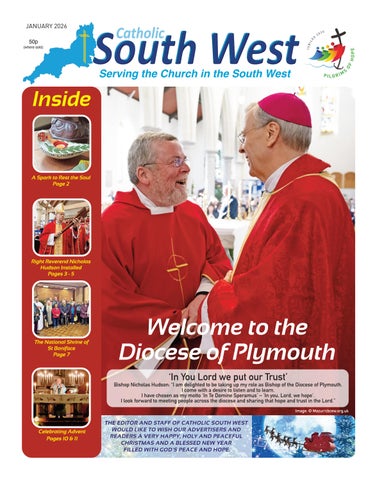
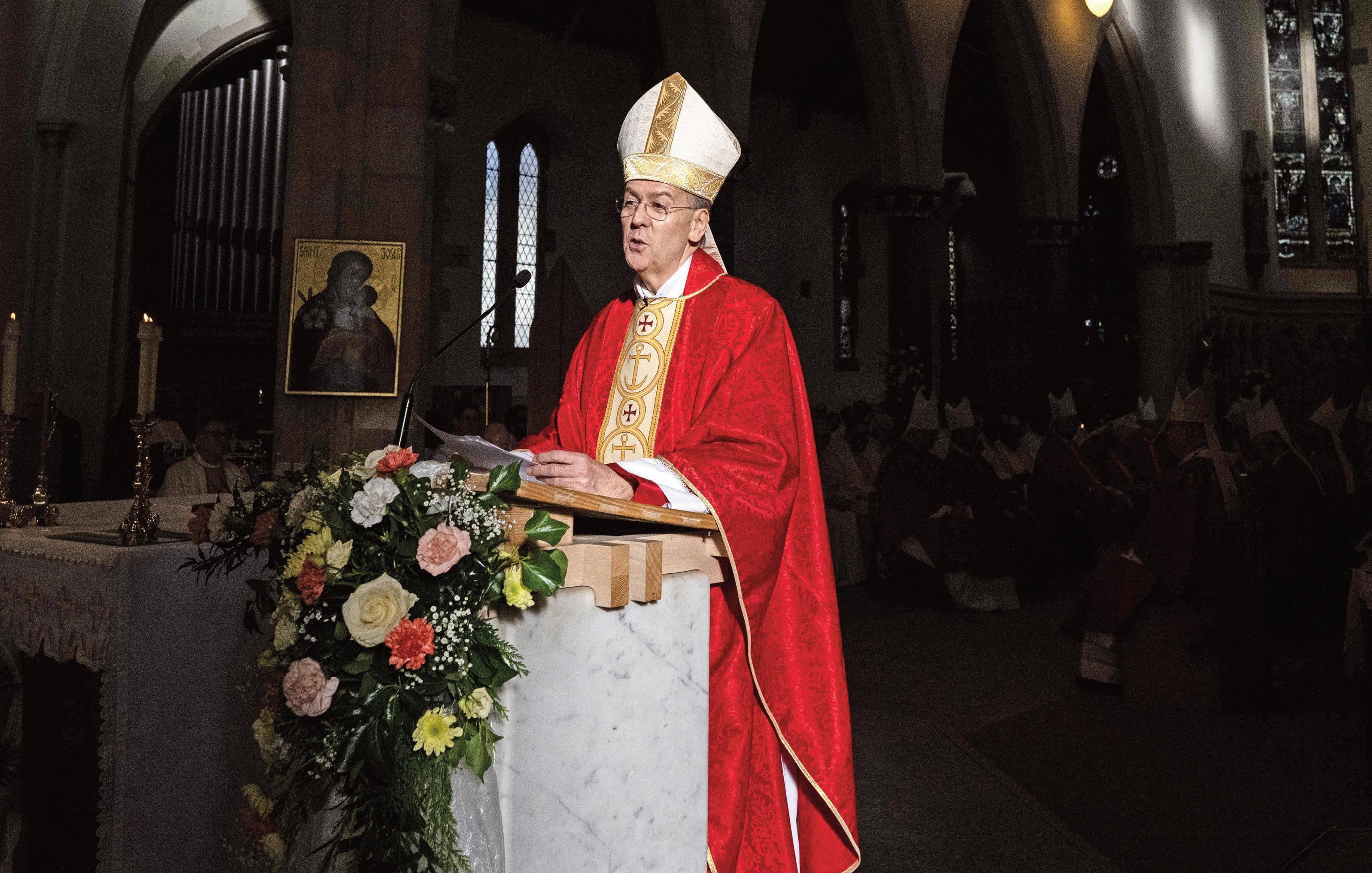
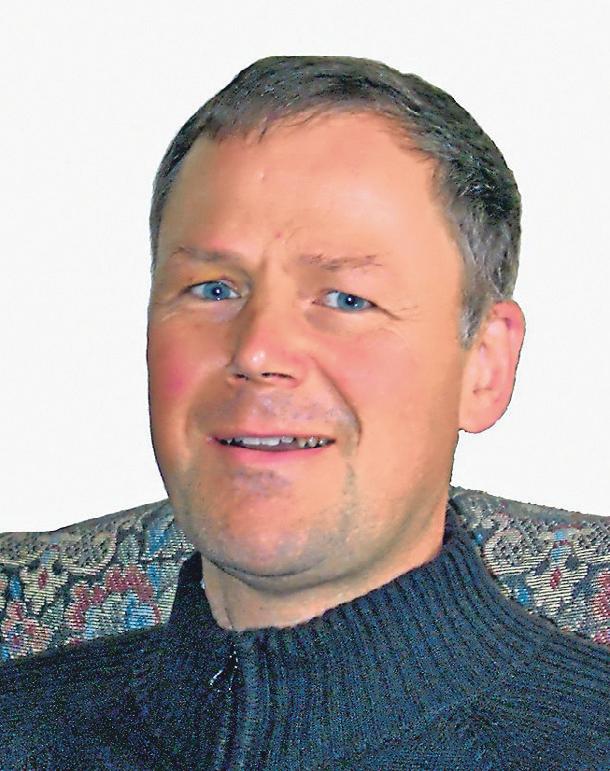
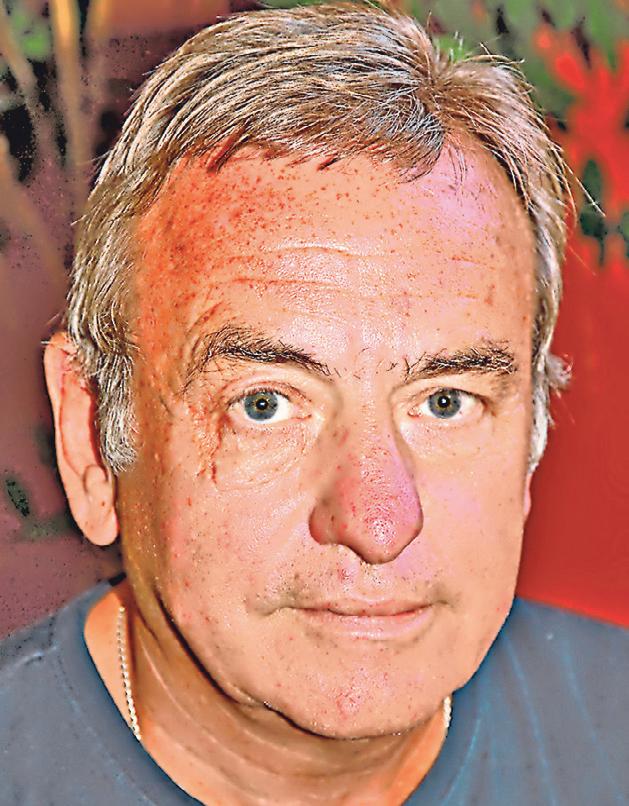
Bishop Nicholas Hudson: “I am delighted to be taking up my role as Bishop of the Diocese of Plymouth. I come with a desire to listen and to learn.
I have chosen as my motto ‘In Te Domine Speramus’ – ‘In you, Lord, we hope’. I look forward to meeting people across the diocese and sharing that hope and trust in the Lord.” Image:
Right Reverend Nicholas Hudson Installed Pages 3 - 5
National Shrine of St Boniface Page 7
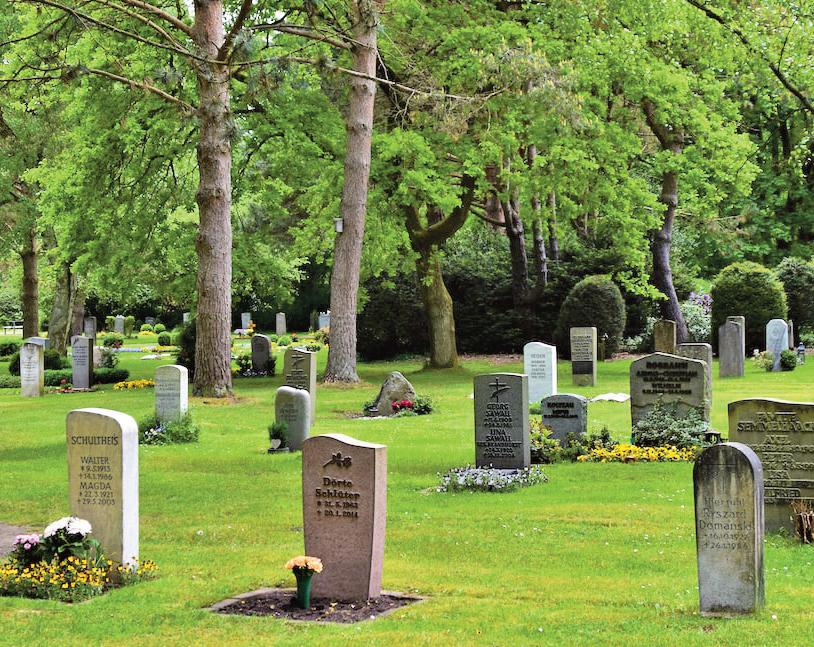
A Spark to Rest the Soul Page 2
CONTACTS & DETAILS
Catholic South West is a monthly newspaper for Catholics in the Plymouth, Clifton and Portsmouth Dioceses It is published by Bellcourt Ltd
AIMS
To build community in the South West by sharing stories relating to Catholic life around the South West
To encourage readers to get more involved in - or start - projects and initiatives in the local area
To provide thought-provoking articles to help readers deepen their Faith
GET INVOLVED
We need your help! Articles: We need your local articleswe can only include what we get So if you have an article or just a photo with a short description - please send it in Ideas: We need your ideas for the paper and we need your ideas in the paper If you have any thoughts on what we should include - or if you are thinking about starting a new initiativeget in touch - we’d love to support it!
Readers: If you can encourage other readers in your parish please do so Advertising: We rely on advertising - if you know of anyone that would benefit from promoting their business, event or anything else to parishioners throughout the South West, do let us know.
SUBMITTING
EDITORIAL
To send in editorial or to get in touch please contact us at: CSW - Bellcourt Ltd
N2 Blois Meadow Business Centre Steeple Bumpstead
Haverhill, Suffolk CB9 7BN
csw@cathcom org 01440 730399
ADVERTISING
To advertise in Catholic South West please contact us on 01440 730399 ads@cathcom.org
DATES
Catholic South West goes to parishes on the last full weekend of the month It is printed around the middle of the month - so if you would like to advertise or send in editorial please do it as early as possible
Wanted Parish Correspondents
The Catholic South West is looking for a Parish Correspondent in your parish to send in local news for publication in this newspaper. All items to be emailed to csw@cathcom org before 10th of the month
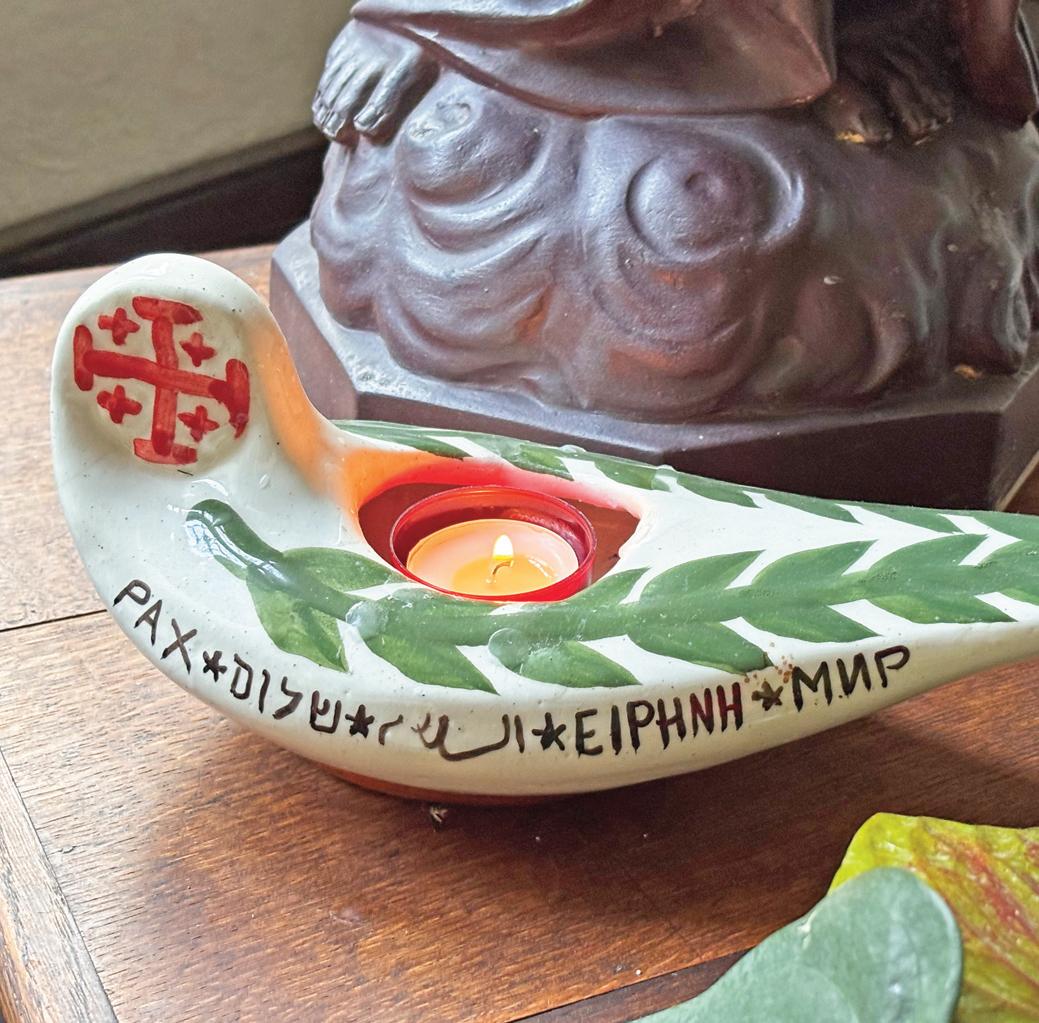
A Spark to Rest the Soul
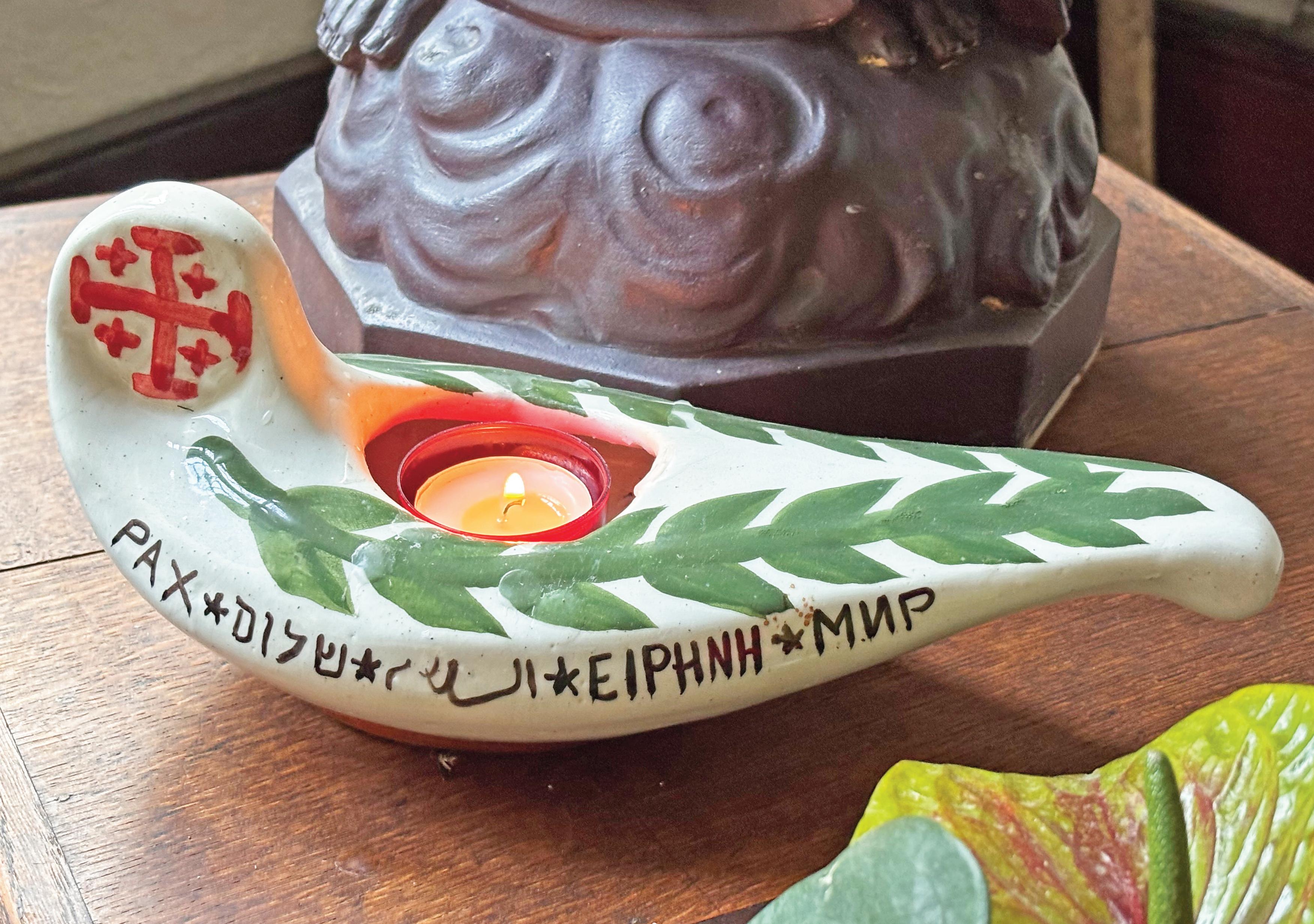
Here’s a candle for you
Every week at Mass, I light a candle take a breath and listen – what happens is always a surprise, yet in that quiet time, when I look at that flame a song, a hum of the same refrain bubbles to the surface of my consciousness. In that space, I feel the Grace – I laugh at my missteps and with every light I strike a whisper says to me “ This little light of mineÁ I’m gonna let it shine”.
A Spark to Rest the Soul
Happy Saturday - here’s a candle for you.
Who’s tired?
Who feels bone-wearily tired?
Maybe you’ve not had a physical injurybut you might.
Maybe you’ve not had a mental breakbut you might.
Maybe you’ve not faced an external pressure - but you might.
Or maybe you’ve not battled an internal wave of anxiety - but you might.
EDITORIAL GUIDELINES
1) Think of the readers: If you are writing about an event, think about the readers that don’t know anything about it Outline what happened, but focus on why people go, why it is important to them, or some teaching that was given Make sure readers learn something from your article - they don t just want
Tiny knocks, little worries, background noise that builds and compounds with interest until you realise your body, your brain, your very being is asking for rest.
I’ve been feeling a bit like that lately. Since our amazing summer holiday, it’s felt like one thing after another - a technical hiccup, an illness, a growing workload, a stress or a strain. None of them huge on their own, but together… they tug at the seams a little, pulling us in different directions.
And yet, here I am - sitting quietly, gazing at this small candle flame. In this calm, quiet oasis of peace - even if it lasts only as long as this message - it’s still. It’s gentle. It’s enough.
Sometimes the best thing we can do for our tiredness isn’t to fix it, or push through it, or guilt-trip ourselves into “snapping out of it.”
to know who was there and what snacks were available!
2) Keep it brief: Make sure you make your point - but keep it brief and punchy
3) Pictures: Send pictures as they are - even if they are very big to email Don’t reduce them in size or put them inside a Word document They look fine on the screen but terrible in the paper!
LEGAL INFORMATION
Sometimes the kindest thing we can do is simply to pause. To breathe.
To let the light remind us that even in exhaustion, there’s a flicker of hope - and that flame, however small, is still burning.
It’s also a chance to reflect on all the things that, despite the tiredness, make it worthwhile - the connections and communities we’re part of, the adventures and stories we can tell, the pains we feel because of the joys we’ve known.
So if you’re tired, take heart. Rest isn’t a weakness; it’s a whisper from the soul saying, “Let me catch up.”
Let that pause fan your little flame into confidence and faith that it’ll be alright
Keep your flame burning - softly, gently, but surely.
Namaste Have a great day.
Please note that opinions expressed in this paper and on any linked sites or publications are not necessarily those of the Publishers, Editor, any Diocese or the wider Roman Catholic Church Every reasonable effort is
made to ensure that due acknowledgement, when appropriate, is made to the originator of any image submitted for publication It is understood that those submitting material for publication in CSW either hold the copyright or have arranged for publication with the appropriate authority
Or maybe - just maybe - it’s a little bit of all of them.
Dan Sobey
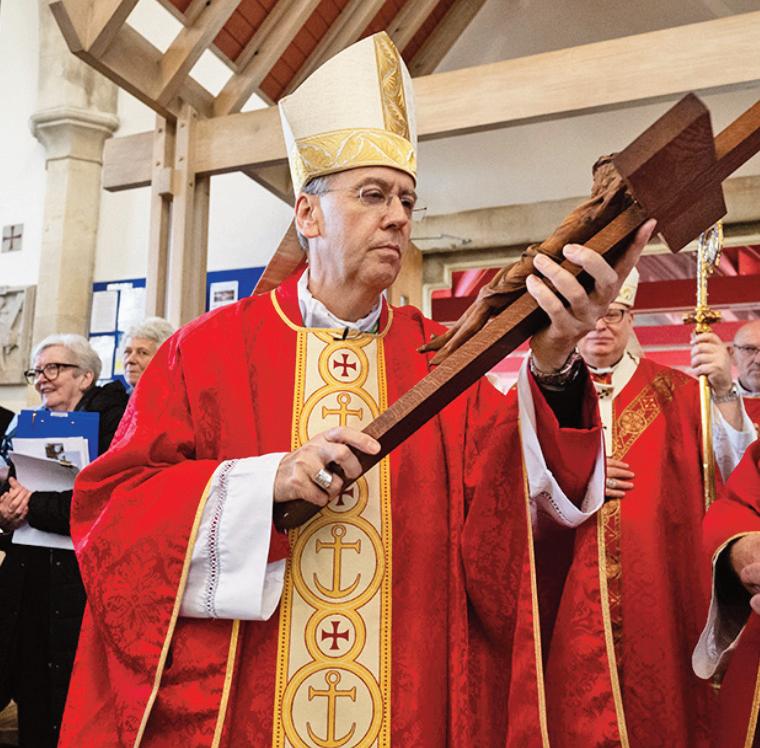
Right Reverend Nicholas Hudson Installed as the new Catholic Bishop of Plymouth
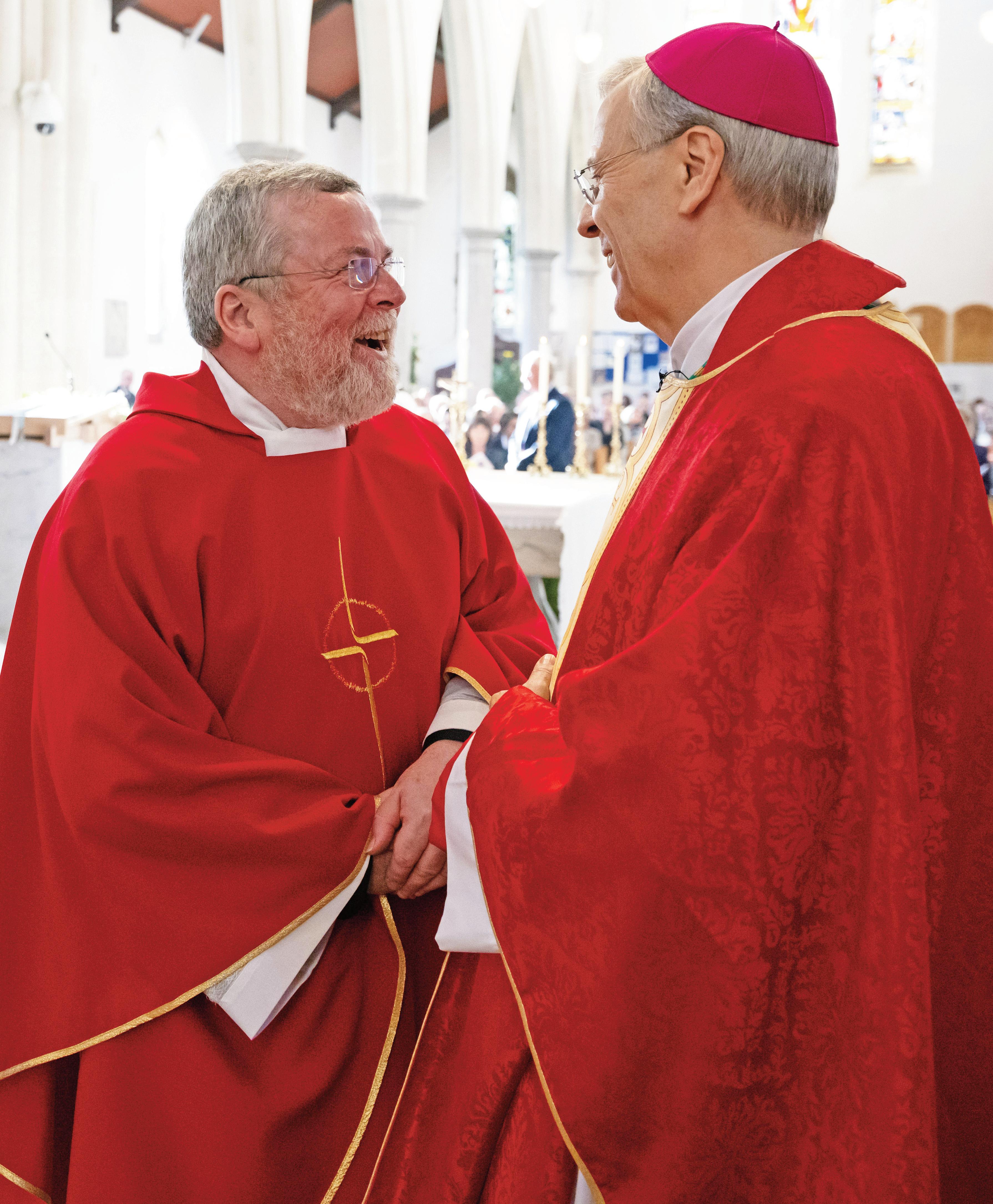
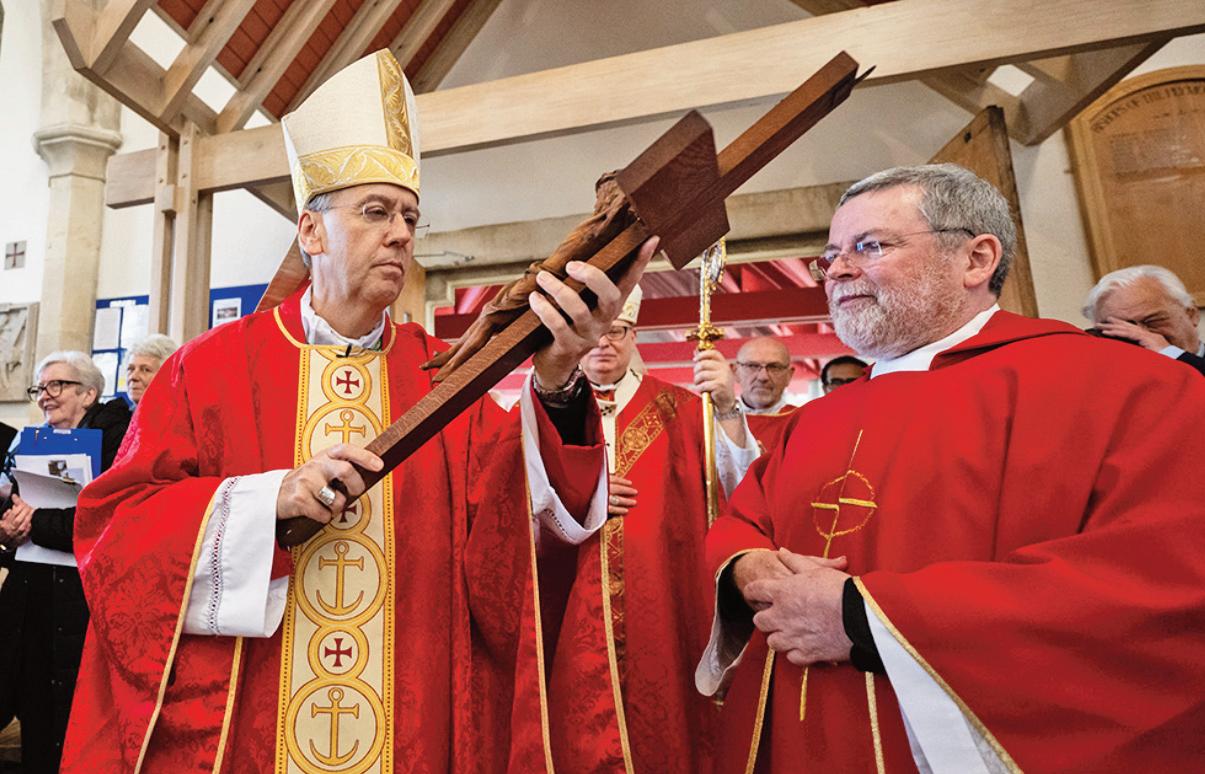
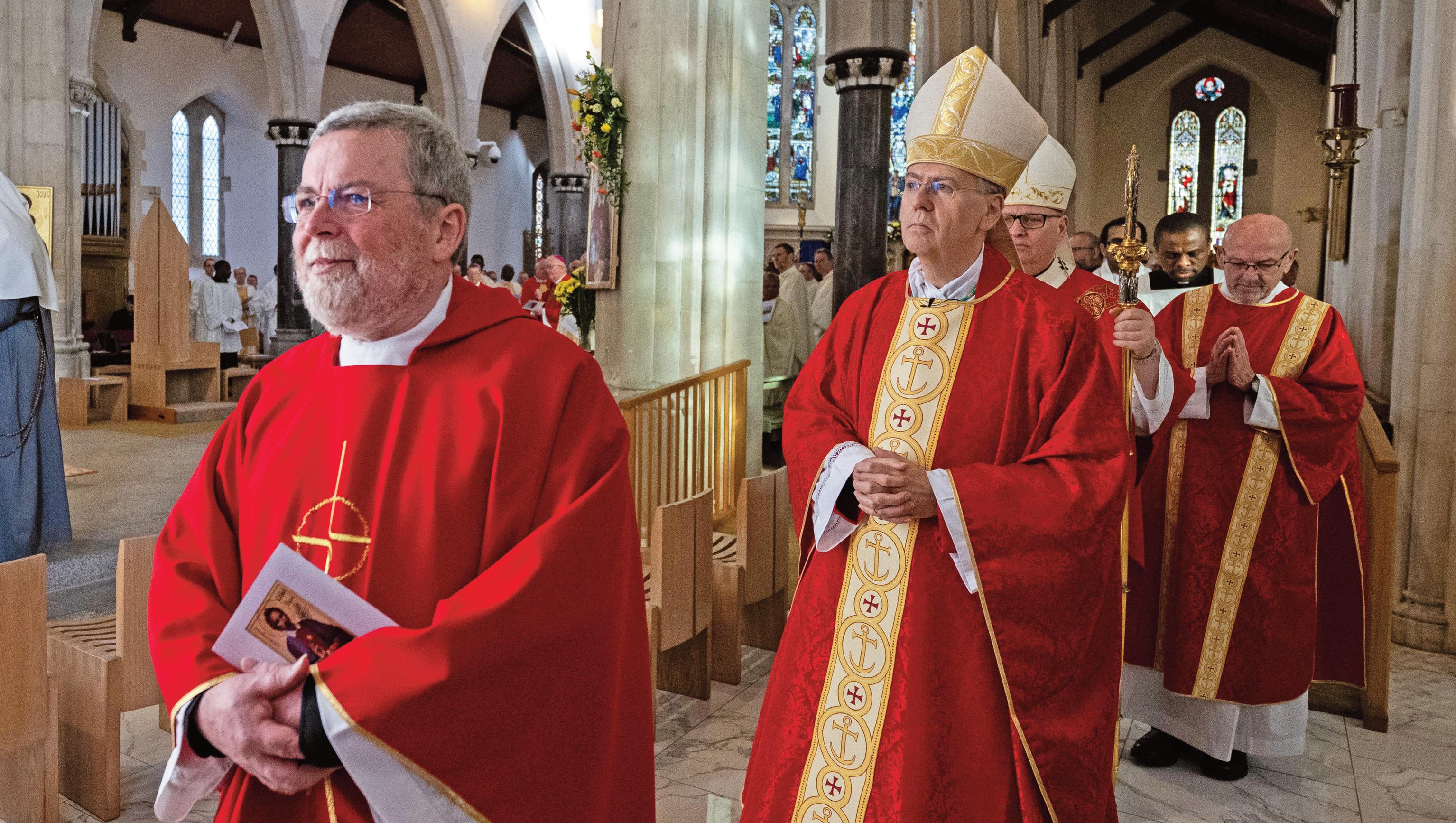
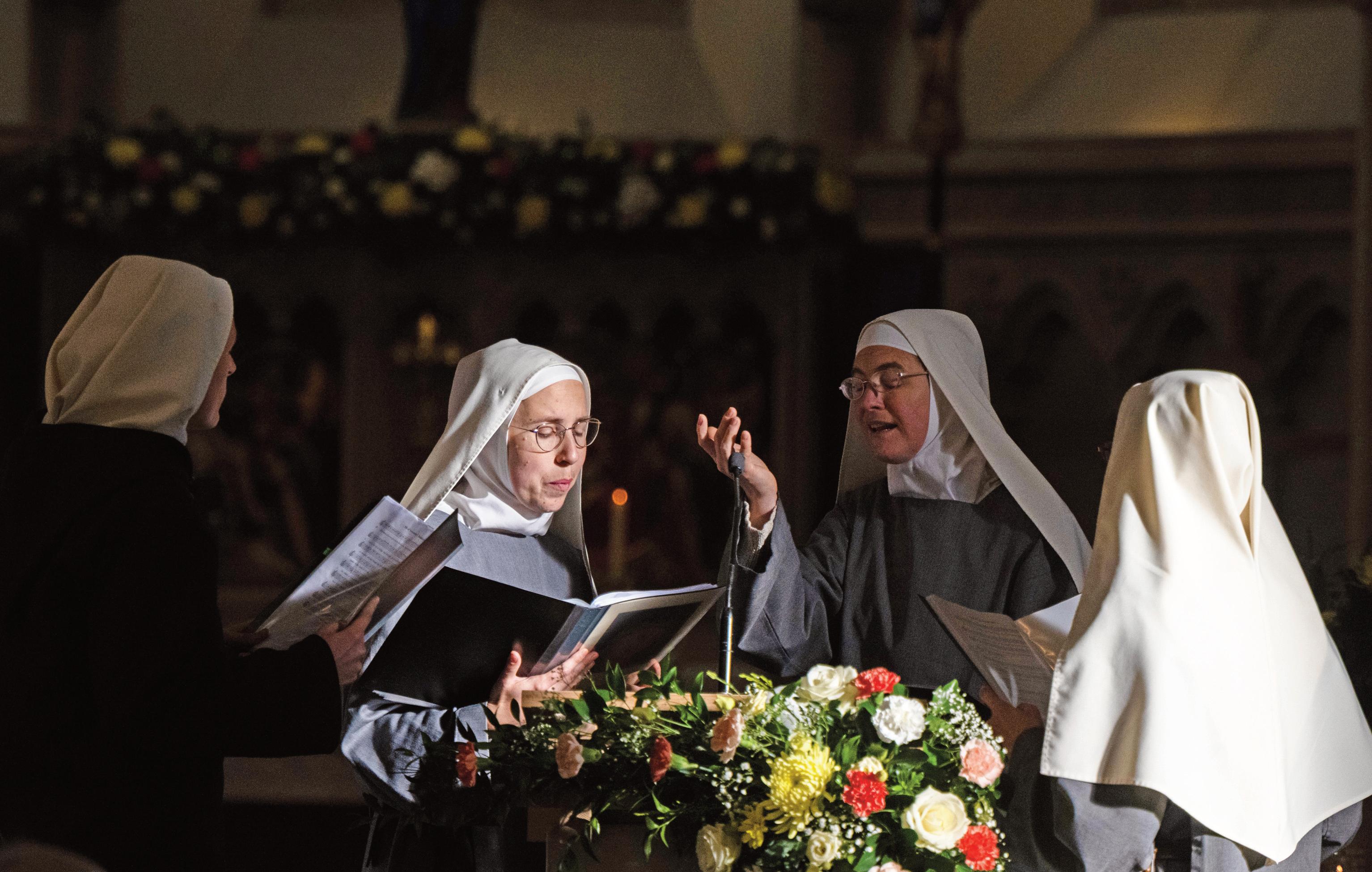
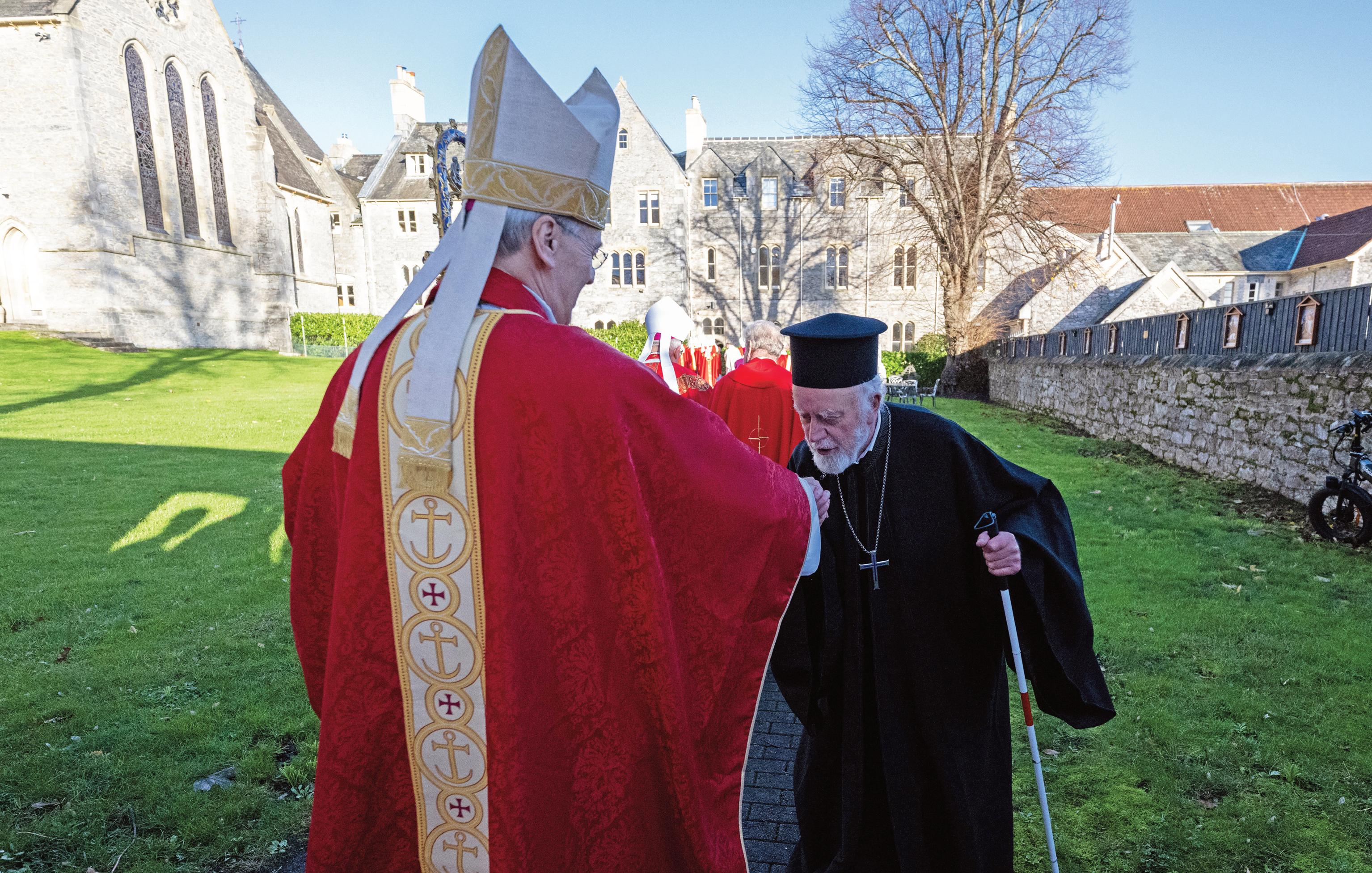
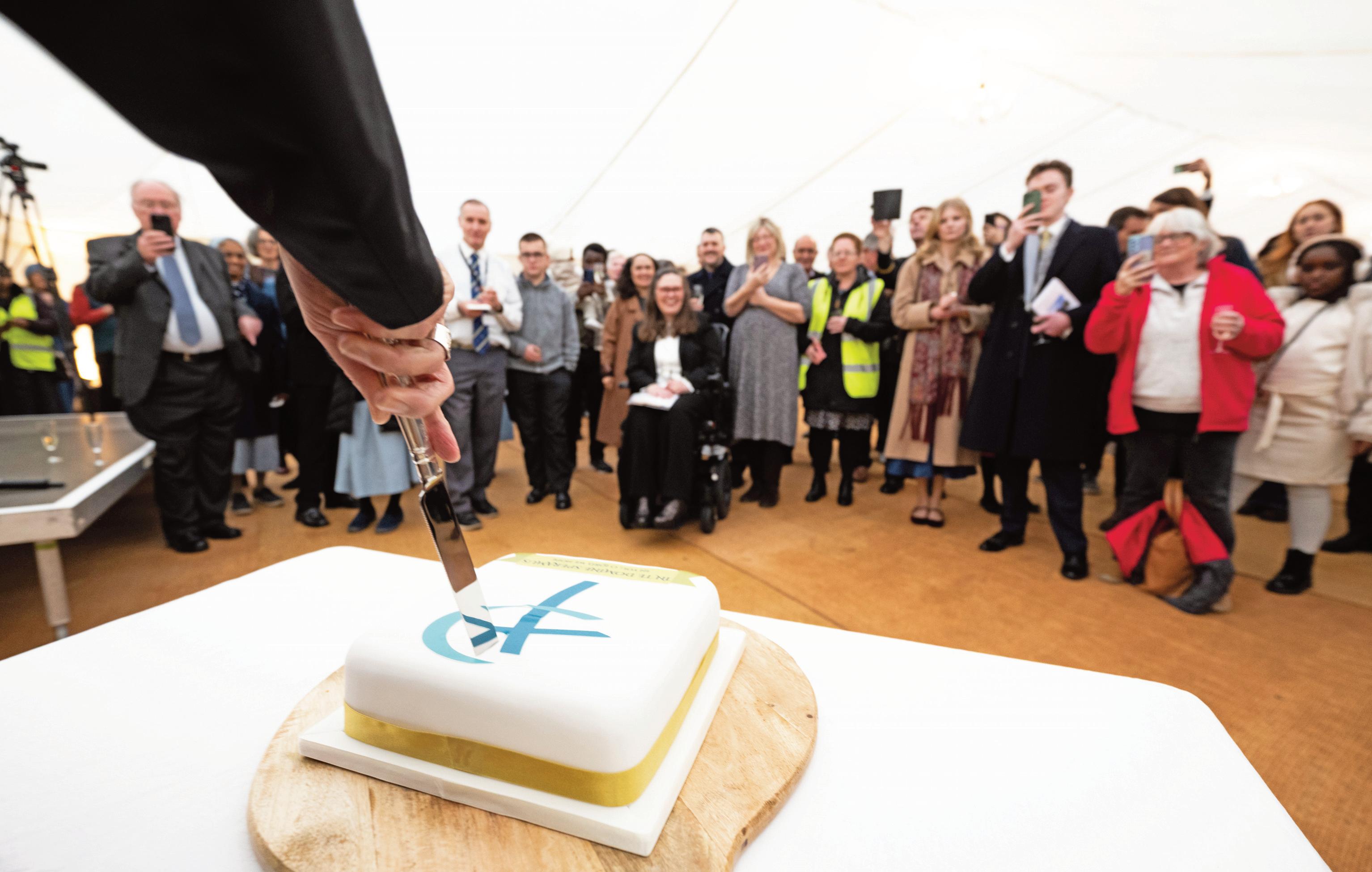
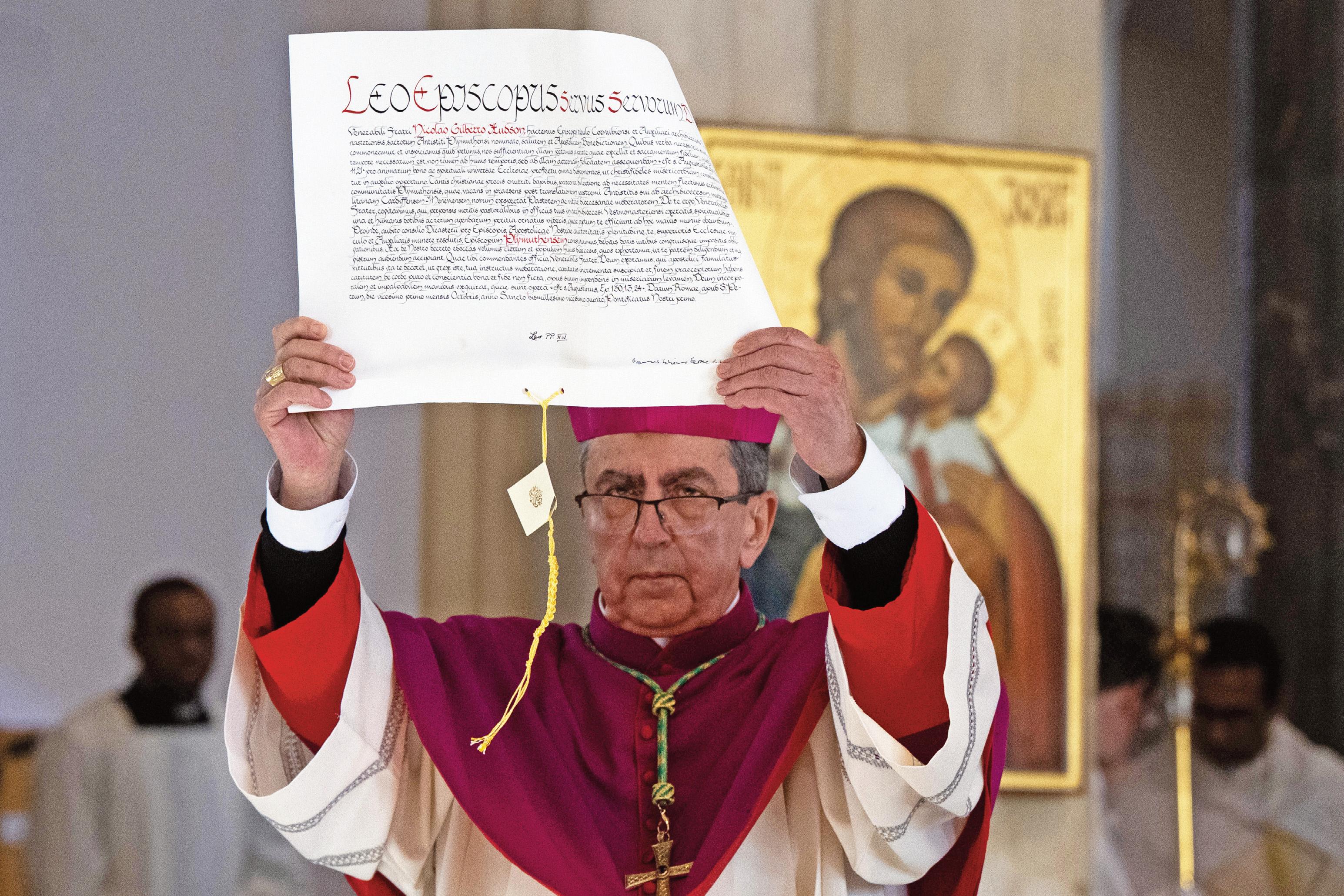
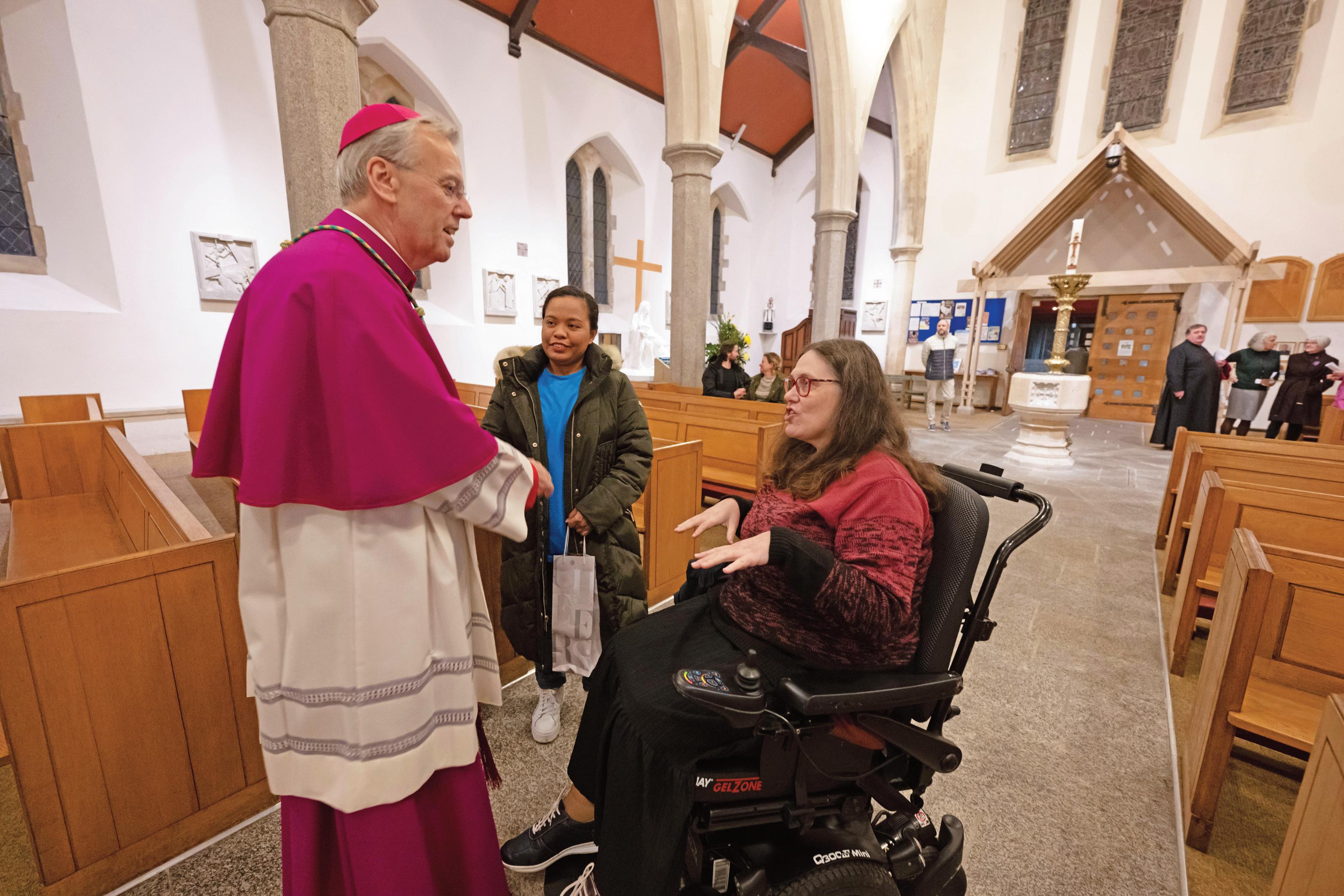
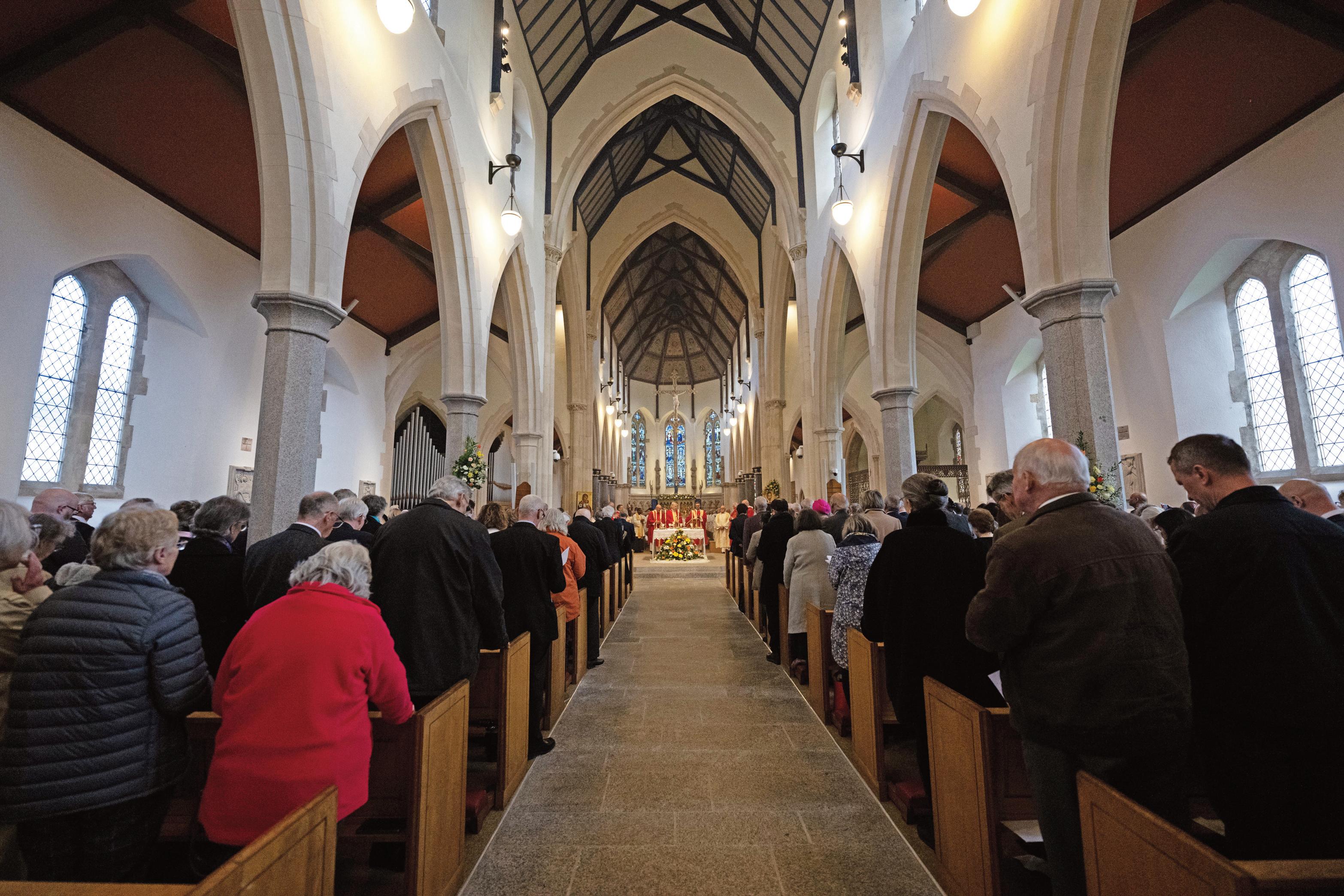
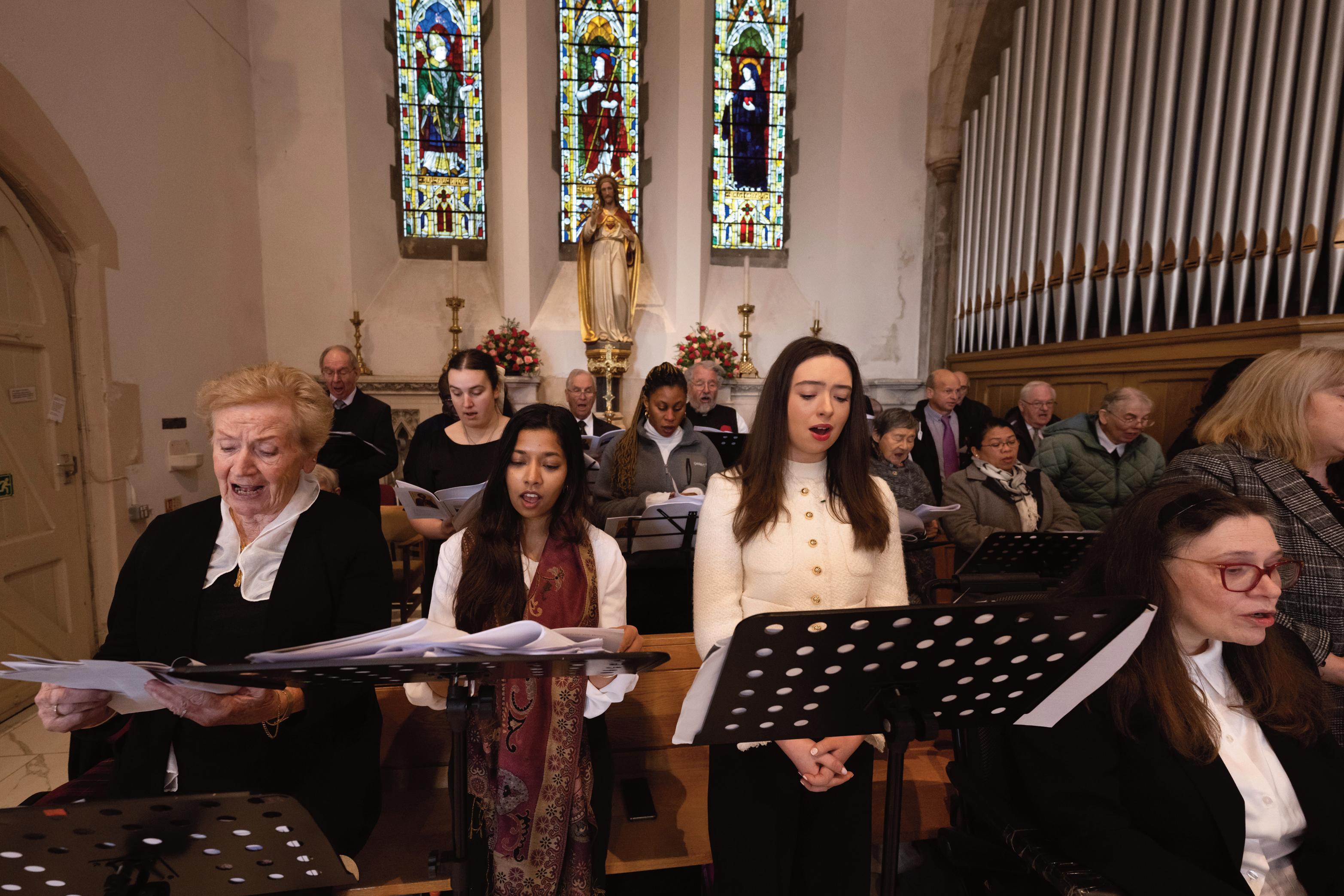
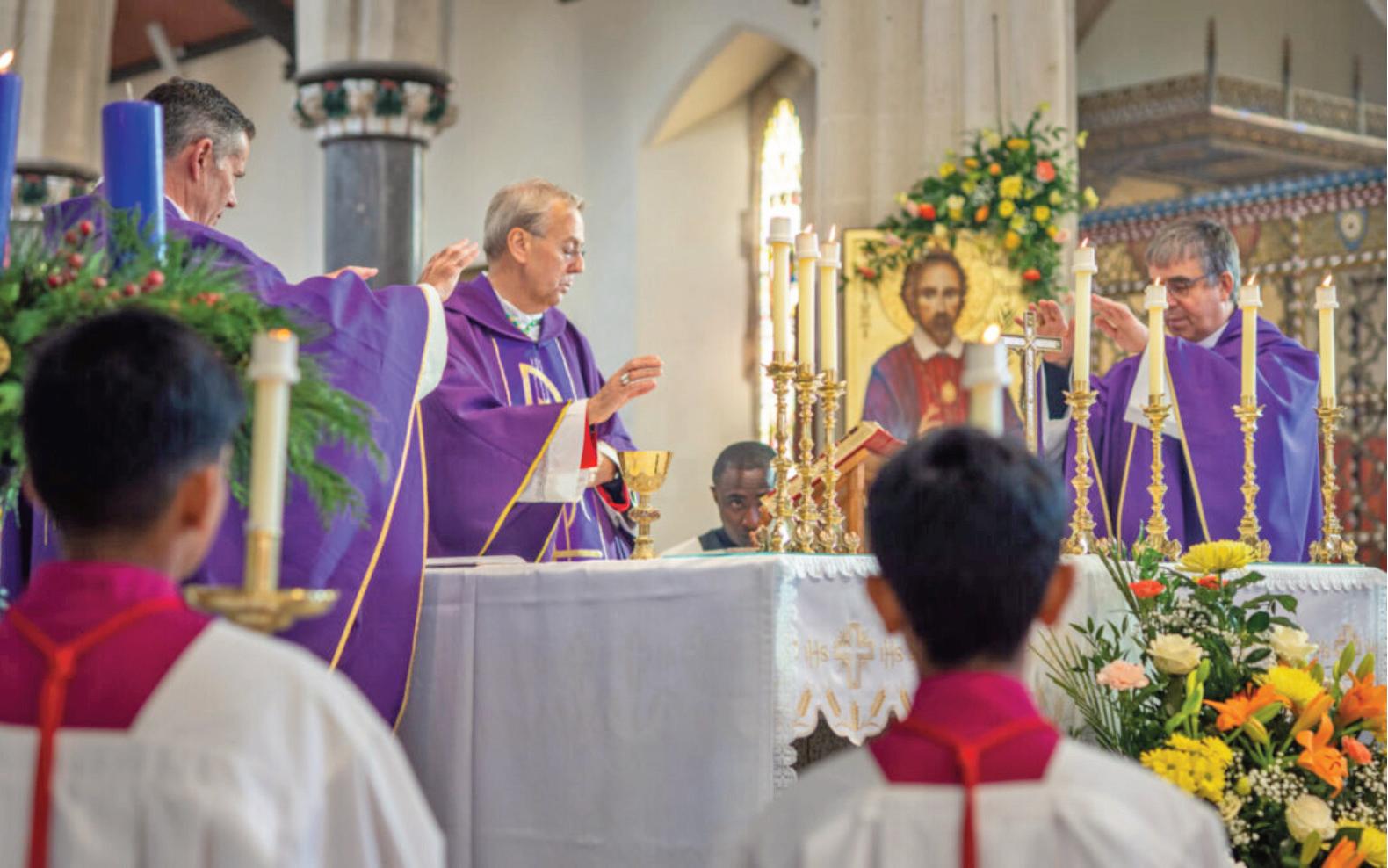
The Right Reverend Nicholas Hudson was installed as the Bishop of Plymouth at the Cathedral Church of St Mary & St Boniface, Plymouth on the Patronal Feast Day of St Cuthbert Mayne, Saturday 29th November 2025.
Senior Catholic clergy, including His Excellency Archbishop Miguel Maury Buendía, Apostolic Nuncio to Great Britain, Cardinal Vincent Nichols, the Most Reverend John Wilson, Metropolitan Archbishop of Southwark and archbishops and bishops from England and Wales attended the Installation Mass.
The Bull of Appointment from Pope Leo XIV highlighted the Church’s confidence in Bishop Nicholas’s appointment: “We thought of you, having carefully considered your pastoral achievements in the duties you have undertaken in the Archdiocese of Westminster, together with your spiritual and human gifts and
your expertise in administration, which make you suitable for advancement to this greater office.”
Parishioners from across Cornwall, Devon and Dorset, priests and deacons of the Diocese of Plymouth, priests from other dioceses and religious orders, Abbots, Bishops of England and Wales, the Anglican Bishop of Exeter and the Anglican Bishop of Plymouth, ecumenical representatives from other Christian denominations, interfaith leaders, civic dignitaries including the Vice Lord Lieutenant of Devon, and the Vice Lord Lieutenant of Cornwall, the Chief Superintendent of Devon & Cornwall Police, the Group Commander of Devon & Somerset Fire & Rescue, the Lord Mayor of Plymouth and the Lord Mayor of Exeter, diocesan trustees, school leaders from Catholic education institutions and charity representatives all attended the Mass of Installation.
In his Installation homily, Bishop Nicholas reflected on the martyrdom of St Cuthbert Mayne, who ascended the scaffold in Launceston 448 years ago (or, according to some sources, the following day). He described how St Cuthbert Mayne had been found in possession of two forbidden objects: a papal bull like the one brought to us this day by the Apostolic Nuncio; the other, an Agnus Dei – the Agnus Dei being a wax image of the Lamb of God which Fr Cuthbert bore around his neck. Bishop Nicholas said that St Cuthbert Mayne was the first martyr to have been trained in Douai, across the water in France, and that he had chosen to return from Douai to keep alive the faith of Catholics in Cornwall.
The bishop spoke of how St Cuthbert Mayne had heard the Lord’s call to feed the lambs, to feed the sheep, to look after the sheep; and come. Passing, by day, as a steward, by night Fr Cuthbert would don
the vestments of a priest to feed the flock with the sacraments. Bishop Nicholas explained that this would have been impossible without the courageous help of nobleman Francis Tregian, who allowed Fr Cuthbert to work out of his house at Probus in Cornwall; and to travel across his estates. Tregian paid the price of life imprisonment and the seizure of all his estates; Fr Cuthbert the price of death by hanging, drawing and quartering.
Bishop Nicholas emphasised that lay and ordained, they knew themselves to share responsibility – with others – for the mission here in England’s South-West. He highlighted the key partnerships – the partnership of lay and ordained for mission which Pope St John Paul II coined as ‘co-responsibility’ in his reflection following the Synod on the Laity in 1988.
The bishop shared that Mission, the Mission, is the word all those Colleges abroad used – and still use to this day – to describe the call to build up and nurture the Church at home, adding that it’s a mission more urgent today than ever, especially as the Church prepares to celebrate in eight years’ time, the Great Jubilee of 2033, the 2000 Anniversary of the Passion, Death and Resurrection of Our Lord Jesus Christ.
Bishop Nicholas spoke of encouraging shoots of recovery, referencing The Quiet Revival, a recent academic study which identified an upsurge in the number of people – especially young men – coming to church in this country. He said this rings true with what’s being reported from many parishes across the land. However,
he identified a twofold challenge: we need in our communities to help these new and returning Catholics really to find their place in their Church; and to draw many more people – both young and old – to Christ and the life of the sacraments.
Speaking of the more recent Synods, which took place in Rome in 2023 and 2024, Bishop Nicholas explained that they identified this responsibility as a ‘coresponsibility’ – taking up and developing the term coined by Pope John Paul. These Synods were clear that helping individuals find their place in the Church is something for which clergy and laity alike bear a shared responsibility. He emphasised that the key to knowing how we do it, how we organise ourselves to welcome, according to the latest Synod, is to deepen our listening. The bishop said:
“that we need to deepen the quality of our listening to the Spirit, to one another, and to our context; our listening to every generation in the Church – but with a special attentiveness to the young, to the poor, to the marginalised, to those who stand on the outside looking in.”
Bishop Nicholas also spoke of evangelisation, a priority for Pope Leo and noting that Popes from St John Paul II to Benedict XVI to Francis have all been clear that evangelisation – the sharing of our faith – needs to be all-embracing; that it’s aimed at three distinct categories – at those who belong to Christ and His Church, at those who no longer belong, as well as at those who never belonged. He said: “To us who belong to Christ and his Church the onus is to find ways of telling others who is this Jesus whom we love and worship.” He added that this is about communicating our relationship with Christ, in word and deed and in such a way that causes people to ask, “Who is this Jesus whom you love and worship?”
In his post-communion address, Bishop Nicholas expressed gratitude to everyone who had a part in preparing the wonderful celebration. He wished to thank in particular the Dean, Canon Mark O’Keeffe, for the way he coordinated all the arrangements and to all who worked with him to provide such a special celebration.
Bishop Nicholas said that “the person for whom loudest thanks are surely due this day must be our outgoing Diocesan Administrator, Canon Paul Cummins.” He added: “Paul, it’s clear to me that the Diocese shall be in your eternal debt for the selfless way in which you’ve led the whole Diocesan community these last three and a half years. These last few weeks, I’ve experienced myself the quality of your leadership as you’ve done everything you possibly could to induct me. Paul, it’s clear, from all the reports I hear of your leadership, that what you have achieved has been simply outstanding. And I want you to know we salute you and we congratulate you.”
Bishop Nicholas also said: “I’d like, in the same breath, to thank all those who’ve
come alongside Paul so willingly to support him – the Curial Team for Mission, all who exercise particular responsibilities in the Diocese; and, in a special way, the Clergy. Dear Fathers, dear Deacons, I look forward to meeting you all in your Deaneries and then individually as soon as I able. I look forward to hearing what’s been your experience of these last several years; and what it tells us about the ways in which we might develop as a community of faith.”
Bishop Nicholas spoke of his desire to visit the parishes and schools and other institutions across the three counties, quoting Pope Francis’s description of the bishop: “The bishop … will sometimes go before his people,” he suggests, “pointing the way and keeping their hope vibrant. At other times, he will simply be in their midst with his unassuming and merciful presence. At yet other times, he will have to walk after them, helping those who lag behind and – above all – allowing the flock to strike out on new paths.” He said “I look forward to being with you in all three places – but to beginning in your midst and hearing your aspirations for the Diocese. And I look forward to meeting as many of you as possible after this Mass and in the weeks and months to come.”
As the new Bishop of Plymouth, Bishop Nicholas will lead a diocese that serves a Catholic population of approximately 11,293 across 57 parishes and 37 schools throughout the three counties.
He has chosen “In Te Domine Speramus –In you, O Lord, we hope” from Psalm 31 as his motto.
You can read Bishop Nicholas’ full homily by scanning the QR code.
To view more images of the Installation of Bishop Nicholas scan the Qr code right.
Bishop Nicholas Celebrates First Public Mass at Plymouth Cathedral
In his first public Mass as Bishop of Plymouth at the Cathedral Church of St Mary & St Boniface, on Advent Sunday 30th November 2025, the Right Reverend Nicholas Hudson called for prayers for peace in the land of Jesus’s birth, and for all those places where there is strife and suffering, particularly South Sudan and Ukraine.
The bishop also urged the congregation to pray for themselves during Advent, for those nearest and dearest to them and for all those who find themselves in real need. He said “I’m so happy to be with you at last; and to be embarking with you on this my first Advent in Plymouth” and asked everyone to pray for our diocese, “as we embark upon this new chapter together.”
In his homily, Bishop Nicholas reflected on Advent as a time of “triple coming” –Christ’s birth in Bethlehem, His coming to us in daily life, and His coming to take us home at the end of our lives. He reminded the congregation that Jesus tells us to “stay awake, for you do not know on what day your Lord is coming.”
The bishop invited the congregation to prepare by putting on Christ – setting themselves close to him in prayer. He suggested that during Advent, those who already pray daily might find a second time to deepen their closeness to Christ.
Speaking of Plymouth Diocese’s long wait for a new bishop, he said: “Plymouth Diocese’s waiting for a new Bishop has been a very long Advent. Now the work
begins – together to deepen our waiting on the Lord, asking him to show us how he calls us to be more the Diocese, the Church he wishes and calls and yearns for us to be.” The bishop shared that his episcopal motto“ In te Domine speramus” – “In you, O Lord, we place our hope” –captures both hope and trust, noting that these qualities are so close that hope is often translated in the Psalms as trust.
In a brief address after Mass, Bishop Nicholas shared his personal connection to the West Country, sharing that his father had deep roots in the region. He recalled how his father, a lifelong Plymouth Argyle supporter, settled here when he was just 4 – first in Parkstone, Poole, then here in Crownhill; he went to school in Yelverton and then in Bodmin. He took Bishop Nicholas and his brothers on many holidays across the Diocese. Such was his father’s love for Plymouth Argyle that the very last thing he said he said before he died was, “The Argyle did all right last night, didn’t they?”!
The bishop also shared his eagerness to get to know the three counties, particularly their Catholic communities and institutions, and to explore with them how Synodality can help the Church grow and draw more people to Christ. He noted: “One thing I’ve noticed about Synodal conversations is how they bring out people’s love for the Church. I sense a great love for the Church here in our Diocese, in the way people have welcomed me both here at the Cathedral and across Plymouth Diocese.”
Bishop Nicholas concluded: “I look forward to meeting as many of you as possible as you take your leave of the Cathedral after Mass; and to getting to know you over the next several years as we set out together on this next chapter in the life of the Diocese.”
Bishop Nicholas paid tribute to St Cuthbert Mayne, the diocesan patron whose feast was celebrated over the Installation weekend. He shared how the saint had served freely for over a year on the estates of Francis Tregian in Probus, Cornwall, passing by day as a steward and by night wearing the vestments of a priest. Bishop Nicholas described the moment of St Cuthbert’s arrest in the gardens of Golden Manor, where the High Sheriff of Cornwall discovered him in possession of two forbidden objects: a papal bull and an Agnus Dei – a wax image of the Lamb of God worn around the neck. The saint was then imprisoned in Launceston Castle and executed by hanging, drawing and quartering.
Developing this theme, Bishop Nicholas explained that by bearing that image around his neck, St Cuthbert Mayne had literally “put on Christ” as St Paul urges in the reading to the Romans. The bishop spoke of the vision foretold by the prophet Isaiah, of how “the mountain of the house of the Lord shall be established as the highest of the mountains … and all the nations shall flow to it.” He noted that the Book of Revelation expands on this vision, revealing that at the heart of the heavenly Jerusalem we shall see the Lamb of God himself.
In a personal reflection, Bishop Nicholas shared his experience of seeing Van
Eyck’s depiction of the Mystic Lamb in Ghent, Belgium with his parents, who have since died, saying: “Now they see with their own eyes the scene we looked upon together.” He reflected on how, as they waited, so now do we – for the Lamb to take us to himself and to join our loved ones who have gone before us. In this time of Advent, the bishop encouraged people to go to Confession. He quoted Pope Francis’s encouraging words: “Just ask yourself, ‘How long is it since my last Confession? Two weeks? Two months? Two years? Twenty years? Forty years?’ However long it is, just go! And you’ll feel so much better for it.”
Bishop Nicholas reminded parishioners that it is Christ himself who waits to meet them in Confession, adding: “He knows your sins already but he wants you to own them and to know his forgiveness.”
The bishop explained that when we have the courage to confess, we find ourselves receiving the strength to resist temptation. He gave a practical example: when we confess our tendency to judge, we find ourselves strengthened not to judge, and also to gently challenge others when they are judgemental – “to match their negative with a positive.”
Reflecting on Pope Francis opening the Jubilee of Hope with an appeal to hope and trust specifically in God’s forgiveness, Bishop Nicholas said: “There is hope for each of us. God forgives everything. Do not forget this since it is an important way of understanding hope in the Lord.” He added that there is no better way to close this Jubilee of Hope than to turn back in hope and trust to our loving Father and confess our sins.
Image thanks to Ben Davies from Native Multimedia
Our fourth and final Holy Door visit to St Boniface Church, Crediton, Devon: The National Shrine of St Boniface
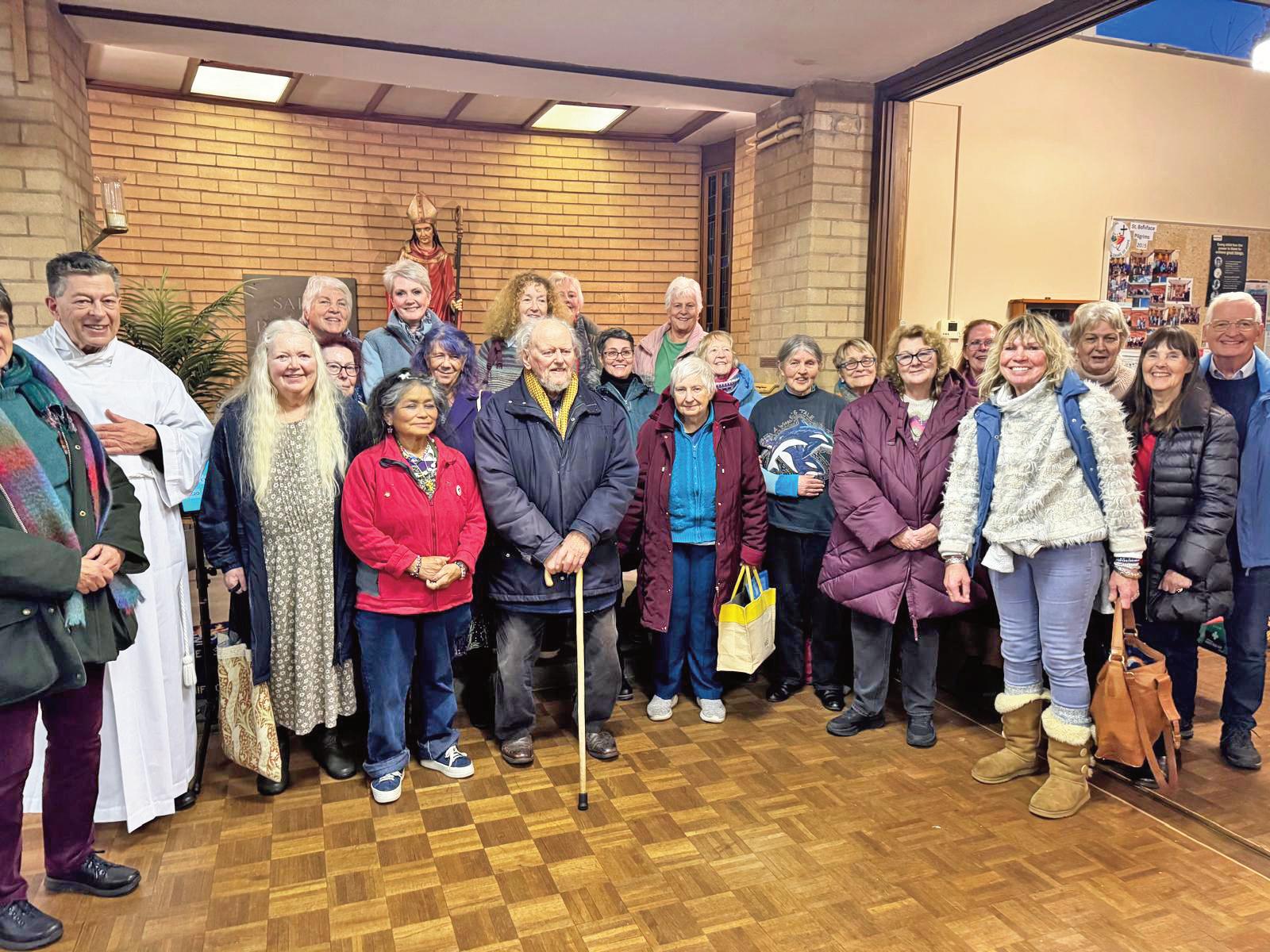
On Wednesday 19th November 2025 – a coach left Liskeard with parishioners from our four churches (Our Lady and St Neot, Liskeard; Our Lady of Light, Sclerder Abbey; Our Lady of the Angels, Saltash; St Joan of Arc, Torpoint) making our fourth and final Holy Door visit celebrating the Jubilee Year of Hope.
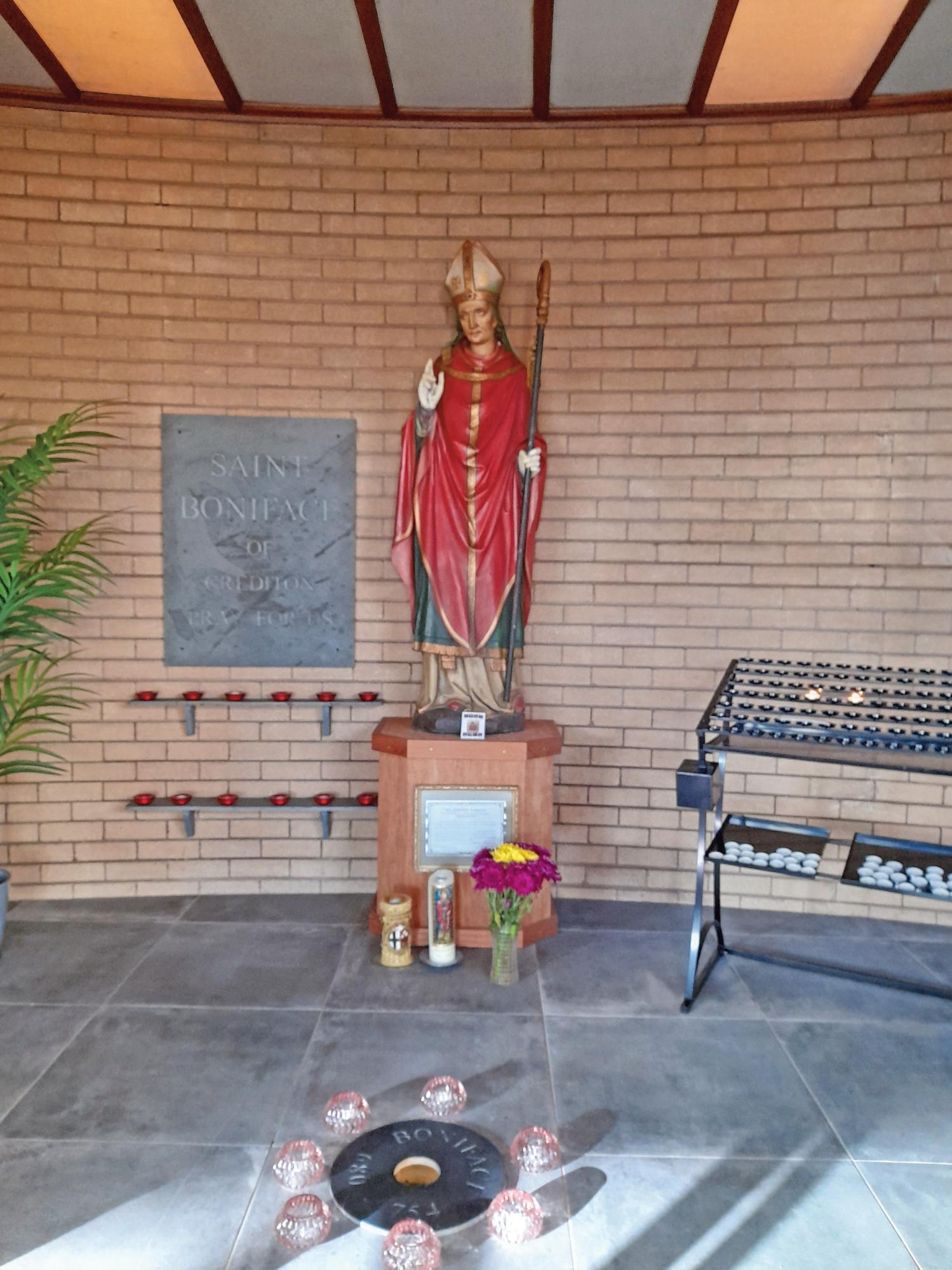
First stop on our pilgrimage was the Catholic Church of St Boniface, Crediton, Devon and the National Shrine of St Boniface. The church today is clearly a modern building, constructed in the late 1960s. A foundation stone in the porch was gifted by the Bishop of Fulda and blessed by the late Bishop of Plymouth, Cyril Restieaux. The Diocese of Fulda also donated relics of St Boniface – one of which is placed in the altar, while the other (a part of his vertebrae) is housed in the shrine area. Additionally, the local Anglican church contributed a stone from the medieval parish church, which has been incorporated into the baptistry.
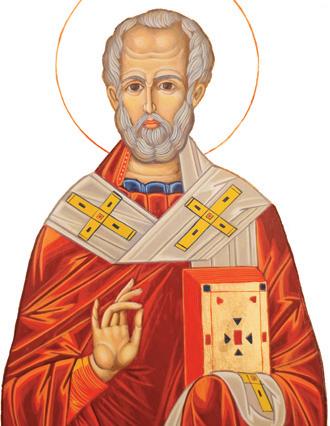
St Boniface was born around AD 680 in Crediton, Devon. His baptismal name was Wynfrid or Wynfrith, he grew up in Crediton. He first studied at a Benedictine
monastery in Exeter before moving to Nursling (Nhutscelle), near Southampton, where he was ordained a priest. Although he was a noted scholar and teacher, he felt the call to missionary work.
Wynfrid spent most of his life travelling extensively in Northern Europe as an apostle, re-organizing the Christian Church. During these years Pope Gregory III granted him the insignia of Archbishop, and he was renamed Boniface. In 753, as he grew older, Boniface resigned from his diocese in Fulda, Germany, and set out once more to evangelize the Frisian tribes. In 754, near Dokkum, he and his companions were ambushed by a band of pagan warriors. Boniface was struck down, and according to tradition, he raised up a book to shield himself, which was pierced by a sword. According to his wishes, Boniface’s body was taken to his Abbey at Fulda for burial, where his tomb remains a site of pilgrimage. His holiness, wisdom, and martyrdom affirmed his status as a saint.
We then moved on to the Collegiate Church of the Holy Cross and the Mother of Him who Hung Thereon, Crediton.
Before Exeter Cathedral was built in the early twelfth century, the Church of the Holy Cross, Crediton was the Cathedral for the diocese of Sherborne. Where we were very warmly welcomed and said our pilgrims of Hope Prayers for Peace; said a decade of the Rosary; and sang Make me a channel of Thy peace and As I kneel before Thee. We had time to look around the Collegiate Church and here a talk
Fr
about the church before returning to St Boniface Catholic Church for a talk on St Boniface and Mass celebrated by Fr Michael Wheaton. It was then time to take our leave of
Michael and the lovely ladies who had made us most welcome and take the coach back to Liskeard via Saltash.
Article and Photos by Rose de Boyer
Scripture Focus
By Fr Jeremy Corley
New Beginnings
The New Year is a time for new beginnings, so it is fitting for us to celebrate the Feast of the Lord’s Baptism on Sunday 11th January.
Jesus’ baptism by John the Baptist marks the start of his public ministry, while our own baptism marks the beginning of our Christian life. Recalling these events can give us fresh energy as we begin the New Year.
In the first reading for the feast, the prophet Isaiah announces the coming of a saving leader, but the emphasis is on gentle service rather than brute force. As the prophet tells us, God describes this figure as “my chosen one, in whom my soul delights.” He is empowered by God’s Spirit to bring justice, not just to the people of Israel but to other nations as well.
What is unusual about this leader is his quiet way of behaving—he does not lift up his voice or shout loudly.
Instead, his gentleness is seen when he takes care not to break a crushed reed or to snuff out a dimly burning candle. This leader will become a light to the nations, bringing prisoners out of their dungeons.
Within biblical history, the prophet was addressing the demoralised Jewish exiles in Babylon, offering them hope. Before long, the Persian king Cyrus would come and set them free, allowing them to return to the Holy Land and rebuild their lives. But the Church sees a deeper meaning in Isaiah’s prophecy, pointing ahead to the coming of Christ.
At the time of Jesus, the Jewish people were still under the rule of an alien power, now the Romans. Many were looking for a political leader to save them from foreign domination. John the Baptist announced that God was going to send a mighty Saviour, and so he called the sinful people to prepare by being baptised.
But when Jesus arrived, he did not begin by making a great noise or a massive
show of force. Instead, he queued up with the other people waiting for baptism. Even when John the Baptist tried to dissuade him, he insisted that he needed to unite himself with the other sinful people being baptised—as he would later do on the cross.
Only at the end of the baptism did the divine approval become visible. Yes, Jesus was indeed God’s Servant, sent to bring justice to the nations by first uniting himself with sinners. He was demonstrably filled with the Spirit, who descended on him like a dove, and in this way, God publicly acknowledged him as his beloved Son. It was evident that he was the chosen one, in whom God was delighted.
From now on, Jesus would begin his mission to bring light to the whole world. He would open the eyes of the blind, both physically and spiritually, and bring freedom to those imprisoned by their sins.
As we recall Jesus’ baptism, we are reminded of our own baptism, when we became God’s children, able to address God as our Father. In baptism and confirmation, we were filled with the power of God’s Spirit, to enable us to live our Christian lives. We were empowered to play our part in bringing justice to the world.
Like the servant described by Isaiah, Jesus’ way was one of gentleness. He did not bring destruction but rather hope and renewal. He showed us that the meek and gentle will inherit the earth.
As we celebrate Jesus’ baptism, we are invited once again to say yes to the grace of our own baptism, whether or not we remember the actual ceremony. We have received the gift of becoming God’s beloved children—let us pray for the grace to live like Jesus, our elder Brother.
View from the Pew
By Dr Jay Kettle-Williams
Hold your horses well in hand!
My paternal grandfather’s party trick when I was barely a toddler was to sit me on his knee, to hold my arms firmly and to give the order: ‘Hold your horses well in hand, the battery’s going to trot!’ He’d then bounce me gently up and down. The next command was to ‘Hold your horses well in hand, the battery’s going to canter!’ and the bounce and rhythm would intensify. Then, with the final command‘Hold your horses well in hand, the battery’s going to gallop!’ - all Hell would break loose and I’d be flying up and down giggling madly as my Grandmother looked on, feigning disapproval as she tuttered.
Well, I’ve ridden a horse, the real equine brute of a vehicle, only twice in my life: once in Spain and once in South America. On both occasions the beasts, strangely beloved of so many, bolted. The experience at my grandfather’s knee must have put me in good stead, especially when it came to the gallop: Hang on! Subsequently in life, I suppose I could have developed my horsemanship to better effect, if I had persevered.
Perseverance is a valuable quality and one I greatly admire. That’s no more so than among those who do not bear witness to their Christian faith in that mealy-mouthed way I attribute to myself but who stand up, go forth and publicly respond forcibly to the Christian challenge.
Among those whom I acknowledge in this regard are members of those ordinariates which were ushered in by Pope Benedict XVI on 4 November 2009 in his Anglicanorum Coetibus, the apostolic constitution establishing ‘ordinariates’ for former Anglicans who wanted full communion with the Catholic Church while preserving elements of their prayer and heritage.
A recent report has found that more than one third of clergy ordained in England and Wales over the last three decades (1992-2024) are former Anglican clergy. The report explores the staggering statistic of the journey from the Anglican priesthood to, not only the Catholic Church, but the Catholic priesthood. That report, compiled by the St Barnabas Society, which provides support to Catholic clergy who have converted, was led by Stephen Bullivant, a professor of theology and the sociology of religion at St Mary’s University, Twickenham, in southwest London.
It turns out that some 700 former clergy and religious from the Anglican Church (Church of England, Church in Wales, or Scottish Episcopal Church) have converted to the Catholic Church since 1992. The research shows that this number includes 16 former Anglican bishops, the overall ‘surge’ being partly driven by the Anglican move to ordain women in the Church of England. Cardinal Vincent Nichols, the Catholic Archbishop of Westminster, said he was glad to understand more about ‘the movement of clergy from the Church of England into full communion with the Catholic Church in recent times’. But he was hesitant about the word ‘convert’ used in some quarters, pointing out that St Paul did not ‘convert’ from Judaism to Christianity, rather that he ‘did not so much renounce his Jewish upbringing and practice as go beyond it, into something he understood to be its completion’.
Such ‘completion’ [sic] then brings two issues firmly to the fore: The ordination of women to the priesthood; Celibacy.
On the former point, many argue that social mores have changed dramatically since the times of Jesus. They propose it’s now high time to update certain practices
of old. To settle that ongoing debate about women’s ordination and to reaffirm the Church’s long-standing tradition, Pope John Paul II stated on the May 22 1994 in the Apostolic Letter Ordinatio Sacerdotalis to all bishops of the Catholic Church that the Catholic Church has no authority whatsoever to confer priestly ordination on women. To this day that document remains among the most cited documents about gender and ministry in the Catholic Church.
On the latter point, I well remember one priest’s announcement that Catholic priests have no option but to accept celibacy, whether they like it or not. Not that he put it in so many words. However, at that point his audience fell immediately and embarrassedly silent. But then all present, including the priest himself, burst into raucous laughter at the turn of phrase he had used to stress the point he was making.
I leave it to you, dear Reader, to wrestle with the conundrum as to what were the actual words uttered by the priest and which, after a moment’s hesitation, prompted widespread mirth.
Of all the charisms granted us, let’s never forget our sense of humour.
Notes, Acknowledgements and Attribution: Accompanying image (Statue with Blowing Horn) after the sculpture Exultate Jubilate by Philip Jackson; Texts/References adapted and/or adopted from http://en.wikipedia.org under the terms of the Creative Commons Attribution-ShareAlike License 4.0: http://creativecommons.org/licenses/bysa/4.0/
Dr J L Kettle-Williams is
St Boniface Parish Church: Celebrating Advent by Journeying in Faithful Waiting
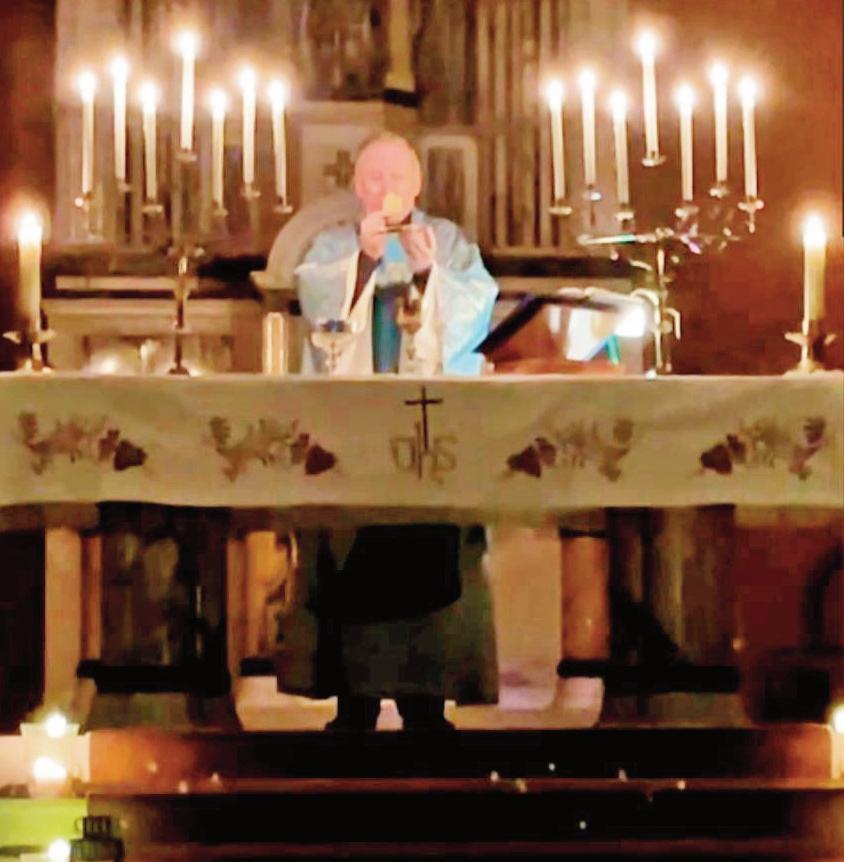
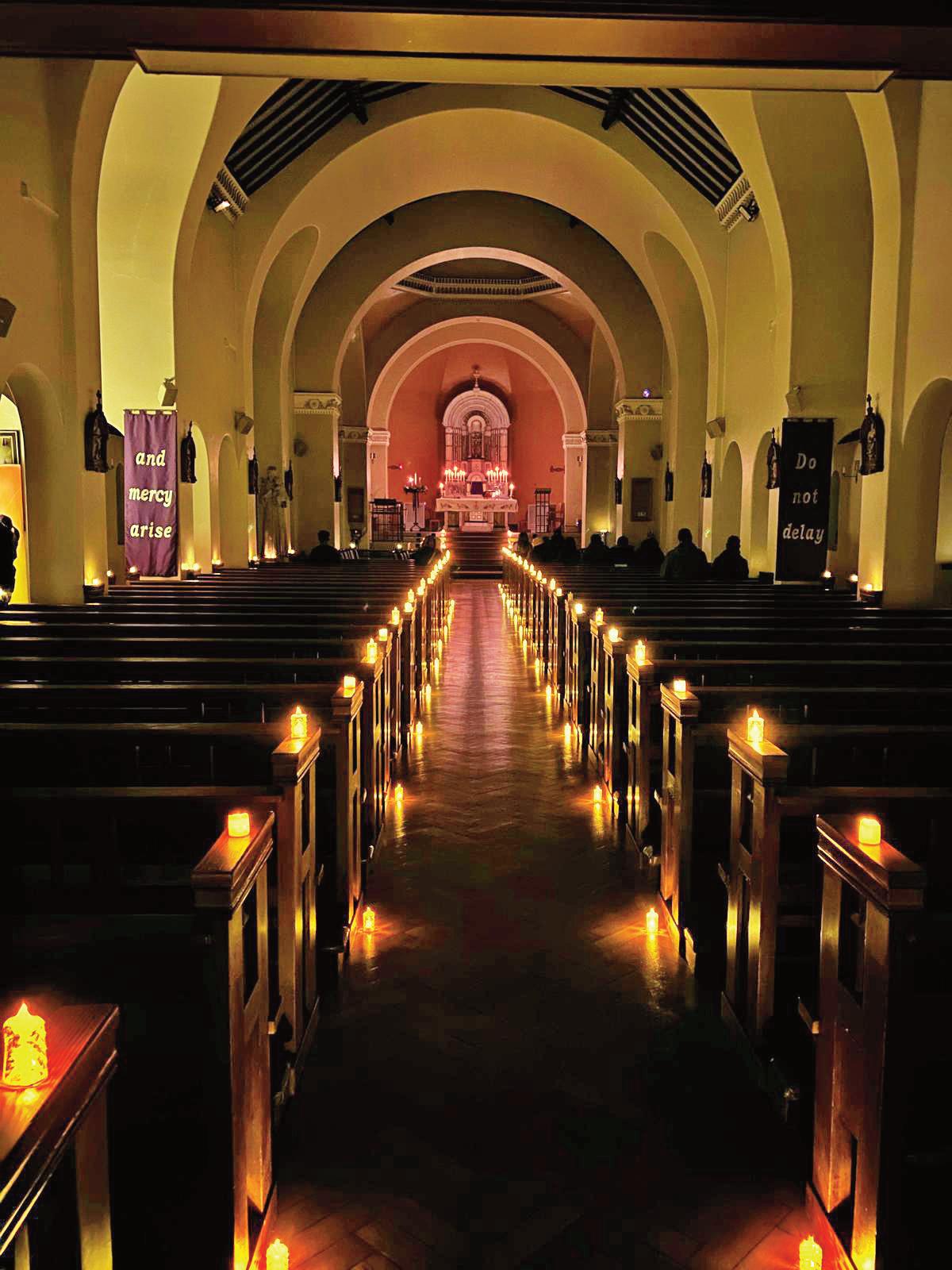
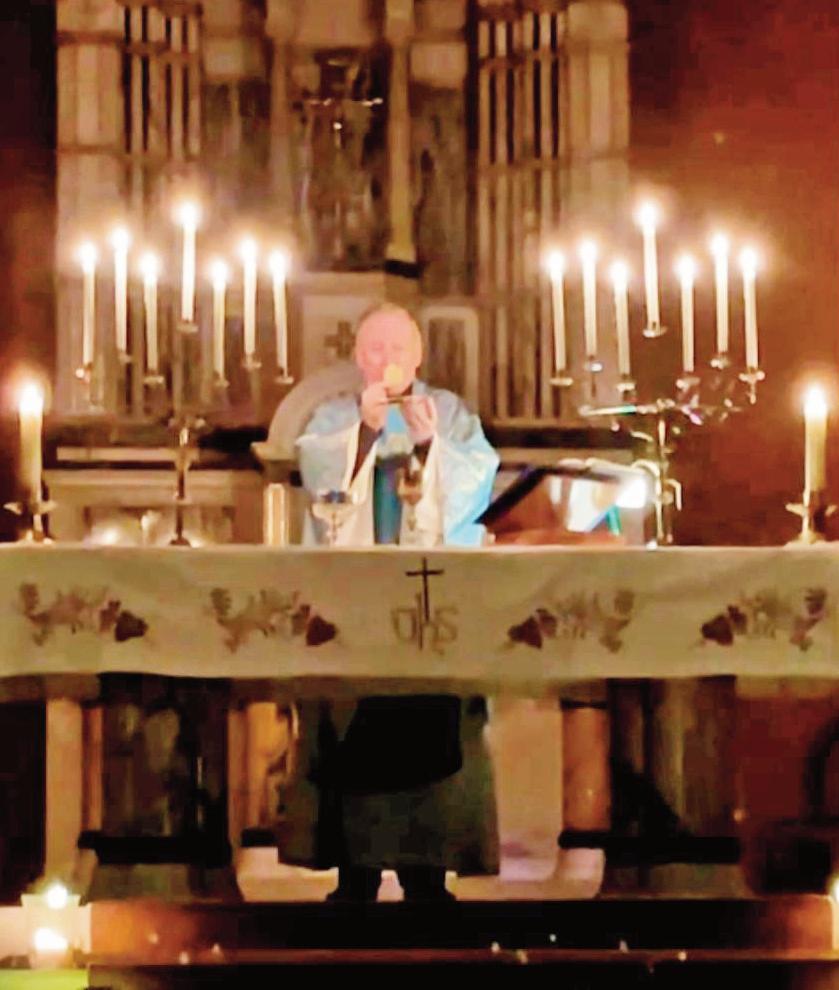
Rev Fr. Tom Kleinschmidt, OMV, our Parish priest, opens Advent by celebrating for the first time in the parish the beautiful tradition of Rorate Caeli Mass. Rorate Caeli is Latin for “Drop down, ye heavens”.
The Holy Mass begins in total darkness just before sunrise, with the church illuminated only by candles. This is a representation of how we await for the “Light of the World “, after sin has put us in darkness. As this is a votive mass dedicated to the Blessed Virgin, Fr. Tom wears a white vestment instead of the usual violet worn during Advent. Andrea Hurry, one of our Sacristans, read the Mass readings with the focal point being on the coming of Christ and the role of our Blessed Mother as the light of the world. The mass closed with the faithful singing Salve Regina, which beautifully reverberated in the church.
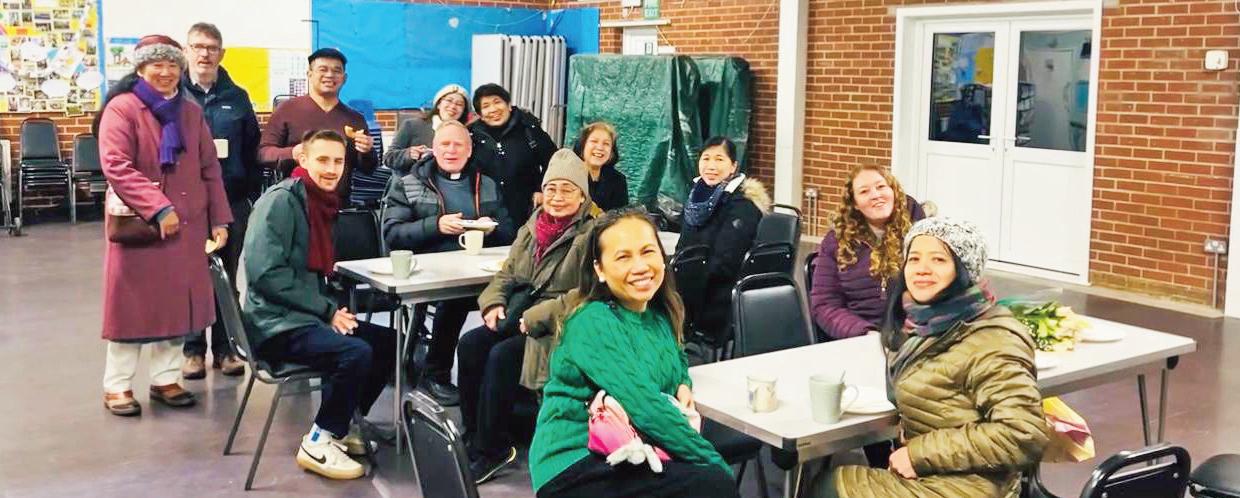
For purposes of safety, the parish ingeniously thought of using battery operated candles and lanterns, which were all kindly donated by the parishioners. Tea, coffee and donuts are then served and shared at the parish hall after the mass which fostered the spirit of community and camaraderie.
The Rorate Masses run on all Saturdays of Advent, 6 am at St Boniface Church.
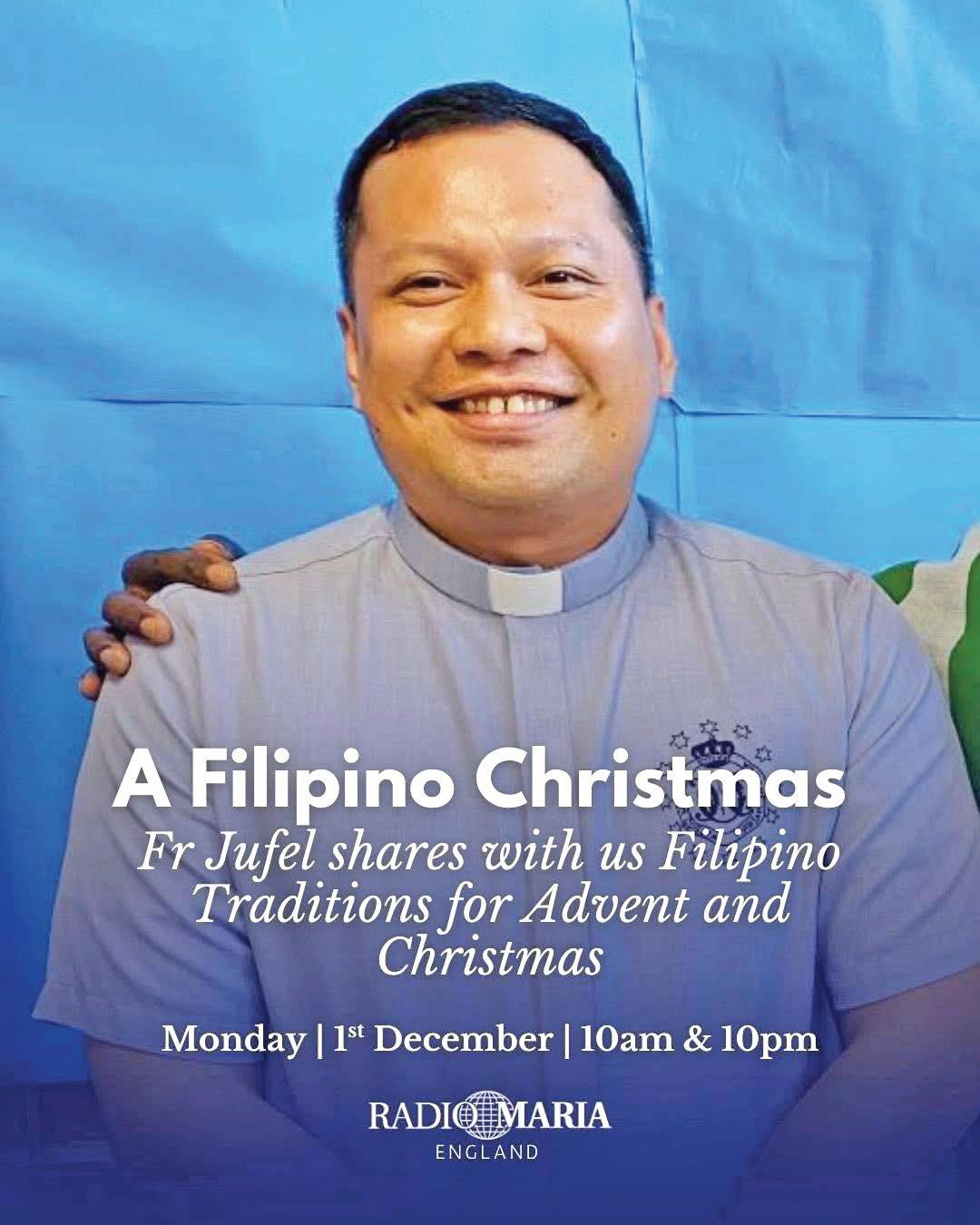
Last Dec 1st, Rev. Fr Jufel Baldado, OMV, went on air with Radio Maria England, sharing about the joyful Filipino Christmas traditions which includes Simbang Gabi – a nine day novena mass dedicated to the Blessed Virgin. Our Simbang Gabi runs from Dec 15-23, culminating with a bring and share event among the parishioners, particularly the Filipino Community.
Fr. Jufel had a fun time discussing about Filipino Christmas decors like the infamous parol, our festive Noche Buena with lechon as the all time favorite centerpiece.
St Boniface Parish looks forward to a regular program on Radio Maria England in the near future.
Rev. Fr Jufel Baldado, OMV, assistant priest and Spiritual Director for Youth
Explore and the Filipino Catholic Community in Southampton, shares with us his intimate spiritual thoughts through his journals when he embarked on a recent 8-day individual retreat.
Prayer Lord, profit us, we pray, for even now, as we walk amid passing things, you teach us by them to love the things of heaven and hold fast to what endures
December 2
1st Day: The Call
Revisiting my vocation to the priesthood invites me to recognise the gentle but persistent ways God has guided my life from childhood, beginning with my grandmother who faithfully brought me to church to attend Mass. Those early experiences awakened in me a sense of reverence that deepened when, at the age of eleven, I became an altar server and discovered the joy of serving at the Lord’s table. As I grew older, my participation as a choir member allowed me to praise God through music and to feel more deeply the beauty of liturgical worship. Joining the Legion of Mary further formed my heart in service, teaching me the value of humility, devotion, and missionary zeal. My involvement as a BEC Evangeliser strengthened my desire to share the Gospel in simple, everyday encounters within the community. Becoming a member of the Oasis of Love Charismatic Community introduced me to a more vibrant expression of faith, one that encouraged deeper prayer and fellowship. Also, organising prayer meetings in our school offered me a chance to lead others towards God and helped nurture a quiet confidence in my calling. Through all these graces, I thank God profoundly, for each experience has shaped a strong and enduring foundation for my vocation to the priesthood.
December 3
2nd Day: The Response
Entering the seminary of the Oblates of the Virgin Mary at the age of sixteen was a courageous step, for it meant leaving my family behind to join two companions as the pioneers of our formation. Living among foreigners brought its share of difficulties, yet these challenges were continually softened and transformed by
In the midst of my demanding parochial responsibilities and the emotional weight of hospital chaplaincy, I recognise a deep need to pause and return to the quiet centre where God gently speaks. The constant rhythm of caring for others can sometimes leave my own spirit depleted, making an annual Ignatian retreat a necessary space for renewal. In this sacred time, I desire to rediscover the movements of consolation that remind me why I serve and to notice the subtle invitations of God that are often lost in busyness. By stepping back, I allow the Lord to restore my heart, deepen my discernment, and strengthen me for the ministry entrusted to me.
grace, patience, and a growing sense of brotherhood. I gradually learned their culture as well as the seminary and religious culture that shaped my daily life and spiritual identity. While I am adapting to their language, together with the distinct language of the seminary, i felt it required humility and perseverance, but it also opened my heart to deeper communion. The horarium became a steady rhythm that taught me discipline, grounding my days in prayer, study, and community living. Philosophy studies expanded my horizons, inviting me to seek truth with clarity, faith, and intellectual rigour. Each experience, whether joyful or difficult, formed me quietly yet profoundly in the path of discipleship. Looking back, I see how God used every moment to deepen my vocation and strengthen my resolve to follow Him wholeheartedly.
December 4
3rd Day: My Detour
There was a time in my life when I walked away from God entirely, a period when I was convinced by Nietzschean and Hegelian philosophy that God was dead, and for three long years I boldly challenged His existence and authority. I lived as one estranged from faith, convinced of my own reasoning, yet blinded to the truth that love and mercy never abandon, even when we do. It was only after hitting rock bottom—despite all the worldly success I had achieved—that I began to see how foolish my rebellion had been and how faithful God remained. Like the prodigal son or Jonah, I had turned my back on Him, yet He never gave up on me; in fact, His love reached me more deeply in my brokenness than I had ever known. It was in that darkness that His grace lifted me up, restoring hope and guiding me back to the seminary path I had once forsaken.
Continued on page 11
Rorate Caeli Mass
Recessūs Ignatiani
Rev Fr Jufel in his recent retreat
I now see clearly that God’s love is unwavering, unconditional, and patient, shaping even my failures into the soil of my spiritual growth and calling me ever closer to His heart.
December 5
4th Day: Love is sweeter the second time around
My life as a religious brother found new depth and colour when I re-entered the Oblates and joined the newly established community in Antipolo, where the companionship of brothers and novices created a rhythm of excitement, discovery, and renewed purpose. It was a season of reawakening, as communal prayer, shared work, and the daily witness of my confrères steadily shaped my heart back into the contours of our charism. At the same time, my formation as a Theology student in the Recollect Augustinian school broadened my horizons, grounding me firmly in the rich intellectual and spiritual heritage of the Church. Each lecture and discussion seemed to chisel my vocation more clearly, reinforcing the Oblate way of life with sound theological insight and pastoral wisdom. The apostolates entrusted to me—whether in prison ministry, among indigenous communities, in rural parishes, or within the vibrant setting of Antipolo Cathedral—became living classrooms where faith met reality. These encounters often stretched me, yet they filled me with a deeper joy and a courageous sense of mission. My participation in the programme for Ignatian retreat giving and spiritual direction added another layer of interior growth, teaching me the art of listening to God in the quiet movements of the soul. Altogether, this chapter of my life became a grace-filled remoulding, transforming my vocation into something both sturdier and more tender, rooted in service, study, and the steady companionship of the Oblate family.
December 6
5th Day: Here I am Lord I come to do your will
After completing my Theology studies and returning to the Cebu community, my life as a transitional deacon unfolded in a new rhythm of service as I was appointed vocation promoter while preparing for my diaconate ordination, marking a gradual and grace-filled entry into the world of the clergy. The work of promoting vocations proved both exhausting and profoundly fulfilling, as each visit to parishes, schools, and communities brought fresh encounters with young people seeking God’s call. Travelling to various places, posting vocation materials, and meeting religious men and women from different congregations broadened my perspective and deepened my appreciation of the Church’s diverse charisms. Shortly after my ordination, the demands of my ministry intensified when I was unexpectedly chosen to serve as Chairman of the Directors for Vocations in the Philippines–Cebu Chapter, an honour
made even more striking because it was the first time a deacon had been entrusted with this role. I felt humbled and deeply grateful, especially when my local superior responded with affirming and encouraging words that strengthened my confidence. Yet, I also became aware of murmurs from others, even from my fellow brother priests in the community, who questioned why I had been selected despite my lack of experience, even citing that they themselves were not chosen during their time. These comments could easily have sown discouragement, but instead they became invitations to greater humility, trust, and interior steadfastness. With God’s grace, I chose to serve with optimism and dedication, offering my efforts for the good of the Archdiocese, the Church’s mission, and the faithful who looked to us for guidance in discerning their vocational path.
December 7
6th Day: You are truly my Mother
In this sixth day of retreat, my heart returns with quiet gratitude to the Blessed Virgin Mary, whose gentle yet tremendous presence has accompanied my priestly vocation from its first stirring. She was there in the silence of my discernment, shaping my desire to give myself wholly to her Son, and she has remained a steady shelter in moments of weakness, doubt, or fatigue. Like a mother who knows her child’s deepest needs, she has sustained me with tenderness, defended me from discouragement, and cared for the fragile places of my heart that only grace can reach. Whenever priestly service became heavy, she lifted my gaze back to Christ, reminding me that the priesthood is not a possession but a participation in her Son’s self-giving love. Even now she continues to draw me more deeply to Jesus in prayer, for Jesus in ministry, and in Jesus as I stand at the altar, breaking the bread of life for God’s people. In her faithful accompaniment I discover again the quiet miracle of my vocation: that the Mother of the Eternal High Priest walks with me, shaping my heart after her own, that I may serve her Son with purity, humility, and unwavering hope.
December 8
7th Day: Humility
of Love
In these quiet moments of my seventhday retreat, I find myself gazing upon the Jesus of Humility who walks gently among humanity, and in His presence I rediscover the quiet joy that springs from choosing humility over self-assertion. He reminds me that true strength is found not in defending my wounds or my pride, but in allowing His mercy to soften the places in me that still resist grace. As I think of my priestly ministry, I see how often I am called to forgive even before I feel ready, and to intercede for those who struggle to see their own need for compassion. Encountering difficult or proud people exposes my own pride in unexpected ways, making me realise how much I still cling to control or to the
desire to be understood. Yet Jesus invites me to step down into the smallness He Himself embraced, where the heart becomes freer and the burdens lighter. In Him, humility ceases to be a duty and becomes a path of interior liberation, allowing me to meet others without defensiveness or fear. My wounds, when offered to His quiet love, become places where grace can flow rather than reasons to retreat or resist. And slowly, I learn that to be an intercessor is to stand before God not as one who has mastered life, but as one continually being transformed by the humble Christ who bends low to lift me up.
December 9
8th Day: Mercy and Truth
From my 8th day of my spiritual journey, as I sit with Fr. Lanteri’s Misericordia et Veritas, I recognise how easily the weight of the parochial demands and hospital chaplaincy can dull my sensitivity to the quiet invitations of God’s grace. Then I am reminded by mercy that the Lord receives me not as an overextended servant failing to keep up, but His beloved priest who is first called to rest in His compassion. Meanwhile, truth gently exposes the ways exhaustion can cause me to postpone reconciliation, overlook strained relationships, or offer only partial presence to those I serve. Then I was led to Matthew 5:23–24, where I hear my dearest Lord Jesus calling me to rediscover the primacy of restored communion, even when I feel stretched thin by the constant needs around me.
This command becomes less a burden and more a vocation, inviting me to realign my ministry with the deeper movements of the Spirit. Fr. Lanteri’s wisdom helps me see that mercy without truth becomes sentimentality, and truth without mercy becomes hardness, but their union steadies my heart amid pastoral overwhelm. I realise that seeking reconciliation—whether with others or within myself—is part of the healing Christ desires to offer through my priesthood. In this insight, I feel the Lord gently renewing my resolve to minister not from depletion but from the place where mercy and truth meet in His heart, restoring my own before I seek to restore others
Mae Felongco
Dan Sobey
You can use both sets of clues to solve the puzzle: the solutions are the same.
CRYPTIC Across
5 Sports two letters from Paul (11)
7 Log all chocolate that's eaten around Christmas? (4)
8 Naive can, strangely to medieval Schoolmen, be an influence (8)
9 Building that appeals for Indian ruler to 'go back in time' in retrospective (7)
11 This kind of hell hole's diabolical (5)
13 Levi's sister's anger initially follows row with husband (5)
14 Golden premier of chap being inducted into a mysterious religion (7)
16 Note a retrogressive toilet's showy façade: a parable that highlights greed (4,4)
17 No union, no strike' letters initially given to women with habits (4)
18 Bernstein, or alternative name for the Premonstratensians (11)
CRYPTIC Down
1 He composed a tune ultimately the navy embraced (4)
2 Key number among Poles eroded benefice's income (7)
3 Some in macho Irish group getting vocal when together (5)
4 Horse old Persian tracks to a town fortified by Rehoboam (8)
5 Means of executing Rugby's capacity to bind individual's attachment to one across? (11)
6 Solomon's greatest hit? Perhaps not... (4,2,5)
10 ...Eucharistic Prayer heard in Athens maybe a rap Noah composed (8)
12 Abbot's story is written up following Rector's recording outside (7)
15 She was unfaithful to OT chap; married an all-round raver (5)
17 All over English meet with French negativity, which produces zilch (4)
QUICK Across
5 Either of two books of the NT (11)
7 Archaic term for Christmas from a 12-day heathen festival (4)
8 Muslim philosopher who influenced the medieval Schoolmen... (8)
9 ...and a pillar of Islam? (7)
11 Word appearing in the OT meaning the underworld or place for departed souls (5)
13 Daughter of Jacob and Leah (5)
14 Ancient Greek set of religious beliefs associated with Hades (7) 16 A ---- ----: parable appearing in Luke (4,4)
17 Females who have taken their final vows (4)
18 Alternative name for members of the Premonstratensian Order (11)
QUICK Down
1 Composer of two oratorios, but more famously Rule Britannia (4)
4 Town fortified by Rehoboam for which Micah prophesied disaster (8)
5 Means of Christ's death as recorded by all four evangelists (11)
6 OT anthology of love poems, alternatively called 'Canticles' in some Bibles (4,2,5)
10 Word in the Eastern Church which equates to the Eucharistic Prayer (8)