
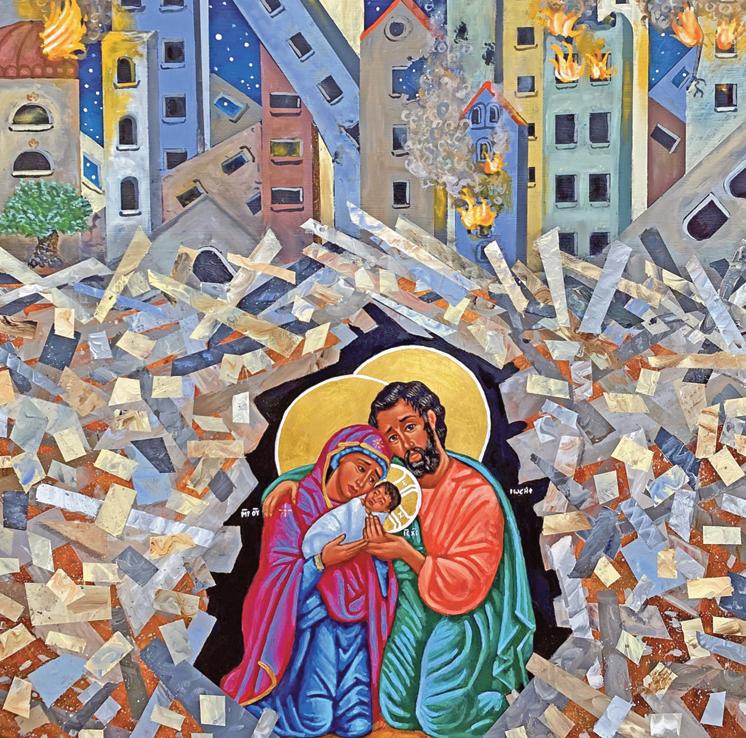

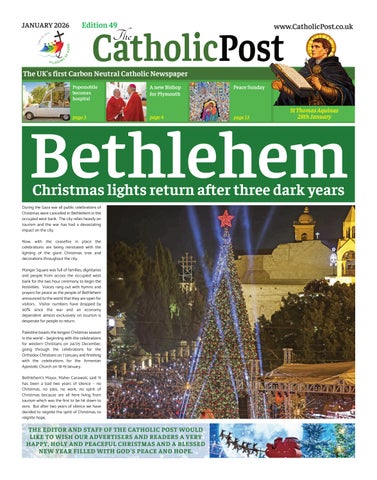
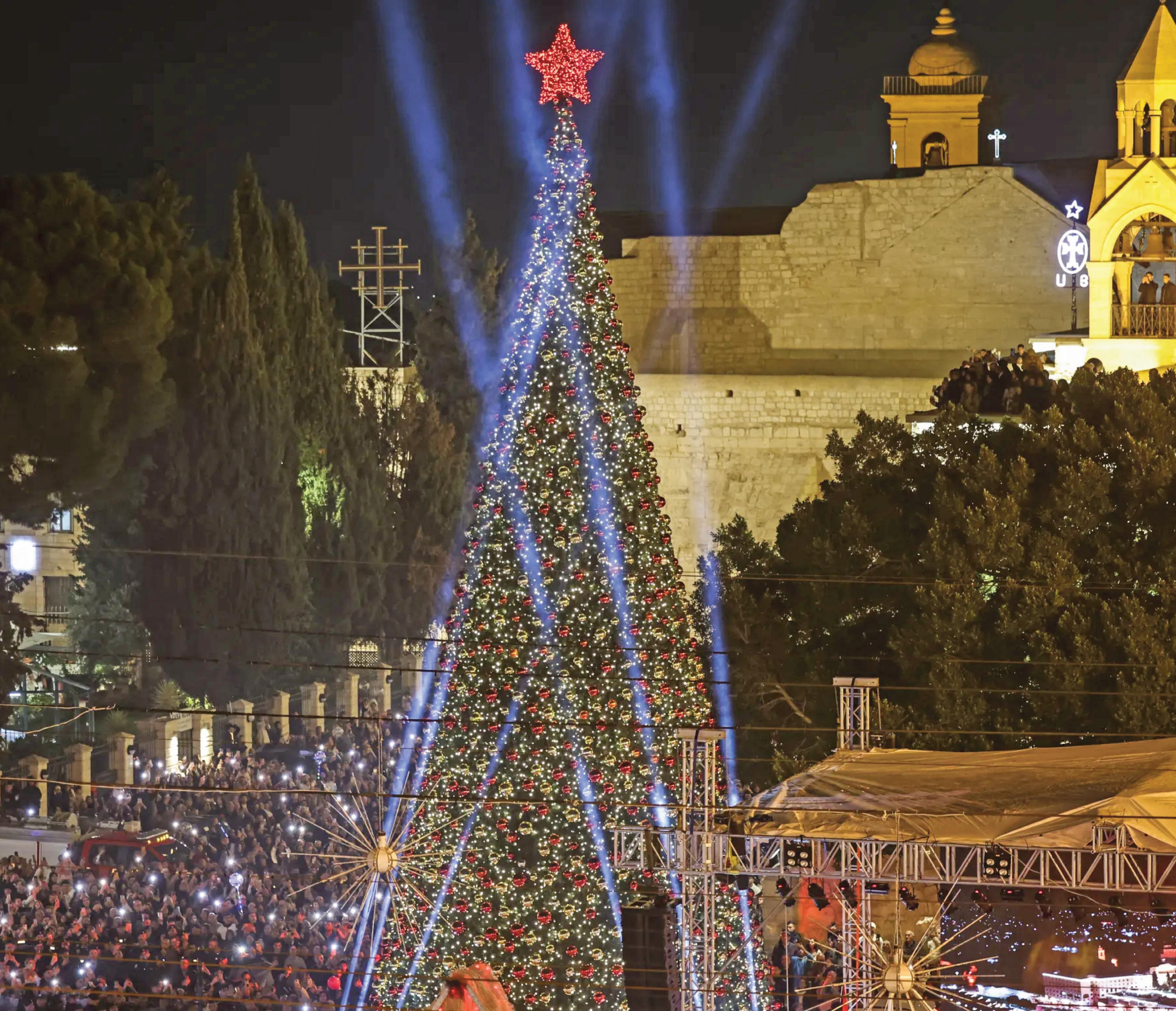
During the Gaza war all public celebrations of Christmas were cancelled in Bethlehem in the occupied west bank. The city relies heavily on tourism and the war has had a devastating impact on the city.
Now, with the ceasefire in place the celebrations are being reinstated with the lighting of the giant Christmas tree and decorations throughout the city.
Manger Square was full of families, dignitaries and people from across the occupied west bank for the two hour ceremony to begin the festivities. Voices rang out with hymns and prayers for peace as the people of Bethlehem announced to the world that they are open for visitors. Visitor numbers have dropped by 90% since the war and an economy dependent almost exclusively on tourism is desperate for people to return.
Palestine boasts the longest Christmas season in the world – beginning with the celebrations for western Christians on 24/25 December, going through the celebrations for the Orthodox Christians on 7 January and finishing with the celebrations for the Armenian Apostolic Church on 18-19 January.
Bethlehem’s Mayor, Maher Canawati, said ‘It has been a bad two years of silence – no Christmas, no jobs, no work, no spirit of Christmas because are all here living from tourism which was the first to be hit down to zero. But after two years of silence we have decided to reignite the spirit of Christmas, to reignite hope.

COnTACT uS:
The Catholic Post is published by its owners CathCom Limited and is wholly independent of and separate from any previous newspaper.
The Catholic Post is published on the last Sunday of the month previous to publication date.
EDITOr:
Nick Layton
email: editor@catholicpost.co.uk
ADVErTISInG: Charlotte / CathCom Ltd. 01440 730399
charlotter@cathcom.org
DESIGn & LAyOuT:
David Lodge, davidl@cathcom.org
PuBLISHED By:
CathCom Ltd. N2 Blois Meadow Business Centre, Blois Road, Steeple Bumpstead, Haverhill, Suffolk CB9 7BN 01440 730399
ArTICLES TO:
The Catholic Post email: editor@catholicpost.co.uk or davidl@cathcom.org
Please send articles for publication by email, supplying any photos separate to the text We welcome contributions
Here are answers to some basic questions about writing for The Catholic Post How long should articles be?
Usually it seems to work out best if contributors simply say what they have to say and let us worry about finding a spot for it in the paper. What is the submission procedure?
Please send as a Word file attached to an e-mail. To submit articles for publication, send to editor@catholicpost.co.uk
Charts, graphs, and photos should be submitted as separate PDFs. Electronic photos should not be embedded or pasted into a Word document as this reduces their quality.
Photographs and Illustrations
Photographs and Illustrations should be supplied electronically as high resolution JPEG (*.JPG) files).
Photographs and illustrations should be sent in colour with a resolution of 300 dpi and a minimum size of 100 mm x 100 mm when printed (approx. 1200 pixels wide onscreen).
Computer print-outs are not acceptable. Screen captures are not ideal as they are usually not very high
Parental permission should be sought before submitting photographs of minors.
Source information -
DW = Diocesan Website.
ICN = Independent Catholic News
Views expressed in The Catholic Post are not necessarily those of the editor
Last date for copy is the LAST DAY of the month prior to publication.
In
rcdea.org.uk
this Faith in the Home article, Dr Antonia Braithwaite discusses
how the family Nativity scene reminds us to keep Christ at the centre of Christmas and reflect His love in our daily lives
As families decorate their homes in December, one tradition invites us to pause amid the bustle and refocus our hearts on the ‘reason for the season’: setting up the family Nativity scene. This is more than a nostalgic decoration, the nativity scene is a quiet catechist — a visual reminder that God chose to enter our ordinary world through the simplicity of a family, in the poverty of a stable. It’s good for families to have a nativity scene on display in their home.
The first Nativity scene was created 800 years ago by St. Francis of Assisi. He wanted people to grasp the wonder of the Incarnation, and so he arranged a humble manger with hay and live animals and towns people to play the roles of Mary, Joseph and the shepherds.
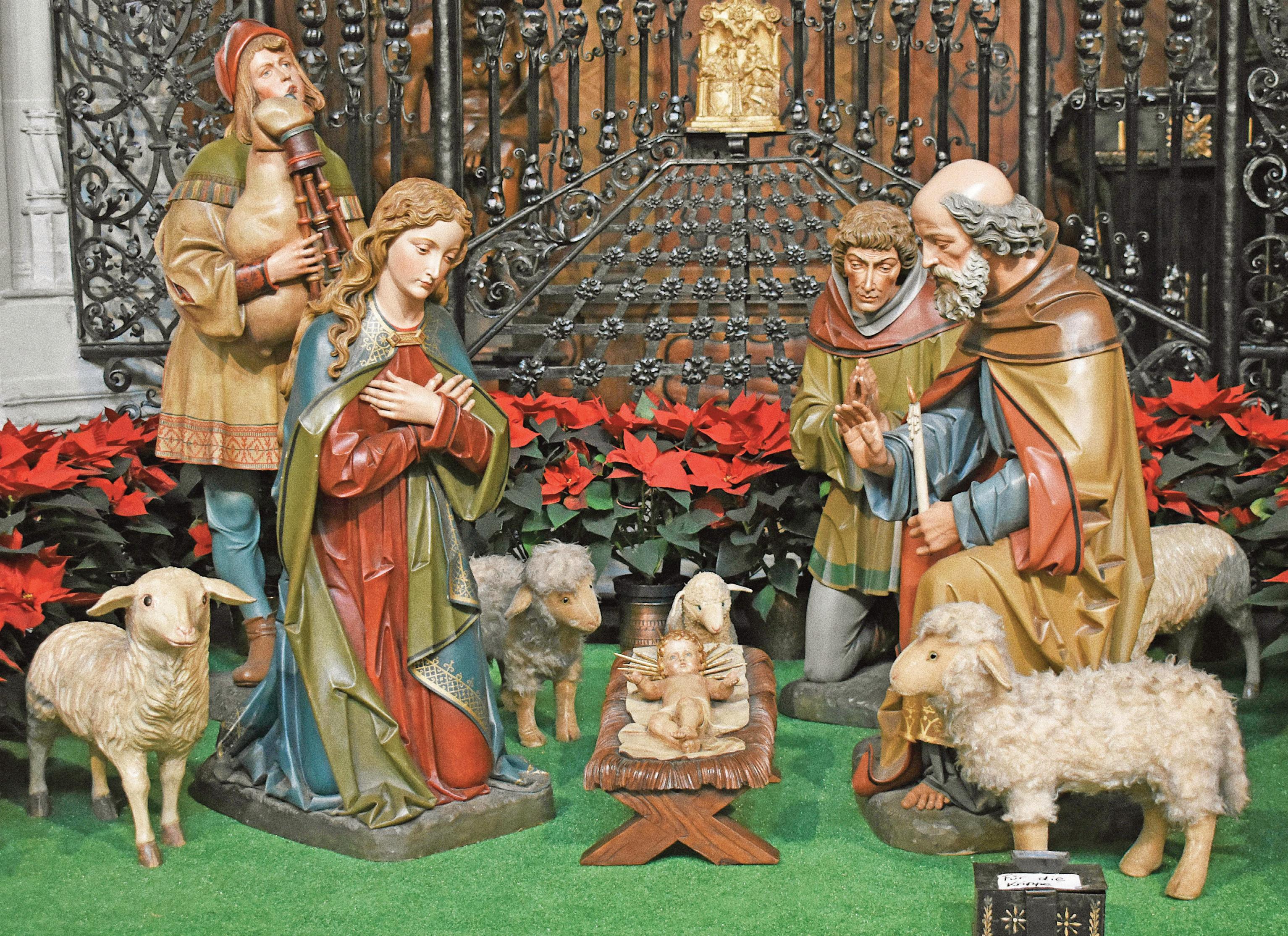
For parents today, the Nativity scene offers a beautiful way to keep Christ at the centre of the season. While children naturally look forward to Father Christmas and the joy of giving and receiving gifts, a family Nativity scene helps ensure that the story of Christ’s birth remains at the heart of the celebration in their home.
Throughout Advent the nativity scene should have an empty manger, and then on Christmas morning the little figure of baby Jesus is placed in the manger. He is born! Some families have
the tradition of gathering round the Nativity scene first thing on Christmas morning, or after Midnight Mass, and placing baby Jesus in the manger before any presents are opened.
The Nativity also reminds parents that holiness grows in ordinary family life. The stable was not perfect or polished, but it was filled with love. When we show humility, patience, forgiveness, and joy in our homes, we reflect the same light that shone that first Christmas night.
Catholic Bishops' Conference of England and Wales
Bishop Richard Moth, Chair of the Department for Social Justice for the Catholic Bishops' Conference of England and Wales, has welcomed the government's decision to scrap the two-child cap on Universal Credit payments, announced in the recent Budget.
He said: "I warmly welcome the government's decision to scrap the policy that imposed a two-child cap on claims for Universal Credit. Since 2017, this policy has directly pushed many families into poverty and created anxiety for working families who often have no choice but to claim Universal Credit as a result of common, but unpredictable, life events, such as job loss or the onset of disability.
"Repealing this policy, although overdue, comes at a significant cost to the
government and we applaud that decision. "Large families are a blessing rather than a burden. We must consider how, in a variety of ways, we can support the flourishing of families which are necessary to secure the future of our society.
"There is still much work to be done to address the scourge of child poverty. Over 90 per cent of our schools have reported encountering families that are struggling with the cost of living, and 70 per cent have noted worsening conditions. Our ongoing response to child poverty should be urgent and multifaceted, considering a range of solutions.
"Finally, I would like to thank the individuals, Catholic charities and organisations that campaigned tirelessly to oppose the two-child cap policy on Universal Credit."

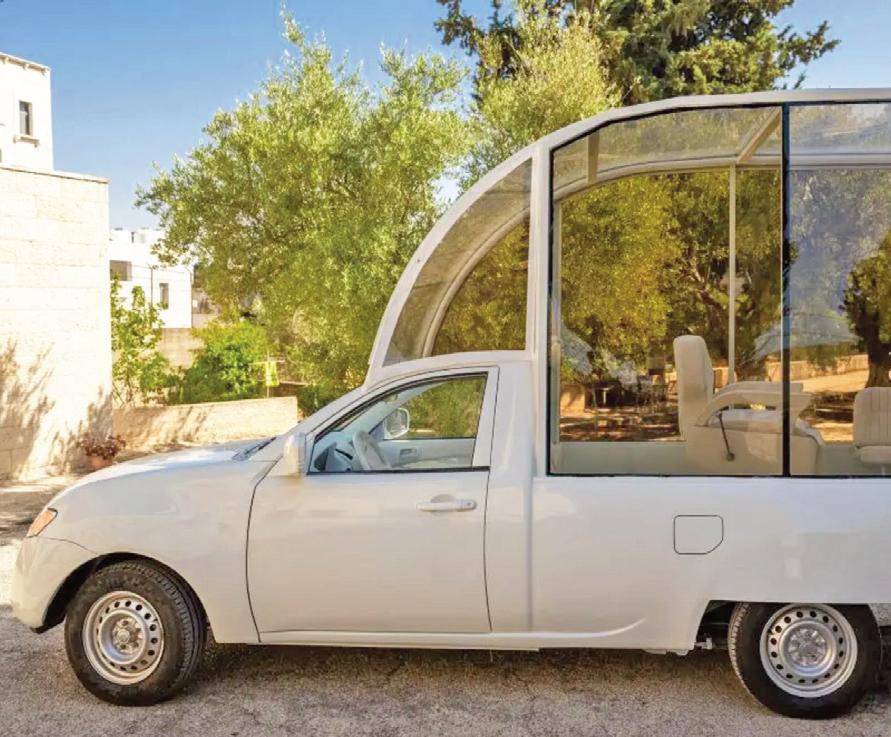
Caritas have unveiled ‘Vehicle of Hope,' the former Popemobile transformed into a mobile pediatric clinic designed to reach Gaza's most vulnerable children, those living in areas where healthcare has broken down or become impossible to access
“It is my hope that this vehicle will continue to bring healing and compassion to children in conflict zones, particularly in Gaza. Its new mission reflects the love and solidarity embodied in Pope Francis' legacy. I extend my Apostolic Blessing to all members, collaborators and friends of the initiative, as a pledge of joy and peace in the Lord." Pope Leo XIV writes this in a letter welcoming the initiative.
The launch of the Vehicle of Hope comes at a moment of extreme humanitarian crisis. UN agencies estimate that more than 20,000 children have been killed since the escalation of the conflict, while tens of thousands more suffer from injuries, preventable diseases, malnutrition and severe psychological trauma.
Originally built by Mitsubishi, the vehicle has undergone a complete structural and medical refit.
The chassis has been reinforced to handle damaged roads, while upgraded suspension and high-resistance tires allow medical teams to reach areas inaccessible to standard ambulances.
Inside, the clinic provides a medical workspace, including a triage and examination area equipped for trauma stabilisation, postamputation care and emergency pediatric
treatment. Refrigeration units, compliant with WHO's vaccine-storage standards, allow safe transport of insulin, vaccines and paediatric antibiotics. The vehicle's independent power system, supported by a backup battery bank, enables 6-8 hours of off-grid operation.
The vehicle once carried Pope Francis during his visit to Bethlehem. In early 2025, he personally approved its conversion into a humanitarian instrument, writing to Cardinal Anders Arborelius of Stockholm to authorize the project. Guided by that decision, the Vehicle of Hope has been rebuilt as a paediatric mobile clinic delivering lifesaving care to children displaced and injured by the war.
With hospitals in ruins and access gravely limited, the vehicle provides not only medical treatment but a vital symbol of hope.
“I am deeply grateful for the encounters with people of goodwill here in the Holy Land," said Cardinal Anders Arborelius, Bishop of Stockholm and one of the initiators of the project. “In times like these, signs of hope are urgently needed. I am convinced that this converted Popemobile can truly serve its purpose, namely a practical tool for humanitarian workers, and a genuine vehicle of hope for those who need it most."
It was Christmas Eve and a mother was caring for a sick child, unable to go to Mass with the rest of the family. As the evening drew on, the child settled and slept in the peace of the house. In the tradition of Christmas Eve, the mother placed the ‘Wayfaring Lantern’ outside the front door and awaited the family’s return.
(The Wayfaring Lantern is a sign to the Holy Family that, should they pass, they are welcome within the home. This beautiful tradition is one to take seriously and is especially to be recalled when visitors needing a kind word or just encouragement, arrive at our door unexpected during the coming year. Just maybe they were sent along by Christ himself, knowing of the welcome and light offered.)
Rebuilt in collaboration with engineers and pediatric medical specialists, the Vehicle of Hope is designed to operate where roads are damaged, access is limited and health infrastructure no longer functions.
“This is not just a medical intervention, it is our moral responsibility in the face of an unfolding catastrophe," said Anton Asfar, Secretary General of Caritas Jerusalem and head of the project.
“Caritas Jerusalem has worked in Gaza for decades. The Vehicle of Hope is another step in easing the suffering of the most vulnerable, especially children. It will play a vital role in delivering qualified medical care, while also standing as a symbol of hope."
More than 130 Caritas staff members continue to work inside Gaza, where the organization operates five medical points and several mobile units that provide primary care, trauma treatment and psychosocial support.
To strengthen this ongoing response, the Vehicle of Hope will operate in partnership with the Gaza Mobile Health Initiative, working alongside a coordinated network of more than ten mobile clinics.
By combining their reach and resources, these teams create a lifeline for communities left without functioning health facilities, ensuring that displaced children and families can still be reached with essential care.
“We cannot wait for perfect conditions. Children cannot wait. This vehicle allows us to serve them where they are, not where it is convenient," Asfar added.
The child was sick over Christmas day too and the mother did not get to mass as a result. Boxing day passed. The day after, the phone rang. It was the local priest whom, as only recently arrived in the parish, the family had not yet got to know, other than in attending mass. He said “I missed you at Mass over Christmas, I am bringing you holy communion. I would have come out yesterday, but I thought I would let you rest the day after Christmas.” Greatly surprised, the mother thanked the priest and prepared for his visit.
It was not until the priest opened the pyx on the clean cloth on the table, that the mother gasped, remembering her prayer as she had placed the lantern on the doorstep: “Lord Jesus, you are welcome in this house”. There was Jesus, in the host, on the family’s table.
Prayer is answered in many and often in unexpected ways... but it is always heard.
www.crownofthorns.org.uk email: office@crownofthorns.org.uk
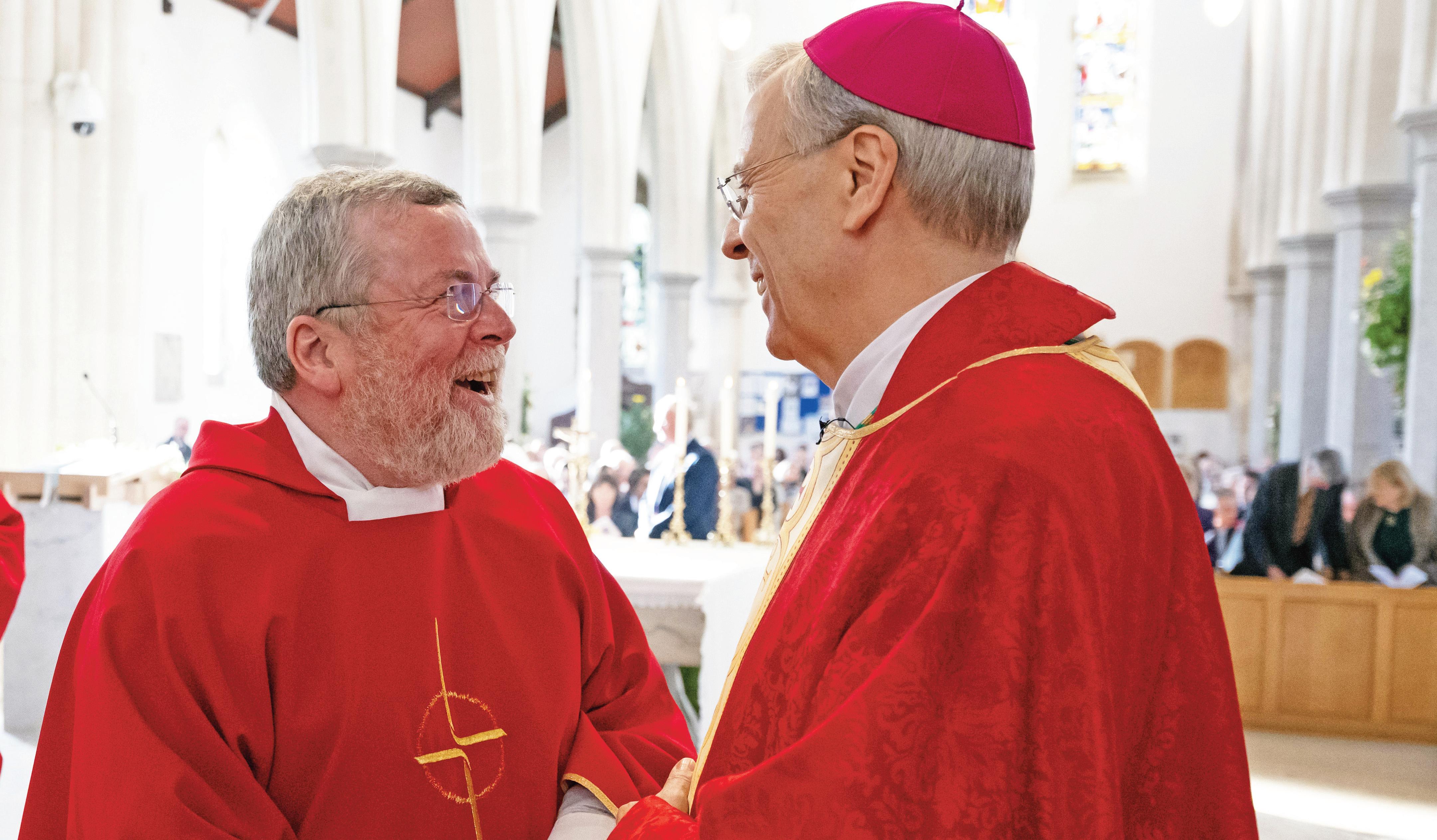
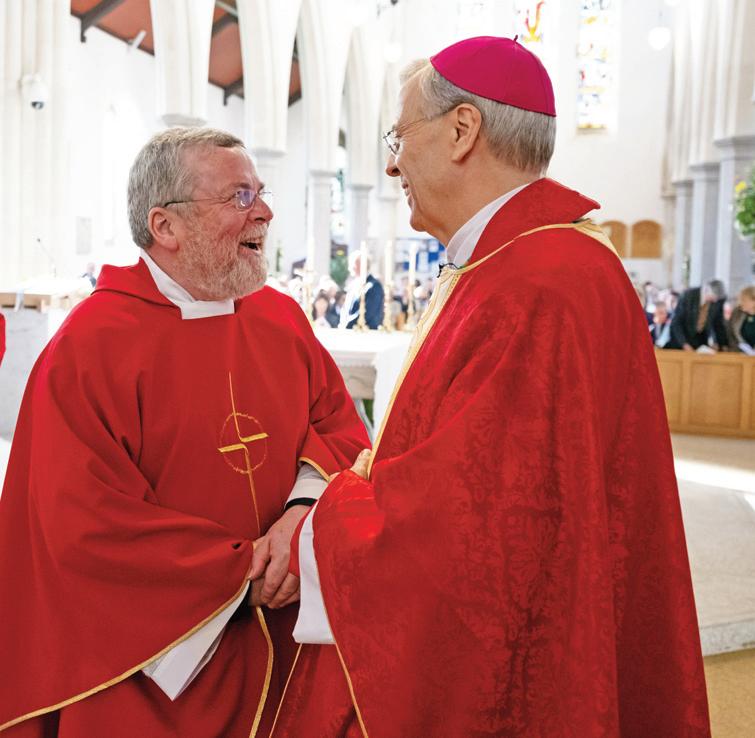
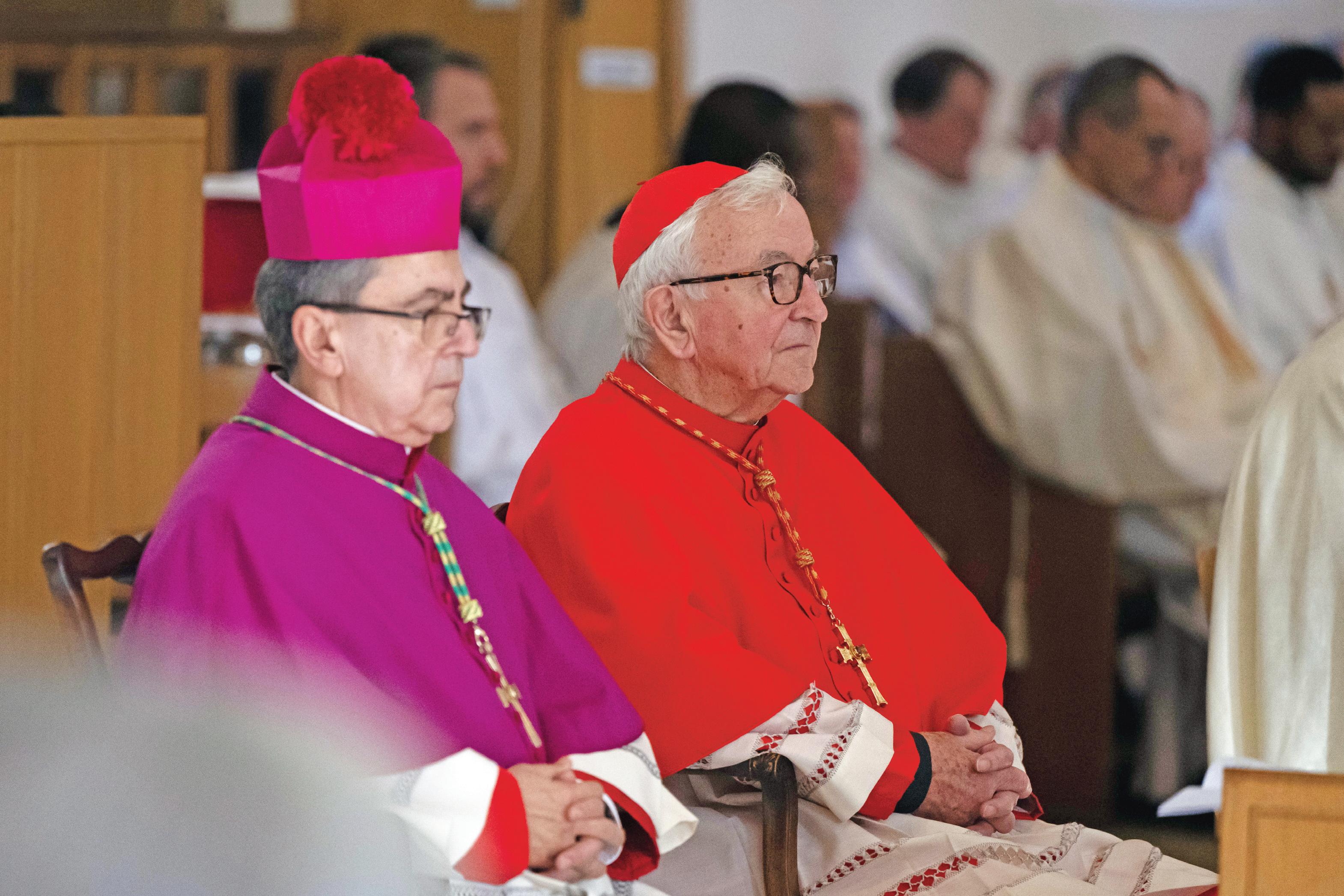
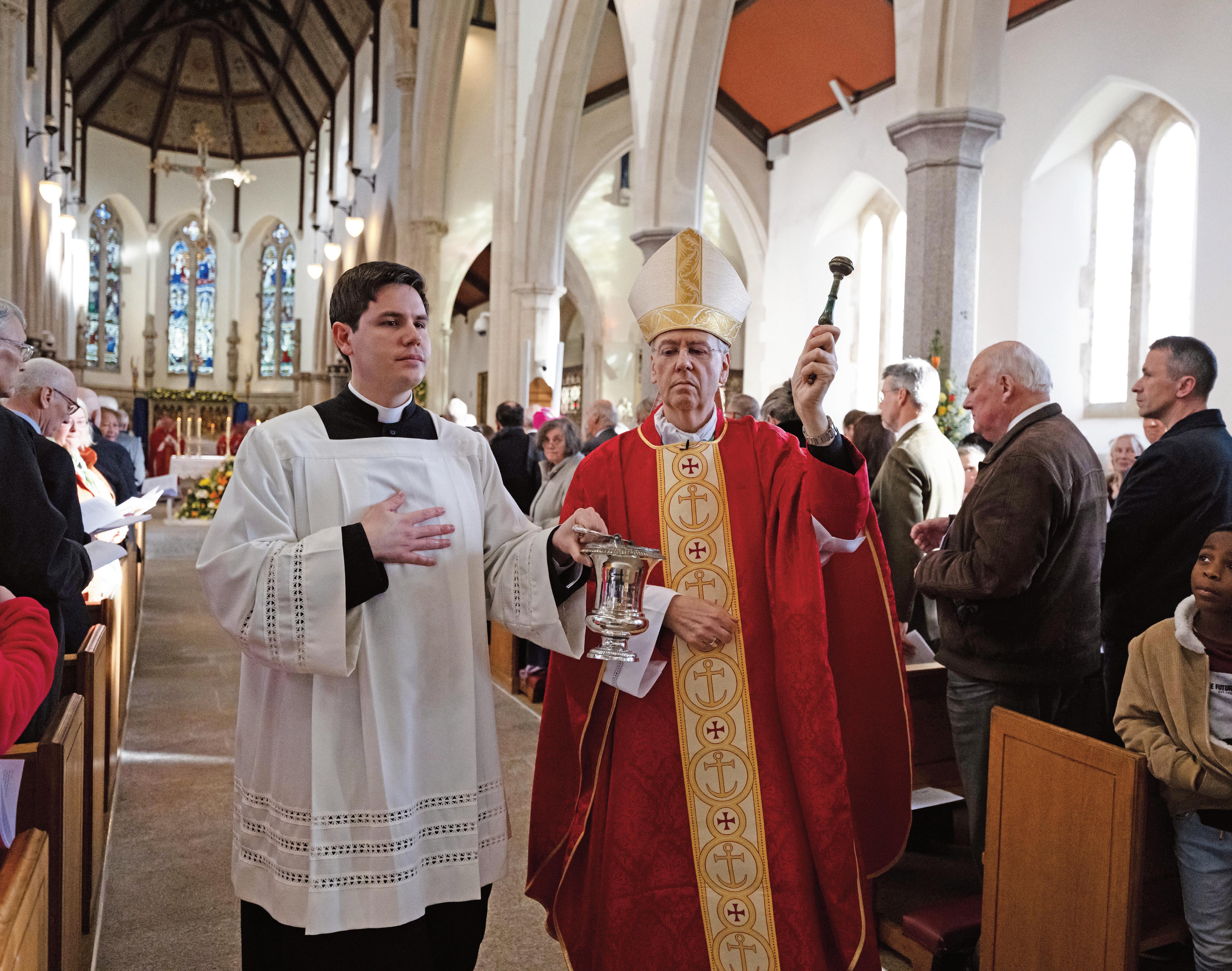
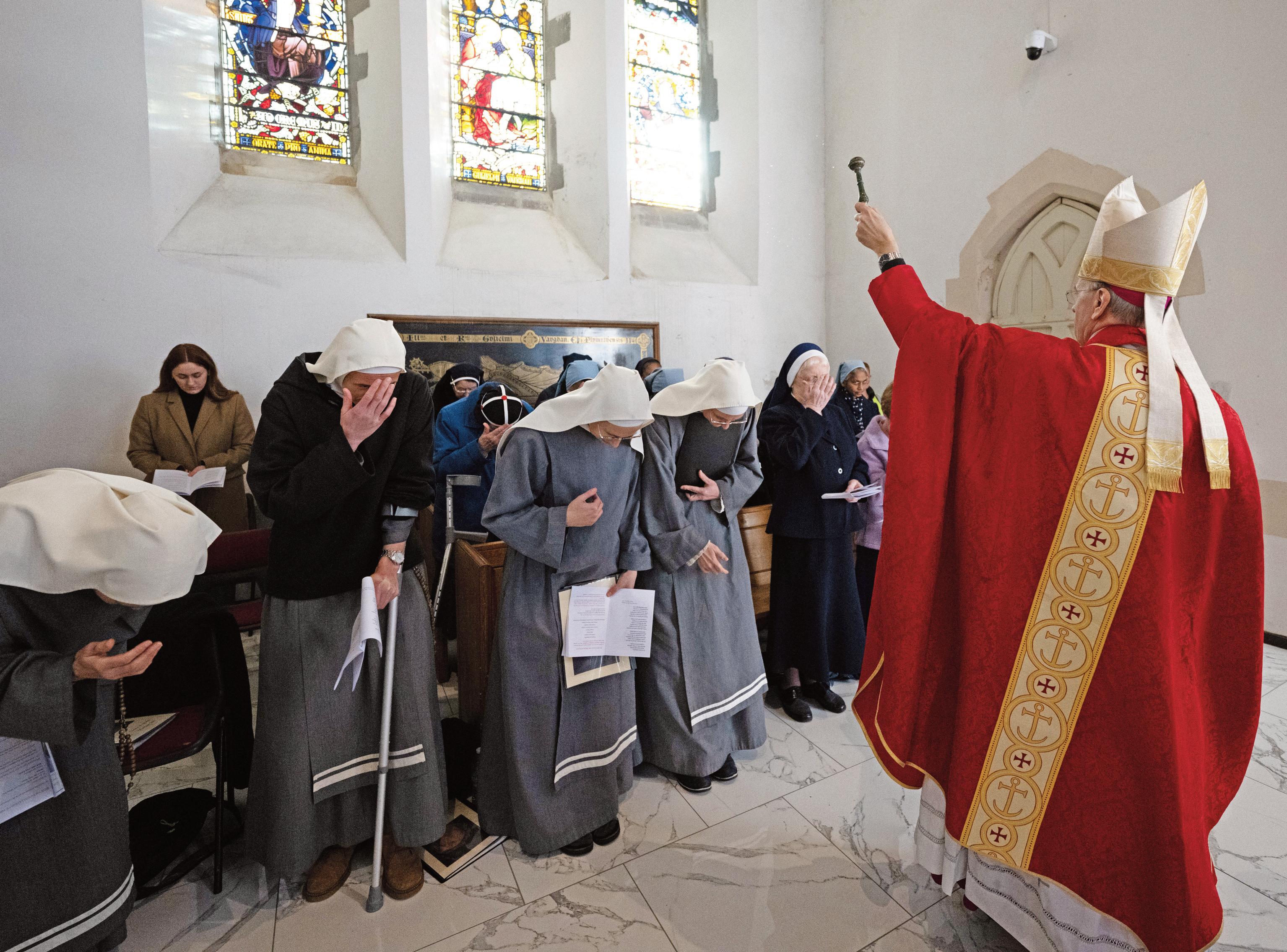
Senior Catholic clergy, including His Excellency Archbishop Miguel Maury Buendía, Apostolic Nuncio to Great Britain, Cardinal Vincent Nichols, the Most Reverend John Wilson, Metropolitan Archbishop of Southwark and archbishops and bishops from England and Wales attended the Installation Mass.
The Bull of Appointment from Pope Leo XIV highlighted the Church's confidence in Bishop Nicholas's appointment: “We thought of you, having carefully considered your pastoral achievements in the duties you have undertaken in the Archdiocese of Westminster, together with your spiritual and human gifts and your expertise in administration, which make you suitable for advancement to this greater office."
Parishioners from across Cornwall, Devon and Dorset, priests and deacons of the Diocese of
Plymouth, priests from other dioceses and religious orders, Abbots, Bishops of England and Wales, the Anglican Bishop of Exeter and the Anglican Bishop of Plymouth, ecumenical representatives from other Christian denominations, interfaith leaders, civic dignitaries including the Vice Lord Lieutenant of Devon, and the Vice Lord Lieutenant of Cornwall, the Chief Superintendent of Devon & Cornwall Police, the Group Commander of Devon & Somerset Fire & Rescue, the Lord Mayor of Plymouth and the Lord Mayor of Exeter, diocesan trustees, school leaders from Catholic education institutions and charity representatives all attended the Mass of Installation.
In his Installation homily, Bishop Nicholas reflected on the martyrdom of St Cuthbert Mayne, who ascended the scaffold in Launceston 448 years ago (or, according to
some sources, the following day). He described how St Cuthbert Mayne had been found in possession of two forbidden objects: a papal bull like the one brought to us this day by the Apostolic Nuncio; the other, an Agnus Dei - the Agnus Dei being a wax image of the Lamb of God which Fr Cuthbert bore around his neck.
Bishop Nicholas said that St Cuthbert Mayne was the first martyr to have been trained in Douai, across the water in France, and that he
had chosen to return from Douai to keep alive the faith of Catholics in Cornwall.
The bishop spoke of how St Cuthbert Mayne had heard the Lord's call to feed the lambs, to feed the sheep, to look after the sheep; and come. Passing, by day, as a steward, by night Fr Cuthbert would don the vestments of a priest to feed the flock with the sacraments.
Continued on page 5
Bishop Nicholas explained that this would have been impossible without the courageous help of nobleman Francis Tregian, who allowed Fr Cuthbert to work out of his house at Probus in Cornwall; and to travel across his estates. Tregian paid the price of life imprisonment and the seizure of all his estates; Fr Cuthbert the price of death by hanging, drawing and quartering.
Bishop Nicholas emphasised that lay and ordained, they knew themselves to share responsibility - with others - for the mission here in England's South-West. He highlighted the key partnerships - the partnership of lay and ordained for mission which Pope St John Paul II coined as 'co-responsibility' in his reflection following the Synod on the Laity in 1988. The bishop shared that Mission, the Mission, is the word all those Colleges abroad used - and still use to this day - to describe the call to build up and nurture the Church at home, adding that it's a mission more urgent today than ever, especially as the Church prepares to celebrate in eight years' time, the Great Jubilee of 2033, the 2000 Anniversary of the Passion, Death and Resurrection of Our Lord Jesus Christ.
Bishop Nicholas spoke of encouraging shoots of recovery, referencing The Quiet Revival, a recent academic study which identified an upsurge in the number of people - especially young men - coming to church in this country. He said this rings true with what's being reported from many parishes across the land. However, he identified a twofold challenge: we need in our communities to help these new and returning Catholics really to find their place in their Church; and to draw many more people - both young and old - to Christ and the life of the sacraments.
Speaking of the more recent Synods, which took place in Rome in 2023 and 2024, Bishop Nicholas explained that they identified this responsibility as a 'co-responsibility' - taking up and developing the term coined by Pope John Paul II. These Synods were clear that helping individuals find their place in the Church is something for which clergy and laity alike bear a shared responsibility. He emphasised that the key to knowing how we do it, how we organise ourselves to welcome, according to the latest Synod, is to deepen our listening. The bishop said: "that we need to deepen the quality of our listening to the Spirit, to one another, and to our context; our listening to every generation in the Church - but with a special attentiveness to the young, to the poor, to the marginalised, to those who stand on the outside looking in."
Bishop Nicholas also spoke of evangelisation, a priority for Pope Leo and noting that Popes from St John Paul II to Benedict XVI to Francis have all been clear that evangelisation - the sharing of our faith - needs to be allembracing; that it's aimed at three distinct categories - at those who belong to Christ and His Church, at those who no longer belong, as well as at those who never belonged. He said: "To us who belong to Christ and his Church the onus is to find ways of telling others who is this Jesus whom we love and worship." He added that this is about communicating our relationship with Christ, in word and deed and
in such a way that causes people to ask, "Who is this Jesus whom you love and worship?"
In his post-communion address, Bishop Nicholas expressed gratitude to everyone who had a part in preparing the wonderful celebration. He wished to thank in particular the Dean, Canon Mark O'Keeffe, for the way he coordinated all the arrangements and to all who worked with him to provide such a special celebration.
Bishop Nicholas said that "the person for whom loudest thanks are surely due this day must be our outgoing Diocesan Administrator, Canon Paul Cummins." He added: "Paul, it's clear to me that the Diocese shall be in your eternal debt for the selfless way in which you've led the whole Diocesan community these last three and a half years. These last few weeks, I've experienced myself the quality of your leadership as you've done everything you possibly could to induct me. Paul, it's clear, from all the reports I hear of your leadership, that what you have achieved has been simply outstanding. And I want you to know we salute you and we congratulate you."
Bishop Nicholas also said: "I'd like, in the same breath, to thank all those who've come alongside Paul so willingly to support him - the Curial Team for Mission, all who exercise particular responsibilities in the Diocese; and, in a special way, the Clergy. Dear Fathers, dear Deacons, I look forward to meeting you all in your Deaneries and then individually as soon as I able. I look forward to hearing what's been your experience of these last several years; and what it tells us about the ways in which we might develop as a community of faith."
Bishop Nicholas spoke of his desire to visit the parishes and schools and other institutions across the three counties, quoting Pope Francis's description of the bishop: "The bishop ... will sometimes go before his people," he suggests, "pointing the way and keeping their hope vibrant. At other times, he will simply be in their midst with his unassuming and merciful presence. At yet other times, he will have to walk after them, helping those who lag behind and - above all - allowing the flock to strike out on new paths." He said "I look forward to being with you in all three placesbut to beginning in your midst and hearing your aspirations for the Diocese. And I look forward to meeting as many of you as possible after this Mass and in the weeks and months to come."
As the new Bishop
lead a diocese
serves
Catholic population of approximately 11,293 across 57 parishes and 37 schools throughout the three counties.
He has chosen "In Te Domine Speramus - In you, O Lord, we hope" from Psalm 31 as his motto.
To view more images Bishop Hudson’s Installation scan the QR code right.

dioceseofbrentwood.net
Newham Deanery in the Diocese of Brentwood have revitalised youth provision by blending personal, academic and spiritual development
A woman of extraordinary dynamism, Olivea Ohonmele has transformed provision for young Catholics in Newham Deanery since she was appointed as Newham Deanery & Partnerships Youth Coordinator in 2024. An experienced English teacher as well as a catechist at St Antony’s, she was keen to ensure that young people had programmes and projects that would engage them in a Catholic way. “I realised that while a Catholic journey starts with baptism and parents often keep children focused until First Communion or Confirmation, those children often disappear from view after the first or second of those sacraments. You only get a few who are committed. So I wondered how to sew that Catholic ethos into their everyday lives, to make a bond that would keep them constantly in touch with the Church all the way through their young lives.”
She has certainly been successful – one of the biggest delegations at Flame this year came from the Newham Deanery and young people have engaged across a plethora of activities and initiatives. So how has it happened? Says Fr Daniel Kelly, parish priest at St Anne’s and chaplain to the existing Deanery Youth Council: “We had lots of very good people with fantastic ideas but not enough time to turn them into reality. So we decided to recruit a Youth Coordinator at the beginning of 2024, funded through grants from the Diocese, the Sisters of the Holy Cross and donations from the parishes and secondary schools in the Deanery.”
Olivea began with a tuition centre, blending academic tutoring with spiritual mentorship, which she took across the nine churches in the Deanery and also developed general offerings such as a bible study group, lector training and an art appreciation programme. A high-profile journalism scheme has been hugely influential, allowing young people to showcase events and successes across the deanery, encouraging others to become involved. Says Olivea: “One of the biggest things was to get young people to stay and sustain. We needed to provide programmes that maintained connection with young people during the times that they are not involved in sacramental milestones – and make connections between groups.”
She began by focusing on what young people actually need – and what parents would be happy with. “Both said support with learning. With tuition running at £35 an hour or more, anything free was going to be popular. I know
a lot of teachers who charge and I asked them if they could donate a voluntary hour to the deanery.”
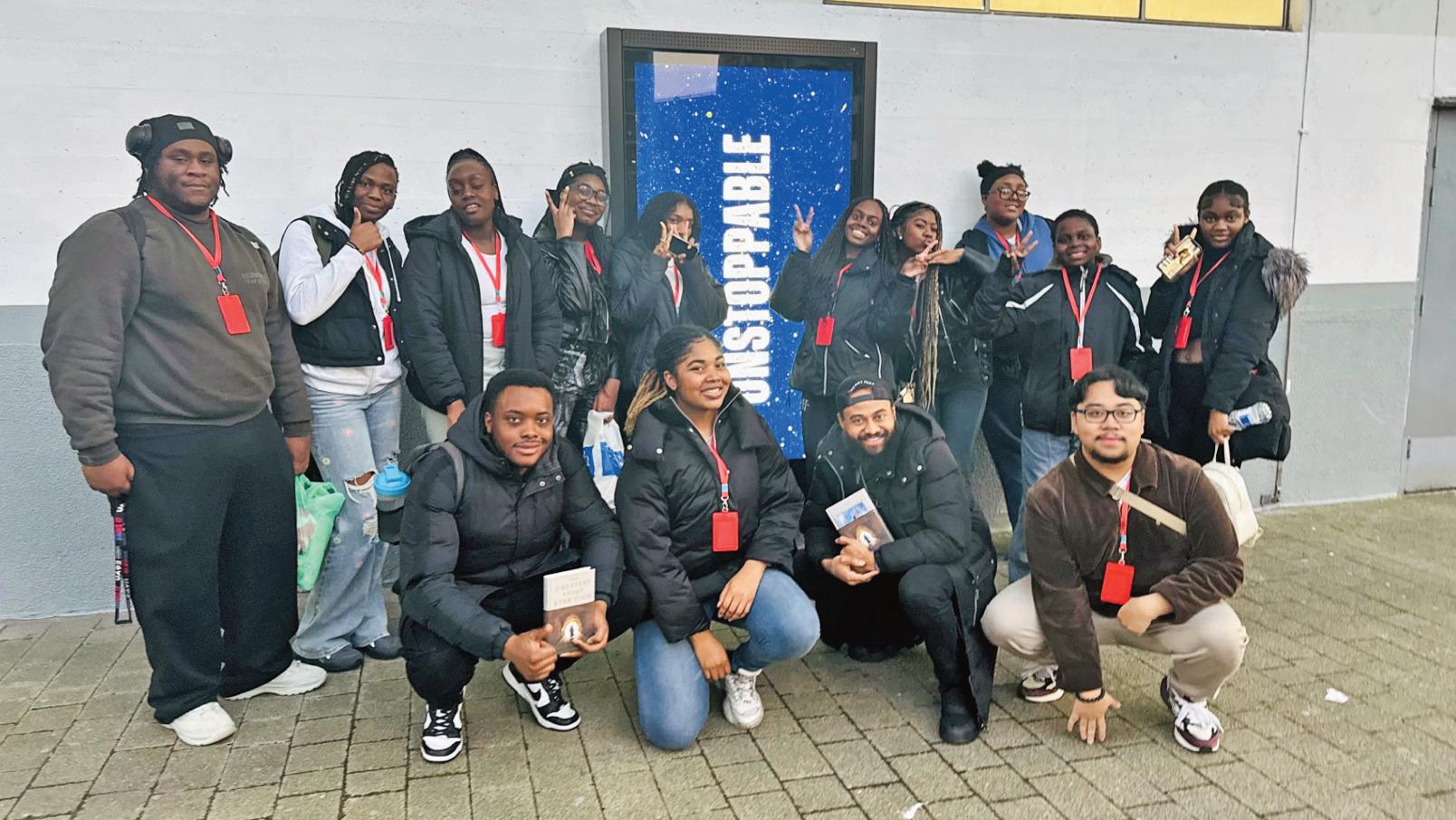
Another attraction which pulled people in was her scheme to take kids to Oxford University on visits, something that she had initiated while teaching. “I tied that to the free tuition centre at St Anne’s and St Antony’s. And people came.”
She also uses the Lector programme, which encourages a rota of young people to read at Mass in the Deanery, as a learning opportunity, encouraging parents to see it as part of the national curriculum. “It is about speaking and listening, projecting your voice, making eye contact etc. But I also realised that many of the young people did not really understand what they were reading.” She creates SATs-style Maths and English worksheets based on the readings for each Sunday to help.
And it has proved popular, particularly with parents. “We had 10 young readers initially, then 20, then 52 youngsters at the weekly sessions.” She recruits older teenagers who have finished their exams to help in supporting a young person. “Such voluntary work looks good on your CV,” she says.
The journalism programme grew out of the tuition work because she had become aware that a lot of kids at GCSE struggle with articles. It evolved into a way that she could evidence what she was doing with young people. “I asked some of the high-ability students if they would be interested in learning how to write and it built from there.” She made them into a youth-led editorial team, designing a logo, headed paper and an organisation chart. “It was like a company with the young people making the decisions.” Setting up a Deanery newspaper enabled them to gain real-life experience, going out to showcase what was going on in Catholic schools and parishes. “We started with interviews with unsung heroes
and student successes, and now have a conveyor belt of things to cover – parishes invite us to cover their events.” Olivea says: “The programme embeds Catholic values through its service-oriented mission. By documenting parish activities and social outreach projects, young journalists deepen their understanding of Catholic social teaching. They amplify community stories through a faith-based lens.” She says the programme not only prepares young Catholics for potential careers in media but also deepens their faith and commitment to living out Gospel values in their daily lives and future professions.
The news articles go to the nine parishes in the deanery. Printing costs have meant that they are no longer hard copies but are distributed using a deanery app, Linktree and an article drive.
In all her 15 initiatives, Olivea has utilised the skills and support of a network of contacts, former colleagues, parish volunteers, old students and the young people themselves, many of whom have learnt how to support others. “Official church photographers have agreed to mentor the young journalists tasked with photography, for example, while a past student currently doing a Masters in Cyber Security has come back to do talks on digital defence – which were very well-received. Student Josef Tan leads the journalists programme and Minerva, an A-level student, leads a popular Christian art appreciation and analysis programme.” She adds: “I have a tier of young people as volunteers so that, while I am always in the background, every project is youth-led. The choir was set up by a young person and our mini-Flame project, Ignite, was organised and run by young people.” The tuition programme, meanwhile, has 193 on its books, both using the service and delivering it as well. And it is not just about supplementing what they are learning in school. The experience gained by the young volunteers is
valuable for personal statements and CVs, she adds.
The NDPYC has also launched a campaign to tackle educational poverty which emphasises the importance of community involvement. Says Olivea: “Overcoming educational poverty is not a task for schools alone. It requires the collective efforts of families, policymakers, businesses, and local organisations to create a supportive network around every child.”
Currently half way through her three-year contract, Olivea absolutely loves the work. “It is a job that I was meant to do,” she says. “What I enjoy most is the vision and the creating of it – and then seeing it come to fruition. The Lector project, for example, has become a student-led tutoring programme.” Importantly, Olivea says, the young people feel more connected with their faith – and even see church as cool. “When the priest came out at the Ignite concert, the young people stopped singing and dancing, knelt and made the sign of the cross before the period of adoration. And almost everyone attended Flame – it wasn’t just a youth community connection but a Catholic one. It is a recipe for success.”
She is keen to share the initiatives and resources that have proved so successful with other deaneries and parish partnerships – and feels that the journalists programme could be very useful for schools across the Diocese.
And Fr Daniel? Like Pope Francis, he believes that young people are not only the future of the church but the present. “Without young congregants, the Church cannot sustain itself. Olivea is playing a vital role in engaging the youth, bringing them into the fold and ensuring their participation. Using her expertise and connections she has truly created a community programme ‘with the youth, for the youth’.”
Mary Huntington
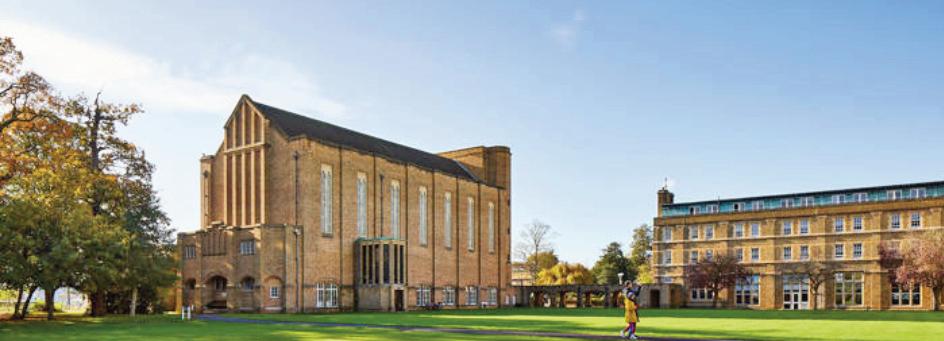
New research from the Benedict XVI Centre for Religious, Ethics and Society at St Mary's University, London, has provided a comprehensive account of Anglican clergy who have entered into full communion withor "converted" into - the Catholic Church in Britain. More than 700 former Anglican clergy and religious in Britain have become Catholics since 1992, including 16 former Anglican bishops.
Former Anglican clergy make up a third of new Roman Catholic priests in Britain. The St Barnabas Society report studies the period from 1992, when the General Synod voted in favour of the ordination of women to the priesthood, to 2024.
The report summarises the findings of a research project commissioned in 2019 by the St Barnabas Society, a charity that continues the work of the Converts Aid Society, established in 1896. It was produced in partnership with researchers at the Benedict XVI Centre for Religion, Ethics and Society, whose UK base is at St Mary's University, Twickenham. Published on 20 November, it recognises the "substantial ongoing contribution to Catholic life made by convert clergy/religious in this country."
The new research, which features a foreword from St Mary's Chancellor HE Cardinal Vincent Nichols, is titled 'Convert Clergy in the Catholic Church in Britain: The Role of the St Barnabas Society', was produced by Prof Stephen Bullivant, Fernanda Mee, and Janet Mellor.
Funded by the St Barnabas Society, the project explores the personal, pastoral and institutional experiences of these ex-Anglican clergy. It also explores the broader historical and sociological context over the past three decades.
Conducted over several years, the project brought together qualitative data, including interviews with 36 participants, which included bishops, clergy, religious and spouses. It also draws on published accounts, archival records and statical information to present a fuller picture of this less explored aspect of contemporary Church life.
Prof Stephen Bullivant, Director of the Benedict XVI Centre, and Professor of Theology and the Sociology of Religion at St Mary's University, said: "This research offers new insights into an important yet understudied area of Christian life in Britain. It highlights both the personal stories and the wider dynamics shaping clergy transitions between communities."
The report includes the role of the St Barnabas Society, which has supported clergy and religious making such transitions for more than a century, and provides a valuable resource for scholars of religion, Church history, and contemporary faith communities.
To read the full report scan the QR code.

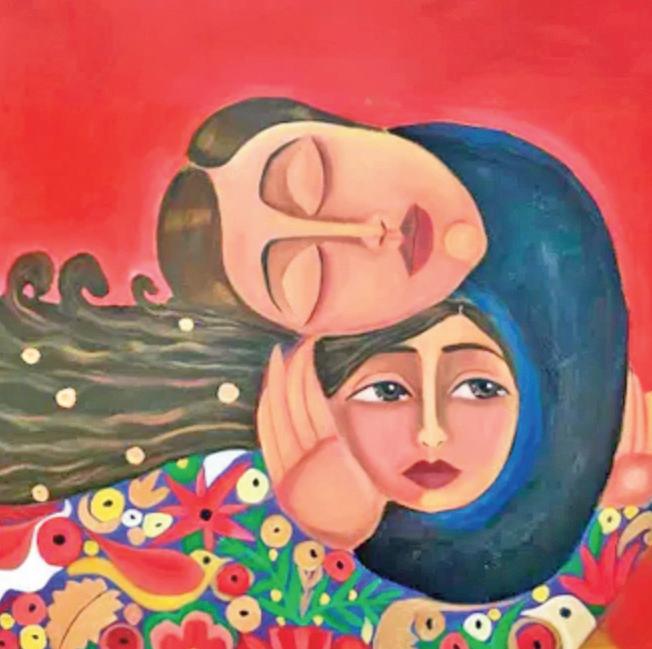
The team behind Together For Palestine, the sell-out September 2025 Wembley concert that raised more than £2 million for Gaza, has announced the release of their charity single Lullaby. Released on 12 December, the day the UK's Official Christmas Number 1 race kicks off, supporters can pre-order the song now.
Lullaby is a powerful new rendition of the traditional Palestinian folk song Yamma Mweel El Hawa (O song of longing, mother). It will raise urgent, life-saving funds for the people of Gaza. All profits from the release will go to Choose Love's Together For Palestine Fund, supporting three Palestinian-led organisations: Taawon, Palestine Children's Relief Fund and Palestine Medical Relief Service.
Lullaby sees a host of UK and Palestinian musicians: Amena, Brian Eno, Celeste, Dan Smith (Bastille), Kieran Brunt (Shards), Lana Lubany, Leigh-Anne, London Community Gospel Choir (LCGC), Mabel, Nadine Shah, Nai Barghouti, Neneh Cherry, Sura Abdo, TYSON, Yasmeen Ayyashi, and Ysee - join forces on record for the first time.
Palestinian musician Nai Barghouti said: "This lullaby from our Palestinian musical heritage has been with me since early childhood. Today, it returns at a much-needed time as a
reminder of what Palestinians will never lose: hope, defiance, beauty, and dignity."
Brian Eno added: "After a year defined by un imaginable loss, grief and injustice, we want to end with an act of love for Palestine's children. Lullaby reflects their beauty, their longing and their hope. If we rally together and download it, we have a real shot at landing Christmas No. 1 - and turning that moment into vital life-sav ing support for Gaza's families."
Mabel said: "The song holds a special place for many reasons, but mostly as it's the first time I've sung with both my mum Neneh and sister Tyson, and for it to be a traditional lullaby in tribute to the mothers and children of Gaza means the world. I hope you feel the strength in our voices."
The 2025 Official Christmas Number 1 will be announced on Friday, December 19. The full Christmas Top 40 will be counted down on BBC Radio 1's The Official Chart with Jack Saunders from 4pm GMT.
Pre-order - for only £1.75 scan the QR code right.

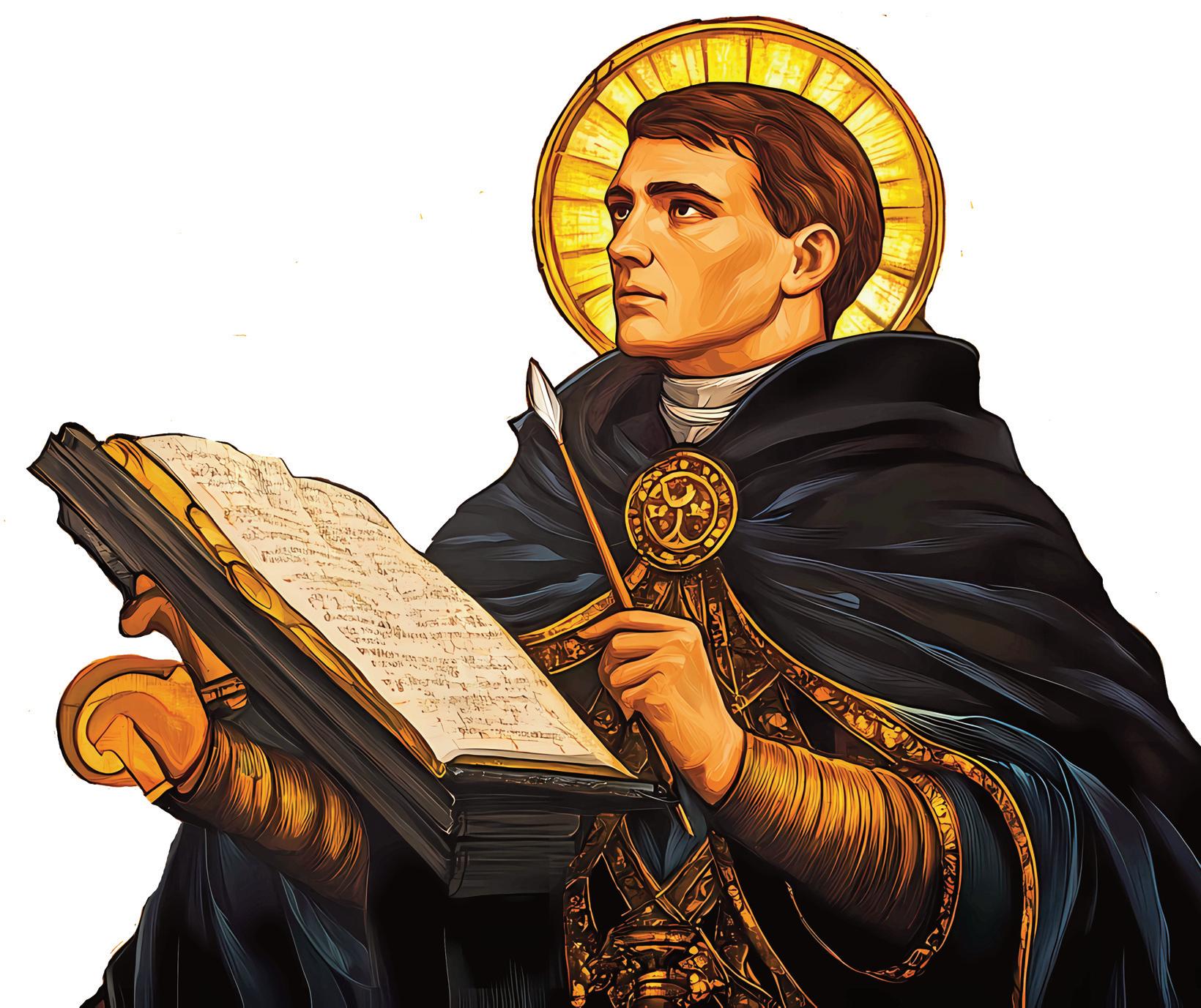
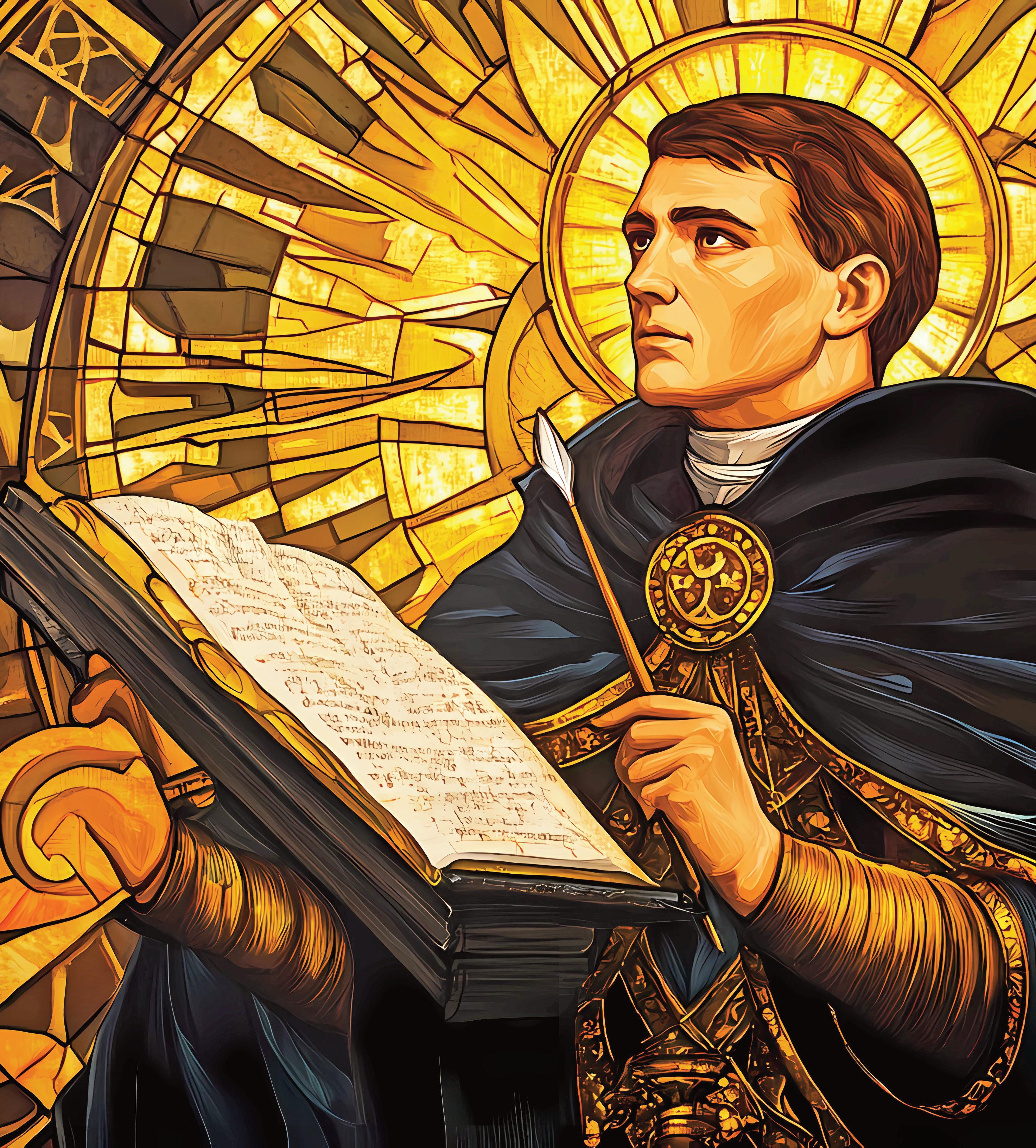
St. Thomas Aquinas stands as one of history’s most luminous thinkers—yet his greatness lies not merely in the sheer power of his intellect, but in the profound harmony he forged between faith and reason. Living in the 13th century, he entered a world full of questions about God, humanity, and the nature of the universe. Rather than shrinking from these questions, Aquinas embraced them. His life reminds us that curiosity is not a threat to faith but a pathway toward it.
Aquinas believed that truth is one—whether discovered through revelation or through thoughtful reflection on the world around us. His monumental work, Summa Theologiae, was not written to show off brilliance but to help people understand God more clearly. He explained complex ideas with clarity, always seeking to build bridges between theology and philosophy. In an age when many feared that reason could
undermine belief, he demonstrated that the pursuit of knowledge can deepen our relationship with the divine.
But Aquinas was not simply a scholar; he was a man of humility and deep prayer. Before writing, he would lay his head on the tabernacle, asking God for guidance. His wisdom flowed not just from study but from a heart deeply anchored in love. Near the end of his life, after a mystical experience, he said that all he had written felt like “straw” compared to the reality of God—a powerful reminder that even the greatest minds are small before the infinite.
St. Thomas Aquinas inspires us to seek truth boldly, to think deeply, and to love wholeheartedly. In a world often divided between intellect and faith, he stands as a shining witness that the two can live beautifully together, leading us closer to the mystery of God.
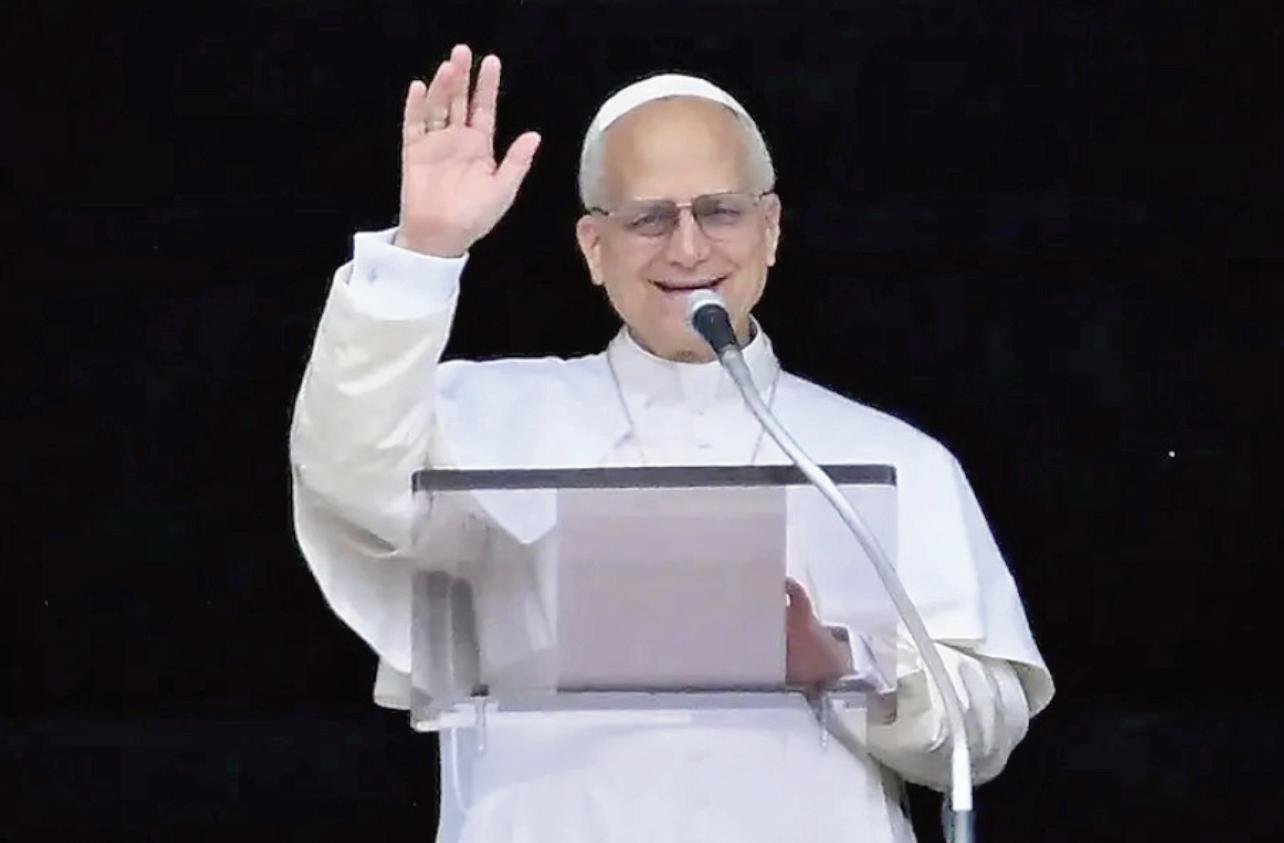
On the Solemnity of the Immaculate Conception, Pope Leo XIV prayed the Angelus with pilgrims in St Peter's Square and invited us to believe as Mary did to welcome Christ into their lives.
"The 'yes' of the Mother of the Lord is wonderful, but so also can ours be, renewed each day faithfully, with gratitude, humility and perseverance, in prayer and in concrete acts of love, from the most extraordinary gestures to the most mundane and ordinary efforts and acts of service," the Pope emphasised.
"In this way, Christ can be known, welcomed and loved everywhere, and salvation can come to everyone."
In his address, the Pope highlighted how the Lord gave the Virgin Mary "the extraordinary grace of a completely pure heart" in light of the
coming of Christ. As the Angel Gabriel greeted her by saying "Hail, full of grace: the Lord is with you," she discovered and welcomed her mission "with the wonder typical of the humble," the Pope continued.
"With faith she responded with her 'yes': 'Behold, I am the handmaid of the Lord; let it be to me according to your word'," the Pope explained, citing the Gospel of Luke, verse 38. He emphasized how this grace was able to bear fruit in Mary "because she, in her freedom, welcomed it, embracing the plan of God. The Lord always acts in this way: he gives us great gifts, but he leaves us free to accept them or not," the Pope insisted.
He cited St Augustine, who said "we also believe, because that which came to be, can also benefit us." Pope Leo encouraged the faithful to believe simply as the Blessed Virgin did and welcome whatever mission God calls one to.
The Pope also highlighted the importance of the sacrament of Baptism in allowing Jesus to enter one's life: "The miracle, which took place at Mary's conception, was renewed for us in Baptism: cleansed from original sin, we have
become children of God, his dwelling place and the temple of his Spirit."
He explained that just as Mary, "by means of a special grace," was able to welcome Christ in herself and then bring him to others, so too the sacrament of Baptism allows Jesus "to live in us and allows us to live united with him, to cooperate in the Church, each according to his or her condition, for the transformation of the world."
After greeting various groups present in St Peter's Square, the Pope reminded the faithful that this afternoon, he will pay homage to the Virgin Mary at the feet of the Spanish Steps in Rome, where there is a statue of Our Lady. Every year, on this feast day, the Pope crosses the city bringing a wreath of flowers that he lays at the base of the column on which she is placed. A team of firemen then take the wreath to the top of the 27-metre column and place it on her head.
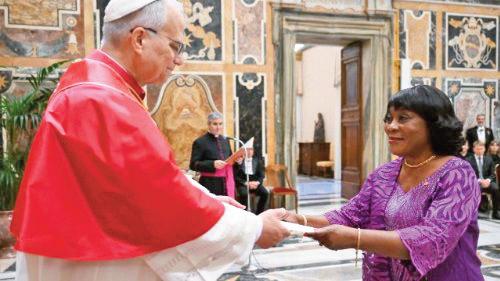
Pope Leo XIV recently received the Letters of Credence of thirteen new Ambassadors accredited to the Holy See, representing Uzbekistan, Moldova, Bahrain, Sri Lanka, Pakistan, Liberia, Thailand, Lesotho, South Africa, Fiji, Micronesia, Latvia, and Finland.
Welcoming them during the Jubilee Year of Hope, he reminded them of its theme and highlighted its call to recover "the confident trust that we require, in the Church and in society, in our interpersonal relationships, in international relations, and in our task of promoting the dignity of all persons and respect for God's gift of creation."
He linked this appeal to his first words as Bishop of Rome, when he invoked the greeting of the risen Christ, "Peace be with you," and renewed his invitation to work for what he has called an "unarmed and disarming peace."
Peace, he stressed, is "not merely the absence of conflict," but "an active and demanding gift… built in the heart and from the heart." It requires a commitment to renounce "pride and vindictiveness" and to
resist "the temptation to use words as weapons." This vision, he said, becomes more urgent "as geopolitical tension and fragmentation continue to deepen in ways that burden nations and strain the bonds of the human family."
Turning to the consequences of global instability, Pope Leo XIV noted that "the poor and the marginalised suffer most from these upheavals."
Echoing Pope Francis, he reminded the diplomats that "the measure of the greatness of a society is found in the way it treats those most in need."
He reaffirmed the concern expressed in his Apostolic Exhortation Dilexi Te, that the world must not "avert its gaze from those who are easily rendered invisible by rapid economic and technological change."
Pope Leo stated that "the Holy See will not be a silent bystander to the grave disparities, injustices and fundamental human rights violations in our global community."
The Church's diplomacy, he added, is "consistently directed toward serving the good of humanity," attentive especially to "those who are poor, in vulnerable situations or pushed to the margins of society."
The Pope urged the newly accredited Ambassadors to join the Holy See in fostering renewed multilateral cooperation "at a moment when it is sorely needed," expressing
his hope that together they might help the international community "lay the foundations for a more just, fraternal and peaceful world."
With the support of the Secretariat of State, he concluded, may your mission "open new doors of dialogue, foster unity and advance that peace for which the human family so ardently longs."

Dr Jay Kettle-Williams







A recent report has found that more than one third of clergy ordained in England and Wales over the last three decades (1992-2024) are former Anglican clergy. The report explores the staggering statistic of the journey from the Anglican priesthood to, not only the Catholic Church, but the Catholic priesthood.
That report, compiled by the St Barnabas Society, which provides support to Catholic clergy who have converted, was led by Stephen Bullivant, a professor of theology and the sociology of religion at St Mary’s University, Twickenham, in southwest London.
that ongoing debate about women’s ordination and to reaffirm the Church’s longstanding tradition, Pope John Paul II stated on the May 22 1994 in the Apostolic Letter Ordinatio Sacerdotalis to all bishops of the Catholic Church that the Catholic Church has no authority whatsoever to confer priestly ordination on women. To this day that document remains among the most cited documents about gender and ministry in the Catholic Church.




My paternal grandfather’s party trick when I was barely a toddler was to sit me on his knee, to hold my arms firmly and to give the order: ‘Hold your horses well in hand, the battery’s going to trot!’ He’d then bounce me gently up and down. The next command was to ‘Hold your horses well in hand, the battery’s going to canter!’ and the bounce and rhythm would intensify. Then, with the final command - ‘Hold your horses well in hand, the battery’s going to gallop!’ - all Hell would break loose and I’d be flying up and down giggling madly as my Grandmother looked on, feigning disapproval as she tuttered.
Well, I’ve ridden a horse, the real equine brute of a vehicle, only twice in my life: once in Spain and once in South America. On both occasions the beasts, strangely beloved of so many, bolted. The experience at my grandfather’s knee must have put me in good stead, especially when it came to the gallop: Hang on! Subsequently in life, I suppose I could have developed my horsemanship to better effect, if I had persevered.
Perseverance is a valuable quality and one I greatly admire. That’s no more so than among those who do not bear witness to their Christian faith in that mealy-mouthed way I attribute to myself but who stand up, go forth and publicly respond forcibly to the Christian challenge.

Among those whom I acknowledge in this regard are members of those ordinariates which were ushered in by Pope Benedict XVI on 4 November 2009 in his Anglicanorum Coetibus, the apostolic constitution establishing ‘ordinariates’ for former Anglicans who wanted full communion with the Catholic Church while preserving elements of their prayer and heritage.
It turns out that some 700 former clergy and religious from the Anglican Church (Church of England, Church in Wales, or Scottish Episcopal Church) have converted to the Catholic Church since 1992. The research shows that this number includes 16 former Anglican bishops, the overall ‘surge’ being partly driven by the Anglican move to ordain women in the Church of England.
Cardinal Vincent Nichols, the Catholic Archbishop of Westminster, said he was glad to understand more about ‘the movement of clergy from the Church of England into full communion with the Catholic Church in recent times’. But he was hesitant about the word ‘convert’ used in some quarters, pointing out that St Paul did not ‘convert’ from Judaism to Christianity, rather that he ‘did not so much renounce his Jewish upbringing and practice as go beyond it, into something he understood to be its completion’.
Such ‘completion’ [sic] then brings two issues firmly to the fore: The ordination of women to the priesthood; Celibacy.
On the former point, many argue that social mores have changed dramatically since the times of Jesus. They propose it’s now high time to update certain practices of old. To settle
On the latter point, I well remember one priest’s announcement that Catholic priests have no option but to accept celibacy, whether they like it or not. Not that he put it in so many words. However, at that point his audience fell immediately and embarrassedly silent. But then all present, including the priest himself, burst into raucous laughter at the turn of phrase he had used to stress the point he was making.
I leave it to you, dear Reader, to wrestle with the conundrum as to what were the actual words uttered by the priest and which, after a moment’s hesitation, prompted widespread mirth.
Of all the charisms granted us, let’s never forget our sense of humour.
Notes, Acknowledgements and Attribution: Accompanying image (Statue with Blowing Horn) after the sculpture Exultate Jubilate by Philip Jackson; Texts/References adapted and/or adopted from http://en.wikipedia.org under the terms of the Creative Commons Attribution-ShareAlike License 4.0: http://creativecommons.org/licenses/bysa/4.0/
Dr J L Kettle-Williams is an experienced
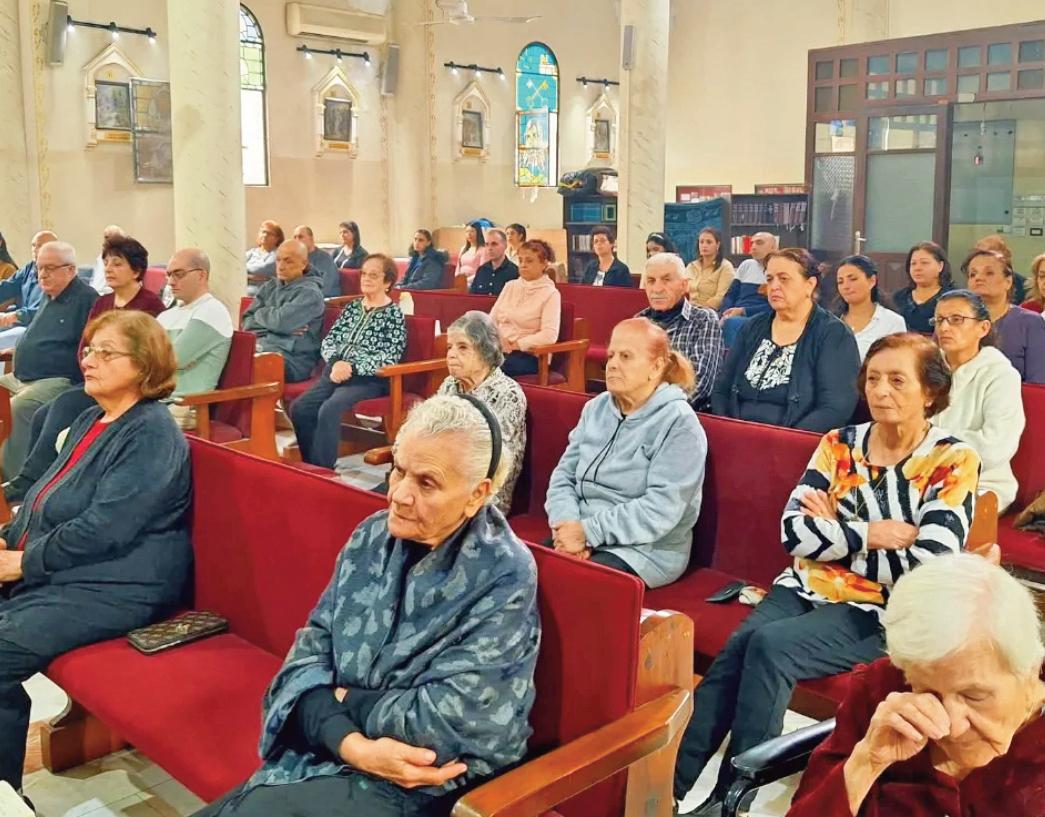
Gaza's Christians are preparing for their first Christmas without conflict for two years - despite widespread damage and devastation
Fr Gabriel Romanelli, the parish priest of Gaza City's Holy Family Church, told Aid to the Church in Need (ACN) that they are doing their best to get ready to celebrate the birth of Christ, but the situation is dire.
He said: "The world should know that there are over two million people here who have nothing and need everything."
With the 10th October ceasefire between Israeli authorities and Hamas broadly holding, the parish has started planning for the religious feast.
Preparations are underway despite isolated violations of the ceasefire, including the wounding of at least four people (Tuesday, 2nd December) after an Israel Defence Forces drone opened fire on civilians in Gaza City's AlTuffah district.
Fr Romanelli said: "We are deciding what to organise and we have begun rehearsing choirs and dabkes - Palestinian group dances - and we may even hold a small show outside the walls of our compound, if conditions permit."
The priest is hoping to organise seasonal visits to the sick and bring them small gifts - both those living in the compound and those few who have returned to their homes.
The Holy Family's parish priest is trying to obtain chocolate "whatever the cost… [hoping] it will do everyone good".
Since the ceasefire, emergency supplies have been arriving more regularly.
Fr Romanelli said: "Since the fighting stopped, the Latin Patriarchate of Jerusalem has managed to send us important aid with which we have been able to help over 12,000 families".
Through the Latin Patriarchate - ACN's project partner in the region - the charity has provided more than £650,000.
Although UK government counter-terrorism sanctions prevent funds from being transferred into Gaza mean the UK office of ACN is not able to help the Holy Family parish, it has supported those who fled to Jerusalem from the Gaza borders when the conflict
began and Christians suffering from the economic impact of the war in the West Bank. The church's compound is currently home to around 450 people - mostly Catholic and Orthodox.
These include more than 50 people living with disabilities who could not leave Gaza City during the conflict, including 30 Muslims.
About 60 people have managed to move out, with some returning to their homes even if they are damaged, but they rely on the Holy Family for drinking water and power to charge their mobile phones.
Fr Romanelli said: "Some have tried to clean their houses or what is left of them" but adds that heavy machinery is needed to clear the bomb damage and most infrastructureincluding water and electricity - was damaged during the war.
He added: "There is no sign of reconstruction, the lack of means causes suffering and the lack of prospects leaves people agitated."
Fr Romanelli also called for the Christmas season to be one of prayer for peace. He said: "We should pray. We should pray a lot - for peace, and for all the inhabitants of this Holy Land, be it Gaza, Palestine or Israel."
With thanks to Christophe Lafontaine John Newton - Aid to the Church in Need





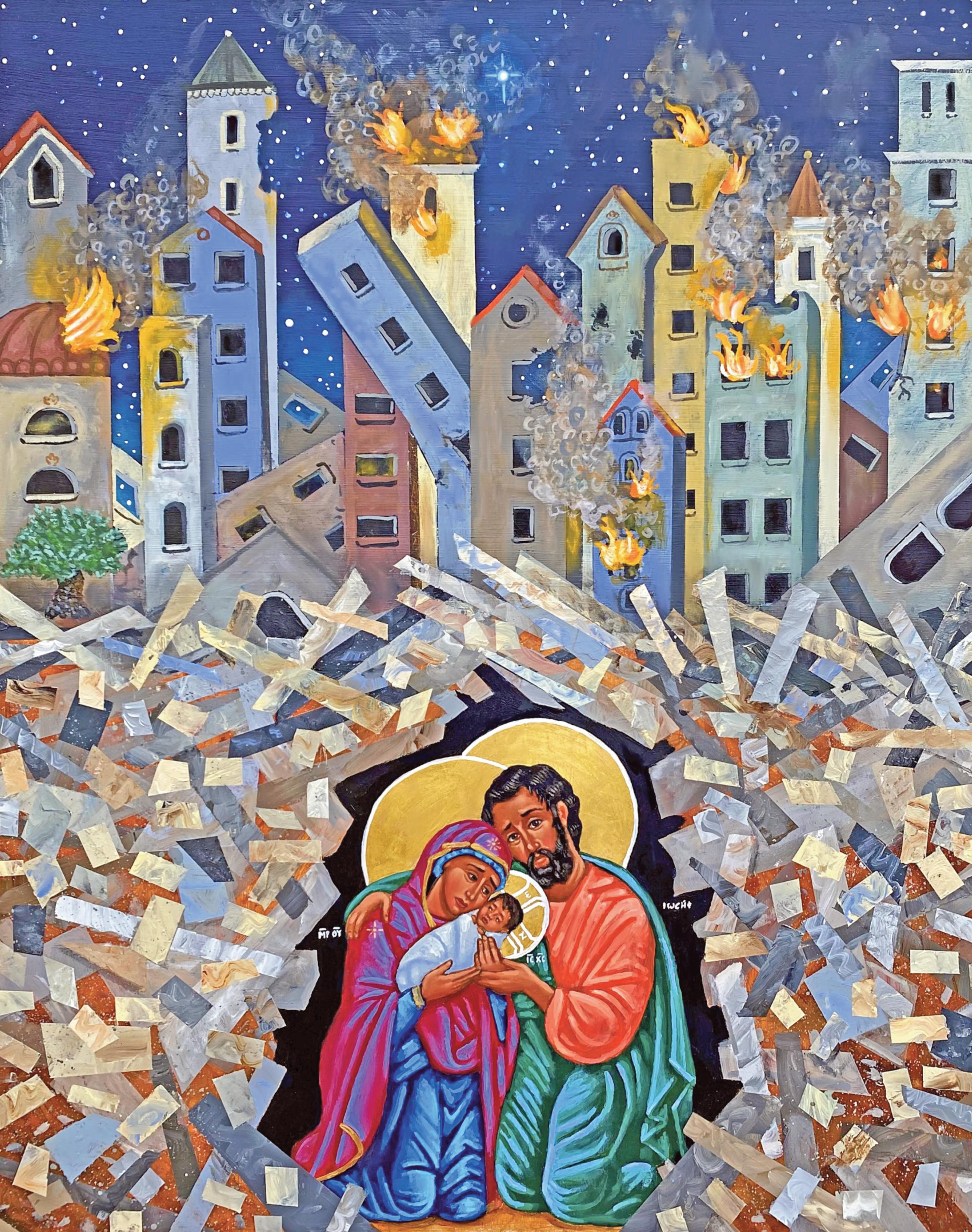
Sunday 18 January 2026 is Peace Sunday, a day designated by the Catholic Bishops Conference of England and Wales as a day for us all to reflect on the Pope’s message for the World Day of Peace on the 1st January.
The theme chosen by Pope Leo for his message this year is a challenging one: "Peace to you all: Towards an 'unarmed and disarming' peace".
One image that may help us engage in this message is to reflect on Jesus before Pilate -standing there, an innocent man, seemingly helpless, before Pontus Pilate, a Roman Governor.
It is so easy to feel helpless in a world of violence today. The nonviolent action of Jesus can be our guide in working for peace and justice. Pax Christi tries to give a lead in this process. A movement founded 80 years ago in France to pray for reconciliation between two nations, Germany and France, it has since become an International Peace Movement.
Bishop John Arnold in Salford diocese, representing the Bishops Conference of England and Wales, writes: "Pope Leo is telling us that peace should not rely on fear, threats or weapons. Peace should have the capacity to resolve conflicts and open hearts through mutual understanding and hope.
The Pax Christi movement tries to respond to this aim through publications, prayer, public witness and nonviolent action.
We are in a world torn by violence and war; a time of uncertainty; a time when strong leadership can help disperse doubt and show a positive way forward in full hope.
Pax Christi tries to give practical expression to this hope through its outreach work in promoting the Gospel message of nonviolence and offering peace education in schools.
It is a national organisation but with a small committed staff team.
The generosity of parish communities each year makes a big difference to the funds needed for its vital work to continue.
May God continue to help us all to be instruments of his peace.
Fr Joe Ryan
The Vatican has released the doctrinal Note Una caro - In Praise of Monogamy exploring the value of marriage as an "exclusive union and mutual belonging."
It highlights the importance of conjugal charity and attentiveness to the poor, and condemns all forms of violence, both physical and psychological. In an individualistic and consumerist age, young people must be educated to understand love as responsibility and trust in the other.
Marriage is defined as "an indissoluble unity" in the document published by the Dicastery for the Doctrine of the Faith (DDF) on Tuesday, calling it an "exclusive union and mutual belonging."
It explains that only two people can give themselves fully and completely to one another; otherwise, the gift becomes partial and fails to respect the other's dignity.
The text is driven by three main concerns. First, as Cardinal Víctor Manuel Fernández writes in the introduction, is the current "global context of expanding technological power." This leads human beings to see themselves as "creatures without limits" and thus distant from the value of exclusive love reserved for one person.
The document also refers to discussions with African bishops regarding polygamy, noting that "in-depth studies of African cultures" contradict the common assumption that monogamous marriage is exceptional there. Finally, it notes the rise in the West of "polyamory," meaning public forms of nonmonogamous unions.
In this context, the DDF seeks to emphasize the beauty of conjugal unity which, "with the help of grace," mirrors "the union between Christ and his beloved bride, the Church." Addressed primarily to bishops, the doctrinal Note is also meant to help young people, engaged couples, and spouses grasp "the richness" of Christian marriage, fostering "calm reflection and sustained deepening" on the topic.
Divided into seven chapters and a conclusion, the text reiterates that monogamy is not a limitation but the possibility of a love that opens to eternity. There are two decisive elements: mutual belonging and conjugal charity.
Mutual belonging, "founded on the free consent" of the spouses, reflects Trinitarian communion and becomes "a strong motivation for the stability of the union." It is a "belonging of the heart, where only God sees" and where only He may enter "without disturbing the person's freedom and identity." Understood in this way, "the mutual belonging proper to exclusive reciprocal love requires delicate care, a holy fear of violating the other's freedom, who possesses the same dignity and therefore the same rights." One who loves knows that "the other cannot be used as a means to solve one's own frustrations," and that one's inner emptiness must never be filled "by exercising power over the other."
The Note deplores "the many forms of unhealthy desire that lead to explicit or subtle violence, oppression, psychological pressure, control, and ultimately suffocation." These are "failures of respect and reverence for the dignity of the other."
By contrast, a healthy "we two" entails "the reciprocity of two freedoms that are never violated but choose each other, always preserving a boundary that must not be crossed." This occurs when "a person does not lose themselves in the relationship, does not merge with the beloved," respecting the nature of any healthy love, "which never seeks to absorb the other."
The Note adds that a couple must be able to "understand and accept" moments of reflection or requests for solitude or autonomy from either spouse. After all, "marriage is not possession," nor is it "a claim to complete tranquility" or a total liberation from loneliness (for only God can fill the void within a human being). Rather, it is trust and the capacity to face new challenges. At the same time, spouses are urged not to withhold themselves from each other, as "when distance becomes too frequent, the 'we two' risks fading away."
Mutual belonging is also expressed in the spouses' commitment to helping each other grow as persons. Here, prayer is "a precious means" by which a couple can be sanctified and grow in love. In this way, conjugal charity"a unifying power" and "a divine gift" sought in

prayer and nourished by the sacramental lifebecomes in marriage "the greatest friendship" between two hearts close to one another, "neighbours," who love each other and feel "at home" in one another.
Thanks to the transforming power of charity, sexuality can be understood "in body and soul," not as a mere impulse or outlet but as "a marvellous gift of God" that orients each person toward self-giving and the good of the other in the fullness of their person. Conjugal charity also expresses itself in fruitfulness, "though this does not mean that every sexual act must explicitly aim at procreation." Marriage retains its essential character even when it is childless. The Note also affirms the legitimacy of respecting natural periods of infertility.
In a "postmodern consumerist individualism" that denies the unitive meaning of sexuality and marriage, how can faithful love be preserved? The answer, the document says, lies in education.
"The universe of social media, where modesty vanishes and symbolic and sexual violence proliferate, shows the urgency of a new pedagogy." New generations must be prepared to welcome love as a profound human mystery, presenting it not as a mere impulse but as a call to responsibility and "a capacity for hope that involves the whole person."
The charity of conjugal union is also seen in couples who do not remain confined in their own individualism but engage in shared projects to "do something beautiful for the community and for the world," since "a person fulfills themselves by entering into relationship with others and with God."
Otherwise, love deteriorates into selfishness, self-reference, and self-enclosure-an attitude that can be countered, for example, by cultivating a "social sense" within the couple as they work together for the common good. Central to this is attention to the poor, who-as Pope Leo XIV says-are "a family matter" for Christians, not merely a "social problem."
In conclusion, the Note reaffirms that "every authentic marriage is a unity composed of two individuals, requiring a relationship so intimate and totalizing that it cannot be shared with others." Thus, of the two essential properties of the marital bond-unity and indissolubility-it is unity that grounds indissolubility. Only then can conjugal love become a dynamic reality, called to continual growth and development over time, rooted in a "promise of the infinite."
The Note also offers a broad overview of the theme of monogamy: beginning with the Book of Genesis, moving through the Church Fathers and major magisterial documents, and finally reaching twentieth-century philosophers and poets. It deepens the sense of belonging expressed in the phrase "we two." For, as St Augustine said, "Give me a heart that loves, and it will understand what I say."
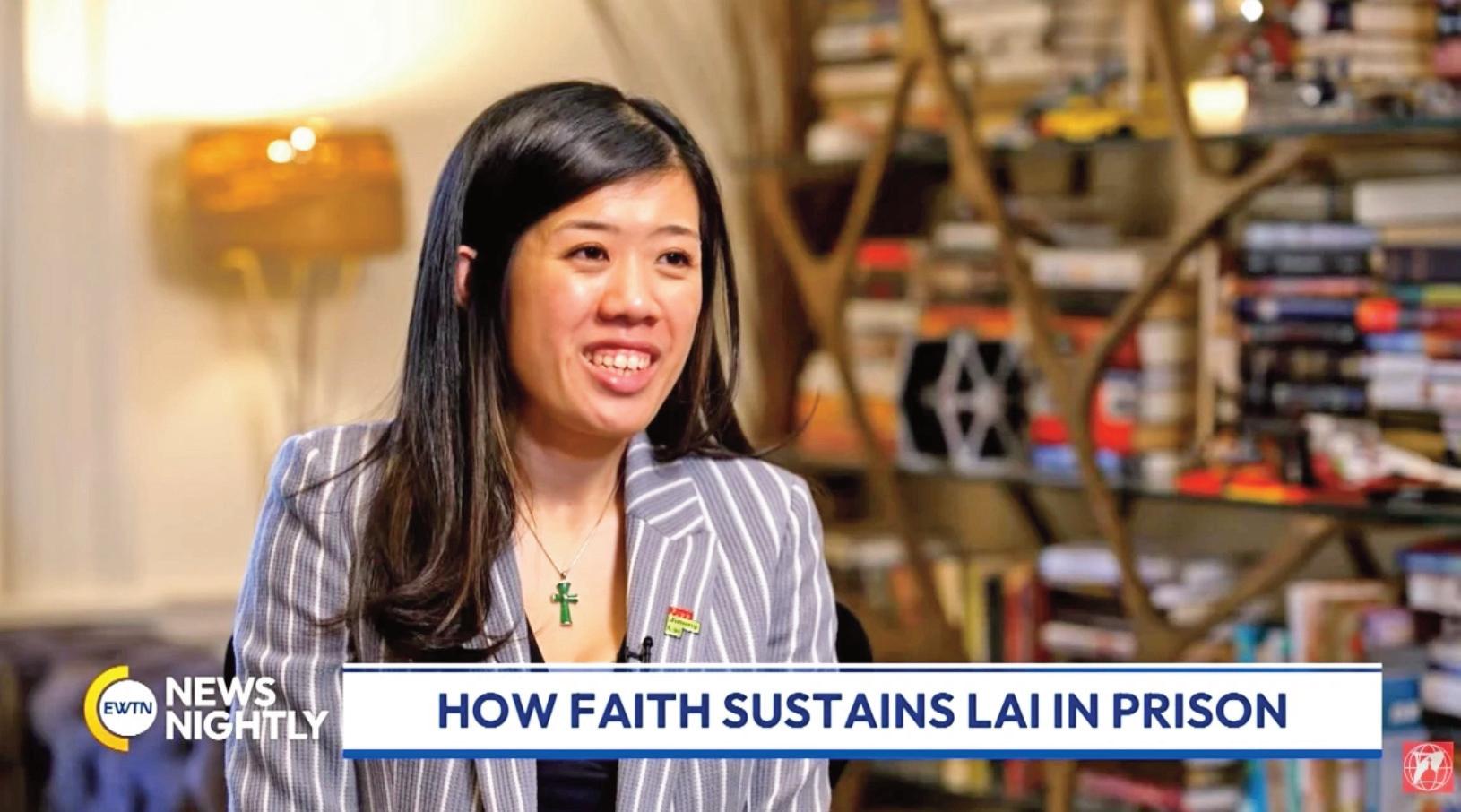
Claire Lai, daughter of imprisoned Hong Kong activist and Catholic Jimmy Lai, speaks with EWTN News President Montse Alvarado on “EWTN News Nightly” on Dec. 8, 2025
Daughter of imprisoned Catholic activist Jimmy Lai spoke out for the first time ahead of her father’s 78th birthday.
“As a daughter, every day I wake up and I hope that today is the day we get my dad home ... the day we get to go to Mass together, or to eat dinner around the table, things that years ago I almost took for granted,” Claire Lai said in an interview with EWTN News.
Jimmy Lai, the pro-democracy entrepreneur and human rights activist, was arrested in 2020 in Hong Kong. He underwent a trial that lasted nearly two years for allegations of colluding with foreign forces under a national security law put in effect by the communist-controlled Chinese government.
The trial ended in August, and Lai continues to wait for the verdict in prison where he faces inhumane living conditions, deteriorating health, and is denied the Eucharist, his daughter said.
In an interview with Montse Alvarado, president and COO of EWTN News, Lai’s daughter Claire said: “We’re still waiting for a
verdict, five years after he was charged. He is turning 78. We have waited a very, very long time for his cases to be resolved. We do not believe that they will be through the domestic system. Our only hope is outside, and that’s why I’m here now.”
Dec. 8 was Jimmy Lai’s 78th birthday, which falls on the feast of the Immaculate Conception. His daughter highlighted Lai’s deep devotion to the Blessed Mother.
She said her family has tried to send him a rosary in prison, but “each attempt failed.” She said he fell down once in the shower, and “because of his waist pain he wasn’t able to get up.”
“Even some of the guards came over and tried to help him … but he couldn’t get up. So he pretended as though he had a rosary in his hand and prayed to the Blessed Mother. Then he was able to get up without pain,” Claire Lai said.
“When you’re a daughter … and you hear stories like that, you wish you could yourself
physically pull him up when he is in pain like that. But you find such great comfort in the fact that Our Lady is protecting him,” she said.
Conversion to the faith
Lai said her father’s conversion to Catholicism has been a stable presence during his time in prison.
“My father had quite an unconventional childhood. He came to Hong Kong when he was 12. He had nothing to his name, nothing in his pockets. But he was full of optimism and he had a yearning for freedom,” she said.
“It was only later on that he understood that there was something, a higher force, guiding him all along, which was why he was able to go from child laborer to a successful entrepreneur and do so almost without fear. It was later on that he understood that to be God,” she said.
Jimmy Lai converted the year of the handover of Hong Kong from the United Kingdom to China when “people were filled with doubt and with a certain amount of fear,” his daughter said. “As Our Lady has taught us, there is nothing that conquers doubt and fear except for the love of God. And that was a time when he was ready to receive it.”
“My father converted one year after I was born. Really, the only memories I have are of growing up in a very loving Catholic family,” she said.
Claire Lai studied law and has been involved with her father’s case and lengthy trial. “There’s an equal amount of outrage, but also it’s a privilege to be able to be there and witness it as closely as I have,” she said.
“As someone who grew up admiring the Hong Kong legal system … it has been heartbreaking to see the rule of law break down, but even more so to see my father and his case is at the helm of it.”
The bench was “not neutral in any sense of the word,” she said. “They just grilled him repeatedly. There were gag orders that were imposed when the evidence just did not suit the narrative ... it was just so deeply unfair.”
The trial had unexplained delays that were “clearly meant so that people would forget about my father and so that it would crush his spirit,” she said. But “with the good Lord as his guide, his spirit remained just as strong.”
Lai has been in prison for five years, but “his incarceration has just deepened his faith,” his daughter said.
“I think there isn’t anything quite as much as suffering that opens your heart to God’s love.
Continued on page 16
We are so grateful that Our Lord has accompanied my father. He wakes up around midnight every night to pray,” she said.
“Before the crack of dawn, he would read the Gospel,” Lai said. “At first, he would ask the guards if they could turn on the light so that he could read … For about the first six months, they said ‘yes.’ Afterwards, they always said ‘no.’”
“The conditions he’s kept in have just gotten worse over time. They aren’t a natural byproduct of prison. In the prison cell, there is a window that leads outside that should give access to sunlight. His is deliberately blocked so that he doesn’t have access,” she said.
“He’s been denied holy Communion for over two years and got it only very, very intermittently this year,” she said. “It’s something that costs them nothing … for him to get. It costs them nothing for him to get the rosary, and it costs them nothing to turn on the light so that he can read the Gospel.”
Kept in solitary confinement, he faces extreme heat conditions in his small cell. “In summer, the heat can get up to … 111 degrees Fahrenheit,” she said. “To say that it’s sweltering is a massive understatement.”
“He gets heat rushes all over his body, and they last until the middle of autumn. It is outrageous, and it is torturous,” she said.
“We have typhoon seasons in Hong Kong … and the cells get wet. Almost everything in there gets wet. Once that happened, the first thing he checked was his Bible, and it was the one thing that remained dry. We’re very grateful that Our Lord and Our Lady continue to watch over him,” she said.
Lai’s health has declined rapidly while behind bars
“In less than a year, he lost 10 kilos … after already having lost a significant amount of weight the last few years. His nails are rotting … He has infections that last for months in spite of antibiotics. And his limbs get swollen, very red, and they’re agonizingly painful,” she said.
“My dad is not someone who complains. He doesn’t even make faces. You know that when he does, it’s very painful,” she said. “There are times when even from a distance, you can tell that he’s pale and he’s shivering.”
“Then there’s the less visible signs,” she said. “He’s diabetic, and he’s had heart issues. He had a perfectly healthy heart before he went to prison.” He has said “that every few days he would have heart palpitations and they would be disabling,” his daughter said.
Call for international involvement
Jimmy Lai is a British citizen and his daughter said that any communication between Britain
and the Chinese government should include discussion of her father.
“He is in prison for basically standing in defense for the freedoms he first came to know as a child in Hong Kong when it was still a British embassy and for hoping that they would keep the promise made during the sign of the British Joint Declaration,” she said.
U.S. President Donald Trump has vowed to do “everything” possible to “save” Lai. A White House official told EWTN News in October that Trump spoke with Chinese President Xi Jinping about his imprisonment.
“We are so extremely grateful to President Trump and his administration,” Claire Lai said. “They have a long, proven record of freeing the unjustly detained, and we hope that my father will follow soon.”
“We are also very, very grateful for members of the public. My father is sustained by your prayers,” she said.
She shared that Pope Leo XIV is also praying for her father during this time. In October, Lai’s wife, Teresa Lai, and his daughter met Pope Leo after a general audience. “It was such a privilege and a blessing to have an audience with our Holy Father,” Claire Lai said.
Hope for a release
“The government has no case,” she said. “All they’ve proven is that my father is a good man, a man who loves God, a man who loves freedom, who loves truth, and loves his family.”
If she could speak with the Chinese government, Lai said she would say to “do the only just and … only honorable thing, which is to release a 78-year-old man, my father, Jimmy Lai, against whom no case has been made.”
“Don’t let him die a martyr in these conditions, in this health. It is a stain on your history that you will never be able to wipe off,” she said.
She said she does “worry” that her father could die in prison, but she is “hopeful.”
When her father “reflected on his earlier years, he said that even before he converted and before he opened his heart to the love of God, he was always guided by him — even before he knew it,” she said. “I think that’s how he wants to be remembered, as a faithful servant of Our Lord.”
By Tessa Gervasini

CRYPTIC Across
5 Sports two letters from Paul (11)
7 Log all chocolate that's eaten around Christmas? (4)
8 Naive can, strangely to medieval Schoolmen, be an influence (8)
9 Building that appeals for Indian ruler to 'go back in time' in retrospective (7)
11 This kind of hell hole's diabolical (5)
13 Levi's sister's anger initially follows row with husband (5)
14 Golden premier of chap being inducted into a mysterious religion (7)
16 Note a retrogressive toilet's showy façade: a parable that highlights greed (4,4)
17 No union, no strike' letters initially given to women with habits (4)
18 Bernstein, or alternative name for the Premonstratensians (11)
CRYPTIC Down
1 He composed a tune ultimately the navy embraced (4)
2 Key number among Poles eroded benefice's income (7)
3 Some in macho Irish group getting vocal when together (5)
4 Horse old Persian tracks to a town fortified by Rehoboam (8)
5 Means of executing Rugby's capacity to bind individual's attachment to one across? (11)
6 Solomon's greatest hit? Perhaps not... (4,2,5)
10 ...Eucharistic Prayer heard in Athens maybe a rap Noah composed (8)
12 Abbot's story is written up following Rector's recording outside (7)
15 She was unfaithful to OT chap; married an all-round raver (5)
17 All over English meet with French negativity, which produces zilch (4)
QUICK Across
5 Either of two books of the NT (11)
7 Archaic term for Christmas from a 12-day heathen festival (4)
8 Muslim philosopher who influenced the medieval Schoolmen... (8)
9 ...and a pillar of Islam? (7)
11 Word appearing in the OT meaning the underworld or place for departed souls (5)
13 Daughter of Jacob and Leah (5)
14 Ancient Greek set of religious beliefs associated with Hades (7) 16 A ---- ----: parable appearing in Luke (4,4)
17 Females who have taken their final vows (4)
18 Alternative name for members of the Premonstratensian Order (11)
QUICK Down
1 Composer of two oratorios, but more famously Rule Britannia (4)
2 First year's revenue of an ecclesiastical benefice, passed to the Crown in 1535 and abolished in 1926 (7)
3 Part of a church containing the seats of the clergy (5)

4 Town fortified by Rehoboam for which Micah prophesied disaster (8)
5 Means of Christ's death as recorded by all four evangelists (11)
6 OT anthology of love poems, alternatively called 'Canticles' in some Bibles (4,2,5)
10 Word in the Eastern Church which equates to the Eucharistic Prayer (8)
12 High-ranking ecclesiastic (7) 15 Hosea's unfaithful wife (5)
17 The last of the 'Little Hours' of the Divine Office (4)