myheart mystory
stories from members of the myheart network
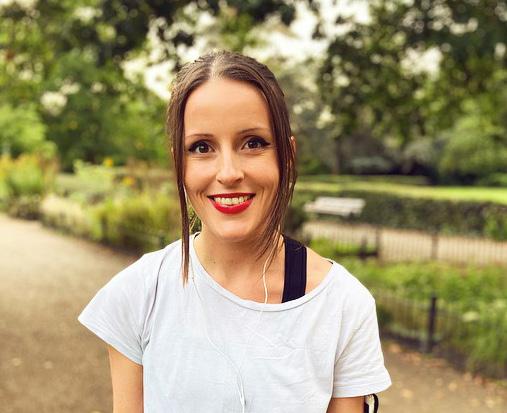
‘Never miss a beat’ by Gem O’Reilly
It’s a funny thing being told you could potentially go into cardiac arrest for something you can’t necessarily see or feel. It’s a surreal, intangible experience and very scary.
That’s what happened to me when I was 16. I was diagnosed with Long QT Syndrome, which basically means my heart struggles to control its electrical system, and I have to be very careful with my health. It is a congenital condition that impacts the repolarization (relaxing) of my heart after a heartbeat, giving rise to an abnormally lengthy QT interval.
Therefore, I should avoid extending my QT interval as it may struggle to return and put me at risk of cardiac arrest. I’ve been living the last 29 years without backup, also known as, beta blockers. But more recently I’ve had ectopic
heart beats and dizziness that has meant beta blockers have become more pressing to protect myself and my body.
So here I am on my first day of taking bisoprolol. How do I feel? Kind of absent, kind of fuzzy, kind of tired and kind of scared. But it isn’t as bad as I was expecting, and I feel comfort in knowing my body will adjust to them. I also feel a newfound confidence that I may have found a mitigation to my heart condition, which if left out to fester, could be highly dangerous for me.
There’s a huge psychological impact of knowing your life may be at risk because of a condition that is part of your genetic makeup. It’s talked about in many ways, for many reasons. I think the psychological impact on me has been profound. But it has never stopped me, and it’s never been quite as profound as the difference I know I can make. If anything, my heart condition has made me pursue every day like it’s my last. It’s made me so determined to make a difference to the world and to people who really need a warm heart, forgive the pun.
So, to my fellow heart condition buddies, don’t fret, we are all here
and we are all strong. We have the power of knowledge at our fingertips of our risk. Let’s help others by raising awareness and keeping ourselves as healthy as possible. That way you’ll never miss a beat.
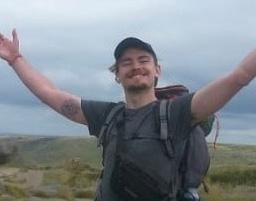
‘624 Reasons Why’ by Joe McEwan
My name is Joe, and I suppose you could say I’m your average 23-year-old man. I graduated from university with a law degree in 2022, have played sport pretty much my whole life and I love travel, playing guitar and art. I also had a sudden cardiac arrest at the age of 22.
September 17th, 2023, started off as a normal day like any other. I was due to be taking part in a local lacrosse tournament, so after breakfast I gathered my equipment, set off to the club, kitted up and took to the pitch just like I have hundreds of times before. Just a few minutes in, a ball struck me in the back of the neck, and I collapsed… or so I was told. Within a few hours of arriving
at hospital I was diagnosed with Brugada Syndrome, a rare heart condition.
When I first woke up in the hospital, my memory was comparable to a goldfish. I remembered absolutely none of the day I collapsed nor the few days prior and even struggled to remember things I had been told 2 minutes before. My earliest memory is of my older brother sat next to me, telling me that I had suffered a cardiac arrest on the pitch.
In fact, my brother and parents lost count of how many times they had to tell me ‘For the first time’ that I had collapsed on the pitch. Every time they had to remind me, my reaction was the same. Shock. Confusion. Probably some fear. My mum recalls I would sit there in silence for a second before I started crying then gave her a huge hug. Two minutes later and I’d forgotten and the cycle repeated. She said I reacted that exact way to being told more times than she could count. It broke her heart.
When my memory finally started to recover and I was able to properly consider what had happened, it felt surreal that I had survived. I had collapsed in the middle of a field and my heart apparently stopped for 4 minutes. The truth is, collapsing when and where I did was a blessing. The referee of my match was a firefighter, there were numerous trained medical professionals
spectating, there was a cardiac defibrillator on site, and the ambulance was able to arrive within 3 minutes of being called. Even the air ambulance arrived to help.
Nobody ever sees this sort of thing coming so it seems pointless to say this came completely out of the blue. I’m fit and active having played sport my whole life and had never experienced any symptoms or issues hinting that I had an underlying heart condition. There is also absolutely no history in my family of similar events occurring. But whilst most people say this is incredibly rare to happen, I feel like most would say it’s also quite rare to survive it.
Once I had passed the initial few days in hospital and my memory was fully recovered, truth be told I felt somewhat like an imposter despite what had happened to me. I was on a heart ward, surrounded by critically ill people, and I felt absolutely fine. I’m pretty sure I was the youngest in there at the time by at least 30 years. I was constantly wanting to be on my feet while most others were bed bound. I even had a guitar brought in so I could keep myself entertained whilst there. It was kind of just a waiting game until I finally had an internal defibrillator fit in my chest so I could leave.
When my ICD was finally fit on October 3rd, and I was discharged, my recovery was pretty swift. Within 4 months I was back to full
time work and playing sport with little to no life accommodations. Almost a year on from my collapse it feels strange to say the biggest inconvenience of me suffering a sudden cardiac arrest was that I was banned from driving for 6 months and now set off metal detectors in airports. Although it is a massive pain that I’m also now banned from arc welding and can never be a fighter pilot. Damn.
Whenever anybody has asked me, I have always said that the ordeal was far more difficult for my family. My parents were on just their second day of a holiday in Cyprus when they received a call that their son had collapsed and was being defibrillated on the pitch. My brother, who lives in London, received a similar call around the same time. My parents immediately booked flights home and spent the next few hours not knowing whether I would still be alive when they got back. My brother got the first train up to Manchester, recounting it as the worst 2 hours of his life as he spent it thinking he would arrive to find he no longer had a little brother. I can’t imagine how hard it must have been for them.
For me, this is just something that happened. If, for example, one in 2000 young people suffer a sudden cardiac arrest, then someone has to be that one, so why shouldn’t that be me? Nobody deserves it to happen to them, so I didn’t feel hard done to. If anything, it just made me more
grateful, so I’d be lying if I said I really struggled to come to terms with it. My main concern was I didn’t want loads of sympathy from family and friends because I didn’t really deserve or need it. It is a scary thought what happened, but I just got lucky and as a result I live my life pretty much as normal, although admittedly with a far greater appreciation of life.
This had me thinking quite a lot about how differently this could have gone. My mum stresses enough about me now, and I feel great and haven’t had any serious issues since my collapse. It’s weird, I felt more privileged to be alive, not for myself but more, so my family didn’t have to deal with the loss. Looking into my condition, I found Cardiac Risk in the Young, and discovered there’s hundreds of families every year that do have to deal with such devastating loss.
The question that kept going through my mind was: ‘why me?’. Why should I get to come out fine when so many others don’t? Especially as I only made it through dumb luck and the incredible quick-thinking and care of those around me when I collapsed. The more time has passed since I left hospital, the more I have wanted to show how truly grateful I am for still being here by doing some sort of fundraising for Cardiac Risk in the Young. I didn’t think anyone should have to rely on luck, and if raising money can potentially get a young person’s condition
diagnosed and maybe even save their life it was an absolute no brainer.
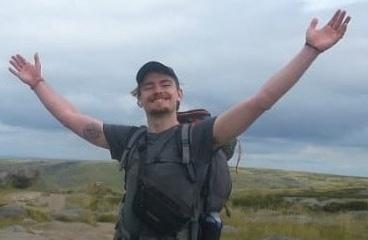
I spent a while wondering what I should do. Maybe a marathon? Maybe do the Three Peaks? Eventually, I stumbled upon something I’d never heard of and instantly thought “this is it”. I decided I wanted to walk a 3000km trail from one end of New Zealand to the other. Because of course the only logical idea was choosing to do a 4-month hike across a country when I had never done a single multi day hike before in my life.
I’d be lying if I said I hadn’t spent a lot of time doubting whether I should / could do it over the last few months. Why should I do it? Well, I can think of 624 reasons why. 12 young people lost every week. Over 624 every year. I was given a second chance at life when I deserved it no more than anyone else who has tragically lost theirs to sudden cardiac arrest. I want to do this for all those lost too soon; for all the families still grieving the loved ones tragically taken from their lives. And if walking 3000km has even a 1% chance of raising enough money to potentially diagnose an underlying heart condition of a young person and potentially save their life it would be worth doing a thousand times over - because I don’t think anybody should have to rely on luck.
That’s why I have also created
a website, www.624reasonswhy. com. The site explains the cause in more detail, a little more about me, the hike I’m doing, and provides a platform for me to document the journey via a blog to keep everyone updated on my progress. This is for everyone who has already suffered tragedy and for doing my part to help Cardiac Risk in the Young in their immense work and preventing it from happening to others in the future.
Joe was interviewed by Gabby Logan on ‘The Sports Agents’ podcast on 13th February 2025. Listen wherever you get your podcasts.
‘Amazing things are possible’ by Thomas Morris
Our world fell apart 3 years ago when three of us Morris gang (Thomas, Xander and Jude) were diagnosed with a genetic critical heart condition called LQTS. Having never had major health issues before, being told I was very lucky to be alive certainly changed my perspective on life.
Now, several years later, I’ve come to realise we were the lucky ones. We’re now medicated which makes it very unlikely we will
have a cardiac event, and our wonderful life goes on as normal, if not a bit challenging when it comes to stairs and needing to raise our heart rates! I wanted to prove to my boys and anyone else medicated that amazing things are possible.
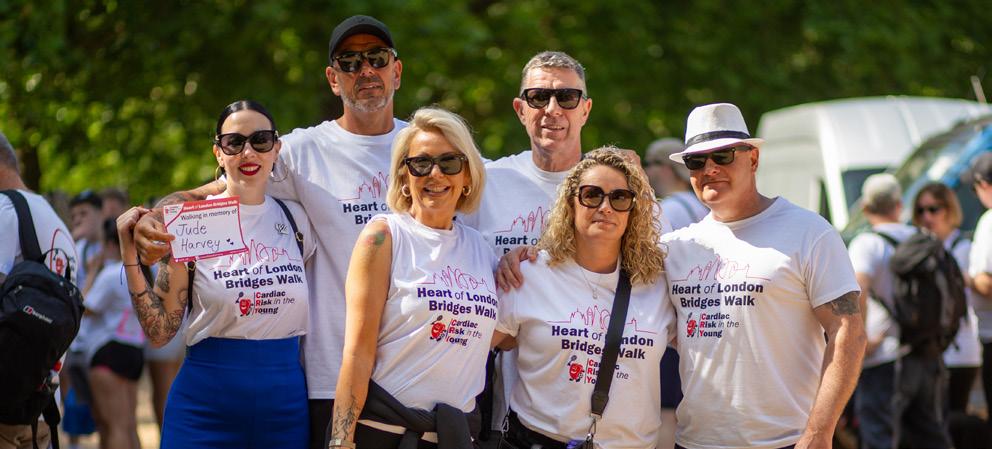
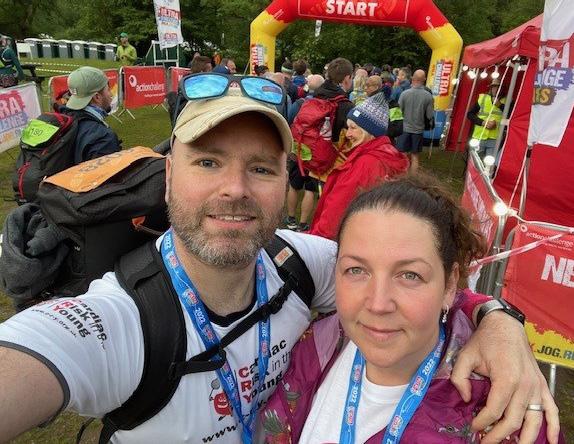
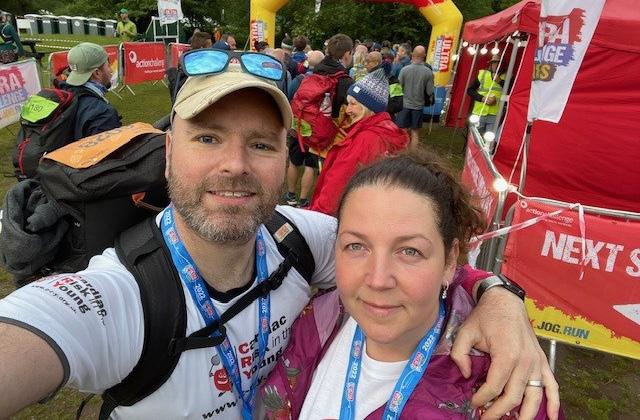
All in support of CRY, and to raise awareness, in 2022 we completed our first ultra marathon. 14 hours of trekking and jogging over mountain paths! In 2023 we just about completed our 2nd – it was a very hot day.
This year, my amazing wife and I completed 3, yes THREE, ultras – one in the North, one in the Midlands and one in the South. All whilst my heart rate is limited to 120 BPM and carrying 10 kg of defib. I’m so proud of what we’ve achieved and even better is the money we have raised for this great charity. We’ve raised £6000 in 3 years and we’re very grateful for the donations.
Next? Another crazy physical challenge is on the cards, but in the meantime, we’ll be putting in the 100s of hours of training required for events such as this.
For more information about fundraising, please visit www.myheart.org.uk/fundraising
EACP Sports Cardiology Course 2024
The CRY cardiology conference is an annual event which attracts speakers and delegates from around the globe, including many of the world’s leading experts on sports cardiology and young sudden cardiac diagnosis.
The CRY conference draws together experts in the fields of sports cardiology, inherited cardiac diseases and sudden cardiac death in the young, who present contemporary topics and developments in their respective fields. It creates an opportunity for all those involved in the care of athletes and young individuals, to gain up to date knowledge on the effects of athletic training and the diagnosis and management of individuals with inherited cardiac diseases.
If you would like to watch videos from the day, please visit our YouTube Channel at:
Thank you to our speakers:
Prof Sanjay Sharma; Prof Michael Papadakis; Dr Ankit Shah; Dr Caroline Coats; Dr Clea Colombo; Dr Dimitra Antonakaki; Dr Eugene Chung; Dr Gherardo Finocchiaro; Dr Mark Abela; Dr Matthew Martinez; Dr Megan Wasfy; Dr Mihnea Casian;Dr Rachel Lampert; Dr Sabiha Gati; Dr Sarandeep Marwaha; Dr Silvana Molossi; Dr Silvia Castelletti; Prof Aaron Baggish; Prof Alessandro Zorzi; Prof Andre Le Gerche; Prof Aneil Malhotra; Prof Antonio Pelliccia; Prof Belinda Gray; Prof Domenico Corrado; Prof Flavio D’Ascenzi; Prof Hanne Rasmusen; Prof Harald Jorstad; Prof Hari Raju; Prof Jonathan Drezner; Prof Jonathan Kim; Prof Martin Halle; Prof Ruxandra Jurcut; Prof Viviana Maestrini.
*Please be aware that whilst videos like the above may be of particular interest to some myheart members, the playlist also includes talks about cardiac pathology and the causes of young sudden cardiac death.
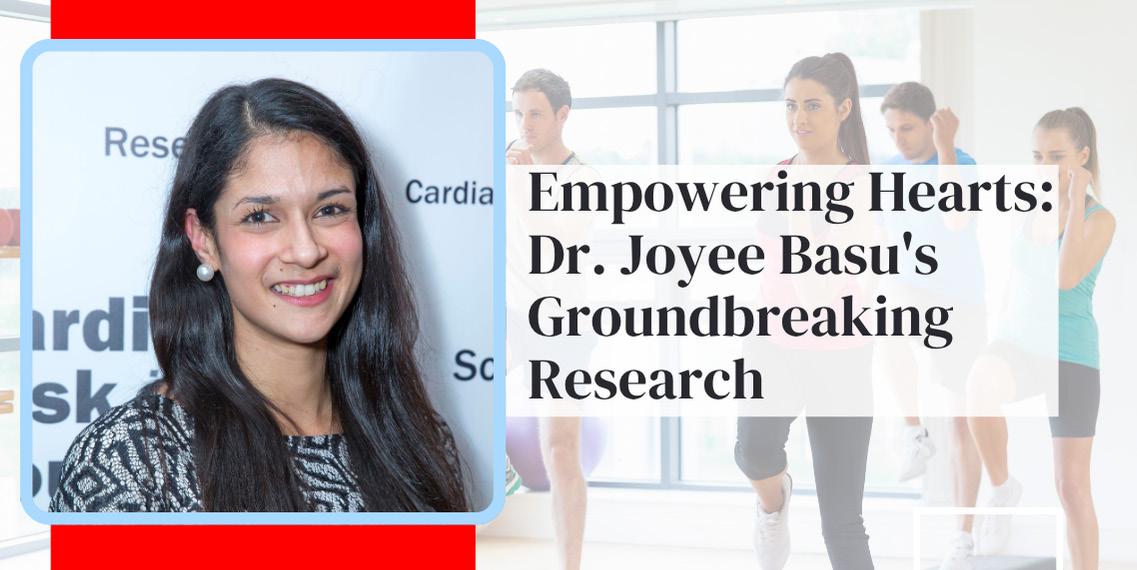
Dr. Joyee Basu’s Groundbreaking Research Redefines Exercise Guidelines for Hypertrophic Cardiomyopathy
Patients
CRY’s Research Fellows – both past and present – have an outstanding reputation of submitting and publishing papers, sharing and showcasing their projects with peers and key decision makers and presenting findings at UK and international conferences.
The issue around the impact of exercise and physical activity on young people living with a heart condition is something that is much debated amongst physicians themselves on the ‘conference circuit’ and often comes up at CRY’s myheart meetings too. Indeed, CRY’s cardiology experts are commonly asked, ‘is it safe for me to exercise?’ or ‘should I even break into a sweat’.’
We’re therefore delighted –during Heart Month 2024 – to be profiling the work, research and academic achievements of former CRY Research Fellow, Dr Joyee Basu, who has now returned to Oxford University Hospitals NHS Foundation Trust where she is working as a final year cardiology registrar and continues to advocate for the benefits of cardiac screening and cardiac rehabilitation to help people with a heart condition get back to regular exercise.
In fact, the issue of ‘safe levels of exercise’ for patients living with a condition called hypertrophic cardiomyopathy (HCM) came under the media spotlight recently as C4 Newsreader, Krishnan Guru-Murthy spoke openly about his own diagnosis with HCM and the additional consideration he needed whilst taking part in the 2023 Strictly Come Dancing competition.
With due care, advice and monitoring by his cardiologist, Krishnan didn’t let his HCM hold him back and, after months of rigorous training, he successfully made it to the 7th week of the gruelling (although glamorous!) show.
And in a full page feature in the February 2024 edition of Runner’s World magazine, CRY supporter Tim Ward (an HCM patient, with an implantable cardioverter defibrillator (ICD) fitted – and who took part in Dr Basu’s key research trial at St George’s, University of London) was quoted as saying; “The trial showed I could exercise below my theoretical maximum threshold without being at risk and it was fantastic to find those answers about myself whilst also helping others living with heart conditions. Running continues to be the way I can destress, spend time outdoors and enjoy the social benefits of Park Run. When I was diagnosed, I thought my life would never be the same again; in some ways it’s not, but in others it’s a case of carrying on doing what I love – including running.”
So, here, we chat to Dr Basu to find out more about her fascinating research projects, the proposed practical application of her findings and the difference it could bring to people diagnosed with HCM.
Dr Basu also talks about the lessons she learnt from being part of CRY’s pioneering cardiac
screening programme, thanking the Alex Reid Memorial Fund which supported her research and how she’s helping to spread the word about CRY’s work.
Firstly, congratulations on the recognition and interest around your very well-received presentation at the European Society of Cardiology (ESC) Conference last summer (August 2023).
Can you talk through the focus and objectives of this piece of research “Mechanisms of adaptation to high intensity exercise in HCM” and explain how this project evolved from your original CRY-funded trial back in 2019/20?
“It was a real honour to present at the ESC last year where I shared the findings from an important sub-study of my CRY-funded research project.
‘’In the original SAFE-HCM study we placed 40 individuals with HCM into a high intensity exercise programme and 40 individuals into a ‘usual care’ group (i.e. they carried on with life as usual)’.
“It was so encouraging to see a real improvement in the exercise capacity of those who exercised in the ‘high intensity’ group when compared to those in the ‘usual care’ group.
“We then went on to explore how these improvements in exercise
capacity might have occurred. I was particularly excited about investigating this because we knew there hadn’t been any previous studies into the mechanisms of adaptation to high intensity exercise in HCM.
“Many individuals with HCM demonstrate exercise limitation, whether that’s due to their underlying cardio-respiratory fitness, their body mechanics or body habitus (physical build), which can affect the general population too, or the way their heart pumps blood around the body (central factors), and/or how efficiently they are able to extract oxygen from the blood (peripheral factors). So, I was particularly keen to understand whether improvements in these central/peripheral factors might be responsible for the observed positive adaptation to exercise.
“We found that the cardiac output – i.e. the amount of blood your heart pumps around the body
in a minute (driven by the amount of blood pumped per heartbeat) increased, which led us to conclude that there was a favourable, central adaptation to exercise and that the heart was pumping more efficiently as a result of the training during the exercise programme.
“I realise this is a complex idea to ‘get your head around’ for non-medics (which I hope I’ve simplified here!) but the fact that there may be beneficial effects of exercise in those with cardiomyopathies is a positive message for fellow clinicians and our wider CRY community to hear.’’
Can you tell us a bit more about your motivations behind this research?’
“The drive behind my research into patients with HCM (who make up a significant proportion of my patients, being the most common type of cardiomyopathy) came from my own experiences and what I had read about attitudes towards exercise in these individuals. A large proportion of individuals are/or have been told to significantly limit their exercise. That’s historically because HCM patients were believed to be at a greater risk of cardiac arrest and, potentially death, during exercise. In the past the
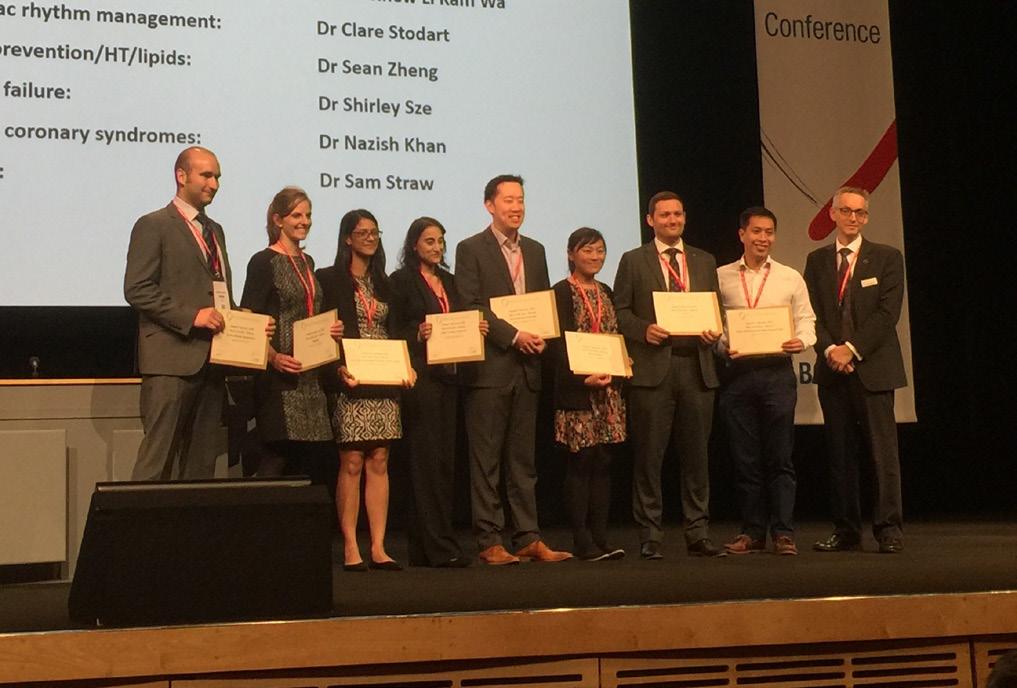
Dr Basu accepting her BCS award.
ESC and other medical bodies reached a consensus that these individuals should be restricted to engagement in very low intensity exercise.’
“As such, this led to a generation of HCM patients becoming incredibly sedentary, with around 55% of those who’d been diagnosed with the condition reportedly not even doing the ‘bare minimum’ of physical activity – something which can in turn lead to obesity and increase the risk of cardiovascular disease, not to mention the huge psychological impact. Just imagine you’re someone who had previously enjoyed sport and regularly exercised – to be suddenly told you must immediately stop.
“I started by exploring more of the emerging, contemporary evidence which was increasingly suggesting that this might not be the entire story.
“I was aware there’d been some more investigations into the benefits (and potential risks) of moderate exercise, although these studies had only been carried out in middle-aged to older patients. But encouragingly, even these studies had shown an improvement in the participants’ exercise capacity, without any signal for an increase in adverse effects.
“There’d also been some general population studies (although again only really looking at older
people, engaging in moderate intensity activity) and these had reflected a reduction in mortality risk. We also conducted a study into the effects of exercise on heart structure and function as well as outcomes in athletes with HCM and found that there was no increase in serious adverse events. More recently, a project called the LIVE: HCM study has also looked at individuals who self-reported their levels of activity, and the authors found there was no difference in outcomes between those who engaged in vigorous exercise and those who engaged in moderate/ low intensity exercise.
“But a lot of these were small studies lacking long term followup and nobody had investigated a randomised, controlled trial (RCT), specifically investigating high intensity exercise which is where our SAFE: HCM trial came in. That’s why I was so delighted when it was agreed that CRY’s Research programme would fund the pioneering study – more of that later…!
“In essence, we randomised individuals with HCM to high intensity exercise which had never been done before (vs. ‘usual’ care) and interestingly we observed beneficial effects in the following areas:
• Risk factor profile (reduction in blood pressure and weight loss)
• Exercise capacity
• Psychological impact (including factors such as depression and anxiety)
“There was also no increase in heart rhythm abnormalities.
“Importantly, we showed it was feasible and could be ‘safe’ to carry out this type of study with this specific group of patients –which again, was a really positive step and paves the way for future studies.
‘’I do have to caveat at this point though that the study was small, the participants were also relatively low risk and in good health. So, moving forward, I would definitely want to see larger, multi-centre randomised trials with longer follow up to help really progress our understanding.
“For now, we still have to be careful and take a very personalised and individual approach to safe “exercise prescriptions” but we can begin to feel confident about not having to limit and restrict all patients with HCM in their levels and intensity of exercise. It’s all about risk-stratifying individuals into the appropriate groups for the type of physical activity they would like to participate in.”
How do these findings translate to clinical setting and the decisions that physicians might have to be making on a regular basis?
“I do understand that at first glance my findings might go
against the guidelines and advice we’ve historically followed. However, the way we’re looking at this now is that individuals should be risk stratified, and they should be part of a shared decision-making process with their cardiologist, to help them understand their limits and to ensure they are kept wellinformed of any activities which might be considered potentially dangerous. It’s not a doctor’s role to say ‘no’ without explanation and to adopt an overly prescriptive approach but to talk through the possible risks and to decide together. Of course, if we ever felt a patient might want to do something particularly risky, then there might be occasions when we say we would strongly advise against something.
“However, as doctors, we should ensure that we thoroughly investigate our patients, looking out for red flags. These may include previous cardiac arrest, exercise induced fainting, evidence of heart rhythm disturbances, abnormal blood pressure or heart rate responses during exercise tests, genes that might predispose to worse outcome and scar within the heart etc’. Armed with a full medical background, we will increasingly be able to take a personalised approach with our advice.
“I have first-hand experience of managing individuals with HCM who have elite athletic sporting backgrounds, and this really takes
our insight and experience to a new level. We have to carefully consider how we mitigate risk through thorough assessments and regular surveillance to ensure we’re doing all we can to prevent a cardiac event.
“Through CRY-funded research we have shown that, in athletes, where we have adopted this approach, there is no signal for adverse events or worsening of their underlying HCM but ultimately it always comes down to tailoring the exercise prescription to the person you have in front of you.”
So, in summary, what are the main findings of this research and how might your conclusions positively impact people living with a diagnosis of hypertrophic cardiomyopathy?
“The results of this initial trial show that in the “right patient with the right risk factor profile” we should now be able to ‘allow’ them to do more exercise than they once thought possible.
“That’s of course not to say that everyone with a diagnosis of HCM could, and should, be doing high intensity exercise – but we really hope the findings of my research are laying the foundations for clinicians having more confidence in advising a proportion of our patients that it is safe to do so. I’m hopeful that in the future, larger studies with a longer-term followup will provide more evidence to further cement these results.
“On a personal level, I’m so passionate about making sure that everyone can safely exercise at some level, as the benefits on overall physical and mental health are indisputable.
How would you like to see the knowledge gained from your research/patient trials, rolled out in a ‘practical and accessible’ way?
“I am now really committed to developing an ‘exercise prescription’ document for clinicians so that they can guide their patients through their options for exercise. Such resources could serve as a useful reference point for cardiologists as well as other physicians, who might want to update their knowledge on the latest guidelines and patient advice, as well as learning more about inherited cardiac conditions and the benefits of exercise rehabilitation.
“There is a lot of generic advice that is not routinely passed on such as appropriate warm-ups and cool downs, modifications in use of weights, encouraging consistent rather than stop start activities etc., which could also be packaged into such an exercise document. My hope is that once the relevant baseline test results, and risk assessments are performed for each individual with HCM, physicians will become more confident about prescribing low, moderate or high intensity exercise.
‘’ I am also working on creating a cardiac rehabilitation programme for patients with HCM, something that the NHS is currently lacking, to help individuals to “get into” exercise (particularly those who might have previously been told it was unsafe to take part) with advice and guidance on low to moderate intensity exercise)’’.
I am hoping that this could be paired with a patient resource (whether on printed, downloaded ‘sheets’ or filmed and uploaded to an easily accessible YouTube channel, perhaps hosted by an organisation such as CRY).
“Ultimately I hope that patients will feel more empowered and challenge their physician about any previous advice they may have been given about avoiding exercise!
“I have to admit that before I joined CRY’s Research Fellow Programme and had the privilege of working alongside
Professors Sanjay Sharma and Michael Papadakis, I simply didn’t know enough about ‘exercise prescription’. It’s therefore amazing to think that I – and all the other Research Fellows trained by CRY –can move on into future clinical roles, in different hospitals across the country and spread the word about the education we’ve had.
“I believe that’s part of our duty as a CRY Research Fellow!”
Following your research fellowship with CRY, you returned to a clinical role – but can you tell how important it is for you to stay involved with research projects, presenting at major research conferences etc.
“So, as you might imagine, working as a cardiology registrar is a pretty full-on role. But I did miss the acute medicine side of my job whilst I was fully immersed in research so yes, it’s good being back treating patients.
“Since my 3-years with CRY, I have by no means lost my passion for inherited heart conditions and now am very much involved with the inherited heart conditions service in Oxford where I continue to do clinics and attend MDT [multidisciplinary teams] meetings. Due to my experience with CRY and subsequent reputation as a researcher, I am
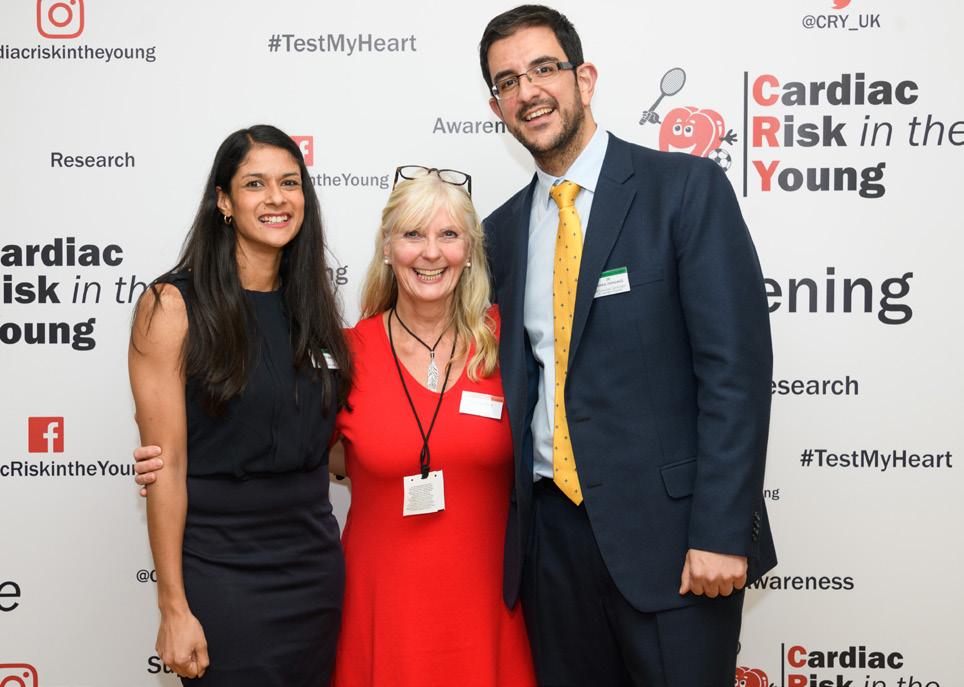
Dr Basu, CRY Supporter Heather Reid and Professor Michael Papadakis
often asked specific questions about exercise rehabilitation by colleagues and safe levels of exercise. It’s always nice to know that I am bringing useful information and insight to my new hospital from my time at St George’s.
“I also regularly help to recruit patients for trials that are ongoing in Oxford including at the moment for studies into novel therapies for HCM but my main motivation is a commitment to innovation within the NHS, which is really where my idea for a cardiac rehabilitation programme for patients with HCM first stemmed from, using my research background to do something really practical and accessible ‘on the ground’ which will ultimately benefit our patients.
“I hope that by presenting my research and speaking at conferences, I’ll be playing a part in keeping our wonderful CRY families – who contribute so generously to the research programme – up to date with the tangible outcomes of our work and demonstrating the positive impact on individuals who’ve been diagnosed with a heart condition (very possibly picked up through CRY’s screening programme).”
So, looking back…why did you first decide to apply for a CRY Research Fellowship?
“Well, as a trainee cardiologist, you really don’t get to learn too much about inherited heart conditions
and sports cardiology (as that’s considered a sub-speciality) but I kept hearing about all the amazing research coming out of St George’s, University of London – mainly via Dr (now Prof!) Aneil Malhotra who’d been my Registrar at the hospital we were working together at in Oxford and who’d secured a coveted place on the 3-year CRY Research Fellow programme.
“So, I looked into the application process and became fascinated by the work being led by Professors Sharma and Papadakis – as well as reading up on CRY’s pioneering screening programme which feeds into the research centre at St George’s, and which at the time was a concept I knew very little about.
“I applied and despite it being a highly competitive process, I was lucky enough to be awarded a Fellowship. I started in October 2016 and the rest, as they say, is history!”
What were your main highlights during this time – both in terms of research outcomes / awards / professional recognition, as well as your experience of working with CRY’s screening team around the country?
“There are also too many highlights to mention – but I think I absolutely have to start with CRY’s families. During my time working with CRY’s screening programme up and down the country, it was
always so incredible and inspiring to see human resolve in action.
“And I would like to take the opportunity to give a particular thank you to Heather and John Reid, whose 16-year-old daughter so sadly passed away in 2012. They really were the reason that I was able to get all this ‘done’ as they generously funded my research project through Alex’s Memorial Fund with CRY.
“The way that humans can somehow turn tragedy into a positive is something that I learnt so keenly from my time with CRY –and is 100% something which I took away with me from my training as a CRY Research Fellow.
“Screening was sometimes tough – being out and about, all over the country, often after a busy week at work but the minute you met the family who’d funded the screening session that you were attending and helping to manage for the weekend, all of that dissolved. You always realised the importance of what you were doing and the impact of screening.
“I presided over the screening of thousands of young people across the course of 3 years and not only did that give me huge professional experience in terms of looking at so many ECG tracings and gaining such a thorough understanding of what’s ‘abnormal’’, but I really appreciated the ‘on the ground’ effect of what we were doing as CRY Research Fellows.
“I will never forget one particular example, which I think will stay with me forever. I was at a screening (quite early on in my Fellowship) when a young man came along who had booked a screening appointment and told us he was due to run the London Marathon.
“I looked at his ECG and immediately thought ‘this looks abnormal’ so I requested an echocardiogram and pretty much on that same day I confirmed the diagnosis because it was so obvious that he had a condition called ARVC (arrhythmogenic right ventricular cardiomyopathy).
In my opinion, CRY’s screening programme (it’s not just down to me, it’s a true team effort!) may have saved that young man’s life because if he’d have run a marathon (as we know intense training actually worsens this type of condition) we can’t be sure of the consequences.
“Because of CRY’s screening programme, we were able to refer him for further investigations and lifestyle advice, ensured he received the treatment he needed and that he was regularly monitored.
“This is one case when we certainly advised, “do NOT undertake something as strenuous as training for a marathon.
“I’d also like to mention here the amazing camaraderie I saw within the CRY screening team – whether physiologists, admin
staff, drivers, doctors or family volunteers, all of whom were often giving up their weekends to facilitate the events and ensure they ran smoothly. We visited every corner of the UK, and you got to know everyone so well. I felt really lucky to have all those incredible people around me.
“Another highlight, as I briefly alluded to earlier was the exposure to elite athletes. I got to screen the 2019 Men’s Rugby World Cup squad just before the tournament which was certainly was a professional and personal highlight (!) as well as screening sportsmen and women within bodies such as Sky Cycling, RFL, the EIS (English Institute of Sport) and the LTA (Lawn Tennis Association). The experience I gained in having to navigate conversations with athletes on the rare occasions we identified abnormalities, was invaluable.
“As I mentioned, it’s not as simple as just saying “you can never exercise again.” This is someone’s livelihood – they may have a large sponsorship deal with huge amounts of money riding on it and nothing to fall back on. These are the kinds of conversations that you need to learn how to manage, and it must always be a carefully navigated, joint decision-making process.”
Any further thoughts and insight
you’d like to share with CRY’s ‘community’ about the positive impact of a CRY Research Fellowship on you as a clinician with a specialism in heart conditions that can affect young people?
“Oh, where to start! Again, the positive and humbling impact from my time as a CRY Research Fellow comes from the families I met, who were just so incredibly warm, generous and welcoming. They looked after the screening team so well, often laying on the most wonderful refreshments etc. It sounds silly but sometimes you felt like a celebrity when you
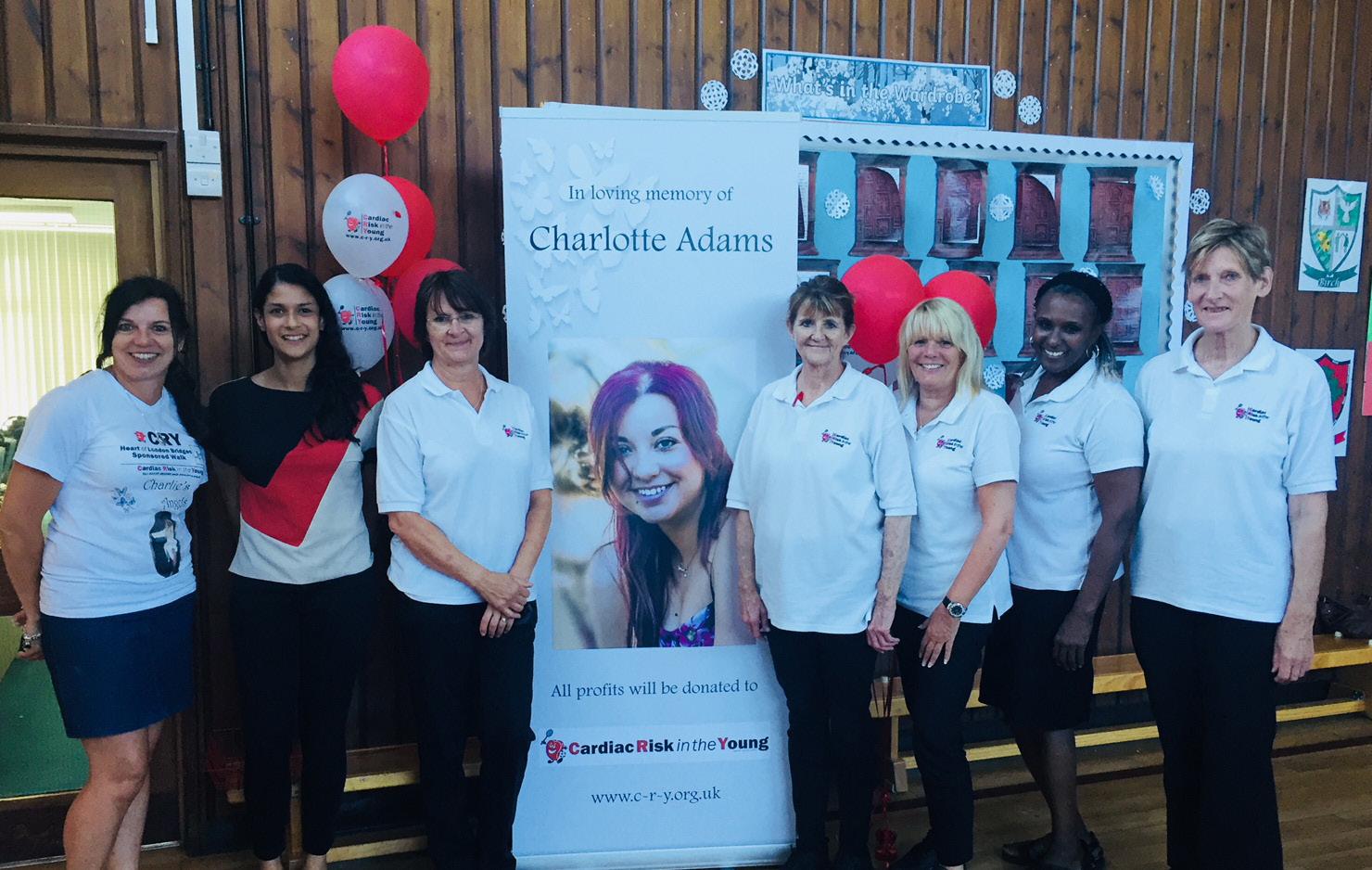
Dr Basu at a CRY Screening in memory of Charlotte Adams
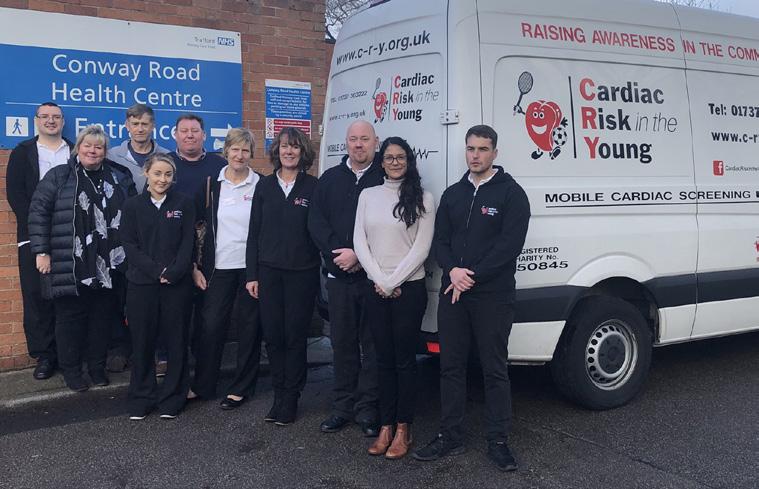
Dr Basu and the team at a screening in memory of Ben Smith
arrived! The families always told us how grateful they were although we always told them we were just doing our job. It was the families that absolutely galvanised us to keep screening and to keep getting better. Looking back, it was an absolute honour to part of the CRY Research Fellowship and CRY screening programme, and I learnt so much – which hopefully I will be able to give back to my patients as I progress in my career as a cardiologist.
“And my geography of the UK is now amazing too thanks to the CRY screening programme!”
Finally, in addition to the research you presented at the European Society of Cardiology (ESC) 2023, can you tell us about some of your other key academic achievements since becoming a CRY Research Fellow?
“I have been fortunate to have been involved with a number of research projects since 2016, led by myself and as collaborative efforts with many of my peers at St. George’s. In addition to presenting at over 20 national and international conferences, my key academic awards include:
• British Cardiovascular Society Best of the Best Abstract Prize Winner: Safety and outcomes of a high intensity exercise programme in young patients with hypertrophic cardiomyopathy: the SAFE-HCM study, Jun 2021
• British Cardiovascular Society Young Investigator Award (YIA) runner up: Six-month outcomes of a high intensity exercise programme in young patients with hypertrophic cardiomyopathy: the SAFE-HCM study, Jun 2021
• European association of Preventative Cardiology YIA runner up: Safety and outcomes of a high intensity exercise programme in young patients with hypertrophic cardiomyopathy: the SAFE-HCM study, Apr 2021
• St George’s, University of London Research Day PhD/MD Finalist: The SAFE-HCM trial, Dec 2020
• British Cardiovascular Society Best of the Best Abstract Prize Winner: The effect of ethnicity on LV adaptation to exercise, Jun 2018
“I have contributed to numerous editorials, peer-reviewed publications and research group papers. And, during my postgraduate tenure I directed a cardiovascular screening module and taught on the cardiac rehabilitation module within the MSc in Sports Cardiology at St George’s University, alongside supervising BSc and MSc students.
“I also enjoy contributing to the annual CRY International Conference (including the most recent event which took place at St George’s, University of London in October 2023).”
With the prospect of further reviews by the National Screening Committee (NSC) on the horizon – coupled with a renewed energy behind CRY’s campaigning and public affairs activity across all the Home Nations – the importance of sharing and profiling research into the accuracy, outcomes and cost-efficiencies of CRY’s cardiac screening programme has never been more important and topical.
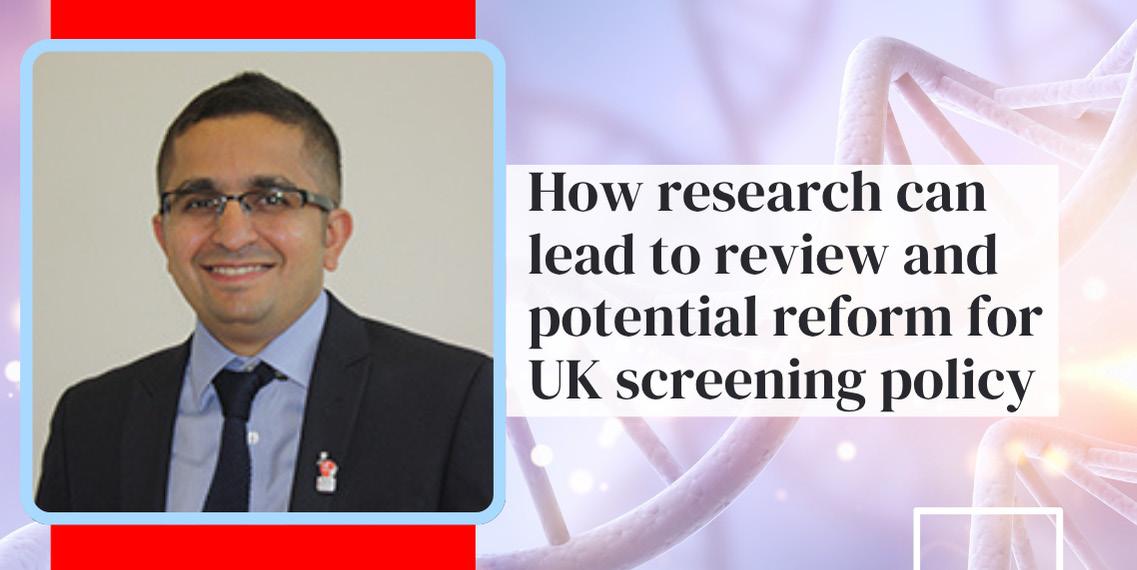
It therefore feels very timely to be shining a light on the research highlights of Dr Harshil Dhutia, whose work has been submitted as important evidence to decision-making panels in the past – and is likely to be considered as part of an updated round of reviews.
As well as championing the campaign (and acknowledging current challenges) for wider access to screenings (for both athletes and the general
population), in this article he also raises some concerns about the lack of formal training for cardiology trainees in the identification and management of arrhythmias in young people, thanking CRY for the way it helps to ‘fill this gap’ through its research fellowship programme.
Dr Dhutia was appointed as a CRY-funded Research Fellow from 2013-2016 and now, as a Consultant Cardiologist, has gone on to ‘head up’ a new Inherited Cardiac Conditions (ICC) Centre at the University Hospitals Leicester, taking the specialist training and expertise he acquired whilst working with Professor Sanjay Sharma in London onto this important and leading cardiac unit in the Midlands (underpinning the ‘regional ethos’ of CRY’s Research Fellow programme).
So, here, we chat to Dr Dhutia to find out more about his pivotal projects and the potential impact
and practical application of these findings on the ongoing development and refinement of CRY’s cardiac screening programme.
Finally, Dr Dhutia (who also explains his ongoing involvement with complex cases under discussion in the Multi-Disciplinary Team at St George’s Hospital, London) shares with us some of the lessons he learnt from being part of CRY’s pioneering cardiac screening programme and how he’s using his experience to support a local Leicestershire charity which is also committed to the prevention of young sudden cardiac death (YSCD).
Firstly Dr Dhutia, this feels like a very timely opportunity to look back and review the research highlights which were a direct result of your 3-year Fellowship with Cardiac Risk in the Young (CRY)
Can we start by talking through the focus and objectives of a specific piece of published research which you led on during your time as a Research Fellow [Diagnostic yield and financial implications of a nationwide electrocardiographic screening programme to detect cardiac disease in the young] and explain why you chose to focus on ‘general population screening’?
“So, basically, most of the research – and indeed the practice of preparticipation screening – at the
time had focussed exclusively on competitive sport, particularly in those participating at the highest echelons. However, it is recognised that the conditions that cause YSCD are often genetic and therefore do not have a unique predilection for competitive sport.
“As such, there was a clear ethical issue developing around access and equitable care with regards to screening.
“There was also limited information on the role of screening with electrocardiography (ECG) in identifying cardiac diseases associated with sudden cardiac death (SCD) in a non-select group of adolescents and young adults in the general population. But of course, CRY had a wellestablished nationwide screening programme outside competitive sport, so were able to use this valuable and unique data to:
1. Establish the prevalence of conditions associated with YSCD detected through a nationwide cardiac screening programme.
2. Consider the most effective method to identify individuals with conditions associated with YSCD (essentially compare ECG screening vs. the current standard of care including symptoms and a ‘family history’ driven investigation).
3. Investigate the impact of a diagnosis (made through screening) on condition
management and the treatments delivered.
4. Report the cost implications of a nationwide cardiovascular screening programme – which until this time had never been investigated previously.
So, what were the main findings of this research and how do you think your conclusions might positively impact CRY’s pioneering screening programme?
“This was the first study to report the results of an electrocardiogram (ECG) based cardiovascular screening programme in the young general population at a nationwide level and provided compelling evidence about the efficacy and cost-efficiencies of proactive cardiac testing which should be used to inform health policy to help safeguard young lives.
“The key findings included:
1. The prevalence of cardiovascular disease associated with young sudden cardiac death in the general population is 0.3%.
• The cost of electrocardiogrambased cardiovascular screening in 2018 was €97 (£86) per person screened, €17 834 (£15,752) per cardiovascular disease detected and €29 588 (£26,184) per cardiovascular disease associated with sudden cardiac death detected.
• 81% of individuals identified with cardiovascular disease associated with SCD were asymptomatic with a normal family history and were identified solely on the basis of an abnormal ECG.
“Inclusion of an electrocardiogram (ECG) to the current, standard practice of symptom and family history driven evaluation increases the diagnostic yield for serious cardiac disease by five-fold and is associated with a 36% reduction in cost per disease detected.
• Most young individuals identified with serious cardiac disease (including those who are asymptomatic and have no worrying family history) received disease modifying therapy within 2 years of having been diagnosed through screening.
“This impact and ‘follow up’ had never been studied and evaluated before which, in my opinion,
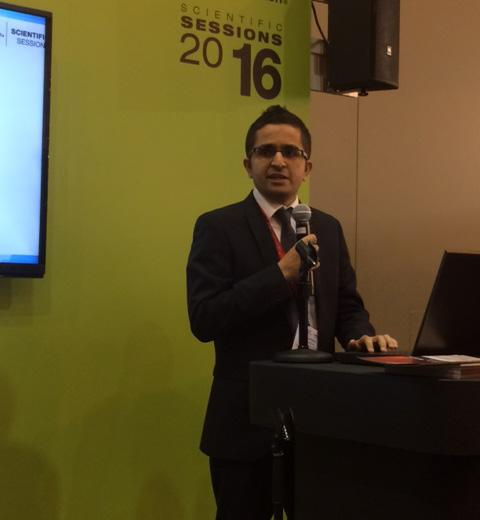
Dr Dhutia speaking at a medical conference
works as a potential rebuttal to ‘screening critics’ who in the past have suggested that the true impact (both physically and psychologically) of screening and identifying young people is not known or published – which is simply not true.”
And how would you like to see the knowledge gained from this research rolled out?
“Although the NHS / National Service Framework (NSF) Chapter 8 in the UK acknowledges the importance of identifying all young individuals at risk of SCD, cardiovascular evaluation is reserved for the minority with symptoms or a family history of cardiovascular disease or even the sudden cardiac death of a relative. Our findings in this large general population study of young individuals demonstrated that such a health-care policy is counter-intuitive for disease detection and is actually more expensive.
“So, if the identification of all young individuals at risk of SCD is an important public health concern (as would be expected by development of an NSF), then routine inclusion of the ECG in evaluations appears to be the most effective way to identify associated conditions. Furthermore, early detection results in implementation of prognostic medical intervention in the majority of cases i.e. the opportunity to treat people prior to
developing symptoms or suffering a cardiac arrest.
“That said (and particularly right now with the financial pressures faced by the NHS) the cost implications of screening at nationwide level would need to be considered and may be prohibitive in its current state, considering the huge number of young people who are eligible for screening.
“But this does not mean we shouldn’t be looking at alternative ways to try to mitigate some of these costs. For example:
• centralising screening in regional hubs to help reduce expenditure,;
• ensuring all those who are carrying out screening are highly trained in the interpretation of ECGs,;
• developing a more streamlined and structured follow up programme post-screening
• and, as technology moves apace, using Artificial Intelligence (AI) to accurately and rapidly read ECGs, would significantly cut costs and increase capacity.
“There hasn’t been a mass ECG study into AI capability as yet, but I do believe – that in time and with refinement to sort out the current flaws – this is the future to being able to potentially roll out population wide cardiac screening. It could be a real game
Importantly, in your opinion, how could this research potentially influence the next screening review due to be carried out by the National Screening Committee?
“I’m very proud that my research formed part of the evidence submitted to the last National Screening Committee review in 2019, where we concluded that the ECG is a valid and reliable screening test that significantly improves the detection rate of hidden heart conditions in young people, in the general population.
“So, I’m really hopeful that my most recent studies will help to further inform the next round of reviews by the NSC. We do need to see more published research on the rate of so-called ‘false negatives’ – but again, I’m confident that we will see this data (based on analysis of intelligence from the ONS) published soon.
“In my opinion, this could really help to influence key decision makers, coupled with our important findings of how we treat, follow-up and positively monitor those identified with a condition through screening.
“And, again in my opinion, I don’t believe the 2019 NSC panel took into consideration the vital role of proactive screening in identifying ‘more than one’ person with a condition.
“By this I mean, if you diagnose an asymptomatic young person with a potentially inherited condition, there’s a high chance (up to 50%) of other relatives (parents, young siblings or cousins) also being at risk of SCD from the same condition. There’s no doubt that this is a hugely significant (and not to be ignored) benefit of a national screening programme for ‘apparently healthy’ young people.”
Another of your previous studies (Inter-Rater Reliability and Downstream Financial Implications of Electrocardiography Screening in Young Athletes) talked about the importance of physicians being appropriately trained in the interpretation of ECGs, which is something CRY is currently campaigning about and plans to bring to the attention of the NSC / DHSC.
Are you able to summarise the key findings from that piece of research?
“It’s well established that the addition of the ECG (particularly in athletes) to a health questionnaire and physical examination within the screening protocol improves sensitivity to detect serious cardiac disease. That has consistently been shown in many studies.
“However, a concern around the ECG as a ‘screening tool’ relates to the potential for variation
in interpretation especially in less experienced hands. So, in this study we looked at the interpretation skills and ensuing results when doctors were asked to comment anonymously on ECG tracings of a cohort of athletes, and interestingly we found that:
• there is only moderate interobserver reliability for ECG interpretation even among cardiologists with experience in the cardiovascular evaluation of young athletes.
• however, modification of ECG interpretation criteria (including the model developed through CRY-funded research) improves reliability especially among nonsports cardiologists.
• the decision to propose secondary investigations after ECG interpretation varies among sports and non-sports cardiologists respectively, with significant downstream financial implications.
• the take-home message from the findings of this study highlights that formal training and development of standardised diagnostic pathways are essential to support cardiologists involved in cardiac screening of young athletes (such as the highly acclaimed Sports Cardiology MSc course now being run at St George’s, University of London).
“In conclusion, this was the largest study of its type to investigate variation in ECG interpretations
in young athletes and as such, it certainly flagged up areas where the screening process could improve and, importantly, what needs to improve for this to become standard of care. More than 6 years on from the initial publication of the research, I believe these findings have been widely accepted, although clearly there’s still a need for more formal training in order to achieve standardised diagnostic pathways.”
Following your research fellowship with CRY, you returned to a clinical role – but how important it is for you to stay involved with research projects, presenting at major research conferences:
“The focus of my current role is predominantly clinical, education and management based, and I’m really committed to developing and growing our service – but it’s vital I stay up to date with latest, contemporary research and best practice to ensure I can always offer and advise on the best care for my patients.
“However, looking back at the skills and disciplines I acquired whilst spending three years in a research environment, I believe there are four, clear areas where I continue to apply everything I learnt to my current clinical position (and of course, attendance at CRY’s annual ‘International Research Conference’ is always a key date in my diary!):
• Clinical:
“Under the guidance of Professor Sharma, I had opportunity to be trained in an Inherited Cardiac Conditions clinic and engage in regular local and regional multidisciplinary team (MDT) meetings. These experiences have allowed me to develop competencies as a consultant in managing complex cardiomyopathies, channelopathies and the appraisal of family members following sudden cardiac death as well as caring for athletes with cardiovascular disease. I have also taken on board a best practice model from the CRY Centre of Sports Cardiology and ICC as I helped to establish a de-novo regional service in East Midlands for patients with ICC and their families (more of that later!)
“Education and training/research in genetics as a Research Fellow has also permitted me to facilitate mainstreaming of genetic testing within the ICC clinic in Leicester.”
• Management/Leadership:
“Leading multicentre studies as a CRY Research Fellow (often with managing large datasets) has helped me to develop the management and leadership skills needed to lead the ICC services (such as networking, building partnerships, MDTs, managing staff)”.
• Academic:
I continue to deliver inclusive teaching at national and regional level on ICC/sports cardiology related topics (this includes my role as visiting lecturer in Sports Cardiology MSc courses)
• Royal College of Physicians (RCP) tutor to inspire junior doctors to achieve their competencies and goals.
• Local ICC/sports cardiology teaching for SpRs (specialist registrars / junior doctors)
• Consolidate on the networks made through time at CRY to collaborate in multicentre research.
•Personal:
• Public and Patient engagement – through my time with CRY, I recognised the importance of these skills in service development which also equipped me to take on my role as the Medical Lead for local charity, the Joe Humphries Memorial Trust
• Media training – developing the tools / techniques required to speak effectively to the media, communicating important messages about awareness and research.
• Writing and presentation – skills gained through my research work have significantly improved my confidence in delivering talks and seminars at conferences or in a teaching environment,
contributing to the development of new guidelines etc.
• First hand supervision – skills from true ‘leaders in the field’ improved my own skillset to become a mentor for others as a clinical and education supervisor in my own practice.
We understand you’ve set-up a one stop shop for inherited cardiac conditions (ICC) –congratulations, that’s a huge achievement! What does this vital service deliver to patients and their families?
“So, yes, I was appointed as the Consultant for the ICC centre in 2020 and for the past couple of years, I’ve been the clinical lead for the service.
“It’s important to mention here that this type of service was simply not available in Leicestershire and the East Midlands (even at a major tertiary cardiac centre, serving a large population) before my appointment. And now that we’ve successfully demonstrated that it can be done, it would be great to see this model rolled out to other parts of the UK.
“In all honesty, I do think that the training I received through my research fellowship with CRY has been transformative for my NHS Trust and the entire region, our local patients and families. We’re continuing to expand, and the feedback has been so encouraging. So, I really pledge to pass my skill set learnt through my CRY Research Fellowship down to further generations of trainee cardiologists.”
Recent highlights include:
• Over the past 6 months, we’ve been able to offer a one stop shop clinic for patients/family members with ICC (very similar to the ICC service at St George’s) providing access to multi-disciplinary care and specialist nursing, as well as genetic counselling and expert
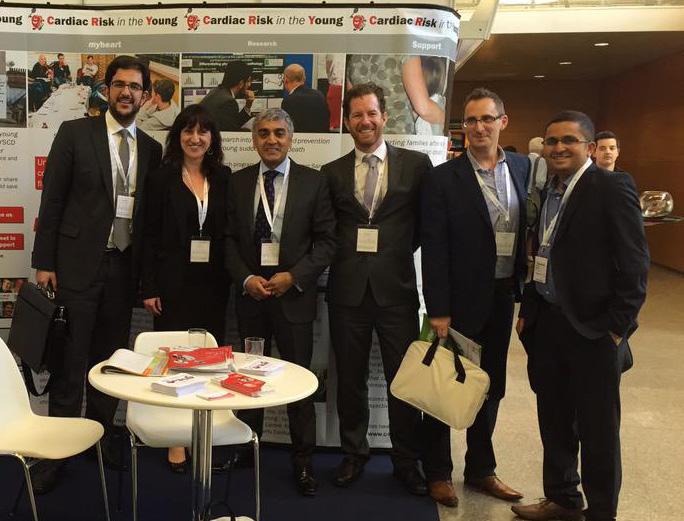
Professor Michael Papadakis, CRY Head of Screening Azra LoncarevicSrmic, Professor Sanjay Sharma, Dr Steven Cox, Professor David Oxborough and Dr Harshil Dhutia.
physiology, all within one visit.
• We’ve developed formal transition of care pathway from paediatrics to adult cardiology.
• Facilitating genetic testing within my clinic – for patients right across the Midlands (including young people who might have been referred to us having been identified by CRY screening)
• Our unit is now AICC registered (Association of Inherited Cardiac Conditions).
• Actively involved with the development of best practice by working collaboratively with other centres, organisations and nationwide pilot studies.
• Public and Patient support, endorsement and funding.
• Direct pathway referral from GP.
• And, our future aim is to one day be in a position to provide formal ICC training/fellowships.
So, looking back, why did you first decide to apply for a CRY Research Fellowship?
“I always had a real interest in sport, as a recreational sportsman (although not a very good one!) – as well as in the ‘arrhythmia management’ of young patients. But unfortunately, there just isn’t the formal training in these conditions in most Medical Deaneries so I felt the CRY
fellowship would provide me with the ideal scientific acumen in the field of YSCD prevention and which one day would make me a better physician and clinician.
“Overall, the skills I acquired in research, writing and presenting gave me ‘lifelong training’ in this vital field of cardiology. I was also very aware of the impact and importance of the research carried out by CRY Fellows who came before me (some of whom became my mentors during my own fellowship) – this was real ‘guideline-changing’ stuff! It was a very tough interview process, and I was so thrilled when I was offered a prestigious post in 2013.
“Looking back, what has become clear – which is underlined from feedback from current trainees I now work with – is that there is a significant gap in knowledge and teaching around inherited heart conditions and YSCD (although this can vary geographically).
“So again, I recognise how fortunate I am to have had the opportunity to train with CRY and to become an expert in this field in my own right; a skill set which I’ve been able to bring back to the Midlands (for families, patients, nurses, athletes, trainee cardiologists and sports scientists). One day, I’d love to have Research Fellow working with me here in Leicestershire –a real legacy of CRY’s Research Fellowship programme.
“In essence, CRY’s Research Fellowship provides an excellent platform to perform research that can change clinical practice and make a significant impact on the prevention of YSCD.
“I’ve a real sense of achievement having worked as both a lead author and a key research collaborator on several papers published in journals such as the Journal of the American College of Cardiology Journal (JACC), Circulation, British Journal of Sports Medicine (BJSM) as well as presenting the results of CRYfunded research at prestigious international conferences including the American Heart Association (AHA) and European Society of Cardiology (ESC).
“I was particularly proud of my paper that was published in JACC in the summer of 2016 and showed unequivocally that a modified and refined ECG cardiac screening protocol could reduce the cost of testing young athletes by more than 20% and perhaps even more significantly reduce the incidence of ‘false positives’ [Cost Implications of Using Different ECG Criteria for Screening Young Athletes in the UK]. Again, an example of CRY-funded research being a real game changer in the effective roll out of cardiac screening (in this case, bringing real benefit and cost efficiencies to clubs, sporting bodies and associations and importantly, young athletes).
“I was still a Registrar when I began work on setting up the ICC service in 2018 as there was just no provision in the East Midlands – something I’ve continued to build on since becoming a Consultant Cardiologist. It’s been such a positive and exciting journey, something I never could have imagined, but I just feel so fortunate to be where we are now and moving forward.
Finally, what did you learn from CRY’s screening programme –and CRY’s families?
“So, on a more personal level, my time ‘out on the road’ with CRY’s screening team really did highlight to me the significant and tragic impact that a young sudden death has on a community. I also realised the regional differences in awareness of these conditions as well as access to specialist services across the UK. But on a positive note, I really did appreciate the impact of the work that CRY was doing and funding, in terms of education, family support and delivering screening and of course, the incredible myheart group.
“And, having seen the difference that CRY was making, I felt encouraged to become involved with a local Leicestershire charity committed to the prevention of YSCD, the Joe Humphries Memorial Trust so I could ‘give back’ and share my experience and learnings from my time with CRY.
“I also enjoyed the camaraderie and social side of working with the entire CRY screening team –so many fantastic memories were made alongside a firsthand experience of seeing ‘grass roots’ prevention strategies. I recognise now that so many hospital-based and hospital-trained doctors just don’t have this opportunity.
“As a CRY Screening Doctor, you hear such terribly sad stories of tragic – yet often preventable –deaths and this was obviously a difficult part of the job. However, it was also inspiring when you saw how bereaved families were turning these tragedies into opportunities to prevent other deaths in young people, bringing family members and wider communities together in the process. It was touching and humbling and I will always hold so much respect for CRY’s families.
“The research that I was involved with – and the impact this had on the future development of ‘refining’ CRY’s screening programme – was hugely important to both me and the wider scientific community.
“However, with this opportunity to reflect on the unique legacy of a CRY Research Fellowship, I really do now believe that my three years of additional training and
learning played a huge role in me becoming a leading Consultant in this specialist area of cardiology, taking on high profile patient and public engagement roles and ultimately setting up a regional centre for Inherited Cardiac Conditions, serving thousands of patients and their families across the Midlands.
“So yes, in conclusion, my CRY Research Fellowship – from published papers, professional development to the people I met –was a truly wonderful experience.
For more information about our Research Fellows and their work with CRY, please visit:
www.c-r-y.org.uk/research/
www.c-r-y.org.uk/research/ research-fellows/
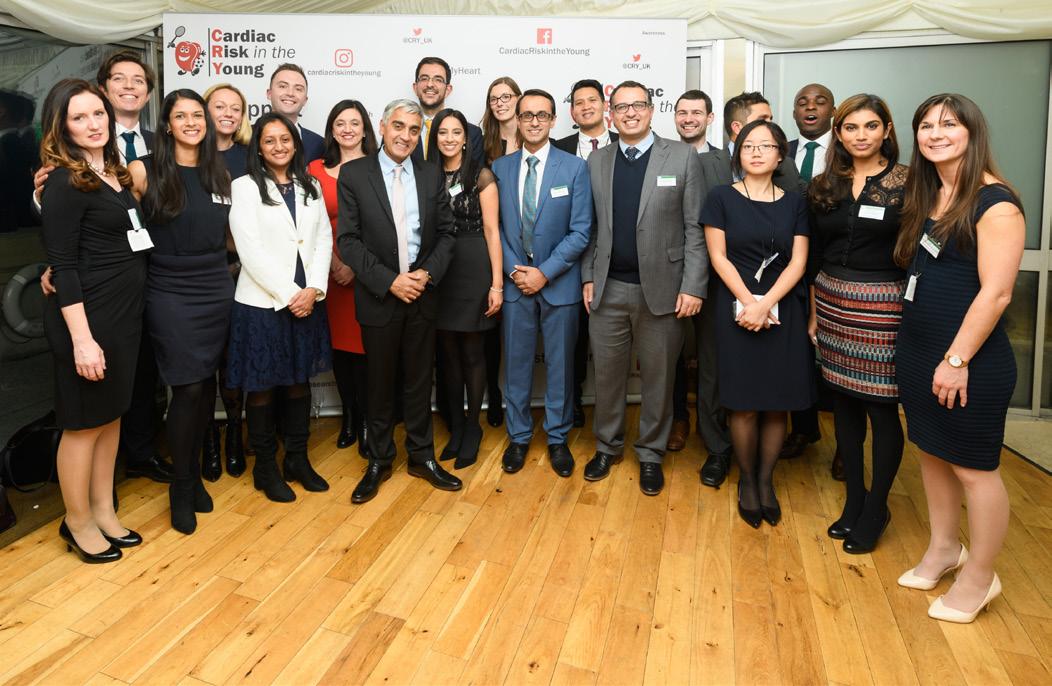
CRY Research Fellows past and present with Professor Sanjay Sharma and Professor Michael Papadakis at the CRY Parliamentary Reception 2017
NATIONAL MYHEART MEETINGS
myheart holds two meetings a year for young people aged 1835 who have been diagnosed with a heart condition
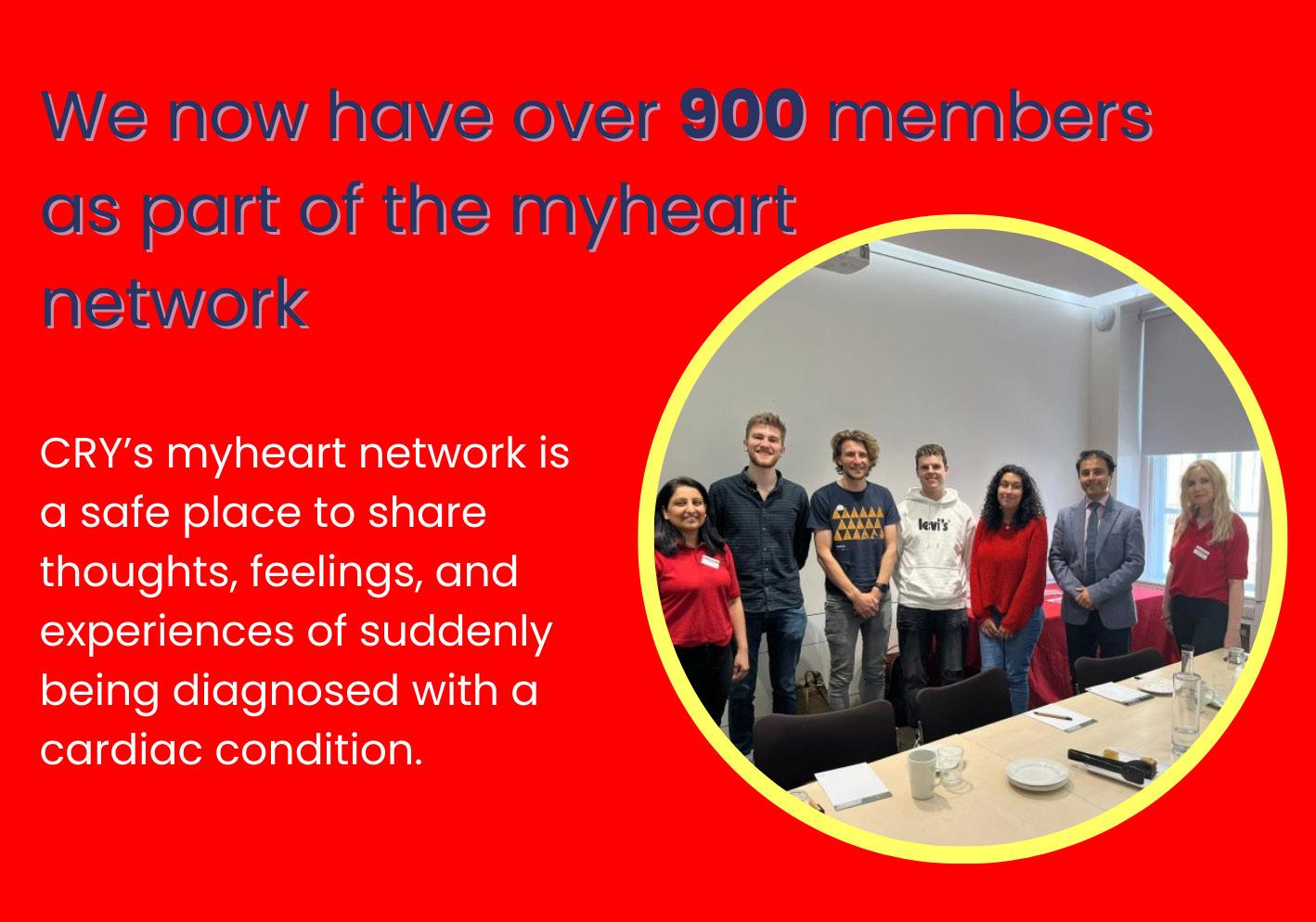
Anybody between the ages of 18-35* can come along to a myheart meeting if they have been offered or already have an ICD, have suffered a cardiac arrest, or have been diagnosed with an inherited cardiac condition. We hope that members can gain support through meetings by talking to others in a similar situation.
‘In-person’ myheart meeting: March 16, 2024
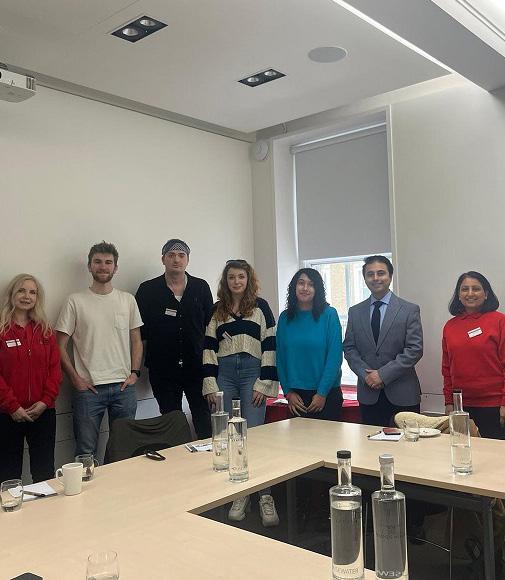
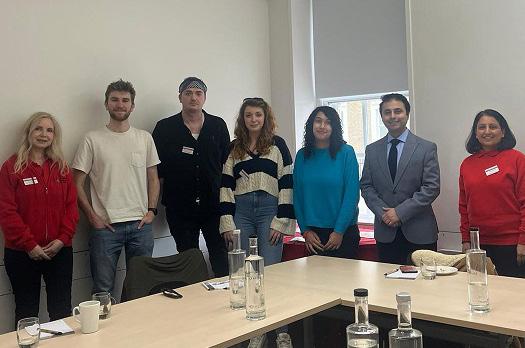
A myheart members’ meeting was held on Saturday, March 16 2024.
There was a Q and A session with cardiologist Dr Raghav Bhatia in response to queries and concerns that members had relating to their heart condition.
Online myheart meeting: October 19, 2024
A myheart members’ video meeting was held on Saturday, 19th October 2024. There was a Q and A session with cardiologist, Dr Sabiha Gati.
In this session, members asked questions about their condition, the exercise/s they can do, and any other cardiac concerns they had with regards to their current circumstances.
For more information about myheart meetings, including upcoming dates, please visit: www.myheart.org.uk/meetings
*We reserve some places for those aged between 35-39