Civil Air Patrol Magazine, Alaska Wing, December 2025
Join the Alaska Wing UAS Program – Summer 2026
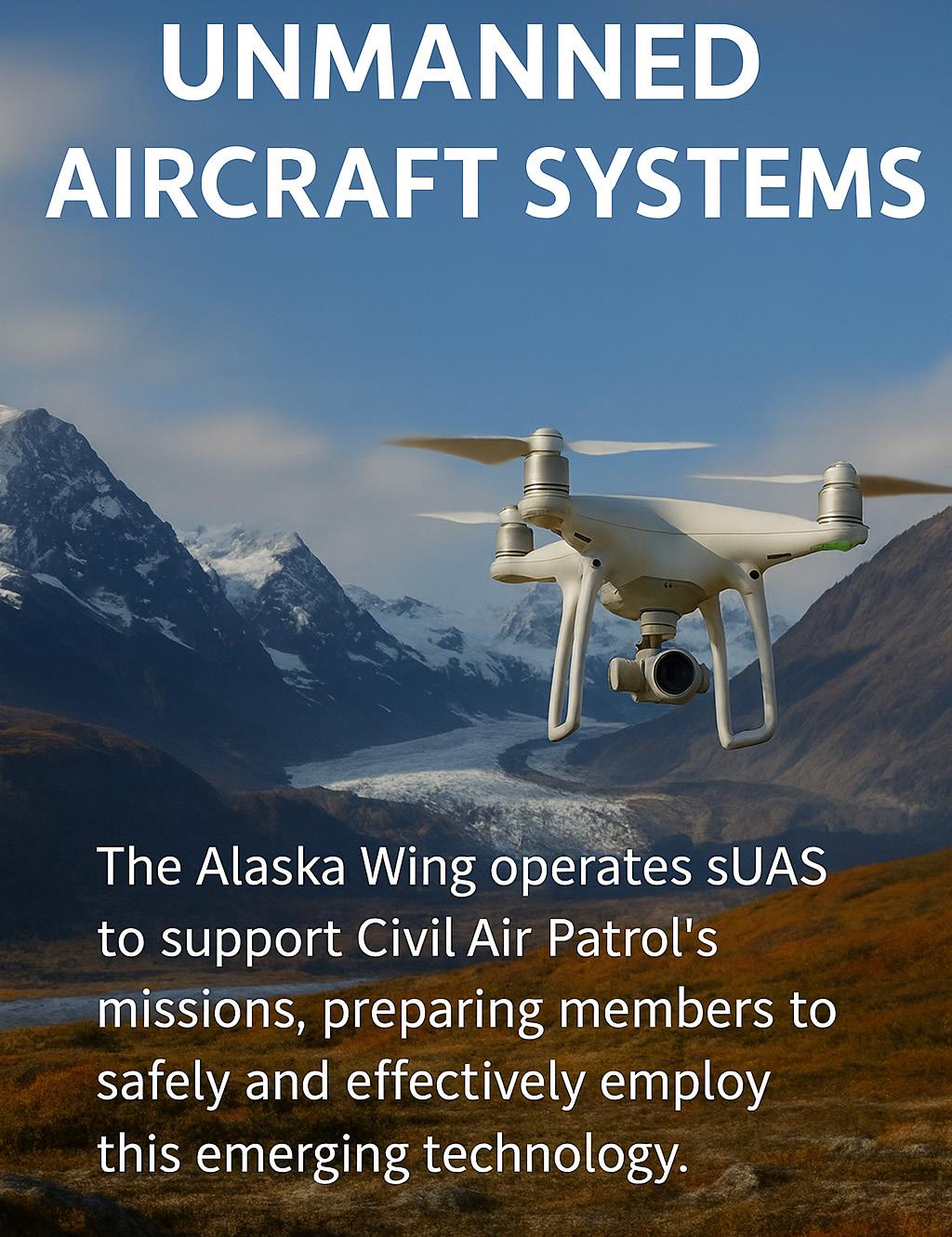
Civil Air Patrol’s Unmanned Aircraft Systems (UAS) program is expanding across Alaska, providing critical aerial reconnaissance capability in support of emergency services missions. Alaska Wing is actively preparing new members to serve as UAS Technicians and UAS Mission Pilots beginning next summer.
Members do not need prior pilot or ground team qualifications to participate. The UAS program welcomes volunteers from all specialty tracks who are interested in directly supporting search and rescue, disaster response, and situational awareness missions.
UAS operations support missions including search and rescue imagery, disaster damage assessment, wildfire and flood monitoring, missing person searches, and infrastructure surveys.
Qualified UAS Mission Pilots gain hands-on experience with advanced aviation systems and directly contribute to real-world emergency operations. Training is structured to be accessible, with Alaska Wing instructors supporting members through each phase of qualification.
Members interested in participating are encouraged to contact the Alaska Wing UAS training cadre for timelines and requirements at uas@ akwg.cap.gov.
For more information, please visit: https://sites.google.com/akwg.cap.gov/intranet/ suas
Alaska Wing UAS crews routinely train for low-altitude grid searches in forested terrain. In this scenario, an overdue hiker was last reported near a Chugach Forest trailhead. Incident Command requests rapid aerial reconnaissance to identify likely travel routes and clearings prior to ground team deployment.
Training objectives include executing systematic search patterns in dense terrain, identifying small targets using electro-optical and thermal sensors, and practicing standardized CAP reporting formats.
Successful execution requires comprehensive mission planning, disciplined sensor management, concise communications, and accurate geolocation of findings. Crews are evaluated on coverage effectiveness, imagery documentation, and timely reporting.
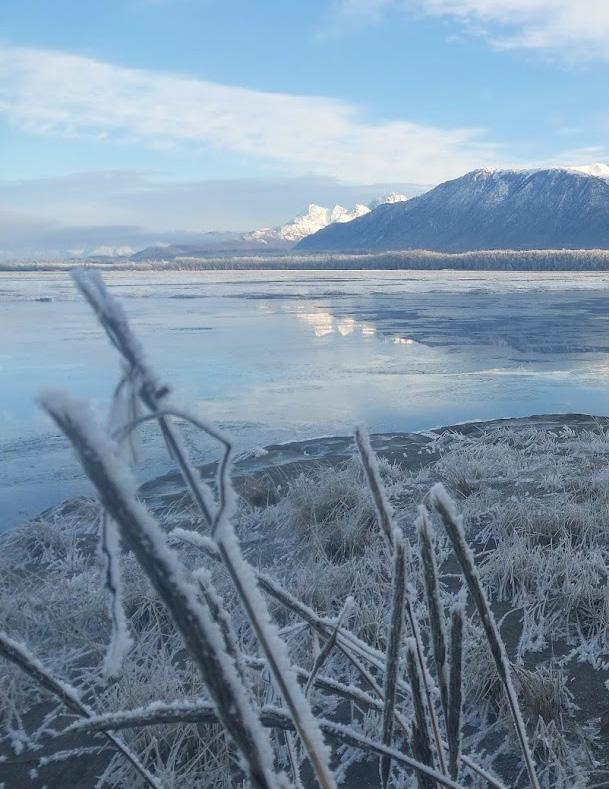
Photo: Eklutna Lake by SM Debbie Slater 11.12.2025
2026 AKWG Cadet Competition
Alaska Wing will host the 2026 Cadet Competition from 16–19 January at Joint Base Elmendorf-Richardson. The event features updated events and a revised competition structure designed to maximize cadet participation and development.
Cadets will compete in drill, aerospace, leadership, emergency services, physical fitness, communications, and UAS-related challenges. Registration closes 18 December 2025 at 2359.
From Fairbanks to Fundraising: Birchwood’s Busy November of Action
In a month dedicated to building strong foundations, our focus extended far beyond drill and decorum. Cadet leadership demonstrated proactive commitment by organizing a Veterans Day observance that was both moving and mission-critical. This powerful event elevated awareness and paid deserved
tribute to past and current Veterans, emphasizing their central role within the Alaskan community. Cadets were also instructed in military customs and courtesies, helping them to understand the difference between ranks, the practice of saluting, and more. This training instills the professionalism and respect necessary for Cadets to represent CAP effectively in any situation, and understanding these traditions is fundamental to the Cadet Program.
Following the Veterans Day obserother Birchwood Squadron Cadets’ futures.
- AFA Aerospace Education Cadet of the Year: C/CMSgt James Wood
At the Wing Conference, the Squadron was also formally recognized for its outstanding performance. The following Wing-level awards were highlighted at our end of November Awards/Promotion ceremony:
- Cadet Officer of the Year (Alaska Wing): C/Lt Col Reagan Benedict
- AFSA Outstanding Cadet NCO of the Year: C/CMSgt Kaden Matson
- Commander’s Commendation Award - 2025 Alaska Encampment: SM Debbie Slater, SM Kathy Kenney and C/SMSgt Zachary Kenney
- Achievement Award - 2025 Alaska Encampment: C/CMSgt James Wood and Cadet Kiere
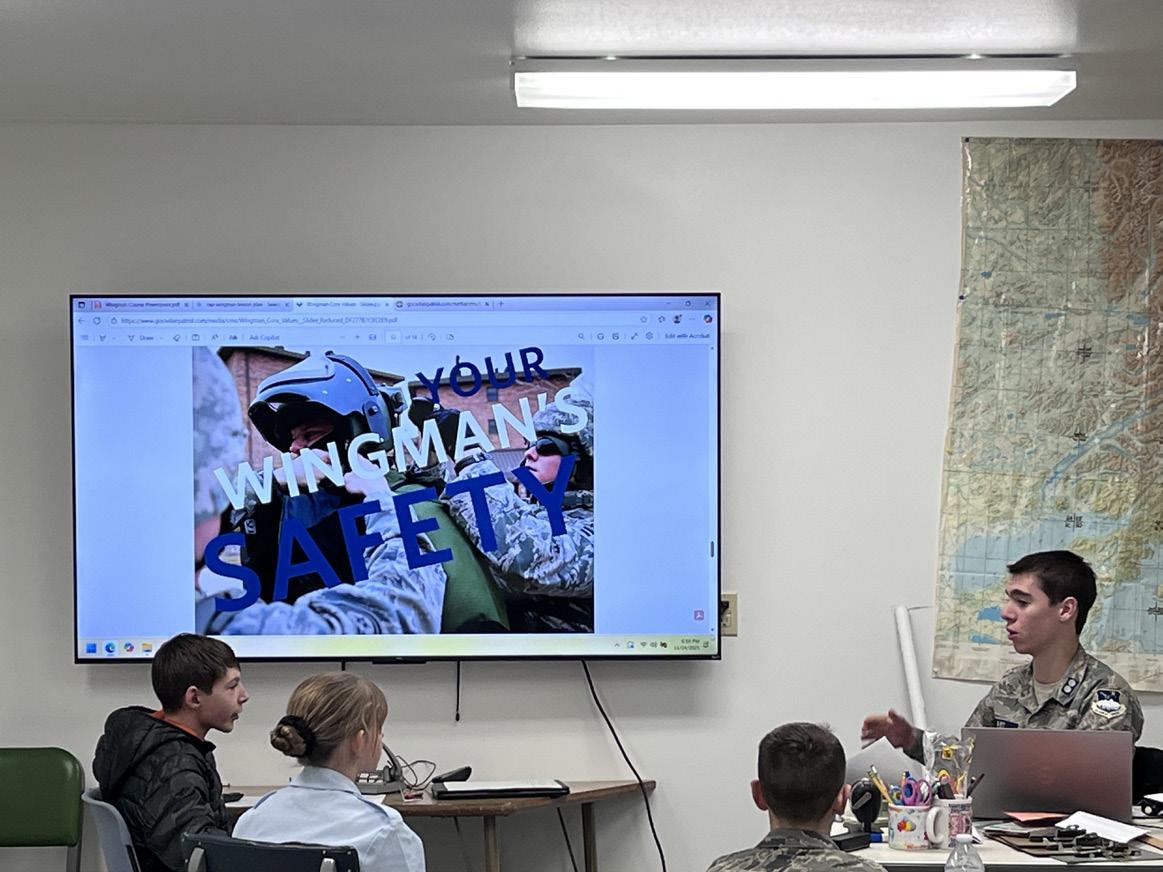
vance, a combined Senior Member and Cadet safety meeting immediately convened. 2nd Lt Brian Slater actively instructed the members on the Risk Management Program (RMP), drawing clear connections between RMP principles and real-world squadron activities. He further demonstrated proactive safety planning by detailing the comprehensive risk assessment performed for the October Rocketry Launches, ensuring all members now understand the mechanics of risk mitigation.
- Certificate of Achievement: Presented to the Birchwood Composite Squadron by the Alaska Wing Public Affairs Team
On the community front, the Squadron participated in the Wreaths Across America (WAA) program. This initiative not only honors fallen veterans, but the Squadron also receives a small amount of the proceeds that comes back to our
A small, dedicated contingent from Birchwood Composite Squadron traveled north to Fairbanks for the Annual Alaska Wing Conference. The group included Senior Members Doug Heisner, Mike Kenney, Nick Perry, and Cadet Tyler Perry. The three Senior Members led a detailed presentation on the Wing’s Unmanned Aerial System (UAS) program, generating productive dialogue aimed at progressing the program forward. This was Cadet Perry’s first Alaska Wing Conference and we hope there are many more in his and
program to support our Cadet and Senior Member activities. We are proud to announce that we surpassed our goal of 100 wreaths, securing more than 115 sponsored wreaths by the time of publication!
Our Senior Membership continues to grow. We are pleased to welcome two new Senior Members this past month, the husband and wife team of Ian and
Sara Cole. They are the dedicated parents of three long-time Cadets: Mya, Hayley, and Riley. Both Ian and Sara have already jumped in feet first, spearheading the organization of our upcoming holiday party on December 16. They’ve been seen climbing in rafters trying to find holiday decorations and looking for coolers amongst other celebration items. Their contributions are very much appreciated. Welcome aboard Ian and Sara!
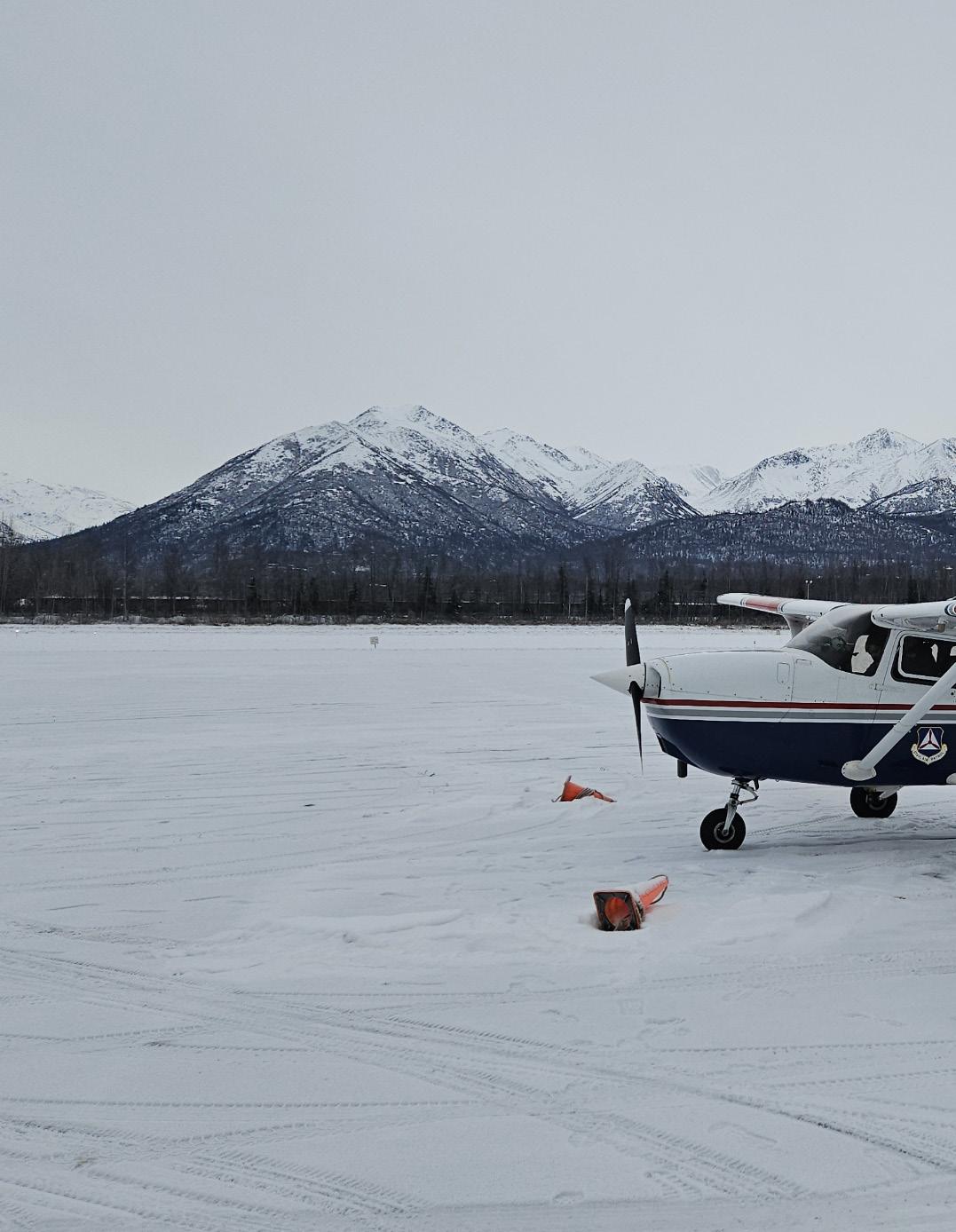
The month concluded with our Awards and Promotion ceremony. Before receiving the Rocketry badge, Cadets enjoyed a video montage documenting their five-week Rocketry Program success.
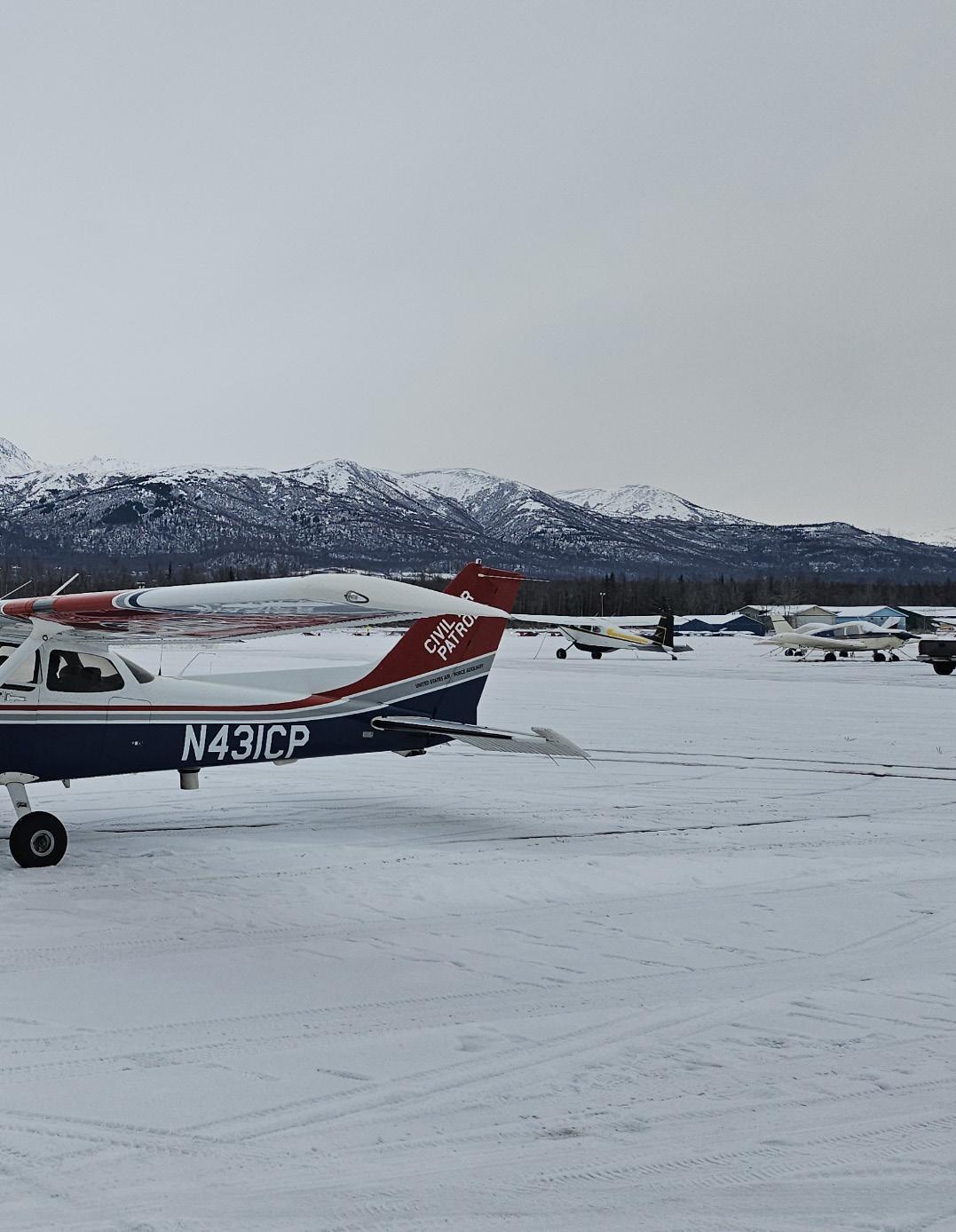
Photo previous page: O-flight Birchwood airport Saturday 11.29.2025 taken by SM Mattias Ahlvin
Photo this page: SM Pete Mullin captured this picture of the Statue of Liberty 10.24.2025
Birchwood Cadet Activities by C/2dLt James Wood, Cadet PAO
Promotions and Productivity
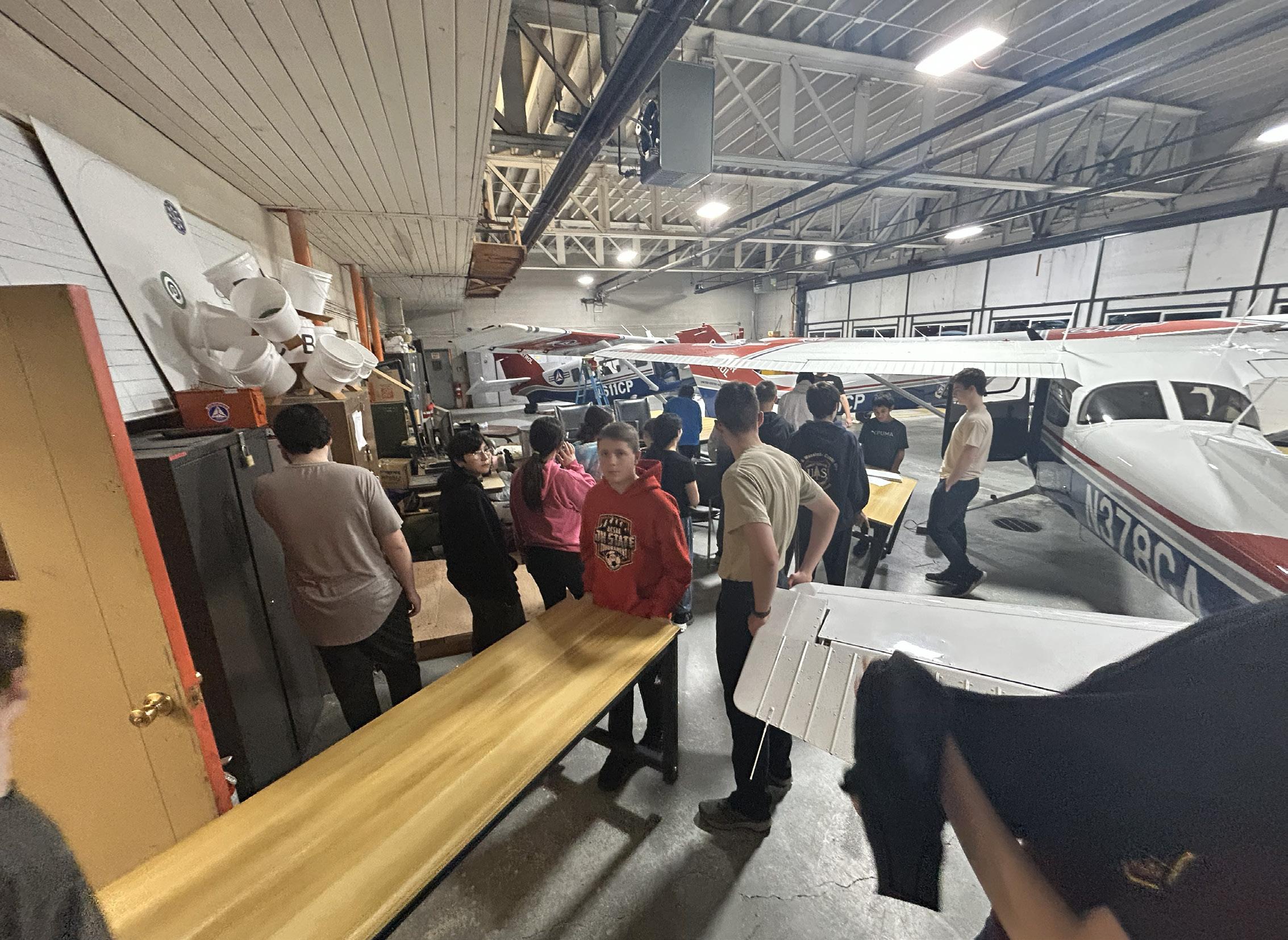
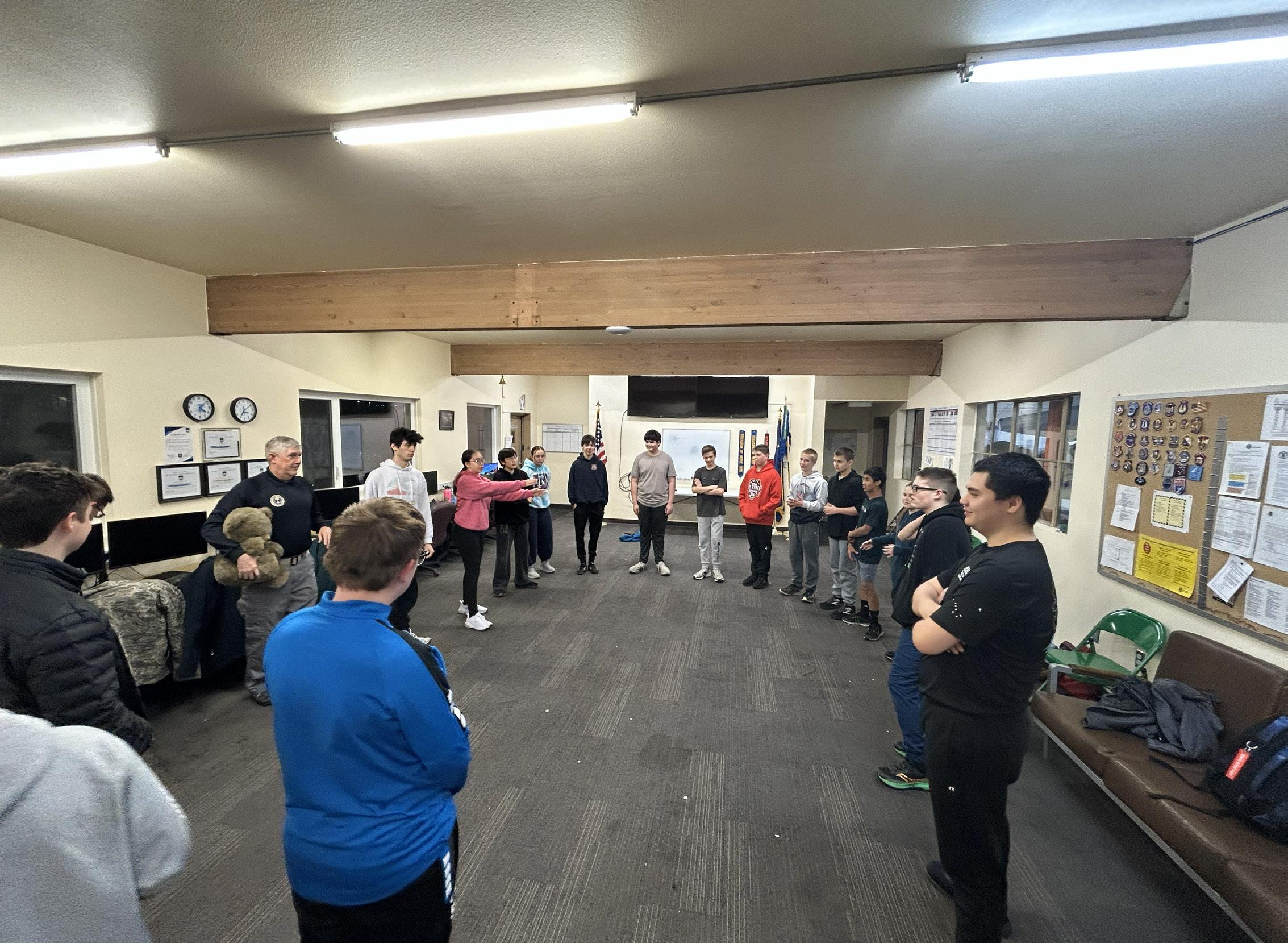
November was a very eventful month for Birchwood Squadron. From wrapping up our unit patch design to seven cadets promoting, November has been a very productive month!
On Veterans Day, our color guard got together to present the flags during the cadet meeting in honor of our veterans, while afterwards our cadets and senior members learned about the importance of honoring our veterans who served to protect our country.
And as stated before, yes it’s true! Birchwood will soon have its own patch. Painstaking work has gone into consid-
ering, merging, and refining the final design. Thank you to all the cadets and senior members that put their time and effort into forming this monumental step for birchwood.
A smaller change has been made to our Healthy Fitness Zone testing with the implantation of the sit and reach, giving us another area to improve and push ourselves in fitness. Also, in the realm of fitness, we had 21 people, which included parents, cadets and Senior Members, show up to our Reflections Lake hike/run. All had a great time and learned the value of traction devices and wearing the right layers for trail running/hiking!
Thank you to Senior Member Dennis Eby who took two of our Cadets, Ahlvin and McCauley, on the first O-flight
the Wing has run since the Government Shutdown on Saturday November 29, 2025.
This month was our promotion night, and congratulations to our 7 cadets that worked hard and earned their promotion. Our promotion ceremony on November 25 had a good turnout with delicious food afterward. Promotions
- Achievement 1 McCauley to C/Amn (Curry)
- Achievement 2 Brown to C/A1G (Hap Arnold)
- Achievement 2 Ahlvin w/ HC te C/A1C (Hap Arnold)
- Achievement 3 Perry w/ HC to C/SA (Folk)
- Achievement 4 Slater w/ HC to C/TSgt (Rickenbacker)
- Achievement 7 Klayum to C/CMSgt (Goddard)
Milestone
- Foreman to C/SSgt (Wright Bros)
Also, welcome to our three new cadets Raphael Cato, Ewan Sexson ,and Jasmine Vanderlooven that joined in November!
Photo this page: Northern Lights at Eklutna Lake by SM Debbie Slater 11.12.2025
CAP Member Focus
Interview with Col. Skip Widtfeldt
by Laura Emerson
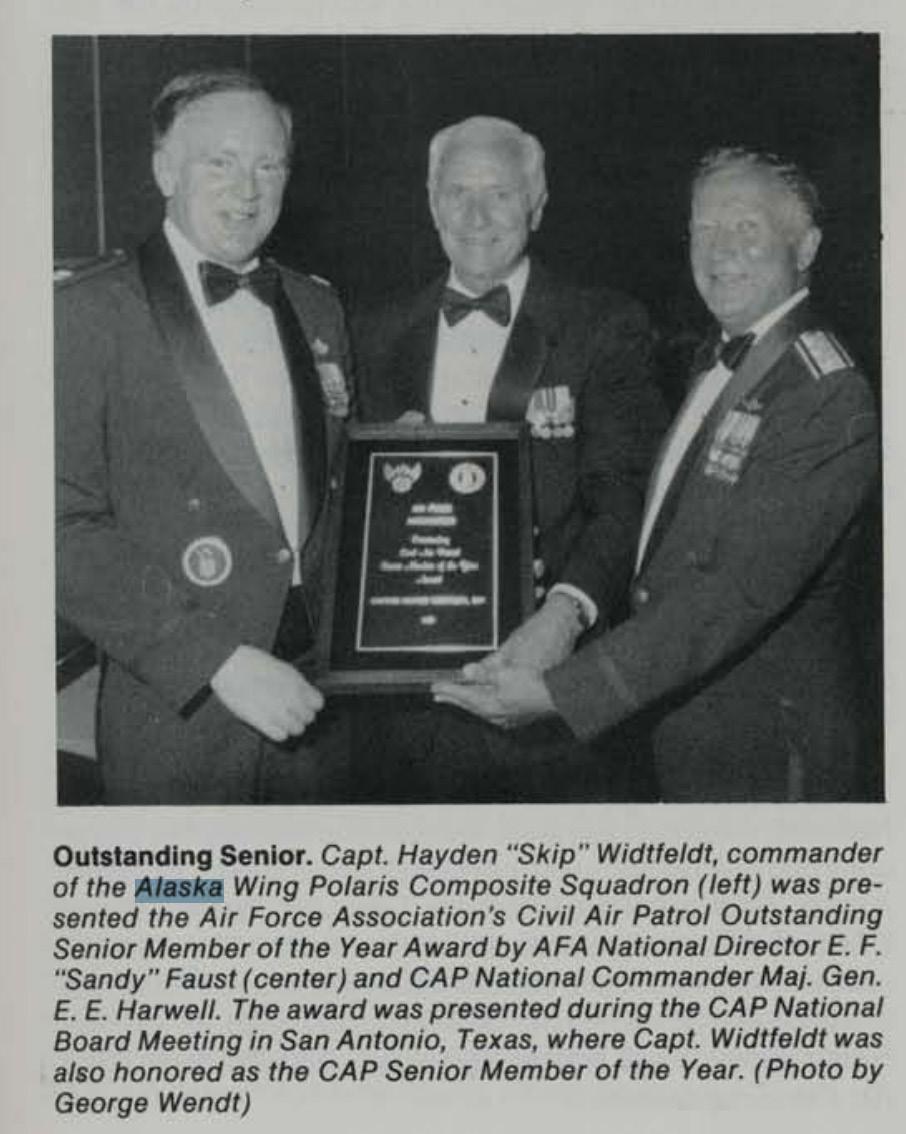
Colonel Skip Widtfeldt is a long time member of the Alaska Wing who joined CAP long before most current members have signed on. As a result, his institutional memory is remarkable. He was Commander of the Polaris Squadron, the largest and busiest squadron in the CAP at the time, he was Alaska Wing Senior Member of the year for 1988 and is the only member of our Wing to have earned CAP’s National Senior Member of the Year (for 1989) and appointed Alaska Wing Commander in 1996.
When did you join CAP?
I joined in 1981. My bride had a business colleague who was a CAP member who knew that I was a commercial pilot and encouraged me to join. I have been a “dedicated and proud member” for over 44 years! How time flies.
When and how did you learn to fly?
While working on my college degree in biology at the University of Minnesota I was also able to earn Private Pilot and Commercial Certificates in my spare time. I have subsequently been certified in many single and multi-engine aircraft, with floats, amphibious floats on CAP missions and during professional employment assignments. Over the years, CAP Alaska has had many planes, including 6 Beavers, 2 Otters, 2 Cessna 310s, a Piper PA-31 Navaho and a GA-8. We also had a T34 Mentor Bonanza trainer (related to the “V-tail Bonanza”, derided as a “doctor/lawyer killer.”)
My favorites were the DHC-2 the decades, the “Legendary faded away with those planes. With the loss of funding to sive aircraft, they have all been replaced with more capable But, in this evolutionary change, tal in the rejuvenation/rebirth planned to halt the manufacturing engine-reciprical airplanes
With our purchase of new C-172s, C-206s with Garmin glass cockpits, back in business.
What have you enjoyed doing
I have a Master rating in Emergency with a special focus on Safety, imagine, given my college work 1989, I was Commander of ron which was reported to busiest squadron in CAP. It period for aviation generally rescue specifically.
Why was it the busiest?
Alaska is a challenging place hour pilots make mistakes, moose hunting season. Of course per capita operate in Alaska and visiting, Outside based mate the hazards of flying here. natural disasters. Polaris Squadron for searches, aerial reconnaissance or ground searches almost
DHC-2 Beaver and GA-8. Over “Legendary CAP Bush Pilots” have planes. maintain those expenbeen auctioned off and capable and modern aircraft. change, CAP was instrumenrejuvenation/rebirth of Cessna after it had manufacturing of all single in the late 1990s.
C-172s, C-182s, cockpits, Cessna is doing in CAP?
Emergency Services, Safety, which you can work place injury. In the Polaris Squadbe the largest and was a very active generally and search and place to fly, and low especially during course more planes Alaska than elsewhere, pilots underestihere. We also have Squadron got calls reconnaissance and ELT air once a week.
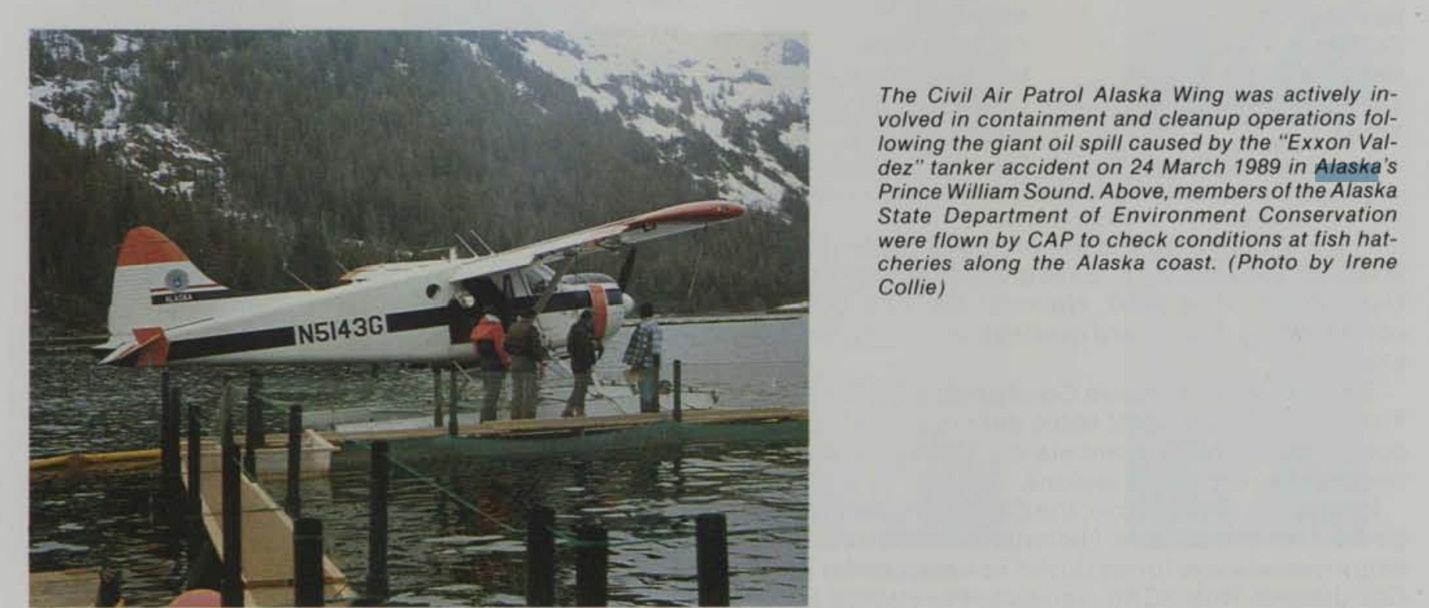
I remember one March morning at 6 am getting a call from the Rescue Coordination Center on my CAP 2-meter hand-held transceiver. A ship had struck some rocks in Prince William Sound and needed assistance from the Coast Guard On-scene Incident Commander, an Alaska EOC Commander and a CAP crew to establish an Incident Command Center at sunup.I called out one of our crews to fly the first Disaster
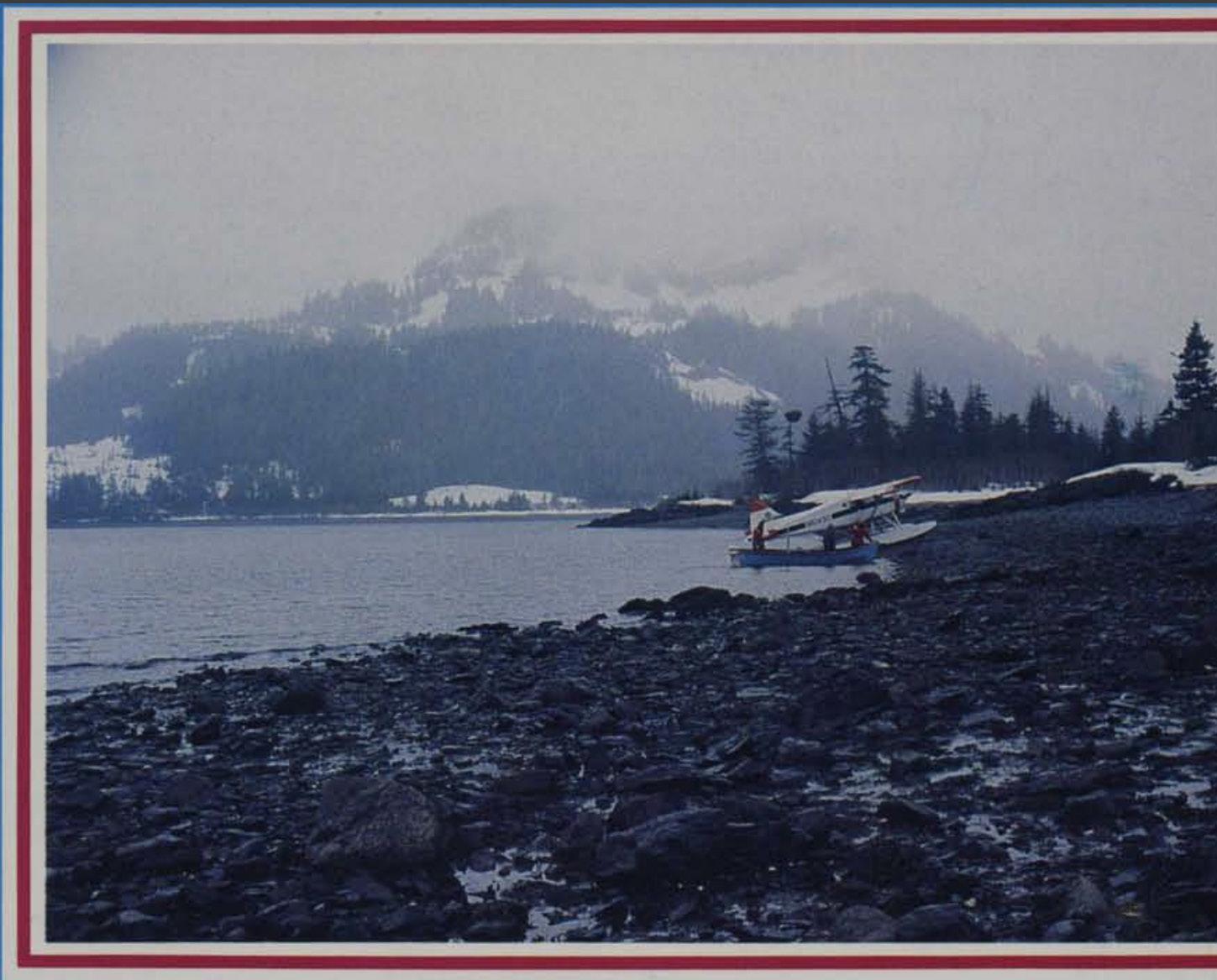
officials in our Beaver down to Valdez – yes – it was the Exxon Valdez disaster. For the next 2 days the CAP crew flew over the periphery of the spill, mapping the spread and reporting sites where oil was threatening critical human and wildlife activities. On the third day, the weather changed drastically with heavy winds from the north and the “genie” was out of the bottle. I personally worked the spill when I was assigned to the Alaska State Troopers from my regular DEC assignment because of my experience as an CAP IC and a qualified USAF RCC Mission Controller. The task assignment lasted about six weeks in Valdez. I then returned to my regular job as an EHO for the State of Alaska.
The State Legislature cited 40 of us CAP members who contributed their time and talents to the Exxon-Valdez Recovery efforts.
I received a separate Citation from the Senate and House Representative for my participation in the oil spill, for my activities in CAP overall and for my Alaska Wing Senior Member of the Year Award.
I also received thanks from two Governors for CAP’s efforts on extended searches to locate personal friends. But the most meaningful work I have
done in CAP is flying orientation flights for CAP cadets. I have done this for so many decades, that it is really gratifying when someone spots me in a restaurant or theater line or some place and reminisces with me about his or her first flight with me. One time, a doctor walked into my exam room, “I know you, you were the CAP pilot to fly me on my first flight”. Now that’s a great return on an investment.
Who gave you your first flight?
It was my uncle. I was about 10 years old. He took me up in his Cessna 170. “ I was nauseated”, but not “sick” and I was determined to learn to fly.
My first flight with CAP was as an observer on a mission for a boat with four people overdue after a large storm in Cook Inlet. I spied smoke in the early evening from a signal/camp fire over a forest. Our effort found four souls huddled around a fire without their boat. A quick relay call to RCC dispatched a Guard helicopter for recovery…we were awarded a Find and four Saves. On the subject of flight ventures I was one of the initial participants of the now very successful summer flights for the USCG MSTF crew surveying village fuel movement and storage. Another program I initiated
was flying high school science teachers on O-rides,;I think Steve Sammons was with me on that first flight. I also helped initiate and support with the team of surveyors from the Alaska Air Guard for their Instructor General Compliance Inspections across villages in Western Alaska.
At Prudhoe Bay, yes; frostbite, home-sickness, one gunshot wound and airborne medivac, frequent STD treatments and respiratory illnesses.
What has been your profession?
I was an environmental biologist and public health officer through most of my career after college with additional medical training as a physician assistant and a Master of Public Health degree along the way. My first job in Alaska was Prudhoe Bay, working with the people building the pipeline. We were 400 miles from the nearest hospital.
Later, I earned a Master of Arts in Education focused on adults. I am very committed to the formal development of good teaching materials in adult subjects. Unstructured and lazy training in some CAP subjects annoy me. I also accumulated nearly enough credits to qualify for the Occupational Safety and Health Administration Certificate as a supplement to my MPH. I taught a 3-credit semester course of 35 sessions in Survival, Search and Rescue in the Professional Pilot Section, University of Alaska Anchorage for seven years.
Did you see a lot of workplace injuries?
Thank you, Col Widtfeldt, for your many professional and volunteer services to the people of Alaska.
Photo: An Alaska state environment official, with a Civil Air Patrol pilot, inspects the oil covered coastline of Prince e William So In the aftermath of the 24 March 1989 “Exxon Valdez” disaster that resulted in an eleven million-gallon oil spill, the CAP Alaska Wing responded immediately and assisted throughout the containment and cleanup operations. (Photo by Irene Colli.)
Colonel Skip Widtfeldt was a pilot with the Alaska Wing of the Civil Air Patrol (CAP) who participated in oil spill detection and mapping efforts following the Exxon Valdez disaster in 1989. The CAP provided essential aerial reconnaissance and imagery to help track and mitigate the spreading oil slick. His role included:
• Aerial Reconnaissance: Col. Widtfeldt was one of the pilots involved in flying observation missions over the affected areas of Prince William Sound and beyond.
• Imaging and Mapping: CAP used specialized equipment to image the oil patches, which were then used by response teams to direct cleanup efforts. One snippet mentions the imaging system could detect objects as small as a meter from a half-mile in the air.
• Mission Crew: An article from U.S. Northern Command (NORTHCOM) in 2007 listed “Col. Skip Widtfeldt” as a pilot for a pipeline protection mission, working alongside observers who used the imaging technology. This illustrates his long-standing role as an experienced pilot for the Alaska Wing’s operational missions.
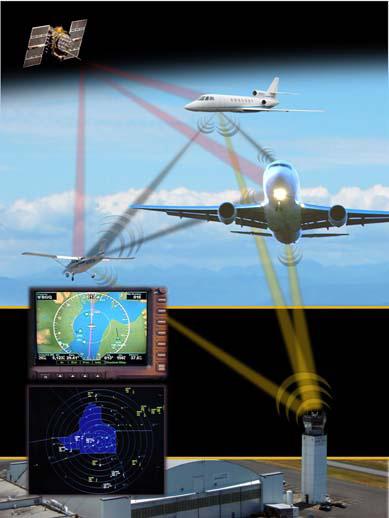
As part of its Next Generation Air Transportation System (NextGen) initiative, the Federal Aviation Administration (FAA) began mandating the installation and use of Automatic Dependent Surveillance – Broadcast (ADS-B) equipment in 2010 for most aircraft. This enterprise is in part an effort to move from ground-based surveillance of aircraft to a more accurate airborne-based system.
accurate than what is obtained from radar-based surveillance equipment. Aircraft receive “ADS-B In” to see infor mation that is provided by other aircraft and other communications transmitted by ATC ground stations.
ADS-B is a surveillance system in which the aircraft broadcasts its identity, position, altitude and speed in making the aircraft visible to air traffic control and other ADS-B aircraft in real time.
ADS-B is described as being “automatic” because no external effort is needed to trigger its transmissions. The technology is labeled as “dependent” since it requires data from the aircraft’s own navigational equipment, typically a GPS satellite navigational source. The ADS-B system comprises two discrete functions, they are “ADS-B Out” and “ADS-B In”. The “ADS-B Out” function is the broadcast of aircraft data. This information is seen as being more
There are numerous benefits derived from the implantation of ADS-B technology. These include the ability of a pilot to see surrounding aircraft traffic; when properly equipped, view weather information, more accurate position information for search and rescue (SAR) efforts, improved VFR aircraft separation in all weather conditions and crowd sourced tracking of air traffic.
In the case of an aircraft that goes overdue, SAR resources begin with determining a “Last Known Position”. His torically this effort depends on limited radar returns that often do not see lower flying aircraft and those operating in rugged terrain. This describes much of the general aviation activity in Alaska.
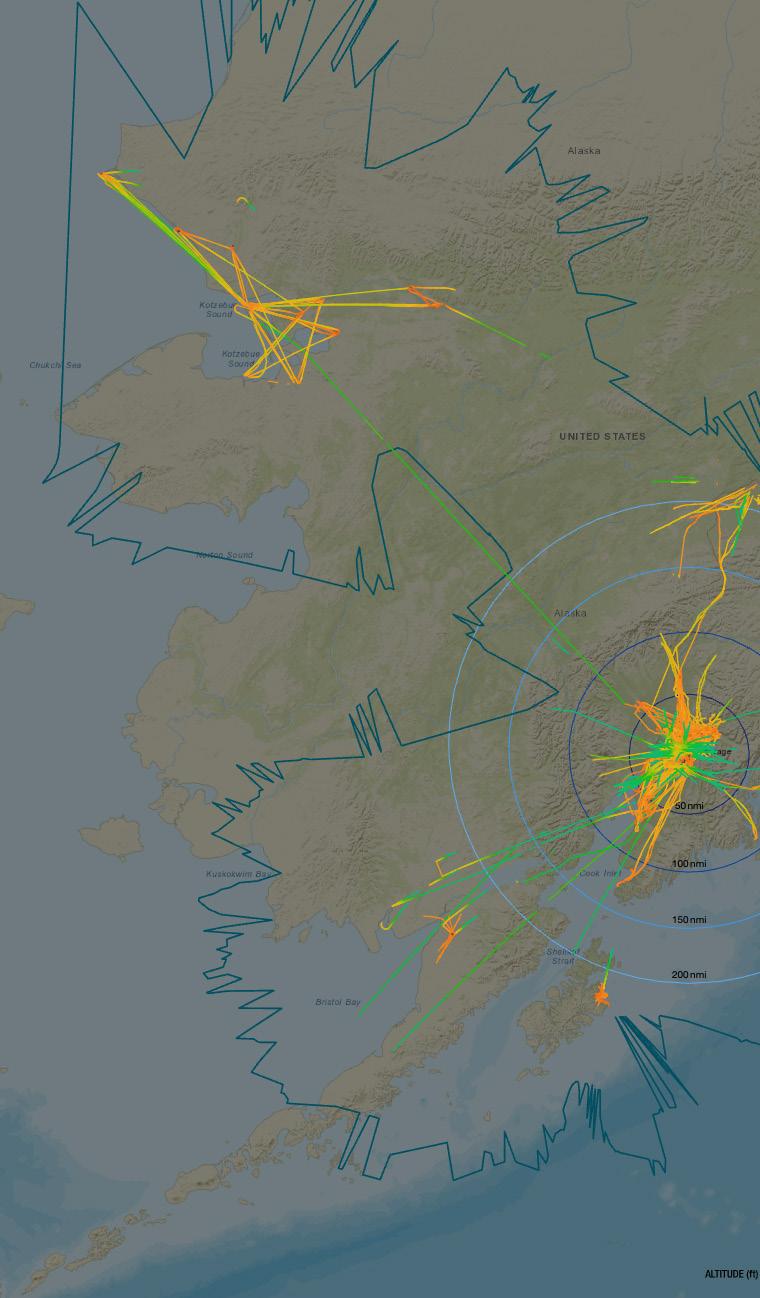
The Alaska Wing has its own Alaskan ADS-B project that seeks to improve ADS-B receiver coverage across the state. Since ADS-B equipped aircraft are frequently transmitting their positions, improved receiver coverage will help better establish the last known
-
infor-His-
position of overdue aircraft. Better location data allows SAR planners to more accurately direct personnel and rescue resources.
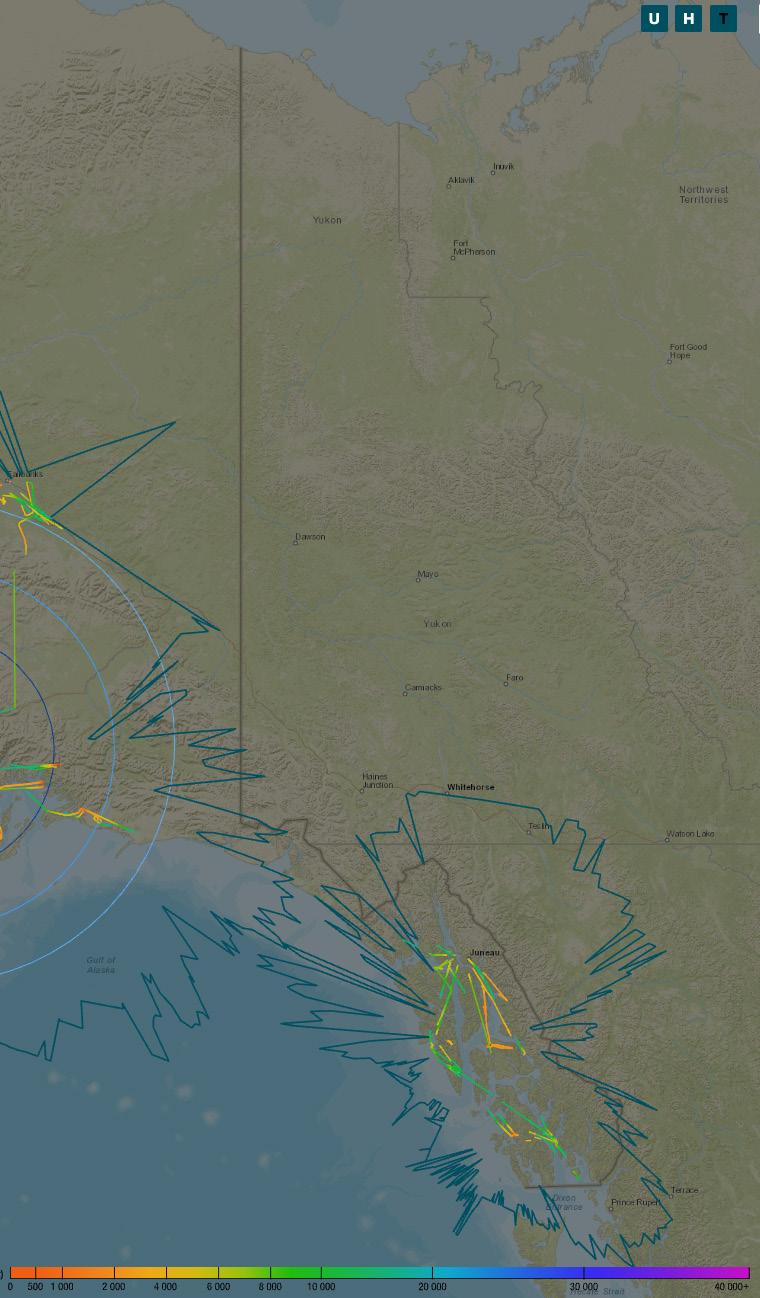
In 2025, the Alaska Wing added 17 new ADS-B receivers across the state. This included the Windy Pass route between Anchorage and Fairbanks, sites in the Kotzebue region between Kivalina and Ambler, and Prince William Sound. Additional sites are planned in 2026 for the Copper River Valley, Prince William Sound and along the Richardson Highway.
adsb to see if they are located near one of the areas shown in the ADS-B coverage map. The required receiver and antenna are available at no cost for installation in needed areas. More help can be had by sending an e-mail to adsb@akwg.cap.gov.
Many organizations have supported this project, including: Alaska State Legislature, ADSBExchange, JOA Surveys and the ACORN Network in partnership with Alaska Department of Natural Resources and the Alaska Department of Transportation and Public Facilities, Cordova Telephone Cooperative, and Alaska Power & Telephone. Our members can help in this effort by visiting the Wing’s ADS-B webpage at https://akwg.cap.gov/programs/emergency-services/
screen shot courtesy of Maj. Caleb Newville. Alaska coverage at the altitudes typically flown by General Aviation.
Emergency Communications
by SM Alan Sorum
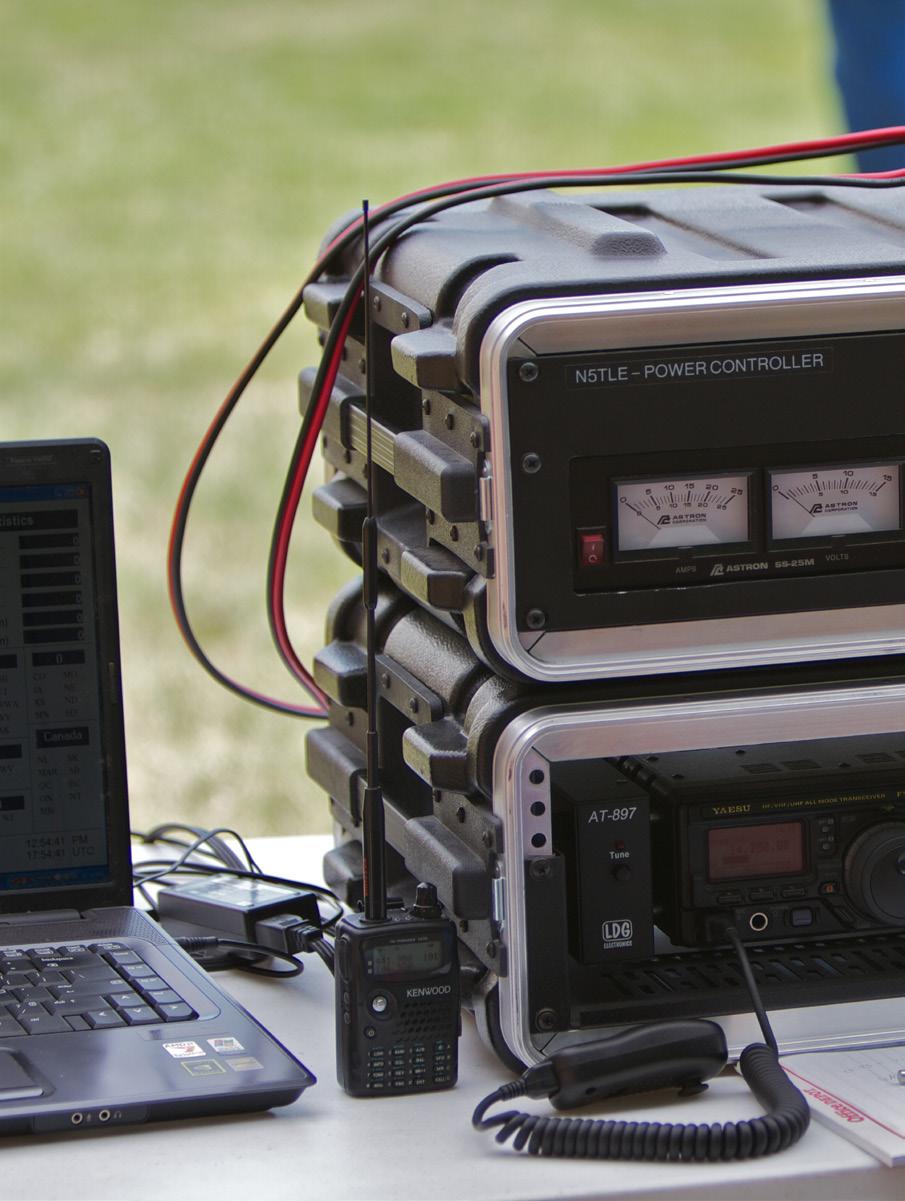
A popular saying among amateur radio operators providing communication services during an emergency is; “When all else fails, HAM radio”. This is a nod to the reality that natural disasters can often destroy critical communications infrastructure, disrupt power grids and block access to the internet.
munications network.
Examples of communication disruption have been seen in many incidents. During Hurricane Katrina, local cell phone and telecommunication systems were inoperable due to broken lines, power failures and the destruction of equipment. During the terrorist attacks of September 11th, cell phone and landline systems became overloaded, making it impossible for family members to contact loved ones and a lack of handheld radios hindered first responders at the scene. Amateur radio operators provided communications after the Boston Marathon bombing incident that overloaded the telecom-
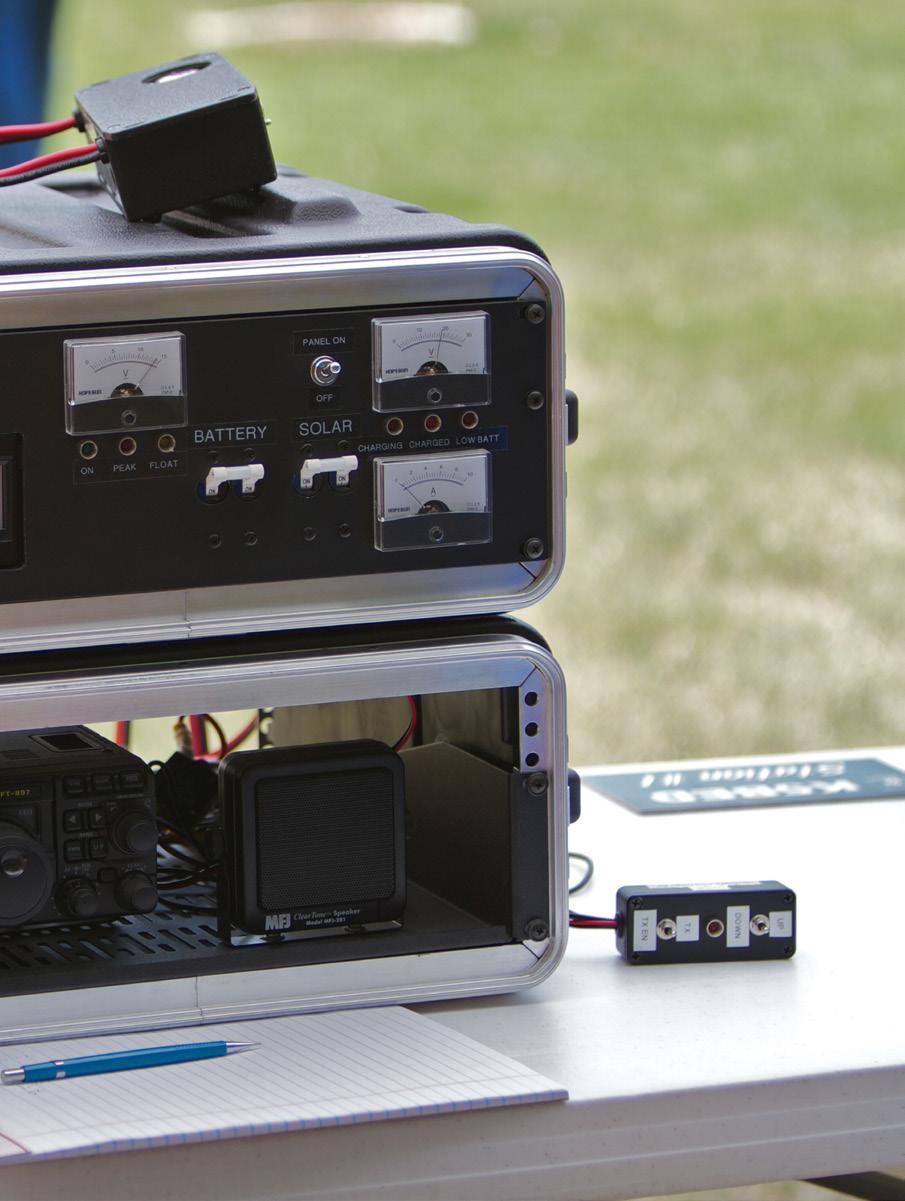
The use of high frequency (HF) and very high frequency (VHF) radios as a method of emergency communication is rooted in several of their advantages. Radio stations can be operated on alternative power sources, independent of the electrical grid, such as deep cycle batteries, solar arrays or portable generators. HF radios can offer global communication range and VHF radios are a dependable local communication resource. Radio systems can reliably transmit voice, data, and visual data.
Rooted in their simplicity, radio stations can be established almost any place in minutes with minimal groundwork. Radio technology may seem out
of date, but it often works when more complicated communication systems fail. The Alaska Wing maintains portable radio packages that take advantage of this capability.
come, to better prepare the Civil Air Patrol in Alaska to respond to a variety of disasters, including catastrophic accidents, seismic activity, weather, and homeland security. The use of HF communications in these exercises is a priority. This effort and preparation contribute to the CAP’s emergency resilience when addressing disaster responses.
The Alaska Wing of the Civil Air Patrol (CAP) through its “Twenty Seconds
More (TSM)” initiative is working to expand its HF radio competency with equipment purchases and personnel training. This scenario is based on the 2018 earthquake in Anchorage, Alaska. It is believed that if the earthquake had lasted 20 seconds longer, there would have been catastrophic damage in the region due to soil liquefaction.
Civil Air Patrol members can assist in the effort to improve the Wing’s radio communication capacity in many different ways. Many opportunities include serving in communication roles within the local squadron, completing emergency service qualifications like Mission Radio Operator and/or Communications Unit Leader, work to advance within the Communications Officer Specialty Track, complete Community Emergency Response Team (CERT) training, study for an amateur radio license, and participate in Wing sponsored communication exercises.
A number of TSM exercises have already been conducted, with more to
Photo: Bedford Amateur Radio Club, ARRL Field Day 2012.
Kenai Squadron
by Major Jan Bobek
Every Monday 6:30 to 8:30 Kenai Cadets deliver Aerospace, Leadership, Health Fitness Zone/Safety, and Character Development Presentations. The presentations are perfectly informative. Public speaking is a universal fear, so working on it builds strength in all areas of life. Cadets practice to conquer this universal fear. The Cadets are successful because they are determined and hard working. Senior members are present to guide and support Cadet progress. Confidence rises the more they practice public speaking. This process includes the CORE Values of Integrity, Volunteer Service, Excellence and Respect. Cadets continue to advance in personal development. The Cadet Program supports the process of becoming the best person you can be. The Cadets even begin to enjoy the process as proven by the results, and they noticeably volunteer more. When you conquer your fears, you become stronger and more confident. You can achieve just about anything!
Orientation flights are provided which helps to keep cadets involved in the cadet program. Flying builds confidence in just about all areas of their lives. They study and work very hard to meet their life goals. They become safe pilots and join the military or make aviation their life’s work. Senior members are proof of this. Learning to fly is an integral and crucial part of the Cadet Program.
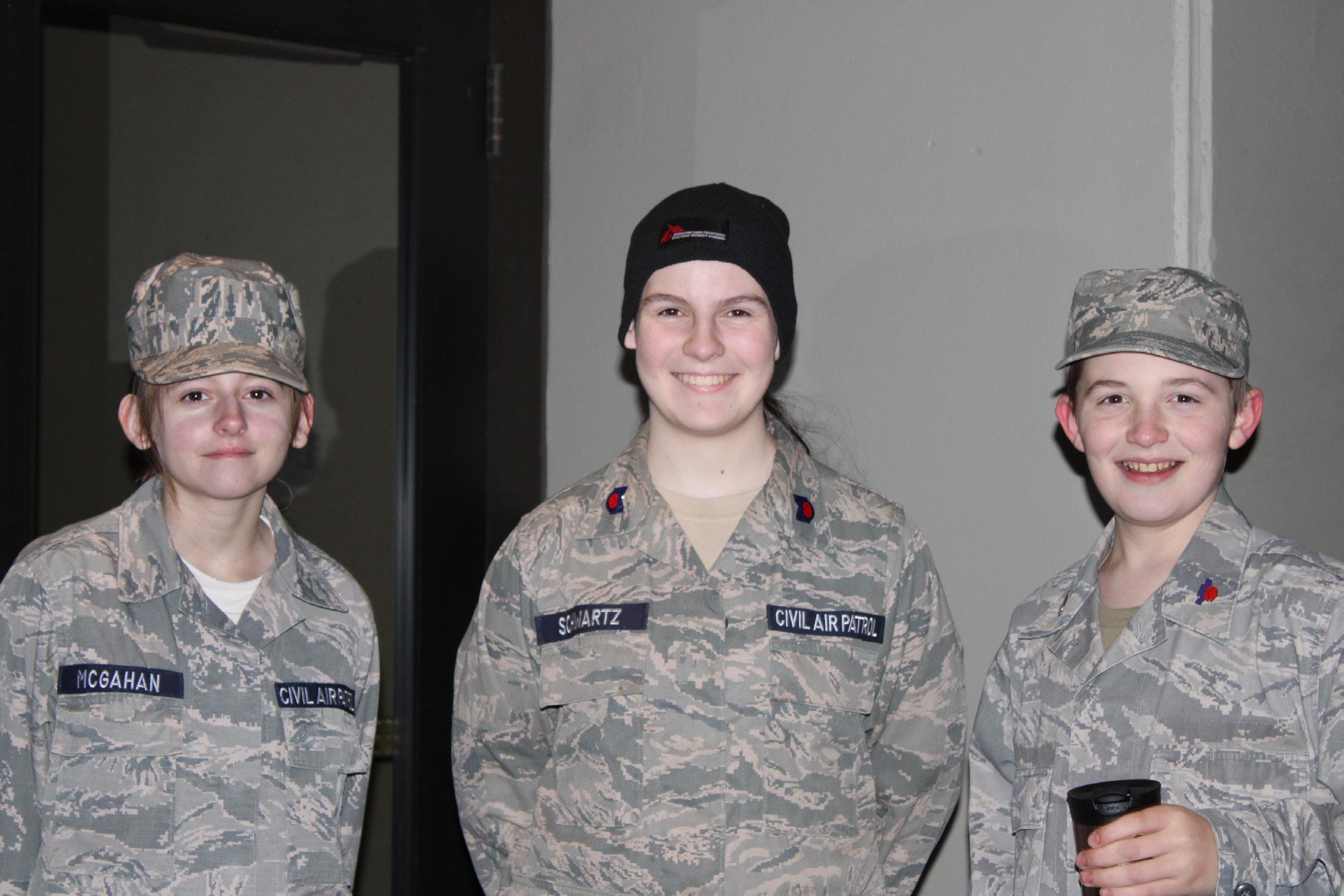
Volunteering is a large part of the Cadet program. This month Kenai Cadets volunteered for two days. At Kenai High School. At 7:00 AM they helped transport Christmas Craft materials from crafters’ cars to the gym. It was very cold and dark but the Cadets worked hard to assist the crafters. Cadets who participated were: C/Capt Lydia Schwartz, C/TSgt Hadassah Schwartz, C/A1C Manavu Schwartz, C/A1C Isaac Wohlers, C/SSgt Gunnar Jensen, C/SSgt Landen McGahan, C/Amn Kimber McGahan, C/Amn Dominic Smith and Cadet Peter Ufkin. The event was supervised by Major Jan Bobek. The Cadets worked hard and the crafters appreciated all their
hard work.
Cadets worked very hard and passed many achievements recently. Curry Award: Cadet Cheston Clark and Cadet Dominic Smith. Achievement 2: C/ A1C Isaac Wohlers and C/A1C Tayla Cole. Wright Brothers: C/SSgt Amelia Ries and C/SSgt Gunnar Jensen. Billy Mitchell: C/2nd Lt Joshua Lattin. We’re very proud of all the excellent effort to advance in the program.
Welcome to our new cadets: Elizabeth Moyer, Sophia Moyer, Porter Holladay, Everett Lewis, Riley Lewis, Gabriella Matthews, Shane Matthews and Cole Matthews. Joining CAP makes a positive difference in our community. We’re proud to have these cadets in the Kenai Squadron. All cadets are working hard, setting a good example in our community, and supporting each other in continuing to practice the Core Values. The world is a much better place with these young cadets in it. Our cadets continue to make America strong. We are very proud of them.
Photo: photo: C/Amn Kimber McGahan, C/TSgt Hadassah Schwartz, Cadet Smith
Tok Squadron
by Richard Dennis
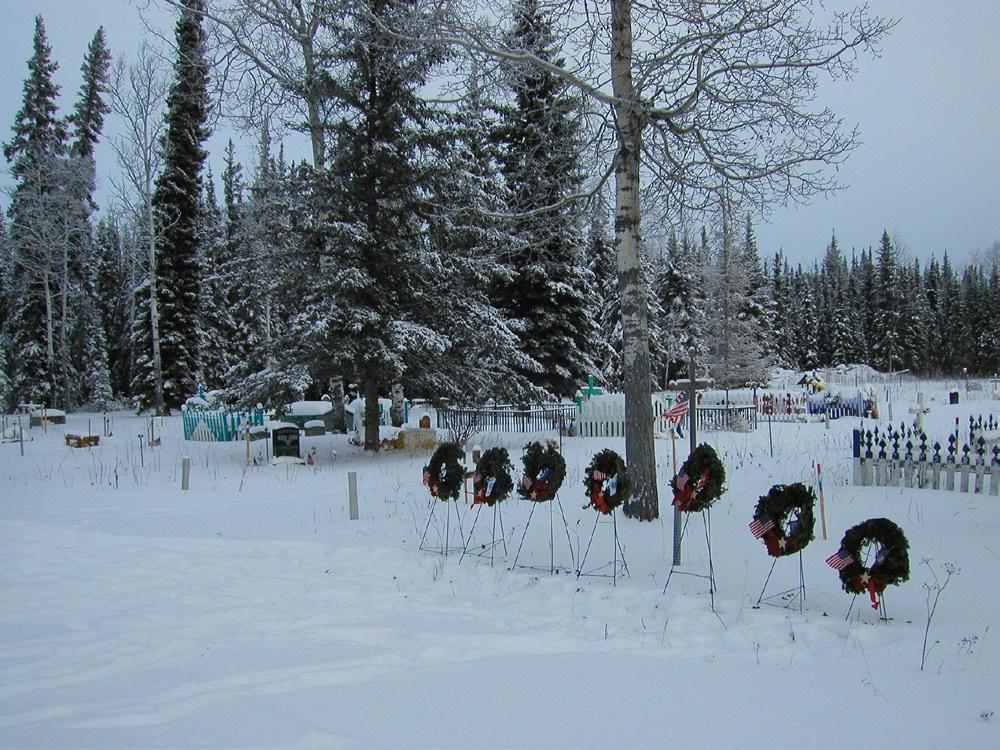
Join our Civil Air Patrol unit in honoring veterans this Christmas Season. At 11 AM on Saturday, 20 December our local CAP unit will be placing a holiday wreath at the grave site of each veteran in the Tok Cemetery. Community members are invited !
This will be the 6th year that the Tok Composite Squadron here in Tok has recognized our veterans. The program started years ago on the East Coast when a wreath company found they had a large number of unsold holiday wreaths. The owner recalled a trip from his youth to our nation’s capital. As a kid he’d won a newspaper contest. Part of that trip included a visit to Arlington National Cemetery. With that memory from his youth, he decided to donate those wreaths to the memory of those veterans.
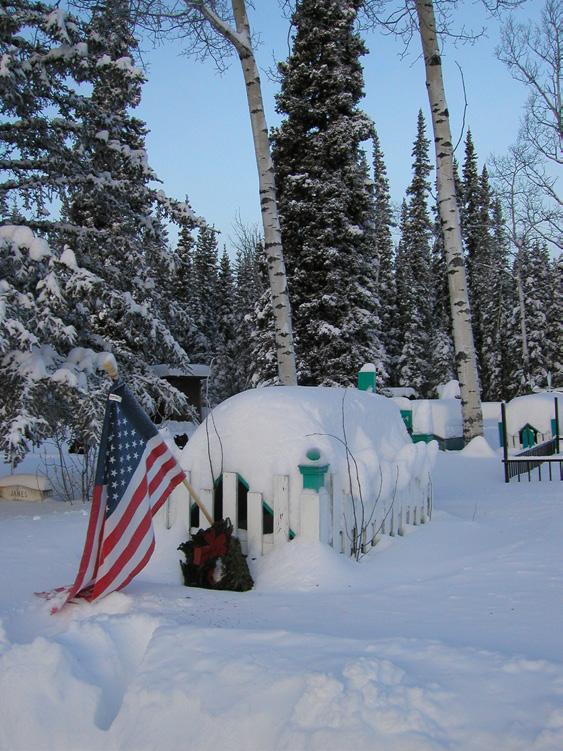
CAP Tok Cementery Front
That program has grown exponentially to become a huge national event. It now stretches across our nation. These wreaths are placed coast to coast honoring our veterans and now as far North as here in Tok, Alaska. Last year an estimated 3.2 million wreaths were laid nationally. Over 60 wreaths will be placed here at the Tok Cemetery, along with a number of wreaths also going to Tanacross. The cemetery too at Elmendorf AFB will also be participating.
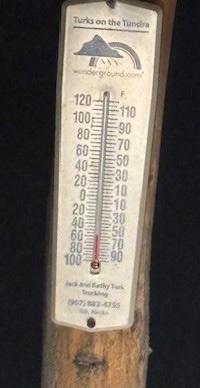
Temps have been below zero, down to the minus 60s.
(photo by Harry White)
Along with a number of individuals, the Tok Composite Squadron salutes a number of businesses who purchased batches of wreaths. Special thanks to; Alaska Power and Telephone, Burnham Construction, Burnt Paw, 40 Mile Air, Fast Eddies, Northern Energy, Tok Interior Bus Lines, Tok Bus Lines (School Buses), NAPA, Young’s Chevron, Tetlin Fish and Wildlife Refuge, and Three Bears.
wreaths.
CAP Grave site w Flag, located East of Tok holds nearly 70 veterans. A Wreath is placed at each veteran's grave site. (R Dennis)
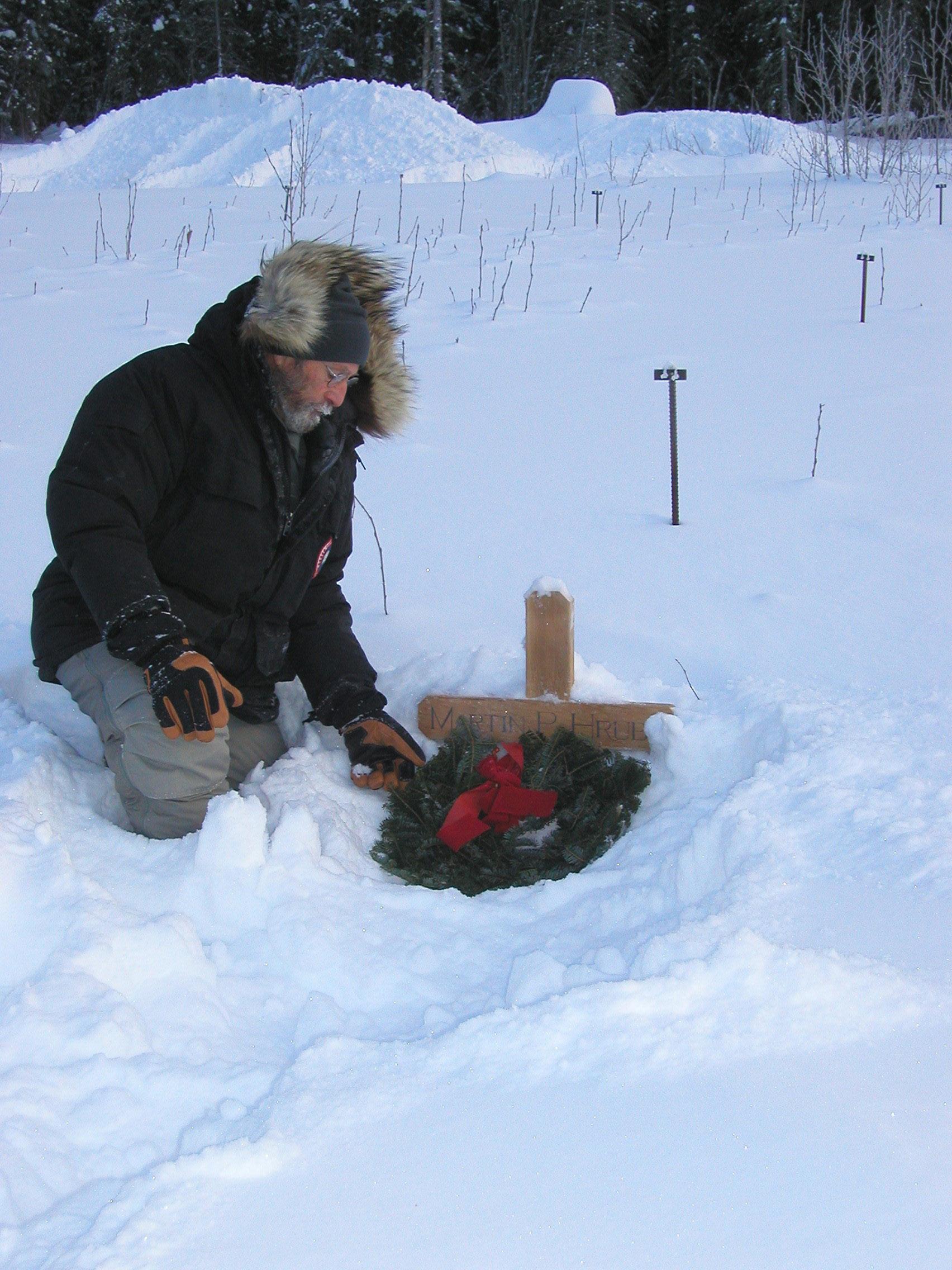
Right: This year Wreaths will be placed at the grave site of each veteran at the Tok Cemetery. Nationally this past year app. 3.2 million Wreaths were placed to honor our veterans. Nearly 70 Wreaths will be placed at the Tok Cemetery. (R Dennis)
Arcturus Squadron
by C/SMSgt Vincent Estrada
The Arcturus Squadron and its cadets have been progressively improving recently, with many new cadet promotions, activities and classes to occupy cadets lately. Along with overall advancements in cadet performance and participation, there have been several NCO and higher promotions in the squadron, as well as many new cadets joining the squadron.
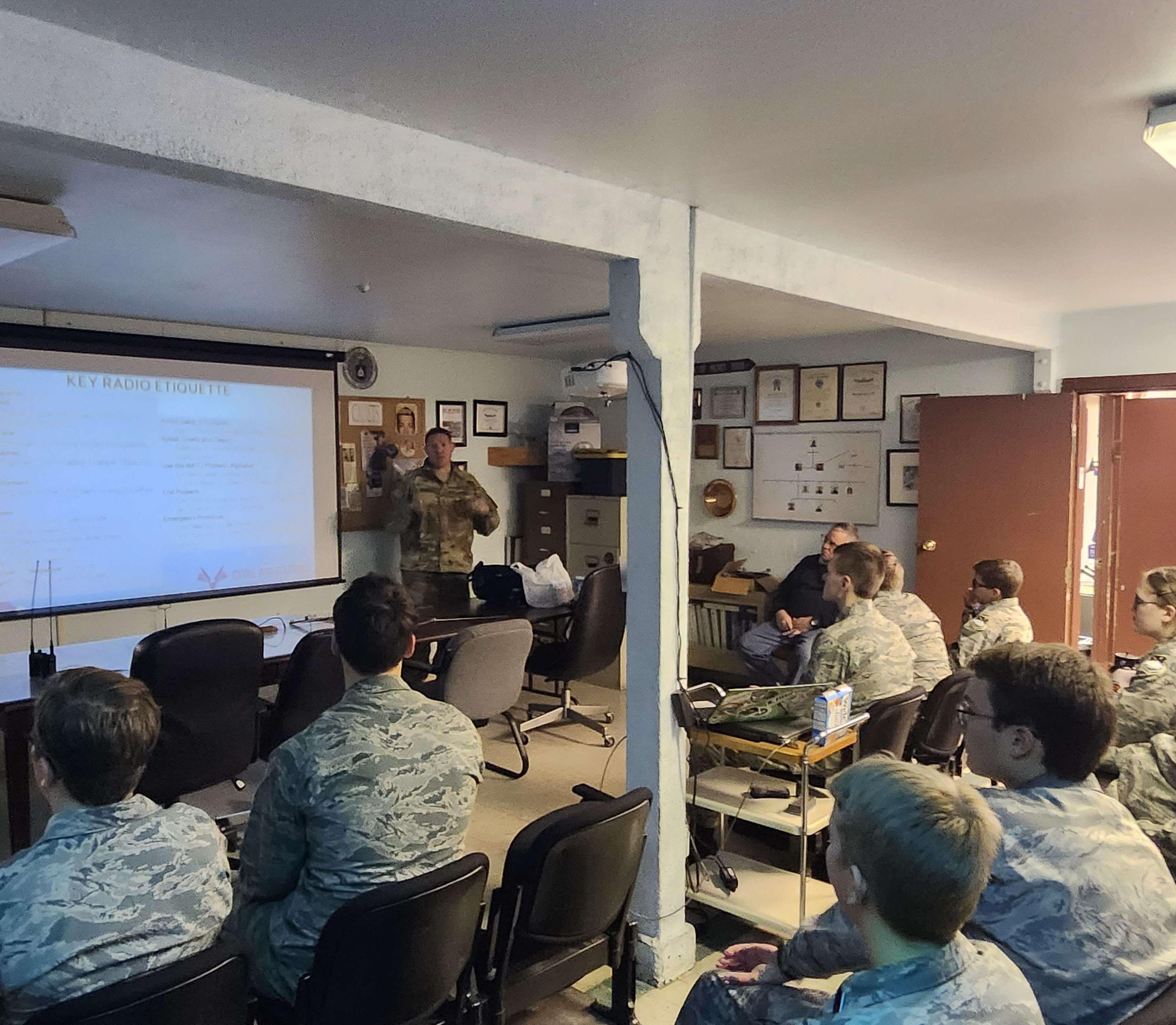
SM Garvens has been resuming his class on radio communications and operation, reviewing subjects related to radio waves and frequencies, possible hazards of operating with such equipment, and the general field of its uses. These classes have been exceedingly helpful for the cadets and have given them applicable knowledge if they ever plan to follow a career that utilizes radio operations.
Additionally, the Arcturus CyberPatriot team has continued to partake in Cyberspace competitions, and has been consistently achieving high placements in these competitions.
Promotion night was held at its usual location, with cadets performing drill and attending a monthly Character Development class. Several cadets were qualified to promote this month, and many others are currently completing requirements so that they can promote in the future.
Promotions:
C/AB Calvin Wood to Cadet Airman
C/AB Vanessa Young to Cadet
Airman
C/Amn Isaiah Bixby to Cadet Airman First Class
C/Amn Wyatt Garrett to Cadet
Airman First Class
C/SSgt Eowyn Davidson to Cadet
Technical Sergeant
C/TSgt Aron Flores to Cadet
Master Sergeant
C/CMSgt Aspen Frye to Cadet
Chief Master Sergeant
SM Garvens' Radio Comms Class.
Polaris Squadron
by C/ 2d LT Jack Parker
Polaris squadron had a very exciting and industrious month, the cadets integrated into their new flights and participated in many activities.
For Aerospace Education we started the meeting with a comprehensive drill teaching, then Col. Anderson taught the cadets about lift and its importance to flight. After the class the cadets built paper airplanes and had a competition to see who could go the farthest.
During our Physical Training meeting the cadets passed their Cadet Physical Training and participated in an activity led by 1st LT McAurthur where they learned about communication and its importance to leadership.
At our blues meeting Lt. Col. Brian Porter taught the cadets Character Development, the Cadets also learned drill and ceremonies taught by their respective flight staff. Congratulations to C/SrA Eckman for promoting to C/SSgt passing her Wright brothers test, a great accomplishment in the Civil Air Patrol Program.
Valdez Squadron
By C/2dLt Taylor
With the Alaska wing conference taking place, November was a grand month for the whole wing. During the Alaska wing conference, the Valdez squadron received multiple awards, some of which being the first for Valdez!
Valdez Squadron received the:
1. Certificate of Achievement: for prolonging the legacy of the Alaska Wing magazine by submitting these informative reports; and
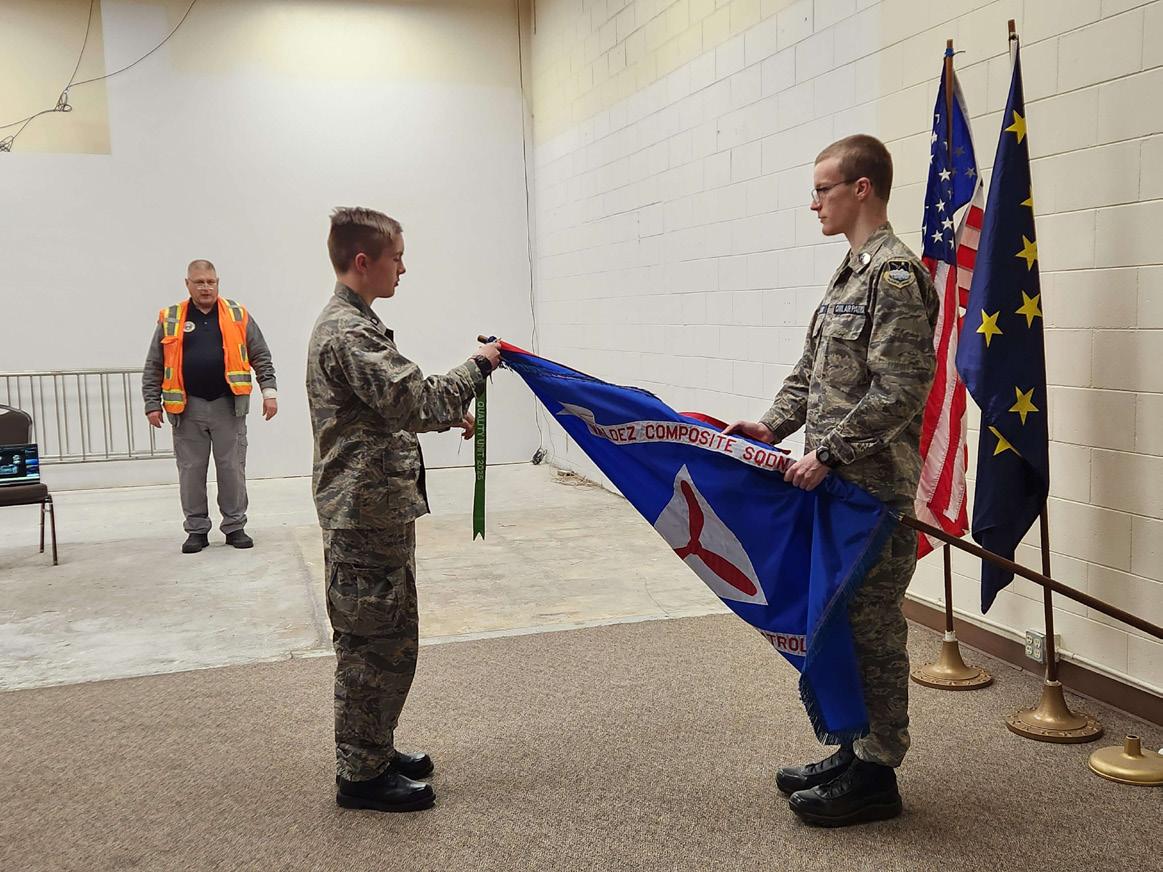
2. The Quality cadet unit award: for growth and commitment to the Civil Air Patrol. This is also Valdez’s first time receiving this award!
Other than awards, Valdez had a splendid time working on ES quals and PT. We planned, prepped, and prepared; getting most, if not all, our cadets ICUT and ES-116 qualified. And on November 15 the Valdez cadets braved the elements on a practice exercise to find an ELT beacon!
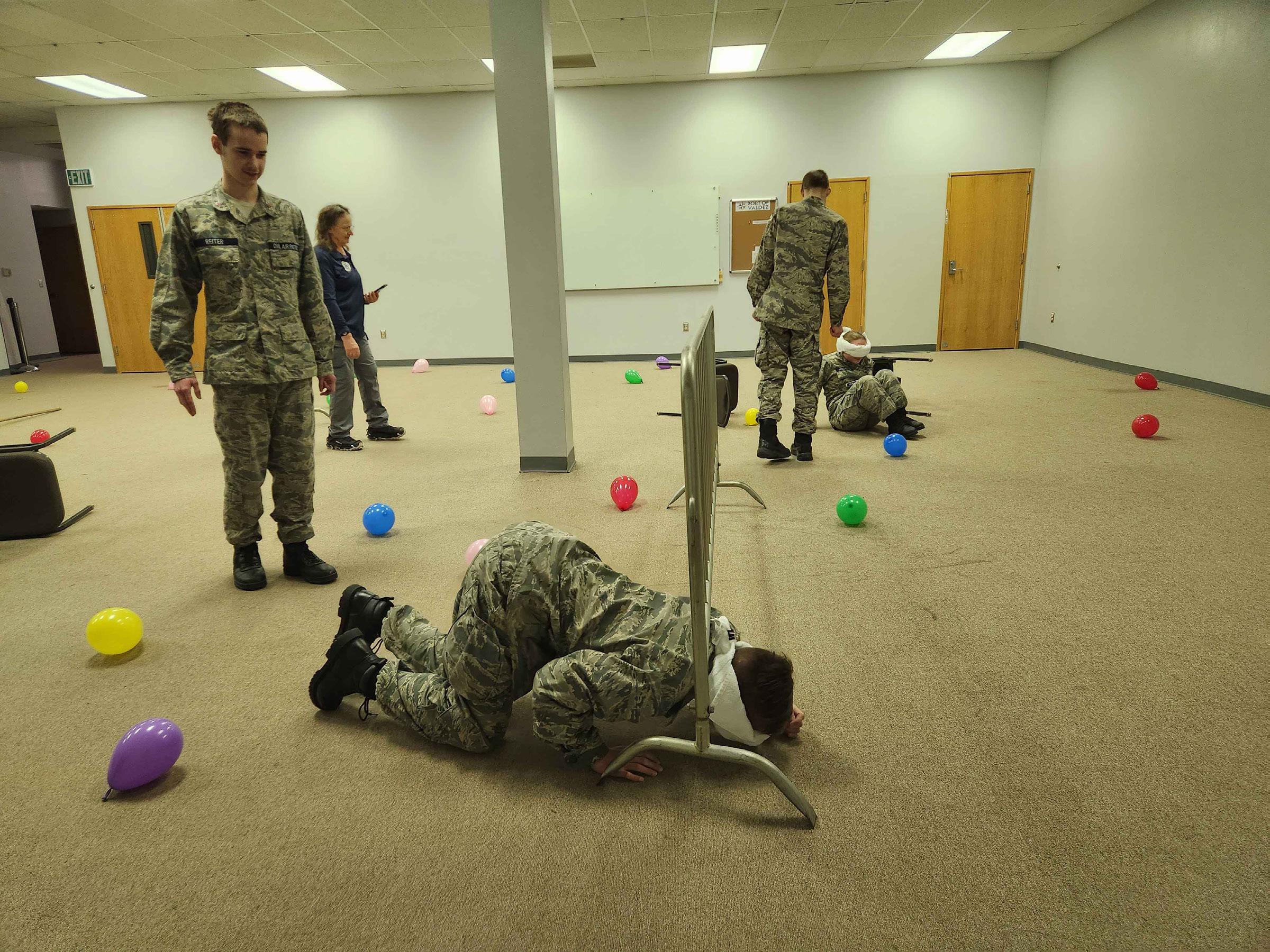
Before wrapping up the monthly fun, Valdez Squadron came together to have an energized night of PT.
Video of C/A1C Winchester directing C/CMSgt through the obstacle course: https://youtu.be/HAB-ol3gIyI
Above: November 16 PT night.
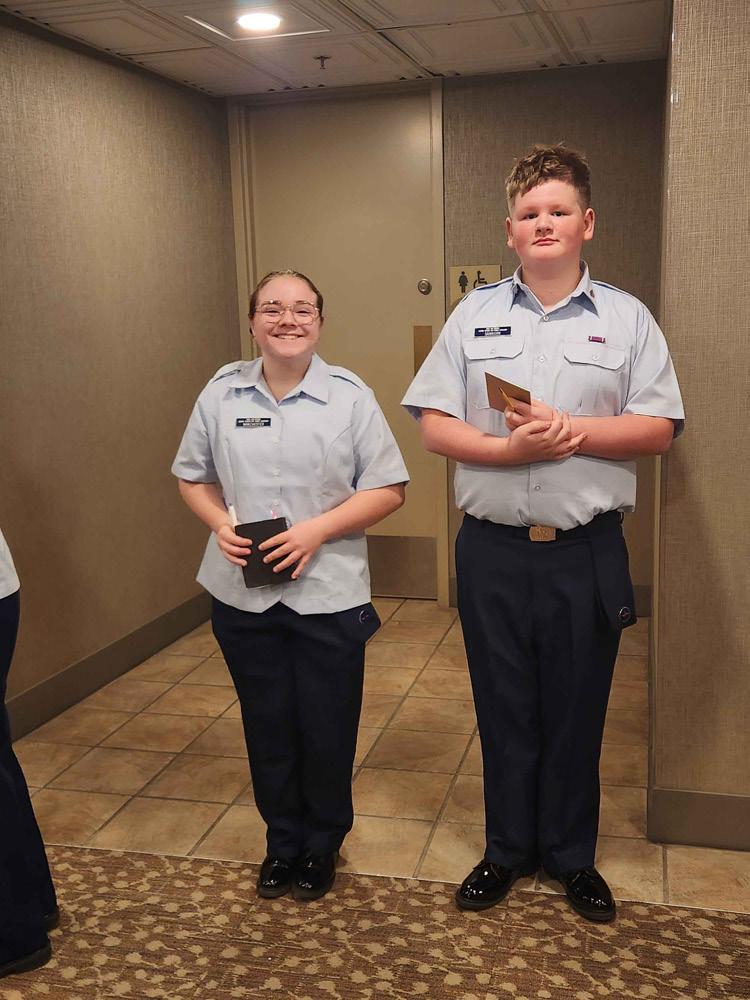
Cadet 2dLt Taylor tying on Valdez's first Quality cadet unit award, November 2025. Winchester and Sanborn at 2025 Alaska Wing conference.
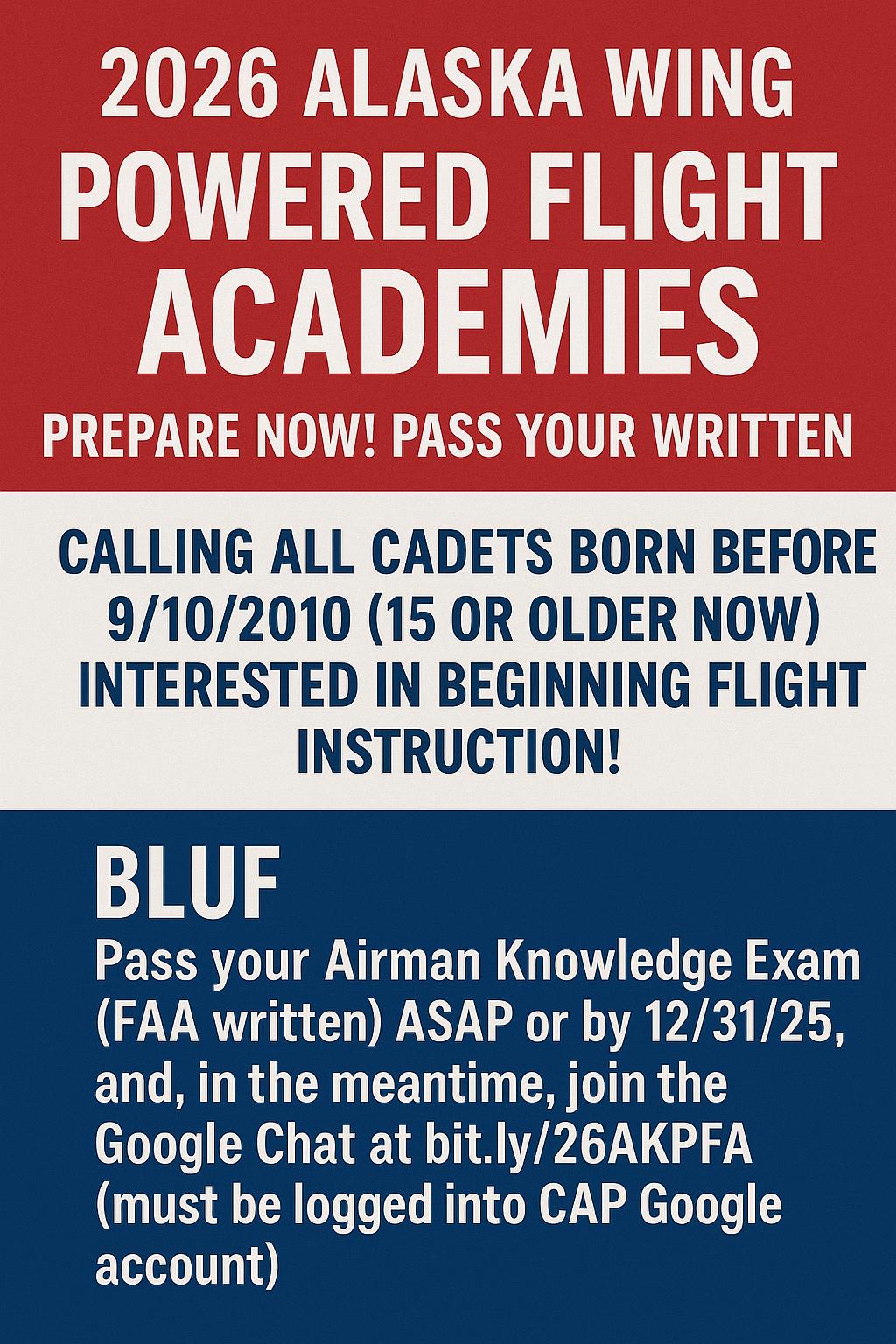
2026 Alaska Wing Powered Flight Academies: Prepare Now! Pass Your Written
Calling all cadets born before 9/10/2010 (about 15 or older now) interested in beginning flight instruction!
BLUF (Bottom Line Up Front): Pass your Airman Knowledge Exam (FAA written) ASAP or by December 31, 2025, and, in the meantime, join the Google Chat at bit.ly/26AKPFA (must be logged into CAP Google account)
More details: In 2026, Alaska Wing plans to again offer two Powered
Flight Academies (PFAs)--a National Flight Academy (NFA) and a Wing-Level Flight Academy.
Pass the written:
To qualify, cadets must have passed their Airman Knowledge Exam, aka the FAA written (powered) by December 31, 2025. Plan on spending at least 70 hours learning the online ground school material, passing Sporty’s practice tests to get your endorsement to take the written, and getting 90% or better on at least 3 fulllength Dauntless tests before taking
Take The
2
Steps:
your written.
How to Apply: National Flight Academy and other NCSA applications opened in the Registration Zone in eServices on December 15, 2025. We recommend applying for all National Flight Academies you are interested, especially the Alaska Wing National Flight Academy. You will be required to upload your Student Pilot Certificate and your 3rd Class (or better) Medical to be able to apply. We recommend you also apply
for CadetInvest & Lift-Top (flight scholarships including an Alaska Female cadet scholarship if applicable, NCSA/ NFA Activity scholarships, and Lift/Top funding in Reg Zone) CadetInvest also opened on December 15.
Individualized Plans: Maj Karen Padgett is glad to speak individually with parents/cadets to develop an individualized plan for each cadet to make maximum use of CAP resources. Email her at karen.padgett@akwg.cap.gov.
Please ask Maj Padgett to review your Reg Zone, CadetInvest, and Lift/Top applications before you submit them.
January 2026 CDI Lesson
The Enduring Importance of Keeping Confidence
By: Julie G. Rivera Mercado
Keeping confidence is fundamentally an act of psychological generosity and ethical maturity. It transcends the simple transaction of sharing information and enters the realm of profound human interaction by establishing a sacred boundary around shared vulnerability. When we are trusted with a secret, we are being given a piece of a person’s inner world a hope, fear, a mistake, or a sensitive plan. The ability to honor this trust builds the foundation of
self-respect because it demonstrates a commitment to values like loyalty and discretion over the fleeting temptation of gossip or social currency. Furthermore, maintaining confidence is vital for social cohesion and the creation of safe emotional spaces. In any setting be it a personal relationship, a team environment, or a professional organization, the assurance that sensitive information will be protected allows individuals to take emotional risks, share innovative ideas, and admit mistakes necessary for learning and growth. If the expectation is that every personal revelation will become public knowledge, people retreat into silence, creativity stagnates, and the essential vulnerability required for deep connection or true collaboration vanishes. Therefore, keeping confidence is not just about being a good friend or colleague; it is an active contribution to a culture of mutual respect and psychological safety, proving that you are a dependable anchor in an unpredictable world.
Homer Squadron
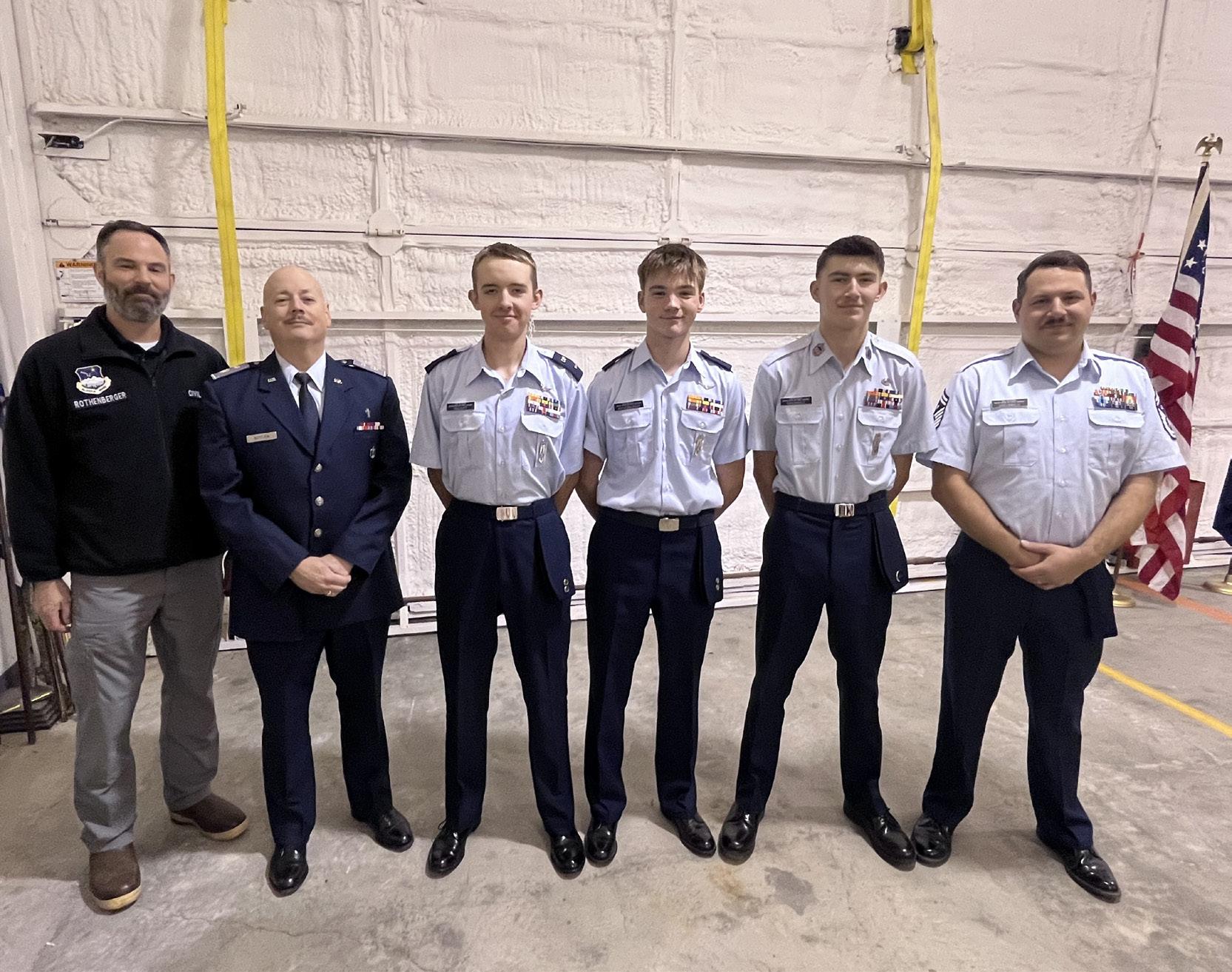
Homer Commander Andrew Rothenberger, Chaplain Bottjen and Deputy Commander Adam Greenwald acknowledge recent cadet accomplishments.
The Homer Squadron was happy to welcome C 1stLt Jacob Ries to a recent meeting at the hangar.
Homer Squadron acknowledges Cadets at a Change of Command, including C CMSgt Titus Potvin promoted from Flight Sergeant to 1st Sergeant.
Education and Training
Regards Alaska Wing
Here is the 2026 Education and training classes scheduled for the first two months.
This calendar lists the classes, activities, missions, and other events scheduled for 2026. These calendars will be updated monthly and added to the magazine. Monthly reminders about upcoming activities and their descriptions will also be sent to your email address. If you have an activity you would like to include on the calendar, please send it to julie.rivera@akwg.cap.gov.
Classes
December 2025
17 - Specialty track Completion
We will be working to complete your specializations and will go through each task until it is finished. You will be assigned a mentor to help you in the process.
2026
January
14 - Emergency Services Qualifications Class
All senior members and cadets will be guided on where to look for qualifications in which they can collaborate within emergency service, and the requirements that are required to complete the qualification.
21 – Education and Training Office hours
Questions and doubts that AKWG members may have about education and training during this period will be answered.
25 – Level I Onboarding Classes
Members of Level I will be guided through the process via eservices to see what they need to complete it.
28 – Emergency Services How to create a FEMA Account
Adult members and cadets will be assisted in creating a FEMA account so they can take the required courses for the various Emergency Service qualifications.
31- 20 Second More
February
4 – Specialty Track Completion Class – Part 2
We will be working to complete your specializations and will go through each task until it is finished. You will be assigned a mentor to help you in the process.
5 – Emergency Services GES 116
I will be teaching the GES 116 course and then they will take the exam.
6-8 Operation – 2 QTR AKWG SAR EX
15 – Level II Moderate Courses Start
The moderate level II courses will be taught until they are completed on the dates indicated in the calendar.
18 – Public Affairs Seminar 6:007:00
19 – 117 – Part 1 Course
I will be teaching the 117 part - 1 course and then they will take the exam.
22 - Level II Moderate Courses
The moderate level II courses will be taught until they are completed on the dates indicated in the calendar.
The link to connect to the classes highlighted in yellow is as follows:
Link to connect: Time zone: America/ Anchorage Google Meet joining info
Video call link: https://meet.google. com/vzw-xnos-gtx
All classes will be held from 5 to 7 PM Alaska Time.
If a class is at a different time, it will be indicated next to the course.
If you need more information don’t hesitate to contact me.
Maj. Julie G. Rivera Mercado
AKWG Education and Training Director
AKWG Public Affairs Director
julie.rivera@akwg.cap.gov Phone number 787-424-0560
Tail Section
Technology and training remain central themes of this edition. Alaska Wing continues to expand UAS capability, high-frequency communications proficiency, and ground team readiness to meet evolving mission demands.
We appreciate the continued dedication of our cadets and senior members whose professionalism and service exemplify Civil Air Patrol’s core values.
Maj. Julie G. Rivera, CAP Publisher and Editor
Alaska Wing PAO 617596@AKWG.CAP.GOV
1 (787) 424-0560
Lt. Col. Bryan Emerson, CAP Co-Editor
Alaska Wing PAO Assistant BRYAN.EMERSON@AKWG. CAP.GOV