BUILDING PEPSICO’S DIGITAL BACKBONE



When organisations the size of PepsiCo make the decision to overhaul the systems that sit at the heart of their operations, the implications are far reaching. For a business defined by its global reach, complex supply chains and some of the most recognisable consumer brands in the world, digital transformation cannot be reduced to a technology upgrade. It is a statement of intent about how the organisation wants to operate, compete and grow in the decades ahead.
That philosophy defines PepsiCo’s global S/4HANA transformation programme and framed Business Enquirer Magazine’s interview with Krita Kataria, Transformation Director at PepsiCo. Calm, candid and deeply grounded in lived experience, Krita spoke not in abstract future visions, but in practical realities shaped by years spent inside the business. Her insight reflects what transformation looks like when scale, discipline and people are treated as equal priorities.
PEPSICO PROJECT DIRECTED BY: STEPHEN VIVIAN



With nearly three decades at PepsiCo, Krita’s perspective has been shaped from the operational frontline upwards. She began her career in supply chain roles, spending over fifteen years embedded in day-to-day operations before moving into procurement. In 2019, she stepped into what was advertised as a finance aligned role within the organisation’s ERP transformation. In reality, it marked a pivotal shift that brought her operational expertise into one of PepsiCo’s most strategically important initiatives.
“I am not a technical person… I’m business ops and process through and through,” Krita says. That distinction matters. In transformation programmes of this scale, success rarely hinges on deep technical expertise alone. It relies on the ability to translate technology into business outcomes, to align systems with how people actually work and to challenge established processes without undermining the organisation’s culture.
The catalyst for PepsiCo’s transformation was clear. Legacy SAP platforms across multiple geographies were approaching mandated retirement timelines, triggering the need for action. Yet urgency alone does not explain the scale or structure of
the programme that followed. Over time, PepsiCo’s ERP environment had evolved into a patchwork of customisations, local variations and workarounds. The result was complexity that constrained efficiency and limited the organisation’s ability to unlock value from emerging digital capabilities.
“As a global organisation, we had so many different capabilities within our ERP,” Krita explains. “The majority are heavily customised and a few totally bespoke.” The challenge was not simply replacing systems, but restoring coherence. Before PepsiCo could accelerate its digital ambitions, it needed consistency at its core.
The response was a globally designed S/4HANA programme anchored in end-toend supply chain processes. Rather than framing the transformation in technical terms, the programme was deliberately expressed in business language. Plan, Buy, Make, Move, Sell and Report were treated as interconnected elements of a single value chain, not isolated functions supported by separate systems.
Krita joined after the global template had been established, initially leading
one of the procurement value streams during the UK and Poland deployments. At that stage, the template itself was still evolving, requiring significant design work alongside deployment. This dual focus demanded both operational credibility and the ability to influence stakeholders across geographies with different priorities and levels of readiness.
Her subsequent move into the global team supporting markets across Southern Africa added another dimension. It gave her visibility across the full lifecycle of the programme, from preparing the business case, to local business continuity pressures into global governance and landing the all important long term sustainment of the solution. Few leaders experience transformation simultaneously from these vantage points, and fewer still can translate that experience into practical leadership insight.
Governance emerged as a defining feature of the programme. Clear rules were established from the outset around what could and could not be customised, supported by formal decision making processes that escalated requests through local, regional and global forums. This discipline was not designed to restrict innovation, but to protect consistency and long term value.
In an organisation of PepsiCo’s scale, individual market decisions have enterprise wide implications. Governance ensured that enhancements delivering global benefit could be deployed once and leveraged everywhere, while preventing unnecessary complexity from creeping back into the system. It also introduced a level of transparency that built trust, even when the answer to a request was no.
As more markets transitioned onto the same platform, the logic of standardisation became increasingly visible. The conversation shifted away from local exceptions toward global opportunity. Teams began to understand that while brand differentiation is essential to PepsiCo’s commercial success, operational differentiation often erodes efficiency without delivering meaningful value.


IBM unlocked $3.5B in productivity gains by harnessing SAP Business Suite - proving how a clean, AI-embedded digital core accelerates growth.
In a world where disruption is constant, IBM leads by acting as its own “Client Zero”. Our journey to SAP S/4HANA in 18 months, accelerated with partners and infused with AI, is a blueprint for leaders seeking measurable value, agility, and sustainable growth.
Rethink. Reshape. Reimagine.
IBM’s CEO, Arvind Krishna, challenged us to become the world’s most productive company. This has driven a relentless focus on eliminating operational complexity, simplifying workflows, automating manual tasks, and embedding AI with purpose. We’ve created a self-reinforcing flywheel: productivity drives growth, which enables further investment, which accelerates transformation. With over 150 generative AI use cases in production, IBM’s watsonx™ accelerates time-to-value, delivering 2x faster ROI than traditional AI approaches.

The Outcomes
$3.5B+
Platform for Continuous Innovation
IBM’s use of SAP S/4HANA as its digital core and hybrid cloud North Star Architecture empower businesses to:
•Enter new markets and channels at speed
•Make smarter, data-driven decisions with simplified operations
•Build resilient, future-ready supply chains
•Smoothly integrate AI assistants and agents across every function
of HR queries resolved by AI, freeing talent for highervalue work, 40% savings in HR Operating Budget
IT automation with watsonx Code Assistant
The pace of business has changed - time-to-value is now measured in weeks, not years. IBM’s Client Zero approach is a proven, repeatable model, stress-tested at global scale, delivering real ROI. Ready to rethink and reshape your organisation? Contact IBM today to discover how we can help you to become your own Client Zero.
Change management quickly proved to be as critical as system design. Transformations of this scale do not fail because platforms are poorly configured. They fail because people do not understand, trust or adopt them. Krita is unequivocal on this point.
“Change management absolutely makes or breaks a transformation of this size,” she says.
At PepsiCo, this recognition shaped a deliberate approach built on both top down and bottom up engagement. Senior leaders played an active role clarifying that automation is designed to support employees and improve processes. At the same time, the programme invested heavily in bringing operational voices into the design and deployment process early.
Subject matter experts and super users were embedded from the outset. These individuals helped map existing processes, participated in testing cycles and delivered training within their own teams. Over time, they transitioned into ownership roles, becoming long term custodians of the platform rather than temporary project contributors.
This approach served two purposes. It ensured that the solution reflected operational reality, and it created a network of trusted advocates who could promote the change to their peers. By the time deployments moved into steady state, capability and confidence already sat within the business.
Sustainment was treated as a leadership responsibility, not an afterthought. Large scale programmes often lose momentum once initial milestones are reached, with expertise dissipating as project teams disband. PepsiCo sought to avoid this by building resilience and ownership throughout the journey, recognising that deployment is only the beginning of value creation.
Partnerships also shaped the programme’s effectiveness. While SAP was the natural platform choice
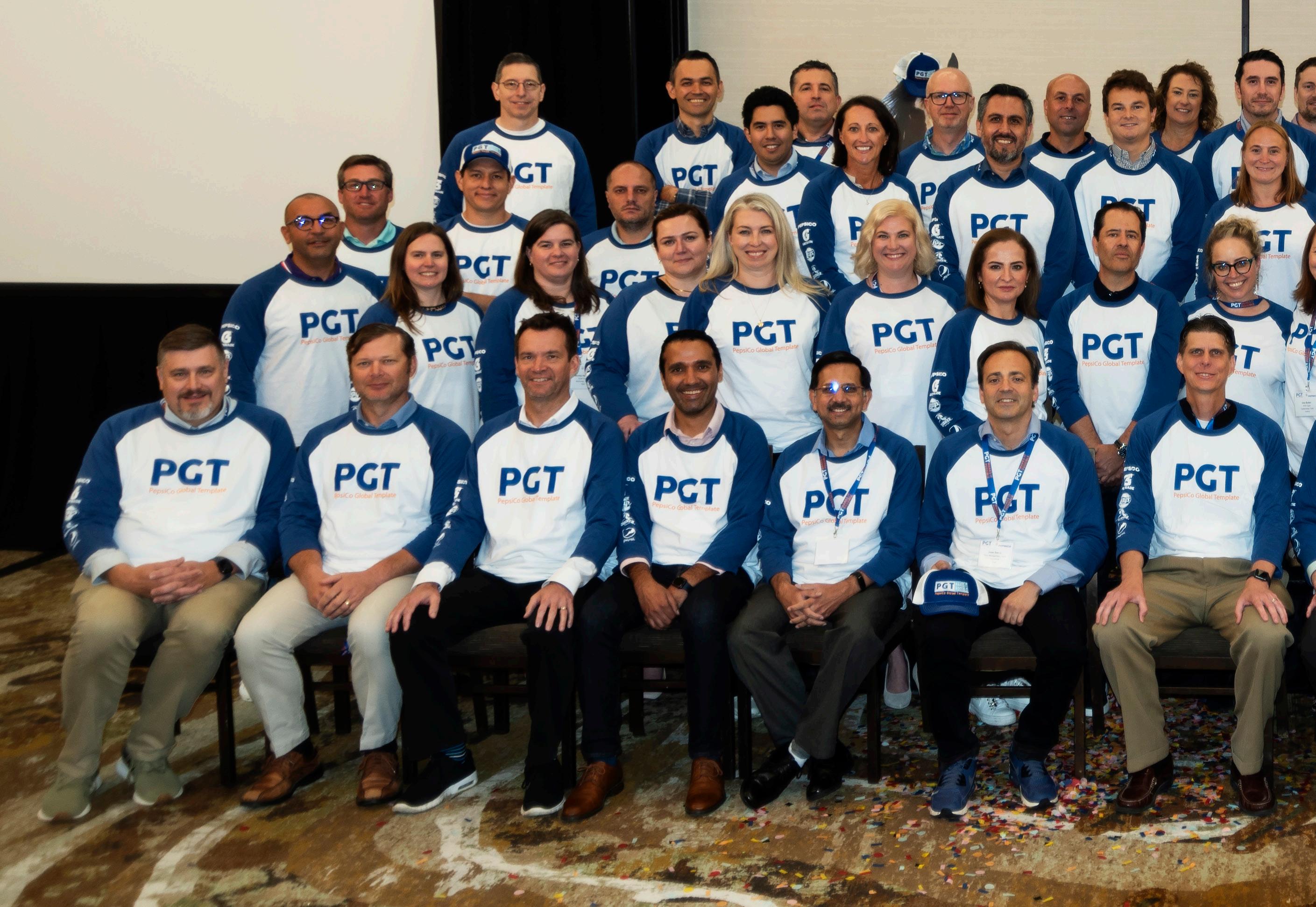
given PepsiCo’s existing landscape, the selection and management of system integrators focused on depth of business understanding rather than technical delivery alone. The expectation was that partners would engage with PepsiCo’s processes, challenge assumptions constructively and bring lessons learned from other industries and deployments.
This approach was formalised through a “three in the box” delivery model, bringing together business leadership, internal IT and systems integrator leadership within each value stream. When these relationships functioned effectively, decision making accelerated and accountability became shared rather than distributed.
Leadership agility was tested in unexpected ways during the early stages of deployment. The COVID 19 pandemic triggered a sudden shift from a highly co-
located programme environment to fully remote delivery. What could have stalled progress instead became a catalyst for innovation in how teams collaborated.
Rather than relying solely on basic video conferencing, the programme created a structured virtual office environment with defined spaces for delivery, informal interaction and onboarding. This maintained accessibility and visibility across a geographically dispersed team and enabled leaders to move fluidly between sessions in ways that were sometimes more efficient than physical colocation.
The experience challenged long held assumptions about how complex programmes must be delivered. While in person collaboration remains valuable, the ability to adapt working models quickly became a demonstration of the programme’s resilience and leadership maturity.
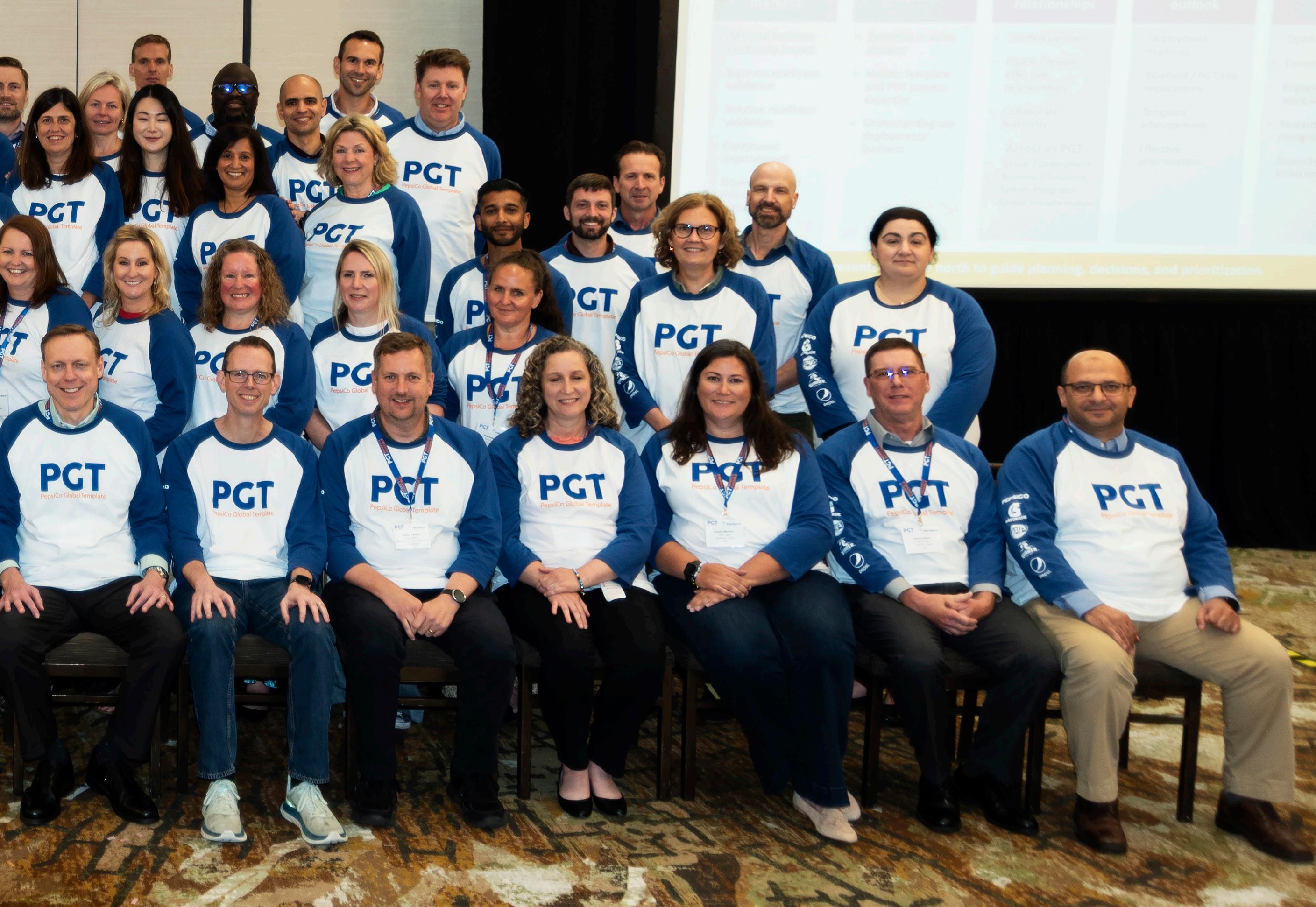
As deployments progressed, tangible business outcomes began to emerge. PepsiCo’s largest net revenue market in North America is now largely live on S/4HANA, alongside major European markets such as the UK and Poland and several African geographies. With scale established, the programme has transitioned into a continuous improvement phase.
This shift marks a critical milestone. Enhancements and change requests are now evaluated through a global lens, prioritised based on enterprise wide value rather than local preference. Where benefits can be scaled, solutions are developed once and deployed across markets. Where they cannot, the organisation has the clarity and confidence to decline.
The result is a more disciplined operating environment, one that supports agility without sacrificing consistency. It also reinforces a strategic distinction that underpins much of Krita’s thinking. Differentiation belongs in brand and consumer engagement. Harmonisation belongs in the processes that support them.
Looking ahead, advanced analytics and AI feature prominently in PepsiCo’s longer term digital ambitions. Yet Krita approaches these technologies with pragmatism rather than hype. For AI to deliver value, foundational work must come first.
“My belief is that until you have robust processes and every individual understands the importance of accurate and clean data, AI can hinder rather than accelerate,” she says.
That sentiment is reinforced by an observation that has become central to her leadership philosophy. “Before you can do artificial intelligence, you have to do authentic intelligence.” In practice, this means ensuring that decisions, data and processes are reliable, understood and aligned before automation is layered on top.
The same principle underpins PepsiCo’s approach to sustainability. The transformation programme has enabled the organisation to remove non value adding activity, reduce duplication and unlock real time insight across operations. Crucially, this is framed as a fundamental shift in how time and capability are used to drive efficiency.
“I see digital transformation as a vehicle and enabler for diligent review of business processes and optimisation to give time back for the real value add activities,” Krita says.
By freeing teams from manual reporting and inefficient processes, the organisation can redirect effort toward analysis, decision making and innovation. Sustainability, in this sense, is operational as much as environmental, grounded in smarter use of resources and talent.
As the conversation turns to leadership and reflection, Krita’s advice to future transformation leaders, particularly women, is rooted in confidence and curiosity. ERP and digital transformation programmes often sit within finance or technology domains, which can feel inaccessible to those without traditional backgrounds in those areas. Her own journey challenges that assumption directly.
Despite limited experience with ERP systems earlier in her career, her operational credibility proved decisive. Exposure to a global transformation reshaped her professional horizons, placing her at the intersection of strategy, technology and long term value creation.
For Krita, the defining lesson is not technical mastery but mindset. Large scale transformation demands a willingness to learn, to be uncomfortable and to engage with ambiguity. It offers exposure that few other roles can match, connecting leaders with functions, markets and perspectives they might otherwise never encounter.
Her message is simple and quietly powerful. Have belief and confidence in what you bring, be open to learning what you do not yet know, and recognise that growth often sits on the other side of uncertainty. In organisations operating at scale, that mindset can be as transformative as any platform or system.
www.pepsico.com