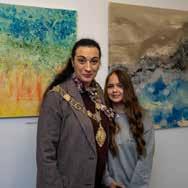
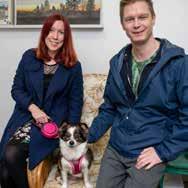
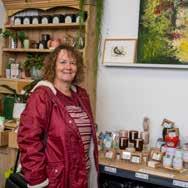
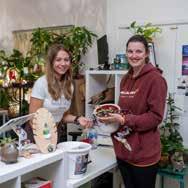
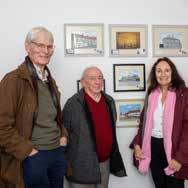
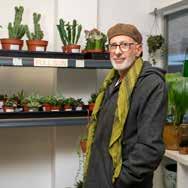
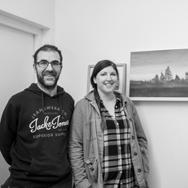
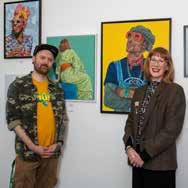
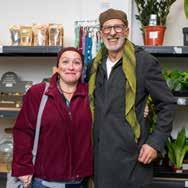
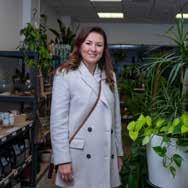
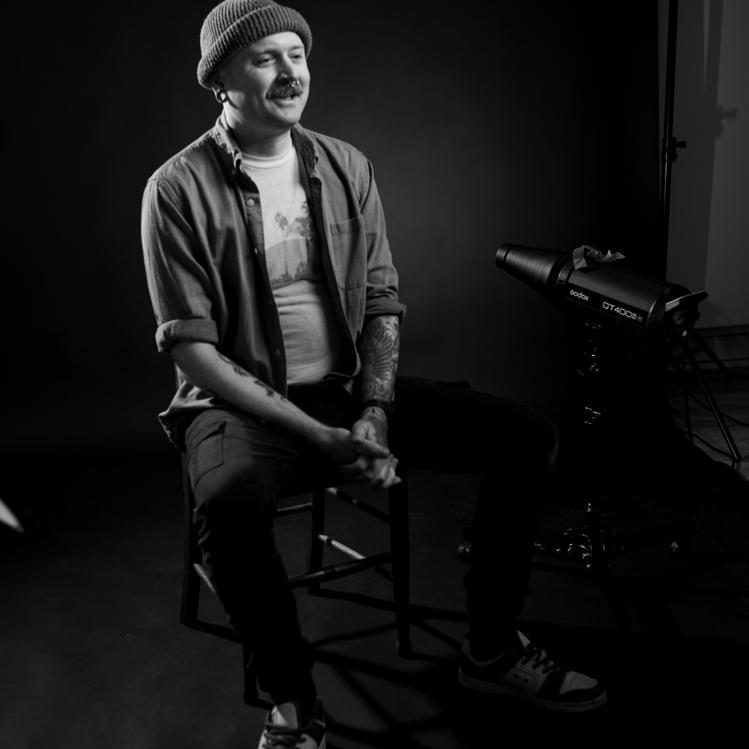
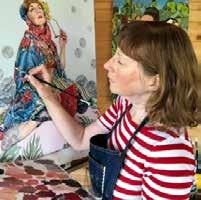
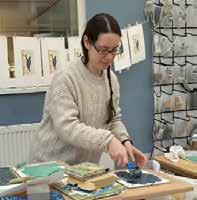
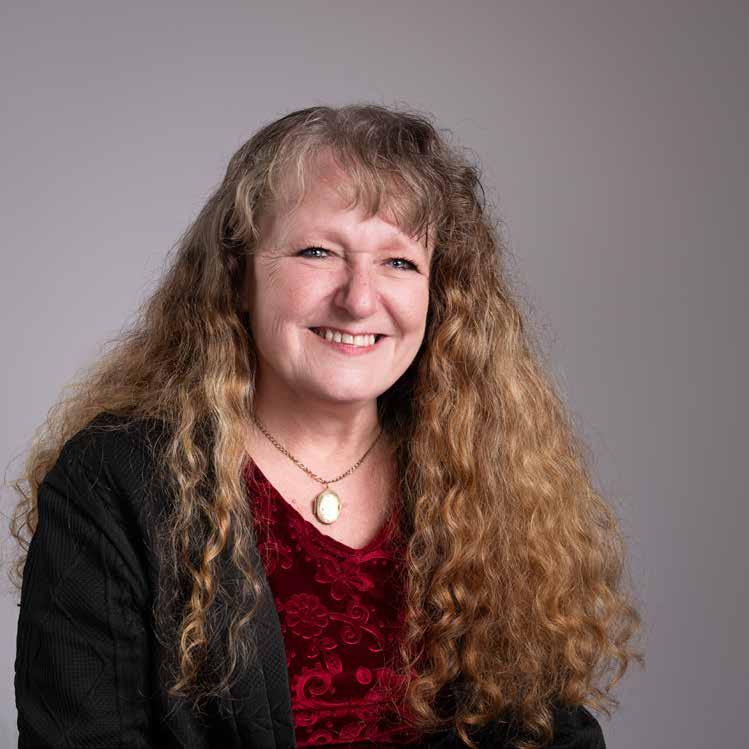
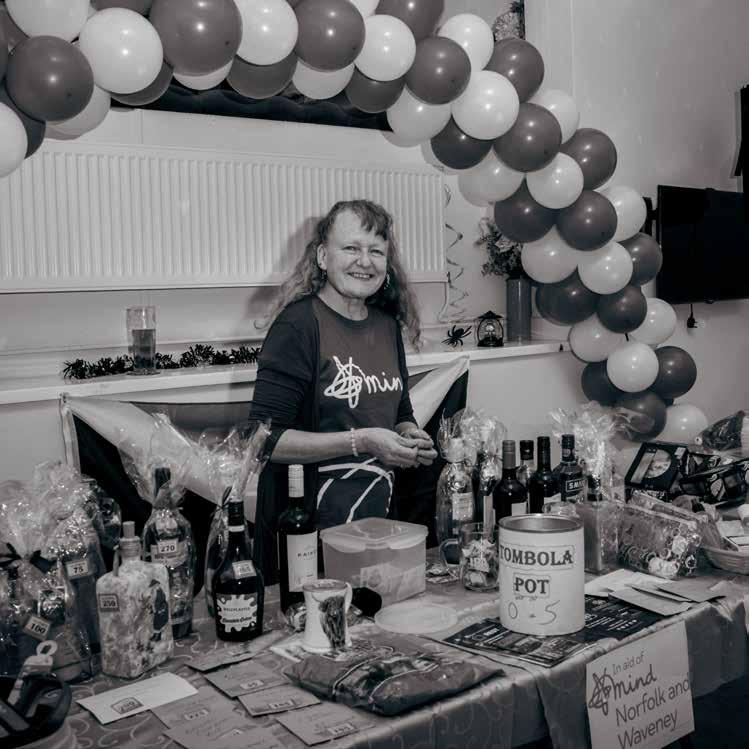
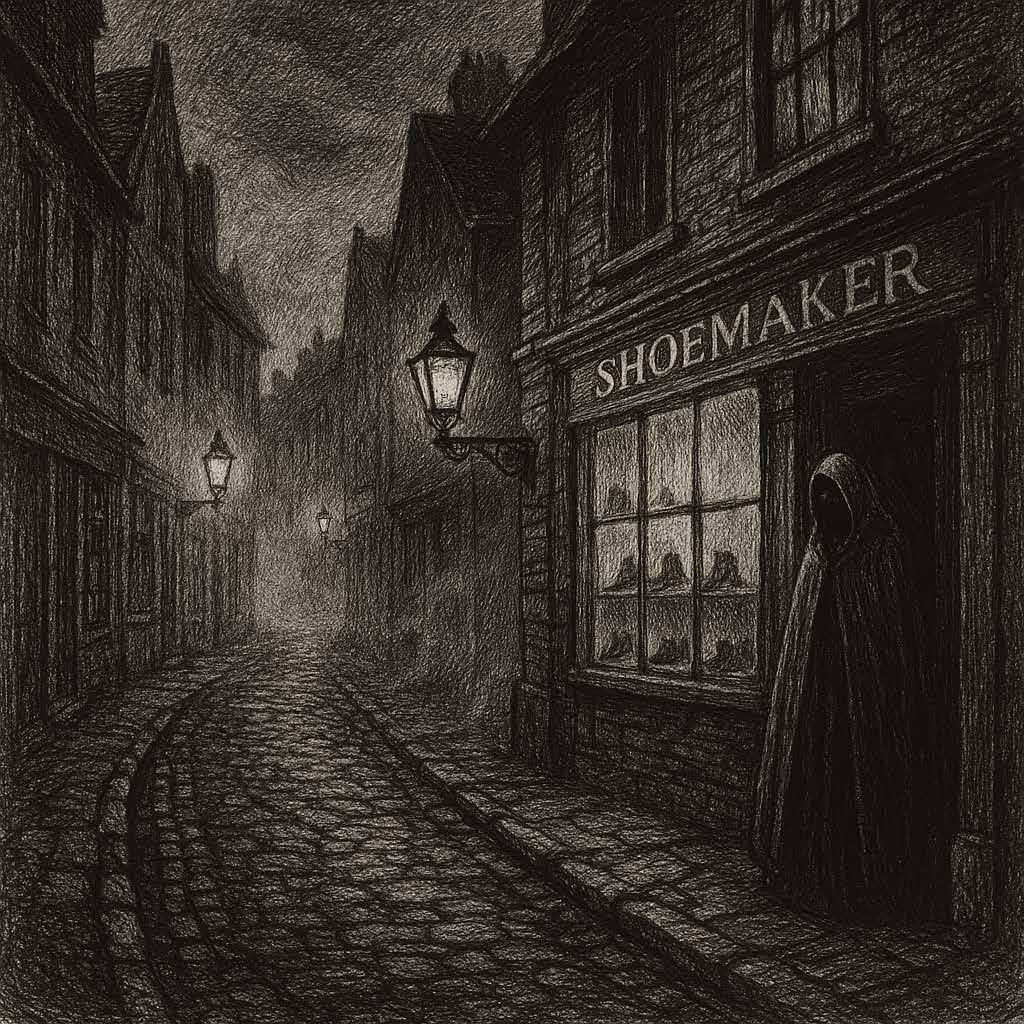
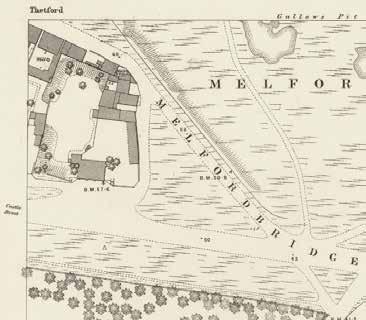
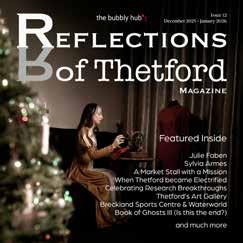
A Market Stall with a Mission When Thetford became Electrified Celebrating Research Breakthroughs Thetford’s Art Gallery
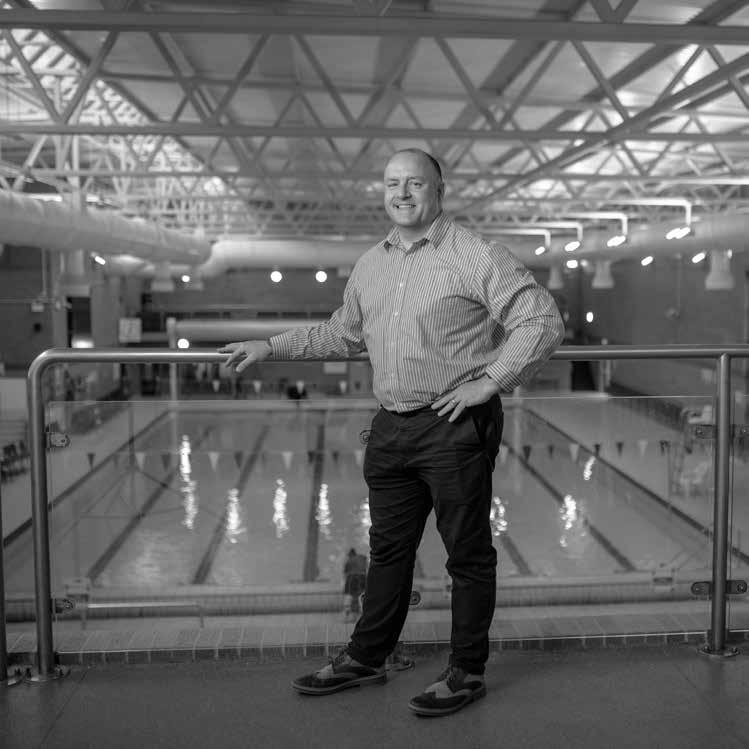
Breckland Sports Centre & Waterworld Book of Ghosts III (Is this the end?) and much more
* Your sizes. Your selection.
1. Visit our showroom with your room sizes.
2. Order from our roll stock carpet, vinyl and underlay (Full price items only)
3. Arrange the collection or delivery** of your order. **Delivery charges will apply.
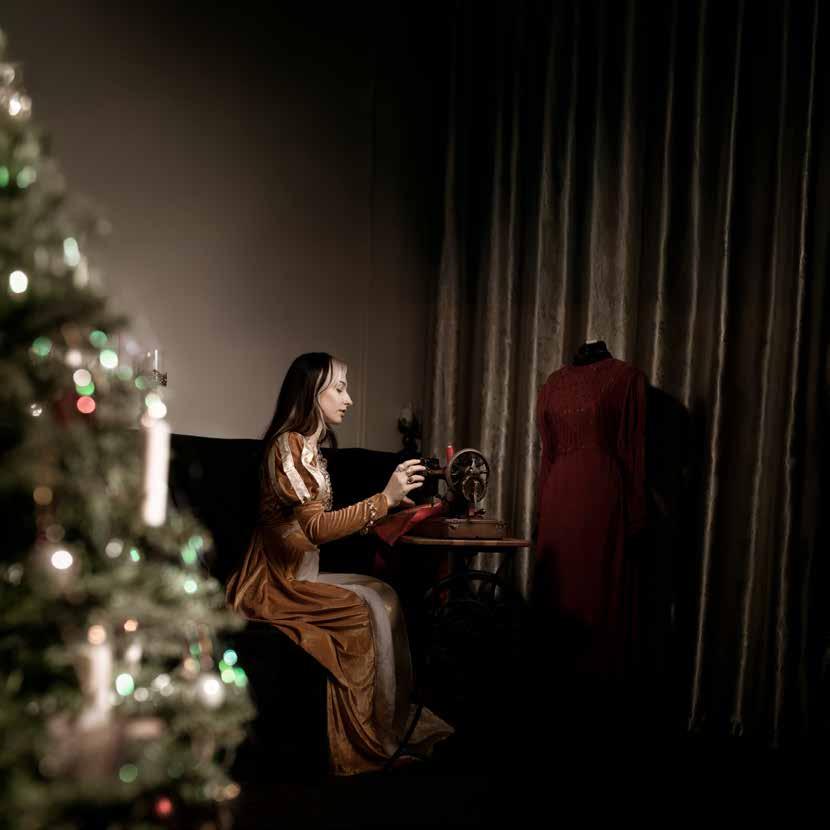
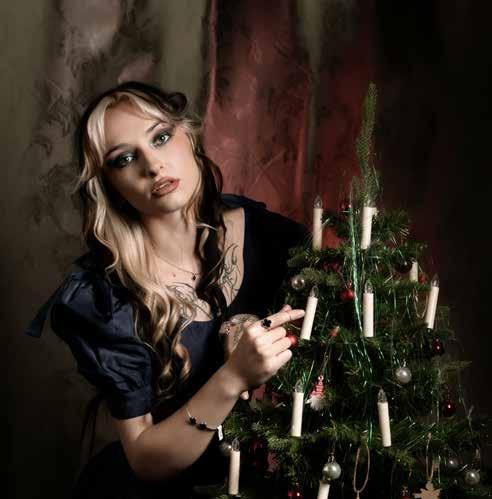
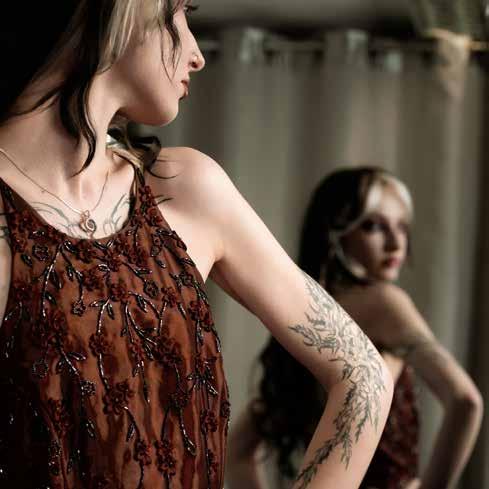
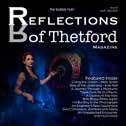
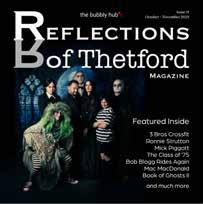
Issue 12 Cover photo
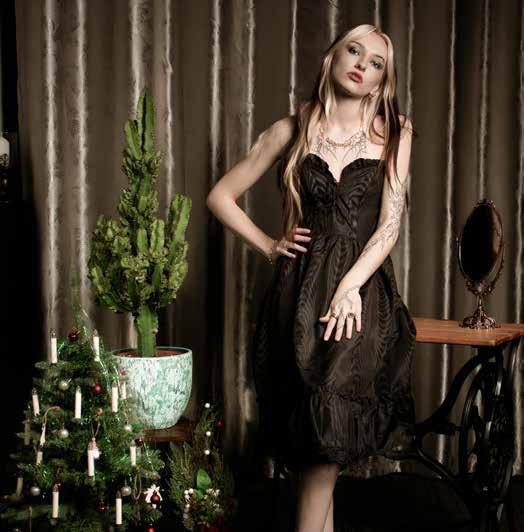
Another successful collaboration between 6
Thetford businesses, all giving a little and creating something much bigger than the sum of their parts.
We were also joined by international model, Amber, who happened to be in town on the day of our shoot.
Blessed Be - Location and Sewing Props
Instinctively Mystical - Smoking Chalice
Grow Indoor Plants - Prickly Pete
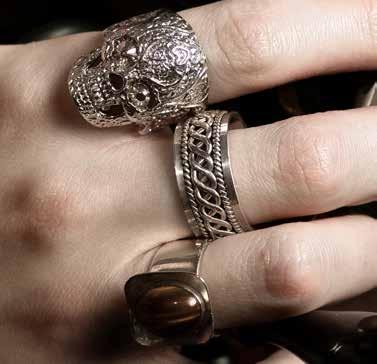
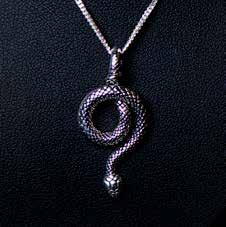
Chloe’s Jewellers - Jewellery
Magic Floor Productions - Costumes
mangus.co.uk - Photography
Set Assistant - Rob Amber - Model
If you would like to be part of the next cover collaboration, please get in touchmagazine@thetfordbubblyhub.com
Welcome
Welcome to Issue 12 of Reflections of Thetford magazine, a magazine for Thetford, by Thetford and only Thetford
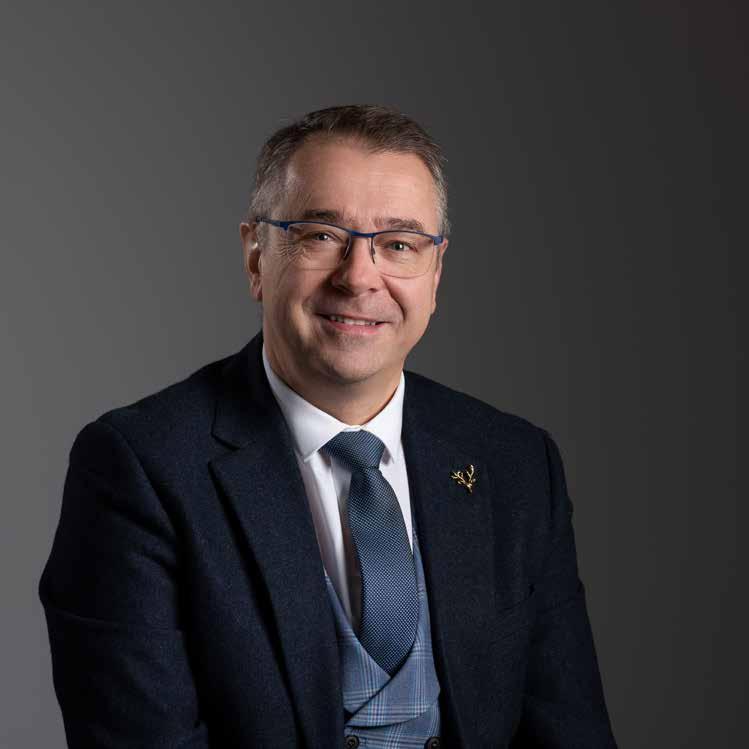
by Martin Angus (Editor)
Welcome to Issue 12 of ‘Reflections of Thetford’ magazine.
Firstly wishing all of our readers, advertisers and contributors a very Merry Christmas and a Happy New Year!
We have an amazing collection of Thetford business owners, managers and individuals contributing to this edition. All with a story to tell, and with each story, another four seem to pop up.
It gets so busy during the creation phase of the magazine, liaising with writers, arranging photo shoots, discussing the requirements of advertisers, proofing, that it is not until I sit down to bring it all together ready for publishing, that I realise how much we as collaborators have actually achieved together.
When people then stop me in the street and say ‘well done Martin’, I always feel a bit of a fraud, as all I am doing is making the blank pages available to the fine folk of Thetford, and they are bringing all the content, be it a life story shared, a business or organisational achievement, a bit of historical information. There are
many people who don’t get, or want to be mentioned, they just want to share the information or story.
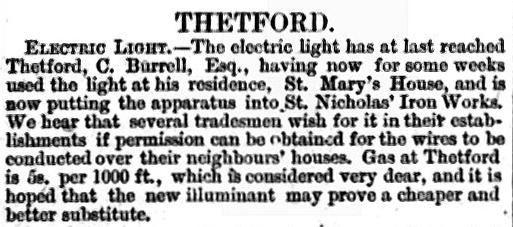
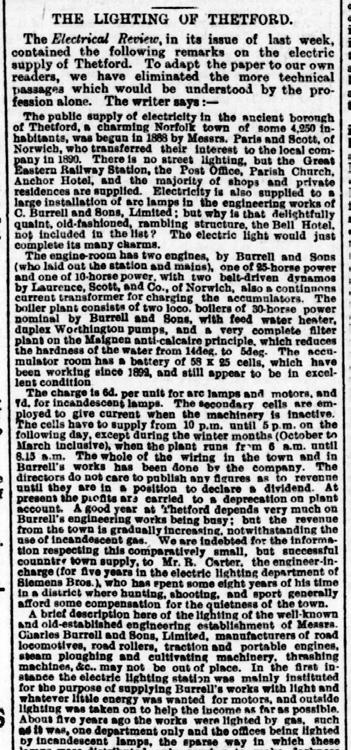
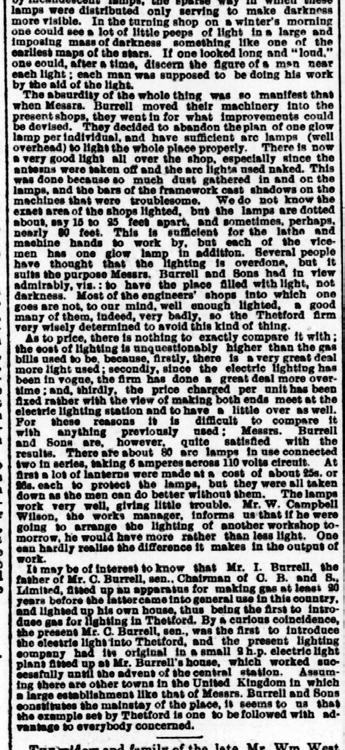
One story of very worthy note, is by David Wright, he tells the story of how electricity began being generated and distributed in Thetford at the turn of the last century. With Burrells steam engines at the heart of the story, it is nowadays unimaginable a life without electricity.
A couple of our regular writers have taken a break to enjoy their summer vacation, but they will be back.
Part three of our highly popular Ghost Trilogy is contained within, and much more, so please enjoy.
Have a safe and Merry Christmas, New Year, and if you are having a little drink over the festivities, please take a taxi, the bus or train... or better still, and you are able,... walk.
Look forward to working with everyone in the New Year, our next edition is our 2nd anniversary of ‘Reflections of Thetford’ magazine (where did those two years go?).
How Breckland Patients Are Powering the Future of NHS Research
Written by Martin Angus
If you’ve ever sat in a GP waiting room in Thetford or Watton, you probably don’t picture it as the front line of global medical discovery. A place for repeat prescriptions and blood pressure checks, yes. A place where new cancer tests, vaccines and life-changing treatments are quietly being developed? Maybe not.
But that is exactly what’s happening.
Breckland Alliance – the partnership of Grove Surgery, School Lane Surgery and Watton Medical Practice – has just been named one of only 14 primary care Commercial Research Delivery Centres in the whole of the UK. Backed by almost £1.2 million of dedicated funding from the National Institute for Health and Care Research (NIHR) over three years, the team in Thetford will now act as a hub for cuttingedge clinical research across Breckland, Norfolk and beyond.
It sounds grand – and it is – but at its heart this story is local. It’s about ordinary patients in our area, going
to familiar surgeries, helping to shape the medicines and treatments that all of us may rely on in years to come.
From small trial to national recognition
The research journey for Breckland Alliance started modestly back in 2019.
“We began with just one commercial study,” recalls Research Manager Charlie-Louise Martin. “It was a trial of a new drug to lower cholesterol and help prevent heart attacks and strokes. Our patients signed up, stuck with it for five years, and that medicine – now known as Repatha – is actually licensed and in use in the UK.”
That single project lit the spark. The surgeries began to take on more commercial trials – studies sponsored by pharmaceutical companies testing new drugs, vaccines or medical devices. Over time, their track record grew: psoriasis treatments that are
now first-line options, early work on the RSV vaccine for frail patients, studies in diabetes and lung cancer detection, and more.
“We started off as a fairly small outfit,” says Dr Gordon Irvine, GP, Project Director and Lead Investigator. “But we saw that our patients were interested, the science was strong, and we realised as a team that we were ambitious. We thought: we can do more.”
The national research bodies noticed too. When the Department of Health and the National Institute for Health and Care Research (NIHR) decided to create a network of primary care commercial research centres, they went looking for GP practices with solid experience. Out of hundreds of surgeries across the East of England, only three met the criteria. Breckland Alliance was one of them.
That’s when things accelerated.
What does this new centre actually mean?
The new title – The NIHR Breckland and Norfolk Region Primary Care Commercial Research Delivery Centre – might sound distant from everyday life, but its purpose is simple:
• Bring more high-quality clinical trials into GP practices
• Give more local people the chance to take part
• Make sure research reflects real communities, not just hospital patients
• Share that work across Norfolk, Breckland, Suffolk and beyond
The hub is based at Thetford, but its reach is deliberately wide. Surgeries in Suffolk already collaborate, and previous trials have attracted
participants from as far as the coast and even north London.
“If someone wants to be involved, we’re happy to bring them in as a collaborator,” says Dr Irvine. “Our hub is here, but the spokes can go as far as they need to.”
Crucially, the centre is not just about doing more research at Breckland Alliance itself. A major part of the three-year plan is to help other GP practices start or grow their own research activity – even if that just means identifying suitable patients and signposting them to trials run in Thetford.
“There are lots of GP practices that don’t do any research at all,” Charlie explains. “We want to change that. Not just because it’s good for us, but because it’s good for them and their patients too.”
Why do this in GP surgeries, not just hospitals?
Most of us think of medical research happening in big teaching hospitals, with long corridors and specialist labs. That still happens – and it’s vital – but it doesn’t tell the whole story.
A lot of the conditions that affect people day to day are managed in primary care: diabetes, COPD, asthma, high blood pressure, high cholesterol, arthritis, skin problems and more. If research only focuses on the very sick in hospital wards, it misses the millions of people quietly living with long-term illnesses at home.
“Research isn’t just for people with rare cancers or emergency conditions,” Charlie says. “It’s for the everyday person with asthma, or high blood pressure, or psoriasis that really gets them down. We need to find better ways to treat them too, and give them a better quality of life.”
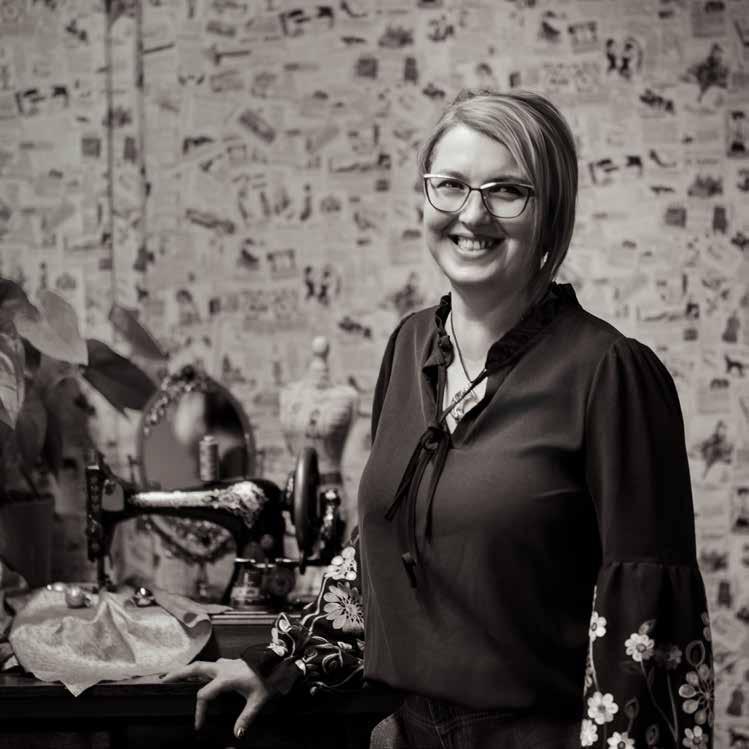
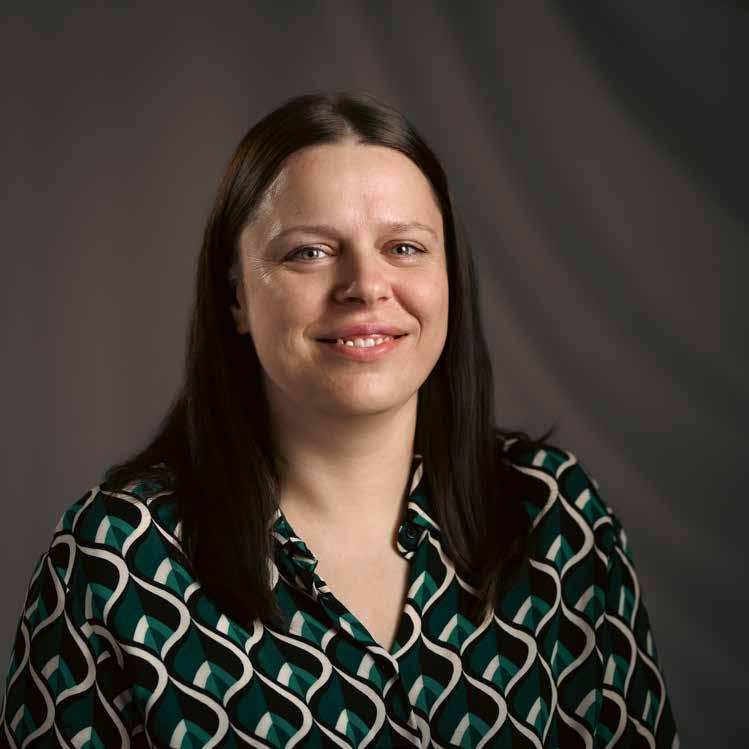
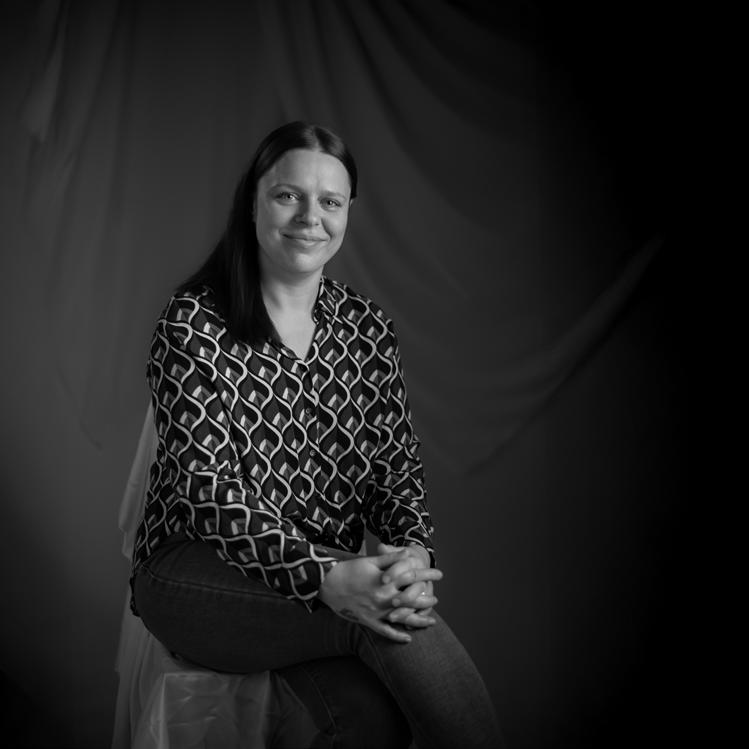
Photograph ‘Charlie-Louise Martin’ by Mangus Photography
Primary care is also where the full variety of the community is seen: different ages, ethnic backgrounds, languages, disabilities and life situations. That diversity matters. If clinical trials are based mostly on one type of person – often middleaged, white and relatively healthy – the results don’t always apply fairly to everyone.
Charlie gives a striking example: “The RSV vaccine can’t currently be given to people over 80, because no one over 80 took part in the trials. It’s not that it wouldn’t work – it’s that we don’t have the data.”
The new centre will work hard to change that, reaching out to groups who are often left out of research: people who are housebound, those with sensory impairments, learning disabilities, or who don’t use the internet, and communities such as Polish, Portuguese and Romanian residents across the area.
As Dr Irvine puts it, “Primary care is better placed to represent real patients – including those in rural areas who don’t have great Wi-Fi or smartphones. Part of our job is to keep reminding companies and trial designers of that.”
But is clinical research safe?
For many people, the word “clinical trial” raises worries: being used as a “guinea pig”, unknown side effects, or memories of historical abuses in medical research.
The team is very aware of this history – and of the need to build trust.
“Years ago, people were treated appallingly in some studies,” Charlie acknowledges. “There wasn’t proper consent, people didn’t know what they were signing up to, and some really suffered. It’s awful – but
because of those events, research today is heavily regulated.”
Before any trial can run in the UK, it has to pass through multiple layers of approval and ethics review. The Health Research Authority, ethics committees and the NIHR all scrutinise the plans. Every member of the local research team must be trained and certified in Good Clinical Practice, a strict set of principles designed to protect participants.
Patients are given detailed information sheets and consent forms, written in plain language and increasingly adapted for different needs – for example, easy-read versions developed with people with learning disabilities. They are encouraged to take the documents away, talk to family, and ask questions before deciding.
“We don’t take consent,” Charlie stresses. “We receive it. It has to be voluntary, informed, and completely their choice.”
Once on a trial, participants are monitored more closely than they would be in routine care: regular blood tests, ECGs, physical exams and check-ins.
“Patients sometimes joke that it feels like a full body MOT,” Charlie laughs. “They see a doctor or advanced clinician, have in-depth blood tests, heart tracings, the lot. Often we pick up things like high blood pressure or an irregular heartbeat that they didn’t know about – things that are treatable and better caught early.”
Dr Irvine adds another key reassurance: “Whatever the trial, patients should be no worse off by taking part. Their usual care continues. In fact, they often get more contact and more safety checks than they would otherwise. And if a trial does raise a concern,
Delicious Tray Bakes, Gooey Brownies and Comforting Oat-Based Bakes
Hand-Crafted in Thetford
ethics committees can and do review and halt it.”
The hidden benefits for local patients
The most obvious impact of this new status is that more people in our area will be invited to take part in studies. But the benefits go further than access to new treatments.
Over the last few years, trials run at Breckland Alliance have:
• Helped license new cholesterol-lowering drugs now used across the NHS
• Contributed to an RSV vaccine now offered to frail patients
• Supported research into a blood test for lung cancer, including CT scans that picked up early problems in patients who had no symptoms
• Given people with diabetes, psoriasis and other conditions a deeper understanding of their illness and how to manage it
One lung cancer study alone involved over 50 local patients, each of whom had blood samples taken and a CT scan at the Norfolk and Norwich Hospital. Several scans revealed issues that needed followup – problems that might otherwise have gone unnoticed for months or years.
“It really can help people as individuals,” says Charlie. “Yes, the big aim is to improve care for everyone in future. But along the way, a lot of people get extra checks, earlier diagnoses and more time to talk about their health.”
Trials also build a strong relationship between participants and the research team. Many studies run for a year or longer, with monthly visits or calls.
“They have our direct contact details,” Charlie
explains. “If they’re worried about something, they can ring us. We see them regularly. That continuity can be really reassuring.”
No wonder there are “frequent flyers” – patients who enjoy the experience so much that they volunteer again and again.
Meet the team behind the trials
If this all sounds like a huge undertaking, that’s because it is. But behind the new title is a very human team – and a carefully built one.
Breckland Alliance’s research staff includes:
• Dr Gordon Irvine, GP partner, Project Director and principal investigator, with experience ranging from military medicine to Australian practice and a special interest in exercise and sports medicine.
• Dr Meriel Overy at School Lane, with a strong background in dermatology.
• Toby Amadasun, a clinical pharmacist at Watton, bringing deep expertise in medication management.
• Charlie-Louise Martin, an intensive care nurse turned research manager, with experience in both commercial labs and NHS research.
• A highly skilled research practitioner, who has worked in research for over a decade across paediatrics, oncology and primary care.
• Nurses, healthcare assistants and admin staff, some with pharmacy backgrounds, others with mental health experience, who handle everything from taking bloods to managing temperaturecontrolled drug cabinets and supplies.
• A dedicated finance team, supported by the Norfolk and Waveney Integrated Care Board (ICB), who helped build the detailed three-year budget that secured the funding.
• A PPIE Coordinator, Patient and Public Involvement and Engagement, who helps with patient recruitment and engages with the community.
“We’re ambitious as a PCN,” says Dr Irvine. “But we’re also pragmatic. Every time we’ve seen a gap – in inclusion, innovation, finance, or engagement – we’ve brought in someone with the right skills. And we’ve had brilliant backup from the NIHR, the Regional Research Delivery Network and the ICB.”
Charlie smiles when she talks about the future: “I’m a bit of a science nerd, so I’m very excited about the equipment we’ll be able to buy – a refrigerated centrifuge, proper temperature-controlled cabinets for trial medicines. It sounds niche, but it means we can run even more complex studies safely right here in Thetford.”
Taking research out into the community
For all its scientific rigour, the new centre is deeply rooted in the local community. A key part of the funding is earmarked for public engagement and outreach – and this is where things might start to feel very visible. Plans include:
• An annual “dissemination” event – essentially a celebration where patients, practice staff and partners come together to hear what their participation has achieved, share stories and say thank you.
• Visits to local science festivals and public events to explain research in simple, accessible ways –and show that it isn’t just something that happens “somewhere else”.
• Close work with groups like the Polish school and other community hubs, where the team will offer
health checks (such as blood pressure monitoring) and food alongside information about research.
• Stronger links with Patient Participation Groups at all three surgeries, using patients’ own ideas to shape which areas of research they try to attract – arthritis, for example, has already been requested.
“We don’t want to just turn up and say, ‘Here’s a research project, sign up,’” Charlie explains. “We want to go in and say, ‘We’re your local research team. Let’s check your blood pressure, have a chat, see what matters to you.’ Building trust takes time.”
The team is also keen to reach out to people who never set foot in community halls: those who are housebound or isolated.
“It might be going beyond my comfort zone,” Charlie admits, “but I’d love to see us reaching people at home who want to take part but can’t easily come into clinic. They’re often exactly the people whose experiences we need to understand.”
Will this affect everyday GP care?
A natural worry is whether all this activity will take doctors and nurses away from routine appointments and long-term condition reviews.
Both Charlie and Dr Irvine are clear: this is new, dedicated money.
“This funding is a bolt-on,” says Dr Irvine. “It doesn’t come out of the existing GP pot. It doesn’t replace standard care. It pays for additional staff, equipment and time to run research on top of what we already do.”
In other words, the usual services stay as they are
– but patients now have the option of accessing something extra if they wish.
And the long-term hope is that those extras will feed back into better treatments, better understanding of conditions, and ultimately better everyday care for everyone.
Looking ahead: success in one year, and beyond
So what will “success” look like a year from now?
In the short term, the team wants to build on work that’s already started:
• Strengthening links between practices that already do some research
• Helping interested surgeries take their first steps, perhaps as simple “patient identification centres”
• Making sure patients and staff across Breckland and Norfolk know who Breckland Alliance Research are and what they do
Over the next three years, the vision grows:
• More practices across the region involved in research in some form
• More patients from all backgrounds offered the chance to take part
• A pipeline of diverse studies – from vaccines and cancer tests to mental health, chronic disease and emerging treatments
• A research service that is financially and practically sustainable long after the initial funding period ends
“We want to be the conduit,” says Dr Irvine. “If someone in Breckland wants to join an arthritis trial happening in another part of the country, we want
to know where it is and help them get there. And if a company wants to test a new treatment in primary care, we want them to think of Norfolk first.”
“It feels like giving something back”
Ask Charlie what excites her most about this new chapter, and the answer is immediate.
“I went into nursing because I wanted to care for people, and I’ve always loved science. Working in intensive care taught me never to take life for granted. Being part of this feels like a way of giving something back – not just for my own family, who might one day need these treatments, but for the wider community.”
For Dr Irvine, the thrill lies in seeing change happen where previously there was none.
“As a GP, you know the limits of current treatments. You get to the end of the road with some conditions. Research is the chance to see what’s beyond that road – a new pathway that might make life better for your patients. Every trial carries that sense of possibility. This new centre is like all of those possibilities rolled into one.”
For the rest of us – patients, carers, families –the message is simple. Clinical research is no longer something that happens in far-off cities or anonymous laboratories. It’s happening here, in the surgeries we already know, led by people we might already have seen across a consulting room desk.
And if you get a phone call one day from the “research team at your GP surgery”, it might just be an invitation to help shape the future of healthcare –starting in Breckland, and reaching far beyond.
‘The Team - Sandra, Julie, Nicky, Gordon, Charlie, Rita and Olwen.’
Photograph
‘Joern Hopp’ by Mangus Photography
Joern Hopp
The Norfolk Herbalist Bringing Kindness, Craft, and Clean Living to Thetford
Written by Martin Angus
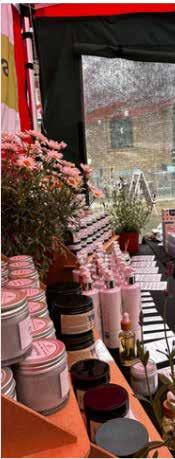
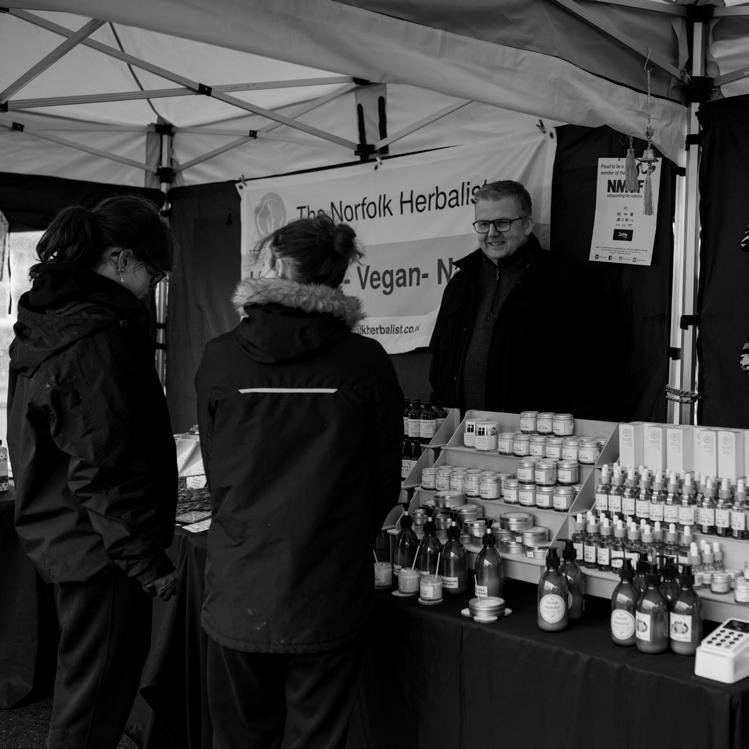
On a crisp morning in Thetford Market, among the colourful chatter of local vendors and the aroma of roasted coffee, a small stall stands out for its serene simplicity. Glass jars gleam in the light; delicate herbal scents drift through the air — lavender, chamomile, frankincense. Behind the counter stands a man whose calm warmth instantly invites conversation.
This is Joern Hopp, founder of ‘The Norfolk Herbalist’, a name now synonymous with natural, vegan skincare, herbal teas, essential oils, and sustainable living.
But behind the gentle smile and tidy market stall is a remarkable journey — one that stretches from a small town in Germany to the heart of Norfolk, driven by a lifelong commitment to health, compassion, and community.
From Pharmacy to Plant Power
Long before The Norfolk Herbalist came to life, Joern was already immersed in the world of health and
healing. Trained in Pharmacy & Chemistry in Germany, he spent years manufacturing creams, eye drops, and medicinal products in registered pharmacies. But his path took an unexpected turn when he was diagnosed with an autoimmune condition and eczema.
“I tried everything,” he recalls. “Thousands of creams, dozens of treatments. Nothing worked.”
It was frustration that sparked innovation. Drawing on his pharmaceutical background, Joern began formulating his own natural cream — not for profit, but for relief. “I made small quantities, just to help myself,” he says. “And it worked.”
Word spread. Friends and acquaintances started asking, “What are you using on your skin?” Before long, Joern was making creams for others, too. What began as a personal remedy slowly evolved into a passion project — and eventually, a business!
That first homemade cream became the foundation for what would grow into ‘The Norfolk Herbalist’ — a
brand rooted in authenticity, sustainability, and care.
A New Chapter in Norfolk
Joern moved to the UK in the early-2000s, settling in Thetford — a traditional market town with centuries of trading heritage. But his transition wasn’t simple.
“When I arrived, I didn’t want to just say, ‘I’m qualified in Germany,’” he explains. “I wanted to earn my qualifications here, too.”
He retrained in herbalism, aromatherapy, and homeopathy at various UK colleges and found a home as a practitioner in Thetford at the Norfolk Natural Health Clinic, owned by local practitioner Helen Edwards. “It was important for me to do things properly,” he says!
By 2017, Joern was fully established as a UK-qualified herbalist. But he soon noticed a shift in the way people sought health advice. “During the pandemic, people turned to Google for answers,” he says. “The traditional herbalist model — where clients came for one-on-one consultations — was changing.”
So he decided to change with it. Rather than wait for people to come to him, Joern went out to meet them — directly, at Thetford Market.
In October 2025, ‘The Norfolk Herbalist’ celebrated its second anniversary on the market. “When I first came to Thetford in 2003,” he says, “the market was thriving. Over the years, it declined. My mission isn’t just to sell skincare — it’s to bring life back to the market. Because markets are the heart of community.”
From Activism to Eco-Artisan
Joern’s eco-conscious ethos didn’t begin with skincare. It’s been part of him since childhood.
“I grew up next to a nuclear power plant in Germany,” he recalls. “At sixteen, I chained myself to the gates in protest.”
That early activism earned him a stern warning from the police — and from his parents — but it planted the seed for a lifelong commitment to sustainability.
Originally, Joern wanted to train as a ‘Heilpraktiker’ — a German naturopath authorised to administer natural medical treatments. “It’s like a mix between doctor and herbalist,” he explains. “But at the time, it wasn’t a strong profession.”
So instead, he entered pharmacy — combining scientific training with his passion for natural remedies. Even now, his work represents the perfect meeting point of modern science and ancient herbal wisdom.
“I always wanted to go back to nature,” he says. “Every pharmaceutical drug begins in nature. So why not return to the source?”
The Norfolk Herbalist Ethos: Kindness in Every Jar
Every product Joern makes carries the same core philosophy: ‘natural, vegan, cruelty-free, palm oil-free, coral-safe, and waterless’.
That’s not just marketing language — it’s a moral commitment.
“I’m not a ‘vegan warrior,’” he laughs. “But I believe in kindness — to ourselves, to animals, and to the planet. Some skincare products use beef tallow or animal fats. They call it natural — but it’s still a byproduct of animal slaughter. There’s nothing kind about that.”
For Joern, veganism isn’t a trend; it’s a principle of compassion rooted in his Buddhist values. “It’s about living gently,” he says. “Cruelty-free products are kind
Abbey Garage
MOTOR ENGINEERS
Servicing
Steering, Suspension and Shock Absorbers
Unit 2, Millers Lane, Thetford, IP24 1AP
01842 755398
to the planet — and kind to you.”
That philosophy extends beyond ingredients to every aspect of the business: ‘ethical sourcing, local suppliers, recyclable packaging’, and a strict refusal to compromise on quality.
“I control the entire supply chain,” Joern explains proudly. “I know where every ingredient comes from. I demand certificates. I work only with UK family-owned businesses, and the majority are women-led.”
Even when it means paying more, Joern refuses shortcuts. “People deserve quality,” he says. “Anyone can pour oil into a bottle and call it skincare — but not everyone can do it with integrity.”
From Allotment to Apothecary
Joern’s creative process begins where he feels most at home — on his allotment. Rows of lavender and rosemary sway gently in the Norfolk breeze, destined not for decoration, but for transformation.
”When I develop a new product, it starts small,” he explains. “I grow the herbs myself, make decoctions at home, test the consistency, and see how it feels on the skin.”
If it passes the test, the formula is scaled up in collaboration with trusted national manufacturers who share his ethics and meet UK safety regulations.
“It’s all small batch, rigorously tested, and produced here in the UK,” he says. “That’s what makes it special.” Among his many creations, Joern’s personal favourite remains the ‘All-Over Body Salve’ — a soothing blend of lavender and chamomile.
“It’s simple, but powerful,” he smiles. “Chamomile is anti-inflammatory and calming. Lavender is the ‘Swiss knife’ of essential oils — it brings everything
together. It’s also a mix of home for me: chamomile from Germany and Norfolk lavender. Two worlds combined.”
Balancing Nature and Science
In Joern’s hands, skincare is both art and chemistry. He’s meticulous about blending natural efficacy with modern innovation — without sacrificing ethics.
Take ‘hyaluronic acid’, for example. “It’s a popular ingredient for deep skin hydration,” he says, “but most commercial hyaluronic acid comes from rooster combs. I could never use that.”
Instead, he sources a vegan version created through bacterial fermentation of sugarcane broth — an example of how modern science can serve compassion rather than compromise it.
“Our products are always effective,” he insists. “If something isn’t eco-friendly, it doesn’t go in. But if something natural doesn’t work, it doesn’t go in either. We balance both.”
The Power of Tradition
While Joern embraces innovation, his heart remains loyal to the old ways.
“There’s so much forgotten wisdom,” he says. “My late grandmother used to make compresses and teas. Some of her remedies were strange,” he laughs, “but many were brilliant. Folk medicine always worked — we just stopped listening.”
He tells the story of ‘conker soap’ — an ancient English folk method. “People used to make soap by boiling horse chestnuts. They contain saponins — natural foaming agents. That’s why we now use ingredients like sugarcane and coconut instead — modern, sustainable
versions of old wisdom.”
t. 07891 294639 thegardenshedflorist.co.uk thegardenshed22@gmail.com
For Joern, it’s about honouring those traditions and proving they still belong in today’s world.
A Market Stall with a Mission
Joern’s first day on Thetford Market was humble: one tent, one table, three display stands, and a handful of products. “I had maybe 20 essential oils and 30 creams,” he remembers. “That was it.”
But from the start, he wasn’t just selling skincare. He was educating — explaining what vegan and natural really meant. “People thought it was ‘only for vegans,’” he says. “I had to teach them it’s for everyone who wants a kind lifestyle.”
Word spread. Soon people began asking for more: essential oils, herbal teas, shampoos, and refill cleaning products. Within two years, his stall had grown into two tents and I’ve tables, offering over 450 products.
“I want to disrupt the skincare market,” he says. “There’s a lot of cheap stuff out there — made in factories, imported from who-knows-where. I wanted to prove you can have affordable, high-quality, natural products made locally.”
And he’s done just that. His customers now come not only from Thetford, but from across Norfolk, Cambridge, and even London. Some buy his eczema creams through word of mouth; others travel miles just to refill or stock up on their favourite herbal teas.
“It’s amazing,” Joern says. “My products have gone as far as Portugal, Russia, and Lithuania — all from a little market stall in Thetford.”
Sustainability Beyond the Jar
Joern’s sustainability mission goes beyond what’s inside the bottle. It’s also about how it’s made, packaged, and delivered.
“All our creams come in glass jars with aluminium lids — fully recyclable,” he says. “If a product uses plastic, it’s essential for regulatory safety and product stability — but it’s always recyclable, and we offer refills wherever possible.”
When posting products, Joern uses cardboard boxes, paper tape, compostable wrappers, and handwritten thank-you cards. “Everything can be reused or recycled,” he says. “Nothing goes to waste.”
He dreams of one day using entirely glass and compostable packaging, but remains realistic about costs. “I could double the price, but I don’t want to. Sustainability should be accessible, not elitist.”
Challenges and Triumphs
Running a small eco-business isn’t easy. Joern’s biggest hurdle? ‘Regulation.’
“The beauty industry is heavily regulated,” he explains. “Every product must be chemically & microbiologically tested, safety certified, and registered in the UK or EU for sale. Whether you’re a local market trader or multinational corporation, you must play by the rules and pay the same fees.”
For a small business, those costs add up quickly. “There were no bank loans, no grants — just community support.” That community, he says, is what keeps him going. “Even if it’s cold, or raining, or I’m unwell — I go to the market. People helped me build this. I won’t let them down.”
Despite the challenges, Joern’s work hasn’t gone unnoticed. ‘The Norfolk Herbalist’ has already earned local recognition, including the ‘Sepror Award’ and a nomination for the ‘Vegan Choice Award’.
But for Joern, awards are more than trophies. “They prove that what we do is real — that our products meet the highest standards,” he says.
Looking ahead, Joern plans to expand into new markets, possibly in Norwich or Cambridge, and to collaborate with local salons and beauty businesses. His development pipeline is brimming — over 45 new products in progress.
“The future’s exciting,” he smiles. “We’ll always stay true to our roots — local, natural, and kind.”
One Simple Wish: Go Offline
When asked what single change he’d like people to make for a more sustainable world, Joern’s answer is surprising.
“Go offline,” he says. “All these massive data centres powering social media and online shopping — they consume enormous amounts of energy. We forget that the ‘cloud’ is just a factory somewhere, burning electricity.”
His advice is simple: “Come to the market. Talk to people. Buy local. Keep money in your community. When you buy from a local maker, that money pays music or sport lessons or your hairdresser’s rent. When you buy from Amazon, it disappears overseas.”
It’s not anti-technology — it’s pro-human connection. “Sustainability isn’t just about what you buy,” Joern says. “It’s about how you live. Being part of a community — that’s sustainable.”
A Herbalist for the Modern Age
As the morning turns to afternoon, customers gather around Joern’s stall. He listens patiently, offering thoughtful advice and tiny sample pots to those seeking relief from troubled skin. Each conversation is personal; each recommendation tailored.
For Joern, that’s the most rewarding part. “When someone comes back and says, *‘It worked’*, that’s everything,” he says. “That’s why I do it.”
In a world of mass production and instant gratification, ‘The Norfolk Herbalist’ stands as a quiet revolution — proof that care, craft, and community still matter.
Joern Hopp may have started with one jar of cream, but he’s built something far greater: a movement grounded in kindness, powered by integrity, and rooted deeply in Norfolk soil.
Discover beautifully crafted plant-powered skincare, handmade in small batches and available throughout Norfolk
Thetford Saturday Market 08:30 - 14:30
www.norfolkherbalist.co.uk
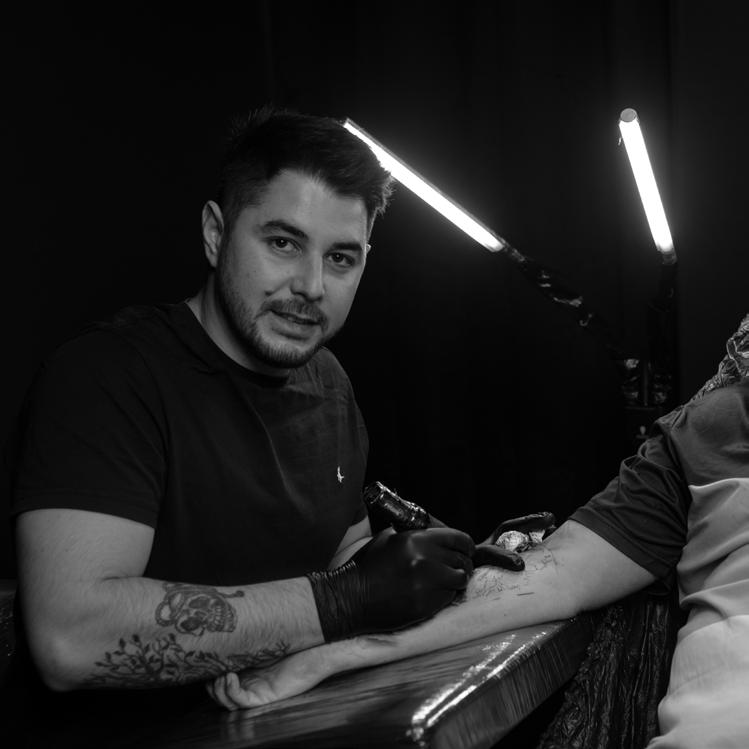
Photograph ‘Tanzhur Zait’ by Mangus Photography
Tanzhur Zait
Thetford’s Ink Master
Written by Andy Greenhouse
In the film, ‘Sliding Doors’, the central character misses her train when the door slides shut just as she’s trying to get on. The film goes on to portray how a single moment can affect the outcome of a person’s life by cleverly alternating between what happens after she misses the train with what could have happened had she got on.
This was the analogy I found myself using when talking with Thetford’s very talented and popular tattoo artist, Tanzhur Zait, for he had experienced a similar occurrence which had led him to this point, instead of becoming a team leader in a food factory.
But more of that later. For the moment, let’s just find out a bit more about Tanzhur. Born in Dulovo, Bulgaria, a small town similar in size to Thetford and about 260 miles from the capital Sofia, Tanzhur found from an early age that he had a talent for art and especially drawing. But
once he turned sixteen it was time for college, and Tanzhur’s parents insisted he set aside his artistic nature to study something that would stand a better chance of paying his bills in the future.
Tanzhur left Dulovo and went to Silistra to undertake professional studies in ‘Small and Medium Business’ at the Atanas Burov School of Economics, Administration and Service. And here he stayed for four years until finishing in 2012.
The following year he progressed to university and moved on to Svishtov to study for the ‘Business Management’ qualification at D.A. Tsenov Academy of Economics. This would be for a further four years until he completed the course in 2017.
During his time at the University, two things of great importance happened.
The first was meeting and falling in love with Oyya,
who would go on to become his wife a few years later. As well as attending the university, she also lived in Svishtov and they soon found they were well matched.
The second thing was… the table.
The table was used to display jobs available abroad, as ‘seasonal work’ in various places such as the US and a few European countries including the UK, and for the next four years this is how Tanzhur and Oyya found themselves, first in Hereford and then Lancaster, for three to four months each year.
The work consisted of fruit picking, though on their last visit, which was to Lancaster, they went for mushroom picking. This was a lot easier as the mushrooms were grown indoors rather than out in the fields which were open to the elements. The work would last from the end of May through to September, when it would be time to go back to resume their studies at Uni.
These visits ended in 2017 when Tanzhur finished his studies at the age of 25, but it was the following year, once the prospect of work in Bulgaria proved scarce, that he and Oyya decided to move full time to England to live and work.
Tanzhur had to use all of his wit and charm to persuade Oyya that the UK was the best option. Her family thought she would be better off going to America although the job offers there was just for hotel or bar work. The costs involved were also higher than Tanzhur could budget for, so the UK was agreed on and after picking a random place from Google maps, they ended up at the Scole Inn, near Diss.
Whilst there they met someone who suggested
they apply to work at Gressingham Foods in Redgrave, and Tanzhur ended up working there for the next four years.
This was a period of settling in and acclimatising for both Tanzhur and Oyya. One of the most important things Tanzhur committed to doing was learning to speak English which he has now mastered admirably, though he is quick to say that he keeps trying to improve all the time.
Not long after starting at Gressingham Foods they returned to Bulgaria for a two-week holiday and got married. On their return they soon heard of accommodation in Thetford and moved in. Tanzhur knuckled down at work and had a succession of promotions that took him from his starting role as a general meat cutter, to a process controller, compliance checker, and eventually to become a Quality team supervisor.
It was sometime in 2020 that Tanzhur experienced his ‘sliding door’ moment.
Oyya enjoyed bargain hunting at car-boot sales and on this one occasion, against his better judgement, Tanzhur went along with her as well, as much as he disliked going to them. On one particular stall an old boy was selling off his junk and Tanzhur spotted a box. Something made him look inside.
It contained two tattoo guns and all the paraphernalia that goes with them including some inks and skins to practise on, and all for the bargain price of £20. And as the door slid fully open, Tanzhur bought the box and stepped through into an alternative timeline.
He spent a while practising and getting used to the equipment and then did his first actual tattoo
on a housemate. He showed me a picture of it. A very good rendition of a tiger in black ink with nice sharp lines and all the shading in the right places. His friend was very impressed with it and showed it off to his friends… and the rest, as they say, is history!
For the next couple of years, Tanzhur did not have much spare time. Word soon spread, especially through the immigrant community, of his talents and he was in great demand to provide tattoos. Most weekends he would travel to Ipswich or Norwich and tattoo housefuls of people, receiving very little in return. These would usually be a mix of various East European nationalities who didn’t seem to mind that Tanzhur was just a beginner. They were just happy to be getting a tattoo for next to nothing while Tanzhur was just grateful for all the practise he was getting. Between sessions he would happily share any food or drink that was provided.
Gradually, as his skills improved, he did start charging people for this service and by 2022 he realised that he was making more money in a weekend of tattooing than he would in a week at work in the factory, and his career in food processing started to lose all interest for him.
Whilst tattooing at home, first in a corner of the lounge before moving into a small spare room with a table, lamp and bed, Tanzhur decided he needs to get serious. A chance conversation about haircuts, with a guy at Pizza Plus of all places, led him to the Next Level, the Turkish Barber shop at the end of Guildhall Street. And from that encounter, Tanzhur found out there was a small box room adjoining the barber shop that would be ideal for his needs.
An offer was made, and The Tattoo Box came into
It was at this point that Tanzhur also decided that he needed the necessary legislative requirements on his side too and he undertook a three-week intensive course at the highly respected and renowned London Tattoo Academy.
This gave him everything he needed to know about Health and Safety, Hygiene standards and the legislation involved in running a tattoo business and more importantly, he qualified as an entrant on the Register of Safe Tattoo Artists.
He told me that he already had all the experience, but now he knew what to do with it.
Over three years later, the Tattoo Box has gone from strength to strength. Tanzhur estimates that he has tattooed over eight thousand people since he started and, considering that at any one time his calendar for appointments is totally booked for the next two to three months, it’s not hard to see how he achieved that figure.
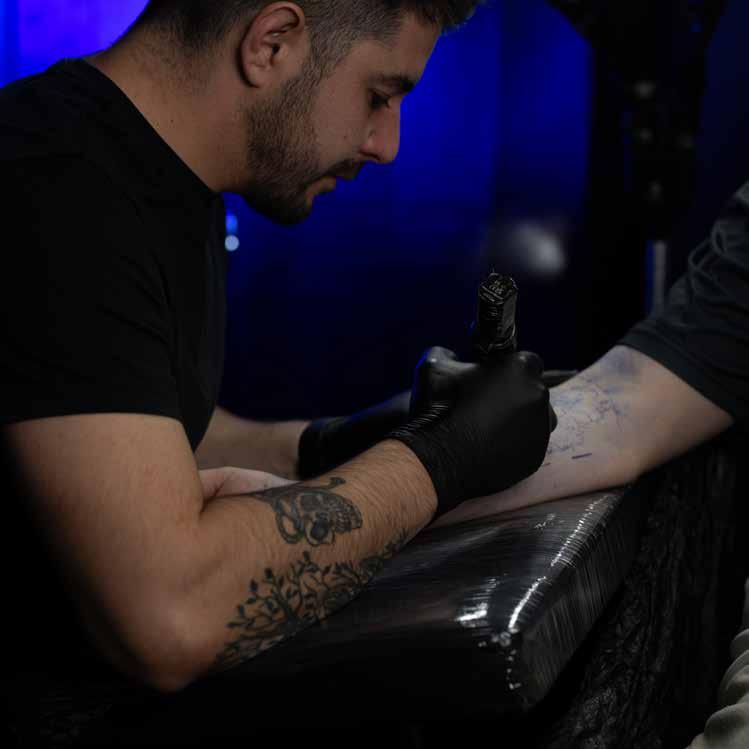
I have been lucky enough to have been one of the many that he has inked. I started going not long after he opened the Box when I wanted some work on my leg finishing off, and I then moved onto a full arm sleeve which is now almost finished. It was actually my arm that featured on his Tattoo Box Facebook page cover photo.
It’s partly my appreciation for all the hard work and creation he’s done for me that has led me to writing this article for him, but it is also driven by the fact that he is now part of what makes Thetford unique and is fully deserving of inclusion.
His policy has been to only accept bookings as he simply does not have the capacity to entertain
walk-in requests.
Oyya too has played her part in their story. She is trained and qualified to give piercings, and this too is done on a booking only basis.
But this is soon to all change. Forever wanting to improve, Tanzhur has taken another big step and is expanding and rebranding the business.
At the time of writing, he is in the process of completing the move from the little box room to bigger and better premises in what used to be Waterman’s Jewellers shop, in Well Street. The rebranding means that the business will now be called Diamond Ink. I’ve been there and the transformation is incredible.
The shop is now airy and totally redecorated with new flooring and ceilings. It exudes cleanliness and above all, professionalism.
Oyya will now work there more or less full time around school hours, doubling up as both receptionist and for piercings. Tanzhur will carry on with his pre-booked tattoo appointments but more importantly the plan is to take on another tattooist to cover walk-in requests. Tanzhur has already noticed a marked increase in the footfall going past, and coming through, the door since moving to this more central location.
With his young son, Timur, now five years old, the Zait family are a shining example of what hard work and dedication can bring. Having met all the criteria, been in the right place at the right time and filled in all the correct forms, they were granted ‘Settled Status’ some time ago and Tanzhur is happy now to be contributing back to the community that has accepted him.
It wasn’t until writing this that something else occurred to me which I’ve not mentioned to Tanzhur. In keeping with the premise of the sliding door principle, perhaps his first experience of this was in his parent’s decision that he study business and economics at college, rather than pursue his artistic aspirations. Perhaps it was his parents that held that sliding door open for him, for had he not gone through it is doubtful he would be where he is now, armed with the acumen to run a successful business. He already had the artistic skill which he would always have, but his parents ensured he would also have the knowledge of what to do with it.
If a tattoo is on your bucket list, then Tanzhur is your man… get down to Diamond Ink, but be quick!
Photograph
‘Paul Shanks’ by Mangus Photography
Paul Shanks
and the Eastern Multi Academy Trust
Written by Dave Griffiths
When I last visited Admiral’s Primary School, I was dressed as ‘Ulf the Viking’ who, with my rampaging partner Odger, stormed a year 6 classroom, pillaging pencils and water bottles and having an hour of fun quizzing the pupils on their Viking knowledge. With a liberal smattering and “Skols!” of course. I was too busy mooring the long boat and stowing the oars to notice too much about the school itself. My visit this week is a little different as I am meeting Paul Shanks, the Chief Executive of the Eastern Multi Academy trust; I have to be on my best behaviour! There is however a familiar light and bright feeling about the place that I can’t put my finger on. Only part way through our conversation do I remember that of course Norwich Road Academy, where I visited for the last Reflections Magazine article, is also part of the Eastern Multi Academy Trust (EMAT), the same family and philosophy as
Admirals; it all makes sense.
Whilst being broadly aware of what an Academy Trust is from my time as a primary school governor many years ago, I have no sense of how it all works and what the role of a Chief Executive is. So, I start by finding out a bit about Paul and his route to his current role. Like most of the incredibly accomplished people I’ve interviewed for the magazine, Paul’s route into teaching and academy leadership wasn’t totally conventional. Born and bred in York, when he completed A levels, rather than taking the conventional university route, he set up his own business in sports coaching. One of his early contracts came about when his PE teacher from secondary school, Stuart Outram, asked him to come in and help with swimming lessons. Being sports mad Paul had a close affinity and respect for Stuart and they talked
about teaching. Stuart then took the decision to retrain as a primary school teacher, a move that attracted Paul’s interest. Next thing he knew his mum and Stuart had filled out his UCAS forms and a very willing Paul headed to St John’s University in York to do a 4-year course in teacher training and biological sciences. He holds a great regard and gratitude to Stuart for the role he played setting him on his way in teaching.
On leaving university Paul found a very competitive job market for graduate teachers. He secured a role at Whitefriars Primary in Kings Lynn. Primary teaching proved to be all he hoped for, and he thrived. He was then successful in securing the position of Deputy Head at St Edmunds Primary, also in Kings Lynn. He was blown away by the culture and commitment of the tight knit team that the staff formed here. The school served one of the more deprived areas of Kings Lynn, but the team toiled relentlessly to support them in every way they could. The youngsters responded to the environment they created by becoming extremely interactive and engaged. I sense this was where Paul really saw what the right culture and strategy could do for a school. Onwards and upwards and the next step of his career came when, at the tender age of 27, Paul became Head Teacher of Greyfriars Primary. Indeed, I believe he was the youngest teacher to be made Head in the region.
in 2008, after his time at Grey’s, Paul looked to broaden his experience by taking a role outside of schools, working on National Strategies for Pupil Development with the Department of Education. He spent 2 years researching strategies, auditing provision in schools and delivering professional development packs to teaching professionals. He returned to headship, armed with this new perspective, in 2011 as the Head Teacher of Gaywood Primary School where he stayed for the
next 7 years.
His association with the Eastern Multi Academy Trust started in 2017 when he became the regional director overseeing primary schools in West Norfolk. A year later he progressed to become the Director of Primary Education overseeing the primary educational support and finally in 2022, the Chief Executive Officer responsible for 11 primaries and one secondary school. So, the Trust have a CEO steeped in teaching experience, passionate about what well organised and directed teams, with a clear strategy can achieve. He has a desire to deliver the best he can for our youngsters, the country’s future.
To try and get under the skin of what makes an Multi Academy Trust tick, I ask Paul the provocative question “Isn’t EMAT just a privately owned Local Education Authority (LEA) with a different name? Is it just the same thing with more money chucked at it?”. His answer and our discussion revealed how wrong that statement is. Even back when I was a governor, the funding for the LEA had been severely cut. We only saw LEA people when there were disputes or problems, or before an Ofsted audit. I was aware of no proactive guidance to improve the school and its operation. No reflection on the people or organisation. It wasn’t their fault, LEA staffing levels just didn’t allow it. With increasingly limited per capita funding, the ability to access all the possible sources of money is absolutely critical for schools. For a primary school, maxed out on dayto-day teaching and caring provision, doing this without central support is extremely challenging. You must know the sources, the tricks of the trade and you need to have the right contacts.
This explains at least one of the drivers for a Multi Academy Trust. A lot of what Paul does involves
meeting other sector practitioners, sharing ideas and leads, learning the latest on any number of topics. That expertise is then shared across the Trust’s schools, maximising funding, optimising the school environment, driving the best outcomes. But it’s not all about money and investment. It’s also about support and guidance in running the school and setting its strategy and approach. A standalone primary school head teacher must be a teacher, CEO, CFO, CTO, Head of HR and any other leadership role you can think of. It is an exceptionally broad and challenging role. I remember spending many hours with the Head when a governor looking at budget forecasts as I knew a bit about excel and finance. The trust centre can advise and guide in all these areas, establish best practice, support where needed and provide Head and staff training. As a structure it makes total sense.
One area in which Paul has particular pride in what the Academy have achieved is in timely intervention and support to minimise exclusions, a problem that is on the rise nationally across primary and secondary schools. In response to a higher-than-average exclusion rate in the Kings Lynn Academy, the trust formalised an intervention approach which is termed Forward Step. This looks to identify concerning signs from pupils, to intervene and support them through their issues, retaining them in class wherever possible. It is a big success and in the 3 years following its introduction, there were no exclusions at the school. The approach has now been rolled out more widely across Norfolk. He also spoke very proudly of the efforts of two key members of staff at Admirals who intervene and work with pupils, having great success keeping pupils in, or returning them to, the mainstream classroom and reducing exclusions. The culture of support and
inclusion came across strongly in everything Paul says.
Well, as another fascinating interview for the Reflections of Thetford magazine comes to a close, I ask Paul what the one thing is he’d like to see come out of the interview and the article. After a pause for thought he says that it would be for everyone to have a window into schools, to see what really happens day to day, how teachers and TA’s and support staff work with pupils, the dedication to their wellbeing and to the outcomes they achieve. The press coverage of schools and teachers is so negative, the picture painted one of dispute and disgruntlement. There is no doubt that with limited funding and resources, it is a challenging environment to work in, but you walk into Norwich Road Academy or Admirals as I have over recent weeks, and you don’t get a whiff of this sentiment. Only a hum of positivity, smiles and engagement from staff and pupils alike. An absolute confidence and purpose to the place. My wife has recently retired from the NHS and the press coverage is similarly negative and damaging. My personal view is that in both cases 95%+ of what goes on in schools and NHS is good and positive, but the media would have you think 95%+ is negative. Our national broadcaster does nothing to help this balance but that is a hobby horse I won’t ride off on.
I leave Admirals, and Norwich Road Academy before, with a warm feeling that pupils, in those crucially defining years for their development, are in great hands here. Ofsted markings of Good with Outstanding Features for both schools bear out that feeling with officialdom’s view. Paul and the Trust, Principals Julia and Greg and the whole staff of both schools are doing a great job for Thetford’s youngsters. I sense a positive future ahead.
Photograph
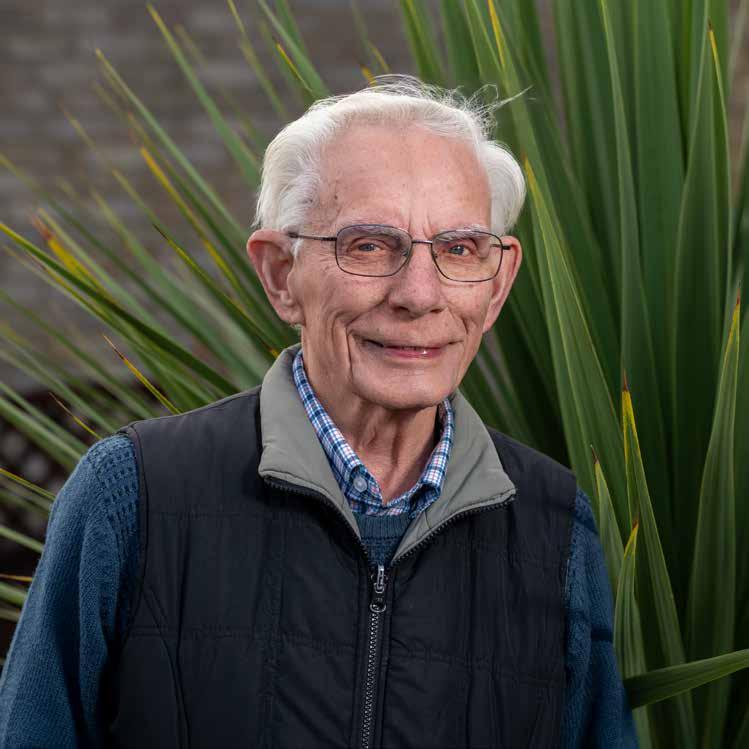
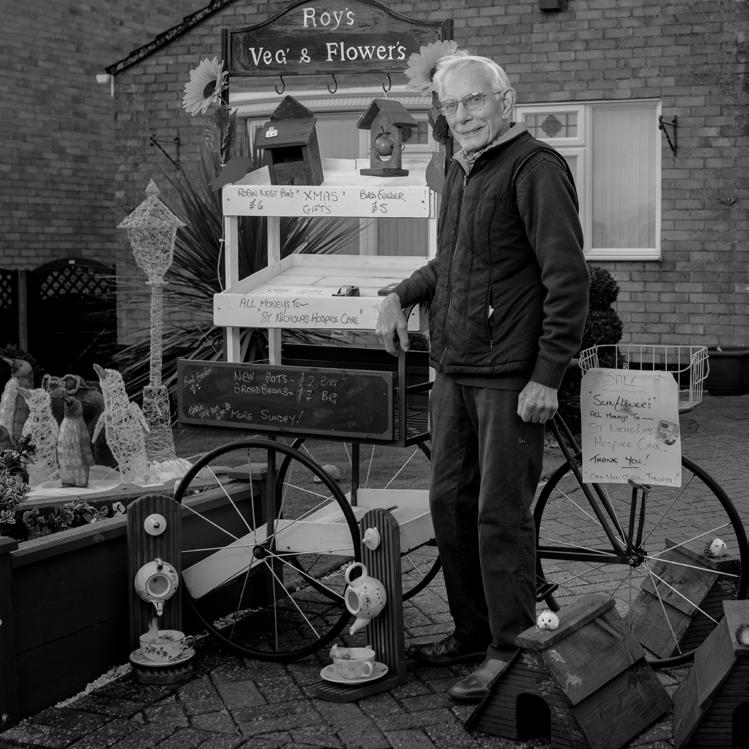
‘Roy Carpenter’ by Mangus Photography
Growing Goodness
How 90-Year-Old Gardener Roy Carpenter Feeds Thetford’s Heart
Written by Martin Angus
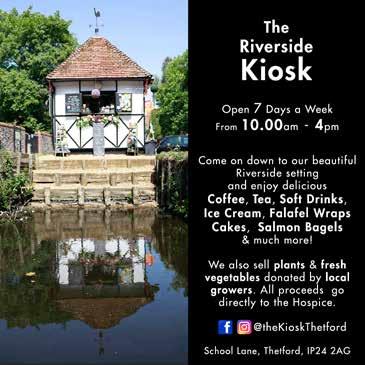
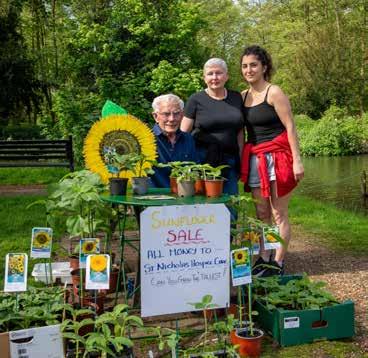
On a bright morning by Thetford’s Little Ouse, the first customers of the day queue at The Kiosk café for tea, coffee and toasted teacakes. Outside, next to the door, a simple table holds baskets of tomatoes, courgettes, beans and bags of walnuts. A hand-written sign explains that everything on the table has been grown locally and that every penny raised goes to St Nicholas Hospice Care.
If you wait a few minutes, you often see the grower himself appear: a trim, straight-backed man, unloading crates from the boot of his car. This is 90-year-old Roy Carpenter – gardener, maker, fixer and, as the team at The Kiosk call him, their “unofficial maintenance man”.
Roy doesn’t take a penny for what he grows. All the fruit, vegetables, flowers and plants he brings down from his allotment are donated, to be sold for charity. “It all raises money,” he says simply. “If I’ve got surplus, it shouldn’t go to waste. Someone can enjoy it and the hospice can benefit.”
Growing roots
Roy’s love of gardening began long before Thetford, before The Kiosk, even before the war. Born in 1935 in Thornwood, near Epping in Essex, he was one of seven children. His father, a strict but practical man, kept a large council-house garden and an allotment, and the whole family was expected to muck in.
“We all had chores,” Roy remembers. “Cutting hedges, keeping them straight, helping in the greenhouse. My father would show you once, and then you were expected to get on with it. Watch, learn and listen – that’s what he used to say.”
The family built their own 20-foot greenhouse, heated by a boiler his father installed himself. They grew tomatoes, lettuces and chrysanthemums for market. Roy laughs as he recalls one of his early mistakes: convinced he would make a fortune selling lettuce, he bought half a pound of seed, sowed the lot and filled the entire garden. “I never had one lettuce,” he admits. “They all bolted. That’s how you learn.”
From
fibreglass to flower
beds
Roy moved to Thetford in 1972 with his wife and young son, as part of the town’s London overspill expansion. He came to work for T.A. Austin’s Design, the fibreglass company whose factory once stood where the car showroom is now on Mundford Road. Over the years he made everything from imitation marble arches to bird hides for the RSPB at Sandy, roof cowls for factories and shop fronts for stores across the country.
After the fibreglass firm was taken over and eventually closed, Roy switched careers completely, joining the new Boots distribution warehouse near the A11. He started as a supervisor helping to set the place up, later moving into maintenance. His practical skills and eye for improvement meant he was always finding better ways to do things. He stayed with Boots for 15 years, travelling as far as Belfast to help set up another warehouse, and finally retired in 2000.
Retirement, for Roy, never meant putting his feet up. Alongside his jobs he had always done gardening for others, and his “spare time” was quickly filled. He became the unofficial gardener at local care homes such as Pryor’s Mead and Ford Place, opening up their grounds, planting, pruning and decorating lounges and corridors. He also found time for hobbies: building scale model carts based on real wagons he had measured, and later making bird boxes and hedgehog houses from recycled wood.
A garden in every home
Since arriving in Thetford, Roy has rarely been without a project. In Coventry Way, then at Fairfields, and now in his bungalow near Redgate, each home has been transformed from bare plots and shingle into a riot of colour. Lawns have to be neatly striped –even the artificial grass at the front gets swept so it looks “properly mown”. Pots, tubs and hanging baskets overflow with flowers, and the back garden
is a patchwork of herbaceous borders, decking and seating areas, all planned and maintained by Roy.
He also looks after several plots on his allotment site, officially having one but acting as caretaker for others when neighbouring gardeners struggle. Over the years he has won countless cups in the Thetford Allotment & Garden Club shows for his vegetables and flowers. Sunflowers are a particular speciality: one of his proudest efforts reached 4.1 metres, towering above the sheds like a yellow lighthouse.
People often ask Roy how he manages it all at his age. His answer is simple: he just keeps going. “To keep as active as I am – that’s what motivates me,” he says. “Gardening is exercise, it’s therapy, it’s everything. If I had no garden, I don’t know what I’d do.”
Tea, teacakes and tomatoes Roy’s partnership with The Kiosk began, as many good things do, with a cup of tea. Stopping there on walks, he became a regular for a brew and his favourite toasted teacake. “They’d see me coming and say, ‘Teacake, Roy?’” he smiles. Over time he got to know the staff – owner Julie and then Keeley, –and inevitably started to lend a hand.
“If they needed something fixing or a sign painting, I’d help,” he says. “They call me their maintenance man.” It was a natural step, then, for his surplus produce to find its way to the Kiosk riverside café. Roy had previously sold fruit and veg from a little cart outside his home and supplied another local charity stall. When that ended, the Kiosk team suggested he bring things down to them instead.
Now, throughout the growing season, you’ll find his tomatoes, beans, courgettes, apples, pears, walnuts and – of course – sunflowers on the table by the water. Roy prices everything modestly, and
the honesty box fills steadily through the day as dog-walkers, families and visitors pick up a bag of something fresh to take home.
All for St Nicholas
Every coin dropped into that box is counted at the end of the day and passed straight on to St Nicholas Hospice Care, which supports people and families across West Suffolk and Thetford. Roy chose the hospice because of the care it gives locally, and he proudly keeps the letters of thanks the charity sends him. “It’s just nice to know it helps,” he says. “I’ve always said, if you can do something, you should. You get out what you put in – same as with gardening.”
It’s not just Thetford people who enjoy his generosity. One regular customer, originally from Portugal and now living in North Lopham, returns each year for Roy’s tall sunflower plants, taking them back to grow outside in his front garden. When Roy later drove through the village, he spotted a fine row of towering blooms and recognised them immediately as “his”. Others have used Roy’s sunflowers to decorate weddings and community events, creating a little burst of Thetford colour far beyond his own street.
Lessons from a lifetime in the soil
Talk to Roy for any length of time and his philosophy soon emerges. It comes partly from his father’s nononsense approach and partly from a lifetime of solving problems, at work and in the garden.
“There’s no such word as ‘can’t’,” he says. “You watch, you learn, you listen, and you have a go. You’ll make mistakes – like my lettuces – but you learn from them. It’s the same with people who say they’re bored. I’ve never been bored in my life. There’s always something to do.”
For beginner gardeners, his advice is to start small. “A
window box, a tub, a few plants,” he suggests. “Don’t overwater. Put some gravel in the bottom, feed them now and then, and treat them like yourself – they need food and water, but they don’t want to sit in it. And talk to your plants. It does you good as much as them.”
Above all, he believes gardens can bring communities together. The colour and fragrance draw people in, start conversations over the fence, make passersby smile. Anyone who has walked past Roy’s front garden and spotted the big terracotta frog ornament with its home-made spectacles will know exactly what he means.
Looking ahead
At 90, Roy is realistic. He hopes to keep tending his garden and allotment, and to keep supplying The Kiosk for as long as his health allows, but he knows nothing is guaranteed. “Each year you hope for a good crop,” he says. “You put the seeds in and do everything right, but you still need the weather. It’s the same with life, really.”
For now, though, you’ll still find him out in all weathers – trimming, planting, sweeping, making another bird box from leftover decking boards, or loading his car for another run down to the river. His generosity is quiet, practical and utterly down-to-earth: a bag of beans here, a pot of salvias there, a sunflower that might just grow taller than the Kiosk’s cockerel on the roof.
Next time you’re by the river and you see that little table of home-grown produce, take a moment to think of the man behind it, and perhaps take a bag home with you. You’ll be supporting St Nicholas Hospice Care, brightening up your dinner table – and helping to keep one of Thetford’s most dedicated gardeners doing what he loves best
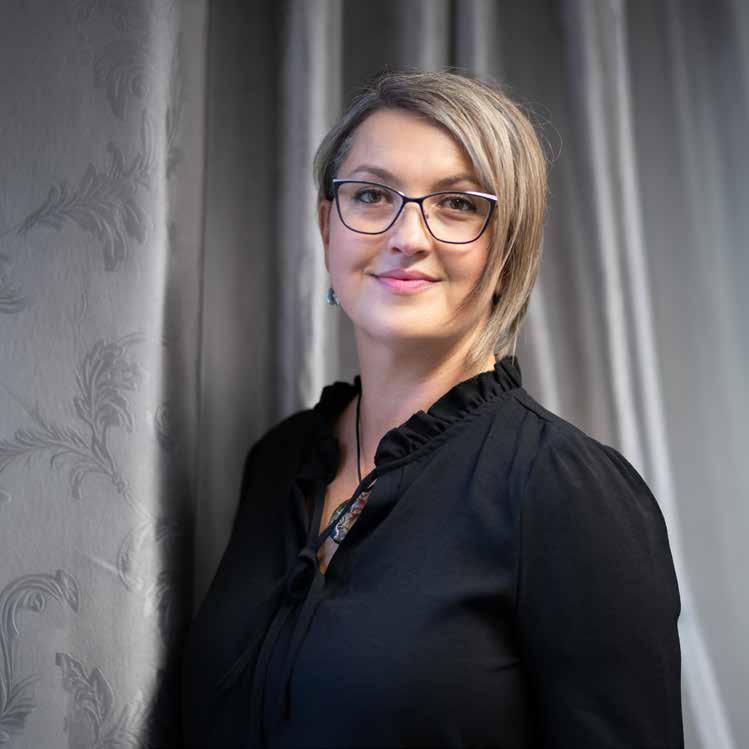
Photograph ‘Patrycja Szymanska’ by Mangus Photography
Blessed Be Alterations
With Sewing at its Heart
Written by Liz Gibbons
Ihave been to Blessed Be Alterations on many occasions, but the moment I step inside today, it is clear this visit will not be like the others. The establishment, an open and friendly space, walls adorned with sewing-machine art, vintage machines proudly on display and trailing leafy plants, has been altered. It has been transformed into a set from another era; a Victorian tableau wrapped in the glow of professional lighting.
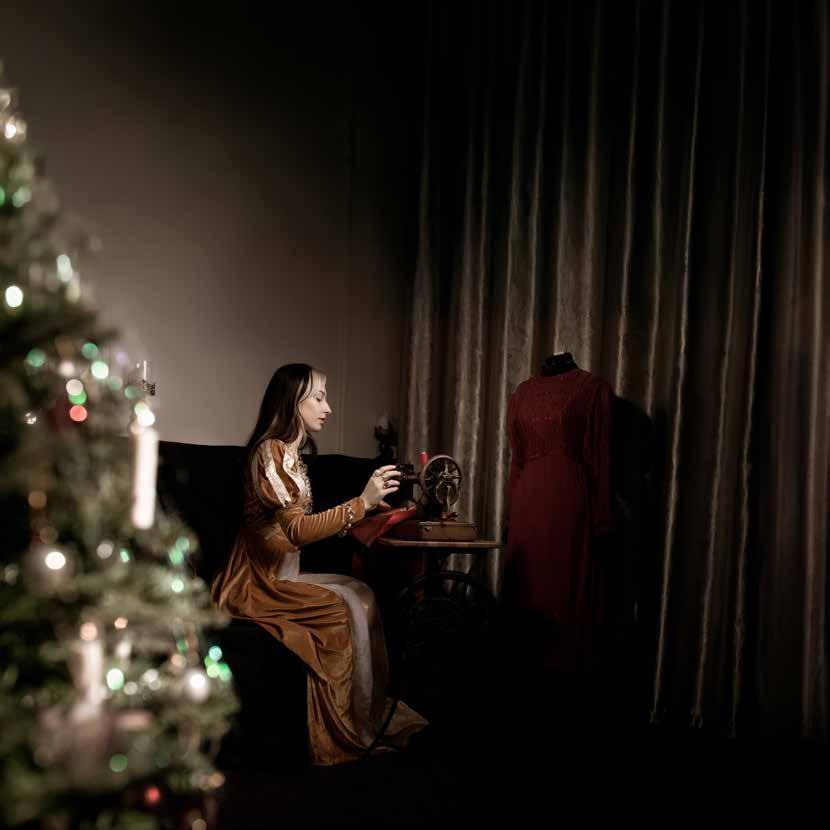
I am greeted by Patrycja Szymanska, known to many as Patsy - the business owner and Sewing Technician, Martin - our editor and photographer, who introduces me to Rob - an amateur photographer eager to learn the workings of a photoshoot. Around us, a Christmas scene has taken shape: silver jacquard curtains from the fitting room are now a backdrop for a vintage sewing table, topped with a black hand-cranked Victorian sewing machine with gold script lettering.
Metal filigree candle-stands gleam along the side and a small Christmas tree has been decorated with candle-lights. Dark fabric has been draped across the back wall to soften the glare from the lights. The scene is set, all we need now is our model, Amber, arriving shortly by train.
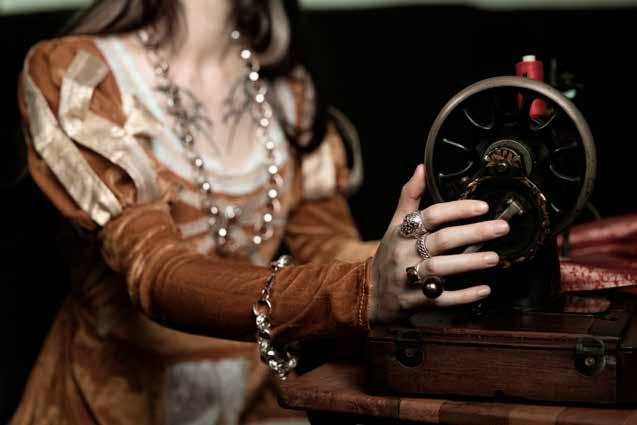
Tall and slender, with a cascade of black-and-white hair, Amber carries an arresting presence that draws the eye the moment she enters. We welcome her into our little group and lead her to the clothing rail, where outfits of velvets and lace have been selected to evoke a festive Victorian charm. After trying a few options, she chooses a golden velvet dress, rich and warm as the flames of an open fire. The moment Amber sits at the Victorian sewing machine, silver-chain jewellery shimmering at her neckline and wrist, the room seems to hold its breath. Gently she turns the handle of the sewing machine and glances back at us. It feels as though
we have stepped back in time, interrupting her mid-stitch, in a parlour bedecked for Christmas. She is mesmerising, and when Martin shows us the first images on his camera screen, it is instantly clear: Amber glows, becoming the final piece, the living heart of the carefully crafted Victorian scene (See more on page 58).
The
Interview
It is the next day and I have returned to Blessed Be Alterations to interview Patsy. She greets me in her usual welcoming way, a big smile on her face. Straight away, both of us talk about the photoshoot from the day before. I was not able to stay for the entire photoshoot, so Patsy updates me on all that I missed.
As we take a seat on the comfy chairs by the fitting room area, it is nice to see that after the excitement and bustle of the photoshoot, the space has returned to its familiar calm. We settle back and Patsy begins to tell me her story and a life of sewing.
“My mum says I was born with a needle in my hand,” says Patsy with a laugh. Raised in Poland, in a city near Warsaw, Patsy tells me that sewing was woven into her everyday existence. Growing up during the Communist era meant that readymade clothes were hard to come by, so women became resourceful creators, turning curtains into dresses and scraps into garments that carried the unmistakable imprint of family hands. Sewing was not just a hobby but a family tradition passed down through the generations. “I’ve researched my family,” Patsy reveals, “sewing has been a part of my family, even since the Second World War. There has always been a seamstress or a tailor in my family.”
Patsy remembers being mesmerised by her mother’s work and asking for patterns to make clothes for her dolls. One of her earliest triumphs was “making a leather jacket for her Barbie doll.” Patsy goes on to say that, “I did it all by hand, handling the pattern, cutting and putting the pieces together.” By the age of twelve Patsy was pleading to use the sewing machine, and although her mother insisted that she was not quite ready, she eventually relented. It’s little wonder her mother jokes that Patsy was born with a needle in her hand.
“The creative part of me is not just from my mum’s side, my dad was an artist.” Patsy elaborates, telling me that her father was a sculptor, working mainly with wood. Patsy likes to think that she inherited his artistic instinct but expresses it through fabric rather than wood. That blend of heritage, intuition, and training eventually led her to start a business involved in fabric. “I’m not just a seamstress,” she tells me with a smile, “but a clothing technologist.” Patsy has a wealth of knowledge and experience, making bespoke clothing, working on the production line but now clothing alterations have become the main focus. Patsy enjoys engaging in the range of tasks. “I have to be very organised and work efficiently while keeping up the best quality of work.” As well as serving members of the public, Patsy deals with companies as well.
When asked what brought her to Thetford and build a business here, Patsy reveals that she had always wanted to live in another country. “I always liked to give myself a bit of a challenge, and I always dreamed of going to another country. To learn another language, to meet new people, and see the culture and architecture.” Patsy applied for a sewing job on a UK production line, never
imagining anything would happen. It was to be a whole new chapter in her life. “It was New Year’s, a new country, new language, and I was really scared.” Not that she let this stop her. Patsy was ready to step beyond her comfort zone, challenge herself, and keep reaching for that next level of growth.
I asked how Patsy’s business has evolved since those early days, and the answer turns more personal. “Life put me in a situation where I had to make a decision.” A serious spinal surgery forced her to re-evaluate her path. She was not sure if she would be able to work or to do any sewing, but she took the risk and the recovery period gave her space to think creatively. During that time, the general public reached out. “People just started to ask me if I can do alterations,” Patsy recalls. Prior to her operation she had been making children’s clothes, selling them online and at craft fairs. “I already had the logo and the name: Blessed Be.” With her Facebook page already set up, going in a different direction seemed like the right thing to do.
“The trouble was,” Patsy says with a laugh, “I would make the children’s clothes but I didn’t want to let them go.”
At first Patsy was based at home, travelling to customers’ houses as a mobile seamstress. Three months in she realised she needed to find some premises. “People wanted to go somewhere and see your workplace because they want to see where they are leaving their goods, which is very important.” Patsy adds that there is nothing wrong with having a home business and using a domestic machine, she just felt it was time to adopt a more professional approach.
Her first establishment was in a small unit at Keystone Enterprise where Patsy stayed for five years. Just as she realised that she needed somewhere bigger, COVID hit and the world
ground to a halt. Ever adaptable, Patsy quickly realised she had to turn her hand to something new. “I started making face masks,” she recollects. “I had so many children’s fabrics from my clothes business.” The masks proved popular because they were so bright and colourful. Patsy made them and sold them on eBay, Etsy and even some orders were from the American Air Bases. “Even my family got involved. My partner helped me by cutting out the fabric, and packing the face masks. I just wanted to do something again, so I did something for the people.”
Once the lockdowns came to an end, Patsy moved from Keystone into a room in the Charles Burrell Centre, where she remained for three years. The space worked for a while, but ultimately proved inadequate for her expanding business. “I was taking on more company contracts while still serving my own clients, and the space became too tight for me and my two employees. Everything, the machines, the customer desk, even the fitting area, was squeezed into one room, and it just wasn’t safe, especially with children around. Safety is very important.” Patsy goes on to express how deeply she appreciates her small team of two, how invaluable their help and support are to her.
Finally, Patsy’s list of establishments ends up in the very place we are sitting, Cam Hub on Burrell Way. “This one is my favourite,” Patsy reveals. “People have space, they don’t have to squeeze in here. I put my stamp on it, my personality. I want it to feel like home, so people feel welcomed.”
We move on to what Patsy loves the most about her work and what challenges her. She laughs knowingly, “I think the most challenging part of the job is the fabric, because you get so many different types.” Especially when it comes to wedding dresses. Sadly, Patsy reveals that she had to stop
offering this service, having to pick and choose her jobs due to the timescale involved. She fondly remembers the joy of helping brides-to-be feel transformed, many of whom nicknamed her their “fairy godmother.”
An alterations business also requires constant investment; each year she buys new machines to meet professional standards. “When people walk into the sewing room, they think lots of people are working there,” Patsy confesses, “but I’m just a sewing-mad woman who loves sewing machines.” Yet for Patsy, every bit of effort and investment is all worthwhile the moment she sees her customers’ reactions. “I like to see people’s faces afterwards so I know I make people happy. I put hard work and energy into my creativity.” To her, alterations are a kind of alchemy, “Some clothes can seem dull, but once they’re fitted properly, they’re given a second life and they suddenly match the person’s personality. Seeing that transformation gives me so much satisfaction. When people try things on afterward, it feels almost made-to-measure. It’s something special, and it makes them feel like a VIP.”
Curious about what fuels her creativity, I ask where she finds inspiration. “Travel,” Patsy replies without hesitation. Even one trip a year fills her with ideas: colours, cultures, architecture, music, the subtle language of style that changes from one place to another. Patsy also finds inspiration in the everyday, all around her: nature, flowers, people, walking and photography. “When you’re a creative person,” she says, “you’re very sensitive to the world.”
Finally, I ask what is next for Patsy and the business. She grins at me and jokes that the goal is simply “to keep going and not go mad.” Beneath the humour is a steady determination: to stay positive, to continue her craft, and to build toward a future of a
warm and peaceful retirement. Throughout our talk, Patsy speaks of England with affection, calling it her second home and not missing Poland as much as one would expect. “We’ve got so many Polish people in the community I feel like it’s a little part of Poland here. I do, of course, miss my family still over there because I miss out on family occasions and events.” It is so lovely to hear that Thetford, with its vibrant and mixed community makes Patsy always feel welcomed and connected.
As our conversation draws to a close, it is clear that Patsy is far more than the friendly, everenthusiastic presence customers meet in her establishment. Her story reveals a rich, layered life, one stitched together with courage, creativity, heritage, and heart. Her business, Blessed Be Alterations, is more than a workshop; it’s a place where garments and people alike find new shape, new stories, and a renewed sense of community.
COLLABORATION PHOTOSHOOT
Many Hands Make Light Work
The Reflections of Thetford magazine was invited to the Blessed Be workshop by owner Patsy for our 12th edition collaborative feature photoshoot. Joining us for this creative venture:
Kate at Magic Floor Productions who kindly offered us the amazing Victorian era dresses.
Peter at Chloe’s Jewellers loaned us the spectacular pieces featured (the owner of the business hand picked the pieces himself).
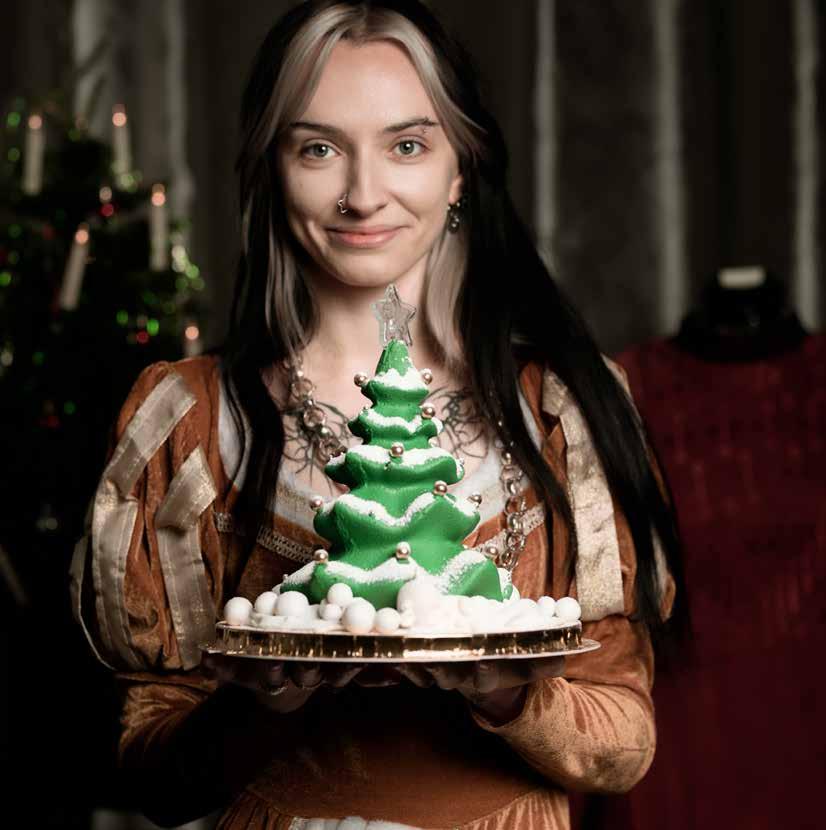
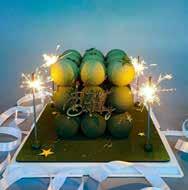
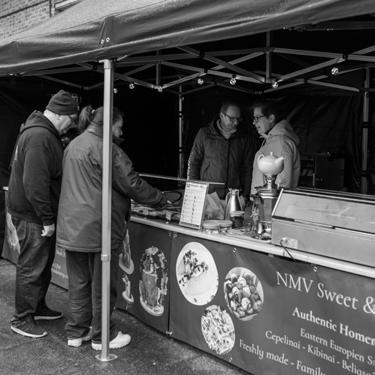
Inga and Ray at NMV Sweet and Savoury allowed us to include one of their beautiful Christmas cakes.
Jen at Grow Indoor Plants asked Prickly Pete, the cactus, if he would mind appearing in yet another photoshoot, lucky for us, and his followers, he graciously accepted.
Tracy at Instinctively Mystical, kindly allowed us to feature one of their Magical Chalices.
Photography was by Martin at mangus. co.uk, and finally we were joined by the stunning model, Amber, who became the student seamstress under the watchful eye of Patsy.
Not forgetting Rob and Liz for their invaluable assistance with the set design.
If you have an idea, or would like to be involved in future collaborations, please get in touch with the magazine.
magazine@thetfordbubblyhub.com
PricklyPeteNowthinksheisa ChristmasCactus
didn\tTheCakealmostmakeitthroughthephotoshoot
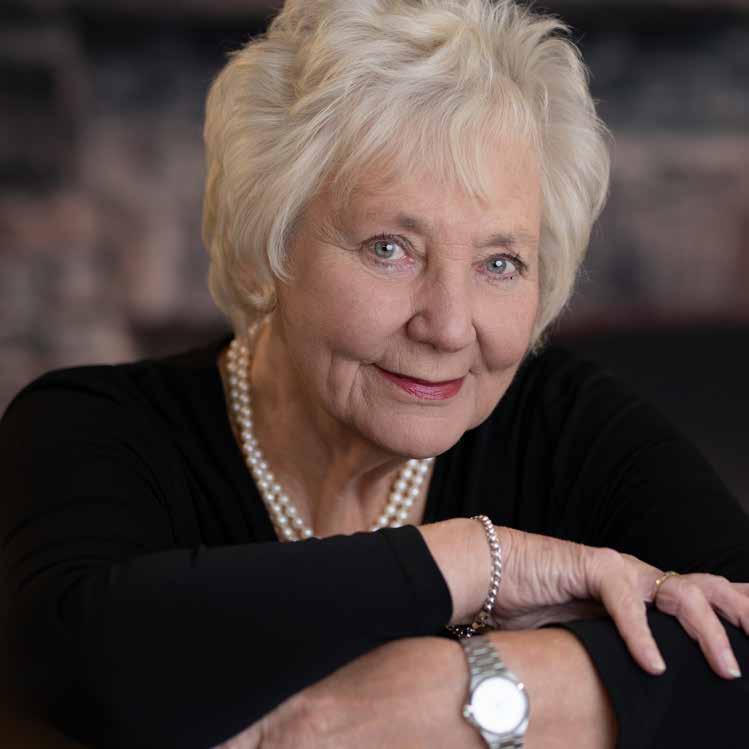
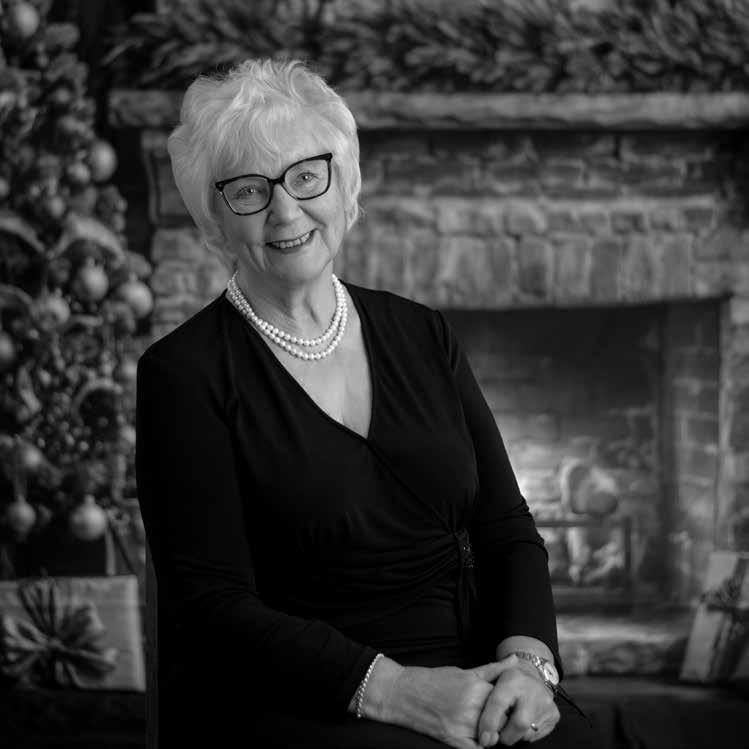
Photograph ‘Sylvia Armes’ by Mangus Photography
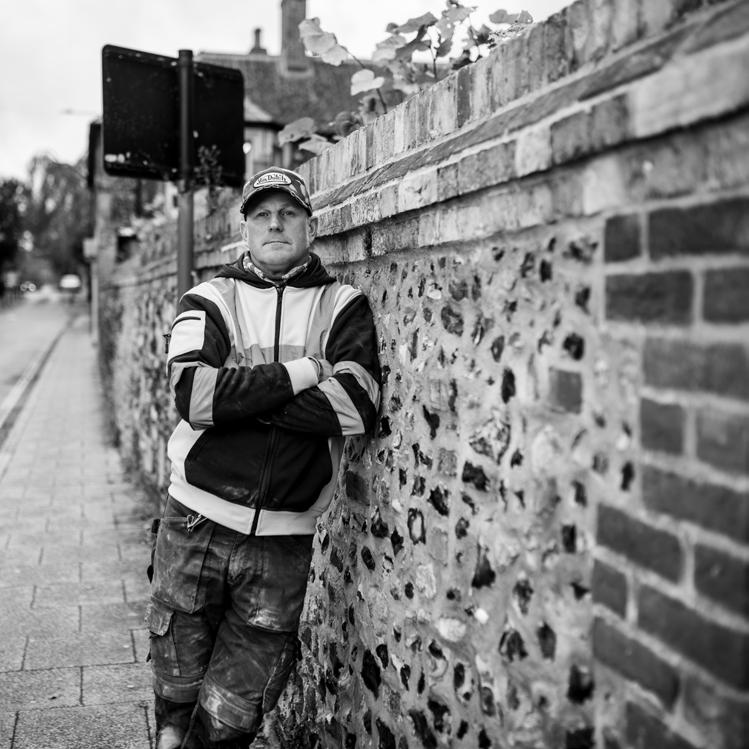
Sylvia Armes
From Farm to Fame, a Life of Service to Thetford
Written by Dave Griffiths
Colin and Sylvia Arms have often been referred to as ‘Mr and Mrs Thetford’, a label attributed to them by Ben Culey who was the undisputed ‘Mr Thetford’ in the post war years. What many may not know is that, whilst Colin was Thetford born and bred, Sylvia was born and brought up in the Norfolk farming community, only moving to Thetford in 1958 when she married. In later years her and Colin’s children spent many happy times at Grandad’s farm, learning the ways of working the land, and holding great affection for it.
She was born in the village of Bracon Ash but moved to Carlton Rode in 1947/48 where she lived until she married Colin. During our long conversation on a rainy Saturday morning, her affection and fond memories of those days shone through. Sylvia also talked about a world of community and support where people were there
to help each other, without question. Although she did not say so explicitly, I sense she felt a lot of that goodwill and community spirit has ebbed away over the years. The world in general, including Thetford, is the poorer for it.
At the age of 15, Sylvia’s story was almost brought to an abrupt end when she was struck down with a combination of rheumatic fever and meningitis. Doubtless her no-nonsense, “just get on with it”, farming approach to life was no small part of her overcoming the illness. But it left her so weak that she had to relearn, amongst other things, how to walk again. As part of this and to strengthen her legs, she took up roller skating, something that became a passion she pursued through adult life; but more of that later.
It was in 1956, at a Saturday night dance in Attleborough, a dance that Sylvia and her friends
regularly attended, that Sylvia met Colin. Music and dance played a big part in their lives, then and in future years. Colin had served two years of National Service in the RAF, spending time in Singapore at one point. On demob, he worked at Brandon post office for about two years before transferring to Thetford office where he worked until his retirement. He had a keen intellect, was good at maths and was something of an entrepreneur. Colin’s entrepreneurial activities started as a schoolboy. He’d gather moss to sell to florists, acorns for the farmers pigs, newspapers for the pulp mill and rabbits for the fur factory. When they married, his and Sylvia’s energy and determination became a formidable force in the community.
In 1958 Sylvia and Colin made the leap into house ownership. Colin’s work colleagues thought he was mad and that he should wait for a council house, just like everyone else. But Colin bucked the trend. The entrepreneur in him saw ownership was the way ahead. They bought number 49 Vicarage Road, in a row of Victorian houses. It was referred to as ‘starve gut alley’ as, when first built, many of the early purchasers could only just afford to buy them and had to tighten their belts on expenses such as food. They were constantly hungry! A weird quirk of the street is that looking down it from Norwich Road, the right-hand side is in St Cuthbert’s parish and the left in St Peter’s parish with the boundary right down the middle. They spent much of that year doing the place up (I sense it was a bit of a “doer upper”). They married later that year and moved into their new home. Both of their sons were born during the 10 years they lived there.
Whilst at Vicarage Road, the first community project the couple got involved with was helping to raise funds for the swimming pool. A weekly prize was given out of funds raised by participants donating a shilling a week and the remainder was
put towards the cost of the swimming pool. This involved collecting the money from those who had signed up for the tote and Sylvia, together with other local people, collected money weekly from the homes of participants; her collecting area was Earls Street and St Giles Lane, which had houses on both sides in those days. The necessary money was raised, and the swimming pool was built!
Colin was co-opted to the Town Council in the 1970’s and was pleased to be given the opportunity to serve the community. Over the years he took on more responsibility, culminating in his first stint as mayor in 1979/80 and again in 1994/95. Alongside this in 1995/96 he also served on Breckland District Council, both as a councillor and as chair. He was also elected to Norfolk County Council and was asked if he would be prepared to serve as Chair but decided that was not for him. An impressive history of service to town, district and county and he gave his all, a 100% to Thetford.
One of the projects that he and Sylvia threw themselves into was the Scout Camp at Two Mile Bottom. The site was available to use but there was no money to build anything. All sorts of money raising activities were kicked off but most memorably a monthly dance at the Carnegie Rooms. Sylvia would cook six whole legs of pork and apple and stuffing that was inclusive in the ticket price and served during the intervals. There was never going to be enough money to get contractors to build the site. Reclamation yards were scoured for materials, members of the community would chip in with their time and machinery to dig bore holes, or clear and level land, or build toilets; whatever was needed. The camp was opened in 1983 and has welcomed thousands of scouting visitors since.
Sylvia had spent the period from the 1970’s,
when Colin joined the council, raising both their sons and supporting Colin with all his civic duties and projects. Around 1990 when the children were grown up, Sylvia dipped her toe into local government when she was elected on to the Town Council. When I say dipped her toe in, I should rather say threw herself into it! She was involved in committees including planning, the Guildhall, cemeteries, allotments, civic, Staniforth, tenders and contracts and personnel. Certainly not just dabbling! She enjoyed all these areas, but she got particular enjoyment from, of all things, cemeteries.
She discovered that the chapel at the cemetery had been built with a dividing wall serving two different denominations, with separate doors. It had since become a single space where family and friends would visit. This gave her the idea of having a commemorative service/celebration at Christmas remembering loved ones. Council staff erected a Christmas tree in the chapel, where relatives and friends could write and hang messages to loved ones. A lay preacher, Robert Ogden, conducted a service and people who attended appreciated it and thought it was a lovely idea. The service was held for two years and in future years a tree was placed outside the chapel at Christmas for people to leave messages.
Sylvia then became a Breckland District Councillor and sat on various committees looking at planning, scrutiny and licensing. It was through her planning activities that she and Colin ended up inviting Prince Charles to Thetford! The story goes that Sylvia had attended a planning course in Oxford, which included a trip to Highgrove House, to learn about a new experimental urban extension near Dorchester; Poundbury. It was led by the Duchy of Cornwall and of particular interest to Prince Charles. Starting in 1994, it is due to be completed this year and to house 6,000 people. Colin and
Sylvia were present in the Orangery when the prince spoke to the gathering. As he left, Colin piped up saying, “Excuse me sir, I do apologise for disturbing you, but could you possibly come to Thetford to open our new bridge at Spring Walks”. The prince was a little surprised but very kind and agreed. He asked Sylvia and Colin to speak to Hugh Van Cutsem to arrange it. Hugh was a famous horse breeder whom the prince knew well and had presented an award to him for the restoration of a barn on his Hilborough Estate. Colin was never one to miss an opportunity!
The bridge is a story in itself. The council wanted to have a replacement bridge for the old wooden bridge across the river at the old swimming pool but didn’t have the funding for it. A bridge that was originally a road crossing bridge was acquired as it was no longer needed, and the owner was willing to let the town have it for free. The Town Council were on board and transportation and installation of the bridge now needed to be arranged. Christine Holmes, the famous singer/songwriter and owner of Spring House, was willing to help and finally Breckland was persuaded to contribute, with the lure of a royal visit. The bridge was put in place, Prince Charles opened it and walkers get to use it to this day. Colin and Sylvia maintained good ties with Christine (most famous for writing the global hit Devil Woman for Cliff Richard) and she sang at one of Colin’s Mayoral Banquets.
As if town and district council weren’t enough to be going on with, Sylvia was a Governor at Charles Burrell School, a member of the PPG (Patient Participation Group) at School Lane Surgery, she was on the committee of Keystone, was the vice chair of Riversdale and more recently, a founder member of the Thetford Business Awards. One of her great passions that I mentioned earlier,
was roller skating, which she originally took up as part of her rehabilitation. Pat and Reg Sutton set up Thetford Roller Skating Club, and she was a coach for over 20 years, with over 100 youngsters practising 3 times a week. The club had two European champions and also travelled abroad for competitions. Quite apart from the sporting element, the club provided a valuable social environment for youngsters to develop, helping keep them occupied through their teenage years.
The pinnacle of Sylvia’s public service career came when she was elected Mayor in 2015/16, 37 years after Colin’s first mayoral stint. It wasn’t an easy year with the decision over the location of the new bus station on the site of the old Anchor pub causing great dispute. During November 2014 Sylvia was surprised to receive some unexpected correspondence from the Abraham Lincoln Memorial Museum, requesting her to enlighten them as to the differences in life from 1865 to the time of her mayoral year, 2015. Included in this correspondence was a copy of the condolences sent from the old Thetford Borough Council at the time of Lincoln’s death in 1865. Sylvia’s response to this request is now kept in the Abraham Lincoln Presidential Museum.
Colin and Sylvia’s Council service spanned over 5 decades and saw them involved in an impressive list of achievements including the Scout camp at Two Mile Bottom, the roundabout on the market square, the shops in the Shambles, the Victorian lights in School Lane, the Spring Walk bridge, the business awards, the bus station and being instrumental in bringing the Roy’s department store to Thetford to name but a few. A list of achievements to be so proud of and the reason why Ben Culey, the original “Mr Thetford”, bestowed the title upon Colin.
Mangus Photography
Photograph
‘Rita Thompson’ by Mangus Photography
Rita Thompson
Breckland Cat Protection, being part of a local team
Written by Andy Eden
Retirement brings with it many options and choices. Not least is the question of how to fill your new found free time. For Rita, the decision was simple, help ‘Cats Protection’ in any way she could.
Rita retired in 2006 and without any family ties there, she moved from Stanford Le Hope in Essex to Brandon. Always a cat lover, Rita had owned many over the years, if ‘owned’ is the right word. (I’m reminded of the saying that dogs have owners while cats have servants.) One day, at a local event, Rita spotted a stall from the Breckland branch of Cats Protection. She walked over and offered her help there and then.
As you would imagine, where an animal’s health and wellbeing is concerned, there are many checks to be
done before someone can join the team. It is not just the person who is vetted though, their property has to be suitable in every way. Finally Rita was given the okay and she could start to foster cats before they were found a permanent home.
Over the years, kittens have become Rita’s specialty including the younger ones that have to be hand reared. This involves bottle feeding at regular intervals, making sure that they get enough milk without over feeding them. It isn’t always easy and some people are wary about it; in case they get it wrong. Because of this and Rita’s experience in this area, she gets to foster a lot of the very young kittens that come in.
Before I arrived to visit Rita, I had an image in my head of a house where every work surface and
object had a cat draped over it. This could not be further from the truth. Rita has her own cats and they, of course, have the run of the house just as in any property where a cat resides. The foster cats are kept separate for health and social reasons. A resident cat might not take kindly to having other cats coming into its domain and this could lead to fights and a stressful life for Rita’s own animals. Perhaps more importantly, foster cats could bring infections with them so resident cats and the foster cats never meet.
To keep the foster cats separate, Rita has a conservatory which she can use although it isn’t so good in the cold weather. The last thing kittens need is to be housed in very cold conditions so in addition to the conservatory, Rita has a modified spare room. You might think that any spare bedroom would be okay but Cats Protection are very strict and rightly so. There should be no carpet or soft furnishings, the floor has to be easily cleaned in the event of spillage or accidents, something that comes with the territory. Soft toys and scratching posts are not allowed although Cats Protection do provide a stand / house for the foster cats. They are also given lots of toys to help their development, but these are discarded when the cats are rehomed and new ones given to the next litter. This avoids any contamination.
All of these precautions along with Rita’s cleaning routine, a thorough disinfection between litters, helps to keep the cats and kittens safe from infection. PPE is provided and someone from Head Office inspects the foster homes once a year to make sure everyone is keeping up with good hygiene practice.
Of course, not all cats that come in are in good health to start with. Some have more obvious issues such as fleas and worms which are treated immediately. Others though, can have much more serious conditions such as cat flu (FHV-1), feline parvovirus (FIE) or feline leukemia (FeLV) and sadly sometimes
these prove fatal. There are vaccinations available for all three conditions and it is something that kittens should receive before being allowed out into the big wide world. Unfortunately, not all owners make sure this is done and that in turn can help to spread diseases. Rita told me of a distressing instance where she was hand rearing kittens from the same litter. The mother was to be neutered and as usual, was tested for Feline Aids and Leukemia. Sadley she was found to have Leukemia and had to be put to sleep. The kittens would have contracted the condition in the womb and although they showed no symptoms then, unfortunately they also had to be put down.
Cats Protection also help the public with the cost of neutering to avoid unwanted litters in the first place. People can apply for a voucher for £50 for a male cat and £80 for a female cat to help with the cost. They of course have to pay the balance of the vet bill. Rita made the point that although many of these vouchers are posted out, not all of them are used which is disappointing and a waste of time and money for Cats Protection.
The kittens I saw on my visit were in rude health if a little sleepy at first. They had obviously been napping and my arrival woke them (sorry). Two of them went straight to their food bowls and got stuck in while the other one clambered over the house and came tumbling down the other side in a heap, only to spring up and look around as if to say’ nothing to see here.’ They are lucky, they will be well fed, vaccinated and given a full bill of health then passed on to a new owner at 9 weeks.
All of this does not come cheaply though. The people who do the fostering do not receive any financial incentive to do this. They do have their expenses reimbursed though, so cat food, cat litter etc. and milage are paid for. Cats Protection also pay for all the vet bills and have some permanent staff to
pay as well. All in all it amounts to a tidy sum each month and with no regular income the money has to come from somewhere. When someone adopts a cat from Cats Protection they are asked to pay a fee of £75 and £95 for a kitten. For this, the cat will have had a full health check, blood tests, flea and worm treatment, two vaccinations, neutering if old enough (over 4 months) and a microchip. Kittens will need an extra vaccine 3 to 4 weeks after the first so they are fully protected for a year and boosters are recommended.
While this goes some way to covering the costs, there is still a deficit to be addressed. Sometimes money is left to Cats Protection in a will or a one-off payment is made but fund raising is still a very important part of the everyday life of the charity. You may spot their stall at a local event in which case I would suggest you go over and find out more about them from the passionate staff and volunteers. Their website also has lots of information about the work they do as well as help and advice. (address below)
All of which brings me back to Rita. She is the very embodiment of a passionate supporter of Cats Protection. Her house is full of pictures and ornaments of cats, leaving no doubt that she is a cat lover. More than that though, she puts herself out to help cats that need to find a loving home. Hours spent feeding and clearing up after her charges knowing that at sometime, in the not so distant future, she will have to hand them over to someone else and that the odd few will simply not make it. She doesn’t do it for financial reward, or for recognition, she is very self-effacing, she does it because she cares about cats and wants to help them.
Perhaps you feel the same and would like to help the charity? If so Cats Protection would be happy to hear from you.
The Unsung Heroes: How Cats and Dogs Save Lives as Blood Donors
Written by Rita Thompson
When we think of blood donors, we usually picture people rolling up their sleeves. But did you know that our pets can be life-saving donors too? Across the UK, cats and dogs quietly support veterinary teams by providing essential blood transfusions for animals in crisis— often making the difference between life and death.
Feline Lifesavers
Cats can donate blood, but the criteria are specific to ensure the donor’s safety. A feline donor must be between 1 and 8 years old, weigh at least 4 kg, and ideally be an indoor cat. Outdoor cats may still qualify if they test negative for Feline Leukaemia Virus (FeLV) and Feline Immunodeficiency Virus (FIV), are fully vaccinated, and are up to date with flea and worm prevention. They must also have never left the UK, take no medication, be in excellent health, and
have a gentle, easy-to-handle temperament.
Before donating, cats undergo a full health assessment, including checks for heart murmurs and detailed blood work. Cats have three blood groups—A, B, and AB—and matching correctly is essential, as mismatches can be dangerous.
During donation, a cat receives light sedation, and around 55 ml of blood is collected from a neck vein. An identical volume of electrolyte fluid is then given to stabilise blood pressure.
Dogs: The Universal Donors
Dog donors follow similar rules: they must be 1–8 years old, weigh over 25 kg, remain UK-based, be free of medication, fully vaccinated, and in robust health. Dogs have two primary blood types—DEA 1 Positive
and DEA 1 Negative. Only 30% of dogs are DEA 1 Negative, making them the coveted universal donors. Large, calm breeds such as Greyhounds, Dobermans, Boxers, German Shepherds, Retrievers, Airedales, Weimaraners, Lurchers, American Bulldogs, Pointers, and English Bull Terriers are often ideal candidates.
Why Transfusions Matter
Pets may require transfusions for a wide range of emergencies and illnesses, including anaemia, ruptured spleens, trauma, blood loss during surgery, rat poisoning, sepsis, cancer, kidney disease, infections, and autoimmune disorders.
Red blood cells can only be stored for 35 days, though plasma—the portion containing clotting factors—can be frozen for up to a year. Because animal blood banks are limited in the UK, most veterinary practices rely on lists of local donor pets who can be called in when needed.
A Real-Life Rescue: Boo’s Story
Recently, I received a phone call from a woman who adopted a kitten from us just over a year ago. That kitten, now named Boo and just 16 months old, had suddenly become critically ill. Her owner noticed she was lethargic and off her food, and immediately took her to the vet.
The vet checked Boo’s gums—they were shockingly pale. She was severely anaemic and was rushed to Dick White Referrals, a specialist veterinary centre near Newmarket. There, the team described her condition as “not compatible with life.”
A healthy cat’s Packed Cell Volume (PCV)—the percentage of blood made up of red cells—should be around 30%. Boo’s was just 4%. She was suffering
from Auto Immune Haemolytic Anaemia, a condition where the body destroys its own red blood cells—and, in Boo’s case, even destroyed transfused donor cells.
In a race against time, Boo was given an emergency transfusion of dog blood. This can only be done once, but it can provide crucial temporary support when a cat’s life is hanging by a thread. Next, blood was taken from the owner’s other cat for a second transfusion. She was also started on high-dose corticosteroids to calm her overactive immune system.
Miraculously, Boo responded quickly. Within a few days she was well enough to go home.
When cats are adopted from us, their new owners receive four weeks of free Pet Plan insurance, and we always recommend that this be continued. Boo’s case shows why: her treatment has already reached £6,000—but her owner will only need to pay the £80 excess. Even young, healthy cats can face sudden, unpredictable medical emergencies.
Boo’s recovery continues, though her medication is expensive—around £300 a month—and her owner is exploring more affordable options with a prescription. She is currently being monitored by the referral centre as they gradually reduce her treatment, and she is thankfully making steady progress.
Could Your Pet Be a Hero?
Like humans, cats and dogs can donate blood every 3–4 months. If your pet fits the criteria and has a calm, friendly nature, they could become one of the quiet heroes helping to save lives like Boo’s.
And if you need advice or help with the cost of neutering, please call us on 01842 810018.
Photograph ‘Steve’ by Mangus Photography
The Art Loft Gallery
Reviving Thetford’s Creative Scene
Written by Liz Gibbons
After many years, Thetford once again has a place to celebrate art. The Art Loft Gallery, located above Grow - the indoor plant shop, is a fresh burst of creativity in the town. This welcoming space for artists and visitors alike is the latest venture from local couple Steve and Jen Francis, whose shared passion for creativity and community has brought new life to the heart of Thetford. Jen, an entrepreneur and plant enthusiast, first opened Grow to share her love of indoor greenery. Now, just upstairs, her husband Steve has turned his artistic vision into reality with the opening of The Art Loft Gallery, a calm, inspiring space where art and nature thrive side by side.
So, let’s meet Steve and discover how he turned an idea into reality. An artist himself and now gallery curator, Steve has a deep passion for creativity and community, making The Art Loft Gallery a personal and special space. “As curator, I’m looking forward
to bringing together a mix of artists and styles,” he says, “and to shaping the gallery into a space full of creativity and conversation.”
Art has always been part of Steve’s story. “I did art at school, including graphical drawing,” he recalls. “Life got busy and art became a hobby, but recently it became more at the forefront of my life.” When asked what drew him back to creating, he speaks with a refreshing honesty. “I’m getting older and experienced something, not quite a mid-life crisis, but thinking along the lines that I’m wasting potential,” he admits. “Art was something I would do in the evenings on the sofa with my family sitting beside me. It’s always something I’ve been interested in and a few years ago I decided that it was what I wanted to do. Something that felt worthwhile rather than just going to work every day. I’ve been drawing ever since.”
Having a studio space above the shop has allowed
Steve to dedicate proper time to his art. “When I worked full time, I’d only draw occasionally,” he says. “Doing art at home can be distracting, I couldn’t really ask everyone to sit in silence while I drew. Having a studio here means I can do my drawing during the day. It’s a bit like working, but it’s something I really enjoy.”
Steve experimented with different mediums before finding one that truly suited his style. “I started with pencil and charcoal, tried various forms of painting, and then I started playing with ink,” he explains. “I found that medium is what I enjoyed the most, so I’ve continued working with that.” He is still exploring subject matter. “I haven’t really found a particular subject I’m most interested in yet,” he admits. “I’ve tried all different types of things; landscapes, portraits, still life. At the moment I’m leaning more towards landscapes.”
Some of the examples Steve shows me are intricate fine-line ink drawings, his style distinctive and precise. On his desk sits one in progress, already showing the careful outlines and perspective of a townscape. “I haven’t drawn anything of Thetford before,” Steve says. “I think because I live here and see it every day, it didn’t inspire me. But listening to responses and what people are interested in when walking around the gallery, with things that are local, I thought I’d try something. I’m currently working on Magdalen Street.”
When asked where the idea for The Art Loft Gallery came from, it very much sounds as if it grew naturally. “It was my wife Jen’s idea actually,” Steve says, smiling. “The original idea was to sell a few pieces of artwork downstairs in the plant shop.” Then the upstairs underwent a big tidy up and suddenly there was surplus space. “It was a shame for it to go to waste so I put in a desk in the spare room. I was able
A few photographs of artists, friends, family and art lovers, on the opening night of The Art Loft Gallery, Thetford.
Photographs by Mangus Photography
to do some drawing while being on hand if I was needed in the shop.” Jen then suggested making the entire upstairs art related. Steve continues, “The gallery idea just lent itself to the situation. There was no particular light bulb moment, it just evolved naturally.”
When it came to finding artists to exhibit, the focus was on community. “We decided we wanted local artists,” Steve explains. “We put posts out on Facebook and Instagram saying we were planning to put together an exhibition and was anyone interested? We got a huge response.” The selection process aimed for variety. “We wanted a mixture of people who’d never displayed before and some more semi-professional artists,” he says. “We also wanted a mix of different mediums and working styles.”
Each artist was given freedom in how their work was presented. “Some of them wanted to include information cards about their process, while others preferred to leave interpretation up to the viewer,” Steve says. The plan is to refresh the displays regularly. “Each artist will have their work up for a three month period however, we intend to stagger when the displays change,” he explains. “This will mean works will change more frequently and hopefully keep things fresh.”
Looking ahead, Steve reveals that he plans to set up a website to better facilitate art sales. He also hopes the gallery will become more than just an exhibition space. “I’d love to do some kind of workshops or something,” he says. “In my previous working life, I’ve trained a lot of people and it’s something I could easily adapt to art. I don’t have formal art training myself, so it’s about figuring out what I can do with the skills I have and who would be interested.” I tell Steve that, personally, formal qualifications would not concern me; the quality of his work speaks for itself.
I, for one, would happily sign up for one of his classes. Let us hope that there are some art classes in the gallery’s future.
The gallery’s opening night was a joyful celebration of art and local talent. “The opening night was 5–8pm,” Steve recalls. “When we first opened, it was really busy, but then it calmed down and we had staggered visits after that. That worked out well, some people need it a bit calmer to have a look around.” The response from the community has been overwhelmingly positive. “It’s been a lovely surprise how positive everyone’s been, and the community we’re working with,” he says. “It’s been fantastic so far. People were just mingling and chatting, it was really relaxed. When it grew quieter, I could speak to people more individually, just networking and chatting.”
When asked about the most memorable moments of the evening, Steve said that although he was thrilled with the turnout, two guests in particular stood out. “The Mayor was here, which was lovely, it felt like we were being recognised as important to the community.”
The other moment was more personal. Among the visitors was the former head of the Guildhall Art Gallery, who had come to support the opening. To Steve’s surprise, she turned out to be one of his own middle school teachers, Mrs. Sodey. “I had a really long chat with her,” he said. “She was absolutely thrilled about a gallery being back in Thetford.”
From sporadic sketches on the sofa to curating a thriving gallery space, Steve’s journey has been one of rediscovery and purpose. “It’s all just grown naturally,” he reflects, “and now it feels like exactly where I’m meant to be.”
Meet the Artists
by Liz Gibbons
Artists work was being exhibited at the time of publishing, items sell and new artists are being invited to the gallery all of the time.
The Art Loft Gallery
First Floor, 14 Riverside Walk, Thetford, United Kingdom
01842 731019
theartloftthetford@outlook.com
Monday CLOSED
Tuesday 10:00 - 16:30
Wednesday 10:00 - 16:30
Thursday 10:00 - 16:30
Friday 10:00 - 16:30
Saturday 10:00 - 16:30
Sunday 10:00 - 16:30
Lyn Aylward
Lyn Aylward is a local figurative painter whose portraits and large scale works explore identity, memory, and human expression. A regular exhibitor across East Anglia, she has appeared on Sky’s Portrait Artist of the Year and contributed to Portraits for NHS Heroes. Although she has drawn since childhood, Lyn spent several years working in offices before returning to art through an Art Foundation course at West Suffolk College. It was there, in early adulthood, that she discovered her commitment to fine art. Lyn describes her style as Realism, often incorporating subtle symbolism to make portraits more personal to the sitter. She primarily works in oils, appreciating their flexibility and slow-drying nature, which allows her to work on multiple paintings at once. Portraiture has always fascinated Lyn; she is drawn to capturing likeness, personality, and the intricacies of fabric and detail. Recently she has embraced more symbolic elements, enjoying the research and planning that shape her evolving creative process.
Benjamin’s richly textured paintings blend abstract expressionism, symbolism, and impressionism, with his current exhibition The Atrophy of Man examining the effects of toxic masculinity. He began creating art from the age of twelve after a teacher recognised his talent, a passion he continued studying into his Fine Arts education. Although he later stepped back from full-time practice due to practical demands, Benjamin maintained a “reluctant artist” identity, producing work through commissions, gifts, and bursts of creative energy that match his fast, layered style. His approach is rooted in Impressionism but leans toward Abstract Expressionism, using wild brushstrokes, scraping, and over-painting, often with multiple hidden layers beneath a final image. Working mainly in acrylics, he also incorporates various textural materials and occasionally uses enamel, setting it on fire to achieve unique effects. While landscapes inspire him most, he is currently exploring male forms and symbolism, creating a body of work that challenges the restrictive nature of toxic masculinity.
Benjamin Conradie Tayla Harding
Tayla is a sculptor whose powerful ceramic works explore themes that feel particularly resonant today. She has been studying art for five years, two years for A level and now her third year at university, during which she has developed a personal practice she is proud to continue refining. Tayla describes her style as conceptual yet playful, frequently exploring the human form and experimenting with ways to abstract, characterise, and emotionally charge her subjects. Working primarily with clay and glazes, she creates sculptural pieces that reflect her interests in texture, form, and meaning. Her practice centres on modern day social class structures, particularly the identity, pride, and recognition of the working class. Drawing inspiration from her own family and upbringing, Tayla seeks to celebrate community, strength, and sacrifice while challenging class attitudes. Her sculptures honour the voices and stories she believes shaped the heart of Britain, using material and form to elevate everyday resilience into artistic narrative.
John is known for his warm, characterful paintings of local landscapes and buildings, pieces that capture familiar places with clarity and affection. He has been painting for twenty-four years, beginning when he wanted to add colour to the sketches he had long enjoyed creating. John works in acrylics, watercolours, pastels, and occasionally oils, adapting his medium to the subject at hand. His architectural pieces are detailed and precise, reflecting both his artistic interests and his background in the building industry, while his natural landscapes focus more on atmosphere and mood. John also paints pet portraits, always aiming to capture the unique personality of each animal. Buildings remain his most frequent subject: houses, shops, churches, and many of these works are commissions. His art has reached audiences far beyond the local area; he has sold around twenty-five paintings in the United States, including both house portraits and animal studies, demonstrating the broad appeal of his work.
Emily is a self-taught artist whose work is shaped by magical skies, forests, and the interplay of light and colour, often exploring the idea of nature reclaiming its space. She began painting at the end of COVID as a way to support her mental health and quickly discovered a passion for creating atmospheric and dreamlike landscapes. Emily primarily works in oils and describes her style as soft Realism with a touch of Impressionism. Favouring gentle transitions, glowing light, and settings with traces of urban influence: lonely telegraph poles, forgotten buildings, or structures slowly being overtaken by nature. While she has painted animals and portraits, her heart lies in crafting scenes that feel immersive and emotional. Her interest in urban-meetswild environments reflects her fascination with resilience, renewal, and the quiet stories hidden within familiar places. Through colour and light, Emily creates spaces that feel both grounded and otherworldly, inviting viewers to step into her imagined landscapes.
John Hayes Emily Oxborrow
Cristi is a photographer whose work explores motherhood and nature through images that feel intimate, powerful, and quietly poetic. She has been drawn to photography for as long as she can remember, first documenting her own childhood, then learning film processing, darkroom methods, and later completing a degree in Photography & Film. Motherhood profoundly reshaped her creative vision, deepening her gaze and giving her work new emotional resonance. Cristi blends analogue film with digital techniques, favouring natural light and a style that is raw, tender, and reflective. She often works across both mediums simultaneously, allowing texture and tone to guide the storytelling in her images. Collaboration and creative direction form additional branches of her practice, as does occasional writing that expands on themes present in her photographs. Central to Cristi’s work is the experience of motherhood, the sacred, complex relationship between mother and child, shaped by cycles of growth, identity, intimacy, and the quiet strength of everyday moments.
Cristi Paterson Catherine Ward
Catherine is a printmaker whose lino works grow from sketchbook studies and observational drawing. It is shaped by her love of form, texture, and carefully limited colour palettes. She has been creating for over fifteen years, supported by a background in Fine Art and a Master’s degree in Children’s Book Illustration. Her minimalist style uses restrained colour to heighten emotion and guide the viewer’s attention, allowing mood and atmosphere to take centre stage. During the lockdown, Catherine turned to lino printing as an accessible medium she could explore at home, quickly becoming enamoured with the bold shapes, textures, and graphic clarity it offers. She continues to refine this practice, balancing simplicity with expressiveness. Deeply inspired by the natural world around her, Catherine often depicts intimate moments in nature, quiet interactions, shifting light, and small narratives found in everyday outdoor life. Her prints celebrate the gentle drama of these scenes while emphasising the beauty and stillness they contain.
Photograph
‘Julie Faben’ by Mangus Photography
Julie’s Way
One Thetford Organiser who’s Quietly Re-Stitching the Fabric of Our Town
Written by Martin Angus
If you’ve wandered into a charity event at the Con Club recently—balloons arched over the doorway, tables neatly dressed, raffle prizes lined up in hopeful rows—there’s a good chance you’ve seen Julie Faben moving through the room with a list in one hand and a thank-you ready on her lips. She doesn’t make a fuss. She doesn’t have a committee’s worth of helpers or a corporate sponsor to lean on. But in just two years, she’s helped raise £3,595.96 across six events and an extra collection pot—money that has gone to local causes like Mind, the Benjamin Foundation, dementia and stroke charities, and Cruise Bereavement Support.
It’s easy to miss a story like Julie’s because it doesn’t arrive with fanfare. It begins, instead, with a simple decision: if I can’t work, I can still help. Julie lives with a number of illnesses, including COPD—a lung disease— type 2 diabetes, and osteoarthritis. “I wanted to do something to help other people,” she explains. “It’s always been in my nature.” That instinct set off a chain reaction that is still unfolding across Thetford.
From one event… to a calling
Julie’s first taste of organising wasn’t a grand plan, more a moment of kindness. A friend, Cliffy James, had died. Julie helped gather donations at his funeral: £100 went to the Thetford Bulldogs football team he loved, and £100 to Cats Protection. “Everyone seemed so chuffed,” she says. “It makes you feel good inside that you’re helping others.” That feeling mattered. It still does.
From there, she tried “just one event” to see how it went. Then came another. And another. At first she ran events at the Ex-Service club, until that venue decided to prioritise and align its own fundraising with Ex Service charities, which is helping to bring the identity of the club back to its roots. There were false starts (a planned event at the Green Dragon ran headlong into scaffolding and repairs), and there were tough calls—the kind that come when you’re trying to balance safety, turnout, and the dignity of the people you hope to
serve. But each detour brought allies. The Con Club said yes at once, and the welcome was genuine: help with advertising, donation of prizes, practical support on the day. “I couldn’t wish for it to be any better,” Julie smiles. “As long as they’re allowing me to do it, I’ll continue.”
Why Mind—every year, without fail
Some causes choose us. For Julie, that cause is mental health. “I didn’t realise how many people actually suffered,” she says softly. “Even PTSD, OCD—you name it, they cover everything.” She’s careful to note that she doesn’t love the phrase mental health as a catch-all, but she has no doubt about the scale of need, or its urgency in this area.
Her Mind events are among the most generous. The first—split with funds from an Ex Service Club staff charity walk—totalled £1,197. She aims to support Mind annually, and she backs that commitment up with personal learning: a Level 2 course in self-harm and suicide awareness and prevention training. She’s not a counsellor; she doesn’t pretend to be. But she knows that the right signpost at the right moment can matter. At her events she keeps helpline details on hand—Samaritans among them—so a conversation at a tombola table can become a first bridge to support.
Behind her decision to focus on Mind are stories that don’t belong in print, because they aren’t hers to tell— young lives lost, families carrying a grief that never really sets. “The more I hear about, the more I want to help,” she says. What she can say is simple and stark: when funding dries up, people fall through the gaps. The work is about keeping doors open.
The power of a local pound
Julie’s compass points local. “I want to do one or two charities more local, so it helps our local people,” she explains. The Benjamin Foundation’s meet-up café for 98
young people; Enable’s network through the Methodist church and Friendly Café; dementia and stroke support. These are places where a modest sum goes a long way—towards a hot shower and clean clothes at Chapter 15, an art session for teenagers, a volunteer’s training, a warm hall on a cold morning. “Even £218 gets enough help for someone,” one charity told her after an event. That sentence sits with Julie. It might be the best description of why these events matter: small amounts, placed carefully, do big things.
And the ripple effect is real. A person comes to a fundraiser because their neighbour asked, or for the live music, or to see what the fuss is about. They leave with a leaflet and a number. They talk to a friend who’s struggling. They drop a tenner on the way out—often without asking for raffle tickets in return. Awareness spreads. Stigma loosens. A roomful of ordinary people becomes, briefly but genuinely, a community that looks after its own.
One
woman, one husband, and an arch of balloons
If you’ve admired the balloon arch at Julie’s events, here’s a secret: it’s a family effort. Her husband—working through his own serious injuries—has learned to build them. Julie laughs that she’s “scared of balloons” but still sits with the pump the night before, filling bag after bag. On event day, she’s early to dress tables with centrepieces she’s made herself. Then come the raffle, the tombola, the ticket floats, the donor certificates (neatly printed and framed—many now hung on shop walls around town). It’s a two-hour sprint, on top of weeks of legwork. “Sometimes I get anxiety and I panic—am I going to have it done?” she admits. “But this time I felt calmer. The club helped. Everyone said I seemed happier.”
This is the side of community work most people never see: the admin. The careful handling of funds (always counted by at least two people; often paid in the enquiries@angliahousebusinesscentre.co.uk www.angliahousebusinesscentre.co.uk
same day so there’s no delay); the emails to charity contacts to check where money is needed; the letter of authorisation to show to businesses; the donor lists kept on her phone, event by event, shop by shop. It’s not glamorous. It’s how trust is built.
The hardest part
Ask Julie what’s toughest and she doesn’t hesitate: donations. Not because people are mean—Thetford, in her eyes, is full of generous businesses and kind individuals—but because many companies set their annual charity allocations months in advance. By the time she asks, the money may have been promised. Some places happily donate prizes. Others can’t, but wish her luck. Some say yes to a collection pot (the Green Dragon’s two Mind tins have already added £117 and counting). The fish and chip shops are stalwarts. A woman who makes light-up bottle art donates pieces every time. So does a friend Sandra, who knits teddy bears. “We’ve made little friendships,” Julie says. “It makes it easier to ask.”
Even so, she’s careful not to push. “I don’t want to pester too many people,” she says. There’s a relatable humility there—the dread of being a nuisance, the hope of being welcomed. Yet if there’s a theme that runs through her story, it’s this: almost every time she asks, Thetford answers.
What
changes when we show up
Julie’s view of impact is plainspoken. Keep youth spaces open and kids are less likely to drift into trouble. Keep cafés like Friendly Café buzzing and you chip away at loneliness—especially among older neighbours who might go days without a chat. Resource Mind properly and you create actual lifelines. Help the Benjamin Foundation and you channel wild teenage energy into cooking, crafts, day trips, a sense of belonging. Close those doors and the costs show up fast in the places
we’d rather they didn’t: in A&E, in police callouts, at gravesides.
That’s the big picture. The small picture looks like a neighbour’s blinds opening on time, like a £1 coffee poured with a smile, like a volunteer remembered by name. The editorial cliché says “community is built one relationship at a time.” Julie’s events make that cliché true.
What
she’s learned (and what she wishes more people knew)
“Teamwork makes the dream work,” Julie says—a phrase she used to lean on as a youth worker at the Meet-Up Café. These days her “team” is mostly two people, plus whoever turns up early to move tables. But the principle stands. When venues help with promotion, when a singer donates a set (Gemma, you were brilliant), when a business adds a prize to the table or a tenner to the bucket—each contribution turns a long list of jobs into a shared effort.
Her advice to anyone tempted to organise their first event is refreshingly practical:
• Know your why. You’ll need it when the anxiety nips at your heels or a venue falls through.
• Do a little homework. Learn what each charity actually needs and how they’ll use funds. Ask for a letter of permission before you fundraise.
• Pace yourself. Julie aims for three or four events a year at most—enough to make a difference, not so many that donors (or organisers!) burn out.
• Count with company. Money is always handled in pairs, sometimes threes. It protects everyone.
• Say thank you well. Certificates on shop walls do more than decorate. They tell a story about who helped.
Above all, she wants more people to understand that small gifts add up. “Even a pound,” she says. “If you can afford a pound that’s going to go a long way to help others, then why not?” She’s right. The maths of
The quiet rewards
For someone who worries about how she’s perceived— “I’m always self-conscious, worrying about approval”— the community has answered with warmth. Businesses tell her she’s doing a great job. Friends pass on tips about under-the-radar groups. The Con Club posts on Facebook and puts posters up inside so those not online still know what’s on. People slip a note into her hand and decline the raffle tickets.
And then there are the private moments that no spreadsheet can catch: the friend who lost a son receiving a light-up memory bottle made by a donor called Joy, the glow of seeing a family feel seen; the lodger—young, anxious, working through his own trauma—who begins talking therapies because someone cared enough to help him find the number and keep the appointment.
“What makes me glow?” Julie repeats the question and thinks. “Knowing people are happy. Hearing that even a small amount has made a difference. That makes me warm inside.” She pauses, then adds something you could easily miss if you weren’t listening: “I’m still learning.”
Looking
ahead
Julie doesn’t do five-year plans. “I live each day as it comes,” she says. But she does have hopes. She’ll keep Mind as a yearly commitment. She’d like to revisit charities where totals felt low—“I’d like to do bigger for the Benjamin Foundation”—and to lift up lesser-known groups (there’s one near Riversdale that quietly offers showers, laundry, and food several days a week). She’s curious about Stars, a charity supporting people with blackouts and “episodes”, and she dreams of a future event for many other charities.
Mostly, she wants to keep it local: one or two Thetford charities a year, every year, and perhaps a wider one in the mix. That’s a sustainable rhythm. It respects donors. It respects her own health and family life. And it keeps the focus on where a pound stretches furthest—right here.
An invitation to the rest of us
There’s a kind of magic in the ordinary competence of people like Julie Faben. A venue booked. A letter requested. A poster printed. A singer confirmed. An arch of balloons (made by a woman who dislikes balloons). A room with laughter in it and, later, a bank receipt that turns effort into help.
If you run a business, you can be part of that magic. Choose Julie as your charity partner for a quarter or a year. Pledge a prize each time she runs an event. Offer a room for an event, or print the posters, or cover the cost of the tablecloths. If you’re an individual, come along. Bring a friend. Put a pound—or a tenner—into the bucket. And if you know a small, local group that’s making a difference but missing out on funds, tell Julie. She keeps a list.
Because this is what community looks like when we boil it down: not speeches or strategies, but neighbours doing the next right thing. Julie would be the first to say she isn’t doing anything special. She’d point to her husband, the Con Club, the crafters, the chip shops, the singers, the donors, the people who show up even on rainy nights. She’d say we.
But someone has to start the we. In Thetford, that someone has been Julie—quietly, steadily, kindly— turning free time, lived experience, and a deep well of empathy into something solid. Into quilts of nights stitched together by balloons, raffle books, and a simple conviction: charity begins at home. And when home looks after home, everyone stands a little taller.
Photograph ‘Andy Cornwell’ by Mangus Photography
From Waterworld to Wellbeing
How Andy Cornwell Is Turning Breckland Leisure Centre into Thetford’s Health Hub
Written by Martin Angus
On a drizzly Thetford morning, when most people are still deciding whether to hit snooze, the lights are already on at Breckland Leisure Centre and Waterworld. In the plant room, among pipes, valves and humming filters, centre manager Andy Cornwell is in his element. This is his favourite kind of puzzle: big, complicated, and ultimately all about people.
“I’ve been in the industry 25 years,” he says, almost in passing. What he doesn’t labour is that he’s done pretty much every job going along the way – lifeguard, gym instructor, fitness instructor, fitness manager, duty manager and, eventually, centre manager. It’s a classic leisure-centre story, but with Andy there’s a twist: he’s used that journey to build a vision that’s bigger than just swimming pools and spin classes.
For him, Breckland Leisure Centre isn’t simply a building. It’s a living, breathing piece of community infrastructure – one he feels a deep responsibility to protect, modernise and push forward.
From lifeguard chair to the big chair
Before Andy arrived in Thetford, he’d spent almost 16 years
working his way up through a previous company, managing smaller leisure centres in smaller towns. They weren’t tiny by any means – in fact, he points out that one of those smallertown centres actually had more members than Breckland did when he first arrived.
So why leave a successful role to take on a new challenge an hour’s commute away?
Partly, it was ambition. “I’d never managed a Waterworld before,” he explains. Breckland isn’t just a pool and a gym –it’s wave machines, multiple pools, flumes, a huge team and a sprawling, deceptively large site. “Could I recreate what we’d done at slightly smaller centres in smaller towns in a bigger centre? That was the challenge. And we’ve proven that we can.”
Andy isn’t just talking about membership graphs. His career has been steeped in projects that demand creativity and persistence. He helped launch a brand new leisure centre in Chatteris in 2012 as part of the Olympic legacy, backed by Sport England. Before that, he was involved in a mobile gym project that sounds like something from a touring rock band: a full Articulated lorry with pop-out sides, 14 pieces
of gym equipment inside, rolling between villages and small towns so people could work out right there in their community.
“It was quite the jigsaw at the start and end of each day,” he laughs – but that three-year experiment proved there was enough demand to justify a permanent new centre. That experience – proving a case, winning investment, then delivering – now sits at the heart of how he approaches Breckland.
A TARDIS full of history
Anyone who’s been given a tour by Andy will have heard his favourite analogy: “It’s a bit of a TARDIS,” he says of the building. You step through the front doors and the place “goes on and on and on and on”.
More than that, he can practically date the building by its corridors.
“There are bits where you go, ‘Okay, this is definitely 1975,’” he says. Until very recently the squash courts had a strong 1980s feel. The main pool hall is pure 1990s – rebuilt in 1996 after the unfortunate fire. Then you hit the 2000s with the gym extension and bowls hall, built in 2006. The newest era is outside: the 3G pitch opened in 2025.
The result is a site that is both charmingly layered and relentlessly demanding. Roofs leak, tiles age, systems need updating. And yet, Andy’s philosophy is clear: by hook or by crook, the doors stay open.
That’s made more impressive by the scale of the operation. The centre now has around 84 staff – 40 in core part-time or full-time roles, plus a sizeable army of casual lifeguards. In school holidays, especially summer, there must be at least eight lifeguards on poolside at all times, constantly rotating. It’s a small business in its own right, with all the complexity of rotas, training, health and safety and customer service layered on top of the technical demands of running a waterpark.
“The plant room is a beast,” Andy says proudly. Wave machines, multiple pools, harsh chemicals, delicate balances of temperature and flow – it’s where his inner “geek”, as he cheerfully calls it, comes out. Every plant room is unique; learning each system’s quirks is part of the job.
The human side of fitness
For all the talk of equipment, plant rooms and building fabric, Andy always circles back to people.
Over his career, he’s watched thousands of individuals go through GP referral schemes, many at their lowest point – recovering from heart attacks, strokes, multiple sclerosis, serious car accidents and life-changing injuries. He remembers husbands and wives wheeling loved ones in for their first, nervous appointment.
“Sometimes they literally arrive in a wheelchair,” he says. “A bit scared, not sure what to expect.” Their first steps might be gentle: a bit of aqua fit, a chair-based exercise session, what Breckland calls its “Steady Steps” classes, designed around falls prevention and rebuilding confidence.
The aim isn’t just to get people moving; it’s to give them a route back to life. Over months and years, some of those same people graduate from chair-based classes to circuits, then on to mainstream fitness classes like body pump or spinning. The relationship with the centre can last for years, sometimes decades.
“There’s nothing quite like seeing someone go from wheelchair to a full class, getting back into work, back into sport, back into feeling like themselves again,” Andy says. “That’s what it’s all about for me – more people, more active, more often.”
That mindset is driving his latest crusade: plugging the gap in cardiac rehabilitation in Breckland.
So he’s helped part-fund cardiac rehab training for one of the centre’s GP referral specialists, in partnership with Active Norfolk. From next year, Breckland Leisure Centre will have
its own cardiac rehab instructor and Healthy Hearts-style classes based in Thetford – a huge step forward for local health provision.
Leading with energy – and realism
Andy talks quickly, thinks aloud and rarely sits still. It would be easy to paint him as relentlessly upbeat, but his leadership style has more nuance than that.
“I’m big on a growth mindset,” he says. Things will go wrong – roofs leak, equipment breaks, people complain. “But in leisure, there’s not a lot we can’t solve.” A blocked toilet, a dirty changing room, a temperature grumble – most of it is fixable with a mixture of speed, good systems and a calm head.
He’s honest about the limits too. Some things simply aren’t affordable or don’t stack up in terms of return on investment. “But if you explain that to people, and you show them what you have invested in instead – things that benefit more people – they generally understand,” he says.
One of his favourite phrases is “catching staff doing things right”. If someone handles a first aid incident brilliantly, greets a customer warmly, or navigates a difficult conversation well, Andy makes a point of recognising it. Positive reinforcement isn’t just a management cliché for him – it’s how you build a culture where people want to do the right thing even when nobody’s watching.
Training and development are non-negotiables. Over the last couple of years, he and his team have recruited and trained 11 new swimming teachers, with their courses fully funded in exchange for a commitment to teach at the centre. Many were teenagers and young adults – 16, 17, 18, 19 – who now hold qualifications that are recognised worldwide.
“I’ve known swimming teachers go off to Australia, New Zealand, Dubai,” Andy says. “Even a spinning instructor
qualification can take you around the world.” Within Parkwood Leisure, there are also apprenticeship routes into management, with staff supported through Level 3 and Level 5 qualifications. It’s good for the centre and good for retention: when people feel invested in, they tend to stay.
State-of-the-art kit, but people first Step into the gym today and you’ll see the result of Andy’s experience with countless equipment refreshes over the years. Breckland underwent a major gym refurbishment in December 2024. The latest Life Fitness kit offers “Pelotonesque” experiences – virtual runs and rides through dramatic landscapes, virtual coaches, responsive inclines and resistance that match the on-screen terrain.
“If it’s a horrible frosty morning but you fancy a run on the beach, you can do that on the treadmill here,” he says. “It’s about giving people an experience.”
In May 2025, the centre added brand new spin bikes with “Coach by Colour” technology. Instead of vague instructions like “pedal hard”, instructors can now coach based on power zones. Riders work in blue, green, yellow, red zones based on their own functional threshold power (FTP), tracked via an app. Progress becomes visible and measurable, which in turn makes classes more effective and motivating.
“It’s market-leading,” Andy says, unapologetically proud. “Our people in Thetford are worth the best kit. And we’ve got the talent in the team to use that technology properly and coach with it.”
Big projects, bigger partnerships
In the 50th anniversary year of the centre, Breckland has seen a remarkable amount of investment – and Andy has been at the centre of pulling it all together.
Outside, the new 3G pitch represents a £750,000 project delivered in partnership with Breckland Council, the Football Foundation and Norfolk FA. Years of consultation, planning
and funding bids finally culminated in a full-sized, floodlit pitch now used by local clubs, schools and community groups.
At almost the same time, an opportunity arose that would change the centre’s energy profile. Another local authority had been unable to use a pot of Sport England funding for solar installations; Breckland Council put the hard work in behind the scenes, writing applications, surveys, planning. When all this was completed, Andy’s response: “When do you want to start?”
Within six weeks, 474 solar panels were installed on the flat roof of the bowls hall. Almost immediately, the centre saw around a 25% reduction in electricity use in the summer and early autumn months. The next stage – battery storage on site – is now being added, allowing surplus summer energy to be stored for later use. The potential savings run into tens of thousands of pounds a year, freeing up money for further improvements to facilities.
All of this has taken place while the centre remains open to the public.
“You can’t do everything at once,” Andy acknowledges. “But you can keep moving – one project at a time, safely, while staying open.” Showers, vanity units and flooring around the pool changing areas have been refurbished; squash courts have finally had their long-overdue upgrade (and immediately inspired plans for a Thetford Squash League); car park and roof solutions are on the list.
The key, he says, is organisation and communication – with Parkwood’s internal project teams, with Breckland Council, and most importantly with the public. “Tell people what’s happening, remind them, update them, and celebrate when it’s done. Then move on to the next job.”
A swimming town – and a swimming school
If there’s one thing Andy believes Thetford should never
take for granted, it’s having a Waterworld in town.
“Not every town has a swimming pool these days, especially after COVID,” he points out. Breckland not only still has one – it has three: a main pool, a teaching pool and a leisure pool, with temperatures carefully set to suit both nervous beginners and serious club swimmers.
Over 1,250 swimmers currently take part in lessons every week, from babies to adults, including SEND-specific sessions and one-to-ones.
One of the big successes of the last year has been eliminating waiting lists. That has meant putting on at least 11 extra lessons in 2025 alone, constantly tweaking timetables and solving bottlenecks as children move up between stages. Digital tools like CoursePro mean parents can track progress online, get notified when their child is ready to move up, and often move to a new class at the same time and on the same day.
But again, Andy looks beyond the lane ropes. With up to 27 schools coming in by coach for curriculum swimming, the centre also provides crucial water safety education. Assemblies in local schools cover everything from beach flags and rip currents to why bright-coloured swimwear can literally save lives.
Alongside this sits the Thetford Dolphins Swimming Club, a long-standing local institution that has produced worldclass triathletes and regularly hosts major county galas. Breckland’s generous poolside space and balconies make it a natural venue for events with 400–500 people in the building – loud, energetic spectacles that bring the town together.
Fifty years young
This year marks the 50th anniversary of the indoor pool opening in Thetford, back on 30 September 1975. Andy admits that, when he first arrived, he didn’t realise a golden
anniversary was looming.
That changed one day last Christmas during a clear-out of the centre’s cavernous upstairs storage area – known affectionately as “The Gods”. Buried among decades of odds and ends, he found the original opening plaque, naming Dame Mary Peters as the guest of honour and confirming the date.
“Hang on,” he thought. “That makes next year 50 years. We’ve got to mark that properly.”
They did. A big open day packed with free activities, free gym access, lane swimming, assessments for new swimming lesson starters and even bouncy castles. All of it sat alongside the tangible legacy of investment: the 3G pitch, the refurbished gym and spin studio, and a major solar project that drags a 1970s-born building firmly into the 21st century.
The anniversary also flushed out stories that underline just how deep the centre’s roots go. A long-standing member of the bowls club arrived with an old “bonds book” – a record from the 1970s of the small weekly payments local people made to help fund the original centre’s construction. She’d bought bonds for her sons; half a century later, she still volunteers at the club most days.
“There are people here who literally bought into this place, long before I ever worked in leisure,” Andy says. “They’re emotionally attached to it, and quite rightly protective. We owe it to them to look after it and keep it moving forward.”
Cradle to grave – under one roof
Ask Andy to summarise his long-term vision and he comes back to a simple idea: Breckland Leisure Centre should be the first place people think of in Thetford when they want to feel better.
“For babies learning to swim, for schoolkids in gymnastics or Jungle Tots, for young adults in the gym and spin studio, for older adults in bowls or
Steady Steps – we can cater for the whole age spectrum,” he says. “That cradle-to-grave model, all under one roof, that’s what a modern leisure centre should be.”
He’s well aware that the wider health system is under immense strain. Sitting in NHS locality and wellbeing board meetings, listening to pressures around loneliness, inactivity, long-term conditions and mental health, he often finds himself thinking the same thing: we can help with that.
“If someone’s lonely, get them into a U3A group here, or a badminton group,” he says. “If someone’s down, send them for a swim or a class – the endorphins will do their job. If someone’s scared of the water, we can help them learn. If someone’s had a life-changing event, we can support their rehab.”
That’s the heart of his five- to ten-year plan: to grow the membership base, attract more of the “health market”, take pressure off the NHS and ensure this 50-year-old building is still thriving into its 70s.
But the fundamentals won’t change: a growth mindset, a commercial focus that treats “surplus” as fuel for reinvestment, and a refusal to stand still in an industry where standing still means falling behind.
Andy’s three children are nine, 14 and 19. When they’re adults with families of their own, he wants them – and everyone of their generation in Thetford – to have a facility that’s at least as good, if not better, than the one he runs today.
“We’re just the current stewards,” he says. “Others came before us, and others will come after. Our job is to keep this place safe, keep it open, keep it improving – and keep getting more people active, more often. That’s why I do what I do.”
The Medusa Project Thetford
Remember Remember, Guns to Roses and the Hills are Alive!
Photography, high jinks and words by
Bob Blogg
Firstly: Remember Remember
Not the 5th of course but in this case the 9th and Remembrance Sunday.
It’s been a long time since I had been to a Remembrance Day parade. Normally I’d watch a ceremony on the box and stick a poppy on my mobility scooter. Also, quite frankly, I am normally lazing in bed on a Sunday morning rubbing my tummy in anticipation of a roast dinner.
But this time, both Adrian and I decided to go for it. So we stuck our cameras on and went and joined the crowd. I am jolly glad we did.
I’m a baby boomer, born almost exactly a decade after the end of World War II, so I have been lucky enough to live in a relatively peaceful and prosperous period in the UK’s history.
Those we are remembering, not only from the world
wars but from the endless stream of conflicts still going on around the world, deserve our deepest respect and thanks.
I have been molly-coddled all my life, as have most of us in modern day Britain, so it was good to take some time to pay my respects.
And, (a completely unexpected bonus) I was treated to a spectacular show. The parade was awesome; the pipe band played brilliantly, the armed forces marched past in perfect rhythm and the various local groups didn’t miss a step either, neither did the kiddies running along behind.
Bag pipes are an acquired taste, a bit like marmite, but the piping and drumming was perfect for the occasion.
I still think I prefer the saxophone though – that’s to the bag pipes, not marmite!
Anyway, after being treated to this parade, we followed along behind on our scooters waving our cameras in the air on the end of selfie sticks. Whilst at scooter level I was mostly treated to a posterior view (some a bit alarming, but a few quite alluring!) but my camera had another point of view entirely – a bit like a giraffe with a wobbly neck wearing a headcam.
We got to the top of King Street and followed the crowd towards the market square.
At this point Adrian and I split up. He tried to get over to the Royal British Legion end of the square and I stayed at the Well Street end. That way we hoped to cover most of the area where the service was being held.
I’m not religious, the concept confuses me, but I can see how it affects a lot of people and brings them together.
Although I’m not a believer, I still find the community spirit of singing and worshiping together uplifting. I also thought the service was just right up till the playing of the last post.
And the two minutes silence that followed was extraordinary – the whole of Thetford went quiet - I’m not sure that happens often! You could have heard a pin drop. The Reveille wasn’t really needed though.
Babies nowadays can tell the time, and at precisely two minutes a very little person ended the ceremony with a strident, heartfelt, tear-inducing, “Waah!” It bought everyone back to earth in a most satisfactory way.
After that Adrian and I continued weaving through the crowds, meeting friends and talking to others who had shared this experience with us.
I also got talking to some lovely young ladies who introduced me to their horses. One was called Carver and the other was called Rocky (these are the horses’ names, not the girls – it gets very confusing). I passed them (the girls – not the horses) my camera which they used to give a view of the square from horseback.
But when they gave it back, Rocky took a fancy to it and tried to French kiss it! I have removed the full on slobbering kiss to protect everyone’s sensibilities.
I believe these are both draft horses. The one on the left is a Clydesdale; the frisky one on the right is a gray Shire horse, apparently the biggest breed in the world.
I have censored the image so it just shows a close up of Rocky’s nose. My camera was alright once I had wiped it and dried it off with my towel!
Anyway, you can watch the whole splendid event by scanning the QR code below.
Secondly: Guns to Roses.
I was going to call this article “Guns N’ Roses” but knowing how stroppy heavy metal bands can get about their names I decided to err on the side of caution.
Yep! It’s more retail therapy time on my new boot scooter, the T-Sport X5, aka Tiglet Reborn.
This time around, I was getting very curious about a
few shops that had recently opened in Thetford that I hadn’t yet stuck my big nose into. Firstly there was Only Airsoft in Castle Street which also incorporates Only Outdoors.
They have taken over the old beautifully named shop, ‘O Pátio das Cantigas’ (the Courtyard of the Ballads) that I told you about a few issues ago.
Only Airsoft and Only Outdoors aren’t quite as evocative names or as poetic, but ‘gun’ and ‘fun’ certainly go together quite well.
It’s a brilliant shop to take your scooter around. I think you could even drive an off-road one through the doors.
That’s if they open both doors and don’t give you both barrels for your impertinence!
I was fascinated going around the shop. I don’t know anything about guns, but I thought the way they presented them — surrounded by mannequins in camouflage, glittering glass cabinets of handguns, regimented racks of rifles, and walls of helmets and gloves — made the visit a great experience, almost like a fairground attraction.
After having a good look around, I got chatting to Cameron, who’s a lovely chap.
My first question was, “What actually is Airsoft?”
Airsoft has sort of taken over from paint balling and is a bigger sport apparently. The guns and rifles fire six millimetre plastic pellets or ball bearings if you like!
They are BB guns basically but they don’t fire the old fashioned lead or steel balls that really hurt.
These hardly cause any pain, so you can run around
gleefully shooting everybody with a clear conscience.
Cameron also went on to say that there is a team of Airsoft enthusiasts who are disabled and meet up regularly in the forest on mobility scooter trikes to try and shoot each other. They hide out in camouflage as well, Cameron added.
I think me and Adrian will probably give that a go next year.
Any excuse to dress up and let rip with a sub-machine gun is hard to resist!
Anyway, there is a doorway next to Cameron’s counter that leads into Only Outdoors. There is a little step that means it’s a bit tricky to get your scooter through. But I just gave Tiglet a yank and in we went. They are going to remove this step, and there will be a separate entrance directly from the street in the near future.
Once inside Outdoors, so to speak, it is easy to drive around. It has got all sorts of fishing stuff: Reels, Rods, Nets, Clothing, Bait, and much more. Ed is the nice guy who runs this section. I think the shop is primarily his idea.
He also said that they may do metal detectors in the future. All I saw was his bottom as he was unpacking boxes but you can’t have everything!
Anyway, time to move on to Roses, more precisely to “Grow” in Riverside Walk.
Liz Gibbons wrote a great little article about Grow and Jen Francis, whose brainchild it is, in issue 7. But I had never got around to visiting it on my little scooter, so it was time to remedy that oversight. Knowing that Jen had set it up with an eye to disabled access, I was keen to have a look.
I wasn’t disappointed. From when I opened the door until I left about half an hour later it was like stepping into a tropical paradise.
I think I was faced with a Florida Ghost, a Silver Dragon and a Flamingo Flower as I rolled in?
And the smell – it was heavenly.
I don’t know much about plants but the idea of bringing the outdoors indoors to my living room is a big attraction.
I seriously recommend visiting it if you haven’t already. It doesn’t matter if you’re disabled or not, just go and have a look.
I also met Steve while I was there who showed me around. I have yet to meet Jen.
They have now opened the Art Loft upstairs. Liz Gibbons has written a story about this earlier in this issue (Page 84).
Check it out.
I am lucky enough to have the upper body strength to get up the stairs using a crutch, and Steve gave me a guided tour as I waved my camera around. I will put the link to the video below..
But, seriously, get yourself upstairs if you can!
Scan the QR code below for a little bit of retail therapy.
Finally: the Hills are Alive!
Well, these hills weren’t really alive with the sound of music, and Julie Andrews was nowhere in sight!
I’m also not really sure if I was Maria and Adrian was Captain Von Trapp or vice versa. But there were some hills involved (which are as rare as hen’s teeth in Thetford) and it was a great adventure of epic proportions.
You are probably wondering what on earth I’m waffling on about now?
Let me tell you.
I told you about my Tiglet being reborn a few months ago and morphing into a T-Sport X5 mobility scooter.
And last month I took him on a holiday to the docklands thanks to my pet rat – I think I mentioned that in the last issue.
I was so impressive with how well this little scooter behaved on his road trip (well rail, road and rain really) that me and Adrian decided to devise a really serious range of tests so we could show you just how good he is.
So, our first thoughts were: where can we find some obstacles to challenge him? These thoughts soon turned to the Little Ouse River and the Water Meadows, and the nearby Priory.
To start with, we opened him up in the little car park by the priory’s entrance as if we had just taken him out of a car boot. I then drove him around the rough gravelly surface that surrounds this area. He had no problem with that.
On we went. The next stop was the really precipitous hill that led out of the Abbey Meadows up to
Canterbury Way and the bridge over the river. This is a seriously steep hill. Even some road scooters struggle going up here.
Adrian was going to film him by reversing gently up the hill as this little scooter hauled itself up to the summit.
It didn’t quite work out like that.
This scooter tore up the hill, threatening to ram Adrian and my Colt off the path if they didn’t shift their a****s out of the way!
I have never seen Adrian doing such fast skilful reversing.
After that it was time to change drivers.
So we went over the bridge onto the Brandon Road side of the river. This time we wanted to test Tiglet on the grassy meadows. This little scooter has got good ground clearance and we wanted to see how well it coped with the long grass. We should never have doubted it!
It capered over the field, dodging mole holes, like a newborn lamb full of the joys of spring.
Emboldened by this, we decided to give it an extreme challenge. I drive down the meadows towards the river, turn around and point the camera up. Above me is Adrian sitting on my X5 like a horseman on a cliff edge riding a mountain goat. He girds his loins and other things probably, and then drives this amazing little scooter straight down the grassy embankment. It handles it with ease.
As a grand finale, we take it to our Nuns’ Axe and Triangle mobility scooter test track and it sets a
benchmark lap for the section we are calling the Boot Lace
It deserves a standing ovation!
Scan the QR code on the right for a thrilling ride. The Hills are Alive! Aka the T-Sport X5, Aka Tiglet.
Happy scootering.
If you haven’t got a QR code reader, you can find all the videos by following this link.
www.youtube.com/@TheMedusaProjectThetford
Photograph
‘Inga and Raymond’ by Mangus Photography
NMV Sweet & Savoury
How Inga and Raymond Gave Thetford a Taste of Lithuania
Written by Martin Angus
Walk past the bustle of Thetford Market on a Saturday and you’ll notice a small crowd forming around a stall perfumed with vanilla, warm butter, dill, and smoked meat. Someone is asking what a “lazy cake” is. Another is pointing towards a slice of layered honey cake while two regulars queue patiently for apple pie. Behind the counter, moving with the steady rhythm of people who’ve built something with their own hands, are Inga and Raymond — the team behind “NMV Sweet & Savoury”.
Their story is part migration, part reinvention, and entirely about craft. It begins far from Norfolk and ends, for now at least, in a market square where Thetford’s food scene gets a little more interesting every week.
From “one year in England” to a life in Thetford
Inga moved to England in 2007, and tried moving to Peterborough, but soon ran away and arrived in Thetford with her two children, “we stayed and Thetford kept us, the forest, the easy links to Cambridge, Norwich,
and Stansted, the slower pace, and the sense of space. I just can’t imagine being somewhere else,” she says. Raymond arrived in the UK in July 2008, intending to stay twelve months, earn for a car, and return to Lithuania. “Instead,” he laughs, “Thetford didn’t let me go back”.
Inga and Raymond met in 2011. The twins were born in 2012. Around then, they were doing what many young families do — juggling childcare and side hustles. Inga briefly tried a knitting business; Raymond, remembering a beloved taste from home, suggested waffles. “I said no — many times,” Inga admits. “I knew the kitchen would take my soul.” But the idea refused to leave. Raymond asked his mother in Lithuania to send over an old-style waffle press — the heavy iron kind from the Soviet era — and they started to experiment.
That slow, stubborn waffle press lit the fuse. By 2014 they were selling from home via Facebook groups. By 2015 they were official. It wasn’t glamorous. It was batter failures, long nights, and endless testing until they found the texture they remembered from childhood — thin,
crisp-edged waffles with a pattern of long strips rather than British squares. They innovated, too: ‘waffle bowls’ piped with cream, fruit, even cottage cheese (“We use a Polish cottage cheese; it’s expensive, but it performs,” Raymond says). People noticed.
The kitchen Inga swore she’d avoid
Inga grew up around kitchens: her mother ran cafés and restaurants in Lithuania. As a child, she helped; as an adult, she ran from it. “I saw how hard it is. Timeconsuming. Nobody sees the work.” And yet she’s now a self-taught baker of serious skill. No pastry school. No formal training. Just a relentless curiosity, a meticulous palate, and a willingness to iterate until something is right.
Her signature? ‘Layers’. Not the British habit of two sponges barely skimmed with buttercream, but tall, Eastern-European style cakes: sponge upon sponge, each separated by real cream, or a handmade fruit confit, or a coffee-soaked layer, or a jelly insert. The effect is old-world and unapologetic. “I stick with Lithuanian style,” Inga says. “Older cakes. People love that.”
Fresh dairy is the heartbeat of her work. She uses fresh cream generously and accepts the implications. Fresh cream is high-risk from a food safety perspective — more paperwork, more inspections, stricter controls — and a short shelf life. “Seventy-two hours, and that’s it,” she says, almost proudly. “No additions to prolong life.” She rarely uses jam. When a cake needs fruit, she’ll cook from fresh strawberries, or order a high-quality purée from specialist suppliers. Belgian chocolate is nonnegotiable.
That insistence on ingredients costs money, so the cakes sometimes do too. But customers taste the difference. “We’re not selling anything we don’t eat,” Raymond says. “The first tasters are our family. If they all say yes, we
release it.”
What’s Lithuanian about it?
Lithuanian food sits in a big, warm, Eastern European family, with recipes shared and reinterpreted across borders. Inga’s regulars will recognise ‘Napoleon cake’, ‘honey cake’, ‘chocolate salami’, and ‘lazy cake’ — a nostalgic, no-bake classic of biscuit and cocoa bound with butter or condensed milk and chilled to a sliceable truffle. There are ‘kibinai-like’ pastries (smaller than a Cornish pasty, meat-forward, crumbly and hot), ‘cabbage rolls’ braised in sauce, ‘schnitzels’, and a ‘cold beet soup’ built on kefir, cucumber, eggs and herbs — startling pink and strictly for those who handle dairy happily.
At Christmas, they assemble platters that nod to Lithuanian ‘Kūčios’ (Christmas Eve) traditions: twelve meat-free dishes, many of them salads built in layers — beetroot, carrots, onions gently fried with tomato, herring dressed with care — plus seafood, vegetable plates, and delicate nibbles portioned to 100g so a crowd can graze neatly. “We book up early,” Raymond says. “The 24th, 25th, 26th — very busy.” Inga’s cakes still appear, of course; it wouldn’t be Christmas without them.
If you’re not ready for a leap into beet soup, NMV won’t bully you. They respect curiosity and caution equally. There’s a **Victoria sponge** on their private list for big British gatherings, and Inga can do it with buttercream “as it’s now used,” or with fresh double cream “as it used to be.” She’s gently evangelical about the latter: “It opens the sponge flavours. It’s lighter.” Her buttercream, when used, is whipped with **condensed milk** rather than heaps of icing sugar — fluffier, less cloying.
A stall that cooks, teaches, and welcomes
‘NMV Sweet & Savoury’ has been on **Thetford Market since spring** — April or May — and the stall is both
shopfront and classroom. They’ve learned that the best marketing is a bite. There’s usually a tray of sliced ‘lazy cake’ for sampling. Sometimes they’ll press stillwarm ‘doughnuts’ into the hands of people who only stopped to ask a question. They talk. They explain. They won’t push. And they’re noticing something: once British customers try, many return and order the same item again and again. A pair of older ladies have turned ‘apple pie’ into a ritual. Another regular — English — rarely leaves without lazy cake. “He must buy it,” Raymond grins. “Every time.”
They’re not precious about “fusion” or authenticity. They’re meticulous about **honesty**. The cold beet soup comes with warnings about dairy; the cabbage rolls are described plainly. When a passer-by says, “I’m too old to experiment,” they smile and carry on. The customers that do leap usually land well.
Thirty platters and counting
One commission changed their business dramatically. Someone who loved the waffles asked if they could provide “appetisers” for a party. The word wasn’t familiar. They researched, tested at home, and delivered a set of trays that blended Lithuanian flavours with handsome, bite-size architecture. It worked — and the orders didn’t stop.
“Thirty different platters now, just for appetisers,”
MEMBERSHIPS
1
Raymond says, half amazed, half proud. There are cutglass mosaics of chicken-apple-broccoli salad; rounds of beetroot layered with something creamier and a little tangy; cucumber constructions so delicate that Raymond begs Inga to choose an easier design next time. She won’t. “I don’t like easy and simple,” she says, not unkindly. “Unique is the point.”
Their photos — shot by Inga — make sense of the fuss. The trays look like edible textiles: repeating patterns,
careful negative space, a phrase of parsley here, a cadence of poppy seeds there. “I never copy,” Inga says. “If a client sends a reference, I explain I’ll be inspired by it, but I have my own style.”
Rebranding and the name that stayed
In the earliest days the business bore a Lithuanian name that puzzled British customers. The initials ‘N-M-V’ came from a phrase meaning “homemade granny’s waffles.” They rebranded after a few years to ‘NMV Sweet & Savoury’ — clearer, friendlier — but kept the letters as a link to the origin story. It fits. The business is more than waffles now, but those first irons still glow behind everything they do.
Doing things properly (even when nobody’s watching)
There’s a matter-of-factness to how they work. They buy ingredients across five different shops for a single prep: a particular Polish cottage cheese from one; fruit and veg from another; Belgian couverture ordered online; a specific flour from another. They temper chocolate properly. They chill when chilling matters. They avoid shortcuts. They repeat the phrase “as it should be.” It isn’t a mantra; it’s a diagnosis. When something tastes right — and behaves right — they keep it. When it doesn’t, the bin eats it and the notebook closes over a line that won’t be used again.
This seriousness extends to delivery. After a nerveshredding drive with a 16-kilogram wedding cake, Inga cried the entire route, convinced every pothole meant catastrophe. The cake arrived immaculate, but they invested anyway in a professional ‘CakeSafe’ — an acrylic box with a steel rod through the centre that locks tiers in place. It cost them around £800, which is a lot when you’re bootstrapping, but it bought peace on the A-roads and confidence in their promise: we’ll deliver safely.
NMV Sweet & Savoury
Elegant Cakes & Desserts for Any Occasion
At NMV Sweet & Savoury, we create stunning wedding cakes, birthday cakes, and custom cakes for any occasion. Our menu also includes French mousse mini cakes, desserts, and appetizers, perfect for adding a touch of elegance to your celebration. Delivery available.
Visit us online: www.nmvsweetandsavoury.co.uk
Follow us on social media:
Facebook @nmvsweetandsavoury
Instagram @nmv_sweetandsavoury 07936 612846
Support you can trust when you need it most
For over 100 years we have provided care, reassurance and professional support to local families when they need it most.
Our friendly and experienced funeral arrangers are here to guide you through each step of your journey.
Our services include:
• Personalised funerals
• Pre-paid funeral plans
• Direct cremation
• Flowers, transport and stationery
• Expert guidance
• Multi-faith services
• Masonry
• In-home consultations
Your local Funeral Arranger, Lisa
Thetford
33-35 Bury Road, Thetford, Norfolk IP24 3DD
01842 845874
We’re open
Monday to Friday 10am–3pm Saturday Closed Sunday Closed
Find out more about all our services at: eastofengland.coop/funerals
Two visions, one business
Ask about the future and you’ll find a friendly disagreement. Raymond dreams of a full restaurant — Lithuanian classics, a bar, everything under one roof. Inga wants a bakery — a serene shop with coffee, shelves of cakes, and just enough seating to invite, not swallow. The truth beneath both visions is the same: they need space. Four children and a growing business have turned the house into a warren of fridges. (“Eight fridges,” Raymond says, and then, sheepishly: “No garage.” He’s building a big shed.) They know what a proper kitchen costs: industrial ovens, extraction, stainless benches, dishwashers, cold rooms. “Everyone sees the rent,” Raymond says. “They don’t see the kitchen. The kitchen is five times more.”
So they’re doing what they’ve done from the start: ‘pushing forward in steps’. Raymond left his job a month ago to go full-time with NMV. The market stall has made them more visible to British customers. Their website has grown into four long pages — desserts, cakes, savoury, appetisers — because the menu has outpaced the elevator pitch. They’re committing to Thetford events; they’ll be at the ‘Christmas lights’ switch-on. They donate when they can — platters for local groups, food for community nights, cooking at Lithuanian social dances, fundraisers in Peterborough for a child who needed surgery, a spread for ‘Polish Independence Day’. And every Saturday, if you’ve noticed, the menu ‘changes a little’: something added, something retired, enough novelty to keep the queue curious.
There’s a teaser, too: a plan for ‘next summer’ — grilled meats, marinated to Raymond’s private recipe, finished over flames to send delicious smoke across the market. “Not to be boring,” he says. “You come back and taste something different.”
Why it works
It would be easy to file NMV under “immigrant success story”, but that flattening misses what’s specific here.
First, there’s the ‘craft’. Inga’s desserts aren’t algorithmic. They’re not trends chased on TikTok. They’re slow, layered, quiet. They taste like someone chose quality repeatedly: hummed over purees, whisked cream to just-so, tempered chocolate to a clean snap. Even when she adapts to British favourites, she respects the original: a Victoria sponge made with fresh double cream isn’t a statement; it’s an old fact restored.
Second, there’s the ‘welcome’. They don’t judge the person who says no to beet soup. They say hello to the person who’s just browsing. They feed samples to children who can’t pronounce kibinai but can pronounce “yum.” They chat to the other cake sellers, and they mean it when they say there’s room for everyone. “We don’t have competitors,” Raymond says, not with bravado but with a shrug. “People can choose.”
Third, there’s ‘discipline’. Food businesses fail not because the food is bad but because the systems are. NMV isn’t chaos. It’s lists, stock checks, recipe notebooks, risk ratings, website edits late on a Sunday, and a division of labour they’ve learned not to argue with: Inga leads on cakes, photography, social media, and the delicate finishing work; Raymond handles the heavy prep, the appetisers, logistics, electrics, shopping, and the marathon of market setup. When both are free, both work. When neither is sleeping, neither complains.
Fourth, there’s ‘taste’. Taste is not subjective when it comes to the basics: salt must be placed, not dumped; cream must be clean, not greasy; a jelly insert should be bright, not sugary. They cook like people who eat their own food — because they do.
What to order (and when)
If you’re new, start sweet. Ask for a ‘slice of honey cake’;
it’s the gateway to the layered Lithuanian style. Follow with ‘lazy cake’ if you like chocolate without heaviness. If Inga has ‘French-style mousse entremets’ on the side, try one — they’re delicate, glossy, and a great contrast to the old-world bakes. Do not overlook the ‘apple pie’; British regulars haven’t.
On the savoury side, the ‘kibinai-style pastries’ are a safe bridge from Cornish pasties to Lithuania. ‘Cabbage rolls’ are soothing and rich. If you see ‘cold beet soup’ listed — and it’s a warm day, and dairy is friendly — be brave. It’s refreshing, a startling colour, and a clear taste of elsewhere.
If you’re planning a party, ask about ‘platters’. They can feed a dozen neatly, look like they belong in a magazine, and remove the grim logistics of slicing and spooning dressed salads at your own kitchen counter.
At Christmas, pre-order. If you want to observe the ‘meat-free Christmas Eve’ tradition (or try a modern echo of it), they can assemble twelve flavours that make sense together. On Christmas Day, book appetisers early as they sell out fast.
Thetford made bigger
Thetford is having a modest food moment. Good restaurants, interesting shops, a market that’s more than tat and tea towels. NMV strengthens that scene by doing something both old and new: old-world recipes done from scratch, new to most local palates. It’s also one of those stalls that makes a town feel ‘bigger’. Where else do you wander out for milk and come home having learned that condensed-milk buttercream is fluffier than icing sugar’s version? Where else do you pick up cabbage rolls, apple pie, and a plan to bring a friend next time?
For a long time their world was mostly Eastern European customers who already knew the names. The market has
widened the circle — more chats, more questions, more British regulars who’ve swapped caution for cravings. “We feel more visible,” Raymond says. That matters. It’s how a town becomes shared rather than parallel.
What’s next
There’s a carefully placed “coming soon” in their plans. They won’t spill the details yet, but spring is the horizon. A bakery feels likelier than a full restaurant — the equipment costs are punishing, and Inga’s heart tilts towards cake — but it will be whatever they can build without abandoning the principles that got them here.
In the meantime, the stall continues. New dishes appear. Meats are marinated and tested for the summer grill. The website gets its Christmas menu. The shed grows in the garden. The fridges hum.
And Thetford eats better, one layered slice at a time.
If you go
Where: NMV Sweet & Savoury, Thetford Market, most Saturdays (and local events like the Christmas lights). What to try first: Honey cake, lazy cake, waffle bowls with fresh cream and fruit; on the savoury side, kibinai-style pastries or cabbage rolls.
Ask about:Party platters (there are around thirty options), Christmas Eve meat-free spreads, and wedding cakes (transported in a CakeSafe because they’re serious like that).
How they work: Small batch, fresh cream, short shelf life. If you love something, pre-order for next time.
What began as an old waffle iron sent from home has become a business that tastes like love, rigour, and a little defiance. Inga once swore she wouldn’t sell her soul to the kitchen. If she has, she’s made something beautiful with it — something that feeds a town and carries a country in its layers.
Photograph ‘Alistaire Lingard’ by Mangus Photography
The Craftsman Behind the Walls
The Enduring Skill of Alistaire Lingard
Written by Martin Angus
Walk through Thetford and it is impossible not to see them: the flint walls that shape the town’s character, stitch its history together, and remind locals daily that heritage is something you can quite literally lean on. These walls are so common, so quietly steadfast, that many of us stop noticing them altogether. But one man pays very close attention to every stone, every joint, every subtle curve of these structures—and he does so with a lifetime of knowledge in his hands.
That man is Alistaire Lingard, full-time restoration specialist at Thetford Grammar School, stonemason, conservator, and craftsman of the kind Britain is slowly losing. He is as understated as the walls he rebuilds, as methodical as the lime mortar he mixes, and as committed as the monuments he has spent nearly four decades repairing.
His story begins in a much less romantic fashion—not with a family trade, nor a childhood dream, but by “falling straight into it.”
Falling Into Stone
After leaving school in 1987, Alistaire jumped between small jobs before joining Linford Bridgman, a building firm in the Midlands. What began as a labouring position soon unfolded into a five-year apprenticeship: three years as a stonemason, followed by three as a conservator. It was the kind of traditional training pathway now increasingly rare— hands-on, rigorous, and rooted in centuries-old techniques.
He learned on sites rather than in classrooms, working with lime mortars, shaping complex mouldings, and conserving structures whose histories ranged from noble to ecclesiastical. “I worked all over the country,” he recalls, rattling off places with the matter-of-fact tone of someone listing errands rather than national landmarks: Windsor Castle, Warwick Castle, Kenilworth Castle, the Tower of London, the Bodleian Library, Birmingham Cathedral, Lichfield Cathedral, and
countless monuments, memorials, and stately homes.
It is a résumé most restorers would boast of. Alistaire mentions it as casually as recounting a day’s shopping list.
His work with conservation opened an entirely different layer of craft: restoring the broken shoulders of statues, rebuilding lost noses and fingers with lime mortars, recreating original shapes with almost surgical precision. Lime plastering, lath work, stone indents—he mastered them all. But when the company collapsed in 2008, his career quietly shifted course.
Norfolk, Flint, and a New Phase
Moving to Norfolk meant embracing a new material entirely: flint. If stonework was a craft, flint-work was a puzzle.
Flint does not behave like stone; it does not absorb moisture, it moves unpredictably, it slips when wet. Yet to a trained stonemason, Alistaire says, “brickwork and flint-work are dead easy—it’s the same principle.” Only later does he concede the truth: flint takes a different patience, and far greater finesse.
Norfolk is rich with flint. Medieval builders used it out of necessity; modern restorers use it to preserve authenticity. And as Alistaire diversified his business, flint walls became a substantial part of his craft—especially once he began taking on larger restoration projects in the region.
Working with flint meant learning new subtleties: the slower working pace, the careful calculation of how much movement a wall will tolerate, the importance of weather and moisture levels, and the unavoidable
fact that “when it starts creaking and rattling, you stop.”
He laughs when saying this, but he means it with absolute seriousness. “You can build a wall perfectly one day,” he explains, “and by the next morning it’s on the ground because one flint moved.”
Patience is not simply an asset; it is an essential survival skill.
A Craft Always Learned, Never Mastered
Ask Alistaire how long it takes to master flint walling or stone conservation and he will tell you the same thing every true craftsman says: you never do. “Even after 36, 38 years, you’re still learning,” he insists. A new stone, a different seam, an unexpected fossil or shell can change the whole process. No two jobs are the same. No restoration is free of surprises—sometimes expensive ones. He likens restoration to dentistry. You cannot repair until you remove the rot, and often, what lies beneath is far worse than expected. “You open up a can of worms,” he explains, “and that never surprises me.”
This philosophy—technical, realistic, humble—is the backbone of traditional craft. It is also increasingly uncommon.
A Dying Trade?
Ask Alistaire whether his profession is endangered and he hesitates only slightly. The answer is yes. He is frank about it: young people are rarely eager to work outdoors in heat, cold, rain, or mud. The job is physically draining, mentally demanding, slow, and often solitary. “It’s like blacksmithing or steam engine restoration,” he says. “It’s dying.”
Some flint walls that collapse in Thetford are replaced not with flint but red brick—a sign, he
believes, of both practicality and declining skills. Yet he stresses that young talent can flourish, if guided by the right teacher and driven by real enthusiasm. Still, becoming competent takes “five or six years,” and Alistaire’s golden rule remains: perfection first, speed second.
The Flint Wall, Inside Out
Alistaire’s process is detailed, almost ceremonial. Foundations begin with the biggest flints—massive stones laid longways, not faced frontwards, to ensure proper bonding deep into the wall. The mortar must be mixed like plasticine: firm enough to hold heavy flints, soft enough to avoid slippage.
Pointing—often underestimated—is its own discipline. The wall must be wet. The lime must mature slowly. Too fast and it turns unnaturally white; too cold and it fails entirely. Sometimes the weather helps; often it destroys days of work.
Flint’s regional colours vary—black in Thetford, grey in King’s Lynn, white in Lincolnshire. Bricks, too, have variations—over 200 kinds of Norfolk red brick. Alistaire sources materials from specific quarries and brickworks to match originals, especially at Thetford Grammar School, where authenticity is paramount.
Preserving the Past at Thetford Grammar School
Alistaire arrived at the Grammar School almost by accident. After completing a repair job on the school’s gates around 2021, he was asked to walk the grounds. He and his (now) manager spent an entire day surveying the school—the realisation came that there was simply too much to document.
As they talked, Alistaire joked, “You could do with me here full time.” His manager looked at him and said, “That might be a good idea.”
Two years later, in May 2024, he became a permanent member of staff.
He predicted five years of continuous work. Now he believes it may take ten.
The school’s medieval buildings, chalk walls, flint structures, and delicate stonework require constant, careful restoration. Some jobs reveal hidden problems. Some require structural rebuilding. Some involve replacing stone carved centuries ago—new pieces intentionally left fresh, unweathered, so future generations can see what has been repaired. He could, he admits, artificially age stone with tea, yoghurt, even cow dung—old conservation tricks— but that is not the school’s philosophy. Visibility, not imitation, is the goal.
Modern “Flint” and the Cheat Panels
Ask him about modern flint-panel systems used in new housing developments and he doesn’t hide his feelings: “It’s cheating.”
Developers often install concrete blocks pre-faced with machine-set flint, which two labourers can lift into place in minutes. Alistaire, meanwhile, can spend days on a single stretch of traditional flintwork.
His verdict: “It doesn’t look right. The joints are too fat.”
Authenticity is slow. Authenticity is hard. Authenticity is worth it.
Memorable Moments in Stone
With a career spanning nearly four decades, Alistaire struggles to choose a single standout project. There are too many.
There was the three-year restoration project at Stowe School in Buckinghamshire, where several stonemasonry teams collaborated on an immense historic estate. The long job on Belle Isle on Lake Windermere, accessible only by boat. The two-week flurry of work at the Tower of London. Local work with sculptor Anthony Gormley, who personally thanked Lingard for spotting errors another team had missed.
One moment, however, brings a rueful laugh: the time a slate memorial plaque in Sheffield snapped clean in half when a wheeled bogie collapsed underneath it the day before Remembrance Sunday. “Not funny—but funny,” he admits.
More recently, he remembered another highlight: working on the new Rose Window at Chester Cathedral in 2003, where he was featured—rarely for him—in the cathedral’s brochure.
A Life in Stone, A Future in Flint
Today, Alistaire lives in Swaffham, commutes to Thetford, and works locally after years of travelling the UK and living out of suitcases. He no longer spends his life on motorways, away from home five days a week. But the work remains just as demanding.
What is the hardest part of the job? Not the weight of flints. Not the intricacy. Not the hours. “The weather,” he answers immediately. Rain, heat, frost—all can ruin a day’s work. All determine progress more than motivation ever could. Is he a builder, an artist, or a craftsman?
He rejects the word “builder” outright.
behave.
Advice for the Next Generation
For young people considering the trade, he offers simple, honest guidance:
• Be patient.
• Expect repetition.
• Embrace the boredom of pointing.
• Welcome the slowness.
• And above all, prioritise quality. Speed eventually follows.
“Perfection first, speed second,” he says. “Quality, not quantity.”
The Quiet Legacy
In an era of prefabricated panels and instant building solutions, Alistaire represents something Britain has always relied upon but rarely celebrates: the skilled hands that keep its heritage standing.
Every flint wall around Thetford Grammar School restored under his care, every stone replaced, every chalk section reinforced, and every ancient feature saved is a small act of preservation not just of buildings, but of a craft—and of the respect our past deserves.
Craftsmanship like Alistaire’s is not loud. It is not hurried. It is not mass-produced.
It is the slow, steady, meticulous work of someone who knows that history is never truly finished—it is maintained.
He settles on tradesman, craftsman—someone who strives for perfection in a medium that refuses to
And thanks to people like him, Thetford’s historic walls will continue to stand long after we have stopped noticing them.
Map circa 1888, showing the site of the Burrells Steam Engine Electricity Generator, located between Whitehart Street and St Nicholas Street, and supply cables rout.
Map courtesy of anonymous reader from a private collection
Thetford Goes Electric
Our Electricity, How it all Started
Written by David Wright
Can you imagine Thetford before we had electricity? We had to rely on oil lamps, candles, or gas lights for lighting, cooking had to be done on a kitchen range or an open fire, or if you were lucky a gas stove. All of which were dirty, labour intensive or dangerous, and hard to imagine now when all we need to do is flick a switch!
The electricity supply in Thetford all started when a party of apprentices employed by Charles Burrell decided to build a steam launch to use on the river, they managed to get hold of an old ship’s lifeboat, and as their work was building steam engines, they made a small engine to power the boat, at the same time built a second one to sell in order to finance their project.
The spare engine was sold to Frederick Burrell (although he said it was probably made from
a lot of Burrell’s materials). He had it installed in the harness room at St. Mary’s House and it was connected to a small direct current dynamo which, with the aid of some batteries, supplied what was the first house to have electric lighting in Thetford.
Inspired by this success Burrells offered to light Thetford Market Place, the scheme fell through but later was revived when a new company was formed called The Thetford Electric Light Company, they built a small power station in St. Nicholas Street and installed some direct current generators supplied by Lawrence and Scott of Norwich, which were powered by Burrell steam engines.
At the same time a similar power plant was installed in a building off Stamp Yard in Norwich, again powered by Burrell engines and supplied
power to several commercial buildings in the area. These were probably the first places to have commercial electricity supply in Norfolk. The network expanded over several years and was eventually taken over by the East Anglian Electricity Supply Company until it was nationalised in 1947 when it became the Eastern Electricity Board (EEB).
I started with the EEB in January 1956 at the age of 15 straight from the old Norwich Road School. It was a dark cold January morning, and I arrived at the workshop in Tanner Street at 7am, the only other person there was Percy the store-keeper. I told him I was the new apprentice he said that the others would be there shortly. I looked around the workshop, which was situated in an old army hut, there was a large wooden bench with a big vice at one end, there were wooden duck boards on the floor and over the bench was a test board festooned with every round pin socket you could think of (no 13 amp plugs in those days). On the bench was a small pile of small domestic appliances awaiting repair. At the other end of the workshop was a serving hatch which led into the stores.
Outside there was a small yard with a brick toilet and another long wooden hut with ‘Guard Room’ in faded letters on the door, this was used to store conduit, trunking, pipe vices etc. At the top of the yard was a large magnolia tree, a flight of steps leading to the main office and a conservatory which was used as our time sheet office.
I heard someone whistling outside and a middleaged man wearing a flat hat arrived who told me he was the foreman electrician, he said his name was Albert and I would be working
An early newspaper report on Thetford’s New Electrical Age was a very insignificant affair, a short piece on page 5 of The Eastern Daily Press, 9th May 1888 - Clippings from anonymous reader (c) Easter Daily press.
with an electrician called Hippy. The rest of the staff gradually turned up until there were 6 electricians, 2 apprentices, a linesman, a lineman’s mate, a meter reader, a repair man and an installation inspector.
My first job was to clean and polish the showroom floor while the electricians were booking out materials and loading the vans, the showroom fronted onto King Street (where Saver’s shop is now), it was full of appliances and at the far end was a counter where you paid your electricity bill (no direct debits in those days). When I returned to the workshop the van was loaded and ready to go, we set off to the army camp at West Wretham where they were converting an ex World War II bomber base to an army motor transport unit.
The van pulled up outside a large Nissen hut where several trades were working to convert it to a workshop. Hippy explained that we had to run a cable across the wall at the end of the building and gave me the job to run a line of cable clips 6 inches apart across the wall to support the cable. He gave me a Rawl Plug tool and a hammer to make the holes in the wall to take the wooden plugs for the clips (no power tools in those days). It was a very cold day and I hadn’t used a hammer very many times before, so I hit my hand several times, I didn’t feel the pain until we sat down in front of the stove to have our lunch.
EEB in those days were the main electrical company in Thetford, so we had to do a large cross section of different jobs, from domestic and industrial wiring, fault finding and repairs, new connections, metering, as well as overhead lines and street lighting, Pumping stations and all
kinds of domestic appliances (you didn’t throw away appliances in those days, you repaired them in the workshop). As you can imagine, we worked in many different places, from stately homes to the local sewage works, farms and factories, in fact anywhere that had a supply of electricity.
As an apprentice you worked with the electricians for four and a half days a week, and one day a week you attended the Bury St Edmunds technical college, the apprenticeship was normally for 5 years. I loved the practical work but maths was a bit of a struggle, there were no calculators in those days, just log tables, and if you were rich perhaps a slide rule. The pay for a first year apprentice was about one shilling and 10 old pence an hour, so you didn’t have much spare cash.
Health and safety wasn’t too evident in my early days, one particular job we had was installing an antifreeze circuit on a gas holder at Brandon. This entailed drilling holes at 9 inches apart in the metal catwalk, which ran round the holder, and fixing brackets to support copper heating cables. The cables were suspended in the water on which the top part of the holder floated. This meant kneeling on a narrow catwalk about 30 feet up in all weathers, sometimes with your hands in foul smelling water and using an old metal cased drill on the end of a long extension lead. Power breakers hadn’t been invented then.
We had two repair men who used to drive two old Ford vans and their first job of the day was to drop off the electricians and materials on their jobs, we had to ride in the back perched on cable drums (no seats or seat belts then). Several of them would be smoking so there was usually a bit
of a ‘fug’, if anyone passed wind Hippy would say, “it’s a poor soldier who can’t stand the breath of his comrades.” If we were working in the Brandon area, we would call into the Pine Vista Café for a cup of tea and a cheese roll if there was time. The repair man would spend the rest of the day doing any repairs or fault finding until it was time to pick them up again.
Every 3 months, a repair man would load the van with a small desk, a cable drum with multi sockets, a number of electrical appliances, and set them up in the Women’s Institute Hall in Feltwell, or the Baptist Church in Brandon, where local people would come into pay their quarterly electricity bills. Another job the repair man had to do was deliver the appliances that
had been sold in the showroom (some of those old cast iron cookers were heavy!). An apprentice usually accompanied the repair men if there was anything heavy to deliver, Sid Mace covered the Brandon run with villages spreading into the Fens, and Albert Lane covered the Thetford area. I enjoyed being out with them as you had to tackle any job from a domestic cooker to a Fen drainage pump. Once a year, we had to service the fire sirens, which meant we had to erect a triple extension ladder, and one of us had to climb up the tower to test it and lubricate the bearings. The sirens were used to summon the firemen as there were no mobile phones or pagers in those days.
We had to cover the electricity supply 24 hours
a day, so about 4 of us did standby duties on a 4 week rota. There were no mobile phones or Satnavs in the early days, so locating a property in the darkness of the early morning was sometimes a bit difficult. I have memories of picking my way across fields in the night with a ladder, a torch and a bag of fuses, dodging cow pats and trying to find the transformer pole, or trying to find a fault in a control panel while the sewage was slowly rising in the pit below.
The linesman was Alf Simpson, and his mate was Les Mason. I used to enjoy working with Alf if Les was on holiday. The linesman did repairs to overhead lines and connected new customers to the network, most new supplies were connected live with rubber gloves and insulated tools.
The installation inspector was Bill Petch, in those days the job entailed testing and connecting all new installations and extensions, issuing safety certificates and installing all types of domestic and large power metering, carrying out accuracy testing and inspecting idle services. We accessed our yard from an entrance in Tanner Street behind Norman’s shop, and our vans were kept in an old Burrell’s garage in Minstergate Street, near Pearson’s Café.
The manager at Thetford was Tom Warner, and the commercial assistant was Mr Philips, then later Dennis Gifford. Dennis Lawson was the salesman, the chief clerk was Ken Reid, the meter clerk was Tony Stammers, and the lady who issued the job tickets was Sheila Hemstock. Jean Harris and Terry Baily ran the showroom.
Frank Hicks was the meter reader who in those days covered the whole of Thetford every quarter, with the aid of his Ariel Leader
motorcycle.
At the time I started, the outside staff were Linesman - Alf Simpson, Linesman’s mate – Les Mason, Store keeper – Percy Foulger, Foreman and repairs – Albert Lane, Repairs – Sid Mace.
The electricians were Geoffrey Wright (Hippy), Harry Langley, Reggie Beck, Mickey Street, Frank Mills, Tom Stagg and Dick Ellis.
The apprentices were Alan Clingo, David Wright (myself), and later Billy French and Richard Scott. Richard was only there a short while and left when he was offered a place at Norwich City Football Club.
Michael Knights joined the company as an electrician’s mate and ended up linesman’s mate when Alf retired and Les was made up to Linesman.
When the town centre was redeveloped in the late 1950’s, the whole side of Tanner Street was demolished and our workshop and stores were moved to Magdalen Street in what was the old Co Op garage. By this time we had been joined by Diss and Mildenhall, and the electricians were David Trumpess, Paddy Mc Loughan, Alan Corbit, Vick Farthing, Charlie Peachey, Mick Pestell, Kenny Leeder and Geoff Ward.
We stayed until the company was split up and prepared for privatisation. I was then an Installation Inspector and was given a small office at Barnham Grid Station, where I worked from until I retired.
Thanks to The Charles Burrell Museum for their help with research.
Photograph
‘The Iceni Legend’ by Mangus Photography
The Iceni Legend
A Poem
Written by Andy Greenhouse
W here now lies the Iceni spirit? But all about in Anglian air! In copse and brook and quarry pit,Envisage the glory and feel it there.
Boadicea stands now as statuesque Queen, At Westminster bridge in old Londinium. Her image emblazons the penny, now unseen, Her like won’t be met in another millennium.
But though we live the here and now, It’s to the past that we must look. So remember, and learn, as I tell you how, The Iceni legend came unto our history book.
In the ivory towers of ancient Rome, At the corrupted hub of a sprawling Empire, Was the licentious Nero, who lay at home, Dreaming, unwittingly, of funeral pyres.
Far away, on the edge of Empire grand, The Cohorts and Legions, who as invaders had marched, Swathing across such green and pleasant land, Now policed a nation now of freedom parched.
In one great domain of true Celtic blood, Death deemed it due, to sup on Prasutagus’ soul, And thus created opportunity, for legend to flood, Through Boadicea, to embody her fated role.
For Prasutagus had acquired a vast treasure hoard, But had failed to produce an heir. So in order to protect the family he adored, He foolishly willed Nero, an equal share.
Roman eyes glinted with malice and greed, And sacked the estates of the belated King. Countless Centurions on criminal deed, Obeying immoral orders, sealed by Nero’s ring.
And thus came the villains to palatial abode, And took brave Boadicea and her daughters, two. The palace was pillaged as Nero crowed, And the women were subjected to improper imbrue.
The sweet apples both of Prasutagus’ eye, Were cruelly stripped and brutally raped, Whilst Boadicea was beaten `neath darkened sky, At which her wounds wept, and openly gaped.
Her body thus battered, but not her womanly resolve, She rallied the Iceni of the Anglian folk. With a cry that none, could from their duty absolve, “Follow me or submit to the Roman yoke!”
Twice hundred times a thousand men of steel, Marched for vengeance and Iceni pride, And justice and freedom from invaders heel, And the memory of their brethren that had died.
The fist of Rome, Nero’s right hand, The governor Suetonius Paulinius, Was away on business across the land, And of these events was somewhat oblivious.
And thus to Camulodunum, they came unchecked, And mustered without of the decadent nest; Then Boadicea, whom with Roman scars was bedecked, Incited the Iceni with her bloody request.
“Tis I they beat and whipped and scarred! “Tis from I they looted and stole! “My family’s lands lay sacked and charred, “And Iceni blood runs down gibbet pole!”
“My daughters innocence was bestially defiled, “By the wicked contempt of Neronian lust! “Prasutagus was by treachery beguiled, “Forward Ecene! Grind the tyranny into dust!”
Warlike Brittannia, grasping trident aloft, Charioted led the ranks to the affray. At pleas for mercy, the warriors scoffed. For no prisoners they took on this vengeful day.
Death gloated and reaped his ripened harvest, As the Iceni tribes continued their work of slaughter. And Boadicea’s fury was vented by her bloodquest, Screaming, “Revenge! For me and my daughters!”
Camulodunum fell, and Rome winced in pain, For no one was spared from Iceni hate; By the torch or the cross, their presence would stain, No longer, nor bridle, Britain’s fate.
Boadicea’s wrath was still not abated, And she rallied once more the men, “Camulodunum is taken, too long it waited, “Onwards to Verulamium, to victory again!”
This, my friend, is the stuff of legend. The spirit of rebellion for what is right. The snarling underdog, turns to send, The evil marauders back to the night.
Verulamium too, fell to the sword, Its Roman denizens put to death, And still the battle drunk Celtic horde, Were urged to smother every last Roman breath.
South they turned to Londinium town, Their fury and impetus still not spent. And plundered the jewel of Rome’s English crown, That the might of Empire was buckled and bent.
Paulin ius, from Mona, at last sallied forth, To quash the infractious uprising. Reinforcing his troops with Legions from the north, He deployed his strategy with a speed surprising.
At Fenn y Stratford, on Watling Street, The Empire’s finest, the Roman foe, Invoked the Iceni legend with a crushing defeat, Of the rebel band, inducing Boadicea’s woe.
The disci plined engine of military might, Advanced in unison to the fore. Iceni hearts trembled at the doom laden sight, And the ground turned to quagmire from Ecene gore.
Once more victorious, the Roman eagle flew, “Veni! Vidi! Vici!” still held sway. But from that loss the legend grew, And lives among us still today.
Bo adicea, with her heart so full of pain, Imbibed of poison to quell the ache. Her spirit and soul still live again, Seeking Shackles of Injustice which to break.
For t his you must know is the lesson learnt, To be shouted loud throughout the land; Though Liberty, at the stake, may be burnt, Against wrong-doings, Britain must stand.
Boa dicea’s bones are long since dust, But like a Phoenix, she arose anew, Rule Brittannia! Yell with a patriots lust! Boadicea and the Iceni, were Britain’s true!
Photograph ‘She rallied the Iceni of the
Photograph ‘Odeta Salvador’ by Mangus Photography
Odeta Salvador
The Story Behind O. Salvador Beauty and Wellness Room
Written by Martin Angus
On a bright morning in Thetford, the market square hums with everyday life: traders unload crates, buses come and go, people weave between stalls with coffees in hand. Just above it all, in a calm, light-filled room overlooking Thetford Market Place, Odeta Salvador is doing something very different.
Inside ‘O. Salvador Beauty and Wellness Room’, there’s no rush, no hustle. Just a quiet chair, the soft buzz of equipment, the smell of clean cotton and skincare products, and a woman who has quietly rebuilt her entire life – and is now helping other people stand, walk and move through the world with more comfort and confidence.
This is the story behind that room, and the Lithuanian woman who refused to give up on herself – even when it would have been the easiest thing in the world to do.
From a Cold Spring in Lithuania to a New Life in Norfolk
Odeta grew up in Lithuania, the middle eldest of five
siblings. Life there was not simple. She became a mum at 20, just after finishing high school and gaining a basic qualification. While her friends were working out what to do next, she was already juggling nappies, night feeds and job applications.
Work was scarce. Everywhere she tried, employers wanted experience she simply didn’t have. “I had just finished school,” she recalls. “Everyone wanted experience, and I had none.” She did what she could –first a factory job, then a short stint in a shop – but the future, as she describes it, felt “blocked”.
When relatives in England began to build their lives here, a window opened. She and her then-husband helped care for their relatives’ children in Lithuania while they settled into the UK, and slowly a plan formed. They couldn’t see a way forward at home –but maybe they could abroad.
In April 2012, Odeta, her husband and their young daughter packed a few small bags and flew to England. In Lithuania, it was still winter – heavy coats,
Brand New
Drama-centred social group meeting weekly in Thetford for play readings, workshops, script writing and rehearsals.
We are keen to hear from amateur actors, (men & women), for a challenging British First World War drama; ideally aged 1835 for this exciting project, but all ages 18+ welcome as we have many other productions planned.
Acting skills useful, enthusiasm essential!
Email: encoretcthetford@outlook.com
snow on the ground. When the plane doors opened in the UK, she stepped into green grass, blooming flowers and soft spring air. It felt, she remembers, “like another world.”
The romantic part ends there. The reality was a double bedroom shared by five people: Odeta, her husband, their daughter and two other children from her husband’s side of the family. For six to nine months, that single room was their whole universe.
While others worked, Odeta stayed home, taking children to school and back, trying to navigate a country where she didn’t yet have the language to ask even the simplest question on her own.
Learning to Say “Good Morning” – And Much More
In those early days, everything in English felt like a mountain.
A doctor’s appointment meant finding someone to translate. Parents’ evening at school meant asking a friend to come along. Even simple things – a question at the shop, a form from school – became stressful. “I always needed someone,” she says. “I couldn’t go anywhere alone and understand properly.”
The weather didn’t help. After a month of almost constant rain, stuck at home with children and no work, she reached breaking point. “That’s it, I’m going back,” she remembers thinking.
But instead of giving up, she opened her web browser.
She started searching for local groups, other mums, anyone she could talk to. Slowly, she found people who had been in Thetford for longer, who understood how things worked and were willing to help. They messaged daily, shared advice, and – most importantly – made sure she didn’t feel alone.
When her daughter was old enough for nursery, Odeta took her next big step: work. She started at Two Sisters, the food processing company, fitting her shifts around family life. It was tough and tiring, but it opened a new door: learning English properly.
In 2016, she enrolled at West Suffolk College.
She was terrified. She didn’t know what to expect from education in England, didn’t know who she would meet, or if she would understand anything at all. Her English at that point, she says, was “basic”: she could read slowly with the help of Google Translate, understand some listening, but speaking and writing were exhausting.
Yet she went anyway.
Lesson after lesson, level after level, she kept going –beginner ESOL, then Level 1, Level 2, then Functional Skills Level 1 and 2. She did all of it around full-time work, childcare, housework and life’s emergencies: sick children, her own illnesses, sleepless nights.
“There were so many evenings,” she says, “when I went to class tired, exhausted, no rest. The house was a mess, the laundry piled up, but I went anyway.”
What made the difference were the people at the college. Her English tutor, Vicky Skinner, became more than a teacher – a mentor, a steady “You can do this” voice at the hardest times. In the admin team, Suzanne was another quiet anchor: kind, encouraging, and always ready to help navigate yet another piece of paperwork.
West Suffolk College wasn’t just where she learned grammar and vocabulary. It was where she started to believe that England wasn’t just a place she lived – it could be home.
A Different Way of Living – And a Different Standard
One of the biggest shocks for Odeta was culture.
Back in Lithuania, she felt that people lived under constant pressure: to dress just right, to behave just right, to meet a very strict standard of how one should look and act. Small details – shoes, outfits, the way you carry yourself – mattered, and not in a gentle way.
In Norfolk, especially in Thetford, life felt different. “People here are more relaxed,” she says. “No one really cares what shoes you’re wearing. They smile, say good morning, ask how you are.”
So she adapted. She became one of those people who chats at the till, who smiles at strangers, who says “thank you” and “sorry” without thinking twice.
The real irony comes when she visits Lithuania now.
She tells the story of bumping into a woman in a market there, turning around, smiling and apologising – and being met with a cold, suspicious stare, as if her kindness was somehow suspicious.
It makes her laugh now. But it also shaped something important in her: a commitment to treat people with warmth and humanity, no matter what service she’s offering.
At the same time, her Lithuanian upbringing never left her. The standards she grew up with – the strictness, the attention to doing things “properly” – remained deep in her bones. When she later began taking professional courses in foot care and beauty in the UK, she found herself constantly comparing the two worlds.
She looked at English training standards. She remembered how demanding things were in Lithuania. Then she quietly decided: I will work to the higher bar.
Clients might not see it, but it’s there in everything she does – the depth of her research, the way she balances English regulations with her own internal sense of “this must be right,” the time she’s willing to put into a treatment to get a result she is proud to put her name to.
From YouTube Videos to a Calling
For years, Odeta worked at Two Sisters, steadily improving her English and climbing the ladder there as her language skills grew. But in the background, something new was taking root.
It started innocently enough: watching YouTube videos of professional foot care.
On screen, she saw people arrive in real pain – ingrown
nails, thickened skin, infections that made every step a small act of bravery. And then she watched practitioners work calmly and carefully, and saw the visible relief on the faces of clients who could walk comfortably again.
That feeling lit something in her. Relieving pain. Restoring comfort. Helping someone look at their own feet – often an area of embarrassment –without shame or disgust. It wasn’t about painting pretty toenails; it was about dignity, health and quiet transformation.
“I realised,” she says, “I don’t want just beauty. I want to help people feel comfortable and not judged.”
So she began to research. She didn’t want to do manicures; she wanted feet. She looked specifically for **pedicure and foot care courses**, especially those that dealt with problematic feet, not just aesthetics.
A colleague who had already trained in pedicures recommended an instructor in Peterborough, and that’s where Odeta started: basic pedicure first, to see if she could handle the work. She quickly discovered that while she was less excited by the purely aesthetic side – the perfect polish, the flawless finish – she was deeply motivated by the clinical and corrective work.
When a client comes in, she doesn’t see “ugly feet”. She sees a problem to be solved and a person to be reassured. For those coming for waxing or spray tans, often nervous about undressing or exposing parts of their body they feel insecure about, she brings exactly the same mindset.
“I don’t look at them to judge,” she explains. “I only look to see what I can do to help them feel more comfortable.”
For a while, Odeta ran her treatments from home. It was practical, but it never felt quite right.
Home is where her children play, where dinner cooks, where family arguments and laughter spill through the rooms. Clients, on the other hand, need calm and privacy. They don’t want to hear a child crying in the next room when they’re trying to relax. And she didn’t want her personal life spilling into her professional one.
So she made another brave decision: it was time to find a dedicated space.
When Mark Ashworth advertised a beauty room to rent on Thetford Market Place, she messaged immediately. She asked about rent, contracts, terms and conditions, then went to see the room.
It was small but bright, with a window looking out over the market. The previous therapist offered to sell her the equipment already in place. Suddenly, instead of starting from scratch, Odeta had the chance to walk into a fully functioning treatment room.
She took it.
In April 2025, she opened ‘O. Salvador Beauty and Wellness Room’.
She remembers feeling both thrilled and terrified. What if no one booked? What if she couldn’t compete with other therapists in town? What if she failed, not just in business, but in front of the whole community?
Slowly, she reframed it. “I’m not here to compete,” she decided. “I’m here to support other businesses, to learn from them, and to offer something in my own way.”
That philosophy runs deep. She follows other practitioners, celebrates their successes, and sees the local beauty and wellness scene not as a battlefield, but as a network.
A Room for Relief, Not Just Routine
Ask Odeta what sets her apart, and she won’t point to a fancy machine or a brand of product. She talks about ‘time, honesty and long-term results’.
One story in particular stays with her.
A mother turned up at her door with her 14-year-old son, both of them in distress. The boy could hardly walk; his toe was badly inflamed, the nail digging into the skin. They had been turned away elsewhere and didn’t know what to do.
Odeta was in the middle of a waxing treatment with another client when they knocked. For a moment, she thought she had double-booked. When she opened the door and saw the boy’s face – and his mother’s tears – she couldn’t bring herself to send them away.
She adjusted her schedule, saw them the next day, and started treatment.
She worked gently but precisely, easing the nail away, addressing the infection and talking them through how to care for the toe at home. Crucially, she didn’t just do the work and send them off; she educated them and booked a follow-up.
Six weeks later, they came back – and the progress was dramatic. The boy was walking normally, the inflammation was reduced, and the mom had followed every piece of advice diligently.
Moments like that, she says, are when “my heart is happy.”
Her approach is simple but demanding: she doesn’t want clients stuck in an endless cycle of the same problem. She wants to get to a point where she can look at them and say, “You know what to do now. You can manage this at home. If you ever need me, I’m here – but you’re okay.”
That philosophy extends to everything she offers:
Foot Care & Pedicures – with a strong leaning toward problematic and clinical foot care, and an eye on becoming a fully qualified foot health care practitioner (she is currently studying at Level 4, including travelling as far as Manchester to train with a Lithuanian podiatrist she deeply respects).
Spray Tanning – focusing on natural, even results and safer alternatives to sunbeds. She prefers solutions that develop within a few hours and show colour as she sprays, so she can see and correct any patches immediately. Clients are often surprised to leave looking “holiday brown,” not “fake tan orange.” Waxing – from underarms to legs to bikini, supporting women who want to feel confident at the pool, on holiday, or just in their daily lives. Clients don’t turn up with artistic requests; they turn up with a simple wish: “No hair, please. And let me feel okay in my own skin.”
Behind the scenes, it’s not just wax, tan and toe work. It’s meticulous admin, accounts, council registrations, insurance, CPD training, health and safety compliance – all squeezed into evenings and weekends around a continuing job at Two Sisters.
“There is a lot people don’t see,” she admits. “It’s not just doing treatments. It’s everything behind them.”
The Atmosphere: Equal, Relaxed, Human
If you ask Odeta what she wants someone to feel when they walk into O. Salvador Beauty and Wellness Room, the answer is immediate: “relaxed and equal”.
She has been in rooms before where she felt “below” the person doing the treatment – where the dynamic was almost hierarchical, and the therapist felt distant or superior. She promised herself she would never make her clients feel that way.
So she chats like a friend, listens like one too, and never uses vulnerability – whether it’s a foot problem, unwanted hair or self-consciousness about a pale body – as a reason to make someone feel small.
“I’m not above them,” she says. “I’m just human, like they are.”
Clients often drift toward sleep in her chair, telling her how peaceful and restful the room feels. For many, those 60 or 90 minutes are not just about treatment; they’re about stepping out of their busy, noisy lives and into a space that belongs just to them.
That, as much as any transformation of skin or feet, is what she wants them to carry home: a lingering sense of calm and a reminder that they deserve that time.
Looking Ahead – And Reaching Back
The story of O. Salvador Beauty and Wellness Room is still in its early chapters. Odeta continues to work at Two Sisters, blocking out her calendar when she needs rest to protect her mental health and avoid burnout. She’s studying, planning to expand her clinical capabilities and quietly working on a brand-new treatment she won’t reveal until the qualification and insurance are in her hands.
Along the way, she keeps in touch with the people who helped her: teachers from West Suffolk College, mentors from work like her former supervisor **Ilona**, who encouraged her to keep going and chase
something more. She still thinks of the college as an unusually warm place, where teachers and admin staff feel more like friends than officials.
And she never forgets where she came from: a young mum in Lithuania who “hated English” in school, chose German instead, and loudly declared she would never need English in her life.
Now, living in Norfolk, running a business named with her married surname, serving clients in a language she once rejected, she laughs at the irony. Her old teacher from Lithuania teases her about it, sending the occasional message that says, in essence: *“You see? You said you’d never need it. Look at you now.”*
“Don’t Be Afraid. Just Do It.”
Ask Odeta what she’d say to someone arriving in a new country with limited language and a big dream, and she doesn’t sugarcoat it: it will be hard. There will be fear, tiredness, and moments when going back feels easier than going forward.
But her message is simple.
“Don’t be afraid. Don’t be scared. Challenges teach us. There is nothing we cannot learn.”
From a cramped double bedroom in a strange land to a calm treatment room overlooking Thetford Market Place, she has proved that to herself, step by step, word by word, and client by client.
Now, as people climb the stairs to O. Salvador Beauty and Wellness Room, they’re not just entering a beauty space. They’re walking into the living proof that starting again is possible – and that sometimes, the quietest rooms hold the strongest stories.
Tony Warden
Lost Property Book III
The Hanged Woman’s Last
Transcribed from hand written text by the magazine team - we saved the best one until last.
As our regular readers already know,an anonymous donor gave *Reflections of Thetford* an old leather suitcase, originally found at Thetford Railway Station around 1920. After being passed down and long forgotten in an attic, the case was rediscovered, containing three finely bound notebooks marked with the initials “M.R.J.”. Inside were handwritten notes—at first appearing observational but later revealed as mysterious tales set in and around Thetford. Though the author remains unknown, the stories reference local landmarks. Due to the fragility of the pages, the magazine has carefully scanned and transcribed them, and now presents the third of these books to its readers.
The leather case bore the initials MRJ, and is currently with a professional restorer in Norwich. As we go to press with this edition we have received a call from the fellow asking to discuss the rennovation as a matter of urgency. More updates on this next edition.
I. A Box in the Muniment Room
It was in the Michaelmas term of 1903 that I first made the acquaintance—on paper, at least—of one Mr. Edwin Crisp, lately a shoemaker of King’s Street, Thetford, and now several years dead under what the local paper of the time had chosen to call “melancholy circumstances.”
I had gone down to Thetford to examine a small accumulation of municipal records which the Town Council, with a generosity unusual in such bodies, had at last consented to permit the Society to catalogue.
The records—charters, minute books, rate rolls, and so forth—were kept in a sort of lumber room adjacent to the Mayor’s parlour. The place had evidently been a council chamber once, and might have been again had not the floor been so crowded with dusty chests, worm-eaten presses, framed maps, and forgotten mayoral portraits that one could scarcely move without sending up a cloud of dust and protest from some venerable board or box.
It was in the topmost drawer of a cracked oak bureau, crammed with loose papers, that I found a small, tin-lidded box bearing on a browned label, in a neat early-twentieth-century hand:
“Effects of the late E. Crisp, King’s Street. To be retained pending inquiry.”
The word inquiry pricked my curiosity, as it is designed to do. Inside the box were several items: a cheap nickel watch, stopped at 10.17; two old shoe lasts; a scrap of leather folded into a little packet; and, most interesting to me, a sheaf of papers pinned together—some in Crisp’s own hand, some clearly copied out by another.
The first page was headed:
“Statement Concerning Occurrences at No. 12 King’s Street, Thetford, during the Months of October and November 1900, by E. Crisp, Shoemaker.” Beneath, in a different ink and firmer style, was appended:
“Copied from original document found after death of above-named, by G. L. Maggs, Clerk to the Borough
Justices, 12 January 1901. Original too soiled to preserve.”
There was, I should add, a note in pencil on the back of the last page, in the hand of the same clerk, reading: “Crisp’s case. Not to be shown to family.”
Naturally, I read the whole.
What follows is taken from Crisp’s narrative, with a very few omissions where he lapses into incoherence, and with occasional comments of my own where explanation may be required.
II. King’s Street and a Shoemaker
The Thetford of 1900, as Crisp describes it, was already recognisably the town we know: the rail line running near, the old Castle mound standing, as now, like a great earthen helmet above the houses, and the lanes and smaller streets still in much their present disposition.
King’s Street, however, had not yet acquired the more modern frontages which have lately made of it a tolerably neat thoroughfare. It ran then as a narrow, somewhat crooked street of two-storey houses, many of them containing shops on the ground floor and living-rooms above. No. 12, where Crisp both worked and lodged, lay about halfway along its length.
Crisp, by his own account, was thirty-four years of age at the time of the events, unmarried, and of sober habits. He had come to Thetford from Bury St. Edmunds some four years before, taking over the King’s Street premises from an older shoemaker who retired to live with a married daughter in Norwich. He seems to have thriven modestly: he kept no assistant, but his books (which I later saw) showed steady, unremarkable trade. Boots for farm labourers, shoes for the better-off tradesfolk, the occasional commission from a small landowner or clergyman— this was the measure of his business.
He remarks more than once that he had little time for what he calls “superstitious prattle,” and ascribes the local tales about witches and Gallows Pit to
“ignorance and the love of gossip.” That he came to think differently is the burden of all that follows.
III. The Tale of Mother Wratt
Two matters, Crisp tells us, occupied the conversation of King’s Street that autumn: the rumour of an impending tramway extension (which did not, in fact, materialise), and the reappearance, after many years’ absence, of a name that had once been notorious in Thetford—that of Mother Wratt. Every town, as you know, has its witch; and Thetford’s had been Mother Wratt—“a bent, pinched old creature from the Castle Street side,” as Crisp records the description of his neighbours. She had been, so the story ran, arrested in the later 1700s on suspicion of causing the death of a farmer’s child and a chandler’s wife through “ill tongue and malefice.” She was tried (on rather flimsy testimony, if the documents I have seen may be trusted), found guilty, and sentenced, in those barbarous days, to be hanged.
The place of execution, in those years as in earlier times, was a shallow depression known as Gallows Pit, situated off Castle Street, a short distance beyond the Castle mound. There, on a raw November morning long ago, Mother Wratt was said to have met her end. She had, according to tradition, called down an uncommon curse: that those who “fed the rope and filled the Pit with my shadow” should never have peace, and that she would “walk shod” when the right man’s hands had worked her last shoes. It is a curious matter that, in several different accounts, great emphasis is laid upon her feet. One old pamphlet refers to her “bare, blackened feet upon the ladder,” and an entry in a churchwarden’s notebook (which I later had the opportunity to peruse) remarks that “no cobbler w’d tak the job of shooing the Wratt woman for fear of her, so she went to her death barefoot, to the Great Disquieting of many.”
Most would have forgotten this entirely by the turn
of the century, had not certain alterations around Gallows Pit—some levelling work preparatory to building—brought up, in the autumn of 1900, a few unpleasant relics.
IV. Gallows Pit Disturbed
Crisp writes that one morning in early October he went, as he often did, by the way of Castle Street to deliver a repaired pair of boots to a customer. There he found, near the place called Gallows Pit, a cordon of boards and a little knot of watching idlers.
The Pit itself, he says, was then “like a bowl in the grass,” a slight but noticeable hollow behind some older cottages. Workmen were engaged in removing soil and tipping it into carts. As Crisp passed, he heard one of these men call out in disgust, and saw that he had turned something up with his spade: a long, pale shape, soon revealed to be a half-decayed human bone.
The foreman swore, ordered the men to cover it again and go more carefully, but the curiosity of the bystanders was aroused. Someone said, “That’ll be one of hers, right enough—Mother Wratt’s,” and there was a little buzz of uneasy laughter.
Crisp, whose trade had made him inured to certain sights (for he often worked late and walked home through streets not always friendly), was less affected than the rest. He remarks, however, that the soil looked “rich and black and strangely sifted, like a thing that had been moved and moved again.”
Two days later, he adds, a lad came into his shop late in the afternoon with an odd request.
V. A Curious Commission
The boy was about fourteen, in a ragged jacket and badly-worn boots. Crisp recognised him as Tommy Felton, the son of a labourer who lived not far from Castle Street.
The boy, twisting his cap in his hands, brought forth a small bundle wrapped in sacking.
“Mr. Crisp, sir,” he said—a speech which Crisp reports
verbatim—“Dad says will you see to these, sir, and put ’em to rights? He found ’em up by the Pit.”
Crisp, always glad of work, asked what was in the bundle. The boy fumbled with the string and revealed: “A pair of very old, very black shoes.” Crisp writes:
“They were, to my eye, woman’s shoes, of a fashion I should place at a hundred years old or more. The leather was black, cracked, and had a queer feel to the fingers—clammy, as if left in water. The soles were worn almost through, and the stitching was rotten and greenish, as though something had grown in it. There clung to them a smell, not of mould only, but of damp earth, and I could see on the heels and uppers bits of dried soil which had clearly clung there through burial.”
He asked the boy where exactly they had been found. “Dad said they come up with the spade t’other day,” the boy replied. “One of the men threw ’em aside, but Dad took ’em off by hisself. Said you was a man as liked queer things.” (Crisp bristles at this report, but admits he had once mentioned an interest in oldfashioned shoes.)
“And what does your father want done with them?” Crisp inquired.
“Wants ’em mended proper,” said the boy. “He says he’ll pay. Said, ‘Tell him to stitch ’em neat, and don’t spare wax. It’s a good job for a good man.’”
Uneasy, Crisp demurred. “Your father might do better to burn them.”
At this, the boy turned quite pale.
“Oh, don’t say that, sir,” he whispered. “Dad said they mustn’t be burned. Not these. He said if you don’t mend ’em, he’ll take ’em to the other one.”
“What other one?” Crisp asked.
The lad’s answer, scrawled in the margin of the statement in a later hand, is heavily underlined:
“He said, ‘I’ll take ’em to the witch up King Street.’” Crisp was angered at this.
“There is no witch on King’s Street,” he told the boy. “And I am no player in such nonsense.” Still, he
confesses, the shoes exerted a peculiar fascination on him. He believed them genuinely old, and the challenge of bringing them back to wearable condition appealed to his craftsman’s pride. So, against his sounder instincts, he agreed.
“Tell your father,” he said, “I will see what can be done. Come back in a week.”
Tommy Felton left, plainly relieved. Crisp wrapped the shoes in brown paper and put them on the shelf at the back of his workbench.
It was, he notes, “about six of the clock on a darkening Wednesday.”
VI. The Woman on the Step
That same night, Crisp was mending a pair of farmer’s boots by the light of his oil lamp when he heard the bell of the shop door jingle softly. He looked up and saw a figure standing just inside the threshold. It was a woman—tall and somewhat spare, wrapped in a long, dark cloak. Her face was in shadow beneath a wide, old-fashioned bonnet, of the type Crisp thought had gone out of fashion before his birth. He remarked, too, that she kept her gloved hands hidden in the folds of her cloak.
“Good evening, ma’am,” he said. “Can I help you?”
The woman’s voice, when she spoke, was low and curiously husky, but clear.
“You have taken in a pair of shoes today,” she said. “Found at the foot of the gallows. I have come to claim them.”
Crisp started. “I took in some old shoes, yes,” he admitted, “but they were brought for mending. They belong to Mr. Felton, I understand.”
“No,” the woman said. “They are mine. They were mine. They must be mine again. You have clever hands, Mr. Crisp. You will stitch them well. I will pay you better than any labourer.”
At this Crisp, who was alone in the house and had taken a sudden dislike to the way the woman spoke of the shoes, grew somewhat stiff.
“I don’t know who’s been talking to you,” he replied,
“but I took these on commission, and I shan’t hand them over without the owner’s say-so. You understand.”
There was a little silence. The woman’s head tilted, as if she observed him closely.
“You do not know,” she said at last, “who really owns them. But you will. You will.”
She moved forward a step, and he writes that “the air about her seemed to grow colder.”
“You will stitch them,” she repeated, “and when they walk, you will hear what walks in them.”
Something in the phrase shook him.
“I think you had better leave, ma’am,” he said. “I do not conduct my trade at this hour, nor with strangers who cannot give their proper names.”
The woman laughed then—very softly—and turned towards the door.
Before she passed out into the street, she looked back over her shoulder. For the first time, Crisp caught a glimpse of her face in the lamplight. He describes it thus:
“It was pale, as if from long years in a close room; the lips thin and bluish; the eyes dark, deep set, and with a look I could only call hungry. But what distressed me most was the skin about the throat, where I saw a dark, ropey band, like an old scar, running clean round from ear to ear.”
Then she was gone. The bell tinkled again, and the door shut.
Crisp, left alone, felt “a great reluctance to remain in the shop,” but he was ashamed to own fear. He bolted the door, put away his work, and mounted to his small bedroom above. That night he slept ill.
VII. Tapping in the Dark
The first disturbance came, as it does in many such narratives, in the small hours.
Crisp notes that he woke suddenly, with “a conviction that there had been a noise,” though he could not at first say of what kind. The house was still; the
street outside, as far as he could tell, deserted. He was turning over to sleep again when he heard it distinctly:
Tap. Tap. Tap.
Not loud, but precise. The sound, he thought, came from the room below—the shop.
At first he thought of rats, of which he had had trouble before. He lay listening. The tapping came again: three deliberate strokes, then a pause, then three more.
“Someone is at the door,” he said to himself, and felt annoyance. He went down in his nightshirt, candle in hand, and opened the shop door.
No one was there. King’s Street lay empty under a veiled moon. A faint mist hung in the air. The only sound was the distant clink of a carriage far away.
He shut the door, more uneasy now, and turned the light of his candle across the shop.
His eyes fell on the brown paper bundle at the back of the bench.
He had left it lying flat. Now it stood upright, propped against the wall, as if someone had set it thus— perhaps to peer into the shop from that vantage point.
Crisp does not state that this was impossible; only that he was certain he had not altered its position, nor had any other person been in the shop since closing.
He approached and touched the paper. It was damp and slightly cold to the fingers.
The tapping had ceased. With a certain irritation— half at his own fancies, half at the disturbance—he took the parcel and placed it inside a drawer, which he then locked, putting the key in his pocket.
He slept no better after returning to bed.
VIII. The Work Begins
The following day, being busy with several orders, Crisp did not at once turn to the old shoes. Yet as the hours went on, he found his thoughts returning again and again to the drawer in which they lay. He felt—it is
his own word—a pressure, as though some task were awaiting him which he had promised to undertake and now neglected.
Towards evening, when trade slackened, he took out the shoes at last and set them on the bench. In the daylight they looked less formidable. They were certainly of considerable age; the construction and styling confirmed his guess of late-eighteenthcentury origin. He found traces of what might once have been careful stitching, now rotted. The soles were worn into deep hollows at the ball and heel, as if they had known much walking over uneven ground. He began to work.
He first cleaned them, scraping away the clotted earth and brushing it aside. The soil, he observed, was dark and friable, like that of the Pit. He thought he smelt, faintly, a rank odour beneath the ordinary smell of damp leather, but told himself it was merely the effect of long burial.
Next he set about re-stitching the uppers where they had parted from the soles. He used his strongest waxed thread and a well-sharpened awl. It was at the third or fourth stitch that something extraordinary occurred.
“As I drew the thread through,” he writes, “I felt the leather move under my hand. Not merely the ordinary give, but a slow, unwilling bend, as if a muscle had twisted. At the same time, I heard—close at my ear—a small, indrawn breath, such as a person makes on feeling a sudden pain.”
He started and dropped the shoe. It fell on the bench with an oddly lifeless thud. For several minutes he did not stir. Then, ashamed and angry, he picked it up again.
The leather, now, felt colder. He resumed his work, this time humming to himself, determined not to be overcome by fancies. But at the seventh stitch he heard again that slight, in-drawn breath, and with it, or so he thought, a faint voice: “Softly… softly. Don’t pull so hard.”
He flung the shoe from him and stood up, trembling
and perspiring.
“Crisp, you fool,” he muttered aloud. “You’re overtired. You’re hearing your own breath.”
And yet he could not bring himself to touch the shoe again that day.
He shut the shop early, leaving the half-mended shoes on the bench.
IX. Footsteps Overhead
Crisp’s account of the second night is confused, but I will extract its clearest points.
He had gone to bed, leaving a candle burning low in the saucer on his washstand. Sometime after midnight he woke—this time quite certain he had heard a sound.
Not tapping now. Footsteps. Slow, deliberate footsteps across the floor—of his own bedroom.
He lay perfectly still, heart pounding, and listened.
The footsteps came again, moving from the door towards the window, then back. They were light, like those of a woman or a child; yet he felt in them a dreadful purposefulness. The boards creaked faintly under the pressure, and with each step he heard a faint scrape, as of leather on wood.
“Who’s there?” he managed to say. His voice was a thready whisper.
Nothing answered. The steps halted—for a moment— then came on, towards his bed.
He could not turn his head. He stared upwards at the dim ceiling.
He heard now, quite distinctly, the sound of breathing, very faint, very close.
Something—he could not say what—came to the side of his bed and stood there.
The candle guttered and went out.
There was a smell then—loam, dampness, and a faint corruption—that seemed to fill the room.
Something touched the bedclothes near his feet. He felt the weight of it, pressing the coverlet down, then the slightest brush along his ankles—as if a pair of
invisible feet were trying for size the length of his legs. He gave a shout then, or thought he did, and sat up suddenly.
There was nothing. The room was dark. His own breathing was loud in his ears.
After a long time, he found the matches, relit the candle with shaking hands, and sat upright until dawn.
X. The Witch of King’s Street
By now, Crisp’s nerves were frayed. The next day he resolved to rid himself of the shoes. He wrapped them again in the brown paper and set out, intending to take them himself to Mr. Felton and refuse the commission.
On his way, turning out of King’s Street, he very nearly collided with the same cloaked woman he had seen that first evening.
She was standing just outside his door, as if about to knock.
“Good morning, Mr. Crisp,” she said. “You have not yet finished them, I see.”
“It is no affair of yours,” he snapped, quite losing his temper. “I am returning these to the man who brought them. And that is an end of it.”
“You will not do that,” she answered evenly. “Mr. Felton has no further interest in such things. He has concerns enough of his own.”
“What do you mean?” Crisp demanded.
“You will hear,” she replied. “There has been an accident at the Pit.”
(Here I may interject that a check of the local paper for October 1900 confirms that one Joseph Felton, labourer, was indeed injured—fatally, as it turned out— by a fall of earth while working near Gallows Pit. The date given corresponds within a day or two to Crisp’s account.)
“You lie,” Crisp said, though he already suspected she did not. “And even if it were so, these shoes belong to his family.”
The woman’s face—still shadowed, but visible
enough—twisted into a curious smile.
“His family,” she repeated. “They are hers, Mr. Crisp. They were hers, and they are hers still. You will not find much peace in carrying them about the town like that.”
He looked down. Quite without his being aware of it, his hands had loosened; the parcel hung by one corner, and he had the sudden sensation that something inside it shifted, straining downward, towards the earth.
He nearly dropped it.
“Enough,” he said hoarsely. “Who are you?”
Her answer was very quiet.
“I am the one they hanged without shoes,” she said. “I am Mother Wratt.”
With that, she raised a hand to her bonnet, pushing it back an inch or two.
He saw the whole throat then: the dark, purplish line round it, the sunk, bruised flesh, the way the skin seemed bunched, as if the weight of the body had drawn it down.
He staggered back, clutching the parcel to his chest. When he looked again, she was no longer there. Only the grey morning and the quiet houses of King’s Street.
He does not say clearly how he got back into his shop, but presently he was there, slamming the door and bolting it.
He sat down hard on his stool and stared at the paper-wrapped bundle.
“I will burn them,” he said aloud. “Whatever she is, whatever they are, I will burn them.”
XI. A Futile Fire
There was a small iron stove in the back of the shop, used in winter both for warmth and for softening stiff leather. Crisp lit it now with trembling hands and opened the vent wide till the fire glowed.
He unwrapped the shoes and, with a muttered oath, flung them into the small furnace.
For a moment there was nothing but the crackle of kindling. Then a thick, acrid smoke rose, darker than ordinary, and with it a stench so vile that he staggered back, retching: a smell of burnt hair and long-decayed flesh.
He saw, through watering eyes, that the shoes did not burn as they should. The leather blackened, but did not char or curl. Instead, the surface seemed to grow glossy, as though oiled, and to swell.
A sound came from the stove then—not any sound of fire, but a low, drawn-out moan.
It was followed by a voice, unmistakably human, coming muffled yet clear from within: “Cold… cold… I am so cold.”
Crisp slammed the stove door shut and backed away until his shoulders met the wall. For several minutes he could only stand there, panting.
The voice spoke again, harsh and strained:
“Do you think you can burn what is already burned, little man? No fire will take me now. It has had its share.”
Ashes, perhaps, or dust. He would not think of worse. The iron of the stove rattled as if something within were struggling to get out.
He seized a bucket of water and flung it full upon the hot metal.
There was a hiss like steam from a locomotive, and a cry—shrill this time, filling the little shop so that he clapped his hands to his ears.
Then all was still.
When he dared to open the stove again, it was cold. No fire remained. Inside, resting neatly on the grate, were the two black shoes, unmarked by heat or wet, their surface still dull and clammy.
He took them out with tongs and set them on the floor. They stood upright, toes pointing towards him, quite unsupported.
He left them there and went out into the street, where he walked for an hour in a sort of daze until a neighbour hailed him and asked if he were unwell.
XII. A Pact of Sorts
From this point, Crisp’s account grows feverish, but the main thread is plain enough. The shoes, having resisted fire and water, could not be disposed of so easily. They remained in his shop, standing upright, following him with what he describes as “a terrible patience.”
At night, he heard them walking—slowly, across the boards below; then, as the days went on, up the stairs; then, finally, across his bedroom floor. He slept hardly at all.
On one dreadful night he woke to find them at the foot of his bed, invisible yet palpable, the pressure of them on the coverlet, the faint creak of leather, the chill of their presence. And always that smell of dug earth.
The voice came now without mediation of stove or bench.
“Stitch them, little man,” it whispered. “Stitch my shoes. They left me barefoot to swing over their heads. The turnkeys laughed to see my toes. Stitch them, and I will walk again. There are throats in Thetford yet that have not felt the rope.”
He protested, pleaded, tried to bargain.
“Leave me be,” he cried. “I am no hangman. I had naught to do with what they did to you.”
“Your house stands,” said the voice, “on the very street where one who judged me once lived and died in comfort. Your hands are clever. You have taken in my shoes; you have pricked my hide with your awl. You are bound now. Stitch them, or I will go barefoot hunting in your house first.”
So at last, worn down by terror and lack of sleep, he consented.
“Only let me alone,” he begged. “I will mend them as best I can.”
“Best is not enough,” answered the voice. “You must stitch them so they will never come apart. Wax your thread well, little man. Put all your skill into them. If I lose them again, I shall know where to come for a new
XIII. The Last Stitch
The next day, grey and raw, Crisp sat at his bench, the shop door locked and the blind drawn. He took up the shoes and began the work. He stitched, as he writes, “as I had never stitched before.” Every seam was doubled, every knot secured; he worked the thread so firmly, so neatly, that the uppers seemed to grow into the soles like living flesh. The awl pierced the leather with a sound like a tiny sigh each time. Or was that his imagination? He could not be sure.
The daylight faded unnoticed. His hands moved of their own accord, drawn by an impulse that seemed not wholly his. Once, when he tried to pause, a voice at his shoulder—very low, very close—said: “Don’t slacken, now. You’re doing so well.” And a hand, or what felt like one, settled lightly on his wrist. He dared not look round.
At last, when the lamplight had grown dim and his eyes burned, he set the awl aside and inspected his work.
The shoes were whole. They looked, he says, almost new—not in the sense of a modern shoe, but as if they had just been taken from the hand of some careful eighteenth-century maker. The leather gleamed faintly. The soles were sound again, though he had not added any new material he could recall. And yet there was a subtle wrongness to them. The shape was not quite that of any human foot he had ever shod: a little too long in the toe, a little too narrow at the heel, with a certain twist that made them look, even when sitting still, as if they were in the act of turning towards some unseen movement.
“Is that enough?” he whispered hoarsely into the still air.
There was a silence.
Then:
“Try them on.” He started violently.
“No,” he gasped. “No. That was not part of the bargain.”
“Try them,” the voice insisted. It sounded almost coaxing now. “You have made them so fine. You will see how well they go. Just for a moment. Only to prove the fit.”
He hesitated. A ghastly curiosity tugged at him. After all he had endured, could it be that a mere trying-on would—
“Put them on, and I will leave you,” the voice promised. “I will go about my business, and you will go about yours. No more footsteps in the night, little man. No more whispers. Only a little walk, to feel the ground again.”
He looked at the shoes. They seemed to look back at him.
His own boots, he noticed irrelevantly, were worn and broken at the seams.
Perhaps that is what decided him.
Very slowly, almost against his will, he took off his boots and stockings. The floorboards felt cold beneath his bare soles.
He picked up the left shoe. It seemed to have a faint warmth of its own, as if someone had just taken it off.
He slid his foot into it.
It fitted perfectly.
A thrill, not of cold now but of some strange energy, shot up his leg.
He put on the right shoe.
At once, he felt a pull—as if strings had been fastened to his ankles and were being drawn up from the floor. His feet moved of their own accord, setting themselves squarely on the boards.
“Stand up,” the voice said.
He tried to remain seated. It was impossible. His knees straightened. He rose.
“Walk,” said the voice.
His legs moved. He took one step, then another, crossing the shop with a stiffness not his own. His feet—those alien shoes—beat on the boards with a measured tread.
He tried to cry out, but his throat felt tight, constricted. He could scarcely draw breath.
“To the door,” the voice commanded. He went, his hands hanging limp at his sides. He watched, as if from a distance, while his fingers drew back the bolt and turned the key.
The door opened. The chill air of King’s Street rushed in.
“Out,” said the voice. He stepped into the street.
XIV. The Road to Gallows Pit
It was full dark now. A mist had fallen, wrapping the lamps in smudged halos of light. The houses loomed dim on either side.
He would have turned left, towards the town centre. His feet turned right, towards Castle Street. “Stop,” he thought, he prayed. “Someone will see. Someone—”
No one saw. Not a soul was abroad. It was as if the town were emptied for his passage. He walked, the pace steady, remorseless. The shoes guided him; he was no more than a passenger. The streets narrowed. The houses thinned. He saw the black bulk of the Castle mound looming against the cloudy sky. His breath came now in ragged gasps. There was a weight at his throat, an awful pressure, as if a noose tightened invisibly there. He turned into Castle Street.
The road climbed slightly. On his right, behind a fringe of scrubby bushes, lay the shallow depression of Gallows Pit.
The shoes halted.
“Here,” said the voice. “We used to come this way, you know. They brought me along this very path, bare as the day I was born, while the folk watched from the windows and the children ran behind. They wanted a show, and they had it.”
He felt something like a bony finger trace the line of his throat.
“Now you will see how it feels to come here with shoes on.”
To his horror, his feet stepped off the roadway and walked, unerringly, towards the Pit.
The ground fell away slightly. The grass was slick underfoot. He descended, each step measured. The mist gathered in the hollow like breath.
“At the bottom,” murmured the voice. “Yes. This is where I lay. This soil has had my bones and my curses in it. Now it shall have yours.”
He stopped in the centre of the Pit.
“Take them off,” the voice said.
His hands moved clumsily. He bent, swaying, and fumbled at the shoes. The laces seemed to have tied themselves in some intricate knot. His fingers were numb.
“Off,” the voice insisted. There was a note of impatience in it now.
He tugged desperately. At last the knots yielded. He pulled one shoe free, then the other.
He straightened, holding them in his hands.
“Lay them down,” said the voice, “and lie down beside them. It is only fair.”
Instead, with a final surge of will, Crisp flung the shoes from him with all his strength.
They flew through the mist and vanished somewhere at the edge of the Pit.
There was a hiss, like an angered breath, in his ear.
“You think you can cheat me?” the voice snarled.
“After all that work? After all my patience?”
Something caught him round the ankles.
He toppled. The ground rose to meet him. The back of his head struck the earth with a dreadful, hollow thud.
He saw, or thought he saw, above him, leaning against the dim sky, a shape hanging from nothing: a woman’s body, thin and lengthened, turning gently. The face was blackened; the tongue protruded. The feet—bare no longer—wore the very shoes he had mended, which swung softly as she turned.
“Now we both have what we wanted,” she whispered. Darkness closed in.
XV. Epilogue
So far Crisp’s statement. The remaining papers in the tin box consist of a brief report by a local constable, one P.C. Harrow, who records that on the morning of November 2nd, 1900, the body of one Edwin Crisp, shoemaker, was found lying at the bottom of the depression known as Gallows Pit, off Castle Street.
There were no marks of violence, save a bruise at the back of the head consistent with a fall. The ground was soft there; it seemed strange, remarked the constable, that such a fall should have proved fatal. Yet the doctor testified that death had been “instantaneous and inevitable,” the neck, he thought, being “peculiarly strained,” though he did not elaborate.
One detail in his report may be quoted: “Notable that the deceased was found barefoot, though the ground was wet and cold. No boots or shoes belonging to him were discovered in or near the Pit, nor in his lodgings in King’s Street. He appeared to have left his house in his stockinged feet or otherwise unshod, which is singular.”
The boy, Tommy Felton, is mentioned only in passing as “a minor witness to certain odd behaviour” and was not called at any coroner’s hearing. As for the shoes themselves, no trace of them appears in the official record.
Yet I must add one last item, which I confess I do not wholly know how to place.
During my stay in Thetford that autumn of 1903, I took an afternoon walk to Castle Street, intending to see Gallows Pit by daylight. The depression is still there, though deeper and marked than once it was, and surrounded now by newer cottages.
Coming back towards the Castle Hill, I paused to examine the ground at the Pit’s edge. I stooped, brushed aside a tuft of dead grass, and uncovered— Not, I hasten to assure you, any relic of poor Crisp or of Mother Wratt.
Only a single footprint.
It was very clear in the damp soil: the mark of a woman’s shoe, narrow and long, with a small heel and a pointed toe, of a pattern I should have called antique.
There were no other prints near it. It stood solitary, pointing towards King’s Street.
I stared at it longer than I like to acknowledge. Then the light began to fail, and the air turned chill. I walked back into town, glancing, I confess, more than once at the shoes of those I passed.
And when, that night in my lodging, I heard a faint tap, tap, tap in the passage outside my door, I told myself, quite firmly, that old houses have many noises.
I did not open the door to see what made this one.
The End
As far as we can assertain this is a work of fiction with no relation to any person, alive or dead, likewise places mentioned. However.....Gallows Pit is clearly mentioned on this 1882 survey of Thetford, and in the vicinity of Castle Street in view of Castle Hill.
Tony Warden
Letters to the Editor
Back by popular demand, we are publishing a a few of the letters and correspondence we have received from some of our avid local readers.
Dear Editor,
I regret to inform you that my birdbath has been compromised. For three consecutive mornings, the same wood pigeon has arrived at precisely 07:42, bathed briefly, and then stared directly through my kitchen window as if transmitting a coded message. I attempted to shoo it away, but it returned with two colleagues, forming what looked like a scouting formation. I believe they are reporting back to a larger command structure, possibly based in Brandon. I have taken the precaution of covering the birdbath with an old tea towel. If they start using my water butt instead, I will escalate the matter to RAF Lakenheath. — Yours watchfully, Mr Kane, Brandon
Dear Editor,
You may recall my earlier concerns about suspicious pigeon activity in the vicinity of my birdbath. Matters have escalated. I spotted one of them carrying— I am not exaggerating — a small twig with purpose. That’s not nest-building. That’s equipment. Fearing a structural operation underway, I attempted to intercept but tripped over my own garden hose, which I believe was moved slightly to the left by the pigeons themselves. When I stood up, they had
assembled on the fence in a perfect row, like a tiny feathery jury.
My girlfriend suggests I “get out more.” I told her I cannot possibly leave until we understand the full extent of the pigeon agenda.
— Yours under surveillance, Mr Kane, Brandon
Dear Editor,
While queuing at Greggs yesterday, I realised life is like a sausage roll. It begins hot, exciting, full of promise — but by the end it’s lukewarm, flaky, and slightly disappointing.
I shared this thought with the lady in front of me. She told me to stop breathing down her neck. Nevertheless, it raises the question: are we queuing for pastries, or are we really queuing for meaning itself?
In the end, I bought a steak bake. It was overcooked, but at least I felt profound.
— Yours philosophically, Mr Jones, Thetford
Dear Editor, Standards are slipping, and I, for one, will not be silent. Last Thursday at the supermarket I purchased
a loaf of sliced bread that was not pre-buttered. What century are we living in?
If we allow this corner-cutting, what next? Tea bags with no tea inside? Jam jars filled with nothing but air? A WI meeting without Battenberg?
The shop assistant suggested I “apply the butter myself.” Frankly, if I wanted to do things myself, I’d churn the cow right in my own kitchen.
— Indignantly yours,
Mrs Simone, Thetford
Dear Editor,
Following the regrettable wheelie-bin incident reported in the last edition, I’ve developed a new invention: the Anti-Gust Shopping Bag Holder. Essentially, it is a helmet with two extendable plastic arms that grip your bags so the wind cannot snatch them away.
In my demonstration on King Street, the device worked perfectly until a strong gust turned me sideways and I knocked over a display of toilet rolls outside Savers. I consider this a minor teething problem.
Once I have strengthened the helmet (and possibly myself), I expect widespread adoption. Please inform readers to give me at least a four-foot radius should they see me approaching.
— Resolutely inventive, M. Burrish, Thetford
Dear Editor,
I write to report a significant archaeological discovery uncovered during my afternoon walk: a slightly bent teaspoon lying beside a bench in Castle Park. Some might dismiss it as litter. Fools! It may well be the lost ceremonial spoon of a medieval pudding guild. The markings (“ASDA”) clearly indicate
provenance from an ancient trading post, possibly operated by monks.
I urge the council to preserve the site before someone foolishly takes the spoon away. We must respect our shared heritage, especially anything shiny.
— Yours historically,
Mr Ashley, Thetford
Dear Editor,
Yesterday at the pub, while studying the minor miracle that is a packet of salt and vinegar crisps, I came to a revelation: life’s true measure is how many full, unbroken crisps you get in a packet.
I shared this philosophy with the barman, who told me to order something or kindly stop sermonising. But think about it — we all long for wholeness, yet we settle for crumbs. Is this not a metaphor for modern existence?
I bought a second packet to test the theory. Every single crisp was broken. I feel this proves either chaos rules the universe, or someone sat on it in the delivery van.
— Yours contemplatively, Adrian L, Thetford
Dear Editor,
While mowing the lawn yesterday, I discovered a mysterious hole precisely two inches wide and unnervingly deep. I immediately suspected moles — until I dropped a pebble in and never heard it land. I fear I may have uncovered a portal. Possibly to Suffolk.
If anyone in Brandon finds a pebble arriving unexpectedly in their garden, please return it. It’s my favourite.
— Yours dimensionally concerned, Miss Grace, Thetford