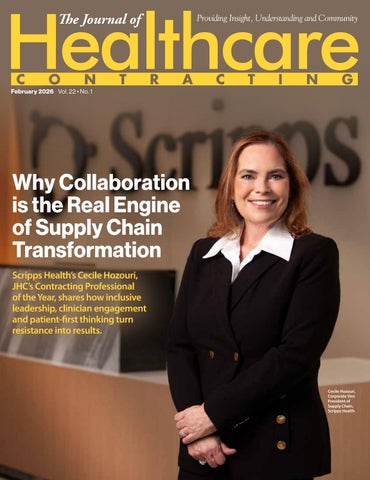
Why Collaboration is the Real Engine of Supply Chain Transformation
Scripps Health’s Cecile Hozouri, JHC’s Contracting Professional of the Year, shares how inclusive leadership, clinician engagement and patient-first thinking turn resistance into results.
Cecile Hozouri, Corporate Vice President of Supply Chain, Scripps Health
The Journal of Healthcare Contracting is published bi-monthly by Share Moving Media
350 Town Center Ave, Ste 201 Suwanee, GA 30024 -6914
Phone: 770/263-5262
FAX: 770/236-8023
e-mail: info@jhconline.com www.jhconline.com
Editorial Staff
Editor
Graham Garrison ggarrison@sharemovingmedia.com
Senior Writer and Columnist
R. Dana Barlow rickdanabarlow@wingfootmedia.biz
Editor-in-Chief, Dail-eNews
Jenna Hughes jhughes@sharemovingmedia.com
Content Creator
Pete Mercer pmercer@sharemovingmedia.com
Art Director Brent Cashman bcashman@sharemovingmedia.com
Publisher John Pritchard jpritchard@sharemovingmedia.com
Circulation Laura Gantert lgantert@sharemovingmedia.com
The Journal of Healthcare Contracting (ISSN 1548-4165) is published monthly by Share Moving Media, 350 Town Center Ave, Ste 201, Suwanee, GA 30024-6914. Copyright 2026 by Share Moving Media. All rights reserved. If you would like to subscribe or notify us of address changes, please contact us at the above numbers or address.
POSTMASTER: Send address changes to Share Moving Media, 350 Town Center Ave, Ste 201, Suwanee, GA 30024-6914. Please note: The acceptance of advertising or products mentioned by contributing authors does not constitute endorsement by the publisher. Publisher cannot accept responsibility for the correctness of an opinion expressed by contributing authors.
Scripps Health’s Cecile Hozouri shares how inclusive leadership, clinician engagement and patient-first thinking turn resistance into results.
2 Publisher’s Letter: Hospitals Brace for Financial Strain in the Year Ahead
Supply chain leaders face unprecedented authority – and pressure – to cut costs as hospitals and health systems prepare for revenue decline.
4 Building a New Center of Gravity for Contracting
How Fairview is redefining enterprise contract governance.
10 Why Every Future Healthcare Leader Needs Supply Chain Fluency
Rush University’s course closes the knowledge gap between clinical care, cost control and operational resilience.
24 Factoring in the Human Side of Robotics
Just how can, might, will machines work together with people anyway?
35 The Year Ahead In Washington
Medical supply chain issues to watch in 2026.
36 Regulating AI Implementation
Two leading healthcare organizations partner to ensure the responsible adoption of AI within community health centers.
39 American Diabetes Association Celebrates 85 Years of Impact
The ADA reflects on decades of advancements in the understanding and treatment of diabetes.
44 Defrosting Those
Clinical Polar Icecaps
Perhaps a corporate culture climate change is in order?
47 Contracting News
Hospitals Brace for Financial Strain in the Year Ahead
Supply chain leaders face unprecedented authority – and pressure – to cut costs as hospitals and health systems prepare for revenue decline.
This year presents a major challenge for the U.S. healthcare system – and a significant test for supply chain leaders.
Let’s start with the One Big Beautiful Bill Act (OBBBA). The financial impact of the OBBBA comes up in nearly every conversation I have with supply chain leaders. It is top of mind for administrators and is shaping strategies across the board. In many ways, it feels reminiscent of the approach hospitals took when the Affordable Care Act was on the horizon – focusing on reducing operational costs to match anticipated Medicare and Medicaid reimbursement levels. Today, the consensus is that hospitals are preparing for an 8% to 10% reduction in revenue.
So, what does the OBBBA mean financially?
Revenue Reductions: Hospitals nationwide could see a combined revenue loss of approximately $68.6 billion across 2026 and 2027. Many facilities expect net patient revenue to drop by up to 10%.
Uncompensated Care: The bill includes over $1 trillion in cuts to federal programs such as Medicaid and the ACA Marketplace. This is expected to increase the number of uninsured Americans, resulting in higher uncompensated care costs for hospitals.
Rural Support: To help offset these losses, the law establishes the Rural Health Transformation (RHT) Program, which will provide $50 billion over five years to support rural healthcare access and quality.
The administration is still releasing details of its healthcare plan, and the full depth of these cuts over the rest of the president’s term remains uncertain. That debate will play out over the next few years.
What is certain, however, is that the anticipated revenue reductions will give supply chain leaders unprecedented authority and latitude to reduce costs, perhaps more than we’ve seen in decades. Over the past five years, since the pandemic, big changes have largely been avoided. Fatigue among staff and a stressed labor pool made sweeping operational shifts unwise. Suppliers were often extended, and major conversions delayed – even when cost savings opportunities were available – simply to minimize disruption. That era of caution appears to be coming to an end.
In the next issue, I will explore what I believe will be the top three strategies supply chain leaders deploy to meet the urgent demand for cost reduction over the next three years.
John Pritchard
The reason our IV bags aren’t made with DEHP is clear.
Over 40 years ago, B. Braun recognized the environmental and patient risks of toxic chemicals like DEHP and PVC and was the first medical device manufacturer to remove them from many products. DEHP, which is used to soften PVC, can leach into IV fluids, potentially putting patients at risk. Protect your patients and the planet with a full line of IV bags not made with DEHP or PVC.
Building a New Center of Gravity for Contracting
How Fairview is redefining enterprise contract governance.
Healthcare organizations have long relied on a familiar model for managing contracts: ownership scattered across supply chain, legal, finance and operational departments, each optimizing within its own lane. While that approach can work in silos, it often struggles to deliver enterprise-wide visibility, consistency, and accountability –particularly as health systems face rising costs, growing regulatory complexity, and increased scrutiny around vendor performance and risk.
At Fairview, leaders recognized that the traditional model was no longer sufficient. Under the leadership of Sofya Mikhelson, Vice President, Supply Chain & Contract Lifecycle Management, the organization is establishing a new, independent division dedicated entirely to organization-wide contracting governance, technology, and contract
management. Sitting outside supply chain, legal or any other department that traditionally “owns” contracts, the new division is designed to unify standards, modernize processes, and bring discipline and transparency to how Fairview manages third-party relationships.
“This initiative is truly transformative,” Mikhelson said, sharing Fairview’s
progress with The Journal of Healthcare Contracting. What makes it notable is not just the technology being deployed, but the governance model behind it, and the deliberate, collaborative approach Fairview has taken to rethinking contracting as an enterprise capability rather than a departmental function.
Identifying the cracks in the system
The impetus for creating an independent contract governance division came from a clear-eyed assessment of Fairview’s existing contracting ecosystem. While individual departments were functioning well on their own, the system as a whole lacked cohesion.
“Fairview’s contracting ecosystem was hampered by siloed processes, excessive manual work and insufficient visibility across departments,” Mikhelson explained. “Contracts were managed separately by various departments without system-wide expectations, standardized roles or responsibilities. It resulted in inconsistent risk assessments, delays in execution and other inefficiencies.”
One of the most significant challenges was fragmentation. Multiple departments maintained their own contract repositories, creating several difficulties. “With separate repositories, some teams
— Mark Welch, Senior Vice President, Novant Health
struggled to locate agreements, track versions and maintain consistent records, resulting in fragmented documentation and increased risk of oversight errors,” she said.
Over time, those gaps compounded. Duplicate contracting records were created. Negotiations dragged on due to unclear requirements. Approval workflows varied widely, increasing cycle times and risk exposure. “These gaps made it clear that an independent division was necessary to unify processes, bring in modern Contract Lifecycle Management (CLM) technology to be utilized across all contracting divisions, enhance oversight, and drive accountability,” Mikhelson said.
Why independence matters
Rather than placing the new function within supply chain, legal or another established owner of contracts, Fairview made a deliberate decision to create a standalone division with enterprise authority.
Sofya Mikhelson
This independence is central to the model. Without it, governance risks becoming skewed toward the goals of a single function. “This structure helps avoid the pitfalls of fragmented ownership and supports enterprise-level objectives,” she said.
The division does not take contracts away from departments. Instead, it establishes the rules of the road – defining
“Other industries demonstrate that centralized governance leads to improved efficiency, better risk management and cost savings.”
“Positioning the division outside traditional contracting owners was essential to prevent sub-optimization and ensure system-wide governance,” Mikhelson noted. “By operating independently, the division can set standards, monitor compliance and drive cross-functional collaboration without the constraints of departmental priorities.”
policies, standards and expectations, while enabling departments to retain operational ownership.
Eliminating inconsistency, reducing risk
As Fairview examined contracting behaviors across the organization, several
recurring issues surfaced. “We identified several inconsistent behaviors, including creation of duplicative records for the same contract, frequent re-work due to unclear requirements and varying approval workflows,” Mikhelson said.
The lack of standard templates and connected policies contributed to prolonged negotiations and uneven risk management. “Additionally, we observed non-connected policies across departments, business owners not knowing who within the organization supports their contracts, and no clear processes for spend management,” she added. Training gaps further exacerbated the problem, increasing the likelihood of compliance issues.
The new division aims to eliminate these inefficiencies through “standard operating procedures, centralized oversight, and comprehensive training initiatives.” The goal is not to slow contracting down, but to make it more predictable, transparent and defensible.
Technology as an enabler, not a silver bullet
While governance provides the framework, technology provides the engine. Fairview’s transformed operating model places CLM at its core.
“Technology and data are at the heart of Fairview’s transformed contracting model,” Mikhelson said. “In 2026, the deployment of Contract Lifecycle Management (CLM) systems will fundamentally overhaul how contracts are created, approved and renewed.”
CLM will drive efficiency and accuracy by automating workflows, enforcing standardized templates, and triggering compliance alerts, virtually eliminating manual errors.
The vision extends beyond contracting alone. “In addition, in 2028 we will implement new ERP,” Mikhelson noted. “CLM integration with Workday ERP will empower us to actively monitor vendor performance, track milestones, and control spend with precision.”
That integration will unlock realtime reporting and analytics, enabling proactive vendor management and stronger financial discipline. “By leveraging advanced contract management technology, we will achieve true datadriven decision-making and continuous operational improvement,” she said.
Building buy-in through collaboration
Securing buy-in across a large health system requires more than executive mandate. At Fairview, it required deliberate, system-wide collaboration.
“Securing departmental buy-in was accomplished through a system-wide initiative that brought together the vice presidents from each of Fairview’s 10 contracting divisions,” Mikhelson said. Supported by the C-suite and the Transformational Office, the group worked together to design the centralized governance model while respecting each department’s unique needs.
That effort evolved into the Contracting Excellence Committee (CEC), which now provides strategic direction and executive support. “The CEC ensures that all contracting activities adhere to applicable laws, regulations, and internal policies while fostering continuous improvement by identifying process enhancements and implementing best practices across the contracting landscape,” she said.
From silos to shared insight
As Fairview begins to view contracts holistically, Mikhelson says some of the most powerful insights are already emerging.
“Some of those ‘aha’ moments are already happening as we begin to look holistically at contracting across the organization,” she said. “We’re starting to exchange knowledge and gain a better understanding of how some of our contracts and processes should be connected – and realizing where they’re not.”
Spend management, in particular, represents a major opportunity. “I think the biggest ‘ahas’ will ultimately come from spend management,” she said. Today, supply chain has a strong foundation, but extending that rigor to services and nonsupply contracts will be transformative.
“One of the biggest revelations will come when we have technology in place that allows us to manage payments against contracts at the line-item level,” Mikhelson said. “That visibility will significantly improve our overall spend management.”
She emphasized that the transformation is not about fixing broken processes. “We’re not moving from something bad to something better. We actually have very good processes today,” she said. “So, we are moving from good to truly exceptional.”
A model for the industry
Looking ahead, Mikhelson sees healthcare contracting governance continuing to evolve toward greater centralization and standardization.
“Healthcare contracting governance is moving toward greater centralization, standardization and risk mitigation,” she said. “Increasingly, organizations recognize that effective cost control and
contract obligation management extend well beyond the supply chain function.”
Other industries offer a clear lesson. “Other industries demonstrate that centralized governance leads to improved efficiency, better risk management and cost savings,” she said. Health systems that adopt similar approaches will be better equipped to manage complexity and adapt to market pressures.
Fairview’s model, Mikhelson believes, can serve as a roadmap. “By focusing on centralized governance, standardized workflows and leveraging CLM technology, the organization advances efficiency, fosters accountability, and encourages ongoing improvement throughout its operations.”
Measuring and sustaining success
Over the first 12 to 18 months, Fairview will focus on implementing Workday CLM technology alongside governance. Key measures of success include reduced contract cycle times, increased automation, improved visibility, obligation management accuracy and strong user adoption.
“Success will be defined by improvements in these areas, with regular progress reviews and data-driven adjustments to ensure objectives are met and sustained,” Mikhelson said.
Ultimately, what excites her most is the broader impact. “The most exciting aspect is the opportunity to share best practices and demonstrate the impact of system-wide improvements,” she said. “Fairview’s journey will demonstrate how thoughtful governance, technology adoption, and stakeholder engagement can transform contracting operations, setting a new standard for the industry.”
Get more value from your distributor
Your facility requires a nuanced distribution approach that ensures the quality and specificity of your diagnostic supplies and services. Here’s how to assess the total value of your distributor.
Specialized handling that protects your investment
Transparent pricing
Supply reliability to meet seasonal demand fluctuations
• Limited expertise and capabilities
• Additional shipping and handling fees
• Greater risk of product damage or loss
• Lack of transparency in compliance and use of non-local distribution centers
Where basic distributors fall short: How Cardinal Health delivers:
ຉ An extensive network of refrigerators, freezers, cool rooms, chem vaults and full temperature control across the distribution network, close to customer facilities
ຉ Dedicated teams to help minimize product issues and ensure compliance
ຉ No surprise fees
• Hidden fees that inflate true costs
• Freight costs
• Low unit of measure upcharges
• Drop ship service costs
• Stockouts during critical testing seasons
• No backup plans for peak demand
• Self-management of supply crises
• May not be available on all GPOs
• Limited lab-specific expertise
ຉ Transparent pricing, with shipping costs and direct ship fees disclosed upfront
ຉ Cardinal Health™ ValueLink™ Distribution Service Program provides real savings on low unit-of-measure orders
ຉ Sequestered lots and Reserved Inventory Program
ຉ Reserved Inventory Program for respiratory products with supply assurance, including:
• No backorders
• Local inventory
• Continuous monitoring to help keep you running without interruptions
ຉ Authorized distributor for HealthTrust®, Premier® and Vizient®
ຉ Supply chain consultants with the ability to support field, regional, national, diagnostic and specimen management needs
Strategic supplier access and private brand savings
Capital equipment solutions
Where basic distributors fall short: How Cardinal Health delivers:
• Limited or no exclusivity to leading suppliers
• Gaps in products, supplies and services needed by clinical and research labs
• May offer a large number of private brand SKUs but lack depth and breadth
• Minimal or inconsistent private brand savings
• Limited leasing and consultation expertise
• Numerous touchpoints
Facilitates collaboration between lab and supply chain
• Minimal consultative services
• May cause potential supply chain management issues for the customer when distribution decisions are made without lab input
Work with distribution experts who care
Labs need seamless operations to deliver accurate results while supply chain managers need transparency and measurable value to justify every decision. Cardinal Health enables both through proven expertise, transparency and a lab-first approach to distribution.
We don’t just move products, we optimize your entire supply chain and help protect your investments while delivering value at every step. the difference shows up in product integrity, cost transparency, reliability and expert support when you need it most.
ຉ Exclusive supplier product offerings
ຉ Strategic supplier relationships
ຉ A wide breadth of national brand products
ຉ Nearly 2,300 Cardinal Health™ Brand SKUs available
ຉ 10% aggregate savings compared to national brands*
ຉ Comprehensive capital equipment solutions from leading manufacturers
ຉ Dedicated diagnostic specialist for one point of consultative support
ຉ Flexible leasing options
ຉ GPO rebate opportunities
ຉ Availability to purchase multiple instruments on a single purchasing order
ຉ Involves lab in discussions
ຉ Distribution solutions that drive supply chain resiliency and transparency
ຉ Customer engagement team
ຉ Standard assessments
ຉ Optimization
ຉ Insights and analytics
Why Every Future Healthcare Leader Needs Supply Chain Fluency
Rush University’s course closes the knowledge gap between clinical care, cost control and operational resilience.
When students enroll in the Healthcare Supply Chain Management course, offered through the Health Systems Management program at Rush University’s College of Health Sciences, many arrive with only a cursory understanding of what supply chain means in a healthcare setting. They know the term from the consumer world – online retail, home deliveries, everyday purchases – but little about how it underpins hospital operations, clinical outcomes and financial sustainability.
According to John Andrews, Adjunct Faculty in Health Systems Management (HSM) and an HSM alum himself, that gap is exactly what the course is designed to close. “To provide the students with a foundational understanding of what the healthcare supply chain is, how it works, and why it matters,” he said, is the primary objective. Beyond that, Andrews wants future leaders to recognize that every healthcare executive will eventually face supply chain decisions. “As future healthcare leaders, they will have to manage a supply budget, work on capital projects, manage contracts, review bid responses, engage in value analysis, and make daily use of supply chain technology.”
Ultimately, he said, “The goal of the class is for students to gain a deep understanding of the foundational aspects of supply chain, and a keen knowledge of the strategic role it plays relative to quality, cost, patient experience/safety, and financial viability.”
A course built on real-world experience
The course structure reflects the complexity of modern supply chain operations. “Really, all the above,” Andrews said when asked whether it relies on lectures, case studies, projects, or simulations. Most sessions are lecture-based, but students frequently break into teams for in-class exercises. The semester also culminates in a perioperative operations site visit – an opportunity to see how supply chain supports clinical care in real time. “It brings together all the foundational course content in a tangible way. The students always enjoy the site visit and appreciate seeing the supply chain ‘in action’.”
chain generalist – spanning procurement, distribution, and business diversity – he knows firsthand the value of bringing in experts with deep specialization.
“Being able to tap into the subject matter experts and amazing practitioners that I had the good fortune to work with and bring their supply chain expertise and passion to the class is a key to the course’s success,” he said.
The capstone projects mirror the real-world issues that health systems are confronting right now. Andrews pulls project topics directly from his professional network or his own
One of the dominant themes of the course is the growing importance of data.
“Being data-driven is critical to supply chain success, so we emphasize that concept in every class,” Andrews said.
The capstone experience is a sophisticated case study project, completed in groups. Students receive data sets, a complete background on the problem, and a clear expectation: present the findings and recommendations as if the audience were senior executives.
“They’re given data sets to analyze, a full background of the issues at hand, and then they’re asked to present their findings and recommendations, with the understanding that their audience is Csuite-level,” Andrews said.
Andrews intentionally supplements his teaching with industry expertise.
“The guest lecturers are selected based on their subject matter expertise and interest in sharing their knowledge,” he explained. With a background as a supply
experience. Recent examples include reducing the cost of contingent labor, launching a value analysis program in an organization where clinicians historically made supply decisions independently, restructuring multiple supply chain departments following a merger, and crafting Environmental, Social, and Governance (ESG) recommendations for an IDN with limited background in business sustainability.
These hands-on projects not only deepen students’ skills but also illuminate potential career paths. Andrews noted that the course has already influenced student choices. “Currently, three HSM student interns are working in supply chain.” He makes a point of encouraging this interest. “I always do
John Andrews
my ‘public service announcement’ to the students about considering starting their careers in supply chain. We need to find ways to bring these talented early-careerists into the healthcare supply chain space.”
Why supply chain competency matters
For Andrews, the case for supply chain literacy is straightforward and compelling. “I believe that a future healthcare leader who is not proficient in supply chain is overlooking one of the most key drivers for improving clinical outcomes, driving down costs, securing financial viability, and ensuring seamless patient quality and safety.”
margins tightening and healthcare moving toward value-based care, the need for efficiency and cost containment becomes even more pressing.
One of the dominant themes of the course is the growing importance of data. “Being data-driven is critical to supply chain success, so we emphasize that concept in every class,” Andrews said.
That focus leads naturally into discussions of digital transformation. “The healthcare supply chain is utilizing AI and predictive analytics, advanced inventory tracking systems, contract lifecycle management, and cloud-based platforms.” Students learn not only how these technologies work, but how to evaluate their value, understand capital investment requirements,
Some sessions resonate well beyond the healthcare supply chain domain. Andrews pointed to the negotiations module as one that consistently surprises students. “Students came to the exercise thinking that they understood how negotiations work, but quickly realized that their mental model of negotiations is based on what they saw in movies and TV.”
The course opens with an illustration of that importance. Andrews polls students on how much they think Rush spends annually on supplies and services. The guesses are consistently low, and the reality consistently surprising. “At some point in their careers, the students could see supply and services overtake labor as the largest operational expense.” With
and assess long-term ROI. “As future healthcare leaders, they will need to understand how these technologies create value,” he said.
The course also covers resiliency, contingency planning, supplier diversification, and on-shoring – topics that surged in importance after COVID-19 exposed global vulnerabilities. Environmental, Social, and Governance (ESG)
principles are also treated as strategic imperatives. Andrews emphasizes “the value of having a local and diverse business strategy and understanding the impact that healthcare organizations play in sustainability for the communities in which they reside.”
Some sessions resonate well beyond the healthcare supply chain domain. Andrews pointed to the negotiations module as one that consistently surprises students. “Students came to the exercise thinking that they understood how negotiations work, but quickly realized that their mental model of negotiations is based on what they saw in movies and TV.” The exercise gives them practical tools and a foundation they can apply throughout their careers.
A growing course meeting a growing need
Although the course is an elective, enrollment continues to climb. “I started with eight students in 2020, and I’ll have 16 students for the 2026 semester.” Andrews also credits co-instructor Luis Forero –now CPO at Christiana Care – for helping launch and shape the course during its early years.
As healthcare becomes increasingly complex and cost-conscious, Rush University’s Healthcare Supply Chain Management course is doing more than teaching logistics. It is equipping future leaders with the strategic, analytical, and operational tools needed to strengthen organizations, support clinicians, and improve patient care. And as Andrews’s students quickly discover, supply chain isn’t just an operational function – it’s a vital engine of healthcare performance.
See what’s possible
Distributors and self-distributing health systems now have complete transparency of their Dukal products’ from purchase order to delivery.
Product Assigned at the Factory Level
Product Tracking at the Item Level
Compatible Excel Reporting
Automated Communication
Worldwide Tracking
Scan
> Learn more at dukal.info/insight
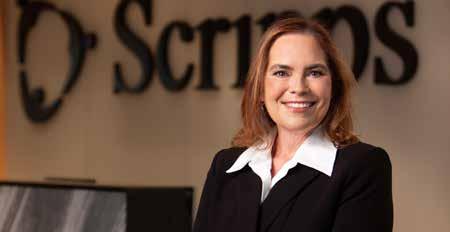
Cecile Hozouri
Photos courtesy of Scripps Health
Why Collaboration is the Real Engine of Supply Chain Transformation
Scripps Health’s Cecile Hozouri, JHC’s Contracting Professional of the Year, shares how inclusive leadership, clinician engagement and patient-first thinking turn resistance into results.
Cecile Hozouri, Corporate Vice President of Supply Chain at San Diego, Californiabased Scripps Health, credits her leadership philosophy to early experiences in consulting and a career spanning multiple segments of healthcare operations. Reflecting on her time in consulting before joining Scripps, she recalls walking into hospitals where clinicians and nurses would eye-roll at her presence – an early lesson in understanding the human side of organizational change. “It was remarkable seeing that organizations back then didn’t really include people at the table when mapping out new processes,” she says.
That insight became a cornerstone of her approach: collaboration is essential, particularly when implementing significant transformation. Hozouri, this year’s Contracting Professional of the Year, believes that even skeptics must be included in planning and implementation. “They should be there helping you design it,” she says, noting that engagement not only fosters smoother execution but can also be motivational for the team.
Hozouri’s leadership philosophy extends across the many facets of healthcare she has overseen, including IT, revenue cycle, operations and clinical integrations. These cross-functional experiences reinforced the importance of inclusive leadership and patient-centered thinking. Whether untangling revenue cycle complexities, implementing new systems or introducing lean methodologies in surgery, Hozouri notes that the methodology remains consistent: get the right people in the room and ensure their voices are heard. “It is really critical to get people’s voices heard early on, thoroughly defining the objective that we are about to do,” she explains.
Her focus is always on removing friction and unnecessary noise that can hinder clinicians’ ability to care for patients. By stripping out these obstacles, Hozouri
“Cecile is a highly respected leader who is constantly looking for ways to improve quality and financial performance in our procedural areas. Her value analysis team is continually researching existing and requested products to bring up-to-date evidence to the executive team for review. She and her team are an indispensable part of our capital equipment acquisition process and our system strategy for high-cost, high-complexity procedures.”
– Valerie Norton, MD, FACEP, Physician Operations Executive and Emergency Medicine Physician at Scripps Mercy Hospital San Diego
aims to enable physicians and nurses to work at the top of their licenses. Across every initiative, from supply chain optimization to operational improvements, the patient remains at the center of every decision. This approach transforms change from a disruptive force into a collaborative effort driven by the expertise and collective intelligence of the team.
For Hozouri, leadership is not just about directing change but about
creating an environment where people feel heard, empowered and invested in the outcome. Her career demonstrates that true transformation in healthcare is rooted in collaboration, crossfunctional insight and a steadfast commitment to putting patients first. In every challenge she undertakes, these principles continue to guide how she leads and drives meaningful change across Scripps Health.
A Smarter Approach to the Test That Touches Every Patient
The Numbers Behind a “Routine” Test
500 MILLION
Estimated CBC tests performed annually1
$300 MILLION
Medicare Part B reimbursed on CBC testing in 20232
VISITS
CBC is ordered in practices with on-site labs³
The CLIA-Waived CBC Solution Designed for Simplicity
CytoChip’s CLIA-waived CitoCBC™ Analyzer modernizes CBC testing by combining advanced automation with reliable, high-quality results designed for today’s outpatient and non-acute environments Key advantages include:
Rapid CBC in 8 min
H igh-end 5-par t Di ff
Simple monthly QC
All-in-one car tridge
Available Exclusively through Henry Schein
Modernizing the most widely used lab test requires more than innovation It requires the right partner Henr y Schein, the exclusive distributor of CitoCBC™, delivers:
Proven non-acute exper tise
Nationwide distribution
Reliable ser vice & continuity
Experience the smar ter way to manage routine CBC testing.
Lessons in centralizing the supply chain
Centralizing supply chains across a multi-site healthcare system is never simply a matter of technology or budgets. Hozouri learned this lesson firsthand. She describes the challenges of moving from siloed, site-managed supply chains into a centralized model. It is less about logistics and more about addressing the human element.
“One of the biggest barriers wasn’t the system itself – it was that feeling of losing control over something teams had already managed for years,” Hozouri says. Many staff members initially questioned whether centralization would compromise responsiveness or their ability to meet patient care needs. Skepticism was addressed head-on by making the critics active partners in the process.
Hozouri and her team formed a multifaceted group that included
“Cecile is an innovative leader and oversees every facet of supply chain operations. Cecile started the value analysis team with a few nurses as part of the corporate supply chain structure about 10 years ago, which I have been a part of for about 5 and a half years. As the team and opportunities have evolved, the supply chain team is clinically integrated and stays patient centered. Decisions on supplies and equipment involve the operational leaders, systemwide careline leaders, and physician leaders, and the clinical evidence drives decisions that support improved patient outcomes. She advocates for opportunities up to the highest level when needed, and ensures the right stakeholders are at the table.
Cecile trusts in her teams’ strengths and grants us autonomy so we can really dive into the task or problem to solve and run with it. She is always looking ahead and stays connected with the work in corporate and operational teams. She is a great coach and mentor and creates a safe space to stay curious and learn from mistakes. Cecile has transparent and open communication and is always investigating best practices and assessing if they would be a good fit for Scripps.”
frontline clinicians, nurses, and operational leaders. These individuals were given genuine ownership in the design of the new processes, with autonomy to map out the current state and identify “non-negotiable” aspects essential to patient care. The key, Hozouri notes, was listening – and when processes didn’t feel right to the stakeholders, her team didn’t defend the status quo or insist on a predetermined solution.
“We just asked them to help us fix it,” she explains. This collaborative approach transformed skeptics into architects of the change, who eventually presented solutions back to the broader team and embraced the centralized system they had helped design.
The approach became foundational to how the supply chain team operates today. Whether rolling out new technology, standardizing processes or introducing equipment, Hozouri’s team starts by asking a simple question: who will this affect, and who needs to be involved for it to succeed? “Strong relationships with our clinicians and their willingness to partner with us really make us successful,” she says.
This philosophy extends to standardization initiatives, which can often be met with concerns about loss of autonomy. Hozouri and her team balance urgency with collaboration. For urgent patient care needs, such as specialized surgeries, clinicians and their leaders are engaged immediately to determine priorities and guide adoption. For other initiatives, projects are run through Scripps’ clinical value analysis process, bringing together physicians, pharmacy teams, infection control specialists and other stakeholders. Decisions are based on evidence and data, with cost
considerations addressed later, ensuring that changes align with clinical outcomes rather than just financial targets.
A current example is a clinically integrated project on Skin Substitutes. Surgeons and service lines were deeply involved in defining clinical use criteria, reviewing evidence, and making recommendations. Each service line now drives the change, illustrating Hozouri’s principle that those closest to patient care should be at the center of decision-making. “When criteria is implemented, it’s really driven by the physician leaders themselves,” she says.
Hozouri emphasizes that the role of the supply chain team is to support
initiatives by providing data, evidence, and logistical guidance – but not to dictate changes from the top down. In her experience, involving clinicians from the beginning mitigates resistance and fosters ownership, ensures practical solutions and strengthens collaboration across the organization.
The makings of a great team
Hozouri emphasizes that her team’s culture is rooted in evidence-based decision-making and multidisciplinary collaboration. At the heart of this approach is Scripps’ clinical value analysis
program, which brings the right stakeholders together to assess new products, equipment or processes. “We get sound decisions pretty quickly, and we lead with evidence,” Hozouri explains. Cost is considered, but operational fit and organizational impact are equally important. Every request, whether it’s a new piece of equipment or a product requiring significant workflow changes, is evaluated in the context of the entire system, not just an individual clinician’s needs.
This structured, multidisciplinary process – including finance, pharmacy, supply chain, leadership and service line representation – also ensures that when
a crisis arises, such as a shortage or recall affecting patient care, the right team can be mobilized quickly. By embedding collaboration and systems thinking into day-to-day operations, Hozouri ensures that her team can respond effectively under pressure.
Equally important are the intangible qualities she seeks in team members. Hozouri encourages what she calls “stylish innovation” – the ability to think creatively without losing sight of system-wide collaboration and process integrity. Team members are empowered to develop solutions independently, test ideas in whiteboard sessions and engage directly with clinicians, ancillary departments, and executive leadership to assess feasibility.
“I want my team to develop themselves into what they want to be,” she says, emphasizing autonomy and self-direction as part of the leadership approach.
“I have had the privilege of working alongside Cecile for most of my 25-year career in supply chain at Scripps Health. No matter her role – consultant, partner, peer, leader or mentor – she has consistently displayed an unwavering commitment to performance, continuous improvement, process efficiency, financial stewardship, clinical excellence and the growth of her people. Cecile’s passion, paired with her multifaceted expertise, has propelled supply chain’s sustained success and positioned us for an even stronger future. She has a signature statement that sparks action and celebrates achievement: ‘Fire up!’ So, ‘Fire up!’ to Cecile and ‘Fire up!’ to the Journal of Healthcare Contracting for recognizing her atop an exceptionally talented field of supply chain leaders.”
– Josh Spangler, Assistant Vice President, Supply Chain Procurement and Strategic Sourcing, Scripps Health
A chance to engage
Leaders in healthcare wanting to create lasting change often face a common challenge: organizational inertia. Hozouri does not view this as an obstacle, but rather an opportunity to engage.
“Inertia is kind of sticky,” she says, describing teams who say, “Well, this is the way we’ve always done it.” For lead-
ers eager to drive change, her advice is simple: bring the skeptics in. Invite them to the table, encourage them to poke holes in your ideas and seek to understand their fears. “Inertia will always be there, but keep it close, understand it, work with them,” she explains. Over time, resistance often diminishes when individuals feel included rather than threatened.
Hozouri identifies another critical barrier to innovation in healthcare: fragmented data. The industry is burdened with hundreds of disparate feeds, inconsistent formats, and tangled supplier systems, making timely, evidence-based decisionmaking difficult. “Imagine if that insight, once we finally get it, could predict shortages immediately for everyone, shave off costs, improve outcomes,” she says. Standardizing data could transform the supply chain landscape – enabling faster contracts, reducing outages, and providing real-time clinical analytics to inform smarter decisions. Solving this “data mess,” Hozouri believes, would unlock significant efficiency and clinical value.
Over the next 12 to 24 months, Hozouri’s strategic priorities reflect both immediate operational needs and long-term planning. Sourcing initiatives
for purchase services, new products and contract renewals remain a core focus, particularly in partnership with clinicians. For example, in interventional radiology, the value analysis team is examining variation, comparing quality outcomes and evaluating cost differences across peer groups to optimize utilization of standard equipment and products. These efforts ensure that operational efficiency aligns with high-quality patient care.
Simultaneously, Hozouri is looking further ahead, imagining the supply chain of 2030. With a new hospital and clinics on the horizon, she is engaging with support and ancillary services to rethink traditional processes and build a more resilient, reliable supply chain. “It’s a perfect time to start getting people to the table … to architect a different way we may function in our supply chain,” she says.
What keeps Hozouri motivated after more than two decades in healthcare is less about accolades and more about the people she grows along the way. “One thing that wakes me up every day is really growing the leaders that I have, and the future leaders to be those supply chain heroes,” she says. While she enjoys collaborating with the CFO, chief medical officers, and leading strategic clinical integration projects, Hozouri finds the most fulfillment in mentoring emerging talent. Watching a supply tech evolve into a confident leader or seeing an analyst stand in front of peers at a conference to share lessons learned, she says, is “really what fills me up.”
This focus on developing talent is central to Hozouri’s philosophy of leadership. She encourages her team to embrace their own “stylish innovation,” to think creatively while remaining grounded
in collaboration and evidence-based practices. The leaders she cultivates are equipped not only to solve problems but also to inspire the next generation – creating a ripple effect that strengthens the organization and the broader healthcare supply chain community.
Recognition from industry organizations, including Reuters and Becker’s, has been humbling for Hozouri, though she views it less as personal achievement and more as a validation of her approach to leadership. Being named a trailblazer in supply chain, she says, reflects a willingness to step into uncertainty, challenge long-standing processes, and open doors for others. “I pride myself on that part,” she explains. “I feel as though these past 20 years, I’ve been fortunate to open many new doors in this industry, and I’m determined to prop those doors wide open.”
Specimen integrity starts at the bedside: Phlebotomists’ essential role
Phlebotomy, the process of drawing blood, is often the first, very influential step in the diagnostic process. While laboratories perform the analysis that guides clinical decisions, everything begins with a specimen, like a routine blood draw. The accuracy and quality of that blood sample can determine the accuracy and quality of the test, which ultimately informs diagnoses, treatment plans and outcomes.
Often receiving less attention is the supply chain infrastructure that supports phlebotomy teams. Even with excellent training, phlebotomists can only ensure specimen integrity when they have the right tools available, in the right quantities,
at the right time. Supply chain and procurement professionals play a direct role in helping reduce pre-analytical risk through minimizing errors and preventing redraws, ensuring that frontline teams stay adequately supplied with the right
phlebotomy products and equipment. Additionally, collaboration between supply chain and the lab helps further ensure access to products promoting integrity across the journey of a specimen from collection to result.
If a blood sample is compromised before it reaches the lab, the test outcome is compromised as well. The pre-analytical phase, which includes collection, handling, labeling and transport, is responsible for up to 70% of lab errors.1 Therefore, specimen integrity isn’t simply a lab concern but an organization-wide imperative.
Phlebotomists protect specimen integrity and safety through standards of quality care that include2:
Access to appropriate supplies and protective equipment
Availability of post-exposure prophylaxis (PEP)
Avoiding contaminated phlebotomy equipment
Appropriate training
Patient cooperation
Even seemingly minor deviations can lead to issues like hemolysis, clotting, contamination or delayed testing. Inventory shortages or substitutions can also lead to workarounds that introduce risk. For example, if tubes are substituted for unfamiliar equivalents, draw order mistakes could increase. If specific safety needles run out, staff may change their technique, affecting collection quality. If transport containers vary, samples may not be protected consistently during pickup. If labels or markers differ, legibility and identification can suffer.
Each can increase the risk of specimen rejection, re-collection, delayed diagnosis and misinterpretation that can lead to incorrect or delayed treatment.
Effective supply chain collaboration can help minimize these disruptions. When
References:
phlebotomy teams know their supply chain is reliable, they can focus on technique and patient care instead of worrying about product quality issues and shortages.
Consistency benefits the patient experience
Because blood draws are one of the most frequent patient interactions in healthcare, it’s critical to support care providers with supplies and equipment that make their jobs safer and more efficient. A smooth blood draw experience can go a long way to ensuring a good experience for both the patient and the phlebotomist or nurse. A difficult draw, such as multiple attempts, delays, misplaced tubes or miscommunication, can have the opposite effect.
Supply chain has responsibility to provide ease of access to high-quality, consistent supplies that directly influence patient comfort and safety including:
Devices that are designed to protect patients and staff from needlestick injuries.
Reliable needle and tube availability to help reduce wait times and repeat procedures.
Standardized products that help phlebotomists stay consistent in their technique.
Distribution’s role in supporting phlebotomy quality
Phlebotomy is one of the most timesensitive areas within diagnostics. Healthcare organizations benefit from a distributor who delivers supplies on-time and truly understands the clinical impact
of those supplies and the professionals that use them.
Because every blood draw can influence the quality of care a patient receives, protecting specimen integrity is the responsibility of every phlebotomist or care provider. However, it depends on more than just technique, it requires a dependable supply chain that keeps essential and familiar products flowing without interruption.
As a leading distributor, Cardinal Health helps provide stability by serving as a single, comprehensive source for phlebotomy essentials like collection tubes and tube holders, needles, lancets, tourniquets, phlebotomy equipment and more. Getting these products through distribution can help reduce supply chain fragmentation, improve product consistency and decrease risk of substitutions.
Cardinal Health’s nationwide distribution network helps ensure that frequently used phlebotomy items remain in steady stock, with predictable delivery schedules that support high-volume operations. For systems with multiple sites, Cardinal Health can also help standardize products across locations, making phlebotomy workflows more uniform and reducing variation in specimen quality, while reducing the need for cross-training.
Effective distribution, supply chain resiliency and collaboration help deliver consistent access to high-quality phlebotomy supplies and expert support, helping healthcare organizations safeguard specimen integrity, reduce pre-analytical errors and deliver a smooth phlebotomy experience for both providers and patients.
1 Nordin N, Ab N, Farhana W, et al. Preanalytical Errors in Clinical Laboratory Testing at a Glance: Source and Control Measures. Curēus. 2024;16(3). doi: https://doi.org/10.7759/cureus.57243
2 World Health Organization. Best practices in phlebotomy. National Library of Medicine. Published 2010. www.ncbi.nlm.nih.gov/books/NBK138665
Factoring in the Human Side of Robotics
Just how can, might, will machines work together with people anyway?
BY R. DANA BARLOW
Editor’s note: The following is second in a multipart series. Download the January 2026 digital issue of The Journal of Healthcare Contracting for the first article in the series.
Once the novelty and shiny newness of incorporating robots in supply chain subsided within the occupational zeitgeist, another burgeoning concern engulfed the glistening empty space left behind.
How will they affect jobs?
Potential labor displacement may be the biggest elephant in the room, but it’s not the only source of fear, hesitation and reticence over investing in robots for supply chain. Add acquisition costs, maintenance concerns, programming and system integration and training issues to the list as well.
Mike Martin, Vice President, Supply Chain Operations, Trinity Health, Livonia, Michigan, sees it as more of a give-andtake relationship.
“For example, high-density vertical storage provides higher security but not always higher productivity,” he indicated. “Uniformity of packaging can open doors to consider high-volume automation alternatives, but again the challenge is having the throughput to realize the reward.”
Of course, such lofty equipment requires a generously sized footprint.
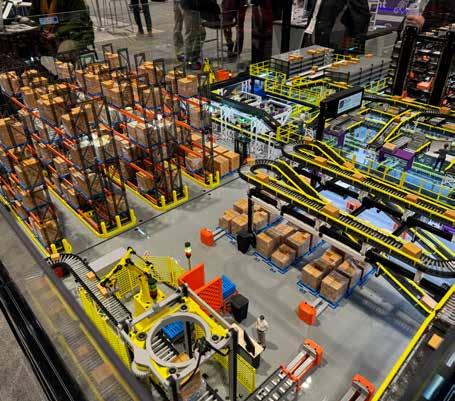
“Our vertical lift module is 32 feet high, which is about six levels, so you definitely need the structure to support it,” Martin acknowledged. “A lot of hospital systems operate a two-level or a three-level warehouse.
“Another issue you have to recognize is that if you make your pick process super-fast, you’ve probably made your replenishment process slower, so there can be a trade-off,” he continued. “You also need somebody who manages the software, maintenance and all these intricate components, and that’s not free.”
Much depends on how supply chain tactically designs the footprint, layout and travel routes within the warehouse as well as the attitudes of the team members themselves, according to Jeff Stephens, Senior Vice President, Supply Chain Management, Memorial Hermann
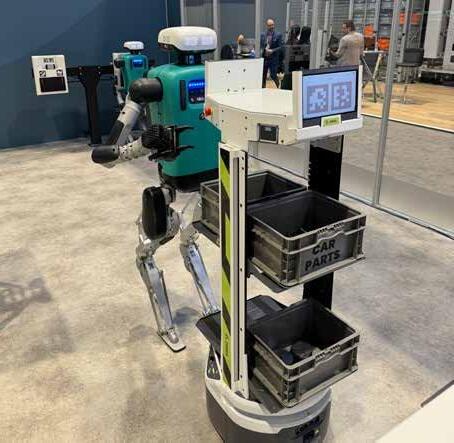
Health System, Houston. Stephens employs more than three dozen automated mobile robots (AMRs) throughout his organization’s warehouse.
“[The robots] make the work less strenuous because the way these AMRs are set up, people are placed strategically throughout the pick area, and [the robots] come to them,” Stephens described.
“There are pick zones where the robots live, and the folks don’t have to walk a lot to be able to pick their orders. The robot will stop in front of where they need to pick, and the system tells them exactly what the shelf is, what the unit of measure is, everything. They take it off the shelf, scan it. If it flashes green, then that’s correct. And then one of the three shelves on the cart where the pick bins are will light up. This is the shipping bin where the product goes. Then the robot resumes its preloaded pick path for the next order.
Staff motivation plays a key role, too.
“What’s also helpful is that our warehouse staff recognize that they’re in healthcare and that Memorial Hermann Health System has such a good name here in the area,” Stephens indicated. “They know what they do means something because they’re actually contributing to the delivery of great patient care from our clinicians and physicians. The blend of the automation with that mission tends to work in our favor for sure. We do our recruiting in one of our hospitals close to where the CSC is, so when they come in for their initial application, interview, etc., it makes a big impression on them.”
Regardless of facility type and location, similar fears seem to be shared by all, according to Patrick Marier, Consulting Director, Vizient. He highlights five.
“Labor replacement and morale is by far the greatest challenge
If the technology is a good fit for your team because it eliminates mundane work and costly, non-value-add travel time in the building, it might be a winner. I think if you’re able to start small, that’s going to be a true test.
“Staff can follow the robot,” he continued. “You’re in this zone and then the robot will go on to another zone, and a new robot will come in. Staff will fill picks from those as well. That’s how it works and flows. What’s helpful is that staff are not putting a lot of miles on their feet during the day, and there’s an assurance that what they’re picking is correct.”
to introducing robots,” Marier said. “People fear losing their jobs or having their jobs seem less meaningful.
“Upfront capital costs and uncertainty about the ROI are another cause for hesitation: While capital estimates are precise, unquantified soft costs, such as staff training and change management, downtime during implementation, project management and consulting fees and
variable savings undermine confidence in the ROI,” he noted.
Integration is costly and complex, too. “Connecting robotics to enterprise resource planning and warehouse management systems as well as their adjacent systems requires budget for interfaces, change management and training,” he observed.
Marier also points to facility design constraints. “Brownfield sites or existing warehouses face footprint, aisle width, clear height, fire-code and infrastructure limits,” he said. “Greenfield builds or sites that have yet to be built risk layouts that constrain future expansion.”
Finally, vendor and tech stability play key roles. “The space is evolving fast, and many players are young, raising concerns about vendor viability – acquisition or shutdown – and rapid obsolescence,” he added.
Allaying fears
If incorporating robots in supply chain becomes the norm, and many believe it will be the case, then supply chain executives, leaders, managers and professionals must come to grips with any reservations they might have. How to accomplish that depends on the individual and the corporate culture in which he or she serves and works.
Trinity’s Martin encourages scale as the answer.
“The best way to alleviate fears relative to automation is to attempt to start small,” he asserted. “Consider other alternatives first and narrow the scope. If the technology is a good fit for your team because it eliminates mundane work and costly, non-valueadd travel time in the building, it might be a winner. I think if you’re able to start small, that’s going to be a true
test. Think of doing a pilot project that services a facility before progressing to a region and then to multiple regions, depending on your organizational size. For us, this was definitely the right decision.”
Once again, Memorial Hermann’s Stephens points to attitude as the litmus test.
“We’re in healthcare. Continuous improvement and innovation are a big part of the Memorial Hermann culture,” he told The Journal of Healthcare Contracting. “We have our caregivers, physicians, nurses. They’re always looking for new, innovative ways to deliver great patient care. So, we are already inclined to look for better, more efficient ways to do things. And in supply chain we’re very Six Sigma and Lean-focused with all of our processes, particularly in replenishment at the hospitals via a two-bin kanban system. We’re always looking for ways to improve. And when you bring an idea like this to the team and to our leadership, they’re plugged in.”
Stephens finds efficiencies in training robots compared to humans – spanning output accuracy and time lapse.
“One of the benefits of automation is the learning curve for training,” he explained. “You can train somebody within an hour or so on using and working with the AMRs. Usually, the learning curve would be two to three weeks. With this, it’s an hour or two, and someone can be up and actually working with these robots.”
Vizient’s Marier acknowledges that completely eliminating concerns about workforce reductions is difficult because labor efficiencies generally are reflected in ROI.
“Where feasible, organizations should implement a 12-month
no-layoff policy and redeploy staff into higher-value, people-facing roles,” he advised. “Workforce strategies should pivot to create new positions to support the new technologies and create value-adds. When possible, organizations should conduct a contained pilot to validate ROI while capping financial exposure or limiting the amount of money and resources at risk if the pilot does not deliver the expected result. They should also obtain advance stakeholder agreement on valuation methods for soft benefits (e.g., improved service levels, fewer injuries, space repurposing, reduced overtime).
“Additionally, organizations should prioritize systems integration with a rigorous, well-funded plan by establishing a concise integration blueprint endorsed by all stakeholders, conducting parallel testing with live data where feasible and training technical and operational teams together,” he added.
Marier encourages providers, regardless of site type, to engage their technology partner at the outset and leverage their expertise.
“They will provide detailed requirements (e.g., floor finish and flatness, aisle and turning widths, clear height) and collaborate on an optimal layout encompassing material flow, zone mapping, and charging infrastructure,” he noted. “Despite the relative novelty of these solutions, organizations should prioritize vendors with demonstrated performance. They should conduct reference visits, define a lifecycle plan to remain current as the technology evolves and establish comprehensive service level agreements covering availability, service levels and warranty obligations.”
Alongside, not in lieu of Proponents of using robots in supply chain consistently have promoted that robots can work alongside humans to assist them with tasks or augment their ability to carry out their responsibilities and not replace them.
Martin nods.
“I 100% agree that this is the case,” he insisted. “Again, limiting mundane work and motion is a win for everyone, but robotics will not replace the need for people in our environment, [and instead] may reduce non-value add labor.”
Tyler Neely, Associate Vice President, Consolidated Service Center, Memorial Hermann, concurs and believes there’s no stopping progress.
“I feel that the human-robot collaboration is the real future in many industries,” Neely assured. “There must be a very balanced approach. With the ‘cobot’ approach, it is about using the bots to enhance safety, efficiencies, human capabilities, quality and consistency in these workflows. In many cases, they can also offset labor shortages in tough markets. In
“Bots should take on the more dangerous task.” They also “increase human capabilities by taking on the task of very fine detail, highly repetitive work, lifting/moving/assisting their human in completing the task at hand.”
Stephens would not have it any other way.
“Our team is very comfortable with them,” he observed. “They look at them truly as partners and job extenders, if you will, that help them do their job better because the numbers and the lines per hour that we are currently running would not be possible without these AMRs. It’s accuracy and speed. For example, there will always be people that can pick high amounts of product, but then you’ve got to subtract their error rate, and then find your net. The optimal is to be sure there is accuracy and speed, and under normal circumstances without automation, generally speaking, it’s a long learning curve for most folks. That means people like me being able to pick accurately and at an acceptable level of speed. Our AMRs have changed that equation.”
short, will it change the look of the workforce? Yes! But they will continue to complement each other as these relationships continue to evolve.”
Marier homes in on attitude and corporate culture adjustment, too.
“Cultivating a belief that robotics are designed to augment rather than displace staff is critical,” he noted. “Management can signal that employees are valued by reallocating them from routine tasks to roles requiring critical thinking. The aim is not headcount reduction, but improved safety, quality and organizational resilience. A phased pilot familiarizes employees with the technology at a manageable pace and demonstrates tangible gains in safety, accuracy and workflow quality.”
Creative ‘coboting’
Some experts contend that humans and robots work better together as collaborators and partners, a motivation that moves the needle toward improved workflow outcomes rather than crowded unemployment queues. They find creative ways humans and robots can be jointly productive.
“Being able to lean on machine learning to predict product shortages and alternative items by drawing together multiple sources of inputs has the most near-term impact,” Stephens predicted. “As for IDN/CSC warehousing and IDN/CSC space, personally I think limiting walking travel is the primary opportunity. How you go about it requires robust heatmapping of high-volume items, understanding pick path and volume, setting up the forward-stocking locations for success
and regularly maintaining them. But first and foremost, continue to listen to your team and what they think will make them more efficient.”
But if you’re a smaller hospital and/ or you don’t operate a warehouse, instead managing a large storeroom, how can you bring robotic technology in, aside from automated storage cabinets, mobile tracking devices and robotic process automation (RPA) (which will be explored in the third part of this series)? Martin offers a grounding perspective.
“For a smaller hospital or any hospital where you’re managing high-value inventory, it’s more about increasing the visibility of that product and where it is at all times,” he indicated. “I wouldn’t really call these automation solutions, but the barcode-scanning, dashboard
and point-of-use systems tend to be an enhancement to your ERP for managing inventory – from decrementing to charging to minimizing expiry.”
Memorial Hermann’s Neely concentrates on physical safety and mental support.
Robots offer enhanced safety, he argues. “Bots should take on the more dangerous task.” They also “increase human capabilities by taking on the task of very fine detail, highly repetitive work, lifting/moving/assisting their human in completing the task at hand.
“We must continue to evolve the cobot relationship,” he insisted. “There will be unlimited opportunities to support the cobot model as the bots evolve. So, one must always be looking at the process as a whole, looking for opportunities that could be enhanced by a cobot model.”
Marier observes that collaboration models vary by technology platform and warehouse complexity.
“As an illustration, AI can recommend slotting changes based on velocity; robots can then execute re-slotting after hours while employees retain control to authorize exceptions,” he said. “Likewise, robots can retrieve all components for a kit or tray and present them to an associate for assembly and verification. Even with simpler deployments, meaningful improvements are typical, such as automated mobile robots that ‘hold and go’ while pickers load bins, or grid-based bin-to-person systems. As capabilities evolve, new, more inventive interaction patterns will emerge.”
Editor’s Note: Next in the series, The Journal of Healthcare Contracting explores RPA in procure-to-pay (P2P) business processes and supply chain management.
The Perils of Poor Planning for Robotic Pickers and Porters
Proper prep work prevents useful technology from leaving a bad taste.
BY R. DANA BARLOW
Watching orchestrated robots picking and transporting products around a warehouse seems like a symphony of supply chain success.
Of course, that workflow etude hinges on the means and the process to arrive at that point.
Supply chain executives and leaders acknowledge that a lack of proper planning can lead an otherwise sharp adoption and implementation of technology to fall flat.
The fears, hesitations, pitfalls and traps hovering around robotics can be numerous, they contend.
For Jeff Stephens, Senior Vice President, Supply Chain Management, Memorial Hermann Health System, Houston, anemic follow-up and misconceptions about the big picture can be dangerous.
What specifically can be problematic?
“Not being thorough enough,” he said. “Not taking the referrals that they give you and asking whether companies are happy, sad or reduced head count. You want to be very thorough in following up on references. We spent a lot of time doing that. Another advantage for us was since this was a brand-new program, there were no existing folks that might have to be redeployed elsewhere.
“A lot of times, and I’ve talked to some of my colleagues about this, they just automatically think they can’t afford it,” Stephens continued. “And it may be too complicated. You’ve got to make sure all your systems talk to one another. There’s our ERP that manages payroll, our accounting system, purchase orders, all of that stuff, the supply chain, everything that goes on with requisitioning, invoice management, and then you’ve got your warehouse management system, which manages all the operational aspects of the warehouse. Right in the middle is the automation. All of those must talk to each other and work seamlessly to be able to make all of this function as it should.
“A lot of times people believe it’s too much work, it’s too much trouble, it’s too much cost,” he indicated. “So it helps to go and visit and talk to people that don’t have automation or have automation and ask them what their challenges are. We visited several healthcare consolidated service centers around the country to get a feel for that.”
Mike Martin, Vice President, Supply Chain Operations, Trinity Health, Livonia, Michigan, points to pre-automation problems that require diagnosis first.
“The first pitfall is assuming technology will fix a bad process,” Martin told The Journal of Healthcare Contracting. “Other pitfalls are more tactical in nature, lack of uniformity of packaging as well as uniform scanning of multiple package sizes. That said, people may still be required to properly handle ‘non-conveyable’ items such as IV solution bags, or light items such as a pack of gauze, heavy items, or something too long or too high to pass down the conveyor or to fit in the automated storage bin.
I have observed automation working well when it involves high volume with standardized box sizes and I have observed automation investments where I question if optimizing the pick process fully covers the receipt, breakdown, replenishment time and cost of the technology and infrastructure.”
how long you have to walk around the warehouse for products,” he said. “Think about how much time that involves that you don’t get back. Robots can be good for limiting that travel and walking time.”
“One of the biggest pitfalls is choosing a solution that only meets today’s needs. It’s important to think ahead and ensure the technology can grow and scale with the organization. Another trap is overinvesting in systems that require heavy infrastructure or create vendor dependency, which can limit flexibility and make it difficult to pivot as needs change. Ultimately, the goal is to stay flexible, data-driven and focused on long-term value rather than short-term fixes or flashy solutions.”
Some of the non-conveyable products that might be too complex for a robotic system can include crutches, Styrofoam cups and products that are long, tall, wide or super light and may just bounce down the conveyor, according to Martin. Some of these won’t easily make a turn on a conveyor where they need to go for sorting, for example. On average, Martin estimates that non-conveyable products can equate to less than 5% of picking lines.
Martin also dismisses concerns about unit of measure, such as eaches, as more applicable for human versus robot picking. “The issue centers more on considering order frequency and how often and
Steve Downey, Vice President and Chief Supply Chain and Support Services Officer, Cleveland Clinic, emphasizes short-sightedness and rigidity as key challenges.
“One of the biggest pitfalls is choosing a solution that only meets today’s needs,” Downey stressed. “It’s important to think ahead and ensure the technology can grow and scale with the organization. Another trap is overinvesting in systems that require heavy infrastructure or create vendor dependency, which can limit flexibility and make it difficult to pivot as needs change. Ultimately, the goal is to stay flexible, data-driven and focused on long-term value rather than short-term fixes or flashy solutions.”
Jim Richardson, Consulting Director, Vizient, cautions against chasing technology trends.
“Don’t select robotics because ‘others are doing it’ without a process-based business case,” he advised. “Additionally, underestimating change management by ignoring the human factor (training, cultural adoption, communication) is another pitfall that will hold up the process. Organizational cultures must be prepared to embrace the changes brought about by robotics.
A third trap is a lack of due diligence in technology selection. Organizations must ensure they have fully vetted the automation vendor, checking references, vendor stability and viability, and looking at future vendor plans for scalability and growth as your organization grows. The same can be said for lack of pilot testing: Skipping simulations or pilots leads to mismatches between system capability and real demand.”
Fear and loathing
Healthcare supply chain leaders express a litany of potential concerns about adopting and implementing robotic technology within their storerooms and warehouses that span labor displacement, excessive costs, maintenance concerns, programming challenges, system integration and training issues – to name a few.
Trinity’s Martin homes in on five that can increase blood pressure: “Not achieving your ROI goals, your throughput does allow for labor reduction, reliability and downtime, integration hiccups and ongoing maintenance costs and obsolescence.
“Introducing automation can free up time to redeploy colleagues into the higher value areas of supply chain – the procedural areas – because a lot of times we spend all of our FTE work managing
med/surg floors that may have the most line-volume, but not the most value,” Martin indicated. “So, if you have technology that supports the high-volume, low-cost areas activity, in theory, those colleagues could be redeployed to highvalue areas to help support the clinicians focused on patient care.”
Memorial Hermann’s Stephens acknowledges hesitation more than fear about robots replacing the human element. “It’s a mystery until they start looking and uncovering those aspects like we did when we were doing our research. The other thing is cost again. They just automatically assume it’s too costly. And then some people feel like it’s just one more thing that can go wrong. That’s a lot of pressure. And it can be worrisome to introduce another factor like some type of automation into it. It can turn into being just one more thing to worry about.”
Simply getting started may be the largest hurdle for some, according to Cleveland Clinic’s Downey.
“One of the biggest concerns, especially in warehousing, is the high upfront installation and infrastructure cost,” he admitted. “It’s a significant investment, so we want to be confident it supports both current operations and future growth. There’s also some hesitation around integration and making sure new systems connect smoothly with existing technology and processes can be complex and resource intensive. Maintenance and technical support are another consideration. If the system requires specialized expertise, it can create long-term dependency or downtime risks. Change management and training are equally important as teams need to feel comfortable with the technology and understand how it improves their work, not replaces it.”
Pause and consider
Vizient’s Richardson cites five distinct areas that give healthcare supply chain executives and leaders pause.
1. Labor displacement: “Staff will naturally be concerned about lost jobs. It’s critical to communicate that as jobs are being repurposed, staff will move into higher-value tasks, such as clinical or analytical support.
2. Excessive costs: “Return on investment must include avoided labor costs, reduced errors, space savings and resilience against disruption.
3. Maintenance and downtime: “Concerns about robotic system reliability and dependency on vendor service – these must be dispelled.
4. Programming and integration complexity: “Hospitals often run legacy ERPs and manual processes. Robotic systems must integrate with all the disparate systems within an organization.
5. RPA-specific fears: “Organizations must address the perception that robotic process automation threatens office/administrative roles as part of the communication change management plan.”
Vetting Robotics in the Healthcare Supply Chain
Why hospitals must look past hype, ask harder questions, and prove real-world performance before automating.
BY R. DANA BARLOW
Robotics certainly aren’t the first automation technology to spark intense interest, foment miles of media coverage and draw itching ears within conference and trade show sessions. And it certainly won’t be the last.
Remember bar coding in the 1970s? Proprietary electronic data interchange (EDI) during the 1980s? Value-added networks (VANs) enabling open EDI during the 1990s? How about radiofrequency identification (RFID), e-commerce and internet exchanges? Blockchain? Augmented and virtual reality?
Each began with the hype of promise and wonder that would generate success. But behind the gilded veneer simmered the specter of potential failure that comes with the pursuit of change and risk.
Evaluating, sourcing, selecting, acquiring and implementing robotic systems within healthcare supply chain is no different.
Supply chain executives and leaders within hospitals and integrated delivery networks (IDNs) acknowledge the flirtatious nature that the latest technobaubles emit as well as the trembling they elicit before choosing to take the plunge.
“The most difficult part is to avoid falling in love with the notion of higher efficiency without fully vetting that your proposed technology solution will actually perform as expected,” lamented Mike Martin, Vice President, Supply Chain Operations, Trinity Health, Livonia, Michigan. “Sourcing is not difficult, but the discovery process should include a robust discovery and tour of existing technology users operating in the healthcare space –that compare to your operation.”
Martin urges supply chain professionals to research whether a robotic technology actually performs as expected or as it’s promoted.
“Ask a lot of questions,” he advised. “For me, those questions are based on observations where the automation solution is in place. I think it’s critical that you tour places that may have the technology
in operation, and that those places are transparent about what’s gone well, and what hasn’t gone well, and what did they think it would do for them, and where did it fall short? What would they do differently the next time? When it comes to making sure something’s going to work, I’ll ask a million questions like that.
“What about ease of integration? Can it work with the [warehouse management system] that you have in place? What are some precedent examples where that automation has integrated with your WMS or how their platforms are written? I personally feel like when people see the shiny thing, they think it’s going to be awesome to appear cutting edge, and they completely buy the sales part of it that may not be a one-for-one [comparison] if from a different industry than hospitals. You can’t take that
executed. You just have to configure everything right the first time.”
Deciding on such a hefty financial investment with considerable operational demands must be handled in a detailed manner, according to Jeff Stephens, Senior Vice President, Supply Chain Management, Memorial Hermann Health System, Houston.
“It’s really easy to sit in your office and search Google and do things like that,” he indicated. “But you’ve got to get out and go visit these places. You’ve got to see them in action. You’ve got to see their folks working with the automation. You’ve got to have good conversations with them. Luckily here at Memorial Hermann, we received a lot of support from our boss (system CFO) to be able to investigate sites and installs thoroughly. Maybe that’s a luxury some people don’t
“Some investments are more enabling in nature, meaning they lay the groundwork for future capabilities rather than driving instant ROI, and that balance can be hard to manage.”
example and then apply it to a hospital system that has more variability of product types,” Martin observed.
“You have to understand all the steps in the process as well,” he continued. “Computers are going to expect step one, step two, step three, step four, step five. If you have a problem at step three, then the stock person is looking right at the product in front of them but doesn’t have a way for them to pick that order because there are other prior system commands that weren’t properly
have, but we were able to go and visit and have good conversations regarding the folks that invested in automation.
“You have to base your understanding of this in your own area,” he continued. “That helps alleviate some of the mysteries. Then you start with the necessary questions to ask. Gradually a picture emerges of what automation could look like for your shop if you were able to get it. The first thing for us, though, was the cost barrier, because we thought it was going to be a huge, big capital lump and
eat up a large portion of our performance expenses. We were very pleasantly surprised at the relative affordability of our automation partner.”
Steve Downey, Vice President and Chief Supply Chain and Support Services Officer, Cleveland Clinic, points to timing.
“One of the toughest parts is balancing the immediate operational need with the long-term vision – making sure the solution delivers value now while also setting us up for future scalability,” he told The Journal of Healthcare Contracting “Some investments are more enabling in nature, meaning they lay the groundwork for future capabilities rather than driving instant ROI, and that balance can be hard to manage. Data integration and protection are also major challenges – ensuring systems communicate seamlessly while maintaining strong cybersecurity and data governance standards.”
touches supply chain, IT, finance and clinical operations. Securing alignment across stakeholders is complex and time consuming and can make implementation a challenge.”
Convincing the C-suite
Robotics, regardless of model or type, can be costly, so convincing the C-suite that investing in a system or technology is the optimal strategy and tactic for the organization’s supply chain operation can amount to a career-defining, if not career-crippling, presentation. In-depth preparation makes all the difference, experts insist.
“Clearly vetting the elements of cost, challenges associated with execution and why it makes sense over the current process, not how cool it looks, is what matters,” Martin noted. “Proper vetting
“It really comes down to building a clear, data-driven ROI case — showing exactly where the investment will drive savings, efficiency, or quality improvements.”
Healthcare providers must factor any decision about robotics against the backdrop of their overall information technology operation, according to Jim Richardson, Consulting Director, Vizient.
“Often healthcare organizations do not have the IT expertise to implement complex new systems that will integrate with legacy systems,” Richardson indicated. “What vendors promise versus what they can deliver is sometimes quite different. Sorting marketing claims from proven results is challenging. Robotics
is really what’s critical. For me, that’s the foundational work that you have to do. And it’s still a calculated risk, but you have to believe that it’s going to deliver the value expected based on the discovery work you do. If you’re able to deliver on that, you’ll generate the prestige that shows you’re up to date on technology and you’re employing the latest and greatest that optimizes efficiency and productivity, and it also shows that you’re an industry leader.”
Downey stresses the need for a solid business model. “It really comes down
to building a clear, data-driven ROI case – showing exactly where the investment will drive savings, efficiency, or quality improvements,” he said. “We focus on quantifiable outcomes, such as reduced labor hours, improved throughput, fewer errors or enhanced reliability. Equally important is highlighting the strategic value – how the technology supports organizational goals like scalability, workforce stabilization or improved patient and caregiver experience.”
Downey also calls for a redefinition of the meeting.
“The conversation with the C-suite is about value and alignment, not just cost – demonstrating that robotics isn’t an expense, but an enabler for long-term performance and resilience,” he added.
Richardson emphasized linking the benefits of robotics to organizational strategic goals as imperative to convincing the C-suite of investment in robotics. “A persuasive case can be made by demonstrating robotics as enabling patient safety, clinical reliability, and resilience – not just cost savings,” he advised. “But cost savings are part of the benefit, too, and further quantifies the business case. Supply chain leaders can build the ROI case by showing reduced labor costs, reduced errors, fewer stockouts, better customer service, lower space requirements and resilience in crises. Additionally, highlight non-financial benefits, such as improved employee satisfaction (reducing back injuries, repetitive tasks, more interesting work), predictable service levels, and better clinician experience (supplies arriving correctly and on time). Finally, benchmarking against peer integrated delivery networks who have adopted robotics helps to show competitive parity.”
The Year Ahead In Washington
Medical supply chain issues to watch in 2026.
Legislative progress tends to slow down in midterm election years, as both parties prepare to make their case to the voters. Nevertheless, the policy signals emerging from such legislative debates matter for healthcare distributors. Federal decisions and unresolved proposals influence long-term planning around sourcing strategies, inventory management, and the ability to deliver critical products to providers and patients. The issues facing the medical supply chain will resonate in the long term, even if progress remains elusive in the short term.
Trade: Strengthening access through trusted partnerships
Outside of the complex trade landscape, the House and Senate have introduced legislation that would impact global medical supply chains. Trade policy remains a key lever for improving supply-chain resilience, particularly for medical products dependent on global manufacturing networks. The Medical Supply Chain Resiliency Act (S. 998 / H.R. 2213) reflects growing bipartisan interest in improving access through smarter trade relationships. The legislation authorizes the President to negotiate “trusted trade partner” agreements that would offer favorable tariff treatment for medical goods and devices.
As policymakers seek to balance domestic manufacturing goals with global supply realities, distributors will play a central role in operationalizing these policies while maintaining continuity of supply.
Transportation: Building resilience across sectors
Transportation and logistics challenges exposed during recent disruptions continue to shape congressional action.
The Promoting Resilient Supply Chains Act of 2025 (S. 257 / H.R. 2444) directs the U.S. Department of Commerce to establish a Supply Chain Resilience Working Group to assess critical supply chains, identify vulnerabilities, and coordinate with international partners.
Distributors should expect increased federal attention on how products move from manufacturing
to last-mile delivery. While improved modeling and coordination may strengthen long-term resilience, distributors should also monitor potential new reporting or oversight requirements and engage with policymakers to ensure operational realities are understood.
By Wyeth Ruthven, Director of Congressional and Public Relations
Preparedness: Building stockpiles and enhancing readiness
Preparedness remains a defining issue for the medical supply chain. A long-standing HIDA priority is reauthorization of the Pandemic and AllHazards Preparedness and Response Act (PAHPA), which expired in 2023. PAHPA would strengthen the Administration for Strategic Preparedness and Response (ASPR), modernize the Strategic National Stockpile, and support medical countermeasure development and distribution.
For distributors, PAHPA reauthorization affects federal procurement practices, stockpile turnover, readiness expectations, and compliance obligations – each with direct implications for inventory management and contract opportunities.
Medicaid Payments: Coverage shifts and rural impact
Medicaid policy will remain an indirect but powerful driver of supply chain dynamics. The “One Big Beautiful Bill Act,” passed in July 2025, reduces federal Medicaid funding by an estimated $911 billion over ten years, increasing pressure on providers with large Medicaid patient populations. While these changes are phased in, their impact will be felt most acutely by community and rural providers. Initiatives such as the Rural Health Transformation Program aim to help providers adapt, but uneven impacts are likely.
Taken together, these legislative efforts signal a continued focus on resilience, coordination, and preparedness. As 2026 kicks off, HIDA will continue to engage policymakers to advance solutions that protect patient access and recognize the indispensable role distributors play in sustaining healthcare delivery nationwide.
Regulating AI Implementation
Two leading healthcare organizations partner to ensure the responsible adoption of AI within community health centers.
The use of Artificial Intelligence (AI) technology in healthcare has redefined the way hospitals and healthcare organizations coordinate workflows, streamline the patient experience, process data and much more.
AI adoption among physicians has, in fact, risen across the healthcare sector from 38% in 2023 to 66% in 2025, according to the American Medical Association.
The rate of regulation of AI, however, has not grown with it. Despite growing adoption and outcome improvements associated with healthcare AI,
more than 60% of all community health centers (CHCs) and 70% of rural CHCs report that expenses were a challenge to implementing emerging technologies.
For this reason, the Coalition for Health AI (CHAI) and the National Association of Community Health Centers (NACHC) announced a new strategic
partnership that will empower the safe and responsible adoption of AI technology at CHCs across the nation.
CHAI, a nonprofit organization founded by clinicians to advance responsible AI, and NACHC, a leading association advocating for the nation’s community health centers, now have a shared mission to ensure that CHCs and their patients are prioritized and positioned to benefit from the increasing use of AI technology in healthcare.
The Journal of Healthcare Contracting recently spoke to Merage Ghane, director of Responsible Health in AI for CHAI, on the partnership and how the organizations plan to roll out the safe and secure use of AI technology across CHCs nationwide.
AI education and training
Community health centers help increase access to primary care by reducing barriers such as cost, lack of insurance, distance and language barriers, according to NACHC. CHCs provide care to all patients, regardless of their ability to pay, serving at least 1 in 10 people nationwide and at least 1 in 5 rural residents.
Post-pandemic, physicians and healthcare staff at CHCs have continued to face unprecedented challenges in providing primary healthcare. CHCs for many years have needed quick, reliable solutions to help serve their increasing patient populations, and that’s where AI comes in – allowing CHCs to adopt technology that streamlines workflows and optimizes patient care delivery.
“Many healthcare professionals are turning to AI tools, like ambient documentation, clinical decision support and EHR information retrieval tools as a lifeline to reduce burnout and reclaim time with patients,” said Ghane. “AI can help
streamline workflows, support population health, improve revenue cycle management and enhance the quality of care for so many individuals with health needs across the country.”
The importance of healthcare organizations to safely and responsibly integrate AI technology is paramount, as the technology has rapidly expanded across the healthcare sector.
CHCs are positioned to substantially benefit from the implementation of AI technology, as they serve over 30 million people in the U.S., and are often the first care touchpoint for many patients.
“If CHCs are left behind in the AI transformation, the digital divide in healthcare will deepen,” said Ghane. “Responsible adoption ensures that AI supports and enhances, not replaces, clinical judgment, and it benefits patients and communities without unintended harm.”
Streamlining medical documentation processes
Medical processes and information are increasingly becoming digital. With more streamlined processes due to the use of AI, healthcare staff have more time to focus on the patient and their needs. In fact, nearly half of community health initiatives using AI report improved outcomes.
“The pace at which medical information is becoming digital and clinical guidelines are shifting is unprecedented – in 2020, medical knowledge was doubling at a rate of 73 days, compared to every 7 years in the 1980s or every 50 years in the 1950s,” said Ghane. “All of this together means that traditional ways of searching through EHRs for patient information, or searching through databases for clinical information, are limited and time-consuming.”
AI helps to fill gaps in administrative work, said Ghane, by synthesizing information, completing documentation and focusing staff’s attention on high-priority cases.
“AI has done a lot to support providers (of all kinds, not just physicians), to use the time for what really matters –caring for patients,” said Ghane. “At the same time, AI capabilities have matured, and many EHR and tech vendors are embedding these features directly into clinical systems. We’ve also come a long way to make sure that vendors know how to design solutions in a human-centered way, with their end users’ needs in mind.”
Keeping vendors’ needs in mind when developing healthcare AI allows practitioners at CHCs to more easily integrate the technology into their practices once it is adopted.
close gaps in access, but only if adopted safely, fairly and with intentional guardrails,” said Ghane. “AI is already being integrated into EHRs, vendor platforms and clinical workflows, often without clinicians or administrators fully understanding how it works or what risks it carries. Without responsible implementation, AI can replicate or even amplify existing gaps, introduce new safety risks, or reduce trust in care systems.”
AI literacy, or the ability to understand, evaluate and engage with AI technologies responsibly in the field of medicine, allows clinicians and healthcare staff to feel empowered using AI, and more likely to continue to use it to achieve better quality patient care.
CHCs specifically, however, may also encounter challenges to implementing AI, such as fragmented data and interoperability issues, a lack of CHC-tailored
“AI is already being integrated into EHRs, vendor platforms and clinical workflows, often without clinicians or administrators fully understanding how it works or what risks it carries.”
Safe and trustworthy adoption of AI
AI has the potential to ease workloads for healthcare staff and increase access to care for patient populations such as those served by CHCs, but only if adopted responsibly, says Ghane.
Organizations looking to implement AI technology must first receive training on how to properly use AI and integrate it into existing clinical workflows.
“AI has the potential to improve care quality, reduce administrative burden and
vendor solutions (also impacted by data access issues) and limited IT and AI experts available in-house.
“These issues make it even more important for us to come together as a community to position CHCs towards readiness and responsible adoption,” said Ghane. “Without AI literacy, CHCs may unknowingly adopt tools that harm patients, risk patient data, increase liability, or waste resources. They may also misuse the tools and not know what to look out for if or when errors or issues arise.”
AI literacy, education and training are therefore a crucial part of the process for healthcare organizations beginning to work with AI. According to Ghane, this is especially true for CHCs, given they are often lower-resourced, understaffed, have less access to specialty care and serve highly complex patients.
“Building literacy now equips CHCs so they can make informed decisions, advocate for their needs and shape the AI ecosystem rather than passively be shaped by it,” said Ghane.
and playbooks to guide them towards responsible co-development,” said Ghane.
Over time, AI could also enable new forms of team-based care and support better integration of behavioral, physical and social care.
“Potential tools that may arise as we continue to develop this technology include ambient documentation tailored for resource-constrained settings; population health dashboards that stratify risk with transparency; eligibility support tools for Medicaid or social services enrollment;
“We want CHCs to have the knowledge, infrastructure, and governance capacity to assess AI for fit, safety, and value, ensuring that AI serves the mission of community health, not the other way around.”
Partnering for trustworthy AI
In the first year of their partnership, NACHC and CHAI hope to achieve numerous goals, including tailoring the governance of AI playbooks to the CHC context and pilot adoption, understanding the unique needs of CHCs/safety nets when it comes to AI procurement, validation, adoption and use, developing and delivering AI literacy initiatives tailored to the CHC context (workshops, webinars, etc.) and providing educational resources to help align federal and state-level conversations on CHC and related industry-led perspectives on AI, according to Ghane.
“While we will not be co-developing any AI technology ourselves, we will likely help convene partnerships between vendors, CHAI certified assurance resource providers, and CHCs/CHC networks and provide the frameworks, best practices,
patient-facing chatbots/outreach that are culturally and linguistically appropriate and coding or revenue cycle support tools,” said Ghane.
Leveraging NACHC and CHAI’s combined scale and expertise through NACHC’s Science, Education, Practice, and Policy (SEPP) framework, the organizations will collaborate on building a trusted AI infrastructure and standards specifically designed with CHCs and other safety-net providers nationwide.
The key elements of the partnership include Science: jointly conducting and supporting research to understand the adoption of AI in CHCs; Education: the development and dissemination of evidence-based educational programs and resources for CHC professionals’ AI literacy; Practice: supporting responsible integration of AI tools into clinical and operational
workflows and Policy: advocating for policies, regulations, and standards fostering trustworthy AI use in primary care.
“In the near term, AI can help reduce documentation and administrative burden, identify and close gaps in care, improve outreach and engagement with high-risk patients, expand capacity through intelligent triage and advance workflow optimization,” said Ghane.
NACHC and CHAI’s vision for AI readiness to fully leverage AI going forward is to promote that CHCs are not just passive recipients of AI tools – but “co-creators, evaluators, and national leaders in equitable and responsible AI adoption,” says Ghane.
NACHC and CHAI plan to lead an inaugural survey of CHCs to assess current uses of technology and AI, identify gaps and surface opportunities for innovation in clinical settings, which will inform the co-development of future tools.
The organizations will also co-design an ‘AI in Healthcare for the Safety Net’ curriculum, with tailored content for CHC leaders, providers, and other safetynet organizations at various levels, to be available in virtual, hybrid and in-person formats and address the urgent need for AI literacy across the field.
“We want CHCs to have the knowledge, infrastructure, and governance capacity to assess AI for fit, safety, and value, ensuring that AI serves the mission of community health, not the other way around,” said Ghane. “I often make it a point to tell CHC leaders I speak to: you should not be adopting AI for AI’s sake – think about your organization, staff, and patients. Think about their needs, your strategy, and goals. Then ask the question, where can AI help me better meet those needs, align with strategy, and achieve goals? That’s where you start.”
American Diabetes Association Celebrates 85 Years of Impact
The ADA reflects on decades of advancements in the understanding and treatment of diabetes.
In 2025, the American Diabetes Association celebrated 85 years of national impact toward its vision of ‘a life free of diabetes and all its burdens’.
Prior to the mid-1900s, Americans with diabetes had no formal organization that was devoted to the health and research of their condition.
The American Diabetes Association was founded as a result in 1940 to improve the lives of those affected by diabetes, and ever since then has been advocating for and funding groundbreaking diabetes research and educating healthcare practitioners and patients on proper diabetes care.
The Journal of Healthcare Contracting recently spoke to Dr. Rita Kalyani, chief scientific and medical officer at the American Diabetes Association, and Dr. Samar Hafida, Vice President of the Obesity Association, a
division of the ADA, about the anniversary of the organization and the strides that the medical community has made in diabetes knowledge in the past 85 years.
Impact of the ADA
Approximately 38.4 million Americans, or nearly 11.6% of the nation’s population, had diabetes in 2021, according to the ADA. And 1.2 million Americans continue to be diagnosed with diabetes every year.
Diabetes is a chronic condition impacting how the body uses glucose (sugar) for energy; if not managed properly, it has the potential to lead to serious health complications including heart, kidney and eye disease, nerve damage and more, according to the ADA.
For decades, the ADA has recognized the need for nationwide understanding of the condition among healthcare practitioners and has been pivotal in supporting the health journeys of people across the nation with diabetes.
In the past 85 years, the ADA has marked numerous important milestones in the advancement of diabetes care.
In 1952, the ADA Research Program was founded to support diabetes research aimed at saving lives and accelerating health breakthroughs.
“Since the early 1950s, the ADA has invested millions in research, driving discoveries that have transformed diabetes prevention, care and treatment,” said Dr. Kalyani. “This investment, together with that of the diabetes and research community at large, has helped yield landmark outcomes – such as in demonstrating the benefits of lifestyle changes in delaying the development of diabetes; advances in insulin delivery and continu-
ous glucose monitoring; and breakthroughs in stem cell–derived beta cell replacement and precision medicine.”
In 1984, the first National Standards for Diabetes Self-Management Education and Support (DSMES), a comprehensive resource for achieving success in self-management and support were published, establishing a framework for high-quality diabetes education. Today, the ADA has the largest number of recognized DSMES programs available to people living with diabetes.
“Research is the cornerstone of advancing the mission of the American Diabetes Association,” said Dr. Kalyani. “While we have made significant progress, there is still much left to discover about diabetes. By supporting early career investigators, fostering the next generation of leaders, and funding investigator-initiated research, we aim to uncover discoveries that will advance care and treatment for people living with diabetes.”
In 2024, the ADA Research Program grew to manage 193 active awards and launched 51 new projects.
“One of the foundations of our current strategy is the Pathway to Stop Diabetes® program, which identifies and supports a new generation of innovative scientists and physicians,” said Dr. Kalyani. “Since its inception, Pathway has provided resources and mentorship to extraordinary individuals who are dedicated to prevention and to helping people with diabetes thrive.”
Advancing an understanding of diabetes
As the medical community’s understanding of diabetes continued to advance after
the 1940s, healthcare practitioners treating the condition needed a systematic, reliable way to treat all their patients.
In response, in 1989, the ADA began publishing yearly Standards of Care in Diabetes, giving healthcare practitioners a definitive resource on best practices for diabetes care.
Through the efforts of the Professional Practice Committee (PPC), which includes volunteer experts from diverse professional backgrounds and physicians, nurse practitioners, certified diabetes care and education specialists and more, the Standards of Care in Diabetes are still updated annually with the latest breakthroughs in research.
The ADA’s Standards of Care have reshaped the way diabetes that is treated in the U.S., according to Dr. Kalyani.
“Today, in addition to glucose-lowering management approaches, care has broadened to address the whole person – cardiovascular health, kidney protection, weight, technology, and quality of life,” said Dr. Kalyani. “Just as importantly, they’ve highlighted prevention, regular screening, diabetes technology, and the need to address health access. In many ways, the Standards have become the roadmap for consistent, evidence-based and person-centered diabetes care.”
The Standards of Care have continued to impact the way that practitioners approach diabetes care by educating them on emerging research and new technologies.
“These guidelines have also helped bring newer cardioprotective therapies into everyday practice, and they’ve pushed clinicians to personalize treatment rather than use a one-size-fits-all approach.”
Diabetes advocacy in
the internet age
In 1996, the ADA launched their website, diabetes.org, to bring diabetes to the modern internet age and reach more people than ever before.
“Today the Standards of Care in Diabetes are available online and through an app. Providers can access a wealth of supporting materials, continued learning and patient resources online,” said Dr. Kalyani. “For people living with diabetes, information to support them at every stage in their diabetes journey can be found on diabetes.org.”
Since the website was launched, the ADA has continued to increase their presence across the nation.
In 1999, it launched the Safe at School® campaign to help create safer conditions for students at school living with diabetes; and in 2012, launched what is today known as Project Power, which focuses on diabetes education, physical activity and obesity prevention for youth at an increased risk of developing type 2 diabetes.
“Well-managed diabetes during the school day and at all school-sponsored events is crucial for a student’s ability to learn and to support normal growth and development. The American Diabetes Association launched its award-winning Safe at School campaign almost three decades ago,” said Dr. Kalyani. “Since its inception, Safe at School’s efforts have been successful in helping to ensure all children with diabetes receive needed diabetes care, are treated fairly, and have the same opportunities as their classmates.”
Diabetes management for children/ students includes monitoring glucose levels, administering insulin and other
medications, monitoring and calculating food intake and always having a school nurse or trained non-clinical school staff available.
“Safe at School has worked tirelessly to lead legislation in a number of states to enable trained non-clinical school staff to provide diabetes care, including the administration of insulin. Today, thirty-five states permit insulin administration in the school setting by someone other than a school nurse or licensed health care professional,” said Dr. Kalyani. “Passing and implementing state laws allowing the provision of diabetes care by trained lay school employees is critical to the health and safety of students with diabetes as more students are being diagnosed with diabetes.”
Moving forward in diabetes care
Managing diabetes effectively is in many ways connected to a patient’s nutrition habits and weight – being overweight or obese can cause increased risk for potential health complications.
For example, obesity is a risk factor for cardiovascular issues, according to the CDC, and has been linked to insulin resistance. Cardiovascular disease is, in fact, the number one cause of death for patients with diabetes, according to the ADA.
As a result, the ADA has begun to focus its education and advocacy efforts around proper nutrition and reducing nationwide incidence of obesity.
Regular physical activity, maintaining a healthy weight, healthy eating for prediabetes and diabetes and taking care of mental well-being are all steps that patients can take outside of a clinical setting for proper management of diabetes and to avoid cardiovascular disease risk.
In 2024, the ADA formed the Obesity Association™, a division of the ADA, to help change the conversation on obesity and reduce its prevalence. The ADA now develops trusted, evidence-based Standards of Care in Overweight and Obesity to improve care for people living with overweight and obesity.
“The creation of the Obesity Association is a natural and necessary evolution for the ADA,” said Dr. Samar Hafida, Vice President of the Obesity Association™. “This initiative is about building a larger tent, not moving to a new one. For the type 2 diabetes community, it means integrating obesity treatment as a central strategy for prevention and remission. For the type 1 diabetes community, it means acknowledging that obesity can co-occur, creating complex management challenges and ensuring we have specialized resources to provide holistic care.”
The affordability of insulin is an incredibly important part of advocating for patients with diabetes, as patients cannot live without it – insulin is a key hormone for regulating blood sugar levels.
Many types of insulin are used to treat diabetes, according to the Centers for Disease Control and Prevention (CDC). Patients with type 1 diabetes usually take insulin, or in some cases a combination of insulins, and some people with type 2 diabetes may also need to take insulin.
The best insulin or combination of insulins for a patient depends on how active they are, the food they eat, how well they can manage their blood sugar levels, their age and how long it takes their body to absorb insulin, which is different for each person.
Approximately half of all states and the District of Columbia have now enacted legislation that caps co-payments
on monthly insulin and some also limit cost sharing for supplies, according to the ADA.
“The American Diabetes Association has been the leading voice advocating for insulin affordability for a decade,” said Dr. Kalyani. “Ensuring that all people with diabetes have access to the care they need is a priority for the ADA.”
In 2023, after years of the ADA advocating for affordable insulin for patients and their families, Medicare put an out-ofpocket cost cap on insulin of $35 monthly.
“While we have been able to help achieve significant progress on the issue of insulin affordability and encouraging patient assistance programs from insulin manufacturers that make the life-saving medication more affordable, we know that our work is not done,” said Dr. Kalyani. “Today, the ADA’s advocacy team is working to cap costsharing for insulin in commercial insurance plans and to increase mechanisms to make insulin affordable for those living without insurance.”
By pursuing advocacy efforts such as more affordable insulin, the ADA continues to build on its decades of success and explore new approaches to advance the future of diabetes care.
“From the earliest fellowships in the 1950s to the innovations shaping care today, ADA has fueled progress across every era of diabetes research while training generations of leaders,” said Dr. Kalyani.
“Ultimately, initiatives such as the Obesity Association are an expansion of our arsenal,” said Dr. Hafida. “We are strengthening our fight against the diabetes epidemic by directly addressing its most significant predictor, all while redoubling our efforts to support every individual living with every form of this disease.”
Cardinal Health™ Lab Distribution: Products and Services
Cardinal Health™ Brand products at a savings
Anatomic pathology products including:
• AP storage
• Biopsy bags
• Cassettes
• Clearing agents
• Cover glass
• Cytology supplies
• Dehydrants
• Embedding materials
• Foam biopsy pads
• Formalin
• Formalin neutralizing pads
• Freeze spray
• Microtome blades
• Paraffin
• Paraffin dispensers
• Prefilled formalin containers
• Slide mailers
• Slides
• Tissue baths
• Tissue marking dye
Blood bank and hematology products including:
• Blood bank saline
• Hematology consumables
• Hematology reagents
• Plasma thawing bath and accessories
Clinical chemistry products including:
• Beta-hydroxybutyrate assays
• Sample cups
• Single-release drop blood dispenser
• Wright stain (bulk and stain packs)
Lab equipment products including:
• Centrifuges
• Freezers
• General lab equipment
• Incubators
• Lab furniture
• Lab weighing
• Blue plug caps
• Refrigerators
• Ultra-low freezers
With a broad and deep portfolio like ours, you don’t have to worry about finding the right lab products for your organization. And, Cardinal Health™ Brand laboratory products are clinically equivalent to leading national brands, so you get savings without sacrificing quality.
Lab essentials including:
• Glucose tolerance beverages
• Lab chemicals
• Lab labels
• Lab liquid handling
• Lab racks
• Lab supplies
• Lab tape
• Lab temperature monitoring
• Lab timers
• Labware
• Test tube closures
• Test tubes
Microbiology products including:
• Collection swabs
• Gram stainer supplies
• Loops
• Microbiology supplies
• Needles
• Stool collection
• Transport swabs
Point of care products including:
• Crypto giardia testing
• H.pylori testing
• HCG testing
• Influenza testing
• Mono testing
Specimen collection products including:
• Blood tubes
• Lancets
• Specimen bags
• Specimen containers
• Specimen cups
• Strep A testing
• Urinalysis testing
• Tourniquets
• Tube holders
Labs rely on a distributor that’s more than just a box mover. Count on Cardinal Health to provide financial savings, operational efficiencies and supply continuity through our rich history of distribution excellence and decades of lab expertise.
True transparency means no hidden costs or fees. One point of contact. Deep supplier relationships. Always-on service. That’s the Cardinal Health way.
Perhaps a corporate culture climate change is in order?
BY R. DANA BARLOW
Few will scoff at the notion that working relationships between clinicians (e.g., doctors, nurses, physicians, surgeons) and supply chain can be contentious at times or even frequently consistent.
But alpha human personality kerfuffles benefit no one, save for the two squabbling opponents. Certainly not the provider organization as a whole and definitely not the patient(s) being served.
It doesn’t have to be this way. It shouldn’t be this way. If anything, healthcare provider organizations could use a corporate culture climate change to promote occupational warming.
Short of something profoundly selfless, you’re left with extremes as personality stereotypes that make great fodder for management consulting media content and PowerPoint-fortified conference presentations.
On the one hand you have egotistical physicians and surgeons who threaten that if they don’t get what they want then they’ll take their patients (and payer reimbursement) elsewhere; on the other side you have egotistical supply chain leaders who threaten that the docs must use what’s on contract and nothing else. Nurses tend to be caught in the middle of this protracted tug-of-war, more concerned about the lack of any products in stock or on backorder, so the closets and spaces above dropped ceiling tiles enjoy extra insulation at times.
Some savvy supply chain executives may self-indulge in their own cleverness –whether setting up “gainsharing” schemes to curry favor with physicians and surgeons by dangling desired technology tools in front of them if they collaborate or distinct variations thereof. One supply chain executive shared his crafty “costsharing” scheme with a degree of pride. It worked like this: Docs can get what they want but supply chain only pays the contract price for whatever the hospital chose to get through its group purchasing organization (GPO) while the docs cover the difference. To finance bros and wolves of Wall Street that may elicit plenty of chest-thumping high-fives, but unfortunately it short-changes what happens in the periphery – starting from ster-
ile processing and distribution to infection prevention to biomedical engineering with the butterfly effect fluttering through the payer system.
If you line up all the physicians and surgeons against all the supply chain executives, you’ll likely see a larger group on the clinical side of the aisle, because the number of clinicians working at/for
productive as I would like” at 5%, “other” at 2% and “nothing” at 4%.
Notice what didn’t make the list? Anything to do with product/technology availability, choice or working with supply chain – not that any of those would resonate in a clinically oriented publication. And perhaps those salient details were buried comfortably within the “other”
One underlying current that resonates with a growing number of forward-thinking supply chain leaders involves clinician participation in the product evaluation and selection process and the value analysis process to help them manage their practices more efficiently.
provider healthcare organizations exceeds that of supply chain leaders, so maybe that’s not a fair comparison. What would be more telling is carving out egoists and egotists within both groups. Honestly, it may be close, but clinicians just might claim the edge.
Late last year, Medscape released its survey-generated “Employed Physicians Report” and highlighted one curious element that questioned what employed physicians disliked most about their job. Respondents were allowed to select up to two responses. Topping the list, not surprisingly, by 48%, was “less autonomy,” followed by “less income potential” at 33%, “more workplace rules at 31%, “company management” at 30% and “mandatory performance targets” at 27% rounding out the top 5, which should come as no surprise. The next four generated single-digit percentages, starting with “lack of job security” at 7%, “not as
category. Still, this represents curious and positive intel for supply chain.
One of the more neo-intellectual strategies and tactics that emerged in the 21st century is to employ a medical director of supply chain – basically, a physician or surgeon, practicing or not – to talk the talk with his or her colleagues and compatriots because they walk the walk and can verbally bob, spar and weave through the clinical lingo. After all, if a doc can’t convince or persuade one of his or her own to behave, play nice and tow the line, then all bets are off. Make no mistake: The medical director of supply chain concept and position represents keen strategic and tactical diplomacy. Think Henry Kissinger trying to massage economic and geopolitical cordiality between Richard Nixon and Mao Zedong in the early 1970s.
One underlying current that resonates with a growing number of forwardthinking supply chain leaders involves
clinician participation in the product evaluation and selection process and the value analysis process to help them manage their practices more efficiently. That includes transparent disclosures of costs and prices, expenses and revenues, so that clinicians and administrators alike improve their operations separately to benefit the organizations at large and the patients they serve.
This kind of cooperation as an overlay to collaborative cohabitation within a healthcare facility eliminates the clinicianin-a-toy-store-right-before-Christmas versus the supply-chain-administratorcracking-the-whip-on-the-galley-basedoarsmen-below-deck.
We must consider the core competencies of both professional groups.
For example, if a surgeon is trained on a particular product and is comfortable using it when he’s poking and rummaging around inside a patients, that patient likely is more than happy and willing for him to use that product than to have him or her to familiarize and become comfortable with something else (hopefully prior to performing the procedure), no matter how “clinically equivalent” that product is. By the same token, supply chain executives are supposed to be negotiating experts who can source products and craft contracts beneficial to all. When it comes to standard products, ordinary
Clinicians should be considered one of a healthcare provider organization’s assets to be appreciated versus product/ technology assets that depreciate.
consumables, maybe it doesn’t matter. But when it comes to instruments and power tools, then that can be a different story.
If you know how to drive a car, you can drive any car (automatic versus manual transmission can be a loophole) … but you normally aren’t as familiar and comfortable with any car than your own car.
There needs to be cooperative movement in the middle, not unlike politics, which shouldn’t be so polarizing.
But what if that movement could occur even earlier?
What if, for example, during the physician/surgeon interview process for employment or privileges, the provider executives ask candidates about their device/ instrument/technology preferences? What if the supply chain executive were recruited to be part of the interview team to discuss what’s in stock to determine compatibility and/or prep for compromise, etc.?
Clinicians should be considered one of a healthcare provider organization’s assets to be appreciated versus product/technology assets that depreciate. Under that logic alone, supply chain needs to be part of the equation early on, just as they should be for building and reconstruction projects.
Elevating supply chain in this area shouldn’t be debased as an ego thing but promoted as an enterprising thing – a strategy and tactic that demonstrates a healthcare provider organization’s profound respect for its clinicians, its supply chain that fortifies everyone and everything and the patients who come in for service.
It’s more than just business. It’s common sense.
R. Dana Barlow serves as a senior writer and columnist for The Journal of Healthcare Contracting. Barlow has nearly four decades of journalistic experience and has covered healthcare supply chain issues for more than 30 years. He can be reached at rickdanabarlow@wingfootmedia.biz
Contracting News
UHS receives 2025 Press Ganey Human Experience Guardian of Excellence Award
Universal Health Services announced that it has been named a 2025 Human Experience (HX) Guardian of Excellence Award® winner by Press Ganey, the global leader in healthcare experience solutions and services. This award is part of Press Ganey’s annual ranking of the top hospitals and health systems in the country, according to performance in consumer experience.
As a winner of the Press Ganey HX Guardian of Excellence Award®, UHS is in the top 1% percent of healthcare providers in delivering a strong consumer experience in the last year. As a best practice, UHS works closely with Press Ganey to distribute text messages inviting patients to leave a Google review about their care experience. In 2025, UHS distributed over 1 million text messages to patients. This strategy has proven effective in sustaining open communications with patients.
Press Ganey works with more than 41,000 healthcare facilities in its mission to reduce patient suffering and enhance caregiver resilience to improve the overall safety, quality and experience of care.
“This recognition reflects UHS’ relentless pursuit of excellence,” said
Patrick T. Ryan, Chairman and CEO of Press Ganey. “Their forward-thinking approach and focus on continuous improvement inspire us all. We’re proud to partner with them as we work toward a more connected and human healthcare experience.”
Cleveland Clinic pursuing a Level I Trauma Center at main campus Cleveland Clinic is pursuing the establishment of a Level I trauma center for adults and children at its Main Campus. Level I trauma centers provide the highest level of care for severely injured patients, offering access to specialized surgeons, physicians and critical care specialists at all times. Cleveland Clinic currently operates a Level I trauma center at Akron General Hospital and Level II trauma centers at Hillcrest, Fairview and Mercy hospitals for adult patients.
“Cleveland Clinic is committed to providing the highest quality care to all patients and expanding our capacity to care for critically ill and injured patients,” said Tom Mihaljevic, M.D., CEO and President and Morton L. Mandel CEO Chair of Cleveland Clinic. “Adding a Level I trauma center to our Main Campus will extend our
world-class care to patients in need of trauma care, provide continuity of care for our patients, and help us better meet the needs of our community.”
Pending recommendations from an upcoming consultation site visit with the American College of Surgeons in 2026, plans could include an expansion of the Main Campus Emergency Department to accommodate a new trauma center, as well as the hiring of trauma experts and training current caregivers.
Premier, Inc. announces transition of Michael J. Alkire as President and Chief Executive Officer Premier, Inc. announced that President and Chief Executive Officer, Michael J. Alkire, plans to transition as the company’s leader upon the successful selection of an appropriate successor by the Board of Directors. Alkire will remain in his current role during a targeted search process for a new CEO to support future growth as a private company.
Alkire, who joined Premier in 2003, is a seasoned healthcare executive with more than 30 years of operational, technology and business leadership experience. He has held numerous leadership roles at the company, including serving
as Chief Operating Officer starting in 2013, becoming President in 2019 and CEO in 2021.
During his tenure, Alkire led Premier through a period of historic change in healthcare – including the COVID-19 pandemic and Premier’s evolution into a technology-enabled performance improvement partner –and was directly responsible for the company’s strategic foundation, product innovations and the strategic review process that culminated in the Patient Square transaction.
During the search process, Alkire and the leadership team will continue to focus on advancing Premier’s priorities across technology, performance improvement and innovation. The Board’s targeted CEO search will identify a leader who will build on Premier’s deep member relationships, advance its performance improvement and technology capabilities, and continue to deliver meaningful value for Premier’s members, customers, employees and partners.
Ochsner Health, Allegiance Health System, plan affiliation to expand rural care in Louisiana Allegiance Health System and Ochsner Health have announced plans to form a new affiliation aimed at expanding access to care and advancing innovation across rural Louisiana. The organizations have signed a letter of intent outlining a partnership focused on improving care coordination and health outcomes in underserved communities.
Under the proposed affiliation, both health systems will remain independent, maintaining their own governance, operations, and financial structures. Rather than
Geisinger recognized nationally for advancing health and worker well-being
Geisinger has been nationally recognized for its continued efforts to support the mental health and well-being of its healthcare workforce, earning designation as a WellBeing First Champion for the second consecutive year. The recognition comes from ALL IN: WellBeing First for Healthcare, a coalition focused on removing systemic barriers that prevent clinicians from seeking mental health care.
The designation reflects Geisinger’s commitment to creating a culture in which healthcare professionals can prioritize their mental health without fear of stigma or professional consequences. As part of this effort, Geisinger has removed invasive and outdated mental health questions from its licensure and credentialing applications – an important step toward ensuring clinicians can access care confidentially and without risking their careers.
Health systems nationwide continue to grapple with workforce burnout, staffing shortages, and rising rates of stress, anxiety, and depression among clinicians. By addressing structural barriers and encouraging open dialogue around mental health, Geisinger aims to create a more supportive environment for physicians, nurses, and other healthcare professionals.
Leaders at Geisinger emphasized that protecting caregiver well-being is essential not only for individual health workers, but also for patient safety, quality of care, and long-term workforce sustainability. Reducing stigma around mental health treatment can help retain talent, improve morale, and strengthen care delivery across the system.
a merger or acquisition, the collaboration is designed to leverage Ochsner’s clinical expertise, technology, and digital health capabilities to support Allegiance’s mission in rural markets.
Leaders say the partnership will prioritize expanding access across the
continuum of care, including primary, specialty, and higher-acuity services. A key focus will be improving care for patients with chronic and complex conditions through enhanced coordination and the use of advanced tools such as telemedicine and data-driven clinical support.
Improving Patient Health Better BP®
Heart disease is the leading cause of death for Americans today and hypertension is a contributing and modifiable risk factor for heart disease and stroke. 1 Proper patient positioning alone can lower resting blood pressure (BP) measurements by 7 mmHg systolic and 4.5 mmHg diastolic.2 That’s why, Midmark designed the first and only fully integrated point of care ecosystem that has been clinically validated to achieve improved accuracy for a resting BP.
01 Low-height exam chair helps patients keep their back supported and feet flat on the floor
Articulating arm rail supports the patient’s arm and cuff at heart height
02 Automated vital signs promote consistency and data accuracy
03 EMR connectivity improves workflow efficiency and reduces errors
February is American Heart Month. Learn more about the 3 key considerations of Better BP and their impact on heart health.
View the eBook at: midmark.com/bpinsights
Scan to explore the latest study reporting the cumulative effect of poor positioning that occurs when BP is taken with the patient sitting on a typical clinical exam room table.
Healthcareʼs Most Comprehensive Pharmacy Portfolio
Driving measurable savings. Building resiliency. Advancing innovation.
Premierʼs pharmacy programs go beyond contracts. With 25 - 30% greater contract coverage than competitors and a rapidly expanding technology and automation portfolio, we deliver unmatched opportunities to reduce spend, optimize margin and strengthen your pharmacy supply chain.
Premier Pharmacy Portfolio Highlights
Market-Leading Portfolio
• 3,800+ contracted brand products and 110 suppliers.
• 60 value-add programs.
• 80% of Acute COT portfolio has Retail COT pricing.
� Premier-exclusive DSH Class of Trade: 8,116 NDCs, 95 suppliers, up to 20% savings.
Technology and Automation Expansion
Seven new categories and 25 new suppliers in 2025-2026, including those that offer drug diversion monitoring, central fill and mail order automation, revenue cycle management, IV automation, and PBM services.
Specialty and Oncology Focus Intersectta™ GPO with 110 drugs, 17 contracted suppliers and five exclusive contracts delivering average 10.7% savings.
Resiliency Leadership
Growing ProvideGx® committed drug shortage program and expanding PremierProRx® private label portfolio.
Compounding and 503B Optimization
11 contracted suppliers, 1,000+ products, ~22% savings, 503B site evaluations, product crosswalks and member collaboratives.
See how Premier delivers more ways to protect your supply chain — and your bottom line.