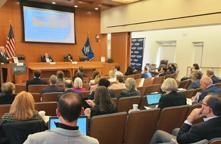
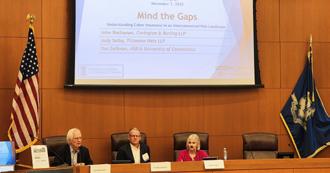
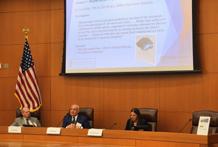
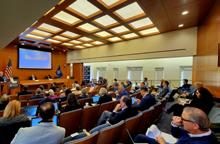
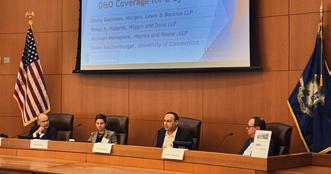
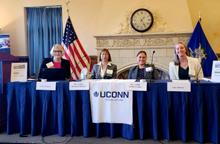
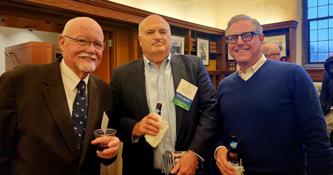
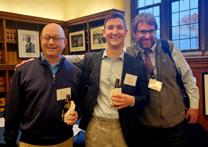
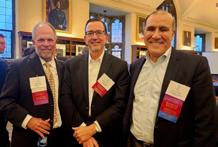
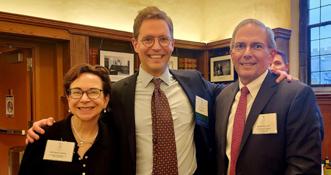
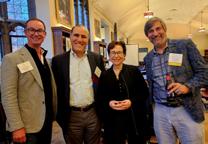
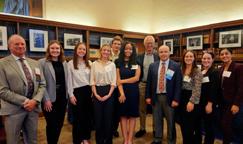
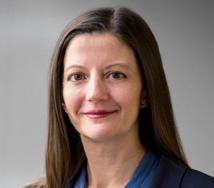
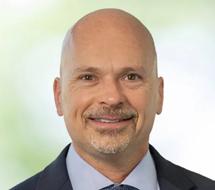
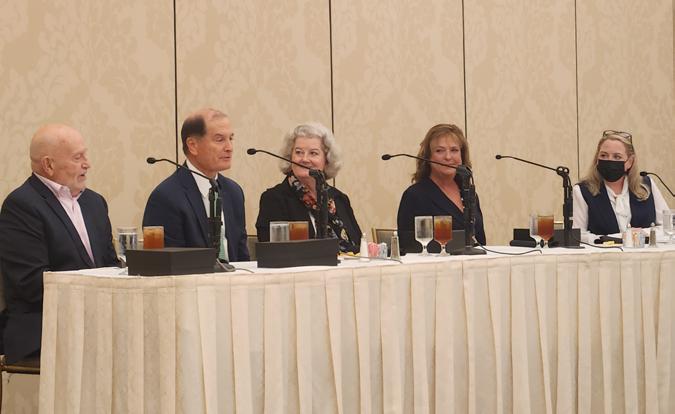
At the time I write this message, many of us have just returned from this years’ Law School Symposium, held at the University of Connecticut School of Law in Hartford, Connecticut. The Symposium started on the very day that many flights were cancelled because of the Government Shutdown. Despite this, attendance was excellent, though there are a few stories floating around about Fellows who were delayed or had flights cancelled. The attendance reflects the dedication of our members. Moreover, there were a great many law students who attended.
It was, indeed, a great event. Under the able leadership of Tracy Saxe and Stephen Goldman, with the assistance of new Honorary Fellow Travis Pantin, Director of the Insurance Law Center at the UConn School of Law. It was a flawless program focusing on cutting edge issues involving Cyber Attacks in Catastrophic Losses. The Program was collegial and conversational. Mid-way through the program I realized that Tracy and Stephen had gathered the best minds in the country to speak. While
I was impressed by the Program, the law students were “wowed.” In fact, Travis Pantin has stated that after the program “Several of them were totally convinced they should pursue a career in insurance coverage work.” This was music to my ears: of course, one of the missions of the Symposium is to interest these students in our work.
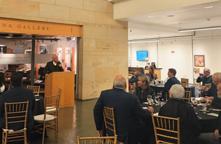
The night before we had a wonderful dinner at The Mark Twain House, where each attendee was able to tour the house and explore the museum next to it. We learned of Twain’s involvement with insurance - he invested in several insurance companies in Hartford, and typical for Twain, he lost his shirt.
Discussion of the Symposium provides a segue for my next subject. We are making real progress with the creation of the Journal of the American College. Under the able leadership of Michael Aylward, some eight articles by our members have been edited and submitted to student editors of the UConn Insurance Journal. Several of these young editors attended
(Continued on the following page)
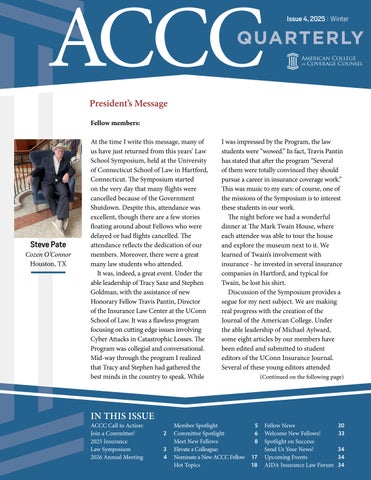
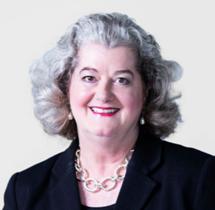
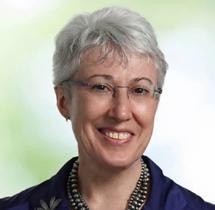
Steve Pate
Cozen O'Connor
President’s Message (Continued)
(Continued from the following page)
the Symposium. In fact, these editors told me that the next day - a Saturday - they were having a “footnote party” to start their work on the ACCC’s articles. We are planning to produce Volume 1 No. 1 in the early months of 2026.
Now for some shout- outs. All of us are concerned about our aging membership. This is why I appointed the “Silver Tsunami” Committee to seek out ways to locate young attorneys who have the potential to become members of our group. Alex Henlin, as the
carrier side Chair, and Creighton Page, as the policy-holder side Chair, have created a task force of other younger members who have provided some concrete plans for increasing our visibility, identifying (and reaching out to) potential candidates. The group has produced a “running list” of some 35 “ones to watch.”
Finally, I want to give a shoutout to Lisa Pake. In December Lisa will retire as carrier-side Chair of the Membership Committee. Lisa has served as Co-Chair for many years. Her sagacity, good judgment
and overall decency have made the Membership Committee the “Jewel in the Crown” of the College’s Committees. She will be missed. Fortunately for the College, Laura Hanson has agreed to take over as the carrier-side chair for 2026. Once again, many thanks to Lisa. As President, I believe things are going well for the College, due to many peoples’ hard work. We recently hit a milestone of having 400+ members in the College. Let’s keep things going.
Stephen Pate
ACCC Call to Action: Join a Committee!
Ready to take your involvement with the ACCC to the next level?
Joining a committee is the best way to actively shape the College, network with Fellows, and contribute your expertise to vital areas of insurance coverage law.
Our Committee Co-Chairs are always looking for enthusiastic volunteers to join their teams and participate throughout the year.
Find Your Focus
We offer a range of committees covering the depth and breadth of our profession. Click on the links below to learn more about each committee’s mission and ongoing work:
• ADR
• CGL/Excess Liability Insurance
• Communications
• Cyber, Computer & Emerging Issues
• D&O Management & Professional Liability
• Extracontractual and Bad-Faith Claims Litigation
• First-Party Insurance
• Outreach & Regional Meetings
• Pop-Up Dialogues
• Professionalism and Ethics
Get Involved Now!
Don’t wait to make your be voice heard. Press Here to Volunteer Now! If you have any questions about committee participation, please contact us at info@americancollegecoverage.org. We look forward to working with you!
2025 ACCC Insurance Law Symposium
2026 Annual Meeting
Save the Date – May 6-8, 2026, for the 14th Annual Meeting of the American College of Coverage Counsel at the InterContinental on Chicago’s Magnificent Mile!
By Conference Planning Committee Co-Chairs, Karen Dixon and Michael Levine
Socialize with fellow insurance colleagues as we share delightful food, drink, and a Thursday early evening entertainment extravaganza with John Vishneski’s “The Barristers Big Band” (Jazz band with 20 instruments and 5 singers!), while experiencing two days of presentations on cutting-edge claim negotiation and dispute issues led by ACCC-member policyholder and insurer’s counsel, arbitrators, mediators, and professors, to include:
` Lessons Learned from COVID; Lorie Masters, Laura Foggan, Greg Varga, and Professor Tom Baker.
` Extracontractual Exposure Through Unfair Claim Settlements Practices Act: Recent Developments in Rulings, Trends and Strategy; James Bryan, Suzan Charlton, Julia Molander, and Professor Jeffrey Stemple.
` Coverage for Pixel Litigation and Other Emerging Privacy Claims; Darren Teshima, Erika Villanueva, and Adam Fleischer.
` The Erosion of the Mediation
Privilege (Ethics CLE); Neil Posner and Marialuisa Gallozzi
` Is Permitted Pollution Really “Pollution”? The Illinois Supreme Court is About to Let Us Know; Dena Economou and John Vishneski
` Insurance for Autonomous Vehicles: What Will Drive Those Risks?; John Buchanan, Professor Kyle Logue and Lara Cassidy
` Coverage Issues for TVPRA/ Human Trafficking Claims; James Carter and Nancy Adams
` Self-Care, AI, and Next-Gen Coverage Problems; Mary Borja and Professor Harold Weston
` Navigating the Tripartite Minefield: Tactical and Ethical Issues Posed by the Duties to Defend and Cooperate (Ethics CLE); Evan Knott, Emily Garrison, Donna Vobornik, and Gary Gassman.
` Navigating Disclosures and Conflicts in Insurance Arbitrations and Mediations: Ethical and Practical Considerations to Ensure the Neutrality of Your Neutral and Enforceability of Your Award or Settlement; Jean Lawler, Peter Halprin, and Tyler Gerking
Registered Annual Meeting attendees will obtain approximately 8-10 hrs. of CLE credits, including 2 hrs. of ethics credit (Subject to state accreditors’ receipt and review of program materials).
Conference registration is now open at the Fellows’ $625 early bird rate (available until 12/31/25 before increasing to (Continued on the following page)
Karen M. Dixon Skarzynski Marick & Black LLP Chicago, IL
Michael S. Levine Hunton Andrews Kurth LLP Washington, DC
$675), with an April 14, 2026 at 5 pm CT deadline to obtain the InterContinental’s $329/night reduced conference rate (or when the room block is sold out).
2026 Annual Conference Co-Chairs:
Karen Dixon, kdixon@skarzynski.com
Mike Levine, mlevine@HuntonAK.com
2026 Annual Conference Vice Co-Chairs: Christina May Bolin, cmbolin@csattorneys.com
Vince Morgan, vmorgan@winstead.com
Thank you to our conference sponsors for their generous support:
Member Spotlight
By Bob Allen, The Allen Law Group, Dallas, TX
Alex Henlin was born in New Jersey, then moved to New England and grew up in Dracut, Massachusetts. At that time, a town of about 15,000 people approximately 25 miles northwest of Boston on the New Hampshire border.
Alex always enjoyed research, writing, and solving problems, so he was seriously interested in going into academia. One of his college professors, however, cautioned him about the limitations on career options. Accordingly, law emerged as his career choice.
Alex graduated from Georgetown Law in 2004, just after the dotcom bust. He landed a job in Manhattan with a 25-person firm on Wall Street called Ford Marrin, which is still there. His first assignment involved coverage work, involving creation of the W.R. Grace asbestos trust. He
received excellent experience in the courtroom and with discovery. Alex relocated to Boston in 2007, which has been his home ever since. He currently maintains his practice at MGC in Concord, New Hampshire.
A particularly significant insurance case that Alex worked on was In re: Lehman Brothers Australia, Ltd., which followed the collapse of Lehman Brothers in 2008. Lehman Brothers had a world-wide broker/dealer liability insurance program based out of New York, and each tower had something like $100 million in coverage and 10 participating primary and excess insurers. The case went on for about three years and involved a trial in the Australian federal court, highstakes mediations, and research into the bankruptcy implications
Henlin McAngus Goudelock & Courie Concord, NH
of any settlement given that Lehman Brothers itself was in bankruptcy in New York, and the intermediate subsidiary was in bankruptcy in Hong Kong. It was a fun case – and showed him that coverage is anything but remote and dusty. Not every case has been quite as dramatic for him,
Alex
but he reminisces it as the “big one” that got him committed to the insurance coverage law. One of the bigger changes that Alex has seen in insurance coverage litigation over his career is that now it is an area both policyholders and insurers recognize requires a degree of focus and, perhaps, specialization – and a corresponding realization that personal-injury or defense counsel may not be best situated to dabble in questions of coverage. The growth of the insurance coverage bar over his career has been impressive to
Alex, as has the devotion to it as a practice area.
Alex practices all over New England, plus a few other states from time to time. Interestingly, Massachusetts and, of all places, Vermont, stand out to him.
Massachusetts has a good body of case law on most major issues, and Massachusetts will rely on other jurisdictions like New York, when it decides novel issues. The proliferation of 93A claims as a vehicle for bad faith claims in Massachusetts is profound to Alex. Vermont also stands out as an interesting jurisdiction to
Alex, but more because of unique procedural rules in the Green Mountain State, particularly with DJ’s and captive insurers.
Outside of the law, Alex runs the American Legion’s Boys State program in New Hampshire, where he has personally contributed to the education of over 1,000 students, many of whom he is still in touch, going back to 1997. Alex explains the genius of the program is that it’s directed to high-school juniors, and blends instruction about how state-level government functions with a lot of essential life lessons for the students.
Committee Spotlight
Cyber, Computer & Emerging Issues
By Committee Co-Chairs
Virtually from its inception, the Cyber, Computer, and Emerging Issues Committee’s members have addressed artificial intelligence risks, including presentations and papers on Generative AI, InsurTech, and robo-cars, as well as members’ extensive contributions to the ACCC 10th Annual Insurance Law Symposium on AI and Insurance at the University of Minnesota Law School. As artificial intelligence risks continue to dominate the headlines, the Committee has
John Buchanan III
Covington & Burling LLP
Mary Borja
Wiley Rein LLP Washington, DC
decided it is time for a name tweak: henceforth, to underscore the increasing significance of this aspect of the Committee’s purview, we will be the Cyber, Artificial Intelligence, and Emerging Issues Committee.
The Committee’s meetings always spark interesting discussions, particularly as AIrelated risks are creating a new generation of insurance coverage questions that reach far beyond traditional cyber policies. As businesses increasingly deploy AI tools, they face exposures that may trigger coverage under professional liability, errors and omissions, directors and officers, general liability, and even property or crime policies, depending on how the AI system is used and how the alleged loss arises. Issues such as algorithmic decision-making errors, datatraining liabilities, model hallucinations, and autonomous system failures present novel and often untested questions of policy interpretation. New AI-specific insurance products, exclusions and endorsements are being introduced to the market. As a result, assessing AI-driven risks requires a comprehensive, multi-policy analysis, as these emerging exposures intersect with longstanding coverage lines
in complex and unprecedented ways. The Committee welcomes new members who are interested in joining the discussion.
Committee members’ upcoming and recent activities include the following:
` The agenda for the 2026 Annual Meeting next May currently includes presentations by Committee Co-Chairs Mary Borja (“SelfCare, AI, and Next-Gen Coverage Problems”) and John Buchanan (“Insurance for Autonomous Vehicles: What Will Drive Those Risks?”) and Committee member Darren Teshima (“Coverage for Pixel Litigation and Other Emerging Privacy Claims”).
` Mary Borja and Committee members Lorie Masters and Ned Currie, in furtherance of the ACCC’s new collaboration with the University of Connecticut’s Insurance Law Journal, will publish an article titled “Artificial Intelligence in the Insurance Industry and Bad Faith Risk” in the Spring 2026 issue of the Journal.
` On November 7, 2025, John Buchanan and Committee members Laura Foggan and Lorie Masters all spoke on various aspects of catastrophic
cyber and digital risks at the ACCC/University of Connecticut Law School Symposium.
` At the Annual Meeting in May 2025, Mary Borja, Lorie Masters and Ned Currie presented a panel titled “One For The Money, Two For The Show: AI and Bad Faith Litigation.”
` Committee member Micah Skidmore submitted an article, “Five Issues to Watch for Cyber Insurance Coverage in 2025” for the ACCC website.
` On November 15, 2024, members Jeff Bowen, John Buchanan, Chris Mosely, Barbara O’Donnell, and Neil Posner all presented at the Law School Symposium on AI in Minneapolis.
` At the May 2024 Annual Meeting, members Seth Tucker, Jean Lawler, Carolyn Rosenberg, and Jeff Bowen presented an entertaining panel titled, “What Could Possibly Wrong Go?: Generative AI, Liability, and Insurance.”
The Committee meets quarterly. Our last meeting was on November 10, 2025, and our next one is currently scheduled for 3:00 pm (Eastern) on February 5, 2026.
Meet New Fellows
By Michael L. Young, Reichardt Noce & Young LLC, Saint Louis, MO
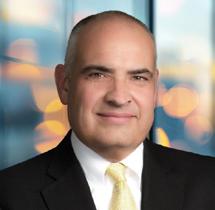
Brian Bassett is managing partner of the Chicago office of Traub Lieberman. His practice focuses on the areas of insurance coverage and excess monitoring. He is a 2005 graduate of the John Marshall Law School.
Growing up in Western Springs, Illinois, watching episodes of Law & Order with his family, Brian grew interested at an early age in the adversarial process that he saw on screen. He always knew that he wanted to go to law school. What was a “surprise,” however, was that he was “going to end up in the coverage world.” After law school, he joined a small firm in Chicago that did coverage and defense work. “I was a good writer, enjoyed researching and analysis, and so they threw me in the coverage group. Here I am 20 years later,” he comments.
His first big case came a few years later: a week-long arbitration in Boston over an eight-figure dispute. He remembers: “Being a coverage lawyer, I had grown used to a lot of behind-the-scenes research and writing, and I had argued motions before judges, but a complex arbitration proceeding was something new and very different.” The case gave him great experience in how the arbitration process works.
From the beginning of his career, Brian has maintained an
Illinois and national practice. He explains, “There’s certainly a benefit to knowing the players in your backyard, having a familiarity with the court system and obviously having a lot of experience in handling Illinois coverage disputes.”
Working on cases in other jurisdictions, however, gives him the opportunity to explore other states’ approaches to coverage issues. “I enjoy getting out there, seeing how other parts of the country tackle coverage disputes, getting to know colleagues across the country that deal with similar issues and learning something new on a daily basis,” he says.
In the years that followed, Brian has noticed the increased risk that insurance carriers now face when making insurance coverage decisions. “Bad faith or extra contractual exposure, whether it’s statutory or common law, really opens up the door for some big dollar value exposures to carriers,” he says. As a result, insurers often retain him to provide practical solutions and understand how best to protect against this increased liability.
He also commented about the increased speed at which coverage lawyers may need to provide their evaluations now. “When I was starting off as a baby coverage lawyer, you had maybe 30 days to get a client a coverage opinion.”
Brian said that there is a “much shorter fuse” now. He noted, though, “It’s not just expectations from the carriers. It’s also the speed at which certain underlying litigation progresses and how quickly insureds might need answers to whether coverage is available for a claim.”
As a result, Brian feels that it is important to educate associate attorneys on why it is important that they assist in making sure that the process runs smoothly and the answer gets out quickly. “The best advice is to take every experience as a learning opportunity and find the best way to utilize those tools going forward to provide better service to your clients.”
Brian spends his free time with family and his three daughters who, he says, “keep me on my toes.”
Brian C. Bassett
Traub Lieberman Straus & Shrewsberry LLP Chicago, IL
By Seth H. Row, Stoel Rives LLP, Portland, OR
New ACCC Fellow Summer Craig is a partner at Simpson Thatcher & Bartlett in New York City. She was born and raised in Honolulu, Hawaii but left warmth and palm trees behind to attend Dartmouth and Cornell for law school. She was steered to a career in law because as a history major she didn’t have many clear career paths after college. Teaching history seemed like an option, but she quickly realized she’d rather argue about the past in a courtroom than a classroom! Plus, to her the courtroom seemed a lot more exciting (and more lucrative).
Summer joined Simpson Thacher straight out of law school. Except for a brief break early in her career, she’s been there ever since. She counts herself lucky to have had some amazing mentors along the way, like Barry Ostrager and Mary Beth Forshaw. She reports that “they helped shape my approach to the practice of law and build a career focused on complex insurance coverage disputes.”
Summer’s first major insurance coverage matter - and first case as a lawyer - was representing Travelers in a fast-track arbitration involving coverage for asbestosrelated claims. From day one at Simpson, she hit the ground running – navigating document production, depositions, and a full arbitration hearing within her first nine months at the firm. The case then expanded into a
related bankruptcy proceeding, where the firm successfully opposed confirmation of the policyholder’s plan at a contested hearing. That lead to an appeal in the Third Circuit. She views it as an incredibly valuable experience to have so early in her career, providing exposure to high-stakes litigation and the intricacies of coverage disputes. And it sparked her interest in insurance as a field with vast opportunities for growth as a litigator.
Summer has handled coverage or bad faith litigation across at least 13 U.S. jurisdictions. A recent and particularly exciting engagement involved disputes in multiple jurisdictions, including New York, California, Connecticut, Florida and Minnesota, arising from claims by aircraft lessors seeking coverage for alleged losses associated with aircraft grounded in Russia. In these U.S.-based cases, she represented multiple insurers who were also facing parallel, related litigation in London and Ireland. “The cases required extraordinary global litigation efforts and seamless coordination across jurisdictions. This included more than 75 fact depositions worldwide, as well as dozens of expert reports, followed by extensive expert depositions. The scale, complexity and international coordination of the litigation made it an incredibly demanding
York, NY
and rewarding experience. I particularly enjoyed the challenge of maintaining a unified strategy across diverse legal landscapes while navigating coverage issues across multiple legal systems.”
From Summer’s perspective, one significant change in coverage litigation has been the growing impact of global events, like COVID, natural disasters and geopolitical crises, that lead to litigation in multiple jurisdictions. She reports that “the interconnectedness of our world means a single event can spark complex disputes worldwide, making cross-border coordination and strategy more essential than ever.”
Outside of practicing law, one of the most rewarding things Summer does is volunteer with the Brooklyn Youth Chorus, a professional children’s chorus. “BYC (Continued on the following page)
Summer Craig Simpson Thacher & Bartlett LLP New
Meet New Fellows (Continued)
is an extraordinary organization that provides young singers with not only top-tier music education but also world-class performance
opportunities. The impact BYC has had on its diverse group of young singers – both musically and professionally – is truly profound,
By Seth D. Lamden, Blank Rome LLP, Chicago, IL
Rebecca DiMasi was born in Boston, but has lived in Austin, Texas, for most of her life. She still has a soft spot in her heart for Boston, though, and travels back to Boston often to see her dad’s family and enjoy the beauty of New England in the fall.
Rebecca received her undergraduate degree from the University of Texas (Hook ‘em Horns!) and her J.D. from Baylor Law School. She was a government major in college who loved the idea of the branches of government and the separation of powers. After working for senators during her junior and senior years in college, however, she learned that she hated politics. Law school seemed like a good compromise.
After graduating law school, Rebecca clerked for Judge Sam Johnson on the U.S. Court of Appeals for the Fifth Circuit. She was his last law clerk before he retired. She then joined the law firm of Hughes & Luce as an associate, working with partners who represented insurers. When those partners left Hughes & Luce to form an insurance
coverage boutique law firm, she went with them.
Rebecca was drawn to the practice of insurance law due to the orderliness of trying to figure out what a policy means and the ability to specialize in an area of law and know it well. She found that knowing one area of the law very well rather than constantly having to learn about something new helped alleviate the stress of being a young attorney. She also really enjoyed getting to know members of the Texas insurance bar and seeing them repeatedly in coverage cases. Rebecca represented insurers until around 2017, when she joined Shidlofsky Law and began representing policyholders. Most of her work has been in Texas, but she has evaluated coverage issues in various other states.
Having represented both insurers and policyholders, Rebecca’s favorite cases have been on the policyholder side. She finds helping policyholders get coverage for what otherwise would be a bet-the-company settlement or judgment to be more rewarding than helping insurance
fostering teamwork, discipline, creativity and a sense of community.”
Welcome new Fellow Summer Craig!
companies keep their money. Rebecca’s first big coverage case was a construction defect case involving Pharr San Juan Alamo Independent School District in the Rio Grande Valley, which involved insurers and policyholders represented by what seemed to be every coverage attorney in the state. She was indoctrinated into the world of CGL defective construction coverage when the partner she was working with told her to gather all the documents that they would need for all the parties insured by her client. She spent hours at an actual copy
Rebecca DiMasi Shidlofsky Law Firm PLLC Austin, TX
machine trying to learn the parts of a CGL policy relevant to a construction defect case. Since then, Rebecca has seen numerous changes in the practice of coverage
law, including that people don’t use copiers very much anymore.
In her spare time, Rebecca likes to spend time with her husband, two daughters and two dogs,
By Michael L. Young, Reichardt Noce & Young LLC, Saint Louis, MO
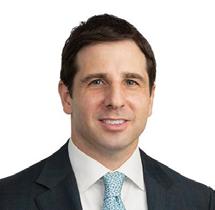
Daniel I. Graham, Jr. is a Partner in the Chicago office of Nicolaides Fink Thorpe Michaelides Sullivan LLP. He represents insurance companies on a national basis in privacy, emerging technology, intellectual property, and cybertort-related claims.
Dan graduated from the John Marshall Law School in Chicago in 2000. But becoming a lawyer was not an immediate career choice. After college, he worked in sales for several years. Eventually, however, with his family’s encouragement, he decided to go back to school to earn his law degree. It was a good decision. Twenty-five years later, Dan says that he “can’t imagine doing anything else,” particularly insurance coverage.
Dan credits Shaun McParland Baldwin, a fellow ACCC member and Of Counsel at Tressler LLP, as being his first mentor in the practice of insurance law. Dan began working with Shaun as her law clerk, and later, he became her associate, where Shaun focused Dan on assignments involving “personal injury” and “advertising injury” liability coverage,
coverages that remain a focus of his practice to this day. “I learned so much from Shaun,” Dan acknowledges, noting that he still uses the work habits she instilled in him at the outset of his career.
After his time with Tressler LLP, Dan continued his insurance law practice, working with Richard Nicolaides and Matthew Fink as Dan expanded his litigation and appellate experience. “Mentors can have such a positive impact on an associate. Richard and Matt encouraged me to take on new responsibilities.” Dan would later join with them and other attorneys to found Nicolaides Fink Thorpe Michaelides Sullivan LLP, a law firm dedicated to representing the interests of the insurance industry around the world. “My partners are terrific attorneys who are passionate about the work they do.” Those partners include ACCC members Monica Sullivan and Ellen Van Meir.
Dan is honored to have been elected to the membership of the ACCC. “I recognize the names and faces of many of the members. I am familiar with their reputations, professionalism, and
although with one in college and the other ready to go, they’re making it more difficult. As a soon-to-be empty nester, she’s looking for some new hobbies!
Daniel I. Graham, Jr.
Nicolaides Fink Thorpe
Michaelides Sullivan LLP Chicago, IL
leadership. And I look forward to working with them.”
When asked what it is about insurance law that Dan enjoys, Dan responds that insurance can present an array of exposures, such as slip and fall, construction defect, intellectual property infringement, aviation and transportation. And each can invite different analytical questions. He also appreciates the variety of skillsets into which the practice can tap. “It can be analysis, advocacy, litigation, and dispute resolution.”
Dan is a “true Midwesterner,” born and raised in the Lake County
(Continued on the following page)
Meet New Fellows (Continued)
area of northern Illinois. Away from the office, he enjoys reading biographies, visiting historical
landmarks, and spending time with his wife and their two college-aged sons. His family is active in different
By Meghan C. Moore, Flaster Greenberg PC, Boca Raton, FL
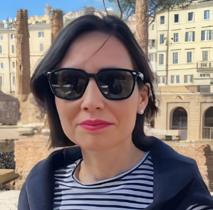
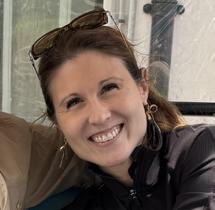
Alexis Joachim is a New Orleans native who has skillfully represented insurance companies for more than 15 years in complex coverage disputes. Her interest in the law began when she was working in the Louisiana state capitol during her undergraduate studies at Louisiana State University. After being exposed to lobbyists and legislators, her original focus on a career in public relations quickly shifted to a career in law.
Alexis graduated from Loyola University New Orleans College of Law in 2007. Following law school, she went to work at Phelps Dunbar LLP. Immersed in insurance coverage issues from day one, she proved she was a natural. During her first five years of practicing law, she developed a national practice representing insurance companies in a variety of coverage disputes.
After marrying her husband, she moved to Washington DC because he was in the Marine Corps. There, she joined the law firm Jackson and Campbell, where she counseled insurers on healthcare, toxic tort, and environmental coverage and
litigation disputes. Ironically, she handled more Louisiana coverage cases while working in DC than she handled during the first five years of her career in Louisiana. After five years in DC, however, she was ready to return home to Louisiana.
She moved back to New Orleans and rejoined Phelps Dunbar, where she worked for three years before joining Pipes Miles Beckman, where she still practices to this day. Alexis has continued to excel and is a key member of the firm’s insurance coverage and bad faith practice. There, she has earned recognition as a top lawyer, most recently by Best Lawyers, New Orleans Magazine, and Benchmark Litigation.
One of her most memorable cases was a London arbitration. As monitoring counsel, she had the opportunity to watch the whole process with its unique set of rules and peculiarities. That experience has allowed her to impart wisdom on even more seasoned lawyers in her firm.
One of her greatest accomplishments, aside from raising four girls (two of whom
service organizations, including Lions Club International, and in supporting autism-related charities.
she is still raising), was advocating for military spouses who are practicing lawyers who reside in Louisiana due to their spouse’s military orders to be permitted to practice law in Louisiana without taking the Louisiana bar exam. As an active member of the Military Spouse J.D. Network, Alexis was instrumental in lobbying the Louisiana Supreme Court to create a special rule allowing for limited admission.
As far as changes in the law, Alexis notes that Louisiana has amended its direct action statute with a new set of rules. She has
Alexis P. Joachim Pipes Miles Beckman New Orleans, LA
helped insurers navigate those rules. She also counsels clients in niche practice areas. In the context of oil and gas coverage work, for instance, she counsels insurers on tenders, indemnity statutes, and priority of coverage issues.
When asked about challenges in the law, Alexis acknowledged that one of the most significant challenges she faces is engaging young, smart lawyers and inspiring them to get excited about coverage law and analyze
By Robert Allen, The Allen Law Group, Dallas, TX
New Honorary Fellow Travis Pantin grew up in Austin, Texas. He was steered into law because he first decided he wanted to go into academia, specifically political theory. Then Travis realized that many of the most interesting questions of political theory actually get hashed out in lawso he decided that if he wanted to be a professor, he should try to be a law professor rather than a political scientist.
After law school; Travis’ first job as a lawyer was General Counsel of a health tech startup, Garner Health. From there, he entered academia and he has been an academic for most of his career.
From his perspective as an academic, Travis defers to the practitioners about the practice of insurance coverage law. He thinks that practitioners have more to teach academics about insurance coverage law, than academics do to practitioners. But there are some deeply interesting questions he enjoys thinking about that have very
practical implications. For example, what kinds of losses ought to be excluded as a matter of public policy (e.g., intentional act exclusions), and when should such public policy goals be admitted, helping interpret ambiguous (or even unambiguous!) policy provisions? Another question Travis is writing on now is: To what degree should insurance contracts be conceptualized as fundamentally different from most other contracts, such that it no longer makes sense to say the principles of insurance policy interpretation are merely the principles of contract interpretation? If insurance is really different, then you can more straightforwardly apply sui generis principles of interpretation to insurance policies that wouldn't really make sense as general principles of contract law.
One of the things Travis enjoys teaching his students when they're learning the basic
and dig into coverage issues. She notes that when she was a baby lawyer, “clients would pay for a coverage opinion and research on every case; now clients expect you to know it.” Fortunately, she does.
University of Connecticut School of Law Hartford, CT
principles of insurance law is the dramatic arc of the reasonable expectations principle. Showing them how such interpretive principles can rise, and fall, within a relatively short time frame, really makes it clear how dynamic this area of the law is. Outside of the practice of law, Travis finds unattributed antique oil paintings, and then does research to find out who painted them.
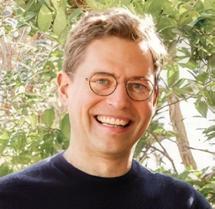
Travis Pantin
Meet New Fellows (Continued)
By Robert Allen, The Allen Law Group, Dallas, TX
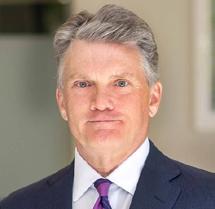
New Fellow Steve Rapp was born and raised in Marietta, Georgia, a suburb of Atlanta. He was steered to his legal career by his uncle who was an attorney and later became a judge. He is retired now, but Steve always thought his job seemed interesting, and he started seriously considering law school when he was a junior in college.
After law school, Steve went to work as an associate at a large firm in West Palm Beach, Florida, named Gunster, Yoakley, and Stewart. He did a little bit of everything - like many first-year associates, but he did not handle insurance cases for his first few years. When Steve moved back to Atlanta, he started working on insurance cases. One of the first big insurance cases he was involved in was a dispute over whether a rental
car company’s self-insurance plan covered a person who was injured as a result of a high-speed police chase with the rental car. The specific issue was whether certain provisions of the rental agreement impacted coverage. He won a summary judgment motion, which was affirmed on appeal.
The biggest change Steve has seen in his career with respect to coverage litigation is an uptick in the number of timelimited demands in virtually every single case, and that most of the demands now include paragraphs of bad faith law from the particular jurisdiction rather than only a focus on liability and damages related to the underlying incident. Steve primarily handles cases in Georgia and Florida but has worked on bad faith cases in
By Seth D. Lamden, Blank Rome LLP, Chicago, IL
Adam Smith grew up in New Jersey, not far from where he currently lives. Coming from a family of lawyers, Adam decided at an early age that he wanted to practice law, and his love of debate steered him to litigation.
Adam received his undergraduate degree from the University of Massachusetts, Amherst, and his J.D. from Fordham University. After law school, he began practicing law in the New Jersey office of Mendes
& Mount. As a young lawyer, Adam gained invaluable trial experience defending doctors in complicated and fast-paced medical malpractice cases. His med mal cases from those early days remain some of his favorite. With New Jersey being a hotbed of insurance and environmental coverage litigation in the 1990s, he soon shifted his focus to representing London Market insurers in longtail coverage disputes. Since then,
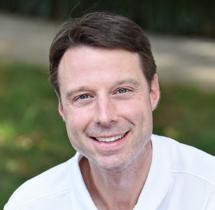
Stephen J. Rapp Weinberg, Wheeler, Hudgins, Gunn & Dial, LLC Atlanta, GA
several other jurisdictions. Florida stands out because of the number of discovery disputes that seem to occur in every case.
Outside of his practice, Steve is an avid tennis player, and he and his wife play mixed doubles together.
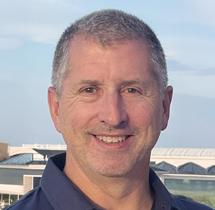
Adam M. Smith
Coughlin Midlige & Garland LLP New York, NY
Adam has represented insurers in at least fifteen different U.S. jurisdictions, along with a couple of international jurisdictions.
Over the course of his 30+ years representing insurers, Adam has worked on many interesting coverage cases. One of his most interesting cases involved an insurance claim for the Westar I communications satellite,
which was launched in the 1970s and was the first communications satellite that housed commercial television. The coverage dispute involved questions regarding the life of the satellite and the value of its alleged lost time in orbit. His experts were literal rocket scientists!
Adam notes that one of the most significant changes he has
By Meghan C. Moore, Flaster Greenberg PC, Boca Raton, FL
Melicent Thompson was born in Wilton, Connecticut. Law is her second career. Her first was as an environmental consultant. After graduating from Georgetown University, Melicent went to work for a private company that provided consulting services to the Environmental Protection Agency (“EPA”). Melicent’s job was in the area of regulatory compliance. Trained in all environmental statutes and regulations, Melicent manned an EPA hotline, and answered a wide variety of questions about environmental laws.
From there, she returned to Connecticut and joined TRC Environmental, where she performed site investigations, environmental audits, and provided consulting advice to companies that needed to comply with environmental regulations. That is also where she met her husband, an engineer who, when not in the field, sat in the cubicle across from her.
Realizing that because she was not a scientist it would be difficult
to progress in her career, Melicent decided to go to law school to become an environmental attorney. Melicent attended the University of Connecticut, School of Law, graduating with honors in 1996. From there she joined Kilpatrick and Cody, now Kilpatrick Townsend, and practiced environmental law. After three years, she and her husband decided to return to Connecticut to start a family. There, she joined Litchfield Cavo, where she handed civil litigation for 20 years and ascended to the capital partner ranks.
In January of 2020, she was given the opportunity to take a leadership role at Gfeller Laurie LLP, a firm seeking to grow and expand its footprint. Melicent seized the opportunity and now serves as the Firm’s Managing Partner.
Just three months after joining Gfeller Laurie, when the Covid 19 Pandemic forced the world to stay home, Melicent and her husband decided to take an online
seen in coverage litigation is that coverage lawsuits are handled in a far more efficient manner than in the 1990s. He attributes this, in part, to increased sophistication of insurers and policyholders and the attorneys who represent them.
In his (rare) spare time, Adam can be found golfing, enjoying live music, or spending time with his family.
Gfeller Laurie LLP West Hartford, CT
course to obtain their scuba diving certifications. Since then, scuba diving has become a bit of an obsession for them. She jokes that she is exclusively a warm water diver, but other than that there are no limits. She is certified to 100 feet and has enjoyed diving in numerous locations, noting the most interesting sea life she has seen was in the Philippines.
(Continued on the following page)
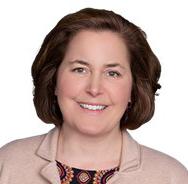
Melicent B. Thompson
Melicent’s first big coverage case arose out of a tragic accident. The brakes failed on a dump truck descending Avon Mountain, and the truck came to a halt in a busy intersection after hitting multiple cars and killing multiple people. There was no insurance on the truck at the time, and Melicent was hired by the insurer that would have been on the risk if the policy had been renewed. Her job was to make sure the company’s non-renewal was proper.
The biggest change she has seen with respect to coverage litigation in Connecticut was the expansion of the duty to defend under Connecticut law, compliments of a 2020 Connecticut Supreme Court decision
that she says turned “the duty to defend on its head.” She says that as a result of that decision, “an insurer that previously might not have had a duty to defend in Connecticut now may decline a defense only if there is neither factual nor legal uncertainty as to whether a duty to defend exists. As to legal uncertainty, there must be on-point appellatelevel caselaw to support the insurer’s position. Otherwise, in the face of either factual or legal uncertainty, the insurer now must defend and initiate a declaratory judgment action.”
Melicent has observed other changes over the years. For instance, she has witnessed carriers being more thoughtful
By Seth H. Row, Stoel Rives LLP, Portland, OR
Jennifer Wasson is a partner at Potter Anderson & Corroon LLP in Wilmington, Delaware.
From Philly Roots to Delaware Courtrooms, Jennifer grew up in Bucks County, Pennsylvania, just outside Philadelphia, and remains a passionate Philly sports fan (and a proud Tar Heel!). Her journey into law began in high school, working at her town hall and connecting with the city solicitor. Though she entered law school with a focus on public policy and governance, her career took a different turn - one that’s led to a dynamic and impactful presence in the insurance coverage space.
Early Career & Federal Experience
After law school, Jennifer clerked for a federal district court judge in North Carolina, a relationship she still values deeply. She also served as a Special Assistant U.S. Attorney in Wilmington, prosecuting drug and gun crimes - an experience she describes as formative. Her early private practice years included time at Nelson Mullins and then Potter Anderson, where she currently practices, and she now balances her legal career with raising two adorable kids, ages 12 and 8.
Design Enthusiast with a Legal Edge
and strategic. “Carriers are more amenable to conferring with coverage counsel about decisions before putting them in writing.”
Melicent has also observed that finding junior attorneys with an interest in coverage law has become more of a challenge, but one that can be met with thoughtful recruitment and development of new attorneys who research and write exceptionally well and who show appellate law and/or contract law proclivities. She notes that the University of Connecticut School of Law has a second-tonone Insurance Law Center led by Professor Travis Patin.
Potter Anderson & Corroon LLP
Wilmington, DE
Outside the courtroom, Jennifer has a passion for interior design, though she admits choosing paint
Jennifer C. Wasson
colors can be a challenge! Her creative side adds a refreshing dimension to her legal work.
Trial by Fire: Her First Big Coverage Case
Jennifer’s first major insurance coverage case was the Warren Pumps/Viking Pumps jury trial in
Delaware in 2013. An associate who was newly pregnant at the time, she helped the trial team navigate a complex mass tort case involving asbestos, allocation, and noncumulation issues. The trial included a deep dive into trigger theory and was tied to a pivotal decision by the New York Court of Appeals.
Coverage Litigation: Then & Now
Over the years, Jennifer has seen significant shifts in coverage litigation - especially in how jurisdictional differences shape outcomes. Her practice is almost entirely in Delaware, a dynamic venue for coverage litigation.
Elevate a Colleague: Nominate a New ACCC Fellow
Do you know a highly accomplished insurance coverage, bad faith, or extracontractual claims lawyer who deserves to be recognized among the best in the field? Now is the time to nominate a qualified candidate to become a Fellow of the American College of Coverage Counsel. Maintaining the prestige of the College is paramount, which is why entry is exclusively by referral from a current ACCC Fellow. Your nomination helps the ACCC Membership Committee continually vet and welcome exceptional new members to our esteemed ranks.
Who is a Qualified Candidate?
We are seeking nominations for candidates actively practicing law in the U.S., Canada, and Bermuda who meet the following criteria:
` Active Practice: They must be actively engaged in the private practice of law, with a practice concentrated primarily in insurance coverage, bad faith, and/or extracontractual claims.
` Licensure: They must be licensed to practice in the highest court of their respective state or province.
` Experience: They must have engaged substantially in the practice of insurance law for at least 15 consecutive years. (Time spent
as a judge or law clerk may be considered toward this requirement.)
` Nominator Requirement: The nominator must be an ACCC Fellow who is NOT from the same firm as the nominee.
How to Submit a Nomination
The process is simple and confidential:
1. Email your nomination to membership@ americancollegecoverage.org
2. Include your nominee’s name, basic contact information, and a direct link to their professional bio on their firm’s website.
The Membership Committee handles the rest. They will conduct initial vetting, including contacting other local Fellows for references, before sending an application invitation to the candidate. Crucially, candidates should not be aware of their nomination until the Membership Committee reaches out with an official invitation to apply. If a nominee does not progress to the application stage, the nominator will be discreetly advised. Help us continue to grow the College with the most distinguished practitioners in our field.
Submit your nomination today!
Hot Topics
Déjà vu All Over Again: PFAS CGL Coverage Update
By Seth Lamden, Blank Rome LLP, Chicago, IL
For members of the College who cut their coverage teeth litigating asbestos or environmental pollution claims, present-day coverage disputes regarding PFAS liabilities will feel familiar. Indeed, most underlying PFAS claims and losses involve allegations of traditional industrial environmental pollution or, like asbestos claims, seek bodily injury damages pursuant to product liability theories. Further, just as the insurance industry began including asbestos exclusions and increasingly more restrictive pollution exclusions on their policies as environmental and asbestos losses mounted, insurers have begun including PFAS exclusions on their policies. It appears that there have not been any reported PFAS coverage cases in which the court used a coverage trigger other than exposure. Given the long history of PFAS use in the United States, policyholders are seeking a defense and coverage pursuant to CGL policies going back to the 1970s and earlier. To date, there have been fewer than a dozen reported PFAS coverage decisions discussing substantive coverage issues, most of which focus on the
applicability of standard pollution exclusions. This article provides an overview of those cases, and also provides the text of PFAS exclusions issued by the Insurance Services Organization and London Market Association in the last several years.
What’s the Problem With PFAS?
Since the late 1990s, thousands of lawsuits and regulatory enforcement actions have been brought against companies that manufactured, used, sold, and distributed PFAS and PFAScontaining products, seeking damages and other relief for environmental contamination and bodily injuries. Often referred to as “forever chemicals” because they do not break down in the environment, per- and polyfluoroalkyl substances (PFAS) are a group of synthetic chemical compounds used since the 1940s for their oil-, water-, and stainresistant properties. PFAS are used to make everything from non-stick cookware to cosmetics to stain-resistant carpeting to firefighting foams, and are used in a variety of industries, including aerospace, automotive, packaging,
Chicago, IL
manufacturing, construction, and electronics. In short, PFAS are everywhere, and have found their way into the air, soil, and groundwater all over the world. Unfortunately, science has shown that exposure to PFAS can lead to cancer, reproductive issues, and other health problems. As a result, regulators are seeking to hold companies responsible to clean up PFAS pollution and injured plaintiffs are seeking damages for cancers and other injuries allegedly caused by PFAS exposure.
The “Qualified” or “Sudden and Accidental” Pollution Exclusion
The first standardized CGL pollution exclusion appeared in the 1973 CGL form. The 1973 version, sometimes referred to
Seth Lamden Blank Rome LLP
as a “qualified” or “sudden and accidental” pollution exclusion, states that it does not eliminate coverage for bodily injury or property damage due to “sudden and accidental” discharges, dispersals, releases or escapes of contaminants or pollutants. The full text of the “sudden and accidental” pollution exclusion states as follows:
This insurance does not apply . . . . (f) to bodily injury or property damage arising out of discharge, dispersal, release or escape of smoke, vapors, soot, fumes, acids, alkalis, toxic chemicals, liquids or gases, waste materials or other irritants, contaminants or pollutants into or upon land, the atmosphere or any water course or body of water; but this exclusion does not apply if such discharge, dispersal, release or escape is sudden and accidental.
More than 50 years since it was issued, courts still do not always agree on how to apply the “sudden and accidental” pollution exclusion. The courts in two PFAS coverage decisions decided within a year of each other reached different conclusions regarding whether a “sudden and accidental” pollution exclusion relieved a CGL insurer of its duty to defend an underlying lawsuit where the
underlying complaint alleged both gradual and sudden releases of PFAS chemicals in the context of manufacturing operations.
In one case, Tonoga, Inc. v. New Hampshire Insurance Co., 201 A.D.3d 1091 (2022), the court found that a “sudden and accidental” pollution exclusion relieved a CGL insurer of its duty to defend environmental contamination and regulatory enforcement lawsuits after concluding that the “gravamen of each suit is decidedly plaintiff’s knowing discharge of [PFAS] as part of its routine manufacturing processes.” Id. at 1097. Tonoga, the insured, operated a manufacturing facility that used PFAS for more than 40 years. As part of its production process, Tonoga heated PFAS-soaked fabrics in ovens, which vaporized some of the PFAS solution into the atmosphere. Tonaga’s employees also poured PFAS chemicals down drains at Tonaga’s manufacturing facility. PFAS chemicals that were emitted from smokestacks at the facility and dumped down drains eventually found their way into the groundwater and soil. Id. at 1093.
In the coverage action that followed Tonaga’s request for a defense from its CGL insurers, the court gave two reasons for holding that the “sudden and accidental” pollution exclusion eliminated the insurer’s duty to defend. First, the court held
that the PFAS chemicals used by Tonaga were pollutants. Noting that whether a chemical constituted a pollutant for purposes of a pollution exclusion was “situational,” the court explained that the PFAS chemicals in the soil and groundwater were pollutants because they caused broadly dispersed environmental harm when they were discharged into the environment through the facility’s smokestacks and when employees poured the chemicals down sinks and drains. Id. at 1096. Second, the court held that allegations in the underlying complaints of “improper dumping” and “spilling” of PFAS chemicals down drains did not establish that some of the discharges were “sudden and accidental.” Id. at 1097. Instead, according to the court, allegations that PFAS chemicals were dumped over many years “suggests ‘the opposite of suddenness” and “as a matter of law, volitional, longterm discharge of a substance cannot be viewed as unintended or unexpected.” Id. In so ruling, the court stated that it was “not persuaded that the references [in the underlying complaints] to there ‘likely’ being ‘yet other ways’ in which PFOA and/or PFOS was discharged into the environment by plaintiff—to be uncovered during discovery in the
(Continued on the following page)
Topics (Continued)
underlying actions—are adequate to require defense of this action.” Id. In contrast, the court in Wolverine World Wide, Inc. v. American Insurance Co., No. 1:19-CV-10, 2021 WL 5548103, at *1 (W.D. Mich. June 15, 2021), held that CGL insurers could not rely upon “sudden and accidental” pollution exclusions to avoid defending PFAS environmental regulatory enforcement actions and class action lawsuits because the underlying complaints were “silent, uncertain, and or unclear as to whether any of the alleged polluting events were ‘sudden or accidental’ or ‘unexpected or unintended.’” Wolverine, 2021 WL 5548103 at *3. Wolverine, the insured, was a footwear manufacturer that operated a tannery in Michigan for more than 100 years. Wolverine was sued and the subject of environmental enforcement actions because PFAS and other chemicals it used in its manufacturing processes had contaminated the groundwater near its manufacturing facilities. In a declaratory judgment action regarding Wolverine’s CGL insurers’ duty to defend, the court held that “sudden and accidental” pollution exclusions did not eliminate the insurers’ duty to defend because “[f]rom a review of the allegations in the underlying actions, it is clear to
the Court that the allegations [in the underlying complaints] arguably include damage from intentional and unintentional or accidental contamination.”
Wolverine World Wide, Inc. v. American Insurance Co., 1:19-CV-10, 2021 WL 4841167, at *12 (W.D. Mich. Oct. 18, 2021).
The “Absolute” and “Total” Pollution Exclusions
In the 1986 CGL form (CG 20 10 11 85), ISO replaced the “sudden and accidental” pollution exclusion with the “absolute” pollution exclusion. The full text of the “absolute” pollution exclusion states as follows:
This insurance does not apply . . . . f. Pollution
(1) “Bodily injury” or “property damage” arising out of the actual, alleged or threatened discharge, dispersal, seepage, migration, release or escape of pollutants:
(a) At or from any premises, site or location which is or was at any time owned or occupied by, or rented or loaned to, any insured;
(b) At or from any premises, site or location which is or was at any time used by or for any insured or others for the handling, storage, disposal, processing or treatment of waste;
(2) Any loss, cost or expense arising out of any:
(a) Request, demand or order that any insured or others test for, monitor, clean up, remove, contain, treat, detoxify or neutralize, or in any way respond to, or assess the effects of pollutants; or
(b) Claim or suit by or on behalf of a governmental authority for damages because of testing for, monitoring, cleaning up, removing, containing, treating, detoxifying or neutralizing, or in any way responding to, or assessing the effects of pollutants.
Pollutants means any solid, liquid, gaseous or thermal irritant or contaminant, including smoke, vapor, soot, fumes, acids, alkalis, chemicals and waste. Waste includes materials to be recycled, reconditioned or reclaimed.
ISO updated the CGL form in 1998. When it issued the 1998 CGL form (CG 00 02 07 98), ISO replaced the “absolute” pollution exclusion with the “total” pollution exclusion. The full text of the “total” pollution exclusion states as follows:
This insurance does not apply . . . . f. Pollution
(1) “Bodily injury” or “property damage” which would not have occurred in whole or part but for the actual, alleged or threatened discharge, dispersal, seepage, migration, release or escape of “pollutants” at any time.
There have been several PFAS coverage lawsuits involving the applicability of the “absolute” and “total” pollution exclusions. The key issue in several of those lawsuits was whether one of these pollution exclusions applied to claims alleging, in whole or in part, PFAS exposure through the use of PFAS-containing products.
In one such case, the insured, Buckeye Fire Equipment Co., was sued in hundreds of underlying lawsuits alleging that exposure to aqueous film-forming foams (AFFFs) in firefighting equipment manufactured by Buckeye caused bodily injury and property damage. Colony Ins. Co. v. Buckeye Fire Equip. Co., No. 3:19-cv-00534, 2020 WL 6152381 (W.D.N.C. Oct. 20, 2020), aff’d, No. 20-2208, 2021 WL 5397595 (4th Cir. Nov. 18, 2021). AFFFs are used to extinguish fires involving flammable liquids by creating a thin, water-based film over the fire to cut off oxygen, thereby smothering the fire. The plaintiffs in some of the underlying cases against Buckeye alleged that they
were harmed both from direct and environmental exposures. The direct exposures allegedly resulted from the plaintiffs’ use of AFFFs, and the environmental exposures allegedly resulted from contamination of the groundwater at the firefighting training area where plaintiffs worked and trained.
Buckeye turned to Colony, its CGL insurer, for a defense of the underlying lawsuits alleging direct exposure and the underlying lawsuits alleging both direct and environmental exposure. Buckeye did not seek a defense for claims alleging only environmental exposure. Colony refused to defend, contending that the “total” pollution exclusion eliminated its duty to defend because the plaintiffs’ injuries “would not have occurred, in whole or in part but for the actual, alleged, or threatened discharge, dispersal, seepage, migration, release or escape of ‘hazardous materials at any time.” Id. at *2. Buckeye argued that the pollution exclusion applied only to releases of PFAS chemicals into the environment and did not apply to the use of AFFFs.
The court in a declaratory judgment action agreed with Buckeye, finding that Colony had a duty to defend any claims alleging direct exposure because the terms “discharge, dispersal, seepage, escape,” etc.
are environmental terms of art that apply only to traditional environmental pollution. Id. at *3. Claims alleging direct exposure to AFFFs are not traditional environmental pollution claims and, therefore, are not subject to the “total” pollution exclusion. Id. at *4. The court also held that the insurer was required to defend claims alleging both direct and indirect exposure because the direct exposure claims were potentially covered, and an insurer with a duty to defend must defend the entire underlying lawsuit. Id.
The court in National Foam, Inc. v. Zurich American Insurance Co., 768 F. Supp. 3d 1009 (N.D. Cal. 2025), applied the same analysis as the Colony, 2020 WL 6152381, court, and held that a “total” pollution exclusion did not eliminate a CGL insurer’s duty to defend a lawsuit brought by nineteen firefighters alleging that they were injured due to exposure to National Foam’s AFFF products during their employment. Id. at *11. The National Foam court held that the “total” pollution exclusion did not apply because the alleged exposure arose from the ordinary use of National Foam’s products rather than traditional environmental pollution. Id. at 1016-17. The court reasoned that the term “pollutant” is “not just a class of substances (i.e., ‘smoke, (Continued on the following page)
Hot Topics (Continued)
vapor, soot, fumes, acids, alkalis, chemicals, and waste’), but also a mechanism of harm.” Id. For the pollution exclusion to apply, the mechanism of harm must be traditional environmental pollution rather than mere exposure to chemicals. Id. In contrast, the court held that the pollution exclusion did apply to cases alleging that AFFFs had contaminated groundwater, which “is generally understood as pollution.” Id. at 1020.
As in National Foam and Colony, the court in Century Indemnity Co. v. Tyco Fire Products, LP, No. 2023-CV000190, 2025 Wisc. Cir. LEXIS 424 (Circ. Ct. Wisc. Marinette Cnty.), also held that a pollution exclusion did not relieve a CGL insurer of its duty to defend underlying lawsuits brought by firefighters alleging that they suffered bodily injury when they were exposed to AFFF products both directly, while using the AFFF products, and indirectly, by drinking water contaminated with PFAS chemicals. In so ruling, the court held that the insurers could only avoid liability if they could show that the excluded cause of loss (i.e., groundwater contamination) was the sole cause of the firefighters’ injuries. Id. at *17-*18; *21. Because the insurers could not do so, the “mixed” firefighter claims were covered.
The coverage dispute in Grange Insurance Co. v. Cycle-Tex Inc., No. 4:21-cv-147, 2022 WL 18781187 (N.D. Ga. Dec. 5, 2022), involved only traditional environmental contamination due to PFAS chemicals emanating from a thermoplastics recycling facility operated by the insured. The court in a declaratory judgment action held that because PFAS are pollutants, the pollution exclusion eliminated the insurer’s duty to defend. As the court explained, “there can be no doubt that the alleged contaminants in the underlying lawsuit — PFAS chemicals — are ‘pollutants’ within the plain meaning of [the insured’s] insurance policy. Not only are ‘chemicals’ explicitly listed in the policy’s definition of ‘pollutants,’ but Georgia courts have repeatedly emphasized the ‘broad reach of the term ‘pollutants’ contained within total pollution exclusion clauses.” Id. at *6 (emphasis in original).
The Insurance Industry Attempts to Limit Liability and Property Coverage for PFAS Claims:
ISO PFAS Exclusions
In 2023, ISO introduced the following six PFAS-specific endorsements:
` CG 34 95 Exclusion
– Perfluoroalkyl And Polyfluoroalkyl Substances, to use with products/completed
operations liability coverage part or Owners and Contractors protective liability coverage part
` CG 34 96 Exclusion
– Perfluoroalkyl And Polyfluoroalkyl Substances, to use with the railroad protective liability coverage part
` CG 40 32 Exclusion
– Perfluoroalkyl And Polyfluoroalkyl Substances, to use with the commercial liability coverage part
` CU 34 54 Exclusion
– Perfluoroalkyl And Polyfluoroalkyl Substances (PFAS), to use with the commercial liability umbrella coverage part
` CX 21 97 Exclusion
– Perfluoroalkyl And Polyfluoroalkyl Substances (PFAS), to use with the commercial excess liability coverage part
` BP 15 91, Exclusion
– Perfluoroalkyl And Polyfluoroalkyl Substances (PFAS), to use with business owners policy
The premises/operations and products/completed operations ISO PFAS exclusions are substantively the same and state as follows:
2. Exclusions
This insurance does not apply to: Perfluoroalkyl And Polyfluoroalkyl Substances
a. “Bodily injury” or “property damage” which would not have occurred, in whole or in part, but for the actual, alleged, threatened or suspected inhalation, ingestion, absorption, consumption, discharge, dispersal, seepage, migration, release or escape of, contact with, exposure to, existence of, or presence of, any “perfluoroalkyl or polyfluoroalkyl substances”.
b. Any loss, cost or expense arising, in whole or in part, out of the abating, testing for, monitoring, cleaning up, removing, containing, treating, detoxifying, neutralizing, remediating or disposing of, or in any way responding to or assessing the effects of, “perfluoroalkyl or polyfluoroalkyl substances”, by any insured or by any other person or entity . . . .
a. “Personal and advertising injury” which would not have taken place, in whole or in part, but for the actual, alleged, threatened or suspected inhalation, ingestion, absorption, consumption, discharge, dispersal, seepage, migration, release or escape of, contact with, exposure to, existence of, or presence of, any “perfluoroalkyl or polyfluoroalkyl substances”.
b. Any loss, cost or expense arising, in whole or in part,
out of the abating, testing for, monitoring, cleaning up, removing, containing, treating, detoxifying, neutralizing, remediating or disposing of, or in any way responding to or assessing the effects of, “perfluoroalkyl or polyfluoroalkyl substances
The ISO PFAS exclusions add the following definition of “Perfluoroalkyl or polyfluoroalkyl substances” to the Definitions section of the CGL policy:
“Perfluoroalkyl or polyfluoroalkyl substances” means any:
1. Chemical or substance that contains one or more alkyl carbons on which hydrogen atoms have been partially or completely replaced by fluorine atoms, including but not limited to:
a. Polymer, oligomer, monomer or nonpolymer chemicals and their homologues, isomers, telomers, salts, derivatives, precursor chemicals, degradation products or byproducts;
b. Perfluoroalkyl acids (PFAA), such as perfluorooctanoic acid (PFOA) and its salts, or perfluorooctane sulfonic acid (PFOS) and its salts;
c. Perfluoropolyethers (PFPE);
d. Fluorotelomer-based substances; or e. Side-chain fluorinated polymers; or 2. Good or product, including
containers, materials, parts or equipment furnished in connection with such goods or products, that consists of or contains any chemical or substance described in Paragraph C.1.
London Market Association PFAS Exclusions
The London Market Association has also issued two “model” PFAS exclusionary endorsements in 2022, and then updated them in late 2023. The 2023 versions (LMA5595A and LMA5596A) are substantially the same, with the difference between the two being the inclusion of a provision stating that “If UNDERWRITERS allege that this Exclusion applies to any claim under this POLICY the burden of proving the contrary shall be upon the INSURED.”
The full text of model London Market Association PFAS exclusion LMA5596A states as follows: PERFLUORINATED COMPOUNDS, PERFLUOROALKYL AND POLYFLUOROALKYL SUBSTANCES (PFAS) EXCLUSION NO. 2 (For use on liability insurance policies)
1. This POLICY does not cover any claim for actual or alleged loss, liability, damage, compensation, injury, sickness, disease, death, medical (Continued on the following page)
Hot Topics (Continued) payment, defence cost, cost, expense or any other amount, directly or indirectly and regardless of any other cause contributing concurrently or in any sequence, originating from, caused by, arising out of, contributed to by, resulting from, or otherwise in connection with any PFAS, such as any perfluoroalkyl or polyfluoroalkyl substances for example.
2. For the purposes of this Exclusion, loss, liability, damage, compensation, injury, sickness, disease, death, medical payment, defence cost, cost, expense or any other amount, includes, but is not limited to, any cost to clean-up, detoxify, remove, monitor, contain, test
for or in any way respond to or assess the effect of any PFAS, such as any perfluoroalkyl or polyfluoroalkyl substances for example.
3. If UNDERWRITERS allege that this Exclusion applies to any claim under this POLICY the burden of proving the contrary shall be upon the INSURED.
4. PFAS means any organic molecule, salt, free radical or ion, the composition of which includes at least one: a. perfluorinated methyl group (-CF3); or b. perfluorinated methylene group (-CF2-).
LMA5596A 10th October 2023.
CONCLUSION
There is no question that PFAS liability is a major and escalating
Lessons from Olde Tymes
The Curious Case of Fee Splitting Between an Insurance Claims Officer and a Lawyer and Other Scandals
By John Bonnie,
for the Professionalism & Ethics
The phrase “Things were different back then” is a convenient way of explaining and excusing actions that are unthinkable when judged by modern standards. The companion ethics cases of In re Bovard, 228 A.D. 263, 239 N.Y.S. 465 (1930) and In re
Committee
Cherry, 228 A.D. 458, 240 N.Y.S. 282 (1930) are entertaining if not disturbing examples of both.
Background
The Employers’ Liability Assurance Corporation
The sordid story features two
problem for manufacturers, distributors, and other industries in the United States and abroad. To date, billions of dollars in settlements have already been paid, and thousands of lawsuits are pending. As members of the College are well aware, significant liabilities always give rise to significant liability insurance disputes. It is safe to assume that PFAS pollution exclusion cases are just the beginning, and we will be hearing about many other PFAS coverage cases in the coming years. And there is no doubt that clever policyholder coverage lawyers are already working overtime to develop arguments to avoid the new PFAS exclusions. To them, Godspeed!
John Bonnie Professionalism & Ethics Committee
key characters: Everett W. Bovard and Charles E. Cherryboth lawyers, with ties to the Employers’ Liability Assurance Corporation (“ELAC”). Formed in 1880 in the UK, ELAC was the first company to offer employers’ liability insurance, a business that expanded to the U.S. market in 1886.
Much of ELAC’s U.S. business involved workers compensation insurance, and the company was vitally interested in potential negligence actions against third parties underlying employee injury claims since the workers’ compensation scheme enabled claimants to forego recovery in tort and simply elect workers’ compensation. When this occurred, ELAC was relegated to recovery of its claim payments by pursuing third party actions in its own name via assignment from the employee. The In re Bovard record revealed that employees opting for workers compensation benefits had little interest in pursuing thirdparty tort recovery, creating proof problems for ELAC and significantly diminishing the company’s ability to transfer responsibility to and recover
from others for their insured risk. The company benefitted from injured employees foregoing their right to compensation pursuant to the no-fault scheme and pursuing recovery in tort instead.
Bovard
Shortly after graduating from law school in 1910, Bovard began working for ELAC, trying third party tort cases for the company in the New York Municipal Court. After twelve years in this role, he entered private practice, and as an experienced attorney in the pursuit of third party claims for workplace injuries, he was retained by ELAC to continue trying cases for the company.
Cherry
Cherry was admitted to practice in 1925, and became employed as the superintendent of claims at ELAC. Bovard and Cherry had a close personal relationship as a result of their mutual employment experience at ELAC, and on entering private practice in 1925, Bovard and Cherry agreed that workers compensation claims involving claims of negligence would be sent to Bovard to pursue on behalf of ELAC insureds. Of
200 workers’ compensation claims submitted to ELAC over a period of three years involving potential negligence claims, 71 were referred to Bovard.
Bovard and Cherry’s Business Arrangement
To implement the plan, Cherry issued an edict to the head of the ELAC workers’ compensation department that all injured claimants with third party claims should be referred to Bovard for representation, with ELAC going so far as to issue forms for company investigators to present to claimants creating retainer agreements with and on behalf of Bovard. In exchange for claimants agreeing to retain Bovard, Cherry sometimes “helped”, the injured employee by advancing or loaning them money to “t[a]k[e] care of them medically” while they awaited their tort recoveries.
In re Bovard, supra at 267; 469. Similar agreements did not exist with other lawyers representing ELAC insureds, and what started as a “suggestion” that claimants retain Bovard eventually became an instruction to (Continued on the following page)
use Bovard exclusively in cases where ELAC was recommending pursuit of third party negligence claims.
The facts revealed that in one extreme instance, an ELAC claimant (Feldman) was hospitalized in serious condition and unable to talk intelligently. An ELAC investigator met at the hospital with Feldman’s wife and later his uncle, advising of the right to pursue tort claims for Feldman’s injuries, and urging the retention of Bovard to do so. When Feldman’s uncle advised that he had another lawyer in mind, the ELAC investigator offered an “advance” of $20 per week if Feldman would retain Bovard instead. Feldman’s uncle agreed based upon the “allowance” offered by ELAC, and had Feldman sign the agreement retaining Bovard. According to the court, Bovard was aware of how the retainer agreement with Feldman was obtained.
Under the Bovard/Cherry arrangement, Bovard received 33 percent of any recovery in a tort action where he was retained. Materially, Cherry was also compensated, receiving one third of Bovard’s one
third contingency fee. Documentation of the retention agreement between the claimant and Bovard was accomplished by investigators employed by ELAC, who were also paid sums by Bovard for their work on his behalf. Bovard testified in this respect that he always paid investigators, and that the amount “depended on what we got.” In re Bovard , supra at 267; 469. The effect was that ELAC investigators tasked with inducing claimants to retain Bovard on a contingent fee basis in order to keep ELAC from paying otherwise required workers’ compensation benefits also received compensation from Bovard.
Bovard testified that in contrast to the basis on which the ELAC investigators were paid, the compensation paid to Cherry was for consultation services he provided to Bovard, and that he was not paying Cherry to send him cases. Cherry in turn testified that the assistance he provided to Bovard occurred after hours, and was not part from his duties as an ELAC executive. According to the court, however, in sending
business to Bovard, Cherry was acting in an executive capacity for ELAC for which he was receiving a salary. Whether ELAC originally knew of the arrangement for the retention of Bovard by ELAC claimants and of the fee splitting arrangement between Bovard and Cherry, upon discovery, the company did not disapprove of it upon discovery.
Disciplinary Actions
Disciplinary proceedings were ultimately instituted against both Bovard and Cherry for professional misconduct in perpetuating an arrangement reflecting a conflict of interest; making unofficial “maintenance” payments to some claimants agreeing to the arrangement; and the sharing of contingent fees received by Bovard with Cherry.
On review by the New York Supreme Court Appellate Division, the court agreed with the appointed referee that Cherry’s acts of advising and assisting Bovard was in furtherance of the interests of ELAC, and that superior officers in the home office of ELAC were aware of the financial arrangement between
the two men. In this respect, the court determined that the arrangement did not harm ELAC, one of the ethics charges against him. The court nonetheless concluded that “the high standard set for members of the legal profession compels disapproval of a relationship which could not but lead to a divided loyalty.” In re Cherry, supra at 461; 286.
[W]e think [Cherry] is subject to censure for his activity in securing retention of Mr. Bovard to represent claimants having these third party claims. It is one thing to advise claimants as to their rights in relation to a cause of action against a third party, and to further the interests of one’s employer by urging the prosecution of such causes of action. But it is another thing to solicit the retention of a particular attorney to prosecute such actions. [Cherry] must have known that is a violation of the Canons of Professional Ethics. We cannot help but ask here what respondent’s motive was in urging the retention of Mr. Bovard. Was it purely furtherance of his employer’s interests? Or was it the possibility of sharing in that attorney’s fees?
In re Cherry, supra, at 461-462; 286-287.
As it related to the charges against Bovard for paying Cherry, the court again found no actual conflict under the circumstances because Cherry was found to be furthering the interests of ELAC rather than impairing it, and because it was lawful for attorneys to divide their fees. The court noted in this regard: “If [Bovard] and Cherry had been less honorable and worthy members of their profession the sharing of fees might have worked to the determinant of [ELAC] . . . with a personal interest conflicting with [Cherry’s] duty to [ELAC].
A reading of the testimony . . . satisfies us that there was no such conflict here.” In re Bovard, supra, at 471; 268.
With respect to the charge of misconduct against Bovard for accepting retainer agreements very strongly requested (if not effectively required) of ELAC claimants, the referee found no improper conduct, concluding that ELAC was warranted in requesting the retention of Bovard in furtherance of its own interests separate from those of Bovard, notwithstanding that Bovard was aided professionally by
the arrangement and that it was to his pecuniary benefit. The referee acknowledged that such an arrangement was “bad in principle and should be disapproved by this Court”, but found a lack of intent to engage in improper conduct Bovard, and recommended no disciplinary action.
The Supreme Court Appellate Division disagreed that disciplinary action was not required, concluding that it was improper for Bovard to profit by the acts of insurance company investigators influencing claimants to retain him on a contingent fee basis, regardless of whether the practice was known to the insurer, or whether it was for a “worthy motive”. Importantly, however, the court found no evidence that Bovard was aware of Cherry offering advances to claimants as an inducement to retain Bovard, which appears to have been a significant factor in ordering only a public censure of Bovard: If we could fairly so find, we think graver action would be called for. Upon all the testimony . . . we think that [Bovard] should be censured for his knowledge of the (Continued on the following page)
systematic solicitation of retainers for him by the investigators for [ELAC] and his acceptance of the financial benefits thereof. The abuses to which such a method of doing business would lead when an unscrupulous attorney could secure business on a large scale with the backing and through the solicitation of one or more insurance companies are apparent, and would put a premium on the callous disregard of the letter and spirit of the Canon of Ethics.
In re Bovard, supra at 270; 472. Specifically, the court found a violation of 27th Cannon of Ethics, which declared that it is “unprofessional to procure business by indirection through touters of any kind.” In re Bovard, supra, at 269-270; 472.
By all indications, the high professional reputation of Bovard and his lack of knowledge of the worst of the revealed arrangement was a factor in merely being censured. Bovard went on to represent large corporations in other, high profile litigation, and later served as President of the Metropolitan Trial Lawyers Association. (Obituary 3, www.nytimes.com/1956/03/24/ archives/obituary-3-no-title.html)
Returning, however, to the discipline ordered against Cherry, he fared far worse for related ethics charges made against him, which were tied to a companion criminal investigation initiated by the Supreme Court Appellate Division referred to as the “Ambulance Chasing Investigation.” This scandal involved the settlement of negligence suits in which lawyers were alleged to have violated court orders that fixed their fees, resulting in appropriation of more than their allowed shares of client settlements. (Grand Jury Indicts 3 Lawyers For Excessive Fees, www.nytimes. com/1928/06/09/archives/ indicts-3-lawyers-forexcessive-fees-grand-juryreturns-grand.html)
As it related to Cherry specifically, the record in his disciplinary proceeding revealed that he became aware of an imminent request by the court leading the Ambulance Chasing Investigation for claim records of ELAC relevant to the investigation. Cherry therefore ordered the alteration, destruction or removal of information from ELAC’s files that Cherry that he believed would establish or tend
to establish improper conduct on the part of ELAC agents or other persons.
According to testimony by the head of ELAC’s workers’ compensation department (the same person who testified to Cherry’s requirement for the retention of Bovard in third party tort claims), Cherry instructed him to review and remove “objectionable matter” from ELAC claim files, such as memoranda describing ELAC investigators as using “the strong arm” to persuade claimants to retain Bovard, or any other reference to an attorney being retained. The record reflected that an ELAC secretary by the name of Miss Rump was ordered to recopy pages from 50 to 75 files containing such references, substituting them with altered documents. The original documents were destroyed. Cherry defended his actions in the disciplinary proceeding, testifying that he merely sought the deletion of “scurrilous or disparaging statements about attorneys or an assured . . . as [ELAC] investigators were in the habit of making.” In re Cherry, supra at 462; 287. His internal mandate included specific instructions to delete references to the retention of
Bovard. Asked in connection with the ethics investigation why he did not consider it his duty as an attorney to preserve and not alter or eliminate information he knew was part of a criminal investigation, Cherry testified that his goal was the truth, and that there was no duty to preserve the information because the “scurrilous and libelous matter” was “never a proper part of the files.” In re Cherry, supra at 463; 288.
The referee concluded that there was nothing reprehensible in Bovard’s instructions concerning the third party files, but the court strongly disagreed:
It was the paramount duty of the respondent, as a member of the bar, to aid in clearing the profession of a condition that had become scandalous. The attempt to “dress up” his files we view as an effort to hinder the investigation. The evil of such an attempt is well demonstrated by the partial deletion of references to retainers for Mr. Bovard. It was not for the respondent to determine what should be disclosed in the investigation. The justice presiding at the investigation would have seen to it that the interests of respondent’s
employer were properly protected, and any improper or scurrilous references to third parties excluded. This general house-cleaning by [Cherry] on the eve of an important judicial investigation into abuses of which he must have had intimate knowledge, does not appeal to us as having been made innocently or in good faith. The first consideration with him should have been the honor of his profession and his duty to aid in the approaching investigation, not to destroy evidence which might have helped in its successful outcome. In re: Cherry, supra at 464-465; 290. Cherry was suspended from the practice of law for a period of two years for his actions.
Today’s Model Rules
Even accepting that “things were different back then”, viewing the conduct of Bovard and Cherry against the current Model Rules of Professional Responsibility, there is much wrong about the arrangement, it is difficult to know where to start with an application of today’s rules.
Briefly, however, Rule 1.5(c) would require disclosure to Bovard’s clients any amounts paid to third parties for
“investigation”, and Rule 1.5(e) (2) would require Bovard’s clients to agree in writing to any division of fees between lawyers not in the same firm. It is unthinkable today, however, that an investigator paid for by a lawyer could be an employee of the insurance company affording contingent coverage for the plaintiff, or that the other attorney with whom the retained lawyer proposes to share fees could be an employee of the client’s insurer, attempting to avid the payment of policy benefits.
The requirement of professional independence of Rule 5.4(c) would prevent any arrangement between Bovard and Cherry under the circumstances as they then existed: The Rule provides that “a lawyer shall not permit a person who recommends, employs, or pays the lawyer to render legal services for another to direct or regulate the lawyer’s professional judgment in rendering such legal services.”
While the court implicitly found that Cherry was not paid by Bovard for sending him work, Rule 7.2 expressly precludes a lawyer from (Continued on the following page)
compensating a person for recommending the lawyer’s services, except under narrow circumstances addressed by the Rule. In Bovard’s case, the claimants/clients he represented were solicited by the insurer rather than by him, but either way, Rule 7.3(b) prohibits live person-to-person contact where the motive is the lawyer’s pecuniary gain, unless the contact is with another lawyer; with a person who has a family, close personal or business relationship with the lawyer; or with a person who routinely uses for business purposes the type
Fellow News
DBusiness Names
of legal services offered by the lawyer. And Rule 7.3(c) (2) prevents solicitation involving coercion, duress or harassment, all or any of which could easily be said to have occurred with the solicitation of Mr. Feldman, and which apparently transpired with the full knowledge of Bovard.
Cherry’s acts of altering and destroying claim file material in connection with the Ambulance Chasing Investigation violated any number of rules, not the least of which are several subsections of Rule 8.4, including (a) violating the
Charles W. Browning among its 2026 Top Lawyers in Detroit
DBusiness magazine recently named Charles W. Browning among its list of 2026 Top Lawyers in Detroit, Michigan. Research for the list was created by Professional Research Services, based on an online peer-review survey distributed to certified lawyers within the
metro Detroit area. Votes were cast honoring excellence in the legal field. Inclusion in the list is based solely upon one’s standing within their peer group. Listings cannot be purchased.
See the DBusiness full list of 2026 honorees here
Rules or doing so through the acts of another; (b) committing a criminal act reflecting adversely on the lawyer’s honesty, trustworthiness or fitness; (c) engaging in conduct involving dishonesty, fraud, deceit or misrepresentation; and (d) engaging in conduct prejudicial to the administration of justice. Whether judged by modern standards or those guiding lawyer conduct in the 1930s, one might ask if Cherry’s two year suspension was adequate, or whether disbarment was the appropriate disciplinary action under the circumstances.
Charles W. Browning partner, Plunkett Cooney
Fellows Beverly Godbey and Linda Dedman Honored as Living Legends by the Dallas Bar Association’s Tort & Insurance Coverage Section
At its October 2025 meeting, the Dallas Bar Association’s Tort and Insurance Practice Section held its annual living legends luncheon in which two of the recipients were ACCC fellows Beverly Godbey and Linda Dedman. Bev, a principal with Amy Stewart Law and Linda, the principal in Dedman Law, have enjoyed very successful careers specializing in insurance coverage at great firms before turning to smaller firms. Both now specialize in representing policyholders. Congratulations to Bev and Linda!!
Godbey
Amy Stewart Law
Law
Beverly
principal,
Linda Dedman principal, Dedman
Fellow News (Continued)
Hunton Insurance Coverage Attorneys Top Benchmark Litigation 2026 Guide
Hunton Andrews Kurth LLP
Benchmark Litigation has recognized members of Hunton’s insurance coverage team as Litigation Stars, including partner Walter J. Andrews, and special counsel Lorelie (Lorie) S. Masters. Benchmark’s Litigation Star recognizes individuals who possess a strong case record and are consistently recommended by clients and peers as reputable and effective litigators.
Now in its 19th year of publication, Benchmark has garnered industrywide accolades as the definitive hub for in-depth analysis of the players shaping the dynamic practice of litigation across the US, Canada,
Lorelie
Latin America, Europe and the Asia-Pacific regions. Benchmark Litigation is the only publication to
focus exclusively on US litigation. Read more about Hunton’s full list of honorees here.
Kevin T. Merriman, Lippes Mathias Partner, Named 2025 Attorney of the Year by Rochester Business Journal and The Daily Record
Kevin T. Merriman, partner and leader of Lippes Mathias LLP’s insurance recovery, counseling & litigation practice team, has been named a 2025 Attorney of the Year honoree in the Leaders in Law category by the Rochester Business Journal and The Daily Record.
The Attorneys of the Year Awards celebrate attorneys
and judges across New York who demonstrate professional excellence and community commitment. The Leaders in Law award honors attorneys who have shown dedication to the legal profession and selfless service to the community.
Read the full press release here
NY
Kevin T. Merriman Lippes Mathias LLP Buffalo,
Walter J. Andrews partner, Hunton Andrews Kurth LLP
(Lorie) S. Masters special counsel, Hunton Andrews Kurth LLP
Welcome New Fellows!
Summer Craig, Simpson Thacher & Bartlett LLP, New York, NY
Peter Dworjanyn, Teague Campbell Dennis & Gorham, LLP, Raleigh, NC
Jennifer O. Farina, McCarter & English, LLP, Newark, NJ
Michael A. Guadagno, Kennedys Law LLP, Seattle, WA
Alexis Joachim, Pipes Miles Beckman, New Orleans, LA
Laura K. Markovich, Skarzynski Marick & Black LLP, New York, NY
Jamison Narbaitz, Atheria Law PC, San Francisco, CA
Stephen Rapp, Weinberg, Wheeler, Hudgins, Gunn & Dial, LLC, Atlanta, GA
Adam Smith, Coughlin Midlige & Garland LLP, New York, NY
Richard A. Vasquez, Spencer Fane, Salt Lake City, UT
Stephen O. Clancy, Robinson & Cole LLP, Hartford, CT
Jonathan G. Hardin, Perkins Coie LLP, Washington, D.C.
Joel Isenberg, Porterfield, Harper, Mills, Motlow & Ireland P.A., Birmingham, AL
Mina Matin, Norton Rose Fulbright, New York, NY
Edmund K. Saffery, Goodsill, Honolulu, HI
Jeffery L. Schulman, Blank Rome LLP, New York, NY
Jonathan Schwartz, Freeman Mathis & Gary, LLP, Chicago, IL
Christopher A. Thompson, Jackson Walker LLP, Dallas, TX
Spotlight
on Success:
Send
Us Your News! Fellows, we want to celebrate your accomplishments!
The American College of Coverage Counsel is dedicated to sharing the professional achievements of our members across our platforms.
Do you have news to share? We regularly publish updates in our Member News section, highlight key items as Articles of the Month, and feature content on our social media channels.
We are looking for your noteworthy updates, including:
` Awards and Honors you’ve received.
` Significant case wins or professional victories.
` Firm changes or major career transitions.
` Publications or Quotations - if you’ve been published in an article or quoted in the media, please send it our way!
Don’t keep your success a secret!
Send your news items to us at info@americancollegecoverage.org.
We look forward to spotlighting your contributions to the field!
Upcoming Events
ACCC 2026 Annual Meeting
Thursday, May 6 - Friday, May 8, 2026 • Chicago, IL
The InterContinental Chicago
ACCC Pop-Up Dialogue
Wednesday, January 21, 2026 • 3:00pm American College Coverage
For details about these and other upcoming ACCC events, please visit www.americancollegecoverage.org
AIDA US Conference
The Insurance Law Forum: Global Perspectives | March 2026 • Duke University
The AIDA US conference will include discussion on interesting insurance subject areas, and speakers and attendees will include academics, insurance industry professionals, and practicing attorneys from the EU, UK, and US.
A few speaker highlights include the following:
Prof. Oliver Brand, University of Mannheim (Baden-Württemberg, Germany)
Prof. Ozlem Gures, Kings College London School of Law (London, England)
Prof. Pierpaolo Mariano, Università Cattolica del Sacro Cuore (Milan, Italy)
Daniel Riordan, Head of Political Risk, Credit, & Surety, Mitsui Sumitomo Insurance Group (NY, NY)
Prof. Daniel Schwarcz, University of Minnesota (Minneapolis, MN)
Prof. Jeff Stempel, University of Nevada (Reno, NV)
Dr. Elizabeth Stephens, Ph.D., MSc., BA., Managing Director, Geopolitical Risk Advisory (London, England)
Peter Wedge, General Counsel, Testudo (Zurich, Switzerland)