CLEAN MINING
> Mine waste biotechnology
> Clean solutions to the challenges in mine operations
LITHIUM IN LA BELLE PROVINCE
WASTE IS A FAILURE OF THE IMAGINATION
OCTOBER 2023 | www.canadianminingjournal.com | PM # 40069240



SUPPORTING MINING EXPLORATION FOR MORE THAN 20 YEARS www.helicopterespanorama.com Business Development Director jcarrier@panoramahelico.com 418-321-2097 Québec (Alma) 418 668-3046 | Nunavut (Iqaluit) 888 288-3046 | Alberta (Grande Prairie) 888-288-3046 SERVICES Mineral Exploration Aerial Construction Drill Moves Airborne Survey Geophysics Lake Sampling Thermography Photogrammetry Terrain Analysis And much more... FLEET AS 350 Series (5-6 passengers) D, BA, BA+, B2, SD2, B3 Bell 212HP BLR (14 passengers) Multiple drone platforms Infrared and long range cameras
FEATURES
CLEAN MINING/BATTERIES
12 Clean solutions to the challenges in mine operations: Interview with Zara Anderson, vice-president, mining, at Silixa.
14 Pathway to decarbonization.
17 Next generation low-cost technology for high-performance batteries: Interview with Li-Metal’s president, Dr. Srini Godavarthy.
22 Waste is a failure of the imagination.
32 Graphene lithium-ion batteries: Eco-friendly and sustainable.
35 Mine waste biotechnology: A differentiator for Canadian critical minerals.
MINING IN QUEBEC
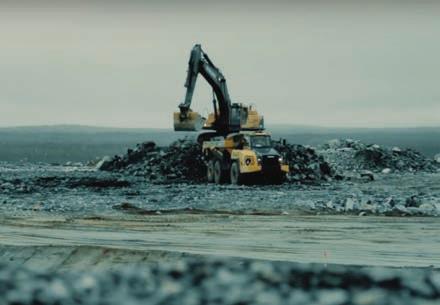
26 Canada’s lithium is in la belle province.
REBRANDING MINING
37 Crafting a fresh definition for modern mining.
SCREENS AND UNDERGROUND MINING
39 Managing fall maintenance: It is a small weld after all.
41 Resin injection in ground development.
HISTORY OF MINING
43 Unearthing Black history in the mining industry in Canada.
DEPARTMENTS
4EDITORIAL | A low-carbon future.
6FAST NEWS | Updates from across the mining ecosystem.
8 LAW | Driving sustainability: How electric vehicles, critical minerals, and governments are shaping the future of mobility.
10HEALTH & SAFETY | Discovering the human factor: Addressing psychological health and safety in mining.
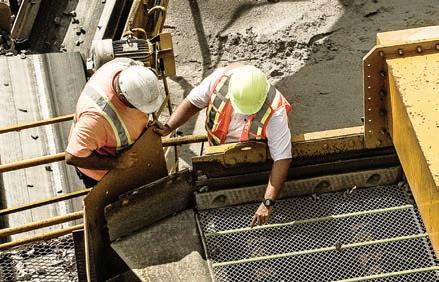
45ON THE MOVE | Tracking executive, management, and board changes in Canada’s mining sector.
Coming in November 2023 Canadian Mining Journal’s November issue will focus on underground mining and tunneling, with featured reports on ventilation and communication.
For More Information
Please visit www.canadianminingjournal.com for regular updates on what’s happening with Canadian mining companies and their personnel both here and abroad. A digital version of the magazine is also available at https://www.canadianminingjournal.com/digital-edition/
www.canadianminingjournal.com 17 26 OCTOBER 2023 VOL. 144, N O .8
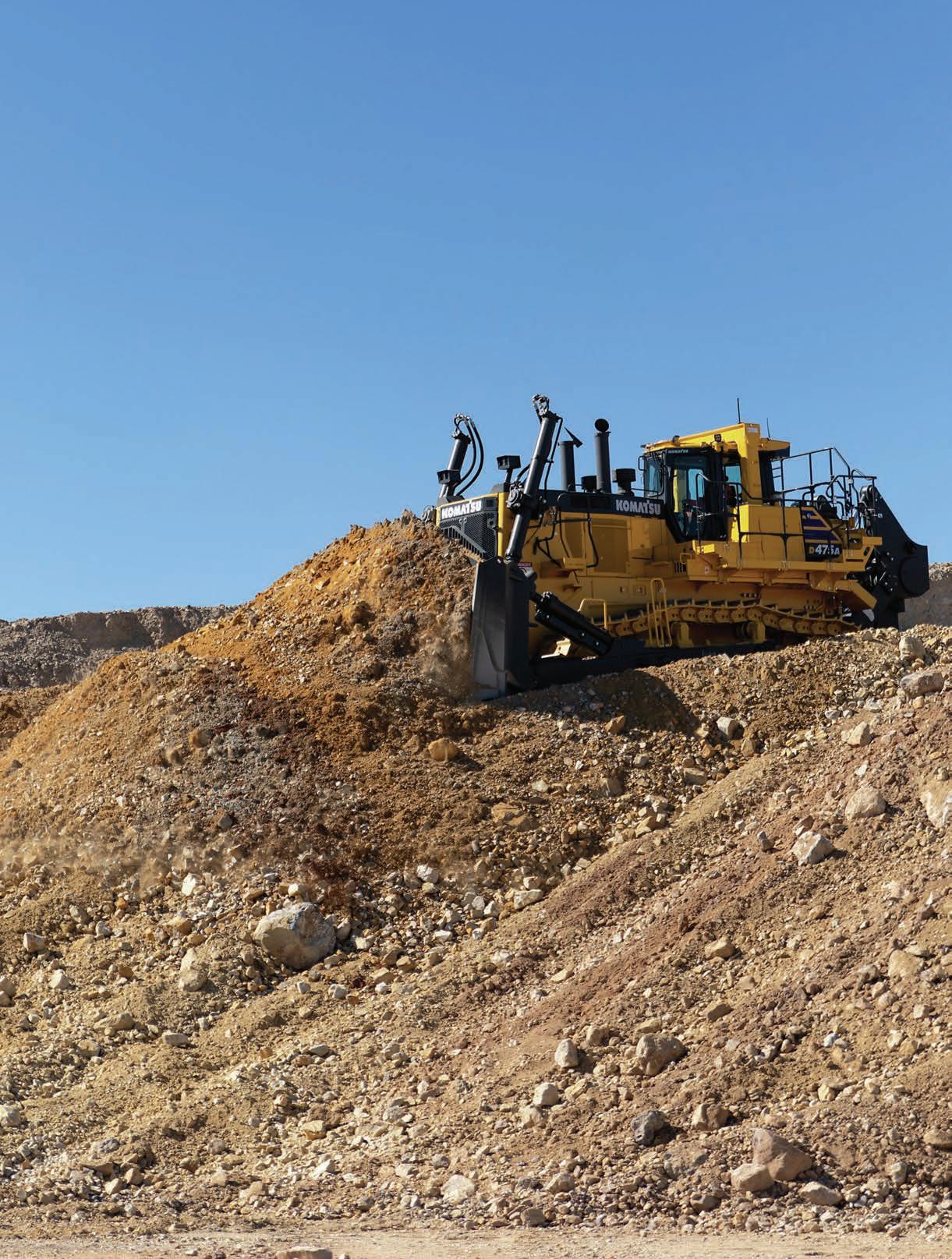
Front cover image: Komatsu’s new D475A-8 mining dozer in action. Image courtesy of SMS Equipment.
CANADIAN MINING JOURNAL | 3 39
A low-carbon future
Tamer Elbokl, PhD
Alow-carbon future for mining is the only option available for the sector. Over the last few issues, we discussed in several articles how having a profitable mining project is not enough to be successful. Mining projects also need to be respectful of the surrounding communities and the environment. New policies, practices, and technologies must be implemented during these projects’ development to be more profitable and environmentally sustainable.
In this issue, we shed some light on projects and technologies that are being developed to have access to cleaner energies and reduce carbon dioxide (CO2) emissions. Articles on pages 12 to 23 and pages 32 to 36 discuss several topics and state-of-the-art technologies related to clean mining, such as managing mining waste, reducing carbon emissions, and the latest in battery technology.
According to the Mining Association of Canada, mining is naturally connected to clean technology. Mined raw materials go full circle, being transformed into technology that will be used to assist mining operations in reducing environmental footprints and enhancing efficiency and reliability. These same raw materials are also enabling the world to transition to a low-carbon future.
Additionally, our feature article on “Mining in Quebec” on page 26 explains how Quebec’s supportive resource development sector, access to skilled labour, and its proximity to high-growth electric vehicle markets in North America and Europe are making the province a highly attractive investment destination for lithium production. The article also provides updates on active lithium projects and mines in la belle province. Unsurprisingly, while drafting this editorial, I became aware that Sweden’s Northvolt picked Quebec for its new multibillion-dollar EV battery factory.
On page 8, our regular law column discusses how electric vehicles, critical minerals, and governments are shaping the future of mobility. Finally, John Sandlos unearths Black history in the mining industry in Canada on page 34. If you are wondering, October is Black history month in Europe.
Canadian Mining Journal’s November issue will focus on underground mining and tunneling, with featured reports on ventilation and communication. Relevant editorial contributions can be sent directly to the Editor in Chief no later than Oct. 10th, 2023. CMJ
OCTOBER 2023 Vol. 144 – No . 08
225 Duncan Mill Rd. Suite 320, Toronto, Ontario M3B 3K9
Tel. (416) 510-6789 Fax (416) 510-5138 www.canadianminingjournal.com
Editor in Chief
Dr. Tamer Elbokl TElbokl@CanadianMiningJournal.com

News Editor Marilyn Scales mscales@canadianminingjournal.com
Production Manager
Jessica Jubb jjubb@northernminer.com
Advisory Board
David Brown (Golder Associates)
Michael Fox (Indigenous Community Engagement)
Scott Hayne (Redpath Canada)
Gary Poxleitner (SRK)
Manager of Product Distribution
Allison Mein 416-510-6789 ext 3 amein@glacierrig.com
Publisher & Sales
Robert Seagraves 416-510-6891 rseagraves@canadianminingjournal.com
Sales, Western Canada
George Agelopoulos 416-510-5104 gagelopoulos@northernminer.com

Toll Free Canada & U.S.A.: 1-888-502-3456 ext 2 or 43734
Circulation Toll Free Canada & U.S.A.: 1-888-502-3456 ext 3
President, The Northern Miner Group
Anthony Vaccaro
Established 1882
Canadian Mining Journal provides articles and information of practical use to those who work in the technical, administrative and supervisory aspects of exploration, mining and processing in the Canadian mineral exploration and mining industry. Canadian Mining Journal (ISSN 0008-4492) is published 10 times a year by Glacier Resource Innovation Group (GRIG). GRIG is located at 225 Duncan Mill Rd., Ste. 320, Toronto, ON, M3B 3K9 Phone (416) 510-6891.
Legal deposit: National Library, Ottawa. Printed in Canada. All rights reserved. The contents of this magazine are protected by copyright and may be used only for your personal non-commercial purposes. All other rights are reserved and commercial use is prohibited. To make use of any of this material you must first obtain the permission of the owner of the copyright. For further information please contact Robert Seagraves at 416-510-6891. Subscriptions – Canada: $51.95 per year; $81.50 for two years. USA: US$64.95 per year. Foreign: US$77.95 per year. Single copies: Canada $10; USA and foreign: US$10. Canadian subscribers must add HST and Provincial tax where necessary. HST registration # 809744071RT001.
From time to time we make our subscription list available to select companies and organizations whose product or service may interest you. If you do not wish your contact information to be made available, please contact us via one of the following methods:
Phone: 1-888-502-3456 ext 3; E-mail: amein@glacierrig.com
Mail to: Allison Mein,
225 Duncan Mill Rd., Ste 320, Toronto, ON M3B 3K9
We acknowledge the financial support of the Government of Canada.
4 | CANADIAN MINING JOURNAL www.canadianminingjournal.com
FROM THE EDITOR
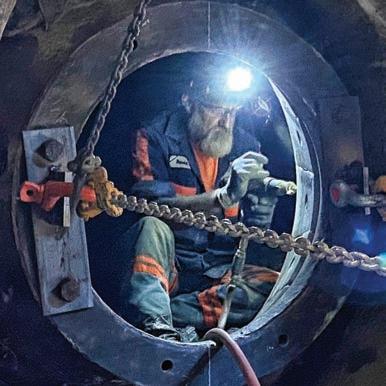
For more than 40 years, we’ve been providing the labor, expertise and products to keep you mining.
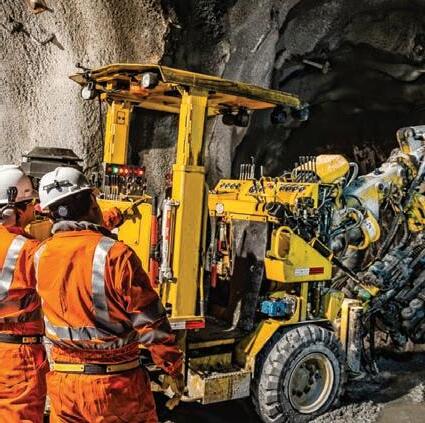
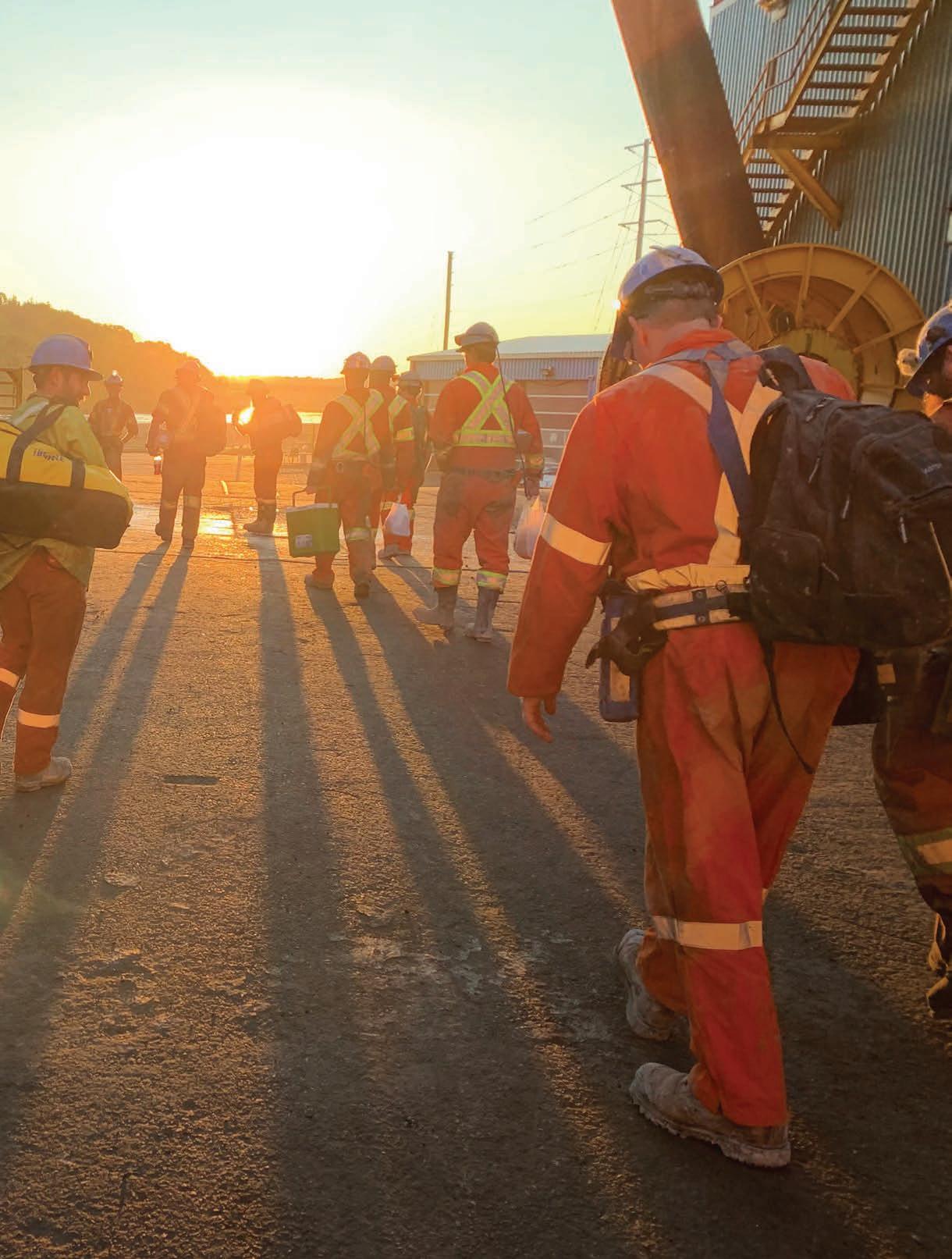
WE’RE THERE WHEN YOU NEED US!
SERVICES INCLUDE:
•CONTRACT MINING
•CONTRACT LABOR
•SHAFT WORK
•SHOTCRETE WORK
•BACK & RIB BOLTING
•MILL SITE MAINTENANCE
•CONCRETE WORK

•GLUE & GROUT INJECTION
•MINE SEALS
• MOBILE SERVICE
GROUND CONTROL
PRODUCTS INCLUDE:
•SPLIT SETS / FRICTION BOLTS
•E XPANDABLE BOLTS
•WIRE MESH
•QUICK INSTALL PROPS
•STEEL CAN SUPPORTS
GMS Mine Repair & Maintenance • 705-845-0541 • www.gmsminerepair.com
EXPLORATION | Wesdome confirms continuity of Presqu’île zone, plans exploration ramp at Kiena gold mine
Wesdome Gold Mines says surface drilling has confirmed the continuity of the Presqu’île zone 1.3 km northwest of the Kiena mine complex near Val d’Or, Que. With the increased confidence comes the decision to develop an exploration ramp to further investigate the potential.
The recent drilling at Presqu’île is part of the company’s ongoing program to test underexplored, near-surface gold potential along strike from the Kiena deposit. The highlights of the most recent assays from the PR-2A and PR-2 zones include:
> PR-23-070: 32.5 g/t gold over 3.0 metres core length (30.0 g/t capped, 2.9 metres true width)
> PR-23-084: 14.0 g/t gold over 5.3 metres core length (14.0 g/t capped, 4.0 metres true width)
> PR-23-058A: 9.31 g/t gold over 4.6 metres core length (9.31 g/t capped, 4.3 metres true width)
These results support the decision to excavate and exploration ramp from surface to further test the down plunge extension of the deposit. Work is to begin before the end of the year once permits are received. The ramp can also be integrated with Kiena’s existing underground ramp network, providing more access to surface for ongoing operations and future mining of deposits such as Dubuisson from 33 level further to the east.
“The Presqu’île zone is just one of several zones having the potential to offer a supplementary source of mill feed near-surface or in the upper mine area for the underutilized Kiena mill,” Wesdome president and CEO Anthea Bath said in a
release. “Recent drilling results from the Shawkey and Dubuisson zones, both adjacent to the existing 33 level track drift development that extends over 3.0 km east of the Kiena mine shaft, further reinforces the potential of this area.
“As our exploration continues and the refinement of the geologic model increases, we are confident we will identify more zones of gold mineralization accessible from 33 level, as well as additional down plunge extensions similar to the Kiena Deep zone,” she added.
Wesdome has been drilling at Presqu’île since 2020 and identified five gold-rich zones crosscutting mafic and ultramafic rocks. Gold mineralization is associated with traces to 5% disseminated sulphides (pyrite, pyrrhotite, chalcopyrite, sphalerite and galena) and local gold grains occurring in quartz-chlorite-carbonate or quartz (grey) vein contacts as well as in moderately to strongly chloritized and biotitized host rocks.
The 2023 surface drill program is nearing completion. It has confirmed not only the continuity or the gold mineralization at Presqu’île and the validity of the geologic model, but also the potential for down-plunge extension to the east.
The Presqu’île zone has an indicated resource of 138,000 tonnes grading 8.2 g/t gold (37,000 contained oz.) and an inferred resource of 202,000 tonnes grading 7.4 g/t (48,000 contained oz.) as of Dec. 31, 2022.
Commercial production was declared on Dec. 1, 2022, at the reopened Kiena mine. CMJ
• NEW MINE | B2Gold says Goose gold project to pour first gold early next year
The Goose project in Nunavut is on track to pour its first gold in the first quarter of 2025. The mine is 100%-owned by B2Gold. It is located in the Back River gold district and was acquired as part of the Sabina Gold and Silver acquisition earlier this year.
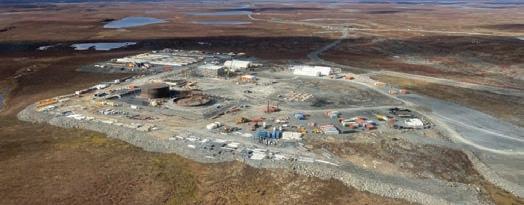
All long lead items for the 2024 construction season have been received at the company’s freight consolidation point, prepped for ship transport, and the sealift is underway.
Construction capital expenditures remain in budget, with the June 2023 estimate of $800 million, plus an additional $90 million for accelerating the underground development. About $530 million have been spent on the project thus far. The sealift also includes 24 million litres of diesel fuel. The company is also evaluating the potential for wind power generation at Goose.
The fast-tracked underground mining plan will increase average gold production in the first five years of operation to over 300,0009 oz. per year. Underground development is taking place at the Umwelt deposit, and open pit mining at the Echo deposit is progressing, says B2Gold. The Echo pit will be mined out and the ore stockpiled prior to the commissioning of the mill in order to provide tailings storage capacity.
Phase one of the accommodation complex opened last month which consisting of 310 beds. There are another 160 beds at the existing exploration camp. Together they will
accommodate construction, mining, and exploration activities. Other surface infrastructure is underway, notably the earthworks necessary to extend the airstrip to 1,525 metres. Winter ice road preparations are also well underway. B2Gold teams plan to begin building the ice road in the middle and work simultaneously to each end, a plan that will allow the work to be completed earlier than in prior seasons. Structural steel is also going up for the mill building and truck shop.
B2Gold has also completed 11,000 metres of drilling in 44 holes this year. Drilling focused on testing the Umwelt and Llama deposits down-plunge for resource expansion. Various regional targets have also been drilled. CMJ
6 | CANADIAN MINING JOURNAL www.canadianminingjournal.com
Goose gold project site overview, September 2023
Updates from across the mining ecosystem FAST NEWS •
CREDIT: B2GOLD
90 YEARS | Agnico Eagle marks 90th anniversary of Macassa
Agnico Eagle Mines marked the completion and commissioning of the No. 4 shaft at its Macassa mine in Kirkland Lake, Ontario, and commemorated the mine’s 90th anniversary.
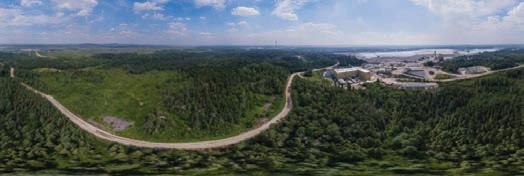
“The completion of the #4 shaft is an important step in our plan to build a new Macassa mine for the future,” Andre Leite, Agnico Eagle VP, Ontario, said in a statement. “The new shaft will allow the team to increase production, improve unit costs, de-risk the mine, increase our exploration capacity and most importantly, significantly improve the working conditions for our employees.”
The Macassa team was joined at the celebration by Ontario Minister of Mines George Pirie.
“The new shaft, which has been under construction since 2019, is 6,395 feet [1,950 metres] deep and has a 216-feet [65 metres] tall concrete headframe that was constructed in just 11 days. With a total cost of approximately C$320M, the new shaft is a significant investment in Agnico Eagle’s Ontario operating platform and secures more than 1,000 direct jobs for the foreseeable future,” Pirie said.
In addition to celebrating the #4 Shaft project, Agnico Eagle announced a 10-year $3 million commitment to the Canadian Cancer Society to improve the lives of people affected by cancer living in rural and remote communities in Northern Ontario.
This includes improved facilitation of Northern Ontario Indigenous populations’ ability to source and receive culturally appropriate and relevant cancer resources and support. CMJ
• RARE EARTHS | Defense Metals updates
Wicheeda REE measured and indicated resources
Defense Metals has updated the resources estimate for its Wicheeda rare earth element (REE) deposit 80 km from Prince George, B.C. Roughly the earlier indicated and inferred resources were reclassified to measured and indicated.
The deposit is known to contain 6.4 million measured tonnes averaging 2.86% total rare earth oxide (TREO) and 27.8 million indicated tonnes at 1.84% TREO. (Compare this to the earlier estimate of 5 million indicated and 29.5 million inferred tonnes.) There is also an inferred resource of 11.1 million tonnes grading 2.02% TREO. The update used a cut-off of 0.5% TREO.
Calling Wicheeda one of North America’s most advanced REE projects, Defense CEO Craig Taylor said the overall resource has grown by 17%. CMJ
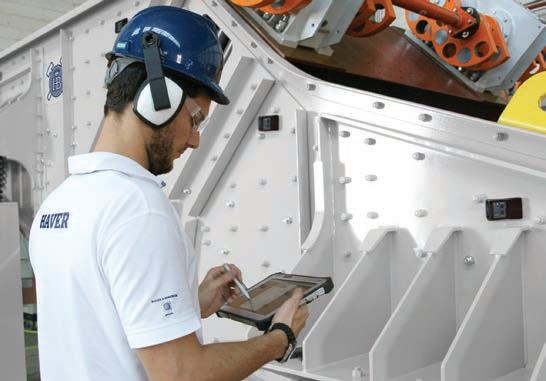
PROcheck is our signature, expert analysis beginning with our diagnostic tools. Pulse Vibration Analysis examines the health of any brand of vibrating screen, while our Pulse
OCTOBER 2023 CANADIAN MINING JOURNAL | 7 •
Schedule today! 1-800-325-5993 procheck@haverniagara.ca haverniagara.com/procheck See how PROcheck can maximize your operation.
YOUR PULSE.
CHECK
Impact Test prevents your screen from operating in resonance. HAVE R & BOECKE R NIAGAR A
Agnico Eagle’s Macassa gold mine celebrates 90 years of operation with the completion of the #4 shaft CREDIT: AGNICO EAGLE MINES
By Leanne C. Krawchuk and David Mikhaiel
As the world transitions toward a greater focus on ESG, the demand for critical minerals, essential for industries such as electric vehicle (EV) manufacturing, has grown exponentially. To address this challenge, partnerships between miners, car manufacturers and government entities are being forged to secure critical mineral supply chains.

Critical minerals
Critical minerals play a pivotal role in powering the future of transportation. Minerals such as lithium, cobalt, nickel and others have become increasingly vital due to their usage in EV batteries. Lithium, for instance, is a key component in the production of lithium-ion batteries, which are widely used in EVs. Cobalt and nickel are also critical elements in the battery chemistry, contributing to improved energy density and overall performance. The demand for these minerals has surged alongside the growing popularity of EVs, as they are essential for achieving longer driving ranges and faster charging times.
Partnerships and agreements


Car manufacturers have been actively engaging with mining companies to establish binding, long-term, offtake agreements for critical mineral supply. These offtake agreements often involve “take or pay” commitments from car manufacturers to purchase a certain guaranteed minimum volume of minerals over a specified period. In return, miners benefit from a guaranteed market for their products and potential investment in expanding their mining operations. These offtake agreements may also include significant advance payments, which foster the development of commercial production, thereby ensuring a sustainable supply of critical minerals.
Financial information for these agreements has not been publicly disclosed and pricing, for the most part, will be based on an agreed upon market-formula. The average length of these “long-term” offtake agreements ranges from five to six years, with some extending up to 11 years. The average tonnage specified in the agreements ranges from 4,000 up to nearly 20,000 tonnes of critical minerals per year. Lithium carbonate and lithium hydroxide are the primary critical minerals being pur-
chased, as these are essential components for lithium-ion batteries in EVs.
Geographically, these agreements are being entered into from North America, Australia and Europe. Notable locations include Nevada in the United States, where ioneer’s Rhyolite Ridge lithium-boron operation is located. General Motors is making a “multi-million dollar” investment in Australia’s Controlled Thermal Resources to bolster the mining company’s efforts to extract lithium from California’s Salton Sea geothermal Field. The California Energy Commission estimates the area could produce 600,000 tonnes of lithium carbonate annually, worth US$7.2 billion.
Germany’s Volkswagen has signed an agreement with Australia-listed lithium supplier, Vulcan Energy Resources. European Lithium (EUR) has signed its first ever offtake agreement, teaming up with BMW through EUR’s Austrian subsidiary ECM Lithium (ECM) to supply lithium hydroxide from the Wolfsberg lithium project. This includes an advance payment by BMW to ECM of US$15 million.
8 | CANADIAN MINING JOURNAL www.canadianminingjournal.com
LAW
Driving sustainability: How electric vehicles, critical minerals, and governments are shaping the future of mobility
PHOTO: AFOTOSTOCK/ADOBE IMAGES
In Canada, Mercedes-Benz has entered into an agreement with Rock Tech Lithium, which will source its raw ore from the Georgia Lake region in Ontario, eventually planning to build five high-tech lithium conversion facilities in North America and Europe, for a total production capacity of 120,000 tonnes of lithium hydroxide annually by 2029. Finally, Ford Motor Company has established an agreement with Nemaska Lithium, whose project is planned to be the first to produce lithium hydroxide in Québec.



Government involvement
Governments are also involved in the auto-mining sector. In March 2023, the Ontario government proposed changes to the law governing approval of mining projects to boost Ontario’s production of minerals essential to EV batteries. The changes are intended to speed up the licensing of new mines and make it easier for companies to obtain permits to recover minerals from mine tailings and waste. These proposed amendments should save mining companies time and money by allowing more flexibility in the techniques used to rehabilitate mines, as well as create additional options for mining companies to pay
financial assurance.
In August 2022, Volkswagen entered a memorandum of understanding with the Canadian government to provide a reliable and sustainable supply chain for the increasingly scarce raw materials that go into EV batteries.
Finally, in March 2023, Honda welcomed the critical minerals agreement signed by the U.S. and Japan, which seeks to promote the adoption of EVs and strengthen and diversify supply chains.
Overall, these binding offtake agreements are crucial steps toward ensuring sustainable and secure access to critical minerals for auto manufacturers. These offtake agreements are also key for miners and the development of mines to achieve commercial production. As car manufacturers strive to meet the growing demand for EVs and sustainable energy technologies, strategic partnerships with mining companies and government entities will be key to reaching this goal. CMJ
OCTOBER 2023 CANADIAN MINING JOURNAL | 9 Zero. Zip. Zilch. We’re
on
excited to see the industry focus
net zero. Stantec is here to help you do right by the environment. stantec.com/net-zero-mining
LEANNE C. KRAWCHUK is the Canada co-chair and a global lead of Dentons’ mining group. David Mikhaiel is an associate in Dentons Canada’s corporate group in Edmonton.
By Rana Labban
DISCOVERING THE HUMAN FACTOR: Addressing psychological health and safety in mining
When thinking about the mining and metals sector, psychological health and safety seldom makes the headlines. Just as there are physical considerations to keep in mind when thinking about employee safety, mental health is equally as important.
According to a new study by the Workforce Institute at Ultimate Kronos Group (UKG), “for almost 70% of people, their manager has more impact on their mental health than their therapist or their doctor– and it is equal to the impact of their partner.” The mining and metals sector is essential in our current world. With the introduction of ISO 45003:2021 and the WHO’s Global Mental Health at Work Framework, psychological health and safety has become a global priority. Countries have been establishing regulatory requirements to incorporate psychological health and safety in the workplace over the past decade, in response to the increased strain declining worker mental health is placing on organizations and their communities.
In the mining and metals sector, organizations such as the International Council on Mining and Metals (ICMM) and the Mining Association of Canada (MAC) are introducing psychological health and safety to their standards to not only drive meaningful change but to provide guidance and support to organizations as well. Here are some leading considerations when thinking about psychological health and safety.
How do we integrate Psychological Health and Safety into the business?
Psychosocial risk factors are defined as “work conditions that that can have either a positive or negative effect on employee psychological health and safety”. Psychological health and safety is more than just the mental health of workers. It is composed of several psychosocial risk factors and how they interact with the people, systems, and environment within an organization. It is imperative that we understand the impact of our systems and work environment on workers’ psycho-
logical health and safety and that we integrate the management of psychological health and safety into all aspects of the employee experience.
One way for an organization to gain a better understanding of their current state when it comes to managing psychological health and safety is to assess the level of readiness to adopt psychological health and safety systems. Reviewing current systems can help shed light on the processes already in place that promote and protect psychological health and safety and where opportunities to improve may exist. Additionally, this process can help to identify what risk factors or hazards may require intervention or are adequately managed within the organization.
The National Standard of Canada for Psychological Health and Safety in the Workplace outlines a few guiding principles, including:
> Responsibility is necessarily shared by management, employees, and union;
> Mutually respectful relationships are foundational and need to be defined; and
> Everyone has a responsibility to do no harm to the psychological safety of others.
When managing psychological health and safety it is important to remember that the responsibility of establishing and maintaining a psychologically healthy and safe work environment is a collective effort where all individuals within the organization play a part.
How can work be a protective factor?
The workplace can become a protective factor when organizations consider upstream strategies including proactive and preventative solutions that optimize employee focus and energy to work successfully and safely. Examples of upstream strategies for the mining sector include:
> Enhancing belonging, such as establishing peer mentoring or buddy systems, especially on remote sites
> Supporting work-life balance, by providing safe and private spaces for remote workers to connect with their social, emotional, and health supports
> Building resilience, by providing con-
tinual opportunities for workers to share and learn about coping strategies to deal with stressors and challenges
> Encouraging seeking help, by having leaders normalize and model the behaviour by openly sharing their experiences in accessing help and resources
> Encouraging conversations about well-being, by making it safe to speak up about concerns without fear of reprisal and making it a part of everyday debriefs and team huddles
> Making the workplace accessible and inclusive, by providing secure, accessible, and safe facilities for all employees to access assistance where needed
By implementing upstream strategies, employers can benefit from improved recruitment and job retention, improved employee engagement, improved sustainability and resilience, and improved health and safety. Additionally, a supportive workplace can reduce the onset, severity, impact, and duration of a mental health disorder .
To effectively implement this approach within your organization, several key steps need to be taken. Firstly, it is crucial to understand the current state of your organization in terms of psychological health and safety. Once that is established, the next step is to integrate psychological health and safety into the everyday routines and operations of the organization. Additionally, it is important to prioritize continual improvement rather than relying on one-and-done strategies. Lastly, ensure that everyone within the organization is accountable for their impact on the psychological health and safety of others by promoting awareness, providing training and resources, and encouraging a culture of respect and empathy. By following these steps, your organization can create a conducive environment that prioritizes and safeguards the psychological well-being of its members. CMJ
RANA LABBAN is an associate partner and leads environment, health and safety for EY Canada’s climate change and sustainability services.
10 | CANADIAN MINING JOURNAL www.canadianminingjournal.com
HEALTH AND SAFETY
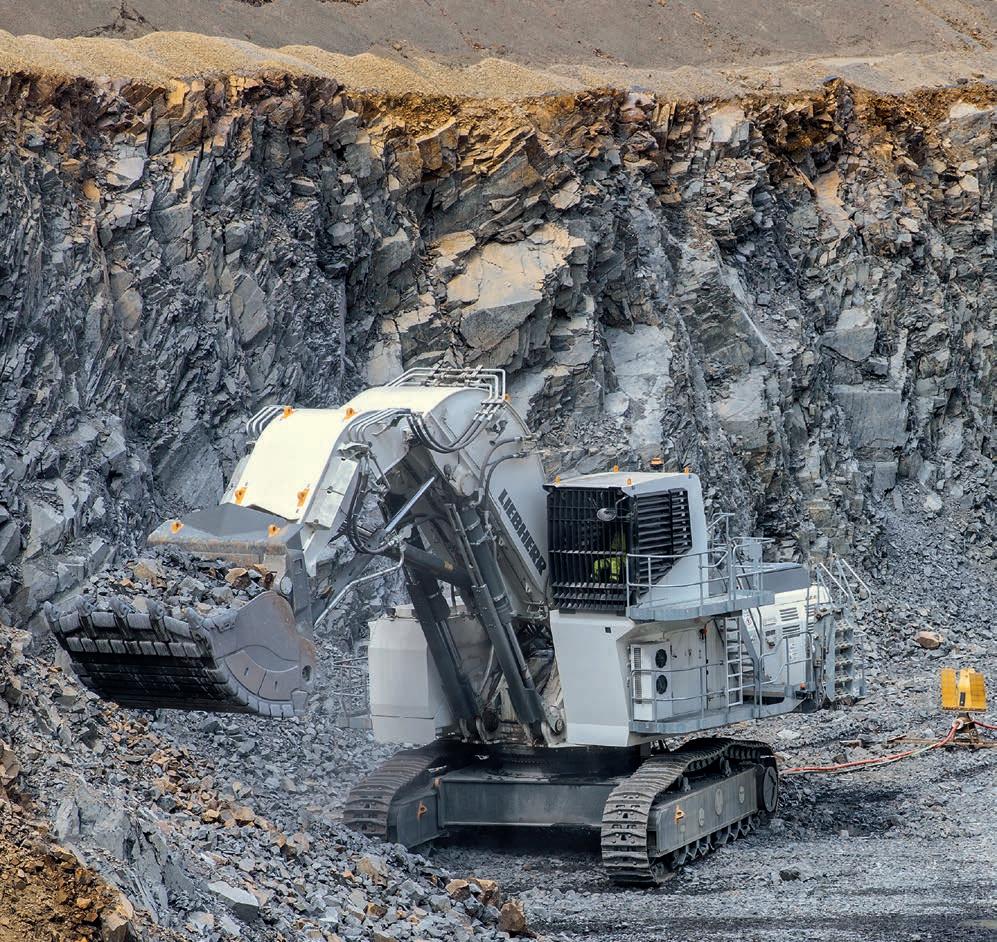
Liebherr is a leader in proven low emission solutions, utilizing grid electrification. By 2030, fossil fuel free solutions will be established.
Liebherr strives for long-term sustainable solutions, providing different modular options centred on environmental sustainability, safety, cost, flexibility, and maintainability including:
Liebherr strives for long-term sustainable solutions, providing different modular options centred on environmental sustainability, safety, cost, flexibility, and maintainability including:
– 30 years experience in electric drive mining excavators with all machine models available ranging from 150 t to 800 t class
Trolley Assist option available on all Liebherr mining trucks
– Liebherr combustion engine compliant with Hydrogenated Vegetable Oil (HVO) fuel
– 30 years experience in electric drive mining excavators with all machine models available ranging from 150 t to 800 t class
Tier 4 Final certified engine available on trucks, excavators, and dozers
Trolley Assist option available on all Liebherr mining trucks
– Liebherr AC drive system on all truck models providing a modular platform for future powertrain technologies
– Liebherr combustion engine compliant with Hydrogenated Vegetable Oil (HVO) fuel
Tier 4 Final certified engine available on trucks, excavators, and dozers
Liebherr’s roadmap includes batteries, combustion engines using green fuels, and hybrids.
– Liebherr AC drive system on all truck models providing a modular platform for future powertrain technologies
Liebherr’s roadmap includes batteries, combustion engines using green fuels, and hybrids.
Liebherr is a leader in proven low emission solutions, utilizing grid electrification. By 2030, fossil fuel free solutions will be established.
–
–
Liebherr-Canada Ltd. • 1015 Sutton Drive • Burlington • ON • Canada • L7L 5Z8 • Phone: +1 905 319 9222 Committed to the future www.liebherr.ca Mining
–
–
Liebherr-Canada Ltd. • 1015 Sutton Drive • Burlington • ON • Canada • L7L 5Z8 • Phone: +1 905 319 9222 E-mail: info.lca@liebherr.com • Instagram: @LiebherrCanadaLtd • www.liebherr.ca Committed to the future www.liebherr.ca Mining
By Tamer Elbokl, PhD
Clean solutions
to the challenges in mine operations
Interview with Zara Anderson, vice-president, mining, at Silixa
As a leading independent provider of fiber-optic-based distributed sensing solutions, Silixa strives to secure safer, more sustainable future for people and planet. The company is committed to accelerate innovation in the mining sector to make it safer, more productive, and energy efficient. By introducing modern technologies and solutions already proven in other industries, the company helps bridging a gap between the present and the future in the struggle for clean mining.
These future-proof industrial automation solutions have experienced signifi-
cant uptake over the past few years predominantly in minerals processing facilities and are poised for future growth. Recently, I had the opportunity to discuss the latest solutions, offered by Silixa to the wide range of challenges faced by the mining industry, with Zara Anderson (ZA), vice-president, mining, who is currently based in Kingston, Ont.
CLEAN MINING TECHNOLOGY
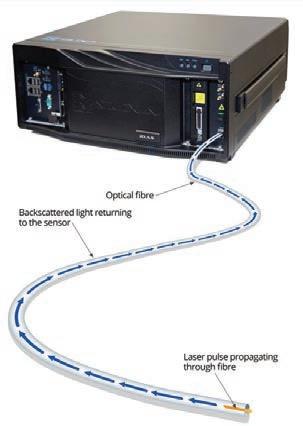
Right: Silixa’s intelligent Distributed Acoustic Sensor (iDAS) uses the phase of Rayleigh backscattered light to demodulate dynamic strain events along many kilometers of optical fiber cable, measuring seismicity and slow strain. CREDIT: SILIXA
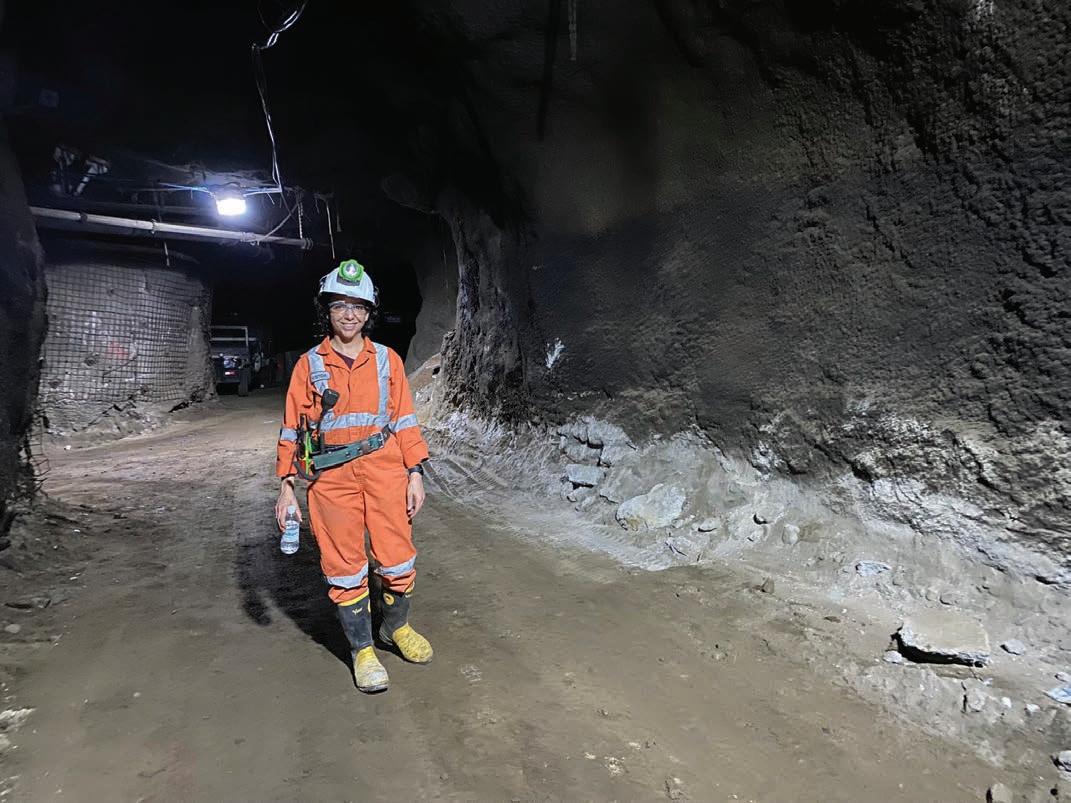
Zara Anderson at a deep underground mine for the installation of a Carina Rockmass Response system. CREDIT: SILIXA
12 | CANADIAN MINING JOURNAL www.canadianminingjournal.com
Initially deployed in mining processing plants across South America and Africa, Silixa solutions are set to play an increasingly crucial part in mining automation and digitalization.
CMJ: Can you talk to us briefly about the history of Silixa and how you became vice-president, mining? Why did you accept the challenge?
ZA: Silixa was established in 2007 to develop the next generation high-precision distributed fiber sensing interrogators. As Silixa expanded and served many industries, it was recognized that the mining industry can immensely benefit from the technology. So, Silixa established a dedicated mining business, and I joined the company to take part in this journey.
This was an exciting opportunity, bringing this technology to the mining industry at the right time, as the industry is on its journey towards net zero, improved productivity and safety, and enhancing ESG path, while it is also relied upon to supply the world with critical minerals required for renewable energy.
CMJ: What are you enjoying about this phase of your career, and what are some of the challenges?
ZA: It is exciting to be part of the mining industry now. We are making rapid changes to our ESG path, adopting new technologies to enhance safety and productivity, and we are a big part of the transition to renewable and green energy. The industry is facing a shrinking workforce, more remote mine operations, and increasingly higher costs. These circumstances can make it more challenging for mine operations to adopt and implement new technologies timely and efficiently. Recognizing some of these difficulties, Silixa has been partnering with several mine operators to design and implement solutions that fits the mines restrictions and requirements.
CMJ: What is the current portfolio of Silixa?
ZA: Silixa, an award-winning innovator, offers the complete portfolio of distributed sensing solutions across many sectors globally. Our end-to-end solutions allow high resolution temperature, strain, and acoustic measurements even in the most hostile settings. Silixa’s high-fidelity technology combined with our unique geosciences skillsets has allowed us to partner with government, research institutes, and various indus-
tries around the world in the journey to energy transition. Our technology and services apply to many environmental, geotechnical, and industrial settings, such as carbon capture and storage (CCS) and many natural and induced hazard monitoring like earthquakes, volcanoes, melting icecaps and shoreline erosion.
CMJ: What does Silixa have to offer to the mining sector? How can you help tackle the industry’s most pressing challenges?
ZA: As I mentioned, we offer a portfolio of proven distributed fiber optic sensingbased solutions to the mining industry. They enhance productivity, minimize, risks and ensure sustainability by providing more reliable and cost-effective means of geophysical assessment as well as asset and process monitoring. We have chosen four unique turn-key solutions across the life cycle of the mining industry:
1 Our DamPulse solution provides an integrated sub-surface platform for monitoring seepage, deformation, and seismic risk/imaging for tailings storage facilities. Statistics indicate that about 20 tailings dams fail every decade. By providing early alerts of potential problems, this dam monitoring solution helps mine operators tackle two of their biggest challenges: managing water in tailings dams and maintaining the safety of dams. The system can detect even the smallest changes in the dam structure that could otherwise go unnoticed with less sensitive, conventional technologies. This monitoring system addresses issues of dam stability, public safety, and environmental protection. Delivering ultra-HD quality distributed temperature, strain, and acoustic measurements in real time, the system offers early alerts of potential problems, minimizing the risk of dam failures.
2 A wide range of geotechnical and rockmass response monitoring solutions using our combined Carina/iDSS systems.
3 Seismic-based mineral exploration solutions using our iDAS and Carina sensing systems.
4 Finally, a unique DAS-based flow metering solution for process control. This non-intrusive flow metering solution enables the measurement of water flows across multiple points in a mine or plant. Real-time flow rate information helps operators better understand how water is being used, enabling them to minimize consumption.
CMJ: How can these technologies help the mining sector move to a low carbon future?
ZA: Our technology uses optical fiber cables as sensors. Since fiber optics is relatively low cost, and low usage of raw material while it allows for high-resolution monitoring of very large structures, it reduces the environmental footprint for the supply of sensors and infrastructure on site as well as the footprint for installation and post-install maintenance. Their ultra-high sensitivity enables them to deliver precise geophysical information with a much smaller environmental footprint than conventional technologies. The technology allows for real-time monitoring of remote operations, reducing traffic and material onsite. In seismic exploration applications, the disturbance to surface is significantly reduced, and the technology can acquire data using less disruptive seismic sources further reducing the environmental footprint. During process metering our non-intrusive FiberWrap solution not only optimizes processes and flow distribution, but also helps to achieve a sustainable balance between water supply, consumption, and environmental and operational risks. Engineered to reduce energy consumption, it requires no power at the flow measurement zones on site.
Most importantly, however, the output of our systems provides real-time high-resolution data that allows mines to make proactive decisions to reduce hazard and enhance productivity and process control.
CMJ: Finally, how does the future of the technology look like to you?
ZA: Distributed fiber optics technology is rapidly growing in many applications and is now widely recognized as a disruptive technology and a foundation for digital transformation. Silixa developed a reputation for revolutionizing multiple industries. As the only independent leading provider of CCS solutions, and a front runner in the mining sector, we will continue to partner with mines to implement unique solutions using dedicated teams with domain expertise in the industry. I believe Silixa will continue to grow and be relied upon by our clients as the world moves towards net zero carbon emission with the right technologies and partnerships. CMJ
OCTOBER 2023 CANADIAN MINING JOURNAL | 13
Pathway to decarbonization
A panel discussion from CIM 2023
Decarbonization is at the forefront of discussion in the mining industry as companies work to reduce their carbon emissions. Some companies have announced objectives to reduce emissions by up to 50% by 2030 and become carbon neutral by 2050, in line with the Paris Agreement. Other companies are currently establishing objectives while they research and plan. There are numerous decarbonization strategies across the industry, but building a flexible plan for future operations is a challenge unique to each company.
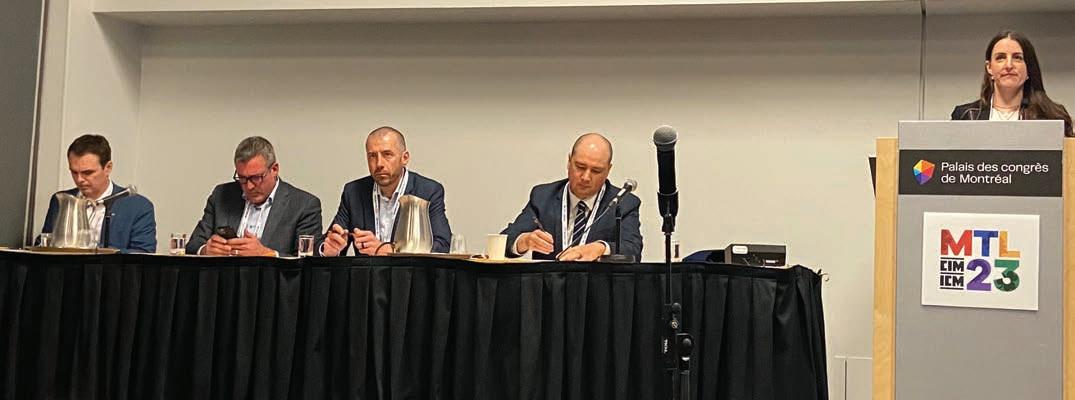
“Building trust to decarbonize the world” was the theme of the 2023 Canadian Institute of Mining, Metallurgy, and Petroleum (CIM) Convention and Expo in Montreal. At the convention, there was a panel discussion called “Pathway to decarbonization: navigating through risks and pitfalls,” moderated by Amanda Fitch, department manager for mining and metals at BBA. The panelists represented a diverse range of mining companies from across Canada: Chris Adachi, director of climate change at Teck Resources; Alexandre Belleau, chief operating officer at Champion Iron; Eric Desaulniers, president and CEO of Nouveau Monde Graphite; and Jean-François Gauthier, managing director at Rio Tinto Iron and Titanium. Each speaker shared strategies and challenges faced on the road to decarbonization, which made for engaging conversation and practical advice.
Decarbonization strategies

To begin the panel, the speakers described how their companies are currently undertaking decarbonization. As each company is unique, a variety of strategies was discussed.
a Planning: Planning is crucial for decarbonization. Like any other project, the first step is to determine what you are trying to achieve and why. “If you are just doing it for the sake of doing it or because others are doing it, chances are you are going to miss the boat,” Belleau stated. Companies should define specific goals, examine the inventory of their emissions, identify opportunities to reduce their carbon footprint, and prioritize these opportunities using different factors (such as feasibility and accessibility of technology). Then, they can develop a realistic plan that includes a way to measure progress.
b. New business opportunities: Companies cannot only decarbonize their own assets, but also help their customers decarbonize. New mining technologies (e.g., cleaner smelting processes and products with superior mechanical properties) can potentially be used by other producers and across other industries. Investing in the development of these new solutions can be beneficial for the mining company itself, its customers, the industrial ecosystem, and the planet. Another approach is focusing on critical minerals that will contribute to the energy transition. There are opportunities available to partner with the federal and provincial governments to make this happen. To be successful, mining companies should bring decarbonization to the heart of their business strategy.
c. Carbon neutral versus net-zero: Companies typically begin their decarbonization journey by avoiding and reducing emissions with the end goal of achieving carbon neutral-

14 | CANADIAN MINING JOURNAL www.canadianminingjournal.com
Stoker CLEAN MINING
By Kesiah
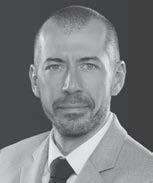
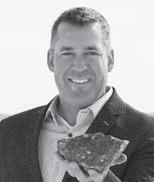
Clockwise from L-R: Chris Adachi, Alexandre Belleau, Jean-François Gauthier, Eric Desaulniers.
ity or net-zero. But Desaulniers says that sequestration is an often-overlooked part of the equation: “Mining can play a very important role in the future by making sure we do compensation projects that focus on the sequestration of CO2 This is the real net-zero. If you do compensation projects with somebody else who is just reducing their emissions, that is not considered net-zero; that is carbon neutrality.” Developing sequestration projects to achieve a mathematical net-zero is not easy, and larger mines will need to scale up according to their output.
d. Context: Mining operations in Canada start with an advantage over international competitors because of access to low-carbon electricity. However, this also presents a challenge for Canadian operations looking to reach emission reduction targets, as operations in other countries can reach short-term targets easily by taking simpler actions (e.g., signing a good power purchase agreement). Mining companies should be aware of this context when discussing decarbonization and when marketing products. Additionally, companies should understand their scope 1, scope 2, and scope 3 emissions and find opportunities where decarbonization efforts can result in multiple wins.
Short-term versus long-term solutions
Decarbonization is not a straightforward switch to new technologies. Sometimes, those technologies are not yet de-risked or commercialized, or companies do not have the power supply in place to support them. To deal with these scenarios, companies use interim solutions, such as transitionary fuels (e.g., renewable diesel in B.C.) or trolley assist for haul trucks before switching to a full battery electric or hydrogen-powered fleet. Adachi explained how to prepare: “Part of our strategy is monitoring these [new] technologies, getting involved with them in early stages, and building out the infrastructure you are going to need.” Decarbonization can be viewed as a process with transitionary steps. “As [with] any other project, decarbonization is a journey,” Belleau said.
Although it is easier to discuss and achieve short-term targets (like 50% emission reduction by 2030), it is important to keep targets for 2050 in mind. Short-term solutions should still follow the trajectory to 2050 and ensure progress toward net-zero.
Thinking toward the future will affect the decisions made now. As Gauthier stated, “2030 is almost tomorrow, and 2050 will come very fast.” It might be better to prepare a flexible plan for a larger, long-term objective rather than locking into a plan now that will fall short of net-zero, even if that long-term plan is scrutinized in the interim.
Flexibility
Mine life extensions, future expansions, technological developments, and changing commodity prices can affect decarbonization plans. The panel discussed the flexibility built into their plans that allows them to adapt to potential changes.
Gauthier explained that Rio Tinto is developing several decarbonization technologies simultaneously, as the extent to which each technology will reduce emissions is unknown. These potential solutions are tested and demonstrated at a significant scale to determine their effectiveness. Then, a combination of solutions will be implemented to achieve emission reduction objectives. Rio Tinto also builds flexibility into its decarbonization plan by working with customers to develop critical minerals.
Some companies prefer a plan that does not rely on new technology. Belleau explained that the obvious solution for Champion Iron is to convert fixed emission points to electricity. Technology already exists. The only constraint is the availability of power, and the company is working with authorities and governments to get it. Companies can also build flexibility into their decarbonization plans by addressing how they consume energy. The mining industry consumes substantial amounts of energy, and historically, energy efficiency has not been optimized. After fixed emission points, the remaining bulk of emissions are from haulage, so future mines should be designed to avoid haulage as much as possible.
Feasibility and operations
When identifying the feasibility of decarbonization solutions, it is important to collaborate with technology providers and original equipment manufacturers (OEMs). Simply asking for zero-emission solutions may not work; you need the right partners to get you there. When working with OEMs on decarbonization, mining companies should first explain their specific situa-
OCTOBER 2023 CANADIAN MINING JOURNAL | 15 CONTINUED ON PAGE 16
Amanda Fitch, department manager for mining and metals at BBA, introducing panel members. CREDIT: BBA
tion, as every mine is different. Then, they can agree on a business solution that works long-term for both parties. Building a close relationship with the OEM is essential. According to Desaulniers, Nouveau Monde does this by having early learners of new equipment share feedback with the providers. This ensures that everyone is on the same page and opens further discussion. Each mining company will have specific solutions that work for them, but some OEMs focus on developing holistic solutions that will translate to other mines too.
The acceptance of decarbonization solutions may prove difficult when handed over to operations. Planning early in the process can help mitigate these issues. Adachi explained that the decarbonization team at Teck is specifically designed to include employees from operating roles: people who currently work or previously worked at the mines and have experience operationalizing projects. Early-stage evaluations are done centrally, as it makes more sense in terms of resource efficiency and capacity, but then the operations teams are brought in to guide decisions. For decarbonization projects, mining executives should be mindful about operationalization, consider the impacts on productivity and safety, involve the right people in project advancement and execution, and adopt a thorough transition plan. Integrating operations teams early and allowing them to own the procurement and operationalization processes can make for a smoother transition.
Financing decarbonization
Junior and mid-tier mining companies often have limited financial capacity to undertake decarbonization. Despite support from Canadian federal and provincial governments, it can be difficult to get significant financial backing in the mining industry. But decarbonization may present new opportunities.
In some industries, customers are willing to pay more for a product branded as “low-carbon” or “carbon neutral.” The panel discussed charging premiums for low-carbon mining products to finance decarbonization projects. The automotive industry is currently the most vocal when it comes to low-carbon products, but mining products go through a succession of customers, so the branding of “low-carbon minerals” does not yet move the dial for most end customers. Although buyers are happy to receive products from low-carbon mines, they are not paying more or increasing the price of their end products to compensate investments in decarbonization. Applying those costs to the product may not have much impact on prices downstream but would allow mining companies to be rewarded for their efforts. It may be possible to negotiate a five to 10% premium with customers; however, charging a premium is not always feasible.
The panel also discussed the opposing view that decarbonization is a responsibility and that companies should not expect a financial reward. “We need to rise to the occasion to find financially interesting solutions,” Gauthier said. “We cannot just forward the bill to our customers. How can we find solutions to differentiate ourselves?” Developing innovative technologies for decarbonization can give a mining company a competitive advantage and open new financial opportunities. New technologies may even improve productivity and allow for a discount on products.
Investors and senior managers may be hesitant about decarbonization because of the risks involved. Currently, the onus for reaching net-zero is being placed on mining companies, but capital providers also need to think about their investment decisions and risk tolerance. “What investors are giving you the direction to actually invest in these technologies to take on that risk?” Adachi said. Desaulniers is “dreaming of a world where industrials and miners will become carbon credit providers.” When carbon credit becomes a real business, managers who focus on financials will come on board.
Key takeaways
To conclude the panel, the speakers shared the following key takeaways:
> Mining companies have a responsibility to decarbonize and make a difference.
> Governments need transparent measures to incentive decarbonization for everyone from mines to customers.
With 50 years of experience, DUX offers a range of underground articulated four-wheel drive equipment designed to meet the needs of mining and tunnelling projects worldwide.
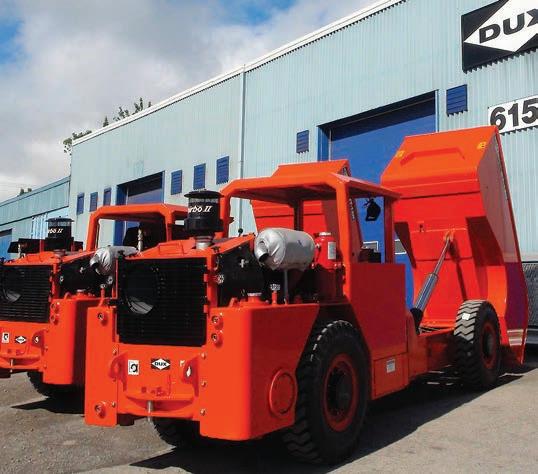
Contact DUX today for field-proven underground haulage, utility and scaling solutions.
> Companies should adopt a more holistic view of decarbonization and determine what role they can play in decarbonizing the industrial ecosystem.
> The mining industry has moved beyond hypothetical questions about decarbonization and is now navigating the deployment of new technologies. Many people are eager and passionate about decarbonization; it will only ramp up from here. CMJ
16 | CANADIAN MINING JOURNAL www.canadianminingjournal.com
Kesiah Stoker is a multi-skilled freelance writer.
CLEAN MINING
DUX
(+1) 450 581-8341 I sales@duxmachinery.com
MACHINERY, 615 Lavoisier, Repentigny, QC, Canada J6A 7N2
UNDERGROUND
MINING EQUIPMENT WORLDWIDE
By Tamer Elbokl, PhD
Next generation
low-cost technology for high-performance batteries
Li-Metal’s founders, Maciej Jastrzebski and Tim Johnston, recognized that rapid electrification of transportation, and the adoption of next generation high-performance batteries (solid-state, lithium-sulphur, lithium-air, etc.) will require a vast expansion of lithium anode and lithium metal production.
Leveraging their respective engineering expertise in the metallurgical and lithium chemicals industries, they founded Li-Metal in response to this need.
Since its inception in 2018, the company has made dramatic progress in developing patented and patent-pending technologies that will allow the
The technology
Lithium-Metal’s patented and patent-pending technology will help manufacturing lowcost metallic anodes for next generation batteries without using lithium foil.
Lithium anodes
Conventional metallic anodes are made of lithium foil – the properties of lithium make it difficult to produce foils in the wide and thin formats needed to maximize the performance of next generation batteries.
lithium anodes and lithium metal needed by next generation batteries to be produced from widely available feedstocks, at scale, and at a fraction of the cost of the conventional processes.
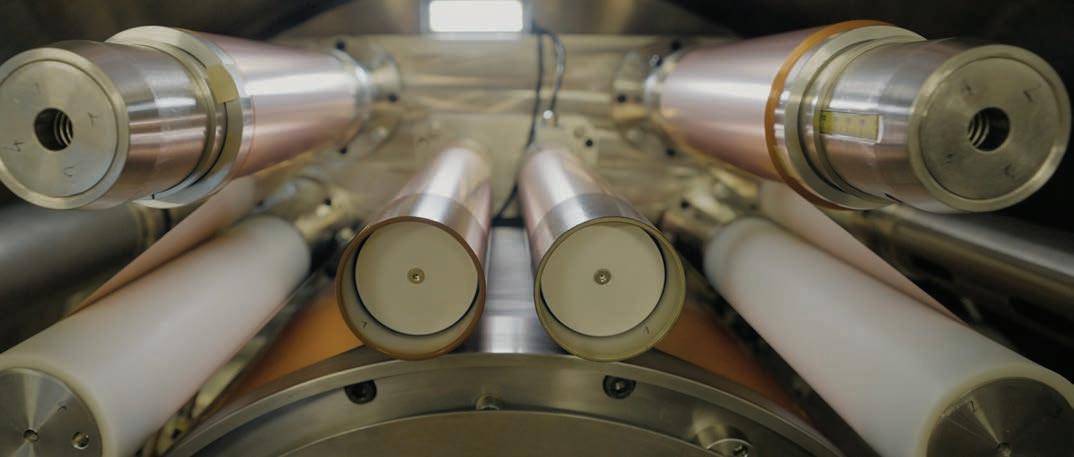
As the world moves away from oil-based fuels and toward renewable energy sources and battery-powered technology, the need for new lithium batteries and lithium foil anodes has become more prevalent.
Energy dense
Li-Metal anodes offer better energy density than foil anodes because they can be practically made thinner – no excess lithium.
Recently, I caught up with Li-Metal’s CEO, Dr. Srini Godavarthy (SG), to discuss the progress made by Li-Metal in the pursuit of next generation technology.

Cost efficient
Cost and quality improve with decreasing anode thickness leading to high battery cell energy density and reduced material use – exactly what is needed for highperformance batteries.
CONTINUED ON PAGE 18
Scalable
Underlying technology adapted from exceptionally large scale – no fundamental technology breakthrough needed for large-format battery anodes.
OCTOBER 2023 CANADIAN MINING JOURNAL | 17 CLEAN ENERGY/BATTERIES
Interview with Li-Metal’s CEO, Dr. Srini Godavarthy
Li-Metal’s physical vapour deposition (PVD) equipment, which is used to produce next generation anode materials at the company’s pilot facility in Rochester, N.Y.
CREDIT: LI-METAL
Dr. Srini Godavarthy, Li-Metal’s CEO
CMJ: As a conversation starter, could you please talk to us about the history of Li-Metal, your background, and how you became CEO?
SG: Li-Metal Corp. was founded in 2018 by Maciej Jastrzebski and Tim Johnston to address an emerging and prevailing underlying trend in the electrification of transportation – the transition from conventional lithium-ion batteries to next generation high-performance batteries, such as solid-state, hybrid liquid electrolyte, and lithium-sulphur. Tim and Maciej met at Hatch, one of the foremost engineering companies in Canada. Tim is a serial entrepreneur in the lithium space, and Maciej brought the technological innovation – what started out as a series of interesting lunchtime and coffee chats in Toronto, quickly gave birth to the concept for Li-Metal, which was technically developed and economically evaluated over the subsequent few months.
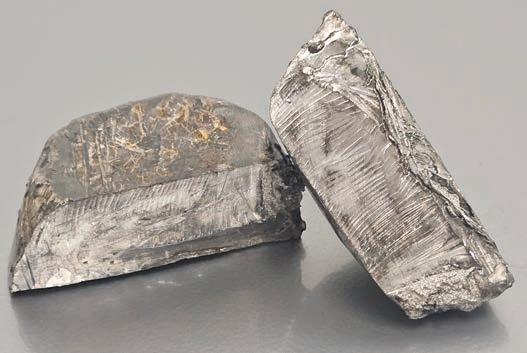
Fast forward to present day, Li-Metal is working at the forefront of the next generation battery supply chain, developing and commercializing production technologies to help produce lighter, cheaper, cleaner, and better-performing batteries for electric vehicles (EVs) and other transportation applications, such as electric aviation. We are working to become a leading domestic battery anode supplier to battery developers and automotive OEMs (original equipment manufacturers). We believe our ultra-thin high-performance anode materials for next generation batteries will play a key role in unlocking the future of electric transport.
Our vertically integrated process begins with lithium carbonate and ends with cost-effective, high-performance anodes ready to go into next generation battery cells utilizing two core technologies: a lithium metal technology and a next generation battery anode technology. We are currently engaged with 27 automakers and battery developers, with 15 leading next generation battery developers actively sampling our anode materials, as we continue to strengthen relationships with key players in the next generation battery ecosystem. We have also secured a recurring commercial order for our anode materials, which in addition to generating revenues provides us with the opportunity to further
validate our products and advance our anode business.
Li-Metal has an advanced anode pilot plant in Rochester, N.Y., capable of producing thousands of metres of anode material per year and a lithium metal pilot plant in Markham, Ont. At the same location as our lithium metal pilot plant, we also house an advanced anode lab and our corporate offices.
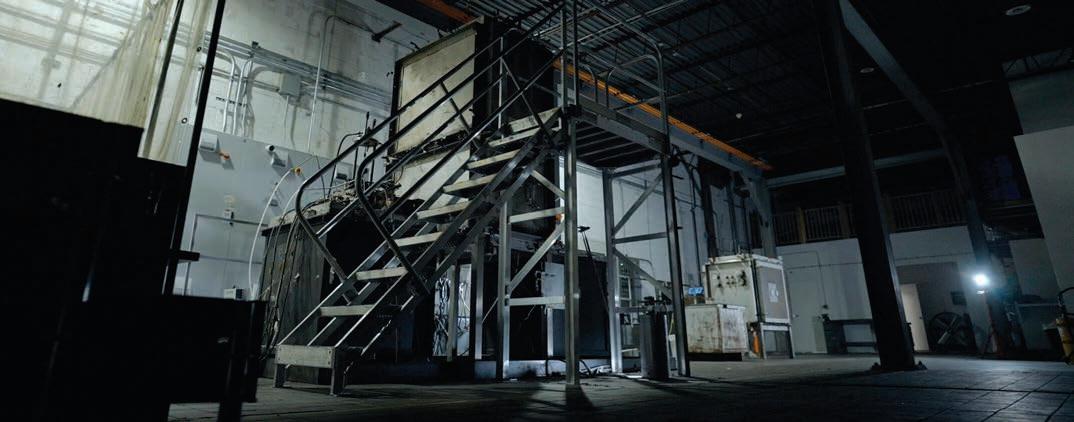
When I joined as CEO of Li-Metal earlier this year, I was confident in the opportunities in front of the business as we develop ground-breaking solutions that will shape the next generation of batteries. I hit the ground running as on my first day of the job we were granted our first patent for our lithium metal technology. In terms of my background, I bring more than two decades of commercial and operational experience with a specialization in chemicals and lithium battery materials.
Before joining Li-Metal, I led the lithium metals and specialty salts business at Albemarle Corp., the world’s top lithium producer. I started out my career at Huntsman International as an engineer and have always had a passion for chemicals. I earned my Ph.D. in chemical engineering from Oklahoma State University and my MBA in Finance from Colorado State University.
For some background for how I got to Li-Metal, Maciej,
18 | CANADIAN MINING JOURNAL www.canadianminingjournal.com
CLEAN ENERGY/BATTERIES
Li-Metal’s pilot facility in Markham, Ont. CREDIT: LI-METAL
Li-Metal’s first lithium metal product, which was produced at the company’s facility in Markham, Ont. CREDIT: LI-METAL
Li-Metal’s previous CEO and now our CTO, recognized the benefits of installing a CEO to lead the company through its next phase of growth while he focused his efforts on leading the innovation, product development, and R&D, which is core to the success of any technology enterprise. I am really excited about the road ahead as we look to reach commercial scale anode production capabilities as soon as 2024.
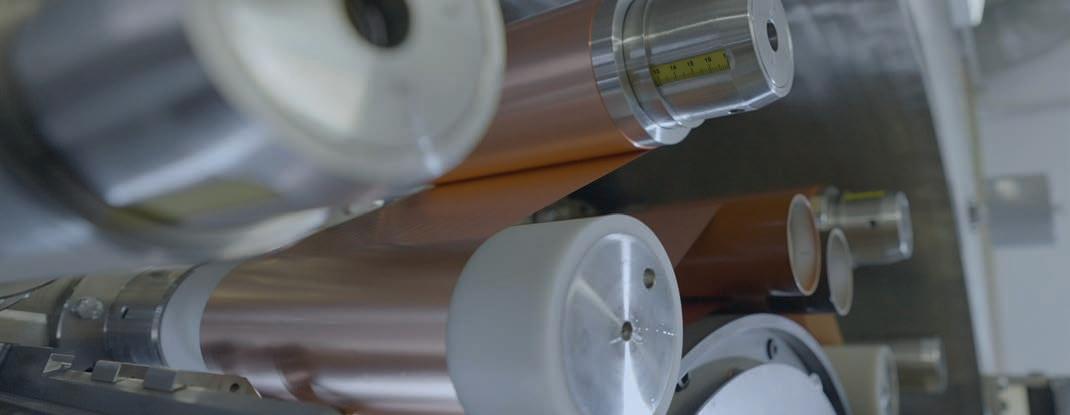
where lithium metal (which we plan to produce ourselves) or a combination of materials is deposited. This is then collected on the product roll, to produce the final anode product, which can be used directly in new battery cells. In other words, using a vacuum environment, we apply vaporized lithium metal on a copper substrate to build these anode materials from the “bottom up.”
CMJ: Conventional lithium anodes are made of lithium foils, can you please explain why this is a problem, and what is the solution offered by Li-Metal’s technology to this problem?

SG: Before Li-Metal, the existing technologies for producing next generation anodes faced significant challenges, as conventional anodes are typically made by extruding and rolling lithium metal into thick foils.
To increase the penetration of EVs, the industry is focused on attaining cost parity compared to internal combustion engines (ICE). The battery plays a significant role in this, and the industry is targeting battery costs of $100/kwh. In Li-Metal’s experience and discussions, many of our customers are focused on the goal of getting to cost and performance parity (range) with ICEs. However, given the cost of lithium metal, the use of thick lithium foils as anodes makes their technology more expensive.
A core challenge with foil extrusion, as a production method, is that it is difficult to scale, especially as the foil gets very thin, a critical requirement to reduce the cost of anodes. Furthermore, because it is difficult to customize the thickness of foils, the energy density (and the range of the vehicle) is reduced. To add to all these challenges, excess lithium in the battery, because of combining traditional cathodes with thick lithium anodes, contributes to increased risk of a fire, impacting safety requirements.
Li-Metal is focused on solving these challenges with our innovative roll-to-roll PVD (physical vapour deposition) anode technology. PVD is a ubiquitous technology, and anything that looks metallic but made of plastic is likely made from a PVD process, such as the shiny metallic coating inside a bag of potato chips. This technology, in other industries, has been able to produce millions of square metres of low-cost materials for decades, and we are applying this proven technology platform to produce advanced anode materials for the next generation battery industry.
Technically speaking, we use a one-pass double-sided roll-toroll deposition approach as micron-scale material starts on a substrate roll, unwinds, then passes through a treatment zone
Using our PVD approach to anode production is the opposite of the traditional approaches, as instead of squeezing, flattening, or pressing a piece of lithium metal down to the thickness we want, we build it up by depositing it directly on a copper substrate. By building these lithium metal films from the bottom up, we minimize the amount of lithium metal used in our process, which reduces excess lithium to improve safety. This also increases the cost effectiveness of our process by limiting waste of a highly valuable feedstock. Not only does our process allow us to minimize the amount of lithium used, but it also allows us to co-deposit other materials to enhance the performance of our anode materials, as we eliminate the need for graphite in battery anodes.
At our advanced anode pilot plant in Rochester, we have proven our ability to produce lithium metal anode products with lithium thickness between 3 and 25 micrometres, as we continue to customize our offerings to meet customer demand. Furthermore, through our work in Rochester, we believe we are operating one of the highest intensities PVD lithium metal anode processes in the industry. In other words, we believe our PVD process operates at an unmatched efficiency rate in the next generation battery industry. As of June 2023, the team has produced more than 5,787 metres of sample lithium metal anode material, compared to 4,200 metres in 2022.
We believe our work with PVD technology is just getting started, as this highly flexible technology platform can be upgraded to accommodate unique combinations of materials to optimize cost and electrochemical performance, unlocking a suite of future product development opportunities.

As we continue to advance our anode business, my short-term goal for Li-Metal is to approach 0.5 GWh of anode capacity as quickly as possible, or the equivalent of 4 million to 5 million m2 of anode material per year. To support the growth of our anode business, we are evaluating options for the best location for a future anode facility in addition to government incentives to help us scale up faster to meet accelerating customer demand.
CMJ: So, what are the advantages of Li-Metal’s new technology?
CONTINUED ON PAGE 20
majorcanada@majordriling.com






OCTOBER 2023 CANADIAN MINING JOURNAL | 19 GLOBAL LEADER IN SPECIALIZED DRILLING
SG: Li-Metal’s vertically integrated technology platform offers many distinct advantages for producing high-performance anode materials compared to traditional and alternative methods on the marketplace.
First, our ability to produce lithium metal ourselves is a key differentiator for our business, as it enables us to secure a reliable and sustainable domestic supply to feed our anode operations. Traditionally, lithium metal has been produced using lithium chloride as feedstock, which generates approximately five tonnes of harmful chlorine gas by-product for every tonne of lithium metal produced. Lithium chloride is typically made by treating lithium carbonate; however, Li-Metal’s patented carbonate-to-metal lithium metal technology can eliminate this costly conversion step by producing metal directly from lithium carbonate. Of note, to our knowledge, conversion capacity to produce lithium chloride from carbonate is limited, and significant capital investment would be required to meet the added demand for lithium metal. Given past experience in the lithium industry, these types of expansion projects could take at least four to five years from design to production. This means that it is highly unlikely that traditional lithium metal production processes will be able to be scaled up quickly to meet the growing needs of the next generation battery industry in North America and Europe.
With the demand for lithium metal expected to increase by 10 to 12 times to more than 40,000 tonnes per year by 2030, our cleaner, cost-effective, and energy efficient lithium metal production process that avoids producing toxic by-products will be key. We have had great momentum with our lithium metal technology as in May of this year, Li-Metal successfully produced lithium metal directly from lithium carbonate. We believe Li-Metal is the first company in the world to do this and we accomplished this metallurgical process breakthrough at our facility in Markham, Ont.
For our next generation battery anodes, as mentioned, by using our highly flexible and scalable PVD technology platform, we can produce lithium metal anodes from the “bottom up” compared to the traditional or alternative “top down” approaches. This minimizes the amount of lithium metal used in our process compared to other processes, which reduces excess lithium to
improve safety and limits waste. Furthermore, our PVD platform allows us to customize our anode materials to fit the specifications of our customers, which is a key advantage, as we can be flexible to meet the unique needs of our growing customer base.
SG: As we position ourselves as a leading domestic battery anode supplier and battery materials innovator to the next generation battery supply chain, we continue to expand and strengthen our relationships with key battery developers and automotive OEMs. Currently, we have ongoing discussions with 27 battery developers and automakers, 15 of which are sampling our anode materials in next generation batteries to qualify our technology. We have also secured a recurring commercial order for our anode materials. As protecting our customers is a key priority for Li-Metal, currently, we have not publicly disclosed many of the names of the battery industry leaders we are working with.
We do have one publicly disclosed relationship, as we have a joint development and commercialization agreement with Blue Solutions, the largest commercial producer of solid-state batteries, to advance the development of next generation batteries. Blue Solutions, a subsidiary of the US$14 billion French conglomerate Bollere, is the largest commercial manufacturer in the market, supplying an all-solid-state lithium metal battery for real-life applications running on every continent. Blue Solutions has been working on solid-state batteries for decades, and their batteries power Mercedes Benz electric buses in Europe. The partnership combines our technologies with the know-how of a proven battery solid state battery producer to advance solid-state batteries for passenger EVs.
CMJ: Last April, Li-Metal signed an exclusive agreement with Mustang Vacuum Systems, why are agreements like this important, and what does this specific agreement mean to you and to Li-Metals?
20 | CANADIAN MINING JOURNAL www.canadianminingjournal.com
CMJ: Were you able to partner with the battery industry leaders to commercialize the technology at this point?
CLEAN ENERGY/BATTERIES
Li-Metal’s physical vapour deposition (PVD) equipment. CREDIT: LI-METAL
SG: Our strategic binding agreement with Mustang Vacuum Systems for the exclusive supply of high performance PVD machines and services to produce anode materials is expected to be a key development for our anode business.
Mustang Vacuum Systems is a leading global manufacturer of industrial scale PVD equipment, and this agreement helps advance our position as the preeminent domestic anode supplier. When it comes to PVD as a technology platform, the equipment plays a key role in the productivity of the technology. Securing the right equipment and partner to support us on the manufacturing side opens the door for us to really maximize the potential of our novel roll-to-roll PVD anode technology. It is a key step in the roadmap for our anode business and enables us to continue to focus on scaling our capabilities, enhancing our technological advantage, and focus on supporting our customers with the confidence that we have the right machine building partner backing us.
Furthermore, through this strategic partnership, we expect to collaborate on additional commercial business opportunities for providing lithium-based anode materials to current and prospective customers. Mustang Vacuum Systems is also expected to become a Li-Metal shareholder, which further strengthens our alignment and collaboration.
CMJ: How do you intend to use the recent $1.4 million grant sponsored by the government of Ontario?
SG: We were awarded more than $1.4 million in non-dilutive grant funding from various programs sponsored by the government of Ontario to develop and commercialize our lithium metal production technology. The funding consisted of funding from the Ontario Vehicle Innovation Network (OVIN) and the Critical Minerals Innovation Fund (CMIF).
We plan to use the funds from OVIN to support scale-up of our production and refining capabilities for battery-grade lithium metal. We will also use these funds to advance the piloting of new lithium metal products, such as specialty lithium alloy ingots for next generation batteries.
We plan to use funds from the CMIF to advance our environ-
mentally friendly and patented lithium metal production technology to help support the development of battery supply chain in Canada.
Scaling up our metal business helps further differentiate Li-Metal in the market as a vertically integrated domestic anode supplier and helps advance the development of our anode business by securing a cost-effective and sustainably produced feedstock. The funding from the government of Ontario validates our technology and endorses the role we are poised to play in building a sustainable battery supply chain in Canada.
CMJ: Finally, how does the future of batteries manufacturing in Canada look like to you?
SG: We are pleased to see major players in the battery ecosystem set up shop in Canada, such as Volkswagen, LG Energy Solution, Umicore, and many more. Furthermore, Canada has a substantial amount of potential upstream – or the raw materials – to help create a prosperous battery supply chain. Although the Inflation Reduction Act in the U.S. has been making many of the headlines, we are excited about some of the initiatives the Canadian government has taken to support our own battery materials supply chain and the opportunities that have followed suit.
Even though Canada continues to make great strides for electrifying our transportation system, it is essential that we do not overlook the emerging next generation battery supply chain. The Canadian next generation battery ecosystem has made progress; however, the U.S. continues to maintain the highest concentration of key players. If Canada does not divert more attention towards supporting the development, and the supply chain, of these better batteries, then we will be left behind.
Not only the future of the EVs lies within these battery technologies that are under development, but also the future of transportation more broadly. Lighter and more powerful batteries are the future, and it is important that Canada starts to focus its attention on the battery supply chain of tomorrow not the current lithium-ion battery supply chain, which will eventually become obsolete. Canada is a natural leader in innovation, it is time for us to really get in the game. CMJ
OCTOBER 2023 CANADIAN MINING JOURNAL | 21
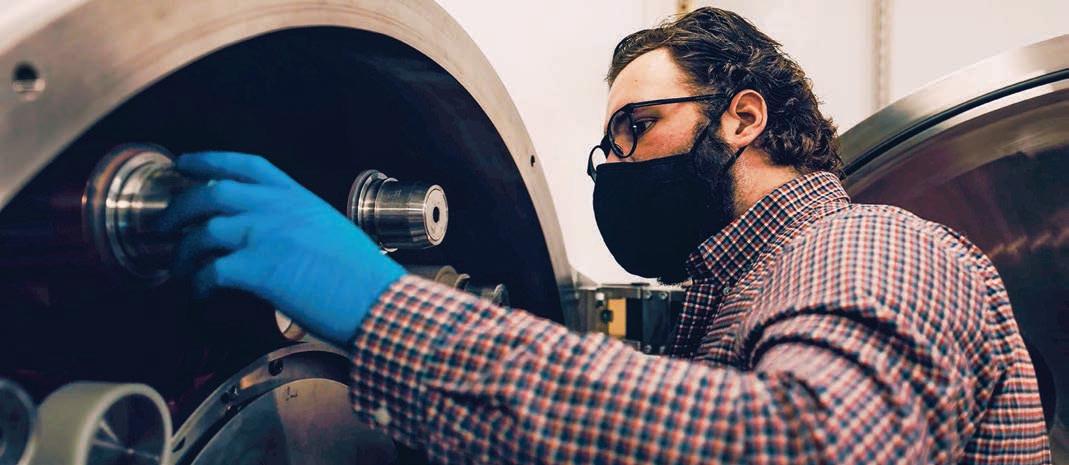
A Li-Metal employee using the company’s physical vapour deposition (PVD) technology and equipment to produce anode materials for next generation batteries CREDIT: LI-METAL
waste
The atmosphere contains 2,200 gigatonnes of carbon dioxide (CO2). Each year, 58 gigatonnes from this reservoir are sequestered by earth’s processes. At the same time, 63 gigatonnes of CO2 are emitted by all human activities and natural phenomena. For much of the planet’s existence, the rates of emission and sequestration of CO2 have been balanced. The current push toward net-zero is an attempt to reset the balance. Humanity has no future if we fail to do so.
Internal combustion engine (ICE) vehicles cumulatively emit approximately 6 gigatonnes of CO2 each year. Widespread replacement of gasoline guzzlers with electric vehicles (EVs) could reduce global CO2 emissions by 3 gigatonnes. That is 60% of our 5 gigatonnes target! The production of more EVs means more mining.
Then, what is the issue? Several. For starters, new mines are increasingly difficult to find, permit, and develop. Declining ore grades means they are less productive and are more expensive to operate. We desperately need larger, more enriched sources of metals. More
mining also means more waste rock and more tailings ponds. The current global inventory of tailings exceeds 200 billion tonnes and 200 trillion litres of water reside in tailings ponds. In many cases, mining waste directly contributes to the generation of acid rock drainage (ARD), which is a significant environmental challenge with a particularly high carbon penalty. Tailings and ARD are also leading contributors to the mining industry’s attached liabilities.
What if I were to tell you that one of the problems is a solution to the other?
Consider the example of copper: The global reserves of copper are estimated to be 880 million tonnes. A quarter of these reserves – 200 million tonnes – reside in Chile. In fact, every report cites Chile as holding the largest reserves of copper in the world. It is a contentious claim. Did you know that 200 million tonnes of copper also sit in tailings around the world, a vast majority of which are in acidic ponds? Imagine if one were to mine these waste sources rather than expend significant resources to store or neutralize them. There now exists a net-zero technology that can extract valuable metals from the
water in tailings ponds and tailings reprocessing facilities and simultaneously treat and condition the water. It is called TersaClean, and field testing of the technology is expected to commence next summer.
TersaClean is the brainchild of Tersa Earth Innovations, a biotechnology company that is developing decarbonized processes for metal recovery and water treatment solutions for the mining industry. Tersa has developed technologies for ARD treatment, direct lithium extraction, and even PFAS (polyfluoroalkyl substances) remediation.
TersaClean combines three distinct goals: metal recovery, water treatment, and carbon abatement, into a single process. TersaClean is a two-stage, continuous process. The first stage comprises a stack of flow-based microbial fuel cells (MFCs) that selectively recover metals from mine-impacted water. The water is further processed in the second stage using microbial carbonate precipitation (MCP) and conditioned to a state that meets environmental regulations for discharge and recycle.
MFC is a self-powered electrochemical

22 | CANADIAN MINING JOURNAL www.canadianminingjournal.com
CLEAN MINING
By Vikramaditya G. Yadav
is a failure of the imagination
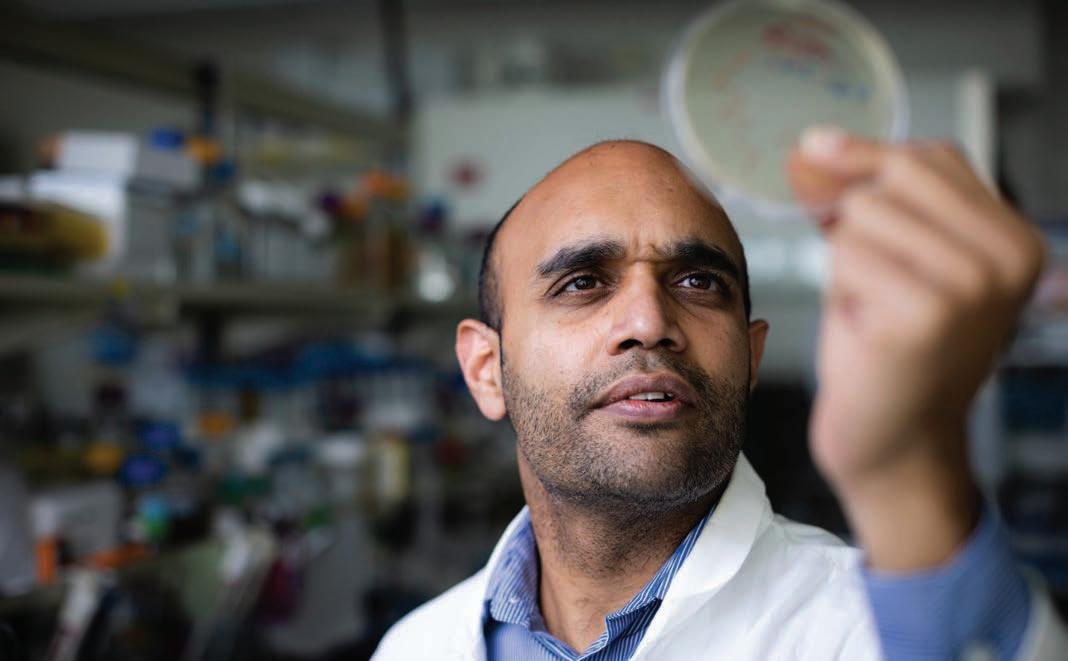
Vikramaditya Yadav at the lab. CREDIT: TERSA
cell – a bacteria-driven battery – that consists of cathodic (reducing) and anodic (oxidizing) chambers sandwiching an ion exchange membrane. Natural or engineered exoelectrogenic (electron generating) bacteria at the anode generate an electric current through the oxidation of an organic substrate such as glucose, acetate, or lactate. The current is relayed to the cathode, where it is consumed in reduction reactions that deposit metals in solution onto the cathode. The phase of the deposited metal is influenced by the pH and temperature of the solution and is guided by Pourbaix diagrams. Metals such as gold, silver, iridium, platinum, and palladium are deposited in their pure, elemental forms. Copper deposits in the pure form under acidic pHs. Contaminants such as arsenic deposit in the oxidized form, whereas selenium is recovered in its elemental form under typical conditions. MFCs operate on the simple premise of allowing bacteria to do what they have evolved to do best – oxidize sugars and respire. In the case of exoelectrogenic bacteria, the respiratory products are electrons. This fact, along with separation of the redox couple, delivers higher rates that are independent of concentration of the metals in solution. Flow-based MFCs drive this advantage several steps forward.
The rate of recovery of the metals is influenced by the rate at which water flows through the cathodic chamber of the MFC, the metabolic rate of the exoelectrogenic bacteria, and the electrode potentials. The company has made several innovations ranging from materials chemistry to improve electrode performance to strain optimization and process engineering that facilitate precise control over critical operating parameters. The continuous flow of water through the chamber also generates ideal mixing conditions, which ensures that the system is rarely limited by mass
transport. The ability to impose a voltage gradient across the cathode also allows metals to be separated individually at source. Significantly, the MFCs can be combined in series and parallel within a stack, which expands treatment options for mining companies.
Following the removal of metals and initial de-acidification, water is then completely neutralized by the addition of a carbonate salt in the second stage. The resulting mixture is then subjected to a second biotreatment, wherein MCP regenerates the carbonate salt that was added previously. MCP employs engineered, ureolytic strains of bacteria that convert urea to carbonate anions. The carbonate salt crystals nucleate and accumulate on the cell surface and are subsequently used for continuous neutralization of the acidic stream in a closed loop. Like the MFCs, the rate of conditioning of the water by the MCP step too can be increased by varying the metabolic rate of the microorganism and the volumetric flowrate.
trode potentials and the magnesium carbonate recycle rate in the closed loop MCP step. Volumetric scalability can be achieved by increasing the number of shipping containers.
TersaClean has been validated in the laboratory. It achieves high rates and percentages of metal removal and outputs water that meets regulatory requirements. The readiness level of the process is nearing six.
The design and operation of TersaClean is fundamentally detached from the scaling laws that limit conventional batchbased wastewater treatment operations. Batch processes have low intrinsic rates of treatment that are challenging to modify. Therefore, the only way to scale a batchbased treatment solution is to increase the volume of the operation. The relationship between capital/operating expenditures and volume is linear, implying that there are limited economies of scale. In contrast, TersaClean perform and cost the same at all scales.
This technology is challenging the conventional notion that mining must generate waste and shifting the paradigm to view tailings as ore. Tersa’s vision is to re-cast mining from being a linear exercise that reshapes landscapes to one that is circular and reclaims the earth.
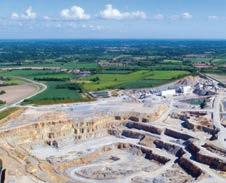
Tersa’s deployment scheme consists of integrating the MFC stack, the MCP reactor, and associated fluid handling operations onto an environmentally insulated shipping container. The shipping containers will serve as mobile process plants when deployed at an active mine or remediation site. Rate enhancements can be achieved by controlling a range of parameters, including volumetric flow rate, number of MFCs in the stack, metabolic rates of the microorganisms, elec-
More broadly, small communities and First Nations have constantly endured the most of haphazard industrialization. Tersa is working directly with and in these communities to remediate their lands and benefit from the economic windfall that our technology delivers. CMJ
Vikramaditya Yadav is an associate professor at the department of chemical & biological engineering and the school of biomedical engineering, director of the Master of Engineering Leadership in sustainable process engineering at the University of British Columbia, and CEO of Tersa Earth Innovations.
OCTOBER 2023 CANADIAN MINING JOURNAL | 23
Your partner in the field and beyond
Any manufacturing or processing technology proceeds through five scales: idea, bench, pilot, demonstration, and commercial. These scales loosely translate to technology readiness levels (TRLs) of 1, 3, 5, 7, and 9, respectively.
RAISING THE BAR FOR MINING DOZERS
Mining dozers may not have the profile of excavators and haul trucks. Still, they’re essential for closing gaps in mining workflows and are equally subject to sustainable and efficient mining demands. Komatsu has met this challenge with the D475A-8, currently the world’s largest production dozer, which deploys a winning combination of power, efficiency, sustainability, and ergonomics.
Many of the machine’s latest features were developed and tested through a continuous improvement process conducted by Komatsu’s engineering group and the company’s largest independent distributor, SMS Equipment of Acheson, Alberta. The process has given Canadian mines the unique opportunity to participate in the evolution of the dozer to ensure that it meets the needs of their operators, who work in some of the toughest conditions in the world.
“By working closely with the SMS Equipment team on this product, we’ve improved it based on their deep understanding of Canadian mining and their ongoing dialogue with Canadian mining customers,” says Noboru Kawabata, Product Support Manager at Komatsu America Corp. “This has made it possible to develop an outstanding product, and we are confident that by continuing this cycle, we will be able to provide even better machines to our customers.”
“I think this dozer is a real success story,” says Chad Perreault, Mining Technical Specialist at SMS Equipment, “because it truly reflects working with customer input to make a better product. Many manufacturers talk about this, but in this case, we can point to specific features, like the way the doors open on the hood or the fact that the radiator fan can swing out so you can wash the radiator. These, and many other features, came from an ongoing process initially started by Mark
Haywood, SMS Equipment’s Technical Support Manager, over a decade ago.”
“The process,” says Perreault, “is a testament to Komatsu’s commitment to Canadian mining, which presents designers with some of the toughest mining challenges.”
Improving workflow efficiency
Mining dozers often play a pivotal role in supporting high-volume processes such as excavating, loading, and hauling.
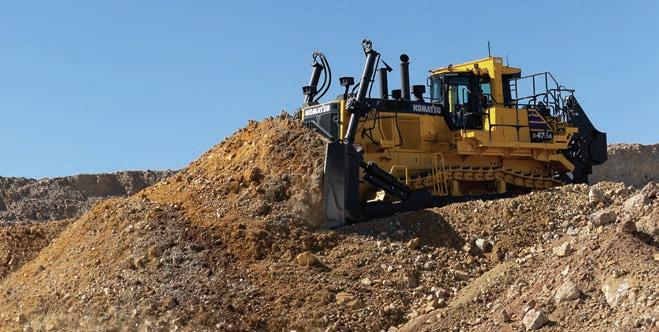
To meet this requirement, the D475A-8 has the size and the power to handle the most demanding tasks. With 15% more power in reverse, the machine has faster ground speeds, shortening cycle times and making it 10% more productive than previous models. It can also handle a wide variety of blades to meet particular material-handling characteristics.
The D475A-8 enables excavators, haul trucks, and other equipment to operate more efficiently by matching the productivity requirements of the entire workflow process chain.
Creating an operator-friendly environment
Recruiting operators to work in remote Canadian mines is difficult, even under the best conditions. To help mines meet this
challenge, Komatsu completely re-designed the cab in the D475A-8, providing an operator with a comfortable and highly sophisticated control environment. The cab has an entirely new heating, cooling, and ventilation system, making the cab quieter and better sealed for dust.
“This model has an excellent climate control system right out of the box,” says Perreault. “It has a lot of vents, it moves a lot of air, and the cab pressurizes very well – it’s quite quiet.”
A rear-view camera, high-resolution screens, and fingertip control also help improve safety and reduce operator fatigue. “Fingertip control is a real bonus for operators,” says Perreault, “because if you’re working on slopes or rough ground, you can hold onto the bar to steady yourself while you operate the controls and provides very smooth steering. So, this is something that they are pleased about.” Enabling the blade auto-pitch and ripper auto-return features also enhances the operator experience by eliminating repetitive movements, further reducing operator fatigue.
Perreault points out all these features result in less operator fatigue and reduced risk of operator error and accidents; they are complemented by new safety features
SUPPLIED CONTENT
With the world’s largest production dozer, Komatsu meets Canadian mines’ power, versatility, and sustainable operation requirements.
such as better lighting and an optional power ladder to make it safer to climb into the cab in slippery conditions.
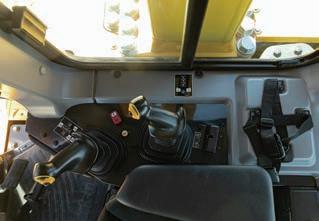
Maintainability
Many Canadian mines are in remote regions, making maintenance potentially more challenging and amplifying equipment downtime’s disruptive consequences—key aspects of the D475A-8 design help to alleviate these concerns.
Durability is a significant part of this. A single-link design for the link structure reduces blade sway and corresponding
wear by 73%, improving the shim adjustment point to only one place. A 16% larger trunnion size provides a longer wear life. Other improvements include changes in the track frames, equalizer bar and pivot shafts.
Details such as improved service access and fewer grease points make the machine easier to maintain, shortening maintenance-related downtime. SMS Equipment also works closely with customers by providing remote and onsite maintenance services and helping customers develop maintenance plans to reduce their overall cost of ownership.

Relationships that matter
“Customers appreciate our working relationship with Komatsu,” says Haywood. “They recognize that to Komatsu, we’re not just a dealer but a partner that helps them incorporate a better understanding of Canadian mining into their products. Komatsu trusts us to recommend modifications and will stand behind us as we work to determine and satisfy the specific requirements of our customers.”
This demonstrates that heavy equipment isn’t just about technology – it’s also about having the right relationships to ensure that the right technology is deployed in the right place at the right time. With the development of the D475A-8 mining dozer, Komatsu and SMS Equipment have shown how important these relationships are.
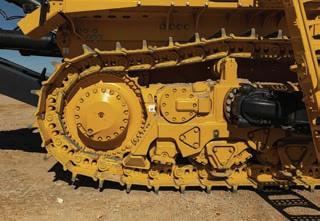
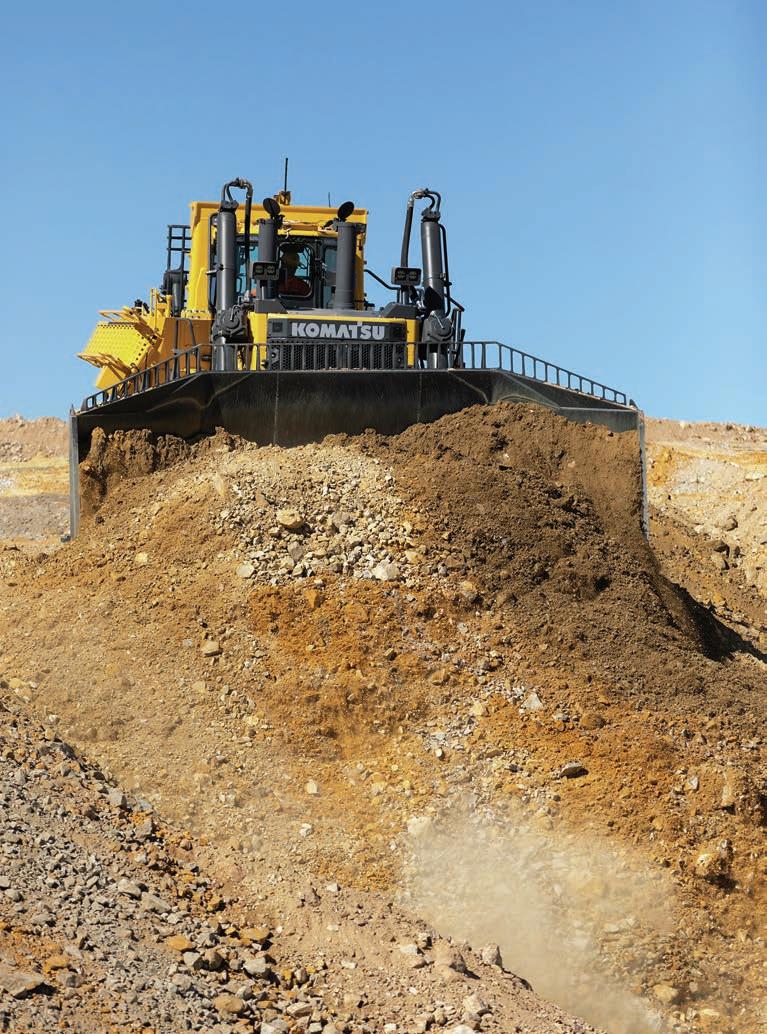
Canada’s lithium is in
la belle province
While battling the biggest wildfire in its history for most of 2023, la belle province is ramping up mining of its key minerals required to manufacture electric vehicle batteries. Quebec plans to become a leader in the critical strategic minerals mining sector and a leader in the electric vehicle battery manufacturing sector for the North American automotive industry.
In its plan for the development of critical and strategic minerals 2020-25, the province identified four policy pillars to promote the development of critical strategic minerals to encourage investment in the province, meet the growing demand for these mineral resources, and play an active role in the global energy transition.
Last year, the government of Canada announced its “critical minerals strategy” in which lithium is listed as one of six top critical minerals due to its importance in the clean technology sector, in particular the manufacturing of rechargeable batteries for hybrid and electric vehicles
The federal and provincial governments are planning to make Quebec a North American leader in supplying the metals that will support the global green transition. Quebec is a highly attractive investment destination for lithium production because of its supportive resource
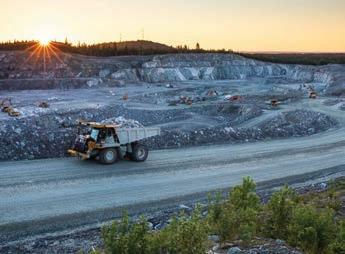
development sector, access to skilled labour, and its proximity to high-growth electric vehicle markets in North America and Europe.
However, as Quebec prepares to supply the world’s needs for several critical min-
In August 2021, the merger of two Australian lithium producers, Orocobre and Galaxy Resources, was rebranded as Allkem with assets in Australia, Argentina, Japan, and Canada, placing it in the top five global lithium firms and top three outside of China. In May 2023, Allkem agreed terms to merge with Livent.
By Tamer Elbokl, PhD
erals including gold, the province is already holding leading spots in Canada for gold, copper, graphite, nickel, and now lithium, and with development projects covering 30 commodities, what happens in Quebec does not remain in Quebec, but it impacts the global mining world.
Mining companies that are making progress in developing lithium mining projects in Quebec this year include Vancouver-based Arbor Metals with a lithium mining project in the James Bay region of Quebec. At the biginning of this year, Australia-based mining company, Allkem, through its subsidiary, Galaxy Lithium, received federal government approval for the construction of a lithium mine in the James Bay area, too. The spodumene operation would include an open pit mine and concentrator facility, tailings, waste rock, ore, and overburden storage areas, as well as related infrastructure. It is expected to produce an average of 5,480 tonnes of ore per day over a mine life of 15 to 20 years.
“This is an important decision for Canada. The James Bay lithium mine project will produce a key ingredient of clean technology like electric vehicle batteries and solar panels,” said Canada’s Minister of Natural Resources, Jonathan Wilkinson. The James Bay project has
26 | CANADIAN MINING JOURNAL www.canadianminingjournal.com
MINING IN QUEBEC
Loading a truck at the Whabouchi lithium mine in northern Quebec CREDIT: NEMASKA LITHIUM
Mining lithium at NAL in Quebec.
CREDIT: SAYONA MINING
been subject to a thorough review process conducted by a Joint Assessment Committee consisting of representatives from the Impact Assessment Agency of Canada (IAAC) and the Cree Nation Government. Based on the environmental assessment report, the Minister of Environment and Climate Change, the Honourable Steven Guilbeault, has determined that the project’s environmental mitigation measures provide a sustainable path for the project to proceed.
Also, earlier this summer, Nemaska Lithium, a Quebec-based mining company, signed an 11-year deal to supply a maximum of 13,000 tonnes of lithium hydroxide annually to Ford to be used in the automaker’s electric car batteries. Prior to that, Ford said it will create a battery pack manufacturing wing at its Oakville manufacturing complex. A press release by Lisa Drake, Ford’s vice-president of EV Industrialization, stated that the Nemaska Lithium project will be a sustainable source of lithium, supporting Ford’s ability to scale, making EVs more accessible and affordable to millions of customers.
Nemaska says it will produce lithium ore from its Whabouchi mine in the James Bay region of northern Quebec starting in 2025. The ore will then be converted into lithium hydroxide at Nemaska’s Bécancour conversion facility when it opens the following year.
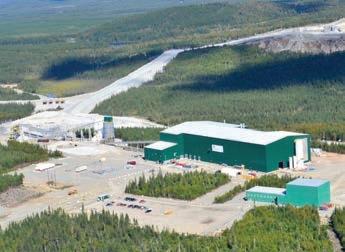
Additionally, North American lithium producer, Sayona Mining, and Piedmont Lithium have restarted commercial spodumene concentrate production at their jointly owned North American Lithium (NAL) project in Quebec’s AbitibiTémiscamingue region at the end of last March. As part of the deals signed with LG Chem and Tesla earlier this year, NAL’s
Some of Quebec’s major lithium resources include the following:
James Bay (40.3 million tonnes at 1.4% Li2O)
Whabouchi (55.7 million tonnes at 1.4% Li2O)
Abitibi Lithium Hub (119.1 million tonnes at 1.1% Li2O)
Rose (34.2 million tonnes at 0.9% Li2O)
Moblan (16.1 million tonnes at 1.4% Li2O)
minority partner Piemont will provide 200,000 tonnes of spodumene concentrate to LG Chem over four years (50,000 tonnes per year). Piemont will supply 125,000 metric tonnes of spodumene concentrate to Tesla starting in late 2023 until 2025. NAL is currently the only active producer of lithium concentrate in Canada.
Table 1 lists all active lithium projects and mines in Quebec currently while Table 2 lists the ownership and interest percentage for these projects.
Updates on some projects
North American Lithium (NAL) Canada Lithium began construction of the mine in 2011 and some production activities in 2012. At the time, the company anticipated reaching full production capacity in 2014. In February 2014, RB Energy acquired the mine site assets but, due to financial difficulties, had to stop production in October 2014. Jien International acquired the company in June 2016 and resumed mine activities in the winter of 2017. NAL operation was acquired by Sayona Quebec in August 2021 and is jointly owned by Sayona
Quebec, a subsidiary of Sayona Mining (75%), and Piedmont Lithium (25%).
In March 2023, Sayona announced the successful restart of production at NAL. The restart was achieved both on time and on budget, marking a major milestone as the largest source of hard rock lithium production in North America.
Forming the key part of Sayona’s Abitibi hub along with the nearby Authier lithium project, the restored NAL operation, together with Sayona’s emerging northern hub, is now considered North America’s largest spodumene resource base.
NAL comprises 19 contiguous claims
OCTOBER 2023 CANADIAN MINING JOURNAL | 27
Property Work typeAsset typeDevelopment statusPrimary commodities NAL (Quebec mine)Open pit MineProduction Lithium Adina SurfaceProject Advanced exploration Lithium Anatacau SurfaceProjectExploration Lithium Authier SurfaceProjectFeasibility Lithium Cancet SurfaceProject Advanced exploration Lithium Case Lake SurfaceProject Advanced exploration Lithium Located in NE Ontario close to the Ontario-Quebec border. Corvette SurfaceProject Advanced exploration Lithium James Bay SurfaceProjectFeasibility Lithium Moblan SurfaceProjectFeasibility Lithium Pontax SurfaceProject Advanced exploration Lithium Rose SurfaceProjectFeasibility Lithium, Tantalum Sirmac SurfaceProject Preliminary economic Lithium assessment Tansim SurfaceProjectExploration Lithium Vallee SurfaceProject Advanced exploration Lithium WhabouchiSurfaceProjectFeasibility Lithium Whabouchi South SurfaceProject Advanced exploration Lithium
Table 1. Active lithium projects and mines in Quebec. CREDIT: MINING INTELLIGENCE
CONTINUED ON PAGE 24
North American lithium’s spodumene concentrator. CREDIT: BUSINESS WIRE
covering 582.31 ha. and one mining lease, covering approximately 700 ha. It is situated in La Corne township in Quebec’s Abitibi-Témiscamingue region. The project lies 60 km north of the city of Val d’Or, a major mining service centre, and in
proximity to Sayona’s Authier lithium project.
Sayona plans to combine ores produced from Authier and NAL to facilitate a significant improvement in plant performance and economics and transform both operations.
All NAL’s power is from clean and green hydroelectricity, while it is well serviced by provincial highways and an all-weather secondary road.
In August 2023, Sayona announced the first shipment of NAL spodumene concentrate to the international lithium market, marking a major milestone and paving the way for the first revenues within two years of NAL’s acquisition.
Sayona’s Authier, Tansim, and Moblan lithium projects
Authier, Tansim, and Moblan lithium projects are also parts of the Abitibi hub,
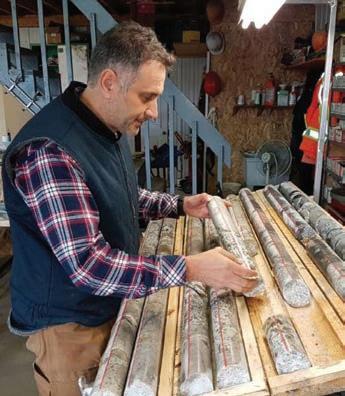
especially Authier. From Table 1, we can see that Tansim is at the exploration stage while both Authier and Moblan are at the feasibilityy stage. Sayona is the major interest owner in all three projects, as seen from Table 2.
Sayona Mining acquired 100% of the Authier project in July 2016. In April 2023, Sayona announced a definitive feasibility study to produce spodumene concentrate, combining its North American Lithium operation with the Authier project.
Sayona’s Authier lithium project is a hard rock spodumene lithium deposit set to play a key role in the Company’s planned multi-project Abitibi lithium hub, as a source of supplementary ore for processing at NAL. Following the acquisition of the NAL mine and concentrator in August 2021, the Authier project’s operating strategy was revised to include only mining operations and
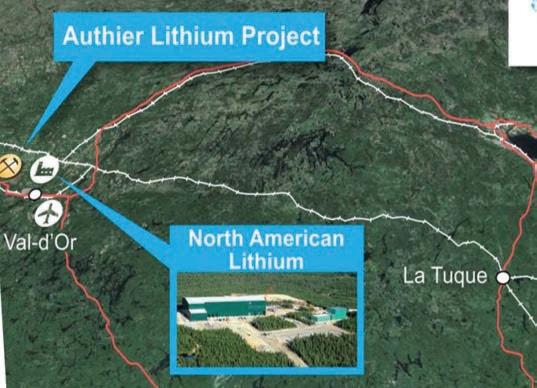
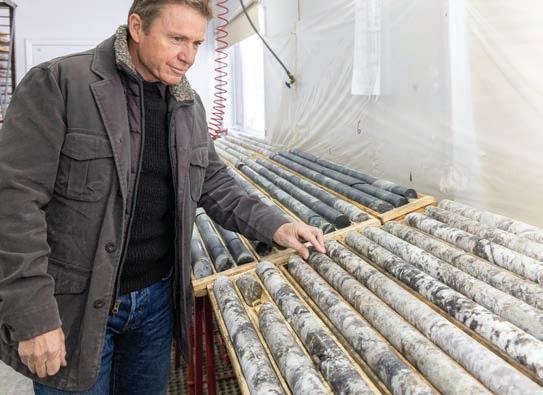
28 | CANADIAN MINING JOURNAL www.canadianminingjournal.com
Property Interest %Company NAL (Quebec mine) 75Sayona NAL (Quebec mine) 25 Piedmont Lithium Adina 100 Winsome Resources Anatacau 100 Osisko Development Authier 75Sayona Authier 25 Piedmont Lithium Cancet 100 Winsome Resources Case Lake 80 Power Metals Case Lake 20 MGX Minerals Corvette 100 Patriot Battery Metals James Bay 100Allkem Moblan 60Sayona Moblan 40Soquem Pontax 51 Cygnus Metals Pontax 49 Stria Lithium Rose 100 Critical Elements Lithium Sirmac 100 Vision Lithium Tansim 75Sayona Tansim 25 Piedmont Lithium Vallee 100 Consolidated Lithium Metals Whabouchi 50Livent Whabouchi 50 Nemaska Lithium Whabouchi South 100AmmPower
Table 2. Ownership and interest (%). CREDIT: MINING INTELLIGENCE
MINING IN QUEBEC
Core from Sayona’s Authier lithium project in Quebec. CREDIT: SAYONA MINING
Managing director and CEO, Brett Lynch, examines drill cores from Sayona Quebec’s Moblan project. CREDIT: SAYONA MINING
The proximity of the Authier and North American lithium properties. CREDIT: SAYONA
waste and water management on-site.
The project is set to become a supplier of ore to Sayona’s nearby North American Lithium operation, which has an established concentrator, thereby minimizing the need for mining infrastructure and related environmental impacts at Authier.
As for NAL, the project has a huge near-term development potential, access to world-class infrastructure and labour, economical hydroelectric power, and its strategic location near North American battery markets.
The Authier project is situated 45 kilometres northwest of the city of Val d’Or, a major mining service centre in Quebec. Val d’Or is located approximately 466 kilo-
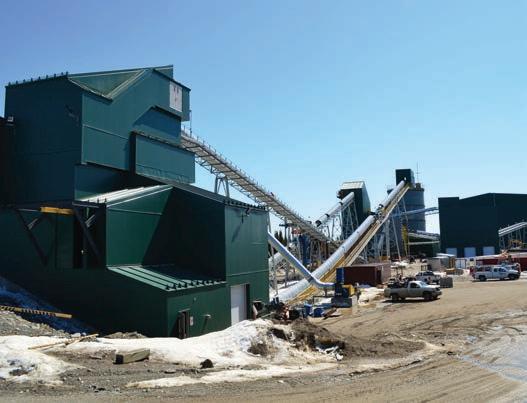
metres north-east of Montreal. The project is easily accessed by a rural road network connecting to a national highway a few kilometres east of the project site.
In October 2021, Sayona completed the acquisition of the Moblan lithium project in a joint venture with Soquem, a wholly owned subsidiary of Investissement Quebec.
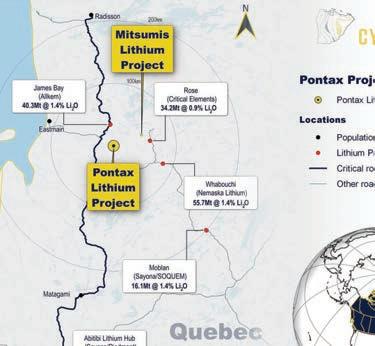
Moblan is in the Eeyou-Istchee James Bay region of northern Quebec, a proven lithium mining region which hosts established, world-class lithium resources including the Whabouchi mine. It is also well-serviced by key infrastructure and transport and has access to low-cost, environmentally friendly hydropower.
Finally, Tansim lithium project is situated 82 km south-west of the Authier lithium project. Tansim comprises 355 mineral claims spanning 20,546 hectares and is prospective for lithium, tantalum, and beryllium.
Sayona is also targeting the ViauDallaire prospect, highlighting the potential for the development of a new lithium deposit.

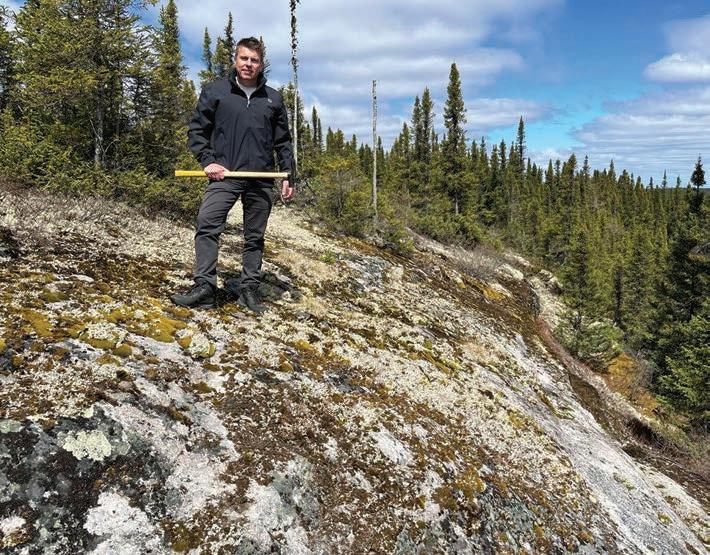
Adina lithium project
The Adina lithium project was mapped in 2016, with a successful maiden drilling campaign completed in 2018. The initial drilling returned several well-mineralized, albeit narrow intervals of mineralization, warranting additional field prospecting and mapping.
Since then, further drilling has delivered some impressive results, including 1.34% Li2O over 107.6 m from 2.3 m to 109.9 m, including 30 metres grading 2.21% 2 from 41 metres.
The total strike length of the lithium mineralized trend at Adina was initially over 3 km, with mineralization remaining open to both the east and west of reported intercepts. The recent discovery of the new Footwall Zone at Adina also opens the potential for multiple parallel zones below the main bodies.
The Perth-headquartered lithium explorer and developer, Winsome Resources, held an option to acquire the adjacent Jackpot property to the north, which could increase the Adina project area by 50%, opening further exploration targets and providing flexibility in site layout and infrastructure as development progresses.
Last June, Winsome Resources announced the signing of an option agreement to ex-
OCTOBER 2023 CANADIAN MINING JOURNAL | 29
Sayona’s Moblan lithium project in Quebec. CREDIT: SAYONA MINING
Managing director, Chris Evans, at the Adina project site. CREDIT: WINSOME RESOURCES
ON PAGE 30
Pontax lithium project. CREDIT: CYGENUS METALS
CONTINUED
MINING IN QUEBEC
pand its Adina lithium project in Quebec to 44 km2, a 50% increase. “With Adina moving into a development phase later this year, taking an option on attractive terms over the Jackpot property is a strategic move to not only give us access to further exploration upside around Adina but also flexibility in future design of site layout and infrastructure footprints,” said Winsome managing director Chris Evans.
The agreement would allow Winsome to acquire the 29 claims in the bordering Jackpot property and expand its total tenure in the James Bay area to more than 871.5 km2. The Adina project also offers a co-development opportunity with Cancet, as Winsome Resources’ portfolio includes four other projects in Quebec: Cancet and Sirmac-Clappier in the James Bay region, and Decelles and Mazarac near Val d’Or.
Cancet project
Winsome Resources’ Cancet project is at an advanced exploration stage, with extensive drilling and metallurgical test work ongoing. Cancet is comprised of 395 claims, for a total area of more than 20,000 Ha, and is located 155 km East of
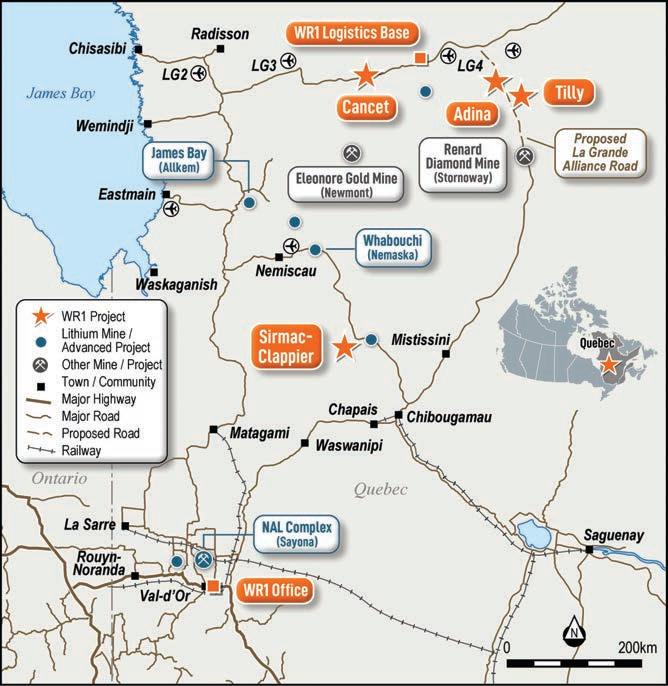
Radisson, within a favourable geological setting. Surface stripping of the main spodumene pegmatite body at Cancet revealed visible large spodumene crystals, providing a good indication of the structural geology of the at-surface pegmatite body. Exploration results, to date, show an extremely high recovery at a course crush size is achievable at Cancet. Additional targets have also been identified to the west and east, with the potential to significantly increase lithium tonnage.
Pontax lithium project
The Pontax lithium project is situated within the prolific lithium region of the James Bay region in northern Quebec,
Canada. The project (145 km2) is host to numerous spodumene bearing pegmatite swarms with the only explored swarm being Central Pontax which outcrops over 620m of strike and remains open along strike and at depth.
Allkem’s James Bay
Located approximately 10 km south of the Eastmain River and the Cree Nation of Eastmain community and 100 km east from James Bay, the James Bay lithium mine project is in the Nord-du-Québec administrative region in the EeyouIstchee James Bay territory. The lands of the project are easily accessed by road. The project is well-serviced by key infrastructure including Hydro-Québec power, which provides a low-cost, clean energy source for approximately 45% of site power needs. The project is also located adjacent to the Billy Diamond Highway, which connects it to major roads and railways in the region.
The town of Matagami is located approximately four hours south of James Bay and connects it to the Canadian National Railway network, which allows future production to be railed to various locations in North America or ports along the Saint-Lawrence River for international shipment.
Allkem is proposing to develop the James Bay project as a sustainable, hardrock operation, maximizing the usage of renewable energy and utilizing spodumene expertise gained from its successful Australian operation, Mt Cattlin. The strategy for development is to advance the upstream mine and concentrator operation whilst simultaneously investigating downstream options.
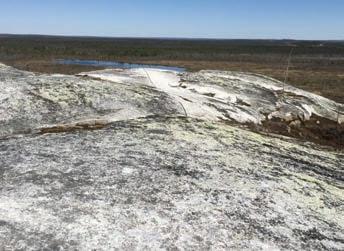
The 2021 feasibility study and maiden The Nemaska exploration camp at Whabouchi. CREDIT:NEMASKA LITHIUM
30 | CANADIAN MINING JOURNAL www.canadianminingjournal.com
James Bay lithium project in Quebec. CREDIT: GALAXY RESOURCES
Map of Winsome Resources’ projects in Quebec. CREDIT: WINSOME RESOURCES
ore reserve detailed an average annual production of 321,000 t/y of 5.6% Li2O spodumene concentrate with a 19-year mine life.
Nemaska’s Whabouchi mine


Also located in the Eeyou-Istchee James Bay territory in Nord-du-Québec, the Whabouchi mine is one of the largest high-purity lithium deposits in North America and Europe. The project is the world’s second richest and biggest deposit with 27.3 million tonnes of proven and probable reserves. Whabouchi will be a long-life, high-tonnage hardrock lithium mining operation. The reserves estimate a mine life of 33 years, which could be extended further through existing resources. The project includes the operation of an open pit and underground mine, a waste and tailings impoundment area, an ore concentrator, administrative and maintenance buildings. The mine would have a production capacity of approximately 3,000 tonnes per day over the estimated mine life. The mine is partially built and will continue to be constructed at the right time to bring online with the conversion facility. It has access along an all-weather road and uses hydroelectric power to power the entire site. The site is also easily accessed by the Nemiscau airport, 18 km west of Whabouchi.
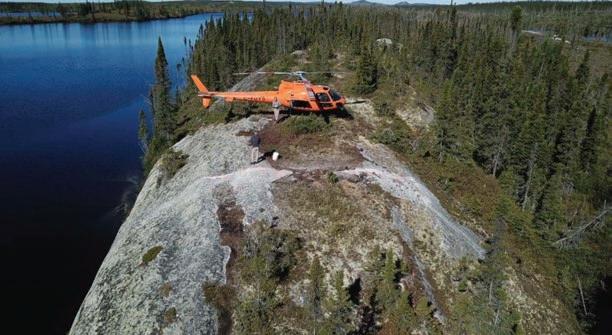
Corvette lithium project
Corvette property is located in the Eeyou-Istchee James Bay region of Quebec and has great proximity to regional road and powerline infrastructure. As shown in Table 2, the property is 100% owned by Patriot Battery Metals, which is a hardrock lithium exploration company focused on advancing this property. The
Corvette property hosts the CV5 Spodumene Pegmatite with a maiden inferred mineral resource estimate1 of 109.2 million tonnes at 1.42% Li2O and ranks as the largest lithium pegmatite resource in the Americas based on contained lithium carbonate equivalent (LCE). It is also consid-
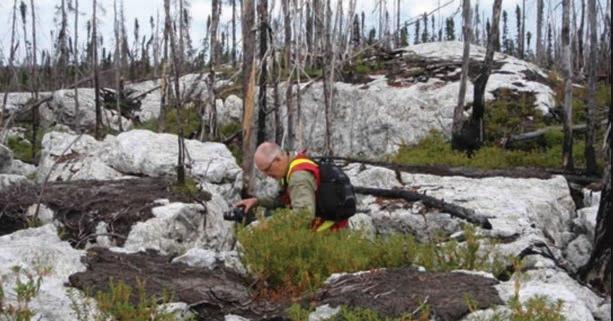
ered one of the top 10 largest lithium pegmatite resources in the world. Additionally, the Corvette property hosts multiple other spodumene pegmatite clusters that remain to be drill tested, as well as more than 20 km of prospective trend to be assessed. CMJ

OCTOBER 2023 CANADIAN MINING JOURNAL | 31
Taking a closer look at the lithium potential in the James Bay region. CREDIT: GALAXY RESOURCES
Patriot Battery Metals is drilling this winter at its Corvette lithium project in Quebec. CREDIT: PATRIOT BATTERY METALS
www.rosta.com +1-905-642-6996
Eco-friendly & sustainable
The world will need an estimated 97 natural flake graphite mines to meet the required projected demand. With its huge graphite potential, Quebec is aiming to become one of the world’s largest battery material mining and manufacturing centers.
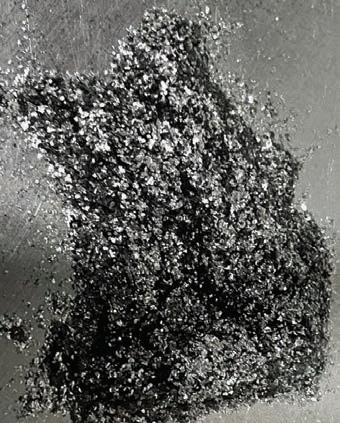
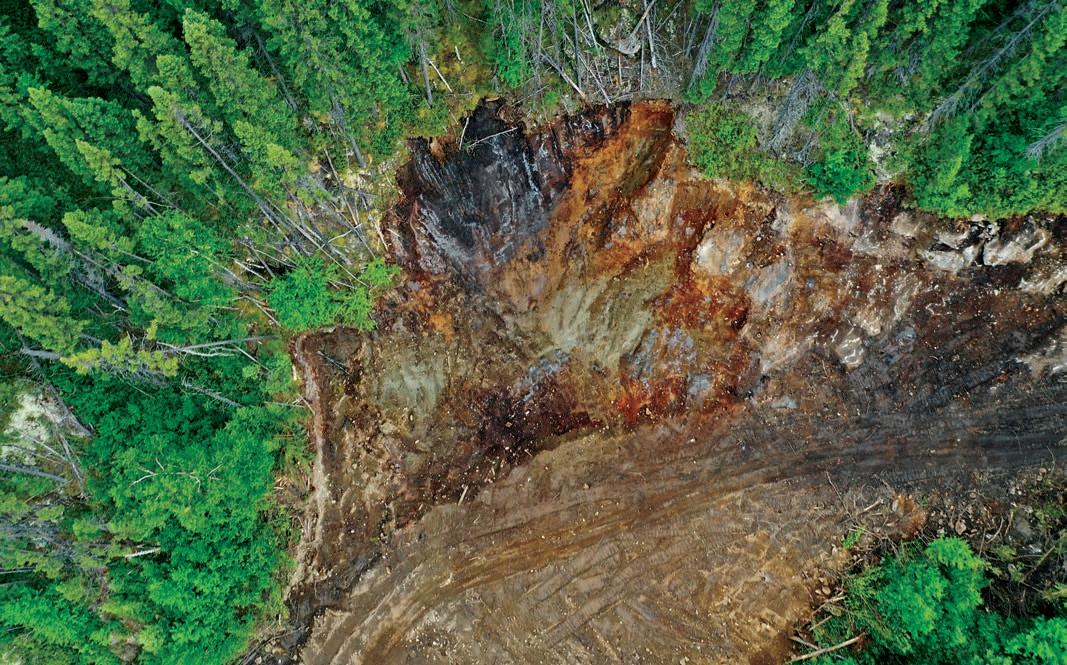
Last August, Ford and LG announced they are investing $1.2 billion in the development of a cathode manufacturing plant in Quebec to provide materials that ultimately supply batteries for Ford’s electric vehicles. The growth of the battery manufacturing sector in Quebec will generate increased demand for a domestic graphite supply. Currently, only one small graphite mine is operating in Quebec, the Lac des Iles project of Northern Graphite. Investing in graphite mining operations will help securing a reliable domestic source. Along with Quebec’s stringent environmental regulations, they have one of the
least expensive green renewable energy sources: hydroelectric energy, which also helps to minimize environmental impact. Moreover, with technological advancements, sustainable mining techniques are being implemented to mitigate potential environmental concerns associated with mining activities.
Green Battery Minerals’ (GEM) mission and strategy is to become one of North America’s largest producers of clean, environmentally friendly, and high-quality anode materials to be used in lithium-ion batteries (LIBs). These LIBs are used in electric vehicles and renewable energy storage. There is significantly more graphite in a lithium-ion battery
 By Tamer Elbokl, PhD
than lithium.
GEM has 3.2 million tonnes of indicated and inferred graphite resource on its road accessible 100% owned Berkwood project located in northern Quebec. The Berkwood graphite project is in the Manicouagan regional county municipality, three hours driving from the city
32 | CANADIAN MINING JOURNAL www.canadianminingjournal.com
MINING IN QUEBEC/CLEAN MINING TECHNOLOGY
Aerial picture of outcrop. CREDIT: GREEN BATTERY MINERALS
Graphene lithium-ion batteries:
Large graphite flake. CREDIT: GREEN BATTERY MINERALS
Lithium-ion batteries are made up of 28.1% of graphite and/or graphene
of Baie-Comeau. Easy access is provided via a major secondary road, and numerous tertiary and forest roads traverse the property.
Zone 1 deposit is located 8 km southwest of the Mason/Nouveau Monde Graphite deposit. GEM believes its zone 1 deposit and that of Mason/Nouveau Monde share many similar geological characteristics, with the zone 1 deposit being one of the highest-grade graphite deposits in the world. The project is uniquely positioned close to the U.S. battery markets and have access to clean green hydro energy.
Berkwood project has one of the highest-grade graphite deposits in the world at an average of 17%. It has some of the largest flake sizes in the world as well.
Historically, the larger the flake size, the more valuable the graphite is. Graphene, created by an independent high-quality graphene laboratory using graphite from Berkwood project, was used to create lithium-ion batteries successfully. Initial test work, completed on these batteries, confirmed that they are “ESG friendly” LIBs. Tom Yingling, president and CEO of Green Battery Minerals, states, “I am very pleased to announce that we have successfully created graphene-containing lithium-ion batteries using graphite from our Berkwood graphite Quebec property. Graphenecontaining LIBs have shown to be far superior to traditional LIB. I am even more excited that we have built these batteries in an entirely environmentally friendly way without using any chemicals, emissions, pollution, or cause waste. A graphene battery is superior on so many points and is better for the environment. The battery itself also costs significantly less to create, which can offer huge savings.”



From the ground to a battery: development of anode material for a test battery


The process starts by taking material from the ground, which contains graphite and host waste rock, and then purifying it with the intentions on testing our graphite as the anode in a finished battery. The process of purifying graphite starts with the crushing of the host rock that contains the graphite. The graphite flakes are then separated using flotation. Samples are ground in a rod mill to the various grind sizes and tested in conventional rougher flotation tests. Cleaning and polishing then follows. Graphite floats: it is put into flotation baths, and several processes are used to have the graphite float to the top where it can then be removed. The final step is purifying to 99.95% using the clean alkaline process.
Advantages of GEM’s graphene lithium-ion battery
1 100% of the graphite comes from a growing North American reliable and stable source.
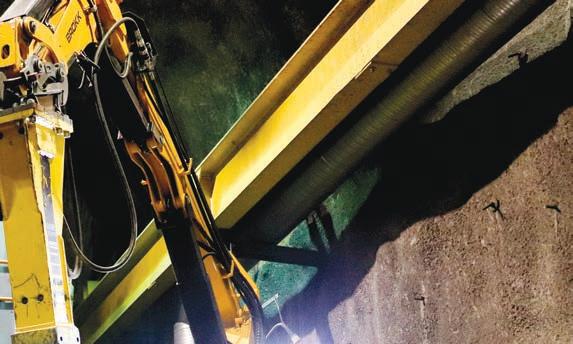
2 The proprietary technology used to convert the graphite to graphene for anode use is environmentally friendly,






CONTINUED ON PAGE 34






OCTOBER 2023 CANADIAN MINING JOURNAL | 33
Green Battery Minerals (GEM) is a junior mining company focused on the development of promising deposits to fuel the EV revolution and other critical innovations. The company’s main activities currently relate to its Berkwood (graphite) and Jupiter (lithium) projects.
BROKK PEDESTAL BOOM Continuing the tradition of powerful solutions for confined spaces. Brokk Inc. | Monroe, WA | 1-360-794-1277 | info@brokkinc.com | www.brokk.com/us
Graphene lithium-ion coil cell batteries made from Green Battery graphite. CREDIT: GREEN BATTERY MINERALS
MINING IN QUEBEC/CLEAN MINING TECHNOLOGY
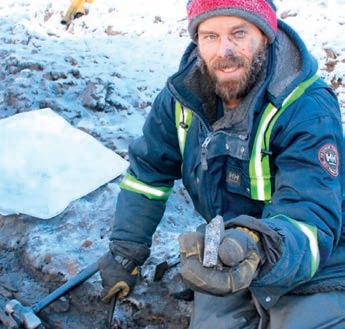
with a very low LCA (life cycle assessment) value compared with comparable sources.
3 No chemicals are used in the graphene production.
4 Generates zero waste and high production efficiency.
5 Substantial cost savings, as the process removes numerous steps and chemicals from the graphite purification process. Electric vehicle car manufacturers are looking for a stable, ESG-friendly, North American-sourced LIB with huge cost savings. Moreover, the technology that GEM and its partners have been working on for graphene LIBs has the potential to offer significant advantages over current LIBs, including the following:
1 Higher electrical conductivity/ density.

Graphene has significantly higher electrical conductivity than graphite, giving it more stability and allowing for faster-charging cells that can also deliver very high currents. Graphene offers higher heat conductivity, so batteries run

cooler, prolonging their lifespan even in cramped cases like smartphones.
2 Longer battery life. A significant increase in the amount of time the battery will hold a charge. Keeping a charge longer improves the battery’s lifespan. Graphene LIBs could have a service life of four times that of traditional hydrogenated batteries and twice that of lithium batteries.
3 Faster charging speed. A significant decrease in the time it takes to charge the battery.

4 More charge cycles.
The number of times a battery can charge in its lifetime increases.
5 Lighter and smaller.
Graphene can make batteries that are lighter and slimmer, durable, and suitable for high-capacity energy storage. The characteristics of graphene significantly reduce the weight of the battery by up to 50% of a traditional battery. This decreases the weight of an electric vehicle, thus improving its efficiency.
6 More power.
The power storage capacity is three times that of the best products on the market.




7 Travel longer.
An electric car powered by graphene batteries has been shown to travel up to 1,000 kilometres, and its charging time is less than 8 minutes.
8 Fits into the current LIB process. This technology is expected to be readily integrated into existing LIB development and production line processes. CMJ
Mineral: Chalcopyrite
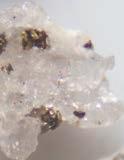
Particle Size: 800 x 150µm














Mineral Expression: 1% of Surface Area




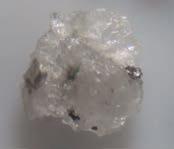

Copper Recovery: >90%
•Grind coarser at same recovery
•Reduce coarse values lost to tailings








•Increase throughput

•Reduce primary grinding power consumption




•Generate coarser tailings
Coarse Particle Flotation... this changes everything.

Call 1.604.952.2300 or visit EriezFlotation.com for technical papers, to arrange lab/pilot testing, or complete flowsheet development.
34 | CANADIAN MINING JOURNAL www.canadianminingjournal.com
>600µm particles recovered using HydroFloat CPF
Taking samples from surface graphite. CREDIT: GREEN BATTERY MINERALS
By Steve Gravel
Mine waste biotechnology
A differentiator for Canadian critical minerals
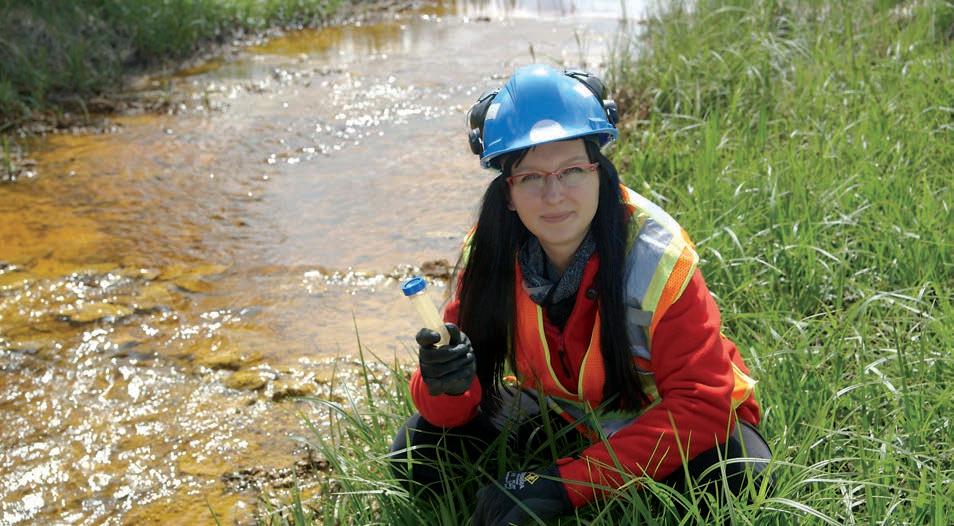
How can Canada take advantage of the critical mineral opportunity while still holding true to values like environmental stewardship and a commitment to ESG performance?
As someone who works in the Canadian innovation sector focused on mining, I may be a bit biased, but I think a big part of the answer can certainly be found in our ability to innovate new ways of doing things. New, eco-friendly technologies and techniques can accelerate critical mineral development and ensure that the minerals mined in our country are extracted in a method with the least environmental impact possible. Over the last decade, I have been fortunate enough to have a front row seat for the exciting development of one group of technologies that will contribute to this effort, biotechnologies. I have seen this nascent technology develop from early lab-based proof of concepts to the precipice of a full-scale specialized research centre focusing on accelerating the deployment of these technologies in the field. Here is some of the story so far.
I attended a presentation on a particularly warm June day in 2012 at the Vale Living with Lakes Centre at Laurentian University in Sudbury. The centre had not been open long, and the air conditioning had not yet been optimized to cope with the heat.
The topic being discussed was new to me. It was about a concept called biomining. Dr. Nadia Mykytczuk, then a research scientist at the university, was extolling the benefits of this exciting process through which micro-organisms are harnessed, optimized, and used to break down mine waste. As a technology lover, I was instantly obsessed with the idea that bugs eat rocks and make it easier to manage mine tailings. At the time, Dr. Mykytczuk’s work focused on cold adapted strain of bacteria extremophiles called Acidithiobacillus ferrooxidans that remain active in their mine waste eating duties even at ambient temperatures up to –15°C. While the winter season seemed far from my mind as I sat in the sweaty lecture hall, this was an important discovery as it meant that leaching methods that were, until that point, thought to be only suitable for hotter climates could potentially be used in northern climates as a means of remediating mine waste.
After her talk, I immediately rushed to the lectern to see how I could be involved or somehow be part of bringing this technology to life. After this initial meeting, Dr. Mykytczuk has had remarkable success in piloting techniques and technologies like this with various industry partners. Though successful, Dr.
CONTINUED ON PAGE 36
OCTOBER 2023 CANADIAN MINING JOURNAL | 35 CLEAN MINING
Dr. Nadia Mykytczuk, CEO of MIRARCO Mining Innovation. CREDIT: MIRARCO
Mykytczuk and I often corresponded about how to effectively translate this new knowledge from the lab to the field. Early conversations circled around programming and infrastructure that would shepherd research in biotechnology solutions to willing mining sector adopters. At the time, these were just musings, as it would take time for a sharp vision to coalesce. We did not have to wait too long.
Getting biotechnology solutions proven, scaled, and adopted in the mining sector has not been without its share of chal-
lenges. There is an identified need to make these important technologies faster and easier to adopt. Enter the Centre for Mine Waste Biotechnology; in many ways, a culmination of Dr. Mykytczuk’s work, the centre will work to provide a pilot-scale facility equipped with tools and expertise to accelerate the commercialization of genomics-based bioremediation and bioleaching technologies. Access to this scale of research is a crucial step in bridging bench-to-market gaps in the commercialization pathway. Led by recognized mine waste experts from academia and industry who are experienced at successfully bringing discoveries from bench to mine, the centre will move waste biotechnology innovations from research ideas to reality.
The core technical function of the centre will be multi-faceted to support technologies from multiple subject areas at various stages of development towards deployment. The centre’s team, along with multi-stakeholder collaborators, will work across sectors to develop and test biotechnology treatments for extracting minerals, repurposing waste into usable products, and stabilizing environmental contaminants. Critically, this will not be theoretical research. Rather, the centre will be focused on applied projects and further biotech startups at higher technology readiness levels focusing on technology from the viable prototype stage through to implementation and commercialization.
Currently, the team at MIRARCO Mining Innovation, where Dr. Mykytczuk is now CEO, is working hard to make the centre a reality. She is joined by a group of people that share in the vision for the centre who are working behind the scenes to advance the cause. While there is still much work to do, the centre offers an attractive vehicle to accelerate critical mineral production while also protecting the environment. For anyone paying attention to the projections for new mineral demand over the next few decades, it is obvious that mining intensity is set to increase immensely. To maintain competitive advantage, initiatives like this centre will be critical. For the electric vehicle market, it is not enough to make materials available to the auto sector. The true advantage for Canada will be to make these materials available while employing all-Canadian technologies that extract, refine, and manage waste in the cleanest way possible. CMJ
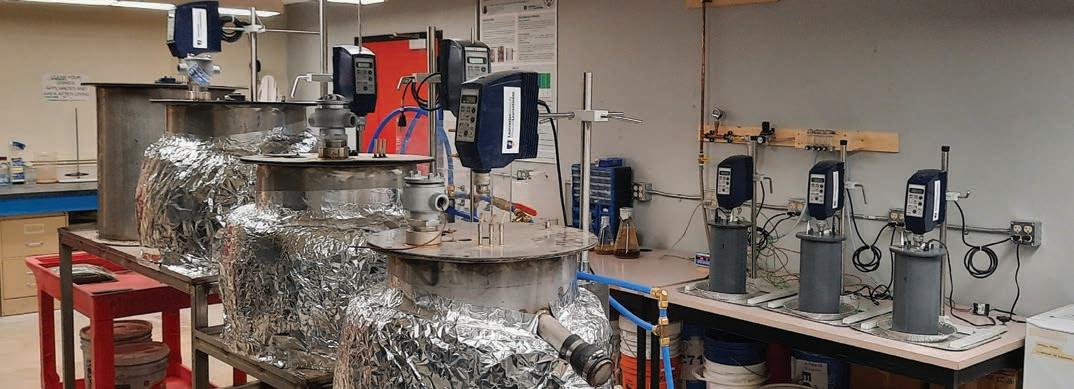
36 | CANADIAN MINING JOURNAL www.canadianminingjournal.com
CLEAN MINING
Steve Gravel is the manager of the Centre for Smart Mining at Cambrian College.
Pilot-scale bioreactors. CREDIT: MIRARCO
By Donna Beneteau and Jeanie Wills
Crafting a fresh definition for modern mining
In February 2023, McKinsey and Company printed an article entitled “Has mining lost its luster? Why talent is moving elsewhere and how to bring them back.” The report outlines the challenges facing the mining industry in its recruitment of new, young talent, especially in the “specialized fields of mine planning, process engineering, and digital data (data science and automation)” (2023). Along with four areas of intervention the report advises upon, it also suggests that the mining industry needs to examine how it defines its core needs. For example, McKinsey and Company say, “The mining industry sometimes struggles with defining ‘capability’ too narrowly, focusing predominantly on role-specific technical competence” (2023).
The report invites the mining industry to consider a “more holistic definition of ‘capability’ should be used, [which includes] leadership skills, broader business awareness, cross-functional expertise, and digital savviness” (2023). Chair of the Australian Academy of Sciences National Committee of the Earth Sciences, commenting on lower enrollment trends in geoscience, says this trend suggests that “governments and the broader public are insuffienctly aware of the vital role of geoscience in understanding the broad interface between humans and our planet, including pressing concerns about changing climate, scarce sub-surface water resources, and the emerging need for critical metals for our decarbonized future” (Lismore-Scott, 2023). Like McKinsey and Company, we suggest that the mining industry should define itself more accurately if it wants to increase talent recruitment.
The authors compared definitions of mining in online dictionaries and discovered that based on dictionary definitions, the industry looks unimpressive, basic, and possibly even unappealing. For example,
> The process or business of working mines.
Source: Merriam-Webster (https://www.merriam-webster. com/dictionary/mining)
What definition best represents the word “mining?” 1
The process or business of working mines
Source: Merraim-Webster 3
Mining of rock is the extraction of valuable minerals or geological materials from the earth’s crust through various excavation techniques.
Source: Chat.OpenAI 5
The process of getting coal and other minerals from under the ground.
Source: Oxford learner’s Dictionaries
> The process of getting coal and other minerals from under the ground.
Source: Oxford Learner’s Dictionaries (https://www. oxfordlearnersdictionaries.com/definition/english/ mining?q=mining)
> Mining is the industry and activities connected with getting valuable or useful minerals from the ground, for example coal, diamonds, or gold.
Source: Collins Dictionary (https://www.collinsdictionary. com/dictionary/english/mining)
Based on these definitions, mining seems to be an industry that is narrowly focused on excavation and digging which may be perceived as uninteresting. We checked with Chat.OpenAI to see if it may reveal something more broad and received this suggestion for a definition:
> Mining of rock is the extraction of valuable mineral or geological materials from the earth’s crust through various excavation techniques.
Source: Chat.OpenAI (https://chat.openai.com/)
This definition is a similarly limited because it still does not capture the entire essence or significance of mining. All human material needs are met in one of two ways: through agricultural work or
2
Mining is the industry and activities connected with getting valuable or useful minerals from the ground, for example coal, diamonds, or gold.
Source: Collins dictionary
4
The science, art, or practice of excavating the earth and in varying degrees the preparation and marketing of the resulting products.
Source: Adapted from definition of agriculture by Merraim-Webster
through mining. This phrase suggests a natural relationship between mining and agriculture; however, the capaciousness of the definition for mining is absent from the most basic place we go to learn the meaning of words. In scouring dictionaries to see how agriculture is defined, we found this definition of agriculture in Merriam-Webster:
> Agriculture is the science, art, or practice of cultivating the soil, producing corps, and raising livestock and in varying degrees the preparation and marketing of the resulting products.
Source: Merriam-Webster (https://www.merriam-webster. com/dictionary/agriculture)
In adapting that definition, we suggest that a more meaningful definition of mining is
> The science, art, or practice of excavating the earth and in varying degrees the preparation and marketing of the resulting products. Similarly, then the definition of ‘mine’ can be modified to provide further clarification and detail about the applications of a word’s primary meaning. In the Merriam-Webster on-line dictionary, the current definition is:
OCTOBER 2023 CANADIAN MINING JOURNAL | 37 REBRANDING MINING
Mine
1 a a pit or excavation in the earth from which mineral substances are taken
b an ore deposit
Definitions often include sense extensions that provide further clarification and detail about the applications of a word’s primary meaning. Deciding what Beneteau considered to be a mine was one of the challenges in creating the historical Mines Hub that can be accessed at https://www.cim.org/the-hub/. Considering the types of resources included to-date, we suggest the definition for “a mine” could be as follows:
Mine noun
a A location from which various valuable resources are extracted from the earth
h trenches
j field stones
k geothermal energy
i tailings that are reprocessed
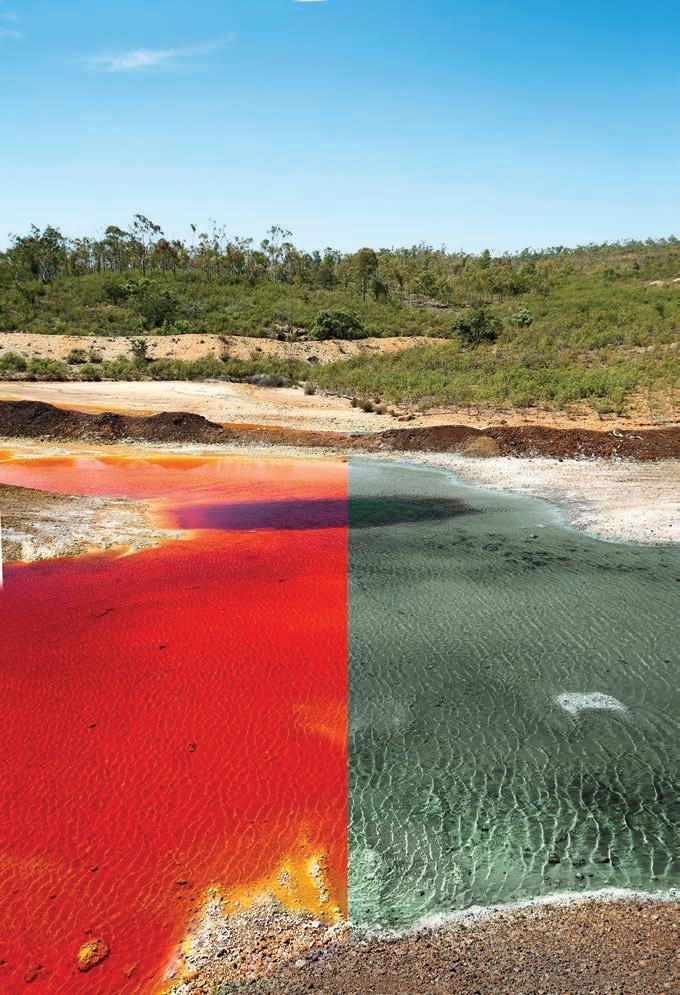
Definitions matter. They provide clarity and a common framework for effective communication and common understanding. Proper definitions for the mining industry could be a subtle way of making the industry more attractive so that the “talent squeeze” discussed by McKinsey and Company could be improved. Mining is viewed as the least attractive industry to young talent (aged 15 to 30) in the sectors including oil and gas, construction, manufacturing, transportation and logistics, financial services, arts and culture, high tech, and healthcare according to their survey. However as pointed out in Deloitte’s Tracking the Trends 2023 report (page 17/71), the mining industry has a “foundational role as a provider of raw materials” for the creation of low-carbon future.
The hopes of the authors are to engage the mining industry in creating a definition that represents what we do. With enough written evidence, perhaps we
can convince lexicographers to update the definitions. With feedback from experts in mining, we can create a move towards updating the definition of mining. We need to provide arguments for the proposed improvement. To provide this evidence we need to start using the words “mining” and “mine” as they apply to the industry to demonstrate how mining is crucial for a sustainable future.
Geologists, engineers, and scientists working in the industry prove that mining needs people trained in science-based fields. It is an art to excavate the earth. The earth exhibits a remarkable level of variability, and no matter how much effort we put into modelling to attempt to understand our resources and reserves, we will never know what is there until we excavate the rock. Various factors such as seismic events, rockfalls, fluctuating ore grades, shifting chemistry, and more contribute to this unpredictability.
Finally, every single one of our products must be marketed. It may be the raw resource we can send right to market like gravel, or the product may require processing such as to remove and concentrate base metals or gold. Mining has been practiced for thousands of years. Throughout history, mining technologies and techniques have evolved, as well as the skillsets of those doing the excavations. As the McKinsey report notes, new “talent” has new needs: a fuller definition of mining that reflects its 21st century role might help the industry in its recruitment. Increased productivity and safety brought significant advancements to mining equipment and skills. Mining is crucial to the global economy as we provide the raw materials that fuel the economy, including those for the transition to a green economy. Ultimately, somebody’s first perception of the industry may be through a simple dictionary definition. Please join the discussion and help shape the narrative of what modern mining is.
Donna Beneteau, PEng, MASc, is an assistant professor at the Department of Civil, Geological, and Environmental Engineering at the University of Saskatchewan (USask). Jeanie Wills, PhD, is Seaman Chair in Technical and Professional Communication and Associate Professor, USask Ron and Jane Graham School of Professional Development.
The authors acknowledge the contribution of Heather Ecobichon in creating the graphics.
www.canadianminingjournal.com
CMJ
Preventable.Prevented. .com REBRANDING MINING
By Serge Raymond
It is a small weld after all Managing fall maintenance:
For processing plant managers, vibrating screen maintenance can feel like a tricky tug of war. What maintenance items are so urgent they must be handled now, and which can be temporarily patched and get more full attention later? Which of these can be done between shifts, avoiding costly downtime, and which will require a complete plant shutdown?
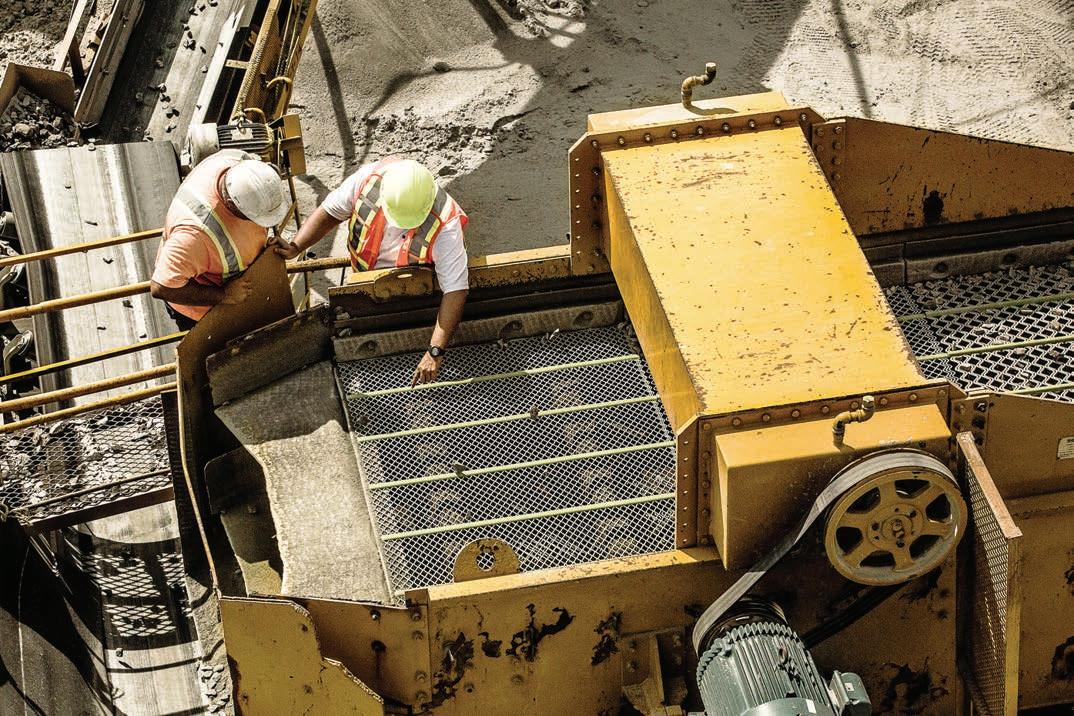
The tension is especially high in the fall when many plants try to meet their production goals before the inevitable winter off-season. Depending on whether the year went as planned, this can be a stressful time. Small welds and replacement of minor wear parts are typically handled between shifts, but larger maintenance may require a painful pause in production. It is sometimes tempting to delay certain maintenance items and try to push through to the end of the season.
Here are a few tips for navigating fall maintenance and setting plants up for success next spring.
1 Look and listen
Diagnosing needed repairs is a year-round priority, but especially so in the fall, when unexpected breakdowns can be
especially unwelcome. Be sure to continuously listen to the vibrating screens and pay attention to unusual noises. The source of grinding noises in particular should be identified and addressed as soon as possible. Also inspect the machine for signs of wear, cracks or other damage. This includes looking out for worn or broken screen media.
The weeks and months leading up to winter shutdown are a good time for a service visit from the equipment manufacturer. Vibration analysis software can identify problems undetectable to the eyes and ears. This tool measures things like g-force, stroke RPM, and lateral movement. It can generate a viewable report within seconds, providing useful information that can help analyze the condition of the machine and show where to direct maintenance efforts.
2 Pick your battles
Once all current and potential maintenance issues are identified, it is time to prioritize. Small maintenance items can often be completed between two shifts to avoid shutting down
OCTOBER 2023 CANADIAN MINING JOURNAL | 39 SCREENS
CONTINUED ON PAGE 40
identify problems undetectable to the eyes and
Vibration
analysis software can
ears. CREDIT: MAJOR
the plant. Replacing wear parts like U-channel rubber, for example, should not be put off. This part is critical for protecting the support bar and replacement should remain a priority in the fall, even though it may be tempting to skip it. Other items like clamp rails may be worn from the impact of falling material and once again can be changed quickly enough to avoid a prolonged shutdown. Smaller maintenance items like these are common sense fixes to make no matter the season before they turn into bigger problems.
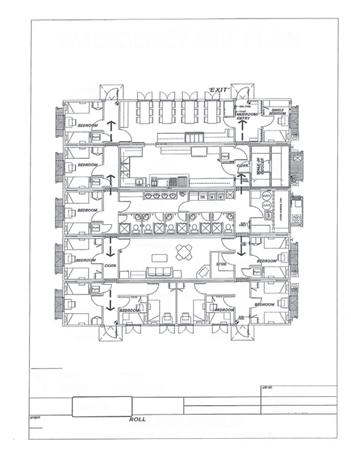
Larger maintenance items, such as changing all the machine’s bearings and springs or replacing support bars to maintain the crown, require a more significant time investment. These are the items for which it is tempting to look the other way in the fall if you are behind schedule, but they can also cause the most damage if a sudden breakdown does occur. If observation, or a service professional armed with vibration analysis technology, shows the problem needs addressing, it is better to take care of it right away than to wait and potentially face worse consequences later.
3Take notes
Fall is the perfect time to gather data about the state of employed equipment and a plant’s overall productivity. Machines that gave trouble during the year might be good candidates for more in-depth service in the off-season, or complete replacement if necessary. Evaluate equipment for required maintenance in the fall and take notes on any issues that were not urgent but should be addressed before spring. Documenting winter maintenance needs can ensure critical maintenance is not forgotten about.
The end of the year is also a good time to evaluate plant productivity. Were there any bottlenecks in the process? Which machines seemed to hinder productivity? Isolate any equipment that held back the entire plant’s performance. For vibrating screens, it could mean it is time to upgrade to a machine with more capacity or screen media that better suits the conditions the equipment is taking on.
A strategic mindset
When winter is fast approaching, it is often easy to try to get away with a “patch maintenance” approach to avoid taking the time to do it right. Sometimes the maintenance can wait, but often it could be a critical mistake to leave it to chance. Being intentional about maintenance, even when rushed, is the best way to ensure the safest and most productive plant operations. CMJ
CAMPS FOR SALE

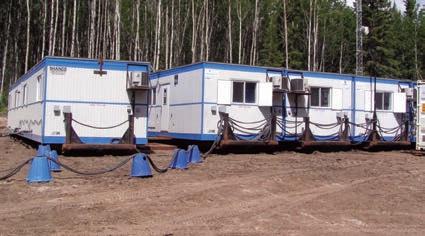
40 | CANADIAN MINING JOURNAL www.canadianminingjournal.com
www.bigskycatering.ca 403-347-3838
Camp 6 Unit All Electric 27 Person Shanco Camp 2005 Camp 5 Unit All Electric 19 Person Shanco Camp 2006 SCREENS
Serge Raymond is a product specialist at Major Screens.
Big
Sky
Provides Full Service Camp & Catering.
Larger maintenance items, such as changing all the machine’s bearings and springs or replacing support bars to maintain the crown, require a more significant time investment. CREDIT: MAJOR
By Anthony Ferrenbach
Resin injection in ground development
Tunnel development is a main challenge in underground operations. In unstable ground conditions, most fortification methods are applied post-advancement. These traditional methods, such as anchors and mesh, can be limited when the ground is severely altered, and progress cannot be made. The risks of gallery over-excavation and rock bursts are too costly for underground operations. In these conditions, applying a preventive fortification method using resin injection is crucial for safely advancing underground works.
In tunnel development, preventive fortification with resin injection implemented within the mining cycle can increase safety and efficiency within the operation. The fortification is carried out by drilling holes in the front ceiling parallel to the progress. A series of four or five holes (depending on the size of the tunnel) are made to place injection lances and packers in each of them. The lengths of the holes depend on the mine’s progress cycles, generally ranging from five to eight meters. If the resin injection length is six meters, and the mine can progress five meters before repeating the preventive fortification with resin, ensuring that the operators can consistently advance on the consolidated ground.
Once the injection lances and packers are in place, the injection can begin in each hole. The packer in the hole allows it to be pressurized and for the resin to be injected under pressure into the ground. This optimizes the migration of the resin within the ground’s cracks. With a setting time of two minutes, the resin seals the cracks close to the area to be consolidated. This reaction time of the resin not only allows for quick action after injection but also sectorizes the injection. This sectoriza-
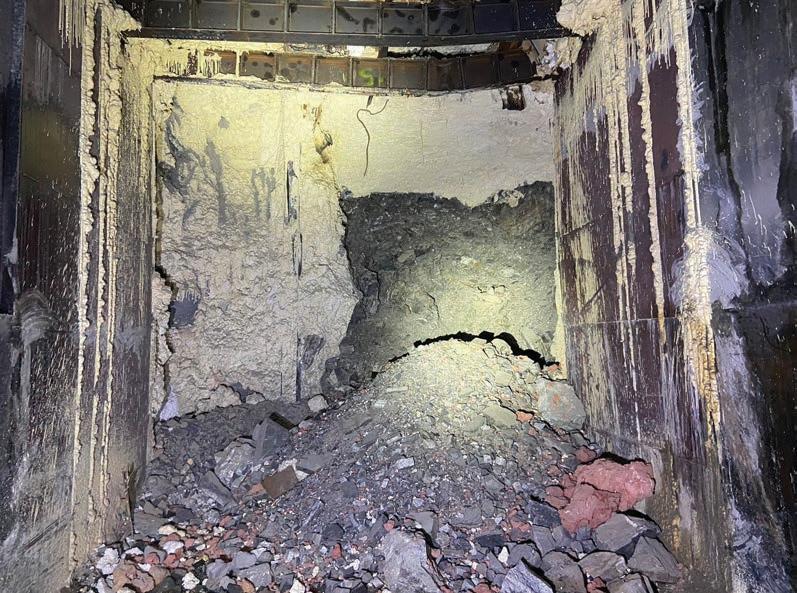
OCTOBER 2023 CANADIAN MINING JOURNAL | 41 UNDERGROUND MINING
Before resin injection CREDIT: WEBER MINING & TUNNELLING
CONTINUED ON
PAGE 42
BEFORE AFTER After resin injection. CREDIT: WEBER MINING & TUNNELLING Resin
WEBER MINING & TUNNELLING
injection. CREDIT:
UNDERGROUND MINING
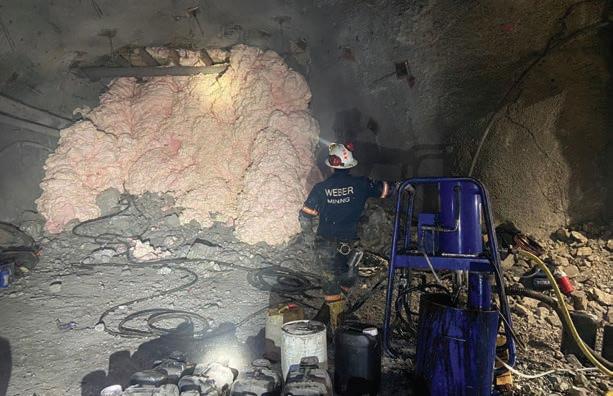
Ground consolidating resins present an ideal option in the development of tunnels in severely altered grounds, providing a good tunnel profile and preventing possible overexcavation or cavity generation in advancements.


tion ensures the resin is only injected into the area of interest to be consolidated, reducing the amount of product required. In this way, the cost of fortification is reduced, as well as the logistics and time needed to carry it out.
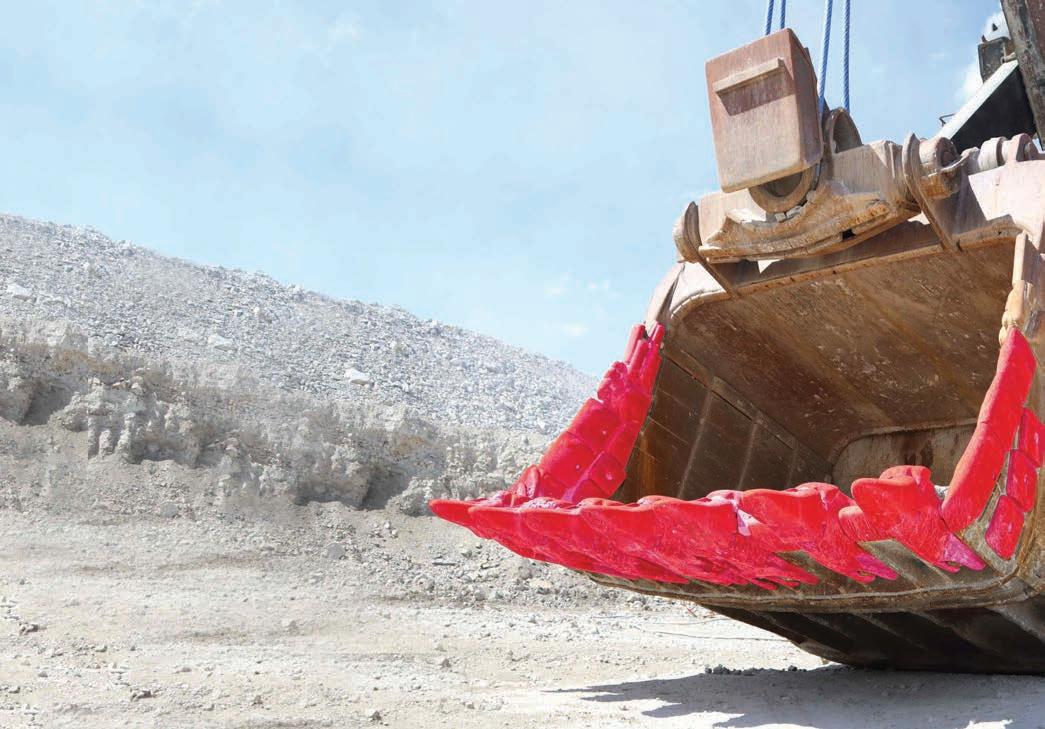
The mechanical properties of the consolidating resins make them ideal as preventive systems. In particular, most resins have a compressive strength greater than 30 MPa. With a bonding strength of 6 MPa and very low viscosity, they have a high capacity to bond and consolidate rock packages when migrating into ground cracks. Additionally, regardless of whether they

are injected into constantly stressed ground or in the presence of faults, the resins, being a flexible product, maintain cohesion over time with ground movements. They are also very versatile, as they can be injected into grounds with water or moisture without affecting their mechanical properties. In cases of ground with a high percentage of void, resins that expand 2 to 3 times their initial size can be used, optimizing the filling of ground cracks without greatly increasing the injected amounts or decreasing the fortification’s strength. Finally, once the template of holes is injected, the mine can resume its operation immediately, given the resin’s reaction in just a few minutes, avoiding delays in its operations even in extreme ground situations. CMJ
CR Powered by Epiroc’s SaberEdgeTM is the ultimate solution for rope shovel lips.
Its machined adapters and one-touch technology eliminate the need for re-tightening—it stays in place until it’s time to remove it. Installation and removal require no welding or special tool—thanks to its simplified GET locking system—enhancing safety, saving time, and extending machine availability.
Experience a new era of Whislerstyle lips with SaberEdge. Let’s start the conversation.
crmining.com


42 | CANADIAN MINING JOURNAL www.canadianminingjournal.com
Anthony Ferrenbach is the general manager at Weber Mining Mexico.
Discover a New Era of Whisler-Style Lips.
Cavity filling above fallen rocks. CREDIT: WEBER MINING & TUNNELLING
By John Sandlos
Unearthing Black history in the mining industry in Canada
In recent years, Black history in Canada has received growing attention, as topics such as slavery, civil rights struggles, the origins of Canadian hip hop, and Black labour struggles finally get their due.
But what about Black people in the mining industry? In the U.S., there are several excellent full-length books on Black miners, such as Joe William Trotter’s, Coal, Class, and Color; Robert Woodrum’s Everybody was Black Down There; and Sylvia Alden Roberts’ Mining for Freedom. In Canada, there is nothing of the sort. The omission could reflect Black people’s low participation rates in the Canadian mining industry. After all, the Canadian government did everything it could to discourage Black immigration from the 1910s until the 1960s, coinciding with major periods of growth in mining activity. And for those Black people who did manage to settle in Canada, racist hiring practices and the labour movement’s exclusion of Black people produced a strict “colour line” in many workplaces.
On the other hand, we know that Black communities have existed adjacent to important mining regions in Nova Scotia and western Canada. Major questions about their historical
relationship to the mining industry remain unanswered, though we do have some tantalizing historical material.
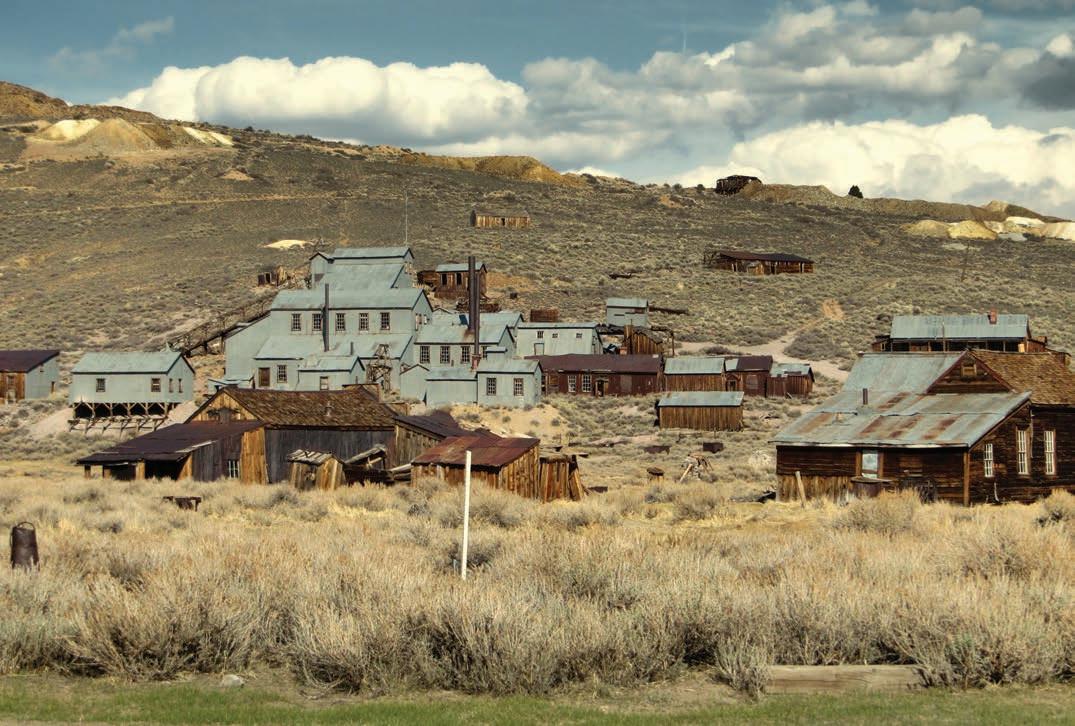
One of the earliest stories takes us all the way back to Quebec in the early 1700s. In 1729, François Poulin de Francheville, a wealthy Montreal fur trader, obtained permission from the King of France to mine iron deposits on his seigneury at Saint Maurice, near Trois-Rivières. By 1733, the Saint Maurice Forges had produced its first axes and knives, but Francheville died that year, just as the ironworks was growing into Canada’s first company town (with 300 to 400 residents) and an integrated mining and metalworks operation.
Francheville was also the owner of one of colonial Canada’s most famous enslaved people, Marie-Joseph Angélique, who had performed domestic work in his Montreal home since 1725. While it is unlikely that Angélique ever visited Saint Maurice, her work ensured that his Montreal home and his spouse, Thérèse, were cared for while he was away at the forges. After Francheville’s death in 1733, Angélique became the property of Thérèse, but petitioned for her freedom. Instead, Thérèse decid-
CONTINUED ON PAGE 44
OCTOBER 2023 CANADIAN MINING JOURNAL | 43 HISTORY OF MINING
PHOTO: ADOBE STOCK/KENZOS
ed to sell Angélique, in part because of her growing rebelliousness but also to cover financial commitments at the forges. Before being sent to a new owner, Angélique was arrested for allegedly setting fire to the Francheville home on April 10, 1734, sparking a much bigger blaze that eventually consumed 45 houses along with the original Hôtel-Dieu hospital. Angélique confessed to the crime, but only after brutal torture. Her guilt or innocence remains a mystery, but she was hung and then burned in the public square in June. While her story offers many insights into slavery and resistance in Canada, it also raises many questions about the contributions of slave labour, however indirect, to some of the earliest mining operations in colonial Canada.
Black people played a much more direct role during one of Canada’s first mining booms: B. C.’s gold rushes of the 1860s. In 1858, a group of about 800 Black settlers emigrated from the San Francisco area to Victoria, frustrated at the general racism they had experienced in the U.S., but also at the arrest of a man named Archy Lee as a fugitive slave despite such an act being prohibited under California state law. Victoria’s elite, especially the Governor, James Douglas, and the editor of the British Colonist, Amor De Cosmos, initially welcomed the Black settlers. As a result, many of the newcomers found pathways to success in their new home, including in the mining industry. Two of the settlers, Peter Webster and Mifflin Gibbs, opened a very successful outfitting business for prospectors. Others headed for the mainland to find gold. One man, Charles Alexander, earned enough money during the Fraser River rush to build a house and a farm near Victoria. At Barkerville, the centre of the Cariboo gold rush, 12 Black men and one Black women, Rebecca Gibbs, held mining licences (Gibbs also became a local poet of note). Henry McDame and John Robert Giscome formed the Discovery Company with several partners in 1859, working creeks in northern B.C. with some success. The McDame Creek near Cassiar, and the Giscome Portage Trail north of Prince George, are named after the two miners, a monument to the contributions of Black people to the development of mining in B.C.
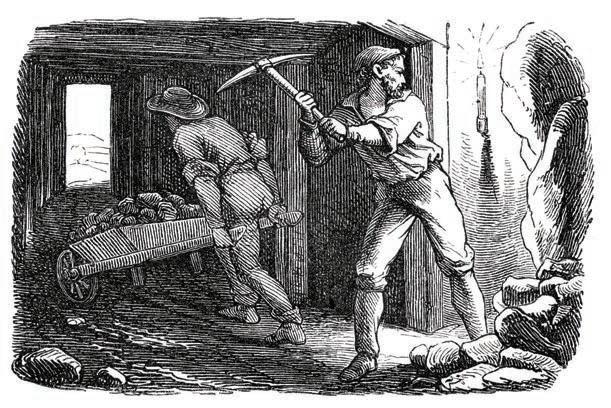
Racism did rear its ugly head at times. A dispute over a claim near Williams Creek led to a judicial decision denying the claims of the Black owners of the Davis Company. In 1858, a push from a pastor to segregate the Congregational Church in Victoria forced the Black settlers into their own church. Two
years later, a riot over newly segregated seating at the Victoria opera house signalled an end to the initial period of welcome for Black newcomers. Nonetheless, gold mining offered Black settlers in B.C. a way to raise investment capital, build businesses, and in some cases purchase the freedom of enslaved people in the U.S.
Undoubtedly, the most famous story of a Black miner in Canada comes out of the tragic Springhill mine disaster in 1958. Maurice Ruddick, a descendant of enslaved Black people brought to N.S. by Loyalists after the American Revolution, was one of “miracle miners” trapped underground after a seismic “bump” caused a shaft in the No. 2 Springhill mine to collapse. Ruddick was an active performing musician in Springhill, and he sang to comfort the six co-workers he was trapped with for nine days, all the while enduring excruciating pain from a broken leg. After the rescue of the miners, Ruddick became a celebrity for propping up the spirits of the other miners. After the story spread through the international media, the Governor of Georgia, Marvin Griffin, invited the rescued miners for respite at a luxury seaside resort in his home state, but told Ruddick and his wife they would have to stay in a trailer at a different location. The contrast between the white miners’ lavish accommodations and Ruddick’s trailer was well-documented in a photographic exposé in Life Magazine. Ruddick and his story have transcended such bigoted behaviour, however. He was voted the 1958 Canadian “citizen of the year” in a Toronto Telegram poll, his story earned its own “Heritage Minute” as a significant event in Canadian history, and Beau Dixon’s play, Beneath Springhill: The Maurice Ruddick Story, has kept the story alive, touring Canadian theatres since 2015.
Much work remains for historians to fully trace the intersections between Black history and the mining industry. I am currently at the beginning stages of a new mining history project where one objective is to learn more about Black miners’ experience in Canadian coal mines. If you have any stories to share, or leads on sources, do not hesitate to contact me via email at jsandlos@mun.ca. CMJ
John Sandlos is a professor in the History Department at Memorial University of Newfoundland and the co-author (with Arn Keeling) of “Mining Country: A History of Canada’s Mines and Miners,” published by James Lorimer and Co. in 2021.
44 | CANADIAN MINING JOURNAL www.canadianminingjournal.com
HISTORY OF MINING
PHOTO: ADOBE STOCK/STOCKSNAPPER
The most famous story of a Black miner in Canada comes out of the tragic Springhill mine disaster in 1958.
ON THE MOVE
Executive, Management and Board Changes in Canada’s Mining Sector
TOP MOVES IN THIS ISSUE
MANAGEMENT MOVES
» Matthew Grainger was named Alpha Exploration VP of business development.
» Nicholas Rowley became VP of business development with Atlas Lithium.



Tim Bekhuys
FPX Nickel named Tim Bekhuys as senior VP of sustainability and external relations. He recently worked for SSR Mining in a similar capacity. Bekhuys will use his experience in community engagement, environmental assessment, and permitting activities to advance the company’s Baptiste nickel project in central British Columbia. His 40-year-plus career includes bringing the Blackwater gold mine and Mt. Milligan copper-gold mine to production.
Jessica McDonald was recently named to the Champion Iron’s board. She holds a B.A. in political science from the University of British Columbia, is a graduate of the Institute of Corporate Directors, and holds a certificate from the National Association of Corporate Directors and Carnegie Mellon University. She also served as deputy minister to the B.C. premier and head of the BC Public Service. McDonald also serves on the boards of several miners.
NexGen Energy’s new CFO Ben Salter was previously the company’s VP of finance. He is a CPA and holds a Bachelor of Commerce from the University of Victoria. In his 15 years of experience, he has worked in a variety of industries, with a focus on the energy and commodities sectors. Prior to NexGen, he worked in finance at Methanex Corp. and Innergex Renewable Energy (previously Alterra Power).
» Austin Gold announced Darcy Higgs as VP business development and Donna Moroney corporate secretary.
» Burin Gold changed its name to Infinico Metals and named Sam Walding as president and Szabolcs Orban as VP exploration.
» Demesne Resources named Adam Virani CEO and secretary.
» Discovery Silver named José Jabalera as director of corporate affairs Mexico, Gord Leavoy as VP mineral processing, and Bindu Satyajit as secretary and manager of administrative services.
» Horizonte Minerals named Fernando Marino operations director for the Araguaia nickel project.
» Robert Payment joined Ion Energy as CFO.
» Jubilee Gold Exploration reports that Jeffrey Becker is no longer CEO and Warren Becker is the interim.
» Bruce Jago, a founder of Laurentian University’s Goodman School of Mines, died at the age of 66.
» Laurion Mineral Exploration hired Steven Hunter to provide investor relations services.
» Leeward Capital announced the death of CEO Johannes Kingma
» NexGen Energy appointed Ben Salter as CFO.


» Perpetua Resources named Michael Wright VP projects.
» Keith Boyle was appointed Reunion Gold CEO.
» Wendy Kaufman was named to the Sierra Metals board.
» Silverstock Metals named Lesia Burianyk as CFO and Leah Hodges as secretary

» Valterra Resource appointed John Kerr as president and Killian Ruby as director.
» Vedanta Limited appointed John Slaven as CEO for its aluminium business, effective Oct. 3, 2023.
» Wescan Goldfields announced the resignation of VP of exploration Mark Shimell
SEPTEMBER 202 3 | VOLUME 5 | ISSUE 6
SPONSORED BY ERIK BUCKLAND Partner Global Mining Recruitment M: +1 416.854.8468 E: erik.buckland@lincolnstrategic.com W: www.lincolnstrategic.com
OCTOBER 2023 CANADIAN MINING JOURNAL | 45
To
send your management, board and award announcements directly to us for inclusion in the next newsletter, please email your submission to editor@canadianminingjournal.com
Jessica McDonald Ben Salter
BOARD ANNOUNCEMENTS
» Axmin appointed John Gravelle to its board.
» Bonterra Energy appointed Dave Humphreys a director.
» The Canadian Chrome Company named Jeffrey Steiner to its board after the resignation of Fiona Blondin.
» Champion Iron Limited named Jessica McDonald to its board.
» Brandon Kou was appointed as a director with Demesne Resources.
» Discovery Silver added Barry Olson as independent director.
» Jubilee Gold Exploration named Maureen L. Friesen as a director; and Warren Becker, who currently serves as interim CEO, as interim president, secretary and chair.
» Karora Resources appointed Tony Makuch to the board of directors.
» Kinn Cortez resigned as a director with Mantaro Precious Metals
» Edward Farrauto resigned as Newcore Gold director.
» North Peak Gold appointed Ty Erickson to its board.
» Reconnaissance Energy Africa named Iman Hill as a new independent director.
» Sixty North Gold Mining appointed William van Breugel as a director.
» Spanish Mountain Gold announced the retirement of Donald Coxe and the resignation of Larry Yau from its board.
BUSINESS DIRECTORY




» Stillwater Critical Minerals named Nora Pincus as an independent director.
» Liam Hardy and Owen Garfield were named to the Teako Minerals board.
» Osvaldo A. Oller was appointed to the Unigold board of directors.
» Lawrence Page resigned as Valterra Resource president and will now serve as board chair.
» Western Metallica Resources appointed Paul J. Pearson a director.
INDEX AMC Consultants 46 www.amcconsultants.com BBA Inc. 23 www.bba.ca Brokk 33 www.brokk.com CR Mining 42 www.crmining.com Dux Machinery 16 www.duxmachinery.com Eriez Manufacturing 34 www.eriezflotation.com GMS Mine Repair 5 www.gmsminerepair.com Haver & Boecker 7 www.haverniagara.com Liebherr 11 www.liebherr.ca Major Drilling 19 www.majordrilling.com Panorama Helicopters 2 www.panoramahelico.com Roll’n Oilfield Industries 40 www.rolln.com Rosta 31 www.rosta.com Sandvik Mining 48 www.rocktechnology.sandvik SMS Equipment 24/25 www.smsequip.com Sofvie 46 www.sofvie.com SRK Consulting 38 www.srk.com Stantec Inc. 9 www.stantec.com WSP Canada 36 www.wsp.com
ADVERTISERS
1,800+ CLIENTS
8,000+ PROJECTS 38+ YEARS’ EXPERIENCE Corporate Consultancy Geotechnical Engineering Geology Mining Engineering amcconsultants.com 1,800+ CLIENTS
8,000+ PROJECTS 38+
EXPERIENCE Corporate Consultancy Geotechnical Engineering Geology Mining Engineering amcconsultants.com
CLIENTS
PROJECTS
EXPERIENCE Corporate Consultancy Geotechnical Engineering Geology Mining Engineering amcconsultants.com
CLIENTS
PROJECTS
EXPERIENCE Corporate Consultancy Geotechnical Engineering Geology Mining Engineering amcconsultants.com 46 | CANADIAN MINING JOURNAL www.canadianminingjournal.com
|
|
YEARS’
1,800+
| 8,000+
38+ YEARS’
1,800+
| 8,000+
38+ YEARS’
2.0
AI Powered Search


TNM Marco Polo’s integrated chatbot lets you quickly and easily search more than 2,600 global mining companies and 13,900+ properties by just asking a question.



5,000+ Site-level Contacts


















































Search more than 13,900 global mining properties for the right contact and connect with them directly through a single click.



















Learn more at marcopolo.tnm.global


Market Intelligence, Simplified. SCAN ME
BATTERY POWERED DRILL RIGS MAKE THE CHANGE
Sandvik is committed to enabling sustainability through electrification. We are the only OEM with field-proven battery technology in all underground drilling applications. Our intelligent and fully electric i-series drill rigs reduce harmful emissions underground and come with our patented charging while drilling technology.
Discover our range of battery powered drill rigs at ROCKTECHNOLOGY.SANDVIK/BEVDRILLS
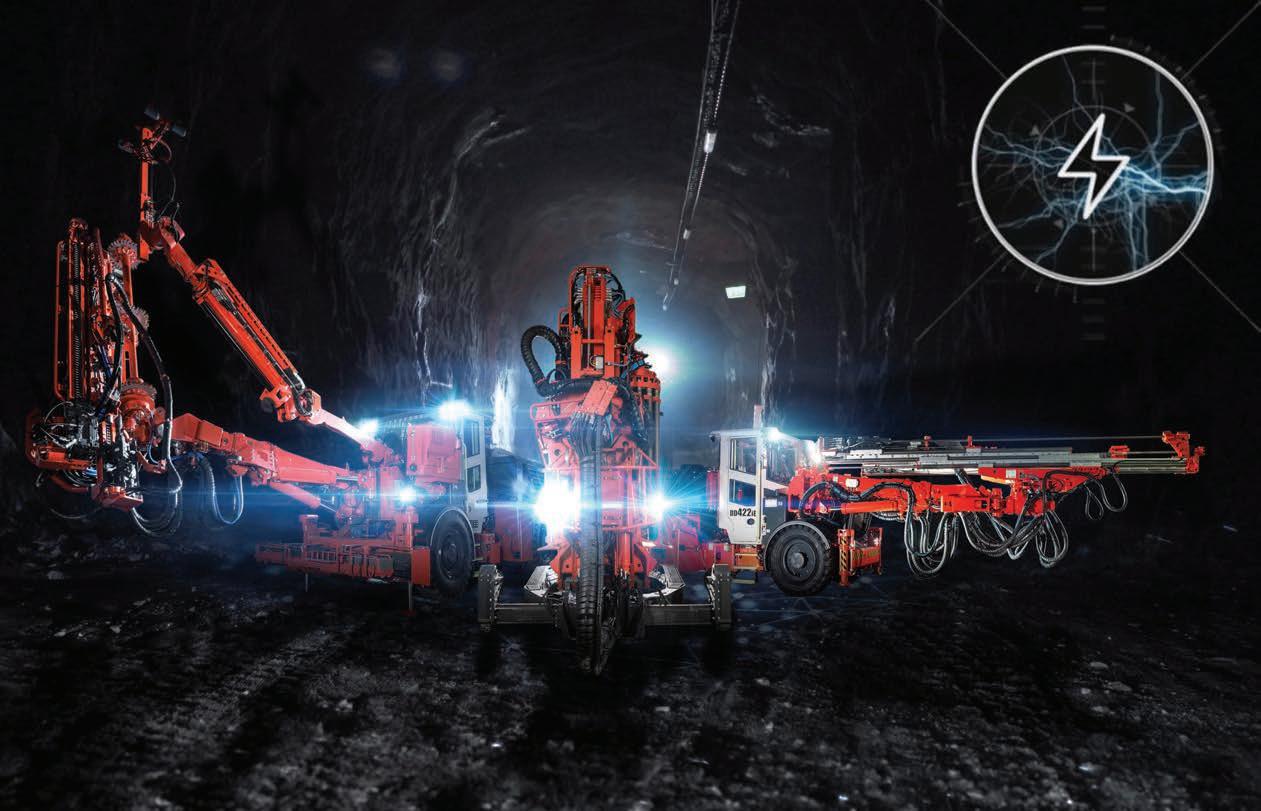
ZERO EMISSIONS | HIGHLY AUTOMATED | PATENTED CHARGING WHILE DRILLING
