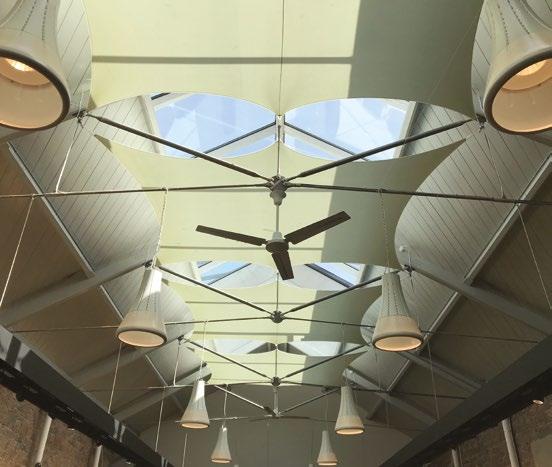
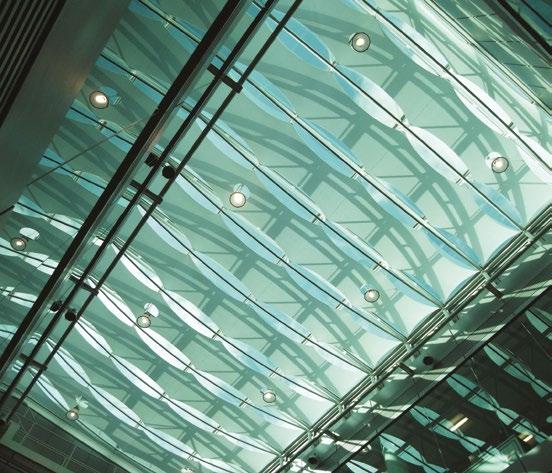
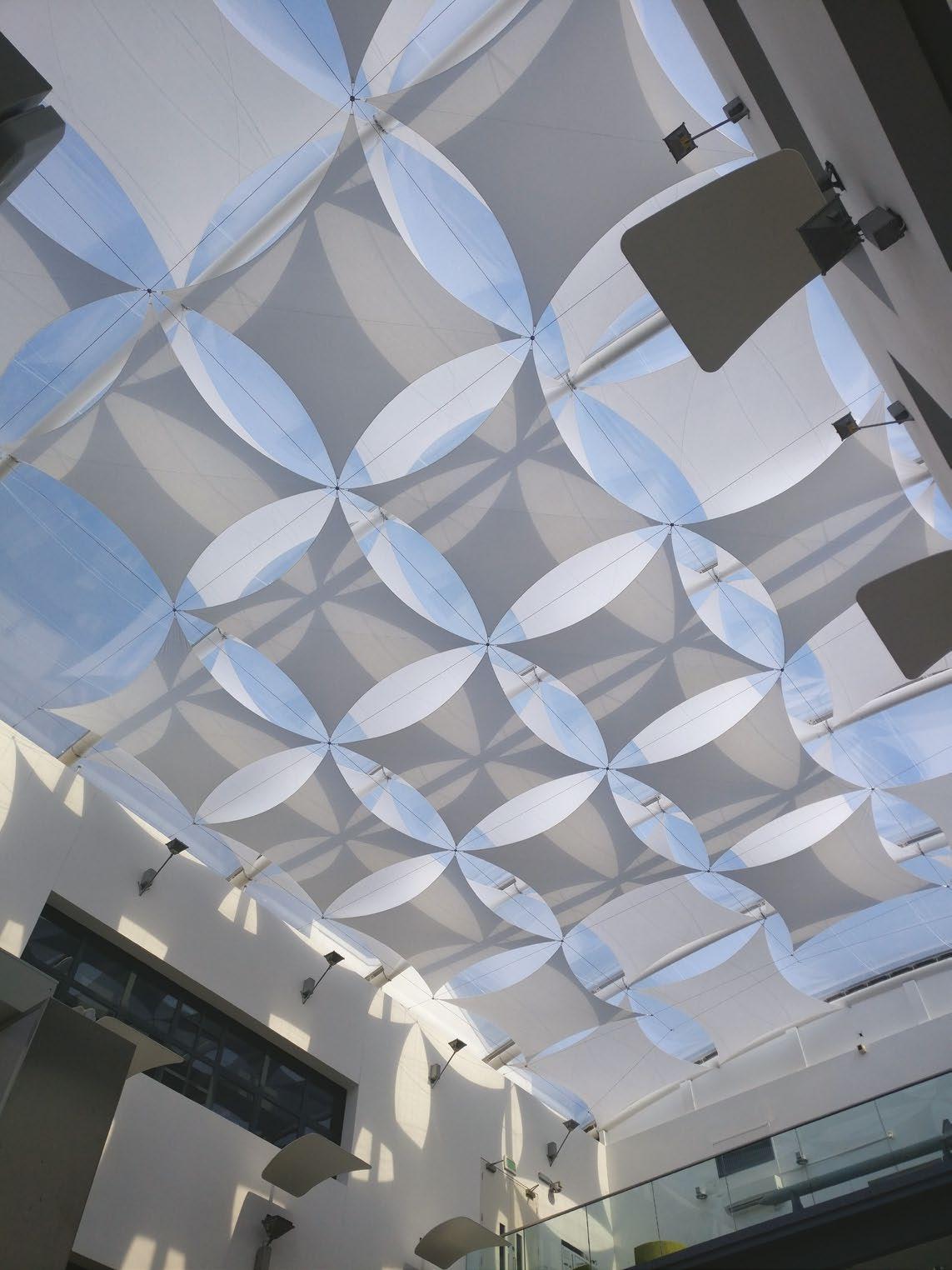
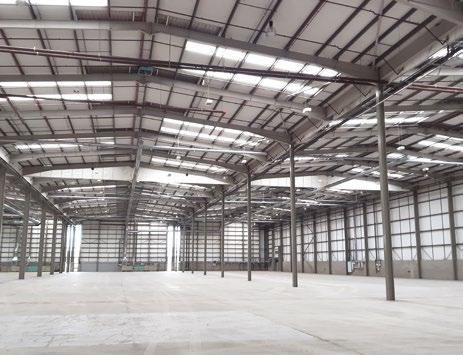
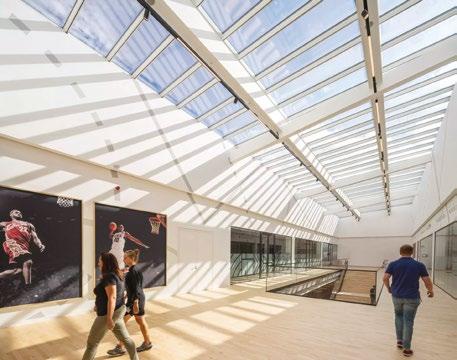
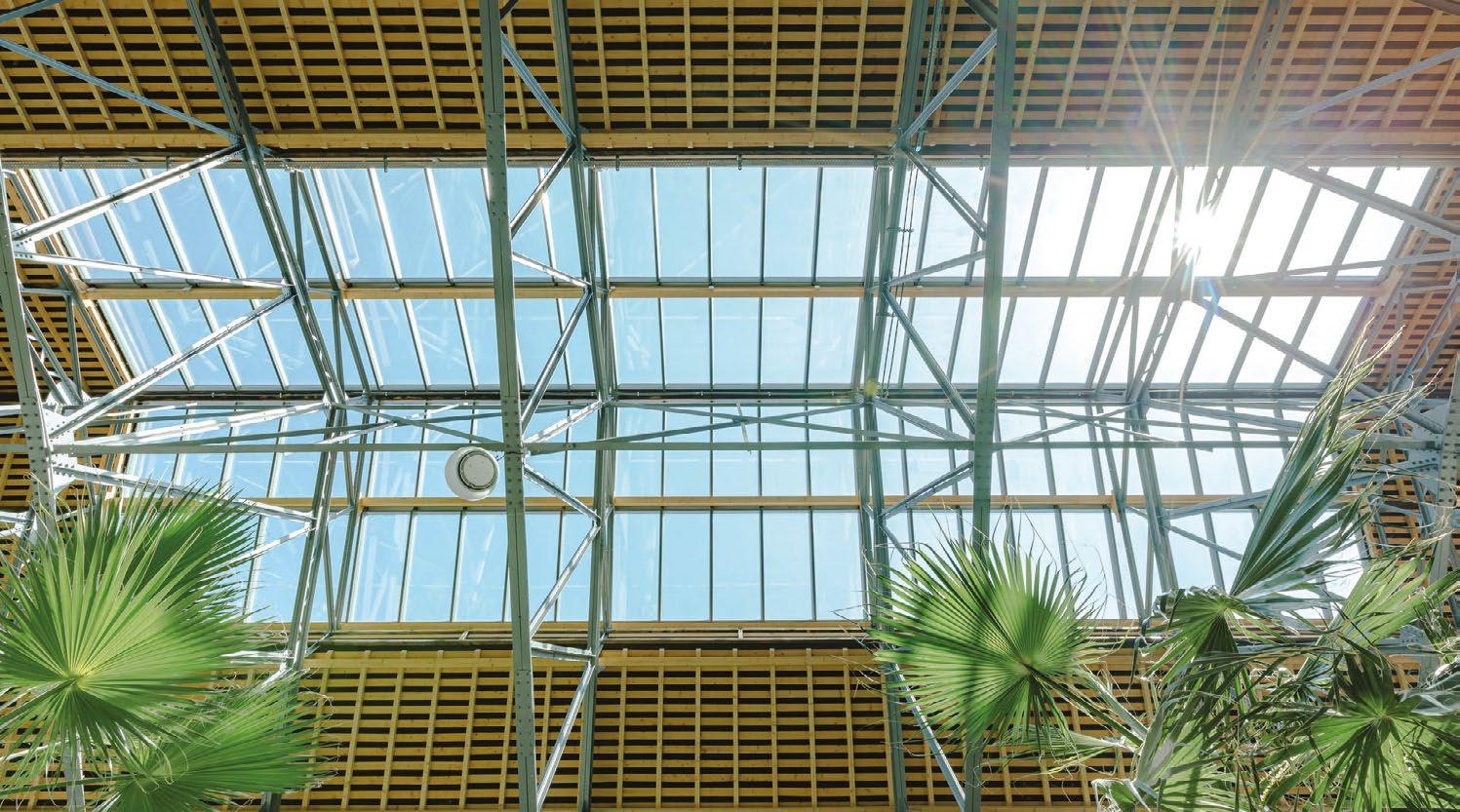
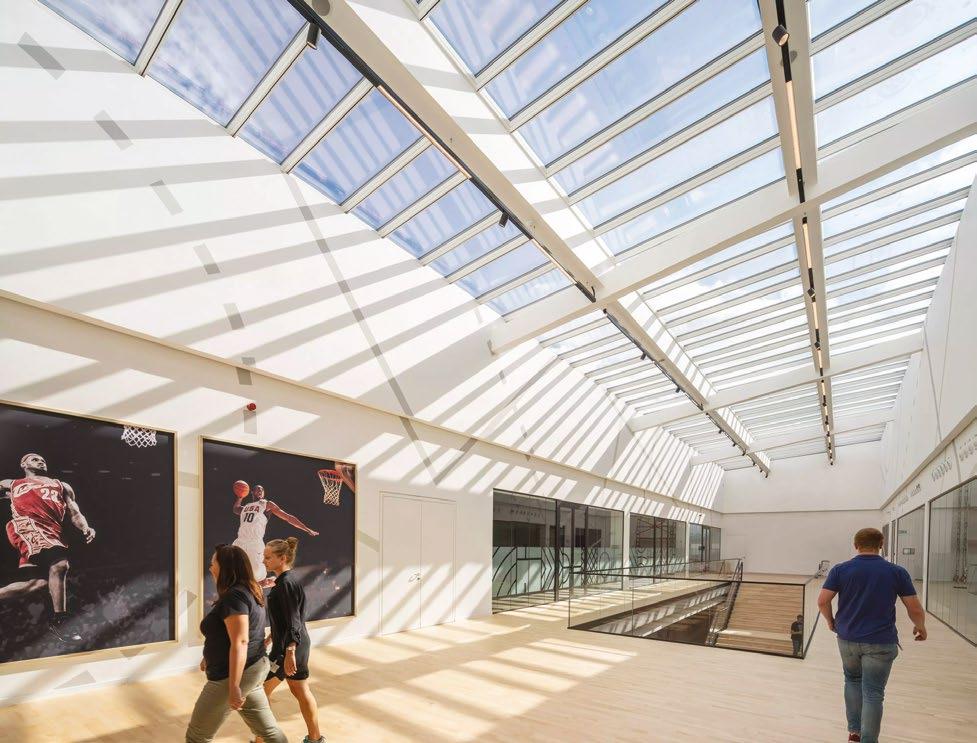
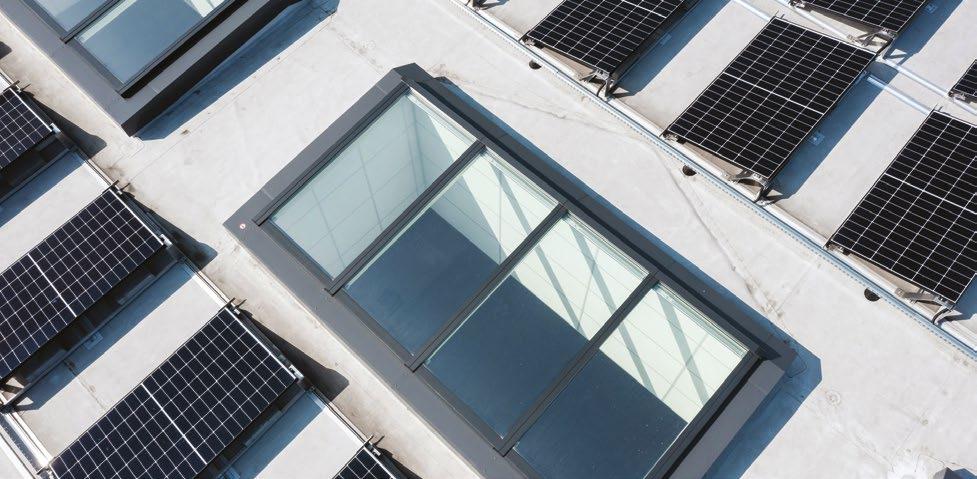
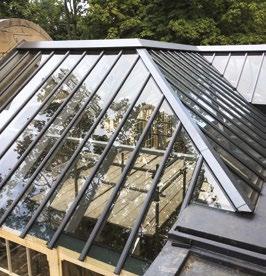
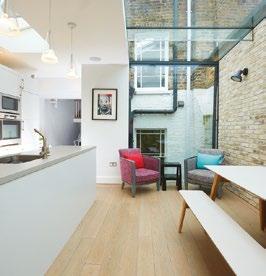
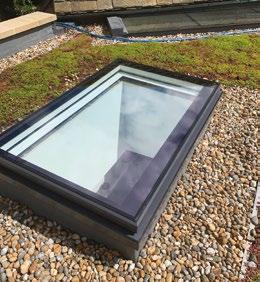
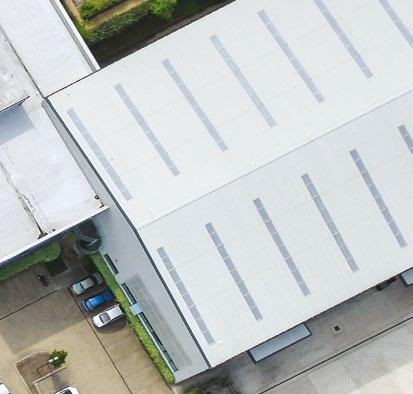
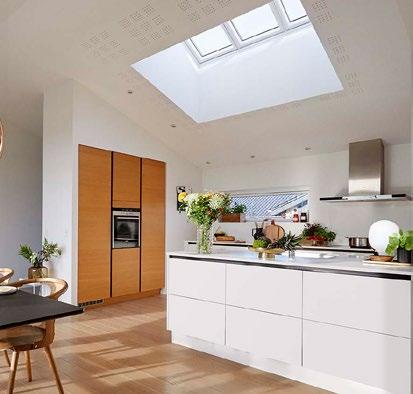
Enables rapid adaptation to changes in facility use and performance requirements
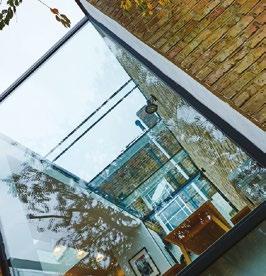
Energy efficiency: 73% heat reflection to cut cooling costs on the hottest days
Visual comfort: 23% light transmission with zero glare Quality: UK manufactured, 10 year warranty
DAYLIGHT AND COMMERCIAL DESIGN
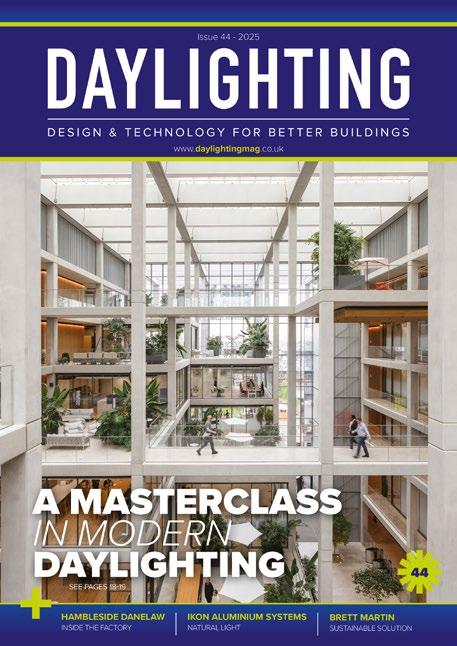
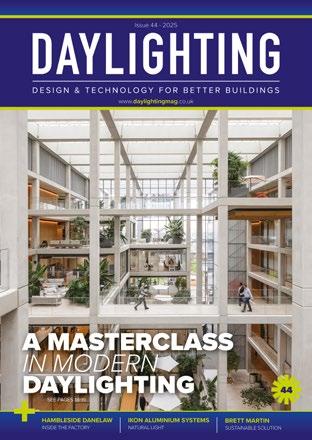
Sometimes it just happens. I’m commissioning the next Daylighting, and a theme starts to build. This issue we’re focusing on daylighting and commercial design...
Most notably, VELUX Commercial UK address the Battle of the Roofs - in commercial architecture the rooftop has become the new frontier with rooflights competing with solar PV, green or blue roof solutions. National Key Accounts and Major Projects Manager, Adam Neat explores the challenges (pg 16-17).
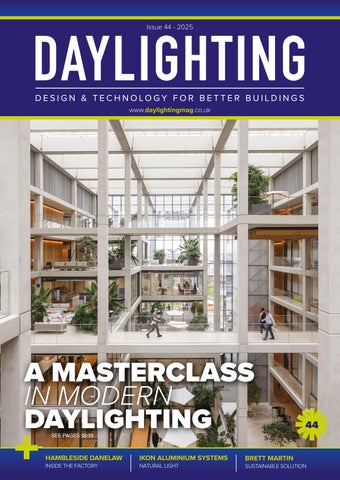
Supporting Adam’s points are several high-profile case studies. Our Daylighting Icon (and front cover), ICÔNE in Belval, Luxembourg is a superior example of how to balance internal daylighting with striking and appropriate commercial architecture. Read how Foster + Partners achieved this (pg 18-19).
Howells Patent Glazing (pg 14-15), meanwhile, shares an inspirational study in refurbishment. At a time when our city centres are littered with vast, empty buildings, we learn about the transformation of a former Debenhams into University of Gloucestershire’s City Campus.
Commercial design can also mean large-scale commercial buildings. Here, GRP rooflights are the go-to daylighting solution. To learn more, we hear from Zenon National Sales Manager, Amanda Davis during a visit to the Hambleside Danelaw factory (pg 6-8).
Time is the greatest enemy of a commercial project. Construction Consultancy, Procync (pg 9) understands this and explains the importance of systems in helping us work smarter with the aim of delivering better, healthier buildings, more efficiently.
Talking of time…
Preparing for 2026? Make sure we’re part of the conversation. Our new media pack is available NOW via the website! Editorial, advertorial and adverts – talk to us about getting your products in front of key decision makers in 2026.
From everyone at Daylighting, we wish you a Merry Christmas and a prosperous and healthy New Year. Thank you for your contributions, feedback and interest!
Holly Rogers Editor
BRINGING NATURAL LIGHT INTO EVERY CORNER
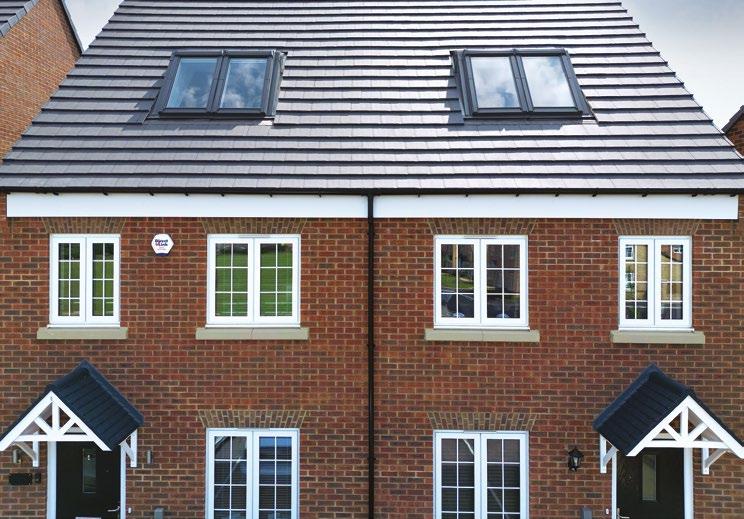
Keylite Roof Windows (Keylite), part of The Keystone Group, has been a trusted supplier to national housebuilder Taylor Wimpey for more than five years, and is now delivering its innovative ModuLite system across multiple UK housing developments.
Already making an impact across regional sites, ModuLite is brightening interiors, boosting energy efficiency and simplifying on-site logistics.
At Swinston Rise in Dinnington, Sheffield – a development of contemporary three and fourbedroom homes – the system brings natural light into every corner, creating spacious, low-energy living environments. Positive homeowner feedback has paved the way for its rollout across an expanding portfolio of Taylor Wimpey developments nationwide.
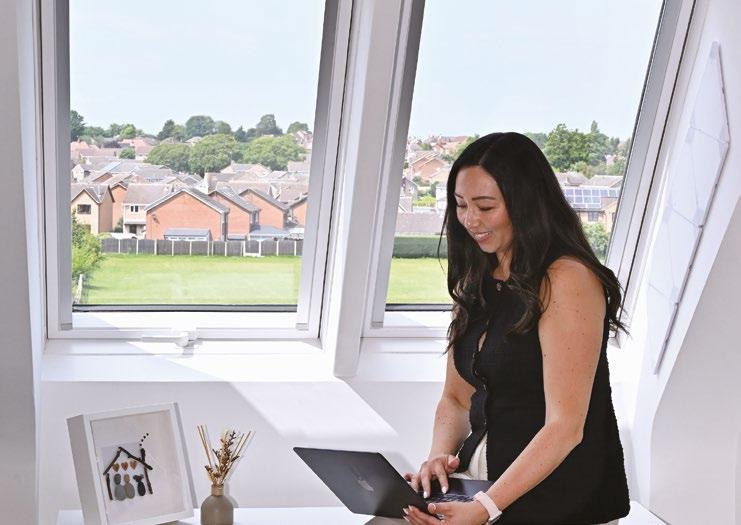
Increasing brightness by 25% Developed in collaboration with Keylite’s sister company Smartroof, ModuLite is compatible with roof pitches from 10 to 75 degrees and combines two Keylite Top Hung roof windows with an insulated timber upstand. This design floods interiors with daylight, increasing brightness by up to 25 per cent compared to traditional dormers, while enhancing thermal performance.
At Swinston Rise, the ModuLite system integrates seamlessly into the second-floor roofline of several
three-bedroom homes, brightening master bedrooms and ensuites while enhancing the sense of space.
Standards and savings
ModuLite also streamlines construction and site logistics for housebuilders. Up to 24 units can be transported on a single lorry, reducing transportation costs, minimising site storage needs and lowering the risk of damage in transit.
With its pre-insulated design, ModuLite reduces heat loss and supports the delivery of low-energy homes. The system exceeds Part L requirements and meets the Future Homes Standard (FHS), with low U-values for improved energy efficiency. Compared to traditional flat top and apex dormers, ModuLite can save housebuilders upwards of £1,000 per plot.
Space + Light
Homeowner Adam Wilcock, from the Sheffield site, commented: “The ModuLite system helps us make the most of space and natural light. The two windows give us flexible ventilation options, and the blackout blinds create total darkness, which is
great in the evenings. Together, they offer the perfect balance of comfort, practicality and style.”
Christina and Louis, homeowners at a Taylor Wimpey site in Bristol, said: “We really like the Keylite ModuLite system and the modern look it gives the outside of our home. The roof windows let lots of light into our room and give the feeling of space, which is great.”
Superior thermal performance
Lewis Scott, National Account Manager for Keylite, added: “Our ModuLite system is engineered for superior thermal performance and watertight protection. With 24 units transportable on a single lorry, ModuLite helps cut fuel consumption, streamline site logistics and support housebuilders in meeting evolving building regulations.”
Supplied as a comprehensive kit, the ModuLite system includes the insulated timber upstand, roof windows, brackets and aluminium components for integration with roof tiles, ensuring straightforward assembly.
www.keyliteroofwindows.com
Daylighting Magazine
INSIDE HAMBLESIDE DANELAW
GRP Rooflights and Increasing Sustainable Practices
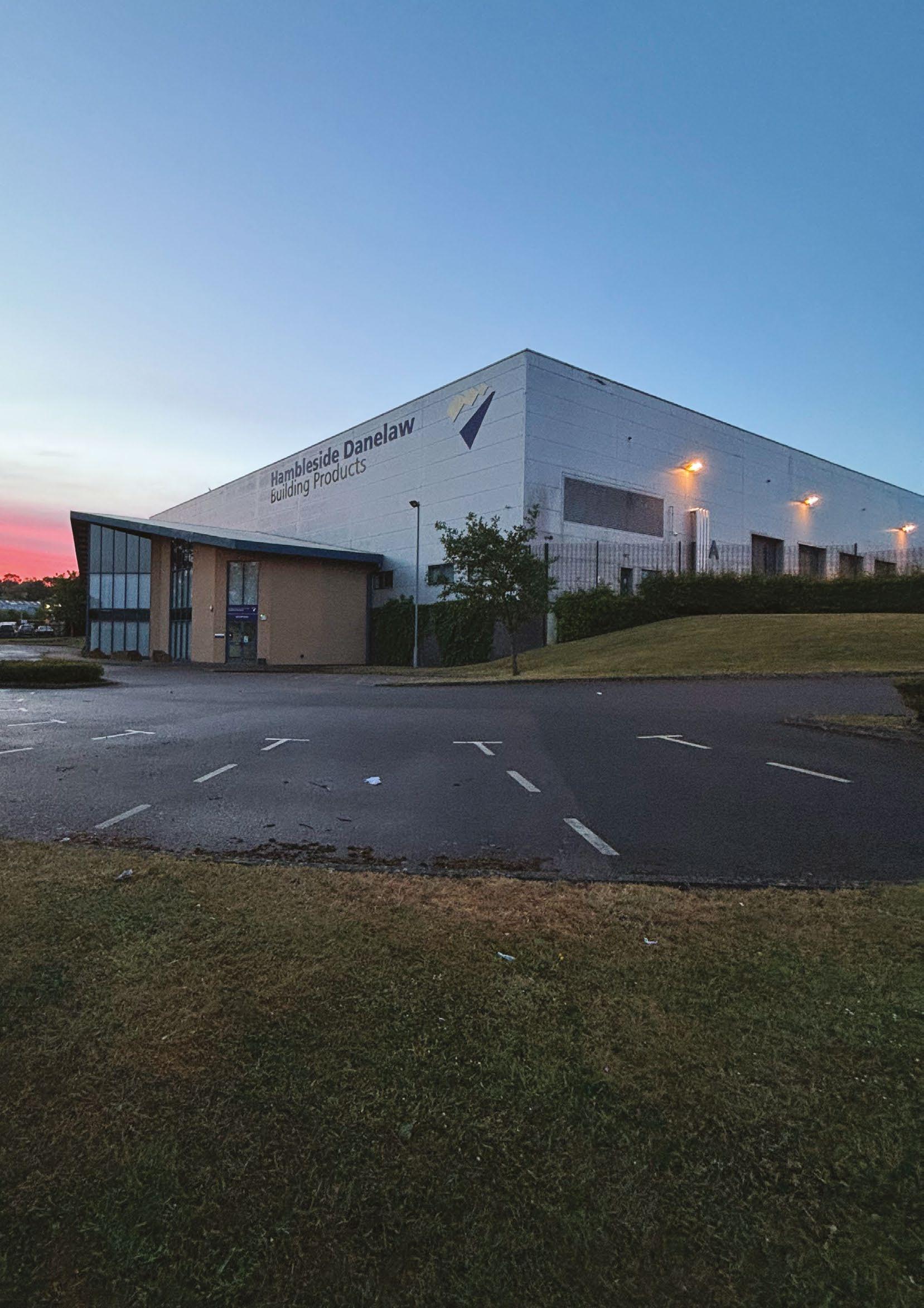
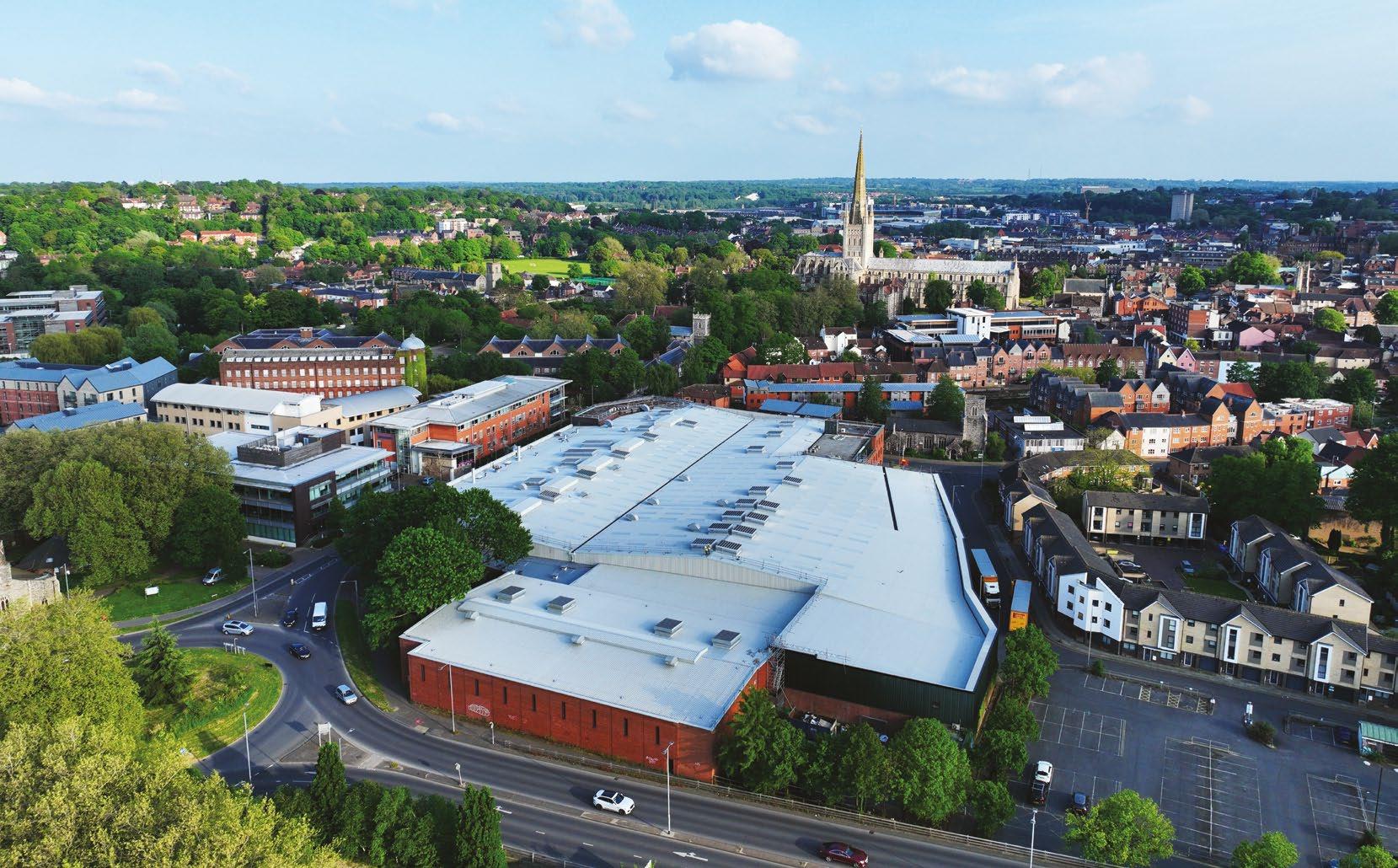
Daylighting visits Hambleside Danelaw in Daventry, Northamptonshire, a hugely impressive, purpose-built facility to see how the business is future-proofing rooflight manufacturing.
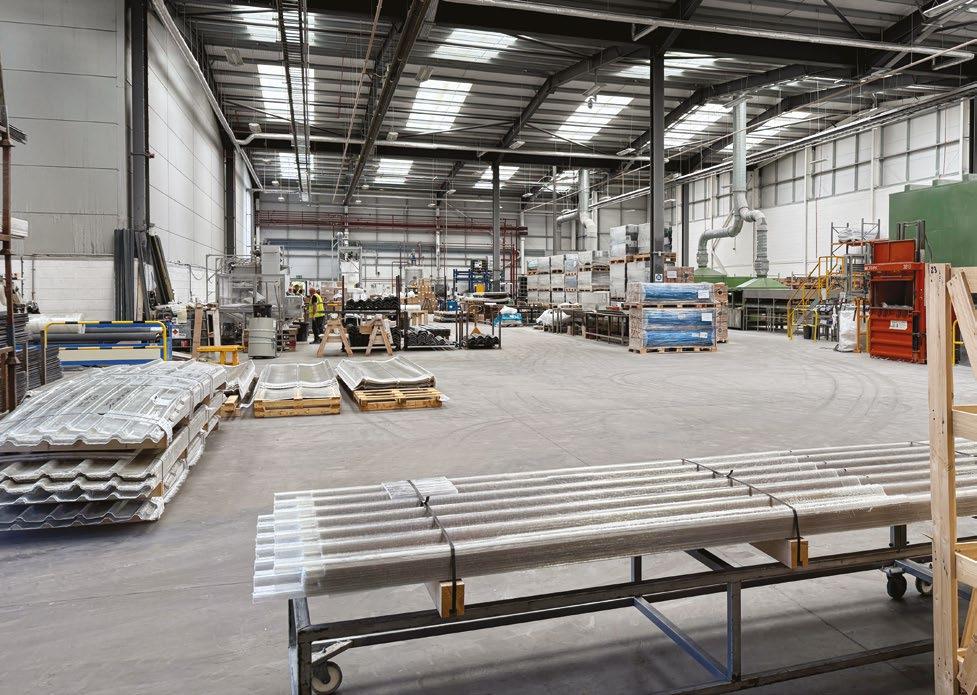
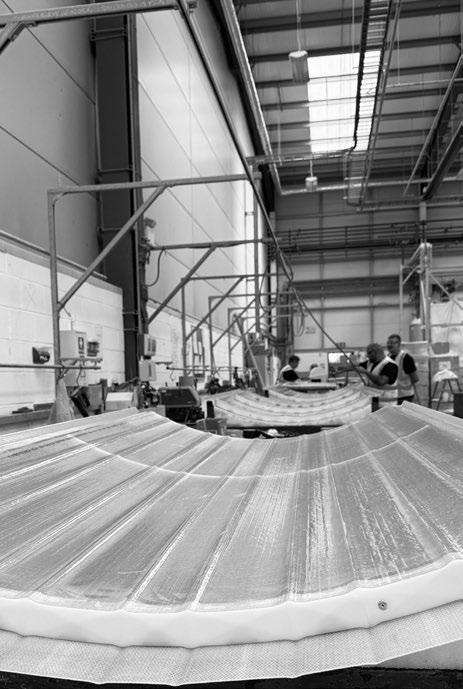
Standing inside the Hambleside Danelaw factory in Daventry, it’s hard not to be struck by the sheer scale, precision and ambition of the operation. Spanning more than 80,000 square feet over two buildings, it is a testament to modern British manufacturing, one that’s underpinned by a highly knowledgeable senior management team, overseen by Managing Director, Chris Avery who has led the company for almost four decades.
The company has been manufacturing GRP rooflights in the UK for nearly 50 years. A market leading range, Zenon®, develops ‘environmentally conscious solutions to improve building energy performance, while reducing the carbon footprint through the efficient and effective use of daylight.’
“Our range of GRP rooflights are used in agricultural, industrial and commercial buildings,” explains our host, Zenon National Sales Manager, Amanda Davis. “All Zenon rooflights are made to order with the profile being dictated by the specified roofing system.
It's about understanding the performance aspects and benefit to the building as a whole — stakeholders should take a holistic approach that will result in an energy efficient building that is a comfortable and pleasant environment for its occupants.
We are able to match to most common metal and fibre cement profiles and currently have over 700 profiles in the range! Using continuous process manufacture, the Zenon line is easily able to meet the demands of a busy roofing sector.
Amanda is one of many longserving members of staff having been with the company 28 years. Her current role sees her working with developers, architects, metal profilers, roofing contractors and building owners.
An advocate of daylighting, Amanda says her ambition is to increase awareness of the many recognised environmental, economic and health and wellbeing benefits of making good use of natural daylight in the built environment.
Optimised for efficiency
“The building was purpose built for our operations,” says Amanda. “That’s important because it means everything is on one site (the company also produces its other product ranges of Danelaw and Dryseal here) and is optimised for productivity and efficiency. We also recently invested in a tank farm for resin storage which provides us with increased supply chain flexibility along with improved production efficiencies.”
A rooftop solar PV system powers the operation, reducing reliance on the grid and cutting emissions.
As you would expect, daylighting potential is maximised using the company’s GRP rooflights with automated energy efficient LED lighting using a lux level trigger.
While technology and automation are absolutely key, skilled labour is still required, and operatives are trained in multiple roles. “We also recruit from within, where possible. We encourage career progression,” she continues.
Green initiatives
A commitment to sustainability and green initiatives are evident throughout the business. “We’re always looking for ways to futureproof both business and product range; we don’t stand still. In fact, it’s one of the reasons we won the Queen’s Award for Enterprise: Innovation in 2006.”
The company won the prestigious award for Zenon Insulator, a unique rooflight insulant which uses cellulose acetate, a wood pulp product, to help the rooflight assembly achieve lower U-values without compromising light transmission.
“We were also the first UK GRP rooflight manufacturer to secure an independently verified Environmental Product Declaration (EPD) for some of our rooflights assemblies.
We are currently in the process of increasing the number of EPDs available.
Our aim is to have an EPD for all commonly specified rooflight assemblies.”
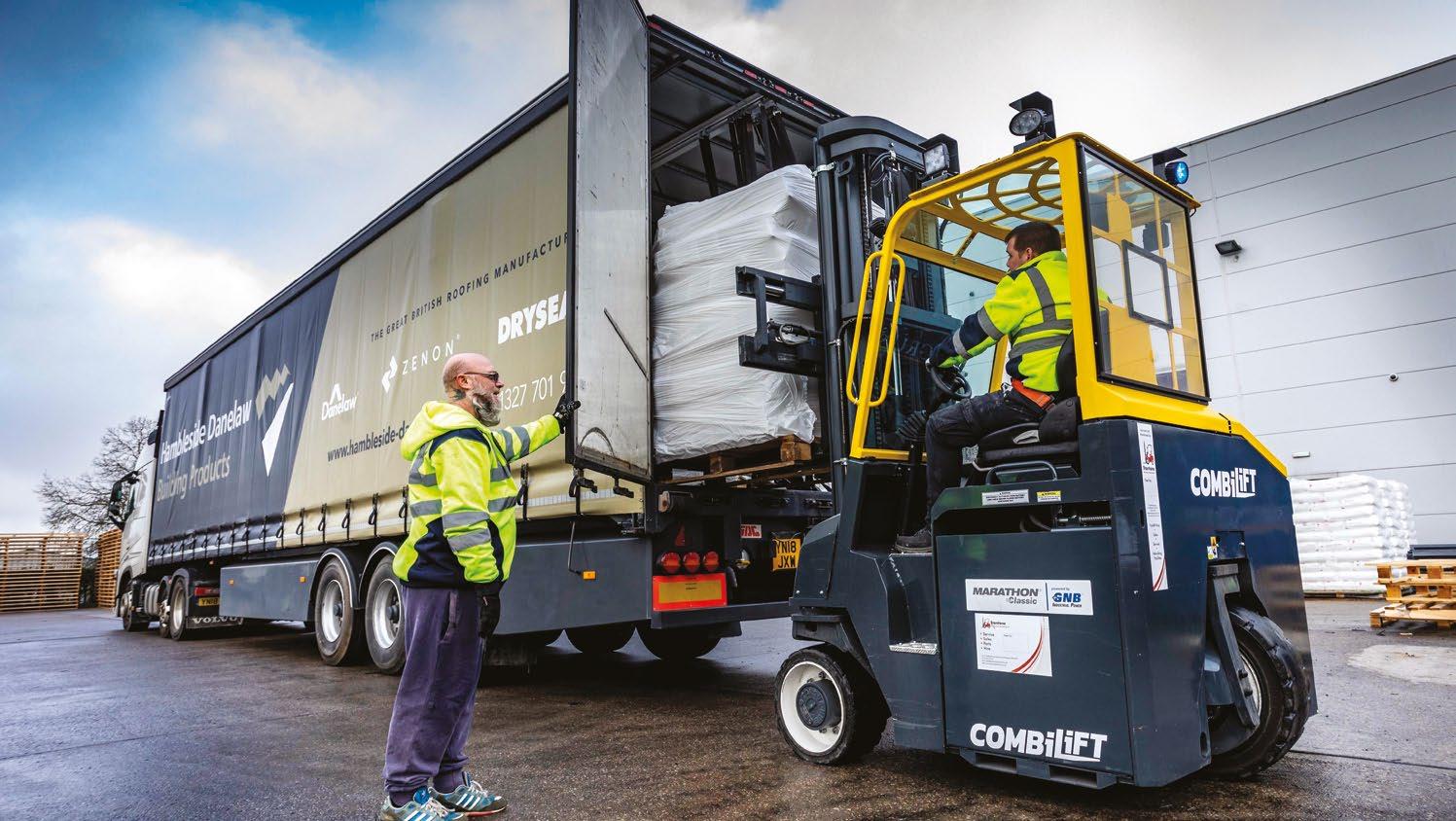
Inside the factory, Amanda explains some of the company’s many sustainability initiatives, including the use of wooden bearers rather than full size pallets which reduces waste on site and saves on pallet collections. During the visit, factory staff also take delivery of a further new electric forklift to add to the all-electric fleet.
System-led approach
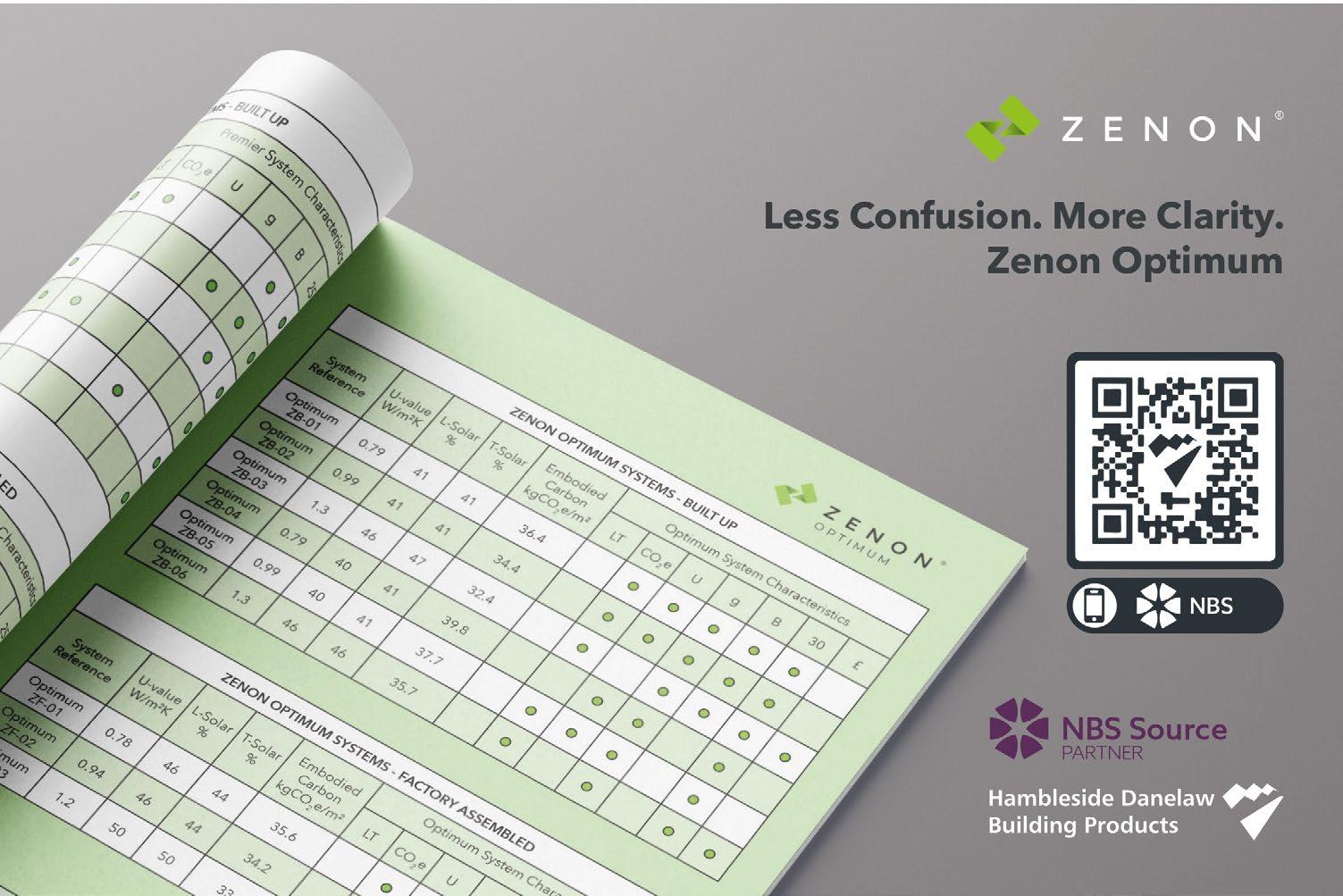
Demand for energy efficient buildings incorporating high performance products has led Hambleside Danelaw to move towards a system-based rooflight solution, one which considers the key performance characteristics of thermal performance, carbon embodiment, light transmittance, g-value and non-fragility.
“The GRP rooflight industry has seen huge changes and advances in technology over the last 25 years and there’s now a myriad of assembly permutations available. We’ve recognised that this can be bewildering for specifiers and designers, so we have simplified options by adding two rooflight systems, Zenon Premier and Zenon Optimum.”
With performance specification now key to Hambleside Danelaw’s ethos, Amanda is urging stakeholders to adopt the same approach. “It’s not just about the rooflight,” concludes, Amanda. “It’s about understanding the performance aspects and benefit to the building as a whole — stakeholders should take a holistic approach that will result in an energy efficient building that is a comfortable and pleasant environment for its occupants.
I encourage architects and building designers to engage a rooflight expert as early as possible in the design. Early collaboration is key and will result in long-term environmental, economic and wellbeing benefits, and that’s what matters.”
Zenon rooflights are available to specify via NBS Source.
To request the Zenon CPD: GRP rooflights for the metal building envelope visit:
BUILDING SMARTER BY FIXING THE PROCESS NOT JUST THE PROJECT
By Ian Rogers, CEO of Procync
When a project goes wrong, the finger usually points to what is happening on site. Was the contractor too slow? Did the architect over-specify? Did the products arrive late? In my experience, that’s rarely the root cause. The real problems sit higher up, in the way projects are structured and managed from the start.
Construction has been working with outdated systems for decades. Traditional delivery models encourage silos, push risk down the chain, and create tension rather than teamwork. Everyone wants to do a good job, but the system sets them up to clash. Unless we fix that, we’ll keep seeing the same patterns repeat.
What the numbers tell us
The cost of these broken processes is hiding in plain sight. Research shows that rework and errors are eating up around 11% of total construction spend in the UK and EU. Take for example, a £50 million scheme, more than £5 million is essentially wasted because the process wasn’t right.
Output figures also tell a story. In the first quarter of 2025, construction in Great Britain flatlined compared to the end of 2024. New work ticked up by just under 1%, while repair and maintenance fell by more than 1%. Public housing new work is down more than 15% year-on-year. At the same time, demand for greener, smarter, better performing buildings keeps rising. These pressures are colliding, and the cracks are widening.
Why process matters more than projects
If you are an architect, you know how often design intent gets diluted before it reaches site. If you are a specifier, you know how product decisions can be swayed by cost alone, even when performance data says otherwise. If you are a contractor, you know how disputes and unclear responsibilities can grind progress to a halt.
These frustrations all have the same root. The process does not support collaboration. It does not protect good decisions. It does not make accountability clear.
That is why we need to focus less on firefighting project by project, and more on fixing the way delivery works across the board.
A smarter way forward
Smarter doesn’t have to mean complicated. It means creating a structured, transparent process that everyone can trust.
• Alignment - get all parties to agree on purpose, scope and risk before a spade hits the ground.
• Transparency - use data and simple digital tools to track decisions so no one can claim confusion later.
• Accountability - set out roles clearly so there is no grey area where disputes can grow.
Do that, and you protect the things that really matter. For architects, design integrity survives procurement. For specifiers, product performance and lifecycle value are not lost in the rush. For contractors, disputes are reduced and risks are understood upfront.
Greener outcomes start with process
If we want to reach net zero, build better public buildings, and deliver sustainable homes, we have to protect good design ideas from the very start. Fixing the process benefits every level of the chain.
Developers and investors get more predictable returns. Communities get schools, homes and hospitals that actually work for people. Architects, specifiers and contractors get a delivery environment that allows them to do their best work without endless battles.
Construction is not short of technical expertise. What we lack is a system that lets that expertise thrive. If we get that right, the industry can deliver buildings that are greener, better performing and more resilient for the future.
Ian Rogers is the CEO and visionary founder of Procync, a leading construction consultancy known for solving complex project challenges and delivering smarter, dispute-free outcomes across the built environment.
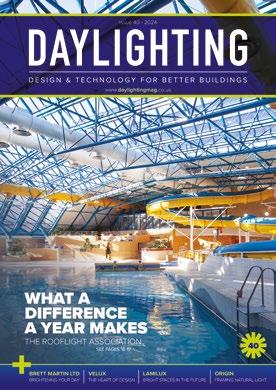
Brett Martin spans Center Parcs’ subtropical swimming paradise with
SUSTAINABLE ROOFLIGHT SOLUTION
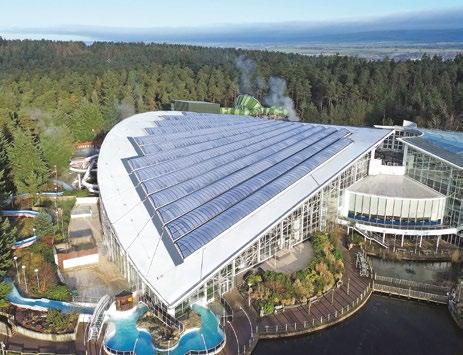
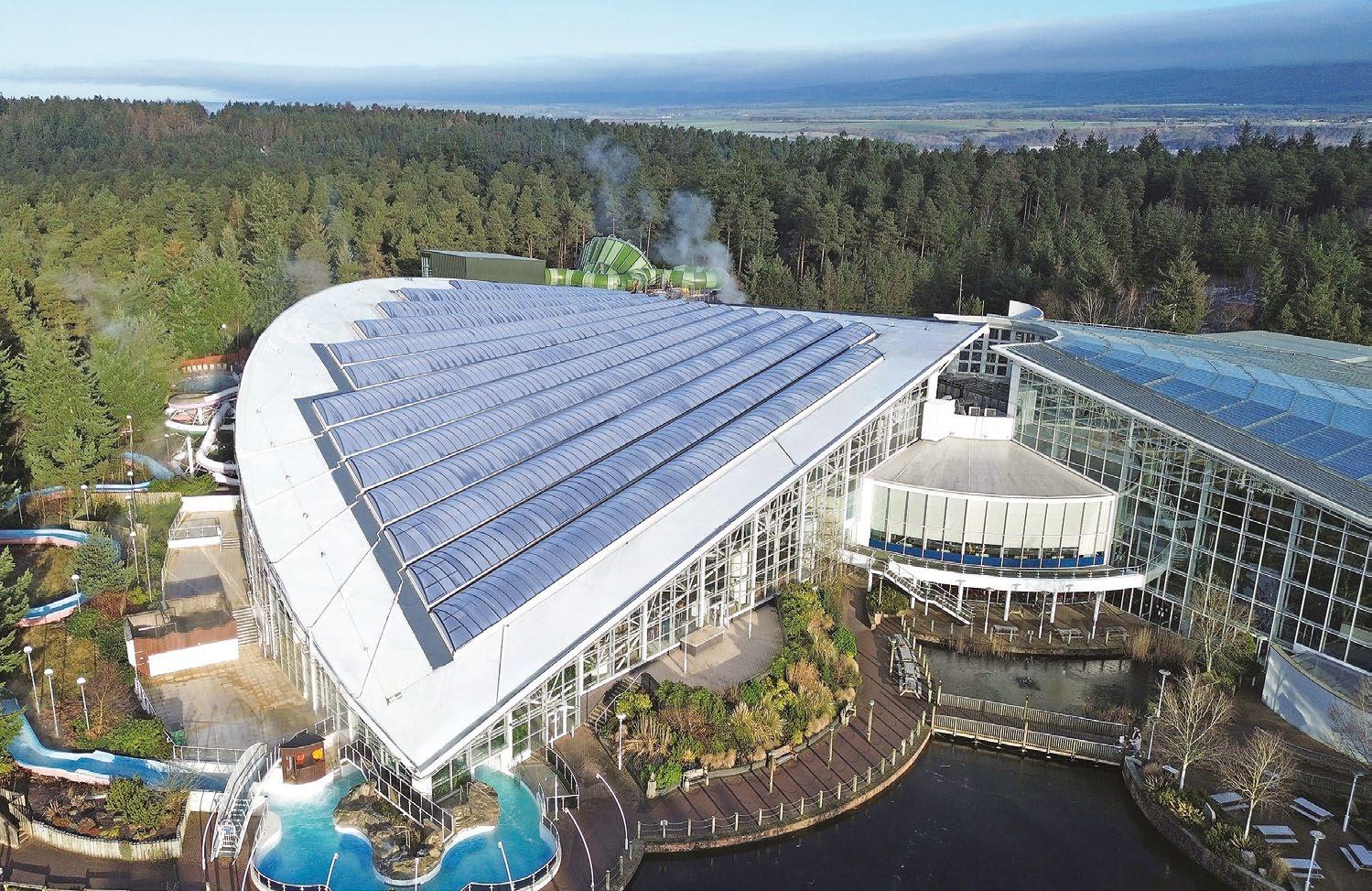
Brett Martin’s Marvault rooflights have been installed as part of a multiaward-winning refurbishment at Center Parcs’ Whinfell Forest holiday village in Penrith, Cumbria.
The customer required a solution that would increase the thermal efficiency of the large, subtropical space in order to reduce heating costs and the sites carbon emissions. Brett Martin’s vaulted multiwall polycarbonate rooflight system, which covers an area of approximately 2,785m2, provided the ultimate solution, enabling the existing roof to be kept whilst reducing heating usage by 11.14%.
Part of a 400-acre site, Whinfell Forest in Cumbria has accommodation for nearly 5,000 guests. At its centre is the Subtropical Swimming Paradise, with pools and tropical plants all enclosed under a widespan roof. However, Center Parcs found that there were increasing heat loss problems with the old roof.
This meant that maintaining the level of heating required to create a comfortable environment for both guests and plants was generating significant costs, as well as effecting the park’s overall environmental impact.
To address the issue of heat loss through the roof, the team from Center Parcs, led by Project Manager Marc Preite, reached out to Brett Martin in the hope of finding a solution that would continue to allow the maximum amount of natural light into the space, whilst improving environmental and cost efficiency.
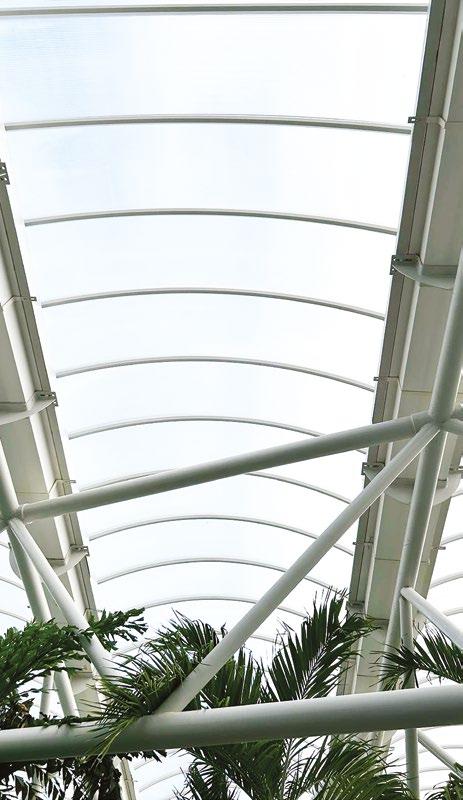
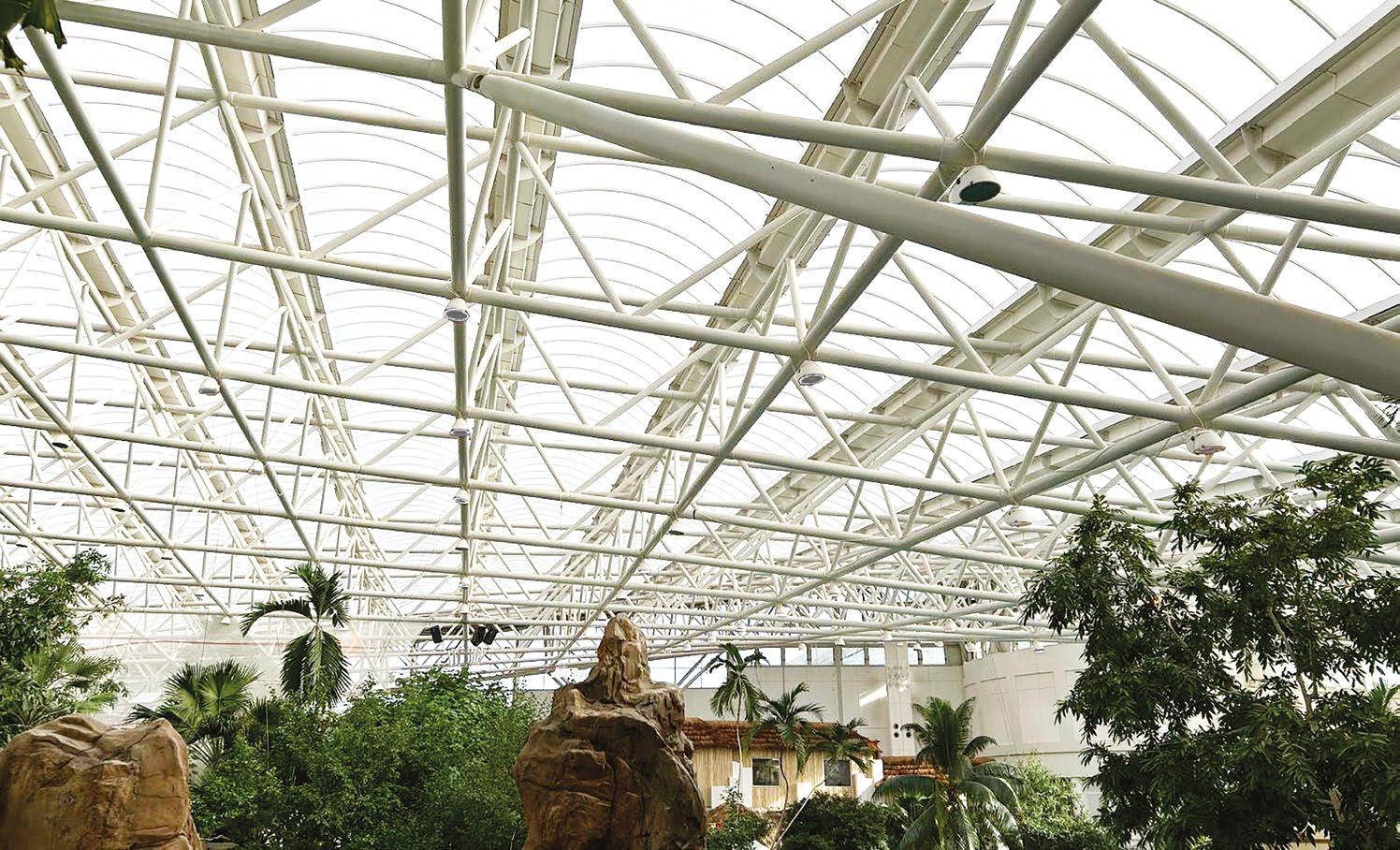
Brett Martin put forward its Marvault rooflight system which utilises aluminium and polycarbonate to create a barrel-vaulted shape.
This was an exciting project to be involved with, and it was great to have it recognised with awards from the LWRA and the NFRC
This shape increases light penetration and enables spans of up to seven metres to be bridged with no restriction on length. This suited the requirements of Center Parcs as the existing roof utilised long unbroken rooflights that spanned four metres and ran from 30m to 61m in length.
Unlike the old, single layered polycarbonate rooflights installed at Center Parcs, Marvault is glazed with two layers of Brett Martin’s 16mm Marlon ST Longlife polycarbonate.
This lightweight, multiwall insulated panel provides increased efficiency by reducing heat loss through its seven layers, as well as providing UV protection. These attributes combine to make a strong, lightweight rooflight that maximises light penetration whilst minimising harmful UV and costly heat loss. As a result, Marvault has a U-value of 1.09W/m2K, balancing excellent light penetration with improved thermal performance.
Brett Martin worked closely with the roofing contractor Central Roofing to ensure that the Marvault rooflights could be incorporated into the complex curved roof that defines the striking project. Rising from 6 metres to 27 metres, with a 24-degree incline, the saddle roof posed multiple challenges for the team from Brett Martin who designed and detailed the Marvault glazing to curve with the roof’s striking form. The installers then had to grapple with the Cumbrian weather and night installations in order to complete the project.
Brett Martin was able to demonstrate the aesthetic and technical benefits of its Marvault system by taking the team from Center Parcs to see the product in situ on another project. Recently completed, Porsche’s new High Wycombe showroom utilises Marvault to bring light into the deep plan building. This helped to demonstrate the benefits to the team from Center Parcs and played a vital role in securing the contract.
Adrian Lukic, Sales & Commercial Director at Brett Martin noted that “This was an exciting project to be involved with, and it was great to have it recognised with awards from the LWRA and the NFRC as well as a second place at the IFD International Roofing Awards in Bratislava. Efficiently heating such a large space to a degree that makes it comfortable for guests is a difficult feat, but our Marvault has demonstrated what a crucial role new and efficient rooflights play in achieving great thermal and environmental efficiency.”
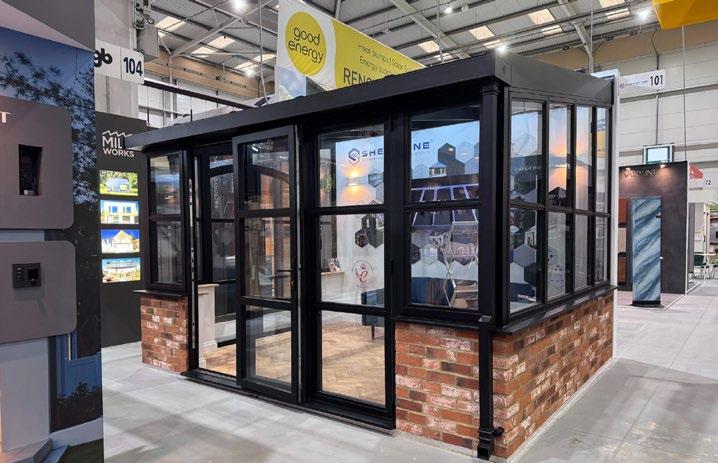
SHEERLINE LAUNCHES PERMANENT STAND AT NATIONAL SELF BUILD & RENOVATION CENTRE
The new stand was unveiled as part of the centre’s third and final show of the year.
The stand features the newest product in Sheerline’s S Roof Series, the S3 Architectural Glazed Roof. Initially previewed at FIT Show 2025 on Sheerline Bespoke’s stand, the S3 is designed to overcome issues associated with legacy roofing systems, heralding in a new era of architecturally design-led glazed extensions.
Like all Sheerline products, the S3 is strong, secure, sleek, innovative, and thermally efficient. It also offers installer benefits such as the fact there are 40% fewer components compared to traditional lean-to systems, and the pitch is factory set reducing installation time.
Compatibility between products and ranges is a key benefit of Sheerline’s products and the S3 is no different. For instance, intelligent ventilation in the form of SheerVent® can be added to any S3 installation.
As part of the NSBRC stand installation, two SheerVents® will be on display as well as the popular Classic Heritage Door, Prestige Bi-folds, and Classic and Prestige windows. This will enable homeowners to get a better understanding of the products and visualise them together.
Having a permanent stand at the NSBRC is a great opportunity for Sheerline. Fabricators and installers can take their customers to view the products without having to book in advance. This is particularly appealing for those based in the South West and Midlands.
Homeowners can also visit the stand without making an appointment. NSBRC is open six days a week (it’s closed on Mondays) and features over 200 exhibitor displays.
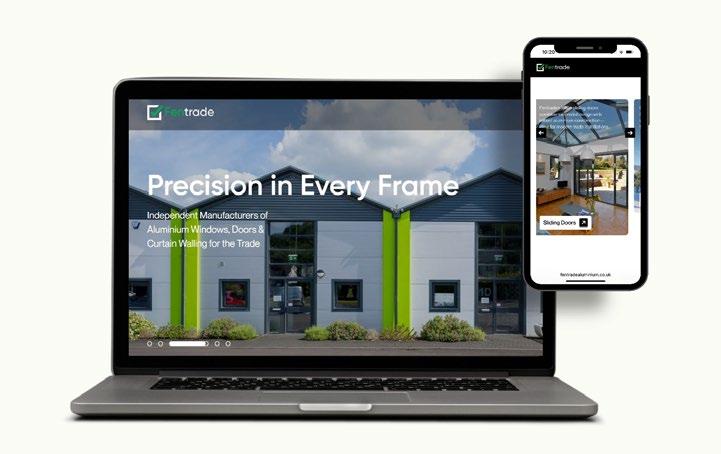
FENTRADE LAUNCHES NEW WEBSITE TO STRENGTHEN TRADE ENGAGEMENT
Independent trade fabricator Fentrade has launched its new website designed to give trade installers, contractors and architects an improved online experience and streamlined access to product information.
Chris Reeks, Director at Fentrade, said: “The new site has been developed with the needs of installers, contractors and architects in mind. With intuitive navigation and a clean, modern layout, it allows visitors to quickly explore our full range of aluminium products, including windows, doors, bi-folds, inline sliders, curtain walling and internal screens. Brochures and technical details can also be downloaded instantly, making it easier for our trade partners to prepare quotes and plan projects efficiently.”
The new website reflects Fentrade’s core values of reliability, service and quality. Customers benefit from quotes returned within 24 hours, technical support delivered by an experienced team and a commitment to delivering every order on time and in full. By streamlining access to information, the website reinforces Fentrade’s commitment to making it easier for trade professionals to work with the company.
The new website comes during a period of growth for the award-winning business. Earlier this year, Fentrade was acquired by Aluminium Vision Limited, a move that
further strengthens its market position and manufacturing capacity. The Newport-based fabricator continues to invest in products, people and production to meet rising demand for its high-performance aluminium products.
With over 30 years of inhouse fenestration expertise and membership of the Council for Aluminium in Building, Fentrade has established itself as a trusted independent fabricator in both the trade and commercial sectors.
OPEN, CONNECTED, AND ALIVE!
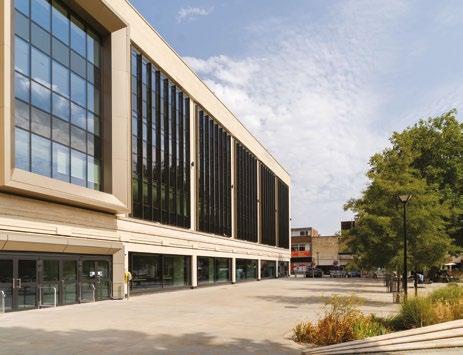
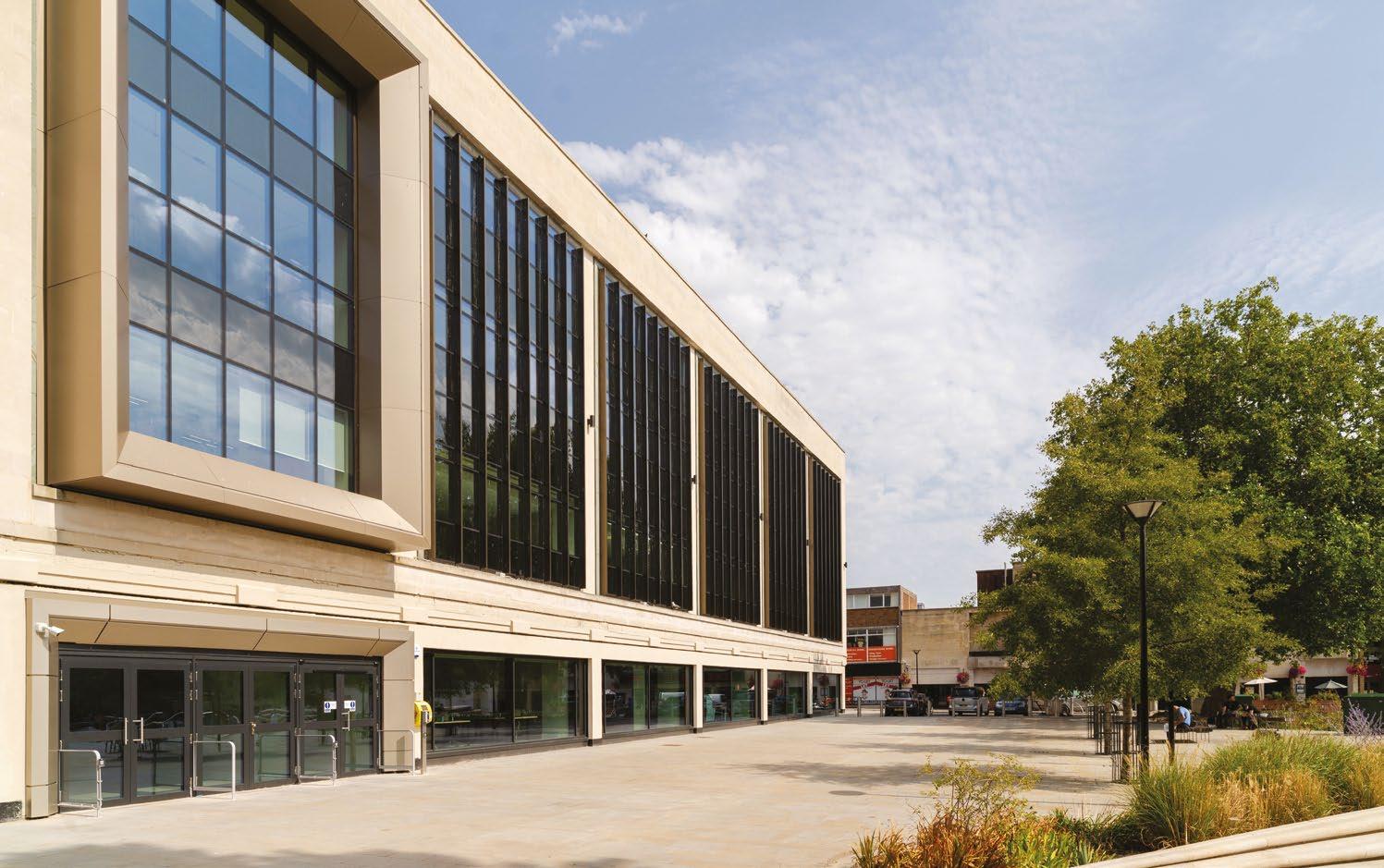
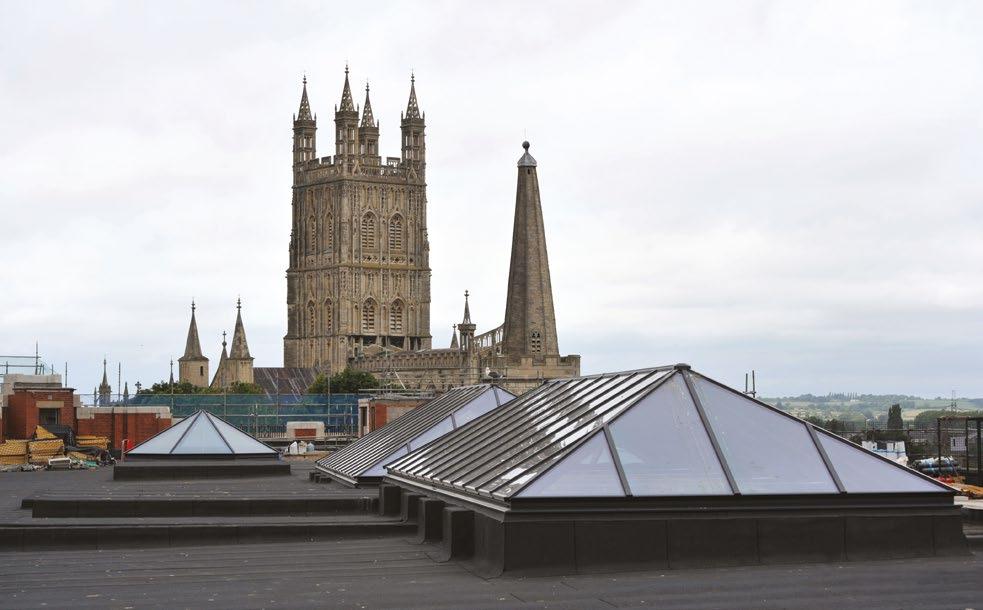
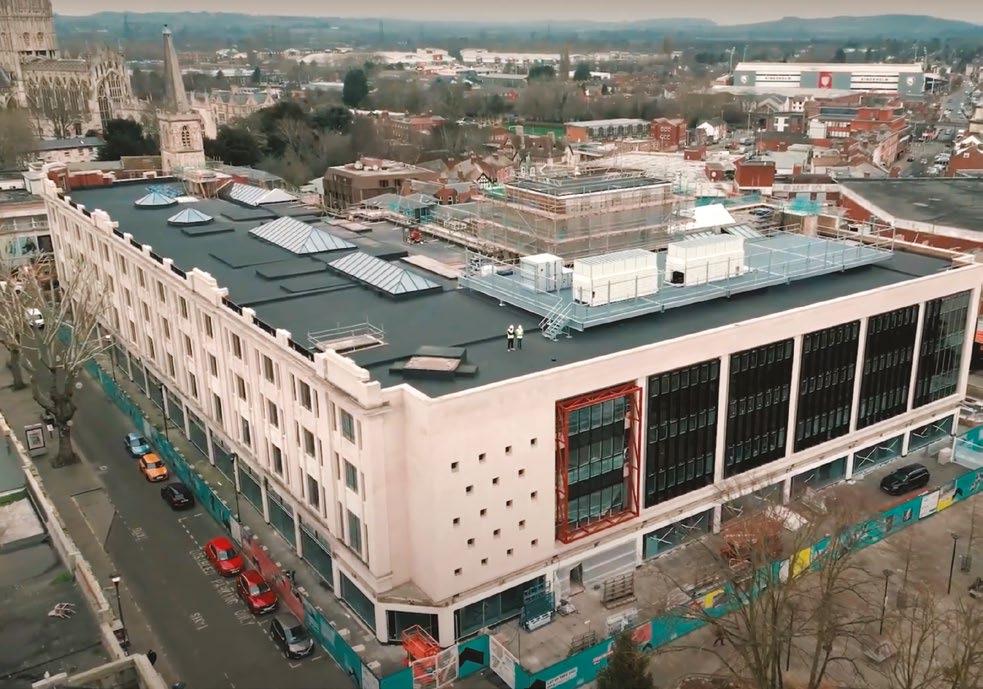
City Campus is a vibrant new hub in the heart of Gloucester. The former Debenhams site has been transformed into a state-of-the art centre for teaching, learning and community services. Howells Patent Glazing was tasked with supplying five bespoke rooflights and two areas of mono pitch glazing for this iconic building.
University of Gloucestershire purchased the site in 2021 and has subsequently worked with main contractor, Morgan Sindall and project architect, ADP Architecture to create a home for the University’s Education, Psychology and Social Work programmes and shared public access facilities.
Large and complex
The site includes a Victorian wing and sections dating back to the 1930s and 1950s, meaning the transformation has been complex – combining heritage preservation and progressive development.
For Howells, City Campus is the largest and one of the most challenging projects in the company’s 50+ years history,
as business development manager, Tracey Jackson explains:
“This was an incredibly complex yet rewarding project. The biggest challenge was the size and weight of the glass combined with the building’s city centre location which created access, material handling and storage issues.”
Daylight solutions
“The existing building had a floor plate that was too deep for an educational environment, making it difficult to bring daylight into the centre ,” comments Natalia Lopez, Associate Director, ADP Architecture Ltd. “With only a few existing rooflights located above the third floor, natural light was unable to reach the lower levels effectively.
The existing building had a floor plate that was too deep for an educational environment, making it difficult to bring daylight into the centre
To address this, new rooflights and openings were introduced across all floor plates, enabling daylight to penetrate the central social learning spaces and classrooms, and even extend down into the basement.”
Howells advised ADP Architecture and Morgan Sindall on the most appropriate rooflighting solution. Following a site survey, Howells confirmed design and installation of two hip-ended rooflights, two selfsupporting octagon rooflights, two areas of mono pitch glazing and one tapered ridge rooflight.
Rooflight specification
Due to their size, Howells appointed a structural engineer to complete structural calculations for each rooflight to ensure the aluminium bars could withstand the weight of the glass plus any imposed loadings, such as wind and snow.
The fabrication team strengthened the glazing bars based on these calculations adding steel inserts. This also increased their span capabilities.
One of the hip-ended rooflights measures 3.2 metres long by 6.3 metres wide and is the largest rooflight manufactured by the Black Country-based specialist .
To guarantee a precise installation, this rooflight and a slightly smaller version were built-up in the factory before being dismantled and sent to site.
The tapered ridge rooflight proved very interesting. The ridge went from 5.1 metres to 4.3 metres wide along its 12.5+ metre length and dropped by around 24.5 centimetres. This presented all sorts of challenges many of which had to be addressed at both the design and fabrication stages. Shaped glass is used throughout.
The two self-supporting octagonal rooflights replaced one smaller rooflight which had sat above the former Debenhams central atrium and two new areas of mono pitch glazing were added.
Each bespoke aluminium rooflight is powder coated in Black Grey RAL 7021 in a matt finish, both inside and out.
Glass specification
Each rooflight uses Class 2 nonfragile glass. For additional strength and lasting performance, Howells fabricated the rooflights using double glazed units comprising an 11.5mm heat strengthened laminated inner pane and a solar control 6mm toughened outer pane. The laminated inner pane provides significant UV protection, blocking up to 99% of harmful UV rays.
The tapered ridge rooflight also boasts a self-cleaning coating due to its inaccessible location.
Open, connected, and alive! “Daylight is fundamental to the success of the building , shaping not only its environmental
performance but also the quality of its internal spaces,” concludes Natalia Lopez, Associate Director, ADP Architecture. “Ultimately, it is the presence of daylight that enables the building to feel open, connected, and alive.”
www.howellsglazing.co.uk
DAYLIGHT AND WELLBEING in Commercial Design
In commercial architecture, the rooftop has become a new frontier. As the push for healthier, more energy-efficient buildings intensifies, architects are increasingly faced with what can only be described as the “Battle of the Roofs.”
The challenge is not only deciding which skylight or rooflight option is the best fit, but also ensuring that vital daylight and ventilation are not sacrificed in favour of solar PV, green, or blue roof solutions.
In this contest, strategic glazing decisions and roof window systems can dramatically impact occupant wellbeing, productivity, and sustainability performance.
Adam Neat, VELUX Commercial UK & National Key Accounts and Major Projects Manager, shares insights on how rooflights are transforming commercial spaces.
Daylight as a Driver of Wellbeing Research consistently demonstrates that natural light is fundamental to human health and performance. In commercial environments, daylight improves mood, concentration, and productivity, while helping regulate circadian rhythms.
According to Adam Neat, “The integration of rooflights isn’t just about aesthetics or illumination; it’s a vital component in creating spaces that support human health and encourage engagement.”
For architects and specifiers, the challenge lies in designing rooflight installations that maximise daylight without creating glare or overheating. This requires careful consideration of roof orientation, window type, glazing performance, and integration with interior layouts.
Modern roof window systems, such as VELUX Modular Skylights, offer sophisticated options that diffuse light evenly, bringing brightness deep into commercial interiors while maintaining comfort.
Thermal Comfort and Energy Efficiency
A well-placed rooflight can also serve as a tool for managing thermal comfort. Contemporary glazing solutions are engineered to minimise heat loss during winter and reduce unwanted solar gain during summer, helping maintain stable indoor temperatures throughout the year.
As Neat explains, “The right rooflight system can contribute to energy efficiency objectives, helping commercial projects reduce heating and cooling costs without sacrificing daylight or design quality.”
Many modern rooflights feature low-emissivity coatings, triple glazing, and airtight installation options, which collectively enhance insulation performance.
The
right rooflight system can contribute to energy efficiency objectives, helping commercial projects reduce heating and cooling costs without sacrificing daylight or design quality.
For architects, integrating these systems into building envelopes allows for more predictable energy performance and contributes to sustainability certifications such as BREEAM or WELL. The “battle” then becomes one of balancing transparency and insulationmaximising daylight benefits while meeting stringent energy targets.
Air Quality and Ventilation
Daylight alone is not enough; air quality is equally important for human-centric design. Rooflights that are operable or designed for natural ventilation can dramatically improve indoor environments by reducing CO₂ concentrations, humidity, and pollutants.
Adam highlights that “rooflights can act as part of an integrated ventilation strategy, removing stale air at high levels where heat and pollutants naturally accumulate.”
For architects, this underscores the importance of specifying products that can be automated or manually controlled, seamlessly integrating with HVAC and smart building systems to optimise indoor air quality.
Maximising the impact of rooflights requires thoughtful planning at the earliest stages of design. Neat offers several key recommendations for architects looking to leverage rooflights effectively:
1. Strategic Placement:
Position rooflights to deliver even light distribution and minimise reliance on artificial lighting, considering orientation and function.
2. Appropriate Glazing: Specify glazing that balances light transmission with thermal and solar control, including adaptive options like electrochromic glass.
3. Systems Integration: Combine rooflights with ventilation strategies, shading devices, and high-performance insulation for holistic performance.
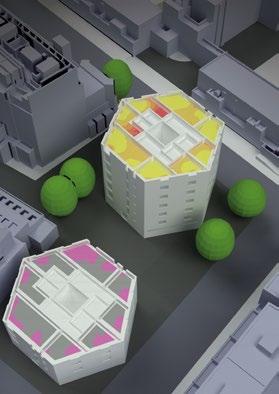
4. Simulation and Modelling: Use daylight and energy modelling tools, such as the VELUX Daylight Visualizer, to predict performance and optimise layouts.
5. Human-Centric Design:
Prioritise how spaces feel and function for occupants—views, connection to nature, and exposure to natural light all matter.
Neat concludes: “The battle of the roofs isn’t just about choosing the largest or most visually striking units. It’s about understanding how natural light, ventilation, thermal performance, and material choices come together to create spaces where people thrive. Architects who embrace this approach are not only designing for efficiency –they are designing for wellbeing, sustainability, and long-term success.”
www.commercial.velux.co.uk
ICÔNE - Belval, Luxembourg
In this regular feature we indulge ourselves and our readers with images of daylighting projects throughout the years that simply deserve a double page photograph...
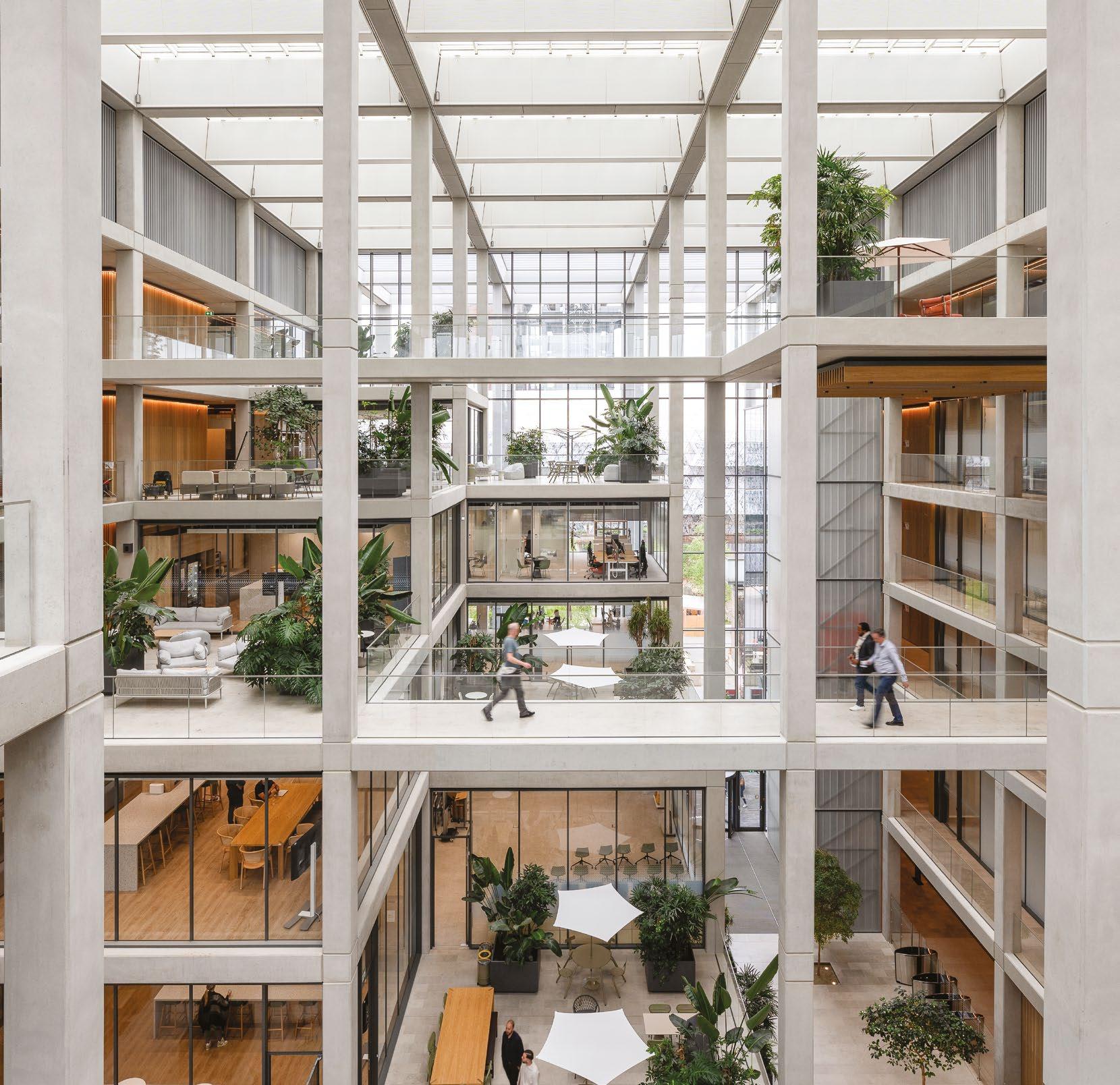
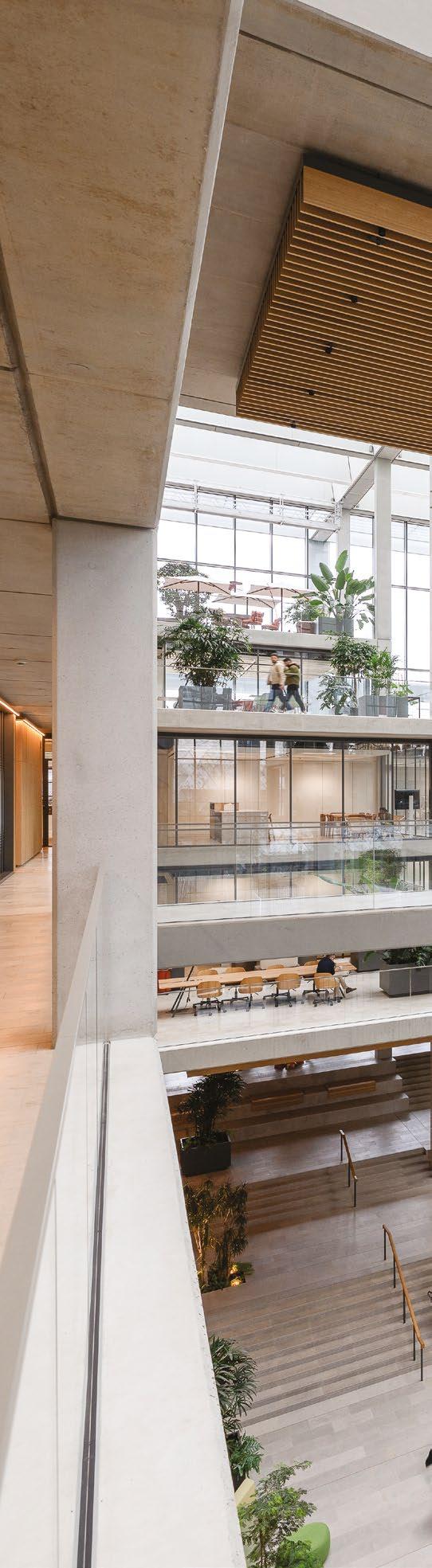
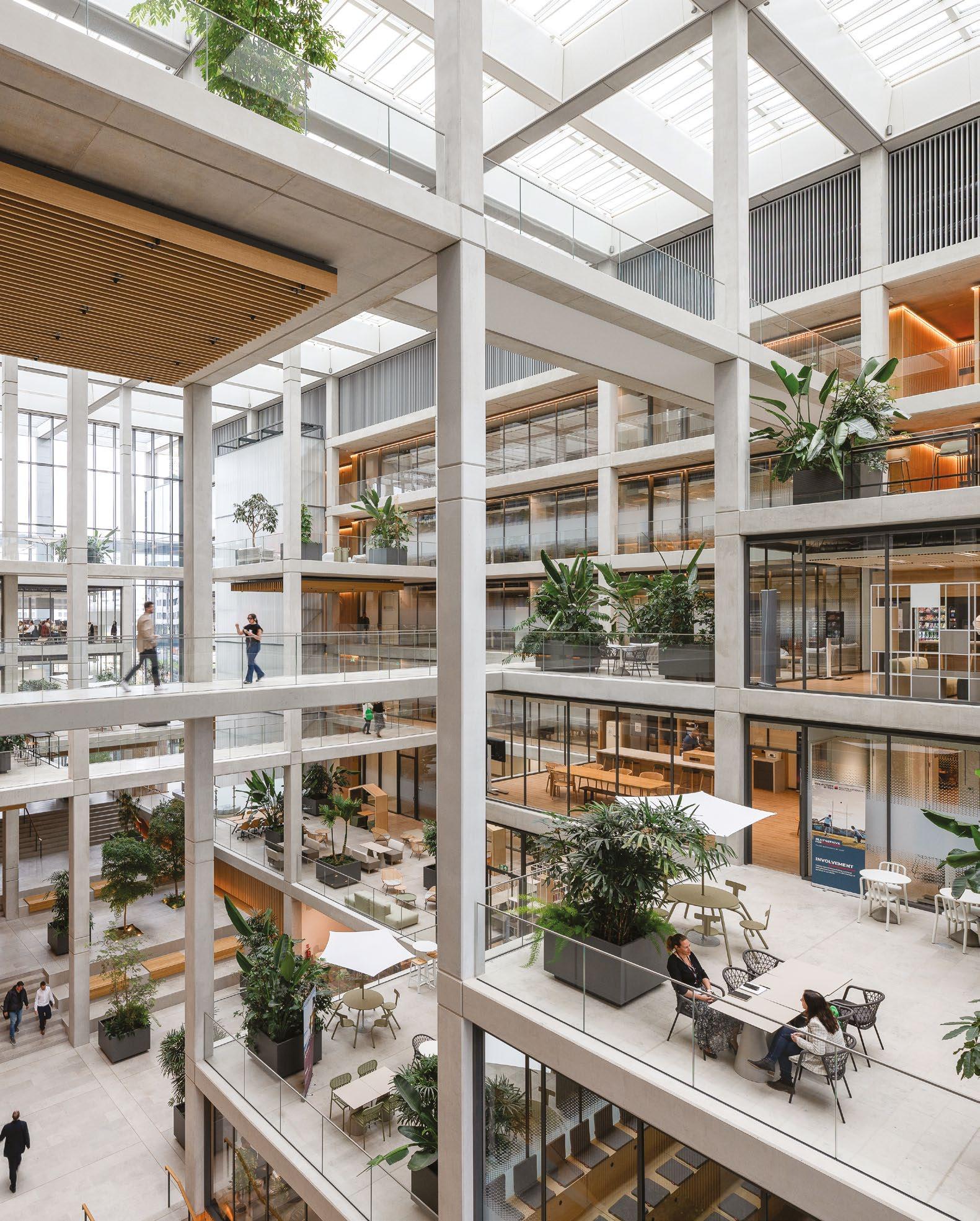
ICÔNE is a 18,800 squaremetre office building in Belval, Luxembourg.
Filled with light and greenery, the building encourages a spirit of co-creation and collaboration.
Its layout addresses the need for flexible and safe working environments that will emerge in the future. The project also references the rich industrial heritage of Belval, revitalising the area by making a positive contribution to the site and its surroundings. The scheme is targeted to achieve a BREEAM Excellent rating.
Belval is a new city quarter combining research, education, leisure and commerce. The scheme relates to the scale of neighbouring buildings and addresses the different characteristics of the surrounding streets.
Its entrances are articulated differently in response to Porte de France, the main urban street to the west and the Place de l'Academie to the East.
New shops, cafes and restaurants will bring life to these entrance elevations at pedestrian level.
The building is arranged as two wings enclosing the central atrium, wrapped by a distinctive orthogonal fa:;ade and roof which emphasises the structural grid and gives the building appropriate to its industrial setting. The historic and symbolic Belval blast furnace forms the central focus of the dramatic vista from the atrium.
The fluidity of the internal space contrasts with the building's formal exterior. The atrium resolves the level changes between the street and the plaza through a series of stepped terraces which create a spectacular arrival sequence. The open circulation adds to the vibrancy of the internal spaces, with communal green landscaped terraces for informal meetings and break out spaces at higher levels as part of a rich and varied whole.
The fac;ade is both structural and environmentally responsive, providing an integrated solution which allows for internal columnfree office spaces as well as solar shading and maximised internal daylight. The external fac;ade benefits from a series of external green loggias, visible from both the inside and outside of the building.
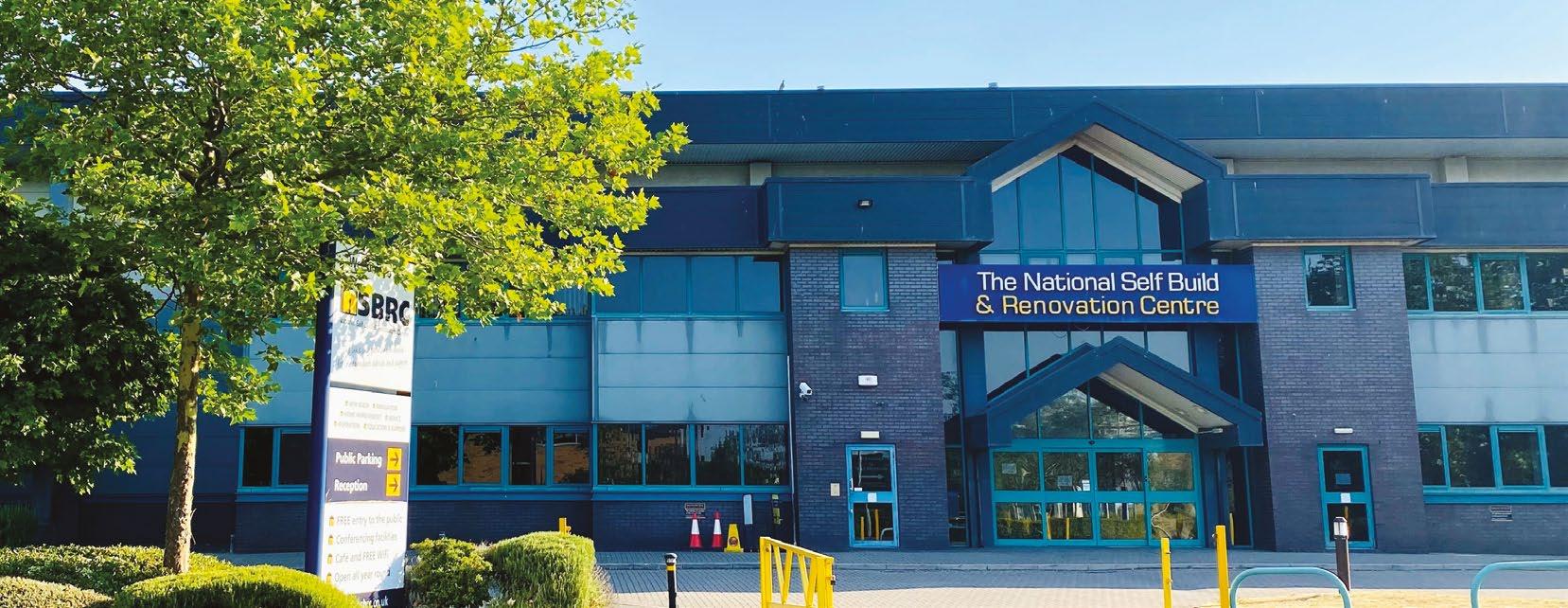
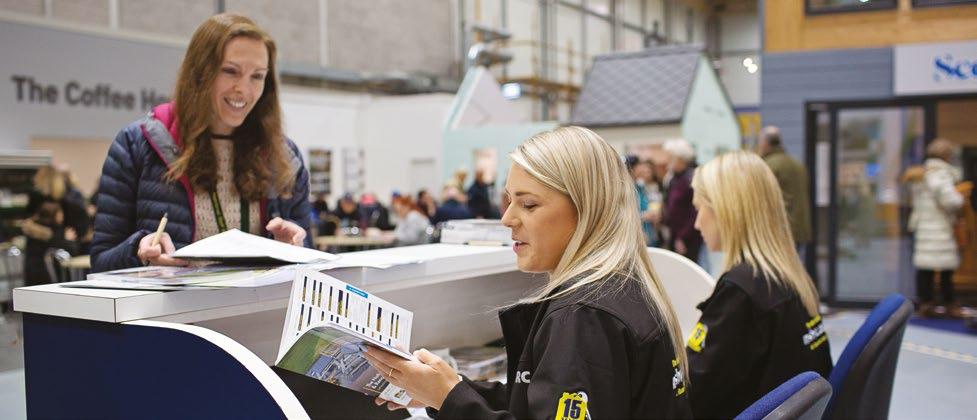
The National Self Build & Renovation Centre (NSBRC) is the UK'S only permanent venue for independent homebuilding advice & support.
Established in 2007, we have helped a quarter of a million visitors build their own dream home or extend and improve existing properties.
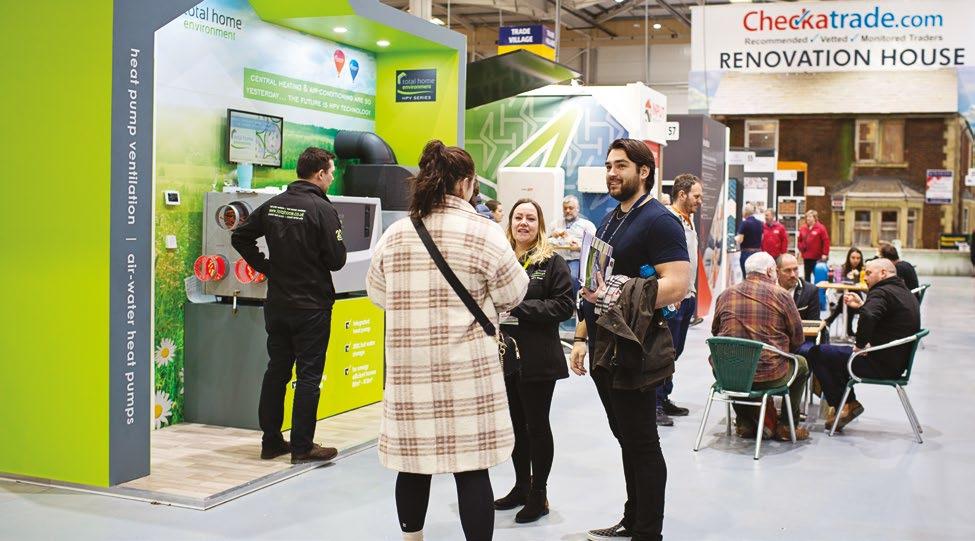
Located on J16 of the M4, Swindon, our unique venue, covering 67,000ft2, features several full-size houses, interactive educational zones – incorporating many life-size exhibits – and a huge ‘Trade Village’ with over 200 specialist exhibitors, showcasing the very best products and technologies.
Experts on our free helpdesk (staffed Wednesday to Sunday) are here to discuss visitors plans and ideas, share their experience, and signpost people to relevant professionals and suppliers who can help make their project a success.
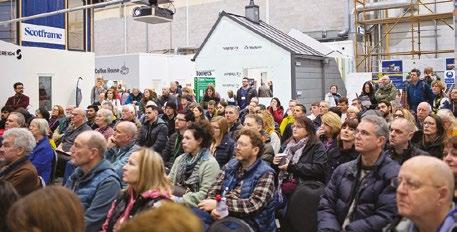
Aside from being open six days a week, we produce a full calendar of shows, themed workshops and courses covering key topics, from plot finding and planning to funding and heating options.
We run several ‘eco’ events including our popular Eco Workshops and our Passivhaus Workshop’s produced in partnership with the Passivhaus Trust.
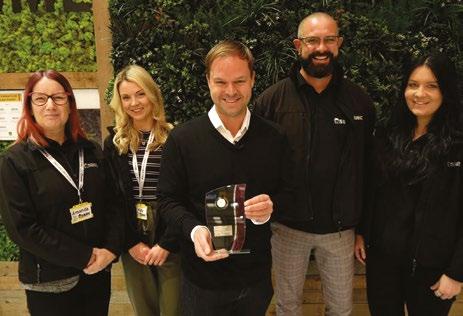
The NSBRC was named Wiltshire’s small business of the year in 2017 and in the same year won a Build It award for Outstanding Contribution to Self Build. In 2021 we won the Employee Ownership Association’s award for Business Resilience following our response to the pandemic.
We believe people deserve better, sustainable homes. We help achieve this by delivering our three key promises:
• We’ll inspire you by showcasing the very best building methods, trends and technologies.
• We’ll inform you with our range of shows, workshops, courses and educational tours.
• We’ll always offer impartial advice you can trust.
Did you know?
In November 2014 a new company was formed to operate the National Self Build & Renovation Centre. This business (The Homebuilding Centre Limited) is employee owned. Our team of employee-owners have a genuine stake in the business via our ‘hybrid’ ownership model.
We have a combination of shares held by our Employee Ownership Trust (our largest share-holder), direct share-holders (all held by employees) and a Share Incentive Plan.
This model allows us to reward our team well, and to share part of our profit if we collectively feel we want to. More importantly, perhaps, the culture that employee-ownership inevitably brings, allows us to work
with openness and transparency, sharing ideas and feedback in a caring environment. We are passionate about providing the best experience for our visitors, exhibitors and conferencing guests.
We were thrilled to receive our 500th Google review in April 2023, and we are currently averaging a score of 4.7/5, which we hope reflects the experience that people enjoy with us.
The NSBRC is open six days a week for visitors. Our standard opening hours are: Tuesday - Saturday: 10:00am - 17:30pm • Sunday: 10:00am - 16:30pm • www.nsbrc.co.uk
VENTILATION AND NATURAL LIGHT
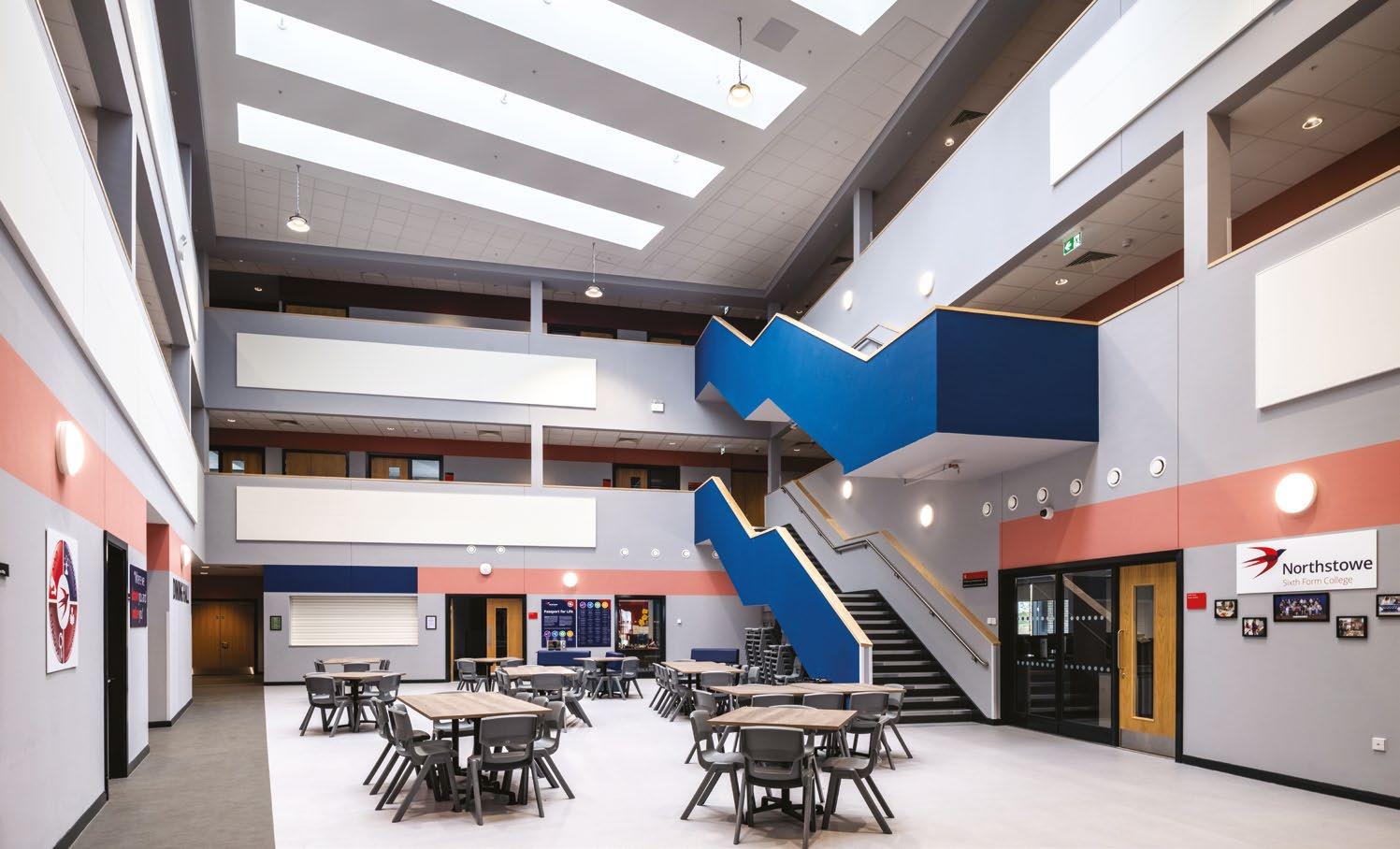
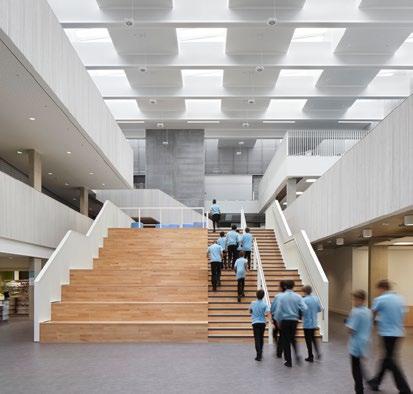
“Ventilation, natural daylight, acoustic comfort, and indoor air quality are critical to student wellbeing, concentration, and learning outcomes –especially in education environments,” comments Claire Mills, Principal of Northstowe Learning Community, speaking about phase 2 expansion of the allthrough education facility.
Duplus was sub-contracted by construction partner, Kier to supply aluminium curtain walling, windows and doors for phase 2 of this significant project. The contract included provision and installation of louvres for which Duplus turned to reliable supplier, IKON Aluminium Systems. IKON recommended its IKL302-PFA50 glazed-in louvre which complies with BS EN 13030:2001 and provides ventilation to help regulate indoor temperature and air quality without letting rain or debris in.
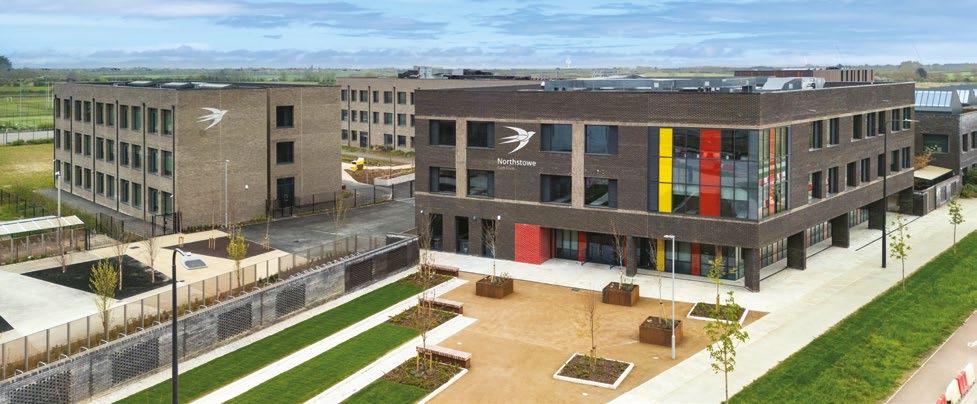
The campus opened to pupils in March 2025. “As one of the first buildings delivered in phase 2 of the town, Northstowe Learning Community, has played a key role in establishing strong social and educational foundation for the town.
It has been recognised for its exceptional, wellbeing-focused design - supporting science, sport, arts, and outdoor learning, which underscores the importance of environmental quality in education settings.”
Northstowe Learning Community was recently named Best Education Project at the UK Forum East of England Property Awards.
The award was received by Homes England, master developer for phases two and three of Northstowe.
Meridian Trust and Cambridgeshire County Council were also key partners in the project.
The project was recognised for its low-carbon construction approach.
DAYLIGHTING is published by:
Constructive Media Ltd Hornbeam Suite Mamhilad House Mamhilad Park Estate Pontypool
Daylighting is available by email, free of charge to subscribers, by logging on at: www.daylightingmag.co.uk or get in touch to request a print version
Free access is also available via our website and our social media channels.
Our readership is predominantly UK architects, specifiers, contractors, consultants and roofing professionals.
While every effort is made to ensure the accuracy of content, the publisher does not accept liability for errors. The views expressed by contributors are not necessarily those of the editor or publisher.
This publication contains editorial photographs which may have been supplied and paid for by suppliers.
Rooflight installers, contractors, manufacturers, specifiers, distributors, consultants: find out how RA membership can enhance your business. www.rooflightassociation.org Find out more and download our Membership Prospectus now.