PUBLICATION OF THE BAY AREA NEWS GROUP
YOUR DONATION COUNTS
Help make our community a better place by giving to families and groups that face significant challenges. Together we can make sure that no wish goes unfulfilled this holiday season.

Help make our community a better place by giving to families and groups that face significant challenges. Together we can make sure that no wish goes unfulfilled this holiday season.
Dear Readers,
We’re reaching out to you on behalf of the 2025 Share the Spirit season — a cherished tradition that brings our community together to support local individuals and families in need throughout Alameda and Contra Costa counties.
Thanks to your past generosity, Share the Spirit has become more than just a holiday fundraiser — it’s a beacon of hope, a celebration of compassion and a lifeline for those facing hardship. With your support, we’ve assisted organizations that provide help with food insecurities, housing assistance, youth programs, senior care and so much more, always staying true to our mission of uplifting the community through meaningful impact.
Beginning Thanksgiving Day, our award-winning journalists will once again highlight stories of resilience, need and transformation that will be published through December. We invite you to join us in making wishes come true and helping our neighbors feel seen, supported and cared for.
Your secure and tax-deductible donation can be made in the following ways:
Online: Go to sharethespiriteastbay.org/donate
By mail: Make your check payable to “Share the Spirit Fund” and send it to:
Share the Spirit Fund
P.O. Box 2127 Dublin, CA 94568
Every dollar that you contribute directly supports East Bay families in need. Thanks to the East Bay Times generously covering nearly all administrative costs, your donation goes directly to providing assistance. If you’re considering a gift of stock, a Donor Advised Fund grant or a Qualified Charitable Distribution, we’re here to help. Please contact our Share the Spirit outreach coordinator, Andrea Altman, at (408) 920-5014 or aaltman@bayareanewsgroup.com.
Your support is vital to continuing this work. Together, we can light up the season with compassion and make 2025 a little brighter for our neighbors in need.
With heartfelt thanks,
Sharon Ryan Publisher, East Bay Times
P.S.: If you wish, your name will be included in our donor tribute list — published both in print and online — as a small token of our gratitude.
ON THE COVER
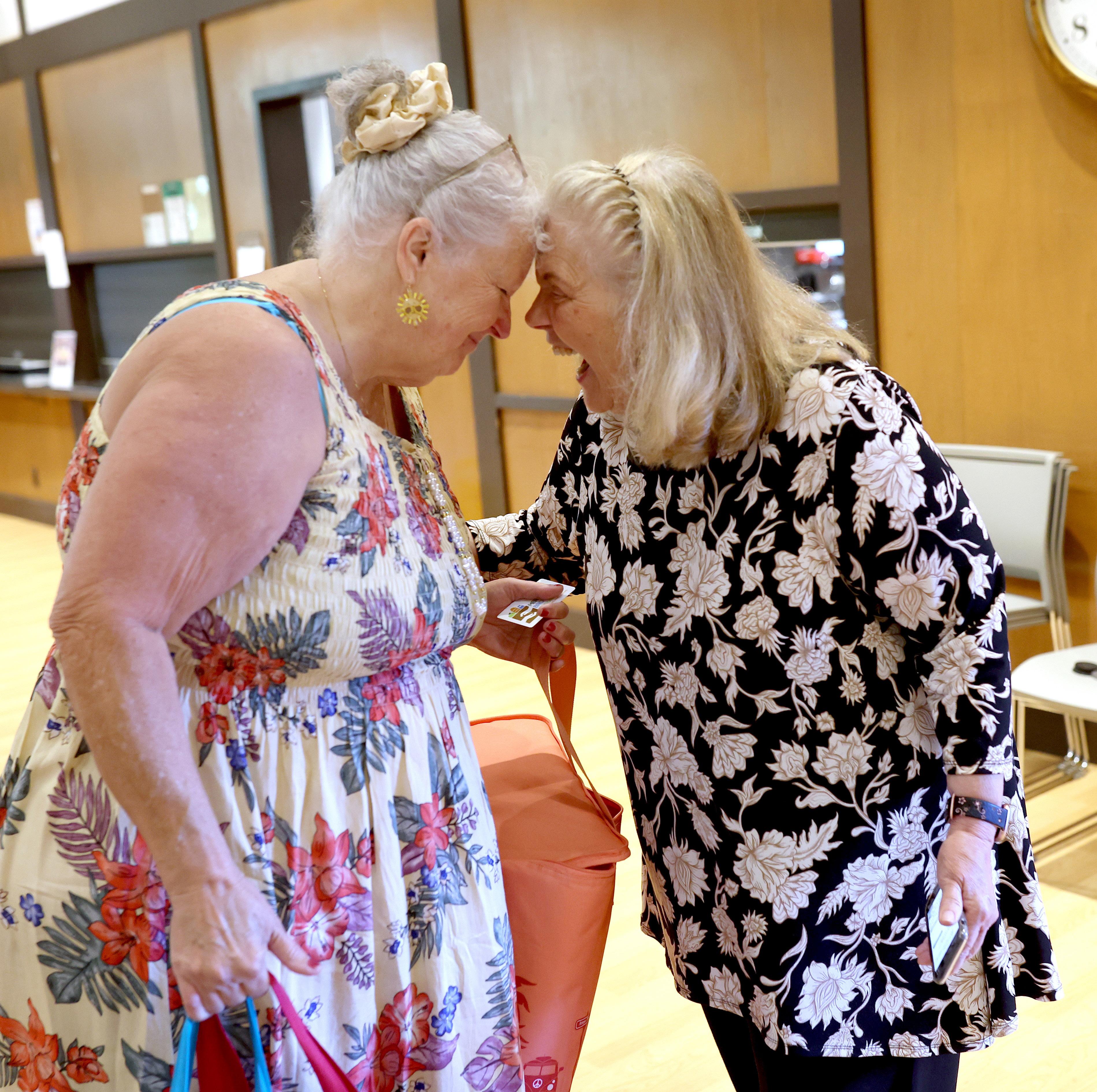
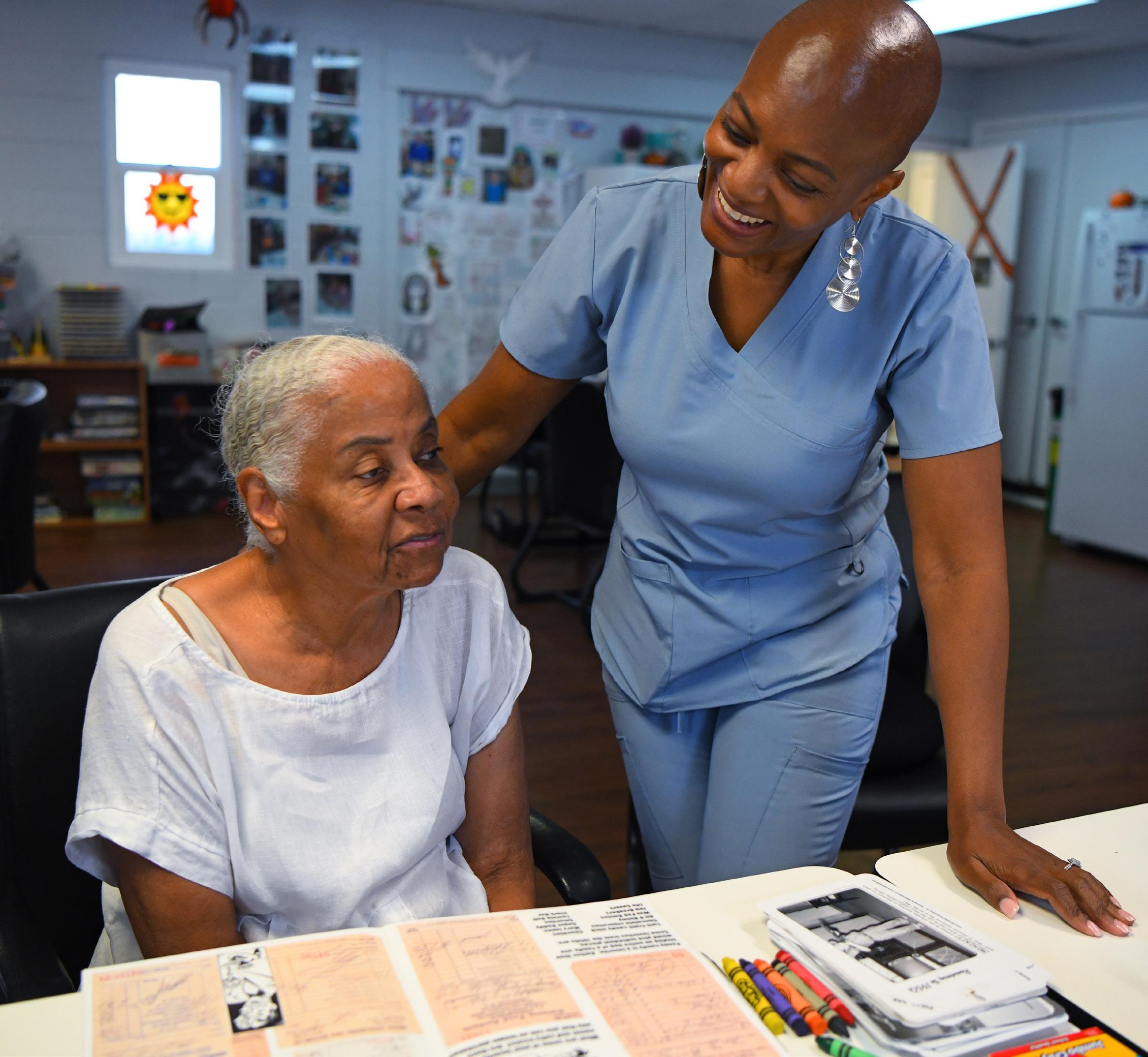
Roberta Crawford, left, of Hayward, is greeted by Janice Roberts, executive director at the Hayward Senior Center, after receiving free food during the center’s Mercy Brown Bag Program. Crawford shares food with her 89-year-old homebound neighbor. JANE TYSKA — STAFF PHOTOGRAPHER STORY, PAGE 4
in January:
You can dedicate your donation to a person, cause, or group (optional) Donor name(s)/group to be published

Thank you!
By Martha Ross CORRESPONDENT
What makes Martina Lozano a survivor?
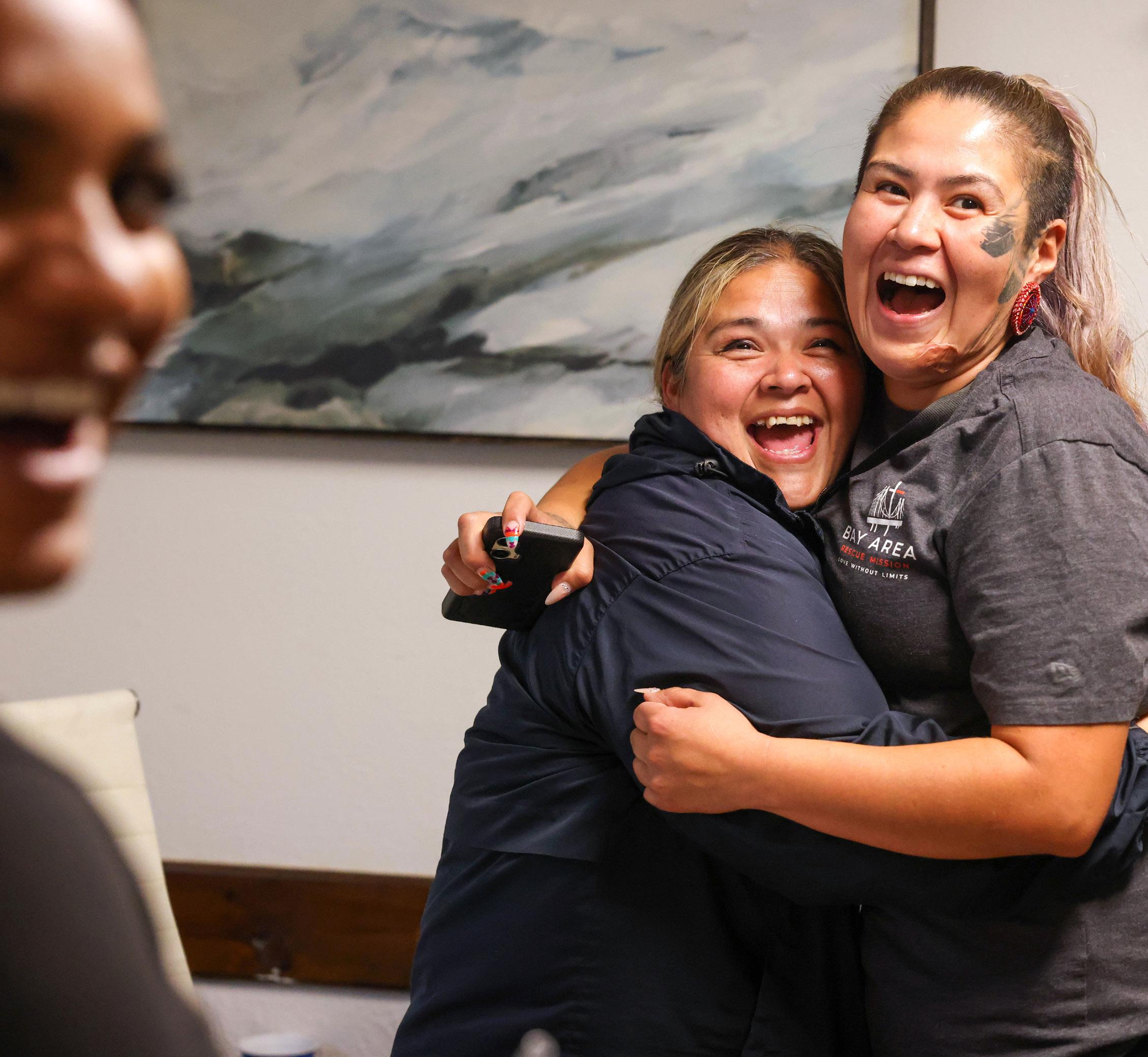
The 33-year-old graduate of Bay Area Rescue Mission’s holistic, yearlong recovery program asks that herself sometimes. A Native American, Lozano describes growing up in a loving but “dysfunctional” family in Oakland and Antioch. She was sexually assaulted as a child and began running away at age 11, landing in a dangerous mire of gangs, juvenile crime, abusive boyfriends and sex work. After giving birth to the first of her four children at age 15, she became addicted to drugs, lived at times in her truck and lost custody of her children.
Life worsened after her first boyfriend, a parolee and the father of three of her children, was murdered in Oakland in 2022. Several months later, another boyfriend shot her in the face with a flare gun, with the flare barely missing her carotid artery.
That February 2023 shooting, which left a permanent burn scar on her left cheek, could be said to be Lozano’s rock bottom. Three months later, she signed on for whatever the Bay Area Rescue Mission could teach her. The Richmond nonprofit has been helping people like Lozano recover from homelessness, due to addiction, domestic violence or poverty, since 1965.
Today, more than two years sober, Lozano has regained custody of her four children, who live with her at the rescue mission’s shelter for women and children, which housed 151 women and children in 2024. Lozano also works there as a residential assistant.
Finding her way to the rescue mission changed everything.
“It’s kind of a cliche to say, but we serve people who have forgotten how to love themselves, who have burned every bridge,” said Bram Begonia, the CEO of the rescue mission.

Donations will help the Bay Area Rescue Mission provide 75,000 hours of case management, life skills classes, traumainformed counseling and vocational training to women living at its Muriel E. Mayes Center for Women and Children who are going through its one-year wrap-around program to recover from homelessness, whether due to addiction, domestic violence, poverty or human trafficking. Goal: $30,000
By Panashe Matemba-Mutasa PMATEMBA@ BAYAREANEWSGROUP.COM
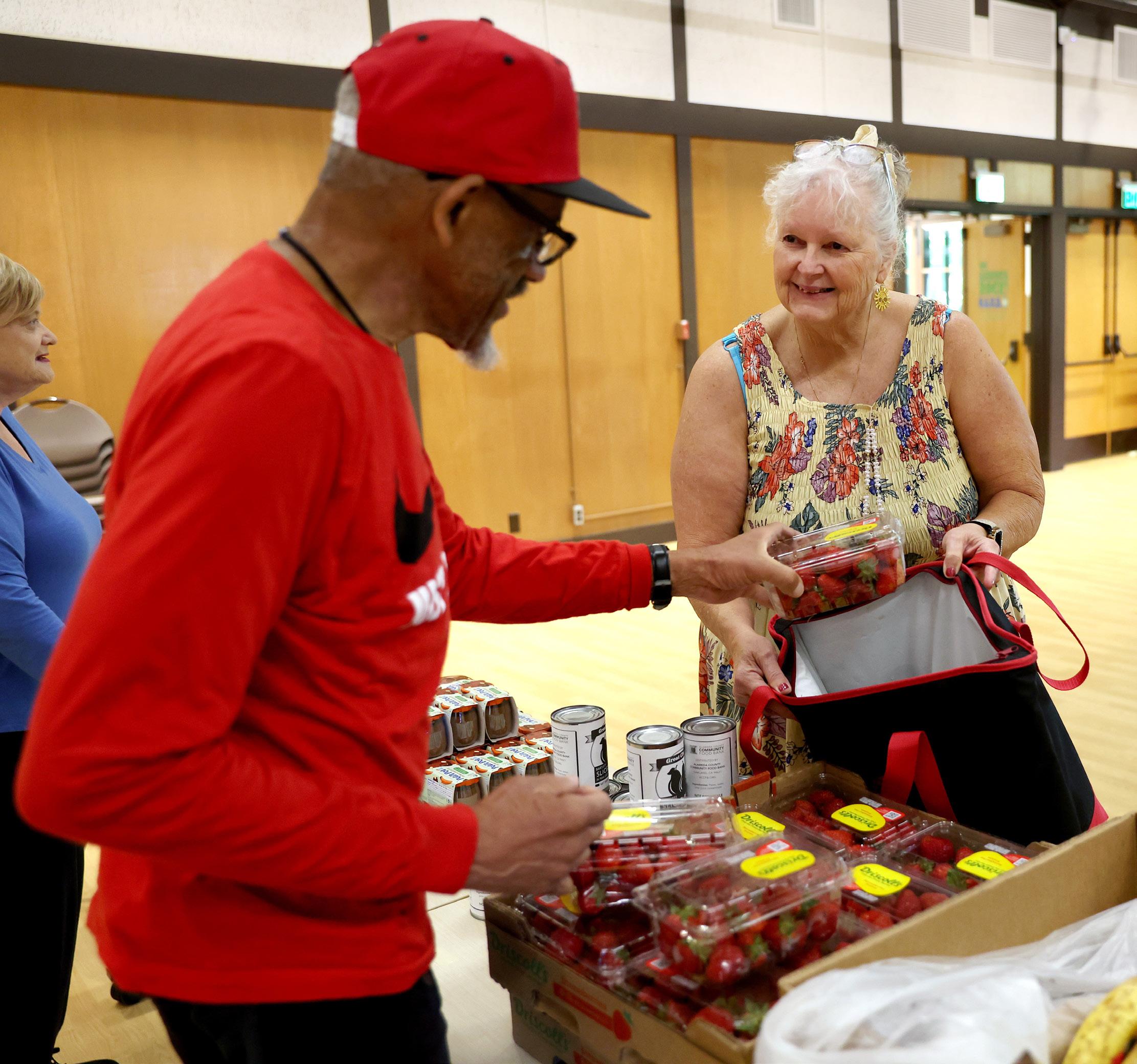
On a gray morning in Oakland’s Fruitvale neighborhood, dozens of coatbundled seniors make their way up the ramp behind a local food bank. Inside, some reach for ripe bunches of bananas and others fill large canvas totes with bright red apples. For many, this ritual is a nutritional lifeline.
California’s older adults, a group characterized as age 65 and older, experience some of the highest rates of poverty among all age groups in the state, at 21%, according to a September report from the California Budget and Policy Center.
Founded in 1982 by residents at the Mercy Retirement and Care Center, the Mercy Brown Bag Program is a nonprofit that distributes groceries to over 10,000 East Bay seniors every month.
The program runs on a “seniors helping seniors” model. Each week, more than 500 volunteers — 95% of them retirees aged 65 and older — sort, pack and distribute bags of groceries to their peers in need across 82 sites, including affordable senior housing complexes, community and senior centers, and assisted-living facilities.
Mary Roberts, a retired lawyer who volunteers each week at one of Mercy Brown Bag’s free grocery stores, shared that the interactions she has with recipients are among her favorite parts of the job. The program provides all or most of the groceries for 85% of their clients, she said.
At another Mercy Brown Bag site inside the Hayward Area Senior Center, recipient Roberta Crawford moves slowly down the line of folding tables, filling her reusable grocery bag. It’s enough to tide her over until the program returns in two weeks.
Crawford first discovered the Mercy Brown Bag Program in July 2024, and, after months of stretching her budget on shelf-stable groceries, it felt like striking gold, she said.
“When you eat better, you feel better,” the 67-year-old Crawford said, beaming.
Donations to the Mercy Brown Bag Program enable the nonprofit to buy food for
By George Avalos GAVALOS@ BAYAREANEWSGROUP.COM
Amid California’s teacher shortage — earlier this year, there were 10,000 vacant teaching positions reported across the state — one program is stepping in to provide Bay Area residents with training and support to become substitute teachers for young learners. Launched in 2018, Early Childhood Education Substitute Teacher Empowerment & Placement, trains, manages, empowers and places teachers in early childhood programs.
“The whole concept is to address the shortage of teachers in the Bay Area. We bring in people with minimum experience as a teacher, and we support them all the way through the process. I am proud of the program. We are seeing a lot of success,” said Sabrina Dong, an official with ECE STEP.
At least 300 teachers have gone through the program, according to Dong.
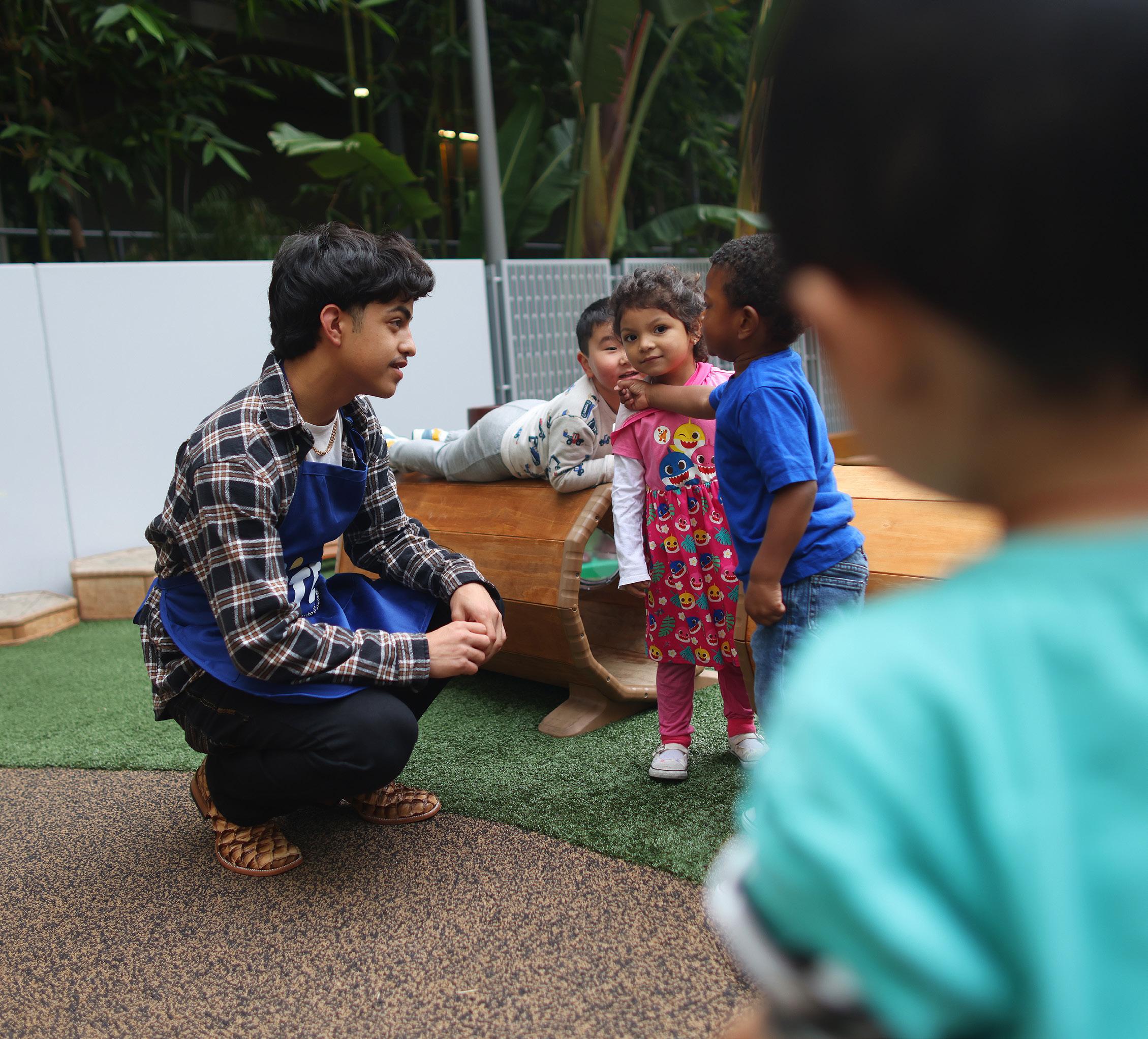
One participant is Emmanuel “Manny” Morando Neri, who is passionate about teaching and, in particular, childhood education.
“I’ve always liked the idea of being involved in early childhood education,” Morando Neri said. “I can teach kids in early childhood education about socialemotional competencies. I can help children learn how to regulate and how to navigate through their emotions.”
ECE STEP has been able to place teachers in an array of early childhood programs, according to Dong. These include Head Start, Early Head Start and state-financed nonprofits that provide early childhood education.
ECE STEP believes a tech-powered approach is an important solution to the scramble to find substitute teachers.
“The STEP program replaces these clunky measures with an intuitive app that allows childhood educators to book a teacher with the push of a button,” ECE STEP states.
Donations will help Early Childhood Education Substitute Teacher Empowerment & Placement (ECE STEP) expand its East Bay operations, train and support six substitute teachers to fill roughly 30 vacant classrooms and enable about 600 low-income children to receive high-quality care and learning. Goal: $10,000
By Chase Hunter CHUNTER@ BAYAREANEWSGROUP.COM
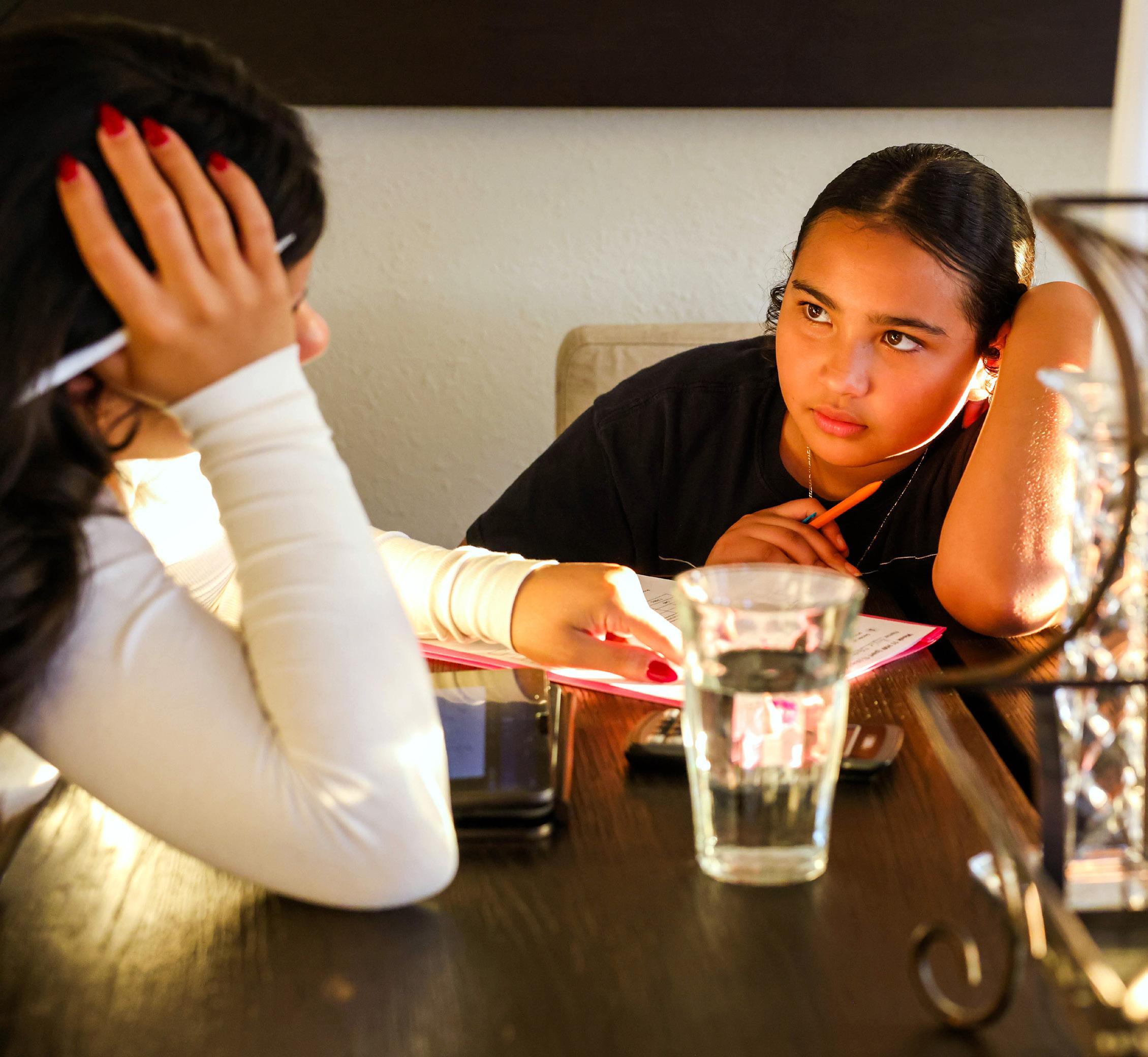
In a scene as idyllic as a Norman Rockwell painting, Elevate Tutoring fellow Mia Matute sat at a dining table with her 12-year-old tutee, Kaycie Grant, as golden hour light shone on the fractions of a paper worksheet while they worked together one Friday evening in the Oakland hills.
Grant solved a problem that had given her difficulty.
The nonprofit Elevate Tutoring provides scholarships, work experience and professional development to low-income, first-generation college students. In return, these fellows, like Matute, tutor K-12 students like Grant, from similar backgrounds, establishing a model for academic success and the resilience to overcome challenges in their education.
Elevate Tutoring was founded in 2011 as a side project of Bob Schaffer, now a professor of engineering at Mission College. He had recently completed his Ph.D. at Stanford University when he realized he had an “itch” for teaching students — and was aware of the deep inequality that exists in the region’s education system.
Since starting as a one-man operation, Elevate Tutoring has spread its influence to the East Bay to engage with college students at UC Berkeley, CSU East Bay and Laney College, and Schaffer said the nonprofit will add more tutors in the next few years for future expansion across the Bay Area.
Matute said she grew up in a lowincome household in the East Bay, where tutoring wasn’t an option for her family and she wants to continue volunteering to uplift students like Grant and help them pursue higher education.
“I don’t want them to struggle the same way that I did,” Matute said. “She looks like me, and we bond, and we interact, and we’re kind of the same. She can do it like I can do it, too.”
By Rick Hurd RHURD@BAYAREANEWSGROUP.COM
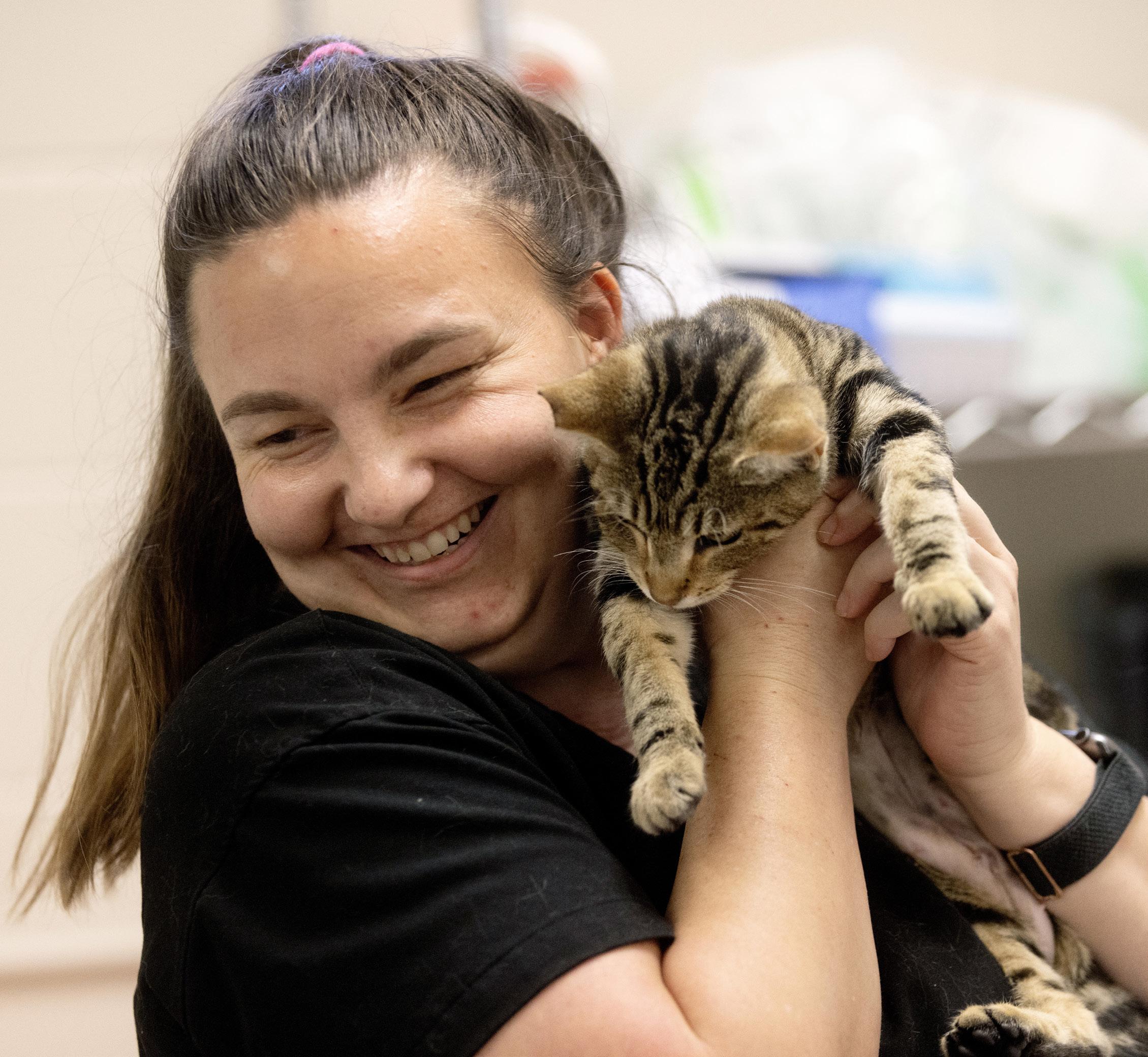
In August, a video showing two women abandoning a crate full of cats outside the Antioch Animal Shelter began circulating online. Shelter employees later found the crate empty; somebody had let the cats out.
Pets can be abandoned for a number of reasons, but a major one for many is financial. “It’s happening more and more and more,” Dr. Jean Goh said. “People get a dog or cat or any pet with the intention that it’s going to be a family member and that it will be a lifelong thing. Then they go to the vet to get that animal fixed, and they get that first bill. And pretty soon, they realize, ‘I can’t afford this. What am I going to do?’ And when you think about some of the economic realities now, really, what is that person going to do?”
Goh is doing what she can to offer up at least some hope. She is the executive director and CEO of Animal Fix Clinic in Pinole, a veterinary outlet that offers services at sliding-scale pricing and operates with donor support and grants. The clinic also offers no-cost options when financially necessary. It offers three primary areas of care: spaying and neutering dogs and cats; a community cat program to help care for and house feral cats; and urgent or major surgery for animals that require it to survive.
According to Goh, one in four people now struggles with veterinary care, which may cause them to change their mind after they’ve committed to caring for a pet for life.
“People get stuck,” she said. “The cost of care has gotten out of reach for most people.”
Goh took over the practice of running the clinic full-time in 2017, along with Robin Post, director of clinic operations. The clinic itself began with the name Fix Our Ferals to care for community cats by trapping them, neutering them, and returning them to where they were found. Goh expanded the operation to include dogs, as well as the surgical treatment of dogs and cats.
By Harry Harris HHARRIS@BAYAREANEWSGROUP.COM
Darryl Thomas had a good life. And then, mainly because of serious health issues, he didn’t.
But now, with the help of a Livermore homeless advocacy group, he is getting back to a happier life.
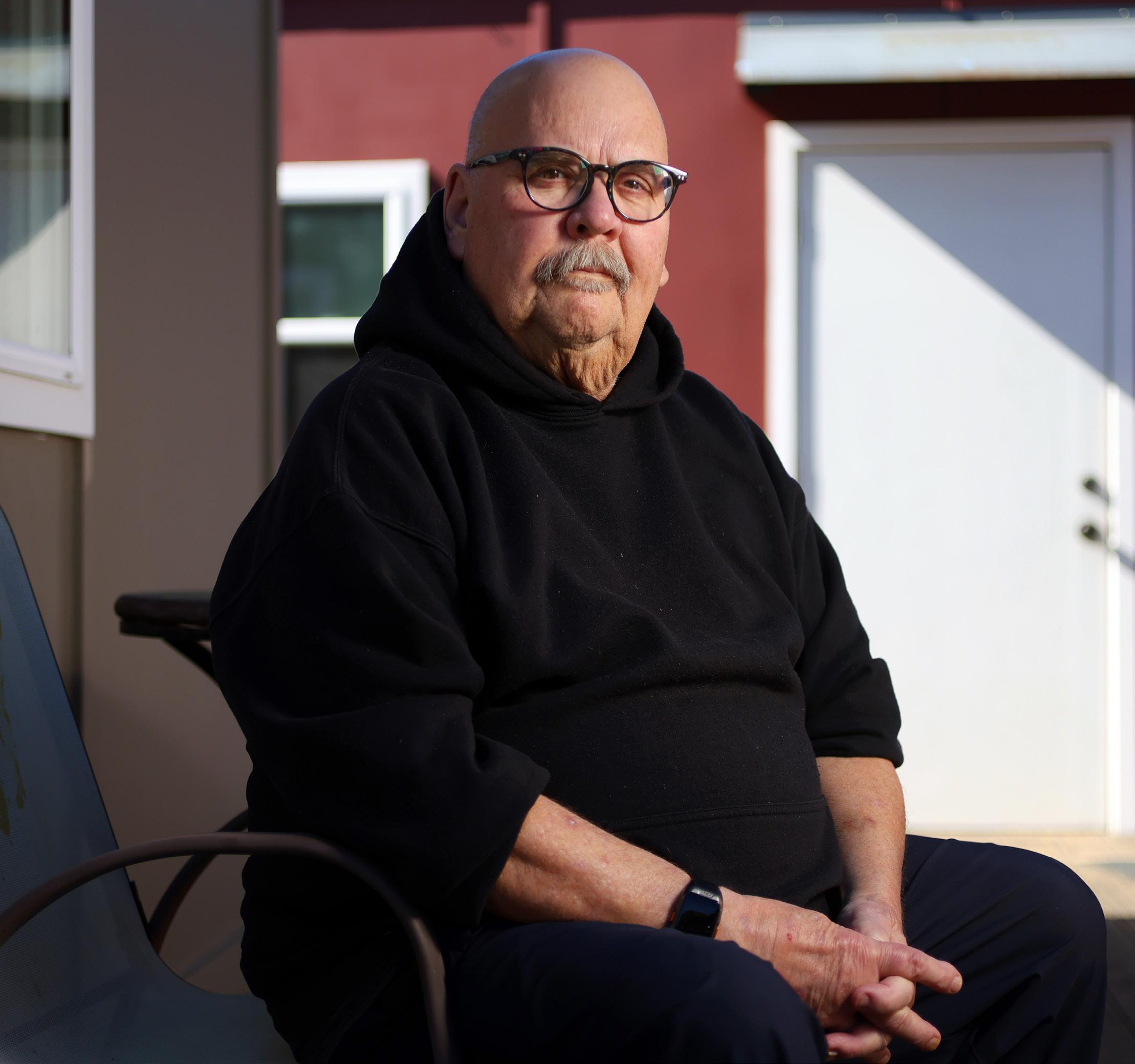
Thomas, 77, is one of 28 residents ranging in age from 30 to 81 living at Goodness Village, a nonprofit supportive housing community founded in June 2021 on the grounds of CrossWinds Church. The program serves people who have experienced chronic homelessness, severe mental health conditions, substance use disorders or prolonged housing instability.
“Goodness Village grew from a desire to create a program that treats neighbors as people first, rather than problems to manage,” said executive director Kim Curtis.
Thomas was born and raised in the East Bay and graduated from St. Mary’s College. After landing in severe medical debt — his bills soared to over $1 million after he received a cancer diagnosis and treatment while uninsured — the debt went unpaid and he lost his home in Dublin, six years before it would have been paid off.
He started living with a family in Sunol, then out of his SUV. More medical crises hit: a blood infection in November 2019 that put him in a hospital for nine months, then COVID-19, which resulted in pneumonia and another infection — and another hospital stay.
He began living out of another vehicle in July 2020, and did so for more than two years before someone called him and asked if he had ever heard of Goodness Village.
Thomas became a resident there in May 2023. Today, his unit has all the conveniences he needs. “It is perfect for me,” he says.
He said what stands out, in addition to 24-hour personal onsite support, is a “plethora of services for those inclined to use them,” including help with Social Security benefits, food stamps, SDI, job assistance, finances, and medical and vision needs.
Donations to Goodness Village help cover staff costs needed to provide 24/7 care at this permanent supportive housing community for formerly unsheltered people, which helps the 28 residents live with stability and belonging, heal from trauma and health conditions, and thrive. Goal: $7,000

By Hema Sivanandam HSIVANANDAM@ BAYAREANEWSGROUP.COM
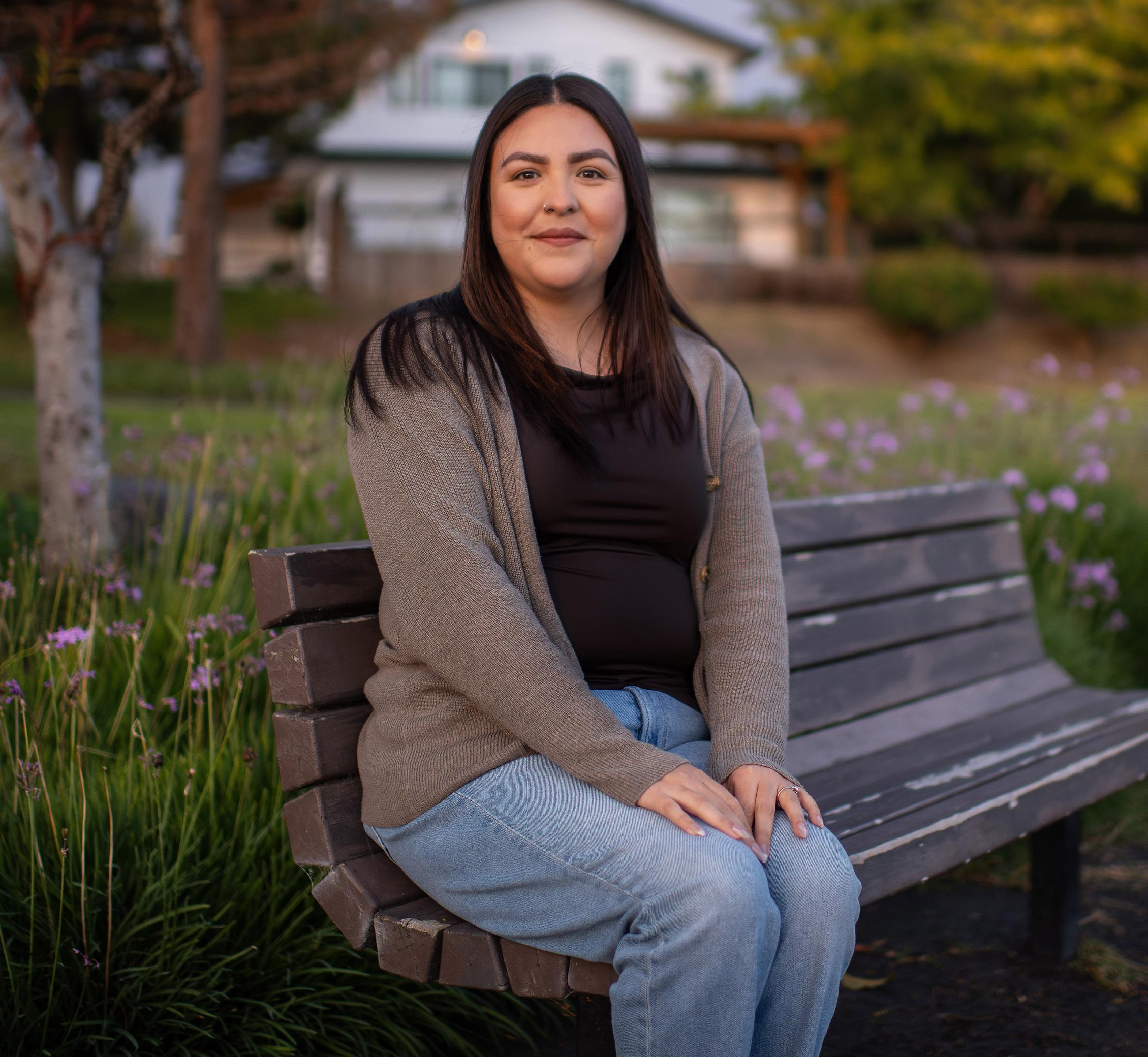
Mayra Jimenez Almaras was 8 when she came to the U.S. from Mexico with her parents and two siblings. At 11, she was working long hours under the scorching sun in the Brentwood fields, picking green beans and packing corn.
Those days are now behind her as the 21-year-old prepares to graduate from Saint Mary’s College of California in December with a bachelor’s degree in finance. As a way to give back to the organization that helped her and her family, she works as a community health worker with Hijas del Campo, or Daughters of the Field.
Hijas del Campo was founded by a group of women who met in early 2020 after seeing how the COVID-19 pandemic impacted farmworkers. The organization just celebrated its fifth anniversary.
Over the years, it has worked with 500 core families — nearly 2,000 people — through outreach activities that help migrants, seasonal farmworkers and their families to improve their lives, working conditions, health and safety. Their work focuses on food security, health care, housing, education, workers’ rights and legal aid.
Jimenez Almaras said that while the world sees farmworkers as a vital source of food for their plates, many fail to recognize that farmworkers themselves face food and financial insecurities, as well as chronic diseases.
The organization continues to provide outreach services, giving farmworkers bags of essential items. Amid federal political uncertainty, the organization is also educating farmworkers on their rights and partnering with immigration law groups, such as the Immigration Institute of the Bay Area.
Beyond health, education has become a cornerstone of their work. The organization partners with Lenovo, which donates about 20-30 laptops annually to students from farmworker families.
Donations to Hijas del Campo will enable the nonprofit to buy and distribute 500 food and essential-item bags to 378 low-income farmworker families in Contra Costa County for two months, prioritizing access for people who face barriers to traditional food assistance. Goal: $10,000
By Jason Mastrodonato JMASTRODONATO@ BAYAREANEWSGROUP.COM
It was April, just a few months since a new administration took over in the White House, and Cynthia Verduzco walked into an office for the most important interview of her life: She was applying to be a United States citizen.
After she was born in Mexico, her family moved to Los Angeles when she was an infant, then to Newark when she was in middle school.
She is raising three kids here. She built her entire life here. For as long as she can remember, the United States has been her home.
But when she arrived for her interview at the Department of Homeland Security office in Santa Clara, her husband, Juan, a U.S. citizen, wasn’t allowed to enter with her. Nervous as ever, she stepped into the waiting room and looked up at a television. On the screen: government officials threatening to deport undocumented people.
But Verduzco had a leg up: A team of experts from the Immigration Institute of the Bay Area had been working with her, preparing her for this interview, helping her understand her rights and organize her documents, and offering emotional support every step along the way.
She went on to pass the test and become a citizen that day, and is now planning to go back to college to become a nurse.
“Our happy ending,” she said, “is just being together.”
Requests for the help that the Immigration Institute of the Bay Area provides doubled between January 2024 and January 2025.
“Support for this work and for immigrants is what allows us to help people change their lives,” Ellen Dumesnil, executive director, said. “It’s what allows families to stay together rather than being separated.”
Donations to the Immigration Institute of the Bay Area will enable the nonprofit’s Brentwood office to provide 250 consultations for legal immigration, including naturalization, DACA, Employment Authorization Document and asylum cases.
Goal: $40,000
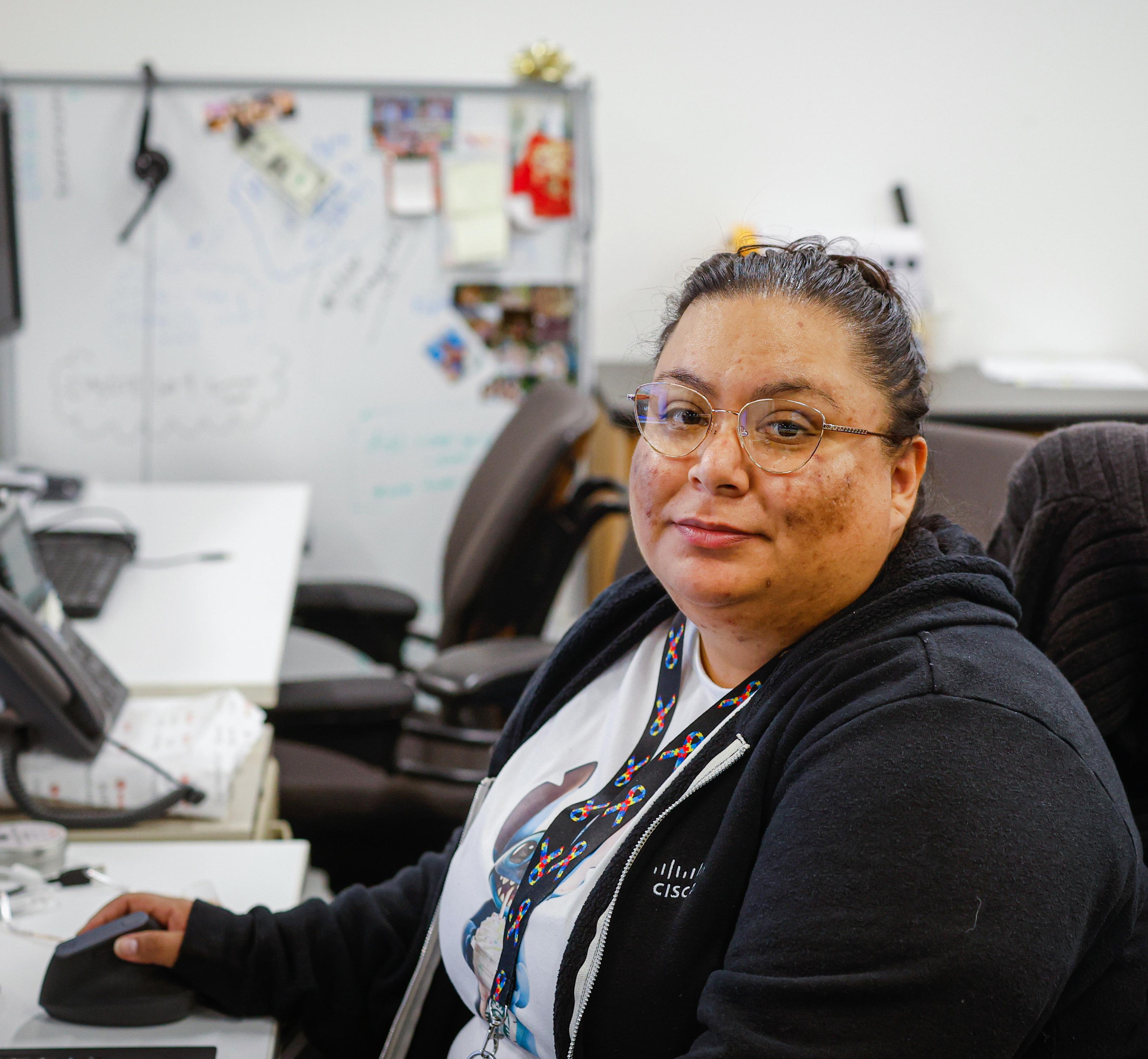
By Nate Gartrell NGARTRELL @BAYAREANEWSGROUP.COM
In the mid-2010s, a woman known as Tish was trapped in a seemingly endless cycle of human trafficking in the Central Valley. Her exploiter kept her young son hostage so she would do his bidding throughout each day and night.
But Tish had one advantage — her attention to detail. She silently kept track of his routine and came up with a plan to escape. After she left, she found refuge through a Bay Area nonprofit called Love Never Fails. At Love Never Fails, Tish found stability through a brand new residence for trafficking survivors.
One day, the organization’s executive director, Vanessa Russell, approached her. “I said, ‘You know, Tish, I think you’re an engineer,’ ” Russell recalled in a recent interview. She was right. Today, Tish works in Silicon Valley as a network engineer for Cisco Systems after graduating at the top of her class in a tech academy run by Love Never Fails.
Based in Hayward but with offices all over the Bay Area, the organization is dedicated to providing a safe haven and a better life for adult and child trafficking victims.
Russell founded the organization in 2011, after experiencing the pitfalls of rescuing someone from trafficking firsthand — her 14-year-old dance student, who had stopped showing up to class.
Helping her young student was far more complicated than she’d thought at first, but, while praying, she said, “I felt very strongly that all I needed to do was love her and that would be enough,” Russell said.
Love Never Fails became Russell’s life’s work. The organization now assists 10,000 people each year in Northern California through housing, education, empowerment classes and one of the toughest parts of the job — outreach to offer victims a way out.
Donations to Love Never Fails will help the nonprofit provide 75 teens and adults who are trafficking survivors or vulnerable individuals to access safe, restorative housing and IT workforce training alongside wraparound services like case management, mentoring, therapy and life skills coaching.
Goal: $25,000
By Shomik Mukherjee SMUKHERJEE@ BAYAREANEWSGROUP.COM
There are shared languages that transcend what is written down or spoken aloud. Young people seem to understand this better than most.
The teenagers at a recent after-school study hour in East Oakland spoke mainly in Spanish, but when they exchanged knowing grins, or burst into sudden laughter, it was clear that even behind a language barrier, this was an environment they trusted.
The session was held by Oakland Genesis, a nonprofit that since 2019 has tried to steer economically disadvantaged youth in the city toward a more positive life trajectory.
Although the organization focuses on improving academic outcomes, its method of achieving that involves another familiar, universal language: soccer.
Its founder, Matt Fondy, has big dreams for the nonprofit, including a large-scale renovation of Sobrante Park, a public field that shares its name with the neighborhood surrounding it — a predominantly Spanish-speaking and lower-income neighborhood of East Oakland.
Edy Chavez spent the pandemic living on screens. Chavez, whose parents are immigrants from Guatemala and Mexico, had already seen his class performance plummet to a 1.0 grade-point average when he began at Oakland Genesis in 2019. At 13, he was still establishing a grasp of English, and often shied away from speaking it.
Fondy took an individual interest in Chavez, pushing the teen to rebuild his confidence and secure academic eligibility for the school’s soccer team.
“The study halls were tough; we hated them,” Chavez said. “But it was always Coach (Fondy) pushing me to be better and telling us to manage our schoolwork first.”
Chavez now holds a 3.7 GPA as a high school senior. And meanwhile, Oakland Genesis has given him a lifelong passion: Chavez is a prolific soccer referee, officiating youth tournaments across Northern California.

By Justice delos Santos JDELOSSANTOS@ BAYAREANEWSGROUP.COM
Nikki K. Lopez still remembers one of the first moments that sparked the idea for Caregiver OneCall.
During the peak of the COVID-19 pandemic in 2020, Lopez flew back to her native Jamaica to take care of her grandmother, Beryl Gordon. Lopez had long referred to her grandmother as her “favorite person in the world,” but caregiving was an entirely new dynamic.
Lopez was tasked with a laundry list of responsibilities for her bed-bound grandmother while juggling her day job. By the end of the first day, Lopez thought to herself that she couldn’t handle everything that caregiving entailed. By the end of the first week, Lopez had gone three days without a shower and was neglecting her own personal needs.
These experiences provoked a question: Who cares for the caregivers? It was this question that inspired the creation of Caregiver OneCall, a 24/7 emotional support line based in Antioch that launched in February for caregivers who need someone to listen. Caregiver OneCall’s services only begin with the emotional support hotline.
Along with virtual training and advocacy, the nonprofit offers four-hour respite sessions, funded with a grant from the Alzheimer’s Association, that provide caregivers with an opportunity to focus on their own mental and physical health. Currently, these take place on Mondays and Saturdays in Antioch, Tuesdays in Concord and Thursdays in Richmond.
As the first anniversary of Caregiver OneCall approaches in February, Lopez is proud of the work that she and her board have done. Still, she acknowledges that she has a way to go. With hundreds upon thousands of caregivers in the Bay Area and beyond, Lopez knows her work is only getting started.
Donations will help Caregiver OneCall serve about 125 caregiver families in Alameda and Contra Costa counties with 24/7 support calls, caregiver wellness kits, respite-focused activities and resource navigation support. Goal: $20,000
By Magali Gauthier CORRESPONDENT
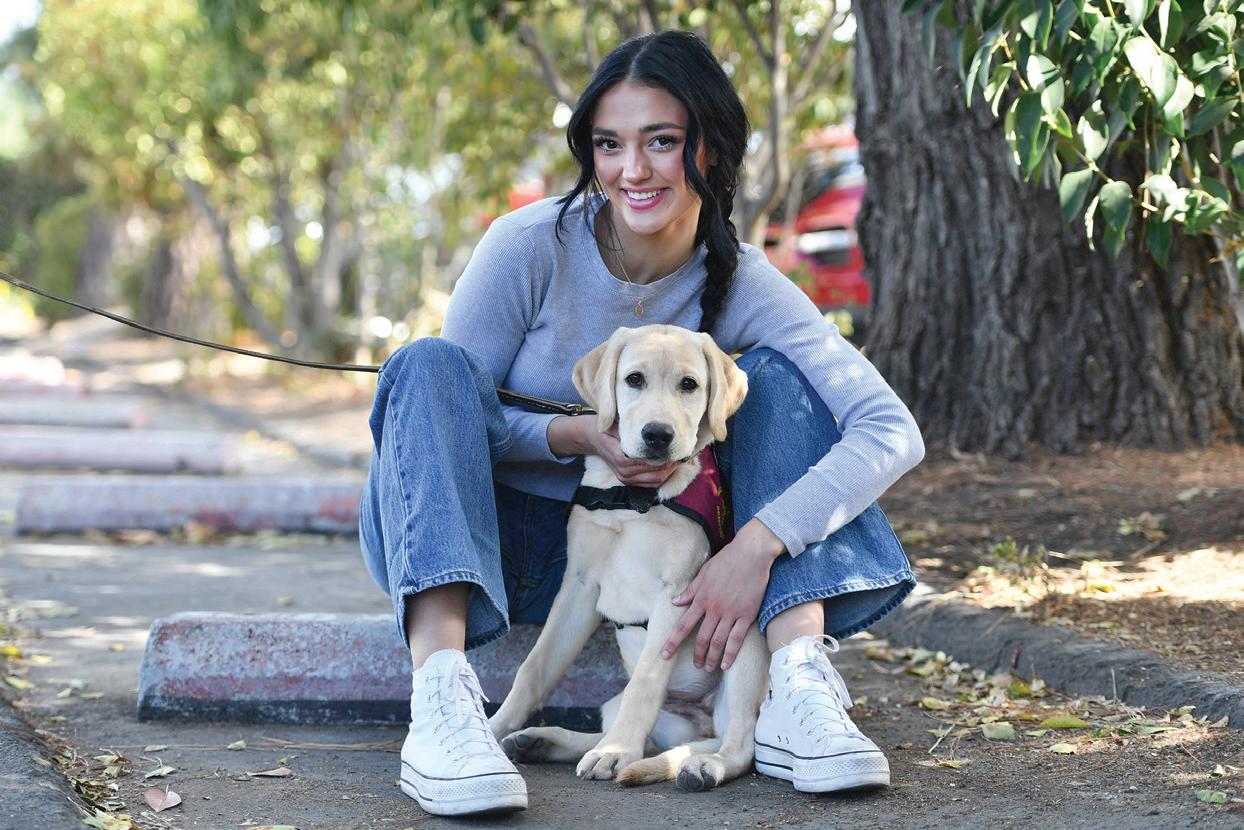
When Chandler and Colton Casey found an emaciated, scared dog while hiking in Livermore, they never expected how costly it would be to save his life.
Kip had been struck by a vehicle, and by the time he was under medical care, his lungs were so full of fluid, his gallbladder and liver had been displaced. The open chest surgery would cost thousands of dollars.
That’s when Paws in Need, a nonprofit that provides financial assistance to dog and cat owners for veterinary care, stepped in.
For over a decade, the San Ramonbased organization has helped TriValley area pet owners offset the cost of surgeries like Kip’s through small grants. Their objective is to curb the number of dogs and cats in overcrowded animal shelters to avoid “unnecessary euthanasia,” said Lisa Williams, the organization’s co-founder, president and medical programs director.
On average, Paws in Need provides monetary assistance for nearly 90 animals each month, the majority of which are spayed and neutered. Since their founding in 2013, the organization has helped over 8,000 animals, primarily in Dublin, San Ramon, Pleasanton and Livermore.
The all-volunteer staff fields calls about animals and their needs on a daily basis. If a dog or cat needs to be fixed, Paws in Need contributes to the cost of the procedure. When a call comes in for a medical emergency, that’s when Williams gets more closely involved. She connects owners to the organization’s veterinary partners and everyone works together to cover the cost and provide the best care for the animal. Paws in Need has taken on urgent care cases ranging from severe ear and eye infections to limb amputations and cancerous mass removals.
Although the bulk of their cases are for animals that already have a home, the nonprofit also provides trap, neuter and return services for feral cat colonies.
Donations to Paws in Need will help the nonprofit keep animals safe, healthy and out of shelters by providing low-cost spay and neuter services for owned and community animals; one-time urgent veterinary care help for pet owners in financial need; and a humane trap, neuter and release program for community cats. Goal: $10,000

By Sierra Lopez SLOPEZ@BAYAREANEWSGROUP.COM
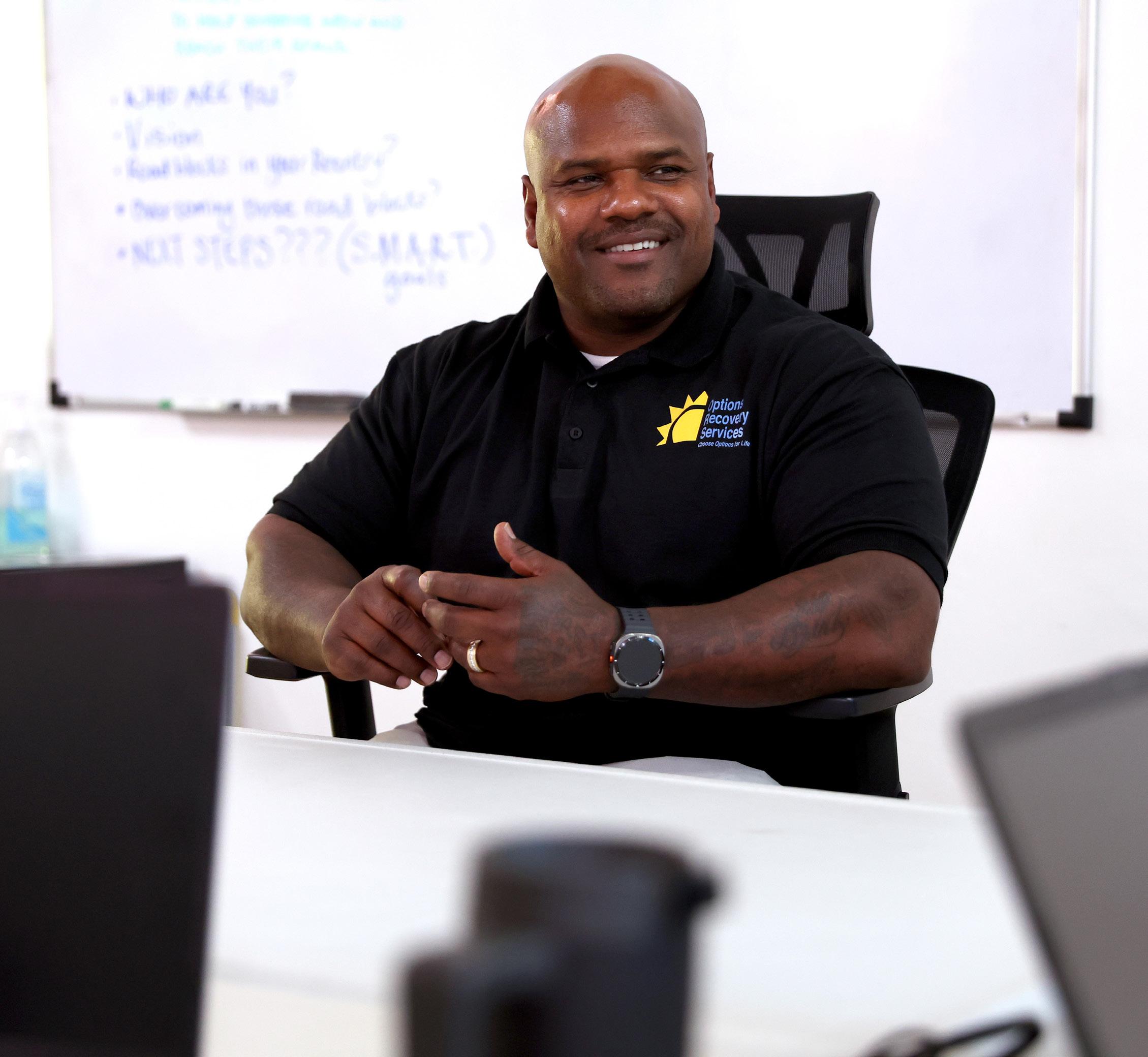
Tucked away on a quiet street in Oakland is a former convent where the Academy of Healing Opportunities and Personal Enrichment, or HOPE, now resides. An arm of the drug, alcohol and mental health treatment nonprofit Options Recovery Services and dreamed up by Options’ Executive Director Justin Phillips, the center is a reentry home and support system for men who are exiting prison as statecertified drug and alcohol counselors.
“What I wanted to do with HOPE is I wanted to have OMCP mentors who are coming home from prison to come home to an environment that is the safest, most drug-free and most conducive to successful reintegration into society,” Phillips said.
Nearly three years after opening, about 40 people have graduated from the academy. After six months to two years of support — including therapy, food, clothing, housing and lessons in digital and financial literacy, among other skills — they’ve settled into their independence while continuing to serve the community as professionals helping others get or stay clean.
George K.L. Smith, who led the conversation, is the academy’s director of reentry and violence prevention.
Before playing an integral role at Options Recovery, Smith spent 25 years in prison. Committed to self-help, Smith began seriously participating in rehabilitation and was accepted into the Occupational Mentor Certification Program after years of good behavior. Smith spent about 20 months at California State Prison, Solano, where he went through training before returning to California Men’s Colony in San Luis Obispo to help counsel others. Smith’s life has become one of service.
“There’s no throwaway people,” said program manager Tomas Martinez, who served 42 years. “I’m an example of that.”


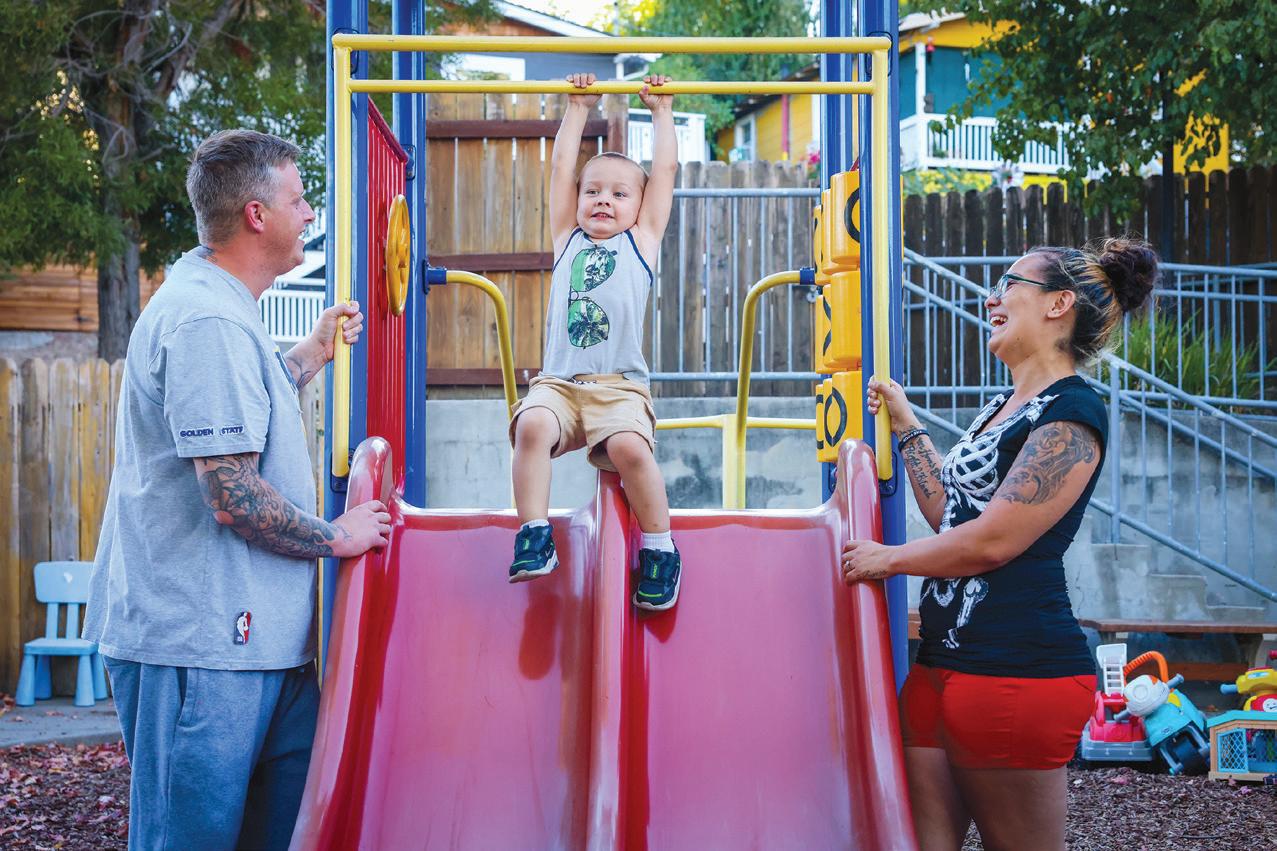
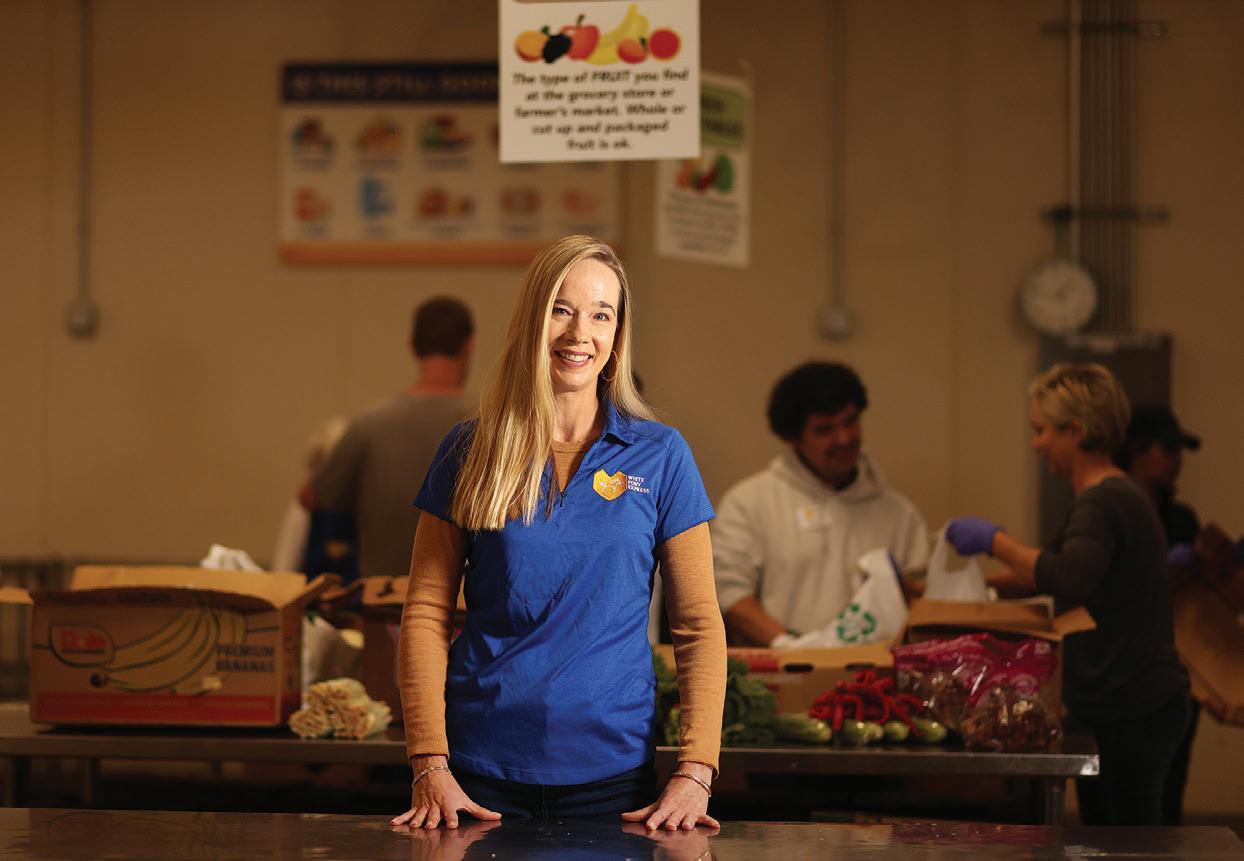
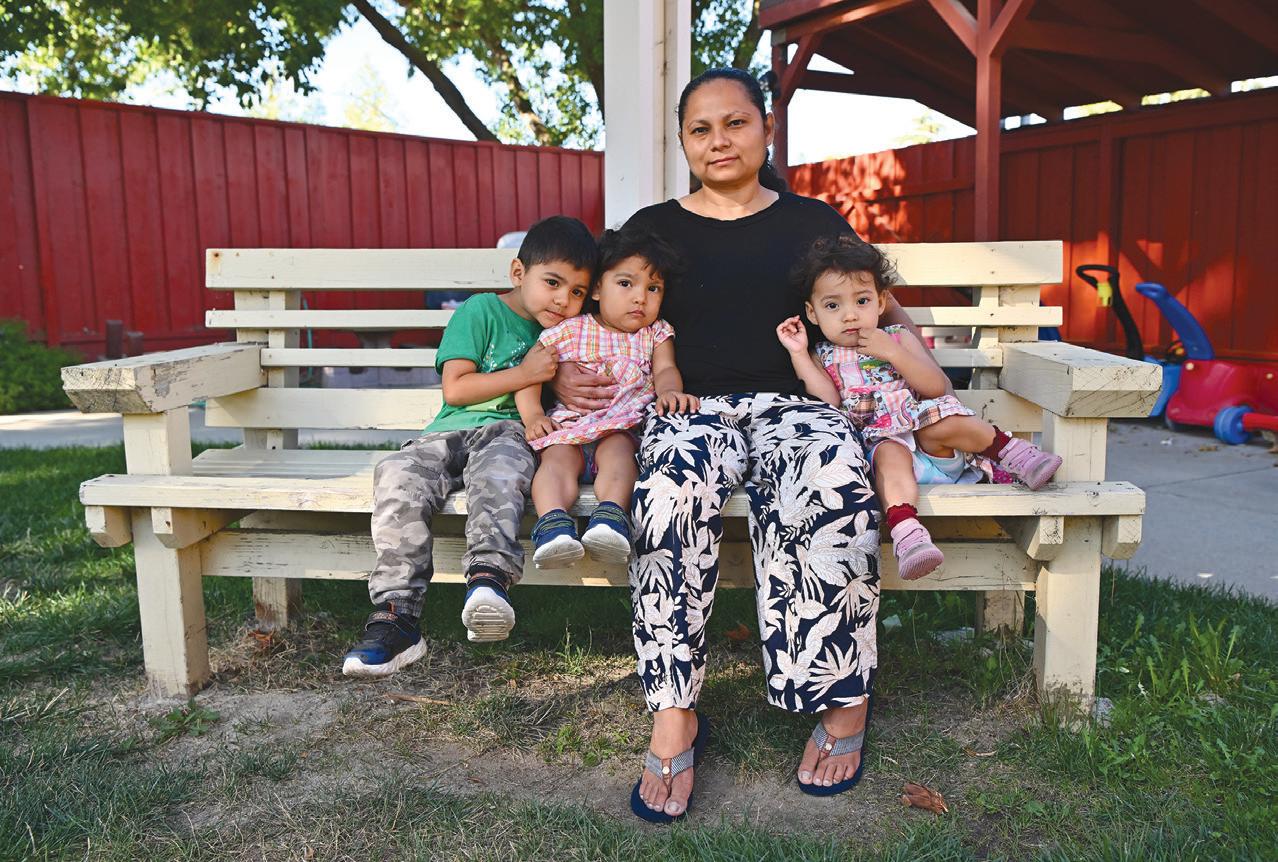

By Joan Morris CORRESPONDENT
Thiago Robinson has a gift, but he came close to never opening it.
Robinson, 20, of Alameda, is neurodivergent, and until recently, things weren’t going all that great for him. He wanted more than what life was offering at that moment, and that’s when a lucky chance found him.
While living in a homeless shelter in San Francisco, Robinson learned about a Lafayette-based organization called the Social Justice Sewing Academy, and one of their landmark efforts, the Social Connection.
The Social Justice Sewing Academy is much more than sewing machines and needlework. Founded in 2017 by then 18-year-old Sara Trail, the Academy focused on spurring and nurturing activism and youth engagement through sewing projects that included making quilt blocks banners with messages such as “Stop Police Brutality.”
The academy has since grown to provide free services to neurodivergent adults throughout the Bay Area. The programs offered through the Academy and the Social Connection are a patchwork quilt of opportunities.
Sabira Williams, Social Connection’s program director, says the inclusive programs provide help with individual living skills and has a goal of helping people get jobs, if they want them — and most do.
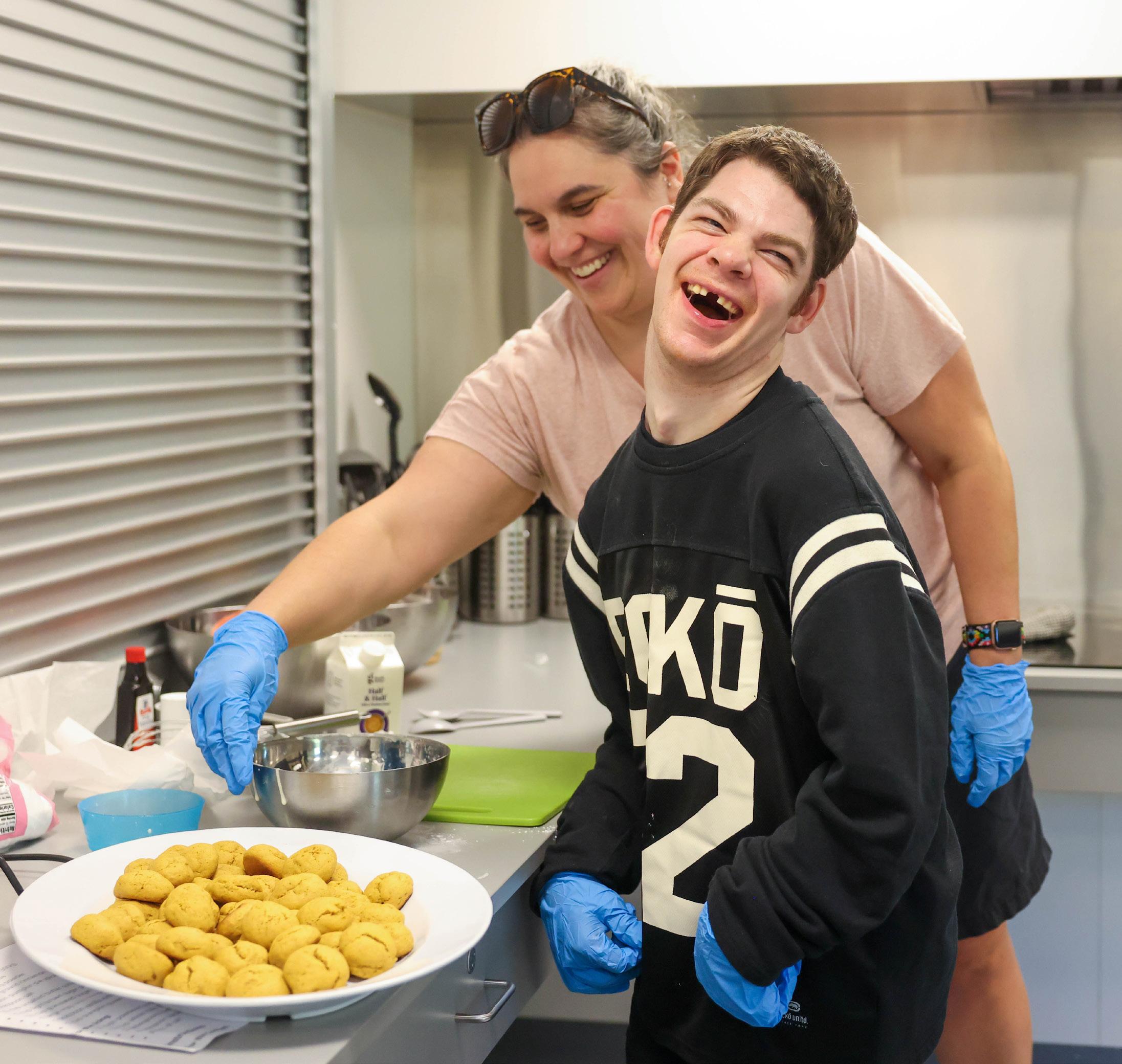
One popular area of interest is in the culinary field, and it was there that Robinson discovered he has a special talent when it comes to cooking.
Members involved in the culinary program came up with the idea of running their own food truck, and that’s what the group plans to use the Share the Spirit funds to help pay for: to license and outfit a food truck. The group already has designed a logo and a name, the Sweet Spectrum Company.
Robinson says the Social Connection has changed him. “It’s made me less shy and has made me get out of my comfort zone,” he says. “They help you in the best ways.”
Donations to the Social Justice Sewing Academy will help the nonprofit to expand access to its programs for neurodivergent adults in the East Bay. The program will serve at least 150 individuals over the next six months. Goal: $5,000
By Kyle Martin KYMARTIN
@BAYAREANEWSGROUP.COM
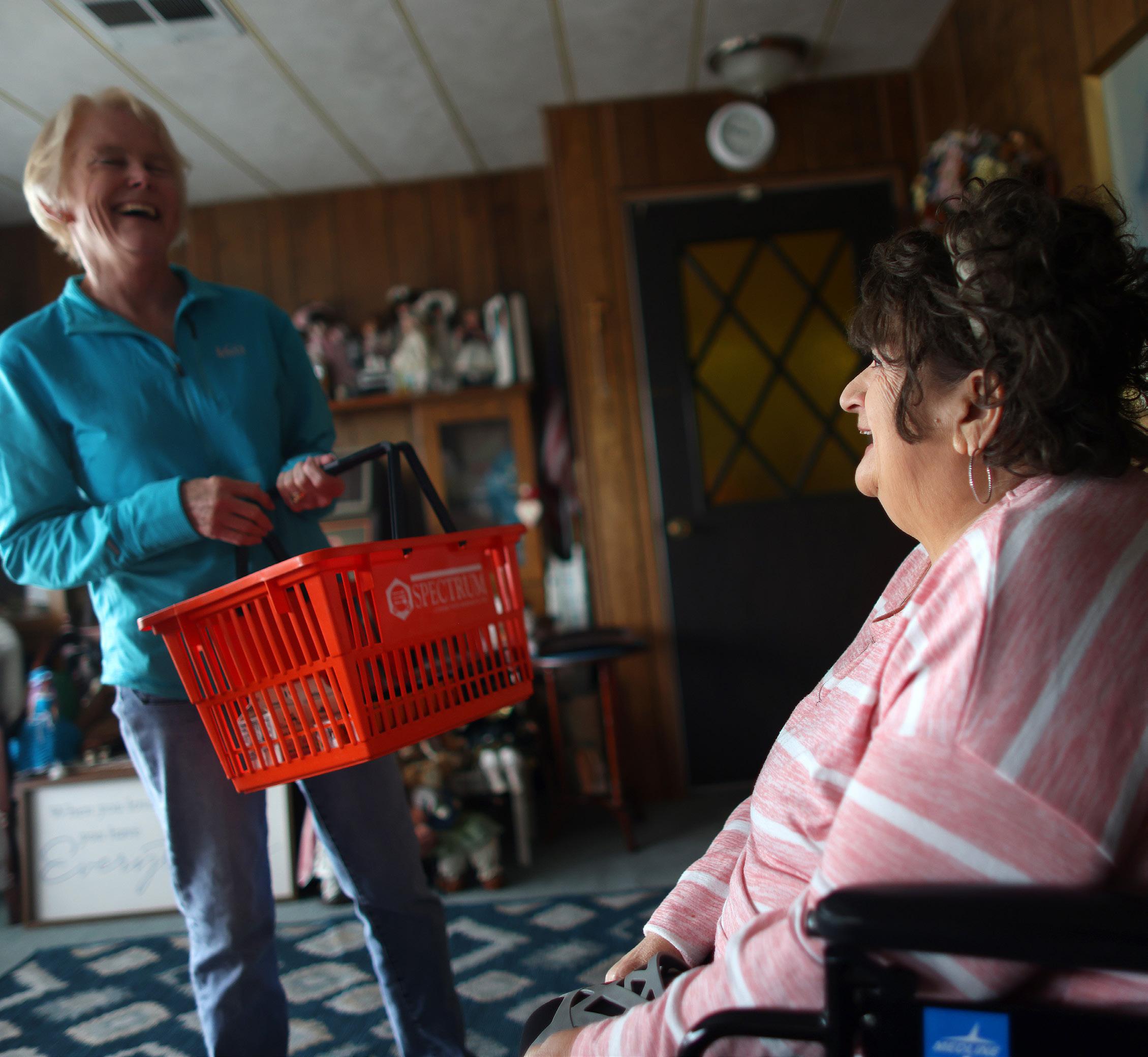
Marina Sims loves to make pork chops, enchiladas, quesadillas or a chuck roast at her mobile home in Livermore, and enjoys an order of Wendy’s chili when she’s feeling social and wants to go out with her friends.
Lately though, cooking at home is getting tougher for Sims, 75, who is handicapped and uses a wheelchair to get around. Thankfully, she is able to rely on Spectrum Community Services’ Meals On Wheels program for homebound seniors, which provides her hot and nourishing food each week.
She has depended on Spectrum for the past two years, about the same time her son moved away for work. Rain or shine, Sims waits in anticipation for her favorite delivery driver, Lisa Breton, to arrive so the two can catch up and chat about their lives, families and anything else that can bring a smile to their faces.
Through the past couple years, Breton and Sims have formed a friendly relationship. Breton’s parents regularly received Meals on Wheels when they were seniors, and she said she signed up as a volunteer to help pay back the favor.
“People need to eat,” Breton said. “Some people really have nobody. … There’s such a need.”
With about 90 volunteers per week, Spectrum serves about 300 people through 18 different routes between Livermore, Pleasanton and some limited parts of Dublin. Breton is in charge of about 20 different seniors’ meals for several days a week.
Spectrum provides other services to seniors all over Alameda County, including meals for seniors who are still independently mobile, education and exercise classes to help prevent falls, utility bill payment assistance for low-income residents and families, and services to help low-income residents get more cost-effective, energy-saving home upgrades.
Donations to Spectrum Community Services will provide about 1,670 home-delivered meals to low-income, homebound seniors in the Tri-Valley area, offering them nutrition, human contact and a way to stretch their budgets farther to pay for things like housing and medications.
Goal: $25,000
By John Metcalfe JMETCALFE @BAYAREANEWSGROUP.COM
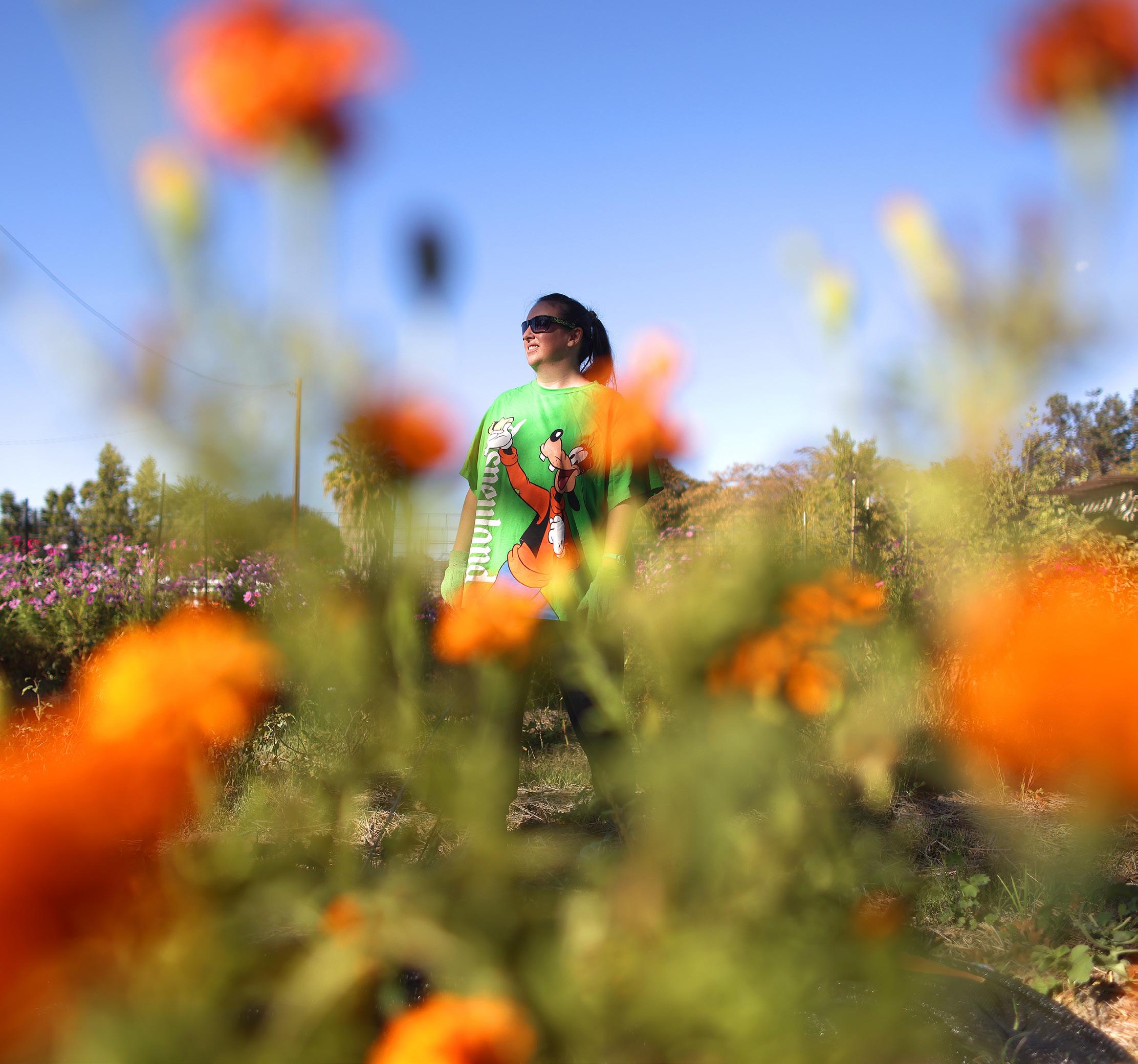
At age 38, Jennifer Thomas is leading a life more full than many.
When she’s not working at an East Bay grocery store, she’s tending a garden, honing her music skills and learning recipes to cook. An athlete who’s medaled in track and field and javelin throwing, she helped her bocce team snatch bronze at the Special Olympics Northern California Summer Games in 2024.
And when she’s not doing all that, she’s kicking back with her friends at Irby Ranch, an affordable-housing community in Pleasanton for people with intellectual and/or developmental disabilities (I/DD).
Irby Ranch is a 30-unit complex loosely designed on the model for senior homes, providing independent living to Tri-Valley residents with conditions like autism, Down syndrome, cerebral palsy and epilepsy. It’s run by the Pleasanton nonprofit Sunflower Hill, whose mission is to provide affordable apartments and social programs to folks with I/DD.
The organization hopes to soon shepherd through two more similarly designed residential communities — one in Dublin and another in Lafayette, the latter which recently received a $19.5 million award to cover roughly half of its building costs.
A crown jewel of Sunflower Hill is a one-acre organic garden that its residents manage in Livermore. They harvest more than 5,000 pounds of produce each year, which goes to local nonprofits — a women’s shelter, a food bank that provides meals for seniors and an organization that serves cancer patients. Some amateur gardeners have learned enough about seeding and mulching, they’ve gone on to get jobs at a local plant nursery.
“We’re seeing more and more folks with intellectual and developmental disabilities who want to participate in our programs, and want to have an apartment at one of our communities,” Susan Houghton, president of the board of directors at the nonprofit, says.
Donations to Sunflower Hill will support the nonprofit’s programs at its Hagemann Ranch garden in Livermore, offering 10 months of programming for one of the 10 classes that meet regularly at the garden. The program provides fresh produce to 1,500 families and vocational horticulture opportunities to 200 people with intellectual and/or developmental disabilities each year.
Goal: $10,000
By Evan Webeck EWEBECK@BAYAREANEWSGROUP.COM
The campus at Las Trampas bustled as it usually does on weekdays, with dozens of intellectually and developmentally disabled individuals engaging with programs designed to stimulate and assist their independent living. This day, though, was busier than most.
State Sen. Tim Grayson, D-Walnut Creek, was visiting, touring the grounds and taking a meeting with some of the members, whom Las Trampas empowers to advocate for themselves.
One of three self-advocates who helped prepare for and sat in on the meeting, 40-year-old Ariel Bellet lived with her parents until 2018, when she enrolled with Las Trampas. A proud paycheck earner and owner of a 9-year-old Maltese Chihuahua, Bellet benefits from Las Trampas’ supportive living services, which allow her to live on her own in the community.
The nonprofit, founded in 1938, currently serves 86 individuals ranging from 22 to 72 years old who live with moderate to profound cases of Down syndrome, cerebral palsy and autism. It has the capacity to help up to 120 people, but because of staffing shortages, a waiting list runs more than 50 deep with an average admittance time of two to three years.
Recently, an even more dire issue has arisen: Around 35-45% of Las Trampas members are recipients of Medicaid, and through a waiver program, those funds amount to $3.5 million of the organization’s $10 million annual budget. That funding could be lost as the federal government implements planned cuts of nearly $1 trillion from Medicaid nationwide.
That was the topic at hand during an hourlong meeting with the state senator, who has been an ally in Sacramento. Grayson lends not only a sympathetic ear but an empathetic one. His older sister, Shari, lives with an intellectual disability, “and I want to make sure those benefits don’t go away,” he said.
Donations to Las Trampas will cover salaries, onboarding and training for increased staffing at the nonprofit, enabling 20 more adults with intellectual and developmental disabilities to come off the waitlist and access inclusive day services, personalized living support and skill-building opportunities.
Goal: $10,000
By Jakob Rodgers JRODGERS@BAYAREANEWSGROUP.COM
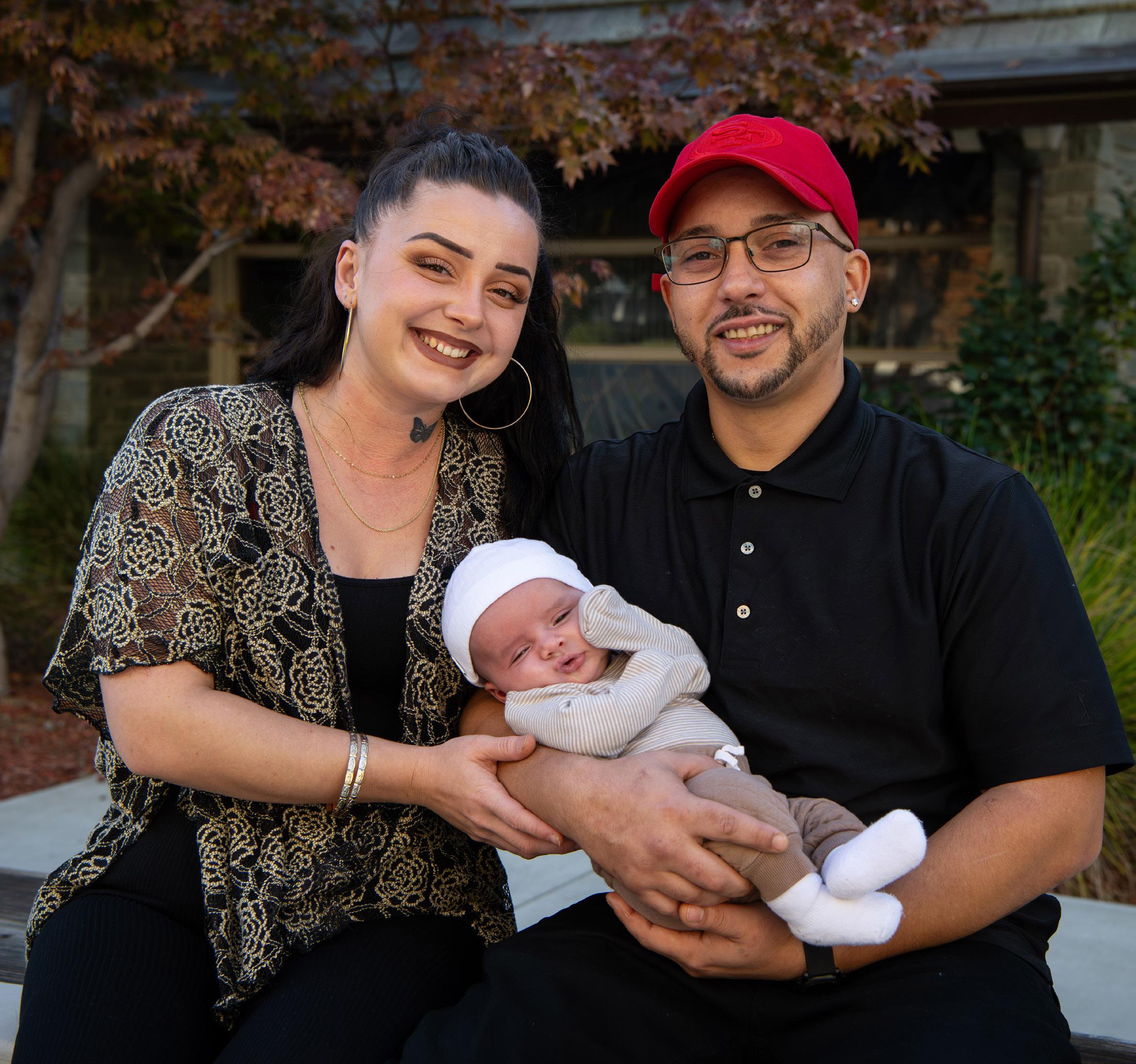
Taryn Chambers just wanted a bed — one that didn’t exist in the back of her SUV and wouldn’t deflate by sunrise, time and time again.
She and her fiancé felt that $20 twin air mattress growing smaller and smaller while she laid there pregnant with their first child. She wanted to stop applying rubberized adhesive day after day to keep the air from hissing out at night.
“We’re like: I’m just done with it,” said Chambers’ fiancé, Tyrone, recalling how it felt like they had “no support, no answers.”
But all of that changed with the aid of a certain Walnut Creek nonprofit.
Working with the staff of Trinity Center, the couple found an apartment of their own just weeks before little Giovanni entered the world on Aug. 31. They got a hand in furnishing the place, and then aid in applying for jobs to make sure they could afford the rent — right down to the cash needed to pay for Chambers’ background checks. The organization’s staff even threw a small baby shower to make sure the kiddo had enough clothes and diapers.
“If you would have asked us, ‘Where do you see yourself in five months from now?’ I honestly could not tell you we would be where we’re at right now,” Tyrone said. “And Trinity Center was a big part of that.”
Trinity Center offers job placement assistance, housing help and intensive case management, so that people trying to navigate the morass of paperwork and red tape while applying for benefits don’t get lost in the system.
In just the last 12 months, the nonprofit helped about 130 people find housing, often by assisting them in tracking down open units, paying for application fees and ensuring they have enough money to cover security deposits.
Nearly 20,000 people have walked through the nonprofit’s day center in the last year, where staffers have served about 24,000 meals and distributed about 25,000 articles of clothing.
Donations to Trinity Center Walnut Creek will help the nonprofit pay for space to expand its Workforce Development Program, set to accommodate up to 200 people in the upcoming year, alongside clerical support and paying for participants’ employment-related needs, housing application fees and security deposits. Goal: $30,000
By Kate Talerico CORRESPONDENT
Judith Gonzalez had a young family to take care of and didn’t know where to go.
Gonzalez was 33 and living with her mother while raising two children, ages 3 and 1, alongside her husband in Pittsburg. Tension in the household was rising. Gonzalez knew that they needed to find a place of their own, but her and her husband’s credit problems made finding an apartment nearly impossible. Other family members couldn’t take them in.
Out of options, Gonzalez dialed 411, the county’s resource hotline. A few days later, they got word that they’d been accepted into the Winter Nights Family Shelter. Inside a large conference room, they were given a tent to pitch among half a dozen other families.
At first, Gonzalez’s children stayed close to her, nervous and quiet. But within days, both children warmed up to the volunteers, who read them library books or helped with homework. Her eldest daughter began running around the church with the other kids.
Founded in 2004, Winter Nights relies on a network of faith communities throughout Contra Costa County, each hosting families for two- or threeweek stretches. The nonprofit has 13 paid staff and hundreds of volunteers, many of whom have experienced homelessness themselves, who help connect clients to resources, get them financial education, and provide tutoring.
For Gonzalez’s family, Winter Nights offered more than shelter — it offered the tools they needed to move forward. After six months with Winter Nights, the Gonzalezes moved into a rental, then another, and eventually bought a mobile home in Pittsburg.
Now 43, Gonzalez reflects on her time in the shelter as a period of unexpected compassion.
Donations to Winter Nights Family Shelter will enable the nonprofit to provide financial assistance to around 10 homeless households for urgent needs, like car repairs, past-due rent or utilities and other essential expenses alongside deposits needed to secure leases — small, timely investments of an average of $1,167 per household.
Goal: $12,000

By Jason Mastrodonato JMASTRODONATO@ BAYAREANEWSGROUP.COM
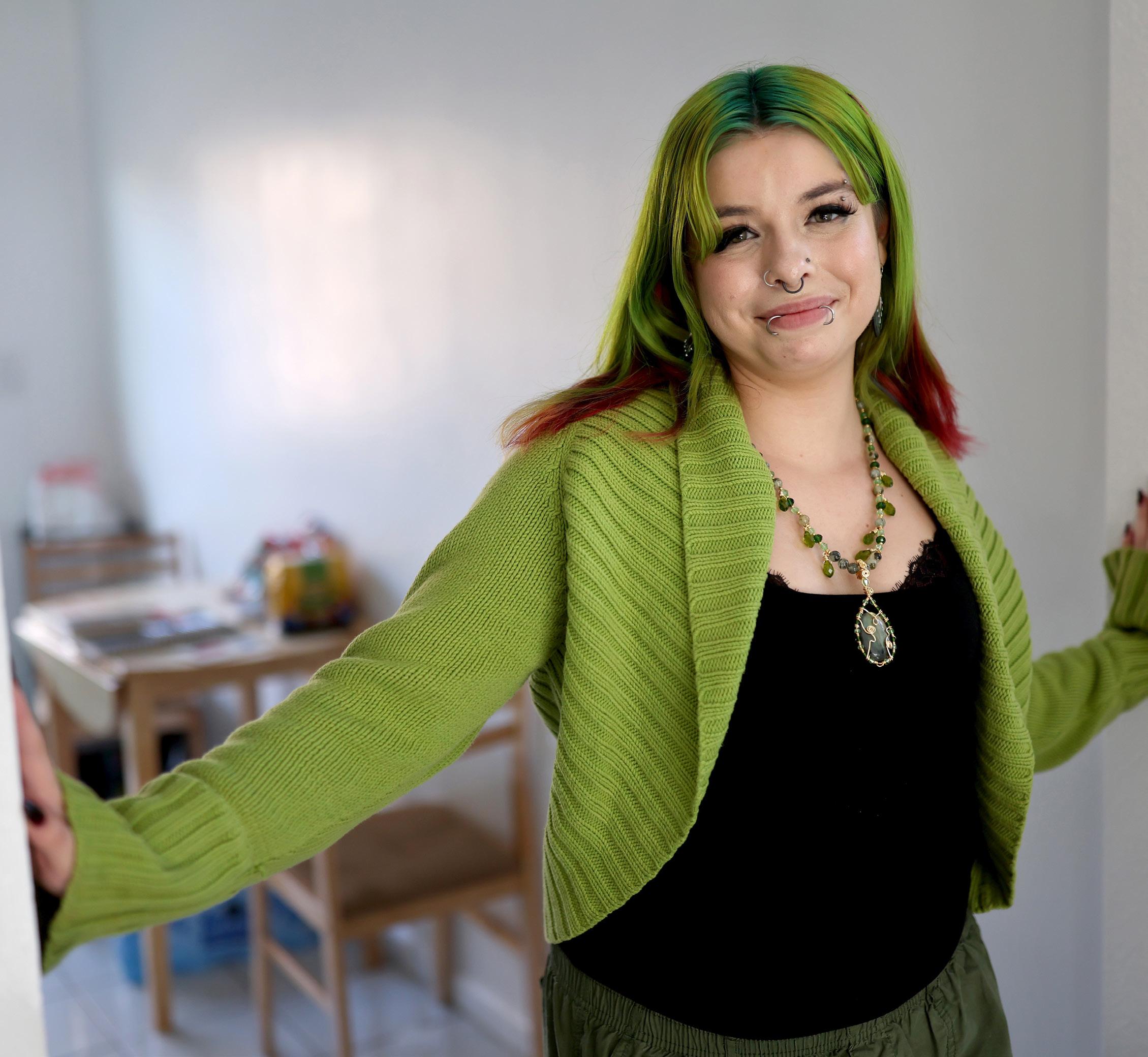
By the time Stevie Steele turned 18, they had been kicked out of their family’s home, had bounced in and out of children’s group homes, had dealt with addiction and homelessness, and had no idea what to do next.
Once a child turns 18, the assistance from California’s foster care system changes dramatically. There are still some services provided, but these young people often feel lost.
It’s sink or swim.
“And of course, we see many, many of them sink,” said Thomas Lee, chief executive officer of First Place for Youth, an Oakland-based nonprofit that provides aged-out foster children with the resources they need to start life as an adult.
“Without First Place, I’d probably still be in the same spot I was,” Steele said.
The organization began in 1997, when Amy Lemley and Deanne Pearn, two graduate students at Berkeley, realized that young people transitioning out of foster care had little in the way of public support. “They were literally dropped off on a corner or at a homeless shelter with a garbage bag of belongings, and that was it,” said Jayme Catalano, First Place for Youth’s communications director.
First Place began offering these young people financial literacy courses and a bit of money to help them pay rent. They later expanded to cover move-in costs and long-term subsidized housing. And by 2000, the organization had an eight-person staff and a full case-management system to help foster youth finish high school and prepare them for life as adults.
Of the nearly 700 people who come through the program each year, 97% are able to get their own housing and become financially stable, Lee said. And 82% of them become enrolled to earn their high school diploma and get some form of secondary education.
Said Steele: “They really care. And that really means a lot.”
Everyone deserves joy this time of year. Help spread the love this holiday season with a gift to Share the Spirit.
Contributions empower our community partners to achieve real, lasting change.
1 Your Gift Delivers Immediate Help
Your donation is a direct investment in compassion and hope. By donating to Share the Spirit, you empower us to transform your generosity into tangible, impactful actions to serve those in need.
In the face of unexpected hardship, nonprofits swiftly mobilize, offering vital aid, relief, and support to impacted individuals. Your donation ensures a prompt and impactful crisis response to those in dire need.
3 Strengthen Your Local Community
Local communities rely on the services and resources provided by nonprofits to thrive. Your contribution has a profound impact on your community, enriching the lives of its members and promoting overall well-being.


4 Inspire Action and Grow Legacy
Your act of kindness serves as a catalyst, motivating others to engage in acts of kindness and leaves a profound, positive impact on society. Share the Spirit has an impact legacy of raising awareness of local issues like food insecurity.
5 Boost Your Own Well-Being
Giving to others is actually good for you. Research suggests that charitable giving is a major mood-booster that activates the pleasure centers in your brain, leading to increased happiness and satisfaction.
6
Achieve a Greater Sense of Purpose
Charitable donations and volunteer work empowers you to put your personal values into action. By supporting our mission, you’re actively engaging with the issues you care about, which enhances your sense of fulfillment and purpose in your daily life.
7 Tax-Deductible
When you donate to an IRS-approved nonprofit organization like Share this Spirit, your gift is tax-deductible. It may not be the main reason you give, but it can be a nice side effect.