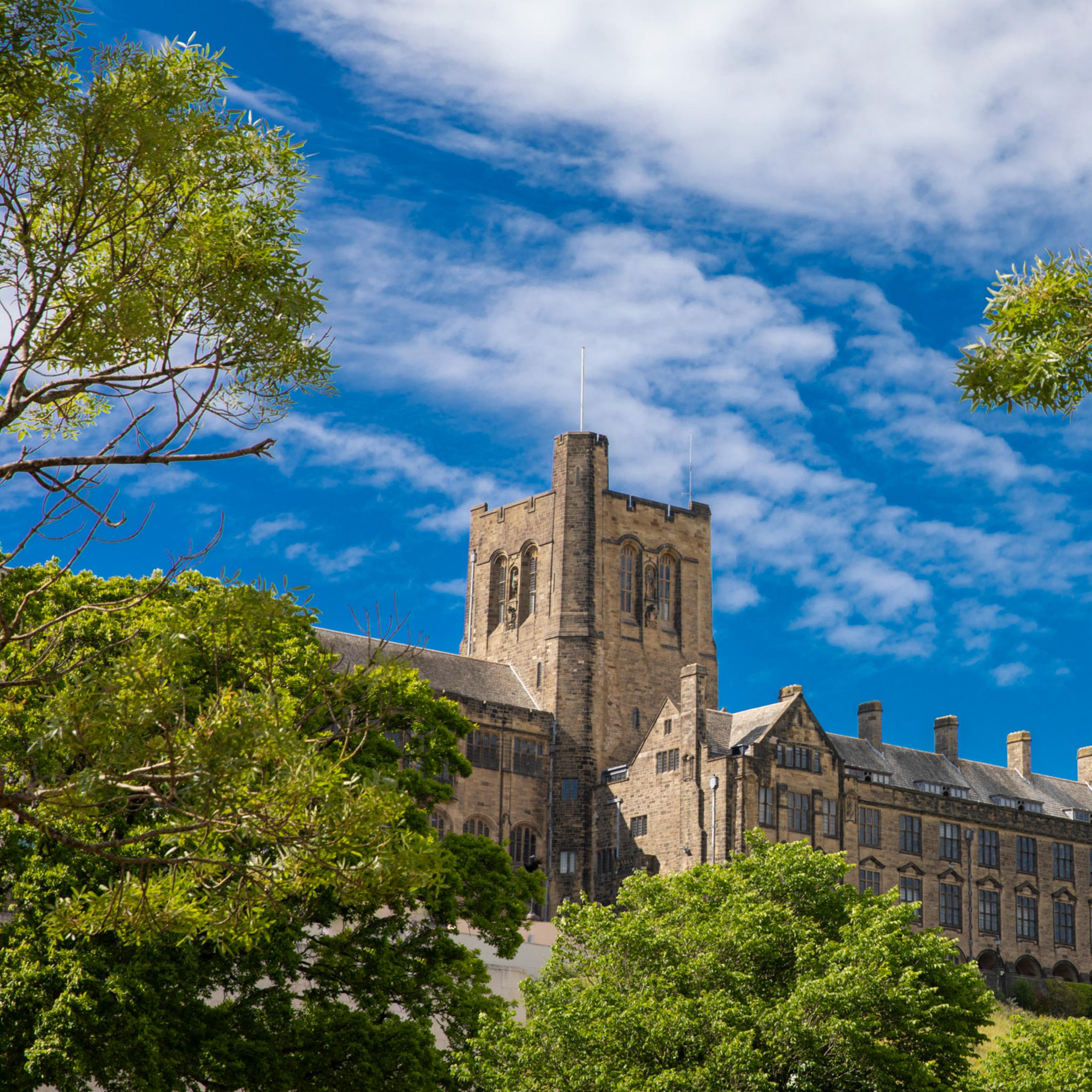


Graduation is a significant milestone in every student’s life and today we are delighted to celebrate your achievements here at Bangor University!
Your university experience has taken you on a journey of growth and transformation. I would like to pay special tribute to you for your commitment and dedication to learning.
Graduation is the most important date in the higher education calendar. As Vice-Chancellor, I take great pleasure in attending these ceremonies, witnessing your success and celebrating the transformative power of a university education. We are delighted to be able to share the celebration for all our graduands with families, friends and supporters.
Whatever your chosen path, your University wishes you well for the future, and does so in the knowledge that Bangor has helped you to expand your mind and develop your skills, providing you with the knowledge, experience and networks to assist you as you navigate the next stages of your life.
Please remember that your connection to Bangor University will last a lifetime. You are now part of our thriving international alumni community and we will strive to continue to support you, wherever you are in the world. On behalf of the staff of the University, I wish you every success in achieving your goals.
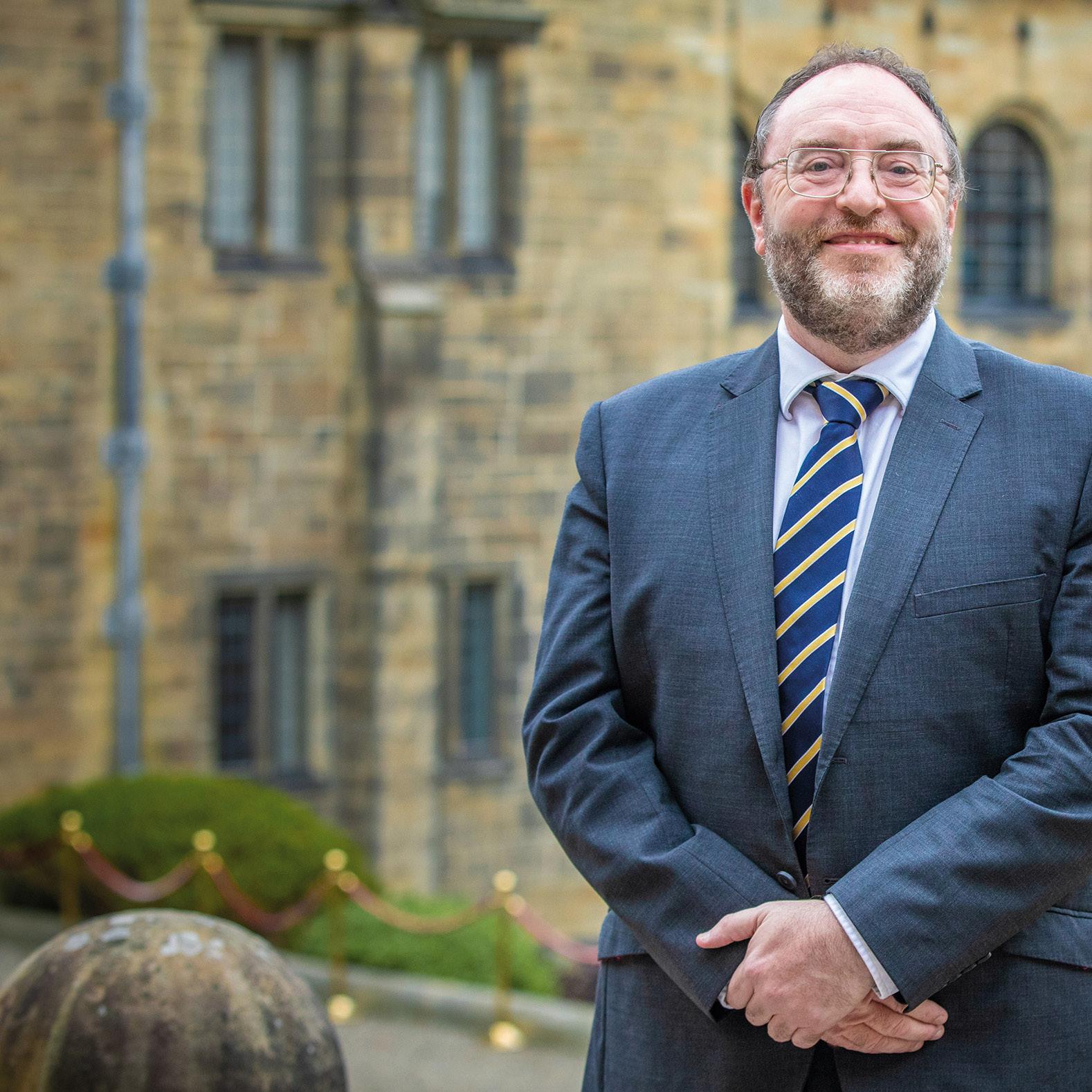
Professor Edmund Burke Vice-Chancellor
1907-1939
1884-1903
When the college first opened in 1884, it enrolled 58 students onto courses ranging from Greek, Latin, English and Welsh to Chemistry, Mathematics, Botany and Agriculture. As new departments and subjects were established, student numbers grew to around 300 at the turn of the 20th century. Major growth occurred in the 1950s and 1960s, and today over 11,000 students study here.
Today our world-leading research is seeking solutions to some of society’s most challenging problems - from improving health and wellbeing, protecting the environment, identifying low carbon energy solutions and providing cutting-edge solutions to advance the global 5G economy.
Our teaching is informed by original research in many of our disciplines. Students can be taught by academic staff who are research leaders in fields as diverse as healthcare and medical sciences, environmental science, business and music.
Funded in part by quarrymen and farmers, Bangor University first opened its doors on 18 October 1884, based in an old coaching inn called the Penrhyn Arms.
Bangor became one of the three original constituent colleges of the University of Wales.
The city of Bangor donated a 10-acre site overlooking the city at Penrallt for a new building, and substantial sums of money were raised by local people to help meet the cost.
The foundation stone of the University’s present Main Arts site was laid by Edward VII on 9 July 1907.
The official opening of the University’s Main Arts building, built by Henry T. Hare, architect of London; together with some of the arts and social science buildings and part of the library.
The University’s science departments moved to new, purpose-built accommodation which had been constructed with the assistance of funds raised by the North Wales Heroes Memorial Council, which also oversaw the construction of the Memorial Arch (off Deiniol Road) in 1923, to commemorate the North Walians who had lost their lives in the war.
On 23 August 1939, a week before the Second World War began, the National Gallery in London began to evacuate its most precious paintings to Bangor, to escape the expected aerial bombing. More than 500 paintings, including works by Botticelli, Rubens and Rembrandt, were stored at the University’s Prichard-Jones Hall.
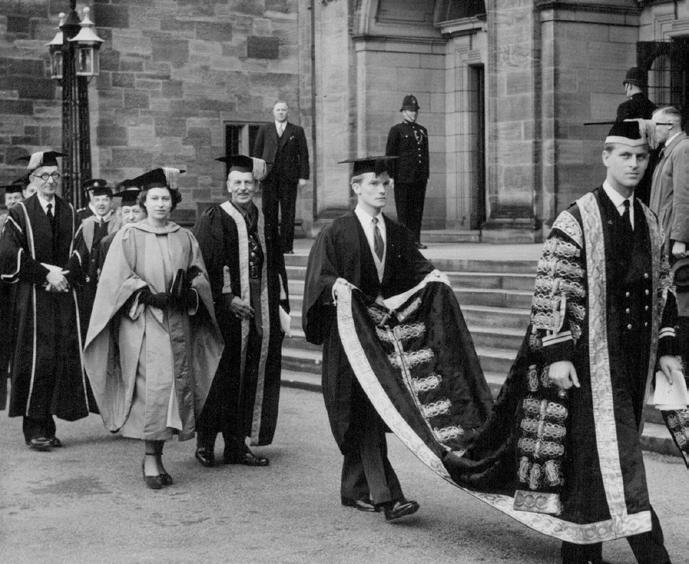
On 28 April 1949, Her Majesty Queen Elizabeth II, then HRH Princess Elizabeth, was conferred the degree of Doctor of Music by HRH The Duke of Edinburgh, the newly-celebrated Chancellor of the University.
1952
The establishment of SVB (Student Volunteering Bangor), the volunteering branch of the Students’ Union.
The University shared in the general expansion of higher education in the UK following the Robbins Report, with several new departments and new buildings.
1967
The Beatles visited The Normal College for a lecture on Transcendental Meditation by the Maharishi Mahesh Yogi. The visit proved to be a pivotal date in the history of the group, as it is here that the news broke of the death of their manager, Brian Epstein.
Student protests in the 1970s focused on calls to expand the role of the Welsh language. A campaign against the College’s language policy by Cymdeithas y Cymric (The Cymric Society), saw slogans painted in Welsh on the walls of the Main Building, resulting in several suspensions of these activists.
The protests and expulsions led to the establishment of the Bangor Welsh Students’ Union (Undeb Myfyrwyr Colegau Bangor – UMCB) and the opening of a Welsh Hall for the residents of the University, Neuadd John Morris-Jones.
The merger of St Mary’s College was concluded.
The merger of The Normal College was completed.
The launch of Storm FM, the official student radio station for Bangor University, which went on air in March 2003.
The change of name to Bangor University, or Prifysgol Bangor in Welsh, was instigated by the University, including the granting of degree-awarding powers to Bangor University itself.
Bangor University signed a deal to create a new college in China; Bangor College China (BCC).
2015
The opening of Pontio Arts and Innovation Centre, where over 1000 people enjoyed a Welcome Day at the centre.
2018
Completion of M-SParc, the University-owned £20m science park on Anglesey.
2021
Bangor University celebrates 100 Years of Music, marking 100 years since composer E. T. Davies was appointed as the University’s first full-time Director of Music.
2022
The UK Government’s Research Excellence Framework ranks Bangor Top 30 in the UK for the societal impact of its research. 85% of our research is considered world-leading or internationally excellent.
2023
The establishment of a new North Wales Medical School is announced supported by Welsh Government and in partnership with Betsi Cadwaladr University Health Board.
2024
Bangor University celebrates its 140th anniversary.
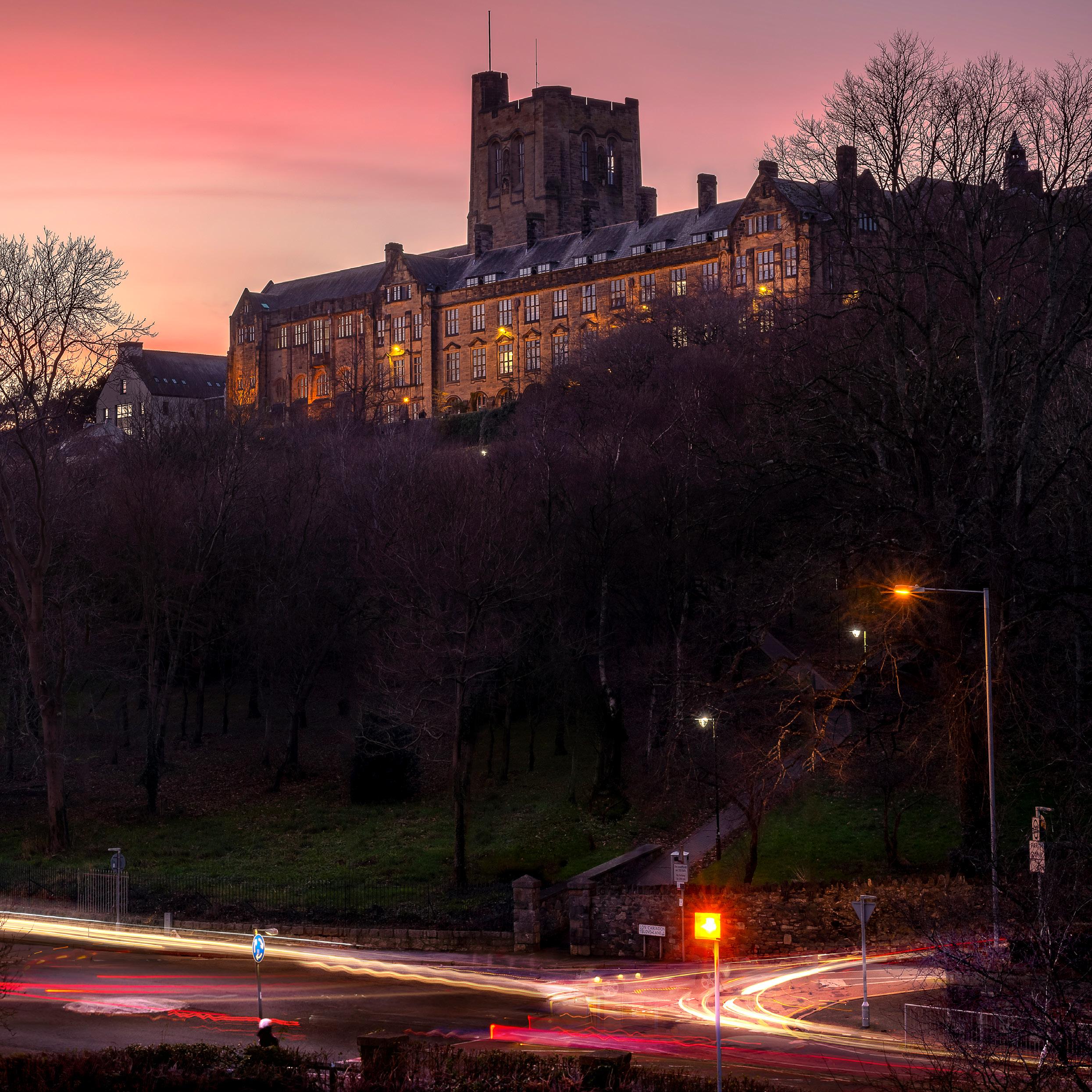
Bangor University’s Main Arts
Building remains the focal point of the University and was described by Cadw, the Welsh Government’s historic environment service, as ‘architecturally one of the most significant public buildings of the period in Britain’.
It was built between 1907-11 by Henry T. Hare, who was chosen following an architectural competition run by the University, following acquisition of the site in 1903.
The foundation stone was laid by Edward VII on 9 July 1907, and an official opening held on 14 June 1911. The resulting building is in a ’Collegiate Tudor‘ style and is based on the universities of Oxford, Cambridge and Durham, with Arts and Crafts influences.
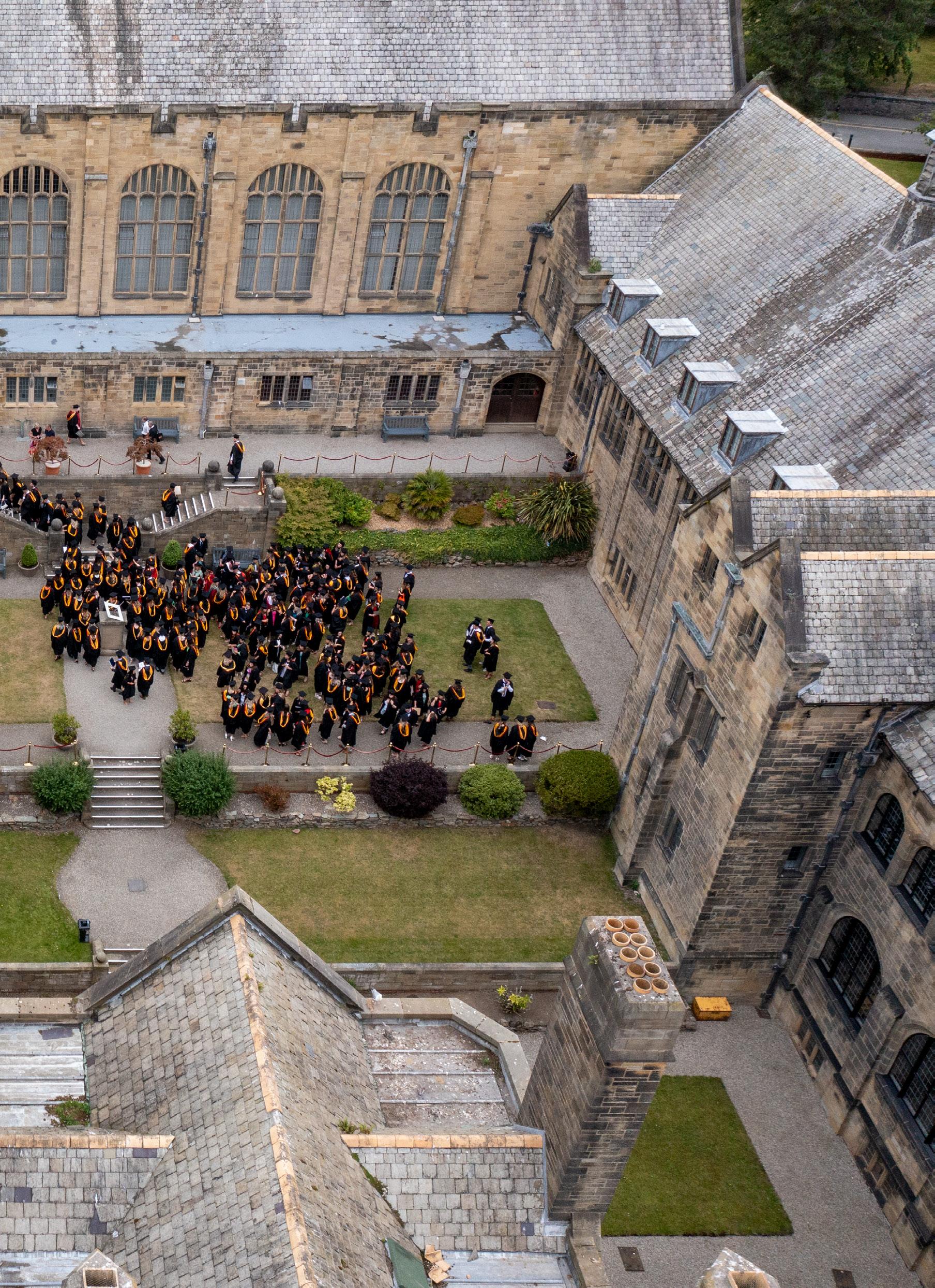
The building is designed around two quadrangles: the Main Quadrangle; and the Inner Quadrangle, which is open to the public on Graduation Day and for special events.

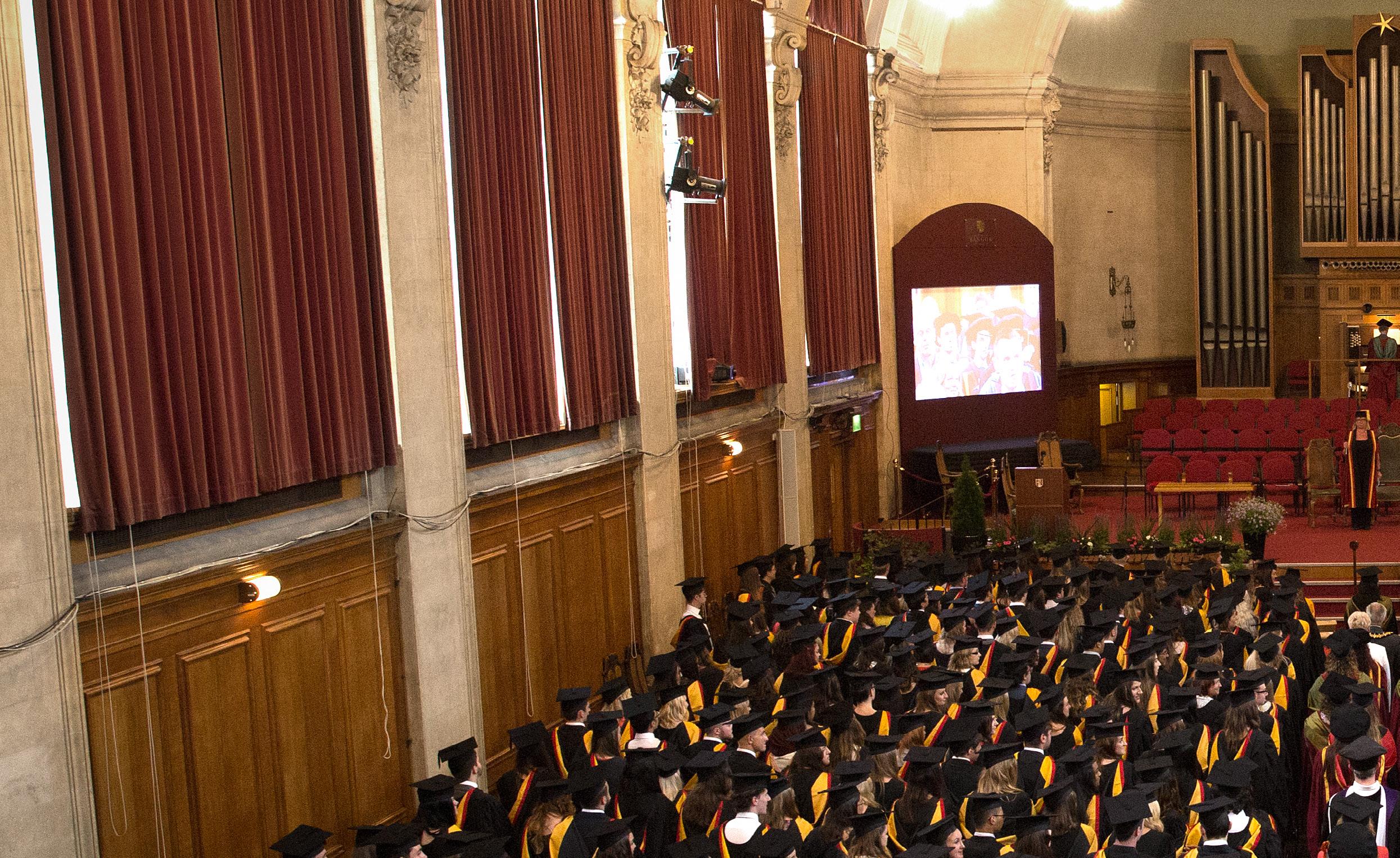
The Prichard-Jones Hall, in which today’s graduation ceremony takes place, is named after Sir John Prichard-Jones, a draper of humble Anglesey origins who made his fortune in London’s Regent Street as managing director of Dickens and Jones department stores, acquired by Harrods in 1914.

Sir Prichard-Jones donated £15,000 towards its construction, encouraged to help the developing college in this way by David Lloyd George, an active supporter of the University, who was then Chancellor of the Exchequer, before going on to become UK Prime Minister. The hall’s interior has changed very little since its opening in 1911. The shields which decorate the top of the walls are representations of the ancient North Wales boroughs, and the pipe organ was installed following the closure of the local
Tabernacle church in the early 1970s. The electroliers (electrified chandeliers) still hang from the ceiling, and the walls are lined with the original wainscot panelling. Used frequently by the University and the wider community, many generations of students have sat exams, danced and attended graduation ceremonies here. The hall also has a long tradition of hosting musical entertainment for North Wales, with performers including Sir Bryn Terfel and Aled Jones MBE.
This is an opportunity to celebrate and reflect on the achievements of our students and enables the University community to acknowledge your accomplishments.
It is with great pride that we are now able to see our graduates taking their next exciting steps into the world, as so many others have done before them. Whether you are a graduand, a relative or a friend, we hope you have an enjoyable and inspiring day.
Llongyfarchiadau! / Congratulations!

Each ceremony begins with a procession. It is led by the Chief Marshal – a senior member of the University’s administrative staff – whose role is to ensure that the ceremony proceeds smoothly. Following the Chief Marshal in the procession will be several sections, each led by a Marshal(s) who are officers of the University:
Section 1:
Academic staff and civic dignitaries
Section 2:
Heads of School and Heads of central Professional Services departments
Section 3:
Senior officers of the University, including Pro-Vice-Chancellors and the Presenter
Section 4:
Honorary Fellows and their Presenters
Section 5:
The Chancellor’s procession, including the Vice-Chancellor and the Chancellor (or his deputy)
The final part of the procession, the Chancellor’s procession, is led by the Mace-Bearer, also a senior member of the University’s administrative staff.
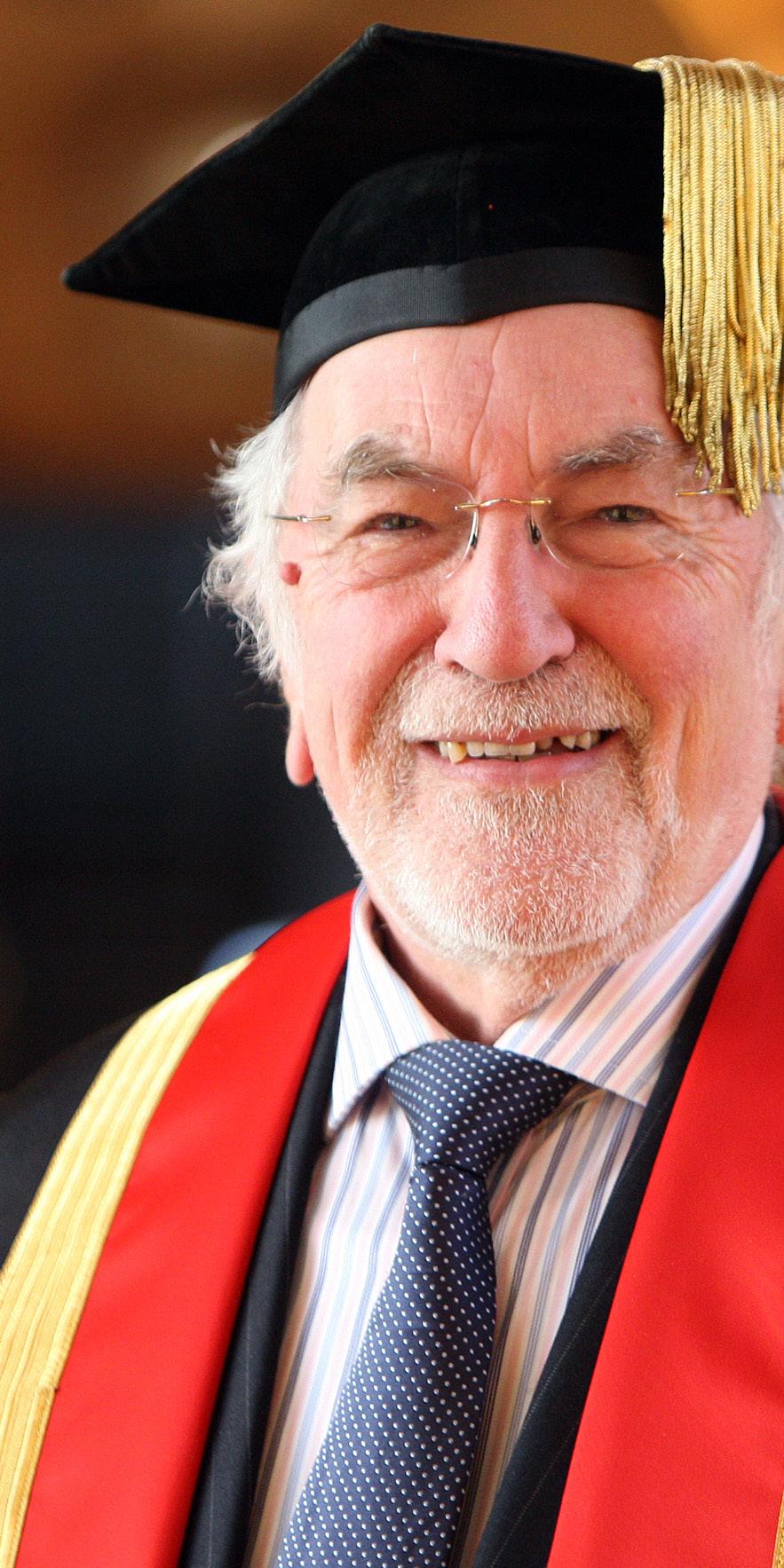
Bangor University’s Chancellor is the academic and physicist, Professor Sir Robin Williams.
The Chancellor is the University’s ceremonial head and one of its most prominent ambassadors. They work with the Vice-Chancellor and other senior officers to promote the University’s achievements at home and overseas.
Sir Robin is a Bangor graduate and a strong advocate of the bilingual nature of the University. He was appointed to the role in November 2022.
Sir Robin is an authority in the field of semiconductors and his research has been important in the development of digital electronics and the far-reaching changes in computing and communications. Working closely with industries worldwide, he developed new methods for the study of semi-conductors and was one of the first to use synchrotron radiation to study the surfaces of solids. Knighted in Queen Elizabeth II’s Birthday Honours in 2019 for services to higher education, research and the Welsh language, Sir Robin has served on many international and UK policy and funding bodies and on ministerial advisory groups for economic development and education in Wales.
He is a former chair of the Science Advisory Council for Wales. He was a member of the Innovation Advisory Council of Wales and was a founding fellow of the Learned Society of Wales.
In 2022, the National Eisteddfod Science and Technology Medal was awarded to Sir Robin for his lifelong contribution to science.
Before the ceremony commences there will be a programme of music, ending with the processional music, which signals the start of the ceremony. Processional: John Stanley – ‘Trumpet Voluntary’
The procession
The Congregation is asked to stand as the procession enters the hall. This marks the formal start of the ceremony.
/ Land Of My Fathers (national anthem of Wales) See lyrics overleaf.
Introduction
The ceremony opens with a recitation by a student of the University of an extract from a poem, ‘Y Coleg ar y Bryn’ (‘The College on the Hill’) by the late Gwyn Thomas. The extract will be read in Welsh and English. Gwyn Thomas, who died in 2016, was a former Professor of Welsh at the University and National Poet of Wales from 2006 to 2008. The poem was commissioned by His Majesty King Charles III, then HRH The Prince of Wales, to mark the centenary in 2007 of the laying of the foundation stone of the Main University Building.
The resolution
The Presenter, a senior academic, reads the resolution in Welsh and English granting authority to the Vice-Chancellor to award degrees, and also presents each group of students for their appropriate degrees and diplomas with the words (in Welsh): Honourable Vice-Chancellor, I present to you these students who have gained the degree of (…title of degree…) in (…name of the subject or subjects of study…)
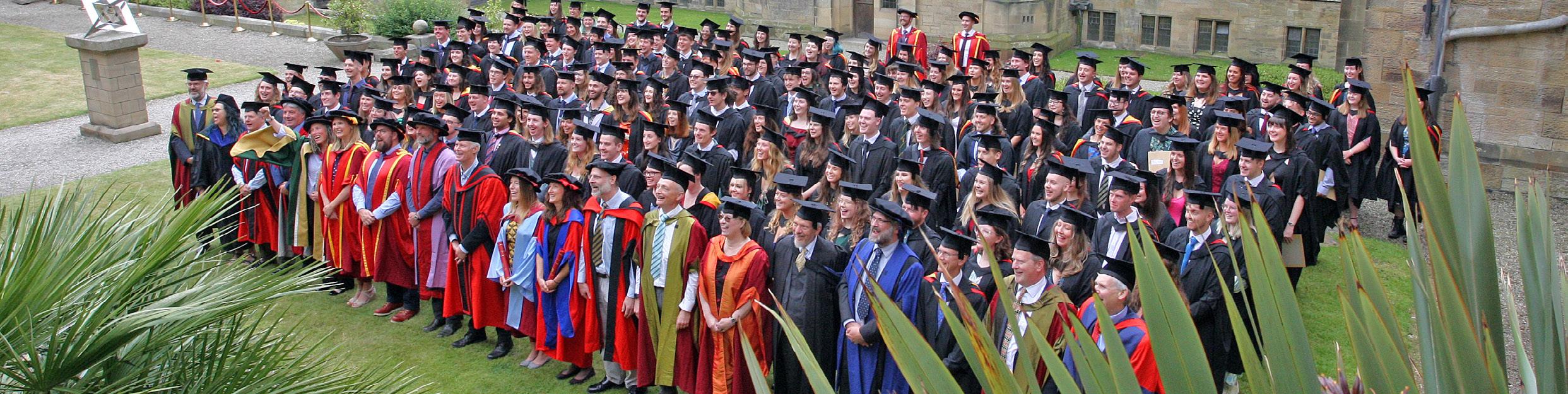
An Introducer, usually the Pro-Vice-Chancellor of the relevant department or his/her deputy, introduces students to the Vice-Chancellor by reading out their full names. Each student individually crosses the stage to be greeted by the Vice-Chancellor and the Chancellor (or his deputy).
The Vice-Chancellor formally admits groups of students to their degrees by proclaiming (in Welsh): I admit you to the degree of (… title of degree…) and to all privileges of that degree. The Chancellor (or his deputy) greets the graduates (in Welsh): Congratulations on receiving your degree today. The formula is then repeated for each group of students. Those named in the appropriate groups in the programme will be presented for their degrees in absentia.
Approximately halfway through the ceremony, there will be a short musical interlude.
In some graduation ceremonies, the University will award an Education and Student Experience
Award to an individual member of staff who is considered to have made an outstanding contribution to teaching and/or the support of learning. Nominations for Education and Student Experience Awards are made by those best able to judge – the students themselves.
In some graduation ceremonies, towards the end of the ceremony, Honorary Fellowships and Degrees are conferred by the University on individuals who have made a distinguished contribution to their chosen field of endeavour and whom the University wishes to honour. These are conferred by the Vice-Chancellor.
The ceremony is closed with an address to the new graduates and guests.
The Congregation is asked to stand as the processional music begins and the procession leaves the hall.
Processional:
F. Mendelssohn – ‘War March of the Priests’
(national anthem of Wales)
Mae hen wlad fy nhadau yn annwyl i mi,
Gwlad beirdd a chantorion, enwogion o fri; Ei gwrol ryfelwyr, gwladgarwyr tra mâd, Tros ryddid gollasant eu gwaed.
Chorus:
Gwlad, Gwlad, pleidiol wyf i’m gwlad, Tra môr yn fur i’r bur hoff bau, O bydded i’r heniaith barhau.
Hen Gymru fynyddig, paradwys y bardd; Pob dyffryn, pob clogwyn, i’m golwg sydd hardd
Trwy deimlad gwladgarol, mor swynol yw si Ei nentydd, afonydd, i fi.
Chorus
Os treisiodd y gelyn fy ngwlad dan ei droed, Mae hen iaith y Cymry mor fyw ag erioed, Ni luddiwyd yr awen gan erchyll law brad, Na thelyn berseiniol fy ngwlad.
Chorus

Composed in January 1856 by Evan James and his son James James, the song was performed for the first time in the vestry of Capel Tabor in Maesteg, by a singer called Elizabeth John. Its popularity spread after the Llangollen Eisteddfod in 1858; it was published in a best-selling collection of Welsh songs, and soon became a favourite at eisteddfodau and other patriotic occasions. Hen Wlad Fy Nhadau gradually became accepted as Wales’ national anthem - though to this day, it has no official status as such.

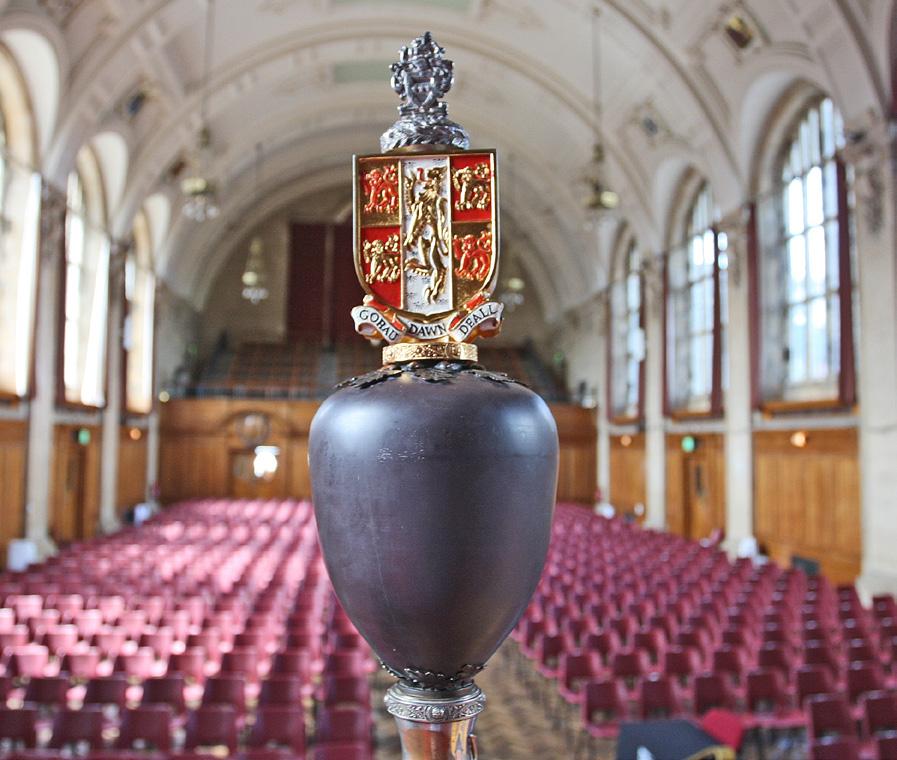
The Mace is the symbol of the authority of the University and in the ceremony it always precedes the Vice-Chancellor.
The Mace was commissioned by the Old Students’ Association to commemorate the University’s centenary in 1984. The mace-head, crowned by a shield bearing the University coat of arms, is made of Bethesda slate. This symbolises the generosity of the local slatequarrymen who, in the early 1880s, gave part of their weekly wages to fund the establishment of the University.
Two ebony staffs carried by the Marshals are the gift of the fifth Lord Kenyon, who in 1981 completed 36 years of service as President of the University.

Food industry leader and sustainability champion – for contribution to scholarship, innovation and leadership in the fields of food, farming, and sustainability
A leading figure in food, farming, and sustainability, Judith Batchelar OBE is a biochemist and nutritionist who has spent over 40 years transforming the UK’s food industry. After beginning her career in pharmaceuticals and teaching, she held roles at Bass, Mars, and Marks & Spencer, before joining Sainsbury’s as Director of Sainsbury’s Brand (2004–2021), driving innovation, quality, and sustainability. Deeply committed to environmental and social progress, Judith is involved with numerous organisations, among them UKCEH, Defra, the Royal Botanic Gardens Kew, the British Nutrition Foundation, The Nature Conservancy, and is Chair of the Advisory Board, Healthy and Sustainable Places Data Services at Leeds University. Judith was the head judge for the Bangor University Innovation and Leadership Training Award programme in April 2023. A Fellow of the Institute of Food Science and Technology and the Royal Society of Arts, she was awarded an OBE in 2015 for services to farming and the food industry.

Paralympic rower and Bangor University alumnus – in recognition of extraordinary achievements and inspirational journey
An inspirational athlete and Bangor University alumnus, Benjamin Pritchard graduated in 2013 with an LLB in Law before going on to achieve remarkable success in para-rowing. Born and raised in Mumbles, South Wales, Benjamin was a former cyclist and triathlete before a life-changing cycling accident in 2016 left him paralysed from the waist down. During rehabilitation at Stoke Mandeville Hospital, he discovered rowing and quickly rose through the ranks, joining the GB Para Rowing Team in 2017. Making his international debut in 2019, Benjamin has since represented Great Britain at multiple championships, becoming a European Champion, World and European Record Holder, and World Champion. A particular highlight was winning Gold in the PR1 men’s single sculls at the 2024 Paris Paralympic Games, where he set the new Paralympic record. His determination, resilience, and sporting excellence continue to inspire athletes across the UK.
Our Honorary Fellowships & Degrees are prestigious awards bestowed upon distinguished individuals who have a connection with the University, or with Wales, and who have made an outstanding contribution to their chosen field.

Orthopaedic surgeon and medical leader – for contribution to public service in the
of health
A distinguished orthopaedic surgeon, Mr David Jones FRCS, FRCS Ed (Orth) has dedicated his career to advancing orthopaedic and trauma care generally and children’s orthopaedics in particular. Originally from Ireland, he studied medicine at Manchester University. His orthopaedic training was based at St Bartholomew’s Hospital, London before moving to Bangor, where he led the team which established the pioneering Accident Unit at Ysbyty Gwynedd, a model later recognised as gold standard across the UK. He went on to serve as Consultant Orthopaedic Surgeon at Great Ormond Street Hospital for Children. A former Hunterian Professor and Council Member of The Royal College of Surgeons of England, President of the British Orthopaedic Association and President of the Welsh Orthopaedic Society, David has published widely, lectured internationally, and though retired, continues to contribute to medical education, history of medicine and charitable work involving children.
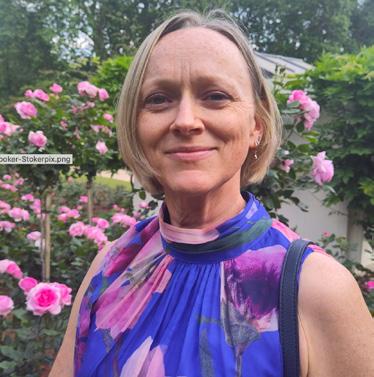
Marine scientist and conservation leader – for contribution to scholarship and innovation
An inspiring scientist, conservationist, and leader, Dr Leanne Cullen-Unsworth graduated from Bangor University with an MSc in Environmental Protection (2001). Named one of the BBC’s 100 Women of 2023, she is a pioneering voice in marine conservation and sustainability. As Chief Executive Officer of Project Seagrass, Leanne leads global efforts to protect and restore seagrass meadows - vital ecosystems that support fisheries, biodiversity, and climate resilience. With over 20 years of interdisciplinary research experience, her work bridges environmental, social, and economic sciences to promote conservation that includes people as part of the ecosystem. A passionate advocate for nature and future generations, Leanne continues to raise global awareness of seagrass conservation and its crucial role in protecting our planet.
Congratulations, you’re a graduate!
You are now joining our diverse community of alumni who are excelling in their chosen careers with the skills and support they have received at Bangor.
You are automatically part of the Bangor University alumni network so please stay in touch with us after graduation. By maintaining lifelong links with past students, we are committed to promoting your achievements and facilitating contact between friends and departments, and supporting new networks.
Our graduate community transcends barriers of generation and geography with alumni worldwide meeting and helping each other – in many cases without ever having met during their student life. You are now a member of this invaluable network!
To ensure that you’re part of our growing alumni network, make sure we have your current contact details by completing our online update form and opting-in to alumni communications.
Like many of our alumni choose to do, you may wish to make a donation to the Bangor Fund in honour of today’s graduation. Alumni donations help make a difference to current students’ experience at the University. Further details can be found here: bangor.ac.uk/giving/bangor-fund
As a Bangor alumnus, you can benefit from a range of services, including:
• Alumni E-News: we send out monthly e-newsletters to keep you up-to date with the latest news from the University, including details on reunions and events and information about the research and activities taking place in our Schools and Colleges.
• Library access: alumni can continue to access the University’s excellent libraries with an Alumni Library Card.
• Information about alumni networks and groups, including groups on social media such as LinkedIn and Facebook.
Where will your journey take you?
Stay in touch with our alumni community and share your own story.
your
Postgraduate taught
Our postgraduate taught courses offer access to our subject matter experts and advanced facilities, helping you develop skills and gain the right qualifications.
Students who have graduated at Bangor may be eligible to receive a discount of up to 20% for postgraduate taught courses.
Practice your research skills surrounded by peers and professors who share your passion for advancing the world’s understanding of your chosen area of study.
Scan to opt in to alumni communications.
bangor.ac.u/alumni alumni@bangor.ac.uk
Scan to learn more about our postgraduate discount.
Did you know that as an alum of Bangor University, you can use the University’s Careers and Employability Service for three years after you graduate? Access to careers advice and information can be just as important to you after graduation as when you were a student.
Graduation is an exciting and important milestone for everyone - the period after graduation is full of change, yet it can also be challenging.
We are committed to helping you find success in making the transition into a graduate career and it does not matter where you are on the journey. Student Success: Careers and Employability cover career planning, job seeking, and application skills, as well as a range of other topics to help you develop your employability as a graduate, through:
• Workshops and webinars
• Access to a wide range of different resources including the Career Success Pathway
• Drop-in online careers support sessions
Bangor University graduates can also take advantage of their online Careers and Employability account (through our CareerConnect online portal), offering a host of tools, resources and opportunities.
As a Bangor University graduate, all you need to do to continue / reconnect with our service is login to your personal graduate account on Bangor CareerConnect (careerconnect.bangor.ac.uk) - you’ll be invited to do this as soon as you graduate. Sign in using your personal email address and your student account will merge into your new graduate account.
“Studying at Bangor University, alongside employability workshops and training, gave me the confidence and skills to succeed. The combination of my course and the support from the Employability Team prepared me both technically and professionally. These opportunities helped me start as an Employability Assistant and progressed to Project Manager. Bangor didn’t just give me a degree; it shaped my career.”
Comfort Ugbabe
Business Intelligence Analyst at the University of Bath
Studied: MSc Business Data Analytics (2024)