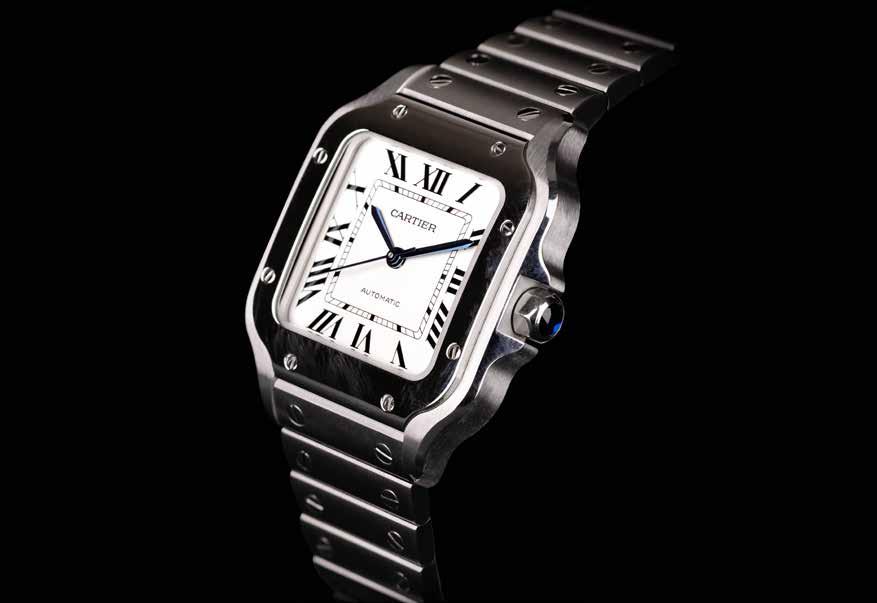
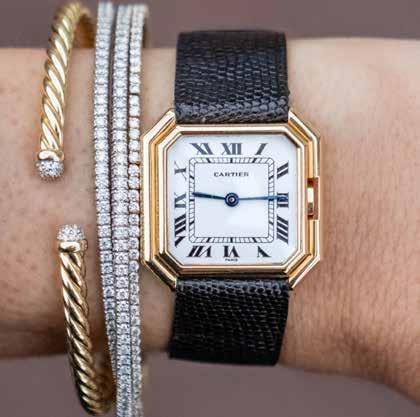
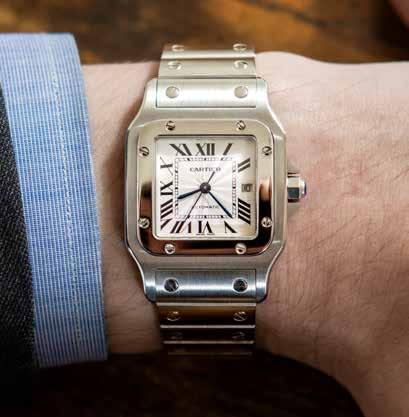
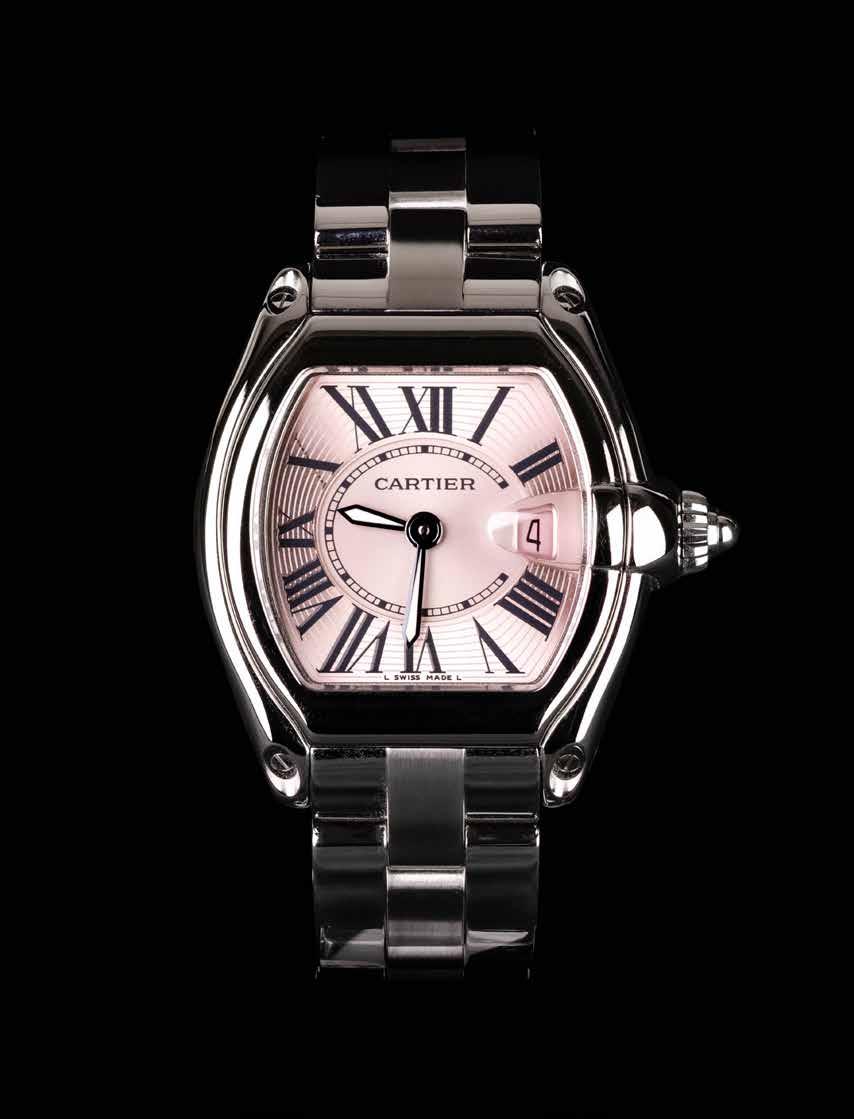
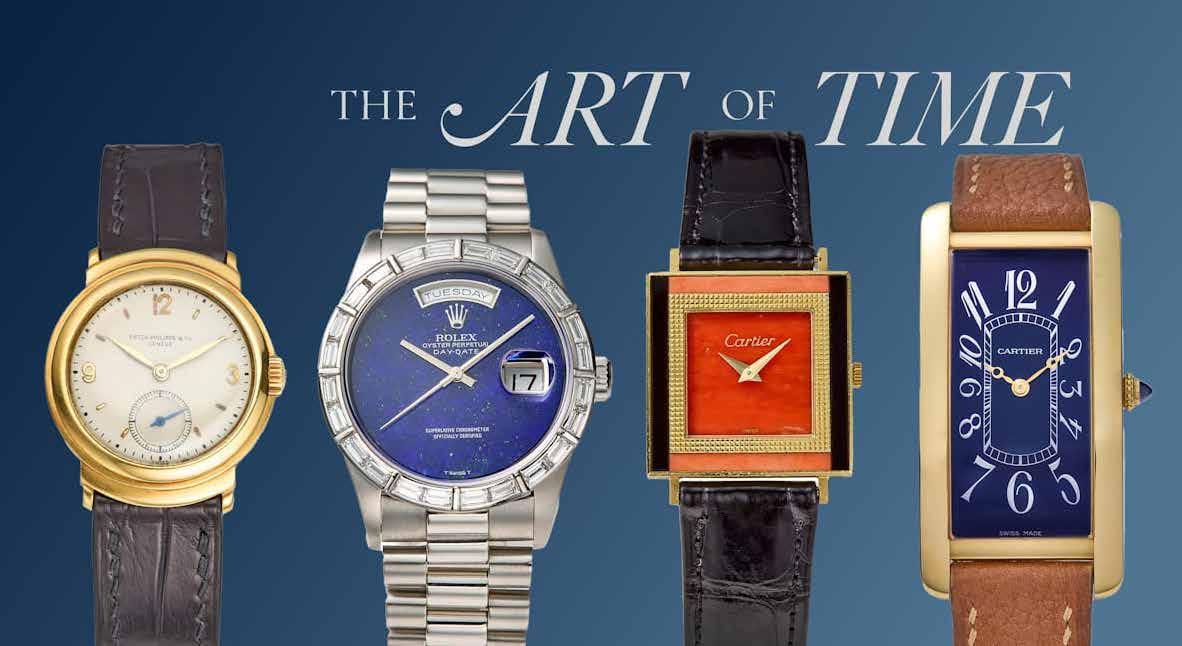
Founded in 1847 in Paris, Cartier began not as a watchmaker, but as a jeweler to royalty, crafting pieces for Europe’s elite before turning its attention to timepieces in the early 20th century. Its first wristwatch, the Santos, designed in 1904 for aviator Alberto Santos-Dumont, marked a turning point in horology by offering a practical yet elegant alternative to the pocket watch. The Tank followed in 1917, inspired by the silhouette of military vehicles on the battlefield. More than a century later, both designs remain cornerstones of Cartier’s identity and of modern watch design itself.
Cartier combines thoughtful design with reliable Swiss watchmaking, drawing on its long history as a jeweler. Roman numerals, blue steel hands, sapphire cabochons, and crisp shapes give its watches a clear visual identity, while modern movements ensure strong performance. Whether it’s the curved Ballon Bleu, the bold Pasha, or the iconic Santos de Cartier, each model carries a style that feels classic, contemporary, and unmistakably Cartier.
While Cartier is best known for its design, the brand has also built a strong reputation for watchmaking innovation. At
its manufacturing facility in La Chaux-deFonds, Switzerland, Cartier produces a range of in-house movements, from ultrathin calibers like the 1904 MC to complex tourbillons featured in its Fine Watchmaking collection. These developments show that Cartier’s reputation goes beyond aesthetics. The brand combines its jewelry artistry with genuine technical expertise and mechanical precision.
Beyond its technical merits, Cartier has long occupied a unique space in popular culture. Its watches have graced the wrists of icons across generations, including Jackie Kennedy, Andy Warhol, Princess Diana, and Timothée Chalamet, making them as much cultural statements as timekeepers. In film, fashion, and art, Cartier represents the intersection of refinement and rebellion. The Tank has transcended trendy to become shorthand for taste, worn by visionaries, creatives, and leaders alike.
In today’s market, Cartier’s legacy has extended into the realm of preowned and vintage collecting, where its designs continue to be sought after and appreciated. Unlike many luxury brands,
Cartier’s appeal crosses boundaries of age, gender, and style which ensures enduring demand for both current models and archival editions. For collectors and first-time buyers alike, pre-owned Cartier watches offer an opportunity to own a piece of design history while enjoying lasting value and craftsmanship that stands the test of time.
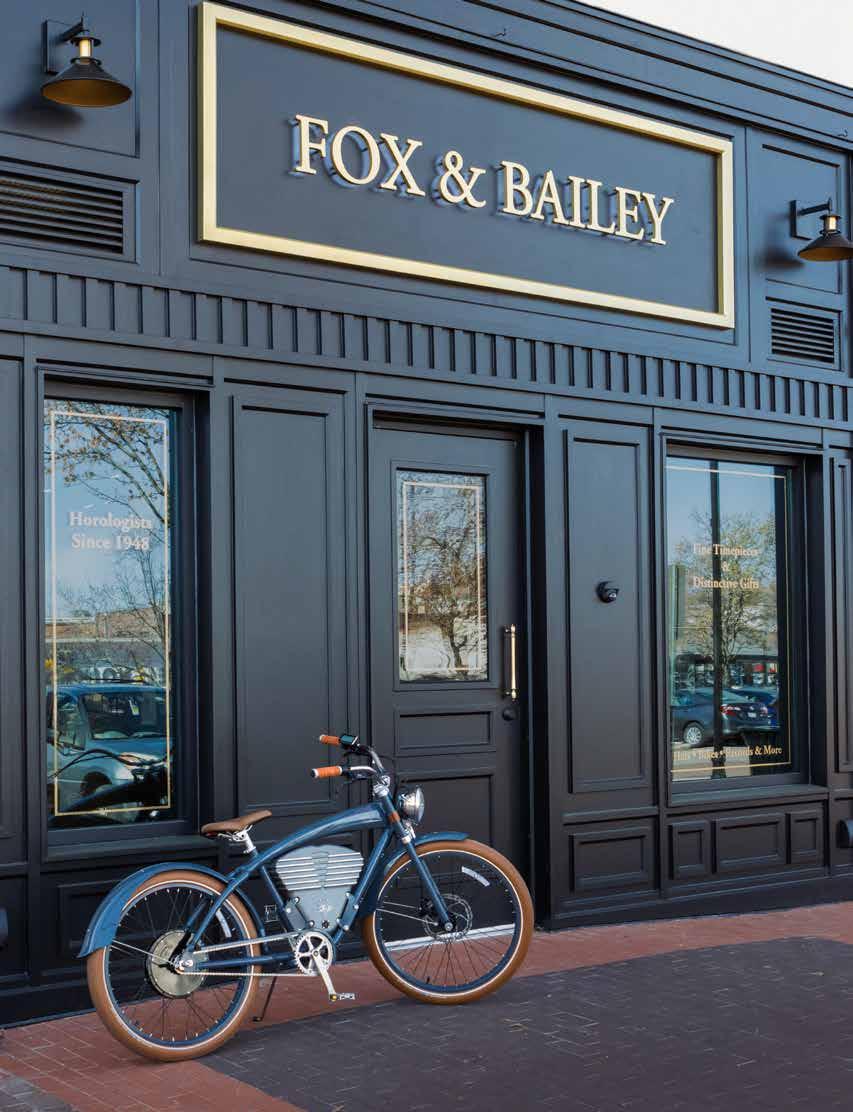
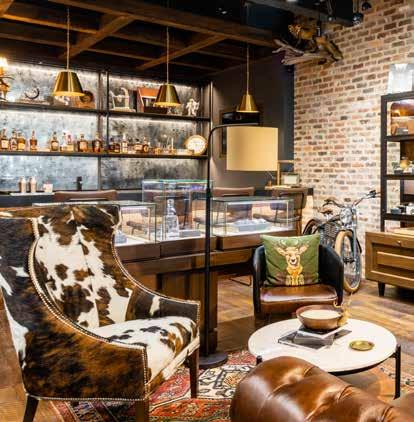
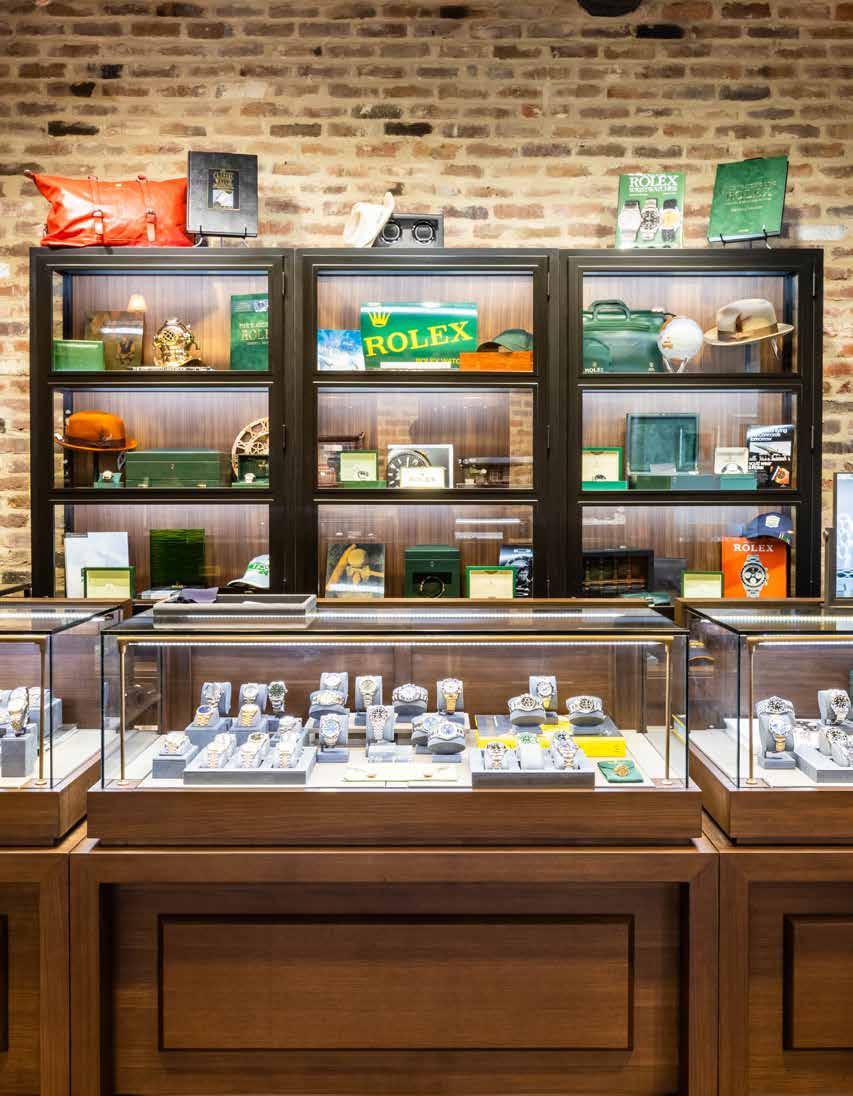
At Fox & Bailey, our team specializes in sourcing exceptional pre-owned Cartier timepieces from trusted networks. From rare vintage Tanks to modern Ballon Bleu and Santos models, our curated selection reflects the diversity and refinement that define Cartier itself. Each piece is carefully authenticated, serviced, and presented with the attention to detail our clients expect. For clients in Raleigh and across North Carolina, Fox & Bailey provides access to Cartier’s most sought-after designs, along with the knowledge and trust needed to help each piece find the right collector. |
INTRODUCING BELL & ROSS: A MODERN ICON IN WATCHMAKING
NOW AVAILABLE AT FOX & BAILEY, RALEIGH.
A BRAND DEFINED BY FUNCTION
Founded in 1992 by French designer Bruno Belamich and businessman Carlos Rosillo, Bell & Ross set out to create functional tool watches for professionals operating in extreme conditions. From its earliest models, the brand has been defined by a focus on legibility, precision, and durability.
The company’s design philosophy draws heavily from aviation and military instrumentation. Each watch is engineered to deliver instant readability under all conditions, using high-contrast dials, clear numerals, and robust case construction.
For Raleigh collectors, Bell & Ross represents a modern interpretation of tool-watch heritage. The brand bridges professional performance with contemporary design.
FROM INSTRUMENT PANELS TO WRISTWATCHES
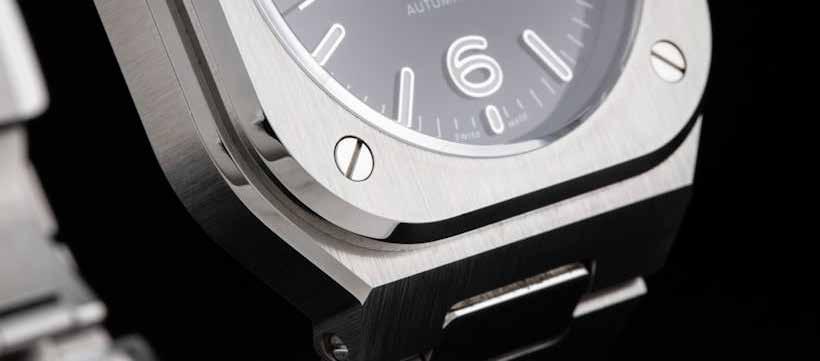
Bell & Ross became internationally recognized in 2005 with the release of the BR 01, a square-cased watch modeled directly after aircraft cockpit instruments. Its distinctive circle within a square layout quickly became a design signature and
remains central to the brand’s identity today.
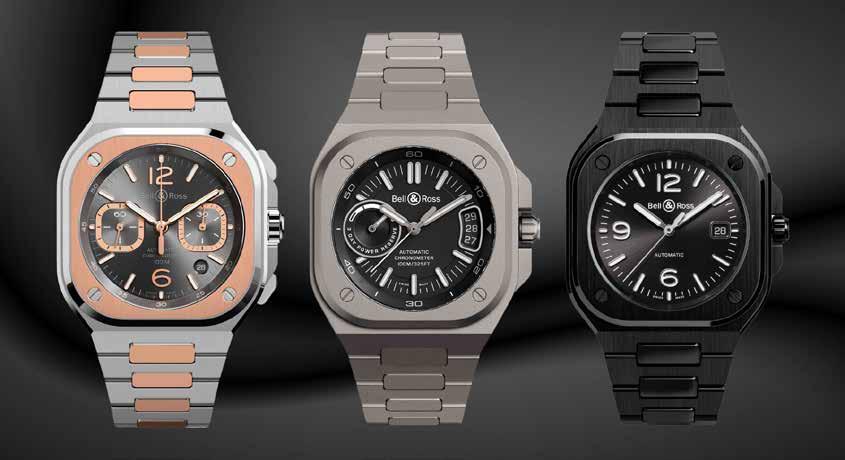
Current models such as the BR 03, BR 05, and BR-X5 build on that concept while introducing more compact proportions, integrated bracelets, and updated movements. The square-case format has become one of the most recognizable silhouettes in modern watchmaking.
ENGINEERING AND MATERIALS
Building on its strong visual identity, the brand has also advanced its technical capabilities. Bell & Ross collaborates with leading Swiss movement manufacturers and has introduced several proprietary calibers, including the BR-CAL.323, developed in partnership with Kenissi, a Swiss movement manufacturer partowned by Chanel, which is also the majority stakeholder in Bell & Ross.
This collaboration gives Bell & Ross access to advanced, high-performance movement architecture like that used by Tudor and Norqain, significantly elevating precision and build quality across the brand’s collection. The BR-CAL.323 delivers a 70-hour power reserve, COSC chronometer certification, and improved robustness over the ETA and Sellita-based
movements used in many earlier Bell & Ross models.
CASES ARE PRODUCED IN MATERIALS SELECTED FOR RELIABILITY:
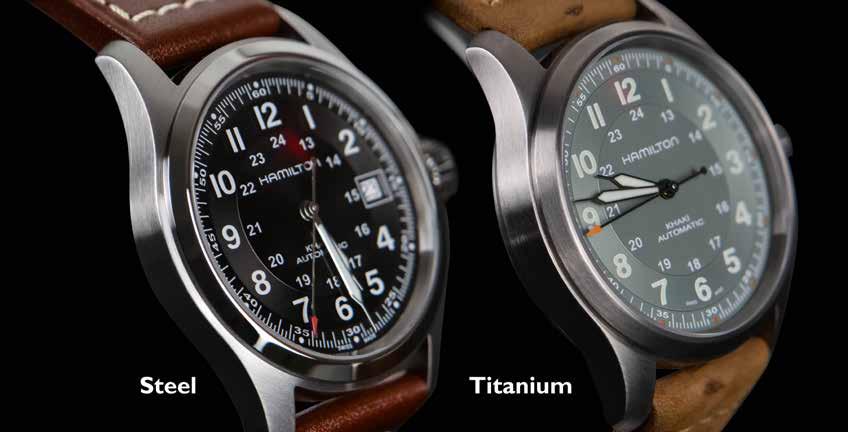
• 316L stainless steel for everyday wear.
• Matte ceramic for scratch resistance and low reflectivity.
• Titanium for strength with reduced weight.
Each watch undergoes rigorous testing for shock resistance, thermal stability, and water resistance before leaving the manufacture in La Chaux-de-Fonds, Switzerland.
DESIGN CHARACTERISTICS
Bell & Ross design is guided by four principles: legibility, functionality, reliability and precision. Dials typically feature large Arabic numerals at 12, 3, 6, and 9, luminous coatings for visibility, and straightforward layouts free of unnecessary decoration.
Models range from aviation and diving instruments to urban chronographs and GMT complications, maintaining a consistent aesthetic that emphasizes purpose over embellishment.
The result is a product line that appeals equally to professionals and collectors who value mechanical integrity and industrial design.
POSITION IN THE MARKET
In the contemporary luxury-sports segment, Bell & Ross occupies a distinctive position between high-fashion and technical tool watches. Its pieces offer Swiss mechanical quality and recognizable design language at price points that remain in line with mainstream luxury brands.
The company’s collaborations, including limited editions with the French Air Force and Alpine F1 Team, reinforce its connection to performance industries while expanding visibility among younger buyers.
BELL & ROSS AT FOX & BAILEY
Fox & Bailey’s decision to introduce Bell & Ross in 2025 aligns with its commitment to offering watch brands that combine craftsmanship, authenticity, and innovation. The collection includes the core BR 03 and BR 05 lines, and a few
from the BR-X5 line.
For regional collectors, this marks the first opportunity to explore the brand’s full range locally, with in-person guidance and after-sales service from trained Fox & Bailey staff. Each model is backed by the manufacturer’s international warranty and supported by Fox & Bailey’s in-house service program.
WHY IT MATTERS TO COLLECTORS
For collectors, Bell & Ross stands out for its clear sense of purpose. The brand’s design language (square, functional, and instantly recognizable) gives it a strong identity in a market crowded with traditional round cases. This distinctive approach contributes to its appeal by expressing confident style alongside a commitment to purposeful and functional design, making the watches both bold and meaningful to many enthusiasts.
At the same time, the same geometry that defines its character also limits its universality. The broad, angular cases can feel larger on the wrist than their
measurements suggest, and the style may not suit those who prefer a more understated presence. But for collectors who appreciate mechanical integrity paired with unapologetic design, Bell & Ross offers a distinctive option that blends engineering credibility with visual confidence.
FUTURE OUTLOOK
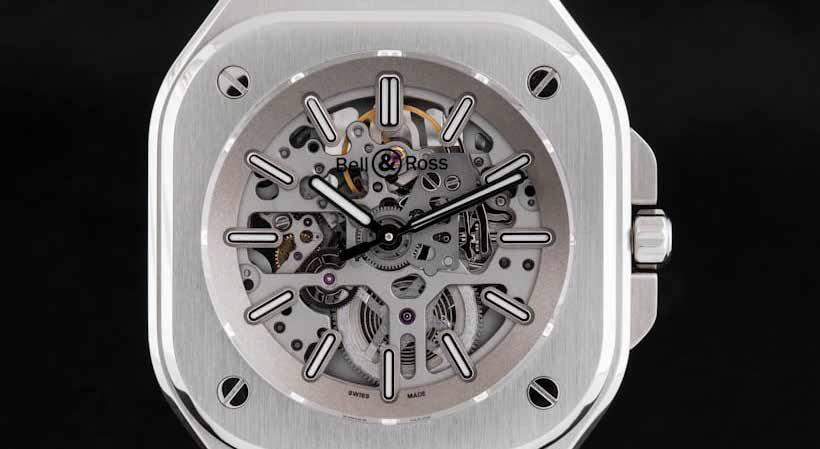
As Bell & Ross moves into its third decade, the brand’s recent launches signal a thoughtful evolution rather than a radical pivot. At Watches & Wonders 2025, Bell & Ross introduced a new trio of outright skeletonised BR-03 models and a slimmer 36 mm (down from 40mm) version of the BR-05, showing its willingness to refine proportions and technique while retaining its signature “circle-in-a-square” identity. Rather than chasing trends, Bell & Ross continues to deepen its commitment to a balanced blend of durability and distinctive design. This steady course ensures the brand stays true to its roots while exploring new expressions that resonate with collectors and aficionados alike. |
BRICK-AND-MORTAR RESILIENCE IN A DIGITAL WATCH WORLD
WHY PHYSICAL RETAIL REMAINS CENTRAL TO LUXURY
BUYING IN 2025.
CHANGING LANDSCAPE
The luxury watch industry continues to expand its digital presence. Brands that once relied exclusively on boutique sales now offer e-commerce platforms, virtual consultations, and online configurators. Yet despite these innovations, most high-end mechanical watches are still purchased in person.
Recent market data shows that more than 70 percent of Swiss-made watches priced above $5,000 are sold through physical retailers. Digital tools have become essential for research and communication, but the final transaction, and the emotional moment of ownership, usually happens in a store.
For independent retailers such as Fox & Bailey in Raleigh, this balance underscores a key truth: while the buying process begins online, it still ends with a handshake across a display case.
WHY PHYSICAL WINS
Luxury watches are tactile products. Weight, proportion, and finishing cannot be fully appreciated through a screen. Collectors want to feel how a bracelet articulates, how a crown winds, or how a sapphire crystal catches light.
Physical boutiques also provide the context that digital platforms cannot replicate, lighting designed to reveal dial texture, knowledgeable staff who can explain movement architecture, and the assurance of authenticity.
For many clients, the boutique experience is part of the value proposition. Personalized service, inperson adjustments, and the ability to compare models side by side transform a purchase into a relationship rather than a transaction.
Digital Integration, Not Replacement
Successful retailers have learned that online and in-store experiences are not competing forces but complementary tools.
Brands and authorized dealers now use virtual try-ons, appointment booking systems, and live inventory portals to streamline the buying journey. Clients often discover a model online, reserve it digitally, and finalize the purchase in person.
Fox & Bailey uses a similar hybrid approach, maintaining detailed digital catalogs while encouraging appointments for hands-on viewing. This approach ensures accuracy, convenience, and the personalized service expected in the luxury space.
EVOLVING CONSUMER EXPECTATIONS
Modern watch buyers expect more than display cases and polite conversation. They look for immersive storytelling, direct access to experts, and after-sales support that matches the product’s longevity.
Retailers have responded by incorporating on-site servicing, client events, and brandspecific showcases that create community. At Fox & Bailey, events like “The Windup Live” and curated brand spotlights allow clients to engage with the culture behind the watches they collect.
These experiences are crucial for younger demographics who value authenticity and transparency as much as craftsmanship.
THE BOUTIQUE ADVANTAGE
Brick-and-mortar stores also serve a critical role in education and trust building. Many first-time buyers still prefer a guided introduction to mechanical watchmaking before committing to a high-value purchase.
Authorized retailers provide reassurance by verifying provenance, offering manufacturer warranties, and explaining proper care. In an age of counterfeit markets and online misinformation, these elements carry significant weight.
THE INDEPENDENT ADVANTAGE
As major watch brands continue to expand their direct-to-consumer channels, independent retailers have become more—not less—important. They offer something corporate e-commerce cannot replicate: cross-brand expertise, impartial guidance, and personal relationships that develop over years.
For collectors, that independence matters. It means honest advice across different manufacturers, the ability to compare models side by side, and access to aftersales service managed by people who know both the product and the client.
In Raleigh, Fox & Bailey represents that advantage. The boutique’s independence allows it to curate thoughtfully, provide
transparent recommendations, and build genuine trust. In an era defined by automation and algorithms, the human expertise of independent retailers remains one of the most enduring parts of the luxury watch experience. |
MYTHBUSTING: LUXURY WATCH CARE & REPAIR IN 2025
CUTTING THROUGH THE HOROLOGICAL NOISE — ONE MYTH AT A TIME.
THE WATCH CARE CONFUSION
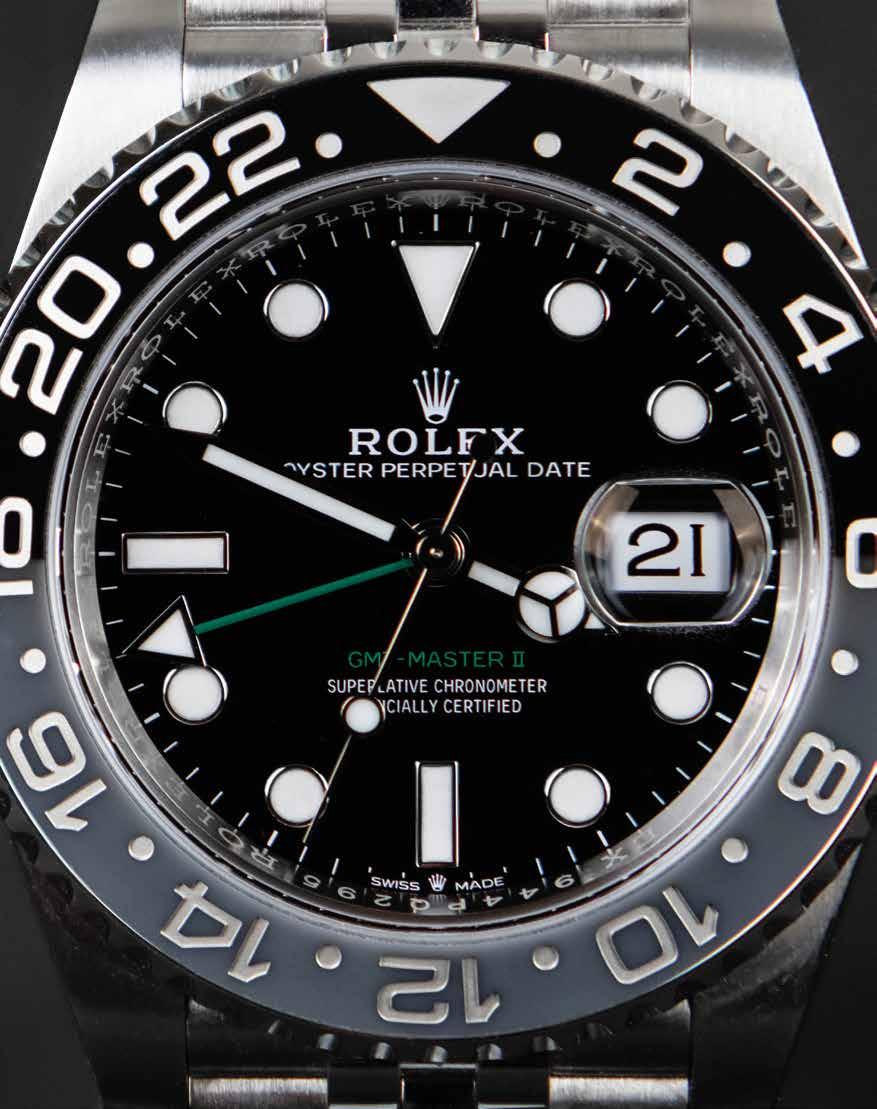
Ask five watch enthusiasts how often you should service your Rolex, and you’ll probably get a few different answers. Between online forums, YouTube “experts,” and well-meaning salespeople, the world of luxury watch maintenance has become a maze of conflicting advice. Some insist a watch needs annual service, while others say theirs hasn’t been opened in decades.
The truth about watch care is far less complicated than the internet may make it seem. Today’s mechanical marvels are built with remarkable precision and durability. Still, a few myths persist, leading to unnecessary repairs, wasted money, or worse, watches that quietly deteriorate from neglect.
Let’s set the record straight.
VINTAGE VS. MODERN: TWO DIFFERENT CARE PHILOSOPHIES
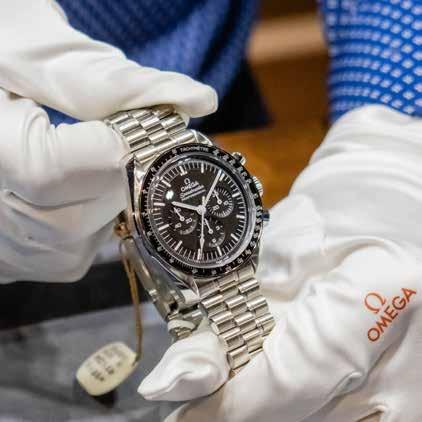
Maintaining a 1950s Omega is a completely different game from servicing a modern dive watch. Vintage pieces require a preservation mindset: fragile parts, discontinued components, and aging lume mean every decision affects originality and value. Sometimes, doing less is doing right. A gentle cleaning and careful movement regulation can keep history intact without altering the character that
makes the watch collectible.
Modern watches, on the other hand, are built for adventure. Ceramic bezels, silicon hairsprings, and anti-magnetic alloys mean you can wear them daily with minimal worry. Their challenge isn’t fragility; it’s complacency. Owners often forget that even the toughest sports watch needs its seals checked and oils refreshed eventually.
MYTHS & REALITIES OF WATCH CARE
MYTH: Every luxury watch needs annual servicing.
REALITY: Modern movements are tougher than most people realize. Advances in synthetic lubricants and gaskets mean a full overhaul is typically needed only every five to seven years, depending on how often the watch is worn. Overservicing can actually do more harm than good. Opening a watch unnecessarily risks introducing dust or compromising seals. Think of it like an oil change for your vehicle: too soon, and you’re wasting good oil; too late, and the engine pays the price.
MYTH: A scratch ruins a watch’s value.
REALITY: A scuff on a clasp or bezel isn’t a tragedy, it’s a uniquity. Collectors call it
patina, and in the vintage world, honest wear often adds character. Of course, deep gouges or careless polishing can hurt resale value, but light surface wear tells the story of a watch that’s been lived in, not locked away. If you ever do want to refinish, trust a professional who can polish without softening edges or blurring case lines.
MYTH: Only brand-authorized service centers can handle luxury watches.
REALITY: Brand service centers are excellent for warranty work and ensuring factory-original parts, but they’re not the only qualified option. Experienced independent watchmakers can service most luxury watches at the same professional standard, often with shorter turnaround times. The important thing is choosing a watchmaker with proven training and a strong track record.
REALITY: The rotor inside an automatic does most of the heavy lifting, if you’re moving enough. Desk jobs and daily commutes often don’t provide enough motion to fully wind the mainspring. A quick manual wind every few days keeps your power reserve full and ensures longterm accuracy.
MYTH: Water-resistant means waterproof forever.
REALITY: Those gaskets protecting your watch from moisture are made of rubber, and rubber ages. Even if you never swim with your watch, temperature changes and humidity slowly break them down. A simple annual pressure test keeps your seals honest and your movement dry. “Water-resistant” is a promise that needs to be rechecked, not assumed for life. And it’s worth noting that a pressure test
doesn’t involve submerging the watch; modern testers use dry, controlled air pressure to measure case integrity without exposing the watch to moisture at all.
CHOOSING A SERVICE PROVIDER
When your watch needs professional care, you’ll typically choose between a brand-authorized service center and an independent watchmaker. Authorized centers offer factory-original parts and official documentation, which is valuable for maintaining warranties or restoring
newer models. The trade-off is longer turnaround times and higher costs.
Independent watchmakers offer a different kind of experience: flexibility, shorter timelines, and the ability to speak directly with the person servicing your watch. Many have high-level certifications such as CW21, SAWTA, or brand-specific training, and reputable independents are transparent about what work is necessary, provide detailed estimates, and stand behind their repairs with their own warranties.
PRACTICAL TIPS FOR EVERYDAY CARE
Even the best service schedule can’t save a watch from everyday neglect. A few simple habits make a world of difference:
DO: Wipe your watch down with a soft microfiber cloth after wearing, especially if exposed to salt, sweat, or sunscreen.
DO: Store watches on their sides or in soft-lined boxes to prevent caseback scratches.
DO: Have your gaskets pressure-tested once a year if your watch sees water.
DON’T: Adjust the date between 9 p.m. and 3 a.m. That’s when most date mechanisms are engaged.
DON’T: Leave your watch near strong magnets (like phone cases or speakers). Magnetized parts are one of the most common repair issues.
Small habits, big payoff.
MAINTENANCE AS A PARTNERSHIP
Luxury watches are made to last generations, but only if owners and experts work together. Caring for a fine timepiece isn’t about babying it; it’s about understanding it. The best-kept watches aren’t the ones that spend their lives in safes, they’re the ones that are worn, maintained, and passed on with a story behind every scratch. |
THE BIGGEST AUCTIONED WATCHES OF 2025
THE MOST COVETED TIMEPIECES IN THE LUXURY WORLD.
The 2025 auction season reaffirmed what many collectors already knew: the finest wristwatches remain among the most coveted assets in the luxury world. From New York to Paris, major auction houses have reported not just high values but near-perfect sell-through rates and global competition from bidders in dozens of countries. Provenance, rarity, and story have always driven value; today, they’re simply reaching a bigger stage. This year’s results highlight that trend through several standout auctions and record-setting sales.
The 2025 auction landscape has been defined by strong performance from major houses such as Phillips and Sotheby’s, with competitive bidding from collectors around the world for rare, high-end pieces.
Across the spring season, major auction houses reported standout results from New York to Geneva. Phillips’ “New York Sessions – Fall 2025” delivered several strong outcomes, with multiple lots surpassing estimates and attracting bids from younger buyers and international collectors. The event’s hybrid format, combining online access with in-person previews, showed how traditional auction practices continue to evolve through digital participation.
In Geneva, Phillips’ “Decade One (2015–2025)” anniversary sale was another high point, realizing more than $83 million in total sales and setting twelve individual lots above the one-million-dollar mark. The headline came from a Patek Philippe Ref. 1518 in stainless steel, which achieved approximately $17.6 million, ranking among the highest prices ever recorded for a wristwatch. Sotheby’s also reported strong engagement in its “Important Watches I” series in Paris and Geneva, featuring standout pieces from Audemars Piguet, Rolex, and F.P. Journe that sold well above estimates.
In the United States, the Pharrell Williamscurated Joopiter sale crossed the $1 million mark, illustrating the continued appeal of celebrity-linked provenance in today’s auction market. Taken together, these results underscore a global appetite for exceptional watches.
Another notable development in 2025 has been the growing visibility of independent watchmakers at auction. Brands such as F.P. Journe, De Bethune, and Kari Voutilainen continue to attract record attention, with collectors increasingly seeking originality and artisanal craftsmanship alongside heritage names. These smaller maisons, once niche among
connoisseurs, now command dedicated bidding wars and auction catalog features of their own, signaling that the market’s definition of “collectible” is widening.
Beyond headline prices, 2025’s auction season has revealed how much the business of selling watches is changing. Many houses now stream live auctions, provide digital condition reports, and allow remote bidding through verified platforms, opening the door to a far broader audience than traditional in-room events ever could. This digital accessibility has brought in a new generation of collectors who once viewed high-end auctions as out of reach, diversifying both the buyer base and the types of watches being pursued.
At the same time, auction houses are placing new emphasis on documentation and transparency. Provenance records, service history, and original accessories are no longer side notes, they’re front and center in catalog listings. This added clarity has strengthened buyer confidence, especially as secondary-market values continue to climb. The 2025 auction season shows that while prices may fluctuate, demand for watches rooted in craftsmanship, history, and authenticity, remains stronger than ever. |
WHAT’S DRIVING THE HOTTEST MATERIALS & DESIGN TRENDS IN 2025
HOW INNOVATION AND AESTHETICS ARE RESHAPING THE MODERN WATCH INDUSTRY.
A YEAR OF TECHNICAL AND VISUAL EVOLUTION
The watch industry in 2025 is defined by material experimentation and refined design language. Brands across Switzerland, Germany, and Japan are introducing new alloys, ceramics, and composite cases that push performance forward while expanding creative expression.
These developments open new creative and engineering possibilities. Brands are experimenting not only to improve performance, but also to expand design language using new finishes, textures, and hues that redefine how a luxury watch can look and feel. From a production standpoint, these materials also enable lighter, more durable cases and long-term resistance to wear, marking a significant step forward in both practicality and aesthetics.
MATERIAL ADVANCEMENTS
One of the most notable developments in recent years is the broad adoption of silicon components in movements. Silicon escapements and hairsprings are now standard in many mid-to-high-end calibers
due to their anti-magnetic properties, low friction, and resistance to temperature variation. These components extend service intervals and improve timekeeping stability.
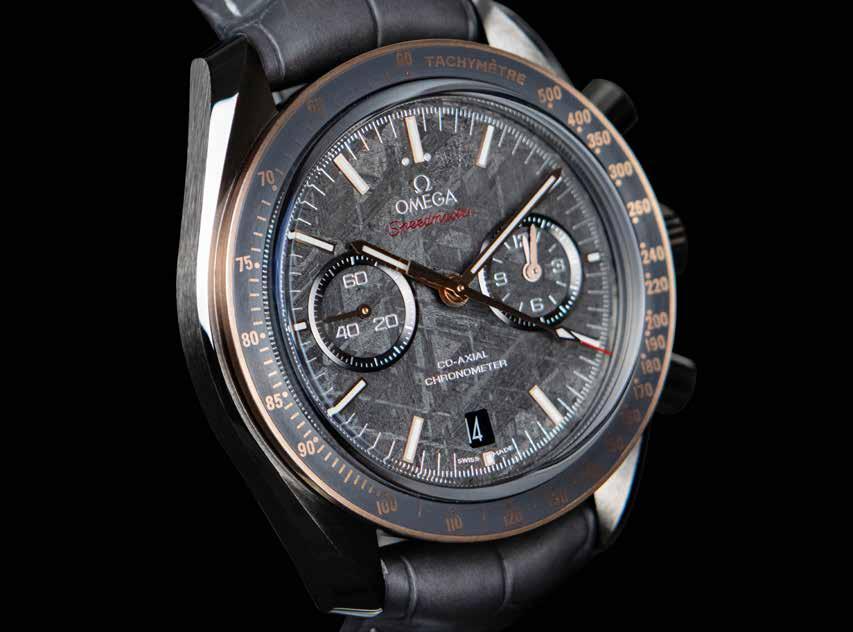
Ceramic also continues to dominate. Once reserved for bezels, it’s now common across entire cases and bracelets. Lightweight, scratch-resistant, and hypoallergenic, ceramic offers both technical and aesthetic appeal. Omega’s “Dark Side of the Moon” and IWC’s Top Gun collection remain benchmarks for this material’s versatility.
Meanwhile, new proprietary alloys are emerging, designed to combine strength with distinctive color tones. Rolex’s Everose gold, Omega’s Sedna gold, and Grand Seiko’s Brilliant Hard Titanium demonstrate how metallurgy has become a creative discipline as much as a functional one.
There is also increasing attention on recycled and eco-conscious materials, with several brands developing more sustainable case and component options. Norqain has introduced its proprietary
NORTEQ composite. It’s a lightweight, carbon-based material made with sustainable fibers and pairs it with fully plastic-free packaging and Climate Neutral certification. G-Shock has expanded its use of bio-based resins and recycled components across select models, demonstrating how durable tool watches can incorporate greener material choices without compromising their performance standards.
DESIGN TRENDS AND AESTHETIC SHIFTS
Visually, the industry continues to move toward cleaner, more restrained proportions. The oversized cases of the early 2000s have largely given way to balanced mid-size designs in the 38–41mm range. Collectors favor watches that wear comfortably across different settings rather than pieces that dominate the wrist.
Dial design has become a major differentiator. Texture plays a central role — sunburst, matte, and frosted finishes add dimension, while guilloché and enamel dials highlight artisanal craft. Meteorite, stone, and lacquer dials offer individuality, with each surface pattern naturally unique.
Color continues to evolve as well. Earth tones and soft pastels are replacing the saturated blues and greens of recent seasons. Brands such as Nomos, Tudor, and H. Moser & Cie. have embraced understated shades that feel contemporary yet timeless.
Color trends in 2025 show a noticeable move toward softer, more versatile tones, even as brighter hues remain part of many collections. Nomos continues to introduce gentle pastels and muted shades across
the Tetra and Club Campus lines. Omega has expanded its use of earthy neutrals in the Aqua Terra and Seamaster families, while Bell & Ross incorporates copper, ice blue, and matte charcoal tones in its BR 03 and BR 05 models. Together, these palettes reflect a broader shift toward refined, understated color options.
THE MODERN ERA
Expect the next few years to bring further integration of advanced materials, sustainability, and subtle design. The
future of luxury watchmaking appears less focused on excess and more on refinement. It favors watches that express innovation quietly rather than announce it loudly. For collectors, that’s good news: craftsmanship is the story worth paying attention to. |
THE SOCIAL MEDIA EFFECT: INFLUENCERS, CELEBRITIES, AND WATCH HYPE
HOW DIGITAL VISIBILITY SHAPES MODERN COLLECTING.
A NEW ERA OF VISIBILITY
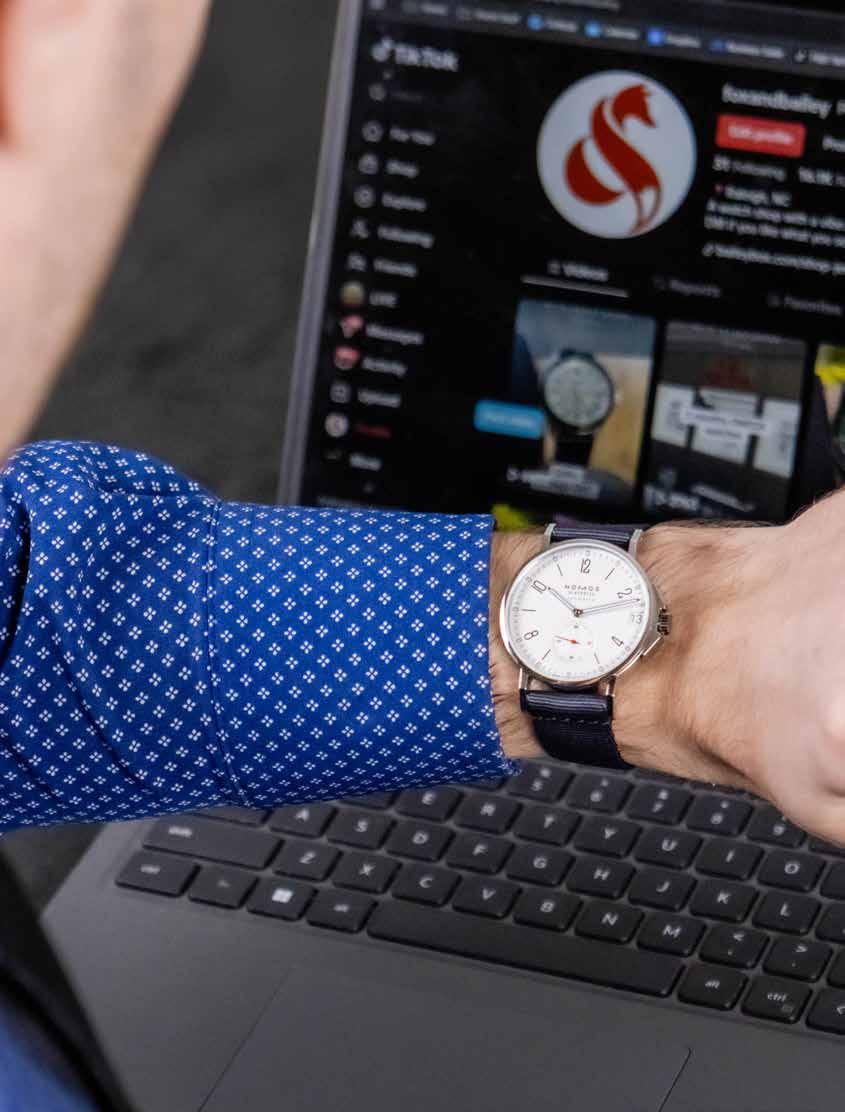
In the last decade, social media has become one of the most powerful forces influencing watch buying behavior. Platforms like Instagram, YouTube, and TikTok have turned collecting into a shared, real-time experience where new releases, celebrity wrist shots, and collector opinions circulate instantly. What once took years to build through print media and word-of-mouth can now materialize in hours through a single viral post.
INFLUENCERS & DIGITAL TASTEMAKERS
Dedicated watch content creators, or “watch influencers”, play a central role in shaping enthusiasm around specific brands and models. Their hands-on reviews, comparisons, macro photography, and unboxings often serve as a buyer’s first introduction to a piece. Their influence comes from authenticity and accessibility: unlike traditional marketing, these voices speak from a collector’s perspective. A compelling wrist shot or an honest review can quickly boost interest and drive traffic to boutiques or authorized dealers worldwide.
In some cases, a single creator’s endorsement can move a watch from niche appreciation to widespread demand almost overnight.
CELEBRITIES & CULTURAL
MOMENTS
Celebrity influence has long shaped watch desirability, even before the rise of social media. The Rolex “Paul Newman” Daytona remains a defining example. It’s association with the actor and race car driver transformed an overlooked chronograph into one of the most soughtafter vintage watches in history. Today, a watch worn on a red carpet, in a film, or during a high-profile interview becomes instantly searchable and highly shareable. Cartier Tanks reappearing on actors and creatives, Speedmasters on athletes, or vintage pieces worn by musicians all gain traction far beyond their original audience. Instead of relying on print campaigns, brands now benefit from candid sightings and organic moments that resonate with millions of followers at once.
MARKET CONSEQUENCES
This surge of digital attention can create rapid spikes in demand. Secondary market prices often react accordingly, sometimes
doubling or tripling within weeks of a viral moment. Watches that were once easy to find become wait-listed, and discontinued references receive renewed attention.
This feedback loop (online visibility driving demand, which drives scarcity, which drives more visibility) has introduced a new type of hype cycle to collecting. While some pieces earn lasting interest, others experience short-lived surges driven more by trend than heritage.
NOTABLE EXAMPLES
Several recent watches have become case studies in how social media accelerates visibility and demand. The Cartier Santos Demoiselle, seen on Taylor Swift and widely shared online, gained renewed attention among younger audiences who discovered the brand through pop culture rather than traditional advertising. Similarly, the vintage Seiko “Half Moon” achieved viral status on TikTok, with prices rising sharply as new collectors sought out the once-overlooked model.
These examples illustrate how quickly perception can change in the digital era. A few viral posts, influencer reviews, or
well-timed appearances can transform an existing reference into the next “must-have.” Now, it’s not only craftsmanship but also communication that plays a central role in shaping modern watch trends.
THE ROAD AHEAD
The influence of social media on watch
collecting shows no signs of slowing, but its long-term impact is complex. While online visibility can introduce new audiences to mechanical watchmaking, it can also create short-term hype disconnected from craftsmanship or history. Collectors increasingly need to distinguish between enduring design and temporary trends.
Opportunity lies in transparency, education, and storytelling. This ensures that the excitement social media generates ultimately supports sustainable interest rather than fleeting waves of popularity. |