3 minute read
FINANCE+OPERATIONS

It’s about trusting the managers that you’ve put into place and believing in the process that you’ve built in the company, Conner says. The upshot is that the processes that support growth are often in place for successful businesses. After working with multiple leaders going through this transition, Conner says that growth is no accident—it’s the goal.
Conner’s advice is to trust what you’ve built.
“You’re going to have to have an incredible belief in yourself and your team that you’ve got the right group to get it done,” he says.
Method: Buy or Lease? Buying or leasing can depend on your personal preference, your initial investment abilities, your exit plans, and a lot of other factors.
Outright ownership of a property can be a good investment if it’s a good fit. At the end of a career, the owner could sell the business and retain the property for some partial income.
Leasing has become more common and could allow for an operator to get into a more suitable shop space, Frey says.
“I think if you are a single store operator, maybe the best way to go might be a lease property,” he says. “Or certainly finding a building that’s already there that you can convert. Maybe not go too far into debt with the property.”
There can be many moving parts during a lease negotiation, but Frey says operators should pay attention to exit options—starting after the first 10 years or so—and the assignment provisions in the event that you sell the business.
If your wish list for building attributes is a high priority, think about leasing property and building to suit.
“A single store operator, nine times out of 10, might find a long-term lease and then build what they want so that they can cross that off the list,” Frey says. Buying Commercial Real Estate—Pros and Cons
PROS • Equity in the property builds over time • Asset value appreciates over time • Potential for rental income • Tax breaks for interest, depreciation and nonmortgage expenses • Control of the property
CONS • Upfront downpayment • Difficult financing eligibility • Prepayment penalties on loans • Liability insurance required • Potential for loss of liquidity or capital
Source: ValuePenguin (site)
GROWING POSITIVITY DAILY
Can improving your culture decrease bay time and increase retention?
BY CALEB BROOKS | PHOTOGRAPHY BY JEANINNE HENDRICKSON
Matt Webb, owner and president of Premier Oil Change, was a student of the franchise oil and lube game.
“I came from a great company that was very positive,” said Webb, “but at the end of the day I wanted to be the one making the decisions.”
Webb had this mentality for a couple of years before stepping out on his own.
“When I saw that there was a lot of opportunity to do positive things as an owner, that’s when I knew it was time to go out on my own,” Webb says.
Ultimately it was this mentality that led Webb and a few friends to start a brand where they could have the freedom to do things on their own terms. Part of his success with the Premier brand is Webb’s attention to attitude and its effects on the operation.
“I learned really quickly that as a leader, everything rises and falls under your leadership,” Webb says. “You need to be positive because no one will be more positive or enthusiastic than you are.”
To Webb, this is where a lot of owners miss the boat: “They don’t take the time to create and support a positive culture.”
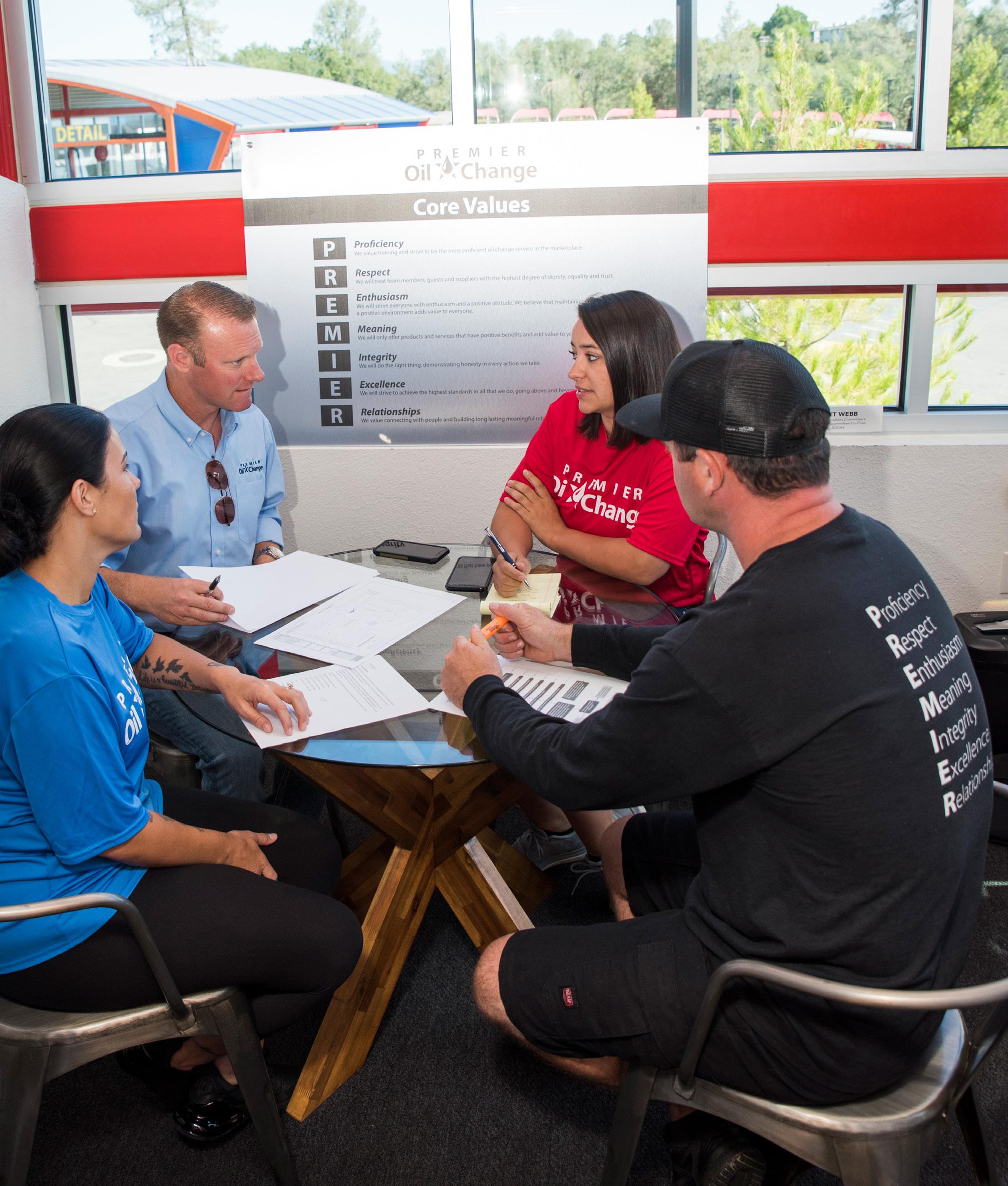
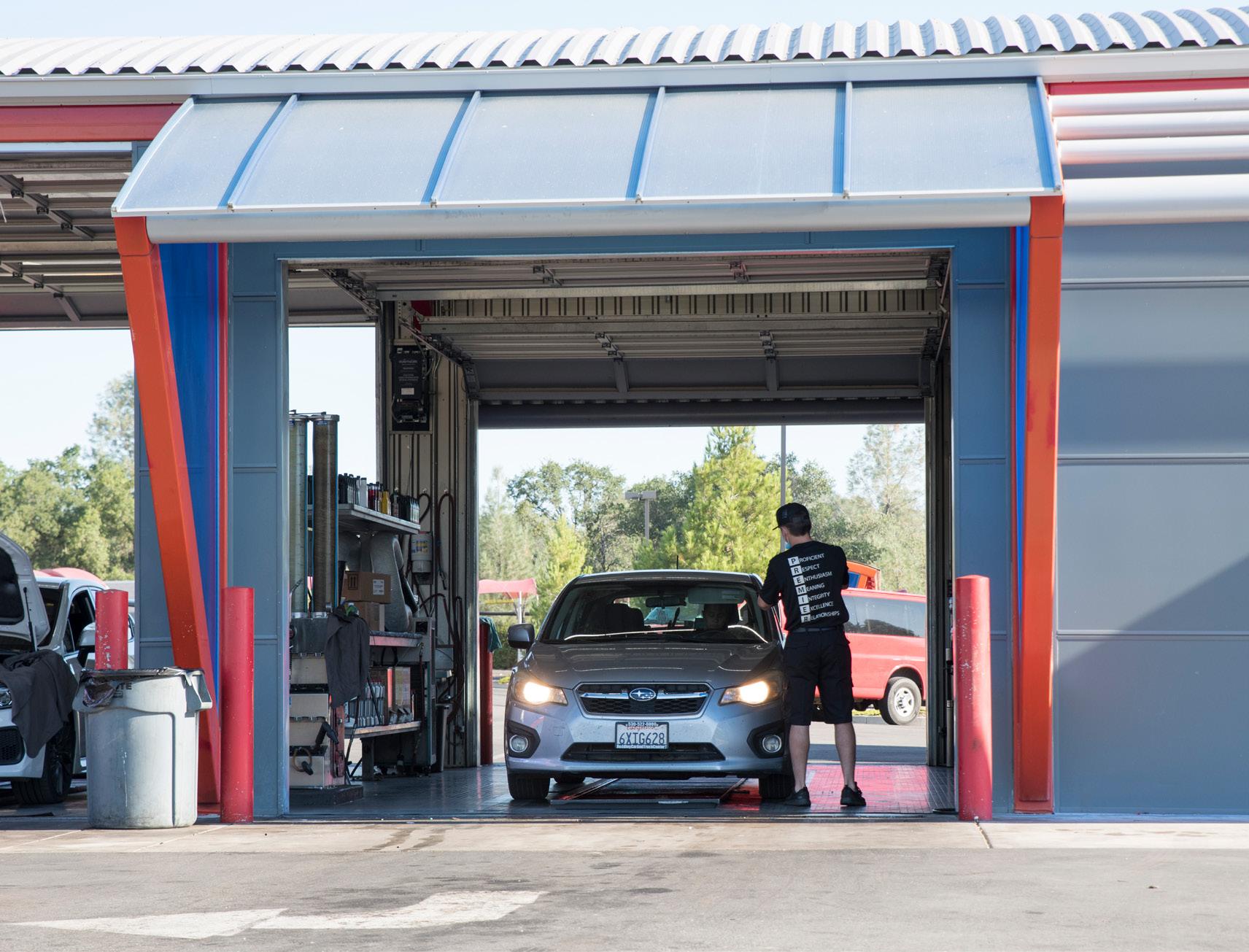
Group Effect A leader’s attitude has ripples throughout an organization. Matt Webb (middle left) keeps this in mind when managing staff.