29 minute read
AOCA CORNER

SPONSORED CONTENT FROM OUR PARTNERS
Developing Engine Oil Standards to Meet the Needs of Evolving Engine Technology
A look into the development process that requires consensus and collaborat
BY JEFFREY HARMENING, MANAGER - EOLCS/DEF/MOM, AMERICAN PETROLEUM INSTITUTE
For more than 70 years, API has developed engine oil standards that dispersed to all industry participants for review, AOAP works to achieve meet the evolving lubricant demands of engines and has been licensing consensus among all of the interested parties and ensures that the process engine oils for almost four decades through the Engine Oil Licensing for creating the new specification provides full transparency. Consensus and Certification System (EOLCS). EOLCS has a robust global network requires that all views and objections be considered and that an effort be of licensed companies in more than 60 countries and currently licenses made toward their resolution. All concerns raised during this important nearly 23,000 products that display the API Quality Marks through their review must be addressed before a final draft can be completed. voluntary licensing and certification program. The challenging process to develop the current standards, ILSAC GF-6A,
The development of a new engine oil performance specification is detailed ILSAC GF-6B and API SP, demonstrates how the procedures in API 1509 Annex in API 1509 - Engine Oil Licensing and Certification System which describes C work successfully to ensure that technically-sound, reliable performance the voluntary licensing as well as the processes behind development of engine standards were created to meet the needs of the variety of engines in the oil standards. In June, API released the 20th edition of API 1509. Standards present and future engine landscape. The biggest challenge was the need development processes are found in Annex C for developing to develop new and replacement engine tests that support new gasoline-engine oil performance standards and Annex D API standards. Changes in engine technology since the last for developing new diesel-engine oil performance standards. “Working with the specification in 2010 required that seven new or replacement Each of these annexes detail the interaction and roles of many stakeholders engine tests be developed, evaluated, and measured for the various independent organizations that are part of the in the industry, API precision. This included new tests to minimize low-speed prespecification development process. These organizations are comprised of vehicle and engine manufacturers, including develops standards ignition (LSPI) in gasoline direct turbocharged engines and provide chain wear protection to meet the needs of different the North American and Japanese OEMs within ILSAC, to meet the needs engine technologies from a number of manufacturers. The the Truck and Engine Manufacturers Association, trade of current and tests are designed to create extreme conditions so that associations and technical societies such as ASTM, SAE, future engines new oils are robust enough to perform properly across the and the American Chemistry Council (ACC), and any other company or organization with a material interest. around the world.” spectrum of engines as well as throughout the entire auto drain cycle, which can be as high as 10,000 miles. Each test
A request for a new gasoline- or diesel-engine oil —Jeffrey Harmening, required a great deal of time, effort, and resources to ensure specification can originate from any of these organizations manager - EOLCS/ that the test was fit for purpose. and must include adequate data and justification for the DEF/MOM, American The development of diesel engine oil specifications proposed specification as well as demonstrate a need for Petroleum Institute follows a similar process and, at this time, a request for a significant oil performance changes to meet requirements not new diesel engine oil specification—presently referred to as met by existing categories. The justification for the proposed PC-12—is under evaluation by the New Category Evaluation specification usually includes one or more of the following: impending Team (NCET). As they wrap up their work in the next few months, the NCET government regulations, consumer-driven needs, new hardware design or will make an official recommendation to the Diesel Engine Oil Advisory Panel service requirements or field problems encountered with current oils. (DEOAP) on the merits of the request.
Using the Annex C process for gasoline-engine oil standards development Working with the many stakeholders in the industry, API develops standards as an example, once a formal request has been received by API, the Auto-Oil to meet the needs of current and future engines around the world. This Advisory Panel (AOAP), co-chaired by API and the OEMs, is assembled and ultimately enables consumers to have confidence in the quality of the oils they the evaluation of the request begins. Once the AOAP determines that the are putting in their engines. new specification is needed, the OEMs begin the difficult and lengthy task of developing the performance tests necessary to support the category needs. API is committed to making sure shops are able to confidently pour high-quality
As the OEMs deliver each of the individual performance tests, AOAP is API certified motor oils in the customers engines. For more information, please working to develop a draft specification. After the draft is completed and visit MotorOilMatters.org to learn how you can become MOM certified.
SPONSORED CONTENT FROM OUR PARTNERS
Investing in Your Employees will Pay Dividends
How to find and keep top-notch employees
BY BILL BEYERLE, AUTOMOTIVE INSTALLED SALES MANAGER AT CHEVRON LUBRICANTS, ERIC MONTANYE, LEAD BUSINESS CONSULTANT AUTOMOTIVE INSTALLED AT CHEVRON LUBRICANTS
With COVID-19 restrictions rapidly receding in the rear-view mirror, the US You also need to think about recruitment techniques and messaging. economy is regaining steam, and many of the jobs lost in the early days of the Use your website, social media presence, and job posting sites to educate shutdown are coming back. Ironically, however, employers are having trouble potential employees about the opportunities in this industry—starting finding people to fill these positions. This is happening to businesses of all types, with a ground-floor opportunity in your shop. Often your employees are and fast lube shops are no exception. Judging from conversations we’ve had with an excellent resource for recommending friends or family who might be owners; many are rethinking their hiring practices to ensure that they can attract in the job market. You could provide additional encouragement to your and retain quality employees while encouraging top-notch performance. employees via a “finders” financial incentive if their recommendation
Selecting the right people for the job is the key to success in any worked out and ended up joining your team. business. But who is the right hire these days? Is it an automotive technician After successfully hiring a new employee, you need to have a plan in with three to five years of experience? Or is it someone place to grow and develop their skills so that they continue who’s intelligent and responsible, personable, outgoing to learn on the job. An employee that is challenged and and a team player? The service technician is the face of your business to the customer, responsible for building “An employee that learning will have a greater chance of staying with you for the long term. Another key to success is creating a positive the confidence and trust that will determine whether the is challenged and work environment in which employees feel valued and want customer returns for their next service. Who is the type of learning will have to contribute. person you want representing your business to customers, a greater chance As a small business, you can afford to offer employees a regardless of their experience? Competition for experienced hires is heating up, and the of staying with you bit more flexibility than, say, a factory job or a chain store. Of course, you don’t want to run a lax operation, but if an talent pool is shrinking. With that in mind, the technical for the long term.” employee needs a weekday off to attend to a family matter, be and mechanical aspects of the typical service technician position can largely be taught and trained. It’s the intangible qualities—positive attitude, reliability, a customer-service mentality—are harder to teach. Today, many operators are focused on finding people with desirable soft skills and —Bill Beyerle, automotive installed sales manager at Chevron Lubricants open to it. These types of gestures can go a long way towards generating goodwill among your employees, plus they will appreciate your flexibility and hopefully pay you back with increased loyalty and good performance. Speaking of pay, consider instituting a “success sharing” investing in training them to perform oil changes and vehicle program. Let your employees know that if the shop does inspections. They are looking at attitude over experience in well, they deserve an occasional surprise bonus for doing many cases to broaden their applicant pool. their part. Keep an eye on employees who show managerial potential, and
Following the layoffs and shift to remote work during the pandemic, let them know they have a growth path with your business. more people are thinking about changing their career paths. Especially In the current climate, an investment in employees is perhaps the those workers with experience in hard-hit sectors, like retail or hospitality, smartest investment you can make in your business. Ultimately, the final may already possess the customer service skills you are looking for, and key to success comes down to treating your employees well, like a family, they could be ready for a career change. Think about tapping into larger and then they will take care of your customers. segments of the population in the search for motivated candidates who want to learn a rewarding trade. This could include people, specifically Bill Beyerle has been with Chevron Lubricants for more than 25 years and is women, who have chosen to stay at home to take care of their families but currently the automotive installed sales manager. You can reach him at are now looking to rejoin the workforce. As part of hiring practices small BillBeyerle@chevron.com. businesses should endeavor to have a workforce that mirrors community demographics and that includes female employees and females in Eric Montanye has been with Chevron for 4 years and has over 20 years of management positions. Having this kind of diversity is viewed positively by experience in the Lubricants and Automotive Market. You can reach him at the team and more importantly by paying customers. ericmontanye@chevron.com.
SPONSORED CONTENT FROM OUR PARTNERS
Identifying and Mitigating Hazards in the Workplace
How to best keep your employees and customers safe
BY KEN MILLER, CO-FOUNDER AND PRODUCTION MANAGER OF DEVON
When we think of changing our customers’ oil, the “Final Destination” movies don’t immediately come to mind. The only pain most people experience is not driving their car for roughly 15 minutes. However, in some rare circumstances, customers have been injured at the neighborhood quick lube. In this month’s article, we’re going to take a closer look at why these accidents occur and how to minimize the opportunities for injury.
“You can never be too safe when it comes to your business.” —Ken Miller, co-founder and production manager of Devon
basement pit. These accidents can result in lawsuits, injury, and in some cases, can be fatal. Before the advent of YouTube, I would hear about these types of accidents through the grapevine in the industry. I knew something needed to be invented to prevent this from happening even more. In 2000, I was awarded the patent for the “EZ-Glide” system, a series of grated metal panels that create a surface to prevent cars and people from entering the quick lube basement. They effortlessly glide to give ”Customers are not permitted in the employee work zone.” access to the technician tending to a vehicle. The EZ-Glide system These words are displayed clear as day at every was my response to hearing about these accidents quick lube facility, but it is sadly not enough to happening across the country. Twenty years later, prevent some injuries from happening. Most quick DEVON is still custom building these in the USA for lube injuries result from a customer attempting to quick lube facilities across the country. notify the staff about a quirk relating to their vehicle. While their intentions may be good, the result can Clear for Takeoff be catastrophic. Always remind the customer to Earlier this year, two quick lube employees were injured stay inside their vehicle or in the lobby during their when a customer getting her oil changed mistakenly oil change. One positive change our industry has hit the gas instead of the brake and slammed into endured during the pandemic is most customers them. Although both employees made a full recovery, remain inside their cars during their oil change. there’s a lesson to be learned here: You can never be too safe when it comes to your business. Being in our A Quick Pit Stop industry, we are surrounded by heavy machinery and equipment so much The facility operator of an oil-lube service center may believe workplace that we forget that not everyone is as comfortable being around this hazards are simply part of the job, and for the employee, it may be the environment. Knowing this, we can be extra attentive to customers and same. Why should there be “safety upgrades” if nothing has gone wrong give them clear instructions so that both parties are confident that an in recent memory? Luckily, this isn’t as common as it once used to be. injury will not occur. This includes making sure employees are not in a
One of the most significant potential safety hazards in your quick vehicle’s path while the car is still on. lube is most likely the basement pit. Loose board covers, nets with large holes, yellow tape, cones, and caution signs may not be enough, Hey Now, You’re an OSHA All-Star not only to be compliant, but to be safe. Because of this, there are If you’ve been in the industry a while, this article may not have taught additional safety measures your location can take to prevent any you anything new. However, keeping safety at the forefront of your workplace injuries from staff and customers. mind is never a bad idea. Let this serve as a friendly reminder to roam through your facility and spot any potential workplace hazards for Innovating for Safety your employees and customers. The more we mitigate these issues as A simple YouTube search for “Oil Change Accident” will show you an industry, the more value we can provide to customers all across security camera footage of customers driving and falling inside the the country.
SPONSORED CONTENT FROM OUR PARTNERS
Practicing Shop Safety
A technician’s life may depend on it
Many of you have been involved in the automotive field for years and experienced firsthand how minor negligence can lead to a catastrophic event. Many technicians fall into a pattern that results in taking some steps that could result in personal injury or damage to the customer’s vehicle. It is human nature to get relaxed and careless in our environment and that’s when unnecessary chances are taken, and accidents occur. While there are too many safety precautions to list all in this writing, let us consider a few that generate major concerns.
Batteries
Batteries contain sulfuric acid and produce explosive gases. Precautions must be taken to prevent sparks from occurring at the battery and igniting those gases, resulting in a catastrophic event. Take safety precautions when jump starting or charging the battery. Never disconnect a battery charger lead from the battery until the charger has been turned off. When jump starting, attach the negative lead to a good engine ground instead of the negative post of the battery.
Fuel
Never disconnect a fuel line or fuel system component until the system pressure has been relieved. The system is still under high pressure, even with the engine off. Flammable mixtures are present, and things can go south when subjected to an arc, spark, or flame. Do not carry or operate electronic devices when servicing fuel related components or fueling the vehicle.
Airbags
When servicing the electrical system or adding an electrical device, take special precautions to prevent accidental airbag deployment. When handling these devices, point the trim or cover away from you when transporting the component. Never place an airbag on the bench or floor with the trim cover or tear seam facing down, as an accidental deployment can propel the assembly like a rocket. Keep in mind that memory saving devices can keep the system active with the vehicle’s battery disconnected. An airbag deployment can rearrange your day, your face, have you smelling funny for days, and it is loud enough to damage your hearing.
Keyless Ignition
The transition from a key to an electronic code (Keyless Push Button
Start) comes with some safety measures that must be considered to prevent injury to the technician. Imagine making repairs in the engine compartment from beneath the vehicle with the hood closed. Suddenly the vehicle starts. Hopefully, the technician’s hands are clear from pulleys and belts. Just to note, two scenarios usually promote a sudden start: 1. The owner mistakenly starts their vehicle using the remote start feature of a mobile app. 2. A mix-up of key fobs in the service department, a technician accidently remote starts the wrong vehicle. The hood should be fully opened, or opened to the Make certain second latch when performing any repairs in the engine compartment or under the vehicle, as this may disable the that you are remote start feature. Make certain that you are familiar with familiar with the safety procedures of the vehicle being serviced. the safety procedures Safety Items Wear safety glasses to protect the eyes from rust, debris of the vehicle and liquids. Gloves should be worn to protect the skin being serviced. from nicks, scratches and chemicals. Wear earplugs when operating noisy tools such as impacts and cutting tools.
Lift Safety
According to the law of gravity, “If it goes up it must come down”. The primary objective is for the vehicle to achieve this motion in a controlled manner and not come crashing to the shop floor. Lift accidents usually are the result of misuse or negligence when positioning the lift arms. Never exceed the capacity of the lift. The center of gravity must be determined for equal weight distribution prior to lifting the vehicle. Be aware of a truck that may contain heavy objects in the bed, as that weight must be considered for proper lift arm placement. Be aware of any service that may cause a sudden change in the center of gravity, such as the removal of the transmission, etc. Once the vehicle is a foot off the floor, shake it to determine if it is positioned safely on the lift arms. Always make certain the vehicle is resting on the safety locks prior to getting beneath the vehicle. When lowering a lift, make certain all objects such as toolboxes, oil drain containers, etc. have been cleared. Always reference the lift manufacturer’s safety manual and service recommendations for lift safety. Pay attention to detail and be alert. Your safety depends on it.
SPONSORED CONTENT FROM OUR PARTNERS
Three Types of Engine Oils and When To Use Them
Protect your vehicles’ engines with the right oil
Engine oils have many “jobs”. An engine oil’s primary job is to provide lubrication to protect against the heat and friction caused by moving parts inside internal combustion engines. However, not all engine oils are the same, and it’s vital to know which one is best suited for each job.
Properly maintained engines using the correct oil will run smoother and last longer. But choosing the right oil can be complicated. Engine type, age, climate, and driving conditions all impact the wear and tear of automotive engines. Understanding different engine oil types, specifications, and additives will help you select the best oil that matches the needs of each vehicle you service. temperatures, protect against thermal breakdown, and retain viscosity under these extreme conditions.
Cleaner engines: As oil flows through a vehicle’s engine during combustion, deposits form. Deposits from conventional oils can turn into sludge that builds up in the engine, reducing efficiency and lifespan. Synthetic engine oils contain chemical detergents and other additives that resist the buildup of deposits. Cleaner engines run smoother, more efficiently, and longer than dirty, congested engines.
1. Full Synthetic Engine Oil
Modern full synthetic engine oils are created in a variety of ways, ranging from severely hydroprocessing select crude stocks in order to precisely control the size and shape of base oil molecules, to laboratory-designed complex chemical compounds. Full synthetic oils are engineered to increase the performance of today’s more precisionbuilt and hotter-running engines, as well as to meet fuel efficiency standards and emissions regulations.
2. Synthetic Blend Oil
Just as the name implies, this type of oil is a mixture of synthetic base stocks and conventional crude-based oil. Synthetic blends provide some of the performance advantages Full synthetic oils of a full synthetic at prices more closely comparable to are engineered conventional oils. Using synthetic blend costs about 30 percent less to increase the than using a full synthetic. Conventional oils will only performance last about 3,000–5,000 miles between oil changes. Full of today’s more synthetics can last up to 15,000 miles (sometimes more). precision-built Synthetic blends fall in the middle at about 7,500 miles. Therefore, using a synthetic blend provides a step up in Advantages of Full Synthetic Oil and hotter protection without breaking the bank. Better protection: Full synthetic engine oils are running engines. made from a petroleum base oil that is purer than a 3. Conventional Engine Oils conventional crude product. Fewer impurities mean the All conventional engine oils are initially refined from oil doesn’t break down as quickly and protects the engine longer than natural petroleum crude. With so many manufacturers switching to conventional engine oils or even synthetic blends. Using full synthetic synthetic motor oils, you may wonder if it’s ever OK to use conventional motor oil results in better fuel efficiency, more horsepower, and oils. They still have their place and can provide good protection under improved wear protection. the right circumstances at a lower price.
Stable viscosity: An engine’s parts are constantly moving at Conventional oils are typically used in older cars and those out of high speeds, creating heat and friction. Full synthetic motor oils are warranty, and generally cost much less than synthetics. Those who engineered to retain viscosity, resist extreme heat, and still flow are diligent about timely oil changes can use conventional oil, if quickly in winter temperatures, allowing your engines to run smoothly the owner’s manual indicates it is permissible to do so. Additionally, year-round. more frequent oil changes can alert a mechanic to a serious problem
Turbocharger protection: Turbocharged engines are designed to developing in an engine. improve performance and fuel efficiency. However, that improvement also means higher temperatures. Because these engines run hotter Today’s automotive engines need maximum protection, so choosing and often have tight oil passageways, they require low viscosity the right lubricant to match every job is critical to achieving peak engine oil that flows more quickly and withstands the heat and friction performance for the vehicles you service—and to ensure happy, repeat of a turbocharger. Full synthetic engine oils are the best for high customers are rolling into your service bays.
SPONSORED CONTENT FROM OUR PARTNERS
Why Perform a “Professional” Induction Service
How to sell the needed service to your customers
BY AMBER KOSSAK, CEO OF SOLID START
Nearly everyone who owns a car is aware that vehicles need a periodic oil change. Motorists tend to be less aware of why the oil needs to be changed, or possibly what the function of the oil is besides simply lubricating some moving parts. Even so, they still know it needs to be changed.
In this article I want to address another maintenance matter that motorists need to be conscious of, but often aren’t: professional induction service.
It’s a Harsh Environment
The purpose of the internal combustion engine (ICE) is to harness the energy of combustion and turn it into usable power. In a gasoline engine, the fuel-air mixture is ignited by a spark. In a diesel engine, ignition occurs when the atomized fuel is mixed with hot compressed air.
In both cases tremendous heat is generated. Over time, undesirable fuel system deposits can get baked on critical components and impede the efficient operation of your vehicle. Symptoms will include loss of power during acceleration, rough idling, hesitation, reduced fuel economy, and overall poor engine performance. These problems are accentuated in newer gasoline direct injected (GDI) engines.
Deposits Are a Problem
Fuel injectors aren’t the only problem area in an engine, but they do need to be kept clean. They have a very specific function: to spray the precise amount of fuel into the engine for an optimal air/fuel mix upon combustion. The spray pattern itself is purposefully engineered—all controlled by sensors.
Efficient combustion depends on properly atomized fuel being delivered to the combustion chamber. All this precision and efficiency is disrupted, however, when deposits interfere. Fuel injector deposits not only alter spray patterns, but they also interfere with fuel flow, which can starve the engine, resulting in the abovementioned poor acceleration, rough idling, lost power, etc. It can also cause your vehicle to fail a state emissions inspection.
Intake valves are another area that need to be kept clean and free of debris. Regardless of whether the engine is port fuel injected or direct injected, the intake valve goes into the combustion chamber. When it does, for that brief instant the valve is exposed to combustion byproducts that can stick to its neck, especially if the previous combustion cycle was less than optimal. In addition, recirculated crankcase gases (via the PVC system) deposit oil droplets within the intake system. These can build up and combine with dust particles not caught by the air filter and get baked onto the intake valve.
The combustion chamber is another area where deposits can build up. Optimum cylinder combustion depends on precise air/fuel ratios for engine operating conditions. Carbon buildup in the combustion chamber can affect this air/fuel mix. The end result is a reduction of fuel economy.
These deposits also affect heat transfer. An additional heat buildup of just 30 to 40 degrees Fahrenheit from excessive combustion chamber carbon deposits can cause pre-ignition with an even greater loss of engine efficiency.
Selling a “Professional” Induction Service
Many say, “Go For The NO,” and “Believe in the service you offer”. We fully agree you must ask for the sale. However, before you ask, make sure you understand what you are asking for and why. Vehicle owners are unaware of how important it is to perform preventative maintenance. Keep in mind that today, more than ever, it is important to maintain your customers’ vehicles. People are keeping their vehicles longer and purchases of used vehicles are on the rise. When people are unaware of a need, they can often be resistant to our efforts to help, even when it is in their own best interest. Many live in a world of distrust. Unless you already have a relationship, they may think you are trying to pull a fast one. This is why maintaining strong relationships with your customers is important. One of the most effective ways to sell any service is to take advantage of opportunities to educate your customers. To educate means to inform. Having signage or literature in the waiting area is also useful because some people get defensive if you come on too strong.
At some point, though, you will need to motivate them to take action. It might start with something as simple as asking if they have any questions. The service you are providing is something they need, whether they are aware of it or not. Your own confidence in this fact will go a long way toward reassuring them.
In a nutshell, it’s really this simple:
Step 1. Educate = Inform
Step 2. Motivate = Go for the sale
This is why we we say, “Our best customer is an educated buyer.”
“When people are unaware of a need, they can often be resistant to our efforts to help, even when it is in their own best interest. ” —Amber Kossak, CEO of Solid Start Amber Kossak is the CEO of Solid Start, manufacturer of True Brand Products. She has been in the automotive industry for almost 20 years and is serving on the AOCA board of directors. She can be contacted at kossak@solidstart.com. For more information please visit solidstart.com.
ADAPT (12)
API (50, 59)
AUTEL (34-35) 855.288.3587
AutoCenter Sales (38) 800.874.5793
Auto Data, Inc. (7) 800.767.7580
BendPak, Inc. (39) 800.253.2363
Chevron (2, 51) 866.354.4476
Clix Wipers (47) 800.692.3962
Devon Industries (52) 800.468.1970
Driverse (14) 800.600.4955
Integrated Services, Inc. -
LubeSoft - Modulube (60) 800.922.3099
Kafko International Ltd. -
Oil Eater/Degreaser (19) 800.528.0334
M & M Service - Deep Blue Windshield
Washer Concentrate (19) 800.657.9834
Mighty Auto Parts (4, 53)
Phillips 66 / Kendall (48, 54) 877.445.9198
PM Attendant, Inc. (38) 866.341.7449
Roth Industries (8) 888.266.7684
Shinn Buildings (8) 855.879.9995
Solid Start – True Brand (3, 55) 877.290.3950
Valvoline (10, 20) 859.357.7303
Advertise your consulting business to thousands of industry specific clients in the Classified pages of NOLN. Call Shayna for details 651-8469460. Print and online ads available
EDUCATION+TRAINING
Highlight your educational institution here! Reach those candidates seeking a career in the fast lube and fast lube plus industry choosing a college or university. Call Shayna for details 651-846-9460.
EQUIPMENT & SUPPLIES
Need to Hire? Want to Sell? REACH OVER 111,000 INDUSTRY-SPECIFIC CANDIDATES EACH MONTH
DISPLAY ADS
Per column inch (1-time rate) ......$130 Per column inch (6-time rate)......$115 Per column inch (12-time rate)....$100
WORD ADS
Minimum 10-word charge......................$80 Per word charge thereafter......................$1.00 Border and/or screen (on word ads).........$60 Highlight box...........................................$65 Specific location on separate heading ...add 15%
CALL SHAYNA AT 651-846-9460 TO PLACE YOUR AD TODAY.

WE BUY QUICK LUBES!
With over 130 shops acquired in 2019 alone, we know how to make it easy!
Call or email Take 5 Oil Change today, or check out our website for more info.
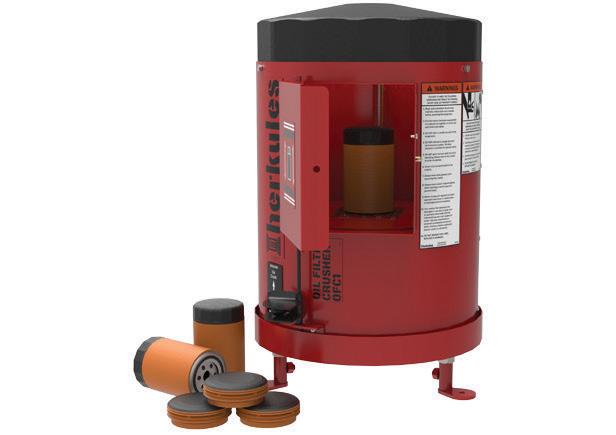
Big Compacting Power from the “Big Oil Filter”
The Herkules OFC6 Oil Filter Crusher Oil Filter Crusher reduces a used oil educes a used oil filter’s size by up filter’s size by up to 80% for easy disposal, and also disposal, and also captures used captures used oil remnants, oil remnants, simplifying simplifying recycling. recycling.

LENNY
SAUCIER
Lenny Saucier has been serving the automotive aftermarket and its future leaders since 2000. He serves as the director of retail training for Fullspeed Automotive.
LSAUCIER
@FULLSPEEDAUTOMOTIVE.COM
Lead or Lie Down
Everyday decisions form the big picture in your operation
HAVE YOU WONDERED WHY MCDONALD’S HAS signs out saying they will give the person that pushes the fry button $14 ot $15 an hour?
Then you look at a place like Target, and the average cashier makes $10.25 (according to Indeed). Why would anyone apply and work for Target for 33 percent less money when they are both entry-level positions? McDonald’s should be overwhelmed with applicants and Target should be scratching its head, crunching numbers to raise wages. The reality sets in when you go to Target and the store is stocked, clean, and the team members are smiling and ready to work. Go to McDonald’s, and they probably still have the lobby closed as they are short-staffed, the place is dirty, and the staff, well, they put a chicken patty on my Big Mac.
How can one company pay significantly less to hire and train successfully while the other hires for more and cannot get the cashier to put the cellphone down while taking your order. When you think about this, why are you using the McDonald’s pay rate as an excuse for why you cannot get or attract people? Your employees are not leaving you to go to McDonald’s. If they wanted to be there, there was nothing stopping them from applying and getting a job. Nothing.
Can’t Please Everyone I have been seeing a trend in leadership styles as frightened managers across many industries lie down and allow their team to walk over them. They feel that if they correct the employee, they will quit and go work for someone else. The manager instead picks up the slack, tries to keep everyone happy and no longer manages or leads.
How did we get here? One of the obvious factors was COVID, followed by an over-exertion of government benefits to not work. An equally big factor is that we feared not having a crew, so we set aside our skills of development, procedures, and leadership so we can work with a crew that has no will or skills to complete the job. That lack of “will” was created by the lack of leadership in the store. It was the acceptance of less execution that churned out the lack of outcome.
In all of the employee engagement surveys I have seen or hosted, I have never found one where pay is ever in the top half of the ranking when asking employees what they want out of their work environment. What they want is a steady job, a sense of accomplishment, a place to grow, and a balance in their life.
Creating an environment where no one knows what to do and the place is hectic drives off the best employees. It is like advertising a $20 oil change and complaining about your ticket average because they only want the cheapest oil change. You have set up the environment that you do not want because you feared being in that environment you now have.
Lead or Lie Down? Do you now lead, or do you lie down? You have seen what lying down has brought. Leading is the other option. I mean lead—I do not mean dictatorship, shock collars, and the infamous write-up. I mean teaching, communicating, posting expectations, and teaching them how to reach those goals. There are a million of those yard signs out there saying “now hiring,” but they came to you. You already have an advantage of keeping them at this point.
Many people are finding new careers as their old ones kicked them to the curb when times were rough last spring. You hung in there, served your customers, took care of your stores, and kept people going. Be proud of that. It was not easy.
If you can find a way to express that to your team they will get on board and continue the journey with you. It is not a celebration (and this is no time to celebrate), but showing your team effort, compassion, and vulnerability goes a long way when putting people on the bus.
Brush up on your communication skills, feedback, shadowing, and delegation techniques. If you need help, Google each one of those phrases or read some previous articles in NOLN on leadership and development tactics. Be prepared for the realization that you may lose one that does not want to be there or do anything. That is not really a bad thing. Realize that they are more influential in chasing off the good employees than you are by requiring them to pull the safety nets back in place when the service is done.
If you like the way things are going right now, ignore the article, hold your head high and your chest out and say, “That’s not me.” If not, get up and lead.
