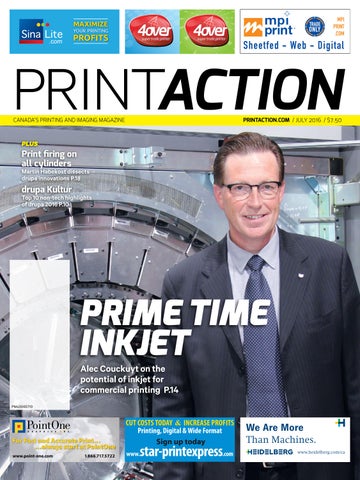
Alec Couckuyt of Canon discusses the poential for cutsheet inkjet in commerical print
18 Print firing on all cylinders
Martin Habekost of Ryerson examines both digital and offset trends at drupa 2016
24 Scenes from drupa 2016
Key issues to consider before jumping into inkjet technology for commercial printing 14 10 7 18
A pictorial report on some of the key new systems on display in Germany
DEPARTMENTS
GAMUT
5 News, People, Calendar, Dots, Installs, Globe, Archive
TECH REPORT
28 drupa debuts
Highlighting key technologies on display at drupa 2016, with special attention paid to those products and services that were unveiled at the tradeshow
MARKETPLACE
33 Industry classifieds
SPOTLIGHT
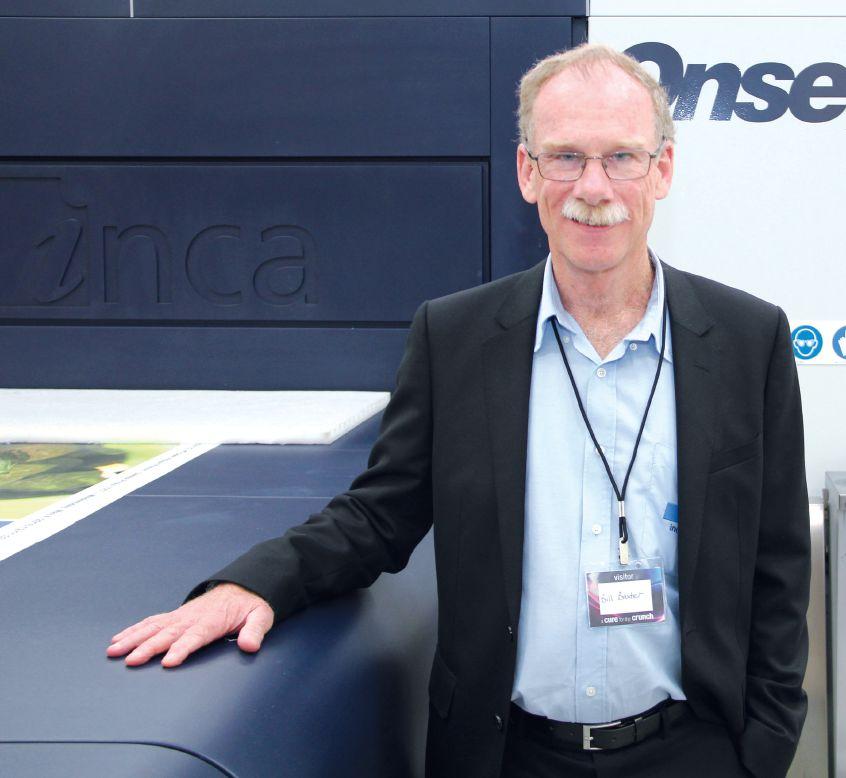
34 Q&A with Bill Baxter, Founder, Inca Digital Printers
COLUMNS
FROM THE EDITOR
4 Jon Robinson
Millennial applications
drupa 2016 was a positive exhibition for printing, even as the industry prepares for fundamental change
DEVELOPMENT
10 Victoria Gaitskell drupa Kultur
The 10 top non-tech highlights of drupa 2016, which has always been much more than a product exhibition
CHRONICLE
12 Nick Howard
A printing tipping point
Millennial applications
It is difficult to describe the most-prominent innovation category of any particular drupa given the size and scope of the exhibition, which received more than 250,000 visitors over 10 days in early June. Because the printing show runs in Germany once every four years, however, a new breed of technology will always grab a majority of the headlines, such as past exhibitions helping to usher in CTP imaging or toner presses, even the mainstream switch from letterpress to modern offset.
$93K
Average net worth per adult of Canadians aged 28 to 34, which, according to a 2016 Liberal financial report, makes Millennials the wealthiest generation of Canadians ever, by more than 30 percent when adjusted for inflation.
Inkjet technologies have received the majority of media attention over the three most-recent drupa exhibitions, including this year’s edition, largely because of its potential to institute a fundamental process change to an industrial sector still dominated by offset.
Confusion over the use of the term digital printing, in terms of whether it applies to inkjet or toner printing, has masked the fact that toner never truly challenged the widespread use of offset technologies. Inkjet, however, is a different animal all together as its format size, speed and gamut advantages are being pushed toward the prime commercial printing market.
At drupa 2016, which is the third drupa I have attended, for the first time several vendors talked about inkjet as an investment alternative to toner systems, instead of solely focusing on shifting offset pages. The rationale was not only built around format, speed and quality, but also inkjet uptime relative to toner systems. Most every printing operation would like to hold all three printing processes – offset, toner and inkjet – on their production floor, but, without access to unlimited funds, investment decisions must be made over the next several years.
A handful of vendors also put forth a suggestion that drupa 2016 should be labeled as the packaging-inkjet drupa. This may in fact prove out, based on a number of new inkjet systems that have already reached the packaging market over the past couple of years, and a handful of concept machines introduced at drupa 2016 that are being built through interesting tech partnerships between paper-transport giants (offset press makers) and print-head developers.
What I found most intriguing about drupa 2016, however, was the number of print applications being highlighted on the booths of every major vendor. At the end of the day, this highlights the pending arrival of inkjet printing in commercial printing. Unique toner and offset applications were also highlighted at drupa and printers over the past few years have purposefully invested in offset coating units and drying systems, as well as
powerful toner workflows, to push specialized work to their clients.
For a commercial printer to invest in a million-dollar-plus inkjet press, however, applications become a key driver to capitalize on relatively unknown printing costs associated with inkjet data processing, papers and inks. In other words, printers fully understand the costs of offset and toner production to a point where they can comfortably throw almost any type of suitable commercial work on these machines. Several inkjet systems can now better handle a range of work, using coated stocks, but the attention paid to printing applications signals a changing mindset in the adoption of digital-printing technologies.
Application focus also translates to building business – expanding an understood, repeatable manufacturing process – through vertical markets, defined as offering goods and services specific to an industry, trade, profession, or other group of customers with specialized needs. This does not preclude the use of offset printing by any means. Consider, for example, a printing company that might specialize in providing incredible offset work to the high-end real estate market or to Fortune 500 corporations.
If you are looking to build your business through an application focus in vertical markets, it becomes vital to research the demographics that will soon drive the Canadian economy. This relates first to realizing long-tail economics are very much in play, that you can leverage the Internet to access as much niche consumer wealth lying beyond the distribution head of any specific market.
It is also important to understand that, according to a recent Federal finance report, Canadians aged 28 to 34 are better off than any previous generation, by more than 30 percent in terms of net worth when adjusted for inflation. The early-2016 report produced by the Liberal government was accessed by Dean Beeby, a Senior Reporter with the CBC, under the Access to Information Act. This Millennial Generation, which has largely capitalized on accessing business via a matured World Wide Web (2.0 comes home to roost) will soon drive the Canadian economy – even as it creates a greater wealth divide – with their predilection for digital communications. Age demographics represent both the greatest challenges and opportunities for the future of Canadian printing.
Editor Jon Robinson jrobinson@annexweb.com 905-713-4302
Contributing writers
Zac Bolan, Wayne Collins, Peter Ebner, Victoria Gaitskell, Martin Habekost, Nick Howard, Nicole Rycroft, Abhay Sharma, Trish Witkowski
Publisher Paul Grossinger pgrossinger@annexweb.com 905-713-4387
Associate Publisher Stephen Longmire slongmire@annexweb.com 905-713-4300
Director of Soul/COO Sue Fredericks
Media Designer Lisa Zambri
Circulation Manager Barbara Adelt badelt@annexbizmedia.com
Customer Service Angie Potal apotal@annexbizmedia.com Tel: 416-510-5113
Fax: 416-510-5170
Mail: 80 Valleybrook Drive, Toronto, ON, M3B 2S9
Subscription rates
For a 1 year monthly subscription (12 issues): Canada — $40.95 Canada 2 year— $66.95 United States — CN$71.95 Other foreign — CN$140.00
Mailing address
Annex Business Media 222 Edward Street Aurora, ON, L4G 1W6 printaction.com Tel: 905-727-0077 Fax: 905-727-0017
Germany.
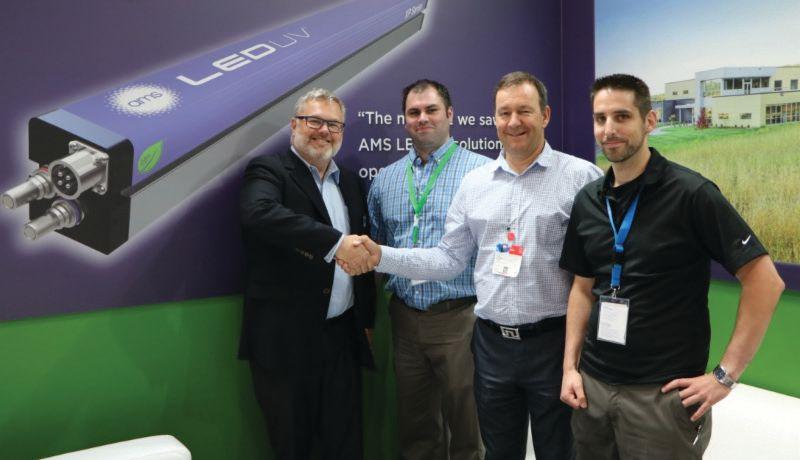
Etiquettes IML of Montreal, Quebec, is investing an LED UV system developed by Air Motion Systems to replace its existing UV technology on its roll-to-sheet press. The technology investment was overseen by Komcan Inc., which in mid-2015 became the exclusive distributor of Air Motion’s LED UV and UV curing technologies in Canada. “AMS LED UV is a perfect fit for in-mould labeling,” said Donald Canon, VP of IML. “Our main goal is to reduce the heat that is involved in the printing of our thin polypropylene film. Currently we have to run with the minimum amount of intensity to keep heat low. Removing virtually all the heat from the curing process should enable our press speeds to increase over 50 percent.”
drupa organizers, despite an earlier decision made in 2015 to hold the
Optitex is approximately US$52.8 million, which includes a US$20 million upfront cash payment, US$3 million of which was placed into escrow, and annual cash earn-out payments over three one-year periods of up to an additional US$32.8 million in total. Asaf Landau, CEO of Optitex, and the approximately 100 members of the company have joined EFI, with Landau serving as EFI Optitex’s General Manager.
world’s largest exhibition for the printing and imaging industry once every three years, drupa organizers Messe Düsseldorf announced today they are returning to the long-existing four-year cycle. drupa, which is still under way until June 10, will be held again in Düsseldorf from June 23 to July 3, 2020. Messe Düsseldorf explains it is responding to the numerous demands voiced by exhibiting industry players. The organization continued to state the re-positioning of drupa 2016, with a focus on future topics as well as the shorter duration of 11 days, have proven to be correct decisions.
Advertek Printing Inc., led by co-CEOs Joe Montalbano and Simon Spina, has purchased Smart Laser Graphics (SLG) to expand its market offerings in digital and print related services. The purchase enables Advertek to expand services around wide format and digital printing, as well as direct mail and full letter shop services.
Electronics For Imaging of Freemont, California, purchased Optitex Ltd., a developer of integrated 3D design software aimed at the textile industry’s digital transformation – for the adoption of so-called fast fashion. Privately held Optitex is to be integrated into EFI’s Productivity Software business unit. EFI explains the maximum purchase price of
Xerox, following the completion of its separation into two publicly traded companies, is naming its new Business Process Outsourcing company as Conduent Inc. As previously announced, the Document Technology company will continue to be called Xerox Corporation. With approximately US$7 billion in 2015 revenue and 96,000 employees worldwide, Xerox explains Conduent will be a Fortune 500-scale business process services company with expertise in transaction-intensive processing, analytics and automation.
profitable product, has declined by 35 percent.
Postmedia Network Inc. announced plans to close its London Free Press newspaper printing plant in London, Ontario, which will result in job loss for 135 union members. Unifor Local 87-M represents 214 employees at the London Free Press among 2,500 media workers across southern Ontario, including the Toronto Star, The Globe and Mail, and 14 Postmedia newspapers. According to a report by The Globe, Postmedia signed a deal with Metroland Media Group, owned by Toronto Star publisher Torstar Corp., to print the London Free Press starting this fall, out of Hamilton.
USPS is moving forward with a postal reform discussion draft crafted by the U.S. House Oversight and Government Reform (OGR) Committee, which is described as bipartisan. NPES President Thayer Long is lauding the efforts of the congress members behind the new reform push, noting the USPS has accumulated US$125 billion in unfunded future payment obligations, exhausted its borrowing capacity, and defaulted on five payments to the U.S. Treasury. The primary highlight in the draft, from a financial standpoint, is a new health benefits program with a proposed integration of postal retiree healthcare with Medicare. In its most recent second financial quarter, the USPS recorded a US$2 billion net loss. Somers reports, during recent testimony, Postmaster General Megan Brennan said mail volume has declined by roughly 27 percent between fiscal 2007 and 2015; First-class mail, the agency’s most
Transcontinental Inc. is divesting its assets in the province of Saskatchewan in a transaction that includes the sale of its 13 local newspapers and associated Web properties. The sale to Star News Publishing Inc., a local newspaper publisher and printer owned by Roger W. Holmes, with interests in Saskatchewan and Alberta, includes some commercial printing equipment and related book of business in Saskatchewan. The sale of the local newspapers is effective immediately as of the end of May, while the printing plant in Saskatoon will remain in operation for a transition period, after which it will close. The closure of the Saskatoon printing plant will result in the loss of approximately 30 full time positions.
Parker Pad & Printing Ltd. of Markham, ON, celebrated its 70th anniversary in June. Parker Pad is now a third-generation, familyowned and operated business, with a second location in Haliburton, Ont. Running litho and toner presses, the commercial printing operation focuses on the financial services, marketing communications and packaging industries.
hubergroup, with the relocation of its UV ink production from Lachen, Switzerland, to its primary plant in Kirchheim, Germany, has updated many of its products for the UV offset segment. Following a test phase, these upgrades have now reached full market-readiness. While the brand names of the NewV series have been retained, a new product line has been created for LED-curing products. hubergroup has also revised its ink series for conventional UV printing using standard UV mercury lamps.
Montreal’s Etiquettes IML celebrates its LED UV investment with Air Motion Systems at drupa 2016 in
Sabine Geldermann, Director of drupa 2016.
Thayer Long, President, NPES.
Guy Getch, CEO of EFI.
Ursula Burns, CEO, Xerox.
Cynthia Stoddard becomes Senior Vice President and Chief Information Officer of Adobe. She is to focus on the strategy, development and deployment of a scalable technology and business infrastructure to support Adobe’s cloud platform business, which includes Creative Cloud, Marketing Cloud and Document Cloud. Stoddard is joining the Cloud Technology organization and reports to Abhay Parasnis, Adobe’s Executive VP and CTO. She is an IT industry veteran with more than 25 years of experience in technology and software development. Most recently, Stoddard was CIO and Senior VP at data storage and management company NetApp.
sales process. He holds a Bachelor of Engineering Degree in Electrical Engineering, as well as an MBA in Executive Management from St. John’s University. He began his career in 1986 and became a U.S. Electrical Engineer for Heidelberg in 1989. Fetherman has been with Muller Martini since 1994, when he started as a Product Manager in the Press Division.
CALENDAR
August 31, 2016
Canadian Printing Awards Entry Deadline
Palais Royale, Toronto, ON
September 14, 2016 Toronto Craftsmen Golf Tournament
Royal Woodbine, Toronto, ON
September 14-16, 2016 SGIA Expo
Las Vegas Convention Center, NV
September 21
OPIA London Golf Classic Pine Knot Golf and Country Club
Ashok Vemuri is to become the Chief Executive Officer of Xerox’ new Business Process Outsourcing company, called Conduent, upon completion of the separation of Xerox into two publicly-traded entities. Vemuri joined Xerox on July 1, 2016, as CEO of Xerox Business Services LLC and an executive VP of Xerox Corporation until the separation is complete. Vemuri served as President and CEO of IGATE Corp. from September 2013 to October 2015, where he helped lead the strategic sale of the company to Capgemini. Prior to joining IGATE, Vemuri was a senior executive at Infosys where he served as a Board member, head of Americas and the global leader of Manufacturing and Engineering Services.
Heather Barrett becomes Director of Marketing for Xeikon in North America. As a senior marketing professional with over 10 years of marketing experience in the packaging and printing industries, Barrett’s expertise includes developing and managing strategic marketing campaigns and performing detailed product and market data analysis. Xeikon was recently purchased by ink manufacturing giant Flint Group.
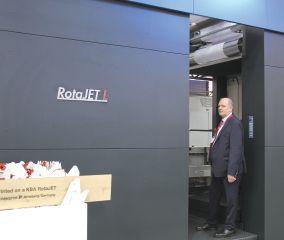
Stefan Segger in October 2016 will become the new Sales Director at KBA-Digital & Web Solutions in Würzburg, Germany, moving from his current position as General Manager of KBA Asia Pacific in Singapore. Segger takes over as head of the sales team for newspaper, commercial and digital presses at KBA’s headquarters in Würzburg. A focus of his new role will be to establish KBA’s RotaJET series in the market. He began his career in 1984 working at Albert-Frankenthal. Twelve years ago he was appointed general manager of subsidiary KBA Asia Pacific in Singapore. He later also took over the reins of KBA-Australasia. Andreas Friedrich (40) will take over Segger’s role at the helm of KBA-Asia-Pacific.
Gilad Yron becomes Executive Vice President of Global Business for Kornit Digital, succeeding Sarel Ashkenazy, who had been with the company for 13 years. Yron joins Kornit after several years with Stratasys, where he most recently served as Senior VP of Products. He has also served in several positions at Nur Macroprinters, HP and Applied Materials.
Jeffrey Shaw becomes Chief Supply Chain, Quality and Business Improvement Officer for Sun Chemical, headquartered in New Jersey. He will be responsible for optimizing Sun Chemical’s entire supply chain, from the purchase of raw materials and the scheduling of the company’s plants, to managing market-based stock levels and the shipping of finished products to customers worldwide. Shaw most recently worked as the Global VP of Integrated Supply Chain and Manufacturing at Sun Chemical since 2010. Ed Pruitt, who retired after nine years serving as Sun Chemical’s chief procurement officer.
September 23-24, 2016 Sign Expo Canada International Centre, Mississauga, ON
September 25-28, 2016 Graph Expo 2016 Orange County Center, Orlando, FL
September 27, 2016 PAC Golf Tournament Niagara-on-the-lake, ON
September 28-29, 2016 PAC Conference Niagara Falls, ON
October 18-22, 2016 All in Print China
New International Expo Center, Shanghai
October 19
OPIA, Captain of Industry Dinner, Phil Crawley, The Globe St. Georges Golf, Etobicoke, ON
November 3-4, 2016 RDG Designthinkers Sony Centre, Toronto, ON
Warren Werbitt, Founder and CEO of Pazazz Printing in Montreal, becomes a board member of IdealAlliance. The appointment, which makes Werbitt the only Canadian on the board, comes as IdealAlliance launches new brand identity – Commitment to Advance Innovation. Werbitt, who recently left his board position with Epicomm, is also a member of the Xerox World Premier Partner Advisory Board and a board member of IPN Global.
Andy Fetherman becomes Vice President of Sales and Technology for Muller Martini North America. He replaces VP of Sales, Carrington Herbert, who is retiring. In addition to overseeing and supporting Muller’s North American sales team and product specialists, Fetherman will leverage his digital knowledge across the company’s entire portfolio of finishing technologies, as well as its internal
Kevin Tuschl joins KBA North America as Regional Sales Manager for its KBA-Flexotecnica division. He will represent the Flexotecnica line of CI Flexo presses for the flexible packaging market in the eastern half of the U.S. Tuschl will be based in Georgia and will report to Mark Hischar, KBA North America CEO and president. KBA-Flexotecnica is an Italian flexographic press manufacturer specializing in presses for printing on film, paperboard and other substrates in flexible packaging.
Jeff Jacobson is to become CEO of Xerox Corporation following completion of the company’s separation into two publicaly traded entities by the end of 2016. He currently serves as President of Xerox Technology, a role he began in 2014. Jacobson joined Xerox in 2012 as President of Global Graphic Communications Operations. Prior to Xerox, he served as the President, CEO and Chairman of Presstek. The new Xerox entity accounted for US$11 billion in 2015 revenue.
November 10, 2016 Canadian Printing Awards Palais Royale, Toronto, ON
November 25, 2016 CMA Awards Show
Westin Harbour, Toronto, ON
April 6-8, 2017
Graphics Canada International Centre, Mississauga, ON
May 12-13, 2017 grafik art Montreal Place Bonaventure, Montreal, Qc
March 19-24, 2018
IPEX London, UK
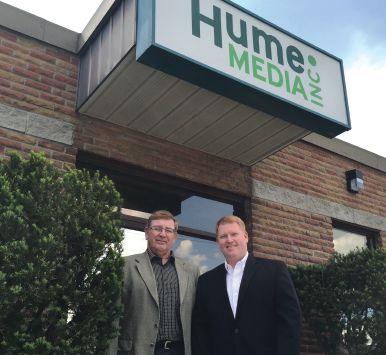
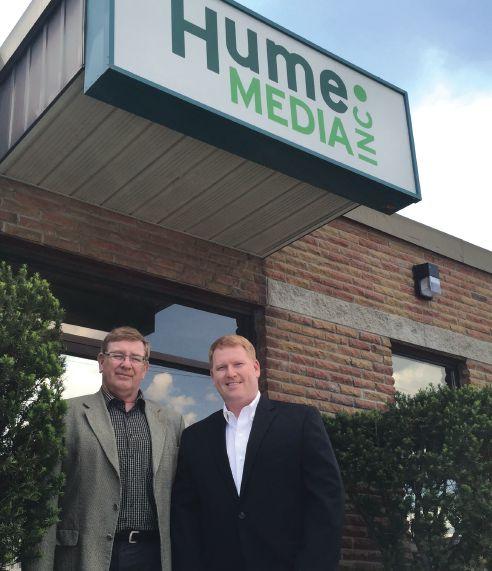
Hume Media Inc. of Toronto is the first company in the world to purchase the new cutsheet Xerox Brenva HD inkjet press. The Brenva incorporates many of the paper-path components of the Xerox iGen press line, President John Hume expects the new system will allow the company to exceed its current monthly digital colour impressions of more than one million.
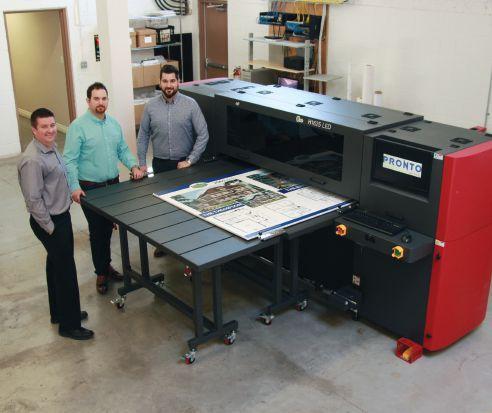
Pronto Reproductions at the beginning of 2016 added an EFI 1625H printing system, purchased through Cansel, to its plant in Mississauga, Ont. The company runs a range of printing equipment, including a Heidelberg Speedmaster CD102-6 + LX and a Xerox IGen4 EXP.
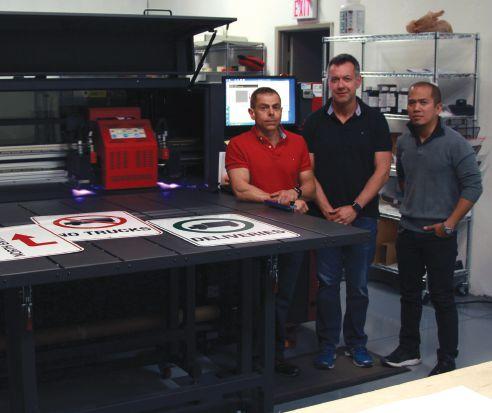
Vision Print of Mississauga has installed an EFI 1625H wide-format printing system, purchased through Cansel, in its plant in Mississauga, Ont. The 64-inch hybrid printer leverages LED imaging and a double white channel, as well as 8-level greyscale capabilities and 3M cobranded inks.
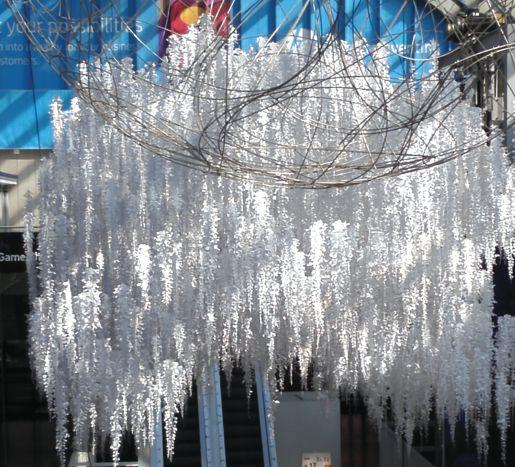
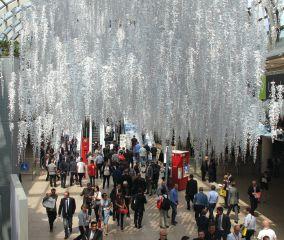
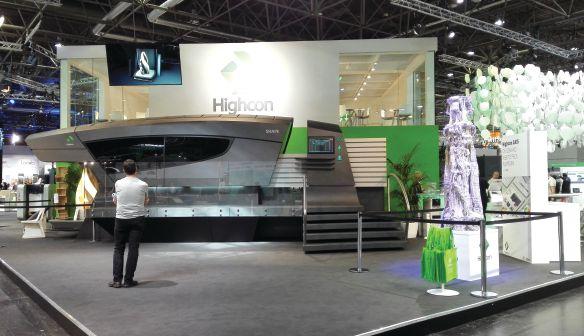
The drupa lobby display by Highcon was made out of around 20,000 flowers. Highcon explains designer Wanda Barcelona was originally about to turn the job down because it would have taken far too long to produce which would have made it impossible to charge for. However, they learned about and leveraged Highcon Euclid technology to produce the entrance display. The design took almost a year to produce, which were done using ArjoWiggins flame retardant paper called Maine M1.
Highcon Shape highlights drupa possibilities
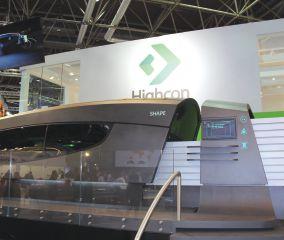
Digital finishing technology manufacturing Highcon leveraged drupa to unveil several unique technologies, including a preview of the Highcon Shape 3D machine, which uses what the Israeli company describes as Rapid Layer Manufacturing Technology. Shape is aimed at the 3D print world to introduce what the company refers to as rapid manufacturing.
The Highcon Shape, envisaged for release in drupa 2019, aims to deliver real life, large scale products from a file to reality, within minutes, using any kind of paper. Highcon explains its machine will produce products at high speeds and at costs that are unmatched by any 3D printing technology. The technology was used to produce a 3,600 layer column by Michael Hansmeyer.
During drupa 2016, Highcon showcased its unique system capabilities with several applications include the Coffee capsule box with intricate cutting to increase the unique way of presenting the capsules. In the bottom of the case, a small security code to show the capabilities of the Highcon Euclid lasers for security etching. Founded only six years ago, Highcon now has 30 machines installed in 15 countries and based on drupa 2016 expects to double its install base within months, delivering dozens of machines to new customers and into 11 new countries in Europe, Asia, Latin America and Africa. A further 100 sales proposals were issued at the show. At drupa 2016, Highcon introduced a range of machines including Highcon Beam for B1/42-in digital cutting and creasing at 5000 B1 sheets per hour; Highcon Pulse, a B2/29 in digital cutting and creasing machine with a smaller footprint; and Highcon Euclid III, a third generation digital cutting and creasing machine, as well as brand new Variable Data Cutting and 3D Modeling; and Highcon Axis Web-to-Pack platform, a 2D to 3D solution that brings the benefits of a web-to-print system.
CS Labels adds third Xeikon CX3 in UK
CS Labels has invested in its third Xeikon CX3 (Cheetah) press a little over 12 months since installing its first. “By standardizing our production facility, capturing the benefits of 30 metres per minutes to using the very latest toners, we have been able to significantly reduce our production cost,” said Simon Smith, CS Labels Managing Director. Family owned and run since 1976, CS Labels employs more than 45 people and is based in Willenhall, West Midlands, United Kingdom.
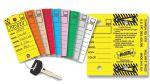
Droplet size produced on the new Agfa Jeti Mira recently installed by Versa-Tags Inc. of Cuba, Missouri, which created the original self-protecting Versa-Tag key tag for promotional, automotive, and ad specialty markets.
CS Labels was a pilot site for the new Xeikon CX3, which is one of the fastest toner label presses on the market with printing speeds of 30 metres per minute. The press is 56 percent faster than any other press in the current Xeikon portfolio. “It has enabled us to expand capacity and we can also produce different types of work… Each press is dedicated to a specific product type. We maximize production by minimizing material changes on each press,” explained Smith. “The CX 3 units enable us to concentrate production of self-adhesive labels and transfer production of our flexible stand up pouches and transfers to the other presses.”
The Xeikon Cheetah produces 1,200 x 3,600 dpi and is aimed at self-adhesive/pressure sensitive labels, using dry toners that meet FDA regulations for food contact and the ability to print opaque white toner in one pass. It also enables printing on a range of heat-sensitive substrates due to incorporation of Xeikon’s ICE toner technology which requires a much lower fusing temperature than typical toner-based presses.
$12,000
Minimum amount of savings claimed by online printer Copyworld Inc. of Northern California, based on its new RMGT 9 Series five-color sheetfed, LED-UV press, with Copyworld noting advantages like running eight-up, powered-less printing and instant LED drying.
XL 75 heading to Idaho Falls
AlphaGraphics Idaho Falls is adding a range of new Heidelberg technologies, including a Speedmaster XL 75-5+L, Stahlfolder BH 66 6/4, and Prinect workflow. “The XL 75 press will triple our productivity by allowing us to do larger format sizes and longer runs, which we currently outsource,” said Lynn Nelson, Owner of the AlphaGraphics shop.
The Speedmaster XL 75 will run alongside an existing Speedmaster SM 52 Anicolor, and comes equipped with the new Prinect Press Center XL with Intellistart 2, AutoPlate Pro, and a Preset Plus feeder and delivery. The press also includes Prinect Inpress Control, an in-line color control device for continuous monitoring and adjustment.
AlphaGraphics Idaho Falls is the second largest AlphaGraphics franchise in the United States with four locations in Idaho and Utah. After opening its doors in 2008, AlphaGraphics Idaho Falls purchased its first offset press from Heidelberg (SM 52 Anicolor) in 2012.
Uniprint runs HD
Flexo in South Africa
A full-service provider in the design, manufacture and distribution of commercial printing, Uniprint specializes in product decoration with shrink-sleeves, self-adhesive and wrap-around labels, as well as business forms. The company’s plant is based in Duran, South Africa, with a regional sales office in Johannesburg, employing more than 300 people.
The company is now employing a combination of Esko technologies, including HD Flexo, combined with Microcell screening, and Automation Engine software. “We have been using Esko’s HD Flexo since 2013, and we have noticed tremendous improvements,” said Asheen Sharatkumar, Uniprint’s Technical Repro Manager. “These include high quality image details and contrasts, highlights to zero and smooth vignettes.We are also able to achieve a broader and vibrant colour gamut and produce sharper images with minimal dot sizes.”
The company continues to push quality with recent Microcell additions. “We have now tested Microcell with UV inks, and the solid areas improved significantly,” said Sharatkumar. “We noticed a denser laydown that hides pin-hole effects. This works exceptionally well with solvent inks and achieves great solid colour laydowns.”
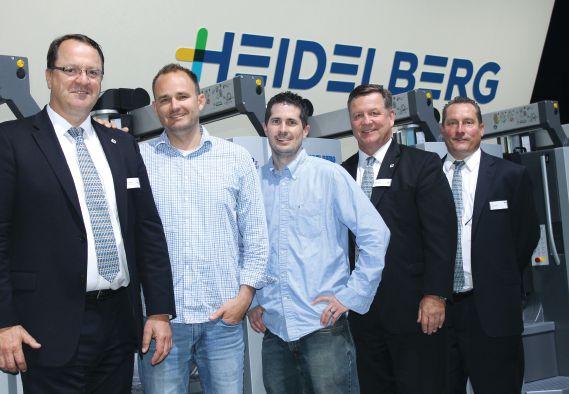
Brice Tarling of Heidelberg, Lynn Nelson, of AlphaGraphics, Walt Baker of AlphaGraphics, and Mark Carlson and Jeff Dunham of Heidelberg.
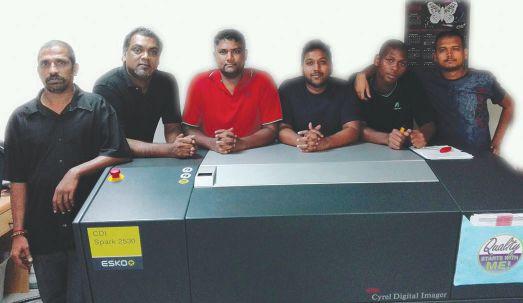
Uniprint’s production team with the Esko Cyrel imaging system, which produces 4,000 dpi HD optics.
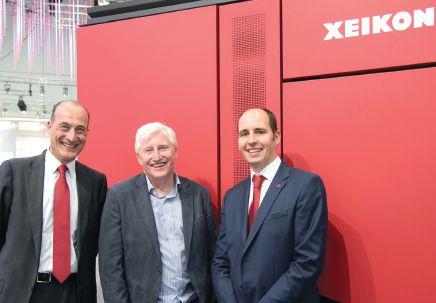
Antoine Fady, CEO of Flint Group, Simon Smith, Managing Director of CS Labels, and Wim Maes of Xeikon.
ARCHIVE
30 years ago
45 years ago
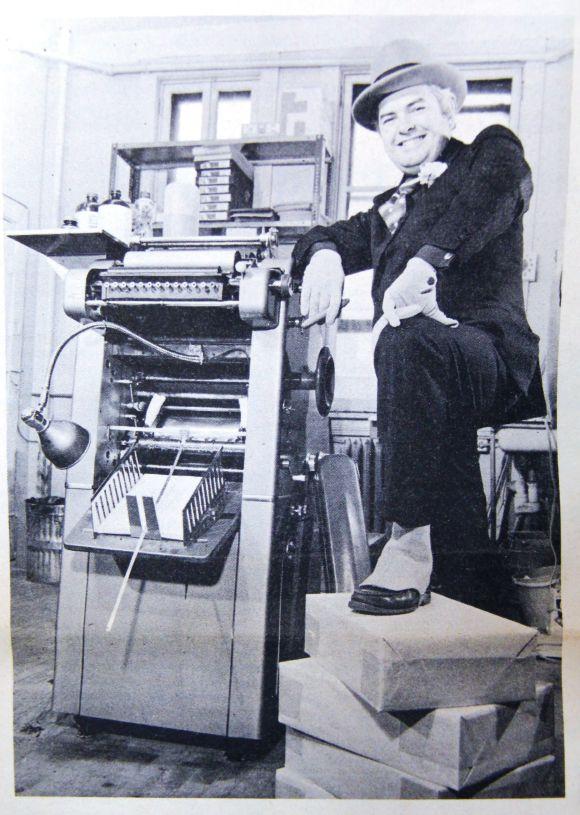
Travel along some of Winnipeg’s main thoroughfares and you can’t help but notice the billboard. There is this photo of a smiling Al Capone type, complete with white gloves, spats, white carnation, wide-brim hat and pin-stripe suit. He’s leaning on an offset duplicator with a foot propped up on a couple bundles of paper. Alongside this image of smugness, bold type proclaims: “Henry Armstrong runs things in this town.”
And run things he does. Henry Armstrong is President of Armstrong Instant Printing, one of many local firms specializing in rush printing such as letterheads, forms, statements, bulletins, and newsletters. In short the shop is capable of quickly handling any job requiring short run duplications, including four-colour process work, without sacrificing quality.
While other instant printing companies have seen their growth slow down in the past year in this city of brisk competition – Winnipeg is believed to have more printing firms per capita than any city in Canada – Armstrong has continued to climb the sales ladder. He estimates that 1971 sales will reach the 1/4-million dollar mark, an increase of more than 300 percent in four short years.
3K
For Sale (July 1991): 13 x 18-inch GT Heidelberg Windmill, $3000. Plus a Ludlow in good condition, $1000, and a Davidson Perfector.
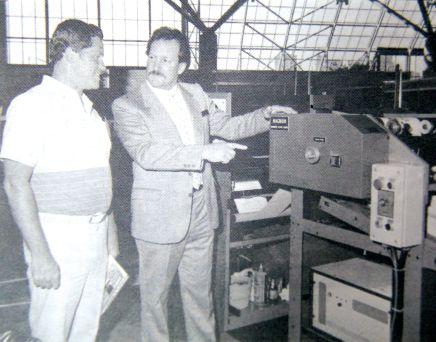
Mike Speller, President of Magnum Graphic Equipment Ltd., shows one of the company’s products for processing continuous business forms to Pete Dougherty, owner of Halton Printing Ltd. of Burlington, Ontario. Magnum Graphic demonstrated their full line of bindery products, including cutters, folders, and book binding equipment, and the Ryobi line of offset presses.
25 years ago
1K
The Hendrix Electronics Ad Taker Terminal can accommodate 1,000 ads. As they come in by phone, the operator types them onto the display screen and verifies the ad with the customer… All of the information is complete with the push of a button.
A super press more than half a football field long and six stories high has been commissioned by German printers and publishers, Druckhaus Dierichs. The behemoth, which will be used for the production of colourful newspapers and target marketing materials, is a KBA Anilox Commander. It includes four eight couple and two four couple towers comprising 40 printing couples. Six Control Consoles are used in operating the press. At recent commissioning ceremonies, emphasis was on the successful achievement of anilox inking technology for offset colour printing of newspaper products. Dr. Hans B. Bolza-Schunemann, President of Koenig & Bauer AG, claimed the press installation in Kassel, Germany, is a future example of the technological leadership of the KBA group. Bolza-Schunemann estimated that 152 anilox offset couples have been sold in the U.S. and 620 in Japan. But he said these are used almost solely for black printing.
The
KBA Anilox Commander features keyless inking.
drupa Kultur
Always more than an exhibition of products, taking a look at the Top 10 non-technical highlights of drupa
By Victoria Gaitskell
rupa, the world’s biggest and most important trade show for print and media, has operated in Düsseldorf , Germany, since 1951. Results from its latest installment, held over 10 days from 31 May to 10 June 2016, confirm the show’s continued commercial viability: Out of 260,000 visitors from 188 countries, 54 percent came with concrete plans to invest, 29 percent placed orders at the show, 30 percent plan to place orders afterwards, and fully 60 percent found new suppliers from among the show’s 1,837 exhibitors from 64 countries. Aside from the trade show’s commercial success, in its 65 years of existence, drupa has also evolved a distinctive culture and traditions which are highlighted in this article, along with some uncommon events at this year’s show.
#1 Small d
drupa’s predecessor, another German exhibition called BUGRA, was held in Leipzig from 1914 until 1949, when Germany was partitioned, Leipzig became part of East Germany, and Düsseldorf was chosen to host a new show called Internationale Messe Druck und Papier. This title was shortened first to Druck und Papier, then to DRUPA. The show premiered in 1951, when letterpress still dominated the industry. Later, in 1997, the format of the name was changed to drupa in keeping with the contemporary trend of using lowercase letters for brand names. To this day drupa still begins with a small letter d.
#2 drupacity
Because Düsseldorf is famous for its lively modern art and cultural scene, drupa organizers Messe Düsseldorf work in partnership with Destination Düsseldorf, the local tourist authority, to organize an array of drupa-themed educational, cultural, and recreational attractions in which not only international visitors but also Düsseldorf residents can participate during drupa. This year’s offerings included:
• Welcoming teams of “drupauls” and “drupaulas”, multilingual guides dressed all in red, stationed at strategic locations,
• “Wolfgang”: a Berlin-style double-decker bus converted by the GoetheLab at the nearby Technical University of Aachen into a mobile, hands-on, 8-station 3D-printing laboratory,
• 3D-printing demonstrations in shopping malls and department stores, plus a drawing contest in which winners receives the subject of their drawing as a 3D object,
• Another contest to win one of 100 3D-printed portraits,
• Mr. Lo’s Papershow, a revival of an oldtime variety act involving paper tearing,
• A fashion collection made entirely of paper by students of the Mediadesign Hochschule, and
• Other printing-themed art and photography exhibitions and lectures
#3 Safety first
The international media gave drupa 2016 unexpected attention because of two potential security threats that were both efficiently averted by local authorities. The first occurred on June 2nd, when German police arrested three Syrian nationals suspected of planning a mass-casualty attack on a busy downtown area of Düsseldorf on behalf of the terrorist organization ISIS. The men had arrived in Germany with the largely unregulated flood of migrants who have entered the country over the past two years. The arrest was prompted by information obtained from a fourth Syrian man who was arrested in Paris after giving himself up to authorities in February and confessing to the plot. It
The year of the first drupa theme song, which every four years takes on a life of its own playing across the entire fairgrounds at the opening of the show each day. The Cult of drupa Songs has its own Facebook page.
took German investigators four more months to accumulate enough evidence against the other three men to arrest them. No evidence suggests that the suspects had begun implementing their attack plans which allegedly involved aiming suicide bombings, guns, and explosives at crowds frequenting Heinrich-Heine-Allee, a main street with major public transport links and numerous bars and cafés that are popular with residents and partying tourists.
A second potential security threat occurred shortly after noon on June 7th, when a large fire broke out on the grounds of Düsseldorf ’s Exhibition Centre in hall 18, a former exhibition space recently used to house migrants. While officially the building housed 160 people, fire crews reportedly evacuated more than 250, who were subsequently moved to other accommodations. It took more than 70 firefighters to control the blaze that completely destroyed hall 18 and alarmed many nearby drupa attendees with its kilometre-high cloud of black smoke. However, drupa was unharmed by the blaze. Local news outlets reported that two migrants were arrested and up to six questioned in connection with the fire.
#4 Historical printing
Among drupa’s wonders of modern technology, the Leipzig Museum of the Printing Arts showcased some of its extensive collection of historical printing equipment and products. Its show exhibits included a letterpress machine by Koenig & Bauer (1984), a linotype machine (1965), and a toggle press (1872).
Klaus winners gather to celebrate their influence on drupa 2016.
(PHOTO COURTESY OF JAMES MATTHEWS-PAUL)
Begun as a private collection, the museum now houses about 100 working machines representing the three most important historical printing techniques-letterpress, intaglio, and planographic printing –as well as a working type foundry, 4,000 different lead and wooden typefaces, a fully equipped handcrafted book bindery, a wood engraver’s workshop (ca. 1900), music printing techniques, and a reference library of 3,500 specialist books.
#5 Celebrity legends and model presses
Another way in which drupa culture exhibits a reverence for history is in recurring celebrations by and for people with a longstanding presence at the show. One case in point is Indigo and Landa Digital Printing founder Benny Landa, who celebrated his 70th birthday with a party for over 500 guests on the night of Day 3. For the occasion, Landa chartered two planes to fly in all his employees from Israel who were not already working at drupa. Celebration highlights included viewing a “this is your life” video by Landa’s staff, outlining his childhood in Canada and his achievements of launching Indigo, Landa, and the nanographic technology his company builds today. Among Landa’s family, Landa’s wife Patsy, and the senior industry executives who paid Landa tribute was his former colleague from Indigo, Alon Bar Shany, now the general manager of HP’s Indigo division. While presenting Landa with a working tabletop model of the original Indigo E-Print digital press, PrintWeek quotes Bar Shany as saying: “Without Benny there would be no digital printing industry and no drupa because it would have died a long time ago if it had just been about offset.”
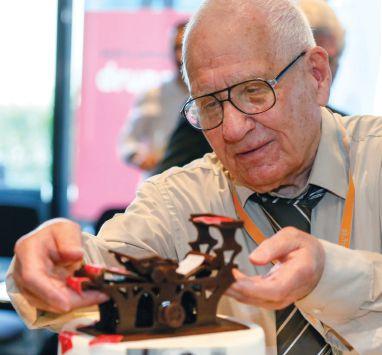
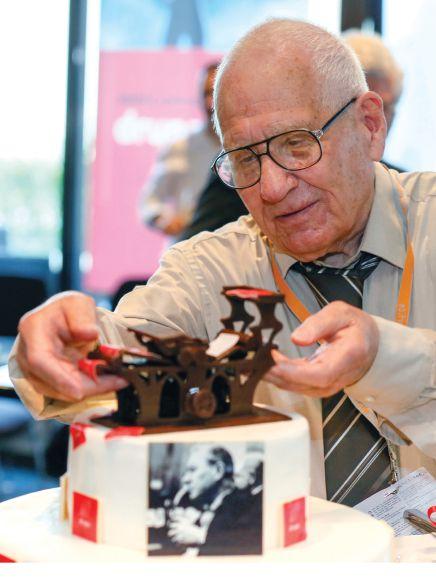
Another drupa party celebrated the 90th birthday of Russian print engineer and media designer Vladimir Alexandrovitch Tiefenbach, hailed by drupa as a living legend for having visited every single one of the 16 drupas held since 1951. The birthday cake drupa presented to him was topped with a model antique press.
A third example of a drupa industry legend is Rochester Institute of Technology professor emeritus and printing industry expert Frank Romano who described his own status: “I am now a veteran journalist.There are five of us, from US, UK, India, Italy, Germany, who have covered nine drupas or more. Number 1 had 14 drupas, I had 11, and the others had 9.”
#6 Social media smarts
In recognition of the growing prominence of social media as communication tools, drupa erected a social media booth at the north entrance of the fairgrounds, with seating and screens showing updated Twitter feeds and live video of interviews and demonstrations. Also at the booth, in exchange for a tweet including the hashtag #drupa2016, visitors and exhibitors were awarded an apple decorated with an edible impression of the same hashtag. Additionally, during the show drupa posted news updates to its own blog, as well as Twitter, Facebook, LinkedIn, and Xing accounts.
#7 Klaus
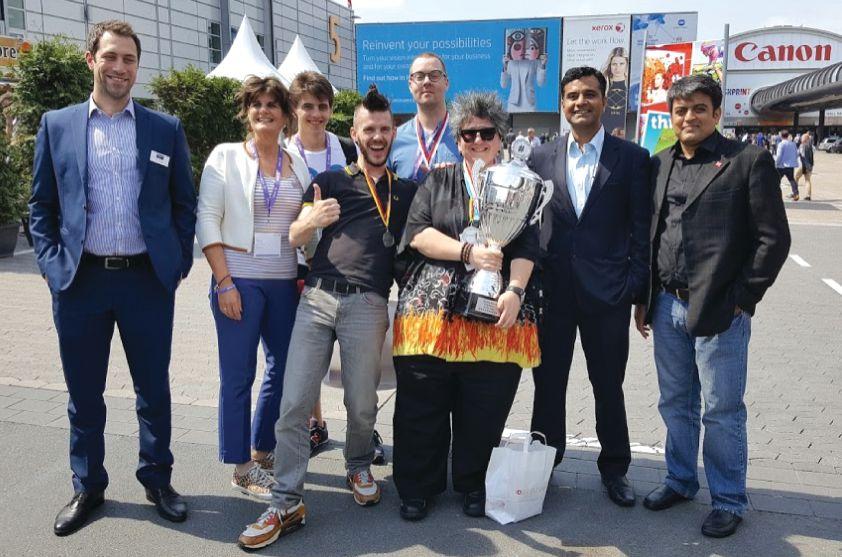
In an e-mail James Matthews-Paul of Output Magazine (U.K.) describes another of drupa 2016’s initiatives to encourage mentions on social media: “Each day, the @ drupa social media and PR team determined the ‘best contributor’ on Twitter via some combination of volume, relevance, and effort and awarded them a trophy. The first winner was [American] Deborah Corn of Print Media Centr, who collaborated with HP on #PWPPartners for PageWide. As the inaugural recipient (and mad as a box of frogs), she anthropomorphised the trophy by giving it the name Klaus.”
“Klaus was awarded at 4.30 pm every day. Companies then enjoyed the pleasure of ‘his’ company during the next day. I won on Day 7 and carried Klaus for |day 8. I took him on a trip to every one of drupa’s 19 gigantic halls! (It was generally agreed that nobody would be able to top that.)”
Corn comments by e-mail: “#Klaus became a celebrity at drupa and had many adventures with everyone who won him. The @ drupa social media and PR team were instrumental in helping create and generate #Klaus buzz. By the end of drupa, #Klaus was the third most used hashtag included with #drupa2016 (according to stats from hashtracking.com).”
Corn says until the next drupa Klaus will reside in the office of Sabine Geldermann, director of drupa, who took time out of her day to come to the #Klaus winners gathering and farewell to #Klaus on June 9th. Corn writes: “This all may seem a bit silly, but ultimately #Klaus brought together all the exhibitors in a way I have never seem before at any other event. #Klaus was the catalyst for common ground and common experience and fun because it wasn’t linked to any
products and services. He really helped us to form a global social community around #drupa2016 whether people were present physically or not.”
#8 drupa theme song
Since 1986, each drupa has had its own theme song, which is played throughout the exhibition halls every morning at opening time. Historically, the songs have varied in styles ranging from country to power ballad to techno dance. The latest 2016 version, called “drupa is in town again”, is composed and played by Düsseldorf songwriter/ pianist/music professor Dieter Falk and performed by South African soul singer Bonita Niessen. At least the last two drupa songs are available for playback on drupa’s Website. Fujifilm’s Mark Stephenson has also created a Facebook page, The Cult of drupa Songs (www.facebook.com/drupasongs) in recognition of the show’s musical tradition.
#9 drupa food
Besides the #drupa2016 apples mentioned above and the fine cuisine of Düsseldorf and Germany in general, drupa offered attendees a selection of special show-themed foods. This year’s delicacies included druPRINTen, cookies modeled on the traditional imprinted spice biscuits called printen which originated in Aachen. The updated version of this gingerbread-like sweet, created for drupa by the local baker’s guild, featured place logos
for decoration and was handed out gratis at a venues including the airport, hotels, and 100 bakeries. Other gastronomic attractions included “drupabases” serving daily tastings, welcome cocktails, or such free snacks as Altbier ice cream, made from Düsseldorf ’s own unique variety of beer, as well as restaurant vouchers and discounts for drupa attendees.
#10 Four-year cycle
In February 2015, drupa announced its organizing committee’s decision to hold the trade show every three years after 2016 (instead of every four years) in order to update visitors on new technology more frequently. Visitors said they preferred the shorter cycle. The change also offered the extra advantage of reducing stress on drupa’s exhibitors who specialize in package printing, since it meant that drupa would not run in 2020, the year scheduled for the leading packaging and process-industry trade show interpack.
Historically, in 2012 the committee vetoed a similar proposal to change drupa to a three-year cycle after receiving significant objections from drupa’s major exhibitors. And as it turned out this year, once again, in response to the demands of exhibitors at drupa 2016, the committee opted to stick with its four-year cycle in the interest of drupa’s customers and international markets. The next drupa has been scheduled from June 23 to July 3, 2020.
Celebrating the 90th birthday of Russian print engineer and media designer Vladimir Alexandrovitch Tiefenbach, hailed by drupa as a living legend for having visited every single one of the 16 drupas held since 1951.
A printing tipping point
Has the 40-inch inkjet press arrived for commercial printing and what you should consider before jumping in
By Nick
Howard
drupa once again pushed the industry to become abuzz with chatter about the imminent arrival of 40-inch (B1-size) inkjet-driven printing presses. The inevitable is happening and, as with all new technology, the upcoming years will see a lot of it filling metal recyclers yards. But the sales pitch made by the digital printing community makes so much sense. Easier printing processes and lesser skills demand our attention.
Certainly newer machines will be expensive, but the new platforms and their manufacturers will play a card that is hard to argue with. That is costs per click, inch, sheet – or whatever they consider as their way of measuring cost.The story is simple: No more expensive plates, no more pre-imaging, no water and associated costs to maintain recirculation systems. No wasted ink, no make-ready, and almost no skill required.
Add these obvious benefits to the current market, and with an ability to vary data from one sheet to another, the new digital offerings will be impossible to ignore. Run lengths continue to fall across the printing world. It’s all about shorter runs and more of them. Had it not been about run lengths then all the arguments are lost – at least for the near future.
Offset and inkjet
There is simply no future in the conventional offset press building business. The tipping point has been reached. All of the press builders know this and are taking steps to start something new. Even supplier companies can see the road-closed sign. Flint Group is the most recent example with its 2015 purchase of Xeikon.Whether it’s a consumables company like Flint or a mature manufacturer like Komori, the race is on to recalibrate what machines we use and what new supplies we will need.
Benny Landa is the acknowledged pied piper for digital. It was Landa who in 1993 brought the Indigo liquid toner process to
life. A long tough battle ensued as the Indigo was refined and our industry started to accept it. Like Ma Bell and its once virtual monopoly, the traditional offset builders assumed that a lesser quality machine was not needed and they continued to incrementally modernize the offset printing press as far as it could go. Balancing all sorts of variables such as water, inks, rubber rollers, register is what offset is about. I think we have come to the end of what can be done with a process that’s been around for 112 years.
Not many printers are buying new offset presses anymore. Those who have are buying presses configured for quick drying (LED) or for what is left of longer runs (carton). Even though the used press market is still buoyant, the presses that are being sold are late model and fewer of these come to market each month.
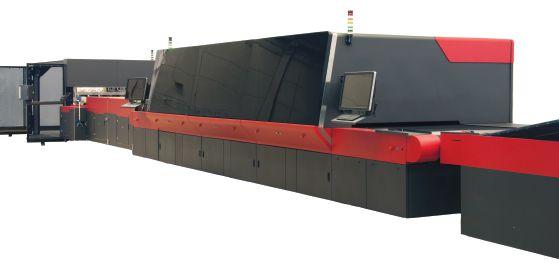
Heidelberg/Fujifilm, Landa/Komori and possibly one or two surprises, will be showcasing their first attempts at a 28 x 40 inch digital machine. The processes are very different. Heidelberg’s PrimeFire 106 is based on Fujifilm’s inkjet expertise and Heidelberg’s press building skills. Using Fujifilm’s MEMS print heads, which have already been proven on the Jet Press 720, will lead the piezoelectric efforts.
Landa has taken a completely different approach. Landa realized, that unless a few obstacles could be overcome, the digital revolution would not happen. Speeds are an obvious issue. What has been shown so far from all vendors is slow.
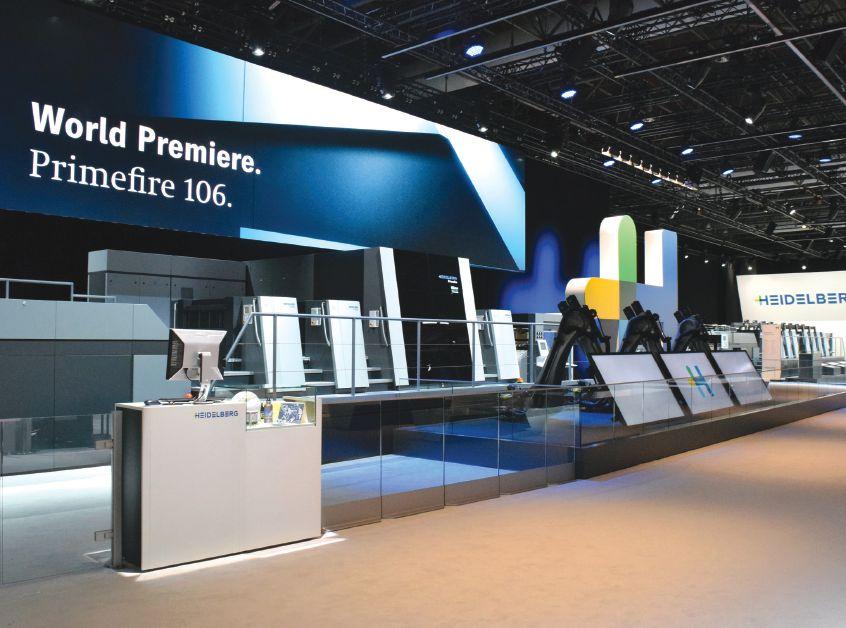
Heidelberg has been open about its use of Fujifilm’s print-head technology on its new PrimeFire 106 inkjet printing system, which debuted at drupa.
8 tonnes
Amount of ink that an average print head can release for print if operating continuously for one year, according to inkjet manufacturer Xennia.
1 billion
Amount of ink droplets ejected from a print head that could ultimately fit into a single teaspoon, according to inkjet manufacturer Xennia.
This just magnifies when we now talk about 40-inch cutsheet systems. The second major hurdle is quality.
Dropping 40-inch ink
How can droplets of ink not saturate a medium and how can we use any type of substrate we want without need to precoat or pre-condition it? Landa’s use of a transfer belt, which in essence acts like an offset blanket, is part of its secret. Nano inks, with minuscule pigments is another ingredient. Finally teaming with a quality offset press builder such as Komori means the base feeder to delivery transfer is assured. Landa has been touting his concept since drupa 2012. A lot has changed since including a complete redesign of his presses. Komori on the other hand has embarked into several digital partnerships. The Konica/Minolta/Komori Impremia series has yet to be delivered but that too is promised soon.
So many joint ventures are taking place. Things that I would never have imagined are happening right now. Put it this way: if you are an offset manufacturer and you are not in the digital business there is a very good chance you won’t be in any business for long.
With all that being said, we have Kodak. Running an essentially annuity type company since the Brownie camera was developed, Kodak seemed to never get a grip on where the future would go. First it was its colour copier foray with re-branded Canon analogue copiers. The attempt to
replicate its Rochester neighbour Xerox failed.
Next the tie-up with Heidelberg in building the NexPress. Heidelberg spent hundreds of millions and probably lost it all when they bailed in 2004. Finally its Kodak’s Prosper concept was supposed to be the saviour. Years in development, it has seen at best luke-warm results. The Prosper division is now up for sale. Kodak’s last 20 years are testament to how radical changes in technology make winners and losers.
Benny Landa has a captivating story for you. It makes sense and he will not wish you to focus on the cost of his equipment, but the cost savings and benefits of leaving giant heavy offset machines for good. Ironically, Landa and Heidelberg will both remain “heavy” since they wisely are using offset’s base machinery. Landa’s argument is also every other digital manufacturer’s too. After the dust settles, production inkjet will be a constantly updating tech sector, totally dependent on manufacturers for every consumable and service needed after the machine arrives. As such, some machines won’t make it and it’s important for you to make wise choices.
Pressroom considerations
So how does one who finds themselves in a losing battle over price with the Web-to-print sector, make a wise investment decision?
It probably doesn’t matter what type of digital ends up getting the lion’s share of business. Or in the case of Landa and Heidelberg, which paper transport system is the best. They both will be using tried and true technology borrowed from offset. Ask how scalable the digital technology will be. Can these platforms be upgraded easily? Will you be able to afford the constant upgrades that will surely come in the future?
What are the cost of service contracts? Are they priced per click like Xerox and so many other tonerbased suppliers or do you purchase
a contract? Costs of consumables are key. HP does not care if you have 100 or five percent ink coverage. The company bases its ink costs on sheets or clicks. But you must buy from HP and going forward you most likely must buy all your inks and other supplies from the manufacturer. Unlike offset, you have no choice and will be handcuffed to whichever company you decide on.
Does the supplier guarantee print quality levels? Your run lengths are changing. More jobs, different effects, use of a wider spectrum of colour. Will the press allow you to differentiate your work and also run a wider variety of substrates and without any conditioning (straight out of a carton)?
You are moving from an offset press environment where you always considered machinery retention of a reasonable financial return when you sell it. Digital is quite different. Somewhat like moving your purchase from the asset side of the ledger to expenses.This means it’s all about what you earn from your machine. Anyone owning a toner press today knows what I mean. There is almost $0 value in the hardware after four years, so you must think about how the technology per sheet will grow your business.
Monumental changes in technology are nothing new today.The print industry is about to enter a new phase and with it some exciting new possibilities to enhance your profit picture. If you still need convincing, I suggest you take a moment to check what Israeli company Highcon is doing. Its latest digital die cutting machine called Beam is about to be unleashed. Digital technologies are still poised to be game changers.
NICK HOWARD, a partner in Howard Graphic Equipment and Howard Iron Works, is a printing historian, consultant and Certified Appraiser of capital equipment. nick@howardgraphicequipment.com
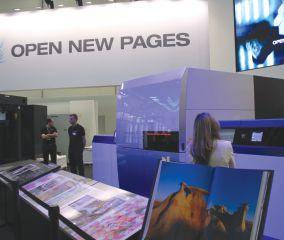
Xerox highlighted its new cutsheet Brenva HD inkjet system at drupa 2016.
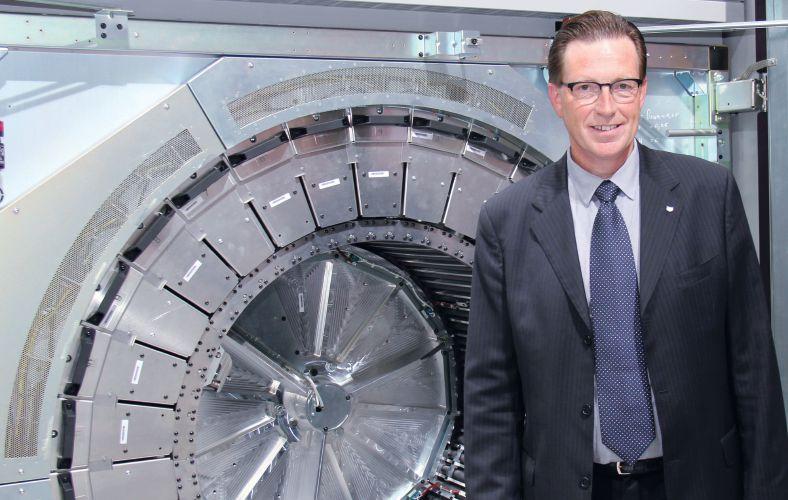
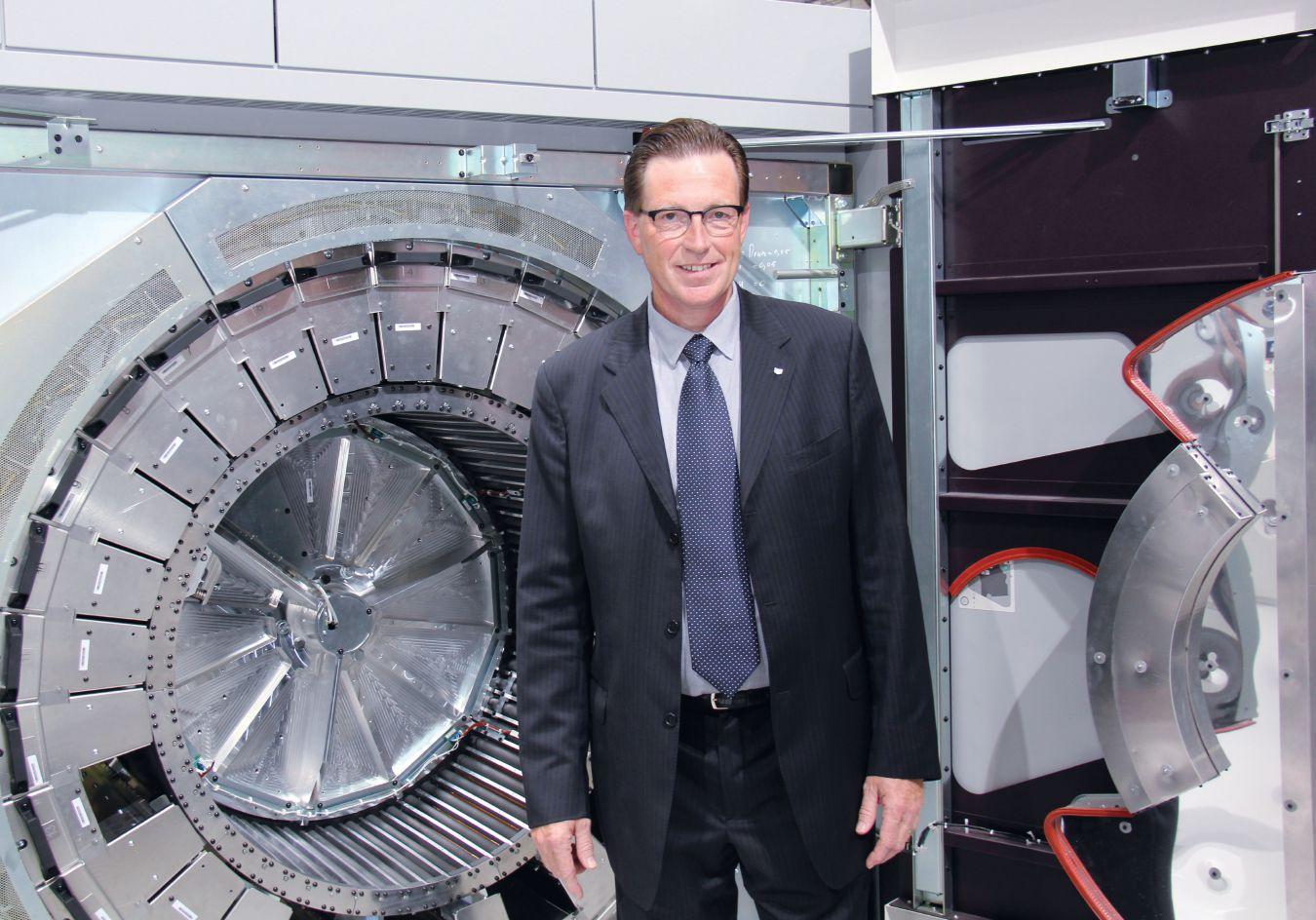
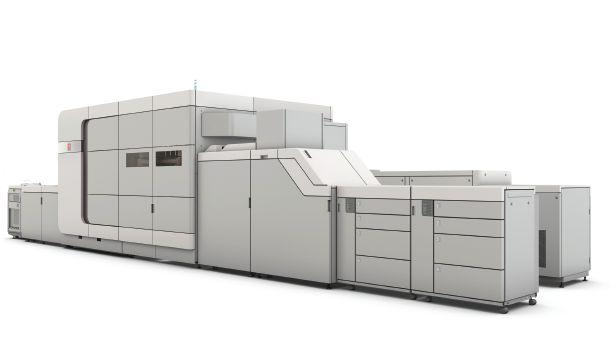
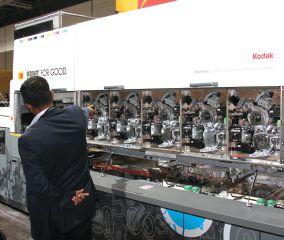
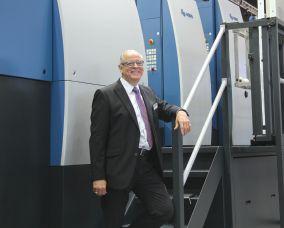
Canon Canada’s Alec Couckuyt, Senior Director of Professional Printing Solutions Group, in front of the unique drying system used in the Oce VarioPrint i300.
PRIME TIME INKJET
After a decade of intense research and development, supported by unprecedented technology partnerships, is production-strength inkjet finally ready to disrupt commercial printing
By Jon Robinson
The continued growth of inkjet printing systems was once again the major force at drupa, eight years removed from the cutting-edge system introductions of Fujifilm’s cutsheet Jet Press 720 and HP’s PageWide web press platform, which presented new possibilities to a sector largely dominated by the continuous-feed systems of Océ and Ricoh. At drupa 2012, another range of primarily concept production-inkjet machines were introduced by powerful players like KBA, Komori, Konica Minolta, Landa, Miyakoshi and Xerox.
At drupa 2016, all of these companies and many more had expanded their production-inkjet platforms with serious new players like EFI and Heidelberg joining the mix, setting sights on the packaging world. Several new technology partnerships be-
tween paper-transport experts (offset press makers) and print-head developers speak to a concerted effort to drive inkjet into the mainstream.
The past decade of inkjet R&D investment alone, collectively stretching into the tens of billions of dollars, by so many prominent technology suppliers rings the loudest chorus of reality – inkjet is building a new foundation for the future of printing. Still, the question remains with most printing companies for when inkjet systems, even with an ability to match 40-inch format size (unlike toner’s electrophotographic drum), will be ready for prime time in the commercial printing market. Key issues like quality and speed, press and consumable costs, have been a major challenge for the mass adoption of inkjet, even as this fascinating printing process has been disrupting pockets of publishing, transactional and direct-mail printing.
Looking good on paper matters. ColorLok® Technology gives paper more vivid colors, bolder blacks, and faster drying times.* Learn more at colorlok.com VIVID COLORS BOLDER BLACKS FASTER DRYING
Domtar EarthChoice® Office Paper is a great-looking, everyday paper that represents your commitment to environmental responsibility. Featuring ColorLok ® Technology, it is designed to provide optimal printing results. To learn more visit www.egpaper.com or domtar.com.
1M RPM
While a high-performance engine oil has to cope with up to 6,000 rotations per minute (rpm), an inkjet fluid has to cope with the equivalent of over 1,000,000 rpm.
Commercial print influence
Alec Couckuyt is one of Canada’s most-experienced printing leaders in the field of digital printing. Twenty years ago, serving as Vice President of Direct Marketing at Transcontinental’s innovative Yorkville plant, Couckuyt was driving variable data to Xeikon’s Chromapress to produce personalized automobile booklets. Building files from VIN numbers, the facility printed cover forms featuring specific car models and colours, while also applying variable text and dealership locations, to entice customers into a new rig before their leases ran out.
2Canon scientists determined a sheet needs to travel two seconds to dry properly within the company’s VarioPrint i300.
“We were forerunners at that time, but it was far from being fast enough and you had to be in a highly controlled environment,” recalls Couckuyt, who was also integrating inkjet print heads on web presses at Yorkville. “Twenty years later, look at how far we have come… you can feed [an inkjet press] with so much data and the output is so cost efficient.The sky is the limit and this is an exciting time.”
Near the back of Canon’s drupa 2016 booth, the company ran a new web-fed ImageStream inkjet press, which is a class of technology Couckuyt feels some commercial printers will look at depending on their needs. “It is the same technology,” he says, relating the VarioPrint i300 to the ImageStream platform. “You are using 1,200 x 1200 native inkjet heads, combined with smaller droplets, different types of inks, coated stocks, proper drying systems, and now you are playing into the commercial printing field.”
360K
A single print head nozzle can eject around 360,000 droplets per minute.
Prior to his digital-printing work with Yorkville, Couckuyt began his career in 1983 as a Product Manager for Agfa Canada, ultimately serving as the company’s Vice President of Graphics Arts Systems for 10 years until joining Transcontinental in 1996. Today, as Senior Director of Canon Canada’s Professional Printing Solutions Group, he holds a unique knowledge set to describe the adoption of production-inkjet systems in Canadian commercial printing.
“We are targeting commercial printers right now with the experience that we have acquired in the transaction market, combined with the quality levels that inkjet has reached, when you talk about the VarioPrint i300 and the ImageStream, as well as the capabilities of printing on coated offset stock,” says Couckuyt. He joined Océ in 2008, as Vice President of Production Printing Systems, shortly before the company (purchased by Canon in 2012 for approximately $1 billion) installed one of Canada’s first web-fed production inkjet systems.
Web-fed inkjet, traditionally referred to as continuous-feed systems, has a significant existing install base because its paper transport naturally runs substrates much cleaner through the imaging system, whereas a turned-up ear can easily jam a cutsheet press. This cutsheet inkjet challenge is being addressed, however, as offset press makers become heavily involved with inkjet development. Despite the experience advantages of web-fed systems, Couckuyt points to the business realities of Canadian commercial printing, which for decades has been built around cutsheet workflow. “It would only be a logical step to also add an inkjet cutsheet device,” he says. “Basically, it offers quite a bit of additional application opportunities to the commercial printer.”
Downtime becomes uptime
“When you run an offset press, you are always making sure that you have the least downtime possible, which must be minuscule when you look at your total production time,” says Couckuyt. “In digital printing, people talk about uptime – just the opposite. If they had 50 to 60 percent uptime [on toner] they were happy, but that doesn’t cut it for an offset printer.”
Couckuyt explains this unique drying system is critical because operators do not need to slow down the i300 when applying heavy ink coverage. “It is actually a production machine and it is built in such a way that even if you have high coverage you will not slow down the press,” he says. To further improve uptime, the i300 employs a Sentry Unit that ejects wavy, earmarked or unwanted papers, again at speed, before first entering the imaging system. “A jam in digital printing on a cutsheet device is always your biggest nightmare.”
Quality applications
Commercially released more than a year ago, there were 42 i300 systems installed globally before the opening of drupa 2016, which actually marked the system’s availability in the Canadian market. A key new feature of the i300 introduced at drupa is called ColorGrip, which applies a primer specifically where expensive inkjet ink needs to go, instead of blanketing the sheet.
A critical goal for all inkjet system developers, particularly for commercial printing adoption, is to improve their inks to a level that can more easily adhere to both coated and uncoated papers without the need for applying a primer. This will take time, but systems like ColorGrip, which actually immobilizes the ink to stop it from convalescing into big, ugly dots, are providing a vastly superior level of quality output than older generation inkjet systems. “ColorGrip keeps the right colour in the right position,” says Couckuyt, “so you are basically extenuating and giving more pop to your colour –Even a good sheet, you make a lot better.”
Canon’s cutsheet VarioPrint i300 had more than 42 installs by drupa 2016.
“We have more than eight years of experience with a similar technology that has evolved to a point where it is now ready for prime time in commercial printing,” he says. “You always have to take into account the volume, the production capabilities of equipment, and I think there is bigger potential for cutsheet inkjet devices in the Canadian market, more so than continuous-feed inkjet.”
Canon’s cutsheet VarioPrint i300 system is promoted as having an uptime of more than 90 percent, often approaching 95 percent: “Now you are talking about a production machine – in addition to the quality and capabilities of printing on multiple papers – that fits right into the offset world,” says Couckuyt. “Those factors are extremely critical and the reasons why we believe it is ready for the commercial printer.”
To improve cutsheet inkjet uptime, for example, the VarioPrint i300 is a self-contained system, meaning it is temperature and humidity controlled, and all external elements have been eliminated (a noticeable trait looking at the body of the machine). Even the input trays of the i300 are sealed for temperature control. The unit has to be decompressed when opening up its doors. With its doors open, the first thing you notice about the i300 is a massive drying system. Canon engineers ultimately surmised a sheet needed to travel in the drying system for two seconds at full running speed to properly condition the paper – hitting it with infrared, conventional heat and air systems – before reentering the duplex imaging system.
One of the greatest advantages of digitized sheetfed offset presses, and why the technology remains core to the vast majority of printers, is application flexibility – an ability to throw almost any commercial print job at it, regardless of ink coverage, stock or format. For a printer to invest more than a $1 million into an inkjet press, even if today’s systems can handle a greater range of work, it becomes critical to understand the production cost of specific applications.
“With the VarioPrint i300, where it becomes viable for a commercial printer to enter into that field, you are looking at a million and up impressions per month – all the way up to 10 million,” says Couckuyt, explaining a typical web-fed system requires at least five million impressions to become a viable investment.
“We spend an extreme amount of time with the customer before a sale takes place,” says Couckuyt. Canon will run a job file from a printer’s existing offset infrastructure at its Océ facility in Boca Raton, Florida. “We will make a complete analysis of the files, ink consumption, press time, everything, so that the client really knows in advance what they are embarking on.”
Now you have the power to improve your bottom line with proven ecologically friendly inks and coatings. That’s because Sun Chemical uses a data-driven approach that provides more transparency through continuous monitoring and reporting. See how better data can help your bottom line roll with our 2015 Sustainability Report
Request your copy of the 2015 Sustainability Report at www.sunchemical.com/sustainability or call
PRINT FIRING ON ALL CYLINDERS
After spending three days in Düsseldorf, the positive vibe and innovation displayed at drupa 2016 illustrates print is far from dead, even if how and when it will be produced is changing significantly
By Martin Habekost
This year I had the privilege to attend the drupa tradeshow again. I was in good company with seven students from the Graphic Communications Management program at Ryerson University and six of my colleagues. We spent three days at drupa exploring the trade show.
First of all, I would like to say that the whole show carried a very positive and energetic vibe. It was like a fest, almost a party, compared to the sombre tone from 2012. The halls were bustling with people from more than 188 different countries. Many pieces of equipment carried a Sold to... sign. I see this as a positive trend towards the future of the printing industry. Companies are investing again to modernize their equipment and add new services.
Yes, the hype of the show was HP, which
had hall 17 completely to itself, as well as Landa, Kodak and Highcon. There were many exhibits in regards to 3D printing, functional printing and so on, but the majority of exhibitors were focused on supporting existing businesses and their needs from new inks to better knifes for a cutter.The paper manufacturers had a hall to themselves to show off many new products.What I also liked was the hustling and bustling in hall 1, occupied by Heidelberg. Overall, 260,000 visitors visited the 1,837 exhibitors who themselves came from 54 different countries. These numbers are little bit less than statistics from drupa 2012, but, as I said before, the spirit was quite positive throughout the show. Messe Düsseldorf states 54 percent of the visitors came to drupa with concrete investment intentions and 29 percent placed orders and another 30 percent plan to place orders after drupa.
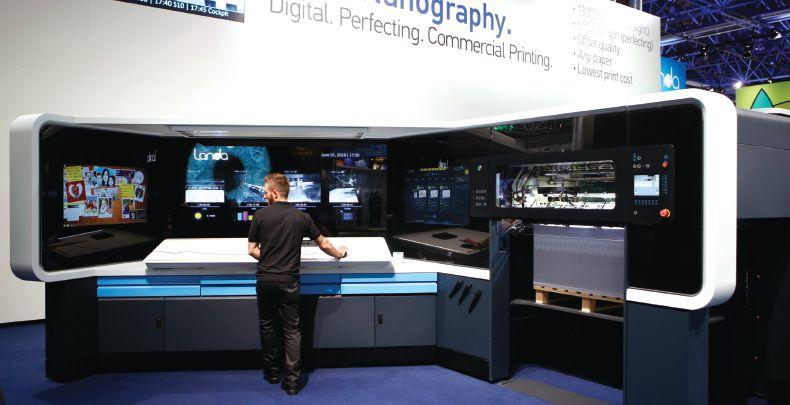
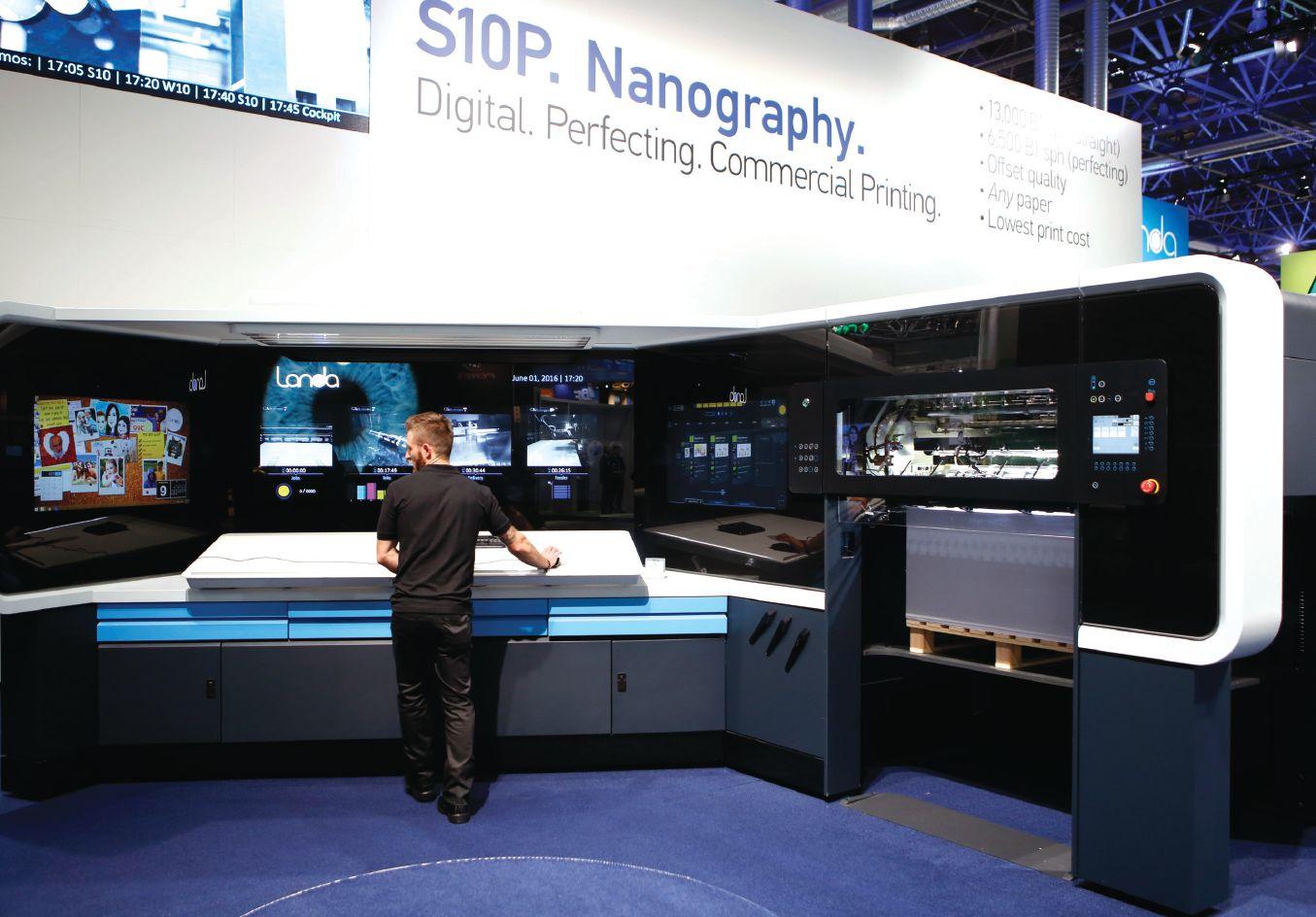
The operating console of the Landa S10P printing system provides real-time views of the inkjet printing process for press operators.
Océ VarioPrint® i300
A highly innovative, high volume colour inkjet sheet fed press that combines the proven inkjet advantages of high productivity with cut sheet versatility and media flexibility.
Océ ColorStream® 3000 Z Océ ImageStream® Series
A highly flexible and versatile inkjet full colour web press for the efficient production of mail, publishing, and commercial applications with speeds from 246-417 feet/minute.
The Océ ImageStream is a high-speed, high quality inkjet web press for commercial print applications on inkjet and offset coated and uncoated media.
Canon’s newest line of full colour, digital inkjet presses proves that digital no longer means comprise but instead means saying “yes” to any of your customer’s requests. Our complete end-to-end solutions arm print providers with endless application possibilities to drive their business forward.
Backed by a team of dedicated specialists, we provide the support you need to overcome challenges, exceed expectations, pioneer solutions, and push the boundaries of print.
260K
Number of visitors over the 10 days of drupa 2016, who came from 188 countries, in addition to 1,837 exhibitors who came from 54 different countries.
Digital print trends
Although previous drupa trade shows have been labelled as the digital drupa, this 2016 version was for sure the digital drupa. Benny Landa’s famous saying “Anything than can be printed digital, will be printed digital” was clearly on display at the show. The speed of digital presses using inkjet technology is continuing to increase and the print resolution is also getting better. Sometimes you really have to look closely (with a magnifying glass) to see the difference. Also more and more special inks are being developed for digital printing presses, which used to be available only in offset or flexo ink sets.
Kodak showed interesting new inkjet technology with the introduction of its Ultrastream platform, which was incorporated into its Prosper 6000C press.
Landa, meanwhile, stated it will finally ship machines after the show to a number of beta customers.
Automation is still a big topic by all accounts. Due to the increasing number of short run jobs, the changeover between print jobs has to be as quick as possible.
cess, from low resolution, for position only, up to full editing rights. The important DAM trend is that the original image does not get edited, it is always a copy that is being modified. The DAM systems can also be searched to see which image was used for which product or campaign.
Percentage of surveyed visitors who came to drupa with concrete investment intentions and 29% placed orders and another 30% plan to place orders after drupa. 54%
Expanded gamut printing is not only a trend for digital printing, it also for conventional printing. Expanded gamut printing uses CMYK plus OGV (Orange, green and violet, sometimes also called blue), to cover up to 95 percent of the Pantone book. Using expanded gamut printing eliminates wash-up or ink changing between press run. Digital presses and conventional presses were shown at drupa that used this technology during live demonstrations and the changeover time was a few minutes for new plates or plate cylinders before the next print job started printing.
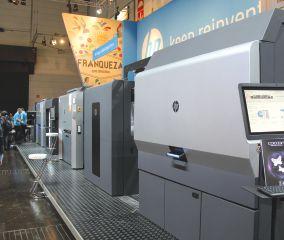
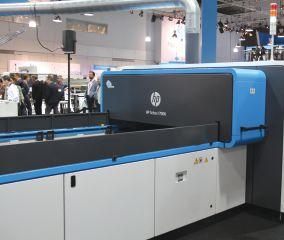
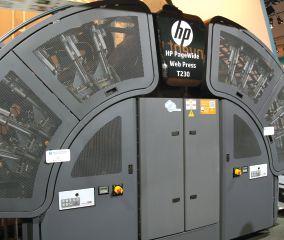
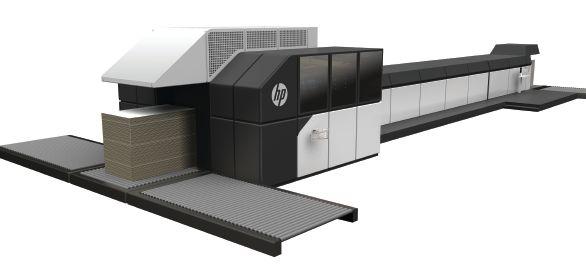
A clear indication of the changing print industry was that HP had hall 17 completely to itself. In 2008 HP had a relatively small booth in a hall. In 2012, the company occupied half of a hall, and it was one of the busiest booths at that show. In 2016, HP was the largest exhibitor at drupa 2016 with its hall measuring 6,200 square metres. It would be possible to write a complete article on all of the things HP showed in hall 17, but I am focusing on just a few items that sparked my interest. The first item is the HP T490 HD PageWide inkjet web press. It can run webs from 16 to 42 inches wide. The press can run in two modes, called performance and quality mode. In quality mode, the press runs at 500 feet per minute and at 1,000 feet per minute in performance mode. I asked a representative from HP what the amortization period for such a press would be and received the answer of 20 years. It was pointed out to me that the press is field upgradable in regards to the inkjet heads and also in regards to the digital front end (DFE). I also asked about ink costs. Although the inks costs are twice as much as offset inks, there are no costs for plates, make-ready or wash-up.
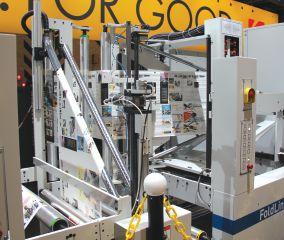
The web speed can reach up to 500 feet per minute and is limited to 150 feet per minute for vinyls and plastics.The inks are safe for indirect food contact. Due to the high printing speed of the Propser 6000C inkjet press, the roll unwind is handled by a MEGTEC roll stand and the in-line folding operation is done by a manroland websystems’ Foldline technology.
The new NexPress zx3900 has five printing units and can print white ink and MICR ink. The operator also has the option to change the fusion roller to achieve a different gloss on the printed material. This press can be equipped with a fusion roller for a glossy finish or a matte finish, without changing the toner.
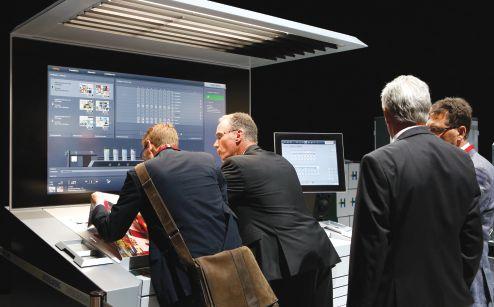
Heidelberg’s new Prinect Press Center XL 2 console, key to its new Push to Stop operating concept.
Pantone just released a book that shows the Pantone colours and how they can be achieved using expanded gamut printing. Just think of it as the Pantone Bridge book, but instead of four colours, seven colours are being used. I also saw quite a number of vendors showing MIS technology. One would think that this is somewhat of an old hat, but there still seems to be quite a need for it. Another important item seems to be Digital Asset Management (DAM) systems. Local and cloud-based solutions were shown. I found it interesting that each user can have different levels of ac-
HP prides itself in the fact that the T-series machines are made from solid metal, even the small gears, and therefore built to last. HP is also experimenting with different kind of inks that used to be only available for conventional print processes. The company is experimenting with colour-shifting and glitter inks, fluorescents, spot gloss, adhesive, thermochromic ink, silver ink and also with digital lenticular ink. In order to show off the versatility of the inks, HP displayed a board with print samples produced on coated paper, compressed cardboard, synthetic paper, SBS, fluted PP, foam PVC, PE film, Acrylic and Polyester film.
HP’s 3D printer is set to mix-up the 3D print market. The difference to most current models is that it does not matter if one copy or 10 copies of the same item are made, as long as they fit on the table inside the device. HP leverages Jet Fusion technology that uses bonding and fusing agents that are applied separately after the material has been deposited. Another unique feature of the 3D system is its ability to print in colour.
Kodak, as mentioned, introduced its Prosper 6000C inkjet press with Ultrastream technology, which is based on a continuous-feed inkjet system to achieve high print speeds. This allows users to print at an equivalent resolution of 1,200 x 1,200 dpi. The web width on this machine can range from eight to 97 inches.
Xeikon is known for its toner-based digital print machines delivering a high print quality. At drupa 2012, the Trillium toner technology was introduced, but at this year’s drupa a working roll-to-roll press using this technology was shown. The interesting thing about Trillium toner technology is its use of a liquid toner. The liquid toner gets transported via an anilox roller and a doctor roller onto the photoconductor drum. From the photoconductor drum, the image is then transferred onto an intermediate rubber-covered cylinder before the transfer to the substrate takes place. All this time, the toner is in a carrier oil. The Trillium technology is slated towards short-run book printing, transactional direct mail and transpromo printing. Xeikon also showed machines geared toward the short-run label market. The printing machine can be equipped for heat transfer or in-mold labels.
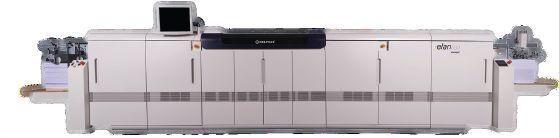
Delphax, a Canadian player in the inkjet printing market, uses the Memjet print head technology in its Elan 500 press. Interestingly, this machine has a relatively high speed for cutsheet inkjet printing. The top speed hits 500 sheets per minute in A4/letter size. The maximum print resolution can be 1,600 dpi and full duplex is possible in one pass. The maximum sheet size for the Elan 500 is 18 x 26 inches and the paper weight can range from 20 to 130 lb.
At drupa 2012, Benny Landa introduced the printing world to his Nanography branding. Nanography uses nanosized pigment particles in a water-based inkjet ink. The difference to current inkjet technology is that the water gets removed from the inkjet ink before the printed image gets transferred to the substrate. In Nanography, the image is jetted onto a heated transfer belt, which removes all the water from the ink and turns the ink into a semi-plastic, before it gets transferred to the substrate. The design of the S10 sheetfed press has changed a lot from drupa 2012. The machine looks more like a conventional printing press with a cockpit at the end. The press also has coating capabilities if the customer so desires. Beta machines of the S10 presses will soon be delivered to selected beta-site customers.
Powermatrix 106 CSB & Promatrix 106 CS
Die cutting solutions for professional converters with full Heidelberg support. The NEW Powermatrix 106 CSB ensures stable production with the unique MasterSet camera register system and automatic non-stop logistics. The Powermatrix is the only die cutter that continues running when a sample sheet is pulled during blanking – further boosting its productivity. Along with its smaller sibling, the Promatrix 106 CS, both machines offer touch-screen control, pneumatic support in all stations and repeatable fine adjustments. The machines allow for quick set-up and production – running up to 8,000 sheets per hour and processing 65lb text up to 78pt board.
› Call 800 363 4800 to Learn More About Our Folding Carton Converting Solutions
Alon Bar-Shany, VP and GM of HP’s Indigo division focused on new digital applications at drupa.
Quad-Graphics is one the selected customers for North America.
Landa positions its technology in terms of production between current digital print technology and offset print technology, at the run lengths between 1,000 and 10,000. This was shown during its theatre style presentation. It was also stressed that the quality of the printed dot on coated and uncoated paper is higher compared to current inkjet technologies. Images were on display that demonstrated this fact. Another advantage for Landa is, that the CMYK gamut of its inks is wider than the conventional CMYK gamut, as is the case with most inkjet systems. Landa can also print with an expanded gamut set that covers almost all of the Pantone colours. Interestingly, the ink containers are made from cardboard and can be flattened and recycled once the plastic bag that contains the ink concentrate is empty. The plastic bag for the ink can be recycled in the current plastic recycling stream. Prints made with Nanographic inks are also recyclable according to the INGEDE test method.
KBA CEO Claus Bolza-Schünemann, who also served as Chairman of drupa 2016.
Landa also unveiled a new technology brand called Metallography, which is set to replace foil stamping for any kind of metallic ink effect on any kind of printing. The Metallography application unit can be retrofitted onto an existing press. This concept was shown on a narrow-web flexographic press. Metallography uses nano-silver which is attracted to the printed material via a trigger image and a donour roll applies the metallic flake to the print. Metallography can save a lot of metallic foil material. It was said that one kg of this silver material replaces 3,000 kg of foil stamping material. Another advantage of this process is that prints with Metallography can be used in a microwave without causing any fires or damaging electric discharges.
Conventional print trends
Rafael Penuela, CEO of manroland Sheetfed GmbH, stated around 200 Evolution units have been installed since its introduction in 2014.
Although most of the hype at drupa was around digital printing, current industry powers were not sitting on their hands and waiting for things to happen. Many inventions were shown in press technology for offset and flexography that drive the use of automation and shorter time frames between printing jobs. True press and print automation can only be done if the press operator prints to the numbers. Some of the lifting that used to be done in the press room needs to take place in the pre-media portion of any job through profiling, but also the press has to be set for printing at optimal print conditions.
Heidelberg’s hall was quite full the day I visited. Many people were talking with representatives from Heidelberg and a flair of excitement was in the air.
Heidelberg showed its Speedmaster XL106-8-P with UV LED curing, which is technology I saw at other well-know press manufacturers. It seems that UV LED, although not new, is to become more
mainstream. On the XL 106, Heidelberg introduced the concept of autonomous manufacturing, printing one job after another with the operator there to stop the press, not to start it. Heidelberg calls this principle Push to stop. During the short presentation of the XL 106, three small jobs were completed. The operator only needed to take the plates from job #1 out from the automatic plate changer and load the plates for job#3 into the plate loading system. The press starts automatically based on the lined-up jobs.
Of course, the main attraction for me in the Heidelberg hall was the Primefire 106, a digital inkjet press built in co-operation with Fujifilm. Heidelberg contributed the paper handling and coating unit, while Fujifilm provided its inkjet print heads. The showcased press was configured for 7-colour printing with expanded gamut and the print resolution is 1,200 x 1,200 dpi. One feature I liked a lot on this press is the fact that the operator gets a pulled sheet by the touch of a button on the control table.
Gallus showcased its Labelfire 340 which is based on UV-inkjet technology with in-line finishing. The press prints at 1,200 x 1,200 dpi with up to eight colours. The 8th colour is white plus CMYK and OGV. Again, expanded gamut printing is used. The print speed ranges from 50 to 150 feet per minute.
I walked onto the KBA booth when a demonstration of the Flexotechnica XD LR started. The common impression cylinder flexographic printing press showed that it is possible to print with water-based inks on clear PET film. The press can also be configured to run EB-curable inks. Another development from KBA, in co-operation with Xerox, is the 40-inch VariJET 106 for the folding carton market. This press prints at 4,500 iph and is geared toward short-run applications of folding cartons. The press can be configured with coating, cold-foil, rotary die-cutting, creasing and perforating units.
Esko shared a booth with other companies now belonging to Danaher, including X-Rite, Pantone and Enfocus. Together with seven GCM students and six colleagues we had an extended tour of the booth. For nine out of 10 major brands, Esko solutions are used to produce packaging. One interesting new Esko product is the CDI Crystal 5080 imager, which can be used for HD Flexo and Full HD flexo plates. Esko has simplified the operation of this imager with a touchscreen mounted to the left of the device.The operator more or less just pushes a start or stop button. The machine features a fully automatic plate loading and ejecting system. The imager can be combined with the XPS Crystal 5080 for the exposure of the plates. The unique feature of the plate exposure unit is that front and back exposure are done in the same moment through an ex-
posure bar that travels over the plate with UV LED exposure for the back exposure.
Esko also introduced a combination of a robotic loading and unloading with a Kongsberg table for cutting and scoring. The unique thing is that the cutting table and robotic loading arm “talk” to each other, so both machines know what the other one is doing and do not try to execute conflicting operations.
The German company Bobst might be familiar to most people for its die-cutting machines, but it also builds flexo and gravure printing presses. Bobst showed its M6 flexographic printing press for food packaging. The demonstrated press ran in extended gamut configuration with UV-flexographic inks. The press has two unique features, including tracking the curing of the UV ink after each print unit and the ability to change plate cylinders on the fly. The press has one plate cylinder in use, while the other one is in a waiting position. When the operator presses the button for a complete plate change, the press slows down to make-ready speed and a system lifts the current plate cylinder into a storage position, while the other one slides into printing position. The automatic register control system adjusts the register quickly and the press can ramp up to production speed. Bobst claims that the press has an uptime of 95 percent. After the new plate cylinders are in use, the plate cylinders from the previous job can manually be removed from the press and fitted with plates for the next job. This is a highly productive printing press.
The surprise of the show was the exhibit from Highcon, an Israeli company that has specialized in manufacturing 3D objects with the help of laser-cutting. Its machines can cut up to two-mm thick material. Depending on the machine type, the 3D object can either be manually assembled or the machine can do it for you. On display was a wine-bottle stand that took roughly 30 minutes to cut and assemble out of cardboard. The displayed wine stand was at least one metre tall. Trying to create the same item with 3D printing would have taking quite a number of hours. Highcon first introduced its technology to the print world at drupa 2012, but its products in 2016 made quite an impact on the visitors at the show.
Key takeaways
Although it is simply impossible to see everything at the drupa there is always an overall trend most visitors get out of the show. For me, the overall trends from this drupa are: Print is alive and coming back strong, the how and when has changed, and digital printing is making strong inroads into the offset print market with increased print speeds and high quality.
It was great to attend drupa again and see where the printing industry is headed. Its landscape will become quite diverse, but it will still be print.
At the 2016 SGIA Expo in Las Vegas, graphics producers will gather to experience the newest equipment for rigid substrates, textiles, containers and electronics, including: flatbeds, roll-to-rolls, hybrids, single-pass, dye sublimation and much more from the industry’s leading exhibitors. You’ll also see the most innovative software, automation solutions and color management tools available.
You can’t miss the best show for graphic imagers: 2016 SGIA Expo, September 14–16 in Las Vegas!
SCENES FROM
In the middle of drupa 2016, show organizers Messe Düsseldorf announced it is maintaining the long-existing four-year cycle, despite a 2015 announcement they would move to a three-year cycle. Certainly, the reversed decision was pressed by the show’s exhibitors, who still use drupa to determine major shifts in technology cycles, drawing in hundreds of exhibitors and tens of thousands of attendees.
At the end of drupa 2016, Messe Düsseldorf announced its impressive numbers, including 1,837 exhibitors from 54 countries; 260,000 visitors from 188 countries, and 1,900 journalists from 74 countries. The four-year cycle will likely retain strong participation in drupa 2020 as the print industry renews its technology. The following pictorial report focuses on some of the key new systems on display in Germany over 10 days.
FROM DRUPA
Agfa Graphics highlighted several CTP advances on its booth.
EFI’s new 1.8-metre-wide, single-pass Nozomi C18000 press.
Full-auto loading of Inca’s new Onset X3 class inkjet systems.
Highcon’s new Shape 3D printing system unveiled at drupa.
The Agfa Jeti Tauro wide format inkjet system, built at the company’s Mississauga plant.
Epson’s SurePress L-6034VW inkjet press for label production.
Heidelberg’s new Prinect Press Center XL 2 console, key to its Push to Stop operating concept.
HP had the largest booth at drupa 2016, all of hall 17, 6,200 square metres.
Steven McWilliam of Avanti (left) was demonstrating Slingshot MIS in HP’s dedicated hall.
Esko’s new XPS Crystal 5080 combines UV flexo main and back exposure in a single operation.
Beside the new Primefire 106, Heidelberg’s management board presents their tech road map.
HP’s new Indigo Digital Combination Press will incorporate Indigo print and digital embellishments.
A look inside Canon’s new VarioPrint i300 sheetfed inkjet press, which already has 42 installations.
Fujifilm’s Jet Press, first unveiled eight years ago at drupa 2008, was presented with a new look.
drupa’s busiest lobby joins halls 7 and 8, as well as the train station, with the rest of the fairgrounds.
Esko’s new robotic approach to Kongsberg automation.
HP’s Scitex systems, including the 17000 model, continue to be a major focus for the imaging giant.
KBA’s RotaJET technology is gaining traction in the industrial imaging sector.
Komori’s Impremia IS29 inkjet press was first introduced at drupa 2012.
manroland Web System’s unique Foldline technology.
HP PageWide inkjet presses have gained massive traction since being unveiled at drupa 2008.
Xerox’ inkjet writing system for KBA’s new B1 sheetfed press, called the VariJET 106.
Komori’s Impremia NS40 inkjet press is to be first implemented by trade printer 4Over Inc.
MGI’s JETvarnish 3D Evo with a scalable B1+ format.
The team behind the unique colour imaging technology of IC3D, which focuses on grey balance.
several
A look inside Kodak’s new NexPress ZX3900.
Konica’ Minolta’s new KM C inkjet press.
Mimaki’s UJF-7151 plus wide-format system.
Mark Norlock on KBA’s massive Rapida 145, the largest press on exhibit at drupa.
The Kodak Prosper press system which remained up for sale by the imaging giant.
manroland Sheetfed’s Evolution press has sold close to 200 units.
Mutoh showcased
new inkjet printing systems at drupa.
Ricoh’s InfoPrint series on display with the company’s growing push in software integration.
Ottawa’s Tilia Labs discusses its growing Phoenix software for packaging.
RMGT’s 1050LX-6 with LED UV.
Xeikon’s roll-fed Trillium liquid toner press.
Roland’s new generation of printer cutters, TrueVIS.
A look inside Xerox’ new Brenva cutsheet inkjet press.
drupa debuts
The following Technology Report highlights key technologies on display at drupa 2016, with special attention paid to those products and services that were unveiled in Düsseldorf
Viscount Road
ON L4V 1H3 Toll Free 1 800 668 6055 Main Office 905 673 9641 sales@printfinishing.com
KBA VariJET 106
Unveiled at drupa, German press maker KBA is working with Xerox to develop a new B1 sheetfed press, called the KBA VariJET 106, aimed at folding-carton printing. There are currently two such presses being developed at KBA’s German facilities and the company describes the program’s progress as being in the final stages of development. VariJET 106 combines offset printing and finishing technologies with inkjet technologies, the latter developed by Xerox, in a highly modular system that can be tailored for customer requirements, including optimized inline processes.
The press presentation via video at drupa included post inkjet options, double coating and drying, rotary die-cutting, pre-treatment and drying, corona treatment, offset units, opaque white and cold foil application. KBA explains the press is suitable for industrial production and can run a range of substrates. Described as “digital sheetfed for folding carton,” KBA expects the system to be complete in a few months for 2017.
VariJET, described as digital sheetfed for folding carton, is scheduled for a 2017 launch.
With over 130,000 paper cutters built, Adolf Mohr knows how to build a quality paper cutter! Reliable, fully automated and available in 26" and 31" widths. Contact us for a demo today!
EFI Nozomi C18000
Unveiled at drupa, EFI’s new Nozomi C18000 can reach speeds of up to 75 linear metres (246 linear feet) per minute, producing up to 9,000 80 x
Do you have copier? ... Do you have a paper cutter? ...
... Then, you can make a card 24pt or thicker without any glue or backing sheets. Simply print and cut!
Contact us today for a FREE sample pack! Multiloft ® Sheets + Inserts
EFI’s new One-pass inkjet platform, currently in a 1.8-metre-wide printing format, aimed at the corrugated, paper packaging and display printing sectors.
60-cm boards per hour using what EFI describes as a double-lane printing feature. EFI explains it prints up to seven colours, including white, at a 360 x 720-dpi resolution, and can handle materials of up to 1.8 x 3 metres – and thicknesses up to triple-wall board – at full rated speeds. Its LED, continues EFI, can image on just about any board substrate, including traditional Kemi, model, bleach and kraft materials. Packaging produced with the press, according to the company, is certified for repulpability and recyclability.
Highcon Shape
Highcon at drupa showcased its new Shape system which was as a technology preview of a 3D modeling machine to be launched next drupa to extend the Highcon Rapid Layer Manufacturing technology already in use, by adding assembly capabilities. Highcon’s new Axis Web-to-Pack platform is a 2D to 3D solution that brings the benefits of a Web-to-print system to all the players in the complex paper or cartonboard production supply chain.
Xeikon 9600
The new Xeikon 9600 press replaces the Xeikon 8600 as the company’s flagship production solution. The dedicated printer for
a range of document printing and other applications delivers both standard and non-standard formats combined with virtually unlimited print lengths. The one-pass duplex web-fed system is capable of speeds of up to 14.5 mpm (47.5 fpm) at a resolution of 1,200-dpi with variable dot density. It integrates the variable-data capabilities of the Xeikon X-800 frontend and incorporates a 5th colour station for spot colour reproduction and security applications.
HP PageWide C500
HP unveiled the new PageWide C500 press, which is still under development, aimed at corrugated direct-to-board printing. The press will leverage 30 years of HP thermal inkjet technology and the company’s newer PageWide printing technology. HP explains the press will integrate into a standard production environment, from large integrated packaging converters with centralized or distributed printing, to small, independent sheet plants. HP plans to start testing the PageWide C500 Press at customer sites in 2017, and the press is expected to be commercially available in 2018. HP Corrugated Grip Technology allows customers to handle a range of media from the lightest micro-flute to the heaviest
Highcon Shape aims to provide fast 3D production by 2019.
double-wall board. Additionally, new water-based HP inks are designed for printing on the non-food contact surface of paperboard packaging and comply with global food safety regulations and industry guidelines necessary to produce food-compliant packaging, thus allowing customers to capture more opportunities with leading food and packaging brands.
HP Indigo Combination Press
HP unveiled its Indigo Combination Press, which is still under development, for unique label production. The press concept will incorporate HP Indigo print and digital embellishments in one system, creating a single-pass solution for high-value labels and packaging production. As part of a dedicated line with an HP Indigo WS6800 press, this new digital combination concept, developed in alliance with JetFX, will enable the production of digital spot and tactile varnishes, digital foils, as well as embellishments of virtually unlimited designs made possible using HP SmartStream Mosaic.
Xaar 1003
In March 2016, Xaar launched its 1003 family of print heads aimed at industrial inkjet printing, which builds on the company’s preceding Xaar 1002 and 1001 products. Xaar explains the 1003 print head family introduces an important new feature called the XaarGuard, which provides nozzle plate protection and, coupled with other design innovations, achieves what the company states to be the longest mainten-
ance-free production runs in the industry. The Xaar 1003 was produced with the company’s new X-ACT Micro Electric Mechanical Systems (MEMS) manufacturing process, which was recently awarded Manufacturing Site of the Year by the National Microelectronics Institute.
The Xaar 1003 family of print heads combines Xaar’s TF Technology and Hybrid Side Shooter architecture so that ink is recirculated directly past the back of the nozzle during drop ejection at high flow rates. This helps the print head operate reliably in the harsh industrial environments. Ink is in constant circulation, preventing sedimentation and subsequent blocking of the nozzles when jetting. The Xaar 1003 will be available in three variants. The Xaar 1003 GS12 (rich colours or higher speeds) for ceramics applications is first to be launched, closely followed by the Xaar 1003 GS6 (for fine detail) and the Xaar 1003 GS40 (for special effects). The Xaar 1003 is produced by new X-ACT Micro Electric Mechanical Systems.
HP’s PageWide C500 press was unveiled as a concept under development.
other variants for UV applications will also be
Xerox Brenva HD
Prior to drupa, Xerox unveiled two new inkjet presses, including the Xerox Brenva HD Production Inkjet Press, which was made commercially available at drupa 2016, and the Xerox Trivor 2400 Inkjet Press, which is scheduled for a September 2016 release. Targeting a production gap between high-end toner and low-end inkjet presses, the Xerox Brenva is a cut-sheet inkjet press that Xerox initially expects to disrupt light direct mail, transactional and book markets. The Brenva is to incorporate many of the paper-path components of the Xerox iGen press line, as well as an inline spectrophotometer to assist with calibration and profiling; object-oriented colour management to distinguish text, graphics and images; and a K-only mode to run as a cost-effective monochrome press.
Heidelberg PrimeFire 106
The new PrimeFire 106 inkjet press leverages Heidelberg’s offset technology and the inkjet developments of Fujifilm. Heidelberg explains its core competencies of technologies like non-contacting paper sheet guide, feeder and delivery are incorporated into the system. Primefire 106 is aimed at short to medium production runs. PrimeFire is a B1-format, inkjetbased system aimed at the packaging industry.
CRON Emerald-UV
CRON added two new plates to its portfolio at drupa, which are the result of two new production lines that were opened in 2015. The new plates are sold under the Blackwood brand, including the Blackwood Emerald UV plate designed to minimize the consumption of chemicals and water for UV exposed plates. With a ‘wash out’ bath, CRON states the plates are press ready in seconds and exhibit dot reproduction from 1-98% for either stochastic screening (20 micron) or conventional screening up to 200 dpi. Run length is up to 50,000 impressions without baking (20,000 for UV ink).
AMS Drip-Off
At drupa, Air Motion Systems introduced the new 100 percent LED UV Drip-Off, (StrikeThrough) coating effect developed in conjunction with partners and recently proven for high-speed production printing on a KBA Rapida 106 6-Color plus Coater LED sheetfed press. The new process allows offset-based printers to achieve inline effects and contrast between gloss and matte images simply via the use of a litho plate and a coater. AMS explains gloss points of 90 and higher are achievable with a single LED lamp in a “wet-on-wet” process sequence, with a high-powered AMS XP9 Series LED UV lamp located in the delivery. AMS explains the new process runs counter to the idea that LED UV cannot be used for inline coating and finishing effects.
Xerox Brenva HD Production Inkjet Press was released at drupa 2016.
HP’s Combination Press with Indigo and flexo components.
Highcon Beam and Pulse
Pulse is a B2, 29-inch cutting and creasing machine that holds a small footprint aimed at print service providers and converters with existing 29-inch-sheet workflows. Highcon explains its digital cutting and creasing technology provides an inhouse controlled digital system that delivers improved responsiveness, design flexibility and entry into a wide range of applications in numerous markets. Pulse supports substrate sizes from 320 x 457 mm (12.5 x 18 inches) up to 530 x 750 mm (21x 40 inches). It runs at speeds of up to 2,000 sheets per hour.
The Highcon Beam digital cutting and creasing solution, explains the company, extends digital finishing to mainstream production. With a speed of up to 5,000 sheets per hour, this variable data cutting machine was developed for folding carton converters and print service providers. It is meant to replace the expensive and slow conventional die-making and setup process. The B1 40-inch format system handles a substrate range from 120 µ / 5 point up to E-flute corrugated 2 mm 78 pt. It allows for a 3D Modeling Package (optional) and Highcon Axis Webto-Pack Package (optional.
Fujifilm EUCON
In late-February, Fujifilm introduced its next generation 54-cmwide LED-UV inkjet press, built around the company’s new EUCON technology, for flexible packaging. Fujifilm explains EUCON (Enhanced Under Coating and Nitrogen purging technology) is ideally suited for printing on the underside of flexible packaging. The proprietary EUCON technology in the new press is composed of three core
components: a newly developed, high performance UV ink; a unique undercoating technology used to prevent ink bleed; and a Nitrogen purge technology, which is used to significantly reduce the characteristic odour of UV ink.
RISO FW Series
RISO’s new ComColor FW Series of inkjet printers is the fifth generation of cutsheet, colour inkjet printer. The FW series is 33 percent slimmer than previous models due to an integrated face-down tray, and it has a newly redesigned colour touch panel that is adjustable and customizable. The output of the FW series is 120 pages per minute in full colour. The scanner has likewise been improved for office use, and can scan both sides of a duplex document simultaneously, at a rate of 100 pages per minute.
Canon ColorStream 6000 Chroma
At drupa 2016, Canon highlighted its new continuous feed inkjet press called the ColorStream 6000 Chroma, aimed at commercial printing, which features the company’s new Chromera ink set for stronger colour fidelity, wider gamut and higher optical densities. The high pigment load of the Chromera inks, explains Canon, extends the application range of the press to lighter weight media with reduced ink show-through, and allows for printing higher quality documents on uncoated or inkjet treated papers. The ColorStream 6000 Chroma offers running speeds from 48 metres per minutes to 127 metres per minute in full colour mode. while monochrome hits 150 metres per minute.
Shipments of the new ColorStream 6000 Chroma series are scheduled to begin in autumn 2016.
Highcon Beam is a B1 40-inch format system.
PRINTING ESTIMATOR
Annex Business Media, Canada’s largest B2B media company is currently looking for a Printing Estimator to join its state-of-the-art print plant operation. Located in Simcoe, ON, our print plant operation includes a 40-inch, 8-colour Komori sheet fed press, with a full bindery. Specializing in publication printing, we print more than 60 different publications and do general commercial printing. If you get print, are a team player and looking for a great workplace environment, this is it.
In this role you will be responsible for preparing printing quotes based on customer specifications, keeping in mind our manufacturing processes and the most efficient way to get the job done. You are in tune with industry trends and best practices and easily able to provide cost-effective options to your customers – if there is a better solution, you are not afraid to suggest it.
This role includes the tasks of managing inventory and maintaining the production schedule, which are both critical elements to ensure the smooth operation of the print plant. The key to success in this role is excellent communication with both internal and external customers, creating a positive customer service experience every time.
You have an eye for detail, can multitask and thrive best in a deadline driven environment. You are highly organized and have excellent computer skills –working knowledge of MIS systems preferred – and if you know EFI Pace, that’s a bonus. Knowledge of the printing and/or publishing industry is a must.
As an Annex employee, you’ll get to enjoy a competitive wage, progressive benefits and continuous learning opportunities. To get on board, qualified candidates are encouraged to send their resumé to Michelle Snyder at msnyder@annexweb.com or by fax 519-429-3862.
DIE CUTTER, RR DONNELLEY
Die Scorer/Die Cutter Operator for a Heidelberg TS 105 Die Press. Qualifications/Experience Required: Applicant must know how to set up and run the press for scoring-perfing-die cut sheets. Know how to ruled up sheets to make die. Ability to work on other bindery machines when die cutting is slow or not available. Applicant should be bondable. Health and safety aware -
ness is required. Willing to be flexible as per work requirement. Minimum 3 years experience.
RR Donnelley is committed to providing accommodations for people with disabilities. Accommodation will be provided in all parts of the hiring process as required under RR Donnelley’s Integrated Standards policy. Applicants need to make their needs known in advance. Your request for accommodation requirements will be maintained as personal and confidential. RR Donnelley is committed to employment equity and encourages applications from women, Aboriginal people, persons with disabilities and visible minorities.
Qualified candidates can apply by forwarding their resumes in a word document to: munish.sharma@rrd.com
CSR & SALES
Printing Press and Auxiliary Supplier requires a customer service part and consumable sales person. Ideally the candidate would have good knowledge of printing presses. Candidates should also have good working knowledge of Outlook, Oracle and QuickBooks. Good position for former press operator.
Email resumes to printingjob203@ gmail.com
GENERAL MANAGER, JAY-LINE
DJB HR Advisory Services is looking on behalf of our client, J & J Manufacturing (known as Jay-Line), for an experienced General Manager to join their Niagara-based team. Reporting to the President and Controller, the role of the General Manager is to oversee the marketing and sales functions as well as the day-
to-day operations of the business. The General Manager plans and maintains systems and procedures for operating efficiency and manages staff for optimum performance; and is responsible for establishing and accomplishing business objectives and meeting financial and operational goals.
Knowledge and skills should include: Performance Management, Staffing, Management Proficiency, Coordination, Coaching, Developing Standards, Financial Planning and Strategy, Process Improvement, Decision Making, Strategic Planning, Quality Management
For the complete job listing please go to www.printaction.com To apply online go to https://www.fitzii. com/apply/5628
Heidelberg: K-Line/S-Line/Speedmaster/GTO/MO
Komori: 1, 2, 4 or 5 colours & any size
Adast: 714/715/724/725
Mitsubishi: Any model
Ryobi: 2800CD/3200CD-MCD/640K
Itek: 960/975/985
Hamada: 600/700/800/E47/RS34
Shinohara/Fuji: 66/65 1,2 or 4 colours
Sakurai: 1, 2 or 4 colours and any size (newer model)
Polar: any size/older or newer models (66/72/76/78/82/90/92/107/115)
Horizon-BQ: 220/240/260/440/460
Bill Baxter / Founder / Inca Digital Printers / Cambridge, UK
In the late-60s, an engineering group called Cambridge Consultants was asked by a company to find a better way to print their carpets, without touching the material. As a result, Steve Temple and David Payton started looking at the physics of droplet ejection from nozzles. Although not initially used for printing carpets, their developments became a sudden sensation for date coding in the early-1970s when legislation required all food packaging to carry a sell-by date, creating Domino Printing Sciences. The duo then developed the original concept of drop-on-demand Xaar technology.
Bill Baxter, founder of the Inca Digital Printers, shared an office with David Payton, although they did not work together on inkjet technologies. PrintAction spoke with Baxter to find out how he helped forever change the direction of printing and what lies ahead for Inca Digital, which was purchased by Dainippon Screen in 2005 for approximately $70 million.
How did you find your way into the pioneering UK inkjet sector?
BB: I’m a late-comer. I was working as a consultant for a company that made contact lenses, re-engineering their manufacturing line when my client said, “We’ve got about 200 OEM customers. They take daily wear, weekly wear, monthly, they have different tinted lenses, there are 60 odd powers of lenses... We have so many SKUs. Can we bring white carton board into our production line and print it right there when we know what is going in it?”
Innocently, I said, “Well, yeah, there is this inkjet thing.” So I had a look around and, well, no one makes a printer that can do that… So I started going around initially to packaging companies and found that all you had to do was ring them up and say you want to talk about digital printing; and you instantly got a meeting with about six senior people around the table... It turned out, for technical reasons, packaging really wasn’t going to happen at that period. But, by pure accident, we met someone from the retail display industry who said, “You guys need to make a machine for retail display,” and that became Inca.
How long did it take you to create Inca?
BB: In Eighteen months – R&D, flogging around trying to get finance, because we were venture-capital backed. Also creating what became a real central pillar to our business, which was a deal with Sericol, which was later bought by Fujifilm. Sericol supplied our inks and also they had a worldwide sales network that could sell our machines. So it was a perfect marriage and it has absolutely been a bedrock of our business.
How did Inca’s engineering set such a high standard in those early years?
BB: We were a bunch of crazy engineers, very much an engineering-based company. I remember getting terribly criticized because I kept on making our own machines obsolete – “You are mad don’t do this.” But I did, because it is the right thing to do, because suddenly we found ourselves with some rather more substantial competition.
How fast was your pace of development?
900
Square metres per hour speed of Inca Digital’s newest printing system, the Onset X Series, which features up to 14 ink channels and is still recognized as the industry’s wide-format workhorse.
BB: Typically we were introducing a new product every 18 months, which would usually obsolete the last one. It also drove some of our customers crazy – the last guy who got the old. But we are engineers and this business is engineer heaven.
How much money was being spent on R&D in the early years?
BB: Twenty-five percent of our payroll is R&D and it continues to be. And I think it will continue to be for many years.
How much has the speed and quality of display inkjet systems increased from Inca’s first Eagle 44 to today’s X3?
BB: In just over a decade the throughput of our machines has gone up by a factor of
between 30 and 40, and the quality is wildly better. When I look back at the test prints that we did on those first Eagles, I am horrified – absolutely horrified – by the quality, but at the time people’s eyes popped out. They thought it was great
How has inkjet technology affected screen-printing?
BB: It was kind of a slow-motion tragedy of the screen-printing industry. It was around 2003 when it really started to have an affect. In 2003, digital’s share of production was probably less than one percent, but everyone could see the new [inkjet] kit. Not everyone wanted to buy it, but everyone saw what was happening, that it was improving and so nobody was going to invest in a screen kit that would have to be written off in 12 years – and they were right. In a few years, secondhand screen kit was going for scrap metal and the price of screen output fell drastically, because digital was starting to take a little bit of market share. There were people with all of this installed [screen] capacity who were competing for a smaller and smaller chunk of the market, as digital output was commanding an excellent price. It really is a sort of business school case that ought to be investigated.