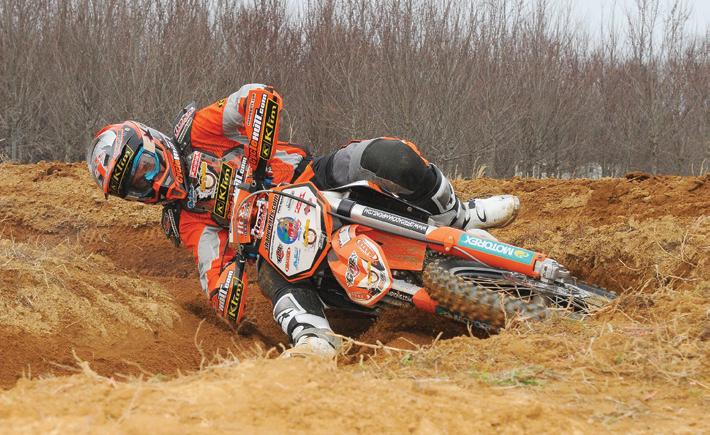
Kurt Caselli
To Baja And Beyond
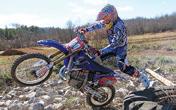
Shane Watts On Practice
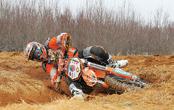
Jason Raines On Bike Prep
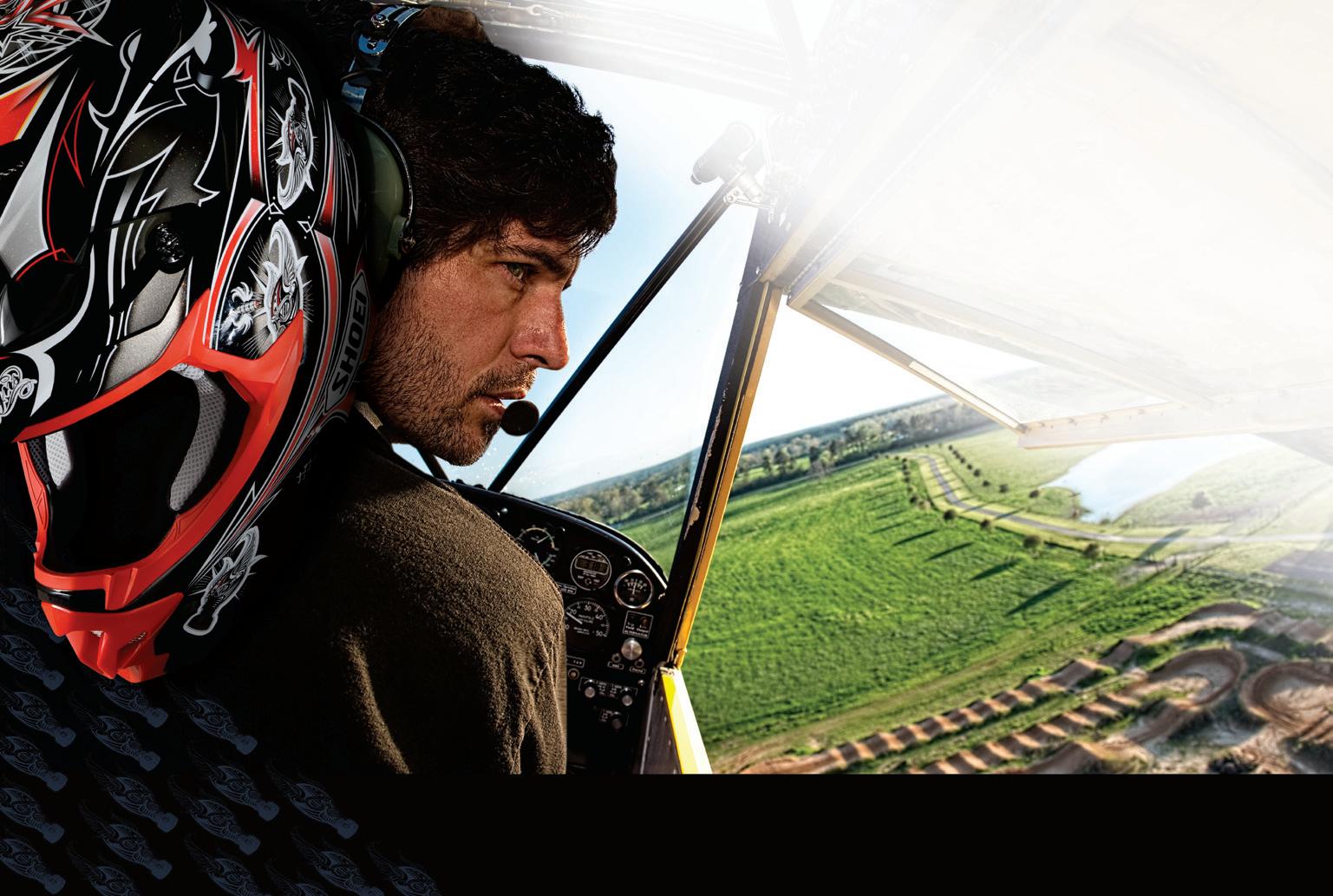
Fly with Kevin Windham at Shoei-helmets.com/flywithkdub
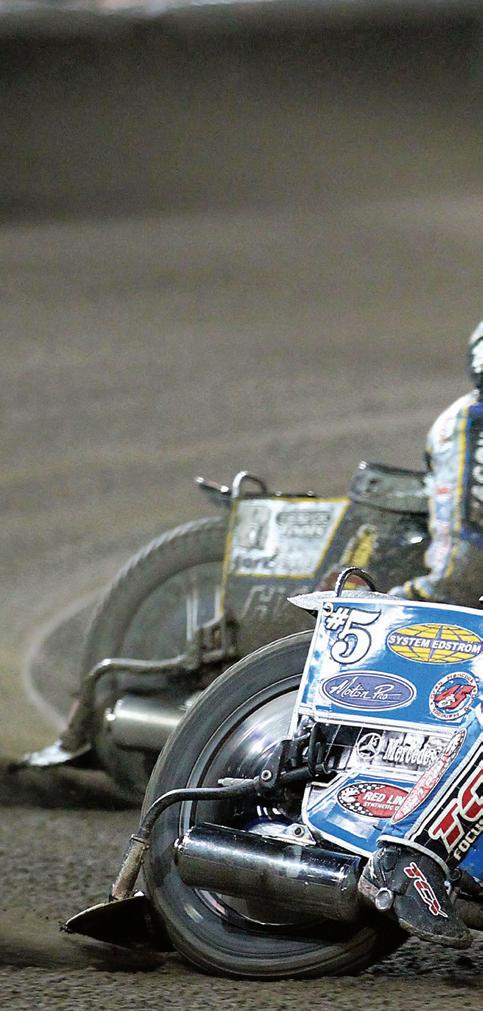
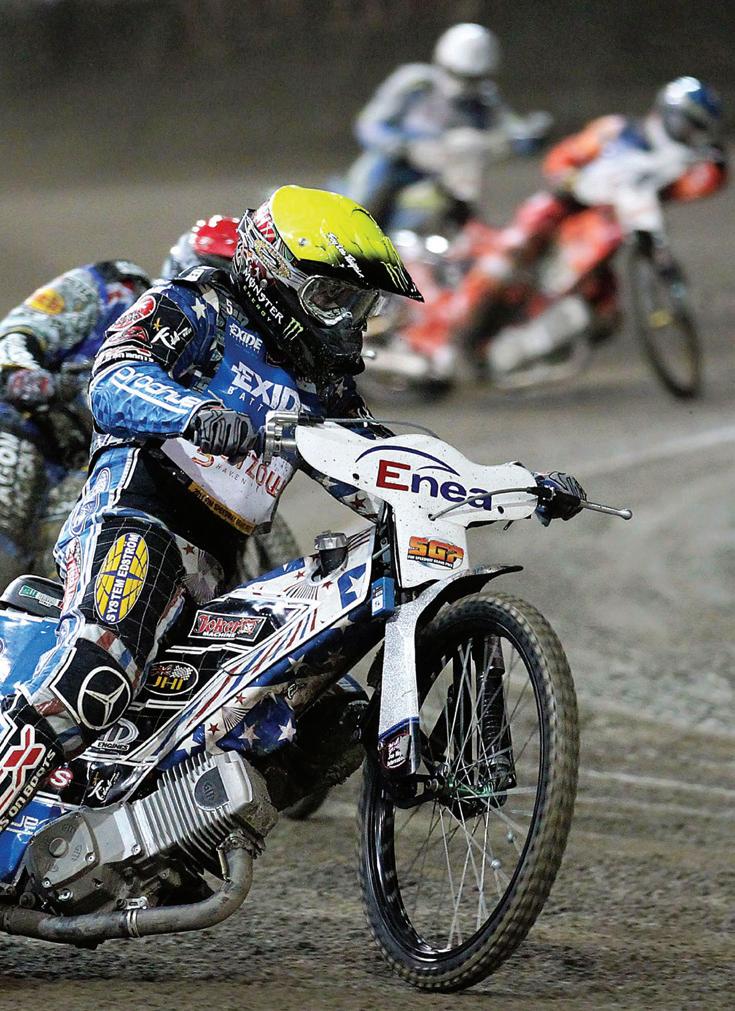
The U.S. team seeking international success at the FIM Speedway World Cup this summer began its journey with the initial qualifying round in Ljubljana, Slovenia, on May 5.
The U.S. teammates are Greg Hancock, Billy Hamill, Ryan Fisher and Ricky Wells. Also on the team as a back-up rider is Kenny Ingalls. The squad is led by reigning FIM World Champion Hancock and 1996 FIM World Champion Hamill.
“I’m really pumped to be riding alongside Greg again,” says Hamill, who is also a five-time U.S. champion, winning his most recent title in 2007. “We have had a lot of success as teammates, and won four FIM Speedway World Cup gold medals from 1990 to 1998. This isn’t really about me making a comeback, though. It’s more about getting the U.S.A. back on top, and the FIM Speedway World Cup is the foundation for years to come.”
Hamill adds that the world championship effort is part of a broader mission to nurture a growing speedway contingent in the United States.
“I would like to see the United States win a another gold medal in the next five to 10 years,” Hamill says. “This is certainly a big step toward
that goal, and I would like to thank the AMA, my U.S. teammates and everybody working so hard toward achieving it. We are so lucky to have such passionate and knowledgeable people involved in this quest for success.”
The next step in FIM Speedway World Cup competition is July 7 in Poland or July 9 in Great Britain, based on qualifying position. The world championship is July 14 in Sweden, after a race off on July 12.
While speedway is fighting for recognition among more mainstream motorsports such as motocross and enduro racing in the United States, it’s hugely popular in Europe.
Contested since 1960, the FIM Speedway World Cup is the pinnacle of team competition in the sport. The event features multiple days of competition by a number of national teams, with four qualifying for the finals. The winner of the Speedway World Cup collects the Ove Fundin Trophy, named after the five-time world champion.
Shane Watts On Practice
Just Do It!
By Shane Watts
Riding and racing off-road motorcycles is an awesome passion that so many of us have. It’s also something that we all desire to become not only more skilled and safer at, but faster, too.
One of the hardest parts of improving is to develop the mentality of continually spending a small but significant amount of time each week practicing specific skills exercises. This will fast-track your learning more than just pounding out laps or miles of trail.
Even spending a quick five minutes on key practice drills before your next race or ride will pay big dividends. This practice time allows you to build your confidence. Plus, it warms up muscles you are going to use to ride the bike.
Here are three basic skills exercises and what they entail:
r The Slow Ride. This is a great exercise for reinforcing the four fundamentals of riding skill: body position, throttle/clutch coordination, balance and confidence. In this exercise, you ride as slowly as possible without putting your feet down. Having great balance allows you to maximize your momentum on the trail, especially in more difficult conditions like mud, deep sand, hills and rock sections.
r The Square Exercise. Use this drill to build superior flat cornering technique. Set up a 10-by-10-foot square with four cones. If possible, find slippery
but consistent conditions.
Now, ride continuous laps, gradually getting faster until you are able to slide/drift your bike around the square without interruption for at least six laps.
Use the four key points of cornering (body position, lean angle, throttle position, and counter steering) to control the slide and guide your bike where you want it to go. It’s a great feeling when you have mastered this skill!
This will be a huge benefit in the next mud race or just when you are pushing the limits and the tires are breaking traction.
r The Figure-8 Corner Rut. This is the best all-around exercise for off-road riders and racers to practice. The precise front wheel placement, as well as the aggressive acceleration skills, correct body position, and supreme confidence needed to rail a rut also build the skills you need to conquer numerous other trail or track situations.
However, building a proper corner rut takes a bit of planning and practice. You can find free videos about corner ruts and building them at YouTube.com/user/ DirtWiseRidingSchool.
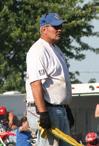
Former World and U.S. off-road champion Shane Watts runs the DirtWise Academy of Offroad Riding School and Instructional DVDs. For more information, see www.shanewatts.com.
10 TIPS FOR A GREAT DAY AT THE TRACK
Mind The Details By
Gerhard Ward
As someone who has raced for 37 years, and has been a motocross and off-road promoter for decades, I’ve seen both sides of the sign-up table a lot. Here are 10 tips for making your next race day as smooth as it can be.
#1. Sign up! Yes, it happens. Occasionally, racers head out for practice before signing up. This is a pretty serious infraction and, in fact, may result in a suspension. It’s not fun for you or the promoter if you have to go visit the nice ladies at sign up and plead your case.
#2. Line up! This is another basic step that gets missed more often than you think, particularly at woods races. Often, a rider will be out in the woods looking for the hot line through a rock bed when he should be warming up his bike.
#3. Run the right numbers. It comes as a shock to many racers that the scorers don’t recognize them on sight. You must run your number to be scored properly! Numbers are usually assigned by the District, so consult your AMA
Photos Watts: David Scearce; Ward: Courtesy Gerhard Ward; Raines: Davey Morgan
District rulebook for guidelines such as number size, background color, etc.
#4. Don’t miss the riders meeting. If you followed the wrong colored arrows in the hare scrambles race and ended up on the youth course, you probably missed the riders meeting where all that—and more—was explained.
#5. Renew or buy your memberships early. Yes, these are available at the track, but why complicate your life, the promoter’s life and everyone’s life who is behind you in line?
#6. Bring enough money, your identification and your membership cards. Don’t assume the club or track will take debit, credit cards or even a check. Ask first or just bring cash.
#7. Show up early. While yours truly may believe that being early is a waste of time, do what I say, not what I do! Arrive early so you aren’t rushed.
#8. If you are new and have never raced before, the first thing you want to say to the sign-up person is, “I am new and have never raced before.” They will instantly know how best to help you.
#9. If it’s a motocross race, get the practice order and race order at sign up. If it’s a hare scrambles race, ask where the starting line is and when to line up. #10. Check the score sheets within 30 minutes after they are posted. Too late is just that—too late.
In the same way that the AMA and AMA Districts provide the foundation for great events, sign up provides the foundation for a fun race day. If sign up goes well, the rest of the day is easy.
After all, at that point, all you have to do is race!
Gerhard Ward is the MX director for AMA District 17. With wife Patty, he runs Fox Valley Off Road in Ottawa, Ill., and Megacross in Mendota, Ill.
Jason Raines On Bike Prep
Maintaining Your Ride
While your personal preparation—training and fitness—is critical, it’s tough to win a motorcycle race without a well-prepped motorcycle. If you aren’t properly prepared for the race, not only can you expect problems, you can expect not to be able to fix those problems.
You can work all week practicing and training, then load up and drive to the event, pay the gate fee and the entry fee only to have a small oversight ruin all the hard work—and waste your hard-earned money!
and race. A Roman philosopher said luck is what happens when preparation meets opportunity. This is true in everything we do.
First, plan to have the bike done and ready when you roll into the race. Likewise, all your gear (helmet, goggles, boots, etc.) should be prepped and ready. A common sight at the races is riders scrambling in the pits an hour or so before their race, changing brake pads, swapping air filters, etc. Not only does this create more opportunity for maintenance mistakes, it also rattles you mentally when you need to be cool.
All you should have to do the day of the event is get there, unload, walk the track, sign up, get your gear on
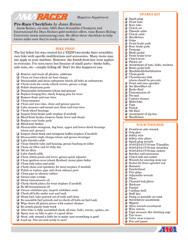
To help with your planning, I’ve created three lists, available at AmericanMotorcyclist. com/RaceChecklist. aspx, that cover each leg of a successful race preparation program: maintenance, spare parts and tools. Following these guidelines, it takes me around 30-40 hours to fully prep a bike for a single race. Most casual racers aren’t able to put that much prep into their programs.
However, everyone can use these lists as an ideal to strive for. Racing is fun, but racing seriously is hard work, and the higher you climb, the more fun you’ll have. I guarantee it.
Jason Raines is a six-time AMA Hare Scrambles Champion, three-time International Six Days Enduro gold medalist and AMA Life Member. He runs Raines Riding University (www. rainesracing.com), which offers off-road riding instruction to all ages.
Story and photos by Mark Kariya
RACER ON FIRE Building A Program For Success
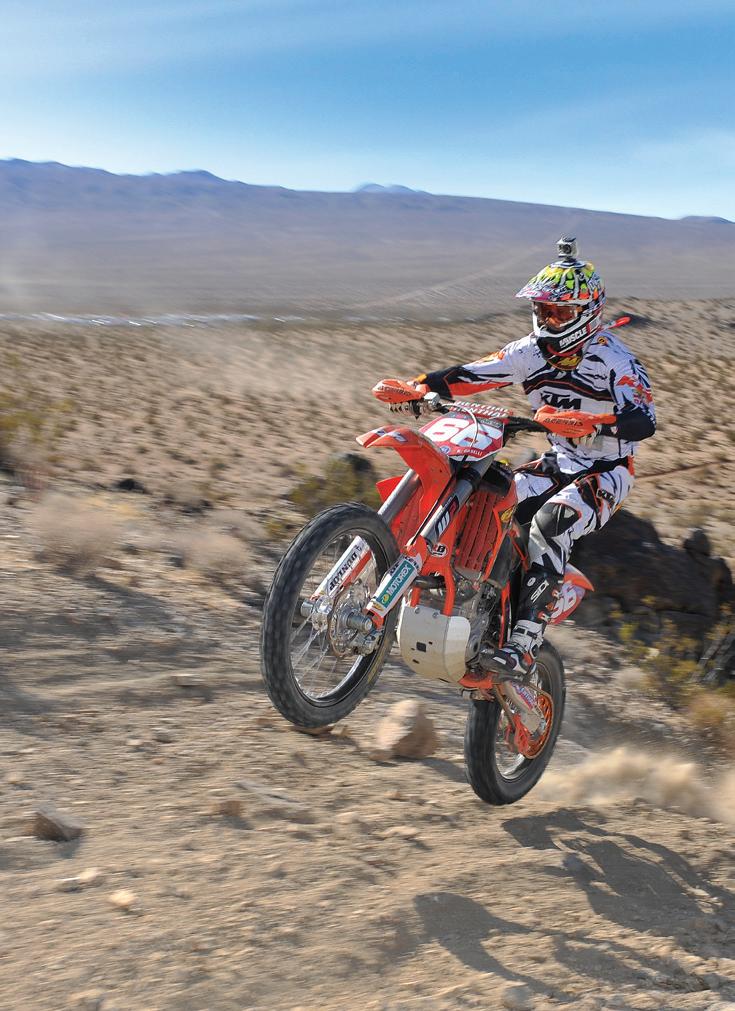
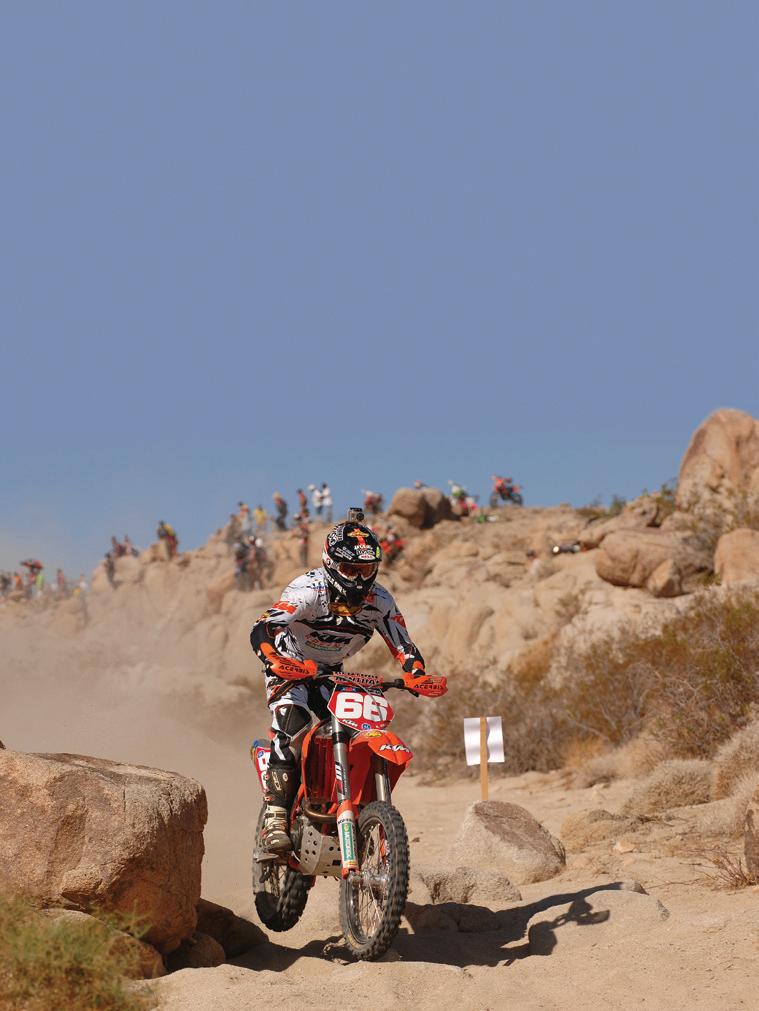
Like thousands of kids who have matured in Southern California’s many desert communities, Kurt Caselli grew up riding his dirtbike in one of the biggest playgrounds in the world, and he did it whenever he got the chance.
At the time, however, no one would have predicted Caselli would take that passion and blend it with both talent and hard work to become the dominant desert racer in the country, as well as one of the top off-road racers in the world.
How dominant is he? In 2011, Caselli launched a full-on assault on the AMA Kenda National Hare & Hound Championship Series for the first time since he raced 125s 10 years ago and won five out of the nine races to claim the title.
And through the first four rounds of the 2012 series, he’s chalked up a perfect score, winning each race with apparent ease. (He’s also won the first of the threeround SCORE Desert Series in Baja.)
Naturally, the FMF/KTM Factory OffRoad Racing Team star refuses to jinx himself by predicting a perfect season, but many observers see him headed that way, judging by his margins of victory so far.
“Well, you never want to think it’s going to be a walk in the park,” Caselli insists. “Obviously last year in the Hare & Hound series, I had some good finishes, and I also had some bad ones so we were just looking—as far as the
championship goes—to improve on [the number of] race wins this year.”
One factor that is different this year is the competition. Long-time desert racer Destry Abbott has semi-retired from competition and isn’t competing in the full series.
“There are only a handful of guys who are able to win, and Destry was obviously one of them,” Caselli says. “Having him out of the series, it’s opened up another door for me and for other guys to be able to finish up front.
“But so far, so good.”
Still, with Abbott running only a few select events (and 2010 champ Kendall Norman parting ways with Johnny Campbell Racing Honda and a surprise no-show so far this year), Caselli’s win streak is impressive. A lot of the credit goes to what Caselli describes as a major amount of setup this season.
“I think what’s really happened is KTM’s put a huge emphasis on Baja and
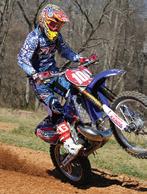
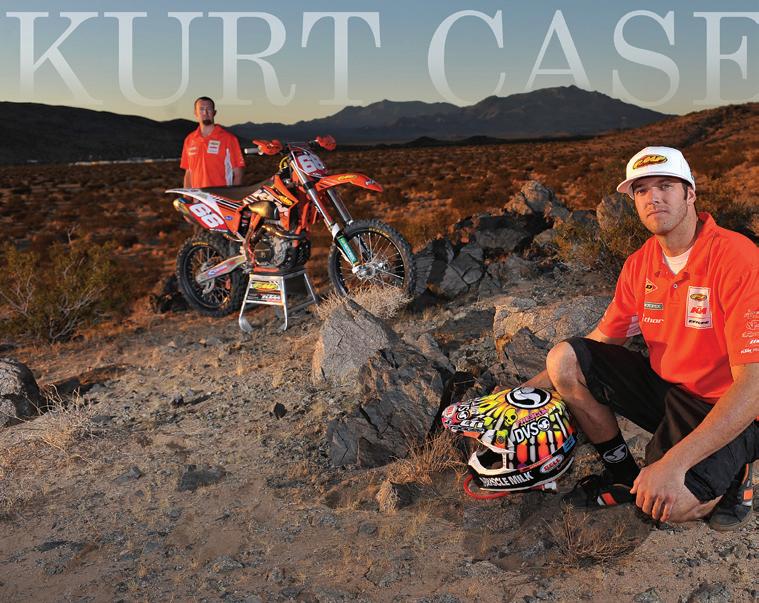
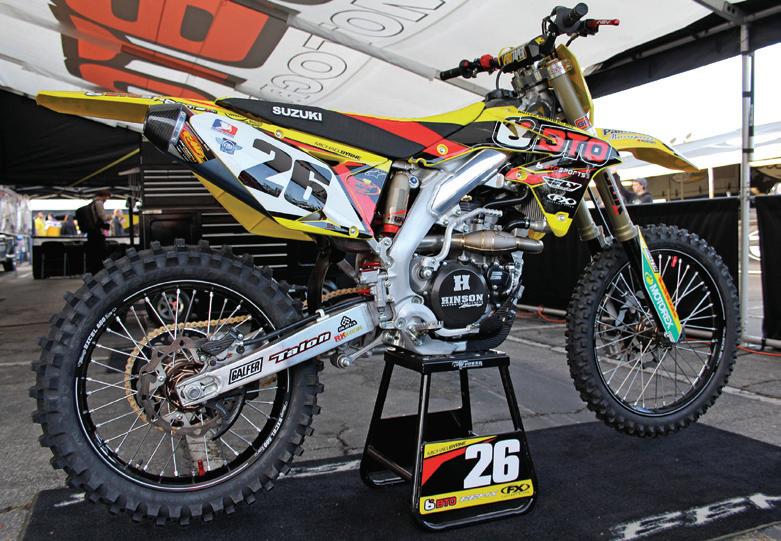
Kurt Caselli (foreground) and mechanic Anthony DiBasilio
the program down there [for the first time], and that’s brought a lot more interest from the factory in Europe to help us develop a good Baja motor and a good Baja bike, and I’ve been able to test and try out different Baja things on my hare & hound bike,” he says. “As far as the suspension goes, I’m not far from what I used last year—I felt really confident in the bike’s handling last year so we kind of kept to that whole program—but then with the motor, we’ve been able to try a lot of different things, moreso related to a rally-type motor and the Baja motor that we ran in San Felipe and that we’re going to run in the [Baja] 500.”
Though confident in his abilities, Caselli realizes that there are no sure bets in racing, so while the accolades and
recognition that come with victories are nice, he’s focused on the bigger goal and knows what it’ll take to achieve it—again.
“I won last year and, obviously, I want to keep that momentum going through this year. Four for four is good, but the important thing is the championship at the end of the year.”
The big picture is definitely on Caselli’s mind.
“Winning is important and I want to win every race I can, but I’ve learned enough over the last couple years to know that consistency is key, and if it comes time where I need to think about the championship and not just the race at the time, I’m OK with backing it down and playing it safe and doing what’s best for myself and staying safe and healthy. The wins are going to happen if and when they do, and then again, you’re going to have bad days so I’m pretty content on where we are, and if anything changes as far as competition or the bike or anything, we’ll just have to go with what we get.”
Racing The World
There’s more to Caselli than simply desert racing. Since his first stab at the International Six Days Enduro (ISDE), when he scored a DNF in 2000 in Spain as a Kawasaki KX125-mounted privateer coming off a broken collarbone a few weeks before, he’s morphed into more than simply a field-filler. Caselli is a threat to the top Europeans who’ve traditionally ruled ISDE competition. In 2007 in Chile’s Six Days, Caselli won the E3 class, and he followed that up by winning E2 in Finland last year.
“The ISDE is a huge ‘high’ on my list of things that I want to accomplish every year,” he acknowledges. “The preparation starts months before the race.”
That affects everything about Caselli’s program, even his physical training regimen.
“Six Days is a lot of sprints,” Caselli says. “There are a lot of intervals, so my trainer [Troy McIntosh] has got it worked in where we’re doing some high-intensity interval training. As far as [riding practice], just getting on a motocross track and doing some sprints [is how I’ll get ready for Six Days].”
The level of competition on the world stage is, of course, unparalleled, and the ISDE style of racing has piqued Caselli’s interest in the FIM Enduro World Championship. When Caselli has had breaks in his domestic schedule, he’s been able to try his hand at the EWC and proven competitive there as well, winning special tests on more than one occasion.
It’s something he’d love to add to his résumé. Caselli thought that 2012 might be the year he’d get the chance to go for it, but KTM had other plans-namely the desert.
“The Enduro World Championships
was on my list, and I’ve got a lot of things that I want to accomplish, as far as my racing career goes,” Caselli says. “But I wasn’t frustrated [to be assigned desert championships instead of EWCs]. It was a decision—and a worldwide decision [by KTM management], which is kind of a cool thing.”
Anyway, Caselli says, racing in the desert, whether in the United States or Baja, is familiar ground.
“I wanted to go back to racing desert,” he says. “That was my roots and I felt like that was something that I enjoyed doing before I got caught up doing different things around the world—just racing desert in Southern California and the West Coast. So going back to that has made me happy and I’m glad I got that opportunity.
“[The World Enduro Championship] is the biggest series in Europe, and it’s the premier off-road series in the world,” he says. “Even though I didn’t get that opportunity this year, there still might be next year or the year after.”
Team Goals
Caselli says he’s meeting his performance targets for the year and enjoying his opportunities on this side of the Atlantic.
“If I’m racing a dirtbike and I’m making money, I really don’t care where it is,” he says. “As long as I’m with a good team, I’m happy.”
Like any racer, Caselli invests
everything he can into being the best he can be at his chosen goal, and he expects the same from his support crew. He says he’s getting that from KTM.
“Any time I go out, I set out to accomplish a series or championship or anything like that, it’s 100 percent,” Caselli says. “With KTM, it’s the same thing. They know that Baja’s going to take a lot of effort, so they’re putting in 100 percent effort. It’s the same with me. I’m not going to go down there and feel like I’m just trying it out or just going to be there for a short time.
“With the [SCORE] Baja [series] format, there are only three races, so that’s pretty nice to have that time in between to accomplish different things and race different races. So, whatever KTM has in store for me, I’m happy with. I know they’ve always made the right decision for me.”
Caselli says visualizing, and executing, a long-term plan also is a key element to his relationship with the Austrian manufacturer.
“Team KTM’s going to get a lot more out of me going down to Baja and developing that program and that bike,” he says. “So I’m happy to be where I am and I hope that it leads to championships and more things to come.”
National Hare & Hounds Offer Classes For Everyone
Can You Catch The Hare?
In much the same way the AMA Rekluse National Enduro Championship Series has been elevated to new heights in recent years, the AMA has brought a promoting partner on board to advance the AMA Kenda National Hare & Hound Championship Series.
The National Hare & Hound Association (NHHA) takes the lead on promotions and interfacing with the AMA-chartered clubs that run individual rounds. The result has been better organization, a more consistent raceday and enhanced marketing.
If you’re an off-road racer in the western part of the United States, this is an excellent time to begin racing.
Classes accommodate everyone from youth to senior racers, from first-time racers to some of the fastest desert riders in the world. Here are some tips to get started:
a Dress for tough conditions. There’s the obvious—helmet, boots, gloves, goggles—but you’ll also want a chest protector, knee pads, elbow pads, etc.
a Protect the bike. Get hand guards and a skid plate at the minimum. A tool bag with some basic tools and nuts and bolts is also a good idea.
a You’ll want a high-capacity fuel tank and to prepare for variety. Courses might include everything from low-speed rock gardens to high-speed valley runs. In general, though, consider gearing slightly taller than stock.
a Carry water. If you break down, you will be picked up, but it could be a while.
a Minors must have both parents at sign-up or an AMA annual release and one parent (or a guardian with a notarized statement) at sign-up.
a Non-California riders must meet special requirements to race in the Golden State. If your bike is registered as an off-road machine or plated in your home state, you can just show up and race. If not, you will need a California out-ofstate off-road permit.
One thing is for certain. You will have an epic time on an awesome course laid out by fellow riders who know the area best. When you see the checkered flag, you will know you have accomplished something.
Info: NationalHareAndHound.com.