Remembering Lone Star Motocross
When Howerton, Stackable And Wise Ruled Texas
By Ron Pocher
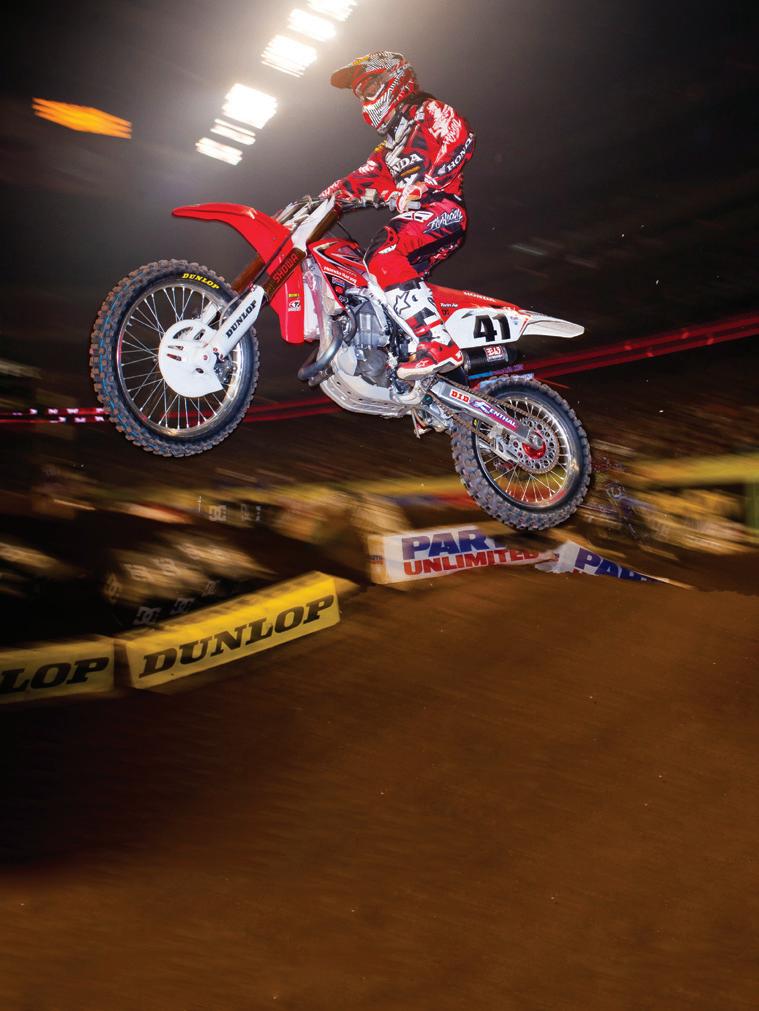
Despite its national-caliber appeal, motocross is a regional phenomenon. Homegrown stars can grow bigger than life on the local stage.
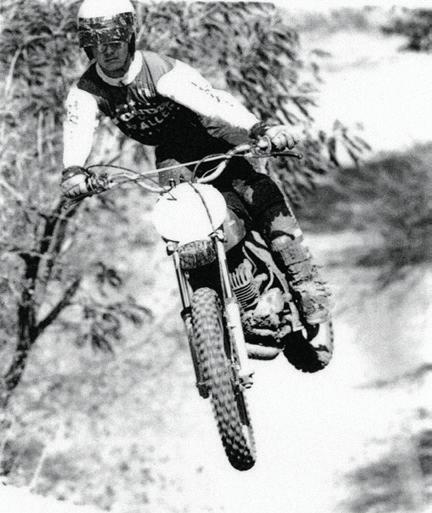
Those who grew up in Texas when Motorcycle Hall of Famers Kent Howerton and Steve Wise, as well as Steve Stackable, were coming of age know what I’m talking about.
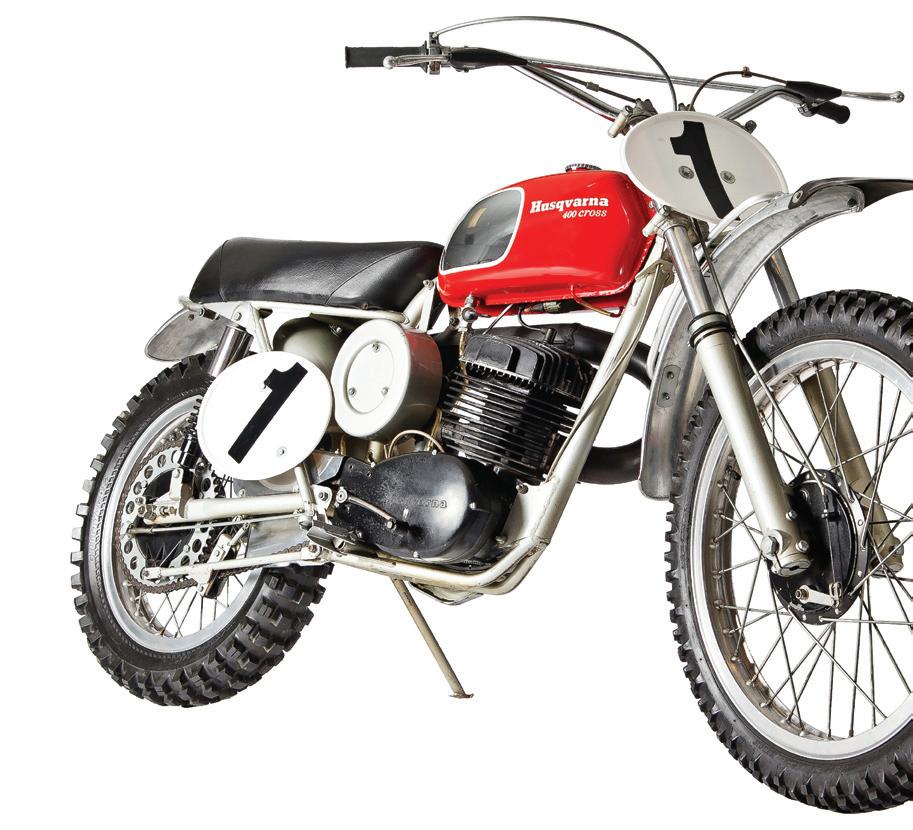
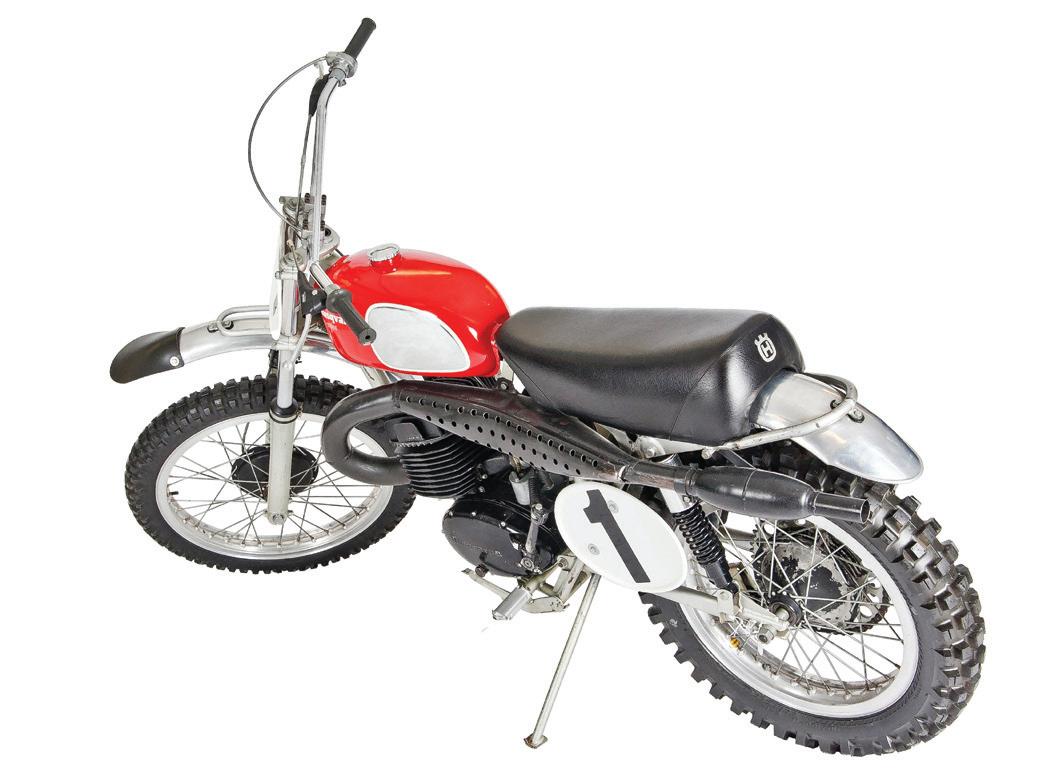
In those days, the AMA Grand National Dirt Track Series always began in Houston, in January, with the Astrodome TT and short-track doubleheader. At that time, my dad’s shop was supporting Howerton. The biggest motorcycle show in Texas always occurred that same weekend in the Dome’s Exhibit Hall. On the Sunday following the ’74 races, we rolled both a new 400cc and the all-new 250cc Mag right out of the Husqvarna display booth, out of the exhibit hall and into
my dad’s truck. Thus began Howerton’s support ride with the Swedish brand.
And just before the final round in New Orleans, he received a true factory bike and posted his first national victory.
Not just one, but two flat tires may have cost Howerton both the 250cc and 500cc crowns in ’75. Kent did win the 500cc championship for Husqvarna in ’76. The “Rhinestone Cowboy” went on to claim 250cc National Championships in ’80 and ’81 riding for Suzuki.
Stackable came even closer to winning that ’75 500cc crown when he was one of six riders (including Howerton) who went into the final round, the now-famous “Battle of New Orleans,” with a mathematical chance of winning the championship.
“Short Stack” was the fastest rider on the track that day and had charged all the way to second in the first moto when
his front wheel suddenly decided that it didn’t need all those spokes.
Stackable handily won the second moto, but when the points were tallied, it was determined that if he had just fallen to fifth in moto one, the title would have been his.
Stackable did win the ’75 500cc AMA Supercross Championship, but that would be his only title in a career that saw many series podium finishes.
Wise has stood on the podium at AMA Motocross, Supercross, road racing and dirt-track Nationals. He reached the top step in those first three disciplines and looked to have the ’82 Astrodome TT all but won when a late race mechanical issue dropped him to third.
The best race I ever saw, in person, took place in the Astrodome. The year’s really not important but my guess would be 1975. Some may call me a bit partial and others may denounce it as “just a heat race,” but Howerton and Stackable were slugging it out.
I don’t know how many times they swapped for the lead and, to be honest, I can’t even recall who won. All I really know is it was two Lone Star State champs putting it all on the line for the win. For a Texan motocross fan, it was perfect.
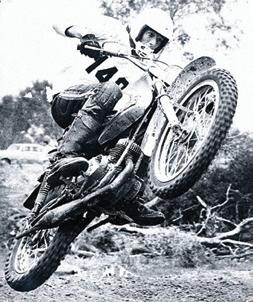
Clockwise Steve Wise, Kent Howerton, Steve Stackable
Jeff Gibson Races Full Circle
AMA Arenacross Star Keeps Going By Jim Kimball
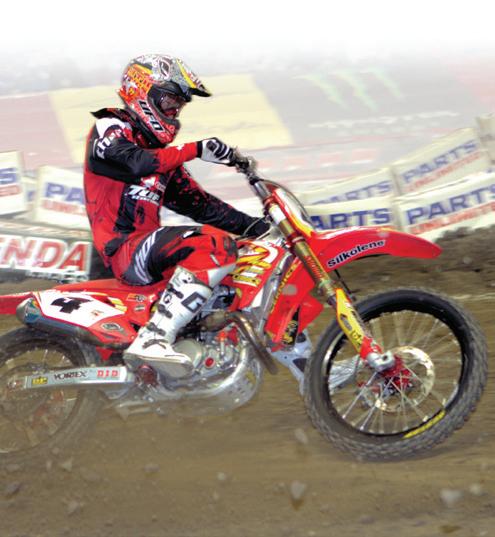
Throughout his career, Ohio’s Jeff Gibson has raced AMA Arenacross, Supercross and Motocross. He has competed in Canada and Europe. He has raced nearly every major brand, including the experimental Cannondale some years ago. In 2009, Gibson won the AMA Arenacross title. After a disappointing 2010, he’s now back and winning. We caught up with “Gibby” at his home race in Dayton, Ohio.
AMA Racer: Jeff, you’ve been racing for over 22 years now, so coming back to Arenacross is returning to your roots.
Jeff Gibson: I started racing right about the time that I turned 5, and have been doing it ever since. I’m 28 now, so I definitely have been at it for a long time. And you are right, my first pro race was in Arenacross. I had moved to the A class when I was 15, right after the Mini O’s back in 1997. I think it was at that first race as an A class rider when I got hurt, and the very next race I did was an AMA National Arenacross in Niagara Falls— way back when. I was so out of shape at that first Arenacross that I barely lasted through the heat races, let alone the main event.
AMA Racer: You’ve competed in AMA Motocross and AMA Supercross, too, like when you raced that experimental Cannondale in AMA Motocross.
JG: Yes, that was really something new and very different back then! I think that I was only 18 at the time that I took that deal, and it was really the chance of a lifetime. As many people may remember, we did have some difficulties with the bike, but I definitely look back at it as a good thing. It was certainly an interesting start to my career in professional motocross.
AMA Racer: Then came Supercross on privateer Yamahas. In fact, didn’t you race both 250 and 450 classes on the same night?
JG: Yeah, that was back in 2002. One of my buddies and I did the East Coast Supercross Series pitted out of our box van. He ended up getting hurt, and then was my mechanic for the rest of the series. I ended up eighth overall in the East Coast Lites series, with my best finish a fourth. That was when you could ride both classes, and I also made both main events five times in a row. Of all the racing that I have done, that series also stands out in my memory as being a very good year in terms of success and fun.
AMA Racer: How many more years will we see you racing?
JG: I feel pretty good right now, and I believe that I have at least another five years of competitive racing in me. I truly learn more and more every year. With the way that the industry and economy is right now, rides are getting tougher and tougher to come by, but I’m going to do my best to continue doing what I love, which is racing.
Old Motorcycles Go Fast
AMA Racing Vintage Dirt Track National Championship Series Kicks Off During Bike Week
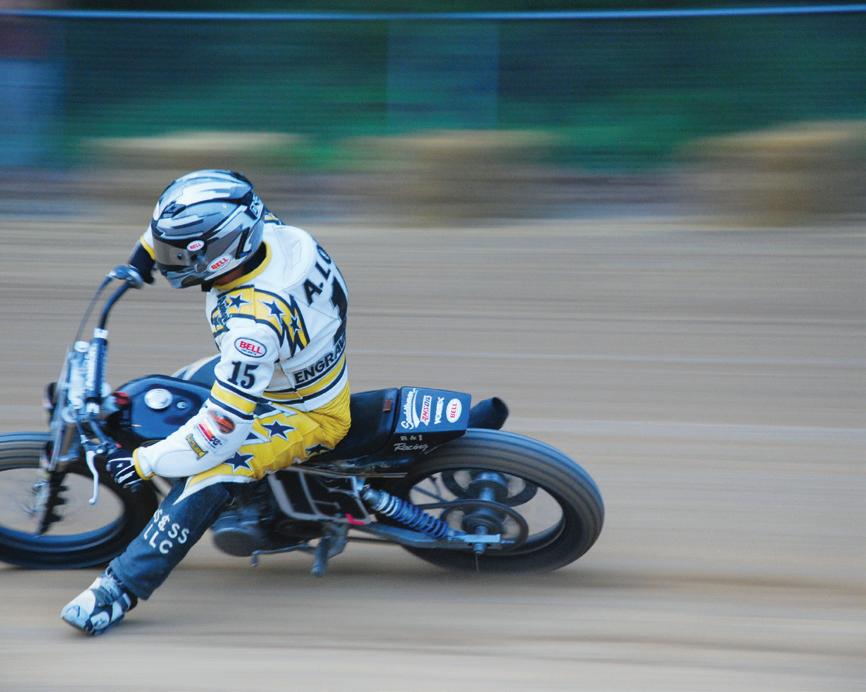
Dirt track roots run deep in the history of American motorcycle racing. The AMA Racing Vintage Dirt Track National Championship Series celebrates that heritage like nothing else.
“The history of the AMA’s involvement in the sport dates to the original factory Class A racing in the 1920s and really took off during the Class C production-based format that continues today,” says AMA Director of Racing Joe Bromley.
Vintage racing expert Don Miller, owner of MetroRacing.com, is the technical adviser of the AMA Racing Vintage Dirt Track National Championship Series. Miller said that his goal is to field motorcycles that capture the nostalgia of the past amid the excitement of a modern meet.
“Year two as the AMA vintage dirt track technical adviser is on its way, and I couldn’t be more excited,” Miller said. “The series fared well its first year and can only gain speed. Attendees and enthusiasts gave us some good feedback, and the rules were adjusted so every one can come out and race with us.”
Series info is at AMARacing.com > National Championship Series > AMA Racing Vintage Dirt Track National Championship Series.
Two Questions With… Scott Keller
Motocross bikes are powered by carbon-based fuels. Therefore, they emit pollution. Well, yes and no. Yes, they emit pollution but not all of that pollution results in a net increase in carbon emissions.
Thanks to Reforest the Tropics,
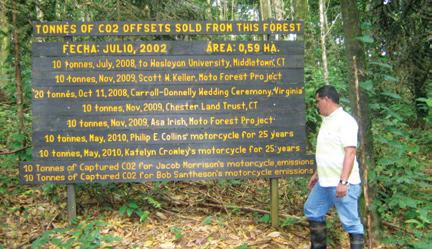
several motocrossers and off-road racers are balancing their emissions by financially supporting tropical forests. The trees funded by the racers’ support more than offset the carbon emitted by their bikes and haulers.
We caught up with Scott Keller, a team owner working with Reforest the Tropics, to find out how this works.
AMA Racer: So, Scott, what’s the idea behind Reforest the Tropics?
Scott Keller: We sign 25-year contracts with farmers, and then we go in and plant on their pastures. The trees sequester enough CO2 to offset the carbon emissions of the team. One gallon of gas emits 20 pounds of C02, and one hectare forest will sequester the CO2 emissions of 56,240 gallons of fuel. There’s a lot of math behind it, but bottom line is a $250 donation will cover the motorcycle for the next 25 years.
AMA Racer: Why bring this to MX?
SK: Off-highway motorcyclists have an undeserved reputation. People don’t keep things in perspective. For example, how many forests did U.S. Rt. 95 from Maine to Florida take out? Nevertheless, motorcycles get attacked for singletrack trail that is barely visible after the offseason. Motorcycles, for the most part, do a lot less harm than a highway, especially when you consider stuff like anti-freeze and other fluid runoff.
A vision of mine is to turn the racetracks in America to tree factories. You go racing and another forest gets planted—literally. Everyone can feel good about something like that.
More information can be found at ReforestTheTropics.org.
DESERT ACE
Now, he’s mastering a different kind of sand – the kind found in the AMA Racing Kenda Hare and Hound National Championship.
Story and
Photos
by Mark Kariya
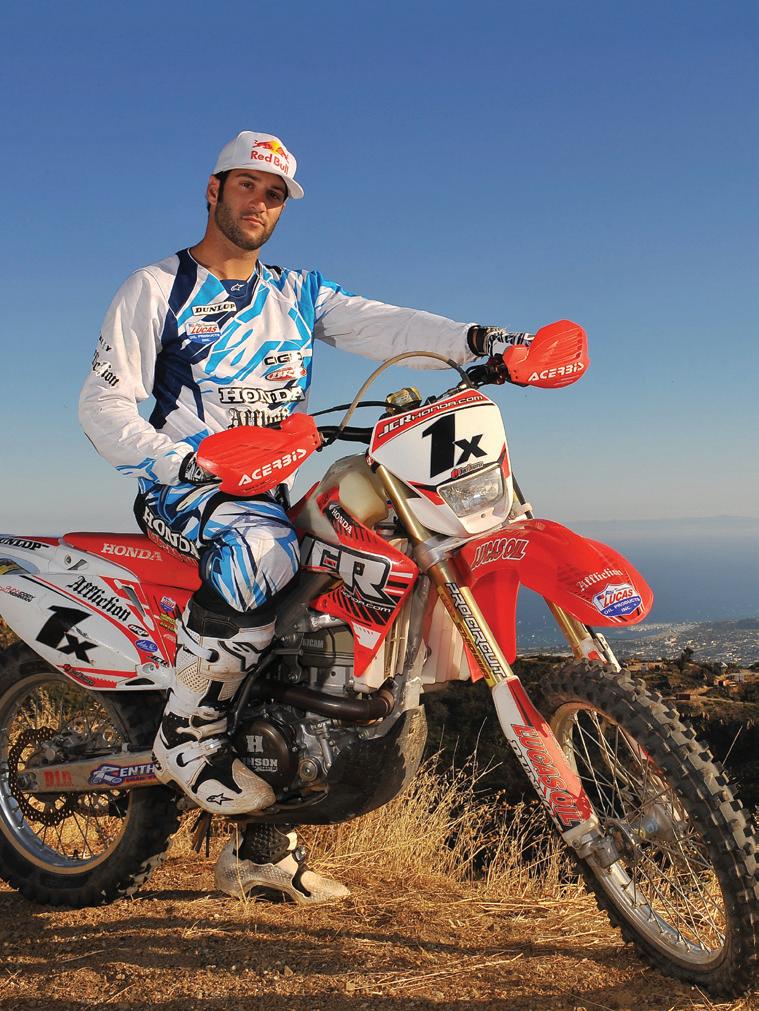
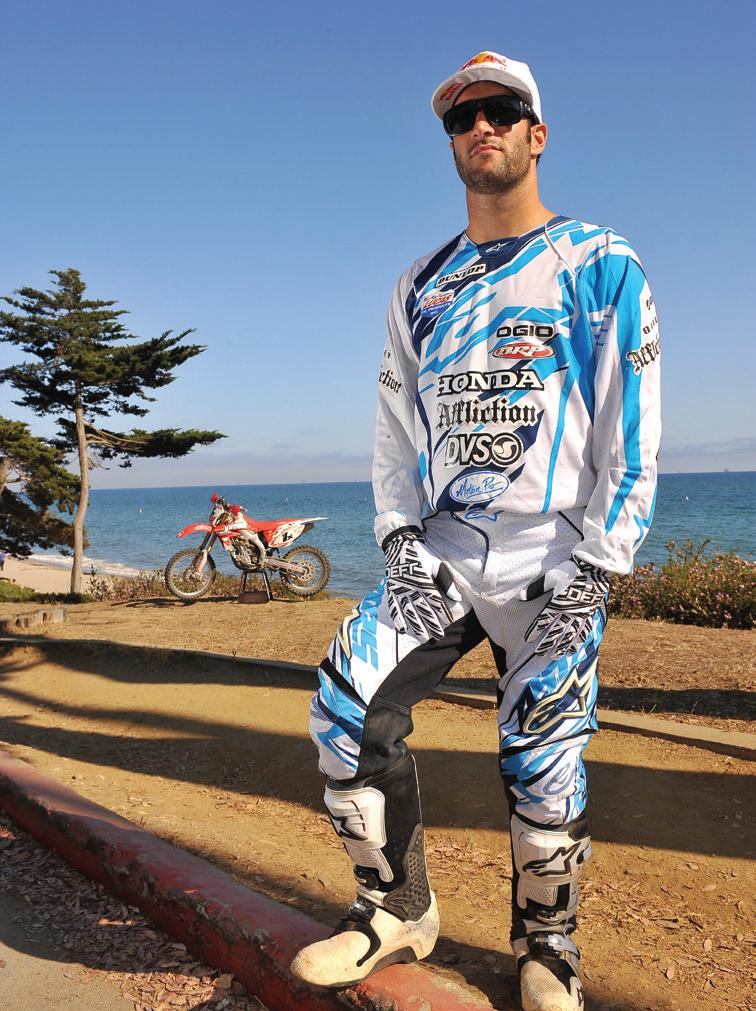
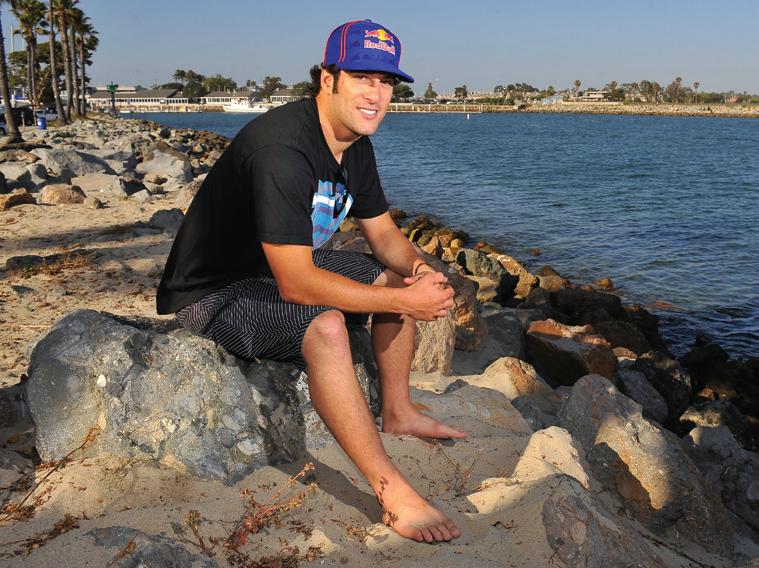
Whenyou grow up next to the Pacific Ocean, you spend a lot of time on the beach, and that is exactly what Kendall Norman did. He was born, raised and still lives in Santa Barbara, a quiet college town on California’s central coast. It’s probably most famous for being a second home to Hollywood heavyweights like Christopher Lloyd, Rob Lowe, Oprah, George Lucas and, yes, even a few surfers, like three-time world champion Tommy Curren and up-and-comer Bobby Martinez.
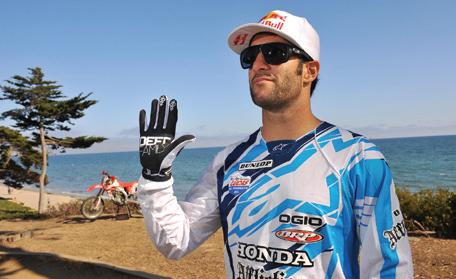
Now, Santa Barbara can add the reigning AMA Racing National Hare and Hound Champion to its rolls. Norman, who races for JCR Honda, took the 2010 title with five wins in the nine-round series, beating desert-racing vet David Kamo 234 championship points to 176.
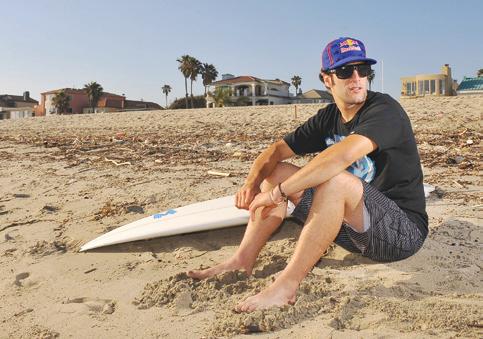
Despite his abilities on a dirtbike, the 26-year-old Norman spent most of his youth near the water.
“I’ve surfed since I was in junior high,” Norman remembers. “But I’ve been going to the beach and skim boarding and Boogie boarding my whole life.”
As he got older, however, Norman often accompanied his father, Morris, into the desert to camp and ride dirtbikes. Morris raced quite a bit, mostly at AMA District 37 (Southern California) enduros and desert events, but also at International Six Days Enduro (ISDE) qualifiers as well as at the ISDE itself. He ultimately passed that passion onto his son.
UP TO SPEED
School, motocross and BMX got in the way of Norman’s early off-road career, but by the time he graduated from high school, he was firmly focused on desert racing. He quickly attracted the attention of American Honda’s Bruce Ogilvie (who was posthumously inducted into the Motorcycle Hall of Fame in 2010) and desert racing legend Johnny Campbell.
“Bruce Ogilvie has been a big influence on my life just because I was just a
little kid when I was introduced to the program and he signed me in,” Norman says. “I really looked at him like a god, almost. ‘Man, this guy’s larger than life!’ I had nothing but the most respect for him and kept my mouth shut when he talked.
“After my dad, [Ogilvie] was definitely a big influence in my life, as well as Johnny Campbell, because he was there from the beginning, too, when I started riding for Honda. The two of them gave me a lot of insight and a lot of wisdom
into what I’m doing.”
Indeed, Campbell and Ogilvie each offered Norman a slightly different perspective that resulted in a unique approach to the racing craft. It made him a smarter competitor, not just a faster one.
That success didn’t happen overnight, however, and Norman credits several others for their contributions.
“[Fellow racer] Quinn Cody has been the older brother I’ve never had,” Norman says. “He’s always there to lead me in the right direction and wants nothing but the best for me, too... And I’ve always got to thank my brother and mom for always being there, they’ve always been a big part of my life.”
NATIONAL CALIBER
It all gelled in 2010 when Norman competed for the first time in three different desert racing series—AMA District 37 events, the AMA Racing Kenda National Hare and Hound Championship Series and SCORE Desert Series—and won all three. What most outsiders don’t know, however, is that
Norman did not originally have the Nationals on his radar. It wasn’t until his first event, where he discovered he could run the pace of the country’s best desert racers, that Norman committed.
“Nationals were kind of off the radar as far as the team goes, but I went to the first round and after that I decided, ‘I’m going to race this series,’” Norman says. “I wasn’t contracted to do it, I didn’t have bonuses to do it, I didn’t have expenses to do it. After about three rounds into it, [JCR Honda] started helping me out more.
“I never expected my year to be as good as it was, but I did set a goal to do what I did. It feels really good to meet my goals,” he adds.
Norman says that a number of changes to his program contributed to his success in 2010.
“In the past, I’ve overtrained,” he says. “[You can] ride so much and travel so much and do so much practicing that you get burned out by the time the races come along.”
Now, Norman says he mixes up his program by doing more surfing and other activities to take his mind off riding and racing. For him, keeping his mind fresh for racing is just as important as keeping his body physically prepared.
“When you show up for a race and maybe you’re a little burned out and you’re not really feeling it, there’s nothing worse than that,” he says. “I do give myself that time to be prepared for the races, to get my training in and all my preparation with my gear, and organizing everything as far as what I need to do well.”
You can, of course, turn too far away from racing and training. That may have been somewhat evident in Norman’s slow start in 2010.
“January and February were tough for me because I was out of shape from the off-season,” he says. “After the [Baja] 1000 in 2009, I really didn’t ride that much and didn’t really focus on riding
“January and February were tough for me because I was out of shape from the off-season.”
at all. Especially after the 1000, you’re pretty burned out on riding.”
After getting back into the swing of things, Norman came out to the first race in the series, the Desert M/C’s event in Lucerne, Calif., and rode well, finishing fourth behind top riders Kurt Caselli, David Kamo and Destry Abbott.
“I was sick the week leading up to it and hadn’t been riding at all, so I got super tired, but all in all I had a lot of fun,” he says. “I really did have a good time. Even though I didn’t win, I was super-motivated to go out and do the best I could and start training hard and start getting some results.”
A training accident slowed Norman’s progress, but he recovered—after finishing what was a then-disappointing fifth in the second round—to come back and win two straight races.
Norman’s first win came at an uncharacteristically flooded event outside of El Centro, Calif. Norman says the race rated as one of his most difficult.
“After racing 33 times [in 2010], I’ve had so many different experiences and different things going on and just different situations—every race is completely different,” he says. “One that really stands out in my mind is the El
Centro mud race, which is one of my most memorable races.”
Of course, Norman’s performance—it was his first overall win of the series— also has something to do with the race sticking out in his mind.
“I’ve been racing for a lot of years now and got a lot of seconds, got a lot of thirds, and been in the lead quite a bit but never actually won a race,” Norman says.
So, when he got an early lead, Norman says he definitely felt the pressure to remain there.
“To get the holeshot in that race and then have the conditions as bad as they were—and not really have the best of luck down there in the past—I was like, ‘Man, this is going to be tough! This is going to be hard. They’re coming for me!’”
Norman adds that the longer he held the lead, the more his confidence crept in, and he stayed mentally focused on winning the race.
“In the past, I’ve overtrained. [You can] ride so much and travel so much and do so much practicing that you get burned out by the time the races come along.”
“I was really confident for some reason, and I just handled it well,” he says. “Even though I got lost a lot in the second loop, I was riding really well that day. It was a difficult day and a difficult race, and with the conditions as bad as they were, I wasn’t even sure if I was going to be able to finish. It was a tough one. But there were a lot of tough races. Every race is tough in its own way.”
RACING THERAPY
Norman’s 2010 season is even more remarkable considering he raced with the weight of personal tragedy on his mind. Despite losing two people close to him that year, he still found the strength to finish as an AMA Racing National Champion.
“With the passing of my aunt and then the passing of my good friend Rick Gill, it’s really tough to overcome that stuff, but it is life and they would want me out there doing what I love and having a good time,” he says.
For Norman, competition turned to
therapy and helped him cope.
“Riding is like an outlet of who I am and it is my way of expressing myself,” he says. “I just feel so free, and nothing else really matters when I’m riding.”
Norman says that one of the things he can count on is it’s always better on his bike.
“I love to ride,” he says. “I love riding all terrain. Some good trail riding back in the mountains [east of Santa Barbara] with perfect, wet conditions with about two inches of fresh grass on the trail, with one or two of my buddies, is probably the best scenario for a good day of riding—and it would have to be all day.
“That, to me, is the most fun, but I also like getting creative in the hills and finding different jumps,” he adds. “Catching air has always been fun. It’s been a thrill of mine ever since I was a little kid. I love doing that. Then also it’s speed, too. Some fast fire road action is super-fun to me also.”
Although California has a reputation as a motorcycling haven, the sheer size of the state means that doesn’t hold true for all locales. Norman has to drive three hours from his Santa Barbara home to get to the prime public riding areas in the desert that best mimic the courses where he races. For him, however, it’s worth it.
“It’s all I know because I’ve lived here my whole life and the drive’s always been the same,” he says. “It could be worse, but I think the pace of life and the quality of life here is really good. I don’t have too many distractions here and I’ve got a really good place to train and a really good trainer. My teammate Quinn [Cody], who’s been my friend forever, we train together, ride together and do a lot together.”
For Norman, it’s the perfect formula.
“It’s a really good situation here for me,” he says. “I’ve wanted to move quite a few times, like go to Temecula or whatnot to get closer to the riding. But you know what? That may not work for me. What I’m doing here is working. There are some really good tracks we have [around here], like Castillo Ranch and Zaca [MX], and there are some private [off-road] riding areas too that we’ve got.”
NEXT?
Norman says it will be tough to top his 2010.
“I’m really stoked with how things went,” he says. “Definitely, I want to try to defend my titles, first and foremost. My AMA National Hare and Hound title, I want to defend that. Then, for sure, Baja. Baja’s the biggest thing that we have going. Our program is a Baja program, so we have to be successful in Baja.”
Keeping things fresh, however, is important to Norman. It’s one aspect of his racing career that he’s always been able to rely on.
“Life always throws you curve balls,” he says. “Hopefully, I’ll get some new opportunities to venture off and do some other different types of racing like maybe Dakar. That’s something that’s on my radar and something that I want to do.”
Norman’s interest in Dakar is spurred by the Dakar 2011 ride that his teammate Quinn secured from Honda Europe.
“In five years, I still want to be successful in Baja, for sure,” Norman says. “And then, on top of that,
“I just feel so free, and nothing else really matters when I’m riding.”
possibly be racing Dakar full-time. Dakar’s something I want to do, and it’s something that’s a long-term goal of mine to go over there and do that and see how it is. I’ve done the Baja 1000, which is considered the gnarliest one-day off-road race, the most grueling point-to-point all-out race there is. But there’s also Dakar, which is the gnarliest multiple-day stage race, so I definitely want to give that a shot and see how it compares to Baja.”
Does Norman ever wish he were something other than a professional off-road motorcycle racer—maybe a pro surfer? Even now, he finds it difficult to see how far he’s come.
“When I was little, I never really looked at it like ‘I want to be a professional motorcycle racer.’ As a kid, I didn’t really know you could do that,” he says. “I knew those guys were really good at it and I just did it because I had fun at it and loved doing it. Even when I started riding for Honda [in 2004], I didn’t consider myself a professional, per se. I just loved to ride and tried to do the best I could at it and just have fun with it.”
Don’t sit on the sidelines. Engage in the fight for your freedoms. Go online to AmericanMotorcyclist.com > Rights > Issues and Legislation. Pick an issue that threatens your motorcycling rights. Take action by writing your representative. The AMA makes it easy to fight for, and protect, your freedoms.
While you’re online—continuing to help us fight for your freedom to ride—please renew your AMA membership. Visit AmericanMotorcyclist.com or call (800) AMA-JOIN to renew your AMA membership today.
From The Pacific Coast Highway And The Dragon To The Cherohala Skyway And The Lolo Pass, AMA Members Share Their Favorite Roads
When it comes to the best places in the country to ride motorcycles, no group of riders is more knowledgeable than the members of the American Motorcyclist Association.
Nobody puts in more miles, samples more asphalt or rides more roads. So when American Motorcyclist magazine wanted to find the best roads in the country, we knew exactly where to turn: AMA members.
Using our newly redesigned website at AmericanMotorcyclist.com, we asked AMA members to nominate their favorite roads. Then we created a master list and asked you to vote for the best. Nearly 100 roads made the ballot, and we offer up the results of the voting with the top 15 roads, as chosen by AMA members.
Some of these may be familiar. Some you’ve likely never heard of. But in the end, they all have one thing in common: They’re the best roads in the country, as chosen by you.
15|Washington Route 129 and Oregon Route 3, Clarkston, Wash., to Enterprise, Ore.
Why it’s great: Running north from Enterprise, Ore., to Clarkston, Wash., in the eastern parts of those states, Route 129 strings together switchbacks, part of the Snake River, plateaus and views of the Wallowa and Blue Mountains. A stop for a sandwich at Bogann’s Store, right where the route crosses the Grande Ronde River, is practically required.
Comments: “Rattlesnake grade, baby! Unbelievable switchbacks, gorgeous canyon, endless ribbons of traffic-free twisties.”—Michael Wittgraf
“Curves and elevation changes are out of this world, great vantage points, minimal traffic and good road surface. Just the best ride ever.”— Charlie Leininger
Our take: Even better, on the north end, it hooks up with the Columbia River Gorge, and the roads along it—even the interstate highway stretches—offer up views that look like amazing murals.
14|Ohio Route 170, Calcutta to Poland
Why it’s great: We know what you’re thinking, but you’re wrong. While much of Ohio is flat, a good portion of it includes Appalachian foothills. And Route 170, in the northeastern part of the state, is right in the thick of them.
Running through two counties next to the Pennsylvania border, Route 170 offers up plenty of twisties, a few switchbacks and an intense ride you didn’t
think you could find in the Midwest—all between two international-sounding cities.
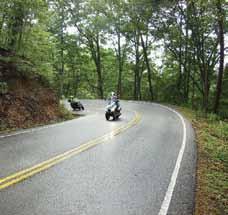
Comments: “Clean road. Consists of mostly sweepers and a few hairpins. The only downside is that it gets crowded during the early spring for some reason. This road gives you a Tail of the Dragon feel.”—Bill Berger
“Awesome curves, but be careful. If the yellow road sign says 15, try 15.”—Susan Newman
Our take: Ohio 170 is a super-great road, made even better by a number of incredible rides nearby, including Ohio Route 164, from Lisbon to Leesville, that can be as technical and twisty as any in the country.
11. Natchez Trace Parkway
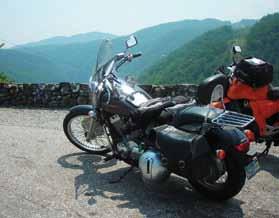
Submitted by Bettena Jones, photo by Sebrie Images
14. Ohio Rt. 170 Submitted by Bill Berger, photo by Christopher Perry
13|California Route 58, McKittrick to Santa Margarita
Why it’s great: If you ever wonder why so many motorcyclists love California, it’s roads like Route 58, which offers technical twists, great little towns full of oil-boom history, and great vistas that are green for the early spring and are trademark auburn the rest of the year.
Comments: “This road is 70 miles of Southern/Central California’s best! It ranges from high desert petroleum fields, through gradually more technical mountain twisties and hairpins (with a nice stopping point at the top), then on to high plains grasslands with huge roller coaster dips, then rolling golden California hills dotted with trees accompanying fast sweepers which only get tighter as the miles click by, and concluding with another set of fantastic canyon curves. All in a remote setting, with amazing, smooth asphalt. I’ve been in 46 states and six Canadian provinces (on a bike) and this is one of the best!”—Kevin Redner
Our take: We can’t top Kevin’s words, but can offer up another great road nearby: Caliente Bodfish Road, from (no surprise here) Caliente to Bodfish. It’s every bit as good, and even more remote. AMA member Steven Fletcher says: “It is part of a 100mile loop starting in Lake Isabella, passing over the Piute Mountains and connecting with State Highways 58 and 178. Some good twisties, beautiful high elevation panoramic views, beautiful valleys, zero traffic, passes near the historic Tehachipi Loop, return to Lake Isabella on state Route 178 along the Kern River, which is one of the most beautiful rides in the state.”
12|
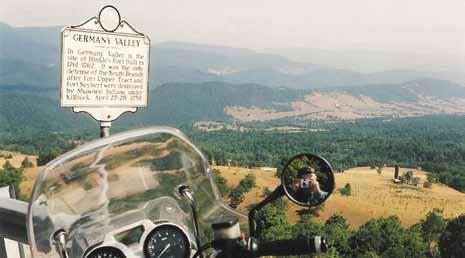
U.S. Route 33, Harrisonburg, Va., to Seneca Rocks, W.Va.
Why it’s great: Climbing over the Eastern Continental Divide out of Harrisonburg to the rock-climbing mecca of Seneca Rocks, Route 33 mixes wide sweepers with tight switchbacks and incredible mountain valleys through the heart of the Monongahela National Forest, a region that earns West Virginia its reputation as the Colorado of the East.
Comments: “Here’s what I’m talking about. This is a great road in excellent condition crossing the Allegheny Mountains.”—Walter Halaja
“There are so many good roads off of this road, that you can—and I often do—spend days at a time in this area. West Virginia rocks!”—Fred Weston
Our take: Whether it’s the lack of people, the lack of industry or the lack of any cares whenever we ride in West Virginia, pretty much all of the state is full of great roads, and U.S. 33 in this area is one of the best. Nearby Elkins is a great place to hang out overnight.
11|
Natchez Trace, from Natchez, Miss., to Nashville, Tenn.
Why it’s great: Stringing together the Cumberland, Tenn., and Mississippi rivers along 440 miles of winding, historical road, the Natchez Trace offers a laid-back experience along a closed-access road in the highland South. Unique among well-known motorcycling roads, the emphasis here is less on curves and technical turns, and more on a smooth, easy cruise, with no cross traffic for much of its length.
Comments: “Great scenery, hills and curves, no commercial traffic, historical, and, at 444 miles, a pleasant multi-day experience if you want it to be. On the other hand, almost any road I’m riding on is the best road—at that moment!”—Bettena Jones
13. California Rt. 58 Submitted by Kevin Redner
13. California Rt. 58
12. Virginia-West Virginia Rt. 33 Submitted by Walter Halaja
12. Virginia-West Virginia Rt. 33
10. California Rt. 2
Submitted by Chris Phillips, photo by Conrad Lim
“It’s long, has remarkable towns to adventure right off of it, and very scenic.”— Eric Lentz
Our thoughts: Following the Trace either direction is a uniquely different experience. Heading northeast, it’s an instant departure from bustling southern cities, and a low climb into the heart of the Tennessee hills. The other way, it’s a slow ride down from the mountains. Its best feature is that part of the original roadway, which grew from Native American trading paths, is still visible along the route—and some segments are on the National Register of Historic Places.
10|Angeles Crest Highway, California Route 2
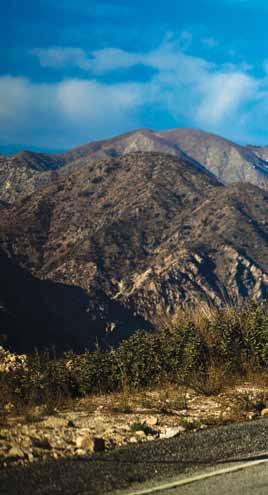
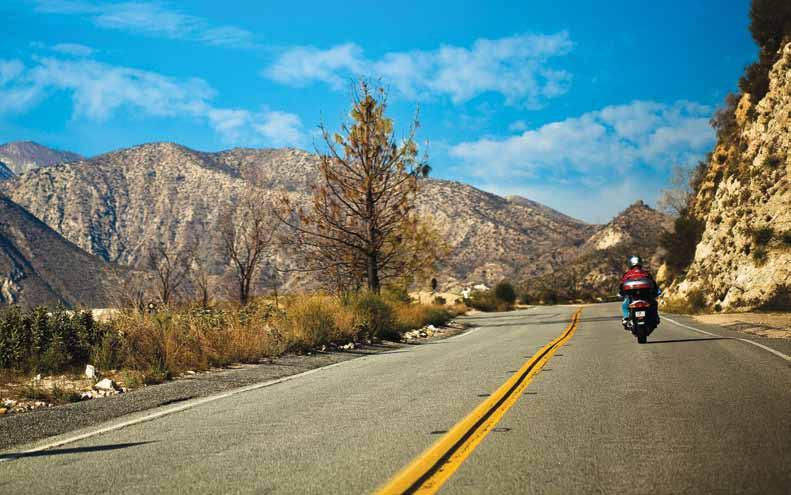
Why it’s great: Angeles Crest is among the best-known and most-photographed motorcycle roads in the country, mainly because of its proximity to greater Los Angeles and the many motorcycle magazines that use it for testing and as a photo backdrop. Running more than 60 miles from Foothill Boulevard in Los Angeles to Wrightwood, it climbs into the San Gabriel Mountains and the Angeles National Forest, reaching above 7,000 feet. The road is subject to the occasional closure from rockslides and can get heavily fogged in, but it’s a spectacular way to arrive into, or escape, from Los Angeles.
Comments: “The road follows the contours of the San Gabriel Mountains for
more than 50 miles and has a 7,000-foot elevation gain minutes from Los Angeles with endless sweepers, switchbacks and straights. Newcomb’s Ranch offers a respite and food catering to motorcyclists. A ribbon of heaven here on earth!”—Chris Phillips
“I wind up riding this road at least once a month, and often more, when I need to leave the L.A. feeling behind. A ride up the mountains and a stop at Newcomb’s Ranch—they’re talking about closing it, so move fast—always puts the world back into perspective.”—Kevin Rent
Our take: When you’re on Angeles Crest, it’s extremely hard to believe that 9.8 million people are crammed between you and the Pacific Ocean in one of the most heavily populated cities in the country. But ride it during the week, out of the commuting window, and you’ll often find yourself completely alone with great views of mountains and the occasional glimpses of the Los Angeles Basin and all those poor souls hard at work while you’re riding.
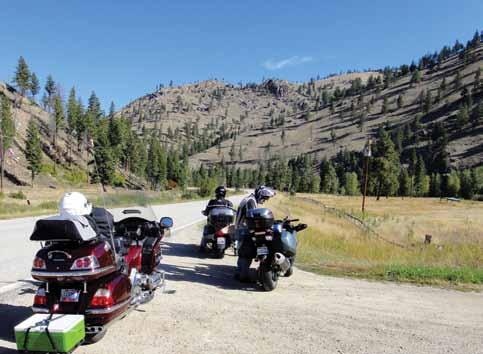
9|U.S. Route 12, Lolo Pass, Idaho and Montana
Why it’s great: You can get further north in Idaho than U.S. Route 12, but you really have to work at it. Rolling over 174 miles from Lewiston, Idaho, across the Snake River and up to the Montana state line at Lolo Pass, Route 12 is known as the Northwest Passage Scenic Byway because
it roughly follows the route that Lewis and Clark pioneered back in the day. Full of valley sweepers, high-mountain passes and incredible views, it’s an easier, but no-lessspectacular, route today.
Comments: “Beautiful scenery, good road surface, little traffic.”—Jeff Vanden Boogart
“Lolo pass is just plain awesome. Beautiful area, great curves, and it’s between Montana and Idaho.”—Dan Jacobs
Our thoughts: There’s something about the northern reaches of the Rockies in the American West that make them unlike anywhere else, from the harsher summer light during the long days, to the amazing, jagged mountains that scrape the sky. Route 12 offers all of that up by the tankful.
8|Route 36, California
Why it’s great: Stretching 248 miles from near the Pacific Ocean in Humboldt County to Susanville in Lassen County, California Route 36 climbs and weaves through mountain ranges to become part of the Volcanic Legacy Scenic Byway, which passes by the incredible Lassen Volcanic National Park. Fast sweepers alternate with technical turns, with very few stops or cross traffic for much of the route.
Comments: “If you’re not from here, or from only a few other places in the country where you’ll see volcanic cones (mountains),
you don’t know what you’re missing. Lassen Peak is pretty incredible.”—Jeff York
“It’s 140 miles of twisty bliss between Fortuna and Red Bluff.”—Chris Daniels
Our take: Northern California is one of the greatest places to ride a motorcycle anywhere on the planet. Remote little towns, laid-back attitude, and, in the case of the heart of California Route 36, windswept volcanic landscapes are the norm. The feel is more like Oregon than Southern California. It’s hard to believe you’re only a short ride from big cities like Sacramento and San Francisco.
7|Cherohala Skyway, North Carolina and Tennessee
infamous Deal’s Gap, the lower section of the Blue Ridge Parkway, numerous other extraordinary roads and the area’s general hospitality towards motorcyclists, this road becomes my favorite road in my favorite riding playground.”—Rick Scott
“This road has it all. Beautiful vistas, great sweeping curves, outstanding elevation changes, and no side roads. It is the perfect motorcycle road!”—Rodney Bryant
curves. If you don’t like it one way, you can come back the other way and see what you missed. From St. Mary’s Lake to Lake McDonald. It’s just a nice cruise.”—Neal Emrick
Our take: With ridiculous amounts of snow that have taken out pretty much every protective road barrier along the route, this is one scenic road that demands every bit of your attention—and makes it a true must-ride.
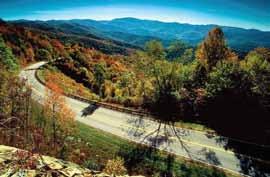
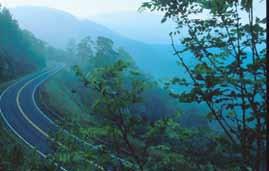
Why it’s great: If Colorado Route 550 is known as the Million Dollar Highway, the Cherohala Skyway could be considered the 100 Million Dollar Highway, given how much it cost to build. This 43-mile route runs from Tellico Plains, Tenn., to Robbinsville, N.C. Vistas, overlooks, switchbacks and scenic pullouts abound along its 4,000 feet of elevation gain to its high point more than a mile up.
Comments: “Fantastic views, good pavement, decent speed limit. The curves are not as tight as they are on nearby U.S. 129, so it’s a more relaxing ride. Nice and cool in the summer.”—Troy Jackson
“This is a well-kept mountain road that winds up to almost 5,400 feet with unbeatable views. This alone makes it one of my favorite motorcycling roads, but when combined with its close proximity to the
“This mile-high ride provides incredible views of unspoiled Tennessee wilderness with wonderful sweeping curves and is pleasant break from the heat in the summertime.”— Ellen Flanagan
Our take: Follow the advice above and combine the Cherohala Skyway with nearby U.S. 129 (Road No. 3 on this list) and you can do a 150-mile day that rivals anything east of the Mississippi. Be sure to stop and get some boiled peanuts or apple cider (depending on what time of year you’re riding) at one of the many roadside stands.
6
|Going to the Sun Road, Glacier National Park, Montana
Why it’s great: Built in 1932 as the only road through the heart of Glacier National Park in Montana, the Going to the Sun Road stretches for 53 miles and crosses the Continental Divide at Logan Pass. Another road that’s almost always closed in winter, the asphalt over the 6,646-foot Logan Pass can see more than 80 feet of snow in the colder months. But from June through December, it’s one of the best ride’s you’ll find.
Comments: “Exceptional beauty and grandeur.”—Thomas Culbertson
“First of all, it is breathtaking, then the
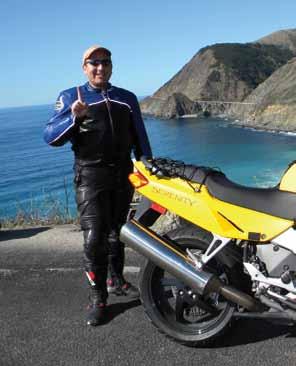
5|California Highway 1, Pacific Coast Highway
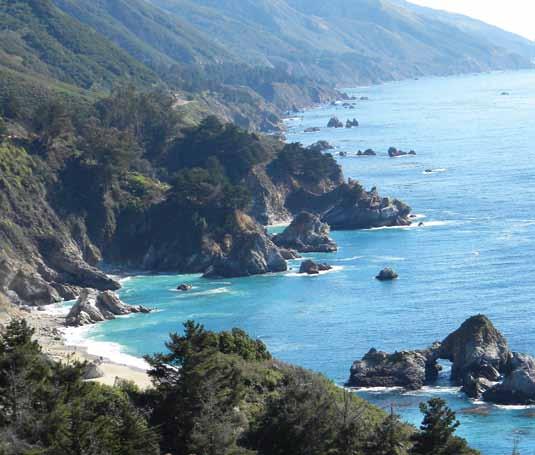
Why it’s great: We’re pretty sure there’s a law somewhere that says you can’t do a “Best Road” list without including the Pacific Coast Highway, and this 655-mile road should be a must-do for every motorcyclist
5. California Hwy 1 Submitted by Marck Aguilar
7. Cherohala Skyway Submitted by Rodney Bryant
7. Cherohala Skyway
7. Cherohala Skyway
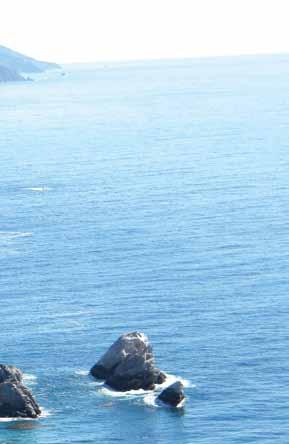
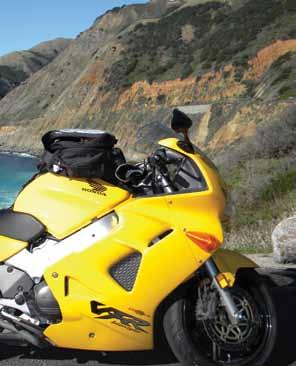
in the country. Stretching from Dana Point in Orange County to near Leggett in Mendocino County, the road offers achingly beautiful views of the Pacific Ocean, dramatic, cliffhugging curves and throwback small towns, especially in Northern California.
Comments: “Hundreds of miles of gorgeous coastal scenery, curves that seem to go on endlessly followed by brief straight portions, and unforgettable small towns. Even the urban portions are amazing.”—Mark Janes
“Twisty, curvy, edge-of-the-landmass road, well paved, with periodic hill slides. Gorgeous view of the great Pacific Ocean.”—Marck Aguliar
“Beautiful sweeping curves, unbelievable scenery. Beautiful ocean views, blended with mountains. Basically, the area from Santa
Barbara to San Francisco is amazing.”—Don Porter
Our take: If you can only ride one road in California, this is the one. From the urban sprawl of the Los Angeles area to the laidback cool of Big Sur, across the Golden Gate Bridge and north to areas so remote you’d swear they shouldn’t exist in California, it’s worth the ride. Be prepared for any kind of weather, including cold and fog, even in the height of summer. It really is a different place.
4|Highway 550, from Ouray to Durango, Colo.
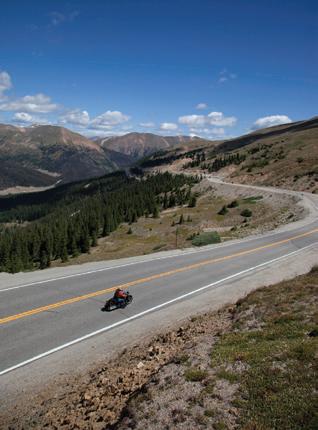
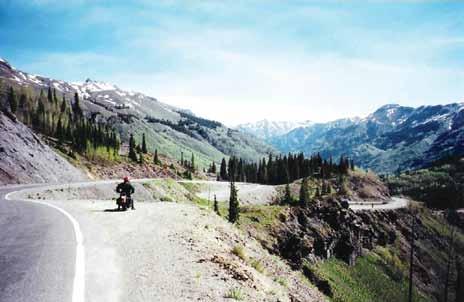
Why it’s great: They don’t call the heart of this stretch of U.S. 550 “The Million Dollar Highway” for nothing. Though so named for the precious metals that poured out of the region during its mining heyday, the moniker could just as easily describe the views. Sprinkled with sheer drop-offs, hairpin turns, a general lack of guardrails and a healthy dose of RV traffic, it makes for a challenging and rewarding ride.
Comments: “Wow! Waterfalls, rivers, hairpin turns, over and through 12,000-foot mountains, gorges and valleys. We started this ride in sunshine in Ouray, then got into rain, and, as the road reached the high altitudes, snow! At one point, my wife, as passenger, was reaching around to wipe my
faceshield so I could see. At Silverton, we ran to the ski shop to buy dry socks and better rain/snow gear.”—Terry Adreon
Our take: There are a dozen or so routes in Colorado that are amazing. This stretch is the best of the lot.
3|U.S. 129—“The Tail of the Dragon”—on the North Carolina-Tennessee border
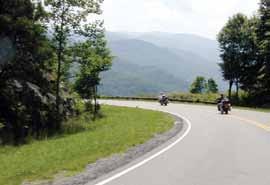
Why it’s great: Probably the best-known curvy road in the East, U.S. 129 may run for more than 580 miles through four states, but for curve addicts, only the stretch that runs from one side of the Tennessee-North Carolina border to the other really matters. There are a claimed 318 curves in 11 miles on that stretch, and several businesses have cropped up in the area that cater specifically to the thousands of motorcyclists who make pilgrimages to the road.
Comments: “The speed limit may only be 35 mph, but with curves this tight, that’s all you really need to go.”—Bill Rawls
“The overlook at the top offers a great view of the Calderwood Lake on one side, and about a hundred motorcyclists at any given time parked on the other.”—Susan Ragus “Really, if you have to ask…”—Chuck Rowland
Our take: The Dragon really has grown
5. California Hwy 1
4. Colorado Hwy 550
Submitted by Terry Adreon
3. U.S. 129
Submitted by Ellen Flanagan
3. U.S. 129
Submitted by Doug Hagemann
93 in Idaho
Submitted by Chris Miller
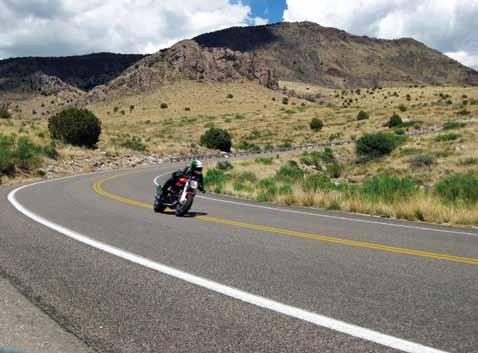
Rt 191,180, 78 through Arizona and New Mexico
Submitted by Doug George
A Few Hundred More Roads Are In The AMA Great Roads Database
Great roads don’t have to be like secrets. And thanks to the help of your fellow AMA members, a list of the best roads in the country are only a few clicks away with the AMA Great Roads Database.
Available only to AMA Members through the exclusive Members Area of AmericanMotorcyclist.com, the Great Roads database lists hundreds of perfect asphalt roads, submitted by AMA members, and organized by state. You can even submit your own for others to see.
Just visit AmericanMotorcyclist.com/ Membership > Great Roads.
Be sure to also visit the “Gallery” on the AMA home page to see AMA member-submitted pics of their favorite roads.
And here are just a few more honorable mentions that rank right up there with the best. Enjoy!
Highway 12, Colorado
“Numerous excellent twisties over and around mountains with gorgeous scenery.”
—Angie McGehee
Route 191, 180, 78, Arizona, New Mexico
“The Devil’s Highway demands skill, endurance, and caution. Beautiful alpine scenery, wildlife abounds and history is everywhere. This loop laughs at Deals Gap and laughs all day! It takes a hard charging rider up to 8 hours to finish!”
—Doug George
U.S. 191 (Alpine to Morenci) Arizona
“The most challenging mountain highway I have ever experienced; crosses 6 summits; no guardrails; spectacular beauty; cuts through the massive and incredible Morenci copper mine.”
—Gordon R. Dierks
U.S. 16A (South Dakota)
“Very nice ride through the scenic Black Hills of South Dakota with views of Mt. Rushmore, tunnels and a lot of turns.”—Jason Sogn
U.S. 50, Nevada
“This highway provides an unparalleled experience of North America’s unique basin and range geologic zone. Going through one of the least-populated area in the United States, Hwy 50 is relatively empty all year long, allowing for an especially solitary experience through one of the world’s most magnificently pristine desert landscapes.”—Peter M. Hayes
Farm to Market 336, Texas
“One of the Twisted Sisters (FM 335, 336, 337), this route follows the west fork of the Frio River up to the Edwards Plateau. It runs well in both directions. Some open range, highly technical but with scenic views and pull outs.”
—Harvey Greenlee
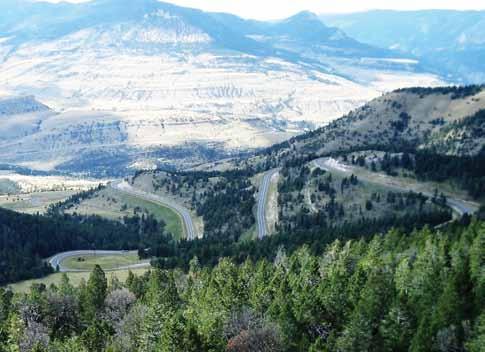
Rt 212, 296 (Chief Joseph Scenic Highway) in Wyoming
Submitted by Jim Cunningham