A Country Christmas Mistletoe Mystery



December 2025 | Volume 50 | Number 11
Marlee Jackson | Editor
Maggie Edwards Associate Editor
Laura Unger | Graphic Designer
ALABAMA FARMERS FEDERATION
Paul Pinyan Executive Director
Jeff Helms | Director of Communications
FEDERATION OFFICERS
Jimmy Parnell | President, Stanton
Mark Byrd | Vice President | North, Danville
Jon Hegeman Vice President | Central, Anniston
Chris Carroll | Vice President Southeast, Ariton
Jake Harper | Vice President | Southwest, Camden
Steve Dunn Secretary-Treasurer, Evergreen
DIRECTORS
Dorman Grace | Jasper
Jeff Peek | Athens
David Bailey | Dawson
Darrell Lee | Addison
Joe Anders Northport
Phillip Hunter | Birmingham
Mahlon Richburg Auburn
Tommy Martin | Moundville
Bill Cook Montgomery
Trip Horne | Louisville
Mark Kaiser | Daphne
Jerry Peak | Chancellor
Rachel Chastain | Talladega Denzil Dees | Epes
Neighbors (ISSN 0162-3974) is published monthly by the Alabama Farmers Federation, 2108 East South Boulevard, Montgomery, Alabama 36116 or (334) 288-3900. For information about Alabama Farmers Federation member benefits, visit the website www.alfafarmers.org. Periodicals postage paid at Montgomery, Alabama, and additional mailing offices. Printed in the U.S.A.
POSTMASTER
Send address changes to Neighbors P.O. Box 11000, Montgomery, Alabama 36191-0001
MEMBERSHIP AND SUBSCRIPTION CHANGES 800-392-5705, Option 4 or BWatkins@alfafarmers.org
ADVERTISING REPRESENTATIVE
Ben Shurett, (256) 997-7922 BenShurett.alfafarmers@gmail.com
DISCLAIMERS: Advertisements in Neighbors do not represent an endorsement by the magazine or Alabama Farmers Federation. Editorial information from sources outside the Alabama Farmers Federation is sometimes presented for our members. Such material may, or may not, coincide with official Alabama Farmers Federation policies. Publication of information does not imply an endorsement by the Alabama Farmers Federation.
www.AlfaFarmers.org



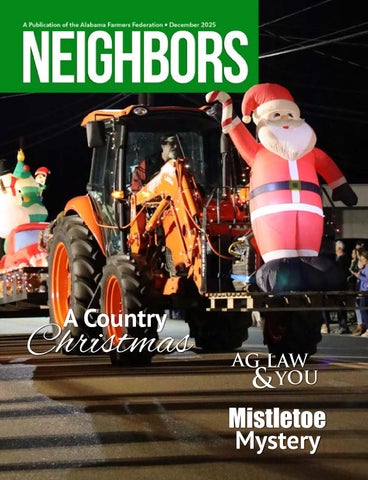
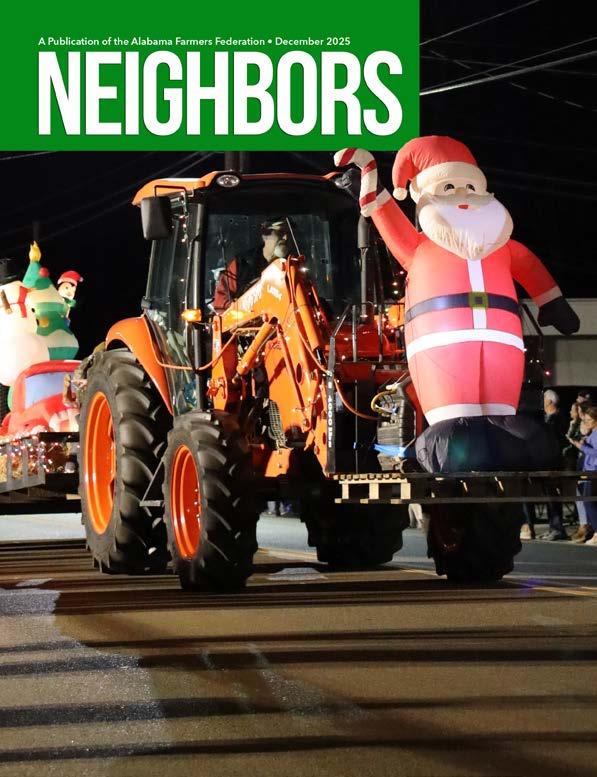
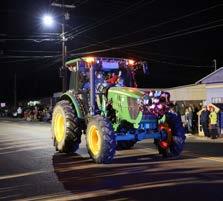
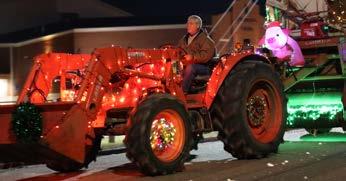
Tractors trimmed in lights and festive decor drive down Main Street during the Ariton Christmas Tractor Parade. Community members gather to celebrate the season while honoring the Wiregrass Region’s farming roots.
Photo By Maggie Edwards

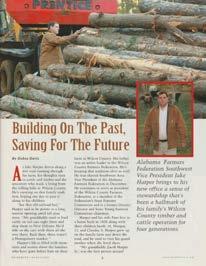
TIME WELL SPENT: Longtime Vice President Honored for Service to Agriculture
By Marlee Jackson
Few men are as stalwart, steady and straightforward as Jake Harper.
The Wilcox County cattleman and timber landowner has offered his logical mind, plain speech and acumen for accountability to fellow farmers for decades, most recently as Southwest Area vice president of the Alabama Farmers Federation and Alfa Insurance.
“I want it right,” Harper remarked in reference to his intense review of board minutes, financials, publications and Federation proposals, a faint grin slicing across his stoic face. He’ll be honored for that commitment to excellence Dec. 7.
That’s when Federation President Jimmy Parnell will present Harper the
Service to Agriculture Award during the organization’s 104th annual meeting in Montgomery.
The Service to Agriculture Award is the Federation’s highest honor.
“Jake is an extremely valuable board member who understands our history. His institutional knowledge is irreplaceable,” Parnell said. “He’s very good at analyzing numbers and getting to what matters. That makes him an asset.”
Parnell continued, “Along with all of that, Jake is my friend. I don’t remember when Jake wasn’t my friend. He is honest — telling me what’s positive and what’s negative. You don’t often get that.”
Harper’s Federation involvement has flourished despite its painful origin. He joined the Wilcox County Farmers Federation (WCFF) board in 1981, filling the seat of his late father. A willingness to serve meant he was soon elected WCFF president, a role he continues to hold.
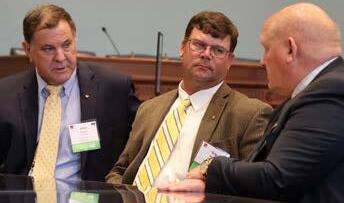
Federation Southwest Area Vice President Jake Harper, left, and fellow board member Trip Horne shared concerns about the farm economy with U.S. House Ag Committee Chair G.T. Thompson, R-Pa.
elected Jake Harper as Southwest Area vice president in 2003. He was previously District 9 director and chair of the State Young Farmers Committee.
By 1987, Harper was chair of the State Young Farmers Committee, followed by nine years on the state board serving District 9 — a swath of counties that cuts through central Alabama’s Black Belt.
In 2003, peers from 17 counties elected him Southwest Area vice president. A man of high integrity, Harper has since been unchallenged.
Term limits, however, mean his chapter as vice president ends this December.
“They say politics is timing. I was at the right place in the right time,” Harper said. “It’s been a very good run, but it’s time to go home.”
A Southern gentleman, Harper’s towering frame has born well the weight of representing those who trusted him to take their interests to the state level.
He’s spent the final months of his vice presidency like the previous decades — departing from his home in the heart of the Southwest Area to traverse backroads en route to meet with farmers in Baldwin, Butler, Choctaw, Clarke, Conecuh, Dallas, Escambia, Hale, Lowndes, Marengo, Mobile, Monroe, Montgomery, Perry, Sumter, Washington and Wilcox counties.
“I didn’t miss a county meeting unless another county met the same night or it was something I couldn’t help,” Harper said. “My daddy always used to say, ‘If you play, you gotta pay.’ I don’t want to be elected to something in title and not do my duty.”
Harper and his wife, Pam, a pharmacist, instilled the value of service in their children, Jacob, Morgan and Claudia. The young Harpers quickly learned their father’s work was a familial duty.
That still rings true.
Harper was attending an Alabama FarmPAC meeting two years ago when Pam fell off a ladder at home and shattered her ankle. She called Morgan, who wanted to alert his father.
Pam refused — until the meeting adjourned.
“We take Jake’s position very seriously. Our life has revolved around these obligations,” she said. “This is his watch. When he leaves this company, he wants his time to have helped it continue on a pathway of success.”
Harper phoned into the next board meeting, his sole absence from the Federation board room in 32 cumulative years of service.
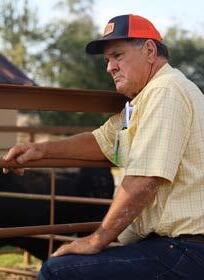
For decades, Jake Harper has taken seriously his duties as Southwest Area vice president, rarely missing a county meeting and diligently reviewing Federation financials.
In addition to his Federation service, Harper is a longtime local Soil & Water Conservation District board member; has served multiple terms on the Federation State Forestry Committee; and is on the Forever Wild Land Trust board. He’s also past president of the Alabama Association of Conservation Districts and Alabama TREASURE Forest Association. The Harpers attend Camden Associated Reformed Presbyterian Church.
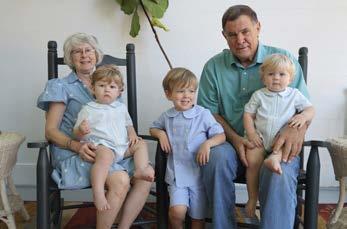
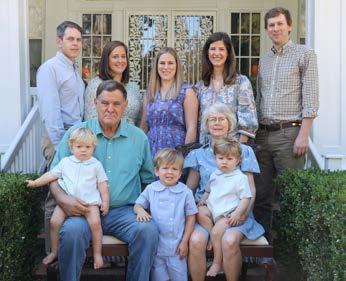
While this season of change is admittedly emotional, the Harpers said they look forward to adventures ahead, including greater freedom as Papa and Gigi to grandsons Cal, Banks and Wil, plus time with Jacob and wife Landon; Morgan and wife Patricia; and Claudia and husband Bannock Farrens.
As board members have changed, Harper has been a steady source of insight to incoming leaders. His influence is undeniable — though he humbly sidesteps the compliment.
“I have learned a lot, and I hope I’ve given just a little to the Federation,” he said. “It’s just really matured me in what I saw, what I learned and who I met. The outstanding men and women who have served on the board have been admirable individuals.”
Jake and Pam Harper are discovering the joy of grandparenthood after raising their children in Wilcox County. Their brood includes son Jacob, his wife, Landon, and their children, Cal and Banks; son Morgan, his wife, Patricia, and their son, Wil; and daughter Claudia and her husband, Bannock Farrens (not pictured).

The beans in your Alabama fields today are destined to see the world. Last year, we exported $83.8 million worth of soybeans. That’s a lot of overseas opportunity for one year. And we’re always growing new markets abroad to help keep this demand going strong. And if you’re wondering how far your soybeans can go, we’re charting more ways to keep your ship coming in. Learn more about the story of soy at unitedsoybean.org/hopper.

FTrailer Truths: Farm Trailer Laws Explained
ew issues generate more confusion, and more roadside stops, than trailer tags for farmers. It’s not uncommon to hear from producers who have been ticketed while hauling equipment or crops, even though they believed they were operating legally.
Under Alabama law, most farm utility trailers used exclusively for agricultural purposes do not require registration or a license plate. Knowing where that line is drawn can prevent unnecessary expense and frustration.
The Law
Ala. Code §32-9-26 provides an exemption from trailer registration and licensing for farmers, custom farmers and other agricultural operators. The exemption from registration only applies to two- to eight-wheeled trailers that are used exclusively for transporting agricultural products to and from the farm or for agricultural purposes related to the operation and maintenance of a farm.
The determining factor for trailer registration and license plate exemption is the trailer’s use.
For example, a trailer used to haul a mower to a poultry house to maintain the farm property would fall squarely within the exemption. It’s being used
for farm maintenance. However, if that same trailer hauls the mower to church to maintain the church property, it no longer qualifies. In that case, the trailer must be registered and display a license plate.
Weight Limits and Safety Rules
The registration exemption is also limited by weight. A trailer and its load may not exceed 36,000 pounds total or 10,000 pounds per axle — whichever is less.
Even when exempt from registration, trailers must still comply with certain safety requirements:
n Reflectors: There must be at least two red reflectors on the rear and one on each side.
n Width: Trailers may not be more than 10 feet wide. That shrinks to just 102 inches when operated on the interstate.
n Length: The combined length of the towing vehicle and trailer may not exceed 76 feet.
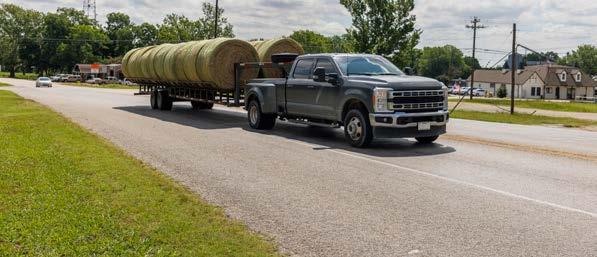
n Overhang: Round hay bales may extend up to 1 foot beyond each side of the trailer.
Tax Advantages
Alabama law also provides a reduced sales and use tax rate of 1.5% for trailers used primarily in production or harvesting of agricultural
commodities (Ala. Code §45-40-245.31). The standard state sales tax rate is 4%.
Conclusion
Alabama’s trailer laws are intended to accommodate the unique needs of farmers while maintaining public safety on roadways. The key takeaway is that the trailer registration exemption depends on use.
Farmers who use trailers exclusively for farm operations generally fall within the exemption and do not need a license plate. Understanding the distinction can keep farmers compliant with the law and ensure smoother travel down Alabama’s highways.
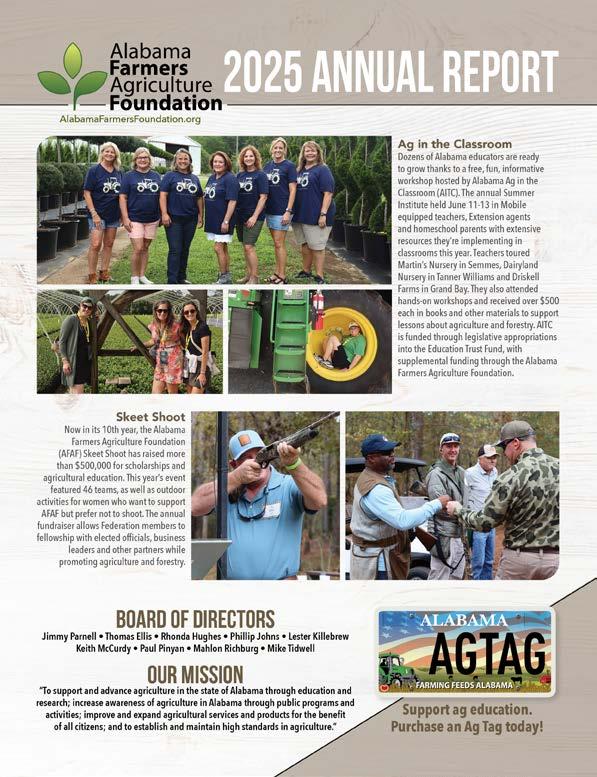
A Country Christmas
Ariton Tractor Parade Celebrates Seasonal Cheer
By Maggie Edwards
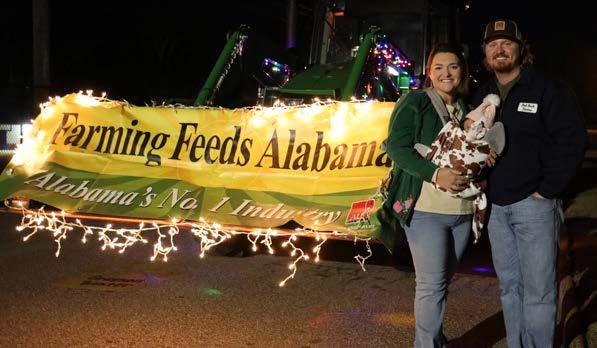
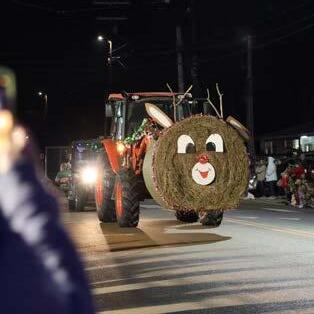
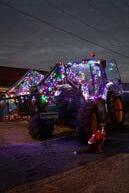
Rumbling engines wrapped in twinkling lights rolled through Ariton last December as dozens of tractors decked in garland paraded through downtown.
The Ariton Christmas Tractor Parade brings the community together while celebrating a country Christmas, said Barbour County Young Farmers Secretary
Wiregrass leaders who pitched the parade idea after seeing viral social media videos of tractors covered in Christmas lights during the COVID-19 pandemic. The inaugural parade was in 2021.
“People thought we were crazy
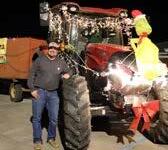
County Farmers Federation board and is also a local Young Farmer. He said it’s magical seeing the small town come together to celebrate the season. During last year’s parade, St. Cin’s family tractor was adorned with lights, bows and an inflatable Grinch. He said the
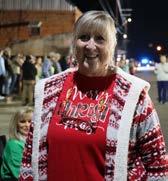
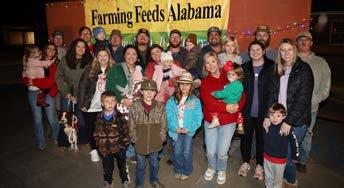
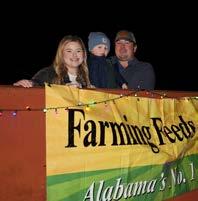
Wiregrass residents deck out in festive attire to celebrate the season at the annual Ariton Christmas Tractor Parade.

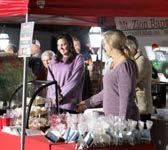
Smiles spread through downtown Ariton last December as the community gathered to see twinkling lights and hear roaring tractor engines. Young Farmers from Barbour and Dale counties prepared parade floats, while churches and volunteers supplied homemade baked goods and hot chocolate for the crowd. The local marching band led the parade playing Christmas tunes, while Santa Claus was the grand finale.

most exciting part was pulling a peanut wagon filled with fellow farmers.
“It’s fulfilling to see our community pull together to showcase not only agriculture but our Lord and Savior Jesus Christ,” said St. Cin, a poultry and cattle farmer. “It makes me proud to see folks showing up to support us, too. It gives me hope for our future farmers — that they will see the impact they can make to highlight agriculture.”
Nicki Hamm and Tyler Sutton were instrumental in making the magic happen.
“We are all thirsting for community involvement,” said Hamm, a retired educator who raises poultry and works for Wiregrass RC&D. “When I was little, there were so many community events in Ariton. It just seems like some of that has fallen away. This gets everyone excited again.”
Local churches sprinkle joy into the event, too. Hot chocolate, snacks and baked goods keep the crowd warm and happy, Hamm said.
“We also involve law enforcement and local pageant queens,” said Hamm, a member of the Ariton Town Council. “We welcome anyone who wants to be
involved. The only thing is that you have to be riding in or on something farm related. We’ve seen horses, combines, spreader trucks, ATVs and more.”
Hamm and Easterling agree keeping the parade casual is their key to success.
“Being casual is important for the farming community,” Hamm said. “We can’t always plan ahead. Farmers feel the same way. Our method gives folks the chance to be involved without making a huge commitment.”
Hamm’s love for the parade stems from her passion for agriculture.
“I think about the little boys and girls who have never seen tractors before,” Hamm said. “It’s important to me that we all recognize the role agriculture plays. Ag is embedded into the Wiregrass. We should support our farmers and respect them. This parade does that while celebrating Jesus.”
The 2025 Ariton Christmas Tractor Parade is Dec. 12 at 7 p.m.
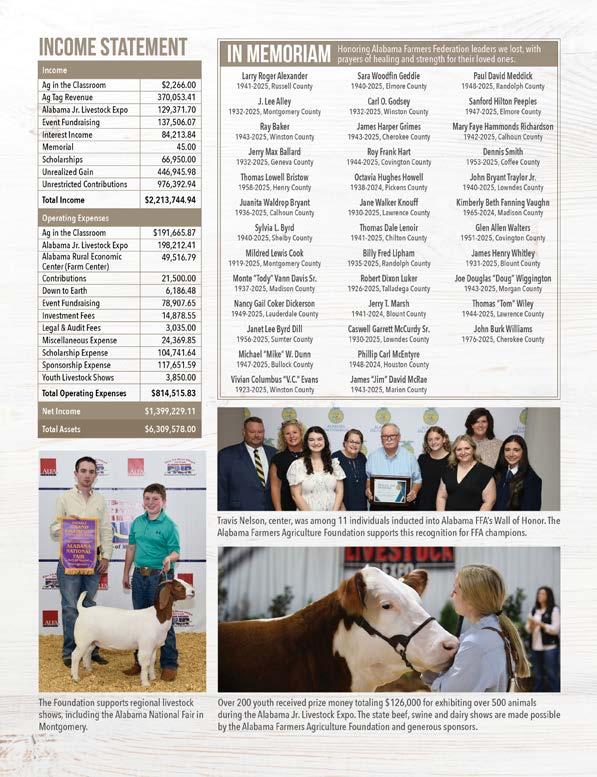
Federation Plants Seeds of Success Through Scholarships
From left are Auburn University (AU) College of Agriculture Interim Dean Dr. Arthur Appel, AU student Madison Thrailkill, Alabama Farmers Federation President Jimmy Parnell and Federation Southeast Area Vice President Chris Carroll, who also chairs the Alabama Farmers Agriculture Foundation Scholarship Committee.
By Maggie Edwards
Eighty-three college students from 61 Alabama counties received scholarships from the Alabama Farmers Agriculture Foundation (AFAF) Sept. 29 in Auburn.
The annual scholarship banquet at Lazenby Farms honored recipients from Auburn University (AU). The partnership between the AFAF and county Farmers Federations awarded over $150,000 to undergraduates pursuing degrees in agriculture, forestry and related fields.
Those students included Autauga County’s Madison Thrailkill.
“My journey to AU has been one I worked toward for a long time. This scholarship made the dream a reality,” said Thrailkill, a junior studying agricultural business and economics with a poultry sciences minor. “When I began looking at options for college, I realized the expense associated with a college education. This scholarship helps ease the burden for me, my family and the other students among me.”
Thrailkill said this scholarship is more than financial support.
“We know there is an organization standing behind us, believing in us and caring for our success,” said Thrailkill, who interned with Alfa Insurance last
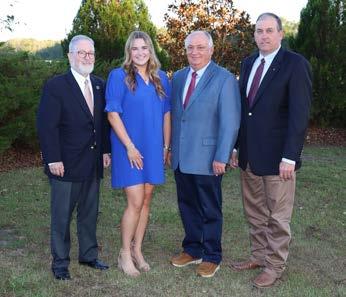
summer. “It’s not just a check into the account. It’s a personal investment in our growth and future.”
Chris Carroll, who chairs AFAF’s
Scholarship Committee, expressed his appreciation for Thrailkill and other recipients.
“This organization puts effort into
SCHOLARSHIP RECIPIENTS
Madison Thrailkill Junior Agricultural Business & Economics
Jonah Sanders Junior Forestry Baldwin
Jacob Jackson Senior Poultry Science (Production) Barbour
Zeana Tew Freshman Animal Biosciences (Pre-Vet) Bibb
Abby Burgess Sophomore Agricultural Communications Blount
Rileigh Rogers Freshman Horticulture Butler
Jackson Cleary Sophomore Agriscience Education Calhoun
Claire McKay Freshman Agricultural Communications Chambers
Emma Prestridge Sophomore Horticulture Chambers
Lydia East Sophomore Agricultural Communications Cherokee
Mary Beth Hall Senior Biosystems Engineering Chilton
Anna Cleckler Senior Horticulture Chilton
John Pettis Senior Biosystems Engineering (Pre-Forestry) Clarke
Preston Barnett Sophomore Forestry Clay
Colin Roberts Junior Forestry Cleburne
Emily Strickland Senior Agriscience Education Coffee
Camilla Harrison Junior Horticulture Colbert
Abigail Hyatt Junior Animal Biosciences (Pre-Vet) Coosa
Olivia Mikel Sophomore Agricultural Science Covington
Conner Brooks Junior Agriscience Education Covington
Paulk Smith Junior Agricultural Science Covington
Caroline Courson Junior Poultry Science (Pre-Vet) Covington
Natalie McGough Freshman Animal Biosciences (Pre-Vet) Crenshaw
Luke Troutman Senior Geospatial & Environmental Informatics Cullman
SCHOLARSHIP RECIPIENTS
Name Class Major County
Jake Jones Junior Agricultural Business & Economics
Colin Bush Freshman Animal Sciences (Animal & Allied Industries)
Dale
Dale
Delaney McHugh Freshman Agricultural Science Dallas
Callie Ashley Senior Agricultural Business & Economics DeKalb
Ashley Fulmer Sophomore Wildlife Science (Pre-Vet) Elmore
John Braxton Rhodes Senior Biological & Agricultural Technology Management Escambia
Bryer Morrison Senior Animal Sciences (Pre-Vet) Etowah
Brooke Plunkett Junior Wildlife Ecology & Management Fayette
Sarah Williams Junior Agricultural Science Franklin
Jay Roberts Sophomore Agricultural Science
Hannah Grace Falkner Junior Engineering (Pre-Biosystems)
Marshall Moss Senior Agricultural Business & Economics
Wade Reynolds Junior Agricultural Business & Economics
Jonna Graham Senior Agricultural Science
Geneva
Henry
Houston
Houston
Jackson
Wilkins Hunter Senior Horticulture Jefferson
Allie Moore Freshman Agricultural Business & Economics Jefferson
Tori Spry Senior Agricultural Business & Economics Lauderdale
Taylor Hood Senior Animal Sciences (Animal & Allied Industries) Lawrence
Sarah Bush Sophomore Agricultural Science Lee
Kaitlyn Spoon Junior Agricultural Communications Lee
Olivia Walker Sophomore Wildlife Ecology & Management Lee
Jewel Thompson Junior Agriscience Education Lee
Emily Moore Senior Biosystems Engineering Lee
Preston Haney Junior Agricultural Business & Economics Limestone
Maggie Holladay Senior Agricultural Communications Lowndes
Godwin Owolabi Senior Biological & Agricultural Technology Management Macon
Elise Kennamer Junior Animal Sciences (Animal & Allied Industries) Madison
Jacob Bates Sophomore Biological & Agricultural Technology Management Madison
Logan Davis Freshman Animal Biosciences (Pre-Vet) Madison
Brayden Sexton Junior Crop & Soil Sciences Madison
Jakobe Morris Junior Wildlife Ecology & Management Marengo
Will May Junior Biosystems Engineering Marion
Maddie Baker Junior Animal Biosciences (Pre-Vet) Marshall
Maci Higgins Senior Crop & Soil Sciences (Production) Mobile
Jaxson Smith Junior Forestry Monroe
John Allen Lachney Sophomore Agricultural Business & Economics Montgomery
Ellis Fleming Freshman Agricultural Business & Economics Montgomery
Morgan Dozier Sophomore Agricultural Business & Economics Montgomery
Lee Murray Senior Agricultural Business & Economics Morgan
Hardy McMillan Junior Wildlife Enterprise Management Perry
Kameria Doss Senior Biosystems Engineering Pickens
Abigail Ellerman Junior Animal Biosciences (Pre-Vet) Pike
Carlin Parrish Sophomore Agricultural Business & Economics Randolph
Carly Puckett Senior Agricultural Science Russell
Mallory Nabors Senior Agricultural Business & Economics Shelby
Jay Tollison Freshman Agricultural Business & Economics St. Clair
Wade Pressley Sophomore Environmental Conservation & Management Talladega
Harrison Hunter Junior Agricultural Business & Economics Tallapoosa
Walter Denney Junior Forestry Tuscaloosa
Jaxon Hulsey Sophomore Poultry Science (Production) Walker
Colton Odom Senior Fish, Aquaculture & Aquatic Sciences Washington
William McGraw Senior Agricultural Business & Economics Wilcox
Halle Lancaster Freshman Environmental Science Winston
serving the future of agriculture,” said Carroll, also the Federation Southeast Area vice president and Dale County Farmers Federation president. “I want to say ‘thank you’ to the recipients for pursuing a degree in agriculture. Agriculture is facing some tough times, but through tough times, innovation and efficiency are born. Food security is national security. A nation that cannot feed itself cannot defend itself. With that, I truly thank each student for what they do.”
During the scholarship banquet, four special awards honored past and present leaders who left a legacy on Alabama agriculture.
Limestone County’s Jessa Usery received the inaugural Jerry and Dianne Newby Scholarship. This scholarship was established to honor Limestone County farmer and former Federation President Jerry Newby and his wife, Dianne. Usery is a sophomore studying agricultural communications.
The Mike Henry Memorial Scholarship was presented to Montgomery County’s Ashbee Norman, a freshman studying pre-vet and animal biosciences. Cullman County’s Harper Lafon, a junior majoring in pre-vet and animal biosciences, received the R.W. Donaldson Memorial Scholarship. Lee County’s Nate Payne, a junior studying horticulture, was awarded the Jimmy Witt Memorial Scholarship.
Additionally, Lawrence County’s Karen Hood, mother of scholarship recipient Taylor Hood, addressed the crowd on behalf of all parents.
“This scholarship is a tremendous support,” said Hood, who lives on her family’s cattle farm in Moulton. “We express our heartfelt gratitude to the county Federations for these scholarships and the ones given in the past. We’ve been blessed both our children, Tanner and Taylor, have pursued degrees from AU and stayed in agriculture. The Federation cares for our children’s success, education and dreams. This foundation is planting seeds that will bear fruit for decades to come.”
Scholarship applications for 2026-2027 are open through Feb. 1 at AlfaFarmers.org/scholarships.

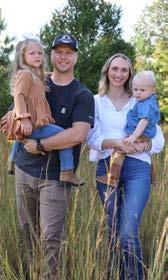
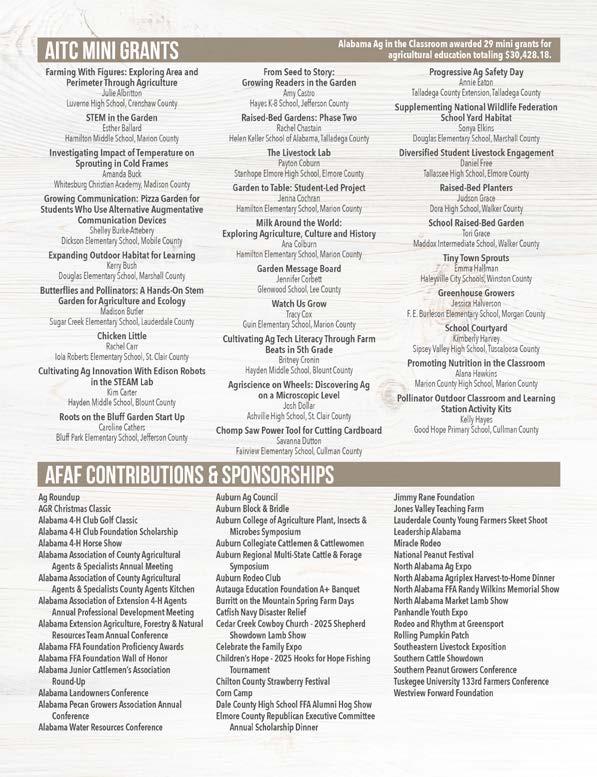
Williams Family Cultivates Excellence in Agriculture
farmhand next year. “It’s a blessing for us to teach them life skills from an ag perspective. It’s something we bonded over in the beginning, and we’re seeing that come to fruition.”
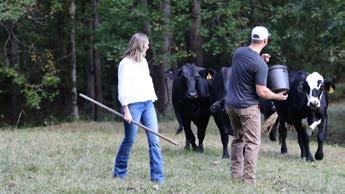
Through resilience and hard work, they purchased Windy Hill Farm in 2023. Today, the Williamses raise cattle, goats and backyard chickens while cultivating a large family garden. They also lead Tallapoosa County Young Farmers, a division of the Alabama Farmers Federation.
Receiving an Alabama Ag Credit JumpStart Grant last year allowed for farm expansion, which yielded a robust Kids’ Farm Camp complete with animal stations and hands-on ag-tivities.
markets and a tough farm economy. Continuing to grow your operation despite all that embodies excellence.”
For Josh, serving the future of agriculture is a priority.
“I pursued ag education because it allowed me to give students the chance to be engaged in agriculture like I was,” said Josh, also president of the Alabama Student Angler Bass Fishing Association. “It’s always been my passion to help students find their passion and what they can be successful in.”
Josh and Bailey are proof that hard work and faith lead to accomplished goals.
By Maggie Edwards
Patience and persistence paved the way to victory for Tallapoosa County’s Josh and Bailey Williams, Alabama’s 2025 Excellence in Agriculture contest winners.
“When we married in 2016, we knew we wanted to get back to farming,” said Josh, a former Benjamin Russell High School agriscience teacher and current Alexander City Schools career technical education director. “We both come from an agricultural background, but we planted roots together away from family operations. We wanted to raise our kids to have the same experiences we did. That’s when we got intentional about the future.”
Josh and Bailey’s love story began when the two aspiring agriculturalists met through Alabama FFA. More than a decade later, they share the joys of agriculture with children Maren, 4, and Callahan, 1, on their family farm. Maren has taken to farm life, running her own farm-fresh egg business.
“I wanted to host a farm day for kids to come learn about food and fiber,” Bailey said. “I am a proponent of contextualized learning mixed with ag literacy. This combined the two.”
Bailey believes showcasing excellence in agriculture means finding creative ways and solutions to farm.
“American producers are fighting an uphill battle,” said Bailey, a speech language pathologist.

“Young farmers like us continue to fight high land prices, cattle
“I’m most proud of how intentional we were about setting ourselves up to live out our dream,” Bailey said. “Josh has been the calm in the storm. He’s a great provider. I’m the dreamer, and he’s logical. We’ve gotten here through blood, sweat and tears.”
Excellence in Agriculture participants highlight their industry passion and Federation experience through an application and presentation. The contest is for members ages 18-35 who earn most of their income off farm. The Williamses will compete in the national contest in January.
“Raising the kids on a farm has been a dream come true for us,” said Bailey, who noted they’re expecting a third

Excellence in Agriculture contest winners Josh and Bailey Williams are raising children Maren and Callahan at their Windy Hill Farm near Eclectic.
From the start, Josh and Bailey Williams knew their goal was to farm. Rooted in ag and serving others, Josh is the Alexander City career technical education director, while Bailey is a speech language pathologist.
King Cotton Faces Uncertain Future
By Marlee Jackson
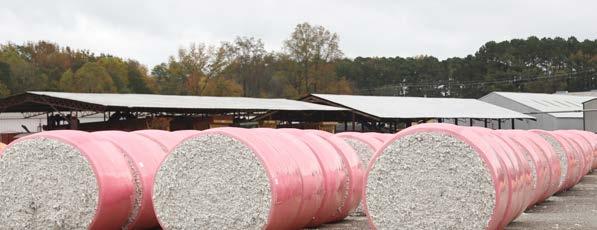
Once a staple in communities across Alabama, just 22 cotton gins roared to life this fall separating fluffy white lint from seed.
“This is the last gin standing (in Limestone County),” said Billy Sickler over the mechanical rumble of four gin stands in late October.
Sickler, a veteran ginner, is manager at Associated Growers Cooperative Inc. in Athens. He estimates Limestone County alone was home to 15 gins when he joined the ginning industry in 1998.
By 2011, there were 30 statewide.
Gin consolidation, land development and a deflated market mean the number of gins has continued to decline. Foreign cotton production and the popularity of synthetic fabrics haven’t helped, Sickler said.
“Trying to get farmers to plant cotton is hard,” Sickler said. “It’s a lot of ifs, ands and buts.”
That’s partially due to cotton’s finicky nature and need for constant attention. Input costs quickly add up in today’s tough farm economy, causing some farmers to turn away from king cotton and toward grains and soybeans, said Limestone County Farmers Federation President Jerry Allen Newby.
“It’s a culmination of things,” said Newby, a row cropper who serves on the Alabama Farmers Federation State Cotton Committee. “It just costs so much more to produce an acre of cotton that many don’t want to extend themselves.”
Alabama’s cotton acreage reflects that shift.
So do national numbers.
The U.S. Department of Agriculture (USDA) reports decreased acreage for 15 of the 17 major cotton-producing states. The most recent forecast predicts American farmers planted 10.1 million acres, a 10% decrease from 2024.
In Alabama, cotton acres dropped to 340,000 acres — a 60,000-acre, or 15%, decline.
While painfully low market prices hover in the mid-60 cents per pound, other factors outside farmers’ control contribute to the slump.
“The drought last year smoked us,” Newby said. “It ate up a lot of goodwill in one year.”
Yields often vary from one corner of Alabama to another, said Federation Cotton Division Director Carla Hornady. 2023, however, delivered a bumper crop across much of the state.
Then, 2024 served up a monster drought that hammered yields. A wet spring that stretched into early summer delayed planting this year. Many cotton fields were again fried by a late-summer drought that reduced yields in pockets around the state.
Other areas received timely rains that resulted in a fruitful harvest, Hornady said.
“While some yields are strong, low prices make it difficult for the math to add up,” she said. “It’ll be interesting to see how farmers react.”
It’s a roller coaster, Sickler said.
“We’ll lose some acres and some farmers,” Sickler predicted. “This crop was hard to get financed. This year
didn’t turn out how (many) hoped.”
A tough year and decreased acres mean the U.S. will have less cotton to market at home and overseas, Hornady said.
That’s tough news as foreign powerhouses Brazil, China and India have already surpassed U.S. production. Last year, the U.S. produced 13.1 million bales, per USDA. Most were exported to foreign textile mills as American textile producers have continued to dwindle.
American mills bought just 1.8 million bales in the last marketing year — the lowest level since 1884/1885 when textile mills used 1.7 million bales.
When the gin fired up Oct. 1, Sickler knew they’d process around 12,000 fewer bales than last year. Those 50,000 bales will come from around 26,000 acres of production, also lower than last year’s 33,000 acres.
That’s a 25% decrease.
Other gins have lost as much as 60% of acreage due to prevented planting, low markets and farmer retirement, Hornady said.
While current numbers could be concerning, Sickler said some north Alabama farmers are already planning a return to cotton. That’s due to individual crop rotation needs, a drop in cotton picker prices, a turbulent wheat market and soybean prices.
It just might spell good news for gins, especially those that have invested in technological advancements.
“Without a farmer staying in business, what’s a gin? It’s a paperweight,” Sickler said. “My mind is already to next year. (This) story has already been written.”
Cotton gins play a critical role in preparing fibers grown on Alabama farms for market.
From left are field man Barrett Gilbert, Cotton Division Director Carla Hornady and Associated Growers Cooperative Inc. Manager Billy Sickler.
Torbert Takes Top Honor in Collegiate Discussion Meet
An Auburn University (AU) senior with a passion for public service took top honors in the Alabama Farmers Federation Collegiate Discussion Meet Oct. 3 in Opelika.

Ty Torbert bested seven competitors from three universities in the competition which encourages collaboration and problem solving through simulated committee meetings. The meet was sponsored by the Federation’s Young Farmers Division and featured discussions about digital engagement, stewardship and urban sprawl.
“I think my big takeaway from all three was how the Alabama Farmers Federation can play a proactive and truly meaningful role in advancing agriculture,” said Torbert, who is studying agricultural business and economics with a minor in finance. “They already do such a great job
advocating for farmers, pushing forth policy and educating farmers. Every round, we talked about policy. The second thing is education. Alfa has such a massive reach and huge collective of members. These avenues allow the Farmers Federation to educate members on policy they’re working on but also resources that already exist.”
As the first-place winner, Torbert received a $1,000 scholarship from the Federation and Farm Bureau Bank. He will represent Alabama in national competition at the American Farm Bureau Federation Young Farmers & Ranchers Conference next March.
Rounding out the Top 5 were J.B. Rhodes, second and $750; Kaleigh McGrew, third and $500; Mackenzie Smith, fourth and $250; and Will Aycock, fifth and $125. Rhodes and Aycock are seniors in the AU College of Agriculture.
McGrew is a senior in news media at the University of Alabama, and Smith is a Troy University freshman majoring in elementary education.
Federation Young Farmers Division Director Hunter McBrayer was encouraged to see the contest expand beyond Auburn students.
“That’s a big deal because it shows the agriculture community is far and wide,” he said. “It gives students a chance to learn more about Alfa and Farm Bureau.”
For Torbert, events like Collegiate Discussion Meet prepare him to give back to an industry that’s shaped his familial history.
“I would like to give back through policy — making communities better,” said the Houston County native, whose family founded nationally renowned Bonnie Plants. “I believe true change starts at the grassroots level. I would love to play a part in taking feedback and incorporating it into organizations to truly make a difference.”

Torbert

From Crown to Coverage:
Alfa Agent Emery Norred’s Road to Miss Rodeo Alabama
By Brooke Foster
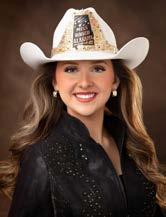
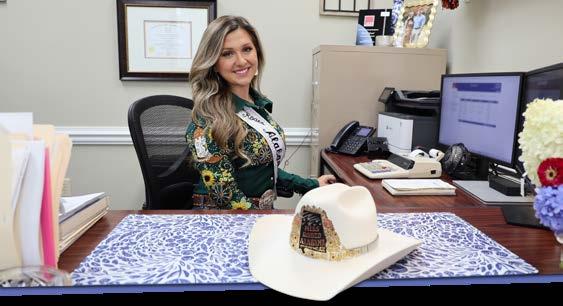
Just off Arena Road in Ashland sits the service center of Alfa Insurance Agent Emery Norred. To folks outside Clay County, her name may sound familiar for another title — Miss Rodeo Alabama.
Armed with a crown, sash, boots and insurance brochures, Norred gives her all to both roles with grit and grace.
“The relationships you create in this job are the best part,” said Norred, whose service as an agent began in 2022. “I love the people I work with and the customers we’re here to help.”
Despite her young age, 23-year-old Norred is a veteran to the rodeo and insurance arenas.
When she wasn’t in school or working in their family’s business (Frontier Classic Rodeo Co., of which she’s a co-owner), she’d tag along with her father to his Roanoke Alfa Insurance office for a front-row view of service.
“I’d sit at an empty desk with a disconnected phone and pretend to be an Alfa agent, helping people just like
my dad,” she recalled. “And here I am!”
Much like the careful prep that goes into saddling a horse, the Auburn University alumna said working as an Alfa agent is a leadership role that can’t be taken lightly.
“Helping customers and making sure they know they’re going to be taken care of by Alfa is a top priority,” she said. “Whether it’s helping customers after a storm or just handling the day-to-day, I know I always have to be ready to rise to any challenge with compassion, purpose and kindness. That’s what being an Alfa agent is all about.”
As Miss Rodeo Alabama, the same skills come in handy.
Norred’s reign began in January as the official ambassador for the professional sport of rodeo in Alabama. She’s also representing the state in the Miss Rodeo America competition during the 2025 Wrangler National Finals Rodeo in Las Vegas Nov. 30-Dec. 7.
In the meantime, Norred will continue with her standard routine — striving daily to be the best stock
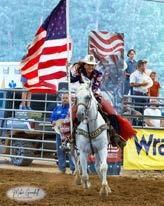
Alfa Agent Emery Norred showcases her pride as Miss Rodeo Alabama as she presents the American flag at a rodeo.
contractor, rodeo producer and insurance agent she can be for the twoand four-legged souls who rely on her.
“I’m truly blessed to be able to do what I love alongside the people I love most,” she said.
Alabama Farmers Applaud H-2A Wage Rule
The Alabama Farmers Federation is praising an interim final rule by the Department of Labor (DOL) which makes the H-2A agricultural guest worker program more accessible and affordable for farmers who produce America’s food and fiber.
“Farmers rely on legal guest workers to fill the gap when the local workforce can’t meet their needs. Unfortunately, rule changes during the Biden Administration made the H-2A program increasingly costly and complicated,” said Federation President Jimmy Parnell, who hailed the interim rule while noting the likelihood of legal pushback from opponents. “This rule is another step toward fixing the H-2A program by applying common sense to wage calculations.”
New Adverse Effect Wage Rate
(AEWR) requirements were effective Oct. 2. In Alabama, 92% of all on-farm jobs are expected to fall in Skill Level I.
The rule updates AEWR methodology by:
n Using wage data reported for each U.S. state and territory by the DOL Bureau of Labor Statistics (BLS) Occupational Employment and Wage Statistics (OEWS) survey. Under the Biden Administration, use of unreliable Farm Labor Survey data led to skyrocketing labor costs for farmers. In Alabama, the minimum hourly H-2A rate increased from $11.99 in 2021 to the most recent rate of $16.08, a 34% increase.
n Continuing a single AEWR for the five traditional occupational classifications. The AEWR will be divided into two skill-based categories to account for wage differentials arising from qualifications contained in the job offer. Other occupational classifications will have corresponding AEWRs set from the OEWS.
n Classifying jobs for AEWR purposes based on the duties performed for most workdays during the contract period.
n Addressing differences in compensation between U.S. workers and H-2A participants — who receive employer-provided housing at no cost — by implementing a standard adjustment to the AEWR for non-monetary compensation.
Shelby County Farmers Federation President Phillip Hunter chairs the American Farm Bureau Federation Ag Labor Issue Advisory Committee. He said the AEWR rule ensures the H-2A program remains effective in addressing farm labor shortages.
“These changes are welcome news for farmers who utilize the H-2A program,” said Hunter, who serves on the Federation’s state board. “By using reliable data, classifying jobs based on most of the work done and considering employer-provided housing, the Trump Administration is restoring this program to its original mission — providing legal, temporary labor for American farms. This benefits consumers who rely on our products and the families of guest workers who receive financial support from the work done on U.S. farms.”
Youth Leadership Conference Focuses on Future
By Maggie Edwards and Tanner Hood
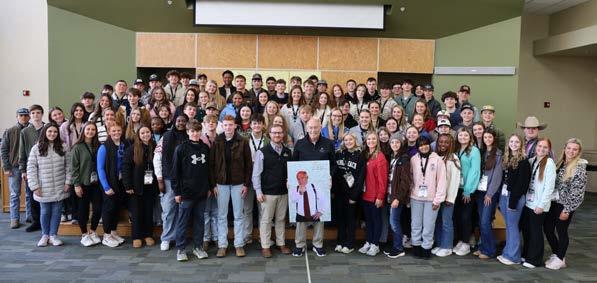
Awinding drive down Shelby County backroads and a crisp autumn morning welcomed almost 90 ninth and 10th graders to the Alabama 4-H Center for the Alfa Youth Leadership Conference Nov. 10-11 in Columbiana.
The goal is to help young people develop leadership skills and the ability to think critically, said Alabama Farmers Federation Ag Leadership Programs Director Hunter McBrayer.
“Federation President Jimmy Parnell always encourages young people to learn to think for themselves,” McBrayer said. “This conference is designed to gather students from across the state in one place and teach them how to do just that.”
The conference boasted nearly 265 applications of students eager to learn. Sponsors included Alfa Insurance, Alabama Ag Credit and Alabama Farm Credit, plus county Farmers Federations.
Blount County’s Hudson Stephens said this conference helped him explore new opportunities.
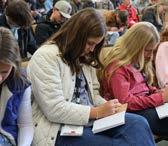
“It’s been eye opening,” said Stephens, a 10th grader at Holly Pond High School. “My favorite part was the team-building games that helped me connect with others. I learned the value of being a leader and knowing when to sit back and let others lead, too. This conference inspired me to be a community leader and step up and lead the correct way.”
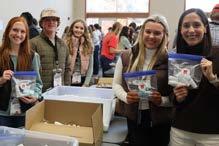
Students engaged in high-energy workshops that developed teamwork, leadership and communication skills while building relationships. One of the most impactful events was the community outreach project, where students packed 11,000 dental and shower kits for families at Children’s Hospital of Alabama, said Cullman County’s Lola Kate Haynes.
“I didn’t know what to expect for the service project, but I liked how we all came together and worked hard to accomplish a big goal,” said Haynes, a ninth grader at Fairview High School. “I was grateful to help families in need. It was a humbling experience. You never expect to be in the situation where you need the hospital, so it was meaningful to do for others.”
Attendees continued developing leadership skills exploring their comfort zones with guest speakers Rhett Laubach and Grace Ellis.
To top off the fun, famed ABC 33/40 Chief Meteorologist James Spann motivated the high schoolers with his personal testimony.
“To be successful, you have to follow your passion in life, work hard and have a servant’s heart,” Spann said. “You are special. No one will ever do what you can do. Always remember, we are here to serve and help other people.”
McBrayer said he hoped students left the conference understanding the power of their influence.
“It’s our responsibility to show young people who and what they can be,” McBrayer said. “This is our future. We want them to see how they can shape the lives around them for the better.”
Clockwise from left: Alfa Youth Leadership Conference attendees packed 11,000 hygiene kits for families at Children’s Hospital of Alabama; Famed meteorologist James Spann encouraged youth to follow their passions, work hard and serve others; Lola Kate Haynes of Cullman County was among nearly 90 youth who attended the conference.
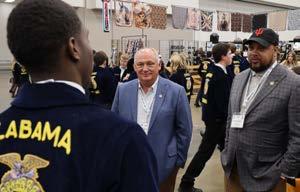
Convention Empowers Future of Agriculture
By Maggie Edwards
Asea of blue corduroy jackets, including hundreds from sweet home Alabama, filled Indiana’s Lucas Oil Stadium Oct. 29-Nov. 1 for the 98th National FFA Convention and Expo.
Over 70,000 FFA members, advisers and guests left feeling empowered — a callback to the convention theme that encouraged students to soar to new heights.
Alabama FFA State Treasurer Rachel Lee said this year’s theme exemplified the organization’s roots.
“Whether on the national or state level, it’s important FFA members can empower one another in boosting confidence and leadership skills,” said Lee, a Coffee County native who attends Enterprise State Community College.
“U.S. Secretary of Agriculture Brooke Rollins said it best during a general session. She said, ‘It’s not about the title you hold or winning but the difference you make in the lives of others.’”
Indiana Farm Bureau President Randy Kron welcomed Alabama’s delegation during a state social at his
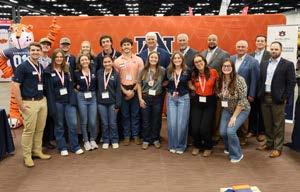
organization’s headquarters. The event boasted almost 500 Alabama FFA members and advisers, plus Alabama Farmers Federation leadership and three state legislators.
“We appreciate our friends at Indiana Farm Bureau for hosting us and taking time to speak with Alabama students,” said Federation President Jimmy Parnell. “FFA is important. The Federation is proud to support the next generation of agriculturalists.”
The excitement of National FFA Convention resonated with Sen. David Sessions, R-Grand Bay; Rep. Danny Crawford, R-Athens; and Rep. Patrick Sellers, D-Pleasant Grove.
“As a farmer, it’s fantastic seeing so many people passionate about agriculture,” said Sessions, the Senate Ag Committee chair. “It has been great to see the fruit of our investments. It is well worth it. Not a penny is misspent on these kids.”
Since 2022, the Education Trust Fund has provided affiliate membership in FFA for all Alabama agriscience students.
Crawford echoed Sessions, stating
it was refreshing to see FFA members’ leadership and communication skills in action during one-on-one conversations.
“They are the future of agriculture,” said Crawford, the House Ag Committee chair. “I’m excited about what I saw. Some of my favorite days at the Alabama State House are when the blue jackets come to Capitol Hill. We hear firsthand why continued funding is important.”
Sellers had a similar experience during his two days immersed in the FFA culture.
“I think every student in Alabama should have a sense of FFA in their life,” Sellers said. “It’s important that legislators witness the leadership skills and personal development happening in this organization.”
Alabama students were honored for excellence in agriculture during the convention. Among those were the Lauderdale County FFA String Band, which won the National FFA Talent competition. Delegate and policy work also took place.
Additionally, Alabama FFA Northeast Ag Program Improvement Specialist Chip Blanton received a VIP Citation. The award honors a handful of individuals annually who have dedicated at least 20 years of service to agriscience education and FFA on a national level.
Alabama FFA State Sentinel Blaine Johnson said there’s no better feeling than being at National FFA Convention with like-minded people.
“We are nothing short of blessed to be surrounded by so many FFA members and supporters,” said Johnson, a senior at Hartselle High School. “’Empowered’ is the best way to describe this experience.”
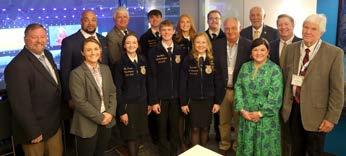
Alabama FFA state officers, center, visited with Alabama Farmers Federation leadership, FFA state staff and members of the Alabama Legislature during the 98th National FFA Convention and Expo.
Mistletoe: The Holiday Parasite
By Justin Miller
December means many are rockin’ around the Christmas tree and hanging mistletoe where every couple can see. Mistletoe is well-known from the holiday tradition of grabbing a sweetheart and sharing a kiss while standing under its sprigs.
However, if those lovebirds knew they were kissing under a parasite, would it change their minds?
It’s believed this tradition started around 2,000 years ago. Likely beginning with Celtic druids who saw it as a symbol of life and fertility, mistletoe was later tied to Norse mythology, where the goddess Frigg made it a symbol of love and peace. Despite its romantic origins, this plant has a parasitic nature and can damage Alabama trees.
Attacking Trees
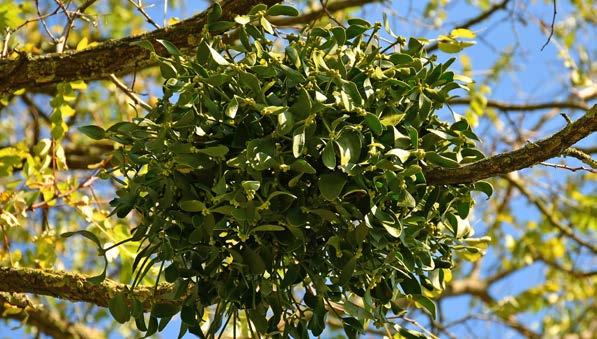
There are about 30 species of mistletoe found in the U.S., but there is only one native to Alabama: American mistletoe. This small, evergreen shrub
is also the species typically found in holiday decor.
Mark Smith, an Alabama Extension forestry and wildlife sciences expert, said mistletoe is partially parasitic. This means it has chlorophyll and carries out photosynthesis but also relies on a host plant.
“A few mistletoe plants on healthy trees typically have little significant impact,” Smith said. “Large numbers, however, can reduce tree vigor. This is especially the case during droughts, when mistletoe uses water that the host tree can’t afford to lose.”
American mistletoe is identifiable by its leathery, opposite leaves and white berries. The seeds found inside the berries have a sticky outer layer. This helps the seeds anchor to host plants, where the mistletoe then germinates and grows. Beau Brodbeck, an Alabama Extension assistant director for field operations, said mistletoe is particular about the trees it inhabits.
“American mistletoe, also known as oak mistletoe, frequently attacks oak trees but can also attack pecan,
hackberry, elm, cherry and sycamore trees,” said Brodbeck, whose background is in urban forestry.
Controlling Mistletoe
Mistletoe infestations happen slowly and cause minimal harm to the tree early on. However, as the plant grows, the damage can become more serious. Brodbeck said the sooner mistletoe is managed, the better the chances of preventing tree disfigurement and death.
“Mistletoe control methods can be as simple as improving tree health and pruning limbs or as severe as removing the whole tree,” Brodbeck said. “Base your decision to control mistletoe on the amount of mistletoe in the tree, how long the mistletoe has been there and the amount of stress the tree is showing.”
For in-depth information on control methods, read the Extension publication “Controlling Mistletoe in Trees” available at aces.edu.



THE NATIVITY
The manger was made of cardboard. It was stuffed with fresh hay from the hardware store. The Christchild was a Cabbage Patch doll.
Joseph was a tall kid with a long neck. You could see his blue jeans poking beneath the hem of his brown robe.
The shepherds were perpetually giggling about something. Nobody knew what about.
There were fruits and vegetables present at the birth of Christ that year, too. The vegetable costumes were leftovers from VBS. The cucumbers and tomatoes and summer squashes all knelt to offer their genuflection.
The angels were few. Dressed in white robes. Wings made of coat hangers and muslin. Three of them were brothers, and they were anything but haloed children.
The wisemen were dressed in gold lamé and purple velvet. They wore paper crowns on their heads, courtesy of the local Burger King.
One of the magi carried an antique box from his mother. Another carried a porcelain vase that belonged to his grandmother. The third carried a cornflower blue Corningware dish. His mother misunderstood the instructions. We in the choir were dressed in white robes. Although we weren’t angels. Miss Rhonda made this clear whenever she addressed us. We were Heavenly Hosts. We were to sing “Gloria! An exchange is dou-ble!”
But the star of the show was Mary. She wore a blue gown, white veil and scuffed Chuck Taylors. There were holes in her ragged canvas shoes. Her fingernails were dirty. Her hair was slightly greasy.
Nobody could believe Miss Rhonda gave her the part of Mary. All the girls

fought vehemently for the prized role. How did this happen?
Oh, but she took her role seriously. When she walked down the aisle, she held the infant like it was 14 karat.
Mary entered the room at a dirge pace. The livestock followed. First the donkey. Then the sheep. Followed by the carrots.
All eyes were upon Mary. The stare of every parent, sibling and parishioner rested on her shoulders.
Mary. Whose father was convicted of a few crimes. Mary. Whose mother gave her own daughter up to live with an aunt because of domestic abuse.
Mary. The girl in school who always asked if you were finished with your lunch before you were finished. The one who kept to herself, rarely smiled.
But she was smiling today. She placed the baby in the manger.
“And there were in the same country shepherds abiding in the field, keeping watch over their flock by night.
“And, lo, the angel of the Lord came upon them, and the glory of the Lord shone round about them, and they were sore afraid.
“And the angel said unto them, ‘Fear not: for, behold, I bring you good tidings of great joy, which shall be to all people. For unto you is born this day in the city of David a Savior, which is Christ the Lord.
“‘And this [shall be] a sign unto you; Ye shall find the babe wrapped in swaddling clothes, lying in a manger.’
“And suddenly there was with the angel a multitude of the heavenly host praising God, and saying, Glory to God in the highest, and on earth peace, good will toward men.”
And that’s what Christmas is all about, Charlie Brown. ■


Rural Partnership Enhances Ag, Forestry Workforce Development
By Maggie Edwards
The Auburn University Rural Partnership Institute (AURPI) is enhancing workforce development by introducing students to state-of-the-art technologies in agriculture and forestry.
AURPI’s mission is to bolster Alabama rural communities through innovative advancements in the state’s two largest ag-related industries — poultry and forestry, said Auburn University’s (AU) Caroline Whiting.
“The goal is to find issues and offer solutions to combat them,” said Whiting, a project manager and research engineer in the AU College of Engineering. “AU’s Dr. Mykel Taylor and Dr. Kelli Russell conducted a series of interview surveys and found one of the primary problems in rural agriculture is the lack of skilled labor.”
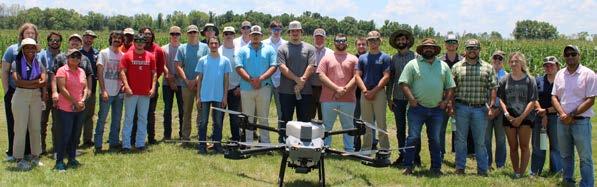
To continue the university’s collaboration with Southern Union State Community College (SUSCC), AURPI hosted its inaugural Ag Tech Workshop for the SUSCC senior mechatronics cohort in June.
AU’s Oladiran Fasina said the program is a route for students pursing a two-year technical degree to gain skill sets and awareness of work in agriculture and forestry.
“We know there are challenges hiring good labor in ag,” said Fasina, who leads the AU Biosystems Engineering Department. “This approach helps find the people who can do these trades.”
Whiting echoed Fasina, stating the summer workshop also showcased diverse career opportunities.
“We know there are people qualified to work in ag, but why aren’t they going into the field?” Whiting said. “This was the way to let them know there are jobs, and the demand is high. It was an eye-opening experience that exposed the group to how much technology is used in agriculture.”
During the four-day Ag Tech Workshop, SUSCC students were bused to various AU facilities. From poultry production and drone demonstrations to forestry simulators and precision agriculture, students left with new
knowledge and an ag technology certificate. The hope is to expand the program to include other community colleges.
SUSCC Dean of Technical Education and Workforce Development Eric Sewell said it’s a win-win for students and the college.
“The Alabama Community College System is about putting people into the workforce,” Sewell said. “With ag being one of the largest commodities in the state, we want our students to have exposure to where they could land after graduation. When a member of the Alabama Legislature approached us, along with Dr. Fasina, to begin an ag technology partnership, we knew we wanted to be a part of it.”
Sen. Sam Givhan, R-Huntsville, brought the idea of connecting two-year tech degrees and agriculture after visiting another land-grant institution.
“I hope we can transition the mindset of many young Alabamians to let them see agriculture as a broad opportunity,” said Givhan, a seventh-generation farmer. “We need to foster opportunities to get our youth more connected with the soil. The AU Creed reads, ‘I believe that this is a practical world and that I can only count on what I earn. Therefore, I believe in work — hard work. I believe in education which gives me the knowledge to work wisely and trains my mind and hands to work skillfully.’
The collaboration between AU and community colleges carries that out.”
Scan to learn more.

Southern Union State Community College mechatronics students experienced hands-on forestry technology during the summer workshop.
Ag Tech Workshop attendees received an on-farm drone demonstration from Auburn University faculty.
An overview of precision agriculture allowed workshop attendees to put skills to the test at Auburn University’s E.V. Smith Research Center.
Using Nature for Holiday Decor

By Lilly Oaks
Fireplaces are glowing, holiday tunes are playing, and the air is thick with the scent of fresh pine and cedar. This is the perfect season to fill homes with
beautiful, natural holiday decor that costs next to nothing.
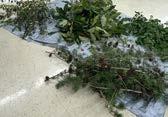
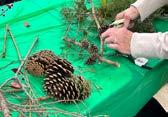
All that’s needed is access to greenery — such as cedar, pine, holly, arborvitae or magnolia — along with berries and pinecones for extra details. This is a chance to create a unique holiday look using the best nature has to offer.
While it isn’t hard work, this style of decorating does require the right tools. Grab garden snips or loppers, slip on garden gloves, and roll out the wheelbarrow or wagon. When harvesting materials, cut pieces at an angle; aim for lengths of 12 to 24 inches. Longer pieces are easier to manage when you start decorating. While a mix of evergreens works best, especially for thick wreaths, don’t be afraid to stick to one variety.
After gathering cuttings, this next step is paramount. While outside, spread the cuttings on a tarp or concrete and soak everything with water. The foliage needs to be completely saturated. This is called “conditioning,” and it helps stop greenery from drying out too fast. After a good soak, let greenery sit in the sun for a couple of hours to dry the surface.
Then, it’s ready to use.
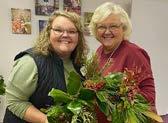
The best part of using natural greenery is its versatility. When making a wreath, use simple wire forms and floral wire. Bundle small pieces of greenery together, lay them on the form, and wrap the wire tightly to hold them in place. Layer the bundles to create a full, lush wreath.
For garland, simply overlap long pieces of greenery across a mantle or railing and use wire to secure as needed. Tuck in berry stems or pinecones. Adding cinnamon sticks brings in a pop of fresh holiday scent. Complete the custom look with favorite holiday bows, ribbons or lights.
To maintain a fresh look and scent, keep a spray bottle handy, and spritz wreaths and garlands with water a couple times a week. Warm, indoor air quickly dries out greenery, so a little misting helps. For outdoor pieces, let the rain do the job, or soak outdoor greenery with water once a week.
There’s something truly satisfying about filling a home with holiday decorations straight from the heart and the land. Get outside, get creative, and enjoy that fresh, natural Alabama holiday cheer!
The Alabama Gardener is provided by Alabama Extension’s Home Horticulture Team. Learn more at
Alabama Extension agents often host workshops on how to use natural materials for holiday decor.
It’s best to use a mix of evergreens, such as cedar, pine and holly.
When harvesting materials, aim for pieces that are 12 to 24 inches long.
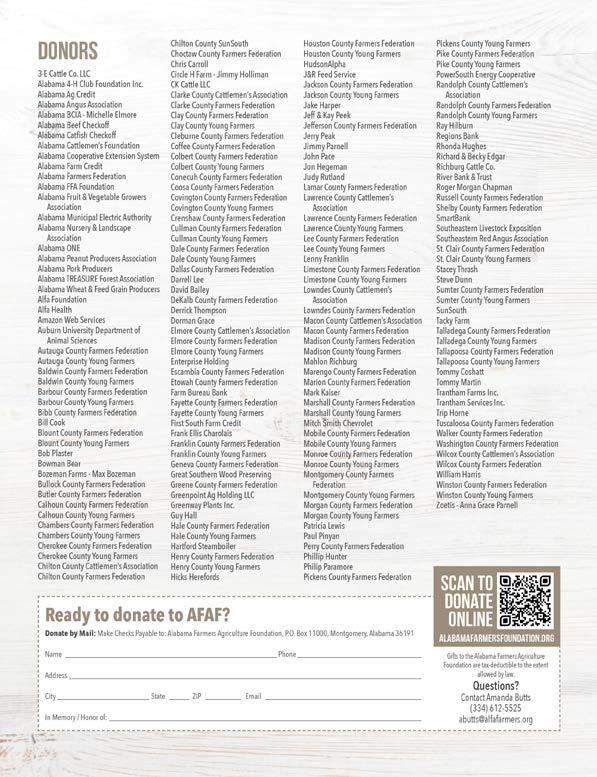
Fair Livestock Shows Introduce Youth to Farm Skills
By Marlee Jackson
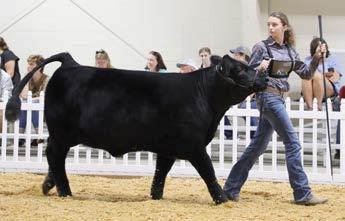
Intense concentration shadowed Abby Longcrier’s face when she stepped into the Alabama National Fair show ring Oct. 4.
She guided a Lim-Flex heifer around the arena while keeping her eyes on the judge — a worthy achievement for a 15-year-old from Autauga County whose first show was just months earlier.
“A lot of people grow up showing cattle,” said Abby, a sophomore at Billingsley School. “I didn’t know anything about it until this year.”
Abby was among hundreds of youth showmen who competed in contests sponsored by the Alabama Farmers Federation and Alfa Insurance during the fair in Montgomery Oct. 3-12. In addition to beef cattle, students showed dairy cattle, goats, sheep and swine.
Many are veteran showmen who began working with livestock at an early age. Then, there are promising newbies like Abby.
Abby’s introduction to the show world came thanks to her agriscience teacher, Logan Strock. Strock called Abby earlier this year with startling news: He’d procured a heifer expressly for Abby to show.
“My job as an ag teacher is to push
students to reach their potential,” Strock said. “If you asked them, they’d say, ‘no.’”
Abby agreed and set to work.
She routinely visited the Strocks’ farm after school learning to wash, brush and care for the heifer. She put those skills to the test during her first show at the Alabama Junior Cattlemen’s Association Round-Up in July.
“I went into the Round-Up, which is several days long, not nervous at all,” Abby remembered. “The day of competition, I was so nervous going into the ring.”
She boldly overcame those nerves, watched other showmen work the arena and made a few friends. Abby even interviewed some youth and cattle industry leaders for her podcast, Everything Everywhere Ag.
“These are friends I will keep for the rest of my life,” she said.
She’s brought her family into the livestock world, too. Abby’s mom, Brittney, said they’re contemplating purchasing a steer for Abby’s next project.
“I’m supportive for her to do anything to broaden her horizons or teach her about agriculture,” Brittney said. “She’s learning how to get her hands dirty. It’s brand new to us, but she’s roping us in.”
Abby will show again in March during the Jr. Livestock Expo in Montgomery. She’ll also return to the Alabama National Fair in 2026, this time with a bred heifer in tow.
That’s part of Strock’s goal to teach Abby, and other students, the reality of farming.
“We’re going to learn about bull selection and reproductive artificial insemination,” he said. “This is not just about showing but getting a heifer ready to transition to the next part of her life.”
Abby is further refining her show skills as a member of Billingsley’s livestock judging team, a commitment that’s making her a better showman through impromptu speaking and critical thinking.
She’s also learning to balance emotional attachment to her heifer with the animals’ end goal in mind.
That’s important, Strock said.
“There’s an introduction to the industry behind this,” Strock said. “You don’t go to the grocery store to get a steak. It takes a farmer to produce that meat that’s on their plate.”
Abby Longcrier of Autauga County showed a Lim-Flex heifer during the Alabama National Fair in Montgomery this fall.
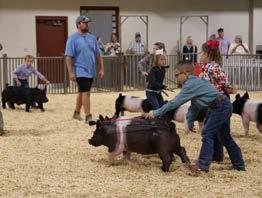
Swine, and swine showmen, scurried around the arena during Alabama National Fair livestock shows in Montgomery.

Geneva County’s Amber Thornton is rooted in agriculture. She and husband Garret raise sons Hudson, 14, and Stetson, 8 months, on their family farm in Slocomb. For Amber, spending time in the kitchen brings a sense of comfort and joy. She said it’s a place where she can slow down and create meals during life’s busyness.
Tell us about your farm.
We have a small cow-calf and Shorthorn seedstock operation. In addition to cattle, we grow spring and summer produce. We have been involved in the cattle industry for about five years. What started as a way to support our son’s interest in showing cattle quickly grew into a true family passion.
Do you and your husband have careers off farm?
I serve as a career coach for Geneva County Schools, where I prepare the next generation for the workforce. My husband works with Alabama Crop Improvement Association in Headland.
What do you enjoy about farming?
I grew up on a farm in north Florida, so working with animals and being connected to the land is just who I am. Now, I share that love of agriculture with my family. There’s something special about watching our boys experience
farm life — learning where food comes from and the hard work it takes to produce it.
When did your family get involved in the Alabama Farmers Federation?
Our family became involved in the Alabama Farmers Federation when Hudson started showing cattle in 2021. Getting involved allowed us to reconnect with the agricultural community and deepen our roots in the industry. Over time, our participation grew. I now serve as our county Young Farmers Committee chair. Being involved is important to us because it provides opportunities to give back, learn from other farmers and help support the next generation in agriculture.
When did you learn how to cook? Who taught you?
I learned how to cook from my grandmother, Granny Nolin. Every holiday, I would spend the night before with her, helping get everything ready to cook for our family. Those times in the kitchen taught me not just how to prepare food but also the joy of cooking for loved ones and carrying on family traditions.
What role does food play in your life or for your farm?
Food plays a central role in our life and on our farm. It brings our family together. Sharing meals gives us a chance to connect, celebrate our hard work and enjoy the fruits of our labor. Whether it’s something from our garden, homegrown beef or a family recipe passed down, food always brings us back home.
What are your best cooking tips, tricks or wisdom?
Always cook from your heart, and don’t worry about calories! My granny always said food was the way to anyone’s heart. I’ve never forgotten that. Meals bring people together and can heal a broken heart and an empty stomach. I also try to use as much fresh produce as I can. I love cooking in the summer when I can go straight to the garden and harvest the veggies I need for my recipes.
Why is involving youth in ag important?
It has played a huge role in shaping my oldest son into the young man he is today. As a mom, I pray that my children first love the Lord and second honor their family and the blessings God has given them. Through agriculture, I believe we see a testament to those values — teaching responsibility, hard work and appreciation for the land while helping our children grow in character and faith.
Red Velvet Lasagna Dessert
1 package Oreo cookies
2 tablespoons unsalted butter, melted
12 ounces cream cheese, room temperature, divided
1 cup sugar
16 ounces Cool Whip, divided
1 teaspoon lemon juice
1 large box instant chocolate pudding mix
3 cups milk
Red food coloring, optional
1 cup mini chocolate chips
Heat oven to 350 F.
Spray a 9-inch-by-13-inch baking pan with nonstick spray. Set aside. In a blender or food processor, pulse Oreo cookies and butter until smooth. Pour the mixture into the bottom of the dish. Pat with a spoon or your fingers to pack it as much as possible. Bake crust 5 to 8 minutes, or until slightly toasted. While the crust is cooling, mix the middle two layers. In one bowl using a hand mixer, beat 8 ounces cream cheese, sugar, 8 ounces Cool Whip and lemon juice. Pour cheesecake layer onto the crust and smooth with a spatula. In a separate bowl, beat the pudding mix and milk 2 minutes, or until the pudding thickens. Beat in 4 ounces cream cheese and red food coloring. I use about 10 drops. Pour onto cheesecake layer and smooth with a spatula. Top with remaining Cool Whip and sprinkle with chocolate chips. Chill in the freezer or fridge at least 1 hour.
This month’srecipes by ThorAmber nton
Pecan Pound Cake
3 cups all-purpose flour
1 package instant vanilla pudding mix
1/2 teaspoon salt
1/4 teaspoon baking soda
3 sticks butter, room temperature
2 3/4 cups sugar
2 teaspoons vanilla extract
6 large eggs
8 ounces sour cream
1 1/2 cups chopped pecans
Heat oven to 325 F. Butter and flour a Bundt pan. In a medium bowl, sift flour, vanilla pudding mix, salt and baking soda. Set aside. Using an electric mixer, cream butter, sugar and vanilla. Beat 2 to 3 minutes, or until light yellow in color. Add eggs one at a time, beating well after each — stopping to scrape sides of the bowl as needed. Reduce the speed and add the sifted dry ingredients alternately with the sour cream. Mix until fully combined. Stir in chopped pecans by hand. Pour into prepared pan. Bake 1 hour 20 minutes to 1 hour 30 minutes, or until a toothpick inserted into the center comes back clean. Cool in the pan on a cooling rack for 15 minutes before inverting onto a cake plate. Enjoy!
Casserole With Sausage
Squash
1 pound ground sausage (I use Jimmy Dean regular.)
1 can cream of mushroom soup
5 yellow squash, sliced
1 large white onion, diced Salt
Pepper
2 tablespoons butter
Lawry’s Seasoned Salt
Onion powder
2 cups shredded cheddar cheese
Heat oven to 350 F. Cook sausage in a large skillet over medium-high heat until browned, about 10 minutes. Drain and discard grease. In a large bowl, combine sausage with cream of mushroom soup. Set aside. In a medium pan on medium heat, pour in water to cover bottom of the pan. Add squash and onions. Season with salt, pepper, butter, seasoned salt and onion powder. Cover and cook until vegetables are tender. Drain off remaining liquid. In an 8-inch-by-8-inch baking dish, pour in sausage and soup mixture. Top with squash and onions. Cover with cheese. Bake 20 minutes, or until cheese melts and begins to crust.
Macaroni and Cheese
1 box elbow noodles
2 cups milk
2 tablespoons cornstarch
2 cups shredded cheese (I use Colby Jack and mild cheddar.)
Heat oven to 350 F. Boil noodles as directed on box in salted water. While the noodles cook, mix together milk and cornstarch in a small pot. Heat over medium until thick, whisking constantly to avoid burning. Add 1/2 cup of cheese, plus salt and pepper to taste, to the milk and cornstarch mixture. Mix well. Once noodles are cooked to your liking, drain and place in a buttered 9-inch-by-13-inch baking dish. Pour cheese sauce over noodles. Mix together. If the mixture doesn’t cover the noodles well, add about 1/2 cup of milk directly to the baking dish. Top with remaining cheese. Bake 15 minutes, or until cheese is melted.
Blackberry Cobbler
1 stick butter
1 1/4 cups sugar, divided
1 cup self-rising flour
1 cup milk
2 cups blackberries
Heat oven to 350 F. Melt butter in a microwavable dish. Whisk together 1 cup of sugar and flour in a mixing bowl. Add milk. Mix well. Pour in melted butter and whisk together. Butter a baking dish. Rinse blackberries and pat dry. Pour batter into the buttered baking dish. Sprinkle blackberries on top. Sprinkle 1/4 cup sugar over the top. Bake 1 hour, or until golden and bubbly. If desired, sprinkle an additional teaspoon of sugar over the cobbler 10 minutes before it’s done.
Breakfast Pinwheels
1 pound ground sausage (I use Jimmy Dean regular.)
8 ounces cream cheese, room temperature
2 rolls refrigerated crescent roll dough
Heat oven to 375 F. Cook sausage in a large skillet over medium-high heat until browned, about 10 minutes. Drain and discard grease. Add sausage to a large bowl with softened cream cheese, and mix to combine. Spread crescent roll dough out onto a work surface (I like to use a piece of wax paper sprayed with a little nonstick spray.). Pinch perforations together to create a single sheet of dough. Spread sausage cream cheese mixture over dough, leaving a little space on each edge. Roll into a log. Cut into 1/2-inch-thick slices and place on a baking sheet. Bake 10 to 15 minutes, or until golden brown.