The Personnel Handbook exists to provide employees with information regarding expectations of them as employees and their rights as employees of the American International School Chennai The Personnel Handbook also provides guidance on how to navigate the School’s employment processes and procedures.
This document does not contain information specific to an employee's department/section and/or the operations of the campus. Other relevant information regarding American International School Chennai can be found at www.aischennai.org.
This is a dynamic document and may be updated throughout the school year.
School Governance and Organization
Employment Requisites
Employee Contracts
Workday Standards, Leave Policies, and Emergency Procedures
Reporting Sexual Harassment
Child Safeguarding at AISC
Technology and Communications
Finance Office and Administration
Vendor/Contract Requisites
Overseas-Based Overseas-Hired Guidelines
Reference Documents
● Safeguarding Handbook 2025-26
● Emergency Procedures Booklet
● AISC’s Visitor & Volunteer
● AISC Emergency School Closure Procedure
● AISC’s Identity Standards.
● Overtime Policy
● AISC Employee Code of Conduct
● Overseas-Based Overseas Hired (OBOH) Guidelines
Policy Review Notice | October 2025
The following sections of this handbook have undergone review and updates* as part of the October 2025 policy review cycle. Employees are advised to read these sections carefully to ensure full understanding and compliance with current guidelines:
● Background check verification
● Annual Leave Policy for administrative and support staff
● How to file a complaint under Sexual Harassment
● Overtime under Finance Office & Administration
● Transportation requests
● Utilities under Housing
* Blue text shows policy updates and improvements for clarity as of October 2025.
School Governance and Organization
In this Section:
About the Board of Directors
Responsibilities of Head of School School
School Governance Model
AISC is a nonprofit organization that is governed and maintained by a Board of Directors. The Board of Directors is comprised of nine members: Four (4) elected members elected by the members of the Association; one (1) U S Consul General –Chennai; one (1) U.S. Government’s Representative appointed by the U.S. Ambassador to India; and three (3) members appointed by the Board of Directors.
The Board of Directors establishes and approves all policies, major programs and budgets of the School, and other matters of significance The Board delegates to the Head of School the responsibility for the day-to-day administration of the School, and the implementation of approved policies and programs.
The Board meets monthly to discuss the governance of AISC In addition, the Board has several standing and ad hoc committees that meet on a regular basis.
The Head of School is responsible for the academic program, administration and daily operation of the School under the direction of the Board of Directors.
Responsibilities of Head of School
The Board of Directors recognizes the importance of employing highly competent, well-trained staff to work with the administration in meeting the School’s Mission and providing the best possible learning environment. To that end, the Board of Directors’ holds the Head of School responsible to:
1 Recruit, select, and hire the best-qualified staff to assist the School in meeting its goals. This also includes responsibility to assign, transfer, supervise, evaluate and terminate, if necessary, with full and final authority, any and all professional staff in the employment of the School.
2 Develop and manage staff compensation and benefits programs that shall attract and retain the best-qualified employees.
3. Provide staff development programs for all employees both for the improvement of the School’s educational program and for each staff member’s career development
4. Establish and promote a performance assessment process for all employees that shall contribute to the continuous improvement of employee performance
5. Assign and use employee talent as effectively and economically as possible, for the benefit of the total school program.
6. Develop the quality of human relationships necessary to obtain maximum employee performance and a high-level of job satisfaction
7. Provide for a genuine team approach to education, including employee, student and parent involvement in planning and decision making.
8. Ensure the forward progress of AISC’s Futures Plan.
9 develop and maintain an annual budget that meets the school’s strategic needs and educational priorities.
10. Create and maintain a financial and organizational infrastructure that meets the school’s strategic and educational priorities.
11 Forecast and maintain an enrollment to meet the school’s mission and educational purpose.
12. Represent AISC in the local, national and global education community.
AISC Operations
The operations of the School are overseen by the Chief Operating Officer (COO) who reports to the Head of School.
The COO oversees:
● Human Resources
● Finance
● IT
● Facilities & Management
● Security
● Transportation
● Food Services
● Health Office
● Purchase Office
● Housing
Employment Requisites
In this Section:
Staff Recruitment, Qualification, and Selection
Background Check Verification
Fitness Requirements
Employee Responsibilities and Standards
Staff Recruitment, Qualification, and Selection
The Board holds the Head of School (HoS) responsible for the recruiting and appointment of all professional and support staff within the approved number of positions and budget limits established annually by the Board and subject to the ongoing review of the Board For some positions, the HoS may delegate the recruiting and selection of applicants to their designee. The HoS, however, shall retain overall responsibility for the recruitment, selection and hiring of all staff.
To ensure that the best candidate is selected for an open position, candidates shall be assessed in accordance with the requirements of the specific position and employment recommendations shall be guided by the following selection criteria:
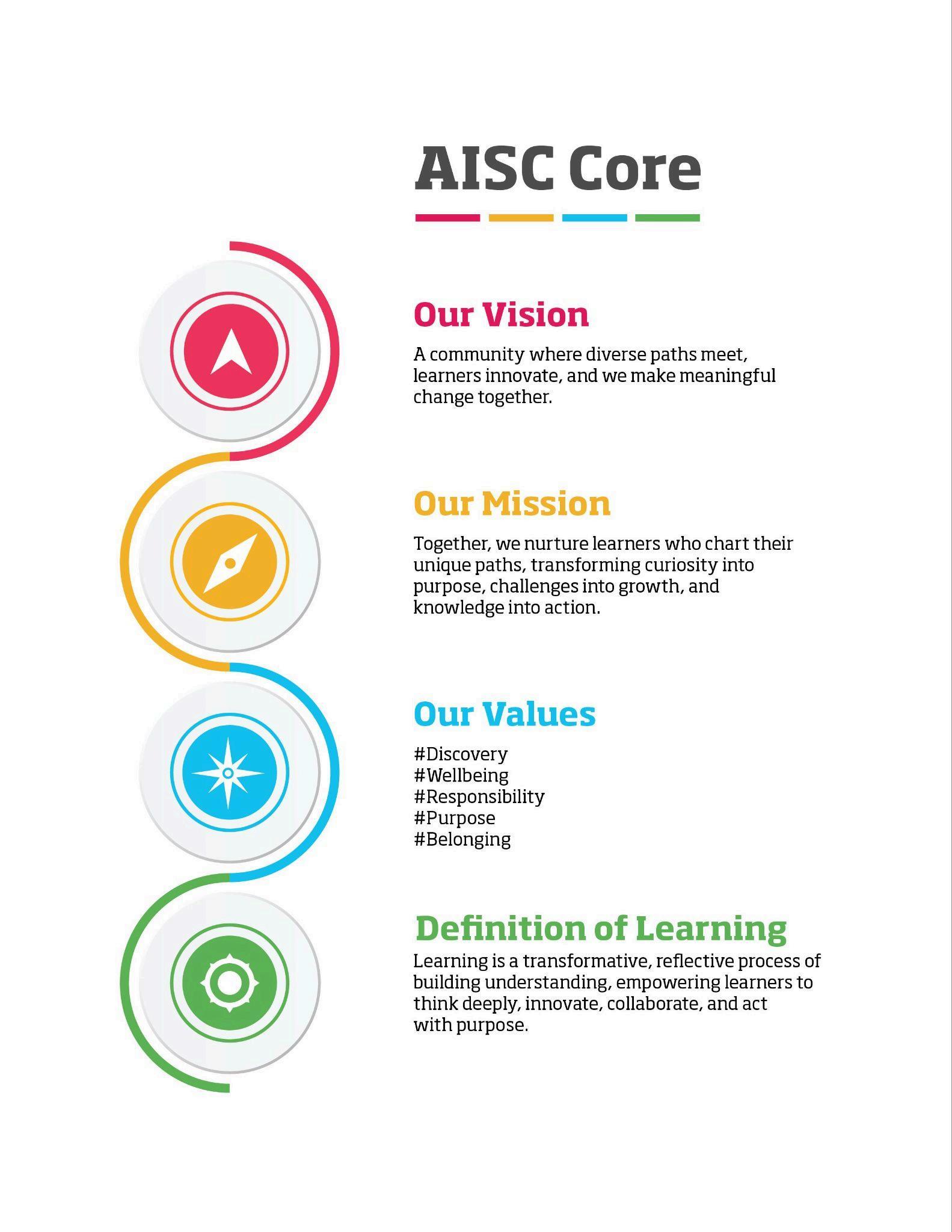
● Demonstration of alignment with AISC’s Core (Vision, Mission, Values, and Definition of Learning)
● Education and training
● Certification (where applicable)
● Work experience
● Evaluations/recommendations of the Principal or immediate supervisor
● Professional competence
● Professional attitude
● Commitment to personal growth and professional development
● Evidence of ongoing professional learning
● Community, human-centered and well-being centered professional practice
● Proficiency in written and spoken English
● Visa and foreign resident status
● For Support Staff: High school diploma and documented successful work experience
The School is an equal opportunity employer. In evaluating degrees from non-U.S. educational institutions and non-U.S. experience/licenses, the decision of the Head of School shall be final
Applicants for any position at the School must provide at their own expense, true/attested copies of all documents that are required for employment and placement on the salary schedule Once received, these materials become the property of the School
Any discrimination on the basis of race, color, religion, ethnicity, citizenship/immigration status, gender, gender identity, gender expression, disability, size, sex, weight, creed, caste, sexual orientation, national origin, ancestry or socio-economic status shall not be tolerated.
The School reserves the right to allocate teaching positions in such a manner as to provide students with a balance of international and local staff, and ensure an American style of instruction and curriculum
Background Check Verification
For Overseas-Based Staff
The School conducts background screening for all employees through its contracted agency as part of the hiring process. If there is any adverse information which comes up on the background check report and the employee is unable to dispute the same, the School reserves the right to cancel the employment offer or if already employed, can terminate the Employee for the failed background check
For Locally Hired Staff
The employee must obtain a Self-Verification Clearance Certificate from the local police. The School will issue the Staff ID card and authorize the employee to commence work only after clearance has been received
Fitness Requirements
The ongoing health and physical wellbeing of the School’s staff is important to the successful operation of the School. No applicant for any position shall be employed if the applicant fails to meet the minimum standards for physical fitness required for the position. All employee contracts shall contain specific wording which indicates that employment is contingent upon successful completion of a medical test as described below. Health and medical check-ups are also required on a regular basis for all continuing employees.
Prospective new employees, prior to the beginning of employment, shall provide:
1 A completed school health form, indicating that the individual is fit for employment and free from all contagious and communicable diseases, signed by a school-approved doctor. (Physicals taken more than six months prior to the date of employment will not be accepted by the School.)
2 Evidence of freedom from tuberculosis, through a chest x-ray and physician’s certificate, within the last two years.
3. Other health and medical requirements as determined by the Head of School or as circumstances warrant.
Thereafter, it is the responsibility of each staff member to provide health updates to the Health Office as required. The school will facilitate the annual health check for locally hired employees at a school-partnered clinic. Employees may either use this facility for their annual health check or manage it independently at any clinic throughout the academic year, with reimbursement available up to a limit of USD 100. This amount cannot be accrued or carried forward to the following year.
The cost of the initial medical examination, and subsequent school-required medical examinations and tests for continuing employees, shall be borne by the School These expenses may not exceed an amount as determined by the Head of School. Copies of all medical reports shall be retained in the employees’ personnel files.
The Head of School shall establish regulations to cover all aspects of this policy including identification of school-approved doctors, conduct of medical exams, integration with the School’s medical insurance programs and expense reimbursement.
All employees may be required at any time and at the School’s expense, to undergo a medical examination and provide a medical report from a physician designated by the School, when, in the opinion of the Head of School, the staff member’s state of health may interfere with the performance of their duty.
When an employee has been out due to surgery or prolonged illness, the Head of School or Manager may require a signed statement by a physician (either the employee’s personal physician or, at the School’s discretion and expense, a physician of the School’s choice) that the employee is fit to return to work and to assume all regular duties of their position If such a statement cannot be obtained, the Head of School is empowered to direct the employee not to return to work until such a statement is obtained.
Employee Responsibilities and Professional Standards
Please refer to your job description and related school policies and procedures that outline employee conduct, professional standards and this personnel handbook. All employees shall be committed to conduct which recognizes the basic principle that the employee is responsible for providing the strongest commitment to the School’s Mission, and Vision.
This responsibility requires the employee to maintain standards of exemplary conduct, and commitment to the following standards:
● Makes the wellbeing of students and colleagues the fundamental criterion for all decision-making and actions.
● Supports the principle of due process, and protects the rights of individuals.
● Promotes positive public relations with the parents and in the community
● Is an active team member.
● Attends meetings and accepts extra responsibility as the position demands.
● Fulfills professional responsibilities with honesty and integrity.
● Avoids using their position for personal gain.
● Honors all contracts until fulfillment or release, in the interest of the School
● Seeks personal and professional growth.
● Demonstrates and promotes care of school property.
● Conducts themself, both on and off the job, in a manner that reflects positively on the employee and on the School.
Professional Standards
AISC employees are expected to demonstrate effectiveness and growth by:
● Embracing responsibility for student learning;
● Modeling personal and professional growth;
● Leading others outside of the classroom;
● Innovating practices and programs;
● Collaborating with all community members;
● Communicating with all community members;
● Building community through action;
● Embedding wellbeing; and
● Demonstrating ethics and integrity in all interactions.
While employees have a number of responsibilities as outlined above, they also have rights, in accordance with Board policy, which includes:
● Expression of viewpoints, ideas and comments;
● Involvement in decision-making on matters of the School;
● Staff development opportunities;
● Regular feedback on performance; and
● Redress of grievances.
Employee Contracts
In this Section:
Types of Contracts
Probation
Salary Schedule
Changes in Track Placement
The terms and conditions of employment for all professional and support staff shall be detailed in written contracts for periods of fixed duration. The Board of Directors is responsible, upon recommendation from the Head of School, for approving the terms and conditions of employee contracts The Head of School or their designee is authorized to discuss employment contracts with job applicants within Board-approved budget and staff allocation guidelines. The Head of School or their designee must approve all employee contracts.
Employee contracts shall clearly define the employee’s job responsibilities, work hours, contract duration, compensation and benefits, health requirements, contract renewal/termination and other conditions of employment. Except as otherwise stipulated in a written contract, all employees shall be subject to the provisions of the Board Policy Manual in effect on the date the contract is signed and the regulations established by the administration. Signing of the contract by the applicant constitutes acceptance of all employment terms and conditions as stated in the contract as well as an understanding of the Board policy provisions and other regulations in effect at that time
The School issues four types of faculty/staff employment contracts depending on an individual’s employee classification:
1 Overseas Based and Overseas Hired (OBOH) contracts
2 Overseas Based and Locally Hired (OBLH) contracts
3. Locally Based and Locally Hired (LBLH) contracts
4. Admin & Support Staff contracts
5. Vendor & Service Contract Agreements
Neither the contract nor its terms and conditions may be altered during the period the contract is in effect without the mutual written agreement of the contract signatories. Changes in an employee’s contract shall be effected by the signing of a new contract or amendment to the existing contract Changes in policies or procedures shall not affect an existing contract, but shall go into effect upon signing a new contract.
Normally, employment contracts shall not be extended but shall be fully rewritten as new contracts, separate and independent and governed by the provisions of the Board Policy Manual in effect at the time of signature of such extension or renewal Contract elements that might remain in effect from first hire to final termination shall be specifically referenced in each contract.
Probationary Period
All Teaching Assistants, Administrative Support Staff, and Support Staff shall be subject to a three (3) month probationary period immediately following either their initial appointment or subsequent appointment to a new position at a different grade level.
The Board of Directors holds the Head of School responsible for developing and implementing regulations to support this policy, including performance evaluation measures and procedures in the event the employee does not satisfactorily complete the probationary period.
Staff Contract Periods
Faculty employees (i.e. teaching staff) shall be offered a contract for an initial two-year period Thereafter, one- or two-year contracts may be offered to these individuals at the discretion of the Head of School
All other employees shall be issued initial one- or two-year contracts. Contract renewal decisions are made annually.
Staff Placement on Salary Schedule
The School shall determine the placement of an employee on the appropriate salary schedule based on the individual’s academic preparation as well as prior work experience. A candidate shall be required to provide documentation to support their educational background, certification and work experience.
For the teaching staff, salary placement is based on degrees/semester hours earned in a U S college or university The Head of School is responsible for determining the equivalency of non-American degrees and coursework to the U.S. model for purposes of initial placement. Locally based faculty shall be compensated for U.S. or overseas degrees or certifications.
When placing a new member of the teaching staff on the salary schedule, prior experience credit shall be granted on the basis of one step for each year of properly verified relevant experience. Experience credit shall be granted for up to a maximum
of ten years. Previous part-time experience is defined as 50% or more of a full-time position. This is either a full-time position half for half a year or more, or a position at 50% time or more held for a full year
The School’s decision in matters of staff placement shall be final.
Changes in Track Placement on Salary Schedule
Movement from one track to another on the salary schedule is possible through documented, successful completion of additional course-work/degrees. Such courses/degrees are recognized for placement purposes only if they have been completed prior to the start of an academic year and only if they have been taken for credit (i.e. non-audit) purposes.
Courses taken must be relevant to the employee’s assignment at the School. Individuals are encouraged to discuss possible courses or additional degrees with their immediate supervisor.
For the teaching staff, movement beyond the Bachelor track on the salary schedule shall be as follows:
1. Only graduate courses taken after the completion of the Bachelor’s degree shall be considered toward movement beyond the “BA” salary level
2. Only those courses taken after the completion of the Master’s degree shall be considered for movement beyond the “MA” salary level.
3. Graduate courses taken at any time after completion of the Bachelor’s degree, but not already credited as part of a Masters or Doctoral program shall be credited toward movement to the +15 column. MA +15 includes MA + post graduate certificate
4. The next higher move will be for a second MA graduate course or MA +30 (for credits completed while employed at AISC)
5 The highest movement will be awarded for PhD course or a third MA degree
6. The Head of School shall verify the equivalency of non-American college/university course- work/degrees to American semester credits/degrees for any track or columnar changes. The decision of the Head of School in matters of relevancy and equivalency shall be final
Promotions and Internal Transfers
Follow the application process that is detailed on the school website under “Careers” When vacancies occur:
● Speak with your own supervisor regarding your interest, and then speak with the appropriate supervisor for the posted position for internal transfers. Internal transfer positions will be on a two-year contract initially.
● Promotions shall be made within the staff when training and abilities warrant. All other factors being equal, seniority shall be considered.
Professional Staff Consultancies
Members of the School’s professional staff may, with permission of the Head of School, perform consultative services to other schools in the region (such as accreditation visits, visits funded by the U.S. Department of State Office of Overseas Schools grant monies, etc ) without losing accumulated leave Expenses for such consultancies shall be borne by the hosting school, by the accrediting agency, or through grant monies.
Tutoring for Pay
Professional ethics and responsibility require that teachers make themselves available during the school day for student conferences and extra help outside the regular class periods for the subjects taught. No reimbursement may be accepted for such extra help during the regular school day.
However, in some cases, teachers may recommend to parents, through the principal, that a student receives academic tutorial help outside school hours Only Teaching Assistants or Para-professionals are permitted to tutor. Permitting, arranging and paying for such tutorial assistance shall be the responsibility of the parents, though the School may assist, when requested by the parents, in suggesting possible tutors. For obvious reasons, it is considered unethical for a teacher to tutor one of their own regular students for pay and shall not be permitted.
Any tutoring of students for pay shall be (1) done with the approval of the Head of School or Principal, (2) conducted outside regular school hours, (3) done off school premises and without the use of school materials or equipment unless specified approval is obtained from the Principal, and (4) arranged entirely between the parents and tutor(s) involved.
Staff Conflicts of Interest
It is essential to the Mission of the School that all of its employees be above reproach in dealings with students, parents, each other, and with the public. Therefore, school personnel should avoid all appearance of impropriety.
It is of the greatest importance that no gifts, favors, special privileges or considerations be sought or accepted by school personnel, including administrative and office personnel. Exceptions are tokens of appreciation of a non-commercial value which are considered as any item $100 USD or below.
School personnel shall not at any time engage in outside activities or employment that would detract from their effectiveness as employees in the School, interfere with their effectiveness in performing their contractual duties, compromise or embarrass the School, adversely affect their employment status, visa, work permit or professional standing, or in any way conflict with or violate professional ethics. Employees shall not engage in any other employment or in any private business during the hours required to fulfill assigned school duties Employees shall not sell any books, supplies, musical instruments, equipment or other school property unless prior approval has been received from the Head of school. The Head of School shall be responsible for determining if a conflict of interest exists or if an employee is engaged in an unacceptable practice.
No administrator or supervisor shall be responsible for the direct supervision and/or evaluation of a relative unless approved by the Head of School. When such approval is granted, the Head of School must review the annual performance evaluation of the employee.
Staff Grievances and Appeals
The Board of Directors recognizes that effective personnel management requires a procedure that provides for a prompt, impartial and fair hearing for any employee with a grievance
A “grievance” shall be defined as a claim by one or more employees that there has been a violation, misinterpretation, or misapplication of a provision in a contract agreement, a Board policy, or any regulation supporting Board policy. A grievance may also be an employee’s dissatisfaction with a specific aspect of their employment, working conditions, working relationships which are outside their control or harassment. It may concern working conditions, relationships with supervisors or with other employees and officials, management decisions, violation of matters covered in regulations or implementation of policies or employee-management relations.
For any grievance, the goal shall be to reach an effective solution that respects the needs of each party This shall be accomplished at the lowest possible level of administration and within a short, yet reasonable, time period. The investigation or handling of the complaint will be done in a non-intimidating and supportive manner, and confidentiality shall be observed at all times.
The Board holds the Head of School responsible for developing a grievance procedure to allow reasonable and effective means for resolving difficulties among employees, to reduce the potential areas of grievance, and to establish and maintain effective channels of communication. The grievance procedures shall follow the following steps and include timetables, documentation requirements, etc
1. Informal Resolution: The employee and their immediate supervisor shall make every effort to resolve the matter directly by informal means. If such efforts fail, the employee and their supervisor shall discuss the matter with HR with the goal of resolving the matter
2. Formal Resolution: In the event that informal resolution fails to resolve the problem, the employee can submit a formal grievance to the Principal, Line Managers or HR The Principal, Line Managers or HR shall investigate the matter and communicate their decision in writing, giving supporting reasons, to the parties involved. A copy shall be provided to the Head of School.
3. Appeal to Head of School: The employee has the right to appeal in writing to the Head of School against the decision of the Principal, Line Managers or HR in Step 2 above. The Head of School shall convene a conference with the parties involved with a view to arriving at a mutually satisfactory resolution to the grievance. Following the conference, they shall communicate their decision in writing, giving supporting reasons
4. Appeal to the Board: The employee has the right of appeal to the Board against the decision of the Head of School in Step 3 above, with the exception of matters of hiring, contract renewal and termination. The appeal must be in writing The Board shall hold a hearing on the grievance with the parties involved and following the hearing, communicate in writing their decision.
The decision or recommendation of the Board shall be final, and all parties shall abide in good faith by the findings and/or recommendations made. The parties involved at all stages of the grievance shall use discretion when discussing the grievance with anyone.
Workday Standards, Leave Policies, and Emergency Procedures
In this Section:
Work hours and dress code
Leave categories and policies
Emergency procedures
The Work Day
Non-teaching employees will learn of their expected work hours from their department or section supervisor.
Teachers shall be present at the School throughout the established school hours. The classroom hours are 8:30 a m to 3:30 pm for Early Years to Grade 12 In order to work with students or collaborate with colleagues, full-time teachers are expected to be at school at 8:00 a.m and remain until 4:00 p.m on all work days (until 5:00 p.m. on Early Release Wednesdays).
Exceptions may be taken on those days when teachers have an assigned supervisory duty or staff meetings. Occasionally, additional hours may be required of a teacher for staff meeting programs and events.
Teachers are expected to be at their respective teaching stations promptly at 8:15 a.m. with their classroom door unlocked unless on an assigned duty. Teachers are required to notify the section principal and the sectional assistant prior to leaving school during a preparation period for matters of personal business.
Lunch breaks occur according to department or section schedules Lunch time is considered personal discretionary time except when assigned a departmental or sectional duty.
Employees who chaperone school trips, landing or returning to Chennai after 12:00 a.m. may either elect to return to work the same day by 12:00 p.m. or take sick leave for the day. In the event of late arrival or sick leave, the employee must leave detailed substitute plans or other arrangements for their duties to be covered.
Professional Dress Code
Our school community is highly diverse. Our faculty and staff should be mindful of the range of cultural perspectives when choosing their dress for school Faculty and staff should dress appropriately for the duties of their position, taking into
consideration the weather conditions and daily events occurring on campus. Employees set an example for others in the community.
Leave Categories
Staff Leave
Faculty and staff are eligible for the following types of leave, subject to approval by the Head of School/Principal/Supervisor.
Sick Leave
Sick leave is an important benefit in each employee’s compensation package The School’s sick leave benefits have the following features:
1. All full-time employees shall be entitled to sick leave accruable at a rate of one day for each month of service up to a maximum number of days per year, as defined below:
2. Professional Staff: 10 days per year
3. Support Staff: 12 days per year
4. The maximum sick leave any employee may accumulate is 60 days.
5. Part-time employees shall accrue sick leave at a rate in proportion to the amount of time worked relative to that of a full-time employee The maximum number of sick days that can accumulate shall also be pro-rated.
6. Absence due to an on-the-job injury shall not be deducted from an employee’s accrued sick leave.
7. Medical Leave needs to be authenticated by the School’s Health Office.
8 The sick leave benefit may also be utilized while attending the sickness of one’s own children or, in special circumstances at the discretion of the Head of School, in conjunction with the serious illness or death of a parent, legal guardian, surrogate parent, parent-in-law, spouse, or siblings.
9 In cases where an employee does not have any sick leave to their credit, the Head of School may grant the employee sick leave up to the number of days anticipated to be accrued that year. Sick leave anticipated beyond the current school year may not be used.
10 Upon returning to school after an illness, a staff member may be required to present a physician’s certificate at the Head of School’s discretion. Employees absent for three or more consecutive days must submit a certificate from a duly qualified physician to the effect that they were unable to perform their duties and stating the nature of the illness
11. In cases of prolonged absence due to a major illness or serious accident, the employee may apply for a leave of absence without pay or in special
circumstances, the Head of School may grant additional leave for a specified period. In these cases, immediate employment reinstatement may not be guaranteed
12. Any leave indebtedness shall be deducted from the final check payable to any employee who fails to serve the School for a full year. Days of absence for illness beyond the number of sick days earned shall result in a deduction of an amount equal to the day’s pay
13. Unused sick leave, from the current year or accumulated from prior years, shall have no cash value upon termination of employment nor shall it be reinstated if the employee is rehired at a later date or in another position.
Personal Leave
Personal leave will be granted upon the approval of the direct supervisor and the Head of School. Personal leave may be denied in the event that coverage cannot be secured, the dates requested are disruptive to the school, its students and staff or during other restricted periods such as the first and last two weeks of the academic year.
Typical reasons to request personal leave include:
● Requests or personal leave shall be submitted in writing to the direct supervisor prior to the date of absence. Written approval from the supervisor must be provided before such leave can be taken.
● Personal leave is not meant to be used for extending vacations or school holidays. It shall not normally be granted during the first nor last two weeks of school, immediately before or after school holidays or during in-service days.
● Delays in travel will not be considered reasons for paid personal leave
● Also, to maintain continuity of the educational program the Head of School has the right to limit the number of personal leave requests on any given day.
● Full-time employees may use a maximum of three days of annual sick leave each year for personal leave as approved by the Head of School. The benefit is prorated for part-time employees.
● This leave cannot be accumulated from year to year and shall have no cash value upon termination
Professional/Educational Leave
The Board of Directors encourages employees to participate in staff development activities and attend professional/educational programs that will allow them to further the School’s Mission and Objectives and on-going school improvement process, as well as grow in their professional careers. The school’s professional/educational leave is intended for attending conferences or workshops, advanced education or further certification, consultancy services (such as accreditation visits) and similar professional activities.
1. An employee must request in writing and obtain prior written approval from the Head of School or Supervisor before taking such leave.
2. The amount of leave granted for each employee shall be at the discretion of the Head of School or Supervisor. Granting such leave is based on the availability of substitute teachers, the need of the School for the individual to attend, the relevancy of the training to the employee’s job or growth and the need of the individual to improve their competence
3. When requesting professional/educational leave, the employee should consider all other leave or absences (taken or anticipated) so as to minimize interruptions to position responsibilities
4. When considering professional/educational leave, supervisors will factor all other leave or absences (taken or anticipated) into a decision to approve or not.
5. This leave is non-cumulative, non-cashable, and non-transferable.
Maternity/Paternity Leave
In accordance with Indian Law, the following elements constitute AISC’s Maternity/Paternity Leave policy:
● Female faculty and staff members who have completed not less than eighty (80) days of service in the twelve (12) months immediately preceding the date of expected delivery are entitled to twenty-six (26) calendar weeks maternity leave (of which not more than eight (8) calendar weeks may be availed prior to the expected date of childbirth) with full pay for the period of actual absence
● An eligible female faculty/staff member having two (2) or more surviving children are entitled to twelve (12) calendar weeks (of which not more than six (6) calendar weeks may be availed prior to the expected date of childbirth).
● In case of adoption of a child below the age of three (3) months, female faculty/staff members who have completed not less than eighty (80) days of service in the twelve (12) months immediately preceding the date of expected handing over of the child are entitled to twelve (12) calendar weeks maternity leave with full pay from the date the child is legally conveyed to the adopting mother or the commissioning mother.
● If both parents are Employees of the School, the maternity leave may be taken by either parent or between them
● If the father is the only school employee, paternity leave of up to ten working days is available.
● In case of tubectomy operation, the female Employee will, on production of proof, be entitled to leave with full pay for a period of two (2) calendar weeks immediately following the day of her tubectomy operation
● A female Employee suffering from illness arising out of pregnancy, delivery, premature birth of child, miscarriage, medical termination of pregnancy or tubectomy operation will, on production of proof, be entitled, in addition to her maternity leave, to leave with full pay for a maximum period of one (1) calendar month.
● Part-time female Employees are entitled to the same benefits as defined above
Bereavement Leave
Should a death occur in an employees’ immediate family (parent, spouse, child) the employee is authorized up to five working days of bereavement leave without loss of pay.
Leave Without Pay/Unexcused Absences
In special circumstances, the direct supervisor may, at their discretion, grant an employee leave without pay in cases where an individual has exhausted the time provided for in their sick, professional, maternity, bereavement or personal leaves or for other reasons as approved by the Head of School/Supervisor Unpaid leave is not to be considered entitlement.
Requests for leave without pay shall be submitted in writing to the Head of School/Supervisor in advance of the requested leave date. Written approval from the direct supervisor and the Head of School/Supervisor must be received before such leave can be taken. For any approved leave without pay or unauthorized absence, pay shall be deducted from the employee’s salary on a pro-rata basis for the period of such absence
Recruitment Leave for Overseas Hired Staff
Overseas hired staff shall be entitled to a recruitment leave in the last year of their contract to participate in recruiting fairs.
This leave shall be granted on the approval of the direct supervisor and the Head of School/ Principal. The employee may take up to five days leave from their accrued sick leave for recruiting or packing out. Used in conjunction with personal leave, the Head of School/Supervisor may approve up to three additional days. The School shall provide the employee with paid time off, but no additional compensation
Annual Leave for Administrative and Support Staff
Annual leave may be taken in full (for example, during the summer) or in shorter blocks, based on role requirements, responsibilities, and eligibility (please refer to the table below) All leave must be requested in advance and approved by your immediate supervisor.
Effective from the 2025–26 academic year, administrative and support staff may carry forward up to 7 days of unused annual leave per year, with a maximum cumulative cap of 100 days. Staff who have already accrued more than 100 days will not accrue further leave beyond this limit They must use their eligible annual leave within the current academic year.
For staff whose accrued leave already exceeds 100 days, the excess balance will remain frozen as of now and will be encashed at the time of separation.
Requests for annual leave must be presented in writing in advance (one month) to the supervisor for approval.
Annual leave shall be approved at times convenient to the operation of the School and its programs. The School shall not normally approve annual leave while school is in session or when the employee’s services are required
School Security and Emergency Procedures
The School has developed a series of procedures to ensure the safety and security of its staff and students. To enable these procedures to be effective, it is important that faculty adhere to entrance and exit procedures while entering and exiting the campus.
Identity Cards
For security purposes, all employees shall be issued and expected to carry identification cards when at school. The photo identification card system uses a clip-on badge, which serves as instant identification.
Identification cards are the property of the School and are issued to persons only during the time of their employment. Identification cards shall be reissued at the beginning of each school year. Upon termination of employment, the card must be returned to the School before final salary payment is received.
School emergency numbers are printed on the reverse of the ID card
Guests on Campus
Guests must carry a valid photo ID and be accompanied by a staff member to gain access to the campus Please refer to AISC’s Visitor & Volunteer process for additional information.
Keys
The classroom/office key system at AISC is meant to be an “in-house” system That means that the teacher will pick up their key from the respective principal’s office at the beginning of the year to open the classroom/office, and return it to the same office at the end of the year Teachers will also receive keys to desks, file cabinets, etc., which they will be responsible for.
Emergency Procedures
All faculty members are expected to familiarize themselves with the School’s Emergency Procedures Booklet (see below). This can be found in every classroom and office. At the beginning of the school year, faculty members are expected to go through the procedures with the homeroom students.
Emergency Procedures Booklet
School Closure
Should weather or other external situations force a consideration of the safety for students/ families to travel to school, we could take a decision to close school (for a day or more, depending upon the situation) In general, we operate by two rules regarding travel safety communication:
● When we have information that we believe would be helpful to our community, we communicate it.
● No news is good news.
We are careful to collect information facts and perspectives from an array of sources prior to determining a school closure. If we know about a situation in
advance, we may decide to communicate a school closure a day (or more) in advance. In the case of overnight weather or other unforeseen situations, we would make a decision to close school by 5:00 a m Likewise, should the circumstances warrant, an early/partial day school closure (that is, an early release or late start) would be made by 5:00 a.m. We would communicate this through email, SMS, and an announcement on our website. Further, we might activate our phone tree, if we have concerns about mobile phone/internet connectivity and/or if we want to make sure that all community members are accounted for.
Once a decision to keep school open is made, we are obliged to stay open and provide instruction to students until the end of the school day. A decision to cancel ASAs or other after school events, will be made not later than 11:00 a m and communicated to the community promptly.
AISC Emergency School Closure Procedure
Reporting Sexual Harassment
In this Section:
Definitions
Filing a Complaint
Confidentiality
Workplace Harassment
In order for AISC to be a safe place for all, we treat each other with respect and dignity Sexual harassment of another employee constitutes a disciplinary infraction subject to penalties and including possible termination.
The Board of Directors acknowledges the following as a description of sexual harassment:
Sexual harassment is intentional, persistent, and unwanted use of sexual references, connotations, or sexual advances that take place in the workplace and/or work events.
It includes any one or more of the following unwelcome acts or behavior (whether directly or by implication):
● Physical contact and advances; or
● A demand or request for sexual favors; or
● Making sexually colored remarks; or
● Showing pornography; or
● Any other unwelcome physical, verbal or non-verbal conduct of sexual nature
While it is recognized that raising an objection to perceived harassment may, at times, be viewed as potentially disadvantageous to the complainant, the institution has established an Internal Committee (IC) to ensure that all complaints of sexual harassment are received, prompty inquired into, and resolved in a fair, confidential, and non-retaliatory manner. Employees are therefore encouraged to report any such incidents through the prescribed channels.
How to File a Complaint
All complaints may be submitted in writing either by letter or email or in person to any member of the Internal Committee (IC) with whom the employee feels most comfortable. If an employee is more comfortable approaching their line manager, supervisor, or Head of Department, the concern may be reported to them, and they will forward it to the IC Committee Complaints may also be submitted to multiple IC members if preferred. All concerns will be handled with discretion and confidentiality in accordance with school policy.
Internal Committee Members | 2025–2026
Justyna McMillan | High School Principal & IC Chairperson mjustyna@aischennai.org
Felina Heart | Elementary School Counselor hfelina@aischennai.org
Sajitha Sreenath | HR Associate Director ssajitha@aischennaiorg
Riedwaan Kader | Secondary Associate Principal for Student Life kriedwaan@aischennai.org
Azizunnisa | Admin Assistant to MS Principal sazizunnisa@aischennai.org
Vimala Seshadri | External NGO member vimkids@gmailcom
To support the inquiry, the Complainant may be requested to provide supporting documents and the names and addresses of witnesses, if any If a verbal complaint is received by the IC, the Complainant will be required to follow the process set out in this clause and submit the complaint in writing/by email, along with the supporting documents, as soon as possible thereafter or within the timeline indicated by the IC in this regard
Where a complaint cannot be made in writing, the Presiding Officer or any member of the IC, as the case may be, will render all reasonable assistance to the Complainant, for making the complaint in writing.
If an employee is unable to make a complaint on account of physical or mental incapacity or death, a complaint may be filed by the employee’s legal heir or any other authorized person as prescribed.
The complaint should be made at least within three months from the date of occurrence of the alleged incident and in case of a series of incidents, within a period of three months from the date of the last incident. The IC may, at its sole discretion, extend this time limit by up to three more months if it is satisfied that the circumstances were such which prevented the Complainant from filing of the complaint within the period of three months
Any complaints made beyond or outside the time limit prescribed above, may be taken up by AISC, at its sole discretion and such complaints will be handled as per the disciplinary policy of AISC, by such authority as appointed by AISC.
Notwithstanding the foregoing, all Complainants are encouraged to file sexual harassment complaints with the IC as soon as possible and within the timelines indicated above, so that the matter can be resolved/redressed at the earliest.
Conciliation Proceedings
Before initiating an inquiry into a sexual harassment complaint and upon request of the Complainant, the IC can take steps to settle the matter between the Complainant and the Respondent (against whom the complaint is filed) through
conciliation, provided that no monetary settlement shall be the basis of such conciliation.
Where a settlement has been arrived at between the parties, as a result of such conciliation, no further inquiry shall be conducted by the IC, but it shall record the settlement so arrived and forward the same to AISC to take action as specified in the recommendation. Copies of the settlement must also be provided to both parties.
Inquiry into the Complaint
Where the Complainant informs the IC that any term or condition of the settlement arrived at is not complied with by the Respondent, or if the Complainant does not request for conciliation, or if the conciliation process fails, and where the Respondent is an employee, the IC would proceed to make an inquiry into the complaint in accordance with the provisions of this policy
Any complaint under this policy will be redressed in the following manner:
1. Upon receipt of the complaint, a copy of the complaint shall be provided to the Respondent within 7 days of receipt of the complaint.
2. Upon receipt of a copy of the complaint, the Respondent must submit a reply to the complaint along with a list of supporting documents, and names and addresses of witnesses within a maximum of 10 working days of receiving the copy of the complaint or within a shorter duration as may be prescribed by the IC
3. The inquiry shall be completed within a total of 90 days from the receipt of the complaint, by the IC. Where both the parties are employees of AISC, a copy of the findings shall be made available to both the parties, enabling them to make a representation against the findings before the IC.
4. The inquiry report containing the IC’s findings and recommendations, shall be issued to AISC within 10 days from the date of completion of inquiry for implementation of its findings and recommendations A copy of the inquiry report shall be provided to both parties.
5. Any recommended action or findings by the IC shall be implemented by AISC within 60 days of receipt of the inquiry report
6. Any appeal to an appellate authority prescribed under the POSH Act, against the decision/ recommendations of the IC, or against breach of the terms of conciliation, or non-implementation of recommendations by AISC must be lodged/filed within 90 days from the date of receipt of the inquiry report, as per the provisions of the POSH Act.
The timelines mentioned above are in accordance with the Sexual Harassment of Women at Workplace (Prevention, Prohibition & Redressal) Act, 2013 (POSH Act) and may be subject to any other law, policy, directions, or relaxations in force at any given time.
Termination of Inquiry
The IC may give an ex-parte decision or terminate the inquiry proceedings if the Complainant or the Respondent fails to appear before the IC for three consecutive hearings without sufficient cause However, the IC will give a prior written notice of 15 days to the concerned party before taking any such decision.
Interim Relief
During the pendency of the inquiry, on a written request being made by the Complainant, the IC may recommend to AISC to: (a) transfer the Complainant or the Respondent to another department/division as deemed appropriate; or (b) grant leave to the Complainant for up to 3 months in addition to leave already entitled; or (c) restrain the Respondent from reporting on the work performance of the Complainant or writing the Complainant’s appraisal/confidential report(s)
[Note: The above mentioned reliefs have been made available only to women complainants under the POSH Act.]
Other acts or behavior which are punishable under the POSH Act
Apart from sexual harassment, if any person commits the following acts, such person shall also be punishable with penalties, as set out previously, on the grounds of misconduct:
1 Making false allegations of sexual harassment, with malicious intent and knowledge that such allegation is false or producing false evidence to justify such complaint;
2 Giving false evidence or producing false documents as a witness to any proceedings of the IC;
3. Breaching the statutory duty of maintaining confidentiality of information relating to the inquiry proceedings of the IC, by divulging such information to any unauthorized person, including, but not limited to any employee; and/or
4. Victimizing, intimidating or influencing any person, witness or any other persons seeking redress under this policy whether directly or indirectly. AISC will ensure that the Complainant or a person who has given evidence as part of an inquiry, in good faith, is protected and not victimized or discriminated against in their career in AISC.
It is clarified that the mere inability to substantiate a complaint or provide adequate proof will not be treated as a false complaint.
Non-retaliation
AISC will not retaliate, nor will it tolerate retaliation against any employee or the Complainant, who files a complaint of sexual harassment in good faith or is a witness in the IC proceedings
Confidentiality
AISC understands that it is difficult for the Complainant to come forward with a complaint of sexual harassment and recognizes the Complainant’s interest in keeping the matter confidential
All proceedings, documents and records maintained under this policy, including the names of the Complainant, Respondent, and witnesses shall be confidential and shall be dealt with in the manner provided under the POSH Act.
All persons involved in the proceedings under this policy including the parties, witnesses, IC members, and any other employee who becomes aware of any incident of sexual harassment, whether directly or indirectly, shall be under a duty to respect and maintain confidentiality.
Publishing/communicating or in any other manner making known to other people in AISC, public, press or media (including by way of social media, such as Facebook, Twitter, Instagram, WhatsApp, LinkedIn etc.) any information in relation to the contents of the complaint, the identity and addresses of the Complainant, the Respondent and the witnesses, the conciliation and inquiry proceedings, recommendations of the IC, or the action taken by AISC is prohibited
Further care should be taken that the name, address, identity or any other particulars that could lead to the identification of the Complainant, the Respondent or the witnesses should not be disclosed.
The Complainant, Respondent, witnesses and members of the IC who breach the confidentiality in relation to any complaint made under this policy would be liable for disciplinary action up to and including termination and/or a fine of INR 50,000 as prescribed under the POSH Act.
Note: While the POSH Act specifically applies to complaints made by women, male employees (and any other individuals not covered under the Act) may report concerns of inappropriate behavior, harassment, or misconduct through the school’s internal grievance redressal mechanism. Such complaints can be submitted to the IC committee, HR or the Line Manager, who will ensure that the matter is addressed promptly, fairly, and confidentially in line with the school’s policies.
Workplace/Work Event Harassment
AISC acknowledges that all harassment may not be sexual in nature and acknowledges the following definition of harassment: Harassment is any action or willful communication that is deliberately intended to threaten, cause pain, or
discomfort to another person. This may include, but is not limited to, verbal, physical, or written conduct that creates a hostile or uncomfortable environment. Where appropriate, an employee who experiences harassment may choose to address the matter directly with the individual concerned in an effort to resolve the issue informally. However, it is accepted that in some circumstances this may not be possible and the employee has the right to file a grievance in accordance with AISC’s Grievance policy and procedures
Reference Board Policy Manual Policy 6.440
Child Safeguarding at AISC
In this Section:
AISC’s Commitment
Definitions
Reporting
Resources
Employee Code of Conduct
It is the goal of the American International School Chennai to maintain a school environment for all students free from abuse AISC endorses the Convention on the Rights of the Child, of which the host country, India, is a signatory and seeks to be a safe haven for students who may be experiencing abuse or neglect in any aspect of their lives
AISC will also remain compliant with the Protection of Children from Sexual Offences Act, 2012 (POCSO) and the rules therein as well as Guidelines issued by the Government of Tamil Nadu on student safety.
It is also the goal of the American International School Chennai to maintain a safe and supportive school environment for all students free from harassment, intimidation, and/or bullying, and free from discrimination on account of actual or perceived race, color, creed, ethnicity, national origin, citizenship/immigration status, religion, gender, gender identity, gender expression, sexual orientation, disability, or weight. AISC believes in provisions for the protection of the safety and support of all students regardless of identity group.
No AISC employee may engage in any activity constituting abuse. AISC employees must report to the Head of School, Section Principal, or other administrator any suspected abuse either in or out of school.
According to the World Health Organization, child abuse constitutes, “all forms of physical and/ or emotional ill-treatment, sexual abuse, neglect or negligent treatment or commercial or other exploitation, resulting in actual or potential harm to the child’s health, survival, development or dignity in the context of a relationship of responsibility, trust or power.”
At AISC we recognize that abuse can take many forms and may not always be visible or detectable. Abuse can happen in any of the four areas described below. Prevention is possible and AISC is vigilant in its efforts to protect our students
Four Areas of Abuse
1. Physical Abuse: Physical injury inflicted by other than accidental means upon a student by another person including willful cruelty or willful infliction of pain.
2. Emotional Abuse: This includes the use of threats, intimidation, and acts of injustice or indignity by verbal or physical means
3. Neglect: This refers to a range of circumstances in which a parent or caregiver fails to adequately provide for a child’s basic needs.
4. Sexual Abuse: Sexual assault or exploitation
Prevention of Student Abuse
1. AISC does not hire staff who have a record of abuse. Background checks are part of the hiring process for employees. Applicants for AISC positions will agree in writing with the terms of this policy as part of the contracting process.
2. Abuse prevention and awareness training is mandatory for AISC employees.
3 AISC will maintain an updated handbook to assure correct procedures and processes remain in place to protect all students. AISC will distribute the handbook electronically to all employees, parents, and students annually.
4 The School will maintain a Student Safeguarding Advisory Committee to review, monitor, and recommend measures at an institutional level on all aspects of student safety related to sexual abuse.
5. AISC will ensure that CCTV cameras are installed across the School to cover all areas
For more information about safeguarding at AISC, please refer to the Safeguarding Handbook.
All AISC employees make an annual pledge to follow the Safeguarding Handbook and abide by the following guidelines as a condition of employment at the School.
Employee Code of Conduct
AISC Employee Code of Conduct
Safeguarding is a primary responsibility of schools in all contexts across the globe. The American International School Chennai (AISC) takes this responsibility seriously and pledges to make sure that all appropriate plans and measures are taken to ensure student, staff, and community safety at all times. AISC is committed to integrity, compassion, and self-reflection in the area of student safety.
Safeguarding is a broad term describing philosophies, policies, standards, guidelines and procedures to protect children from both intentional and unintentional harm. According to the World Health Organization, child abuse constitutes “all forms of physical and/or emotional ill-treatment, sexual abuse, neglect or negligent treatment or commercial or other exploitation, resulting in actual or potential harm to the child’s health, survival, development or dignity in the context of a relationship of responsibility, trust or power”
Child protection concerns include suspected, alleged, self-disclosed, or witnessed abuse of a student by anyone associated with the school in any capacity. All concerns must be thoroughly inquired into and followed by appropriate action.
AISC has a moral, legal, and ethical responsibility to safeguard the welfare of our students and staff All AISC employees will strictly follow the rules and guidelines below as a condition of coaching, directing, substitute teaching, supervising, tutoring or working with American International School Chennai (AISC) students.
As an employee or person working with AISC students you pledge to follow the Safeguarding Handbook, POCSO Act (2012) and rules and guidelines therein as issued by the School and the Government of Tamil Nadu related to student safety. I will abide by the guidelines of the Safeguarding Code of Conduct below as a condition of my being employed by AISC
I Will:
● Treat everyone with respect, patience, integrity, courtesy, dignity, and consideration.
● Use a positive approach by using language that empowers others rather than language that degrades or belittles students.
● Maintain appropriate physical boundaries at all times and touch children when necessary, only in ways that are appropriate, public and non-sexual.
● Never be alone on weekends or evenings with students at school or away from school. Unless it is for school business and another adult is notified.
● Maintain clear boundaries with friends of my children who are also students, ensuring I have parental permission whenever the child is in my care without their parent.
● Report immediately after observing or reasonably suspecting abuse to the appropriate authority.
● Abuse of a sexual nature to the Student Safeguarding Advisory Committee (SSAC).
● Abuse or neglect of a social, emotional or physical nature to a Section Principal, Section Counselor, Safeguarding Lead, or direct supervisor
● Cooperate fully in any investigation of abuse of students.
● Ensure that all virtual activities with students are recorded and stored.
● Exercise care with my use of language in my professional capacities
● Inform a Section Principal if I find I am alone with a student or students outside of the regular school day (7:00 a.m.–7:00 p.m.) unless the event is announced on the school calendar
● Report all concerns regarding an adult to a Sectional Principal, Safeguarding Lead, Head of School, or direct supervisor immediately.
● Immediately complete a Safeguarding Reporting form and give it to the Section Counselor, Principal, Safeguarding Lead, or direct supervisor to whom you are reporting the concern.
● Maintain confidentiality in regards to child protection issues, and cooperate fully in any inquiry of safeguarding concerns
● Meet with students in a visible location in a professional setting.
● Report to a Section Counselor or Section Principal any signs of student infatuation with an adult on campus
● Engage with all parents in a professional manner and limit interactions with parents on social media.
I Will Not:
● Touch or speak to a student in a sexual or other inappropriate manner.
● Intentionally expose students to embarrassment or disparagement.
● Smoke or use tobacco products, or possess, or be under the influence of alcohol, or illegal drugs in the presence of students while in a professional capacity or personal capacity outside normal family and social events.
● Give a student tobacco, alcohol, or drugs
● Accept intimate and elaborate gifts or give private gifts to students without the knowledge of their parents/guardians and section administrator.
● Engage in private communications with students using social media in ways that are outside my professional relations with students. All communication
with students should maintain appropriate adult–child boundaries and should occur on school-sanctioned platforms.
● Request or accept friend requests from students on social media (even after graduation, not before three years after their graduation), or accounts of unknown persons.
● Be alone or communicate with students outside of normal professional responsibilities at school or non-school activities on weekends or evenings.
● Hit, physically assault, or physically or psychologically abuse children.
● Condone or participate in behavior by children that is abusive or endangers their safety.
● Have relations with a child or act in a way that can be considered as sexual, exploitative, maltreatment, or abusive.
● Use language, make suggestions, or offer advice that is offensive or abusive.
● Touch others, speak, or behave in a manner that is sexually inappropriate or provocative.
● Sleep in the same room as children with whom I am working, without another adult present, and with the advanced authorization of the school administration.
● Provide transport in my car to a student alone, outside of my professional role, without express parental and administrative permission unless in the case of an emergency.
● Act in ways that shame, humiliate, or degrade children, or otherwise perpetrate any form of emotional abuse, or favor particular children to the exclusion of others.
● Intentionally expose a child to embarrassment or disparagement.
● Engage or act on any infatuation by a student
● Engage in sexual relationships or explicit communications with an ex-student, regardless if you taught them or not.
AISC values its employees and the positive impact they can make as a member of the AISC community. All AISC staff members have the ability to advocate and protect students and fellow colleagues. This Code of Conduct is to help clarify safeguarding boundaries in an effort to protect both students and adults.
I understand that as a person working with AISC students, I am expected to maintain these standards both on and off campus.
I further understand that as a person working with students under the auspices of AISC, I am subject to a criminal background check. My signature confirms that I
have read this Safeguarding Code of Conduct and that as a person working with students, I agree to follow these standards.
I understand that any action inconsistent with this Safeguarding Code of Conduct or failure to take action mandated by this Safeguarding Code of Conduct may result in disciplinary action up to and including removal from AISC.
Further, authorities may need to be notified and legal action could be taken based on legal requirements
Technology and Communications
In this Section:
Responsible Use Policy, including Social Media Guidelines
Ownership and Use of Work
Ownership, Security, and Privacy of Google Workspace Data
Staff Password Policy and Multi-Factor Authentication (MFA) Requirements
AISC’s sectional offices are responsible for the facilitation of overall school communications and upholding the School’s internal and external image in the community. The communication to the community should be clear, concise and effective. All published school materials and documentation should support the School’s Mission and Vision, and have a professional look and feel to them in accordance with AISC’s Visual Guidelines
Information is shared with the community in a variety of ways: The weekly newsletter from the Head of School and the Principals, the school website, community emails, and the SMS alert system in case of emergencies.
Technology Responsible Use Policy
American International School of Chennai (AISC) recognizes the vital role of Information Technology in enhancing our educational mission and supporting our faculty and staff in their professional responsibilities. This policy outlines the expectations for responsible use of technology by all AISC faculty and staff members.
Click on the dropdown arrows for more details.
I. Professional Use of Technology
Faculty and staff are expected to use technology to enhance teaching, learning, and administrative processes. The school provides access to various technology resources, including hardware, software, and network services, to support these activities
A. In the Classroom and Workplace
1. Faculty members are responsible for integrating technology effectively into their teaching practices and curriculum.
2 Staff members should utilize technology to improve efficiency and effectiveness in their administrative roles.
3. All faculty and staff are responsible for the proper use and care of school-owned technology equipment.
4. Personal devices used for work purposes must be secured with appropriate passwords, 2-factor authentication, and encryption.
5. Regular backups of work-related data should be maintained using school-approved cloud storage solutions (primarily AISC Google Drive and/or AISC managed iCloud accounts.)
B. Data Protection and Privacy
1. Faculty and staff must safeguard sensitive information, including student data, grades, and personal information Read the more detailed Data Privacy Agreement here.
2. Confidential information should never be stored on personal devices or unsecured cloud services
3. Be cautious when accessing school data on public networks or outside of school premises.
II. Ethical Use of Technology
A.
Internet and Network Use
1. School internet and network resources should primarily be used for educational and administrative purposes.
2 Accessing, storing, or sharing inappropriate content (eg , pornographic, extremist, or hate speech materials) is strictly prohibited.
3. Do not attempt to bypass network security measures or access restricted areas of the network.
4 Respect copyright laws and intellectual property rights when using online resources.
B. Communication Tools
1. Use school-provided email accounts for all work-related communications.
2. Maintain a professional tone in all digital communications, including emails, instant messages, and video conferences
3. Do not use school communication tools for personal business or commercial purposes.
4 Be mindful of the school’s reputation when posting on social media or participating in online forums.
C. Digital Safeguarding
1. Do not engage with students on personal social media accounts or non-school communications networks such as Discord, Facebook, Whatsapp, Snapchat, or personal Instagram. Use only school-approved platforms for communication with students These are Seesaw, Schoology, and AISC Google accounts.
2. Maintain appropriate boundaries in all digital interactions with students.
3 Never share personal contact information (eg , personal phone numbers or email addresses) with students
4. Report any concerning online behavior or content related to students to the appropriate school authorities – either a sectional principal or the safeguarding lead
III. Digital Citizenship and Professionalism
A. Role Modeling
1. Demonstrate and promote good digital citizenship practices to students.
2. Guide students in the responsible and ethical use of technology.
3 Integrate digital citizenship concepts into curriculum and classroom discussions where appropriate.
B. Professional Development
1. Stay informed about current trends and best practices in educational technology.
2. Participate in school-provided training on technology use and digital safety.
3. Share knowledge and skills with colleagues to promote a culture of technological proficiency.
C. Online Presence
1. Maintain a professional online presence that aligns with the school’s values and mission.
2 Be cautious about sharing school-related information on personal social media accounts.
3. Consider the long-term implications of your digital footprint on your professional reputation.
D. Monitoring and Privacy
1. AISC reserves the right to monitor the use of its technology resources, including email and network usage
2. Faculty and staff should have no expectation of privacy when using school-owned devices or networks.
3. Personal use of school technology resources should be limited and not interfere with professional responsibilities.
E. Reporting and Compliance
1. Report any suspected security breaches, unauthorized access, or misuse of technology to the IT department immediately.
2 Comply with all applicable laws and regulations regarding data protection and privacy.
3. Adhere to any additional technology policies or guidelines specific to your department or role.
F. Social Media Guidelines
This section outlines the boundaries of acceptable and responsible use of social media and best practices one must consider before posting any school-related content.
To align use of social media with the School's Mission and safeguarding guidelines while ensuring safe, reliable, and productive content-sharing, specific guidelines must be followed before posting
1. Social Networks
Social networks refer to any website that promotes the friending and sharing of content among a network of individuals that may either be open or private.
Examples of social networks include Facebook, Instagram, Pinterest, Snapchat, Discord, Whatsapp, LinkedIn, and Twitter.
The AISC Communications Office manages official Instagram and Facebook accounts, sharing student-focused stories and event updates from the three sections. The official LinkedIn page is used to leverage staff professional development.
2. Student Images
AISC reserves the right to use images of students in its official publications and promotional materials unless the Advancement Office has been notified in writing from a parent that they wish to opt out (these students will appear on the “No Social Media List”)
If student images are requested for use outside of school-related communications, you must contact the Advancement Director for assistance and approval.
3. Posting about your Classroom and Professional Development
Posting images of students or student work on personal social networks is prohibited unless the account is solely used to support your Personal Learning Network (PLN) or is used as a professional portfolio. AISC is supportive of teachers using social networks such as Twitter, blogs, or Facebook pages to advance their professional growth, and sharing student work is an important aspect of that, though specific guidelines must be followed When in doubt, contact the Advancement Director.
Official AISC Instagram accounts for sections and departments have been created and we encourage you to post to these accounts. If you would like to learn more about Instagram at AISC or need a refresher, please email advancement@aischennai.org.
It is acceptable for faculty to post images of students to official AISC Instagram accounts and their own professional accounts provided that:
● The image is appropriate and fitting with our school Mission
● The students are engaged in a school-related activity
● No student faces appear without written permission from parents/guardians. Focus on hands at work or the back of heads.
● No names of students have been written or tagged in the post or image. This applies to Zoom screenshots also Please make sure to erase display names on Zoom screenshots before posting
● You have consulted with the Advancement Office for the No Social Media List (students whose images cannot be used on social media and publications).
IV. Technology Maintenance
Each teacher/staff member is responsible for the use and care of their school-issued technology devices. These devices should be treated with care and used responsibly and appropriately. Computers, iPads and their accessories are sophisticated equipment that require gentle handling to function properly; misuse or mistreatment may result in poor performance or malfunction.
A. General Usage Guidelines
1 Care should be taken when using audio/visual equipment during classroom activities or presentations.
2. Caution is advised when having food or drinks near any technology equipment Damage caused by spills may result in the teacher/staff member being responsible for replacement costs.
3. Make sure the iPads and laptops are always in their cases.
4 Devices should not be left unattended outside your classroom or workspace
B. Loss, Damage and Replacement
1 In cases of damage caused by negligence, the teacher/staff member using the device may be responsible for repair and/or replacement costs
2. Any damage or malfunction should be reported to the IT department immediately to prevent further issues and to arrange for repairs.
3 In case of loss, timely reporting is crucial It helps us determine the best course of action and increases the chances of recovery. It allows us to take swift action, such as remotely locking devices or initiating tracking procedures where possible.
V. Consequences
Violation of this Technology Responsible Use Policy may result in disciplinary action, up to and including termination of employment. AISC may limit or revoke technology access privileges for those who do not comply with these guidelines
Ownership and Use of Works Produced at AISC
Works produced while employed at AISC for the purpose of teaching the curriculum are shared in ownership by both the author and AISC. These works can be reproduced by that same teacher and used for future employment or commercial purposes.
Exceptions to this include works that AISC has deemed confidential, exclusive or proprietary. AISC allows the reproduction and non-commercial use of education-related works by other members of the AISC Community with proper
permission by and attribution to the author. A copy of all works produced while at AISC for the purpose of teaching the curriculum must remain in the storage system or application that was used to create it This agreement is in place to protect both teachers and AISC from potential loss of important curriculum or promotional materials.
Ownership of Google Workspace Data and Rights of Use
Users of AISC Google Workspace consent to give AISC the right to access their AISC Google accounts in whole or in part: (1) if access to data in that account is deemed necessary to maintain the security and/or privacy of AISC employees or students, (2) if needed to investigate alleged misuse of AISC IT Services as described in the AISC Responsible Use Policies, or (3) upon termination of employment at AISC.
Users of the AISC Google Workspace consent to give Google the right to use their content for transferring, processing, and storing their content in order for Google to provide the service. Our agreement with Google Workspace for Education states that AISC owns all intellectual property rights to AISC’s data.
Security and Privacy of Google Workspace Data
The Agreement commits AISC (as the service administrator) to protect the privacy rights of its end users under all applicable laws and regulations, which is consistent with AISC’s policies and practices for all data it administers. The Agreement also commits Google to protect AISC’s confidential information with the same standard of care it uses to protect its own confidential information, and not to disclose any confidential information except as necessary to provide the services. As part of the Agreement, AISC agrees to follow the Google Workspace Acceptable Use Policy (AUP).
AISC DATA PRIVACY POLICIES & AGREEMENT
Staff Password Policy and Multi-Factor Authentication (MFA) Requirements
Purpose
This policy implements robust security measures for staff accounts within American International School Chennai (AISC), ensuring protection against unauthorized access and safeguarding sensitive information related to students, parents, and staff.
Scope
This policy applies to all school staff, including administrators, teachers, and support personnel, who access any school systems, applications, or data.
Password Policy
All staff members must adhere to the following password requirements:
1. Password Length: Passwords should be at least 12 characters long. Using passphrases sequences of random words is recommended, as they are easier to remember while providing strong security
2. Password Complexity:
Must contain at least one uppercase letter (A-Z) and one lowercase letter (a-z).
Must include at least one numeric digit (0-9) and one special character (eg , !, @, #, $, &,*).
Examples: Sunny$Day2025! or IL0veF00tball@2025!
3 Password Expiry: Passwords should be updated every 180 days for enhanced security.
4. Password Reuse: Staff are advised not to reuse any of their last five passwords.
5 Default Passwords: Any default passwords assigned at account creation must be changed immediately upon first login.
6. Password Sharing and Storage:
Staff must never share their passwords with others Passwords should not be written down in unsecured locations.
Use a password manager (e.g., 1Password, Google Password Manager) to securely store and manage passwords
Google Password Manager
Multi-Factor Authentication (MFA) Policy
MFA (Multi-Factor Authentication) must be enabled on all staff accounts to add an extra layer of security
● MFA requires a combination of at least two of the following authentication methods:
● Something the user knows (e.g., password, PIN).
● Something the user has (e.g., authentication app, security key).
● Something the user is (eg , fingerprint, facial recognition)
MFA must be enabled for:
● All staff accounts accessing school applications, portals, and cloud-based tools (including Google Workspace) used for communication and data storage
● Any application handling student or parent personal data, or involving admin-level access.
Training and Support
● Staff will receive periodic training on best practices for password security and MFA usage.
● IT support will be available to assist with MFA setup and troubleshooting
Enforcement and Compliance
● IT administrators will set up MFA and enforce password requirements for all staff accounts
● Regular security audits will be conducted to ensure ongoing compliance.
● Failure to comply may result in limited access to school systems, with follow-up support to resolve any issues
[Note: This policy has been in effect since February 2025 and applies to all staff members within American International School Chennai (AISC). Compliance with these guidelines ensures the security and integrity of school data and systems.]
AISC Data Privacy Policies & Agreement
These policies apply to all American International School Chennai’s (AISC) Employees, Parents/Guardians, Students, Contractors, Sub-Contractors, Consultants, and Guests.
AISC Institutional Data
AISC Institutional Data is a generalized term that typically represents data classified as Confidential or Non- confidential This term is often used interchangeably with sensitive and personal data Institutional Data is defined as all data created, owned, or licensed by AISC.
Confidential/Protected Data
Data should be classified as Confidential/Protected when the unauthorized disclosure, alteration or destruction of that data could cause a significant level of risk to AISC, or if it would violate a right to privacy of any AISC community member. The highest level of security controls should be applied to confidential/ Protected data
Non-Confidential Data
Data should be classified as Non-Confidential when the unauthorized disclosure, alteration or destruction of that data would result in little or no risk to AISC
Community Acknowledgement
Members of the AISC Community will:
● Acknowledge their responsibility to respect the confidentiality of student, parent and staff records and to act in a professional manner in the handling of AISC data such as, but not limited to, photos, videos, official school records, formative and summative assessments, anecdotal notes.
● Ensure that data on individual students is not created, collected, stored, maintained, or disseminated in violation of any AISC policies or practices. If unsure of the policies and practices, contact the sectional Principals
● Ensure any notes written about a student, parent, faculty, or staff or conversations about a student, parent, faculty, or staff will hold a professional tone and be respectful to all
● Not share AISC confidential data with any third party, including other schools. When students transfer to other schools, all data will be transferred through the sectional principal and the responsible administrative personnel who will comply with AISC student data sharing policy
● Ensure student, parent and staff data will only be accessed for students, parents or staff for whom there is a legitimate purpose and will be used for the sole purpose of improving student achievement and advancing the Mission.
● Understand that student-specific and AISC institutional data (e.g. MAP data, literacy assessment results, or attendance records) are to be transmitted only between AISC approved systems and people unless permission is granted by a member of the Senior Leadership Team.
● Ensure email communication about students or staff should not have their name in the subject line initials or a code are acceptable
● Understand that it is inappropriate for a student to have access to another student or parent’s confidential data and will not share any student or parent’s information from any source with another student or parent.
● Not store AISC Institutional data on any personal computer and/ or external devices that are not password protected and AISC approved. (External devices include but are not limited to USB/thumb drives and external hard drives )
● Not leave student or parent data in any form accessible or unattended, including information on a screen, display, or paper. All data will be kept securely.
● Tag AISC’s appropriate social media platform in any post made with regards to the learning classrooms.
● View the Communications Office No-Social Media List and ensure that images of students on this list will not be used in any public posting or school-related posting.
● Ensure that if photos/videos are to be posted on public social media, then one will not:
○ Indicate names/student identities
○ Include the building entries/exits or facade of the school building
○ Geotag photos/videos
○ Delay removing the photos/ videos from personal devices within 24 hours.
Finance Office and Administration
In this Section:
Finance
Parking
Guests on Campus
Keys
Transportation Requests
Finance
Salary
Salary is paid in equal monthly installments, on the 26th of each month (the working day before, if the 26th is a holiday or weekend).
Salary Advances and Loans
Employees may seek emergency salary advances by request through the Finance Office. The school expects an employee to settle an advance before requesting another. Repayment installment agreement is made at the time of the advance and should not exceed one school year or the end of the contract, whichever comes first
Taxes
Under Indian Income Tax laws, the School is obligated to deduct income tax at source, as applicable, for all its employees
Income tax is calculated based on earnings in the Indian fiscal year April to March and is deducted monthly from each employee’s salary. A confirmation of deduction in Form 16 is issued at the end of the Indian fiscal year (i.e. March) to confirm deduction of tax and payment into the Government Treasury
All employees are personally responsible for filing their Income Tax Returns to the India Government Tax Department.
Purchase Orders (PO)
All purchases, overseas or local, budgeted or unbudgeted, may be made against approved purchase orders (POs) only. The purchase order form is to be completed and submitted to the principal for approval before the purchase is made by or through the Purchase Manager Blank POs can be found in Section Offices/Main Reception/ Finance Office.
Reimbursement Claims
Reimbursement claims are made where there is no approved purchase order for payment. Prior approval from the Sectional Principal or Supervisor is required before purchasing and the Reimbursement Form needs to be submitted with receipts/bills. INR purchases will be reimbursed in INR only
Overtime
Overtime may only be worked when necessary and must be approved in advance by the employee’s Line Manager or Department Head Only employees classified as OT-01 and OT-02 are eligible for overtime; employees classified as OT-03 are not eligible unless special written approval is provided by the Head of School. See the Overtime Policy here.
Employees must request overtime before working it (except in emergencies) and accurately record the date, start and end times, and reason. Managers are responsible for confirming the need, verifying recorded hours, and submitting approved overtime to HR and Payroll by the 10th of each month
Approved overtime will be compensated in the following payroll cycle at the applicable overtime rate, or may be taken as compensatory time off if agreed between the employee and manager. Unauthorized or incorrect overtime claims will not be paid and may result in disciplinary action
Any exception to these guidelines requires written approval from both the COO and Head of School.
Insurance
An insurance desk is on campus on all school days to support you with queries related to coverage and claims.
Parking and Decal
Employee parking is provided in the west parking lot for two and four wheelers In order to access this, employees need to obtain a decal from the Main Security Desk and renew it annually.
Identity Cards
For security purposes, all employees shall be issued and expected to carry identification cards when at school The photo identification card system uses a clip-on badge, which serves as instant identification.
Identification cards are the property of the School and are issued to persons only during the time of their employment. Identification cards shall be reissued at the beginning of each school year Upon termination of employment, the card must be returned to the School before final salary payment is received.
School emergency numbers are printed on the reverse of the ID card.
Transportation Requests
Professional Travel: Airport transfers will be provided anytime during the year for professional travel.
Other Travel Requirements: For any other transport requirement, for personal use and/or for visiting family and friends, you may choose to contact one of the below school recommended travel agencies and pay them directly Please note that their charges are generally higher than app-based services like Uber or Ola.
This section provides a summary of the key guidelines, expectations, and responsibilities for all vendors and service contract employees engaged by the American International School Chennai (AISC). It is intended to ensure clarity, professionalism, and compliance in all service engagements
2. Nature of Engagement
● Vendors and service contract employees are independent contractors, not employees of AISC.
● Each engagement will be governed by a Service Agreement that defines the specific scope, duration, and compensation terms.
● Contractors are expected to represent AISC professionally and uphold the school’s mission and values
3. Scope of Services
● Services must be performed as outlined in the signed agreement or purchase order.
● Deliverables should meet the quality, timelines, and standards specified by AISC
● Any deviation or change in scope must be approved in writing by the designated AISC representative.
4. Work Standards & Conduct
● Maintain professionalism, confidentiality, and integrity in all interactions
● Comply with AISC’s Child Protection, Data Privacy, and Safety Policies.
● Respect the school’s work environment, students, and staff.
● Avoid conflicts of interest and promptly disclose any potential issues.
5. Background Check Verification
The School conducts background screening for all employees through its contracted agency as part of the hiring process If there is any adverse information which comes
up on the background check report and the employee is unable to dispute the same, the School reserves the right to cancel the employment offer or if already employed, can terminate the Employee for the failed background check
6. Fitness Requirements:
A fitness certificate indicating that the individual is fit for employment and free from all contagious and communicable diseases, signed by a certified doctor. (Physicals taken more than six months prior to the date of joining will not be accepted by the School.)
7. Compensation & Payment
● Payments will be made as per the agreed terms upon satisfactory completion of services and submission of valid invoices
● Vendors providing overseas services must furnish a Tax Residency Certificate (TRC) for tax compliance.
● In the absence of a TRC, applicable Indian taxes will be deducted at source (TDS)
8. School Responsibilities
AISC will:
● Provide timely communication, access, and assistance for effective service delivery
● Ensure payment for approved services within the agreed timeframe.
● Maintain fairness and transparency in all vendor relationships.
9. Leave & Unavailability
● Vendors and service contract employees are expected to provide services as per the agreed schedule.
● Planned absences should be communicated in advance to the supervisor.
● Unplanned absences due to illness or emergencies should be reported as soon as possible.
● Leave approval is at the discretion of AISC and may affect scheduling or payments.
10. Termination
● Either party may terminate the agreement with two (2) months’ prior written notice, unless otherwise stated in the contract.
● Immediate termination may occur in cases of misconduct, breach of contract, or force majeure events (e.g., war, natural disaster, civil unrest).
11. Acknowledgment
All vendors and service providers are expected to read, understand, and comply with these guidelines. Signing a service agreement signifies acceptance of these terms and commitment to professional and ethical service delivery
Overseas-Based Overseas Hired (OBOH) Guidelines
In this Section: Passports
Visas and Residency Permits
Housing
Passports
Each member of the OBOH family should have a passport that is valid at least for six months to travel in and out of India and enough blank pages to get visas, entry and exit stamps.
The passport that has the original Indian visa must be carried along whenever traveling in and out of the country, even if that passport is expired.
The staff member needs to be aware of when their passports need to be renewed, make all arrangements in a timely manner and cover all costs towards the renewal of passports. Whenever a new passport is obtained, it is crucial to inform the Finance Office immediately to endorse the new passport details with the Foreigners Regional Registration Office (FRRO)
A valid passport is required to stay in a hotel in Chennai and anywhere else in India.
Visas and Residency Permits
The HR Office assists you in processing a Residence Permit (RP) from the Foreigners Regional Registration Office (FRRO) upon arrival in Chennai at the start of your employment This RP is an A4 sheet of paper and needs to be with the passport always and carried when traveling domestically or internationally.
At the end of the first year and thereafter every year of continued employment, the HR Office extends the visa through the FRRO’s office at a designated cycle before it expires A stay visa is issued as an extension which is also an A4 sheet of paper that needs to be kept with the passport.
Though the HR office tracks the visa expiry timeline it is the responsibility of the staff member to keep track of their and their dependents’ visa expiry dates and contact the HR office for timely renewal/extension
After 10 years of stay in Chennai, a new employment visa needs to be applied for in the home country as an extension is not granted post 10 years.
The visa renewal costs are covered by the School. Under any extraordinary circumstance, please contact the HR Office.
Home of Record
At the start of employment OBOH faculty choose their Home of Record. Any change to the Home of Record needs to be approved by the Head of School.
Housing
AISC awards housing and utilities as a contract benefit for Overseas Based Overseas Hired (OBOH) employees. Housing packages include domicile, basic furnishings, appliances, maintenance programs, utilities and services that the School will provide
Our top priorities in identifying and maintaining housing are safety, location, comfort, diversity of choice, space, and cost. These priorities make the important task of assuring housing for our OBOH employees appropriately challenging – every home in Chennai has its own advantages and drawbacks. No home is ideal in all six priorities.
Inevitably, this approach means there will be differences in size, location, and space. It is not the School’s intention to create these differences, but instead it is a result of the parallel priorities that the school embraces. The school expects the understanding of our OBOH employees in this regard.
General Accommodation Expectations
● Single status employees will be accommodated in a two or three bedroom apartment/house.
● Teaching couples with or without dependent children will be accommodated in a three+ bedroom apartment/house.
Whenever possible, the School seeks to secure residences with back-up generators. However, frequently, other constraints, like location, price, and quality of the housing are prioritized. Specifically, many ECR residences tend not to be equipped with generators The school cannot invest in building generators on behalf of faculty due to cost. UPS systems have been provided in all houses that aren’t supported by a generator.
The school tries to retain residences that have locational and quality attraction. Sometimes personal tastes or perception of quality result in employees leaving a residence during their time at the School. The school will consider releasing a residence at the end of the lease period only if two faculty/families have decided to leave a residence
Lease of Dwellings
AISC will arrange for the leasing of all apartments/houses. The school will keep the quality and condition of the furnishings and the interior and exterior surfaces of the apartments/houses at as high a standard as possible.
AISC is a large and reputable lessee of properties in Chennai We have a long-term interest in maintaining a strong and positive reputation with the highest standards. AISC leased dwellings are to be used purely for residential purposes. No other uses of AISC leased properties are acceptable. AISC leased properties cannot be sub-let.
Activities associated either directly or indirectly with commercial and/or profit-making enterprises are not permitted in any AISC leased accommodation.
Right of Privacy/Right of Entry
OBOH employees are tenants in the school housing As such tenants have the following rights and responsibilities:
● 72 hours advance notice if the maintenance/housing team necessitates entry to the home
○ Note: if tenant requests service, service will be scheduled as soon as possible and may be within the 72 hours depending on type of request
● Tenants who will not be returning to AISC for the following school year will have their homes shown as part of the available housing tour and/or when potential candidates visit. 72 hours notice will be provided.
● In the event of catastrophic weather-related issues or other major incidents, AISC will temporarily relocate tenants to ensure their safety and security
● Employees may occupy housing no earlier than 7 days prior to their first scheduled day of on-campus employment.
● Employees may occupy housing no longer than 10 days after their last scheduled day of on-campus employment
● Although AISC does not require a security deposit, undue damage to any home may result in pay withholding.
Responsibilities for Furnishings
It is the responsibility of the employee to see that all items provided by the School are used and cared for in a proper manner.
The employee assumes responsibility for the furnishings and appliances provided as part of their housing. When the employee arrives and leaves AISC, the inventory will be checked by a school representative for discrepancies. If any item/s have been removed from the accommodation without the School’s approval or damaged beyond repair due to negligence, the employee will be responsible to replace the item/s with furnishing of the same value and quality (to be determined by the School) or an equivalent amount will be deducted from your salary account.
Scheduled Maintenance for Dwellings and Furnishings
The school reserves the right for its representative to enter any AISC property if it is thought that damage might be taking place to the employee’s personal property or school-owned property, due to breakdown of services. Reasonable notice will be given to the employee when possible
Painting: AISC will be responsible for repainting the interior of the property per the following guidelines. Painting will be considered after four years of occupancy when requested by the tenant and if the condition of the paint warrants repainting or when a new family moves in If the employee chooses to paint the interior of their property, it will be done at their own expense and they are required to have the interior repainted at their expense and at the same standard which is acceptable by the School before the employee leaves AISC
Furniture: The reupholstering of school furniture will be considered for recovering every four years and only if the furniture displays exceptional wear. The decision to reupholster will be at the discretion of the School. Cleaning is also an option. After approval from the Director Housing, the employee may ask the School to assist with the arrangements.
Appliances: All appliances will be maintained under company contract for servicing.
Garden: The employee will be responsible for the upkeep of their property’s front and back gardens, if applicable.
Emergency Contact: Please contact the Director of Housing at 97909 31417 or email housingsupport@aischennai.org to report any emergency problems. Please do not email or phone for problems that can be dealt with during the monthly visit.
Monthly Maintenance Visits: The maintenance staff will visit the home on a monthly basis to assess any potential problems These problems will be reported for repair to the appropriate department and you will be contacted when the repair will be scheduled. Repairs will be made at a time convenient to both parties.
Air Conditioning: The maintenance staff will service air conditioning units periodically Service will take place at a time convenient to both parties
Pest Control: Pest control will be done on a yearly basis, usually during summer break. Our Director of Housing will be sure to work with AISC employees who own pets to assure their safety during pest control.
Light Bulbs and Fixtures: It is the responsibility of the employee to purchase light bulbs and the maintenance staff will replace them during their scheduled monthly visit.
Alterations: Alterations, in any form, to school housing by employees are prohibited unless prior approval is obtained from the Director Housing.
Utilities
* Blue text shows policy updates and improvements for clarity as of October 2025.
Gas, electricity and groundwater are included in the housing package. AISC requests that employees conserve all of these resources to reflect our commitment to environmentalism As such, Employees should not keep air conditioning units running for extended hours, as prolonged continuous use may cause overheating and pose a potential fire hazard. Do not leave air conditioning on for pets or household help. The air conditioning unit must be switched off when leaving for work, weekends, or any extended period of absence
The School is working to ensure that electricity bills are accessible to all tenants. If the charges are unseemingly high based upon the average employee/family consumption, the tenant will be informed and provided with energy-saving advice.
New Employee Allocation
● New employees are placed in housing that is vacant within our portfolio, matching category, family size, close to sectional colleagues, and any other needs that can be met to honor existing leases. (Untenable property leases will be terminated)
● New units are not leased if there’s no need to add units to our portfolio.
● Because of these factors, at times new employees may be placed outside their category If the employee chooses to move, they will receive only their allocation per above. Employees placed in housing units above their allowance may remain in their assigned housing for up to five years.
For all employees
● One discretionary move is allowed at no cost.
○ The cost of any additional moves will be borne by the employee.
○ If a lease must be terminated due to conditions beyond AISC’s control, that move will not count as a discretionary move.
● Any annual rental increases will be covered by the school for a five-year period This is typically 10% every year
● For employees who remain in the same unit for more than five years, if the rent exceeds the allowance, the following options will be offered:
○ either move to a different residence (notified in year five, move executed in year six, with the difference calculated on the current rent, not the projected rent for year six). This move will not be charged.
○ or cover the difference in cost. The cost difference, calculated in USD based on the current exchange rate between the employee and the Housing Director, will remain fixed for five years.
● Employee(s) who change status (from single to couple or couple to single or new baby) will have their housing allocation reviewed within one year. For
example, if an employee gets married or a child is born during the 2024-25 school year, the dependent allowance increase would be available beginning the 2025-26 school year, upon review by the Housing Director
Relocation
OBOH employees do have the opportunity to relocate, free of charge, one time after their first year of service. If an OBOH employee would like to relocate again after the first move, the cost of the relocation will be borne by the employee. Employees are responsible for packing up all of their belongings at least three days prior to the scheduled move and are responsible for unpacking all of their belongings after the move. They are also responsible for all packing materials related to discretionary moves
In the event that the school requires an employee to relocate, that employee will be provided preferential points in the housing relocation process and the school will encumber all expenses related to the relocation. The school will assist with the packing and unpacking of all household items
Relocation Process
Beginning in Fall 2024, employees wishing to relocate will participate in the AISC housing relocation process as outlined below.
In December, all employees confirmed to return for the following year will be surveyed about their interest in relocating. Those who respond “yes” will have their units included in the list of tentatively available units.
In December, a list of available units will be created. This list will include units currently occupied by non-returning faculty (only leasable for the following year) and those occupied by employees who intend to participate in the relocation process (listed as tentative).
Before winter break, a home preference survey will be shared with employees who have indicated interest in moving This survey will list available units, including:
● Location
● Basic information
● Budget category of unit - single, couple or contribution-required
● Unit tour times - at least two group tour times scheduled before the survey completion deadline.
Participants will return the survey indicating their unit preferences and may also select an option for “unit outside AISC portfolio.”
On or before February 1, available units will be allotted based on the points system. Described below:
● Employees who have expressed interest in moving will be assigned points
○ Forced Relocation - will get to pick first based on seniority.
○ Seniority - 1 point for each year served at AISC including the current contract year
● If a teaching couple, the tenure of the longest employed partner will be taken into consideration, not combined points.
● Employees with the most points will choose first, followed sequentially by others
● If multiple employees with the same number of years of service want the same unit, a public lottery will be held.
● As each employee selects a unit, it will be removed from the “available units” list, and their current unit will become firm.
○ If the chosen unit requires additional contribution, this amount will be determined as outlined and payable upon moving
● Employees opting to explore units outside the AISC portfolio will make their relocation decision firm at this stage, allowing others to choose their current unit.
● Any unclaimed units will be held for allocation to new employees
What does “Allocation Day” look like?
● Gathering of Participants: All employees interested in relocation, along with administration representatives, gather in the designated meeting room on Allocation Day.
● Order of Selection: Employees will choose units in order of their points ranking, starting with the individual who has the highest points and moving down sequentially.
● Public Lottery for Ties: If multiple employees have the same points and wish to select the same unit, a public lottery will be conducted on the spot to determine selection order.
● Final Decision on Units: Once an employee selects a unit, it is considered a firm decision, and their current unit will be added to the available list for others to consider
● Contribution for Units Above Allowance: If any chosen unit requires additional financial contribution, this will be discussed, and payment terms clarified before moving forward with the selection
● Completion of Allocation: The process continues until all participants have made their selection or opted to retain their current unit, and any remaining units will be reserved for new employees joining AISC.
Process for moving to a unit outside the AISC portfolio:
● New units can typically be leased from July, or in some cases from June, to maintain alignment with the lease cycle.
● To adhere to this timeline, site visits are arranged post-Spring Break,
● The Housing Director coordinates combined property visits in mid-April for each category.
● If multiple employees prefer the same unit, the point system will be applied.
● If an employee is dissatisfied with the new units AND their current unit remains unchosen for an internal move, they may opt to remain in their current home.
* The effectiveness of this process will be regularly evaluated.