Wellbeing at AISC
We believe it is our collective responsibility to intentionally promote wellbeing and empower students to thrive. As a community, we define wellbeing as feeling good and functioning well. Knowing and taking care of oneself, making positive choices and helping others enables students to flourish.
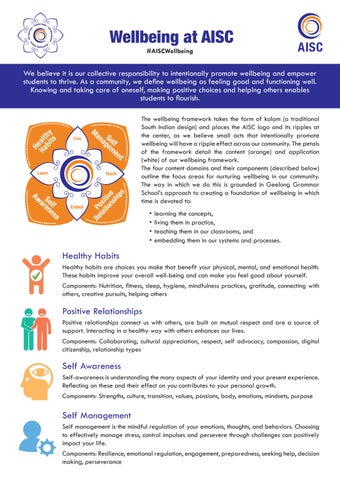
The wellbeing framework takes the form of kolam (a traditional South Indian design) and places the AISC logo and its ripples at the center, as we believe small acts that intentionally promote wellbeing will have a ripple effect across our community. The petals of the framework detail the content (orange) and application (white) of our wellbeing framework. The four content domains and their components (described below) outline the focus areas for nurturing wellbeing in our community. The way in which we do this is grounded in Geelong Grammar School’s approach to creating a foundation of wellbeing in which time is devoted to:
• learning the concepts,
• living them in practice,
• teaching them in our classrooms, and
Student Wellbeing Framework



Healthy Habits
• embedding them in our systems and processes.
Healthy habits are choices you make that benefit your physical, mental, and emotional health. These habits improve your overall well-being and can make you feel good about yourself.
Components: Nutrition, fitness, sleep, hygiene, mindfulness practices, gratitude, connecting with others, creative pursuits, helping others
Positive Relationships
Positive relationships connect us with others, are built on mutual respect and are a source of support. Interacting in a healthy way with others enhances our lives.
Components: Collaborating, cultural appreciation, respect, self advocacy, compassion, digital citizenship, relationship types
Self Awareness
Self-awareness is understanding the many aspects of your identity and your present experience. Reflecting on these and their effect on you contributes to your personal growth.
Components: Strengths, culture, transition, values, passions, body, emotions, mindsets, purpose
Self Management
Self management is the mindful regulation of your emotions, thoughts, and behaviors. Choosing to effectively manage stress, control impulses and persevere through challenges can positively impact your life.
Components: Resilience, emotional regulation, engagement, preparedness, seeking help, decision making, perseverance