
By Victoria Mejicanos AFRO Staff Writer vmejicanos@afro.com
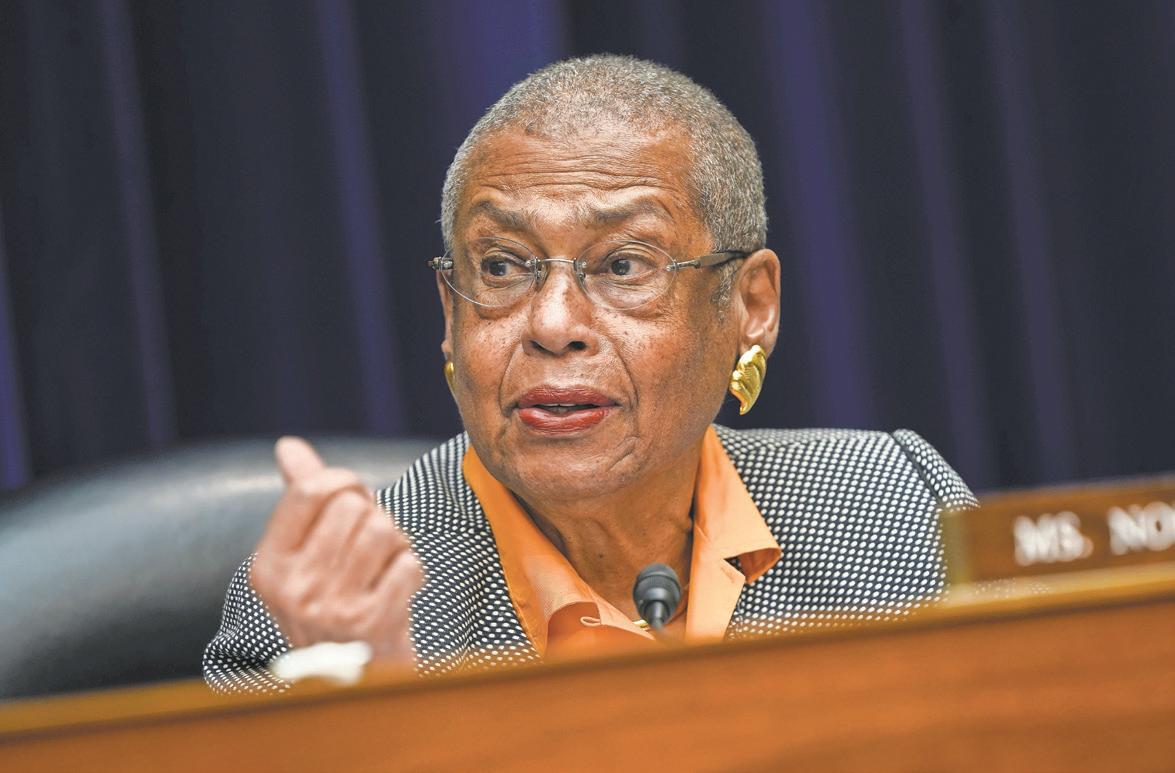
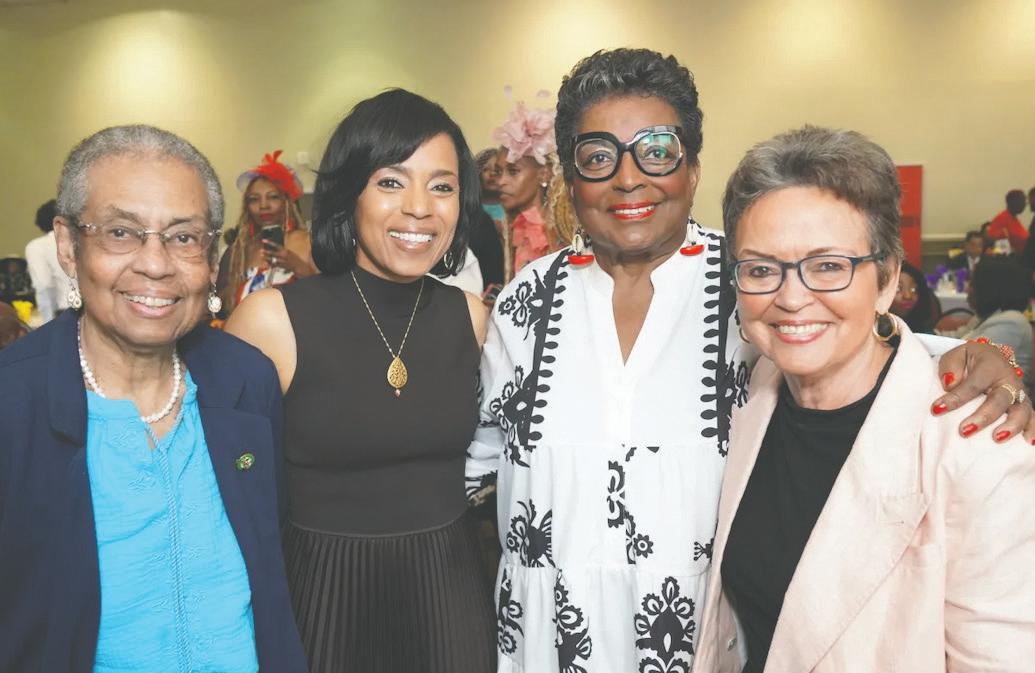
Del. Eleanor Holmes Norton, 88, has officially announced her retirement on Jan. 27, after 35 years representing the District. This comes days after she filed paperwork to end her reelection campaign.
In her letter speaking on her retirement, Norton reflected on her career and its impact on the city.
“I’ve had the privilege of representing the District of Columbia in Congress since 1991.
Time and again, D.C. residents entrusted me to fight for them at the federal level, and I have not yielded,” Norton said. “With fire in my soul and the facts on my side, I have raised hell about the injustice of denying 700,000 taxpaying Americans the same rights given to residents of the states for 35 years. “
D.C Mayor Muriel Bowser spoke to the tenacity shown by Norton on Capitol Hill.
“Congresswoman Norton has been our Warrior on the Hill,” wrote Bowser. “Her work embodies the unwavering resolve of a city that refuses to yield in its fight for equal representation.”
Her retirement comes after she faced recent calls to step aside as residents and local lawmakers questioned her ability to effectively advocate for the city. Norton will serve the remainder of her term.
Norton has not endorsed any of the candidates in the Democratic primary, slated for June 16, but D.C. Councilmember Robert White, one of the Democrats vying to succeed her, praised her influence in D.C in a post on X, formerly known as Twitter.
“As a fifth-generation Washingtonian, from an early age I looked to Congresswoman Norton as a model of what public service should
be,” wrote White. “Her name is synonymous with authentic leadership.”
Prior to her role in Congress, Norton was a prominent civil rights attorney and advocate. In 1970, she represented 60 female employees of Newsweek in a gender discrimination lawsuit against the magazine. Norton also served on the founding board of “Women’s Rights Law Reporter,” the first legal periodical focused on women, and was one of the women to sign the “Black Woman’s Manifesto,” arguing against the oppression of Black women.


By
(NNPA Newswire) – Ryan
Coogler’s “Sinners” emerged as the biggest contender at the 98th Academy Awards, earning a historic 16 nominations—more than any movie has ever received in Oscar history. The announcement was made Jan. 22 by the Academy of Motion Picture Arts and Sciences. With this achievement,
“Sinners” surpassed the long-standing record of 14 nominations previously held by classics such as “All About Eve,” “Titanic” and “La La Land.” In addition to a Best Picture nod, Coogler secured nominations for Best Director and Best Original Screenplay. The film’s leading man, Michael B. Jordan, also reached a career milestone, receiving his first-ever Oscar nomination for Best Actor.
Coogler’s recognition is
particularly significant, as he becomes one of only seven Black filmmakers to be nominated for Best Director. He joins an influential group that includes Spike Lee (“Do the Right Thing”), John Singleton (“Boyz n the Hood”), Lee Daniels (“Precious”), Steve McQueen (“12 Years a Slave”), Barry Jenkins (“If Beale Street Could
and Jordan Peele (“Nope”).

By D. Kevin McNeir
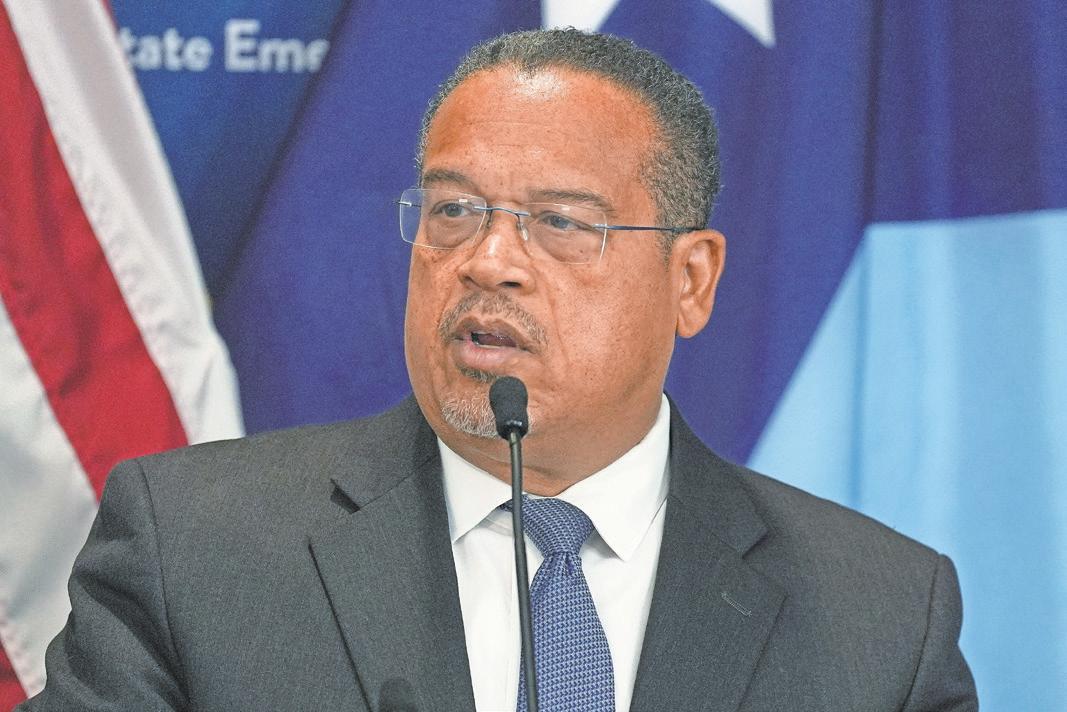
Minnesota Attorney General Keith Ellison, in an exclusive interview on Jan. 25 with AFRO News, said while he could not presume the innocence or guilt of federal agents involved in the recent deaths of Alex Pretti and Renée Good, both in Minneapolis, he did have one strong assertion:
“These deaths must be investigated, and we must get to the truth.”
Ellison was clearly enraged over the three federal officer-involved shootings that occurred in Minnesota this month – two that resulted in the deaths of Pretti, 37, on Jan. 24 by federal agents that have not been identified, and Good, 37, on Jan. 7, by U.S. Immigration and Customs Enforcement (ICE) agent Jonathan Ross.
“Given what I’ve seen in the tape of Pretti’s death, while I am not saying what a jury would say, I can say I am deeply disturbed,” Ellison told the AFRO. “The tape shows he never pulled out his gun, that the agents pulled it off his person, disarming him, and then shot him.”
Eyewitness videos of both the Good and Pretti killings
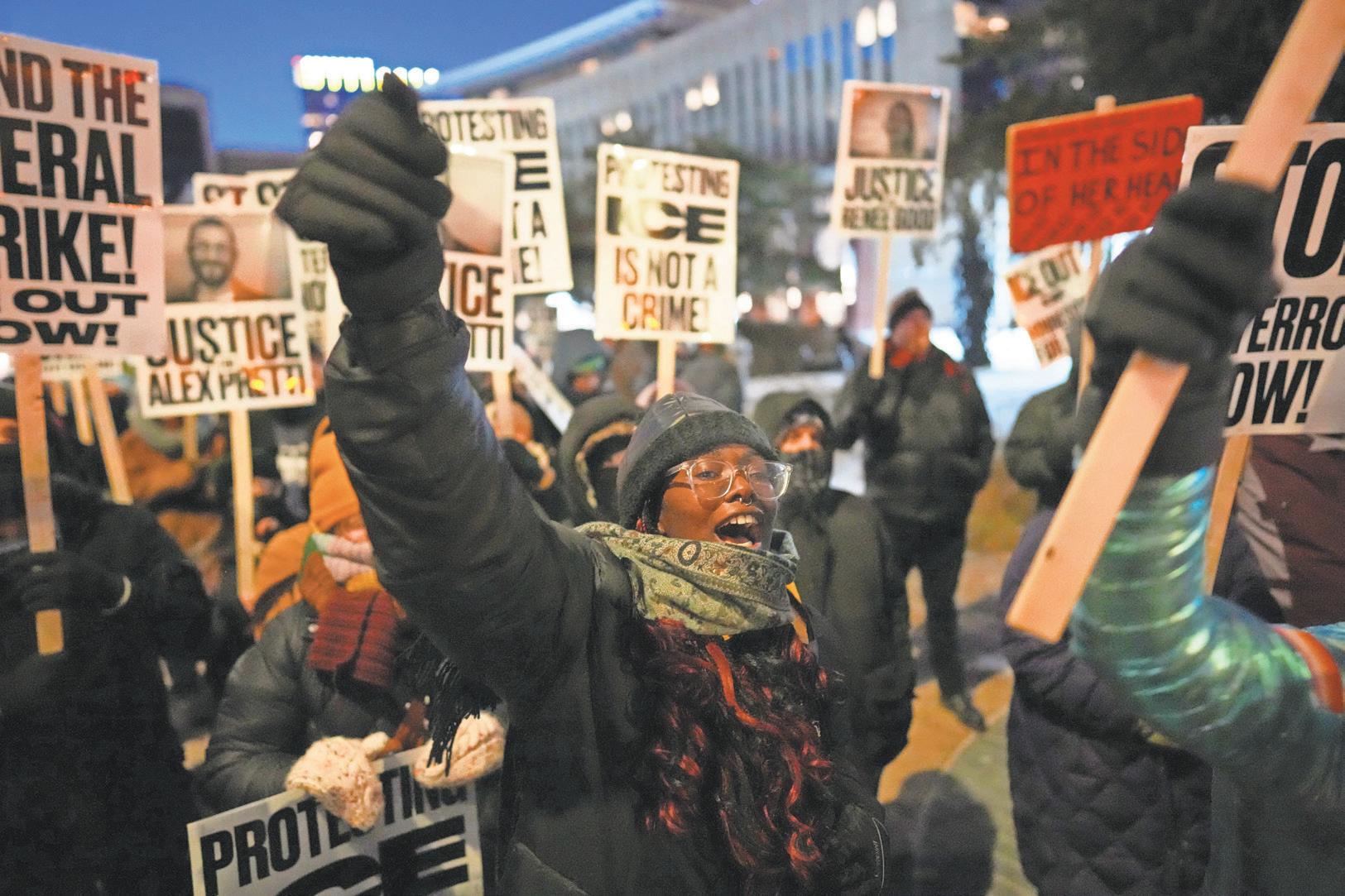
run counter to statements provided by federal administration officials, including the White House. But as the Trump administration continues to cast blame on both local officials, even castigating the victims and their families, tempers and backlash from Minnesota officials and Americans nationwide continue to flare.
“Our investigating agents will pursue the truth, find

Your History • Your Community • Your News
The Afro-American Newspapers
Baltimore Office • Corporate Headquarters
233 E. Redwood Street
6th Floor, Suite 600G Baltimore, Maryland 21202
410-554-8200
Customer Service, Home Delivery and Subscriptions: 410-554-8200 customerservice@afro.com
Founded by John Henry Murphy Sr., August 13, 1892
Chairman of the Board/Publisher - Frances Murphy Draper
(Publisher Emeritus - John J. Oliver Jr.)
President - Benjamin Murphy Phillips IV
VP of Marketing and Technology - Kevin E. Peck
Director Digital Solutions - Dana Peck
Receptionist - Wanda Pearson - 410-554-8200, ext. 246
Director of Operations
Andrè Draper - 410-554-8200
Director of Finance
Bonnie Deanes - 410-554-8242
Executive Director/Director of Advertising Lenora Howze - 410-554-8271 - lhowze@afro.com
Director of Community & Public Relations
Diane W. Hocker - 410-554-8243
Editorial
Managing Editor - Alexis Taylor - 410-554-8257
Editorial Assistant - Ama Brown-Parson Evening / Weekend Editor - Zenitha Prince
Archivist - Savannah Wood- 410-554-8277
Baltimore Circulation/Distribution Manager
Andrè Draper - 410-554-8200
Production Department - 410-554-8200
Washington Office
1140 3rd Street, N.E., 2nd Floor Washington, D.C. 20002-6723 202-332-0080 •
(Washington Publisher Emerita - Frances L. Murphy II)
Director of Operations - Andrè Draper - 410-554-8200

out what happened to Pretti, and will file charges if appropriate. In Minnesota, it’s still unlawful to cause the death of another person intentionally without any justification, like self-defense or in defense of others,” Ellison said. “If it’s determined that the officer acted reasonably, that would be grounds for defense, but it’s illegal to cause death with intention and deliberation. If we prove
that, then they can and will stand before their peers in court.”
Ellison said it’s important for citizens to understand that just because Americans have certain rights as guaranteed by the U.S. Constitution, it does not mean that bad things don’t happen.
“Having rights like those covered by the amendments don’t protect us from bad things occurring, but it does
mean we can seek remedies in court,” Ellison said. “Every authoritarian government has violated its peoples’ rights. Once they gain control of the legal system, they can prohibit peoples’ abilities to use the system and vindicate their rights.”
“That’s what we’re seeing under the current president,” Ellison continued. “It’s Trump’s law versus American law and if you’re not on his side, it seems he doesn’t care. Just as it was during the days of legalized slavery, there is no risk-free way to secure your rights. Only the courageous can count on
their rights being guaranteed because they’re the only ones who are willing to fight for them.”
Ellison pointed to the Civil Rights Movement for examples of the sacrifices made by the courageous people involved.
“Dr. King was arrested more than 30 times, his family was threatened, he was stabbed and eventually was murdered. But he was willing to risk his life,” he said. “I always inform protesters that if their personal safety is the most important thing to them, they should not protest.”
By Tashi McQueen AFRO Staff Writer tmcqueen@afro.com
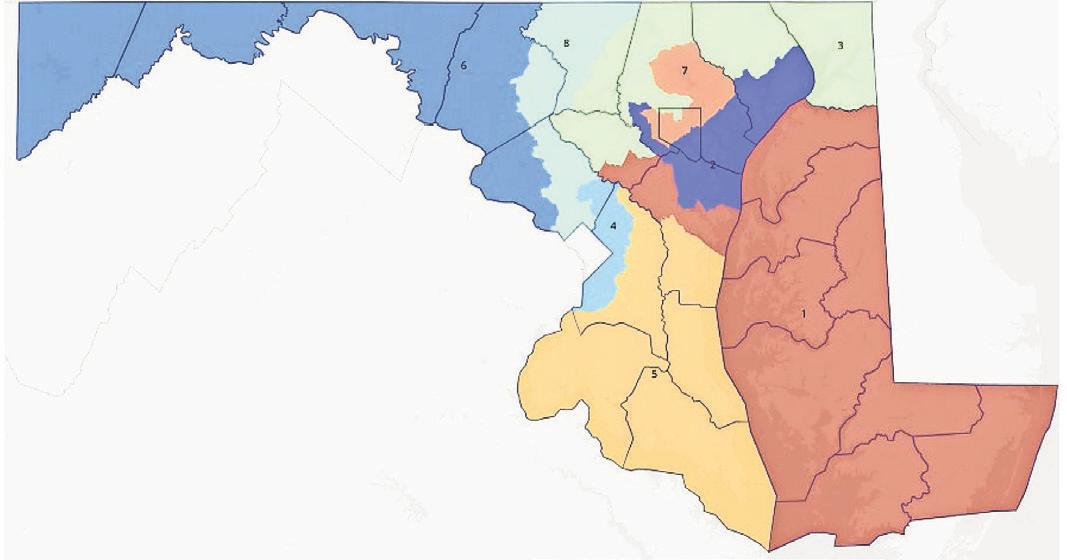
Maryland House lawmakers advanced a congressional redistricting bill out of committee along party lines following a tense, hourslong hearing Jan. 27. The move sends the measure to the House floor as faith leaders and Democratic officials press Senate leaders to take up the issue.
The House Rules and Executive Nominations Committee voted 18–6, with one member excused, to advance House Bill (HB) 488 after more than five hours of testimony in Annapolis, Md.
The bill is expected to be fast-tracked through the House and sent to the Senate, where its future remains uncertain without support from Senate President William “Bill” Ferguson (D-Md.-46).
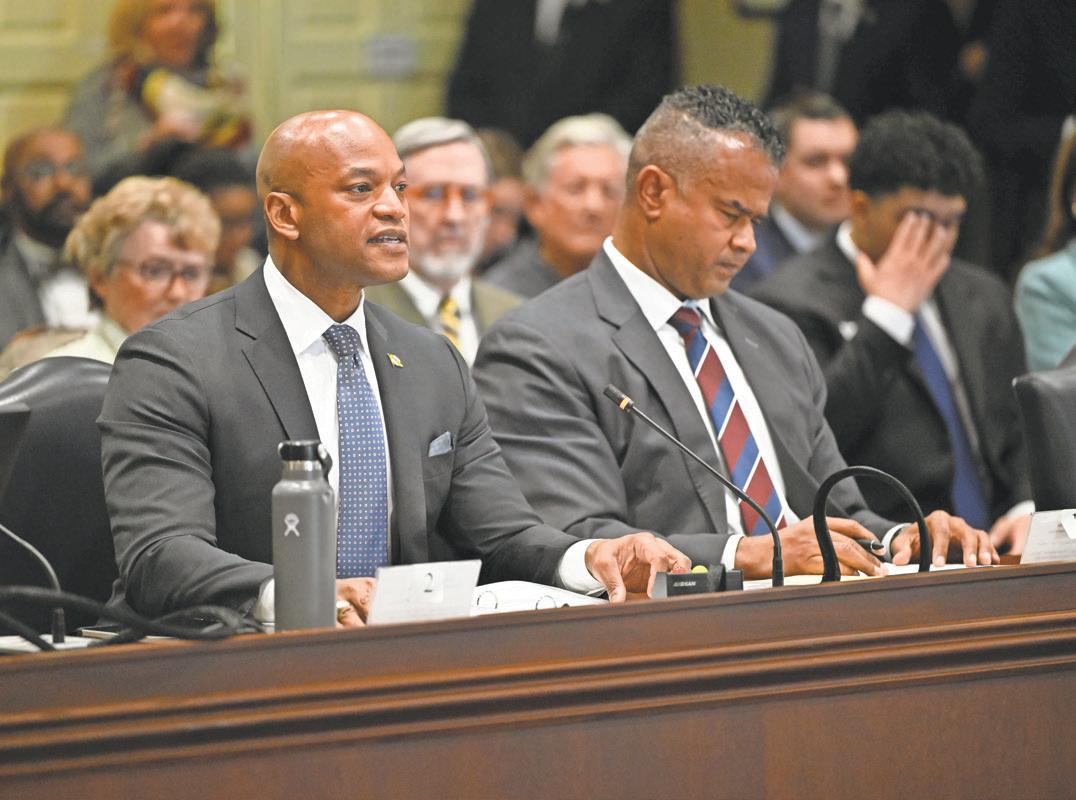
Maryland Gov. Wes Moore (D) testified in support of the bill. He referred to the 47th president’s Republican push for redistricting throughout the country, as “political redlining,” claiming that they “are doing everything in their power to silence the voices and trying to eliminate Black leadership–elected leadership–all over this country.”
“I will not sit quiet,” he said. “The audacity of those who
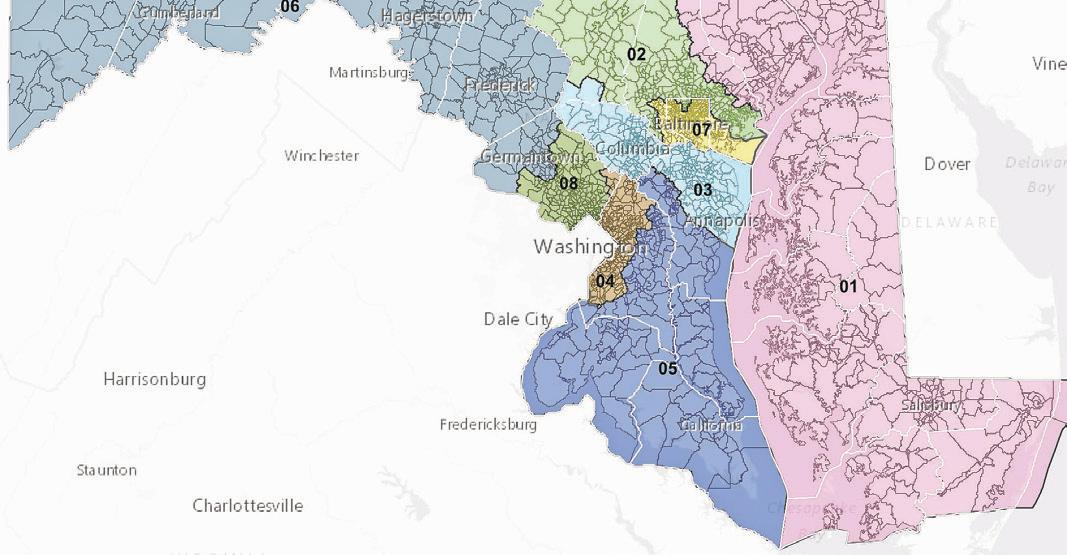
argued that splitting the state’s 1st Congressional District, represented by Rep. Andy Harris (R-Md.-1), Maryland’s only Republican member of Congress, does not make sense and would do more harm than good.
The bill’s advancement came as faith leaders from across Maryland urged Ferguson to prioritize redistricting legislation, calling it a moral and democratic imperative.
In a letter sent on Jan. 26, faith leaders framed redistricting as a moral and democratic imperative, arguing that state policy priorities cannot be separated from national political developments.
are telling me to do so shows that they have no understanding of the journey of so many who came before us.”
House Bill 488 has the backing of more than 45 House delegates and follows a recommendation issued last week by an advisory commission that proposed a new congressional map. If adopted, the map could eliminate Maryland’s lone Republican congressional seat. There were a notable number of supporters of the bill during the Jan. 27 hearing, including Prince George’s County Executive Aisha Braveboy (D), and opposers.
Testimony was delivered both in person and virtually, with several speakers participating remotely, in part due to a recent snowstorm. The hearing was chaired by Del. Anne Healey (D-Md.-22).
Republican state leaders criticized the pace of the hearing, arguing it limited opportunities for public input, while Senate leaders have expressed skepticism about the bill’s viability.
Republican committee members also questioned Moore and bill sponsor Del. C.T. Wilson (D-Md.-28), challenging the legitimacy of the redistricting plan. They
More than 20 pastors signed the letter to the Senate president, including Rev. Dr. Robert Turner, pastor of St. John Baptist Church; Rev. Brent Brown, pastor of Greater Harvest Baptist Church, and Rev. Delman Coates, pastor of Mt. Ennon Baptist Church.
“As concerned clergy from across the State of Maryland, we are writing to urge you to support redistricting efforts in our state to respond to the unprecedented attacks on our democracy,” said the faith leaders. “Marylanders of all backgrounds are deeply
By Megan Sayles AFRO Staff Writer msayles@afro.com
The Coppin State Eagles welcomed one of the nation’s top women’s basketball programs to PEC Arena on Jan. 18, hosting Southeastern Conference (SEC) powerhouse South Carolina in a rare cross-conference matchup that drew more than 3,000 fans to West Baltimore. The Gamecocks came away with a 90-48 victory.
Sophomore forward Joyce Edwards led South Carolina with 26 points, while Coppin State senior guard Khila Morris finished with 20 points.
Gamecocks Coach Dawn Staley, who previously led Temple University’s women’s basketball team, has been intentional about scheduling games against historically Black colleges and universities (HBCUs) as a way to create opportunities and visibility for the programs.
Coppin State Coach Darrell Mosley praised Staley’s decision to arrange the series.
“I think it was a wonderful opportunity for me and my team. The fact that she would agree to do a home-and-home with an HBCU was phenomenal because a lot of teams don’t like to come and play an HBCU. They figure it’s a trap game,” Mosley told the AFRO. “But, when you have the best players in the

Scott; and Dawn Staley, Gamecocks head coach, gather at PEC Arena during the Lady Eagles’ matchup against No. 2 South Carolina on Jan. 18.
country and you’re going to play in a tough environment, I think that prepares her team for any challenges they’re going to see throughout the year.”
Coppin State has made a point of matching up against nationally-ranked and major-conference programs, giving their players a chance to compete on a bigger stage. During the 2025-2026 season alone, the Lady Eagles have already squared off against the Arizona State Sun Devils, Ohio State Buckeyes, Penn State Lady Lions, Tennessee Lady Volunteers,
Continued from A1
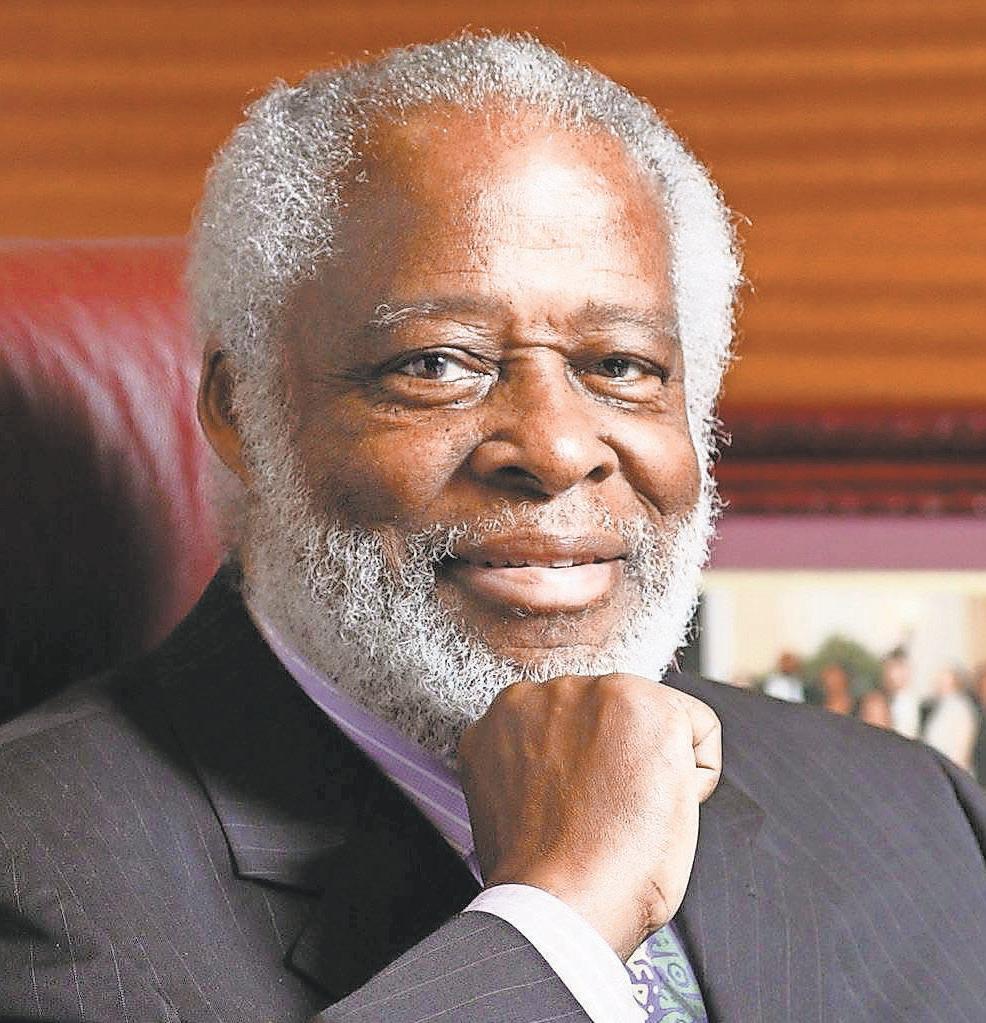
and educate its own students,” Simmons told the AFRO, in a 2002 article by Earl Byrd. In July 1980, after cutting ties with Antioch, the school rebranded and became Sojourner-Douglass College. It was Maryland’s only private, Black institution under Black control. The next year, 30 African-American students graduated from the institution wearing gowns that were provided on a pay-what-you-can basis. Simmons had somehow found a way to change their lives with a volunteer faculty and the slimmest of resources. Though it lost accreditation in 2015, the institution was a pathway to freedom
Continued from A1
Trailing closely behind “Sinners” is “One Battle After Another,” a provocative exploration of radical political movements that garnered 13 nominations. Both films are among the Best Picture contenders for the 2026 Oscars, alongside “Frankenstein,” “Bugonia,” “Hamnet,” “Marty Supreme,” “Sentimental Value,” “Train Dreams,” “F1,” and “The Secret Agent.” The Best Actor race is especially competitive this year. Michael B. Jordan faces off against Timothée Chalamet, whose unconventional promotional campaign helped turn “Marty
Continued from A2
concerned about threats to the rule of law, the deterioration of our economy, and the undermining of our human rights that we are witnessing on our national level.”
The clergy members said they “cannot afford to ignore the measures being taken nationally to bypass the will of Marylanders.”
“Our nation is facing an existential threat, and we cannot sit idly by, passively decrying what is happening in our country. This is a moral imperative and we must act now.,” they continued. “Failure to do so will harm Maryland’s economy, threaten our democratic freedoms, and cede the power of the people to the power of a person.”
On the morning of Jan. 27, the AFRO requested comment from Ferguson’s office but did not receive
Continued from A1
The AFRO covered many of her personal and professional wins throughout her decades long career.
President Jimmy Carter appointed Norton as the first woman to chair the Equal Employment Opportunity Commission (EEOC) in 1977, where she shaped federal regulations on gender equity and workplace sexual harassment.
A Nov. 12, 1977 issue of the AFRO, notes that there were 130,000 unresolved cases at the agency when Norton took the job. Within six months, she had come up with a comprehensive plan to reduce the number of unresolved cases, stating in an interview,
“I will make every effort to make sure that this governmental agency is as efficient and productive as it can be and restore the lost confidence the agency suffered.”
James L. Wright Jr. the late, internationally respected former AFRO reporter and editor, covered Norton’s career extensively. In 1995, Wright discussed her role in several congressional committees despite losing her ability to vote on the floor of the U.S House of Representatives due to a Republican majority. Chair of the Congressional Black Caucus Yvette D. Clark, in a public statement, spoke to Norton’s decades-long fight to make the District of Columbia a full state.
“Eleanor – when Washington, D.C. one day ascends to statehood, it will have done so upon your shoulders,” Clark wrote. “You are a true leader and living legend, and we owe you a debt of gratitude that can never truly be repaid.”
Oklahoma Sooners and Georgia Lady Bulldogs.
The Jan. 18 showdown against No. 2 South Carolina drew 3,371 fans to the PEC, the second-highest attendance for the Lady Eagles at home.
“In front of a packed Nest, our Lady Eagles left it all on the floor today. When they came to Coppin, we promised them they would have an opportunity to play at home on the biggest stage against the best in the nation,” wrote CSU President Athony L. Jenkins in a Jan. 18 post on X, formerly Twitter. “This was bigger than basketball.”
for many who felt left behind for decades.
“The world lost a great educator and leader and a powerful voice in the Black community,” said Rashida Braxton Simmons, in a Jan. 27 post on social media about her dad.
“For most of my adult life, every time I talked to Dad and asked ‘How you doing?’ His response was ‘Still in the struggle, Baby.’ He’s finally out of the struggle,” she said, adding that she will stay in the fight while Simmons rests with the ancestors.
This week, AFRO News sends condolences to all of the family, friends, students, colleagues and mentees of Dr. Charles W. Simmons. He will surely be missed.
Supreme” into A24’s highest-grossing release. Also nominated are Leonardo DiCaprio for “One Battle After Another,” Ethan Hawke for “Blue Moon,” and Wagner Moura, fresh off a Golden Globe win for “The Secret Agent.”
In the Best Supporting Actress category, “Sentimental Value” earned two nominations for Elle Fanning and Inga Ibsdotter Lilleaas. They are joined by Amy Madigan (“Weapons”), Wunmi Mosaku (“Sinners”), and Teyana Taylor (“One Battle After Another”).
The 98th Academy Awards ceremony will be broadcast on ABC and streamed live on Hulu on Sunday, March 15. Conan O’Brien is set to return as host for the second consecutive year.
See full list of nominees on AFRO.com
an immediate response.
House Bill 482, introduced by Republican House lawmakers, was heard after the redistricting bill aiming to eliminate midcycle congressional redistricting.
Maryland House Minority Leader Del. Jason Buckel (R-Md.-1B) contends that congressional districts, like legislative districts, should consist of contiguous territory, be compact in form and reflect natural and political boundaries, as well as shared community interests.
“I cannot fathom any intelligent or logical reason why a set of rules applies to how we elect the members of our own legislature and General Assembly, but we [allow] for there to be basically no rules other than a mathematical calculation of population districts, for how we elect people to go and represent us a part of the great tapestry of the United States of America in Congress,” said Buckel.
The Republican-led bill did not get voted out of committee on Jan. 27. At the time of print, further discussion on HB 488 was slated for a later date.
Archives Shown here, a 1977 AFRO article announcing Eleanor Holmes Norton as the first woman to chair the Equal Employment Opportunity Commission (EEOC).
Metro invites members of the public to share thoughts and feedback on our financial plans for 2027 including our Capital Improvement Program, Federal Grant Applications, Operating Budget, and Associated Service Proposals.
Visit wmata.com/budget to learn about proposed changes across Metro Rail and Metro Bus as well as proposed investments. We will then share your feedback to help guide the future of transit in our region.
In-person Hearing
Tuesday, Feb. 3 Open House 5:30 p.m.
Hearing
6 p.m.
Virtual Hearings
Wednesday, Feb. 4
Noon
Thursday, Feb. 5
6 p.m.
To complete a survey and share comments, go to wmata.com/budget anytime between 9 a.m. on Saturday, Jan. 17 and 5 p.m. on Tuesday, Feb. 10.
Government Center Arlington County Board Room 2100 Clarendon Blvd. Ste. #307 Arlington, VA 22201
To register to speak, email speak@wmata. com or call 202-9622511 by 12 p.m. on Tuesday, Feb. 3. On-site registration will be available.
To provide testimony via videoconference, email your name and any organizational affiliation to speak@ wmata.com by 5 p.m. on the day prior to this hearing.
To provide testimony by telephone, call 646-902-9990 during the hearing and enter meeting code 906 459 640# (Feb. 4 hearing) or 855 875 175# (Feb. 5 hearing).
Office of Board Affairs SECT 2E
Washington Metropolitan
Area Transit Authority
P.O. Box 44390
Washington, DC 20026-439
More information: wmata.com/budget @wmata 202-GO-METRO
All hearings will be broadcast online at wmata.com/ budget and youtube.com/ metroforward
By Earl Ofari Hutchinson
“Officers may use deadly force only when the law enforcement officer has a reasonable belief that the subject of such force poses an imminent threat of death or serious bodily injury to the LEO or to another person.”
The Department of Homeland Security policy statement on when an officer may use deadly force is unambiguous. If he or she feels there is a danger to their life, use of force is permissible.
On the surface, this is a reasonable, common sense rationale for using deadly force to protect oneself. The problem though, as always when it comes to when an officer may use deadly force, boils down to a subjective judgement call by the officer about what and when the imminent danger is. This is where things always get fuzzy. It’s also where
controversy in the slaying of Renee Good, Keith Porter and Alex Pretti. That is, could deadly force be used when a suspect seemingly posed a threat to the agent?
It again came down to a subjective judgement call on the part of the agent. If the agent feels there is a threat he or she can resort to gunplay and there will be no second-guessing by Homeland Security officials about their decision.
against ICE agents in various locales across the nation in the latter half of 2025.
“totality of the circumstances” leading up to a use of force.
the officers that use deadly forces can successfully argue that the threat to their safety as they perceived it is real. This almost always is enough to ensure there will be no prosecution.
Next, there is the issue that will be the crux of the
Just to be sure that there will not be a second guess on that, the Homeland Security directive is explicit. It says the decision when to use deadly force will be judged “from the perspective of a reasonable officer on the scene, rather than with the 20/20 vision of hindsight.”
Homeland Security repeatedly makes the case that if ICE agents resort to gunplay, it is because their agents are under attack. The department claims that there were at least 100 vehicle ramming incidents
The Homeland Security directive on the use of force directly addressed the problem of what agents should do when under attack. But it created even more ambiguity and uncertainty. It said officers “should always avoid intentionally and unreasonably placing themselves in positions in which they have no alternative to using deadly force.” It did not say just how an agent was to accomplish that. It did not say what constituted a “position” of where they might be endangered. It certainly provided no way of determining what it would consider intentional or unreasonable.
The SCOTUS gave further aid and support to the broadest read of what constitutes intent and imminent danger that would prompt an officer to open fire. The high court ruled that the Fourth Amendment required examining the
By Dr. Marcus Anthony Hunter
As we still mourn the passing of the oldest known survivor of the Tulsa Race Massacre, “Mother” Viola Fletcher, Washington state’s handling of its reparations study shows the fragile line between meaningful repair and performative equity. Fletcher did not live to see meaningful redress for the horror she survived, but she left us with the moral clarity and resolve to carry forward her legacy of relentless pursuit of justice. We can honor her life by pushing for reparations, but it should be handled with care and integrity. Anything less would be a performance.
Earlier this year, the Washington State Department of Commerce issued a request for proposals for a statewide reparations study. As the third statewide reparations study in the nation, Washington’s approach will shape how comparable initiatives are undertaken elsewhere. Initially, the project was estimated to cost between $250,000 and
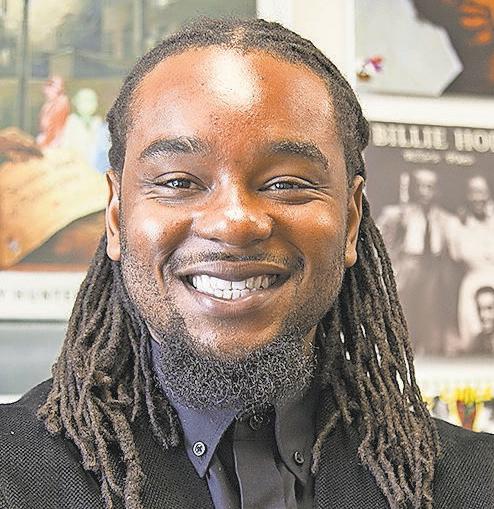
and public scholar whose work focuses on Black communities, urban policy and reparative justice. This week, he discusses the fight for reparations for African Americans.
$300,000. However, as the scope evolved, it became clear that the budget could extend up to $1 million. This demonstrates the project’s ambition and significance. I submitted a proposal but received no confirmation that it was received. Weeks later, I learned it had been quarantined; evaluation proceeded without it. When the winning
bidder was announced, I requested a debrief—something meant to guarantee public decisions are fair and transparent. The department claimed the request was untimely, asserting that appeals must be made within three days of notification. I asked again, pointing to state procurement rules saying that the appeal window begins after public announcement, not private notice. Request denied. I had to hire a lawyer just to receive a debrief, and even then, it withheld answers to procedural concerns.
The selected organization for the study reportedly submitted materials outside of the official platform. This bypassed the safeguards designed to ensure oversight, including review by the chief equity officer. This organization also focuses primarily on diversity, equity and inclusion (DEI) initiatives. While DEI work is absolutely necessary, it is not a substitute for reparations. The work of reparations requires deep understanding of historical harm, intergenerational
dispossession and structural repair—not general frameworks of inclusion. As a scholar, I’ve spent years researching, teaching and advising reparations task forces across the country. A proposal including William “Sandy” Darity, a distinguished economist and leading national authority on reparations, was also rejected. When someone of that caliber is sidelined, it signals a deep institutional failure.
Essentially, Washington state has decided that DEI is the same as Black. Whoever is selected to do this study should have historical knowledge and methodological rigor, and it should be led by descendants of formerly enslaved people. When those elements are ignored, even well-intended efforts risk undercutting the very justice they claim to pursue.
To be clear: this is not about sour grapes, nor is it an attack on the organization chosen to conduct the study. The concern is whether the public systems stewarding this effort act fairly, transparently, and
This reaffirms the license law enforcement officers can lean on to use every piece of evidence from videos to eyewitness testimony to agency policy directives to support their case that they had the legal right to use deadly force.
There is though one small opening that can be used to slightly mitigate the virtual open license policy on the use of force. It is found in Homeland Security’s written policy on use of force involving vehicles. It counsels officers to “take into consideration the hazards that may be posed…by an out-of-control conveyance.” That is to say, do not put yourself in harm’s way by choosing to stand in the path of a moving vehicle.
The International Association of Police Chiefs issued a “National Consensus Paper” in 2020 that underscored that. It made clear: “Firearms shall not be discharged at a moving vehicle” when the vehicle is
in ways worthy of community trust. Process failures matter deeply in reparative justice work. Reparations lose credibility if the process repeats the exclusions it is meant to correct.
I raise these concerns publicly only after using every institutional channel available. Reparations require both strategy and stewardship. The ability for the public to see, ask, and challenge is part of the repair.
Policymakers in Washington have the opportunity to set a precedent by implementing a transparent process from the outset. They can establish leadership by ensuring frequent public updates and engaging dialogues with community leaders and experts throughout the process. By championing an inclusive approach that truly values the input of those most affected, policymakers can fortify national standards for reparative justice initiatives.
Washington state is not alone at this moment. Across the country, Black Americans who have carried the moral weight of reparations are grappling with how to approach it amid political pressure and
By Eric Morrissette
Recently, the Supreme Court heard arguments that could reshape the global financial system. The case before the justices asks a deceptively simple question: Can the president of the United States fire Dr. Lisa Cook, a member of the Federal Reserve Board of Governors, before the end of her statutory term?
But everyone watching— from Wall Street traders to central bankers in Europe and Asia—knows the real question: Can President Trump fire Federal Reserve Chairman Jerome Powell and, by doing so, end the Fed’s independence?
Dr. Cook, the first Black woman ever to serve on the Fed’s Board of Governors,
faced pressure to resign last year after President Trump seized on an allegation of mortgage fraud made by a member of his administration to justify her removal. No criminal charges were filed against her. No wrongdoing was proven. Dr. Cook refused to step down. That refusal—and the lawsuit she filed to defend her position—now stands as the last legal barrier between the Trump administration and its stated goal of bending America’s central bank to presidential will. I spent a little over three years working at the Federal Reserve’s Office of Board Members. I later managed a congressional subcommittee overseeing the Fed. I learned how the institution works, how it moves, how carefully
it guards its independence and perhaps most importantly its profound focus on its work to advance the public good. I vividly remember the agony that staff and Fed governors endured over single words in speeches or congressional testimony, fearing how they could send bond markets into a frenzy. These experiences are why I believe what is unfolding now is unprecedented, dangerous, and likely to turn on whether one woman holds her ground—and whether the Supreme Court is willing to stand with her in defense of an independent monetary system. The weight of the moment, and what it will mean for the global economy was clear from who sat in the room. Among the attendees for the hearing were former Federal Reserve Chairman
the only weapon involved unless other means of addressing the threat presented by the vehicle, such as moving out of the way, “have been exhausted (or are not present or practical).”
Homeland Security’s use of force directive and the consensus paper is certainly meant to give officers pause and caution on the use of deadly force. However, a directive or a position paper was one thing. The actual circumstances of encounters were another. In those cases, the overriding factor in the use of deadly force was the officer’s perception that there was an imminent or even perceived danger to cause harm. And that deadly force was required to prevent that. That factor was very noticeable in the refusal to prosecute any officer for any of the multiple shootings during Trump’s first year. There is little to no chance that it will change in any other year he is in the White House.
public scrutiny. This study is important not only for the people of Washington, but also descendants of formerly enslaved people in every city, county, and state. How the state handles this endeavor will signal whether reparations are approached as a moral obligation or a performative gesture.
Reparations are policy, process and praxis. Therefore, repair cannot be delivered in outcomes if they are not practiced in the process. History will judge us accordingly. I have learned that denials are a powerful reminder to resist polite silence. Reparations, like that Mother Fletcher ascended from this Earth without, must be structural and transformative, not symbolic and performative.
As I move forward, I am encouraged and inspired by Nia—a Kwanzaa principle rooted in community building and restoration. This season, let us all practice Nia. Reparations is more than a policy agenda; it is a moral horizon. If reparations are to be realized, they must honor the spirit of justice, transparency and respect that makes repair possible.
Ben Bernanke and current Federal Reserve Chairman Jerome Powell. Both appointed by Republican presidents, both responsible for navigating economic crisis, both appreciating what this decision could mean for the future of U.S. monetary policy. While the legal arguments in the court turned in several directions—the monetary policy point of federal reserve independence was front and center. Justice Sotomayor noted that in the Federal Reserve’s 112-year history a Federal Reserve officer has never been removed and “the unprecedented nature of this case is a part of what the president did, not what Ms. Cook did.” Justice Kavanaugh explored the slippery slope: if this
precedent stands, what prevents the next president from removing all Fed officials appointed by predecessors, effectively turning Fed governors into at-will employees by 2033? He warned, “What goes around comes around.” The spiral of questions that followed from Kavanaugh to the administration’s solicitor general left an impression of a justice unsatisfied in what he was hearing and a likely favorable ruling for Dr. Cook. However, there was something glaringly absent in the courtroom but ever present—the economic impact of the Court’s decision. For that point, there was a different hearing held just a week prior.
See more on AFRO.com
By Dr. Deborah Bailey AFRO Contributing Editor
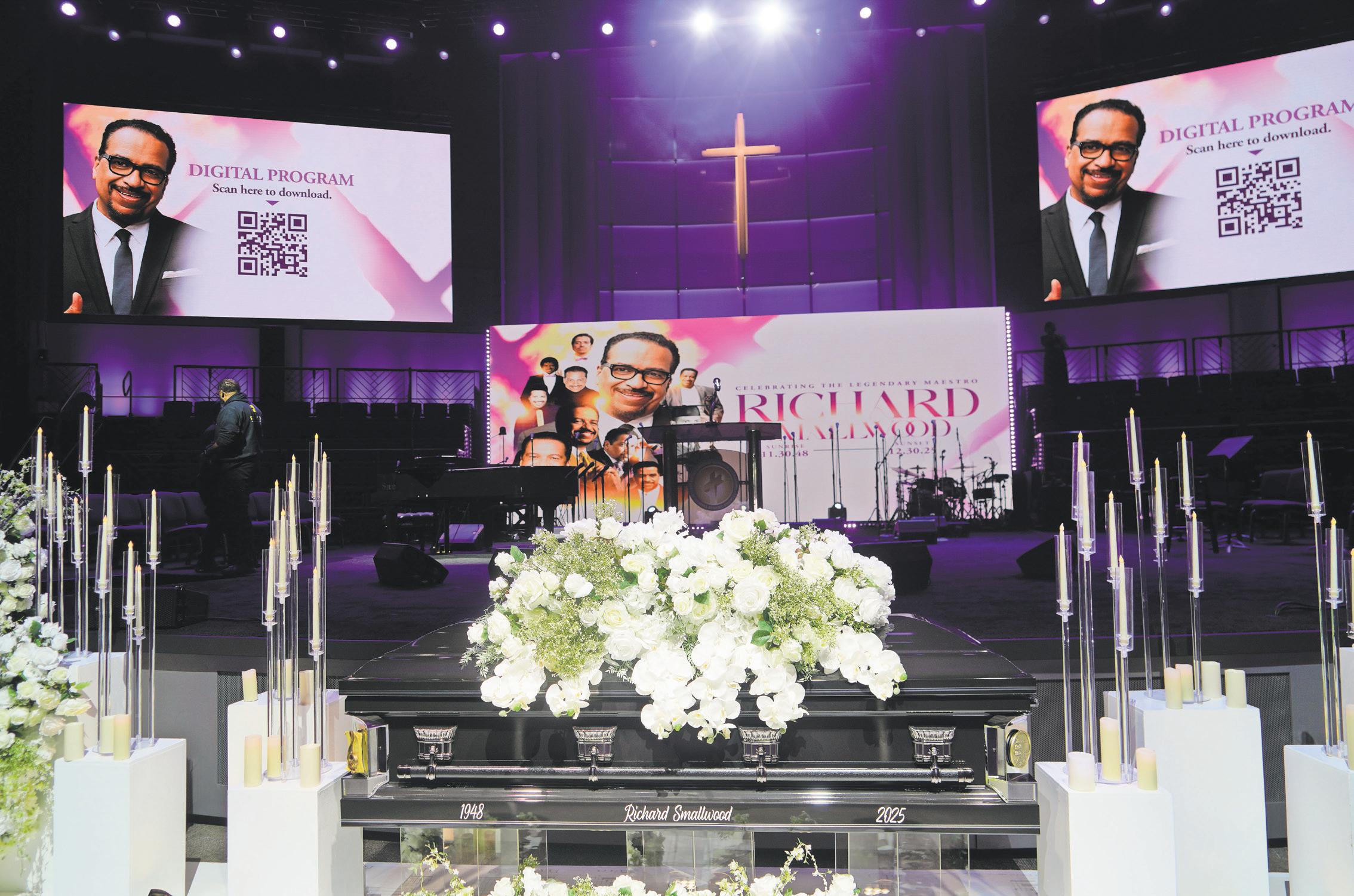
Thousands of friends, family, public officials and fans of composer and gospel artist Richard Smallwood filled First Baptist Church of Glenarden in Maryland for a spirited farewell to the “Maestro” on Jan. 24. Over two-and-a-half hours long, the farewell celebration was filled with music, memories and messages of faith that flowed effortlessly. The service was laced with classically inspired hymns and gospel hits composed by Smallwood through the decades.
A “Celebration Choir” consisting of Metropolitan Baptist Church, of Largo,
Md., Union Temple Baptist Church, of Washington, D.C., and the District’s Howard University Gospel Choir anchored musical selections throughout the service. They were led by members of the original Smallwood Singers, Vision and other ensembles organized for recordings throughout his career.
The eulogy was delivered by Rev. Dr. Maurice Watson of Arkansas, former pastor of Metropolitan Baptist Church, where Smallwood was a member. He noted Smallwood’s gift of fusing theology into the lyrics of his most classic songs.
“Richard was a unique musician and artist. He wrote music that made us think and cry at the same time. His music
ushered us into the presence of God. Richard was not only a gifted musician, but he was a preacher-theologian,” Watson said, speaking to the fact that Smallwood was a theologically trained minister, earning his master’s of divinity at Howard University in 2004.
Reflections ranged from a stirring video-taped presentation by the Rev. Dr. H. Beecher Hicks Jr., former pastor of Metropolitan from 1977 to 2015, where Smallwood directed the church’s Young Adult Choir, to the heartfelt tribute given by actress, Howard University graduate and life-long friend Phylicia Rashad, who
By Tashi McQueen AFRO Staff Writer
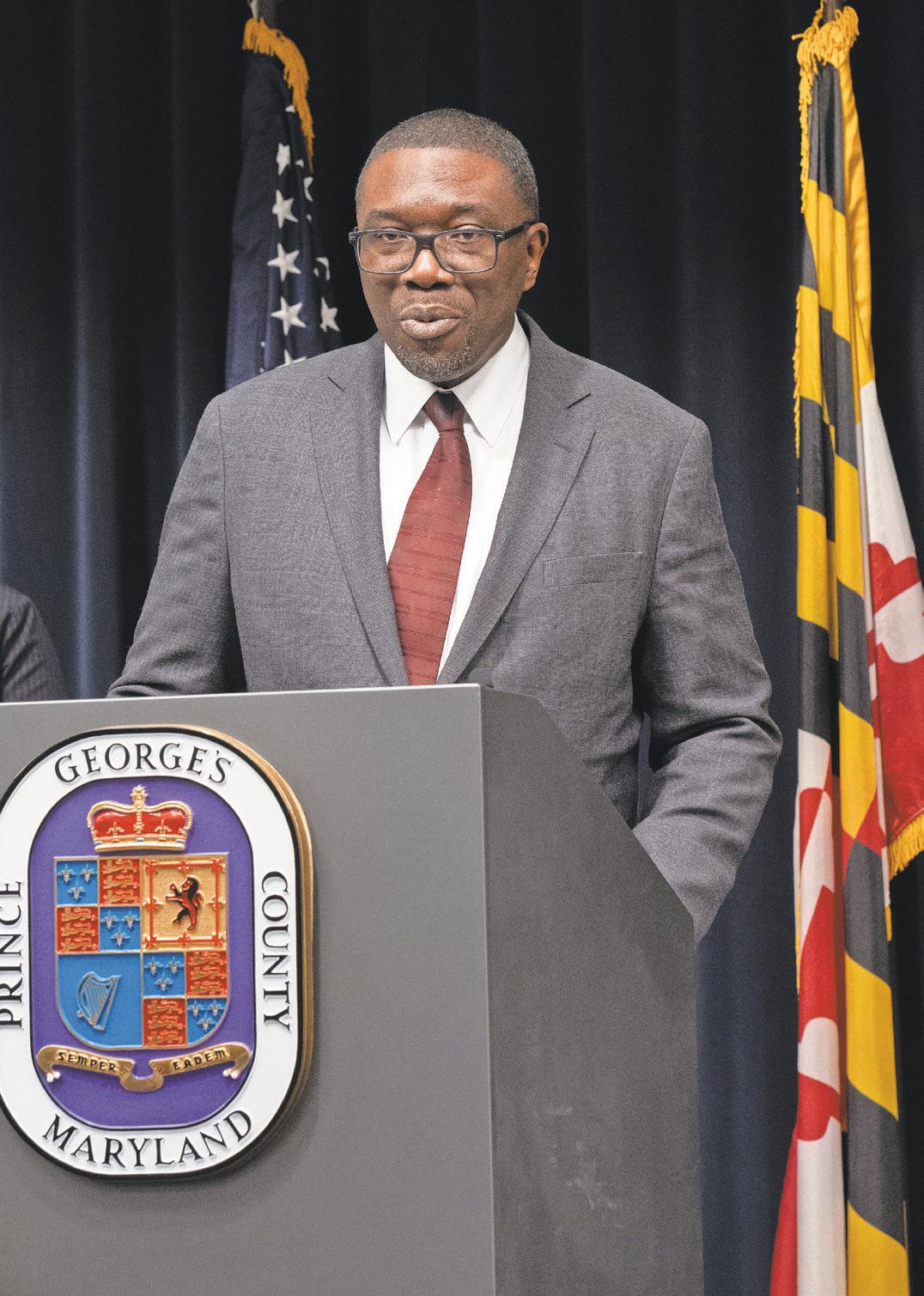
Prince George’s County Executive Aisha Braveboy (D), and several other top county officials, recently gathered to announce significant reductions in teacher vacancies.
According to county officials, teacher vacancies within the Prince George’s County Public Schools (PGCPS) system decreased by 52 percent, from about 900 to 434, at the start of the 2025-2026 school year. Since then, the county’s vacancies have dropped by approximately 35 percent to 282, according to Dr. Dana Edwards, the new chief of human resources for PGCPS.
Statewide, Maryland officials have announced a nearly 50 percent decrease in teacher vacancies. According to Braveboy, Prince George’s County, Md., is seeing the largest decrease across the state.
“Right before I was officially sworn in, we were going through great turmoil in our school system, between our teachers and the administration of the school system, over the new teacher contract,”
Braveboy said. “Unfortunately, at the time, there was a stalemate. Coming in, I stressed that we would have a unified government. One of the responsibilities of our new interim superintendent was to reach consensus.”
Dr. Shawn Joseph, interim school superintendent, was appointed June 13, 2025.
Braveboy said one of the first acts Joseph executed in the role was resolving areas of tension and ensuring a contract that would put Prince George’s County in a strong position for recruitment and retention.
“As a result of the work of our school board, our superintendent and our teachers, we were able to do just that,” she said.
Braveboy also credited the work of Maryland Gov. Wes Moore (D), who committed to helping federal workers displaced by mass layoffs in 2025 choose careers in education.
About 25,000 federal employees living in Maryland were fired during the 47th president’s first year in office.
She further credited the county’s ability to create an “attractive” package for new teachers and those seeking advancement within the
school system.
“When vacancies persist, students lose instructional continuity, educators are overextended and principals are forced to manage crises instead of leading schools,” said Joseph. “Reducing vacancies restored consistency for students, strengthened school culture and allowed educators to focus on what matters, which is teaching and learning. This progress reflects intentional action, strong recruitment, faster hiring, improved onboarding and a clear focus on hard to staff schools.”
Joseph said one of his initial efforts to reduce teacher vacancies was implementing a dashboard to clearly track and manage staffing issues across the school system.
“For too long, we had too many vacancies in our most vulnerable schools,” Joseph said. “By putting a dashboard up and monitoring it closely, we were able to fill positions with strong candidates.”
The announcement comes as PGCPS continues to serve a majority Black student population. About 51.3 percent of students educated by the district during the 2024-2025 school year were Black.
By Megan Sayles AFRO Staff Writer msayles@afro.com
DC Water is in the midst of a cleanup effort after a 72-inch section of the Potomac Interceptor, a sanitary sewer system that transports roughly 60 million gallons of wastewater daily, collapsed along Clara Barton Parkway and C&O Canal National Historic Park in Montgomery County, Md., on Jan. 19. The infrastructure failure sent millions of gallons of raw sewage into the Potomac River and the Chesapeake and Ohio (C&O) Canal.
To contain the overflow and begin repairs, crews have activated a temporary bypass system. On Jan. 24, crews installed six pumps upstream of the collapse to divert wastewater into an isolated section of the C&O Canal before routing it back into the sewer line downstream. Additional pumps were being installed as of Jan. 26 to increase pumping capacity.
In a Jan. 26 release, DC Water said its teams are working with federal, state and local partners to confine the overflow, evaluate environmental impacts and keep the
public informed.
“Impacts to water quality are not unexpected given the volume of overflows that resulted from the unanticipated collapse of a 72-inch diameter section of the Potomac Interceptor sewer line in C&O Canal National Historic Park,” the statement read. “Containing the overflows and repairing the damaged pipe are the most effective ways to mitigate these impacts.”
The water authority confirmed that there has been no impact to drinking water. It encouraged the public to heed posted warning signs in affected areas. Anyone exposed to raw sewage should leave the area, wash exposed skin, disinfect items, avoid contaminated food or water, seek medical attention if they experience symptoms and report exposure at 202-612-3400.
Constructed in 1960, the Potomac Interceptor serves Fairfax and Loudoun counties in Virginia; Montgomery County, Md.; the towns of Vienna and Herndon, Va.; and Dulles Airport. Over the years, significant corrosion has weakened the pipe. DC Water is
According to a Maryland State Board of Education educator workforce report from Feb. 25, 2025, about 21.4 percent of teachers during the 2024-2025 school year were Black. This is an increase from 18.9 percent in the 2020-2021 school year.
Edwards also announced that recruitment for the 20262027 school year opened Jan. 15, months earlier than in previous years.
“Our staff in the school system [is] our crown jewel,” said Edwards. “We will continue to improve the candidates’ as well as the managers’ hiring experience, so that every teacher, every staff member who applies here feels respected and valued from day one.”
The district currently employs about 22,000 staff, including roughly 10,000 teachers, and is seeking to add about 1,000 more ahead of the next school year.
D.C. Council addresses current state of teacher retention
Similar progress is underway in neighboring Washington, D.C., though council

In 1957, Washington, D.C., became the first major U.S. city with a majority Black population, hence the nickname, “Chocolate City.” The term, which grew in popularity, in part, because of the 1975 Parliament-Funkadelic same-titled album, celebrated the city’s rise as a thriving epicenter of Black culture, politics and power.
But with escalating prices and the impact of gentrification, more African Americans were forced to move out of the District, as the Black population declined from 70 percent in 1970 to below 50 percent by 2011, according to the U.S. Census Bureau.
However, some Washingtonians, steadfast and determined to find ways to remain in D.C., moved east of the Anacostia River to Wards 7 and 8. Black people faced significant challenges rooted in historical disinvestment, systemic racism and profound socioeconomic disparities compared to the rest of the District.
Fortunately, a group of concerned citizens formed the Anacostia Coordinating Council (ACC) in 1983 to address the disproportionately higher rates of poverty, unemployment and health disparities that residents were experiencing.
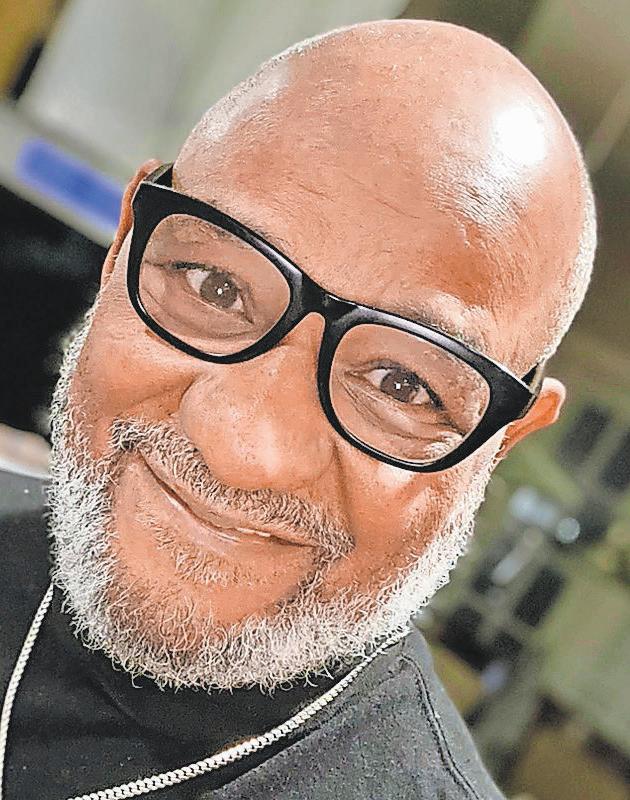
Lamont Mitchell, a third-generation, native Washingtonian and Howard University alum, now serves as the chairperson and
Continued from A5
COO of the ACC. The volunteerbased consortium of organizations and individuals focused on the revitalization of Anacostia and its adjacent neighborhoods has become a significant voice in Washington, D.C.
“We organized community support to get the Anacostia Metro Station built and soon realized that we needed to expand in numbers and scope to address the many issues plaguing our community,” said Mitchell who proudly noted that in 2026, the ACC has grown to more than 80 organizations who partner with them along with 22 board members who are “thought leaders, and movers and shakers who live and work east of the river.”
Taking care of business, one issue at a time
The ACC was slated to meet on Jan. 27, but due to inclement weather, held its 2026 kickoff luncheon meeting virtually. Featured speakers included Kenyatta M. Smith, Grow Democracy DC Civic Education Fund’s engagement and outreach director; Catherine Buell, co-chair of the Save our Museum Committee; and Monica Ray, ACC vice chair.
Since its founding, the ACC has welcomed over 1,000 guest speakers to its monthly meetings to discuss some of the community’s most pressing issues and to share important information pertaining to the community. Meanwhile, its mission has remained the same: to facilitate
members, educators and school leaders say more work is needed to better support teachers and improve school culture for students.
“We have made some progress as of the 2025-2026 school year,” said Councilmember Brianne Nadeau (D-Ward 1). “We’ve retained 86 percent of our teachers in the school system, and 78 percent of our teachers remaining at the same school. That may be a step in the right direction but we can’t be satisfied when over 20 percent of our educators are leaving their schools every year, especially when we know how profoundly a stable, secure and productive school environment influences our children.”
“When our educators thrive, personally and professionally our students do, too,” she added.
The D.C. Council held public oversight hearings on Jan. 21 and Jan. 22 to examine teacher and principal retention in D.C. Public Schools and public charter schools. The hearings focused on working conditions, educator wellness and the opportunities for professional development and career advancement.
Lawmakers assessed whether existing policies sufficiently support educator retention and considered potential legislative or budget responses, as teacher turnovers continue to affect school stability across the District.
Jake Lappi, instructional superintendent for Cluster II at D.C. Public Schools, highlighted the role of leadership and school culture in
in
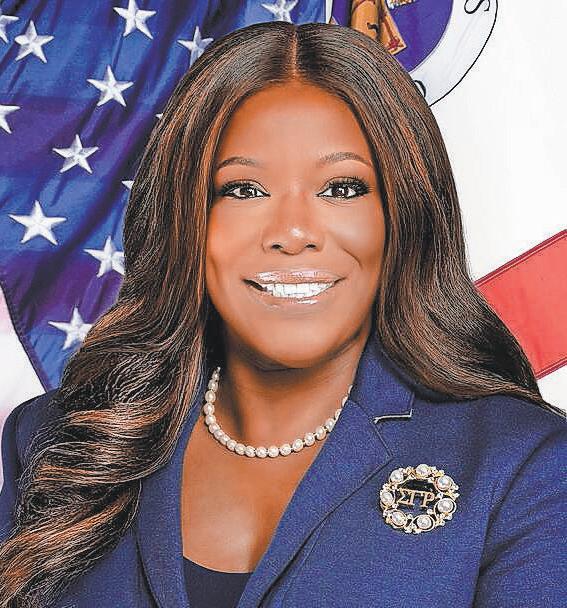
County are focusing on the coming fiscal year (FY) 2027 budget. County Executive Aisha Braveboy has just completed a series of three listening sessions across the county to gather feedback from county residents on the projected $4.5 billion proposed budget that will be voted on by the County Council by June 1.
information gathering and sharing, networking, advocacy, and community organizing.
“We advocate for all things good east of the river with an emphasis on Ward 8, but also pay close attention to Ward 7 because of the connection between the two areas,” Mitchell said. “During our monthly meetings, we provide a space where anyone in attendance can share ideas – from developers and community groups to the police chief and the mayor. As the chair, I ensure that it’s a space
keeping teachers in the District.
“Our aim is to retain every educator who is capable of excellence and aligned with the school’s vision,” Lappi said. “To help identify those types of educators, I assist principals in setting a culture in which we can observe how teachers respond to high expectations and support. This enables us to highlight those who consistently show up for our kids.”
Lappi said he has helped place 44 principals across the District and has seen assistant principals successfully transition into principal roles while maintaining school culture, expectations and relationships.
Representatives from public charter schools also addressed retention strategies. Mekia Love, chief of schools at KIPP DC, outlined initiatives aimed at supporting educators and school leaders.
“At KIPP DC we focus on three core strategies: educator agency, professional growth and recognition,” said Love. “We offer formal pathways for teachers to influence KIPP DC strategy. For example, our recruitment chairs and equity fellows receive stipends to contribute their front-line perspectives to our student recruitment and DEI (diversity, equity and inclusion).”
Love said KIPP DC also provides six teacher development and wellness days annually, along with ongoing coaching and targeted professional learning. KIPP DC serves nearly 7,400 students and employs about 1,200 teachers, staff
where different points of view can be discussed in a respectful manner. Then, we ask the tough questions.” Mitchell noted that while the ACC’s focus is to identify organizations who are already working toward achieving specific goals and to point to resources already in place, the organization has developed several initiatives. They include: Know Your Numbers
Continued on A7
By Dr. Deborah Bailey AFRO Contributing Editor
At the Jan. 21 budget listening session in the Calverton/Beltsville area of Maryland a variety of local residents came out to hear from County Executive Aisha Braveboy, budget director Angela Fair Baker and the county’s
Continued on A7
“We will continue to improve the candidates’ as well as the managers’ hiring experience so that every teacher, every staff member who applies here, in this school district, feels respected and valued from day one.”
and leaders. School leadership retention is 93 percent, and teacher retention is 83 percent, the highest level in the past decade outside of the virtual COVID-19 year, she said.
Teachers who testified highlighted classroom conditions as a major factor driving attrition, particularly in special education.
“Early childhood special education is where foundational skills are built, where early interventions make the greatest long-term impact and where students require intensive, individualized support,” said Toi Witcher, an early childhood special education teacher from Ward 2. “However, these classrooms are frequently over capacity. I have experienced classrooms with more students than recommended, which directly results in increased caseloads and significantly less time to tailor instruction to each child’s unique needs.”
Witcher added that special education teachers must also manage Individualized Education Programs (IEPs), data collection and legal documentation.

19, causing millions of
The
raw
“When caseloads grow beyond what is manageable, the work becomes unsustainable,” she said. “Teachers are forced to choose between compliance and quality instruction, and students ultimately lose access to the individualized attention they deserve.”
Additional data presented by Hannah Mason, senior education research analyst at the D.C. Policy Center, showed that teachers with more than 10 years of experience are significantly more likely to stay, while those with less than a year are more likely to leave. Mason also noted that although Black teachers make up 55 percent of the workforce, roughly one in four leave their school or the system each year.
Oversight hearings on city agencies will continue through early March, helping inform the District’s annual budget process and allowing lawmakers and residents to hold agencies accountable.
For more information on employment opportunities in PGCPS and D.C. Public Schools, visit pgcps.org or joindcps.dc.gov, respectively.
Continued from A5
investing $625 million over the next decade to repair and upgrade the system.
Since the spill, local environmental organizations have been closely monitoring cleanup efforts.
Gussie Maguire, Maryland staff scientist for the Chesapeake Bay Foundation, called the volume of the overflow “alarming” in a Jan. 26 statement.
“The Potomac River is one of the Chesapeake Bay’s largest tributaries and is the only source of drinking water for people in the D.C. area,” said Maguire in the statement.
She explained that the spill could also flow into the Chesapeake Bay and stimulate algal blooms, which can lead to dead zones and kill fish.
“Maryland, D.C. and Virginia have made significant investments in recent years toward reducing wastewater pollution,” said Maguire. “However, this incident proves that consistent pipe and infrastructure maintenance—and continued diligence—are still needed to protect our drinking water and wildlife across the region.”
“Untreated sewage can contain toxic chemicals, microplastics, pharmaceuticals, excess nutrients, viruses and bacteria. These pollutants can pose health risks to people and animals who come in contact with or ingest untreated water.”
reflected on the day Smallwood introduced The Howard University Gospel Choir to the university in 1970.
“We didn’t know what to expect,” Rashad said. At that time, Howard University’s curriculum, like many HBCUs prior to the 1970s, only included classical music.
“That choir was tight. Those harmonies were tight. Together. That’s a word that we can really attribute to him: ‘together,’” she said with a smile. Rashad said Smallwood had a way of connecting the campus and its surrounding community through gospel music.
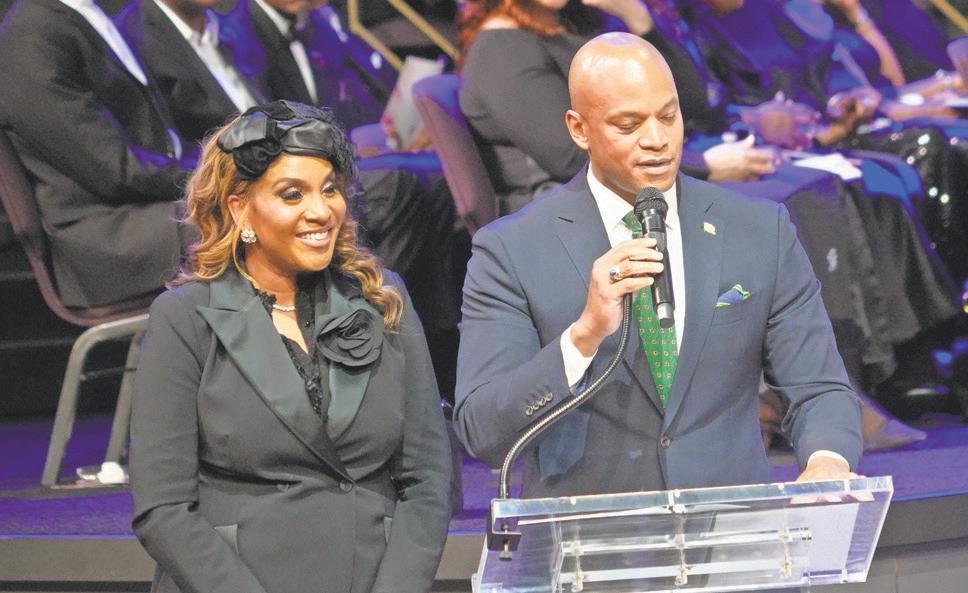
Aside from Rashad, Maryland Gov. Wes Moore surprised the audience with his personal rendition of Smallwood’s “The Center of My Joy” during remarks he delivered with First Lady Dawn Moore at his side.
Letters of condolence and commendation were also sent by former Presidents Barack Obama and William Clinton, U.S. Sen.
Angela Alsobrooks (D-Md.), Prince George’s County Executive Aisha Braveboy, Washington, D.C. Mayor Muriel Bowser, and Wayne A.I. Frederick, interim president of Howard University, from which Smallwood received a lifetime achievement award in 2004.
Dottie Jones and Maurette Brown Clark, original members of the Richard Smallwood Singers, led versions of “I Love the Lord” (1976) and “Angels” (1996), their signature Smallwood songs during the service.
“I’ve been part of his musical legacy for 30 years and it’s been a beautiful journey,” said Brown Clark.
Jones spoke to how great the loss has been.
“It was hard for me to get here, but I had to be here. I am grateful that he gave me ‘I Love the Lord’ to sing and so many other things that Richard did. He was my friend for life,” she said.
Winston Chaney, host of Washington, D.C.‘s WYCB Gospel Radio morning show and WHUR, Howard University Radio’s Sunday morning “Wake Up” program from 5-8
a.m., also counted Smallwood as a friend.
“Richard Smallwood was my friend, neighbor, composer, singer and he did my morning show. I love this man,” he said.
Sherri Orr, a vocalist, songwriter and former director of the Hamline University gospel choir flew in from Minneapolis to attend the Smallwood funeral. “I was determined to be present to give homage to his artistry. He inspired me to start with the word of God as a musician. His musical focus is obvious and singular,” she said.
Stephen Hurd, a gospel singer, told the AFRO that he has known Richard Smallwood since attending the Duke Ellington School of the Arts. “He’s been a mentor and a friend who has impacted my entire life in music,” Hurd said.
The Rev. D. George E. Holmes, vice president of Global Initiatives of the TIS Foundation, which was pivotal in ensuring Smallwood received the Presidential Lifetime Achievement Award during President Joe Biden’s administration in 2023, expounded
on why he felt the accolade was necessary.
“It is critical that our governmental leadership connect with the power and promise provided by our faith community,” he said. “Richard Smallwood’s worldwide reach needed to be known and connected with federal government.”
Smallwood died Dec. 30 at age 77 due to complications from kidney failure in Sandy Springs, Md.
Born in Atlanta, Ga., and raised in Southeast Washington, Smallwood’s songs were performed by community choirs, college ensembles and on the world’s finest stages. In addition to his influence in the global faith community, Smallwood’s work was performed by artists such as Whitney Houston, Stevie Wonder, Destiny’s Child and Boys II Men.
Smallwood received eight Grammy nominations and won one for his production and performance work on “Handel’s Messiah: A Soulful Celebration.” He also won three Dove Awards and seven Stellar Awards.
senior budget team.
Budget listening sessions in Fort Washington, Calverton/Beltsville and Largo brought out a variety of local residents eager to hear from the county leadership.
Braveboy started by explaining that the county was financially secure, but admitted that there are significant issues to be addressed.
“Prince George’s County is financially stable,” said Braveboy.
She explained to the residents gathered that there was a disproportionate impact suffered in Prince George’s County after multiple waves of federal shutdown and layoffs in 2025. In spite of the instability caused by the federal situation, she expects growth to continue in the county. Braveboy said her focus will be on commercial growth and development.
“We understand the need to balance our budget a little bit better than we have in the past,” she said.
Residents expressed concerns about a wide variety of needs, including county maintenance, gaps in social services, animal services, the status of county schools, public safety and fire department services. Additionally,
concerns were raised at all three listening sessions about potential residential costs related to data centers proposed for the county and the health of the county’s economic sector.
“You say that we are stable, but I don’t feel stable,” said Tamara Johnson, a small business owner.
“I’m always trying to take up for Prince George’s County when others are talking down about us,” she said. “Our schools are outdated. Small businesses are suffering. We need grants. Highway maintenance is not good,” she added.
Others wanted to know how county officials would better support elders in the area.
“There [are] no services for services for patients with Alzheimer’s,” said Robin Baker, a 30-year resident who spoke on what she believes is a lack of robust services for seniors in the county.
Herbert Jones and several other residents expressed concern about the county’s plan for data centers.
“We have to protect residents from infrastructure costs related to data centers – both water and electric. We have to think it all the way through and use best practices from other states to make sure we are not making the
DC, a Black men’s health project in partnership with Martha’s Table; Transformers DC, which in partnership with the Department of Behavioral Health, educates youth about the dangers of opioid use with strategies for prevention, and recommendations for making better decisions for the future; and The ACC Transformers ROPE program which offers children opportunities to engage in a range of exciting activities, make new friends, and participate in career-building workshops. Another initiative focuses on enhancing the health of community residents.
Later this year, the ACC will host several forums, tentatively slated for the spring, that will educate residents about the large number of candidates running for open political seats. Another forum will address environmental issues that impact those who live east of the river.
ACC Vice Chair Monica Ray said among her tasks is making information available, so people are motivated to volunteer.
“We have some amazing volunteers and members who represent the ACC, but we always want to reach more people.”
“There’s never been a time when our community has faced such unprecedented pressure,” she said. “And when we look for volunteers to help us meet so many needs, a lot of people either don’t know how they can help or think that it may be too difficult. Of course, we can always use financial contributions,
same mistakes,” said Jones.
The meeting also addressed hiring in the area and pay for firefighters.
Braveboy said that there is competitive hiring still occurring in the county’s public schools and no current vacancies for 911 positions.
One resident posed a question about pay for the people responding to emergency situations.
“Our firefighters trail teachers and police in starting salaries,” said Grant Walker, president of Prince George’s County professional firefighters and paramedics association.
Walker said the county loses firefighters when they move for higher salaries in adjoining districts that offer higher pay.
“We may not be able to make wholesale changes overnight. But we can work toward a better structure for our firefighters,” Braveboy said in response.
On the topic of the county’s 311 call system, a one-stop shop for residents to request government services, has been over-run with unanswered calls.
“We understand the need to balance our budget a little better than we have in the past.”
“When I started there were over 28,000 unresolved 311 complaints,” Braveboy said. “We decided we would go after some of those nuisance complaints; the trash, debris, the lots that were overgrown.”
Braveboy said the county has worked to clear hundreds of properties, but it is a consistent issue that deserves attention.
At the conclusion of the meeting, the county executive ensured residents knew that the concerns discussed did not fall on deaf ears.
“This is an ongoing conversation,” she said. “We will be more open and transparent than in previous years.”
but just giving a few hours to a phone bank or distributing fliers goes a long way.”
“Our work is deeply rooted in community engagement, and we focus on creating and maintaining a collective platform that’s based on an agenda we set, not one set by others,” said Ray.
Salim Adofo, an ACC outreach specialist, agreed with Ray, adding that helping residents become more aware of resources available east of the river remains one of his primary goals.
“We have some amazing volunteers and members who represent the ACC, but we always want to reach more people,” he said.
“In my role, I am aware that while information may be shared and disseminated once or twice, that’s often not enough. In our community, we have a lot of people in crisis, while some are dealing with an overload of information, so we must be consistent in keeping them informed.”
When asked what remains in his basket of dreams for the Anacostia community, Adofo was quick to reply.
“I want our community to be so great that we (ACC) work ourselves out of business,” he said.




































By Patricia McDougall Special to the AFRO
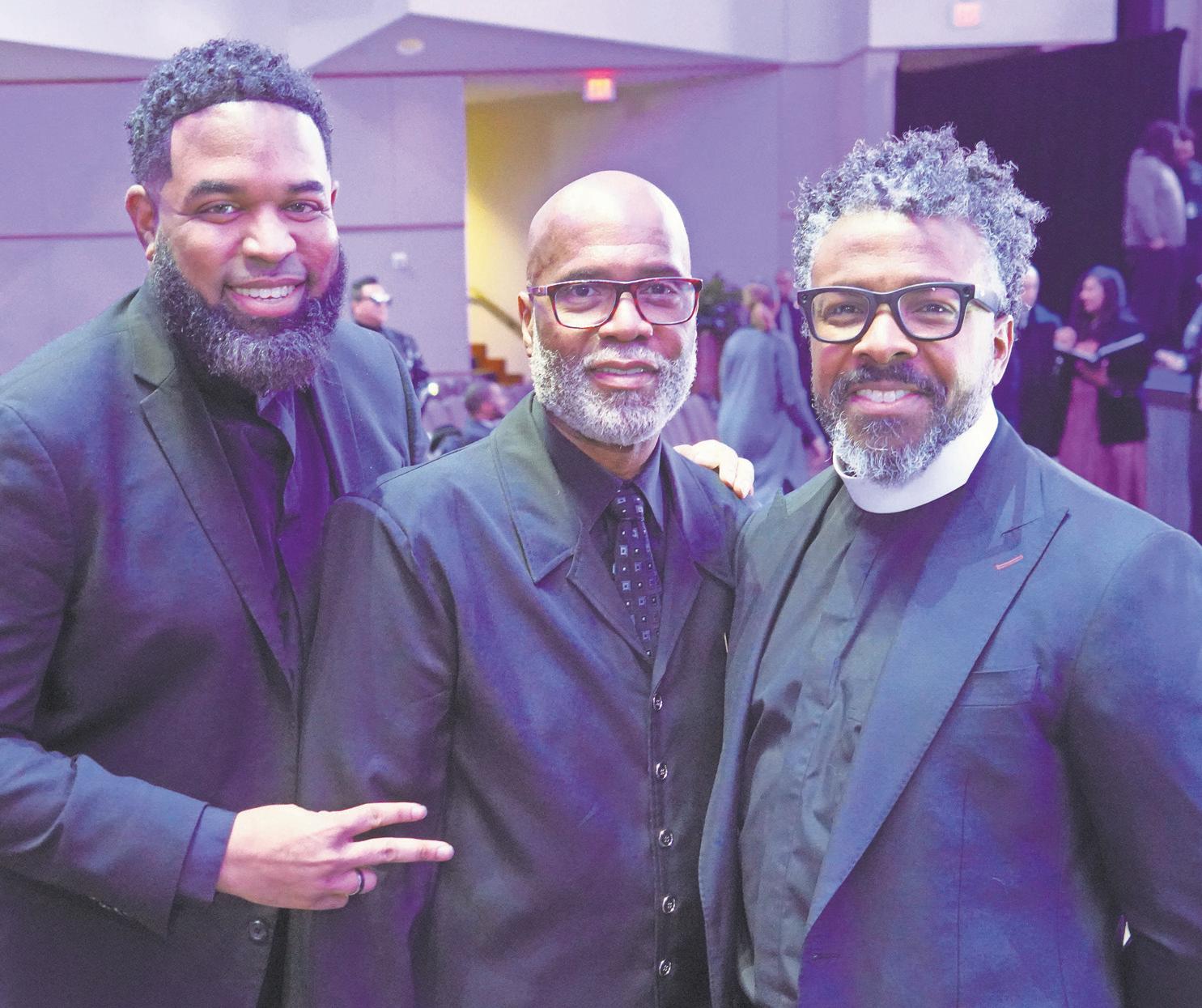
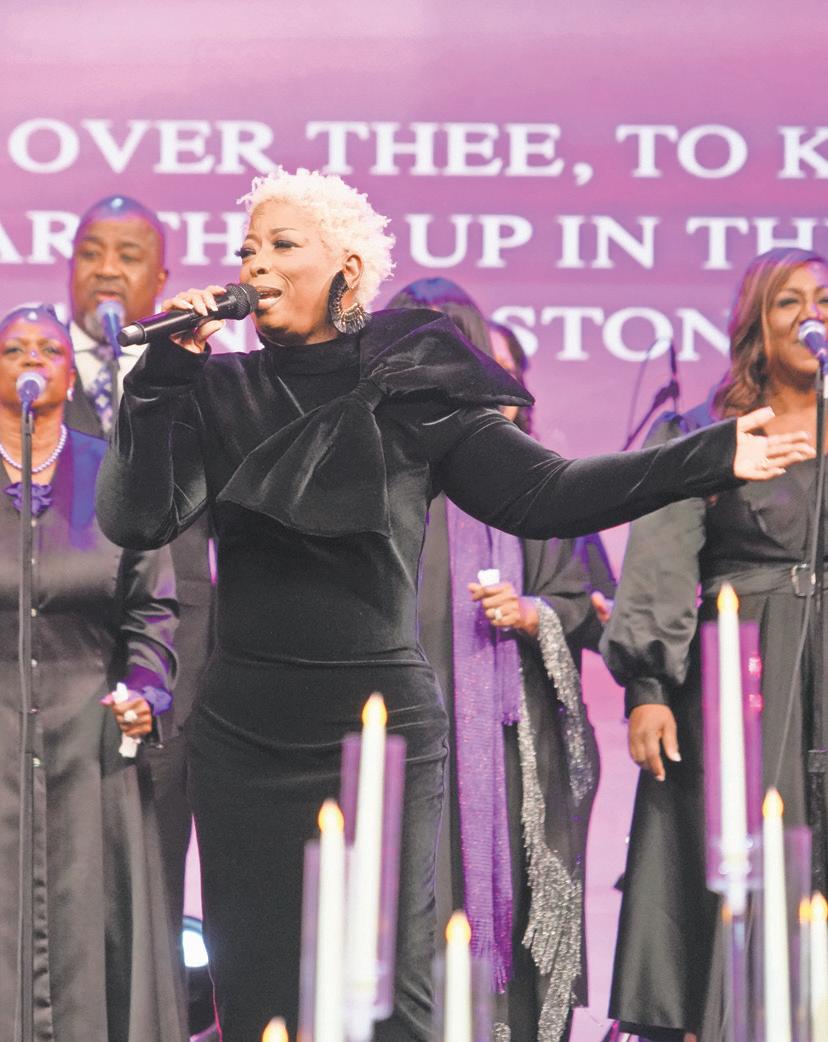
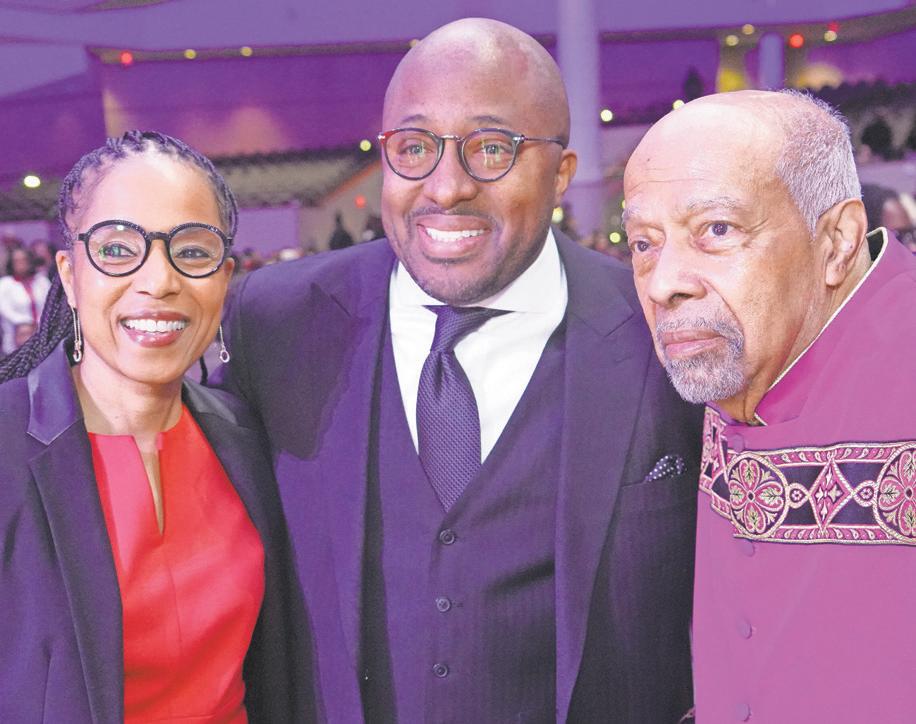
Thousands gathered Jan. 24 to celebrate the life and legacy of gospel legend Richard Smallwood. The service was held at The First Baptist Church of Glenarden International in Maryland and included performances by members of the Metropolitan Baptist Church, Union Temple Baptist Church, Howard Gospel Choir of Howard University and an array of gospel artists who knew and worked with Smallwood, including Maurette Clark Brown and Dottie Jones.
Reflections were given by Maryland Gov. Wes Moore, actress Phylicia Rashad, family members and more, who came together to honor the maestro behind gospel hits such as “The Center of My Joy” and “Total Praise.”
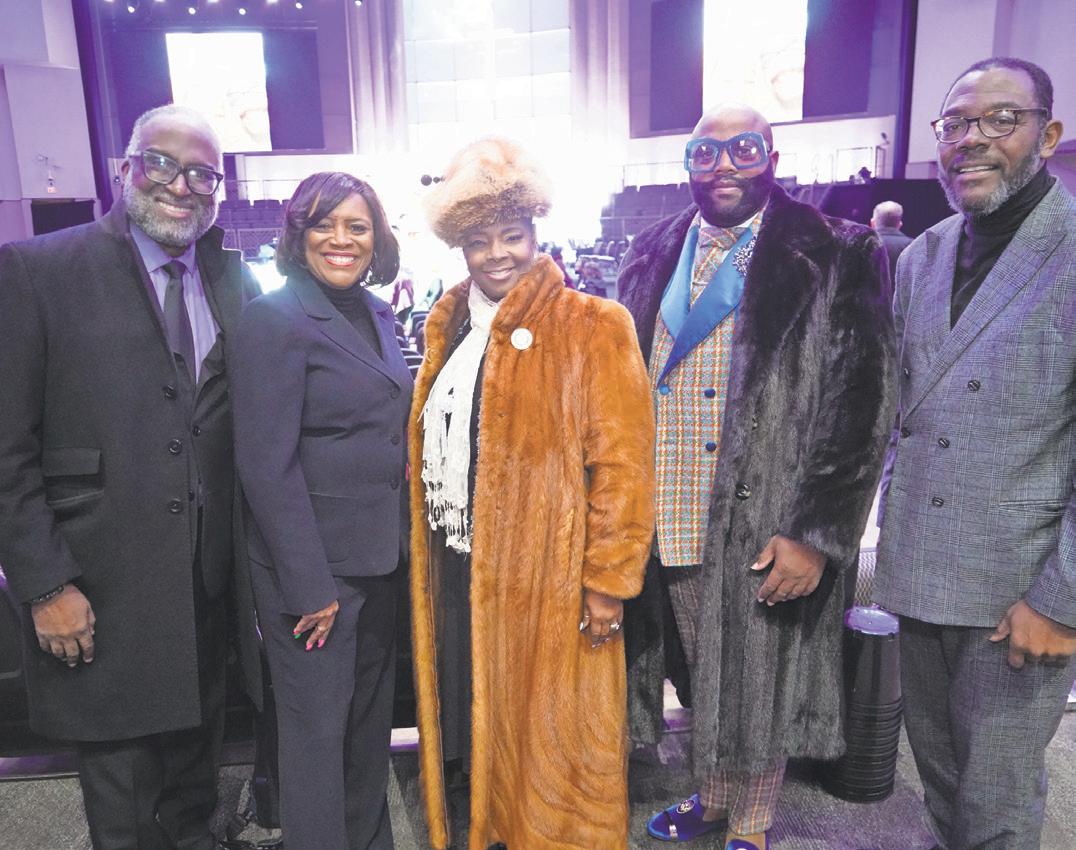
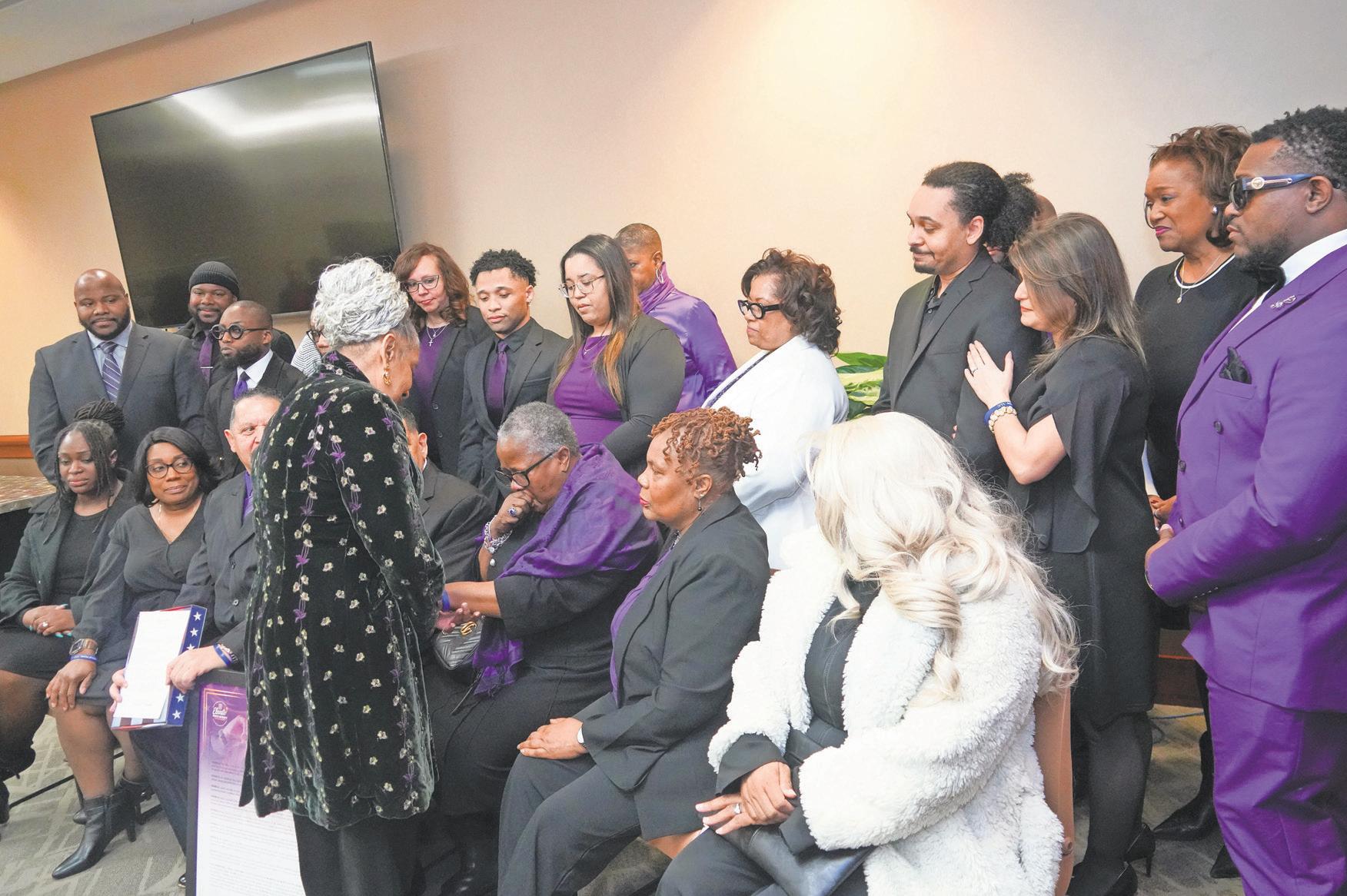
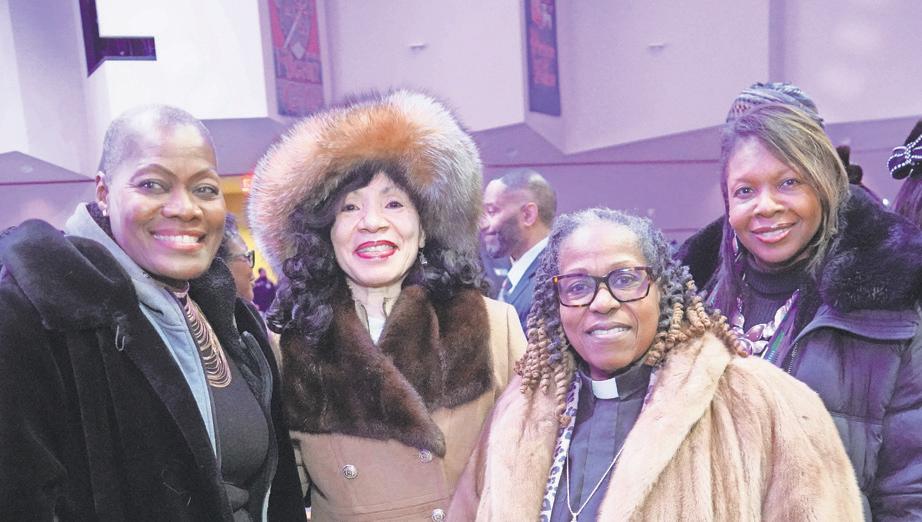
People came from Maryland, the surrounding areas and beyond to fill the church and show respect and love for Smallwood’s work. All photos AFRO Photos/ Patricia McDougall


By Tashi McQueen AFRO Staff Writer tmcqueen@afro.com
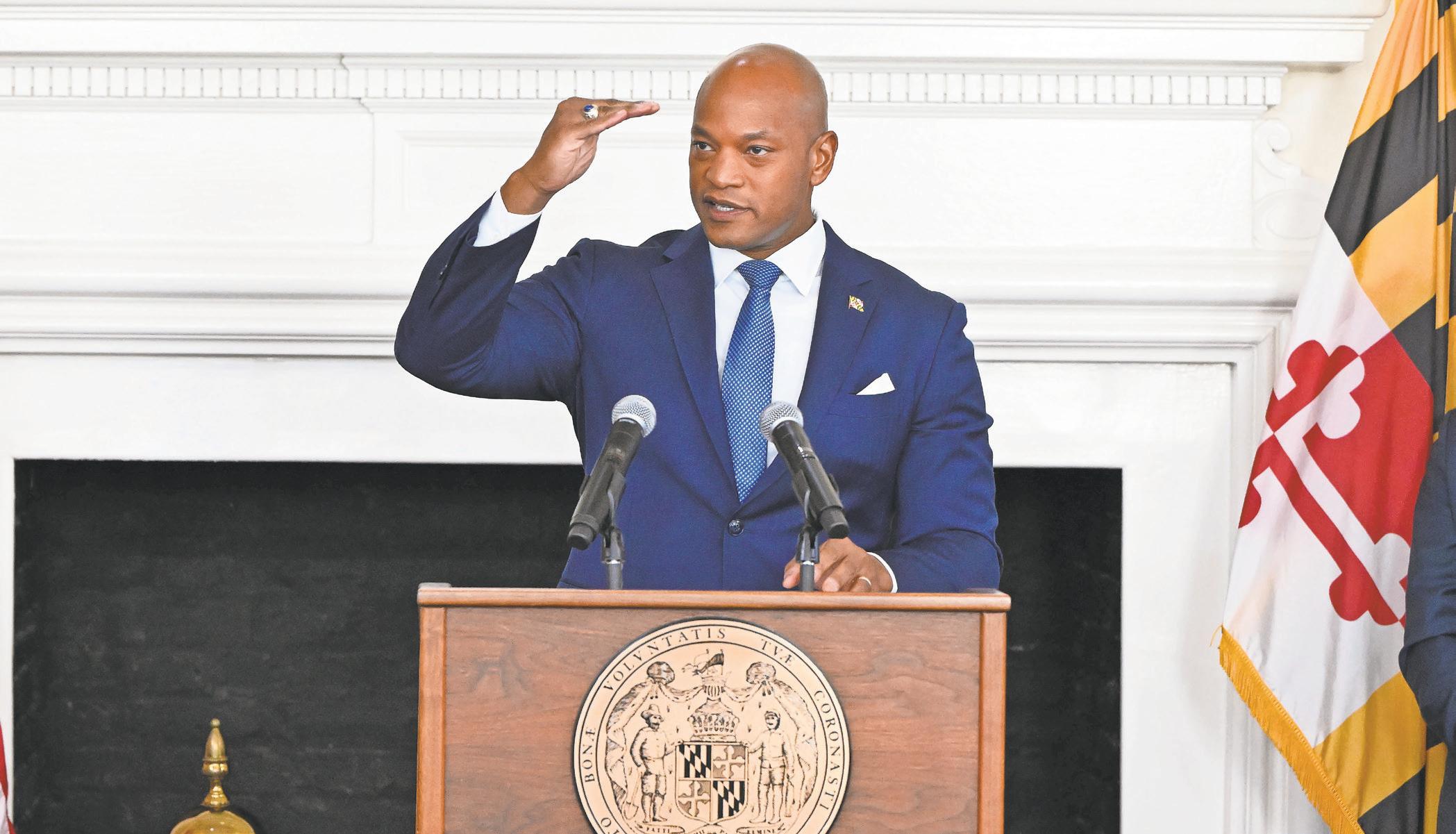
Maryland Gov. Wes Moore (D), joined by Maryland Department of Budget and Management Acting Secretary Jake Weissmann, announced the Moore-Miller administration’s proposed $70.8 billion fiscal year 2027 state budget Jan. 21 in Annapolis, Md.
The proposal comes as the state faces a projected $1.5 billion deficit, making this year’s budget process one of the most consequential for Maryland lawmakers and residents. The General Assembly is required to pass a balanced budget each session to ensure continued government operations, often forcing difficult decisions about funding priorities, reductions and whether new taxes or fees are necessary.
Moore said the budget focuses on three priorities: protecting Marylanders, lowering costs and increasing the state’s economic competitiveness.
In the weeks leading up to the announcement, the governor outlined several major components of the plan, including a record $10.2 billion investment in K-12 education, increased funding for law enforcement and $73.7 million for 252 local revitalization projects administered through state housing and community development programs.
Among those efforts is the Baltimore Regional Neighborhood Initiative, which supports redevelopment within the Baltimore Beltway. More than $20.5 million is proposed for 78 projects, including mortgage rate reductions for formerly vacant homes, improvements to North Avenue Market and the rehabilitation of the historic Upton Mansion to house the AFRO Archives in Baltimore City.
begins what he expects to be an extended and complex budget process.
“This is a year that requires greater communication, especially when tough conversations have to happen,” McCray said. “The governor’s proposed budget starts that conversation by prioritizing what he views as the state’s essential needs, but now the real work begins.”
McCray said discussions between the executive branch and legislature will continue throughout the session.
“Over the next 80-plus days, the legislature and the executive branch will be in constant dialogue to ensure the final budget reflects our shared principles and values while remain-
“Being fiscally responsible and being fiscally disciplined does not mean we stop investing in what matters most to the people in the State of Maryland.”
The proposed budget also maintains an 8 percent rainy day fund and includes approximately $900 million in targeted cuts and other cost-saving measures, such as transferring funds between initiatives. It introduces no new taxes or fees and balances the budget by reducing government operating expenses by $154 million between fiscal years 2026 and 2027.
State Sen. Cory McCray (D-Md.-45), a member of the Senate Budget and Taxation Committee, said the proposal
ing fiscally responsible,” he said.
“For Black Marylanders, we will be working collectively to ensure that historically disenfranchised communities have a seat at the table. For Baltimore City, we will be laser-focused on outcomes that pour into our next generation while also protecting the shoulders we stand on.”
He cited funding for historically Black colleges and universities,
By Megan Sayles AFRO Staff Writer msayles@afro.com
The Becoming Everything You Are (BEYA) STEM Conference will return to the Baltimore Convention Center on Feb. 12-14, celebrating excellence in science, technology, engineering and mathematics (STEM) fields. This year marks the 40th anniversary of the gathering bringing together hundreds of professionals, business leaders, military personnel, industry experts and students for professional development, networking and job fairs. Keeping with a recent tradition, the conference will offer a digital twin experience, allowing individuals to attend virtually or in person.
Tyrone Taborn, founder of BEYA and CEO of Career Communications Group
(CCG), said the conference has sharpened its focus to meet rapidly evolving labor needs.
“We have elevated and refocused all of our attention to three areas in workforce training: artificial intelligence, quantum computing and cybersecurity,” said Taborn. “Those are the three areas that will have the most workforce demand no matter what field you’re in— whether it’s health care, finance or the military.”
Taborn said his team created a workforce development committee that was solely focused on revising the conference’s programming around these topics, with an emphasis on certification and practical training.
During the conference, the prestigious Black Engineer of the Year Award will also be bestowed upon a STEM
leader recognized for community impact, innovation and support of the next generation of professionals.
Though BEYA has historically honored U.S. military and defense leaders through its Stars and Stripes ceremony, last year, branches of the armed forces withdrew from the conference’s career fair. Their absence followed an executive order issued by the 47th president last January that abolished equity, diversity and inclusion initiatives in the military.
While BEYA highlights and celebrates diversity, the gathering has always welcomed all students and professionals of all backgrounds, according to Taborn. The withdrawals, combined with broader corporate pullbacks, have taken a heavy toll on BEYA’s parent organization, CCG. Taborn said the company

his constant labor.
By Victoria Mejicanos AFRO Staff Writer vmejicanos@afro.com
Chesapeake Shakespeare Company will produce August Wilson’s “Fences” as part of the citywide Baltimore August Wilson Celebration. The production is the sixth of 10 plays in Wilson’s American Century Cycle, being staged as part of the celebration, and will run from Feb. 6–March 1.
Set in 1950s Pittsburgh, “Fences” centers on Troy Maxson, a former Negro Leagues baseball player whose dreams and talents could not fully be realized due to segregation, casting shadows on his life as a husband, father and working man. Now a sanitation worker, Troy is forced to wrestle with a world that denied him opportunity while demanding
DeJeanette Horne, who plays Troy Maxson, spoke with the AFRO about his deep appreciation for August Wilson and the complexities of the character of Troy.
“Troy Maxson is a wonderful challenge to try and bring to life on stage,” said Horne. He’s such a complex male figure. He’s got so many facets to him. There’s good, there’s bad and there’s ugly, and my hope is to be able to bring that to life and allow people to see all of those facets of Troy.” Horne said he hopes audiences connect with Troy’s character.
“We’re all complex,” said Horne.“We all have different facets, and I want to honor that. I’m really excited about the opportunity to do that.”

lost more than $3 million in 2025, forcing the company to consider reducing its staff by up to 60 percent this February. Still, he remains focused on the conference’s mission and his organization’s long-term vision.
“The future continues,” said Taborn. “As we regroup and
By Megan Sayles AFRO Staff Writer msayles@afro.com
The Enoch Pratt Free Library is making sure Baltimore’s young people have an inclusive, safe place to gather and nurture their interests after school with the Earl Teen Center. Located at the central branch in Mount Vernon, the space offers science, technology, engineering, arts and mathematics (STEAM) programming—giving students access to a sound and video production studio, makerspace, learning lab and reading room.
With the center, the library system is striving to support “opportunity youth,” or young people aged 16 to 24 who are disconnected from both school and work.
“We define opportunity youth as any student who is suffering from housing insecurity, food disparities, learning disabilities, and anything that impacts
Continued from B1
neighborhood revitalization, education and communities with high concentrations of poverty as key focus areas.
Moore and Weissmann attributed much of the state’s shortfall to actions by the 47th president’s administration, including federal layoffs, delayed benefits and reduced funding for community initiatives.
“There were concerns about the state’s revenues and our fantastic Board of Revenue Estimates forecasted that our state could be hit and planned with more conservative investments,” Weissmann
their day-to-day life on a larger scale,”
said Genive Purchase, a deputy director at the Enoch Pratt Free Library’s central branch and Maryland State Library Resource Center (SLRC). “In the teen center, we see a lot of students who don’t have the safest home situations or access to proper food, and they generally might not be accepted at home.”
Purchase said that the center stays stocked on snacks, knowing that it may be the only food that the teens eat that day. Staff also go beyond programming to address other needs the teens may have, including connecting them with mental health support and housing assistance and other social services.
The Earl Teen Center’s broader aim is to expose young people to career pathways.
“Our goal is to make sure that we’re assisting kids to expand their knowledge, their skill sets and explore potential opportunities for financial security
said. “However, what nobody could have predicted was the chaos in D.C.”
He said those actions led to the loss of nearly 25,000 federal jobs in Maryland, representing about 15 percent of the state’s federal workforce.
Republicans, however, criticized the proposal as avoiding long-term structural issues.
“I’m disappointed that instead of confronting the long-term structural issues that are driving future deficits, the administration has chosen to shift money between funds,” said State Sen. Paul Corderman (R-Md.-2), ranking Republican on the Senate Budget and Taxation Committee. “Marylanders
for their future,” said Purchase.
From participating in robotics and photography clubs to learning how to sew and use 3D printers, the activities available at the center are designed to help teens build practical skills and imagine futures they might not otherwise foresee for themselves.
Chaya Taylor and Jessica Carter, 16-year-old students at the Baltimore Leadership School for Young Women, said the center has allowed them to discover new interests and make new friends. The pair both participate in the photography club and have enjoyed learning how to use a camera.
Taylor and Carter also said the Earl Teen Center provides them with a welcoming environment to spend time after school.
Carter noted that staff members at the Earl Teen Center have supported her through rough times.
“I’ve been through a lot, and every
expect a responsible, sustainable budget that addresses the real challenges facing our state-not one that postpones difficult, but necessary decisions.”
Moore defended the administration’s approach.
“Being fiscally responsible and being fiscally disciplined does not mean we stop investing in what matters most to the people in the State of Maryland,” Moore said. “But it does mean that we’re going to be more targeted. We’re going to be more data-driven about how we invest.”
Residents can follow the budget process on Maryland Public Television, which will livestream legislative sessions through the end of the session on April 13.

time I come here, I’m able to sit down, talk to my favorite staff about it and they will help me calm down,” said Carter. “They’ll give me advice on how I can overcome the challenges and just make sure that I feel my best and understand what I can do to get out of the situation.”
Both Carter and Taylor said the center is a model for the kinds of spaces teens need access to as they navigate
Continued from B1
pivot, building up our other products such as STEM City USA and our unbelievable AI certification and training will be the areas where we move forward until this turns around.”
“BEYA took a hit, but we’re strong,” he continued. “We have a strong community, and people are still contributing.”
BEYA’s origins date back to 1987. At the time, Black students were significantly underrepresented in STEM programs, particularly because they lacked access to them. Taborn decided to team up with Eugene Deloach,
school and home life. They called on adults to create more places where teens can feel respected and accepted.
“I think this library and the teen center are a good representation of how teens would like to be treated because a lot of places just treat teens like they’re bad,” said Taylor. “The teen center allows you to actually feel human and like you’re just as good as everybody else even though you’re just a teenager.”
who founded Morgan State University’s school of engineering in 1984, to organize the first awards ceremony. Through the conference, the pair strived to increase the number of engineering programs at historically Black colleges and universities (HBCUs) and the number of students enrolled in them. They also wanted to ensure that career pathways were available, as most STEM recruiters frequented predominantly White universities.
Today, MSU continues to be a key supporter of the conference.
“For 40 years, the BEYA STEM Conference has stood as both a mirror and a mandate— reflecting the extraordinary excellence of Black
innovators while challenging institutions and industries to do more to cultivate, support and sustain talent,” said David K. Wilson, president of MSU. Wilson emphasized that BEYA’s purpose continues to be deeply rooted in the same values that shape MSU: access, opportunity and impact.
“From the earliest collaborations with HBCUs to its global reputation today, BEYA has demonstrated that excellence in STEM is inseparable from responsibility,” said Wilson. “As we mark this 40th anniversary in Baltimore, Morgan remains proud to stand alongside BEYA in advancing inclusive innovation and preparing the next generation of leaders who will shape our collective future.”



By Tashi McQueen AFRO Staff Writer tmcqueen@afro.com
The National Coalition of 100 Black Women (NCSW) and 100 Black Men hosted their 2026 Legislative Day on Jan. 23 at the Maryland House of Delegates in Annapolis, Md.
The public policy advocacy event brought together community members, advocates and stakeholders to interact directly with state lawmakers about policies impacting Black wellness and economic equity in Maryland. Topics they addressed and held panels on this year, included Black maternal health and economic justice.
Lashelle Stewart, the executive director of Baltimore Healthy Start, spoke on the reality of the Black maternal health issue and the ways in which Black women can remain at the center of finding the solution.
“We’re in a crisis because 80 percent of maternal deaths that occur are preventable,” said Stewart. “We need a genuine seat at the table. Healthy Start has been around for 30 plus years with community health workers. Some big systems now create community health worker positions, but they aren’t actually from the community.”
She emphasized the need for real community members to be in positions like these.
“Until they hear directly from us, change will not happen,” she said.
State Del. Stephanie Smith (D-Md.-45) spoke on the ways in which Black women can support each other when it comes to addressing Black maternal health.
“In addition to demanding what we deserve from the government, we have to get back
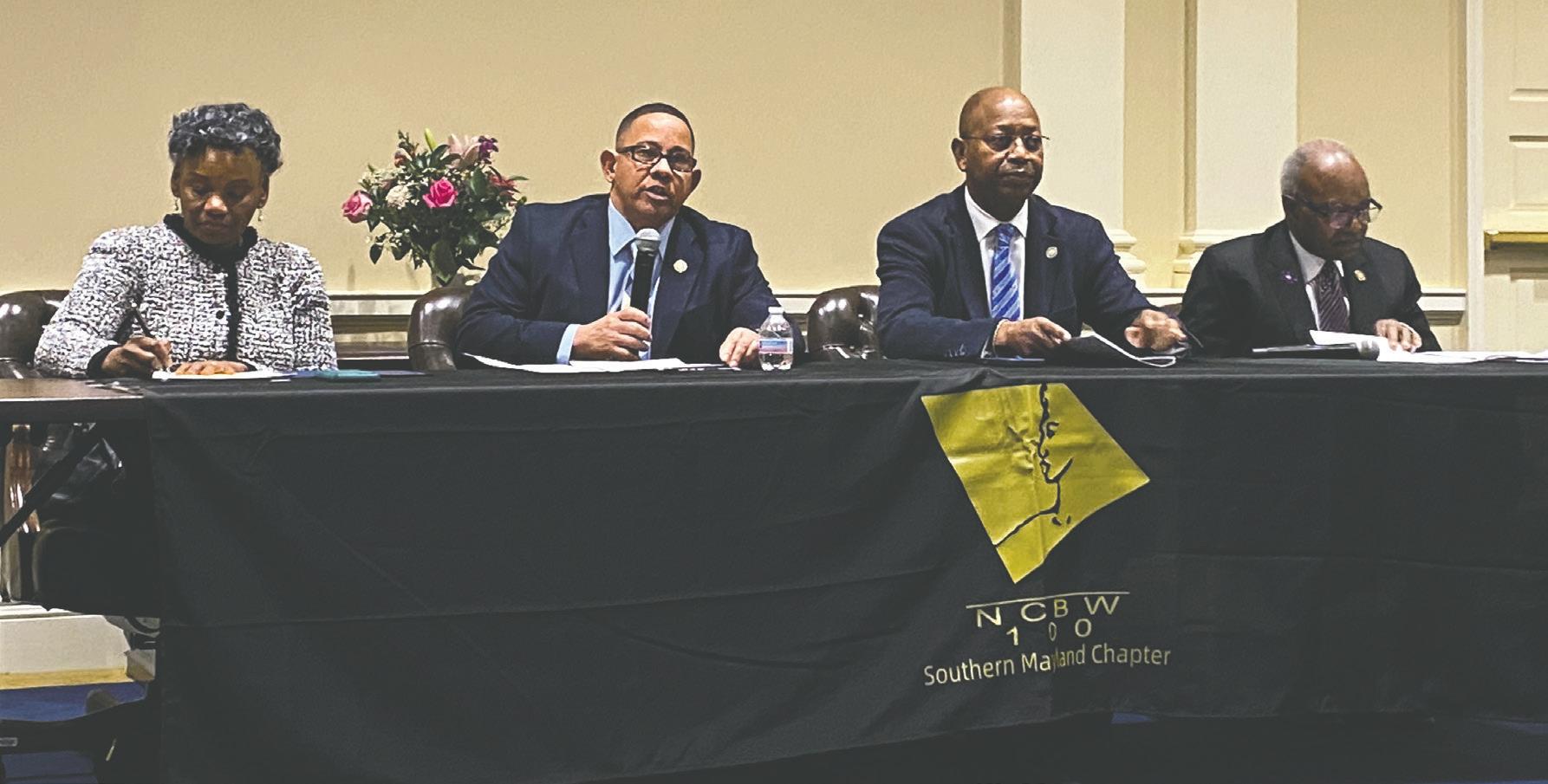
AFRO Photo/Tashi McQueen

and wellness for women and girls, via its 3,200 plus members and 64 chapters throughout the country.
into mutual aid,” said Smith. According to Cornell Law School, mutual aid is the exchange of services and support amongst a group of people for mutual benefit.
“This season we find ourselves in now, is a reminder that government alone is not going to be your salvation,” she said. “We’ve abandoned some of those networks that we had to rely upon when the government was excluding us and now look where we are…fearful of losing things that a couple generations ago didn’t even exist for us.”
She shared an encouraging word with attendees about the future.
“I want you to fight like you’ve never fought before for the things you deserve from the government, but let’s figure out how we can knit together,” she said. “I think so many young mothers don’t have older mothers to pour into them or grandmothers to give them some lessons, so just think about those non-tangible ways you can partner.”
During the Economic Justice panel, State Del. N. Scott Phillips (D-Md.-10), the new chair

of the Legislative Black Caucus of Maryland, addressed how the state has moved to enhance renters’ rights and stability.
“In 2024, we really took a big step, the rights of renters here in the state of Maryland, and we set up an office, that we called the Office of Tenant and Landlord Affairs,” said Phillips. “We also capped the initial deposit. For many of you, when I think about my renting days, the landlord would ask for both the first month’s, last month’s and potentially a deposit. We’ve now capped that at one month.”
Phillips said he expects, during this session, to see additional work around rent stabilization.
Throughout this event, leaders of NCBW made clear that members of their organization have been and will continue to be a part of the legislative process in Maryland, helping to influence positive change for Black women and girls.

Alongside him is Horne’s real-life wife, Lolita Marie, playing Rose Maxson. She shared that being in an August Wilson production is a point of pride for her, especially as a woman. Wilson’s plays are from a male perspective, which means there are slightly fewer roles for women, but the roles are critical, even if there are few.
About Rose, Marie said, “I think her role in this piece is very much the rock— the glue— that holds the family together. My hope is that what [the audience] sees resonates with them, and that it resonates as being real.”
Both Marie and Horne called helping preserve August Wilson’s legacy through this production an “awesome responsibility.”
The director of the production, Reginald Douglas, says that he hopes the family at the center of the play inspires audiences.
“I hope audiences are remembering the love and the joy of this family and hold on to that as they go back into this sort of really trying world right now,” said Douglas. “I hope audiences are thinking about where we’ve been as a country, the history that has so often thwarted the dream of Black men in particular, and hopefully, they have a deeper appreciation for the resilience and strength of our ancestors to push through the hurdles of our past, and hopefully that inspires them to stay strong and resilient as we navigate this world today.”
Douglas also reflected on the legacy of Wilson today, calling him “one of America’s Shakespeares.”
“Wilson is one of the greats, and to have him on stage at CSC, especially, I think lifts up his rightful place in our zeitgeist,” said Douglas. “It’s an honor to be bringing his work to life again and to keep his work alive. What he beautifully does in his plays is tell the history of America through people and through these human stories of resilience, of strength, of overcoming. He writes into the history books many of the dreams that get forgotten over time.”
To purchase tickets, visit ChesapeakeShakespeare.com, or contact the box office directly by calling 410-244-8570. Adult tickets start at $59, and tickets for youth 25 and under start at $31.


By Stacy M. Brown
President Donald Trump’s new tax law is now in force, and as the 2026 filing season begins, economists say the damage is not theoretical. It is already written into the tax code. The legislation locks in and expands Trump’s 2017 overhaul while layering on new provisions that funnel wealth upward, raise taxes on millions of low-income Americans, and deepen racial inequities that have defined the U.S. economy for generations.
Americans will pay more in taxes under the new law, while the middle fifth receives only marginal relief.
The richest 1 percent, however, will take home more benefits than the bottom 80 percent combined in 2026. The racial divide is stark.
High-income households are disproportionately White, while Black and Latino families are far more likely to be concentrated in income groups that lose ground.
At the center of the imbalance is the expanded passthrough business deduction,
“This law harms the economic well-being of poor and working families of all races, especially people of color.”
“This massive tax-andspending package does more to transfer wealth upward than any other single piece of legislation in decades while penalizing lower-income Americans and cutting public benefits,” the Institute on Taxation and Economic Policy said in its analysis of the law.
According to ITEP, the poorest 40 percent of
increased from 20 percent to 23 percent. Treasury Department data show that nearly all of the $1 trillion in tax cuts generated by this provision over the next decade will flow to the top 1 percent. Hispanic taxpayers, who account for 15 percent of the population, receive about 5 percent of the benefit. Black taxpayers, 11 percent of the population, receive roughly 2
percent.
The law also sharply weakens the estate tax by permanently raising the exemption to $15 million for individuals and $30 million for married couples, indexed to inflation. Economists say the change all but eliminates the tax for ultra-wealthy families while locking in racial disparities tied to inherited wealth. White families are about three times as likely as Black families to receive an inheritance, and the median inheritance for White families is roughly 25 percent higher.
Supporters of the law point to larger tax refunds expected this year as proof that working Americans are benefiting. The Tax Foundation estimates individual income taxes were reduced by $129 billion for 2025, with as much as $100 billion likely to be paid out through higher refunds during the 2026 filing season. Average refunds could rise by several hundred dollars, and in some cases close to $1,000.
But analysts say those refunds are largely the result of delayed withholding adjustments, not sustained gains in wages or financial security. Many low-income filers, particularly those with little or no tax liability, receive little to nothing. ITEP said provisions marketed as help for working families continue

to bypass the poorest households, many of them Black.
The child tax credit was raised to $2,200 per child, yet it remains only partially refundable and far below its 2021 level. Millions of very low-income families are still excluded. Census data show that nearly one in five Black and American Indian people lived below the poverty line in 2024, placing them among those least likely to see any benefit.
The law offsets tax cuts at the top by reducing funding for health care, food assistance, and other programs relied upon by working families. Economists warn that the long-term costs will fall
heaviest on younger Americans. Millennials and Gen Z, the most racially diverse generations in U.S. history, will inherit higher deficits and fewer public resources.
The Internal Revenue Service began accepting 2025 returns on Jan. 26 and expects to process roughly 164 million filings this year.
New deductions for overtime, tips, auto loan interest, and seniors are now available, though many phase out well before reaching higher income levels. Analysts note that administrative readiness does not change who ultimately wins and loses under the law.
ITEP said Congress had
options that would have protected working families without deepening inequality, including limiting tax extensions to households earning under $400,000 and restoring the expanded child tax credit. That approach would have delivered larger tax cuts to the bottom 60 percent of Americans at a fraction of the cost.
“This law harms the economic well-being of poor and working families of all races, especially people of color,” ITEP said. “The new tax and spending law doesn’t meet the basic test of fairness, and it falls tremendously short.” This article was originally published by the NNPA Newswire.
Ending tax refunds by check will speed payments, but what about people without a bank account?
By Beverly Moran The Conversation
More than 6 million Americans receive paper tax refund checks annually. Often, those refunds go to purchase groceries or pay the bills. But this year, those taxpayers may be surprised to learn that the paper check they’re waiting for no longer exists.
That’s because of executive order 14247, which President Donald Trump signed in 2025. It directed the Treasury
Department to stop issuing paper checks for tax refunds. The executive order has its fans. Nacha, the organization that runs the network that electronically moves money between financial institutions, says the new rules could save the government US$68 million each year. The American Bankers Association is also excited, predicting the move will help people save on check-cashing fees. Other supporters argue the change will prevent mail theft and check fraud.
But what about the 6 million Americans without bank accounts – the so-called “unbanked”?
Watchdogs warn that they will suffer if exceptions and outreach fall short. As a professor who specializes in tax law, I think those concerns are valid.
Reform could leave the unbanked behind Shifting to electronic payments is a classic modernization effort. So how could that be bad?

The problem is that a sizable number of Americans have no bank account. Twenty-three percent of people who earn under $25,000 were unbanked in 2023. Only 1 percent of people earning over $100,000 in 2023 lacked a bank account.
Black and Hispanic Americans, young adults and people with disabilities are more likely to be unbanked than other people, and 1 in 5 unbanked households include someone with a disability.
Low-income families often use their refunds to pay for basics such as food and rent. And under the status quo, unbanked people already lose a large slice of those refunds to fees. Check cashers, for example, can charge up to 1.5 percent for government checks in New York, up to 3 percent in California, and even more in other states.
But the unbanked might find that they’re paying even higher fees in a postcheck world. They might, for example, use paid tax preparation services to access refund loans. The federal courts and investigative journalists have discussed ways that prepaid tax preparers engage in false advertising and overpriced services.
Or they might forgo their tax refunds entirely.
Geography, race and the digital-banking divide
Where people live affects their access to banking.
Gaps in broadband coverage and lack of public transportation to reach libraries make computer access a problem for poor and rural people.
In so-called “banking deserts” – communities with few or no bank branches – people are more likely to use costly alternatives such as payday lenders and check-cashing services.
Black-majority communities face distinct banking desert challenges, for both poor and middle class Black families. That’s because a middle-income Black family is more likely to live in a low-income neighborhood than a low-income White family.
Taken together, these barriers mean that many Americans who are legally entitled to tax refunds could soon struggle to receive them.
What should leaders in government do now?
The government is aware of the problem. The IRS promises that “limited exceptions” will be available to people who don’t have bank accounts, and that more guidance is on the way.
For the moment, it’s unclear just how effective these efforts will be. Perhaps this is why the American Bar Association is urging Treasury to keep issuing paper refund checks unless Congress passes a law rather than relying on an executive order.
Consumer groups have urged the Treasury Department to fund robust exceptions, plain-language help lines and no-fee default payment options while also banning junk fees on refundrelated cards and mandating easy access to cash-out at banks or retailers.
In the meantime, the agency stepped up on the day after Thanksgiving to urge people without bank accounts to open them, or to check whether their digital wallets can accept direct deposits, while the Bureau of the Fiscal Service has provided a website with all sorts of information for people who need to get up to speed on electronic payments.
The problem is that the Treasury Department has lost over 30,000 employees and $20.2 billion in funding since January 2025. Add in the lingering effects of the last government shutdown, adopting a new system for tax filing and refunds might be too much to expect for the 2026 tax season. This article was originally published by The Conversation. Beverly Moran is professor emerita of law at Vanderbilt University.

By
For the past few years, Kai Cenat has been one of the biggest names on the internet, a Twitch streamer who has evolved from playing video games online into creating outlandish comedy that often goes viral. With more than 20 million followers, Cenat, 24, has rubbed shoulders with fellow internet star Druski, NBA star Lebron James and rapper Nicki Minaj.
But lately, experts say, his most important audience might be Black schoolchildren struggling to read. That’s because Cenat has traded his gaming console for actual books.
Recently, the gamer-turned-content creator-turned-fashion designer set a goal for himself: read, out loud, every day, from 10 minutes to an hour, on camera. He often stops to look up words he struggles to pronounce or doesn’t quite understand. Cenat then uploads the video to one of his smaller channels for everyone to see.
Why did Kai Cenat start his reading journey?
“Honestly, the reason why I started reading was because
I didn’t like the way I spoke,” Cenat, 24, said in a separate video explaining himself. “To be honest, I wanted to articulate myself better. I noticed that when I got into arguments, and I had to get a point across, people were not taking me seriously at all.”
But education experts say that, in an era when Black literacy rates are at historic lows, and children are more likely to pick up an iPad than a book, Cenat’s latest venture should be taken very seriously: he is setting a powerful example for K-12 students.
Indeed, Cenat’s videos have garnered mass praise online. Teachers specifically have been quick to point out that videos like these can inspire children to read more books.
Why should students watch Kai Cenat read?
“The best thing Kai Cenat did for reading — it’s not even just the reading,” says Christopher Emdin, professor of science education at Columbia University. “It actually begins with a recognition of his own deficiencies, and then he took it one step further by modeling the process in real time, so that other folks now have their own entry points. So that’s really powerful.” K-12 reading scores have

been gradually declining for the nation’s students for years, according to data from the National Assessment of Educational Progress or NAEP. The most recent data show that only 30 percent of all fourth graders and 29 percent of all eighth graders nationwide scored at or above proficient in reading.
But the numbers are far worse for fourth- and eighthgrade Black students: 17 percent and 14 percent of them scored proficiently on the exam, respectively.
Why are reading scores so low?
There isn’t a single answer for why we are seeing a decline in reading proficiency
nationwide. Experts point to a combination of factors that can explain the nation’s reading crisis, including social media.
An entire generation of schoolchildren has grown up with either a smartphone in their hands or an adult glued to their phone, scrolling endlessly. As a result, the children have learned to get information from screens rather than from traditional, ink-on-paper books.
So far, Cenat’s book choices have leaned more towards self-improvement, including “The Four Agreements” by Don Miguel Ruiz, “Don’t Believe Everything You Think” by Joseph Nguyen, and “Atomic Habits” by James Clear. While it’s not standard fare for most elementary or
By Megan Sayles
AFRO Staff Writer msayles@afro.com
The University of the District of Columbia (UDC) is reinvigorating its founding mission of training educators with the launch of the School of Education and Learning Sciences (SELS). The new school will offer bachelor’s and master’s degrees in adult education, early childhood education, elementary education and special education, teaching and human development. Part of the motivation behind the
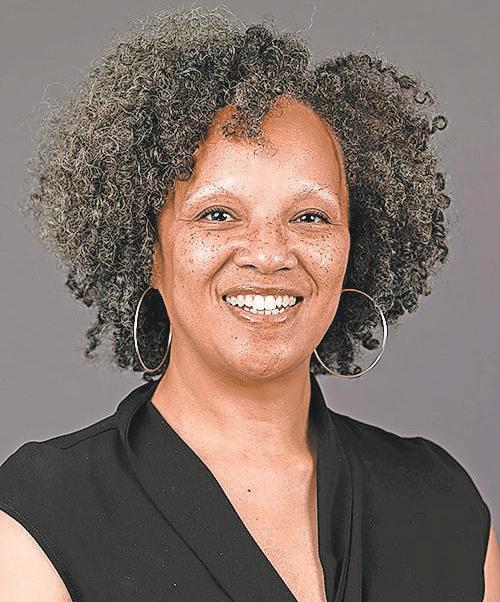
creation of the SELS is to help tackle teacher shortages that school districts are confronting across the country. UDC President Maurice D. Edington said the school will support a diverse pipeline of future teachers.
“From our earliest roots, UDC has served students who reflect the incredible diversity of Washington, D.C. and this school builds on that legacy by creating clear, supported pathways into education careers— from early childhood through adult and lifelong learning,” said Edington. “In practice, this means preparing future educators through hands-on clinical experiences, strong partnerships with local schools and targeted supports that move students from preparation to placement. When our students can see themselves in the roles and are equipped to succeed, we strengthen representation across the educator workforce and improve outcomes for learners throughout the District.”
UDC’s origins date back to 1851 when Myrtilla Miner established the Miner Normal School to train Black women to become teachers. Over the next century, that institution evolved and eventually merged with other public colleges— including Federal City College and the Washington Technical Institute— culminating in the creation of UDC in 1977 as the District’s only public university.
Last November, UDC’s board of trustees approved the launch of the SELS. Anika Spratley Burtin, a tenured associate professor and former associate dean of academic affairs at the UDC’s College of Arts and Science, was selected as interim dean. She will manage the transition
high school students, what he’s reading is beside the point. Why is it important to model reading to kids?
Literacy experts have said that modeling reading is an important first step in getting grade-school children interested in reading. When adults read in front of children, they are modeling the skills needed to be literate: pacing, researching, and concentration — all of which kids can use while reading their own books.
But because Cenat is not always a fluent reader, Emdin says, he is also helping remove a hurdle that young readers often struggle with: what to do when they come
across an unfamiliar word.
Oftentimes, children can become uncomfortable with sharing their reading struggles out of fear of embarrassment, he says. That’s why moments where Cenat has to look up an unfamiliar word in the dictionary or stumbles to pronounce a word are especially important.
“He’s knighting our young folks as readers,” he adds. “He’s crowning them as readers. And so the same mechanism that has disengaged them through this work and other work that other folks could be doing, we can get them to be re-engaged in reading.”
This article was originally published by Word in Black.
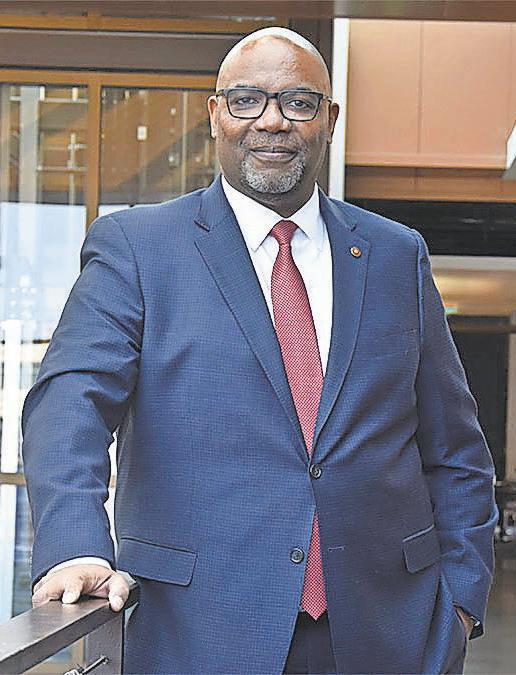
of programs and students from the College of Arts and sciences into the SELS, oversee day-to-day operations and steer the school’s initial growth.
Under her leadership, SELS also plans to add a doctorate program and collaborate on education policy.
“Helping to launch UDC’s School of Education and Learning Sciences is humbling for me both personally and professionally. It is an honor
that I do not take lightly, particularly within an institution that has a legacy of advancing teaching and learning in the District of Columbia,” said Burtin. “As interim dean, my focus is on fostering a collaborative culture, strengthening coherence across our programs and aligning our work around shared commitments to quality, impact and service as a trusted community partner.”

By Megan Sayles AFRO Staff Writer msayles@afro.com
A couple years ago, award-winning chef Sammy Davis approached Dierdre Campbell, owner of Baltimore-based Buns and Roses Chimney Cakes, with a new concept for a restaurant in Charm City— one that would put an Asian twist on Southern staples and introduce diners to bold, unique flavors.
Campbell was interested, but she would only move forward if her best friend, Ashlee Mack, joined the team. Mack had spent nearly two decades in finance, and Campbell knew a strong financial foundation would be essential to turning the concept into a successful restaurant. Mack agreed, and in 2024, the pair—alongside Davis and partner Rodney Hueston—opened Yeiboh Kitchen in Baltimore’s Old Goucher neighborhood.
Since then, the owners have sought to counter long-standing stereotypes that Black-owned restaurants have often faced.
“We want people to come and get a great experience because we know that so many times in smaller Black-owned restaurants, there are labels that the customer service is going to be bad, the food is not going to be good and the retention rate for employees is bad,” said Campbell. “We wanted to change that entire narrative, and we’ve definitely been able to do that.”
Still, Campbell and Mack say they want Yeiboh Kitchen, also known as “Yebo” or “Yebo Kitchen,” to stand on its own as a great restaurant, first and foremost.
Its Southern-Asian fusion menu—originally created by Davis and now led by his nephew and sous chef Chris Davis, features dishes such as garlic and pepper shrimp, garlic crab ramen, an Asianstyle ribeye and shredded short rib fried rice. Paired with these robust flavors is a craft cocktail menu with offerings like a lychee peachy martini, calypso mojito and a Japanese sidecar.
On the first Monday of each month, Yeiboh Kitchen hosts a customer appreciation night with happy hour specials and music. As the weather begins to warm up, Mack and Campbell said they plan to hold more patio events.
“Building our team has definitely been a benefit. We’re like family. A lot of our staff has been with us since the beginning,” said Mack. “I think customers coming in and getting consistency with the food, the service and the faces is what’s keeping our doors open.”
Currently, the restaurant is gearing up for its “Lovers and Friends” Valentine’s Day dinner. The five-course menu will feature items such as lobster and crab-filled wontons, a crab caesar salad, an Asian ribeye, crab imperial roasted chicken and strawberry banana pudding.
For Campbell and Mack, the rewards go beyond
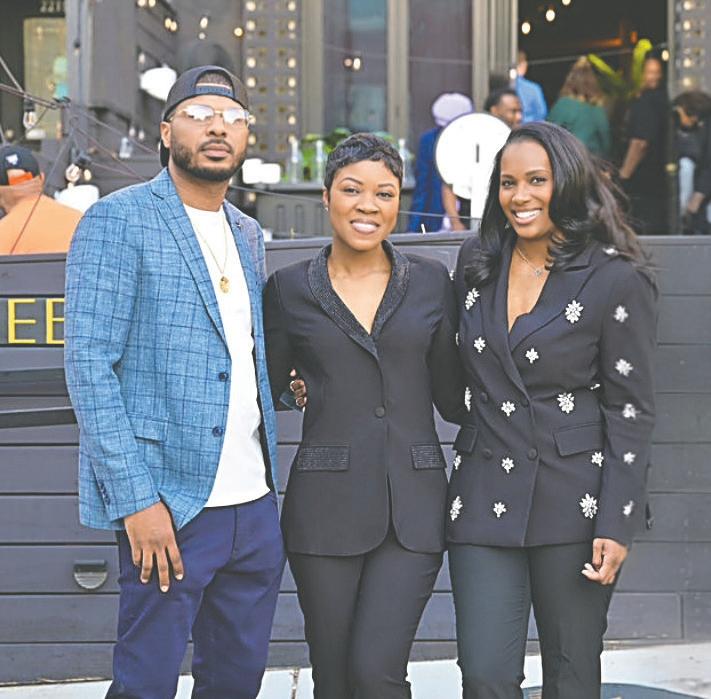
serving inventive dishes.
Running Yeiboh Kitchen has allowed them to share their passion for food while staying connected to their community—and to each other.
“It feels so good to see Ashley every day, and we’re doing something that we actually love. We were foodies anyway, so if this restaurant didn’t open we would still be out at dinner, eating food and getting drinks,” said Campbell. “It’s good to be foodies together in our own space.”



SUPERIOR COURT OF THE DISTRICT OF COLUMBIA PROBATE DIVISION ADMINISTRATION NO. 2024ADM000974 ANN MARIE BROWN Name of Decedent
LEONARD W. JONES, ESQ. 5827 ALLENTOWN ROAD CAMP SPRINGS, MD 20746 Attorney Notice of Appointment, Notice to Creditors and Notice to Unknown Heirs ANDREA BROWN whose address is 9364 DARCY ROAD, UPPER MARLBORO, MD 20774 was appointed Personal Representative of the estate of ANN MARIE BROWN who died on SEPTEMBER 12, 2022 without a Will and will serve without Court supervision. All unknown heirs and heirs whose whereabouts are unknown shall enter their appearance In this proceeding. Objections to such, appointment shall be
to Creditors and Notice to Unknown Heirs JOHN DOWN HERITAGE whose address is 13 E. WASHINGTON ST. COLORADO SPRINGS, CO
80907 was appointed Personal Representative of the estate of JOHN MAULL HERITAGE who died on MARCH 8, 2022 without a Will and will serve without Court supervision. All unknown heirs and heirs whose whereabouts are unknown shall enter their appearance In this proceeding. Objections to such, appointment shall be filed With the Register of Wills, D.C., Building A, 515 5th Street, N.W., 3rd Floor, Washington, D.C. 20001, on or before JULY 30, 2026. Claims against the decedent shall be presented to the undersigned with a copy to the Register of Wills or filed with the Register of Wills with a copy to the undersigned, on or before JULY 30,
SUPERIOR COURT OF THE DISTRICT OF COLUMBIA PROBATE DIVISION 2026FEP000004 FEBRUARY 27, 2025 Date of Death CLARETTA JACKSON NILES Name of Decedent
NOTICE OF APPOINTMENT OF FOREIGN PERSONAL REPRESENTATIVE AND NOTICE TO CREDITORS
TERESA WOODRUFF whose address is 9001 MORRISSETT COURT, CLINTON, MD 20735 was appointecd representative of the estate of CLARETTA JACKSON NILES deceased, by the ORPHAN’S Court for PRINCE GEORGES County, State of MARYLAND , on MARCH 3, 2025. Service of process may be made upon WILLIAM A. BLAND, ESQUIRE, 80 M STREET SE SUITE 330, WASHINGTON DC 20003 whose designation as District of Columbia agent has been filed with the Register of Wills, D.C. The decedent owned the following District of Columbia real property: 1307
BUCHANAN STREET NW. The decedent owned District of Columbia personal property. Claims against the decedent may be presented to the undersigned and filed with the Register of Wills for the District of Columbia, Building A, 515 5th Street, N.W., 3rd Floor, Washington, D.C. 20001 within 6 months from the date of first publication of this notice.
Date of first publication: JANUARY 23, 2026 Name of newspaper, and/or periodical: Daily Washington Law Reporter AFRO-American
TERESA WOODRUFF Personal Reperesenative
SUPERIOR COURT OF THE DISTRICT OF COLUMBIA PROBATE DIVISION
ADMINISTRATION NO. 2025ADM001300
CARLEEN F AKEEM Name of Decedent Notice of Appointment, Notice to Creditors and Notice to Unknown Heirs
RAHIEM AKEEM , whose address is 1507 GALLATIN
Personal Representative of the
N.E., WASHINGTON DC 20017 was appoint-
of

SUPERIOR COURT OF THE DISTRICT OF COLUMBIA PROBATE DIVISION 2026FEP000004
FEBRUARY 27, 2025 Date of Death CLARETTA JACKSON NILES Name of Decedent
NOTICE OF APPOINTMENT OF FOREIGN PERSONAL REPRESENTATIVE AND NOTICE TO CREDITORS
TERESA WOODRUFF whose address is 9001 MORRISSETT COURT, CLINTON, MD 20735 was appointecd representative of the estate of CLARETTA JAKSON NILES deceased, by the ORPHAN’S Court for PRINCE GEORGES County, State of MARYLAND , on MARCH 3, 2025. Service of process may be made upon WILLIAM A. BLAND, ESQUIRE, 80 M STREET SE SUITE 330, WASHINGTON DC 20003 whose designation as District of Columbia agent has been filed with the Register of Wills, D.C. The decedent owned the following District of Columbia real property: 1307 BUCHANAN STREET NW. The decedent owned District of Columbia personal property. Claims against the decedent may be presented to the undersigned and filed with the Register of Wills for the District of Columbia, Building A, 515 5th Street, N.W., 3rd Floor, Washington, D.C. 20001 within 6 months from the date of first publication of this notice.
Date of first publication:
JANUARY 23, 2026 Name of newspaper, and/or periodical: Daily Washington Law Reporter
AFRO-American
TERESA WOODRUFF Personal Reperesenative TRUE TEST COPY REGISTER OF WILLS 01.23, 01.30,02.06.26
SUPERIOR COURT OF THE DISTRICT OF COLUMBIA PROBATE DIVISION ADMINISTRATION NO. 2025ADM001389 JOSIE MEEKS AKA JOSIE WINIFRED MEEKS Name of Decedent CHARLES E. WALTON ESQ. 10905 FORT WASHINGTON ROAD, SUITE 201 FORT WASHINGTON, MD 20744 Attorney Notice of Appointment, Notice to Creditors
SUPERIOR COURT OF THE DISTRICT OF COLUMBIA PROBATE DIVISION ADMINISTRATION NO. 2026ADM000005 DELOIS GIBSON VANDERHALL Name of Decedent Notice of Appointment, Notice to Creditors and Notice to Unknown Heirs
MITCHELL VANDERHALL SR. whose address is 5623 8TH ST., NW, WASHINGTON DC, 20011 was appointed Personal Representative of the estate of DELOIS GIBSON VANDERHALL who died on SEPTEMBER 4, 2022 without a Will and will serve without Court supervision. All unknown heirs and heirs whose whereabouts are unknown shall enter their appearance In this proceeding. Objections to such, appointment shall be filed With the Register of Wills, D.C., Building A, 515 5th Street, N.W., 3rd Floor, Washington, D.C. 20001, on or before JULY 30, 2026. Claims against the decedent shall be presented to the undersigned with a copy to the Register of Wills or filed with the Register of Wills with a copy to the undersigned, on or before JULY 30, 2026 , or be forever barred. Persons believed to be heirs or legatees of the decedent who do not receive a copy of this notice by mail within 25 days of its publication shall so inform the Register of Wills, including name, address and relationship. Date of first publication: JANUARY 30, 2026 Name of newspaper and/or periodical: Washington Law Reporter AFRO American Newspapers
MITCHELL VANDERHALL SR. Personal Representative TRUE TEST COPY REGISTER OF WILLS 01.30, 02.06,02.13.26
SUPERIOR COURT OF THE DISTRICT OF COLUMBIA PROBATE DIVISION ADMINISTRATION NO. 2025ADM001314
BENNIE LEE BRUNTON SR AKA
BENNIE LEE BRUNTON AKA
BENNIE L. BRUNTON AKA
BENNIE L BRUNTON SR AKA
BENNIE BRUNTON Name of Decedent
JUNE HATTON BARR ESQUIRE 9762 PENNSYLVANIA AVENUE UPPER MARLBORO 20772 Attorney Notice of Appointment, Notice to Creditors and Notice to Unknown Heirs
LESLIE C. BRANSON Personal Representative
YVONNE GARNER BRUNTON, whose address is 511 25TH PLACE, NE, WASHINGTON DC 20002 was appointed Personal Representative of the estate of BENNIE LEE BRUNTON SR aka BENNIE LEE BRUNTON aka BENNIE L. BRUNTON aka BENNIE L BRUNTON SR, BENNIE BRUNTON who died on MARCH 5, 2025 without a Will and will serve without Court supervision. All unknown heirs and heirs whose whereabouts are unknown shall enter their appearance In this proceeding. Objections to such, appointment shall be filed With the Register of Wills, D.C., Building A, 515 5th Street, N.W., 3rd Floor, Washington, D.C. 20001, on or before JULY 23, 2026 . Claims against the decedent shall be presented to the undersigned with a copy to the Register of Wills or filed with the Register of Wills with a copy to the undersigned, on or before JULY 23, 2026 , or be forever barred. Persons believed to be heirs or legatees of the decedent who do not receive a copy of this notice by mail within 25 days of its publication shall so inform the Register of Wills, including name, address and relationship. Date of first publication: JANUARY 23, 2026 Name of newspaper and/or periodical: Daily Washington Law Reporter AFRO American Newspapers YVONNE G. BRUNTON Personal Representative
SUPERIOR COURT OF THE DISTRICT OF COLUMBIA PROBATE DIVISION ADMINISTRATION NO. 2025ADM001428
GERTRUDE BENJAMIN Name of Decedent
LEONARD W. JONES, ESQ. 5827 ALLENTOWN ROAD CAMP SPRING, MD 20746 Attorney Notice of Appointment, Notice to Creditors and Notice to Unknown Heirs GINA BENJAMIN whose address is 1629 E STREET, NE, #1, WASHINGTON, DC 20002 was appointed Personal Representative of the estate of GERTRUDE BENJAMIN who died on JUNE 28, 2023 without a Will and will serve without Court supervision. All unknown heirs and heirs whose whereabouts are unknown shall enter their appearance In this proceeding. Objections to such, appointment shall be filed With the Register of Wills, D.C., Building A, 515 5th Street, N.W., 3rd Floor, Washington, D.C. 20001, on or before JULY 30, 2026. Claims against the decedent shall be presented to the undersigned with a copy to the Register of Wills or filed with the Register of Wills with a copy to the undersigned, on or before JULY 30, 2026 , or be forever barred. Persons believed to be heirs or legatees of the decedent who do not receive a copy of this notice by mail within 25 days of its publication shall so inform the Register of Wills, including name, address and relationship. Date of first publication: JANUARY 30, 2026 Name of newspaper and/or periodical: Washington Law Reporter AFRO American Newspapers
GINA BENJAMIN Personal Representative TRUE TEST COPY REGISTER OF WILLS 01.30, 02.06,02.13.26
SUPERIOR COURT OF THE DISTRICT OF COLUMBIA PROBATE DIVISION ADMINISTRATION NO. 2025ADM001388 LOLA DODSON AKA LOLA MAE DODSON Name of Decedent
CHARLES E. WALTON, ESQ 10905 FORT WASHINGTON ROAD, SUITE 201 FORT WASHINGTON, MARYLAND 20744 Attorney Notice of Appointment, Notice to Creditors and Notice to Unknown Heirs
MATTHEW A. RICHBURG whose address is 3921 26TH AVENUE, TEMPLE HILLS, MD 20748 was appointed Personal Representative of the estate of LOLA DODSON AKA LOLA MAE DODSON who died on JULY 30, 2021 without a Will and will serve without Court supervision. All unknown heirs and heirs whose whereabouts are unknown shall enter their appearance In this proceeding. Objections to such, appointment shall be filed With the Register of Wills, D.C., Building A, 515 5th Street, N.W., 3rd Floor, Washington, D.C. 20001, on or before JULY 30, 2026. Claims against the decedent shall be presented to the undersigned with a copy to the Register of Wills or filed with the Register of Wills with a copy to the undersigned, on or before JULY 30, 2026 , or be forever barred. Persons believed to be heirs or legatees of the decedent who do not receive a copy of this notice by mail within 25 days of its publication shall so inform the Register of Wills, including name, address and relationship. Date of first publication: JANUARY 30, 2026 Name of newspaper and/or periodical: Washington Law Reporter AFRO American Newspapers MATTHEW A. RICHBURG Personal Representative TRUE TEST COPY REGISTER OF WILLS 01.30, 02.06,02.13.26
SUPERIOR COURT OF THE DISTRICT OF COLUMBIA PROBATE DIVISION 2026FEP000001 NOVEMBER 18, 2024 Date of Death JOHN D CHARLES Name of Decedent NOTICE OF APPOINTMENT OF FOREIGN PERSONAL REPRESENTATIVE AND NOTICE TO CREDITORS VALERIE CHARLES whose address is 7108 VICTORIA PL., UPPER MARLBORO MD 30773 was appointecd representative of the estate of JOHN D. CHARLES deceased, by the PROBATE Court for PRINCE GEORGES County, State of MARYLAND , on MAY 29, 2025. Service of process may be made upon JONNI D. CHARLES, AGENT whose designation as District of Columbia agent has been filed with the Register of Wills, D.C. The decedent owned the following District of Columbia real property: 1389 QUINCY ST, UNIT 2, NW WASHINGTON DC 20011. 3801 14TH ST., NW WASHINGTON DC 20011, GARAGE; 2619 11TH ST.,NW (REAR) WASHINGTON DC 20001. The decedent owned District of Columbia personal property. Claims against the decedent may be presented to the undersigned and filed with the Register of Wills for the District of Columbia, Building A, 515 5th Street, N.W., 3rd Floor, Washington, D.C. 20001 within 6 months from the date of first publication of this notice. Date of first publication: JANUARY 23, 2026 Name of newspaper, and/or periodical: Daily Washington Law Reporter AFRO-American VALERIE CHARLES Personal Reperesenative TRUE TEST COPY REGISTER OF WILLS 01.23, 01.30,02.06.26
SUPERIOR COURT OF THE DISTRICT OF COLUMBIA PROBATE DIVISION ADMINISTRATION NO. 2025ADM1417
LARRY C. LELAND Name of Decedent NATALIE S.WALKER ESQ 1101 CONNETICUT AVENUE, NW, SUITE 402 WASHINGTON, DC 20036 Attorney Notice of Appointment, Notice to Creditors and Notice to Unknown Heirs
DANIEL LELAND whose address is 7352 THOMAS GRANT DRIVE, ALEXANDRIA, VA 22315 was appointed Personal Representative of the estate of LARRY C. LELAND who died on JUNE 12, 2013 without a Will and will serve without Court supervision. All unknown heirs and heirs whose whereabouts are unknown shall enter their appearance In this proceeding. Objections to such, appointment shall be filed With the Register of Wills, D.C., Building A, 515


N.W., 3rd Floor, Washington, D.C. 20001, on or before JULY 30, 2026. Claims against the decedent shall be presented to the undersigned with a copy to the Register of Wills or filed with the Register of Wills with a copy to the undersigned, on or before JULY 30, 2026 , or be forever barred. Persons believed to be heirs or legatees of the decedent who do not receive a copy of this notice by mail within 25 days of its publication shall so inform the Register of Wills, including name, address and relationship. Date of first publication: JANUARY 30, 2026 Name of newspaper and/or periodical: Washington Law Reporter AFRO American Newspapers
JANELLE DAVIS Personal Representative TRUE TEST COPY REGISTER OF WILLS 01.30, 02.06,02.13.26
SUPERIOR COURT OF THE DISTRICT OF COLUMBIA PROBATE DIVISION ADMINISTRATION NO. 2025ADM001419
WILLIE MAYO JR. Name of Decedent Notice of Appointment, Notice to Creditors and Notice to Unknown Heirs
JENNIFER LONIECE COLEMAN , whose address is 1255 22ND ST NW, APT 405, WASHINGTON DC 20037 was appointed Personal Representative of the estate of WILLIE MAYO JR. who died on FEBRUARY 18, 2024 without a Will and