
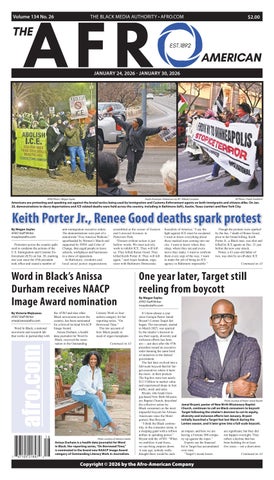
By Megan Sayles AFRO Staff Writer msayles@afro.com
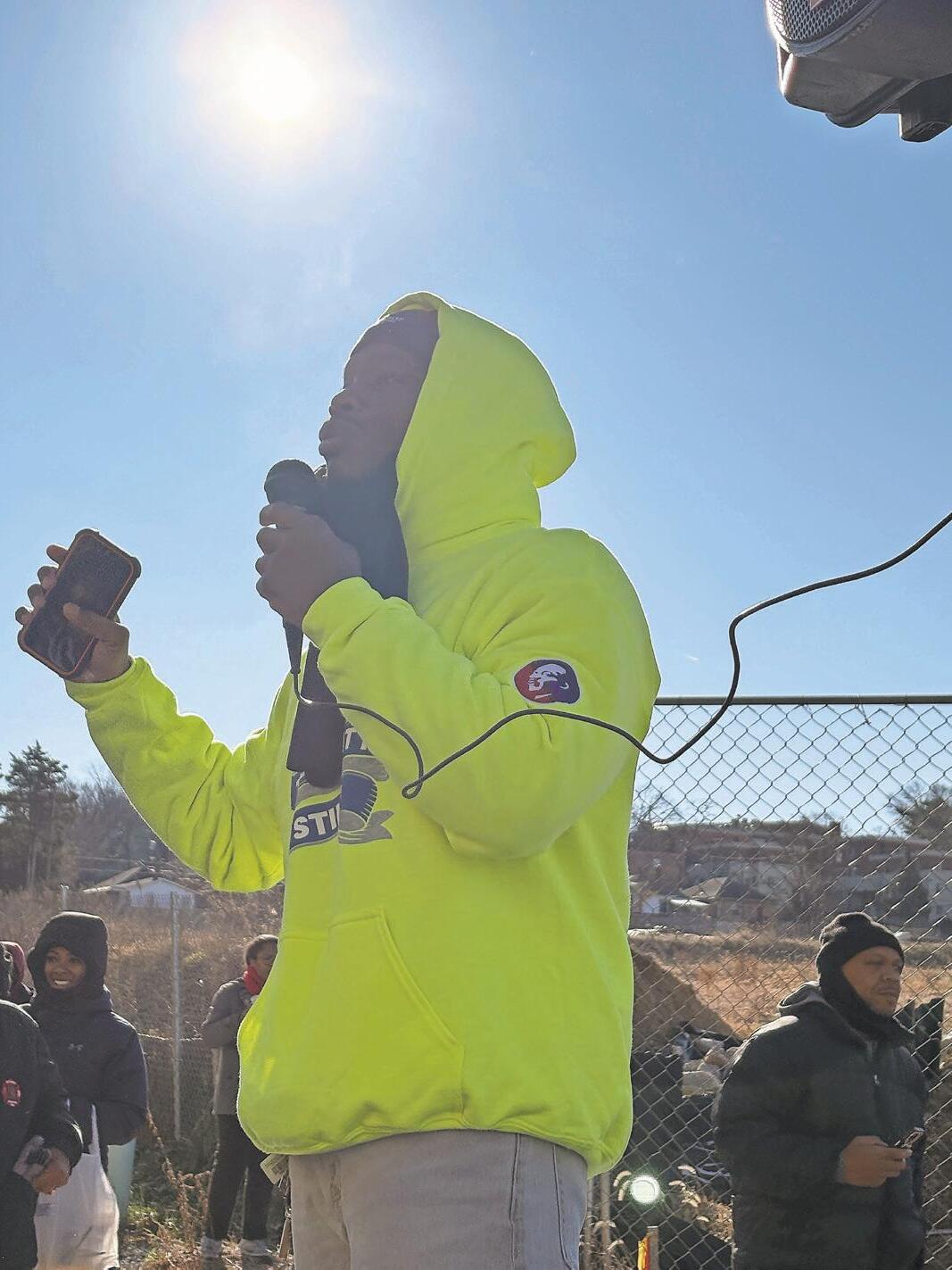
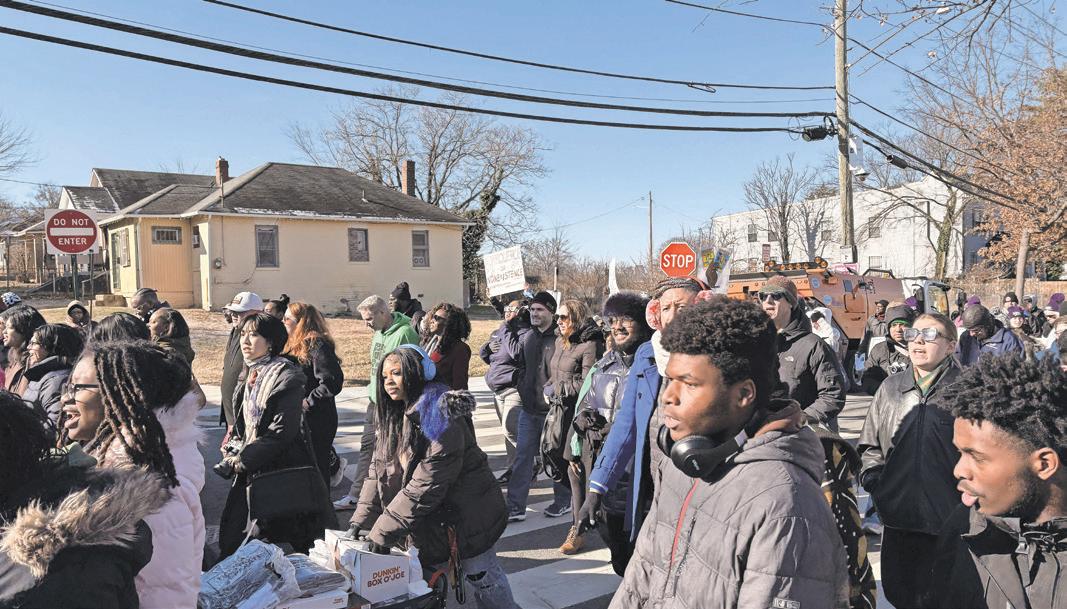
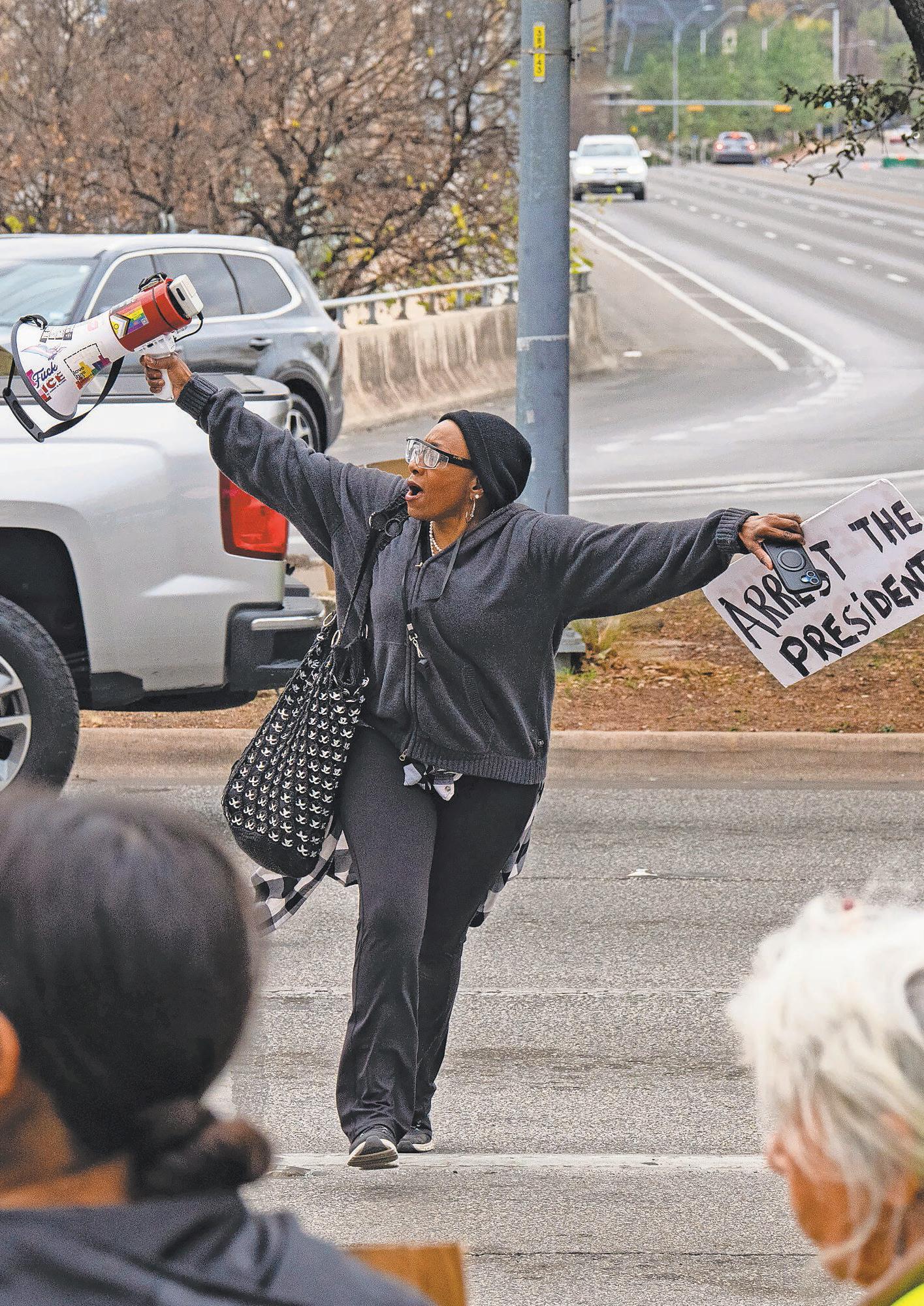
Protestors across the country gathered to condemn the actions of the U.S. Immigration and Customs Enforcement (ICE) on Jan. 20, marking one year since the 47th president took office and issued a number of
anti-immigration executive orders.
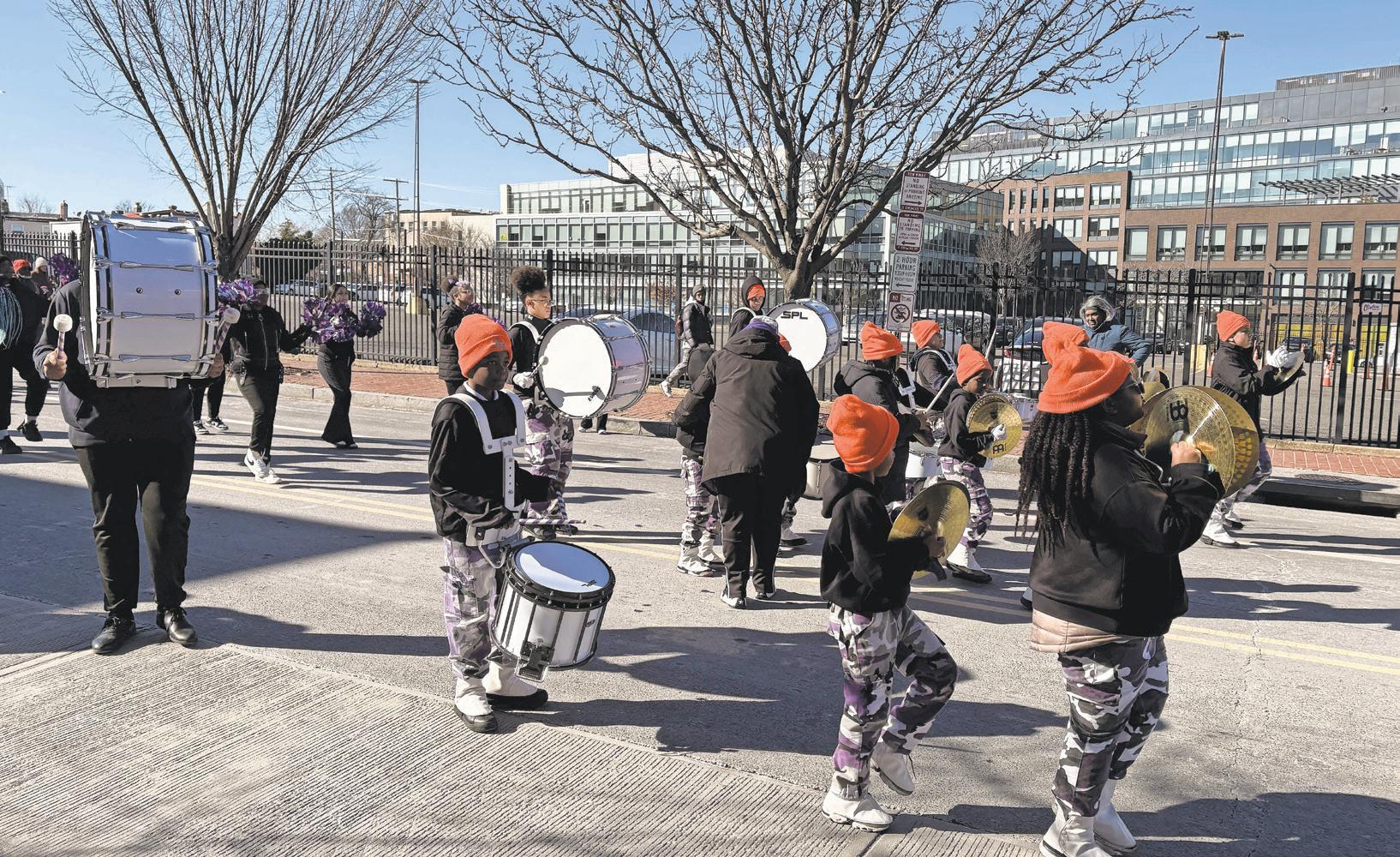
The demonstrations were part of a nationwide “Free America Walkout,” spearheaded by Women’s March and supported by 50501 and Color of Change, that urged people to leave schools, workplaces and businesses in a show of opposition.
In Baltimore, residents and local social justice organizations
assembled at the corner of Eastern and Linwood Avenues in Patterson Park.
“Dissent without action is just hollow words. We must actively work to inhibit ICE. They will kill us. They killed Renee Good. They killed Keith Porter Jr. They will kill again,” said Arjun Janakan, organizer with Baltimore Democratic
By Victoria Mejicanos
Staff Writer
AFRO
vmejicanos@afro.com
Word In Black, a national newsroom and research lab that works in partnership with

the AFRO and nine other Black newsrooms across the country, has been nominated for a first-of-its-kind NAACP Image Award.
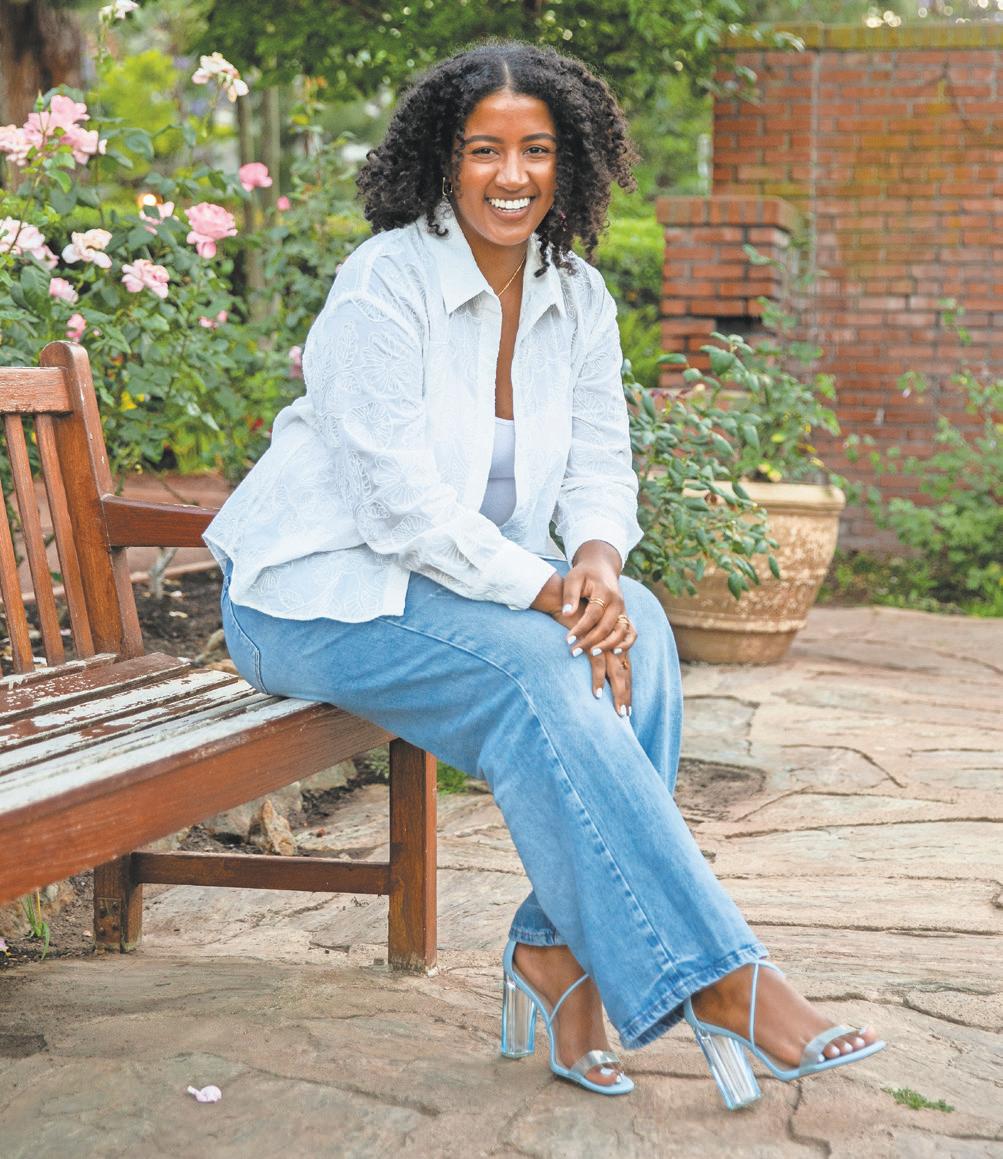
Anissa Durham, a health data journalist for Word In Black, received the nomination in the Outstanding
Literary Work in Journalism category for her reporting series, “On Borrowed Time.”
The raw account of how Black people in need of organ transplants
for Word
Her
“On Borrowed Time,” is nominated
Socialists of America. “I say the fight against ICE must be escalated. I want to know everything about these masked men coming into our city. I want to know where they sleep, where they eat and every move they make. I want to confront them every step of the way. I want to make the job of being an ICE agency in Baltimore impossible.”
Though the protests were sparked by the Jan. 7 death of Renee Good, prior to her brutal killing, Keith Porter Jr., a Black man, was shot and killed by ICE agents on Dec. 31 just before the new year struck. Porter, a 43-year-old father of two, was shot by an off-duty ICE
By Megan Sayles AFRO Staff Writer msayles@afro.com
It’s been almost a year since Georgia Pastor Jamal Bryant’s Lenten Target fast began. The movement, started in March 2025, was spurred by the retailer’s decision to axe their equity, diversity and inclusion efforts last January— just days after the 47th president issued an executive order banning the same kind of initiatives in the federal government.
The fast later evolved into a full-scale boycott that hit Target executives where it hurts the most– in their pockets.
The big-box store lost nearly $12.5 billion in market value and experienced drops in foot traffic, stock and sales.
Bryant, who leads Georgia-based New Birth Missionary Baptist Church, described the collective action by Black consumers as the most impactful boycott for African Americans since the Montgomery Bus Boycott.
“I think the Black community, in the consumer arena, is a sleeping giant with a trillion dollars in spending power,” Bryant told the AFRO. “When we mobilize it and focus, we can bring empires down. A year ago, nobody really thought there would be such
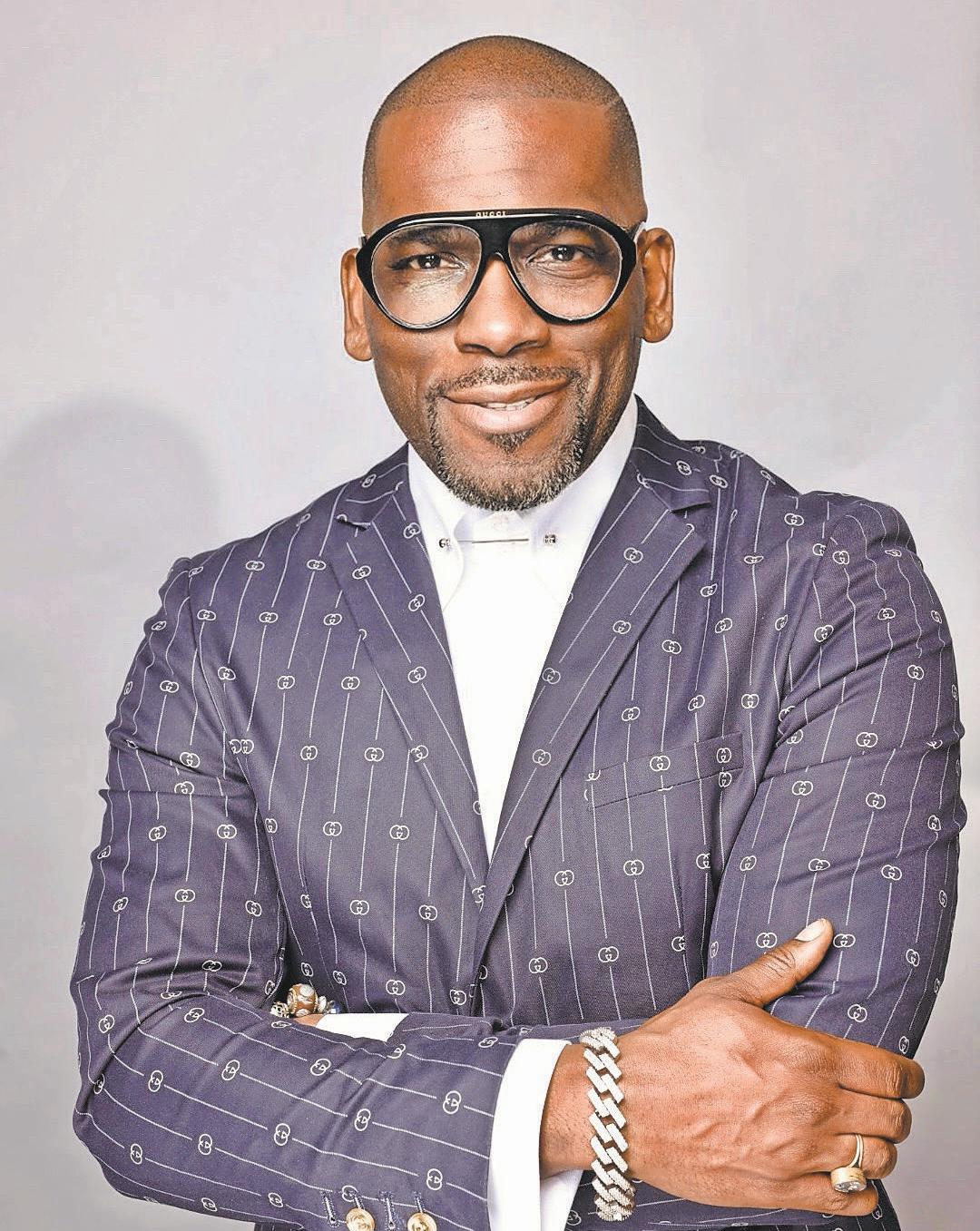
an impact, and here we are having a Fortune 500 company up against the ropes.”
Experts say the financial hit to Target has accumulated over time.
“Target’s recent losses
are significant, but they did not happen overnight. They reflect a decline that has been building for at least five years— not a short-term

By Stacy M. Brown Black Press USA
History often remembers movements by their most recognizable moments. It less often remembers the teenagers who moved first.
Claudette Colvin, who refused to surrender her seat on a segregated Montgomery, Ala. bus months before Rosa Parks, died Jan. 13 at 86. Her death was confirmed by the Claudette Colvin Legacy Foundation, which said she died of natural causes in Texas.
bus driver ordered Black passengers to give up their seats to White riders. Three students stood. Colvin did not. Police arrested her, charged her under segregation laws, and placed her on probation. She later said she was thinking about the Constitution and the rights she believed belonged to her. Colvin’s arrest came at a time when Montgomery’s Black community was already pressing against the daily restraints of Jim Crow. Her stand did not ignite a boycott that day, but it did register.
“History did not always give Claudette Colvin the credit she deserved, but her impact is undeniable.”
On March 2, 1955, Colvin was 15 years old and riding home from school when the
It landed in conversations, church meetings and legal strategy sessions that would

Your History • Your Community • Your News
The Afro-American Newspapers
Baltimore Office • Corporate Headquarters
233 E. Redwood Street
6th Floor, Suite 600G Baltimore, Maryland 21202
410-554-8200
Customer Service, Home Delivery and Subscriptions: 410-554-8200
customerservice@afro.com
Founded by John Henry Murphy Sr., August 13, 1892
Chairman of the Board/Publisher - Frances Murphy Draper
(Publisher Emeritus - John J. Oliver Jr.)
President - Benjamin Murphy Phillips IV
VP of Marketing and Technology - Kevin E. Peck
Director Digital Solutions - Dana Peck
Receptionist - Wanda Pearson - 410-554-8200, ext. 246
Director of Operations
Andrè Draper - 410-554-8200
Director of Finance
Bonnie Deanes - 410-554-8242
Executive Director/Director of Advertising Lenora Howze - 410-554-8271 - lhowze@afro.com
Director of Community & Public Relations
Diane W. Hocker - 410-554-8243
Editorial
Managing Editor - Alexis Taylor - 410-554-8257
Editorial Assistant - Ama Brown-Parson Evening / Weekend Editor - Zenitha Prince
Archivist - Savannah Wood- 410-554-8277
Baltimore Circulation/Distribution Manager
Andrè Draper - 410-554-8200
Production Department - 410-554-8200
Washington Office 1140 3rd Street, N.E., 2nd Floor Washington, D.C. 20002-6723 202-332-0080 •
(Washington Publisher Emerita - Frances L. Murphy II)
Director of Operations - Andrè Draper - 410-554-8200

soon follow.
“This nation lost a civil rights giant today,” Tafeni English-Relf, Alabama state director of the Southern Poverty Law Center, said.
“Claudette Colvin’s courage lit the fire for a movement that would free all Alabamians and Americans from the woes of southern segregation.”
Unlike others whose names became shorthand for the era, Colvin paid a quieter price. She was young and outspoken and was later judged by standards that did not apply to older leaders. She was never elevated as the public face of the movement. Her life unfolded mostly outside the spotlight she helped create.
Yet Colvin’s role proved decisive.
She became one of four plaintiffs in Browder v. Gayle, the federal lawsuit that reached the Supreme Court and ended bus segregation in Montgomery and across Alabama. The case dismantled the legal framework that made her arrest possible.
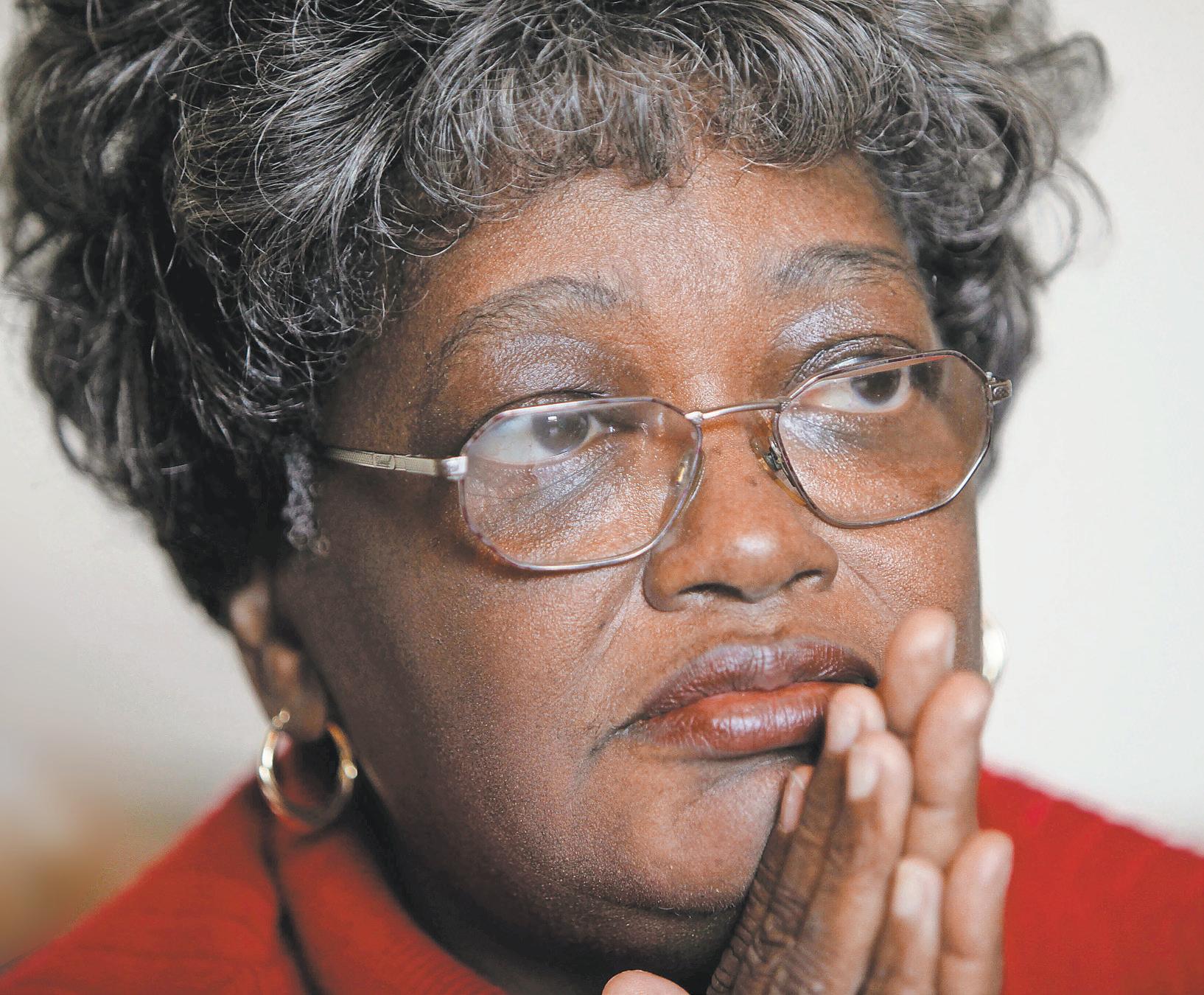
“At age 15, Ms. Colvin was arrested on March 2, 1955, in Montgomery, Alabama, for violating bus segregation ordinances, nine months before Rosa Parks,” Phillip Ensler wrote. “In 2021, it was the privilege of a lifetime to serve on the legal team that helped Ms. Colvin clear her record from the conviction.”
“As we worked on the court
motion, I had the honor of spending time with Ms. Colvin to hear her story and get to know her,” Ensler wrote.
Sen. Rev. Raphael Warnock (D-Ga.) called Colvin “an unsung yet significant hero of the Civil Rights Movement,” acknowledging that “Her courage paved the way for Rosa Parks’ decision and the launching of a movement that would end segregation.”
Daughter of Dr. Martin Luther King Jr. and leader of the King Center in Georgia, Dr. Bernice King, also weighed in on the death, saying that Colvin’s life “reminds us that progress is shaped not only by moments, but by sustained courage and truth.” This article was originally published by NNPA Newswire.
Comedian’s skit sparks praise, backlash and deeper questions about faith, money and performance in the modern Black church
By Rev. Dorothy S. Boulware Word in Black
Drew Desbordes — better known as Druski — has made a career out of pressing America’s cultural buttons. Since emerging around 2017 with character-driven comedy skits on Instagram and TikTok, he has built a massive following by leaning into discomfort. His work frequently touches race, class, masculinity and faith, often provoking strong reactions precisely because he traffics in what many consider sacred cows.
Now Druski has once again stirred the pot with his most recent shenanigans that have managed to offend people across the lines.
His latest sketch, mocking prosperity-style megachurch culture has gone viral, drawing tens of millions of views and sparking intense debate online. What one sees is the over-the-top pastor of “Collect and Praise Ministries” wearing flashy clothes and swinging from a trapeze-like harness. As he looms high above the congregation, he says, “Someone asked why I’m wearing Christian Dior and Christian Louboutins. Because I’m a Christian first and I walk in the blood of Jesus. Give him some praise!”
Then there’s an offering to raise $4 million for members in Zimbabwe, and one of the parishioners is praised for having given his life savings. And a homeless man who’s asking for help from the pastor — who’s now in his Bentley — is unceremoniously dismissed because he hadn’t given tithes and offerings. “Man, get off my car,” the pastor says. The elements of truth are undeniable.
Unsurprisingly, the responses run the gamut from approval to dismissal.
“The foolishness of Druski is beyond ridiculous and utterly shameful. Why in the Hell would a comedian be allowed to act a fool in church,” wrote X user Firedup44christ. “A lot of pastors that do things like this are just false prophets, wolves in sheep’s clothing and aren’t pastors but rather just a celebrity in a church.”
Another person added, “Druski is not making fun of God or Jesus here. He is making fun of the commercialization, entertainment-ization, and greed of mega

churches. Most mega churches deserve this because their actions are abhorrent. Jesus flipped the money changers’ tables.”
Others who didn’t care for the skit really took offense. “I just had to unfollow Druski,” wrote one person. Another added, “Poking fun at mega churches is common, but this didn’t sit right with my spirit. I know for sure he wouldn’t create the same content toward any other religion.”
“No we’re upset because it’s serious times and we always joking. God already warned us…witchcraft in the church ain’t new. Align accordingly,” wrote X user thegirlpowerhour.
“The church has the most hypocrisy in its pulpits…we should be grateful this is the only thing he brought to the surface. The womanizers, and manipulation by coercion and power is unmatched. I know first hand,” said @melanininfusedglow, who identified herself as a pastor’s daughter.
And what would Jesus do? @jacobrrcuz said Christ would go through all mega churches flipping tables.
“And this is exactly why I’ll just stick to my small little church where pastor know the whole congregation’s name and there’s a[n] old auntie in the back with a tambourine who call everyone baby,” said user @_l_a_n_a_i.
Grammy-winning artist Lecrae described the sketch as reflective of real issues in some church cultures, including performance-driven services and leaders prioritizing status or wealth.
“My first reaction was not offense, it was recognition. It’s an easy target. So when a comedian is shining light on it, he’s not inventing something. He’s reflecting what people have already seen. I think the reason we should not be allowing wolves in sheep’s clothing to be up here making a mockery [is] because it is sacred ground, so the work needs to be done internally,” Lecrae said in a BlackChurchTok.
“I think there needs to be more leaders and teachers and pastors warning people about these false leaders and false teachers, but I also think there’s a measure of mercy and patience that God has with people in the pulpit.”
Lecrae also said he didn’t see this as an opportunity for people to say, “this is why I don’t go to church,” but instead say, “I don’t wanna go to a church like that.
“If I see a restaurant that’s filthy and dirty and the restaurant is soul food. I want soul food. I’ll never eat it at that particular restaurant in Atlanta. There’s plenty of churches that are churches that are not like this, 2819, Eagles Nest, just to name a couple.”
Lecrae’s summary statement is that “sometimes we look like a circus because we’ve forgotten the simplicity of the gospel. And sometimes people laugh not because they hate God but because we made it easy.”
This article was originally published by WordinBlack.com.
setback the company can easily bounce back from,” said Dina El-Mahdy, an accounting professor at Morgan State University. “The roughly $12.5 billion drop in market value in early 2025, along with a nearly 30 percent fall in stock during the 40-day ‘Target fast’ boycott led by Dr. Jamal Bryant, came on top of years of flat sales and weaker performance compared with peer firms, like Walmart, Costco, Aldi and T.J. Maxx.”
El-Mahdy noted that while a number of Target’s competitors have seen their shares grow, Target’s stock has lost more than 60 percent of its value over the past five years. She said that this decline indicates a weakening of investors’ confidence in the retailer’s strategy, brand and performance outside the shifts in the market.
“The boycott tied to Target’s rollback of DEI commitments strikes at the heart of the brand’s identity. Target built its reputation as an inclusive, culturally-relevant retailer,” said El-Mahdy. “Scaling back DEI and reframing it as a broader, ‘Belonging At Bullseye’ initiative alienated key customers, including Black shoppers, faith communities and civil rights groups.”
She said a recovery is possible, but it will take years for Target to regain trust with consumers, repair its brand and deliver consistent sales and profits.
The boycott continues to demand that Target honor its $2 billion commitment made to Black businesses in 2021, invest $250 million in 23 Black-owned banks, open 10 retail training centers at historically Black colleges and universities (HBCUs) and a complete reinstatement of diversity, inclusion and equity principles.
Target did not respond to multiple requests for comment from the AFRO before publication.
Though the retailer has yet to fulfill any of these demands, Bryant said he remains
Continued from A1
agent outside of his apartment in Northridge, Calif. On that day, Porter’s family said he was ringing in the New Year by firing celebratory gunshots into the air. The ICE officer, however, believed that Porter posed a threat and went outside to confront him.
Porter’s cousin, Jsané Tyler, spoke on his killing during a Jan. 15 meeting hosted by Black Lives Matter Grassroots.
“Instead of that gentleman disengaging completely if he really thought that my cousin was a threat, he decided to go back into his home, put on full tactical gear, grab his service weapon and come outside and shoot my cousin dead,” said Tyler.
She asserted that federal leaders have tried to paint Porter as an active shooter or a domestic terrorist. She, however, described him as an infectiously joyous person who will be missed greatly by his friends, family and co-workers.
“My cousin wasn’t even shooting when the man came back outside, he was turning to go back into his home. He definitely wasn’t a threat at that time,” said Tyler. “Anybody else who would have caught themselves performing this type of cowardly vigilantism would have already been arrested and would be facing charges.”
Porter’s family is asking for the officer to be named, arrested and convicted.
“We also want to make sure that the real story of who Keith was and who he is in our memories doesn’t die,” said Tyler. “We want people to know what they stole from us–two
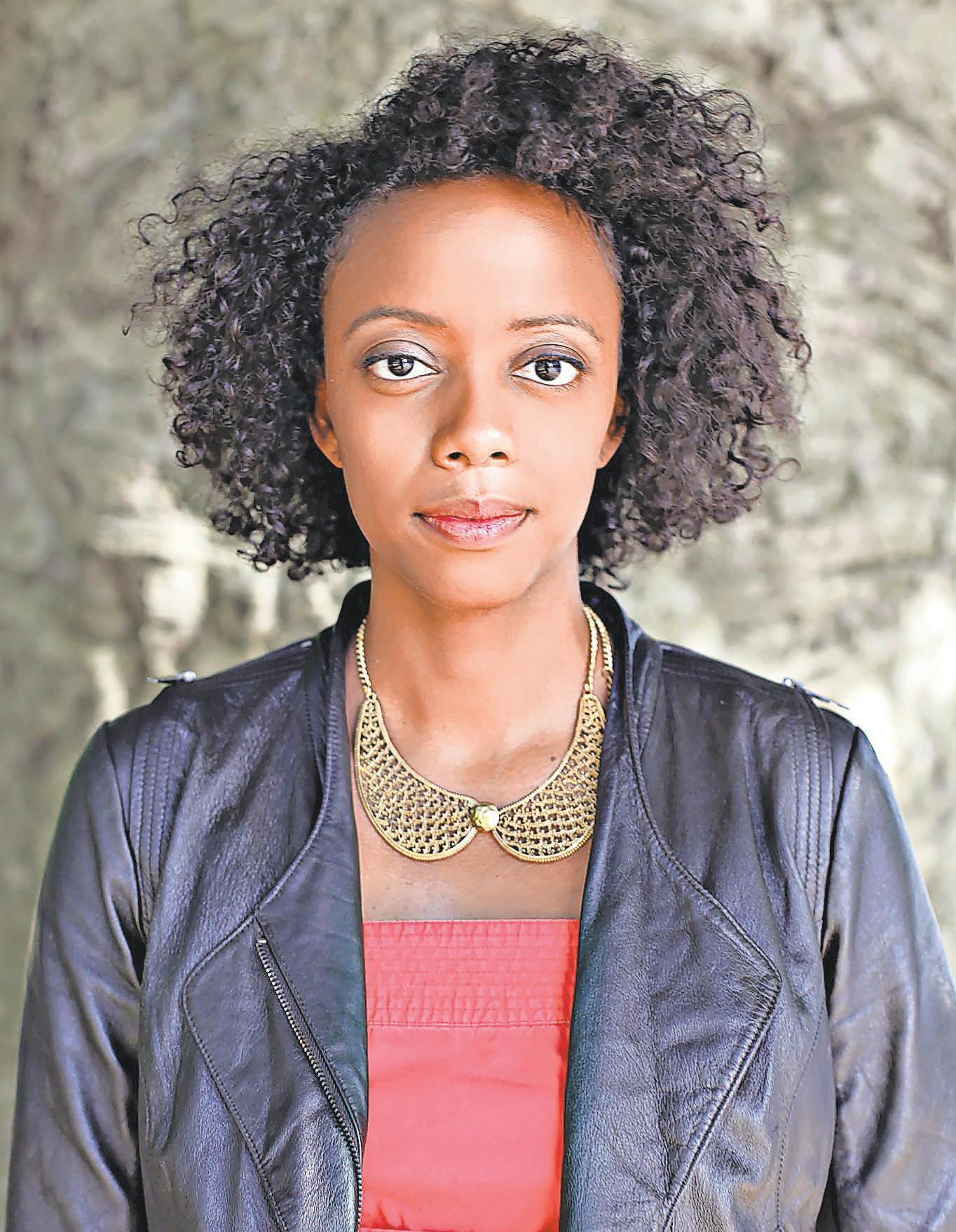
are impacted by providers, policies and the medical system at large captured audiences nationwide.
According to Liz Courquet-Lesaulnier, the managing director of the publication, this is the first year the NAACP has a journalism category, making the nomination all the more significant.
Courquet-Lesaulnier applauded Durham’s ability to gain the trust of sources across the nation and said it is a testament to the way the Black Press is embedded in the community, similar to the NAACP.
“People trust us because they know there’s no other hidden agenda,” said Courquet-Lesaulnier. “We’re not trying to make anyone look bad. We’re not looking at them from a deficit
optimistic, particularly as a new CEO, Michael Fiddelke, is stepping in to head the company on Feb. 1. The move follows the announcement last August that Brian Cornell would leave his CEO role amid the boycott fallout. Though some view it as a punishment, others say the move is really a “step up” for Cornell, who will now lead the company as executive chairman beginning in February. Still, Bryant remains hopeful.
“We have signals that he has a whole different mindset than the present one,” said Bryant. “We’re waiting for him to assume the chair, and we really believe that talks will begin to go into motion at that point.”
Bryant’s movement has drawn significant support—with more than 200,000 people signing the boycott’s pledge and organizations, like the American Federation of Teachers and Coalition of Labor Union Women, endorsing the boycott. Yet, some consumers have spoken out against it.
Anita Naves, a Prince George’s County resident and longtime community advocate, has voiced concerns that the boycott could hurt the very people it aims to support. She argues that Target is often one of the only affordable, accessible stores in many Black neighborhoods and that the movement risks jobs and shames people who do not support it.
Naves also challenged Bryant and other pastors’ authority to lead the boycott, noting that they themselves wear designer and other luxury brands.
“Stop tearing down stores in your neighborhood. There may be vulnerable people who only have a Target in their neighborhood. They can’t drive to other stores, like Walmart,” said Naves. “There may be senior citizens who can only walk to the Target.”
She believes leaders of the boycott are more interested in publicity than in meaningfully helping the community with affording goods
daughters now don’t have a father, a mother no longer has her son who was her best friend and only child.”
Since the 47th president took office, ICE’s enforcement tactics have drawn national scrutiny, with activists, lawmakers and community organizations criticizing the agency for using deadly force with minimal oversight.
The U.S. Department of Homeland Security reported that more than 605,000 people have been deported since Jan. 20, 2025, along with an additional 1.9 million people who reportedly left the country voluntarily. ICE data also reveals that at least 30 people died in the agency’s custody in 2025.
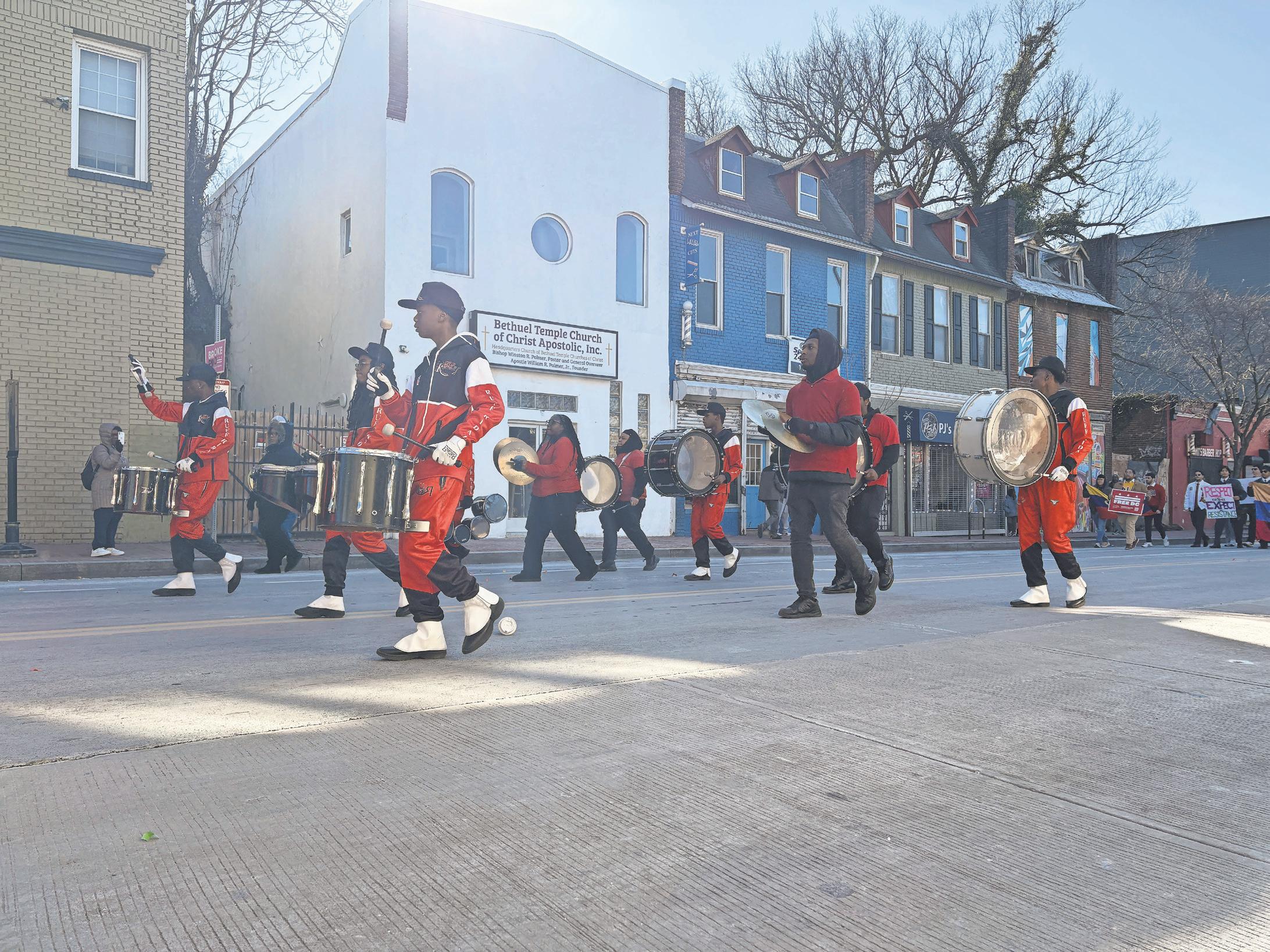
“People are pissed off. It’s getting to the point where things have become so crazy that it’s forcing people to leave their homes to put feet on the pavement, make their voices heard and figure out how they can be of service,” said Brandon Balmer, a Baltimore protestor.
Syierra DeBow, another protestor, agreed with Balmer. She said people across the country are experiencing a shared sentiment of exasperation and anger.
“It’s not just happening in Baltimore. It’s not just happening in Minneapolis. Everywhere, a lot of people are saying it’s time to stand out and speak out because at this point it’s disgusting and vile,” said Debow. “It’s a lived experience that not only the Hispanic community has experienced but the Black community too. Other marginalized communities have experienced oppression in these ways. It’s a systemic issue that needs to be addressed.”
lens. And I think that’s very true of the NAACP as well. The way that the NAACP has always been able to operate in the community is from a place of love and protection, and I think that’s very true for us.”
Durham and Courquet-Lesaulnier said that this series has been years in the making. Durham has known since the beginning of her time at Word In Black that she wanted to work on stories regarding organ donation in the Black community, but it was not until recently that there was enough time and resources for them to explore the possibility of a series like “On Borrowed Time.”
Durham was given a $2,500 grant from the Association of Healthcare Journalists which she used entirely on hiring freelance photographers to capture people across the nation for her series.
and services.
“You don’t care. That’s how it makes me feel. You’re rich, and you don’t care. You just want people to do your work,” said Naves. “You want them to be the wheels on the bus to go round and round while you get all the media exposure.”
Bryant addressed these criticisms, emphasizing that while boycotts are inherently burdensome, they serve a larger purpose.
“A boycott is synonymous with inconvenience. When the Montgomery bus boycott took place, the majority of Black people didn’t own cars. There was no such thing as an Uber, no such thing as Lyft,” said Bryant. “We realize that is an inconvenience, but we also look at the greater good. The good news is that because we now have online shopping available, you can get items delivered to your house. We’ve got to get past the inconvenience and see how it will benefit our community in the long haul.”
Even then, she shared there are still many resources needed for members of the Black Press.
“It’s just a testament that, even though we don’t have the resources, imagine how much more we could be doing if we got the resources, how many more awards, how much more award winning journalism we could be doing if we were funded as adequately or as much as the New York Times.”
Courquet-Lesaulnier expressed her hope for Word In Black to win in this category because of what it would mean for not just the publication, but the Black Press as a whole.
“I want people to understand that working for the Black Press should be seen as a destination, and this is also why people should invest financially in the Black Press, so that we can do more of this work.”
In coordination with the Federal Highway Administration (FHWA), the Maryland Transportation Authority (MDTA) is following the federally mandated National Environmental Policy Act (NEPA) process to study alternatives that address existing and future transportation capacity needs across the Chesapeake Bay, and along the US 50/301 approaches to the William Preston Lane Jr. Memorial (Bay) Bridge from the MD 2/MD 450 Interchange near Arnold to the US 50/301 split near Grasonville. One virtual and two in-person public hearings will be held in February, where the public will have the opportunity to provide comments on the NEPA Draft Environmental Impact Statement (EIS) for the Chesapeake Bay Crossing Study: Tier 2 NEPA (Tier 2 Study), and the MDTA-Recommended Preferred Alternative, Alternative C. The MDTA-Recommended Preferred Alternative would replace the two existing Chesapeake Bay Bridge spans with two new four-lane bridge spans with full shoulders across the Chesapeake Bay. This alternative best fulfills the Study’s purpose and need while having the lowest cost and least environmental impacts to natural, socio-economic, and cultural resources.
The Draft EIS is available online for review at baycrossingstudy.com. Printed copies are also available for review at select public locations listed on the website. To provide either public or private testimony, please pre-register by 5 p.m. the day before the hearing at baycrossingstudy.com or call 667-203-5408. Same-day registration will also be available at the event.
If the hearing locations are closed due to inclement weather, please visit baycrossingstudy.com for new hearing dates.
The public is encouraged to
these materials and provide comments. If you are unable to access the materials via the website or if additional assistance is required, please call 667-203-5408 or email the Study team at info@baycrossingstudy.com
In the VIR, attendees will have the opportunity to:
• Review information on the Tier 2 Draft EIS and the MDTA-Recommended Preferred Alternative.
• Register to provide public or private testimony.
• Learn how to submit and provide written comment.
By Sheila Dixon
As director of the Maryland Minority Contractors Association, I’ve seen firsthand how mandated project labor agreements (PLAs) hurt Marylanders—particularly minority contractors.
The members of our organization take pride in their work and hiring process. They prioritize local talent, mentoring younger tradespeople and competing fairly for public projects. That’s how small businesses grow: through hard work, reputation and opportunity. This is done through a competitive bidding process that reins in the cost of already expensive publicly funded infrastructure projects.
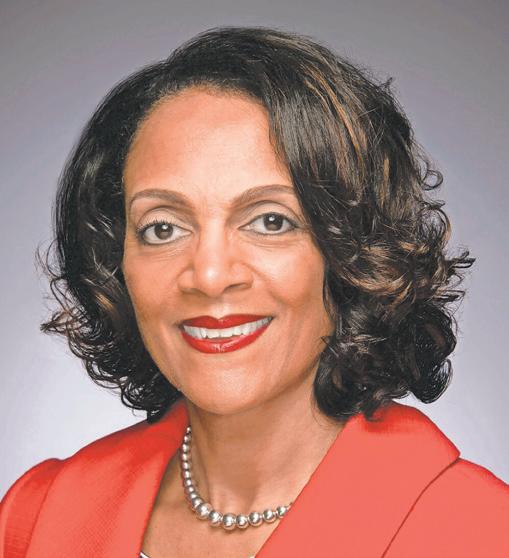
Sheila Dixon, former mayor of Baltimore, currently serves as marketing director for the Maryland Minority Contractors Association. This week, she weighs in on what the city’s project labor agreement for water pumping stations could mean for Black contractors and their employees.
That’s why Baltimore City’s PLA for the Water Department’s pumping stations feels like a gut punch. It will shut out
companies that are members of the Maryland Minorities Contractors Association, including the workers they employ, and significantly increase the cost of completing the project, risking higher water bills for ratepayers in future years.
Baltimore’s proposed PLA would require contractors to hire their workforce through union halls, shutting out 90 percent of Maryland’s construction workforce, including approximately 10,000 local workers who reside in Baltimore City. To make matters worse, Baltimore City plans to waive existing minority business enterprise (MBE) and women’s business enterprise (WBE) requirements, further harming local firms and their workers. In plain terms, this proposal
largely benefits out-of-state workers at the expense of local workers.
This hits MBE and WBE small businesses hard during a challenging economic climate. Many of the businesses we represent built themselves from scratch without relying on union connections or political leverage. They employ local residents— people from Baltimore and surrounding counties—who depend on these jobs to support their families.
At a projected cost of $140 million, the Water Department’s plan to upgrade regional pumping stations is a significant publicly funded infrastructure investment. This is a project that is funded by local customers of the regional water utility, and it is a project
By Comptroller Brooke E. Lierman
If you worked last year, you might be walking past hundreds—even thousands— of dollars that already have your name on them. Nearly 20 percent of eligible Maryland residents didn’t claim the Earned Income Tax Credit in 2023. That’s roughly 100,000 people who left their money with our state rather than in their bank accounts. Most people lived in Baltimore City, Baltimore County, Montgomery County and Prince George’s County. If you live in those areas and you’re reading this, you might be one of those who missed out.
Let’s get one thing straight: the EITC isn’t charity. It’s not a handout. It’s money you’ve earned, designed to stay in your pocket. As
when filing a tax return.
to claim the Earned Income Tax Credit, noting that nearly 100,000 Marylanders left money unclaimed in 2023.
one of the nation’s largest anti-poverty programs, it returns billions to working Americans each year. However, the program only works if people actually claim it
I’ve seen what happens when they do. One woman I met used her EITC refund to enroll in community college classes. Today, she earns enough that she no longer qualifies for the credit. That’s exactly how the program should work. Other Marylanders have told me they’ve used their refunds to pay for child care, buy reliable transportation, clear crushing credit card debt, or send their kids to summer camp. These aren’t luxuries. They’re investments in stability, in opportunity and in breaking the cycle of “just getting by.”
The numbers tell the story: about 550,000 Maryland residents were eligible for the EITC in 2023, but nearly 100,000 of them didn’t claim it. Why? Sometimes people don’t know the credit exists.
Sometimes they assume they don’t qualify. Sometimes taxes feel too complicated, too intimidating, too much like a system designed to confuse rather than help.
That’s why the Office of the Comptroller launched the “Earned It” Campaign last year, and it’s already working. The number of eligible filers who missed the state credit decreased from 99,000 in 2023 to 72,000 in 2024 — a drop from 18 percent to 14 percent. But that still leaves far too many Marylanders leaving money unclaimed.
We’re ramping up our efforts this tax season. When tax season begins Jan. 26, you’ll see more mailings, more social media outreach, and a new webpage dedicated to reminding Marylanders that this money – the Maryland EITC – may be theirs for the taking and equipping
By Dedrick AsanteMuhammad
“When machines and computers, profit motives and property rights, are considered more important than people, the giant triplets of racism, extreme materialism and militarism are incapable of being conquered.”
– Dr. Martin Luther King Jr., “Beyond Vietnam” speech (1967)
Dr. King’s words from 1967 summarize today’s political moment, which we have analyzed in our report “State of the Dream 2026: From Regression to Signs of a Black Recession.” Instead of putting the lives of the average and economically insecure American first, there has been a policy embrace of mass deregulation that advances corporate profits and concentrates wealth, a slashing of government and government programs meant to advance upward economic mobility, as well
AsanteMuhammad serves as president of the Joint Center for Political and Economic Studies. This week, he
discusses racial and economic inequality in
America.
as a deployment of military forces across the country, increasing distrust and tension across the population. This historic regression corresponds with a recessionary environment for Black America.
The economic landscape for Black Americans in 2026 is troubling, with
unemployment rates signaling potential recessionary conditions. By December 2025, Black unemployment reached 7.5 percent, a stark contrast to the national rate of 4.4 percent. This disparity highlights the persistent economic inequalities faced by Black communities, exacerbated by policy shifts that have weakened the labor market. The volatility in Black youth unemployment further underscores the precariousness of the situation, as rates fluctuated dramatically in the latter months of 2025.
The Trump administration’s executive orders have systematically dismantled structures aimed at promoting racial equality. By targeting programs such as Lyndon Johnson’s 1965 Equal Employment Opportunity executive order and defunding agencies like the Minority Business Development Agency, the administration has shifted federal
that should be completed by local workers. It’s that simple.
This latest proposal by Baltimore City’s administration ignores past challenges involving PLAs with Baltimore City funded projects, including the controversial Hilton Convention Center Hotel that has failed to meet revenue expectations after nearly two decades of operation.
Furthermore, it is well documented that projects utilizing PLAs generally cost 12 percent to 20 percent higher than projects completed through the competitive bid process. This is extremely concerning given water customers are already grappling with a projected 30 percent increase in water bills by 2027. Our leaders should be focused on lowering the costs of critical infrastructure projects, not increasing them.
them with knowledge of eligibility and how to claim the credit. With electricity bills rising, grocery prices remaining stubbornly high, and everyday essentials consuming a larger portion of every paycheck, a tax refund translates to rent, groceries and breathing room.
Here’s what you need to know before you file your taxes: My agency will begin sending tax refunds on Feb. 2. We have 11 branch offices across Maryland, including two newly renovated locations in Baltimore City and Baltimore County, where you can get free, in-person or virtual tax help. We partner with organizations like the CASH Campaign of Maryland, AARP, CASA. and many others that assist taxpayers who meet income requirements. These resources exist because we believe the government should work for you.
Taxes fund the schools that educate our children, the roads we drive on, the public safety that protects
households, worsening the situation for marginalized communities.
support away from disadvantaged businesses. As a result, Black-owned firms risk losing contracts and resources tied to federal programs, potentially resulting in job losses and reduced economic growth within impacted communities. These changes threaten billions in federal revenue for Black-owned firms and undermine efforts to move beyond racial inequality in the workforce.
The One Big Beautiful Bill Act, passed in 2025, further entrenches inequality by providing tax cuts that disproportionately benefit high-income households and corporations. While working families gain some relief through tax credits and deductions, the act simultaneously reduces investments in programs that address poverty. Specifically, cuts to Medicaid and nutrition funding, along with increased costs for state SNAP programs, limit access to essential services for low-income
This isn’t about union versus non-union. It’s about access. It’s about affordability. It’s about prioritizing the needs of local residents and workers over political insiders.
When public projects become closed shops, we lose the very diversity and competition that drive our region forward. We lose the innovation and local employment that come from Baltimore firms competing for this work.
Baltimore City’s proposed PLA may look like business as usual to some, but to small firms that make up our membership, it’s a red flag indicating less local hiring and bloated expenditures on the water customer’s dime. Baltimore can do better. The solution isn’t complicated: open the bidding, hire local, and give our residents a break when it comes to higher water bills.
our communities. They’re how we collectively invest in Maryland. But that doesn’t mean you should pay more than you owe. Every person who skips the EITC is doing exactly that.
So, before April 15 rolls around, find a tax preparer you trust. Ask them explicitly about the Maryland EITC and the Child Tax Credit. If you have friends, family or neighbors who worked last year and might qualify, tell them. Share this information at your church, your community center and your workplace break room. The money you receive from a tax credit is already yours. You earned it. All you have to do now is claim it when you file your tax return this year.
Let’s build a Maryland where every resident has the resources to invest in their own future—starting with the money they’ve already earned.
Marylanders can learn more about tax resources by visiting our EarnedIt website.
The technology sector, a critical component of the American economy, is also affected by the removal of safeguards and by the disregard of civil rights considerations. Executive orders like “Removing Barriers to American Leadership in Artificial Intelligence” have stripped away protections that could advance inclusion in this rapidly growing field.
As a result, the future of the American economy risks reinforcing past inequalities.
Dr. King’s call for strong, aggressive federal leadership in addressing racial inequality remains highly relevant. However, instead of eradicating structures of inequality, current leadership is implementing policies that reduce government jobs and dismantle agencies responsible for preventing predatory economic practices. These policy choices undermine longstanding efforts to combat racial and economic disparities.
The systematic withdrawal of protections, investments and accountability mechanisms is reinforcing economic inequality that has grown over the past decades.
The One Big Beautiful Bill Act, through permanent tax cuts for the wealthy and diminished support for working families, exemplifies the regressive economic policies that coincide with rising Black unemployment.
As Dr. King stated, “we refuse to believe that the bank of justice is bankrupt,” but urgent action is required to counteract these policy-driven trends before generational losses mount.
The “State of the Dream 2026” report warns that unless we act deliberately and urgently, economic and racial inequalities will become entrenched, resulting in generational loss. The core question is not inevitability, but whether we will move beyond our nation’s history of racism, materialism, and militarism, and—as Dr. King urged—embrace “the fierce urgency of now” to advance equity.
By Tashi McQueen and Megan Sayles
AFRO Staff Writer
tmcqueen@afro.com
msayles@afro.com
Another mental health crisis call handled by the Baltimore Police Department (BPD) turned into a police involved shooting just days after the Baltimore City Council held a Jan. 15 hearing to address alternative responses to nonviolent, noncriminal 911 calls.
According to the BPD Director of Media Relations Donny Moses, on Jan. 19, officers responded to 911 calls about an “an armed person who may be suffering from a mental health crisis.”
According to details in a BPD statement on the incident, officers arrived at an apartment building on the 1100 block of Park Avenue and “observed several residents outside of the complex due to a fire alarm having been pulled. An officer entered the building and encountered an individual who was screaming and wielding a large knife.”
That individual has been
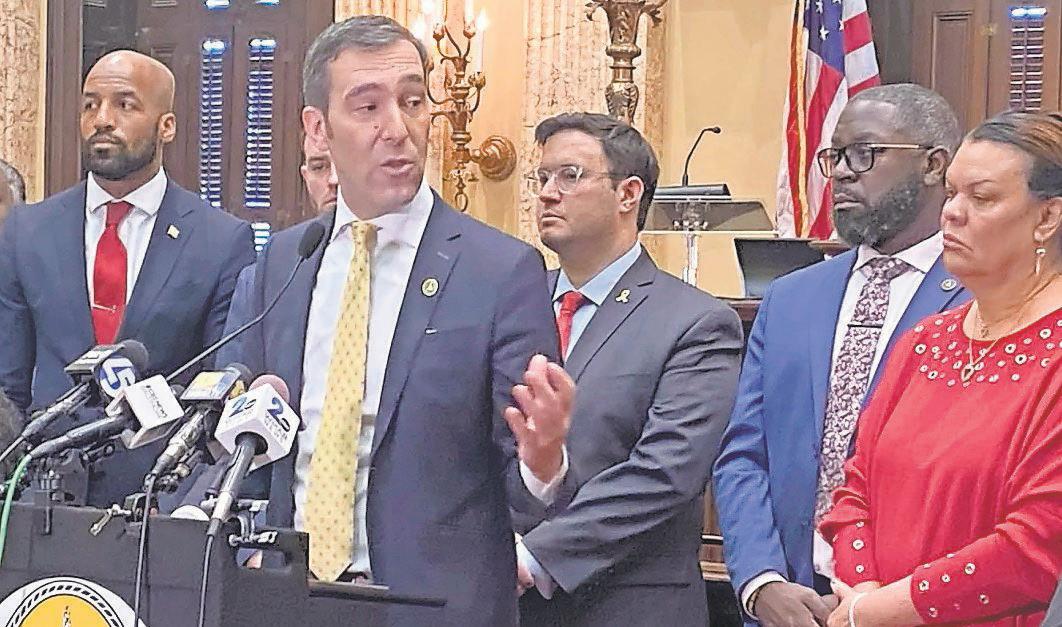
discuss alternatives, just
11) (back,
6)(right).
“Put simply, cops are not clinicians and we should not expect them to be.”
identified as 48-year-old Autumn Elizabeth Denny.
Denny ran into an apartment, forcing officers to speak with her through the door. They convinced her to come out.
“The individual exited the apartment holding the knife in one hand and an electrical stun stick in the
other. The individual failed to comply with officers’ commands. Multiple officers deployed their tasers in attempt to subdue the individual; however, the tasers were ineffective,” say police, in the statement. “One of the officers then discharged their service weapon, striking the individual.”
Denny was shot twice in the leg and taken to the hospital. She will face assault and weapons related charges.
Council President Zeke Cohen (D), who led the council hearing on Jan. 15,
reflected on the recent public safety progress the city has seen, but highlighted how there is more work to be done.
“Last year, Baltimore achieved the unthinkable,” said Cohen during the livestreamed Jan. 15 hearing.
“We reduced violence to record lows, and we did it through community policing, trauma-informed care, credible messengers, the group violence reduction strategy, and effective prosecution, not mass incarceration or civil rights abuses. We are a leader in using public health to cure violence, and yet, we have more work to do.”
Prior to the Jan. 15 hearing, the council last examined the issue of nonpolice responses to mental health crises in August 2025, after multiple residents were killed during encounters with BPD. At that time,
members reviewed the City’s 911/988 diversion program and learned it only serves people experiencing certain urgent mental health crises. They also found that BPD’s diversion program faces resource constraints.
At the end of the August 2025 hearing, Cohen asked Behavioral Health System Baltimore (BHSB) to provide recommendations for how the city could create a top-tier crisis response system.
BHSB recommended establishing a community safety responder system dispatched via 911 for nonviolent calls and launching a $2 million workforce development initiative to repay school loans for social workers that take part in community-based crisis response services.
“Put simply, cops are not
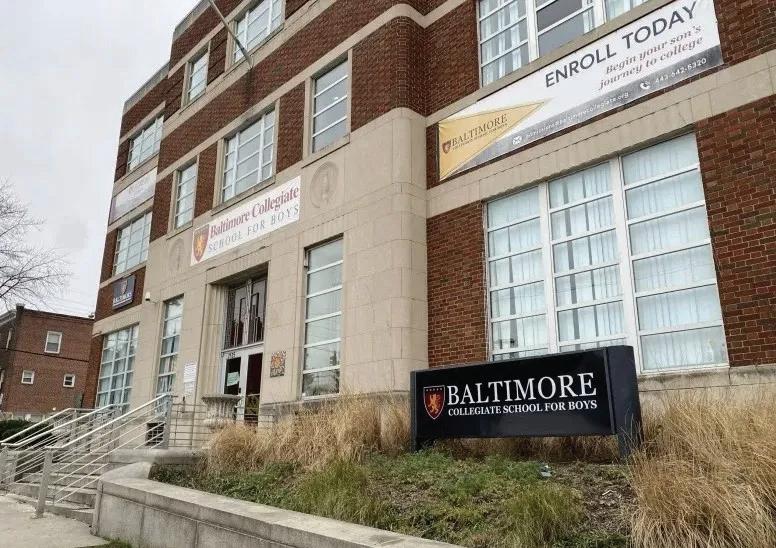
The Baltimore City Public School Board voted to not renew the charter of Baltimore Collegiate School for Boys in a 6-4 decision on Jan. 14.
Officials in the school system’s district office cited overwhelming financial issues, low test scores and the inability to support the school’s special education program. Baltimore City Public Schools Chief Executive Officer (CEO) Sonja Santelises also said that keeping the school open would set a precedent for keeping schools open that fail to meet district standards.
The school will remain operating until the end of the school year in June. The school enrolls 362 students, which fell below the “allowed minimum” of 480.
Baltimore Collegiate is the only all-male charter school in Maryland and part of the school’s mission is to not only educate students but also assist young Black boys psychologically and beyond through mentorship and personal development. In December, during the first public hearing regarding the potential closure of Baltimore Collegiate, current student Zachary Clark credited the school with helping him to get through personal trauma and impacting his personal growth.
On Jan. 8, Baltimore Collegiate alumni attempted to rally in an effort to keep the school open. 2018 alumni D’jibril Barry shared with the AFRO that the school equipped him with interpersonal skills such as leadership and hard work.
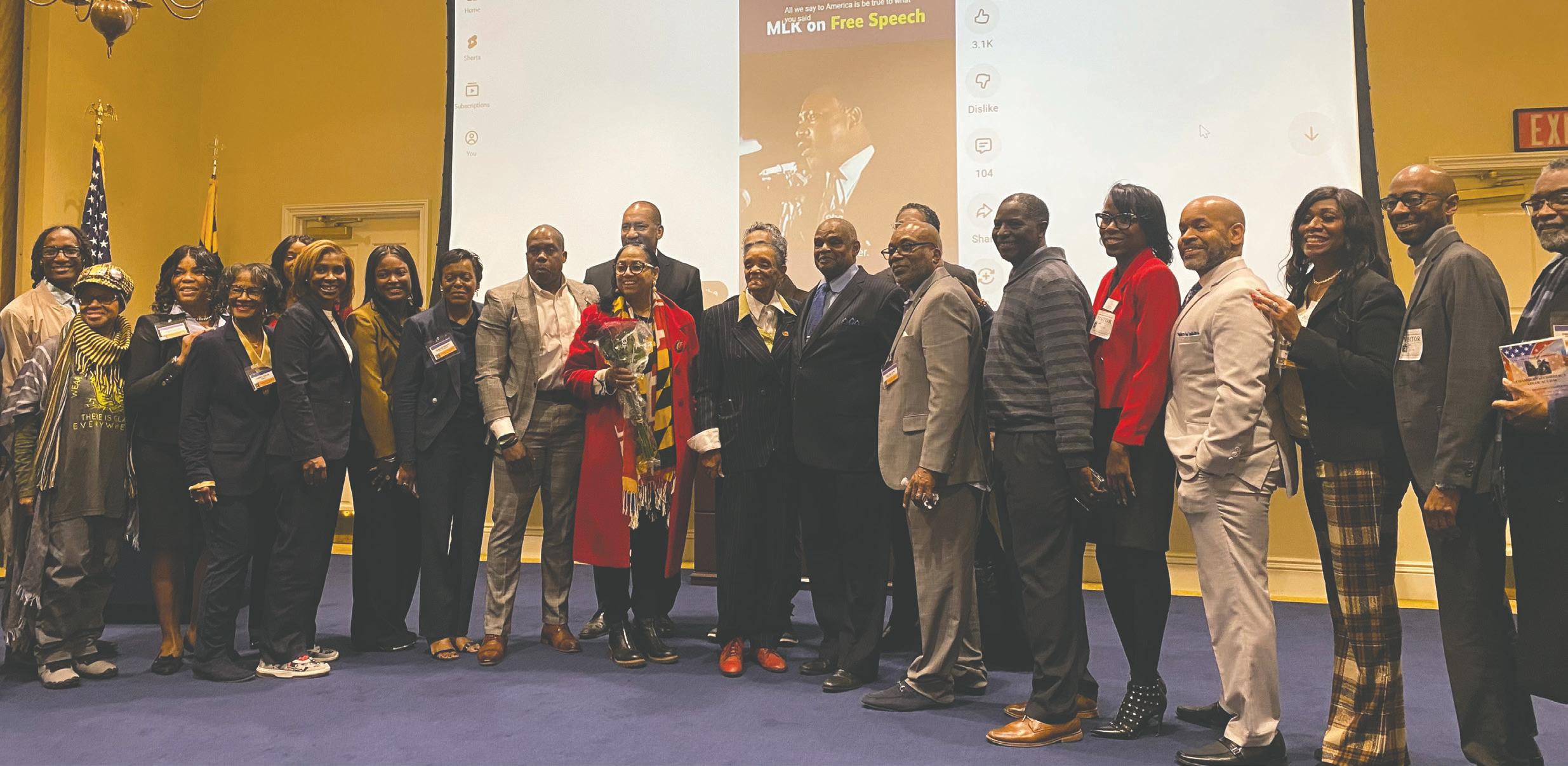
Members of the Maryland business community gathered in Annapolis, Md. for Chamber of Commerce Advocacy Day. The session took place on Jan. 15, and served as a time to also recognize the birthday of Martin Luther King Jr.
Former House Speaker Adrienne A. Jones (D-Md.10) was honored and the new House Speaker Joseline Peña-Melnyk (D-Md.-21) was recognized.
During the event, attendees heard from and spoke with lawmakers about their businesses and various legislative initiatives that may impact the business community.
“Advocacy days like this matter ... They are essential. It’s an opportunity for us to present a clear and unified legislative agenda. It’s an opportunity for us to share real world impacts of proposed policies.”
“We are grateful to our legislators who listen, who engage and who understand that good policy is strong when it is informed by the people and the businesses that it affects,” said Pruitt.
Pruitt encouraged chamber members to build meaningful relationships, share stories about their businesses and nonprofits and speak with legislators so they understand the work chamber members are doing and how they are making an impact.
With the current session featuring new delegates, changes in committee leadership and a new House speaker, the Alliance of Business Owners, Business Organizations and Supporters emphasized the need for collaboration. The Alliance is
“Our chambers play a critical role in Maryland’s economic system, building the bridge between our local businesses and our state government,” said Sandi Pruitt, CEO of People for Change, a membership organization that represents the nonprofit and minority business sector in Maryland, Washington, D.C., Pennsylvania and Florida.
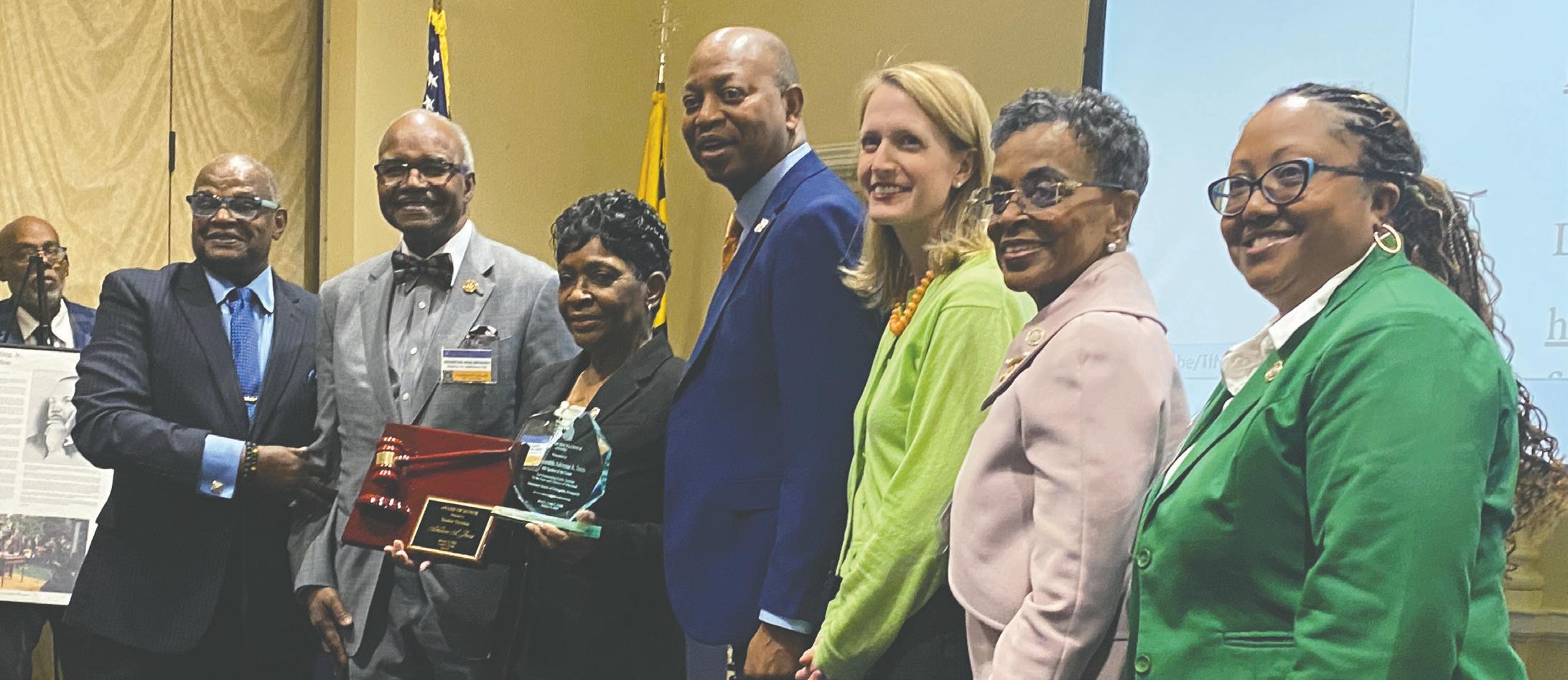
a statewide group consisting of advocates, business leaders, chambers, entrepreneurs, organizations and supporters.
This event took place on the second day of the 2026 Maryland General Assembly session. Over the next 80-plus days, hundreds of bills will be introduced—some will pass, some will stall and some will fail.
Peña-Melnyk spoke to attendees about some of the
upcoming legislative priorities and encouraged them to be involved in this year’s session.
“This is a session where we are focusing on the breadand-butter issues for people,” she said.
Those issues include affordability, especially when it comes to housing, health, energy bills and balancing the

clinicians and we should not expect them to be,” said Cohen.
At the Jan. 15 hearing, council members questioned national experts on these potential solutions.
Those experts included Andrew Dameron, director of Denver 911; Tahir Duckett, executive director of the Center for Innovations in Community Safety at Georgetown Law; Chief Patrice Andrews of the Durham Police Department; and Melissa Buckley, chair of the social work department at Coppin State University and executive director of the Dorothy I. Height Center for Advancement of Social Justice.
The hearing identified a major gap in the city’s public safety ecosystem, lacking a 24-7 non-law enforcement team for mild emergency calls, such as loitering, wellness checks and
By Tashi McQueen AFRO Staff Writer tmcqueen@afro.com
The Enoch Pratt Free Library will host their 38th Annual Booklovers’ Breakfast featuring Angela Flournoy, an award-winning novelist, at the Baltimore Marriott Waterfront. The sold out event will take place from 8:30 a.m. to 12 p.m. on Feb. 7.
Flournoy, author of the critically acclaimed novel “The Turner House,” has earned several high-esteemed recognitions for her work, including the Virginia Commonwealth University (VCU) Cabell First Novel Prize and a finalist for the NAACP Image Award.
The event is sponsored by AFRO News, the Enoch Pratt Free Library and Mahogany Books.
The occasion has become a staple for literary enthusiasts across the city and beyond. Each year, the breakfast kicks off Enoch Pratt’s Black History Month programming

such crises.
non-violent disputes.
“The recommendation before you rightly acknowledges that our current system relies too heavily on
“...our current system relies too heavily on emergency services and police...we know that they are simply not trained to respond to these emotional and social needs.”
budget, which is facing a $1.5 billion deficit during fiscal year 2027.
“Unless you come to committee and participate in the democratic process of using your voice, giving testimony, making a call, writing an email, letting us know your position on a bill, how it may affect you or not, we won’t know,” the Speaker said. “Please, I
“Our chambers play a critical role in Maryland’s economic system, building the bridge between our local businesses and our state government.”
emergency services and police. Even though it’s extremely encouraging to hear from the chief and other law enforcement officials like them, we know that they are simply not trained to respond to these emotional and social needs,” said Buckley. “These are situations where a community-based civilian response is not only appropriate, but it’s more effective and more humane.”
Leaders from other cities described their own community-based response programs, highlighting how they deploy unarmed, trained civilians to handle low-risk calls, reduce burden on police and provide
by providing a platform for high-profile Black authors and leaders. Past speakers include the late U.S. Congressman John Lewis and Imani Perry, a National Book Award-winning author. Cleve Corner, manager of Author and Speaker Engagement at Enoch Pratt Free Library, spoke with the AFRO , providing insight on the work that goes on behind the scenes to make this event possible.
“It’s a yearlong project that includes the efforts of the entire author programs department,” said Corner. “My colleagues, Sofia Nehlawi and Brittany Allen, deftly manage all of the logistics for the program, from their constant communications with the venue and author’s representation to ticketing and seating. It requires a great attention to detail, and Sofia and Brittany do a remarkable job.”
Corner spoke on how they came to choose Flournoy to be the headliner of the event this year.
more tailored support for residents in crisis.
Andrews outlined the development and implementation of Durham’s Holistic Empathetic Assistance Response Team (HEART) program, launched in 2022 to address low-level, non-violent and quality-of-life calls. The program was built through weekly collaboration between police leadership and HEART staff, emphasizing transparency and buy-in from officers.
HEART includes co-response teams pairing a police officer with a clinician, community response teams of unarmed clinicians for lower-risk calls and involuntary commitment response teams for mental health crises.
“This was not a replacement for a police officer. This was not a part of a ‘defund’ movement,” said Andrews. “This was a part of what officers have always known: we are not equipped to handle every single call that comes out—specifically calls where we don’t have the skills or the resources to be able to provide a holistic response and approach in order to better serve that person who’s in crisis.”
At the close of the hearing, Cohen pledged to continue alternatives to police and confirmed he would soon visit Durham to see the city’s community-centered crisis response system in action.
“It wasn’t difficult, as Angela is a critically acclaimed novelist,” said Corner. “We are so excited to have her join us this year. It also happens to coincide with the release of her latest novel, ‘The Wilderness,’ that was nominated for a National Book Award.”
Flournoy explained the themes of “The Wilderness.”
“The Wilderness is a novel that is about a group of friends over 20 years,” said Flournoy. “Bigger than that, I really think about it as a meditation on community. We see a lot in the news about people feeling more isolated and there being a loneliness epidemic. This book addresses what it might take to keep our friends in our lives and why it’s important, as we grow older, to keep those connections.”
Flournoy said she hopes the book and the discussion will inspire people to look more closely at those around them and develop a renewed sense of interest in those relationships.
Continued from B1
“The brotherhood I feel at this school is very powerful,” said Clark. “Everyone here supports me and just helps me get through whatever I am feeling as if they were my actual brothers.”
While some members of the school board did support Baltimore Collegiate’s mission and impact, ultimately they found it hard to renew the charter given some of the school’s struggles. It is unclear whether there is an appeals process.
Two other Baltimore City schools were also at risk of closing on Jan. 14, but survived. Renaissance Academy, which is only a couple miles away from Baltimore Collegiate, and Dallas F. Nicholas Elementary School will push aside fear of a closure, for now. Both schools face issues of low enrollment. The school board decided to defer the decision until next year.
urge you to be a part of the process.”
According to a report by the Maryland Chamber of Commerce from Sept. 23, 2025, Maryland ranks 32nd overall in CNBC’s 2025 “Top States for Business,” declining 10 spots in two years. The high costs of running a business and living in Maryland via taxes, regulations and policy uncertainty, drives
companies to expand their businesses outside of the state.
Peña-Melnyk said she plans to partner with the chambers of commerce.
“I want you to know that I know the importance of the chamber,” she said. “I know the importance of businesses, I know the importance of making sure that we streamline a lot of these permits and rules that make it difficult for people to be here and invest in Maryland.”
“We want you
By Tashi McQueen AFRO Staff Writer tmcqueen@afro.com
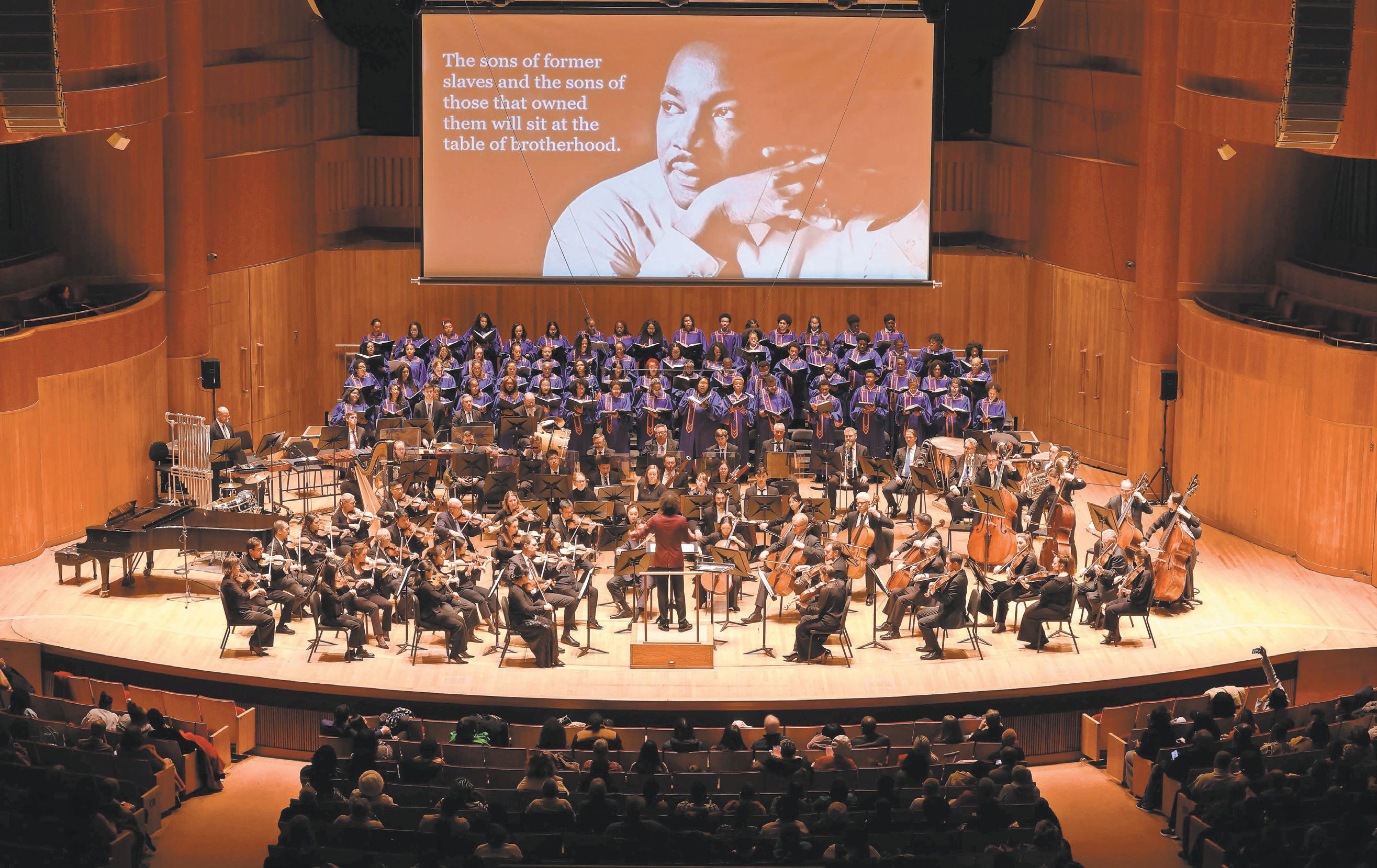
On Martin Luther King Jr. (MLK) Day the Baltimore Symphony Orchestra (BSO) honored the civil rights leader through an impactful musical tribute at the Joseph Meyerhoff Symphony Hall, drawing a packed house for the free community concert.
Led by Music Director Jonathon Heyward and featuring the Morgan State University Choir, the Jan. 19 “Symphony in the City: Martin Luther King Jr. Day Concert” included works by Black composers and choral pieces rooted in spiritual hymns and history.
The program, part of the BSO’s long-running community series, featured music by Samuel Coleridge-Taylor, Florence Price and James Lee III and culminated with Charles Dickerson’s “I Have a Dream,” a musical setting of Dr. King’s most recognizable speech.
The Morgan State University Choir sang selections including “Five Spirituals” as performed by Wings Over Jordan and “Stand Up” from the film “Harriet.”
The performances were moving and emotional, showcasing expert-level talent. Attendees were enthralled throughout the program, cheering on the performers.
“A hundred and ten years ago, the Baltimore Symphony was founded by and for the city of Baltimore as a municipal orchestra,” said Mark C. Hanson, CEO of the BSO. “Evenings like this are a wonderful reflection of our municipal history and of the power of music to bring the community together for moments of celebration, for moments of reflection and moments of commemoration.”
Presented in partnership with the City of Baltimore and Mayor Brandon M. Scott’s Office of Arts, Culture and Entertainment, the evening included pre-concert experiences such as a spoken word performance by Sheri Booker. Attendees were able to take advantage of an MLK interactive reflection room, music by DJ Keebee and a Dream Wall with encouraging notes from students of the Baltimore City Public Schools system.
“MLK Day means to me, freedom,” said Karlise Brown, an attendee and Baltimore resident. “I’m proud to be in a city that celebrates MLK Day.”
Tracy Garrett Rogers, another attendee, said celebrating MLK Day is a generational tradition for her family, and the concert was how they chose to observe the holiday this year.
“I came out for the MLK celebration to honor Dr. King in various ways, and music felt like a perfect way to do that,” said Rogers. “I came with my mom and dad, who are 77
and 76, and my daughter, who is 37. It’s a generational experience—continuing to celebrate Dr. King’s legacy and all that he’s done for us.”
The concert was offered up by city leaders as a replacement for the longstanding MLK Day parade that officials said was too often plagued by bad weather and unsafe conditions. During the concert, Heyward noted that Meyerhoff had not hosted
a tribute concert for Dr. King in nearly 18 years.
“I am deeply honored to help revive this tradition,” said Heyward. “Dr. King understood the power of art, how music can awaken empathy, strengthen resolve and bring us closer to the beloved community he always envisioned. Tonight’s program reflects just that.”
All AFRO photos / James Fields



Janet Currie President,



By Edward G. Robinson III AFRO Sports Editor
A federal investigation into point-shaving and sports bribery has resulted in indictments and arrests for 26 people accused of “fixing” NCAA Division I basketball games. The accused reportedly coerced, convinced and allegedly paid players to throw games in an effort to impact gambling bets.
Authorities announced the details of this investigation on Jan. 15 at a press conference that revealed disturbing news none of us wanted to hear about collegiate sports.
And the news hit close to home.
The two-year investigation focused on individuals who targeted university basketball players around the country, including an unnamed player, Person No. 13, in the indictment. According to authorities, Person 13 played for Coppin State University – a school located in Baltimore that is a member of the Mideastern Athletic Conference and, yes, a historically Black program.
A 70-page indictment explained the nature of this elaborate scheme that authorities say included the arrests of 15 former NCAA men’s Division I basketball players, who were members of their teams as recently as the 2024 season.
United States Attorney David Metcalf said a unit based out of the FBI’s Philadelphia Field Office conducted the investigation. He described the nature of their findings and discussed how this indictment differed from a previous investigation announced in October involving NBA players.
In that case, defendants were indicted on sports betting and money laundering charges. Former NBA
players allegedly used insider information to aid betting and enrich themselves.
“The stakes here are far higher than anything on a bet slip. The criminal charges we have filed allege the criminal corruption of collegiate athletics through an international conspiracy of NCAA players, alumni and professional bettors,” Metcalf said. “It’s also yet another blow to public confidence in the integrity of sport, which rests on the fundamental principles of fairness, honesty and respect for the rules of competition. When criminal acts threaten to corrupt such a central institution of American life, the Department of Justice won’t hesitate to step in.”
And the indictment lays out sordid details of cajoling and convincing, where impressionable student-athletes were misled for the promise of money.
During the 2023-2024 and 2024-2025 NCAA men’s basketball seasons, according to the indictment, the “fixers” recruited players to help change the course of the game either for a half or entire game. Wagers were placed based on the agreement to shave points.
The document tells us that the fixers traveled to campuses far and wide–to mostly low level Division I programs–to speak with players directly, though they also communicated through social media and text messages. They made offers hard to refuse, ranging from $10,000 to $30,000.
We learned from the indictment that the fixers targeted student-athletes whose financial rewards were significant windfalls, considering their limited resources or “Name-Image-Likeness” (NIL) compensation packages were paltry in comparison to the bribes.
That’s an important element to this entire mess. We’ll return here later.
The indictment alleges that fixers approached teams that were underdogs and convinced players to go along with the scheme and cover the spread in the game.
In total, the indictment alleges, about 39 players on more than 17 different Division I men’s basketball teams fixed or attempted to fix more than 39 games.
Millions were waged on these games.
Here’s how the indictment
bets with several sportsbooks for South Carolina to cover the full-game spread. With the scheme set, Person No. 13 tried to impact the outcome of the game. He struggled to do so early.
At halftime of the game, with the score tied, he received a text from Smith, who voiced his concern and pleaded with him to underperform in the second half.
A text message from Smith read:
“Wtf (what the f**k) u doing[,] it need to be a blowout…You hooping yo a** off
“The criminal charges we have filed allege the criminal corruption of collegiate athletics through an international conspiracy of NCAA players, alumni and professional bettors.”
says it went down at Coppin State:
Person No. 13, according to the indictment, was contacted by Jalen Smith, of Charlotte, N.C., and Antonio Blankney, of Kissimmee, Fla., during the 2024 season and agreed to “underperform” and “influence” an upcoming men’s basketball game against South Carolina State.
On March 4, 2024, Coppin State hosted South Carolina at the Physical Education Complex in Baltimore and the Bulldogs were favored by nine-point spread to win the game. Meanwhile, according to the indictment, others accused, Marvis Fairly, of Mississippi, and Shane Hennen, of Las Vegas, placed
wtf (what the f**k) U supposed to be f**king losing[,] you costing us money…Get yo ass blow[n] out next half bro…”
Person No. 13 later explained in a text that South Carolina State was playing so poorly that it was difficult to ensure that Coppin State would lose the game by more than the point spread.
He replied:
“[T]hey (South Carolina State) so a** I couldn’t even keep they lead together im sorry for th[a]t bro I try to tell my [Coppin State] teammates to chill…swear I tried everything in my power second half.”
Oh, boy.
Coppin State responded to

jitters at a major tournament.
“When I was playing today, I just told myself, like, ‘Keep your head on the path. If she beats you, then that’s unfortunate. But, hey, at least you’re trending,’” on social
a
confidence.

Federal prosecutors allege that fixers focused on lower-
these charges with a statement from University President Anthony Jenkins, who sent the following response to the AFRO on Jan. 21:
“Neither the university, nor current student-athletes, nor staff are subjects of the indictment. The indictment focuses on a single former player who is no longer associated with the team or enrolled at Coppin State University. Behavior of this nature falls below the high standards we set for our students at Coppin and will not be tolerated. We remain committed to fostering a culture of integrity, accountability, and excellence across campus.”
This is good to know, though, it doesn’t soften the blow.
Shame on the NCAA.
Shame on all of us for allowing this to grow into something so seedy and so far from what was intended with competitive sports.
This entire case speaks volumes about the untenable state of collegiate athletics, drawn out of whack today by mismanagement and greed, tied in so many dangerous ways to legal gambling.
Chew on that.
The defendants here targeted schools where
student-athletes earn hundreds not millions from their NIL deals. Criminals preyed on student-athletes who earn much less money than the athletes we hear about on talk radio.
There’s not one student-athlete at Coppin State earning a million dollars per season to play any sport. That’s not how NIL works for schools in the MEAC.
But all of those athletes hear the stories about their peers at the top programs, who hop in the transfer portal and receive million-dollar offers per season. So, yeah, if the right offer comes along to shave a few points, earn a few dollars, they are thinking about it.
It’s not right, but it is real. And for the schools like Coppin State – and other mid to lower majors – why would anyone want to watch if the integrity of the game is questionable? Everyone loses. Until we blow up this entire NCAA system and regulate the rules so that things are more favorable for everyone involved, you will continue to hear about malfeasance, fraud and greed. Even with the Feds watching.

described as the “G.O.A.T’s of style.”
“I think it all comes down to personality, too,” she said. The dress she wore in her first-round match, in shades of blue and green, was also a tribute to her daughter, Shai, and her fascination with jellyfish.
“So, the inspiration was obviously the jellyfish, then butterflies, which kind of ties back to the butterfly moment I had here a long time ago, in 2021,” Osaka said, recalling the images of one landing on her during a third-round match. It took months of planning.
And it all tied in with the remodelled player tunnel at Rod Laver Arena that reflects Australian themes such as beaches and the coast.
“Honestly it came together quite beautifully because I didn’t know what to expect when I arrived here,” Osaka said. “Then it just felt like everywhere I looked the theme was water. Obviously the walkout was like you see oceans and waves. I thought that it was [a] really beautiful, really amazing coincidence.”
This article was originally published by The Associated Press.



SUPERIOR COURT OF THE DISTRICT OF COLUMBIA PROBATE DIVISION 2026FEP000004 FEBRUARY 27, 2025 Date of Death CLARETTA JACKSON NILES Name of Decedent
NOTICE OF APPOINTMENT OF FOREIGN
PERSONAL REPRESENTATIVE AND NOTICE TO CREDITORS
TERESA WOODRUFF whose address is 9001 MORRISSETT COURT, CLINTON, MD 20735 was appointecd representative of the estate of CLARETTA JACK-
SON NILES deceased, by the ORPHAN’S Court for PRINCE GEORGES County, State of MARYLAND , on MARCH 3, 2025. Service of process may be made upon WILLIAM A. BLAND, ESQUIRE, 80 M STREET
SE SUITE 330, WASHINGTON DC 20003 whose designation as District of Columbia agent has been filed with the Register of Wills, D.C. The decedent owned the following District of Columbia real property: 1307
BUCHANAN STREET NW. The decedent owned Dis-
trict of Columbia personal property. Claims against the decedent may be presented to the undersigned and filed with the Register of Wills for the District of Columbia, Building A, 515 5th Street, N.W., 3rd Floor, Washington, D.C. 20001 within 6 months from the date of first publication of this notice.
Date of first publication: JANUARY 23, 2026 Name of newspaper, and/or periodical: Daily Washington Law Reporter AFRO-American
TERESA WOODRUFF Personal Reperesenative
TRUE TEST COPY REGISTER
and Notice to Unknown Heirs JENNIFER LONIECE COLEMAN , whose address is 1255 22ND ST NW, APT 405, WASHINGTON DC 20037 was appointed Personal Representative of the estate of WILLIE MAYO JR. who died on FEBRUARY 18,






































CITY OF BALTIMORE
DEPARTMENT OF PUBLIC WORKS OFFICE OF ENGINEERING AND CONSTRUCTION NOTICE OF LETTING
Sealed Bids or Proposals, in duplicate addressed to the Board of Estimates of the Mayor and City Council of Baltimore and marked for SANITARY CONTRACT NO. 1043-Rehabilitation and Improvements to Sanitary Sewers at Various Locations in Baltimore City will be received at the Office of the Comptroller, Room 204 City Hall, Baltimore, Maryland until 11:00 A.M on February 18, 2026. Positively no bids will be received after 11:00 AM. Bids will be publicly opened by the Board of Estimates in Room 215, City Hall at Noon. The Contract Documents may be examined, without charge, at Contract Administration 4 South Frederick Street Baltimore, Maryland 21202 on the 3rd floor (410) 396-4041 as of January 23, 2026 and copies may be purchased for a non-refundable cost of 100.00. Conditions and requirements of the Bid are found in the bid package. All contractors bidding on this Contract must first be prequalified by the City of Baltimore Contractors Qualification Committee. Interested parties should call (410) 396-6883 or contact OBC at 4 S Frederick St., 4th Floor, Baltimore, MD 21202. If a bid is submitted by a joint venture (“JV”), then in that event, the document that established the JV shall be submitted with the bid for verification purposes. The Prequalification Category required for bidding on this project is B02552Sewer Construction. Cost Qualification Range for this work shall be $5,000,000.01 to $10,000,000.00. For further inquiries about purchasing bid documents please contact the assigned Contract Administrator latonia.walston@baltimorecity.gov and dpwbidopportunities@baltimorecity.gov
A “Pre-Bidding Information” session will be conducted via Microsoft Team Meeting. Vendor can join via Microsoft Teams. Meeting ID: 226 310 407 522 45 PASSCODE: Yf2Ct3E4 on January 28, 2026 at 10:30 AM. Vendor can call 667-228-6519 Phone Conference ID: 499348307#.
Principal items of work for this contract include, but are not limited to:
•Sewer cleaning and closed-circuit television (CCTV) inspection; Open cut point repairs of sanitary sewers; Cured-in-place pipe (CIPP) lining of sanitary sewers; Excavate and replace segments of sanitary sewers via point repairs; Manhole repair and rehabilitation work; Sewer house connection (SHC) repair and rehabilitation work; New manhole and cleanout installation work.
The MBE/ MBE goal is 11% The WBE/DBE goal is 5% APPROVED: APPROVED:
Clerk Matthew W. Garbark
Board of Estimates Acting Director City Hall Department of Public Works
CITY OF BALTIMORE DEPARTMENT OF PUBLIC WORKS OFFICE OF ENGINEERING AND CONSTRUCTION NOTICE OF LETTING
Sealed Bids or Proposals, in duplicate addressed to the Board of Estimates of the Mayor and City Council of Baltimore and marked for SANITARY CONTRACT NO. 1051- Rehabilitation and Improvements to Sanitary Sewers at Various Locations in Baltimore City will be received at the Office of the Comptroller, Room 204 City Hall, Baltimore, Maryland until 11:00 A.M on February 18, 2026. Positively no bids will be received after 11:00 A.M. Bids will be publicly opened by the Board of Estimates in Room 215, City Hall at Noon. The contract documents may be examined, without charge, on the 3rd floor at 4 South Frederick Street Baltimore, Maryland 21202 as of as of January 23, 2026 and copies may be purchased for a non-refundable cost of $100. Conditions and requirements of the Bid are found in the bid package. All contractors bidding on this Contract must first be prequalified by the City of Baltimore, Department of Public Works, Office of Boards and Commissions (OBC). Interested parties should call (410) 396-6883 or contact OBC at 4 S Frederick St., 4th Floor, Baltimore, MD 21202. If a bid is submitted by a joint venture (“JV”), then in that event, the document that established the JV shall be submitted with the bid for verification purposes. The Prequalification Category required for bidding on this project is B02552: Sewer Construction. Cost Qualification Range for this work shall be $5,000,000.01 to $10,000,000.00. For further inquiries about purchasing bid documents, please contact the assigned Contract Administrator sydnae@baltimorecity.gov and dpwbidopportunities@baltimorecity.gov.
A “Pre-Bidding Information” session will be conducted via Microsoft Teams. Vendor can join via Microsoft Teams. MEETING ID: 215 835 631 751 84, PASSCODE: fy7A6YE3 on January 29, 2026 at 10:30 AM. Vendors can call +1 667-228-6519 phone conference ID is 555726537#.
For any Pre-bid questions please contact Mr. Chen Chu at chen. chu@baltimorecity.gov
Principal items of work for this contract include, but are not limited to: •Sewer cleaning and closed-circuit television (CCTV inspection; Open cut point repairs of sanitary sewers: Cured-in-place pipe (CIPP) lining of sanitary sewers; Excavate and replace segments of sanitary sewer via point repairs; Manhole repair and rehabilitation work; Sewer house connection (SHC) repair and rehabilitation work; New manhole and cleanout installation work.
The MBE goal is 9% The WBE goal
Matthew W. Garbark Director Department of Public Works
BOARD OF LIQUOR LICENSE COMMISSIONERS FOR BALTIMORE CITY NOTICE – JANUARY 2026
Petitions have been filed by the following applicants for licenses to sell alcoholic beverages at the premises set opposite their respective names. The real property for these applications will be posted on or about January 19, 2026. Written protests concerning any application will be accepted until and including the time of the hearing. Public hearings may be scheduled on or after January 29, 2026 at 10:30 AM in the Liquor Board Hearing Room, located at 200 St. Paul Place, Suite 2300, Baltimore, Maryland 21202. Please visit llb.baltimorecity.gov under the link for “Hearing Schedules” for confirmation of the date, time, and place for all matters being heard by the Board.
1. CLASS “A” BEER, WINE & LIQUOR LICENSE
Applicant: SRR Enterprises, LLC T/a Rudie’s Liquors - Shyalaja Gudibandla and Myra Lee Sturgis
Petition: Transfer of ownership
Premises: 3107-11 W. North Avenue 21216
(City Council District: 7th; State Legislative District: 40th)
2. CLASS “B” BEER, WINE & LIQUOR LICENSE
Applicant: Fruition at 135th, LLC T/a Trade Name Pending - Shanita
Sampson
Petition: New restaurant license requesting live entertainment, off premises catering, and delivery of alcoholic beverages
Premises: 135 E. Baltimore Street 21202
(City Council District: 11th; State Legislative District: 46th)
Applicant: Zoe’s Just Dezzerts, LLC T/a Zoe’s Just Dezzerts - Jennifer Goldszmidt
Petition: New restaurant license requesting live entertainment
Premises: 807 N. Calvert Street 21202
(City Council District: 12th; State Legislative District: 46th)
Applicant: Fonda Don Café, LLC T/a Fonda Don Café - Anner Alexander
Santos Diaz
Petition: New restaurant license
Premises: 3720 S. Hanover Street 21225
(City Council District: 10th; State Legislative District: 46th)
Applicant: La Esquinita Del Sabor, LLC T/a Trade Name Pending - Jose Edgar Vargas Campos and Christy Ann Almony
Petition: New restaurant license
Premises: 3738 E. Lombard Street 21224
(City Council District: 1st; State Legislative District: 46th)
Applicant: Food for Thought Hospitality, LLC T/a Marta Al Mare - Zachary Miller
Petition: New restaurant license requesting live entertainment, outdoor table service, and off premises catering
Premises: 1307 Point Street, R-01A 21231
(City Council District: 12th; State Legislative District: 46th)
3. PUBLIC MARKET LICENSE – BEER, WINE & LIQUOR
Applicant: Lexington Market QALICB, LLC T/a Trade Name PendingJamal McCord and Randi Norris
Petition: New Public Market License requesting live entertainment, outdoor table service, and off premises catering
Premises: 112 N. Eutaw Street 21201
(City Council District: 11th; State Legislative District: 46th)
4. CLASS “BD7” BEER, WINE & LIQUOR LICENSE
Applicant: 413 W Baltimore Street, LLC T/a Baltimore’s Spice Restaurant & Bar - Kumar Dangal and Sapana Danpali
Petition: Transfer of ownership and location of a Class “BD7” BWL license presently located at 2148-52 Vine Street, requesting off premises
catering and delivery of alcoholic beverages (Amended)
Premises: 413 W. Baltimore Street 21201
(City Council District: 11th; State Legislative District: 40th)
Applicant: Bleu Iguana, LLC T/a Bleu Iguana - Oneeka Aretha Gregory, Dexter Gregory, and Calvin B. Davis
Petition: New Class BD7 license requesting live entertainment and delivery of alcoholic beverages (Amended)
Premises: 2125 Maryland Avenue 21218
(City Council District: 7th; State Legislative District: 40th)
the experience and capacity to work on this scope to submit their proposals. All firms must demonstrate and document their capacity and resources to deliver the required services on time. Projects must comply with the 2006 edition of “The Specifications for Materials, Highways, Bridges, Utilities and Incidental Structures” and the latest technical specifications provided by DPW. City personnel will utilize the City of Baltimore Guidelines for the Performance Evaluation of Design Consultants and Construction Contractors for this contract/project.
Should you have any questions regarding the scope of the Project, please contact Mr. Jamison Smith at (410) 396-3437 or by e-mail at Jamison.Smith@baltimorecity.gov
Introduction
The City of Baltimore’s Department of Public Works (DPW) is under a Modified Consent Decree (MCD), which requires the inspection and assessment of all sanitary sewer assets 10 inches in diameter and larger. This contract will specifically focus on gravity sewers 20 inches in diameter and greater, as well as on all pressure sewers, force mains, and siphons, supporting the City’s commitment to meet regulatory requirements and improve system performance.
The City is taking a more strategic approach—one that goes beyond technical solutions to also consider operations, long-term financial planning, and affordability for residents.
Through this contract, DPW seeks a multidisciplinary program management team to assist with:
1. Ensuring the City meets its Modified Consent Decree (MCD) requirements for this scoped work by MCD deadline.
2. Managing day-to-day program tasks and supporting coordination with the Bureau of Water and Wastewater.
3. Providing strategic planning for recommended rehabilitation, ongoing maintenance, and asset replacement—aligned with DPW’s Asset Management Plan—and leveraging expertise in regulatory compliance, workforce and capital planning, and system performance.
The selected team will work as an extension of DPW staff and must bring both technical and operational expertise. DPW reserves the right to adjust the scope based on cost, consultant qualifications, schedule, M/WBE participation, and overall performance.
Scope of Work
The City of Baltimore Office of Boards and Commissions has been requested by the Department of Public Works, Office of Engineering and Construction, to advertise for the services of a civil/environmental engineering firm to provide engineering services for condition assessment and analysis of gravity sewers 20 inches in diameter and greater, as well as on all pressure sewers, force mains, and siphons at various locations in the Baltimore wastewater collection system. The City intends to select one (1) firm to provide these services.
The firms interested in providing these services must demonstrate and document the following:
1. Expertise and capacity to provide condition assessment and inspection services of gravity sewers 20 inches in diameter and greater, as well as on all pressure sewers, force mains, and siphons utilizing CCTV, SONAR and LASER, pole camera, electromagnetic and free-swimming inspection tools under various operating conditions.
2. Firms should be prepared to submit a project baseline plan at the start of the contract, outlining estimated costs, resources, schedule, and mile-
‘America, what will you do now?’: NCNW president
level
By Dr. Deborah Bailey AFRO Contributing Editor
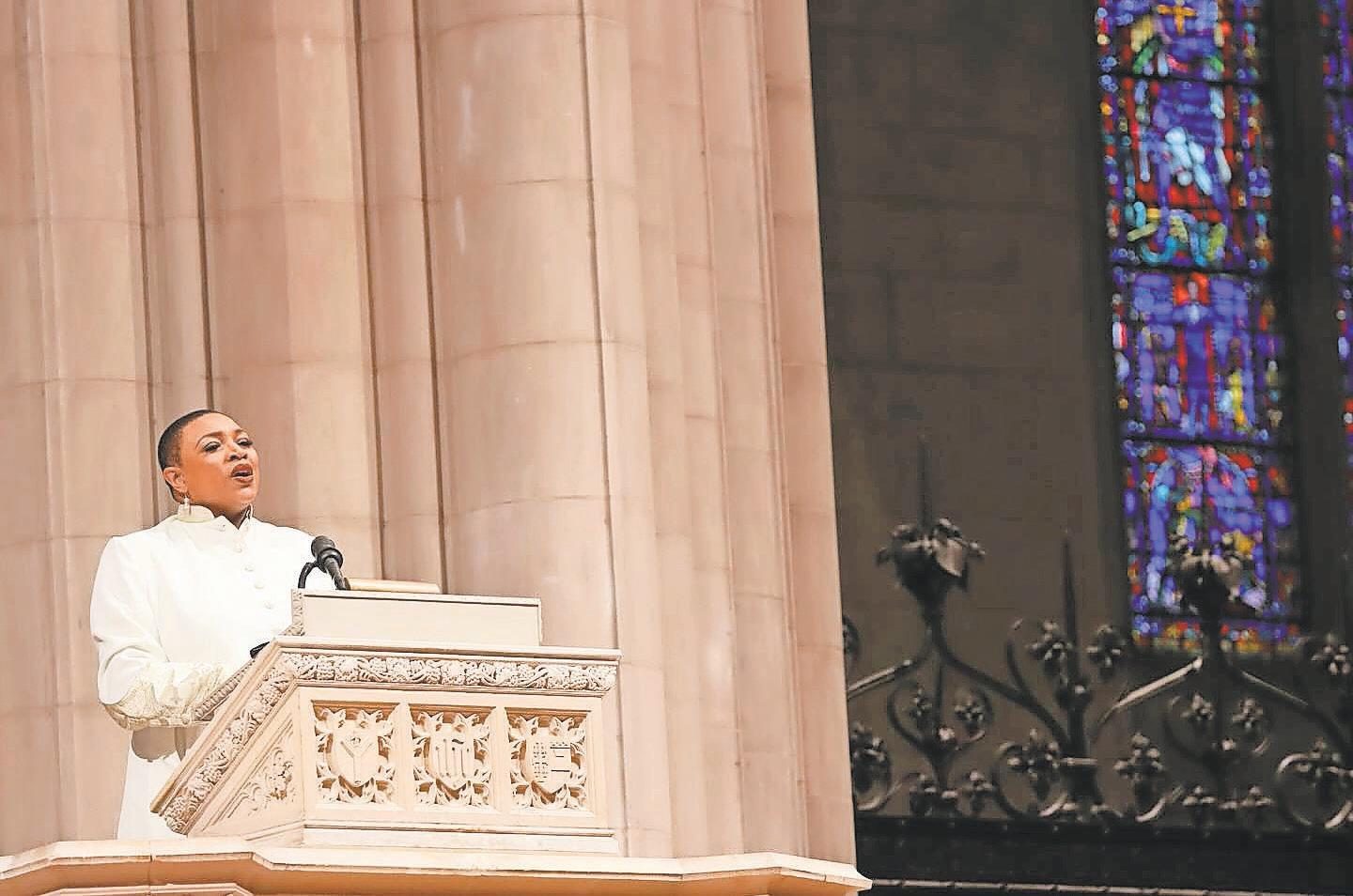
National Council for Negro Women (NCNW) CEO and President Shavon Arline-Bradley issued a challenge and call to action for worshipers at the National Cathedral in Washington, D.C., on Jan. 18.
In a sermon titled “America, What Have We Done,” Arline-Bradley challenged parishioners gathered at the National Cathedral to remain committed to a public policy agenda that echoed the values of Dr. Martin Luther King Jr. while also mirroring NCNW’s contemporary approach.
She also asked them to look back at the country’s record.
“Did we feed the hungry or did we cut SNAP and WIC benefits? Did we quench the thirst, or is there still contaminated water in Flint, Mich., and Jackson, Miss.? Did we care for the sick? Or did we repeal legislation that could extend tax credits for millions of Americans?” Arline-Bradley asked.
She challenged worshippers to go beyond hand-wringing in the face of civil rights and free speech violations occurring across the United States.
“Now the question should change from, ‘America, what have you done,’ to ‘America, what will you do now?’Arline-Bradley said. “Will the church just spectate or will we participate?”
She encouraged members of the faith community across America to
speak out publicly, commit resources and participate in the movement for justice, voting rights and human rights.
It was Arline-Bradley’s ability to convey the clear connection between King’s social-justice perspective and faith connection that compelled National Cathedral member, Dr. Chinwe Ifejika, to look for NCNW membership sign-up after church.
“We all have to have a hand,” Ifejike said. “People have had to stand up for the right thing before us, and now we have to continue. We will get there with God.”
Kendra Glover of Woodbridge, Va., is a member of NCNW. She attended the service to support Arline-Bradley
Continued on D2
On May 8, 2025, city leaders and grassroots advocates gathered at Mary’s House for Older Adults for a ribbon cutting ceremony for the new housing facility, created as a safe and affordable space for seniors from Washington, D.C.’s LGBTQ+ community.
With financial support from Mayor Muriel Bowser via a city-backed loan, the long-heralded project was described by many as an answer to a missing component within the District’s housing facilities, although it was a private enterprise and not owned by the city.
During the spring 2025 ceremony, Victoria Kirby York, former vice chair of D.C.’s LGBTQ+ advisory committee, said Mary’s House was the result of a dream come true – a space for LGBTQ+ elders to enjoy the benefits of community life.
“This will be a place that welcomes the LGBTQ+ community—and others too—but it will be based on the thought that ensures and addresses the issues of seniors, especially those who identify as LGBTQ+,” she said at the time. However, thoughts about Mary’s House have since changed.
A growing number of residents are voicing concerns and raising doubts about the once highly touted facility. Some even assert that given several
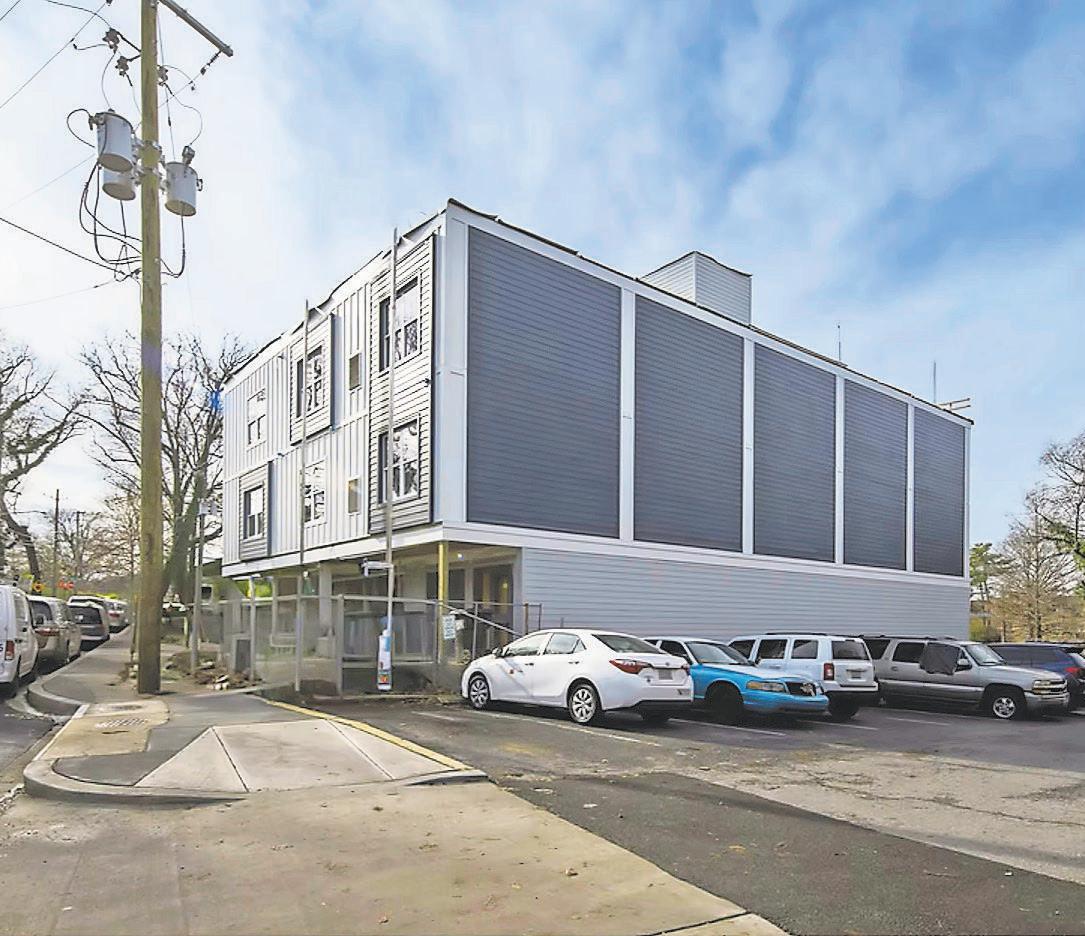
By Megan Sayles AFRO Staff Writer msayles@afro.com
After cutting nearly $150 million from its current budget, Prince George’s County Public Schools (PGCPS) is requesting $50 million in additional funding from the county for fiscal year 2027 to help address a structural budget deficit. The money would be used to stabilize the school system, take corrective steps in special education and protect reading and math instruction.
PGCPS interim Superintendent Shawn Joseph explained that the district’s budget challenges stem in part from a legislative change two years ago that “destabilized” funding.” Previously, a telecommunications tax provided a dedicated source of revenue above the mandated local share. But after the law changed, that money was rolled into the regular county contribution, leaving the school district with no additional funds for the past two years.
“For the past two years, we’ve gotten $0 above the maintenance of effort,” said Joseph. “At the same time, costs have continued to go up.”
Joseph noted that contract negotiations added $102 million annually, strides in filling teacher vacancies reduced the expected savings from unfilled positions and rising health care, food and transportation costs further strained the budget.
“We’re spending more than we’re bringing in. We have to be responsible and present a balanced budget—making the assumption that no additional dollars are coming—and that’s what we did. We cut first before asking for $100 or $150 million like many do,” said Joseph. “We realize we’re not going to spend our way to excellence, and we also recognize that our taxpayers don’t want to even think about increasing taxes until they know for sure that we’ve done everything we could do to prioritize funds internally. That’s why we have a modest $50 million request.”
One area of progress that’s created pressure on PGCPS is the district’s efforts to reduce teacher vacancies.
On Jan. 15, county leaders came together to celebrate a 52 percent decrease in open teacher positions during the
calls for the police, alleged incidents of harassment and even the death of one resident, that the facility—specifically its management—has failed to live up to its promises.
The AFRO reached out to Mary’s House for Older Adults officials and to the current director of LGBTQ+
affairs for the District, but did not receive a reply from either. One former resident, Wes Pinkney, 71, shared his concerns and explained why he moved out of the facility. He said he was once ecstatic about
mitigate a structural budget
2024 to 2025 school year. This included reducing open positions for special education teachers from 242 to 80 as of December 2026.
The gains come at a time when educator shortages are plaguing most school districts across the country.
“As the state announced a nearly 50 percent decrease in teacher vacancies, Prince George’s County also looked at where our numbers are. What we determined is we were really leading the state in the reduction of teacher vacancies in this state,” said County Executive Aisha Braveboy during a Jan. 15 press conference. “Prince George’s County added over 900 new teachers in large part because of the collaborative nature of our superintendent and the efforts between our superintendent and our teachers. Our teachers tell the story about what it means to work in Prince George’s County Public Schools. If your teachers are unhappy, you’re in trouble because they’re able to recruit other teachers too.”
Still, filling those positions has come with a financial trade-off. Joseph said that while competitive salaries and benefits packages helped attract and retain teachers, keeping classrooms fully staffed also increases overall costs. He emphasized that a long-term strategy is needed to keep up with rising expenses.
By Konstantin Toropin
National Guard troops will be on the streets of Washington, D.C., until the end of 2026, according to a memo reviewed by The Associated Press.
The memo, signed by Army Secretary Dan Driscoll and dated Jan. 14, said “the conditions of the mission” warranted an extension past the end of next month to continue supporting President Donald Trump’s “ongoing efforts to restore law and order.”
Meanwhile, Trump has at least temporarily dropped his push to deploy National Guard troops in Chicago, Los Angeles and Portland, Ore., which had provoked legal challenges. He also backed off a bit Jan. 16 from his threat a day earlier to invoke the Insurrection Act to deploy troops to quell protests in Minnesota.
Since Washington is a congressionally established federal district, as president, Trump has much greater
control over the police and D.C. National Guard, which he can control directly. This has enabled him to sidestep the legal challenges that he has faced in some states.
Trump activated 800 members of the D.C. National Guard in August under an emergency order. Those numbers were quickly augmented by troops from states run by Republican governors.
There are currently about 2,600 National Guard troops in Washington, with about 700 from D.C. and the rest from 11 states, including Indiana, South Carolina, Florida, Mississippi and Oklahoma.
The mission was quickly broadened from its initial crime-fighting mandate to city beautification. In one of its last updates, the task force overseeing the mission said that in early October troops cleared 1,150 bags of trash, spread 1,045 cubic yards of mulch, removed 50 truckloads of plant waste, cleared 7.9 miles of roadway, painted 270 feet of fencing and pruned 400 trees.

Two National Guard troops from West Virginia that were part of the mission in D.C. were shot the day before Thanksgiving 2025. Specialist Sarah Beckstrom, 20, died from her injuries.
In addition to his efforts to put troops into Chicago and Portland, Trump federalized National Guard troops to go into Los Angeles in

Continued from D1
the possibilities and promises voiced by officials during the construction and subsequent opening of the facility. But it became apparent that it was not the place for him.
“After only being there for about three weeks, I began to observe a few things that caused me to become concerned,” he said. “I voiced them with the property manager, but she only shot me down. I even shared them with the residents’ circle, which was somewhat like a tenants’ association, but lacked any authority and was not held accountable for how it operated. Again, I was dismissed.”
Pinkney told the AFRO that eventually, he was written up by management, dismissed “gossip” and a “problem tenant.”
“Having no voice and no option to register concerns was unacceptable to me. In short order, there were more residents who were not gay and some of them were clear that they didn’t want to be around ‘folks like us,’” he said. “I even questioned the affordability issue because the price I was quoted for the rent was not what we eventually were charged each month. It was all confusing and very troubling.” Pinkney, who is a fifth generation Washingtonian and identifies as bisexual, said the tension between the gay and heterosexual residents was a real problem as far
June, when protesters took to the streets in response to a blitz of immigration arrests. Ultimately, he deployed about 4,000 troops and 700 Marines to guard federal buildings and, later, to protect federal agents as they carried out immigration arrests.
The force dwindled over time and was ultimately removed from the streets in December after a judge ordered control of the California National Guard be returned to Gov. Gavin Newsom. A federal appellate court upheld the decision.
Continued from D1
“We’re committed to our employees and the negotiated agreements we signed. We know that the cost of business each year is going to dramatically increase, and we must stay competitive,” Joseph told the AFRO . “Right now we’re proud of the fact that we reduced vacancies so greatly, but we have to ensure we have a long-term solution to the structural deficit that was created two years ago. Our costs are definitely going to continue to rise, and we need revenue sources to match.”
PGCPS’ $150 million trim from its current budget already represents one of the largest single-year reductions in the school system’s history. Joseph said those cuts included eliminating funding for low-enrolled or low-impact speciality programs, scaling back travel and professional development budgets and cutting discretionary spending on items like
as safety. But, he added, he had seen that before.
“We still have not resolved the challenges faced by the LGBTQ+ community,” he said. “There’s been an uptick of transgender [persons]
On Dec. 31, Trump said he was dropping his push, for now, to expand the effort to other cities.
This article was originally published by The Associated Press.
school refreshments.
While these moves helped balance the budget, he emphasized that there is a limit to how much can be cut without affecting students and staff.
The $50 million in additional funding PGCPS is requesting would shore up special education services, strengthen math and reading education, support artificial intelligence literacy for staff and students and improve safety measures in schools. Joseph warned that if the funding request is not approved, the district could face significant consequences, including shifting resources from general education to cover special education needs, reducing teacher training, limiting programs that improve reading and math outcomes and potentially terminating staff.
“If we have to cut another $100 million next year, without question we will be laying off hundreds of people,” said Joseph. “You see that happening around the state now in some jurisdictions because once you run out of discretionary dollars to cut, it’s people.”
“After only being there for about three weeks, I began to observe a few things that caused me to become concerned. I voiced them with the property manager, but she only shot me down.”
adults and youth. Seniors like Pinkney say they remember the days when HIV/AIDS was tantamount to a death sentence and was an era in which many of their friends and family members died from the virus.
“Having a space like Mary’s House is really important to seniors because for so long we lived without a sense of dignity because of our sexual orientation,” Pinkney said. “I would bet that a lot of those in my age group suffer from PTSD because of lifelong
By D. Kevin McNeir
Fresh off the heels of a five-week opening in New York City, and a brief hiatus to heal tender shins and ankles, the Alvin Ailey American Dance Theater has launched its 20city U.S. tour with Washington, D.C. as its first stop.
With 11 provocative and emotionally charged performances, one of the world’s most popular dance companies is poised to showcase its talented group from Jan. 30 to Feb. 8. For two of the seasoned performers, Corrin Rachelle Mitchell and Samantha Figgins, it will be a homecoming as both women are from the area – Mitchell from Baltimore, and Figgins a native Washingtonian.
This year, instead of performing at the Kennedy Center, the venue has moved to the historic Warner Theatre, known for more than a century as the District’s monument to entertainment.
Though the location has moved what has not changed is what fans can expect – fresh and intricately choreographed pieces in tow, including several world premieres, and of course classics like Ailey’s signature piece, “Revelations,” which for decades has remained a favorite Ailey work and the company’s encore piece.
Alicia Graf Mack, who was named artistic director in July, acknowledged the significance of being selected to lead the historic dance company.
“I am grateful and honored to be a caretaker of this ever-changing continuum of inspiration, along with Associate Artistic Director Matthew Rushing and the company of brilliant dancers whose artistry will move us all as we take our next steps forward to build upon the vital tradition Mr. Ailey gave us and the gifts Judith Jamison so lovingly nurtured,” she said. “It is also personally meaningful for me to launch this special tour in Washington, D.C., where I experienced the magic of Ailey when I was an aspiring dancer filled with so many dreams that have now come to fruition.”
Dancers anxious to return home and showcase their skills on stage
Members of the company with ties to the area are proud to return to the area where they first took interest in dance.
Mitchell, who joined the company in 2019 and recently turned 30, said dance has always been her passion.
“My mother was my first dance teacher – she and my father owned a dance company in the Baltimore

area in Randallstown, so dance and the arts have always been in my life. Both my sister and I [have] danced since our formative years and for me, if music was playing, I was dancing,” she said.
Figgins, a dancer with the company for 11 years and a choreographer,

Continued from D1
and said she felt she got marching orders for 2026, a year she said compares with the challenges King faced.
“She gave us the challenge we needed to hear. We are as ready to move toward action in 2026 as they were during Dr. King’s time,” Glover said.
Arline-Bradley has been president of the NCNW for nearly three years, since March 2023. Her leadership represents a new era for the organization. An ordained minister with a background in health equity, Arline-Bradley is the first president to serve under the organization’s new by-laws connecting the organization’s national base with public policy issues like voting rights, health care,
educational opportunity and justice.
The organization has expanded outreach to high school and college women and reached out to develop partnerships with national Black women’s organizations and other women of color across the U.S.
Elena Mangahas, from Stockton, Calif., was in Washington, D.C. for a Filipino culture exhibit at the Smithsonian Center for American Culture. She came to the National Cathedral King Day service with members of her group and said the direct message expressed by Arline-Bradley, in the face of immigrant raids happening across the U.S., resonated with her.
“We feel strongly about the actions that are being taken against the immigrant community of this country. The speaker covered everything that needed to be said. She was direct and did not mince any words – and it didn’t sound political. This is reality,” said Mangahas. “This is what we are increasingly
said she’s excited about the new repertoire and the new energy within the company—particularly with the addition of Mack.
“Dance has always been my passion, and I am grateful for it being in my life,” Figgins said. “Truthfully, dance represents my lifeline and has afforded me a safe space because I am hearing impaired. Dance became my first language and it’s the language of the body where I feel most at home.”
Figgins has been dancing for as long as she can remember along with her twin sister who is also a dancer. But when she entered high school at Duke Ellington in D.C., she knew she had found her niche.
“Those halls could tell some amazing stories and it’s a place that provides awesome networks,” she said. “I learned so much there and still love the memories I made there and the friendships I forged.”
Mitchell noted that while it may seem that she lives a glamorous life, being part of the Ailey tradition requires hard work, discipline and the ability to delay the joys of life that many take for granted.
“I’ve been going out on auditions
and rehearsing since I was a little girl and my sister is dancing now on Broadway as part of the Michael Jackson show, so we both understand the demands,” she said. “My parents met at the Baltimore Lyric Opera while performing Porgy and Bess, so our family is a singing and dancing kind of unit. But it’s hard sometimes because you can’t just take off and go home or enjoy holidays and vacations with your friends and family. Yes, the show must go on. Still, I wouldn’t change a thing.” Mitchell echoed her colleague’s sentiments.
“When I describe my life to those closest to me, I have to be honest and say that while I am loving the adventure, there are those moments that are not so sweet,” she said. “To be good at our craft, and especially to be part of the Ailey family, takes sacrifice. However, we have the opportunity to share what we love so profoundly with the world. Yes, I miss simple things like sleeping in my own bed back home and playing with my pets. But I’m an Alvin Ailey dancer. And as long as it lasts, I’m up to the task and the joy that comes each day.”
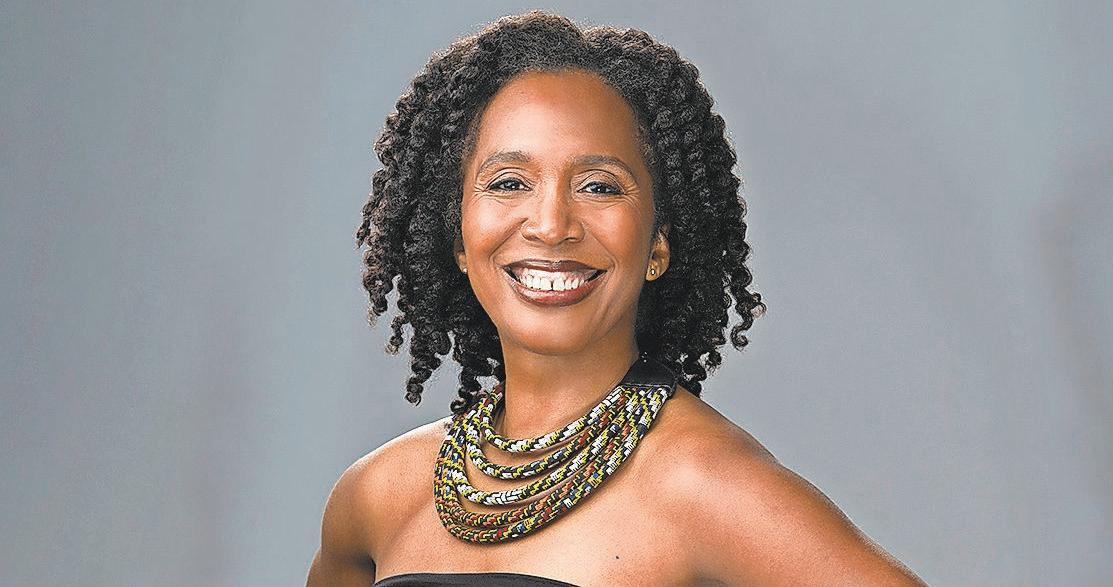
facing every day. The arch is landing now on this particular time. It is time to act, not just for immigrant groups like us, but for everybody.”
In an exclusive interview with the AFRO, Arline-Bradley said members of NCNW and others are in discussions about taking activism to a new level in 2026, especially when it comes to voter registration efforts.
“At the end of the day, November 2025 taught us a lesson. When the people are tired of this feeling, they will act. Well, the people are tired, and it’s time,” she said. “We’re coming out of malaise. There is a lot less fear now. Once we’re willing to face the fear of retaliation and realize God has got us covered, 2026 is going to be different.”
Arline-Bradley stayed for an hour after the service, listening to parishioners and talking with them about readiness for a new level of activism.
“I’m observing Black people, White people
“Once we’re willing to face the fear of retaliation and realize God has got us covered, 2026 is going to be different.”
and people of all backgrounds say the exact same thing: ‘I’m tired, but now that I’ve heard you, I’m ready.’”
“I think 2026 is going to be a year of reckoning,” Arline-Bradley added. “Black people will continue to lead, and communities are going to follow our lead because we’ve always been consistent in fighting for justice.”

By AFRO Staff
Washingtonians gathered in the District on Jan. 19 for the 21st Peace Walk and Parade, an event set in motion by founder of The Washington Informer, Dr. Calvin W. Rolark, with the help of his wife, former longtime D.C. Councilmember Wilhelmina J. Rolark (D-District 8), the United Black Fund, and popular radio personality and activist, Ralph “Petey” Greene. What began in 1977 has evolved into an event that unites the D.C. community and highlights the talent of students in the District while celebrating the contributions of Dr. Martin Luther King Jr. and the activists who keep his legacy alive.
This year, the peace rally kicked off at Firth Sterling Ave. and Sumner Road in Southeast Washington, D.C. The rally was followed by a parade of bands, advocacy organizations and local agencies, cheered on by onlookers as they made their way down Martin Luther King Jr. Avenue. In addition to the parade, the event also offered a Hopeful Healing Health and Wellness Fair, with screenings for blood pressure and diabetes and more.
All AFRO Photos/Jonathan Forney