AframNews.com
“Addressing
Current & Historical Realities Affecting Our Community”

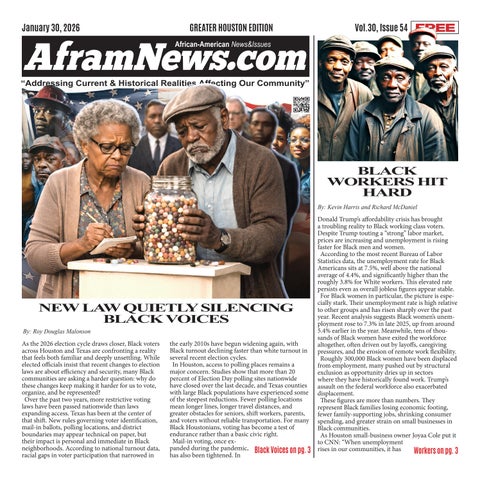
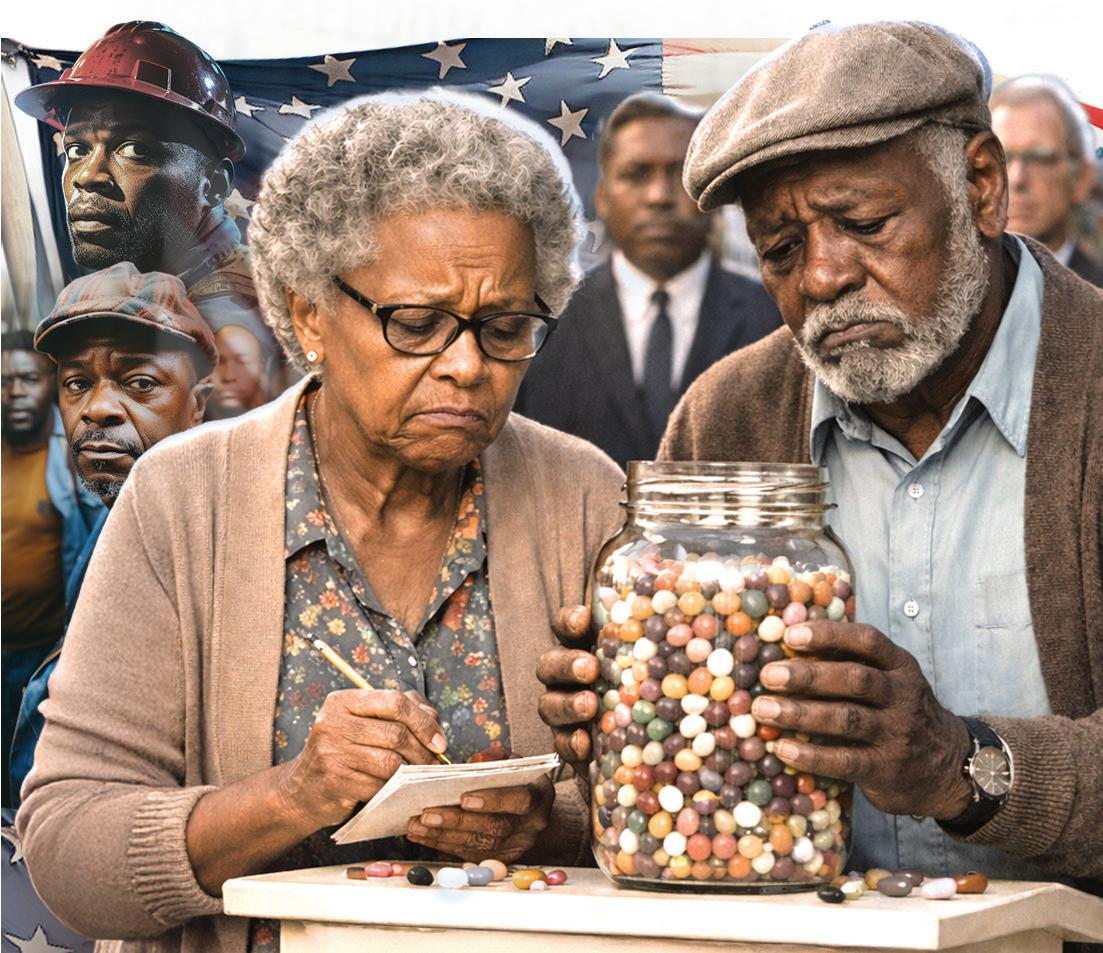
NEW LAW QUIETLY SILENCING BLACK VOICES
By: Roy Douglas Malonson
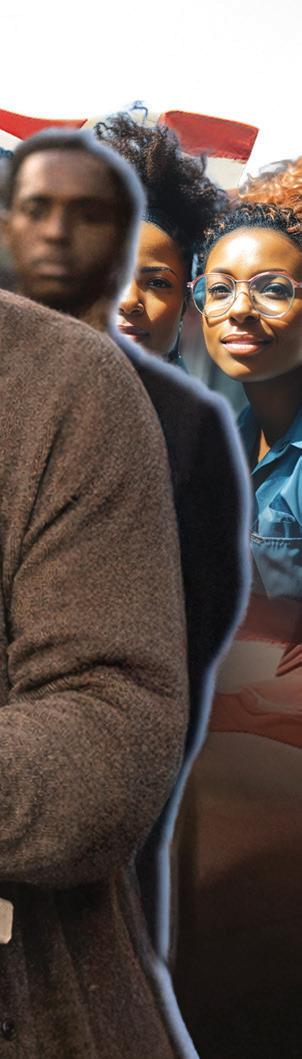
As the 2026 election cycle draws closer, Black voters across Houston and Texas are confronting a reality that feels both familiar and deeply unsettling. While elected o cials insist that recent changes to election laws are about e ciency and security, many Black communities are asking a harder question: why do these changes keep making it harder for us to vote, organize, and be represented?
Over the past two years, more restrictive voting laws have been passed nationwide than laws expanding access. Texas has been at the center of that shi . New rules governing voter identi cation, mail-in ballots, polling locations, and district boundaries may appear technical on paper, but their impact is personal and immediate in Black neighborhoods. According to national turnout data, racial gaps in voter participation that narrowed in
the early 2010s have begun widening again, with Black turnout declining faster than white turnout in several recent election cycles.
In Houston, access to polling places remains a major concern. Studies show that more than 20 percent of Election Day polling sites nationwide have closed over the last decade, and Texas counties with large Black populations have experienced some of the steepest reductions. Fewer polling locations mean longer lines, longer travel distances, and greater obstacles for seniors, shi workers, parents, and voters without reliable transportation. For many Black Houstonians, voting has become a test of endurance rather than a basic civic right.
Mail-in voting, once expanded during the pandemic, has also been tightened. In
Black Voices on pg. 3


BLACK WORKERS HIT HARD
By: Kevin Harris and Richard McDaniel
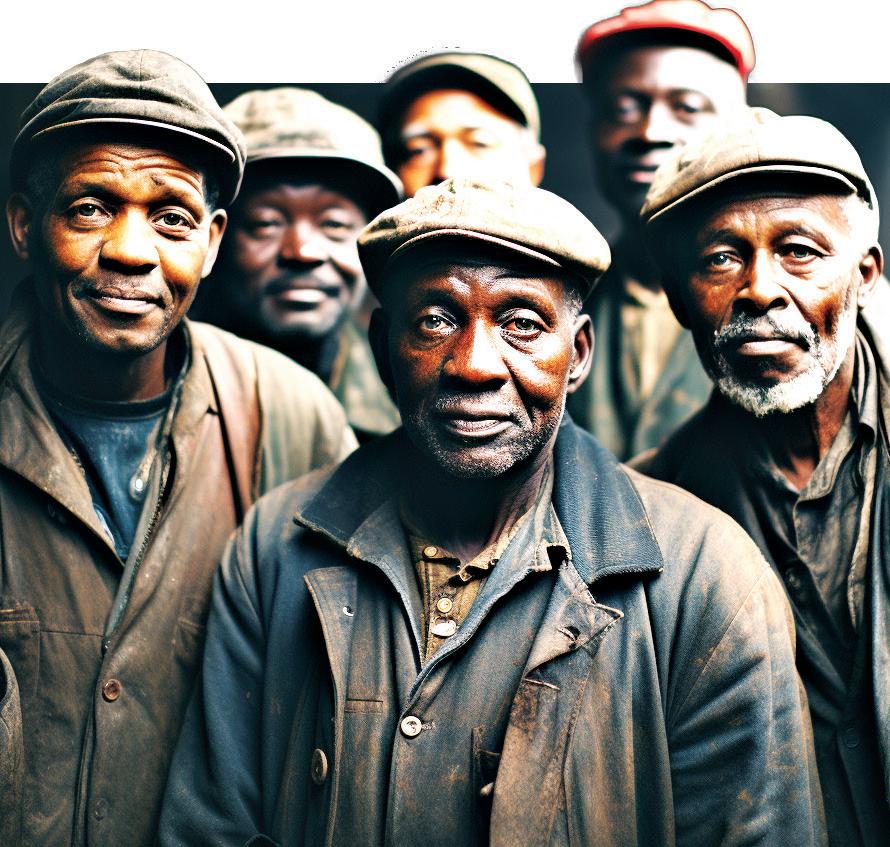
Donald Trump’s a ordability crisis has brought a troubling reality to Black working class voters. Despite Trump touting a “strong” labor market, prices are increasing and unemployment is rising faster for Black men and women.
According to the most recent Bureau of Labor Statistics data, the unemployment rate for Black Americans sits at 7.5%, well above the national average of 4.4%, and signi cantly higher than the roughly 3.8% for White workers. is elevated rate persists even as overall jobless gures appear stable. For Black women in particular, the picture is especially stark. eir unemployment rate is high relative to other groups and has risen sharply over the past year. Recent analysis suggests Black women’s unemployment rose to 7.3% in late 2025, up from around 5.4% earlier in the year. Meanwhile, tens of thousands of Black women have exited the workforce altogether, o en driven out by layo s, caregiving pressures, and the erosion of remote work exibility. Roughly 300,000 Black women have been displaced from employment, many pushed out by structural exclusion as opportunity dries up in sectors where they have historically found work. Trump’s assault on the federal workforce also exacerbated displacement.
ese gures are more than numbers. ey represent Black families losing economic footing, fewer family-supporting jobs, shrinking consumer spending, and greater strain on small businesses in Black communities.
As Houston small-business owner Joyaa Cole put it to CNN: “When unemployment rises in our communities, it has
Workers on pg. 3



A Revival of God Consciousness
Bobby Mills, Ph.D.
SLAVERY
Institutionalized slavery is evil. e politics of slavery is harmful, because slave politics is harmful to the well-being of a multi-cultural democratic society. Slave labor is bad, because slavery is evil. Every man is commanded by God to work: “in the sweat of thy face shalt thou eat bread, till thou return unto the ground: for out of it wast thou taken: and for dust thou art, and unto dust shall thou return.” (Genesis 3: 19).




Sadly, the Trump MAGA-Cult Administration has instituted a bold-new 21st century style of White Privilege Slavery; Make America White Again, and America’s multi-cultural democratic image in the world community is devilishly tarnished. e disobedience
EDITORIAL
of Adam and Eve in the Garden of Eden a ected the entirety of creation. Chaos prevailed, becoming the new order. Now, disorder is order to the ungodly. What an ungodly shame. e Trump Administration is attempting to sectionalize White Privilege Slavery for rich White males, not the White masses. e big question is: can America be xed in 2026? Sadly, America has low mentalities in high places, and consequently, GOP conservatism has morphed into craziness. Hence, it is essential that Christian Right Evangelicals consider echoing King David’s words, rather than the ungodly words of President Donald J. Trump: “My heart is xed, O God, my heart is xed; I will sing and give praise.” (Psalm: 57: 7). King David’s faith in God was vastly di erent than that of his enemies. America, we need to spiritually understand that slavery is a two-edged sword, because slavery enslaves both the Slavers
Slavery on pg. 3
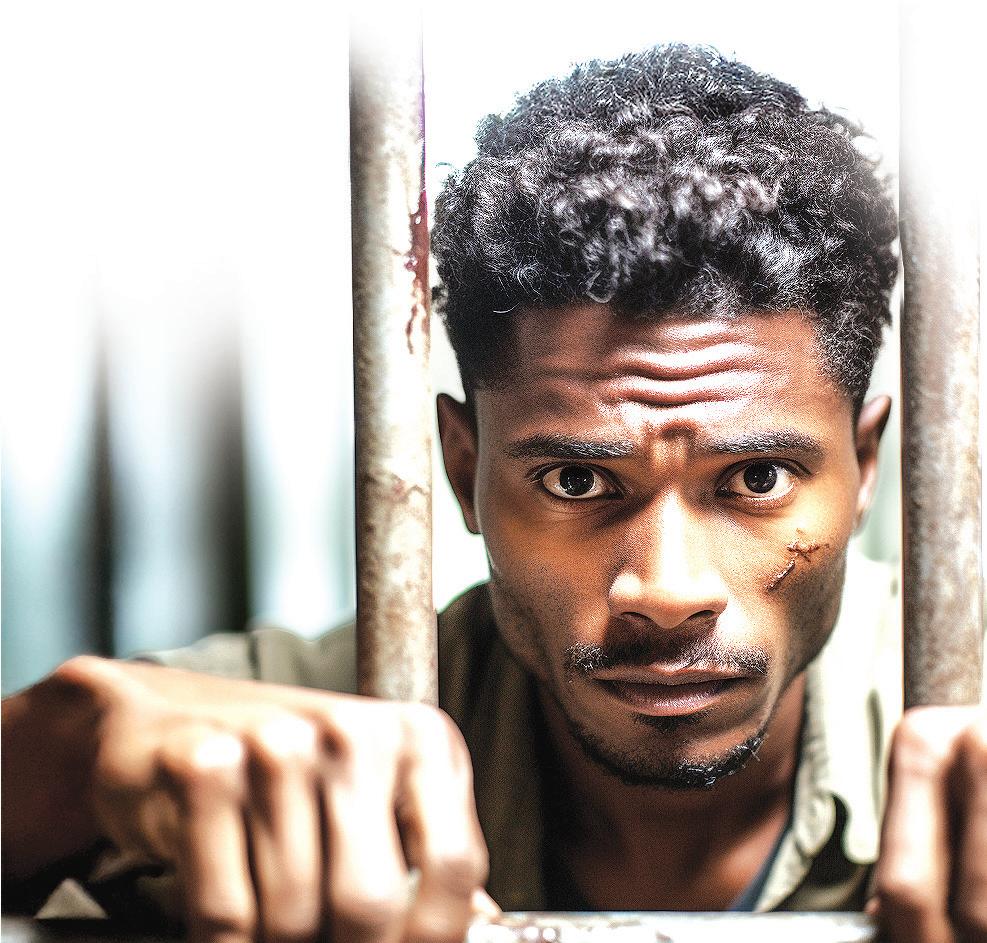


Voter suppression no longer needs intimidation or violence; it thrives on confusion. In 2026, the newest tactic is simple: change the rules, complicate the process, then blame voters for mistakes. When ballots are rejected, lines stretch for hours, and locations disappear, power quietly shi s without ever announcing itself publicly now.
Across Texas, election laws keep shi ing between cycles. New identi cation requirements, tighter deadlines, fewer polling places, and reduced mail options pile up. Each change seems minor alone. Together they create a maze that discourages turnout, especially for Black seniors, students, workers, and rst-time voters in urban communities statewide today now. Confusion is not accidental. It is strategic. When people are unsure where to vote, which ID quali es, or whether a ballot will count, many simply stay home. Suppression succeeds without confrontation, headlines, or lawsuits. e quieter it operates, the harder it is to prove and challenge publicly in court systems.
Redistricting magni es the damage. By carving up Black neighborhoods or packing them into fewer districts, political in uence shrinks even when populations grow. Representation becomes symbolic rather than e ective. Votes still exist, but power thins out, diluted through maps designed behind closed doors by partisan interests, quietly, strategically, statewide, today now. Texas leaders insist these measures protect democracy. Yet data repeatedly shows minimal fraud and massive disenfranchisement. If security were the goal, lawmakers would expand access, invest in education, and simplify voting. Instead, complexity grows. Complexity bene ts those already in control, not communities seeking representation and political fairness statewide today now.
Black voters have seen this playbook before. Poll taxes became literacy tests, which became paperwork, deadlines, and closures. e tactics evolve, the target remains. When Black turnout rises, barriers follow. at pattern should alarm anyone who believes democracy depends on participation, not exclusion, fairness, equity, transparency, trust, justice, today, now.
e response cannot be silence. Education, organization, and turnout are the antidotes to confusion. Every rule change must be studied, shared, and challenged. In 2026, clarity is resistance. When voters refuse to be confused, attempts to control outcomes lose their power across Houston, Texas, and Black communities nationwide today now.
prior Texas elections, new identi cation requirements for absentee ballots led to tens of thousands of rejected ballots, with rejection rates disproportionately higher in Black and Latino communities.
Election o cials argue that safeguards are necessary, but voting rights advocates counter that the data shows minimal fraud and maximum disenfranchisement.
Representation is another ashpoint heading into 2026. Redistricting battles continue to reshape political power across Texas. Although courts have blocked some proposed maps, the intent behind them has raised alarm. Redistricting experts note that several proposed boundaries would dilute Black voting strength by splitting historic communities or merging them into districts where their in uence is weakened. Houston’s historically Black congressional and legislative districts remain especially vulnerable, reigniting fears that decades of hard-fought representation could be undone quietly and legally.
Compounding the issue is felony disenfranchisement.
In Texas, nearly half a million residents are barred from voting due to felony convictions. Black Texans are more than twice as likely as white Texans to lose their voting rights under
these laws. at reality removes entire segments of Black communities from the political process, o en long a er sentences have been served and lives rebuilt. Confusion has become a weapon as powerful as any law. Changing rules, shi ing deadlines, and inconsistent messaging have le many voters unsure of what is required to cast a valid ballot. Civil rights groups warn that uncertainty alone suppresses turnout, particularly among rst-time voters and younger Black voters who are already skeptical of political systems that have historically excluded them. Young voters face additional hurdles. Student IDs are frequently rejected as valid identi cation, even in cities with large Black college populations. Polling places on or near campuses have been reduced, and outreach e orts that once energized student turnout have slowed. While Black youth remain politically aware and vocal, participation becomes harder when the system signals that their votes are inconvenient. Still, resistance is growing. Across Houston, churches are once again stepping into their historic role as civic anchors, hosting voter education drives and transportation e orts. Grassroots organizations are holding workshops to explain new voting rules and help residents check their registration status.
Elders are reminding younger generations that voting access was never freely given—it was won through struggle, sacri ce, and persistence. Election o cials maintain that voting in Texas remains accessible and secure, pointing to compliance with state law and available online resources. But for Black voters, access is not just about legality. It is about fairness, trust, and lived experience. When rules keep changing— and those changes consistently fall hardest on Black communities— the pattern becomes impossible to ignore. As 2026 approaches, the stakes could not be higher. School boards, judgeships, city councils, congressional seats, and statewide o ces will all be decided by who shows up and who is shut out. For Black America, voting has never been symbolic. It has been a tool of survival, self-defense, and progress. e question now is whether Black voters will once again be forced to ght simply to be counted—or whether communities will meet quiet suppression with loud organization. History suggests the answer. When Black voices are challenged, they do not disappear. ey mobilize, adapt, and vote anyway. And in 2026, that ght may matter more than ever.
Black Voices Cont. Workers Cont.
a rippling e ect across entire industries — not just retail but housing, healthcare and more.” e long-standing Black unemployment gap has widened in the face of technological shi s like AI adoption, making it harder for Black workers to enter — and re-enter — the workforce.
Black American’s buying power is expected to exceed $2 trillion this year but an increase in Black unemployment would hit the U.S. economy hard.
Historically, Black workers have always been the rst to lose jobs in downturns and the last to be rehired in recoveries. Recent data shows that pattern repeating. Since early 2025, overall employment levels for Black adults have declined, even as other groups’ participation remains steadier.
And while employment rates among Black men have been described as “more stable,” they remain well above the broader national averages. Long-term as well as the Enslaved. Glory to God, because God is a God of free-will choices. Choices have consequences: good or bad!
America, there is a di erence between conservativism and crazy. e overwhelming majority of individuals on planet earth are conservative, because
prospects for Black men are being squeezed as certain industries contract and automation reshapes labor demand. So how do we respond? At the moment, Democrats are riding high on recent electoral successes as working class voters sour on Trump and his a ordability crisis. e party is actively debating if the in uence of wealthy donors translates into watered down economic platforms that don’t go far enough to help the working class.
But Democrats know what works. Direct investment in job creation — particularly in infrastructure, healthcare, caregiving, and education — can stabilize Black employment quickly. Strengthening labor protections, expanding access to quality education and training, and supporting reskilling for emerging industries would reduce the likelihood that Black workers are the rst red and last rehired. Policies like expanded unemployment bene ts, childcare
they cannot fool hearty waste or throw away resources. erefore, because of ungodly leadership mindsets the American Dream for far too many Americans have become an American nightmare. Lest we forget, even God requires stewardship of resources. Sadly, Black and Brown individuals are not existentially
support, and robust anti-discrimination enforcement are equally essential.
Just as important is confronting the structural barriers that have shaped labor market outcomes for decades. Black unemployment numbers are re ections of communities being le behind. Rising unemployment among Black men and women isn’t inevitable. Black economic struggle is the consequence of policy choices. e choices we make now, to act early, decisively, and equitably, will determine whether this moment becomes another chapter in persistent inequality for Black America or the beginning of meaningful change. e choice for Democrats is clear. If we want to expand our base with working class black voters, then we should reject watered down policies that nibble around the edges and instead ght for big, bold, and meaningful change.
who the Trump Administration desires to be an American citizen. e MAGATrump Cult desires a White America. Something that is empirically impossible. is is precisely why the Trump


Slavery Cont.
1861 1863 1865 1870 1865 1868 1885
1861. e American Civil War began on April 12, 1861, when Confederate forces red on Fort
1863 . Lincoln’s Emancipation Proclamation goes into e ect, changing the legal status of 3 million slaves in designated areas of the Confederacy from “slave” to “free.”
1865. e thirteenth amendment passed, abolishing slavery throughout the United States.
1865. On June 19, Union soldiers arrive in Galveston, Texas to spread the news of the Civil War end and subsequent freedom of slavery. is will eventually be celebrated as “Juneteenth”.

1868. e fourteenth amendment is passed, guaranteeing citizenship rights and equal protection under law.
1885. A majority of Southern states pass individual state laws requiring separate schools for black and
HOUSTON
1870. e eenth amendment is passed, guaranteeing that a citizen’s right to vote would not be denied on account of race, color, or previous condition of servitude.
TEXAS TAKEAWAY



Several Houston ISD campuses returned from the recent winter storm to classrooms without adequate heat, leaving students and staff cold on the first day back. The problems stemmed largely from HVAC systems that failed after days of freezing temperatures, an issue worsened by aging infrastructure across many district buildings.
CORPUS CHRISTI
In Corpus Christi, the YWCA celebrated the reopening of its newly renovated weight room, highlighting a significant investment in health and wellness for the community. The upgrades were made possible by a $50,000 donation from H-E-B, which helped modernize equipment and improve the overall fitness space.
SAN ANTONIO
An out-of-state microschool network is expanding into San Antonio with plans to open three locations, introducing a smallscale, personalized education model to the city. The schools focus on low student-to-teacher ratios, flexible learning spaces, and customized instruction, offering an alternative to traditional public and private schools. The move reflects growing interest in microschools across Texas as families look for more individualized learning options, and it positions San Antonio as a key market for education providers experimenting with new approaches outside the conventional school system.
LUBBOCK
The experience-based learning at Preston Smith Elementary is helping students build critical thinking skills while making school both memorable and exciting.

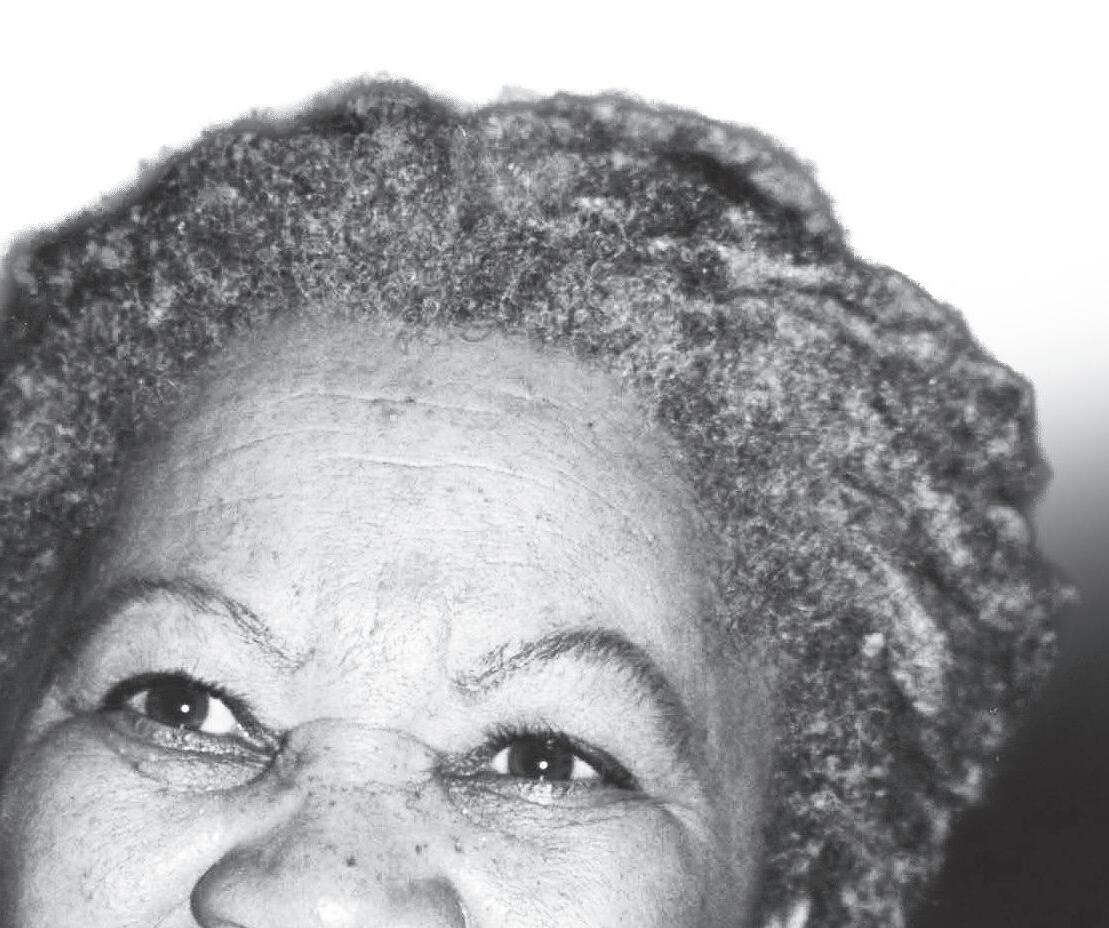

Toni Morrison (1931–2019) was a Nobel Prize-winning American novelist renowned for her lyrical prose and powerful, often visceral explorations of the Black American experience. Her work delves deeply into themes of systemic racism, identity, trauma, and community. Key works include Beloved (1987), which won the Pulitzer Prize, The Bluest Eye, and Song of Solomon.
TONI MORRISON
Sumter, a federal fort in Charleston Harbor, South Carolina.
white students.
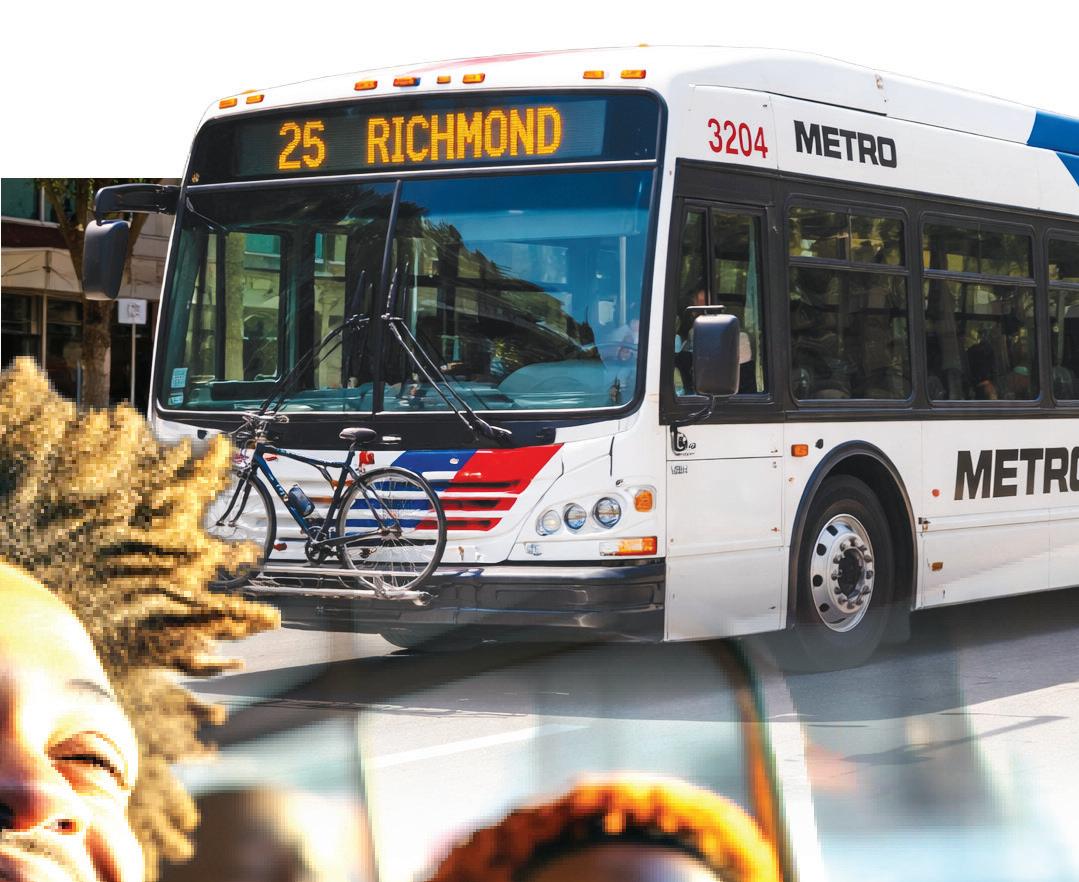
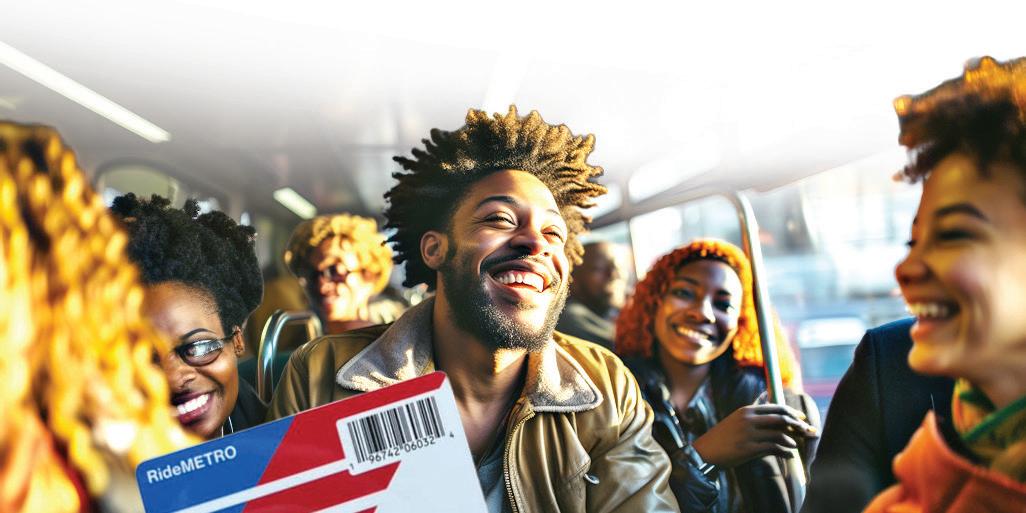
METRO RIDERSHIP GRADUALLY IMPROVING LOCAL
By: Bill King
Houston Metro recently released its year-end ridership report.1 It shows that total ridership marginally improved last year from 73.3 to 76.3 million boardings, a 4% increase.2 Immediately before the pandemic, Metro had nearly 86 million boardings, so it is still about 11% shy of returning to pre-pandemic ridership levels, but has seen a nearly 15% increase since the change in leadership at Metro ushered in by the Whitmire administration.
Just for some longer-term historical perspective, keep in mind that Metro hit its all-time high in ridership almost 20 years ago, in 2006, at
103 million boardings. A er that, ridership gradually declined before falling o a cli when the pandemic hit. So, a er investing over $20 billion in transit over the last two decades, we have managed to reduce ridership by 26%.
e local bus service continues to be the workhorse of the system, accounting for 77% of boardings (58.5 million). at was a 5% improvement from last year, and bus ridership is now just 1% below its pre-pandemic level. e light rail system
e light rail system continued to prove what a disastrous investment it has been. Its ridership fell by 3% and is almost a third below its prepandemic level. e Purple and Green lines’ ridership is particularly dreadful, with boardings at a fraction of the pre-construction
projections. Both, along with the extension of the Red line to the north, have been cited in FTA reports as being among the worst performers in the nation, relative to their ridership projections. is is one of the reasons Houston is unlikely to ever receive any more FTA funding for LRT or BRT projects.
I would bring up the continued abysmal performance of the Uptown BRT, but it has turned into such a joke that it is hardly worth mentioning. So, let’s just leave it at this:
let’s just leave it at this: the Uptown BRT was unquestionably the biggest waste of $200 million in Houston’s history.
system, which mainly serves commuters from the outer suburbs, continues to lag well behind its pre-pandemic levels. ere were only about 4 million boardings last year, compared to double that number before the pandemic. Still, that was up almost 10% from the previous year. I suspect this is a principally a function of the work-from-home phenomenon and that there is little Metro can do to a ect the ridership. Fortunately, these commuters are willing to pay relatively high fares,
and the service is easily scalable, so there is little cost to Metro for this downturn in ridership. Metro, along with other transit agencies across the country, has been struggling with stagnant population growth in urban cores. e entire theory underlying the concept of congregate transit is that urban cores will grow and population densities will increase. However, the growth for the last two decades has been concentrated in the suburbs and the exurbs, areas with relatively low population
e Parkand-Ride pay relatively high fares, relatively low population
densities. Congregate transit simply does not work in that kind of development pattern. Public transportation plays an important role in providing transportation for those who cannot a ord an automobile or are physically unable to operate one. We should support public transportation for those reasons. But the idea that transit can be used to somehow transform urban development patterns or will ever be a viable alternative to the automobile is delusional.


By: Jamal Carter
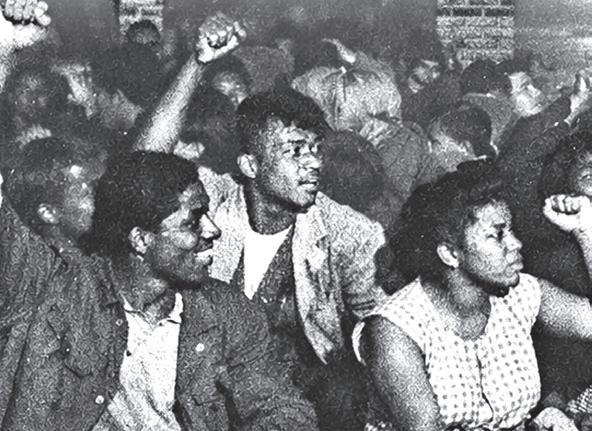
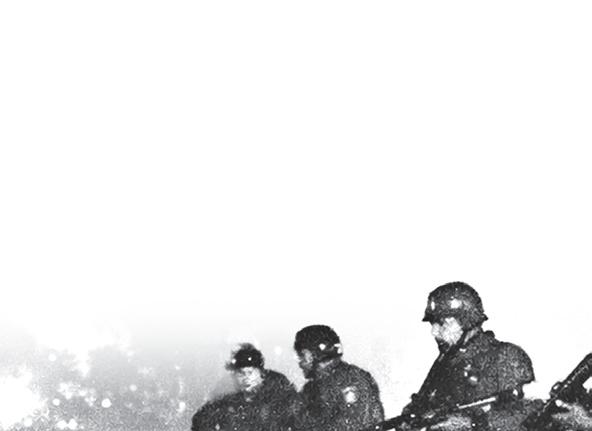
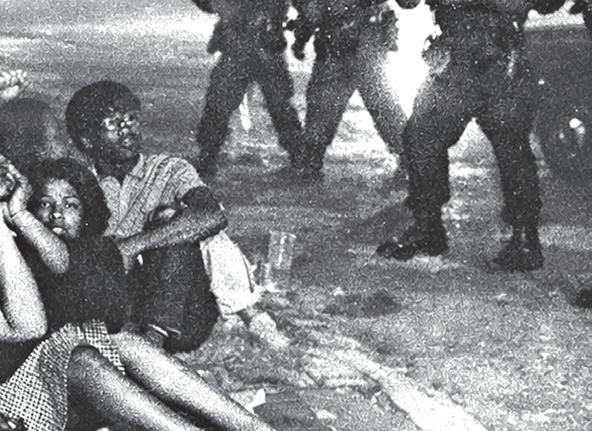
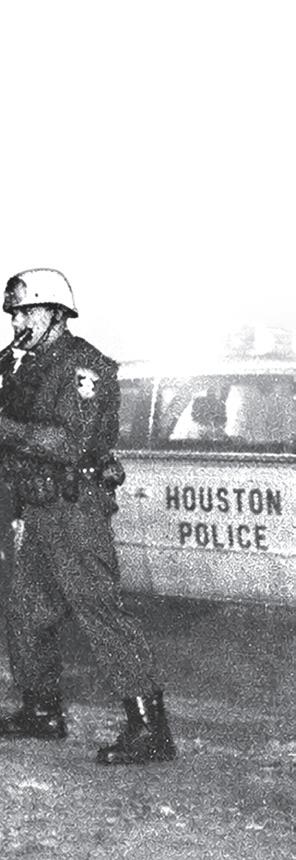
e TSU sit-in blackout in Houston was a signi cant moment in the history of the Civil Rights Movement and student activism. It took place in 1967 at Texas Southern University (TSU), a historically Black college and university. e event occurred during a time of intense racial tension in the United States, as African Americans were demanding equal rights and an end to police brutality. e sit-in and subsequent blackout highlighted the frustration of Black students who felt ignored and mistreated by city authorities. e events leading up to the blackout began when a TSU student was shot and killed by a Houston police o cer. Many students believed the shooting was unjust and re ected a larger pattern of police violence against Black communities. In response, TSU
students organized protests and sit-ins to demand accountability and justice. ese demonstrations were largely peaceful, but emotions ran high as students felt their voices were not being heard. As protests continued, tensions escalated between students and law enforcement. e situation worsened when gun re erupted on campus, leading to injuries and property damage. In response, city o cials cut o power to parts of the TSU campus, creating a blackout. is action was meant to regain control, but it instead intensi ed anger and fear among students and the surrounding community.
e blackout symbolized the silencing of Black voices during a critical moment of protest.
e a ermath of the TSU sit-in blackout had lasting e ects on both the university and the city of Houston. Several


HISTORY


TSU STUDENTS’ SIT-IN SPARKS CIVIL RIGHTS TURNING POINT IN HOUSTON
students were arrested, and the university faced negative media attention. However, the incident also brought national awareness to the issues TSU students were protesting, especially police violence and racial injustice. It forced city leaders and the public to confront the strained relationship between law enforcement and Black citizens.
In conclusion, the TSU sit-in blackout was more than a campus disturbance—it was a powerful statement against inequality and injustice. It demonstrated the courage of TSU students who stood up for their rights despite facing severe consequences. e event remains an important part of Houston’s history and serves as a reminder of the role students have played in the ght for civil rights and social change.
A VOICE THAT SHAPED HISTORY
By: Fred Smith
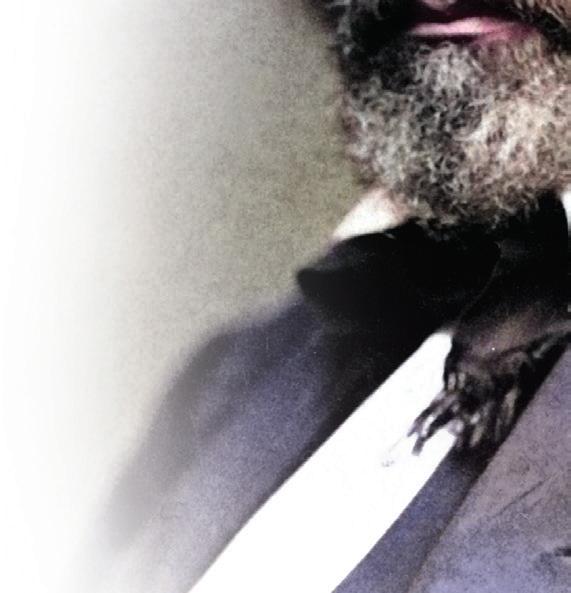
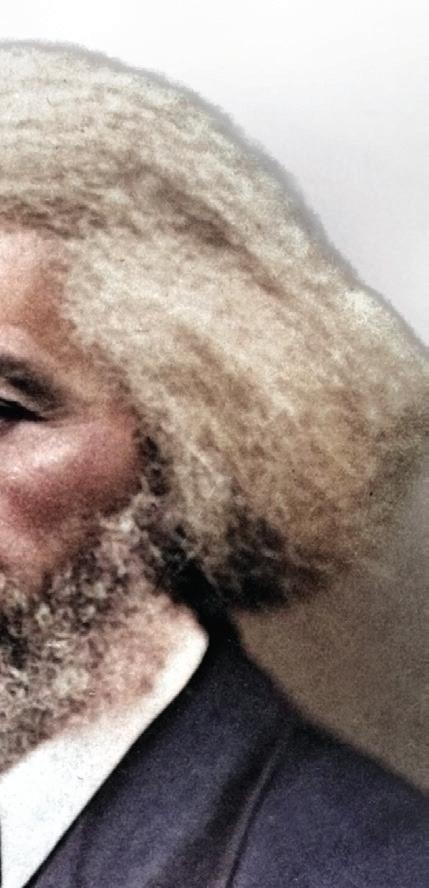
Frederick Douglass was born in February 1818 in Talbot County, Maryland, during a time when slavery was deeply embedded in American society. He was born into slavery and separated from his mother at a young age, a common but devastating practice meant to weaken family bonds among enslaved people. From the beginning of his life, Douglass experienced the harsh realities of enslavement, which later shaped his powerful voice against the institution.
As a child, Douglass was taught the alphabet by Sophia Auld, the wife of one of his enslavers. However, when her husband forbade further instruction, Douglass realized that education was a path to freedom. He continued learning secretly by reading newspapers, books, and discarded materials. is pursuit of knowledge became an act of resistance and helped him understand the broader injustice of slavery.
Douglass endured brutal treatment, including physical violence and forced labor, but he refused to accept a life of bondage. In 1838, he escaped slavery by disguising himself as a sailor and traveling north. A er reaching freedom, he
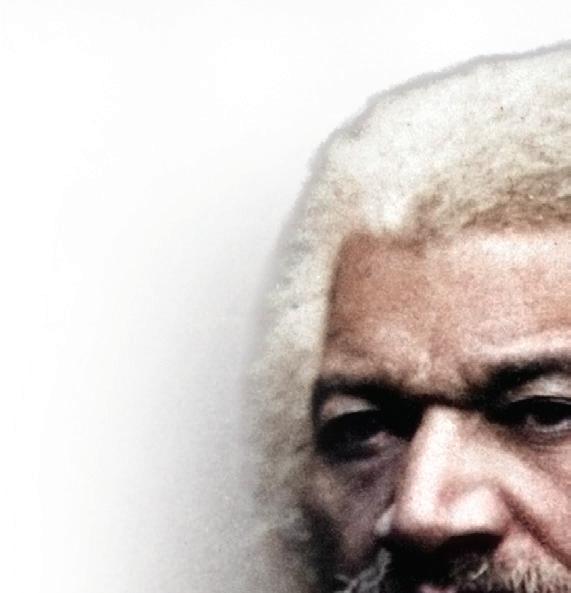












settled in New Bedford, Massachusetts, where he took the last name Douglass and began building a new life as a
building a new life as a free man.
Once free, Douglass emerged as a powerful speaker and writer in the abolitionist movement.
His eloquence and rsthand accounts of slavery shocked and persuaded audiences across the United States and Europe. In 1845, he published Narrative of the Life of Frederick Douglass, an American Slave, which became one of the most in uential slave narratives ever written and strengthened the ght to end slavery.
Douglass believed that freedom and equality extended beyond the abolition of slavery. He was a strong advocate for women’s rights, supporting women’s su rage and


participating in the Seneca Falls Convention in 1848. He also held several government positions later in life, using his in uence to push for civil rights, voting rights, and equal treatment under the law. Frederick Douglass’s birth on February 12, 1818, marked the beginning of a life that would profoundly shape American history. rough courage, intellect, and determination, he rose from enslavement to become one of the nation’s greatest leaders and thinkers. His legacy continues to inspire struggles for justice, reminding us of the power of education, resistance, and the pursuit of equality.
participating in the Seneca Falls Convention