The Australian Federal Police Association acknowledges the traditional owners and custodians of country throughout Australia and acknowledges their continuing connection to land, waters and community. We pay our respects to the people, the cultures and the elders past, present and emerging.
Executive Editor
Alex Caruana | Phone (02) 6285 1677 www.afpa.org.au
Disclaimer
The contents of this publication is for general information only. The publication has been formulated in good faith; however, the contents do not amount to a recommendation (either expressly or by implication) and should not be relied upon in lieu of specific professional and/ or legal advice. The Australian Federal Police Association make no representation, nor give any warranty or guarantee concerning the information provided.
Copyright
All advertisements appearing in this publication are subject to copyright and may not be reproduced except with the consent of the owner of the copyright.
Advertising
Advertisements in this journal are solicited from organisations and businesses on the understanding that no special considerations other than those normally accepted in respect of commercial dealings, will be given to any advertiser.
AFPA Executive Members
AFPA Staff Members
President Report
Our focus remains clear: fight for fair pay, better working conditions, and stronger public safety measures.
As President of the Australian Federal Police Association (AFPA), I want to share an update on what we’ve been working on between late April and the end of August 2025. It’s been a busy few months, with strong advocacy for members, major developments in public safety, and ongoing work to improve pay, conditions and support for AFP staff.
Commissioner Kershaw’s Retirement
Commissioner Reece Kershaw has retired after nearly six years in the role. He’s led the AFP through some tough challenges, including serious national security threats and the fight against organised crime and child exploitation. We thank him for his contribution and wish him well in the future.
Public Safety and Law Reform
In July, we pushed for a national child sex offender disclosure scheme, similar to the UK’s ‘Sarah’s Law’. This came after disturbing reports of a childcare worker in Victoria facing multiple charges. Our view is simple: parents and guardians should have access to information that helps protect children, with the right safeguards in place.
We also publicly opposed the parole bid of Canberra double murderer Scott McDougall. We made it clear that releasing dangerous offenders early is unacceptable and that parole laws need review.
On a positive note, the ACT Government announced plans for a new City Police Station and ACT Policing headquarters. We welcome the consultation on this and will make sure member needs are front and centre.
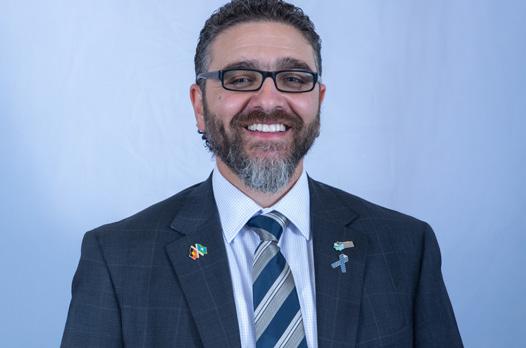
Alex Caruana, President, Australian Federal Police Association
Pay, Conditions and Staffing
The AFP staff survey in June highlighted a serious issue: one in five employees plan to leave in the next two years, mostly because of pay and conditions. Staffing shortages across the organisation have already created risks for both appointees and the public. Pay has been a running eye-sore, with many members feeling current rates don’t reflect the job’s demands and risks. We’re pushing hard for fair and competitive pay to keep experienced staff and bring in new recruits.
The Federal Budget for 2025–26 delivered just over $2.2 billion for the AFP. While this represents an increase from previous years, much of it is tied to specific national security and organised crime priorities. Only a small portion is available to address core issues like staff shortages, resourcing pressures and member well-being. Our concern is that while headline funding looks strong, the money isn’t flowing where it is most needed. We’ll continue pressing government for direct investment in pay, recruitment and frontline support.
The ACT Government’s 2025-26 Budget included over $120 million for new stations, and support for sexual assault victims. That’s a step forward, but we’ll keep pushing for long-term investment to close pay gaps and build sustainability.
Well-being and the Right to Disconnect
In August, right to disconnect laws came into effect. These give AFP staff the ability to set clear boundaries around work communications outside hours. We’re working with the AFP to make sure the laws are applied fairly, especially for operational roles and for those members that are directed to ‘burn hours’ towards the end of the averaging period.
I also want to remind you of your entitlement to 90 minutes of wellness time per week, a valuable opportunity to prioritise your physical and mental wellbeing. This policy, which exists outside the Enterprise Agreement, can be amended, so we strongly encourage you to take full advantage of this time to support your health, wellbeing and resilience.
We’re pushing hard for fair and competitive pay to keep experienced staff and bring in new recruits.
Government Engagement
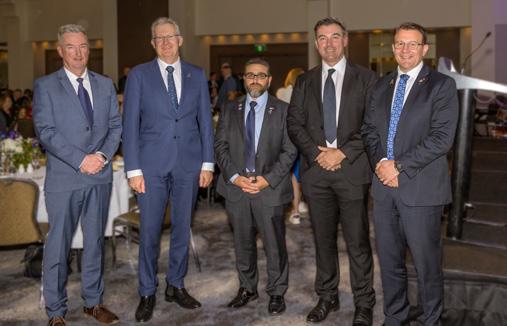
We recently met with Home Affairs Minister Tony Burke to discuss the AFP’s place in the public service and our proposal for an AFP Blue Card for operational members. Talks were constructive, and we’ll keep pushing for measures that reflect the unique demands of AFP roles, including fair pay, the right to disconnect, and access to well-being initiatives.
We’ve also called for investment in 24/7 sobering-up shelters in the ACT, to take pressure off police dealing with non-violent intoxicated people. This would free officers to focus on frontline policing and reduce strain on other emergency services. Unfortunately, the ACT Government didn’t see this a priority.
The ACT Ombudsman’s reports on AFP use of force and complaint handling raised serious concerns. While we disagreed with parts of the methodology, we remain committed to accountability and fairness. At the same time, we’re pressing for reforms that protect both officer safety and community trust.
Support and Solidarity
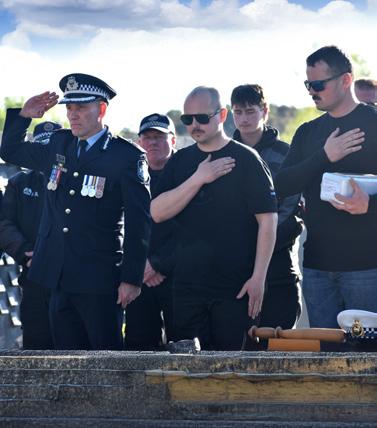
In June, I attended the funeral of Tasmania Police Constable Keith Smith, who was killed in the line of duty. More recently, our thoughts have been with Victoria Police after the tragic shooting in north-east Victoria, which claimed the lives of two officers and injured another. The AFPA stands ready to support colleagues through these dark times.
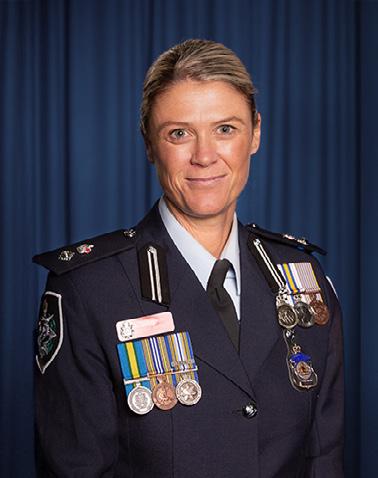
We also congratulated Deputy Commissioner Krissy Barrett on becoming the first woman to lead the AFP upon Commissioner Kershaw’s retirement. It’s a milestone appointment after nearly 25 years of service. She faces some big challenges, particularly around funding, resourcing and rebuilding morale. We look forward to working closely with her on these priorities.
Looking Ahead
Our focus remains clear: fight for fair pay, better working conditions, and stronger public safety measures. The recent wins are encouraging, but there’s more to do. We’ll continue driving key initiatives like the AFP Blue Card, stronger resourcing, the right to disconnect, and improved health and safety measures.
Thank you for your ongoing service and commitment.
The work you do every day is the backbone of our Association’s strength.
Alex Caruana President, Australian Federal Police Association
By Alex Caruana
OPINION
PIECE
Honouring Our Fallen Heroes: Why the National Firearms Register is Essential to Protecting Australia’s Police Officers
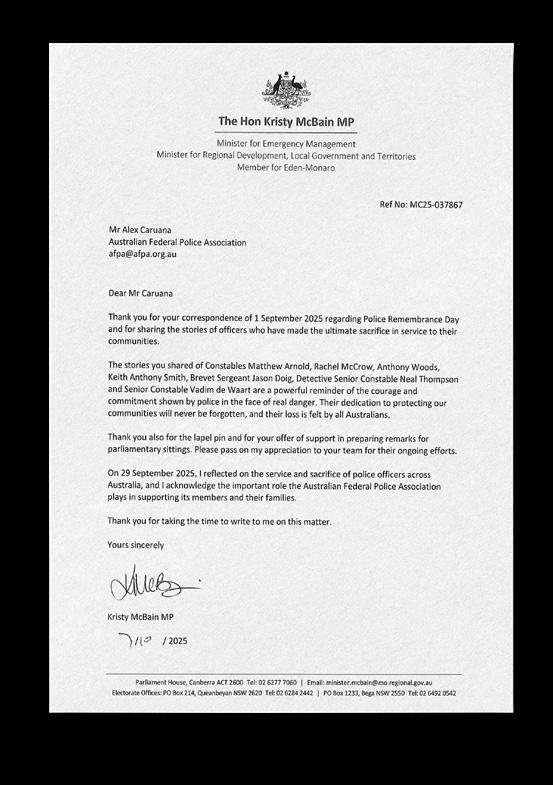
As National Police Remembrance Day approaches on 29 September 2025, my heart aches for the heroes we’ve lost, for their families left shattered, and for the officers who still step into danger every day, knowing it could be their last. This day isn’t just a date on the calendar, it’s a sacred moment to honour those who gave everything to protect us, a time to grieve, and a call to act. The Australian Federal Police Association and its members stands with every officer, every family, and every community torn apart by the unbearable weight of these losses.
As National Police Remembrance Day approaches on 29 September 2025, my heart aches for the heroes we’ve lost, for their families left shattered, and for the officers who still step into danger every day, knowing it could be their last. This day isn’t just a date on the calendar, it’s a sacred moment to honour those who gave everything to protect us, a time to grieve, and a call to act. The Australian Federal Police Association and its members stands with every officer, every family, and every community torn apart by the unbearable weight of these losses.
The pain of the Wieambilla shootings on 12 December 2022 lingers like an open wound. Queensland Police Constables Matthew Arnold and Rachel McCrow were ambushed and taken from their family, including their blue family, in a brutal act that shook the nation. Their laughter, their kindness, their bravery, gone in an instant. Since then, five more names have been etched into our collective grief, each one a story of courage and sacrifice that we cannot, must not, forget.
Brevet Sergeant Jason Doig, a 30-year veteran of South Australia Police, was gunned down on 17 November 2023, responding to a call near Senior. Talking to people that knew him, he was a rock, he was steady, he was professional, a man who lived to serve. His loss left a void in the community he do diligently served and also in the hearts of those who knew him.
In June 2023, Constable Anthony Woods was fatally injured in Ascot, Western Australia, answering a call that turned deadly. Again, speaking with his colleagues and people that knew him, his dedication, his warmth, his life, taken in a moment, leaving his family and colleagues to carry an unimaginable burden.
On 16 June 2025, Constable Keith Anthony Smith, a 25-year veteran, was shot while serving a court warrant in North Motton, Tasmania. Keith was a father, a friend, a protector. His loss is a wound that cuts deep into the fabric of his community.
President of the Australian Federal Police Association (AFPA)
And just days ago, on 26 August 2025, Detective Leading Senior Constable Neal Thompson and Senior Constable Vadim de Waart were ambushed on a rural property near Porepunkah, Victoria. They were executing a search warrant, doing their duty, when their lives were brutally taken away. The shock of this tragedy still burns, raw and unbearable, for their families, their colleagues, and for the wider policing family.
These officers, Matthew, Rachel, Anthony, Keith, Jason, Neal, and Vadim, weren’t just names. They were sons, daughters, parents, partners, friends and colleagues. They were the ones who ran towards danger while others ran to safety. They carried the weight of our protection, and they paid the ultimate price. Their absence leaves a hole in our hearts, their families hearts, in police stations across Australia, and in the communities they swore to keep safe.
As President of the AFPA, I am angry, I am heartbroken, and I am resolute. These losses are not just tragedies, they are a screaming wake-up call. Policing is a calling that demands courage in the face of chaos, but we cannot keep asking officers to walk blindly into danger. Every day, they step into the unknown, driven by duty, love for their communities, and an unyielding commitment to our safety. But how many more must we lose before we act?
The National Firearms Register (NFR) is more than policy, it is a lifeline.
First proposed after Port Arthur in 1996, revived by the AFPA in 2018, and pushed back into focus after Wieambilla, the National Firearms Register will provide a single, real-time database of firearms, their parts and their owners across Australia. Police are still forced to work with fragmented, outdated systems that put them at risk. The NFR is not about politics or restrictions, it is about giving officers the information they need to stay alive.
We cannot bring back the officers we have lost, but we can honour their memory by working to prevent more families from carrying the same grief. In policing, there can never be an absolute guarantee of safety. The work is unpredictable, and the risks are real. What we can do is give our officers every possible tool, resource and piece of information to reduce those risks. Every step we take to strengthen their safety is a step towards sparing another family the heartbreak of losing a loved one in the line of duty.
This Police Remembrance Day, I ask you to join us in showing your gratitude and resolve to stand with our police.
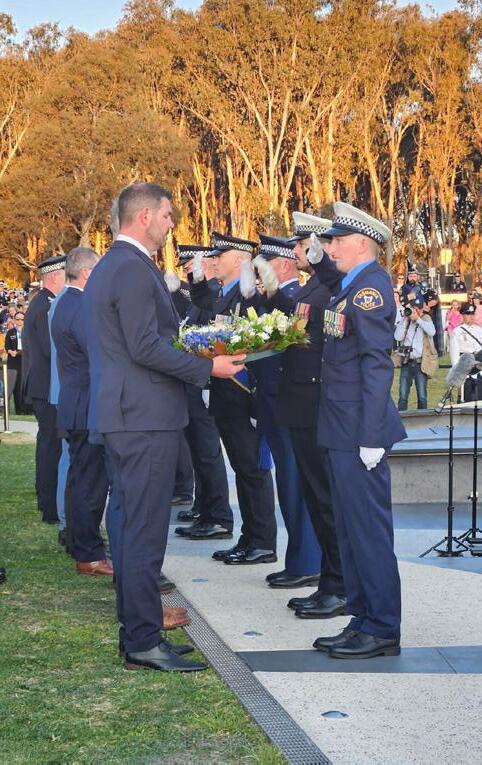
I also invite you to pause and reflect. On 29 September, we gather to mourn, to remember, and to act. We do so in honour of Matthew, Rachel, Jason, Anthony, Keith, Neal and Vadim. We do so in honour of the 823 police officers whose names are inscribed on the National Police Memorial. We do so for every officer who serves, and for every family who awaits the safe return of their loved one from duty.
With a heavy heart,
Alex Caruana President, Australian Federal Police Association
AFP Commissioner Reece Kershaw Announces Early Retirement
AFP Commissioner Reece Kershaw has retired early, stepping down after nearly six years leading Australia’s national policing agency. His 4 August 2025 announcement marks a major leadership change.
Reece, you have achieved an enormous amount for our nation. And I hope you feel incredibly proud.
Prime Minister Anthony Albanese
Appointed in October 2019 by the Coalition government after a distinguished career in state and territory policing, Kershaw took charge at a time when threats were evolving rapidly, from cybercrime to global organised networks.
Over his tenure, the AFP seized more than $1.2 billion in criminal assets, conducted record-breaking drug interdictions, and dismantled international syndicates. He launched the Foreign Interference
Taskforce, expanded cyber operations, and prioritised child protection, drawing on his background in child protection investigations. His efforts led to significant disruptions in online abuse networks, stronger ties with technology companies and international policing bodies, and a deeper AFP presence in the Pacific via facilities such as Pinkenba in Queensland.
The AFP also navigated the COVID-19 crisis under Kershaw’s leadership, supporting border enforcement
Reece Kershaw, AFP Commissioner
and adapting to rising geopolitical tensions. Prime Minister Anthony Albanese praised his tenure, stating, “Reece, you have achieved an enormous amount for our nation. And I hope you feel incredibly proud.” Home Affairs Minister Tony Burke echoed those remarks, noting Kershaw’s impact on national security.
Despite his contract running until 2026, Kershaw cited personal reasons and the desire for fresh leadership as factors in his early departure. “It has been an honour to serve alongside such dedicated professionals. The AFP’s mission to protect Australians is in capable hands,” he told staff.
Deputy Commissioner Krissy Barrett, who will replace him on 4 October 2025, steps in as the first woman to lead the AFP. Commissioner Barrett brings over 25 years of experience across serious and organised crime, counter-terrorism, and first-response policing.
Commissioner Barrett will face some challenges straight away. The AFP’s 2025 Staff Survey, released in June, highlights persistent concerns over leadership, bureaucracy, and wellbeing. The findings show that morale remains fragile despite dedication from staff.
The AFPA notes that many issues around senior leadership communication, excessive bureaucracy, and insufficient mental health support remain unresolved from prior surveys.
AFPA President Alex Caruana is on the record underscored that while engagement and cultural improvements exist, workforce wellbeing remains a serious concern, with only half of AFP staff reporting positive health status.
Commissioner Barrett must work fast to improve funding, resourcing, and organisational morale. The AFPA has called for stronger wellbeing programs, including an “AFP Blue Card” for long-term care and support of officers in retirement. This would be similar to the Department of Veterans Affairs’ White Card scheme.
The staffing environment has also been strained. A 2024 staff sentiment survey revealed nearly 80 per cent of staff dissatisfied with pay offers. These issues have compounded worries over retention. An AFPA member poll found that while 6 per cent would leave the AFP outright, another 68 per cent were actively exploring other opportunities.
Commissioner Barrett will therefore need to push for better resourcing. She must build a case for real wage relief, modernise administrative burdens, and strengthen wellbeing frameworks across the agency. She must also restore confidence in leadership communication and decision making, areas highlighted as weak in the survey findings.
Commissioner Kershaw leaves behind a AFP with enhanced cyber capabilities, deepened regional partnerships, and a commitment to disrupting organised crime and protecting the vulnerable. Under Commissioner Barrett, the AFP enters a new era, a chance to maintain momentum and address internal challenges.
Commissioner Barrett takes over an organisation in robust condition but under pressure. Cybercrime, terrorism, foreign interference, and transnational syndicates remain critical threats. She must also focus on employee health, operational support, and culture.
Commissioner Kershaw’s early retirement marks both an ending and a beginning. Now, Commissioner Barrett steps in to build on his groundwork, while navigating the tough task of rebuilding morale, securing proper funding, and shaping the AFP’s future culture.
Krissy Barrett Deputy Commissioner
By Paul McCue, General Manager, Australian Federal Police Association
GENERAL MANAGER
Rolling the Dice: Why AFPA Membership Matters More Than Ever
Now two years into my role as General Manager of the Australian Federal Police Association (AFPA), I continue to be inspired by the dedication and resilience of our members.
Whether sworn or unsworn, stationed in the ACT, across Australia, or posted overseas, the work you do is often under immense pressure, with limited resources and long hours. It’s a credit to each of you that the lights stay on and our communities remain safe. Since stepping into this role, I’ve had the privilege of attending countless meetings—formal and informal— across our major centres. These interactions have given me a deeper understanding of the challenges
you face and the unwavering commitment you bring to your roles. They’ve also reinforced the importance of the AFPA and the support it provides to members navigating the complexities of working within the Australian Federal Police (AFP).
In December 2023, I introduced myself to Bluestar readers and spoke about the value of AFPA membership. Today, I want to revisit that message with a sharper lens—because the stakes are high, and the risks of not being a member are real.
AFPA Membership
Many of you know colleagues who aren’t members of the AFPA. Their reasons vary—financial constraints, a belief that they won’t need assistance, or simply not getting around to joining. But having now overseen two years of applications for retrospective assistance, I can say with certainty: being an AFP employee without AFPA membership is a gamble. So, what is a retrospective application for assistance?
Also known as a “pre-existing,” this occurs when an AFP employee who is not a member seeks help from the AFPA for a workplace matter that happened before they joined. It’s akin to having no car insurance, suffering a theft or accident, and then asking the insurer to cover the damage. The reality is, without membership, you’re exposed. Whether you’re at a desk, on patrol, or deployed overseas, the AFP Act and internal policies apply to you. And when things go wrong, the AFPA can only do so much if you weren’t a member at the time.
Membership isn’t just about legal support—it’s about peace of mind. It’s about knowing that if something happens, you’re not alone. You have a team behind you, ready to advocate, support, and protect your interests.
There are times, sadly, when the AFPA cannot assist because at the time of an incident occurring, the employee was not a member of the AFPA. I encourage you not to be that person.
Wall to Wall Ride 2025 – Honouring Our Fallen
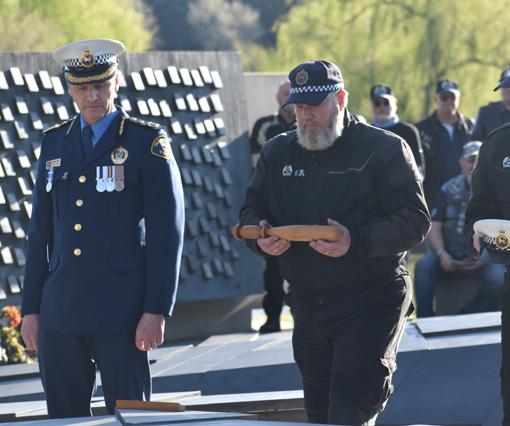
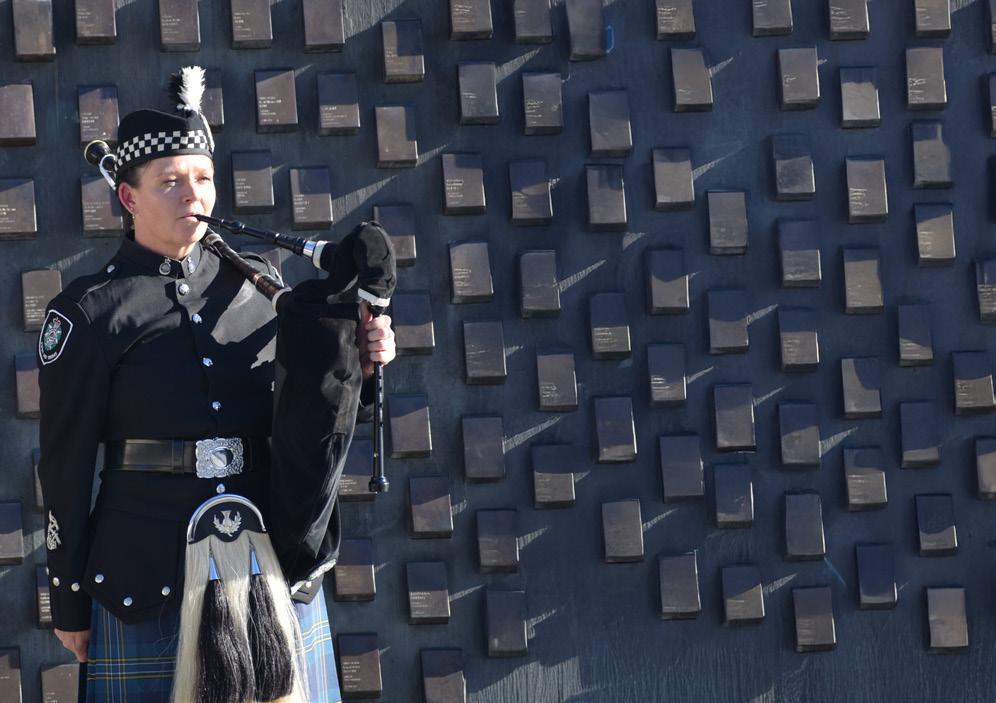
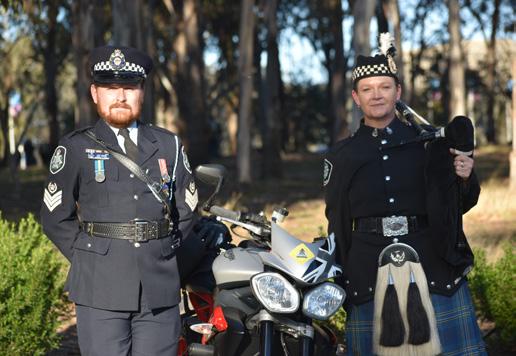
One of the most moving events on the AFPA calendar is the Wall-to-Wall Ride for Remembrance, and 2025 this was no exception. This powerful tribute brings together police from across Australia to honour those who have made the ultimate sacrifice in the line of duty. The tragedy in Victoria recently, and in Tasmania earlier this year are all too familiar reminders of that sacrifice.
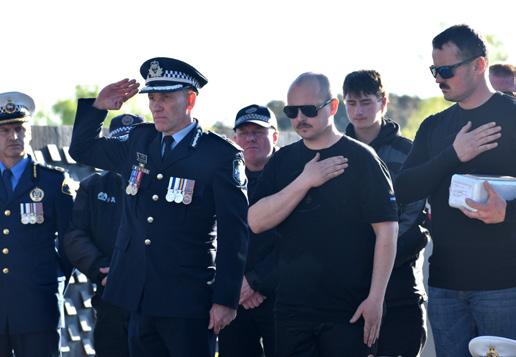
The ride culminates at the National Police Memorial in Canberra, where stories are shared, names are remembered, and the policing community stands united in grief and respect. It’s a reminder of the risks inherent in our profession—and the importance of solidarity.
The AFPA is proud to support this event, and I was honoured this year to attend the formal service in the morning, followed by the moving service run by the Police Federation of Australia (PFA) in the afternoon. Whether by riding, attending, or simply reflecting on the significance of the day, it’s a moment to honour our fallen, support their families, and reaffirm our commitment to each other. A summary of this year’s event can be found on page 12
Bravery Awards 2025 – Celebrating Courage
Equally inspiring are the PFA Bravery Awards, which was held this year on Wednesday 3 September 2025 in Canberra.
It was a privilege once again to attend the ceremony, to recognise extraordinary acts of courage by police across the country members. The awards highlight the bravery that often goes unseen—the split-second decisions, the selfless actions, and the quiet heroism that define our profession.
Whether it’s a life-saving intervention, a response under fire, or an act of compassion in a moment of crisis, these stories deserve to be told. They remind us of the calibre of people who serve in the policing family and the values we uphold.
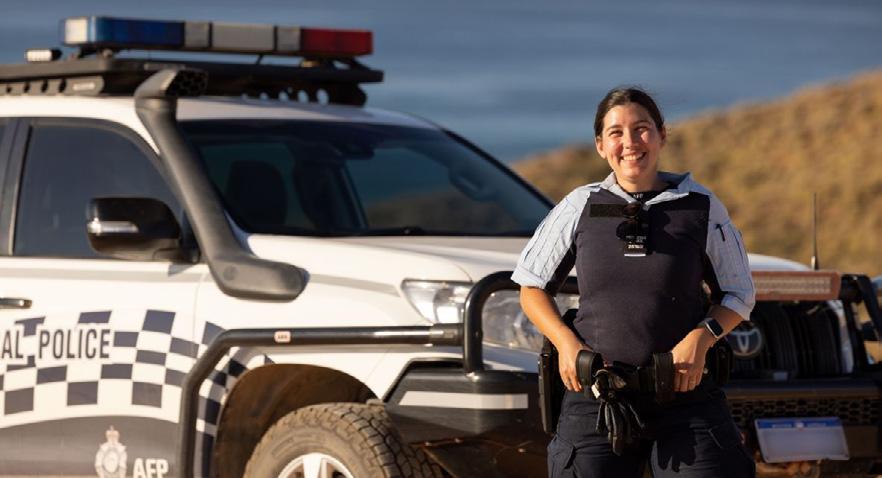
This year, we were honoured to witness two of our members as part of five recipients for the Bravery Award, three from New South Wales police, and two from the Australian Federal Police, stationed in Vanuatu.
Their incredible stories can be seen on page 15.
Looking Ahead
As we move into the final quarter of 2025, I want to thank each of you for your service and your trust in the AFPA. We are here for you—not just when things go wrong, but every day, in every way we can.
If you’re not yet a member, I urge you to reconsider. Don’t roll the dice with your career, your wellbeing, or your future. Join the AFPA and ensure you have the support you need, when you need it most. Visit afpa@ afpa.org.au to join now.
Together, we are stronger.
Understanding Your Right to Workplace Consultation
Consultation ensures employees are informed and involved in workplace changes that affect them.
In the workplace, consultation is a form of conversation. It is a conversation that has a particular focus. It can arise from the mutual recognition of a problem that requires resolution. However, more commonly, it arises from the employer identifying a need for change, developing a solution, and then discussing the change proposal with employees, stakeholders and unions.
The Fair Work Act 2009 requires all employers to include a consultation term in their enterprise agreements. For the AFP, this is clause 98 of the AFP Enterprise Agreement 2017-2020 (the EA).
The key requirement of consultation is that members are involved in the decision-making process as early as possible. This not only means that members are given due notice of any proposed changes, but that they are also engaged in conversation about how the change may impact them and are able to provide feedback and engage with the entire consultation process from a place of informed understanding.
Clause 98(2) of the EA states that the AFP recognises
“Employees and the relevant unions should have a genuine opportunity to influence decisions” and “consultation with Employees and relevant unions on workplace matters that significantly affect or materially impact them is sound management practice”
Under clause 98(4) of the EA, consultation is required in relation to:
Changes to work practices which materially alter how an Employee carries out their work
Changes to or the introduction of policies or guidelines relevant to workplace matters (unless the changes are minor or procedural)
Major change that is likely to have a significant effect on Employees
Implementation of decisions that significantly affect Employees
Changes to Employees’ regular roster or ordinary hours of work (subject to any other relevant provisions in this Agreement)
Other workplace matters that are likely to significantly or materially impact Employees
Giles Snedker Legal and Industrial Manager
Major change covers a variety of changes in the workplace that would have a significant effect on members including the termination of the employment, a major change to the composition, operation or size of the workforce or to the skills required of members, the elimination or diminution of job opportunities (including opportunities for promotion or tenure), the alteration of hours of work, the need to retrain members, the need to relocate members to another workplace, or the restructuring of jobs. All of these changes present a major change to members and, therefore, business areas have an obligation to actively participate in the consultation process.
Consultation with members and the AFPA must occur prior to a decision being made, and the AFP must notify members and the AFPA of the proposal to introduce the major change as soon as practicable. Throughout the process, the members and the AFPA must be given the opportunity to discuss the change, including perceived impacts and mitigation of impacts, as well as have all relevant factors provided in writing. In return, the AFP must ensure genuine and real consideration is given to any matters the member/s raises in relation to the change.
Consultation is also required for a change to the regular roster or ordinary hours of work. Like a major change, members and the AFPA must be given the opportunity to discuss the introduction of the change, its likely effect and mitigating measures. However, while members must be provided with all relevant information this need not be provided in writing.
Consultation cannot be genuine if it appears to have a predetermined outcome, when it is late in the process, when there is little time allowed for open and thoughtful discussion and consideration, and the feel of the consultative conversation is defensive, aggressive and adversarial.
While we have noted many areas are now engaging with members and the AFPA as per the EA, should a member’s business area fail to appropriately consult with members on workplace changes, this is considered a breach of the EA and therefore able to be disputed under Dispute Resolution Procedures (clause 99).
The AFPA Legal Industrial Team
encourages all members to engage the AFPA as soon as any workplace changes are raised to ensure that their legal and industrial rights are advocated for, any consultation requirements are met, and productive and meaningful conversation can occur.
2025 Wall to Wall Ride
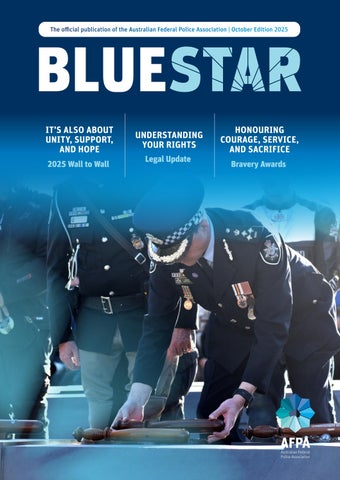
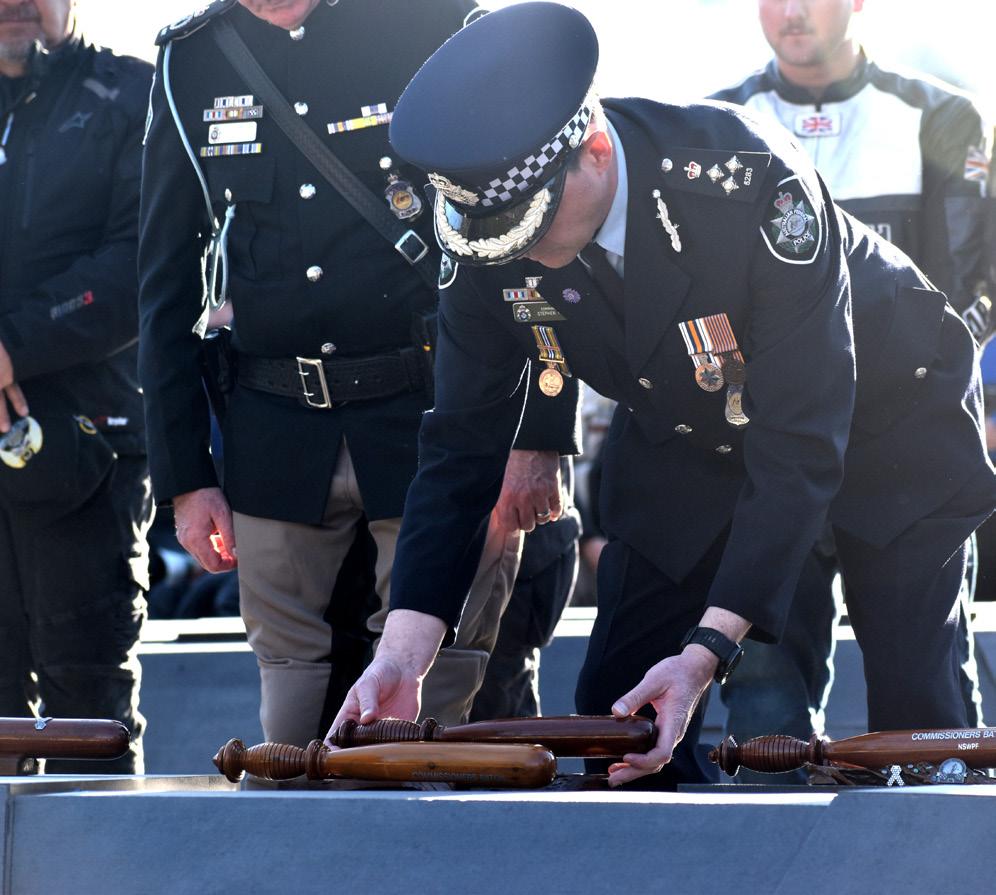
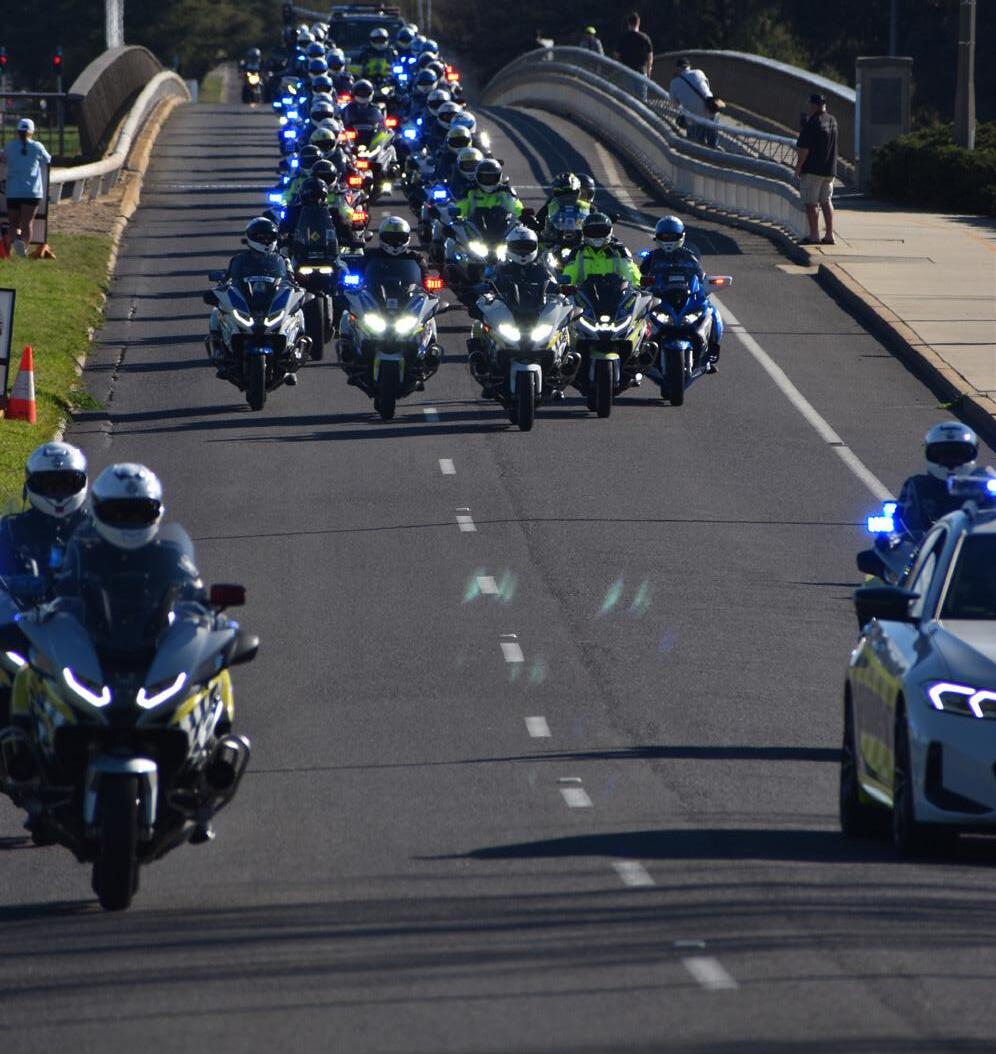
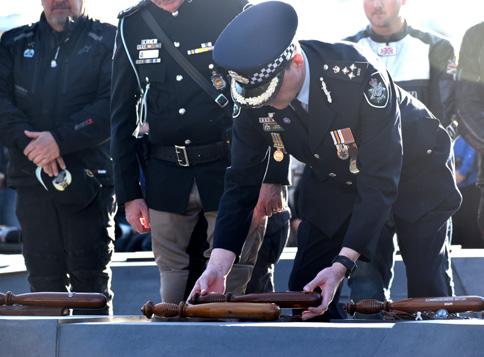
Every thunderous roar of engines rolling into Canberra on September 13 held more than noise, it carried remembrance. The Wall to Wall Ride for Remembrance has become a solemn, powerful tradition: a national procession by police, past and present, and supporters who traverse state by state to converge at our capital and honour lives sacrificed in the line of duty.
What began in 2010 as a modest gathering has grown into a marquee event on the policing calendar, drawing contingents from every Australian jurisdiction. Riders depart from each state’s memorial, journeying under police escort to Canberra for a shared passage and culminating in a moving ceremony at the National Police Memorial.
This year, the ride bears added poignancy. The legacy baton, carrying within it the names of officers lost on the job.. Recent tragedies, including the deaths of
Victorian officers Neal Thompson and Vadim de WaartHottart, make every kilometre more meaningful. But the Ride is not just a memorial, it’s also about unity, support, and hope. All proceeds go to state Police Legacy organisations that assist families of fallen officers. Whether you’re a rider, loved one, biking enthusiast or community member, witnessing the procession reminds us their service was never in vain, and we will never forget.
It’s also about unity, support, and hope. All proceeds go to state Police Legacy organisations that assist families of fallen officers.
Supporting Our Own: How the AFPA’s Welfare Program Offers More Than Just Industrial Protection
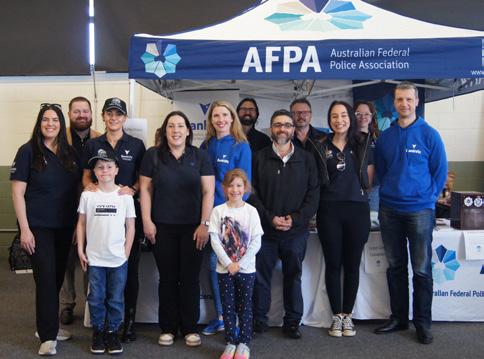
Across the country, the AFPA team has been actively engaging with members at musters, listening, learning, and sharing the full scope of support available to those who serve. One recurring theme we’ve noticed during these conversations is surprise—genuine surprise—when we begin to talk about our welfare offerings, particularly the Critical Illness and Trauma Benefit.
Many members are well aware that the AFPA provides robust industrial support, advocating for their rights and representing them in workplace matters. But what often comes as a revelation is that our commitment to members extends far beyond the professional sphere. We’re here for you not just as a worker, but as a person navigating life’s most difficult moments.
Our Critical Illness and Trauma Benefit is designed to provide what we call “breathing space.” When a serious diagnosis or traumatic event strikes, it can feel like the world stops. Treatment is often not only emotionally and physically draining—it’s also financially overwhelming. That’s where we step in. This benefit offers financial relief to help ease the burden during a time when your focus should be on healing, not bills.
But our support doesn’t stop at financial assistance. We walk alongside you through the entire process. From helping you complete the necessary paperwork to checking in regularly, our welfare team is committed to making sure you’re not navigating this alone. We understand that illness and trauma affect more than just the individual—they ripple out to families, support people, and entire households.
That’s why we take a holistic approach. During our conversations with members, we often explore what additional support might make a difference. Could you benefit from delivered meals while undergoing treatment? Would house cleaning services help ease the load at home? Sometimes, it’s not the member themselves who needs the extra help, but their support person—an advocate, partner, or family member who’s doing the heavy lifting behind the scenes.
We don’t pretend to have all the answers, and we know we’re not a complete solution. But we aim to be a moment of relief—a pause in the chaos—where we can step in and help the helper. Our welfare program is built on empathy, dignity, and the belief that no one should face hardship alone.
So next time you see us at a muster, come and have a chat. Whether you’re curious about what’s available or just want to connect, we’re here. Because at the AFPA, we believe that looking after our members means more than just protecting their rights—it means standing by them in every chapter of life.
Courtney Posantzis Membership Services Manager
BRAVERY AWARDS
2025 National Police Bravery Awards
Honouring courage, service, and sacrifice
In a profession defined by risk and duty, the National Police Bravery Awards stand as a peer-topeer tribute to courage and recognition of service. This year’s 8th annual ceremony, held at the Hyatt in Canberra, crystallised that mission, “an award for police, by police.”
being awarded a National Police Bravery Award for their extraordinary actions during the magnitude 7.3 earthquake in Port Vila on December 17, 2024.
The AFPA team were honoured to attend, joining a room filled with police officers from all corners of the country, Federal MPs, dignitaries, and distinguished guests, where the gravity of the occasion was ever present. These awards are not about medals or ceremony alone— they recognise and celebrate those who, in the line of service, went above and beyond their duty.
Each year, the Awards honour officers whose acts of bravery, self-sacrifice, and unwavering commitment set the benchmark for policing excellence. The judging process, entrusted to a national panel, ensures that every nomination is treated with the utmost confidentiality and measured against rigorous criteria. It’s a process that transcends state and territory borders, reinforcing that bravery knows no jurisdiction.
Amid the devastation, both officers risked their lives by repeatedly entering a collapsed building site to triage and evacuate the severely injured, all while facing ongoing aftershocks and the looming threat of a tsunami. Inspector Murphy further endangered himself by moving to secure a gas leak, while Sergeant Cox remained at the site to coordinate recovery efforts. Despite a communications blackout that prevented them from contacting their own families, both men continued their duties with courage and composure that exemplify the highest values of policing.
To every officer, past and present, who embraces risk so that others may live safely, the National Police Bravery Awards serve as a moment to pause, reflect, and honour your service. It is a night to stand together in solidarity and pride, acknowledging that true bravery is not the absence of fear, but the choice to act despite it.
Financial wellbeing starts with smart saving
Financial wellbeing is about feeling confident, secure, and in control of your finances. One way to build confidence is using savings tools that not only grow your money, but support healthy habits.
How Term Deposit and Bonus Saver accounts can work together to support your goals.
One way to build that confidence is by using savings tools that not only grow your money, but support healthy habits along the way, as well.
Two simple tools that are a smart addition to your savings strategy and can make a big difference are Term Deposit and Bonus Saver accounts. Each plays a different role in your financial wellbeing by making your money work while you don’t have to - and together, they can help you feel more secure and future-ready.
Build financial confidence with passive income.
A Term Deposit is a powerful way to create a steady, predictable income stream - without needing to monitor the markets or change your behaviour.
/ Earn interest without lifting a finger: Once your money is locked in, it earns a fixed rate for the full term*
/ Steady returns: You know exactly how much you’ll earn at the end of the term
/ Discourage temptation to dip in: Committing to a deposit term can help discourage temptations to withdraw early
This kind of structure can help reduce financial stress. Instead of worrying about fluctuations or feeling pressure to actively manage your savings, you can set it and forget it, knowing your money is growing safely in the background. Term Deposits are ideal when you’re saving for a home deposit, holiday, or major purchase if you don’t need immediate access to your funds and want to earn without having to meet Bonus Saver conditions. Stay flexible while still growing your savings
A common concern with Term Deposits is: What if I need my money? That’s where the Bonus Saver comes in. It gives you:
/ Encouragement to build regular savings habits
/ Higher interest earnings when you consistently meet deposit and withdrawal conditions
/ Access to funds in case of emergencies
Smart strategy: use both together
You don’t have to choose just one. Financial wellbeing is about balance - having money you have accessibility to, and money that’s safely growing for the future.
Here’s how they can work together:
/ Use a Bonus Saver for regular savings and as an emergency buffer
/ Lock away larger amounts in a Term Deposit to earn better interest over a longer period
This balanced approach allows you to earn more, save smarter, and to reach your financial goals faster.
Opening a Bonus Saver
To open a Bonus Saver account, visit bankvic.com.au, click ‘Login” to access internet banking and then enter your member number and password. Alternatively, you can compare our accounts to find the right one for you.
Opening a Term Deposit
To open a Term Deposit account, visit bankvic.com.au, click ‘Login” to access internet banking and then enter your member number and password. Alternatively, you can compare our accounts to find the right one for you.
We’re here to help
If you have any questions, call us on 13 63 73.
Dr Martin Hess
A distinguished career spanning 33 years with the AFP, Dr Martin Hess is recognized for roles across operations, leadership, and international diplomacy along with extensive academic successes.
Dr. Martin Hess joined the Australian Federal Police (AFP) in 1988 and has served across Melbourne, Far North Queensland, South East Queensland and the ACT in intelligence, investigations, surveillance, protection, and community policing. A designated detective, he led several complex cross-jurisdictional, multi-agency drug operations in remote Far North Queensland.
From 2002 to 2006, he worked in Close Personal Protection, guarding dignitaries such as the British High Commissioner and Israeli Ambassador, before serving as liaison to the Indonesian National Police. Internationally, he deployed with UN missions in Cyprus (1996), East Timor (1999), and Afghanistan (2010–11), and later contributed to Australia’s UN Security Council term (2013–14).
As part of the AFP International Deployment Group (2007–17), Hess was seconded to the Australian Civil-Military Centre and ADF HQ Joint Operations Command. He also served in the Australian Army Reserve (1979–2005).
Academically, he holds degrees in economics, criminology, defence studies, and leadership, and completed a PhD at ANU in 2018 on the AFP as an international actor. He is the author of The Politics of Police Diplomacy: The Australian Experience and lives in regional New South Wales.
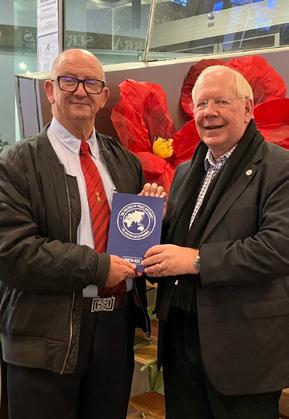
The Politics of Police Diplomacy by Martin Hess was launched at the Australian War Memorial on May 20, 2025 with introductions by Mr Matt Anderson PSM, Director of the Australian War Memorial and Emeritus Professor William Maley AM, founding director of the Asia Pacific College of Diplomacy at the Australian National University.
It is available for purchase for $49.95 from the AWM Bookshop. [https://shop.awm.gov.au/products/ the-politics-of-police-diplomacy-the-australianexperience]
It is also available at Paper Chain Books in Manuka, ACT, Collins Booksellers Riverside Plaza Queanbeyan NSW and Boffins Bookshop, Perth WA.
The book presentation, sales and signing were held at the Australian Institute for International Affairs in Deakin, ACT on 25 September 2025 and at the Athenaeum Library, Collins St Melbourne on Saturday 25 October 2025.
‘detailed, comprehensive and insightful’
Mr Matt Anderson PSM, (Director Australian War Memorial)
‘refreshingly blunt’
Rev Steve Neuhaus (Chaplain)
Dr Martin Hess
Australian Police Diplomacy
What it is and Why it matters
If as some suggest, we are in the foothills of another major conflict, it is worth remembering that one of the objectives of the United Nations remains ‘to save succeeding generations from the scourge of war’ by promoting peace operations.
If peace is not just the absence of conflict but the presence of justice, then international policing plays a vital role in the pursuit of the international justicebased outcome which underpin peace.
Policing and Diplomacy: An Evolving Partnership
Whilst traditional notions of ‘policing’ and ‘diplomacy’ may not automatically sit as natural partners, international relationships, engagement and discourse are changing. We now talk of ping-pong diplomacy, gunboat diplomacy, public diplomacy, cowboy diplomacy, dollar diplomacy, big stick diplomacy, defence diplomacy, missionary diplomacy, science diplomacy, sport diplomacy and others. The obvious question is: why not police diplomacy?
Australia’s Federal Police on the Global Stage
Serving both international good citizenship and the national interest, the Australian Federal Police (AFP) has engaged internationally in various capacities over a sixty-year period in UN, multi-lateral, and bi-lateral efforts aimed at peace and justice-based solutions.
Dr Hess’s recently published book The Politics of Police Diplomacy: The Australian Experience, reviews many of these efforts through a diplomatic lens, and argues that, as an effective instrument of preventative and restorative diplomacy, the AFP has earned a place as a legitimate participant in foreign policy considerations, and that these efforts serve as an example of how international policing can be done and why it merits its own diplomatic track.
Why Police Diplomacy Matters Now More Than Ever
Given recent trends in Australia’s immediate region, and the encroachment of illiberality in our region, this aspect of our national effort to avert conflict and maintain liberal-democracy domestically, has never been more important.
How Police Can Control Type 2 Diabetes
For many people, somewhere in the 30’s, priorities around health change.
While our waistline used to dictate what we put in your mouths, as we get older, good health becomes the priority. Sometimes, this mindset shift is a diagnosis. And there’s one that starts to become more common in the 40s: Type-2 diabetes.
Type 2 diabetes is the result of your body producing insulin, but not using this pancreatic hormone effectively, as the body intended. The wide range of symptoms include thirst, headaches and weight gain.
Being over 45 and having a history of heart disease are risk factors. But what’s more important to know is what you can control. For example, weight control, healthy diet (with low cholesterol), and physical activity.
The daily biological rollercoaster of policing
But for shift working police, this is harder. According to ex-officer and acclaimed author, Dr Gilmartin, “police experience an elevated adrenal cortical sympathetic stress response, causing the liver to release glucose. The pancreas responds by secreting insulin to allow glucose to enter the cell.”
Chronically elevated levels of insulin start a string of problems that make up metabolic syndrome, including type 2 diabetes. Gilmartin advocates going to the root cause: keeping insulin levels under control.
While no cure, a healthy lifestyle controls it
You must manage type-2 diabetes because it’s progressive. Diabetes Australia notes that sufferers are 4 times more likely to suffer heart attacks and strokes. It’s also the leading cause of preventable-blindness. Amputations are 15 times more common and mental health disorders affect 30% of people with diabetes.
Police officers need to focus more on eating well to manage blood glucose levels. Regular exercise will complement this, helping to lower blood pressure and weight. Medication is often required to support the body’s processes.
Specialists can make eating plans and exercise programs that are realistic to manage. Blood glucose monitoring habits are important to solidify with police officers who experience fragmented work settings.
Open communication with colleagues and departments can ease the pressure of ‘finding time’ or private areas to test levels. Speaking with a dietitian will help improve your diet and nutrition.
Cover like no other
Police Health understands the unique health needs of the police community, because we’ve been looking after them for 90 years. Whether you’re already a member, or interested in becoming one, call us to find out how to get the most out of our cover and benefits. We’re here to help.
Leading law firm, Tindall Gask Bentley is the preferred legal services provider of the Australian Federal Police Association, offering 30 minutes of free initial advice and a 10% fee discount*
COMCARE CLAIMS
• Lodging claims
• Disputing decisions affecting payment of medical costs and incapacity payments
• Disputing rejected claims
• Permanent impairment claims
• Reconsideration applications
• Filing appeals to the AAT and Federal Court of Australia
To arrange a preliminary in-person or phone appointment contact TGB on 1800 730 842
KEY INITIAL CONTACTS
• Mediation & family dispute resolution
• Defacto & same sex relationships
• Divorce & international divorce
Deceased estates including:
• Advice to executors & beneficiaries
• Estate administration including obtaining Grants of Probate
• Estate disputes including contesting wills
BUSINESS, COMMERCIAL & PROPERTY
• General business advice
• Real estate & property advice
• Conveyancing
• Business transactions
• Commercial disputes
Tim White - Partner twhite@tgb.com.au
Tim leads our Comcare Claims team for AFPA, working with 5 other lawyers nationally.
Luke Officer - Partner lofficer@tgb.com.au
Luke leads our Criminal & Disciplinary team for AFPA, working with 6 other lawyers nationally.
Dina Paspaliaris - Partner dpaspaliaris@tgb.com.au
Dina leads our Family & Divorce law team for AFPA, working with 15 other lawyers nationally.
Sarah Mitchell - Senior Lawyer smitchell@tgb.com.au
Sarah leads our Wills & Estates team for AFPA, working with 12 other lawyers nationally.
Adelaide (SA)
Perth (WA)
Darwin (NT)
Brisbane (QLD)
Canberra (ACT)
Nour Harb - Senior Associate nharb@tgb.com.au
Nour leads our Business & Commercial team for AFPA, working with 4 other lawyers and a conveyancing team nationally. tgb.com.au | 1800 730 842 *conditions
Wilderness Botswana Sustainability in Style
Embark on a transformative journey through Botswana’s Okavango Delta and Linyanti regions, where wildlife encounters blend with a commitment to preserving nature and empowering local communities.
Explore the world’s largest inland wetland, where deserts give way to lush floodplains, forests and lagoons teeming with wildlife. Begin in the pristine Okavango Delta, navigating marshes, islands and lagoons, spotting elephants, giraffes, and sitatunga.
Next, visit the Linyanti Wildlife Reserve, known for its meandering waterways and rich biodiversity. Enjoy exceptional game viewing and birdwatching in this untouched wilderness.
Stay in luxurious safari lodges offering private decks and plunge pools, where comfort meets the wild. With exclusive excursions, gourmet dining, and immersive wildlife experiences, this journey caters to the environmentally conscious traveller, leaving a lasting positive impact on nature and local communities.
Inclusions:
• 4 nights’ accommodation in Luxury Safari Camps
• All Meals & Local Drinks
• Return Light Aircraft Transfer
• 4X4 Safari Vehicle Game Drives & Game Walks
• Mokoro ride & Boat Excursion
• Entrance Fees Included
• Laundry
5 days from $18,095 per person*
For full Terms and conditions and bookings please contact The Savvy Traveller directly on 0452 209 964 or email lyntonj@thesavvytraveller.com.au
* Prices shown are per person based on twin share based on travelling 01 November 25 - 28 February 26. Seasonal supplements and minimum night requirement may apply. Solo traveller and extra night prices available on request. Luggage restrictions may apply. International flights not included.