In an era where trends rise and fade with astonishing speed, where digital platforms shape tastes, and repetition often masquerades as style, living boldly has become both a creative assertion and a quiet act of resistance.
Bold Living was conceived to honour those who shape their environments with imagination, authenticity, and courage. It pays tribute to individuals who view their homes not merely as places to dwell but as expressions of identity, creativity, and personal history. These spaces tell stories, hold memories, challenge conventions and celebrate individuality.
To live boldly does not always mean to live loudly. Boldness can reside in restraint, clarity, and stillness. It may be a single piece of art commanding a room, or the thoughtful layering of textures passed down through generations. It can be the contrast of old and new, the fearless embrace of colour, or the quiet power of minimalism. At its core, bold living is about intention: living with purpose, clarity, and personal truth.
The homes featured in this book span a wide spectrum of sensibilities. Some are exuberant and theatrical, others contemplative and serene. You will journey through a historic greenhouse in Normandy where horticulture meets fantasy, a Berlin loft where brutalism softens into poetry, and a restored palace where past grandeur dances with modern irreverence. You’ll visit city apartments, countryside estates, seaside hideaways, and urban sanctuaries. Each space is unique, yet all share one essential quality: they are deeply personal, reflecting the passions, curiosities, and values of their inhabitants.
The individuals behind these interiors are more than homeowners, they are artists, collectors, dreamers, and thinkers. They don’t merely decorate; they compose, curate, and narrate. Their homes are the result of lived experience and instinctive choices refined over time. Their objects are not random acquisitions but meaningful pieces – a chair remembered from childhood, a lamp discovered on a distant journey, a colour that evokes a memory. Every detail is part of a larger story.
This book does not aim to impose rules or define taste. Instead, it invites you to explore, pause, and reflect. It encourages seeing design as a dialogue between inner self and outer world, as an expression of presence rather than perfection, of authenticity rather than display.
To live boldly is to listen to your own voice, resist the need for approval, and celebrate the imperfect, the unexpected, and the beautifully real. The homes here remind us that the most powerful spaces are not those that follow prescribed ideals but those that emerge from authenticity. They demonstrate that there is no single way to live beautifully, only your own.
Welcome to Bold Living, a celebration of character, vision, and the art of living with soul.
Maria Aziz
08 A Life Etched in Floral Elegance
Curated Worlds With Countless Treasures
BILL PALLOT
A Flight of Fancy Behind Classical Walls
JAMES PERKINS
Where Fantasy and History Coexist
DAVID CARTER
92 Sculpted by Time, Guided by Purpose
JEAN - CLAUDE BINOCHE 108 Modern Canvas With Splashes of Colour
KIMIKO YOSHIDA 120 Glass Theatre Where Artifice Meets Nature
JACQUES GARCIA
Layered Living Through Time and Texture
DAMIAN AQUILES 148 A Space Like a Painter’s Canvas
ÉRIC CHAUVIN 162 French Splendour in the Château
LES TROIS GARÇONS
JEAN - MARIE LASCELLES LLOYD
COCO FRONSAC AND
NADIM KARAM
A LIFE ETCHED IN FLORAL ELEGANCE
STYLE A TWIST ON NAPOLEON III
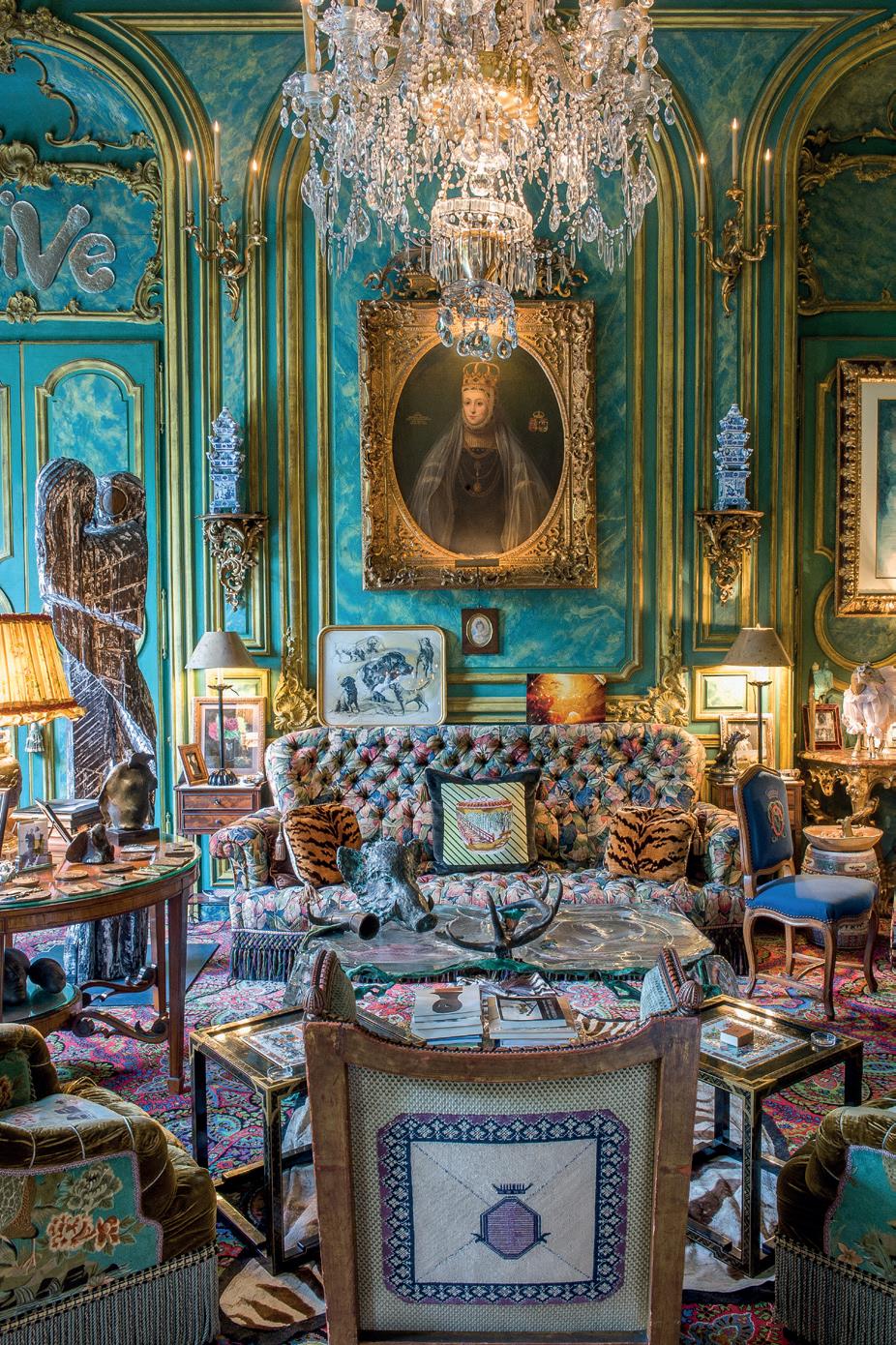
In the Parisian apartment of Isabelle and Hubert d’Ornano, founders of the luxury cosmetics brand Sisley, beauty is not a concept. It is a way of being. Personal, instinctive, and ever evolving, this home is an intimate reflection of a life devoted to elegance, depth, and transformation.
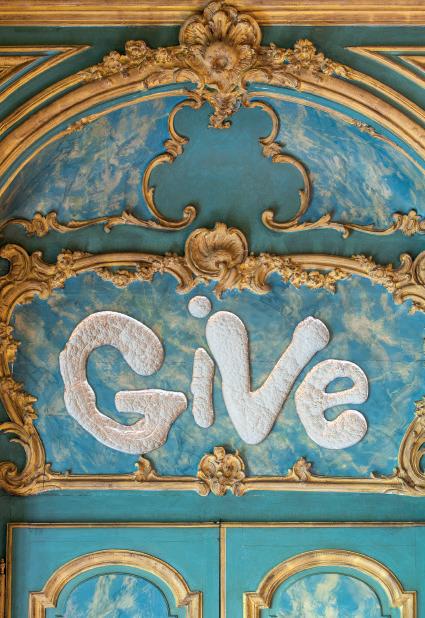
This contemporary glass piece by Rob Wynne spells out “Give”, a poetic gesture of generosity and joy, gifted to Isabelle and Hubert d’Ornano by their children.
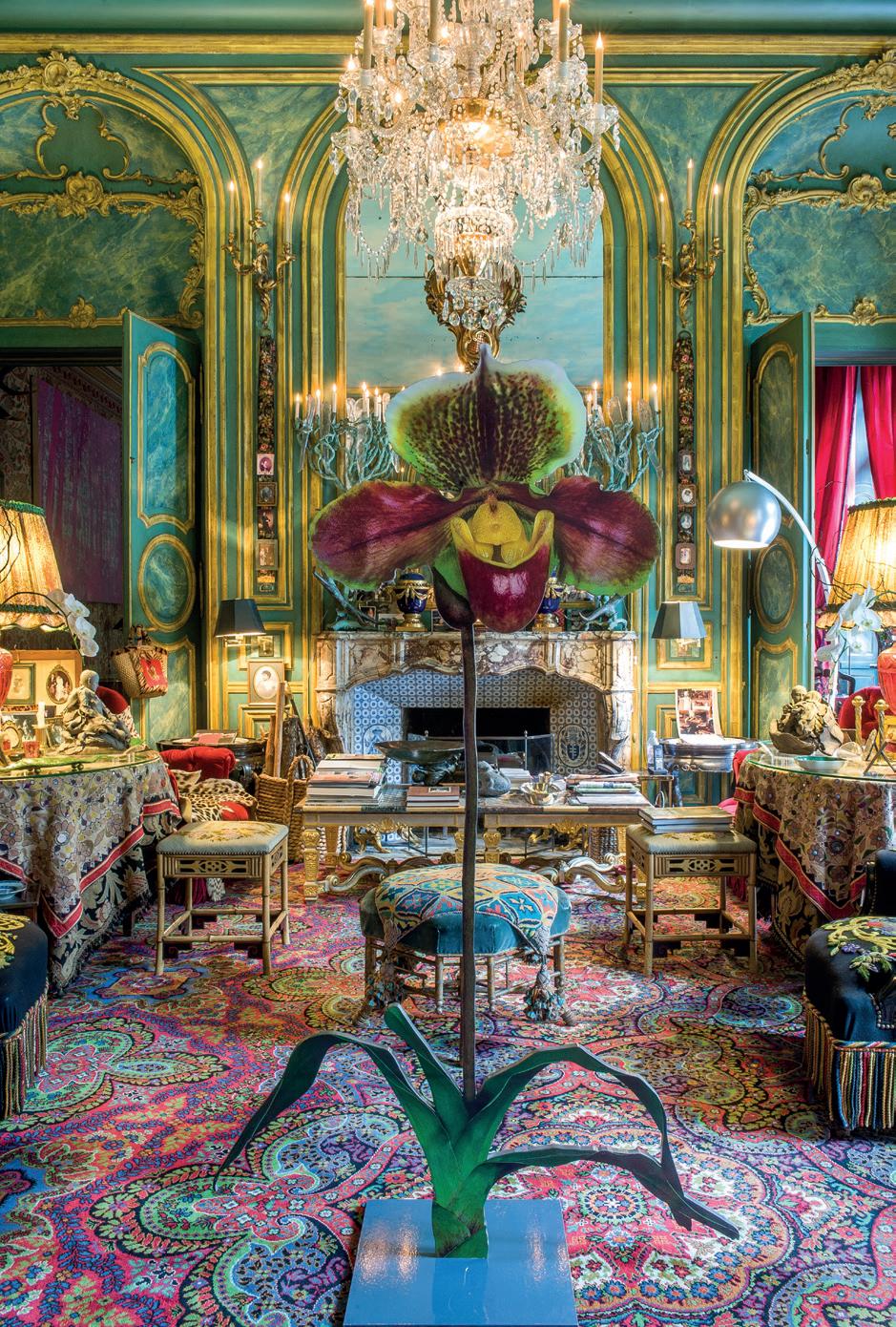
At the heart of the grand salon, a monumental orchid sculpture by British artist Marc Quinn rises beneath a glittering crystal chandelier.
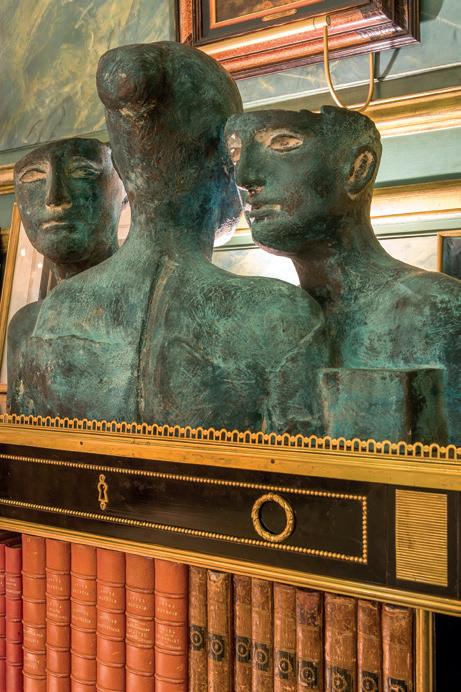
Perched above a neoclassical bookshelf, this trio of enigmatic bronze heads by Igor Mitoraj lend the room an air of ancient mystery.
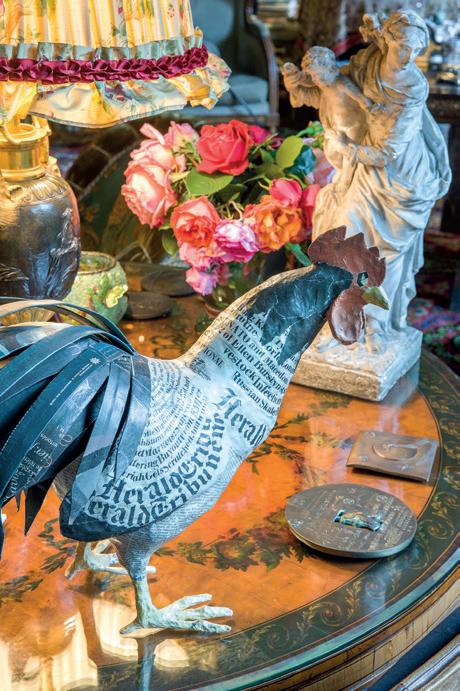
On an inlaid table, a rooster sculpture crafted from papier-mâché and printed newsprint adds a touch of humour and levity.
Set within a grand duplex overlooking the Seine, Isabelle d’Ornano’s apartment reveals a lifetime shaped by refinement, culture, and an enduring pursuit of harmony. With its sculptural staircase and soaring ceilings, the opulent space resonates with the spirit of Sisley and the singular vision of the woman who helped bring it to life.
When Isabelle d’Ornano and her husband Hubert first stepped into the apartment in 1973, they were captivated by its proportions: its scale, symmetry, and the quiet strength of its architectural bones. Over time, and with the guidance of legendary decorator Henri Samuel, they
transformed it into a home layered with memory, imbued with meaning, and shaped by the values that would come to define Sisley: authenticity, emotion, artistry, and a reverence for the senses.
There is no imposed narrative here. No formula. The apartment has evolved organically, guided by instinct rather than trend, emotion rather than convention. Objects speak softly. Rooms unfold without rigidity. Every element seems to have found its place, not through calculated design, but through resonance and belonging. The home feels lived-in, yet deeply observed.
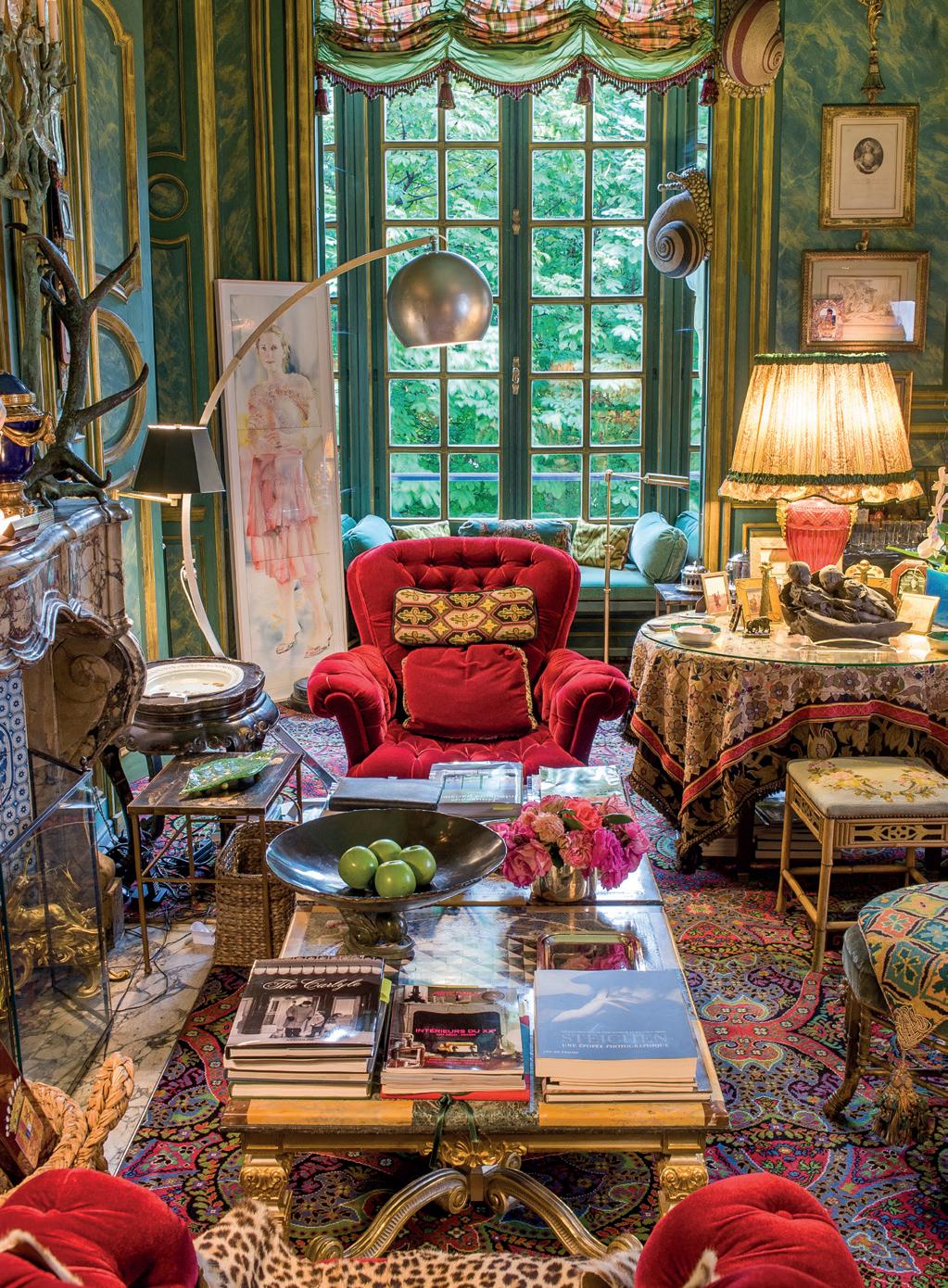
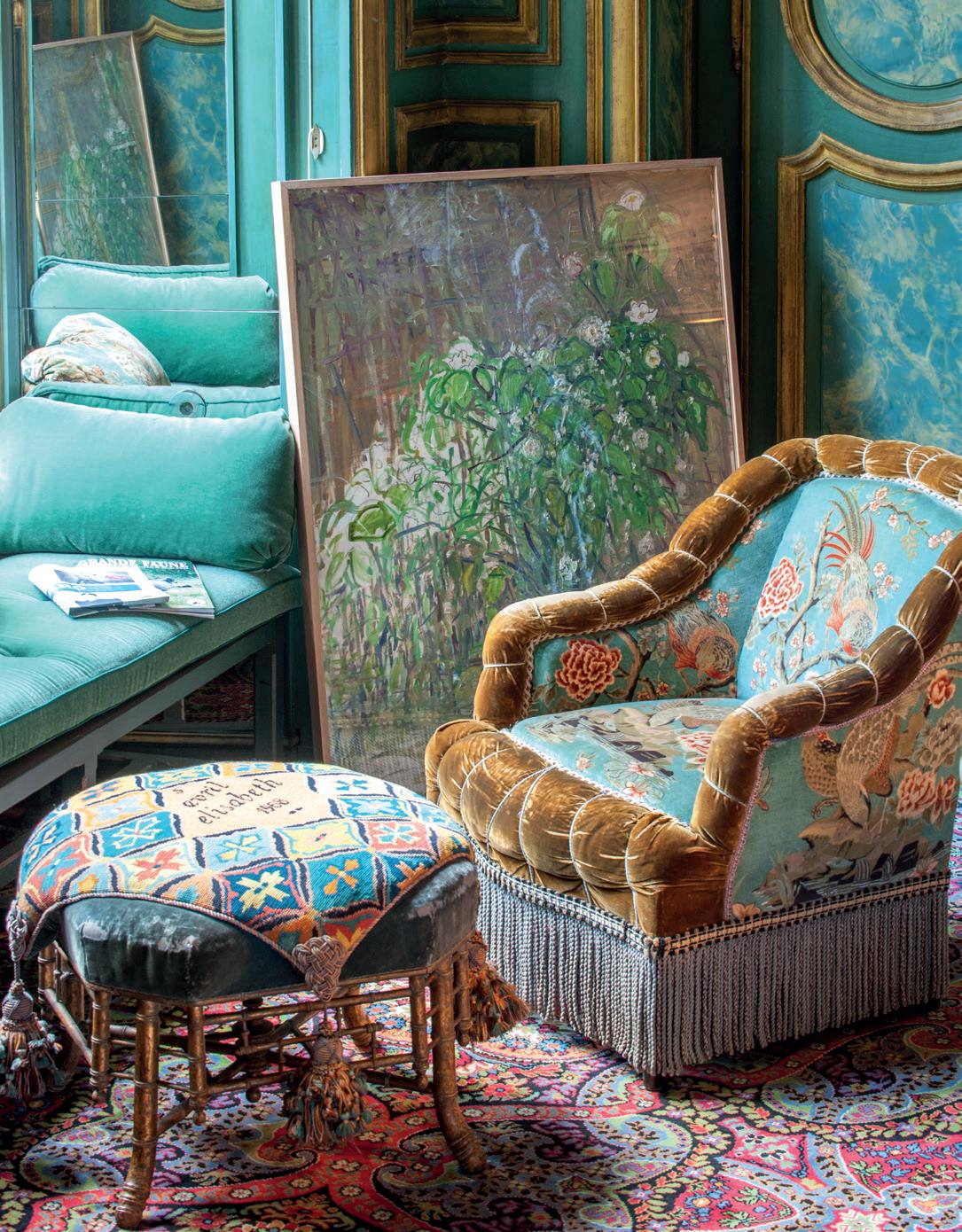
A fringed velvet armchair in floral brocade, an embroidered ottoman, and a casually leaned painting capture the home’s layered spontaneity.
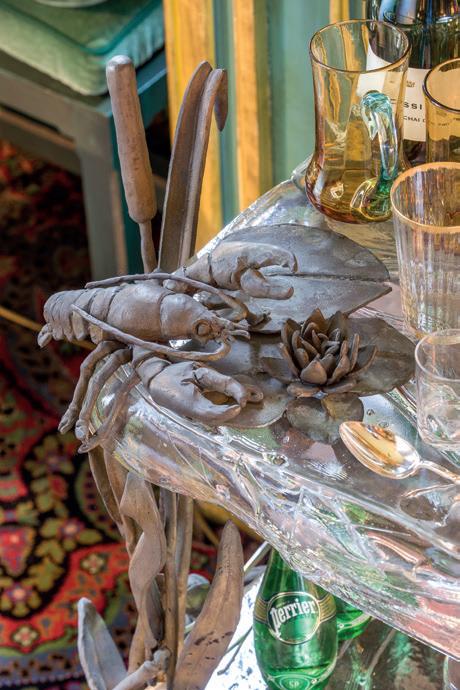
A pair of sculpted lobsters in dark metal mounted on a crystal drinks table, blending naturalist whimsy with surreal elegance, refinement infused with wonder.
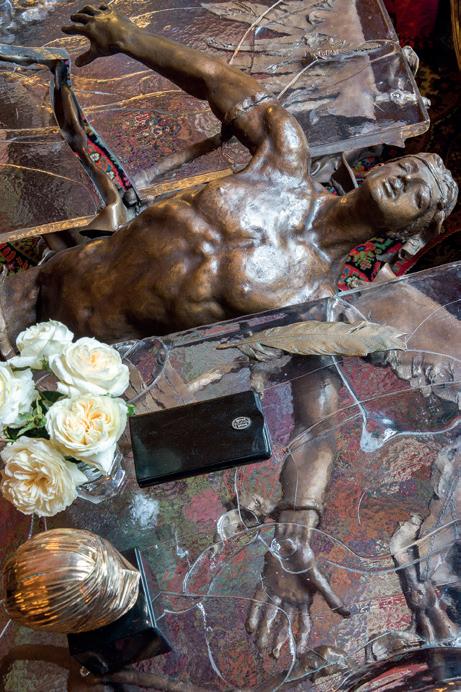
A dramatic bronze figure of Icarus, arms outstretched in mythic surrender, is embedded in a transparent table by Bronisław Krzysztof.
This is not a home designed to impress. It is shaped to express –each choice guided by emotion, memory, and instinct
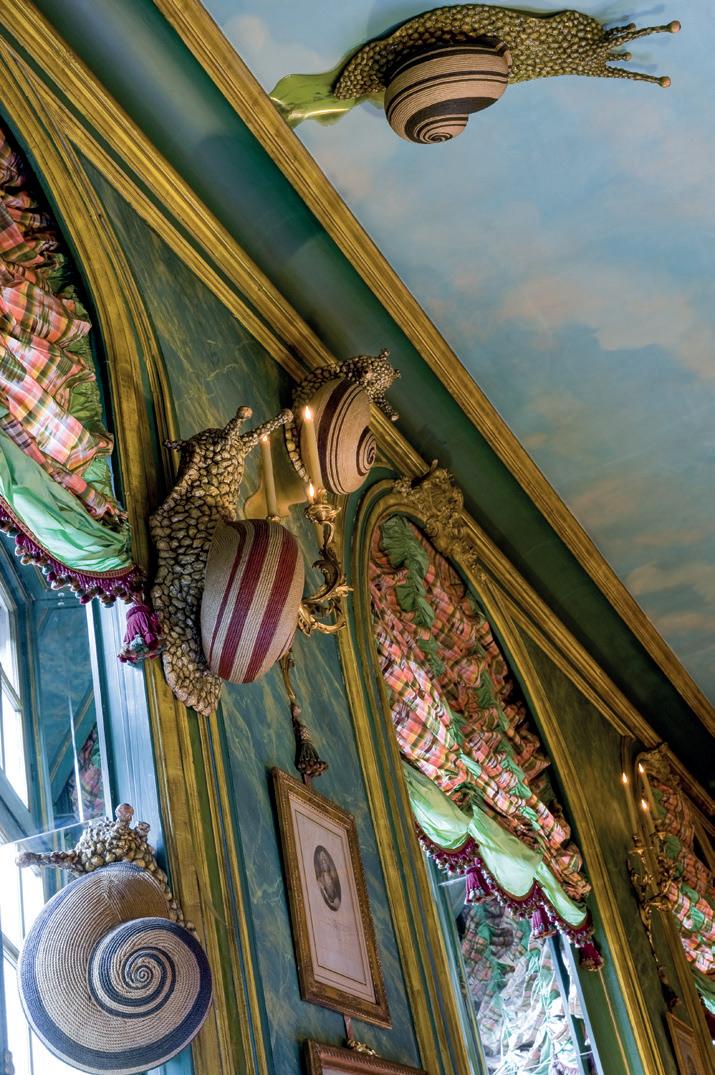
A procession of oversized snails by Jean-François Fourtou ascends the boiserie and ceiling, enchanting the formal architecture with playful surrealism.
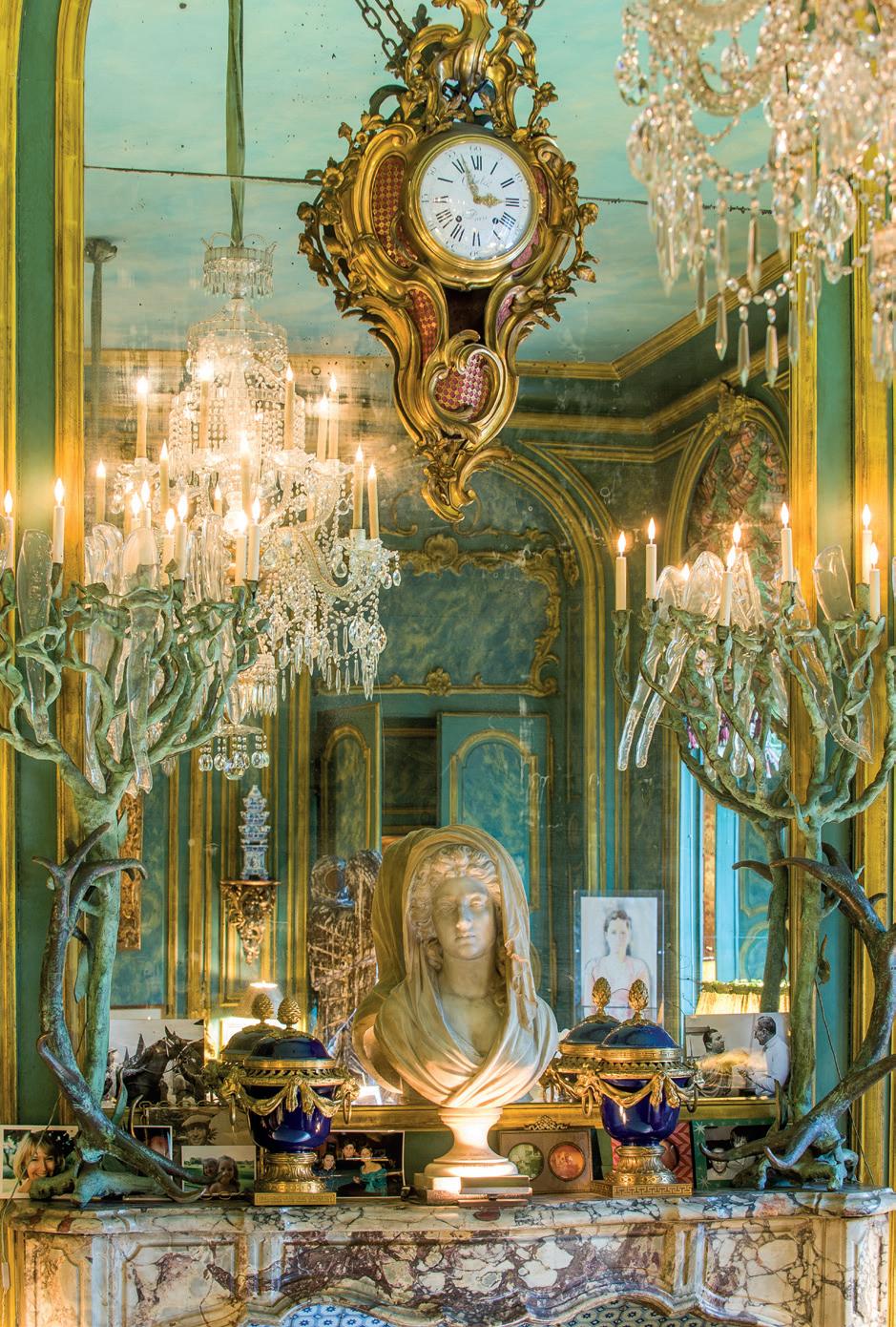
On the mantelpiece, a neoclassical bust of one of Isabelle's ancestors stands beneath a Louis XIV-style cartel clock, flanked by custom candelabras by Bronisław Krzysztof.
Beauty here is not fixed. It shifts with the light, the seasons, and the quiet rhythm of a life fully lived
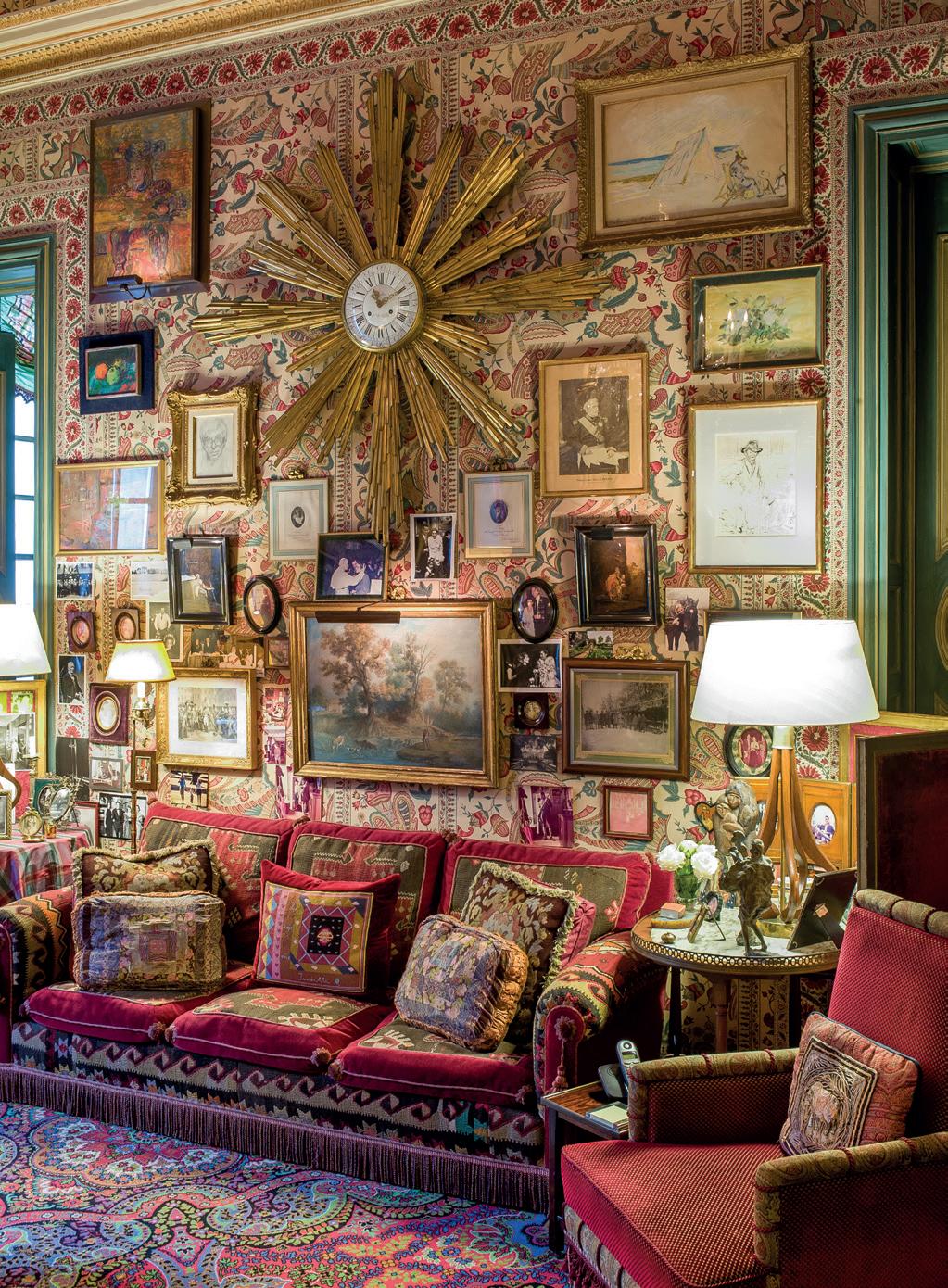
In this salon, lined with Braquenié fabric, a sunburst clock presides over a gallery of family photos, drawings, and collected paintings. The walls become a visual diary, woven with memory, lineage, and affection.
Polish lineage, French style, and international sensibility converge quietly in the décor. The inspiration is never literal, but it lingers in the scale of the rooms, the textures of embroidered textiles, and a palette of deep blues, soft golds, and muted greens. It finds expression in antique tapestries, sculptural accents, and family heirlooms. Like the Sisley brand, the home draws its strength from nuance and depth, not spectacle.
Over time, the space has adapted to the rhythms of family life. As children grew and eventually moved on, the home welcomed new expressions. Contemporary works – playful, sculptural, sometimes enigmatic – have been added to the classical ensemble. Portraits of ancestors now share space with experimental pieces by artists such as Bronisław Krzysztof, Bertrand Lavier, Jean-François Fourtou, Marc Quinn, and Rob Wynne. Yet the dialogue between eras never feels strained. The contrasts are intentional and thoughtful, never jarring. There is fluidity in the layering and a lightness in the juxtaposition.
“There is nothing theoretical here,” says Isabelle. “I choose with my heart. I surround myself with things that move me.” Some pieces carry the weight of generations, others are cherished for their whimsy, their texture, or the way they catch the light at a particular hour. A ceiling might be
painted simply for the pleasure of gazing upward. A mirror might be brushed by an artist’s hand, not to reinvent its purpose, but to shift its energy. These gestures are not decorative; they are emotional.
In this home, beauty is never static. It shifts with time, light, season and mood. There is grandeur, yes, but never rigidity. Books lie open, mid-read. Sculptures rest beside embroidered cushions. Flowers – freshly picked or casually arranged – stand in gilded vases, as if they had landed there by chance. Life fills every corner. A rhythm and movement breathe through the apartment. Nothing is too perfect. Everything feels sincere.
Colour, like everything else here, is intuitive. The palette is rich but never excessive, responding to texture and light rather than seeking attention. D’Ornano possesses a rare fluency with shade and material. There is no fear of bold combinations, only a quiet confidence in their balance. Deep ochres may meet powder blues. Velvet might lie beside antique tapestry. Every choice is guided by feeling, never by the desire to impress. And perhaps this is the greatest luxury of all.
If one theme stands out, it is the gentle interplay between permanence and improvisation. The structure
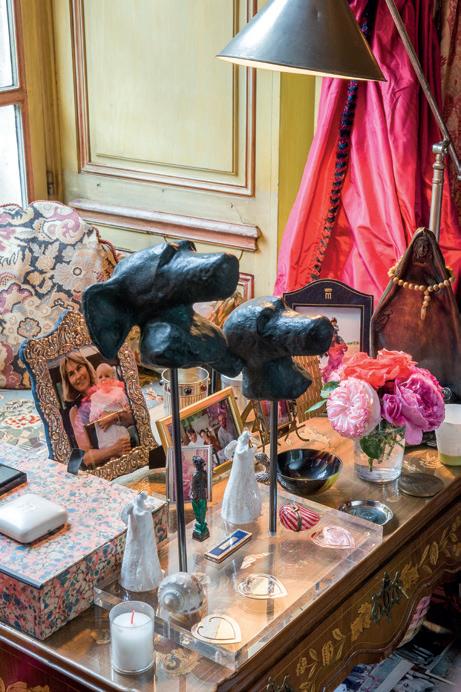
On a lacquered writing desk, a pair of sculpted dog heads – playful and alert – stand among family photos, porcelain figurines, and fresh peonies.
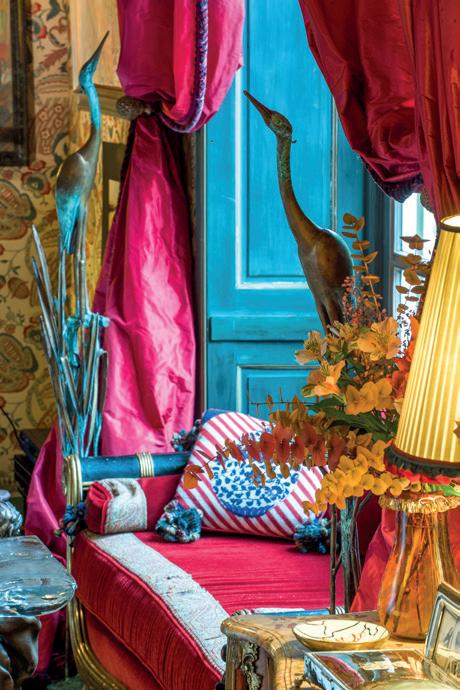
Framed by crimson drapes and a vibrant blue shutter, a Napoleonic daybed becomes a stage for contrast and colour. Bronze herons stand sentinel beside a cushion embroidered with the d’Ornano crest.
is historical, anchored in noble bones. Yet the interiors feel alive, responsive, even mischievous. A chair might be repositioned to catch the late afternoon sun. A table may be repurposed as an altar to memory. A sculpture, turned ever so slightly, shifts the entire mood of a room. The ceilings, adorned with painted motifs and trellised patterns inspired by Polish palaces and Roman passageways, add yet another layer of movement and perspective. These are not ceilings to be overlooked. They invite upward thought.
Ultimately, this is not a home designed to impress. It is a home shaped to express. Nothing is decorative for its
own sake. Every object, every artwork, every textile carries resonance. Some tell stories of lineage and heritage. Others speak of intuition, of play, or of moments lived fully. Together, they form a kind of portrait. Not only of a house, but of a spirit. Of someone who knows how to see.
“Beauty,” Isabelle reflects, quoting poet and philosopher François Cheng, “is not ornament. It is a sign through which life reveals its meaning.” In her apartment, as in Sisley, this belief takes form. Beauty is not surface, it is soul.