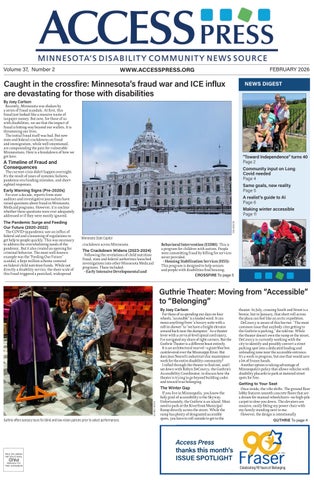
to address the overwhelming needs of the pandemic. But it also created an opening for criminal behavior. The most well-known example was the “Feeding Our Future” scandal, a $250 million scheme centered on federal child nutrition funds. While not directly a disability service, the sheer scale of this fraud triggered a panicked, widespread crackdown across Minnesota.
The Crackdown Widens (2023-2024)
Following the revelations of child nutrition fraud, state and federal authorities launched investigations into other Minnesota Medicaid programs. These included:
• Early Intensive Developmental and
Behavioral Intervention (EIDBI): This is a program for children with autism. People were committing fraud by billing for services never provided.
• Housing Stabilization Services (HSS): This program is designed to help seniors and people with disabilities find housing.
"Toward Independence" turns 40
Community input on Long
Same goals, new reality
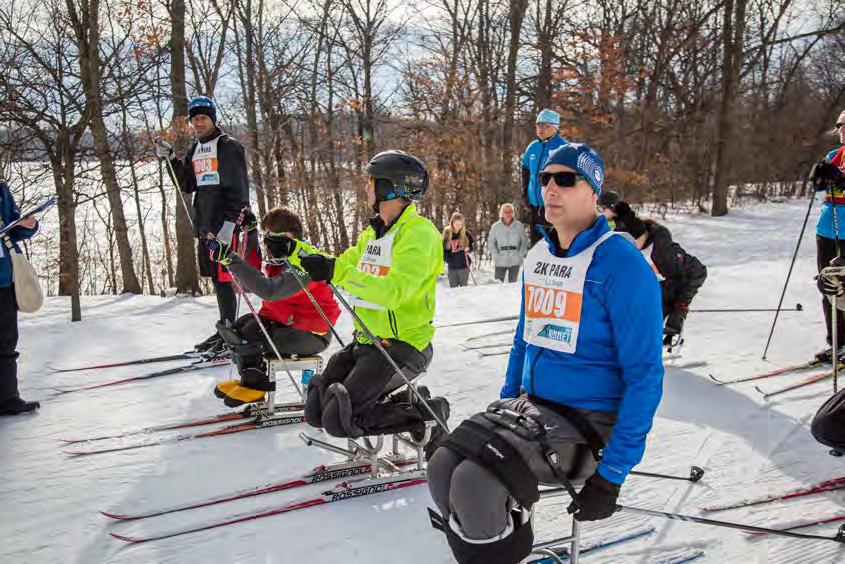
Making winter accessible
Guthrie Theater: Moving from “Accessible” to “Belonging”
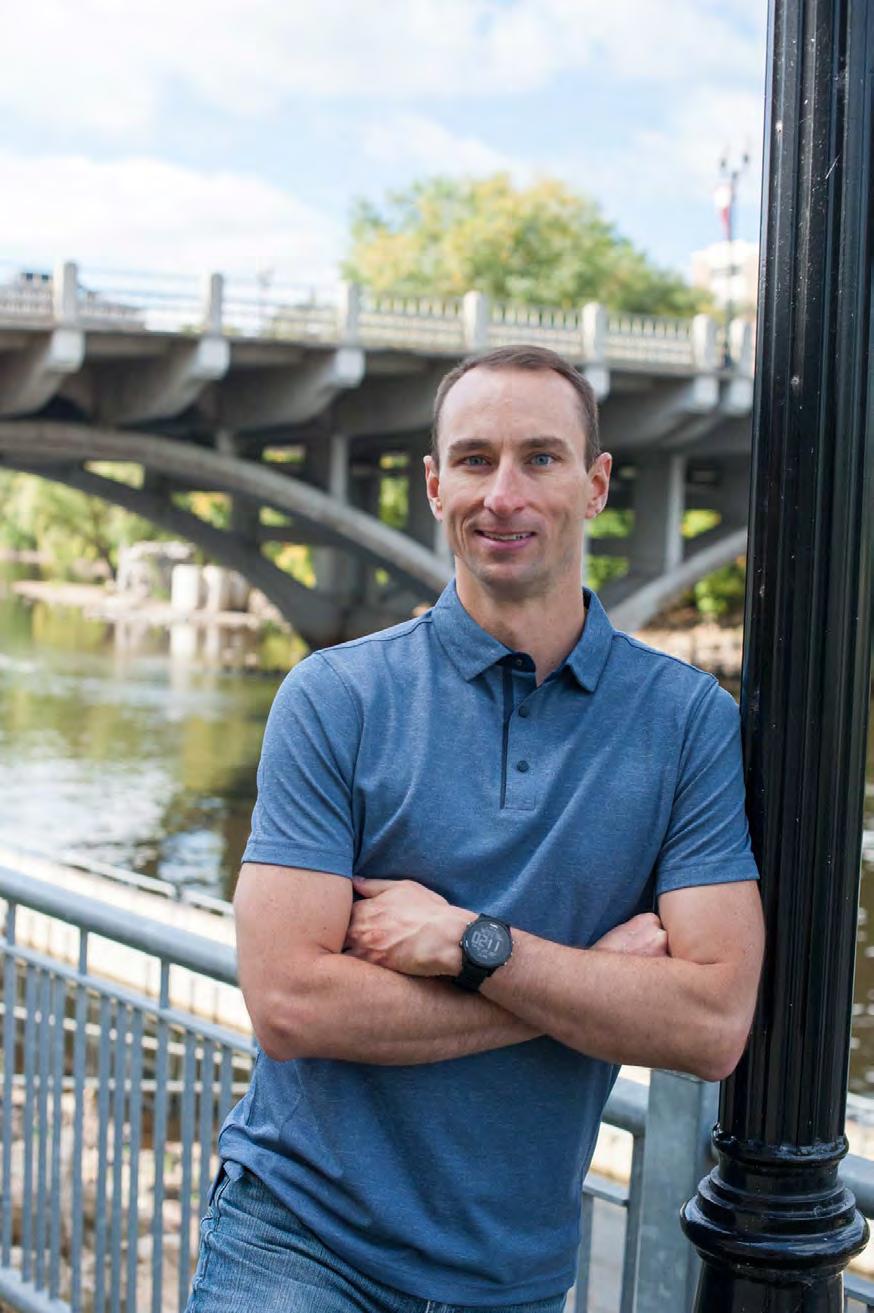
By Joey Carlson
For those of us spending our days on four wheels, “accessible” is a loaded word. It can mean anything from “a luxury suite with a roll-in shower” to “we have a freight elevator around back near the dumpster.” As a theater lover with a cervical-level spinal cord injury, I’ve navigated my share of tight corners. But the Guthrie Theater is a different beast entirely. It is an architectural marvel—a giant blue box cantilevered over the Mississippi River. But does Jean Nouvel’s industrial-chic masterpiece work for the entire disability community?
I rolled through the theater to find out, and I sat down with Robyn DeCourcy, the Guthrie’s Accessibility Coordinator, to discuss how the theater is trying to go beyond building codes and toward true belonging.
The Winter Gap
If you live in Minneapolis, you know the holy grail of accessibility is the Skyway. Unfortunately, the Guthrie is an island. Most need to park at the Riverfront Municipal Ramp directly across the street. While the ramp has plenty of designated accessible spots, you have to roll outside to get to the
theater. In July, crossing South 2nd Street is a breeze, but in January, that short roll across the plaza can feel like an arctic expedition. DeCourcy is aware of this barrier. “The most common issue that anybody cites getting to the Guthrie is parking,” she told me. While the theater doesn't own the ramp or the street, DeCourcy is currently working with the city to identify and possibly convert a street parking spot into a dedicated loading and unloading zone near the accessible entrance. It’s a work in progress, but one that would save a lot of frozen hands.
Another option is taking advantage of Minneapolis's policy that allows vehicles with disability placards to park at metered street spots for free.
Getting to Your Seat
Once inside, the vibe shifts. The ground floor lobby features smooth concrete floors that are a dream for manual wheelchairs—no high-pile carpet to slow you down. The elevators are massive, easily fitting my power chair with my family standing next to me. However, the design is intentionally
GUTHRIE To page 4
35 Years after the ADA, “accessible” hotels still need improvement
By Joey Carlson
I am currently writing this from the road. My family and I are in the middle of a long drive from my home in Plymouth, Minnesota, down to the sunny coast of Florida. Road trips are supposed to be about freedom and adventure, but for travelers like me, they often become a nightly gamble with “accessible” accommodations that are anything but.
I have a cervical spinal cord injury and use a power wheelchair. I require assistance transferring in and out of my chair, and I travel with a specialized shower commode chair to bathe safely. When I book a hotel room, I don’t just look at price and comfort. I also need to look for specific features I need to function.
Unfortunately, my experience on this trip—and the experiences of others in a recent survey by NPR—highlights a frustrating reality: decades after the Americans with Disabilities Act (ADA) became law, the hospitality industry is still struggling to meet travelers with disabilities’ needs.
The "Accessibility" Gamble
On my way to Florida, I was meticulous
about booking rooms labeled “Mobility Accessible with Roll-In Shower and Two Queen Beds.” However, what I actually find behind my hotel room door has been consistently disappointing.
Traveling with my family means I specifically require rooms with two queen beds. At one stop, despite my reservation, we were given a single king bed, forcing us to scramble for a solution. At another, I was promised a roll-in shower—essential for my shower chair—only to find a standard bathtub with grab bars. For someone with my level of injury, a tub is not just inconvenient; it’s unusable.
Perhaps the most exhausting issue has been the beds themselves. Even in rooms designated for mobility, I’ve found beds that are incredibly high. Transferring from a wheelchair up to a high mattress is difficult and dangerous, even with assistance. After a long day of driving, when you are physically drained, fighting your environment just to sleep is not fun.
A National Problem
I am not alone in getting frustrated with my hotel accommodation. A story published by NPR in late 2025, titled “35 years after
ADA, people with disabilities still find hotels unaccommodating,” confirms that my experience is the norm, not the exception.
NPR interviewed 50 wheelchair users and surveyed more than 200 people with mobility devices. The survey found that travelers frequently encounter accessible rooms that are virtually unusable. Respondents shared horror stories of grab bars installed in the wrong places, bathroom doors too narrow for wheelchairs, and beds so tall they required a lift to access. One traveler reported having to take sponge baths for three days because the accessible shower was blocked by a narrow door.
The consensus is clear: hotels often treat accessibility as a checklist for compliance rather than actually caring about their patrons with disabilities.
Tips for the Road
While it’s great to advocate for systemic change, we still have to navigate the world as it is today. Through trial and error on this trip, I’ve found a few strategies that help minimize surprises:
• The "Day-Of" Confirmation Call: This has been my most effective tactic. I call the hotel on the morning I am supposed to
The Blueprint for the ADA: ‘Toward Independence’ turns 40 HISTORY NOTE
By Jane McClure
Disability community members often consider 1990 to be a landmark year, marking the moment the federal Americans with Disabilities Act (ADA) was signed into law.
But many key studies and pieces of legislation paved the way for the ADA’s passage. One of those marks its 40th anniversary in 2026. (The report’s history is recalled here with a reminder to readers that language centered on disability has changed over the last four decades.)
A Landmark Assessment
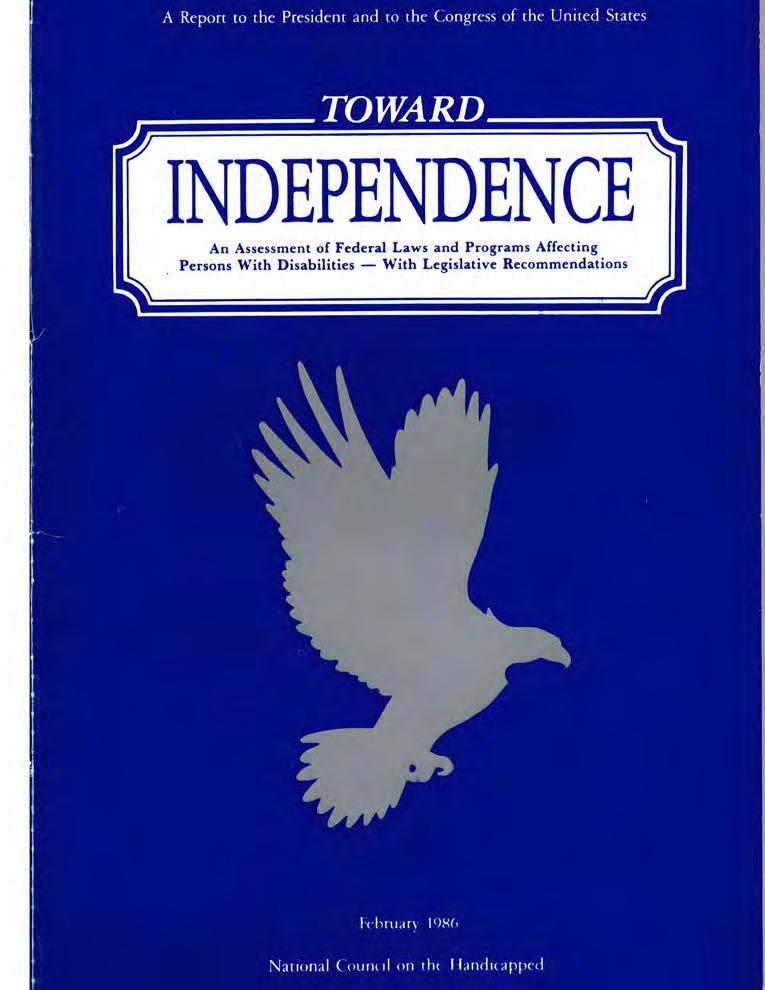
In 1986, the National Council on the Handicapped (now the National Council on Disability, or NCD) issued a landmark report: Toward Independence: An Assessment of Federal Laws and Programs Affecting Persons with Disabilities–With Legislative Recommendations.
The document provided a sweeping look at existing federal laws and programs, finding that many lacked basic supports for the disability community. The law-by-law review provided crucial information for policymakers.
Another focus of the report was the significant gap in civil rights laws when examined in a disability context. Looking back years later, the focus on civil rights is especially striking, drawing clear parallels to the eventual formation of the ADA. It laid the groundwork for the first comprehensive equal opportunity law, offering numerous legislative recommendations.
Three Key Conclusions
The report authors researched 10 major federal policy topics and reached three significant conclusions:
• Disability programs needed to place more emphasis on equal opportunity initiatives.
• Federal policy needed to assist and encourage the private sector to promote opportunities, independence, and self-sufficiency for disabled individuals.
• Social Security and other safety net programs remained vital.
The White House Connection
An initial copy of the report was delivered on January 28, 1986, to Vice President George H.W. Bush at the White House. It was presented by NCD Chairwoman Sandy Parrino, Vice Chairman Justin Dart, Council Member Jeremiah Milbank Jr., and Executive Director Lex Frieden. Bush, who would later sign the ADA into law as president, welcomed the report and began a high-level review.
Andrés Gallegos, a disability rights attorney who chaired NCD from 2018 until his death in 2023, once reflected on the report's impact.
“When you reflect upon the history of the ADA from a legislative standpoint, this was the beginning. This helped millions of persons with disabilities dare to dream that civil rights legislation was attainable,” Gallegos said. “The same influential role that NCD played then continues today – providing pointed and timely advice to the President and federal policymakers that has as its only purpose improving the lives and advancing the civil rights of persons with disabilities.”
A follow-up report, On the Threshold of Independence, was released by NCD in 1988. This served as the initial draft of what would become the ADA.
Learn More
For a deeper dive into the reports and their aftermath, the NCD website provides many details:
• National Disability Policy: A Progress Report (1986)
• National Disability Policy: A Progress Report (1988)
The History Note is a monthly column produced in cooperation with the Minnesota Governor’s Council on Developmental Disabilities.
Past History Notes and other disability history may be found at https://mn.gov/mnddc
arrive—not just to confirm the reservation, but to walk the front desk through the specific features of the room. I ask them to physically go to the room and verify: Is there a roll-in shower or a tub? How many beds are there? What size are the beds?
• Look for Photos: If you are booking in advance, ask the hotel for photos of the bathroom and the bed setup. "Accessible" is a broad term; a picture proves if it’s accessible for you.
• Be Specific About Bed Height: When calling, ask the staff to measure the height of the bed if transfers are a concern for you. Many newer hotels favor high-platform beds that are stylish but impractical for wheelchair users. If you use a Hoyer lift, you may also need to ask whether your lift will be able to slide underneath the bed.
The Bottom Line
We shouldn’t have to work this hard just to find a safe place to sleep on a road trip. But until the industry moves beyond bareminimum compliance to true inclusion, sharing our stories—and our strategies—is the best way to ensure a safe, restful night's sleep.
EDITORIAL: Editorial submissions and news releases on topics of interest to persons with disabilities, or persons serving those with disabilities, are welcomed. We reserve the right to edit all submissions. Editorial material and advertising do not necessarily reflect the view of the editor/ publisher of Access Press.
DEADLINE: 15th of each month.
CIRCULATION/DISTRIBUTION: Distributed the 1st of each month through more than 200 locations statewide. Approximately 1,400 copies are mailed to individuals, including political, business, institutional and civic leaders.
SUBSCRIPTION: Free and accessible to anyone in MInnesota, visit www.accesspress.org/subscribe ABOUT ACCESS PRESS: A monthly newspaper published for persons with disabilities by Access Press, Ltd.
POSTMASTER: Send address changes to Access Press, PO
40006, Industrial Station, St. Paul, MN 551048006
be
INQUIRIES AND
Fraser Adult Mental Health Services: A Lifeline for Whole-Person Wellness
At a time when mental health needs are at an all-time high and access to compassionate, coordinated care is more important than ever, Fraser stands out as a trusted partner for adults seeking support. With deep roots in Minnesota and a mission rooted in whole-person care, Fraser adult mental health services provide individualized, culturally responsive support that meets people where they are in life — and helps guide them to where they want to be.
Why Adult Mental Health Matters
Mental health challenges — including anxiety, depression, trauma, mood disorders, and co-occurring developmental conditions — can affect every area of daily life. For adults navigating work, relationships, independence, and identity, these challenges can feel overwhelming without the right supports. Fraser understands that mental health is interconnected with physical well-being, community participation, and personal fulfillment, and structures its services around this holistic view. Fraser supports adults with mental health needs and/or developmental disabilities, and offers a flexible, personcentered approach to care.
Support Across the Life Span
Fraser’s adult-focused services are designed to support individuals as they enter adulthood and continue to grow. While many people first connect with
Fraser in childhood or adolescence, the transition to adulthood — with its new responsibilities and expectations — can be a vulnerable time. Fraser’s programs recognize this and offer tailored support.
One such program is OnTRAC, a program for emerging adults ages 1826. This program supports individuals’ strengths, helps them set relevant goals, and offers ideas for community resources and services that can help them take next steps in their journey into adulthood.
Fraser Adult Mental Health offers a variety of additional services that promotes resilience and improve daily functioning including individual therapy, family therapy, group therapy, and skills support. Therapy groups such as the Adult Mindfulness group and Healthy Relationships group allow for opportunities to share experiences and explore unmet needs in a supportive group setting. Rather than imposing a single treatment model, Fraser collaborates with individuals to identify their strengths, goals, and preferences, creating a customized path toward wellness that honors each person’s unique journey.
Integrated and Compassionate Care
What sets Fraser apart is its holistic, family-inclusive approach. Fraser Behavioral & Mental Health Services division is designed to support the “whole person” — recognizing that
anxiety, depression, attention-deficit/ hyperactivity disorder (ADHD), adjustment disorders, trauma, bipolar disorder, and other mental health concerns impact not just the individual but their relationships and daily functioning. The goal is not only symptom management, but also strengthened self-esteem, improved emotional regulation, and healthier family dynamics.
Fraser’s services begin with a comprehensive initial assessment, which helps clinicians understand an individual’s needs across multiple dimensions — emotional, social, occupational, and relational — and then collaboratively build a care plan. Many services can be accessed in person or via telehealth, expanding access for those who face transportation or geographic barriers.
Affirming and Inclusive Care
Fraser Adult Mental Health Services provides affirming care for diverse identities. Fraser clinicians honor individual experiences. The emphasis is on creating safe, respectful spaces where adults can bring their full selves, feel understood, and receive care that aligns with their identities.
Beyond Traditional Therapy
Fraser’s philosophy is that mental health care should not exist in isolation. Many adults benefit from support that extends into employment, community
engagement, and daily life skills. These programs build not just job skills, but also social confidence and self-efficacy — essential ingredients for long-term mental well-being.
Getting Started
Call 612-767-7222 Monday through Friday 8 a.m. – 5 p.m.
During the call you will complete registration and schedule your first appointment.
• This first call will take 30-45 minutes.
• You will need to have name, address, availability and insurance information available.
Schedule your intake appointment for as soon as today and as far out as 3 business days.
You will receive an email with your appointment details that includes information you’ll need to fill out prior to your intake appointment.
Community input on Long COVID needed
By Metropolitan Center for Independent Living (MCIL)
As the medical community learns more about Long COVID every day, the impacts on the lives of people with disabilities are becoming increasingly clear. To better understand these impacts, the Metropolitan Center for Independent Living (MCIL), a leader in education and outreach on the topic, is launching a new survey and seeking community participation.
The experiences of people with disabilities— including those currently living with Long COVID—are invaluable to this work. MCIL, in partnership with Access Press and the Minnesota Department of Health (MDH), encourages all community members to share their perspectives.
Goals of the Survey
The primary goal of this initiative is to gather data regarding awareness, beliefs, and personal experiences related to Long COVID within the disability community. The insights gathered will serve two vital functions:
• Guiding Support: The information will help MCIL provide better, more targeted support to individuals and families living with Long COVID.
• Advancing Public Health: The data will aid in the creation and advancement of public health best practices that specifically support individuals with disabilities.
A Collaborative Effort
This survey is part of a broader collaboration between MCIL and MDH. Together, they are working to provide Minnesota’s disability communities with critical information about Long COVID, specifically regarding how the condition overlaps with protections under the Americans with Disabilities Act (ADA).
is also collaborating with county-level public health departments to recognize the needs of residents who require more information or believe they may have developed Long COVID.
Participation Details
Participation in the survey is entirely voluntary and it takes approximately 15 minutes to complete. MCIL emphasizes that respondent privacy is paramount.
• Confidentiality: All responses will remain confidential. Only MCIL and supporting evaluation staff will have access to identifiable information.
Anonymity in Reporting: No identifying information will be shared in final reports or publications.
• No Impact on Services: Participants can answer any, all, some, or none of the
GUTHRIE
From page 1
atmospheric. For low-vision friends, the elevators are “moody” and dark. DeCourcy notes that this is a frequent point of feedback. While they can't rebuild the theater to eliminate these features, they are working on mitigation.
“What we sure can do is affix decals... to make the glass doors have a visual [indicator] so that people are less likely to walk right into them,” she said, noting that they also add adjustable dimmer lamps in darker areas like the balcony access on Level 5 to provide more lighting for safety.
The Endless Bridge and Seating
Before the show, checking out the Endless Bridge is a must. It is completely wheelchair accessible and provides an incredible view of the city and the Mississippi River. For a wheelchair user, the sightlines are perfect because the windows go all the way to the floor. Inside the theaters, the experience varies by stage:
• T he Wurtele Thrust Stage: The accessible seating is excellent—right in the action, not shoved in a corner. Removable chairs allow companions to sit right next to you, rather than three rows back.
T he McGuire Proscenium Stage: Some accessible spots are at the back, so check your tickets carefully.
Beyond the Chair: Deep and Wide Accessibility
While I look at the world from my chair, the Guthrie has put serious work into what DeCourcy calls a “deep and wide” approach to inclusion—moving from simple access to a feeling of belonging. This is most evident in their programming for patrons who are neurodivergent or have sensory sensitivities. Relaxed Performances
The Guthrie offers specific “Relaxed Performances” that go beyond the standard “Sensory Friendly” label. “We remove all strobe lights... and we will eliminate any smoke machines or fog machines that are at stage level,” DeCourcy said. They also set a decibel cap to prevent jarring noises. Crucially, these performances are “shushfree” zones. “You are okay to come here and stim if you want to. You can rock in your seat. Nobody's going to judge you for that,” DeCourcy emphasized. A unique feature of these events is the use of communication stickers: green (I’m open to talking), yellow (only if I know you), or red (please don’t talk to me).
Sensory Tours for the Blind and Low Vision For patrons who are blind or have low vision,
About MCIL
statutory tax-exempt corporation with a mission to advance the independent living of people with disabilities by removing barriers and promoting choices. Sixty percent of the MCIL staff are people with disabilities with the standard that at least fifty percent must
How to Get Involved
Your thoughts and experiences are essential to shaping the future of Long COVID support in Minnesota.
Take the Survey: Visit https://mcil-mn. org/mcil-long-covid-community-survey/ or scan the QR code.
• Contact: If you have questions about the survey, your rights as a participant, or how your answers will be used, please contact Kelly Krantz, Director of Independent Living at MCIL, at kellyk@ mcil-mn.org.
are part of a statewide initiative to better understand the impact of Long COVID across diverse communities in Minnesota. For more information on the state's program, visit the MDH Long COVID Program website at https://health.mn.gov/longcovid.
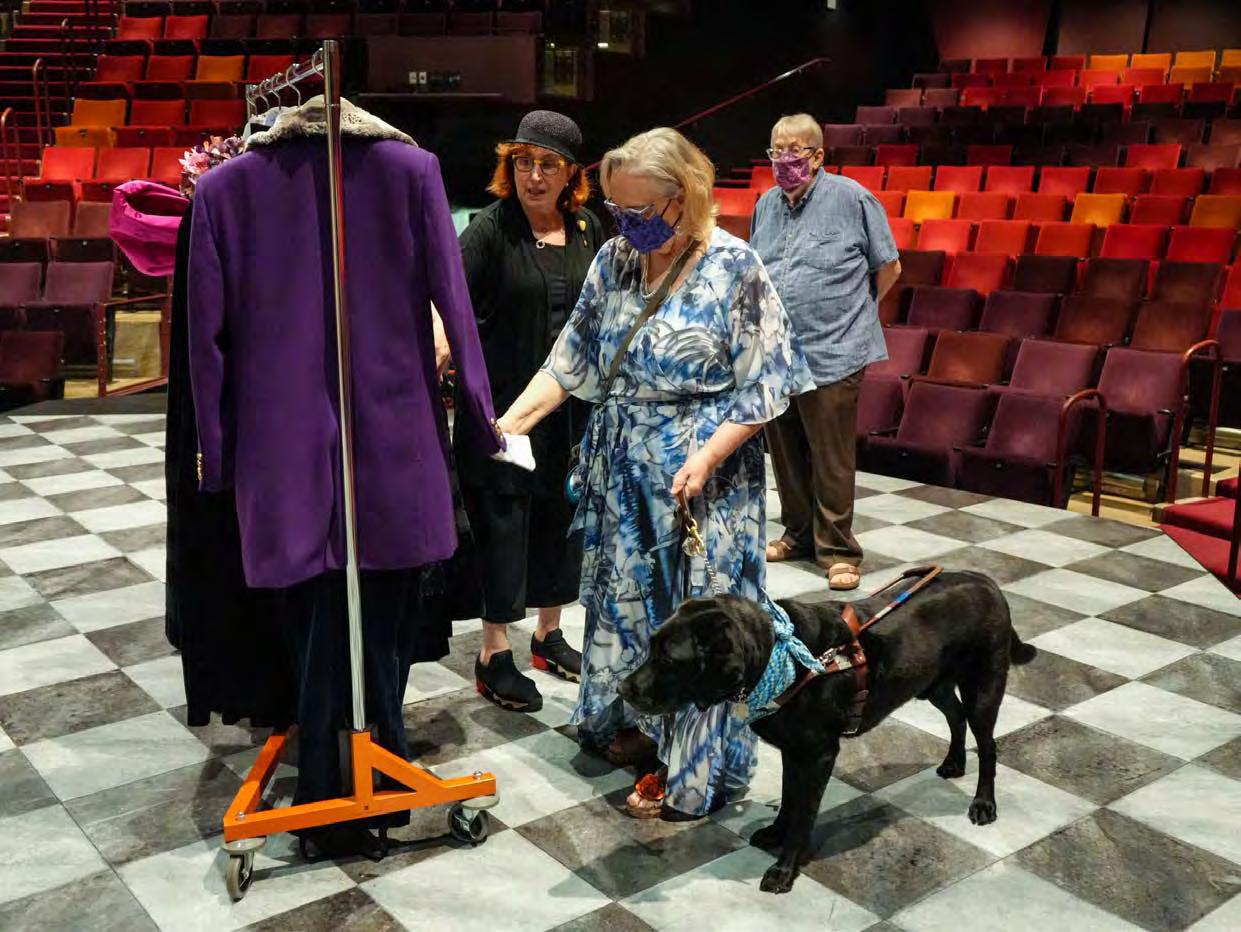
the Guthrie offers “Sensory Tours” before certain audio-described matinees. You can go on stage, touch the props, and feel the fabric of the costumes to build a mental map of the space before the show starts.
The Gateway Program
One of the most significant barriers to theater is cost. DeCourcy highlighted the Gateway Program, which allows patrons receiving financial assistance (including SSDI or Medical Assistance) to purchase tickets for select performances for just $5. “It’s really expensive to be disabled,”
DeCourcy said. “We do everything we can to offset some of those expenses by making theater affordable.”
The Verdict
The Guthrie Theater isn't just code compliant. It is intentionally inclusive. While there are architectural quirks—that dark lighting and the chilly winter gap—the staff is actively working to solve them. Whether you roll, sign, listen, or just need a little extra space to be yourself, the Guthrie has likely thought of you.
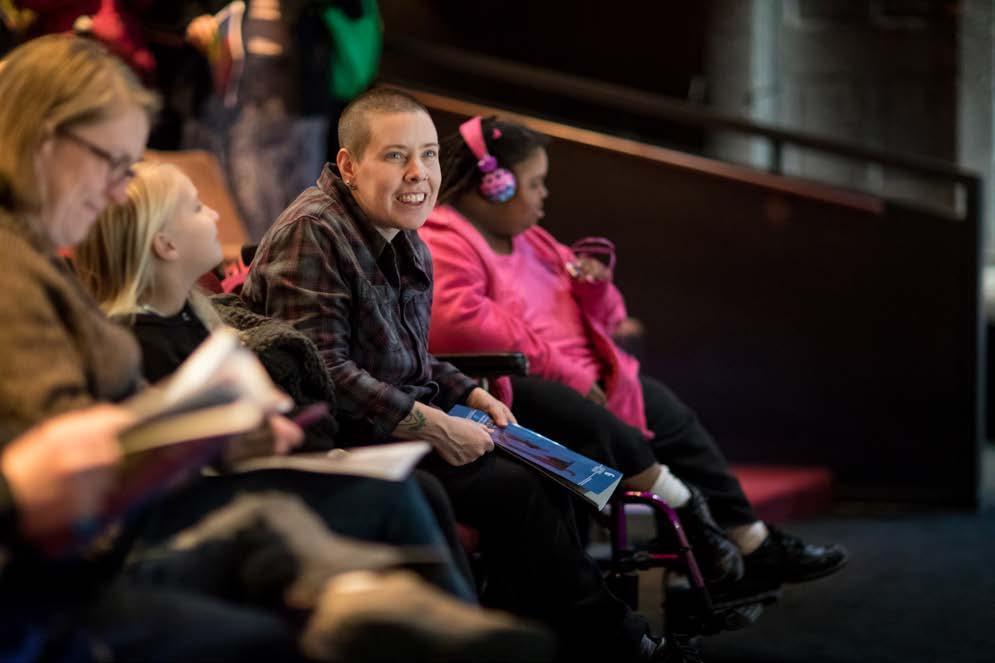
Great views are available for those who prefer to stay in their wheelchair.
GUTHRIE THEATER
Scan QR Code to Take the Survey
Same goals, new reality: Kirk Ingram and GUSU achieve major victories
By Joey Carlson
In the summer of 2015, Kirk Ingram was excited about the path his life was taking. He was 28 years old, worked as a project manager in IT at Target Corporation, and had just welcomed his first child into the world. His life was busy, he was happy, and all his goals seemed within reach.
“My dreams and aspirations were just like most new fathers,” Ingram recalled. “I was focused on being the best dad and husband possible.”
On August 1, 2015, just two weeks after his daughter was born, his path was violently cut off. As he was enjoying a day on Lake Minnetonka, Ingram dove into the water and suffered a severe spinal cord injury.
“I didn't realize the water was that shallow,” Ingram reflected on the moments before his injury.
The trauma was immediate. Ingram suffered a C4-5 spinal cord injury and was paralyzed from the neck down. He was airlifted to North Memorial Hospital, where he underwent a seven-hour surgery to stabilize his vertebrae and spinal cord. As soon as he woke up, the reality of his new life set in. He was unable to speak, relied on a feeding tube for nutrition, depended on a ventilator to breathe, and needed help with everything else to stay alive.
For the next nine months, Ingram was transferred through five different hospitals. He was fighting a battle that he described as “half mental and half physical.” While his initial dreams of fatherhood were about playing catch or running in the yard, now his goal was simply to survive long enough to get home and hold his daughter.
“I was fighting for my life,” he said. “I was fighting to get back home... to hold her in my arms.”
Finding a lifeline
His transition home was difficult. Ingram, now a quadriplegic dependent on a power wheelchair, had to navigate a world that wasn't built for him. The mental toll of living life with a disability was draining. He needed help. It was during this period of adjustment that he found a lifeline in the nonprofit organization, Get Up Stand Up to Cure Paralysis (GUSU). Ingram first connected with GUSU through Joe Dailey, the organization’s executive director, whom he met while at Bethesda Hospital. Dailey convinced him to attend a GUSU peer group meeting. There, he found more than just advice; he found friends—people who could relate to his condition—and a new mission. “I found a neat community that I wasn't just involved with, I felt like I was part of it,”
CROSSFIRE
From page 1
Fraud was committed when people billed for nonexistent services and clients.
• Personal Care Assistance (PCA) and Home and Community-Based Services (HCBS): Investigations found some incorrect and inflated billing.
The Human Cost of a Blunt-Force Response (Late 2024 - Present)
This is where the story becomes tragic for people with disabilities. In an effort to stop the fraud, Minnesota Department of Human Services (DHS) suspended payments to providers suspected of wrongdoing. The problem? There was no plan for the people those providers legitimately served.
• Sudden Evictions and Loss of Care: Minnesota paused payments to dozens of Integrated Community Supports (ICS) providers in late 2024. These programs are designed to help adults with disabilities live more independently. Clients reported receiving notices to vacate their homes with no transition plan in place.
• A Preventable Death: The consequences of the response turned deadly in December 2025. A man receiving services through a provider whose payments had been paused was found dead in his apartment. Providers and advocates had pleaded with the state not to halt payments without a transition plan, warning that clients might fall through the cracks. This tragic event showed the lethal danger of a policy that prioritizes speed over ensuring client safety.
• Greater Minnesota in Crisis: The impact spread beyond the Twin Cities metro. As detailed by Northern News Now on January 15, 2026, the collapse of PCA services in Duluth has forced families into impossible situations. One Duluth husband shared his story of being forced to leave his normal job
Ingram said. “Everyone at the GUSU meeting had a story to tell and I think collectively we had one big story that we could tell the world.”
The connection was transformative.
Ingram didn’t just participate; he became a leader. He joined the board in 2017 and
to become a full-time caregiver for his wife after her PCA service agency was shuttered.
• Moratorium on New Services: As part of its anti-fraud effort, Minnesota DHS announced a two-year pause on issuing new licenses for group homes for people with disabilities. This move, intended to let the state catch up on oversight, further constricts the already limited housing and service options for those in need.
The Added Terror of ICE Enforcement
The crisis is compounded for immigrants with disabilities, who face a double threat from state fraud investigations and federal immigration enforcement.
Destabilizing the Care Workforce
A significant portion of Minnesota's direct care workforce consists of immigrants. Increased Immigration and Customs Enforcement (ICE) raids and an overall anti-immigrant climate have created an atmosphere of fear. Many care workers are afraid to go to work, leading to worsening staff shortages that leave people with disabilities—citizens and non-citizens alike— without essential daily care.
Danger in Detention
For people with disabilities who are detained by ICE, the situation is dire. Reports have shown problems providing medical care, assistive devices, and communication accommodations like interpreters in detention centers to people with disabilities. This neglect can lead to severe health deterioration. Also, ICE has a history of unsafe releases, abandoning individuals with disabilities at bus stations or on streets without medication, money, or a way to contact caregivers, essentially leaving them to fend for themselves in a dangerous and unfamiliar environment. A group of doctors recently gathered at the Minnesota State
eventually became Chairman. Through GUSU, Ingram has helped drive initiatives that tangibly improve the lives of people with spinal cord injuries. Under his guidance, the organization has established key accomplishments based on their focus areas
Capitol to protest ICE presence in hospitals and medical clinics.
Escalation to Violence
The atmosphere of fear has turned into one of lethal danger following two high-profile shootings by federal agents in Minneapolis this month. These incidents have shattered the sense of safety for caregivers and vulnerable residents alike.
• The Killing of Renee Good (January 7, 2026): The community was rocked when an ICE agent shot and killed 37-year-old Renee Good in her vehicle in South Minneapolis. While the Federal Department of Homeland Security initially claimed she attempted to run over agents, video evidence and witness accounts contradict this, showing her attempting to drive away from the confrontation.
• The Killing of Alex Pretti (January 24, 2026): On January 24, the violence continued when an agent killed Alex Pretti, a 37-year-old ICU nurse at the Minneapolis VA Medical Center. The Federal Department of Homeland Security claimed he was armed and resisting, but bystander video appears to contradict these claims.
A Call for a Human-Centered Approach
Fraud in our public programs is unacceptable. It steals from taxpayers and, most cruelly, from the people these programs are meant to serve. But the government’s response cannot be to victimize the disability community a second time.
A “stop payment first, ask questions later” approach is cruel and unfair. The government must have a coordinated, proactive plan to ensure the continuity of care and housing for every single person whose provider is under investigation. No one should face homelessness or death because their provider is accused of
in education, research, and adaptive fitness.
GUSU has developed a resource guide to help newly injured individuals navigate their reality. They also advocate for research and fund studies to advance cures. Additionally, they established the Dr. James Spenley Adaptive Fitness Scholarship, which provides $2,500 scholarships twice a year to help individuals access adaptive gyms that might otherwise be cost-prohibitive.
Bringing innovation to Minnesota
Recently, Ingram and GUSU have been in the headlines again with a major leap forward in advancing treatments for Minnesotans with SCIs.
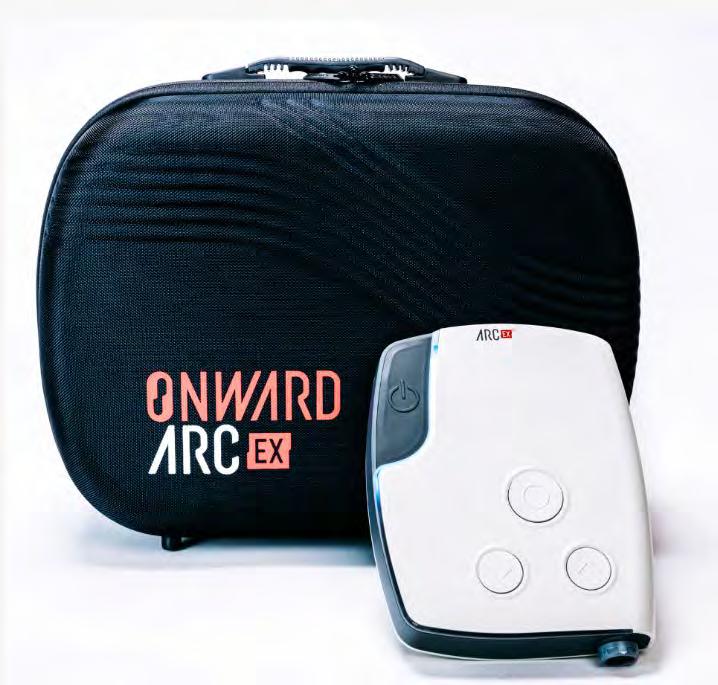
GUSU recently announced the donation of the revolutionary ONWARD Medical ARC-EX System to EA Therapeutic Health in Rochester, MN. The ARC-EX is a cutting-edge, noninvasive neuromodulation device designed to improve hand strength and function in people with cervical spinal cord injuries.
“This is breaking news,” Ingram said. “This device and devices like this have the chance to make a real difference in real people's lives.”
The donation marks a significant accomplishment, expanding access to breakthrough treatments right here in Minnesota. GUSU plans on continuing to do everything possible to make sure Minnesota stays on the cutting edge of treatments for people with spinal cord injuries.
Family first
Ingram spends a lot of time at his job at Target, on spinal cord injury advocacy, and his GUSU chairmanship. But his primary focus remains where it began before his injury: with his family.
Today, Ingram lives in Mendota Heights with his wife and two daughters, ages 10 and 3. He continues to work at Target and leads a life that, while different from the one he planned in 2015, is filled with purpose.
“My main goal remains the same as all those years ago,” Ingram said. “To be the best dad and husband possible.”
His life has changed drastically, but in the ways that matter most, Kirk Ingram is achieving exactly what he set out to do.
wrongdoing.
Similarly, federal immigration policies that target life-saving caregivers, shoot nurses and citizens in our streets, and deny basic human rights to detainees with disabilities are contrary to Minnesotan and American values.
We will continue to speak up for Minnesotans with disabilities. It’s not too much to ask for a system that protects taxpayer dollars without sacrificing the lives, dignity, and independence of Minnesotans with disabilities. We will not be collateral damage.
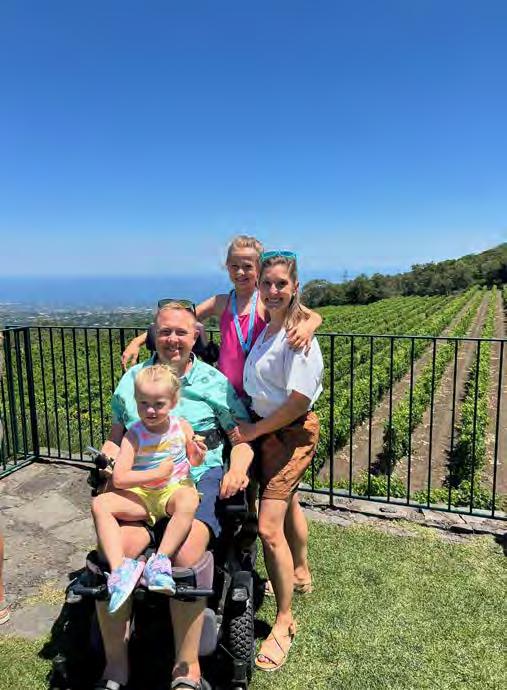
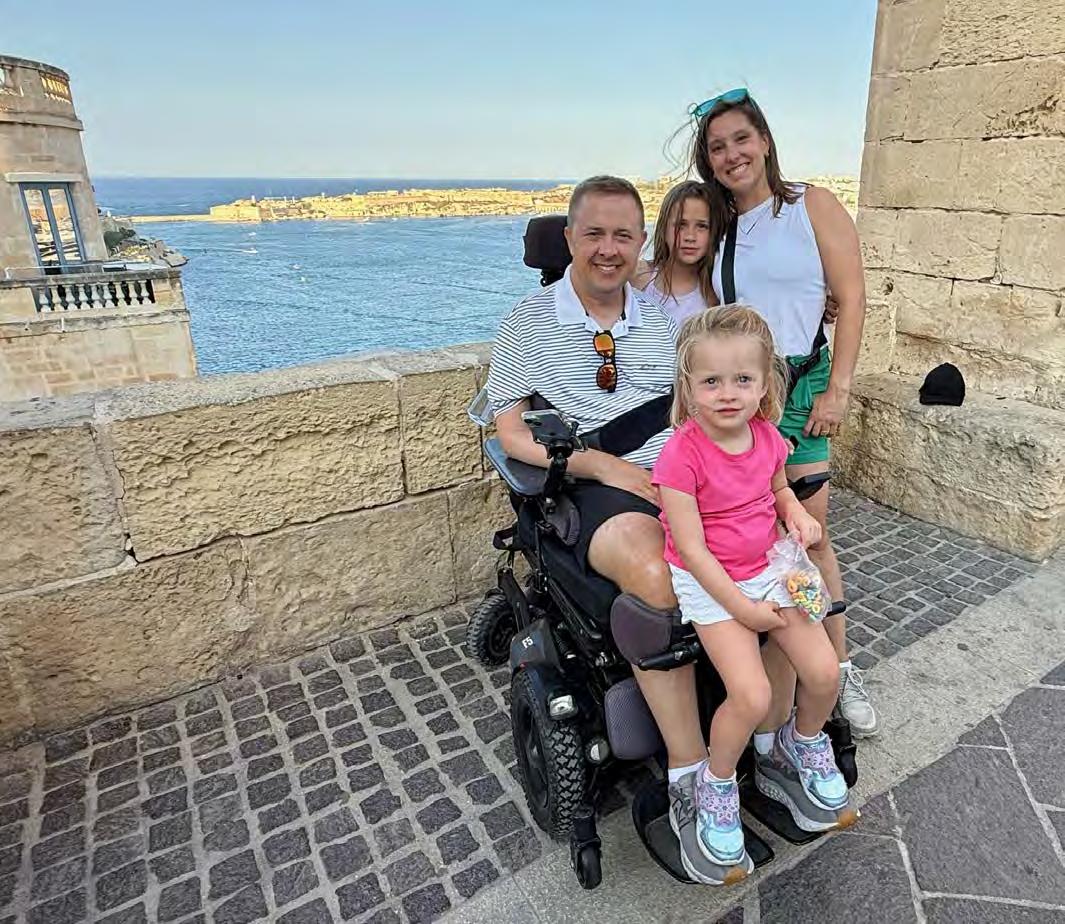
Kirk Ingram on vacation with his wife, Melissa Ingram, and two children.
The ARC-EX System is designed to restore function and sensation in people with cervical spinal cord injuries. KIRK
A realist’s guide to AI: What it is, why it matters, and when
By Tim S. Benjamin Access Press Board Member, Google Employee
Let’s address the elephant in the room first: Yes, my name is Tim Benjamin. But I am not the Tim Benjamin who was the former executive director and managing editor at Access Press. That Tim was my uncle; he ignited my interest in technology by showing me his computers and inviting me to help him use them for his accessibility needs.
I also work at Google, and I sit on the board here at Access Press. That means I live with one foot in the hyper-speed world of Silicon Valley and the other in the pragmatic, real-world advocacy of the disability community. Finally, I drafted this article using the AI tools I’m going to discuss.
I am writing this because technology moves fast, and frankly, the explanations for it are usually terrible. You don’t need a degree in computer science to understand Artificial Intelligence (AI). You just need to know if it can help you get through your Tuesday a little easier—or if it’s just another flashy distraction.
Consider this your "Start Here" guide. We’re going to skip the sci-fi robots and focus on what this technology actually does for us right now.
The "Explain Like I’m Five" Version
At its simplest, modern AI is just a computer program that is very, very good at pattern recognition.
Imagine a hyper-enthusiastic intern who has read the entire internet but has zero life experience (or no life, if they read the whole internet). If you ask it to write a poem, it looks at millions of poems it has "read" and predicts which words likely follow one another to make something that looks like a poem. If you show it a picture of a curb cut, it recognizes the shape because it has seen thousands of photos of sidewalks. It is not "thinking" the way you and I do. It is predicting.
"There is a specialized wheelchair ramp to your left and an empty chair to your right." It’s like having a sighted guide in your pocket that never gets tired of reading menus.
It Can Speak and Listen for You: If you have non-standard speech or struggle with typing, AI voice recognition has gotten shockingly good. It learns your voice patterns over time. Conversely, for the Deaf and Hard of Hearing community, live captioning (on phones, in Zoom, or via AR glasses) is becoming faster and more accurate, reducing the lag time in conversations.
It Can Handle the Boring Stuff: This is the "killer app" of AI use cases: Drafting emails. If you have limited energy or struggle with executive function, AI chatbots (like ChatGPT, Gemini, or Claude) are excellent at bureaucratic wrestling. You can paste a confusing letter from an insurance company and say, "Explain this to me simply and write a polite but firm response appealing the decision." It does 90% of the work in 30 seconds.
The Bad Stuff: Where to Be Careful
If AI is the enthusiastic intern, it’s also the intern who sometimes lies to impress you.
The "Hallucination" Problem: Because AI predicts words, it sometimes predicts
wrong facts confidently. It might invent a court case that doesn’t exist or give you slightly off medical advice.
Rule of Thumb: Use AI to draft emails, summarize long articles, or suggest ideas. Do not use it as a doctor or a lawyer without verifying everything.
The Bias Problem: AI is trained on data from the internet. The internet contains a lot of ableism. If an AI is trained mostly on photos of non-disabled people, it might struggle to recognize a person using a walker or misinterpret their movements. We are fighting hard to fix this, but the data gap is real.
Privacy Matters: When you use free AI tools, you are often "paying" with your data. If you upload a sensitive medical document to a public chatbot to summarize it, that information may be used to train the model.
• The Fix: Never put personally identifiable information (Social Security numbers, specific medical records) into a public AI chatbot.
The Verdict
AI is a tool, like a hammer or a wheelchair. It is not magic, and it is not evil. It is useful when applied to the right job.
For the disability community, the potential for independence is massive, but we need to approach it with a "trust but verify" mindset. Use it to read that inaccessible PDF, use it to write that exhausting email, but keep your hands on the wheel.
What’s Next?
This is just the tip of the iceberg. We want to make this column useful for you. We are planning future deep dives on:
• Password Management: Why you need one and how to set it up so you never have to remember a password again.
• Specific AI Workflows: A step-by-step guide on using AI to fight insurance denials or manage PCA schedules.
Growing up gaming – a review of the PlayStation Access Controller
By Rhett Lundgren Access Press Sales Rep
My name is Rhett Lundgren, and I’ve been a gamer since I was a kid. I've played everything from Atari, NES, Super NES, and SEGA Genesis to Xbox and PlayStation 1, all the way through to the PS5 I use today.
The one thing these systems have in common is the need for controllers. As most gamers have noticed, controllers have become increasingly complex over the years, adding more and more buttons.
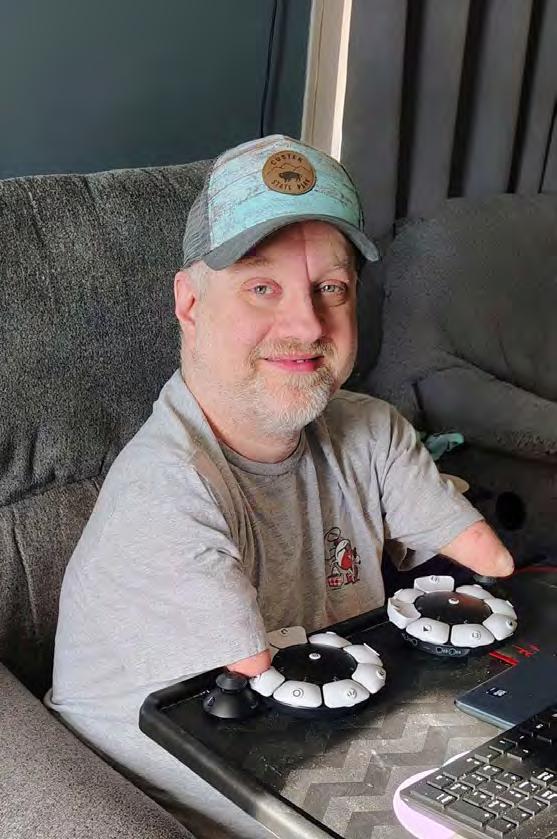
I was born with a disability—I have no hands above the elbow on both arms, and I am missing my full right leg. In a sense, I’d say this was actually to my advantage because it forced me to figure things out in ways others might not think of. I like to call it “MacGyvering it” (thank you, Richard Dean Anderson).
The problem is that you can’t just "MacGyver" modern standard controllers. With so many triggers and buttons— some now even located on the bottom of the controller—it makes it next to impossible for players like me to just sit down and enjoy a sports game or a good first-person shooter with friends and family.
There have been many third-party makers in the past that tried to help with button remapping. While being able to move a button function to a different spot helped me with some games, it never quite offered the freedom needed to keep up with how complex game development has become. Furthermore, anyone who has bought adaptive equipment knows it isn’t cheap. I don’t even want to think about how much I’ve spent over the years just trying different types of controllers.
However, around late 2022, I heard that PlayStation was working with the disability community to come up with a solution for those who otherwise wouldn’t get the chance to enjoy the world of gaming. A close friend and I looked into it immediately. It is now known to the gaming world as the PlayStation Access Controller. When it became available, I figured I had nothing to lose, so I pre-ordered it.
Here is my experience with the controller:
Pros
• Customization: The controller has 8 buttons with full switching capabilities. They are magnetic, so you can swap them into any position you need. The joystick styles are also swappable.
Profiles: You can create 3 different profiles on the controller for different types of games you might want to switch between.
• Connectivity: It can be paired and used in conjunction with a regular controller or a second Access controller.
• Compatibility: It works on PS5 or PC via Bluetooth (and possibly other systems like Steam Deck).
Ease of Use: It is rechargeable, and the buttons pop on and off easily.
• Expansibility: There is a Logitech adaptive kit available as an add-on for extra types of buttons.
• Universal Design: Anyone can use and benefit from it.
Cons
Price: It tends to run around $90.
• Requirements: You need to have another regular controller or a second Access controller to have all standard buttons available.
Add-on Costs: The price of the extra Logitech kit is around $80.
• Setup: The initial programming setup to place the buttons can be a bit tricky.
• Sensitivity: Because the buttons pop off easily, they can detach accidentally if you pick the controller up the wrong way.
Overall Thoughts
I personally love using these controllers. I have found them to provide the easiest experience I have had on any type of controller I’ve tried over the years. I’d like to see more companies try to come up with accessible ideas that are affordable, as there are a lot of current and potential future gamers out there.
This overview is in no way sponsored by any company and is 100% based on my personal experience.
Rhett Lundgren
Tim Benjamin
By Joey Carlson
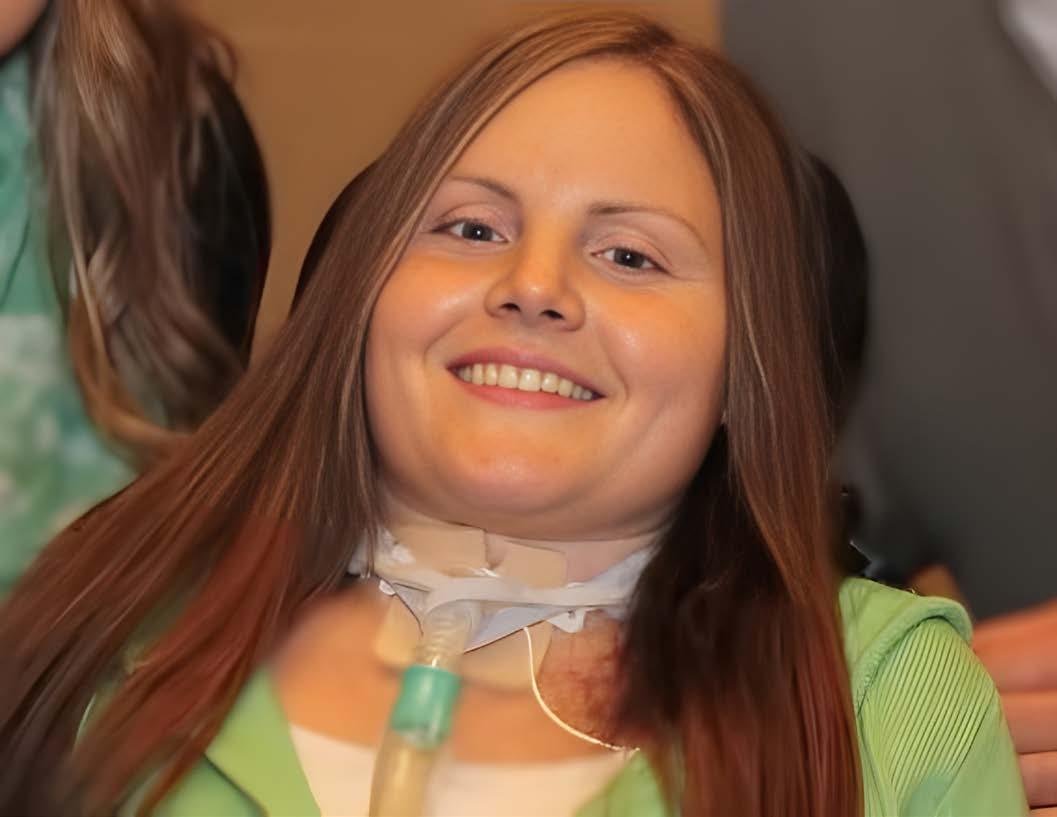
It is with heavy hearts that we share the news that a beloved member of our Minnesota spinal cord injury (SCI) community, Jennifer “Jenni” Lee Taylor of Minnetonka, has passed away.
Jenni died on January 1, 2026, at the age of 39.
For those of us in the disability community, Jenni was more than just a familiar face; she was a radiant spirit and a fierce advocate for all of us. Many will remember her tenure as a dedicated Ms. Wheelchair Minnesota, where she used her platform to champion ability awareness. But her advocacy went far beyond titles. She was a tireless voice at the state legislature, advocating passionately for vital spinal cord injury research funding—a cause that touches the lives of so many of us who have navigated life after an accident.
Jenni was born in Grand Forks, North Dakota, in 1986 and moved to Minnetonka in 1994, eventually graduating from Hopkins Schools in 2005. In 2002, a car accident left her a quadriplegic dependent on a ventilator. Yet, she lived by a powerful motto: "Positivity overpowers my disability."
She embodied that sentiment every day. Rather than letting her injury define her limitations, she used her experience to teach life lessons and educate others. Her legacy of resilience has made a lasting impact on our state.
Jenni was also a poet, using her words to bridge the gap between her reality and the world
Dakotan snowfalls" to the night that changed her life forever. In it, she wrote of the machine that became
John Sauer: Advancing inclusion through systems change
By Jerry Smith
John
Sauer,
who passed away on December 23, 2025, lived a life marked by quiet conviction, deep relationships, and an unwavering commitment to inclusion. A devoted husband, father, and beloved “Papa” to nine grandchildren, John also left an enduring mark on the field of disability services and on the Institute on Community Integration (ICI), which he often described as his dream job.
John’s professional life was guided by values of social justice, inclusivity, and respect for people with disabilities. After earning a master’s degree in social work from St. Louis University, he returned to Minnesota to work in social service agencies before joining ICI at the University of Minnesota in 1994. He later earned a second master’s degree in education from the University of Minnesota, reflecting both his love of learning and his commitment to strengthening systems that support people with intellectual and developmental disabilities.
At ICI, John served as a program coordinator and systems change consultant for more than 15 years, retiring in 2011. He was a lead consultant to state and local agencies seeking to understand and address workforce development challenges, particularly those affecting direct support professionals and frontline supervisors. John brought more than 40 years of experience in human services to this work, drawing on roles that included social worker, administrator, educator, trainer, curriculum developer, and organizational change consultant.
With colleagues at ICI and nationally, John made substantial contributions to scholarship in the field of developmental disabilities. He authored and co-authored dozens of articles, book chapters, and curricula focused on workforce development, community-based supports, and person-centered practices. His work helped shape how agencies recruit, train, support, and retain direct support professionals, emphasizing the critical role of skilled, valued workers in the lives of people
with disabilities.
John was also instrumental in the development of the National Alliance for Direct Support Professionals and played a key role in advancing national conversations about the professionalism and recognition of the direct support workforce. Among the many projects he helped lead or shape were a longitudinal, randomized control study examining the impact of Active Support interventions in Minnesota group homes and the development of the College of Direct Support, a nationwide, online, competency-based curriculum that has strengthened the skills and knowledge of direct support professionals, frontline supervisors, and managers across the country.
John’s work was informed by both professional commitment and personal experience. His sister, Mary, lived with developmental disabilities.
Reflecting on John’s impact, ICI Director Amy Hewitt said, “John believed deeply that people with intellectual and developmental disabilities belong in their communities, and that strong, inclusive communities depend on a
skilled, respected direct support workforce. He was tireless in advancing the professionalism of direct support professionals, and he never lost sight of the fact that this work is ultimately about improving people’s everyday lives.”
John was deeply committed to organizational change and to translating research into practice. He was a sought-after consultant, speaker, and workshop facilitator on topics such as recruitment, selection, orientation, training, credentialing, and employee recognition. He also lived the principles he taught, serving for many years as a support team leader for a man with autism who directed his own supports.
Within ICI, John was known as a generous mentor to graduate students and newer staff, offering steady guidance, thoughtful feedback, and an example of integrity grounded in respect for both people and systems. His legacy endures in the scholarship he helped build, the workforce he helped strengthen, and the countless individuals and organizations influenced by his conviction that inclusion is achieved through both values and action.
her constant companion:
Now paralyzed from the neck down / I have a special machine called a ventilator / that gives me life as it breathes for me / understanding harsh realities.”
Here is another powerful poem she wrote that beautifully illustrates her spirit: Being Me
Positivity overpowers my disability
I’m like a word on a piece of paper hearing the ocean waves crash against rocks seeing the sun setting on a windy day wanting to do more than I need needing more than I want venturing towards those in times of trouble.
Jenni is survived by her mother, Lori Taylor (Charlie Braun); her father, Kevin Taylor; her sister, Kristen Taylor (Anthony Steinman); her nieces, Avery, Madilyn, and Emersyn; her special friend, Jay Marcucci; and her dog, Everett.
We send our deepest condolences to her family and her countless friends. For those wishing to honor her memory, the family has requested memorials be directed to the Morton Cure Paralysis Fund (mcpf.org), continuing the work she cared about so deeply.
KENT’S
KENT’S
612-889-2959
fordyce6@aol.com Fax: 952-472-1458
6371 Bartlett Blvd Mound, MN 55364
6371 Bartlett Blvd Mound, MN 55364
Certified ProAdvisor 2022 | 2005-2021
around her. Just a few days before her passing, she published a poem titled “Throughout My Years,” reflecting on her journey from a
childhood in "North
John Sauer
Jenni Taylor
Leading in challenging times
By Janet Stewart
Amidst federal efforts to dismantle programs helping underserved communities, along with threats to several state protections for people with disabilities, Maren Christenson Hofer is part of a small but growing organization that is helping autistic children and their families to thrive.
She is executive director of the Multicultural Autism Action Network (MAAN), a non-profit organization that provides education and training, one-onone and group support for families who have received an autism diagnosis, and advocacy on issues important to the autism community. Fatima Molas is a co-founder of MAAN.
The work includes providing training for families from a range of cultural backgrounds on navigating the individualized education plan (IEP) process or home and community-based services. During the pandemic, the organization formed partnerships with healthcare providers to provide vaccination clinics for children with autism. MAAN also provides professional skill development for schools, state agencies, law enforcement, healthcare providers and others who work with people with disabilities in multicultural communities. Legislative advocacy forms the third leg of the stool.
“Last year, I think I personally testified on about 20 state bills,” Christenson Hofer said. “It’s growing quickly, and a lot of what we’re doing right now is defensive work to hold in place the gains we’ve made over the past couple of years and make sure none of the good work that is done is repealed.”
The organization fought to keep some state IEP requirements in place, testified on
school-discipline issues around seclusion of students, and advocated for using HCBS to cover swimming lessons for people with disabilities who are at increased risk of drowning as a result of their disability. It also has added multilingual online training tools on YouTube to increase the
The spectrum of experiencenavigating the everyday
By Mary Graba
Mary is the Business and Advertising Operations Manager at Access Press. She also lives with a disability. Below, she shares her “Pet Peeves” and “Moments of Gratitude” that she experiences every day.
If you would like to add to this list or make a new list of your own, email us at editor@ accesspress.org.
Common Pet Peeves
• Performative Help: People grabbing a wheelchair or "helping" without asking first, which can be intrusive or dangerous.
• The "Inspiration" Label: Being called "brave" or "inspirational" just for living a normal life or running errands.
• Physical Barriers: "Accessible" entrances that are blocked by trash, heavy manual doors, or located far away in back alleys.
• Unsolicited Medical Advice: Strangers suggesting yoga, diets, or "miracle cures" for chronic or permanent conditions.
• Invisible Disability Skepticism: Getting glared at or confronted for using accessible seating or parking when the disability isn't visible.
Moments of Gratitude
• True Universal Design: Finding a space where accessibility was planned from the start, not added as an awkward afterthought.
• Direct Communication: When people speak directly to the individual rather than looking at their caregiver or interpreter.
or can be useful to anyone. We are reaching a much larger audience now,” Christenson Hofer said.
The progress is tempered, of course, by today’s challenges.
“Sometimes it's painful to discuss where things in the system have gone wrong, and these are tough conversations,” she said.
“We're here because we want to improve something that's not working very well for parents, for families, for students, and even for teachers and administrators.”
Acknowledging a shift in public rhetoric around disability and immigration, she said this makes what was an already difficult system to navigate even more so.
“It just feels incredibly important for those of us who know the value of these communities that we serve to really step up. We must use whatever platforms we have to knock down that narrative and talk about what's really going on in communities and what we need. I’m very grateful to have partnerships with organizations, including Institute for Community Integration (ICI) and the Minnesota Leadership Education in Neurodevelopmental and Related Disabilities (MNLEND) Program. If ever there were a time for us all to step up and make our voices heard, now is it.”
organization’s scale and reach.
“The online videos are designed to give viewers the basics on a number of topics, like knowing your rights as a parent and what you really need to know in order to use them. They are a nice refresher for people who have come to our in-person trainings
• Anticipatory Awareness: Friends who check the accessibility of a venue before suggesting a hangout so the burden isn't on the disabled person.
• Peer Community: Connecting with others who "just get it," reducing the need to explain or justify their needs.
• Reliable Technology: Automatic doors that actually work.
In a world that’s constantly changing, having a reliable source for disability news in Minnesota is more important than ever. From legislative updates to powerful personal stories, Access Press has been your trusted voice since 1990.
Don’t miss a single headline. Whether you prefer reading on your laptop, tablet, or phone, our online coverage brings the latest news directly to you.
Mary Graba
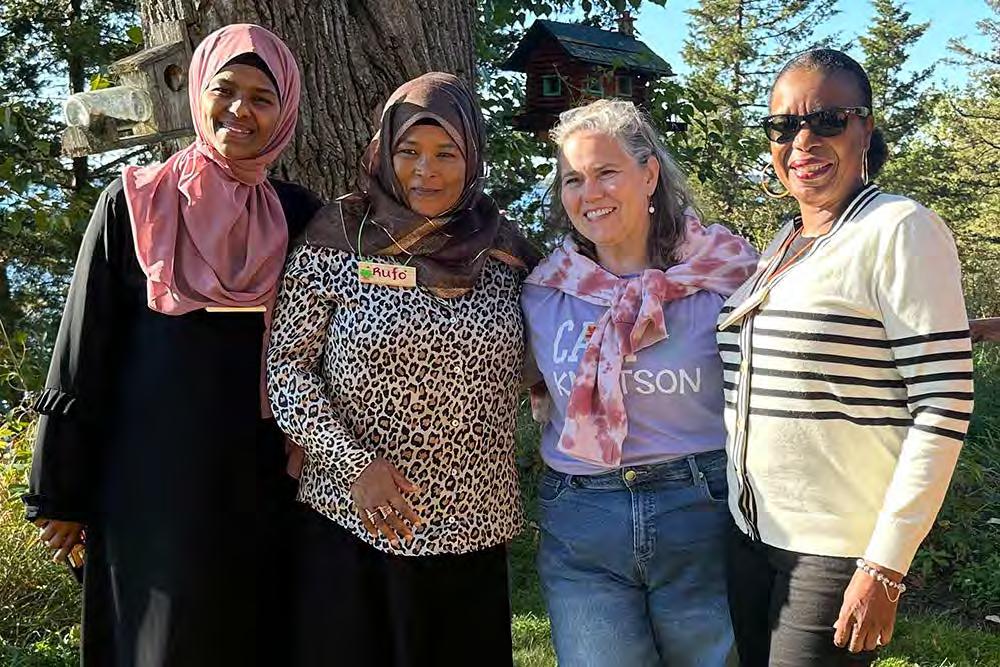
Maren Christenson Hofer (third from left) is executive director of the Multicultural Autism Action Network. Her colleagues, from left to right, are Fatima Molas, Rufo Jiru, and Delia Samuel.
By Joey Carlson Access Press Managing Editor
There is a lot going on in Minnesota right now. Winter. Protests. Political controversies. And Access Press is committed to covering everything that affects you and your loved ones. But to really reflect complex lives and needs of our readers, we need a heaping helping of one essential ingredient: YOU!
We are issuing a call for diverse voices to help us cover the full spectrum of lived experiences. Whether you are a seasoned writer or a first-time contributor with a story burning to be told, your perspective could be the missing piece of our puzzle.
To make Access Press a complete representation of our community, we are actively seeking submissions in the following key areas:
News & Updates
Bring us the latest information on what the community needs to know right now.
Opinion & Commentary
Share your unique take on the headlines and the issues affecting our daily lives.
Sports & Recreation
From adaptive sports opportunities to recaps of the big game, we want to hear about the action.
Travel & Adventure
Have you taken a great trip lately? Send us your accessible travel logs, destination tips, and guides.
Media & The Arts
We are looking for reviews that highlight disability representation in literature, film, and local art.
Call for gardeners: raised gardens available in Saint Paul
Technology
Share your experiences with the latest assistive gear and tech reviews.
Local Scene
Give us the scoop on local events and venue accessibility reviews.
How to Submit
Please email editor@accesspress.org with your area of interest, a brief biography, and a writing sample. If you are feeling ambitious, we welcome you to send over a finished proposed piece or a pitch.
While we cannot guarantee publication for every submission, we appreciate every contribution. Your stories are the heartbeat of
By Access Press Staff
For many Minnesotans, the deep freeze of January is spent dreaming of spring planting. But for gardeners with mobility issues, those dreams often hit a barrier.
Traditional garden plots can be physically impossible for some to access.
The Eleanor Graham Community Garden in St. Paul is working to change that.
Located in a flat area of the city, the garden has launched a five-year plan to improve accessibility, starting with the installation of raised garden beds designed specifically for gardeners with limited mobility.
A Foundation for Inclusion
Alex Malnaa, a committee member at Eleanor Graham and an architectural designer, saw an opportunity in the garden’s topography.
“Our site is unique because we are very flat,” Malnaa said. While many community gardens in St. Paul are on hilly terrain that makes accessibility improvements difficult or impossible, Eleanor Graham's landscape offered a rare chance to remove barriers.
The committee developed a long-term plan to make the space more inclusive. Step one was the installation of raised garden beds, which were put in place for the 2024 growing season.
The Raised Bed Advantage
The new beds elevate the soil, reducing the need for bending and kneeling. While Malnaa notes they aren't perfect—users cannot currently roll a wheelchair directly under them—they offer a significant improvement over ground-level plots.
The garden reserves the raised plots until the very end of the registration period to ensure they are available for those who need them.
Seeking Gardeners
Despite the new infrastructure, the garden faced a hurdle in its first year: finding the gardeners the beds were built for.
“We’ve been struggling to try to get people to apply for them,” Malnaa admitted. In the 2024 season, one applicant with mobility issues applied but had to withdraw due to health reasons. The beds were eventually released to gardeners on the general waitlist.
The goal for 2026 is to ensure these spaces
go to the people who need them most. The application process is first-come, first-served, and the garden is actively seeking applicants with disabilities to fill these spots before the season begins.
How to Join
Gardening at Eleanor Graham is a community effort. The cost is $25 for a halfplot or $50 for a full plot for the season. In addition to the fee, members are required to contribute two hours of community service per month during the active season.
Crucially, the garden offers accommodations for this work requirement. “If you can't weed or mow, you can help with our online presence,” Malnaa suggested. Tasks like managing the garden's Facebook page or other administrative duties can fulfill the service hours, ensuring that physical limitations don't prevent participation.
Get Involved
The application process for the upcoming season is open now. To apply for a raised bed: Email: egcommunitygardenstp@gmail.com.
Specify Your Needs: In your email subject line or body, mention “Access Press” to ensure you are prioritized for the raised beds. Act Fast: Plots are assigned on a first-come, first-served basis.
While the snow is still on the ground, the planning for a more accessible harvest is already underway. For gardeners with disabilities in St. Paul, this might be the year to get back in the dirt—without having to get down on the ground.
Eleanor Graham Community Garden located on Hamline Ave. between Portland and Selby
Joey Carlson
Minnesota’s finest ready for 2026 Paralympic Winter Games
By Access Press Staff
In just a few weeks, the world’s elite adaptive athletes will meet in Milan and Cortina d'Ampezzo, Italy, for the 2026 Paralympic Winter Games. From March 6 to 15, athletes will display incredible feats of strength, endurance, and skill.
Among the competitors this winter, will be plenty of people from Minnesota. As you get ready for the games, here is a look at three Minnesota athletes hoping to take the podium.
A Celebration of Ability
The 2026 Paralympic Winter Games promise to be a spectacular showcase of winter athleticism. Access Press encourages our readers to tune in, cheer loud, and support our hometown athletes. Go Team USA!
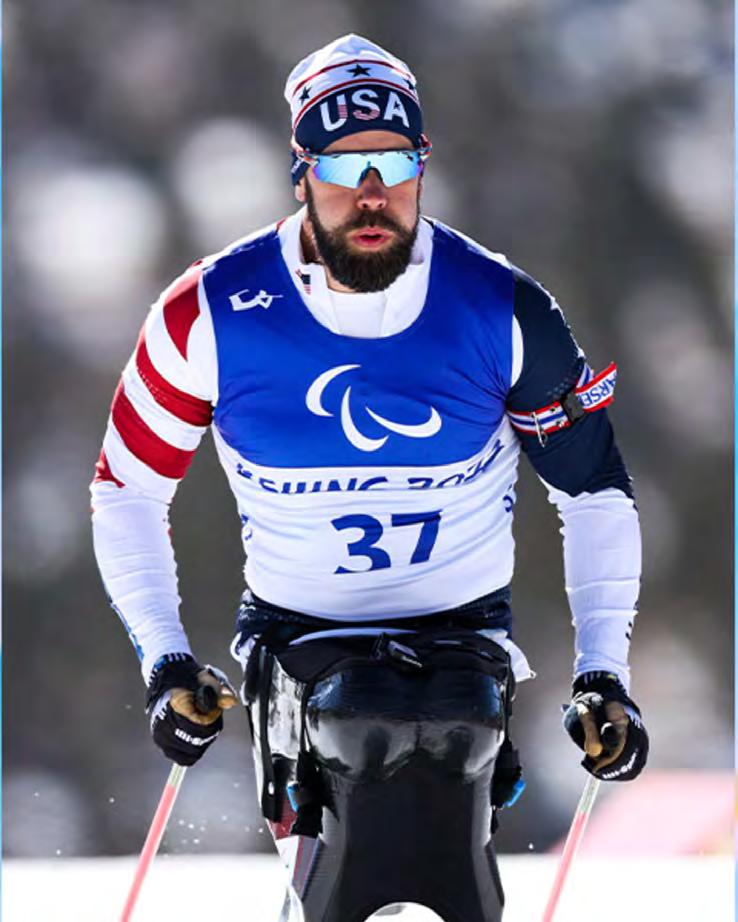
The Veteran: Aaron Pike
For Park Rapids native Aaron Pike, the road to Milano Cortina is familiar territory. Pike is a six-time Paralympian who competes year-round, transitioning between wheelchair racing in the summer and paraNordic skiing and biathlon in the winter. His experience will be an asset as he looks to add to his accolades in Italy.
The Newcomer: Liam Cunningham
At the other end of the spectrum is Liam Cunningham, a young sled hockey player making his Paralympic debut at seventeenyears-old. He is currently a student at Saint Thomas Academy and a member of the Minnesota Wild Sled Hockey Team.
Making change: Community living in the 21st century
By Janet Stewart
As communities themselves change, how are people with intellectual and other developmental disabilities (IDD) affected by that change?
In the midst of a five-year grant from the National Institute on Disability, Independent Living, and Rehabilitation Research (NIDILRR), researchers at the University of Minnesota’s Institute on Community Integration are documenting the experiences of people with IDD and their families, from longstanding concerns about safety and neglect to more modern worries about privacy as artificial intelligence plays a bigger role in service delivery.
“It’s really time to figure out what exactly is meant by community living for an increasingly diverse population in the 21st Century,” said Renáta Tichá, principal investigator. “We’re looking at multicultural aspects, including gender, race, ethnicity, and language, along with varied types of residential settings where people with IDD live.”
Her team is conducting interviews with people from diverse backgrounds with and without IDD across the country, along with family members of people with IDD. In November, the team conducted interviews at
the ACT State Self-Advocacy Conference in Minneapolis.
“The conference was really nice because we had self-advocates, family members, and providers all in one place, so we were able to get into some depth,” Tichá said. “We realized
that the conversation around community living right now is not just about multicultural issues and technology, but some older conversations around safety, stigma, abuse, and neglect. There were strong feelings about the lack of inclusion and community participation – things that we thought we had moved on from, but they were coming out loud and clear, and I don’t think this sentiment has reached its peak yet.”
Still, there is power in those loud, clear messages, some of which date back many years in participants’ memories.
“People are feeling more comfortable today talking about some of the challenges in community living,” she said. “In the 21st Century, we have largely already moved out of institutions, but there are still valid experiences of emotional and physical abuse and exclusion in settings that are not institutions.”
Belisle
Tim & Mollie Benjamin
Janice Chevrette
Just Comfort, Inc.
Jane Larson
Ronna Linroth
Brandon and Cathy Miller
Lynda Milne Kay Willshire GOLD ($500-$999) Kent Fordyce Catherine Hunter and Christopher Ockwig
Tamarack Habilitation Tech
John Tschida
The Stone Thrower: Oyuna Uranchimeg
Returning for her second Paralympic appearance is Burnsville resident Oyuna Uranchimeg. She has been named to the Team USA Wheelchair Mixed Curling team, a testament to her strategic mind and precise touch on the ice. Uranchimeg is a graduate of Hamline University and hopes to earn gold in the sport that many describe as, “chess on ice.”
The team has now completed more than half of its planned national interviews and is starting the data analysis that will lead to building a new model for community living, she said. The work will increase understanding of how cultural factors interact with disability, identify potential solutions to the high turnover rates in the direct support workforce, and examine outcomes of policies and systems that affect people with IDD and their families.
Documenting the voices of people with IDD and their families will expose negative experiences, but also helpful, informed suggestions for moving forward, Tichá said.
“People are telling us how to improve the system and where they need better support,” she said. “This will create a building block toward replacing the old structures we still have in place from the institutional days. We need to think about a more nimble, flexible service system. I’m a researcher, so I’m excited that this information and the way we present it could inspire people to start thinking about doing services for adults with IDD differently. We are at a breaking point where we can make some real change.”
If you are interested in participating in an interview or have questions about the study, contact Renatá Tichá at tich0018@umn.edu.
Aaron Pike, Para Nordic Skiing and Biathlon Liam Cunningham, Sled Hockey Oyuna Uranchimeg, Wheelchair Mixed Curling
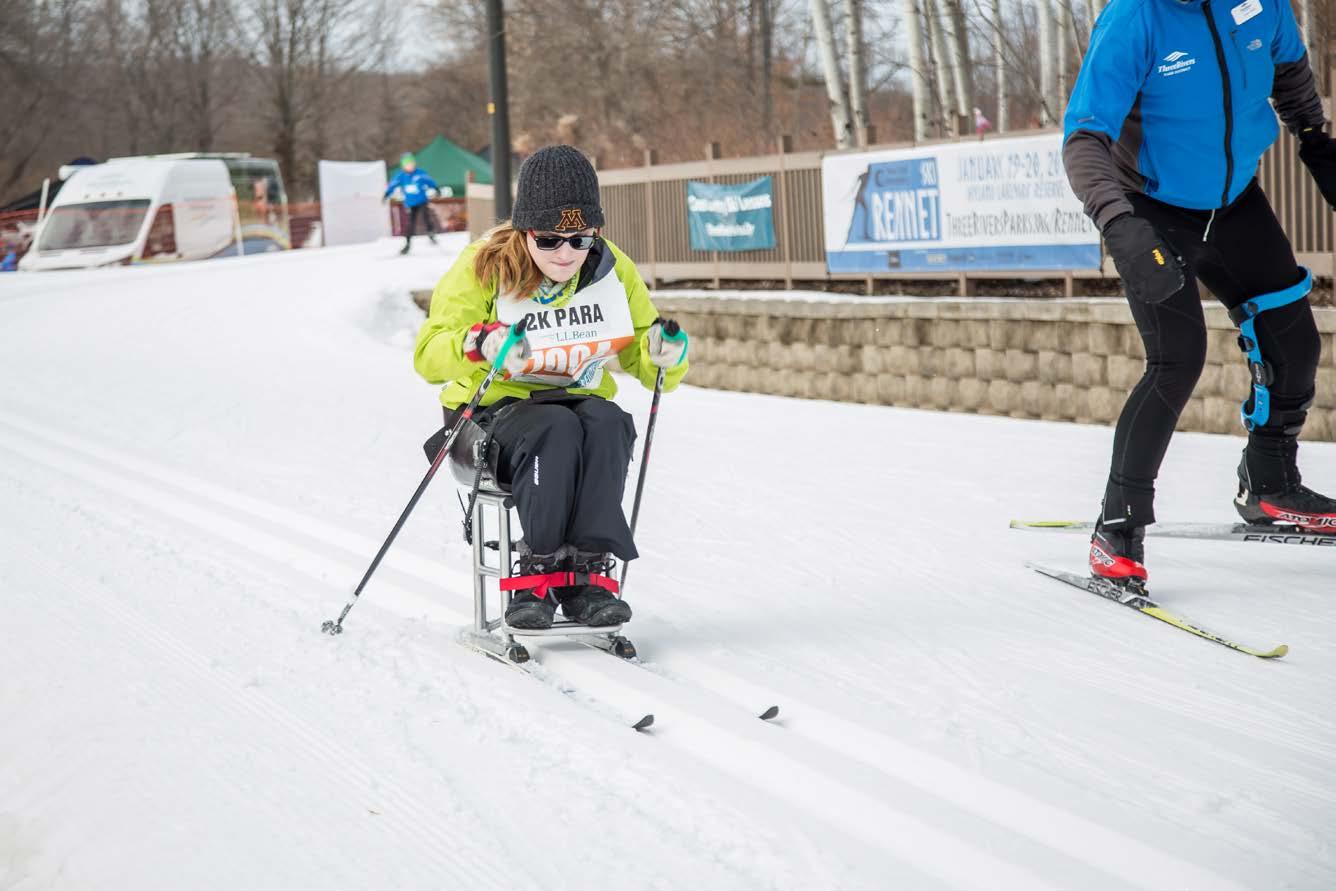
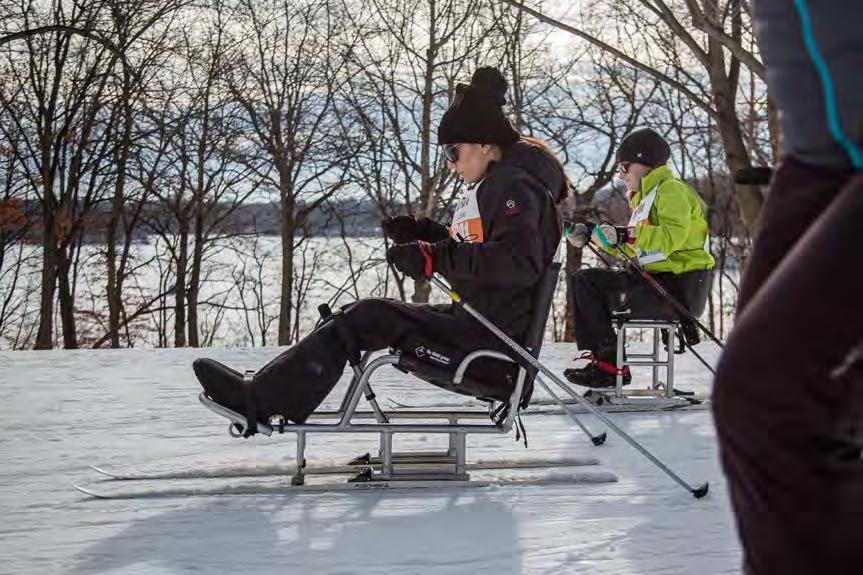
Three Rivers Park District is making winter accessible
Winter is often a season that Minnesotans with disabilities simply endure, rather than enjoy. Between snow-covered sidewalks and below-zero temperatures, it can be easy to just hide inside until May.
Sam Tabaka wants to get people outside and smiling all winter long.
As an Outdoor Educator for Three Rivers Park District—and a wheelchair user with a spinal cord injury himself—Tabaka has spent the last 15 years building programs that get people off the couch and into the fresh air. This winter, thanks to new equipment and a major partnership with Courage Kenny, the district is offering more ways than ever for the disability community to reclaim the outdoors.
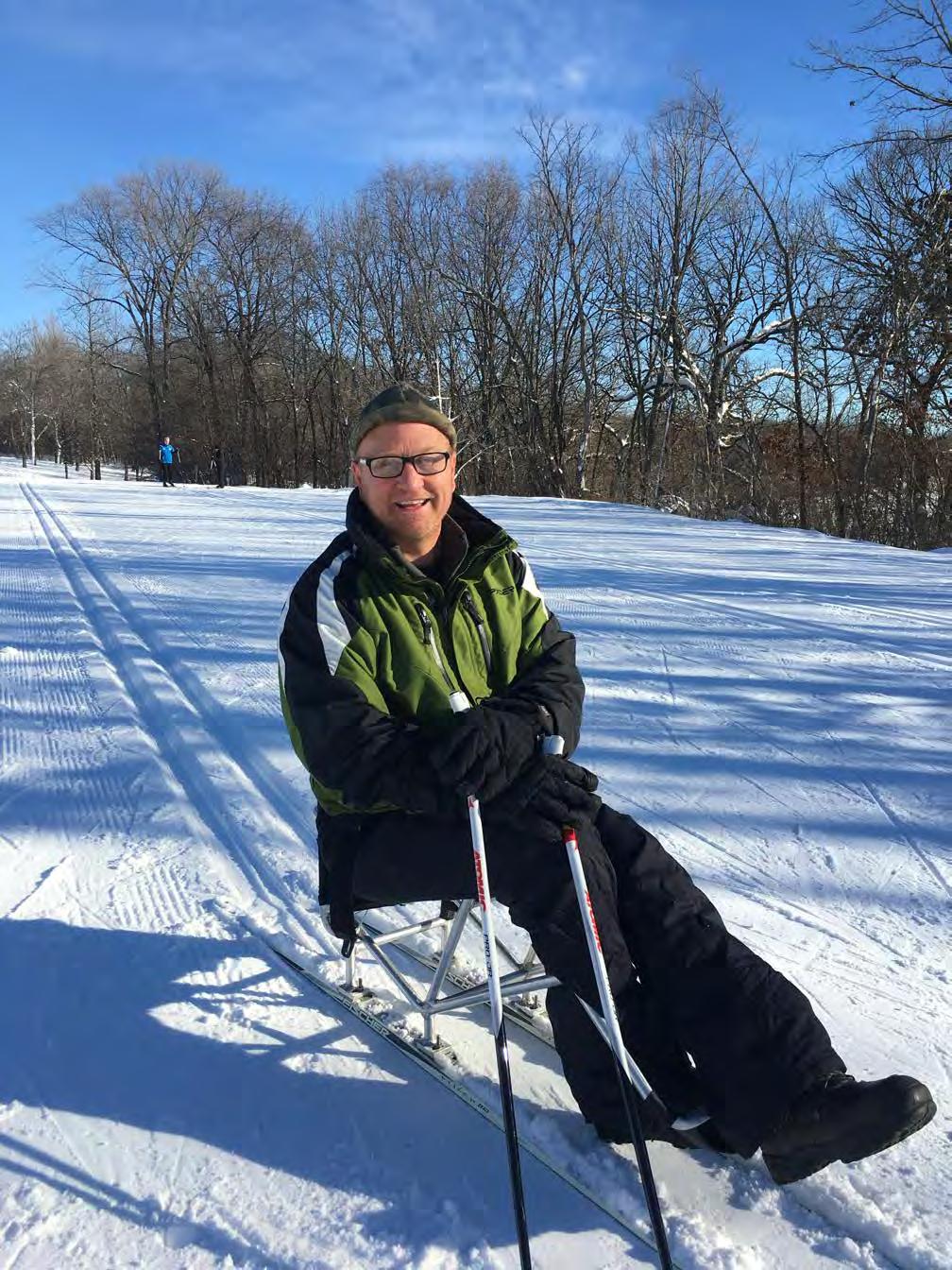
Sit Ski Rentals: A Hidden Free Gem
One of the best-kept secrets of the Three Rivers Park District is that you don’t need to join a formal club to go cross-country skiing. The district maintains a fleet of sit skis that are available for the public to rent.
“They are a part of our rental fleet, and we don't charge for them,” Tabaka explained. “If you were going to come out and use a sit ski, you wouldn't have to pay to use it. You would still need to purchase your trail pass, just like everybody else does, but the equipment is no cost to use.”
The fleet includes varied setups for different disabilities, from highperformance sit skis to those offering extra back support. For skiers worried about the logistics of getting from their chair into the ski, the district recently installed a new outdoor transfer bench at the Elm Creek Winter Recreation Area.
“The transfer bench makes it much easier for many people to simply scoot over to the sit ski from their wheelchair,” Tabaka said.
Ski Club Capacity Doubles
For those who want instruction, the district’s popular 7-week ski club is celebrating its 15th year. Historically, the program often hits capacity quickly. This year, Three Rivers partnered with Courage Kenny to expand the program significantly. By running two separate programs—one at Elm Creek and one at Hyland Lake Park Reserve—they have doubled the number of spots available. The club is currently full and in session, but keep an eye out for spots opening again next year.
Upcoming Events
If cross-country skiing sounds too exhausting (Tabaka admits it’s a serious upper-body workout), there are two major events coming up in February that are lower impact but high fun.
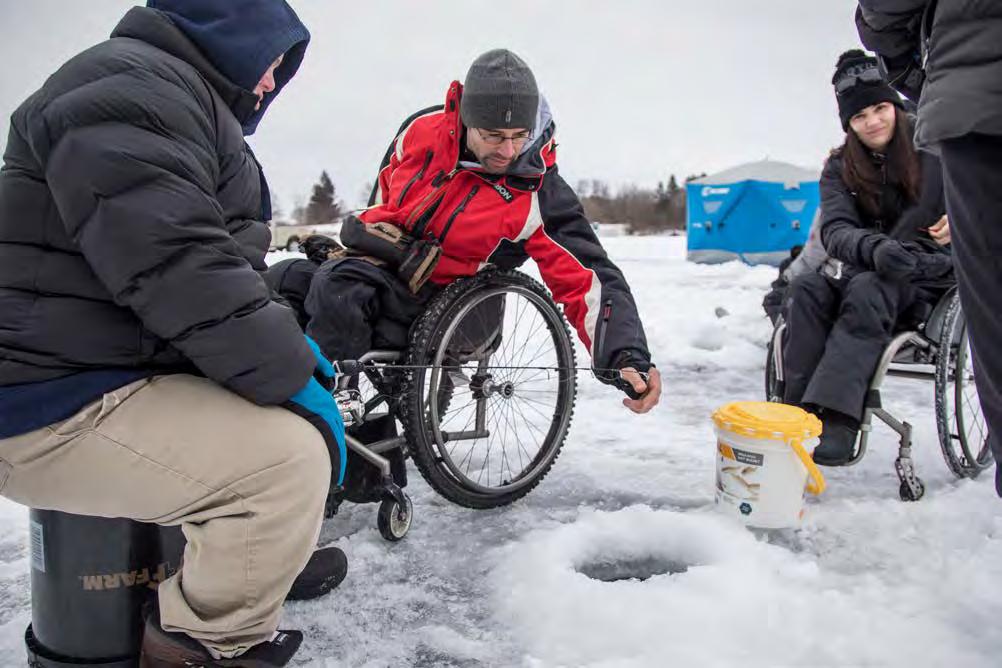
Ice Fishing on Lake Minnetonka (Feb. 7)
On Saturday, Feb. 7, Three Rivers is hosting an ice fishing event from 10 AM-4PM.
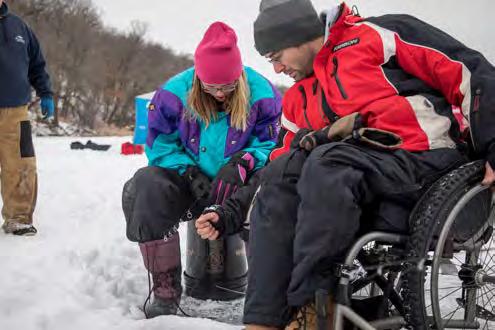
Accessibility is the priority here. “We have a spot where you can park really close to the lake... you basically get out in the parking lot right there,” Tabaka said. And for those of us who struggle with temperature regulation, they have solved the biggest problem with ice fishing: the cold.
“We’re going to have our ice shelters out there,” Tabaka noted. “They’re like a tent... we’ve got little propane heaters you can put into them, and they actually warm up and keep you toasty warm.”
without a reservation. There will also be music, food, and lots of other family activities.
For Tabaka, the goal is simple: giving people the tools to stop dreading winter and start playing in it.
THREE RIVERS PARK E VENTS/RENTALS
How to Get Involved
Adaptive Ice Fishing
Saturday, Feb 7, 10 a.m.–12 p.m.
Lake Minnetonka (Spring Park Bay); Free.
Accessibility: Close parking, flat ice access, heated shelters provided.
Register: Scan QR Code. (Registration site will be down for maintenance Jan 30-Feb 3).
Winter Play Day
Saturday, Feb. 21, 2026. Hyland Lake Park Reserve; No registration required. Free
Scan
Handi Abilities Showcase
Interactive
Hands-On Experience Lab & Vendor Hall – A dynamic, hands-on experience lab and vendor hall where attendees can interact directly with the latest DME products, technologies, and solutions while connecting with leading industry experts.
Community Resources – Connect with local organizations supporting individuals with disabilities, their families, and care teams.
Experience Adaptive Sports in Action - Join us for live demos of the latest adaptive sports equipment and see how innovation is making sports more accessible for athletes of all abilities. Whether you're looking to try something new or explore the latest in adaptive technology, don't miss this hands-on experience!
limits apply. Immediate openings in Hibbing, MN!
Affordable Senior Apartments
For qualifying senior households age 62 or better. Metro & Greater MN locations available. Accessible apts, available for seniors in these locations. Income limits apply.
Affordable Senior Apartments
Immediate openings in Worthington and Albert Lea, Minnesota
For qualifying senior households age 62 or better.
Housing with Care*
&
MN locations available. Accessible apts, available for seniors in these locations. Income limits apply.
* 24-hour Assisted Living Services * Adult Foster Care
Immediate
* Independent Living Services
* Eligibility for or selection of ASI services is not requred to qualify for housing. ASI services are not available in all locations.