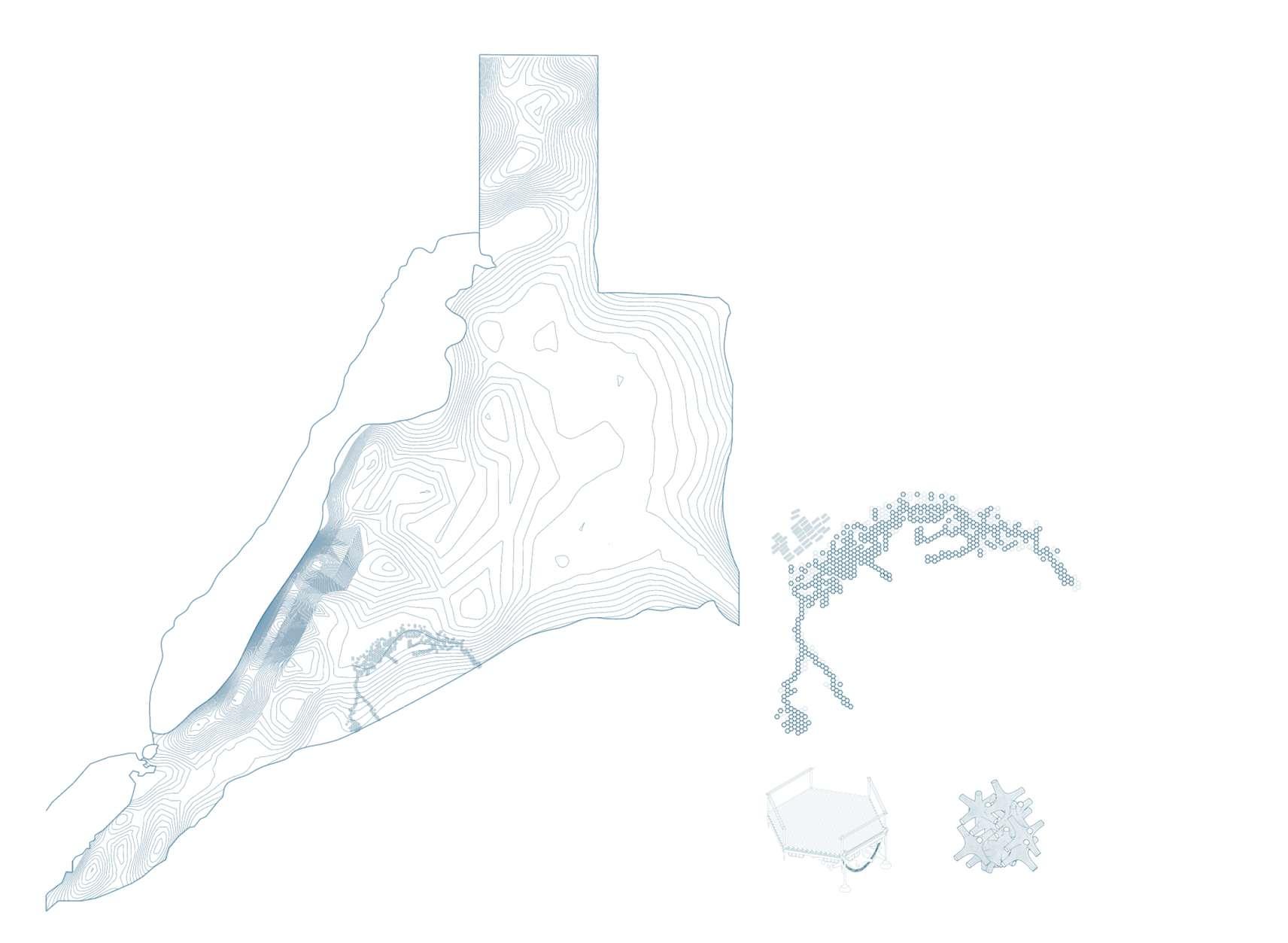
DECLARATION : “I certify that this piece of work is entirely my/our and that my paraphrase or quotation from the published or unpublished work is duly acknowledged.”
SIGNATURES OF STUDENTS:
DATE: 09 JANUARY 2026
Acknowledgement
This work has been shaped through the generosity, expertise and support of many individuals.
We are deeply thankful to Dr Michael Weinstock, Dr Milad Showkatbakhsh and Dr Anna Font for their sustained mentorship and guidance, which continually challenged and redirected the trajectory of this thesis.
We are grateful to Álvaro Velasco Pérez, Abhinav Chaudhary and Danae Polyviou for their thoughtful contributions, discussions and feedback at critical moments of the project. We would also like to acknowledge the Oystermen restaurant in Covent Garden for kindly supplying discarded oyster shells, without which the material investigations and experimental work would not have been possible.
Lastly, we thank our peers, friends and families for their patience, trust and encouragement, which sustained us throughout the intensity of this project.
1
DOMAIN
Abstract Introduction
1.1 Coastal Lagoon Systems : Evolution, Tensions and Instabilities
1.2 The Qigu Littoral System
1.3. Aquaculture and Local Livelihoods
1.4. Government Interventions and Limitations Contextual
1.5 Morphodynamic Diagnosis
1.6 Socio-Economic Impact
1.7 Case Studies
1.8 Design Problem Synthesis
1.9 Hypothesis
Chapter Bibliography
2
METHODS
2.1 Overall Methodological Framework
2.2 Physical Experimentation Toolkit
2.3 Digital Simulation Toolkit
2.4 Assembly Logics and Fabrication
2.5 Material Experimentation Tests
Chapter Bibliography
3
RESEARCH DEVELOPMENT
3.1 Coastal Landscape Dynamics
3.2 Research Phase A
3.3 Reseach Phase B
Chapter Bibliography
4
DESIGN DEVELOPMENT
4.1 Site Selection + Edge Conditions
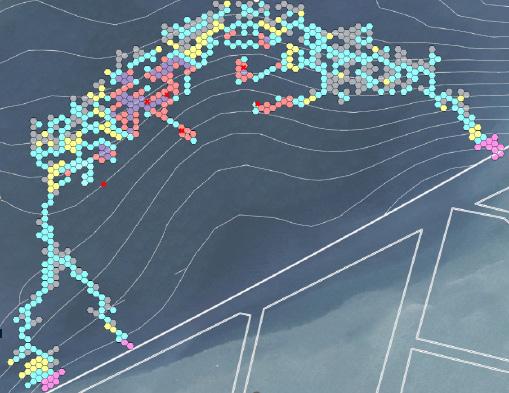
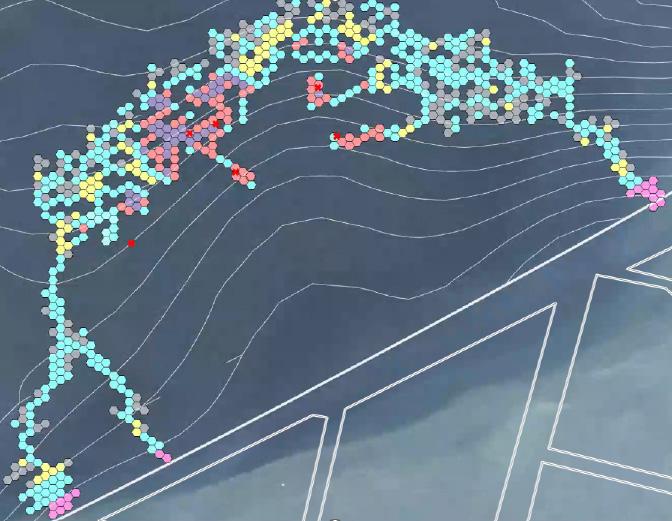
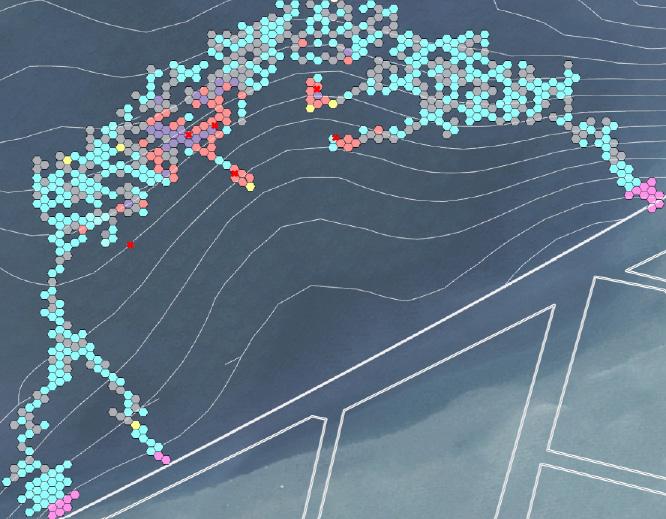
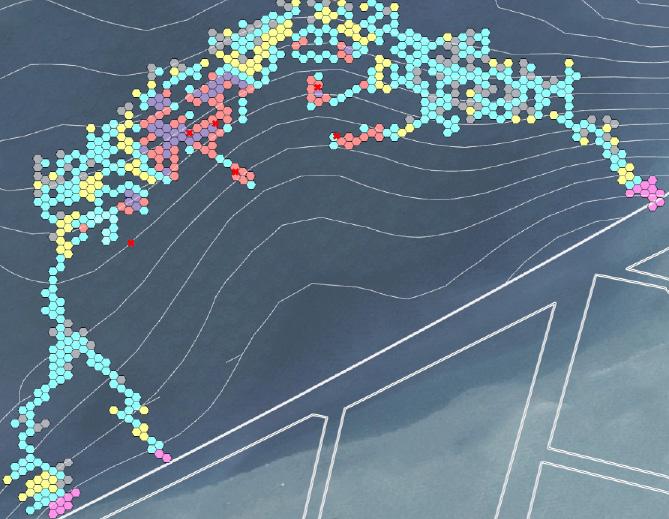
4.2 Network Experiments Logic Overview
4.3 Metadata Intelligence
4.4 Spatial Activation Rules
4.5 Shifting Seasonal Requirements
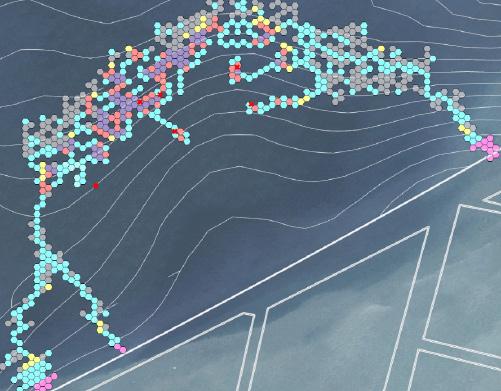
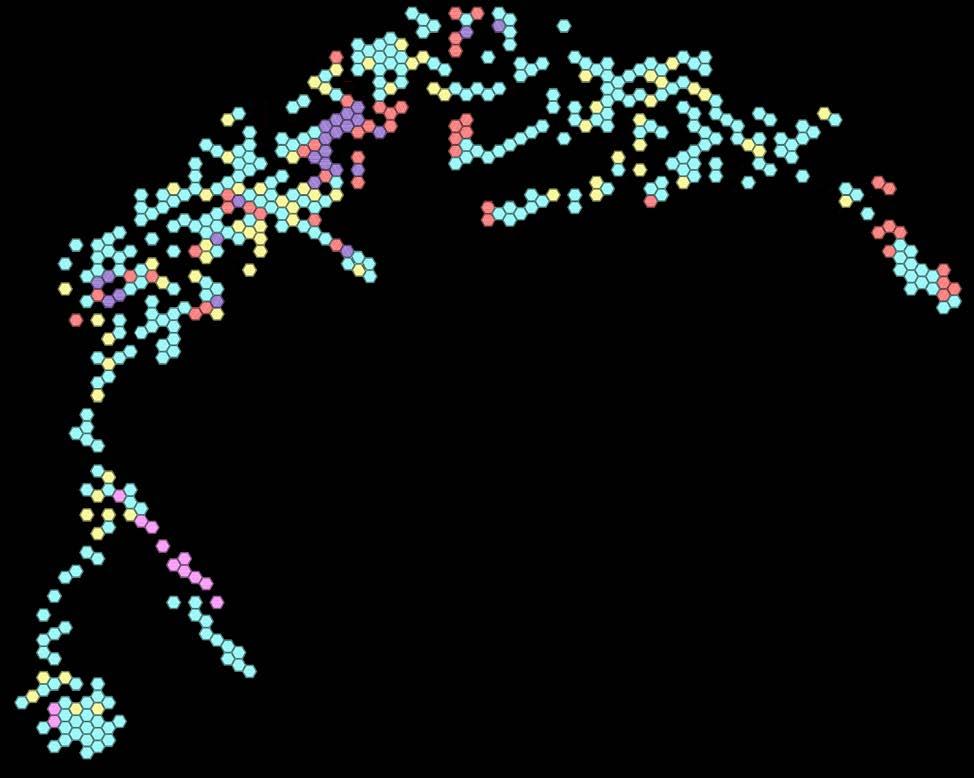
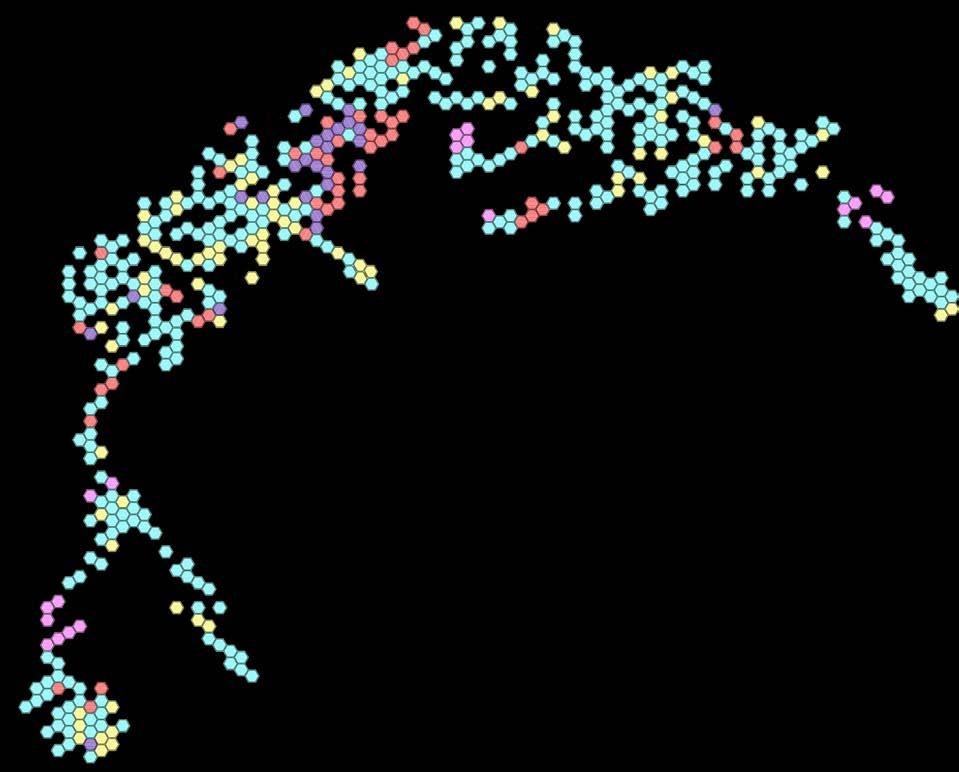
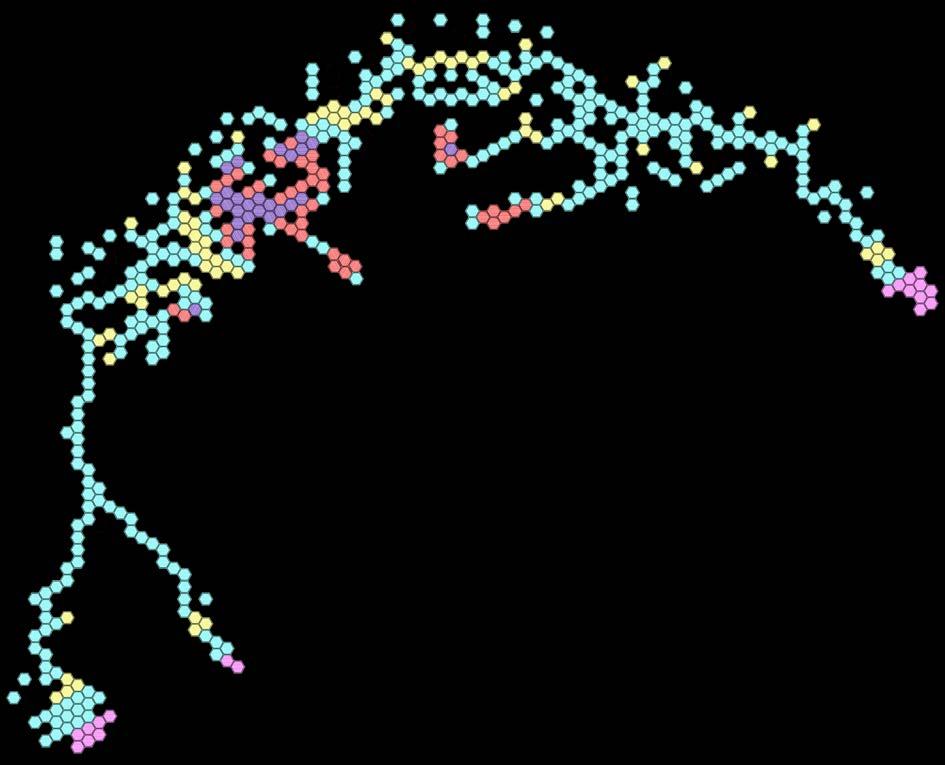
4.6. Seasonal Scenarios
Chapter Bibliography
5
DESIGN PROPOSAL
5.1 Local Scale: Architectural Detailing
5.2 Frame Design
5.3 Kit of Parts
5.4 Exploded Axonometric
5.5 Assembly and Disassembly Sequence
5.6 Regional Scale
5.7 Global Scale
5.8 Completing the Cycle
Chapter Bibliography
Discussion Annexure
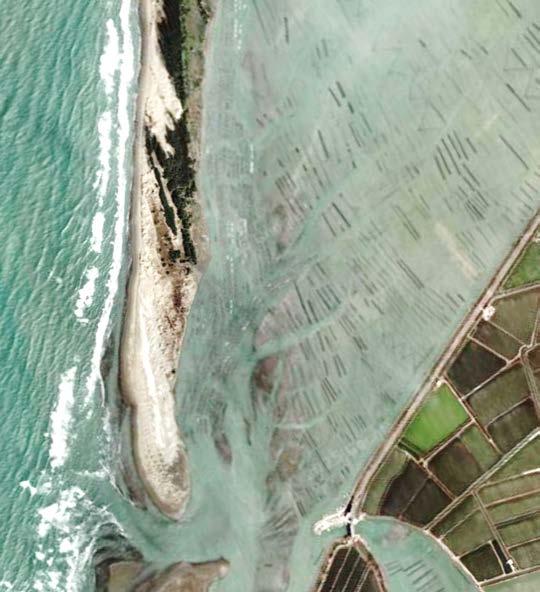
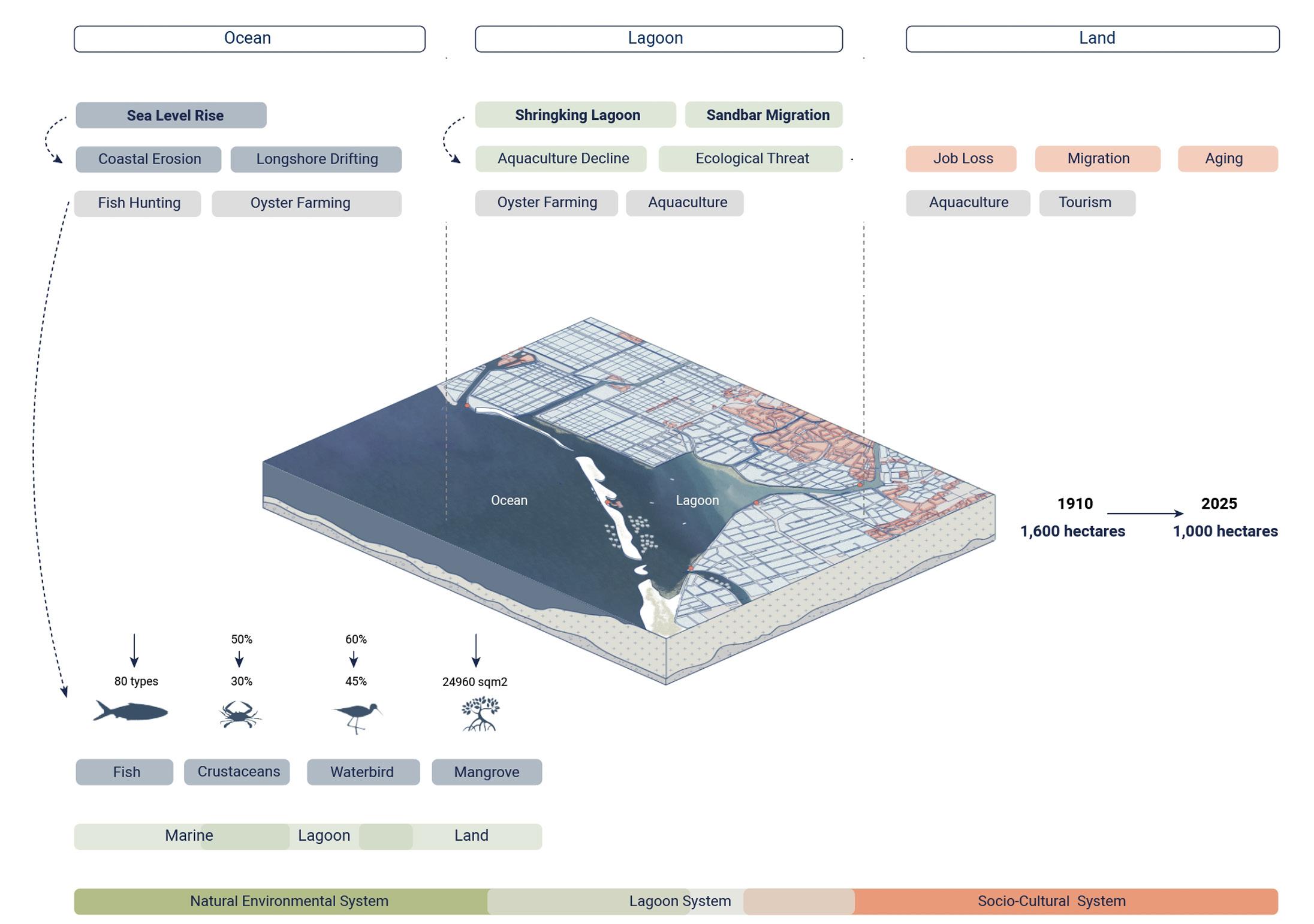
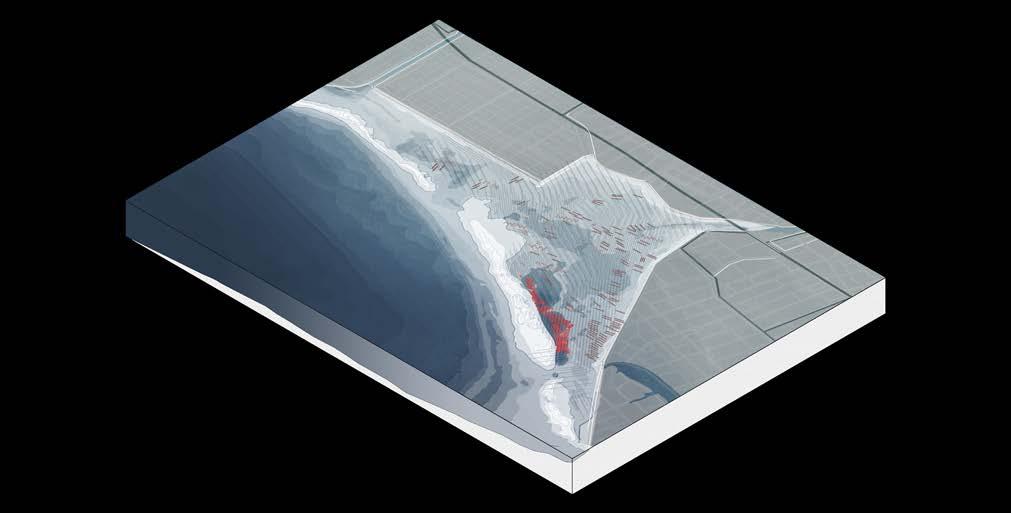
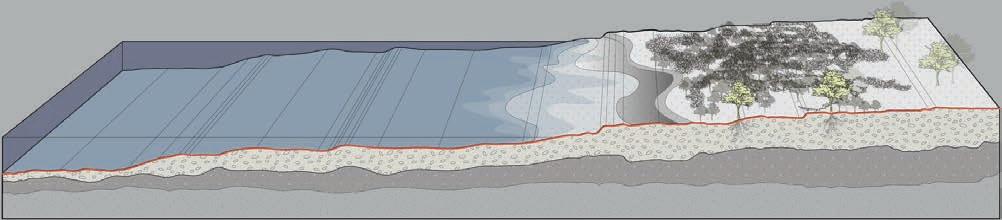
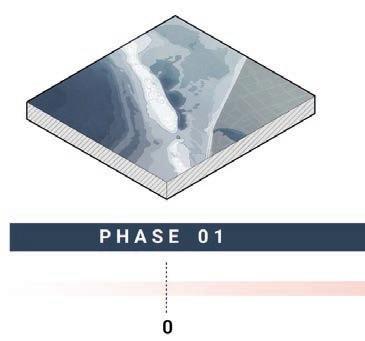
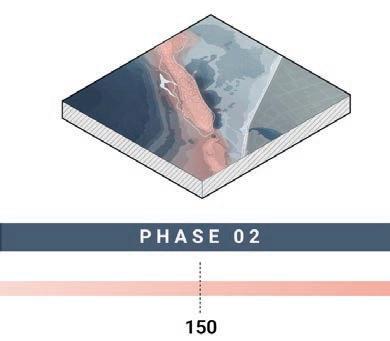
The Qigu Lagoon is protected by the last of seven remaining sandbars along Taiwan’s southern coast. Once about 150 km², now its area has shrunk to 15 km². Rising sea levels are eroding sandbars, pushing them deeper into an already shrinking lagoon. The sediment flows into the lagoon from the adjacent Zengwun River. The lagoon is vital to sustaining local aquaculture and oyster farming, forming the backbone of the region’s economy. Government interventions have largely focused on the edge, trying to reinforce the sand barrier.
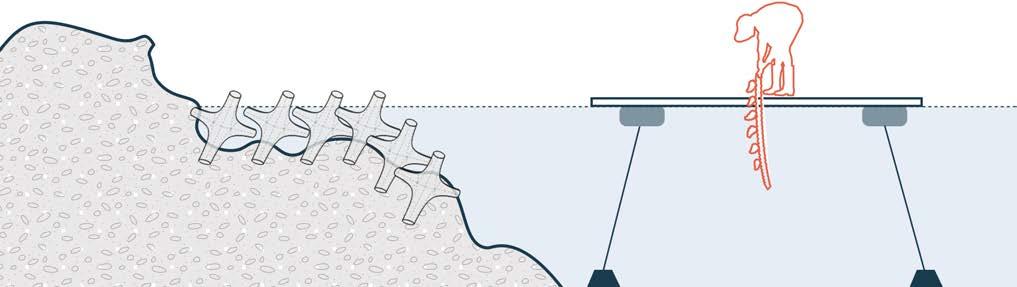
This research fundamentally inquires how coastal defence strategies and oyster farming can be integrated to protect the sandbar, rehabilitate the shallowing lagoon, and sustain its changing economy. The research is structured in two phases. The First Phase was developed along the eroding seaward edge of the sandbar and was organised around three research verticals: land-growing, material study, and spatial structure. Drawing on island accretion strategies, this phase developed sediment-deposition prediction models to support the organic regrowth of the depleting sandbar. Discarded oyster shells were processed into material systems to test sediment interaction and structural potential. Through the logic of topological interlocking, oyster-shell-based modules evolved into funicular shell systems and residential units that form a seasonal settlement for fisher people embedded within the regenerated sandbar.
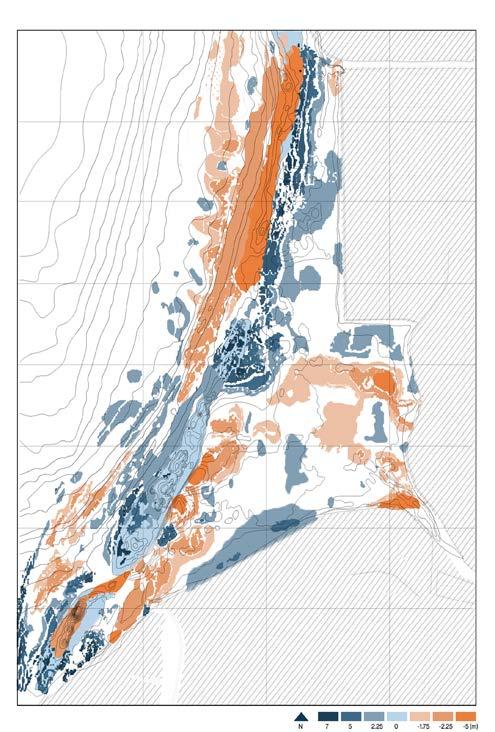
The Second Phase turns the focus inward toward the lagoon, and more critically, toward its bed. Progressive siltation has shallowed the lagoon, forcing oyster racks to cluster within limited deep zones and intensifying ecological stress. This phase undertakes a detailed analysis of water flow patterns, velocities and bathymetric relationships to understand the consequences of sediment imbalance in the lagoon. The earlier research into predictive land accretion models is expanded and inverted to enable controlled
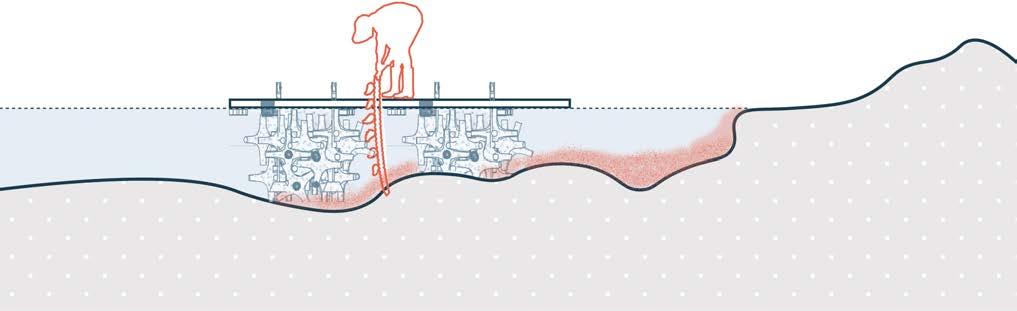
land-scouring. This is coupled with machine-learned, fluid-dynamics-informed simulations to test targeted underwater-erosion modules, introducing a performative infrastructural system that recalibrates underwater depths while supporting aquaculture, access and movement above water. A reconfigurable architectural spine emerges as both an ecological regulator and a social framework for work and seasonal use, dynamically adapting to varying requirements across the farming cycles, typhoon seasons and eco-tourism peaks, allowing spatial layouts to follow shifting depths.
Together, the two phases reposition architecture as a mediator across land modulation, material behaviour, water movement and spatial opportunities. Rather than resisting change, the project proposes a system that operates through the shifting conditions of the lagoon, aligning ecological processes with spatial occupation to support a more resilient coastal future.
Coastal lagoons operate at the unstable threshold between land and sea, shaped by sediment movement, tidal exchange, and seasonal variation. These systems are increasingly disrupted by sealevel rise, altered river flows, and fixed engineering responses that prioritise control over adaptation. In many contexts, coastal defence and aquaculture infrastructure have developed as parallel systems: one focused on protection, the other on production. This separation has resulted in fragmented interventions that often stabilise one condition while intensifying instability elsewhere in the system.
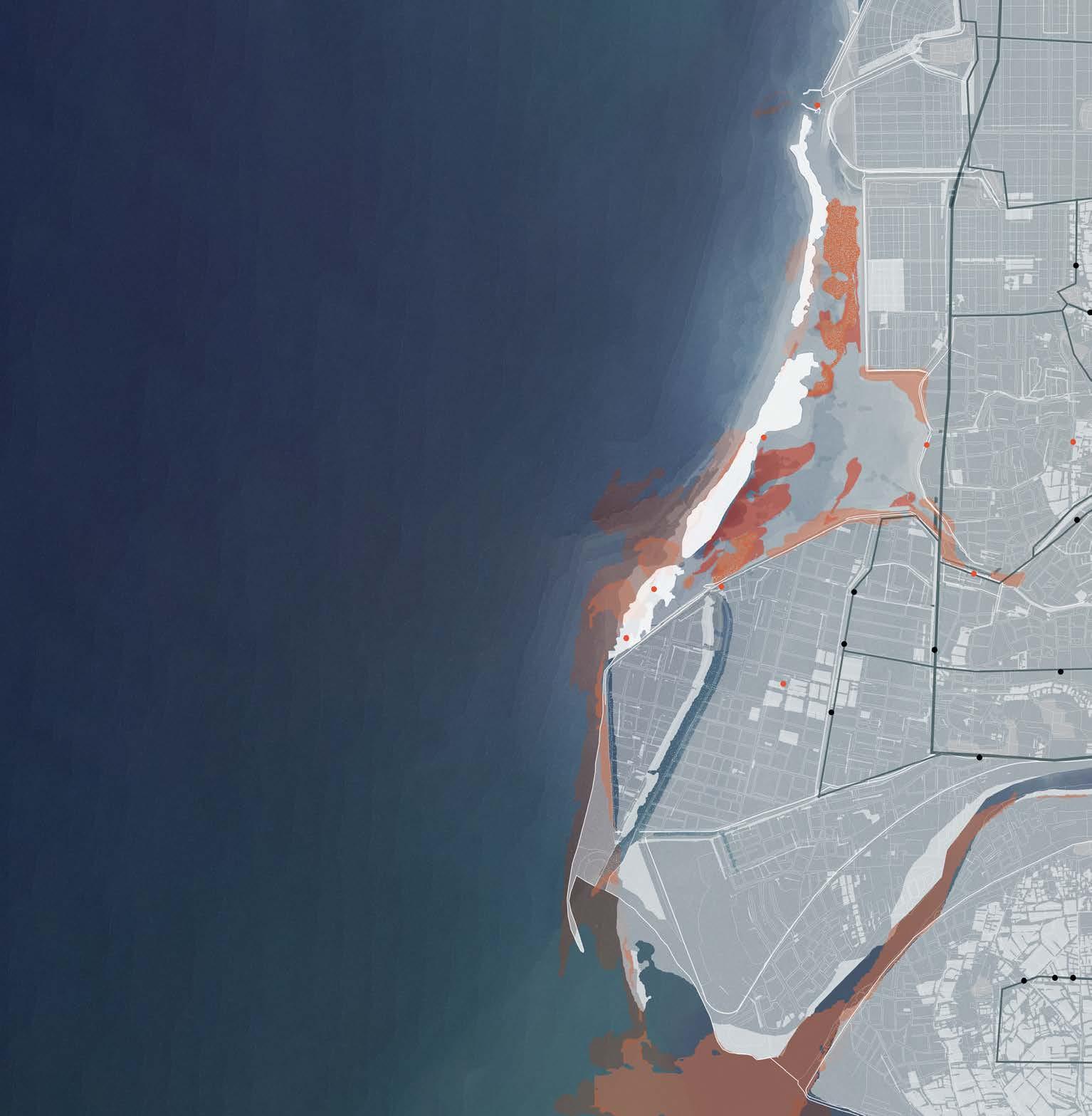
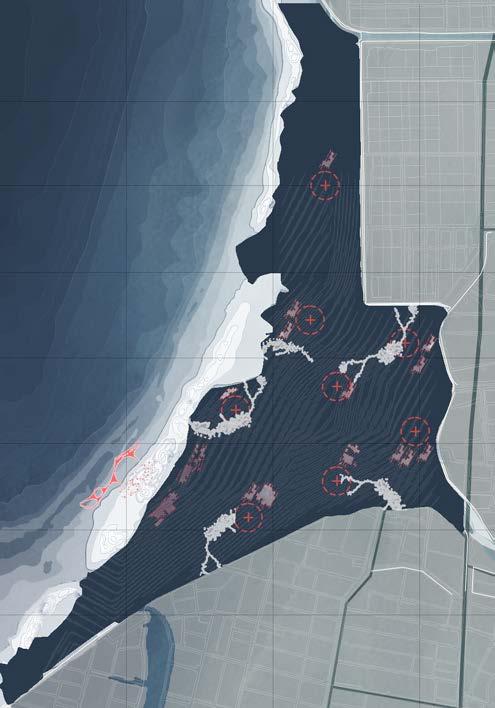
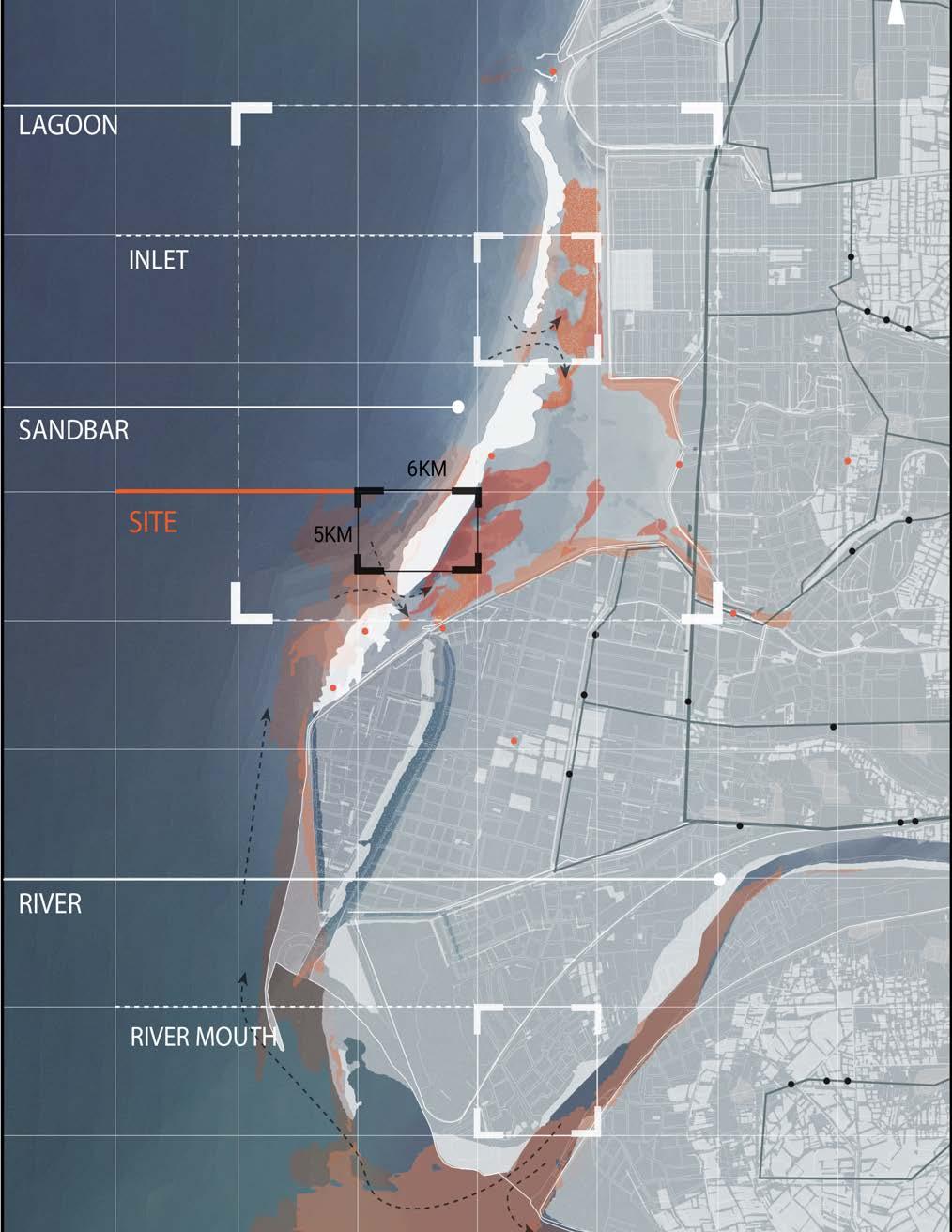
The Qigu Lagoon in southwest Taiwan exemplifies this condition. As the lagoon’s sandbar continues to erode and migrate inland, sediment carried by the Zengwun River accumulates within the lagoon, progressively reducing depth and restricting water circulation. Oyster farming, which forms the economic and social backbone of the region, is increasingly constrained to limited deep-water zones near the southern opening.
Existing government interventions have largely focused on reinforcing the sandbar edge through dredging and hard infrastructure, while the lagoon interior continues to shallow and fragment. This imbalance reveals a broader limitation in prevailing coastal management approaches: the tendency to treat land growth, sediment control, aquaculture, and habitation as separate problems rather than as interdependent processes.
This dissertation positions architecture as a mediating discipline capable of operating across these interdependencies. Rather than proposing static solutions, the research investigates how architectural systems can engage directly with sediment behaviour, material cycles, and water dynamics to support both ecological processes and human occupation. Central to this inquiry is a shift from resisting change to working through it—allowing infrastructure and
spatial systems to evolve in response to changing depths, flows, and seasonal use.
The research is structured in two phases, each addressing a distinct but connected spatial and ecological condition within the lagoon system. Phase A focuses on the seaward sandbar and asks whether eroded land can be regenerated by redirecting tidal forces and sediment flows. This phase introduces the first hypothesis: that land-growing interventions, informed by sediment dynamics and supported by material systems derived from local aquaculture waste, can regenerate the sandbar while enabling seasonal settlement that evolves with the lagoon.
The oyster shell becomes the primary architectural and material starting point in this phase. By crushing, recombining, and casting discarded shells into modular units, the research explores how material behaviour can shift across conditions. Offshore, shellbased modules operate through aggregation and jamming, redirecting sediment deposition. Onshore, the same modules transition into deterministic systems of topological interlocking, forming stable funicular shells, platforms, and residential units embedded within the regenerated landform. This continuum—from loose aggregation to controlled assembly—frames a second, material-driven hypothesis: that emergent interlocking systems can adapt across different lagoon zones while remaining materially and ecologically grounded.
Phase B shifts focus inward, toward the lagoon interior and its bed. Progressive siltation has reduced depths, intensified ecological stress, and limited aquaculture operations. Here, the research tests a complementary hypothesis: that if lagoonal interventions can move with changing depths and seasons, they can restore water flow while simultaneously supporting aquaculture, community use, and eco-tourism. This phase expands earlier sediment modelling into
Introduction
predictive tools for controlled scouring, combining bathymetric analysis with fluid-dynamics-informed simulations. Targeted underwater erosion modules and a reconfigurable architectural spine are developed to recalibrate lagoon depths while supporting movement, access, and seasonal occupation above water.
Together, the two phases frame a continuous architectural system operating across offshore, nearshore, and lagoon interior conditions. The dissertation is structured accordingly. Chapter 1 establishes the domain through lagoon dynamics, aquaculture systems, government interventions, and relevant case studies. Chapter 2 outlines the methodological framework, including digital simulations, physical experiments, and assembly logics. Chapter 3 documents the research development across both phases, detailing sediment modelling, material investigations, and module testing. Chapter 4 translates these findings into spatial and infrastructural strategies. Chapter 5 consolidates the work into a design proposal that demonstrates how adaptive, reconfigurable architecture can operate as a long-term mediator within a shifting coastal system.
Domain
Coastal lagoons are among the most dynamic yet fragile landscapes, constantly reshaped by the interplay between natural processes and human interventions. In recent decades, global sea-level rise has intensified the vulnerability of lagoon–barrier systems, accelerating sedimentation, salinity shifts, and ecological instability. Qigu Lagoon in southwestern Taiwan presents a critical case: once part of the expansive Taijiang Inland Sea during the Dutch colonial period, it has gradually transformed into a complex socio-ecological system.
Today, Qigu sustains diverse ecological habitats for migratory waterbirds, supports a long-standing economy of aquaculture and fishing, and accommodates distinctive modes of dwelling tied to the rhythms of the lagoon. At the same time, state-led interventions: breakwaters, embankments, reclamations, and engineered inlets,have redefined its hydrology and reshaped its cultural landscape.
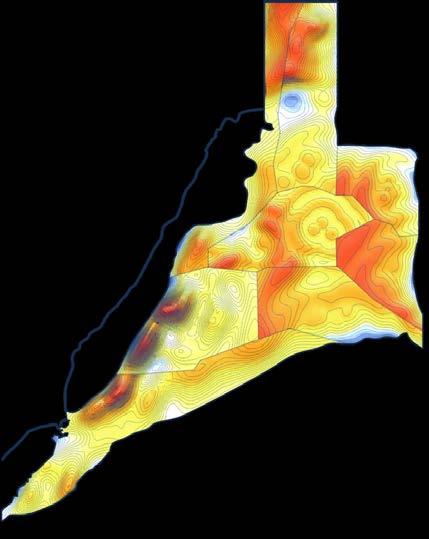
Fig. 1 . Qigu Lagoon: Sedimentation overview influenced by the Zengwen River Discharge.
1.1 Coastal Lagoon Systems: Evolution, Tensions and Instabilities
1.1.1
Origin and
Evolution of Coastal Lagoons
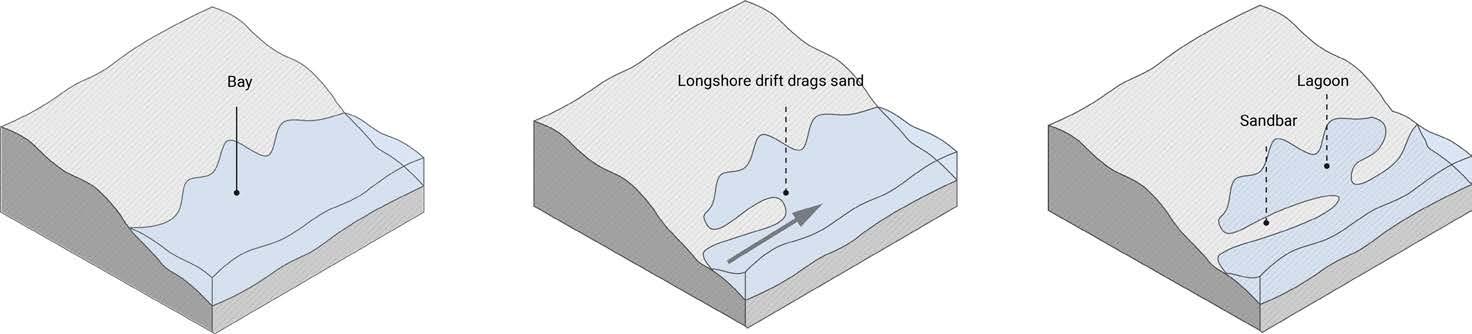
Coastal environments, particularly barrier island–lagoon systems, are increasingly vulnerable to the compounded effects of sea-level rise and intensifying storm regimes. Their location and morphology make barrier islands critical in coastal defence, yet these same traits render them among the most vulnerable landscapes to long-term inundation.1 This study first evaluates the origin and evolution of coastal lagoons. The existence of coastal lagoons is intimately connected with the barrier enclosing it one cannot exist without the other. 2
As sea level rises across a very low, gently sloping coastal plain, waves moving sand along the shore feed the beach and dune ridge so that it builds upward roughly in step with the rising water, a response described by Bruun (1962). Hoyt called this the mainland beach detachment mode of barrier-island formation, now regarded as the dominant mechanism on low-relief coasts of unconsolidated sediment. 3
Coastal lagoons are inland water bodies, found on all continents, usually oriented parallel to the coast, separated from the ocean by a barrier, connected to the sea by one or more restricted inlets which remain open at least intermittently, and have water depths which seldom exceed a few meters. They are often highly productive and ideal systems for aquaculture projects, but are, at the same time, highly stressed by anthropogenic inputs and human activities.4
1.1.2. Impacts of Sea-Level Rise on Barrier–Lagoon Systems
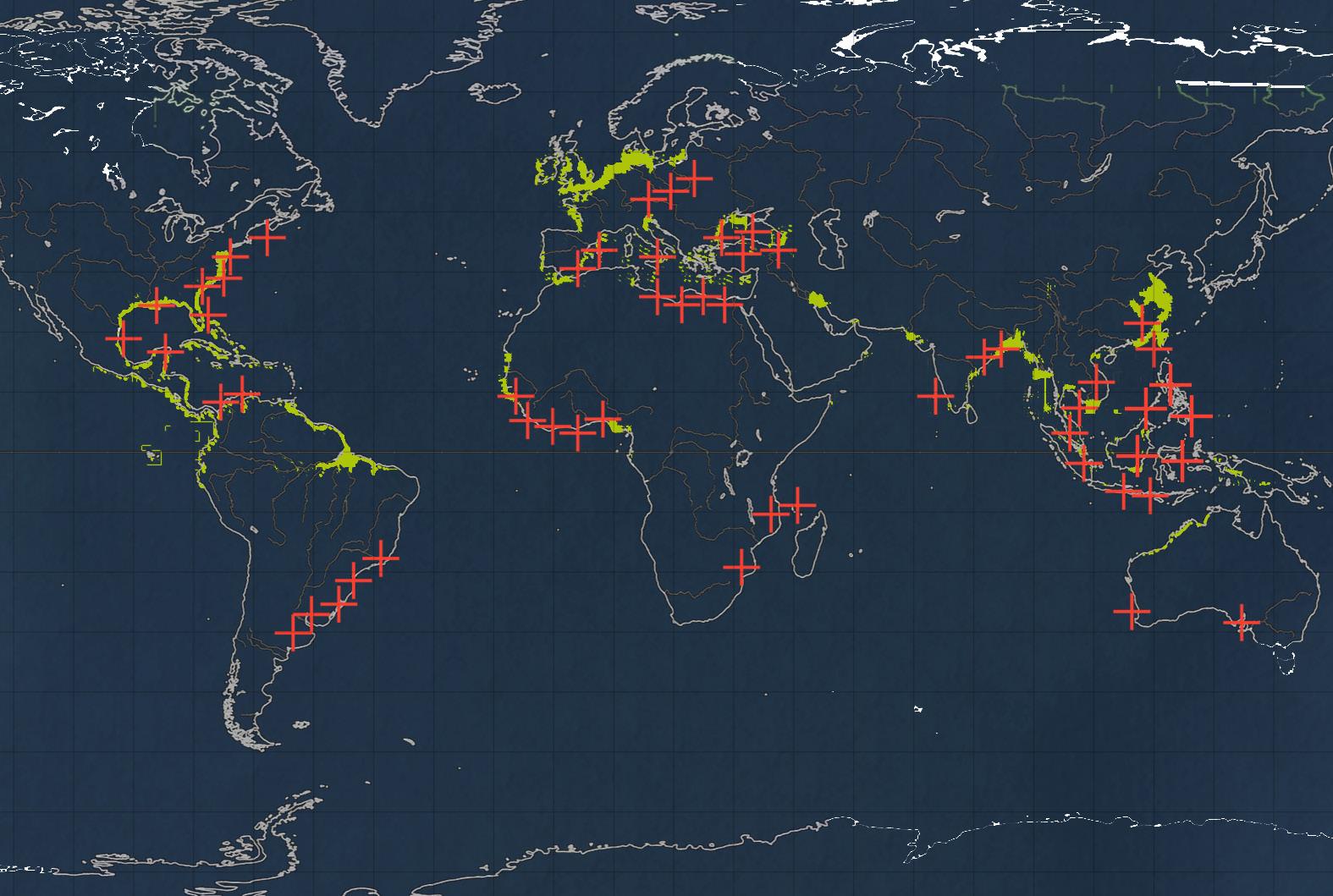
Projected global-mean sea level will climb by ~ 0.38 -- 0.77 m this century, and extreme sea levels that used to strike once in 100 years are expected to occur 20–30 times more often by 2050. As barriers adjust to rising water rolling landward, fragmenting through inlet enlargement, or drowning when sediment supply cannot keep pace, the capacity of the back-barrier lagoon to store surge and attenuate waves diminishes, removing a natural buffer and opening new pathways for coastal flooding. Because coastal lagoons sit immediately landward of barrier islands they are among the first landforms that permanent inundation.
1.1.3
Short-Term Fixes, Long-Term Instability of Coastal Management
Comparative review of engineered lagoons shows that attempts to lock migrating barriers and inlets in place (walls, jetties, dredged cuts) may deliver shortrun stability for navigation or defence, yet they interrupt natural hydro morphological trajectories, shift tidal prisms and salinity fields, and leave people chasing a moving ecological baseline. In North China’s Qilihai Lagoon, successive state projects (tide-gate installation, extensive reclamation embankments, channel straightening/widening, breakwaters, and later partial removals) altered tidal asymmetry and drove net sediment deposition, so each fix generated new management problems. In India’s Chilika Lake, government-led cutting of a new sea mouth successfully re-established salinity gradients and tidal exchange, but post-intervention monitoring highlights rapid inlet migration, bank erosion, and sediment infilling, necessitating continual dredging and engineered channel management to sustain ecological benefits.
These examples show that while government engineering efforts may offer short-term relief, they often disrupt natural lagoon processes and require constant maintenance, highlighting the need for longterm strategies that work with, rather than against, the dynamics of coastal systems.
1 Duncan M. FitzGerald et al., “Coastal Impacts due to Sea-Level Rise,” Annual Review of Earth and Planetary Sciences 36, no. 1 (May 2008): 601–47, https://doi.org/10.1146/annurev.earth.35.031306.140139.
2 R. K. Barnes, Coastal Lagoons: The Natural History of a Neglected Habitat (Cambridge: Cambridge University Press, 1980).
Fig. 3. The impacts of Sea-level rise on Lagoon ecosystems worldwide.
1.2 The Qigu Littoral System
Qigu Lagoon, located in Tainan City, Taiwan, is now protected by three remaining sandbars, once part of a system of seven along its southwestern coast. Its biome constitutes critical ecological and socio-economic machinery, negotiating and pushing for stable grounds for nearly seventy decades.1
1.2.1 Geomorphic Evolution and Timeline (History of Human–Sandbar Interaction)
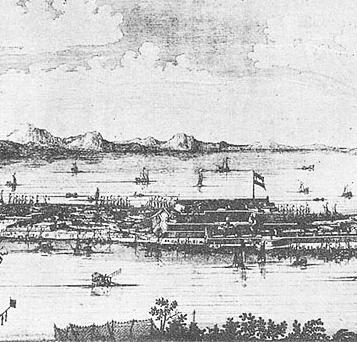
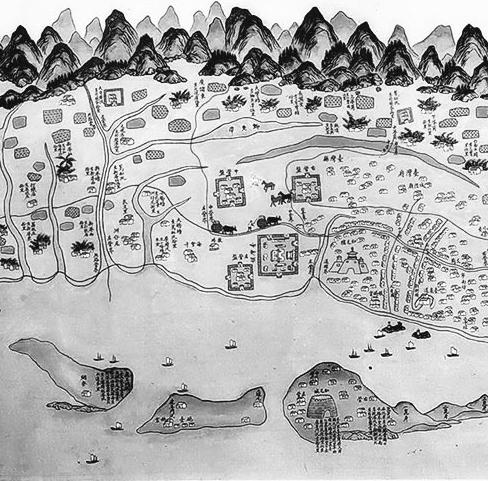
Qigu Lagoon was historically part of the expansive Taijiang Inner Sea. Since the 17th century during the period of Dutch rule, the sandbar formations in the area became important sites for human activity.2 The Dutch established Fort Zeelandia and other military and trade outposts on the major sandbars, utilizing the inner sea as a waterway and defensive barrier. Over time, particularly between the 18th and 19th centuries, river sedimentation and natural sandbar formation gradually enclosed the inner sea, transforming it into several independent lagoons, among which Qigu Lagoon is one.
The sandbars surrounding Qigu Lagoon were not only natural geographical features but also long-term human settlements. By the 19th and early 20th centuries, these sandbars hosted seasonal as well as permanent fishing villages and salt production facilities. Three major sandbars still recorded today,Chingshan Harbor Sandbar, Ding-tou-er Sandbar, and Wangtzu-liao Sandbar served as key sites for these activities. Residents typically
1 Tony Leong-Keat Phuah and Yang-Chi Chang, “Socioeconomic Adaptation to Geomorphological Change: An Empirical Study in Cigu Lagoon, Southwestern Coast of Taiwan,” Frontiers in Environmental Science 10 (January 4, 2023): 1091640, doi:10.3389/fenvs.2022.1091640.
2 ‘台江國家公園機關入口網站. ‘荷治時期的台江’. 13 March 2020. http:// www.tjnp.gov.tw/Encyclopedias_Content.aspx?n=557&s=251162.
3 Sue-rong chen,”The Study of Fishery Ecology in Chiku lagoon”(1999)
established small settlements in the form of “one household, one hut,” taking advantage of the relatively higher ground of the sandbars and their proximity to lagoon waters to engage in fishing and oyster farming during peak seasons. These settlement patterns displayed strong seasonality, such as setting oyster spat in summer, repairing oyster racks in winter, and returning to the main island for salt drying and farming after the fishing season ended.3Historically, there were three distinct settlements on the Ding-tou-er Sandbar: Niouliao-lun, Shaliao, and Ding-tou-er itself, reflecting the extensive hinterland of the sandbar at that time. Although these settlements were relatively small, they demonstrate a high degree of reliance on lagoon resources and adaptive strategies for living in sandbar conditions. Fishermen and salt workers would construct temporary or semi-permanent huts, storage sheds, and work platforms in response to tidal and wind changes.
1.2.2 Ecological Networks and Species Inventories
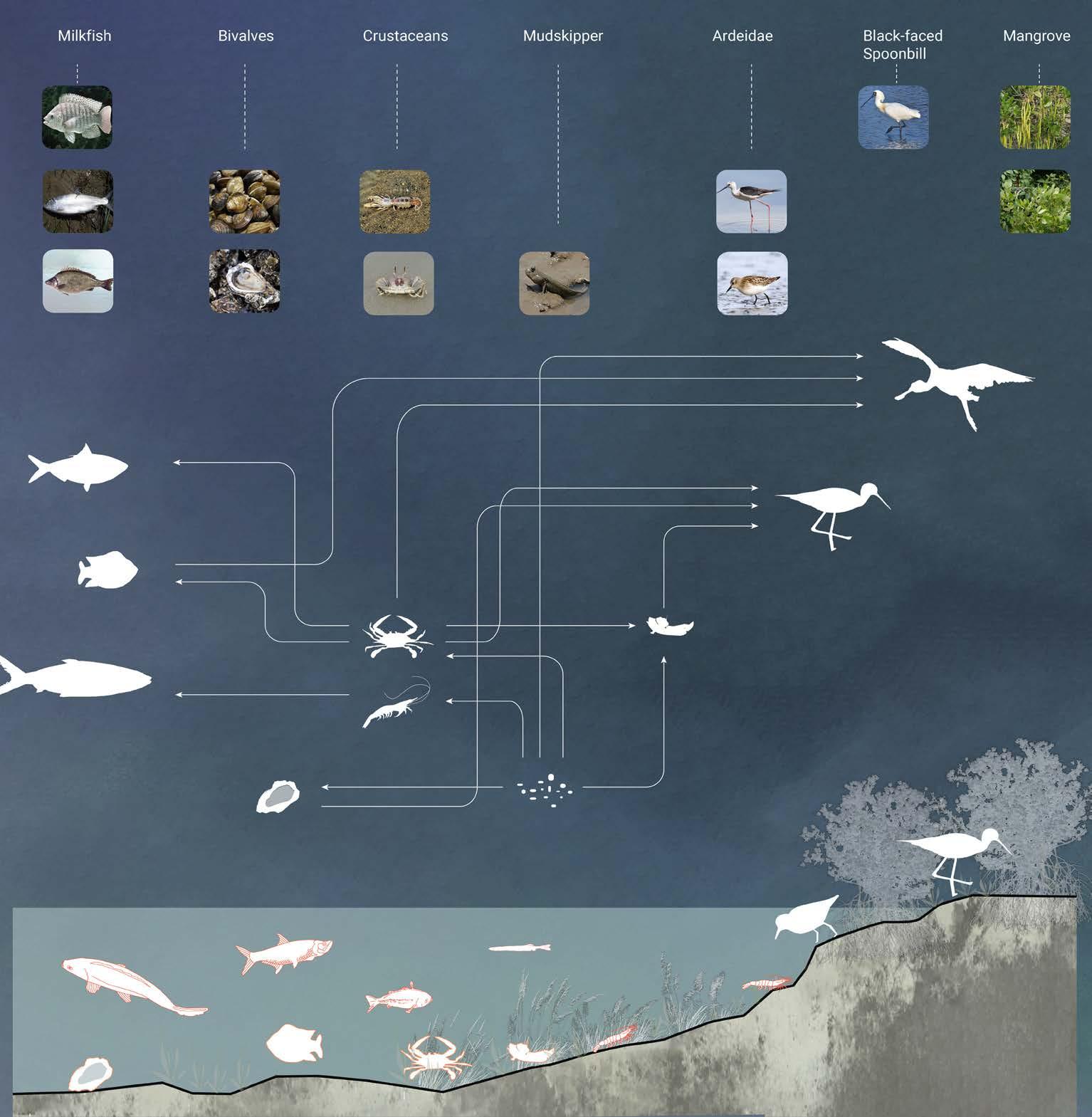
Species such as milkfish, sea bass, oysters, clams, mudskippers, and prawns coexist within this system, while benthic polychaetes and microalgae provide essential food for filter-feeders.
The lagoon is especially critical as a habitat for migratory shorebirds, particularly the black-faced spoonbill, which holds global conservation significance. From October to April each year, over two-thirds of the world’s black-faced spoonbill population,numbering more than 1,000 individuals migrate from regions such as Korea to overwinter in Qigu Lagoon. These birds rely on the lagoon’s abundant fish and shellfish resources and intertidal zones for feeding and resting. Any degradation of the lagoon environment or loss of its sandbars would directly threaten the species’ survival. Therefore, preserving Qigu Lagoon is vital for local fisheries, ecological balance and international bird conservation networks.
4. Dutch-built fort on the sandbar during Dutch occupation. Source:https://www.tjnp.gov.tw/cp.aspx?n=361
Fig. 5. Taijiang Inland Sea during the Dutch colonial period. Source:https://www.taiwan-panorama.com/
Fig.
Fig. 6. The ecological cycle within Qigu Lagoon.
1.3 Aquaculture and Local Livelihoods
Fishing has long been the primary foundation of local livelihoods in the Qigu region. Due to the natural conditions of the coastal lagoon area characterised by low-lying, expansive, and salt-rich land the land is unsuitable for agriculture. As a result, local communities have turned to building aquaculture ponds and developing fish farming, effectively treating the sea as a form of farmland. This fishery-centred way of life not only serves as the main source of household income but also profoundly shapes settlement structures, spatial organisation, and local cultural identity. Oyster farming areas have expanded from the inner lagoon into deeper offshore waters, forming a continuous spatial sequence of fisheries activities stretching from the open sea, sandbars, and lagoon to the land.1
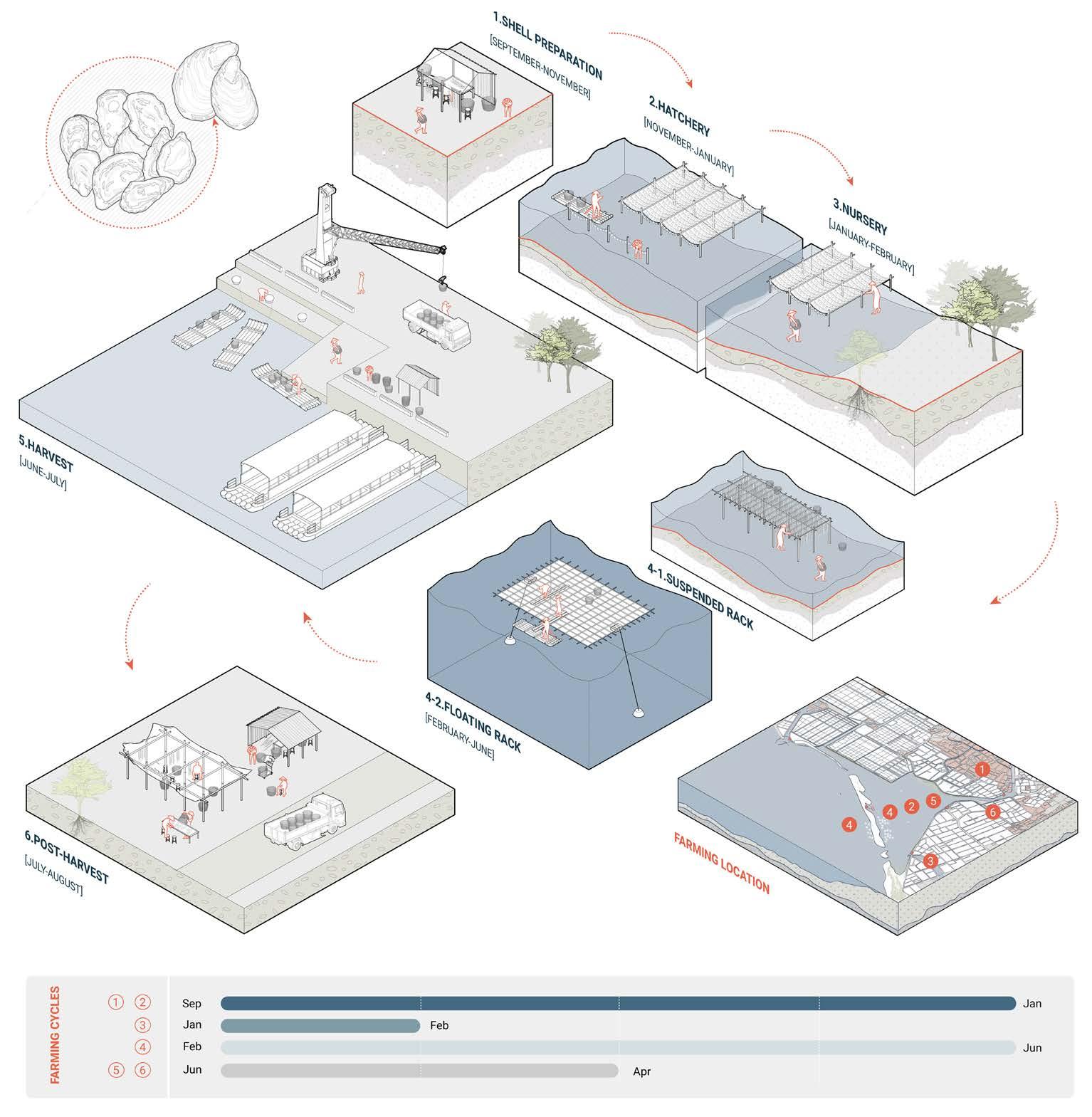
Oyster farming is the primary economic activity in the Qigu Lagoon area. Due to the species’ biological habits and natural conditions, farming is mainly concentrated along the mid-to-high tidal zones near the shore, where the substrate consists of soft sandy soils. Oyster farming requires no artificial feeding; oysters rely entirely on plankton and organic matter in seawater, making the selection of natural conditions particularly critical. As farming techniques and market demands have evolved, oyster farming areas have gradually expanded from nearshore zones to deeper offshore waters, forming a production pattern referred to as “farming the sea.” The specific farming process includes: 2
1 Chun-WenChung,”The Study of the Formation of a Seashore Cultural Landscape:A Case of Fishery in Tai-Jiang District”(2010)
2 Chen, Su-Wen,”A Study on Social and Economic Changes of Tidal Flats in Taijowan Bay-A Case Study of An-Nan District in Tainan City”(2015)
3 ‘- YouTube’. Accessed 18 July 2025. https://www.youtube.com/ watch?v=mVyWf129Oqs.
4Sue-rong chen,”The Study of Fishery Ecology in Chiku lagoon”(1999)
Frame Construction:
Fixed oyster racks are set up along the shore using bamboo poles, plastic ropes, and floating devices. Daily inspection and maintenance are required, with major repairs approximately every three years, especially after typhoons.
Shell Preparation:
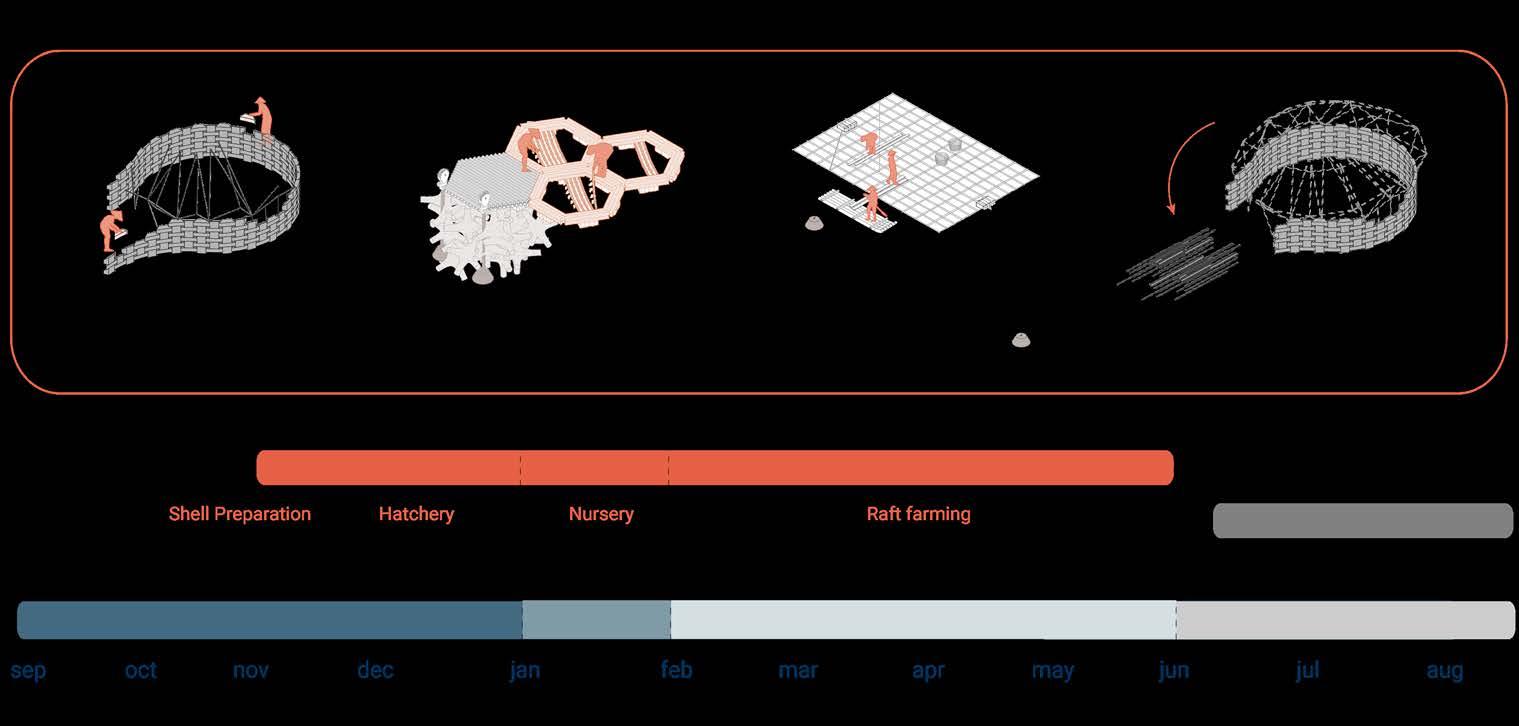
Between the lunar eighth and ninth months and before the end of the year, oyster farmers clean, sun-dry, and drill holes in oyster shells onshore, stringing them with plastic ropes into lines approximately 1.5 to 3 meters long in preparation for the farming season.
Spat Attachment:
These prepared oyster lines are transported by raft to the racks and hung to allow oyster larvae to attach naturally, a process known as “spat collection.” This usually occurs in areas with stronger water flow, with trial placement used to confirm optimal conditions before full-scale deployment.³
Nursery:
To avoid overcrowding, lines with attached spat are separated and re-hung. Depending on growth conditions, they may be moved to shallower, more stable waters or aquaculture channels rich in plankton to op-
timize growth, a process called “fattening.”
Rack Inspection:
Farmers make daily trips by raft to check for loose lines, floating debris, and oyster predators such as oyster drills, which are removed by hand to maintain production levels.
Harvesting:
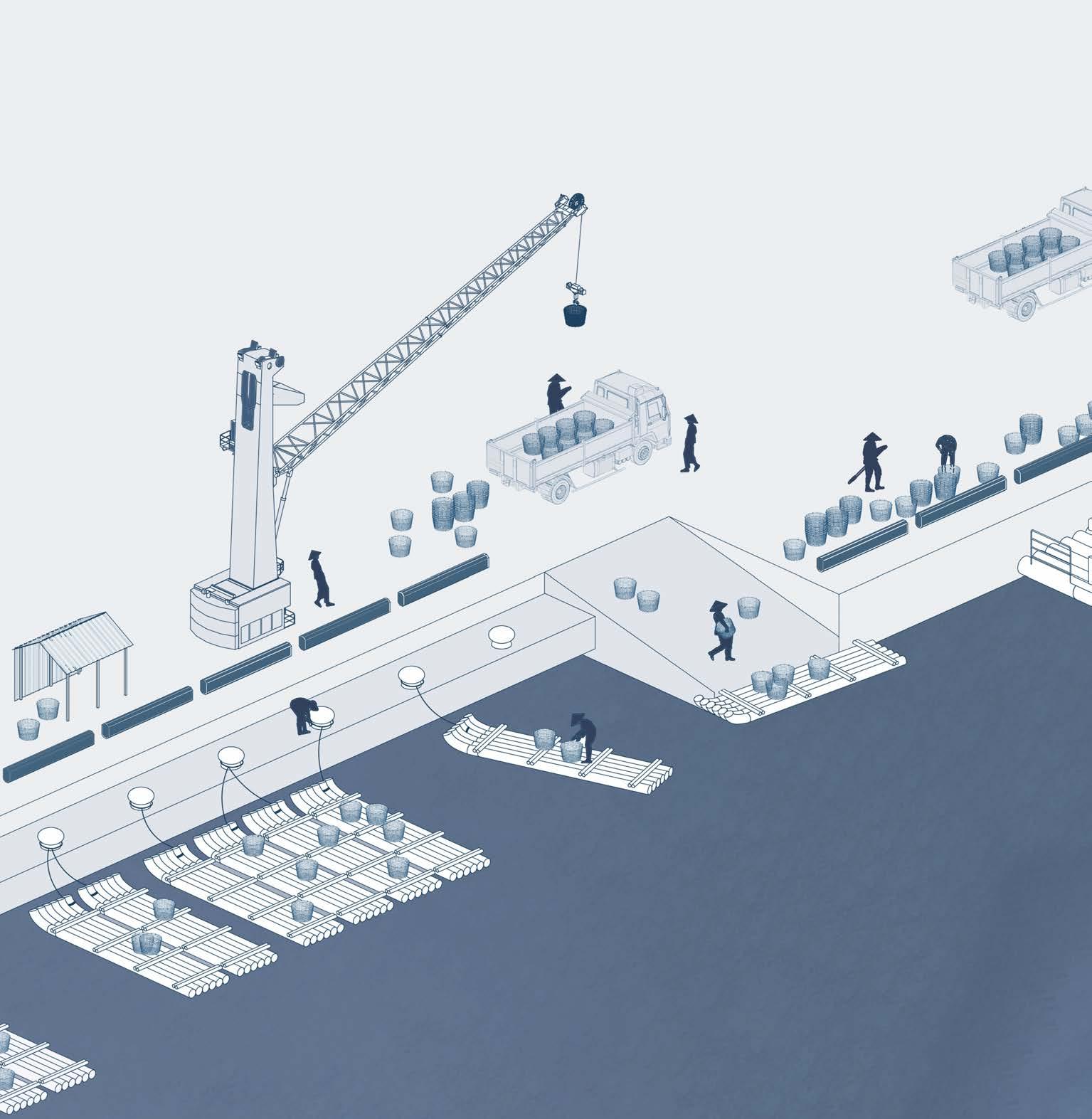
Depending on terrain, season, and tides, oysters are harvested either by wading or using rafts. Mature oysters are manually dismantled and transported back to port, where they are unloaded using crane systems. Oysters can be harvested year-round, with farming cycles varying according to spat attachment and fattening status.
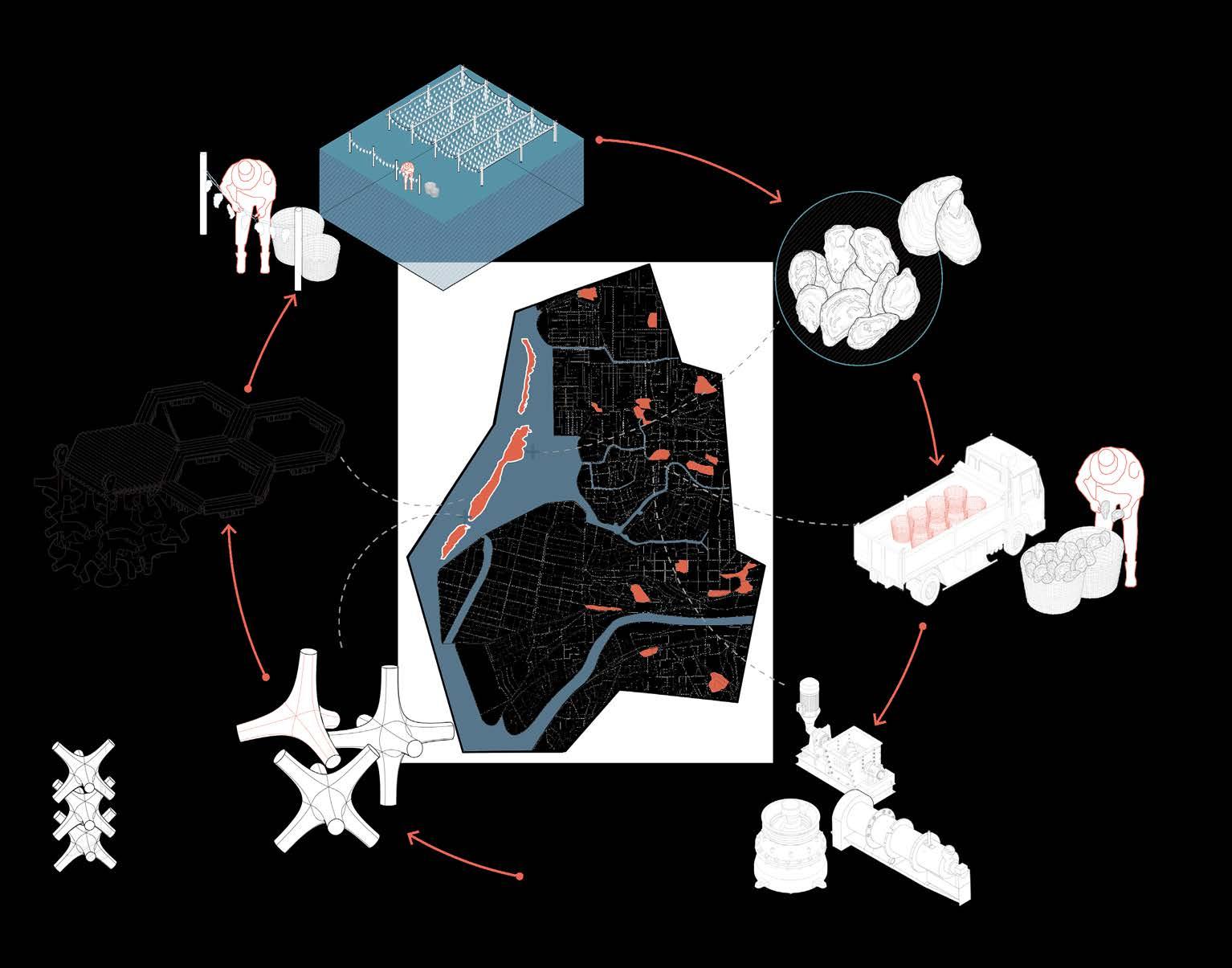
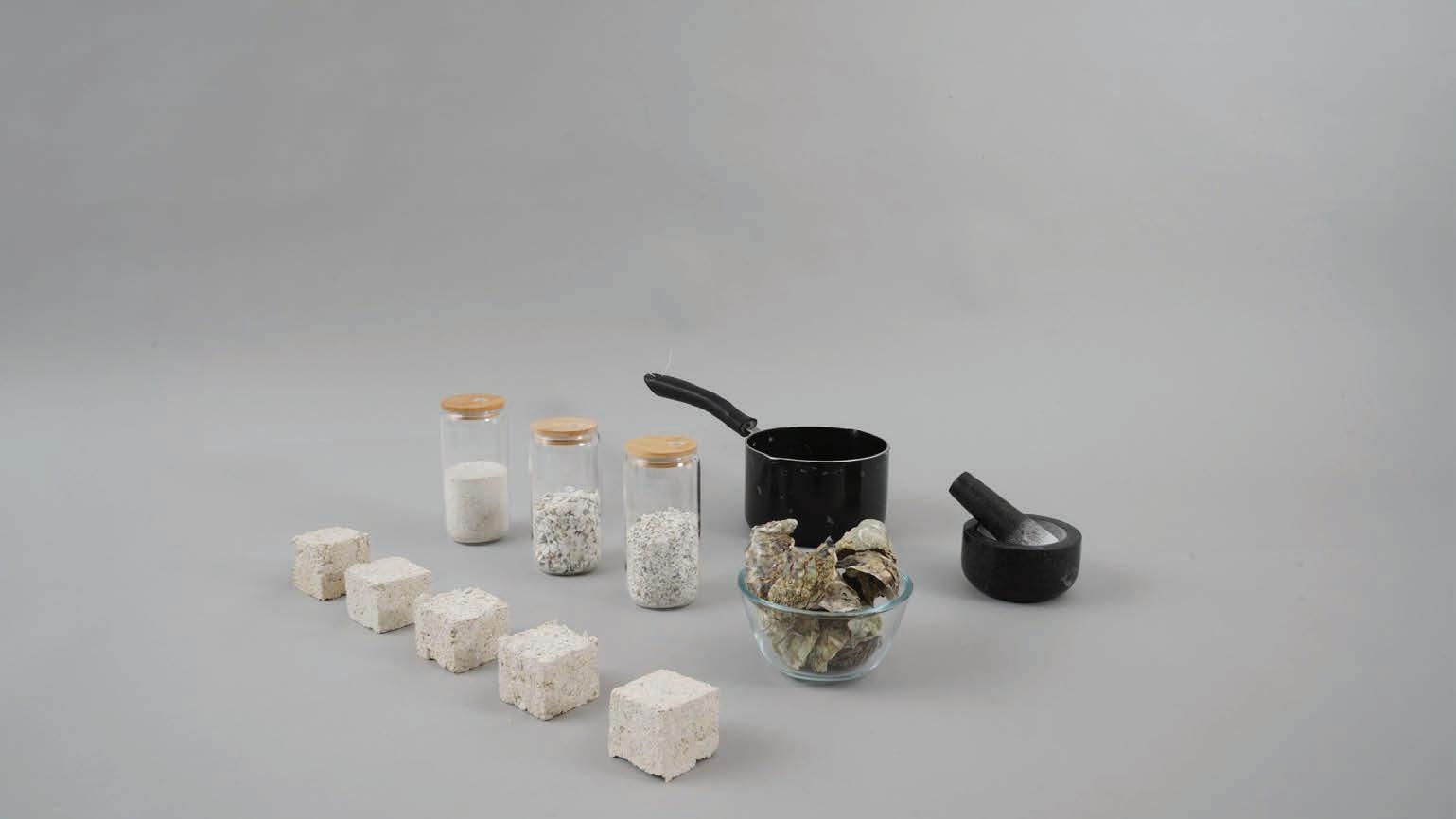
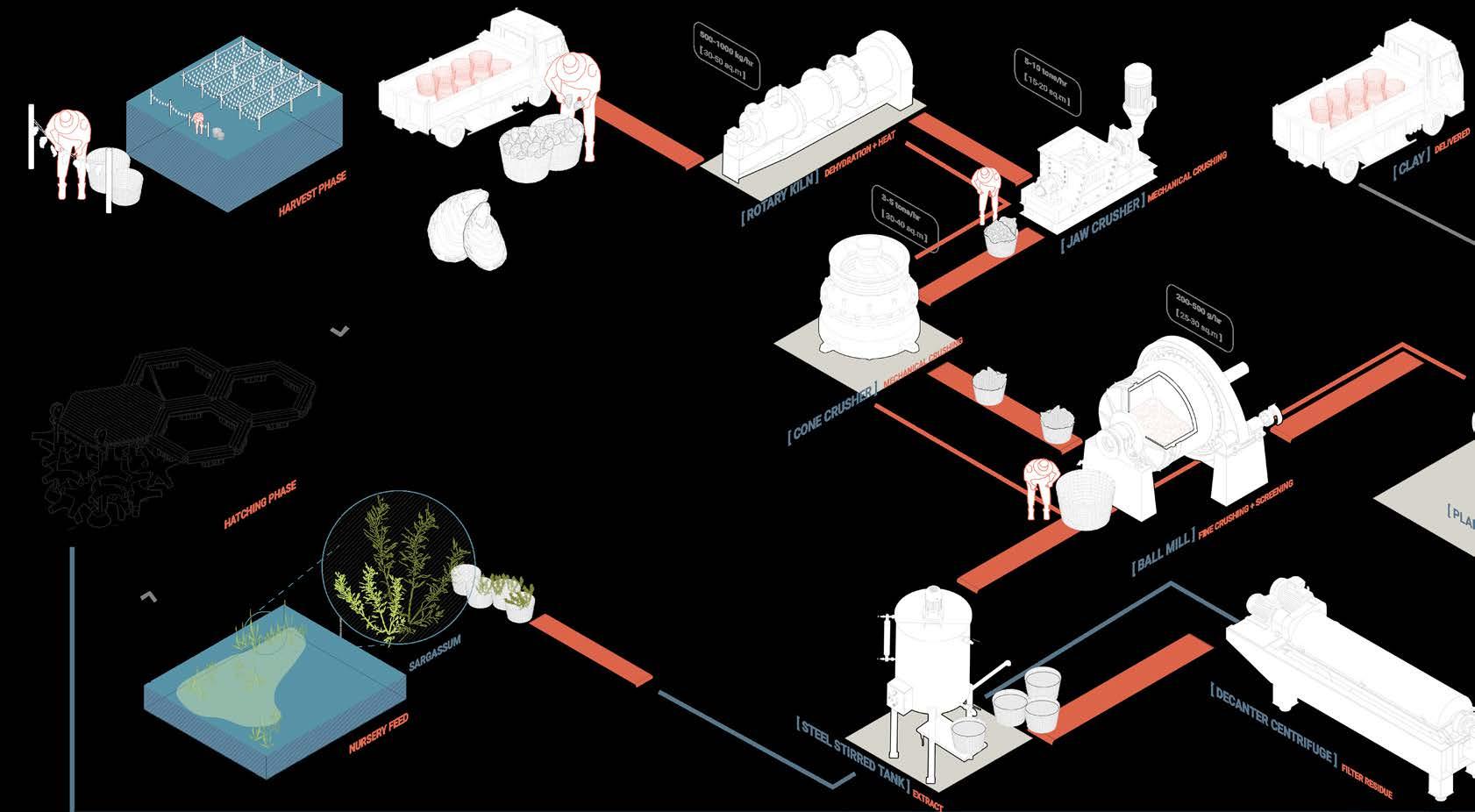
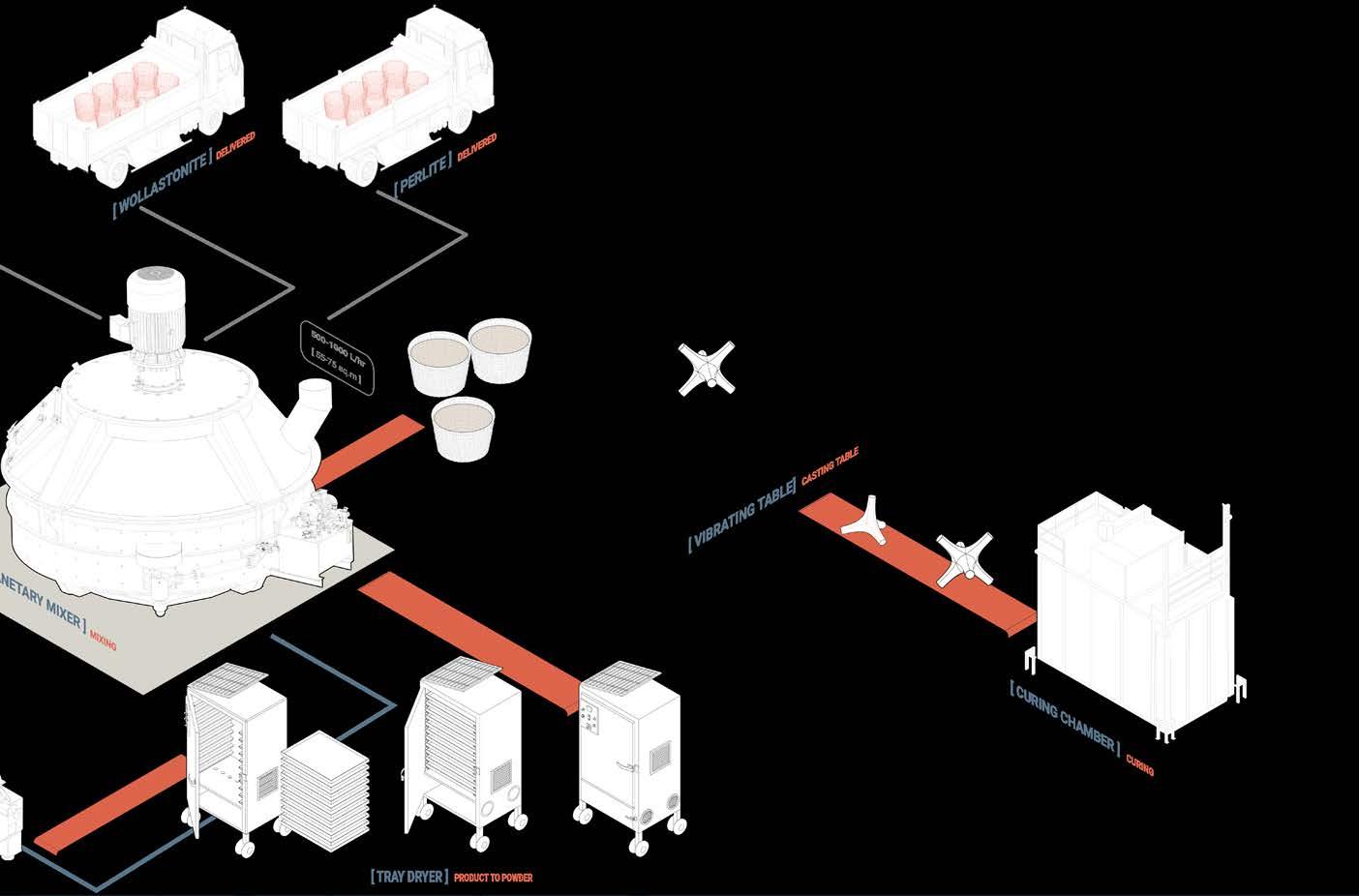
Oyster farming in this region follows natural ecological rhythms and forms a circular shell recycling system. High-quality harvested shells are reused as spat carriers,⁴ while discarded shells are dried, crushed into powder, and used as animal feed additives, organic fertilizer, or even building materials for local settlements, maximizing resource utilization.
Fig. 7. The Seasonal steps of Oyster Farming.
1.3.1. Oyster Farming: Practices, Types and Cycles
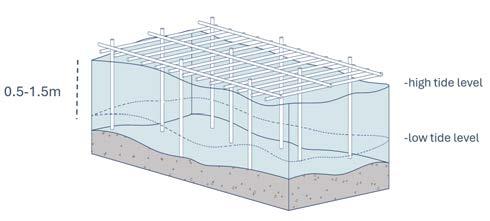
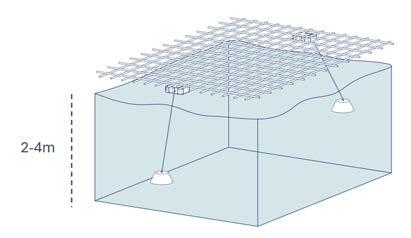
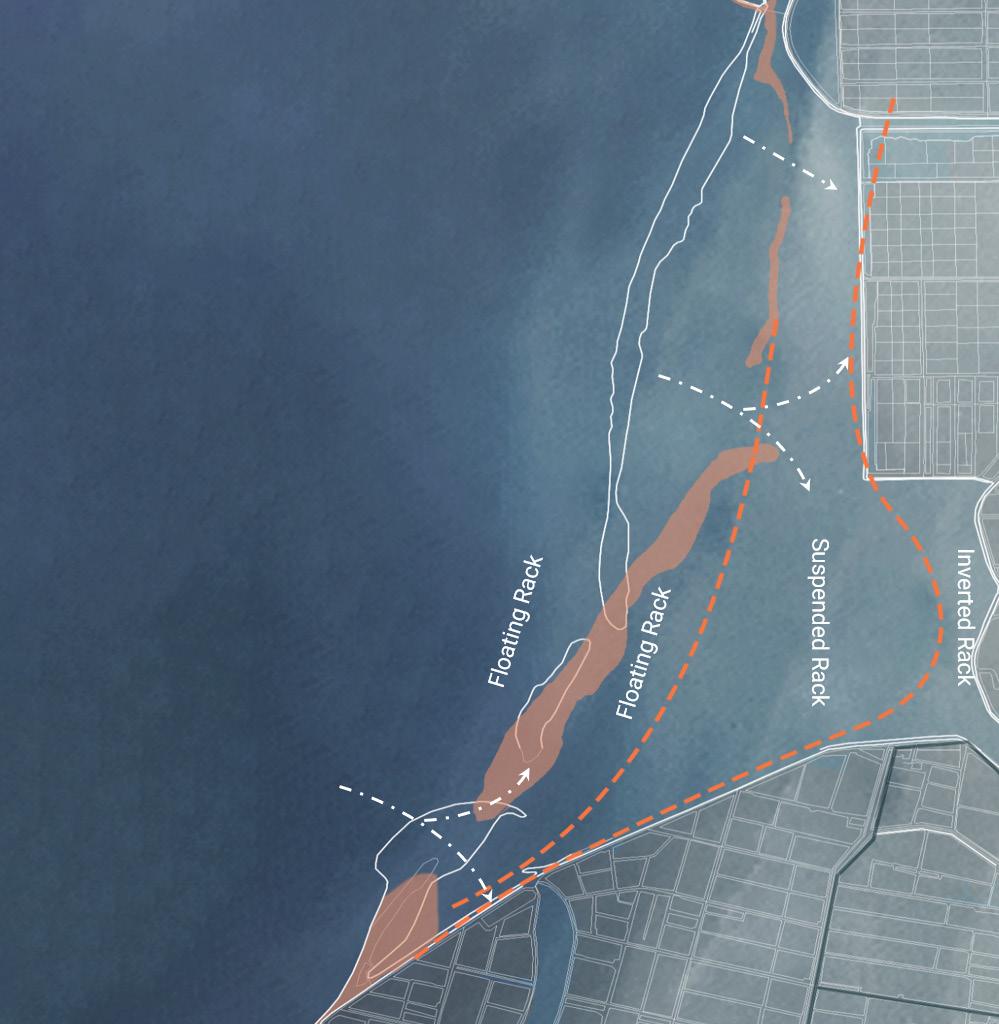
Currently, three main oyster rack types are used, adapted to different water depths and terrains:1
Inverted Racks (Dao Peng):
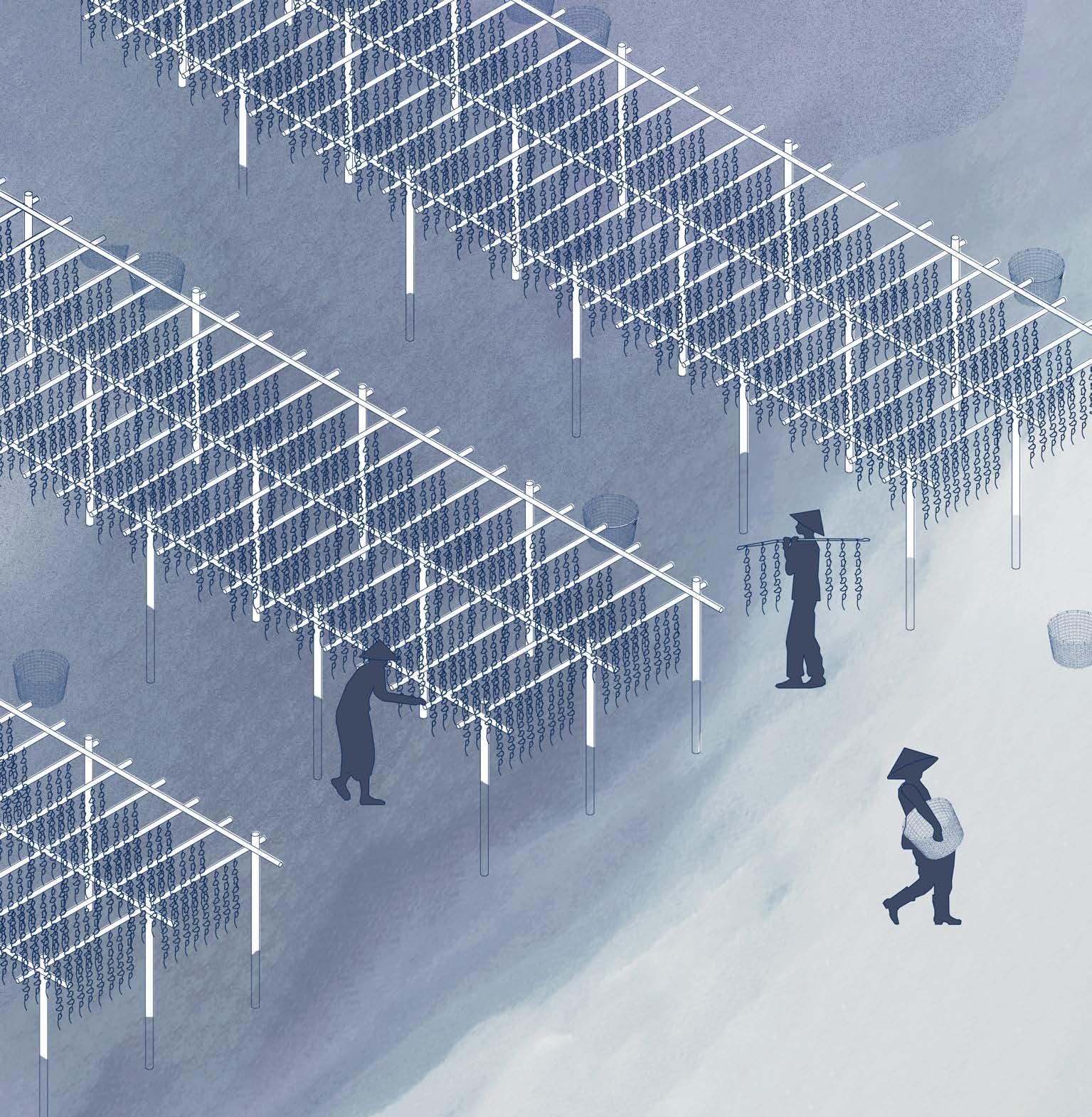
Used mainly for spat attachment and juvenile oysters, installed in shallow waters about 1 meter deep near the shore. Thick bamboo poles are driven approximately 2 meters into sandbars, with two rows of frames tied across them. One unit measures around 10 meters long and 2–2.5 meters wide, with oyster lines spaced 20–25 centimeters apart. This type is convenient for operations but exposes oyster lines to air during low tide, reducing feeding time. Oysters grown this way are smaller but more elastic, taking around 12 to 18 months from spat attachment to harvest.
Suspended Racks (Zhan Peng):
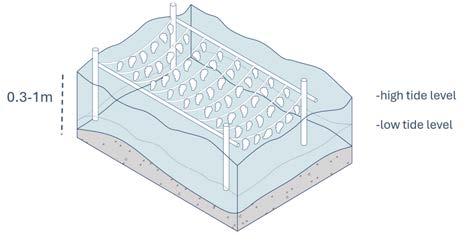
Suspended racks also allow for relatively easy maintenance, as fishers can access and handle the lines directly from small boats. The system reduces contact with sediments, lowering the risk of smothering and improving oyster quality. It is one of the most widely adopted methods in sheltered lagoon environments. The method is highly feasible due to its simple structure and readily available materials.
With tidal fluctuations, suspended racks also maintain consistent water exchange.
Floating Racks (Fu Peng):
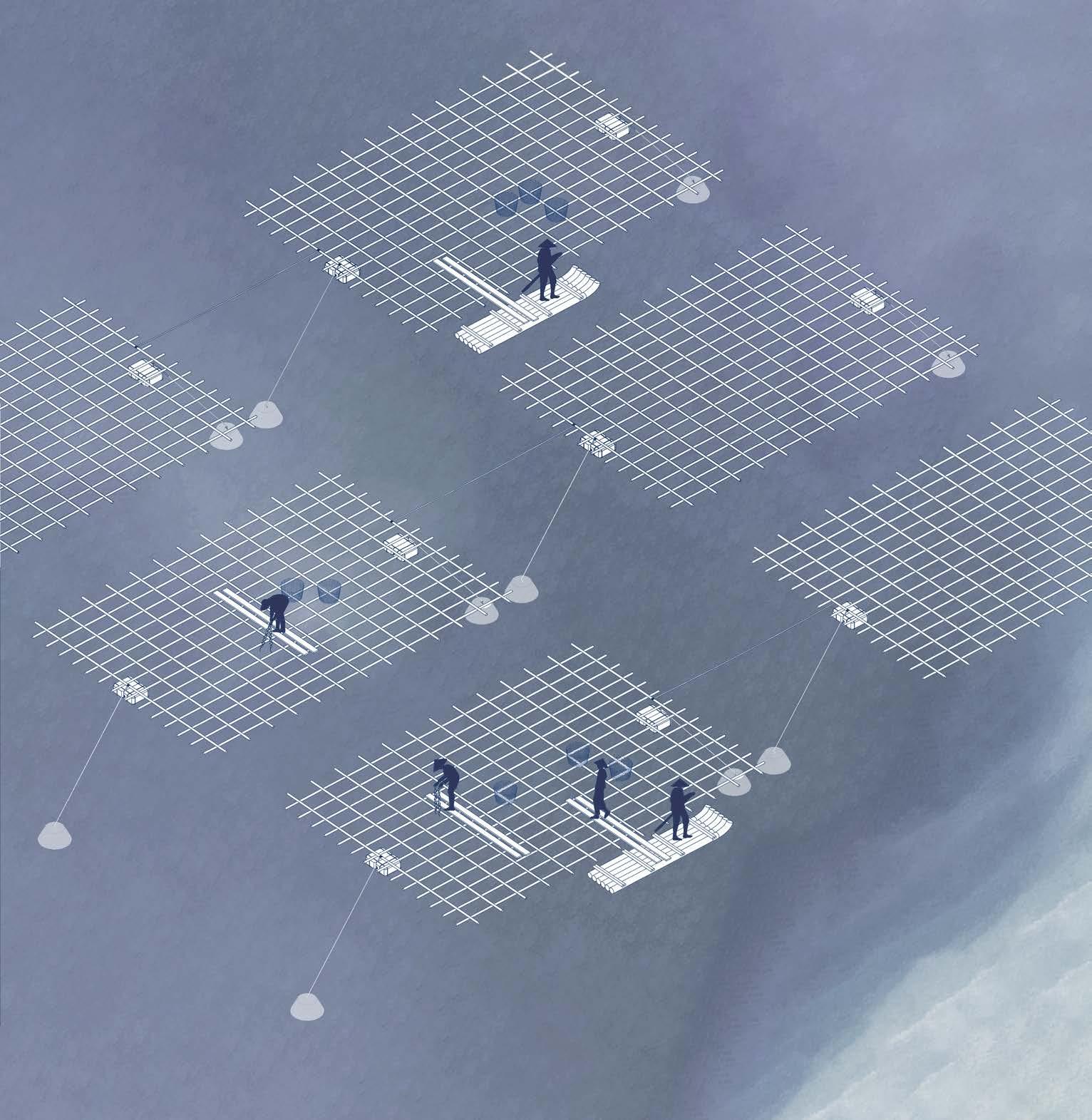
Located in deep offshore waters around 2- 5 meters deep, usually on both sides of sandbars. Farmers construct grid-like bamboo rafts on land, secured with floating barrels or polystyrene. The racks are towed to sea and anchored at both ends with metal fixtures to prevent drifting during storms. Oyster lines hang from the raft’s underside. This method allows oysters to remain fully submerged, growing the fastest,harvestable in six to ten months, but carries higher risks and costs. Rafts must be approached carefully for harvesting, with farmers creating temporary walkways over the structure to pull up oyster lines.
Fig. 11. Diagram illustrating the distribution of different farming methods across the lagoon
1.3.2 Aquaculture Infrastructure and Spatial Footprint
“Give a man a fish and you feed him for a day. Teach him how to fish and you feed him for a lifetime.”
- Chinese Proverb1
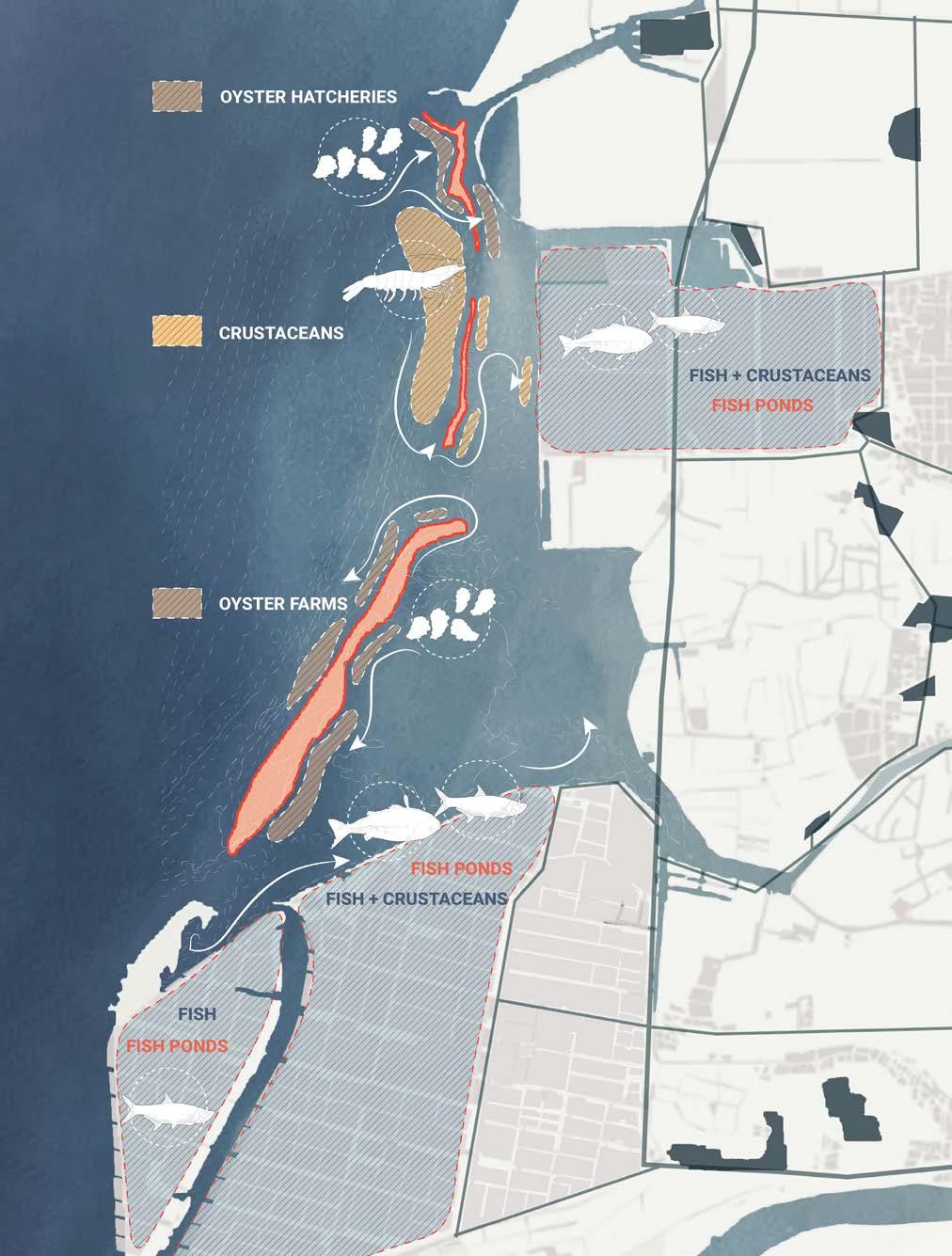
Since the newly formed land lacks groundwater sources, Qigu’s aquaculture relies on brackish water, with lower densities to prevent the overuse of freshwater and avoid groundwater depletion and land subsidence.2 Aquaculturists here adjust pond water by relying on tide cycles, replacing water twice daily through rising and falling tides in the lagoon and waterways. Limited freshwater availability has led Qigu farmers to adopt polyculture systems, such as combining hard clam farming with milkfish or shrimp.3
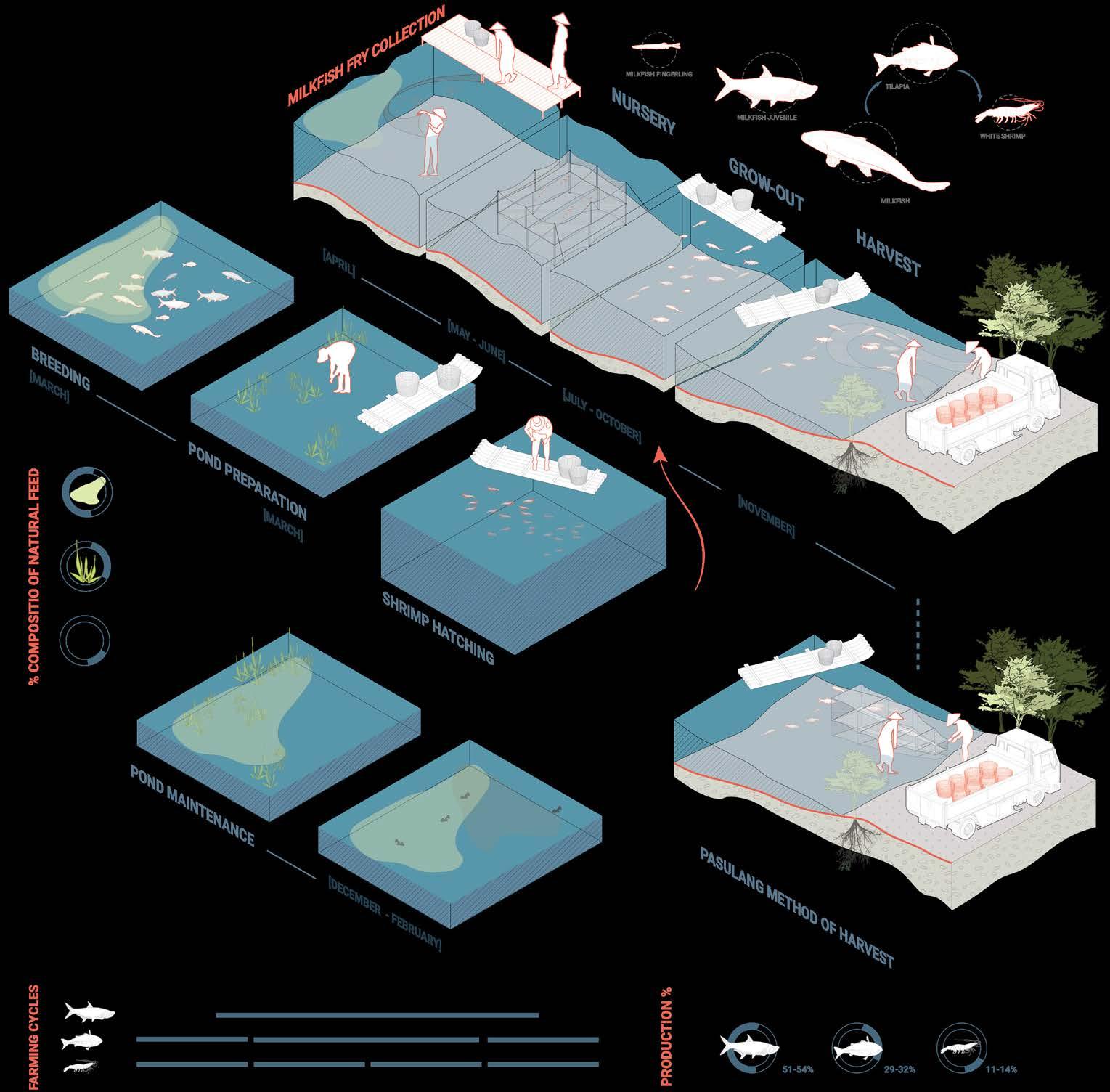
From fry collection to harvest, emphasising the importance of understanding infrastructure, logistics, timelines, and ideal conditions for a successful cycle. Observations of these processes reveal key insights into existing issues within the lagoon.
I-Chiu Liao, Aquaculture: The Taiwanese Experience (BUll. Inst. Zool., Academia Sinica, Monograph, 1991).
2-3 Tony Leong-Keat Phuah and Yang-Chi Chang, “Socioeconomic Adaptation to Geomorphological Change: An Empirical Study in Cigu Lagoon, Southwestern Coast of Taiwan,” Frontiers in Environmental Science 10 (January 2023), https://doi.org/10.3389/fenvs.2022.1091640.
12. Typical aquaculture-related zones in the lagoon.
Fig.
1
Fig. 13. The various stages in rearing Milkfish, Tilapia and White Shrimp in Qigu .
1.3.3 Seasonal Movement Routes
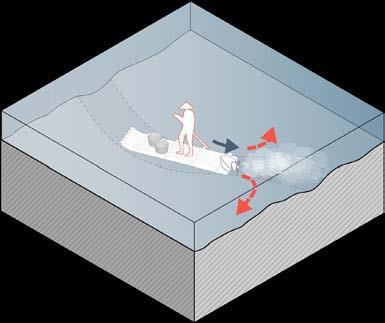
The various stages of oyster farming operations are distributed across offshore waters, within the lagoon, and along the shoreline. As a result, fishers rely heavily on motorised rafts as their primary means of water transport.
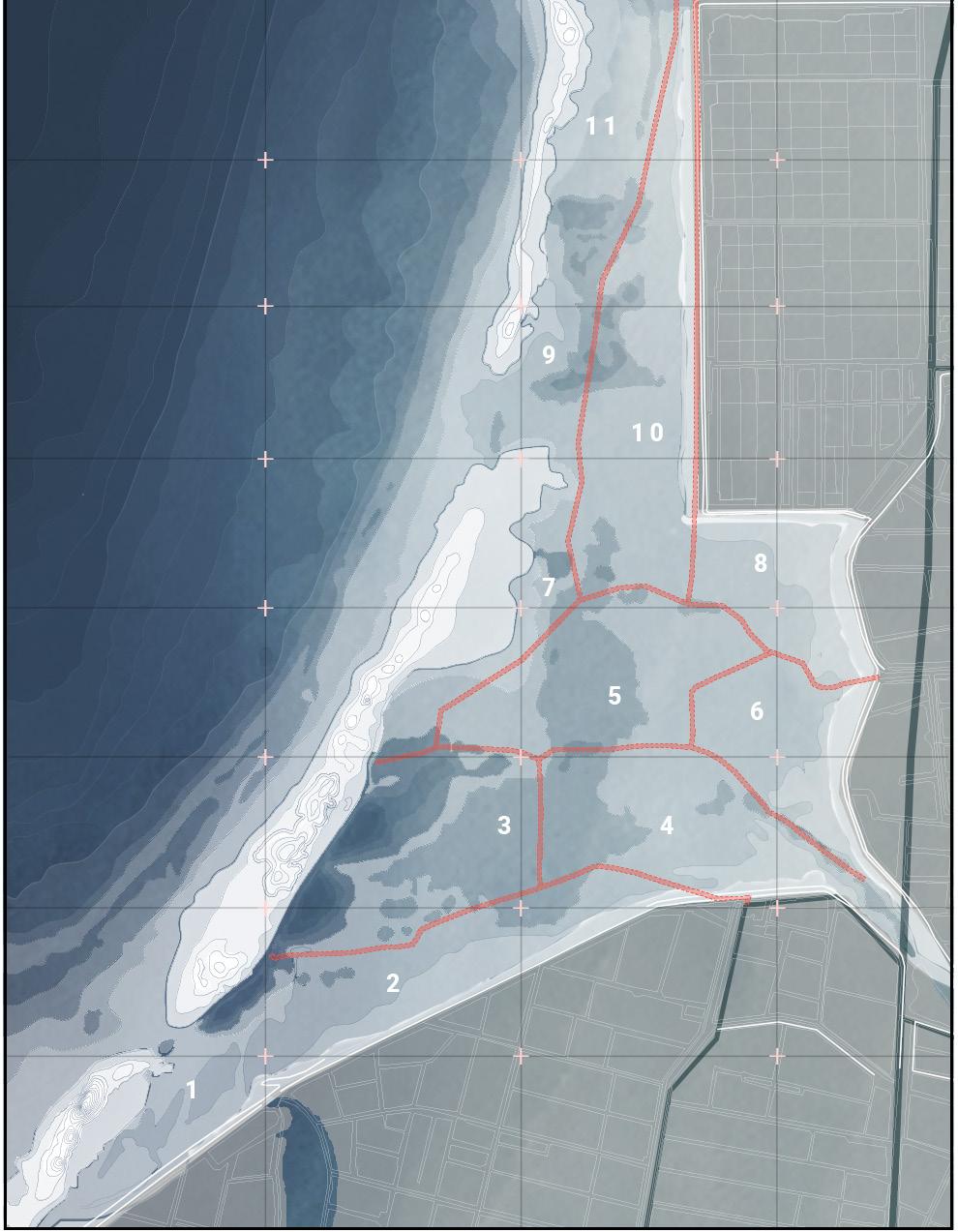
The lagoon’s navigation system consists of two main types of channels. The primary channels, which separate designated farming zones, measure approximately 6 to 10 metres in width.1 The secondary, narrower channels within the farming zones measure about 3 metres across, with oyster cultivation areas positioned on either side. Throughout these routes, underwater bamboo poles are placed a few inches above the water’s surface, serving as visual markers to guide raft navigation.
Beyond the main navigation routes, fishers also navigate between oyster racks for operational convenience, creating a denser, fine-grained mobility network across the lagoon.²
1 Chen, Tien-Shui. 2013. “七股沿海地區地覆變遷分析 [Analyses of Land-cover Changes in the Qigu Coastal Zone].” 台灣生物多樣性研究 (Taiwan Journal of Biodiversity) 15, no. 2: 99–111.
2 Chen, Tien-Shui. 2013. “七股沿海地區地覆變遷分析 [Analyses of Land-cover Changes in the Qigu Coastal Zone].” 台灣生物多樣性研究 (Taiwan Journal of Biodiversity) 15, no. 2: 99–111.
Fig. 14. Rafting Lanes in lagoon waters.
Fig. 15. The dwellings built by Qigu fishers on their boats.
Fig. 16. Temporary production dwellings in Qigu.
Fig. 17. Harvest scene in Qigu.
1.3.4
Discussion
The spatial separation between mainland farms and the sandbar results in a fragmented and distant processing.
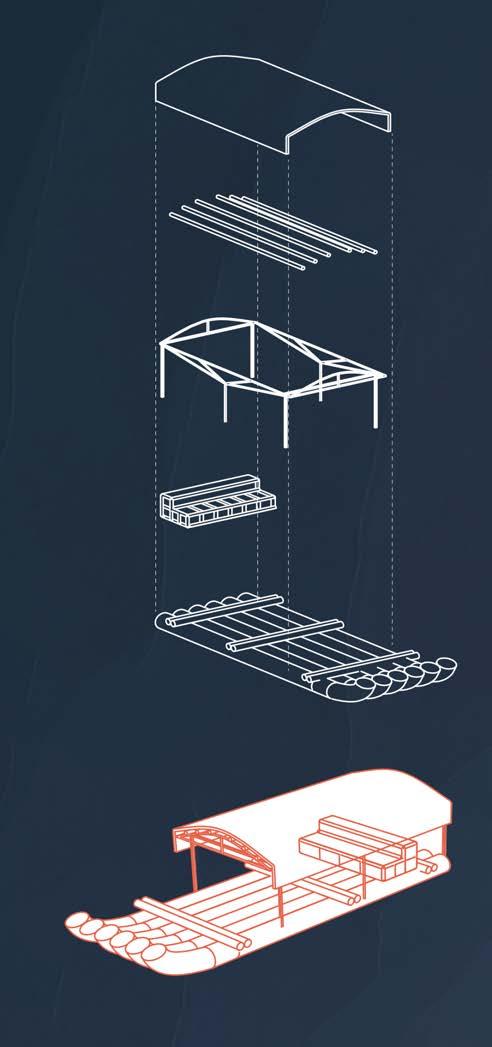
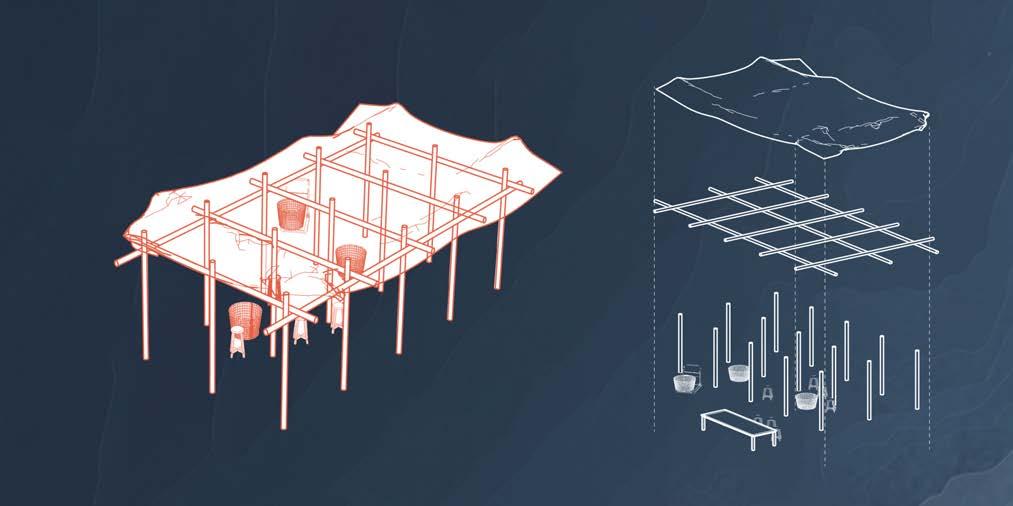
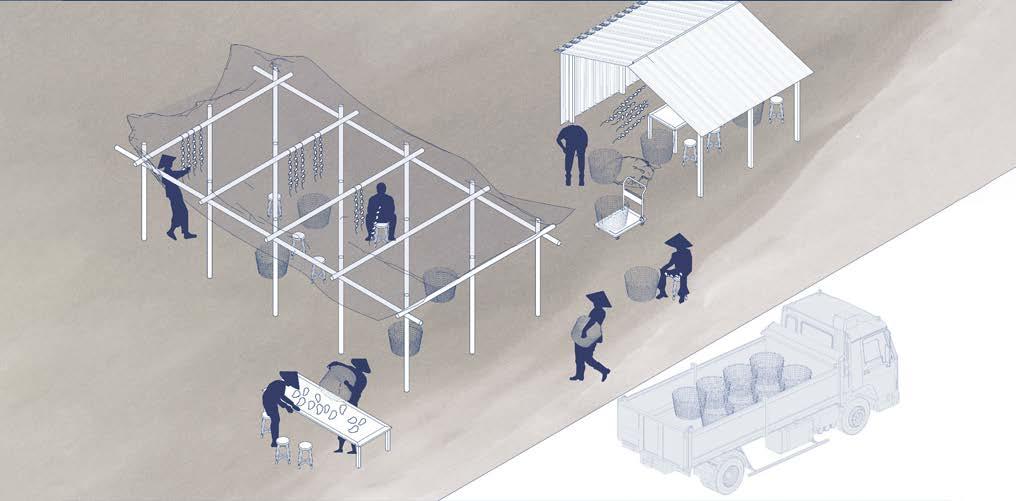
Currently, most onshore oyster processing areas in the Qigu region are informal open spaces in front of fishing village houses or temporary shelters, known as oyster huts, along the shore where rafts are moored. These huts are used as temporary stations for unloading oyster lines, cleaning, and shucking. They are typically constructed from locally available or recycled materials, such as bamboo, tarpaulins, and fishing nets. Because fishing activities often require travelling over long distances, fishers frequently extend their work areas directly onto the rafts. On these rafts, arched grass huts are constructed to provide shelter from the sun and rain, offering a place trest and wait during sea activities.
Assuming each fisher makes between thirty and sixty round trips per year, and each trip emits approximately 4 kg of CO₂, the estimated total carbon emissions from lagoon crossings range from 180 to 360 tonnes annually.¹
Given this context, the introduction of modest sandbar-based infrastructure could address multiple challenges.
1 “Proceedings of the Regional Workshop on Milkfish Culture Development in the South Pacific.” Accessed July 17, 2025. https://www.fao.org/4/ac282e/ AC282E03.htm?
Fig. 18. Current Inadequacy in Transport and Infrastructure Setup
1.4 Government Interventions and Limitations
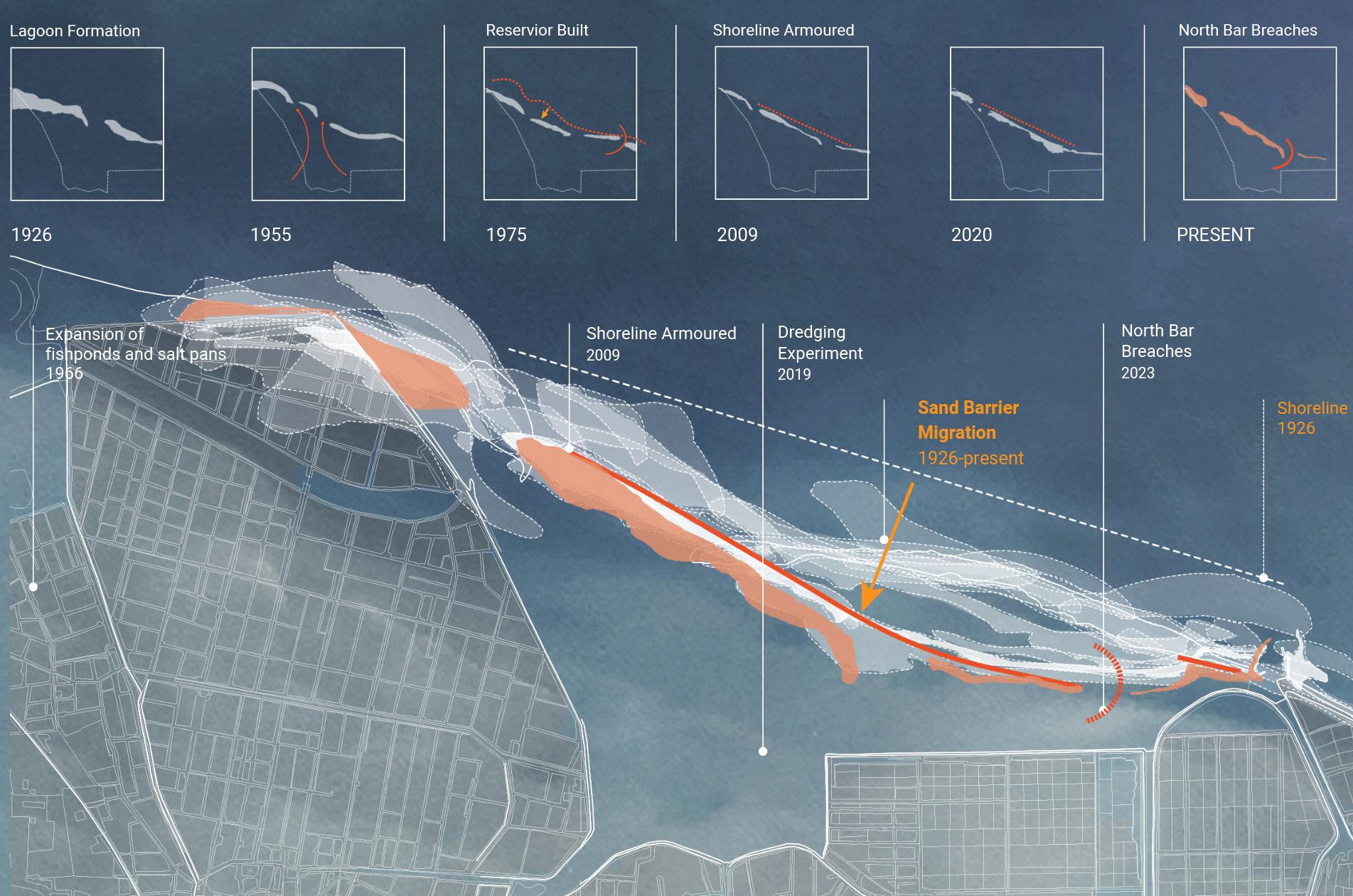
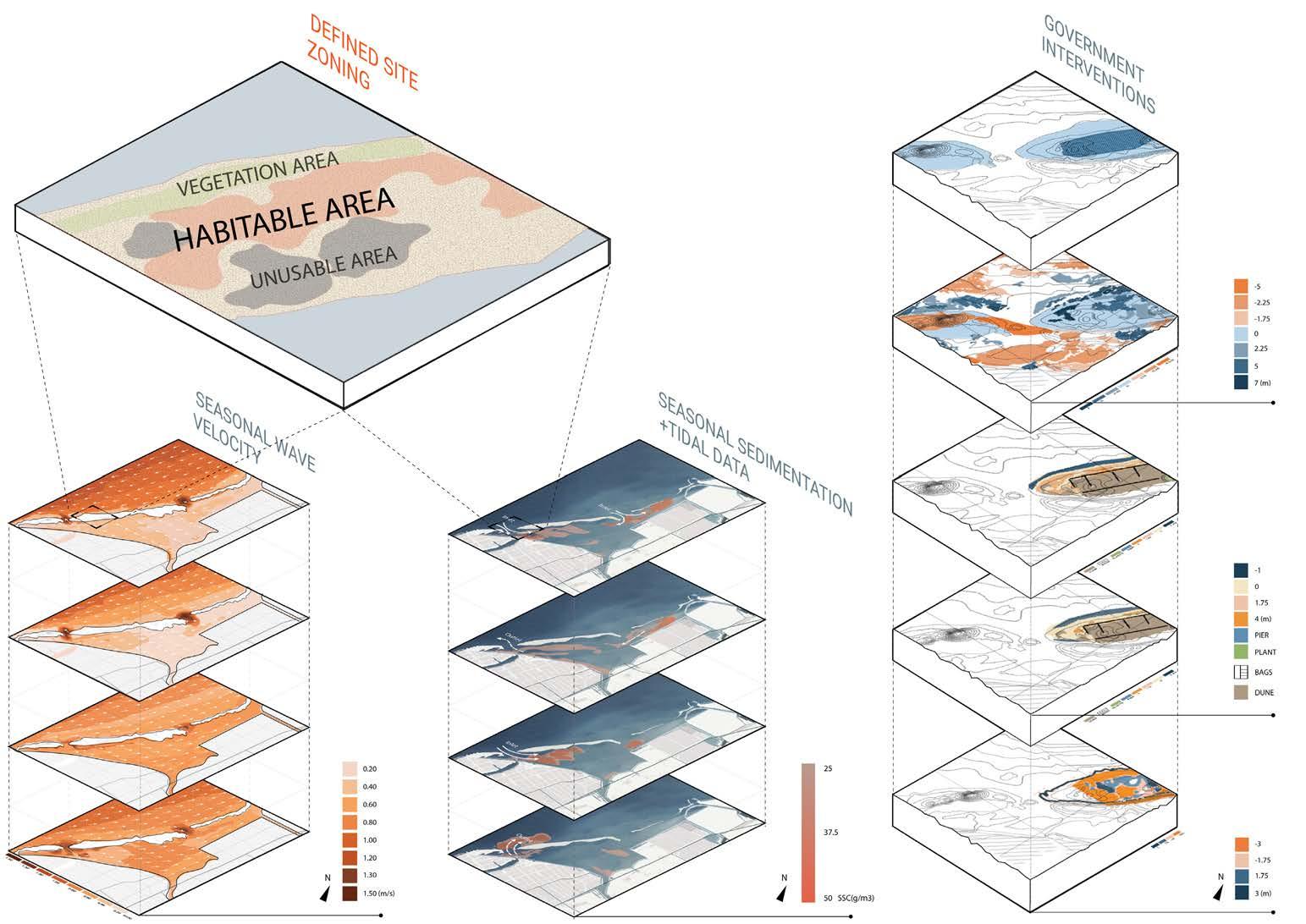
Over the past half-century, the development of aquaculture ponds and land reclamation in the Qigu area has altered river courses, leading to the inland migration of sandbar systems and increased sedimentation within the lagoon.1
1.4.1. Geotubes, Dredging, and Breakwaters
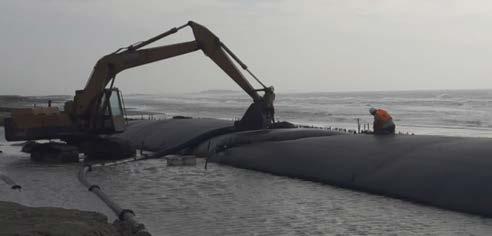
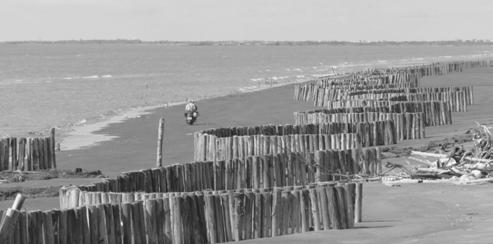
Since 2001, due to sedimentation within the lagoon obstructing navigation routes and affecting local livelihoods, the government implemented sand fixation works along the offshore sandbars of Qigu Lagoon. This involved installing bamboo fences and extracting sediment from the lagoon’s inner side to raise and stabilise the sandbars. While initial results were positive, a series of typhoons from 2005 onwards caused damage to some of these structures, and from 2006, the offshore sandbars continued to shift landward.
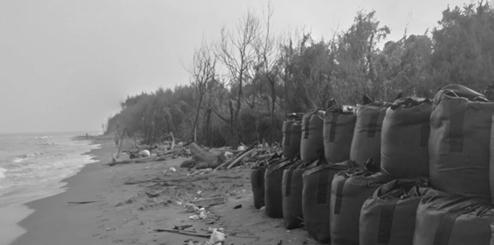
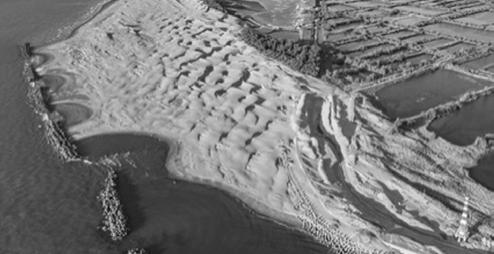
These offshore breakwaters were constructed without sufficient geomorphological analysis, resulting in unintended consequences: sediment accumulated on the northern side, while severe erosion on the southern side. The coastline retreated, and windbreak forests collapsed. In response to continued beach loss, additional structures such as short groynes, seawalls, and wave-dissipating blocks were installed. However, sediment supply remained critically low, and the windbreak forests continued to retreat.2
1.4.2. Critique of Current Engineering Logic
Although dredging is commonly employed for shoreline protection, its ecological and ethical impacts cannot be overlooked. The process involves relocating large volumes of sediment, disregarding its vital role in marine ecosystems. This leads to the destruction of benthic habitats and the formation of long-lasting dredging pits, altering sediment composition and reducing biodiversity. Dredging also stirs fine suspended particles into the water column, causing turbidity that blocks sunlight, suppresses photosynthesis, and negatively affects filter-feeding organisms such as corals and oysters. While dredging may offer short-term shoreline stability, it is largely a temporary, profit-driven measure that ultimately causes ecological disruption and fosters long-term dependency on engineered solutions.
1.4.3. Separation of Aquaculture and Protection Systems
The current governmental management strategy for the Qigu Lagoon area has long treated aquaculture activities and coastal protection measures as two separate and independent systems,3 lacking an integrated and holistic approach.
1 Hsiao, Li-Lun (蕭立綸). 2012. “台南七股沙洲地形變遷研究 [A Study on the Geomorphic Change of the Sand Spits in Qigu, Tainan].” Master’s thesis, Department of Geography, National Kaohsiung Normal University 2 Hung, Ching-Yuan (洪敬媛). 2009. “臺南網子寮沙洲近期地形變動 [Recent Geomorphic Changes of the Sand Spits in Wangziliaw, Tainan].” Master’s thesis, Department of Geography, National Taiwan Normal University. 3 Chen, Tien-Shui. 2013. “七股沿海地區地覆變遷分析 [Analyses of Land-cover Changes in the Qigu Coastal Zone].” 台灣生物多樣性研究 (Taiwan Journal of Biodiversity) 15, no. 2: 99–111.
Fig. 19. Interventions on Sandbar-Sand pumping.
Fig. 20. Interventions on Sandbar-Vegetation.
Fig. 21. Interventions on Sandbar-Bamboo reinforcement.
Fig. 22. Interventions on Sandbar-Sand bag.
Fig. 23. Interventions on Sandbar-Breakwater.
Fig. 24. Sandbar migration and Periods of Governmental Intervention
1.5 Morphodynamic Diagnosis
1.5.1. Sediment Transport Physics
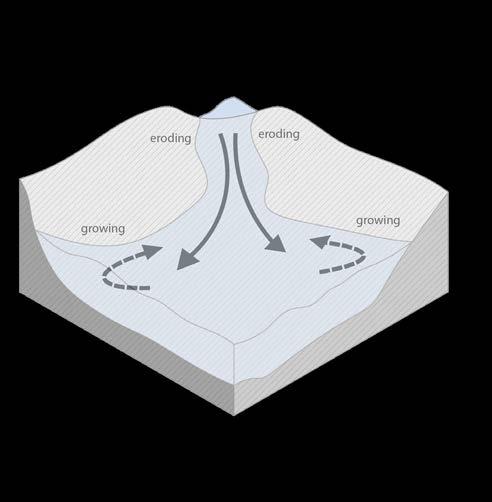
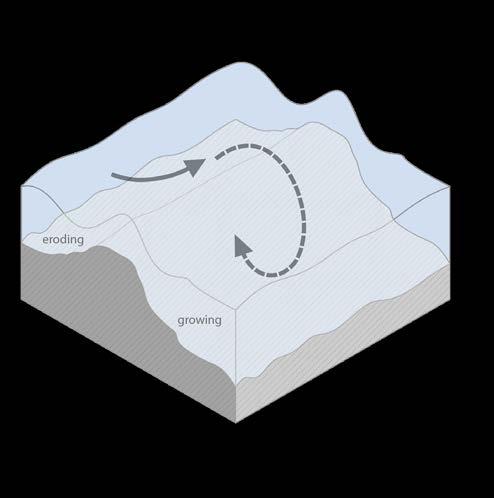
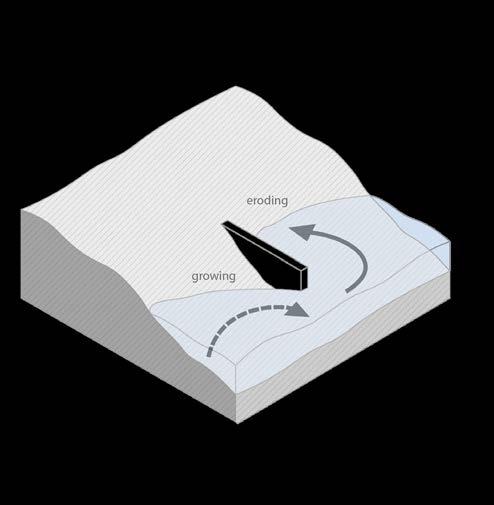
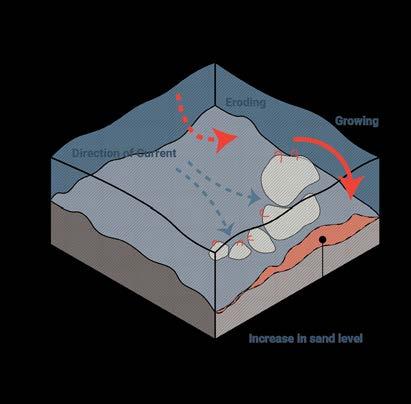
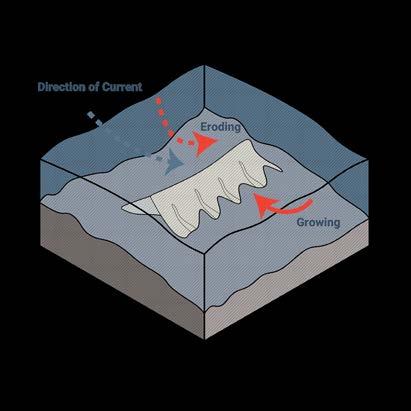
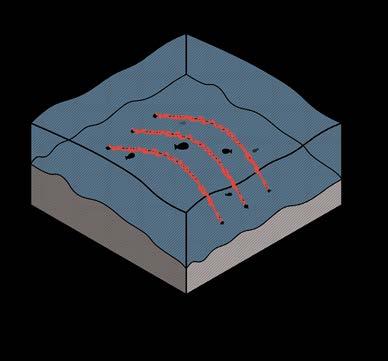
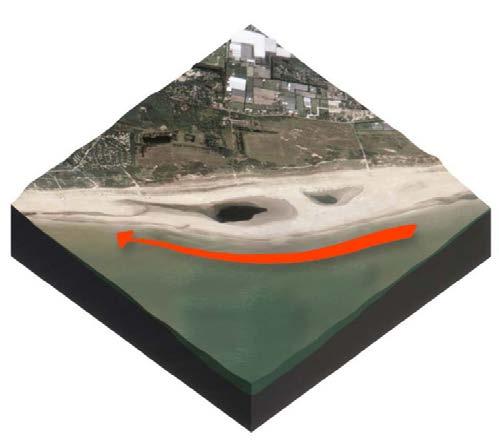
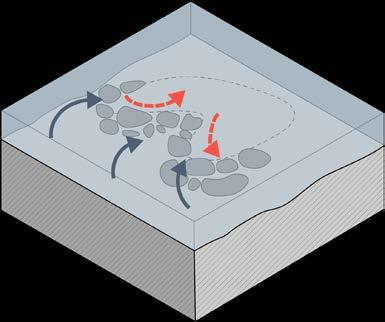
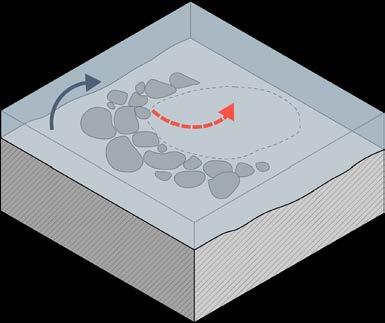
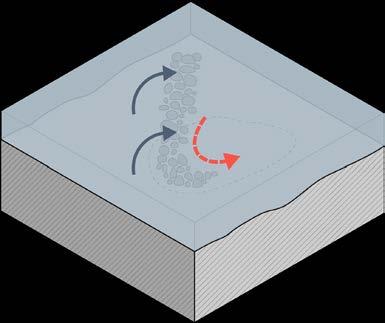
In the Glowing Island project, Skylar Tibbits categorized wave-induced sediment transport into four primary effects: the shear stress effect, wrap-around effect, channel effect, and ramp effect (Tibbits, 2020)1
This project, situated in the Maldives, illustrates the relationship between sand movement and wave behavior. Based on these four models, along with sediment deposition patterns observed in Qigu, we developed three simplified conceptual models to interpret local sand dynamics.
Channel Effect
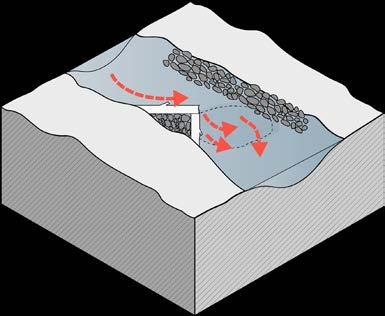
As the channel narrows, the wave velocity increases (Bernoulli’s Principle). As a result, the shear stress exerted by the flow exceeds the frictional resistance and gravitational force acting on the sand particles, causing sediment transport.
1 Skylar Tibbits, “A New Way to ‘Grow’ Islands and Coastlines,” TED, YouTube video, posted May 2020, https://www.youtube.com/watch?v=G_0UMcx7YlM.
Shallow Water Effect
When the water depth becomes less than half the wave height, the wave height increases and the wavelength shortens. As a result, the wave energy is temporarily intensified, increasing its transport capacity and leading to sediment transport.
Groyne Effect & Longshore Drift
Structures like groynes and breakwaters not only reduce wave energy and promote sand deposition, but they can also alter wave direction, sometimes increasing erosion. Especially along coasts with longshore drift, sand tends to accumulate on the updrift side, while erosion occurs on the downdrift side.
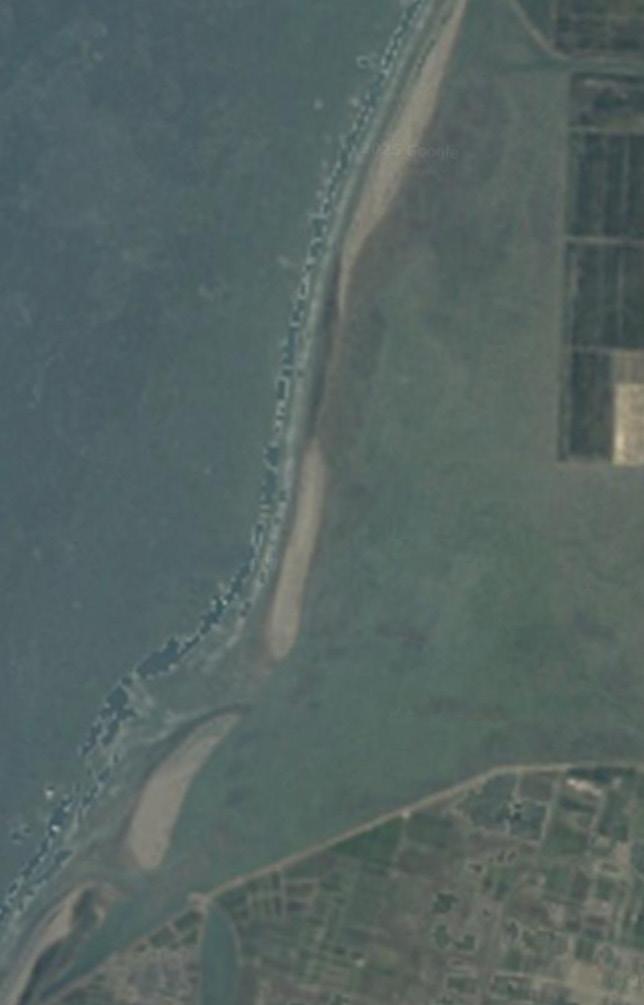
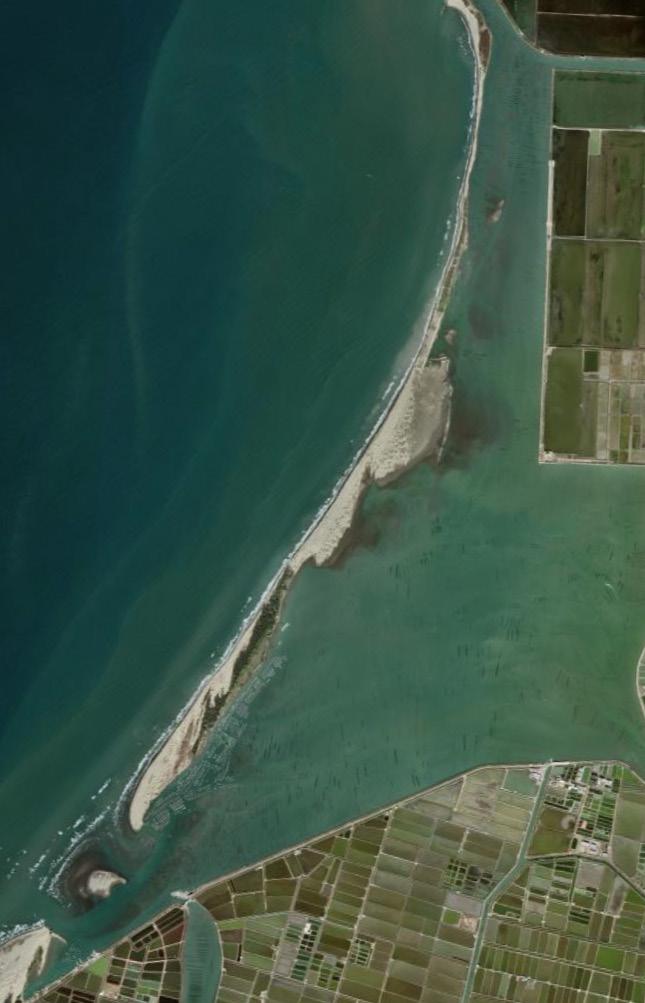
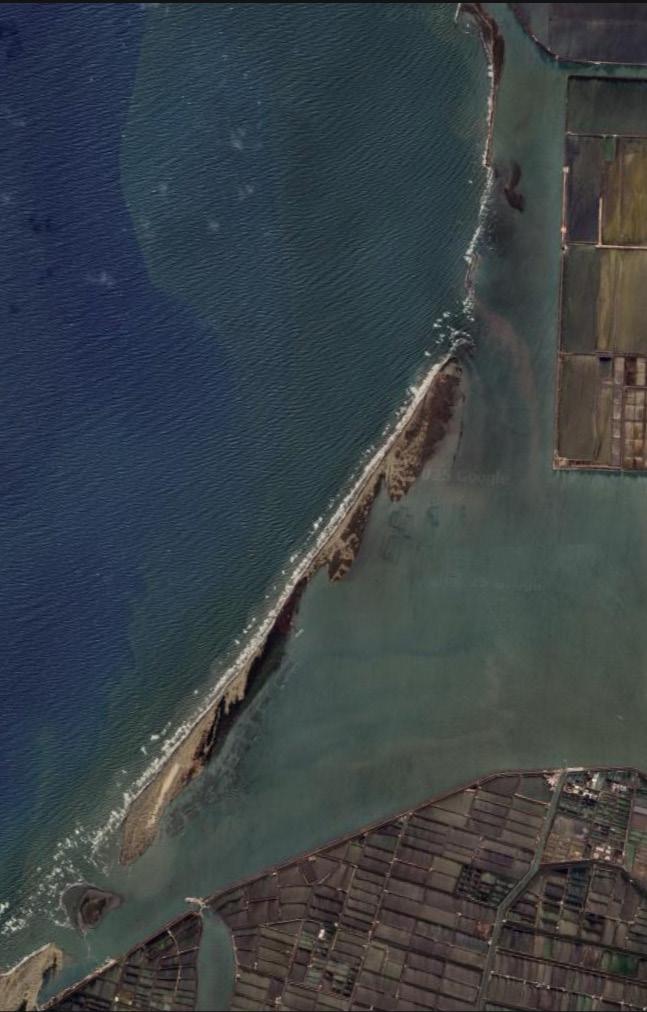
Based on both historical records and contemporary sources, including multi-temporal satellite imagery accessible through Google Maps, the analysis of SPOT satellite images by Chen (2013)1, as well as historical data on areal changes and topographical surveys conducted in the early 20th century (Hsiao, 2012)2, we examined the gradual migration and transformation of the sandbar over the past half-century.
The photographs of the sandbar at three distinct periods shown below reveal not only changes in its position but also the progressive process of its reduction in size. These findings indicate the necessity of examining how local topography and wave dynamics influence such processes.
1 Tien-Shui Chen. 2013. “七股沿海地區地覆變遷分析 [Analyses of Land-cover Changes in the Qigu Coastal Zone],” 台灣生物多樣性研究 (Taiwan Journal of Biodiversity) 15, no. 2 (2013): 99–111.
2 蕭立綸(Hsiao, Li-Lun). 2012. “台南七股沙洲地形變遷研究.[A Study on the Geomorphological Changes of the Tainan Qigu Sandbar]” 碩士論文, 國立高雄 師範大學地理學系碩士班(master’s thesis, National Kaohsiung Normal University, Department of Geography).
Fig. 28. Lagoon in 1984
Fig. 30. Lagoon in 2025
Fig. 29. Lagoon in 1999
1.6
Socio-Economic Impact
1.6.1. Concentration of Aquaculture
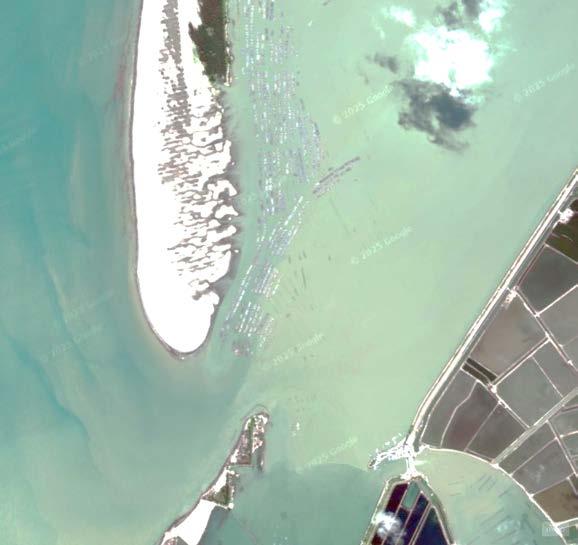
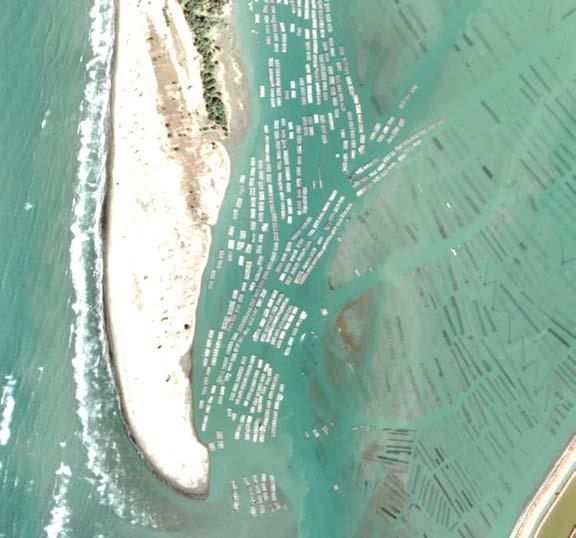
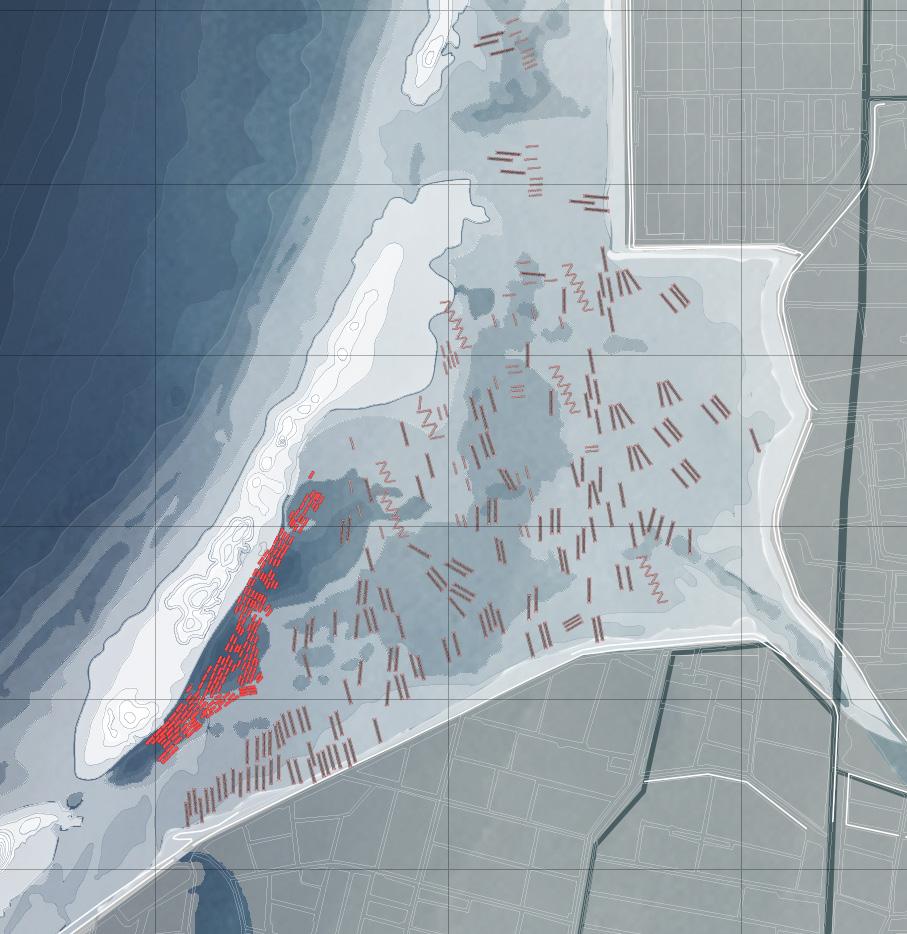
Long-term bathymetric change within the Qigu Lagoon has led to a progressive loss of shallow-water suitability for oyster cultivation. Empirical studies indicate that fine sediment accumulation across large portions of the lagoon floor has reduced effective water depths, limiting the areas where floating oyster racks can be safely and productively installed.² As a result, aquaculture infrastructure has increasingly concentrated within the remaining deeper zones of the lagoon, particularly near the southern opening where water exchange with the open sea remains relatively higher.
This spatial concentration represents an adaptive response by oyster farmers to changing environmental conditions. However, it also results in increasingly dense clustering of racks within a confined area. The study documents a marked increase in rack density over time, reflecting both the reduction of viable farming space and the continued dependence of local livelihoods on oyster production.³
1.6.2. Changes in Water Circulation and Aquaculture Conditions
Hydrodynamic analyses comparing historical and recent bathymetric conditions indicate a reduction in water exchange capacity, particularly as the lagoon becomes shallower and flow pathways are constricted.⁴ These changes result in increased water residence time within the lagoon interior, limiting the system’s ability to flush fine sediments and maintain water quality.
The concentration of aquaculture activity near the southern opening occurs within this altered hydrodynamic context. Reduced circulation and prolonged residence time have been associated with lower oxygen availability and increased sensitivity to seasonal stress conditions, affecting aquaculture productivity.⁵ The study emphasises that these impacts arise from the combined effects of sediment accumulation, lagoon morphology, and patterns of infrastructure occupation, rather than from any single factor in isolation.
1.6.3. Constraints on Tourism
The Qigu Lagoon supports not only aquaculture but also secondary economic activities that depend on its ecological condition and spatial openness, including lagoon-based tourism. Empirical studies describe the lagoon as a shared socio-ecological landscape, where visual continuity, navigable waters, and seasonal accessibility are integral to recreational and cultural use.⁶ Changes to lagoon morphology therefore influence tourism indirectly, through alterations to water quality, spatial legibility, and environmental experience rather than through direct infrastructural loss.
The dense arrays of oyster racks and constrained circulation corridors limit navigation of small-scale tourism activities such as boat-based access and lagoon-oriented recreation.⁷ The study states that reliance on aquaculture as the dominant livelihood, combined with the gradual degradation of lagoon conditions, narrows opportunities for economic diversification.⁷ As tourism remains environmentally contingent rather than structurally supported, its vulnerability reflects broader patterns of socioeconomic exposure within the lagoon system.
2 Chen, Y.-C., et al., Socioeconomic adaptation to geomorphological change: An empirical study in Cigu Lagoon, southwestern coast of Taiwan, Journal of Coastal Research, 2010.
3-7 ibid
Fig. 31. Lagoon Southern Opening in 2011 1
Fig. 34. Overcrowding of oyster racks inside the Lagoon
Fig. 36. Inverted Racks
Fig. 32. Lagoon Southern Opening in 2018 1
1.7 Case Studies
1.7.1 Skylar Tibbits : Growing Islands
Skylar Tibbits’ land-growing strategy is a concept that reimagines land formation as a dynamic and responsive process. The project involves programmable materials and geometries that harness the energy of tides to deposit sediment in specific patterns. Over repeated cycles, these interventions encourage the accumulation of silt, sand and organic matter to build up landmasses, essentially growing islands.
The land-growing research combines meteorological analysis, laboratory testing and field experiments to investigate sediment accumulation as a method for enhancing coastal resilience, in the Maldives.
This work presents a compelling model for ecologically driven land-building, several limitations remain. One key concern is scalability. Although the interventions have shown promise at the pilot level, particularly within small-scale field deployments, it remains uncertain how these methods would perform across larger and more variable coastal environments. The logistics and long-term maintenance required for scaling up modular or biologically integrated systems have not yet been fully addressed.
Fig. 37. Using direction of water current for sedimentation.
Fig. 38. Sand Accumulation overtime.
Fig. 40. A fabric that hardens into a rigid surface upon hydration
Fig. 41. An Artificial Reef made from extending ropes and bio-composite.
Fig. 39. Canvas bladders filled with sand and submerged underwater
1.7.2 The Sandmotor, Hague
The Sand Motor project, situated along the coast of South Holland, is often regarded as a benchmark for large-scale, nature-based coastal defence.¹ It has been chosen for this study due to its approach of building with nature, where sediment is introduced to a shoreline not as a static barrier but as a dynamic, self-distributing system that works in harmony with wind, waves and currents over time.² The idea of allowing natural forces to shape the shoreline gradually is particularly relevant for Qigu Lagoon, where coastal erosion and ecosystem decline necessitate long-term, adaptive strategies.
Completed in 2011, the Sand Motor involved depositing nearly twenty-two million cubic metres of sand onto the Dutch coast, forming a hook-shaped peninsula that extends into the North Sea. Covering approximately 128 hectares, this large-scale nourishment project was designed to redistribute sand along the adjoining coast over a period of twenty years naturally.⁵ Unlike traditional beach nourishment, which demands frequent and localised reapplications, the Sand Motor strategy accepts temporal and spatial uncertainty, enabling natural processes to carry out sediment dispersal with minimal human intervention after the initial installation.
A key advantage of the Sand Motor approach lies in its long-term efficiency. By concentrating sediment input into a single, large-scale intervention, the project reduces the frequency and disruption associated with conventional nourishment. Several limitations affect the potential use of the Sand Motor in Qigu Lagoon. The primary concern is scale and site morphology. The Sand Motor is suited for open, high-energy coasts with strong currents that transport sediment over long distances. At Qigu Lagoon,
however, the circulation depends on tidal exchange, not longshore drift, and sediment tends to settle. Thus, passive sand redistribution, as seen in the Netherlands, is unlikely in Qigu without major adjustments to sediment input and hydrodynamics.
Another issue is material misalignment. The Sand Motor uses coarse marine sand from offshore, ideal for beach and dune formation. Qigu’s fine silts, clays and organic deposits respond differently to waves and wind. The project’s two-decade timeframe also raises questions about feasibility.
2 “Sand Motor - Delfland,” EcoShape - EN, n.d., accessed July 18, 2025, https://www.ecoshape.org/en/cases/ sand-nourishment-sand-engine-delfland-north-sea-nl/. 3 ibid
4-5 Sand Motor - Delfland,” EcoShape - EN, n.d., accessed July 18, 2025, https://www.ecoshape.org/en/cases/
Fig. 43. Gradual shaping of deposited sand by waves.3
Fig. 42. The Sand Motor Project4 (Edited by authors)
1.7.3 Marker Wadden, Netherlands
The Marker Wadden project in the Netherlands is examined here due to its innovative ecological restoration approach, which utilises sediment to create new landforms. Initiated in 2016, the project aims to revive biodiversity in the Markermeer, a turbid freshwater lake that had suffered from declining water quality and habitat loss.¹
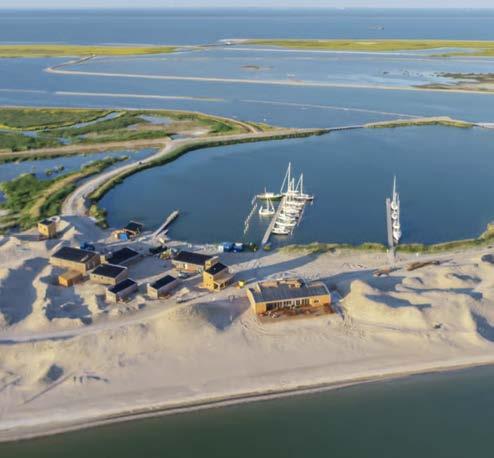
It consists of five artificial islands that extend into wetlands, sand wave breakers, reef piles, pedestrian walks and an observation centre. Initially, breakwaters were built by depositing dunes and stones. Next, six dams were constructed within the protected zone behind these breakwaters. Subsequently, silt was deposited from the lake’s bottom to form the islands. Once the new land rose above the water surface, it dried out, allowing vegetation to grow and spread.²
The islands are shielded from strong waves by breakwaters, and the vegetation stabilises the sediments, thereby reducing erosion.³
This large-scale intervention offers several relevant insights for Qigu Lagoon. It demonstrates how dredged sediment, often viewed as a waste product, can be reused to support ecosystem restoration. Marker Wadden’s soft-engineered landforms, shaped by wind, waves and currents, allow for adaptation to dynamic environmental changes. This model
contrasts with rigid infrastructure and could inspire similar flexibility in Qigu’s sediment-based interventions.
However, the direct applicability of Marker Wadden to Qigu is limited by key environmental and contextual differences. Marker Wadden is a temperate freshwater lake, while Qigu is a tropical, brackish, tidally influenced lagoon exposed to more intense hydrodynamics. The sediments available in Qigu, ranging from coarse sand to clay, differ in composition and may not consolidate as predictably as the fine lakebed silt used in the Dutch case. Moreover, the long timescale and centralised governance behind Marker Wadden are not easily mirrored in Taiwan, where interventions may need to be faster, more distributed and responsive to local stakeholders.
2 Despina Linaraki et al., “An Overview of Artificial Islands Growth Processes and Their Adaptation to Sea-Level Rise,” in SeaCities: Aquatic Urbanism, ed. Joerg Baumeister et al. (Springer Nature, 2023), 87, https://doi. org/10.1007/978-981-99-2481-3_4.
3 Despina Linaraki et al., “An Overview of Artificial Islands Growth Processes and Their Adaptation to Sea-Level Rise,” in SeaCities: Aquatic Urbanism, ed. Joerg Baumeister et al. (Springer Nature, 2023), https://doi. org/10.1007/978-981-99-2481-3_4.
3.1 ‘Overnachten op Marker Wadden’, Natuurmonumenten, accessed 17 September 2025, https://www.natuurmonumenten.nl/natuurgebieden/ marker-wadden/varen/overnachten-op-marker-wadden.
Fig. 45. Marker Wadden Aerial View Construction Phase3.1
Fig. 44. Marker Wadden Project. (Edited by authors)
1.7.4 ETH Zurich - Rock Print Pavilion
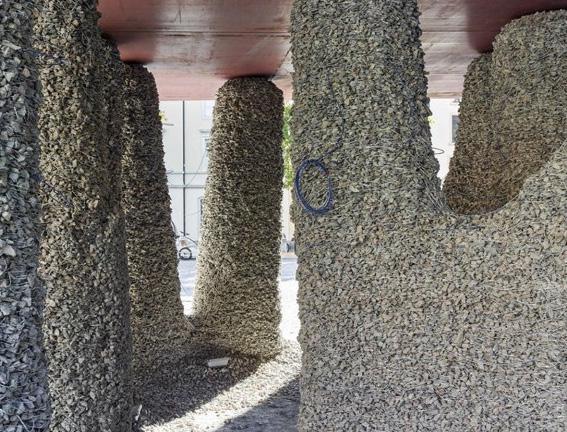
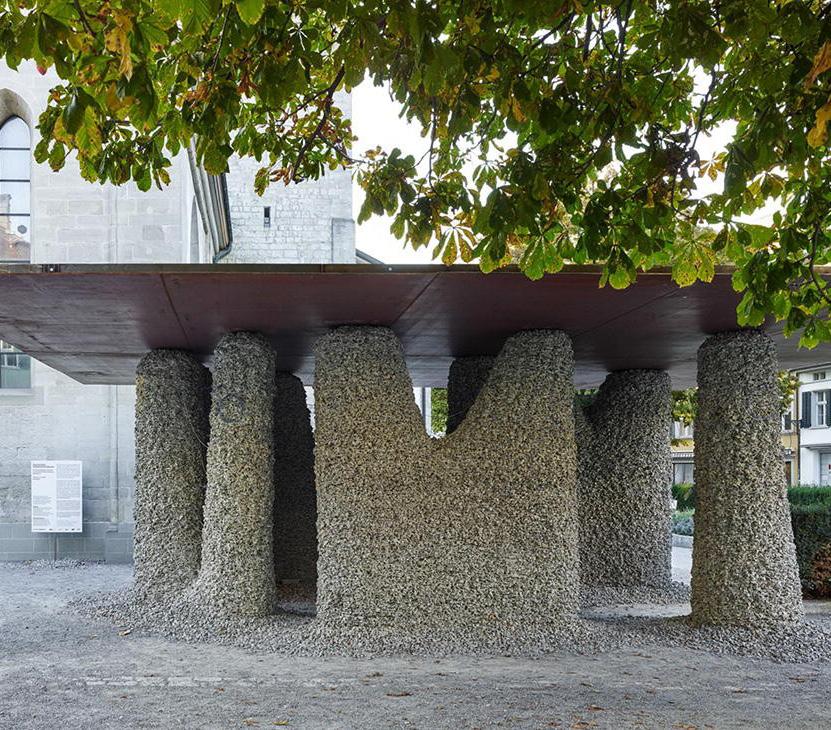
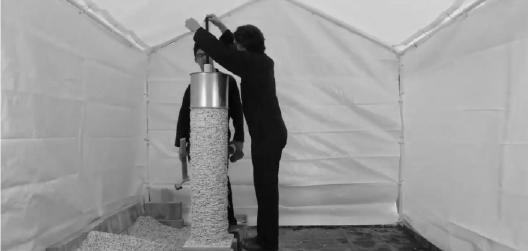
We refer to the Rock Print Pavilion, a collaboration between ETH Zürich’s Gramazio Kohler Research and MIT’s Self-Assembly Lab, as a key precedent in our exploration of granular architecture.1 Instead of relying on conventional joints or rigid components, the project demonstrates how spatial structures can emerge through controlled deposition of materials and tension-based constraints.
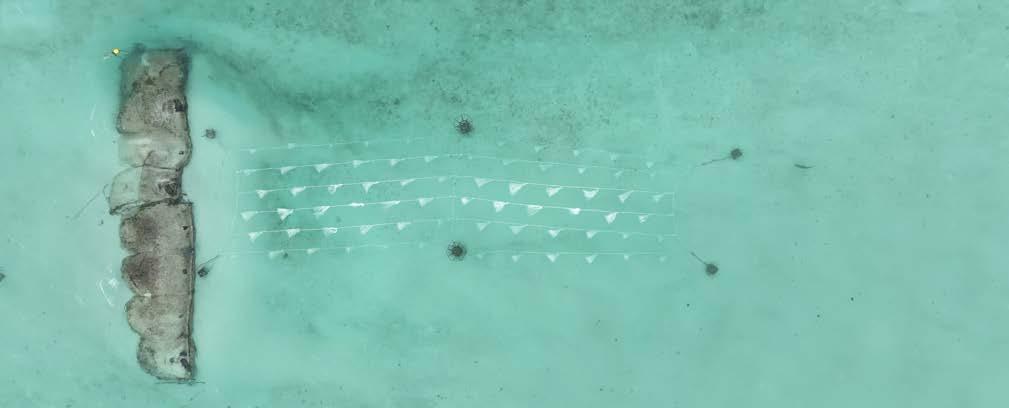
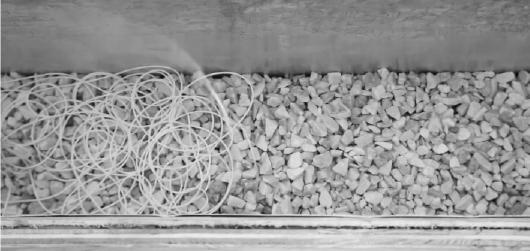
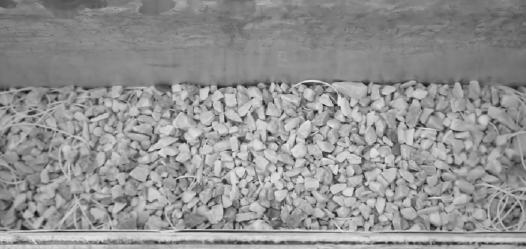
During construction, loose gravel is deposited simultaneously with layers of filament. The path and tension of the filament govern the internal friction and force distribution within the aggregate. As the gravel settles under its own weight, the interplay between compression and confinement allows the structure to stabilise and stand independently, without the need for formwork or adhesives. Local oyster farmers often pile up discarded shells to create makeshift platforms and walking paths, a building practice that similarly relies on the jamming effect of irregular materials
1.7.5 Modular and Morphable Jamming SelfAssembly Lab - Case Study
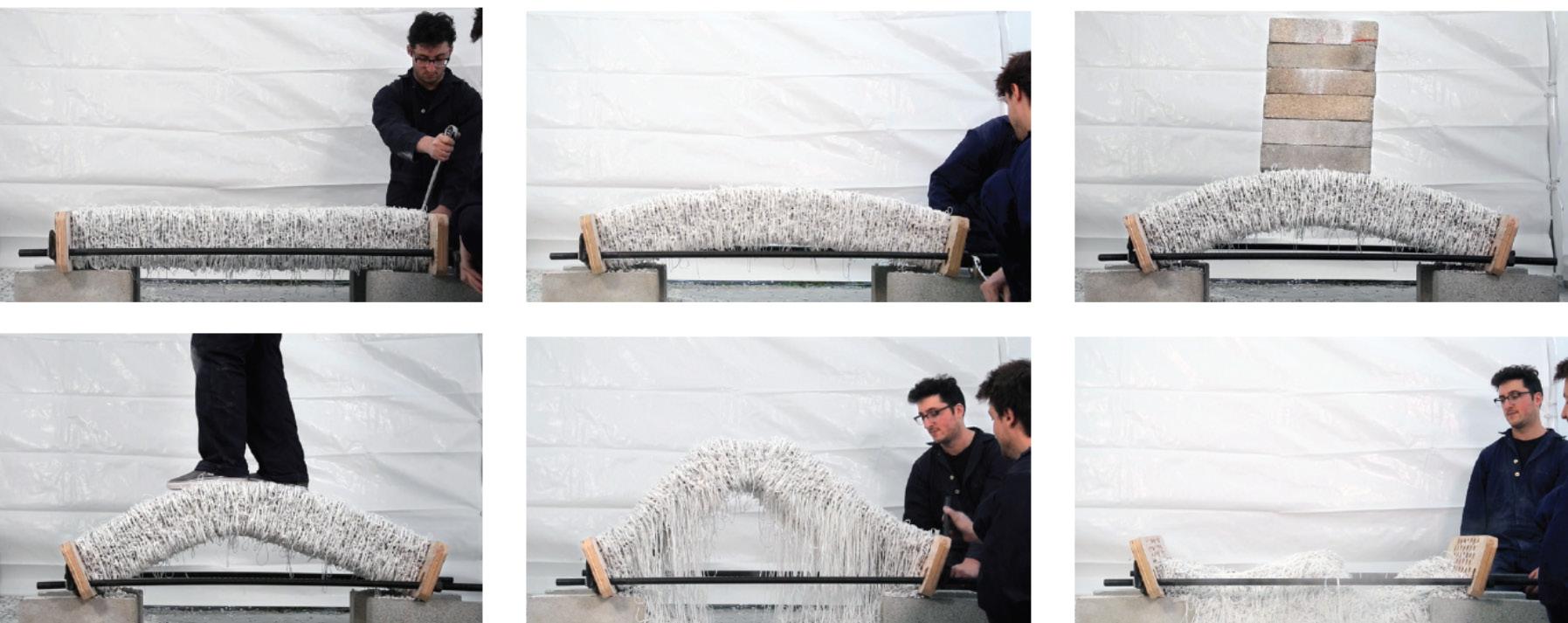
The Superjammed2 research, developed by the MIT Self-Assembly Lab in collaboration with Boston University, explores a novel construction system that exploits granular jamming to create tunable, morphable, and reversible architectural structures. Building on earlier work with jammed aggregates such as Rock Print, the project addresses the limitations of existing methods—chiefly their reliance on slow robotic deposition, extensive pre-planning, or fixed formwork—by devising a rapid, adaptable fabrication process capable of spanning horizontally and adapting form without permanent joints or adhesives.
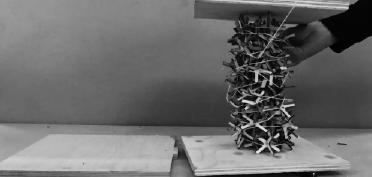
Granular jamming occurs when loosely packed particles transition to a rigid state through confinement, here achieved with aggregate rock and a network of tensioned strings. The Superjammed methodology combines slip-formed layers of rock and strategically looped string with post-tensioning through internal channels, producing a dense, reinforced assembly. The hollow cores created during slip-forming enable threaded rods to apply end-to-end compression via plywood plates, significantly increasing stiffness and toughness while allowing structures to be “switched off” by releasing tension—causing them to disassemble into reusable components.
Three large-scale typologies were prototyped to demonstrate architectural actionability:
Column-Beam:
A vertical hollow column rotated to act as a beam, demonstrating load capacity under both concentrated and distributed weights. Disassembly was performed by backing off the plates under load.
Wall-Slab:
A vertical wall element rotated into a horizontal slab, sustaining live loads despite minimal material thickness.
Beam-Arch:
A straight beam transformed into an arch through asymmetric post-tensioning, showcasing controlled morphability and progressive strengthening with curvature.
Testing confirmed that Superjammed elements maintain structural performance across different rock and string types, and exhibit superior abrasion resistance compared to non-tensioned jammed structures. The system’s reversibility enables rapid on-site assembly and disassembly, making it well-suited for temporary or reconfigurable applications.
In the context of Qigu Lagoon, the Superjammed approach offers valuable insights into modular, deployable, and reusable construction strategies. The ability to adapt form in response to environmental forces, combined with the option to dismantle structures without material loss, aligns with the needs of adaptive coastal infrastructure. However, site-specific adaptations would be required—particularly to address exposure to water.
1Gramazio Kohler Research’. Accessed 15 August 2025. https://gramaziokohler.arch.ethz.ch/web/e/projekte/364.html.
2 J. V. Juario et al., eds., Advances in Milkfish Biology and Culture: Proceedings of th Cohen, Zach, et al. “Superjammed: Tunable and Morphable Spanning Structures through Granular Jamming.” Technology|Architecture + Design, vol. 4, no. 2, 2 July 2020, pp. 211–220, www.researchgate.net/publication/347217534_Superjammed_Tunable_ and_Morphable_Spanning_Structures_Through_Granular_Jamming, https:// doi.org/10.1080/24751448.2020.1804765.
1.7.7 Topological Interlocking
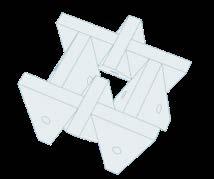
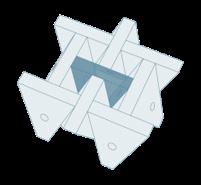
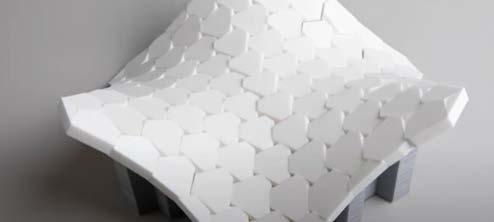
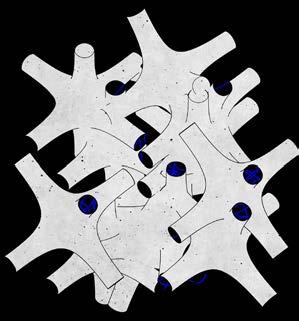
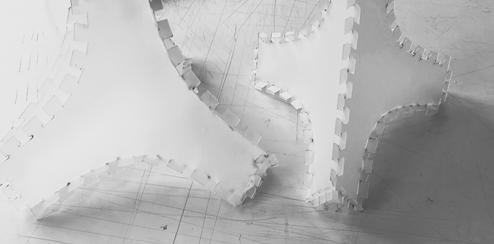
The study “Design and Structural Optimization of Topological Interlocking Assemblies” (Wang et al., 2019) investigates the structural behavior of discrete, self-supporting systems composed of interlocking convex blocks. These assemblies rely on topological interlocking, a principle where individual modules are constrained by their neighbors through geometric contact rather than adhesive bonding. Stability emerges as a collective property, enabling the construction of load-bearing structures that are reversible.
The research introduces a computational framework to test and optimize these assemblies under gravity and external loading. Unlike conventional equilibrium checks, the method evaluates both local stability (resistance to small displacements) and global interlocking (resistance to arbitrary load orientations). A new stability index quantifies robustness, enabling comparative evaluation of block geometries. Block generation is performed through gradient-based optimization, where the target is to maximize stability while satisfying global equilibrium and curvature constraints.
This process produces blocks that fit within a funicular shell geometry, distributing loads in compression across the surface. The resulting assemblies demonstrate the ability to span large distances without mortar, adhesives, or continuous reinforcement. Physical prototypes validated the computational predictions. Assembly typically began with a perimeter ring of modules, establishing the boundary geometry. Subsequent layers were sequentially stacked inward, each block immobilizing the next through shared points of contact.
In the context of Qigu, the case study offers precedents for first, that interlocking geometries can distri bute loads through compression alone, avoiding reliance on binding agents and second, that modular shells can be assembled and disassembled in phases.
1 Wang, Ziqi, et al. “Design and Structural Optimization of Topological Interlocking Assemblies.” ACM Transactions on Graphics, vol. 38, no. 6, 31 Dec. 2019, pp. 1–13, https://doi.org/10.1145/3355089.3356489. Accessed 12 May 2022.
Fig. 49. Topological Interlocking of Modules
Fig. 50. Based on research, a shell is fabricated. 1
1.8 Design Problem Synthesis
To summarise, first, the sand barrier that forms the lagoon’s primary line of defence is progressively eroding, reducing protection from the open sea and destabilising the coastal edge. Second, sustained sediment accumulation within the lagoon interior has led to widespread shallowing, restricting water circulation and reducing effective depths.
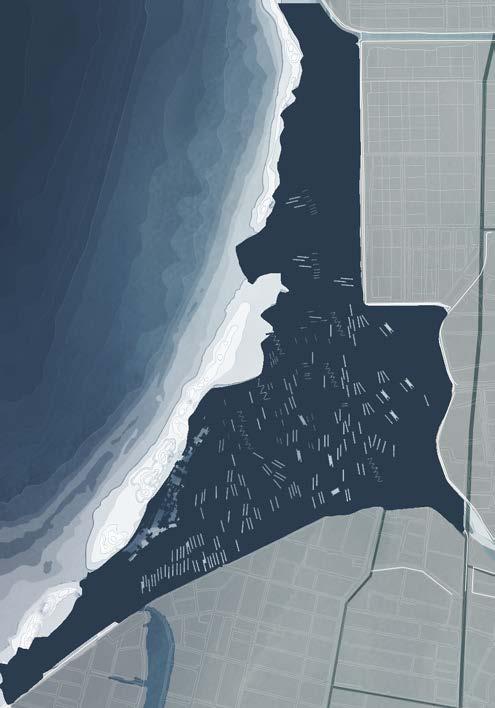
Together, these processes have left only a narrow pocket of the lagoon deep enough to sustain profitable oyster farming, forcing aquaculture infrastructure to concentrate within increasingly constrained zones. This compression of activity intensifies environmental stress, limits mobility, and undermines the long-term viability of lagoon-based livelihoods. As lagoon conditions deteriorate, the system becomes increasingly dependent on a single, environmentally sensitive economic activity, while its capacity to support complementary lagoon-based activities, including tourism, is progressively constrained.
The research responds to this dual condition by distinguishing between the sandbar edge and the lagoon interior as two related but distinct problem spaces, which are examined through separate research phases in the following sections.
Fig. 53. Conceptual diagram showing the synthesis of issues in Qigu
1.8.1 Research Phase A
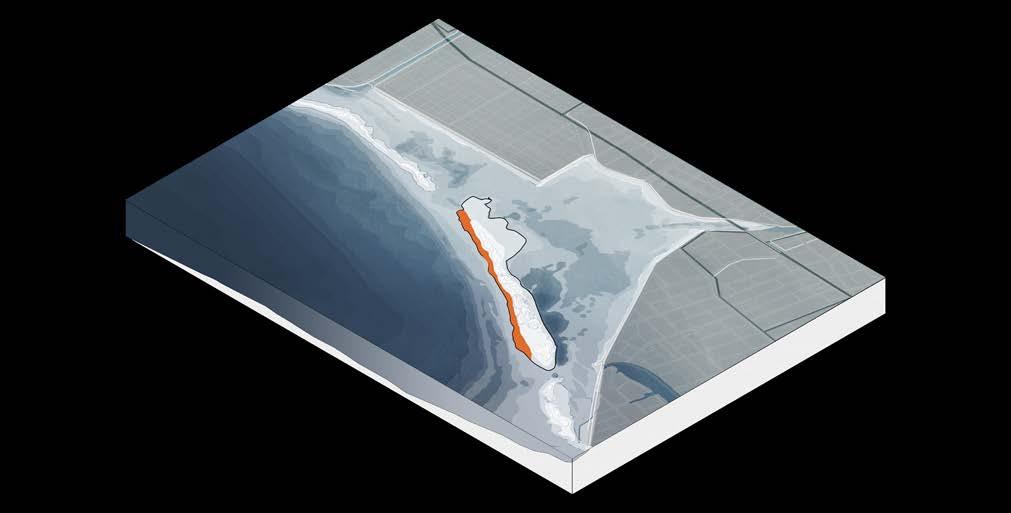
At the seaward sandbar edge, loss of sediment weakens coastal protection and accelerates the inward movement of the barrier, contributing to the overall reduction of lagoon area. As the sandbar migrates inland, opportunities for stable occupation, access, and infrastructural support diminish, leaving aquaculture activities increasingly disconnected from land-based systems. This condition exposes a critical problem: current coastal interventions prioritise static reinforcement of the sandbar without engaging the sedimentary processes that shape its formation and loss.
Phase A therefore isolates the sandbar edge as a site where land formation, material behaviour, and spatial stability must be reconsidered in relation to ongoing erosion rather than resisted through fixed boundaries.
Fig. 51. Sand Barrier Erosion
Fig. 52. Scattered Oyster Farming Processes
1.8.2. Research Phase B
Looking in the lagoon interior, where sustained sediment accumulation has led to widespread shallowing and reduced water circulation. As depths decrease, aquaculture infrastructure is forced into limited deep-water pockets, intensifying spatial congestion and ecological stress. The loss of effective circulation further accelerates sediment deposition, reinforcing a feedback loop that constrains both farming operations and lagoon-based mobility. This condition reveals a second critical problem: existing spatial and infrastructural systems are fixed to static depth assumptions and cannot adapt to changing bathymetric conditions.
Phase B therefore frames the lagoon interior as a dynamic environment in which bathymetry, circulation, and spatial organisation are inseparable, requiring investigation into how these relationships evolve over time.
Fig. 54. Sediment Build Up inside the Lagoon
Fig. 55. Overcrowding of Oyster farming racks and reduced water flow
1.9 Hypothesis A
If tidal forces and sediment flows can be strategically redirected through site-specific land-growing interventions, then it is possible to regenerate eroded sandbar formations and mitigate lagoon shrinkage in Qigu.
By integrating this ecological process with architectural systems that support aquaculture practices and seasonal habitation, a new form of adaptive fishermen settlement can emerge — one that grows with the landscape, enables continuity of livelihood, and reconnects fragmented farming steps onto a unified, evolving terrain.
If progressive lagoon shallowing is addressed through interventions that respond to changing bathymetry and seasonal conditions, then water circulation within the lagoon can be restored.
By integrating these hydrodynamic processes with reconfigurable architectural systems, aquaculture practices, community use and lagoon-based tourism can be supported across temporal transitions. Hypothesis
Proposal Phase A
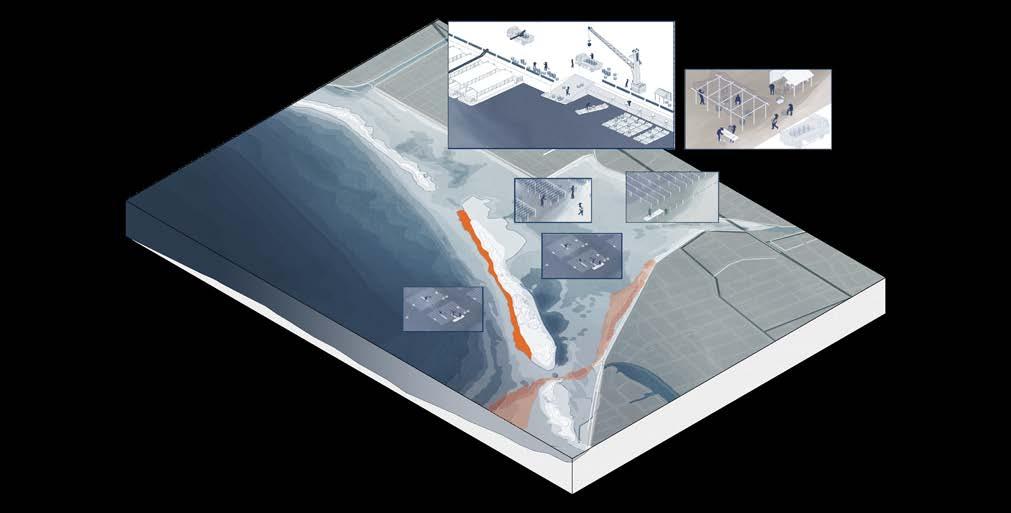
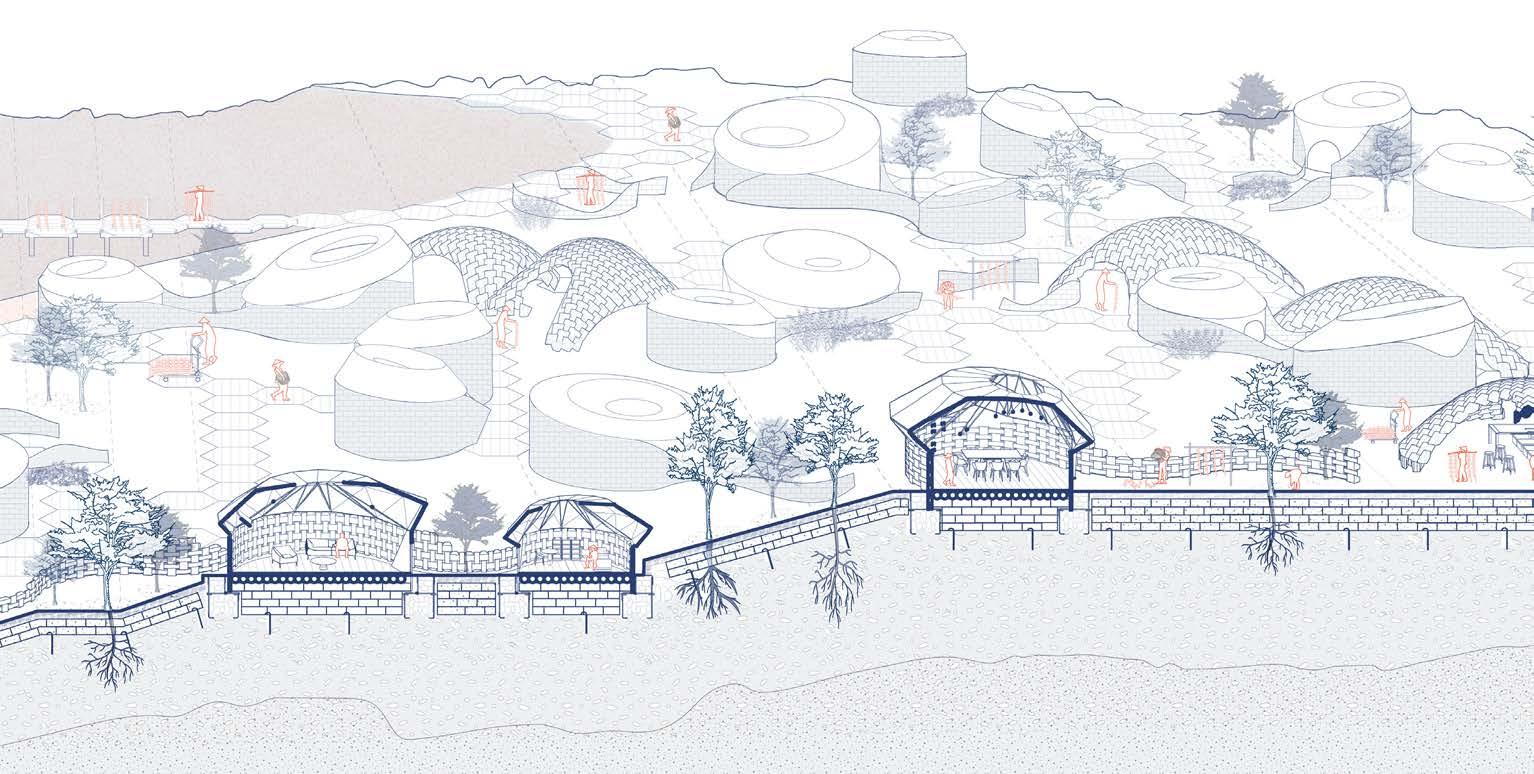
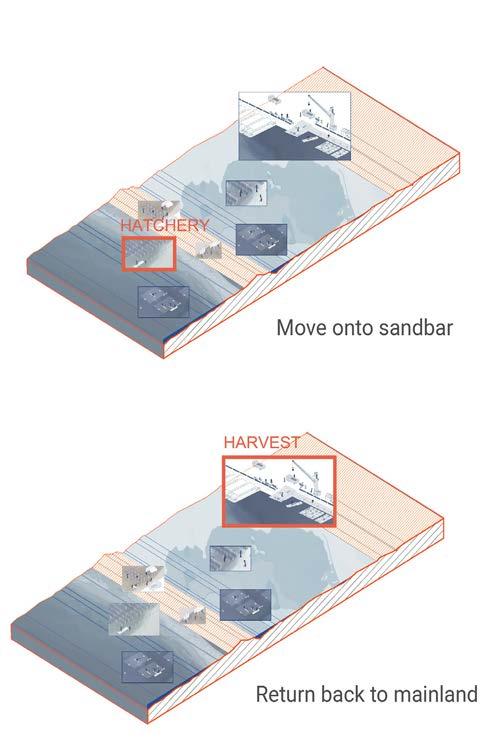
Current governmental approaches in Qigu Lagoon treat coastal defence and aquaculture as separate systems, reinforcing the sandbar through rigid interventions while managing oyster farming through dispersed lagoon-based infrastructure. This separation overlooks the interdependence between sediment dynamics, land stability, and productive use. A key shift in this proposal lies in relocating critical aquaculture operations—such as hatchery functions, shell processing, and storage—onto the sandbar. Through land-growing processes that enhance sediment deposition, the sandbar is incrementally strengthened against erosion while simultaneously generating stable ground for aquaculture-related infrastructure. Rather than treating defence and production as parallel systems, the proposal frames sediment accumulation as a shared resource that supports both coastal resilience and livelihood continuity.
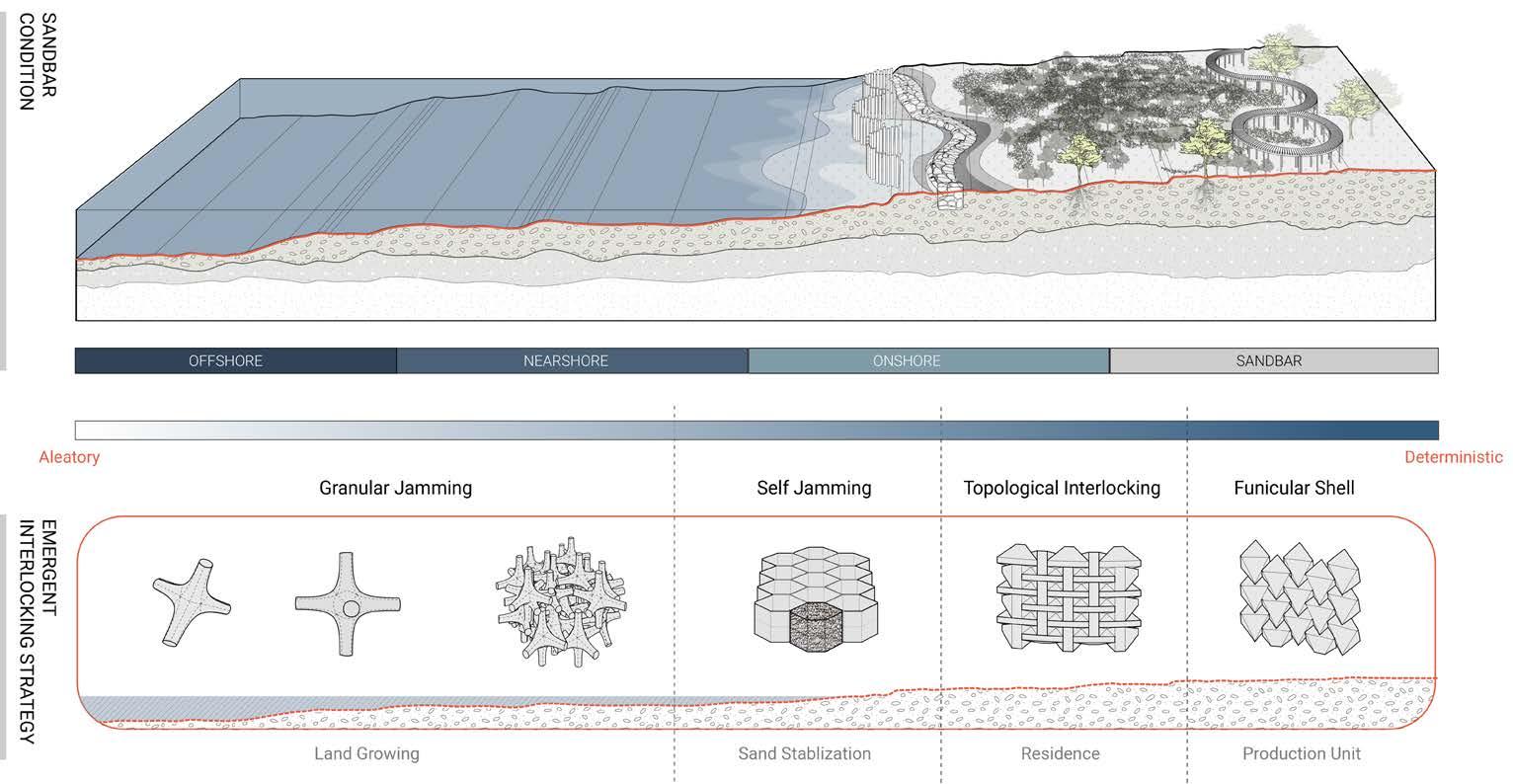
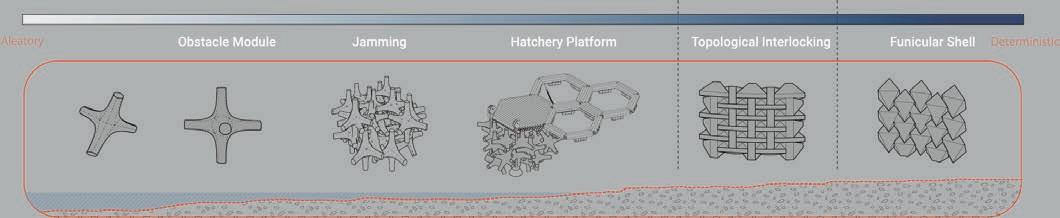
The proposal is organised through a gradient of interlocking systems that respond to changing environmental conditions from offshore to onshore. Interlocking is employed as a primary organisational logic, allowing assemblies to adjust to seasonal occupation, reconfiguration, and partial dismantling over time.
Offshore, land growing modular units operate through granular aggregation and self-jamming, remaining porous and non-deterministic in order to interact with sediment transport and tidal flows. As conditions shift landward toward nearshore and onshore zones, the logic of assembly becomes progressively more deterministic, with topological interlocking systems forming structurally stable configurations capable of supporting occupation and production.
Across scales, Phase A integrates land-growing, material behaviour, structural logic, and seasonal settlement into a cohesive framework.
Fig. 56. Separation in breakwater, oyster farming and their integration
Fig. 57. Sandbar integration through relocated farming processes
58. Sectioned gradient across offshore, nearshore, onshore, and sandbar conditions demonstrates how different forms of interlocking are mobilised in relation to their specific environments and functions.
Fig.
Proposal B
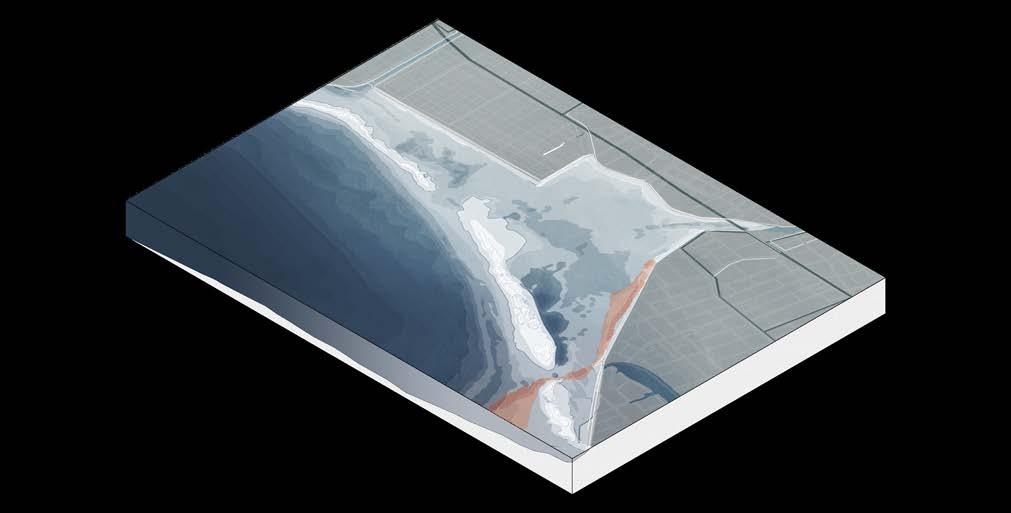
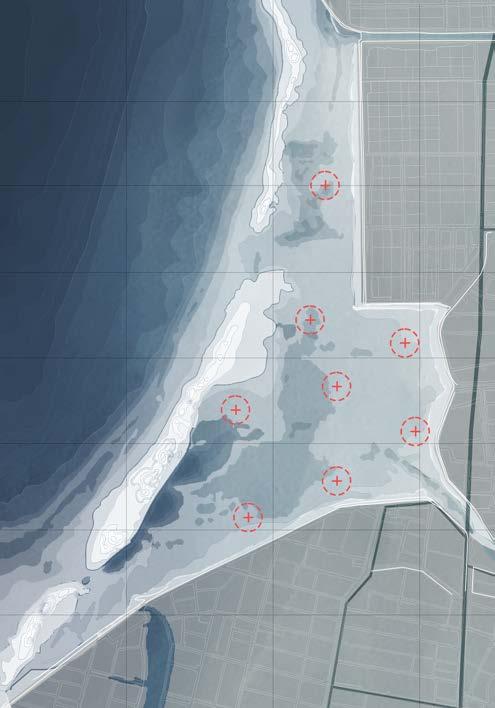
Phase B extends the sediment-based logic of Phase A inward, recognising that land formation and land loss are inseparable processes within a single sediment system. Where deposition is encouraged at the sandbar, selective sediment removal becomes necessary within the lagoon to restore balances. These locations are informed by bathymetric analysis and circulation studies, allowing erosion to operate as a corrective counterpart to land-growing.
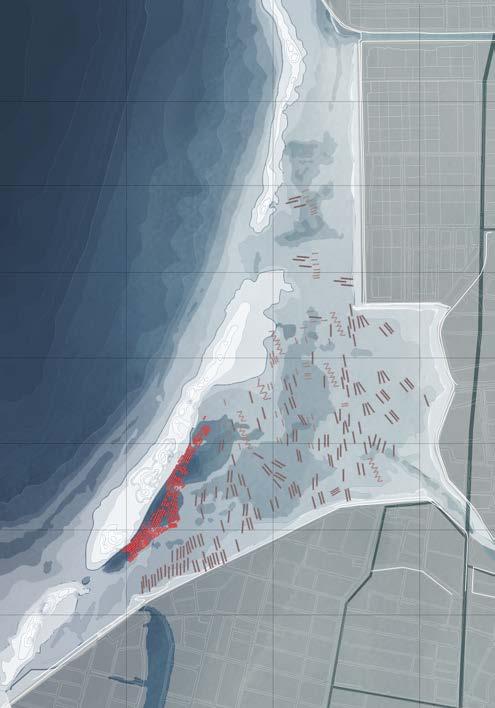
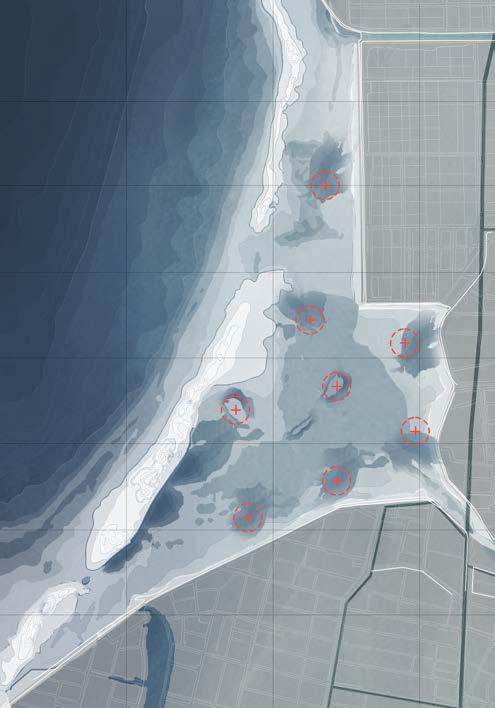
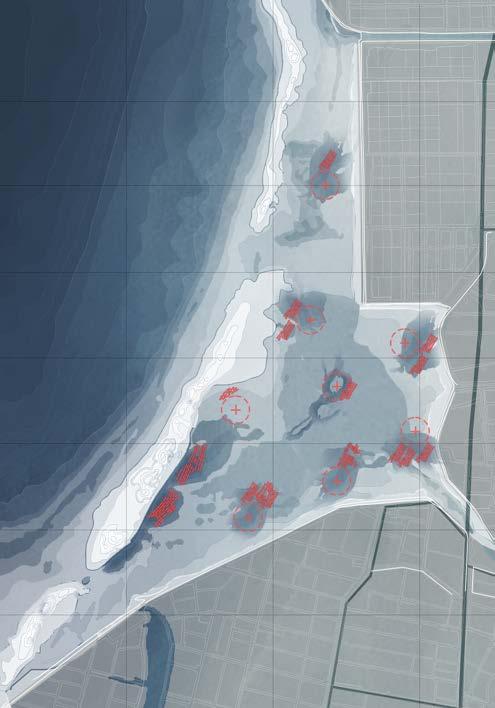
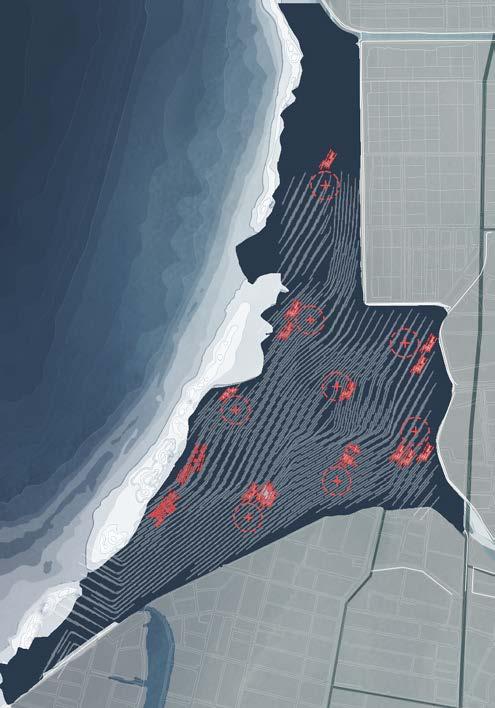
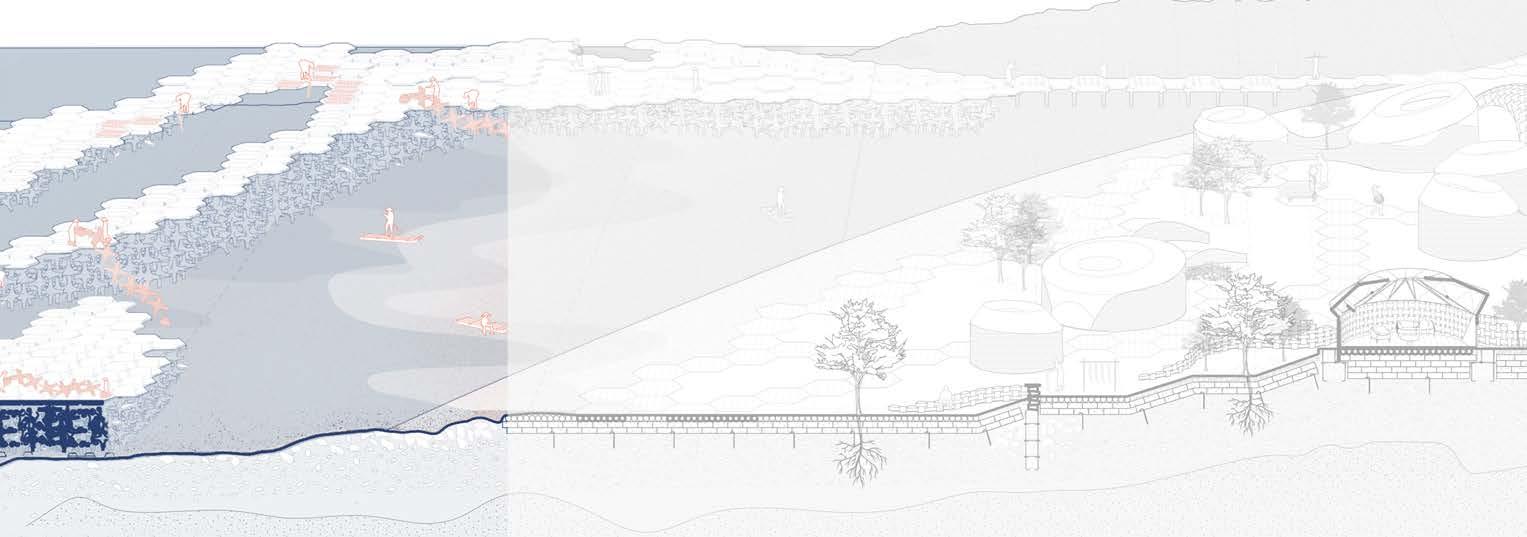
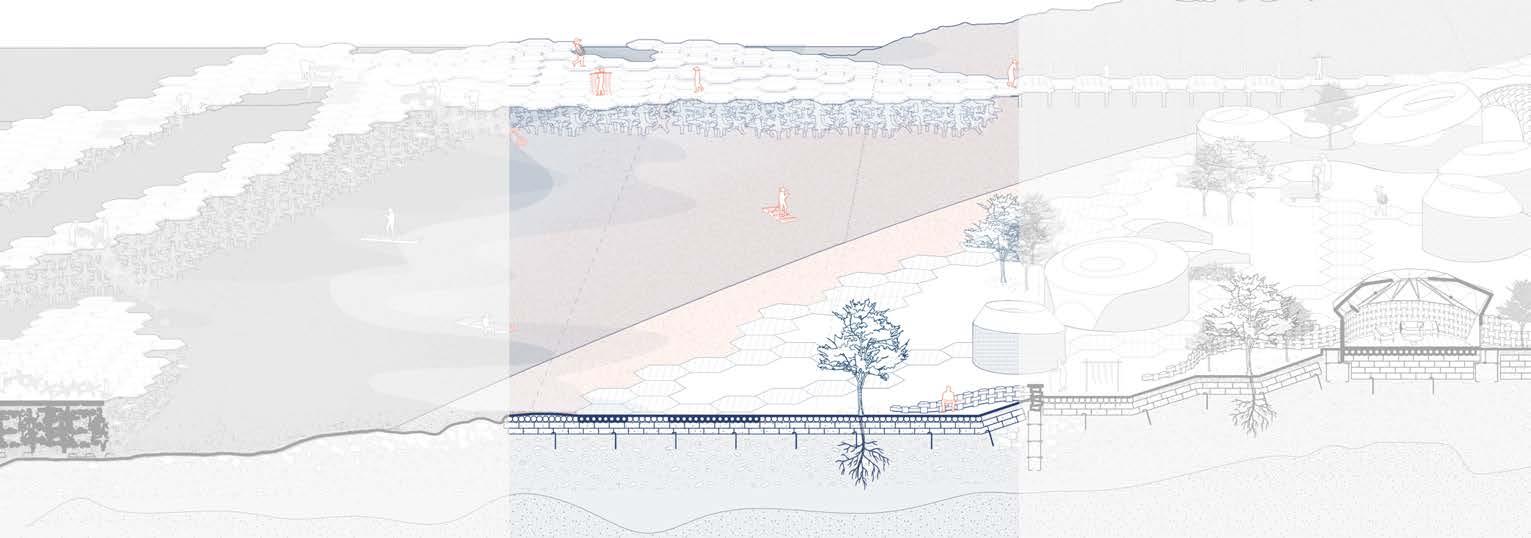
By selectively deepening these zones, a network of distributed deep-water pockets is created across the lagoon. This redistribution enables floating oyster racks to spread beyond the southern opening, reducing infrastructural congestion and improving overall water exchange.
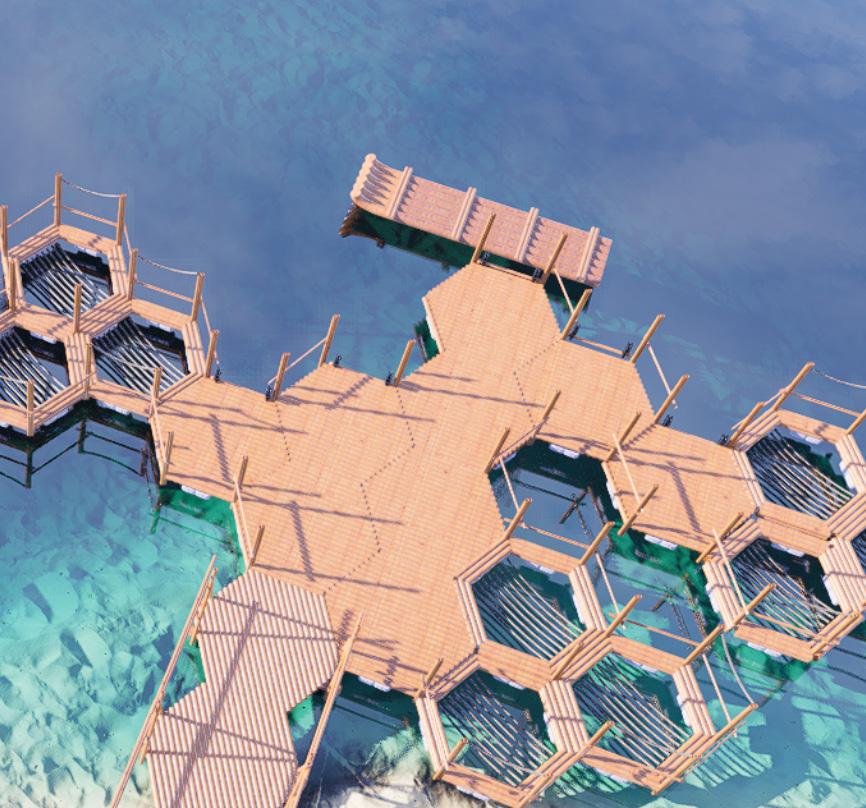
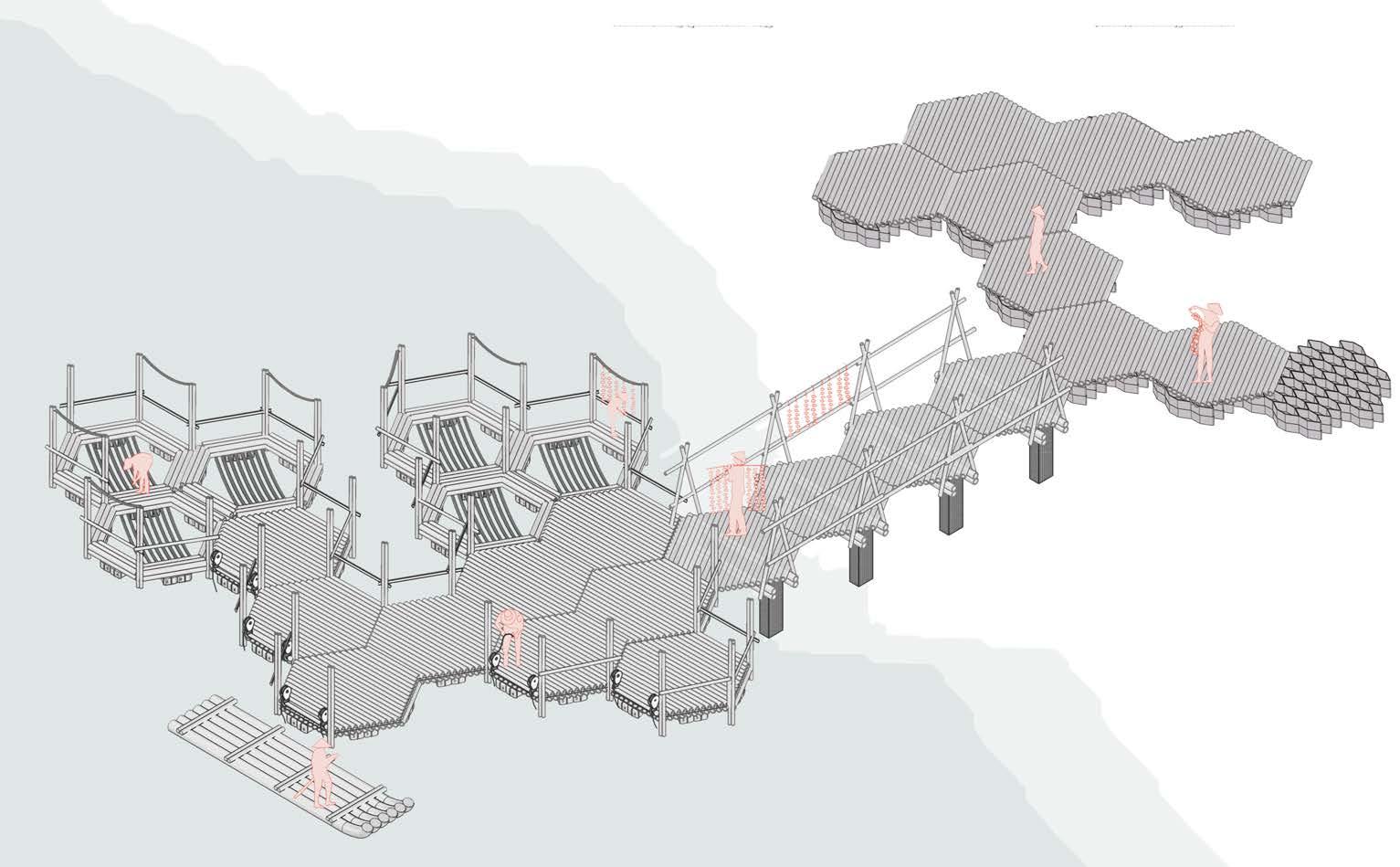
Beyond ecological repair, Phase B reframes the lagoon interior as an adaptive architectural field shaped by depth, flow, and seasonal variation. As circulation improves and congestion is reduced, new spatial conditions emerge that can support reconfigurable platforms, floating walkways, and lightweight infrastructures. These elements respond to temporal shifts in farming cycles, monsoon and typhoon seasons, and public access.
This spatial flexibility allows the lagoon to support additional socio-economic and cultural activities alongside aquaculture. Seasonal oyster markets, festivals, food events, bird-watching routes, and eco-tourism circuits can be layered into the lagoon without displacing production. Shared spaces for farmer cooperatives, processing demonstrations, and community gatherings create opportunities for interaction between local workers and visitors, expanding the lagoon’s economic and social value.
Here, ecological repair and spatial reorganisation operate together. By decongesting the lagoon and restoring circulation, the intervention creates space for water to move and for social and economic activities to coexist.
Fig. 59. Concentration of floating oyster racks within shallow lagoon zones near the southern opening
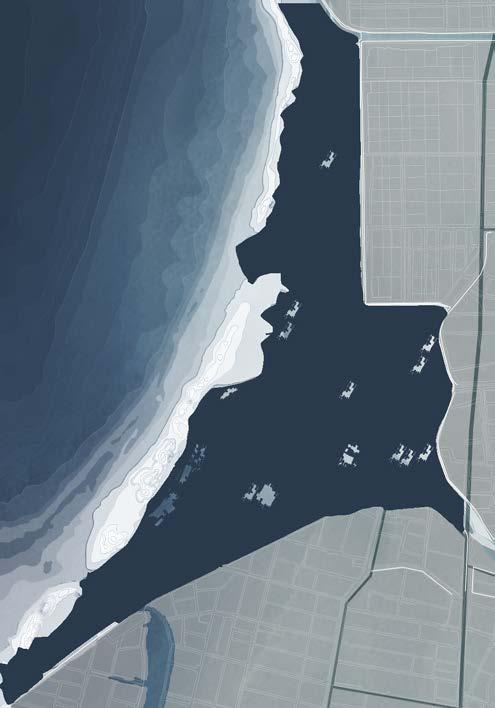
Fig. 60. Identification of low-energy sediment deposition zones suitable for targeted erosion
Fig. 61. Formation of multiple deep-water pockets through selective lagoon-bed scouring
Fig. 62. Redistribution of floating oyster racks across newly created deep-water zones
Fig. 63. Existing condition: continuous occupation of lagoon surface limiting water circulation
Fig. 65. Targeted erosion strategy enabling increased water flow and spatial decongestion
Fig. 64. Post-intervention scenario: reduced rack density with improved circulation and productivity
Fig. 66. Emergence of other socio-economic lagoon based activies due to newly available space
Fig. 68. Reconfigurable lagoonal mobile infrastructure supporting aquaculture access and eco-tourism
Fig. 67. Jammed modules deployed inside lagoon for erosion
CHAPTER 1 Bibliography
B. Kjerfve. Coastal Lagoon Processes. Elsevier, 1994.
Chen, Su-Wen,”A Study on Social and Economic Changes of Tidal Flats in Taijowan Bay-A Case Study of An-Nan District in Tainan City”(2015)
Chen, Tien-Shui. 2013. “七股沿海地區地覆變遷分析 [Analyses of Land-cover Changes in the Qigu Coastal Zone].” 台灣生物多樣性研究 (Taiwan Journal of Biodiversity) 15, no. 2: 99–111.
Chung, Chun-Wen. “Despina Linaraki et al., ‘An Overview of Artificial Islands Growth Processes and Their Adaptation to Sea-Level Rise,’ in SeaCities: Aquatic Urbanism, Ed. Joerg Baumeister et al. (Springer Nature, 2023), Https://Doi. Org/10.1007/978-981-99-2481-3_4.” Department of Architecture, National Cheng Kung University, Taiwan (R.O.C), 2010.
Duck, Robert W., and José Figueiredo da Silva. “Coastal Lagoons and Their Evolution: A Hydromorphological Perspective.” Estuarine, Coastal and Shelf Science 110 (September 2012): 2–14. https://doi.org/10.1016/j.ecss.2012.03.007.
FitzGerald, Duncan M., Michael S. Fenster, Britt A. Argow, and Ilya V. Buynevich. “Coastal Impacts due to Sea-Level Rise.” Annual Review of Earth and Planetary Sciences 36, no. 1 (May 2008): 601–47. https://doi.org/10.1146/annurev. earth.35.031306.140139.
Hsiao, Li-Lun (蕭立綸). 2012. “台南七股沙洲地形變遷 研究 [A Study on the Geomorphic Change of the Sand Spits in Qigu, Tainan].” Master’s thesis, Department of Geography, National Kaohsiung Normal University
Hung, Ching-Yuan (洪敬媛). 2009. “ [Recent Geomorphic Changes of the Sand Spits in Wangziliaw, Tainan].” 臺南網子寮沙洲近期地形變動 Master’s thesis, Department of Geography, National Taiwan Normal University.
Juario, J. V., R. P. Ferraris, L. V. Benitez, Southeast Asian Fisheries Development Center, and International Development Research Centre (Canada), eds. Advances in Milkfish Biology and Culture: Proceedings of the Second International Milkfish Aquaculture Conference, 4-8 October 1983, Iloilo City, Philippines. Published by Island Pub. House in association with the Aquaculture Dept., Southeast Asian Fisheries Development Center and the International Development Research Centre, 1984.
Keenan, Jesse M., and Claire Weisz, eds. Blue Dunes: Climate Change by Design. Columbia University, 2016.
Kuang, Cuiping, Xin Cong, Zhichao Dong, Qingping Zou, Huaming Zhan, and Wei Zhao. “Impact of Anthropogenic Activities and Sea Level Rise on a Lagoon System: Model and Field Observations.” Journal of Marine Science and Engineering 9, no. 12 (December 6, 2021): 1393. https://doi.org/10.3390/ jmse9121393.
Liao, I-Chiu. Aquaculture: The Taiwanese Experience. BUll. Inst. Zool., Academia Sinica, Monograph, 1991.
Linaraki, Despina, Joerg Baumeister, Tim Stevens, and Paul Burton. “An Overview of Artificial Islands Growth Processes and Their Adaptation to SeaLevel Rise.” In SeaCities: Aquatic Urbanism, edited by Joerg Baumeister, Ioana C. Giurgiu, Despina Linaraki, and Daniela A. Ottmann. Springer Nature, 2023. https://doi.org/10.1007/978-981-99-2481-3_4.
Nienhuis, Jaap H., and Jorge Lorenzo-Trueba. “Simulating Barrier Island Response to Sea Level Rise with the Barrier Island and Inlet Environment (BRIE) Model V1.0.” Geoscientific Model Development 12, no. 9 (September 12, 2019): 4013–30. https://doi.org/10.5194/gmd-12-4013-2019.
Phuah, Tony Leong-Keat, and Yang-Chi Chang. “Socioeconomic Adaptation to Geomorphological Change: An Empirical Study in Cigu Lagoon, Southwestern Coast of Taiwan.” Frontiers in Environmental Science 10 (January 2023). https:// doi.org/10.3389/fenvs.2022.1091640.
PortosAmill, Laura, Jaap H. Nienhuis, and Huib E. de Swart. “Gradual Inlet Expansion and Barrier Drowning under Most Sea Level Rise Scenarios.” Journal of Geophysical Research: Earth Surface 128, no. 11 (November 2023). https://doi. org/10.1029/2022jf007010.
PROJECT PAGES: BLUE DUNES – THE FUTURE OF COASTAL PROTECTION – Rebuild by Design. n.d. Accessed 17 September 2025. https://rebuildbydesign.org/work/finalists/ blue-dunes-the-future-of-coastal-protection/.
Sue-rong chen,”The Study of Fishery Ecology in Chiku lagoon”(1999)
“East Hampton Town Attorney’s Office. Fire Island to Montauk Point (FIMP) Project Overview. The Town of East Hampton, n.d. https://ehamptonny. gov/DocumentCenter/View/19276/ FIMP-Overview?bidId=.”
“FAO Fisheries & Aquaculture.” Accessed July 17, 2025. https://www.fao.org/fishery/en/ geartype/202/en.
“FAO: Production.” Accessed July 17, 2025. https:// www.fao.org/fishery/affris/species-profiles/milkfish/ production/en/?utm.
“Hapa Nets for Fingerling.” Accessed July 17, 2025. https://e-catalogs.taat-africa.org/gov/technologies/ hapa-nets-for-fingerling.
Natuurmonumenten. ‘Overnachten op Marker Wadden’. Accessed 17 September 2025. https:// www.natuurmonumenten.nl/natuurgebieden/ marker-wadden/varen/ overnachten-op-marker-wadden.
“Proceedings of the Regional Workshop on Milkfish Culture Development in the South Pacific.” Accessed July 17, 2025. https://www.fao.org/4/ ac282e/AC282E03.htm?
“Sand Motor - Delfland.” EcoShape - EN, n.d. Accessed July 18, 2025. https://www.ecoshape.org/ en/cases/ sand-nourishment-sand-engine-delfland-northsea-nl/.
“YouTube’. Accessed 18 July 2025. https://www. youtube.com/watch?v=mVyWf129Oqs.”
“上下游新聞’. 13 November 2024. https://www. newsmarket.com.tw/taiwan-vietnam-oyster/ch03/. 台江國家公園機關入口網站. ‘荷治時期的台江’. 13 March 2020. http://www.tjnp.gov.tw/Encyclopedias_ Content.aspx?n=557&s=251162.
吳銘志,”Study on Factors Influencing Changes in the Ecological Health of Coastal Wetland Environments”(2010) 影響海岸型濕地生態環境健康 度變化因子之研究 研究成果報告 雲嘉南濱海國家風景區. ‘七股潟湖’. 網站資訊. 雲嘉 南濱海國家風景區, 18 July 2025. https://www. swcoast-nsa.gov.tw/zh-tw/attraction/details/60.
Chen, Y.-C., et al., Socioeconomic adaptation to geomorphological change: An empirical study in Cigu Lagoon, southwestern coast of Taiwan, Journal of Coastal Research, 2010.
Methods
The research is conducted through a combination of analytical, computational, and experimental methods developed to examine lagoon dynamics and material behaviour. Spatial mapping and bathymetric analysis are used to establish baseline environmental conditions, while digital simulations test sediment movement and water circulation scenarios. Physical experiments investigate oyster-shell material performance and assembly logic. These approaches are applied iteratively to support the development and testing of research questions across both phases of the study.
Fig. 1 . Illustration of suspended rack oyster farming.
2.1 Overall Methodological Framework
Our research uses a mixed digital and physical material approach. Given the project’s engagement with a range of ecologies: from offshore underwater zones to onshore and inland areas, our methodology supports location-specific strategies. We adopt a mixed-method approach that integrates physical bench tests, digital simulations, and material experiments.
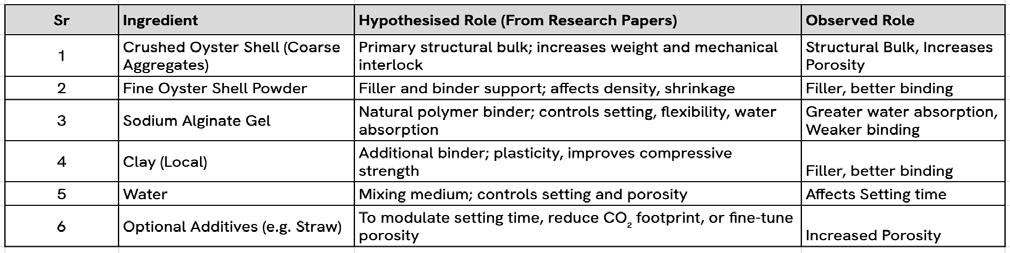
Our workflow begins with bench tests and sandbox experiments, which offer intuitive insights into morphodynamical behaviour and material interaction. These are then translated into digital simulations, such as sediment-transport prediction models that allow for broader control of variables and generative design iteration. We explore various form finding tools as well. In parallel, material experimentation helps uncover the performance limits and ecological behaviours of locally sourced materials like riparian clay, oyster shells, and sand mixtures.
Following an initial phase of research and data collection on the broader context, we developed a set of physical and digital toolkits. These toolkits serve as the foundation for designing with multiple objectives in mind.
2.2 Physical Experimentation
2.2.1 Sandbox
To investigate the morphodynamic behaviour of sediment under wave influence, a scaled-down sandbox test environment was constructed to approximate the physical processes characteristic of dynamic coastal zones such as the Qigu Lagoon. The sandbox tank measures 112.5 cm in length and 30 cm in depth and is lined with a fine grid mesh to enable spatial tracking of sediment displacement. A servo-powered wave-maker is mounted at one end of the tank, comprising an Arduino-controlled flap mechanism that allows programmable control over wave frequency and amplitude, thereby enabling the simulation of varying energy inputs.
This experimental setup draws methodological inspiration from established laboratory flume studies, particularly the work of Tanaka et al., who employed a large-scale wave flume to examine sandbar formation in relation to wave conditions and sediment properties. While their flume spanned over 11.3 meters and incorporated advanced instrumentation such as profilers and wave gauges, the current setup is adapted for small-scale, iterative prototyping and real-time material observation.
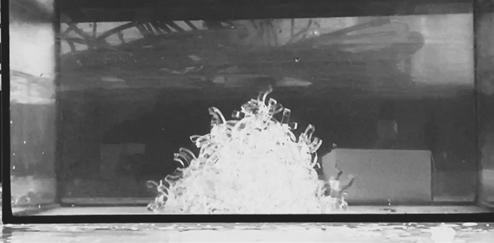
The sandbox is employed to evaluate sediment transport under oscillatory wave action, study crest formation and equilibrium bar morphology over time, and compare the performance of varied obstacle geometries and underwater assembly logics in either facilitating or resisting sediment displacement.
2.2.3. Material Testing
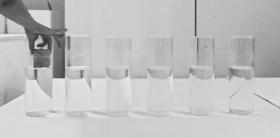
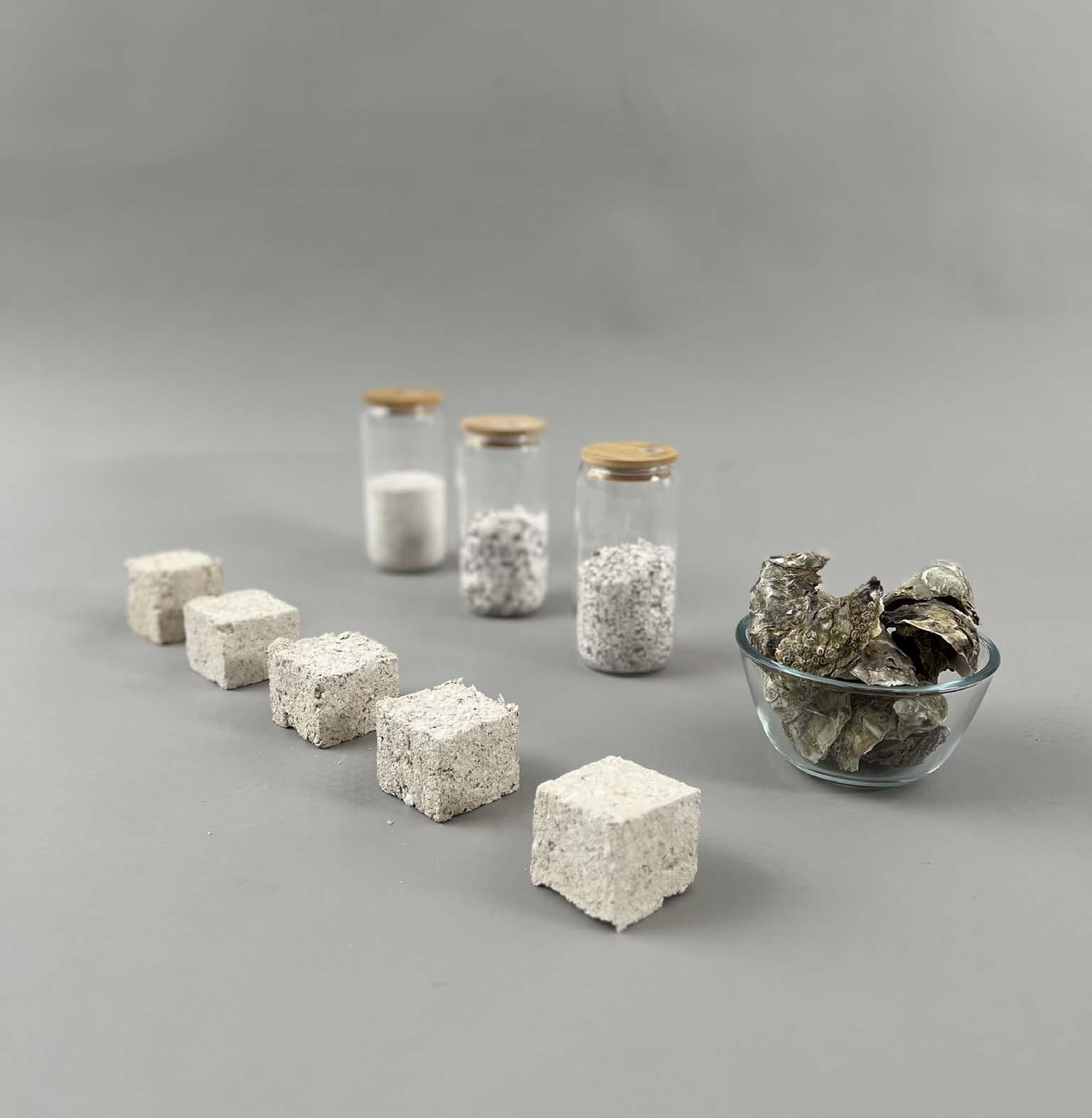
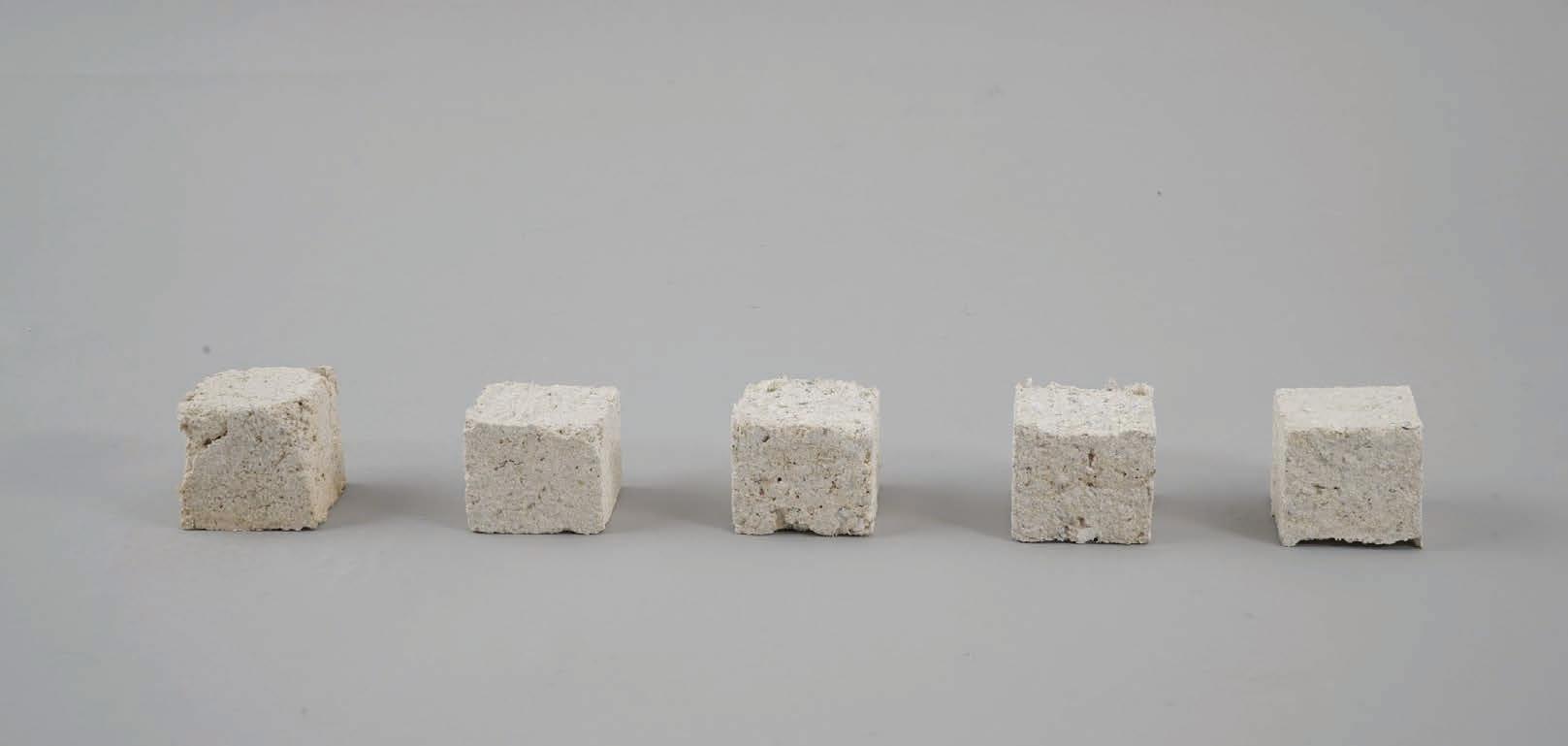
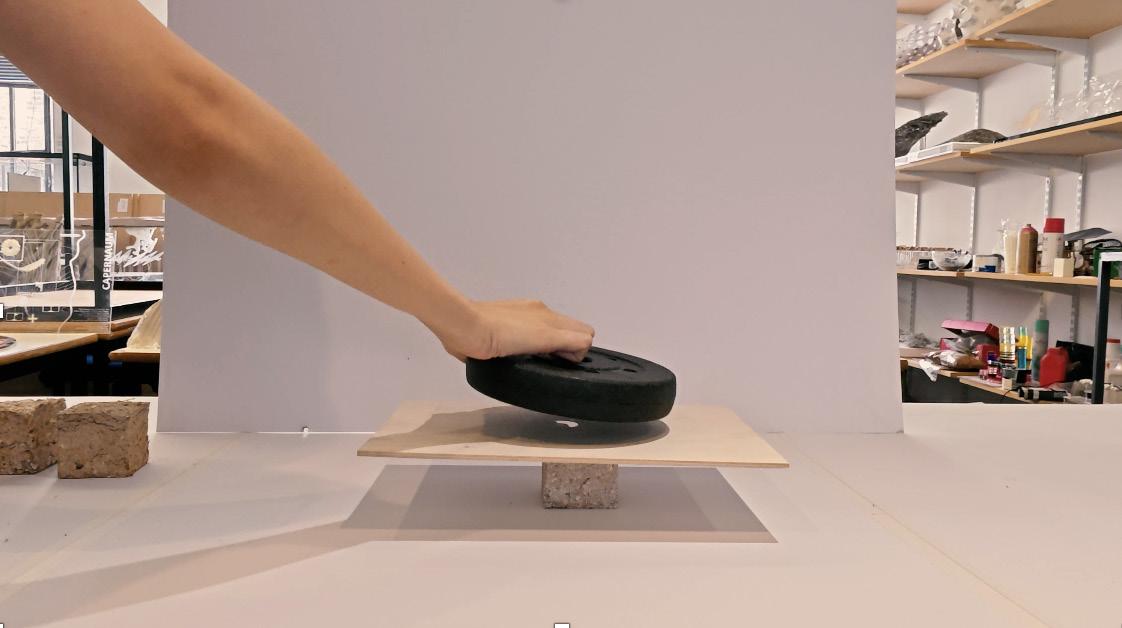
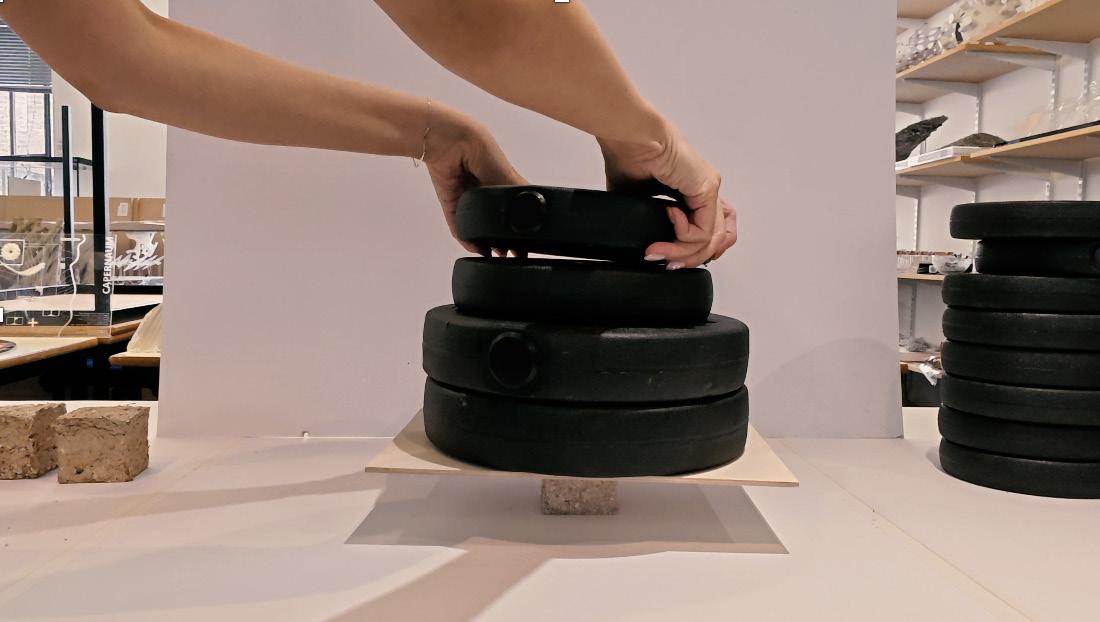
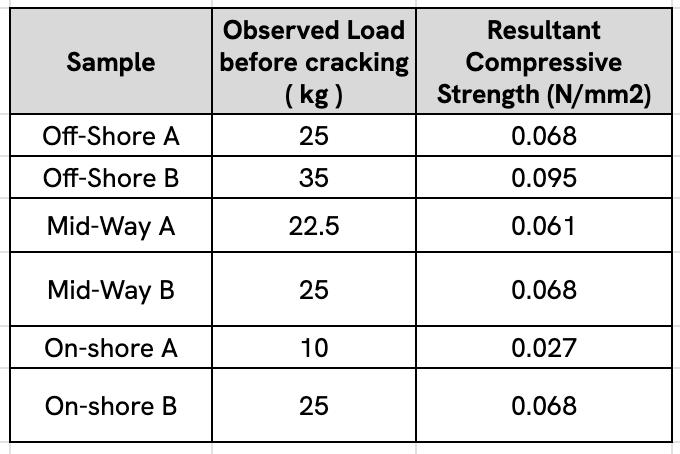
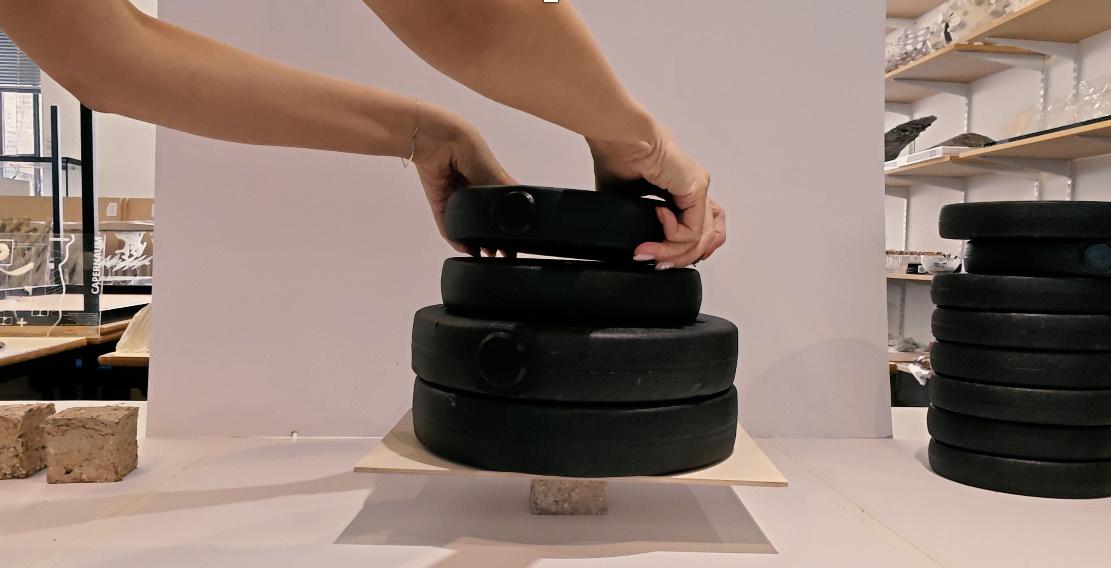
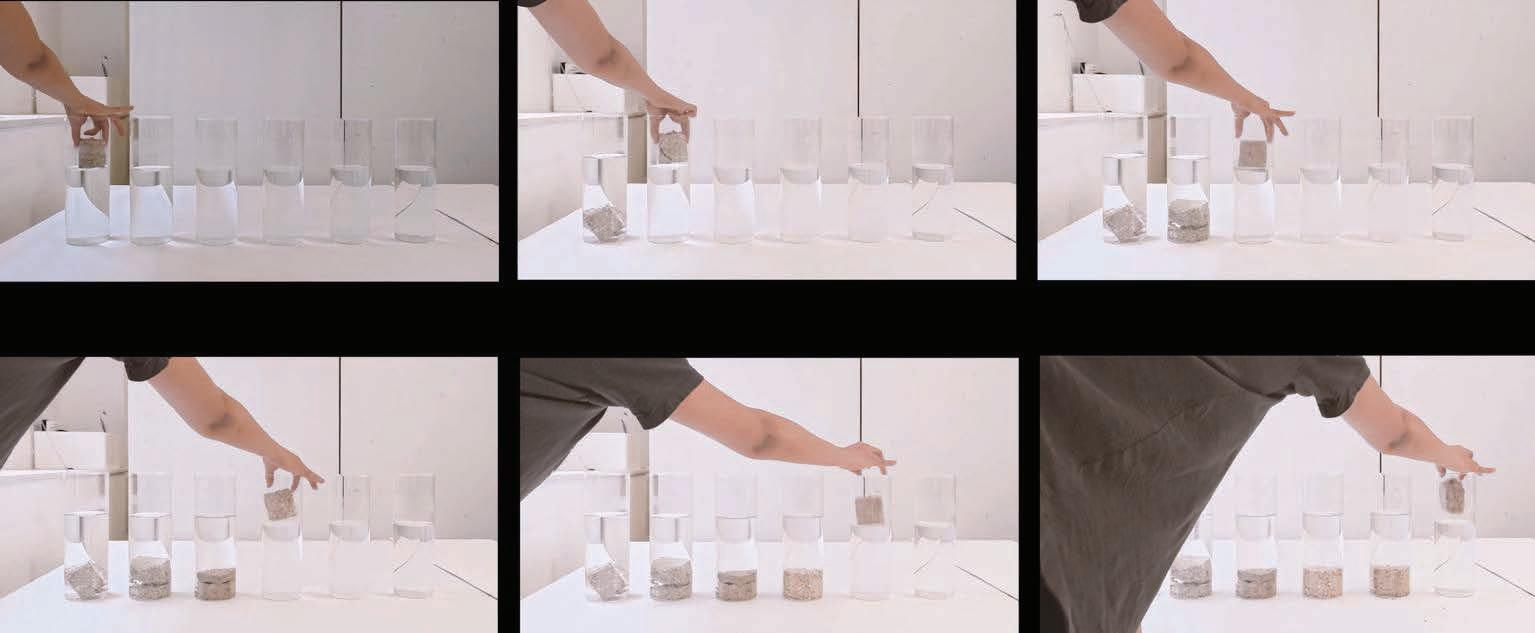
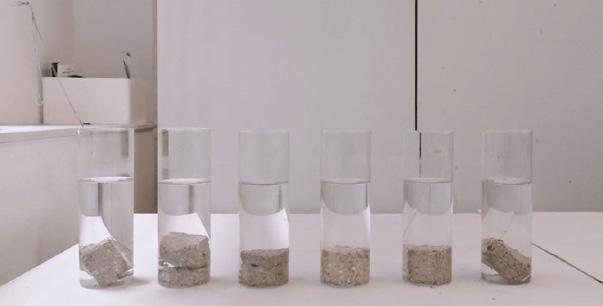
To investigate the mechanical and hydrodynamic behaviour of the targeted material mixes, two complementary test set-ups were employed. For the compressive strength tests, material cubes were placed on a flat platform and subjected to incremental loading using calibrated weights (10 kg, 5 kg, 2.5 kg), allowing controlled measurement of deformation and failure thresholds. This simple stack-loading method provided a repeatable means to evaluate how variations in mix composition influenced structural capacity under pure compression. For the drag tests, cylindrical samples of the material were released into transparent water-filled jars arranged in sequence.
The controlled drop allowed sinking velocity to be observed directly, providing insights into how surface roughness, density, and permeability affected hydrodynamic resistance. The transparent set-up ensured that surface interactions, bubble release, and settling behaviours could be clearly documented and compared across different mix types.
2.2.2 Jamming
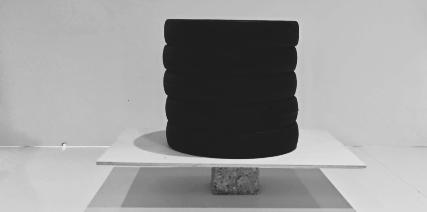
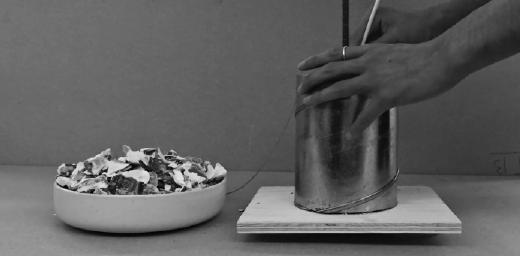
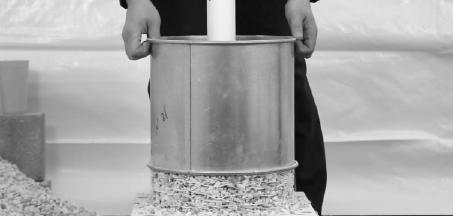
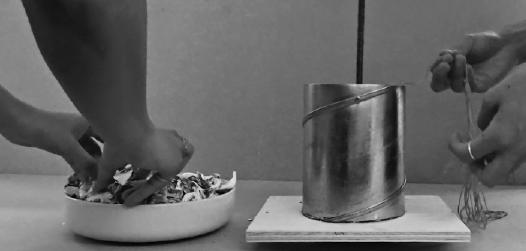
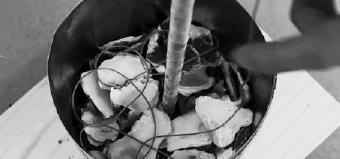
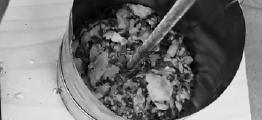
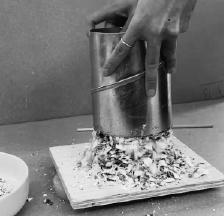
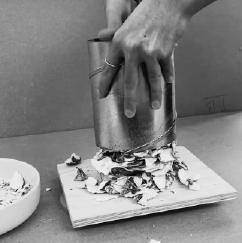
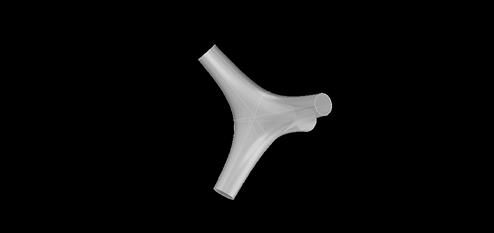
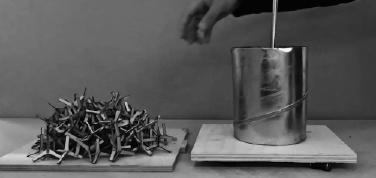
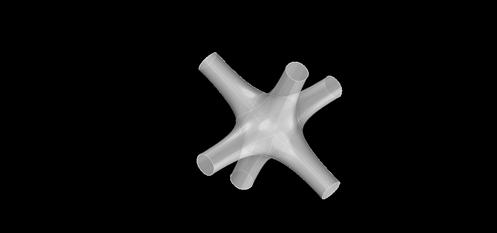
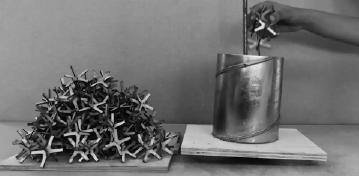
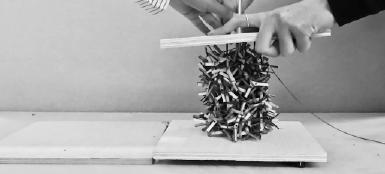
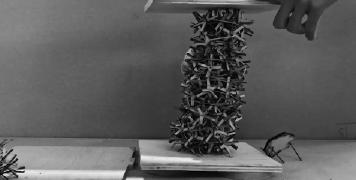
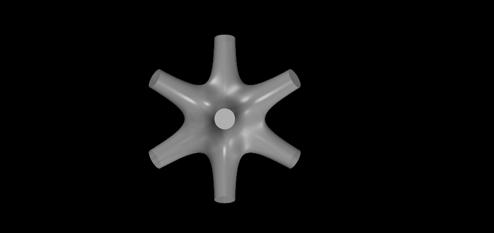
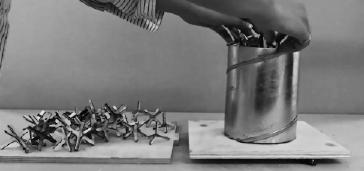
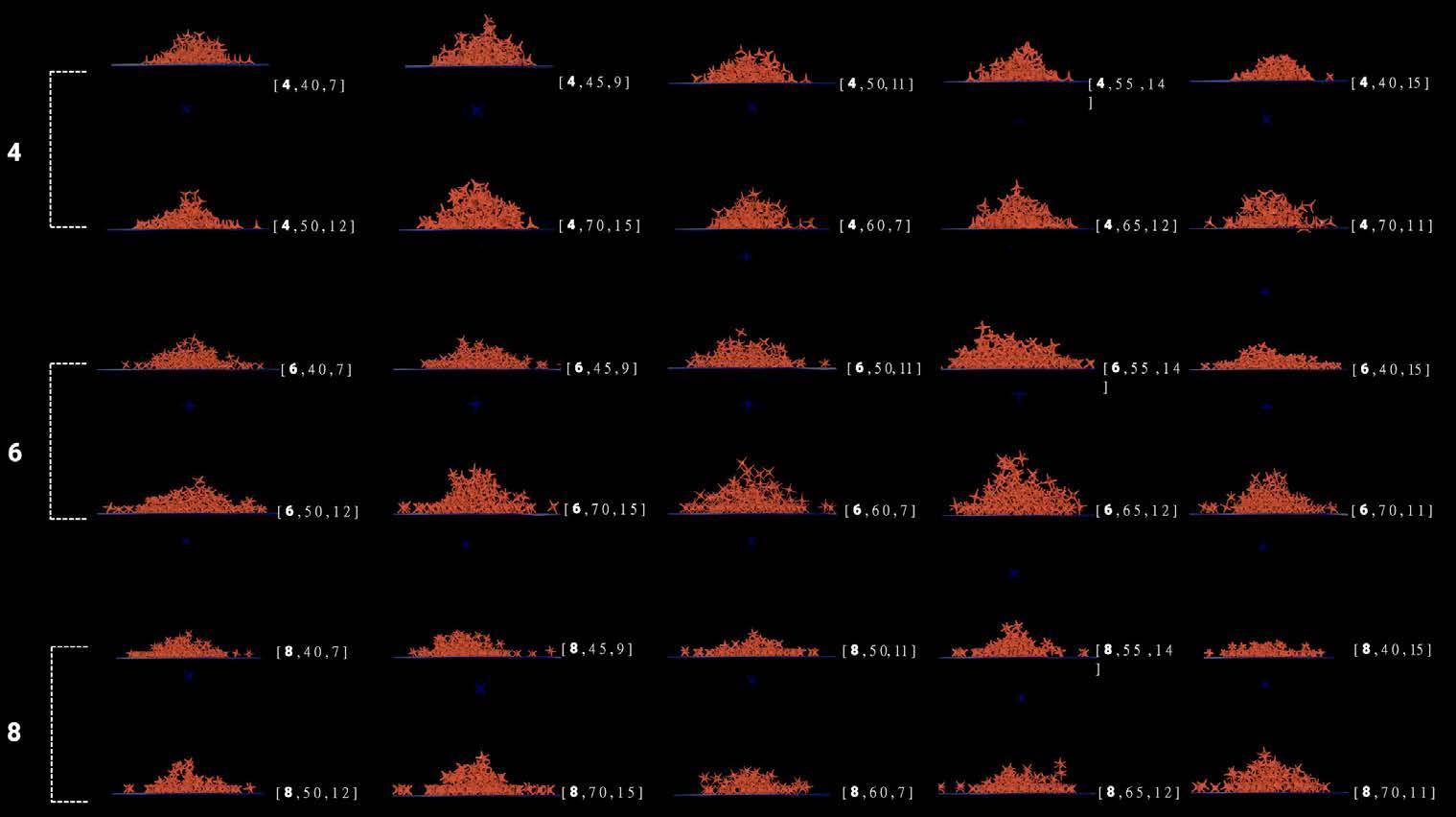
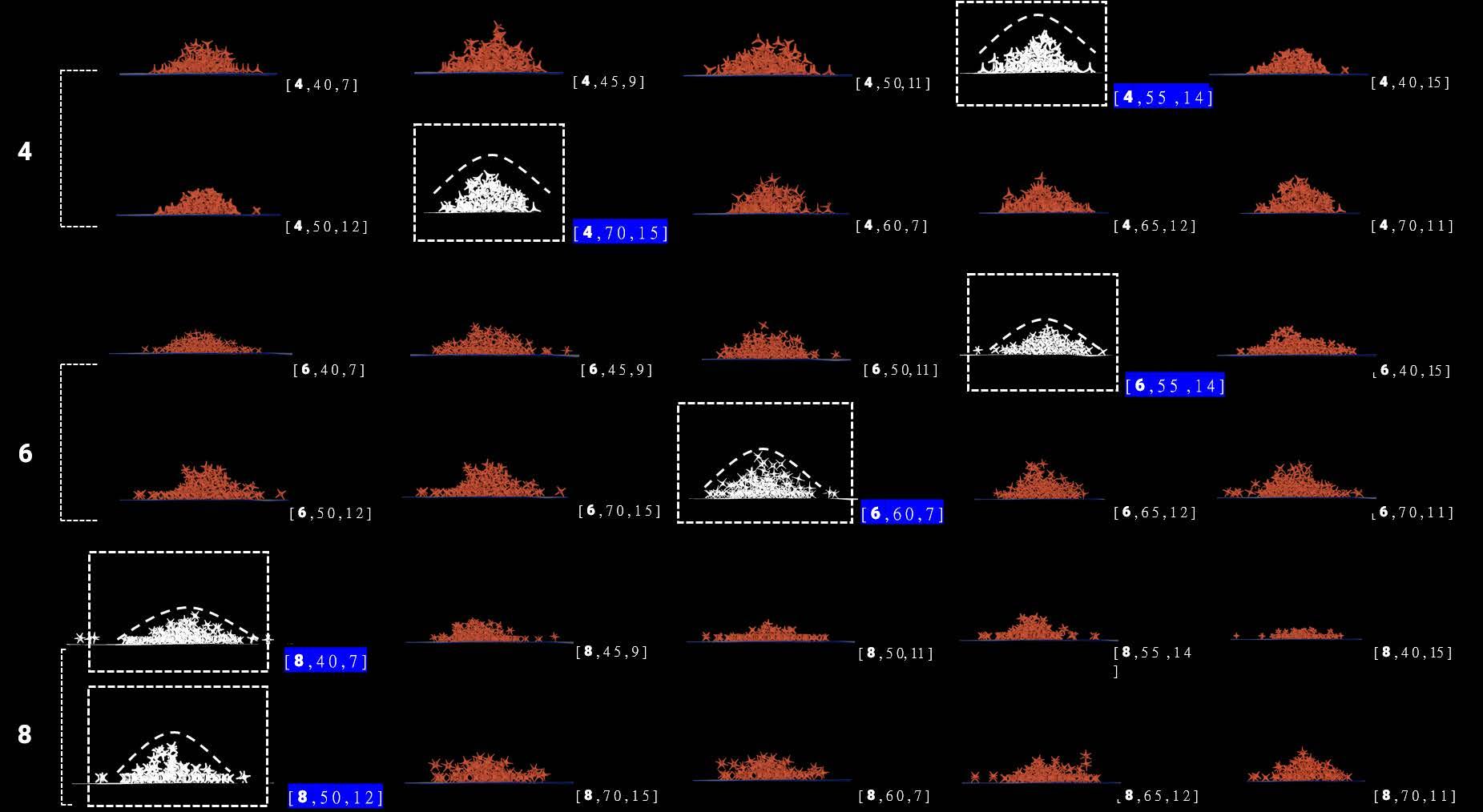
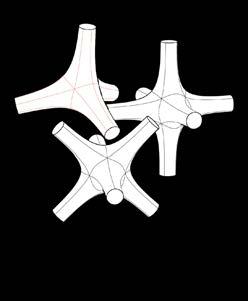
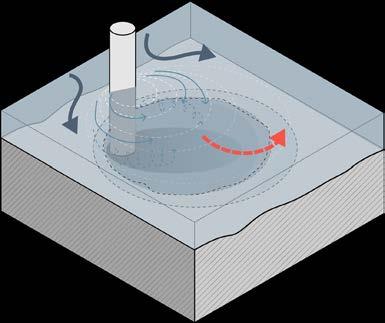
To investigate the principles of jamming, a simple but controlled test apparatus was constructed. A flat wooden base provided the reference surface, onto which a hollow aluminium cylinder was mounted vertically to confine the material. A central metal rod was introduced through the cylinder, functioning as a guide to ensure consistent alignment during loading and compaction. Using this apparatus, different module morphologies (4-leg, 6-leg, 8-leg) and raw oyster shells could be tested under repeatable conditions, allowing comparative insights into their jamming behaviour.
1 Hitoshi Tanaka, Tu Trong Nguyen, and Naohiro Wada, “LABORATORY STUDY of SAND BAR DEVELOPMENT at a RIVER ENTRANCE,” Proceedings of XXXI IAHR Congress, Pp.3778-3787, 2005., January 1, 2005
2 Self-Assembly Lab, MIT, “Modular and Morphable Jamming,” last modified August 10, 2025, https://selfassemblylab.mit.edu/ modular-and-morphable-jamming.
Fig.3. Jamming Test Apparatus
Fig.4. Drag Testing Apparatus
Fig.2. Material Compression Testing Apparatus
2.3 Digital Simulation Toolkit
2.3.1 Sand-Transport Simulation
Sediment transport, deposition, and erosion occur through interactions between waves, topography, and built structures. One of the aims of this project is to predict and evaluate these processes in order to guide the design and management of coastal structures. For this purpose, we developed a simulation model to forecast sediment deposition and erosion. Wave behavior was modeled using Houdini’s FLIP (Fluid Implicit Particle) solver1, which combines particle and volume methods to simulate fluid dynamics.
2.3.4 Structural Simulation
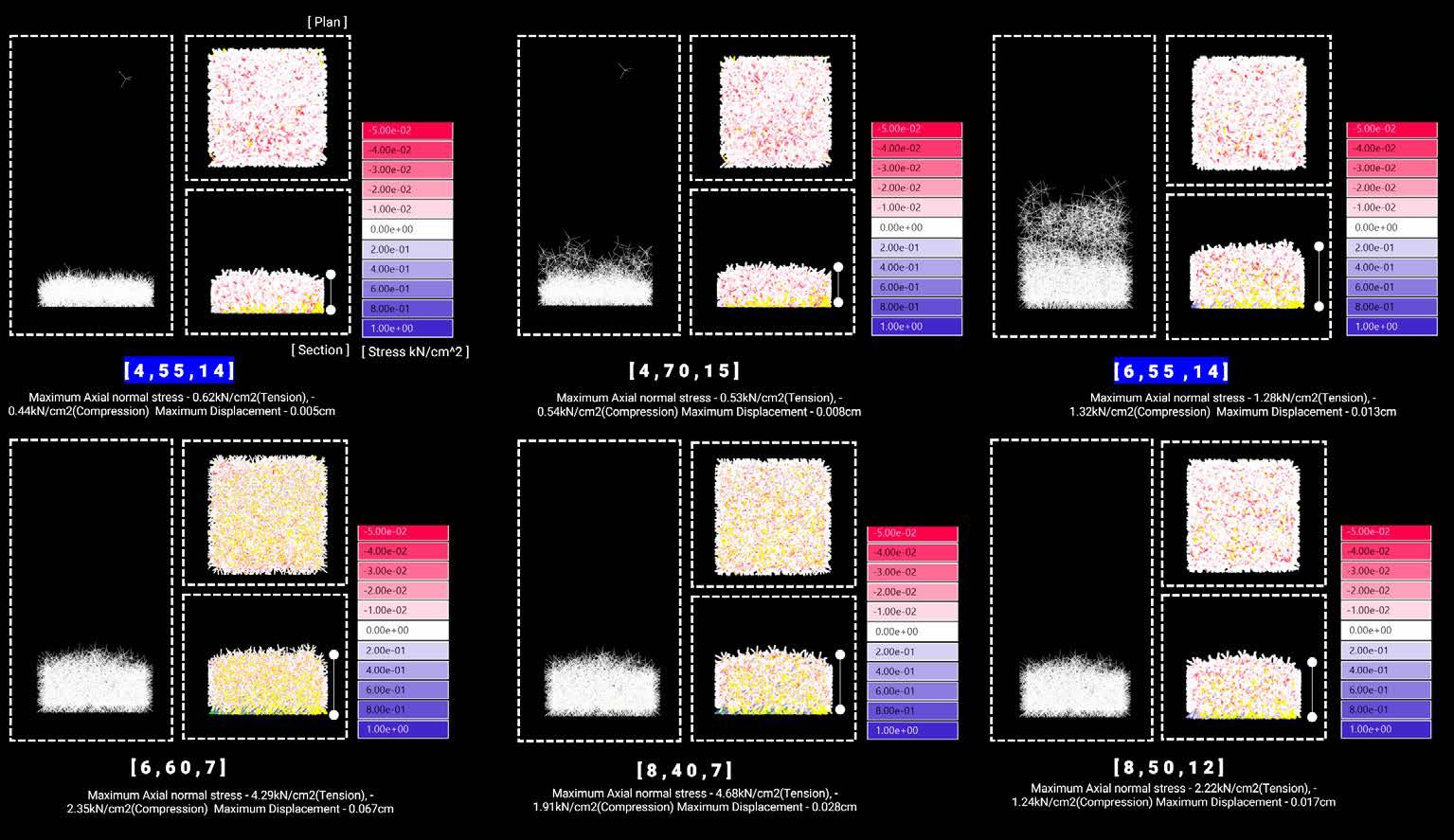
Structural stability also served as a central design criterion, both in determining the geometry of the modules and in shaping the walls of the sandbar residences. These analyses were conducted using the Karamba3D6 plugin in Grasshopper.
2.3.2 Machine Learning Model 01
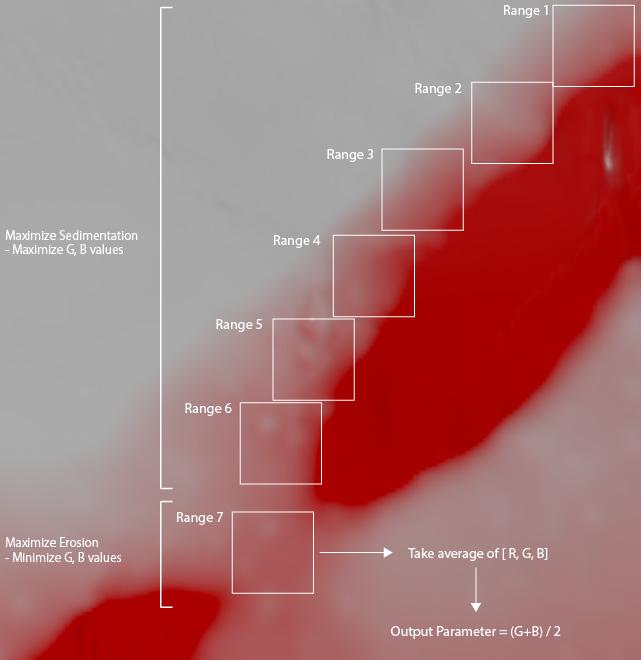
To design an offshore platform that serves as the medium for sediment transport, we established an inverse design workflow supported by machine learning. In this workflow, Python was used for RGB color analysis, the LunchBox ML2 component in Grasshopper3 was employed to construct the machine learning model, and Houdini was applied to simulate sediment transport. The Grasshopper plugin Wallacei4 was further integrated to optimize platform geometry through multi-objective optimization.
2.3.5 Planning Experiments
Architectural planning on the sandbar, including the layout of networks, residential geometries, and pathways, was carried out in Grasshopper. Multi-objective optimization with genetic algorithms was applied through Wallacei to balance performance criteria in the design.
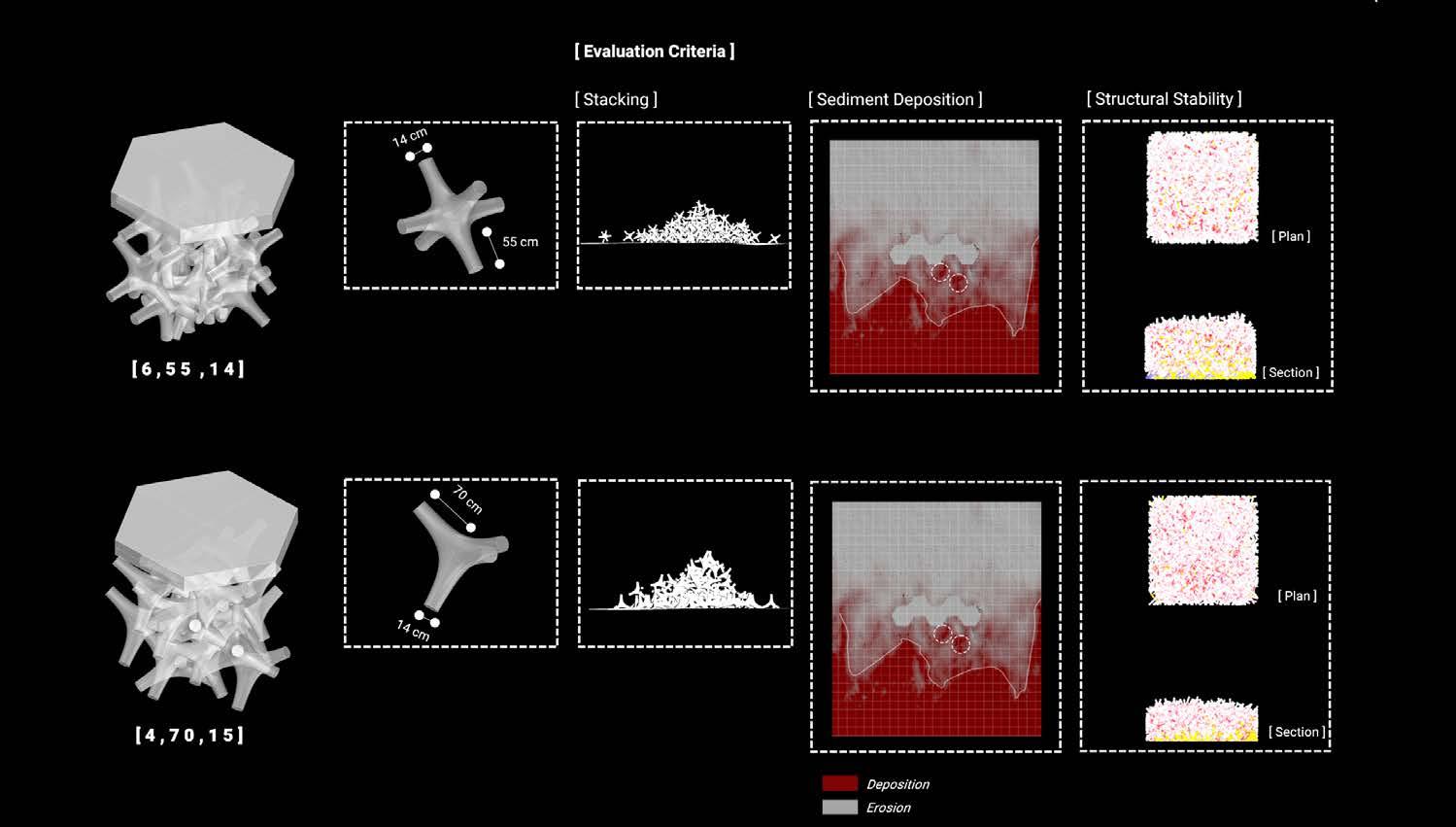
2.3.3 Houdini Stacking Experiment
In developing the platform modules, stackability was considered as a design criterion. Because the design employed jamming structures, stackability was measured by dropping multiple modules vertically onto the ground and evaluating how they accumulated. This experiment was carried out using rigid body simulation in Houdini, while additional structural analysis of the stacked modules was performed with the FlexHopper5 plugin in Grasshopper.
2.3.6 Funicular Shell Structure
In the production area of the sandbar, a shell structure was introduced. The shell was based on a funicular surface designed for pure compression. For form-finding, RhinoVault7 was used to generate forms by thrust network analysis from skeleton line geometries. This process produced both form and force diagrams, which were iteratively adjusted to achieve stable and efficient shell structures.
2.3.7. Computational Fluid Dynamics (CFD)
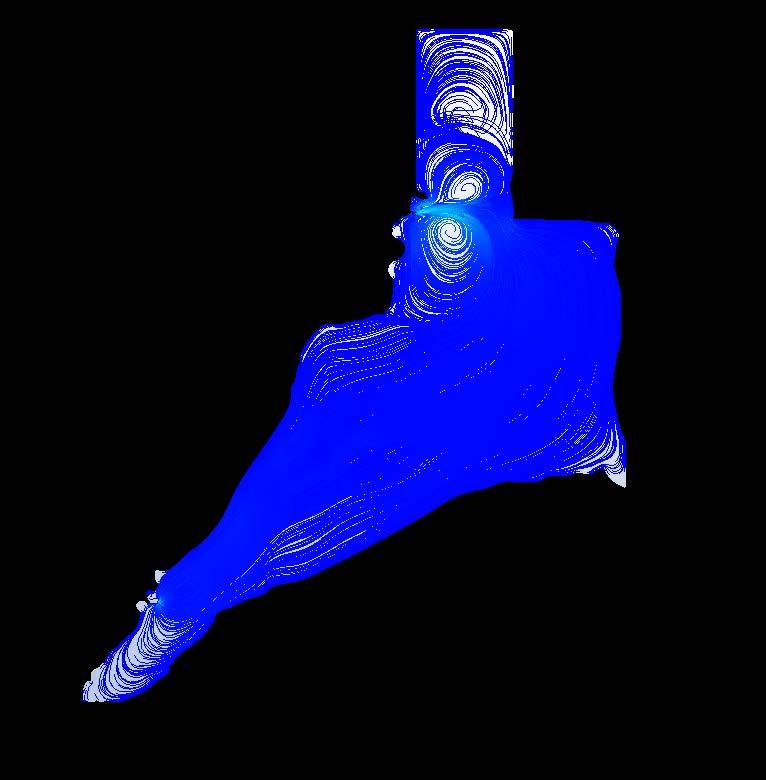
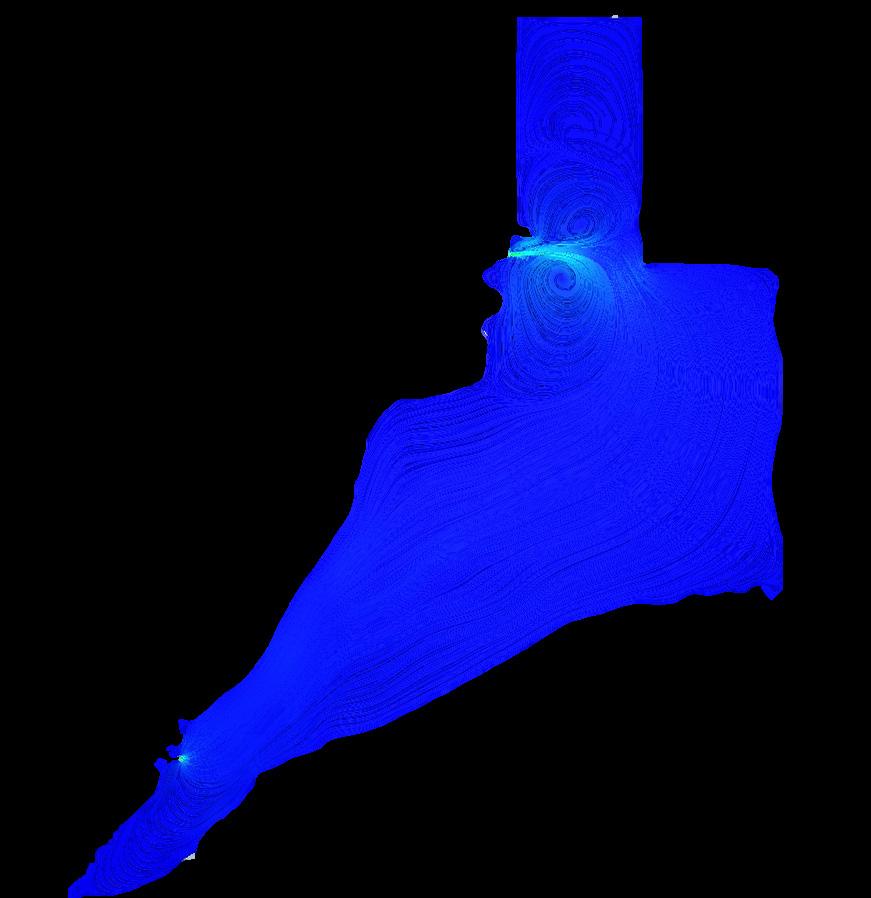
To understand flow of water inside the lagoon and changes in water velocity around the modules Autodesk CFD is used.
This agent-based modelling was used to simulate movement-based clustering under constraints. Agent paths were generated to identify likely routes of movement that minimise distance while avoiding restricted zones and responding to attractor regions.
1 SideFX, Houdini, version 20.5.487 (Toronto: SideFX, 2025), https://www. sidefx.com/
2 Nate Miller and David Stasiuk, LunchBox ML, version 2025.5.5.0 (Proving Ground, May 5, 2025), https://apps.provingground.io/docs/lunchbox-documentation/lunchbox-ml/
3 Robert McNeel & Associates, Grasshopper, included with Rhinoceros 7 (Seattle, WA: Robert McNeel & Associates, 2021), https://www.grasshopper3d.com/
4 Mohammed Makki, Milad Showkatbakhsh, and Yutao Song, Wallacei,
5 Benjamin Felbrich, FlexHopper, version 1.1.2 (Rhino 6/Grasshopper 1.0.0076, 64-bit, November 29, 2019), https://github.com/HeinzBenjamin/ FlexCLI
6 Christian Willemse and Martin Liebenberg, Karamba3D, version 3.1.50730 (Vienna: Karamba3D, July 30, 2025), https://www.karamba3d.com/
7 Tom Van Mele and Juney Lee, COMPAS RhinoVAULT: Funicular Form Finding for Rhinoceros (2024), https://github.com/BlockResearchGroup/ compas-RV
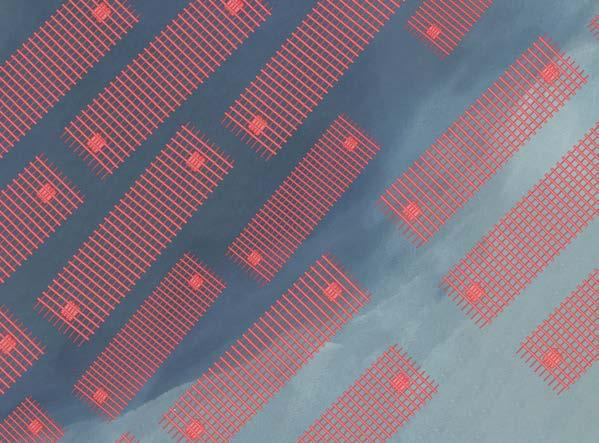
Scalar fields derived from lagoon depth and circulation data were used to guide the aggregation and placement of modular elements using the WASP⁸ plugin. This approach allowed module density and orientation to respond directly to bathymetric variation
2.3.8. Diffusion Limited Aggregation (DLA)
2.3.9. Scalar Field-Driven Aggregation
2.3.10. Machine Learning Model 02
This model was developed to evaluate the performance of modular configurations in relation to water velocity values from CFD. An artificial neural network was trained using the LunchBox plugin to predict changes in water velocity based on module geometry and orientation. The trained model was then integrated as an objective within a multi-objective optimisation workflow,
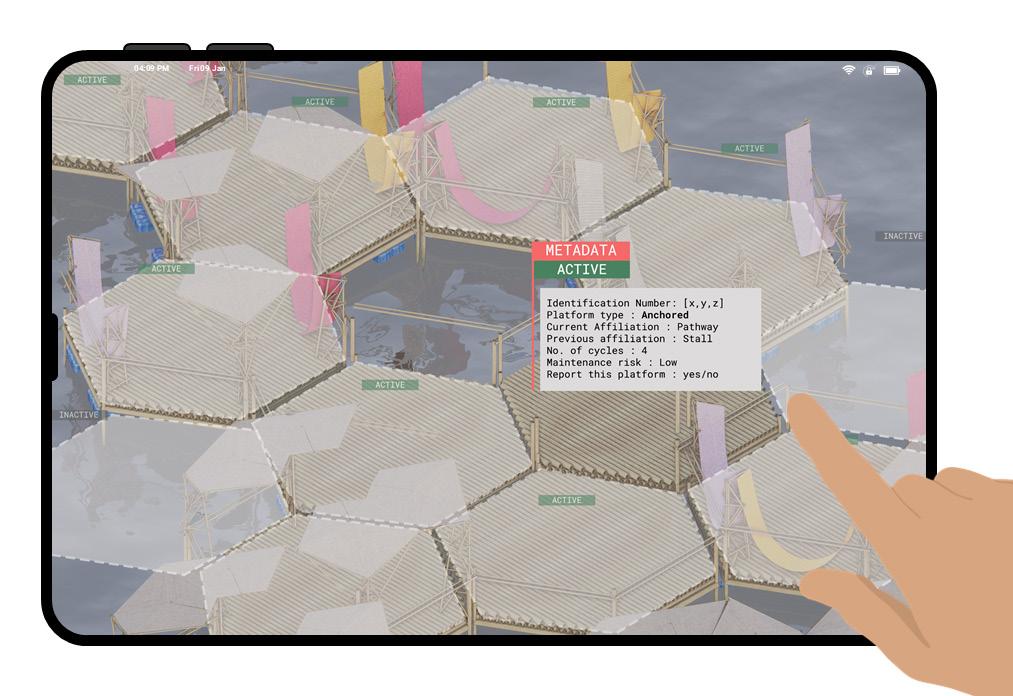
Custom C# components are developed in Grasshopper to manage zoning, program distribution, and seasonal use patterns. Metadata inputs—including depth, accessibility, proximity, and environmental constraints—were used to regulate where and when specific activities could occur.
2.3.12 3D Graphic Stasis
This method was used as a form-finding and verification tool for compression-based structures. Grasshopper plugins for 3D graphic statics and PolyFrame-2⁹ were employed to evaluate force flow and structural equilibrium
8 “Wasp by Andrea Rossi,” accessed December 16, 2025, https://www. food4rhino.com/en/app/wasp
9 Dr. Masoud Akbarzadeh et al., “Polyframe-2,” Polyhedral Structures Laboratory , accessed December 17, 2025, https://www.food4rhino.com/en/ app/polyframe-2.
2.3.11. Space Activation with Metadata
2.4 Assembly Logics and Fabrication
2.4.1. Underwater Jamming
To investigate how modular geometries behave under submerged conditions, an underwater box apparatus was constructed. The transparent tank provided a controlled environment where visibility of aggregation and settlement could be carefully observed and documented. Acrylic modules, each composed of two U-shaped elements joined orthogonally, were selected for their lightweight, rigid properties and clarity, enabling both direct observation and repeatable testing. These modules were randomly released into the tank, allowing them to settle naturally and demonstrate emergent behaviours of aggregation without external manipulation. A transparent underwater box was essential to isolate and observe phenomena that are otherwise obscured in situ: buoyancy-driven alignment, accidental interlocking, and mound-like formations resulting from repeated collisions.
2.4.2. Reusable Formwork
To explore fabrication strategies for modular casting, polypropylene sheets were selected as a testing material due to their flexibility, durability, and resistance to moisture. The sheets were cut with serrated edges that allowed them to interlock, forming a stable mould without the need for adhesives or fasteners. This approach enabled repeated assembly and disassembly, positioning the formwork as a reusable system rather than a single-use waste product.
2.4.3 3D Printing Formwork
To investigate the feasibility of assembling interlocking shells, a scaled apparatus was developed using 3D-printed formwork as a temporary scaffold. The formwork provided the necessary curvature and support for arranging modules into a funicular geometry, allowing their interlocking behaviour to be observed under compression. This set-up allowed us to rapidly test the principle of topological interlocking under compression.
Fig. 7. 3D Printed Formwork
Fig. 6. Polypropelene Formwork
Fig. 5. Underwater Jamming Apparatus
Key agents influencing material design include longterm water exposure, erosion from tides and ecological interaction through biological colonisation.
Parameters such as buoyancy and density will be fine-tuned through a porosity-weight logic to optimise both structural behaviour and ecological performance.
Early-stage prototyping will test erosion resistance and stability within a wave simulation sandbox. These tests, combined with morphological adaptations, will help determine the ideal composite for each location within the system. Failure analysis will further inform thresholds for mechanical endurance, ensuring the units can withstand water impact and environmental loading.
2.5 Material Experimentation Tests
Listed below are bench tests that can guide the testing of samples after mixing to achieve the desired performance.
For Mechanical Strength
Units deployed in offshore conditions must exhibit sufficient load-bearing capacity. Mechanical testing will follow ISO 1920-4,1 using cube specimens, and will be subjected to uniaxial compression2 until failure. These tests define critical thresholds for structural performance.
For Density and Porosity
Bench-scale porosity and absorption testing will follow a simplified version of ASTM C642.3 Samples will be dehumidified, weighed (dry weight), and then fully immersed in water for 24 hours. Saturated and submerged weights will be taken to calculate absorption, apparent porosity and density using standard equations.
For Bio Receptivity
Material samples (7 cm × 7 cm × 7 cm) will be submerged in an aerated water tank for 30 to 60 days under controlled temperature conditions, simulating marine environments. Biomass accumulation can be approximated by gentle scraping and weighing of dried organic matter.
For Time-Based Degradation
Material degradation will be monitored by submerging samples in a sand box filled with water and measuring dry-weight loss weekly. After drying the samples at a constant temperature (75°C), the weight loss will be recorded using a precision scale.
CHAPTER 2 Bibliography
Felbrich, Benjamin. FlexHopper, version 1.1.2 (Rhino 6/Grasshopper 1.0.0076, 64-bit, November 29, 2019). https://github.com/HeinzBenjamin/FlexCLI
Grasshopper. Robert McNeel & Associates. Included with Rhinoceros 7. Seattle, WA: Robert McNeel & Associates, 2021. https://www.grasshopper3d.com/
International Organization for Standardization (ISO). “ISO 1920-4:2020.” Accessed July 18, 2025. https://www.iso.org/standard/72260.html
Karamba3D. Christian Willemse and Martin Liebenberg. Version 3.1.50730. Vienna: Karamba3D, July 30, 2025. https://www.karamba3d.com/
LunchBox ML. Nate Miller and David Stasiuk. Version 2025.5.5.0. Proving Ground, May 5, 2025. https://apps.provingground.io/docs/lunchbox-documentation/lunchbox-ml/
Makki, Mohammed, Milad Showkatbakhsh, and Yutao Song. Wallacei, version 2.7. Wallacei, 2022. https://www.wallacei.com/
Orsholits, A. et al. “Guided Irregular Cement Geometry Stacking Using Real-time Optimization and Motion Tracking.” Proceedings of the IASS Annual Symposium 2023.
SideFX. Houdini, version 20.5.487. Toronto: SideFX, 2025. https://www.sidefx.com/
“Standard Test Method for Density, Absorption, and Voids in Hardened Concrete.” Accessed July 18, 2025. https://store.astm.org/c0642-21.html
Van Mele, Tom, and Juney Lee. COMPAS RhinoVAULT: Funicular Form Finding for Rhinoceros. 2024. https://github.com/ BlockResearchGroup/compas-RV
Research Development
This chapter advances the research into a set of spatial, material, and computational investigations that actively test how the lagoon can be reconfigured through design intervention. The work is organised into two research phases operating at distinct but interconnected scales. Phase A explores sandbar formation through land-growing logics, oyster-shell material systems, and interlocking settlement networks. Phase B shifts focus to the lagoon interior, examining bathymetric behaviour, sediment movement, and erosion processes as spatial drivers.
Fig.1. The Floating Rack Oyster Farming technique.
3.1 Coastal Landscape Dynamics
To ground the research in the physical realities of Qigu Lagoon, a series of land-use, sediment, and morphodynamic maps were redrawn to reveal relationships not legible through conventional planning documents. The land-use mapping highlights a fragmented spatial structure, where dense inland settlements coexist with dispersed aquaculture infrastructure and seasonal waterways. This separation reflects a broader disjunction between habitation, production, and the lagoon’s shifting morphology.¹
Sediment deposition–erosion maps over multi-year and event-based timelines reveal that lagoon transformation is driven less by gradual change than by episodic redistribution. Long-term data shows progressive sediment accumulation within the lagoon interior, while erosion is concentrated along tidal inlets and the ocean-facing barrier, indicating an imbalance between sediment inflow and flushing capacity.² These patterns confirm that lagoon shallowing and sandbar migration are not isolated phenomena, but part of a coupled sediment–water system shaped by wave energy, tidal exchange, and human intervention.
Seasonal and post-typhoon elevation comparisons further demonstrate that the sandbar and beachface operate as highly mobile systems. Summer conditions promote sediment accretion and barrier widening, while winter storms and typhoon events rapidly erode the seaward edge and redeposit material landward as washover fans and sheets.³
2. Spatial Analysis of Existing Land-Use Conditions. (Illustrated by authors)
Fig.
Fig. 3. 5-Year Deposition Erosion Heat Map. (Illustrated by Authors based on sources)
Fig. 4. Government Intervention Survey Summer. (Illustrated by Authors based on sources)
Fig. 5. Government Intervention Survey Winter. (Illustrated by Authors based on sources)
1 Phuah, Tony Leong-Keat, and Yang-Chi Chang. Socioeconomic Adaptation to Geomorphological Change: An Empirical Study in Cigu Lagoon, Southwestern Coast of Taiwan. Frontiers in Environmental Science 10 (2023).
2 Hsiao, Li-Lun. A Study on the Geomorphic Change of the Sand Spits in Qigu, Tainan. Master’s Thesis, National Kaohsiung Normal University, 2012.
3 Hung, Ching-Yuan. Recent Geomorphic Changes of the Sand Spits in Wangziliao, Tainan. Master’s Thesis, National Taiwan Normal University, 2009.
Government detailed Intervention 2005-2010. (Illustrated by Authors based on sources)
Fig. 6. Post-Typhoon Sediment Redistribution.
Fig. 7.
3.1.1 Site Selection : Phase A
8. Site analysis and defined usable areas on the sandbar.
Fig.
Fig. 7. Site closer to the southern opening chosen as first area of intervention.
Insights from the combined mapping exercises were used to identify zones where sediment behaviour, water circulation, and human use intersect most intensely. Overlaying bathymetric change, tidal exposure, wave direction, government interventions, and aquaculture density revealed that only limited areas of the lagoon remain deep enough to support productive oyster farming, forcing increasing spatial congestion.¹
The southern stretch of the Wangziliao sandbar, near the lagoon inlet, emerged as a critical zone due to its exposure to strong tidal exchange and wave-driven sediment transport. Studies indicate that such highenergy interfaces exhibit greater sediment turnover and land-forming potential compared to stagnant lagoon interiors.² Rather than selecting a site based on stability, the research deliberately focuses on a zone of active transformation.
1 Phuah, Tony Leong-Keat, and Yang-Chi Chang. Socioeconomic Adaptation to Geomorphological Change: An Empirical Study in Cigu Lagoon, Southwestern Coast of Taiwan. Frontiers in Environmental Science 10 (2023).
2 Hsiao, Li-Lun. A Study on the Geomorphic Change of the Sand Spits in Qigu, Tainan. Master’s Thesis, National Kaohsiung Normal University, 2012.
3.2 Research Phase A
The first research phase operates along the sandbar edge and is structured around three interrelated research verticals. It begins by examining landgrowing strategies as a means of stabilising and expanding the eroding sand barrier through sediment deposition. Building on this, the second vertical investigates the use of discarded oyster shells as a primary construction material, exploring their transformation into modular systems through targeted material mixes and fabrication logics.
The third vertical addresses spatial occupation, proposing a phased settlement framework capable of supporting up to 500 fishermen. Across these verticals, a progressive structural logic is developed, evolving from jamming systems offshore to topological interlocking assemblies onshore.
Fig. 8. Offshore, Nearshore and Onshore Interventions.
A. Oyster Shell Jamming
Using rock-jamming experiments by the MIT SelfAssembly Lab1 as a baseline, crushed oyster shells were tested within a similar confinement-and-release setup to evaluate their potential as underwater jamming obstacles. The shells failed to form stable aggregates due to irregular size distribution, curved fragments, and brittle behaviour, indicating that effective interlocking would require designed geometries rather than raw granular material.
1 Self-Assembly Lab, MIT, “Modular and Morphable Jamming,” last modified August 10, 2025, https://selfassemblylab.mit.edu/ modular-and-morphable-jamming.
9. Oyster Shell Jamming Experiment.
Upon removing the mould, no stable
was
Baseline test showing the rock jamming protocol developed at the Self-Assembly Lab, MIT.
Replication of the jamming protocol with crushed oyster shells in place of rocks.
Rope inserted within rock layers to demonstrate enhanced confinement during jamming.
Rocks deposited in successive layers inside the mould to achieve interlocking.
Cylinder removed to reveal a stable self-supporting jammed rock assembly.
Rope layered between oyster shells in an attempt to replicate directional confinement.
Continued filling of the cylinder with oyster shells.
Fig.
jamming
achieved; shells collapsed.
B. Spicules Physical Test
To explore geometries better suited for controlled jamming, modular spicule-inspired units were developed in four-, six-, and eight-leg configurations and tested through layered stacking within a cylindrical container. The experiments showed that leg number directly influenced stability and stack height.
With six-leg modules achieving the most stable vertical aggregation, confirming morphology and surface contact as critical parameters for effective jamming.
Fig.11. 6 Leg Spicule.
Fig. 10. 4 Leg Spicule.
Fig. 14. Layers of four leg spicules placed in cylinder.
Fig. 15. Initial filling of six leg spicules placed in cylinder. Fig. 16. Compaction done after every layer of eight leg spicule.
Fig. 17. Short stack height achieved for four leg spicule. Fig. 18. Tallest stack height achieved for six leg spicule. Fig. 19. Medium stack height achieved for eight leg spicule.
Fig.13. 8 Leg Spicule.
To further examine stacking behaviour beyond physical tests, we conducted controlled simulations in Houdini. For each run, 30 modules were released into a virtual environment, covering three geometrical families – 4-leg, 6-leg, and 8-leg spicules. Within each family, leg length and leg thickness were systematically varied to evaluate how these parameters influenced aggregation and vertical stability.
The simulation allowed us to observe how modules behaved after free-fall, capturing differences in mound formation, stacking height, and alignment under otherwise identical conditions. These tests demonstrated that stability was not only a function of the number of legs but also of their relative proportions, with certain configurations showing clear tendencies for vertical stacking while others dispersed into flatter mounds.
Fig. 20. [ Number of Legs, Leg Length, Leg Thickness ] (all in cms) 30 modules simulated for stacking behaviour in Houdini.
D. Stackability - Aspect Ratio
Here, the focus of the study was on aspect ratio as a way of evaluating stacking stability across different spicule geometries. Aspect ratio in this context is defined as the relationship between the height of the resulting stack and its base width. A higher aspect ratio indicates taller, narrower stacks, which can be structurally unstable, while a lower aspect ratio corresponds to shorter, wider stacks with stronger contact distribution.
The results clearly showed that 4-leg spicules tended to spread wider with limited vertical rise, creating low aspect ratios, while 8-leg spicules produced sharper, taller stacks with potential instability under flow. The 6-leg spicules balanced between the two extremes, demonstrating both vertical coherence and lateral spread.
Based on these evaluations, we shortlisted six geometries in total—two from each family (4-, 6-, and 8-leg)—representing the most stable performers in terms of aspect ratio. This selection provided a focused set of modules for further testing.
Fig. 21. [ Number of Legs, Leg Length, Leg Thickness ] (all in cms) Six modules perform well in aspect ratio.
Here, the focus was on testing how different obstacle packing densities influenced sediment deposition and erosion under water flow. Using our sediment deposition and prediction model, three densities of spicule assemblies were placed as underwater barriers, and the sediment transport model was run to visualize deposition (red) and erosion (grey).
The results clearly showed that too loose an arrangement allowed sediments to wash through, while overly dense packing created strong turbulence and uneven deposition. The medium-density configuration, however, encouraged the most uniform sand deposition behind the obstacle, suggesting that this balance of porosity and obstruction is optimal for sediment capture in underwater conditions.
Fig. 22. Short, medium and fully stacked density modules tested to understand how packing affects sediment capture.
The results revealed that module morphology directly influences how flow is disrupted and where sediment accumulates. Among the tested geometries, the 6-leg spicule with dimensions [6 Leg, 55cm, 14cm] produced the highest deposition footprint, indicating that its form and branching provided optimal conditions for capturing and stabilizing sediments. F. Morphology
23. [ Number of Legs, Leg Length, Leg Thickness ] (all in cms) From the six shortlisted modules, simulations are run at medium density packing to compare sediment capture.
This evaluation focused on comparing the morphological performance of the shortlisted spicule modules under simulated sediment transport conditions. Six geometries, derived from the earlier stackability and aspect ratio tests, were arranged at medium density to act as underwater obstacles. Each setup was evaluated for its capacity to induce sediment deposition (red) and resist erosion (grey).
Fig.
Structural simulation is conducted to evaluate the load-bearing behavior of the shortlisted spicule modules under compressive stress. Using a rigidbody physics solver, each geometry was assembled into a packed obstacle and tested under axial loading conditions, with connections constrained to transmit only compressive forces in the z-direction.
The results show a clear distinction between the geometries: while all modules were able to distribute load to some extent, the two highlighted in blue ([4, 55, 14] and [6, 55, 14]) exhibited the most efficient performance. Both showed relatively low displacement values. For underwater deployment, structural robustness is as important as sediment capture, only modules that can withstand compressive forces while retaining form are viable.
Fig. 24. Structural performance for all six chosen modules is tested using rigid body simulation.
This final evaluation stage synthesizes the outcomes of all three behavioral tests: stackability, sediment deposition, and structural stability, into a comparative framework. By running parallel assessments, we were able to identify which geometries consistently performed well across different criteria.
From this process, two modules emerged as the most effective: a 6-leg geometry (55 cm length, 14 cm thickness) and a 4-leg geometry (70 cm length, 15 cm thickness). Both showed reliable stacking profiles, efficient sediment deposition patterns, and strong structural resistance under compressive loads. Importantly, this stage also revealed that material density will also be the decisive factor, as it influences both deposition efficiency and load-bearing capacity
Fig. 25. [ Number of Legs, Leg Length, Leg Thickness ] (all in cms) Final selected modules for underwater obstacle jamming based on all the three evaluation criteria.
I. Controlled Sediment-Transport Algorithm Prediction Mode
Sediment transport on the seabed can generally be classified into two categories: bed load, where sand moves by rolling or sliding along the sea floor, and suspended load, where sand particles are carried in suspension within the water column. In this section, we describe the physical principles and mathematical models used to compute each of these processes.
The bed load transport is calculated based on the following equation:
The suspended load is governed by the advection–diffusion equation, expressed as(FLOW-3D HYDRO, 2021)¹:
In order to implement these equations into the simulation model, the constants D and E in the bed load equation were redefined based on empirical relationships. Additionally, the Stokes equation was used to convert these parameters into values corresponding to actual physical conditions as below.
Erosion rate is calculated based on the following equation:
b - Bottom shear stress, cr - Critical shear stress
Using these formulations, we constructed a simulation model in Houdini. Wave dynamics were simulated using the FLIP (Fluid-Implicit Particle) solver, while the sand on the seabed was represented as a point cloud distributed across a grid. An important note regarding the relationship between the resolution of the sand representation and the physical model is as follows: to determine the local bed load transport, the velocity vector of the nearest wave particle to each grid point is extracted.
Fig. 26. Suspended Load and Bed Load.
C = suspended load, E - Erosion rate
And Stokes equation is used based on the following equation:
s - sediment density = 2650 kg/m3
w - water density = 1025kg/m3
g - gravity = 9.81m/s2,
d - sediment diameter = 0.2mm,
μ - viscosity = 10e-3Pa S
For the partial differential equations involved in the bed load model, we applied the finite difference method, where the spatial step x is defined as the distance between the two nearest points on the grid. As a result, the resolution of the grid directly affects the magnitude of simulated erosion and deposition, introducing a resolution-dependent error. This presents a trade-off between simulation accuracy and simulation time. In our implementation, the simulation was performed at a resolution of 635,209 pixels, with x=0.056.
For the suspended load model, the initial concentration field C was generated by applying random values to the elevation data, followed by normalisation and rescaling to approximate a Gaussian distribution. This allowed for a more realistic and spatially heterogeneous initial condition for suspended sediment concentration.
1 FLOW-3D HYDRO. “Sediment Transport Webinar.” FLOW-3D. YouTube video,. Published August 8, 2021. https://www.youtube.com/ watch?v=QW5sFzprrus.
J. Macro / Micro Experiments
Simulating sand transport and deposition caused by wave action requires a wide range of input parameters. This section describes the specific conditions set for the simulation model, as well as the initial experimental results. The simulation model was divided into two categories. The first is the macro-scale simulation, which covers a wide area ranging from the offshore region to the formation of sandbars within the study site. The main purpose of this simulation is to evaluate the placement of largescale structures and their resulting effects.
The second is the micro-scale simulation, which focuses on the shapes of individual obstacles and their local influence on sediment behavior. To reduce computational complexity, both simulations were carried out within the physical dimensions of a virtual water tank. However, because the macro-scale simulation required a different spatial scale, parameters such as wave characteristics and gravitational acceleration were adjusted accordingly. For the micro-scale simulation, the input topography was based on cross-sectional profiles taken from a
Fig. 27. Macro Simulation model.
The wave parameters were mainly generated using Houdini’s Ocean Wave component and were applied consistently in both simulation scales as follows:
Using these input parameters, we conducted initial experiments by placing different obstacle configurations within the domain. In these experiments, the density, width, module type, and angle of the obstacles were systematically varied to examine their influence on patterns of sand deposition and erosion.
Fig. 28. Micro Simulation model.
Fig. 29. Sand Barrier Erosion Deposition on the Model.
K. Off-Shore : Floating Platform Design
The platform is designed to serve two interrelated functions: regulating sand transport through wave interaction and providing suitable conditions for hatchery processes. Programmatically, it operates as a porous jamming assembly that modulates wave energy to induce sedimentation and erosion at targeted locations.
This porosity also promotes algae growth and nutrient attachment, creating favourable conditions for early-stage oyster cultivation. The design process initially follows a two-step workflow, involving morphological definition and performance evaluation through sediment transport simulations.
However, this sequential approach limits the ability to identify optimal forms. To overcome this, a machine learning framework is introduced, using morphological parameters as inputs and sediment transport outcomes as outputs, enabling performance-driven optimisation of platform geometry
L. Machine Learning Model 01
In our study, we sought to clarify the relationship between the morphological design of hatchery platforms and sediment transport. While simulations allowed us to predict sediment movement for a given geometry, they did not reveal which forms would be most effective. To overcome this limitation, we developed a machine learning model calibrated to the site’s underwater topography. This model predicts patterns of erosion and deposition, thereby directly informing both the design of the platforms and the strategic aggregation of obstacles for land accretion.
1. Independent Variables
To generate the morphology of the structures, we created a program based on 21 reference points. These points were placed in a near-grid arrangement at depths between -1 m and -0.5 m, from which a subset was randomly selected. The chosen points were connected with lines, and an organic form was generated from these connections. Each point represented a binary choice—selected (1) or not selected (0)— resulting in a total of 21 inputs. parameters.
However, the larger the number of independent variables, the greater the dataset required. Preliminary estimates suggested that more than 210 datasets would be necessary. To reduce this demand, we introduced an encoding method that compresses three parameters into one. Specifically, for the binary sequence of 21 values, we grouped them in sets of three. To each element, we assigned weights of 1, 2, and 4, and then summed them. This sum became a single input parameter. Importantly, this encoding process is easily reversible, allowing straightforward decoding.
2. Dependent Variables
Before defining the dependent variables, we first established the target areas for erosion and deposition. Wave-flow analysis showed that most sediment movement occurred at the inlet and outlet. Based on this, our design objective was to induce erosion at the inlet and deposition along the shoreline. The output parameters were defined as the RGB values of pixels within zones 1–7, as shown in the reference figure.
Pixels closer to red indicated deposition, while those closer to white indicated erosion. This revealed that the G and B values were more relevant than the R value. Accordingly, the dependent variables were defined as the average G and B values of the pixels in each zone. Furthermore, based on our design objective, the G and B values were minimised in zone 7 and maximised in zones 1–6.
03. Points selected by Independent Variables.
01. contour curves under the sea of heights : -1m and -0.5m
04. Connceting Points.
02. Initial Points - 21 Independent Variables.
05. Generating Geometry.
06. Geometry for simulation.
Fig. 30. Platform geometry generation logic.
Fig. 31. Dependant Variables.
3. Dataset
After defining the independent and dependent variables, we proceeded to construct the machine learning model. In total, approximately 70 datasets—about ten times the number of variables—were prepared. The geometries of each platform were generated in Grasshopper by randomly outputting a binary string of 21 points (0 or 1) and then creating geometries based on the positions of the points derived from those strings. Around 70 such geometries were produced in this manner. Each of these geometries was then simulated using a Houdini simulation model.
From the results, we extracted the data corresponding to the 360th frame in the time series and exported it as an image file. For each of these files, we conducted an analysis in Python, calculating the average G and B values for zones 1 through 7, which served as the output parameters. The results of this analysis were compiled into a CSV file and subsequently imported into Excel for data management. Finally, the dataset was reintroduced into Grasshopper, where we employed the LunchBox ML plugin to perform multivariate linear regression, thereby constructing the machine learning model.
Using the constructed machine learning model, we performed a multi-objective optimisation based on a genetic algorithm. The genepool consisted of the input parameters of the machine learning model, while the fitness criteria were defined as the seven output parameters predicted by the model. The optimisation aimed to maximise the values of ranges 1–6 and minimise the value of range 7. The resulting phenotypes were then subjected to cluster analysis. From these clusters, we selected phenotypes that represented feasible geometries.
To evaluate the reliability of the machine learning model, we compared the predicted performance with the actual performance of the selected geometry. The measured values were [96, 106, 94, 100, 70, 46, 46], while the predicted values were [98, 106, 94, 94, 67, 51, 45]. Based on the mean absolute percentage error, the prediction accuracy was calculated to be 96.1%, demonstrating that the machine learning model provides a highly reliable basis for design optimization.
Fig. 33. Selected Platform geometry.
The proposed platform is conceived as an integral component of the oyster farming cycle, specifically designed to support the hatchery phase. Its architecture is shaped by both functional and ecological requirements and consists of two interdependent elements: the hatchery structure, where spawning occurs, and an infrastructural system that provides stability, access, and resilience within the aquatic environment.
Both elements are generated through the aggregation of hexagonal modules, enabling structural efficiency, modular adaptability, and visual continuity with the marine context. Each module uses bamboo as the primary structural material, selected for its renewability and local availability. Buoyant materials integrated between the substructure and superstructure allow the platform to float and respond to changing water levels. The hatchery is organised concentrically around a central void that holds oyster shells essential for spawning, improving water circulation, accessibility, and environmental control.
Stability is achieved through a porous substructure formed by jamming assemblies and counterweights designed to resist wave action and tidal forces. These jamming units are transported and assembled on site, connected using biodegradable hemp ropes and weighted to create a post-tensioned system. The resulting porous geometry encourages algae growth, nutrient accumulation, and habitat formation for marine species. Over time, this living infrastructure enhances biodiversity while supporting efficient oyster spawning, positioning the platform as both a productive and ecological system.
Fig. 34. Assembly Logic.
1. String themodules and anchors together.
2. Using the pulley drop them into the water and pull up tightly.
3. Add oyster hatchery units.
3.2.2 Material Experimentation
The second research vertical focuses on developing oyster-shell-based composite materials tailored to specific environmental conditions within the lagoon system. Different material mixes are tested to achieve varying densities, porosities, and compressive strengths suitable for offshore, sandbar, and lagoonbased applications. Through physical testing and environmental exposure analysis, the research aims to predict material behaviour and degradation over time, allowing material performance to align with location, function, and lifecycle within dynamic aquatic conditions.
Fig. 35. Oyster Shells, Oyster Shell Aggregates and Base Mix samples.
A. Oyster Shell Material Circularity
For material design, the proposal extends the existing circular use of oyster shells within local aquaculture by developing a locally sourced material system. Approximately 15–20% of Qigu’s economy depends on oyster farming,¹ while Taiwan discards nearly 169,000 tonnes of oyster shells annually, including around 2,700 tonnes from the Tainan district alone.²
This research investigates how a portion of this waste stream can be processed and reintroduced into the lagoon system as a construction material.
Discarded oyster shells are transformed into coarse aggregates and fine powders and used as the primary constituent of a low-impact biocomposite. Developed with minimal processing, the material is intended for sandbar and lagoon-based applications, aligning with blue economy principles that prioritise local resources, ecological regeneration, and reduced material extraction.
Cast into modular units, the composite supports sediment interaction and oyster hatchery processes, allowing the material to return to—and perform within—the same ecosystem from which it originates.
1 ‘Oyster Shell Heat Pack Is an Eco-Friendly Cost Saver - Taipei Times’, 18 October 2020, https://www.taipeitimes.com/News/taiwan/ archives/2020/10/18/2003745382.
2 ibid
Fig. 35. Oyster Shells, Oyster Shell Aggregates and Base Mix samples.
B. Oyster Shell Composite Base Test
Historically, the use of oyster shells in concrete has been a traditional practice among coastal communities, including those near the lagoon. Tabby concrete, a material dating back over two centuries, was produced by burning oyster shells to create lime, which was then mixed with sand, water and additional crushed shell to form a durable building material.1
Mix 01 : Baseline Tests
The first set of material tests established baseline behaviour by varying the proportions of coarse aggregate, fine shell content, binder, and water. Samples were evaluated for mass retention as an indicator of early-stage durability and stability. An index was developed to compare density, surface permeability, and water loss across samples.
Material Test Observations:
Sample A:
Absence of coarse aggregate resulted in weak internal cohesion and high moisture loss despite moderate mass.
Sample B:
Introduction of coarse aggregate improved mass retention and structural stability, indicating its role in limiting water loss.
Sample C:
High fine shell content combined with excess water produced the greatest mass loss, revealing vulnerabilities linked to oversaturation.
Sample D:
Maximum coarse content achieved high mass retention but resulted in brittle behaviour due to insufficient internal binding.
Sample E:
Balanced coarse and fine content with reduced water produced the most stable and material-efficient result.
Baseline tests demonstrate that coarse aggregate is essential for mass retention, while excess water and high fine content reduce structural efficiency. These findings establish reference conditions for subsequent material mixes.
1 古蹟修復技術-灰作材料性質與修復工法之研究’, 中華民國內政部建築研 究所, 21 March 2020, http://www.abri.gov.tw/News_Content_Table. aspx?n=807&s=37560. Fig. 36. Base Mix samples Chart.
中華民國內政部建築研究所, repurpose discarded constructing structures estabcharacterised by mechanical performance approach condipromote a non-biodegradaremain their concrete has communiconcrete, prowhich additional material.1 revive and systematic derivatives of their perforconditions.
Fig. 38. Mix ingredients: Fine ground Oyster Powder, Medium Size Coarse Aggregates, Large Size Coarse Aggregate.
Fig. 37. Oyster Shells, Oyster Shell Aggregates and Base Mix samples.
Fig. 10. Mix ingredients: Fine ground Oyster Powder, Medium Size Coarse Aggregates, Large Size Coarse Aggregate
Fig. 10b. Mix ingredients: Induced Performance in Mix
Material testing was extended to develop location-specific mixes responding to submerged, intertidal, and onshore conditions along the section. A performance matrix was used to align material properties with functional requirements, establishing gradients in porosity, surface roughness, density, and mechanical strength
As outlined in Section 2.3.2, material experimentation must address multiple targeted concerns. The material mixes must be tailored to respond to the site-specific conditions present along the section, including submerged, intertidal and onshore zones. A matrix embedded within the sectional design will serve to align material performance with functional requirements, enabling the development of a gradient in porosity, surface roughness, mechanical strength and density (see Fig. X).
Current Understanding of Material Behaviour
Offshore obstacle units prioritise high porosity, low weight, and moderate strength to support sediment interaction and algal growth. Clay was introduced to improve stiffness¹, while jute fibres were added to limit cracking².
To achieve targeted material properties, it is essential to identify the specific ingredient materials and mix proportions that contribute directly to the desired performance outcomes.
Mid-zone dissipation units require medium porosity and improved durability. Pozzolanic hardening was introduced to enhance long-term performance³, supported by self-locking geometries for stability.
Revised Compositions
Offshore Obstacle Units
Previous experiment observations suggest the following interdependencies:
Previous tests established key relationships: increased porosity reduces weight, increases surface roughness, and enhances bio-receptivity for algae and microbial attachment. Based on these interdependencies, revised mix compositions were developed.
Increased Porosity = Decreased Weight (due to reduced solid volume)
Increased Porosity = Increased Surface Roughness
Onshore sub-structure units demand low porosity and high strength to support architectural loads. Denser composites were developed using crushed glass and brick fines as reinforcement.
The desired performance profile for these units is high porosity, low weight, moderate mechanical strength, and rough surfaces to allow algal growth at base.
With the original mix of crushed and fine oyster powder and sodium alginate gel as a binder, clay and jute fibres can be added for stiffness1 and crack resistance2 respectively.
Target values were refined through digital testing. Clay was consistently used as a filler, while straw was selectively added to increase porosity in submerged zones and omitted in onshore mixes to reduce water absorption. Samples underwent staged drying to ensure internal moisture removal and material stability.
Mid-Zone Dissipation + Load Distribution Units
This region’s units must feature medium porosity and moderate mechanical strength. While they should be morphologically designed to be self-weighted and self-locking for stable placement, materiality should assist with durability. Enhanced durability can be achieved through pozzolanic hardening.3 Additionally, anchoring can be facilitated by interlocking geometries or keyed joints embedded into the seabed.
Onshore Architectural Sub-structure
1 Poliana Bellei et al., “Potential Use of Oyster Shell Waste in the Composition of Construction Composites: A Review,” Buildings 13, no. 6 (2023): 1546, https://doi.org/10.3390/buildings13061546.
2 Luming Li et al., “Bio-marine Shell Powder-filled Jute Fabric/Epoxy Composites: Chemical, Combustion, and Mechanical Properties,” Polymer Composites 46, no. 6 (2025): 4853–62, https://doi.org/10.1002/pc.28251.
3 Ludovic Ivan Ntom Nkotto et al., “Evaluation of Performances of Calcined Laterite and Oyster Shell Powder Based Blended Geopolymer Binders,” Journal of Civil Engineering and Construction 12, no. 2 (2023): 86–99, https://doi.org/10.32732/jcec.2023.12.2.86.
This section is to be designed as the foundation or footings for lightweight architectural systems. Thus, the materiality of the units here should support low porosity, high mechanical strength and controlled shrinkage over time. The material system needs to be a denser and durable composite. For the additional reinforcement, crushed glass and discarded brick fines can be reused.
Fig. 39. Mix ingredients: Fine ground Oyster Powder, Medium Size Coarse Aggregates, Large
Fig. 12. Proposed Blueprint of the Oyster Bio-composite Material Production Cycle
Target Mix Observations
As mentioned earlier in Section 3.2.5, target values were refined based on digital tests for their offshore, nearshore, and onshore positions along the section. Based on prior research, clay was added as a filler and binder supplement, while straw was incorporated in the ‘B series’ to increase porosity. Conversely, straw was eliminated in on-shore mix to reduce material porosity for above-water structures.
The samples were initially left to dry at room temperature for 12 hours, followed by placement in a dehumidifier at 75 °C for seven to eight hours. Although the exposed surfaces appeared dry, the inner surfaces required further drying. Consequently, the samples were subjected to an additional drying cycle at 45°C for 4.5 hours, after which all samples were thoroughly dried.
1 Poliana Bellei et al., “Potential Use of Oyster Shell Waste in the Composition of Construction Composites: A Review,” Buildings 13, no. 6 (2023): 1546, https://doi.org/10.3390/buildings13061546.
2 Luming Li et al., “Bio-marine Shell Powder-filled Jute Fabric/Epoxy Composites: Chemical, Combustion, and Mechanical Properties,” Polymer Composites 46, no. 6 (2025): 4853–62, https://doi.org/10.1002/pc.28251.
3 Ludovic Ivan Ntom Nkotto et al., “Evaluation of Performances of Calcined Laterite and Oyster Shell Powder Based Blended Geopolymer Binders,” Journal of Civil Engineering and Construction 12, no. 2 (2023): 86–99, https:// doi.org/10.32732/jcec.2023.12.2.86.
For the load tests, discs weighing 2.5 kg, 5 kg, and 10 kg were applied successively to determine the load at which the samples began to exhibit signs of cracking or deformation.
The weights were then used to calculate the compressive strength of each sample. The compressive strength of nearly all samples fell within the range of 0.07 to 0.09 N/mm², which is very low and far from the desired values.
Fig. 43. Load Test for Sample Off-shore Sample with 20 kg load.
Fig. 42. Load Test for Sample Off-shore Sample with 17.5 kg load.
Fig. 41. Load Test for Sample Off-shore Sample with 2.5 kg load.
cylindrical
tests, six cylindrical jars were filled with volumes of water and each sample was dropped The drag tests demonstrated that surface density, porosity, and weight of the samples
tests, six cylindrical jars were filled with volumes of water and each sample was dropped The drag tests demonstrated that surface density, porosity, and weight of the samples the drag experienced in water. These obserhelpful for mapping drag behaviour to
tests, six cylindrical jars were filled with volumes of water and each sample was dropped The drag tests demonstrated that surface density, porosity, and weight of the samples the drag experienced in water. These obserhelpful for mapping drag behaviour to other values in the material matrix.
observed that samples with rougher surfaces or porosity values disrupt water flow, generating turbulence and thereby increasing drag. Samples edge degradation, or softer edges, led to a streamlined flow.
observed that samples with rougher surfaces or porosity values disrupt water flow, generating turbulence and thereby increasing drag. Samples edge degradation, or softer edges, led to a streamlined flow.
observed that samples with rougher surfaces or porosity values disrupt water flow, generating turbulence and thereby increasing drag. Samples edge degradation, or softer edges, led to a streamlined flow.
observed that samples with rougher surfaces or porosity values disrupt water flow, generating turbulence and thereby increasing drag. Samples edge degradation, or softer edges, led to a streamlined flow.
between porosity and drag has a impact on the overall performance of the mix. porosity reduces drag after the initial resistance trapped air is overcome.
that samples with rougher surfaces or porosity values disrupt water flow, generating turbulence and thereby increasing drag. Samples edge degradation, or softer edges, led to a streamlined flow. relationship between porosity and drag has a impact on the overall performance of the mix. porosity reduces drag after the initial resistance trapped air is overcome.
relationship between porosity and drag has a impact on the overall performance of the mix. porosity reduces drag after the initial resistance trapped air is overcome.
relationship between porosity and drag has a impact on the overall performance of the mix. porosity reduces drag after the initial resistance trapped air is overcome.
relationship between porosity and drag has a impact on the overall performance of the mix. porosity reduces drag after the initial resistance trapped air is overcome.
other hand, denser mixes displace more water consequently experience greater drag. Lighter lower density sink more slowly, whereas blocks attain higher terminal velocities and through the water with relatively less drag.
hand, denser mixes displace more water consequently experience greater drag. Lighter lower density sink more slowly, whereas blocks attain higher terminal velocities and the water with relatively less drag.
other hand, denser mixes displace more water consequently experience greater drag. Lighter lower density sink more slowly, whereas blocks attain higher terminal velocities and through the water with relatively less drag.
hand, denser mixes displace more water consequently experience greater drag. Lighter lower density sink more slowly, whereas blocks attain higher terminal velocities and the water with relatively less drag.
hand, denser mixes displace more water consequently experience greater drag. Lighter lower density sink more slowly, whereas blocks attain higher terminal velocities and the water with relatively less drag.
observed that samples with rougher surfaces or porosity values disrupt water flow, generating turbulence and thereby increasing drag. Samples Fig. 17. Drag Test to check
Roughness + Morphology
Surface Roughness + Morphology
Surface Roughness + Morphology
Density
Rough Surface = More Drag
Rough Surface = More Drag
Smoother Edges = Less Drag
Smoother Edges = Less Drag
to check density affecting the sinking velocity of samples in water.
= Faster Sinking
= Faster Sinking
Density Surface Permeability
Permeability
Pores = Less Drag Morphology
Low Density = Slower Sinking High Density = Faster Sinking
Low Density = Slower Sinking
Low Density = Slower Sinking High Density = Faster Sinking More Pores = Less Drag
High Density = Faster Sinking
Pores = Less Drag
Fig. 44. Drag Test
Fig. 17. Drag Test to check density affecting the sinking velocity of samples in water.
Fig. 17. Drag Test to check density affecting the sinking velocity of samples in water.
Fig.
F. Comparitive Analysis
Compressive strength tests show that the experimental mixes, ranging between 0.07 and 0.09 N/mm², perform significantly below benchmarks such as firstclass bricks and concrete. These results indicate that target strengths must be substantially increased to meet structural requirements (Fig. 47). While oyster shell aggregates offer ecological value through material reuse, the current formulations lack sufficient binding capacity to achieve structural resilience under mechanical or hydrodynamic loads.
Fig. 45 .Observed Effects of adding Straw to the Mixes.
46. Observed Compressive Strengths of Sample Mixes.
Proposed
47. Proposed Blueprint of the Oyster Bio-composite Material Production Cycle.
Fig.
Fig.
Fig.
Fig. 19. Observed Compressive Strengths of Sample Mixes.
Fig. 20. Proposed Blueprint of the Oyster Bio-composite Material Production Cycle
Fig. 19. Observed Compressive Strengths of Sample Mixes.
G. Reusable Formwork
Formwork contributes significantly to construction waste, often being discarded after single use. To address this, a reusable formwork system with serrated and detachable edges was developed. The design allows flexible shaping, easy disassembly, and repeated use across multiple casts without damaging either the mould or the component. By extending formwork lifespan and reducing reliance on disposable systems, this approach aligns material experimentation with principles of circular construction and waste reduction.
An offshore pier module was cast at scale using reusable polypropylene formwork to evaluate material performance in relation to module morphology. The mix was refined with a pozzolanic additive and filler to improve compressive strength. Drying tests revealed prolonged moisture retention and cracking along specific lines after demoulding, indicating the need for extended curing periods and further refinement of both mix composition and module geometry.
I. Final Mix
Two final mix variations were tested. The first incorporated wollastonite as a pozzolanic additive, while the second used a minimal cement content to compare binding and structural performance. Results indicate that the wollastonite-based mix is better suited for lightweight modules, whereas the cementamended mix performs effectively for heavier base units requiring anchorage. Overall performance was found to depend on both material composition and structural configuration, through topological interlocking, confirmed by prototype testing.
Fig. 22. Proposed Mix as per target and location on section.
Fig. 50. Proposed Blueprint of the Oyster Bio-composite Material Production Cycle.
Transport from Mainland to Site
Transport to Mainland Facility
J. Life-Cycle
The submerged tests were conducted to understand the life cycle and long-term behaviour of the oyster-shell composite modules in underwater conditions. Samples were kept fully submerged in saltwater for approximately 90 days, during which gradual surface softening and minor material loss were observed. Despite this, structural coherence was largely retained. The appearance of algae growth and mosquito eggs indicates early-stage bio-colonisation, suggesting that the porous composite supports habitat formation while maintaining sufficient integrity for use as submerged jamming and support modules.
K. Reusability of Material
These observations also inform strategies for reuse and material recovery. As modules weaken over time, they can be crushed and reintroduced into the system as aggregate for recasting new units, ensuring that no material enters a waste stream. This positions material degradation not as failure, but as part of a controlled life cycle. While the current mixes demonstrate ecological compatibility and circular potential, further research is required to refine durability, predict degradation rates, and extend performance across longer deployment periods.
Fig. 51. Underwater Performance and Life-Cycle Test.
3.2.3 Emergent Interlocking Systems
The third research vertical investigates topological interlocking as a construction logic for dynamic coastal environments, selected for its capacity for dry assembly, reversibility and adaptation to unstable ground conditions.
Continuing from offshore system, we transition landward to nearshore geocell systems that stabilise sand through confinement rather than mass.
Onshore, interlocking wall systems enable incremental residential construction, while compression-only funicular shells support larger enclosures.
These systems are unified by shared geometric rules and tested through physical prototyping to evaluate assembly logic, structural behaviour, and disassembly potential across scales.
A. Offshore Platform
Fishermen access the platform by boat to conduct spat collection, initiating oyster growth that supports water filtration and sediment stabilisation. Constructed incrementally using hexagonal modular units derived from sedimentation studies, the platform allows phased expansion and establishes the first point of occupation linking livelihood activities with the sandbar system.
B. Nearshore Walkway
A linear connection extends landward, supported by compacted raw oyster shells used directly as a load-bearing medium. This approach maintains material continuity with local practices while allowing permeability and marine colonisation. Rather than resisting water movement, the structure remains porous, enabling gradual ecological integration and long-term stability through biological accretion.
53. As the walkway extends, jammed oyster shell columns are used as support, keeping the system local.
Fig. 52. Mid-Water System
Fig.
54. On-shore, two layers of geocell filled with sand and crushed oyster shell are proposed for walkways, while four layers are used under architectural units.
C. Walkways and Foundation Strategy
Within the sandbar, ground preparation becomes the primary concern. Cellular confinement systems filled with local sand and crushed oyster shells increase shear strength and bearing capacity. Studies¹ show that a 20% shell–80% sand mix raises the friction angle to approximately 30.5°, compared to 19° for sand alone. Material depth is calibrated to use: lighter pedestrian routes require fewer layers, while architectural units demand greater confinement.
1 Kolathayar, Sreevalsa, et al. “Performance Evaluation of Seashell and Sand as Infill Materials in HDPE and Coir Geocells.” Innovative Infrastructure Solutions, vol. 4, no. 1, 27 Feb. 2019, https://doi.org/10.1007/ s41062-019-0203-6.
Fig.
Fig. 55. Zoom in detailed walkway.
4.4 On-Shore System : Residential and Production Architectural Design
D. Design Rules
The on-shore proposal establishes a settlement framework anchored by offshore hatchery platforms and production zones, supporting the gradual relocation of fishermen onto the sandbar. Residential units are organised around these productive cores, with spatial transitions from public to private articulated through changes in enclosure and height. Production spaces are formed using funicular shell structures, enabling large column-free spans for aquaculture work and seasonal public use, while residences employ curved wall geometries and lightweight bamboo roofing.
Settlement growth follows predefined rules rather than fixed layouts. Modular dwelling units combine to form shared buffers and private enclosures, allowing incremental expansion as population increases from 150 to 500 residents. Each growth phase introduces semi-public spaces calibrated to seasonal work cycles, ensuring spatial adaptability in response to both environmental change and livelihood demands.
Fig. 9. Diagram illustrating the design strategy across public and private realms
4.4.1 Design Rules
The on-shore architectural proposal begins with the migration of 150 fishermen, framed by offshore hatchery platforms and year-round production zones that anchor the settlement. Residential units are organised around these productive cores, following a spatial gradient from public to private as one moves from the sea toward the sandbar. This gradient is further reinforced by shifts in enclosure heights, mediating openness and intimacy. For the production facilities, we adopt funicular shell structures, as their pure compressive form allows for large column-free spans, accommodating both aquaculture work and, during periods of inactivity, collective public use. For the residential units, curved wall geometries are employed to optimise compressive force distribution, complemented by flexible and lightweight bamboo roofing. The domestic fabric is composed of three types of circular modules, extended and combined to form buffer zones that negotiate between shared and private domains.
Building on this framework, the project positions architecture as an adaptive mediator between ecological processes and human livelihood. By embedding aquaculture and dwelling into a continuous system, the proposal rejects the conventional separation of productive and domestic spaces, instead cultivating a hybrid environment where work and life interweave. The funicular shells serve not only as technical solutions for spanning but also as civic architectures, enabling seasonal flexibility and communal gathering. Similarly, the modular residences are designed to be incrementally expandable, allowing families to adjust their living arrangements in response to changing demographic or economic conditions.
The settlement itself evolves through distinct phases of growth. In the first stage, the community of 150 migrants establishes itself within the most stable zones of the original sandbar. As the sandbar
gradually widens and ecological conditions stabilise, the settlement expands to accommodate 150–300 residents, and eventually 300–500 in the final stage. Each phase is not conceived as rigid expansion but as an adaptive strategy to create semi-public, fluid spaces that encourage flexible use, collective exchange, and seasonal reconfiguration. These transitional spaces mirror the rhythms of the fishermen’s productive practices, offering a spatial framework that evolves in tandem with both the lagoon’s shifting morphology and the community’s social and economic needs.
Fig. 10. Diagram illustrating the spatial strategies of production and residence units
Fig.
E. Production Area Design
Construction on sandbars allows controlled assembly conditions and the use of locally available materials. The production zone, where oyster shells are separated from flesh, operates seasonally but must accommodate large workforces, requiring long-span structures. Given the high compressive and low tensile strength of oyster-shell bricks, the research adopts compression-based systems rather than reinforced construction. Topological interlocking is employed to mobilise compressive behaviour, and funicular surfaces are used to span large distances efficiently.
F. Funicular Shell Bench Test
A bench-scale physical model was fabricated to test the stability of a funicular shell assembled through topological interlocking without adhesives. Thrust Network Analysis1 was used to generate a compression-only shell geometry, which was then tessellated with interlocking modules and planarised for fabrication. The assembled model remained stable through frictional compression and could be fully disassembled when edge constraints were
released, confirming the reversibility of the system. Edge instability observed during testing indicates the need for further refinement of boundary interlocking strategies.
1 Philippe Block and John Ochsendorf, “Thrust Network Analysis: A New Methodology for Three-Dimensional Equilibrium,” Journal of the International Association for Shell and Spatial Structures 48, no. 155 (December 2007).
In this process, the overall form was designed by erating a funicular surface from a shell skeleton obtained through unit-level spatial planning, and sequently reconstructing it with topological interlocking modules. Here, we specifically explain the method of generating a funicular surface shell skeleton using Thrust Network Analysis and how this approach informed the design actual production areas. Thrust Network Analysis, proposed by Philippe Block, is a form-finding method that starts from a set of points defining the skeleton of a shell.
G. Funicular Shell Design : Separate Units
The overall form was developed by generating funicular surfaces from shell skeletons derived through unit-level spatial planning and reconstructing them using topological interlocking modules.
It generates two key diagrams: a form diagram, defines the initial planar network of lines representing the geometry, and a force diagram, which encodes the magnitude and direction of horizontal forces equilibrium. By iteratively recalculating these grams, a funicular surface can be obtained, ensuring that the resulting geometry carries only compressive forces within its surface plane. Using TNA, we derived funicular surfaces from the shell skeletons generated in the unit-level spatial planning stage.
Thrust Network Analysis (TNA) was employed to convert planar shell skeletons into compression-only geometries through iterative form and force diagram recalculation. After 100 iterations, stable funicular shell surfaces were obtained and used as the basis for interlocking module aggregation.
To improve accuracy, we performed 100 iterations generating and updating the form and force diagrams, resulting in more precise funicular shell geometries. Based on these surfaces, we applied the method described in the previous section to construct shell using topological interlocking modules. result, eight production areas, as shown in the were successfully designed.
This process enabled the design of eight production areas configured as compression-driven, materialefficient structures.
15. [Length, Width, Height] (all units in cm) Every shell generated from skeleton, based on orientation achieved from unit level netowrk experiment, with details module used.
Fig. 15. [Length, Width, Height] (all units in cm) Every shell generated from skeleton, based on orientation achieved from unit level netowrk experiment, with details module used.
Fig. 61. [Length, Width, Height] (all units in cm) Every shell generated from skeleton, based on orientation achieved from unit level netowrk experiment, with details module used.
The approach here simplifies fabrication by approximating the shell surface into regions of identical curvature, allowing tessellation with repeated modules. Each module is defined by consistent parameters of length, width, and height, which are catalogued here with variations across different shell forms. By applying the principle of same curvature, same module, the system minimizes complexity in construction while enabling a diverse range of spatial configurations. This strategy ensures efficiency in production and assembly.
The approach here simplifies fabrication by approximating the shell surface into regions of identical curvature, allowing tessellation with repeated modules. Each module is defined by consistent parameters of length, width, and height, which are catalogued here with variations across different shell forms. By applying the principle of same curvature, same module, the system minimizes complexity in construction while enabling a diverse range of spatial configurations. This ensures efficiency in production and assembly.
H. Funicular Shell Design : Modules
The approach here simplifies fabrication by approximating the shell surface into regions of identical curvature, allowing tessellation with repeated modules. Each module is defined by consistent parameters of length, width, and height, which are catalogued here with variations across different shell forms.
By applying the principle of same curvature, same module, the system minimizes complexity in construction while enabling a diverse range of spatial configurations.
Fig.
[ Shells ]
4.4.6
Fig. 16. Detailed assembly of the largest-span shell, built from a four-layer geocell base, bamboo falsework, and 357 interlocked modules stabilized by post-tensioning.
To explain our assembly logic, we have detailed out the largest span structure in the system. The process begins from the ground up, with a four-layered geocell foundation filled with sand and crushed oyster shell. Over this, a bamboo base supported by post-tensioning provides anchorage and stability, locking the geocell foundation into place. A bamboo falsework is then installed as temporary scaffolding.
I. Funicular Shell : Assembly
The assembly logic is illustrated through the system’s largest-span structure. Construction begins with a four-layer geocell foundation filled with sand and crushed oyster shell, above which a post-tensioned bamboo base provides anchorage and stability.
Once the falsework is secured, perimeter modules are placed first, setting the structural outline, followed by the gradual placement of the remaining interlocked modules across the span. After the entire network of modules is assembled, the falsework is carefully removed, and the structure stands independently, held in position by post-tensioning forces at the base supports.
Fig. 62. Detailed assembly of the largest-span shell, built from a four-layer geocell base, bamboo falsework, and 357 interlocked modules stabilized by post-tensioning.
Throughout the project, we employ shells spanning between 4–9 m, depending on programmatic needs and site conditions. The largest shell requires 357 modules.
Temporary bamboo falsework supports the placement of interlocking modules, starting with perimeter units and progressing inward across the span. Once assembly is complete, the falsework is removed and the structure remains stable through base post-tensioning. Shell spans range from 4–9 m depending on programmatic requirements, with the largest shell composed of 357 modules.
Shell Assembly
Fig. 63-64. Work In progress: Casted modules.
J. Funicular Shell Model
To validate full-scale assembly, a 1:1 shell prototype was fabricated using a subset of previously tested interlocking modules. The test examined whether edge-supported modules could remain stable through friction alone. Modules were cast in flexible formwork using an oyster powder, sodium alginate, and cement mix. While post-tensioning through the modules was initially tested for edge restraint, it proved insufficient, leading to the use of simple wooden supports during assembly.
Fig. 66. Self-stable modules.
Fig. 65. 1:1 Fabricated Physical prototype.
K. Curved Wall Module
Residential wall modules were evaluated based on module count required to reach 2.1 m height and structural stability under gravity loading. Three interlocking geometries were simulated, with the largest unit (35×21×17 cm) achieving the lowest displacement while requiring the fewest modules. This geometry was selected as it minimises joints, reduces fabrication effort, and provides the most stable wall configuration for the interlocking system.
Fig.67. [Length, Width, Height] (all units in cm) Three wall module geometries at 2.1 m height are tested under gravity load, the selected module balances displacement with stacking.
L. Curved Wall Assembly
The residential unit assembly begins with a geocell base filled with crushed oyster shell and sand, over which a bamboo pathway defines circulation. The enclosure is formed using 168 topologically interlocked wall modules, achieving heights between 1.2 m and 2.1 m and stabilised through vertical posttensioning. A bamboo roof system composed of a geodesic-like frame and woven panels provides enclosure, ventilation, and integrated openings.
22. Residential unit assembly combines geocell foundations, interlocked wall modules, and a flexible bamboo roof system.
To explain our assembly logic for the residential unit, we began by detailing the largest module configuration. The base layer consists of geocells filled with crushed oyster shell and sand, above this, a bamboo pathway is laid to define circulation.
The primary enclosure is then formed with 168 topologically interlocked wall modules, achieving wall heights between 1.2 m and 2.1 m. These walls are stabilized through vertical post-tensioning, which ties the modules together and minimizes displacement under load.
The roof is constructed from bamboo culms forming a geodesic-like frame, which is then clad with woven bamboo panels for weather protection and ventilation. Openings for doors and light are integrated directly into this bamboo framework, making the system adaptable and breathable.
Fig.
4.4.9 Curved Wall Assembly
Fig. 68. Residential unit assembly combines geocell foundations, interlocked wall modules, and a flexible bamboo roof system.
3.2.4 Settlement Planning Networks
A. Sequential Networks Framework
In the fourth research vertical the focus shifts to network planning experiments. These studies follow a macro-to-micro logic, beginning with fixed platform geometries that establish initial nodes of access and growth. Planning then progresses through phased population thresholds, first organising zoning for approximately 150 people and subsequently expanding to 300 and 500. At each phase, unit orientation, enclosure height, and circulation paths are adjusted to maintain connectivity and adaptability. This approach treats planning not as a static masterplan but as an evolving framework that responds to sandbar growth and changing settlement demands.
Planning Experiments : Sequential Networks
Fig. 23. Overall Framework for Planning Experiments
Fig. 69. Overall Framework for Planning Experiments.
4.5.1 Spatial Distribution
B. Spatial Distribution
In this first planning experiment, the goals are centered around testing how community layouts can balance connectivity, clustering, and shared use of space as the settlement begins to form.
Four key objectives frame this exploration: first, to increase the number of pathways between residences, ensuring circulation is smooth, second, to create centralized shared spaces that anchor community activity and support farming, gathering, or storage; third, to improve overall connectivity by linking different clusters into a coherent network rather than isolated pockets; and fourth, to position residential modules closer together, reducing infrastructural footprint.
The first planning experiment tests how early settlement layouts balance connectivity, clustering, and shared space. The objectives are to increase pathway redundancy, establish central shared areas for collective use, strengthen network connectivity between clusters, and reduce infrastructural footprint through closer residential grouping. These criteria were evaluated through iterative planning simulations using multi-objective optimisation.
Iterations of the planning experiment were tested for goals or fitness criterias through multi-objective optimisation. 1 More pathways between residence
Fig. 24. Goals for Spatial Distribution
Fig. 70. Goals for Spatial Distribution.
Fig.
Fig.
Fig.
Fig. 30. Iteration
S E A
Selected Outcome with objectives preference.
Selected Outcome
It strengthens links between residential and production areas while forming clear nodes for research and post-harvest activity. It satisfies two objectives: improved connectivity across modules and tighter residential clustering that establishes a legible spatial structure.
Selected Outcome
Selected Outcome
The selected outcome demonstrates a network that strengthens the connection between residences and production while also creating identifiable nodes for research and post-harvest activities. This layout satisfies two of the four spatial goals: achieving stronger connectivity between modules and tighter clustering of residential units establishing a clear spatial
The selected outcome demonstrates a network that strengthens the connection between residences and production while also creating identifiable nodes for research and post-harvest activities. This layout satisfies two of the four spatial goals: achieving stronger connectivity between modules and tighter clustering of residential units establishing a clear spatial framework.
[
79.
Adequate Solar Insolation
illustrating the six main goals.
C. Unit Level Spatial Planning
Unit-level design is guided by six performance goals addressing environmental comfort and social use. Solar control and shading are prioritized to improve thermal conditions. Spatial orientation reduces visual overlap between dwellings, supporting privacy.
Tree placement contributes to microclimate regulation and landscape stabilization. Shared spaces are positioned to remain visually connected and accessible, while shell structures are optimized for larger spans and adaptable production use.
Fig.
Diagram
80. Iteration 1- Gen 9 Ind 3
83. Iteration 4- Gen 97 Ind 13
Fig. 81. Iteration 2- Gen 54 Ind 15
Fig. 84. Iteration 5- Gen 99 Ind 17
Fig.
Fig.
Fig. 38.
Selected Outcome
The selected configuration integrates shell structures, housing, and tree systems into a connected network that balances environmental performance and social organisation. Increased tree density improves shading and privacy, while compact clustering optimises land use without compromising solar access.
Circulation paths link dwellings with production and research nodes, maintaining connectivity and flexibility. The layout supports incremental growth, reconfiguration, and reuse, allowing the settlement to adapt over time rather than remain fixed.
Fig. 86. Fitness Criteria Evaluation
Fig. 85. Selected Outcome.
and Erosion Prediction : Sequential
Growth Prediction
Sedimentation and Erosion Prediction : Sequential Growth Plan
Sedimentation and Erosion Prediction : Sequential Growth Plan
Sedimentation and Erosion Prediction : Sequential Growth Plan
D. Growth Prediction
The strategy relies on gradual sediment stabilisation driven by the hatchery platforms, allowing the coastline to evolve before occupation. Development is therefore structured as a phased system, enabling settlement growth to respond incrementally to emerging land conditions.
Fig. 88. Sandbar Growth in Stages.
Fig. 40. Sandbar Growth in Stages
Fig. 40. Sandbar Growth in Stages
Residential units are clustered to form semi-public
heights adjusted at pathway intersections to
Tree placement, buildings, and circulation paths are coordinated to prevent overlap, and each unit maintains direct access. Pathways are generated using Voronoi-based logic, with secondary connections linking unit openings to the primary network.
G. Growth Phase 03
Phase 03 extends the urban framework established in Phase 02 by refining building placement and expanding the circulation network. Connectivity is increased by introducing access to the hatchery platforms from an additional direction, improving movement and integration across the settlement. Final configurations were selected through k-means cluster analysis, with priority given to increased connectivity to strengthen public space distribution and overall urban cohesion.
Fig. 90. Phenotypes selected by clustering.
[Gen. 86 | Ind. 19]
Selected Phenotype - [Gen. 96 | Ind. 16]
[Gen. 80 | Ind. 19]
[Gen. 57 | Ind. 1]
H. Growth Phase 04
Phase 04 extends the layouts of Phases 02 and 03 using the same algorithm to maintain spatial consistency. New development occurs on land formed through sediment deposition initiated by the hatchery platforms, linking urban growth directly to sandbar accretion. Final configurations were selected through cluster analysis, with the chosen iteration representing the most feasible and responsive outcome for this phase.
[Gen. 87 | Ind. 13]
[Gen. 94 | Ind. 14]
[Gen. 78 | Ind. 10]
Fig. 91. Phenotypes selected by clustering.
92. Research Phase A Proposal Section.
Fig.
3.2.5 Timeline
It begins with an initial phase of seasonal occupation, where approximately 150 fishermen migrate to the sandbar during favourable months, assembling lightweight dwellings and workspaces in close proximity to hatchery platforms and raft-based aquaculture. This early phase establishes the sandbar as a temporary yet productive landscape, organised around short-term inhabitation and collective work routines.
As sediment accumulation stabilises the sandbar over successive cycles, the settlement gradually expands. Winter months introduce intensified hatchery and nursery activities, consolidating shared infrastructures and reinforcing social coordination. During spring, production extends further into the lagoon, while the sandbar functions as a logistical and communal anchor. With the onset of typhoon seasons, architectural elements are deliberately dismantled, and occupation retracts to the mainland—an embedded strategy that treats withdrawal as a designed phase rather than failure.
Over multiple years, repeated cycles of occupation, retreat, and return allow the settlement to scale incrementally from 150 to 300 and eventually 500 inhabitants. What emerges is not a permanent village, but a calibrated temporal framework where architecture adjusts in duration, density, and form in response to both environmental conditions and community needs.
93. Fishermen’s seasonal migration and habitation.
Fig.
Fig. 94. Fishermen’s seasonal migration and habitation timeline.
3.3 Research Phase B
The M.Arch phase of the research shifts focus from speculative material and infrastructural propositions toward a detailed understanding of lagoon-scale hydrodynamics. It also foregrounds the architectural and socio-economic implications of these processes. The MSc phase established the architectural and ecological intent of the project; this phase grounds those ambitions in the physical behaviour of the lagoon bed itself. Specifically, it investigates how depth variation, flow velocity and sediment movement interact to shape lagoon morphology over time, and how these processes can be strategically engaged through design.
Central to this phase is the recognition that hydrodynamic conditions are directly entangled with spatial production and economic activity within the lagoon. Variations in depth, velocity and sediment movement shape both the lagoon morphology and influence the distribution and density of oyster racks, navigation routes and areas of ecological stress. In Qigu, the concentration of oyster farming infrastructure in limited zones has led to overcrowding, restricted water circulation and a heightened vulnerability to sedimentation and water quality degradation. Understanding these dynamics is therefore essential for ecological remediation.
This phase begins with a bathymetric analysis of the lagoon bed, identifying depth gradients, depressions, and thresholds that condition flow behaviour and sediment transport. Understanding these variations
is critical to locating intervention points capable of inducing controlled scouring, sediment redistribution and long-term morphological change.
Building on this, the research draws from comparative case studies of tidal lagoons, including Ria Formosa and the Marano Lagoon. These precedents are examined to understand how depth, velocity and sediment flushing have been managed, disrupted or amplified by natural processes and engineered interventions. Rather than extracting formal solutions, the case studies are used to distil operational principles that inform the behaviour of tidal systems at multiple scales.
Finally, the phase synthesises these findings to articulate the relationships between flow dynamics within the lagoon. This synthesis establishes a conceptual and computational framework for modelling and manipulating tidal regimes, sediment transport and spatial performance. The insights derived from this study subsequently inform the subsequent development of an intelligent Three-dimensional Point Field logic and vector simulations that guide the placement of ecological and architectural interventions across the lagoon bed.
3.3.1 Lagoon Hydrodynamic Diagnosis (CFD-Based)
To evaluate circulation performance within the lagoon interior, a CFD simulation was conducted using the existing lagoon geometry at a territorial scale of approximately 5 km × 4 km. A uniform inlet velocity magnitude of 2 m/s was assigned at the tidal opening to represent peak tidal flow conditions reported for the Qigu coastal system, where tidal currents are identified as the primary drivers of sediment transport and morphological change.¹ The outlet was defined as a pressure-release boundary.
The lagoon bed was modelled using available bathymetric data, allowing depth variation to condition flow behaviour within the simulation.²
The simulation reveals that despite the applied inlet velocity, flow rapidly dissipates within the lagoon interior. Velocity magnitudes decrease significantly away from the inlet–outlet corridor, producing extensive zones of low-energy circulation. The elongated lagoon geometry, combined with a single inlet–outlet configuration and generally shallow depths, limits effective water exchange across the lagoon body.
As a result, large areas remain hydrodynamically inactive, indicating that sediment accumulation is driven less by sediment supply alone and more by circulation inefficiency. This is where we realise it is dominantly a water velocity problem.
2 Tony Leong-Keat Phuah and Yang-Chi Chang, “Socioeconomic Adaptation to Geomorphological Change: An Empirical Study in Cigu Lagoon, Southwestern Coast of Taiwan,” Frontiers in Environmental Science 10 (2023).
1 T.-Y. Lin, H.-W. Chen, and M.-M. Chen, Mapping Recent Erosional Hot Spots along the Sandy Coasts of Taiwan, Journal of Engineering Environment (2011).
5 KM
Fig. 02. Lagoon Analysis in Sedimentation Model
3.3.2 Case Studies
Before undertaking digital experiments, it is necessary to examine real-world examples of how tidal systems operate with respect to water exchange, flow velocity and depth. In parallel, precedents that address sediment management and flushing help clarify how flow can be influenced through design.
The case studies that follow are drawn from the technical hydrodynamic modelling of two independent lagoon systems and are used to understand the relationships between flow behaviour, lagoon bed form and sediment movement.
A. Ria Formosa, Portugal
Introduction
The Ria Formosa lagoon in southern Portugal presents a valuable case for study due to its complex multi-inlet configuration, shallow bathymetry and intensive human use. The lagoon supports fisheries, aquaculture, tourism and conservation activities, making it representative of many contemporary lagoon systems under pressure. Episodes of hypoxia and water quality degradation reported in the literature have been linked to flushing inefficiencies, particularly in confined areas of the lagoon.¹ Understanding how tidal forcing alone governs water renewal in such a system provides a baseline for evaluating intervention strategies in other lagoons, including Qigu.
Method
The study quantitatively assesses the spatial distribution of tidal flushing time within the Ria Formosa lagoon, considering tidal forcing³ as the sole driver of circulation. By isolating tidal effects, the research aims to identify how lagoon geometry and inlet placement influence water exchange efficiency.
A high-resolution, unstructured-grid two-dimensional hydrodynamic model is employed to resolve the lagoon’s complex network of channels and inlets. The model simulates tidal propagation using harmonic constituents and validates predicted sea surface elevations against observed data from multiple lagoons.4
1. João D Lencart e Silva et al., “Tidal Dispersion and Flushing Times in a Multiple Inlet Lagoon,” Journal of Coastal Research, no. 70 (April 2014): 598, https://www.researchgate.net/ publication/278115444_Tidal_dispersion_and_flushing_times_in_a_multiple_ inlet_lagoon.
2. ibid
3. Tidal forcing is the periodic sea-level rise and fall produced by astronomical tides that drives water motion in coastal and lagoonal systems. (Manuel Vogel, “Sea-Level Science: Understanding Tides, Surges, Tsunamis and Mean Sea-Level Changes, by David Pugh and Philip Woodworth: Scope: Monograph. Level: Advanced Undergraduate.,” Contemporary Physics 56, no.
Fig. 3. Location map of the Ria Formosa lagoon showing bathymetry.²
4. João D Lencart e Silva et al., “Tidal Dispersion and Flushing Times in a Multiple Inlet Lagoon,” Journal of Coastal Research, no. 70 (April 2014): 599, https://www.researchgate.net/ publication/278115444_Tidal_dispersion_and_flushing_times_in_a_multiple_ inlet_lagoon.
A tracer is then released at selected locations within the lagoon, and its dilution over time is used to calculate flushing times following established theoretical formulations.5
Flushing time is computed as the e-folding time6 of tracer concentration decay and is evaluated under spring tide, neap tide and fortnightly averaged conditions. This approach allows the study to capture both short-term variability and longer-term patterns in water residence. The model’s spatial resolution is a key strength, enabling the identification of localised zones of concentration.
The results demonstrate that flushing efficiency varies significantly across the Ria Formosa lagoon and is strongly controlled by geometry and inlet configuration. Areas located close to any of the six inlets exhibit very short flushing times, often less than 50 hours, indicating efficient tidal exchange.8 In contrast, zones located far from inlets, particularly within the western cell of the lagoon, experience residence times extending to several weeks under neap tide conditions
Key Findings
A central finding of the study is the phenomenon of topographic trapping. Narrow and meandering channels, combined with spatial phase lags, cause water parcels to oscillate without advancing toward an inlet. Complex channel geometry and depth variations have been seen to inhibit effective flushing.⁹
5. João D Lencart e Silva et al., “Tidal Dispersion and Flushing Times in a Multiple Inlet Lagoon,” Journal of Coastal Research, no. 70 (April 2014): 599, https://www.researchgate.net publication/278115444_Tidal_dispersion_and_flushing_times_in_a_multiple_ inlet_lagoon.
6. E-folding time is a way of describing how quickly something decays or is flushed from a system when that decay follows an exponential trend. It is widely used in fluid dynamics, environmental modelling, and physics because it provides a single, comparable time scale for processes that do not decay linearly.
(Hidetaka Takeoka, “Fundamental Concepts of Exchange and Transport Time
Limitations
While the study provides insights into tidal-driven flushing, it is limited by its exclusion of other forcing mechanisms. Velocity gradients, freshwater inflows and shelf processes are not considered, despite their potential influence on lagoon exchange, particularly at longer time scales. The simulations are also constrained to 75 days and a limited number of tracer release locations,10 which restricts the exploration of seasonal variability.
Discussion
For Qigu Lagoon, this study serves as both a conceptual and methodological reference. It introduces key terminologies such as flushing time, residence time, tidal dispersion and topographic trapping, which are essential for articulating hydrodynamic behaviour in lagoon systems. More importantly, it reinforces the importance of bathymetry and inlet proximity in determining zones of confinement and stagnation.
The research also highlights the importance of inlet configuration. The number, spacing and hydraulic efficiency of inlets directly affect the spatial pattern of water renewal. By considering tidal forcing alone, the study isolates the direct impact of lagoon shape and inlet placement on dispersion processes, making it a valuable benchmark for comparative lagoon analysis and scenario testing.
Scales in a Coastal Sea,” Continental Shelf Research 3, no. 3 (1984): 311–26, https://doi.org/10.1016/0278-4343(84)90014-1.)
7. João D Lencart e Silva et al., “Tidal Dispersion and Flushing Times in a Multiple Inlet Lagoon,” Journal of Coastal Research, no. 70 (April 2014): 601
8. João D Lencart e Silva et al., “Tidal Dispersion and Flushing Times in a Multiple Inlet Lagoon,” Journal of Coastal Research, no. 70 (April 2014): 600, https://www.researchgate.net/ publication/278115444_Tidal_dispersion_and_flushing_times_in_a_multiple_ inlet_lagoon.
9. João D Lencart e Silva et al., “Tidal Dispersion and Flushing Times in a Multiple Inlet Lagoon,” Journal of Coastal Research, no. 70 (April 2014): 600,
The findings also inform the decision to locate interventions closer to the southern inlet of Qigu Lagoon, where tidal exchange is strongest and architectural or ecological interventions are more likely to perform effectively.
10. João D Lencart e Silva et al., “Tidal Dispersion and Flushing Times in a Multiple Inlet Lagoon,” Journal of Coastal Research, no. 70 (April 2014): 602, https://www.researchgate.net/ publication/278115444_Tidal_dispersion_and_flushing_times_in_a_multiple_ inlet_lagoon.
Fig. 4. Flushing time in the Ria Formosa Lagoon (invalid regions in stripes).7
B. Marano Lagoon, Italy
Introduction
The Marano Lagoon, located in the northern Adriatic Sea, is a shallow coastal lagoon characterised by limited tidal exchange, complex channel morphology, and strong anthropogenic influence. Similar to many productive lagoons, it supports fisheries, aquaculture, navigation, and port activities while simultaneously experiencing persistent sedimentation and water-quality challenges. The study examined here investigates circulation patterns and sediment dynamics within the Marano Lagoon, with particular focus on how port geometry and channel connectivity influence sediment accumulation and water renewal.¹ Understanding these dynamics is essential because reduced circulation not only increases dredging requirements but also degrades sediment quality.
This paper demonstrates how engineering interventions intended to manage sedimentation can inadvertently exacerbate ecological and operational problems if circulation is not adequately maintained. For precincts such as Qigu Lagoon, where productive aquaculture landscapes are under pressure from sediment buildup and restricted flushing, Marano offers a cautionary and instructive precedent.
Methods
The study employs a two-dimensional depth-averaged numerical modelling framework to simulate hydrodynamics and sediment transport within the Marano Lagoon port system.³ A coupled approach is adopted, integrating a hydrodynamic model with a spectral wave model to account for both tidal currents and wind wave forcing.⁴ Rather than modelling isolated extreme events, the simulations represent a typical hydrodynamic year by using a sequence of representative wind and tide conditions, enabling a more realistic assessment of sediment behaviour.⁵
The port of Marano Lagunare is treated as a hydraulic network connected to the larger lagoon via multiple channels. Flow discharges and sediment fluxes are analysed across defined cross sections to understand how water enters, circulates within and exits the port area. Two primary intervention scenarios are tested. The first simulates the closure of a secondary inlet or the Taglio channel, reflecting a common management strategy to reduce sediment inflow. The second simulates dredging and deepening of this secondary inlet to maintain it as an active conduit, improving circulation but potentially increasing sediment transport.⁶
1. Silvia Bosa et al., “Improvement in the Sediment Management of a Lagoon Harbor: The Case of Marano Lagunare, Italy,” Water 13, no. 21 (2021): 3074, https://doi.org/10.3390/w13213074.
2. Silvia Bosa et al., “Improvement in the Sediment Management of a Lagoon Harbor: The Case of Marano Lagunare, Italy,” Water 13, no. 21 (2021): 4, https://doi.org/10.3390/w13213074.
3. ibid
4. Silvia Bosa et al., “Improvement in the Sediment Management of a Lagoon Harbor: The Case of Marano Lagunare, Italy,” Water 13, no. 21 (2021): 6, https://doi.org/10.3390/w13213074.
5. Silvia Bosa et al., “Improvement in the Sediment Management of a Lagoon Harbor: The Case of Marano Lagunare, Italy,” Water 13, no. 21 (2021): 9, https://doi.org/10.3390/w13213074.
6. ibid
Fig. 5. Location map of Marano lagoon showing depths.²
Fig.6. Location map of Marano lagoon.²
Model outputs include velocity fields, discharge values, sediment deposition rates and spatial patterns of erosion and accumulation. These metrics are then used to evaluate the trade-offs between reduced sediment inflow and improved water exchange.
The study finds that circulation within the Marano port is highly sensitive to inlet connectivity and geometry. In its existing configuration, the port experiences weak circulation and acts as a sediment trap, particularly for fine sediments that settle in low-energy zones. This leads to frequent dredging requirements and poor sediment quality.7
7. Silvia Bosa et al., “Improvement in the Sediment Management of a Lagoon Harbor: The Case of Marano Lagunare, Italy,” Water 13, no. 21 (2021): 13, https://doi.org/10.3390/w13213074.
8. Silvia Bosa et al., “Improvement in the Sediment Management of a Lagoon Harbor: The Case of Marano Lagunare, Italy,” Water 13, no. 21 (2021): 7, https://doi.org/10.3390/w13213074.
9-10. Silvia Bosa et al., “Improvement in the Sediment Management of a Lagoon Harbor: The Case of Marano Lagunare, Italy,” Water 13, no. 21 (2021): 12, https://doi.org/10.3390/w13213074.
Fig. X. Formula to evaluate mass erosion EM and the deposition DM rates.8
Fig.8. Contour of the maximum suspended sediment concentration during the ebb tide.10
Fig.7. Contour of the maximum suspended sediment concentration during the flood tide.⁹
Limitations
The study is limited by its focus on a specific portscale system rather than the entire lagoon basin. While this allows for detailed analysis of circulation within the port, broader lagoon-scale interactions, including ecological feedbacks and long-term morphological evolution, are not fully addressed.
The modelling framework also relies on representative hydrodynamic conditions rather than multi-year simulations, potentially underrepresenting extreme events, such as typhoons, which occur seasonally in Qigu.
Discussion
This study offers several critical lessons. First, it demonstrates that reducing circulation to protect productive zones or limit sediment movement can inadvertently degrade sediment quality and ecological performance. This is directly relevant to overcrowded oyster rack zones in Qigu, where restricted flow may already be contributing to sediment accumulation and reduced water quality.
Second, the Marano case reinforces the importance of maintaining multiple circulation pathways rather than relying on a single inlet. For Qigu, this supports the decision to locate interventions closer to active exchange zones, such as the southern inlet, while avoiding configurations that inadvertently isolate inner lagoon areas.
https://doi.org/10.3390/w13213074.
Fig. 9. Depths of the new configuration, supposing a dredged Taglio Channel.11
11. Silvia Bosa et al., “Improvement in the Sediment Management of a Lagoon Harbor: The Case of Marano Lagunare, Italy,” Water 15, no. 21 (2021): 12,
3.3.3
Relationship of Flow Dynamics in the Lagoon
There is a palpable relationship among hydrodynamics, bed morphology and sediment movement within lagoon systems. In both cases examined in this section, sediment movement and deposition emerge as consequences of flow patterns structured by bathymetry.
It is understood that areas of greater depth and direct connectivity to inlets exhibit higher velocities and shorter flushing times. At the same time, shallow interior cells experience reduced flow, longer residence times and increased sediment accumulation. Bed morphology shapes circulation pathways and directly influences sediment flushing efficiency, even under identical tidal forcing conditions.
Reducing sediment inflow by limiting circulation at inlets can unintentionally degrade sediment quality; therefore, it is best to avoid any significant or engineered interventions at channel inlet regions. Local-level interventions at the bed can lead to changes on the global scale, encompassing the entire lagoon bed. It is vital to examine global hydrodynamic activity to assess long-term changes; hence, the whole lagoon bed must be analysed for its impacts.
Key Gap
Although the two cases explored in this section implicitly demonstrate the influence of bathymetry on flow velocity and water exchange, they do not explicitly quantify or spatialise depth-velocity relationships as design parameters.
Instead, depth operates as an underlying morphological condition shaping circulation indirectly through inlet connectivity and efficiency.
In this project, depth variations are significant because they determine where tidal energy is concentrated and how velocity is distributed. It is also observed that velocity is an essential factor for sediment flushing.
In the context of Qigu Lagoon, this complex relationship between depth, velocity and sediment behaviour can be recreated using limited yet strategic computational methods. Rather than relying on full-scale hydrodynamic simulations, a three-dimensional intelligent point field can be developed to spatialise depth and assign velocity vectors based on seasonal tidal regimes.
3.3.4 3D Intelligent Lagoon Field (Points–Lines–Vectors)
The lagoon was reconstructed as a three-dimensional computational field composed of points, vectors, and derived flow lines. Bathymetric data was discretised into a dense point cloud, with each point storing depth values and serving as a spatial node for hydrodynamic attributes extracted from CFD simulations. Flow conditions were evaluated under four tidal regimes—winter flood, winter ebb, summer flood, and summer ebb—producing velocity vectors assigned to each point in the field.
Vector data was used to generate flow lines through a custom C# implementation (Appendix I). For each regime, seed points were propagated through the field by iteratively advancing along the local velocity vector associated with the nearest point. Step length and iteration count were controlled to test different flow intensities and spatial extents. The resulting polylines represent continuous flow paths derived directly from vector direction and magnitude, without interpolation or smoothing.
This point–vector–line structure enables simultaneous analysis of depth, velocity, and directional continuity across the lagoon interior. Regions where flow lines remain short, fragmented, or terminate rapidly indicate areas of low velocity persistence, while longer, continuous lines correspond to dominant circulation corridors. The resulting field serves as a computational basis for subsequent scouring analysis and multi-objective evaluation of intervention points.
Fig.11. Discretisation of lagoon bathymetry into a three-dimensional point field, where each point encodes spatial position and depth value
Velocity vector fields mapped onto the point field under four tidal regimes: winter flood, winter ebb, summer flood, and summer ebb respectively , illustrating directional flow patterns and relative magnitudes.
6M -6M
Territorial-scale bathymetric model (5 km × 4 km) visualised as a continuous depth gradient, highlighting shallow zones, channels, and deeper flow corridors.
Fig. 10. Depth Lines across the lagoon
Fig.12.
Fig.13.
3.3.5
Identifying Intervention Zones Through Hydrodynamic Rules
To identify precise locations for intervention within the lagoon interior, the research shifts from lagoonscale diagnosis to a fixed local study area derived from existing rafting lanes near the southern opening. This zone is selected as the operational site for all subsequent design and simulation phases, allowing consistent evaluation of local hydrodynamic modification at architectural and infrastructural scales. The objective of this step is to computation ally isolate regions within the lagoon where hydrodynamic conditions indicate low circulation efficiency, making them candidates for targeted ero sion or flow reactivation. To achieve this, the three-dimensional point field generated earlier is fur ther processed using two rule-based filters implemented in Grasshopper
Rule 01: Velocity Decay Relative to Distance from Openings
For each point in the lagoon field, the minimum dis tance to the active tidal opening was computed per seasonal flow state. Distance values were normalised and remapped to a scalar range representing relative velocity potential. Points closer to active inlets or out lets retain higher velocity weights, while points further away experience systematic decay. Seasonal switch ing of active openings allows the rule to encode directional asymmetry between flood and ebb condi tions. This rule isolates zones where tidal energy dissipates spatially due to geometric distance rather than depth effects.
Rule 02: Depth-Based Velocity Attenuation
Velocity magnitudes were further modulated by verti cal position relative to the water surface. Each point’s depth (d) was calculated and applied to an exponen tial decay function,
v(d) = Vmax · e^(−k·d)
where Vmax represents surface velocity and k con trols frictional attenuation. This introduces vertical stratification into the field, differentiating sur face-dominated flow from mid-depth and bottom-dominated low-energy zones. The rule sup presses shallow-distance bias and identifies locations where low velocity is structurally persistent due to depth-induced friction.
Fig.14. Minimum distance to active inlet–outlet locations computed per poit as per Rule 01
Fig.15. Water Velocity, strongest near surface and weakens near bed due to friction
Fig.16. Depth variation from 0 to 5 meters in the selected site
Seasonal velocity field classification across winter flood, winter ebb, summer flood, and summer ebb conditions, showing spatial redistribution of still, low, moderate, and high flow zones, rule 01 output.
Depth-based velocity attenuation across winter and summer tidal states (flood and ebb), showing vertical stratification into surface, mid-depth, deep, and bottom-dominated flow zones.
Fig.17.
Fig.18.
A. Layered Field Assembly
Velocity zones and depth classifications were combined into a single spatial field to read horizontal flow behaviour and vertical water column structure simultaneously. Each point therefore encodes how water moves across the lagoon plan and relationship with depth.
From this layered field, two distinct regions were deliberately separated. Zones characterised by lowest velocities and greatest depths were identified as target regions, representing areas of persistent stagnation and sediment accumulation. These zones were not intervened upon directly, as insufficient flow energy would limit any geomorphic response.
Instead, intervention was positioned within middepth zones exhibiting moderate water velocity, where flow is active but not dominant. These regions retain enough hydrodynamic movement to transmit change.
B. Multiobjective Optimisation
The optimisation operated solely to refine where and how much local modification was required to influence the identified target zones.
Intervention points were allowed to adjust only in the vertical direction, simulating controlled lagoon-bed deformation while preserving planimetric position. The response of the system was evaluated indirectly by measuring depth change within the target zones, allowing erosion effectiveness to be assessed without direct manipulation of low-energy regions.
The optimisation balanced two performances: (1) maximising depth change within target zones as an indicator of induced erosion, and (2) limiting the number of interventions and distances between them to avoid excessive geometric disturbance to the lagoon bed.
Depth variation was quantified through point-wise Z-difference calculations across the lagoon bed, while intervention efficiency was assessed using displacement magnitudes between original (intelligent 3D point field lagoon) and modified surfaces.
Iterative solution sets converged toward configurations where small, strategically positioned interventions within hydrodynamically active zones produced measurable depth change in stagnant regions. The resulting outputs define a discrete set of intervention coordinates [X,Y,Z], establishing a targeted and energy-aware strategy for lagoon-bed modification driven by system behaviour.
Fig.19. Deep Velocity Zones need immediate attention are target points.
Fig.20. Mid depth and moderate velocity points are intervention points.
Balanced-objective solution identifying final intervention location.
Fig.21.
Fig.21.
C. Locations for Targeted Erosion
The intervention logic was extended to the lagoon scale by propagating the defined hydrodynamic rules across the complete bathymetric field. Intervention locations were restricted to mid-depth zones exhibiting moderate water velocity, ensuring that imposed geometric change would be actively mobilised by tidal flow rather than dissipated within stagnant regions or overridden by high-energy channels.
Under winter flood conditions, the resulting configuration concentrates morphological change where hydrodynamic continuity is sufficient to amplify depth within neighbouring target areas. This establishes a controlled feedback between intervention placement and lagoon-scale bed response, enabling selective reshaping of lagoon bathymetry.
The resulting bathymetric response represents a controlled computational prediction rather than a direct simulation of physical erosion. Vertical displacement at intervention points was intentionally constrained within a fixed range of 0.7 m to 1.5 m to maintain comparability across solution sets and to prevent unrealistic depth amplification.
Applying the same logic across the entire lagoon and using optimisation to identify the intervention points capable of reshaping the lagoon bed.
Fig.22.
3.3.6
Erosion Physics: Scouring Case Studies
In the previous research phase, the accumulation of sand along the sandbar was examined through the strategic deployment of obstacles that promoted sediment deposition. The present phase shifts focus to the inverse process, investigating the scouring of the lagoon bed generated by these same obstacles.
Propulsion-driven scouring occurs as a result of the high velocity jets generated by rotating propellers on motorised boats. These jets create localised zones of elevated shear stress on the lagoon bed, leading to the entrainment and displacement of fine sediments, particularly in shallow navigation corridors. While largely incidental, propulsion-driven scouring can cumulatively influence bed morphology along frequently used routes.
Vortex-driven scouring arises from the formation of rotational flow structures and wake regions downstream of moving or stationary elements. In these wake zones, flow separation and recirculation intensify turbulence near the bed, increasing erosion and promoting sediment resuspension. Such vortical effects are susceptible to flow velocity and obstacle geometry, making them difficult to control without targeted design.
1. Illustrated by author based on Images from: Vidya Subhash Chavan et al., “An Analysis of Local and Combined (Global) Scours on Piers-on-Bank Bridges,” CivilEng 3, no. 1 (2021): 1–20, https://doi.org/10.3390/ civileng3010001.
A. Propulsion Driven
B. Vortex Driven
Fig. 24. Vortex Driven Scouring.1
Fig. 23. Propulsion Driven Scouring.
C. Morphological / Obstacle Induced
Obstacle-induced scouring operates by deliberately placing fixed elements within the flow field to alter local hydrodynamics. This category includes several distinct configurations.
Scouring can be generated by partial channel constriction at inlets, which accelerates flow but is less advisable due to its potential to disrupt lagoon-scale exchange.
2. Illustrated by author based on Images from: “Grade Control Practices,” accessed December 25, 2025, https://www.stormwatercenter.net/ Assorted%20Fact%20Sheets/Restoration/flow_deflection.htm.
Alternatively, obstacles can be arranged in J-shaped, W-shaped or C-shaped configurations to create zones of flow acceleration and sediment recirculation that promote localised bed erosion.
In these cases, scouring performance depends strongly on the orientation of the modules relative to dominant flow directions, as well as on parameters such as angle, spacing and the number of modules deployed. These variables can be systematically explored and optimised through digital simulations, as detailed in the following sections.
In this study, obstacle-induced scouring is treated as the primary mode of intervention, as it offers greater potential for controlled, spatially precise manipulation of the lagoon bed. Nevertheless, it is vital to acknowledge the incidental scouring effects produced by other activities, including the rotation of motorboat propellers and the insertion of vertical poles into the bed.
While not intentionally designed as scouring mechanisms, these processes contribute to local sediment disturbance and inform a broader understanding of how everyday lagoon operations already shape bed morphology.
Fig. 25. Channel Constriction.2
Fig. 26. W-shaped Arrangement.
Fig. 28. J-shaped Arrangement.
Fig. 27. C-shaped Arrangement.
3.3.7 Targeted Erosion : Local Scale Intervention
Following the identification of intervention locations within hydrodynamically responsive zones, the study shifts from spatial placement to evaluating how intervention geometry governs local scouring behaviour. Intervention modules were reintroduced into the sediment–water system and systematically tested using the developed sediment deposition and erosion prediction model. Six geometric configurations were evaluated, grouped into three typological families—L (Peak), U (Hook), and W (Curve)—with variations introduced through orientation and turning angle. All simulations were conducted under identical flow and sediment conditions to isolate geometric influence on erosion–deposition response.
Results demonstrate a direct relationship between the intensity of forced flow redirection and erosion magnitude. Geometries that impose abrupt directional changes generate elevated near-bed shear stresses, flow separation, and local acceleration, producing concentrated scouring patterns. L (Peak) configurations focus erosion at a single angular discontinuity, followed by rapid downstream dissipation. U (Hook) geometries extend erosion along the inner curvature but promote stabilisation beyond the hook through recirculation, resulting in increased deposition within concave pockets. In contrast, W (Curve) configurations consistently produced the highest erosion–deposition ratios. Repeated directional reversals create multiple separation and reattachment zones, sustaining scouring over a longer flow path while minimising sediment trapping.
These findings confirm that controlled angular disruption—rather than obstruction or enclosure—is the most effective mechanism for inducing targeted erosion within moderate-velocity flow regimes. The W-curve geometry was therefore selected as the preferred local intervention strategy, as it reliably transforms moderate flow into repeated, spatially distributed erosion events.
Fig. 29. Erosion response of intervention geometries under identical flow conditions. Increased flow turning intensity produces higher scouring, with the W-curve geometry generating the strongest and most sustained erosion.
3.3.8
Parametric Obstacle Logic for Localised Flow Amplification
Following the identification of erosion-effective geometry at the local scale, a parametric design logic was developed to formalise how intervention modules could be systematically configured, scaled, and oriented to amplify water velocity at selected intervention points.
The intervention module is defined as a repeated W-curve obstacle, discretised into a series of angular segments designed to induce abrupt directional changes in flow.
The system was parameterised across four primary variables:
(1) iteration count, controlling the repetition of the W-form;
(2) number of W segments per cluster (4–8), defining overall obstacle length;
(3) arm length amplitude (2 m–6.5 m), regulating the scale of directional deflection; and
(4) orientation angle (0–180°), allowing alignment or misalignment relative to dominant flow direction.
Intervention points identified at the lagoon scale were treated as anchor locations from which obstacle clusters were deployed. Performance evaluation was embedded within the generative process through three targeted objectives.
First, internal angles were minimised to maximise angular sharpness, directly translating earlier findings that sharper turns produce stronger separation zones and scouring.
Second, total obstacle length was constrained to remain below 3 km across the lagoon to avoid excessive physical occupation, ensuring that erosion is induced through flow manipulation rather than largescale obstruction or infilling.
Third, local water velocity was maximised, as velocity amplification functions as the primary driver for sediment mobilisation and erosion within moderate-energy flow regimes.
evaluation criteria.
Fig. 30. Pseudo code of parametric relationship - number of W, arm length, amplitude, orientation angle and
A. Machine Learning Model 02
The primary objective of the local-scale intervention study was to identify geometric configurations that maximise local water velocity amplification, as increased near-bed velocity was previously established as a key driver of erosion. Direct coupling of CFD simulations with parametric geometry optimisation was not feasible.
To address this limitation, a machine learning–based model was developed to approximate CFD-derived velocity responses from geometric input parameters. A controlled CFD dataset was first generated by simulating 20 discrete obstacle configurations within a fixed computational domain. All simulations were conducted under identical boundary conditions to isolate the influence of geometry alone. Flow velocity magnitude at the inlet was fixed at 0.06 m/s, corresponding to the average internal lagoon velocity identified during the hydrodynamic diagnosis phase.
Each configuration varied systematically in terms of number of W-units, arm length, amplitude, and orientation angle. From each CFD simulation, the maximum local velocity magnitude induced by the obstacle array was extracted and recorded as the performance metric (Appendix I). These geometric parameters and corresponding velocity outputs formed the training dataset for a feedforward neural network implemented within Grasshopper.
Fig. 31. CFD Data Set
B. Multi-objective optimisation Results
The optimisation process generated a spectrum of obstacle configurations that varied in orientation, arm length, spacing, and turning intensity while maintaining identical flow boundary conditions. CFD evaluation of these outcomes reveals that local velocity amplification is not uniformly distributed across configurations, but emerges from specific geometric relationships between orientation and spacing.
Across iterations, arrays oriented closer to perpendicular to the dominant flow consistently generated broader low-velocity wake zones downstream, accompanied by high-velocity jets along the obstacle edges. In contrast, configurations aligned more parallel to the flow allowed increased velocity leakage between elements, producing narrower wakes and reduced shear concentration.
Similarly, spacing between zig-zag segments was observed to critically influence flow behaviour: closely spaced elements promoted wake merging and sustained regions of reduced velocity downstream, while wider spacing allowed jet penetration, resulting in alternating bands of acceleration and dissipation.
These results confirm that velocity amplification is governed less by total obstacle length and more by the cumulative effect of repeated directional disruption and controlled wake interaction. The optimisation converged toward configurations that balance angular sharpness with spatial continuity, producing stable zones of intensified near-bed velocity rather than isolated peaks.
CFD Simulation on lagoon site and location of intervention with tracers showing local water flow changes
Fig.33. Iterations highlighting variation in obstacle orientation, spacing, and turning intensity.
Fig.32.
C. Selected Outcome
Based on the optimisation results, a continuous W-curve configuration was selected as the final intervention geometry. This outcome exhibits the highest erosion-effective velocity response while maintaining spatial efficiency within the lagoon context.
The selected configuration achieves this by repeatedly redirecting flow over short intervals, sustaining shear amplification along its length rather than concentrating effects at a single turning point.
When scaled relative to the lagoon, the intervention occupies a limited physical footprint—approximately 1.5 km in total length distributed across six clusters— yet induces a disproportionate hydrodynamic response within the local flow field.
~2.5 M
Fig. 34. Selected W-curve intervention geometry with intervention deployment across the lagoon.
CHAPTER 3 Bibliography
Bellei, Poliana, Isabel Torres, Runar Solstad, and Inês Flores-Colen. “Potential Use of Oyster Shell Waste in the Composition of Construction Composites: A Review.” Buildings 13, no. 6 (2023): 1546. https://doi.org/10.3390/buildings13061546.
Block, Philippe, and John Ochsendorf. “Thrust Network Analysis: A New Methodology for ThreeDimensional Equilibrium.” Journal of the International Association for Shell and Spatial Structures 48, no. 155 (December 2007).
Bosa, Silvia, Marco Petti, and Sara Pascolo. “Improvement in the Sediment Management of a Lagoon Harbor: The Case of Marano Lagunare, Italy.” Water 13, no. 21 (2021): 3074. https://doi. org/10.3390/w13213074.
Chavan, Vidya Subhash, Shen-En Chen, Navanit Sri Shanmugam, et al. “An Analysis of Local and Combined (Global) Scours on Piers-on-Bank Bridges.” CivilEng 3, no. 1 (2021): 1–20. https://doi. org/10.3390/civileng3010001.
“Grade Control Practices.” Accessed December 25, 2025. https://www.stormwatercenter.net/ Assorted%20Fact%20Sheets/Restoration/ flow_deflection.htm.
FLOW-3D HYDRO. “Sediment Transport Webinar.” FLOW-3D. YouTube video. Published August 8, 2021. https://www.youtube.com/watch?v=QW5sFzprrus.
Hsiao, Li-Lun (蕭立綸). “台南七股沙洲地形變遷研究 [A Study on the Geomorphic Change of the Sand Spits in Qigu, Tainan].” Master’s thesis, Department of Geography, National Kaohsiung Normal University, 2012.
Hung, Ching-Yuan (洪敬媛). “臺南網子寮沙洲近期 地形變動 [Recent Geomorphic Changes of the Sand Spits in Wangziliaw, Tainan].” Master’s thesis, Department of Geography, National Taiwan Normal University, 2009.
Kurdistani, Sahameddin Mahmoudi, Simone Pagliara, and Michele Palermo. “Analysis of Fish Migration in Correspondence with Wood and Rock-Made Instream Structures.” Geomorphology 439 (October 2023): 108836. https://doi. org/10.1016/j.geomorph.2023.108836.
Ntom Nkotto, Ludovic Ivan, Lionel Jacques Ntamag, Frances Jane Manjeh Ma-A, Judicaël Sandjong Kanda, and Jordan Valdès Sontia Metekong. “Evaluation of Performances of Calcined Laterite and Oyster Shell Powder Based Blended Geopolymer Binders.” Journal of Civil Engineering and Construction 12, no. 2 (2023): 86–99. https:// doi.org/10.32732/jcec.2023.12.2.86
Silva, João D Lencart e, Carina L. Lopes, A. Picado, and M. C. Sousa. “Tidal Dispersion and Flushing Times in a Multiple Inlet Lagoon.” Journal of Coastal Research, no. 70 (April 2014): 598–603. https://www.researchgate.net/ publication/278115444_Tidal_dispersion_and_flushing_times_in_a_multiple_inlet_lagoon.
Takeoka, Hidetaka. “Fundamental Concepts of Exchange and Transport Time Scales in a Coastal Sea.” Continental Shelf Research 3, no. 3 (1984): 311–26. https://doi. org/10.1016/0278-4343(84)90014-1.
Vogel, Manuel. “Sea-Level Science: Understanding Tides, Surges, Tsunamis and Mean Sea-Level Changes, by David Pugh and Philip Woodworth: Scope: Monograph. Level: Advanced Undergraduate.” Contemporary Physics 56, no. 3 (2015): 394–394. https://doi.org/10.1080/00107514. 2015.1005682.
Design Development
This chapter is structured around the interaction between site conditions, network logic, and seasonal variability. Site selection and edge conditions define the spatial limits within which interventions operate, while network experiments examine how local rules aggregate into larger organisational patterns.
Scalar-driven field aggregation and metadata intelligence are introduced to manage complexity across multiple resolutions, enabling spatial decisions to respond simultaneously to hydrodynamic, material and seasonal inputs.
4.1 Site Selection + Edge Conditions
The selected site encompasses the southern inlet and the deepest zones of the lagoon, where the concentration of oyster racks is highest. It includes the edge of the sandbar as well as the margins of the fishpond dikes on either side. The site also incorporates three existing docks and one additional proposed dock located on the sandbar. In addition, it covers three of the lowermost fishing rights zones within the lagoon.
The site has been strategically chosen to encompass areas of highest priority for demonstrating the implementation of the proposal. This targeted selection allows the project to operate as a pilot intervention, with the potential to be incrementally and gradually extended to address the wider lagoon bed over time.
Edge A represents the seaward side of the sandbar, where land accretion and growth are intended to occur, as outlined in the MSc proposal. This edge functions as the primary interface between the open sea and the lagoon system and is critical to processes of sediment deposition and morphological change.
Edge B corresponds to the zone where oyster farming is conducted using floating rack systems. This edge is characterised by aquaculture infrastructure operating directly within the lagoon waters and represents an active productive landscape shaped by seasonal and tidal cycles.
Edge C delineates the boundary between the fishponds on one side and the lagoon bed on the other. The dike along this edge retains fishpond water and supports a motorised surface path used for vehicles and logistical transport associated with aquaculture activities.
Below the waterline, the dike permits water exchange during ebb and flow conditions. The primary critique of this edge is its rigidity, as it operates as a hard boundary that artificially separates two ecologically interconnected systems.
C define three distinct spatial and ecological conditions within the site.
Fig. 4. Edges A, B, and
Fig.1. Edge A: Between Open Sea.and Sandbar. Fig. 2. Edge B: Between Sandbar and Lagoon. Fig. 3. Edge C: Between Lagoon and Fishpond.
4.2 Network Experiments Logic Overview
For the network experiments, a clear design logic is employed. Once intervention points are identified, these locations define where obstacles are introduced to induce targeted scouring. The placement of such elements is directly informed by hydrodynamic behaviour, enabling sediment redistribution to be initiated in a controlled, spatially specific manner.
In parallel, the proposed ecological infrastructure, namely the walkway, requires the careful determination of its route across the lagoon. This routing must be responsive to multiple criteria. It should incorporate selected intervention areas, avoid high-flow-velocity zones, and meet requirements for connectivity, accessibility, and navigation between the four docks distributed across the site. These docks serve as critical access points and must be cohesively integrated into the overall network.
Once the primary paths are established, they are aggregated into an optimal number of modular platform units to form spaces for markets, temporary docking, recreation, and leisure, while maintaining a continuous, legible pathway between the start and end points. The aggregated platforms are then spatially differentiated and activated in response to varying scenarios across the aquaculture farming cycle, allowing the system to adapt to seasonal and operational change.
All of these considerations are elaborated in detail in the following section.
Obstacles Paths (Architectural)
Aggregation
5. Sequence of various aggregations in Design Logic.
Diffusion Limited Aggregation has been defined as a process in which a set number of particles migrate randomly with Brownian motion and stick to the cluster through random encounters.1 This diffusion-limited aggregation logic is implemented to generate clusters of stuck particles under the combined influence of attractor and repeller points in the field. These clusters form a spatial pool from which potential routes can be demarcated and subsequently selected for further aggregation and architectural development.
1. “Diffusion-Limited Aggregation - an Overview | ScienceDirect Topics,” accessed December 16, 2025, https://www.sciencedirect.com/topics/ mathematics/diffusion-limited-aggregation.
2. Please refer Appendix I
Step 0: Identify existing site parameters, such as the docks and proposed intervention boundaries.
Step 1: Introduce intervention points as primary sticking locations. By defining these points as zones where walker particles become stuck, the simulation ensures that all predetermined intervention areas are incorporated within the final aggregation.
Step 2: Define zones of high velocity and greater depth, along with areas occupied by oyster racks, as repellers. These repulsive conditions prevent walker particles from becoming stuck in ecologically sensitive or structurally unsuitable regions, ensuring that potential pathways do not cut through these zones.
Step 3: Introduce detour points and connector points as attractors. Detour points are deployed to introduce greater spatial variability and to enable aggregation in zones that are not solely functional. Connector points are introduced to allow stuck particles to form a continuous network even when the primary sticking points are located at large distances from one another, thereby ensuring seamless connectivity across the site.
Step 4: Initiates the simulation once the initial conditions are established. Walker particles are released from the site boundary and migrate through the field, progressively becoming stuck at intervention points and branching outward toward other attractor zones. The simulation continues until a defined threshold for the maximum number of stuck particles is reached, at which point the process is terminated.
Step 5: Construct a network using proximity-based linking, connecting stuck particles that fall within a specified radius.
Step 6: Evaluate these links created in Step 5 using a custom C# script2. Connectivity across the four docks is assessed, and from the larger network, two to three viable paths are identified that originate and terminate at dock locations while passing through intervention points.
Due to the conditions established early in the simulation, the resulting paths may be relatively long, as they incorporate specific detour points in addition to primary intervention zones.
As a result, four curves have been identified for aggregation, with lengths of 1.24 kilometres, 1.20 kilometres, 1.01 kilometres, and 1.31 kilometres respectively. These curves now serve as the base curve conditions for the subsequent aggregation step.
Fig. 8. Final curves obtained from Diffusion Limited Aggregation Excercise.
The curves generated through the diffusion-limited aggregation process are subsequently aggregated using hexagonal modules through a scalar fieldbased logic implemented in WASP1, developed by Andrea Rossi.
This aggregation method combines a two-dimensional path curve with depth data from a contoured surface to construct a three-dimensional point field. The resulting aggregation emerges from the interaction between the scalar field derived from the curve and the scalar field derived from the contoured surface.
Correspondingly, in the proposed system, the DLA curves define the primary route of aggregation in plan.
At the same time, the depth values extracted from the lagoon bed (input as a geometrical surface) directly influence the sequencing and spatial logic of aggregation. This establishes a direct computational and spatial relationship between the aggregated system and the physical characteristics of the lagoon bed.
1. “Wasp by Andrea Rossi,” accessed December 16, 2025, https://www. food4rhino.com/en/app/wasp.
Design Logic: Aggregation Experiments
Scalar Field Driven Aggregation
Curves
Contours for Depth
Result with Combined Fields – 2D + 3D
Fig. 9. Base components for Scalar Field-driven Aggregation using curves and 3D surface for creating a combined field.
From a computational perspective, once a curve is embedded within the three-dimensional point field, the distance between the curve and each point in the field is calculated and recorded. Points located closest to the curve are prioritised and selected for aggregation. In the context of this project, these closest points correspond to areas of lesser depth, meaning that shallower regions of the lagoon bed initiate the aggregation sequence.
These selected points function as seed points from which the aggregation process begins.
The hexagonal modules are then aggregated sequentially, following the scalar gradient defined by the combined influence of the curve and the lagoon bed surface. The aggregation progresses incrementally along the entire length of the curve, ensuring continuity between the start and end points defined by the DLA process. Once the aggregation has traversed the full distance of the curve, the process is considered complete.
Crucially, the aggregation logic is not solely driven by geometric proximity or depth values. Undesirable zones are actively excluded through additional scalar inputs derived from the intelligent point field of the lagoon.
These inputs include areas of high flow velocity and other environmental constraints that render certain regions unsuitable for structural placement.
As a result, the aggregation selectively bypasses zones that would compromise ecological performance, structural stability, or navigational clarity.
Fig. 10. Basic logic behind Scalar Field Driven Aggregation.
Final Aggregation Sets
It is important to note that the resulting aggregations do not represent the final platform geometry. Instead, they define a base state comprising potential module positions within the lagoon. This base state functions as a spatial framework or field of possibilities rather than a resolved architectural form.
The aggregated points indicate where hexagonal modules may be positioned and combined in subsequent stages of design development, enabling further spatial configuration, programme allocation, and scenario-based adaptation without prematurely fixing the system.
Scalar
Scalar Field Driven Aggregation
Field Driven Aggregation
Modules
Modules
Modules
Fig. 12. Final Aggregation sets for all four curves.
595
595
Route 3A = 1.01 km
Route 3B = 1.31 km
700 Modules
Modules
Route 3A = 1.01 km
Route 3B = 1.31 km
700 Modules
Modules
4.3 Metadata Intelligence
To manage the increasing complexity of a distributed, adaptive architectural system, the research introduces a metadata intelligence framework that assigns a persistent informational identity to each platform. Each unit is encoded with a dense set of attributes that define its behaviour, relationships, and spatial role within the larger network.
This approach was adopted to ensure that every platform carries as much contextual data and operational intelligence about itself as possible. By embedding environmental, structural, and positional information directly within each unit, design decisions are no longer driven solely by form or location, but by the platform’s internal data state. This enables a datadriven design process in which aggregation, movement, attachment, and transformation are informed by measurable conditions rather than fixed typologies.
The metadata functions as a form of operational “DNA” for each platform, recording parameters such as floating or fixed condition, structural connectivity, distance to neighbouring elements, and proximity to land or water edges. By integrating this intelligence into the design system, platforms can be tracked, compared, and reconfigured across multiple spatial and temporal scenarios.
The metadata layer allows the architectural network to operate as an informed system rather than a static aggregation, forming the basis for subsequent spatial activation rules, network behaviour, and seasonal adaptation strategies.
Fig. 13. Selected Curve 3A because it sits inside the lagoon while still connecting back to the mainland for further experiments.
4.3.1 Metadata
Encoding
The metadata is ssigned at the module level and remains persistent as platforms aggregate, move, or reconfigure within the lagoon system.
At the most fundamental level, each module stores its spatial coordinates and environmental position, including planar location (X, Y) and depth (Z). This locational data allows platforms to be evaluated relative to bathymetry, water depth, and proximity to lagoon edges or intervention zones.
A second layer of metadata defines the platform’s physical condition as either floating (FL) or fixed (FX). This state is not binary in isolation, but is evaluated in relation to nearby hydrodynamic interventions and substrate conditions. Platforms closer to erosion-active zones or stable ground conditions are assigned fixed states, while those operating within fluctuating water depths or sediment fields remain floating. This enables mixed structural behaviours to coexist within the same network.
Relational intelligence is encoded through link-based metadata, where each module records the number of neighbouring connections, access points, and local structural dependencies. These values act as proxies for load-sharing potential, circulation access, and structural redundancy, allowing network strength to emerge from connectivity rather than individual element size.
Finally, distance-based metadata is used to situate each platform within the larger territorial context. Distances from the mainland edge and from identified intervention points are continuously calculated and stored. These values influence attachment logic, platform stability, and eligibility for future transformations, ensuring that spatial decisions respond to relative position rather than absolute geometry.
Fig.14. DNA of platform modules - Location [ X,Y,Z], Depths, Fixed, Floating, Closeness to intervention points, With/Without obstacles.
Links, Number of Neighbours, Access points, Distance from mainland and intervention points - data identified of every platform module.
Fig.15.
4.4 Spatial Activation Rules
The system computationally activates zones based on the relational, environmental, and structural attributes already embedded within each module. In this way, architectural decisions emerge from encoded conditions rather than predefined typologies.
These activation rules operate by evaluating combinations of module state (floating or fixed), proximity to key spatial references (mainland edge and hydrodynamic intervention points), and network connectivity (number of neighbouring links and cluster size). Programmatic roles are therefore not fixed entities, but conditional states that respond to position and network behaviour.
Floating modules located closest to the mainland are activated as docks. Their proximity enables access, arrival, and transition between land-based and lagoonbased systems, while their floating condition allows tolerance to fluctuating water levels.
Floating modules situated deeper within the lagoon and in close proximity to erosion-driven intervention zones are activated as monitoring platforms. These modules occupy hydrodynamically active regions and function as observation points for environmental change, sediment movement, and lagoon dynamics.
Fixed modules exhibiting a high number of neighbouring links are activated as markets. Their increased connectivity indicates structural stability and accessibility, allowing them to operate as dense social and economic nodes.
Smaller clusters of modules positioned adjacent to markets are activated as stalls. These units maintain partial structural anchoring while remaining adaptable, supporting secondary activities that benefit from proximity to high-connectivity zones without requiring full infrastructural permanence.
All remaining active modules with lower connectivity values are classified as pathways. These platforms form the connective tissue of the system, enabling circulation and gradual transitions between programmatic zones while maintaining flexibility within the network.
Collectively, these spatial activation rules encode design intent as conditional logic. Program emerges through interaction between metadata, location, and connectivity, allowing the architectural network to reorganise, expand, or contract in response to environmental change without requiring manual reconfiguration.
Fig.16. Dock - Closest to mainland, 2/3 links, can be anchored floating modules.
Fig.18. Markets - closest to intervention, 5/6 links, maximum number of fixed modules.
Fig.17. Monitoring - Closest to lagoon, 1/2/3 links, can have maximum floating clusters
Fig.19. Pathways and Stalls - Small clusters, 3/4 links, are stalls and single modules become connections
4.5 Shifting Seasonal Requirements
The architectural network within Qigu Lagoon reconfigures in response to seasonal variation. Climatic conditions, aquaculture cycles, community use, and tourism intensity fluctuate throughout the year, altering both environmental constraints and programmatic demand. Rather than introducing separate design schemes for each condition, the previously defined metadata and activation rules allow the same network to adapt through selective activation and deactivation of modules.
During typhoon conditions, system priority shifts toward stability and risk mitigation. Only fixed modules and essential monitoring platforms remain active, while floating and low-connectivity elements are temporarily deactivated. This reduces exposure to extreme hydrodynamic forces while preserving environmental observation capabilities.
In the farming season, operational efficiency becomes dominant. Monitoring platforms and primary pathways are activated to support aquaculture processes, movement, and maintenance. Programmatic density remains low, allowing the lagoon to function primarily as a productive and ecological system.
The low tourism season introduces limited community use without overloading the network. Small stall clusters are activated near stable nodes, supporting local interaction while maintaining spatial openness and ecological continuity.
During the festival season, the network shifts toward maximum social activation. Market clusters expand, pathways increase in continuity, and floating platforms are selectively deployed to accommodate higher footfall and temporary occupation.
Across all scenarios, spatial change is achieved not by altering geometry, but by reassigning functional states to existing modules.
Fig.20. In Qigu lagoon, spatial configuration shifts responding to climate, aquaculture cycles, community needs, and fluctuating tourist presence. From typhoon season, farming season, low tourism and high tourism season respectively.
4.6 Seasonal Scenarios
4.6.1 Farming Season
During this period, aquaculture activity dominates spatial use, while tourism pressure remains minimal and environmental conditions are comparatively predictable. This makes it an effective starting point for testing how the architectural network prioritises functionality, monitoring, and connectivity under productive use.
The primary objective for this scenario was to activate modules within the lagoon interior while maximising monitoring capacity. Activation rules were adjusted to favour platforms located at greater distances from the site boundary, ensuring that operational activity penetrates deep into aquaculture zones rather than concentrating near the mainland edge. Floating and fixed monitoring modules were prioritised, while docks and market-related clusters were minimised.
Common objectives across all seasonal simulations—minimising the total number of active platforms while maximising network connectivity—were retained to prevent unnecessary spatial saturation. Within these constraints, the optimisation process iteratively evaluated configurations that balance sparse activation with continuous access routes, allowing efficient movement between monitoring points without excessive structural density.
Fig.21.
Iteration Comparison and Selection
While all iterations satisfied the primary objectives of lagoon-internal activation and connectivity, differences emerged in the way modules aggregated, and reinforced local spatial moments.
Iterations with higher pathway counts produced strong longitudinal connectivity but tended to dilute monitoring clusters, resulting in linear networks with limited spatial depth. Conversely, iterations with increased monitoring counts generated dense local clusters but reduced overall circulation efficiency, leading to isolated pockets of activity.
A balanced outcome was therefore selected based on the combined assessment of pathway count, monitoring distribution, and spatial articulation. This configuration maintains continuous access across the lagoon while forming identifiable zones of intensified monitoring without over-concentration. Local aggregations occur at strategic junctions—particularly along curved segments and branching points—indicating emergent spatial moments rather than uniform dispersion.
Here there is a shift in spatial priorities from production-oriented monitoring toward community-oriented use. While overall connectivity across the lagoon is maintained, the optimisation logic reduces the emphasis on intensive monitoring and instead promotes smaller, dispersed clusters that support local social and economic activity.
Specific objectives for this season prioritised maximising the stall-to-market ratio while minimising the number of monitoring modules. This adjustment reflects reduced ecological surveillance demands during calmer periods and an increased need for flexible, low-intensity community infrastructure. As a result, monitoring platforms retract to critical locations, while stall clusters begin to emerge as secondary activators around existing market nodes.
Fig.26. Iterations of Low Tourism Season.
Dock Pathway Monitoring Stall Market
Iteration Comparison and Selection
Across iterations, stall clusters consistently formed in proximity to existing market nodes, indicating a stable secondary activation logic driven by local accessibility rather than large-scale attraction. Monitoring modules remained present but were spatially compressed into fewer, denser pockets, confirming the reduced surveillance requirement during this season. Pathways continued to provide structural continuity across the lagoon, though with lower branching density compared to the farming scenario.
The selected iteration exhibits a balanced distribution in which stall clusters are sufficiently numerous to support community use while avoiding fragmentation of the overall network.
Here, the optimisation priorities shift to accommodate peak tourist activity. The objectives were reweighted to maximise the combined count of market and stall modules, enabling dense zones of exchange and congregation to emerge across the lagoon. Simultaneously, monitoring modules were minimised, reflecting a reduced emphasis on environmental surveillance during short-term peak occupation. An additional constraint was introduced to minimise the average distance of active modules from the site boundary, ensuring that increased activity remains accessible and does not overextend into sensitive interior regions.
This scenario demonstrates the system’s capacity to temporarily transition into a high-density, event-oriented configuration without altering its underlying structural logic.
Dock Pathway Monitoring Stall Market
Fig.31. Iterations of Festive Season.
Iteration Comparison and Selection
The resulting configurations exhibit intensified clustering around key network junctions, with markets acting as primary attractors and stalls forming secondary layers of activity.
From the balanced optimisation outcomes, the selected configuration corresponds to the iteration that maximises festive activity through the highest combined concentration of stall and market modules, while retaining continuous pathway connectivity across the network.
This season represents the most restrictive operational condition within the annual cycle, prioritising safety, structural stability, and minimal exposure over occupation or activity.
From the solution space developed across farming, low-tourism, and festive seasons, configurations were evaluated based on their degree of exposure, spatial compactness, and level of activation. The selection criteria favoured iterations with the lowest number of active modules, reduced spatial spread, and minimal distance from structurally secure zones.
Pathway modules are limited to essential connections, while floating and monitoring platforms are retained only where necessary to maintain continuity and system awareness. Stalls and market clusters are entirely suppressed, reflecting the temporary suspension of social and economic activity during extreme climatic events. This seasonal state demonstrates the network’s capacity for retreat rather than growth.
Fig.36. Pathway Count : 210, Monitoring Count : 5
Fig.37. Pathway Count : 172, Monitoring Count : 8
Dock Pathway Monitoring
Fig.38. Pathway Count : 209, Monitoring Count : 4
Fig.39. Pathway Count : 189, Monitoring Count : 5
4.6.5 Seasonal Cycle
The seasonal reconfiguration loop also establishes a clear construction and maintenance logic for the system. Rather than assuming full deployment from the outset, the network is conceived to grow incrementally, beginning with the most stable and least exposed elements. During the typhoon season, construction is limited to fixed and anchored modules—primarily monitoring platforms, docks, and essential pathways—establishing a minimal yet robust infrastructural base capable of withstanding extreme conditions.
As the system transitions into the farming season, additional floating modules are introduced within the lagoon interior, supporting monitoring, aquaculture, and operational movement. These additions remain lightweight and reversible, allowing the network to respond to shifting sediment patterns and hydrodynamic forces. The low-tourism season further expands the system through small community-oriented clusters, adding stalls and shared spaces while maintaining a balance between activity and structural restraint.
The festive season represents the peak spatial condition, where market clusters and high-density pathways are temporarily deployed to accommodate increased social and economic activity. Following this phase, the system contracts once again—floating and non-essential modules are removed or repositioned, allowing the lagoon bed to recover, underwater modules to be inspected, repaired, or recalibrated, and sediment conditions to be reassessed before the next cycle begins.
Metadata intelligence enables this phased logic by determining what remains fixed, what floats, and what must move, ensuring that construction and occupation remain synchronized with environmental change and long-term lagoon health.
FESTIVAL SEASON
seasonal cycle, transitions are driven by meta data that governs what can stay fixed, what floats, and what must move next.
TYPHOON
Fig.40. The
CHAPTER 4 Bibliography
“Diffusion-Limited Aggregation - an Overview | ScienceDirect Topics.” Accessed December 16, 2025. https://www.sciencedirect.com/topics/mathematics/diffusion-limited-aggregation. Graovac, Ognjen. “3d-Graphic-Statics.” Accessed December 17, 2025. https://www.food4rhino.com/ en/app/3d-graphic-statics.
“Wasp by Andrea Rossi.” Accessed December 16, 2025. https://www.food4rhino.com/en/app/wasp.
Design Proposal
The design is articulated through modular platforms, structural frames, and material systems that respond directly to hydrodynamic forces, erosion logic, and seasonal variability identified earlier. At the local scale, the chapter details platform typologies, structural behaviour, material assemblies, and strategies for collapsibility, assembly, and reuse.
These components are conceived as a kit of parts, allowing for adaptability and phased deployment. At the regional scale, the proposal expands into a catalogue of spatial configurations, examining how modules aggregate, transition, and reconfigure across different environmental and seasonal scenarios.
5.1 Local Scale: Architectural Detailing
The platform’s architectural detailing is a central aspect of the project. The preceding sections have established the processes and engineering strategies operating beneath the platforms, particularly in relation to bathymetric and ecological restoration. In this section, the focus now shifts to the architectural functions and spatial conditions that ensue above the platform surface.
To accommodate a range of spatial functions, ecological responsibilities and structural requirements, the platform is conceived as a differentiated system rather than a singular, uniform element. Multiple platform variations are developed, each responding to specific functional, environmental and structural criteria. This approach enables the infrastructure to support diverse programmes while maintaining coherence across the system as a whole.
This section examines the logic of variability, cataloguing and detailing that underpins the platform design. It addresses the architectural articulation of the platform surface, the structural frame design, and the strategies employed to ensure collapsibility, ease of transport and on-site assembly.
In addition, the platform’s capacity for customisation is discussed, enabling modules to adapt to changing functional demands and seasonal operational requirements.
SCENARIO 03 [ Pathway , Recreation , Pathway ]
F – Fixed
– Floating
- Anchored [ High Tourism Season ]
5.1.1 Types of Platforms
Based on anchorage strategy and the placement of underwater obstacles, the platforms are categorised into three primary types.
A. Fixed platforms
Fixed platforms are positioned directly above the underwater obstacles and represent the most stable category. Stability and anchorage are provided by the obstacle deployment assembly beneath the platform, allowing the platform to function as a fixed element within the system.
Where required, fixed platforms may also provide lateral support to adjacent floating platforms. Their positions remain constant for the duration of the time the obstacles are present beneath them, corresponding to the initial scouring cycle. Following scouring, these platforms may be redeployed and reclassified into any of the three platform categories, depending on subsequent spatial and ecological requirements.
B. Anchored platforms
Anchored platforms function as hybrid elements within the system. A standard floating platform can be converted into an anchored platform by deploying an integrated anchor spike from each of the six vertical posts incorporated into the platform structure. This configuration provides enhanced structural stability in areas where fixed platforms are either insufficient or absent, particularly along longer spans of the pathway. Anchored platforms retain the capacity to be reconfigured, allowing them to switch between floating and anchored states in accordance with anchorage rules and varying spatial scenarios.
C. Floating platforms
Floating platforms, as the name indicates, do not rely on permanent anchorage systems and are therefore the most mobile of the three categories. They are designed to be relocatable and may be towed by motorboats to different locations in response to seasonal or operational conditions. Where additional stability or spatial continuity is required, floating platforms may be temporarily connected to adjacent fixed or anchored platforms through cable-based connections, as indicated in the accompanying diagrams.
Platform Design : Categories
Platform Design : Categories
Fig.1. Fixed, Anchored and Floating Platforms; Axonometric View and Section.
A. FIXED
B. ANCHORED
C. FLOATING
5.1.2 Platform Design + Loading
A balance of structural, logistical and economic considerations was devised to guide the platform design. It must be sufficiently robust to support pedestrian movement and a range of on-platform activities while remaining lightweight enough to be repositioned by boat as part of a mobile lagoon infrastructure. In addition, the system is developed with an emphasis on sustainability and affordability achieved in part through the efficient use of bamboo members and the minimisation of material quantities without compromising performance.
The base platform design is therefore developed from the maximum loading case identified as the market module. This configuration is assumed to accommodate approximately six to seven occupants at a time and is used as the governing scenario for structural sizing. Live load and self-weight calculations are undertaken to establish the required capacity of the bamboo frame and to verify that the platform remains stable under expected use conditions. Buoyancy is treated as a critical parameter in this assessment, and buoyancy calculations are incorporated to confirm flotation and operational safety under load.
For completeness and coherence, the estimated weight of the canopy frame is also included in the overall load accounting at this stage.¹ However, the canopy frame design and detailing are addressed in subsequent sections of the chapter.
1. Please refer Appendix II for complete Load calculations and other considerations.
The material systems within the platform design are organised into three categories: primary elements, built-in components, and add-on systems. The primary element is the platform itself, which forms the core architectural and structural assembly. It is composed of three bamboo-framed layers that together provide structural depth, load distribution, and surface articulation.
In addition to the primary platform structure, several built-in components are integrated into the system. Dock floaters are fixed beneath the subframe to pro-
5.1.3 Materials Systems: Components
vide buoyancy and ensure flotation across varying load conditions.
Another built-in element is the vertical post, which performs multiple functions within the assembly. At its base, it accommodates the deployment of an anchor spike, while at its upper end, it provides the fixing point for the canopy frame system.
The canopy frame serves as a key add-on element, while the attachment provision is embedded in the primary structure. This distinction allows the platform
to remain structurally complete in its base condition, while enabling additional architectural functions to be introduced as required.
Secondary add-on features, including foldable seating arrangements, hammocks, and canopy fabric, further support the primary assembly. Together, these elements enhance the spatial utility, configurability and range of variations achievable within a single platform module, enabling it to support multiple operational scenarios without altering its fundamental structure.
Platform Design : Components
Fig.2. Material Systems comprising a canopy frame, platform and accessories.
5.2 Frame Design
The frame’s design is informed by structural and environmental considerations. The frame must be lightweight and easy to transport, enabling efficient on-site assembly and disassembly. It must also be collapsible for modular deployment and relocation, while providing sufficient rigidity and stability under operational loads and lateral disturbances such as wind. In addition, the frame must accommodate architectural provisions, such as shading or canopy elements, to enhance human comfort.
Rather than prescribing form a priori, the geometry of the frame must emerge through computational form-finding processes that negotiate structural equilibrium, material behaviour and loading criteria.
5.2.1 3D Graphic Statics + Force Residual Form Finding
Three-dimensional graphic statics is a structural design and analysis method that represents the equilibrium of forces through a reciprocal geometric relationship between spatial form and force diagrams. In this approach, the geometry of a structure in static equilibrium is derived from the duality between a three-dimensional form diagram and its corresponding force diagram, in which internal forces are encoded through geometric constructions.1
Force residual form finding is a computational technique used to explore how a structural form responds to changes or disturbances in geometry or loading.2 In this method, residual forces, those remaining after an initial equilibrium assumption, are iteratively resolved, allowing the structure to relax into a new equilibrium configuration.
In this setup, Grasshopper plugins of 3D GRAPHIC STATICS³ and Polyframe-24 are used for conducting the computational operations.
Convergence of the residual force process indicates that a stable force-balanced form exists under the applied geometric or load perturbation.⁵ This operation is conducted using a component of the Polyframe-2Plugin for Grasshopper and Rhino.
1. Masoud Akbarzadeh, “3D Graphical Statics Using Reciprocal Polyhedral Diagrams” (Doctoral Thesis, ETH Zurich, 2016), https://doi.org/10.3929/ ethz-a-010867338.
2. ibid
3. Ognjen Graovac, “3d-Graphic-Statics,” accessed December 17, 2025, https://www.food4rhino.com/en/app/3d-graphic-statics.
4. Dr. Masoud Akbarzadeh et al., “Polyframe-2,” Polyhedral Structures Laboratory accessed December 17, 2025, https://www.food4rhino.com/en/ app/polyframe-2.
5. ibid
Procedure:
Step 1: Equilibrium-based form-finding using a reciprocal force polyhedron.
The design process begins with establishing a base geometry and an initial frame sketch. The structural form is generated through equilibrium-based form-finding using three-dimensional graphic statics, specifically by constructing a reciprocal force polyhedron. This ensures that the resulting geometry admits a compression-only load path, which is particularly suited to bamboo construction. Through subdivision and reciprocal resolution, the form diagram is paired with a corresponding force diagram that represents the internal force distribution.
Step 2: Determination of axial force magnitudes
Axial force magnitudes within individual members are derived from the edge lengths of the reciprocal force diagram. These values indicate the amount of compression each bamboo member must resist and inform the preliminary design and sizing of structural elements. While this step provides essential guidance, final member dimensions are confirmed only after further structural and displacement analysis.
Step 3: Lateral load assessment through residual form finding
To assess behaviour under lateral wind loading, geometric disturbances are introduced at selected support vertices to represent critical load scenarios. Force residual form-finding is then applied to allow the structure to converge to a new equilibrium configuration influenced by lateral thrust. Convergence indicates the existence of a compression-dominant equilibrium solution under the imposed deviation.
It is emphasised that convergence does not imply wind safety, but rather confirms the existence of a compression-only equilibrium. If no such equilibrium were possible, the solver would fail to converge.
Step 4: Material and geometric refinement
The converged form is analysed to identify members experiencing higher force demands. These areas are structurally reinforced with larger-diameter bamboo members. The frame geometry is subsequently revised to accommodate bamboo materiality, selfweight, bending tolerance, and connection behaviour. Step 5: Final frame configuration
The final frame balances structural stability, resistance to lateral disturbances, collapsibility, and lightweight construction. The funicular-based geometry provides inherent stiffness, while the bamboo configuration accounts for real-world bending behaviour and assembly constraints, resulting in a structurally efficient and adaptable frame system.
50 mm dia Makino Bamboo
Treated with Beeswax
80 mm dia Ma Bamboo
Treated with Beeswax
100 mm dia Ma Bamboo
80 mm dia
Frame Design : Derivation for Bamboo
Vertical Post
Anchor
Middle Frame
Single Frame | Isolated
Abstraction of Force Transfer
Bamboo Frame Design
Bamboo treated with Tung Oil + Beeswax
Fig.4. Abstraction of Forces for Bamboo Frame Design [ Steps 4 ].
5.2.2 Design for Collapsibility
The frame is designed to allow for systematic erection and attachment to the platform’s vertical posts through a precise, intuitive assembly sequence. In eight simple steps, the frame can be mounted, unfolded and secured in position. Once affixed to the vertical posts, the frame is opened out, and its joints are locked using hammered nails and ties, ensuring structural stability while retaining ease of disassembly.
The system allows for partial deployment as well as complete assembly. In a half-opened configuration, the frame can support the integration of secondary elements such as a hammock, enabling use without completing the full canopy structure. Details of this intermediate condition are discussed further in Chapter 5.
Alternatively, the upper bamboo frame can be attached to allow the structure to open fully into a canopy configuration. In this state, the frame provides the necessary support for a shading system, onto which canopy fabric or canvas can be affixed using hooks. This adaptability enables the frame to accommodate different functional requirements, ranging from informal resting spaces to sheltered communal or market activities, while maintaining structural coherence and ease of transformation.
Frame Design : Design for Collapsibility
Frame Design : Design for Collapsibility
10 mm dia
Nails
Ties
Top Members for Canopy
Fig.5. The complete sequence of a modular Canopy Frame Assembly.
5.2.3 Material Treatment
The bamboo frame is conceived as a hybrid system in which material diameter and surface treatment respond to structural role and moisture exposure.
The upper branching and canopy lattice use 50 mm Makino bamboo, treated with beeswax, which forms a thin hydrophobic surface layer that repels rain while remaining vapour-permeable. Beeswax is suitable here because these members are elevated and well-ventilated, reducing the risk of prolonged moisture retention.
The middle frame and secondary compression members use 80 mm Ma bamboo, also finished with beeswax, allowing the structure to breathe while providing sufficient short-term weather protection.
In contrast, the vertical post-and-anchor zone employs Ma bamboo (80–100 mm) treated with tung oil and beeswax, where deeper penetration is required. Tung oil polymerises within the bamboo fibres, offering superior resistance to sustained moisture, capillary uptake, and ground humidity.
This targeted use of treatments balances durability, breathability, and longevity across different structural zones.
DETAIL A | Anchor + Vertical Post
5.2.4 Section Drawing
DETAIL B | Fabric Hook
DETAIL C | Platform to Platform
Fig.6. The complete Section through a Floating Platform with Details A, B and C showing the Anchor, Fabric Hook and Platform to Platform connection respectively.
5.3 Kit of Parts
SUB-FRAME X 1
RAILS X 6
VERTICAL POST X 6
125 L DOCK FLOATERS X 12
HALF FRAME X 2
HAMMOCK FABRIC X 1
BAMBOO LAYERS X 2
CUSTOM BENCHES X 3
A simplified kit of parts is employed to assemble the entire platform system, as illustrated below. This approach enables clarity in construction, ease of replication and adaptability across different configurations.
CANOPY FRAME + 2 BENCHES X 1
CANOPY FRAME X 1
CANOPY FRAME + 1 BENCH X 1
HALF FRAME + FABRIC X 1
Fig.7. The complete Kit of Parts required to assemble a single protoype of an Anchored Platform.
Platform Design : Exploded Axo
5.4 Exploded Axonometric
The following exploded axonometric drawing presents the complete assembly, detailing the individual components, fixing mechanisms and the range of possible material arrangements within the platform.
Canopy
Horizontal Rail Post
Detachable Seat
Railing
450 mm X 100 mm Dia
Platform Top Layer
100 mm Dia Bamboo
Floater 125 L
Bamboo Subframe
Anchor
Hammock
Dock
Collapsible Bamboo Frame A
Fig.8. The exploded axonometric of a single isolated Bamboo Platform.
Platform Design : Base Assembly
Platform Design : Base Assembly
5.5 Assembly and Disassembly Sequence
Platform Design : Assembly + Disassembly
Assembly ]
The platform system is designed for systematic assembly and disassembly through a precise sequence of on-site operations. Individual modules are assembled from prefabricated components and secured through reversible connections that allow structural stability without permanent fixing.
Spatial Use ]
Disassembly ]
Fig.9. The sequence of assembly, use and disassembly of an isolated bamboo platform.
5.6 Regional Scale:
At a regional scale, clustered configurations can be formed through the aggregation of multiple platforms. Owing to the module’s hexagonal geometry, platforms can be connected along any edge, allowing the formation of larger, continuous clusters that meet varied spatial and functional requirements.
5.6.1 Catalogue of Spatial Configurations
The design of the platforms operates as performative infrastructure, spatially enmeshing and enhancing the social, cultural, and local vitality of the lagoon above the water surface.
As discussed in previous chapters, there is a clear socio-economic need for provisions such as local markets that allow fishers to sell fresh produce, as well as temporary docking areas that serve as midway points for rest, refuelling, and logistical exchange for those travelling between the lagoon and the sandbar. At the same time, these spaces have the potential to enhance the lagoon’s touristic value by offering visitors alternative ways to experience the landscape.
The modular walkway is conceived as a dynamic infrastructure that shifts seasonally in response to varying operational and environmental scenarios. This adaptability enables the walkway’s spatial configuration to change over time, ensuring each visit offers a different experience, particularly for infrequent visitors.
Within this framework, recreational spaces become essential components of the system. Positioned as moments of pause along the pathway, they interrupt the linearity of movement and introduce spaces for leisure, observation, and social interaction.
To support such spatial experiences, the design requires a precise categorisation of platform types and programme zones. Identifying these spatial categories establishes a framework for developing design provisions more effectively, enabling the platform system to accommodate diverse uses while maintaining coherence and flexibility across the lagoon.
Pathway
Pathway modules are primarily dedicated to pedestrian circulation and are organised to support connectivity, access and navigational clarity across the site.
Linear pathways facilitate uninterrupted movement between key destinations.
Bifurcated pathways allow divergence, enabling access to multiple areas or programmes from a single route.
Dead ends at pathways terminate intentionally and may be expanded into viewing decks, providing moments for pause, observation, and engagement with the lagoon landscape.
Across all pathway configurations, the primary objective remains pedestrian connectivity rather than programme intensification.
Market Stalls
Market modules are designed to provide fisher people with flexible trading spaces that can be scaled to meet needs. Each module can accommodate three market configurations, defined by the number of canopies erected and the area occupied.
Small stalls use a single canopy and occupy approximately 2.5 square metres, suitable for the sale of fresh fish, small daily catches, oysters in limited quantities, or handcrafted accessories and tools.
Medium stalls employ a double-canopy arrangement with an area of approximately 5.4 square metres, allowing for larger volumes of fish or oysters, basic processing and sorting and the inclusion of ice boxes and display tables.
Large stalls use a triple canopy configuration with an area of approximately 8.1 square metres, enabling bulk oyster sales, mixed seafood offerings or the sale of aquaculture-related equipment, nets, baskets and value-added products.
This gradation allows fishers to adjust the scale of their stalls in response to catch size, season and market demand.
Spatial Catalogue : Pathway
Spatial Catalogue : Market Stalls
Fig.10. Spatial Configuration of the Platform modules to function as Pathway.
Fig.11. Spatial Configuration of the Platform modules to function as Market Stalls.
Spatial Catalogue : Docks + Rest Stops
Spatial Catalogue : Monitoring Stations
Spatial Catalogue : Monitoring Stations
Spatial Catalogue : Monitoring Stations
Fig.12. Spatial Configuration of the Platform modules to function as Docks.
Fig.13. Spatial Configuration of the Platform modules to function as Drying and Monitoring Stations.
Dock
Dock modules function as temporary docking and support points within the network and are organised into two primary types.
The first type consists of floating pontoon edges that allow fishers to dock motorboats directly alongside the platform.
The second type functions as rest stop modules, equipped with seating and hammocks, providing spaces for rest and recovery during travel across the lagoon.
Leisure Areas
Leisure modules are designed to support rest, social interaction and informal occupation. They are equipped with canopies for shade, benches for seating, and hammocks and may be configured as fully sheltered or semi-sheltered spaces depending on environmental exposure and programme intensity.
Monitoring Stations
Monitoring modules are primarily located at the edges of the aggregated platform system. They are equipped with structural frames for stringing oysters. They are used to support observation, maintenance and monitoring of oyster farming activities, reinforcing the integration between ecological production and spatial infrastructure.
5.6.2 Configurability of modules: Transitions across scenarios
The most compelling aspect of the system lies in the modules’ capacity to alter their spatial and structural affiliations in response to changing conditions throughout a single farming cycle. By straightforward modifications to their material systems, the modules can support different functions and operational requirements without altering their core structure.
Illustrated alongside are a few of the many iterations that a single cluster of 3 modules can undergo to meet the spatial and functional demands of various scenarios within a season.
Platform Design : Transition of States
01 [ Pathway , Pathway , Pathway ]
Platform Design : Transition of States
02 [ Recreation , Market , Recreation ]
5.6.3 Seasonal Variations : Route 3A
As illustrated in the accompanying diagram, a single platform arrangement, when understood as part of a larger aggregation, undergoes four distinct transformations over the course of a seasonal cycle in response to changing functional requirements. The drawing exemplifies the adaptability, configurability, and mobility embedded within the system, demonstrating the range of spatial conditions that can be produced through a consistent material logic. The platform network operates as a living infrastructure, characterised by transience and a deliberate state of in between.
Reading from left to right, the first condition corresponds to the Low Tourism Season, during which footfall is mild to moderate. At this stage, the platforms primarily support everyday lagoon activities, with fisher people engaged in routine operations and limited public presence. The second condition represents the High Tourism season, when the platforms experience their peak usage. This configuration incorporates expanded market stall arrangements and increased canopy coverage, reflecting peak visitor numbers and heightened socio-economic activity.
The third tile corresponds to the Typhoon Period, during which the platform system enters a phase of deliberate disintegration. Modules are dismantled or withdrawn to signal the suspension of access and operation, prioritising safety while also enabling inspection and maintenance. This period functions as an intentional pause within the annual cycle rather than a failure state.
The final condition marks the start of the Farming Season, during which the platforms are reassembled to support the preparation and initiation of a new oyster farming cycle.
Fig.15. Seasonal Short-term Transition in Route 3A showing Low Tourism, High Tourism, Typhoon and Farming Scenarios respectively.
5.7 Global Scale:
This section addresses the seasonal transformation of platform arrangements at a global scale, spanning the full extent of the proposal and incorporating all four aggregation curves. It illustrates how the platform system shifts collectively across the lagoon in response to seasonal and operational demands, rather than as isolated local adjustments.
The section traces a detailed sequence of a single transition between seasonal states, building on the spatial logic described in Section 5.7.1. This transition demonstrates how platform positions, functions, and degrees of aggregation are reconfigured as part of a coordinated system-wide operation.
In addition, the section emphasises the importance of consolidating bed intelligence, hydrodynamic data, and platform movement into a shared digital framework accessible to all fisher people. Such a system would enable improved coordination, transparency, and collective decision-making. Building on this requirement, the potential for a dedicated digital application is introduced and further developed in Section 5.7.2.
This section details a single representative transition between seasonal configurations to illustrate how the platform system adapts over time. The transition begins with the gradual disaggregation of selected platform modules from their existing clusters. Modules are prioritised for movement based on functional redundancy, proximity to high velocity zones, and seasonal access requirements.
Once detached, platforms are either relocated along predefined aggregation curves or temporarily withdrawn from the lagoon, depending on the demands of the incoming season. Throughout this process, pedestrian connectivity across the lagoon is maintained through staggered reconfiguration rather than complete system shutdown, except during periods where access is intentionally suspended.
STATE 1: HIGH TOURISM SETTING
STAGE I - Identification of redundant platfoms
STAGE II - Initital Disaggregation
5.7.1 Changing Scenarios: Transition in Progress
As modules are repositioned, their functional roles are reassigned through changes in anchorage type, canopy deployment, and secondary attachments such as seating or market infrastructure. This allows a single physical module to shift between circulation, commerce, leisure, or farming support without structural alteration. The transition concludes with the stabilisation of the new seasonal configuration, at which point the system resumes whole operation under revised spatial and programmatic conditions.
Fig.16. Seasonal Short-term Transition from High Tourism to Low Tourism.
STATE 2: LOW TOURISM SETTING
STAGE III - Continue Disaggregation
STAGE III - Create Files
STAGE IV- Return to Maintenance Zones
5.7.2 Digital Transition Guide:
Fig.17A. Digital Transition Guide.
A shared digital platform is proposed to support the coordination and governance of the mobile infrastructure system. Given the dynamic nature of the lagoon bed, tidal conditions and platform configurations, spatial intelligence and operational data can be made accessible through a common interface rather than being held individually or informally.
The proposed digital platform would consolidate multiple layers of information, including lagoon bed bathymetry, velocity and depth data, intervention zones and the real-time locations and states of platform modules, also known as the ‘Metadata’. Seasonal configurations and transition schedules would be visualised to allow fisher people to anticipate changes in access, navigation routes and available infrastructure.
Fig.17B. Digital Transition Guide displaying Metadata.
5.8 Completing the Cycle:
A cycle is considered complete only when the intended scouring outcomes have been achieved. These targets are evaluated through post-intervention analysis of depth change, sediment redistribution, and flow behaviour in relation to the original objectives of the scouring strategy. Only once the desired degree of bed reconfiguration and flushing has been observed is the intervention deemed successful.
At this point, the platform system transitions into a temporarily decommissioned state. Modules are disassembled or withdrawn from the lagoon surface, allowing the newly scoured bed to stabilise and preventing unnecessary disturbance.
Hence, the lagoon bed becomes the primary indicator of completion, reinforcing the role of hydrodynamic response as a driver of design evaluation. Further on, the initiation of a new cycle begins from the conditions produced by the previous one.
5.8.1 Initiating New Cycle:
The initiation of a new cycle begins with analysing scouring outcomes from the previous phase. Bed morphology data is re-evaluated to identify areas where sediment has been effectively mobilised. Based on this analysis, in the zones where scouring has been insufficient, and regions that may now require protection rather than further intervention, new intervention points are identified, enabling the system's spatial logic to evolve in response to the lagoon’s changing conditions.
From these updated intervention points, new routes are generated and aggregated using the base state of platform modules in their inactive configuration. These aggregations initially exist as spatial potentials rather than active infrastructure, defining possible pathways, clusters, and nodes without immediate programme assignment. The aggregation sets illustrated in the accompanying images are then subjected to a subsequent phase of spatial activation, during which specific scenarios are selected, and modules are reactivated according to seasonal and operational requirements.
In concluding the project, this process emphasises the system's cyclic and iterative nature. The infrastructure continuously adapts through feedback between lagoon-bed hydrodynamics and social use.
The coupling of environmental response and spatial organisation creates a flexible framework in which ecological processes and human activity remain tightly interwoven.
STEP I - Identification of Intervention Points
II - Identification of connecting Curves.
STEP I - Creating Aggregation Sets from Curves.
Fig.18. A comparitive view of First Cycle and Second Cycle, showing Intervention Points, Routes and Aggregation sets.
STEP
CHAPTER 5 Bibliography
Akbarzadeh, Dr. Masoud, Dr. Yao Lu, Dr. Andrei Nejur, et al. “Polyframe-2.” Polyhedral Structures Laboratory . Accessed December 17, 2025. https://www. food4rhino.com/en/app/polyframe-2.
Akbarzadeh, Masoud. “3D Graphical Statics Using Reciprocal Polyhedral Diagrams.” Doctoral Thesis, ETH Zurich, 2016. https://doi.org/10.3929/ ethz-a-010867338.
AKBARZADEH, Masoud, Tom VAN MELE, and Philippe BLOCK. “3D Graphic Statics: Geometric Construction of Global Equilibrium .” Paper presented at Amsterdam Future Visions , Amsterdam . International Association for Shell and Spatial Structures (IASS) Symposium 2015, August 17, 2015.
Graovac, Ognjen. “3d-Graphic-Statics.” Accessed December 17, 2025. https://www.food4rhino.com/ en/app/3d-graphic-statics.
I. BATHYMETRIC MAPPING
II. DIGITAL EXPERIMENTS
III. MATERIAL EXPERIMENTS
IV. SOCIAL AND ECOLOGICAL IMPACT
I. Bathymetric Mapping
Bathymetric mapping functioned as the primary analytical ground for this research, allowing depth variation to be treated as an operative spatial condition rather than background data.
By reconstructing the lagoon bed as a continuous surface, the study was able to identify zones of persistent shallowing, stagnation, and sediment accumulation that are not legible at the surface. However, this approach also exposes a key limitation: bathymetric data represents a snapshot within a system defined by continuous transformation.
Seasonal shifts, typhoon events, and river discharge can rapidly invalidate static depth readings. As a result, bathymetric mapping in this project should be understood not as a definitive description of lagoon conditions, but as a provisional framework for locating tendencies
II. Digital Experiments III. Material Experiments
The digital workflows developed through this research should therefore be understood not as predictive instruments, but as conditional systems that articulate behavioural tendencies rather than fixed outcomes.
Rather than claiming to simulate the lagoon in its entirety, these workflows operate by isolating specific relationships—between depth, velocity, geometry, and sediment response—and testing how changes in one variable propagate through the system under constrained assumptions.
As environmental conditions evolve, these relationships must be recalibrated, recalculated, or even redefined, reinforcing the non-static nature of the modelling framework.In this sense, the computational tools function less as optimisation engines that seek singular “best” solutions, and more as decision-support systems that assist in navigating uncertainty.
The material investigations undertaken as part of this project have centred on the development of a bio-composite derived primarily from oyster shell waste, supplemented by clay-based binders and minimal chemical additives. The experimental bio-composite promises several strengths. In its initial applications, particularly in underwater obstacle modules and funicular shell components, the material exhibits adequate compressive capacity and permeability, which are conducive to its ecological performance. The material’s relatively low embodied energy compared to conventional concrete further reinforces its suitability for large-scale environmental infrastructure.
However, the experiments also reveal notable limitations. The mechanical performance of the composite remains sensitive to variations in binder ratios, curing conditions and water content. Tensile and flexural weaknesses persist, limiting the extent to which the material can be used in above-water or load-bearing architectural components without additional reinforcement. Long-term durability under repeated tidal cycles and biological activity remains insufficiently tested, introducing uncertainty regarding lifespan and maintenance.
A critical future direction lies in the material’s capacity for reuse and reprocessing. The project raises the question of whether broken-down obstacle modules or decommissioned funicular shells can be crushed and reintroduced as coarse aggregates within new composite mixes. However, this circular strategy requires further experimental validation, including tests on aggregate gradation, residual binder interference, strength loss across generations and cumulative porosity changes. If optimised, this approach could enable a regenerative material cycle.
Future work could therefore focus on multi-cycle material testing, controlled degradation studies and performance benchmarking against conventional marine concretes.
IV. Social + Ecological Impact
The performative infrastructure proposed for Qigu Lagoon operates at the intersection of ecological remediation and socio-economic support. Above water, the modular platforms and walkways respond directly to the lived realities of the lagoon’s users, particularly oyster farmers and fishers, while also accommodating seasonal tourism.
The infrastructure’s mobility and modularity allow spatial configurations to shift across farming cycles, responding to changes in labour intensity, tidal regimes, and seasonal use. In this sense, the system performs socially as well as environmentally, enabling fisher people to sell produce closer to harvesting zones, reducing travel distances and creating informal points of rest and exchange. For visitors, the infrastructure offers an alternative and ever-changing mode of engagement with the lagoon.
At the same time, the project remains limited by its degree of social embedding. While it proposes spaces for economic activity and leisure, it does not yet fully articulate governance structures, ownership models or maintenance responsibilities. There is also a risk that increased tourist accessibility could introduce spatial conflicts, particularly if visitor activities begin to interfere with aquaculture operations.
Further integration into the social fabric of Qigu would require participatory engagement with local communities, including co-designing programme distribution, scheduling platform configurations, and developing material reuse protocols. The infrastructure could be strengthened by incorporating educational functions, such as guided oyster farming routes or seasonal monitoring programmes that foreground local knowledge.
Conclusion
This thesis has examined how architectural systems might engage the mutable conditions of the Qigu Lagoon through sustained interaction with its environmental and social dynamics. The lagoon is treated as an evolving field shaped by sediment movement and depth variation, within which architectural intervention must remain responsive over time. Across the project, architectural agency is framed as iterative and adaptive, operating through close alignment with hydrodynamic behaviour.
The research demonstrates how bathymetric analysis and digital modelling can inform site-specific intervention while remaining open to recalibration. Depth variation and flow behaviour are mobilised as spatial drivers that guide placement, sequencing, and withdrawal of infrastructure. Computational tools support decision-making under uncertainty by outlining behavioural tendencies within the lagoon system. Their value lies in enabling continuous adjustment as environmental conditions shift across seasonal and longer temporal cycles.
Material experimentation situates the project within the lagoon’s ecological and economic context by using locally available resources. This material logic supports reuse and incremental transformation over time while foregrounding questions of targeted performance and lifespan. Architectural performance is therefore understood as extending beyond construction into ongoing processes of care and adaptation.
At the social scale, the platform infrastructure introduces flexible spatial arrangements that support aquaculture practices alongside seasonal public use. Its mobility enables configurations to shift in response to changing demands while maintaining continuous access. The project also acknowledges that such adaptability requires coordination and shared responsibility that extend beyond architectural design. Social organisation and governance thus emerge as necessary conditions for long-term viability.
The project concludes with an architectural framework grounded in cyclical transformation. Environmental response and social use are closely linked through continuous feedback.
Erosion and accretion were understood as operative conditions of architectural life. Within this context, ecological resilience is realised as the capacity to adjust across changing conditions over time.
I. CUSTOM C# SCRIPTS
II. CALCULATIONS
III. SIMULATION RESULTS
Appendix I : C# Scripts
1. Flow Lines
Logic Overview:
The aim of this script was to visualise the vector associated with each point in the three dimensional point field, based on the direction assigned under the four flow regimes. The magnitude of each vector could be adjusted by modifying the step count within the script, allowing the representation of varying flow intensities. In addition, the script enabled the visualisation of the path or channel traced by each point, derived from its velocity and vector data, thereby illustrating potential flow trajectories across the field.
Script:
// Inputs: // Pts (List<Point3d>) - full vector field points // Vecs (List<Vector3d>) - matching velocity vectors // Seeds (List<Point3d>) - seed points to start streamlines // StepSize (double) - travel distance along vector
// Output: // A (List<Polyline>) - streamlines traced
List<Polyline> traces = new List<Polyline>();
foreach (Point3d seed in Seeds)
{ List<Point3d> trace = new List<Point3d>(); Point3d currentPt = seed; trace.Add(currentPt); for (int step = 0; step < 500; step++)
// hardcoded max steps // use this to make lines longer { // Find closest point in field
double minDist = double.MaxValue; int closestIndex = -1; for (int i = 0; i < Pts.Count; i++) { double d = currentPt.DistanceTo(Pts[i]); if (d < minDist) { minDist = d; closestIndex = i; } }
if (closestIndex == -1) break;
Vector3d vec = Vecs[closestIndex]; if (vec.Length < 1e-6) Break;
2. Selecting Curves from the DLA Proximity Links Network
Logic Overview:
This custom C# script for Grasshopper replicates the functionality of the standard ‘Shortest Walk’ component but introduces the additional ability to specify a sequence of intermediate points that the path must pass through. The logic begins by interpreting a list of input lines or curves as a walkable network, effectively forming a graph structure of connected nodes. The user specifies an origin point, a destination point, and a set of desired waypoints or intermediate nodes. Each of these points is snapped to its nearest node on the graph.
The script then computes the shortest path segment-by-segment, progressing from the origin, through the intermediate points in the given order, and finally to the destination. It employs Dijkstra’s algorithm to determine the most efficient route between each successive pair of nodes. The final output is a continuous polyline representing the complete shortest path that respects the required sequence of stops across the network.
Script: using System; using System.Collections.Generic; using System.Linq; using Rhino.Geometry;
class Node { public Point3d Position; public List<Edge> Edges = new List<Edge>(); } class Edge { public Node From, To; public double Cost; } class Graph { public List<Node> Nodes = new List<Node>(); public Node GetClosestNode(Point3d pt) { return Nodes.OrderBy(n => n.Position.DistanceToSquared(pt)).FirstOrDefault(); } public List<Point3d> Dijkstra(Node start, Node end) { var dist = new Dictionary<Node, double>(); var prev = new Dictionary<Node, Node>(); var queue = new SortedSet<(double, Node)>(Comparer<(double, Node)>.Create((a, b) => { int cmp = a.Item1.CompareTo(b.Item1); return cmp == 0 ? a.Item2.GetHashCode().CompareTo(b.Item2.GetHashCode()) : cmp; }));
} dist[start] = 0; queue.Add((0, start)); while (queue.Any()) { var (d, u) = queue.First(); queue.Remove(queue.First()); if (u == end) break; foreach (var edge in u.Edges) { var v = edge.To; double alt = dist[u] + edge.Cost; if (alt < dist[v])
var path = new List<Point3d>(); for (var at = end; at != null; at = prev[at]) path.Insert(0, at.Position); if (path.Count == 0 || path[0] != start.Position) return new List<Point3d>(); // No path found return path; } } void BuildGraph(List<Curve> curves, out Graph graph)
{ graph = new Graph(); var ptNodeMap = new Dictionary<Point3d, Node>(); foreach (var crv in curves)
{ if (crv == null || !crv.IsValid || crv.IsShort(1e-6)) continue;
Point3d a = crv.PointAtStart; Point3d b = crv.PointAtEnd;
Node na, nb;
if (!ptNodeMap.TryGetValue(a, out na))
{ na = new Node { Position = a }; ptNodeMap[a] = na; graph.Nodes.Add(na);
} if (!ptNodeMap.TryGetValue(b, out nb))
{ nb = new Node { Position = b }; ptNodeMap[b] = nb; graph.Nodes.Add(nb); }
double len = crv.GetLength(); na.Edges.Add(new Edge { From = na, To = nb, Cost = len }); nb.Edges.Add(new Edge { From = nb, To = na, Cost = len }); // Undirected
This custom C# script for Grasshopper constructs a graph-based representation from geometric inputs and extracts spatial relationships between discrete mesh platforms. By computing mesh centroids, identifying adjacency through proximity, and evaluating distances to site boundaries, intervention points, and reference paths, the script generates a structured network of nodes and neighbours. The resulting data provides a foundational layer for pathfinding, spatial analysis, and rule-based navigation workflows
C = degree; // Degree (0–6 connections per platform)
D = distSite; // Distance to site boundary
E = distInter; // Distance to nearest intervention point
F = distPath; // Distance to path curve
G = neighbourRadius;
// NEW: radius used for adjacency
4. Space Activation Logic
Logic Overview:
This C# script assigns functional zones to active spatial modules based on structural status, network connectivity, and proximity to site boundaries and intervention points. Using a hierarchical priority system, each module is classified into predefined zone types (Dock, Market, Stall, Drying, Path, or OFF), ensuring mutually exclusive assignments and consistent spatial logic. The script also aggregates zone counts for downstream evaluation, visualization, and scenario testing.
// --- safety: make sure lists are not null --degree = degree ?? new List<int>(); distSite = distSite ?? new List<double>(); distInter = distInter ?? new List<double>(); isStruct = isStruct ?? new List<bool>(); isOn = isOn ?? new List<bool>();
// --- resize to length n if needed --if (degree.Count < n) degree.AddRange(new int[ndegree.Count]);
if (distSite.Count < n) distSite.AddRange(new double[n - distSite.Count]);
if (distInter.Count < n) distInter.AddRange(new double[n - distInter.Count]);
if (isStruct.Count < n) isStruct.AddRange(new bool[n - isStruct.Count]); if (isOn.Count < n) isOn.AddRange(new bool[n - isOn. Count]);
// --- outputs we will fill --int[] zoneId = new int[n]; string[] zoneName = new string[n];
int countPath = 0; int countDrying = 0; int countStall = 0; int countMarket = 0; int countDock = 0;