
flourish THE MAGAZINE ŌTAUTAHI LIVES BY ISSUE 212 | APRIL / PAENGA-WHĀWHĀ 2023 P30 BETTER HEALTH WITH SPROUTS P34 MAKING CANNABIS MEDICINE P39 LIGHT AND LOFTY P46 SUSTAINABILITY CHALLENGES


Coastal View Lifestyle Village in Nelson is fully integrated with a variety of living options.


Architecturally designed houses are available independently or serviced, and resthome, hospital and dementia level care are available onsite.
A subsidiary of
It is funny the things that make you stop, think, and change tack. For me, it began with, dare I say it, the Covid lockdowns. I had considerable time to think about my life’s direction and, more importantly, consider how my body and mind were doing. It made me think about sustainability in my actions and consumption.
I did what many New Zealand men dread; I went to my GP, requested a complete physical, and began to make lifestyle changes that would see my physical and mental outcomes improve for the better. And now, I see my GP regularly and keep on top of any health concerns, even minor ones.

It took a global pandemic for me to consider these things.
So, it feels only fitting to honour those who have made it their mission to see us and our surroundings flourish.

In our featured stories this month, we talk to some folks passionate about the importance of consuming good food, discover the changing face of medicine in New Zealand, and meet a team working towards a better future for their business and the planet.
So, as we strut through 2023, I encourage you to grab your life by the horns and take those steps, no matter how small, to see yours, and those lives around you, flourish.
Yours,
Footpath
Grocery
Liam Stretch Editor

THE TEAM
Publisher Lisa Phelan lisa@27publishers.co.nz
Editor Liam Stretch liam@27publishers.co.nz
Art Director Lucy Arnold lucy@27publishers.co.nz
GM Advertising Shelley Eccleton shelley@27publishers.co.nz

Accounts & Admin Hilary Armstrong accounts@27publishers.co.nz
Blueprint, Christchurch
CONTRIBUTORS & PHOTOGRAPHERS
Kim Newth, Lynette McFadden, Hannah Harte, Kate Undewood, Dr Reuben Woods, Sam Parish, Wendy Riley, Sarah Mankelow, Centuri Chan, Shelley Sweeney, Jen McBride, Charlie Rose Jackson, Christchurch NZ, Jason Mann, Olivia McCrae, John-Jo Ritson, Richard Dalman, Hannah Crisp, Eve Simmance, Cath Smith, Emma Thomson, Heather Milne, Morgan Tait, Stu Munro, Serayah Chivers, Meg Huston
CONTACT US
hello@27publishers.co.nz
Facebook.com/avenuesmagazine

Instagram.com/avenuesmagazine
Avenues.net.nz
Produced by Twenty Seven Publishers Limited PO Box 36753, Merivale, Christchurch, 8146
Avenues is published 11 times a year, and is a registered trademark. While all attempts have been made to verify information provided in this publication, the publisher assumes no responsibility for errors, omissions, or contrary interpretations of the subject matter contained herein. The reader assumes all responsibility for the use of these materials and information. Any perceived slight of any person or organisation is completely unintentional. Avenues asserts copyright on all material published within, and none of it shall be reproduced, wholly or in part, without the prior written consent of the publisher. Avenues reserves the right to edit or abridge all letters or other material, whether solicited or otherwise, prior to publication.
THE MAGAZINE CHRISTCHURCH LIVES BY
THIS IS MORE THAN HISTORY. THIS IS HER STORY.

COMPASSIONATE, SMART, FUNNY AND GLORIOUSLY ENTERTAINING.” – THE PRESS


"A BADASS FEMINIST ROCK SHOW NOT TO MISS.” - STUFF


5-15 JULY 2023


TICKETS AVAILABLE AT SHOWBIZ.ORG.NZ

Buzzclub was founded by Edward Eaton and his beekeeping friend Wilbur Morrison two years ago, and aims to bring a new reputation to mead, developing a delicious range. You can find the Buzz Club Bar at Riverside Market Laneway in the central city. A favourite at Avenues HQ is the Rātā Blossom and Feijoa. thebuzzclub.co.nz

The Amphi Jacket from Kathmandu says ‘see you later’ to bad weather. It is waterproof, windproof, and breathable, and it takes the best of outdoor wear and adapts it to the city. It mixes adaptable functionality with contemporary style. Keep rainwater out mid-storm, and sling it over your shoulder post-storm.

kathmandu.co.nz
Meet MERIVOBOX – Blum’s latest product. Both beautiful and functional, MERIVOBOX has already won multiple design awards! Whether building a new home or renovating an existing space, MERIVOBOX drawers can be installed into your kitchen cabinets, laundry cupboard, bathroom vanity – and much more. Offering variety has never been so easy. Adding storage into your plans instead of purchasing furniture after the fact allows you to build cohesive cabinetry into your space and ensure the dimensions and requirements work for you. Experience maximum functionality combined with stunning design. blum.com

Tucked into the mall in New Brighton, Sea Side Vintage is a treasure trove of pre-loved clothing, shoes, homewares, and records. The large shop space is also home to a number of vendors. Down by the Sea sells handcrafted homeware and gifts; When Your Sister’s a Witch is the perfect place to pick up crystals, essential oils and blends, incense, and other witchy goodness; you can also pick up a handmade soap from the Pana Soaps range. Within its walls is also the offices of the New Brighton project, bringing great initiatives to the seaside suburb.
105 Brighton Mall, New Brighton
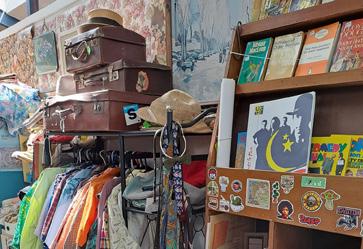
Bringing back memories for many and shaping the future footprint of our city, the Arts Centre Mākete is on every Sunday from 10am to 4pm in the summer months and to 3pm in winter, rain or shine. Local artisans and craftspeople tend their stalls, offering food and drinks, vintage clothes, and unique treasures. artscentre.org.nz


Local plant-based deli Grater Goods is set to grow. Founded by Flip Grater by simply selling meat-free chorizo through social media, the business now boasts a deli/restaurant and sells gourmet products through supermarkets. After establishing massive popularity in New Zealand as the only player in this specific space, the time has come to expand into the international market, with sights set on Australia – the second fastest-growing plant-based market in the world. Then, further afield. To achieve this growth, Grater Goods is looking to encourage you to join the journey and be part of a better future.

equitise.com/offer/grater-goods
It’s the season for bunnies! Canterburybased maker ZippityDooDah (Elizabeth Berge) specialises in handmade wonderful, sustainable designs made from vintage and retro fabrics. One of her signature creations is a series of bunny dolls, complete with perfectly tailored outfits for these floppy-eared friends. @zippitydoodahnz

With the change of the weather, mushroom season is on our doorstep, and one fungus rules above the rest – truffles. Kings Truffles offers group and private hunts from the months of June to August. They also host theTruffle Day Out alongside North Canterbury winery Black Estate. The season is short, and events are exclusive, selling out every year, so don’t delay arranging your truffle trip! Join the dogs for a unique day out. This is the perfect opportunity to try a North Canterbury ingredient that punches well above its weight right from the source. kingstruffles.com
Over 20 with short sightedness, long sightedness, astigmatism, or difficulty with fine print in your 40s?
With over 25 years’ experience, trust the care and expertise of Dr Kent and his team at Fendalton Eye Clinic, offering visual freedom with the safety and accuracy of our laser eye surgery.
Book online for your face to face or virtual free laser assessment with a member of our experienced team.

The South Island of New Zealand From The Road by photographer Robin Morrison captures quintessential scenes of Aotearoa, places forgotten by time, and the people across the land. Due to conflicts and loss of images, the 1981 edition was never reprinted – until now. It’s a brilliant catalogue of the way we were and why we are.

Dr Michael Mosley reveals the small steps that can unlock massive benefits for our mental and physical health. Just One Thing: How Simple Changes Can Transform Your Life is a refreshingly practical guide to improving your health. He discusses everything from the benefits of chocolate to how houseplants can boost your brain power. A 2023 must-read.

Based on the shorts of the same name, Marcel the Shell With Shoes On is, quite frankly, amazing. Your heart will be gripped by this one-eyed, squat conch, and you will be left crying at the end. Director Dean Fleischer Camp has worked crustacean creativity into a decidedly human tale. It’s available for rent on Neon, Google Play, Apple TV, and YouTube.

Barack Obama narrates the Netflix series Our Great National Parks. Over its five episodes, this short series takes the viewers on a hope-enhancing round trip of some of the world’s best examples of the natural world, national parks. From Australia to Rwanda, the former president explores the benefits of government-supported natural reserves and what we can learn from the creatures within them.

A bespoke treatment to rejuvenate, lift and tighten the delicate skin around the eyes
NOW


 Supported by National touring partner In association with
Choreography Andrea Schermoly Music Sergei Prokofiev Design James Acheson Lighting design Jeremy Fern Conductor Hamish McKeich
25-27 May Isaac Theatre Royal In association with
Supported by National touring partner In association with
Choreography Andrea Schermoly Music Sergei Prokofiev Design James Acheson Lighting design Jeremy Fern Conductor Hamish McKeich
25-27 May Isaac Theatre Royal In association with
The Armageddon Expo is Aotearoa New Zealand’s premier event for all things pop culture, bringing together fans and fellow geeks for an experience like no other. With stops in Auckland, Tauranga, Palmerston North, and Wellington, this family-friendly event touches down in Ōtautahi Christchurch on the weekend of April 29 and 30. This is a festival where everyone from all walks of life is welcome, and it brings some pretty big stars to our shores, like Katy O’Brian, who has just starred in Ant-Man and the Wasp: Quantumania
29–30 April, Te Pae armageddonexpo.com


The Christchurch Symphony Orchestra will present three intimate evenings with New Zealand musician Delaney Davidson in the Town Hall’s Ron Ball Studio. Delaney will transport the audience into the magic of his varied catalogue of works. This will be a remarkable and unique opportunity to connect with his recent works and those from throughout the years. Performances will be in April and May.


13, 27 April, and 11 May, Ron Ball Studio cso.co.nz

Art and entertainment come together for all on the beautiful West Coast of the South Island at Art in the Park – with works ranging from landscapes, abstracts, and portraits to mixed media, pounamu, and stone carving. This annual event has been an art highlight for the past 18 years. 2023 will feature 42 artists from throughout the South Island.

22–23 April, Greymouth High School artinthepark.nz
James Mustapic (Repressed Memories and Abandonment Issues) returns to Christchurch with his show Into the Multi-Media-Verse. The two-time Billy T Nominated comedian takes us into the different dimensions of himself: Straight James, Psychic James, Goth James, and more. His equally famous mum Janet might even be involved! This is set to be a riveting hour of multimedia stand-up.
28–29 April, Little Andromeda littleandromeda.co.nz
Game on! The perfect place to enjoy independent living at its best.


Enriching the way people live, work and play through architecture and interior design
+64 3 366 5445 design@dalman.co.nz dalman.co.nz
BUILDING OF THE MONTH - RUSSLEY RETIREMENT VILLAGESheila Brown can remember going to the mountains of New Hampshire on the weekend when she was a child to visit a family friend named Bessie.
It was at Bessie’s farmhouse that her love of art developed.
“I was there from ages five to 12 every weekend. But there wasn’t a lot to do up there. I did a lot of drawing and sketching; my mother would teach me about nature and the forest.”
While her two kids (Max and Jack) were at school, art started returning to her life. She joined painting groups, got her big break at The Little River Gallery, and won an award in Invercargill.

“That sort of gave me the confidence to say, ‘I’m going to go in this direction’.”
Always though, art remained a companion.
“Art is my best friend. And I needed to see it every day. I must paint every day to be in that space whether I’m feeling good or bad.”
Some 20 years later, she has her own gallery space, Xgaleri, in the Guthrey Centre, which she runs with her eldest son Max.

Sheila’s practice manifests in abstract depictions of nature, with much movement, and birds form a central theme.
Max, who has trained as an industrial designer, uses his emotional and spatial design specialities which have also helped him discover his artistic identity.
“My art is an emotional relationship from a product of nature. And then I develop abstraction from that concept. It’s always derived from nature and textures or architecture.”
As the space develops, they are opening the gallery to more events. This engagement with the public and potential buyers is something the pair enjoy, often discovering new meanings in the work through conversations over the canvases. 2023 will provide opportunities to meet the artists.
Max is looking to have a solo show in May titled ‘Everything’s gone green’ and Sheila is planning one in August or September.
They say that art has brought them closer together and invite anyone to come into their space to discuss their work.
@x.galeristudio


Turning 150 years this year offers a time of celebration for the University of Canterbury and an opportunity to reflect on the past and look to the future.
As its 150th anniversary approaches, the University maintains its vision as a contemporary university – a place of learning grounded in a shared history, which values differences and aspires towards research and tertiary education that is accessible to all.
Consistent with its equity strategy, staff at the University of Canterbury have introduced a scholarship, Te Kakau a Māui, which will support the leaders of the future. These are on offer to students at decile one to seven schools from Te Waipounamu South Island who have gained UE and want to make a change in the world.


Throughout 2023, with its many stakeholders, UC will celebrate and reflect on its past and focus on a future with research and education that makes a difference.
UC extends its thanks to its communities, who have helped them to make a difference over the last 150 years by employing its graduates, partnering on innovation, and supporting its student scholarships and academic research.
A year-long celebration of events is planned, celebrating its history as well as showcasing UC research and innovation to its community. This programme will include concerts, conferences, public talks, art exhibitions, sporting events, and student, alumni and community events. The public is invited to join the celebrations.
canterbury.ac.nz/uc150
Artist Ling
Date January 2023
Location Worcester Boulevard, Central Christchurch
Australian artist Ling happened to be visiting family in New Zealand over the summer, which was a perfect coincidence, as it ensured he was able to be part of the incredible SHIFT: Urban Art Takeover at Canterbury Museum, painting Nexxi, a stunning portrait of his niece in one of the upper floor storerooms, a highlight among many in the exhibition. One of the best things about events like SHIFT, and the inclusion of international artists, is that it often means our streets get a little
brighter too. Highlighting his prodigious output, Ling also painted this stretching production just down the road from the blockbuster exhibition on Worcester Boulevard. By combining fresh traditional dynamic graffiti pieces with an elegant tui styled in his signature painterly effect, the work illuminates the artist’s diverse skillsets while bringing an empty lot to life with vibrant colour and striking form. Sometimes it seems like things are just meant to be!
Explore more of Ōtautahi’s urban art on a Watch This Space guided street art tour! Email tours@watchthisspace.org.nz for booking information.
watchthisspace.org.nz/artwork/1068


Bound for London with £78,000 of cargo, 5000 bales of wool, and over 495 casks of tallow, crew, and up to five passengers, the iron clipper Ocean Mail struck French Rock on the north-west side of the Chatham Islands during a heavy gale on 21 March 1877.
Built in 1869–70 in England and chartered to the New Zealand Shipping Company, the Ocean Mail was constructed with stronger plates than Lloyd’s Insurance rules required. Celebrated as a fast sailer, in 1874 she made the passage from London to Otago in 74 days.
A great ocean race was underway. The clippers Crusader and Rangitikei sailed from Lyttelton on 10 March and the Otaki from Port Chalmers the day after. The celebrated ship Avalanche and the Ocean Mail sailed from Wellington on the 16th. The race would be won by the Otaki in 69 days port-to-dock.

Until 20 March, the Ocean Mail was in the company of the Avalanche, which stood away to the south, the Ocean Mail taking a northerly course for Cape Horn.
At daylight on 21 March, the Ocean Mail’s second mate saw land ahead, and although the crew made desperate efforts to get her off the land, they were unavailing.

As the pumps sounded five feet of water in the hold, the boats got out, and all the passengers and crew were landed, and stores were taken into the bush until the surf became too heavy.
Observing the event, Edward Chudleigh, a Chatham Islands station owner, wrote in his diary: “I remained on the spot all day and did my best to keep order. Pattison found the captain drunk or mad from drink, and no order whatsoever on board. I had much trouble to keep the spirits away from the men. However, in the end all hands came ashore alive, the captain drunk.”
Nearly a century later, Navy-trained divers found the wreck of the Ocean Mail in 1971, with two others nearby, one a French ship after which the reef was named. The ship’s cannon was presented to Okains Bay Museum by Nelson King on Waitangi Day in 1984.
okainsbaymuseum.co.nz
Southern Woods has grown millions of quality plants for over a generation. Locally owned and passionate about plants, it prides itself on expert service and the range is second to none. With over fifty staff and an ever-expanding nursery just south of Christchurch, Southern Woods can supply large quantities of plants New Zealand wide. Talk to the knowledgeable team about planting for your next project. Stop in at 1002 Robinsons Road or online anytime. southernwoods.co.nz

Are you sick of people saying you look tired? The area around the eye is one of the first areas to show signs of ageing with fine lines and wrinkles and loose, sagging skin. The Skin Rejuvenation Clinic has several fantastic treatment options that rejuvenate and refresh the skin around the eyes that are non-invasive, have no downtime and can be done in your lunchtime. Go into autumn with newfound confidence by visiting the team at Skin Rejuvenation Clinic.

skinrejuvenationclinic.co.nz
Travelling this Autumn? Whether in Aotearoa or overseas, you’ll need swimwear you love. The Fitting Room has a fabulous range of swimwear from well-known Australian brands Seafolly, Jets, and Jantzen & Artesands, cup-sized speciality brands, and chlorine-resistant styles. Belgian brand Prima Donna (pictured) brings glamorous European style. Manufacturers are increasingly conscious of sustainability; many brands and styles are now made from recycled fabric. thefittingroom.co.nz

Born and Raised kombucha is brewed in Christchurch and flavoured with unique, organic blends of cold-pressed juice and botanicals. Using ingredients from local growers, they blend the craft of fermentation with food science to ensure delicious but functional beverages. This kombucha is packed with vitamins, nutrients, and probiotics, making it great for hangovers, eczema, arthritis, and mental clarity. Try their Manuka Shots – packed with living goodness. bornandraised.nz



The winds of change are here. Dress warm, dress natural.


During the first nationwide Covid-19 lockdown, Sarah Reed thought up The Grumpy Merino.
Like many at the time, Sarah reflected and looked for things to do to fulfil her. With an existing business and farm that exported merino wool, the complications during Covid with a Norway-based retailer saw an opportunity present itself.

“While the borders were shut, it made us rethink how our business could evolve,” Sarah says.
This evolution came as an additional business when Sarah saw the opportunity to create a 100 per cent New Zealand product without the need to export, supporting the local wool industry, especially merino wool.
The Grumpy Merino makes heirloom pieces. This was inspired by Sarah’s late grandmother, who had given hand-knitted blankets to Sarah’s children.
Now in 2023, The Grumpy Merino is a thriving ‘grassroots’ business. The range now boasts three colour ways of knitting yarn, four sizes in a blanket range, and continuing tradition;


they make a small range of hand-knitted baby beanies and headbands, which are knitted by local grannies in North Canterbury.
On top of keeping the business’s carbon footprint low by having the whole process take place in New Zealand, the overall importance of sustainability is not something lost on Sarah.
“[Our sustainability] is a way to give back to the land and our planet. We have thought about this a lot within our brand. Wool is a natural resource; we have recyclable postage bags, each blanket is sold with a bag which can be reused time and time again and most importantly, the wool can be given back to the earth to be broken down when no longer needed.”
Ensuring each piece is up to Sarah’s standards means the pieces take time, but this attention to detail makes the products luxurious, and each means a little something to her and the team.
“All our range is super special to us. It takes around 22 months to produce a blanket, an unreal amount of time, sweat, and tears. Each item in our store holds a special place in our hearts.”
thegrumpymerino.co.nz


Jeuneora, an Ōtautahi-based beauty and wellness company founded by Monique Kaminski in 2016, has moved in leaps and bounds since its first product launched. Back then, she had 100 units of Renew+ Marine Collagen Super Powder sitting in her garage, with no idea how to sell it.
So with no marketing budget, she built a website, brought long-time friend Meg Falconer on board and turned to social media. At a time when ‘influencer’ wasn’t even a buzzword, it took one post from Millie Elder Holmes to put Renew+ on everyone’s lips.
That was just the beginning for Jeuneora, which has now processed 230,000+ orders online and generated more than $30m in online sales. In August 2022, they officially became B Corp certified, joining a small group of 100 businesses to be awarded the certification in Aotearoa, with 16 of them based in Christchurch.
B Corps are companies that meet the highest levels of independently verified transparency and accountability around their social and environmental impact to ultimately support the path to a regenerative economy. Getting certified is no easy feat, and it was Monique’s right-hand-woman, COO Colleen Itterman, who led the charge toward certification, and they leaned on local expert Tim Jones from GrowGood, who guided them through the process.
B Corp made sense as the next step in their commitment to sustainability. They were already making conscious decisions that aligned with B Corp principles like the
Jeuneora Giving Programme, sustainable packaging and their closed-loop recycling programme. Increasingly, consumers are choosing brands that align with their values, and B Corp eliminates that hesitation of choice – right away, a consumer knows they can trust it.
For Jeuneora, B Corp certification recognises their holistic approach to sustainability and commitment to continuous improvement so they can leave a positive impact on the environment, their community, customers, and employees. They are now working with Toitū to measure their carbon emissions and continue to scale sustainably.
Monique has always been driven by seeing the benefits people experience with their products. Jeuneora’s most recent supplement release, Beauty Sleep Adaptogenic Super Powder, has sold out twice. In the first hour of their restock, one unit was sold every three seconds.
That is not surprising, given that 3000 people were on the waitlist. It has proven to be so popular that they’ve recently released Beauty Sleep in capsule form too.
The B Corp journey for the rest of Christchurch and New Zealand is at the far end of the sustainability curve, but consumer demand is pushing the curve forward. In a recent survey by the Canterbury Employers’ Chamber of Commerce, two-thirds of Canterbury businesses said they considered sustainability when making decisions, while almost a third said sustainability was at the front of their minds.
Sponsored by ChristchurchNZ for B Corp Month.
Sun Milk Drops SPF50+ by Raaie is a tinted sunscreen that is super lightweight, silky smooth, and absorbs quickly for an invisible finish. It’s soft peach tint leaves all skin tones with a lit-from-within glow.

raaie.co.nz
Aesop’s Rose Hair & Scalp Moisturising Masque is an intensive conditioning treatment that restores the hair’s vitality, lustre, and softness while soothing dry and flaky scalps. Suited to normal to dry, fragile and chemically treated hair in need of a little TLC.
aesop.com
5
A cult favourite for evening skin tone, improving pigmentation, and restoring radiance – the award-winning Skin Reset Face Serum is the must-have beauty treatment for rejuvenating tired, lacklustre skin.
emmalewisham.com

2
Feel optimistic with Karen Walker B+ Eau de Parfum, a bottle of sparkling joy with a burst of pink fireworks. It has luscious top notes of peach tuberose, pink pepper, and Italian lemon, a heart of Provence rose, iris, Sambac Jasmine, and a base of vanilla and patchouli.

karenwalker.com
4
Give the confidence of healthy, clean skin and say goodbye to acne for the youngsters (or anyone) in your home with the Au Natural Skinfood Blemish Bundle. Packed with powerful natural anti-bacterial ingredients, including mānuka honey and kānuka leaf oil.

aunaturalskinfood.com

6
Karen Murrell’s beautiful Confidence Collection adds four elegant new shades of chocolate brown, mocha, caramel, and nude to her range. Designed to flatter all complexions and work with all makeup styles, the four shades are extremely versatile, subtle, and on-trend and will nourish and moisturise lips.
karenmurrell.com








Meet the people who have set out to make New Zealand a better place through their deeds.
Those featured in these stories have taken the challenges before them and worked to make something better. There are the arborists pushing forward with sustainability, the medical imagers with the patient in mind, a family with a passion for good nutrition, and the medicine company with an eye on the future.
It’s Karen McGrath’s goal to spread the word on the benefits of eating sprouts.
Southern Alps Sprouts is the brainchild of husband-and-wife team Karen and Jason McGrath and has grown from a seedling cottage industry into a robust, thriving, and sustainable business that provides the majority of the South Island’s supermarkets with today’s superfood.
In 1998, armed with their respective talents (Jason, a mechanical engineer, and Karen with experience in agriculture and horticulture), the pair had started growing sprouts in their garage but didn’t know how to make it a business. Almost by fate, a mentor of theirs at the time had a friend based in Australia who was in the sprout industry. They travelled to meet him and he equipped the pair with the knowledge to grow.
Pooling their resources along with Jason’s hand-built contraptions combined with Karen’s horticultural knowledge led to establishing a sprout business at their Springfield property, with four daughters under four in tow.
The success of the business and ‘consistent quality and a good customer base’ meant that it soon outgrew its facility in Springfield, leading them to build a new purpose-built factory just west of Christchurch. This facility has 6.5km of solar on the roof, recycles water to put onto pasture, and the waste is used to fatten cattle.
Now nearly 25 years later, with their girls grown and a skilled team behind them, their passion for sprouts remains, largely thanks to the health benefits the little tendrils and shoots offer – an aspect Karen and her family are fierce advocates for.
“I do it for the health of people. I just love how good they are for you. You only need a few to get good nutritional value. They’re a living product and give you living energy.”
And she’s not wrong, with numerous studies pointing towards sprouted vegetables’ antiinflammatory and antioxidant properties. In some cases – like broccoli – they have around 100 times more beneficial nutrients than a mature plant. For broccoli sprouts, this is glucoraphanin which mixes with the naturally occurring enzyme in the body called myrosinase and produces the chemical sulforaphane. This chemical has been shown to have disease fighting properties.
Karen sees these sprouts – full of vitamins, minerals, fibre, Omega 3 and 6, with benefits for heart health and hormones – as essentials in our diets, especially with rising grocery bills.
“I wish more people knew how good they are for you and how economical they are. There are a lot of processed foods that offer nothing to you. Sprouts are as natural as can be. They’re a living product, and it costs very little for a punnet of sprouts and you get what you need to keep you going.”
Thanks to the McGrath’s passion for sprouts, they now distribute their range, which includes mung, alfalfa, onion, pea, radish, and broccoli, to the majority of the South Island’s supermarkets thanks to contracts with Foodstuffs and Progressive. They also supply wholesalers and My Food Bag.
All of their products go through rigorous testing under a custom control plan, from the seeds to the water to the batches, before arriving on shelves – and their packaging is recyclable.
Karen’s final advice is to reconsider snacking on junk food and replace that with nourishing sprouts.
“I just think it’s just the best form of a snack. I’ll grab some out of the fridge, pop them in my mouth, and have some good energy for the afternoon… I even have a friend who uses the ‘Crunchy Mix’ as popcorn!”
southernalpsprouts.co.nz


Caring for the environment has always been part of Treetech’s legacy. As arborists, part of their job is finding new ways to increase their sustainability and passing on the benefits of a healthy urban canopy to future generations. Their latest sustainable innovation is migrating their fleet to electric and hybrid vehicles.
Treetech’s mission statement is to lead the way in urban forestry; they strive to lead the way in everything they do, such as looking for new technologies and new ways of doing things that are safer, more efficient, and have less environmental impact.
Like all arborists, the team at Treetech really do love trees. Chris Walsh, Managing Director at Treetech, says, “We do whatever we can to increase tree longevity and promote healthy growth. While some trees have to be removed to reduce risk to the community, our ultimate aim is to keep as many trees as possible around for as long as we can.”
Chris is the current president of the International Society of Arboriculture and has been a board member for the past seven years. He explains that “sharing knowledge and expertise with international markets helps to drive Treetech’s sustainable thinking and innovation” while positioning the business at the forefront of emerging trends and technologies.
“Driven by our sustainability mission, our current focus is on switching to sustainably powered equipment,” Chris says.
“We began by replacing petrol-powered equipment with battery-powered chainsaws and hedge trimmers that allow us to maintain our standard of work without the environmental cost, and are now migrating our fleet to electric and hybrid cars and
trucks. We measure parts per million on our vehicles and ensure we continuously monitor our vehicles, ensuring the most efficient routes and ideal times. It’s measures like these, big and small, that equal the bigger picture.”
One of their proudest sustainability initiatives is their stormwater management system; this has allowed Treetech to create a flourishing wetland, teeming with animal and bird life, in their yard – while also managing their water.
Treetech has also developed a specialist, sustainably powered garden tools business, GreenGear. The GreenGear range includes electric battery hedge trimmers, leaf blowers, and robotic lawn mowers. Chris is passionate about the benefits of this technology: “The robotic lawnmowers come out and mow at night and charge themselves. They are selfpropelled; you don’t have to use your own time to do anything. The mower does it all, so you can go and spend more time with your family, and it’s better for the environment.”
Chris is quick to point out that the benefits of a robotic mower extend beyond your household; there’s also a positive community environmental impact. “There are no clippings to take away, so you’re not loading clippings into a green bin. The clippings go back into the ground, and it’s actually better for the soil. It also keeps the weeds down, so there’s less spraying. Ultimately, your garden and grass look great all year round. GreenGear makes it easy for Kiwis to make a simple, sustainable difference.”
Treetech is passionate about leading the way in sustainable change, and their depth of knowledge means they can provide the right education and advice for any situation.
treetech.co.nz
In an 8,800 square metre facility in Auckland, future-focused research and production of medicine is occurring. This is the home of Helius Therapeutics, a business at the forefront of cannabis-based medicines in Aotearoa.
Chief Commercial Officer Julie Curphey says that the Helius vision is built around improving the health of those under-served by the conventional pharmaceutical approach.
Since the introduction of the Medicinal Cannabis Scheme in April 2020, it has been legal for any doctor to prescribe medicinal cannabis to any patient. However, many are not aware of that.
“When these people find cannabis-based medicines, their lives can literally change. We have stories of patients who have not been able to function well enough to have full-time work or interact fully with their families for years. Medicinal cannabis has allowed them to stop taking many of the drugs they were taking, to be able to feel ‘human’, to come back to their families and function much more ‘normally’ in society,” she says.
“Medicinal cannabis production currently needs to be done under full pharmaceutical standards, including dried flower – which is typically what you might obtain from the illicit market.”
To maintain a product appropriate for pharmaceutical use, they are GMP (Good Manufacturing Practice) certified and must work to the highest quality standards from seed to patient.
This means, according to Julie, that “every process we carry out, from growing medicinal cannabis cultivars to extraction, to manufacturing, testing, packaging, and distribution, has a heavily audited set of SOPs (Standard Operating Procedures) that determine how everything is done. This means that consistent quality and safety is measured at every level.”
“We currently have six products available in Aotearoa that meet the New Zealand Minimum Quality Standards, that are available for any doctor to prescribe for any condition, for any patient.” These are currently all oil based.
With patients in mind, Helius Therapeutics employs a team of experts in fields from cultivation to research and development to quality and operations. Those at the helm are also highly qualified in their fields.
“The leadership team at Helius have spent their careers in pharmaceutical companies – mainly international roles.”
“That has been important to be able to take a plant and produce a medicine under the strict pharmaceutical standards that are required, not only in New Zealand but globally.”
The sector is still small in New Zealand; Helius remains the only company in New Zealand that produces New Zealand-grown, New Zealand-made medicine for New Zealand patients. They will begin exporting in 2023.
While the space continues to develop locally, Julie says Helius has its sights set on education and taking the stigma of cannabis away for patients and prescribers. “Misinformation and stigma are two huge barriers we need to overcome.”
She invites anyone keen to learn more about how medicinal cannabis has helped others, medicinal cannabis misconceptions, and the regulations to check out their podcast The Devil’s Lettuce: Conversations about Cannabis.
“The objective is to help educate and inform people about medicinal cannabis through sharing stories. We have some incredibly brave people who are willing to share their stories in the hope that it can help someone else who might be suffering from a similar condition or that wants to try medicinal cannabis but doesn’t know what to do or how to access it.”
@heliustherapeutics | @heliustherapeutics



At Merivale’s Beyond Radiology, service and excellence is their hallmark. The premises at 225 Papanui Road is the second Beyond Radiology clinic in New Zealand, with the first located in Grafton, Auckland.
“Beyond Radiology’s ethos is about providing imaging and service excellence to both patients and referrers,” says Serena Hitchings, the Christchurch Practice Manager.
The success of Beyond is down to their highly skilled and compassionate team of clinicians, sonographers, imaging techs, and administrative staff, providing the highest level of quality and service,” according to Serena; with its clinician-led approach Beyond Radiology is striving for better health outcomes for patients.
“We provide a first-class service for our patients from start to finish, and we make the journey for them as smooth as possible.” This is reinforced by the company’s guiding values of dignity and respect, compassion, collaboration, trust, innovation, professionalism, and excellence.
Talking to several of those values is the state-of-the-art equipment housed within the clinic. The clinic has a complete suite of imaging modalities, including X-ray, CT, Ultrasound and MRI, with the latest technologically advanced scanners. These utilise some of the latest artificial intelligence technology, allowing for reduced scan time and the best imaging quality.
“The technology that we have offers exceptional definition, efficiency, and speed. We believe the MRI quality is the best available on the market. But machines can only do so much – it is the eyes and experience of our specialists who pin-point
the answers, giving clear, efficient outcomes,” Serena says.
It enables doctors and surgeons to move forward with confidence and patients to feel empowered and comforted. The patient experience is of the highest standard and has been considered throughout the space, as the team understands the anxiety some might feel undertaking an imaging procedure. Walking into the practice, you’re greeted by natural wood and earth tones and warm lighting – which are carried throughout.
Clinician meetings and procedures are done in spacious, architecturally designed consult and scanning rooms.
“Often, patients can be a little nervous when they’re coming in for imaging investigations, and it helps to have a comfortable, calm, and relaxed space for them. It’s the small things, like the acoustic design, accessibility and free parking, that can make a difference to their overall experience.”
Other often overlooked details have also been attended to. For patients in the MRI or CT scanner rooms who may be nervously looking up, the ceilings in these rooms have beautiful floral panelling to put a patient at ease.
Perhaps their most important value is ‘dignity and respect’. Aligned with Te Tiriti o Waitangi (specifically the principles of partnership, participation, and protection), all patients are treated with compassion and efficiency, where explanations are forthcoming, respect is given, and hands are held.
By cutting through red tape, by smoothing out the process, Beyond Radiology aims to set new standards of patient care in New Zealand imaging.
Just because your hair might be grey, doesn’t mean your life needs to be.
Today’s 70-year olds are the healthiest, strongest, and most mentally agile history has ever known. So Summerset Retirement Villages are designed for the active lifestyles of the youngest “oldies” there’s ever been. Love the life you choose

To find out more about our four Summerset Christchurch villages, contact us today for your free information pack.
0800 SUMMER summerset.co.nz
Opposite the Margaret Mahy Playground, the old Municipal Electrical Department (MED) building is a familiar central city landmark. Following full restoration, it is now playing a vibrant role in the life of the central city. Avenues heads upstairs to explore Lumin’s new offices.
 WORDS Kim Newth PHOTOS Jason Mann
Three Sixty Architecture’s Tom Norman and Christchurch interior designer Christina Christensen can well remember this upstairs space as it used to be a few years ago, dishevelled and dusty, with pigeons roosting inside. Working together, they have transformed it into a uniquely chic modern office environment.
Tom’s journey with this building began when development company Box 112 appointed Three Sixty Architecture for the full restoration and fit-out of the 1933 Art Deco building. “Back then, in 2018, nothing was level, and there was barely a straight edge anywhere,” he recalls.
Yet the building’s concrete walls and steel structure framed a compelling canvas, and now, five years later, the design reimagination is complete. Even the exterior has a vibrant new look, thanks to Christchurch creative Kyla K. With old and new elements skilfully blended and imbued with a design aesthetic that embraces the street, the MED building today accommodates an inspiring public art gallery, NZME’s studios and offices, along with several communications and technology companies.
Lumin’s Christchurch team moved in last August. It is exciting to get a behindthe-scenes tour with Tom and Christina, who completed this upper-level fit-out in collaboration and have evidently taken a lot of care to respect heritage elements. They point out the original sarking boards and steel
roof beams overhead. Native timber flooring is also original, having been fully restored. The building’s industrial steel windows are another striking feature, bringing in so much natural light. That sense of lightness has been further enhanced by the low sheen white painted walls and white-painted truss ceiling.

The building’s special character was a big drawcard for the Lumin team, led by Christina’s son Max Ferguson, whose vision for comfortably modern NYC loft-style offices has been beautifully achieved here. Max, who founded Lumin in 2014, has developed the company as a leading worldwide provider of PDF signing software. Lumin opened Christchurch premises on St Asaph Street in 2020, but ongoing growth then sparked the hunt for a bigger space.
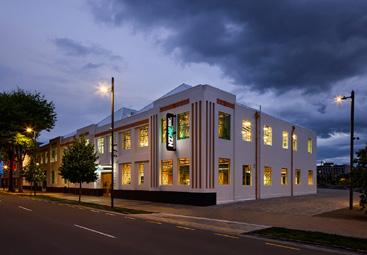

“As soon as we found this unique building, we could see its potential as a landmark for our brand,” says Max, who notes there is plenty of room for further growth at the Lumin loft.
Every detail of this fit-out has been carefully thought through to honour the building’s legacy while meeting the needs of a thriving software company with a global reach. Some furniture pieces – along with many indoor plants flourishing in focal areas – are purposeful re-use inclusions from Lumin’s previous premises. Alongside that, there has been considered investment in new top-end office furniture and equipment.
“This mix represents the company well and the building’s history,” says Christina.
She and Tom note how the curved arrival wall pays subtle homage to streamlined 1930s style, guiding clients into the spacious open-plan office area where oak-topped workstations are set up in quads.

Amenities include a modern meeting room with adjacent break-out space and table tennis, plus a well-appointed board room. Both these rooms are glazed on the office-facing side, with frosted glass panels for privacy. These are standalone spaces and are not built into the original perimeter so as to preserve the heritage fabric. At the far end of the floor is an inviting staff lounge and kitchen/cafeteria.
“We often have informal meetings here [in the lounge],” says Caleb Helm, who heads Lumin’s sales, support and operations. “It’s a great space for after-work drinks too, and
provides a nice contrast in style with the work environment.”

With drapes and comfortable contemporary seating, it really does look like a relaxed, upmarket residential lounge, flowing openplan style to ‘dining’ with a bespoke stonetopped table and spacious modern kitchen.

Contemporary Art Deco-inspired touches include opal glass lighting shades, round mirrored pieces, and velvet cushions, along with tongue and groove textures in the kitchen and boardroom.
Feature walls in heritage colours – green, blue, and pink – are the finishing touch, in perfect sync with Lumin’s logos and branding.
What a wonderful addition to the city this building is today, with resident pigeons now a fast-receding memory!

Our built environment can dramatically impact our physical, psychological, and spiritual well-being. People are shaped by the spaces they inhabit.
and smells of the surrounding bush to its fullest – but we did provide a roof to protect from the rain.
Richard Dalman Managing Director, Dalman Architects dalman.co.nz
As architects, we look to design spaces that positively contribute to how we live and feel, creating enriching spaces that evoke positive human emotion.
So how do we do this?
Firstly, we try not to make people sick! VOCs (Volatile Organic Compounds) are found in many modern materials such as glues, urethanes, and paints and can be emitted into the atmosphere. Fortunately, now there are many product alternatives that do not release these chemicals. Providing healthy homes and buildings has become a focus of architects.
If we can open up our buildings more to the outside, we can reap the benefits of fresh air, sunshine, and a connection with the surrounding environment. In our temperate climate, this is often achievable; however, challenges need to be overcome in the central city, where noise, security, and pollution can be a problem.
Outside urban environments, we may not need walls at all. At Te Waonui Forest Retreat in Franz Josef, we provided no walls to the stairwells and corridors to the rooms so guests could experience the sounds, sights,

These connections with the outdoors and nature have been proven to improve our health, and they form the underlying principles of Biophilic Design.
Other Biophilic Design architectural strategies include utilising natural materials and the patterns of nature in the architecture and décor and bringing plants indoors, as per the green wall at The George Hotel.

To truly flourish, we must live in the moment and be open to different feelings and experiences. Architecture can help set the scene.
Sometimes we want to feel enclosed, safe and secure, like sitting beside the fireplace at the Frond Bar at Te Waonui.
At other times we may want to be more exposed and open to the elements, like standing out on the pier deck over the Avon Heathcote Estuary/Ihutai at the Water House.
Lastly, having a sense of place created by being connected to the environment, the local community and our past can help us make sense of our world and provide meaning to our lives. Architects create spaces to allow and enhance these positive connections, which are good for our health and help us flourish as human beings.

kamomarsh.co.nz
03 366 8181
Kamo Marsh is a landscape architecture company based in Central Christchurch and Queenstown. As well as residential design, we have worked and collaborated on a variety of subdivisions, educational and commercial projects throughout our 40 years in business.

We value the guidance and relationships we have developed with tangata whenua and our designs honour the whakapapa of the landscapes we work within.
Kamo Marsh Landscape Architects take pride in offering a friendly and personal approach to each project we are involved in. Our talented team look forward to working with you on your next residential or commercial project.


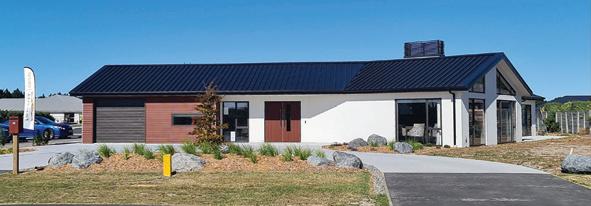


Few places on earth are like Kaikōura, a coastal town offering breathtaking views that will stop you in your tracks. The towering snow-clad mountains provide a stunning backdrop over the town centre, which extends out to the Kaikōura Peninsula, where the waves of the Pacific roll in. Local tour operators offer the chance to watch whales, dolphins, seabirds, and other species of marine life daily by boat or flight. If you prefer to stay on land, there is quad biking, a visit to a lavender farm, or llama trekking. For those who enjoy a slower journey, there are many walking and cycling tracks to enjoy or explore. Go on, discover what makes Kaikōura so unique – a place that’s one of a kind, unlike anywhere else. kaikoura.co.nz

Looking for something to do in Christchurch these school holidays? Experience what life was like over 100 years ago at Ferrymead Heritage Park. There is something for everyone, whether it’s riding the trains and trams or admiring the historical exhibitions. Its holiday programme is jam-packed with crafts, games, and toys from the past that children of all ages can enjoy.

ferrymead.org.nz
Fancy a family road trip to Ōtepoti this autumn? Wild Dunedin/NZ Festival of Nature is on 14–23 April. Immerse yourself in nature with garden workshops and tours, nature tours, sustainably sourced food and drink, wild adventures, a night market, marine encounters, walks, and talks. At Art Play for Earth Day join in creating a giant earth tapestry collage at the gracious Chingford Park. Surrounded by music, barbeque, and other fun activities on the day. Kids will love Penguin Day and Bug Day, and how about a boat trip to an island to hunt for treasure?


wilddunedin.nz
It’s that time of year; get in quick and secure your school holiday adventures! No matter where you go, CPG has got a property to suit. CPG hotels are comfortable, affordable, and conveniently located. Enjoy family-friendly accommodation within walking distance of shops, restaurants, and tourist attractions! Check out all that Auckland City offers, or lay low in the charming town of Hanmer Springs. Perhaps take the kids to Wellington or the picturesque Marlborough Sounds region? The perfect base for all your school holiday fun. Find out more at cpghotels.com.
cpghotels.com

Our world is changing; our climate is changing, and slowly but surely, it looks like our attitudes are changing as we all come to grips with the need to think and act in a more sustainable way.
Sustainability takes many different guises. There are the massive trends being considered by the world’s leaders regarding climate strategies, renewable energy, practicalities and ethics around sustainable travel, the requirement for the world’s wealthier nations to look after others, and so much more. And there’s a quiet revolution that’s also happening at a grassroots level, where decisions are made by everyday people on how to give back, use less, and think harder about how to use the resources that are available.
That’s where I find myself quietly doing what I can to contribute to a world that has something more to offer the generations that follow. I’m told that if everyone does something, it makes a difference, but it’s the starting that makes the biggest difference of all. For me, it started with the thought of what I would say to my grandchildren (should I ever be fortunate enough to have them) when they ask me what I did to make the world a better, more environmentally conscious place for them. Was I not worried about the climate changes and momentous events that were happening year after year? Was it not obvious something had to be done?
Just think on that. Would you say: “Well, I drove about in a V8 car (which I’ve done!), consumed as much as I could, never gave a thought to recycling or reimagining anything, I just enjoyed my moment on this earth and thought nothing more of it.”
When I’ve shared this little theory with others, they’ve mostly responded with a laugh at best or outright derision at worse, but it hasn’t shifted my intention.
So, I’ve taken some early sustainability steps, and they are mostly small. I’ve gone full electric with my motor vehicle in a family that still has a selection of petrol and diesel cars, and, yes, I know, there’s debate around the viability of battery packs and how helpful – or not – they are for the environment. I’ve become a pescatarian and given up meat, and I’ve also adopted numerous small steps around reducing waste and eating mostly organic and ethically produced food.
As a businessperson, I’m also working towards generating a smaller carbon footprint and reducing waste. One look at the cars in our car park, or our recycling bins, would identify it as an uphill battle, but we’re trying.
If we tried a little more, there’s the chance for us to all flourish, to live well, to lead healthier and hopefully happier lives, and for our beautiful planet to recover some of its special grace. I think that makes even the smallest of changes worth thinking about.
Meet MERIVOBOX! Available in 2023, the latest drawer from Blum combines high-quality storage with an award-winning design. Both beautiful and functional, MERIVOBOX is ideal for any living area and will spark inspiration for your next home project.

www.blum.com/merivobox


Inspired by the joyful eccentricity of English boutique hotel interiors, this feminine maximalist look is a feast for the eyes that thrives on a bold clash of patterns and colours.

The Olive Bedhead from Wink Design stands out against the brand-new pinks of Resene Valentine and Resene Inspire. These wall colours soften the hard edges of the black checked linen duvet and cushions in stripes, floral, checks, and pink velvet. The look is pulled together and grounded by the solid black and pink of the side table, throw, and chair.
The pink shade of this Qeeboo Ribbon Chair sits comfortably between the two wall colours and is designed to lighten the mood of any space, with a curved ribbon back to bring the sweetest of dreams into this whimsical bedroom.


Against a plain backdrop, this classic gingham-checked duvet set would be the focal point, but here it simply holds its own among a collection of objects with equally strong personalities. Maximalism is all about self-expression and the layering of patterns and textures. There are no rules here, apart from limiting your colour palette to create cohesion.

This black and white striped lamp is perfectly at home in this environment, echoing the stripes on the wall and cushions while connecting with the black of the duvet and side table. It’s a practical piece with a fun personality.
The solid block of black from this Tomo side table has a grounding influence, and its contemporary silhouette with shelf also acts as a blank canvas for the striped lamp and pink books, with wall colour peeking through connecting each element.
Olive Bedhead from Wink Design; Pottery Barn Capitola Tufted Rug Grey; Wallace Cotton Anawhata Duvet; Wallace Cotton Anawhata Standard Pillowcase; Wallace Cotton Moonlight Velvet Quilt in Blush; Wallace Cotton Bedouin European Pillowcase; Wallace Cotton Moonlight Velvet Standard Quilted Pillowcase; Home Lab French Flax Linen Sheets in White; M.M Linen Verde Cushion; Città Design Twill Cushion Eucalyptus Multi; Città Design Paloma Coffee Cup in Natural; Qeeboo Ribbon Chair in Pink from Ballantynes Department Store; Tomo Side Table from Bauhaus; Toppu Lamp from A&C Homestore; Toe Shoes from Charlie-Rose; Resene Valentine and Resene Inspire from Resene ColorShops.




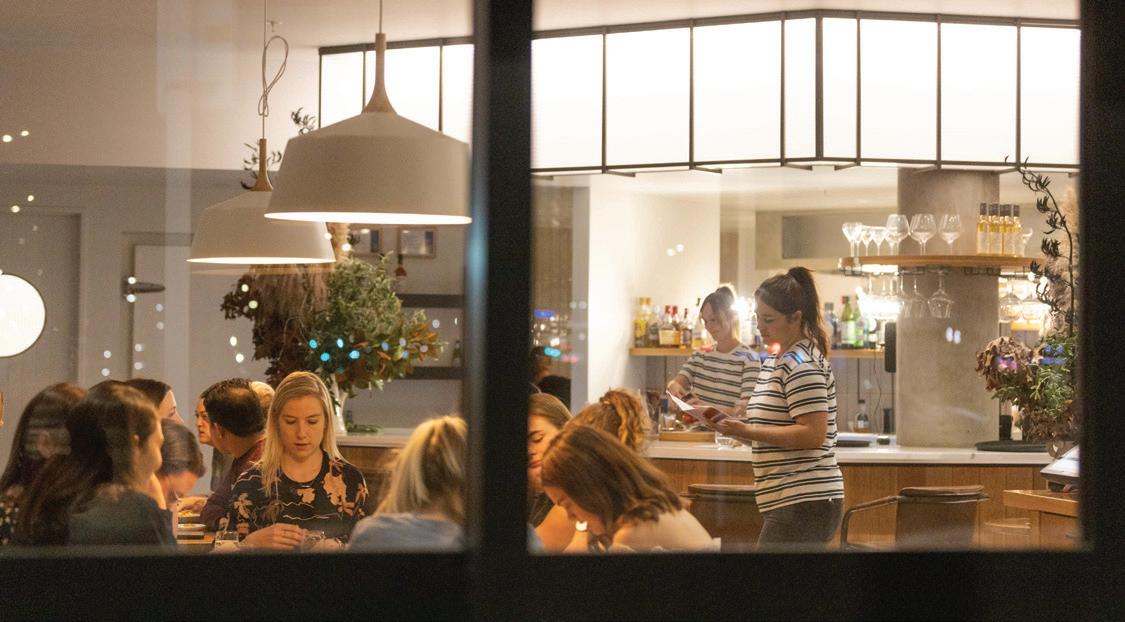


Afew weeks ago, I found myself at the bottom of Aotearoa, wearing a hard hat, licking locally harvested honey from an ice cream stick, and drinking a soon-to-bereleased gin from a plastic cup. I was in Bluff, standing beside the gin maker, Chris – the owner of Miele Apiaries Premium Honey – in a neglected building with ocean views, a space set to become a gin distillery. Just one exciting piece of the evolving Southland food story.
I was in Murihiku (Southland) to deliver a Food Storytelling Workshop in conjunction with Eat New Zealand and Great South. The event was designed to support producers, businesses, and hospitality providers and empower them to help tell their own unique food stories and to understand just how special they are.
We were fortunate to get a tour of The New Zealand Abalone Company pāua farm and the Manāki Whitebait facility – two large-scale aquaculture operations on a mission to farm these prized kaimoana species sustainably. They’re both housed in what once was the huge, archaic Ocean Beach freezing works, which closed its doors back in 1991.
An intricate plumbing system pumps seawater directly from the Foveaux Strait, which it sits beside. The pāua grow for four years, then are harvested at cocktail size – between 50–80mm (practically half the size of your average pāua, closer to 125mm.) They’ll be sold to the New Zealand market as baby pāua, which aptly have the most beautiful baby blue shells.
Beyond this beloved kaimoana, the potential of this region’s food story is huge, and what’s
most exciting is that the people here are starting to believe it.
At local favourite, The Batch Cafe, there are two ‘Made in Murihiku’ dishes entirely dedicated to using ingredients from the Southland Plains (with the exception of flour – but they’re working on it.) I had the delicious smoked blue cod pâté on sourdough from nearby bakery Flour Bro with locally produced crème fraîche. We learnt about the incredible Murihiku Kai Collective, who are working with their community to strengthen food security and enable more Southlanders to both produce and access good food. They work closely with Koha Kai, another amazing local charity, to host events in their market garden. I love their definition of good food: “food and beverages that are affordable, nourishing, appetising, sustainable, locally produced, and culturally appropriate.” Something I believe all regions and all people deserve.
There are so many great humans producing delicious things down here. I also met the woman behind Moodew paneer, a cheese used in Indian cooking. Made with raw cow’s milk, it’s naturally high in protein.
My only regret was missing a Fat Bastard Pie; you can imagine my relief when I found out they operate NZ’s first pie club, a subscription model where pies are delivered anywhere in the country. I couldn’t leave Invercargill without devouring a cheese roll, and on this fleeting trip, the unassuming airport version did the trick. Slathered in butter, the gooey, cheesy centre and that quintessential hint of onion hit the spot.
Given April can come with a take-no-prisoners-binge on chocolate (thanks Easter Bunny), Sam Parish steers us in a less obvious direction. Smoothies! Here are her latest favourite mouthfuls of fruity goodness in Christchurch.


1066D Colombo Street, St Albans
This neighbourhood gem is a one-stop shop. One-part abundant seasonal greengrocer teeming with fresh fruit and vege, additional retail space with imported hard-to-source quality ingredients, and one-part seasonal fruit and vegetable-forward café with bonus kids’ play area if you have little people to entertain. Rotating sandwiches, bakes, and salads fill the cabinets for fresh lunch, brunch, and snack options. Drinks are also covered with C4 coffee and an extensive juice and smoothie menu to satisfy your craving for something fresh and crisp. Operating in the Edgeware shops from Monday to Saturday with the likes of Peter Timbs butchers right around the corner, this is a foodie haven for good quality supplies. With five smoothies on the menu, I had the kiwi twist, a combo of kiwi fruit, mango, pineapple, and coconut water – think frosty fruit crossed with kiwi crush – a total banger!
You can always count on this treasured local café to be bustling. Crazy good cakes, crazy good ingredients, crazy good people. While supporting local, these guys put the good stuff in, and it shows in their plates of food, mugs of smooth coffee, and tall glasses of deliciousness. This space of grandeur, with higher-than-high ceilings looking out to the water and an oldschool coffee roastery on display, has an open corner kitchen letting you see the geniuses at work. This is the heart and soul of Lyttleton. The smoothies here are all dairy-free and packed with seasonal ingredients. For me it had to be the trusted old faithful of mixed berries, banana, orange, and apple juice – the orange and apple juice balance out the berries and the banana rounds it out perfectly – it is incredibly refreshing. It should be said there is always a seasonal green smoothie on offer; just check the specials board.
Doubles gets double points for the ombre vibes and the oversized metal straw served with their smoothies. Perfectly located in the city’s heart across from the Art Gallery and next door to Council chambers, Doubles is an aesthetically pleasing café with great food to match – hello croffles! A cabinet of baked-good dreams welcomes you at the counter as Allpress coffee perfumes the energetic café. But, with the mission of smoothies on the agenda, I pushed past my standard order of a cheese scone and flat white (I know, so predictable) for one of Doubles’ three smoothies on offer. I opted for the berry coconut smoothie and there were zero regrets. Coconut milk swirled glass, berry pink smoothie filled to the top and finished with toasted coconut chips and dehydrated raspberry ‘sprinkly bits’ this was a tall glass of deliciousness and calls match point on smoothies in CHCH.

Located in the city centre with exclusive onsite parking (winning) this garden café in a historical convent is a breath of fresh air. Entering through the brick pathed garden hugged with wild fennel, lemon trees, and sage, passing the enclosed lawn of grass (yes, toddler parents, you read that right) and nunnery door, you arrive at an open kitchen café – which you won’t want to leave. Sit under the apple or peach tree, or take a pew inside. This is the perfect café for both sunny and rainy days. The cabinet is full of freshly made scones, cakes, sweets, and salads... for balance. There’s warm, friendly service, eclectic and rustic décor, and an overall chill vibe. I’m still in shock that I’ve never been here before. The green smoothie is sublime, smoothed out with banana and spiked with a good amount of spinach which might have even been picked from the garden outside. With minimal ice yet still cold and refreshing, this is a great version of a green smoothie that certainly does not taste like a cup of bitter chlorophyll that’s trying too hard to be healthy. (Trust me, it’s a slippery slope). Taste comes first for this café with the option of bread or potato hash for the base of your Benedict (with lime chipotle hollandaise, I should add) and the addition of bacon to tall stacks of blueberry pancakes. I’d happily make my way through this menu. I’m also keen to try their crazy hand-cut triple-cooked chips.




Amongst the rows of cookies at Christchurch institution J’aime les Macarons you’ll find the pistachio. This little green gem delivers a nutty punch, smoothed out by a creamy pistachio filling. It’s a classic flavour done well, with the famous quality J’aime les Macarons has become known for. You’ll find them at the Merivale Mall.

@jaimelesmacarons_
’Tis the season. Not Christmas, even better. Feijoa season. Still made where it all began in Geraldine, Barker’s Fejoa and Pear Fruit for Cheese captures the iconic fruit in all its glory alongside locally grown pears. It pairs perfectly with creamy cheeses, and some of the team at Avenues have been known to eat this by the spoonful. barkers.co.nz

A match made in drink heaven. Ben Gon Queen’s Tea at Church Corner serves up the Grape Green Tea with cheese foam! Cheese foam is a salted whipped cream cheese topping, and it goes unbelievably well with the sweet and sour grape green tea! It’s well worth a trip to Church Corner’s bustling community of shops for a try!

@queensteabengong
Grater Goods’ menu has changed with the seasons and boasts some new additions focusing on fresh local producers. Foraging, using gardenfresh organic produce, and sourcing from small farms are all part of their plant-based story. Ethical Hedonism is the mantra and intention behind each dish, not sacrificing pleasure for principals. Pictured is the KFT Burger with organic non-GMO tofu – supplied by local family business, Tofu Man – and the Chef Special Power Bowl, with teriyaki fricken strips, edamame, quinoa, fresh greens, and gochujang aioli. gratergoods.co.nz/pages/menu

At Leisure Spas we represent the industry’s most well-known international brands - Bullfrog Spas, USA, Urban Pools, Swimspas, Cyclone Spas, Leisurerite Spas from Australia and saunas from Leisurecraft, Canada.

The Bullfrog A7 is awesome and has far exceeded our expectations. The simplicity of being able to choose and re-arrange the five spa jetpacks to suit our individual needs has meant we have enjoyed a range of therapeutic massages – not to mention the incredible sound system and ease of Bluetooth connection. Thanks again, Matt, Clay and the team, for all your support and laughs.
KATH AND JASE
03 348 3020 / 0800 000 772
145 BLENHEIM ROAD, CHRISTCHURCH LEISURESPAS.CO.NZ
As head chef and owner of Crisp and Vale catering, Hannah trained at the Cordon Bleu, Rick Stein’s flagship restaurant, alongside Michelin star experience. As it brings people together to enjoy each other’s company, she believes life’s memories and moments are best shared and celebrated with food. “We relish creating individual events with a theme or style, from the formal to the unusual; weddings to product launches, corporate gatherings to a birthday bash.”

1 side of pork belly, approximately 2kg
10 garlic cloves
10 sprigs of thyme or 5 sprigs of rosemary
350ml wine or beer
Olive oil
Salt and pepper
To serve
Apple or pear relish
Preheat oven to 150°C.
Take one large deep bain (oven tray) and drizzle olive oil on the base. Smash the garlic cloves and scatter them on the base of the tray along with the herb sprigs.
Pat dry the pork belly skin and score with a knife in diagonals across the skin. Next, season the flesh/meat of the belly with salt and pepper.
Place the meat on top of the garlic and herbs in the oven tray.
Pour wine or beer into the tray around the pork – top up with water if needed to reach halfway up the meat – the liquid should not reach the skin.
Cover with baking paper, then foil and place in the oven for 1 hour and 30 minutes.
Remove the foil and paper and return to the oven for a further 1 hour and 30 minutes. Ensure there is still liquid in the tray; it usually needs topping up with water.
Remove from oven and “press” with heavy weight on top. Place in fridge overnight.
To serve, cut into 50 portion sizes approx 25–30g each and cook in a hot oven (200°C–220°C) skinned side down, with spaces between pieces, for 10–15 mins until the skin is crackled and crispy.
Serve with an apple or pear relish.
crispandvale.co.nz

The Ara Zero Rosé is a refreshing and bright rosé without alcohol. With flavours of strawberry, lime, and guava, with a delicious citrus crispness, it is balanced by a subtle sweetness with a delectably moreish finish. It is the perfect antipasto accompaniment. Best drunk with great company and great conversation in the sun or longing for its return.

arawines.co.nz
Dunedin-based distillery No8 takes its spirits seriously. The awardwinning Hibiscus Gin is fruity and smooth, with notes of a country hedgerow. This pairs well with Fever Tree’s elderflower tonic. On top of being in seriously cool bottles, the distillery offers a bottle swap system, where you can refill to support its eco-friendly ethos.

no8distillery.com
Pegasus Bay’s Bel Canto Dry Riesling 2020 captures its growing season perfectly. Orange zest, quince, melon, beeswax, blossom, sweet spices, and flint provide a warm nose. A full-bodied palate follows, textured, with a pleasing mouthfeel. It’s a wine with a fresh and lovely tension; the refreshing acidity delivers a harmonious finish.

pegasusbay.com
The Christchurch Tramway Restaurant’s autumn menu is available now, offering plenty of delicious dishes. A popular pick is the house-cured Akaroa salmon entrée with goat’s cheese, beetroot, wasabi nori mayonnaise, and caviar, and perfectly paired with a glass of Marlborough sauvignon blanc. The curated dining experience while travelling through central Christchurch on a heritage tramcar is a popular and unique option for dining (especially for special occasions) – book early to secure your table!
christchurchattractions.nz


An award-winning artwork by two Christchurch high school students, which represents the roots of their whakapapa, now sits proudly in front of Rangi Ruru Girls’ School’s new sport and multi-purpose centre.
Kia mau ki tō ūkaipō Remembering Roots by Rangi Ruru students Sienna O’Shanessey (Ngāi Tahu) and Aggie Weston (Ngāti Ruanui, Ngāti Hauā) won the senior category of SCAPE Public Art Re:ACTIVATE Aspiring Artists in 2021 when they were just 16 years old.

The red metal waka was originally installed in Hagley Park near the river at the end of Salisbury Street but now marks the entrance to Atawhai, Rangi Ruru’s new sport and multi-purpose building completed last year.
“This waka represents the roots of our whakapapa and the continuation of our legacy, remembering and celebrating our ancestry,” say the artists.
“The simplicity of our waka was designed to allow the wai to flow through; this is symbolic of the flow of life and that the land is always connected to mana whenua. It is placed here at Rangi Ruru exactly aligned northeast to follow the stars in the Southern Hemisphere that led our ancestors to Aotearoa.”
The artwork was originally designed to be placed in the Ōtākaro river, but SCAPE could not gain consent for this. Instead, it was presented on a concrete base horizontal to the awa and walking track, reflecting the importance of the Ōtākaro as a source of mahinga kai, a traditional food source.
Do you know a young person who deserves some recognition? Email editor@avenues.net.nz


The University of Canterbury is celebrating its 150th anniversary this year. We want you to celebrate with us.


Join us at our Fundraising Gala dinner, hosted by Chancellor Amy Adams, on Thursday 27 April at Te Pae Christchurch Convention Centre.


To celebrate the 150th anniversary of Te Whare Wānanga o Waitaha University of Canterbury, 150 Te Kakau a Māui scholarships are on o er to students from Te Waipounamu South Island, in both 2023 and 2024, who are keen to make a change in their world.


These scholarships will provide students with the foundation they need to set out on their tertiary journey and achieve their dreams to fulfi ll their potential.
Join us at the Gala dinner and support these students to achieve their dreams. Tickets are now on sale.
To purchase tickets and see a full list of all other anniversary events, visit www.canterbury.ac.nz/uc150


Ifondly remember poetry nights at Mainstreet Café in the late 90s and early 2000s, and though my home is crammed with books filled with gorgeous poems, I’ve lost touch with the local scene and wondered if there is still a place for poetry in this modern, social media-driven era. Fortunately, my 19-year-old son, Noah, is an avid poet, and he kindly allowed me to gain his perspective on the matter.
Me: How did you discover a love for poetry?
Noah: I’ve found that my inner monologue is often hopelessly poetic. I adore Ocean Vuong. His books have always found a way to inspire me and poke at emotions I had hardly given the introspection they deserved.
He reminds me of the importance of poetry and the role it plays in a person’s heart. So the first poem I wrote was in my senior year at primary school, and I’m currently working on a poetry manuscript.
Me: What has been your favourite poetryrelated moment?
Noah: Performing/singing a short poem I wrote called I Leave You My Dream for the Word Festival. I think the way I put it really spoke to people too. It always brings me such a warm shock to see a room go quiet at your words as the clutter dims a little, and you can see that people really understand.
Me: Would you say there is much support for poets in Ōtautahi?
Noah: Yes. There’s the group known as Wednesday Writers, which provides free
writing spaces on a weekly basis, and established poets are willing to offer advice and collaborate.

Me: Where are your favourite poetry nights held?
Noah: The Commoners and Space Academy. Both provide an opportunity to read poetry, and are judgement-free. Everyone is very supportive.
Me: Do you think social media has made it harder or easier for poets to share their work?
Noah: I’m glad that social media has allowed more people to access poetry, but, unfortunately, it seems that the kind that slips into mainstream audiences are usually the more thoughtless, short poems that one can digest without too much thought. The great thing about social media is that poets can use it to expand their platform. It just takes some time to navigate the maze.
Me: Do you think poetry has a future in Aotearoa and the world?
Noah: Poetry is always going to be a huge part of people’s lives. There will always be people who are musing and writing up rhymes. Poetry can often be the stepping stone into writing longer fiction or making music – but make no mistake; poetry is no small stone. Poetry is emotive language in its rawest form. You don’t have one thousand pages; you don’t have any music behind you; all you have are your words and your voice. One of the great things about this world is: to make a difference, you just have to use your words.
OWNED BY MAYOR PHIL MAUGER
AS TOLD TO Liam Stretch
This is Mavis, a Hyundai NEXO 2022. The Hyundai NEXO is the world’s first dedicated hydrogen-powered SUV. Its hydrogen tanks power electric motors, giving the car a massive range of up to around 600km, and the tanks take just about five minutes to fill up. I purchased the NEXO because I really love new technology, like hydrogen, and because it produces zero greenhouse gas and zero emissions. I like to take it anywhere, really. It has cooling and heated seats, as well as a heated steering wheel which makes it so nice to drive.

“I had my daughter when I was a teen. When my daughter was nine months old, my dad said, ‘it’s time you do something for yourself’. A lady was selling her Baby Shop, so I went home to Dad and said, ‘how about this?’ We organised it all; I worked nine till three, I made items and sold second-hand clothes while being able to have my baby at work.
“I really enjoyed it. But as we all do, I thought there must be something better in life, so I sold it, soon realising I had made a mistake and that was actually what I wanted to do.
“It’s always been my dream to have a shop again. I wanted to create a space that’s peaceful for people and that helps the environment. It’s kind of educating people who don’t normally shop second-hand – to make it an easy space for them to transition into shopping secondhand. We wash everything, which is a huge job; all our homewares are second-hand; all our gifts are sustainable. All our knitting wool is 100 per cent wool or cotton; we have no acrylic. It’s a real family store. It’s a store for the community full of all ‘My Favourite Things’.
“I encourage our staff to talk to the elderly as sometimes it is the only friendly conversation they will have all week. In New Zealand, we do not respect our older community enough; I really enjoy talking to them as they have a lot to offer.
“We welcome everybody, and we say, ‘thanks for coming in; enjoy your day’. People say, ‘Oh, you’re so nice.’ And I reply, ‘I’m not nice. I’m normal.’ People have lost that level of niceness, which is a bit sad.
“We have three groups that meet, and they knit for Ukraine for Operation Cover Up. I’ll tell you what, our Friday group, I can hear them laughing right from down the end of the shop. It’s really cool to know that they have made friendships there.

“My father was a minister, and my mother worked in mental health, so we’ve been a family for service. A big thing my father taught us was not to judge. I have dyslexia which affects my ability to read paper text. Despite this, I can still run a business. I think this helps me understand people. Even if you have limitations, you can still achieve big things.”
facebook.com/humansofchch
Just 6km from Christchurch City CBD, Cashmere Estate offers the space, beauty and serenity of a holiday destination with the amenity of a large, modern city on your doorstep.
Just 6km from Christchurch City CBD, Cashmere Estate offers the space, beauty and serenity of a holiday destination with the amenity of a large, modern city on your doorstep.
Just 6km from Christchurch City CBD, Cashmere Estate offers the space, beauty and serenity of a holiday destination with the amenity of a large, modern city on your doorstep.

With favourable school zones, retail areas, many walking tracks and only a short stroll to the Christchurch Adventure park; Cashmere Estate’s location offers the best of both worlds, all year round.
With favourable school zones, retail areas, many walking tracks and only a short stroll to the Christchurch Adventure park; Cashmere Estate’s location offers the best of both worlds, all year round.
With favourable school zones, retail areas, many walking tracks and only a short stroll to the Christchurch Adventure park; Cashmere Estate’s location offers the best of both worlds, all year round.
Sections in our recently developed stages, 3A and 3B, are now completely sold out making way for the sections in our newest premier stage, 2A, which are now available for purchase. With the first 24 sections in 2A currently under construction and 50% of these sections already under contract, it shows that Cashmere Estate is truly a desired place to live.
Sections in our recently developed stages, 3A and 3B, are now completely sold out making way for the sections in our newest premier stage, 2A, which are now available for purchase. With the first 24 sections in 2A currently under construction and 50% of these sections already under contract, it shows that Cashmere Estate is truly a desired place to live.
Sections in our recently developed stages, 3A and 3B, are now completely sold out making way for the sections in our newest premier stage, 2A, which are now available for purchase. With the first 24 sections in 2A currently under construction and 50% of these sections already under contract, it shows that Cashmere Estate is truly a desired place to live.
Secure your future now in the beauty & landscape of Cashmere Estate.
Secure your future now in the beauty & landscape of Cashmere Estate.
Secure your future now in the beauty & landscape of Cashmere Estate.
FOR YOUR INFORMATION

