Every day, physicians across California change lives. Renewing your membership in the California Medical Association (CMA) and your county medical society strengthens that impact far beyond your practice. Together, we uphold the highest standards of care, protect the physician-patient relationship, and advocate for a stronger, more sustainable health care system.
Renew today—and stand with 50,000 physicians leading California forward.
Scan QR code or visit the website below to renew your membership today!
www.cmadocs.org/renew
In this issue
SCCMA is a professional association representing over 4,500 physicians in all specialties, practice types, and stages of their careers. We support physicians like you through a variety of practice management resources, coding and reimbursement help, training, and up to the minute news that could affect your practice. The Bulletin is our quarterly publication.
Santa Clara County Medical Association
SCCMA OFFICERS
President | Fahd Rahman Khan, MD
President-elect | Santosh Pandipati, MD
Secretary | Veena Vanchinathan, MD
Treasurer | Shahram Gholami, MD
Immediate Past President | Gloria Wu, MD
VP-Community Health | Paul Wang, MD
VP-External Affairs | Christine Doyle, MD
VP-Member Services | Sam Wald, MD
VP-Professional Conduct | Lewis Osofsky, MD
SCCMA STAFF
CEO/Executive Director | Marc E. Chow, MS
Director of Operations | Angelica Cereno
Director of Governance & Advocacy | Emily Coren
Facilities Manager | Andie Campanilla
Member & Program Manager | Rashida Mirza
SCCMA COUNCILORS
El Camino Hospital of Los Gatos | Jaideep Iyengar, MD
El Camino Hospital – Mountain View | Carol A. Somersille, MD
Good Samaritan Hospital |Judong Pan, MD
Kaiser Foundation Hospital - San Jose | Haritha Reddy Rachamallu, MD
Kaiser Permanente Hospital - Santa Clara | John Truong, MD
O’Connor Hospital | David Cahn, MD
Regional Medical Center | Raj Gupta, MD
Saint Louise Regional Hospital | Kevin Stuart, MD
Santa Clara Valley Medical Center | Open Stanford Health Care/Children’s Health | Karen Kim, MD
Managing Editor | Emily Coren
Production Editor | prime42 – Design | Market | Host
Opinions expressed by authors are their own, and not necessarily those of The Bulletin or SCCMA. The Bulletin reserves the right to edit all contributions for clarity and length, as well as to reject any material submitted in whole or in part. Acceptance of advertising in The Bulletin in no way constitutes approval or endorsement by SCCMA of products or services advertised. The Bulletin and SCCMA reserve the right to reject any advertising.
Address all editorial communication, reprint requests, and advertising to:
Emily Coren, Managing Editor
700 Empey Way
San Jose, CA 95128
408/998-8850
Fax: 408/289-1064
emily@sccma.org
A Message from the President
Fahd R. Khan, MD SCCMA President
Dear Colleagues,
2025 has certainly flown by, and we are now already at the fourth issue of the Bulletin this year.
This issue focuses on health equity, which means ensuring that everyone has a fair and just opportunity to be healthy. It is important to recognize that equity is not the same as equality. Equality offers everyone the same resources. Equity involves meeting people’s needs with respect to their circumstances and adjusting for the systemic barriers that shape health. These barriers include poverty, discrimination, housing instability, educational gaps, and varied access to healthcare.
We see the impacts of these inequities in our own county. Life expectancy can vary dramatically between neighborhoods. The cost of living affects access to care. Chronic disease rates are higher in underserved communities. Language and cultural differences continue to create real obstacles to care. These are not abstract issues. They show up in our clinics, our hospitals, and our conversations with patients every day.
In September, SCCMA hosted a community-centered webinar titled Advancing Health Equity in Santa Clara County. This was the first time we dedicated a full program to this topic. The discussion was meaningful, and it illuminated both the promising efforts underway and the distance we still have to travel. The webinar recording is available on our homepage at www.sccma.org. I encourage you to take a look and share your thoughts with us.
Health equity is essential to a healthier and more resilient community. Addressing it requires intention, collaboration, and ongoing commitment
from healthcare professionals, organizations, and policymakers.
This year, SCCMA also continued to focus on emerging and longstanding needs in our profession. We held programs on artificial intelligence in medicine, as well as multiple events supporting physician wellness and burnout prevention, including our retreat at 1440 in August and a halfday seminar in October. We also created opportunities for connection across career stages through our young physicians mixer, our family picnic at Shoreline Park, and a hands-on cooking class. I hope many of you were able to join us at one or more of these gatherings.
As my term comes to a close, I want to express how meaningful it has been to serve as your president. I am grateful for the engagement, the dialogue, and the shared commitment to improving the practice of medicine in Santa Clara County. It has been an honor and a joy to work alongside you.
Please join me in welcoming and supporting our next president, Dr. Santosh Pandipati. I am confident that 2026 will be a productive and inspiring year under his leadership.
Warm regards,
Fahd R. Khan, MD President, Santa Clara County Medical Association
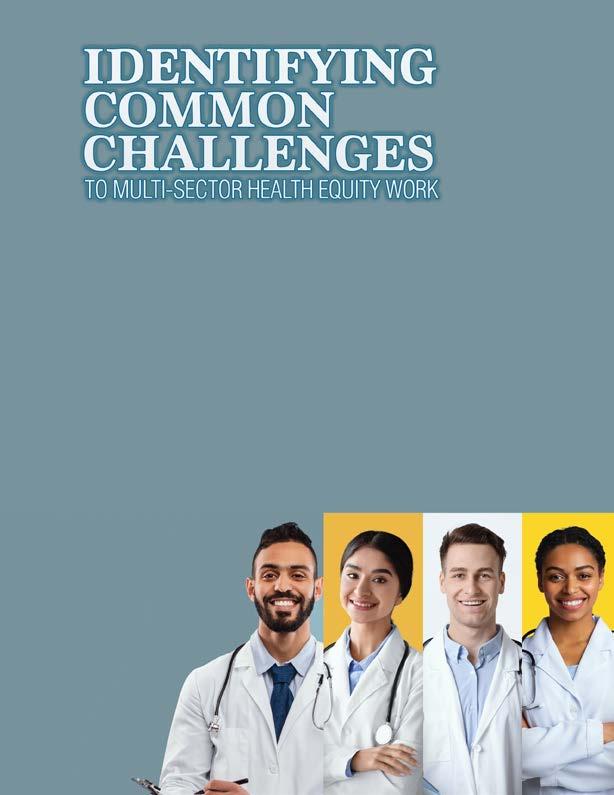
During the last several years, the concept of health equity has transitioned into mainstream conversation in healthcare communities. While explicit health equity work stretches back to the 1960s (Yao et al., 2019) and has innumerable champions, health equity has not yet been achieved within Santa Clara County. As firm believers in the power of physician advocates, the Santa Clara County Medical Association (SCCMA) is proud to have joined this work by conducting its first health equity analysis of the county over the last few months. The analysis consisted of a literature review and an interview series to better meet the needs of physician members that are interested in or already involved in health equity efforts. The literature review is available on the SCCMA website; insights from the interview series surrounding challenges implementing health equity are shared here.
Interview Overview
30-minute interviews of fifteen contacts were conducted virtually, over the phone, or in person using an adapted structure from the Institute for Healthcare Improvement Guide for Undertaking a 3-Part Data Review. Interviews were scheduled with: SCCMA members and physicians from El Camino Health System, Stanford Health Care, PAMF, and Santa Clara Valley Medical Center; Policy Aides and a Chief of Staff from multiple Santa Clara County Board of Supervisors Offices; and Santa Clara County departments and programs including the Perinatal Equity Initiative, the Office of Sustainability and Resilience, the Division of Social Justice and Equity, and the Public Health Department’s Health Equity Team. The interviews were conducted to identify underlying themes in health priorities across a variety of stakeholders on multiple institutional levels within the county. Additionally, these conversations allowed the identification of common sticking points for individuals and organizations trying to integrate health equity into their strategic plans and general practices.
Stakeholder Buy-in and Institutional Support
Most respondents expressed a strong desire to improve health outcomes in their area of influence. However, due to the complex nature of decision-making in health systems, county departments, and political spheres, individual support was deemed insufficient; oftentimes, respondents were not in positions with enough institutional power to enact changes, or they were not in environments with enough collective willpower to initiate new projects. The biggest challenge, then, was finding the correct language to convince more powerful stakeholders of the merits of investing in health equity-oriented programs or solutions. Some respondents reported success when they reframed the benefits of health equity projects in terms that stakeholders prioritized: namely, the fiscal benefits of investment in health equity. While these respondents expressed dissatisfaction or discomfort with needing to make this shift, they acknowledged that stakeholders with more influential positions had different responsibilities and duties to take into consideration when implementing wider changes.
Theodore Bussell
Challenging Internal Biases
Similar to their struggles generating stakeholder buy-in, some respondents mentioned that health equity work required a level of self-reflection that others may not be adequately prepared for. Reframing our approach to healthcare and wellbeing from a traditional biomedical perspective to an equity-based one necessitates internal analysis. This process can feel time-intensive and emotionally difficult, because it often challenges our core beliefs and identities. For example, physicians dipping their toes into health equity work may struggle to reconcile the conflicting (yet simultaneous) reality that their role in the healthcare system can harm communities as often as they help. It is important to note that this is not an indictment of individual character – rather, it allows for a more nuanced understanding of the impact physicians can have in their day-to-day interactions and wider communities, and it lessens the expectation for physicians to operate as perfect providers. Respondents mentioned that, while this internal reflection is difficult and requires ongoing work, they feel more empowered to make changes in their practices and more motivated to contribute to health equity work.
Data Collection
Data collection came up organically in many of the conducted interviews – respondents discussed frustration with the variety, amount, and granularity of data collected on their relevant populations. For some individuals, increased data collection and specificity would be a potent benefit, because it would allow them to measure the precise impact of interventions. Increased variety and amounts of data would also allow health equity workers to identify previously unknown issues that otherwise go unaddressed (For example, increasing the stratification of health outcomes for Asian populations shows major disparities in outcomes for Pacific Islander groups). For other respondents, concerns about the potential danger of granular data overrode most benefits as considerations extended into the safety of the communities being observed. In a time when collected data is actively being used for the identification and detainment of immigrants, questionnaires asking for information like immigration status are inappropriate; as a result, one respondent brought up the concept of “clumped questions” that can fulfill an organization’s need for specific demographics data without risking improper use of the information (For example, a question regarding immigration status may be reworded to ask if respondents fall under the umbrella of: immigrant, child of an immigrant, newly arrived, etc. This informs organizations about areas for potential service needs without singling out highly vulnerable immigrant populations).
Siloed Approaches to Health Equity
Lastly, some respondents that were actively working on health equity projects expressed that cross-sector collaboration was happening infrequently or ineffectively. Groups working toward the same strategic goal were beholden to their specific regulations and guidelines, and equity goals were not effectively integrated into daily work. Instead, equity projects were often given as additional tasks without adjusting workload or staffing. Respondents also pointed out that they did not have expertise in the specific areas that
their collaborators worked in, causing delays in project work. During discussions of potential solutions, some respondents thought that the creation of a new staff role requiring proficiency in multiple sectors would allow for more effective collaboration.
Conclusion
Ultimately, the analysis done by SCCMA is part of a larger movement for a more equitable future for all. We have striven to identify key insights into the challenges faced by health professionals, organizations, and policy makers in achieving meaningful progress toward this goal to unify understanding across these diverse sectors. Key obstacles identified include the need for greater stakeholder buy-in,confronting internal biases, improved data collection methods, and enhancing cross-sector collaboration. These challenges reflect the broader complexities of shifting from traditional healthcare models to more inclusive, equitable approaches that center on the needs of underserved and marginalized communities. While these hurdles are significant, there are clear paths to overcome them. Advocating for stronger social services and environmental regulations impacts community health on a structural level, addressing the root causes of health disparities before they have a chance to develop (Physician members interested in this kind of advocacy can make a meaningful impact by joining the SCCMA External Affairs Committee; reach out to emily@sccma.org for more details). Initiating conversations with institutional leadership about ways to integrate health equity goals within existing quality improvement plans is another important option by using limited resources more effectively. Providers can also screen for social determinants of health and connect their patients to services that meet their basic needs (such as CalFresh benefits, housing programs, or other supportive services), which makes a tangible difference in their health outcomes. Finally, building partnerships with community organizations that are working toward similar health equity goals creates stronger, more resilient, and more cohesive support networks to empower communities within the county. For more information about relevant resources, visit our Health Equity Next Steps document on the SCCMA website, under the Health Equity tab.
These actions, combined with ongoing efforts to address the challenges identified in this analysis, help make meaningful progress toward our goal of health equity in Santa Clara County and beyond.
About the author
Theodore Bussell is a first-year graduate student at the University of California, Berkeley Master of Public Health program, with a concentration in Health and Social Behavior. He hopes to combine this education with his background in anthropology, clinical research, and tobacco cessation counseling to better serve the needs of marginalized groups through policy change and community-based solutions. Theodore Bussell
FRIDAY, JANUARY 9, 2026
6 PM - 10 PM 800 MOFFETT BOULEVARD,
Tie Optional
$100 PER TICKET EARLY BIRD UNTIL NOVEMBER 15
$125 PER TICKET AFTER NOVEMBER 15
$800 FOR TABLE OF 8
Introduction
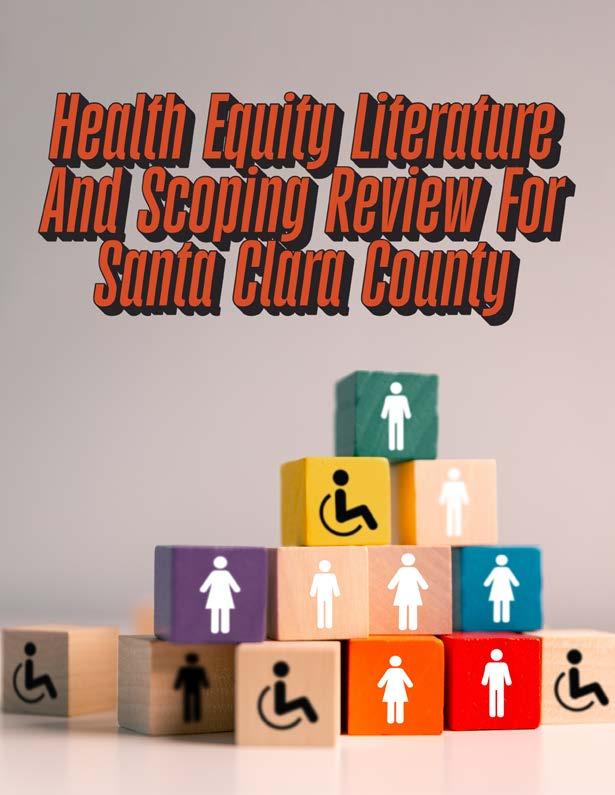
Health equity as a guiding heuristic has come to the forefront of discussion among researchers, policymakers, and health professionals. Defined by the World Health Organization as “the absence of unfair, avoidable or remediable differences among groups of people, whether those groups are defined socially, economically, demographically, or geographically or by other dimensions of inequality” (Health Equity, n.d.), health equity applies to myriad topics, and health equity-related interventions vary drastically in their design and implementation. To narrow scope on health equity interventions for adaptation to local needs, this literature review explores health priorities within Santa Clara County from a health equity lens. It emphasizes the importance of addressing health priorities from this lens to improve population health outcomes within the county, and it discusses examples of successful health equity initiatives that may be adopted by local providers.
Through the analysis of county-level demographic and health outcomes data, GIS-enabled environmental visualization, and interviews with public health officials and primary care providers in Santa Clara County, several key areas have emerged as critical to addressing local health equity needs. These areas include the provision of culturally relevant care, comprehensive assessment and fulfillment of basic needs, improvement of environmental conditions, enhanced screening and management of diabetes and prediabetes, and the development of financially sustainable models for health equity initiatives. Together, these focal points reflect the complex nature of health disparities in the county and underscore the importance of an integrated, evidence-based approach in shaping future public health interventions.
Theory
A concise theoretical foundation is important to understand the connection across the variety of work being done in the health equity space. Two models are particularly salient for this task: the social ecological model of health behavior change, and the planetary health model of environmental change.
The social ecological model is a shift from more traditional forms of health behavior theory. Instead of focusing heavily on individual education and agency or self-efficacy as pri-
mary influences of health behavior, such as with the health belief model (Alyafei & Easton-Carr, 2025), the social ecological model seeks to explain the impact of the relationship between multiple levels of internal and external factors. These factors include: intrapersonal factors, such as individual knowledge and skills; interpersonal processes, such as formal or informal social and support networks; institutional factors, such as social institutions with organizational characteristics and formal or informal rules for operation; community factors, such as relationships among organizations or institutions, and informal networks within defined boundaries; and public policy, such as local, state, and national laws and policies (McLeroy et al., 1988). Deepening the nuance and expanding the context around health behaviors and outcomes also expands understanding of key factors that should be addressed with health equity initiatives. For example, under the health belief model, a person eating fast food every day for lunch is perceived as making poor decisions out of a lack of nutritional education or active disinterest in healthy eating; under the social ecological model, this perception zooms out at the larger picture and asks if there are larger influences at play, such as a lack of time and access to purchase and cook healthy foods or are living in a food desert where healthy foods are unavailable near where they live or work. Solutions under the health belief model assume that an individual is initially choosing the wrong health option, whereas solutions under the social ecological model allow for the possibility that the options themselves are the factor to be changed.
Complementary to the social ecological model, the planetary health model conceptualizes health from a wider, interconnected perspective. Planetary health applies the definition of health as “a state of complete physical, mental and social wellbeing and not merely the absence of disease or infirmity” (WHO, 1946) to larger natural systems by highlighting the connection between the health of those systems and the health of human populations (Whitmee et al., 2015). Using a social ecological perspective, ecosystem health becomes an important external factor that must be accounted for during the creation and implementation of health-related interventions. For example, an intervention aimed at combating acute respiratory illness is more effective if it can address larger causes of respiratory illness, including air pollution and wildfire smoke.
Culturally Relevant Care
The provision of culturally relevant care takes many forms. Traditionally, cultural competence is held up as the gold standard for physician education in this respect. However, this creates an unachievable expectation for providers to become experts in innumerable cultures that differ from their own. In contrast, cultural competence’s evolution, cultural humility, encourages providers to understand that patients themselves are experts in their own experiences (Kibakaya & Oyeku, 2022; Tervalon & Murray-García, 1998). Proper implementation of this practice requires a shift of power between physician and patient, fostering a collaborative environment focused on the patient’s health rather than running the risk of unintentionally reinforcing structural harms including racism, classism, sexism, and homophobia (Alpert et al., 2020; Tervalon & Murray-García, 1998). During interviews with physicians in Santa Clara County, respondents shared their experiences working to produce this dynamic shift. Most physicians expressed difficulty with implementation due to well-established relationship dynamics between patient and provider in their practices. However, some respondents observed positive progress toward this goal after performing internal assessment, reflection, and growth regarding internal biases around race, gender, and power dynamics within the hospital system. Overall, continuous re-commitment to cultural humility and engaging in external education are identified as best practices for this work. Language access for patients is also an important issue to address within Santa Clara County under the umbrella of culturally relevant care. More than half of the county’s residents speak a language other than English at home (U.S. Census Bureau QuickFacts, 2024). Equitable health care enables patients of all backgrounds to provide informed consent regarding their care; for patients and providers who experience a language gap, a health equity lens necessitates the use of translation services to ensure providers can adequately communicate the nature of conditions and treatment options to the patient. Professional technology to facilitate translation comes in multiple forms: in-person translators, over-thephone interpretation (OPI), and machine translation. In-person translators provide the highest level of interactivity between patients and providers, with the disadvantage of higher cost, personnel hours, and the potential for limited language options; OPI sacrifices some nonverbal communication from in-person translation, but many translation services offer 24hour contact and a wider range of language options (Dowbor et al., 2015); and machine translation services are the lowest cost option, but their lower accuracy and precision in translating verbal phrases makes them better suited to translating asynchronous written communication in lower-stakes clinical settings (Zappatore & Ruggieri, 2024).
Regardless of translation method, patient-provider relationships are shown to improve in the presence of any translator, whether professional or ad-hoc, such as with family members or bilingual clinical or facility staff members that do not work in translator capacities (Heath et al., 2023). However, better clinical outcomes for patients and greater satisfaction on both ends of the therapeutic relationship are linked to professional translation services, likely due to the more complete communication of more complex medical information through high-
ly trained translators; use of professional translation services also reduces the loss of work efficiency among ad-hoc hospital professionals who are pulled from their official duties to perform translation (Dowbor et al., 2015). Additionally, the ethical obligations of professional translators means that they provide more objective information exchange than non-official sources.
Basic Needs
Basic needs are defined as access to food, shelter, clothing, and essential services including safe drinking water, sanitation, transportation, health, and education (Chiappero-Martinetti, 2023). When these needs are unmet, the consequences manifest not only in acute health crises but also in the exacerbation and persistence of chronic conditions. For example, housing insecurity has been linked to higher rates of hospital admissions, emergency department use, and chronic disease complications, including asthma, diabetes, and mental health disorders. Likewise, food insecurity increases the risk of both undernutrition and obesity, particularly in children, and has been associated with developmental delays, poor academic performance, and increased hospitalizations (Cook et al., 2004).
While healthcare providers are not necessarily positioned or empowered to implement new basic needs programs by themselves, they can identify unmet needs and advocate for policy changes that affect the wider health landscape. Their firsthand experience with patients affected by poverty, food insecurity, and housing instability equips them with the insight and credibility to push for upstream solutions, while simultaneously connecting their patients to existing resources. For instance, advocating for the allocation of public funds to programs that address food insecurity—such as Supplemental Nutrition Assistance Program (SNAP) expansion or community-based nutrition education—can have measurable impacts on individual and population health outcomes (Bradley et al., 2011). By framing these issues as integral to patient care rather than peripheral to it, providers can influence policy at the local, state, and federal levels. Research shows that community-level interventions targeting basic needs can reduce emergency department utilization and improve overall health equity (Deller et al., 2020; Drake et al., 2021), making it clear that addressing social determinants of health is not only a moral imperative but also a practical strategy for improving public health outcomes.
Environmental Conditions
Using the planetary health model, interventions that impact the environment connect easily to health equity. Air quality, water quality, and relative green space are important areas to address under this model, as each of these elements play a critical role in shaping community health outcomes.
Poor air quality – both indoor and outdoor – is a well-documented contributor to respiratory and cardiovascular diseases that disproportionately impacts immunocompromised people, the elderly population, and children (Boogaard et al., 2022; Cincinelli & Martellini, 2017; Manisalidis et al., 2020). Low-income populations and communities of color are also more likely to be impacted by outdoor air pollution due to their proximity to industrial zones, highways, and other pol-
lution sources (Boogaard et al., 2022). Fine particulate matter (PM2.5), ground-level ozone, and other pollutants are not evenly distributed across geographic or demographic lines, and as a result, environmental justice becomes a core consideration in applying the planetary health framework.
Water quality is equally necessary to address. Contaminated water sources – whether from agricultural runoff, industrial discharge, or aging infrastructure – can have long-term negative health consequences, particularly in communities where purification and filtration resources are limited (Helmer, 1999; World Health Organization, 2022). Similarly, water sources with imbalanced nutrient and mineral profiles prevent appropriate development in children (Abtahi et al., 2016; Helmer, 1999). Under the planetary health model, policymakers and public health professionals are urged to see water not just as a commodity, but as a shared ecological asset whose degradation has direct human costs.
Access to green space sits in congruence with these concerns, particularly in the context of urban heat events. Green infrastructure such as parks and tree cover can help mitigate heat, filter air pollutants, and protect local water quality by reducing runoff and erosion; access to functional green space is also associated with improved mental and physical health outcomes (Wolch et al., 2014). Native plants contribute more meaningfully than introduced types of green space in providing ecosystem services. Conversely, areas with low levels of tree cover and green space access are more vulnerable to the urban heat island effect, where the affected areas experience significantly higher temperatures than surrounding environments (Deilami et al., 2018). Analysis of GIS data using Trust for Public Land’s ParkServe device shows that the areas most at risk for the urban heat island effect are populated primarily with low-income communities of color, who generally have low English proficiency (ParkServe® | Trust for Public Land, n.d.). This elevated heat exposure increases the risk of adverse heat events in vulnerable populations, which can result in higher rates of hospital admission and health care utilization. Addressing disparities in green space access through urban planning, investment, and community engagement can therefore yield multiple benefits: reducing heat-related illness, improving air and water quality, supporting better mental health outcomes for historically underserved populations, and reducing health care expenditures.
Prediabetes and Diabetes Identification and Management
Prediabetes and diabetes represent a growing public health concern within Santa Clara County, with disproportionate impacts on low-income populations and communities of color, as seen in the 2025 Latino Health Assessment and through interviews of health providers in the county. These conditions not only strain individual and family health, but also place a considerable burden on healthcare infrastructure. From a health equity perspective, effective identification and management of prediabetes and diabetes requires a multi departmental approach that accounts for social determinants rather than relying solely on clinical intervention.
In congruence with the social ecological model, the persistence of diabetes in vulnerable populations cannot be separated from structural conditions. For example, individuals
facing food insecurity may be forced to rely on inexpensive, calorie-dense, nutritionally poor food options, which increase the risk of developing and worsening type 2 diabetes. Individuals with limited access to fresh produce and whole foods - whether due to affordability, transportation barriers, or neighborhood-level food deserts - have higher HbA1c levels and worse glycemic control (Kaiser et al., 2019). Local changes to food pantry operations, such as those implemented through partnerships with stakeholders in Santa Clara County, demonstrate how improving access to healthy, diabetes-appropriate foods at community distribution points have a measurable impact on disease management.
Financial Return on Investment
While a health equity lens is clearly beneficial for health outcomes, questions often arise regarding its financial feasibility; return on investment remains a major concern for justifying new or altered health initiatives to potential funders. While this perspective is important to acknowledge, it ignores the damage done by inefficient systems that do not properly serve their users. In the United States as a whole, the cost of insufficient investment in population health is keenly felt through excess healthcare spending on resolvable inequities – to the tune of approximately $320 billion (Davis et al., 2022) – and the diminishment of worker productivity and the workforce pool, caused by issues including lack of accessible transportation, poor education and nutrition, and unequal treatment of physical and mental illness or disability (Yerramilli et al., 2024).
Fortunately, research shows that investment in equitable health solutions can ultimately save money through the prevention of emergency care, chronic condition management, and acute treatment costs. From a secondary or indirect perspective, health equity interventions also increase employment opportunities, encourage socio-economic development, and stimulate local economies to generate profit far in excess of initial investment (Francis et al., 2023; Gebreyes et al., 2024; Meghea et al., 2021).
Though health initiatives should be oriented less toward return on investment and more toward their earlier-described community impact, long term financial sustainability is a real concern for organizations at all levels.
Conclusion
This literature review highlights the urgent need for health equity-driven interventions in Santa Clara County, grounded in both local data and broader theoretical frameworks. The integration of the social ecological and planetary health models underscores how complex, multi-layered systems –spanning from individual behavior to wide structural forces – shape health outcomes and disparities. By examining culturally relevant care, fulfillment of basic needs, environmental justice, and prediabetes and diabetes identification and management, this review reveals not only the areas where health equity can be improved, but also actionable strategies to address them.
Health equity is not a singular, healthcare based intervention, but it is instead a lens through which to design and implement a wide array of public health efforts. In Santa Clara County, this includes ensuring meaningful language access,
integrating care with social service referrals, mitigating environmental exposures, and investing in preventive care for chronic illnesses like diabetes. Importantly, these approaches are also economically rational: targeted, equity-focused interventions have been shown to reduce healthcare costs, improve system efficiency, and generate long-term returns across various sectors.
Ultimately, achieving health equity in Santa Clara County will require ongoing, cross-sector collaboration between public health agencies, healthcare providers, community organizations, and policymakers. As demonstrated in this review, applying a health equity framework enhances not only health outcomes but also economic and social wellbeing. Moving forward, efforts must be sustained, adaptive to community feedback, and grounded in data to ensure they remain responsive to the evolving needs of Santa Clara County’s diverse population.
References
• Abtahi, M., Yaghm aeian, K., Mohebbi, M. R., Koulivand, A., Rafiee, M., Jahangiri-rad, M., Jorfi, S., Saeedi, R., & Oktaie, S. (2016). An innovative drinking water nutritional quality index (DWNQI) for assessing drinking water contribution to intakes of dietary elements: A national and sub-national study in Iran. Ecological Indicators, 60, 367–376. https://doi. org/10.1016/j.ecolind.2015.07.004
• Alpert, A., Kamen, C., Schabath, M. B., Hamel, L., Seay, J., & Quinn, G. P. (2020). What Exactly Are We Measuring? Evaluating Sexual and Gender Minority Cultural Humility Training for Oncology Care Clinicians. Journal of Clinical Oncology, 38(23), 2605–2609. https://doi.org/10.1200/JCO.19.03300
• Alyafei, A., & Easton-Carr, R. (2025). The Health Belief Model of Behavior Change. In StatPearls. StatPearls Publishing. http://www.ncbi.nlm.nih.gov/books/ NBK606120/
• Boogaard, H., Patton, A. P., Atkinson, R. W., Brook, J. R., Chang, H. H., Crouse, D. L., Fussell, J. C., Hoek, G., Hoffmann, B., Kappeler, R., Kutlar Joss, M., Ondras, M., Sagiv, S. K., Samoli, E., Shaikh, R., Smargiassi, A., Szpiro, A. A., Van Vliet, E. D. S., Vienneau, D., … Forastiere, F. (2022). Long-term exposure to traffic-related air pollution and selected health outcomes: A systematic review and meta-analysis. Environment International, 164, 107262. https://doi.org/10.1016/j. envint.2022.107262
• Chiappero-Martinetti, E. (2023). Basic Needs. In Encyclopedia of Quality of Life and Well-Being Research (pp. 379–384). Springer, Cham. https://doi. org/10.1007/978-3-031-17299-1_150
• Cincinelli, A., & Martellini, T. (2017). Indoor Air Quality and Health. International Journal of Environmental Research and Public Health, 14(11), Article 11. https:// doi.org/10.3390/ijerph14111286
• Cook, J. T., Frank, D. A., Meyers, A. F., Berkowitz, C., Black, M. M., Casey, P. H., Cutts, D. B., Zaldivar, N., Skalicky, A., Levenson, S., Heeren, T., & Nord, M. (2004). Food Insecurity Is Associated with Adverse Health Outcomes among Human Infants and Tod-
dlers12. The Journal of Nutrition, 134(6), 1432–1438. https://doi.org/10.1093/jn/134.6.1432
• Davis, A., Dhar, A., Batra, N., Bhatt, J., Gerhardt, W., & Rush, B. (2022, June 22). US health care can’t afford health inequities. Deloitte Insights. https://www. deloitte.com/us/en/insights/industry/health-care/economic-cost-of-health-disparities.html
• Deilami, K., Kamruzzaman, Md., & Liu, Y. (2018). Urban heat island effect: A systematic review of spatio-temporal factors, data, methods, and mitigation measures. International Journal of Applied Earth Observation and Geoinformation, 67, 30–42. https:// doi.org/10.1016/j.jag.2017.12.009
• Dowbor, T., Zerger, S., Pedersen, C., Devotta, K., Solomon, R., Dobbin, K., & O’Campo, P. (2015). Shrinking the language accessibility gap: A mixed methods evaluation of telephone interpretation services in a large, diverse urban health care system. International Journal for Equity in Health, 14(1), 83. https://doi. org/10.1186/s12939-015-0212-9
• Francis, D. L., Dumka, N., Kotwal, A., & Pk, D. (2023). Why should we invest in health? Evidence from the lens of second-order benefits of health. Journal of Global Health Reports, 7, e2023059. https://doi. org/10.29392/001c.85124
• Gebreyes, K., Bhatt, J., Rabinowitz, D., Williams, M. A., Keita, M., & Gerhardt, W. (2024, September 25). The $2.8 trillion opportunity: How better health for all can drive US economic growth. Deloitte Insights. https://www2.deloitte.com/us/en/insights/industry/ health-care/health-equity-economic-impact.html
• Green spaces improve air quality. (2022, September 16). BreatheLife2030. https://breathelife2030.org/ news/green-spaces-improve-air-quality/
• Health equity. (n.d.). Retrieved June 20, 2025, from https://www.who.int/health-topics/health-equity
• Heath, M., Hvass, A. M. F., & Wejse, C. M. (2023). Interpreter services and effect on healthcare—A systematic review of the impact of different types of interpreters on patient outcome. Journal of Migration and Health, 7, 100162. https://doi.org/10.1016/j. jmh.2023.100162
• Helmer, R. (1999). Water quality and Health. Environmentalist, 19(1), 11–16. https://doi. org/10.1023/A:1006576620275
• Kaiser, M. L., Dionne ,Julia, & and Carr, J. K. (2019). Predictors of Diet-Related Health Outcomes in Food-Secure and Food-Insecure Communities. Social Work in Public Health, 34(3), 214–229. https://doi.org/ 10.1080/19371918.2019.1575313
• Kibakaya, E. C., & Oyeku, S. O. (2022). Cultural Humility: A Critical Step in Achieving Health Equity. Pediatrics, 149(2), e2021052883. https://doi. org/10.1542/peds.2021-052883
This is a partial list of references. For the full list see https://www.sccma.org/programs/health-equity.aspx
County of Santa Clara Appoints Dr. Sarah Rudman as Health Officer and Public Health Director
The County of Santa Clara has announced the appointment of Dr. Sarah Rudman, MD, MPH, as the County’s Health Officer and Public Health Director. Dr. Rudman, who has been serving in this role on an acting basis since April 2025, brings nearly a decade of dedicated service to the community in the County’s Public Health Department and an extensive background in infectious disease prevention, emergency response, and public health leadership.
“Dr. Rudman’s proven expertise, steady leadership, and deep commitment to equity and community health for all residents in our region make her the right person to lead our Public Health Department,” said County Executive James R. Williams. “Her values and vision will ensure that we continue to protect and promote the health of all of our residents, while addressing today’s most urgent public health challenges.”
Dr. Rudman began her tenure at the County of Santa Clara Public Health Department in 2016 as the Assistant Public Health Officer and STD/HIV Controller, where she led programs focused on prevention, treatment, and reducing health disparities in vulnerable communities. In that role, she strengthened partnerships with community-based organizations, expanded access to critical services, including doubling the hours of the STI clinic, and applied evidence-based practices to improve health outcomes.
She went on to serve as Deputy Health Officer and Director of the Infectious Disease and Response Branch, guiding the County’s preparations, training, and response to public health emergencies, including novel infectious disease threats. During the COVID-19 pandemic, Dr. Rudman was a central leader in shaping the County’s pandemic response, coordinating outbreak control strategies across diverse communities and serving as a trusted public spokesperson during an unprecedented time of uncertainty.
In addition to her local leadership, Dr. Rudman previously served as a Public Health Medical Officer and Epidemiologist for the California Department of Public Health (CDPH), where she was the State’s Bioterrorism Pathogen Subject Matter Expert and led investigations of communicable disease outbreaks across California, supported infectious disease policy development, and designed critical response strategies that helped inform statewide health protections.
“Dr. Rudman has been a steadfast leader in both crisis and calm,” said Board of Supervisors President Otto Lee. “From pioneering infectious disease initiatives to strengthening emergency preparedness, she has shown tireless dedication to protecting the health of all communities, especially those facing the greatest disparities.”
Throughout her career, Dr. Rudman has emphasized the importance of equity-driven public health. She has partnered with community-based organizations, faith leaders, schools, and
health care providers to reduce health disparities and ensure services reach underserved populations. During the COVID-19 pandemic, she worked with trusted messengers to expand testing and vaccination access in immigrant and low-income neighborhoods, addressing language, transportation, and digital access barriers.
Dr. Sarah Rudman, MD, MPH
Santa Clara County Health Officer and Public Health Director
Dr. Rudman has also played a key role in developing initiatives to improve health equity for communities of color, LGBTQ+ residents, and individuals experiencing homelessness. Her leadership reflects a commitment to ensuring that every resident of Santa Clara County — regardless of background, income, or immigration status — has the opportunity to live a healthy life.
“Dr. Rudman is a leader who combines technical knowledge with a deep understanding of community,” said Reymundo Espinoza, CEO Emeritus of Gardner Health Services. “Her work has consistently reflected compassion, innovation, and a commitment to equity. I know she will continue to bring those values to this role.”
Dr. Rudman has received numerous awards and recognitions for her work in the field of public health, including the 2021 Susan P. Baker Award for Public Health Impact, the National Association of County and City Health Officials’ Innovative Practice Awards in 2022 and 2025, and the 2019 CAPIO Epic Award for public health communications.
Dr. Rudman earned her B.A. in feminist studies with a minor in biology from Stanford University, her M.D. from Weill Cornell Medical College, where she graduated first in her class, and her M.P.H. in Epidemiology from the University of California, Berkeley. She is board-certified in internal medicine and infectious diseases.
Reflecting on her appointment, Dr. Rudman said: “Public health is about earning trust, solving complex problems, and working together to protect and improve the well-being of every member of our community. I am honored to serve Santa Clara County in this role and to continue advancing health equity and science-based solutions that make our communities healthier, safer, and more resilient.”
Reprinted with permission from Santa Clara County Public Health
BE AN ADVOCATE
Advocate for the social services and improved environmental regulations that will improve community health structurally Join the SCCMA External Affairs Committee to participate in these efforts through organized medicine with colleagues
Connect patients directly with services for meeting basic needs: Access to SNAP Benefits, housing programs etc. List and link the resources.
Talk to your institutional leadership about how to improve these goals within your healthcare center.
Partner with community organizations working to achieve these goals.
INVOLVED
If you are interested in joining the SCCMA External Affairs Committee please email emily@sccma.org
the QR Code to see the full list of health equity
HEALTH EQUITY Resources and Information
FURTHER EDUCATION/TRAINING
Lancet Comment - When are health professionals ethically obligated to engage in public advocacy?
ThoroughCare Blog - How Can Care Providers Address Health Equity?
Minnesota Medical Association - Inclusive Communication Guide for Language that Promotes Equity (PDF)
Minnesota Medical Association - Racism in Medicine: Truths from Minnesota Physicians (both for a CME course and videos from other physicians)
Website - AMA Center for Health Equity
Website - Structural Competency Working Group (Training on structural competency, empowers physicians)
Website - The Health Trust
Website - Race: The Power of an Illusion
Documentary Series: Unnatural Causes (UNNATURAL CAUSES is the acclaimed documentary series broadcast by PBS and now used by thousands of organizations around the country to tackle the root causes of our alarming socio-economic and racial inequities
USEFUL TOOLKITS, BEST PRACTICES
Publication - Six Steps to Improving Health Equity Using Quality Improvement and Patient Safety Tools
Blue Cross Massachusetts Foundation - Health Equity Action Plan Toolkit (PDF)
Government Alliance on Race and Equity - Racial Equity Toolkit: An Opportunity to Operationalize Equity
COUNTY-LEVEL HEALTH EQUITY METRICS
Santa Clara County Sustainability Master Plan
CALFRESH REGISTRATION / INFORMATION
Website - CalFresh Program Information
Website - BenefitsCal Homepage or Website - BenefitsCal Application Page
HOUSING / HOMELESS RESOURCES
Website - Santa Clara County Office of Supportive Housing
Website - Santa Clara Homelessness Prevention System (English, Vietnamese, Spanish, Chinese)
IMMIGRANT RIGHTS
Website - Santa Clara County Division of Equity and Social Justice - Office of Immigrant Relations Resource Page
Website - SIREN (Services, Immigrant Rights & Education Network)
Website - Amigos de Guadalupe Center for Justice and Empowerment Rapid Response Network (RRN)
The Rapid Response Network (RRN) in Santa Clara County is a community defense project developed to protect immigrant families from deportation threats and to provide accompaniment support during and after a community member’s arrest or detention.
Anyone can call the 24/7 HOTLINE (408) 290
CIVIL ENGAGEMENT
Website - Vot-ER Nonprofit Organization
Vot-ER is revolutionizing voter engagement by transforming routine healthcare visits into opportunities for civic empowerment, partnering with trusted health professionals, and reaching historically underrepresented communities
Email Us for More Information!
Emily
Coren
emily@sccma.org
2025 House of Delegates Summary
The 154th Annual Session of the California Medical Association (CMA) House of Delegates (HOD) in 2025 marked a pivotal year for governance reform, public health advocacy, and physician engagement in state and national health policy. The session, held under the leadership of outgoing CMA President Shannon Udovic-Constant, M.D., saw the installation of René Bravo, M.D. as CMA President, and the election of Anna Yap, M.D. as Vice-Speaker. The event was attended by twenty-six Delegates from Santa Clara County.
Governance and Operational Reforms
A major focus of the 2025 HOD was modernizing CMA’s in-
ternal governance structure and procedures. Notable updates included limits on delegate speaking times, requirements for advance submission of amendments, and explicit rules for conflict-of-interest disclosures.
The 2025 Special Gap Rules introduced a transitional governance philosophy to guide implementation of reforms from the Governance Technical Advisory Committee (GTAC). These reforms aimed to modernize resolution review, delegate engagement, and technology use. The transitional year encouraged pilot approaches and feedback collection before the 2026 full implementation.The transitional framework emphasized continuity in leadership, particularly by retaining experienced Rules Com-
mittee members through the transition to maintain institutional memory and accountability. A new Resolution Sorting Committee (RSC) was also established to streamline how resolutions are prioritized for House versus Board consideration, while Council Reference Committees (CRCs) were appointed to refine policy recommendations.
Major Policy Actions
A central policy debate focused on Responding to Federal Funding Cuts and Other Attacks on Health Care, Public Health, and Medicine (Report 1-25). This resolution established CMA’s strong opposition to Trump Administration policies undermining Medicaid, public health infrastructure, and evidence-based medicine.
The report articulated a strong, multifaceted policy response to growing threats to health care funding, public health infrastructure, and evidence-based medicine. It reaffirmed CMA’s commitment to protecting patient access, physician autonomy, and the scientific integrity of public policy.
At its core, the report focused on defending Medicaid (Medi-Cal in California) from federal funding cuts and administrative barriers. CMA formally opposed policies that make it harder for practices to operate or for patients to maintain coverage. This included resistance to burdensome redetermination procedures, cost-sharing mechanisms such as premiums and copayments, and “work requirements” that condition eligibility on employment or community service. CMA declared that such measures create unnecessary roadblocks for vulnerable patients and strain an already underfunded system.
The House also adopted a significant policy expansion supporting Medicaid coverage for undocumented Californians and advocating for continuous 12-month eligibility to prevent lapses in care. CMA backed funding to reimburse providers for assisting patients in maintaining eligibility and endorsed programs for navigators to help with documentation and outreach. The Association further opposed the sharing of patient data with immigration authorities, denounced immigration enforcement activities in or around health facilities, and established a new concept of “protective access zones” — spaces where enforcement actions are prohibited to preserve patient trust and safety.
On immigration and human rights, CMA reaffirmed its stance against deportations of health care workers and med-
ically vulnerable patients and advocated for humane, comprehensive immigration reform. It explicitly recognized mass deportations as a public health issue, citing their long-term physical and mental health consequences. CMA supported creating lawful paths to documentation for essential workers and endorsed the protection of asylum seekers and DACA recipients through new recommendation 55, which called for permanent pathways to citizenship.
The full report on the Actions of the 2025 House of Delegates can be found by scanning this QR Code.
In reproductive and gender-related health, CMA took a clear stance in favor of access to abortion, contraception, and gender-affirming care. The Association reaffirmed that Medicaid should cover these services, condemned any efforts to defund Planned Parenthood, and endorsed telemedicine-based medication abortion. CMA also pledged to defend physicians who provide evidence-based gender-affirming care from criminal or civil penalties.
The report went further to address broader public health and scientific integrity. CMA called for strong federal public health infrastructure, protection of scientific research from political interference, and transparency within national health agencies. It condemned the politicization of research, premature cancellation of grants, and disregard for expert input. CMA emphasized that science—not ideology—must guide federal health policy, empowering its Board to issue factual rebuttals to misinformation and to coordinate nationally to restore trust in health leadership.
Finally, CMA reaffirmed its support for telehealth expansion, pandemic-era flexibilities, vaccine access, and the preservation of federal nutrition assistance programs such as SNAP (CalFresh). The Association reiterated that equitable access to care, scientific evidence, and physician-led advocacy remain the foundation of California’s medical policy.
Where Medicine Meets the Future
A Day of Ideas, Energy, and Connection
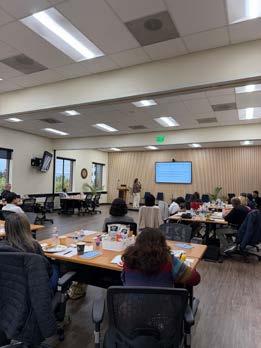
On September 20, 2025, the Santa Clara County Medical Association (SCCMA) transformed its office into a hub of innovation, learning, and collaboration for MEDFUTURE 2025.
The event brought together more than 70 physicians, healthcare leaders, and technology pioneers for a full day of sessions exploring artificial intelligence, physician-led innovation, and the future of digital health. From thought-provoking panels and keynotes to an interactive exhibition hall and startup pitch showcase, MEDFUTURE demonstrated SCCMA’s commitment to advancing medicine through innovation and connection.
Morning Networking & Opening Keynote
The day began with breakfast and networking among attendees representing medicine, research, academia, and technology. Conversations were had over craft coffee served fresh by the baristas of Fez Coffee, setting the stage for a collaborative and energetic program.
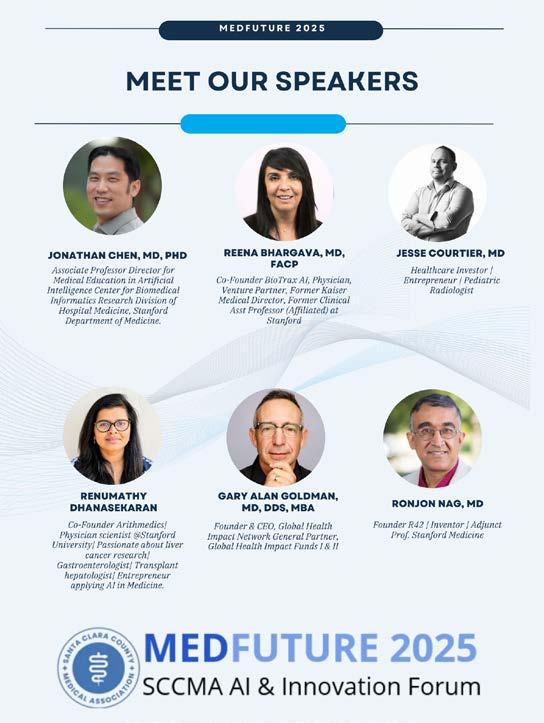
The conference officially opened with a keynote address by Jonathan H. Chen, MD, PhD, a Stanford physician, researcher, and national expert in clinical informatics. Dr. Chen leads a research group focused on combining human and artificial intelligence to deliver better medical care.
Before his medical training, Dr. Chen co-founded a company that translated his computer science graduate work into an expert system for organic chemistry, used worldwide in drug discovery and education. He has authored more than 100 publications and received recognition from the National Institutes of Health, National Library of Medicine, and the American Medical Informatics Association.
His keynote explored the evolving partnership between technology and human touch in healthcare, including the advancement of diagnostic accuracy through AI, the rise of medical AI agents, and the importance of empathy in clinical decision-making.
Session 1: Physicians as Innovators
Session 1 – “Physicians as Innovators: Navigating Roles in Health Tech and AI” was moderated by Reena Bhargava, MD, FACP, Co-Founder and CEO of BioTrax AI and former Medical Director at Kaiser Permanente. Dr. Bhargava has more than 20 years of experience in digital health, virtual care, and clinical informatics and is recognized for her work in developing AI-driven preventive-care systems.
The session featured two accomplished physician-entrepreneurs:
Dr. Renumathy Dhanasekaran, a Stanford physician-scientist and Co-Founder of Arithmedics, who is developing AI tools to improve clinical workflows in oncology and gastro-
enterology. She earned her PhD at Stanford University and continues to focus on advancing data-driven medical innovation.
Dr. Jesse Courtier, Founder of Sira Medical and former Chief of Pediatric Radiology at UCSF, who is pioneering the use of augmented reality in medical imaging. With over 70 peer-reviewed publications, Dr. Courtier’s work integrates technology and medicine to enhance how clinicians visualize anatomy and plan care.
Together, the panelists discussed the challenges and opportunities for physicians working at the intersection of healthcare and innovation.
Session 2: Fireside Chat – AI, Innovation & the Future of Healthcare
The next session featured a Fireside Chat with two leaders in artificial intelligence and medical entrepreneurship:
Dr. Ronjon Nag, Founder of R42 Group and Adjunct Professor at Stanford University School of Medicine. With more than 40 years of experience in AI and several successful company exits to Apple, Motorola, and BlackBerry, Dr. Nag is actively building and investing in next-generation AI and biotechnology companies. He is also a mentor to emerging innovators and a leading figure in the field of longevity science.
Dr. Gary Alan Goldman, Founder and CEO of the Global Health Impact Network & Funds, who focuses on empowering clinicians to lead the digital health revolution through innovation and investment. With a background in anesthesiology, informatics, and entrepreneurship, Dr. Goldman’s work supports the growth of clinician-led startups in a global healthcare ecosystem.
Their discussion examined how emerging technologies, business models, and medical leadership are converging to shape the future of healthcare innovation.
The Exhibition Hall
Following the morning sessions, attendees explored the Exhibition Hall, where companies from across the health technology ecosystem showcased innovations ranging from AI-powered diagnostics and novel therapeutics to digital
health platforms and workflow optimization tools.
The exhibition provided opportunities for early-stage startups and established firms to connect directly with clinicians and decision-makers, encouraging collaboration and cross-disciplinary learning.
Session 3: “Pitch Perfect” – Startup Showcase
The day concluded with Pitch Perfect, a fast-paced startup showcase connecting early-stage healthcare companies with physician leaders, healthcare innovators, and industry experts.
Participation in Pitch Perfect followed a competitive application process, in which early-stage startups submitted proposals outlining how their technologies advance patient care, improve system efficiency, or introduce innovative clinical models. A group of finalists was selected to present live at MEDFUTURE.
Each finalist delivered a brief, high-impact pitch, sharing their vision and solutions designed to transform healthcare. Presentations were followed by real-time feedback from physician panelists and venture capitalist, focusing on clinical feasibility, innovation potential, and patient impact.
The session provided a unique platform for innovators to connect with decision-makers and gain valuable insights to refine their solutions for real-world healthcare settings.
By the end of the day, MEDFUTURE 2025 had delivered a full spectrum of insights—spanning AI applications, physician entrepreneurship, and technology-enabled healthcare transformation.
The event reinforced SCCMA’s mission to support innovation, learning, and collaboration within the medical community, and to serve as a bridge between medicine and technology.
SCCMA extends sincere appreciation to our Gold Sponsor EastWest Bankto all speakers, exhibitors, and attendees who contributed to the success of MEDFUTURE 2025, and to the MEDFUTURE Committee for providing the platform to bring this event to life.
Physician Well-Being Day: Mind, Body & Balance — A Day of Renewal for SCCMA Members
On October 25, 2025, the Santa Clara County Medical Association (SCCMA) hosted Physician Well-Being Day: Mind, Body & Balance — a wellness event designed to address the ongoing challenges of physician burnout and promote sustainable well-being. The event brought together local physicians for a full day of education, connection, and rejuvenation at SCCMA office building in San Jose.
The program, which offered Continuing Medical Education (CME) credit, was carefully curated to provide attendees with actionable strategies to enhance resilience and alleviate the stresses of daily medical practice. Through a combination of evidence-based insights, interactive activities, and mindful reflection, participants explored how small, consistent actions can create meaningful and lasting change in their professional and personal lives.
A Day of Learning and Connection
The morning began with Nourish and Connect: Breakfast and Coffee, setting a warm and collegial tone for the day. This opening session encouraged informal networking and reconnection among colleagues before transitioning into a Guided Icebreaker, where participants engaged in light-hearted activities that underscored the importance of community and shared experience in medicine.
Our featured speaker, Tracy Cherpeski, MBA, MA, CPSC took the stage for her first session, Small Consistent Actions Creating Lasting Change, drawing from her extensive experience in executive leadership and wellness coaching, Cherpeski discussed the current landscape of physician burnout, emphasizing that resilience is built through incremental, intentional actions. Participants took part in a brief activity that highlighted how even small behavioral shifts — practiced consistently — can have a profound impact over time.
Following a brief break, the program resumed with Learn Practical Micro-Habits in Key Areas, where Cherpeski led a deeper exploration into three essential domains of well-being: Emotional Reset, Boundary Setting, and Brief Moments of Joy. Through guided reflection and interactive discussion, physicians identified personal strategies to incorporate these micro-habits into their routines. The session underscored the value of brief, mindful practices that can be integrated seamlessly into a busy clinical schedule — practices that protect mental health
while strengthening focus and fulfillment.
Mind-Body Integration and Collective Growth
The mid-day segment featured Yoga by Lynn-Marie, a restorative session that allowed participants to engage in gentle movement and mindfulness. Designed for the busy doctor, the yoga exercise showed participants how they can take a moment to practice yoga while sitting at their desk. The session provided a rare opportunity for attendees to pause, breathe, and reconnect with their bodies — an important reminder that physical well-being is inseparable from emotional resilience.
The day concluded with Commitment to Change, an introspective closing session where participants reviewed the day’s takeaways and identified one or more actionable commitments they could implement immediately. This closing activity encapsulated the event’s core message: that physician wellness is sustained not through grand resolutions, but through intentional, consistent practices that nurture balance and purpose.
A Shared Commitment to Physician Wellness
Throughout the event, Cherpeski’s engaging teaching style — characterized by humor, empathy, and practical insight — kept participants both inspired and grounded. Her approach reinforced that well-being is not a luxury, but a professional imperative that enhances patient care, workplace culture, and long-term career satisfaction.
Continuing the Journey
Physician Well-Being Day: Mind, Body & Balance is part of SCCMA’s ongoing Physician Wellness Program, which provides education, peer connection, and practical resources to support physician mental health and resilience. Events like these reaffirm SCCMA’s dedication to addressing burnout and fostering a culture of care — not only for patients, but for those who serve them.
As one attendee summarized, “Thank you so much for hosting this valuable event with fun, joy, and connection! Walked away with some new tools.” – Esther Luo, MD (Palliative Care Physician at Kaiser Permanente).
Stay in the loop with all our wellness events and socials by following SCCMA on LinkedIn!
Santosh
Pandipati,
MD, FACOG
MEMBERFEATURED
“I love that I have to know how to balance the interests of two human beings simultaneously, which can raise interesting philosophical conundrums. But most importantly, I love the patients I have to care for, and I love that we most often have wonderful outcomes.”
Dr. Santosh Pandipati acknowledges that our American healthcare delivery system is broken, ranking 55th in the world in maternal mortality despite spending $100 billion annually on pregnancy and newborn care. “Relying on an outdated prenatal practice model that is nearly 100 years old has exacerbated significant inequities in maternal, perinatal, and neonatal outcomes as well as having contributed to rampant clinician burnout,” says Dr. Pandipati. Indeed, ACOG estimates a shortage of nearly 10,000 OB/GYNS currently, that will swell to over 20,000 by 2050. He is focusing the second half of his career to seeking, innovating, and implementing new solutions to fundamentally transform maternal care delivery. This has culminated in the birth of his startup, L ōvu Health. “L ōvu is a clinically adjacent, agent-orchestrated care operating system that force-multiplies maternal intelligence through access and data. My co-founder and I are leveraging the best of emerging technologies monitor, triage, and wrap a digital care blanket of holistic services around expectant patients. We are reinventing the prenatal and postpartum journey. With frequent human interaction augmented by AI-driven insights, we can finally provide personalized pregnancy and postpartum care, restore access, and reduce inequities, all the while generating valuable information to ex-
pectant mothers as well as to their clinicians that can finally improve our abysmal perinatal outcomes.”
Dr. Pandipati received his medical degree from the University of Michigan, where he was elected to the Alpha Omega Alpha Honor Medical Society. He completed his OB/GYN residency at the University of Washington Medical Center in Seattle, where he also served as the administrative chief resident. During residency, he was selected as the Best Teaching Resident for medical students. Subsequently, Dr. Pandipati completed his maternal-fetal medicine fellowship at the University of Colorado Health Sciences Center in Denver.
Maternal-Fetal Medicine is a specialty that allows Dr. Pandipati to practice medicine in different ways. The ability to be a medical doctor, a surgical doctor, and a radiologic doctor all at the same time makes the specialty particularly appealing to him. This field allows him to interact with many physicians and surgical colleagues in a variety of specialties to coordinate care for complex patient problems that results in continuous learning and intellectual stimulation.
Dr. Pandipati has been a member of the Santa Clara County Medical Association for 6 years and is SCCMA’s 2025 President-Elect. He actively participates in the Environmental Health Committee and the SCCMA Council. Dr. Pandipati also serves as a Delegate to the CMA on behalf of SCCMA. He has previously written articles on climate change and women’s health for The Bulletin, and has been involved in co-authoring articles with Valley Water highlighting advanced water purification for water reuse — technology that will be essential for adapting to anticipated clean water shortages from droughts and flooding due to climate change. This Special Issue of The Bulletin featuring articles on water and health was published in 2022. After work-
ing for Obstetrix for 13 years and serving as Director of Maternal-Fetal Medicine at O’Connor Hospital from 2012 to 2022, he has started his own practice in Summer 2025: Silicon Valley Maternal-Fetal Medicine. SVMFM is the first independent maternal-fetal medicine practice in South Bay in 25 years and the first MFM practice accepted into UCSF Health’s Clinically Integrated Network. He is currently on staff with El Camino Hospital (Los Gatos and Mountain View) and Good Samaritan Hospital (San Jose).
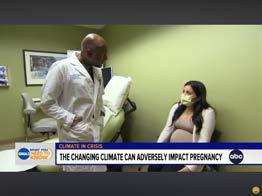
In his spare time, Dr. Pandipati seeks better understanding of the anticipated impacts of anthropogenic climate change on human health. For the past 22 years he has been educating healthcare professionals on health harms posed by the ongoing climate crisis. He spoke on this topic when he was featured on ABC News’ Daily Podcast (12/8/22) and Good Morning America 3. He has also been quoted in The Washington Post as well as mutiple podcasts on this topic. His published articles can be found in peer-reviewed journals as well as in Medium, a digital publishing platform that supports complexity and vital storytelling without giving incentives of advertising, where he provides a “Doctor’s Perspective” on climate change.
In anticipation of being SCCMA’s 2026 President, Dr. Pandipati states: “I am excited to continue the magnificent work of recent past Presidents, Dr. Gloria Wu and Dr. Fahd Khan, on the technological revolution underway in medicine, while bolstering physician well-being. I am also excited to continue the great work of past President and Chair of the Environmental Health Committee, Dr. Cindy Russell. As we have become the dominant species on this planet, we have inadvertently become our own greatest threat. In many ways these topics are all inter-linked, and doctors have no choice but to speak up and speak out on matters that affect the public’s health as well as
When he is not working, Dr. Pandipati enjoys spending time with his wife and children, traveling and doing photography (his work can be viewed on Flickr), speaking to professional audiences on climate change impacts to human health, writing (he has a number of pieces published in Medium), hiking, watching Star Trek, working out, mindfulness meditation, reading non-fiction and the occasional novel, trying out new restaurants, and spending time with his pooch.
that of our profession.”
What is the best advice you have been given throughout your career so far?
Remain calm. Be patient. Work through a problem without fear and with diligence. Solutions are often accessible with a clear mind and concentration of effort. I am not sure anyone actually told me any of that, but it is what I have observed among the best clinicians I have worked with. It is a pattern of behavior and thought I have endeavored to incorporate into my own practice of medicine. It is not easy to do, as we are all human and subject to varying levels of emotion, ego, and fear. But I remind myself that we can be more than these feelings, especially in times of challenging patient care.
If you weren’t a physician, what profession would you like to try?
I always loved space, cosmology, and time. Had I not been a physician I would have become an astrophysicist or cosmologist. Better understanding of the universe means better understanding of humanity, of who we are and how we came to be. Nothing could be more profound of an investigation for me. But if going back to school and discovering the math is too hard – well then, I would love to be a professional photographer! I obtain immense joy studying the world through a camera lens, and even have my photography displayed throughout my med-
ical practice.
What is the most important thing you learned in medical school or residency?
Factual knowledge changes, and while it’s absolutely critical to keep up-to-date, it’s even more important to be open to the human condition - to understand that suffering is universal, that the most important thing we as clinicians can offer to our patients in accompaniment to the medicine or surgery we provide is our compassion, humility, and trust.
What do you think will be some of the lasting impacts of the COVID pandemic on the health care system?
COVID fundamentally altered the way clinicians interact with patients. Patients were already significantly ahead of many clinicians in their acceptance of mobile platforms for communication with family and work, and in their use of personal digital health devices to proactively monitor their health, but it took a crisis of immense proportions to move the healthcare industry to where patients have been. Telehealth is here to stay, largely because of COVID. We have seen a blossoming of telehealth services and startups as well as internet-based resources, and combined with remote wearable technologies, many of us have realized that much of the care we provide does not have to be in the immediate physical presence of patients. Please don’t misunderstand — a lot of care has to be in physical contact with patients, but we now have the ability to learn deep clinical insights from big data so as to hybridize and personalize care for each patient, and not just use a “one-sizefits-all” approach. This is a turning point in medicine, and one that will be extolled by future historians.
Dr. Pandipati and his wife attended the 2022 SCCMA Annual Awards Gala at the Fairmont Hotel in Downtown San Jose.
Dr. Pandipati with his beloved family pooch.
California wrapped up its 2025 legislative session on October 12, sending 1,247 bills to the Governor’s desk – just over half of the 2,416 that were introduced this year. Amid shifting political priorities and an ever-changing policy landscape, each year feels more chaotic and frenetic than the last, and 2025 was no exception.
California lawmakers returned in January thinking the big issue of the year would be the budget deficit, which would grow to $12 billion by May, only to be faced with the catastrophic wildfires in Los Angeles – the most expensive disaster in the state’s history and one that hit close to home for many physicians who were both victims and first responders. Only a few months after these fires, Congress began debating HR 1, a sweeping tax and spending bill that drastically reduced health care funding. The ramifications of its passage will be felt in the California budget for the foreseeable future.
The summer recess – a period typically devoted to negotiating lingering amendments to myriad bills – was spent laying the groundwork for Proposition 50, which would drastically redraw California’s congressional district lines. The national debate has largely dominated the legislative discussion in Sacramento, and many of the state’s new policy proposals were aimed at responding to federal actions.
The end of session also saw a leadership change in the Senate with Pro Tem Mike McGuire being replaced by Senator Monique Limón, who represents Santa Barbara, Ventura and Oxnard. Senator Limón takes the reins November 17, and we expect allies like Senator Christopher Cabaldon, Senator Angelique Ashby and Senator Akilah Weber Pierson, M.D., to be elevated into important leadership and committee positions.
On the following pages are highlights of the California Medical Association’s (CMA) major legislative priorities this year.
California Medical Association 2025 Legislative Wrap Up
Prior Authorization
After years of roadblocks to prior authorization reform, CMA introduced four bills to reform the state’s prior authorization systems. CMA’s prior authorization reform package included common-sense reforms to streamline prior authorization processes, expedite critical care for patients and free up physicians’ time to focus on patients, not paperwork.
Earlier iterations (SB 277, SB 516) were previously held because of cost and implementation concerns raised by the California Department of Managed Health Care (DMHC), so we tailored this year’s four-bill prior authorization reform package to be efficient to implement in light of the state’s budget deficit. Ultimately, we were successful in sending two bills to the Governor’s desk, SB 306 and AB 512, with the former signed and the latter vetoed. SB 306 gives the administration the authority to remove prior authorizations on a code-by-code basis, as well as to require reporting from the health plans to give us a better picture of how prior authorization is being deployed at the ground level. Another bill in the package, AB 539, advanced to the Senate Health Committee. CMA will resume working to advance it through the legislature in the 2026 legislative session. The bills in CMA’s prior authorization reform package included:
+ SB 306 (Becker): Requires annual reporting of prior authorization data from health plans and gives DMHC the authority to remove prior authorization statewide on a code-by-code basis. Signed by the Governor.
+ AB 512 (Harabedian): Shortens the decision timeline for prior or concurrent authorization requests for health plans and health insurers to be no longer than three business days for standard requests (instead of five days in existing law) if the request is made by electronic submission, and 24 hours for urgent requests involving an imminent and serious threat to the enrollee’s health if the request is made by electronic submission or 48 hours. Vetoed by the Governor.
+ AB 510 (Addis): Requires that appeals of prior authorization denials be performed by a provider of the same or similar specialty. This will help ensure that providers can discuss prior authorization denials with a professional peer who understands the recommended treatment and underlying condition. Held in Assembly Appropriations Committee.
+ AB 539 (Schiavo): Extends the validity of an approved prior authorization to one year (current industry standard is between 60-90 days). This will provide patients with a longer window of time to receive medically necessary care and avoid cumbersome prior authorization review (and ultimately appeal) processes. Currently in Senate Health Committee.
Liability Protections
CMA was successful in stopping a bill (twice!) sponsored by the Consumer Attorneys of California that would have increased medical malpractice costs.
SB 29 (Laird) would have extended pandemic-era legal exceptions that make it easier to sue for pain and suffering damages – including in medical malpractice cases – undoing the careful balance struck in AB 35’s historic reforms to the Medical Injury Compensation Reform Act (MICRA). Unless amended to exclude medical malpractice claims, this bill would have significantly increased litigation, settlement and damages costs across California’s health care system – costs that would have been passed on to physician practices, health plans and
the state itself. These increased costs would have further destabilized a system already reeling from drastic state and federal budget cuts, including the devastating multibillion-dollar Medicaid cuts under HR 1.
CMA was successful in getting the bill held in Assembly Appropriations due to its high costs to both the state and the health care system. However, in an unusual procedural move, the bill was resurrected on the evening of September 2, the very last day for bills to be amended. The CMA Government Relations team quickly sprang into action, ensuring that every single Assemblymember had been contacted by a CMA representative by 10 a.m. the following morning. The bill did not have the required votes to pass and was placed on the inactive file on the very last day of session. This bill will likely return next legislative session, but CMA will continue working with legislators to ensure that any bill that passes does not affect medical malpractice cases.
Private Equity
CMA also sponsored SB 351 (Cabaldon), which codified Medical Board of California guidance restricting nonphysicians from making business decisions that infringe upon the clinical determinations of physicians. The bill also gives the California Attorney General authority to bring its own enforcement actions, which is a critical new policy. Currently, violations of the corporate practice of medicine either have to be enforced through costly private litigation or through regulatory actions taken by the medical board. Private lawsuits, even if they are successful, typically do not provide financial remuneration, and the medical board has not devoted any resources to enforcing this law. Giving the Attorney General this power means the state can take enforcement action without having to rely solely on civil lawsuits filed by physicians.
Artificial Intelligence
The rapid rise of artificial intelligence emerged as a major new policy front in the California Legislature this year. Last year’s CMA-sponsored SB 1120 (Becker) established a requirement that health plans maintain physician oversight when using AI to approve or deny claims. Building on that foundation, CMA this year sponsored AB 489 (Bonta), which prohibits AI systems or similar technologies, such as internet-based chatbots, from misleading patients into thinking they are interacting with licensed health professionals.
CMA also led a health care coalition to defeat AB 1018 (Bauer-Kahan), a sweeping proposal that would have imposed complex disclosure, auditing and reporting mandates on anyone using automated decision-making tools. As written, the bill would have treated every physician in California as a “deployer of AI,” subjecting routine technology use to onerous compliance requirements and potential enforcement actions. Had it become law, the bill would have severely disrupted the current use of AI in health care and deterred future innovation and technological advancement.
Thanks to CMA’s advocacy, the bill was placed on the inactive file, preserving physicians’ ability to adopt innovative tools while policymakers continue working toward a more balanced regulatory framework.
On the following pages, you will find summaries of many of the key bills that CMA was involved with in 2025.
Priority Opposed
AB 280 (Aguiar-Curry) – Provider Directories
Status: Two-Year Bill – Held on Senate Floor Inactive File.
This bill would have imposed new mandates related to the accuracy and maintenance of health plan provider directories. As written, this bill would have significantly increased administrative burdens without guaranteeing improved directory accuracy and would have put providers at risk of being reimbursed at the out-of-network amount – set unilaterally by the plan and often significantly below market value – when a consumer is misled by inaccurate or outdated provider directory information.
AB 396 (Tangipa)
– Needle and Syringe Exchange
Status: Two-Year Bill – Held in Assembly Health Committee. This bill would have required every needle provided through a needle exchange program to carry a unique identifier and required all needles through exchange programs to be properly disposed of. Any needle that had not been properly disposed of could be traced back, and the offending entity that donated the needle would be fined $10,000 per needle. This bill would have created significant costs that threatened the existence of needle exchange programs.
AB 1018 (Bauer Kahan)
– Artificial Intelligence
Status: Two-Year Bill – Held on Senate Floor Inactive File.
This bill would have required incredibly burdensome administrative regulations on both developers and deployers of AI. As written, every physician in the state would have been considered a “deployer of AI.”
AB 1215 (Flora) – Hospitals: Medical Staff Membership
Status: Two-Year Bill – Held in Assembly B&P Committee. This bill would have required that dentists, podiatrists, clinical psychologists, nurse practitioners, nurse anesthetists, nurse midwives and other health care professionals be admitted to an organized medical staff. This bill failed to account for the diverse circumstances and requirements of different health care facilities and would have put a physician’s licensure at risk by linking enforcement of this bill to disciplinary actions by the Medical Board.
AB 1453 (Tangipa) – Contraception Information
Status: Two-Year Bill – Held in Assembly Higher Ed Committee. This bill would have required the California State University and requested the University of California to provide all students with adoption information when they receive contraception or emergency contraception from their campus
health center or pharmacy. This was an inappropriate mandate that would have undermined efforts to provide students with the reproductive health care they need.
AB
1450 (Hoover) –
California Children’s Services
Program: Providers
Status: Two-Year Bill – Held in Assembly Health Committee. This bill would have allowed the Department of Health Care Services to approve advanced practice providers – including nurse practitioners, physician assistants and certified registered nurse anesthetists – to practice independently within the California Children’s Services program. Allowing advanced practice providers to practice independent of physician supervision is inappropriate, dangerous and at odds with delivering the safest and most effective patient care.
SB 29 (Laird) – Civil Actions: Decedent’s Cause of Action
Status: Two-Year Bill – Held on Assembly Floor Inactive File. This bill would have made permanent the ability for a surviving descendant or spouse to recover non-economic damages (pain and suffering) that otherwise would have been awarded to the plaintiff had they survived. As written, this would have included medical malpractice claims, which should be excluded in light of MICRA modernization negotiated through AB 35 (Reyes, 2022).
SB 579 (Padilla) – Mental Health and AI Working Group
Status: Two-Year Bill – Held in Senate Appropriations Committee. This bill would have required the Government Operations Agency to appoint a working group to study the impacts and role of artificial intelligence in mental health treatment environments, but did not require a physician to be appointed. CMA requested amendments to ensure that the working group included a physician; however, the bill was held before amendments could be taken.
SB 747 (Wiener) – Wages: Behavioral Health and MedicalSurgical Employees
Status: Two-Year Bill – Held in Senate Rules Committee. This bill would have required a “covered employer” to report confidential behavioral health employee and medical-surgical employee compensation information to the Department of Industrial Relations. This bill would have diverted resources away from patient care and posed privacy and data security concerns. In September, this bill was amended and no longer pertains to the practice of medicine.
Successfully Negotiated
AB 277 (Alanis) – Behavioral Health Centers, Facilities, and Programs: Background Checks
Status: Two-Year Bill – Held in Assembly Human Services Committee. This bill requires any person providing behavioral health treatment to undergo a background check. CMA ensured that this would not apply to physicians holding a current and valid license, as the California physician licensure process includes a fingerprint-based background check.
AB 290 (Bauer-Kahan) – Emergency Services: Physician Fines
Status: Signed by Governor (Chapter 475, Statutes of 2025).
This bill would have increased penalties for physicians who fail to provide emergency health care by raising monetary penalties from $5,000 per violation to $1 million per violation and establishing additional civil liability for physicians that violate injunctions related to a prior failure to provide emergency health care. Due to opposition, the bill was ultimately gutted and amended and no longer pertains to the practice of medicine, moving CMA to a neutral position.
AB
316 (Krell) – Artificial Intelligence
Status: Signed by Governor (Chapter 672, Statutes of 2025).
This bill prohibits defendants that develop or use AI from asserting a defense that AI autonomously caused harm in a legal action. While not intended to target physicians, this bill unintentionally would have put physicians at risk any time they use AI tools. Amendments were taken that allow defendants to present information for any other affirmative defense, including evidence relevant to causation or the comparative fault of any other person or entity. CMA’s amendments to explicitly exempt physicians from this bill were rejected, but other amendments provide a pathway for physician liability protection.
AB
348 (Krell) – Full-Service Partnerships
Status: Signed by Governor (Chapter 688, Statutes of 2025).
This bill establishes criteria for serious mental illness to presumptively be eligible for a full-service partnership through their county and funded by the Mental Health Services Act. CMA collaborated with the California State Association of Psychiatrists to address concerns and ensure those with behavioral health conditions would also be presumptively eligible.
AB 360 (Papan) – Menopause Survey
Status: Two-Year Bill – Held in Assembly Appropriations Committee. This bill would have created a menopause training survey to be provided to all physicians and surgeons upon license renewal to
determine the level of menopausal training they have received. While the survey would have been anonymous and optional, mandating the creation of an overly broad survey at license renewal was an inappropriate avenue to gather such information and would have likely resulted in costs to the Medical Board of California and therefore increased licensing fees. Amendments were taken that instead create a study on menopausal training by the Department of Health Care Access and Information and the medical board, removing CMA’s opposition.
AB
432 (Bauer-Kahan) – Menopause CME Mandate
Status: Vetoed by Governor.
This bill would have imposed an ongoing continuing medical education (CME) mandate on menopause for all general internists, family physicians, obstetricians and gynecologists, cardiologists, endocrinologists, and neurologists who have a patient population composed of 25% or more adult women under 65 years of age. CMA supports efforts to improve access to educational opportunities; however, CMA opposes mandatory CME requirements, as physicians are best positioned to determine which courses are most pertinent to their practice and patient population. This bill would have broadly captured a wide range of physicians whose practices do not involve diagnosing or managing menopause. The bill now creates an incentive program that allows physicians who take a CME course in menopause to receive two credits for every one hour, removing CMA’s opposition.
AB 583 (Pellerin) – Death Certificates
Status: Signed by Governor (Chapter 271, Statutes of 2025).
This bill allows nurse practitioners to be the attesting provider on death certificates when practicing in a skilled nursing or intermediate care facility. Amendments re-drafted the bill in different code sections to enable implementation. A neutral position was recommended because the overwhelming majority of nurse practitioners still practice under physician supervision. CMA offered amendments that would have only allowed independently practicing nurse practitioners to complete and attest on a death certificate.
AB 601 (Jackson) – Child Abuse Reporting
Status: Two-Year Bill – Held in Senate Appropriations Committee. This bill introduces a variety of changes to mandated reporting for general neglect, including establishing an alternative response approach and creating a new standardized curriculum for mandated reporters that must be completed within the first three months of employment. CMA worked to ensure that physicians – who already undergo mandated reporting training –were exempted from this new requirement, moving us to neutral.
AB 669 (Haney) – Substance Use Disorder Coverage
Status: Two-Year Bill – Held in Senate Appropriations Committee. This bill prohibits concurrent or retrospective review of medical necessity for the first 28 days of an inpatient substance use disorder stay during each plan or policy year. However, the bill also granted psychologists the ability to prescribe drugs. CMA moved to neutral after psychologists were removed from the list of those who can prescribe drugs.
AB 692 (Kalra) – Employment Contracts
Status: Signed by Governor (Chapter 703, Statutes of 2025).
This bill makes certain contract terms unlawful, including a term requiring a worker to pay an employer for a debt if the worker’s employment is terminated. Amendments moved CMA to neutral by addressing concerns that employers would be prohibited from collecting amounts paid for training in instances where the employee was stealing or engaged in insubordination, sexual harassment or other misconduct. Amendments now allow for termination of employment prior to the retention period at the election of the employer for material noncompliance or misconduct.
AB 849 (Soria) – Medical Chaperones
Status: Signed by Governor (Chapter 442, Statutes of 2025).
This bill requires required licensed health facilities to provide a medical chaperone to patients during sensitive examinations and required that both a hard copy and electronic notice be given to the patient or their legal guardian. CMA had concerns after the bill was amended to include “providers,” creating redundant requirements for physicians. CMA moved to neutral once amendments were taken that provided a mechanism to reschedule patient exams if a medical chaperone was not available and reduced administrative burdens by requiring only a one-time notification.
AB 876 (Flora) – Nurse Anesthetists: Scope of Practice
Status: Signed by Governor (Chapter 169, Statutes of 2025).
This bill would have allowed certified registered nurse anesthetists (CRNAs) to practice independently, without physician oversight, in hospitals, outpatient facilities and dental offices. This bill would have fundamentally changed how anesthesia care is delivered by removing critical safeguards. Recent amendments, as a direct result of CMA advocacy, struck many of the concerning provisions that would have allowed CRNAs to practice independently of any physician order or supervision. These amendments clarify that when CRNAs are providing anesthesia care in any health care setting, it must be under an order from a physician – including preoperative, intraoperative, postoperative and pain management care. This largely clarifies existing CRNA practice in California.
AB 970 (McKinnor) – Child Abuse and Neglect Reporting
Status: Two-Year Bill – Held in Assembly Public Safety Committee. This bill proposes a pilot program to evaluate a new model for mandatory child abuse reporting. The program would incorporate internet-based tools and decision-support systems to assist mandated reporters in assessing whether a report should be made. Amendments clarify that participation in the program is voluntary and affirm that mandated reporters –particularly physicians – retain full authority and discretion in making reporting decisions.
AB 1172 (Nguyen) – Antiseizure Medication
Status: Signed by Governor (Chapter 448, Statutes of 2025).
This bill would have authorized a licensed adult program facility to administer inhalable seizure medication to disabled adults at the facility by trained volunteers in emergency situations. CMA had concerns regarding physician liability for incorrect administration of these medications by volunteers and worked with the author to clarify that participating physicians cannot be held liable for the actions of volunteers following their administration and observation instructions, moving CMA to neutral.
AB 1196 (Gallagher) – Health Facilities: Cardiac Surgery
Status: Two-Year Bill – Held in Assembly Appropriations Committee. This bill would have changed the requirements for cardiac surgical teams performing extracorporeal bypass to consist of a minimum of one surgeon and two additional medical staff persons, down from three surgeons. CMA coordinated with the California Society of Cardiologists to narrow the bill and ensure that requirements reflect current professional standards of care.
AB 1415 (Bonta) – California Health Care Quality and Affordability Act
Status: Signed by Governor (Chapter 641, Statutes of 2025). This bill would have broadened the definition of entities captured under the California Office of Health Care Quality and Affordability Act by including management service organizations (MSOs), hospital systems, and hedge funds under the definition of applicable entities. Additionally, this bill specified that a physician organization would be captured if it is under the same ownership or control as a hospital. Amendments, taken in collaboration with CMA, deleted the bill’s newly created definition of a health system. This change was adopted in response to CMA’s concerns that the bill would have subjected physician organizations that are part of larger health systems to onerous data and reporting requirements under the Office of Health Care Affordability.
SB 297 (Hurtado) – Valley Fever Screening
Status: Two-Year Bill – Held in Assembly Appropriations Committee. This bill would have required the California Department of Public Health to track and identify regions with Valley Fever and mandate that adult patients receiving primary care services in high-incidence regions be offered a Valley fever screening test in a culturally competent and linguistically appropriate manner. CMA opposed this mandate as it overrides a physician’s clinical judgment in determining whether testing is appropriate. Amendments were negotiated to remove the mandate that every adult patient be offered a test, instead clarifying that patients in high-risk areas need to be screened according to current clinical standards, and ensuring that physicians are not subject to any licensing actions if they decide – based on their professional judgment – not to screen or offer a test for Valley fever.
Priority Support
AB 82 (Ward) – Health Care: Legally Protected Health Care Activity
This bill extends existing privacy laws and protections to health care professionals providing gender-affirming care and services. Additionally, this bill prohibits testosterone and mifepristone from being reported to the Controlled Substances Utilization Review and Evaluation System.
AB 260 (Aguiar-Curry) – Sexual and Reproductive Health Care
Status: Signed by Governor (Chapter 136, Statutes of 2025).
This bill allows a pharmacy to dispense abortion medication without a physician’s name or pharmacy information, so long as a log with this identifying information is maintained. The bill specifies that this log may only be accessed via subpoena. AB 260 also protects healing arts practitioners from civil or criminal actions for prescribing or furnishing abortion medication and prohibits healing arts boards from taking any licensing or disciplinary action against a practitioner solely because they were disciplined or convicted in another state for prescribing abortion medication.
AB 408 (Berman) – Physician Health and Wellness Program
Status: Two-Year Bill – Held in Senate Judiciary Committee.
This bill would establish a physician health and wellness program under the Medical Board of California to support physicians’ health and protect patients. The bill would align California with national best practices to address mental health and burnout issues. This bill would protect patients by connecting impaired or at-risk physicians with treatment.
AB 416 (Krell) – Involuntary Commitment
Status: Signed by Governor (Chapter 691, Statutes of 2025).
This bill empowers emergency department physicians to authorize 5150 holds on patients suffering from severe mental illness and in crisis.
AB 447 (Gonzalez, Mark) – Involuntary Commitment
Status: Signed by Governor (Chapter 363, Statutes of 2025).
This bill allows physicians or authorized prescribers to dispense an unused portion of a medication to an emergency department patient upon discharge, as long as the drug is not a controlled substance, has been ordered and administered specifically to the patient, and is required for continued treatment of the patient.
AB 544 (Davies) – Electric Bicycles
Status: Signed by Governor (Chapter 36, Statutes of 2025).
This bill updates existing law to align electric bicycles with regular bicycles regarding required safety equipment. It adds requirements for minors to wear a properly fitted and fastened helmet that meets certain safety standards when operating an e-bike and prohibits the sale of a helmet for an e-bike that does not meet those standards.
AB 951 (Ta) – Health Care Coverage: Behavioral Diagnoses
Status: Signed by Governor (Chapter 84, Statutes of 2025)
This bill prohibits insurance companies from requiring patients to undergo repeated re-diagnoses for pervasive developmental disorders and autism as a condition of maintaining their insurance coverage.
AB 1127 (Gabriel) – Firearms: Converter Pistols
Status: Signed by Governor (Chapter 572, Statutes of 2025).
This bill prohibits the sale of certain semi-automatic handguns that can be easily converted to automatic machine guns.
SB
40
(Wiener) – Health Care Coverage: Insulin
Status: Signed by Governor (Chapter 737, Statutes of 2025).
This bill prohibits health plans from imposing a copay of more than $35 for a 30-day supply of insulin and prohibits plans from imposing step-therapy protocols as a prerequisite to authorizing coverage of insulin.
SB 41 (Wiener) – Pharmacy Benefits
Status: Signed by Governor (Chapter 605, Statutes of 2025).
This bill would prohibit pharmacy benefit managers (PBMs) from requiring use of an affiliated pharmacy or imposing conditions that would discourage the use of a non-affiliated
pharmacy. It would also limit a PBM’s income to the fee for the pharmacy benefit management services provided. SB 41 bans spread pricing and mandates that drug rebates go to payers, not PBM profits.
SB 439 (Weber-Pierson) – California Health Benefit Review Program
Status: Signed by Governor (Chapter 318, Statutes of 2025).
This bill extends the operation of the California Health Benefit Review Program and the Health Care Benefits Fund and authorizes the continued assessment of the annual charge on health plans for that purpose through fiscal year 2032–2033.
CMA-Sponsored
AB 489 (Bonta) – Health Care Professions: Deceptive
Terms or Letters: Artificial Intelligence
Status: Signed by Governor (Chapter 615, Statues of 2025)
This bill would ban companies from marketing artificial AI chatbots as licensed medical professionals. AI can be a useful tool for physicians and patients; however, patients need to know when they’re communicating with an AI chatbot versus a trained health care professional.
AB 510 (Addis) – Prior Auth: Same or Similar Specialty
Status: Held in Assembly Appropriations Committee.
This bill would have required that appeals of prior authorization delays, modifications, or denials be performed by a provider of the same or similar specialty. This would have helped ensure that providers can discuss prior authorization denials with a professional peer who understands the recommended treatment and underlying condition.
AB 512 (Harabedian) – Prior Auth: Shortened Timelines
Status: Vetoed by Governor.
This bill would shorten urgent prior authorization request timelines from 72 hours to 24 hours for electronic submissions and 48 hours for non-electronic submissions. For non-urgent requests, the timeline would be shortened to three business days for electronic submissions, while maintaining the existing five business days for non-electronic submissions. This change will ensure more patients can receive care or appeal denials in a timely fashion.
AB 539 (Schiavo) – Prior Auth: One-Year Duration
Status: Two-Year Bill – Held in Senate Health Committee.
This bill would extend the validity of an approved prior authorization to one year (current industry standard is 60–90
days). This will provide patients with a longer window of time to receive medically necessary care and avoid the cumbersome prior authorization review and appeal processes.
AB 967 (Valencia) – Physicians and Surgeons: Licensure: Expedited Fee
Status: Two-Year Bill – Held in Senate Business, Professions, and Education Committee.
This bill would streamline the process for licensing out-of-state physicians looking to practice in California. This will ensure that physicians can be recruited to move to California and have certainty that they will have an active license to practice when they relocate.
SB 32 (Weber-Pierson) – Health Care Coverage: Timely Access to Care
Status: Held in Assembly Appropriations Committee.
This bill would enhance access to maternity care services by requiring the California Department of Health Care Services, the California Department of Managed Health Care, and the California Department of Insurance to establish unique time and distance standards for perinatal units in collaboration with stakeholders.
SB 306 (Becker) – Prior Auth: Volume Reduction
Status: Signed by Governor (Chapter 408, Statues of 2025)
This bill would allow the California Department of Managed Health Care to remove the requirement for prior authorization for the majority of services and lower tiers of prescription drugs that are approved at a high rate. DMHC will determine which services and items have prior authorization removed after health plans submit the required prior authorization statistics. This will reduce the overall volume of prior authorization requests and ensure that patients can receive the care they need with minimal delays and that physicians can spend more time focusing on patient care.
SB 351 (Cabaldon) – Health
Facilities
Status: Signed by Governor (Chapter 409, Statues of 2025)
Private equity firms are gaining influence in our health care system, leading to rising costs and undermining the quality of care. This bill empowers the Attorney General to hold private equity groups accountable for interfering with the practice of medicine, allowing the Attorney General to investigate and take action against private equity firms that unlawfully interfere in the patient–physician relationship. The goal is to restore trust in the health care system, ensuring that medical decisions are made in the best interests of patients, not financial shareholders.
To register for any of these events, please visit www. sccma.org or scan the QR code
Webinar: Navigating the MultiPlan LitigationWhat Physician Practices and Facilities Need to Know
Date: Thursday, November 20, 2025
Time: 12:15pm-1:15pm Register on CMA Website
A sweeping federal antitrust lawsuit is moving forward against MultiPlan, Inc. and several major insurers, including Aetna, Cigna, UnitedHealth and Blue Cross Blue Shield, alleging a price-fixing conspiracy that artificially suppressed out-ofnetwork payment rates and cost providers billions of dollars. Following a key court ruling in June, the case is headed into discovery, with potential damages tripled under federal law for successful claims.
Join the California Medical Association for a timely webinar on what this case means for physician practices and facilities nationwide. Matt Lavin, AGG Healthcare Litigation partner and member of the Executive Committee for direct-action plaintiffs, will walk through the litigation’s origins, key legal developments and strategies for affected providers to consider. He will also explain why now is a critical time to evaluate participation in the case to protect your rights and support industry reform.
The session will conclude with a Q&A - and open discussion is welcome and appreciated. All participant information will be kept private.
Please note that this webinar is available for CMA members only.
CMA members’ staff can contact Events@cmadocs.org for registration.
Family Movie Event - Wicked: For Good
Date: Saturday, December 6
Time: 12:00 PM (theater access at 11:30 AM)
Location: AMC Mercado Theater – 3111 Mission College Blvd, Santa Clara, CA 95054
Registration: $5 for SCCMA Members and their IMMEDIATE family only
Movie: Wicked: For Good Movie (2 hours, 22 minutes) SCCMA Members only event for physicians and their immediate family.
The Santa Clara County Medical Association is excited to offer a family-friendly event to watch the highly anticipated Wicked 2 movie with their family. Members can bring their immediate family (spouse, children) to enjoy a private screening. Space is limited – first come first serve.
One theater room is reserved for SCCMA. Please register and state how many adults and children will attend. There is no reserved seating. Guests will select seats upon arrival inside the theater.
SCCMA does not cover concession stand items (popcorn, candy, drinks). Children under the age 18 MUST be accompanied by adult. SCCMA Member MUST be present during the whole duration of the movie. Membership status will be reviewed to ensure admission for event.
Continued on page 37
Managing Medicare in 2026: Navigating major payment and policy changes
The Centers for Medicare & Medicaid Services (CMS) has finalized sweeping revisions to the 2026 Medicare Physician Fee Schedule that will reshape how physicians are paid in the coming year. To help practices prepare, the California Medical Association (CMA) is hosting a live webinar, “Managing Medicare in 2026,” on December 17, 2025, offering an overview of payment and policy updates taking effect January 1.
This webinar is free to all interested parties. If you are unable to attend the live event, it will be available shortly after the event at cmadocs.org/webinars. If you would like to be notified when the on-demand webinar is posted, please register for the event and we will email you the on-demand link when it is available
Free On-Demand CME: Break the Bias – Advancing Health Equity in Diabetes Prevention
To support physicians in advancing equitable care, the California Medical Association (CMA) and the California Department of Public Health (CDPH) are offering a free, on-demand continuing medical education (CME) program titled Break the Bias: Health Equity and the Importance of Screening and Referring for Diabetes Prevention.
This two-hour virtual session features experts discussing how physicians can promote health equity by screening patients for prediabetes, referring eligible patients to the National Diabetes Prevention Program, and identifying and overcoming barriers to screening and referral.
California experienced a 17.7% increase in diabetes-related deaths between 2019 and 2020, with disparities widening across racial and ethnic groups, according to CDPH data. This CME aims to help clinicians recognize these inequities and implement practical strategies to close gaps in care.
CMA urges Noridian to preserve coverage for peripheral nerve blocks in chronic pain care
The California Medical Association (CMA) has signed on to the Multisociety Pain Workgroup letter opposing Noridian Healthcare Solutions’ proposed local coverage determination (LCD DL40265), Peripheral Nerve Blocks and Procedures for Chronic Pain. The proposed LCD would deny Medicare coverage for a wide range of peripheral nerve block, peripheral nerve radiofrequency ablation, and related interventional procedures used to treat chronic pain.
In addition to joining the coalition letter, CMA submitted its own statement underscoring strong evidence supporting these procedures and urging Noridian to avoid adding new data-registry requirements that could increase costs and administrative complexity for physician practices.
Upcoming Events, from page 35
Movie will begin promptly at 12:00 PM. Doors open at 11:30 AM.
For any questions, please email angelica@sccma.org
Movie Information
Movie: Wicked Movie (2 hours, 22 minutes)
Rated: PG
Now demonized as the Wicked Witch of the West, Elphaba lives in exile in the Ozian forest, while Glinda resides at the palace in Emerald City, reveling in the perks of fame and popularity. As an angry mob rises against the Wicked Witch, she’ll need to reunite with Glinda to transform herself, and all of Oz, for good.
Annual Meeting
Date: Thursday, December 11
Time: 6:00 PM - 7:00 PM
All SCCMA members are cordially invited to the virtual SCCMA Annual Meeting on Tuesday, November 14, 2023 from 6:00PM to 7:00PM. We will elect the new SCCMA officers and councilors. Visit SCCMA website for more information.
New administrative support service MedWay featured on Off the Chart podcast
In April 2025, CMA Physician Services launched MedWay, a new subscription-based service available to all independent practices in California and uniquely designed to meet the needs of health care providers. With services including HR, benefits and retirement, compliance, and time tracking, MedWay enhances practice efficiency while preserving independence – allowing physicians to spend more time focusing on patients rather than paperwork.
The experience of the first cohort of physicians has been hugely positive. By working with MedWay, some practices have saved 40-50% on employee benefits. Physicians also report the time they have saved has allowed them to plan the future of their practice.
47th Annual Awards Gala
Date: Friday, January 9
Time: 6:00 PM – 10:00 PM
Location: The Ameswell Hotel - 800 Moffett Boulevard, Mountain View, CA 94043 (Free Parking)
Tickets:
$100 per ticket early bird until November 15
$800 for table of 8
Attire: Black Tie Optional
The Santa Clara County Medical Association (SCCMA) is excited to announce the 47th Annual Awards Gala at The Ameswell Hotel!
The Annual Awards Gala brings together Santa Clara County Medical Association’s leadership, members, supporters, advocates, and partners to introduce our new president, Santosh Pandipati, MD and to celebrate the accomplishments of our outgoing president, Fahd Khan, MD. The Gala also honors those who are making a difference in medicine and made an impact to their community in 2025.
Join us to reconnect and see friends and colleagues at this annual event. Members may bring a guest. Come to enjoy networking, dinner, and dancing!
Questions or sponsorship inquiries please contact Rashida@ sccma.org.
National Latine Physician Day
By Lee Anna Botkin MD
Santa Clara Valley Healthcare (SCVH), the hospital and healthcare system for the County of Santa Clara, hosted a National Latine Physician Day event on October 1, 2025, to celebrate the Latine physicians who serve everyone in our community, advocate for increasing the number of Latine physicians, and discuss health issues facing Latine communities.
In 2022, National Latino Physician Day (NLPD) was created by Dr. Michael G. Galvez (Plastic surgery, Valley Children’s Hospital) and Dr. Cesar R. Padilla (Anesthesia, Stanford) to increase awareness of the need for more Latine physicians. Many regional and national health care organizations have recognized or endorsed NLPD, including the State of California, Office of the California Surgeon General, UCSF School of Medicine, Kaiser Permanente, California Medical Association, the American Society of Anesthesiologists, the Latino Medical Student Association, the National Hispanic Medical Association, and California Chapter 1 of the American Academy of Pediatrics.
Nationally, 19.3% of the US population is Latine/Hispanic, but only 6.5% of the physician workforce is. In California, 40% of the population is Latine/Hispanic, but only 6.8% of the physician workforce is. To learn more about why this disparity is harmful to patients, and about the important of culturally and linguistically concordant care, see the collection of articles at https://www.nationallatinophysicianday.com/.
At SCVH), the event is named National Latine (pronounced lah-tee -ney) Physician Day, to be gender inclusive. This year marked the 3rd year that SCVH commemorated the day with an in-person gathering at Santa Clara Valley Medical Center. The combination rally and press conference included CEO Paul Lorenz, Dr. Lee Anna Botkin, Dr. Rachel Ruiz, and an aspiring future Latina doctor who talked about her dream and the financial barriers and she and others like her face. Santa Clara Supervisor Sylvia Arenas’ staff presented a proclamation in recognition of the day.
Additionally, physicians and other SCVH staff held gatherings on October 1 at system hospitals health centers, and clinics to raise awareness of the day.
There are several ways that Santa Clara County Medical Association members can take action to improve diversity in the physician workforce in future generations, and improve health disparities in the Latine community.
• Encourage youth from diverse backgrounds to consider careers in medicine through:
• pre-professional mentoring programs
• volunteering at a local hospital
• learning about medical careers during career days or summer programs
• Support policies that make medical education more affordable
• Encourage health care providers to achieve and maintain proficiency in a second language
• Understand health issues facing the Latine communities in Santa Clara County. Get started with these resources:
• Santa Clara County Public Health Department’s Latino Health Assessment, available at https://publichealth.santaclaracounty.gov/health-information/ health-data/population-health-assessments/speak-latino-health.
• Kids In Common, Santa Clara County’s child advocacy network, has data focused on child health compiled in their dashboard and Data Book, available at https://www.kidsincommon.org/dashboard.
• Office of Immigrant Relations website (https://desj. santaclaracounty.gov/oir) for resources related to families navigating immigration isssues.