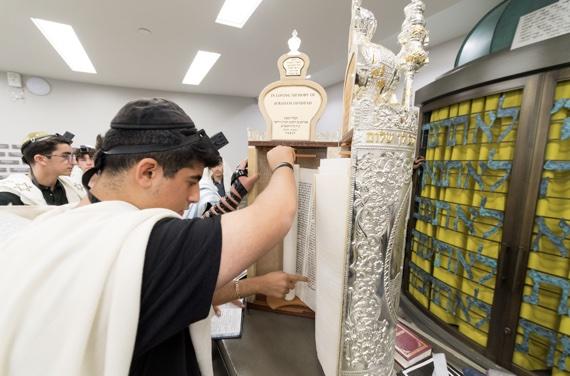
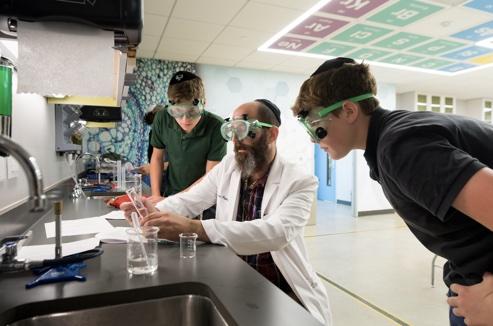



Excitement is in the air as we begin this new chapter in partnership with you. YULA strives to provide a safe and nurturing environment filled with opportunities for each student to meet their individual needs and reach their unique potential. Our mission is to imbue all students with a strong foundation that holds a deep passion for Torah study, refined middot tovot, and love of Medinat Yisrael.
As your son begins this important journey into high school, we recognize that you may be feeling a lot of different emotions ranging from excitement and enthusiasm, to anxiety and uncertainty. To help ensure a smooth transition into high school, we have created a parent toolkit to serve as a guide to understanding what to expect when your son begins YULA. This toolkit was created based on valuable feedback and discussions with parents like you, and it is our sincere hope that this serves as the opening of what will be an ongoing dialogue and partnership between all of us.
Please use the parent toolkit for assistance regarding who to contact in each department, academic requirements, and important information on extra curricular opportunities at YULA. Additionally, the toolkit provides a realistic sense of the time commitments required in our various programs, so you and your son can make an informed decision on participating in a manner that allows for academic success.
Thank you for the opportunity and privilege to be part of educating, inspiring, and helping your son blossom and reach his unique potential at YULA. As always, if you have any questions, feedback, or suggestions, feel free to contact me directly at asufrin@yula.org.
Bi’veracha,

RABBI ARYE SUFRIN HEAD of SCHOOL
YULA HIGH SCHOOL is a Modern Orthodox Yeshiva High School, dedicated to cultivating an unwavering commitment to halacha, Torah values, outstanding academic achievement, and exemplary moral conduct.
YULA’s mission and underlying principle, laid out in the Three Pillars of a YULA Education, is that we stress the PRIMACY & RELEVANCY OF TORAH, an UNCOMPROMISING GENERAL STUDIES curriculum, and CHARACTER DEVELOPMENT at the highest level. As a proud Yeshiva high school, our aim is to instill within our students a passion for Torah learning, refined middot tovot, and love for Medinat Yisrael.
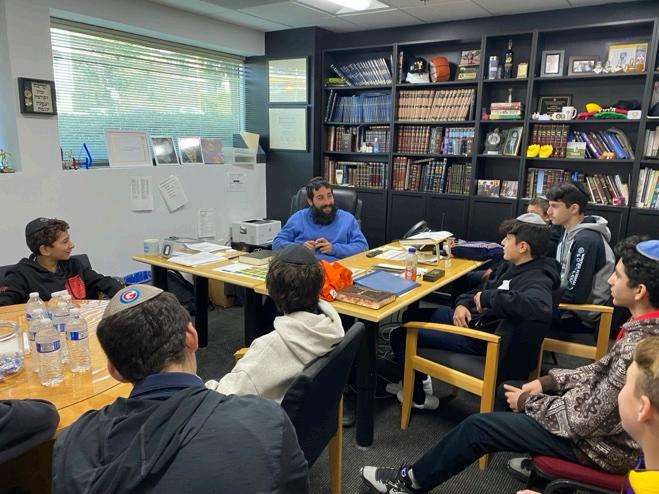
1) THE PRIMACY & RELEVANCY of TORAH STUDY
2) UNCOMPROMISING GENERAL STUDIES
3) CHARACTER DEVELOPMENT
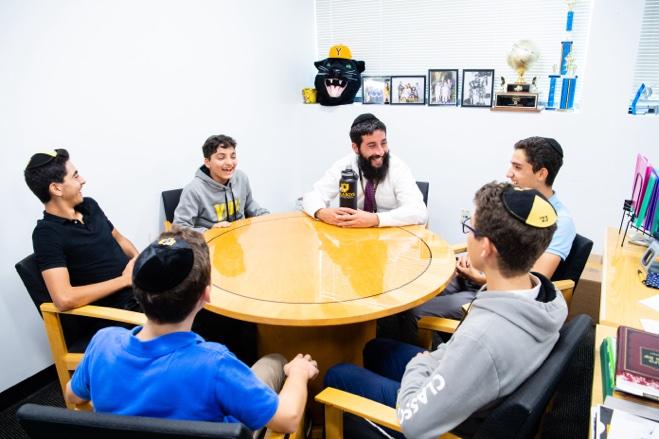
• Possesses Ahavat HaShem and have built personal relationships with Hashem through Torah study, Tefilah, and reflection.
• Can see the relevancy of Torah in their lives and are proud to be part of our Mesorah.
• Exhibit self-respect and respect for others as they collaborate and communicate effectively.
• Live the values of Torah U’Maddah and strive for academic excellence and intellectual curiosity in both Judaic and General Studies.
• Have developed their potential as Bnei Torah and prepared for their unique roles in their personal and professional lives and the Jewish and global community.
• Appreciate different paths of Avodat Hashem, grounded in Shmirat HaMitzvot and Chessed.
• Stress the importance of Middot, Tzniut and Derech Eretz.
• Display a love of Am Yisrael, Eretz Yisrael, and Medinat Yisrael.
• Live by the American democratic ideals of freedom, justice, and human dignity.
• Are confident, self-disciplined, and independent as leaders ready to engage in our rapidly changing world.
RABBI ARYE SUFRIN
Head of School asufrin@yula.org
RABBI SHIMON ABRAMCZIK Principal of Judaic Studies sabramczik@yula.org
MS. YEHUDIS BENHAMOU Principal of General Studies ybenhamou@yula.org
MS. RACHEL SHANDALOV
RABBI DANIEL TAMIR
MRS. ROCHEL GARGIR
Assistant Principal College Guidance rshandalov@yula.org
Director of Student Life dtamir@yula.org
Chief Operating Officer rgargir@yula.org
MR. SY LITWIN Director of Finance slitwin@yula.org
MRS. CHAVI GORMAN
Director of First Impressions cgorman@yula.org
MRS. ZIVA ZEHARYA Academic Registrar zzeharya@yula.org
MRS. SARAH YASHAR Administrative Coordinator syashar@yula.org
MR. ZACH GOULSON
MS. ALEXANDRA NOVAK
Director of Admissions and Marketing zgoulson@yula.org
Director of Athletics anovak@yula.org
RABBI DOV ROSENBLUTH Director of Guidance drosenbluth@yula.org
RABBI JOSH MASLOW Guidance Counselor jmaslow@yula.org
RABBI NISSAN AHOOBIM 9th Grade Student Activities nahoobim@yula.org



















ACADEMIC STUDENT SUCCESS
ATHLETICS
COLLEGE GUIDANCE
CHESSED
DISCIPLINE
ISRAEL GUIDANCE
OFFICE STAFF
PSAT, AP, SAT AND ACT EXAMS
SCHEDULE AND CLASS PLACEMENT, GENERAL STUDIES
SCHEDULE AND CLASS PLACEMENT, JUDAIC STUDIES
STUDENT DEVELOPMENT AND GROWTH
TRANSCRIPTS
TUITION
Dr. Martin Jauregui mjauregui@yula.org
Ms. Alexandra Novak anovak@yula.org
Ms. Rachel Shandalov
Mr. Mark Herrera rshandalov@yula.org mherrera@yula.olrg
Rabbi Daniel Tamir dtamir@yula.org
Rabbi Shimon Abramczik
Ms. Yehudis Benhamou sabramczik@yula.org ybenhamou@yula.org
Rabbi Shimon Abramczik
Rabbi Ari Bensoussan sabramczik@yula.org abensoussan@yula.or g
Mrs. Chavi Gorman cgorman@yula.org
Ms. Rachel Shandalov rshandalov@yula.org
Ms. Yehudis Benhamou ybenhamou@yula.org
Rabbi Shimon Abramczik sabramczik@yula.org
Rabbi Shimon Abramczik
Rabbi Daniel Tamir sabramczik@yula.org dtamir@yula.org
Mrs. Ziva Zeharya zzeharya@yula.org
Mrs. Sarah Yashar syashar@yula.org

Before you make contact, we strongly recommend that you check your son’s Schoology page for that class. You can access Schoology from the top of the YULA website or go tohttps://yula.org/schoology/ There you will find the syllabus for the course, recent assignments, test information, and the grades for the class. The information available through Schoology will help you ask the right questions.
You will receive a full tutorial on how to access and utilize your son’s Schoology Learning page at the Parent Technology Orientation for parents of incoming students.
If your communication with your son’s teacher is not satisfactory for any reason, please contact the following administrators with your concerns:
For Judaic Studies classes, please contact Rabbi Shimon Abramczik, Principal of Judaic Studies.
For General Studies classes, please contact Ms. Yehudis Benhamou, Principal of General Studies.

Students must be enrolled in a minimum of four (4) Torah classes and five (5) General Studies classes per semester/year.
Honors placement is determined by examination or department approval.
Judaic Studies
Halacha
Friedman Family Masmidim
Talmud 9
Talmud 9 Baum Family AGT
Eleanor Goldin Z”L Beit Midrash
Program
Talmud Survey 9 (Night Seder)
Biblical Literature 9
Prophets 9
Contemporary Halacha

General Studies
English 9
Honors English 9
Algebra 1
Geometry
Geometry Honors
Hebrew 9
Hebrew 9 Honors
Hebrew 9 Native
Biology
Biology Honors
World & Jewish History I
World & Jewish History I Honors
Physical Education
Advisory
Study Skills
Introduction to Health (1 semester - online course)
STEAM Studio
Principles of Engineering
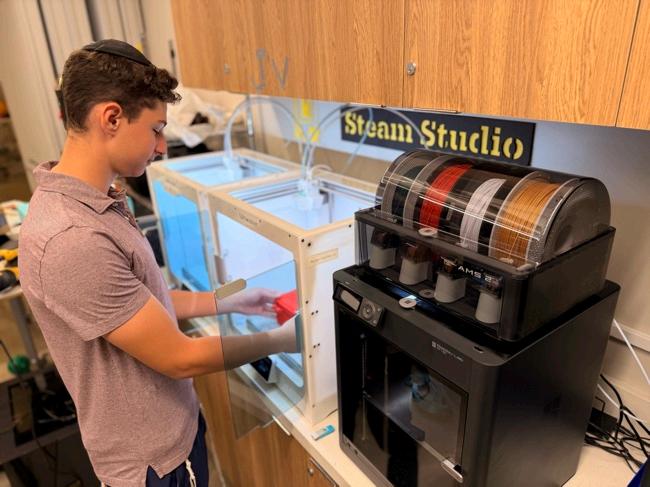
This is where students create new-era big ideas that will impact the world. YULA students are immersed in the cutting edge of emerging technologies. Their mission is to learn to create breakthroughs using science, technology, engineering, arts, and math (STEAM).
The curriculum brings in relationships with top ranking institutions such as UCLA, USC, and Cedars Sinai. This curriculum challenges students to reach a level of excellence, providing them with a conceptual and performance standard that they will apply to all future studies and professional undertakings.
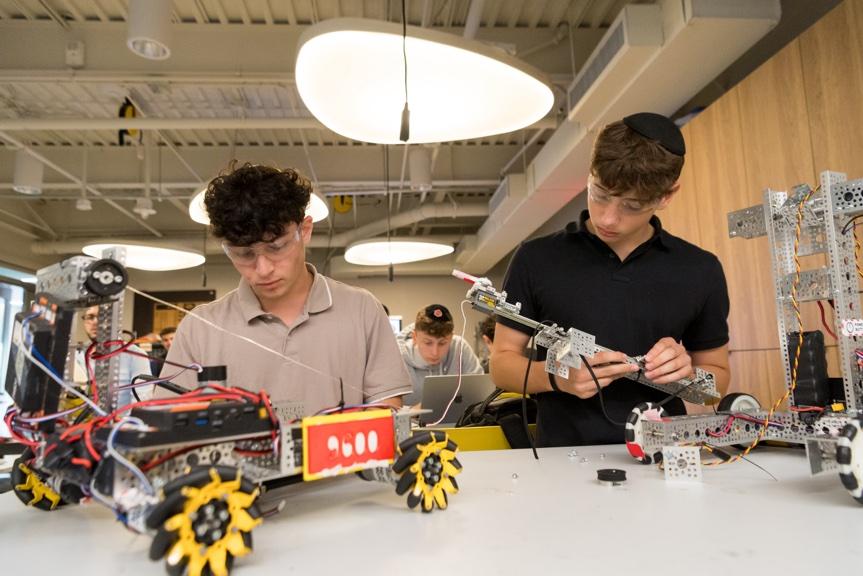
All students take a STEAM or Engineering class in 9th grade that involves hands-on group projects in robotics and electronics.
YULA’s Robotics team encourages Freshman to be involved. The team has achieved unprecedented success competing against other schools in
Southern California, and has hosted meets for over 20 schools in recent years.
YULA creates opportunities for students to challenge themselves by participating in a variety of competitions ranging from essay contests and math challenges to the Intel Science Talent Search, Google Science Fair, and the YULA L’Chadash Innovation Challenge (YULA’s version of Shark Tank).
We support students who want to expand their science knowledge through summer programs at universities like UCLA, USC, and the Technion in Israel.
This program has been generously funded by Sheri and Arnold Schlesinger.

The Freshman Retreat will afford all students the opportunity to get to know one another and will help build the foundation for strong and lasting friendships.
The retreat will include a variety of activities that inspire, stimulate and forge a strong sense of achdut and unity among the Class of 2030. The Freshman Retreat will take place on Tuesday, September 1, and will be an invaluable experience for all incoming 9th graders and YULA Staff; it is imperative that every student attends. The cost per student is $125. All checks should be made payable to YULA and handed in during Freshman Orientation on Monday, August 24. You will receive additional information regarding the retreat at orientation. If you are unable to participate in the retreat, or if you have any questions or concerns, please contact Rabbi Nissan Ahoobim at nahoobim@yula.org.
Not

Orientation for Freshman and the Student Council BBQ is scheduled for Monday, August 24, 2026 (9:30 AM - 4:00 PM) and the first day of classes will be Wednesday, August 26, 2026 (regular start time 7:45 AM). Student schedules will be distributed at Orientation.
New Parent Tech Orientation will be Monday, August 24, 2026. Please note that all orientation programs are vital for providing critical information for the upcoming school year and are therefore required.
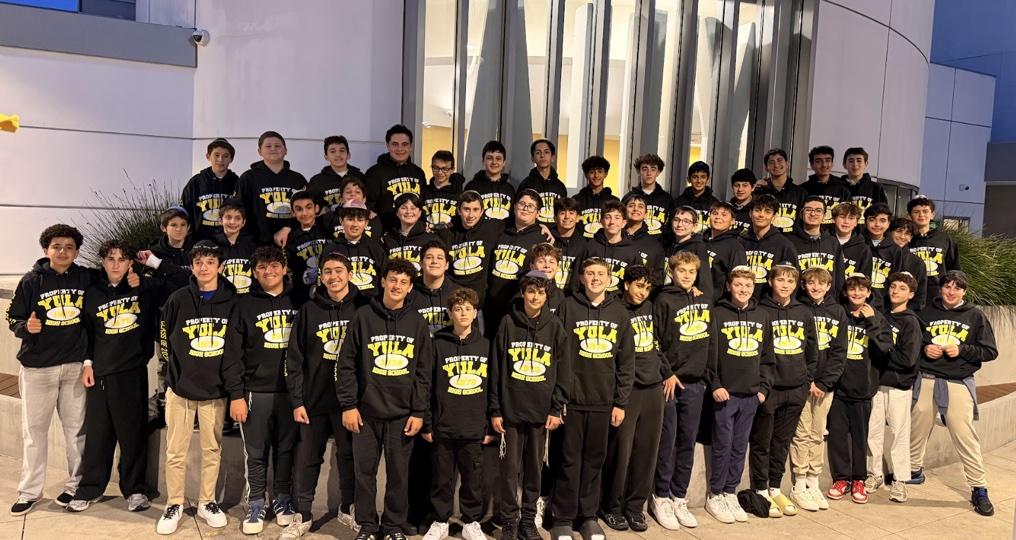
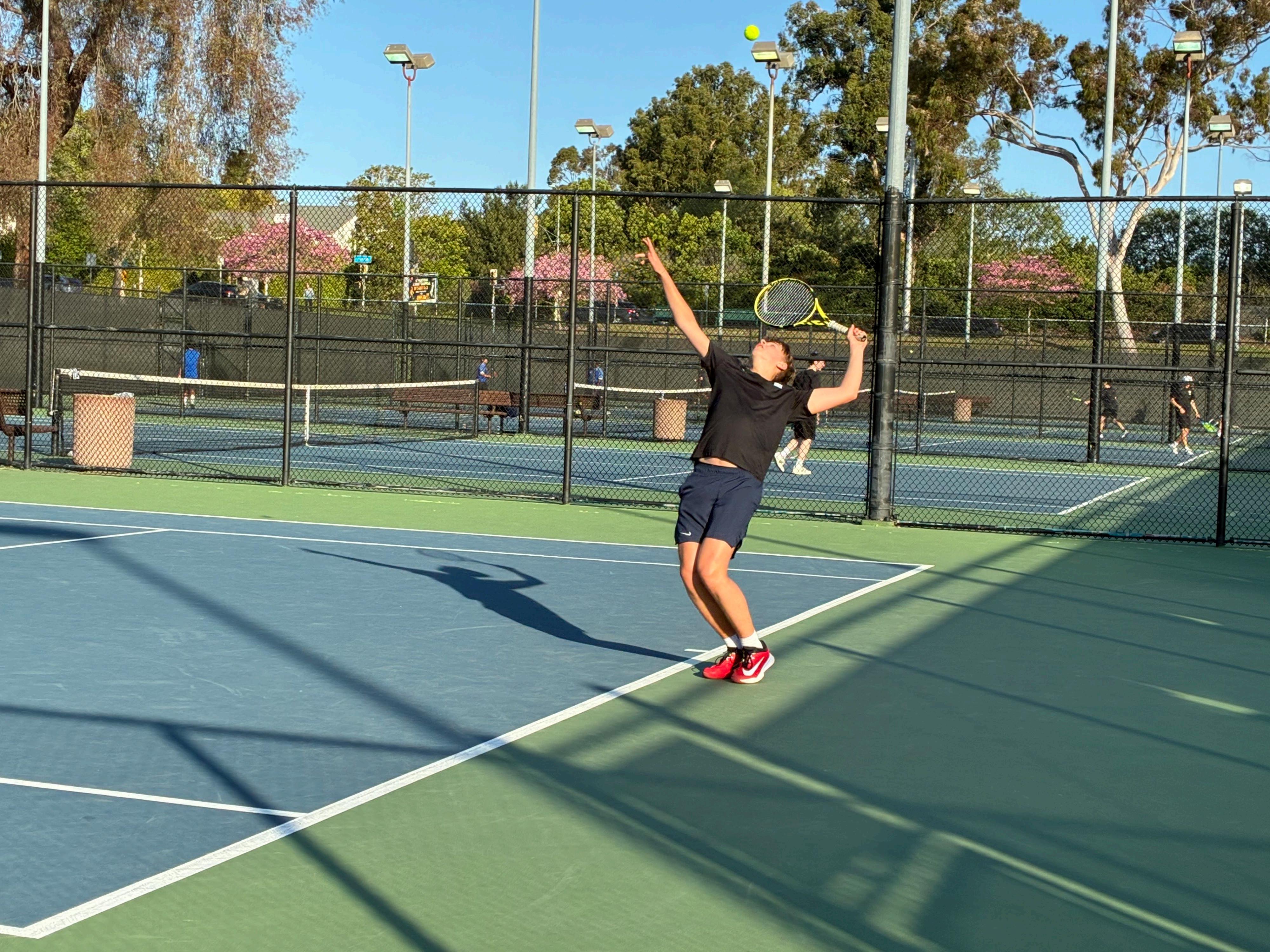
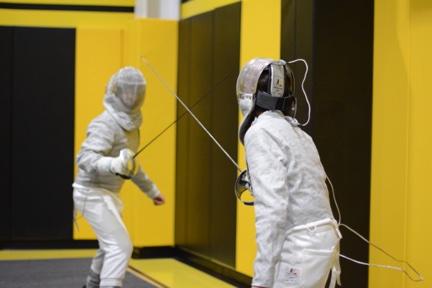
YULA Athletics plays an important role in the overall high school experience, providing students with opportunities to develop leadership, teamwork, discipline, and school pride. The YULA Panthers Athletic Program offers a wide range of competitive sports, including baseball, basketball, soccer, fencing, tennis, golf, cross country, track and field, flag football, and volleyball. Prior to each season, a competitive tryout process is held to ensure all are given an equal opportunity.
YULA is a proud member of the California Interscholastic Federation Southern Section (CIF-SS) and competes in both the Liberty League and Independence League. Our athletic program operates in accordance with CIF rules, regulations, and standards of conduct. In addition, YULA High School maintains its own academic eligibility requirements for participation in athletics. Families are encouraged to review the Athletic Parent-Student Handbook for complete information regarding policies.
Participation in athletics requires a significant commitment of time, effort, and responsibility. Student-athletes are expected to maintain a healthy balance between their academics and athletic involvement. Students may participate in up to three sports during the academic year, with a maximum of one sport per season.
Practices are generally held after school or on Sundays and typically last approximately two hours. Competitions often take place in the late afternoon or evening and may require travel to off-campus venues. While every effort is made to minimize conflicts between athletics and academics, student-athletes may occasionally miss class time due to competitions. It is the responsibility of each student-athlete to communicate with teachers, to obtain missed assignments ,notes, and complete all make-up work in a timely manner.
Through athletics, students gain experiences that extend far beyond competition. The Athletic Department looks forward to helping each student-athlete grow in character, leadership, and resilience throughout their four years at YULA and beyond.








Co-Curricular Activities Available to 9th Graders and Respective Time Commitments
• YULAMUN – As a delegate to the YULA Model United Nations competition, students represent a country in a number of mock United Nations sessions. Students attend weekly training sessions for two months and conduct research on their own.
• DRAMA – Tryouts are in the fall, rehearsals are 2 to 3 times a week for 1.5 hours each. As the play approaches, practices are every night and often much longer. The total commitment lasts between 3 to 4 months.
• ISRAEL ADVOCACY CLUB – A student group whose main goal is to advocate on behalf of Israel by providing students with the advocacy tools they need to influence members of the US Congress. Meetings are once every two weeks for two hours and sporadically for events.
• PANTHER POST – YULA’s student-produced newspaper has positions available doing layout and writing (2 articles per semester).
• ROBOTICS - Students design, build and program a robot to compete in an event with other schools. The approach is totally hands-on, and meetings are twice a week, two to three hours per meeting.
• MOCK TRIAL – Mock Trial is run by students and coached by real attorneys. Students audition and are then cast as lawyers or witnesses. Practices are 1.5 hours, 2 times a week, for 10 weeks, and there are 2 trials at the end of the semester.

HARVARD MODEL CONGRESS - HMC is the premier government simulation conference for high school students, which culminates in an annual conference in Boston, where our students compete with dozens of schools from around the country.
SPEECH AND DEBATE- This is a new club in which freshman are encouraged to join. This club helps students become confident and articulate speakers and focuses on learning debate skills. By the ens of the year, we compete in nationals!.
• PANTHER STREAMING NETWORK - PSN is our in-house studentproduced sports broadcasting network.
In the fall, 9th grade students will have the opportunity to hear from various organizations and choose the chessed opportunities that they wish to participate in. Rabbi Ahoobim is responsible for running the Chessed Fair.
• YACHAD - Yachad is an organization that deals with the inclusion of those with and without special needs. Weekly events bring together high school students, teenagers, and adults with special needs. Time Commitment: 1-2 hours per event, with 1-2 events each week.
• ETTA – Etta serves people with intellectual and developmental disabilities, and their families. They host Shabbatons and events every few weeks.
• CHAI LIFELINE – Two programs: Big Brother program, one hour per week; Volunteering at events, two to three hours per month.
• TOMCHEI SHABBOS – Student volunteers help package and deliver boxes of food for families every week; one hour per week.
• CEDARS SINAI – Volunteer opportunities as clinical or clerical interns at Cedars-Sinai. Two hour shifts, once a week.
• FRIENDSHIP CIRCLE – Matches students with children with special needs for social programming; one hour per week (includes opportunity for weekly basketball games with the participants).

• Time Management: YULA is a dual curriculum school. Learning how to work in advance of assignment, project, and test deadlines is a necessary skill to develop. Students need to prioritize their workload and create a time management plan to ensure that work is not left until the last minute. Each student may have a different system. Some choose to keep weekly planners (hard copy) that have the hours of the week printed out. Others use a digital version such as the Calendar app on their laptops; often they can sync this schedule with their personal devices. Although the system can differ by student, a parent should be able to check-in and see that an overview of “study hours” and a plan to complete assignments is kept. Having an awareness of the time needed to complete different coursework is essential to academic success.
• Organization: Materials management is an important part of staying organized at YULA. Please help your son buy all of his textbooks and reading books before the start of the fall semester. Too often, students wait for an assigned book to be delivered while missing important class discussion. Check that the books you order match the ISBN# given by the teacher. When the wrong version of a book is purchased, the student cannot follow along with classroom discussions because page numbers and translations do not match. Students should have systems for keeping notes and class papers. In technology class, your son will learn how to set up files on his laptop to separate class notes; however, he will also need folders for papers given out in class and assignments that are handed back. Helping your son keep track of all these materials, at least at the start of the school year, will be instrumental in helping him stay organized.
• Assigned Readings: Reading from texts is a necessary part of the high school curriculum. Students need to know how to extract important information from reading selections. An important step towards having your son understand and remember what he reads should include setting aside quality study time in a quiet space. Highlighting topic, main idea, and supporting details while reading is recommended to facilitate reading comprehension. Finally, prepare index cards to memorize key terms and definitions (these can be created online as well with quizlet.com). Index cards promote repetition and, ultimately, memorization of new concepts.
• Study Time: Study time should be “pure” and free of all distractions. Students need to be able to devote themselves to studying without social media, phone calls, texting, and other distractions. We have
discovered that when students turn on their computers to study or sit down to review notes or text, they are often distracted by social media, e-mails, texts, and phone calls from friends. Quite often, they are not aware of how much time is wasted and count this time as “study time.” Parents can help make their sons mindful that it is best for focus and time management to refrain from looking at social media and other distractions during work time.
• School Resources: YULA has an educational success team to support students with learning differences. Please contact Dr. Martin Jauregui mjauregui@yula.org, our Director of Academic Student Success, for more information.


(Parents, please share the following with your son)
Your success in high school can be greatly improved by being organized and using your time wisely. Staying organized can help ease the burden of a busy schedule. While you probably do not have a lot of control over when your classes are scheduled, you do have control over the rest of your time. Here are some important tips to remember:
1. Use your school planner to stay organized - Fill in things you must do (classes, work, practice, etc. that you can't change). Write down appointments and class assignments. Make a daily checklist. Set priorities. Do the most important tasks first.
2. Set achievable goals - When you set goals that are unrealistic, it sets you up for failure. You want to aim to set goals that are difficult, yet are achievable.
3. Organize some key areas in your life - For example, your bedroom, study area, car, and locker. Organizing these key areas will improve your ability to stay on schedule and help you avoid the most frustrating situations. You don’t want to be in a situation where you are looking for an assignment that is due, and you have no idea whether it’s in your locker piled high with papers, the car that hasn’t been cleaned in three months, or your bedroom that looks like a hurricane blew through it! Being unorganized will cause problems in nearly every area of your life, and developing the skill of organization will immensely improve your ability to become successful at whatever you pursue.
4. Schedule the most difficult tasks for times when you are alertGeometry, for example, may be hard enough when you're fresh. When you're tired, it will be impossible!
5. Establish a regular time and place for study - Utilize this space to study during the day if possible.
6. If you have a study hall during school, utilize it - Focus on your assignments and to-do list in your planner.
7. Use daylight hours to study whenever possible - For most students, for every hour of study done in daylight hours, it will take one and a half hours
to do the same task at night. Study during the day especially during study halls.
8. Use flash cards, summary sheets, or your notes - In doing so, you can use short periods to study in your spare time while you're waiting for class to start or for a friend to pick you up.
9. Take study breaks - Do not schedule a cram session the night before a test. Several short 50 minutes sessions are more effective than one long session.
10. Review your notes every day - You'll reinforce what you've learned, so you need less time to study. You'll also be ready if your teacher calls on you or gives a pop quiz.
11. Prepare and organize whatever possible the night before - A few examples would be to pack your book bag and lay out what you intend to wear the next day.
12. Get a good night's sleep - Running on empty makes your days seem longer and your tasks seem more difficult.
References: http://frank.mtsu.edu/~studskl/tmths.html http://www.collegeboard.com/student/plan/college-success/116.html

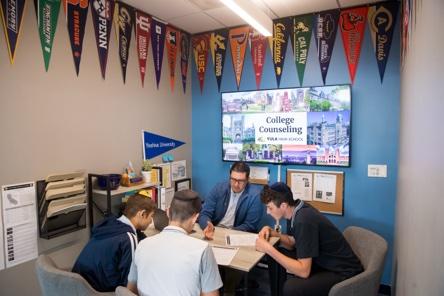
• August: Ms. Shandalov and Mr. Herrera introduce the college counseling program at orientation.
• November: College Counseling Seminar I is an overview of the college process with particular attention paid to the importance of making good decisions regarding studies and involvement in the YULA community and/or outside of school.
• March: College Counseling Seminar II: Introduction to SCOIR, a college search and application management tool.
• April/May: Academic advising regarding 11th grade course choices.
• October: Students take the PSAT/NMSQT, the qualifying exam for the National Merit program.
• December: Students take a practice ACT, the results of which are compared to their PSAT score to determine to which test they are best suited for.
• Feb - June: Meetings with students/parents throughout the semester.
• August: College Bootcamp
• August - Dec: Assist students with completing their college applications & essays.
• September: Senior-Parent College Night
• Sept - Nov: College reps visit to meet with interested Seniors.
• December: Financial Aid Night - How to finance college tuition.

4 Years Required (4 credits)
4 Years Required (4 credits)

English 9 or Honors English
World & Jewish History I or Honors SCIENCE
3 Years Required (3 credits)
4 Years Required (4 credits)
FOREIGN LANGUAGE
2 Years Required (2 credits)
PHYSICAL EDUCATION
2 Years Required (2 credits)
1 Year (1 credit)
Biology or Honors Biology
Algebra or Geometry or Honors Geometry
Hebrew I or Honors or Native


1 Semester (.5 credits)
4 Courses Required (4 credits)
Studio or Principles of
Track your son’s progress by marking the boxes per grade level as he completes the courses. Grades are given by semester. You can also use this worksheet to plan his proposed course plan. Students must carry a minimum of five General Studies courses per semester.
• Elective requirements are met by taking courses that exceed minimum subject area requirements or taking courses in non-required subjects. He must earn four credits to meet this requirement.
• UC eligibility requirements may differ from YULA. (One credit of Visual & Performing Arts is required.)
• Only courses with grades of C or higher are accepted to meet eligibility requirements for UC, CSU and most 4-year colleges/universities.