ultimate winter warm-ups
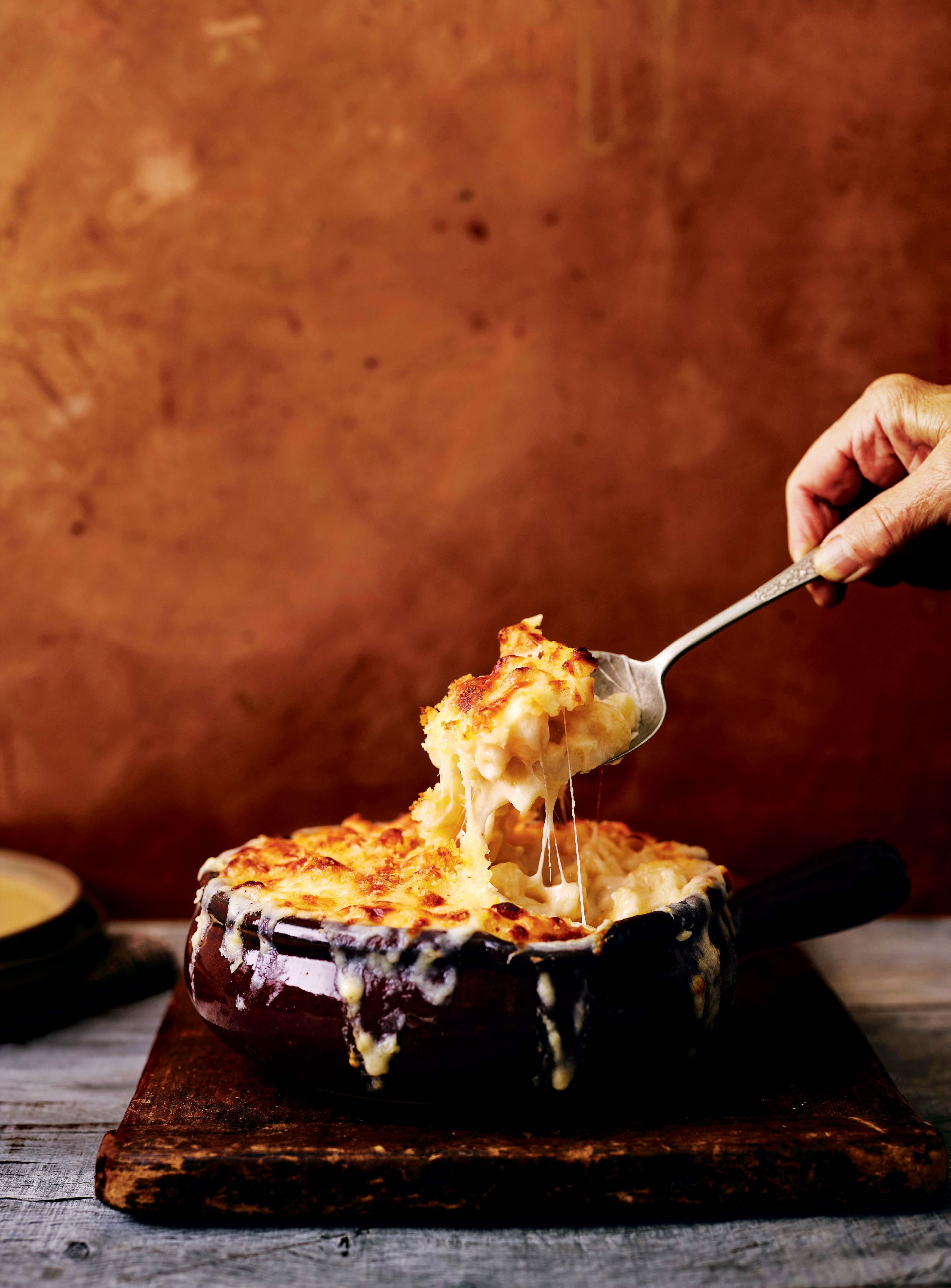
Best-Ever Mac and Cheese
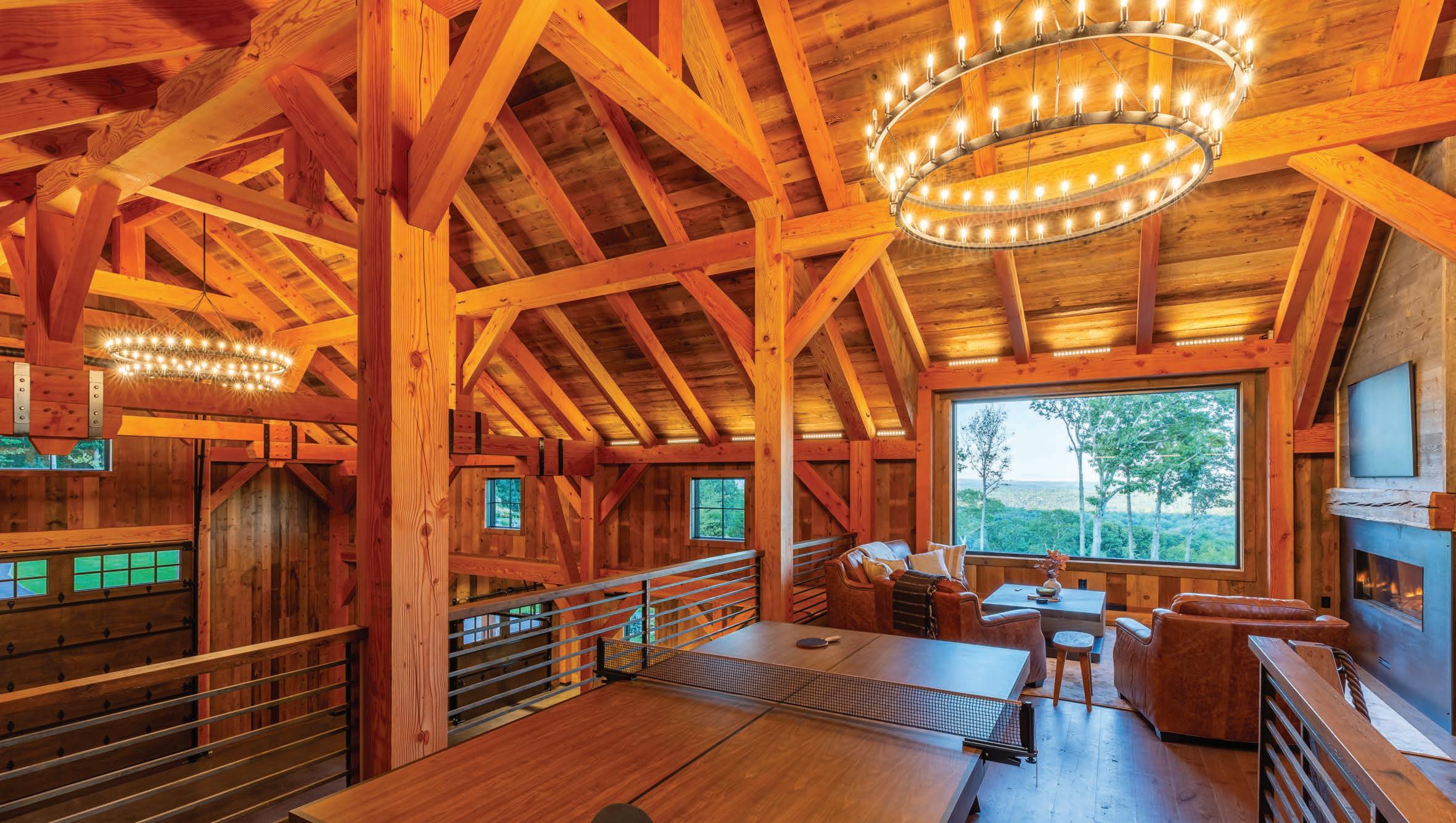
Inside a Finnish Sauna
Chase the Chill at Mohegan Sun
PLUS: Finding Olympic-Size Fun in Lake Placid
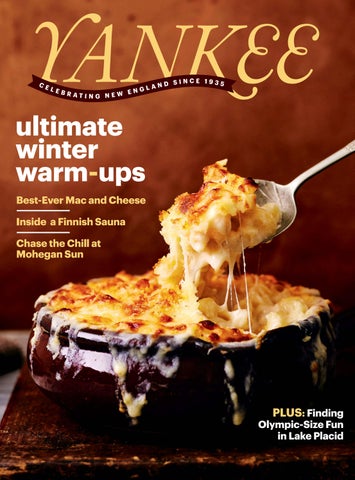
Best-Ever Mac and Cheese
Inside a Finnish Sauna
Chase the Chill at Mohegan Sun
PLUS: Finding Olympic-Size Fun in Lake Placid


54 /// Adventureville
Mountain views, winter fun, and Olympic luster make for a winning combination in New York’s Lake Placid region. By Annie Stoltie
66 /// The Finnish Touch
In a century-old building on a Massachusetts pond, harmony is found between two extremes. By Miles Howard
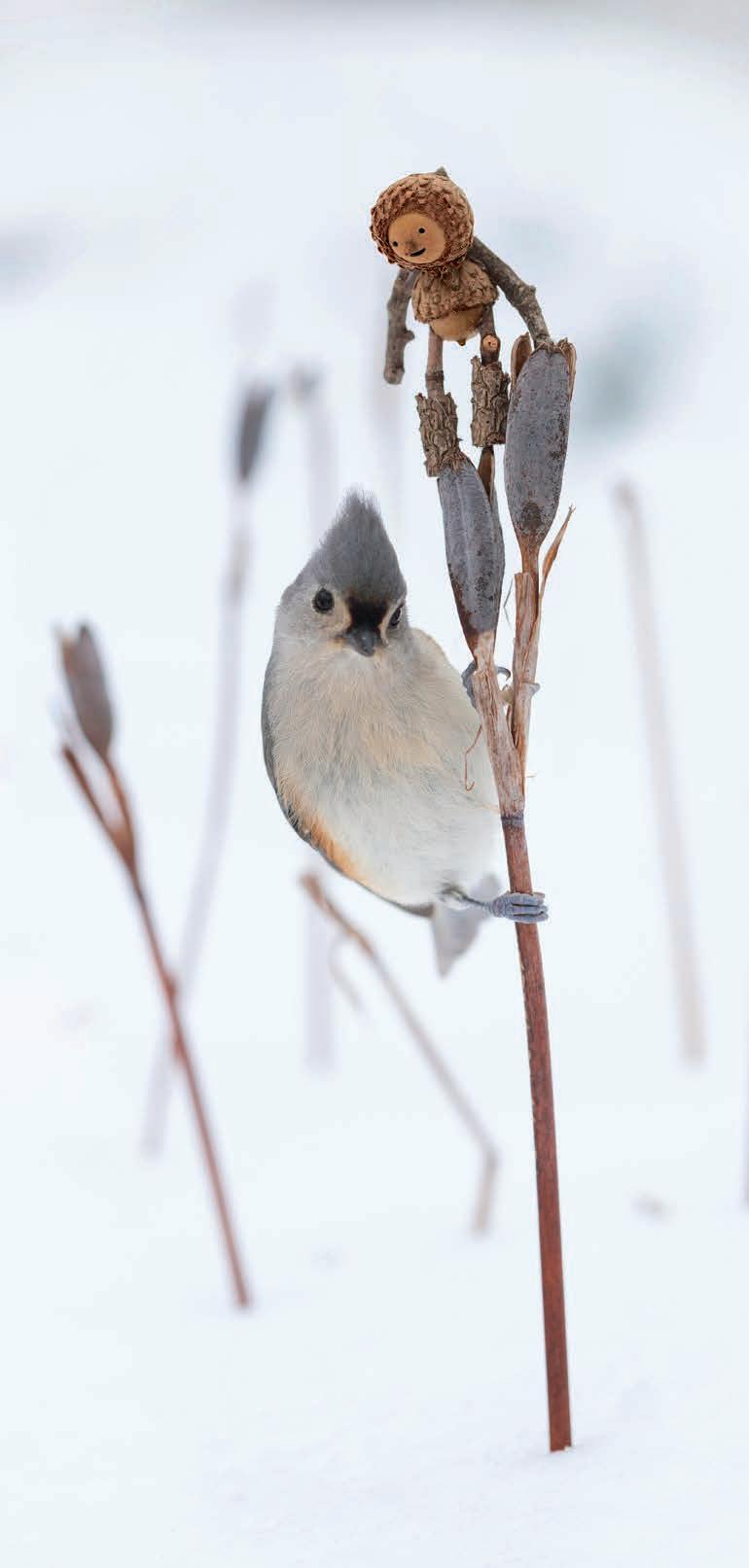
72 /// The Fantastic Forager Harvesting materials and inspiration from the woods near his Rhode Island home, Becorns creator David M. Bird captures otherworldly images of wonder. By Mel Allen
80 /// Reading Lessons
In praise of small stories written on the snow, and the larger tale they tell. By Susie Spikol
84 /// Ben Cosgrove Gets Lost
In wandering landscapes old and new, a restlessly creative Massachusetts composer puts a sense of place to music. By Joe Keohane
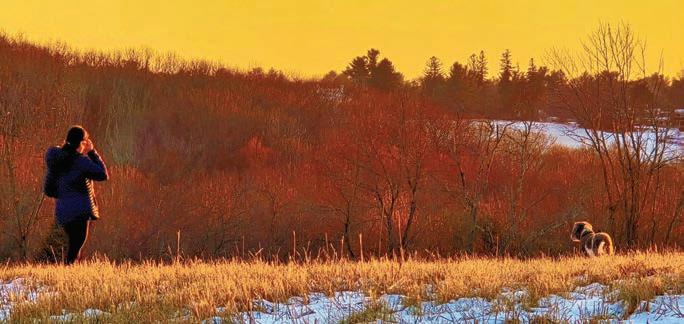
LEFT: After building one of his whimsical Becorns characters and imagining a scene for it, David M. Bird heads into the natural world with his camera—and plenty of patience— to bring it to life. Story, p. 72
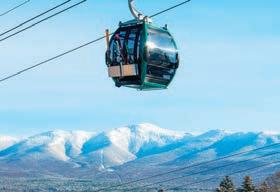
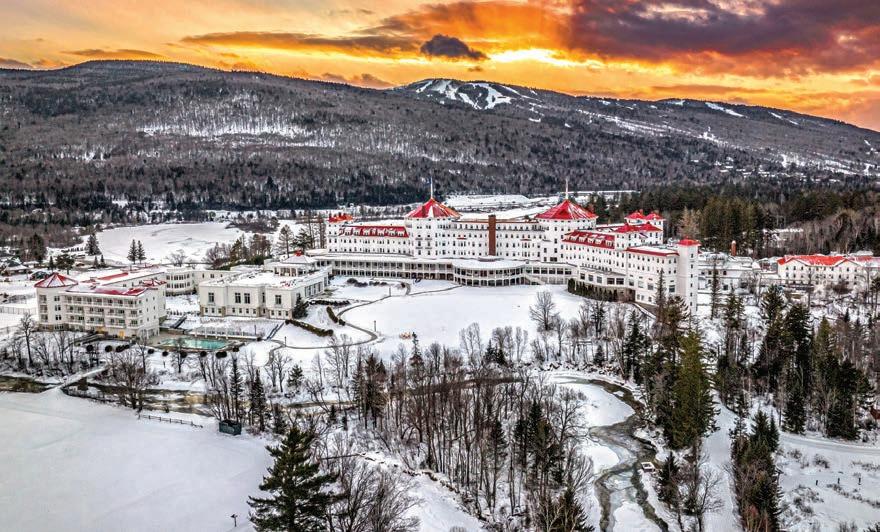
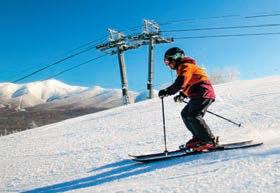
Every season is unforgettable at Bretton Woods, featuring a five decade flurry of snow-filled memories. With the most ski-able terrain in New Hampshire plus the state’s only eight-passenger gondola and the NEW BEQ II high-speed quad, Bretton Woods has once again been recognized for the Best Snow and Grooming in the East by SKI magazine. Together with world-class amenities, dining and lodging at Omni Mount Washington Resort & Spa, make your own memorable moments at Condé Nast Traveler’s #3 Ski Resort in the USA this season.
22 /// Homing Instincts
In a Vermont town that felt like their perfect fit, a young DIY-minded couple takes on a ranch house that’s anything but. By
Jess Kirby
28 /// Made in New England Nautical know-how undergirds the design-y flair of Lowe Hardware’s home decor. By Brian Kevin
BEHIND THE SCENES
16 FIRST LIGHT
Up in the White Mountains of New Hampshire, the oldest ski shop in the country has been helping generations of adventurers reach new heights. By Michael Wejchert
34 /// Cheese Pull
Five rich and tasty recipes for the ultimate one-dish meal: mac and cheese. By Sarah Hearn Morrison
38 /// Weekends in the Kitchen
That classic Valentine’s ingredient, chocolate, inspires irresistible treats for your sweetheart (or yourself). By Amy
Traverso

In his new column, former Yankee editor Mel Allen reflects on a year like no other, and realizes that moving on doesn’t have to mean saying goodbye.

46 /// Weekend Away
Even if you skip the slots and tables, the Connecticut casino resort Mohegan Sun is a sure bet for winter breaks. By Ian Aldrich
52 /// Snow Days
When flakes fall across New England, opportunities for outdoor fun pile up fast. By Bill Scheller

Your All-Inclusive Lower Mississippi River Cruise Includes:
9-day/8-night exploration
7 ports of call with guided excursion options at each
All onboard meals and our signature evening cocktail hour
Full enrichment package with guest speakers and nightly entertainment
Newest fleet of ships with just 90 to 180 guests
All tips and gratuities

































Publisher Brook Holmberg
Senior Managing Editor Jenn Johnson
Executive Editor Ian Aldrich
Senior Food Editor Amy Traverso
Senior Digital Editor Aimee Tucker
Travel/Branded Content Editor Kim Knox Beckius
Associate Editor Katrina Farmer
Contributing Editors Ben Hewitt, Courtney Hollands, Rowan Jacobsen, Meg Lukens Noonan, Bill Scheller, Julia Shipley, Kate Whouley
Editor at Large Mel Allen
Art Director Katharine Van Itallie
Senior Photo Editor Heather Marcus
Contributing Photographers Adam DeTour, Megan Haley, Corey Hendrickson, Michael Piazza, Greta Rybus
Production & Distribution Director David Ziarnowski
Production Manager Brian Johnson
Senior Production Artists Jennifer Freeman, Rachel Kipka
Vice President, Digital & Production Paul Belliveau Jr.
Senior Web Designer Amy O’Brien
E-commerce Director Alan Henning
Digital Manager Holly Sanderson
Digital Marketing Specialist Jessica Garcia
Email Marketing Manager Eric Bailey
Customer Retention Marketer Kalibb Vaillancourt
E-commerce Merchandiser Specialist Nicole Melanson
Vice President, Media Sales & Marketing Judson D. Hale Jr.
Media Account Managers Kelly Moores, Dean DeLuca , Steven Hall
Canada Account Manager Cynthia Fleming
Senior Production Coordinator Janet Selle
For advertising rates and information, email jdh@yankeepub.com or go to newengland.com/adinfo.
Marketing Director Kate Hathaway Weeks
Senior Sales & Marketing Manager Valerie Lithgow
Marketing Assistant Natalia Rivera
PUBLIC RELATIONS
Roslan & Associates Public Relations LLC
ESTABLISHED 1935 | AN EMPLOYEE-OWNED COMPANY
President Jamie Trowbridge
Vice Presidents Paul Belliveau Jr., Ernesto Burden, Judson D. Hale Jr., Brook Holmberg, Jennie Meister, Sherin Pierce
Editor Emeritus Judson D. Hale Sr.
CORPORATE STAFF
Vice President, Finance & Administration Jennie Meister
Human Resources Manager Beth Parenteau
Information Manager Gail Bleakley
Assistant Controller Nancy Pfuntner
Accounting Associate Meg Hart-Smith
Accounting Coordinator Meli Ellsworth-Osanya
Executive Assistant Christine Tourgee
Facilities Attendants Ken Durand, Bob Sardinskas
BOARD OF DIRECTORS
Andrew Clurman, Renee Jordan, Joel Toner, Jamie Trowbridge, Cindy Turcot
FOUNDERS
Robb and Beatrix Sagendorph
NEWSSTAND
Vice President, Retail Sales Sherin Pierce
NEWSSTAND CONSULTING
Linda Ruth, PSCS Consulting
SUBSCRIPTION SERVICES
To subscribe, give a gift, or change your mailing address, or for any other questions, please contact our customer service department:
Mail: Yankee Magazine Customer Service PO Box 37900, Boone, IA 50037-0900
Online: newengland.com/contact-us
Email: customerservice@yankeemagazine.com
Toll-free: 800-288-4284
Yankee occasionally shares its mailing list with approved advertisers to promote products or services we think our readers will enjoy. If you do not wish to receive these offers, please contact us.

Hosts Amy Traverso, Richard Wiese
Directors of Photography
Corey Hendrickson, Jan Maliszewski
Editor Travis Marshall
Executive Producer Laurie Donnelly
Senior Producer Mercedes Velgot
Associate Producer Nora Kirrane
In a special tribute to Yankee ’s 90th anniversary, friends and fans of the magazine gathered for a celebratory dinner at the award-winning Inn at Hastings Park , the Boston area’s only Relais & Châteaux luxury property, in historic Lexington, Massachusetts.
Hosted by Amy Traverso, Yankee ’s senior food editor and host of Weekends with Yankee, the night showcased the best of New England’s seasonal bounty and rich culinary traditions. Amid the timeless elegance of the inn’s Town Meeting Bistro, guests enjoyed a four-course menu inspired by Yankee recipes from every decade, paired with exceptional wines in partnership with Bonterra Organic Estates. Each course told a story of place and season, brought to life through flavor, craft, and hospitality.
A special thank-you to our event partners:
The Inn at Hastings Park Bonterra Organic Estates
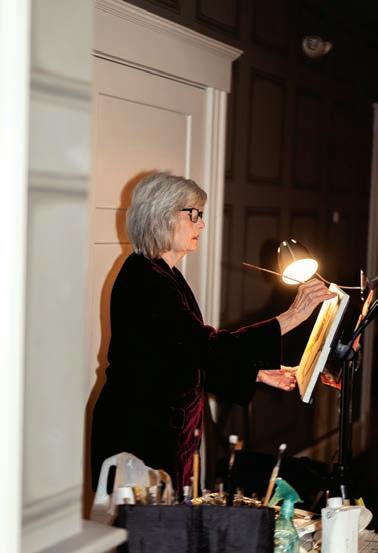
Sheila Foley, Event Painter Visit Lexington MA E. Frances Paper





1. The Inn at Hastings Park owner Trisha Pérez Kennealy, left, with Stephanie Loeber, ownerprincipal of Loeber Communications.
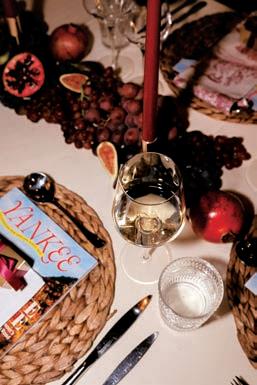
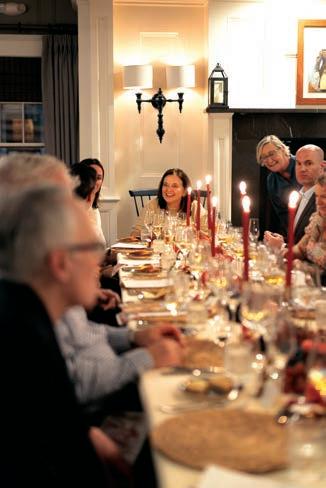
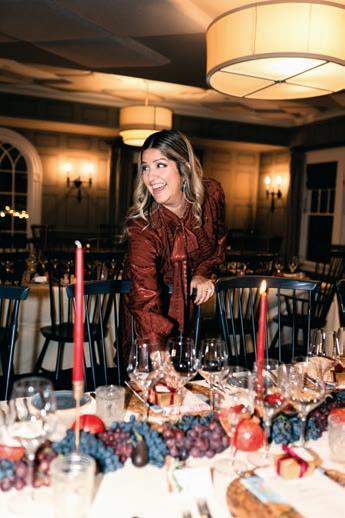
2. Candlelight and communal dining make for a cozy scene in the inn’s Town Meeting Bistro.
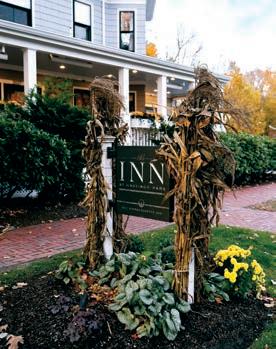
3. Autumnal accents outside the inn give a nod to harvest time.
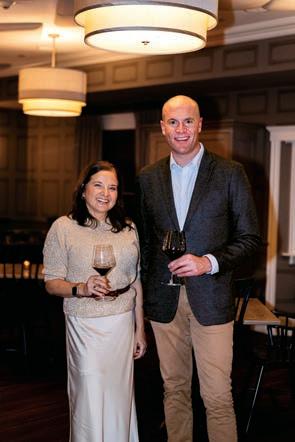
4. Amy Traverso, Yankee’s senior food editor and host of Weekends with Yankee, with Justin Stone from Bonterra Organic Estates.
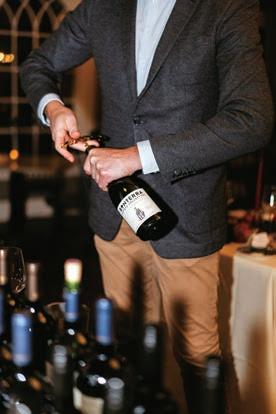
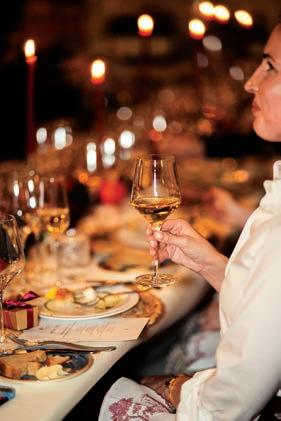
5. Prepping a Bonterra Organic Estates selection for a wine pairing.
6. Event painter Sheila Foley, turning the evening into a work of art.
7. Shiobanne Karampekios, director of sales and marketing at The Inn at Hastings Park, reviews the place settings before guests arrive.
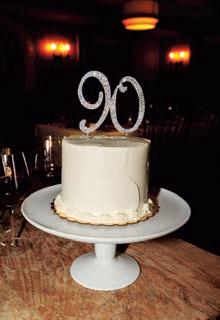
8. Lifting a glass to 90 years of Yankee storytelling.
To see upcoming events, go to: innathastingspark.com




11 Ways to Say ‘I Love You’
Up your romance game with our curated collection of New England-y gifts and experiences sure to delight any sweetheart. newengland.com/11ways
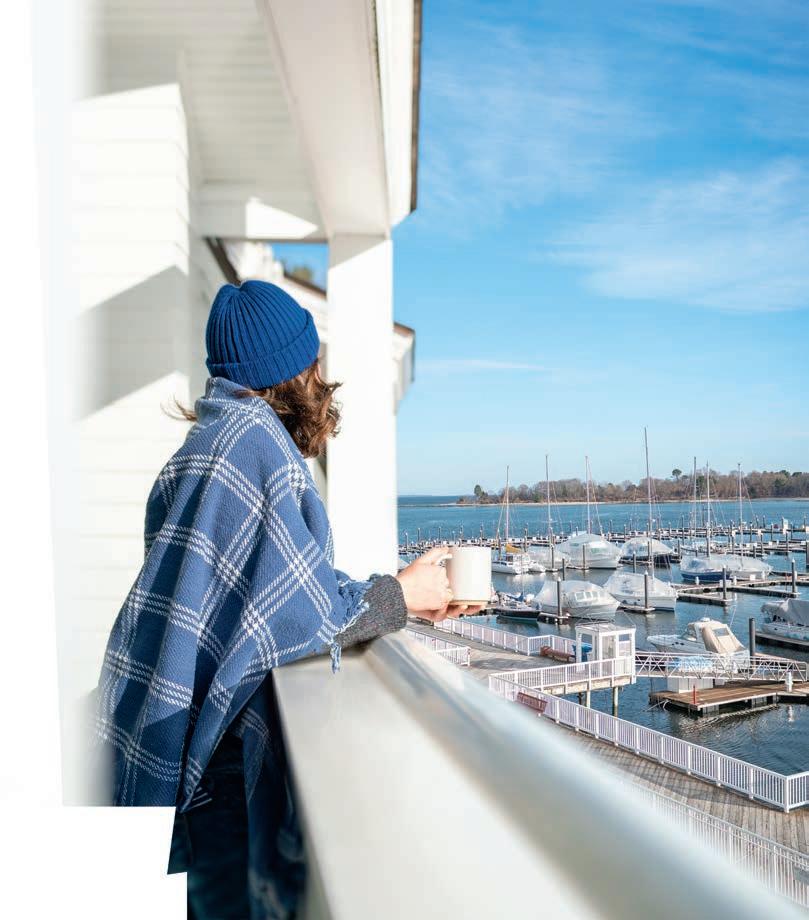
Best Coastal Getaways
From water-view hotels with in-room fireplaces to brisk beach walks and fresh seafood, we’ll help you discover all the joys of winter by the sea. newengland.com/coastalescapes
Winter Fun, Olympic-Style
Won’t make it to Milano Cortina this winter? Not to worry: New England has several world-class venues and training centers where you can cheer on athletes—or experience winter sports thrills for yourself. newengland.com/ winterolympicsfun

5 Citrus Recipes to Brighten the Day
Taste what the sun-kissed flavors of citrus can bring to your winter table, from a savory salad with blood oranges to a variety of sweet-tangy desserts. newengland.com/citrus
Want more of New England right at your fingertips? Visit our website for new content each week, follow us on social media @yankeemagazine, and subscribe to our daily newsletter, New England Today. newengland.com/newsletter


ate last fall, the Weekends with Yankee film crew turned up at, of all places, Yankee. They’d come to our headquarters in Dublin, New Hampshire, to shoot a segment celebrating the magazine’s 90th anniversary, with senior food editor Amy Traverso and executive editor Ian Aldrich playing host. Watching the camera operators panning across our issue layouts, and listening to Ian and Amy talk about favorite Yankee stories from yesterday and today, I had that strange sense—but always strangely thrilling, too—of experiencing the familiar as if it were something new.
Discovery isn’t always about setting off into the unknown; it can be as simple as reconsidering what’s already around us. That silent, snow-covered field just outside town? It’s practically vibrating with the stories of animals coming and going, as naturalist Susie Spikol reveals [p. 80]. The hikes you’ve taken dozens of times, or the national parks you visit every summer? Those welltrodden landscapes are actually brimming with music,

Despite having committed the cardinal sin of moving to New York City, Keohane says he’s always looking to revisit his New England stomping grounds—as he did for his incisive, offbeat profile of musician and fellow Massachusetts native Ben Cosgrove [p. 84]. A writer and editor for some 25 years, Keohane is the author of The Power of Strangers and coauthor of The Lemon: A Novel.
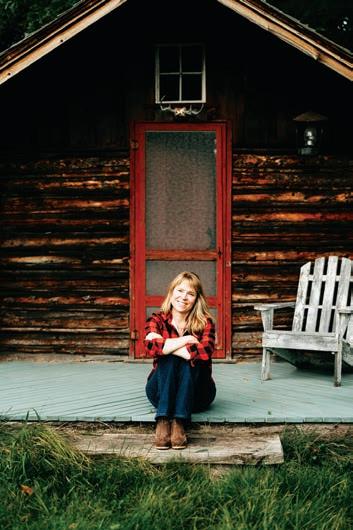
In looking beyond Yankee’s borders for a travel feature on Lake Placid, New York [p. 54], we tapped the expertise of this self-described “North Country girl” who’s also a longtime editor at Adirondack Life. “It’s a dream of a job that’s brought me all over our state’s 6-millionacre Adirondack Park,” she says. “I’m grateful to have an opportunity to share my stories about a place I know and love.”
when you listen to them the way composer Ben Cosgrove does [p. 84]. Even an ordinary backyard, seen through the eyes of Rhode Island artist David M. Bird, can be the backdrop for fantasy and delight [p. 72]. And to be sure, there’s no comfort food more familiar than mac and cheese—but when stripped to its foundations and rebuilt with a gourmet sensibility [p. 34], this dinnertime rerun becomes a revelation.
Some who are reading this issue will have their minds on winter adventure, on venturing out to explore, say, the bracing tradition of Finnish saunas [p. 66] or a mountain town steeped in Winter Olympics legend [p. 54]. Others, like me, are happily hunkered down for the season, existing as “partly tuber, partly bear,” in the words of New Hampshire poet and writer Donald Hall. But no matter where you may find yourself this season, take a moment to look closely at what’s right in front of you—even this magazine. Because when a publication has been around for 90 years, you may think you know it, but remember: It just might surprise you. —Jenn Johnson, senior managing editor
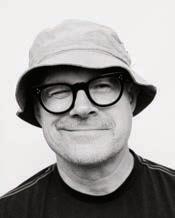
This Boston-based lifestyle and food freelance photographer brings a love of cooking (and eating) to his love of making pictures, as with this issue’s celebration of mac and cheese [p. 34]. Asked which of our five recipes he’d most like to make, Piazza didn’t hesitate: “The Bolognese—I loved those huge pasta shapes. It was good enough to stand alone.”

Dreaming up the illustrations for Susie Spikol’s essay on wildlife tracking [p. 80] brought out the inner detective in West, a visual artist living in New York City. “In painting, I’m always looking for a ‘who, what, where, and why’ on a blank canvas,” she says. “Much like Susie’s uncovering of fox tracks, I feel elated when I see the clues align in a way that seems left just for me.”





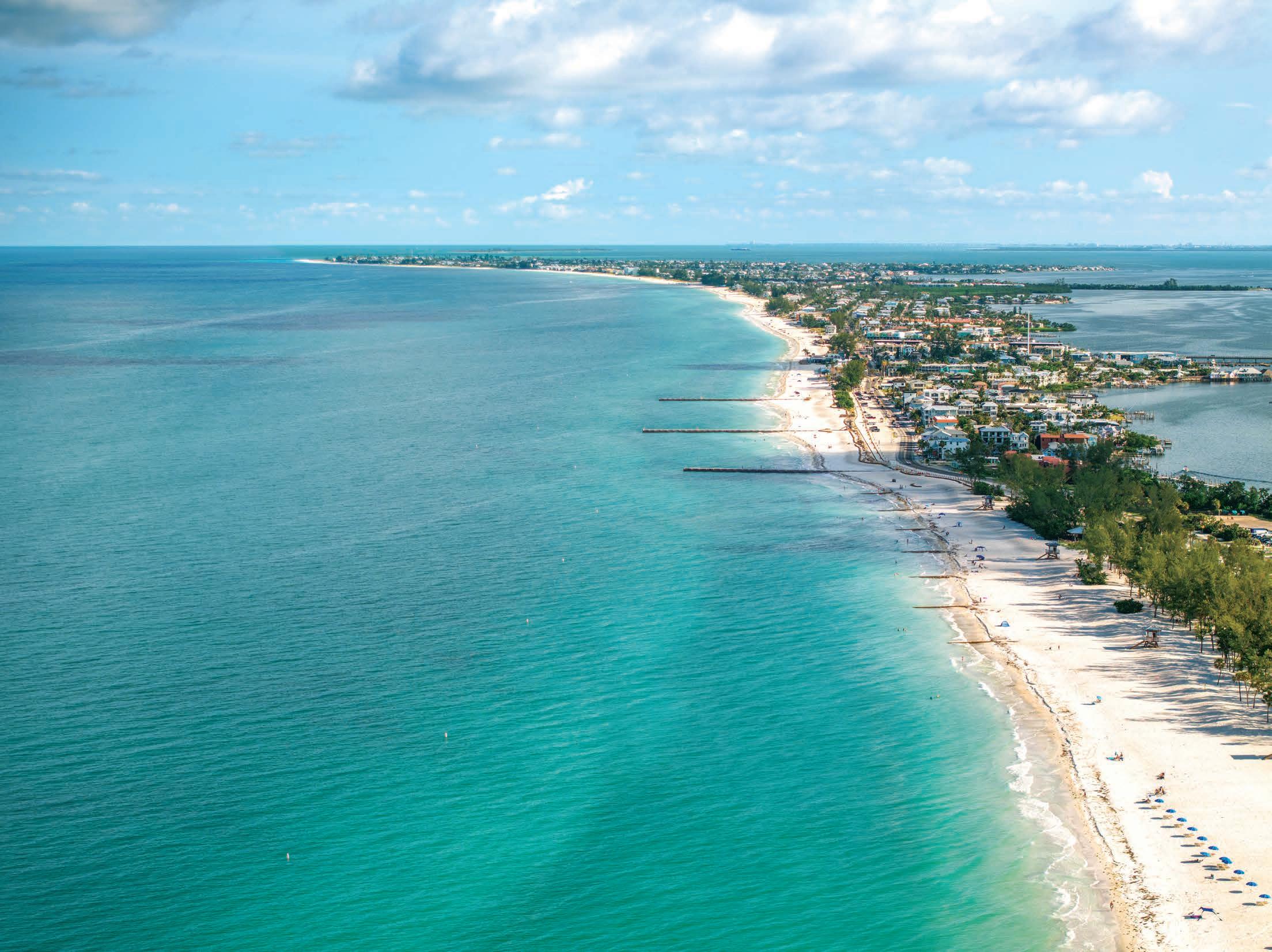
Each stay in Florida’s Bradenton Area is a bookmark in time for you and your family.
Anna Maria Island—how did my parents ever discover this enchanting spot on Florida’s West Coast? Their first month-long stay was in the early 2000s, when the internet was newfangled, Sunday-newspaper travel sections still steered snowbirds, and vacation influencers were your real-life neighbors, suspiciously tanned in February.
I do know I’m lucky they did, because when I say “enchanting,” I’m not just searching for one word to describe this always-warm barrier island’s turquoise blue waters and wide swaths of sugarwhite sand, its active yet laid-back days that feel blissfully all yours until the last kiss of sunset. What I really mean is enchanted, in the magical sense.
Some 15 years had evaporated since our last visit, but it all felt so familiar as my daughter and I drove across the bridge from Bradenton to AMI, as the locals abbreviate this barrier island where a building-height restriction keeps lodgings and residences low rise and views for all maximized. Lara was six when we last bid AMI goodbye and only months old when we first found our way here. I remember intense trepidation about flying with a newborn and immense relief when every stranger on the plane was smiling and sympathetic, as if they knew baby’s first flight would bring immeasurable joy to her awaiting grandparents.
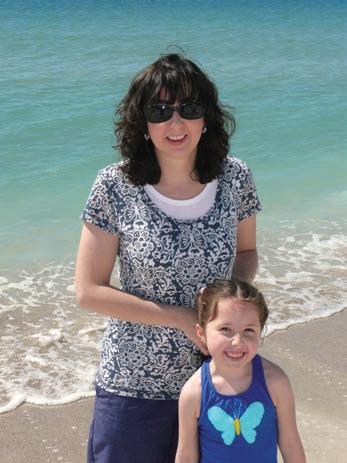
This may sound a bit sci-fi, but our return to Anna Maria Island allowed me to inhabit three space-time realities simultaneously (or at least it felt that way). Squinting at the horizon during a lazy morning on Cortez Beach, my daughter wasn’t the young woman beside me, paging through a novel, but a curly-haired little girl building a sand manatee, giddy from having just spied one of those cowlike creatures swimming offshore.
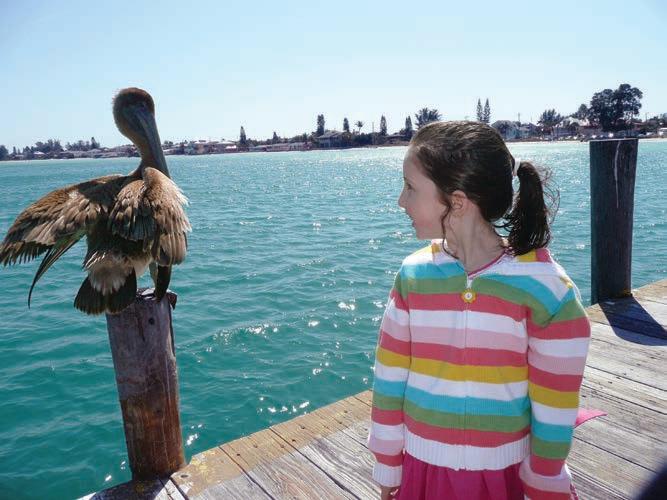
As Lara snapped selfies with a pelican, the years dissolved again, and I could see her in my dad’s arms gazing with wideeyed amazement at what was surely one of this bird’s ancestors. My body seemed to remember its own youthful energy as we hopped on and off the free Island Trolley, sipped tropical smoothies at Ginny
Jane E’s Cafe, painted sand dollars at Shiny Fish Emporium, and paddled at night in clear-bottom, illuminated kayaks with a knowledgeable Fun Florida Tours guide. You can count the number of chain businesses here on one hand, which means your travel dollars help sustain the island’s authentic essence.
At a waterside restaurant, the taste of grouper, fished from nutrient-rich local waters and as sweet and fresh as I remembered, conjured an even earlier iteration of me and my maternal identity. Each bite
brought my parents into focus as they sat across the table happily bouncing my infant while their food got cold so I could eat mine uninterrupted for a change— radiating their love for us, which still feels part of the aura of this place.
My parents gave me many gifts, and I count putting down vacation roots in the Gulf Islands among the greatest. Few destinations stay so fundamentally unchanged, so unspoiled that each encounter unlocks a multitude of memories.
Anna Maria Island is just 17 miles from Sarasota Bradenton International Airport, and the recent proliferation of low-cost nonstop flights from Northeast airports in Albany, Boston, Hartford, New Haven, Portland, Portsmouth, Providence, and Westchester County makes it easier than ever to put your toes in the sand and create your own bookmarks in time. Whether you’re fleeing winter, treating your kids to a seaside spring break, or looking ahead to off-season deals in the summer and fall, when the island’s warmth is tempered by Gulf breezes and frozen bevvies, there’s no wrong time to start a tradition that is the surest way to live on forever in paradise. ~Kim Knox Beckius
Begin planning your Bradenton Area getaway at bradentongulfislands.com.
For generations, America’s oldest ski shop has helped adventurers reach new heights.
BY MICHAEL WEJCHERT
:
et’s face it: A good New England ski day involves suffering. Windblown chairlifts, frostbite-inducing temperatures, and icy trails down stunted mountains are the norm. The skiers who embrace all this are usually the ones who grew up in this region, stuffing their feet into secondhand boots, hanging out in rustic lodges in need of repair, squeezing as many runs as possible into a weekend up north. Skiing here is a labor of love.
So, it’s fitting that without both labor and love, Lahout’s, the Northeast’s most iconic ski shop and the oldest in the country, would have closed years ago. And it’s fitting, too, that—like
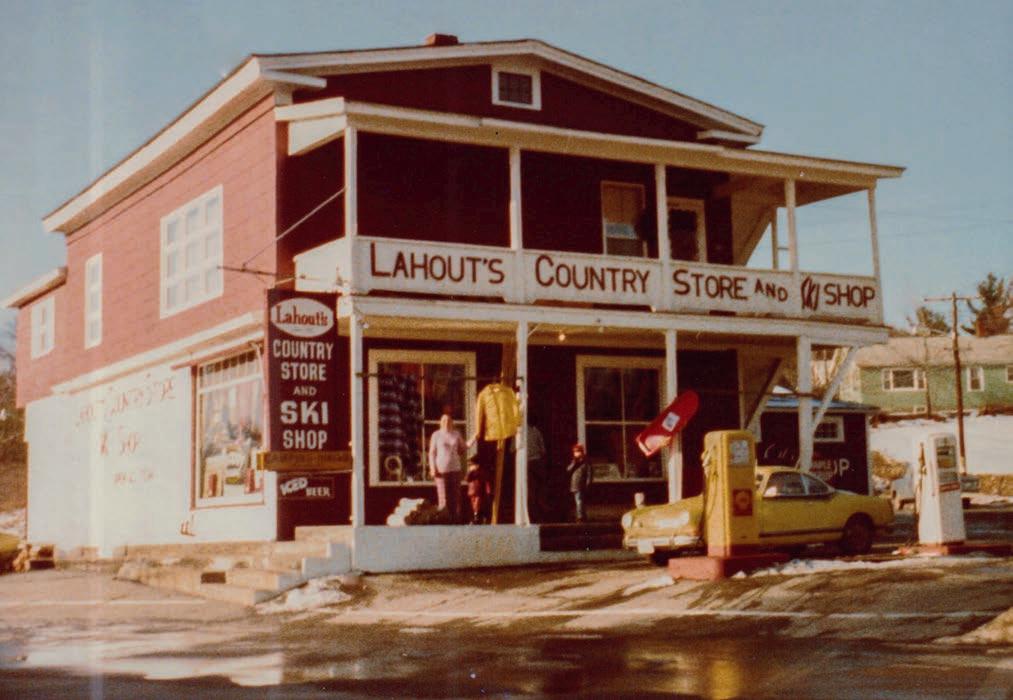
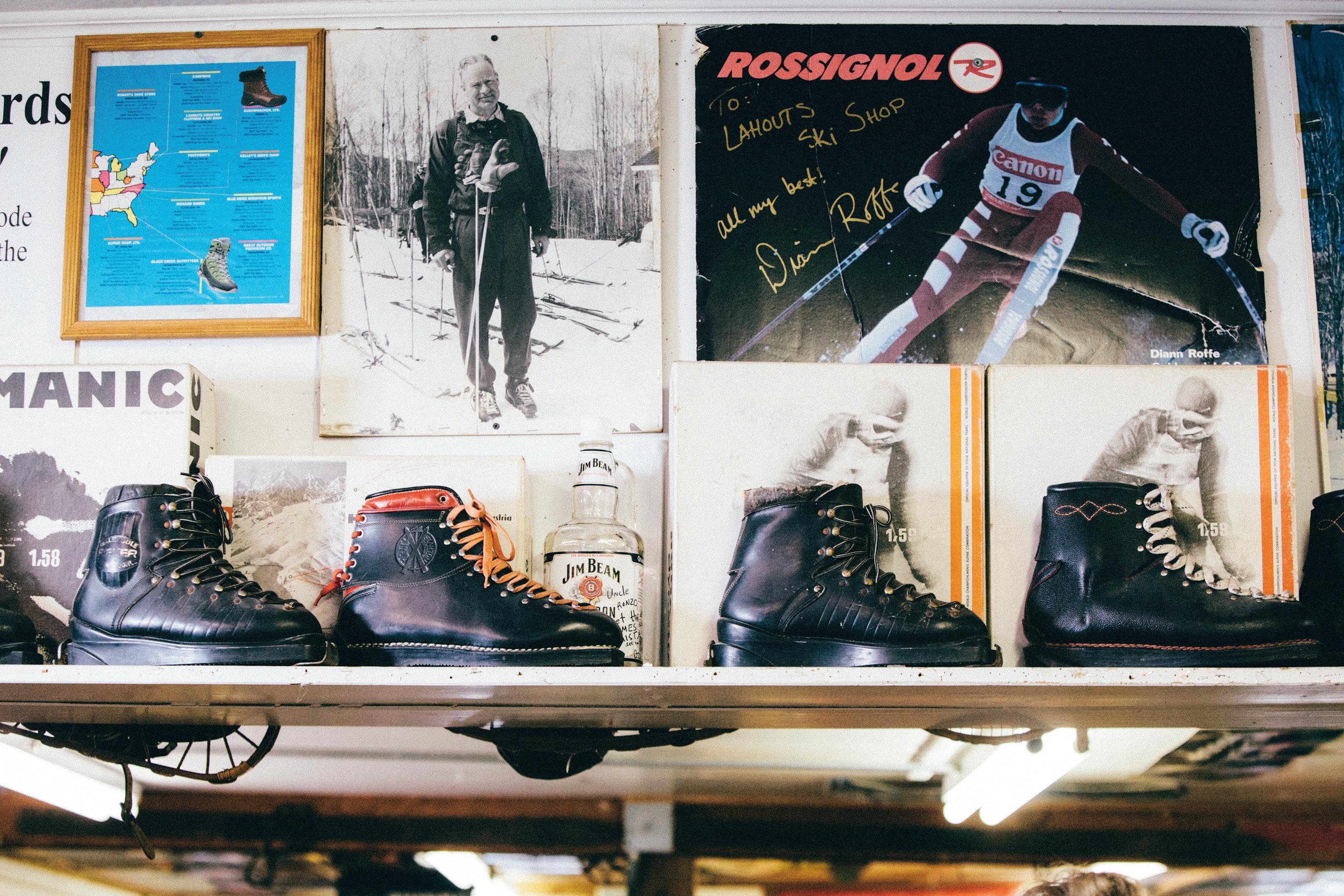
the sport itself—Lahout’s is a family affair spanning generations. Walk into the original shop location on Union Street in Littleton, New Hampshire, and you’ll be assailed by an impressive array of memorabilia. Ancient lift tickets and boots (both plastic and leather) line the walls, hallowed artifacts given as much space as the sale inventory. Go back far enough, and you’ll come
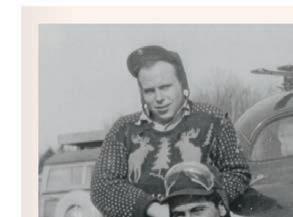
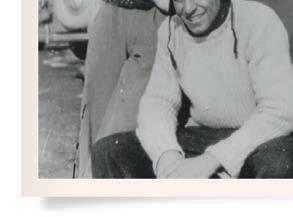
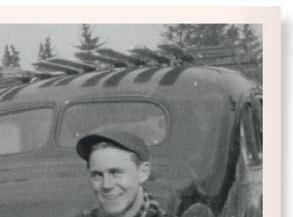
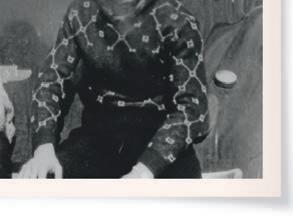
LEFT: Shown on a 1946 ski outing to Mount Washington’s Tuckerman Ravine, Joe Lahout (center) would put the store founded by his parents on the path to becoming an iconic ski shop.
to rest at the shop’s origins—and those of American skiing, too.
After immigrating to Littleton from Blouza, Lebanon, in 1898, Herbert and Anne Lahout began a small business selling groceries. And at the beginning, it was basically just the two of them, with Herbert traveling all over the North Country with horse and wagon, peddling dry goods, says Ron
Lahout, Herbert and Anne’s grandson and the third-generation owner of Lahout’s.
By 1920, the Lahouts had bought the building on Union Street and settled in, selling groceries out of the storefront while living in the back. In 1935, however, Herbert died, leaving Anne and their three children, Gladys, Joe, and Mary. It wasn’t easy being one of a tiny scattering of Lebanese in rural New Hampshire. “We were definitely the immigrants,” Ron says. “And my dad had felt that.”
But when young Joe Lahout strapped on a pair of wooden skis bought from a drugstore and pointed them downhill for the first time, he knew he’d found his calling and a sense of home. Soon Joe was skiing whenever he could, alongside a growing number of New Englanders drawn both to the sport and to this region’s burgeoning collection of ski resorts.



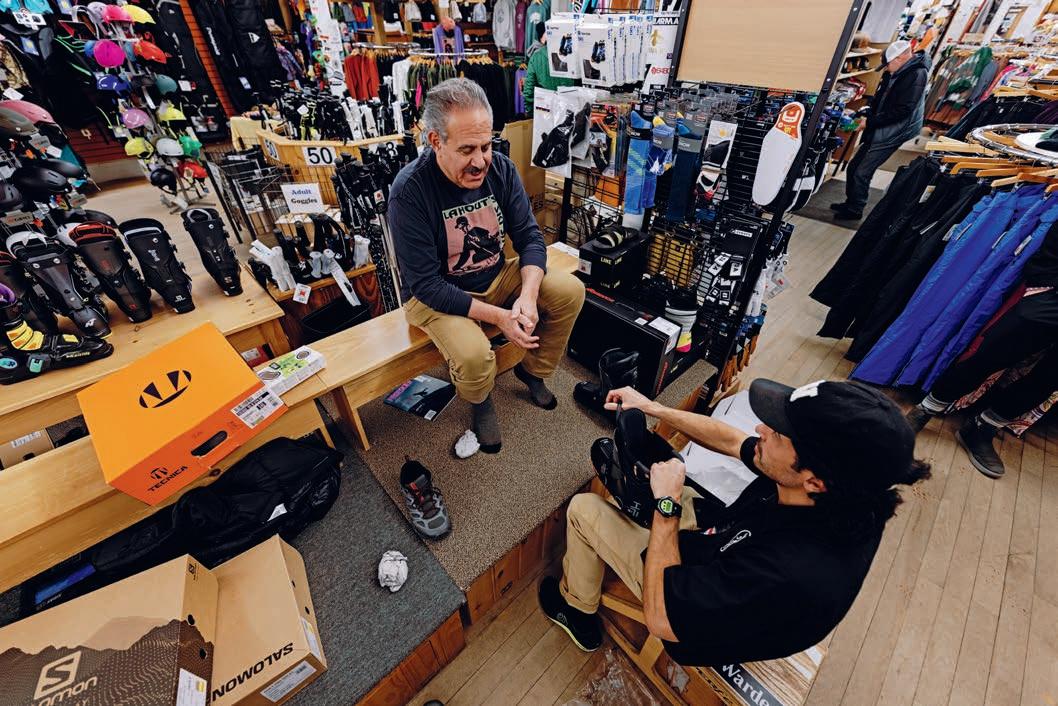
Immediately after returning from active service in World War II, Joe sat in the train station and considered heading west to follow his dream of pursuing endless sun and powder. However, a pang of guilt about leaving his mother on her own to manage the store persuaded him to return home, move upstairs, and begin helping run Lahout’s. And just a few years later, Joe added an item to the inventory that would change everything. “He threw a few skis in the window and started selling them along with dry goods and candy and meat,” Ron says.
By the time Joe’s three sons—Ron, Joe Jr., and Herb—came into the picture, ski gear was jockeying for display space next to beer and hamburger meat. The three brothers had begun other career paths but abandoned them, instead turning their business acumen to Lahout’s and the burgeoning “hotdog” ski culture of the 1980s. Soon
enough, the scrappy trio was pursuing big-time Western ski reps to get trendy upscale brands into their family store.
Today, a fourth generation is involved in running Lahout’s, which now has eight locations throughout New Hampshire’s North Country. Joe Jr.’s son Anthony owns and manages the business with Ron, and Ron’s daughter Phebe heads up marketing, social media, and buying. The entrepreneurial elbow grease that the three brothers applied so liberally during those early years is a big reason Lahout’s continues to flourish, but it’s not the only one. Shopping here is like walking into one of the weathered, well-loved ski lodges that dot the Northeast—the very kind that many of us remember clomping through as kids. The nooks and crannies and creaking floorboards of the original building offer a proud contrast to the sterile, big-brand ski outfits, evoking the magic of New England ski-
ing. If you buy your skis and boots from a Lahout, you’re never going to forget it.
“We have families that have been coming here forever,” Ron says, remembering how his Aunt Gladys and his late father would keep the doors open long into the evening, hosting après-ski parties for their customers. For generations of New England skiers, going to Lahout’s was an experience as essential to a ski weekend as the skiing itself. “We run it like a family,” Ron says.
As I head out the door, Ron tosses me a T-shirt with a likeness of his dad on it and emblazoned with Joe Sr.’s famous quote: “Put the damn skis on and go like hell.” Nothing fancy—just simple, old-school advice. Maybe that’s why it’s so good.










For those who struggle with daily activities due to physical limitations or cognitive decline, winter is especially hard. But our innovative, smallhome model can give them a new lease on life. Speci cally designed to support engagement and foster connection, each household accommodates just ten residents with private suites and a layout that makes it easy to fully participate in the life of the household.
• Intimate, homelike setting with no long hallways
• All private suites with private bathrooms
• Dedicated activities director
• Individualized care plans
• Onsite therapy and medical services
• All-inclusive pricing
Now welcoming new residents to Assisted Living and Memory Support. Call to schedule a


In a town that felt like their perfect fit, a DIY-minded couple takes on a house that’s anything but.
BY JESS KIRBY PHOTOS BY CRAIG MACKAY
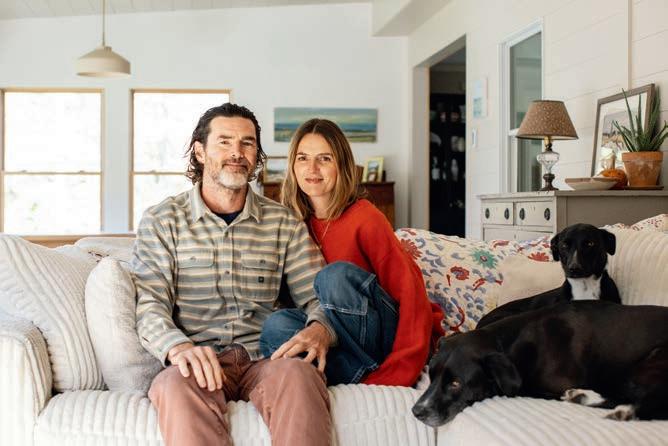
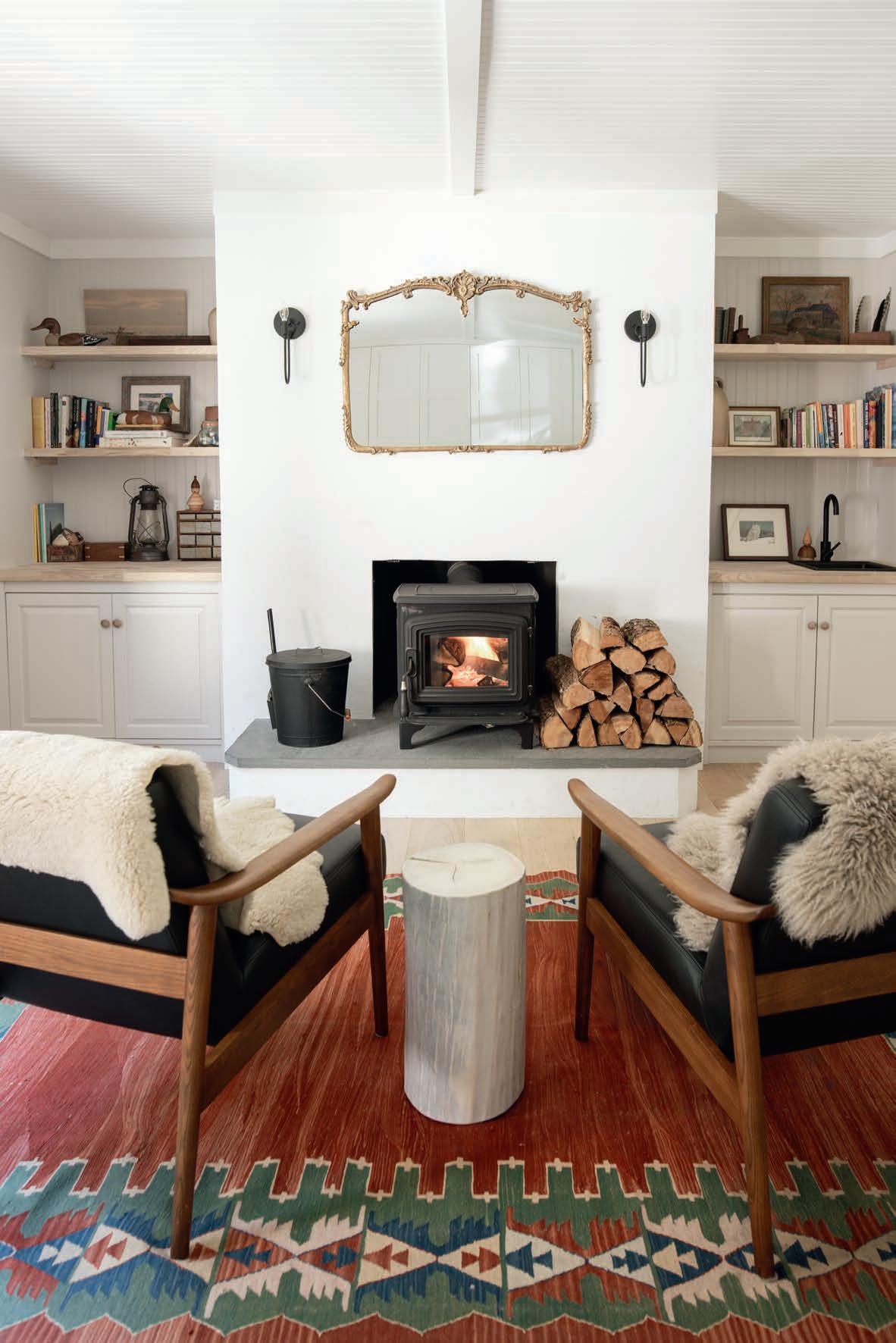
CLOCKWISE FROM ABOVE: Craig Mackay and Jess Kirby in their Woodstock, Vermont, fixer-upper with dogs Pepper and Fuji; the makeover of the front living room included hiding a dated popcorn ceiling with classic beadboard and using ecofriendly Clare Paints’ “Beigeing” to create a warm, neutral backdrop; the former garage, now a comfy master bedroom with its own entrance.
s we drove up the steep hill toward our new home, I could feel my heart sinking into my stomach. How would we ever get up this road in winter? It was only the second time my partner Craig and I had made the drive, the first time for the home inspection two months earlier.
The house had no furniture, and even though it was September, Vermont had an early cold snap. Craig and I set up an air mattress on the floor, where we covered ourselves in a pile of blankets. The temperature dipped down to below 30 degrees, and neither of us slept that night. We didn’t say much, but there was tension in the air. Was this the biggest mistake we’ve ever made?
Two years earlier, Craig and I had been invited on a press trip to Woodstock, Vermont. At the time, I was a travel and lifestyle blogger and Craig was a photographer, and as native Rhode Islanders, both of us were eager to experience a charming mountain town during the fall.
Growing up within minutes of the ocean, I’d always considered myself a “beach girl” and never thought I’d live anywhere but the coast. But as we biked around the village that first day, we crossed over
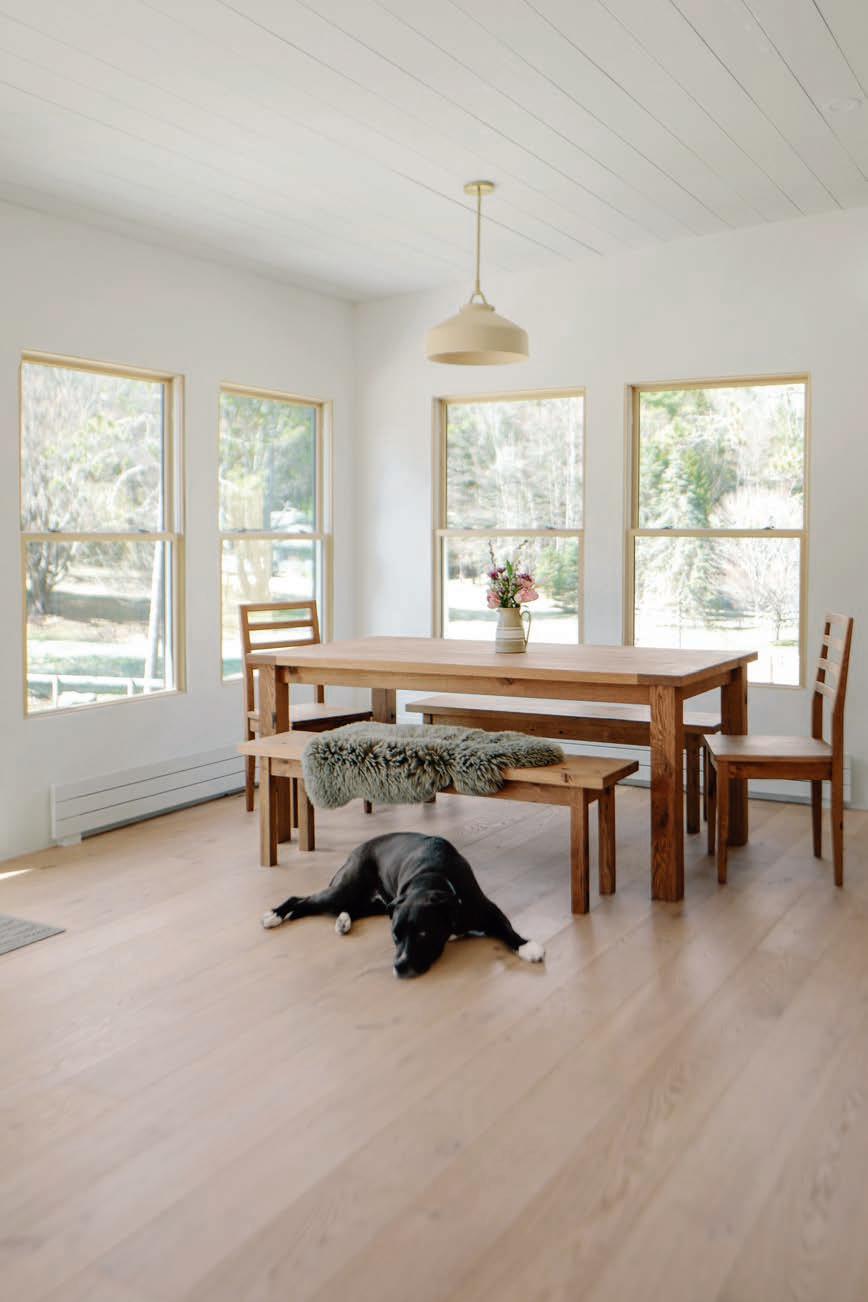
ABOVE: In search of more room for relaxing and entertaining, Jess and Craig transformed the original back deck into a second living space. It’s anchored by a dining table and chairs from WhatWeMake, a Midwestbased small business that crafts furniture from salvaged wood and uses sustainable, nontoxic finishes.
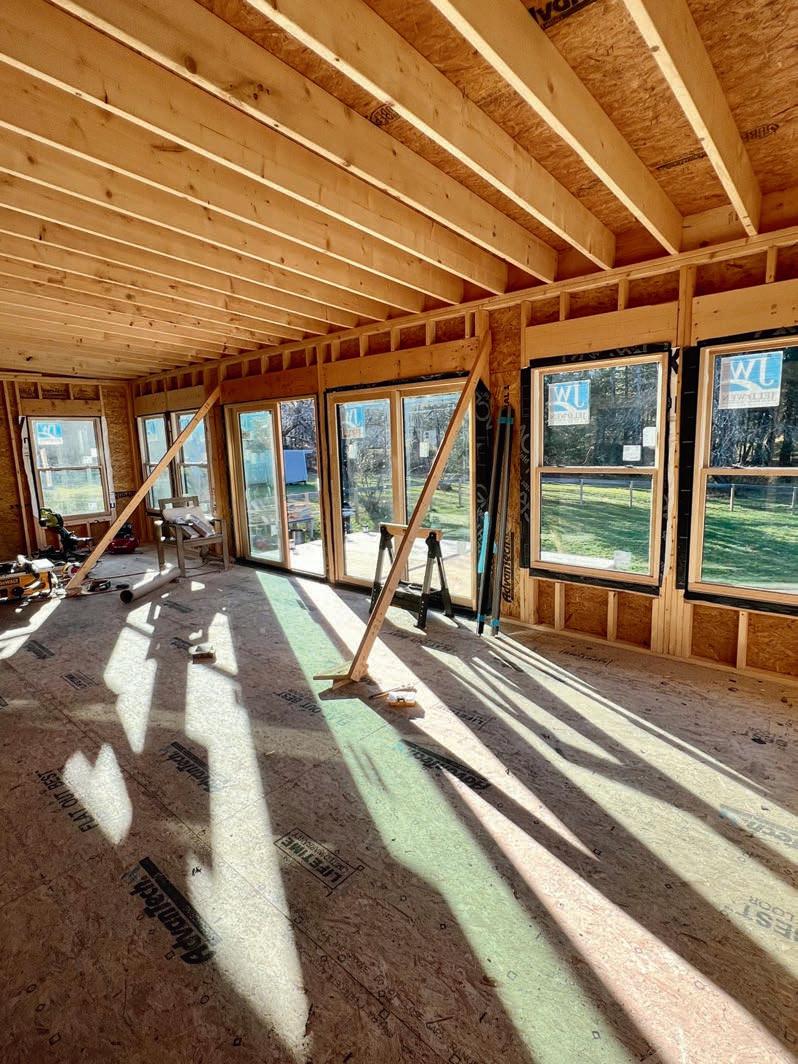
RIGHT: The former deck under construction, a project that Craig undertook on his own. He also built a new outdoor deck and a patio below, “allowing us to enjoy our home throughout the seasons,” Jess says.
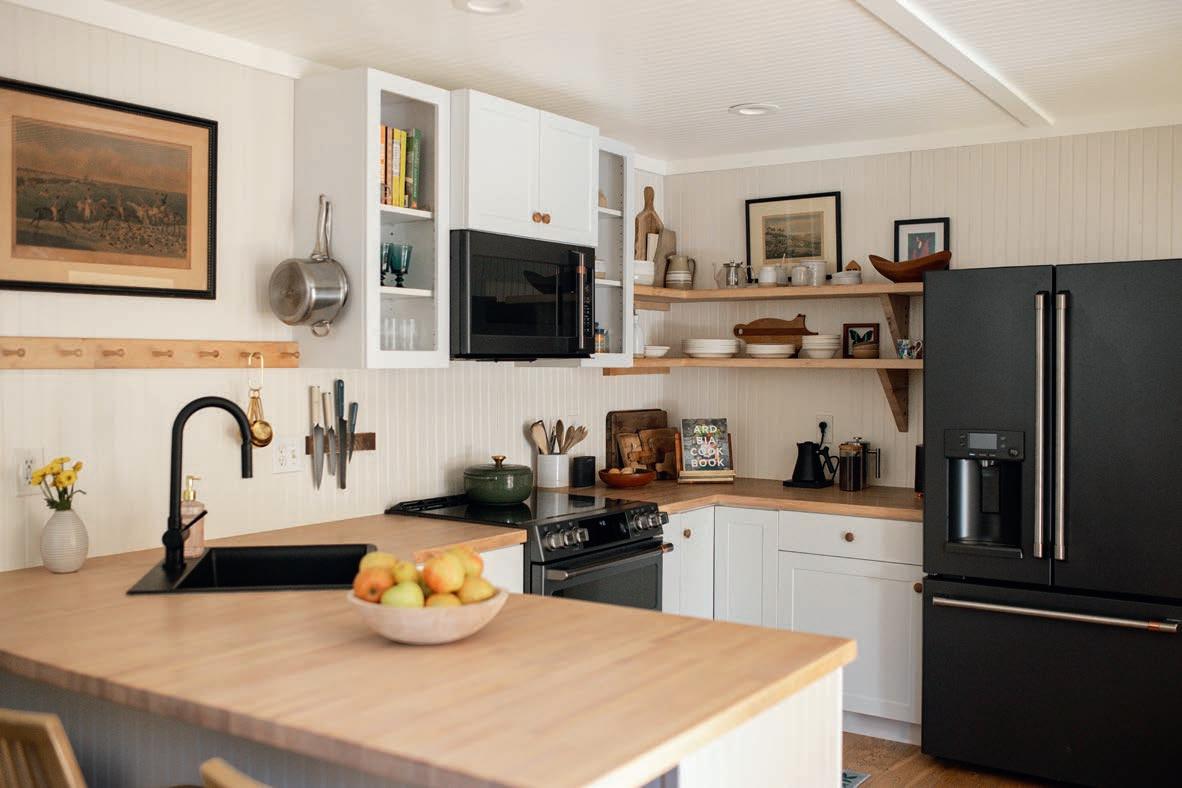
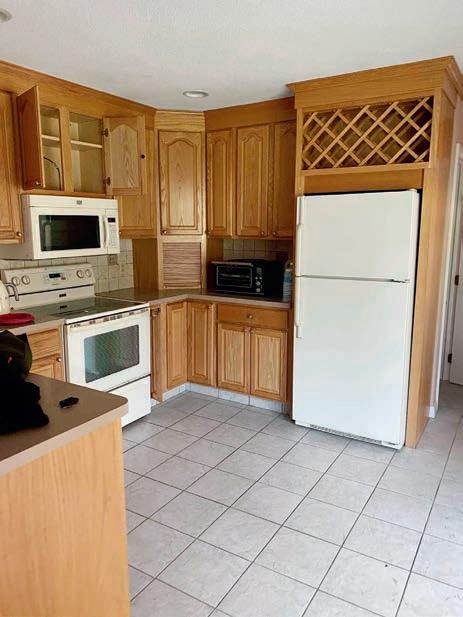
OPPOSITE: Views of the kitchen before (BOTTOM) and after (TOP). Swapping cabinets for shelving opened up the room, while the tile floor and plastic laminate countertops have been replaced with wood for farmhouse-style warmth.
a covered bridge, looked at each other, and said almost in unison, “Should we move here?” The history, the architecture, the farms, the quaint downtown, the proximity to nature—I couldn’t get over how quickly this little Vermont town had gotten a hold on me.
Back home in Rhode Island, we would casually look at places in Vermont, going to a few showings and even making an offer on one property. But it wasn’t until I had my first baby at 35, and the pandemic hit soon after, that the idea of moving took on new urgency. We had just spent years painstakingly renovating our first home; now, we weren’t sure we wanted to stay.
During our time quarantined at home, Craig spent a lot of hours looking around on Zillow (didn’t everyone?) and ultimately found a small 1960s ranch-style house in Woodstock that was within our admittedly tight budget. There was nothing particularly special or charming about it—and it needed work—but that was OK. It was something we could make our own. By that point we’d had seven years of experience renovating, between our Rhode Island house and the apartments we’d lived in
ing a kitchen.
This time around, though, we had a baby in tow, no family nearby, no childcare. And over the next four years of nonstop work on the Woodstock house, that would make things interesting, to say the least. Social media
They say you should accept that your house is “never quite finished.”
After living through a decade of renovation projects, I couldn’t agree more.
and HGTV shows give the illusion that DIY projects are simple beforeand-afters, but so much of renovating a fixer-upper is the challenging and messy in-between: living in a constant construction area, doing dishes in the tub, sleeping in the basement while you refinish floors, keeping a toddler from touching freshly painted walls.
The more time we spent in the
house, the more our vision for what was possible grew. With no unique finishings or historical charm, the 1960s builder-grade materials gave us a mostly blank canvas. Wanting a space that would be cozy and functional for a family with a child and three pets, we settled on a mix of modern farmhouse and Nordic style that featured wide wood floors, earthy neutral paint colors, textured plaster walls, and shiplap, plus a mix of contemporary and traditional furnishings to make the space feel bright and airy.
One of the biggest challenges was space—starting with the living room, which was cramped and dark, and failed to provide room for more than the three of us. On a hot summer day while sitting on our back deck, Craig turned to me and said, “We should make this our living room.” I had plenty of questions, yet after he drew his initial idea on some scrap paper, I knew there was no turning back: We would bring the outdoors inside. Tons of natural light with windows and sliding glass doors. Wood floors, plaster and shiplap walls, a wood-burning stove. A space
where we could cozy up on the couch for a movie or host holiday dinners. It was a massive project, but Craig did everything top to bottom—from building a roof to pouring a concrete landing for the stove—and he learned a lot.
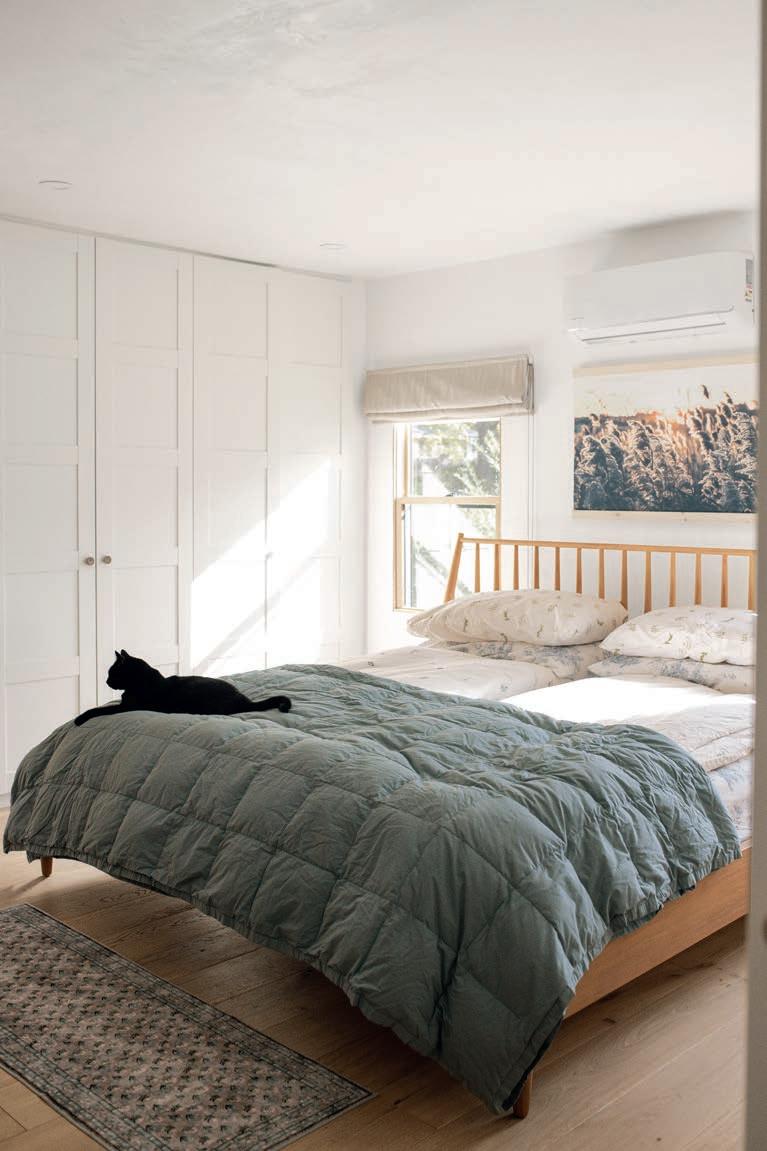
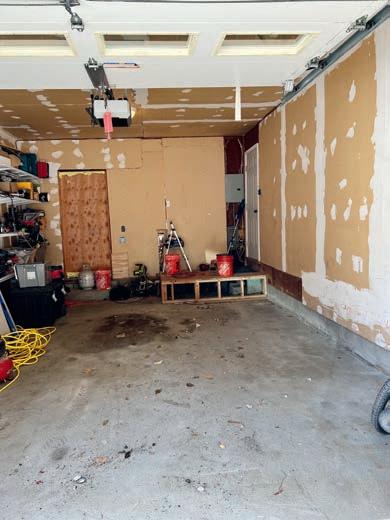
But we weren’t done. The three existing bedrooms were small and situated right next to one another, which meant little space or privacy. Adding square footage to the house wasn’t an option, so we decided to do something we’d already done at our Rhode Island fixer-upper and convert the garage into a bedroom and bathroom. This time the space was tighter and the ceiling was already finished; still, we were determined to make it work.
and
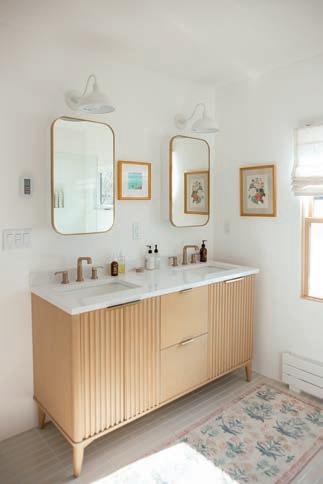
Figuring out how to connect the plumbing when it was halfway across the house, adding closets to an already small space, determining where to fit a bathroom, and making enough room for a king bed made the garage conversion our most demanding project yet. But we found a way, and as I look around it now—plastered ceiling and walls providing lightness and texture, wood finishes and details lending warmth—it’s one of my favorite projects we’ve ever done.
They say you should accept that your house is “never quite finished.” After living through a decade of renovation projects, I couldn’t agree more. That not a bad thing, though.
a modern and inviting bedroom to call their own has more than made up for the loss of their home’s traditional storage area—after all, Jess points out, they still have three sheds on their property, with ample room for tools, a snowblower, and everything else a pair of DIY Vermonters might need.
We change as we go through life, and so do our needs. It’s a wonderful thing to know you can tackle projects on your own, even if it takes a little longer that way.
Looking at the “before” photos, it’s actually hard to believe this the same house. And it’s almost as hard to believe that when we were driving up the steep hill that fateful September day, I felt such trepidation. Because now when I open the door and step inside, there’s nothing but a massive sense of relief. I’m home.


BY BRIAN KEVIN
Leave it to a company that supplies some of the country’s highestend interior designers to know how to make the most of a space: Not an inch is wasted on the manufacturing floor at Lowe Hardware in Rockland, Maine. As they go about their day, proprietor Elliot Lowe and his dozenplus machinists, finishing specialists, and assembly technicians navigate a tight labyrinth of lathes and grinders,
drill presses and polishing machines, cutting tools both manual and computerized. Watch the corner on that bin full of metal rods. Mind that shelf, piled high with ingot-like bars of brass and bronze.
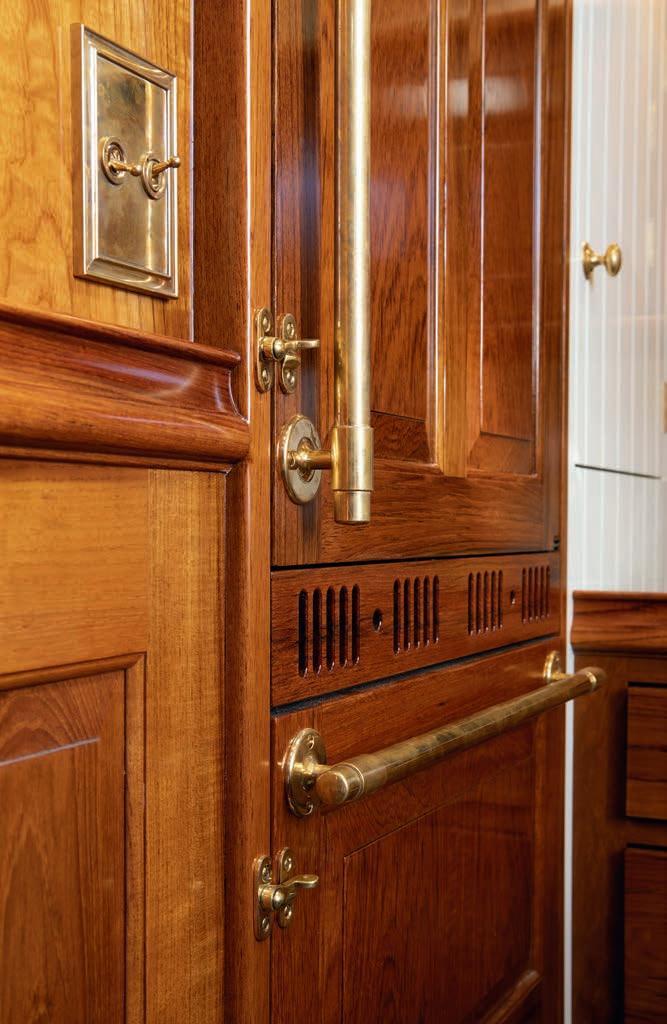
Of course, a good portion of the company’s manufacturing facility is taken up with inventory—elegant little cabinet knobs, latches, hinges, door pulls, and other fittings, each one almost sculp-
tural in its simplicity, small and sleek and lovely. They do pile up, though, and Elliot says the company has “many thousands” of coded individual products, not to mention the many custom pieces it creates. It’s why Lowe Hardware moved into a new 24,000-squarefoot hub this past fall, which is double the size of its previous home.
That’s a lot of growth for a company that 16 years ago was run from


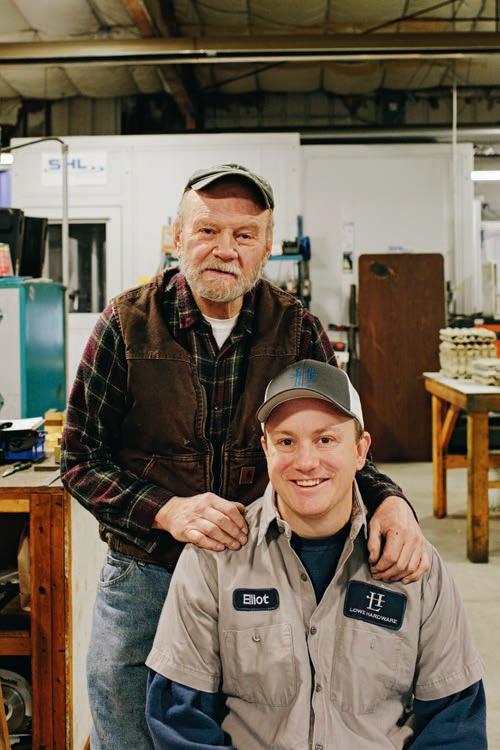
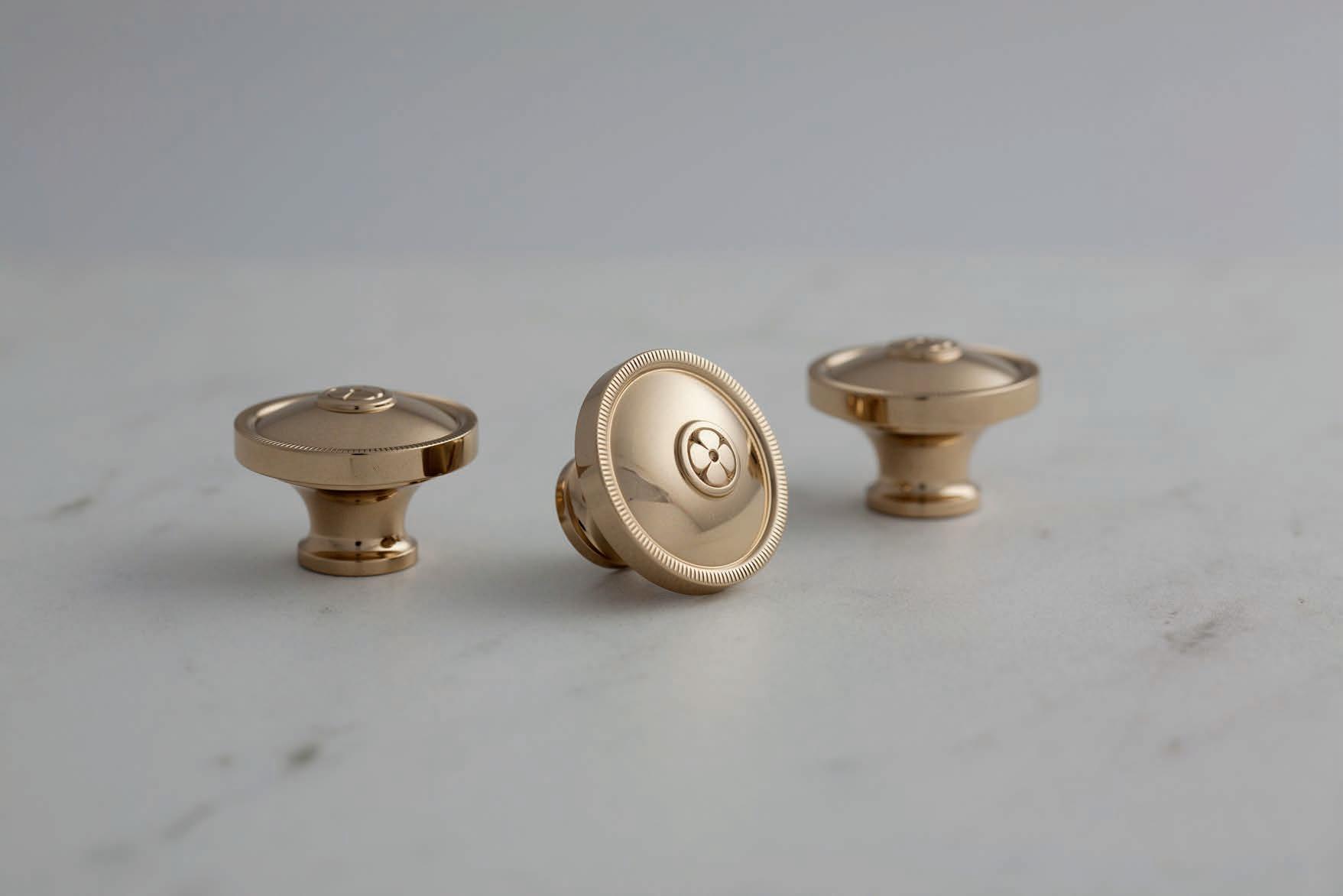
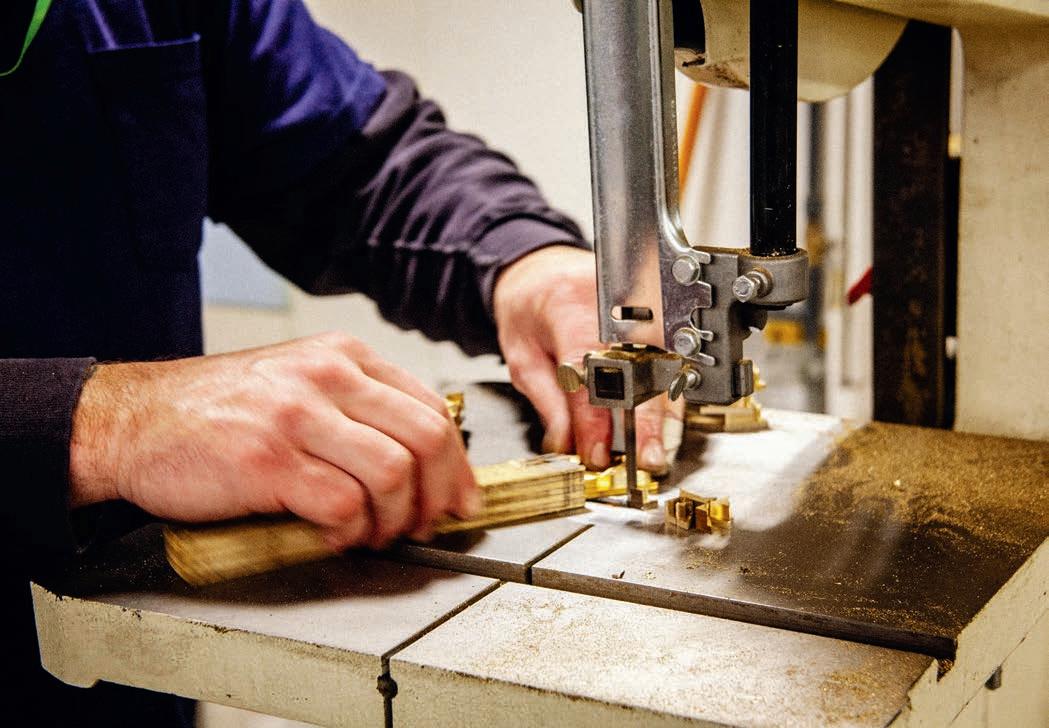
Hardware’s custom pieces are modern reproductions of historic hardware, such as these knobs created for an apartment renovation at New York City’s 19th-century Dakota building; founder Bill Lowe with his son, Elliot, who oversees the business today; a machinist trims down raw brass stock in the Rockland, Maine, workshop.
the family barn. Elliot’s father, Bill Lowe, founded it there, in the peninsular fishing town of Owls Head, in 1977. Bill was a machinist and boatbuilder looking to specialize, and he had a knack for making handsome and sturdy marine hardware—cleats, rails, winches, and the like. So he turned his 1,600-square-foot barn into a machine shop and, for the better part of three decades, filled custom orders there for both yachts and working vessels, cultivating a reputation at boatyards up and down the Maine coast.
Elliot joined his father in the barn in 2003, after graduating with a degree in mechanical engineering from the University of Maine in Orono. The two “worked great together,” Elliot says, but he had a penchant for tech that his dad

As you acquire and wear these earrings, you stand taller, look smarter wearing your long, lean pearls which sweep and sway. The pearl is big and it’s pure white too. On the left is silver. On the right is gold. Long, lean, luxurious, these dangle earrings sweep with you into any room you may choose to visit.
A. Silver............X4392..........$385
B. Gold............X4393........$1,985
Call us or click and buy Shipping is fast, safe, and free anywhere USA
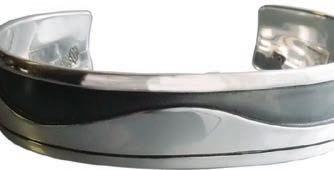

“Life’s a Beach”, the bumper sticker says. And if you live at the beach, high and low tide create the rhythm of the day. What you do is different depending on whether the tide is in or out.
Silver waves rise and fall against a dark sky.
One size fits most.
Sterling silver X3294.......$285

Moon, real gold
Handpierced tree
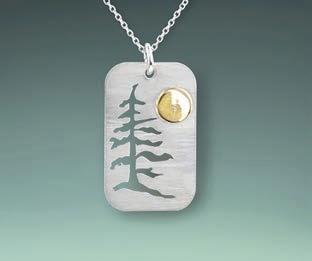
Island Dream Necklace
Time goes to a place where the four winds are free to meet and play in the tree tops and dance with the full moon.
Listen closely for the faint familiar music you hear…The trees are whispering their island dreams into the night wind.
Sterling silver. 14k yellow gold moon 18-inch sterling silver chain X4126.....$265
Valentine
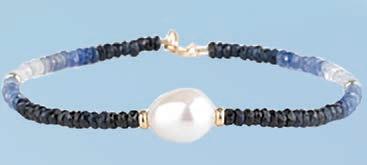
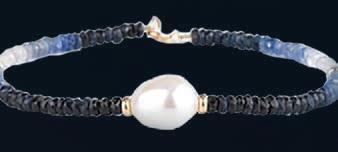
This bracelet is a dreamy blend of several places you’ve been to along our coast. On a warm evening, and with the golden glow of a setting sun, all seems right. The chatter, the laughter, Maine is a great place to be. It’s so perfect, that when looking back, it all feels like a dream.
Wear this bracelet and enter a dreamy summer memory. There’s ocean and sky, a full sail gliding between islands, billowing clouds, and an evening gathering of friends and family. It’s summer by the sea.




Crossjewelers.com for 1,000 more great gift ideas


Summer by the Sea Pearl & Sapphire Bracelet 14K yellow gold X4533......$345



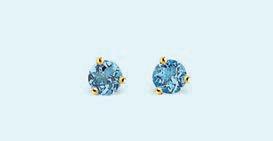
The earrings are super simple. The gem is 6mm round pastel Blue Sky Topaz. The upper half of each gem is cut with a checkerboard pattern which slices and dices white light into a glittering array of flashing pastel blue light.
Key West Earrings,14K yellow gold X4657.....$585




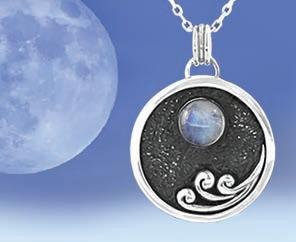
Moonstone Necklace
This is one of the most romantic pieces we have ever made. It is a simple, rustic piece showing waves sweeping ashore with an antiqued night sky background with a big old moon hanging in the night sky, low to the horizon.
Sterling silver, 8mm round moonstone X4112.....$225
Call us or click and buy
Shipping is fast, safe, and free anywhere USA

didn’t share. He talked the old man into investing in the company’s first CNC (computer numerical control) machine, a precision tool that can mill exquisitely detailed pieces from computer designs. And Elliot also nudged the company to start building an inventory instead of relying solely on made-to-order jobs.
He even got Lowe Hardware online, with a website that noted the company’s ability to tackle residential projects in addition to marine ones. It was, Elliot says now, “a little bit bullsh*t, because we hadn’t done it before. But I knew that we could.”
He knew this in part because, since 2006, Lowe Hardware had enjoyed
recurring business crafting the interior hardware for Hinckley Yachts, founded on Mount Desert Island in 1928, makers of some of the most stylish boats in some of the toniest harbors along the East Coast. If he and his dad could blend form and function to outfit a gorgeous half-million-dollar picnic boat, Elliot presumed, they could do it to bedeck a high-end home.
And sure enough, Lowe Hardware’s first residential client, a remodel on MDI, came knocking in 2010. Then another, soon after, on an island in Penobscot Bay. That one was spearheaded by a well-connected New York architect, and the architect told peers
Custom hardware designed for the interior of the Lyman-Morse sloop Anna shows how many of Lowe Hardware’s finishes are considered “living,” their appearance evolving and developing patina with age and use.
about the little fittings company from coastal Maine. Jobs kept coming. In 2014, Lowe Hardware opened a Manhattan showroom. These days, it’s in Greenwich Village, and architectural projects all around the country make up the bulk of the company’s work— sometimes for clients so hoity-toity that even the architects and designers aren’t allowed to know who they’re working for.
The company’s barn-to-Big-Apple backstory, Elliot suspects, is part of the allure. So is its neighborly approach to service, which Elliot says just comes naturally in New England. “We’re not jerks,” he says. “We pick up the phone. If there’s a problem, we say all right, we’ll fix it, and then we do it the next day. I think New Yorkers think, ‘Oh, people in Maine, they’re so nice.’”
But the real appeal is the same commitment to sturdy functionality and classic aesthetics that Bill put into his cleats back in the late ’70s. A set of bronze-finished, bullnose edge-pulls adorning farmhouse cabinets for a client in the Hamptons? They’re as streamlined as if they were built to reduce drag on deck. A polished-nickel door lever with a matching trim plate in a SoHo loft? It has the same minimalist design and clean lines you’d want in a tender built in an Owls Head boatyard.
“We’re not trendy at all,” Elliot says. “It’s a timeless design. We take a lot of cues from the old standard hardware that was made 100 years ago.”
Bill, these days, is 80 years old and retired from the company, and his son misses having him around the crowded shop. “I wish he was 20 years younger,” Elliot says. “There’s nobody I can rely on more, and the older I get, the more I realize how much I’ve learned from him.” His dad’s keeping busy in retirement, though, building a 30-foot steamboat in the barn where it all began.
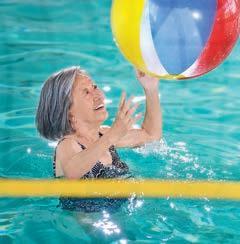
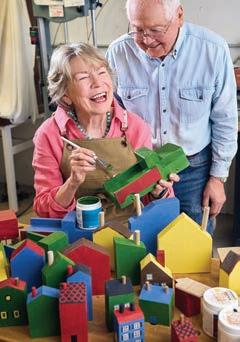
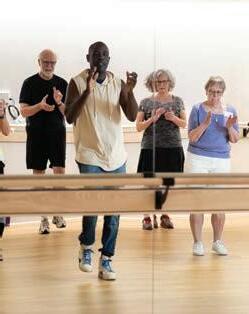

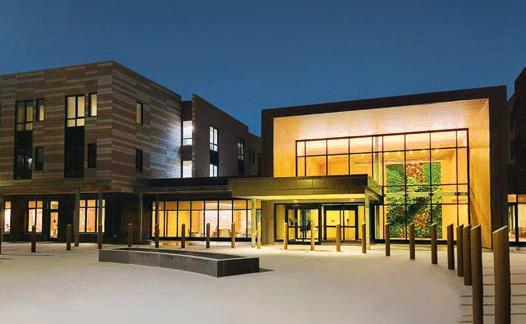
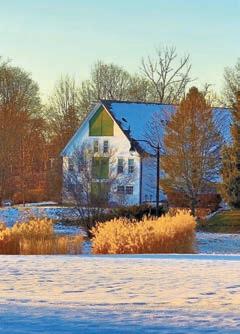
See how life can be easier and more fun in every season when you choose maintenance-free living at Edgewood in North Andover, MA, or The Baldwin in Londonderry, NH.
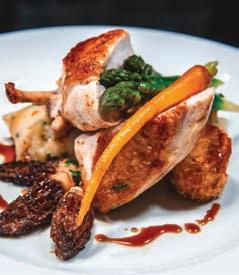
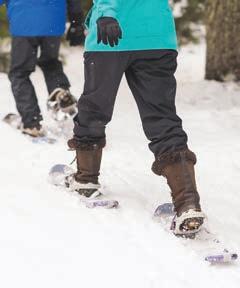
Leave all the chores to our team while you focus on doing what you love. Join friends for water volleyball in the alwayswarm aquatic center. Expand your creativity in art class or the woodworking shop. Attend a lifelong learning lecture, enjoy world-class dining, or do anything else you enjoy. Love to get out in the snow? You’ll appreciate the cleared sidewalks and even nd some fellow residents ready to don snowshoes or cross-country skis and hit the nearby trails. Who knows? You might start to look forward to winter again.

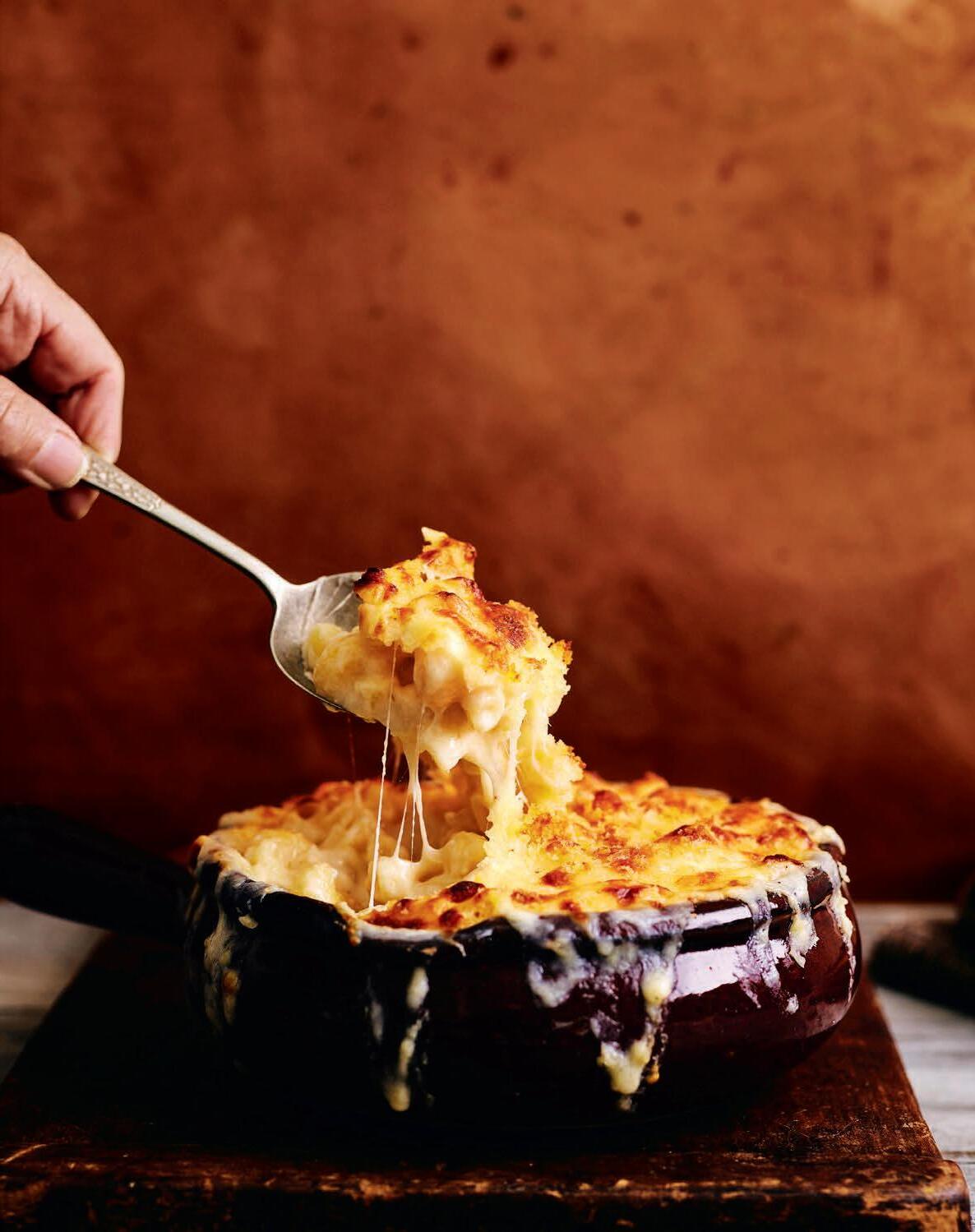
Five rich and tasty recipes for the ultimate one-dish meal: mac and cheese.
BY SARAH HEARN MORRISON

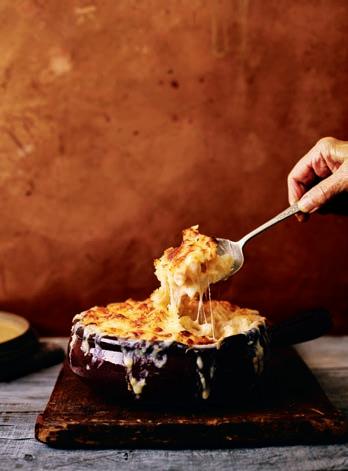
ne of my greatest food memories happened 25 years ago when I was a recent college graduate backpacking through Europe. At a small Italian trattoria, I watched a nonna pour steaming risotto into a hollowedout wheel of Parmigiano Reggiano. She stirred and stirred with a wooden spoon until the rice turned creamy and fragrant, with an aroma that was buttery, nutty, and savory. It was the most delicious thing I had ever tasted. Whatever the form, cheese plus carbs is pure bliss, the ultimate comfort food. Around the world, there are countless variations— pastitsio in Greece, gratin de pâtes in France, Germany’s käsespätzle —but here in America, we have perfected mac and cheese. Once considered a quintessential kid’s food from a box, today’s mac and cheese has grown up, evolving into a dish that can be elegant or playful—always cozy and always perfect on a freezing New England night.
A classic homemade version begins with butter and flour stirred together into a roux. Whisk in some milk until
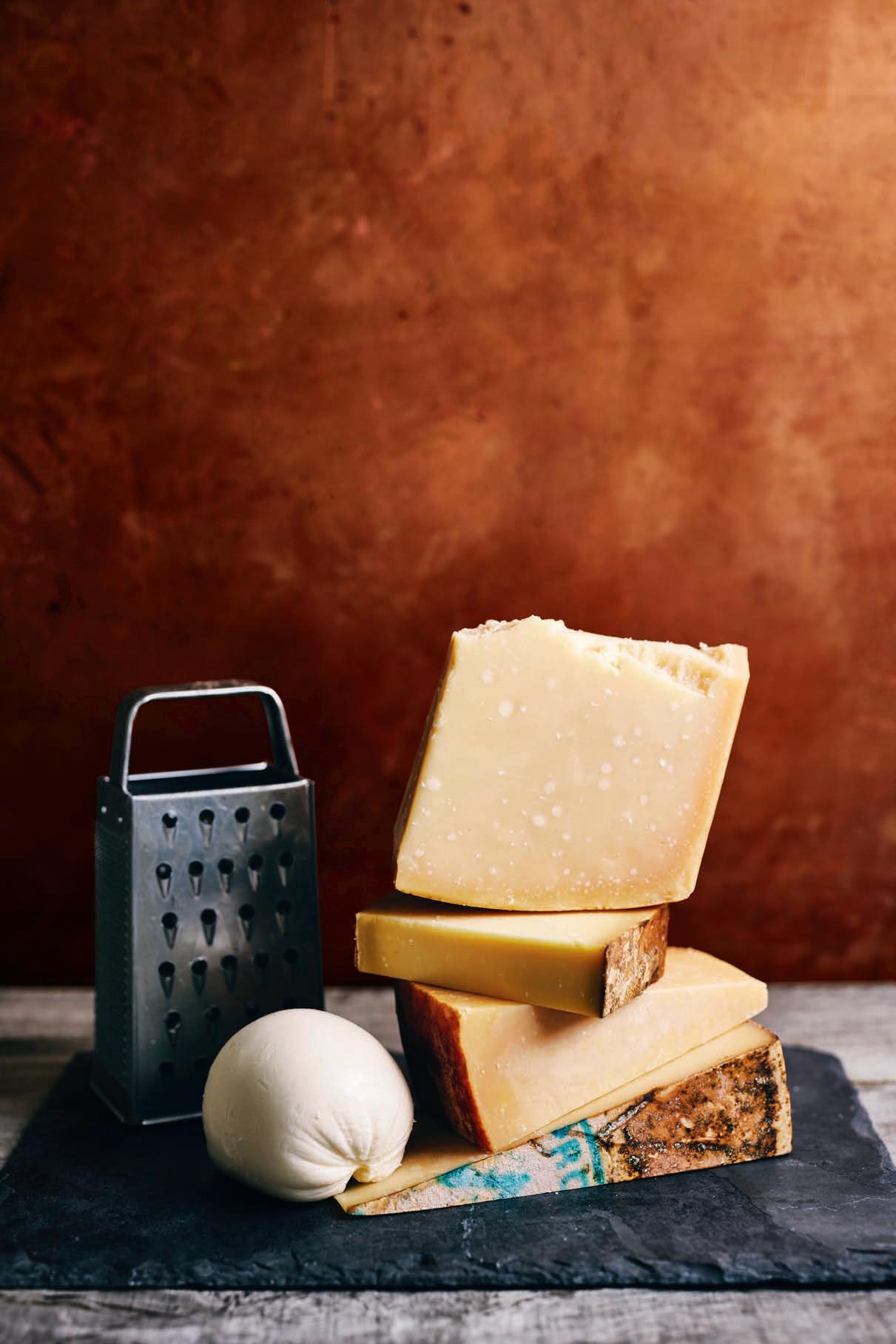
smooth and thickened, and you have a classic béchamel sauce. Then comes cheese. Cheddar is the traditional choice, but mixing in other cheeses adds complexity. I love a combination of melty cheddar, nutty Gruyère, and Parmesan for depth. Give a little thought to your pasta, too: Elbows are iconic, but shapes like penne, rotini, and fusilli hold the sauce beautifully. Finish with a lid of bubbling cheese for maximum gooeyness or a buttery panko topping for crunch. With added vegetables or proteins, you have a one-dish meal that’s endlessly customizable.
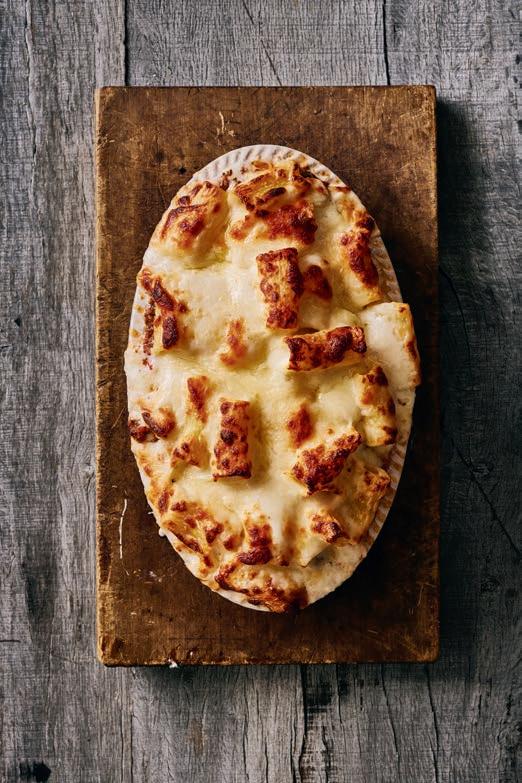
To that end, we are spotlighting five delicious variations here: a cheesy, creamy, breadcrumb-topped classic; a veggiepacked spinach and artichoke; chicken and broccoli; roasted butternut squash; and even a mac and cheese Bolognese. With all these options, you’ll be warm and happy all winter. (Recipes begin on p. 88.)
NOTE: Mac and cheese is a great make-ahead dish. Just assemble, cover, and refrigerate to bake later that day, or even the next. Plus, leftovers reheat beautifully in the microwave.


A classic Valentine’s ingredient inspires irresistible treats for your sweetheart (or yourself).
New Englanders have been importing chocolate since the late 1600s, when spiced hot chocolate drinks were served in Boston public houses. Over the ensuing years, our appetite for nature’s most seductive fruit has only grown—and given the abundance of award-winning confectioners and bean-to-bar chocolate makers in this region, we are truly in chocolate’s golden age.
Take Ragged Coast Chocolates in Westbrook, Maine, which Weekends with Yankee visited in Season 7. Co-owner Kate Shaffer began the business with her husband while living on tiny Isle Au
Haut, but as their sales grew, they moved to the mainland. With that growth came a larger product line, including bittersweet baking chocolate and rich cocoa powder, which you can use to great effect in the following recipes.
The first recipe, a layered chocolatebutterscotch bar called Millionaire’s Shortbread, comes by way of Scotland. (If you’ve ever eaten a Twix bar, you’ve had the pale facsimile of what these bars can be.) The butterscotch layer is easier to make than caramel, and the rich toffee flavor is intoxicating, especially when paired with bittersweet chocolate.
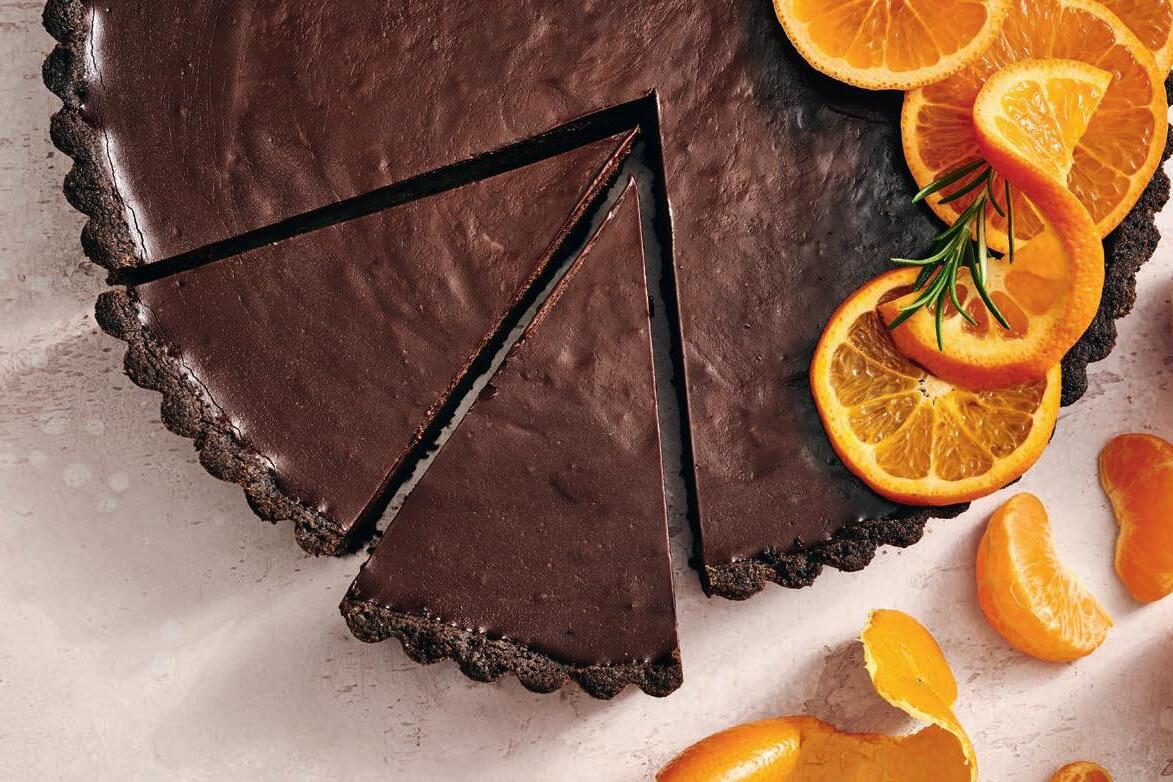
The second dessert, a chocolatemandarin tart, is loosely inspired by the chocolate-orange Milano cookies that were my high school obsession. The tart is fancy enough for company but easier to make than you’d think.
MILLIONAIRE’S SHORTBREAD
I fell in love with these addictive sweets in Edinburgh, where they’re sold at most coffee shops and bakeries. Because you build the bars with three separate layers, this is




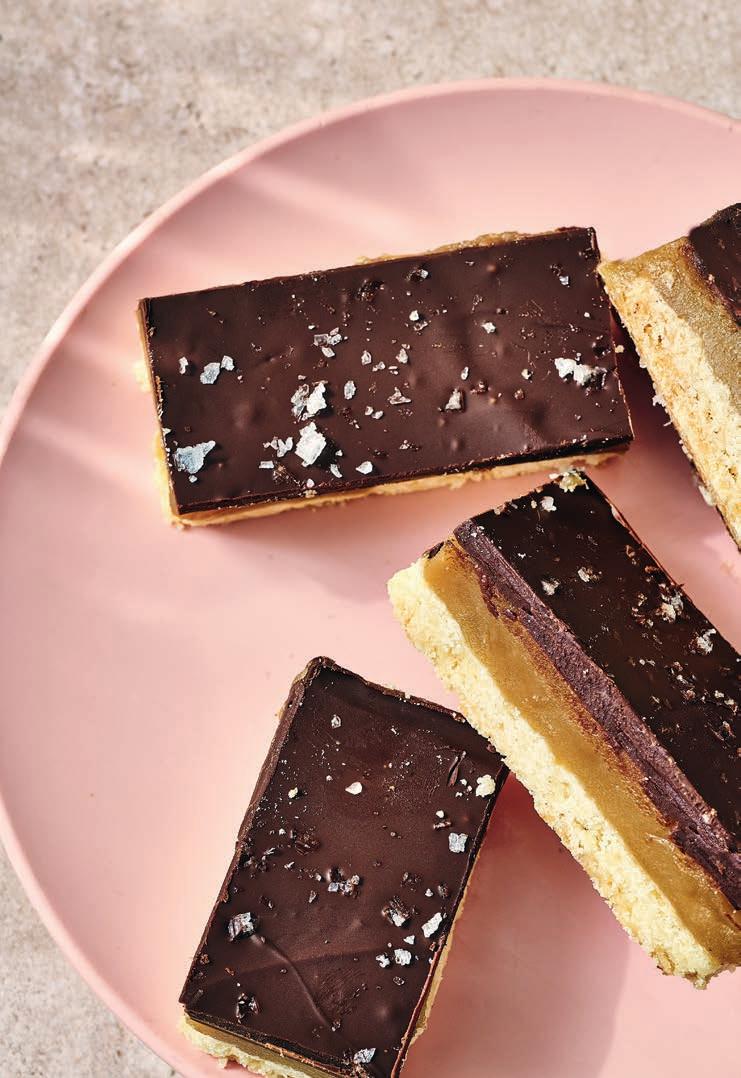
a bit more of a project. But it’s worth it! After you’ve made them once, they feel very easy (especially when using a quick-read or candy thermometer). You can freeze the bars, tightly covered, at any stage.
Note: You can skip the rice flour by replacing it with an extra 2 tablespoons of all-purpose flour, but it does make the shortbread lighter and crisper. Rice flour has become increasingly available in supermarkets and is usually sold with other gluten-free flours.
1 cup plus 2 tablespoons (158 grams) all-purpose flour
2 tablespoons (18 grams) rice flour
2 tablespoons (25 grams) granulated sugar
½ teaspoon kosher salt
½ cup (1 stick) unsalted butter, melted
FOR THE BUTTERSCOTCH LAYER
1½ cups heavy cream
1½ cups (275 grams) packed dark brown sugar
9 tablespoons unsalted butter, cut into medium pieces, plus more for the pan
1½ teaspoons kosher salt
FOR THE CHOCOLATE LAYER
1 cup (6 ounces) bittersweet chocolate chips (60%–70% cacao)
1 tablespoon unsalted butter Flaky sea salt, for garnish
Butter a 9-by-9-inch square baking pan, then line the pan with a fitted piece of parchment paper so that it drapes over the sides to form handles. Preheat your oven to 325°F and set a rack to the middle position.
First, make the shortbread: In a medium bowl, whisk together the flours, sugar, and salt. Add the butter and stir until combined. (The mixture will look crumbly.) Press the mixture into the prepared pan in an even layer, smoothing it with an offset spatula. Bake until light golden brown, 25 to 30 minutes. Set aside to cool to room temperature. You can refrigerate the shortbread to speed up the process.
Next, make the butterscotch layer: Set aside a large pot of cold water on your counter (I use a soup pot).
In a 4- or 5-quart pot, combine the cream, brown sugar, butter, and salt and set over medium heat. Cook, stirring constantly, until the butter is melted and the mixture begins to bubble. Now increase the heat to medium-high and cook, stirring gently and periodically, as the mixture thickens and bubbles. Start checking the temperature at this point with a quick-read or candy thermometer. The goal is to bring the temperature to between 235°F and 240°F. This is essential for the butterscotch to have a firm texture. If the temperature stops climbing at medium-high heat, increase your heat to high and monitor carefully, stirring gently and often. As soon as the temperature reaches the right threshold, remove the pot from the heat and carefully submerge it halfway in the pot of water; this will prevent overcooking. Pour the butterscotch over the shortbread and let it cool, uncovered, in the refrigerator until just firm.
Then, make the chocolate layer: Melt the chocolate chips with the butter, either on the stove or in a microwave in 30-second bursts. Pour over the firmed-up butterscotch layer and spread evenly to cover. Bang the pan on your counter several times to smooth out any bumps. Garnish with flaky sea salt, then let the chocolate set, about 30 minutes at room temperature. Remove from the pan by cutting around the edges and lifting up the parchment paper handles. Cut into bars and store, covered, in the refrigerator to keep them firm. Yields about 12 bars.
Chocolate ganache tarts are always impressive but also deceptively simple—an ace in the hole that’s great for entertaining. The filling is merely a mixture of melted chocolate, heavy cream, and butter with some mandarin zest for flavor (I tend to prefer the
½ teaspoon kosher salt
½ cup (1 stick) unsalted butter, melted
6 tablespoons unsalted butter, cold and cut into pieces
1¼ cups heavy cream Zest of 2 mandarins
flour, cocoa powder, sugar, and salt. Add the melted butter and use a spatula to evenly combine. (The mixture will look crumbly.) Press the mixture into the bottom of the prepared tart pan and up the sides as neatly as possible. Set on a baking sheet and bake until fragrant and firm, 12 to 15 minutes. Let cool in the refrigerator while you
Retirement is a new beginning, not an ending. After decades of work, caregiving, and oh-so-many responsibilities, you can finally step into a lifestyle that’s all yours. It’s a time to open up—to the joy, to the freedom, and to the experiences you always said you would do “someday.”
The happiest retirements are built on simple everyday choices, not just financial planning. They could include travel, long afternoon walks, time in the garden, or discovering a new hobby. This is your time to create a life on your terms.
Only a few sites remain!
Every new chapter begins with a vision or a plan. Close your eyes and imagine an ordinary day in your retirement: What does it look like? Maybe you are taking a hike, wandering around a quaint downtown, or simply enjoying a sunset. Define your plan, and turn your dream into reality.
Financial stability matters, but so does your health and safety. Build a foundation by finding or creating a safe, comfortable home for this next chapter, and you will protect your


OceanView at Falmouth is growing!
OceanView at Falmouth is growing!
Just minutes from Portland, we offer an independent, active, maintenan ce-free lifestyle with a care continuum that provides peace of mind for the future.
Just minutes from Portland, we offer an independent, active, maintenance-free lifestyle with a care continuum that provides peace of mind for the future.
Our beautiful 80-acre campus includes a wide variety of apartments and cottages, including an additional 37 new homes now under construction.
Our beautiful 80-acre campus includes a wide variety of apartments and cottages, including an additional 37 new homes now under construction.
This is your opportunity to move to Ocean View in 2026 ! Set your own retirement timeline by reserving your brand-new apartment or cottage.
This is your opportunity to move to OceanView in 2026! Set your own retirement timeline by reserving your brand-new or cottage. Don’t miss your chance!
future and ensure your peace of mind.
Happiness grows in community. Your retirement shines brighter when you share it with others— spending time with grandchildren, enjoying lunches with friends, volunteering at your favorite local charity. Staying social and connected will nurture you, keeping your days interesting and full of laughter and purpose.
For many, retirement communities offer a beautiful balance of independence and connection. Far from the old stereotypes, today’s communities are vibrant, welcoming places filled with opportunity. Imagine living in a neighborhood where activities are just steps away—fitness classes, cultural events, hobby groups, and more—and friendships with a wide variety of people are ready to bloom.
Retirement communities also ease daily burdens. There’s no more shoveling snow, mowing lawns, raking leaves, or worrying about home maintenance. Instead, you’re free to focus on what matters most—whether that’s learning a new skill, traveling to new places, or simply enjoying each day surrounded by supportive neighbors. Many communities provide wellness
Leave home maintenance behind and enjoy more time for what you love — travel, classes, volunteering, and shared meals with new friends.
You still have so much you want to do, and choosing RiverMead, a not-for-profit LifeCare Community, means you’ll enjoy freedom now and peace of mind knowing your future healthcare needs are covered.







programs, dining options, and built-in opportunities to stay active and engaged. For those who crave both independence and companionship, it can be the perfect setting in which to thrive.
One of the greatest gifts of retirement is time—the time to finally dive into passions long postponed. Take a painting class, join a book club, or learn to play an instrument. Lifelong learning doesn’t just keep your mind sharp; it also brings a sense of wonder back to daily life.
For many, retirement communities o er a beautiful balance of independence and connection.
pected turns; some challenging, others wonderful. By staying flexible and saying yes to new
that bring the richest rewards. Your New Chapter Awaits
This stage of life isn’t about leaving something behind, but instead stepping forward into a season where you set the pace, write the story, and savor each moment. Whether you find joy in the quiet of your own home, the laughter of family gatherings, or the vibrant life of a retirement community, the happiest retirements are the ones lived with meaning and heart.
So, dream boldly. Build connections. Care for your health and
At Masonicare, aging means more — more freedom , more connection , more joy.
At Masonicare we’re more than award-winning residential living communities.
We’re Connecticut’s only fully integrated senior living continuum, giving you confidence and complete peace of mind no matter how life changes. Masonicare. Senior living reimagined. Welcome to Something Better. 203.884.8210

masonicare.org |



Even if you skip the slots and tables, this Connecticut casino resort is a sure bet for winter breaks.
BY IAN ALDRICH
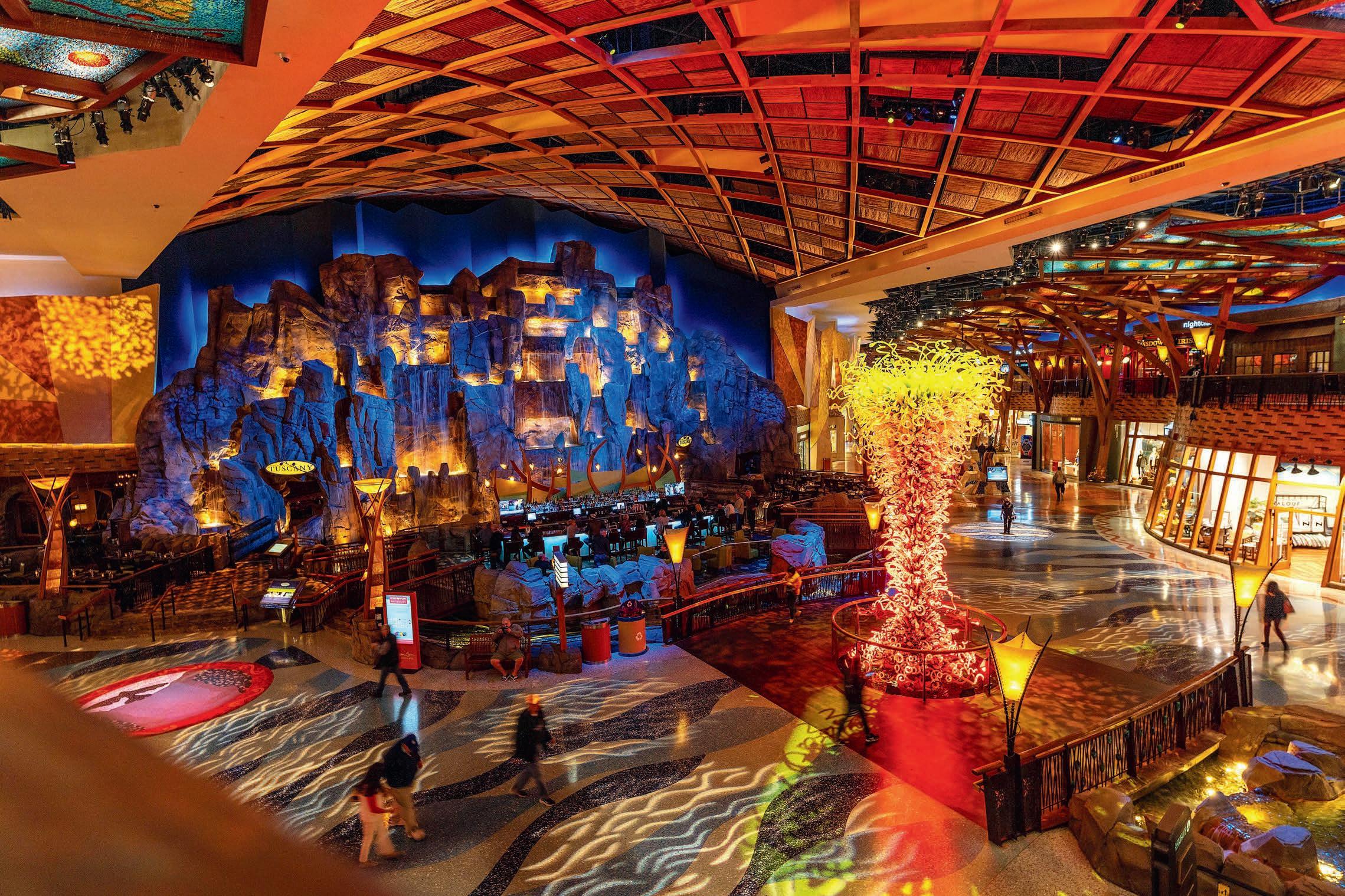
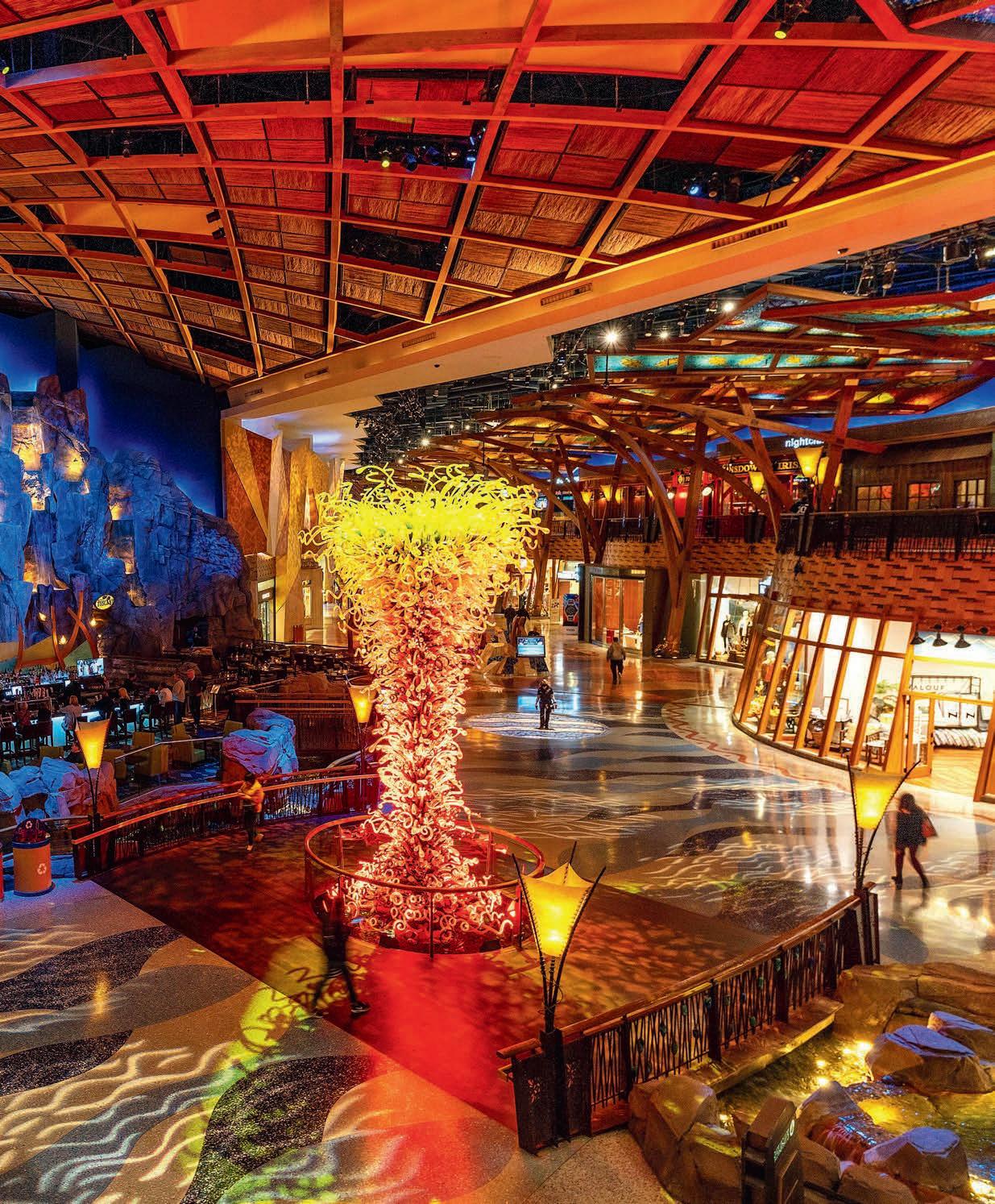
THIS PAGE: Among the elements of Mohegan Sun inspired by Indigenous history and culture is Taughannick Falls Bar and its 55-foot indoor waterfall, representing a key crossing point during the Mohegan tribe’s migration.
We were unsure what had hit us. Three hours before, my teenage son and I had left the depths of winter in New Hampshire, and now we were standing at the entrance to one of the grand gaming halls at Mohegan Sun. Glitz and glam sparkled as far as the eye could see. Slot machines chirped and rang. Lights pulsated in different colors. A young couple paraded around in matching Hawaiian shirts; others strolled in shorts. There were fancylooking cocktails. There was jubilation. I wondered: Was it still February? Were we still in New England? ¶ As we shed our coats, an affable middleaged man took note of our confusion. “You trying to figure out which way to go?” he asked politely. Glancing at our suitcases, he pointed to our right, far beyond the casino section. “Head that way, toward the elevators,” he said. “The hotel lobby is on the second floor. I’ll walk you over.”
When I asked the man if he worked for Mohegan Sun, he chuckled. “No,” he said, “but I do make my living here. I gave up my tow trucking business a few years ago, and [playing blackjack] is what I do now.” He grinned. “It’s not a bad life.”
More than 30 years ago, legalized gambling on tribal lands put south-central Connecticut on the map with the opening of the Mashantucket Pequot tribe’s Foxwoods casino, in Mashantucket. Four years later, in 1996, neighboring Mohegan Nation debuted its casino in Uncasville, Mohegan Sun. And in the decades since, both establishments have evolved to pack a strong family-friendly appeal.
Today, Mohegan Sun—which celebrates its 30th anniversary later this year—stretches out across 5.5 million square feet. In addition to a pair of large casinos, the resort is anchored by two hotel towers, whose luxury suites cater to high rollers of all types (former New England Patriots tight end Rob Gronkowski hosted his retirement party here in 2022). At one end of the resort is a Mandara Spa; at the other, a 10,000seat arena. In between there are nearly 50 restaurants and bars as well as a large family arcade and a shopping mall that includes Sephora, Le Creuset, and Yankee Candle—there’s even a
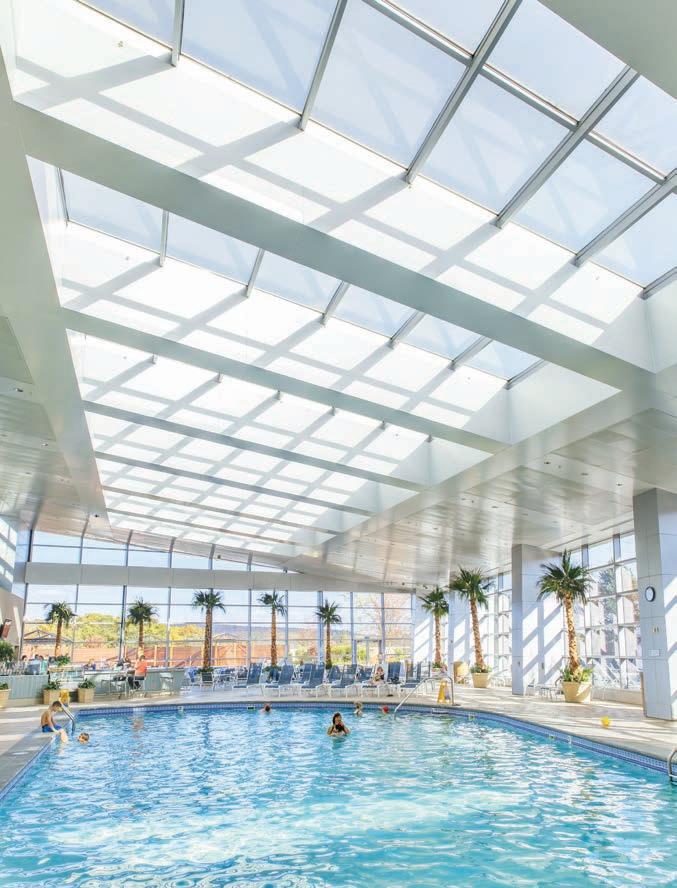
LEFT: In the Sky Tower, a 10,000-square-foot solarium with a heated indoor pool helps conjure up a summery vibe year-round.
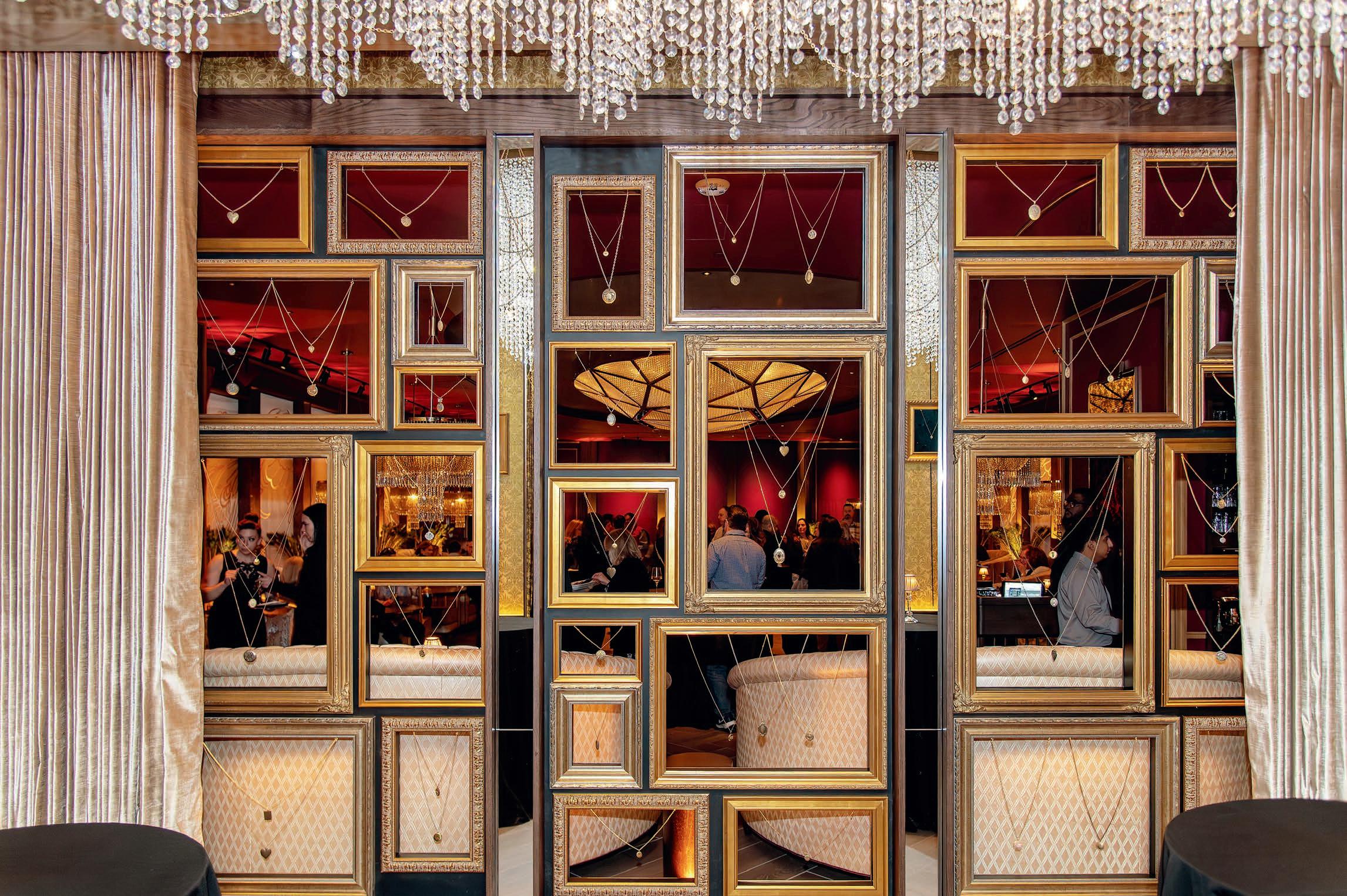
OPPOSITE: A wall of vintage frames and baubles adds to the glitter factor at the restaurant, lounge, and pawn shop Beauty & Essex.
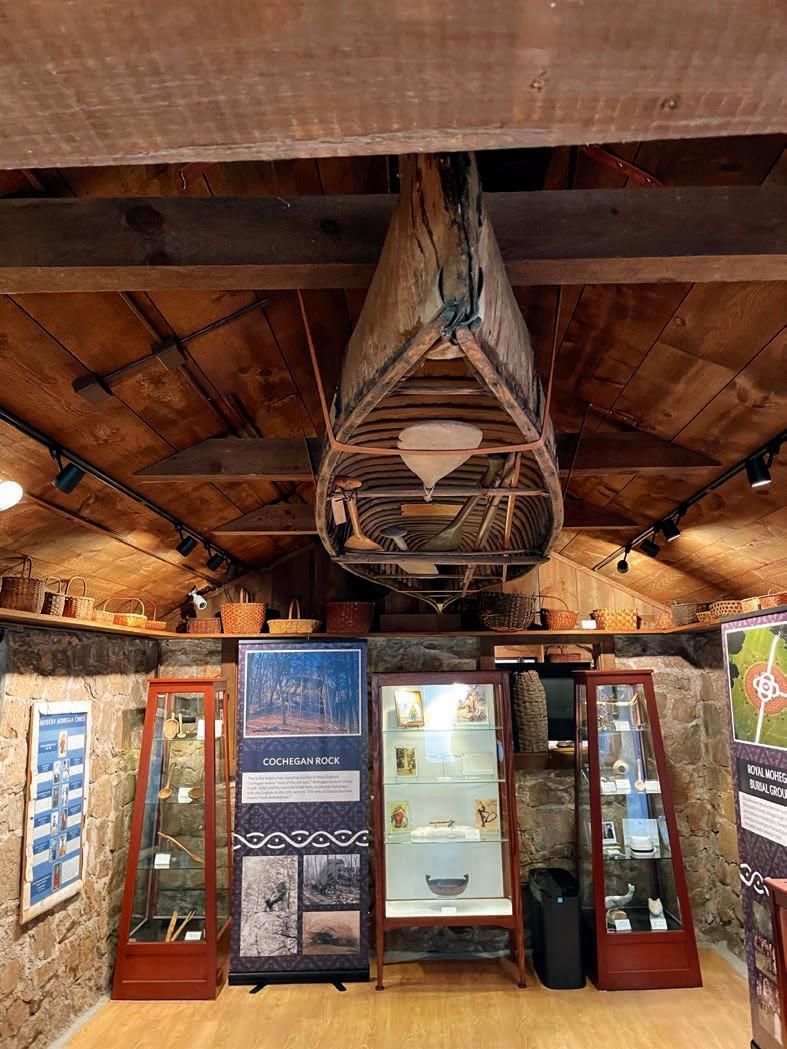
ABOVE LEFT: Artifacts dating back to the 17th century help the Tantaquidgeon Museum bring the Mohegan tribe’s culture and history to life.
ABOVE RIGHT: Bowling and other classic family pastimes take the spotlight at the 23,000-square-foot entertainment venue Game On.

Tesla showroom. Each year, some 7 million people stream through the resort’s doors, many of whom will never pull a slot machine arm.
Mohegan’s popularity doesn’t slow down in winter, and for good reason: On dark and chilly New England days, the resort’s 24-hour bustle can feel like a shot of vitamin D. At the time of our visit, Mohegan was coming off its biggest event of the year, the Sun Wine & Food Fest, a four-day party in which vintners and celebrity chefs from across the country showcase their creations. Restaurant Week was looming, as was a giant Super Bowl party in which hundreds of fans would watch the big game on the casino’s 140-foot-wide screen, the largest video wall in the Northeast. Meanwhile, ’80s glam rocker Bret Michaels and his Parti-Gras tour had steamed into town. So had caravans of high school kids and their parents for a regional AAU volleyball tournament that filled one of Mohegan’s huge convention centers. There was action everywhere you looked.
My son and I, however, were after more lowkey diversions. At the arcade, I rediscovered
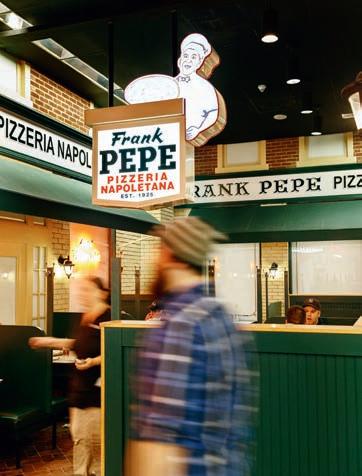
my Pac-Man mojo, then served up a helping of “the old guy still has it” at the bowling lanes. In between the games, a concert, and some light shopping, we also found our appetite. Beyond the plump lobster rolls on the menu at The Shed, New England flavors and names abound at Mohegan Sun. The late super-chef and foodie evangelist Jasper White opened a Summer Shack here in 2009. Frank Pepe Pizzeria Napoletana has been serving up its famous New Haven–style pizza at Mohegan Sun for years; more recently, an outpost of the beloved Mystic, Connecticut, bakery Sift made its debut. And our visit just happened to coincide with the opening of Beauty & Essex, a supper-clubmeets-pawnshop experience created by chef and native Rhode Islander Chris Santos.
But the show at Mohegan Sun goes beyond the showiness. All across the resort, you’ll see signs that this is more than just an entertainment complex; it’s an emblem of sovereignty. Underlying the whole casino experience is the story of the Mohegan Nation, which won federal recognition in 1994 only after years of legal
battles, and reminders of the tribe’s long journey are everywhere—from the casino’s lighting design and other decorative touches to more on-the-nose historical displays, like an exhibit of tools in one of the grand hallways. Here is a large mural that depicts the tribe’s origin story; there is a 55-foot indoor waterfall that symbolizes the Mohegans’ perilous crossing of the Hudson River during their migration from New York to Connecticut in the 1600s.
Visitors don’t have to venture far to dig even deeper into the past. Just a few miles away, John Tantaquidgeon’s vision is still going strong. The Mohegan elder opened his namesake museum in 1931 out of the belief that the best way to foster connections was to showcase his tribe’s culture. Now, this small but mighty institution is the oldest Native American–owned and –operated museum in the country. Tours are free and led by tribe members who share the stories behind antiquities that include stone hatchets, dolls, baskets, and a late-19th-century canoe gifted to the Mohegan tribe by the Passamaquoddy in Maine more than a hundred years ago.
Frank Pepe Pizzeria Napoletana, Mohegan Sun: Dig into familiar favorites from this more-than-acentury-old New Haven institution, from its original tomato pie to the white clam pizza.
Herb’s Country Deli & Restaurant, Uncasville: The breakfast menu at this family-owned joint touts a selection of homemade pies in addition to staples like stick-to-yourribs eggs Benedict. You won’t leave hungry—though you may want to arrive early to secure a table.
Lucille’s Café, Ledyard: Cold-brew coffees, matcha lattes, and espresso drinks complement the breakfast and lunch bites at this hip coffee shop. (Tip: Customize that avocado toast with homemade maple-bourbon bacon jam.)
The Shed, Mohegan Sun: Comfort food, including all-day brunch, and a selection of creatively named cocktails (e.g., the Air Quotes Sangria) take starring roles at this popular eatery.
Sift Bake Shop, Mohegan Sun: Pastry chef Adam Young’s fourth Sift location has all the delicious hallmarks (hello, flaky croissants) of the Mystic original.
STAY
Earth Tower, Mohegan Sun: Boutique vibes are the name of the game at this hotel, which puts guests within easy walking distance of a Mandara Spa and indoor pools.
Sky Tower, Mohegan Sun: This 34-story building offers a range of
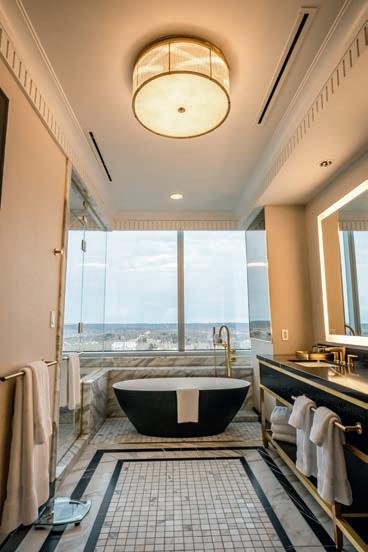
accommodations, from the modest deluxe king to the 3,500-square-foot Royal Suite, which comes complete with two Jacuzzis.
Bluff Point State Park, Groton: From coastal woodlands to tidal wetlands, Connecticut’s natural beauty is on display at this 800-acre wooded peninsula, which is threaded with miles of walking trails.
Game On, Mohegan Sun: A bar and restaurant are paired with an eight-lane bowling alley and 15 highdefinition TVs, as well as karaoke, shuffleboard, billiards, cornhole, darts, and arcade games.
Kids Quest, Mohegan Sun: Designed to cater exclusively to kids up to 12 years old, this arcade and game room packs a punch with a slew of video games, a climbing wall, and adventure tunnels.
Mashantucket Pequot Museum, Ledyard: Stunning dioramas and exhibits including a re-created Pequot village promote both an awareness of the natural world and an appreciation for Indigenous history.
Supercharged, Oakdale: Ax throwing, trampolines, and the world’s largest two-story indoor go-karting track are top lures at this rollicking familyfriendly destination. Bonus: an on-site pizzeria and pub.
Tantaquidgeon Museum, Uncasville: A dugout canoe and two barkcovered wigwams are among the treasure trove of artifacts at the Tantaquidgeon, whose free tours are led by Mohegan tribe members.
My son and I were still talking about the Tantaquidgeon Museum on our last night at Mohegan Sun. A light snow had started to fall, and as we looked out the window from our room high atop one of the hotel towers, toward the Thames River, everything seemed peaceful and still. Down below, the casino was churning in color and sound, but the outside world presented something quite different. It was hard not to enjoy the contrast.
My son stared out for a long minute. “It’s so cozy up here,” he said. A long stretch of winter still remained—but for another night, at a place not far from our home, we could enjoy it from a distance.
When flakes fall across New England, opportunities for outdoor fun pile up fast.
BY BILL SCHELLER
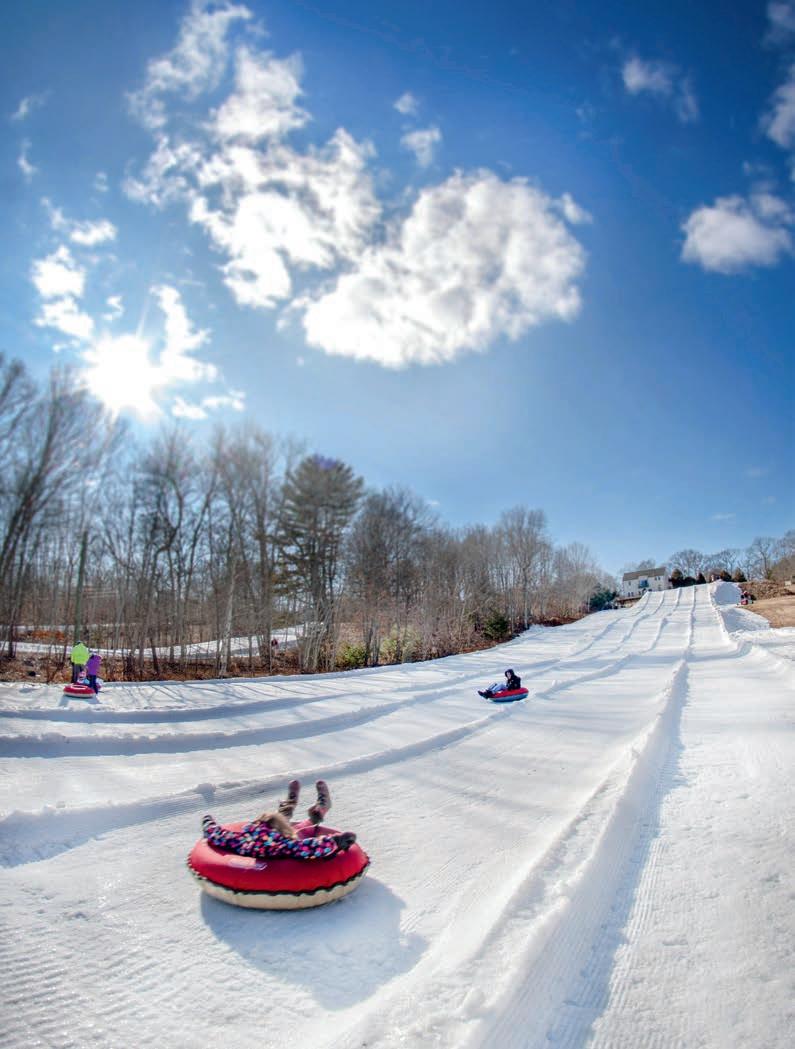
At Rhode Island’s Yawgoo Valley, snow tubers find the upside to going downhill fast.
Winter is often seen as a hunker-down season, but in truth there may be even more to do in this region when the ice and snow hit. Skiers and skaters rejoice in this time of year; so do fat-tire riders, tubers, hikers, snowshoers, and … well, the list just keeps going. Why hunker down when you and your family can climb a peak or test your mettle at an adventure park? The thrills await, as does the scenic, sparse beauty that defines the season. So get in on the action with this lineup of favorite spots around New England where you can discover winter’s true nature.
NORBROOK FARM BREWERY: FatTire Biking. In the realm of perfect combinations, a brew pub with groomed trails for winter biking is right up there. Norbrook’s 450-acre domain is crisscrossed with mountain bike trails, from beginner to expert, that make this a perfect place to conquer the snow on fat tires. Warm up at the pub with a hearty porter and a pizza— and if you plan ahead, you won’t even have to go home, since there’s an Airbnb cottage right on the property. Colebrook; norbrookfarm.com
POWDER RIDGE MOUNTAIN PARK & RESORT: Snow Biking. And now, as Monty Python used to say, for something completely different. At Powder Ridge Mountain Park in Middlefield, the latest sport sensation is “snow biking,” a way to ski while sitting down. With a cushy seat, skis fore and aft (where bike wheels would be), and a mini ski strapped on each foot, riders renting or buying bikes from Powder Ridge take to the slopes after a mandatory one-hour lesson that includes a four-hour pass. Middlefield; powderridgepark.com
TALCOTT MOUNTAIN STATE PARK: Winter Hiking. The steep start of the 2.5-mile Yellow Trail at Talcott Mountain is worth the effort, as it leads to a 1,000-foot summit where the historic Heublein Tower (closed in winter) offers clear-day vistas ranging from New Hampshire’s Mount Monadnock to Long Island Sound. Simsbury; ctparks.com
(Continued on p. 92)
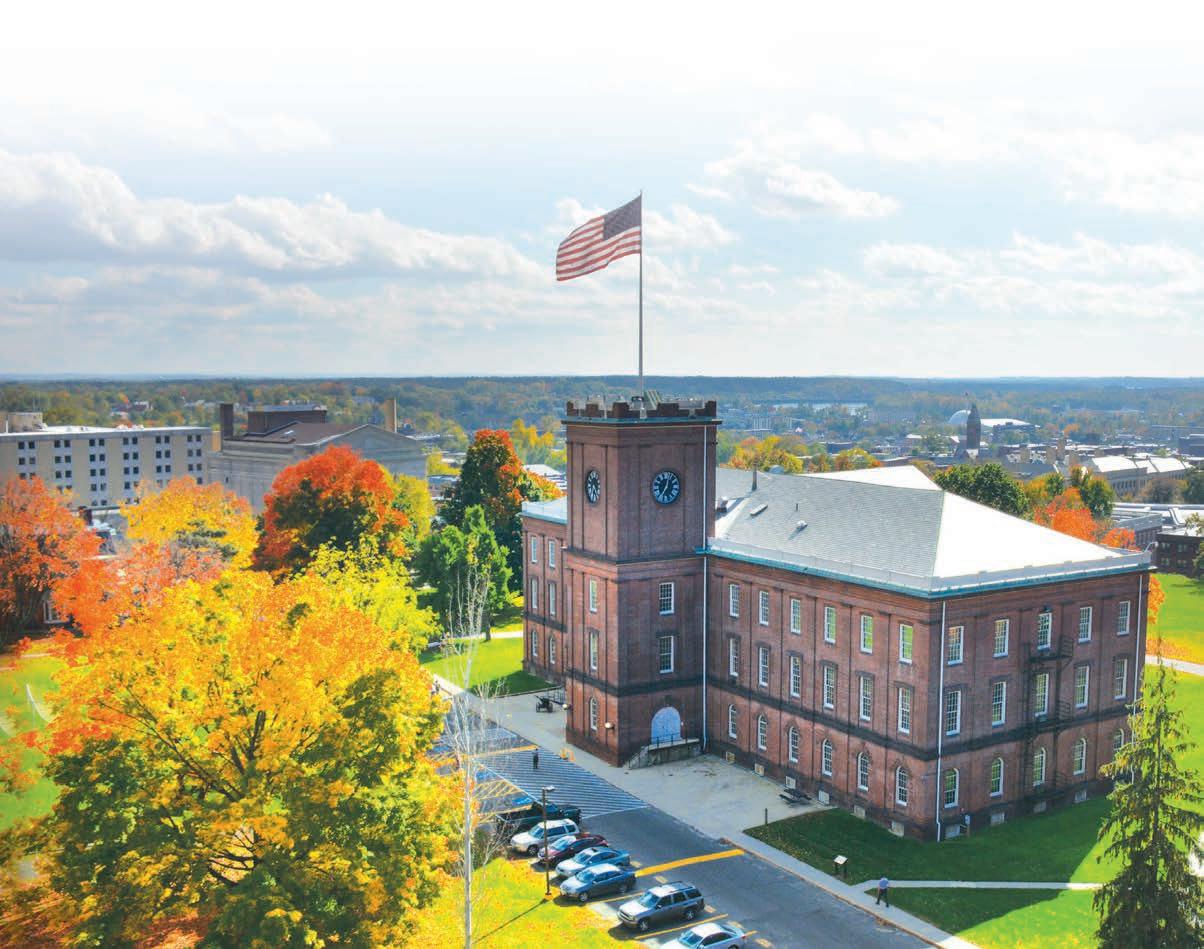

Knox Trial 250th Commemoration.
Knox Trial 250th Commemoration.
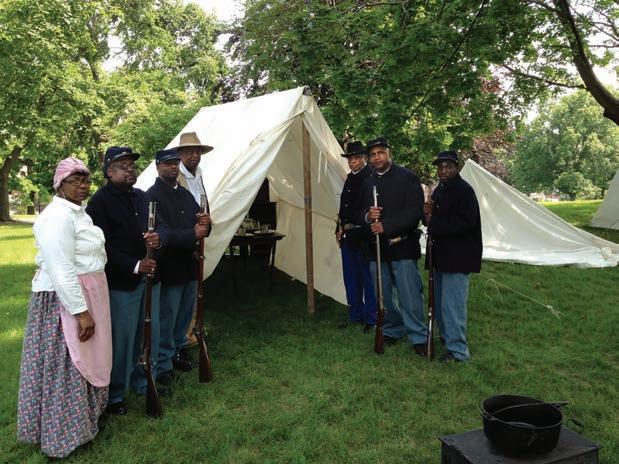




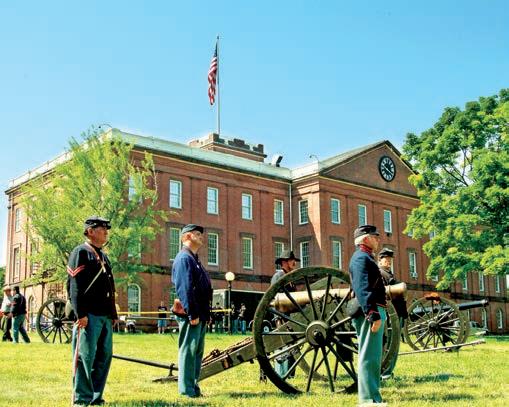
Procession of horse and/or oxen drawn sleds and replica cannon equipment with Knox Artillery and other regiment reenactors, historic weapons and artillery demonstrations, encampment display, sled pulling challenge, Fyfe and Drum colonial music and color guard and much more!
other regiment reenactors, historic weapons and artillery demonstrations, encampment display, sled pulling challenge, Fyfe and Drum colonial music

For Love! For Liberty! Performed by Springfield Community Theater of MA. This original musical highlights the Springfield Armory and the importance of Henry and Lucy Knox, and their quest to save the nascent revolution.
Procession of horse and/or oxen drawn sleds and replica cannon equipment with Knox Artillery and other regiment reenactors, historic weapons and artillery demonstrations, encampment display, sled pulling challenge, Fyfe and Drum colonial music and color guard and much more!
Saturday, January 17th • 9:30 am
Saturday, January 17th • 9:30 am
Springfield Armory National Historic Site, One Armory Square, Springfield MA
Springfield Armory National Historic Site, One Armory Square, Springfield MA

Springfield Armory National Historic Site, One Armory Square, Springfield MA highlights the Springfield Armory and the importance of Henry and Lucy Knox, and their quest to save the
Sunday, January 18th 1:30 and 4:00 pm Sumner, Springfield MA
Sunday, January 18th 1:30 and 4:00 pm Sumner, Springfield MA

For Love! For Liberty! Performed by Springfield Community Theater of MA. This original musical highlights the Springfield Armory and the importance of Henry and Lucy Knox, and their quest to save the nascent revolution.
Mountain views, winter fun, and Olympic luster make for a winning combination in New York’s Lake Placid region.
By Annie Stoltie
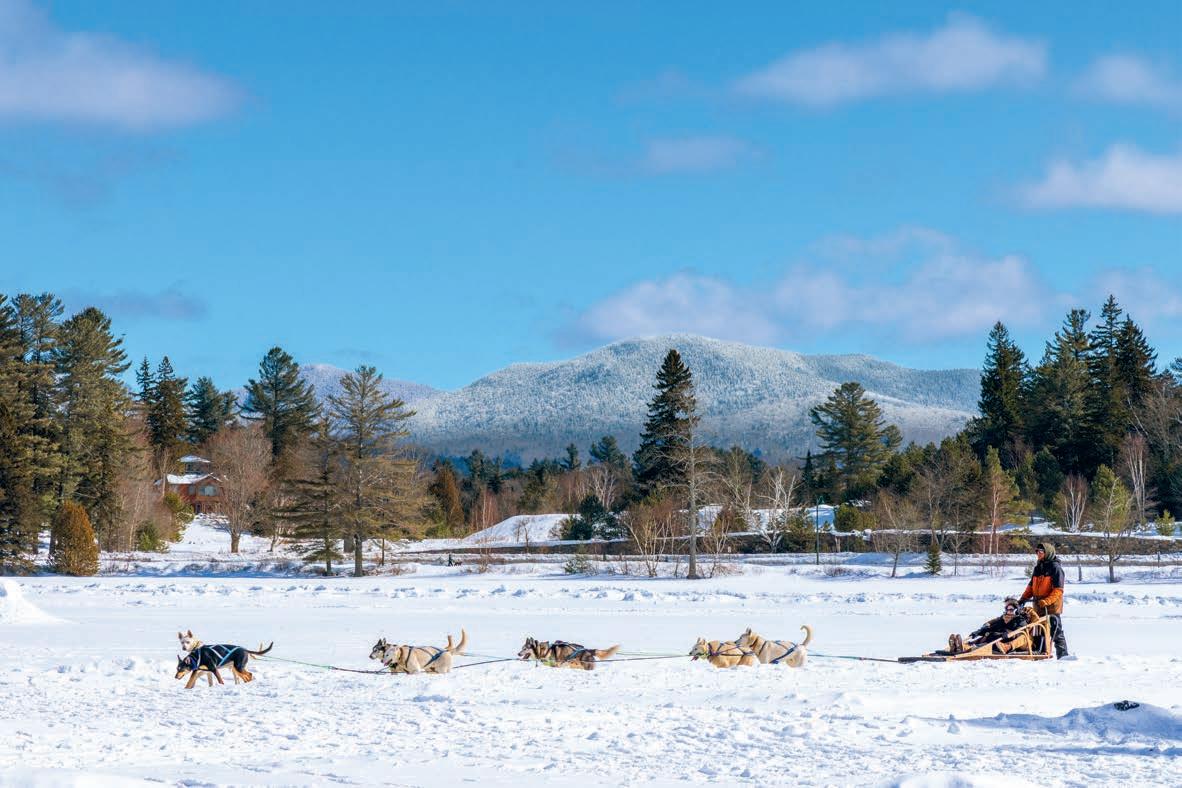
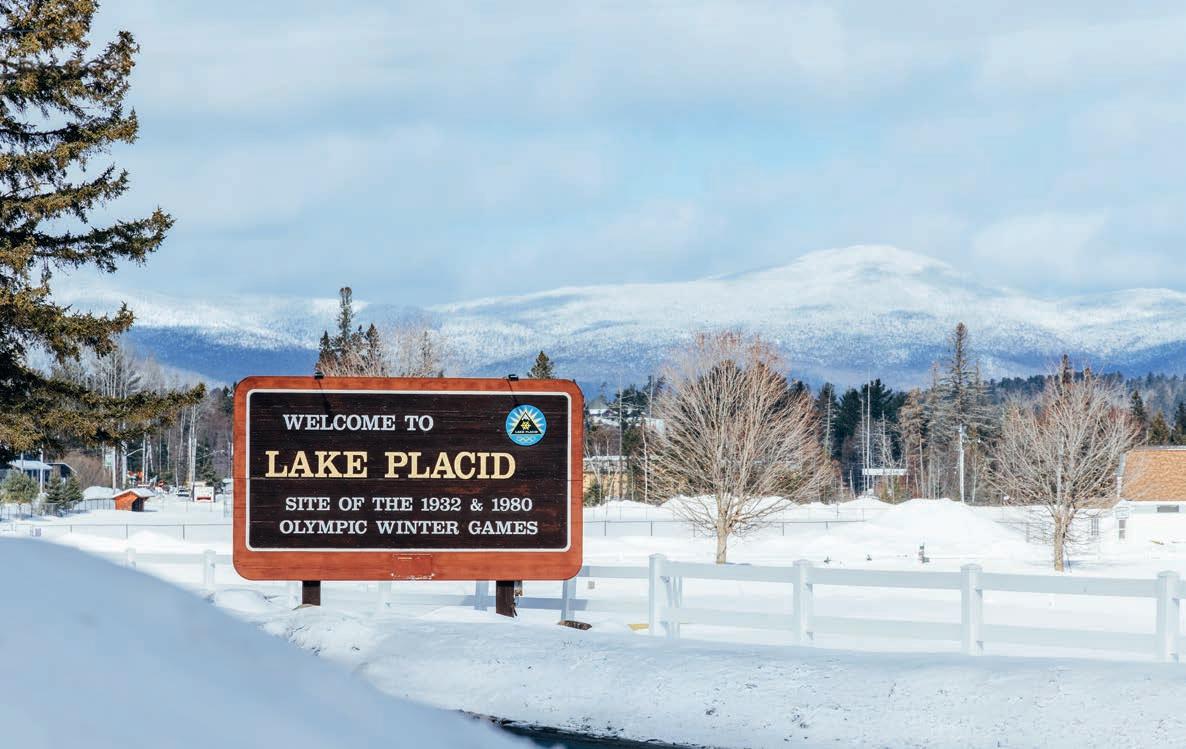
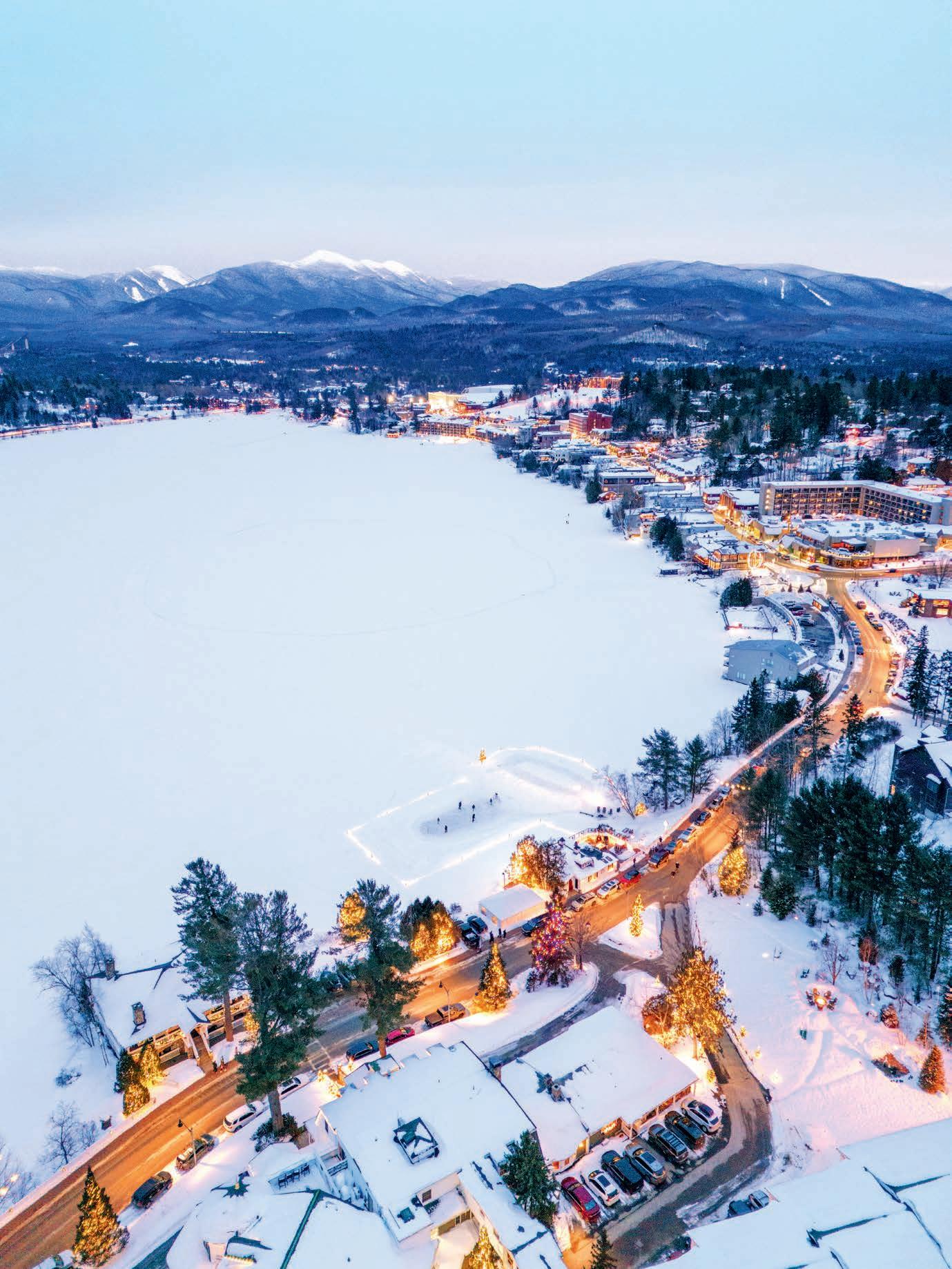
CLOCKWISE FROM THIS PAGE: An aerial view of Mirror Lake nestled alongside the town of Lake Placid, with the Adirondacks in the distance; one of America’s most storied backdrops for Olympic dreams puts out the welcome mat; a dogsledding tour on Mirror Lake hints at the deep roster of winter sports on offer here.
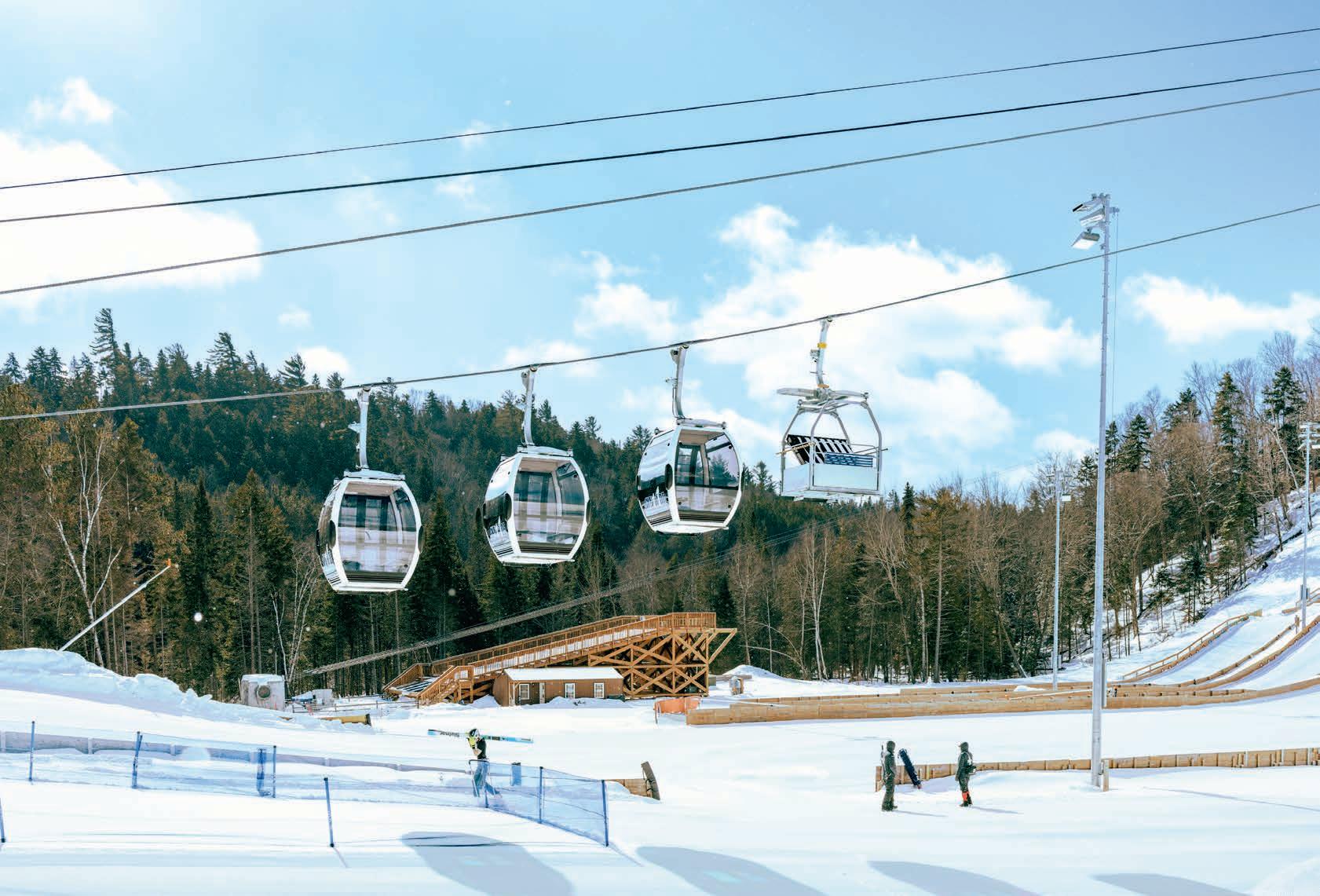
From the observation deck of Lake Placid’s 128-meter ski jump, you can see the Olympic Village in the distance, and no matter which way you turn, Adirondack peaks poke into the sky. I’ve been up here half a dozen times, courtesy of a gondola and an elevator, but it never gets old. And on this February morning, a day before World Cup jumpers will snap into skis and launch off this hill, I take a moment to look down, to imagine what they’re thinking. A friend who’s a ski jumping coach tells me that the athletes actually try not to think. Jumpers get in the “zone,” focus strictly on what’s in front of them, then shoot themselves into the air, where they’ll fly for some five seconds at almost 60 miles per hour.
Of all the places in New York State’s Adirondack Park— bigger than Yellowstone, Yosemite, and Glacier national parks combined—Lake Placid best represents the intersection of human ability and the natural world. Here, grit and
glory are as much a draw as the lakes, forests, and mountains.
I’ve lived in this part of the Adirondacks for more than 25 years, making a living by writing about the park. Lake Placid figures big in my life, and it’s where I bring visiting family and friends. Despite its million or so annual visitors, Placid, with a year-round population of 2,200, is really just a small town. Yes, there’s history, innovation, stunning views, and all sorts of opportunities for recreation, but there’s more, too. My Lake Placid—in fact, the Adirondacks I know and love—comes to life when you peel back a layer to see what’s beneath.
Take the landscape. While the mountain peaks that fill the sky are among the oldest on the continent, this ancient bedrock—including slide-streaked Whiteface Mountain, which you can see from most places in Lake Placid—still rises, pushed up, according to regional geologists, by a hot spot in the Earth’s crust.
Indigenous people lived here; archaeologists have excavated 13,000-year-old evidence of human activity in this region. Then came white and Black settlers. But the modern Lake Placid, the one synonymous with snow and sport, has everything to do with what happened beside a pretty little lake 130 years ago.
If you’re of a certain generation, you’ve likely heard of the Dewey Decimal System, once used to organize books in libraries. That was Melvil Dewey’s invention. Dewey also had the big idea to establish an exclusive club in Lake Placid
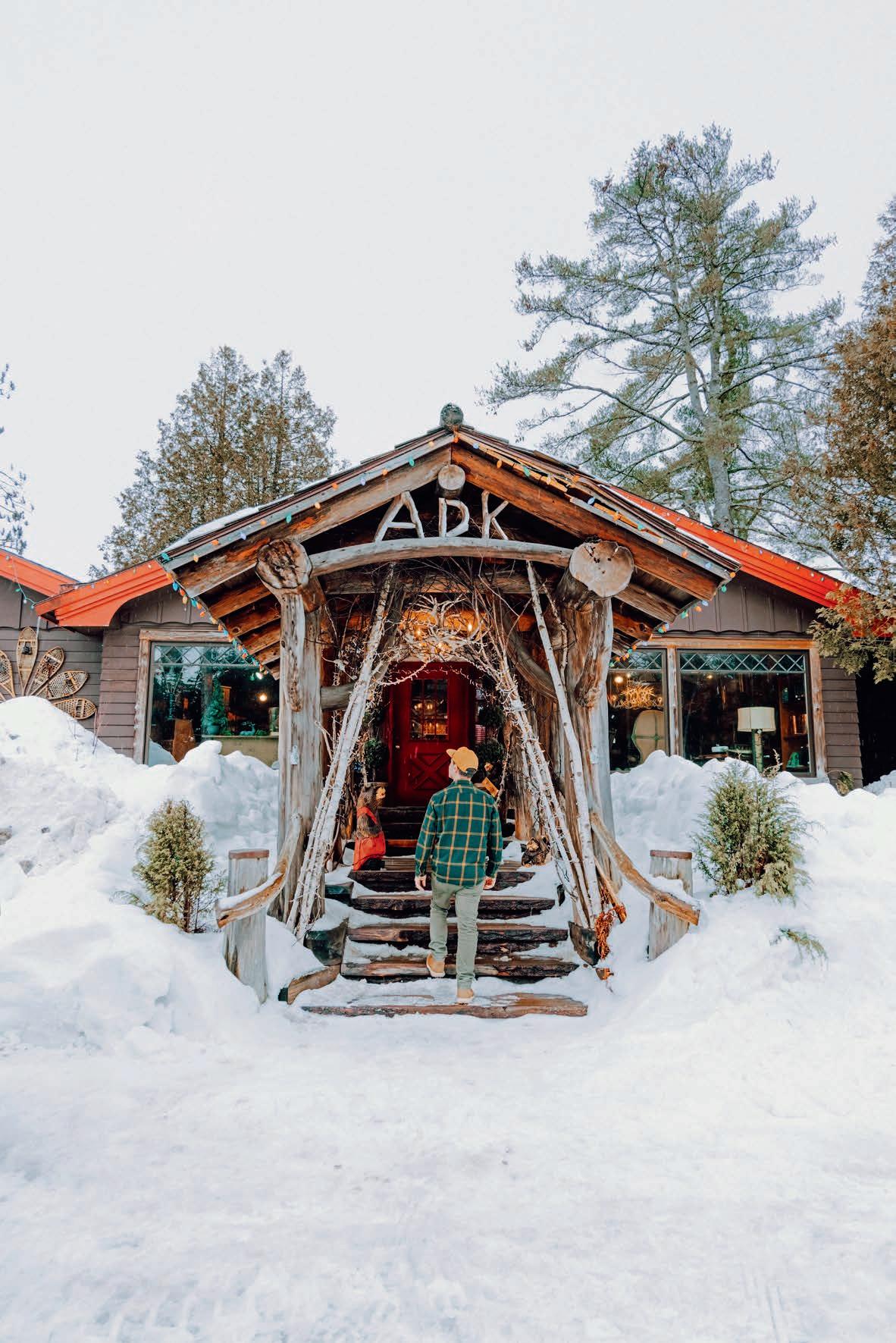
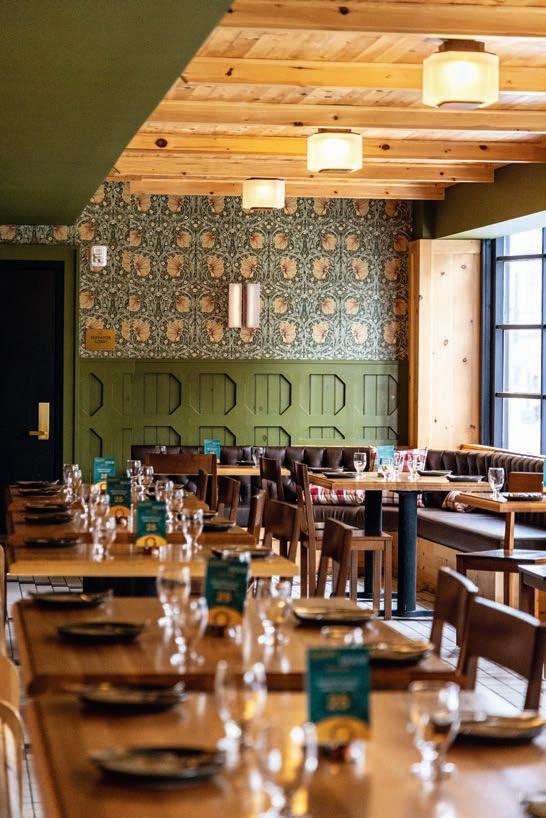
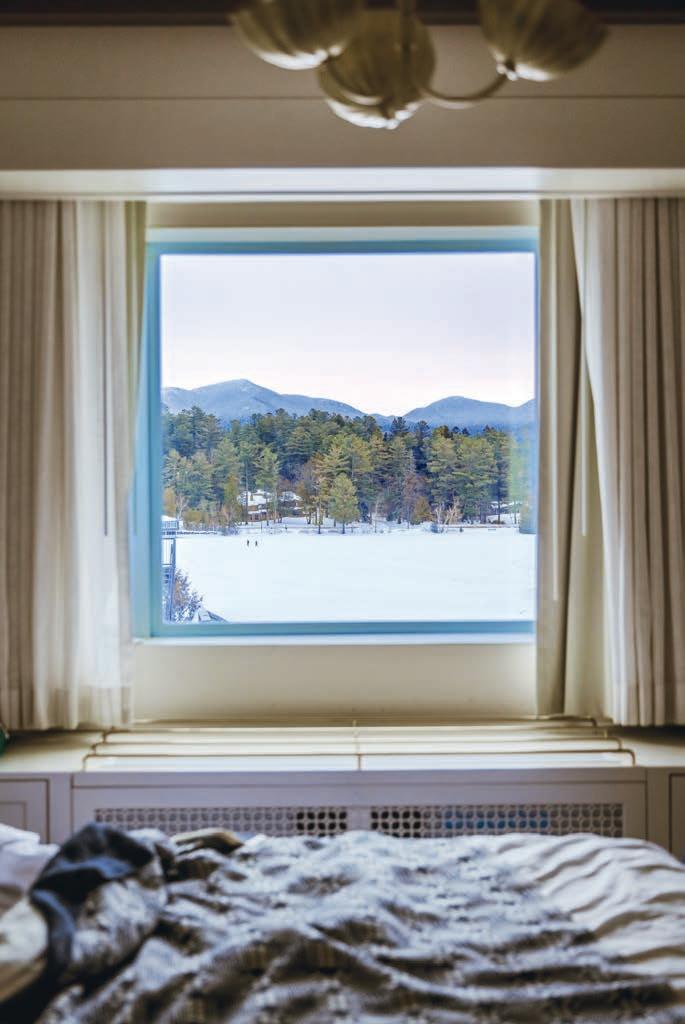
THIS PAGE: The Adirondack Store & Gallery invites shoppers to step into the region’s rustic-chic lifestyle. OPPOSITE, FROM TOP: In a nod to its 1927 founding as Hotel Marcy, the renovated and rebranded Grand Adirondack Hotel serves elevated food and drink at its Marcy Restaurant (there’s a Marcy Bar, too); a view of Mirror Lake from one of the hotel’s 92 guest rooms and suites.
where professionals could relax and take in the mountain air on the east side of Mirror Lake, the body of water in the heart of the village (not to be confused with nearby Lake Placid lake, almost 20 times bigger). Beginning in 1895, the Lake Placid Club, as it was called, grew into an all-season community, where winter sports, such as skating, skiing, and sliding, became the centerpiece.
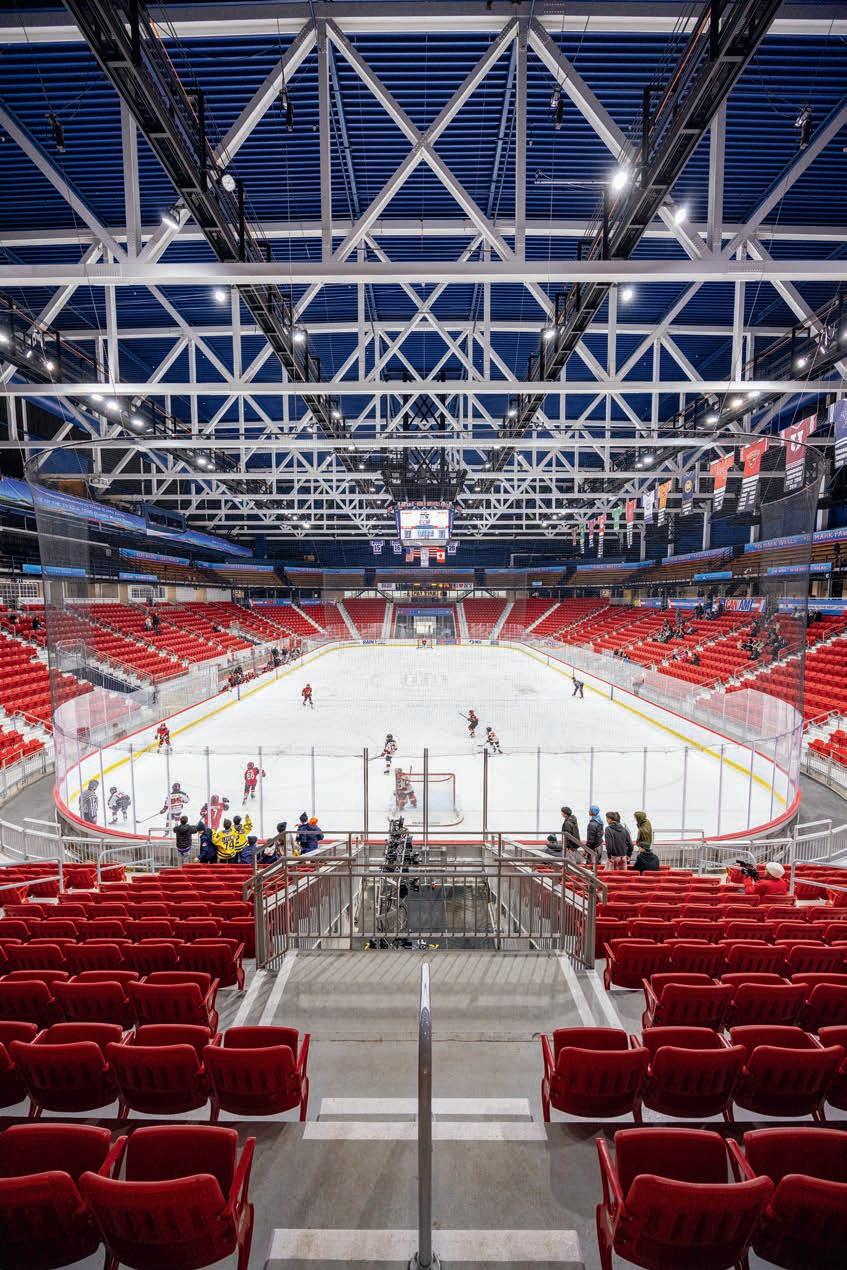
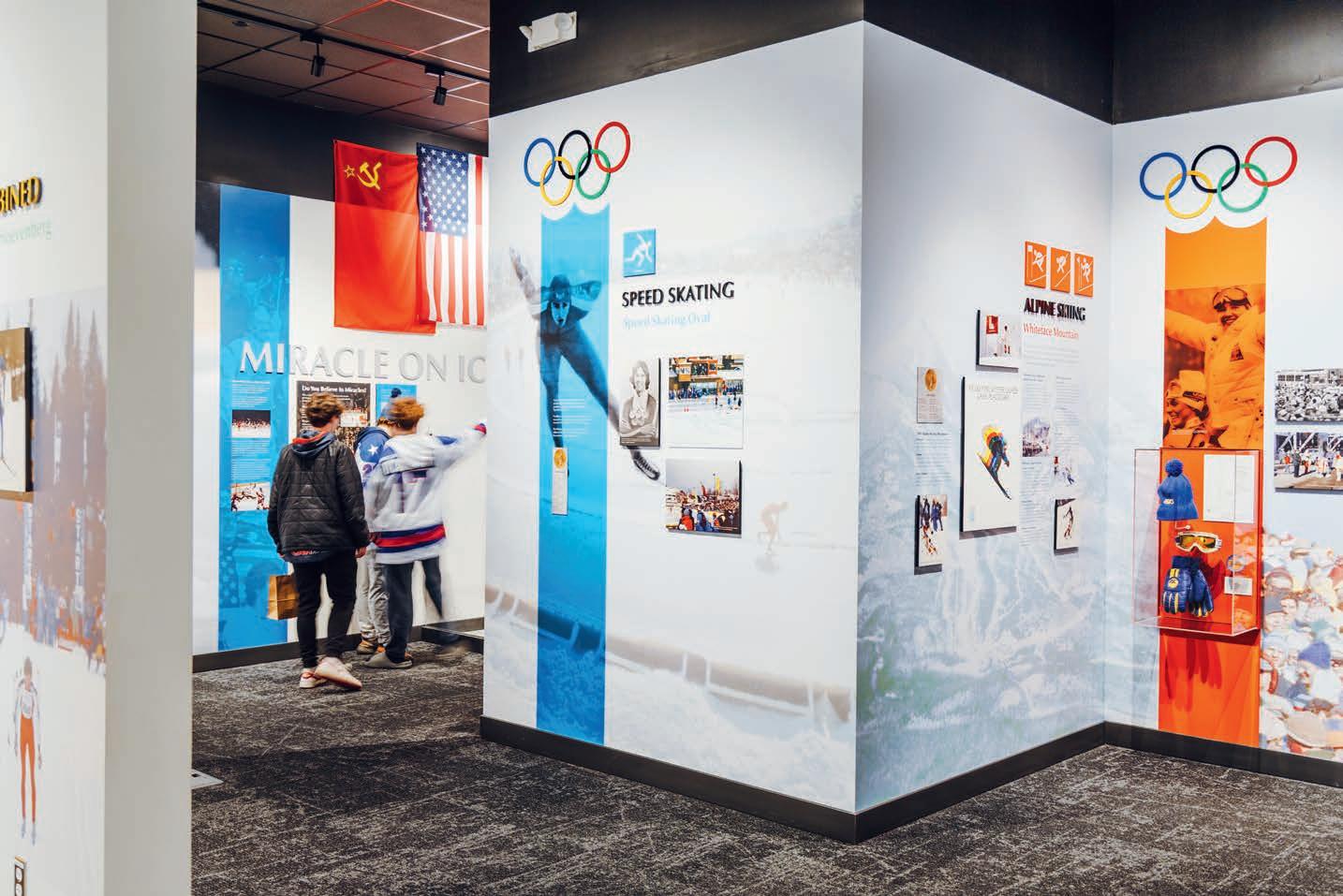
By 1930, Lake Placid’s reputation led to its hosting the 1932 Winter Olympics. The Games happened in Placid again in 1980, during which “the Miracle on Ice”—possibly the most famous men’s hockey game ever, in which Team USA beat the Soviets and went on to win the gold—helped seal Lake Placid’s legendary status. Today the Herb Brooks Arena, named for the “Miracle” team’s late coach, is a bucket-list attraction for hockey fans, but tournaments still continue at the facility. You can’t go anywhere in this town without seeing kids lugging hockey bags twice their size to and from the Olympic Center arenas. Placid is a place for big dreams.
Every now and then there’s chatter about another Winter Games in Placid, and it’s notable that New York state and the agency overseeing our region’s winter sports venues recently made a billion-dollar bet—literally—by investing in jumps, rinks, the sliding track, and other facilities. The gamble seems to be working: Lake Placid recently hosted World Cup events, the Empire State Winter Games, ECAC Hockey championships, the FISU Winter World University Games, and other high-profile competitions.
Only time will tell if those Olympic-size dreams ever come to pass. In the meantime, the region’s winter cred gives this place an adventurous spirit that any New England snow fan can appreciate.
Watching elite athletes push themselves in extraordinary ways is a thrill (if you’ve seen skeleton, in which sliders bomb headfirst down the track, you know what I mean). But it gets cold standing around, even if you’re ringing a cowbell.
For those who want to do more than spectate, a classic Lake Placid experience might mean visiting what for some of us is hallowed ground. My parents brought me to the ’80 Olympics to watch speed skater Eric Heiden, who won five gold medals in those Games. I was 6 at the time, and most of it’s a blur—my mom’s Polaroids fill in the blanks. Still, skating the outdoor oval where Heiden glided to victory is something special. The public is welcome to skate here during designated hours; I recommend doing it at night, under the lights.
Or go to the Lake Placid Olympic Museum, where there’s a collection of 700-plus Olympic trading pins on display; 1980 silver-medal winner Linda Fratianne’s skating dress and skates; a net from the Miracle on Ice game; an exhibit that features how host countries design their medals, torches,
uniforms, and posters to reflect their national character; and lots more. A bobsled simulator offers an interactive experience, though I have friends who prefer to drink a beer at Zig Zags Pub on Main Street and take selfies with the old bobsled outside the bar.
Activities here aren’t just Olympic-related. If Mirror Lake freezes a foot or more, a town-run toboggan chute gives a butt-bumping ride down a repurposed ski-jump trestle, then out onto the ice. Trust me, the backache is worth it. So is the rush that comes with a five-minute sprint across that same ice courtesy of Thunder Mountain Dog Sled Tours, whose owner, John Houghton, and his team of Alaskan huskies have helped anchor the local winter scene for years.
I like to explore on my own two feet by walking around Mirror Lake on its 2.7-mile paved loop. The trail to Cobble Hill, just off Mirror Lake Drive, is a 1.6-mile hike that takes you to an elevation of 2,343 feet—a tiny rise compared to the surrounding High Peaks. But Cobble offers winter hiking “lite” if the trails from Adirondack Mountain Club’s Adirondak Loj (it still uses Dewey’s “efficient” spelling system), about 15 minutes outside town, seem too daunting.
Then there’s John Brown Farm State Historic Site, whose 270-acre property pays homage to its namesake former owner. Brown was an abolitionist known for his 1859 raid on a U.S. arsenal in what is now Harpers Ferry, West Virginia; after he was captured, tried, and executed, his body was returned to and buried at his farm. Brown’s
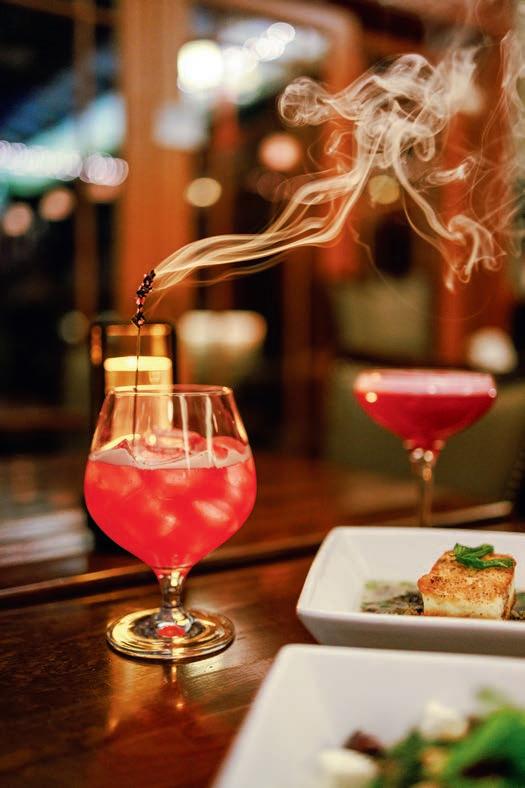
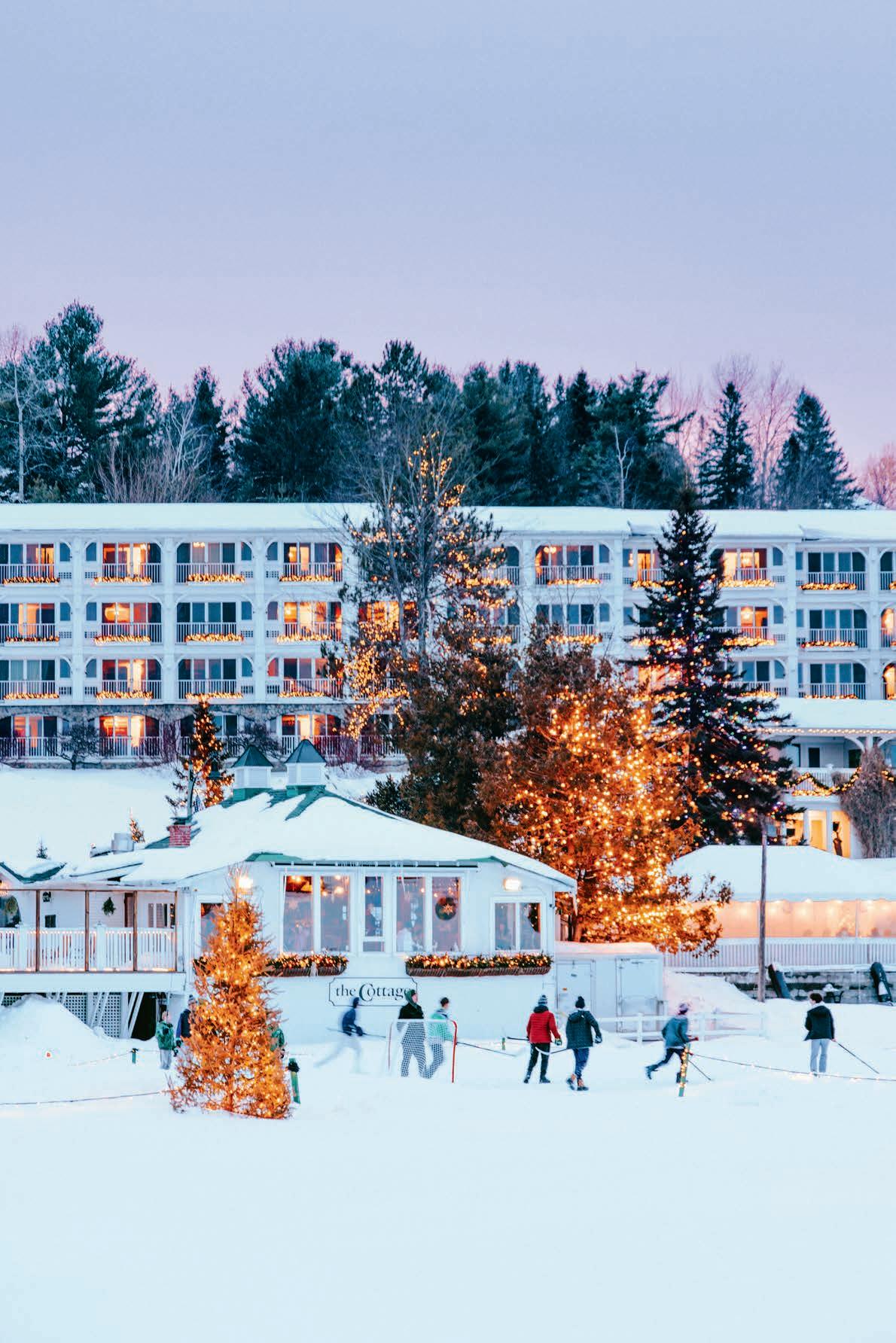
FROM LOWER LEFT: A sprig of lavender smolders in an artisanal mocktail at Top of the Park, a favorite downtown food-and-drink spot; Mirror Lake Inn sparkles behind its shoreline café-restaurant, The Cottage, and private hockey and ice
story comes into full focus on guided house tours and at the visitor center, but the property is a draw for more than history buffs. In a region that likes to move, the site’s nearly four miles of trails are open throughout winter to skiers and snowshoers, while staff-led moonlight hikes will leave you seeing stars under the region’s famously dark skies.
I grew up an hour and a half west of Lake Placid on a pancake-flat landscape near the Canadian border. A North Country childhood, at least in those days, meant you figureskated or played hockey. I chose spins and jumps, and sometimes competed in Lake Placid. Back then, strolling up and down Main Street, a stretch of shops, restaurants, and galleries, was a treat. And it still is, especially during evenings when the snow swirls and the lights above the street twinkle—this could be a Hallmark movie soundstage. Main itself is narrow and parking is a pain, but its sidewalks are a resort-town promenade where you might see groups of kids in team uniforms, couples in fur and fringe, and the latest in winter athleisurewear. Stores are dedicated to maple, Adirondackana, Team USA jerseys, olive oil, Dale of Norway sweaters, jerky and hot sauce, and all sorts of other things.

I always bring my guests to The Bookstore Plus, owned by Sarah and Marc Galvin. They carry the usual indie bookshop stuff, but also regional trail guides, magazines, calendars, photography collections, and books on Lake Placid history. The Galvins often host local writers’ book signings and other events.
On the other side of Main is Marcy Miller’s Pure Placid store, featuring scented candles and lotions. I’ve known Marcy for decades and have watched her turn nice-smelling homemade concoctions into a sleek brand. Her “Adirondack Chair” and “Mount Marcy” scents bring you lakeside or to the top of our highest peak. At Pure Placid you can also make your own candles, an activity favored by bachelorette parties.
Other must-stops include Darrah Cooper Jewelers for high-end pine cone, pack basket, and canoe charms and other sparkly things. And for Adirondack-style furniture and decor, go to L. Post Rustics, on Saranac Avenue. Each member of the Post family has a special skill: Larry and Ryan are woodworkers, Joann paints, Jillian carves. Together, they craft twiggy but refined pieces that so remarkably mimic the woods, they appear to grow from the floor.
In the early 2000s, I interviewed Rachael Ray, who’d grown up in the southern Adirondacks. She was beginning to draw a following for her “30-Minute Meals” cookbooks and her show on the Food Network. I asked her how she defined Adirondack cuisine, and she said, “It’s very earthy,” with “woodsy spices” and everything chopped “big” in soups and stews to “go hand in hand with living on a mountain.”
Locals might also add, “anything with venison.” I’m unaware of how often deer cycles onto restaurant menus in Lake Placid, though I do know venison meatloaf, duck breast, and wild boar have been served at Andrea Lautenschuetz’s living room–size Salt of the Earth Bistro.
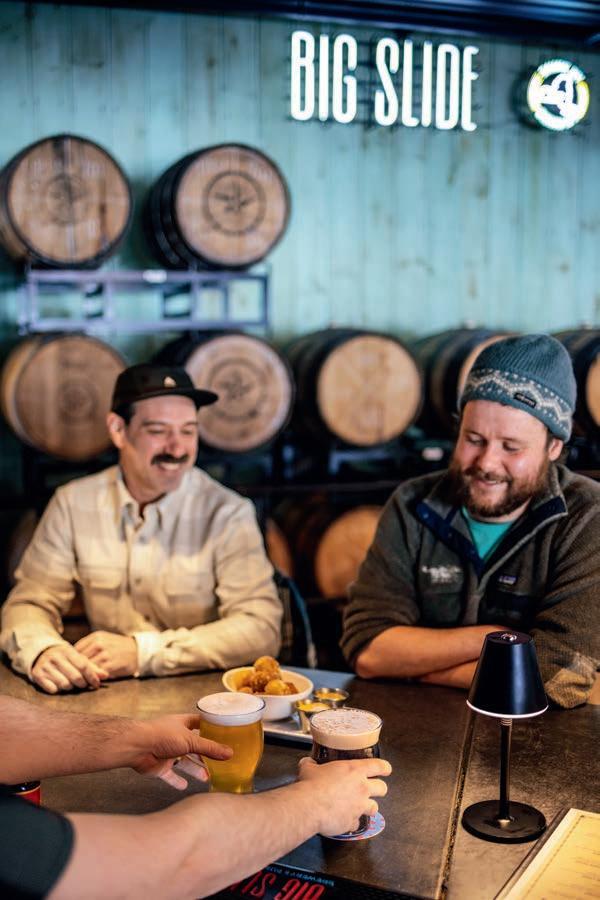
Big Slide Brewery & Public House, sitting practically in the shadow of its namesake ski jumps, has creative cuisine (think truffle steaks and kimchi chicken sandwiches) and inventive beer, including sours, jalapeno ales, and all sorts of IPAs. Don’t go here for quiet conversation: The cavernous space is a former tile store remodeled with an industrial vibe. (Intimate meals, locals will tell you, should happen over pasta or wood-fired pizza at Caffé Rustica.) Big Slide is co-owned by Chris Ericson, who also founded Lake Placid Pub & Brewery, on Mirror Lake Drive. In my 20s I worked there with cooks, servers, and bartenders who today are among my closest friends. How many Ubu Ales—named after a regular’s chocolate Lab—I’ve consumed over the past 20 years is beyond me, but if you go to the pub, that’s what you should drink.
These days I’m a regular at Lisa G’s, opened by Lisa Grigoriadis in 2000. This is my teenagers’ pick for wings
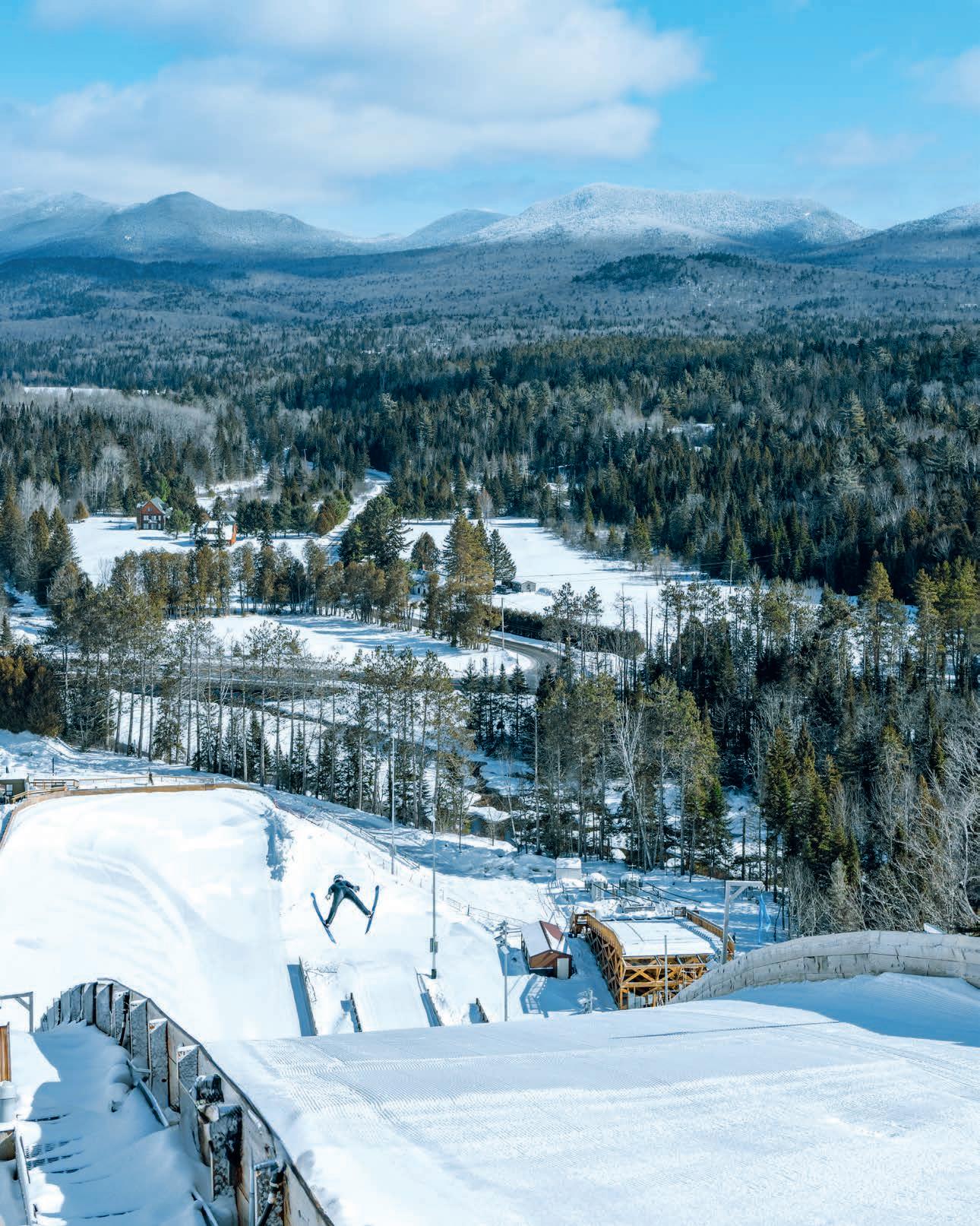
THIS PAGE: As an active training and competition venue, the Olympic Jumping Complex provides the chance to see a Winter Games hopeful take flight. OPPOSITE, FROM TOP: A detail of one of the cozy outdoor lean-tos at Whiteface Lodge, founded by former
browsing local-interest titles at The Bookstore Plus.
and burgers. The former opera house can accommodate crowds of hockey kids and their parents, looking for a tasty meal away from the rink.
On Main Street, I get my coffee at Carolyn Bordonaro and Mike Barillari’s Origin Coffee Co., across the street from the oval (try the “Sweater Weather Latte”). Cocktails with friends often happen at Marcy Bar, at the Grand Adirondack Hotel, where we take over the corner couches. The historic structure—originally built in 1927, the first fireproof hotel in the community—was remodeled in 2022 and is a good spot to book a room if you want to be at the center of it all. Top of the Park, an upstairs eatery whose bar runs most of the length of the narrow dining space, has fancy drinks and small plates. (Insider tip: Get the pamplemousse cocktail and confit chicken wings.)
Anchoring Mirror Lake Drive, the classy white-tiered Mirror Lake Inn, with its twinkling lights, belongs in a storybook. The inn is operated by Alpine ski racer Andrew Weibrecht, a two-time Olympic medalist. Its lakeside restaurant, The Cottage, is reliable for a vibrant bar scene, mountain views, and soup and sandwiches. Sometimes
strolling through the Lake Placid Olympic Museum, home to the second-largest collection of Winter Olympic artifacts in North America.
local curling teams play on the ice just beyond the outdoor deck.
And then there’s Whiteface Lodge, a resort that echoes this region’s signature Great Camp style. Stay here, and you’ll have access to a bowling alley, ice cream parlor, spa, salon, skate rink, outdoor lean-tos, and indoor/outdoor pool. It’s a dream for families—but I also like coming to the resort’s bar, Peak 47, for a pint by one of the fireplaces.
Back on the 128-meter jump’s observation deck, the elevator operator tells me it’s closing time. The postcard-perfect afternoon, minus the biting wind, has given way to dusk. Anywhere else in the Adirondacks, scenery like this happens only in deep wilderness. But here, in my backyard, anyone can bring their big dreams, experience big views, and top it all off with a big night in a little mountain town.
Big Slide Brewery & Public House: Inventive food and beer (think sours and other interesting flavors) in a bustling, industrial-style space near the ski jumps. bigslidebrewery.com
Caffé Rustica: An intimate local favorite tucked into a strip mall, with wood-fired pizzas and Mediterranean fare. rusticalp.com
Lake Placid Pub & Brewery: Three often-packed floors, but the place to get the brewery’s trademark Ubu Ale and the area’s best pub grub. ubuale.com
Lisa G’s: Something for everyone—plus a lively bar scene—in a cavernous space. On weekends expect large, boisterous tables of hockey kids and their families. lisags.com
Origin Coffee Co.: Across the street from the Olympic oval and the place to go for coffee, breakfast burritos, and avocado toast. origincoffeeadk.com
Salt of the Earth Bistro: Creative cuisine and attention to detail in a quirky living room–size dining room. Reservations recommended. saltoftheearthbistro.com
Top of the Park: Small plates and spirits in a cozy upstairs
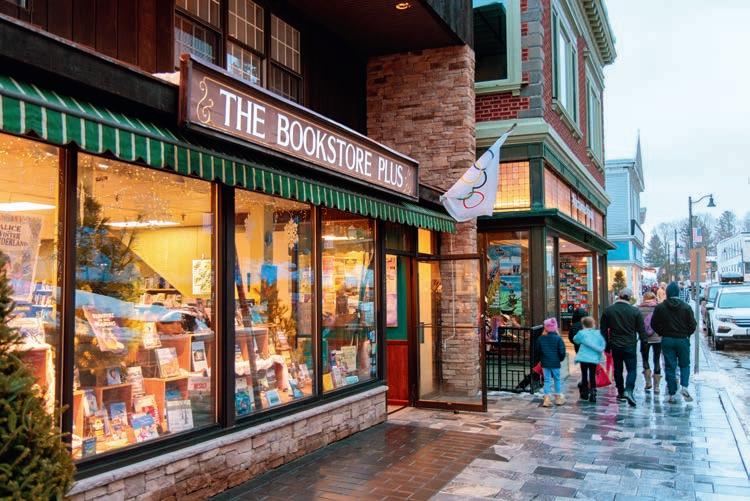
Main Street bar scene with pool and darts. The bobsled out front is the place for impromptu selfies. Facebook
Crowne Plaza Lake Placid: Chain hotel (IHG) that sits atop a hill above the Olympic Center with—especially from the Great Room Bar—sweeping High Peaks and village views. lakeplacidcp.com
Eastwind Lake Placid: A former motor lodge turned into a variety of chic cabins and suites. On-site bar and a close walk to dining options including Lisa G’s, Salt of the Earth Bistro, and Sentinel &
renovated (now in the Marriott portfolio) into stylish lodging along Lake Placid’s Main Street. At the street-level Marcy Bar, order a cocktail, snag a cozy corner couch, and indulge in people-watching. grandadirondack.com

Mirror Lake Inn: Picturesque, elegant Olympian-owned and -operated resort and spa anchored along Mirror Lake, with High Peaks views. With on-site restaurant, The View, and a bar/café, The Cottage. mirrorlakeinn.com
Whiteface Lodge: Gilded Age vibes and Great Camp–style decor make this resort, a couple of miles from Main Street, a highend dream for families. thewhitefacelodge.com
Adirondak Loj & Heart Lake Program Center: Adventurers can set out for High Peaks hikes, bunk, or take an outdoors skill class at the Adirondack Mountain Club’s iconic outpost, about 15 minutes from downtown Lake Placid. adk.org
Lake Placid Olympic Venues: The ski jumps, outdoor skating oval, Olympic museum, Herb Brooks Arena, bobsled track, and other sport venues are maintained and operated by the Olympic Regional Development Authority. See hours, tickets, events, and other information on its website. lakeplacidlegacysites.com
Lake Placid Toboggan Chute: For a winter thrill, climb to the top of the 30-foot ski-jump trestle and slide down the chute, onto frozen Mirror Lake. Weather permitting. $20 adults; $10 students. Facebook
Thunder Mountain Dog Sled Tours: Huskies give rides Friday through Monday across Mirror Lake, weather permitting. First come, first served; based across the street from the High Peaks Resort. $20 per person. Facebook
In a century-old building on a Massachusetts pond, harmony is found between two extremes.
By Miles Howard
PHOTOS BY GRETA RYBUS
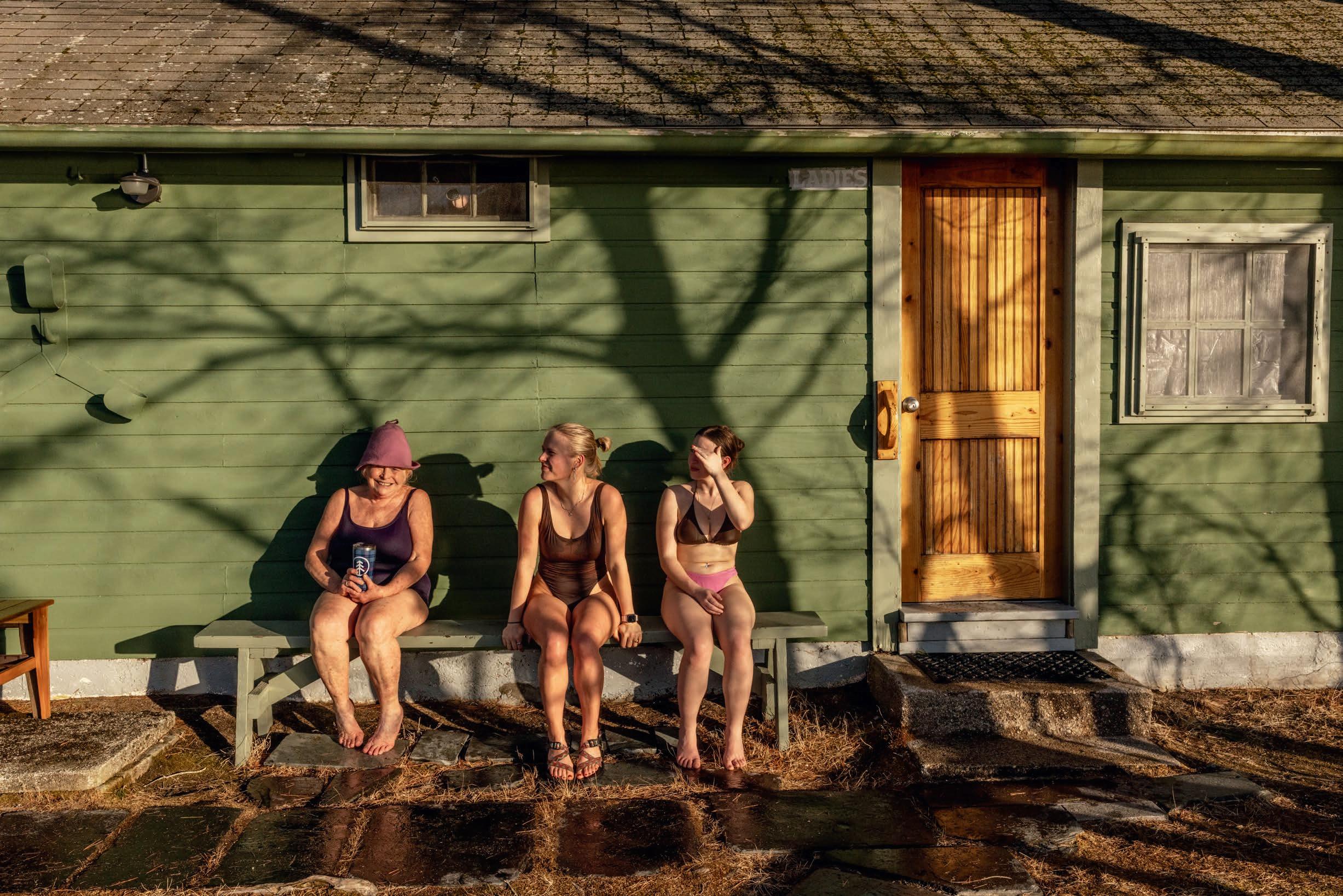
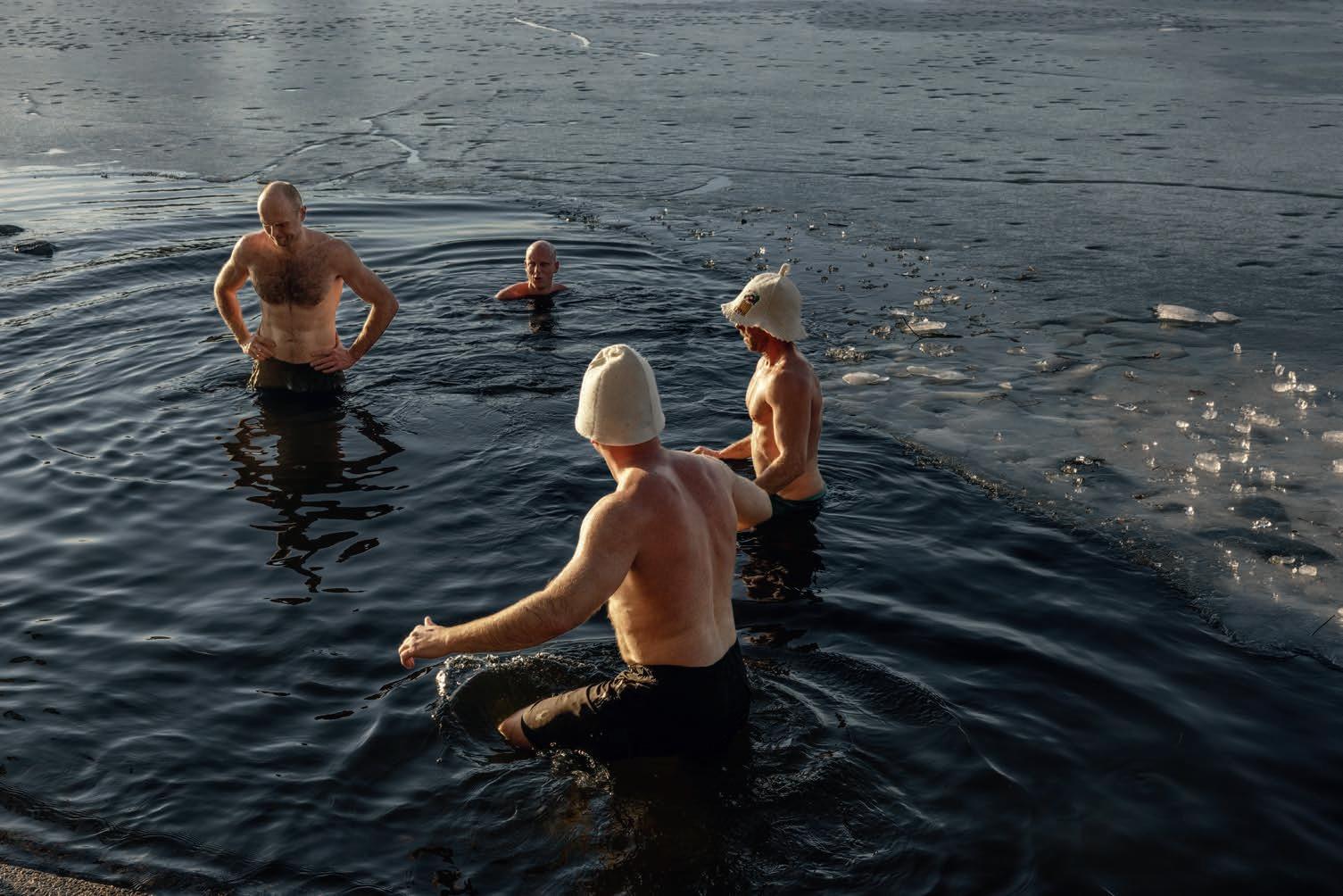
It’s a bright December afternoon and I’m standing on the banks of Furnace Pond, a crooked stretch of water tucked away in the woods of Pembroke, Massachusetts.
I’m dressed in nothing but a pair of swimming briefs. A small set of concrete stairs disappears into the not-yet-frozen waters below me. I’m trying to avoid thinking about how it will feel when I jump in.
I am not alone here. Just behind me stands an authentic Finnish sauna that volunteers fire up year-round. Set at the water’s edge, the building resembles a long green ranch house. A men’s entrance at one end (there’s a women’s entrance on the other) leads into a mudroom-like space where visitors strip down and hang their garments on hooks, as they prepare to pass through another door into the heat blast of the old wood-powered sauna.
But just as it’s been practiced and revered in Finland for centuries, the sauna experience here is only half about heat. To do a Finnish sauna the right way, you must also plunge
into a body of extremely cold water. This is why I’m still hesitating on the banks of Furnace Pond when a young guy wrapped in a striped towel ambles over.
“Sorry, but is this your first time?” he asks with a recognizable Nordic accent.
“It’s my first visit here,” I reply. “I’ve been to a sauna before.”
“Well, it’s just that … I noticed you’re completely dry,” he says.
A chill of self-consciousness makes my hairs stand up, and I ask him if I did something wrong. He points to the sauna building.
“You want to begin [there],” he explains. “You get hot and hotter, and you stay until the only thing keeping you alive is the thought of the cold.”
“And then I do the pond plunge?”
He nods. “You stay in the water as long as you can stand it,” he says. “Then you climb back out and you stand on the
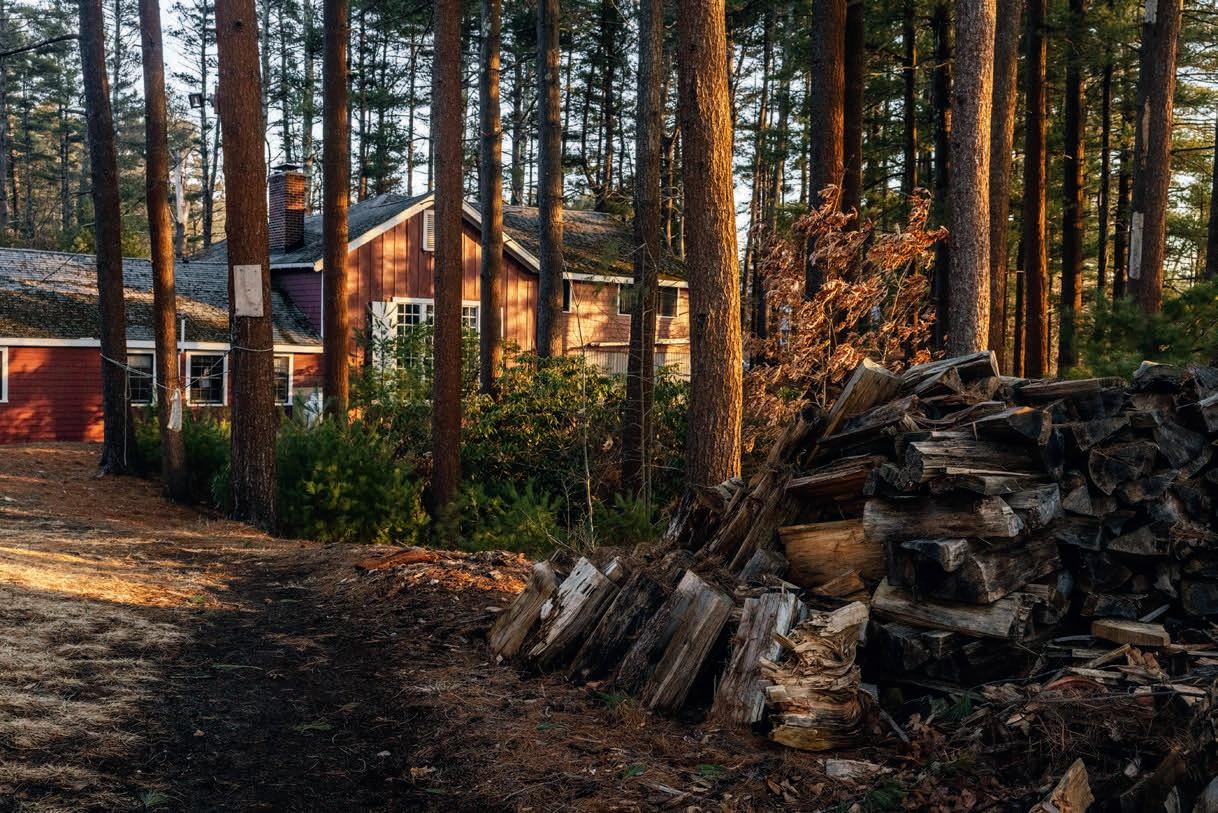
CLOCKWISE FROM LEFT: In keeping with Finnish sauna culture, a bracing lake plunge follows each sweltering session inside; just steps from the UKTS camp house, wood is chopped and stacked by club members for use in the sauna; wearing a traditional wool hat to protect her head and hair from the heat, UKTS member Sydney “Syd” Howland relaxes in the women’s side of the sauna.
shore, in the sun, until the only thing that’s keeping you alive is the thought of being hot. And then you do all of that a few more times.”
I watch my new friend descend the stairs into Furnace Pond. The surrounding woods are quiet, and I can hear his breath sharpening, and then softening, as he submerges his entire torso into the water with ease.
THE SAUNA ON FURNACE POND IS THE HANDIWORK OF the Uljas Koitto Temperance Society (UKTS), a volunteer-run social club founded by Finnish immigrants in 1890 to bring people together for traditional activities that didn’t involve alcohol. The sauna is one of the oldest and most enduring customs in Finland, where the winters are incredibly cold and dark, and where the circulatory, pain-relieving benefits associated with saunas earned them the nickname “the poor man’s pharmacy.” Historians have pegged the earliest Finnish saunas as taking root around 7,000 BC, when they were little
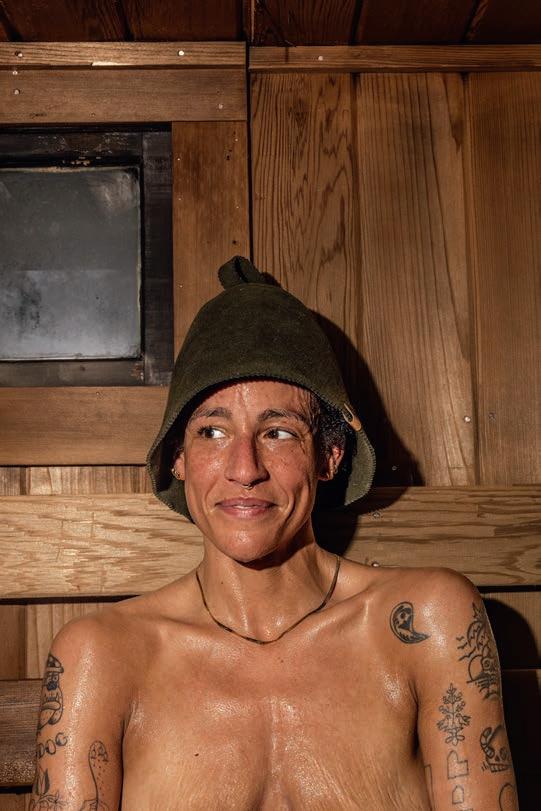
more than holes in the ground filled with heated stones. But as humans grew more adept at harvesting and burning wood, saunas began taking on the forms of shacks and cabins. Millions of them now speckle Finland’s countryside.
According to Kirsten af Klinteberg, board vice president of UKTS, it was a resemblance to the Finnish countryside that inspired the club’s founders to set their headquarters on the shores of Furnace Pond in 1926. “Pembroke has lots of pine trees and lakes, and this reminded them of Finland,” Klinteberg says, noting that the club’s HQ was originally located up the road in Quincy. (The promise of jobs at the Quincy granite quarries had drawn many Finnish immigrants to Massachusetts’s South Shore beginning in the 19th century.) When a parcel of wooded land in Pembroke became available, the club founders pooled their resources, signed the purchase papers, and began relocation. And one of the first things they did at their new home, Klinteberg says, was build a sauna.
In America, saunas are an amenity—a treat that comes with a gym membership or a stay at a swanky hotel. But in Finland, saunas are not just integral to winter living; they also serve as community centers, where people from all walks of life congregate for conversation and a sense of belonging. It’s sort of like hanging out at your neighborhood bar after a long day’s work, except everyone’s wrapped in towels and sweating like a holiday roast.
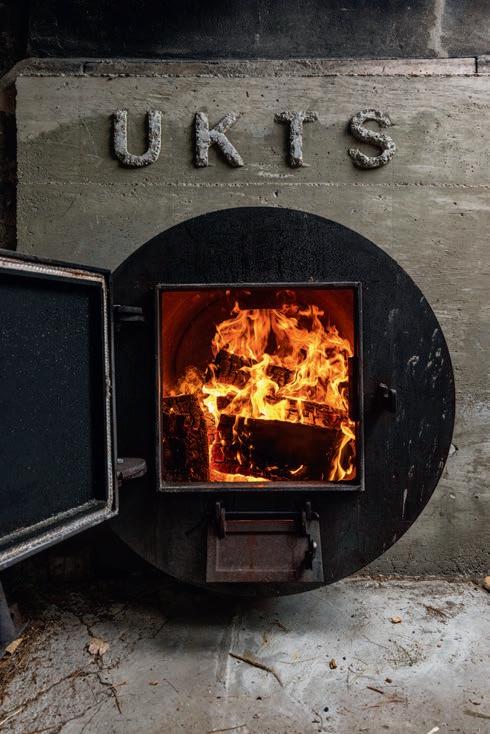
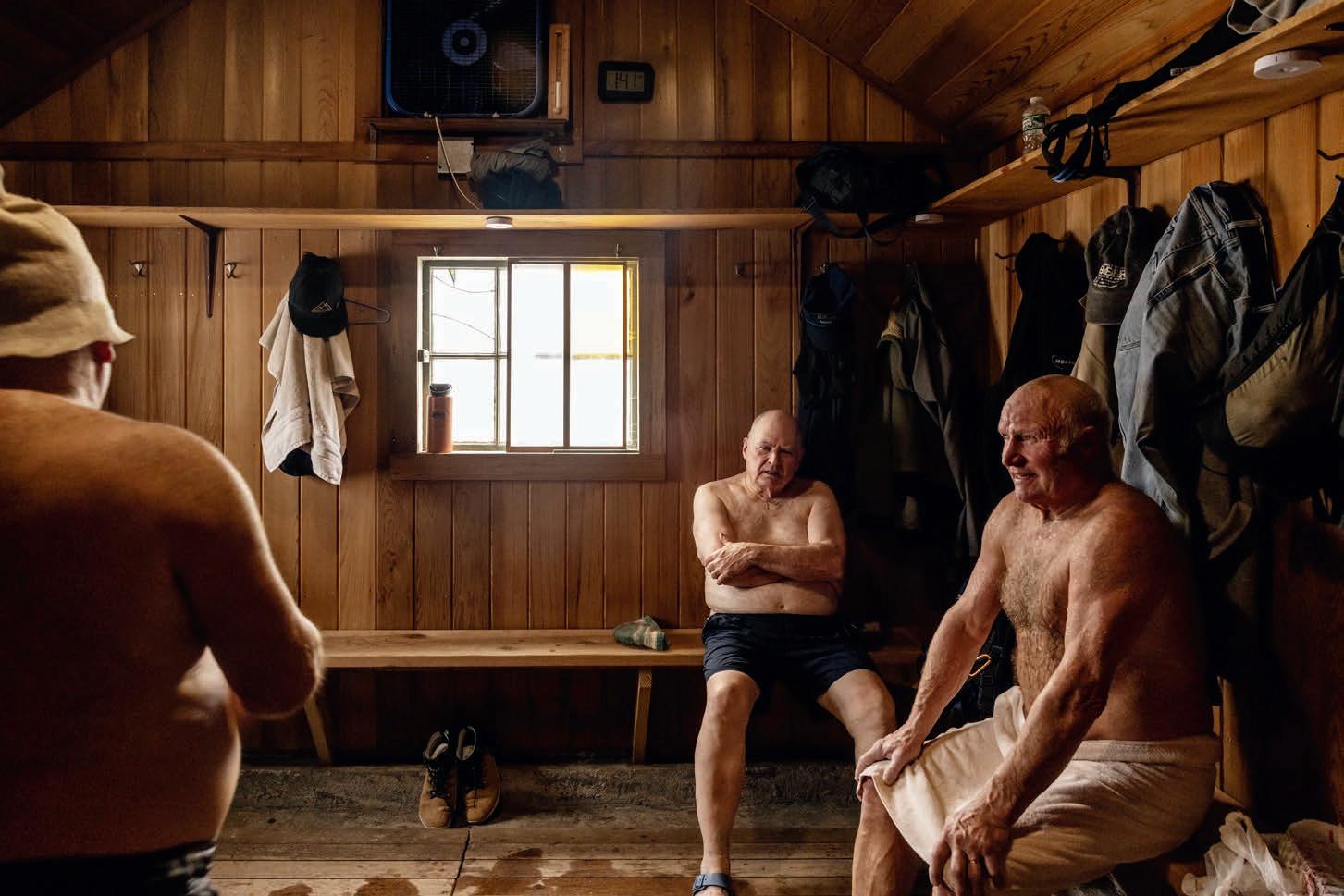
“In the sauna, you hear all sorts of languages,” Klinteberg says. “We’ve had Japanese students coming down from Cambridge, since they have the onsen [hot spring baths] in Japan. We’ve had Russians and Ukrainians, and once we even had this big group of Mormon teenagers visit us.”
While the UKTS sauna is technically a private facility, guests can visit on Saturdays for a fee of $40. Some go on to become either members or “friends” of the club—including my roommate, Emily, who initially told me about the sauna.
“There’s no ego in the sauna,” she explained a few weeks before my first UKTS expedition. “I see mothers in there, older women, and women my age. You find commonalities in each other, and as you see people week after week, you start to feel invested. You start to care for them.”
NEWLY ENLIGHTENED—AND ECSTATIC AT THE PROSPECT of getting to delay my pond submersion for the next 15 minutes—I scurry back inside, hang up my towel, and throw open the door to the sauna, stepping into the intense heat. Body hairs that were standing up out in the cold are now crackling. Set against the sauna’s wooden walls are three
levels of benches, which I find packed with glistening men who range from 20-somethings to elder statesmen. (The women’s sauna is on the other side of an ancient-looking brick dividing wall and heated by the same wood stove.)
The men who aren’t busy taking generous chugs from their water bottles are swapping life updates. The thin, bearded guy behind me is going to Peru to hike the Inca Trail in March. His bench mate is on the hunt for a new job. The fellow sitting right across from me, his torso a gallery of tattoos, is wearing an elf-like hat that’s soaked with water as a way to provide a little extra heat relief. He introduces himself as Leif and tells me where I can find the spigot to soak my own elf hat.
Leif’s presumption that I’ve brought my own elf hat is a warm gesture in a very warm place; it’s an affirmation of belonging. What I don’t yet realize is that this toasty camaraderie is as much a part of the sauna as the heat and the cold. It’s one thing to sweat or shiver in solitude at some expensive health club or private estate. But when you do this with other people, in a sauna, you emerge with more than a surge of endorphins.
LOWER LEFT: Keeping the sauna at an ideal 190˚F–210˚F is no small task. In 2024, UKTS replaced its stove of nearly 20 years with a roaring new version manufactured and installed by New Hampshire–based Finn Country Sauna.
LEFT: UKTS members enjoying camaraderie in the men’s sauna. Kurt Maddy, far left, serves as one of eight sauna custodians who work in rotating weekly shifts to keep the stove blazing and the sauna running smoothly. At far right is Bill Pyle, who’s been going to saunas for 70 years and who helped remodel the UKTS facility “with a strong focus on keeping it as original and rustic as it has been for 100 years.” And in the center is Steve Baker, who was introduced to sauna culture as a teenager but didn’t learn about UKTS until stumbling across its website more than 20 years ago. While he keeps coming back for the heat and the fellowship, Steve will admit that he never did enjoy the cold-plunge part—“and even less so in my senior years!”
I manage to endure the heat for a solid 15 minutes, and by the end of that relatively short amount of time, I’ve swapped names, listened to stories, and absorbed more pro tips for my next visit (topping the list: Wait at least an hour after eating before entering a sauna). And now … it’s time to go back outside.
As I approach Furnace Pond, it doesn’t look as frigid as it did before. This is a fleeting moment of self-delusion, shattered the second my torso meets the water and my involuntary shriek rings out across the water. But even as the cold shock causes my blood to surge, the fact that my heart hasn’t stopped beating and my toes haven’t frozen solid thrills me. This is my element. Perhaps this is my new community.
Time will tell. There are still three more months of winter in New England, and as I start the drive back to Boston at dusk, through a landscape populated by cars, strip malls, and solitary houses, I feel like the darkness of winter is swallowing me whole again. But I’ve just seen a glimpse of another winter, in the woods on Furnace Pond. When I get home, my cheeks are still pink with warmth.
More than miniature works of art, Becorns are characters with their own personalities and ways of interacting with nature. Here, a chipmunk investigates seeds offered by Joonie, whom Bird describes as “a nurturer—she always seems to be feeding somebody.”

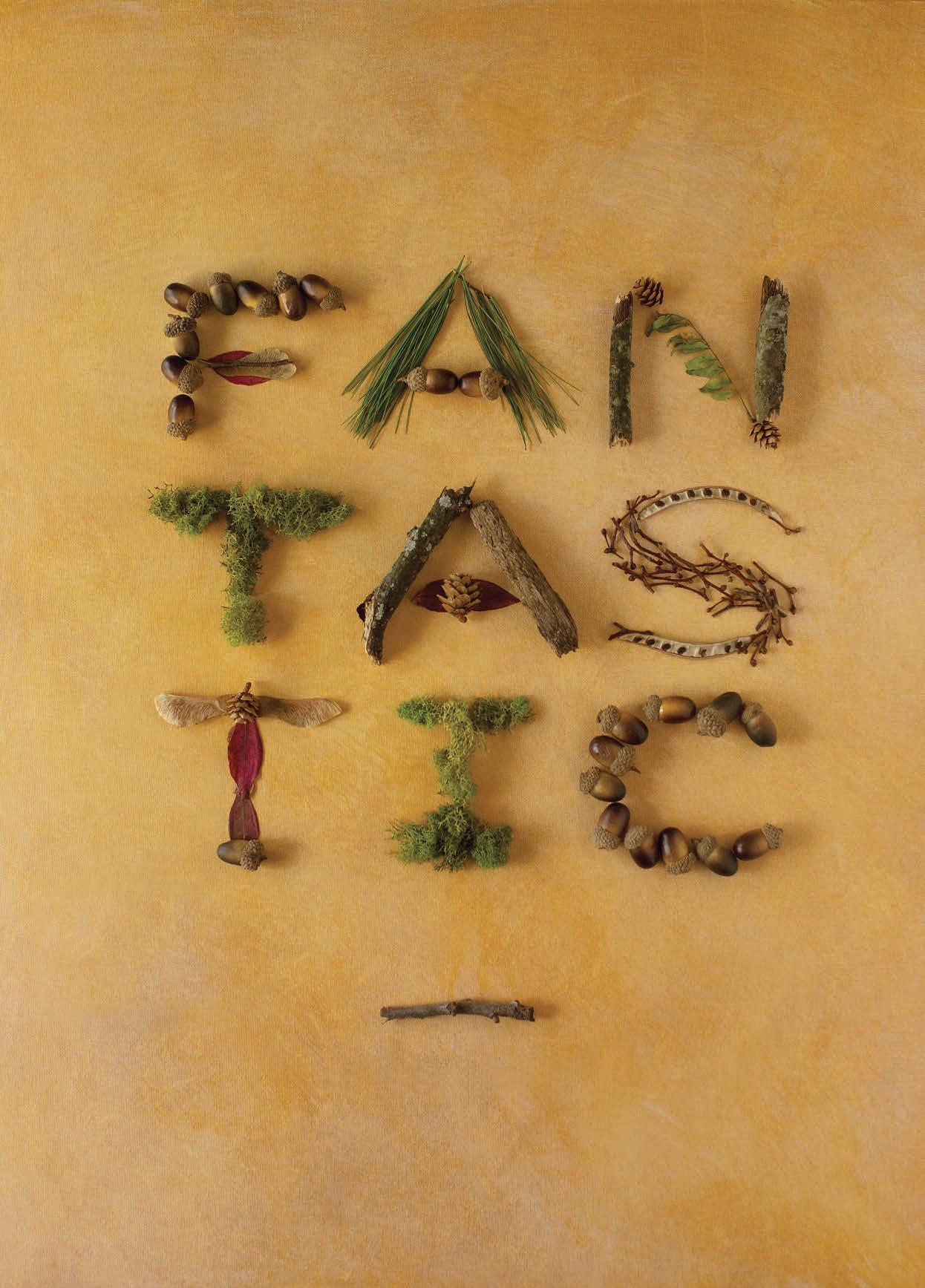
HARVESTING MATERIALS AND INSPIRATION
FROM THE WOODS NEAR HIS RHODE ISLAND HOME, BECORNS CREATOR DAVID M. BIRD CAPTURES
OTHERWORLDLY IMAGES OF WONDER.
BY MEL ALLEN • TYPOGRAPHY BY MCCANDLISS & CAMPBELL




n the day that would change his life forever, David M. Bird stood in his mother’s driveway, holding a broom. Just beyond, the Pennsylvania woods were littered with the remains of changing seasons: acorns, pine cones, seed pods, broken sticks and twigs. It was late summer in 2008 and Bird was nearly 30, standing at a career crossroads, uncertain what would come next.


Looking down at the tree nuts and other woodland debris he’d swept into a pile, he took in their textures and shapes. “Within the span of five seconds,” he recalls, “it went from Oh, that’s interesting, to I can create a world with this.”


And here is what Bird did next: He got a hot glue gun and made a bug from a stick, with leaves for wings and a pine cone abdomen. From that point onward, as he started going for walks in the woods, “everywhere I looked there were so many ideas. More than I could imagine.”




Gathering up bits of forest on his walks, Bird brought them back to his small apartment, where he had a workbench and tools, and began making—well, he wasn’t quite sure. But the tiny creatures that emerged, and who they might be and what adventures they might encounter, filled his mind.
Bird had returned to his small hometown 20 miles outside Pittsburgh, where his mother still lived, after five years
working for Lego in Billund, Denmark. A Rhode Island School of Design graduate, he knew how to use the toymaker’s intricate interlocking components to design characters with storylines that kept children engrossed. But though he felt “I would never have a job I loved so much,” he decided to put down roots back in the United States and start a new life.
“One of my favorite parts of designing at Lego was thinking about what elements will make a picture and tell a story,” says Bird, a boyish 46 with tousled dark hair. “I knew, in that moment [of his first bug sculpture], I could do that with all this stuff everywhere in nature.”
LEFT: “The thing about cardinals is that they always look like they’re frowning,” says Bird, who dispatched a smiling, welcoming Joonie as his emissary to a stern-looking female cardinal.
BELOW: Setting up a Becorn at the point of release for a mouse trapped in his garage, Bird had hoped the animal would run near it. Instead, it scampered through the Becorn’s legs. “I didn’t even realize what had happened until I got home and looked at the pictures,” he says. “I create the opportunity, but I never know what’s going to happen.”
Soon Bird quit his job at a local medical equipment design firm, and for a year he tried to write a children’s story with his little creations as the heroes. Called Becorns, they had names and personalities, and they always seemed to be on a quest of some sort. Bird knew from his Lego days that kids wanted stories about danger and adventure. He thought, What if these creatures grew from trees and from plants?
“But I had no idea what I was doing,” he says of the writing project. “Every day I’d wake up and I’d try to make fleshed-out characters, and I’d fail.” Still, he went for long walks in the woods, eyes on the ground, conjuring stories from the forest floor, and he played with what he brought home. He told few people about his imaginings of tiny forest creatures, unsure of where his ideas might go.
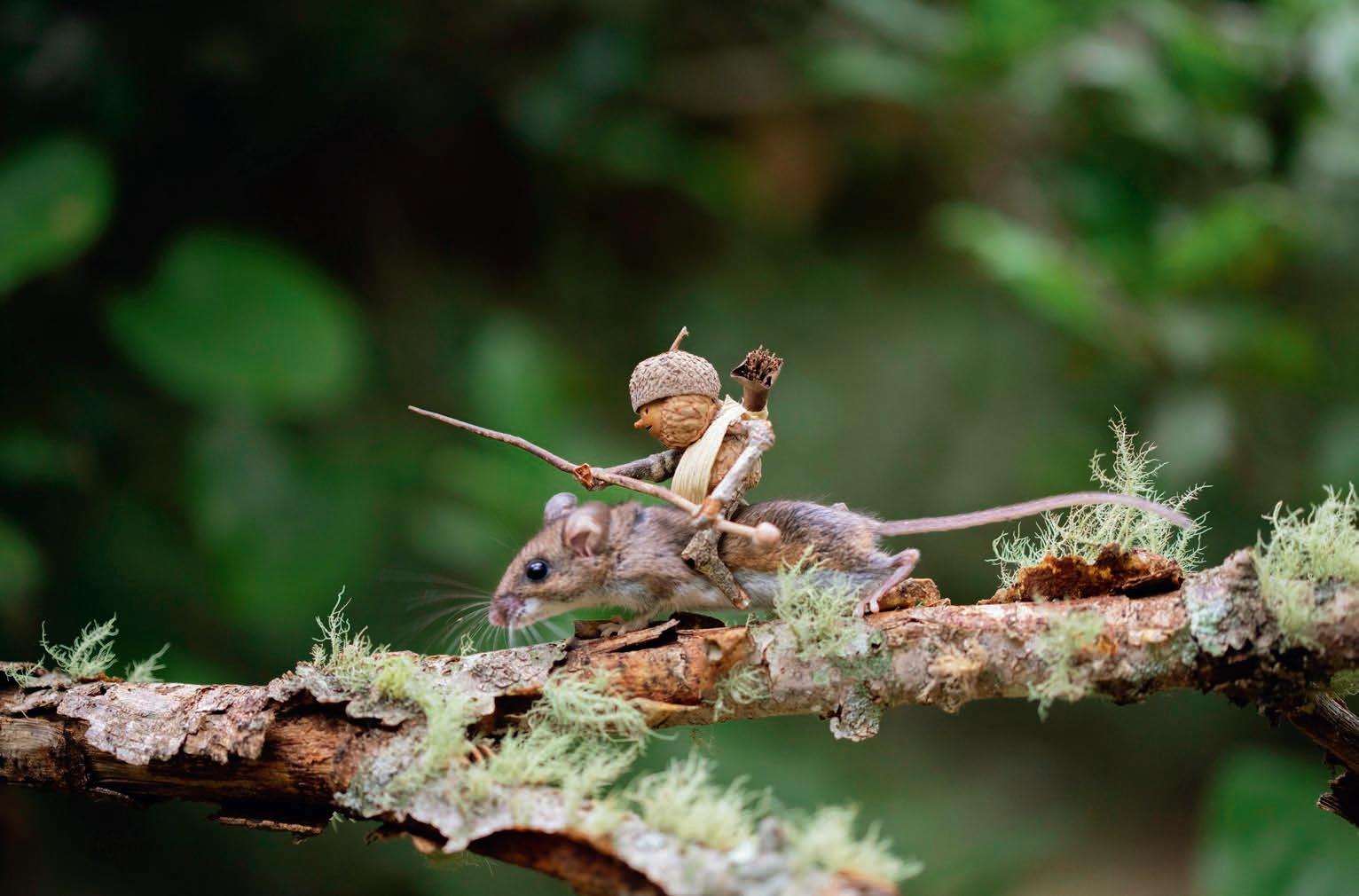
FAST-FORWARD TO 2018. BIRD HAD RETURNED TO THE toy business, working in Rhode Island and living in Connecticut. He was married now, to Joy, a couples therapist, and she was pregnant with their first child. And that
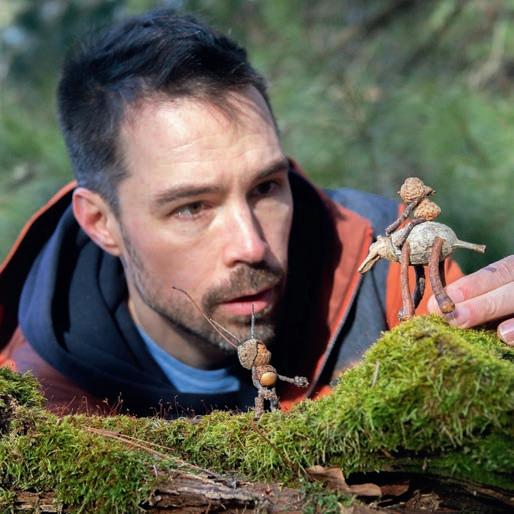
sparked something in him. “I knew I had a nine-month runway, so I did it: I left toymaking,” he says. “I felt people would like what I imagined. What I didn’t trust was that anyone would pay money to see it.”
Bird had no idea what would happen if he was wrong, if he was simply indulging in the fantasy life he’d found in the forest. But as he worked, he seemed to be imagining something completely new … yet familiar, too. In transforming acorns into faces and twigs into limbs, he was brought back to his childhood, a time when “I always loved wonder. I never wanted to grow up.”
Following his passion required close observation. He took photography classes and learned how to capture the Becorn scenes that were in his mind. He studied the habits of birds, squirrels, and other small animals around his home. He wandered through parks, scooping up what nature had dropped. He’d pull weeds and notice how the roots looked like tentacles. He saw hollowed logs and wondered, What if you were a woodland creature and the logs spoke to you?
Bird took his Becorns into the woods just to see what would happen. Would any wild animals notice his creations—especially if he dabbed peanut butter around them? Sometimes, sitting for hours, he observed only stillness. Other times brought mishaps and misadventures (as when a squirrel bit the head off a Becorn). But there was also the rare thrill of seeing a bird alight on a Becorn’s cap or steal seeds from the pouch it carried, or perhaps a curious chipmunk stopping by—and nature, whimsy, and beauty would merge in a single moment.
With the openness of a child and the discipline of an artist, Bird continued playing with the Becorns. He put them into different scenes—sitting on fruit blossoms, nestled in tree hollows—and waited out of sight for hours at a time, one hand on his camera’s remote control, to catch what
happened. “I’ve learned everything about nature through Becorns,” he says.
As his photographs climbed into thousands, Bird studied them to see which made his characters seem most alive. He discovered that a subtle tilt of a head, a slight twist of a twig, could make a still-life image feel animated. Personalities emerged: Dahlia, Dink, Pinkin, Bing … a dozen, then two dozen, then three. A miniature universe evolved, one that had never been seen before.
When Bird set up a booth of Becorn photos at a crafts fair in Putnam, Connecticut, in 2019, he was ready to share his secret. “This was the first time I’d showed what I’d imagined for years,” he says. “For the first time I heard people say, ‘This is amazing.’”
More crafts fairs followed, but the pandemic soon interrupted. Relocating with his family to Rhode Island, Bird began posting photos of Becorns on his website. He took a handful of orders a day for cards and photos and gradually built an online audience of 4,000 followers. Then, in early January 2022, he posted a short Instagram Reel of favorite Becorn moments set to music he’d composed and played. People watched it, and sent it to friends, who sent it along to their friends. And David M. Bird woke up one cold morning to another day that changed his life.
“My phone ran out of batteries because it was constantly vibrating from Instagram notifications,” he remembers. “The numbers kept growing. The orders for prints poured in. I couldn’t keep up.”
Within a week, Bird had 400,000 Instagram followers. And among the comments from around the world that were posted to his account, one summed up a universal sentiment:
I hope that you are told every single day how freaking brilliant you are! Your work is breathtaking. It makes my whole day. Thank you.
ON A SUMMER DAY IN 2025, WITH HIS FOLLOWERS closing in on two million, Bird leads a visitor through the basement workshop where his Becorn family resides; his wife and two young children are out enjoying a blue-sky day.
Bird’s tools—scissors, hot glue gun, pliers, drill, soldering iron—sit on a workbench. The stacked trays that typically hold bolts and nails are instead filled with hickory nuts, twigs, acorns, fern fronds, sticks, feathers.
He picks up a box of Becorns, piled like clothespins. Some need cosmetic repair, awaiting their return to the Becorn world. “Very unceremonious,” he says. “But they’re safe here. That’s the important thing.”
Much of Bird’s creativity has its roots in loneliness, he tells his visitor. He talks about his years in a private school where he never fit in and spent all his free time in the art room. Just wanting to connect. And knowing what it is like to feel “so alone.”
But in the Becorn universe there is solidarity, community,
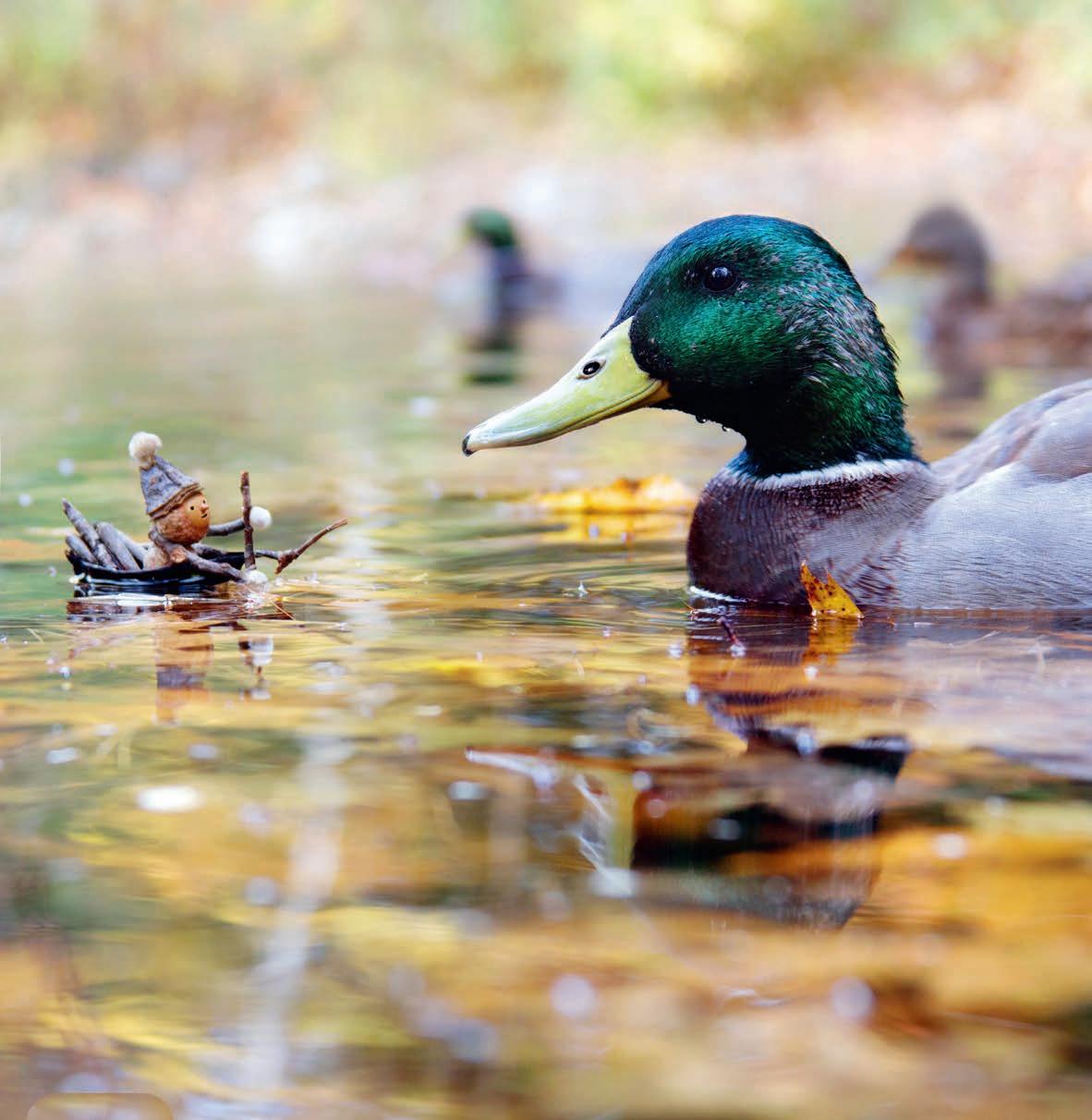
OPPOSITE: Bird sets up a Becorns scene in his yard, where almost all his photos are taken. “Becorns are so small that you don’t need a huge vista to make a grand picture,” Bird says, though he does look for different plants to introduce each spring to change up his microenvironments.
ABOVE: In one of the first Becorns photos that Bird took with animals, a male mallard sizes up a tiny interloper named Ponce.
RIGHT: A Becorn called Poppy— named for the dried poppy pod she wears as a crown— immerses herself in the first blooms of spring. “Becorns are captivated by beauty and wonder,” Bird explains, “and when spring finally comes after a winter of being holed up, it’s a revelation to them.”
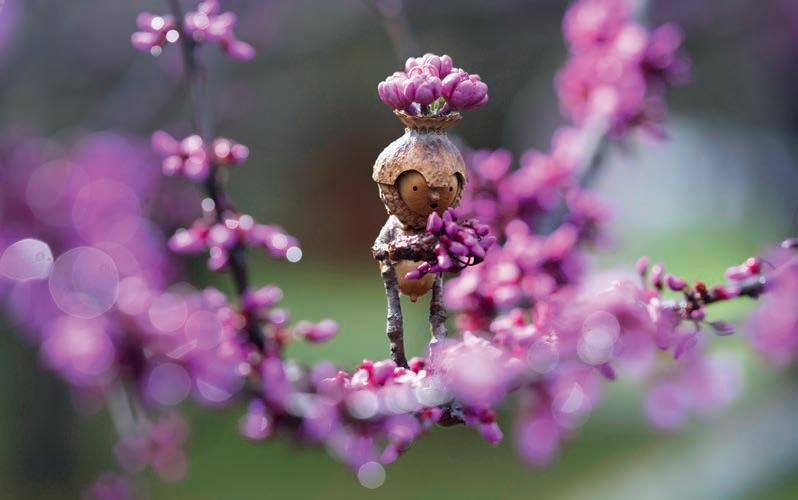
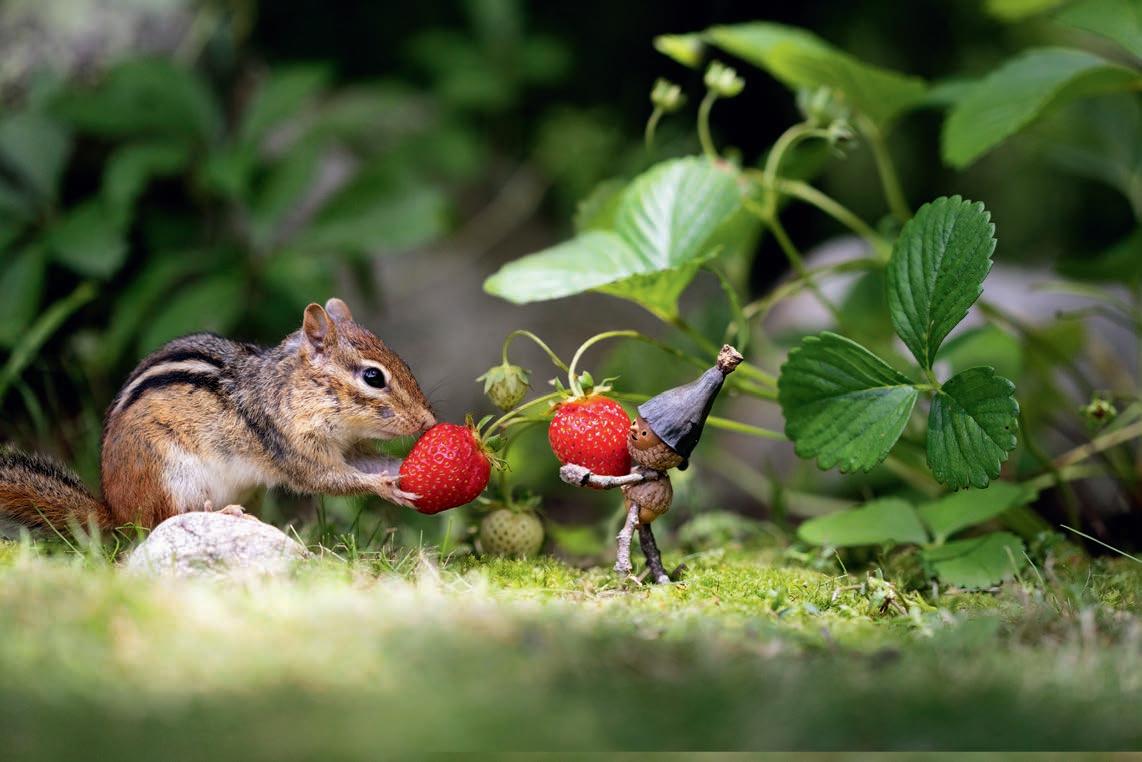
ABOVE: As a result of his Becorns project, “I’ve been feeding chipmunks in my yard for the past five or six years, so they come pretty reliably” for photos like this one, Bird says. “They live a good life here.”
OPPOSITE: Bees visited this flower so infrequently that Bird took only about four shots over two days, but the results were worth waiting for.
RIGHT: Weather, lighting, and timing all lined up for this stunning image of a monarch butterfly. Bird chronicled the making of this photo—and many others—for the video gallery on his website, davidmbird.com.
compassion. And it clearly connects to an audience hungry for the same connection. With a dash of joy and humor. Who wouldn’t want more?
And indeed, there is always more. Bird says the Becorns might start growing their own houses, and he indicates a collection of small gourds that he wants to play with. He leads his visitor outside, and points to a cluster of blossoms.
“Look at how the bees go inside the flowers. They like to sleep in them. I look and see little bee hotels.” He points to an oak tree. “Look at how that limb comes out. There’s a story to it!
“Every time I come outside, I get ideas. And I say, ‘I gotta do it!’”
Bring home the charm of David M. Bird’s Becorns with an 11x14-inch print of “Midnight Snack” (see p. 72), plus a 2026 Becorns wall calendar. To enter, snap the QR code or go to: newengland.com/becorns-giveaway



BY LAUREN WEST
BY SUSIE SPIKOL
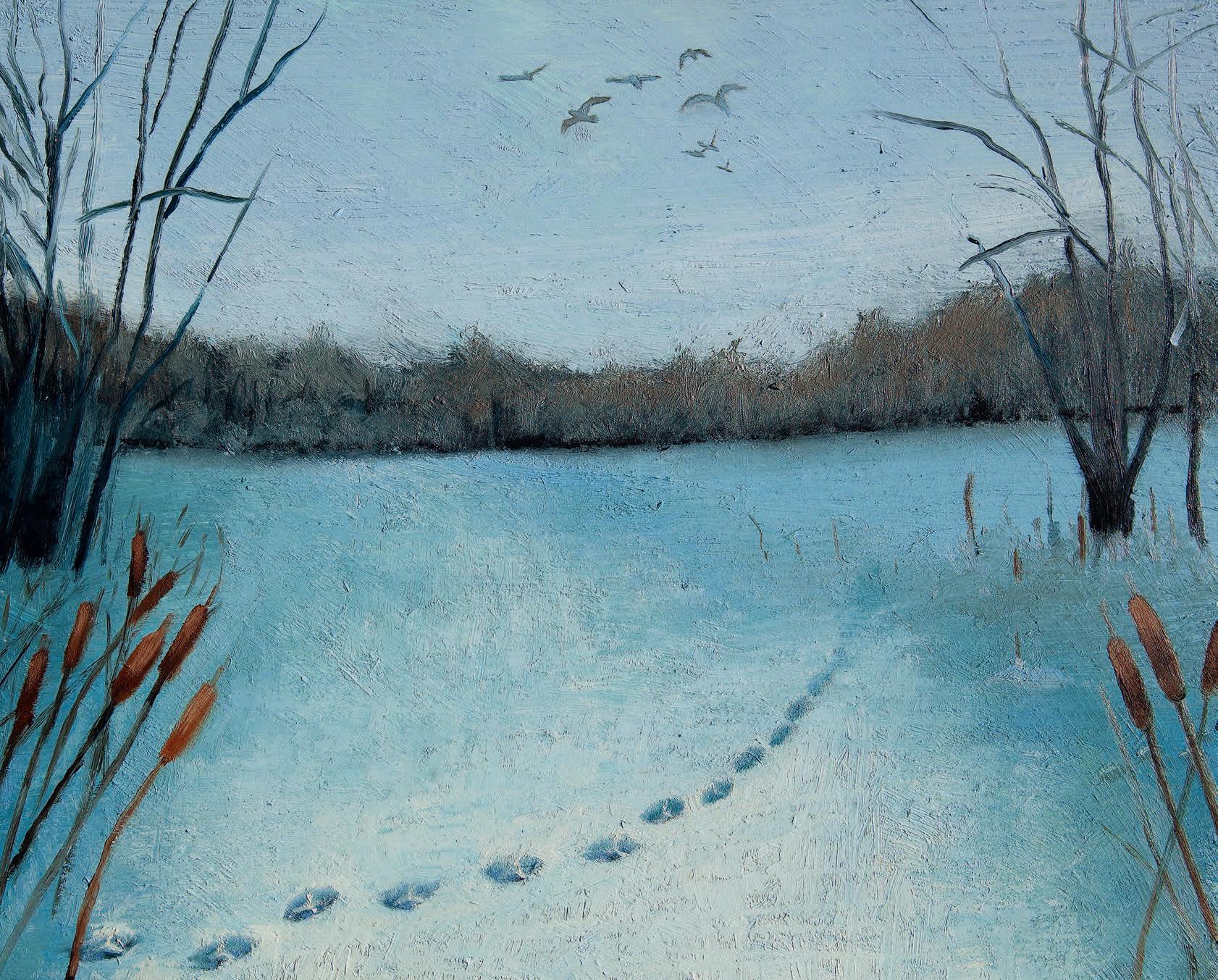
In praise of small stories written on the snow, and the larger tale they tell.
It’s a perfect day for tracking. The winter air on this early February morning is crisp and cold. There is no north wind, bright sunshine hangs overhead, and the ground conditions couldn’t be better—about four inches of sticky snow reside atop a frozen base, which means I’ll be able to make out the telling details of toes, claws, and hoofs.
Along the cattail edge of Kempner Meadow, in my hometown of Hancock, New Hampshire, I follow a straight line of tracks. I recognize this pattern of movement. A perfect walker where the back leg slips neatly into the same spot as the front paw, leaving a tidy, tight trail. I’m investigating, collecting clues, and observing details. I don’t rush to conclusions. Instead, I linger and lean in closer. What wild secrets do these prints hold? What stories do they offer?
Many before me asked those same questions. Tracking is one of our most ancient human skills. Without it, our long-ago kin wouldn’t have survived. It would have been impossible for them to find the game they needed to hunt, and they would have fallen prey to larger, sharper-toothed predators that wandered our prehistoric landscape. Decoding trails and animal signs was our first and most important reading assignment.
As a kid, I wanted to be Marty Stouffer, the cowboy star of one of my family’s favorite shows, Wild America . I scrambled around my Brooklyn neighborhood, my long hair
wrapped around my chin so I could have Marty’s beard. Instead of the grizzly bears and cougars my hero tracked, I searched for the squirrels, rats, and feral cats that roamed my city terrain. There were other differences, too. The animal trackers I knew as a kid were rugged leather-faced men who wore flannel shirts. They rode horses, camped out under the stars, chewed tobacco, and lived lives that didn’t seem to leave room for girls from Brooklyn.
It wasn’t until I was in graduate school in New Hampshire for environmental studies that I was shown another side of tracking. Meade Cadot, a geologist turned mammalogist, taught me how to read the trails and signs left behind by wild animals. We trailed bobcats together, following their rounded paw prints along the tops of stone walls, and we touched the damp, torn striped maple wood where moose had pulled up the bark to eat only hours before. It was in this mammalogy course that I learned a snappy rhyme that doesn’t apply just to tracking: When in doubt, follow it out.
In winter, the snow announces the everyday stories of wild animals, and if we take notice, our world expands. I am reminded of the time I woke to find an otter slide—a rounded trough—tobogganing through my neighbor’s field, so similar to my son’s own path of winter joy. Or how once I was on a fall birding trip with third-graders, and our attention was caught by some tracks in the early dusting of snow that coated downtown Hancock. Sturdy, large hind paws and bold, clawed front paws, moseying along the sidewalk on a thin skim of snow. Hot on the trail, we followed the prints to a crab apple tree. There, in the early morning hours, while people slept snug in their homes on Main Street, a black bear had helped itself to a crunchy snack. On the way back to the school, one of the girls, with cheeks as red as those little apples, grabbed my hand and said, “I’ll never forget this day, when a bear walked down Main Street, and only us and the bear knew it.”
Five essential tips for would-be wildlife trackers.
1. Know Your Suspects: Familiarize yourself with the mammals in your region by visiting your state’s Fish and Wildlife agency website. Along with compiling a list of your critter neighbors, look for information on their natural history and habitat preferences.
2. Put In Some Dirt Time: Go outside. Look, listen, sniff, and touch. Make observations and take notes and/or photographs. Look for things like trails,
The snow cover is really an uncovering— a reveal, showing a secret world no longer hidden.
Tracking is a bit like a magic trick, but behind it all, as with any good act, is a whole lot of skill and practice. Spending time outside observing, following trails, watching, listening, and smelling the air for feral scents are all a part of the ritual—a way to wake up your senses, engage your curiosity, stretch your deductive skills, and deeply connect to the wild world outside your back door.
My own trail, if tracked, wouldn’t be straight and clean like a bobcat’s. It would be messy and meandering, a jumble of twists and turns, something very human. But I have always had a north star drawing me forward. When you love animals, you willingly let yourself go wild. You give up comforts for the chance to see things like the swirl of little brown bats pouring out of an old barn on hot, mosquitodrenched summer nights. You collect scat and tuck it tidily into labeled jars in your grandmother’s jelly cabinet. You fall in love with star-nosed moles. And you find any way you can to catch a glimpse into the story of these wild lives. Tracking is how the door opens just enough for you to peek through and begin to understand a bigger, more beautiful world.
scat, feeding signs, and, of course, snow prints, as well as burrows, nests, and tunnels.
3. Follow It Out: When you find tracks, look at more than just the prints: Follow the trail. What does it reveal? Where was the animal going, and why?
4. Get a Field Guide (or Three): Mark Elbroch and Casey McFarland’s Mammal Tracks & Sign (2nd ed.) is
considered by many to be the definitive book. Other options include the Paul Rezendes classic Tracking and the Art of Seeing and Jonathan Poppele’s Animal Tracks of the Midwest, which offers essential reading on all Northeastern mammals and is small enough to fit in a coat pocket.
5. Find a Mentor or Community: Consider joining a tracking club hosted by the Northeast Wildlife Trackers, or see what your local nature organization is offering. And if you want to get serious about tracking, sign up for instruction at a place like Vermont’s Fox Paw School.
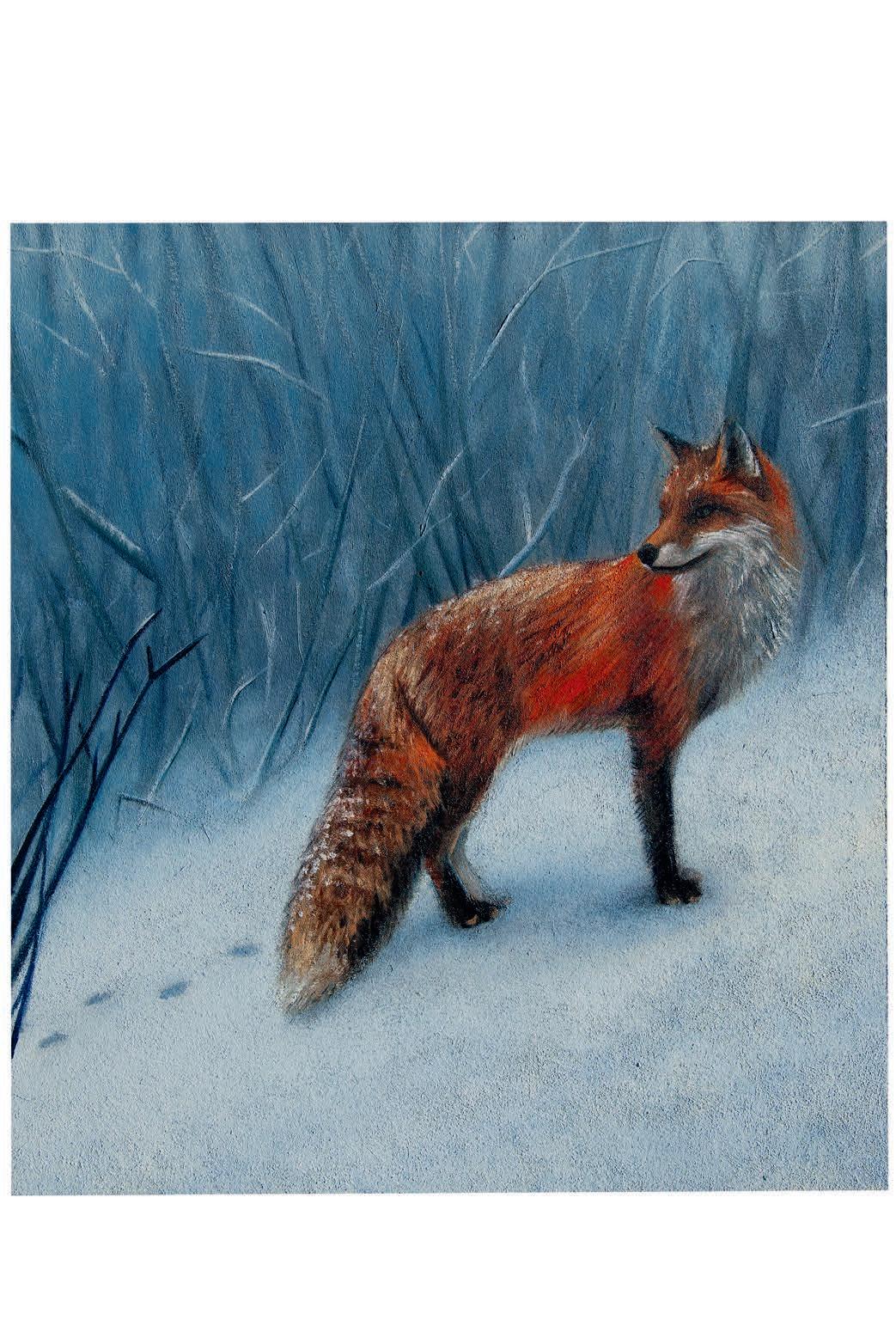
way you look at the rest of the world. You are one member of a far greater community than only humans.”
The ancient skill of tracking is experiencing a resurgence, thanks to educators and mentors like Shapiro who have been trained by CyberTracker North America. Based on a program developed in the early 1990s between the San people of the Kalahari in southern Africa and Louis Liebenberg, a scientist, author, and associate of human evolutionary biology at Harvard, CyberTracker was initially designed to connect
the generational knowledge and experience of Indigenous peoples to scientific and conservation needs. Since the San people’s oral tradition wasn’t based on written knowledge, Liebenberg created an image-based system using the available technology of the time, PalmPilots, for Indigenous trackers to record their animal sightings.
This is hard work, according to Shapiro, who holds two CyberTracker specialist certificates in track and sign identification and a professional certificate in animal trailing. He’s put in what he calls his “dirt time,” spending 15 years, in all seasons and in all kinds of weather, following the slightest trails and trickle of clues through diverse habitats. When he was in his early 20s, he developed a passion for being outside, hiking mountains in Arizona. It was all so beautiful, but as he later described to me, “I felt like a tourist, passing through the natural world.” He longed for something deeper, more connected and engaged, a way of
(Continued on p. 97)
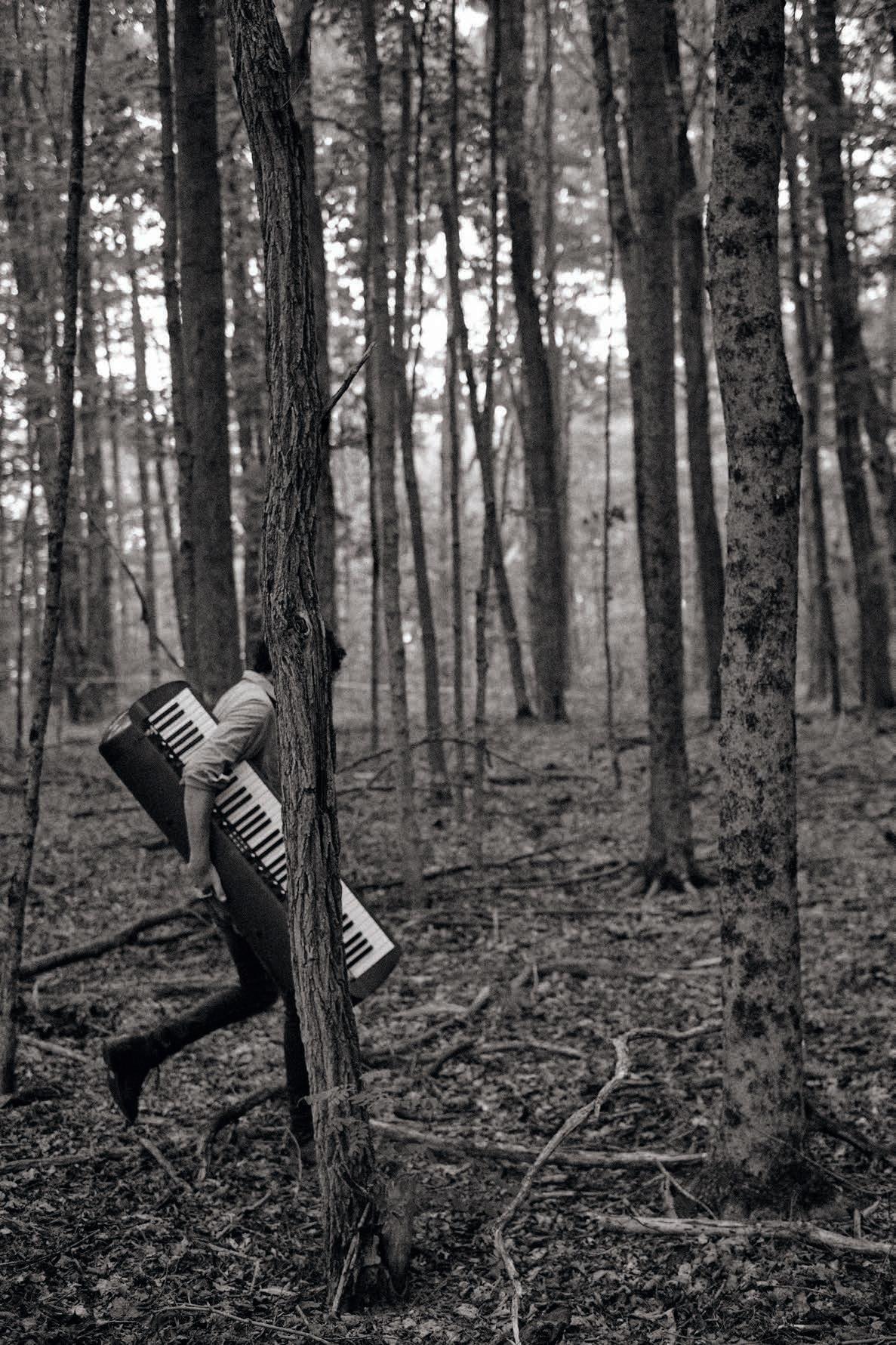
creative Massachusetts old and new, a restlessly In wandering landscapes

composer puts a sense of place to music.
Why, I sometimes wonder, don’t we think of ourselves more like birds in a murmuration, or like electrons in an atom, instead preferring to project a degree of stillness and order onto the world that may exist only in our minds? It seems strange that we live on an irregular, imperfect hunk of rock that shifts, morphs, belches, and floods, incessantly and shudderingly rearranging itself as it spins wildly through space, and yet we feel it’s more appropriate to sit still and hunker down on some piece of it instead of sprinting deliriously around on its surface. ¶ We live in a world of constant growth, collapse, confusion, asymmetry, and chaos: In the scheme of things, nothing lasts, no story is completed, and no narrative is perfectly satisfying. People and things drift, gracefully or suddenly, in and out of our lives; we move between places that will have changed, subtly or dramatically, every new time we see them; and every person, thing, and idea in the world moves forever along irregular, incongruous, unrelated, and uncontrollable trajectories. It falls to us to try to find meaning and stability in a world like that, and maybe the best way to do that is to constantly examine and embrace all that change and all that movement itself.
On a morning in August, the author of those words, composer Ben Cosgrove, stands in a dirt parking lot at the foot of Mount Monadnock in Marlborough, New Hampshire. His car, which is as integral to his music as the red Korg keyboard he performs it on, is a 2012 black Ford Focus. It just hit 200,000 miles. The transmission has never been great, he says, but lately it’s been developing “additional idiosyncrasies,” and may not be long for this world. At some point, he’ll get a new car, as he does every two or three years. Then he will drive it into the ground like the others, all in the service of art.
Cosgrove, 38, writes music about landscapes. This makes him sound bland, like some kind of musical watercolorist, but he’s not. His process is intense and all-consuming. He travels to a place—here, abroad, familiar, alien, on land, on sea, on a lava field, whatever—takes it in, feels it, and then attempts to convey all that musically to others. So far, he has done this across seven albums—including his latest, Topograph, out this January—and an endless tour of cafés, bars, clubs, galleries, and any other venue that will have him.
His music is quintessentially American, omnivorous, and democratic. It incorporates elements of classical, folk, country, blues, pop, et cetera, and can be by turns meditative and chaotic, somber and exuberant, lovely and frightening, still and dynamic. There are times it feels like his pieces are blowing in off the water, or rising from the earth in a swell, a surge, spinning eddies off the edges. There are times when they feel like they’re coming from the sky. When I was driving here through Connecticut, listening to his albums, his music seemed to interact with the surroundings. The sound of my tires hitting strips of tar on a road, creating a rhythmic thump, synched up with his composition “Anorak,”
which is about the disorientation one feels during a major storm. The sound of a garbage truck next to me on Interstate 84 created a drone that harmonized with a piece inspired by wind in Oklahoma. At one point while listening to his album Salt, I honestly thought there was a bird in my car. I still don’t know why.
There is nothing else like it.
Cosgrove has climbed this mountain hundreds of times, but he doesn’t remember his first ascent. It would have been back when he was a toddler. His extended family used to come here in the summers and stay at a camp in nearby Rindge, New Hampshire, purchased long ago by his great-grandfather. Cosgrove could ride out to Mount Monadnock on his bike. His adventures thereabout provided a road map for the wanderer’s life that followed.
“I love the thrill of finding unexpected pathways between places, and this mountain is like that,” he says, as we start our climb. Each of the trails feels distinct, so when one trail unexpectedly intersects with another, the totality of the mountain snaps into clearer view. You suddenly know where you are. “Nothing overjoys me more than feeling your mental map sort of shudderingly rearrange itself,” he says.
His life in music started early. He’s of Central Massachusetts stock, and when he was about 2, his family moved to a 1950s ranch house in a hilly, suburban neighborhood in Methuen. The house proved fateful. There was an old upright piano there, left by a previous occupant who didn’t feel like moving it. A very young Cosgrove started picking at the keys, and before long he was playing tunes like “Twinkle Twinkle Little Star” by ear. “I just remember this insane magic of like, ‘Oh my God, if you play this note and
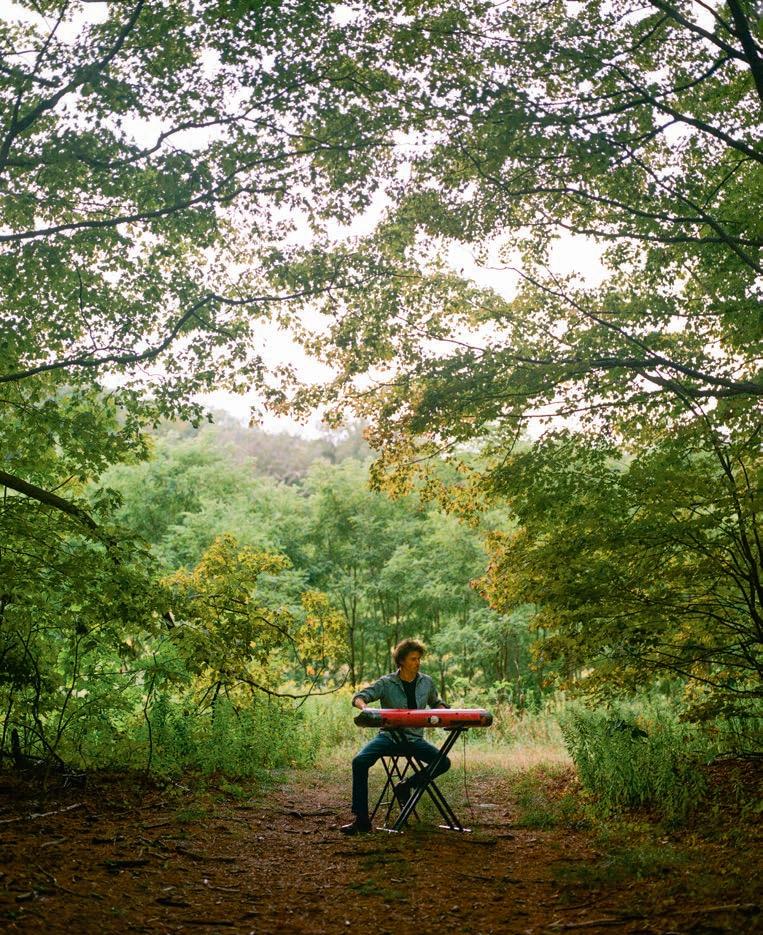
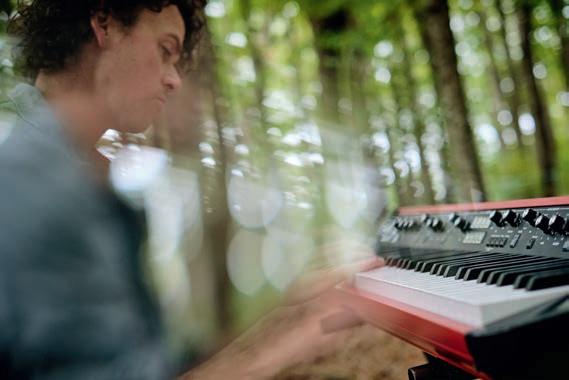
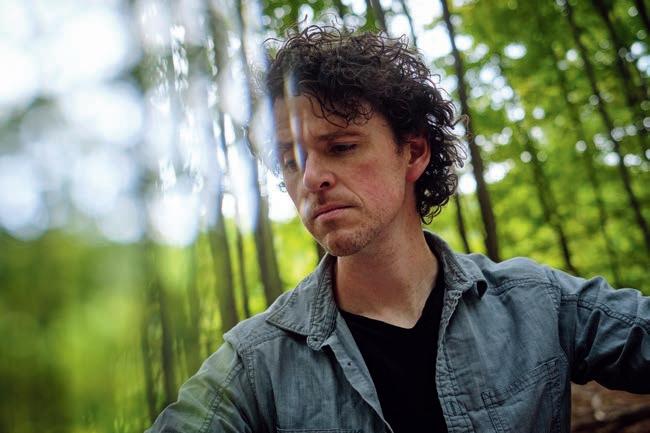
this note at the same time, it sounds this way, but if it’s this note instead, it’s a different thing,’” he says.
“It was his favorite thing in the house, clearly,” his mother, Kim Cochrane, recalls. “He was always there. It was a calling.”
Cosgrove’s parents weren’t musical. His mother is a retired educator and his father worked for the town. But they saw something in his early musical experiments, and when he was 5, they got him a piano teacher. The teacher was a woman named Judy Schmidt, who lived in Andover. That, too, proved fateful. Schmidt wasn’t the sort of teacher who endlessly drilled students on rudiments. “She gave me a very long leash,” Cosgrove says. “I would come in and want to talk about a song I heard on the radio, and we’d work on that. Or she’d send me home and say, ‘For next week, write a song about this snowstorm.’ It couldn’t have been a more ideal setup for whatever weird thing I’m doing now.”
He wrote his first proper song when he was 6. Fittingly, it was called “Waves.” “It sounded like waves—it really did,” his mother says. Before long, he was walking around, proclaiming, “When I grow up, I will be a composer!” An early inspiration was Beethoven. “I was obsessed with Beethoven,” he says. “I carried around a plastic bust of Beethoven, in a
Calvin and Hobbes kind of way.” His mother chuckles at the memory. “Beethoven would go in the car with us,” she says. “He slept with Beethoven. He carried it around with him everywhere he went. He was very attached to Beethoven.”
Cosgrove’s parents were very supportive—despite being nonmusicians, and possibly because of it. “I think it was to my benefit that no one else in my family was a musician,” he says. “If there was a professional sax player or something around, they would have been like, ‘This is a terrible idea! He’ll never make any money!’” He had great teachers in Methuen who were constantly pushing him and introducing him to new material. He got into pop music, rock music, “Weird Al” Yankovic. (“He’s one of our best,” Cosgrove says. “His arrangements are so precise and clever.”) In high
(Continued on p. 98)
(Continued from p. 37)
A blend of sharp cheddar, nutty Gruyère, creamy mozzarella, and Parmesan melts into a silky béchamel for the ultimate mac and cheese. Garlic and a touch of Dijon mustard keep the richness in check, while a layer of cheese tucked between layers of pasta ensures extra gooey goodness.
7 tablespoons salted butter, divided, plus more for greasing dish
1 cup panko breadcrumbs
10 ounces (about 3½ cups) grated sharp cheddar
4 ounces (about 1 cup) grated Gruyère
1 cup shredded whole-milk mozzarella
1 ounce (about ½ cup) finely grated Parmesan
8 ounces cavatappi
1 medium garlic clove, peeled and minced
¼ cup (35 grams) all-purpose flour
3 cups whole milk
1 teaspoon Dijon mustard Kosher salt and freshly ground black pepper, to taste
Butter an 8-by-8-inch baking dish and set aside. Preheat your oven to 350°F and set a rack to the middle position.
In a small microwave-safe bowl, melt 2 tablespoons butter. Add the panko, stirring to combine, and set aside.
In a medium bowl, combine the cheddar, Gruyère, mozzarella, and Parmesan and set aside.
Cook the pasta in salted water according to the package directions until just al dente (or a little bit underdone—the pasta will continue to cook in the oven). Drain, pour into a large mixing bowl, and toss with 1 tablespoon butter until the pasta is well coated. Set aside.
Dry the pot used for the pasta and return it to the stove. Add the remaining 4 tablespoons butter and melt over medium heat. Stir in the garlic and sauté until fragrant, about 30 seconds. Reduce the heat to medium-low, add the flour, and whisk to form a paste. Cook, stirring constantly, for about 1 minute.
Add about ¼ cup of milk and whisk until smooth, scraping up any bits of the butter-flour mixture from the bottom and sides of the pan. Increase the heat to medium and gradually whisk in the remaining milk, about ½ cup at a time, until fully incorporated. Continue cooking, whisking constantly, until the mixture is smooth and slightly thickened, 5 to 6 minutes.
Reduce the heat to low, whisk in the mustard, then stir in 4 cups of the cheese blend until melted and smooth. Add salt and pepper to taste. Pour the cheese sauce over the pasta and gently stir to combine.
Spread half of the mac and cheese in the prepared baking dish, sprinkle evenly with 2 cups of the remaining cheese, then top with the rest of the mac and cheese. Sprinkle evenly with the panko topping. Bake until bubbling and golden brown, 25 to 30 minutes. Remove from the oven and let cool for 10 minutes before serving. Yields 4 to 6 servings.
This nostalgic twist on a party classic turns spinach-artichoke dip into the ideal comfort food. The decadent cheese sauce is enriched with cream cheese and a generous hit of garlic, then combined with fusilli and baked under a bubbling layer of mozzarella and Parmesan until gloriously golden.
5 tablespoons salted butter, plus more for greasing dish
4 cups shredded whole-milk mozzarella
7 ounces (about 2½ cups) grated Parmesan
8 ounces fusilli
3 medium garlic cloves, peeled and minced
¼ cup (35 grams) all-purpose flour
3 cups whole milk
4 ounces cream cheese, cut into 1-inch pieces
6 ounces chopped frozen spinach, thawed and wrung dry in a clean kitchen towel
1 14-ounce can artichokes, drained and chopped Kosher salt and freshly ground black pepper, to taste
Butter an 8-by-8-inch baking dish and set aside. Preheat your oven to 350°F and set a rack to the middle position.
Combine the mozzarella and Parmesan in a medium bowl and set aside.
Cook the pasta in salted water according to the package directions until just al dente (or a little bit underdone—it will continue to cook in the oven). Drain, pour into a large mixing bowl, and toss with 1 tablespoon butter until pasta is well coated. Set aside.
Dry the pot used for the pasta and return it to the stove. Add the remaining 4 tablespoons butter and melt over medium heat. Stir in the garlic and sauté until fragrant, about 30 seconds. Reduce the heat to medium-low, add the flour, and whisk to form a paste. Cook, stirring constantly, for about 1 minute.
Add about ¼ cup of milk and whisk until smooth, scraping up any bits of the butter-flour mixture from the bottom and sides of the pan. Increase the heat to medium and gradually whisk in the remaining milk, about ½ cup at a time, until fully incorporated. Continue cooking, whisking constantly, until the mixture is smooth and slightly thickened, 5 to 6 minutes.
Reduce heat to low and add the cream cheese, stirring until smooth. Add 4 cups of the mozzarella-Parmesan blend and stir until all the cheese has melted. Remove from heat, stir the spinach and artichokes into the sauce, and season with salt and pepper. Pour the cheese sauce over the pasta, gently stir to combine, and pour the mac and cheese into the prepared baking dish. Top with the remaining 2½ cups of the mozzarella-Parmesan blend.
Bake until bubbling and lightly browned, 25 to 30 minutes. Remove from the oven and cool for 10 minutes before serving. Yields 4 to 6 servings.
Inspired by the classic rigatoni-and-broccoli combo, this baked version features mezzi rigatoni (a shorter pasta tube) tossed in a rich, garlicky cheese sauce with tender chicken and al dente broccoli.
7 tablespoons salted butter, divided, plus more for greasing dish
1 cup panko breadcrumbs
Zest of 1 lemon, finely grated 3 cups chopped broccoli crowns, cut into small florets
8 ounces mezzi rigatoni
1 pound chicken tenderloins, cut into ¾-inch pieces
Kosher salt and freshly ground black pepper, to taste








1 tablespoon olive oil
3 medium garlic cloves, peeled and minced
¼ cup (35 grams) all-purpose flour
3 cups whole milk
3 cups shredded whole-milk mozzarella
6 ounces (about 2 cups) finely grated Parmesan
Butter an 8-by-8-inch baking dish and set aside. Preheat your oven to 350°F and set a rack to the middle position.
In a small microwave-safe bowl, melt 2 tablespoons butter. Add the panko and lemon zest, stirring to combine, and set aside.
Next, prepare the ice bath: Fill a large bowl with cold water and a generous amount of ice cubes. Set this aside. You will need it immediately after the broccoli comes out of the boiling water to stop the cooking and keep the broccoli al dente. Fill a 4- or 5-quart pot with water and a pinch of salt and bring to a boil. Add the broccoli and cook until bright green, about 1 minute. Use a slotted spoon to remove the broccoli from the boiling water and drop into the ice bath. Drain the broccoli well and set aside.
Now add the pasta to the boiling water and cook according to the package directions, until just al dente (or a little bit underdone—the pasta will continue to cook in the oven). Drain, pour into a large mixing bowl, and toss with 1 tablespoon butter until the pasta is well coated. Set aside.
Season chicken pieces with salt and pepper. Heat olive oil in a nonstick pan over medium-high heat. Add the chicken and sauté for 2 to 3 minutes per side or until chicken is golden and cooked through. Remove the pan from the heat and set aside. Dry the pot used for the broccoli and pasta and return it to the stove. Add the remaining 4 tablespoons butter and melt over medium heat. Stir in the garlic and sauté until fragrant, about 30 seconds. Reduce the heat to medium-low, add the flour, and whisk to form a paste. Cook, stirring constantly, for about 1 minute. Add about ¼ cup of milk and whisk until smooth, scraping up any bits of the butter-flour mixture from the bottom and sides of the pan. Increase the heat to medium and gradually whisk in the remaining milk, about ½ cup at a time, until fully incorporated. Continue cooking, whisking constantly, until the mixture is smooth and slightly thickened, 5 to 6 minutes.
Reduce the heat to low and add the mozzarella and Parmesan, stirring until melted and smooth. Season to taste with salt and pepper. Remove from heat. Add the broccoli and the chicken to the pasta and toss to combine. Pour the cheese sauce over the pasta, gently stirring to combine. Pour the mac and cheese into the prepared baking dish and top evenly with the lemon-panko mixture.
Bake until bubbling and golden brown, 25 to 30 minutes. If the panko is browning too quickly, you may cover the dish with aluminum foil partway through cooking. Remove from the oven and cool for 10 minutes before serving. Yields 4 to 6 servings.
The classic trifecta of roasted butternut squash, sage, and brown butter makes this mac and cheese feel just a little fancy—but it’s still pure comfort food.
1 butternut squash (3–3½ pounds), peeled, halved, seeded, and cut into 1-inch pieces (about 4 cups)
3 tablespoons olive oil
Kosher salt and freshly ground black pepper, to taste
11 tablespoons salted butter, divided, plus more for greasing dish
1 cup panko breadcrumbs
10 ounces (about 2½ cups) grated fontina cheese
6 ounces (about 1½ cups) grated sharp cheddar
3½ ounces (about 1¼ cups) finely grated Parmesan
3 cups plus up to ¾ cup whole milk, divided
8 ounces medium shell pasta
1 large garlic clove, peeled and minced
¼ cup (35 grams) all-purpose flour
¼ teaspoon ground nutmeg
½ cup loosely packed fresh sage leaves
Preheat your oven to 425°F and set a rack to the middle position.
Spread the squash onto a large sheet pan, drizzle with the olive oil, season with salt and pepper, and toss to coat. Transfer to the oven and cook until the squash is tender and beginning to turn golden, about 30 minutes, stirring halfway.
While the squash is roasting, melt 2
tablespoons butter and combine in a small bowl with the panko. Set aside.
When the squash is roasted, very carefully transfer it to a blender and add ½ cup milk. If it’s too thick to blend, add up to ¼ cup more milk (you should end up with approximately 2 cups of a smooth and thick puree). Set aside.
Reduce oven heat to 350°F. Butter an 8-by-8-inch baking dish and set aside.
Combine the fontina, cheddar, and Parmesan in a small bowl and set aside.
Cook the pasta in salted water according to the package directions, until just al dente (or a little bit underdone—the pasta will continue to cook in the oven). Drain, pour into a large mixing bowl, and toss with 1 tablespoon butter until the pasta is well coated. Set aside.
Dry the pot used for the pasta and return it to the stove. Add 4 tablespoons butter and melt over medium heat. Stir in the garlic and sauté until fragrant, about 30 seconds. Reduce the heat to medium-low, add the flour, and whisk to form a paste. Cook, stirring constantly, for about 1 minute.
Add about ¼ cup of milk and whisk until smooth, scraping up any bits of the butter-flour mixture from the bottom and sides of the pan. Increase the heat to medium and gradually whisk in the remaining milk, about ½ cup at a time, until fully incorporated. Continue cooking, whisking constantly, until the mixture is smooth and slightly thickened, 5 to 6 minutes. Reduce heat to low, whisk in the nutmeg and then add the butternut squash puree and stir until smooth. Add about 4¼ cups of the cheese blend and stir until smooth and the cheese has melted. Season to taste with salt and pepper and remove from heat.
Pour the cheese sauce over the pasta and gently stir to combine, then pour all into the prepared baking dish. Sprinkle with the remaining 1 cup of cheese and then top evenly with the panko mixture. Bake until bubbling and golden brown, 25 to 30 minutes.
While baking, cut the remaining 4 tablespoons butter into 4 pieces, place in a small sauté pan, and melt over medium heat, stirring with a wooden spoon. Continue cooking, swirling the pan frequently to evenly brown the butter until it has a delicious nutty aroma and the milk solids have turned a golden brown, 3 to 4 minutes. At this point, add the sage leaves and cook until crispy but still green, about 30 seconds. Remove the leaves to a paper towel
to drain, and pour the browned butter into a small heatproof bowl.
When the mac and cheese is done baking, remove it from the oven, drizzle with the browned butter and scatter the crispy sage leaves on top. Allow to cool for 10 minutes before serving. Yields 4 to 6 servings.
BOLOGNESE MAC AND CHEESE
This quick(er) version of Bolognese skips the hours-long simmer but keeps all the rich flavor and the sauce doubles easily—freeze half for another night.
FOR THE SAUCE
2 tablespoons olive oil
½ cup diced yellow onion
½ cup diced carrot
½ cup diced celery
2 medium garlic cloves, peeled and minced
1 pound 80/20 ground beef
Kosher salt and freshly ground black pepper, to taste
1 cup whole milk
¼ teaspoon ground nutmeg
1 cup dry white wine
1 14-ounce can whole tomatoes, chopped
3 ounces (about 1 cup) finely grated Parmesan
½ cup tightly packed fresh basil, finely chopped
FOR THE MAC AND CHEESE
5 tablespoons salted butter, divided, plus more for greasing dish
3 cups shredded whole-milk mozzarella, divided
6 ounces (about 2 cups) finely grated Parmesan, divided
8 ounces rigatoni
1 medium garlic clove, peeled and minced
¼ cup (35 grams) all-purpose flour
3 cups whole milk
Kosher salt and freshly ground black pepper, to taste
First, make the sauce: Heat olive oil in a large sauté pan over medium-high heat until shimmering, then add the onion, carrot, and celery and cook until softened but not browned, 5 to 7 minutes; if the pan seems too hot, turn heat down to medium. Add garlic and sauté for 30 seconds. Increase the heat to medium-high if you had reduced it, and add the beef, seasoning generously with salt and pepper. Use a spoon to break
up the beef and cook until no longer pink, 6 to 8 minutes.
Add the milk and nutmeg and simmer until mostly evaporated, 5 to 7 minutes. Add the white wine and simmer until nearly evaporated, about 10 minutes. Add the chopped tomatoes, breaking up with a spoon, and simmer, stirring occasionally, for 6 minutes. Remove the pan from heat and stir in Parmesan and basil. Set aside.
Now, prepare the mac and cheese: Butter an 8-by-8-inch baking dish and set aside. Preheat your oven to 350°F and set a rack to the middle position.
Combine the mozzarella and Parmesan in a medium bowl and set aside.
Cook the pasta in salted water according to the package directions, until just al dente (or a little bit underdone—the pasta will continue to cook in the oven). Drain, pour into a large mixing bowl, and toss with 1 tablespoon butter until the pasta is well coated. Set aside.
Dry the pot used for the pasta and return it to the stove. Add the remaining 4 tablespoons of butter and melt over medium heat. Stir in the garlic and sauté until fragrant, about 30 seconds. Reduce the heat to medium-low, add the flour,
and whisk to form a paste. Cook, stirring constantly, for about 1 minute.
Add about ¼ cup of milk and whisk until smooth, scraping up any bits of the butter-flour mixture from the bottom and sides of the pan. Increase the heat to medium and gradually whisk in the remaining milk, about ½ cup at a time, until fully incorporated. Continue cooking, whisking constantly, until the mixture is smooth and slightly thickened, 5 to 6 minutes.
Reduce the heat to low and stir in 3½ cups of the mozzarella-Parmesan blend until melted and smooth. Season to taste with salt and pepper. Pour the cheese sauce over the pasta and gently stir to combine.
Add half of the mac and cheese to the prepared baking dish, smoothing into an even layer. Give the Bolognese sauce a stir and pour on top of the mac and cheese. Cover with the remaining mac and cheese and then sprinkle an even layer of the remaining mozzarella-Parmesan blend (approximately 1½ cups total) over the top. Place the dish on a baking sheet and put in the oven. Bake until golden and the edges bubble, 25 to 30 minutes. Remove from the oven and let cool for 10 minutes before serving. Yields 4 to 6 servings.















(Continued from p. 52)
WPAL RINK AT LONGSHORE: Ice Skating. For more than 25 years, the Westport Police Athletic League (WPAL) has sponsored this winter gem located just steps from Long Island Sound. Meeting NHL rink specifications, the outdoor facility is open to all, with daily, weekend, and season passes available. Visitors can find skate rentals and sharpening here, as well as figure skating lessons offered through the Westport Parks and Recreation Department (westportrecreation.com range from beginner to advanced levels. Westport; wpalrink.com
BLACK MOUNTAIN OF MAINE: Snow Tubing. The Edge Tubing Park at Black Mountain of Maine adds variety to Rumford’s popular Alpine-and-cross-country-ski destination. Rocket down two nicely groomed 500-foot chutes, then ride the adjacent lift back to the top for the next run … and the one after that … and, heck, as many more as you can get in. Unlike some other tubing parks, there’s no time limit at The Edge. Rumford; skiblackmountain.com
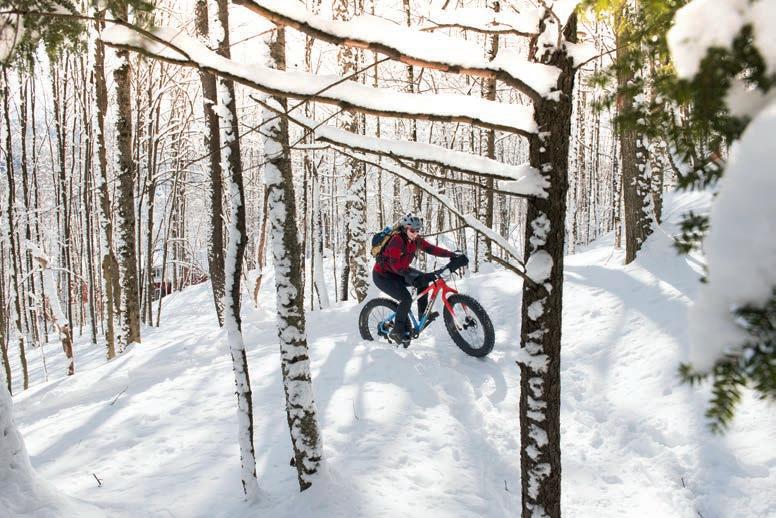
CAMDEN SNOW BOWL: Tobogganing. Anyone who didn’t make the Olympic bobsled team can still roar down an icy track—just head to Camden Snow Bowl and its Jack Williams Toboggan Chute. The nation’s oldest chute of its kind is a 400-foot-long wooden trough that propels toboggans at speeds of up to 40 mph to a runout on Hosmer Pond. As long as there’s enough ice, the chute is open to the public on weekends (and very occasionally weekdays) after the U.S. National Toboggan Championships conclude in early February. Camden; camdensnowbowl.com
MOOSEHEAD LAKE AREA: Snowmobiling. If you drove a snowmobile 14,000 miles in a straight line, you’d be more than halfway around the Earth. Of course, you’d run out of snow—not to mention land. But that’s how many miles of snowmobile trails there are in Maine—more than a third of which can be found in the Moosehead Lake region, where Greenville’s Northwoods Outfitters (maineoutfitter.com) rents new Ski-Doo snowmobiles and gear and offers free instruction, trail advice, and, with multiple-day rentals, even complimentary overnight stays at local lodgings. destinationmooseheadlake.com
PINELAND FARMS: Snowshoeing, Fat-Tire Biking, and More. There’s something going on in every season at Pineland Farms—
maple sugaring in spring, pick-your-own produce in summer, a corn maze in fall— and winter is no exception. Enjoy skating and sledding (both free), along with access to trails for Nordic skiing, snowshoeing, and fat-tire biking (trail fees apply; season passes available). Start with breakfast or break for lunch at the on-site café, and bring home artisan breads and sweet treats from the Pineland Farms bakery. Extend your stay with a cozy overnight in the guest house. New Gloucester; pinelandfarms.org
SEBAGO LAKE STATE PARK: Snowshoeing. Situated on and named for Maine’s secondlargest lake, this state park offers several snowshoe routes. Trails follow the Songo River, a three-mile-long stream that connects Sebago with Long Lake via a 19th-century lock. The three-mile Songo Wilderness Trail is a favorite, as is the shorter Lookout Trail, which starts at the park road and rises to the highest point in the park, at 500 feet. Lake views from the summit are at their best in winter, with no obstruction from leaves. Cumberland County; maine.gov/sebagolake
THE THOMPSON’S POINT RINK: Ice Skating Tucked onto a peninsula poking into the Fore River in Portland’s Libbytown neighborhood, the city’s premier open-air ice skating venue boasts a new chilling system and a Zamboni-groomed surface, while offering such amenities as skate rentals and sharpening. After skating, kids can warm up at the Children’s Museum & Theatre of Maine, a nearby Thompson’s Point attraction. Portland; thompsonspointrink.com
BERKSHIRE EAST MOUNTAIN RESORT: Snow Tubing. Weekends are tubing time at Berkshire East, where tube enthusiasts book online for 1½-hour stints on the resort’s three groomed lanes, each a full 500 exhilarating feet. No need to lug those big blue doughnuts back uphill, as the lanes are served by a ground-level “magic carpet” lift, just like the ones that whisk skiers uphill on beginner slopes. Even better: The snow tubing park is conveniently located near the West Lodge and has its own dedicated parking. Charlemont; berkshireeast.com
FOREST PARK: Sledding. At one of the jewels of Western Massachusetts’s urban parklands, Springfield’s 735-acre Forest Park, sledding fans can find delightful downhills at the park’s amphitheater and on Barney Hill. Just to make things a little easier—and to keep sled-pulling climbers out of the way of the downhill traffic—one of the hills has a stairway. Sledders should remember, though, to wait till the park’s popular Bright Nights holiday display comes down in early January. Springfield; springfield-ma.gov
FROG POND: Skating. “Frogpondians” is what Edgar Allan Poe called Boston’s literati, back when there really were frogs in this Boston Common pond. The frogs are long gone, but it’s as popular a spot for humans as ever. The Skating Club of Boston maintains the icy oval, located steps from Beacon Street in America’s oldest public park, and offers lessons as well as open
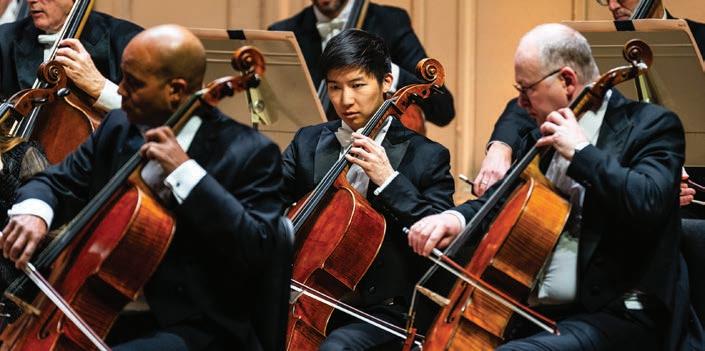

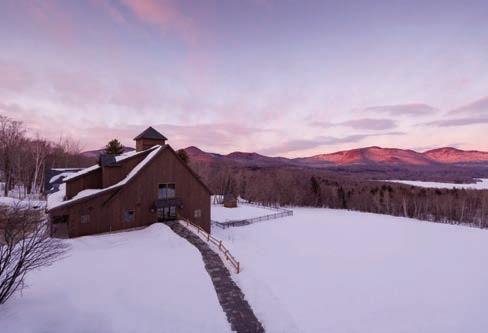
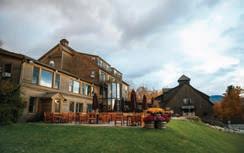
skating. Overlooking the pond is the Frog Pond Café, a great spot to grab a burger and a hot cocoa. Boston; bostonfrogpond.com
MOUNT HOOD MEMORIAL PARK AND GOLF COURSE: Sledding. “Mount” might be a somewhat misleading name, although the upper reaches of this hilly park do offer views ranging from Boston to southern New Hampshire. There was once a ski area here and even a ski jump, but Mount Hood’s 300 acres now host a golf course, cross-country ski trails, and classic sledding slopes that attract enthusiasts from throughout eastern Massachusetts, who arrive with everything from plastic disks to vintage Flexible Flyers. Melrose; mthoodgolfclub.com
WORCESTER COMMON OVAL: Ice Skating. Massachusetts’s second-largest city boasts the state’s largest outdoor rink—at 12,000 square feet, it’s a third again as large as the one at New York City’s Rockefeller Center. Situated practically in the shadow of City Hall, the Oval offers skate rentals as well as adaptive aids for skaters with special needs. Food trucks set up shop nearby on weekends. Worcester; worcesterma.gov
AMC ZEALAND FALLS HUT: Winter Hiking. It’s not the shortest hike, but the trail to this White Mountains bunkhouse accommodates Nordic skis as well as snowshoes, and there’s a reward at the end: a stay at one of the few Appalachian Mountain Club huts that stay open all winter. There’s a caretaker who may fire up a woodstove in the evening; hikers bring their own food and bedding. To get there, hike three miles up Zealand Road (closed to traffic in winter) from Route 302 to the trailhead, then 2.8 miles to the hut. Reservations required. outdoors.org
CRANMORE MOUNTAIN RESORT: Snow Tubing, Coaster Rides, and More. One of New England’s oldest ski areas offers the opportunity to enjoy several variations on winter thrill seeking in two different parks. Cranmore’s Tubing Park is the place for superb tubing on dedicated slopes, while the Mountain Adventure Park puts downhill cruisers on track for rail-hugging coaster rides at up to 25 mph. Also at the adventure park are a 700-foot zipline and a “Giant Swing” pendulum, which carries four seated

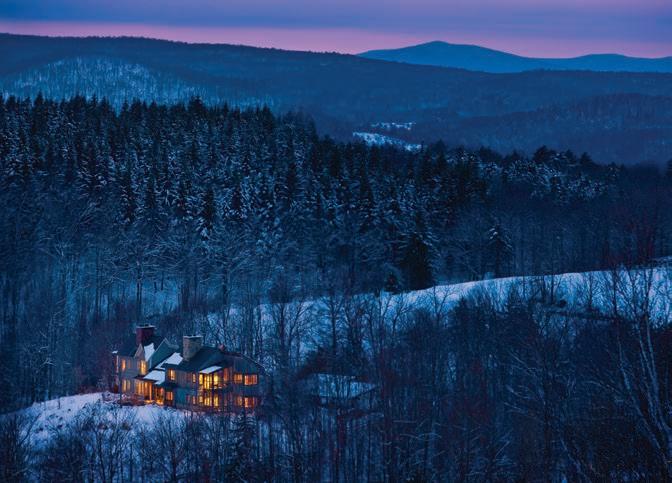


riders and runs, well, like clockwork. North Conway; cranmore.com
FRANCONIA NOTCH: Snowmobiling. Up for renting a snowmobile, but hesitant to head out on your own? SledVentures in Lincoln (nhsledventures.com) rents machines for one-to-three-hour guided tours, catering to all levels of experience, along routes in the scenic Franconia Notch region of the White Mountains. Sleds are new 600cc Ski-Doos, and rentals include helmets and outerwear in adults’ and kids’ sizes (passengers must be at least age 5). Sled-and-stay packages are available, with six participating local lodgings. Lincoln; franconianotch.org
GREAT GLEN TRAILS OUTDOOR CENTER : Fat-Tire Biking. Not far from the famed Mount Washington Auto Road lies this outdoor center’s extensive web of groomed carriage roads and forest trails—perfect for putting a fat-tire bike through its paces. The center rents bikes in adults’ and kids’ sizes (helmets included); bike trailers are also available for rent. Bikers will need an additional trail pass and are advised to check ahead for snow conditions and bike availability. Gorham; greatglentrails.com
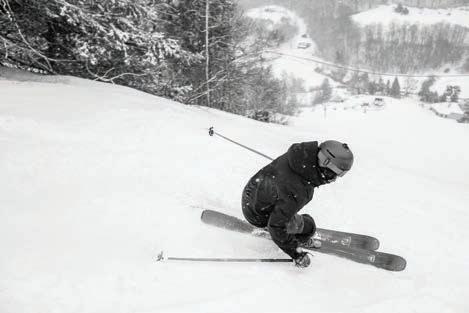
LABRIE FAMILY SKATE AT PUDDLE DOCK
POND: Ice Skating. We’re not sure if early New Englanders enjoyed skating (they may have left that to the Hans Brinker crowd farther south, in New Amsterdam), but today you can enjoy gliding amid a setting they would have found familiar: the historic buildings of Portsmouth’s Strawbery Banke Museum. The rink on Puddle Dock Pond offers public skating, skate rentals, and sharpening services; the ice, meanwhile, is kept in tip-top shape by a chilling system and Zamboni grooming. Portsmouth; strawberybanke.org
OMNI MOUNT WASHINGTON RESORT & SPA: Snowshoeing. How to dial down the “roughing it” aspect of snowshoeing yet keep the idea of vigorous exercise in fresh mountain air? Make the sport part of a stay at the Omni Mount Washington. The grand hotel boasts its own groomed Nordic trails and is central to the 60-mile-plus Valley Trail System. Snowshoe rentals and trail passes are available at the resort, as are sessions at its full-service spa—a great way to make muscles forget every mile trekked. Bretton Woods; omnihotels.com
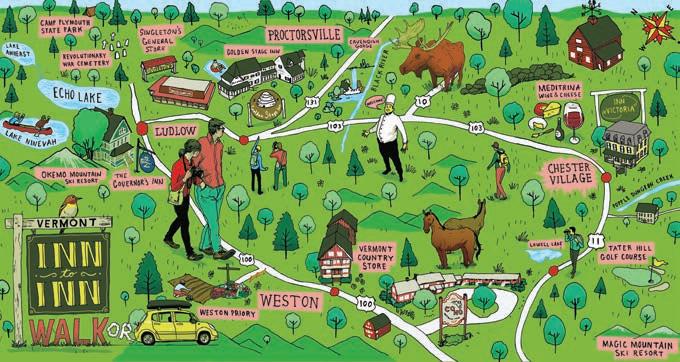
■ We transport your bags to the next inn.
■ Walking routes are on backcountry gravel roads.
■ If the length of the route is too much for you, we are happy to give you a ride part way.
■ Drive the route if you wish . . . we’ll give you touring info.

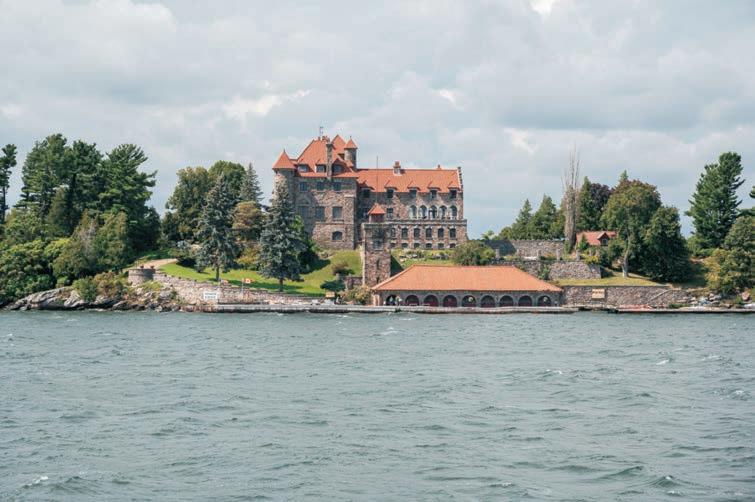


NEUTACONKANUT HILL: Winter Hiking. There aren’t many places where you can view one quarter of a state from a single location. It’s possible in Rhode Island, from the highest point in Providence. Located in the northern section of 88-acre King Park, Neutaconkanut Hill features several miles of trails originally carved out by the Works Progress Administration. The best views are from the hilltop meadow accessible via the Pinnacle Trail, which also leads to a popular sledding hill. Providence; nhill.org
THE PROVIDENCE RINK: Ice Skating and Ice Bumper Cars. There’s nothing like being out on the ice surrounded by city lights. Like its sibling capitals of Boston and Hartford, Providence boasts a skating rink right downtown, at Kennedy Plaza. The Providence Rink is a full-service facility, with skate and helmet rentals and sharpening, lockers, lessons, and skating until 10 p.m. daily. The rink is also home to ice bumper cars: Powered by electric motors and controlled with a joystick, these doughnut-shaped vehicles can turn forward, backward, in circles—any which way a rider wants, in order to whomp into other cars. Kids 6 or older who are at least 42 inches tall can ride alone; 3-to-5-year-olds can sit in an adult’s lap. Providence; theprovidencerink.com
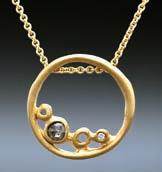
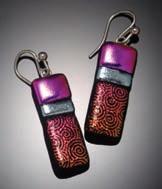
WOLF HILL FOREST PRESERVE: Snowshoeing. Protected by the Smithfield Land Trust, this scenic Blackstone Valley preserve occupies the rocky ridge of Wolf Hill. The 300-acre property is laced with former farm roads that transform into easy snowshoe pathways in winter. Trails at the preserve’s southern reach are more rigorous but reward snowshoers with views of the Providence skyline. Farther north, a memorial marks the crash site of an ill-fated 1943 military aircraft. Smithfield; exploreri.org
YAWGOO VALLEY: Snow Tubing. The Ocean State isn’t a mountain state, but it does have a ski area, the sole survivor among the five that Rhode Island once hosted. Yawgoo isn’t just about skiing, however: The area’s snow tubing park has eight parallel lanes and is served by a pair of rope tows and a snowmaking system. Need a push to get started? Park staff are on hand to give lightweights that extra oomph. Exeter; yawgoo.com
JAY PEAK ICE HAUS : Ice Skating. Few of us will ever get out on the ice in an NHL game jersey, but up near the Canadian border, there’s a professional-size rink where anyone can channel their inner Gretzky … or at
least build up some speed on a 200-foot straightaway. Long known for skiing, Jay joined the ranks of New England’s select indoor skating venues with the addition of its Ice Haus. Rent skates and helmets, sharpen your own blades to custom specs, and enjoy time-outs at the heated snack bar and café. Jay; jaypeakresort.com
LAKE MOREY: Ice Skating. One of the longest natural ice skating routes in North America is a 4.3-mile circuit around the perimeter of Lake Morey. Managed by the town of Fairlee, the loop is usually ready and cleared of snow beginning around mid-January. Whether you skate the whole route or just a portion, you’ll be rewarded with spectacular views of the surrounding hills—not to mention freedom from typical rink traffic. Skates are complimentary for guests at Lake Morey Resort (lakemoreyresort.com); visitors can rent them at the resort’s clubhouse. The lake loop itself is free. Fairlee; fairleevt.gov
OKEMO VALLEY AREA: Snowshoeing. Among several snowshoe centers easily accessible to Okemo skiers taking time off from the slopes, the closest to the resort is across Route 103 at the Fox Run Nordic Center ( foxrungolfclubvt.com). Seven miles of gentle, well-groomed trails ramble over hills and meadows, with lessons and rentals available; plus, dogs are welcome. Just a few miles away, the more rigorous six-mile out-and-back Healdville Trail courses through Okemo State Forest and offers gorgeous mountain vistas. Ludlow; yourplaceinvermont.com
STOWE AREA: Fat-Tire Biking. Long legendary for resorts built around Alpine and cross-country skiing, Stowe village and environs are gaining a reputation among fat-tire biking enthusiasts. There’s a broad range of “fat bike” opportunities, ranging from the 11 out-and-back miles of the Stowe Recreation Path to nearby sections of the Lamoille Valley Rail Trail, and to more challenging trails that thread through Sterling and Cady Hill forests. Stowe sporting shops including Pinnacle Ski & Sports ( pinnacleskisports.com) can set you up with rented wheels. Stowe; gostowe.com
STRATTON MOUNTAIN RESORT: Snow Tubing. Tackle the mountain at Stratton— part of it, anyway—by zipping down one of the four-to-six lanes at the resort’s CocaCola Tubing Park. The lanes are groomed to the same plush-corduroy standards as the ski trails, and unlike a lot of tubing venues, this one is illuminated after dark. Tickets are good for 50-minute sessions, while a few added dollars buys a slice of pizza and a bottle of … need we say? Stratton; stratton.com
(Continued from p. 83)
knowing nature that wasn’t just about climbing the highest peaks or simply knowing the name of a bird or a plant.
So he returned to his native New England and sought out teachers like Dan Gardoqui, a naturalist, Registered Maine Guide, and director of education and outreach at the Center for Wildlife in York, Maine. Shapiro logged many years of experience with Gardoqui, CyberTracker, and other tracking professionals, out of which grew his school, Fox Paw. Specializing in teaching adults through long-term courses, Fox Paw embodies his belief that “humans are hard-wired to the rhythms of the living, breathing natural world,” he says. “Whether you call it neurobiology or spiritual connection, paying attention to what’s happening on the landscape around us is what makes us who we are.”
Tracking with Shapiro requires tuning in with full sensory awareness. We get down on our knees to sniff, cup our ears to amplify the surrounding sounds, and run our hands along browsed bark. He asks his students to consider what he calls “the raw, sensory input of the moment.” That’s how I once found myself with my nose merely inches away from a beaver scent mound—a place where a beaver piles up leaves, sticks, and mud from the pond and marks it with urine and an unctuous secretion called castoreum.
As I breathed in the earthy, sweet aroma that day in the field with Shapiro, something shifted in me. A field guide tracker for many years, I had been quick to interpret and draw conclusions, but with Shapiro’s guidance, I started becoming someone different. I am a slow tracker now, a full senses-on observer—a sniffy, touchy explorer— and I feel so alive in it all.
Out on my own, I’m practicing, putting in my dirt time. On this bluebird winter day, I feel spring on the horizon. I dial into the tracks before me. The snow cover is really an uncovering—a reveal, showing
a secret world no longer hidden. I kneel beside the trail, letting my eyes wander. I count four toes with sharp nails like small exclamation points at each tip. There is a symmetry to this almost-two-inch oval track, and I see a distinct raised “X” where the snow pushed up between the toes and heel pad. I am compiling a list of clues and sorting out suspects.
Soon I catch a whiff of a strong, sharp, familiar odor, like a skunk’s, but more musky than usual. I stand up and look down the line of tracks, noticing how the prints veered off to a hummock of tall, dried grasses sticking up from the snow. I follow, letting both the trail and pungent scent lead on.
As I approach the hummock, the scent intensifies, and I see a yellow splash marking the highest point of the rise. Tracking is always more than just paw prints and trails: It is noticing the other subtle signs and evidence of animals. From nibbling on seeds and vegetation to burrowing and nesting, animals leave their mark on the landscape. These are more clues to observe and interpret, and I am a connoisseur of these other signs.
At last, I’m ready. I put all the pieces together and let my slow observations take me to the answer: red fox, a brilliant streak of orange against the snowwhite field, like an ember. It walked through this field before dawn, after the snow stopped, leaving a scent-filled message at the hummock. February is the start of the red fox mating season, and I wonder if the skunky urine is a love letter, an invitation for an evening rendezvous.
I can’t help myself: I take my mittens off in the 20-degree cold and place my fingers into the track. Other trackers wouldn’t like this. My fingers may change the print, make it something unreadable, something that reflects my own track. But, like a butterfly, I let my fingertips flutter along the toe tracks, into the nails, and ever so gently, touch the heel pad where the red fox’s fur left a blurry impression. I’m tactile, but more than that, I want a bit of this wild red fox’s essence to go into my fingertips and travel up into my heart.



(Continued from p. 87)
school, upperclassmen started feeding him jazz records, which opened him up even more. He became an omnivorous listener, and it all found its way into his music.
We make our way through a shaded section of Monadnock, through a tunnel of trees. “The best thing about this trail,” Cosgrove says, “is that you pop in and out of the woods a lot. You’re in this tunnel, but then you get a big, bald outcropping. And I like the effect of not knowing where you are, and then boom, you have an opportunity to orient yourself. And then you’re back in the woods again.”
We come to such an outcropping about a third of the way up, and stop and gaze out over the rumpled mossygreen bedsheet that is this part of New Hampshire. It’s a perfect day, clear and cool for August, and the view is interrupted only by a single slate-gray column of rain hanging in the middle distance.
“You couldn’t have asked for a better day,” I say.
“As long as the storm stays over there,” he says.
We gaze out for a few moments. What’s this view do for him? I ask.
“Oh, my God,” he says. “It’s so orienting. It’s a still point in the turning world. It’s always here. It’s looked pretty much the same for my entire life.”
The mountain played an influential part in his artistic development. Cosgrove remembers the summer before he went to college. He was about to move to Boston, and, as a kid with little experience with cities, he was nervous about it. “So I came up here,” he says. He climbed to the summit, looked to the southeast, and there he saw Boston, about 75 miles away. “I was like, ‘Oh, it’s right there!’” As it was when he was a little kid plying these trails, the unexpected pathways between different places snapped together in his mental map and told him where he was in the world.
In the years to come, he would live by those moments. “I get really squir-







Ben Cosgrove circa 1994 at the hand-medown piano in his family’s home in Methuen, Massachusetts, around the time he wrote his first song, “Waves.”
relly when I don’t have a sense of where I am relative to other things,” he says.
When the time came to apply for college, Cosgrove found himself at a crossroads. Should he go to a music school, or to a liberal arts school with a music program? He opted for the latter, and enrolled at Harvard University in 2006. He majored in music, but he went deep into the material that would provide the bedrock for his future work: geography, history of the North American landscape, environmental studies, literature of the environment. It was at Harvard that his unique artistic vision began to cohere. “My college thesis was a piece of
gathering and checking facts about restaurants, hotels, attractions. “It was unbelievably lonely,” he says. “I would get someplace, frantically sprint around the city doing all this work, and then it would be like six o’clock and I would be done. And I just remember feeling so empty, and out of place, and alone.”
What changed since then? He started paying closer attention. He trained himself to see, to feel, and to mine everywhere he went for flashes of insight and inspiration. “It’s hard to feel lonely in places if you’re really paying attention to them,” he says. “And what more do you need in life than to not feel lonely?” Now, he says, “I never feel that way. Driving around to weird new places is my favorite thing to do.”
After college, Cosgrove remained in Cambridge for a year, grabbing whatever “desperate musical odd job” he could get, and finished his first album, Yankee Division —a reference to the Yankee Division Highway, also known as Route 128. Inspired by the contrasts between rural New England and urban New England, the album came out to limited fanfare and scant sales, but it happened to coincide with a watershed moment for Cosgrove: He won a journalism fellowship from Vermont’s Middlebury College to pursue a project about acoustic ecology and noise pollution in national parks.
Over the next year he hit the road, visiting research sites, talking to scientists, noticing, composing, playing. “I
Cosgrove trained himself to see, to feel, and to mine everywhere he went for flashes of insight and inspiration. “It’s hard to feel lonely in places if you’re really paying attention to them,” he says.
electroacoustic music that was based on maps of Massachusetts,” he says. “It was terrible, but that’s pretty much when I started doing what I do now.”
His life on the road began at Harvard. In 2008, he got a summer job updating a Let’s Go travel guide, driving across the country from Maine to British Columbia,
began doing what I do now,” he says, “which is drive around, get confused by places, and write music about them.” In between these stops, he played every venue that would let him: bookstores, gas stations, cafés, bars—performing his music and telling stories about the landscapes that inspired it. He became
a dynamic performer. “It wasn’t what you’d expect to hear at a bar gig,” he says, “but it was a fabulous training ground for learning how to get people to pay attention to me for an hour.”
These days, Cosgrove spends most of his time on the road, with his keyboard in the back seat, going from place to place, gig to gig, experience to experience. This, of course, is more like the life of an old-time folk singer than a typical classical composer. “I’m like a minstrel going from town to town with my little suitcase of songs,” he says. “I love it.”
We continue along the trail, scrambling up staircases of shattered rock, over tangles of gnarly black roots vainly seeking purchase in the thin soil. As we reach another outcropping, the column of rain from earlier has grown larger and is edging closer. And a new storm system has formed to the west of it. “We may regret this later,” Cosgrove says, “but that does look so cool.” We commit to reaching the summit, even though every hiker we encounter is beating a hasty retreat back to the base.
A little higher up, Cosgrove looks out again. He points to a long straight light-green line cutting through the lush green landscape below.
“It’s amazing how striking those power line corridors are,” he says.
“Like Parisian boulevards,” I quip.
“And just as romantic,” he quips back.
Ben Cosgrove is, suffice to say, exceedingly well-traveled. He spends most of his time on the road, crashing with friends and supporters, or traveling on the dime of organizations that fund his work. He’s written music about Kansas, New Mexico, Oklahoma, Texas, Ohio, California, Mississippi, and many other places. He has performed in every state but Delaware. He has played for cowboys at a ranch in Montana. He’s written music about Hawaiian volcanoes as part of a fellowship with NASA. He’s gone on a research vessel from Vietnam to Australia and written about the sea. When he drives, which is most of the time, he generally foreswears GPS because it eliminates the possibility of getting lost. Getting lost, he says, “opens you up to discovery. If you don’t disori-
The recordings of Ben Cosgrove.
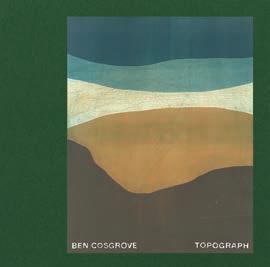

Yankee Division (2011): Cosgrove’s first album, which he started when he was a student at Harvard. It explores the landscape of north-central New England and takes its name from Route 128, aka the Yankee Division Highway, which divides urban and rural Massachusetts.
Field Studies (2014): The product of his early life on the road, Cosgrove’s lush, sprawling second album ventures far beyond the comfortable familiarity of New England, taking its inspiration from places as diverse as Lafayette, Louisiana; Palo Alto, California; Abilene, Kansas; Bath, Maine; and Montreal.

Salt (2017): Cosgrove’s “breakup album” was inspired by salt marshes, fault lines, tidal rivers, and estuaries—restless landscapes where the only constant is change, and where you’re forced to make peace with the fact that the ground beneath your feet might not be there for long.
The Trouble with Wilderness (2021): Written and recorded during the pandemic, which Cosgrove spent in Northampton, Massachusetts, Trouble studies the intersections of city and wilderness, and makes the case for how “the built environment can be as insane, impressive, humbling, affecting, and worthy of attention as any … wilderness.”
Bearings (2023): An album about movement, Bearings was written on the spot in the studio to capture the feeling of orienting yourself in an unfamiliar landscape. “There was something about having to find a song in the moment by moving around the piano,” he writes, “that felt … true to the way I engage with the world.”
Topograph (2026): Cosgrove’s latest recording is a collection of songs about places where water and air move land. Much of it was written while Cosgrove was on a residency north of the mouth of the Columbia River, “an insane landscape” where islands move and swaths of land are made and unmade. “A really, really wild place,” he says.

ent yourself a little bit, you’ll never find anything new,” he says. “Some of my best ideas started out as mistakes.”
Some of his best stories, likewise, started out as disasters. Once his car broke down in the middle of nowhere in Idaho, en route to a gig in Wyoming. He managed to get a tow, and was taken 60 miles to a town with a mechanic. But it was a Sunday, so the garage was closed. “It was a thousand degrees in July,” he says, “and I was just standing there in a cornfield with no plan.” So he called a friend in Wyoming who was going to host him after the show, and told him where he was. “He was like, ‘Oh, wild. My cousin lives there.’ So he called his

cousin, and she and her husband came by and picked me up. Her husband’s family ran a cheese plant in town, and I got to go help out at the cheese plant for a week while we waited for my car to get fixed.
“I feel like that is illustrative of how lucky I tend to have been,” he says. “I think an earlier version of myself would’ve been much more panicky and horrified by having to reschedule these shows. But a steady diet of small disasters kind of prepares you for anything.”
For all his wandering, however, he remains “one thousand percent” a New England artist. “It’s maybe the most important part of my life.” He loves the
geographical diversity—the way New England isn’t one place, but a place composed of many places. “It’s really 700 different landscapes, if you know how to tell them apart from each other,” he says. “You can travel for an hour in any direction from wherever you are and be someplace completely different.”
New England has been a consistent muse for Cosgrove. He’s recorded songs about the tidal rhythms of salt marshes on the Maine coast. He spent a month living in Acadia National Park, as part of one residency, and a year traveling around the White Mountain National Forest for another, while playing schools, prisons, and the Omni Mount Washington Resort. He’s composed music inspired by stretches of the New England Trail that run through Connecticut and Western Massachusetts, and by Northampton, Massachusetts, where he lived during the pandemic. He has gigged at L.L. Bean. As of this writing, he has performed in 60 of New England’s 67 counties. (“Feel free to put that in your piece,” he tells me. “Maybe it’ll help me to finally bag those last seven.”)
As much as the region furnishes him with inspiration, it functions
as broadly as I do,” he says. “I can kind of glide around more freely, and with a more open heart, knowing that there’s a Mount Monadnock here, whether or not I crash and burn in New Mexico.”
Further up the mountain, we hit another outcropping. Cosgrove looks at the storm again. “I suspect we’re not getting out of this without getting wet,” he says. Another hiker passes, heading down, and mentions the storm. “We’re prepared to be wet,” Cosgrove tells him.
We keep going, and finally come within 100 yards of the summit. The greenery begins to yield to a field of bald rock. “This is a pretty cool moment, actually,” Cosgrove says. “We’re near the top, so it’s like the last gasp of forest.”
Four more retreating hikers pass.
“You’ll have the whole place to yourself because everyone’s fleeing the rain,” one says.
“We’re the dumb ones,” Cosgrove says.
A few more yards, and we make it to the summit. Cosgrove turns, and points to the southeast. “And there,” he says, “in perfect view, is Boston.”
“I do feel really rooted here, and I wonder if I didn’t love New England so much, and feel so at home here, whether I would have the confidence to explore as broadly as I do.”
perhaps more importantly as a lens through which to view other places. “This is kind of how I feel the world should look,” he says, indicating Mount Monadnock. “So the places that really strike me, or make me feel confused, or vexed, or uneasy, are that way because they aren’t forested and hilly. So much of my music is some version of How this place is not like New England.”
Like this mountain, New England is a fixed point in an ever-spinning, changing world. “I do feel really rooted here, and I wonder if I didn’t love New England so much, and feel so at home here, if I would have the confidence to explore
On the side of us that is still clear, you can see the city skyline, some 75 miles away. It’s the view Cosgrove saw as a teenager, the one that oriented him and gave him the confidence and perspective to venture into a life of the unknown. He stares out at Boston, and points to the Pru building. “I’ll be playing there tomorrow night,” he says.
“Just don’t turn around,” I say.
He turns around. The storm is right on us. “For a second,” he says, “I hoped naively it would veer off. But we’re in the Zamboni’s path now.”
The wind kicks up, the temperature drops, a few pelts of rain fall. I pause to
take some quick notes before my notebook is reduced to pulp. Cosgrove snaps a picture with his phone. I look up, and he’s smiling.
“I got a photo of your last moments being dry,” he says.
On our way back down, drenched, sliding over slick lichen-covered rocks and pestered by flies, Cosgrove talks about his mission. He’s played for every kind of person, he says, and he’s found that even in a time of division they all share a common love, regardless of political orientation. “Everybody loves the land,” he says. “I’ve done a lot of work in the last couple of years where I’m [politically] outnumbered a hundred to one everywhere I go, but they love hearing me talk about fields and rivers.”
He has a friend whose husband worked on a ranch in Montana. “They brought me in to do a private show for everybody who worked at the ranch,” he says. “It was all these wealthy cowboys, and they were the most rapt and engaged audience. They all had questions, because ranchers think about the nuances of landscape more than almost anybody else. I went back for five years running. I returned to the exact same place.”
That sort of engagement lies at the core of his art. “I think a lot of good can come from encouraging people to think more critically about how they are affected by the land around them,” he says. “Especially because if you see the same places most of the time, they gradually become invisible to you. I frequently run into people who are like, ‘I never thought to look at this rock like that, but after you played your song about that other thing, I have a new appreciation for this thing I see everywhere.’ Helping people be more mindful of familiar places feels like a good use of me.”
We eventually reach the base of Mount Monadnock, wetter, and dirtier, and somewhat fly-bitten, but happy. We shake hands to say goodbye. I ask what he’s doing now, and he says, excitedly, “I’m going to work.” And he gets back in his car, turns the key, and disappears down the road.

Visit our website www.capecodcupola.com
to view our quality, one-of-a-kind Azek (PVC) cupolas and uniquely handcrafted copper weathervanes and finials.
78 State Rd, Dept. Y24 • N. Dartmouth, MA 02747
Phone: 508-994-2119


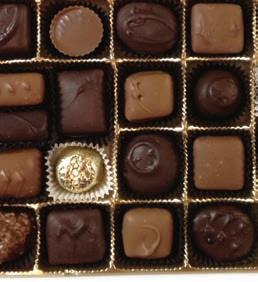



“Your house for all occasions”
“Your house for all occasions”

Candies! For over 50 years we have used only the finest ingredients in our candies—cream, butter, honey, and special blends of chocolates. Call for a FREE brochure. Long famous for quality candies mailed all over the world. Treat yourself or someone special today.
Candies! For over 50 years we have used only the finest ingredients in our candies—cream, butter, honey, and special blends of chocolates. Call for a FREE brochure. Long famous for quality candies mailed all over the world. Treat yourself or someone special today.
Candies! For over 50 years we have used only the finest ingredients in our candies—cream, butter, honey, and special blends of chocolates. Call for a FREE brochure. Long famous for quality candies mailed all over the world. Treat yourself or someone special today.
For a Free Brochure Call: 978-256-4061 Come visit us today!
“Your house for all occasions” 292 Chelmsford Street Chelmsford, MA 01824 For Free Brochure Call:
Candies! For over 50 years we have used only the finest ingredients in our candies—cream, butter, honey, and blends of chocolates. Call for a FREE brochure. famous for quality candies mailed all over the world. Treat yourself or someone special today. Chelmsford Street • Chelmsford, MA 01824 For Free Brochure Call: 978-256-4061
292 Chelmsford Street Chelmsford, MA 01824
292 Chelmsford Street Chelmsford, MA 01824



EnergAire continuously puri es up to 4,000 cubic feet (a large room) of air and makes it breathable and invigorating. Restores natural ion balance to unhealthy environments caused by industrial pollution, automobile exhaust, central airconditioning and heating, smoke, dust, pollen, animal fur . . . removes microscopic pollution particles not removed by any other method of air puri cation. EnergAire was rated Number One for speed of removal of cigarette smoke by the leading U.S. consumer protection magazine. It has no noisy fan, no costly lter, and requires no maintenance. Uses less than 2 watts. 9" high. 3" diameter. Weighs less than 1 pound. $79.95
“Your house for all occasions” Come visit us today!
RODAR is the super-powerful professional ultrasonic pest repeller with up to 60 or more times the power of other devices — and power is what makes RODAR so e ective. RODAR ultrasound equals a jet engine — noise unbearable to pests but at frequencies humans and pets cannot hear. RODAR units are completely safe. RODAR drives pests out and keeps them from getting in. Handsome simulated walnut cabinet 5-5/8" high. Weight 1-1/2 pounds. Uses less than 5 watts. $109.95
Candies! For over 50 years we have used only the finest ingredients in our candies—cream, butter, honey, and special blends of chocolates. Call for a FREE brochure. Long famous for quality candies mailed all over the world. Treat yourself or someone special today.
Visit Our Website: mrsnelsonscandyhouse.com
“Your house for all occasions” < >
For Free Brochure Call: 978-256-4061
For Free Brochure Call: 978-256-4061
292 Chelmsford Street Chelmsford, MA 01824

292 Chelmsford Street • Chelmsford, MA 01824 For Free Brochure Call: 978-256-4061
< >
< >




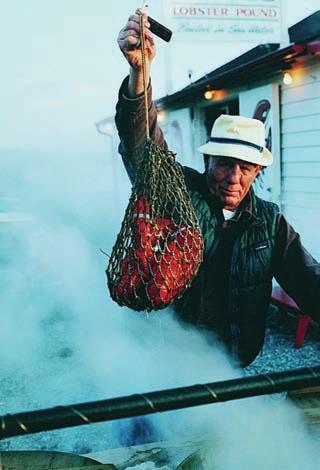













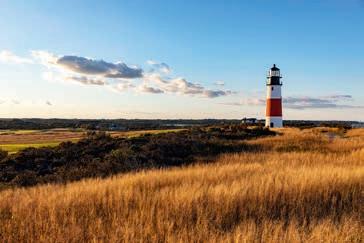










proof carefully. Approval must be returned by responsible for errors once proof has been signed— or if not returned by the above date. that color proof/pdf is to show color break only. Colors do not accurately actual printed advertisement as it will appear in the publication.




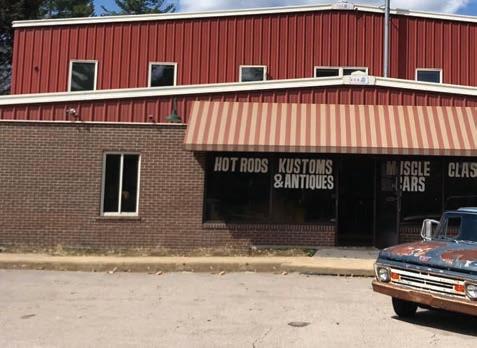


Moving on doesn’t always mean saying goodbye.
My father spent much of his working life in an office beside a combination pharmacy and soda fountain. I worked in the soda fountain through high school, and since our workdays both ended at 6 o’clock, we’d meet up to walk home together. Each evening, my father would put his key into his office door and turn it to lock. On the day he turned the key for the final time, it broke off in his hand. He did not know it then, but he had only two years left to live, and I always wondered whether that moment at the door was coincidence or omen.
I thought of my dad when, on last January 17, a Friday, I said goodbye to my colleagues and the rambling red building that had seen me through more than 45 years at Yankee I peeked into my office, now empty of decades of stuff that I once thought too important to discard. Weeks later, I dropped by to say hello and found the office trim, orderly, efficient. I felt as if I had sold the house I’d known for decades, and another family had moved in; the house the better for its new lives to shelter.
It is a strange concept, “retirement.” As if we can simply walk away from what we have thought about for years, and leave it behind, simply one more big carton of stuff to take to the storage unit. But I had a transition strategy: Find a workspace, a routine, a semblance of “going to work.” I discovered
mine only a five-minute walk down my street. When the town library opens at 10, I set up my laptop in the sunlit “quiet” area.
Throughout last winter I read my Yankee stories from 1977 to today, choosing more than 40 of them to compile into a book. When I walk through my small New Hampshire town, people call out, “How’s retirement?” I smile and say I’m working harder than when I was editor. Now my library time is spent writing the talks that I give as I travel New England with my book. That’s where I find the feeling people hold for Yankee.
After one recent talk, a man stood up and said that he, too, had just retired and his wife urged him to cancel their Yankee subscription and just read it at the library. “My wife is from Georgia,” he said, as the audience laughed. “She doesn’t understand. I need Yankee to come into my home. I need to hold it in my hands.”

Another day I was in a village where I was told to expect a “sparse” turnout. The talk was to begin at 3. Rather than a light crowd, a stream of people began filling the rows. At the scheduled start time, the doors stayed open—we were waiting for someone, I was told. Five minutes passed. Ten. Then I heard a murmuring. Looking toward the door, I saw an elderly woman walking in, with people holding her arms for support. The publisher of the local weekly paper leaned forward and said to me, “I can’t believe it. She hasn’t been out of her house for months. She is wheelchair-bound.” But she was determined to come and hear stories from a Yankee editor.
Writing this column is like moving back home, for just a while, stopping by to chat every now and then. Meeting readers again, wherever they live. Keeping the key in the door, but not turning it so hard that it will break.
See New England through the eyes of former editor Mel Allen as he shares highlights from his nearly 50 years at Yankee and discusses his new collection of writing, Here in New England: Unforgettable Stories of People, Places, and Memories That Connect Us All

WHEN : 7 p.m. Thursday, Jan. 22 | TO REGISTER: Scan the QR code or go to newengland.com/melsbook for free admission and an exclusive discount offer for your own copy of Here in New England
Check local listings using the station finder tool at weekendswithyankee.com Episodes Now Airing on Create TV and Public Television Stations Nationwide

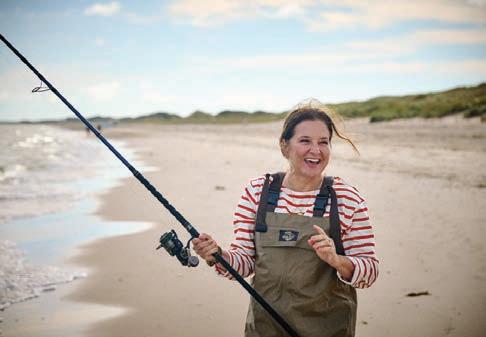
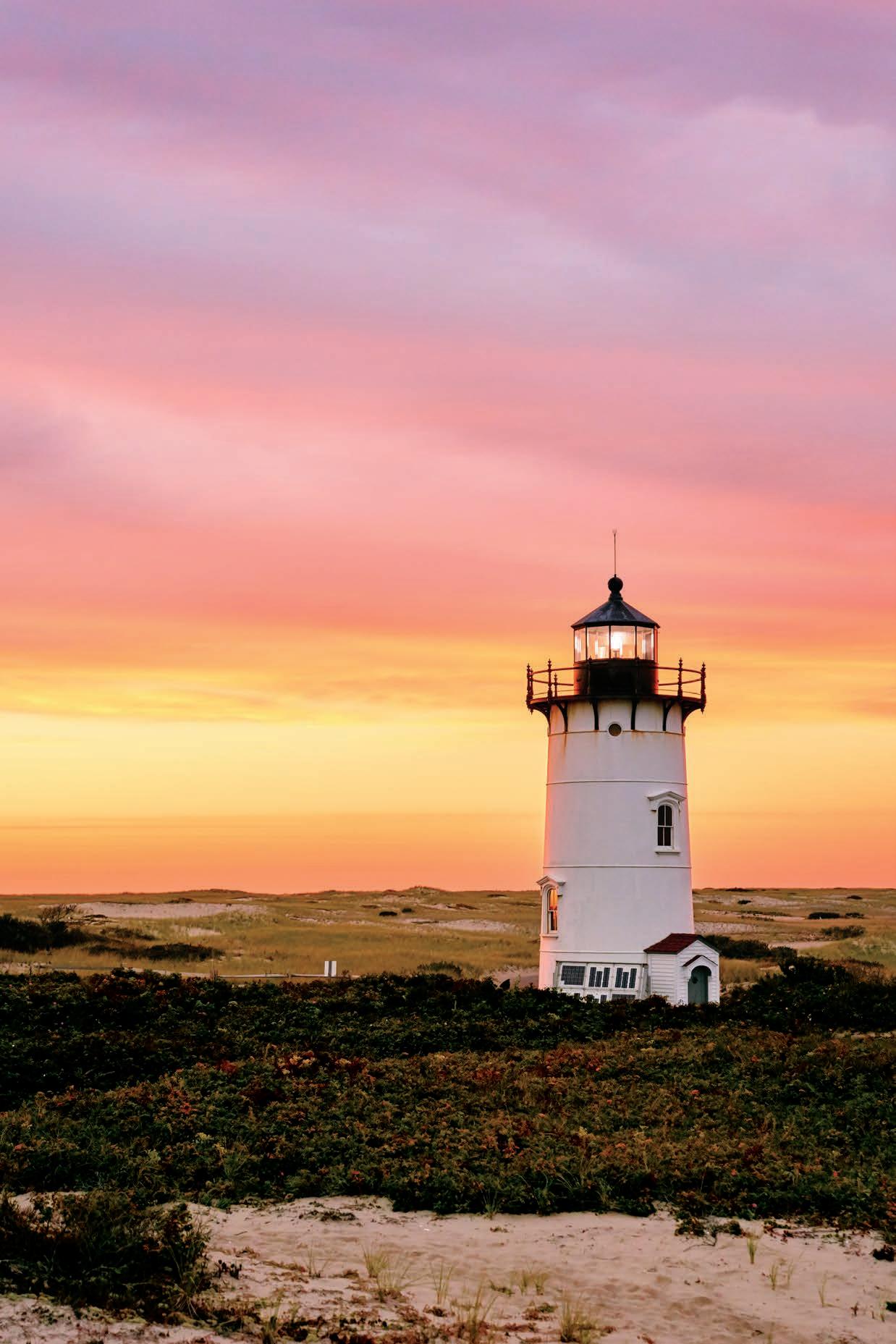

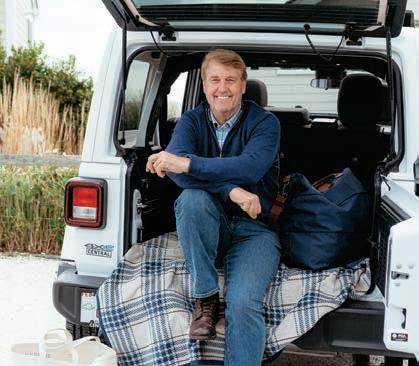

Worcester Common

Come to where chilly feels charming.