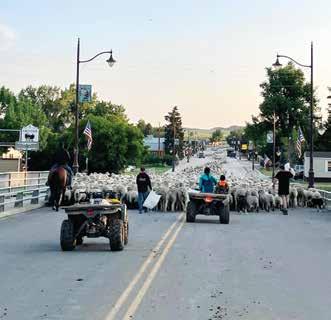
The Wyoming Livestock Roundup is excited to highlight farms, ranches and agribusinesses of Johnson County in our 2026 Winter Cattlemen’s Edition.
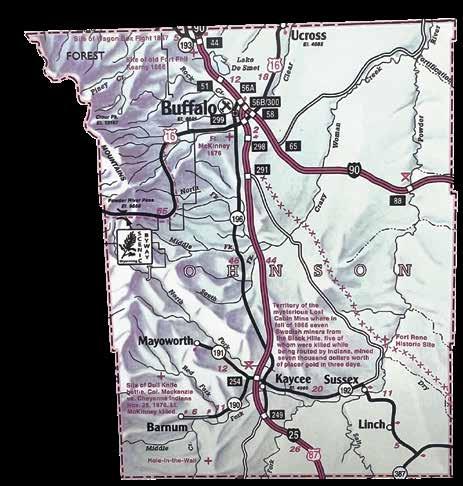
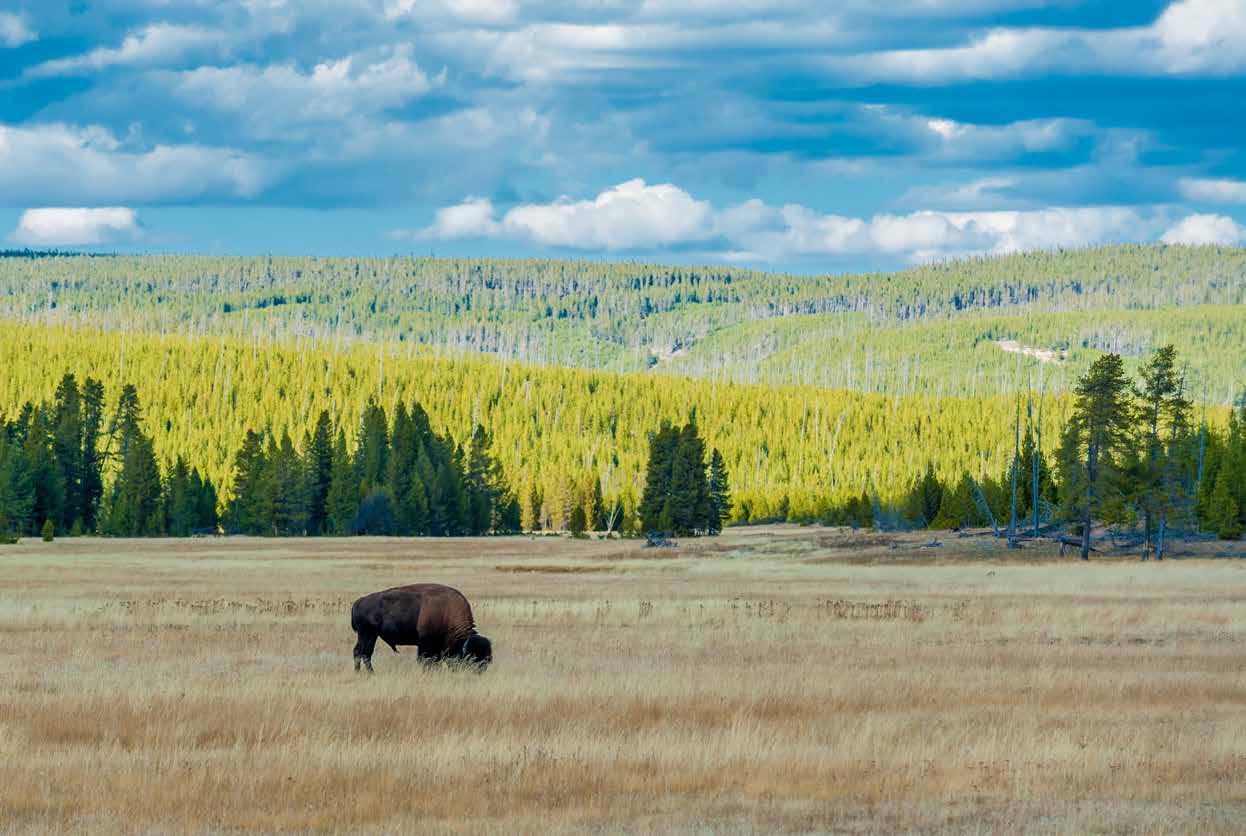
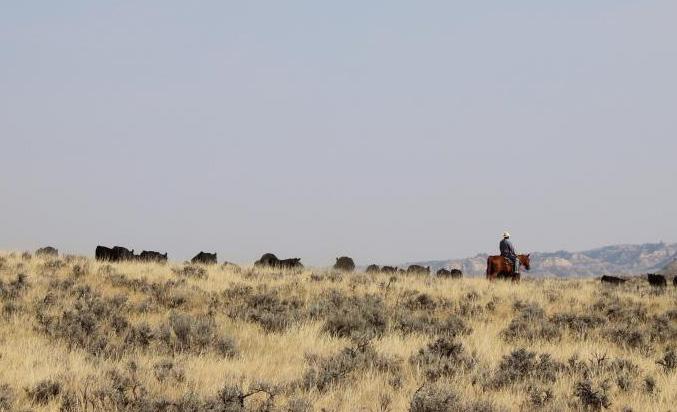
Located in north-central Wyoming, Johnson County covers 4,175 square miles of rugged foothills, rolling rangelands and wide river valleys, providing some of the most productive livestock country in the state and boasting Wyoming’s 10th largest landmass of the state’s 23 counties.
With a population of just over 8,000 people – roughly two residents per square mile – the county’s rural character and rich ranching heritage continue to shape its economy and culture.
Landscape and climate
Johnson County’s landscape is a blend of vast plains, rolling hills, sagebrush steppe, interwoven river valleys and the eastern slopes of the Big Horn Mountains.
The Powder River and its tributaries wind through the county, supplying vital water resources to support grazing and hay production in northern Wyoming’s semi-arid environment.
Like much of Wyoming, Johnson County receives limited precipitation of roughly 15 inches per year, and the climate is shaped by hot, dry summers and cold, snowy winters.
These conditions support forage production and extensive livestock grazing.
Continued on next page
Johnson County ag stats
According to the 2022 U.S. Department of Agriculture’s (USDA) Census of Agriculture, Johnson County is home to 402 farms and land in farms totals 2,034,098 acres, with average acreage per operation equating to 5,060.
Of the county’s agricultural land, 1,968,968 acres are classified as pastureland; 47,087 acres are classified as cropland and 9,763 acres are classified as woodland. Only two percent of land in farms – or 36,760 acres –are irrigated.
According to the USDA, all hay and haylage, at 31,776 acres, is the number one crop grown in the area, followed by barley for grain at 1,545
acres and corn for grain at 60 acres. At 59,071 head, cattle and calves dominate the county’s livestock inventory, with sheep following in second at 25,430 head.
The rest of the county’s livestock inventory includes 2,293 horses and ponies; 1,110 layers; 796 goats; 263 broilers and other meat-type chickens; 35 pullets and 16 turkeys.
Additionally, USDA reports Johnson County accounts for three percent of the entire state’s agricultural sales, with the total market value of agriculture products sold topping $54.78 million.
The majority of these sales – 88 percent – comes from livestock, poultry and
POWDER RIVER CONSERVATION DISTRICT
Supporting agriculture, education and conserving natural resources in Johnson County since 1955.
other animal products, while the remaining 12 percent comes from the sale of crops.
State rankings
According to the 2022 Census of Agriculture, Johnson County ranks in the state’s top 15 of nearly all agricultural products grown and raised there.
The county ranks second for the production of fruits, tree nuts and berries; fifth for sheep, goats, wool, mohair, horses, ponies, mules, burros and donkeys and seventh for hogs and pigs.
Additionally, Johnson County ranks 11th for grains, oilseeds, dry beans, dry peas and milk from cows; 13th for poultry and eggs and cattle and calves; 14th for vegetables, melons, potatoes and sweet potatoes and 18th for nursery, greenhouse, floriculture, sod, short-rotation woody crops and cultivated Christmas trees.
Hannah Bugas is the managing editor of the Wyoming Livestock Roundup. Send comments on this article to roundup@wylr.net.
Johnson County History
JOHNSON COUNTY’S RICH HISTORY REMAINS INSTRUMENTAL IN SHAPING THE AMERICAN WEST
Few places in Wyoming have a history looming as large as that of Johnson County. Nestled in north-central Wyoming between the Powder River Basin and the eastern slopes of the Big Horn Mountains, Johnson County may not be home to the state’s largest population or land mass, but its history is outsized – dramatic, turbulent and deeply woven into the fabric of Western lore.
From Native American and fur trapper culture to cattle empires, outlaw hideouts and one of the most infamous range wars in U.S. history, nearly every iconic theme of the frontier played out on the plains, foothills and mountains of Johnson County.
Early history
Long before European settlement, the Powder River country was a cultural and ecological crossroads for Native Plains Tribes.
The arrival of the Spanish horse in North America reshaped Native life, transforming foot-traveling, hunter-gatherer societies into highly-mobile, horse-centered cultures capable of following the era’s vast buffalo herds.
RURAL CONNECTIONS
RURAL CONNECTIONS
RURAL CONNECTIONS
For Tribes like the Lakota, Sioux, Cheyenne, Crow and Shoshone, the Powder
Continued on next page
RURAL CONNECTIONS
RURAL CONNECTIONS
RURAL CONNECTIONS
RURAL CONNECTIONS
RURAL CONNECTIONS
With straightforward, efficient buying and selling, we are seamlessly connecting buyers from all across rural America and beyond.
With straightforward, efficient buying and selling, we are seamlessly connecting buyers from all across rural America and beyond.
With straightforward, efficient buying and selling, we are seamlessly connecting buyers from all across rural America and beyond.
RESPECTED VALUES
RESPECTED VALUES
With straightforward, efficient buying and selling, we are seamlessly connecting buyers from all across rural America and beyond.
With straightforward, efficient buying and selling, we are seamlessly connecting buyers from all across rural America and beyond.
With straightforward, efficient buying and selling, we are seamlessly connecting buyers from all across rural America and beyond.
With straightforward, efficient buying and selling, we are seamlessly connecting buyers from all across rural America and beyond.
With straightforward, efficient buying and selling, we are seamlessly connecting buyers from all across rural America and beyond.
RESPECTED VALUES
RESPECTED VALUES
RESPECTED VALUES
With our honest, safe, and reliable auctions you can be confident in your decision to buy or sell with BigIron.
RESPECTED VALUES
RESPECTED VALUES
RESPECTED VALUES
With our honest, safe, and reliable auctions you can be confident in your decision to buy or sell with BigIron.
REAL DEALS
REAL DEALS
With our honest, safe, and reliable auctions you can be confident in your decision to buy or sell with BigIron.
With our honest, safe, and reliable auctions you can be confident in your decision to buy or sell with BigIron.
With our honest, safe, and reliable auctions you can be confident in your decision to buy or sell with BigIron.
With our honest, safe, and reliable auctions you can be confident in your decision to buy or sell with BigIron.
With our honest, safe, and reliable auctions you can be confident in your decision to buy or sell with BigIron.
With our honest, safe, and reliable auctions you can be confident in your decision to buy or sell with BigIron.
With our unreserved auctions, at the drop of the hammer everything sells to the highest bidder.
REAL DEALS
With our unreserved auctions, at the drop of the hammer everything sells to the highest bidder.
REAL DEALS
REAL DEALS
REAL DEALS
REAL DEALS
REAL DEALS
With our unreserved auctions, at the drop of the hammer everything sells to the highest bidder.
At BigIron, we value your time and the opportunity to partner with you.
With our unreserved auctions, at the drop of the hammer everything sells to the highest bidder.
At BigIron, we value your time and the opportunity to partner with you.
With our unreserved auctions, at the drop of the hammer everything sells to the highest bidder.
With our unreserved auctions, at the drop of the hammer everything sells to the highest bidder.
With our unreserved auctions, at the drop of the hammer everything sells to the highest bidder.
At BigIron, we value your time and the opportunity to partner with you.
At BigIron, we value your time and the opportunity to partner with you.
With our unreserved auctions, at the drop of the hammer everything sells to the highest bidder.
At BigIron, we value your time and the opportunity to partner with you.
At BigIron, we value your time and the opportunity to partner with you.
At BigIron, we value your time and the opportunity to partner with you.
At BigIron, we value your time and the opportunity to partner with you.
TRAVIS HAKERT | SALES MANAGER
TRAVIS HAKERT | DISTRICT SALES MANAGER
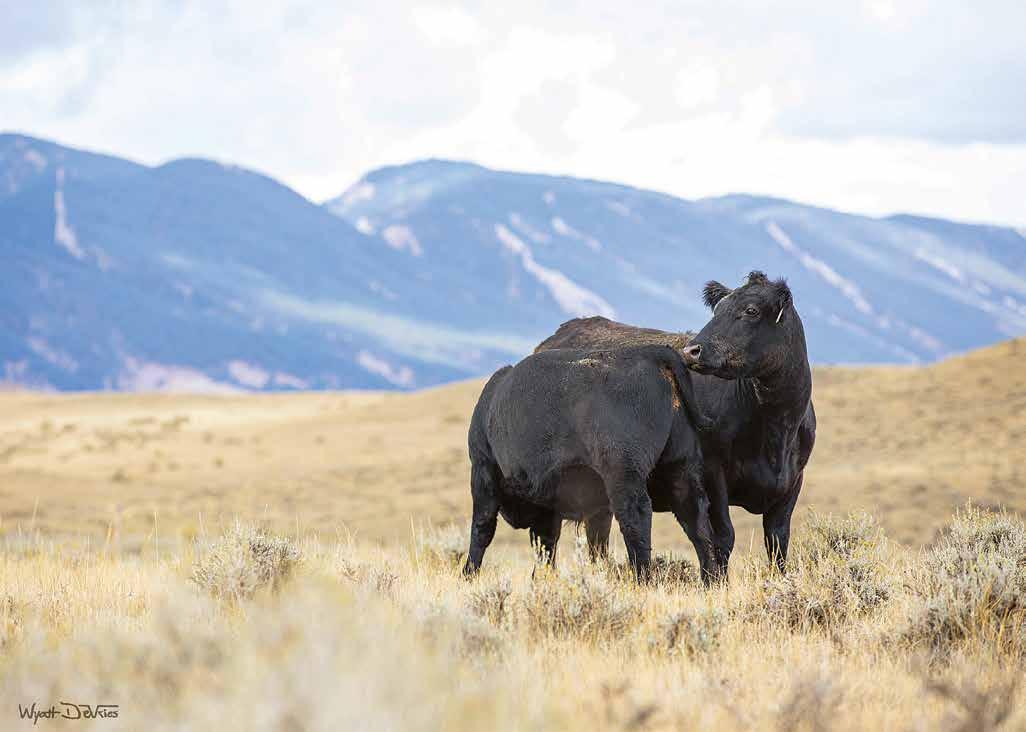
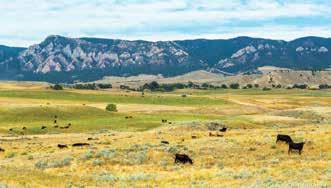
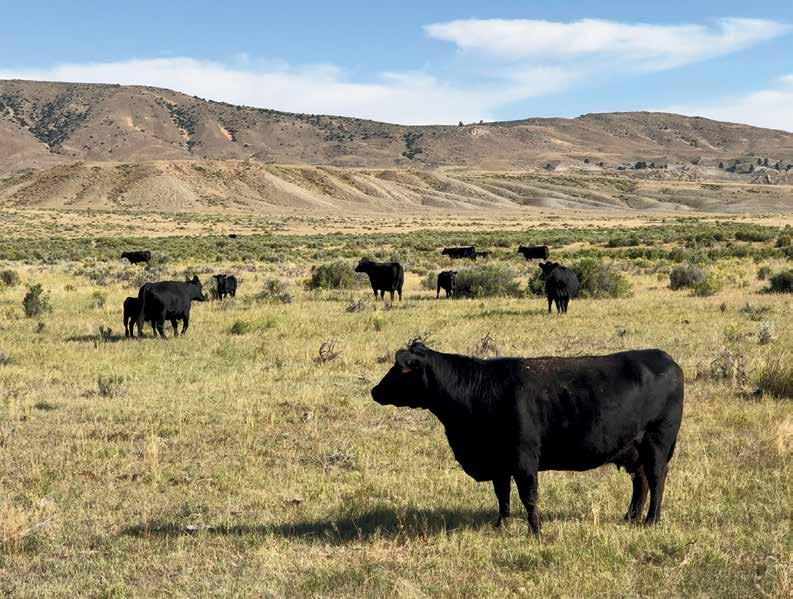
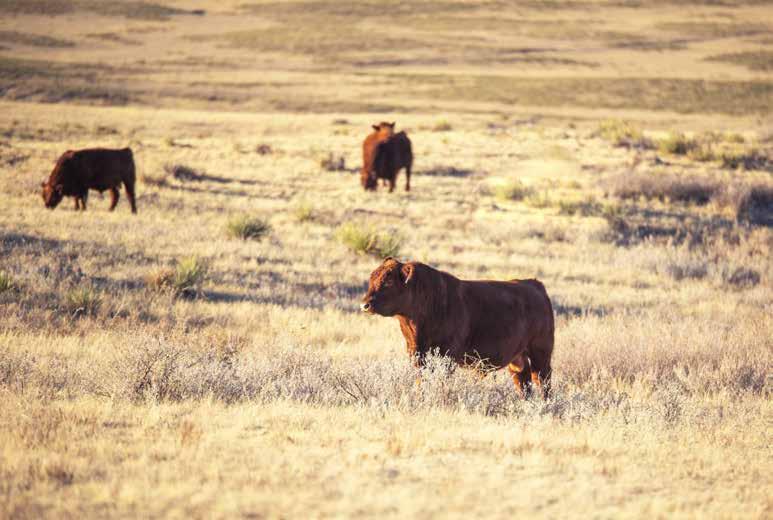
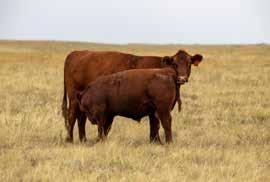
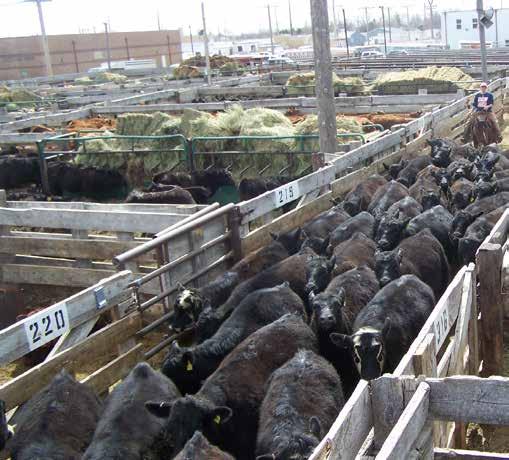
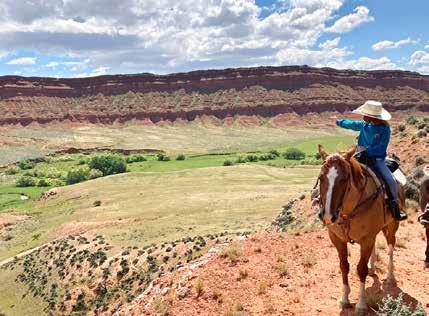
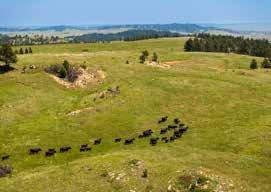
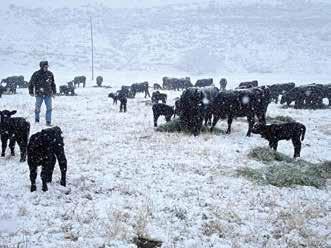
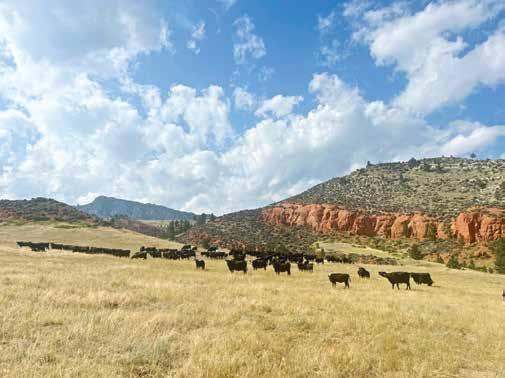
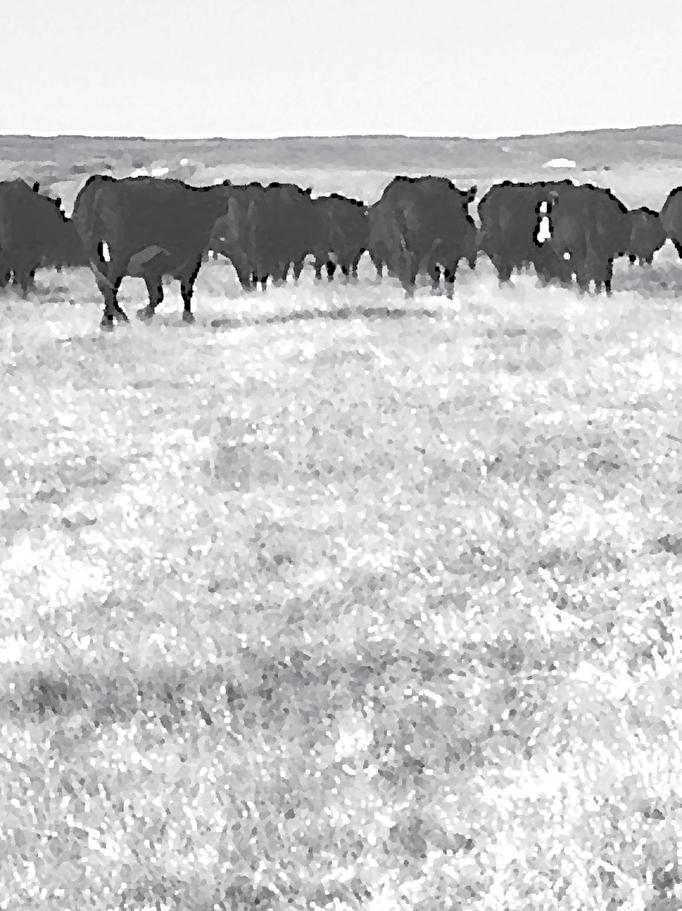
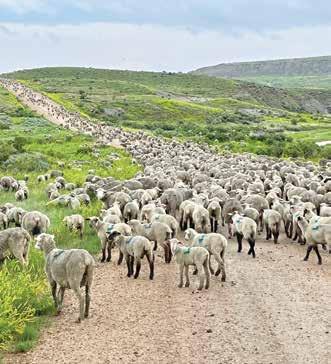
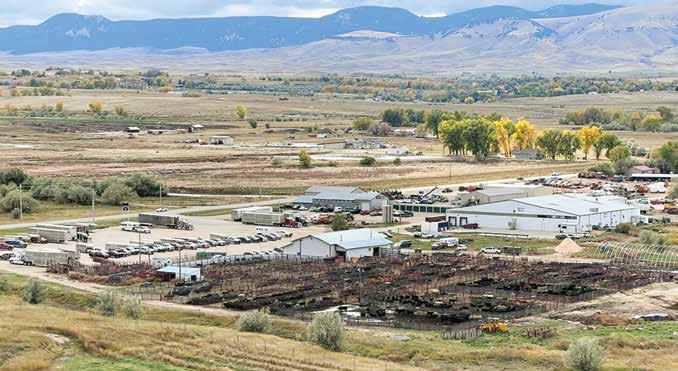
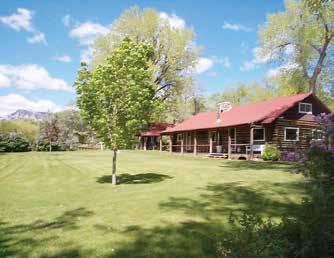
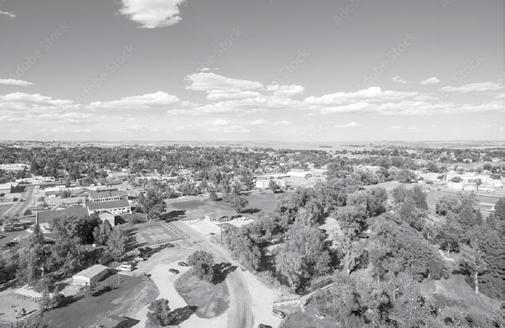
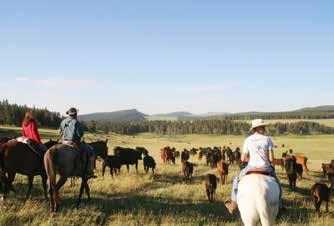
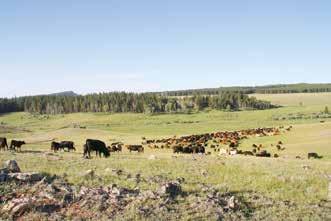
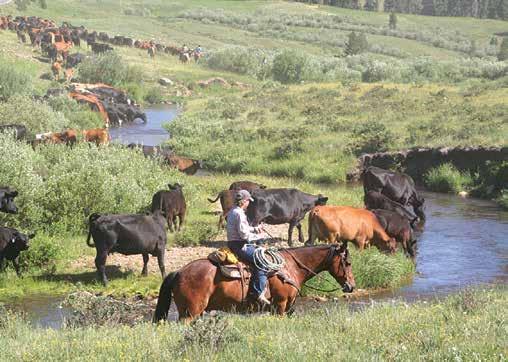
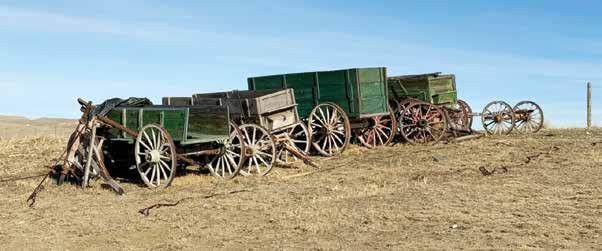
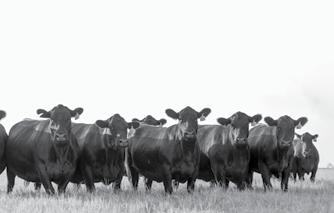
Livestock country – Johnson County’s 4,175 square miles of rugged foothills, rolling rangelands and wide river valleys provide some of the most productive livestock country in the state of Wyoming. Visit Buffalo photo
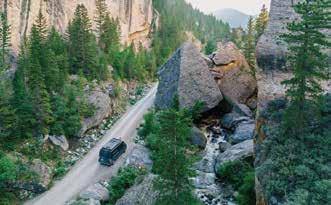
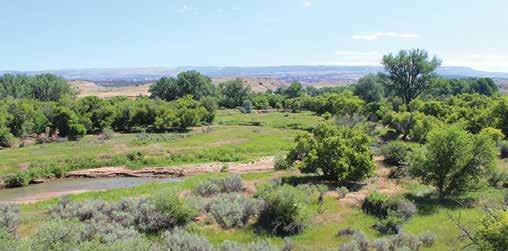
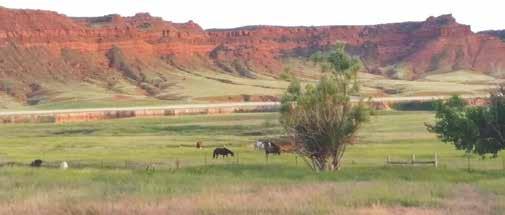
Dramatic landscapes – Johnson County’s landscape blends vast plains, rolling hills, sagebrush steppe, winding river valleys and the eastern slopes of the Big Horn Mountains. Pictured is Crazy Woman Canyon Road, which snakes along 13 miles of dirt road between cascading canyons and mountain waters. Visit Buffalo photo
River Basin was the “sweet spot” for Plains life and early equestrian culture. It provided rich grazing opportunities for horses, abundant buffalo populations and winters mild enough to sustain large herds of both.
The Sioux in particular emerged as a dominant force in the region, maintaining relatively egalitarian social structures compared to Tribes further south where wealth disparities grew alongside oversized horse herds.
Intertribal rivalries, seasonal migrations and buffalo hunting defined life back then, in what would one day become Johnson County.
Trappers, traders and exploration
The earliest recorded European history in Johnson County began around the time of the 1803 Louisiana Purchase.
French explorers like the Verendrye brothers passed through areas near the region in the mid-1700s, but it was
Francois Antoine Larocque traveling with the Crow in 1805 who is believed to be the first European to set foot in present-day Johnson County.
The early 19th century brought fur trappers into the Big Horns and Powder River Basin.
Expeditions associated with John Jacob Astor’s American Fur Company passed through the area, though the discovery of South Pass in 1812 shifted westward movement south, largely bypassing northern Wyoming for decades.
In 1834, Antonio Montero established a trading post known as the Portuguese Houses on the Middle Fork of the Powder River about 11 miles east of present-day Kaycee.
Competition from rival fur companies and dwindling beaver populations soon led to its abandonment, and by the 1840s, commercial activity in the area faded almost entirely.
Native wars and the Bozeman trail
From the late 1600s to the mid 1850s, the Sioux moved west toward the headwaters of the Yellowstone River, creating a domino effect on prior residents – the Crow, Shoshone and Cheyenne Tribes.
As prospectors and miners leaked out of the California gold mines into Idaho and Montana, Mountain Man John Jacobs and his partner John M. Bozeman established the Bozeman Trail, a shortcut to Montana’s gold fields inspired by ancient Native and trapper trails which cut directly through prime buffalo hunting grounds.
Despite warnings from Tribal leaders, thousands of pioneers traveled the route, escalating tensions.
In response, the U.S. Army constructed forts along the trail, sparking Red Cloud’s War.
This conflict reached a brutal climax in December 1866 with the Fetterman Fight
near Fort Phil Kearny, located north of present-day Buffalo, where Capt. William Fetterman and 80 soldiers were killed – the largest Native victory on the Northern Plains prior to Little Bighorn.
After continued conflict, including the Wagon Box Fight in 1867, the U.S. government abandoned their forts and signed the 1868 Fort Laramie Treaty, granting Tribes hunting rights in the Powder River country.
However, the peace was short lived.
Gold discoveries in the Black Hills reignited conflict, culminating in the Great Sioux War of 1876.
That year, Col. Ranald Mackenzie attacked the village of Northern Cheyenne Chief Dull Knife on the Red Fork of the Powder River near present-day Kaycee.
By 1877, Native Tribes were forced onto reservations, opening the region to white settlement.
Cattle boom and the town of Buffalo
With this, ranchers began
pouring into Johnson County in the late 1870s, as British and eastern investors financed massive open-range cattle operations, transforming the area into prime ranching territory.
In 1875, the Wyoming Territorial Legislature detached the northern portion of Carbon County to create Pease County, which was actually never organized because there weren’t enough settlers.
In late 1879, the territorial legislature created Johnson County out of the northern part of Pease County instead, and after enough
invaders to safety.
Although the individuals were charged with murder, the case never made it to trial and no one was ever convicted.
The conflict cemented Johnson County’s place in Western history and inspired Owen Wister’s famous book “The Virginian,” which is widely regarded as the first modern Western novel.
In addition to this infamous conflict, Johnson County’s history is also rich with outlaw lore.
detectives invaded John son County intending to kill men they believed were cattle thieves.
The violence began at the KC Ranch near Kaycee, where Nate Champion and Nick Ray were killed after a prolonged gunfight, in which the KC Ranch cabin was burned.
Hundreds of local citizens rallied together to fight back, besieging the invaders for three days at the TA Ranch south of Buffalo before troops from Fort McKinney intervened and escorted the
Hole in the Wall, located southwest of Kaycee, served as a hideout for Butch Cassidy, a notorious bank and train robber known as the “Robin Hood of the West” for sharing his loot with individuals whose lives were ruined by cattle
It’s said Cassidy, the Sundance Kid and other members of the Wild Bunch Gang laid low at Hole in the Wall between robberies.
Legend has it, Jesse James also holed up at the famous hideout a few times
and early centuries brought railroad development, tie hacking in the newly-established Bighorn National Forest, large sheep operations staffed by Basque sheepherders and the rise of dude
Additionally, Fort McKinney became the Wyoming Veterans Home, which still
Despite oil and gas development and modern infrastructure growth, Johnson County has never lost touch with its roots. Buffalo and Kaycee remain deeply connected to ranching history and Western culture. Museums like the Jim Gatchell Memorial Museum and Hoofprints of the Past preserve rich stories of conflict, courage and resilience which that shaped the county and still echoes across the Powder River country. Information in this article was compiled from the Wyoming Historical Society, Wyoming Tales and Trails, Visit Buffalo and the Hoofprints of the Past Museum. Hannah Bugas is the managing editor of the Wyoming Livestock Roundup. Send comments on
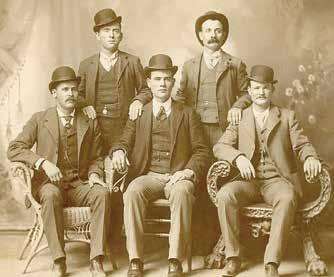
Outlaw lore – Johnson County’s history is rich with outlaw lore, as Hole in the Wall, located near Kaycee, was a notorious hideout for famous outlaws like Jesse James and Butch Cassidy. Pictured is Cassidy, the Sundance Kid and other members of the Wild Bunch Gang. Visit Buffalo photo
Range War Rodeo
After long-running events like the Buffalo Night Rodeo and Longmire Series were dissolved in recent years, the communities of Johnson County were left without local rodeo opportunities and the chance to gather together for the Cowboy State’s favorite sport.
To fill this gap, local go-getters banded together to establish the Range War Rodeo Series, hosting its inaugural event in the summer of 2025.
“Passion for the sport of rodeo and the love for our community is what started the Range War Rodeo,” the event’s official website reads. “Our goals are to keep rodeo alive and growing in our area by giving contestants opportunities to compete and hone their talents, while giving the community great events to celebrate our rich heritage together.”
First rodeo
Ashley Lane, certified veterinary technician and Range War Rodeo’s head of public relations, marketing and entertainment, notes the idea for the Range War Rodeo was started by Lusk native Chet Johnson, a fourtime Wrangler National Finals Rodeo (NFR) qualifier, eight-time Canadian Finals Rodeo qualifier, Canadian saddle bronc champion and National Circuit Finals champion.
“Chet called me and pitched his idea. He said, ‘I feel like I need to give back to Johnson County, and I think with my connections and the help of you and Callie Munsick, we can get this thing off of the ground,’” Ashley shares.
She notes, in the beginning, the idea was nothing more than a “pipe dream” – there was no funding, no sponsors and no guarantees.
The team penciled out what the first rodeo would cost, set a deadline to reach
their funding goals and started looking for sponsors.
“We went door to door to all of the sponsors, made phone calls, created a Facebook page, started to reach out to people and created a board,” Ashley says. “With the support of the community and our fans who had faith in us, we threw our first rodeo last June.”
Not only was the team successful in making their idea a reality, the inaugural Range War Rodeo was recognized among the top 10 rodeos in the state of Wyoming in 2025, an impressive feat for the brand-new rodeo series.
Unique event
Unlike many regional events, the Range War Rodeo is an open rodeo, welcoming contestants of all levels and backgrounds.
While it is not yet a Professional Rodeo Cowboys Association event, Ashley says the caliber of competition speaks for itself.
“We’ve got some of the same contestants competing in those bigger rodeos, which is amazing,” she states.
The Range War Rodeo Series includes three performances – one each in June, July and August – all held at the Johnson County Fairgrounds in Buffalo.
Each event offers a full evening of entertainment with activities starting around 5:30 p.m., including food trucks and local vendors, merchandise and Western goods and live music and entertainment.
The rodeo performance begins promptly at 7 p.m. and runs for approximately two to three hours, delivering a fast-paced, high-energy experience including fanfavorite events like saddle bronc and bareback riding, tie-down roping, barrel racing, breakaway roping, team roping, bull riding, steer riding and mutton bustin.’
Ashley explains the Range War Rodeo operates as a buckle series with points accumulated across all three rodeos.
Another distinctive feature is the rodeo’s free admission, which organizers say removes the cost barrier to allow families, youth and visitors to attend without hesitation and reinforces rodeo’s role as a true community gathering.
2026 plans
As the Range War Rodeo continues to grow, Ashley says organizers are focused on refining the rodeo’s unique experience while
staying true to the original mission.
Plans include expanding entertainment, adjusting schedules to improve competitor and spectator experiences and implementing a larger Saturday night production to accommodate crowds and contestants alike.
Montana Performance Bull Co-op™
Ashley says, “On Saturday, we are planning something a little bigger than last year. We’ll run slack early that day, and we’re trying to get a big-name headliner to play some music.”
The 2026 Range War Rodeo Series is scheduled for June 11, July 9 and Aug. 8.
For more information on the Range War Rodeo, visit rangewarrodeo.com or @ RangeWarRodeo on Facebook and Instagram.
Hannah Bugas is the managing editor of the Wyoming Livestock Roundup. Send comments on this article to roundup@wylr.net.
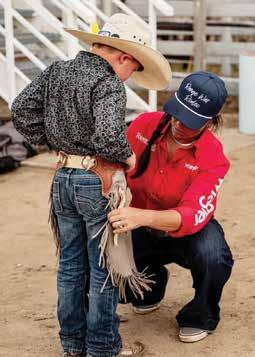
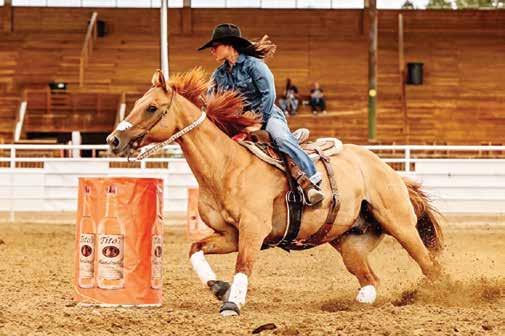
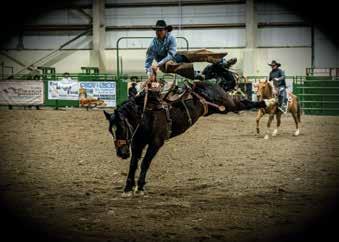
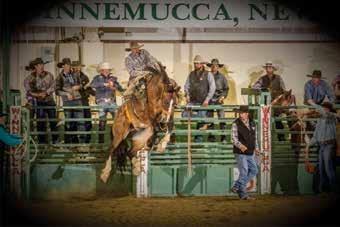
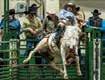
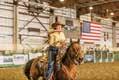
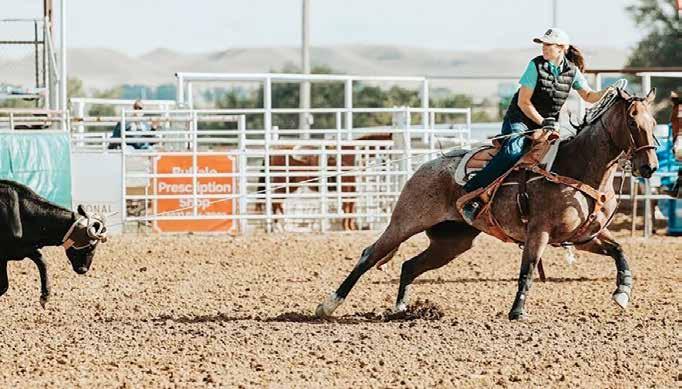
Rodeo series – The Range War Rodeo Series includes three one-night rodeo events held in June, July and August at the Johnson County Fairgrounds in Buffalo. Open Spaces Photography photo
Striving for Excellence
SINCLAIR CATTLE COMPANY
PRIORITIZES FUNCTIONAL CATTLE THAT WORK IN DIVERSE ENVIRONMENTS
With seedstock operations in both Wyoming and Pennsylvania, Sinclair Cattle Company is dedicated to producing Angus cattle which excel in efficiency, carcass quality and maternal traits, with a firm commitment to sustainability and excellence.
The company’s focus is on cattle that thrive on grass and produce high-quality beef raised in a sustainable and cost-effective manner.
Cattle at Sinclair Cattle Company are designed to perform well in both pasture and feedlot settings, offering a balanced set of traits appealing to commercial producers and purebred breeders alike.
At the core of this philosophy are functional females selected for fertility, longevity and efficiency under
low-input management systems. Natural fleshing ability, maternal strength and carcass merit are prioritized to create cattle that work for a living.
Early years
According to Logan Baker, who has worked for Sinclair Cattle Company’s Wyoming ranch in several capacities since 2000 and now spends most of his time with the cow herd, the company was founded in the late 1990s by Duncan Smith, whose vision shaped the operation from the beginning.
“Duncan wanted to do something special with Angus cattle,” Logan explains. “So, he bought part of the N Bar cow herd and utilized the tools necessary to add on to the founda-
tion to make it better.”
Logan notes N Bar cattle primarily stemmed from the Emulation bloodline, including the purchase of N Bar Emulation EXT, a bull which has had a profound influence on both the Sinclair herd and the Angus breed as a whole.
“EXT’s genetics helped solidify our base for producing cattle with exceptional carcass traits and maternal abilities,” Logan states.
Multiple operations
Today, Sinclair Cattle Company operates in two vastly different environments, providing a real-
world test of adaptability and performance.
The Wyoming ranch is located near Buffalo, while the Pennsylvania ranch operates near the small town of Warfordsburg, Penn. –nearly 1,700 miles apart.
This geographic separation allows the company to evaluate how cattle perform under different climates, forage conditions and management systems, and Logan says cattle consistently rise to the challenge.
“Our cattle thrive and excel in a lot of places,” he states.
On the Wyoming ranch,
cows begin calving in March. They are wintered on grass as long as conditions allow.
“They have to be efficient and able to work for a living,” Logan says. “I like to see them able to get out and travel to see if their feet and legs hold up.”
Approximately 400 cows calve each year in the Wyoming herd, and cows calve outside, typically never seeing a barn, though spring weather can vary drastically.
Branding is done the traditional way – rope and drag –a process Logan considers one
of the highlights of the year.
“This is one of my favorite times of the year,” Logan shares. “It’s a traditional way ranchers get together to help each other and utilize their roping skills and good horses, and it’s also less stressful for the cattle.”
The event also reflects the strong sense of community in the region.
“We have a lot of handy people who come help us,” he adds. “There is a lot of neighboring that goes on in this part of the world. It’s a good tradition,” Logan says.
After branding, pairs are
Continued on next page
Adaptable cattle – Sinclair Cattle Company operates in two vastly different environments, allowing the operation to evaluate how their cattle perform under different climates, forage conditions and management systems, and Wyoming Ranch Herd Manager Logan Baker says their cattle consistently rise to the challenge. Courtesy photo
moved to grass in early May, grazing foothill and plains pastures around Buffalo and Sheridan. The shortgrass country and large pastures require cattle to travel extensively.
All cows are artificially inseminated, then turned out with cleanup bulls. Weaning takes place in September, followed by the first sort of bull calves and replacement heifers.
Weaned bull calves are sent to Phil Veltcamp in Manhattan, Mont. for development.
“Phil is a master at developing bulls and expressing their genetic potential without overcooking them,”
bloodline, keeping the good ones and getting rid of the undesirables, fine-tuning the front end of the gene pool,” Logan explains.
Having a strong genetic anchor made it possible to stack traits intentionally and build a consistent, predictable cow herd. Logan notes selection pressure continues to be applied to ensure steady improvement.
“We continue to apply selection pressure to make sure we are always improving our cows. The maternal side is of utmost importance. Without a good cow, you can’t produce the beef. It all starts with the cow,” he emphasizes.
our long-time customers.”
Through disciplined selection, functional cattle and a commitment to maternal strength, Sinclair Cattle Company continues to strive for excellence, producing Angus cattle designed to work across diverse operations and multiple states.
For more information on Sinclair Cattle Company, visit sinclaircattle.com or @ SinclairCattleCompanyInc on Facebook.
Heather Smith Thomas is a corresponding writer for the Wyoming Livestock Roundup. Send comments on this article to roundup@ wylr.net.
Logan points out, in some cases, the pursuit of fast growth or carcass traits
tle Company’s philosophy thing else, cattle must be
“Before you can really do anything in the beef industry, you first need to have a cow that gets pregnant every year and does a good job raising
with some sold as open commercial yearling heifers at Sinclair Cattle Company’s annual bull sale.
“Many people really like our heifers because they have very good luck with them,” Logan states.
Calves are preconditioned and vaccinated when cows are worked and ultrasound pregnancy checked in early September. Once weaned, calves are weighed, sorted and shipped to their next destination.
Herd improvements Logan reiterates Sinclair Cattle Company based its cow herd on EXT genetics, utilizing linebreeding to concentrate on desirable traits while removing the undesirable ones.
“We concentrated his
“Some things in the beef industry seem to come and go in cycles, and people tend to forget about the importance of maternal traits, then they are reminded within a generation or two when their cattle can’t do what’s necessary,” Logan continues. “At Sinclair Cattle Company, we strive for optimum, not extremes. Sometimes the best thing to do as a breeder is say, ‘No, that’s enough.’” Customer relationships
For Logan and the rest of the Sinclair Cattle Company team, customer relationships are as important as cattle performance.
“It’s a pleasure to visit and work with our customers,” he says. “We enjoy meeting new customers and treasure the relationships of
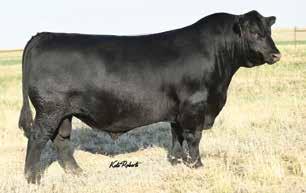
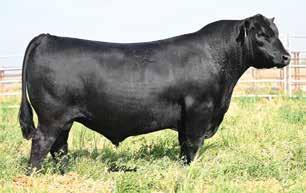
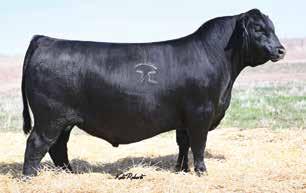
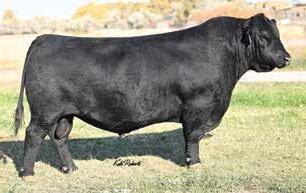
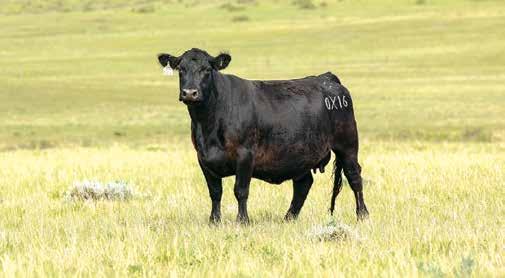
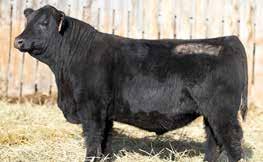
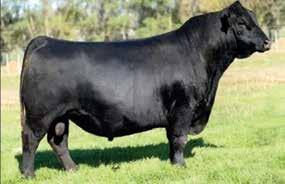
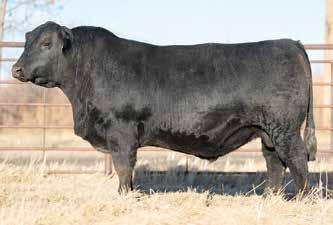
Foundational bloodline – N Bar Emulation EXT helped solidify the base of Sinclair Cattle Company’s bloodlines. This bull has had a profound influence on both the Sinclair herd and the Angus breed as a whole. Courtesy photo
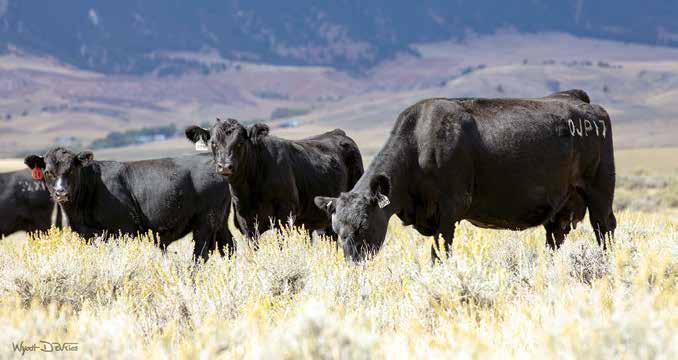
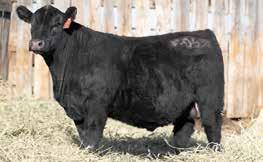
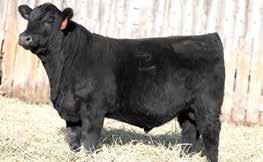
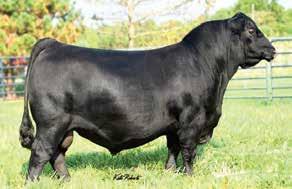
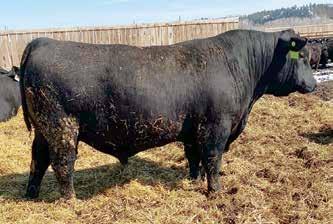
Functional females – At the core of the Sinclair Cattle Company’s breeding philosophy are functional females selected for fertility, longevity and efficiency under low-input management systems. Courtesy photo
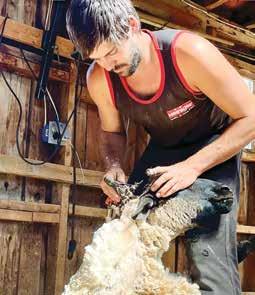
Foley Shearing Company
This year marks the 37th year Dave and Janine Foley have worked in the shearing business together – a livelihood rooted in heritage, hard work and global connection to the sheep industry spanning across multiple generations and continents.
From the hillsides of New Zealand to the sagebrush steppes of Wyoming, the Foley family’s story is one of tradition, grit and adaptability.
Deep roots in ag
Both Dave and Janine
have deep roots in the sheep industry.
Born and raised in New Zealand, Dave grew up on a farm raising sheep, red deer and elk. His father was a shearer, and from an early age, Dave learned the craft at his father’s side.
As a young man, Dave began traveling internationally, shearing sheep in multiple countries and immersing himself in the global shearing circuit. The work was demanding, but it offered
opportunity and adventure and eventually led him halfway around the world.
At just 19 years old, Dave arrived to the U.S. to shear sheep, working for another shearing contractor and moving from ranch to ranch, but one of those stops would change the course of his life forever.
Janine clearly remembers the day Dave arrived at her parents’ place with the shearing crew.
“I met Dave when he came from New Zealand to work for another guy who shears sheep, and they happened to come to my parents’ place,” she shares.
Janine notes her grandfather was a Basque sheepherder who emigrated to the U.S. from the Pyrenees Mountains along the border of France and Spain, and although her father was born in the U.S., sheep ranching remained central to the family’s livelihood.
When Janine’s parents married, they purchased their own ranch and continued raising sheep. The operation was located about 21 miles
from Kaycee where Dave and Janine reside today.
After meeting, Dave and Janine’s relationship moved quickly.
“We met in March, were engaged in July, then Dave left for six months and we got married the next May,” Janine shares.
Building a business
In 1989, Dave and Janine officially started their own sheep shearing business. They began modestly with a crew of five shearers and built the operation steadily over time.
Before having children, the couple spent several years traveling internationally, following shearing seasons through Wales, Australia, New Zealand and the U.S.
The lifestyle required constant movement, adaptability and endurance, but it also provided invaluable experiences and connections within the industry.
Eventually, the couple settled down on a small ranch near Kaycee while continuing to travel regularly. Today, they still make at least one trip
JC HEIKEN ANGUS & SONS
to New Zealand each year.
Their home operation includes about 120 sheep and four sheep dogs, as well as several goats, horses, turkeys, peacocks and chickens.
Janine points out, traditionally, the primary shearing season in the U.S. runs from February through May ahead of lambing season, and while summer was once considered an off season, today this is no longer the case.
“Now it’s pretty busy for more of the year,” she notes.
The Foleys’ crews shear sheep across Wyoming and Colorado, traveling with specialized shearing trailers when ranches don’t have dedicated facilities. These module units allow operations almost anywhere.
Dave also works in Colorado early in the winter to shear feedlot lambs – extending the season even further.
much work as we can handle,” Janine admits.
Raising a family
On top of all this, Dave and Janine have also raised four children – Jayson, Tiana, Hannah and Laree – all of whom grew up working in the family business.
“We paid them just like we did everyone else,” Janine says. “They all paid their way through college. Education means a lot more if you earn it and pay for it yourself.”
The Foleys’ oldest son, Jayson his wife Kelsey and their two young daughters operate their own ranch near Casper where they raise sheep, goats and rams. Jayson also runs his own shearing business and works at a feedlot in Colorado.
Over the course of the year, Foley crews shear approximately 200,000 sheep.
Challenges of the trade
“Shearing is a hard physical job, even with good equipment,” Janine states. “It’s not for the weak hearted.”
She notes the business also comes with logistical and regulatory challenges.
The Foleys regularly bring shearers in from New Zealand, which requires navigating complex federal immigration systems and extensive paperwork.
Changes in immigration and deportation laws have made securing foreign labor more difficult, and while policymakers may assume domestic workers can fill these roles, Janine says reality is different.
“You can’t find Americans to do this kind of work,” she says.
Weather presents another obstacle, particularly in Wyoming where storms can force rescheduling and complicate lambing timelines. Ranchers are understandably cautious about shearing too early, fearing exposure to harsh conditions.
The U.S. sheep industry has seen declining numbers in recent years, and the wool market has struggled. Demand for wool has decreased, but Janine emphasizes wool remains irreplaceable.
“It’s still the best material for so many things,” she states. “It has qualities that can’t be duplicated by synthetic materials.”
Despite industry fluctuations, the Foley shearing business remains fully booked year after year.
“So far we’ve had as
Janine notes Jayson began shearing at a young age, paid his way through college and has since traveled the world shearing sheep.
Their oldest daughter Tiana lives in New Zealand with her husband Brad and their four sons. Brad originally came to the U.S. to work for the Foley’s shearing crew, and today the couple runs their own shearing business in New Zealand, while also traveling internationally on the shearing circuit.
The Foleys’ third child Hannah works as a physical therapist in Casper. Early in her career she also traveled, working in Australia and New Zealand. Today, she continues to help with the family business when her schedule allows.
Laree, their youngest daughter, married a New Zealand sheep shearer she met while working for her family’s operation. The couple has since traveled to shear sheep in England, Australia, New Zealand and the U.S. They recently purchased a home and plan to return to Wyoming to work for the family business.
After 37 years, Dave and Janine continue to do what they’ve always done – follow the sheep, train the next generation and adapt to an evolving industry.
In a world of changing markets and shifting policies, the Foleys’ shearing operation stands as a testament to the enduring value of skill, heritage and hardearned expertise, one fleece at a time.
Heather Smith Thomas is a corresponding writer for the Wyoming Livestock Roundup. Send comments on this article to roundup@ wylr.net.
children – Jayson, Tiana, Hannah and Laree. Courtesy photo
Craftsmanship and Creativity
Desira Light grew up on a ranch where cattle and horses were always part of daily life. This upbringing laid the groundwork for what would eventually become Hayburner Tack – a custom leather business rooted in practicality, creativity and a deep understanding of horses.
From a young age, Desira was no stranger to hard work and gained an interest in leathercraft, driven in large part by her need for affordable horse tack.
“I did day work for my uncle and anyone else who would hire me,” she shares. “I ran a mower and a swather while I was growing up.”
She adds, “Our horses were part of my inspiration for doing leatherwork and making horse tack. I thought if I could make it myself, it would be easier to afford.”
Learning the craft
What began as a way to outfit her own horses soon grew into something more.
Desira says she enjoyed the process so much, she continued making more items than she could use herself, eventually turning to selling some of her work.
“There were people who wanted to purchase my stuff, so I kept at it,” she shares.
Several mentors played a role in helping her develop skills.
“When I was a senior in high school, I worked with Tom Colerick, a saddlemaker from Pinedale. He’s the one who first showed me how to do things with leather and taught me how to tool,” Desira shares. “I worked with him after school while my brother was at football practice. I had to wait for my brother to finish practice so we could drive home, and I spent that time at Tom’s saddle shop.”
Desira also attended classes at the Rocky Mountain Leather Trade Show, held annually in Sheridan. Over the years, she took as many classes as she could afford, expanding her skills and knowledge.
“Those were very helpful for me,” she says. “I learned all sorts of new things there.”
Beyond formal instruction, Desira learned by watching others, studying videos and reading books on leatherwork. Even today, she considers herself a student of the craft.
“I am still learning. I always want to learn more about leather,” she adds.
Building a business
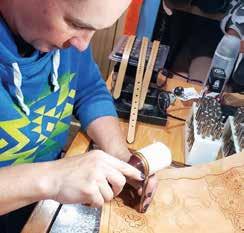
Through her business, Desira creates custom leatherwork with a focus on small, detailed pieces.
Her work includes belts, notebooks, hats, picture frames
and a wide range of horse tack.
More recently, she has also expanded into braiding and producing mule-tape halters, dog leashes and other related items.
Desira reiterates most of her leatherwork is custom made, created based on ideas brought to her by customers, many of whom are ranchers and horse owners, although her work reaches a wide range of uses.
“They give me a general idea about what they want, and I create it,” she says. “I’ve done some woven cinches, Western cinches and some English girths. I make tack for working cowboys, rodeo cowboys, show horse people and even some kids who just need something to give to their dad as a gift.”
“If a person can come up with an idea for what they want, I can generally figure out how to make it for them,” she adds. “I do so many different things, it never gets tedious or boring. There are so many options with leather.”
With this, Desira notes saddlemaking remains on her list of future goals, but for now it requires more time than she currently has.
“I haven’t made any saddles yet, but it’s something I want to do eventually,” she says.
She also admits she doesn’t work with rawhide, having decided early on it wasn’t a good fit for her.
“I tried it once and decided it was not my thing,” she states. “I appreciate the people who can do it – it’s an art form in itself.”
When it comes to supplies, Desira says she sources most of her leather from Montana Leather in Billings, Mont., preferring to select hides in person rather than ordering them sight unseen.
“I want to be able to actually put my hands on it before I buy it. Some hides are easier to work with than others,” she explains, noting no two hides are the same and different sections of a hide are better suited for different purposes.
“Leather is still a living, breathing material,” she says. “You learn how to work around brands and scars and where each piece works best.”
Over time, Desira has assembled a collection of tools necessary for her work, purchasing them carefully due to the cost.
“They are expensive,” she admits. “You don’t need all of the tools available – even if you want them.”
Additionally, Desira notes her business has grown without traditional advertising. Her
reputation spreads primarily through word of mouth and social media, and she maintains a steady base of repeat customers.
“I don’t need to grow my business very much because I don’t have time to do much more,” she admits. “My customers keep me busy enough. Whatever I make is already spoken for.”
While many locals have known about Desira’s work for years, Hayburner Tack has reached far beyond Wyoming. In fact, Desira has shipped items across the U.S. and overseas.
“I’ve shipped leatherwork to Germany and Australia. It’s really interesting where my work ends up,” she states.
Balancing a busy life
In addition to leatherwork, Desira, her husband Tyler and their two children run a small operation near Buffalo with a few cattle and horses.
Desira sells VitaFerm mineral products for cattle and Vitalize vitamin-mineral supplements for horses, which she has done for the last six years, and Tyler is a diesel mechanic with his own shop.
“He repairs trucks, takes care of all of our machinery and stays really busy,” Desira says.
Additionally, Desira homeschools her 14-year-old daughter Kayden and her 12-yearold son Garret, balancing her leathercraft around school, sports, 4-H and other activities.
“It all keeps me very busy,” she laughs. For more information on Hayburner Tack, visit etsy. com/shop/hayburnertack , check out @HayburnerTackandLeather on Facebook or
e-mail hayburnertack@hotmail.com.
Heather Smith Thomas is a corresponding writer for the Wyoming Livestock Roundup. Send comments on this article to roundup@wylr.net.
Februar y 5, 2026
Small Herd, Big Heart
VERGER DAIRY FARM PROVIDES LOYAL FOLLOWING WITH FRESH, WHOLESOME FOODS
18 Month old & yearling Bulls Alway s PAP t est ed Alway s guar ant eed Expanded Free D *see catalog for details
Jason & Kim Cullen Goertz Wheatland, WY 307-331-2917 kccullen@wyoming.com
Austin Snook • 307-290-2161
Taylor Snook • 307-290-2273
Craig Deveraux • 307-746-5690
Dan Catlin • 406-671-7715
Clint Snook • 307-290-4000
Cheyenne Seymour • 605-641-0638
Kyle Kallhoff • 605-881-1526
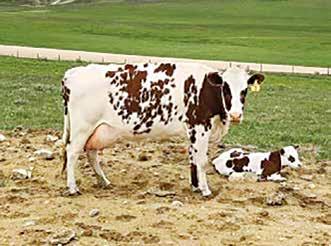
In contrast to the big herds of sheep and black cattle dotting the hillsides of northern Wyoming, Don Verger’s handful of red and white Ayrshire cows graze against the grand backdrop of the Big Horn Mountains just outside of Buffalo.
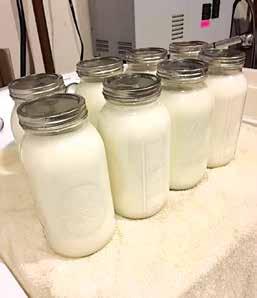
Here, Verger Dairy Farm produces milk, nature’s most perfect food, and may be small by industry standards, but just the right size for Don and his family. The farm has gained a loyal local following for its high-quality, sweet tasting milk and farm-fresh produce.
Deep roots in dairy
Don grew up in the dairy business running a large commercial dairy alongside his father in San Diego, Calif., where they milked roughly 550 cows twice a day.
After gradually taking over the operation, Don weathered the economic pressures of the mid-2000s when milk prices were low and feed costs were high. Additionally, the devastating Witch Creek Fire ripped through 197,990 acres of San Diego County, California – the second largest wildfire in the state during the summer of 2007.
Don then made the difficult decision to sell out through a state program designed to reduce milk supply and raise prices, and after purchasing property online and later visiting in person, he and his wife decided the Cowboy State was home.
Don shares, upon moving to Buffalo, he worked some jobs in town doing construction and remodeling businesses, while also building his new home.
“But I couldn’t get away from the cows completely – I missed them,” he says. “My mom ended up buying two Ayrshire cows for me as a gift, so I drove all the way to Maple Lake, Minn. to pick them up and bring them home.”
It didn’t take long for Don to add a few calves and a bull to the herd. Although, after an incident with said bull, Don switched to artificial insemination.
“Anyways, I started with two and now I have seven –four cows and three bred heifers that are going to freshen this spring,” he shares. Keeping it small
Today, Don runs what he proudly refers to as a micro dairy, milking a handful of cows seasonally throughout the year, with milk typically coming in around mid-April once calving season is underway.
“Right now, all of my cows are on vacation, but they’re all pregnant and the first one is due to calve around April 15, so I’ll get back to milking then,” he states.
Calves remain with their dams for the first two to three months, sharing milk before being weaned. The cows graze the farm’s 36 acres until November, after which they are supplemented with hay sourced locally from Don’s neighbor Bob Ruby.
Don notes he runs Ayrshire cattle specifically for their hardiness and efficiency, which are critical in Wyoming’s harsh climate. He also appreciates the breed’s smaller frame, good butterfat content and sweet-tasting milk.
When it comes to his herd size, Don says he is happy to keep it small, allowing him to focus on top-notch animal care and product quality.
“I’d like to get more pasture on my property. Each year, I’ve been trying to disc an extra acre and plant grass on it,” he shares. “My goal is to let my cows pasture
Continued on next page
Casey Sellers • 307-217-2614
Jim Forbes • 307-351-5932
Tye Curuchet • 307-351-8666
Daniel Escoz • 307-217-1440
Kade Kinghorn • 307-620-0525
Auctioneer: Curt Westland • 605-210-3329
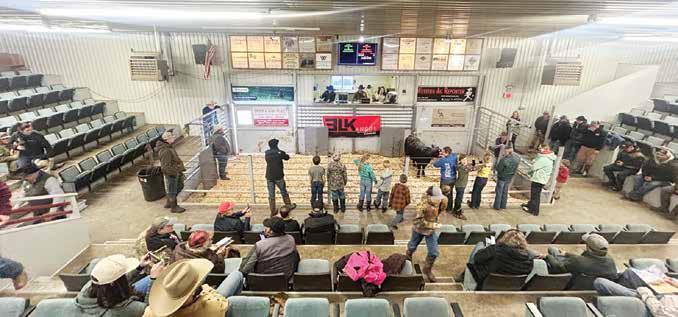
“From the ring, to the video, and in the country, we market your livestock the competitive way.”
Office: 307-684-0789 • buffalolivestockwyo.com
Hardy cattle – Don Verger runs a small herd of Ayrshire cattle on his local micro dairy, appreciating the breed’s hardiness for cold, smaller frame size, good butterfat content and sweet-tasting milk.
Courtesy photo
Loyal customers –Don Verger, owner of Verger Dairy Farm, says his customer base remains incredibly loyal and can’t get enough of his farmfresh milk.
Courtesy photo
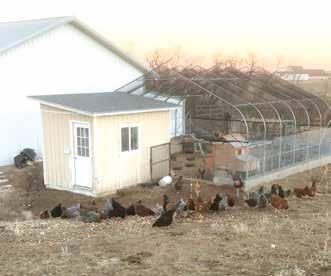
Fresh eggs – Verger Dairy Farm is home to a flock of roughly 50 to 60 chickens, offering farm-fresh eggs by the dozen. Courtesy photo
longer – into December would be awesome.”
“I’m just a little guy running a micro dairy. I’m happy with where I’m at as far as herd size and the amount of milk I’m selling. I don’t want to get any bigger,” he adds.
Fresh from the farm
At its peak, Verger Dairy Farm sells about eight gallons of milk per day directly to consumers.
Don notes milk is primarily sold at the Johnson County Recycling Center in Buffalo where he serves as manager.
“They have a big fridge they don’t mind me using, so I sell my milk out of it,” Don says. “People come in, drop off recyclables, grab milk and leave cash on the desk.”
Additional milk is transported to Casper each week where it’s sold at Baker’s Market.
Don also sells eggs from
his flock of 50 to 60 chickens, along with seasonal produce grown in his large garden.
“I grow a huge garden and sell cucumbers, tomatoes, onions and a lot of beans and squash,” he says. “In a good year, I’ll also have cantaloupe and watermelon, and once a year, I grow about 500 to 700 pumpkins for the Buffalo town square.”
Challenges and accomplishments
Don admits farming in Johnson County hasn’t been without its challenges.
He cites Wyoming’s harsh weather as the biggest adjustment he’s had to make after moving from southern California.
“One of the biggest challenges I’ve had since moving here is trying to get used to the weather. Back home, you can grow a tomato plant year-round,
but everything here is so different,” he says. Despite this, Don believes the rewards far outweigh the hardships.
He shares his greatest accomplishment is reaching
a point where his farm fits his life – not the other way around – and what he enjoys most is the consistent positive response from customers.
“I love to see smiles on people’s faces when I bring milk in,” Don says. “I’m fortunate in that people love my milk. It makes them happy and they really appreciate it, which makes it all worth it.”
For more information on Verger Dairy Farm, visit verg-
erdairyfarm.com or @VergerDairyFarm on Facebook. Hannah Bugas is the managing editor of the Wyoming Livestock Roundup. Send comments on this article to roundup@wylr.net.
BUILD YOUR FUTURE IN AGRICULTURE
We are committed to supporting farmers and rural communities with flexible financing options. With options like Ag Breeding Livestock, Operating, Equipment, and Ranch Real Estate Loans, we’re here to make your operation thrive every season.
YOU BELONG HERE • www.pvbank.com
Wheatland • Torrington • Cheyenne • Casper
fresh milk and eggs, Don Verger also offers home-
seasonal produce including cucumbers, tomatoes, onions, beans, squash, cantaloupe, watermelon and pumpkins.
Courtesy photo
Mountain Meadow Wool
Nestled at the base of the Big Horn Mountains, Mountain Meadow Wool is a family-operated mill dedicated to supporting local ranchers and preserving Wyoming’s wool legacy.
Here, locally-sourced, ranch-raised fleeces are turned into some of the finest wool products in the West, providing a living link between real-life ranchers and people who treasure high-quality wool.
A mill with a mission Mountain Meadow Wool
“It’s
BEN HOSTETLER
is a relatively new mill which began production in 2007, spearheaded by Operations Manager Ben Hostetler’s mother Karen and her business parter with a simple yet ambitious goal – preserve the ranching culture of the
American West and find a way to capture more value from the exceptional wool produced in Wyoming.
“Over a century ago, Basque sheepherders settled Wyoming, establishing small ranches in the late 1800s. However, declining wool prices over the past two decades have threatened these historic operations,” Mountain Meadow Wool’s website reads. “In 2007, Karen and her partner set out to reverse this trend, opening a full-service mill which offers fair prices to ranchers for their wool.”
Ben further explains, “We started because there was a lot of high-premium wool produced here in Wyoming, yet there was no value being added to the wool clip.”
Ben goes on to note the mill’s founders not only wanted to process fiber, they also wanted to connect Wyoming wool directly to consumers who appreciate authenticity and traceability.
“Initially, the scope was to establish a regional processing facility, although we didn’t entirely know what that looked like,” Ben says. “We started out very small in terms of production volume, but over the years it’s grown quite a bit and we’ve continued to add new services.”
Today, Mountain Meadow Wool processes more than 60,000 pounds of wool annually, selling finished products in nearly every U.S. state and several countries abroad.
Inner workings
What began in 2007 as a bold idea to add value to Wyoming’s wool clip has grown into the largest full-service mill in the West, blending traditional craftsmanship with modern capability.
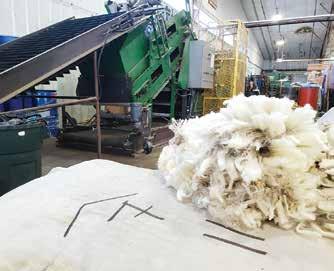
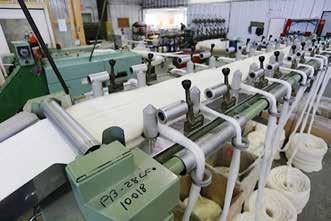
In its 24,000-squarefoot facility, wool undergoes a full suite of processes, including scouring, carding, combing, spinning, plying, dyeing and knitting – all under one roof.
“We started out just making yarn,” Ben says. “Then in 2017, we added commercial knitting so we could knit apparel in-house, and in 2023 we added commercial dyeing operations as well.”
Ben explains the mill currently has three main revenue streams – Mountain Meadow Wool branded stock yarn and apparel, private label work for other brands and custom processing services, which makes up roughly 40 percent of total production.
Branded items sold through the store includes everything from beanies, scarves, gloves, sweaters, hoodies, ponchos, T-shirts, slippers, blankets, handbags and more.
Loyal to locals
A cornerstone of Mountain Meadow Wool’s identity is its commitment to regional sourcing and traceability.
Most of the fiber the mill buys comes from farms and ranches within about 150 miles of Buffalo, with additional wool sourced from neighboring states when certain fiber types are needed.
Many of Mountain Meadow Wool’s valued customers would likely attest the mill’s high-quality products reflect its intimate connection with the local community.
Its signature Mountain Merino yarns – made from Rambouillet, Merino and other fine-wool breeds –are said to be soft enough for next-to-skin wear and warm and durable enough to hold up in Wyoming’s harsh climate.
Each skein of yarn can also be traced back to its ranch of origin, forging a clear link between local ranchers and each finished product.
Ben admits, from the beginning, one of the biggest challenges facing Mountain Meadow Wool
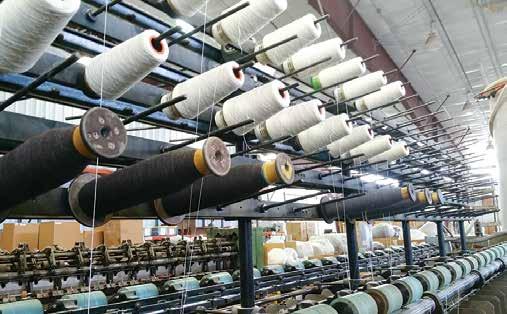
Ranch-raised fleeces – A cornerstone of Mountain Meadow Wool is its commitment to local sheep producers, and most of the fiber the mill purchases comes from sheep operations within about 150 miles of Buffalo. Courtesy photo
has been finding people with textile experience.
“The skillset of textiles is very lacking in the U.S. and even more so in Wyoming, so building that skillset has been one of the biggest challenges,” he states. “Everything we do from start to finish is being learned right here.”
He adds, “No one comes into the company with any previous textile experience, so we have to provide training from the ground up, which has been our biggest learning curve.”
However, Ben also notes this initial hurdle has actually become more of an opportunity than anything, as local staff build deep, hands-on know-how that’s hard to find elsewhere.
Today, the mill employs
about 30 people, many working flexible schedules to suit life in a rural community.
Goals and milestones
Ben shares some of the most exciting moments in the mill’s evolution haven’t just been about growth, but about capability.
“Adding knitting and being able to make our own apparel and blankets was a really fun milestone,” Ben says. “It’s so fun to see raw wool go in on one side and something like a sweater come out on the other.”
He also notes the mill’s more recent venture to expand its commercial dyeing operations has been another exciting milestone.
“We’ve always done hand dyeing, which gave us a lot of flexibility,” he says.
“When we added commer-
cial dyeing there was definitely a learning curve to create quality, consistent and repeatable colors, but it’s been a really fun milestone to say we can successfully operate a commercial dye house.”
Additionally, Ben says Mountain Meadow Wool’s goals for coming years include expanding production lines, particularly from scouring through spinning, while also securing the mill’s physical future by owning the building it operates in.
“We don’t own the building we are currently in, so we are trying to navigate a transition where we can own the building in order to make modifications to support new growth and equipment,” Ben says.
For now, Mountain Meadow Wool plans to continue building on the unique attributes that have always set the mill apart – its commitment to people and heritage.
In historically rich woolproducing regions like Johnson County, the mill’s presence strengthens both the local economy and Western ranching culture.
By sourcing fiber locally, creating products with regional identity and valuing ranchers who supply the wool, Mountain Meadow Wool has created something incredibly rare – a business rooted in tradition, personal connection and continual innovation.
Red Canyon Ranch
BROCK HANSON AND FAMILY ADVANCE RANCHING HISTORY NEAR BIG HORNS
Brock Hanson and his family live on a historic ranch near Kaycee, which has been in his family for several generations.
“Where I’m living now has been in my mother’s
CROSS CREEK RANCH
This 370± acre foothills ranch, two miles south of Centennial, features quality improvements including a Swedish Cope log home and a large indoor arena. Spectacular scenery and wildlife abound.
$7,700,000
BUCK GULCH RANCH
BAGGS, WYOMING
Spanning 4,151± acres, situated near Dixon and one and a half hours from Steamboat Springs. A well-watered grazing and wildlife ranch with views, gentle terrain, and ready for building.
$5,500,000
RILEY RANCH
BEULAH, WYOMING
Exceptional 1,484± acre Black Hills ranch near Spearfish, South Dakota. Diverse, terrain with canyons, springs, and abundant grazing resources for livestock and wildlife. Plentiful big game.
$5,342,400
MULLENGER RANCH
BEULAH, WYOMING
960± acre ranch in the Black Hills near Spearfish. Scenic terrain with canyons, springs, and ample grazing. Abundant wildlife, including big game and wild turkeys, ideal for recreation and ranching.
$3,744,000
side of the family since her grandparents,” says Brock. “My great-grandparents Albert Lafayette ‘A.L.’ Brock and Julia Brown came to this area in 1884 from Missouri and homesteaded 10 miles south of Buffalo.”
Moving to Wyoming
Brock says A.L. and Julia hit the Bozeman Trail at Fort Fetterman and followed it in their wagons.
A.L. would often go around the camps and visit with freighters, asking where the best place to homestead would be.
They told him a good place would be near the mountains south of Buffalo because the area had the best water and grass and the mildest winters.
The family homesteaded near Kelly Creek, spending their first winter in a tent before building a cabin.
In the early years, A.L. made a living taming “outlaw” horses and working as a logger.
He hitched harnessed horses and dragged logs off of the mountain to supply materials for settlers’ houses, barns, fenceposts and telegraph poles.
“He brought out the poles to build over 100 miles of telegraph line,” says Brock. “This is how he got his bills paid.”
Six years after arriving, the Brocks sold their original homestead and bought a place further south. The place was purchased in 1890 and is still in the family today.
Johnson County War
The Brock place was purchased just before the Johnson County War heated up. The conflict started
when big cattle companies owned by eastern and foreign investors grew resentful of homesteaders competing with them for grass, land and water rights.
The war lasted from 1889-93, and Brock says it came to a head when Johnson County was invaded by 50 gunmen – 20 Texans and 30 Wyoming men – hired by the big ranchers.
“They killed Nate Champion and Nick Ray at the KC cabin on their way north to Buffalo,” says Brock. “Their plan was to hang Sheriff William ‘Red’ Angus, the county commissioners and anyone else on their list of 70 names.”
Word was received in Buffalo prior to the attack, and the homesteaders held their own.
A three-day gun battle ensued at the fortified TA Ranch, and ended when President William Henry Harrison ordered the U.S. Cavalry to rescue the “invaders.”
Continuing to build
In 1893, the Brock family started a post office from the corner of their cabin. With the stage stop and post office, Brock says his greatgrandparents got to meet everyone who came through that part of the country.
The Brocks bought more ground as it became available and held onto what they already had throughout the homestead era.
Brock says his father’s side of the family homesteaded in Niobrara County, and two of Brock’s brothers continue to manage ranches in the area.
He says his dad worked
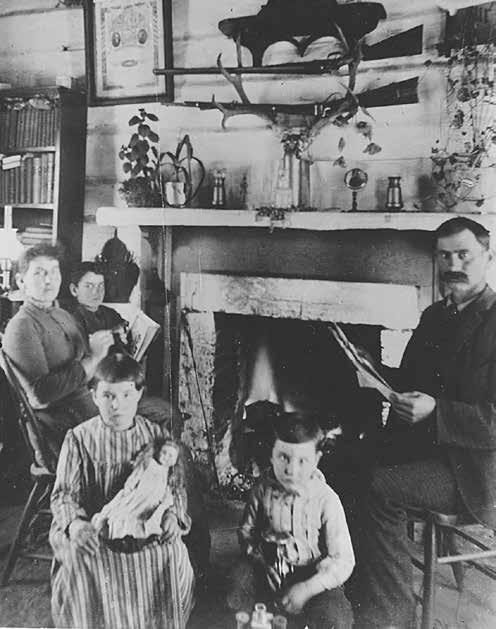
Historic homestead – Brock Hanson’s great-grandparents A.L. Brock and Julia Brown homesteaded near Buffalo in 1884. Pictured are the Brocks with their children in the original log cabin. Courtesy photo
hard to hold everything together and was able to put together four ranches to pass on to each of his sons.
“When we get together at brandings it’s like a big family reunion,” Brock says.
Brock and his family have been operating on the Red Fork of the Powder River since 1975.
“We raise mostly Black Angus cattle even though the family raised Herefords for 100 years,” says Brock.
He further notes the operation utilizes Hereford crosses, which has worked well.
“I like Angus cows and Hereford bulls,” Brock says. “The cows hold up better, and we get more years out of a Hereford bull.”
Current operations Today, the area chosen by Brock’s ancestors continues to support cattle production. The country is wellwatered with mild winters and enables the family to keep raising cattle.
Brock says the ranch uses a lot of horses as the country can be rough. While four-wheelers are nice in flatter country to haul salt or fix fence, using them on the mountain is more dangerous than a horse.
“If you have a wreck, they don’t care if they roll over on you, whereas a horse will try to step over you and not land on you,” he says.
Brock notes cattle today keep getting a little larger. However, he tries to maintain moderateframed animals when culling, since smaller cows are more efficient.
“We have started feeding our heifer calves some cake and grass hay in midDecember, but the cows can usually graze longer into the winter,” he notes. “We have fairly mild winters here at the base of the Big Horn Mountains.”
Brock emphasizes his great-granddad chose a good place. He also says he’s put in miles of pipe to increase water access everywhere.
“My dad said the best inventions he ever saw in his lifetime were plas-
tic pipe and submersible pumps,” Brock says. “A lot of the sheep country here has become cow country because of this.”
Several of Brock’s family members including his siblings, children and grandchildren also live in the area and help out on the ranch often.
“My son Leif and daughter-in-law Summer have three kids and they help on
the ranch,” he says. “Their girls are pretty young, but they’re good hands on a horse and they really enjoy it.”
“The work on a ranch is never ending but it’s a great life,” Brock continues. “This ranch and region have a very colorful history.”
Heather Smith Thomas is a corresponding writer for the Wyoming Livestock Roundup. Send comments on this article to roundup@ wylr.net.
Wheatland
Joe Deeney, Mark Borders, Cody Benton, Kobey Preuit
Torrington
Kelly Sittner, Derek Long, Lucas Moore, Kyle Nighswonger
Guernsey Dan Sisson
Continued from previous page
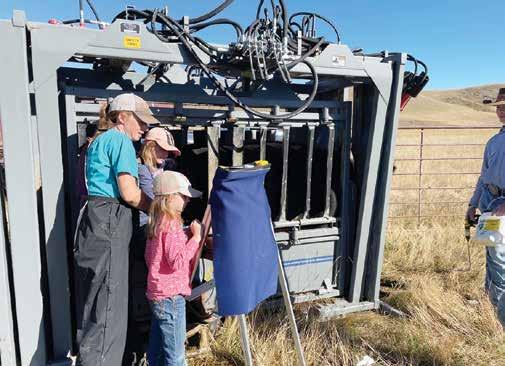
Next generation – Family is an important part of Red Canyon Ranch operations. Above, the youngest Hanson generation gets a lesson in preg checking cattle from Summer Hanson, who is also a
veterinarian. Courtesy photo
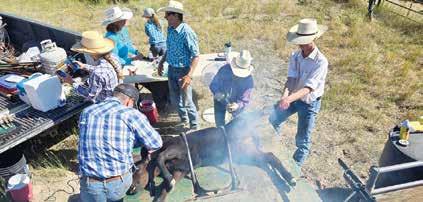
Branding time
involved in ranching in Johnson and Niobrara counties, Brock Hanson has likened brandings to family reunions. Here, the family works together to brand a calf. Courtesy photo
Winter work – Ranch work doesn’t slow down for winter weather. Brock Hanson says Red Canyon Ranch’s location near the Big Horn Mountains means the season is usually milder. Courtesy photo
Merlin and Gordon Ranches
THE GORDONS STAY FOCUSED ON FUTURE OF WYOMING AG
Tucked within the red scoria hills just outside of Buffalo lies the Merlin Ranch, a cow/calf operation owned by Gov. and First
Lady of Wyoming Mark and Jennie Gordon.
In nearby Kaycee, the governor’s homeplace, the Gordon Ranch continues
to support cattle and hay production.
Driven by a love for Wyoming’s rich agricultural community, the Gordons are passionate about promoting and protecting the ranching way of life.
Their work as ranchers and with the state of Wyoming is dedicated to ensuring the Cowboy State’s rich agricultural heritage continues for generations to come.
Local roots
Mark was sworn into office in January 2019.
foundation and asked, ‘If we improve the ranch and can demonstrate better grass production, water retention, husbandry and overall management, will you consider lowering the lease?’ And they agreed.”
The Merlin Ranch utilizes rotational grazing practices to encourage grass production and water retention, ensuring healthy cattle and pastures from the ground up.
Ranch managers tend to cattle on both the Gordon Ranch and the Merlin Ranch, providing quality care across every aspect of the diverse operations.
Although they now spend the majority of their time at the Governor’s Residence in Cheyenne, the Gordons are from Johnson County and return to the ranch as often as their schedules allow.
Mark grew up on a ranch near Kaycee, which is still in the family and is managed in partnership with his sister and brother-in-law Val and Doug Johnson.
The Gordon Ranch has roots in the Hereford industry, but Mark says the family began to embrace and incorporate Angus genetics around the 1970s.
He moved to the Merlin Ranch in 1988 and assumed operations from the Wrights, who were close family friends and wanted to ensure the land stayed in agriculture.
On the Merlin Ranch, Mark began to incorporate management methods which still drive the operation today, with a specific focus on environmental stewardship.
Jennie moved to Johnson County in 1980. She was working as a laboratory technician at the Sheridan Hospital when she first met Mark, and she jumped into ranching full time shortly after the couple’s marriage in 2000.
Jennie says she initially learned the ropes of ranching by keeping books for the Merlin Ranch and quickly became passionate about “building her toolbox” of ranching skills following the examples of neighbors, family and leading livestock experts.
Management practices
Mark says growing up on the family ranch taught him the importance of patience and strategy with livestock handling.
“As a kid on a ranch, you learn you can’t hoop, holler, whip and spur,” says Mark. “You have to figure out ways to be a little more thoughtful.”
A focus on total ecosystem health has also been central to management of the Merlin Ranch and Mark’s ranching philosophy for decades.
In fact, Mark says he was able to expand the ranch through a unique agreement with the Ucross Foundation which placed a focus on environmental stewardship.
“The Ucross Foundation had a neighboring ranch near the Merlin Ranch, and they were trying to find somebody to run it,” says Mark. “We approached the
“We have two really great ranch managers,” says Mark. “The ones on the Gordon Ranch have been there almost 20 years, and the ones on the Merlin Ranch have been there for about 16.”
“As we’ve expanded, we’ve allowed our employees to have a piece of the operation too,” Mark continues.
In his work in state office and on the ranch, Mark believes in contributing to avenues to help people get established and stay rooted in ag.
Securing the future Mark and Jennie both agree ag is the backbone of Wyoming and America.
As such, they are devoted to recognizing the hard work of ranchers and supporting the ag industry throughout the Cowboy State.
In October 2025, Mark launched the Cowboy State Agricultural Initiative – a working group dedicated to promoting ag education and supporting ranchers across Wyoming.
The initiative places a specific emphasis on supporting young producers and promoting management practices which ensure agriculture is accessible and attractive to future generations.
“I am intensely concerned with keeping Wyoming farms and ranches operational,” says Mark. “We have to make it possible for younger people to get into ranching and farming.”
“As ranchers, we are independent and can do for ourselves, but we also have a responsibility to help our neighbors,” he continues.
“Ag does a lot for us,” adds Jennie, highlighting the exceptional generosity of Wyoming ranchers who have contributed to programs within the Wyoming Hunger Initiative like Beef for Backpacks.
“Ag feeds the world, and it cares about communities so deeply,” she continues. “I feel so blessed to be a part of the industry.”
For more information on Merlin Ranch, visit merlinranch.com. To learn more about the Cowboy State Agricultural Initiative, visit agriculture.wy.gov/index. php?section=cowboy-stateag-initiative Grace Skavdahl is the editor of the Wyoming Livestock Roundup. Send comments on this article to roundup@wylr.net.
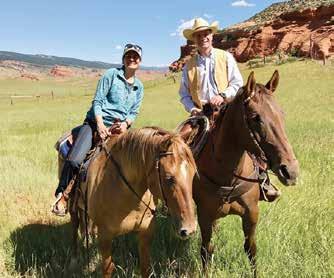
Wyoming way – Gov. Mark Gordon and First Lady Jennie Gordon agree agriculture is the backbone of Wyoming and America. Pictured are the Gordons horseback at their ranch. Courtesy photo
Located in Buffalo, 88 Equine is dedicated to providing exceptional veterinary care and customer service under the leadership of Dr. Dallas Shaw.
Dallas grew up ranching in Buffalo and returned home to establish her practice in 2022. In addition to offering veterinary services at her clinic and throughout Johnson County, Dallas works for the Professional Bull Riders (PBR) and American Bucking Bull Association.
A busy schedule caring for patients at home and on the road helps her achieve her goals while doing what she loves – working hard and helping animals.
Getting established
Growing up on her family’s cow/calf operation near Deadhorse Creek laid the groundwork for Dallas’ love of animals and desire to become a veterinarian.
An opportunity to shadow a local veterinarian in high school began her journey to her eventual career path.
She briefly changed directions to play basketball at Chadron State College in Chadron, Neb. for a couple of years, but eventually changed her focus back to veterinary science.
Dallas worked for a local veterinarian in Chadron, Neb. while applying to graduate school and earned her Doctor of Veterinary Medicine from Washington State University (WSU) in Pullman, Wash. in 2020.
Following graduation, Dallas worked exclusively in equine practices in Texas and South Dakota before a need for equine veterinary services in Buffalo prompted her to move back home and establish her own practice.
Dallas opened the doors to 88 Equine in 2022 on the border of her family’s ranch. The clinic’s proximity to family is a plus and its location off of I-90 makes it easily accessible for clients in Montana, South Dakota and Wyoming alike.
“It’s the best of both worlds,” she says.
Services and specialties
Dallas offers a host of veterinary services through her practice, but her main specialty is horses.
Although she offers bovine services through her work with the PBR and around Johnson County – including working as the main veterinarian at Buffalo Livestock Marketing – Dallas’ heart lies with horses.
She says focusing primarily on one species helps her stay competitive, keeps her skills sharp and provides the best possible care in her area of expertise.
“Veterinary medicine is such a broad term,” she says. “I think it’s important for veterinarians to stick to what
100 OF THE BULLS HAVE BEEN PAP TESTED BY DR. TIM HOLT AFTER SPENDING THE SUMMER AT 8,000’ IN WALDEN,
they’re good at, focusing on the medicine and the animals attached to the medicine.”
She also notes equine medicine in particular is incredibly diverse and constantly evolving.
From stallion services and mare management to lameness exams and emergency services, Dallas and the team at 88 Equine stay busy.
In addition to Dallas, a team of three main technicians – Kassie Swartz, Lauren Olsen and Hannah Cheeley – and seasonal interns keep operations running smoothly.
Another technician, Lisa Downs, takes the lead on in-house laboratory services like Coggins testing.
Dallas says the staff at 88 Equine plays a crucial role in keeping things up and running whenever her work takes her on the road.
In October, Dallas travels to Las Vegas to offer her services during the PBR Teams Championship, covering everything from general sports medicine to internal medicine and fractures.
When work around town slows down for the winter, Dallas also provides occasional relief work for veterinary clinics in Texas.
There’s a lot on her plate, but a strong work ethic grounds her.
“If you work hard every
day, you can achieve the things you want to achieve in this life,” Dallas says. “I promise nobody is going to give it to you.”
Special bond
Dallas’ love for horses drives many aspects of her life, both professionally and personally. When she’s not in the clinic or on the road, Dallas can usually be found in the saddle.
Dallas loves to ride and rope, and she says spending time with her horses helps clear her mind.
“My favorite part about home is my horses,” Dallas says, adding the closeknit community of Johnson County is also particularly special.
Each fall, 88 Equine helps sponsor and put on the Johnson County Memorial Roping, in partnership with Larry and Deanna Steele.
The event brings neighbors from across the county together to honor the lives of past generations of local cowboys and cowgirls.
Dallas’ passion for horses connects her to her clients, who all share the same deep love for animals. As a veterinarian and a horsewoman, Dallas loves to see horses and riders alike achieve their goals.
She takes pride in helping horses feel good and perform to the best of their abilities and strives to pro-
vide quality care across the board.
“Whether it’s a $2 million horse or a $200 horse, we treat them all the same,” says Dallas. “I want the absolute best for every horse. They are important to their owners, and they are important to me.”
For more information on 88 Equine, visit 88equine.com or call 307621-1860.
Grace Skavdahl is the editor of the Wyoming Livestock Roundup. Send comments on this article to roundup@wylr.net.
The Maternal Standard
N Bar Ranch Genetics. Montana Built These cattle were built to last; before trends existed.
FERTILITY. STRUCTURE. LONGEVITY. COWS THAT STAY. DAUGHTERS THAT REMAIN. No shortcuts. No reinvention.
This program endured because it worked - when others didn't. Every herd has a foundation. Ours was poured decades ago.
ANNUAL PRODUCTION SALE
March 28, 2026
130+ Yearling Bulls
Selected to sire replacement females. Reputation set of Replacement Heifers BUILT FOR COW SENSE, NOT HYPE.
This offering is for breeders who keep daughters and build for the long term. The trend here has remained steady for decades.
• Request the sale book. Study the cow families.
• Come prepared.
OTECO
WHEEL TRACK FILLERS
with clients, Dr. Dallas Shaw enjoys riding horses and roping to clear her mind. Pictured is Dallas during the 2025 Johnson County Memorial Roping, which her clinic helps sponsor and put on every year. Courtesy photo
Trusted team – In addition to Dr. Dallas Shaw, a team of talented technicians help keep operations at 88 Equine running smoothly. Pictured left to right, 88 Equine staff Lauren Olsen, Hannah Cheeley and Dallas pause for a photo with Makenna Ellerman, saddle winner of the 2025 Johnson County Memorial Roping. Courtesy photo
Serving the West
RAY MADER BUILDS RELATIONSHIPS, SERVES PRODUCERS AS NOTABLE LIVESTOCK REP
Ray Mader of Buffalo went to work for Q Livestock under Owner Martin Sullivan in 1984. At the time, video auction marketing was still in its infancy.
“Four of us got together, including Martin, myself, Ralph Wade and Tony Shiffer, and we started Q Livestock Video Auction,” Ray shares. “We had it for three years.”
In 1987, Superior Livestock Video Auction was launched by Jim Odle, a cattleman and auction owner from Brush, Colo., and Buddy Jeffers, owner of Amarillo Livestock Auction in Amarillo, Texas. Together, the two envisioned a new way to market cattle using video technology.
“They wanted Wade, a world champion auctioneer, to join on,” Ray says. “So, the four of us met with them, and we all decided to go with Superior Livestock Auction.” Ray has worked with Superior Livestock Auction ever since – a tenure now spanning over 38 years.
Emerging technology, industry growth
Ray notes, over the course of his long career, technology has changed and the market has grown, although the fundamentals of video auctioning have remained surprisingly consistent.
“The auction itself and the catalogs are basically the same as they were earlier, but now we have the internet,” he states.
we always did, or a lot of guys today have a portal they do it on,” Ray says. “This works for the advanced technology guys, but I still do hard copies and send them in for the sales.”
Building relationships, serving producers Ray notes when he first started, his territory included Montana, Wyoming, western South Dakota and western Nebraska. While he still travels throughout the West, his focus today is primarily in central and northeastern Wyoming, with some clients still located in Montana and Nebraska.
Over time, Ray built a solid base of repeat customers, and today he sells approximately 8,000 to 10,000 head of cattle annually through video auctions, along with a few private treaty deals.
“The producers I generally represent sell their cattle through me every year,” he says. “I have customers who have been selling on Superior Livestock Auction for all 38 of my years with the company.”
“Because of my age, however, I don’t try to go out and find new clients anymore,” he adds. “I have all I want to handle right now.”
“The cattle business is a small world and a good one.”
RAY MADER
feeder cattle,” Ray explains.
Superior Livestock Auction also hosts four major summer sales each year including one in South Sioux City, Neb.; one in Steamboat Springs, Colo.; one in Winnemucca, Nev. and one in Sheridan.
The Sheridan sale remains particularly important to Ray’s clients.
“It’s kind of a local sale featuring cattle from Wyoming, Montana, South Dakota, Nebraska and Colorado,” he says. “It brings cattle in from all over, but it really features the northern cattle.”
Ray credits much of the region’s success to strong genetics and quality management.
“We are in an area where cattle have good genetics and perform well,” he explains. “This area has top bull pro-
ducers with top genetics, and their genetics just keep improving every year.”
Weather conditions can still impact performance, particularly in drought years, but genetic potential continues to show through.
“The market prices this year have been really good,” Ray says. “This past year has been unbelievable for prices. It’s about time cattle producers had some good years.”
He adds, “Everything else – all of the costs to produce cattle – kept going up. It was time to have cattle bring what they are actually worth.”
Ray says he also believes consumers sometimes overlook what goes into producing beef.
“It always amazes me people think beef is too high at the grocery store,” he says. “They should come to the ranch and see what goes into making their steak or hamburger.”
Despite the possibility of increased beef imports, Ray says U.S. quality remains unmatched.
“If people want top quality, they buy American beef,” he says.
Heather Smith Thomas is a corresponding writer for the Wyoming Livestock Roundup. Send comments on this article to roundup@ wylr.net.
Wyoming’s Oldest Bank
In the early days, buyers and sellers needed access to a television channel broadcasting the auction, and they had to bid via telephone. Participation required being physically present at the sale or connected by phone.
Ray further mentions most of his clients are cow/ calf producers, though some sell yearlings as well. Cattle are typically sold in load lots – either all steers or all heifers – though smaller operators may market mixed loads.
Ray shares one of the largest advantages of video sales is the continuity they provide between buyers and sellers.
“For a long time, you either had to be at the sale or on the phone,” Ray explains. “Now with the internet, buyers can sit at home or at their office and buy cattle. Everything is easier and sales have grown quite a bit.”
Despite these changes, Ray says his job as a Superior Livestock Auction representative has changed very little.
“I still have to go out and meet with ranchers, video their cattle and write up the contract,” he states.
Although filming equipment has evolved from large television cameras to smartphones, the process remains pretty much the same. Video footage is sent to Superior Livestock Auction for editing and posting and contracts are written up for each seller.
“We can either write up the contract with a pen like
“If they like the calves and they do well in the feedlot, buyers usually want to buy from the same rancher every year,” Ray says.
After nearly four decades in the cattle marketing business, Ray remains grateful for the people and relationships the industry has brought into his life.
“This is a great industry to be in,” he states. “I have met many wonderful people. The cattle business is a small world and a good one.”
Year-round marketing, top-notch cattle
According to Ray, Superior Livestock Auction hosts sales year-round, offering producers flexibility in marketing their cattle. The largest volume of sales takes place during summer months when cattle are sold on contract for later delivery.
“These sales include pairs, weaned calves or yearling
A friendly face – Ray Mader of Buffalo has served cattle producers across the West for nearly four decades as a representative for Superior Livestock Auction. Courtesy photo
Proven Performance
Located in Buffalo, ELK Angus is a seedstock operation renowned for balancing proven performance genetics with maternal traits to achieve range-ready Black Angus cattle.
Owner-operators Tyler and Meg Scales bring an entrepreneurial edge and future-facing focus to their operation, raising kids and quality cattle on their ranch at the base of the Big Horns.
Return to roots
Both of the Scales come from ag backgrounds in Colorado.
Tyler spent his childhood
running high-altitude cattle on Colorado’s Western Slope and rodeoed professionally for many years before returning to ranching full time.
Meg grew up in eastern Colorado, but she explains her family has ranching roots all throughout Wyoming – a heritage she has taken pride in carrying on since establishing ELK Angus and moving to Buffalo.
Meg had Corriente cattle growing up, but her true love has always been horses. She showed and judged horses throughout her childhood and was a member of the
2006 World Champion Horse Judging Team at Colorado State University (CSU).
A shared love for animals brought Meg and Tyler together shortly after college, and their venture into the seedstock industry began in 2015.
Thanks to ag scholarships which paid for virtually all of her schooling, Meg was able to graduate debt free from CSU and invest the untouched money from her college fund into cattle.
The Scales made their initial investment in ELK Angus with the purchase of
10 cows – a combination of Black Angus and Herefords.
Over the past decade, they built up their operation in Johnson County, running bulls and heifers on land
leased from Meg’s father Bob Grieve.
Fire and ice
As seedstock producers, the Scales understand the importance of striking a balance between utility and performance. For ELK Angus, the key to unlocking the full potential of these traits lies within maternal power.
A philosophy dubbed by Tyler as “fire and ice” lies at the heart of operation, combining the bull-powered “fire” of growth and carcass traits with the female-focused “ice” of maternal instincts and reproductive ability.
“Our sweet spot at ELK Angus is understanding how to combine maternal power and genetics,” Meg says. “A good cow will read as a good bull. If you start with great mothers, it’s a home run every time.”
For this reason, ELK Angus prioritizes heifer development in addition to bull production.
“We have a ton of pas-
sion for developing heifers,” Meg says. “We love seeing the potential in genetics.”
Meg describes ELK Angus as a combination of her and her husband’s “superpowers,” built upon Tyler’s understanding of genetics and experience with raising high-altitude cattle and her own appreciation for balanced, functionally-correct animals.
The Scales run their herd on a high-country forest lease in the Big Horn Mountains, where cattle must prove their ability to hold up in high-altitude range conditions among the rocks and sagebrush. Fundamentals like good feet, strong legs, longevity, fertility and docility are central to the Scales’ seedstock program.
With bulls and females alike, ELK Angus is committed to “bringing the best cow families together to help the cowman profit at sale time, for today and
tomorrow’s future.”
Investing in the future
As young producers, the Scales understand the importance of investing in the future of ag both at home and throughout their community.
They are raising their two young children Zane and Lettie on the ranch, leading by example to instill the values and lessons of ranch life.
“We want our kids to see hard work pays off and to have a sense of responsibility and ownership in everything they do,” Meg says. “The best way to do this is to model it.”
Even at the young ages of six and two, Zane and Lettie
are enthusiastically involved in life on the ranch alongside their parents.
“Our kids have a really clear understanding of what life and death means, as well as weather and try,” Meg says. “They see us at our low points and at our high points, and they’re alongside us for every step.”
Whatever the future holds, Meg says laying the groundwork for her children to ranch down the road if they choose is top of mind.
As the Scales continue to build their program, they maintain a spirit of generosity and prioritize pouring into others.
ELK Angus is enthusiastic about offering a “handup” to the next generation of ranchers, believing particularly in the value of community and supporting youth programs like 4-H.
Meg emphasizes a rancher involved with 4-H made an impact on Tyler’s childhood, and the generosity of donors who contributed to the ag scholarships which put her through college allowed her to invest in her future.
“We see giving forward as very critical, and 4-H is such an important program,” Meg says. “We need to make sure we’re including kids and keeping them involved as much as possible.”
In this spirit, the Scales
donate two heifers from their program to Johnson County youth each year.
One is donated to the Johnson County Cattlemen’s Supreme Cow Contest. The winner is chosen at county fair and gets to pick a replacement heifer donated by local producers to develop as a 4-H project and show the next year.
Additionally, the Scales choose a replacement heifer to donate during ELK Angus’ annual production sale. Anyone under the age of 20 who attends the sale is eligible for the drawing, and the winner is chosen at random during the sale.
Last year, Meg says a snowstorm on sale day
resulted in an early school release, and roughly 40 neighborhood kids turned up to take their chance at getting involved with ag.
The Scales have also provided artificial insemination services for 4-H heifer projects and donated semen from herd bulls to foster education and interest in the industry.
“There is such a ranching spine to Johnson County,” Meg says. “It really influences a lot of the culture in our community.”
ELK Angus will host its sixth annual production sale on March 17, offering
a selection of more than 50 range-ready bulls and elite replacement heifers.
The Scales invite everyone to come share in good community and great cattle –as well as hot coffee, donuts and tri-tip – at Buffalo Livestock Marketing on sale day.
For more information on ELK Angus, visit elkangus.com, follow @ELKAngus on Facebook or e-mail meg@scalescattleco.com. Grace Skavdahl is the editor of the Wyoming Livestock Roundup. Send comments on this article to roundup@wylr.net.
WEAVER RANCH
ELK Angus – Tyler and Meg Scales started their seedstock operation ELK Angus in 2015. Based in Buffalo, the Scales raise rangeready Black Angus bulls and heifers with a focus on performance genetics and maternal traits. Pictured are the Scales with their two children Zane and Lettie. Courtesy photo
Supporting the future – The Scales see giving back to youth as an essential part of supporting the ag industry. Above, local youth wait to see whose name gets drawn as the recipient of a replacement heifer donated by ELK Angus during the operation’s annual production sale. Courtesy photo
Fire Recovery
IN AFTERMATH
DISASTER
In August 2024, the House Draw Fire swept across Johnson County, ravaging roughly 175,000 acres of land in less than 48 hours.
Through the throes of the blaze, ranchers and locals worked tirelessly to locate livestock, cut fences and fight flames, saving lives and buildings as the fire surged.
The community continued to band together in incredible ways after the flames were extinguished, volunteering their time and resources, establishing the Johnson County Fire Relief Fund (JCFRF) and leaning on one another to heal.
Fire impacts
Dry lightning ignited the House Draw Fire southeast of Buffalo on Aug. 21, 2024. A combination of high wind, record-breaking temperatures and low humidity fueled the flames, and the fire grew rapidly.
The majority of acreage burned was privately-owned ranch land, resulting in damages and losses throughout several area ranches. The fire’s impact reverberated throughout Johnson County and was felt deeply by all, even by those who lost comparatively little to the flames.
Meg Scales, a local seedstock producer and co-organizer of the JCFRF, recalls the fire as a terrifying and heartbreaking experience. However, there were also glimmers of hope.
“Not a single home or person was lost in the fire,” Meg recalls.
“I credit this outcome to the incredible neighboring and can-do attitude of our local ranch community.”
“The community’s resilience was incredible. It was amazing to see everyone come together.”
MICAH MOST
The proactive attitude of Johnson County residents continued in the fire’s aftermath as neighbors once again came together to focus on recovery efforts.
“If our community had not rallied to provide support, we may have seen some collapses of heritage ranches in the area, which was something none of us wanted to see,” says University of Wyoming (UW) Johnson County Extension Educator Micah Most. “The community’s resilience was incredible. It was amazing to see everyone come together.”
Outpouring of support
Even after the fire was extinguished, time was still of the essence and recovery efforts began immediately.
With animals affected, pastures destroyed and hay stores compromised, neighbors quickly banded together to donate hay, time, money and resources.
Through his role with Extension, Micah helped organize logistics and communication in the wake of the fire. He was called in to help coordinate hay donations started by area ranchers and says the outpouring of support was overwhelming.
“We had people who were affected by the fire themselves show up to donate hay and money to support their neighbors,” Micah recalls. “Everyone was so generous, even though they were facing losses themselves.”
In addition to hay donations, several local businesses donated portions of their proceeds to fundraising efforts.
Neighbors organized community events, including a “Rope for Hope” team roping in Kaycee, organized by Ashlea Bassett, to raise funds for fencing supplies, and volunteers pitched in to start rebuilding portions of the nearly 600 miles of wire and fenceposts damaged by the flames.
Executive orders signed by Gov. Mark Gordon, a Johnson
on next page
County native himself, helped ease restrictions on transporting feed and livestock and support from federal disaster programs helped cost share in recovery efforts.
Additionally, local citizens banded together to establish the JCFRF to help organize immediate resources and coordinate assistance in areas not covered by government programs.
Johnson County Fire Relief Fund
JCFRF was spearheaded by Meg and Kassie Camino with support from local elected officials and community members.
Organized under the Johnson County Communities Fund – a local 501(c)(3) nonprofit – the JCFRF served as a central hub for distributing information and helping ranchers navigate recovery resources coming in from local, state and government efforts.
“There were so many resources being thrown at ranchers, so about a dozen of us got our heads together and began to look for ways to make the process easier for our friends and neighbors,”
Meg recalls.
The JCFRF formed a producer advocacy subcommittee to help align resources with the actual needs of area ranchers.
Members helped coordinate lobbying efforts and served as liaisons to help producers navigate resources coming in from government assistance programs.
“It took a ton of pressure off of ranchers to identify exactly what they needed help with and give them information proactively,” notes Meg.
The subcommittee also helped organize and distribute funds coming in from local donations, which amounted to tens of thousands of dollars in relief money.
Ranchers were able to apply for financial assistance through the JCFRF to put towards expenses not covered by government programs or insurance.
“Reading through those applications was heart wrenching but also heartwarming,” Meg says. “Every single person who applied didn’t think they were worthy of it and thought their neighbor needed it more.”
Ashes to the Table
On Oct. 19, 2024, neighbors from across Johnson County gathered in downtown Buffalo for the Ashes to the Table Community Dinner and Dance.
Hosted by the JCFRF and community partners, the event fed an estimated 1,000 people who joined together for a night of community and fundraising.
The evening was a huge success, garnering attention across social media and Fox News and raising over $81,000 in donations.
Additionally, the event brought neighbors together to reflect on community, enjoy each other’s company and heal.
“There’s a lot of love in our community and such a ranching spine to Johnson County,” says Meg. “The Ashes to the Table Dinner was very cathartic. A huge part of it was letting people heal.”
Continued hope
Nearly a year and a half after the House Draw Fire, the community and landscape across Johnson County continue to heal.
Meg says the final round of funding organized under the JCFRF will be distributed to ranchers in January 2026, after which the Johnson County Communities Fund will return to its original sta-
tus as a community nonprofit. Rangeland recovery is a slow process, but Micah says a good rainfall last summer has helped encourage growth.
“The native perennial grasses are coming back pretty vigorously,” he says. “It’s going to take a few more years of consistent moisture, but I think we’re on the right track.”
Monitoring and preventing the spread of invasive grasses like ventenata and cheatgrass remains a top priority, and Micah applauds the efforts of the Johnson County Weed and Pest Board in managing this threat.
“A lot of partners have collaborated on recovery efforts,” Micah says. “From what I’ve seen, things are coming back – hopefully even stronger than they were before.”
Grace Skavdahl is the editor of the Wyoming Livestock Roundup. Send comments on this article to roundup@wylr.net.
Additionally, Micah says support from government agencies and nonprofits – including the Natural Resources Conservation Service, Bureau of Land Management and local conservation districts – has been instrumental to supporting wildlife recovery.
Community support – In the aftermath of the House Draw Fire, Johnson County residents banded together. Pictured is an aerial view of the Ashes to the Table Community Dinner and Dance, which brought more than 1,000 people together in downtown Buffalo to raise funds for fire relief. Johnson County Fire Relief Fund photo by Jeff Wing
Ashes to the Table – The Johnson County Fire Relief Fund (JCFRF) hosted the Ashes to the Table Community Dinner and Dance to foster healing and raise funds for fire relief efforts. JCFRF photo
Sheep, Stewardship, Staying Power
FOUR GENERATIONS OF CAMINO FAMILY CARRY ON SHEEP INDUSTRY LEGACY
Among the rolling plains of Johnson County, where weather, drought and predators test even the most seasoned livestock producers, the Camino family has humbly built a sheep operation defined by resilience, adaptation and deep generational roots.
Camino and Son is a fourth-generation sheep outfit with rich Basque heritage run by Peter John Camino and his son Kirby who is prepping to take the reins.
Humble beginnings
The Camino family’s story dates back to 1908 when Peter John’s grandfather John Camino, a Basque sheepherder, arrived in the U.S.
After several years of working for other sheep operations, he saved up enough to start his own, laying the foundation for what would become a multigenerational enterprise.
“My grandfather started it, my dad Peter Camino took it over, then I took it over and
now Kirby and I are both running it. He’s going to take over here pretty soon,” Peter John states.
Today, Camino and Son runs approximately 3,000 head of Rambouillet breeding ewes, a breed Peter John says is wellsuited for the wide-open range in northern Wyoming.
“Rambouillets are more of a herding sheep, and they adapt well to the country we run in,” he explains. “We’ve also really focused
on improving wool, and our Rambouillets have really fine wool now too.”
The operation retains ownership of its lambs from birth through harvest, feeding them out to market weight before shipping to a processing plant. Wool is marketed separately.
“We used to work with Mountain Meadow Wool until COVID-19 hit and they had to slow down, but as soon as they get their feet back on the ground, we’ll probably go back to marketing our wool through them,” Peter John says.
Chasing production goals
On the production side, Camino and Son focuses on improving its lambing percentage, with the goal of reaching a 150 to 160 percent lamb crop.
“This is probably the biggest goal we’re working on right now,” Peter John shares.
To accomplish this, the operation has partnered with University of Wyoming (UW) researchers and industry experts to examine mineral
nutrition, water quality and feed efficiency.
According to Peter John, recent testing revealed a copper deficiency on the operation caused by naturally-occurring minerals in the soil which block copper absorption.
“Sheep need a certain amount of copper for their bodies to function, but we found out we have a copper deficiency in this area,” he explains.
Water quality on the ranch is also under review, as high iron levels can further interfere with mineral intake.
“We’re doing a water quality study now to see if it’s affecting our breed up as well,” he says.
In addition, the Caminos have worked closely with feeders to improve lamb performance in the feedlot, with a focus on faster gains and optimal finish weights without excess fat.
“We’ve really improved efficiency, and it’s made a big difference,” he says.
Out on the range
Furthermore, Peter John shares Camino and Son’s grazing strategy reflects the geography that makes Johnson County so unique.
During winter months, the flock grazes the flats near Powder River and Nine Mile. When summer arrives, sheep are trailed to high elevation mountain pastures near Red Fork.
“This enables us to almost double our flock size,” Peter John notes. “We are able to rest pasture on the flats in the summertime, then go to the mountains and let that ground grow back.”
However, Peter John says this carefully balanced system was tested in recent years when the House Draw Fire burned through roughly 90 to 95 percent of the operation’s pasture, forcing the Caminos to split their flock and rest affected ground.
“We had to adjust pretty quick,” Peter John says. “We split our flocks and went two different ways to work around it. We are letting burned ground rest for two
years before we go back to grazing it. It’s definitely been a challenge.”
In addition, Camino and Son contends with a familiar list of challenges felt across the sheep industry.
“Our biggest challenges are weather and predators,” Peter John states, noting coyotes remain the largest threat, although eagles are now becoming more of an issue on his operation as well.
Influential leadership
On top of running a thriving operation, Peter John has also taken on numerous leadership roles at the county, state and national levels.
He has served as president of the Johnson County Predator Board, Johnson County Wool Growers Association and Wyoming Wool Growers Association (WWGA) and completed two three-year terms on the American Lamb Board.
Peter John shares one of his proudest accomplishments came during his tenure with WWGA when the organization underwent a major reorganization.
“It took me three years to get it done,” Peter John says. “This was probably one of the biggest things I’ve been involved with.”
Another milestone Peter John mentions was helping to bring a sheep specialist back to the state of Wyoming after more than two decades without one.
In partnership with UW, Peter John and other industry leaders successfully advocated for renewed Extension support and were able to hire UW Extension Sheep Specialist Dr. Whit Stewart who has been instrumental to Wyoming’s sheep industry for the past several years.
“He has been a huge help to the industry, and it’s probably another one of my greatest accomplishments – certainly one I’m really proud of,” Peter John concludes.
Hannah Bugas is the managing editor of the Wyoming Livestock Roundup. Send comments on this article to roundup@wylr.net.
Heart of operations – Hardy, fine-wooled Rambouillet sheep are the heart of operations at Camino and Son. Courtesy photo
Early generations – Pictured are John and Peter Camino, the first and second generation of Camino and Son, a large sheep operation based in Johnson County. Courtesy photo
A Family Affair
Mike Curuchet and his family oversee a multigenerational sheep operation 20 miles southwest of Kaycee.
“I was born into this business,” Mike says. “My grandparents on my dad’s side were Basque immigrants and had sheep, and my mother came from an old ranching family in the area.”
Along with his wife Chris and their three kids –Joe, Jamie and Ben – Mike raises sheep on the home place which has been in the Curuchet family since 1962.
white-faced rams, bringing up the animals on the home place and a combination of leased and owned land in the Big Horn Mountains.
“All lambing takes place at our home place,” Mike explains. “We lamb our terminal cross ewes in March, which are out of SuffolkHamp cross rams we purchase. The other ewes are lambed in April and sired by white-faced rams we raise ourselves.”
Replacement ewes are also selected, and the whole
feedlots in Colorado and Wyoming.
“We always try to stay in touch with whoever buys the lambs to see how they do and to know if there’s anything we need to change,” Mike says.
Ewes spend winters outside of Kaycee on a place purchased in 2016, as it is better winter country than the home place and usually stays fairly open.
“We ultrasound ewes at the end of December and the end of January, then shear around the middle of February before trailing back to the home place for lambing,” says Mike. “Then we start the whole thing over again.”
Mike’s sister and brother-in-law Janine and Dave Foley and some of their family help with shear-
Current challenges,
The Curuchets have held strong through shifting conditions in the lamb and
“No trade deal with China has really hurt our wool market, but lambs are doing very well right now,” Mike says. “Lamb prices came up quite a lot last fall.”
“The wool market is frustrating because we feel wool is such a quality, versatile product that is often overlooked,” he continues.
Trailing through town – The path to summer pasture for the Curuchets goes through Main Street in Kaycee. Neighbors are supportive and enjoy watching the flock make their way through town.
photo
the future of the sheep and wool industries.
As the immediate past president of the Wyoming Wool Growers Association (WWGA), Mike says he was able to meet great people with good ideas about promoting the industry.
“It was a great experience, and I got to work with a really good board,” Mike says. “One thing we’ve learned is we need to do a better job of showing people what we do.”
After brainstorming with Chris, Mike says they
came up with an idea to host a lambing school on the ranch in partnership with WWGA to showcase the sheep industry at work.
Mike says the goal is to show younger people what producers do and to raise awareness of the lamb industry.
“It might inspire some of them to work with sheep or help people realize what it’s all about,” Mike says.
He emphasizes sheep production used to be one of the West’s major industries and laments the fact
it’s been shrinking, but he is still holding out hope.
“I see a glimmer of hope for the future,” he says.
“There are a lot of things moving in the right direction. We’re very proud of
the sheep industry and the people who make it up.” Their kids are still young, but Mike says there is a possibility of continuing the family legacy for another generation.
“It’s hard to say at this point whether any of the kids will want to continue with the family sheep business,” Mike says. “They all have lots of options, but if any of them want to be here, we will
give them the opportunity.” Heather Smith Thomas is a corresponding writer for the Wyoming Livestock Roundup. Send comments on this article to roundup@ wylr.net.
Celebrating 25 Years of Conservation
By conserving Wyoming’s working agricultural lands and the open space, wildlife habitat, and environmental benfits they provide, the Wyoming Stock Growers Land Trust is creating a lasting impact statewide.
Mule Deer Crucial Range 60,170 acres
Visit our website to see more of our wildlife impact!
Greater Sagegrouse Core Area 128,367 acres
Antelope Crucial Range 23,706 acres Elk Crucial Range 39,581 acres
communictions@ wsglt.org
The work we do and the impact it has across the state would not be possible without our dedicated landowners, donors and supporters. A sincere thank you to those who attended and sponsored our 25th Anniversary Celebration!
Together we are keeping Wyoming, WyomingTM
Ranching in the WEST Ranching in the WEST
*All seminars, including the day-long conference, are free to attend, but registration is required*
Brought to you by Wyoming Innovation Partnership, this year 's Ranching in the West Seminar Series will focus on Agricultural Entrepreneurship
Hosted in partnership between UW ’s Ranch Management and Agricultural Leadership Program and the School of Energy Resources, these seminars bring practical , expert-led insights tailored towards entrepreneurial excellence within agriculture for ranching in the West
Whether you attend in person or virtually, don’t miss the chance to build a stronger future for your operation with strategies designed for Western Ranchers and agricultural entrepreneurs
SEMINAR TOPICS:
Cattle Drives and Quests: Lessons for Entrepreneurs-February 12, 2026 @5PM-Laramie
Kick off this year ’s seminar series with Dr Tom Field, the Director of the Engler Agribusiness Entrepreneurship program from the University of Nebraska-Lincoln, to learn about the potential of young people and opportunities in agricultural and rural communities
Spinning a Business out of a Hobbie-February 26, 2026 @5PM-Laramie
Join Ben Hostetler, Owner and Operator of Mountain Meadow Wool Mill , to dive into how his mother ’s knitting hobby has expanded into the largest wool mill in the west
Journaling the Outdoors: Wildlife Entrepreneurs-March 26, 2026 @5PM-Laramie
Experience entrepreneurial opportunities within hunting and wildlife with the President and CEO of Eastmans Hunting Journal , Ike Eastman Rocky Mountain Land and Resource Management-April 15, 2026 @7:30 AM-Laramie
Explore many different avenues of land and resource management throughout this daylong conference and hear from keynote speakers such as Authors David Prescott and Michael Ashley, as well as Governor Mark Gordon
(307)766-4239 / rviolett@uwyo edu Scan the QR Code to learn more
Summer grass – Every June, the Curuchets send their flock to the Big Horn Mountains where they stay until October. Pictured are ewes and lambs on their way to summer pasture. Courtesy photo
Buffalo Livestock Marketing
LOCAL SALE BARN SERVES BUFFALO AND BEYOND
Buffalo Livestock Marketing has been meeting the marketing needs of livestock producers from Johnson County and beyond for three decades.
Located in Buffalo at the base of the Big Horn Mountains, the auction will celebrate 30 years of operations in the fall of 2026.
Co-owners Austin and
Taylor Snook have been expanding operations in partnership with Craig Deveraux for the past three years, prioritizing customer connection in building the barn’s reputation from the heart of northeastern Wyoming’s cattle country.
Barn background
The Buffalo Livestock Auction held its first sale in
November 1996, and the barn was founded by Jay Godley, who managed operations for 21 years before selling to Greg and Danny Matney in 2017.
The Matneys ran the
barn for five years before the Snooks, Craig and Dan Catlin assumed ownership in 2022 and rebranded as Buffalo Livestock Marketing.
Austin explains he and Taylor come from a ranch-
ing background near Devils Tower, and Craig is a longtime friend of the family. The Snook brothers have managed cattle and worked in sale barns their whole lives, and Craig has deep roots in the horse industry.
Buffalo Livestock Marketing holds biweekly cattle sales every Wednesday and Saturday, with the busiest season landing during the fall run from September through December.
Several local seedstock producers also utilize the sale’s facilities for their annual production sales.
Horse sales take place in the spring, aided by the expertise of Craig and Auctioneer Curt Westland, and special sheep sales are held whenever numbers are high enough.
Spacious yard facilities are designed with workflow in mind and can accommodate several thousand head of cattle at capacity.
The barn comfortably seats 200 people on sale day, and seats fill up fast thanks to support from the surrounding community and buyers across Wyoming.
Proximity to I-25 and I-90 make it a prime location for serving a range of customers from surrounding states like Montana, South Dakota and Nebraska as well.
“We’re kind of out there in the middle of nowhere, but at the same time, it’s kind of central,” says Austin. “The two interstates come together and make it easy for a buyer wanting to go north or east with some cattle – or any direction really.”
Austin notes the physical sale barn serves as headquarters, but Buffalo Livestock Marketing also utilizes video sales conducted through Northern Livestock
Video Auction to maximize customer service and impact.
A team of field representatives also work with customers in the country, marketing several classes and species of livestock via private treaty sales.
Setting records
Record-high cattle prices swept auctions across the nation in 2025, and Buffalo Livestock Marketing was no exception.
The auction made local news headlines consistently throughout the duration of the fall run, breaking barn records and maintaining competitive prices in the midst of mid-season market volatility.
Austin attributes this success to a variety of factors, including advancements in the market, quality cattle and exceptional help.
“The busy season went really well,” he says. “It seems like every week we broke another record.”
In addition to higher market prices, Austin says the volume of cattle being sold also rose.
“One week we sold just under 4,800 spring calves through the barn,” he recalls. “This was a new headcount record for us.”
Austin also highlights the support of the local community, noting Johnson County ranchers always show up in full force on sale day to lend a hand from both the buyer seats and the back alleys.
“The community around Johnson County as a whole is amazing,” says Austin. “They all come out to support us.”
Day help keeps stock moving swiftly through the yard on sale days, while a team of three full-time office employees work to compile
Continued on next page
Prime location – Buffalo Livestock Marketing is located in Buffalo at the base of the Big Horn Mountains. Its proximity to I-25 and I-90 make it a prime location for serving a range of customers throughout Wyoming and surrounding states. Courtesy photo
Sale day – Buffalo Livestock Marketing holds twice weekly cattle sales throughout the year, bringing buyers from miles around to fill the seats on sale day. Courtesy photo
market reports, coordinate consignments and make preparations throughout the week.
“We have some of the best help I’ve ever seen,” Austin says. “Everyone knows their job, which helps us cycle through the cattle faster so we can get through more numbers.”
Looking ahead
As far as the future is concerned, Austin says Buffalo Livestock Marketing remains focused on “doing good business” with customers from all over, keeping honesty and customer connection top of mind.
He looks forward to continuing to connect clients with quality cattle and says he’d like to see sheep sales grow in the future as well.
“I believe northeast Wyoming is one of the better areas when it comes to quality cattle,” Austin says. “There’s a ton of really high-quality cattle out here, and people are starting to figure it out.”
“We see a lot of new faces around buying cattle,” he continues. “Our area gets bigger all the time.”
Austin anticipates demand for beef cattle to stay steady in 2026 as the nation continues to rebuild herd numbers. He hopes for
another good year at the auction across all platforms and emphasizes the crew at Buffalo Livestock Marketing will prioritize the needs of producers however market conditions play out.
“Any way you want to sell one, we’ll do our best to get you a good price,” Austin says. “We always try to sell them just as high as we can and to be honest and good to work with.”
He also encourages people to get in touch and build connections.
“We try to reach out to people as much as we can, but we love to be reached out to as well,” Austin says. “If anyone has questions about sales or any aspect of the market, we’re always open to talk.”
“Our phones are always on,” he continues. “We answer them all the time.”
For more information about Buffalo Livestock Marketing, visit buffalolivestockwyo.com, e-mail buffalolivestockmarketing@outlook.com or call the office at 307-684-0789.
Grace Skavdahl is the editor of the Wyoming Livestock Roundup. Send comments on this article to roundup@wylr.net.
“We always try to sell them just as high as we can and to be honest and good to work with.”
AUSTIN
SNOOK
SOLD: Mazet Road Farm: Fremont County, Wyoming: Very nice property with no improvements located in one of the
areas. SOLD: Cowboy Mine Horse Farm: Hot Springs County, Wyoming. Very nice property in a great location.
SOLD: S Muddy Farm: Fremont County, Wyoming. Productive alfalfa farm west of Shoshoni.
SOLD: Powell Farm: Park County, Wyoming. Irrigated farm with minimal improvements.
Good facilities – The yard facilities at Buffalo Livestock Marketing are designed with workflow in mind
Continued from previous page
Klondike Ranch
GUEST RANCH OFFERS GLIMPSE INTO WORKING COWBOY LIFE
The Klondike Ranch is a working cattle operation and guest ranch nestled among the cottonwood trees lining Crazy Woman Creek. It was established in 1886 and sold to a prospector from the Klondike Gold Rush years later, where it took on the name it still carries today.
Richard and Patty Tass
operate this historic ranch, which has been in Richard’s family since 1920.
The Tasses raise Gelbvieh and Angus cattle and offer an authentic Western experience to guests who visit.
Early years
“Our family has been on this ranch for 105 years,” Richard says. “My grandpar-
ents came from Hinckley, Minn. in 1918 and homesteaded about 15 miles from our present-day ranch.”
“The first winter on the family homesteads was tough,” Richard adds. “My grandfather and his sons went back to Minnesota where the rest of the family was still farming and put up hay there to ship to the Wyoming homesteads.”
The hay was shipped to Buffalo by train, then hauled 15 miles into the hills where the homestead was located. This gave the family enough hay to winter their milk cows and a few horses, but it was a temporary solution.
“My granddad proposed either selling the homesteads and going back to Minnesota or selling the farm and finding a ranch in Wyoming with a hay base that could grow hay for the homesteads,” says Richard.
They decided to stay in Wyoming, and Richard’s grandfather purchased the Klondike Ranch in 1920.
The ranch sprawled across nearly 600 irrigated acres at the time.
The ground’s proximity to Crazy Woman Creek made for easy irrigation and allowed the family to grow hay. Its location near the railroad also allowed another business venture to take hold.
New enterprise
From about 1915-20, Richard says many guest ranches were started around Sheridan and Cody on both sides of the mountains.
“At the time, railroads were promoting tourism and
“We spend a lot of time with our livestock and a lot of time with our guest business, which keeps us in the cow business.”
RICHARD TASS
guest businesses just like the airlines do today,” Richard explains.
The family decided to get into the guest ranch business and built up a thriving enterprise before the Great Depression hit.
“They went up to the mountains and cut down
trees with an ax in mid-winter, then dragged the logs down the mountain with a team of horses and built cabins,” Richard says, noting the ranch could accommodate 75 guests at a time.
Traveling was a big undertaking back then, so
Continued on next page
Five generations – The Klondike Ranch has been in Richard Tass’ family since 1920, raising five generations of ranchers along the banks of Crazy Woman Creek. Pictured are Richard and Patty Tass with their children and grandchildren. Courtesy photo
Guest cabin – The Klondike Ranch can accommodate up to 10 guests at a time, offering an authentic Western experience to travelers from all over. Pictured is one of the ranch’s guest cabins. Courtesy photo
guests would often stay four or five weeks at a time.
A group of young women from Chicago known as the Klondike’s Girl Camp were frequent visitors of the ranch throughout the 1920s.
The effects of the Great Depression and World War II tightened fuel supplies and travel funds which put a damper on tourism, and the ranch began to lose business.
The family dispersed and looked for work elsewhere, but Richard’s uncle continued to run cattle and sheep on the original homestead.
Richard’s parents Leo and Mary briefly moved to New York City where Leo helped build the George Washington Bridge.
Leo also worked on dams in Arizona and Alcova, and eventually the couple returned to Wyoming full time to take over ownership of the Klondike Ranch in 1943.
Present day operation
Richard and Patty were married in 1971, shortly
after Richard returned from the Vietnam War.
They’ve spent most of their married lives on the Klondike Ranch raising cattle and running the guest business which is once again thriving.
“My wife and I have been married 54 years and have been running the guest ranch for 35 of those years,” Richard says. “We do weekonly stays, and our guests like to ride and help us take cows to the mountains.”
Today, Klondike Ranch has grown to about 1,000 acres. It has five cabins and hosts a maximum of 10 guests at a time.
“We spend a lot of time with our livestock and a lot of time with our guest business, which keeps us in the cow business,” he says.
The ranch has a mountain grazing permit on the Bighorn National Forest. Guests get the opportunity to help with ranch work, and they particularly enjoy helping with cattle drives.
“People think we are crazy taking guests up there, but they love it,” Richard says. “We take eight to 10 people at a time to a camp up there. It’s a unique experience for them, and it helps us stay in the cow business.”
The cow herd is mostly Gelbvieh with some Angus influence.
“We like the Gelbvieh because they milk well and have better disposition than Angus,” Richard says. “Since we are a small operation and work with cows all the time, we need to have cattle that are easy to handle and won’t put us up the fence.”
“We can walk out in the pasture, and they come up to us. Some of them will even let me scratch their heads,” he continues. “We’ve kept our own replacements for 40 years, and they are the kind of cattle we want.”
Five generations
The Klondike Ranch has been in Richard’s family for five generations.
His son John lives on the ranch and helps with operations, along with his two children.
and he hopes to see another generation eventually return to the ranch.
For more information on Klondike Ranch, visit
Smith Thomas is a corresponding writer for the Wyoming Livestock Roundup. Send comments on this article to roundup@ wylr.net.
Heather
Good ground – The waters of Crazy Woman Creek flow through Klondike Ranch, making for good irrigation and fertile hay ground. Here, cattle are moved along the creek on their way to summer pasture.
Courtesy photo
Klondike Ranch to
a taste of working cowboy life. The stay comes with the opportunity to move cattle and camp overnight in the Big Horn Mountains. Courtesy photo
Gentle herd – Richard and Patty Tass raise Gelbvieh and Angus cattle on the Klondike Ranch. The cattle are gentle and easy to handle, which is important to the guest ranch side of the operation. Courtesy photo
Largent and Sons
Mark and Cathy Largent are part of a multigenerational ranching family that has been raising registered Hereford cattle for more than 100 years.
Their operation, Largent and Sons Herefords, is a respected name in the Hereford industry.
Located in Kaycee, Largent and Sons Herefords raises cattle renowned for carcass traits, maternal instinct, reproductive ability, eye pigment and performance in any conditions.
The early years
The Largent family legacy started in Texas in the early 1900s. Mark explains his great-grandfather started
Texas in 1902 to start a registered Hereford herd. “I think he was the third registered Hereford breeder in the state of Texas,” Mark says.
Mark notes life in Texas was difficult for the family, as they battled drought and poverty throughout the early years.
To improve conditions,
Mark’s father David Largent took a job as a ranch manager in Arizona working for a wealthy Hereford breeder and clockmaker by the name of Foy Herschede.
When Mark was about five years old, the family moved to Arizona and his father managed two ranches
school, the Largents sold the original ranch and bought another ranch near Fort Davis, Texas.
Here, Mark met Cathy, and the two were married in 1970.
Expanding the operation
After they were married, Mark and Cathy moved to Montana and began to build up their herd. They lived on a ranch north of Livingston, Mont. for 17 years before moving to Kaycee.
Mark and Cathy have three children – David, Laura and Sherry – who enjoyed showing cattle during their junior high and high school years.
“Cathy and I had three
lease near Kaycee, and when it came up for sale, we were able to buy it.”
They ran cattle in Montana and Wyoming for years, but eventually the Largents sold the Montana place and Mark and Cathy moved to Kaycee in 1989.
“Cathy and I took over the ranch corporation in 1990 after I became a pastor,” says Mark. “We moved on to the summer grassland about 10 miles south of Kaycee on I-25, which is where we are today.”
After the 1990s, Mark began to focus less on the
in the feedlot.
“We’ve worked very hard on putting more carcass ability in our Hereford cattle,” Mark says.
Today, the ranch runs several hundred head of Hereford cattle and hosts an annual bull sale in November.
Raising Herefords
On and off the ranch, Mark remains dedicated to the Hereford industry.
He has served two terms as president of the Wyoming Hereford Association and supported the industry throughout Wyoming and Montana.
“My pursuit of excellence in Herefords keeps me going,” Mark says. “I study the expected progeny differences and pedigrees and watch what other people are doing. I’m not above asking for council because I know I don’t have it all figured out.”
Mark says functionality in the Hereford breed has improved over the years. The breed has always been known for hardiness and durability, making them good range cattle.
“Hereford cattle have made a living for us now for 123 years,” Mark says. “We love these cattle, and my dad always told me Herefords can do anything any other breed can do, it just takes a little time and a breeding plan to get them there.”
Largent and Sons Herefords has focused specifically on improving carcass ability over the past 30 years.
“We’ve had several bull customers who have fed out their steers and had excellent feedlot and carcass performance, so we feel we are on the right track,” Mark notes.
“Herefords have good bone structure and fertility, in many ways outperforming Angus,” he adds. “The
Hereford and Angus breeds also complement each other very well, and this is one of the best crosses available for commercial producers.”
Family first
Largent and Sons Herefords is a family business, and the Largents have been blessed to work together for seven generations.
In addition to ranching, Mark has been pastoring the same church since 1999. It started with a dozen people and has grown in the years since.
“My two passions are cattle and pastoring our church,” says Mark. “I love cattle and I like to preach God’s word, so I have two wonderful passions. God has blessed us on both sides.”
Family keeps Largent and Sons Herefords running, eliminating the need for hiring outside help.
Mark’s son David has been helping on the ranch since 1999.
“I feel fortunate to have married Cathy – she is the most valued partner any man could have,” Mark says. “We will have been married 56 years this summer and have made it through all of the ups and downs, droughts and blizzards.”
“We’ve been through it all, but when you have a great partner to go through life with, it’s always better,” Mark adds. “It’s been a good journey and I feel very blessed.”
To learn more about Largent and Sons Herefords, visit largentandsons. com, e-mail largentandsons@yahoo.com or call Mark at 307-267-3229.
Heather Smith Thomas is a corresponding writer for the Wyoming Livestock Roundup. Send comments on this article to roundup@wylr.net.
Annual sale – Largent and Sons Herefords holds their annual bull sale every year in November. Their cattle are renowned for carcass traits, reproductive ability and performance. Courtesy photo
Hereford bulls – Largent and Sons Herefords have been raising quality Hereford cattle for more than 100 years. Pictured is a typical
and Sons Herefords bull. Courtesy photo
Wyoming Sheep Wagon Company
For the past 13 years, George and Lori Clark have been renovating and building custom sheep wagons with their business, the Wyoming Sheep Wagon Company.
With a slogan of “Preserving the Past, Building the Future,” the Clarks breathe new life into dilapidated sheep wagons, preserving craftsmanship while carving out a place in the modern age for one of the West’s most iconic symbols.
New perspective
George comes from a long line of ranchers with roots in Montana. He grew up raising draft horses and owning cattle his entire life.
After an accident left him paralyzed 15 years ago, George was forced to sell his cow herd and reshape his entire outlook on life.
“I lost my whole world,” George says. “It was like taking a five-gallon bucket of water and dumping it out on the floor – there went my life, and everything I was used to.”
Giving up ranching was almost too much for George to bear, yet words from his father reminded him things could have been much worse.
“My dad looked at me and said, ‘You know, being in that wheelchair is not the worst thing that can happen to you,’” George recalls. “He told me I could be looking up at the grass and not down at it. That’s how close it was.”
With this in mind, George turned his attention to a new venture. After seeing a sheep wagon sell for $15,000 at an auction, George began to consider what it might take to break into a new business.
A spare running gear from an old draft horse cart gave him the idea to begin building sheep wagons fit for the modern world.
George admits his idea was met with skepticism at first, as people wondered how he would be able to work on the wagons from a wheelchair. Fortunately, stubbornness runs in his genes just as deeply as ranching.
“I’m Scotch Irish, and I’m stubborn,” George says. “I don’t like when people assume things.”
A custom-made work platform and wheelchair ramp
was the solution, allowing George to maneuver around his shop and work on wagons.
Support from George’s wife Lori was also essential in getting the company off of the ground years ago, and she remains pivotal to the business today.
Lori does a little bit of everything in her role as “president of the company,” including helping with construction, coordinating with clients and running the website.
“If not for Lori, I couldn’t have done any of this,” George says.
An Amish neighbor and good friend by the name of Sam has been a full-time employee for the past two years, and his hard work and expertise has helped the company expand and serve clients across Wyoming and the nation.
Preserving the past
Preserving the history of the sheep industry and memories of ranching families is the main goal of every Wyoming Sheep Wagon Company restoration project.
A combination of time-honored craftsmanship skills and modern building materials ensures the wagons will last for generations to come.
“Once we get them restored right, they should last another 100 years,” George says.
The majority of refurbishing work is done at Sam’s shop in Buffalo. The building can accommodate up to three wagons at a time, but Sam jokes it’s still only “halfway big enough.”
“We’ve never been without a wagon – or multiple – in the shop,” George says.
The work is steady, and it doesn’t happen overnight. Quality craftsmanship is always the company’s number one priority.
Restoring wooden running gears is an art known as wheelwrighting, and Sam excels at the craft.
“With preserving the past and building the future, we try to keep it real,” George says.
This means most of the work is done by hand, and natural building materials used in restoration are of the highest quality – never imported and sourced locally as often as possible.
The majority of lumber comes from the nearby Big Horn Mountains and is milled, planed and shaped onsite. A solar-powered kiln of George and Sam’s design dries and
stores the wood until it is ready to be worked with.
For the wagon’s cover, American-made sailboat canvas is stretched over the carefully-constructed wooden frame, and windows are made of glass bought from a local maker in Buffalo.
“We spend a lot of time on the details,” George says. “Aesthetics are important. When people come to shows and look at our wagons, nobody’s ever had a complaint.”
The company’s clientele has included everyone from neighbors and local museums to Gov. Mark Gordon and First Lady Jennie Gordon, as well as clients from surrounding states and hotel owners looking to provide patrons with a unique bed and breakfast experience.
“The people we do the work for all know quality is guaranteed,” George says.
Building the future
In addition to restoration projects, the Wyoming Sheep Wagon Company specializes in building brand-new, fullycustomizable wagons, bringing modern comfort and reliability to an age-old craft.
Wagons are available in 10- and 12-foot lengths and are built upon new rubber wheel running gears to ensure smooth, reliable towing.
Modern comforts like electricity and refrigeration make the wagons an attractive option for the bed and breakfast industry and customers looking for a unique “glamping” experience.
Interiors are spacious, and some models are even capable of accommodating a king-size bed.
One of George’s latest projects is a handicap-accessible sheep wagon complete with a solar-powered wheelchair lift. Although the project started as a personal venture, George has hopes of expanding the prototype to bring accessible sheep wagons to customers wherever there is an interest.
In terms of the future, Wyoming Sheep Wagon Company is continuing to evolve as opportunities arise, while trusting in the same core principles which have marked the business since the beginning.
“One of the things we go by every day is God’s got a plan,” George says. “We don’t always know what’s coming, but we get to it eventually.”
“You never really know what’s going to evolve out of something,” he continues. “But we do know God’s got a plan – and it works.”
For more information on the Wyoming Sheep Wagon Company, visit wyomingsheepwagonco.com, e-mail clarkgl55@ yahoo.com or call 307-670-1720.
Grace Skavdahl is the editor of the Wyoming Livestock Roundup. Send comments on this article to roundup@wylr.net.
“With preserving the past and building the future, we try to keep it real.”
GEORGE CLARK
Increasing access – One of the Wyoming Sheep Wagon Company’s latest projects is a handicap-accessible sheep wagon, complete with a solar-powered wheelchair lift. WYLR photo
“The first thing a Rambouillet should have is a fine fleece,” Jim says. “They should be able to shear a lot of pounds of wool, and it should clean really well.”
“Performance wise, they have to be sound, thick and well made,” he continues.
Jim further notes the breed’s strong flocking instinct and hardiness helps them thrive in wide-open spaces and occasional harsh weather conditions associated with the mountain.
After spending the summer in the Big Horns, the top bucks from the season’s lamb crop are sent to the University of Wyoming to be feed tested in September.
According to Jim, this test helps determine what aspects of the program are working and what needs improvement, while also securing information for potential buyers.
Rams are sold at a number of sales including the Wyoming Ram Sale in
Douglas and the National Ram Sale in Heber City, Utah and have earned highselling honors on many occasions.
Generations of Jim’s family, including Ian and Matt, have also exhibited animals from the homegrown herd, earning top placings in livestock and wool shows alike.
Online auctions and private treaty sales have allowed the family to reach a wide variety of customers.
“I’ve sold sheep to North Carolina, New York and even Canada,” Jim says. “It’s pretty impressive what you can do nowadays with advertisement, transport companies and everything else.”
Changing times, new opportunities Jim has witnessed several changes to the sheep industry and Johnson County throughout his life.
“At one time I would say 99 percent of the places in the area had sheep,” he says.
“It used to be raising sheep bought and paid for places, but a lot of things have changed over the years,” he adds.
Factors like feed costs, lack of help, poor market conditions and predators present major challenges to multigenerational operations and producers looking to get started in the industry alike.
Despite its many challenges, however, change also brings opportunity. Learning to adapt to the times has kept Forbes, Rabel and McGivney Rambouillets afloat and profitable.
Although he says he often struggles to understand it, Jim admits the internet has been essential to expanding markets and reaching more customers on both the livestock and wool side.
He remains optimistic about the future of the wool market and even says a potential opportunity to collaborate with the Canada-based saddle blanket
company F10 Ultra is on the horizon.
“Even though a lot of things about the industry have changed, you just have to try to keep changing with it and do the best you can,”
Jim says. “I’m grateful for all of the help I’ve had along the way.”
For more information about Forbes, Rabel and McGivney Rambouillets, visit rabelrambouillets.com or contact Jim Forbes at 307-351-5932.
Grace Skavdahl is the editor of the Wyoming Livestock Roundup. Send comments on this article to roundup@wylr.net.
Fine wool – The Rambouillet breed is known for producing fine fleece with a high micron count. Pictured are bags of prize-winning wool from Forbes, Rabel and McGivney Rambouillets at the Wyoming State Fair. Courtesy photo
Jarrard Border Collies
KAYCEE COUPLE TRAINS TALENTED LIVESTOCK DOGS
Charles and Allison Jarrard raise and train working border collies in the heart
of Johnson County’s sheep country.
Through years of work,
they have built up a breeding and training program prioritizing versatility, natural instinct and calmness in their homegrown herding dogs which are integral to ranch operations.
Getting started
Allison’s passion for training livestock dogs began in high school. Growing up on a sheep and cattle ranch in Kaycee, dogs had always been a part of her life.
“My parents always had border collies, but I came to find out we never used them to their full potential,” Allison says.
It was only after stumbling upon a stock dog training clinic as a teenager she truly realized how useful dogs could be.
Allison was formally introduced to the methods of stock dog training while
attending a clinic featuring renowned Trainer Jack Knox and hosted by neighboring Rancher Lisa Keeler.
“I hung on to every word Jack said at the clinic,” Allison says. “I had never seen anything so cool.”
Allison’s love of training grew from there, with support from Lisa and other neighbors. Her first border collie was a gift from Lisa, which she trained at the nearby Mieke Ranch using methods from Jack’s clinics.
Jack also became a close friend and mentor, and throughout years of learning, Allison’s passion for livestock dog training grew into a successful business.
Today, the Jarrards work with border collies full time, raising and training talented stock dogs to sell to customers across Wyoming in addition to running their commercial Targhee sheep operation 20 miles west of Kaycee.
“My husband and I now
WE NEVER STOP.
both train our own dogs and take in some outside dogs for training,” Allison explains. “We use our dogs for our daily ranch work, and I am positive we could not be in the business without them – nor would we want to be.”
A breed above While herding instincts come naturally to a variety of breeds, Allison says there are a few traits specific to border collies which
Continued on next page
Stand-above dog – Although several breeds of dogs have natural herding instincts, the Jarrards favor border collies for their temperament, trainability and natural instinct. Pictured is Allison Jarrard’s “righthand guy,” a border collie named Nip. Courtesy photo
Jarrard Border Collies – Charles and Allison Jarrard raise and train working border collies in the heart of Johnson County’s sheep country, 20 miles west of Kaycee. Pictured are Charles, Allison and two of their dogs during an afternoon stop while trailing sheep. Courtesy photo
make them best-suited to the Jarrards’ operation and customers.
“The border collie is a stand-above dog for us,” Allison says. “They are the best choice for us and what we do with them.”
She particularly appreciates the breed’s natural ability to read livestock accurately and handle fast-paced situations, and she says a sharp but calm mind is also a priority.
“We are very passionate about handling our stock with as little stress as possible, and there is no better breed for this than the border collie,” Allison says. “I like dogs that can move any type of livestock and do it calmly, without tearing into stuff or biting unnecessarily.”
“Versatility is also very important to me,” she continues. “I want a dog I can do ranch work with, then take to town to a trial the next day.”
Strong foundations
Building confidence in accordance with natural instinct is at the core of training livestock dogs. In her methods, Allison prioritizes quality over quickness to ensure dogs have a strong foundation.
“I feel really strongly about the dogs getting a good foundation before throwing them into situations that could destroy
their confidence,” Allison says.
To build this foundation, training typically starts around a year old. Allison likens the practice to starting a colt, noting the process builds upon itself in layers.
“The way we start training a young border collie is very much like training a colt. We typically start their training in a round pen, putting words to their natural instincts, teaching them stops and directions and enforcing being respectful to the stock,” Allison says. “Once they have a basic understanding of this, we move them to a bigger pen, then to working in the pasture.”
“There is nothing as rewarding and fun as seeing young dogs gain confidence,” she continues. Team effort For the Jarrards, some of the most helpful members of the ranch’s team have four legs and fur.
Especially on sheep operations, a good dog can be just as helpful as – if not more helpful than – their human counterparts.
“The value of good dogs is high, but if you think of the work they do, they are worth every penny,” Allison says. “There are many days we have worked 1,100 ewes with just the two of us and the dogs.”
“Johnson
County is the best place in the world to raise kids, livestock and good dogs.”
ALLISON JARRARD
“We rarely have to hire outside help because of the amount of work our dogs save us,” she notes. “I truly feel finding help in the ag industry is one of our biggest hurdles, and I believe a well-trained dog and learning how to use them can eliminate some of this stress.”
Where physical help is required with tasks such as shearing, Allison says the blessing of good friends willing to lend a hand makes life easier.
“We are thankful every day to be able to do what we do,” says Allison. “The
Beckton’s 81st Anniversary Bull and Heifer Production Sale
Tuesday, April 14, 2026
Selling 240 Red Angus
200 Bulls and 40 Heifers
1:00 pm at our ranch 10 miles west of Sheridan Online bidding will be available on DV Auction and Superior Livestock
friends and mentors we have in this business are the best of the best. “
“We feel honored to be a part of this industry and this county,” she continues. “Johnson County is the best place in the world to raise kids, livestock and good dogs.”
For more information on Jarrard Border Collies, e-mail kcwy307@gmail. com or call Allison Jarrard at 307-217-0290.
Grace Skavdahl is the editor of the Wyoming Livestock Roundup. Send comments on this article to roundup@wylr.net.
Beckton is the Foundation Herd of the Red Angus breed 80 years of performance evaluation and genetic selection brings you industry leading genetics for Total Efficiency
Calving Ease and Calving Percentage Efficiency More total live calves per cow in the herd - 16 of the top 20 sires in the entire Red Angus breed for Calving Ease EPD are Beckton sires or descended from Beckton sires.
Cow Herd Efficiency Moderate sized cows have lower feed maintenance requirements. More cows per acre means more calves per acre. The average size of our mature cow age 5 and older is 1100-1150 pounds. We list the actual weight of each dam for every bull in our sale catalog.
Growth and Feed Conversion Efficiency Rapid and cost efficient gain to market weight - 14 of the top 20 sires in the entire Red Angus breed for Dry Matter Intake EPD are Beckton sires or descended from Beckton sires.
Overall Profitability 14 of the top 20 sires in the Red Angus breed for HerdBuilder Index are Beckton sires or desccended from Beckton sires.
Beckton sires have long been the Red Angus breed’s leading choice for calving ease and for functional, maternal females
Additional Facts:
• All 20 of the top 20 sires in the breed for low Birth Weight EPD are Beckton sires or descended from Beckton sires.
• 15 of the top 20 sires in the breed for Heifer Pregnancy EPD are Beckton sires or descended from Beckton sires
• 11 of the top 20 sires in the breed for Stayability EPD are Beckton sires or descended from Beckton sires
Finally: On the consumer’s dinner plateBeckton’s many generations of DNA selection for beef tenderness make our cattle very popular for specialty beef marketing programs
Natural instinct – The Jarrards’ sheepdog training methods focus on building confidence in accordance with the border collie’s natural livestock herding instincts. Here, Allison Jarrard works a group of ewes with help from her dog. Courtesy photo
Trusted mentor – Allison Jarrard, pictured left, got her start training livestock dogs with the help of a few important mentors, including renowned Trainer Jack Knox, pictured right. Courtesy photo