• But leather’s functional advantages over synthetics are regaining visibility
• Agile companies communicating leather’s strengths are best placed to benefit
• Demand for leather in furniture and automotive continues to soften, but footwear and apparel show signs of renewed consumer interest in leather
• Opposition to animal-based materials among some consumer groups may have reached a peak
• The opportunity to present leather’s properties, functions, durability and naturalness has rarely been better.
MARKET INTELLIGENCE
Time is flying, and it is hard to believe that the first month of the year has already passed. In Europe, Christmas and New Year celebrations are long forgotten, while China, and much of the rest of Asia, is preparing for the Lunar New Year festivities (February 17). According to reports from the region, this will involve a break of at least two weeks, during which people take time off and spend time with their families. The order situation along the leather value chain does not currently require shortened holidays or additional shifts. Exceptions may always prove the rule, but in general this assessment holds true. In Europe, conditions remain significantly more challenging than in the rest of the world, as we have maintained over recent months. Europe is suffering from extremely high production costs and a shortage of adequate labour. Leather product manufacturers continue to pursue the relocation of production, further distancing themselves from EU tanneries. The luxury goods industry is facing a decline in sales and is therefore no longer able to serve to the same extent as before as a stabilising pillar of a fully integrated EU production chain. The European automotive industry is undergoing a fundamental crisis, and in addition to lower vehicle production and sales, several premium brands continue to attempt to replace leather with alternative materials. In Asia, mass leather production is characterised by fierce price competition, further intensified by weak consumer demand and the same underutilised capacities. The relocation of production sites because of geopolitical developments,
combined with the unresolved issue of US trade policy, is leading to unclear and insecure supply chains.
For decades, leather demand was initially driven by the growing share of leather in the furniture industry and by the steady expansion of leather usage in the automotive sector. This compensated for a decline that had begun in the use of leather in the footwear industry.
The Asian real estate crisis, a general post-covid slowdown in consumption within the furniture sector, the increasing shift towards cheaper and easier-to-process materials, and, more recently, US trade policy have significantly burdened leather demand in furniture.
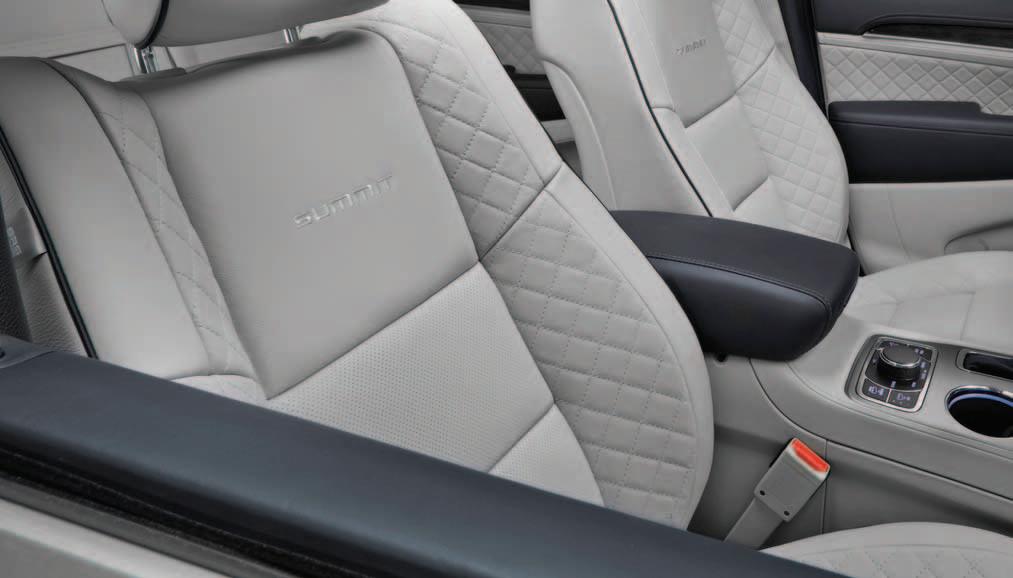
In the automotive sector, the true underlying reasons remain unclear. However, cost considerations and the complexity of leather processing likely encouraged the industry to move away from leather, supported by campaigns against animalbased materials. These decisions continue to have a significant impact.
In the global footwear sector, we may already be at a more advanced stage of development, with leather beginning to show early signs of a successful renaissance. In the luxury goods sector, the radiance of big-name brands is fading. While brand recognition remains strong and exclusivity may still resonate for certain iconic products, it is becoming increasingly difficult to justify high price-premiums for products of only average quality. This is particularly evident in Asian markets, where questions of quality and value for money are now far more prominent than they were only a few years ago, when brand ownership primarily served as a symbol of achieved prosperity.
Not long ago, particularly among some affluent middle-class groups in the West, natural animal-based materials, especially leather, had come to be considered socially unacceptable. Consumers embraced questionable alternative materials, while industries in Europe and the US invested heavily in the development of non-animal substitutes. These efforts were largely unsuccessful, leaving recycled plastics as the main alternative. None of these substitutes, however, have been able to match the properties of leather. Wool was the first material to overcome these challenges, experiencing a remarkable renaissance in recent years.
Is this now the final countdown for leather? No, because there is little doubt that the trend opposing the use of animal-based materials has slowed and may already have stopped. Economic pressures and material choices by consumer goods manufacturers do not yet fully reflect this shift. However, anyone observing major cities will recognise that consumers appear to be ahead of manufacturers. Genuine leather jackets, gloves, and everyday shoes are once again being worn in many places where trends originate. These styles are often being reintroduced under the label of “vintage”.
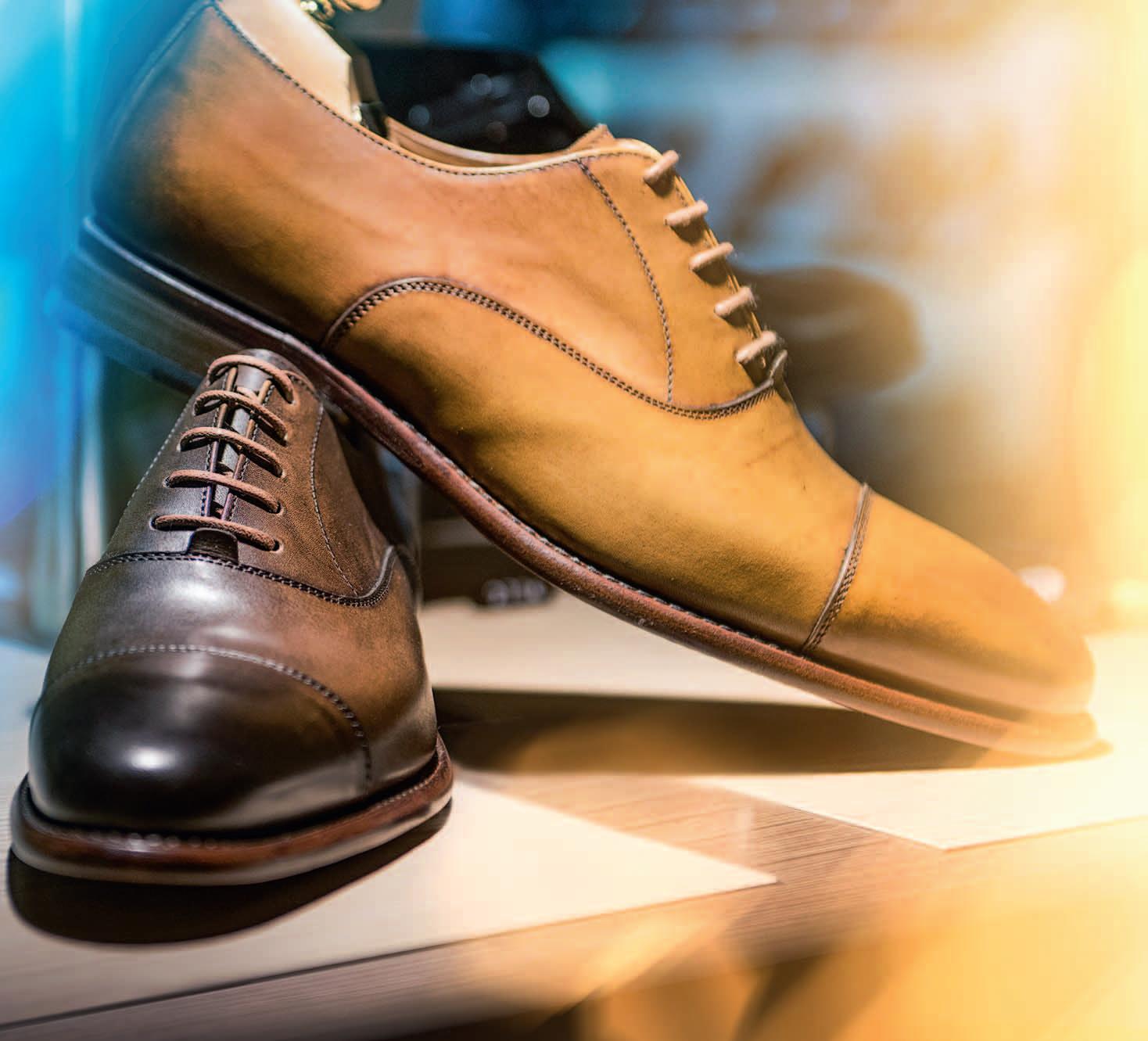
The year 2026 will determine whether this is merely a brief revival or the beginning of a broader mass-market trend. Media coverage, including streaming services, reinforces the hope that fashion may be the source of this renewed impulse. Authentic leather jackets in 1980s and 1990s styles are increasingly visible, without even needing to reference Nvidia’s CEO, Jensen Huang. Even in vegan bars and restaurants, leather jackets and leather sneakers are reappearing. When discreetly asked about the material, consumers often justify their choice by referring to durability and sustainability.
An industrial automotive leather manufacturer in Europe is unlikely to benefit significantly from increased demand for leather jackets or footwear. There are currently no signs that the automotive industry is prepared to reconsider its stance on leather in the near future. Although existing structures remain in place, time for decisive action is limited.
In other sectors as well, growth prospects may sound simpler than they actually are. Increases in leather demand will likely be achievable only in specific segments and at specific price points. Attempting to generate volume through destructive price competition, as currently seen among mass
producers, is unlikely to offer a sustainable solution. There will always be a competitor willing to offer even lower prices. The core challenge lies in clearly differentiating leather from synthetic alternatives, thereby addressing the recurring question of why consumers should choose the original. The path forward must therefore lead away from price competition and towards emphasis on the material’s quality.
Returning to leather apparel and our hypothesis of an emerging trend, plastic imitations have dominated women’s fashion for years. The aim was to achieve a so-called ‘leather look’ at low prices using inferior materials, which worked at first. Yet the renewed success of genuine leather among trendsetters suggests that consumers are once again drawn to the original. A similar development might already be observed in footwear.
The statement that we will never be able to supply eight billion consumers
worldwide with leather products remains true. However, catering to a portion of that market is sufficient. If the fragile flower of trend-driven fashion can be nurtured and allowed to grow, the overall outlook for leather is not unfavourable.
From our perspective, it is essential that the industry and manufacturers adopt a more honest approach to the product itself. The opportunity to present leather’s properties, functions, durability and naturalness has rarely been better. The sheer number of consumers without ideological objections to leather is already substantial. Leather appeals to the senses, meets functional expectations, and often leaves its users genuinely satisfied. Should sentiment truly shift and manufacturers communicate the material’s strengths with conviction and engagement, there is little reason for concern about the future of leather, even if not all regional and sectoral challenges are resolved.
Excellent –Bisphenol optimized syntans to achieve high leather quality
Numerous changes do not necessarily imply the disappearance of the product. Even though less raw material has been used in recent years and market balance remains disrupted, opportunities and perspectives still exist. It will likely once again be the courage of smaller, committed companies that drives change, while large incumbents appear to have lost much of their capacity for renewal.
A clear strategy for leather would be to move away from industrial, standardised materials and products and being honest about what leather really is and why it is used. This should emphasise that its properties and function are better than those of any alternative. The industry should emphasise the uniqueness of each individual piece. Every piece, no matter how small, has its own story. There should also be a move away from discussions within the industry’s own bubble and a greater focus on building up brand and consumer awareness.
In the coming weeks, Asia will enter its New Year holidays, while attention in Europe will turn to the Lineapelle trade fair in Milan (February 11-13). The exhibition will coincide with the Winter Olympics, which may deter some visitors from travelling to Italy, particularly given high hotel prices. However, this may ultimately enhance the quality of attendance, as those for whom the fair is essential will not be discouraged. In such a scenario, the saying “less is more” may well apply, allowing key decision-makers to spend more time engaging with exhibitors on critical issues. It would not surprise us if the Milan fair ultimately makes a positive impression.
US PERSPECTIVE
Sales of cured cattle hides for the period ending January 22 were 481,900 pieces. The figure for exports of wet blue was 68,400 pieces.
The most recent reports on hide prices showed heavy Texas steers weighing 60-62 pounds at $11.50 per piece.
Cow hide prices were down with northern dairy cows at $7.50, south-west dairy cows at $7, northern branded cows at $2.50 and southwest branded cows at $2, with weights of 5052 pounds in each case.
The source of all these figures is the US Department of Agriculture. Please note that the prices quoted represent ‘ballpark’ figures.
Cattle markets USA
The reduced slaughter capacity is running head to head with reduced fed supplies. Some limited trade was reported in Kansas and Texas at $238 live, quickly turning to mainly $240 or $241. Northern live prices ranged from $238-$241 with dressed prices from $375 to mostly $377. Prices were generally $5 higher.
The reduced fed supplies will continue and the January placements into feedyards will be impacted by weather-related problems
Actual
Slaughter Under Federal Inspection
well as the simple fact of fewer available cattle. Livestock auction markets across the country from Texas to Georgia were impacted with many auctions closed and others limping along with reduced receipts.
The adjustments to slaughter levels following the Tyson plant in Lexington, Nebraska, closing permanently on January 20, will be slow and disciplined. The early indications are a slaughter level adjusting from 550,000 a week to 530,000 a week. This means the current plants will maintain a reduced slaughter volume until there is some indication that this level stimulates retail buying to encourage a larger slaughter.
The impact of feedlot supplies also will be tested. Will a weekly slaughter of 530,000 be sufficient to keep feedyards current? The balancing between feedlot supplies and national slaughter volumes will be tested in the coming weeks and playing into the equation will be the size of the cow slaughter.
Corn prices are lower to open the week. Corn basis levels in Guymon, Oklahoma, are at +$0.50, basis the March contract.
GERMAN PERSPECTIVE
This week: Although one-twelfth of the year has already passed, 2026 has not really gained momentum yet. Tanneries continue to complain about a sluggish order intake, and the clock is ticking, making it clear that something really needs to change for the better.
Consumer sentiment is certainly at its weakest in Europe, and particularly in Germany, and this cannot be compensated for by exports.
Another significant burden emerged this week from the currency markets, as the US dollar weakened noticeably once again, further increasing the pressure on export prices denominated in US dollars.
In Asia, the impact of the upcoming holiday shutdown is now clearly being felt, in some cases leading to planned shipments being postponed or required payments not being received. In Europe, the major suppliers continue to defend the market for heavier male bovine hides. While the main users of this material, suppliers to the automotive industry, are still unable to return to their former capacity utilisation, reports indicate improved activity at the well-known contract tanneries. As a result, noticeably more material is once again being directed into the hands of traders and marketeers of selections. Another factor is the splits and protein return. Whether all this will actually be
absorbed by corresponding demand for leather will certainly become clear in the coming months. Reports from European tanneries remain far from enthusiastic. This leaves hope that the relatively cold winter across large parts of Europe and also in the US has at least helped retailers clear their stocks of winter boots, gloves and garments, encouraging them to place orders for the next autumn-winter season with renewed confidence.
In summary, prices to overseas markets
remained relatively stable this week; however, the significant decline of the US dollar placed corresponding pressure on revenues in euros. For male hides, decisive negotiations between the major slaughterhouses and buyers are likely to take place in the coming weeks. The fully integrated leather industry will almost certainly no longer be willing to pay the prices that have been in place for months. This will depend on whether sellers can find alternatives or whether they may be forced to hold back material in anticipation of better times. These better times will, of course, still need to arrive. Until then, a reassessment of prices appears unavoidable. Thus, another unspectacular week comes to an end, in which buyers’ willingness to purchase and their price expectations have been the determining factors.
The kill: The meat market is similarly uneventful overall. Prices for live cattle have changed only marginally, with weather conditions remaining a decisive factor, and
LATEST HIDE AND SKIN PRICES FROM GERMANY
slaughter numbers therefore showing little variation compared with the previous week. Given reduced milk prices, a higher proportion of cows might have been expected, but so far this has not materialised either. Carnival season may also be playing a role in this context.
What we expect: The coming weeks are likely to be influenced primarily by the holidays in Asia and probably also by the upcoming Lineapelle fair in Milan (February 11-13) in the sense that little activity can be expected beforehand. Most raw material needs are likely already covered, and only in Europe will renewals and extensions of existing contracts take place in the coming weeks. Anything other than difficult negotiations for male hides would be a surprise, and it will be interesting to see how far apart the expectations of buyers and sellers ultimately are and how these differences can be bridged.
LONG READ
Leather and the Circular Economy: Thought Leadership Fair share
Leather’s circularity credentials deserve full recognition in the EU’s new Circular Economy Act. And if circularity becomes a requirement for winning public procurement contracts, rich rewards are on offer.
According to current schedules, 2026 will be the year in which a new European Union (EU) Circular Economy Act comes into force. The European Commission’s claim is that the new act will enhance the EU’s economic security and competitiveness, while promoting more sustainable production, circular economy business models and decarbonisation.
The background to this is that the Commission accepts that “going circular is what the public sees as the most effective solution to environmental challenges”. But it admits progress towards circularity has been insufficient and that there needs to be greater effort to move forward. The transition needs to be from the ‘make-use-discard’ model to a ‘make carefully-use for agesrepair-reuse-recycle-make carefully’ model instead.
In its presentation of the Circular Economy Act, the European Commission has also made reference to the Antwerp Declaration. This was a call ahead of the 2024 elections to the European Parliament for the preservation of quality manufacturing jobs in the EU. Since then, manufacturing jobs have continued to leave Europe, often for cheaper, less regulated locations.
Manufacturing jobs at risk
Sources including the Financial Times and the European Association of Automotive Suppliers (CLEPA) suggest that job losses in the EU automotive supply chain in 2024 and 2025 are in excess of 100,000 positions. CLEPA has said the automotive industry in the EU is in danger of losing a total of 350,000 jobs by 2030. Job losses in steel and other metals manufacturing in the EU over the same timeframe are estimated at between 40,000 and 50,000.
The numbers may be smaller, but painful closures have been announced in the leather industry too, for example at Tanneries Pechdo in France and Wollsdorf Leather in Austria. The leather industry’s main representative body in the EU, COTANCE, argues that leather manufacturing remains “a sizeable, strategic sector”, with 1,500 companies and 30,000 direct jobs in the EU. COTANCE, was a signatory of the Antwerp Declaration. So was trade union organisation industriAll Europe, which COTANCE refers to as its “social partner”.
Rooted in circularity
It seems clear from commentary around the Antwerp Declaration that what the signatories mean by quality manufacturing positions is work opportunities that pay well and provide high levels of social protection (with good holidays, pensions, sickness pay, health insurance and so on). At a meeting on the future of the leather sector in Europe in December 2025, the general secretary of industriAll Europe, Judith Kirton-Darling, said: “At a time when Europe is losing industrial ground, protecting good jobs must be a political priority. We need coherent EU action, a level playing field, and investments in skills and quality jobs. We will continue defending these jobs and shaping an industrial future where workers are respected, protected and central to Europe’s competitiveness.”
At the same December 2025 meeting, Ms Kirkton-Darling also said the leather sector is “rooted in circularity”. COTANCE echoed this, saying the leather sector has “a unique role”
in the circular economy. This has been a consistent message for some time, featuring prominently in a formal feedback submission that COTANCE provided during consultation on the upcoming Circular Economy Act.
Sustainable procurement
In its submission, COTANCE said leather is “a valuable and sustainable contributor to the EU’s circular economy,” but one that is often “overlooked or misrepresented” in policy frameworks. Its view is that the Circular Economy Act presents “an opportunity to correct this” and to ensure that natural materials, including leather, are “fairly evaluated and supported”. Actions it has recommended as the Commission completes its work on the new act include recognition of animal by- products as part of the circular economy and promotion of their use. It insists that leather research projects should have access to the funding that will become available under a new EU research framework.
It has also said the Circular Economy Act should support moves to have leather authenticity labelling across the EU to make sure consumers can easily identify the materials that manufacturers have used to make the products they are buying. A final COTANCE recommendation is that the act should promote the inclusion of leather in specifications for sustainable public procurement projects.
In 2024, public-sector spending in the EU was almost half of the entire gross domestic product of the 27 member states. This is all public-sector spending, at all levels of government, including pensions payments, which are not subject to procurement exercises.
In its report for 2023, the Organisation for Economic Co- operation and Development said the share of the EU’s total gross domestic product that went on public procurement expenditure was 14.8%. In late 2025, Eurostat, the official statistics agency
of the EU, gave estimated figures that would put GDP for the year at more than € 18 trillion. If the percentage share for public procurement stays the same, it would indicate a spend of nearly € 2.7 trillion. Clearly, not all of this procurement is for finished products that use leather, but it is easy to identify examples that do offer opportunities for the leather industry. Governments everywhere spend money on public transport, on official cars, and on public buildings, ranging from government offices to famous opera houses in Vienna, Venice, Berlin and Warsaw. Every government has armed forces and emergency services whose hundreds of thousands of employees wear official footwear.
Piece of cake
COTANCE is correct to argue that the authorities running public procurement exercises will do well to choose leather as often as possible. Leather lasts. It looks lovely for a lot longer, too, making it a matter of economic sense to spend public money on
it. And if circularity becomes an important factor in deciding which bids will win public procurement exercises, leather will become a better choice than ever.
In a statement in December 2025, industriAll Europe said the EU’s public procurement framework was in sore need of reform. It said most contract awards are based “on price alone” and warned that this “race to the bottom” must stop.
The trade union organisation is calling for a new model. It insists that sustainability, social rights, and what it calls “Europe’s industrial strategic autonomy” must be central criteria for deciding what to spend citizens’ money on. The reference to industry in Europe is interesting; it explains that having European content in the products the public purse pays for should be a requirement. And it says enforcement of all these criteria should be strong. “Without proper enforcement, even ambitious rules can remain empty promises,” industriAll Europe warns.
Leather leadership, worldw ide. worldwide.
Leather is a global business. is global business. More than 95% of US hides are than 95% of US hides are exported, with value added across value added across the globe. A strong leather globe. A strong leather
Our International Sustainability Programme drives best practice raising global production standards.
Our Real Leather. Stay Different. competitions showcase young international talent, launching their careers as leather advocates. And our data-driven Life Cycle Assessment ensures leather is the most transparently studied natural material, countering misinformation from oil-derived ‘rivals’.
We work for the leather industry. Find out more at usleather.org
The European Union Circular Economy Act can be a positive development for leather. A slice of a € 2.7 trillion cake is a prize worth winning.
NEWS
EUROPE
Hopes of an extra €1 billion in revenue at Birkenstock
Footwear brand Birkenstock has said it will open 140 new own-brand stores between now and the end of 2028. At the end of 2025, own-brand stores numbered 97.
In a presentation to market analysts at the end of January, the Germany-based companies that more than half its new stores will be in Asia. Including stores run by partners, this would take the total number of Birkenstock stores in Asia to more than 400.
Its most recent full-year results showed revenues of €2.1 billion for the 12 months to the end of September 2025. It said it expects this figure to increase to more than € 2.3 billion in this financial year.
Looking ahead, though, Birkenstock said it expects to add €1 billion to its total revenues in the next three years.
Hermès to open new leather goods workshop in Les Andelys
Hermès has announced plans to open a new leather goods workshop in Les Andelys, in the Eure department of Normandy, creating up to 260 artisan jobs in the long term.
The Maroquinerie des Andelys will be built on a former industrial site and will further strengthen Hermès’ production capacity for leather goods and saddlery, all of which are made in France. The project reinforces the group’s integrated artisanal manufacturing model.
The new workshop will join Hermès’ existing Normandy sites in Val-de-Reuil and Louviers, with recruitment and training supported by regional partners. Artisans will be trained at the École Hermès des savoir-faire in Louviers, which offers an 18-month paid training programme leading to a recognised qualification.
International expansion lifts Strathberry revenues
Scottish
luxury leather goods brand
Strathberry has reported revenue of £36.4 million (€42.6 million) for the year to April 30, 2025, representing year-on-year growth of 35%, driven largely by international expansion.
The company cited a tenfold increase in its wholesale business in Japan and strong growth across the UK, US and other international markets.
Strathberry said it is on track to reach £50 million (€58.6 million) in revenue for the year to April 2026, following a record trading period in November and December 2025, when sales rose 58% year-on-year.
Growth has also been reported in newer markets, including Australia and Germany, while revenue in Ireland more than doubled in 2025 after launching with Brown Thomas in December 2024. The business continues to operate with a 90% direct-to-consumer channel weighting, supported by its Covent Garden flagship store, which recorded 40% growth during 2025, Strathberry.
Leather manufacturer sets up new joint-venture with Modern Meadow
German
leather manufacturer Heller-Leder has set up a new joint venture with biomaterials developer Modern Meadow.
The new operation, Innovera Europe, will use Heller-Leder’s tanning facilities to produce Innovera, a non-leather product that Modern Meadow has developed using plant-based proteins, biopolymers and recycled rubber.
Heller-Leder chief executive, Frank Fiedler, said this operation would “integrate seamlessly into existing leather workflows”.
Modern Meadow has said it can supply semi-finished material its calls Dry White for tanning partners to process into Innovera. It has said it intends to start producing Dry White at a new facility in Europe in the course of 2026.
Leather offcuts find new life in printed garments
Powdered leather on denim printed to look like jackets, jeans printed on washable leather and distressed denim designs on multiple fabrics are among the latest projects from Italian company NextPrinting.
Based in Bergamo and part of the ACM accessories group, it works with customers to create unique and novel print effects, with a strong focus on R&D.
One new project uses leather offcuts from the accessories side of the business, which are ground into a powder by a partner company and glued onto cotton or denim. This material can then be printed with images of jeans or jackets, creating novel effects and textures. The material can also be hand-finished using scratching and distressing, partially removing the surface layer.
Another new development uses leather pieces supplied by an Italian tannery printed to look like jeans or jackets (pictured). The leather remains supple and is also washable. While digital printing is growing, it is important that there is the know-how behind it and not simply the machinery, project manager Philippe Mignot said. “Our technicians know how to print on different fibres and fabrics. This is what makes us stand out – we have a very skilled team."
Debut at IILF for Archroma
Swiss speciality chemicals producer Archroma will make its first appearance at the 39th India International Leather Fair (IILF) from February 1–3.
At booth 3-09 F, the company says it will present solutions for sustainable leather production, improved material performance,
and process efficiency. Key products include Luprintan acrylic and syntan solutions and Doranil dyes, designed to meet industry fastness standards.
Vishal Grover, VP, Global Segments, Archroma, said the debut reflects the company’s aim to strengthen engagement with leather manufacturers and support sustainability and quality goals.
Archroma’s team will be on hand throughout the fair to discuss technical challenges and explore collaboration opportunities.
Commitment to craftsmanship to continue at LVMH in the face of 5% fall
Luxury group LVMH has reported full-year revenues for 2025 of €80.8 billion, a fall of 5% compared to the year before.
Its leathergoods and fashion business contributed €37.8 billion to the total, down by 8% year on year.
The group said there had been an upturn
QUAKER COLOR A
STEP AHEAD
IN AUTOMOTIVE FINISHING
in the fortunes of the leathergoods and fashion segment in the second half of 2025. It also pointed out that 2024’s figures had been boosted by a surge in tourist spending in Japan, notably from visitors from China, which fell away in 2025.
Chief executive, Bernard Arnault, said the group had “demonstrated its solidity” in 2025, underpinned by “the powerful desirability” of its brands.
He added: “In 2026, in an environment that remains uncertain, our maisons’ ability to inspire dreams will once again be a decisive asset. We will remain true to our entrepreneurial tradition as a forward-looking family group focused on sustainable creativity in high-quality products, exceptional spaces and the long-term future of our outstanding craftsmanship.”
Anta becomes Puma’s biggest shareholder
Luxury group LVMH has reported full-year revenues for 2025 of €80.8 billion, a fall of
Supplying innovative
Quaker Color is a division of McAdoo & Allen, with roots in the leather industry for over a century
5% compared to the year before.
Its leathergoods and fashion business contributed €37.8 billion to the total, down by 8% year on year.
The group said there had been an upturn in the fortunes of the leathergoods and fashion segment in the second half of 2025. It also pointed out that 2024’s figures had been boosted by a surge in tourist spending in Japan, notably from visitors from China, which fell away in 2025.
Chief executive, Bernard Arnault, said the group had “demonstrated its solidity” in 2025, underpinned by “the powerful desirability” of its brands.
He added: “In 2026, in an environment that remains uncertain, our maisons’ ability to inspire dreams will once again be a decisive asset. We will remain true to our entrepreneurial tradition as a forward-looking family group focused on sustainable creativity in high-quality products, exceptional spaces and the long-term future of our outstanding craftsmanship.”
Sale to Bureau Veritas will provide structure for Spin 360 to scale up
Spin360 has shared the principal reasons for its decision to become part of Bureau Veritas.
In a statement on January 26, the Milanbased consultancy said it viewed the move as a good way to increase the impact it can make on the “sustainable transition” that companies in the leather sector and in the wider fashion industry are striving to make.
“After 15 years as an independent company, we felt the need to partner with a strong, global organisation to further increase our impact,” said Spin 360’s founder and chief executive, Federico Brugnoli. He paid tribute to the rigour and global reach of Bureau Veritas and said he was excited about the journey ahead.
This journey will involve expanding the scale, reach and impact of Spin 360’s sustainability advisory services, digital tools and lifecycle expertise. The two organisations
will support clients across all tiers of the value chain, from raw materials and farm-level production to product development, operations and end-of-life solutions, the statement continued.
General manager of Spin 360, Filippo Santoro, said being part of Bureau Veritas would provide a structure for the company to grow while preserving its “scientific rigour and agility”.
Bureau Veritas buys Spin 360
Specialist Milan-based leather-focused consultancy Spin 360 has been bought by Bureau Veritas. The Paris-based testing, inspection and certification services provider announced that it had acquired Spin 360 on January 23.
It said it had made this move to accelerate growth in Italy and to “create new strongholds” in consumer product sectors.
Bureau Veritas added that it wanted to combine Spin 360’s proprietary tools for lifecycle assessment (LCA) with its own certification and supply chain auditing expertise. It said this would help position Bureau Veritas as “a global centre of excellence for premium fashion and luxury”.
Bureau Veritas said Spin 360 had revenues of around €4 million in 2024 and employed around 30 people.
Spin 360 was founded in 2009 by Federico Brugnoli, who has played a prominent role for many years in promoting sustainability in the production of leather and leathergoods. He is an indefatigable organiser and facilitator of discussions and conference sessions at important industry events such as Lineapelle and Micam.
Mr Brugnoli was one of the main architects of European leather’s product environmental footprint category rules, which the industry developed between 2013 and 2018. He has also played a leading role in helping leather manufacturers and fashion companies carry out LCA studies, allowing them to form an accurate assessment of their own environmental footprint, while also collecting accurate, industry-wide data.
In turn, this data has helped the global leather industry challenge inaccurate information about leather’s environmental footprint in widely used tools such as the Higg Material Materials Sustainability Index (MSI).
Ups and downs continue for French leather exports
France’s leather-sector exports for the January-November period in 2025 followed the pattern established in the previous months of last year.
Exports of raw hides and skins over the period had a value of €184.1 million, down by 3% year on year.
Bovine hides brought in €113.4, down by 2% compared to the same period in 2024. The decline in the value of calkskins was much steeper, reaching €33.8 million, a fall of 20% year on year.
The upward trajectory of the value of
sheepskins continued with a figure of €13.8 million for the 11-month period, up by 28%.
Exotic skins had an export value of € 20.9 million, flat compared to the same months in 2024.
Leather exports had a total value of €196.4 million over the same period, down by 4%. This figure includes € 19.7 million for semiprocessed hides, down by 22%.
Finished leather’s export value was €176.7 million, down by just 2%. This broke down as follows: €78 million for finished bovine hides, up by 1%; €44.4 million for finished calfskins, up by 25%; € 37.6 million for sheepskin leather, down by 16%; and € 11 million for exotic leather, down by 28%.
The figures come from Alliance France Cuir, with data from the French customs authorities.
Countdown begins to World Leather Day 2026
Preparations for World Leather Day 2026 are officially underway, Leather Naturally has announced. The global celebration of the leather industry will take place on Wednesday 29 April 2026.
World Leather Day provides an opportunity to recognise the people, craftsmanship, innovation, and sustainability achievements of the leather sector, as well as the many benefits leather brings to daily life.
Behind the scenes, Leather Naturally has been developing a comprehensive suite of assets for the occasion, alongside a new theme and a clear call to action to engage the global industry.
The organisation encourages members and followers to stay connected for updates, announcements, and shareable content in the run-up to the event via Facebook, Instagram, and LinkedIn.
Scarpa applies circular leather use in Mojito Re-Shoes
Specialist ski and outdoor footwear group
Scarpa has introduced a revised version of its Mojito footwear model incorporating recycled leather, developed within the LIFE Re-Shoes initiative, co-funded by the European Union’s LIFE Programme.
The model has been produced using ecodesign approaches aimed at supporting circular material use and recyclability.
Sciarada Industria Conciaria carried out hydrolysis of used leather and reused the resulting liquid in the retanning of new leather, demonstrating circular leather use in the project.
LIFE Re-Shoes ran for 42 months and was structured around three phases. These included the collection of end-of-life footwear alongside research and testing, the recycling and recovery of materials, and the manufacture of a new shoe incorporating recycled components.
According to the partners, the project was designed to assess a potential model for footwear recycling, covering technical and logistical aspects such as material regeneration, life cycle assessment and
design-for-recycling.
Scarpa coordinated the project and led the design and production of the Mojito Re-Shoes.
The University of Bologna, operating as Alma Mater Studiorum, carried out testing, life cycle assessment and design-for-recycling activities. Other partners contributed to rubber recycling, sole production using recycled materials, logistics and traceability for used shoe collection, and sector networking.
The partners stated that the Mojito ReShoes model represents the final outcome of the LIFE Re-Shoes project and demonstrates how recycled leather and other recovered materials can be integrated into footwear development through eco-design and crosssector collaboration.
Bottega Veneta CEO heads to Moncler
Bottega
Veneta’s CEO, Bartolomeo Rongone, will leave the company at the end of March to take the top role at Moncler.
Moncler’s current CEO, Remo Ruffini – who
led the company to phenomenal growth, reporting revenues of € 2.7 billion in 2024 compared with € 700 million in 2014 – will remain in charge of creative direction, and will become chairman.
Mr Rongone started his career at Fendi, moving to Kering, and has led Bottega Veneta since 2019.
Luca de Meo, CEO of Bottega’s parent group, Kering, said: “I would like to thank Leo Rongone for his leadership and for the significant contribution he has made to Bottega Veneta over the past six years. During his tenure, he achieved important milestones with his team and supported the continued development of the house.”
The selection process for the next CEO of Bottega Veneta is under way.
Family-run footwear brand acquired by Next
Fashion retail group Next has acquired the Russell & Bromley brand and three of its stores.
makes it natural
For almost 150 years, Russell & Bromley has been a prestigious footwear and accessories brand. At the time of the sale of these assets it had 36 stores in the UK and Ireland and nine concessions.
A family-run firm, Russell & Bromley found itself unable to turn its business around from recent financial difficulties and put itself into the hands of external administrators. On January 21, London-based administration company Interpath said Next had acquired the shoe company’s brand, three selected stores and a proportion of its stock through a prepack insolvency process.
This is a process that is designed to go through quickly and through which the business in difficulty, or (as in this case) parts of it, are able to continue trading rather than go into liquidation.
Interpath chief executive, Will Wright, said: “We are pleased to have concluded this transaction, which will preserve the brand and the commitment to quality craftsmanship that
it has become so well known for.”
He said Interpath wanted the 33 stores and the nine concessions that Next is not acquiring to keep trading “while we explore the options available”.
Member of the shoe brand’s founding family, and chief executive of the business, Andrew Bromley, said: “Following a strategic review with external advisers, we have taken the difficult decision to sell the Russell & Bromley brand. This is the best route to secure the future for the brand, and we would like to thank our staff, suppliers, partners and customers for their support throughout our history.”
Henkel in talks with Wendel over potential Stahl acquisition
Henkel has confirmed it is in discussions with French investment firm Wendel over a potential acquisition of specialty chemicals group Stahl, in a deal that could value the business at up to € 2bn, as reported by the
Wall Street Journal.
In a regulatory filing, the German chemicals company said talks were ongoing but cautioned there was no certainty an agreement would be reached.
Any transaction would require approval from Henkel’s governing bodies as well as regulatory clearance. Wendel separately confirmed it was in non-exclusive discussions with Henkel.
Burberry reports improved Q3 trading momentum
Burberry reported improved trading momentum in the 13 weeks to December 27, with comparable retail sales rising 3% year on year as its Burberry Forward strategy delivered sequential improvement and higher quality revenue.
Retail revenue reached £665 million (€778 million), up 1% at reported exchange rates and 3% at constant exchange rates. The company said the performance reflected a shorter and less aggressive markdown period and continued strength in core outerwear, with momentum extending into accessories and ready-to-wear.
Comparable sales in Greater China increased by 6%, supported by double-digit growth in Gen Z customers. Asia Pacific rose 5%, led by a rebound in South Korea, while the Americas grew 2%. Sales in EMEIA were flat, with local demand offsetting weaker tourist spending.
Chief executive officer Joshua Schulman, said customer response to Timeless British Luxury campaigns and experiential activations had reinforced confidence in the group’s direction as it approaches its 170th anniversary.
Burberry said it expects adjusted operating profit for FY26 to be in line with consensus forecasts.
Freiberg Leather Days 2026 open call for papers
Theorganisers of the Freiberg Leather Days have opened the call for papers for the 14th edition of the conference, which will take place on July 1–2, in Münster.
Following the 13th Freiberg Leather Days, which attracted around 180 participants and nearly 30 speakers, the event will again focus on the interaction between tradition and innovation in the tanning and leather industry.
As co-organisers, FILK Freiberg and VGCT are inviting industry representatives, researchers and related disciplines to contribute to the programme.
The call for papers seeks presentations with a clear application focus, as well as innovation and transfer potential. Suggested topics include new and alternative technologies for leather production, advances in characterisation and analysis, sustainable raw materials and tannery processes, innovative processing technologies, automation and digitalisation, trends in user industries, and the role of traditional tanneries in the context of Industry 4.0.
The submission deadline for abstracts is March 15.
Alongside the technical programme, the event will include networking activities, including a pedal boat rally on Lake Aasee and an evening event at Restaurant A2 on the lakeside.
Industry pioneer Tom Schneider has died
Founder and executive chairman of leather manufacturing group ISA TanTec, Thomas Schneider, has died. The company has announced that he died in his country of birth, Germany, on January 18 from complications following a car accident. He was 70 years old.
Tom Schneider completed the leather manufacturing course at the famous Lederinstitut Geberschule in Reutlingen in the early 1980s. His work in the industry soon took him away from Germany, with a spell in tanneries in Australia before a move to China in 1988.
He described himself as a serial entrepreneur and, by 1993, he was ready to launch his own leather manufacturing company, ISA TanTec. In the course of the next 30 years, he grew ISA TanTec into a group with five production plants: one in China, two in Vietnam, one in the US and one in Italy.
As early as 2004, he recognised that it was imperative to reduce the consumption of energy, water and chemicals in leather manufacturing so as to reduce the environmental impact of leather. He used the name LITE (low impact on the environment) to describe the collections that ISA Tan Tec brought to market.
His pioneering attitude came to the fore again in 2020 when he decided to start making a new range of 100% bio-based materials, launching a new division called Creation Of Sustainable Materials (COSM).
At the time, he told World Leather: “We are not saying that this is an alternative to leather. No. Absolutely not. I don’t want to have an alternative to leather. I want to have an alternative to plastic, the vegan materials, the polyurethane stuff. It’s not replacing leather. It’s not our target to cannibalise our product but to offer customers additional products, ones that have a good story behind them and are available from a supplier that brands have worked with for 20 years already.”
Grants available for leather manufacturing apprenticeships
Industry representative body Leather UK has encouraged leather manufacturers in England to act quickly and bid for apprenticeship funding.
Grants from the foundation that London livery company The Leathersellers runs are available to train a new cohort of up to six tanners. The Leathersellers Foundation has ringfenced £72,000 and hopes to fund six grants of £6,000 per annum for two years for new apprentices.
With the closure of the University of Northampton’s Institute for Creative Leather Technologies in 2025 and the closure of one of the UK’s biggest tanneries, Pittards, in 2023,
The Leathersellers said opportunities for people to enter the tanning industry in England had been greatly reduced. It described this as “a major concern”.
It also said that the industry was in danger of losing a formal ‘leather craftsperson’ qualification. This recognised qualification exists, but is not being used by the industry. “We want to convene a group of tanneries to take on apprentices simultaneously to ensure the continuation of this qualification and bring in a new cohort of trained tanners,” the organisation said.
It is leather manufacturing companies rather than individual candidates that must apply. Businesses that apply can be of any size, but must be based in England.
ASIA
Leathergoods lag as China luxury
market steadies
Mainland
China’s personal luxury goods market contracted by 3%–5% in 2025, a slower decline than in 2024, according to Bain & Company’s China Personal Luxury Report.
While the overall market showed early signs of stabilisation in the second half of the year, performance in leather-related categories remained under pressure.
Bain & Company found that leather goods declined by 8%–11% in 2025, underperforming fashion overall, which fell by 5%–8%. The consultancy linked weaker leather goods demand to past and ongoing price increases and limited innovation, which made purchases harder for increasingly selective consumers to justify.
Footwear was not identified as a growth driver within the fashion category, with demand affected by the same value-driven purchasing behaviour seen across discretionary luxury segments. Bain & Company said consumers continued to prioritise practicality and perceived value, while shifting part of their spending towards experiences rather than physical goods.
Despite these pressures, Bain & Company said the second half of 2025 showed early signs of stabilisation, as luxury consumption increasingly repatriated to mainland China and value-focused brands proved more resilient in a cautious market.
Evolved By Nature subsidiary receives LWG gold in Thailand
Anew leather finishing center in Thailand (LFC/Thailand), a wholly owned subsidiary of Evolved By Nature, has been awarded Gold certification by the Leather Working Group (LWG).
The certification followed a third-party audit covering environmental management, including water and energy use, waste handling, chemical compliance, and traceability. The LWG Gold certification has been filed with Authentic Thai Leather Co. Ltd. LFC/Thailand operates as a centralised leather finishing facility and uses Evolved By Nature’s L1 biofinishing system.
EU zero-tariff boost for Indian leather and footwear
India and the European Union have finalised a free trade agreement that eliminates import duties on Indian leather and footwear exports to the EU.
Tariffs on leather and footwear, previously set at 17%, will now be reduced to zero, offering significant relief to the sector after US tariffs of 50% were imposed last year. The deal gives Indian manufacturers full access to the EU’s €84 billion leather and footwear market, with particular benefits expected for established clusters in Agra-Kanpur and Vellore-Ambur.
Industry observers say the move could increase formal employment and support the creation of new enterprises, while strengthening demand for mid- to premium leather goods. Producers are also expected to see benefits across the wider leather supply chain, including tanning, finishing, and footwear manufacturing, as the removal of tariffs makes Indian products more competitive on European shelves.
The agreement comes at a time when Indian exporters have been seeking alternative markets following punitive tariffs from the US, and it is seen as a major step in boosting trade ties with one of the world’s largest consumer markets.
Relief considered for India’s footwear sector
India is considering a relief package of around $1 billion to support its footwear manufacturing sector after the United States imposed import tariffs of nearly 50% on Indian exports, including leather and footwear products.
The higher duties have raised export prices, particularly in the US market, reducing the competitiveness of Indian footwear against suppliers from Vietnam, China and Indonesia. Exporters are reporting falling orders and increased pressure on profit margins.
Footwear is a labour-intensive industry with major production centres in Uttar Pradesh, Tamil Nadu, Rajasthan and West Bengal. A sustained downturn could lead to job losses and factory closures.
According to reports, the proposed support package may include tax relief, possible reductions in Goods and Services Tax, export incentives, easier access to credit and measures to support manufacturing upgrades. The government aims to limit long-term damage to exports and protect employment in the sector.
Hanoi refurbishment project complete for Hermès
Luxury leathergoods brand Hermès has completed another refurbishment project in Asia. It has renovated, relocated and reopened its store in Hanoi. Hermès has had a presence in Vietnam since 2008.
Its new store in the country’s capital is in an Art Deco building on Tràng Tiên Street. It showcases the brands 16 product ranges on three floors.
Leathergoods and equestrian collections are housed in what the brand called “a cosy nook” on the ground floor.
TFL to present sustainable leather technologies at IILF 2026
Leather chemicals supplier TFL has confirmed its participation in the India International Leather Fair 2026, taking place from February 1–3 at the Chennai Trade Centre in India.
At booth H1A 05 A in Hall 1, the company will present leather chemical solutions alongside leather articles for garments, accessories, and footwear in forecast Spring–Summer 2027 colours.
The display will include TFL’s local for local range of ultra low bisphenol syntans, developed to support ecological leather production while maintaining technical performance.
The presentation will also cover biobased products with a high share of biogenic carbon, the Roda Line coating application system, and an extended waterproofing portfolio aimed at improving durability.
Footwear:
China exported more than 8 billion in the first 11 months of 2025
Figures from China for the first 11 months of last year put the volume of the country’s footwear exports at almost 8.2 billion pairs. This is a fall of 1.3% compared to the same period in 2024.
These shipments of shoes and other footwear brought export revenues of $37.6 billion into China, down by 10.7% year on year.
As part of these exports, there were 470 million pairs of leather footwear, which generated export revenues of nearly $6.6 billion, falls of 5.3% in volume and of 10.7% in value compared the January-November 2024.
Over the same period, China imported nearly 160 million pairs of shoes and other footwear, with a value of $4.9 billion. Leather footwear made up nearly 48.5 million pairs in terms of volume, contributing $2.2 billion in revenues.
Compared to the previous year, these figures for footwear imports indicate an overall decline of 14.8% in volume and of 9.3% in value. Imports of leather footwear were down sharply, by 22.9% in volume and 17.5% in value.
Declines continue in China, but leather-sector exports hit $75 billion
Leather-industry exports from China in the first 11 months of 2025 had a total value of $75 billion, according to figures from the China Leather Industry Association (CLIA). This represents a decrease of 10.5% compared to the same months in 2024.
CLIA put the revenues of the country’s major leather manufacturers at around $6.75 billion for the January-November period. This, too, represents a decline, of 11% year on year.
Over that timeframe, tanners in China imported around 1.3 million tonnes of raw hides and skins, with a total value of just over $1 billion. These figures represent falls of 4.6% in volume and 16.5% in value.
Tanners also imported 530,000 tonnes of wet blue or wet white, with a value of $770 million, a fall of 5.7% in volume and of 17.7% in value.
Imports of finished leather reached 33,000 tonnes in volume and $520 million in value, falls of 15.6% and 16.2% respectively.
THE AMERICAS
Leather’s flower power on show at Inspiramais
Materialsevent Inspiramais closed in Porto Alegre on January 28. There were 16 leather manufacturers in total among the 150 exhibitors. Organisers said 8,000 fashion professionals attended over the two days of the show.
Designer Walter Rodrigues delivered a preview of the leather articles that will go into products in the second half of 2027. Mr Rodrigues consults on trends for Brazil’s national representative body for footwear components manufacturers, Assintecal.
One of the themes he highlighted was the importance of floral finishes. He said this floral theme had been in evidence in recent collections that some of the biggest names in fashion had presented, including Valentino, Dries van Noten, Balenciaga, Chloé and Jonathan Anderson’s early work for Dior.
The expertise of Brazilian tanners in leather finishing meant many articles echoing Walter Rodrigues’s floral ideas were on show at Inspiramais. He said the tanners’ work on preparing brightly coloured embossed finishes was “absolutely sensational”.
An extra element was that some of the fish leather in collections from companies including Arte da Pele presented the scales on the skin like petals on a flower.
Inspiramais, a source of hope
The latest edition of the Inspiramais materials exhibition opened in Porto Alegre on January 27.
Billed as one of Latin America’s most important events for fashion materials, this edition had collections for the first half of 2027 on display.
Exhibitors included 15 leather manufacturers, who had on show leather articles for footwear, furniture and accessories manufacturers to source. These included articles developed from responsibly sourced exotic and fish skins, as well as from bovine hides.
At the opening ceremony, the president of Brazil’s national tanning industry organisation (CICB), José Fernando Bello, said know-how and innovation were the keys to remaining competitive in an environment in which there are “so many barriers”.
He said the innovative materials on show at Inspiramais were “a source of hope”.
Turkish delegation eyes
Brazilian leather
Afour-strong delegation from Turkey travelled to Porto Alegre at the end of January to attend the Inspiramais exhibition for the first time.
Led by the president of the Turkish Footwear Industrialists’ Association, Berke Icten, the group confirmed to World Leather that the footwear sector in Turkey is serious about sourcing increased volumes of leather from Brazil.
Mr Icten said Turkey currently has the capacity to produce 550 million pairs of shoes and other footwear per year. His calculation for 2025 is that manufacturers were operating at 80% of capacity and produced around 450 million pairs.
Turkey still has good domestic production of leather, but the delegation at Inspiramais said the steady volumes and good prices of material from Brazil could complement this well.
New Brazil study confirms 2021
findings on leather and cattle numbers
US-based agricultural economists Dr Gary Brester and Dr Kole Swanser have carried out a new study that confirms findings from work they did in 2021. Their conclusion, then and now, is that the sale of hides and production of leather have practically no bearing on cattle numbers.
In 2021, the two academics found that the value of hides only has a small influence on cattle numbers. They concluded that even if hide prices were to increase by 10%, the increase in cattle numbers in the US would be less than 0.2%.
Their new study, share by the Leather and Hide Council of America, focused on Brazil. It examined data covering the years between 1980 and 2019. In Brazil’s case, they found that a 10% increase in hide prices would lead to an increase in cattle production of a little over 0.3%.
The researchers used two different analytical approaches to examine this question thoroughly. First they used a test called the Granger Causality Test to determine whether changes in hide prices directly cause changes in cattle slaughter numbers. They found no evidence of such a direct relationship, suggesting that hide values are not a primary driver of cattle slaughter.
Second, the study investigated whether hide prices might have an indirect effect through their influence on cattle prices. The premise is that higher cattle prices could incentivise producers to raise more animals.
Dr Brester’s and Dr Swanser’s research shows that this indirect pathway does exist, but they found it to be “remarkably weak”.
Talk of trade deal offers muchneeded boost for Brazil’s shoemakers
Brazilian footwear manufacturers sold 219,600 pairs of shoes worth $4.1 million at the Expo Riva Schuh event in Italy in midJanuary, according to association Abicalçados.
When adding total trade anticipated from the show, the figures jump to 862,000 pairs and $5.4 million.
Paola Pontin, business coordinator at Abicalçados, said: “Trade shows are excellent meeting points, enabling both the maintenance of relationships with existing customers and the prospecting of new contacts, which would be harder to reach without these initiatives. The positive signal around the Mercosur–European Union agreement gave negotiations an extra boost.”
Wagner Kirsch, commercial director at GVD International Wagner Kirsch, added: “2025 was very challenging and 2026 will be a year of hard work. The Mercosur–EU agreement added some spice to the trade show and motivated buyers. We maintained existing accounts and picked up a few new ones.”
The European Union and four Mercosur countries – Argentina, Brazil, Paraguay and Uruguay – reached an agreement in December. The goals are to increase bilateral trade and investment and lower tariff and non-tariff trade barriers, particularly for small and medium-sized enterprises.
The 104th edition of Expo Riva Schuh featured more than 1,000 exhibitors representing around 40 countries.
Brazilian continue strong presence in New York
OnJanuary 28 and 29, 12 Brazilian tanneries will showcase their leathers at Lineapelle New York, with the support of the Brazilian Leather project — a partnership between the Centre for the Brazilian Tanning Industry (CICB) and the Brazilian Trade and Investment Promotion Agency (ApexBrasil).
Only 89 exhibitors participate, so Brazilian exhibitors account for nearly 14% of the show.
Letícia Luft, manager of Brazilian Leather project, said: “The audience at this event is very focused: the world’s leading leatherusing brands have offices in New York, and professionals from these companies are always present at Lineapelle New York.”
The US is the second most important destination for Brazilian leather exports, behind only China and Hong Kong, with a predominant share (over 90%) of finished leather. However, sales showed a downward trend during 2025, despite “intense effort” by CICB to reverse the leather surcharge (a 50% tariff), a task that continues.
Brazilian tanneries exhibiting at Lineapelle New York are A. Bühler, Bolzano Brasil, Couro e Arte, Courovale, Curtume Rusan, Fuga Couros, Indústria de Peles Minuano, Mucca Pelli Leather Group, Natur Leather, Nova Kaeru, OCM Best Brasil and Polar Couros.
OCEANIA
Australia: record lamb prices were not caused by shortage Australian lamb prices reached records in 2025, but the supply was not was
limited as many believed, according to industry body Meat & Livestock Australia.
Major drivers were quality and finish: well-finished lambs achieved premium prices, but fell below average when the they lacked finish. “This distinction matters because it can create the impression of a widespread shortage, even when overall lamb availability is reasonable,” said Emiliano Diaz, MLA senior market information analyst.
Supply wasn’t collapsing. MLA estimated 2025 lamb production at 610,000 tonnes, 3% below 2024 but still 1.8% above 2023.
“That context suggests the 2025 price outcome was shaped as much by procurement pressure and market demand, as it was by the headline production number,” said Mr Diaz.
Poor weather in southern regions delayed the usual new season flush, contributing to a short-term supply gap, but as spring progressed, new season lambs began to drive market activity and generally achieved stronger prices. “On-farm management decisions that protect finish can be the difference between good and exceptional price outcomes,” he added.
New equation powers Australian feedlot decision making
Australia’s Department of Climate Change, Energy, the Environment and Water has adopted a new, Australia specific equation to calculate enteric methane emissions from feedlot cattle, replacing the long used Moe and Tyrell model from 1979.
Developed by the University of New England and funded by Meat & Livestock Australia for the Australian Lot Feeders’ Association, the revised equation suggests methane emissions from feedlot cattle are more than 50% lower than previously estimated.
Consulting nutritionist Dr Rob Lawrence of Integrated Animal Production said the new approach is simpler and based on data feedlots already collect, such as feed intake, ration composition and nutrient values. This allows methane to be reported alongside existing performance measures including average daily gain and feed conversion.
The equation also enables feedlots to assess the cost effectiveness of methane reducing feed additives. While these can deliver mitigation rates of more than 80%, cost, inclusion challenges and product stability remain barriers to wider uptake.