First Friday Letter
The World Methodist Council
Greetings from the General Secretary
February 2026
“On the first day of the week, when the disciples we’re together … Jesus came and stood among then and said, “Peace be with you!” … and again Jesus said, “Peace be with you!” (John 20:19 and 21)
With the words of Jesus, “peace be with you”, I greeted in Portuguese, António Guterres, the Secretary General of the United Nations, at his arrival for the gathering commemorating the 80th Anniversary of the first Assembly of the UN. This took place in London, at Methodist Central Hall, Westminster. I felt at home, as I have an office in the building, room 403. Here, arriving was the former Prime Minister of Portugal (19952002) and since 2017 the UN Secretary General, in my view in need of peace, possibly feeling assailed by fears derived from the unraveling of the International Law-abiding Order that the UN represents. If not him, the world needs peace, given the present world geopolitics.
Guterres has emphasised the importance of the Portuguese language as a tool for “understanding and conciliation” He often highlights it as a language of “hope and refuge”. A language that connects populations across continents. 5th May is Portuguese language day. Guterres has a podcast to commemorate it. He uses the language for diplomatic relations amongst Portuguese speaking world leaders. My greeting was also a prayer: “peace be with you”. Peace be with us all and with the world. Guterres first came as Secretary General with an agenda intended to address the challenges of climate change, economic and gender inequalities, but has had to face different changes in terms of the regressive neo-colonial forces set against multilateralism.
This beginning of 2026 has shown the scale of political challenges facing the world with intractable conflicts and great international political instability. There are rumours of war. Nations prepare for it. In some cases, in fact open conflict, in other cases blatant disrespect for national territorial integrity e.g.: the Russian war on Ukraine, the conflict in Sudan, and the assault on Gaza, now the population facing winter with most of the Strip raised to the ground. The President of CIEMAL, Bishop Juan de Dios writes in this FFL about the impact of the USA military intervention in Venezuela.
The World Methodist Council meeting is taking place in the Region, Central America and Caribbean. More specifically in El Salvador. A country itself not without controversy. I extend an open invitation for all who are able to come: come, be present in El Salvador. We will gather in prayer, reflection and action. Worship will be central. There will be keynote speakers on Migration as the theme for the quinquennium 2024-2029 is “On the Move”. We will be helped to go deeply into the Region and the churches’ response to their context. We will also have space for discussing other situations in the world and of course business. By August when the delegates, observers, visitors meet, we will know who will be the WMC Peace Award Laureate. There will be a Peace Award ceremony and reception. The Council meeting will have the opportunity to be with local Methodist churches too. They are small as the Church in El Salvador is young. This is the place we need to be to pray for peace.
Click here to access the link for the upcoming Council meeting registration:
https://www.surveymonkey.com/r/NNXN3YW
As I greeted António Guterres, now I greet you with the words of Jesus: “A paz seja com vossa Excelencia.”
Reynaldo Ferreira Leão Neto (Léo) General Secretary - WMC
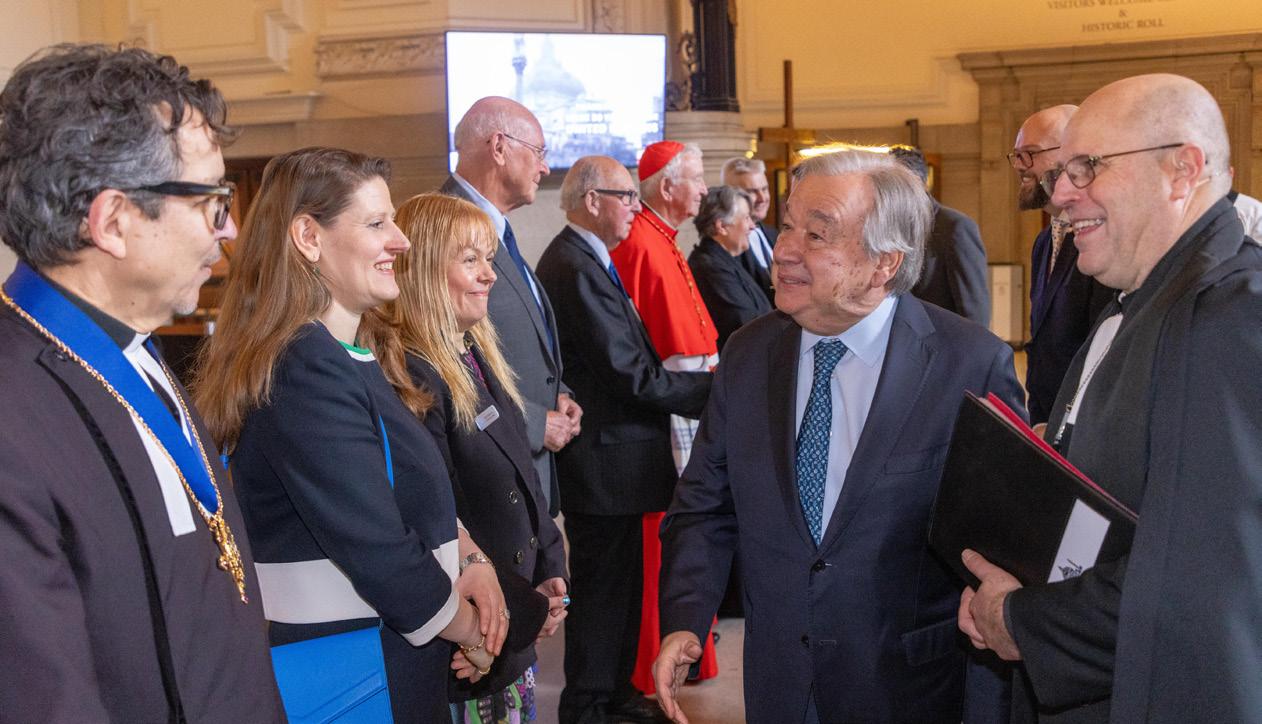
Photo 136007839 © Kabayanmark
General Secretary Reynaldo Ferreira Leão Neto meets UN Secretary General António Guterres
From the General Secretary’s Diary
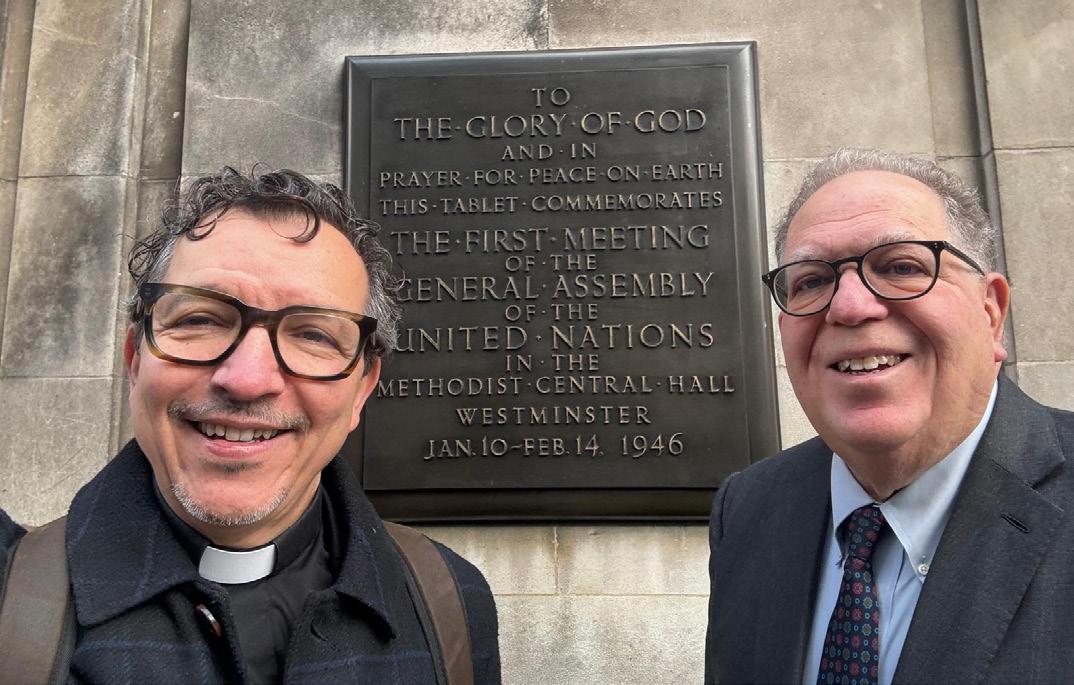
A service of thanksgiving in the morning and an afternoon with a packed full programme were held to mark the 80th anniversary of the inaugural meeting of the United Nations General Assembly. This took place on the 17th January 2026 at the Methodist Central Hall Westminster, in London. There could not have been a more appropriate place for such an occasion as it was here that the first UN Assembly met from the 10th January 1946.
Rev Tony Miles, the Superintendent minister at Central Hall, set the scene for the celebration welcoming the world into this place of worship and prayer, reminding those presents that the Central Hall Congregation at the time had to move out to accommodate the Assembly, so that the world could move into the space already soaked in and with an atmosphere of prayer, (See video in the link (https://youtu.be/cN3EbjG8MLM?si=VhbNlDjKTs5xjwFl).
Cardinal Vincent Nichols preached the sermon describing the UN as an “audacious dream” and a “moral Covenant”: a vital covenant of nations born from the necessity to choose cooperation over conflict. He characterised the UN’s practical efforts - such as peacekeeping, humanitarian aid, and healthcare, in particular of refugees, as “mercy made manifest.” Cardinal Nichols recognised that at the present, the UN faces “fierce headwinds” from war, division, and climate issues, requiring a timeless compass to navigate these crisis.
He stated quite eloquently that “On the 10th January 1946, as the echoes of the Second World War still reverberated across a shattered world, representatives from 51 nations gathered here, not as victors but as wayfarers on a shared path towards peace. They came to shape the United Nations, an audacious dream born of necessity: that humanity could choose cooperation over conflict and dia-
logue over destruction.” He affirmed and loud the work of the UN as a peacemaking organisation saying that: “Peace is the work of God.”
The UN Secretary General and the President of the UN Assembly with other dignitaries were present to mark the 80th anniversary of the first Assembly of the UN. I had the privilege to be amongst those who welcomed the Secretary General and the President of the UN Assembly at their arrival at Central Hall Westminster. In spite of being a celebration, nonetheless, the concern about the present geopolitical situation in which the international rules-based order is undermined was explicitly expressed.
Meanwhile, the UN is at risk at “imminent financial collapse” as a consequence of member states not paying their fees. The financial crisis was “deepening, threatening programme delivery”, wrote the Secretary General to the member states early this year. This comes after the UN’s largest contributor, the USA, refused to contribute to its regular and peacekeeping budgets, and withdrew from several UN agencies it called a “waste of taxpayer dollars”. Several other members are in areas or are refusing to pay. Guterres, said that the “integrity of the entire system” depends on states adhering to their obligation to pay their “assessed contributions”, adding that 2025 ended with a record amount unpaid - equivalent to 77% of the total owed, informed the BBC in the following article (https://www.bbc. co.uk/news/articles/cr579mdv4m7o)
I was accompanied to the event by Rabbi Dr Frank Dabba-Smith.
Rev Dr Reynaldo Ferreira Leao Neto GS - WMC
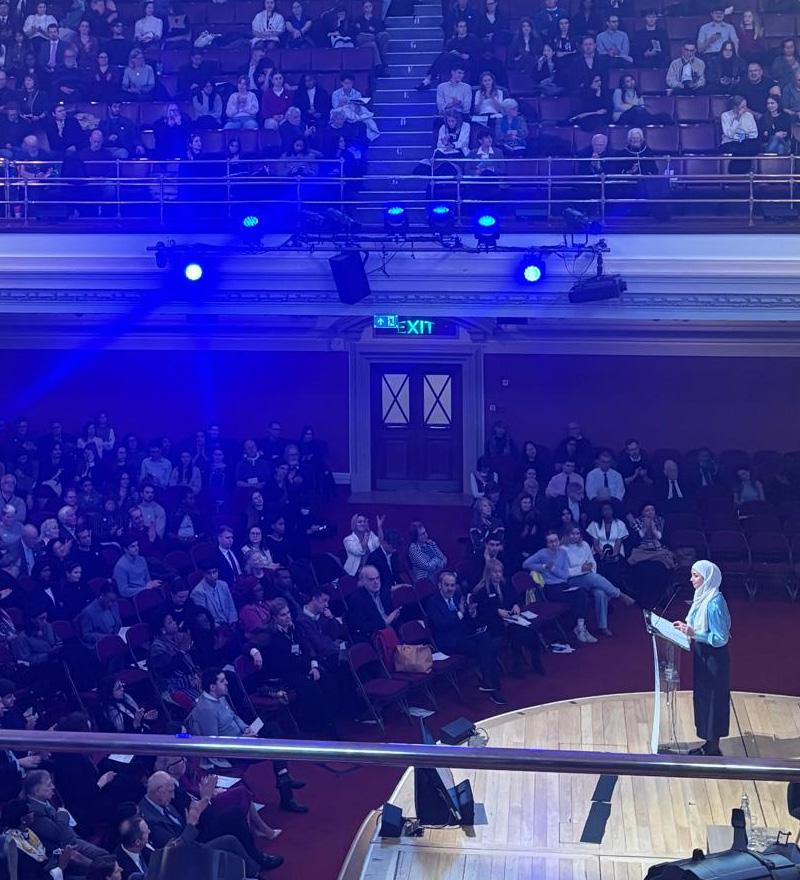
UN Young Rapporteur Maya Ghazal speaking to the afternoon crowed at Methodist Central Hall Westminster, London
Rabbi Dr Frank Dabba-Smith and GS by the commemorative plaque of the very first UN Assembly that took place in January and February 1946.
NIFEA GEM School August 17-28, 2026 Register Today!
The World Methodist Council, together with the World Council of Churches, Lutheran World Federation, World Communion of Reformed Churches, Council for World Mission and United Society Partners in the Gospel, has opened applications for the Ecumenical School on Governance, Economics, and Management for an Economy of Life (GEM School). The program is scheduled for Aug. 17–28, 2026, in Panama City, Panama (location to be confirmed).
The program will bring together 20–25 current and emerging church leaders for intensive training to strengthen the collective voice of churches on global economic and ecological issues. Participants will study topics ranging from eco-feminist economics to international finance, debt, and tax justice, using Bible studies, lectures, and group work. They will develop projects for an Economy of Life—an economic model that prioritizes people and the planet over financial gain. The curriculum includes a consultation on building an Economy of Peace and a fullday immersion in the local context. Bishop Rosemarie Wenner will be part of the leadership team.
Nomination Criteria and the link for registration can be found here: https://oikoumene.org/resources/documents/ecumenical-school-on-governance-economics-and-management-for-an-economy-of-life-gem-school-2026invitation-to-apply
All selected participants will receive a full scholarship, covering flights, accommodation, and full board. A USD 100 contribution is requested from each participant. The deadline for applications is March 1, 2026. Selected participants will be notified by March 31, 2026.
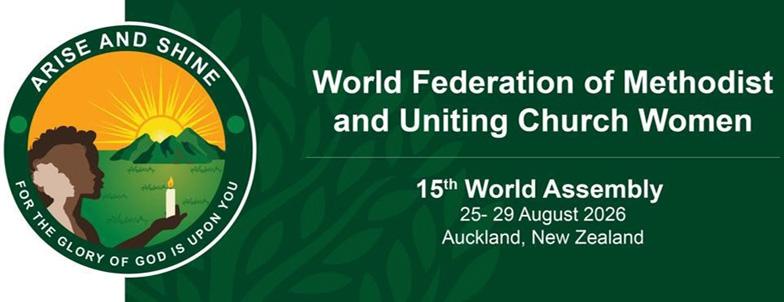
Registration is now open for the 15th World Assembly of the World Federation of Methodist & Uniting Church Women! Join us 25–30 August 2026 in Auckland, New Zealand, at the Due Drop Events Centre, under the theme: “Arise and Shine — for the glory of the Lord is upon you.”
This Spirit filled global gathering will offer inspiring worship, transformative workshops, leadership development, testimonies from around the world, and meaningful fellowship across cultures. It’s a sacred opportunity to be renewed in God’s presence and to strengthen our worldwide sisterhood.

Fees include lunches and dinners. Space is limited and allocated on a first come, first served basis.
• REGISTER NOW:
>> https://web.cvent.com/event/3fd29bd3-744e-440c-87f4-cad73ea7722c/summary
Let us Arise and Shine together in Auckland!
With love and blessings,
Sipiwe Chisvo, World President (2022–2026)
World Federation of Methodist & Uniting Church Women
United Methodist Church Bishops Condemn Violence in Minnesota
In recent days, events in Minnesota and beyond have caused deep grief, concern, and alarm across our connection. The use of lethal force in public spaces, the detention of naturalized citizens, members of our indigenous communities, children, documented and undocumented immigrants, and the treatment of other vulnerable persons have weighed heavily on the hearts of many in our church. These actions have unsettled communities, strained trust, and intensified fear among those already living at the margins.
Scripture reminds us that “when one part of the body suffers, we all suffer with them (I Corinthians 12:26). As a Connectional church, we are reminded that we are one body that cares for and needs each other. The whole body is suffering, right now, today! The violence being perpetrated on our streets, the loss of safety, and the inhumane treatment of God’s children, are hurting us all. We cannot stay silent in the face of the evils of our day.
The United Methodist Church deplores the use of violence, fear, separation, and intimidation as a means of creating social order. Such means do not build beloved community. We reaffirm our longstanding commitment to the sacred worth of every person and to the way of peace taught and embodied by Jesus. We stand against the separation of children from their families. We detest the inhumane, evil actions that are perpetuated by governmental authorities.
Our Social Principles are clear: “We reject governmental use of threats, extortion, unlawful detentions, extrajudicial killings, and other forms of coercion to silence political opponents and those objecting to unlawful or immoral government policies and practices.” They further affirm that the church has both the right and the responsibility to educate and equip its members to be advocates for justice in the wider world (¶163D).
Book Review
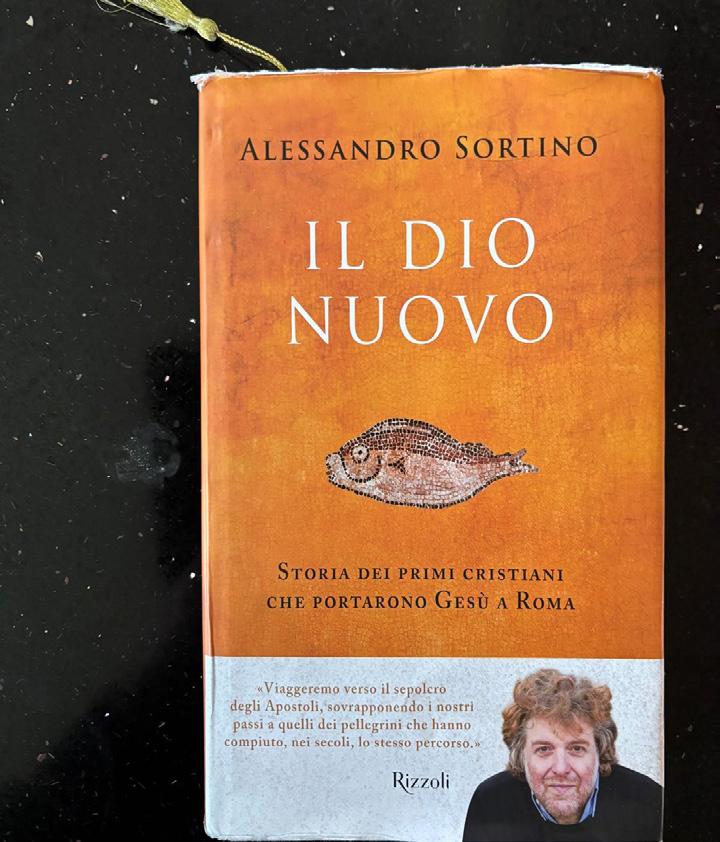
Alessandro Sortino, “Il Dio Nuovo, Storia dei Primi Cristiani che Portarono Gesù a Roma”, Rizzoli, Milano, 2024.
If you ever wonder what happened to St Peter after he disappeared from the story in the Acts of the Apostles around about chapter 12 or 15, you will have to brush up on your reading in the Italian language, or wait for the English translation, because the book you need to read is: Alessandro Sortino’s ‘Il Dio Nuovo’.
In it, you will find out about St Peter’s escape from
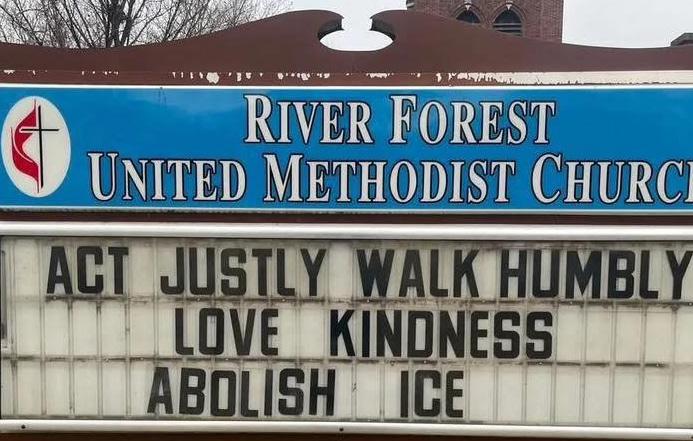
This is a moment that calls for prayerful courage to speak against actions that are bringing harm to our neighbors. This is our time to have an effectual faith that stands with those who are suffering. This is our faithful response to our baptismal vow that summons us into what is required of us “to act justly, love mercy and walk humbly with our God” (Micah 6:8). We must continue to work for justice to help heal the brokenness in our communities and in the world.
We ask you to pray for peace and for justice. And we ask that we work together with our communities so that we can create a world where the sword is turned into plowshares, and the lion lays down with the lamb. May we be faithful disciples of Jesus Christ, who empowered by the Holy Spirit, do our part to bring comfort, just practices, and healing for all God’s suffering people.
Bishop Tracy S. Malone President, Council of Bishops
The United Methodist Church
Caesarea by the Sea until he arrives in Rome via Antioch, including his later connection with the Jewish community in Rome’s Trastevere neighbourhood. Here he played a role in mediating the conflict between the converts to Christianity from Orthodox Judaism versus the converts to Christianity from Paganism, in particular regarding dietary restrictions.
Drawing from the Apocryphal literature, but with great familiarity with the canonical books, Sortino brings to life the early Christian community in Rome.
Continued on next page...
Book Review continued...
He describes the meetings, the locations, the dangers of being a Christian. The inroads into the powers of the day by the message lived out by the marginalised, the foreigners, the migrants. Who would offer hospitality in Rome to the Apostle who had the keys of heaven? It could have been Senator Pudente, under a letter of introduction from centurion Cornelius (very familiar to us because of Acts Chapter 10). Or, it could have been, and most likely, that Peter was hosted by Priscilla and Aquila.
Later on, when things get more difficult politically, the book tells how Peter might have been running away from the Roman authorities, a fugitive trying to save his own skin, when the risen Christ appeared to him and asked: ‘Quo Vadis?’, where are you going? According to tradition, Peter was fleeing from the persecution of Nero when Jesus appeared to him on the Appian Way. Peter asked Jesus back, where he was going, and Christ replied: “I am going to Rome, to be crucified again”. Peter turns around and returns to be martyred, crucified upside down, in Nero’s circus, and then, buried in the nearby necropolis of the Ages Vaticanus. The location of this ‘U’ turn can be visited: Church of Domine Quo Vadis on the Via Appia.
Alessandro Sortino’s deep knowledge of the Bible is complemented by the imagination of a film director who can fill the gaps with literary expertise. He also knows ‘Roma Antica’ like the palm of his hands, and he makes the stones speak the history they witnessed two thousand years ago. I highly recommend his series ‘Le Pietre Parlano’ now found for free on YouTube.
The ‘Il Dio Nuovo’ is the story of the first generation of Christians who took Jesus of Nazareth, the Christ, to Rome. This story is told deeply rooted in archeological research with cinematographic imagery. Rome was a very religious city, until the arrival of Christianity, but it was devoted to Paganism and steeped in the worship of Greco-Roman deities. How was it that in a few decades, Rome was transformed into a reference for Christianity.
It is in this Rome that the first Gospel was written. Mark, Peter’s secretary, would have heard directly from Peter in Rome and written his gospel as it came out of Peter’s mouth. Maybe disorganised as a historical record but with the power of story-telling to move hearts, as Peter told the miracles and teaching of Jesus. In Rome too, Luke, Paul’s secretary, wrote his Gospel based on primary source material and interviews collected, even as he met Mark for that purpose in Rome. Sortino shows in his book where the two evangelists would have met.
This early community consisted of disciples like Mary, the mother of John-Mark. She was the owner of the house in Jerusalem where the last Supper took
place and 50 days later, the descent of the Spirit at Pentecost happened. She was the mother of the first Evangelist, and aunt of Barnabas who with Paul started the Church in Antioch. Like Mary many Christians converged on Rome.
Together Peter and Paul shared their ministry to the Church in Rome. This involve managing a cultural conflict between Jewish Christians and Roman Christians. Sortino describes a litigious community, divided by differences in moral and behavioural terms. Would it have been Peter who asked Paul to mediate the conflict by writing a letter to the Romans to explain why in Christ the law of Moses is surpassed and completed? Peter, since his time in Antioch showed an understanding of the Orthodox Jews converted to the Way, however in Rome it was clear that a deeper understanding of the conflict with the tradition of Moses was indeed needed if their faith was to be universal.
That letter to the Romans is today a reference for Christianity. It was for the first time read in the underground Church of Rome. It proposes that in the incarnation the law of Moses ceases to be an abstract model; the truth is manifested in a person, flesh and blood. It is the love, divine love found in that person that fulfils the whole law. Therefore, there is no condemnation for those who are in Christ Jesus.
Here is the beginnings of the first community of Christians in Rome less than thirty years after the death of Jesus in Jerusalem and an explanation of how the two most prominent apostles became its supporting columns as well as the two patron saints of the City. The book can be a guide for pilgrims, with two routes and maps: the way of Peter and the way of Paul. (La via di Pietro; la via di Paolo)
Reynaldo Ferreira Leão Neto (Léo)
Epiphany in Times of War: Discerning the Light Amid Violence
As the end-of-year celebrations conclude—marked by the joy of Christmas, family gatherings, gratitude for the year that ends, and the desire to begin a better one—the Christian community does not close the festive cycle but rather enters a season of deep contemplation and spiritual preparation. Having celebrated the birth of Jesus in Bethlehem, the Church now turns its gaze to an equally significant moment: the Epiphany of the Lord.
Epiphany is not simply the remembrance of the visit of the wise men from the East to the child Jesus, but the proclamation of a fundamental truth of the Gospel: Christ is revealed to the whole world. If at Christmas we celebrate that God became flesh, at Epiphany we celebrate that this incarnate God makes Himself known to all nations, cultures, and peoples, represented by those wise men who, guided by the star, came to worship Him.
At the beginning of a new year, the festive bustle fades, opening a more contemplative and reflective time for the Christian people, filled with hope for the plans this new cycle brings. Even for those who do not share the faith, the start of the year awakens optimism: new projects, new goals, and the renewing sense of a fresh beginning. Epiphany invites us into silence, reflection, and prayer over the holy mystery revealed to humanity.
However, this year 2026 was not like previous ones. In the early hours of January 3, when many still thought they were hearing the echo of fireworks in the residential areas of the city of Caracas, Venezuela, it was not celebration lighting up the sky, but explosions resulting from a military incursion carried out to capture that country’s president and transfer him into foreign custody. The questions typical of this spiritual season suddenly mingled with more urgent and painful ones: What is happening? What is the reason behind this military operation? Is this a lawful intervention? Can one government violate another’s sovereignty so easily and without a genuine process?
These concerns arose among Methodist colleagues from various countries and led the College of Bishops of CIEMAL to raise its prophetic voice through a Pastoral Letter, expressing a categorical rejection of violence and military aggression. The letter deplores all forms of violence, oppression, and threats to peace, reminding us that violence can never be a legitimate means to resolve conflicts. It also affirms that the use of military force constitutes a serious threat to human life, the dignity of persons, and justice—fundamental values for peaceful coexistence among peoples. The letter emphasizes that any intervention that does not respect national sovereignty violates fundamental
rights and weakens diplomatic paths, while also condemning any form of oppressive government that undermines human dignity and generates structural violence. The bishops call for sincere dialogue, reconciliation, and solidarity among churches, reflecting deep concern for the sovereignty, justice, and security of the Venezuelan people and for peace throughout the region.
Condemning military intervention does not mean ignoring the profound pain of a people who have endured for years a socio-political, economic, and humanitarian crisis that has caused unrest and a massive Venezuelan diaspora in search of dignified living conditions. Nor does it mean disregarding the denunciations of repression and the legitimate longing of many for profound changes in how they are governed. Recognizing this suffering is an essential part of pastoral discernment.
The account of Matthew 2 sheds light on our present. Herod pretended to want to worship the child but sought to eliminate Him. The wise men, guided by the star, discerned his true intentions and did not return to inform him. Jesus and His family had to flee to Egypt; they were forcibly displaced. Innocent children died because of decisions made from positions of power. This is not about equating eras or contexts, but about allowing the Word to help us recognize how human suffering repeats itself when power prioritizes its own interests over life. As Rachel weeps for her children in the biblical narrative, there were families who wept for their dead. Before God, every life is sacred and every drop of shed blood cries out.
Epiphany reminds us that God reveals Himself in the fragility of a child threatened by the logic of power. It may not be appropriate to directly compare those events with today’s realities, but it is profoundly relevant to affirm that every death caused by violence is a cause for mourning before the God of life. The Church is called not to justify violence, but to weep with those who weep, to denounce what wounds human dignity, and to proclaim the hope of a Kingdom where justice and peace prevail.
These kinds of actions create a concern that goes beyond politics and enters the spiritual and human realm: the risk of normalizing violence, deepening distrust among nations, and once again burdening the most vulnerable people with fear, displacement, and uncertainty. “If one member suffers, all suffer together,” the apostle reminds us. What happens in one country reverberates throughout the entire Latin American and Caribbean family.
Continued on next page...
Epiphany in Times of War: Discerning
the Light Amid Violence continued...
For those of us who live in Central America, these events are not distant. Our memory bears the marks of external interventions, civil wars, forced displacements, and decisions made far beyond our borders that brought pain to our nations. This does not mean justifying regimes or internal decisions, but recognizing that the suffering of peoples is rarely resolved through the use of force. The current situation affects the region through complex diplomatic reconfigurations, increased migration flows, and the normalization of military language in international politics, weakening the respect for international law that historically protects smaller countries.
The Church does not speak from a partisan trench but from the prophetic place of the Gospel. The Wesleyan tradition reminds us that there is no holiness that is not also social. When human dignity is at risk, the Church prays, accompanies, serves, and raises its pastoral voice. We pray for peace with justice, for those who migrate, for leaders to act with wisdom, for discernment amid polarized narratives, and for protection of the civilian population.
Our region has suffered before, and God has sustained His churches in the midst of conflicts, dictatorships, poverty, and massive migrations. We know that the final word belongs not to force, but to grace. And as Óscar Arnulfo Romero expressed it: “Violence is not overcome by violence, but by the violence of love.” Thus, the Church moves from the cradle of Bethlehem to the horizon of the world, from the manifestation of the vulnerable child to the proclamation of the Kingdom where life, dignity, and reconciliation prevail.
May this Epiphany not only remind us of the star that guided the wise men, but also inspire us to become that light in the midst of uncertainty, sustaining an active hope committed to justice and peace.
Read this document in Spanish here.
Article by Bishop Juan de Dios Peña
President of CIEMAL and Bishop of the Evangelical Methodist Church in El Salvador
His Holiness the Dalai Lama Receives Grammy Recognition Highlighting Universal Responsibility and Compassion
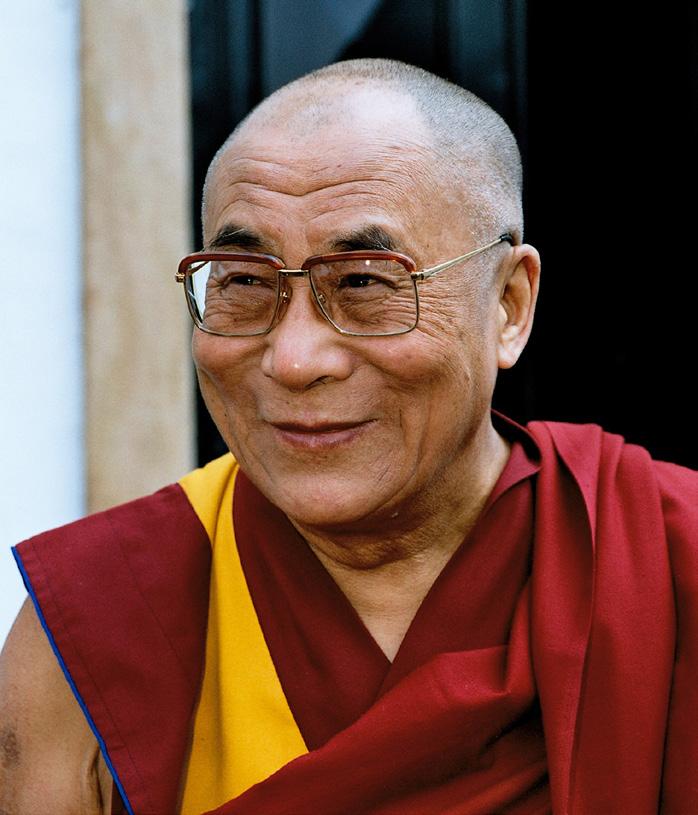
ID 61604633 | Dalai Lama © Deanpictures | Dreamstime.com
Grammy Award for Best Audiobook Narration - Meditations: The Reflections of His Holiness the Dalai Lama.
The Dalai Lama goes on to express his appreciation for the outstanding award by saying..
“I receive this recognition with gratitude and humility. I don’t see it as something personal, but as a recognition of our shared universal responsibility. I truly believe that peace, compassion, care for our environment, and an understanding of the oneness of humanity are essential for the collective well-being of all eight billion human beings. I’m grateful that this Grammy recognition can help spread these messages more widely.”
Article credit from the Facebook of the Dalai Lama
More articles and information can be found below from the Guardian
Dalai Lama at 90: son of a buckwheat farmer who became a thorn in China’s side – in pictures
Beijing condemns Dalai Lama’s Grammy win as ‘anti-China political manipulation’
A Long Read: Analysis of the Socio-Political Situation in West African States
I. Historical Context
The configuration of the political geography of African peoples cannot be understood without reference to the large groupings that existed before colonization. In West Africa, for example, political, economic, and social organization functioned within vast, structured entities, including:
• The Ghana Empire
The Kanem Kingdom located in present-day Chad
• The Mali Empire (which includes large parts of Mali, Burkina Faso, Guinea, Senegal, Gambia; with the Kuruka Fuga charter, known as Mandé Charta.)
• The Songhai Empire (covering the Gao region in Mali, part of the Niger River basin, and part of Nigeria)
• The Mossi Kingdoms (covering a large part of Burkina Faso)
• The Benin Kingdom (whose territory covers southwest Nigeria)
• The Oyo and Ife Kingdoms (covering the cultural geographic area of the Yoruba land in Nigeria)
• The Kong Empire or Ouattara Empire (a Muslim empire covering part of northern Ivory Coast and southern Burkina Faso and Mali)
• The Kingdom of Dahomey (covering southern Republic of Benin)
• The Bambara Kingdom of Ségou (covering part of Mali)
• The Macina Empire (a Fulani empire located in northern Mali, specifically around the Mopti region)
• The Toucouleur Empire (covering part of Mali)
The Wassoulou Empire (covering part of Mali)
• Fouta Djallon (a Fulani empire located in the Fouta Djallon mountain range in Guinea)
• The Ewe Kingdom (covering parts of Benin, Ghana, and Togo)
While modern history must recognize the existence and organization of these large entities, it must also be noted that these empires were major drivers of the slave trade. Furthermore, they were in constant conflict with each other for control of trade and rich lands. This situation constituted the primary seeds of the disintegration of some of them before the various forms of European colonization sounded their death knell, projecting the peoples into a new political, economic, and social organization.
II. The Berlin Conference
Chancellor Bismarck, believing he was doing well to avoid sordid rivalries among European actors in Africa, took the initiative to convene the Berlin Conference to smooth out differences.
Unfortunately, one of the primary distant causes of the current instability and social conflicts in West Africa remains the decision to partition Africa based on a simple geographical map in Berlin, without considering the internal mechanisms of coexistence, the cohesion among sociological and ethnic components around shared in-
terests. The various forms of colonial governance, some of them, exacerbated community conflicts.
III. The Different Colonial Types of Governance
Overall, colonial governance policy was carried out essentially by force. Its practical implementation is divided into two main options:
• Direct Rule, and, Indirect Rule.
Direct administration is the direct government of a colony from the metropolis through the colonial administration. This form of administration was practiced by France in its colonies. It is characterized by the excessive assimilation of colonized peoples and a high centralization of decisions. This form of administration denied the existence of the role of traditional leaders and pre-colonial social classifications. The long-term consequences of this form of administration remain instability, conflicts, divisions along ethnic lines, and the excessive authoritarianism observed today in Francophone African states.
In the case of indirect administration, part of the traditional structures of the colonized territory is kept in place. This model of indirect colonization is specific to England. It allowed for the preservation of endogenous forms of governance, maintaining the authority of local leaders, collecting local taxes, and resolving conflicts based on contextual elements. This approach fostered awareness of the role of populations and their leaders in the development process of their respective areas.
IV. Anti-Colonial Struggles
The frustrations born from forms of colonial governance eventually made populations aware of the need to free themselves from colonial domination. The modern history of independent African states remains largely dependent on the conditions under which independence was granted and the management of the violence, intrigues, and/or secret agreements that allowed for the gestation of post-colonial African states. These contradictions have, in most cases, contributed either to the strengthening of social ties and social cohesion, or to the exacerbation of geographical and social balances in the management of the national patrimony.
V. Post-Colonial Governance
Colonization did not only disrupt forms of territorial organization. It also transformed ways of doing politics. One can easily observe the authoritarianism of leaders, mostly completely averse to democracy, and nepotistic and patrimonial practices supported by a vast network of corruption and manipulation of all kinds, notably ethnic-based.
This situation raises the question of citizenship and coexistence within a legitimate State, given that it is from the colonial process that African states hastily formed their borders, enclosing populations who did not truly partake in this dynamic.
Continued on next page...
Analysis of the Socio-Political Situation in West African States continued...
Furthermore, single-party systems, electoral crises, and the debt burden have severely shaken the moral and institutional foundations of community coexistence. To this, is added the security crisis in the Sahel states, the radicalization of populations on religious grounds, and massive youth unemployment exposed to all sorts of manipulation.
Unfortunately, these crises have also affected religious institutions, notably churches, considering the divisions, rifts, and leadership issues they face.
VI. The Democratic Process and the Inconsistencies of the Economic Community of West African States (ECOWAS)
The various democratization movements and freedom demands in West Africa, which coincided with the fall of the Berlin Wall, have profoundly impacted the ongoing transformations in the sub-region. This period was also marked by the civil wars in Liberia and Sierra Leone.
Against all odds, these civil wars awakened solidarity and the determination of countries like Nigeria, Ghana, and Guinea to participate in resolving these conflicts.
These three countries sent troops to protect civilians. They paid with their blood for their commitment to establishing Peace in Liberia and Sierra Leone. ECOWAS emerged stronger from this crisis and resolutely positioned itself as an undeniable community tool. To this end, many protocols were adopted.
Unfortunately, disagreements quickly arose, especially concerning the ECOWAS « Additional Protocol on Democracy and Good Governance » in relation to the limitation of elected Heads of State mandates. We then witness the continuous revision of constitutions to allow executives to remain in power « ad vitam aeternam ».
To this is added increasingly pervasive corruption, weakening and accentuating social fractures and inequalities.
It is under these conditions that military personnel, exploiting social misery, have carried out coups d’état in countries like Mali, Burkina Faso, Guinea, and Niger.
As strange as it may seem, coups d’état are unfortunately becoming increasingly popular insofar as they constitute the sole opportunity to ensure alternation of power.
Furthermore, the landlocked ( Hinterlands) countries (Mali, Burkina Faso, Niger) and Nigeria are constantly victims of jihadist attacks followed by looting of towns and villages. Jihadists have quickly formed criminal gangs, imposing taxes in regions under their control and exploiting mineral resources like Gold.
The lack of solidarity among states in the sub-region vis à vis jihadist attacks, as well as the economic sanctions and embargoes decided against the Sahel states, have
strongly created within populations, a feeling of abandonment and contempt from other states. The departure of Burkina Faso, Niger, and Mali from ECOWAS in favor of creating the Alliance of Sahel States (AES) is felt as a process of taking control of “one’s own destiny” by focusing on one’s own challenges.
Moreover, many Heads of State in the sub-region suffer from legitimacy crises. The recent coup attempt in Republic of Benin revealed dysfunctions in Beninese democracy, both in its construction and its appropriation by the populations.
Indeed, the government of President Patrice Talon, despite significant successes in terms of development, has strived to use only an “all or nothing” system, creating frustrations of all kinds.
The authors of this coup attempt, in the rationale for their action, highlighted the following dysfunctions:
• Discontent within the army due to favoritism within the military hierarchy and a lack of consideration for soldiers engaged in the fight against insecurity in the north of the country.
Deterioration of the security situation, increase in taxes, and a questioning of fundamental freedoms by the current power.
• Discontent with the living costs and budget management in social sectors like health.
• Settling of scores in the succession process
• Abuse of the justice system to settle scores with opponents
VII.
Pan-Africanism and Sovereignty Demands
Thanks to communication technologies, populations, especially the youth, are well-informed about the economic and geopolitical stakes in West Africa, as well as the influences of multinational corporations and socalled imperialist powers such as France, Great Britain, or the USA. Populations have consequently developed nationalist sentiments and an identity-based withdrawal from the West, which is considered a harmful power, while Russia, China, and Turkey position themselves as liberation powers.
Furthermore, populations are well-informed about the covetousness of powers regarding rare metals and the subsoil such as: Gold, iron, bauxite, manganese, lithium, petroleum, uranium, nickel, zinc, copper, phosphate, graphite, cobalt, rare earths, antimony, titanium, coltan, tungsten, bauxite, chromium, and vanadium, quarry minerals (limestone, granite).
It is therefore, by taking this context into account that one can attempt to provide lasting solutions to the crises that West Africa is experiencing today.
Article by Bishop Godson LAWSON-KPAVUVU WMC Social and International Affairs Chair
Honour for the Korean Methodist missionary to Fiji
FIJI-based Korean Methodist missionary the Rev Cho Nam-geun has been honoured with the Appenzeller Missionary Award. He was presented with the award at the fifth annual ceremony, held last month at Suwon Seonggyeol church. Church leaders and colleagues gathered to celebrate his long-term ministry and community work.
Mr Cho, who was first commissioned in 1999, was praised for 27 years of sustained service among vulnerable groups in Fiji, including people with disabilities and local families, and for building educational and pastoral programmes that bridged Korean and island communities.
Speakers at the event highlighted Mr Cho’s practical care — including food distribution, medical support and community training — and his role in mentoring local leaders and returning missionaries. They described his ministry as a model of faithful, hands-on service.
The award committee noted Mr Cho’s emphasis on dignity and walking alongside local communities, saying his work exemplifies missionary commitment in both hardship and hope. The ceremony included testimonies from beneficiaries and colleagues. Organisers also presented a commemorative grant to support ongoing projects in Fiji.
Attendees described the evening as a moving affirma-
tion of long-term mission partnership and a reminder of the impact sustained local engagement can achieve.
The award is named after US Methodist missionary the Rev Henry G Appenzeller, who helped introduce Protestant Christianity and Western-style education to Korea in the late 19th century. It was established to honour longterm Methodist missionaries and to encourage faithful overseas service.
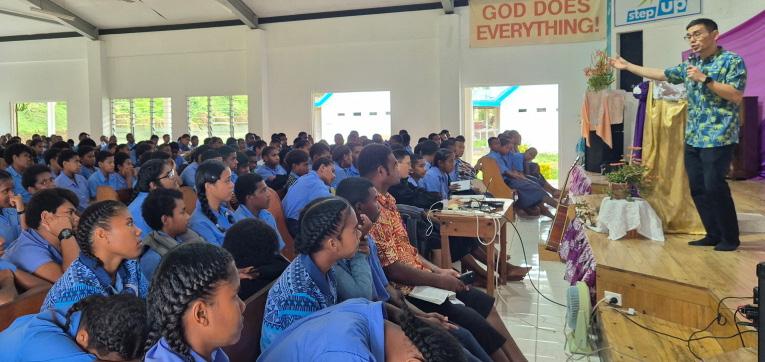
Korean Methodist missionary the Rev Cho Nam-geun speaks to young people at his church in Fiji. (Photograph: Korean Methodist Church.)
This article first appeared in the “Methodist Recorder”, an independent, weekly newspaper published in Great Britain.
Youth Worker selected as ‘Peace Ambassador’
A YOUTH worker at Brougham Uniting church in North Adelaide has been named a Humanitarian Affairs Peace Ambassador and will attend the fifth Global Peace Summit in Thailand later this month.
The Global Peace Summits are organised by non-governmental organisation (NGO) Humanitarian Affairs Asia. It brings together around 400 emerging leaders from more than 40 countries for training in peacebuilding and diplomacy. Delegates are conferred the title Humanitarian Affairs Peace Ambassador for one year and are expecting to use the experience to expand their peace-building work.
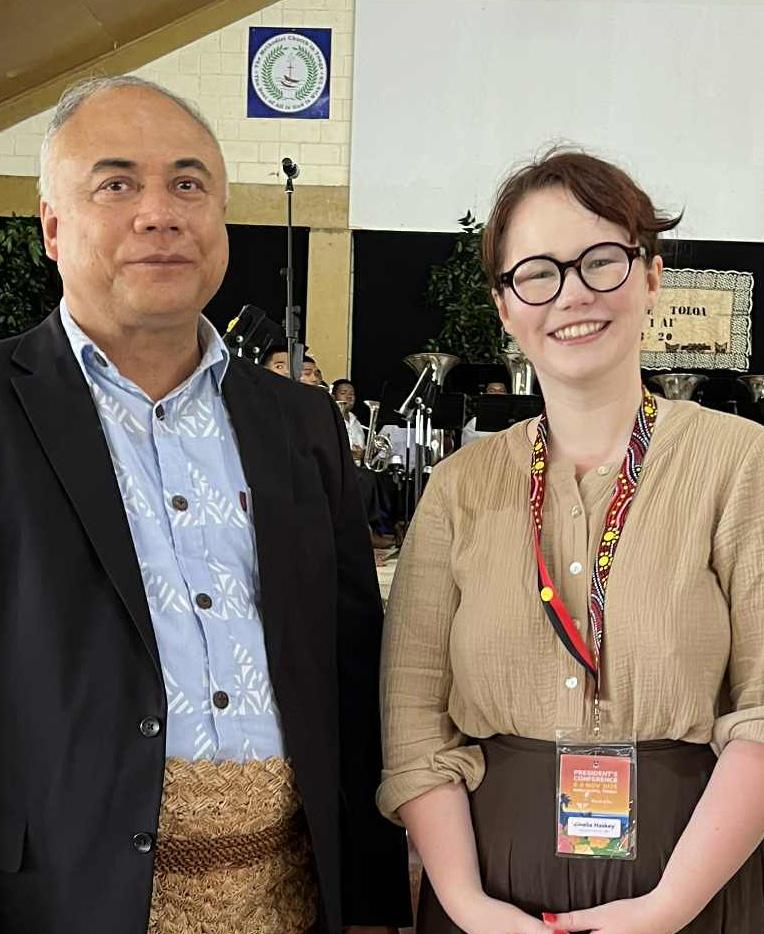
Youth worker Emelia Haskey is completing a Bachelor of Ministry at Uniting College in Adelaide after earlier studying journalism. Her application stressed the need to address growing political and cultural divides that challenge Christian unity, weaken public advocacy against violence and undermine solidarity with First Nations peoples and other vulnerable communities.
“I’m really interested in creating spaces for conversation that go beyond partisan politics or religious and racial divides,” she told church leaders. “I want to help build networks of young people — especially young adult Christians — who feel called to justice work, who will advocate, fundraise and speak publicly for peace. Working for a peaceful world doesn’t mean doing it quietly.”
The summit, being held at the United Nations Conference Centre in Bangkok between Wednesday, January 21 and Friday, January 23, features contributions from genocide survivors and conflict medics and includes sessions on forgiveness and reconciliation. The summit is expected to test and expand delegates’ approaches to practical peace work. The Uniting Church has helped to fund Ms Haskey’s participation, a move that highlights its growing emphasis on equipping young leaders to translate faith into public advocacy on justice and reconciliation.
Church leaders said they hope the event will “bring global perspectives back into local ministry and advocacy”, adding that sending young delegates to international forums is “life-shaping” and something that will equip them with skills to lead community initiatives, public campaigns and inter-faith dialogue on issues such as climate justice and child detention.
On her return to Australia, Ms Haskey is expected to fulfil her Peace Ambassador role by developing youth networks and public advocacy projects within the Uniting Church. The Uniting Church in Australia was formed in 1977 through a merger of the country’s Methodist, Congregational and Presbyterian Churches.
Article from the “Methodist Recorder”, an independent, weekly newspaper published in Great Britain.
Emelia Haskey met the Tongan Prime Minister, Dr ’Aisake Eke, at the Uniting Church’s Presidents Conference in Tonga last November. (Photograph: the Uniting Church.)
Nominations for 2026 Peace Award Open!
Nominations for the 2026 Peace Award are now open! Nominate someone who exemplifies Courage, Creativity, and Consistency for the World Methodist Peace Award. Applications must be submitted by April 15, 2026!
The nominee should show courage in regard to physical danger or putting personal interest at risk. Creativity should include opening new initiatives and attracting others in working for the cause of peace. Consistency is judged by effort over a period of time and intensity, despite setbacks.
Here is the link to read the full criteria: http://worldmethodistcouncil.org/whatwedo/world-methodist-peace-award/
The recipient receives a medallion, citation and US $1000 which is symbolic of the
larger recognition achieved in working for peace, justice and reconciliation. The awardee is included in the World Methodist Council Peace award booklet.
Go to www.worldmethodistcouncil.org and click on the “About the WM Peace Award” tab on the left side of the homepage and complete the online application. Please send all nomination forms to General Secretary at communications@worldmethodistcouncil.org today!
The 2026 Peace Award Ceremony will be held during the Council Meeting in San Salvador August 14, 2026. We look forward to receiving nominations for this prestigious award.
On the Web
Please send press releases, articles and resources! Submissions should be a page around 500 words, edited and ready to publish. Contact us by Friday, 20 February at communications@worldmethodistcouncil.org if you would like your story to be included in the March edition of the First Friday Letter.
This and past First Friday Letters can be found online at FirstFridayLetter.worldmethodistcouncil.org.
The World Methodist Council’s website may be found at worldmethodistcouncil.org
To subscribe to this newsletter, please email communications@worldmethodistcouncil.org
About the First Friday Letter
The First Friday Newsletter is a monthly publication of the World Methodist
All stories and photos, unless otherwise stated, are protected by their respective copyrights. Please do not copy without expressed written permission from the Council.